
The Aston Martin DB10: A Bond Car That Shaped My Aston Martin Journey
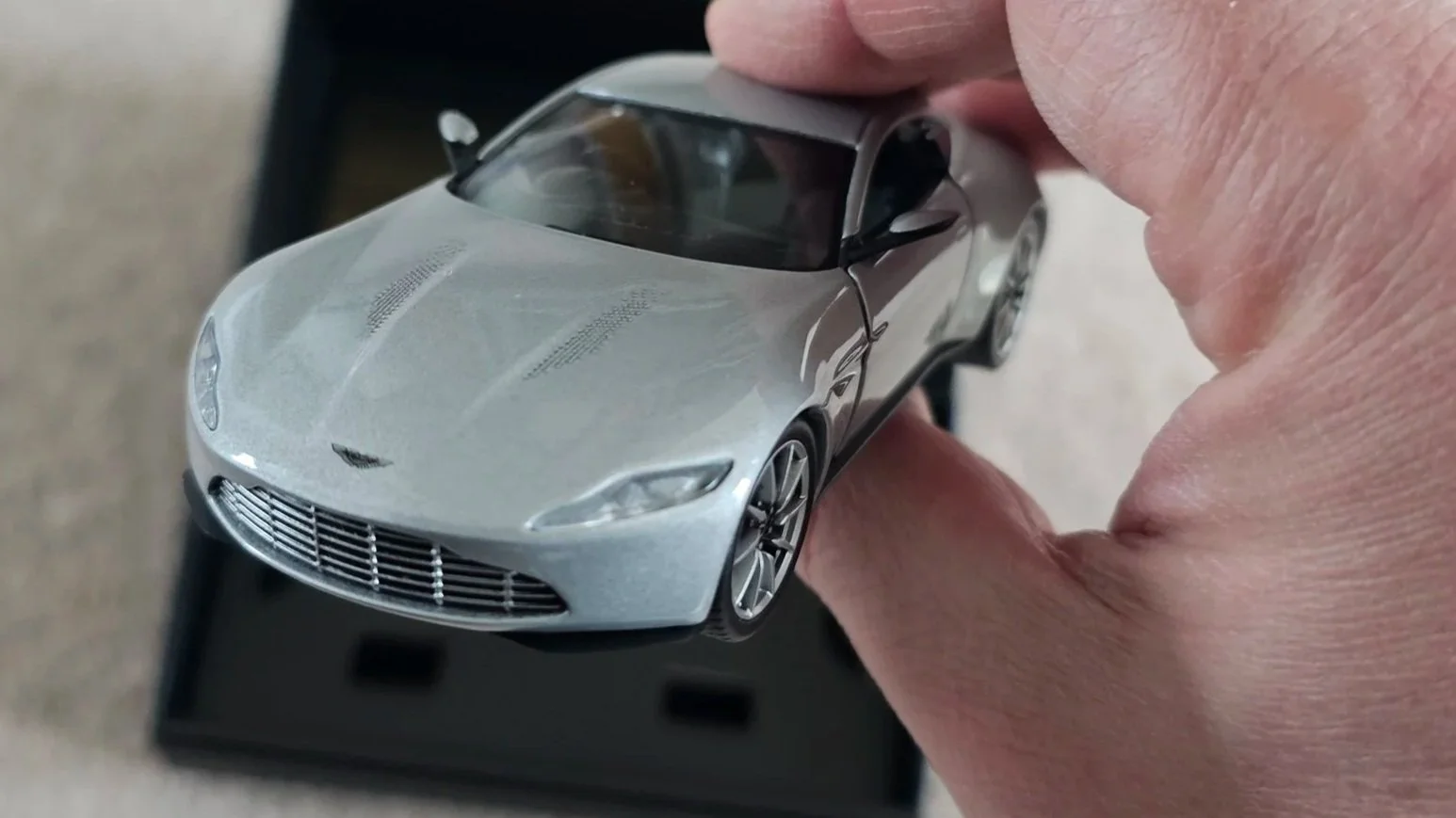
Image © Fuel the Passion, Corgi Model Aston Martin DB10 - A Birthday Gift
A birthday gift in the form of a Corgi model sparked a deeper look into one of the rarest Aston Martins ever created. Built exclusively for the James Bond film Spectre, the Aston Martin DB10 helped shape the design of future Aston Martins and played a small part in my own journey to owning a Vantage.
Holding the model in my hands also reminded me just how striking the real car was when it first appeared during the promotion of Spectre. For those who may not have seen the DB10 outside the cinema screen, Aston Martin produced a short film introducing the car to the world. It remains a great look at the dramatic proportions and distinctive design that made the Aston Martin DB10 so memorable.
There’s a reason for all the handbrake turns, revealed at the end! Just watch the 1 minute 14 second Aston Martin film below;
The Birth of the DB10
The story of the Aston Martin DB10 begins not in a film studio, but inside the design centre at Gaydon.
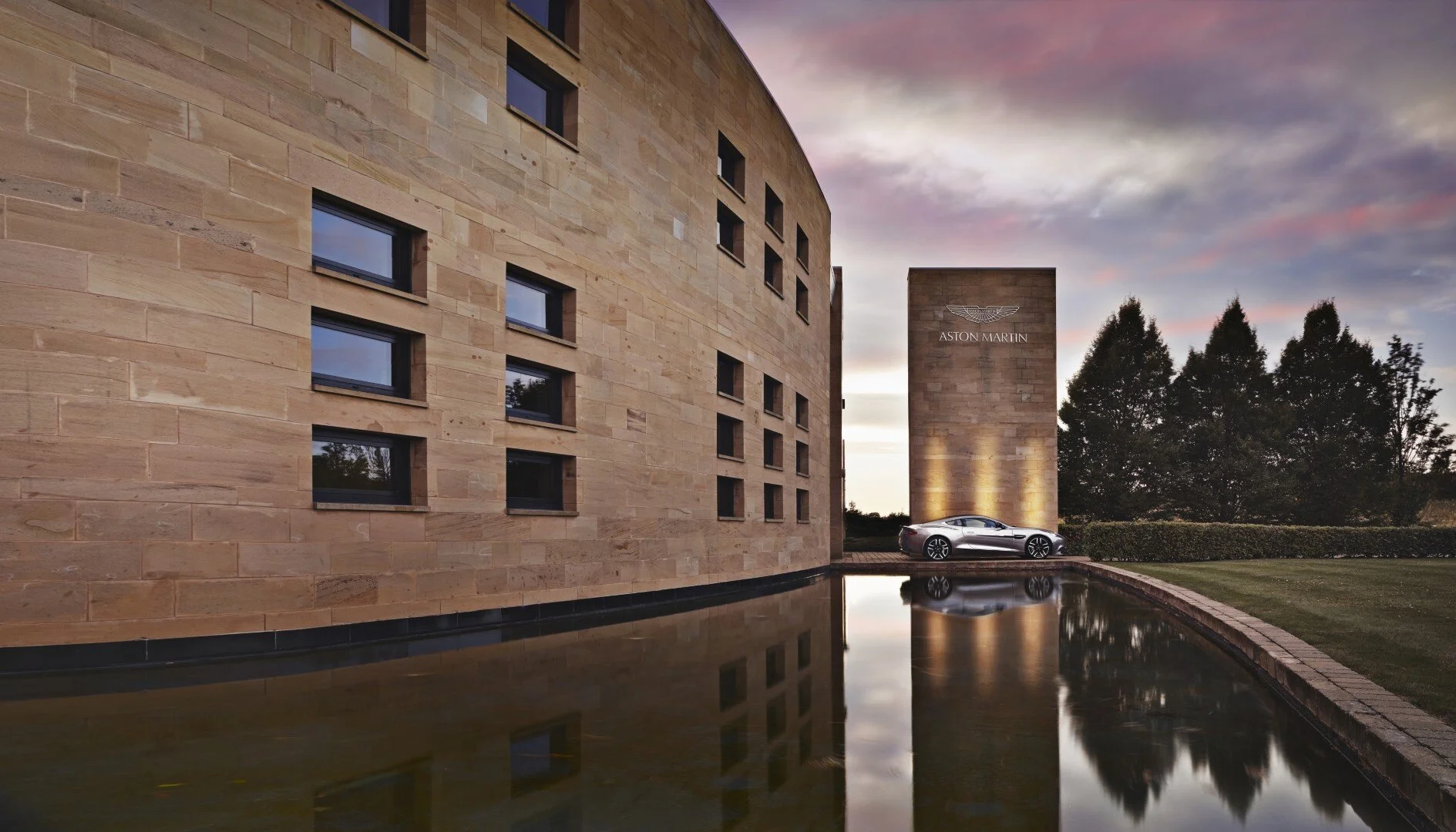
Image © Aston Martin Lagonda. Used for editorial purposes.
During the early development of the 2015 James Bond film Spectre, director Sam Mendes visited Aston Martin to discuss which car might appear in the next chapter of the Bond story. Traditionally the production team would simply choose one of Aston Martin’s current models and adapt it for the screen. But during that visit, something unexpected caught Mendes’ attention. On the wall of the design studio was a striking concept sketch (see image below), a low, aggressive Aston Martin unlike anything currently in production. The drawing had been created by young Aston Martin designer Sam Holgate, and it represented a fresh interpretation of the brand’s design language.
“Rather than selecting an existing model, Mendes asked a simple question: could this design become Bond’s next car?”
Leading the project was Aston Martin’s Chief Creative Officer, Marek Reichman, whose design and engineering teams accepted the challenge. What followed was an extraordinary development programme rarely seen in the automotive world. From that single sketch, Aston Martin set out to create a fully functioning car, not a static concept, but a machine capable of performing the high-speed stunt sequences required for the film. Remarkably, the entire project took just six months. Within that short window, Aston Martin hand-built ten examples of the DB10 at Gaydon. Each was constructed specifically for the film’s production, ranging from pristine “hero” cars used for close-up shots to heavily modified stunt cars built to survive the demanding chase scenes through the streets of Rome.
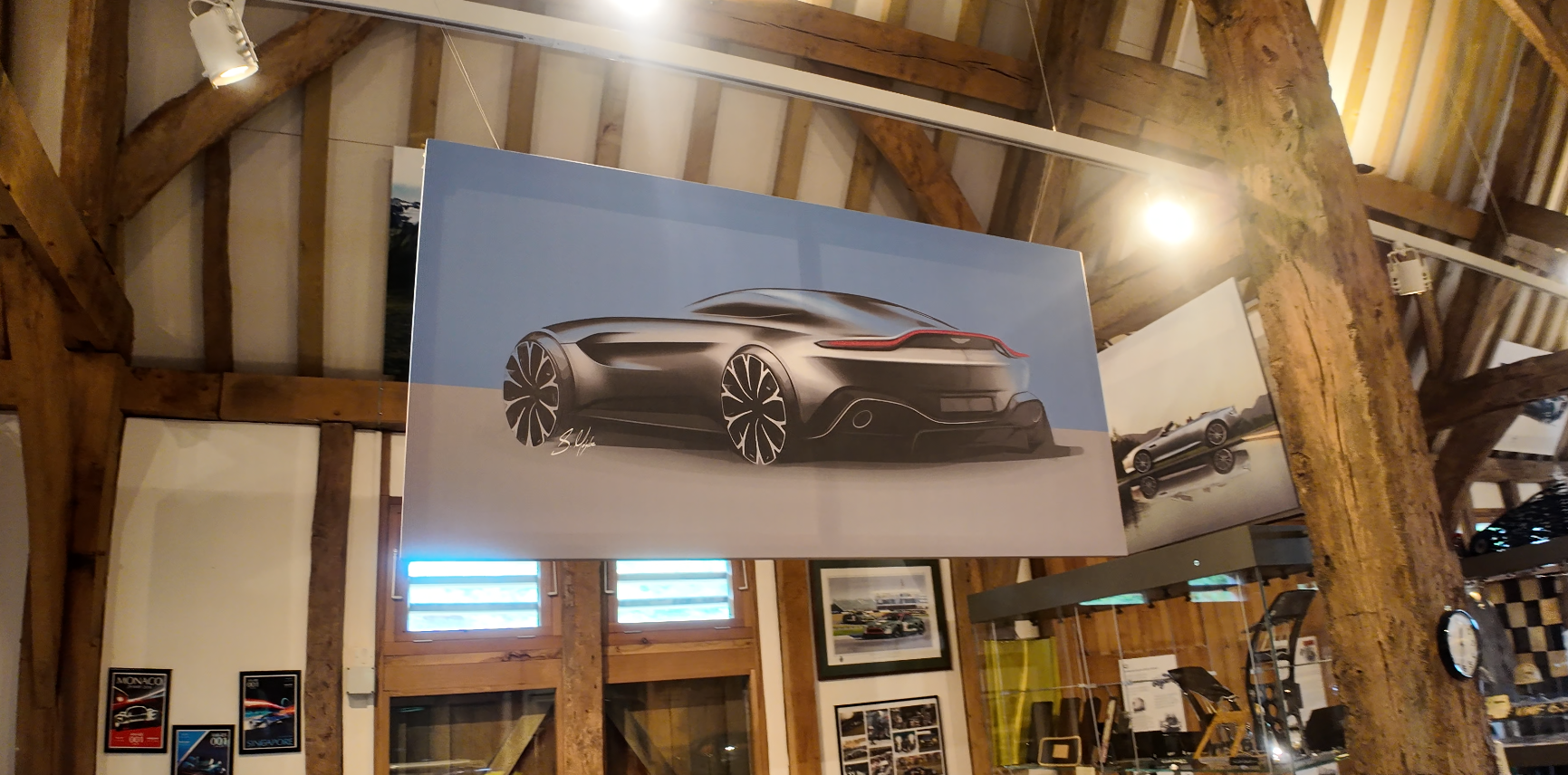
Image © Fuel the Passion, drawing created by young Aston Martin designer Sam Holgate, hanging in Aston Martin Heritage Museum, Oxfordshire
During a visit to the Aston Martin Heritage Trust museum, I was struck to see a large concept artwork hanging in the gallery, a design sketch attributed to Sam Holgate that captures the same low, muscular proportions and slim rear light graphic that would ultimately define the DB10. Standing beneath it, it’s easy to imagine how such a sketch might have caught the attention of a film director looking for the next iconic Bond car. What began as a design drawing on a studio wall had suddenly become something far more ambitious, a bespoke Aston Martin created purely for the world’s most famous spy and yet, despite its cinematic origins, the DB10 would quietly shape the future design direction of Aston Martin in ways that would soon reach the road.
A Bond Car Designed from Scratch
For more than half a century, the association between James Bond and Aston Martin had followed a familiar pattern. When a new Bond film entered production, the filmmakers would typically select an existing Aston Martin model and adapt it for cinematic use.
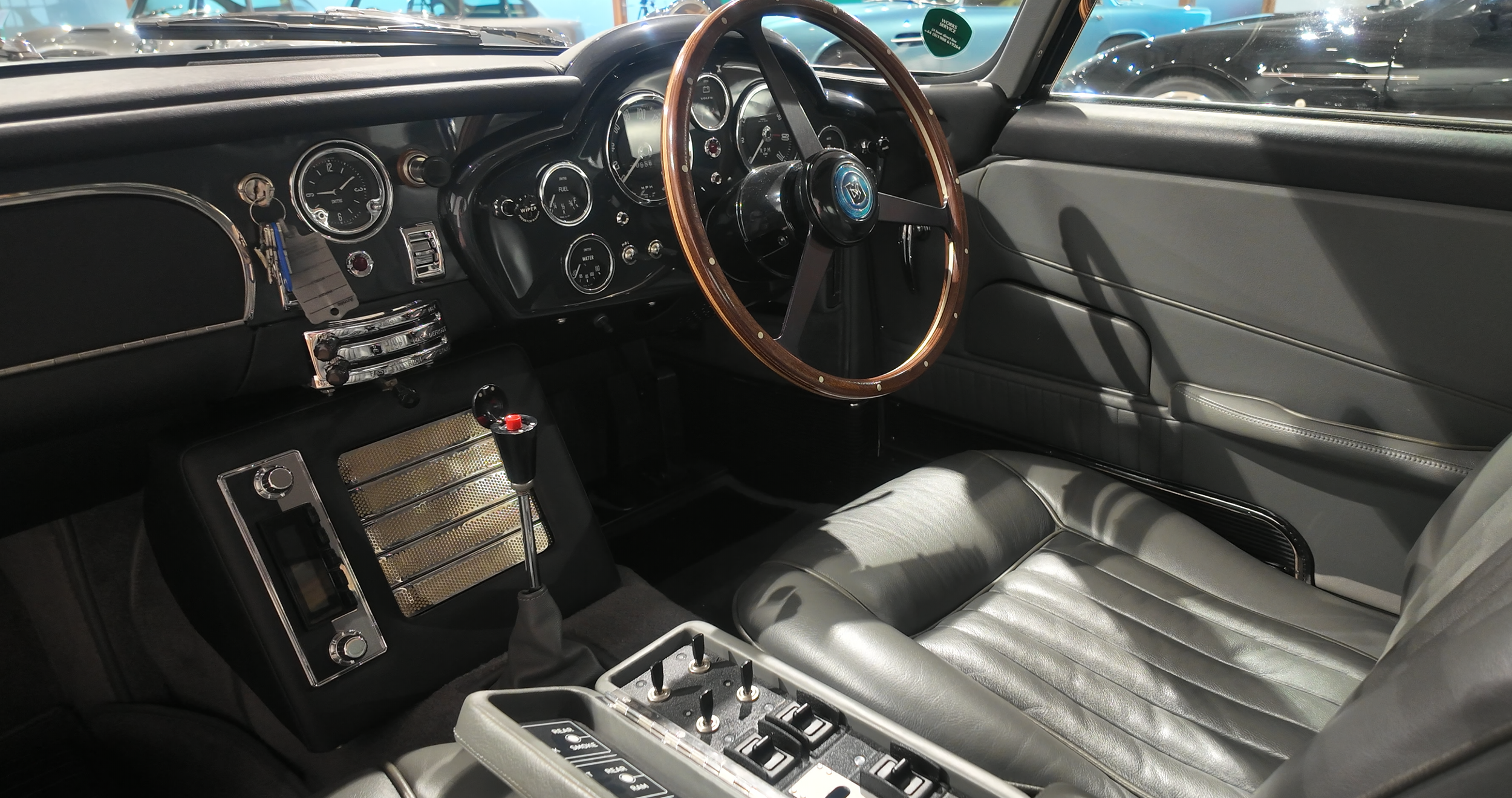
Image © Fuel the Passion, one of the DB5 recreations, photographed during a visit to Aston Martin Works, March 2026
The most famous example remains the legendary Aston Martin DB5, which first appeared in the 1964 film Goldfinger and went on to become one of the most recognisable cars in cinema history. The DB10 changed that tradition entirely.
For the first time in the history of the Bond franchise, Aston Martin set out to design a car specifically for the film itself, rather than adapting an existing production model. It was a remarkable collaboration between Aston Martin and the Bond film producers at Eon Productions, who were looking for something truly distinctive for Bond’s latest adventure. The result was a car that existed purely within the world of cinema. When the covers were finally lifted from the Aston Martin DB10, the unveiling took place at Pinewood Studios in December 2014 during the official press launch for Spectre. The moment was staged on the famous 007 Stage, surrounded by the cast and production team who would bring the film to life. As the sleek new Aston Martin was revealed to the world, director Sam Mendes introduced it with a memorable line.
“Before any actor had stepped in front of the camera, he described the DB10 as “the first cast member” of the film.”
It was a fitting description. The DB10 was not merely a prop or a background vehicle. Like the DB5 before it, the car was intended to become a central character in the story, a machine that would carry Bond through one of the film’s most memorable sequences as he raced through the streets of Rome. See the short clip below. The seed was sown in my head, when I watched this for the first time!
In many ways, the DB10 represented something new for both Aston Martin and the Bond franchise. It was a car born entirely from imagination, created to serve the world of cinema, yet designed with such authenticity that it looked every inch a real Aston Martin. Whilst the DB10 would never become a production car, its influence on the future design language of Aston Martin was only just beginning.
Design - A Modern Interpretation of the DB5
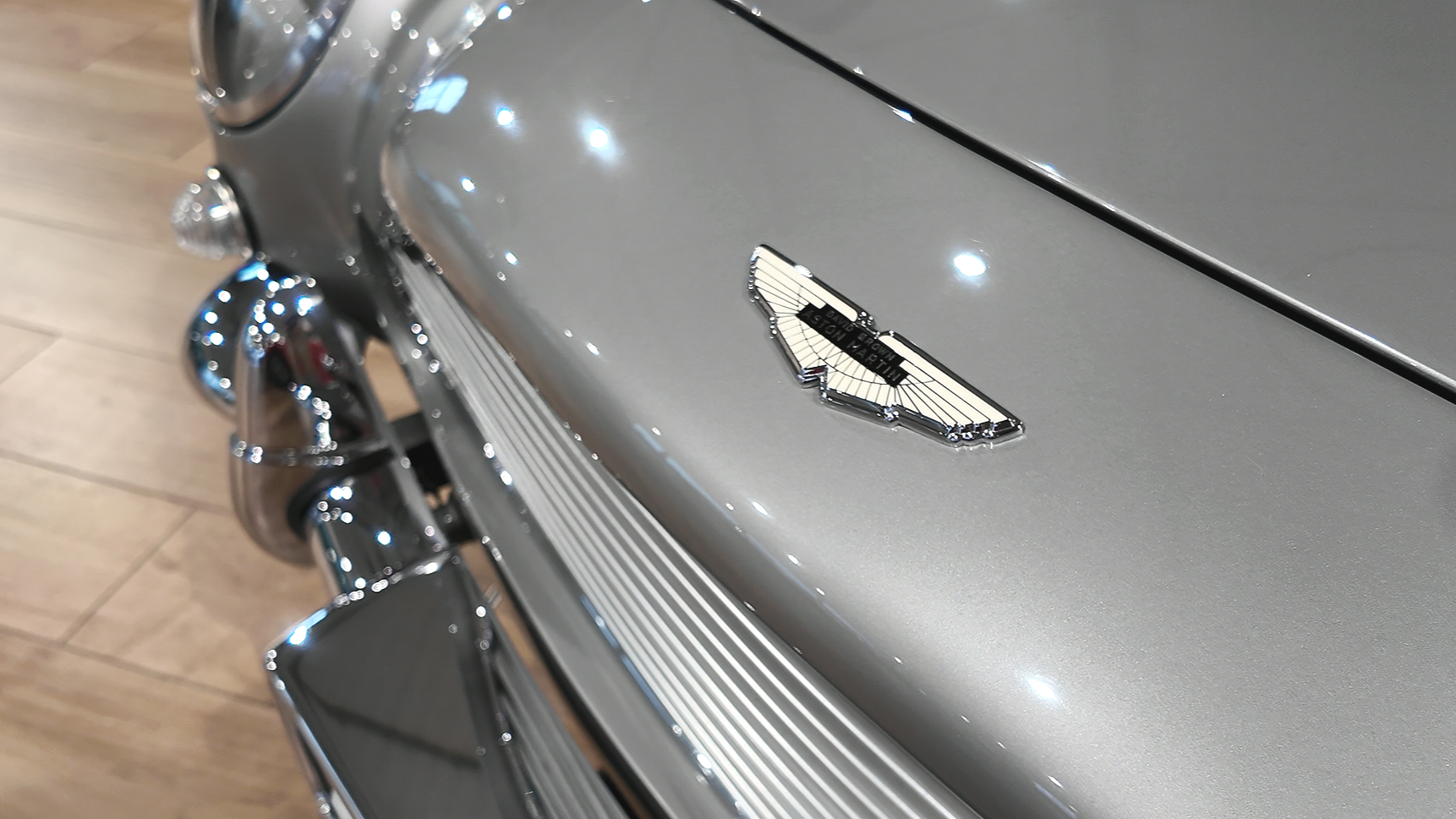
Image © Fuel the Passion, one of the DB5 recreations, photographed during a visit to Aston Martin Works, Newport-Pagnell, March 2026
Although the Aston Martin DB10 was created specifically for the film Spectre, its design was far from a cinematic fantasy. In fact, it deliberately drew inspiration from one of the most famous Aston Martins ever built, the legendary Aston Martin DB5.
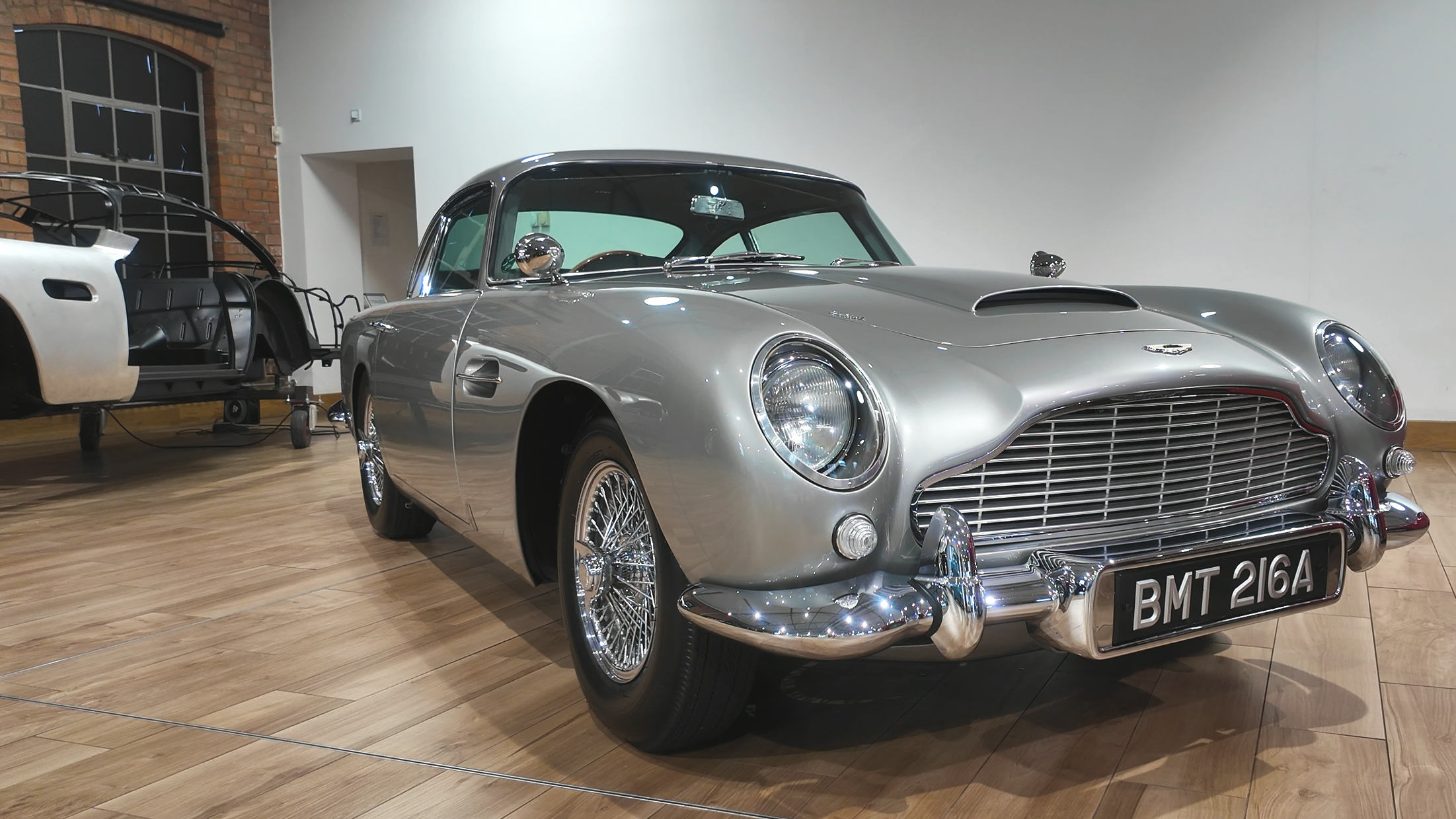
Image © Fuel the Passion, one of the DB5 recreations, photographed during a visit to Aston Martin Works, Newport-Pagnell, March 2026
The DB5 had defined the visual identity of Bond’s Aston Martin for more than half a century. Its elegance, simplicity and unmistakable proportions made it one of the most recognisable cars in automotive history.
When Aston Martin’s design team began shaping the DB10, they were not trying to recreate the DB5, but rather reinterpret its spirit for a modern audience. Leading the design was Aston Martin’s Chief Creative Officer, Marek Reichman, whose team set out to create a car that looked unmistakably Aston Martin, yet clearly belonged to a new generation. One of the most distinctive elements is the DB10’s low, shark-nose grille. Unlike the more upright Aston Martin grille seen on earlier models, the DB10’s front end stretches forward aggressively, giving the car a purposeful and slightly sinister expression, perfectly suited to the darker tone of Spectre.
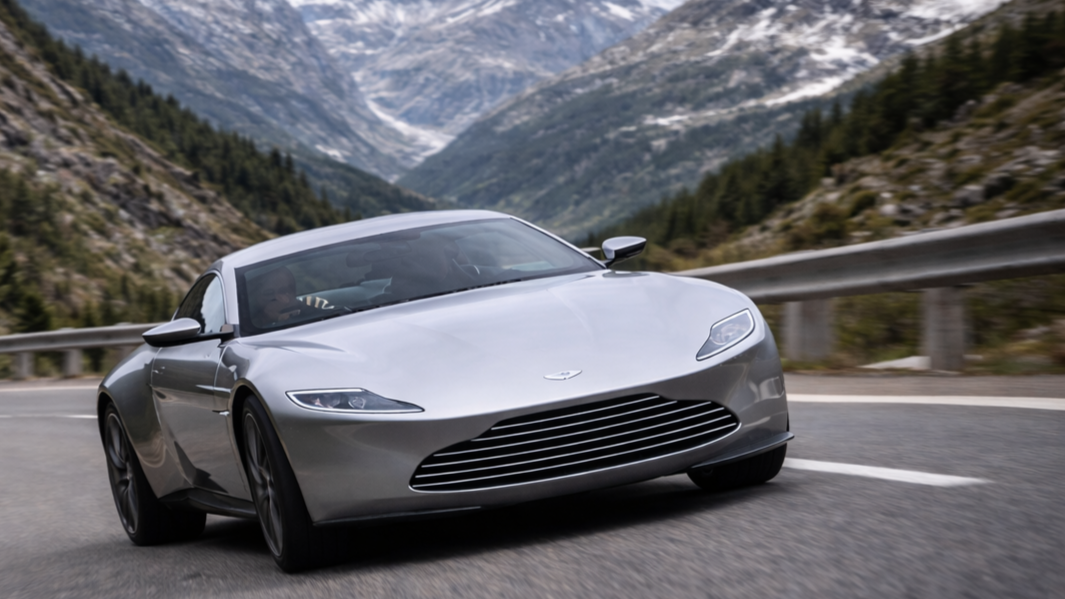
Image © Fuel the Passion
Running back from that grille is a dramatic clamshell bonnet, a single sweeping panel that extends almost the full length of the car’s front section.
The effect is both elegant and technical, emphasising the long-bonnet proportions that have defined Aston Martin grand tourers for decades. At the rear, the DB10 introduced one of the most influential design details of all: slim, blade-like LED tail lights that stretch across the width of the car.
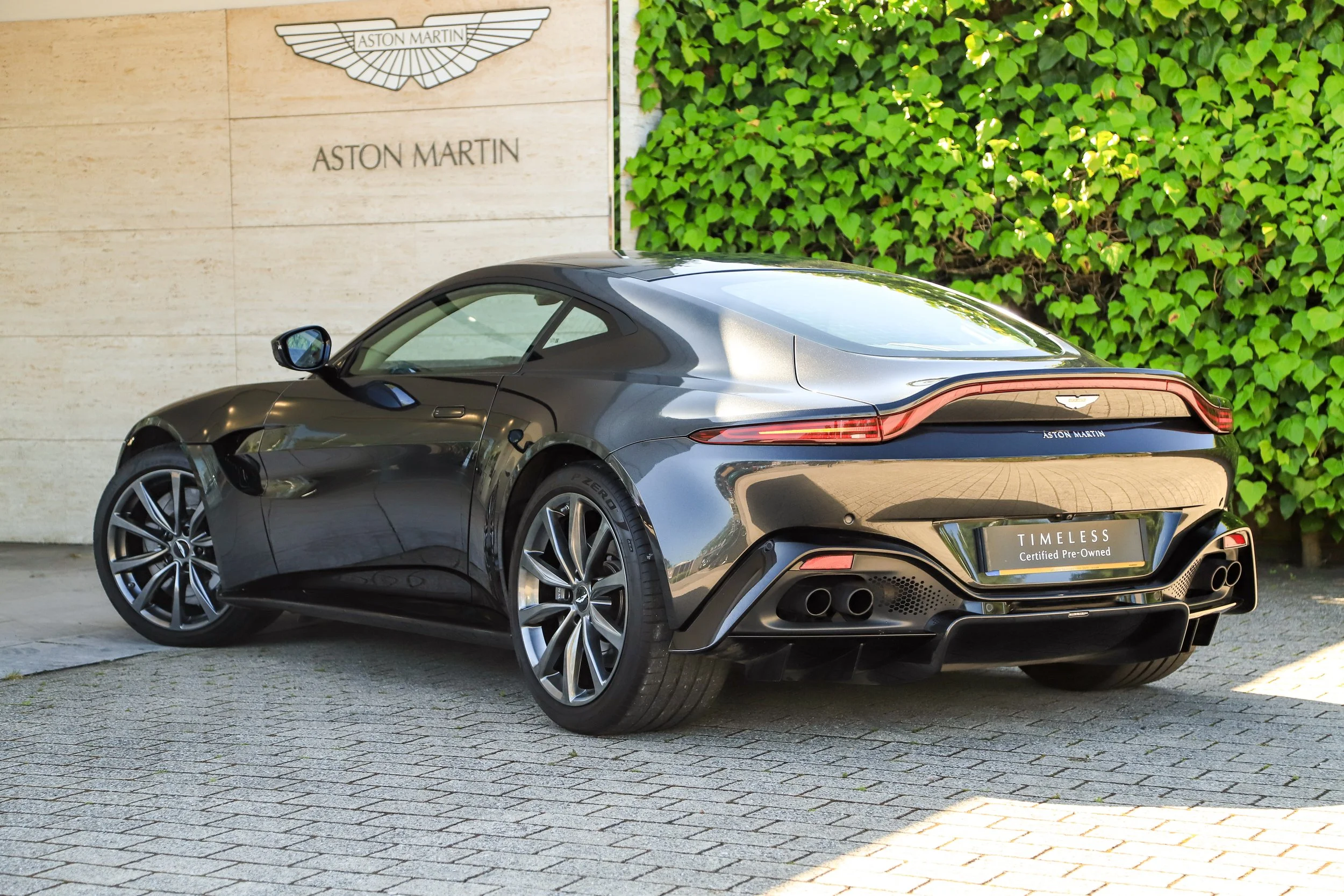
Image © Fuel the Passion, FTP Vantage
This elegant light signature would later become a defining feature of modern Aston Martin models.
The car’s stance is equally striking. The DB10 sits noticeably lower and wider than the Vantage on which it was based, with muscular rear haunches that give it a powerful, planted presence. Large wheels pushed to the edges of the bodywork enhance that sense of drama.
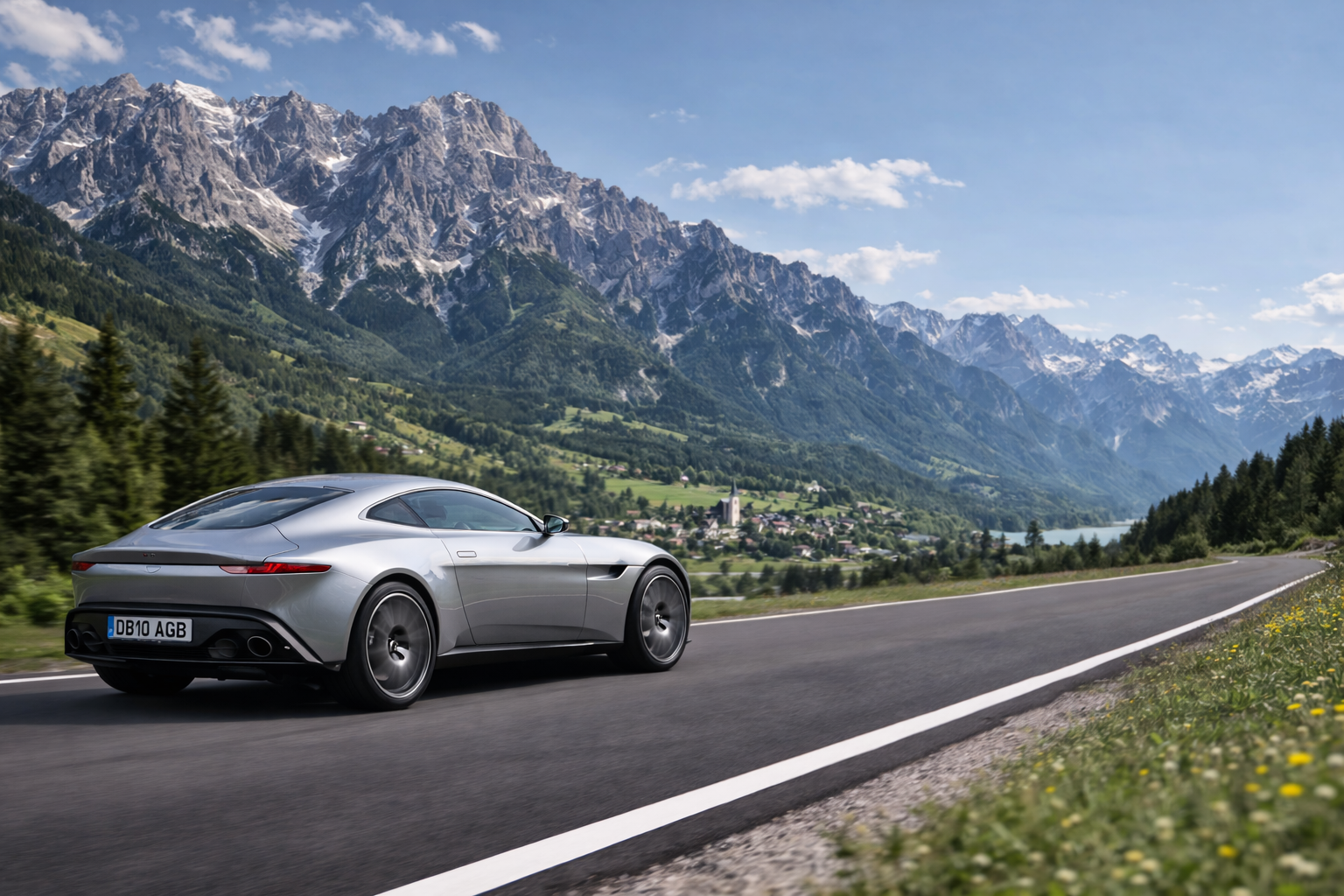
Beneath the sculpted body panels lies another important detail, the DB10 was constructed almost entirely from carbon fibre.
This lightweight material not only helped reduce weight but also allowed Aston Martin’s designers to shape the bodywork with remarkable precision.
Taken together, these elements created a car that felt both familiar and futuristic. The DB10 carried clear echoes of Aston Martin’s past while quietly signalling the direction the brand’s design language would take in the years ahead. In many ways, the DB10 was less a one-off movie car and more a glimpse into the future of Aston Martin itself.
Engineering Beneath the Surface
Beneath its dramatic bodywork, the Aston Martin DB10 was not an entirely clean-sheet creation. In order to develop a working vehicle within an incredibly tight six-month timeline, Aston Martin based the car on the proven underpinnings of the Aston Martin V8 Vantage S. That decision provided a solid engineering foundation while allowing Aston Martin’s designers the freedom to create an entirely bespoke exterior.
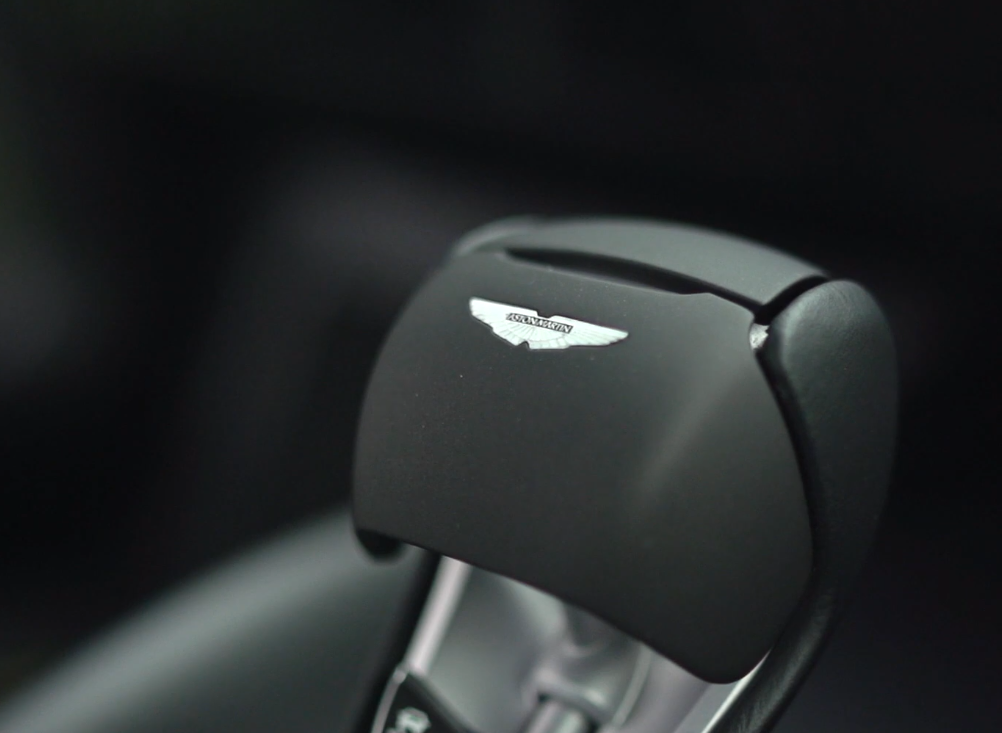
Power came from the familiar 4.7-litre naturally aspirated V8, producing around 430 horsepower.
It was paired with a six-speed manual gearbox, an appropriately analogue choice for a car destined for one of cinema’s most iconic drivers.
While the DB10 shared its basic architecture with the Vantage, the proportions were significantly altered. The wheelbase was extended and the track widened to give the car a far more dramatic stance. Visually, it looked lower, broader and more purposeful than the donor car beneath its skin. As already mentioned, the bodywork itself was constructed almost entirely from carbon fibre, helping reduce weight and allowing the complex sculpting required for the DB10’s distinctive design. The result was a machine that looked radically different from the Vantage, despite sharing much of its underlying structure.
Although it was created primarily for the film, the DB10 was very much a real car, capable of being driven hard, performing stunts and enduring the demanding conditions of a major film production.
Driving the DB10
A handful of journalists were fortunate enough to drive the DB10 during the film’s promotion, offering rare insight into what it was actually like behind the wheel. Their impressions were revealing. The Evo experience is featured below;
Unlike a polished production model, the DB10 retained a distinctly prototype-like character. Sound insulation was minimal, the interior was functional rather than luxurious, and the experience was raw in a way rarely encountered in modern road cars. Yet beneath that roughness lay a deeply engaging driving experience. The carbon-fibre body made the car lighter than the Vantage S on which it was based, giving it a sense of agility and responsiveness. The steering, still hydraulically assisted rather than electric, was widely praised for its feedback and connection to the road.
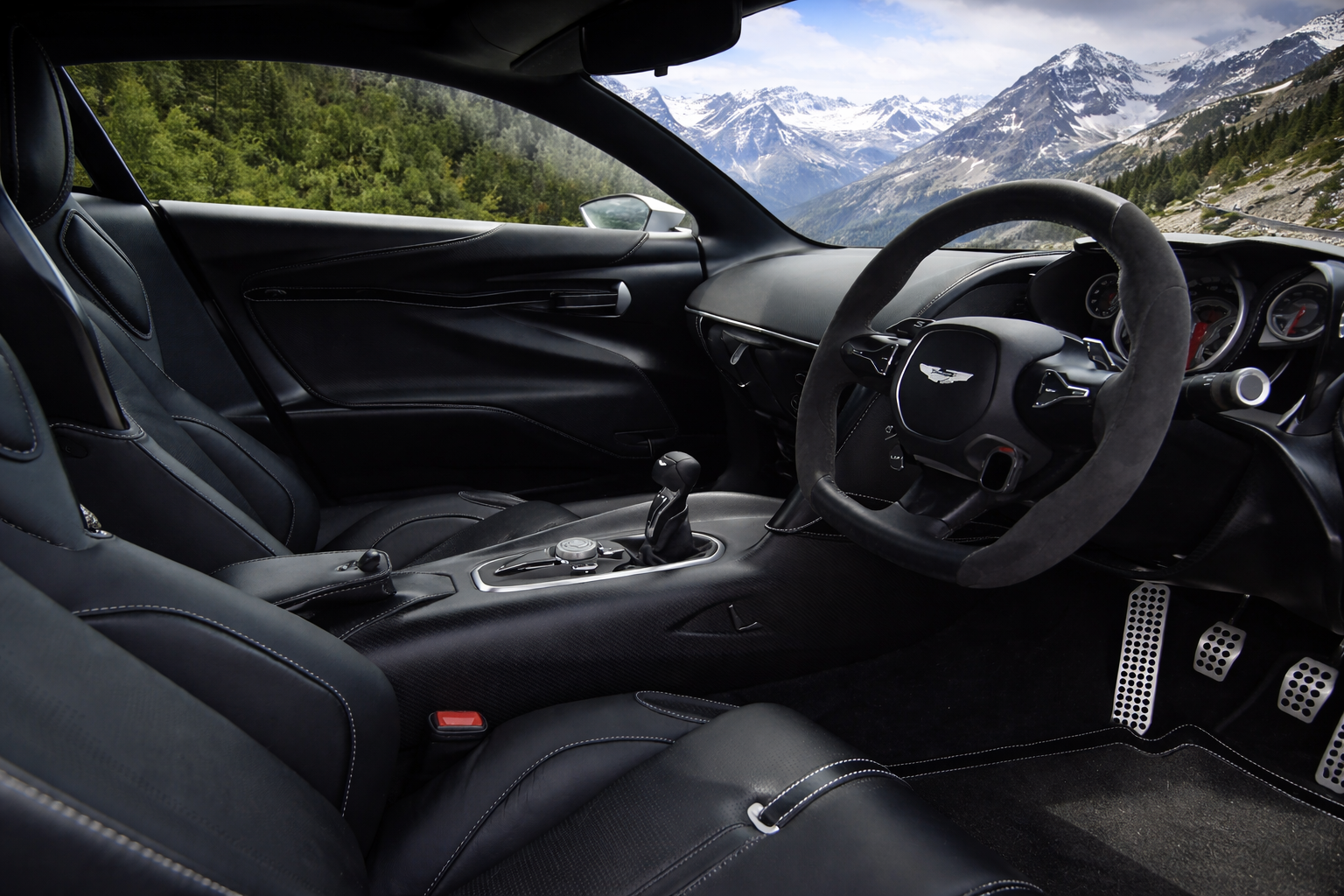
Perhaps most pleasing of all was the presence of that six-speed manual gearbox.
In an era increasingly dominated by paddle-shift transmissions, the simple act of changing gear yourself added a level of involvement perfectly suited to the character of the car.
Combined with a balanced chassis and the naturally aspirated V8’s strong response, the DB10 delivered the kind of analogue driving experience that enthusiasts still cherish today. Even if it was never intended for production, it remained unmistakably an Aston Martin to drive.
Filming the Rome Chase
For all its engineering credibility, the DB10 ultimately existed for one purpose, to play a starring role in Spectre. Its most memorable appearance comes during the film’s spectacular Rome chase sequence, where James Bond is chased by the villain Mr Hinx through the narrow streets of the Italian capital, as hopefully you watched, in the clip earlier on in this article. Bond’s DB10 is pursued by the menacing Jaguar C-X75, creating one of the most dramatic car chases in modern Bond history. To make these scenes possible, several of the DB10s were heavily modified for stunt work. Roll cages were fitted, suspension components strengthened and hydraulic handbrakes installed to allow the stunt drivers to slide the cars through corners with dramatic precision.
“Of course, no Bond car would be complete without a few gadgets!”
The DB10 was equipped with the expected cinematic flourishes, including flamethrowers integrated into the exhaust system and the traditional ejector seat, although in true Bond fashion, not all of the gadgets worked quite as intended. The sequence ends with one of the film’s most memorable moments, as Bond ejects himself from the car before it plunges into the River Tiber. A dramatic exit for one of the most unusual Aston Martins ever built.
Only Ten Cars Were Ever Built
One of the most remarkable aspects of the DB10 is its extraordinary rarity. In total, just ten examples of the car were ever produced. Of those ten, several were configured as hero cars, used for close-up shots during filming and promotional events. Others were built as stunt vehicles, modified to withstand the punishment of high-speed chases, jumps and collisions required during production.
Following the film’s release, two pristine promotional cars remained. One of these was eventually sold at a charity auction in 2016, raising approximately £2.4 million for Médecins Sans Frontières. The sale instantly cemented the DB10’s status as one of the most desirable modern Aston Martins ever created, despite the fact that it was never intended for road use. Even by Aston Martin standards, it remains an extraordinarily rare machine.
“So where are the DB10s today?”
Given the extraordinary rarity of the Aston Martin DB10, it’s perhaps unsurprising that very few people have ever seen one in person. Following the production of Spectre, the ten DB10s built for the film were dispersed between Aston Martin, the film’s producers and a small number of private collections. As mentioned above, one of the two pristine promotional “show cars” was sold at a charity auction in 2016. The remaining cars are believed to be retained within Aston Martin’s heritage collection or held by the film’s production partners.
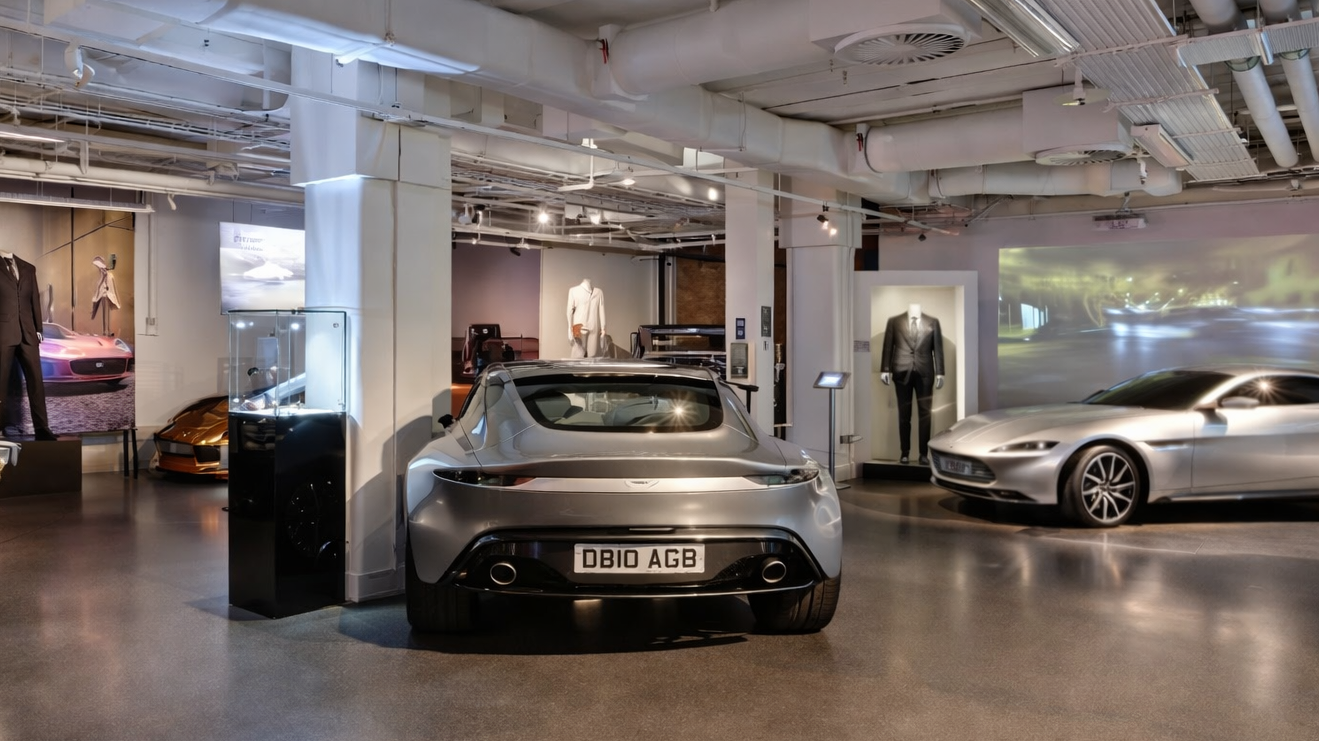
Occasionally, one of the stunt cars appears at exhibitions around the world.
A partially damaged example from the film’s Rome chase has previously been displayed at the Bond in Motion exhibition in London, while others have appeared at automotive museums including the Petersen Automotive Museum and the British Motor Museum.
“For most enthusiasts, however, the DB10 remains a car that is far more familiar on the cinema screen than in the real world.”
Aston Martin DB10 ‘Spectre’ Corgi Die-Cast Model (1:36 Scale)
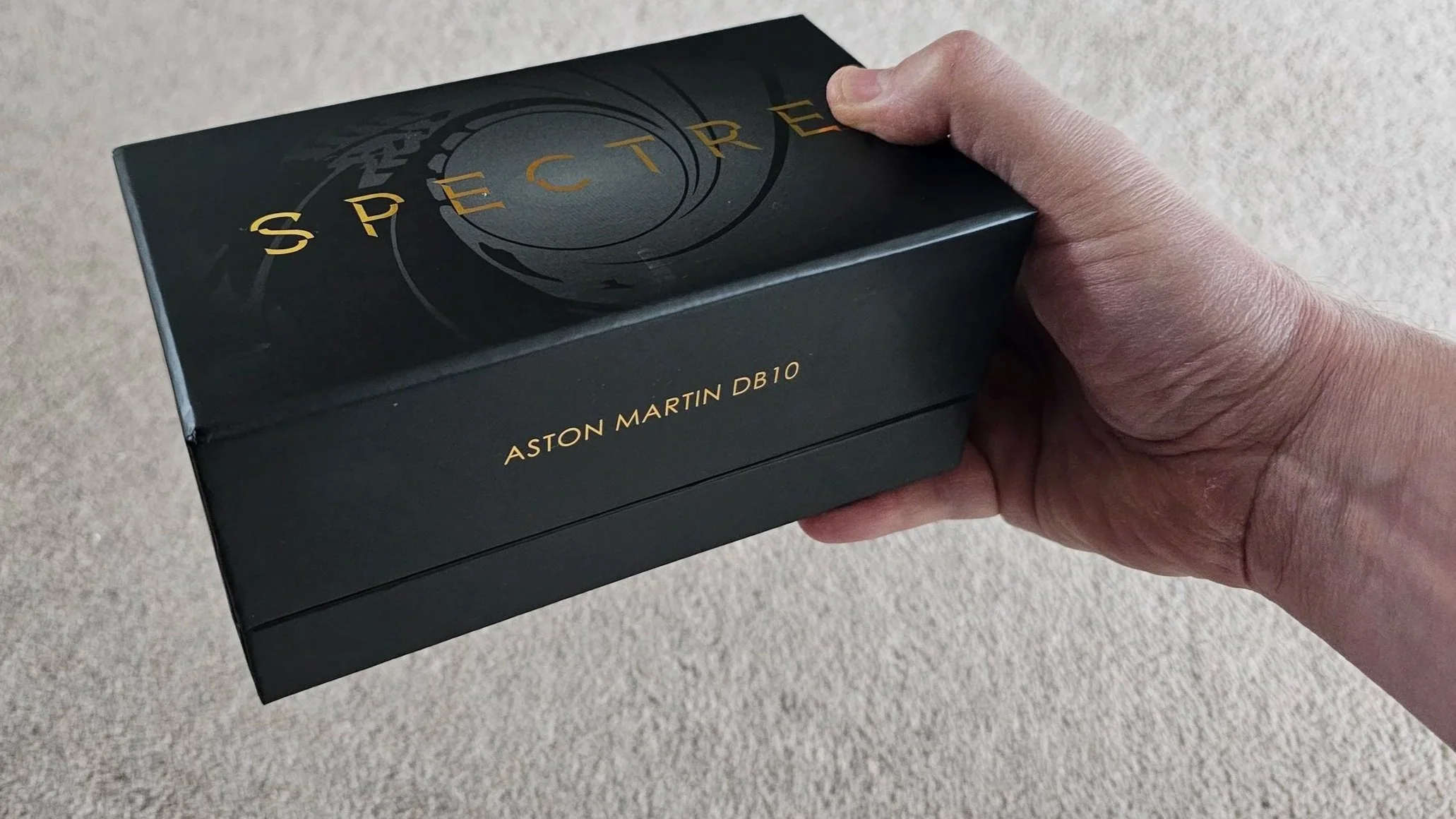
For most Aston Martin enthusiasts, owning the real Aston Martin DB10 will always remain a distant dream.
With only ten cars ever built for the James Bond film Spectre, the DB10 sits firmly among the rarest Aston Martins ever created.
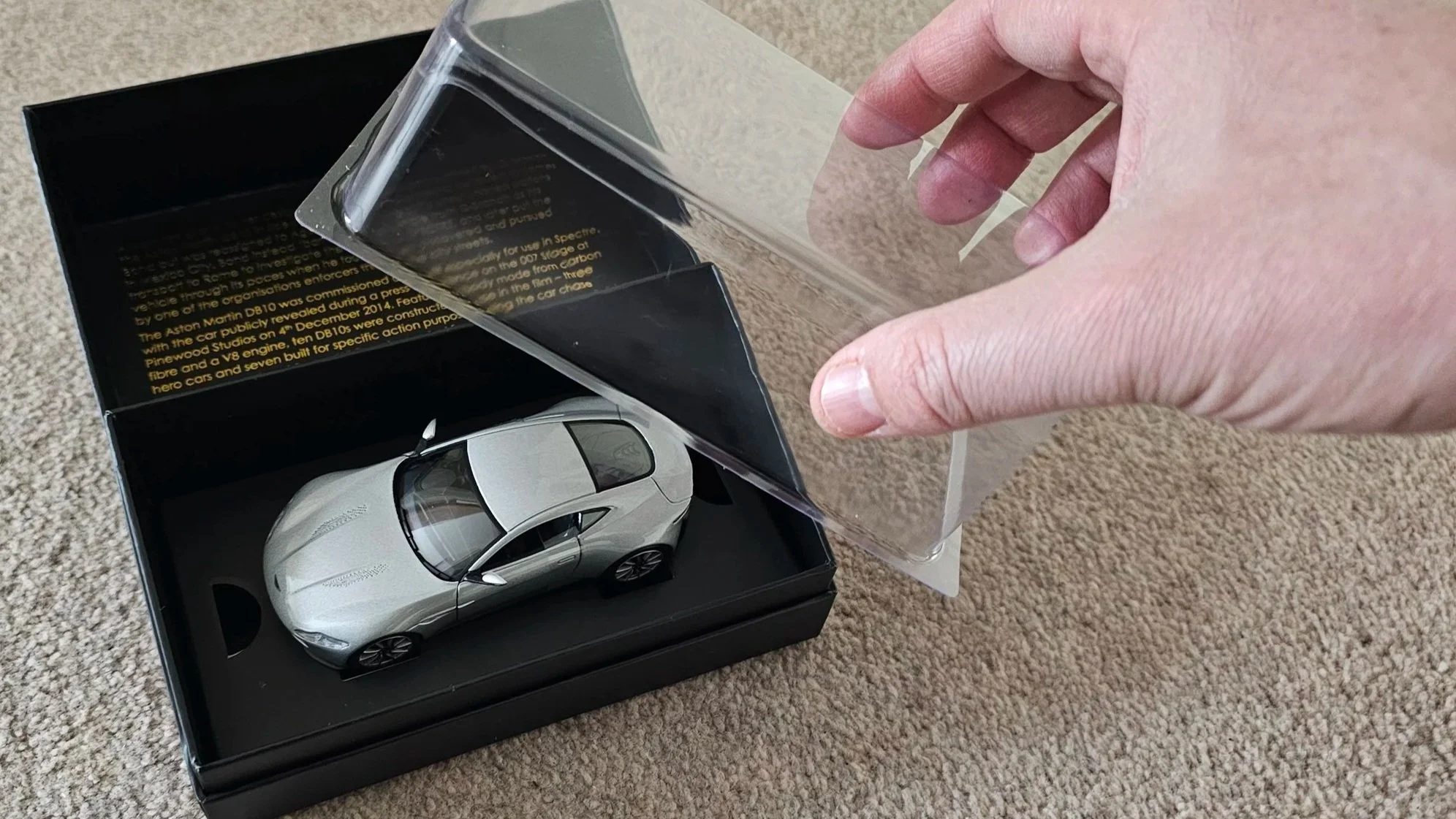
Thankfully, there is another way to enjoy this remarkable car.
This beautifully detailed 1:36 scale die-cast model from Corgi captures the dramatic proportions of the DB10 surprisingly well. From the distinctive grille and flowing bonnet line to the slim rear light graphic, the model recreates the elegant shape of Bond’s Aston Martin with impressive accuracy.
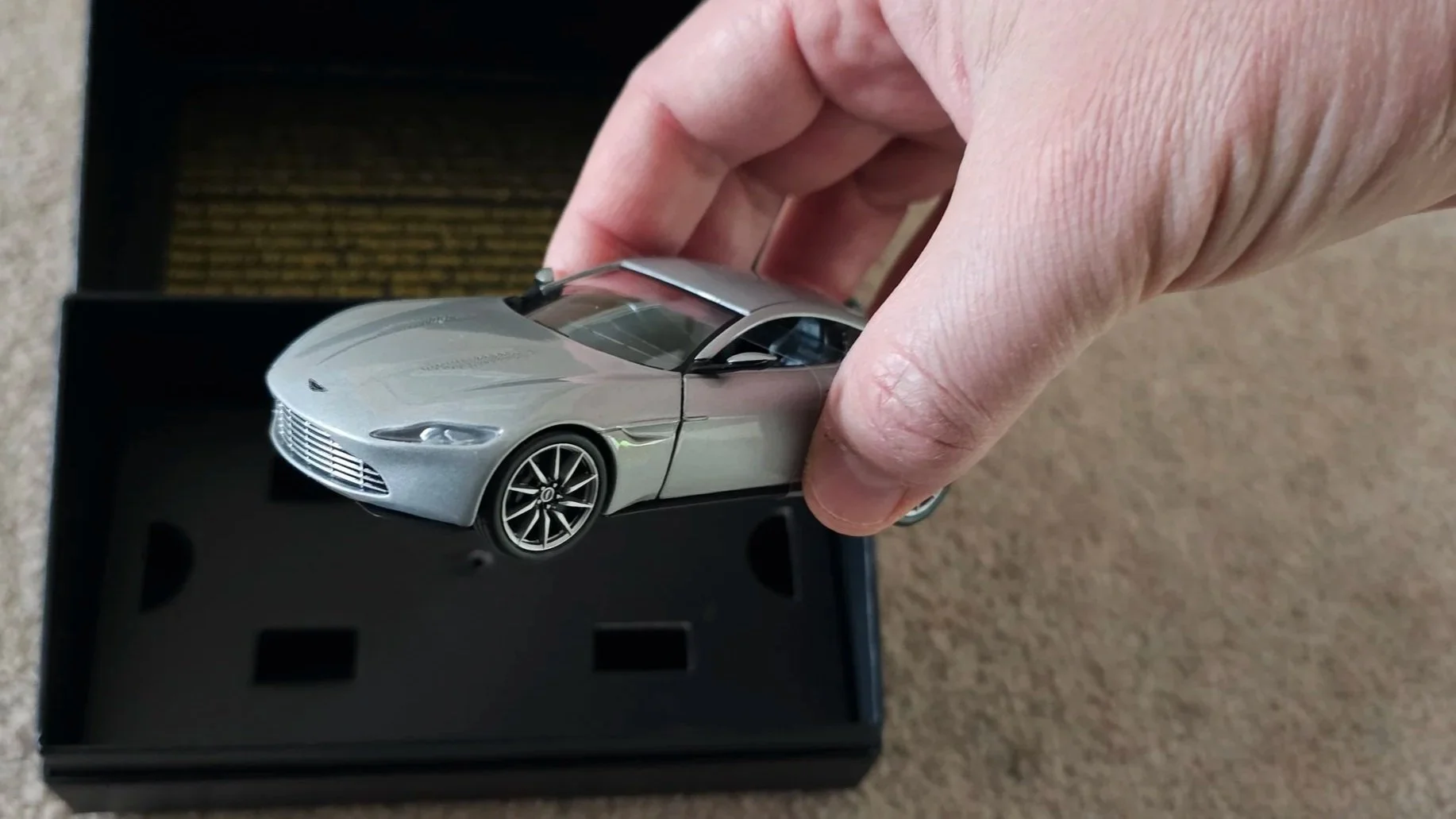
Finished in the car’s signature silver and presented in a smart display box, it makes an excellent addition to any Aston Martin collection, whether displayed on a desk, a bookshelf, or alongside other Bond memorabilia.
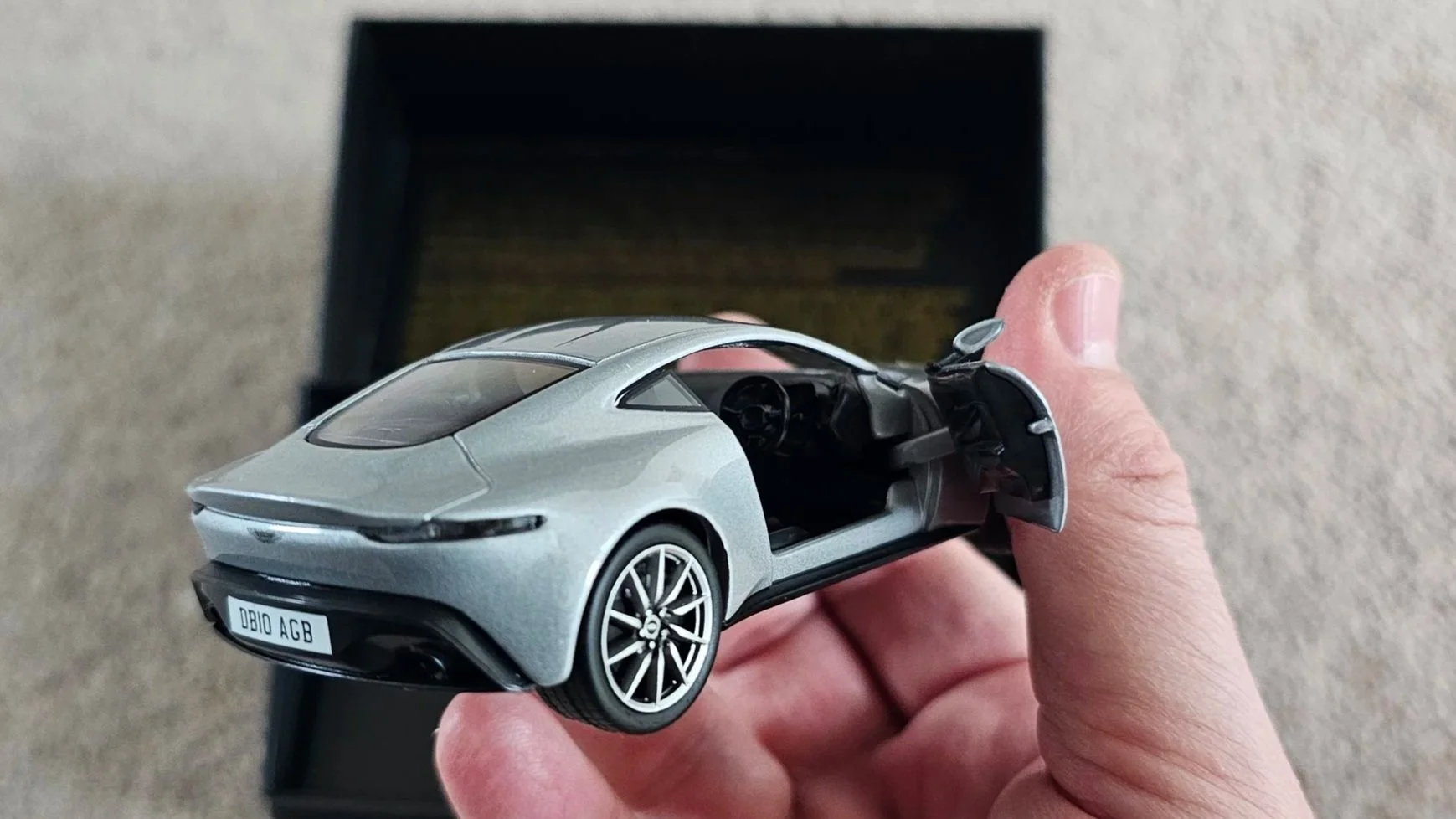
Of course, it may not come with flamethrowers, ejector seats or the ability to outrun a Jaguar C-X75 through the streets of Rome, but it does offer something rather special: a small reminder of one of the most fascinating Aston Martins ever created.
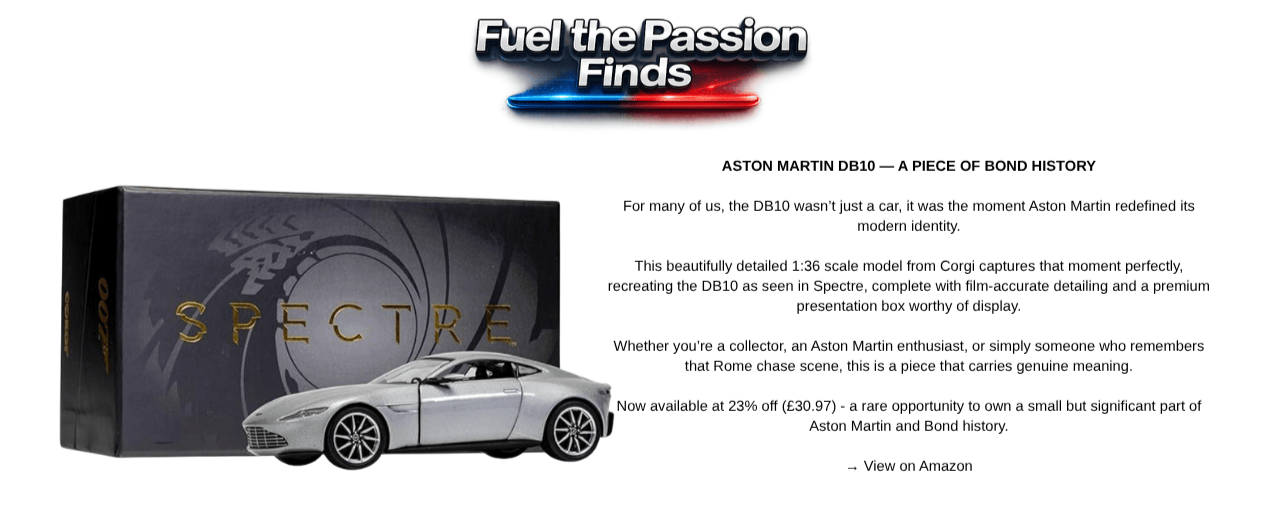
If you choose to purchase via this link, it comes at no extra cost to you and helps support Fuel the Passion, thank you.
The DB10’s Influence on Modern Aston Martins
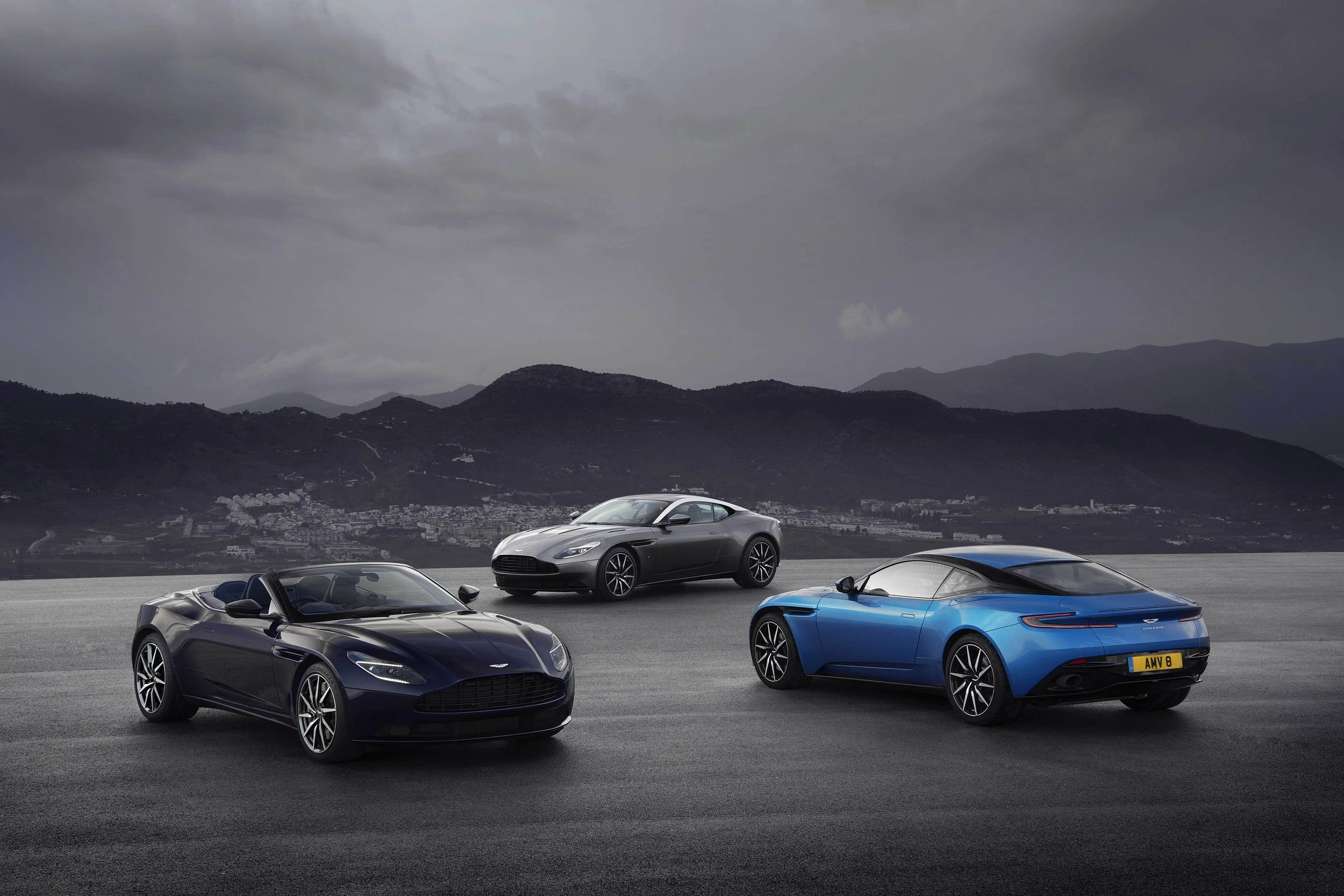
Image © Aston Martin Lagonda. Used for editorial purposes.
Although the DB10 was never intended for production, its influence on Aston Martin’s future design direction proved significant. In many ways the car acted as a design bridge, hinting at the styling language that would soon appear on Aston Martin’s next generation of road cars. Several of the design themes first seen on the DB10 would later appear on models such as the Aston Martin DB11 and the second-generation Aston Martin Vantage (2018 generation).
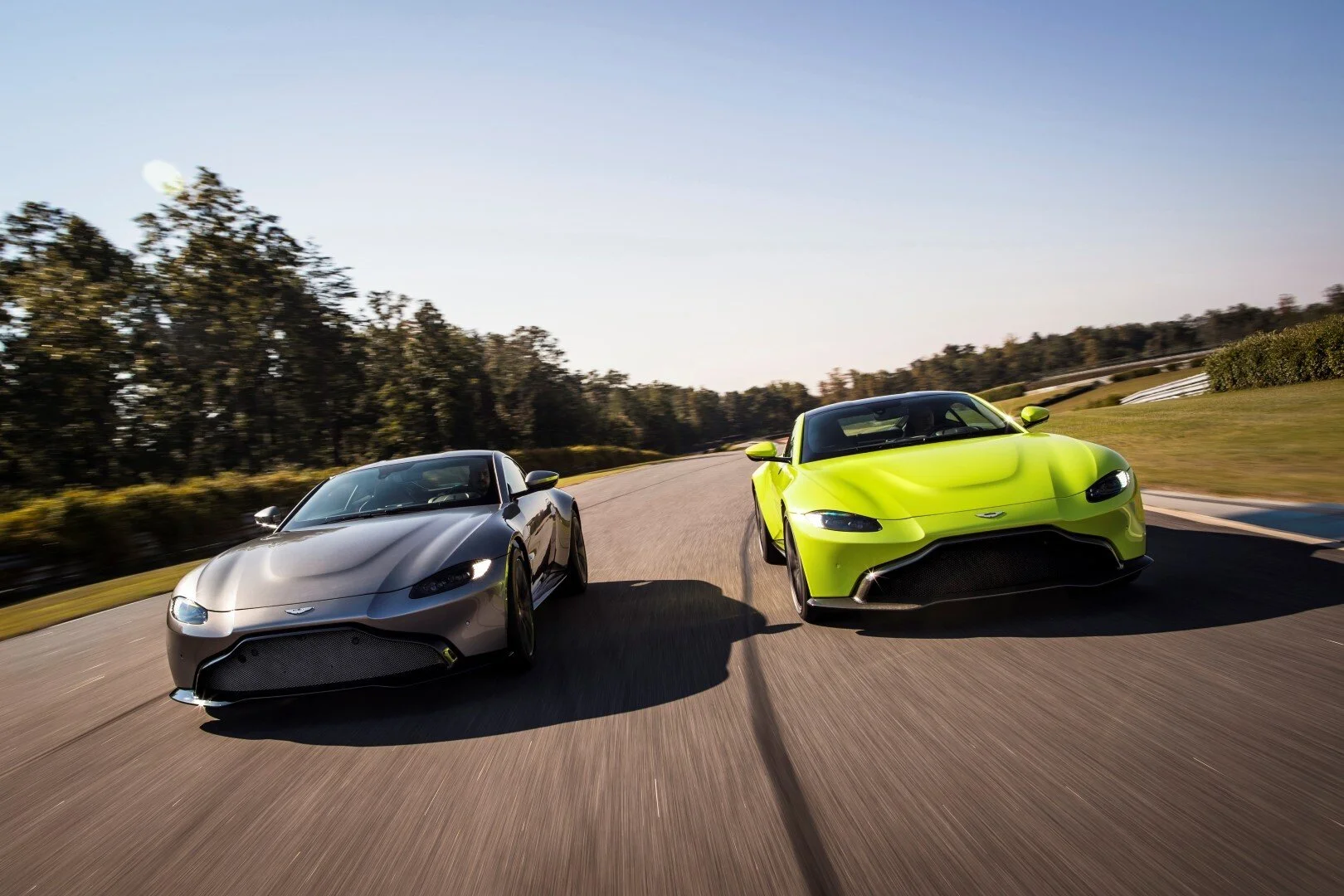
Image © Aston Martin Lagonda. Used for editorial purposes.
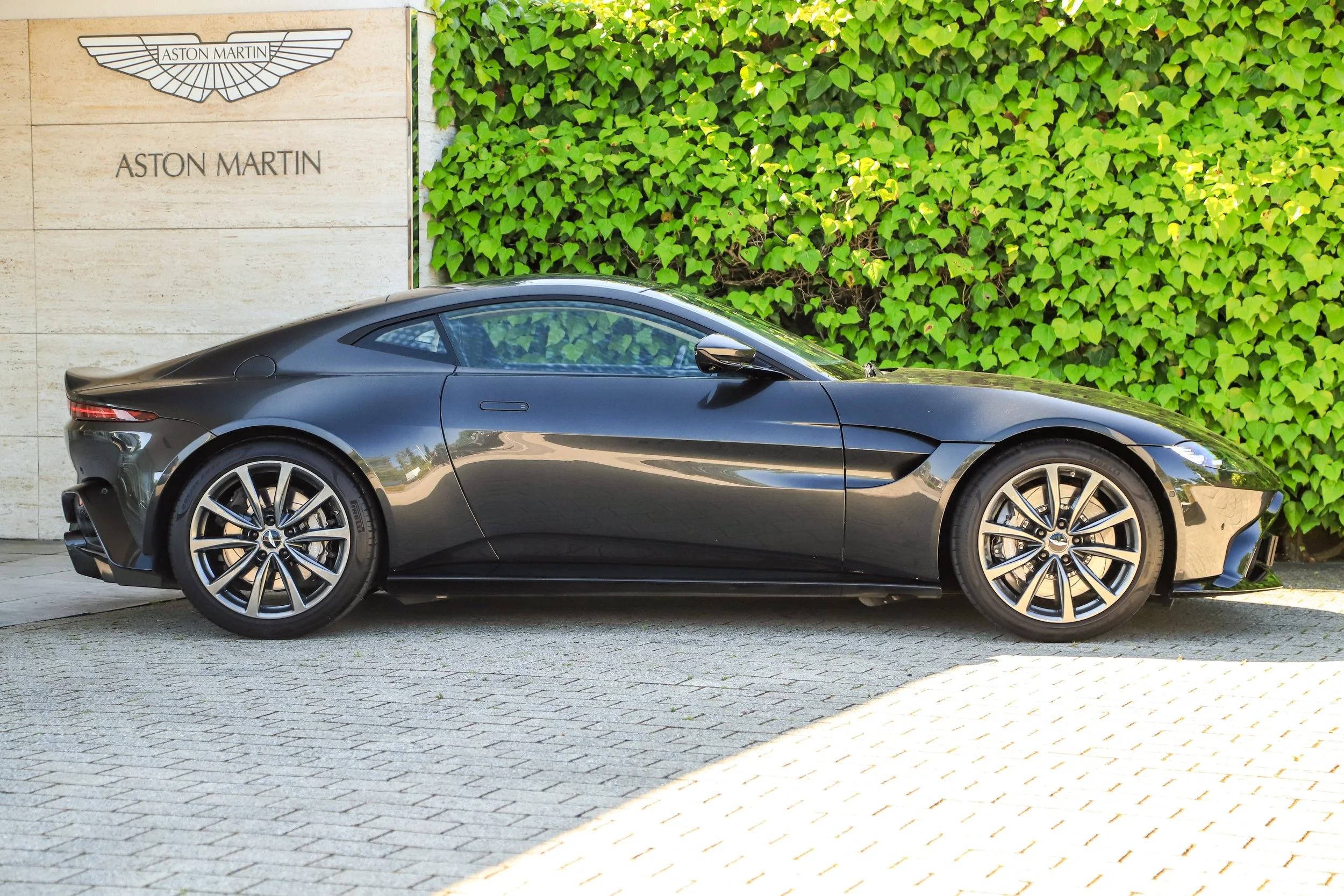
Image © Fuel the Passion
The slim rear light signature, the wider stance, and the sharper, more aggressive front-end treatment all echoed the visual language first explored on the DB10.
Even details such as the flowing clamshell bonnet and the emphasis on muscular rear haunches became defining characteristics of Aston Martin’s modern design philosophy. In this sense, the DB10 was far more than a film prop. It was a preview of where Aston Martin design was heading.
From the DB10 to My Own Aston Martin Journey
For me personally, the DB10 holds a special place in my Aston Martin story. Like many enthusiasts, I had admired the brand long before Spectre arrived in cinemas. Aston Martin had always represented something uniquely British, a blend of elegance, performance and timeless design. But seeing the DB10 on screen was a moment that really captured my imagination. Its dramatic proportions, the aggressive new styling language and the sheer presence of the car suggested that Aston Martin was entering a new era. It felt modern, bold and unmistakably Aston Martin all at the same time. In many ways, the DB10 offered a glimpse of the future.
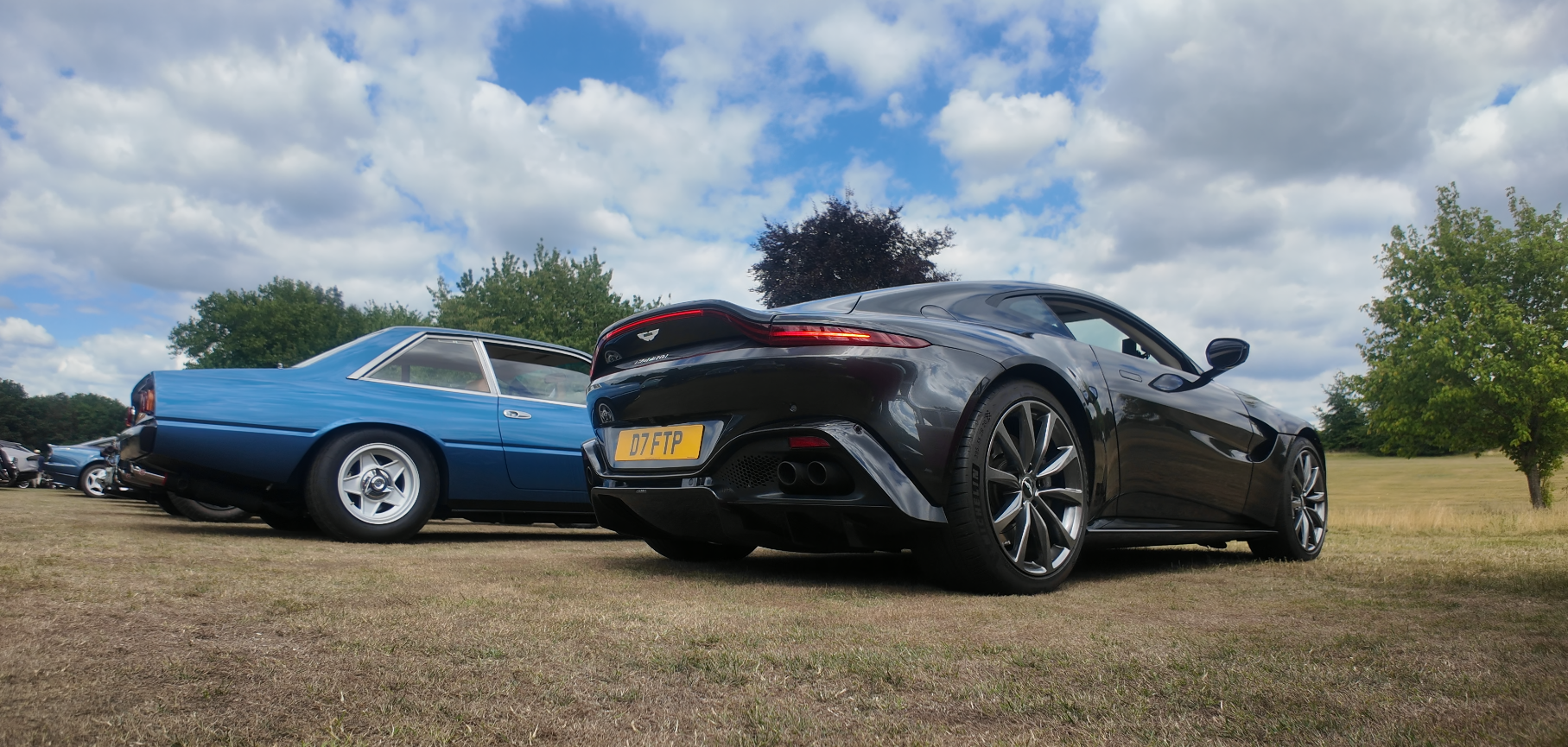
Image © Fuel the Passion
That future would eventually arrive in the form of the second-generation Aston Martin Vantage (2018 generation), a car whose design clearly carries elements first explored on the DB10. Today, sitting on my drive, is my own 2019 Vantage, a car that traces part of its design DNA back to the very machine that first appeared on screen in Spectre.
Final Thoughts - A Car That Never Reached the Road
The Aston Martin DB10 occupies a unique place in the brand’s history. It was never intended to be a production model. It was created purely for the world of cinema, built in tiny numbers and designed to serve the story of James Bond. Yet despite that limited purpose, it became something more. The DB10 previewed the future direction of Aston Martin’s design language, influenced the next generation of road cars and captured the imagination of enthusiasts around the world.
For most of us, the closest we will ever come to a DB10 is through a cinema screen, a museum display, or perhaps a scale model.
Which brings me back to the Corgi model that sparked this article.
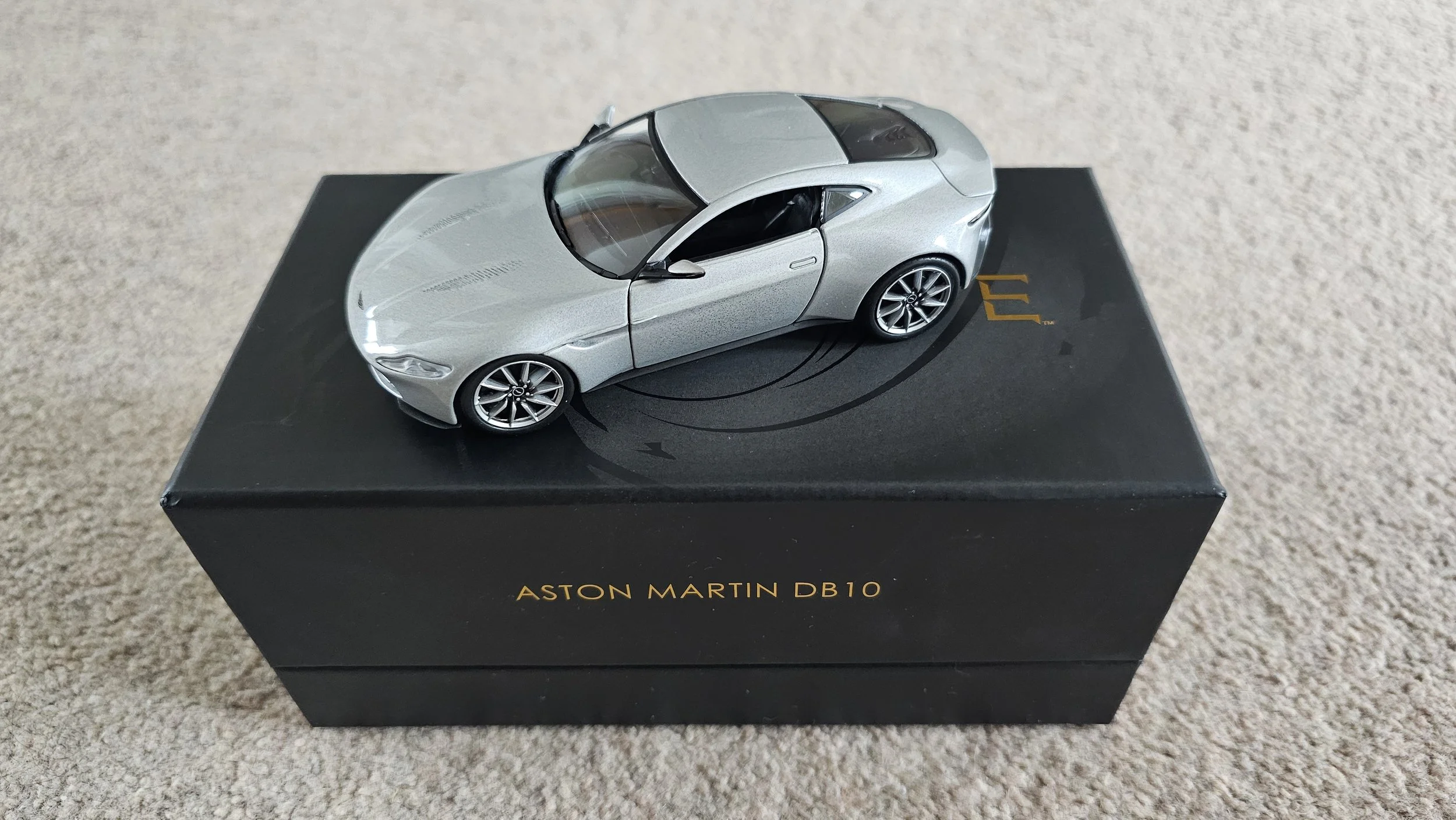
Image © Fuel the Passion
Sitting on my desk in its presentation box, it serves as a small reminder of a remarkable car, one that existed for the briefest of moments in Aston Martin’s history, yet left a lasting impression. So in many ways, I’m rather thankful for the DB10, a car that never reached the road, yet quietly helped shape my own Aston Martin journey.
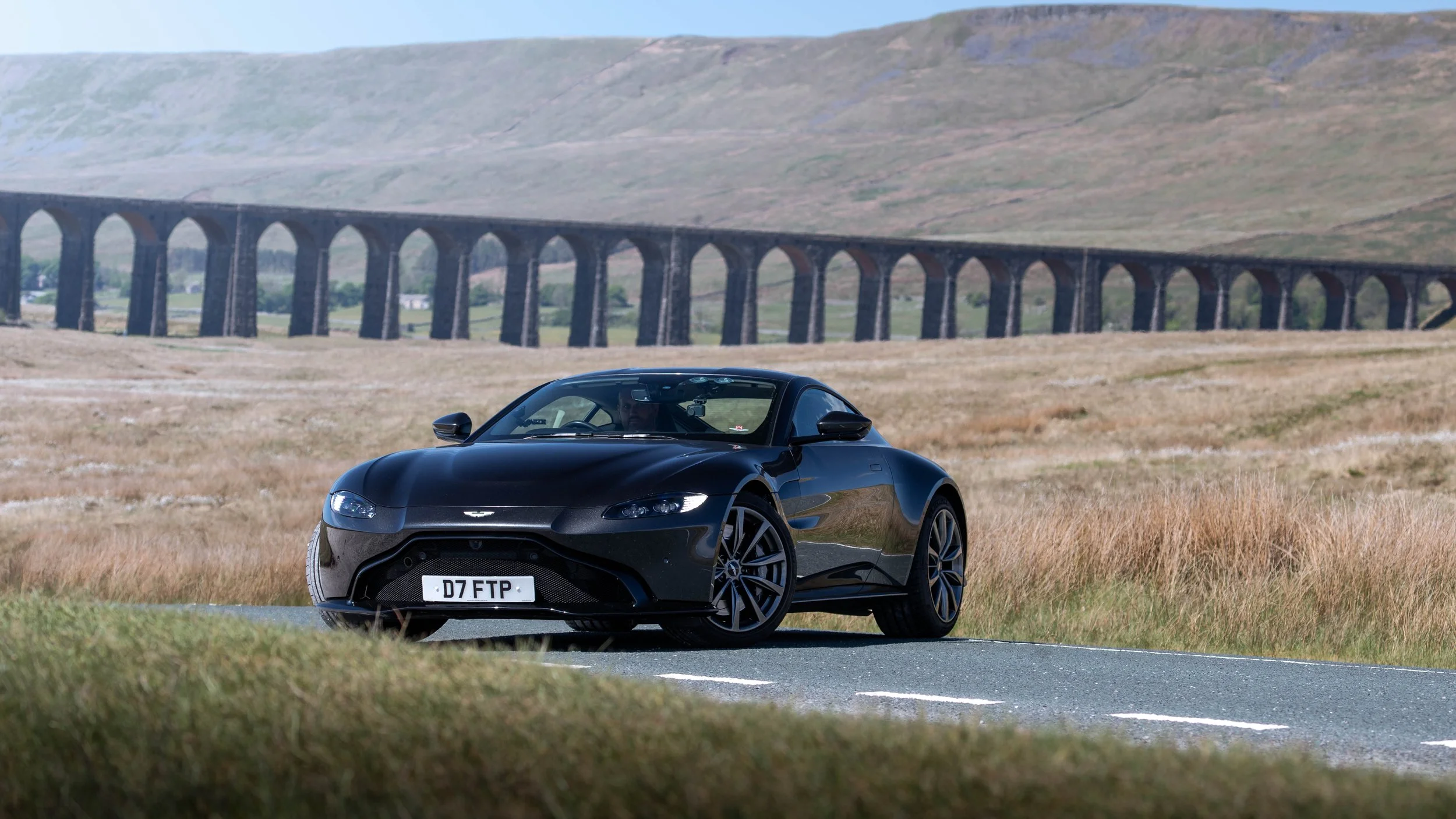
Image © Fuel the Passion
What about you?
Did the DB10 leave the same impression on you when you first saw it in Spectre? Or was there another Aston Martin that first sparked your passion for the brand?
I’d love to hear your thoughts, feel free to leave a comment in the box at the bottom of this article👇.

For all the latest Aston Martin news, don’t miss the FTP Weekly Roundup - published every Sunday at 6am.
Each edition brings together the key stories from across the Aston Martin world, including Formula 1, GT racing, road cars, heritage, business developments and community highlights.
To catch up with the newest edition, read the latest HERE.
