
Aston Martin & James Bond 007
Few partnerships in motoring and cinema have proven as enduring as that between Aston Martin and James Bond. When the Aston Martin DB5 appeared in the 1964 film Goldfinger, it did far more than simply provide transport for 007, it reshaped how the world saw the marque. The DB5 became an extension of Bond himself: elegant, precise, technologically sophisticated, and unmistakably British.
Over the decades that followed, this connection would ebb and return across the Bond films, but it has never truly faded. From the gadget-laden DB5 to later appearances of the V8 Vantage, DBS and modern Aston Martin models, the cars of Gaydon and Newport Pagnell have played a defining role in the visual identity of the franchise.
For Fuel the Passion, this relationship matters because it sits at the intersection of heritage, engineering, and storytelling. The cars are real machines with documented histories and craftsmanship; the films are cultural artefacts with their own production stories and mythology. Where those two worlds meet, something special happens.
The books in this section of the FTP Library explore that fascinating connection, revealing how Aston Martin and James Bond became intertwined not only on screen, but in the imagination of enthusiasts around the world.
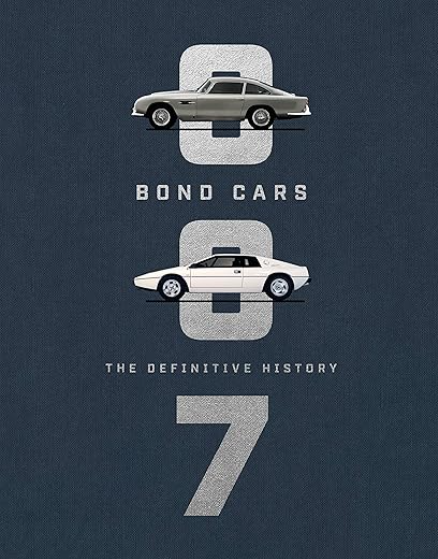
Bond Cars: The Definitive History
Publisher: BBC Books
Format: Hardcover, Illustrated
Pages: 336 pages
Language: English
ISBN: 978-1785945955
Few cinematic partnerships are as iconic as James Bond and his cars. From the moment the Aston Martin DB5 appeared in Goldfinger, the cars of 007 became stars in their own right — symbols of style, technology and thrilling escapism.
Bond Cars: The Definitive History is a lavishly illustrated celebration of every vehicle driven by the world’s most famous fictional spy across more than half a century of films. Written by automotive journalist and broadcaster Jason Barlow, the book offers a behind-the-scenes look at the remarkable machines that helped define the Bond universe.
Drawing on exclusive access to the filmmakers, the book features previously unpublished photography, original call sheets, production artwork, technical drawings and storyboards. Readers are also given rare insights from key figures behind the franchise, including Bond producers Michael G. Wilson and Barbara Broccoli, actor Daniel Craig, and legendary special-effects supervisor Chris Corbould.
The result is both a cinematic history and a motoring celebration, telling the story of the Bond films through the extraordinary vehicles that helped bring the action to life — from gadget-laden Aston Martins to submarines, supercars and experimental prototypes.
For Bond fans and car enthusiasts alike, this beautifully produced volume offers a fascinating journey through the cars that helped shape one of cinema’s greatest legends.

Aston Martin: The James Bond Connection
Format: Paperback
Pages: 148 pages
Language: English
ISBN-13: 979-8243796873
Few automotive brands are as closely linked with cinema as Aston Martin and the legendary world of James Bond. Aston Martin: The James Bond Connection explores how the British marque became forever associated with the world’s most famous fictional spy.
The book traces Aston Martin’s remarkable journey from its early racing heritage through to its rise as a global symbol of British luxury, engineering excellence, and timeless design. Along the way, it explores the development of the iconic DB series, the technological ambition behind modern machines such as the Aston Martin Valkyrie, and the brand’s ongoing evolution in an increasingly electrified automotive landscape.
Central to the story is the cultural moment that cemented Aston Martin in cinematic history — the appearance of the Aston Martin DB5 in the 1964 Bond film Goldfinger. From that point onward, the DB5 became one of the most recognisable cars in the world, symbolising the sophistication, technology, and understated power associated with 007.
Through the story of Aston Martin’s engineering achievements, financial challenges, and enduring design philosophy, this book highlights how the marque has maintained its unique place in automotive culture.
For Aston Martin enthusiasts and Bond fans alike, this book offers a concise and engaging look at how one legendary car manufacturer became inseparable from the story of 007.
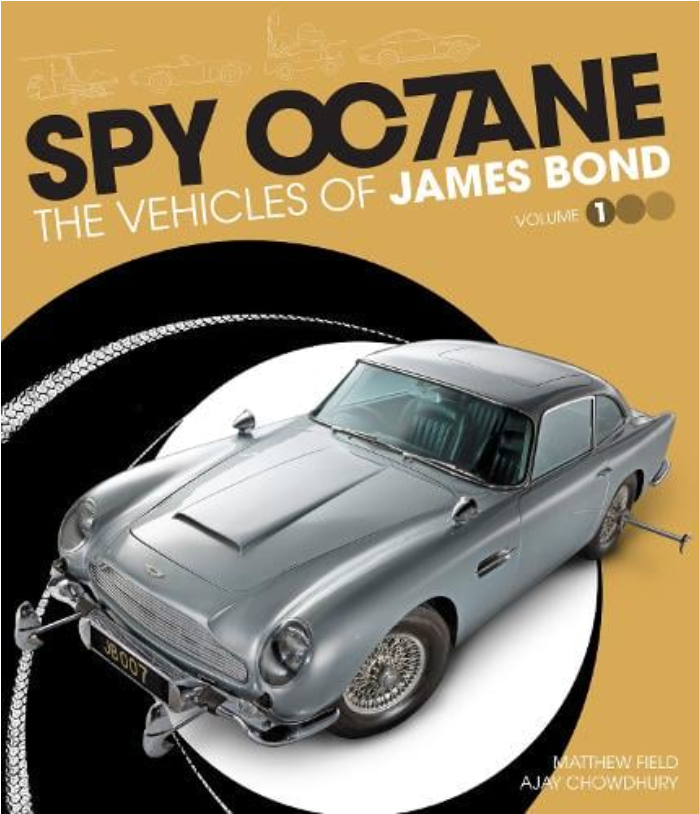
Spy Octane: The Vehicles of James Bond
Matthew Field & Ajay Chowdhury (2024)
Publisher: Porter Press International
ISBN: 9781913089856
Number of pages: 416
Few cars have shaped Aston Martin’s public identity quite like the DB5 in Goldfinger. Sixty years after its screen debut, the relationship between James Bond and the motor car remains one of cinema’s most enduring partnerships, a blend of engineering, theatre and cultural influence. Spy Octane: The Vehicles of James Bond arrives in that anniversary year and turns its focus not simply to one famous car, but to the broader mechanical world that has carried 007 across land, sea and air.
Written by Bond historians Matthew Field and Ajay Chowdhury, this substantial 416-page volume is presented as the first of a planned trilogy examining every vehicle to appear in the Bond films. Drawing on extensive archival research and interviews with filmmakers, stunt drivers, industry executives, curators and private owners, the authors explore the provenance, production stories and afterlives of the machines themselves. Alongside the Aston Martin DB5, the book examines vehicles such as the autogyro “Little Nellie”, the Toyota 2000GT Convertible and the Moon Buggy, tracing how some became global promotional icons while others followed quieter or more uncertain paths.
Illustrated with hundreds of photographs, the book concentrates primarily on the 1960s era of Bond, placing particular emphasis on Ian Fleming’s enthusiasm for distinctive motor cars and international travel. Rather than treating these vehicles merely as props, the volume appears to consider them as artefacts — objects with technical, commercial and cultural significance in their own right.
For readers interested in the intersection between Aston Martin heritage and cinematic history, this is a carefully researched contribution to the record.
The James Bond Archives. “No Time To Die” Edition
Edited by Paul Duncan
Publisher: Taschen GmbH
ISBN: 9783836589321
Number of pages: 648
Since his screen debut in 1962, James Bond has occupied a distinctive place in modern cinema — a figure shaped as much by production craft as by performance. Across more than six decades, the Bond films have evolved alongside changes in filmmaking, technology and cultural tone, while maintaining a recognisable identity. The James Bond Archives. “No Time To Die” Edition positions itself as a comprehensive visual and documentary record of that history.
With access granted by EON Productions to extensive photographic and production archives, editor Paul Duncan assembled this large-format volume following detailed research through archival imagery and documentation. The book covers every official Bond film from Dr. No (1962) through to No Time To Die (2021), while also acknowledging non-EON productions such as Casino Royale (1967) and Never Say Never Again (1983). The updated edition incorporates new interviews and material relating to the Daniel Craig era, including previously unpublished stills, designs, storyboards, memos and alternative concepts.
Beyond imagery, the volume includes oral history contributions from cast and crew — producers, directors, designers, stunt performers and technicians — offering insight into the practical realities behind the series’ longevity. The emphasis appears to be on documentation and first-hand recollection rather than retrospective myth-making, presenting the films as collaborative productions shaped by many disciplines.
For readers interested in the wider production context surrounding the Bond films — including the vehicles, design language and evolving visual identity that intersect with Aston Martin’s cinematic presence — this is a substantial archival resource.
