

Formula 1
Formula 1 is the highest-profile single-seater racing championship in the world, with the 2026 calendar originally announced as a 24-race global season across five continents. For Fuel the Passion, the focus is Aston Martin Aramco Formula One Team: the Silverstone-based works team running the AMR26 with Honda power, driven by Fernando Alonso and Lance Stroll. This page follows the team’s race results, technical direction, driver stories and the wider Aston Martin performance narrative through the season.
Image © Honda Motor Co., Ltd. Used for editorial purposes.
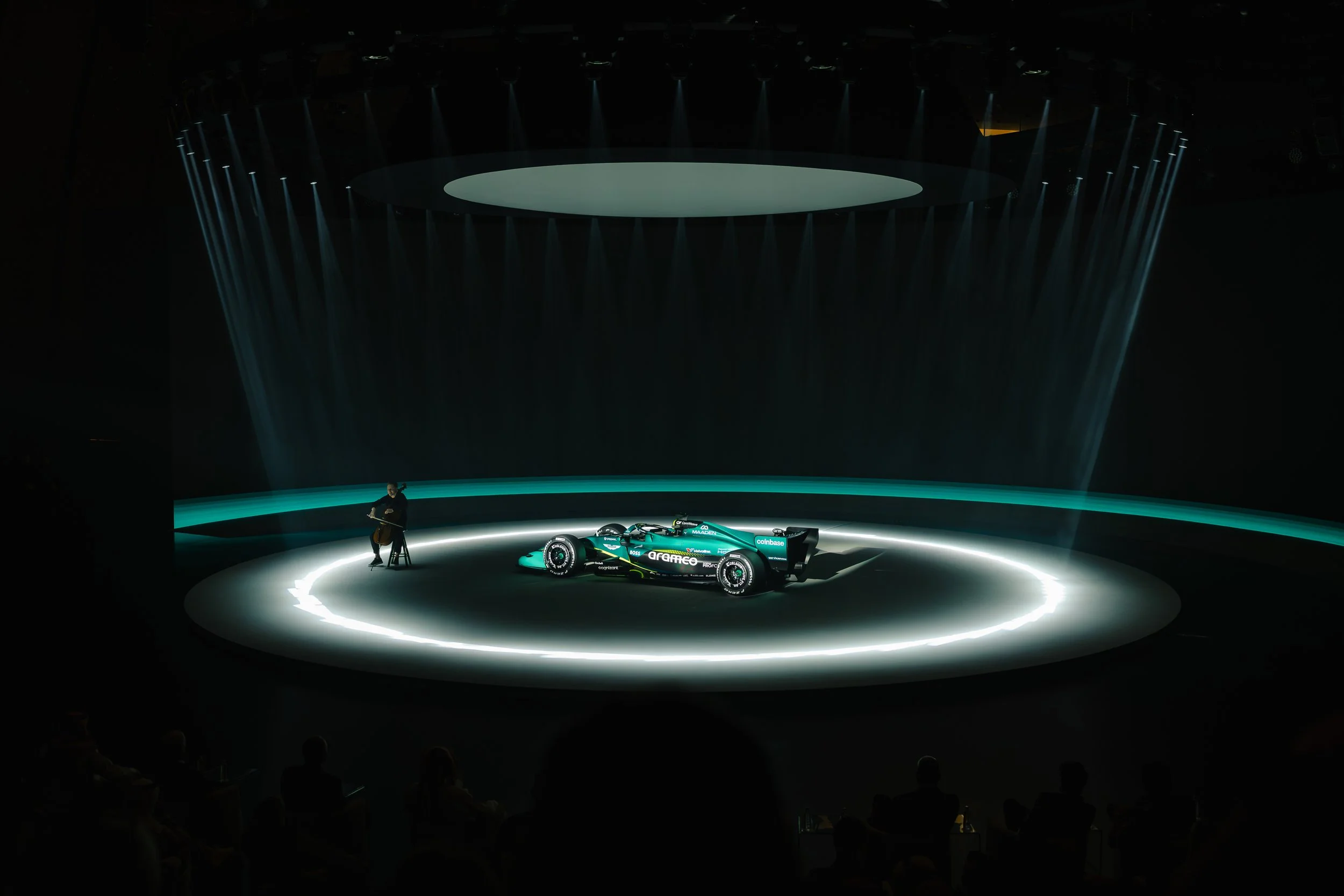
Formula 1 – Season So Far
Updated following Round 17 – Singapore Grand Prix, Marina Bay, 11th October 2026
The 2026 Formula One season has now completed 17 rounds, with Mercedes continuing to lead both championships. Kimi Antonelli heads the Drivers' Championship with 340 points, 102 ahead of team-mate George Russell, after finishing third in Singapore. Mercedes leads the Teams' Championship with 578 points, ahead of Ferrari on 444 and McLaren on 339. Max Verstappen secured victory in both the Singapore Sprint and Grand Prix, continuing Red Bull's late-season resurgence.
For Aston Martin, the season remains difficult, despite occasional signs of improvement. Fernando Alonso's point at Monaco was the team's only score through the opening 11 rounds, before a substantial AMR26 development package introduced in Hungary offered some encouragement. That progress became more visible at Zandvoort, where Alonso recovered from 18th to finish ninth, adding two points despite both cars having been eliminated in Q1.
The following three rounds demonstrated how much work remained. Monza exposed the AMR26's lack of straight-line speed, with Alonso retiring following kerb damage and Lance Stroll stopping with a hydraulic problem. Madrid brought another frustrating weekend: Alonso finished 17th after contact with Carlos Sainz required a front-wing change, while Stroll missed qualifying and subsequently retired with brake difficulties.
Baku then produced another double retirement. Power-unit penalties left Alonso and Stroll starting from the back of the grid, before Stroll stopped after seven laps with a water-pressure problem and Alonso retired after 20 laps following a substantial loss of speed on the straights.
Sepang offered a more encouraging picture. Both Aston Martins reached Q2 together for the first time this season, with Alonso qualifying 12th and Stroll 14th. Despite a difficult opening tyre choice in damp conditions, Alonso recovered to finish eighth, holding off Lando Norris in the closing stages, while Stroll finished 12th. Alonso's four points represented Aston Martin's strongest result of 2026, lifting the team's championship total to seven.
However, Singapore quickly demonstrated that the improvement was far from established. Neither Aston Martin progressed beyond Q1 in Grand Prix qualifying, with Alonso 17th and Stroll 19th. Saturday's rain-affected Sprint brought further frustration, as Alonso finished 11th without scoring, while Stroll retired following an early collision with Sergio Pérez.
Both drivers started Sunday's Grand Prix from the pit lane following overnight changes, with Alonso also taking a replacement power unit. Neither car had the pace to make meaningful progress through the field. Alonso eventually finished 16th, while Stroll retired with an overheating clutch after struggling with driveability problems. The weekend ended without points, a disappointing contrast to the team's performance in Malaysia.
Aston Martin remains tenth in the Teams' Championship with seven points, five behind Williams. Alonso sits 17th in the Drivers' Championship with seven points, while Stroll remains 21st without a score. The team's three points finishes at Monaco, Zandvoort and Sepang remain isolated highlights in a campaign characterised by inconsistent performance and reliability concerns.
The current FTP assessment is that Sepang demonstrated the AMR26 can occasionally compete more effectively in the midfield, but Singapore exposed the limitations that have troubled Aston Martin throughout the season. The challenge is no longer simply to produce an encouraging result, but to understand why competitiveness varies so significantly between circuits and establish a more dependable level of performance.
Six Grands Prix remain, beginning with the United States Grand Prix at Austin on 23rd–25th October. With the championship entering its final stages, Aston Martin will be looking for improved reliability, stronger qualifying performances and further opportunities to score before attention turns fully towards 2027.
FTP Summary
Singapore brought Aston Martin back down to earth following its strongest result of 2026 at Sepang. Fernando Alonso finished 11th in the Sprint and 16th in the Grand Prix, while Lance Stroll retired from both races. Neither driver scored, leaving Aston Martin on seven championship points.
After 17 rounds, Aston Martin remains tenth in the Teams' Championship, five points behind Williams. Sepang offered encouragement, but Singapore reinforced the need for greater consistency, improved driveability and reliability. With six Grands Prix remaining, Austin provides the next opportunity to respond.

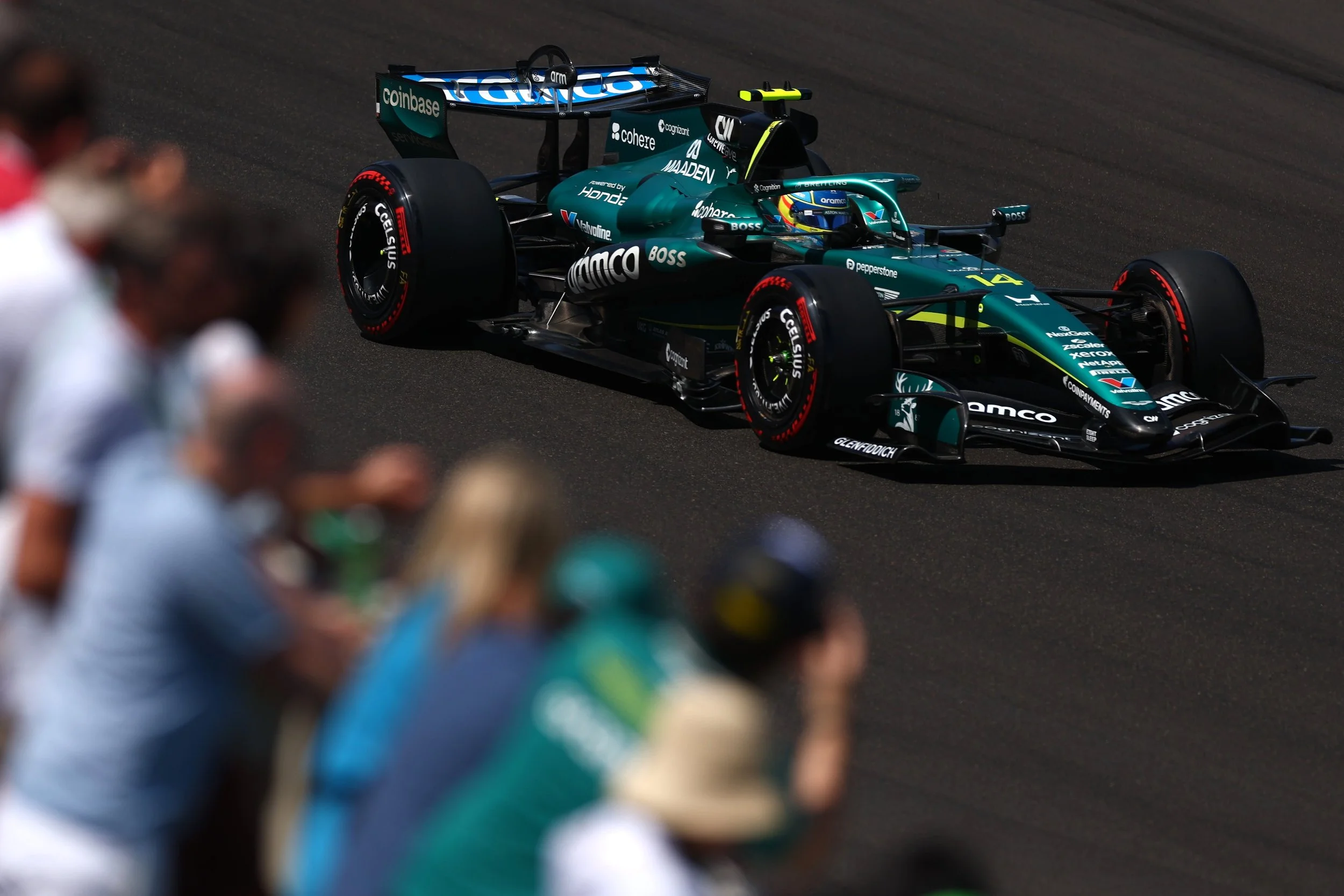
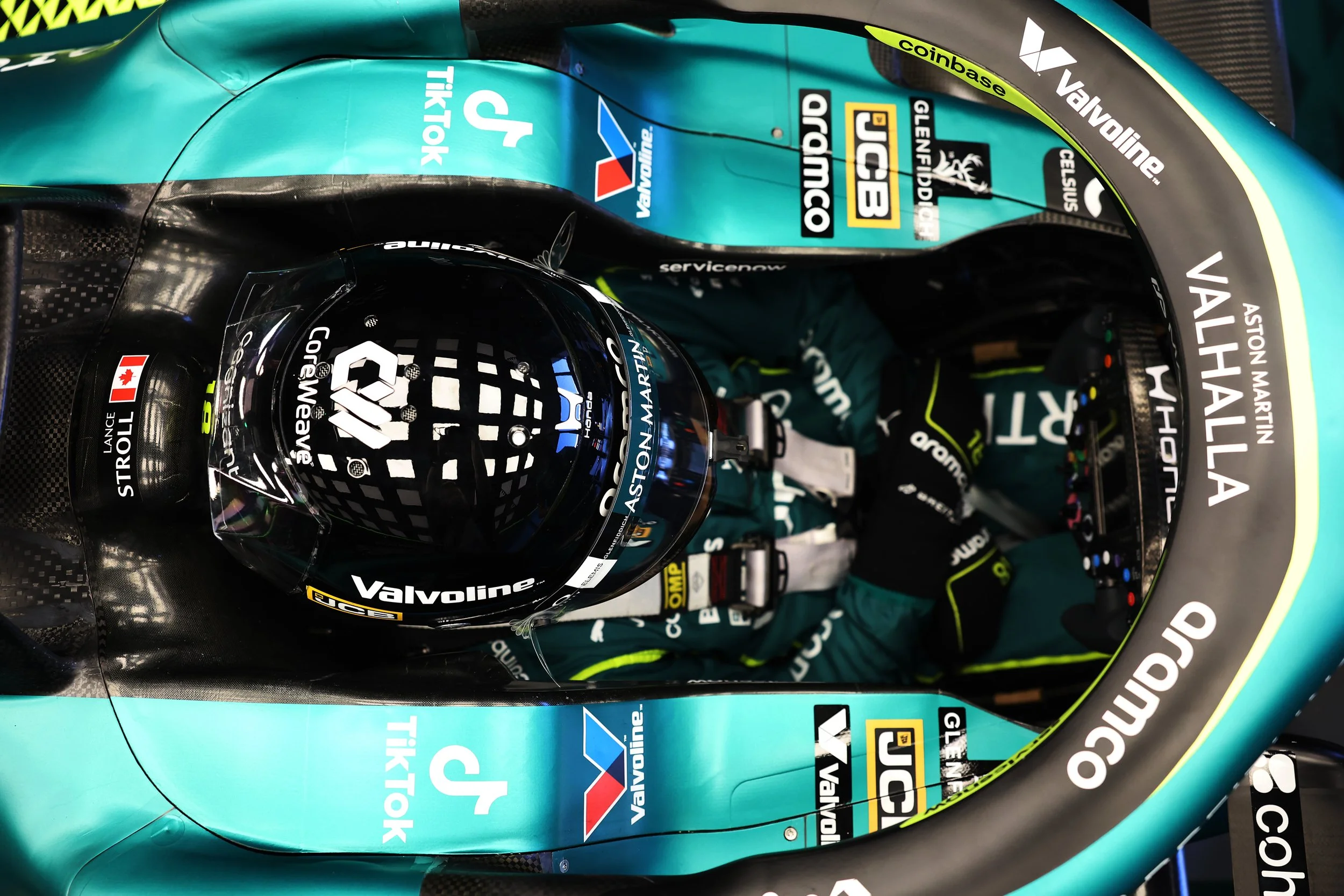
Images © Honda Motor Co., Ltd. Used for editorial purposes.
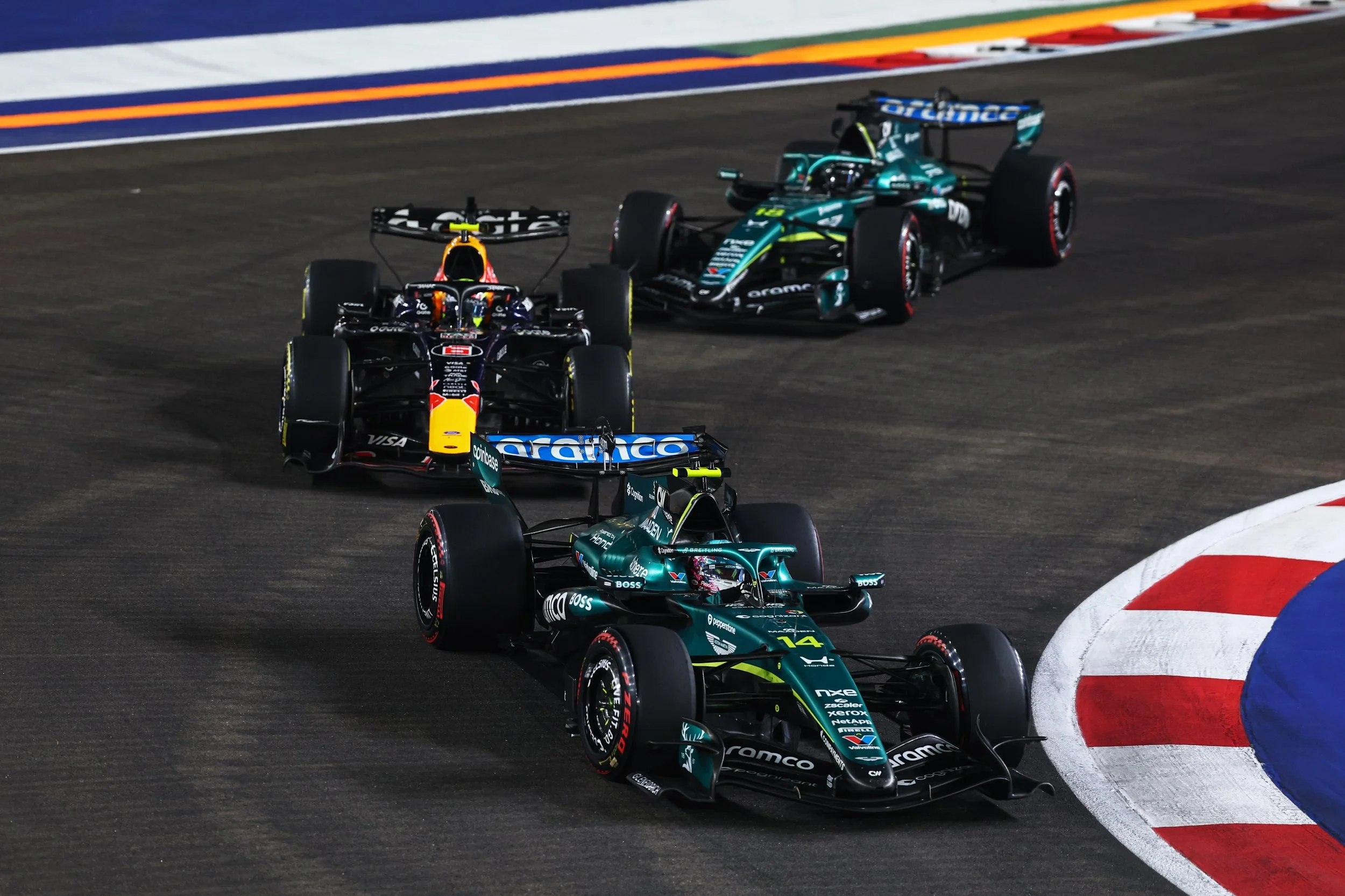
Latest Result
Singapore Grand Prix
Marina Bay Street Circuit, Singapore | 9–11 October 2026
Max Verstappen secured victory in the Singapore Grand Prix, finishing 7.335 seconds ahead of Charles Leclerc, with championship leader Kimi Antonelli third. Verstappen also won Saturday's Sprint. Aston Martin endured a difficult weekend following its encouraging performance at Sepang. Fernando Alonso finished 11th in the Sprint and 16th in Sunday's Grand Prix, while Lance Stroll retired from both. Neither driver scored, leaving Aston Martin tenth in the Teams' Championship with seven points.
Top 10
Aston Martin Focus
Championship Standings
Formula 1 Standings
2026 Drivers' and Teams' Championships following the Singapore Grand Prix on 11 October, including Sprint points.
Teams' Championship
Drivers — Top 10
Drivers — Aston Martin Focus
Results and standings reflect the official Formula 1 classifications checked on 12 October 2026, including Sprint points. Sources: Singapore race result , Drivers' standings and Teams' standings . Aston Martin rows are highlighted using FTP Podium Green and AMR Lime.
Image © Honda Motor Co., Ltd. Used for editorial purposes.
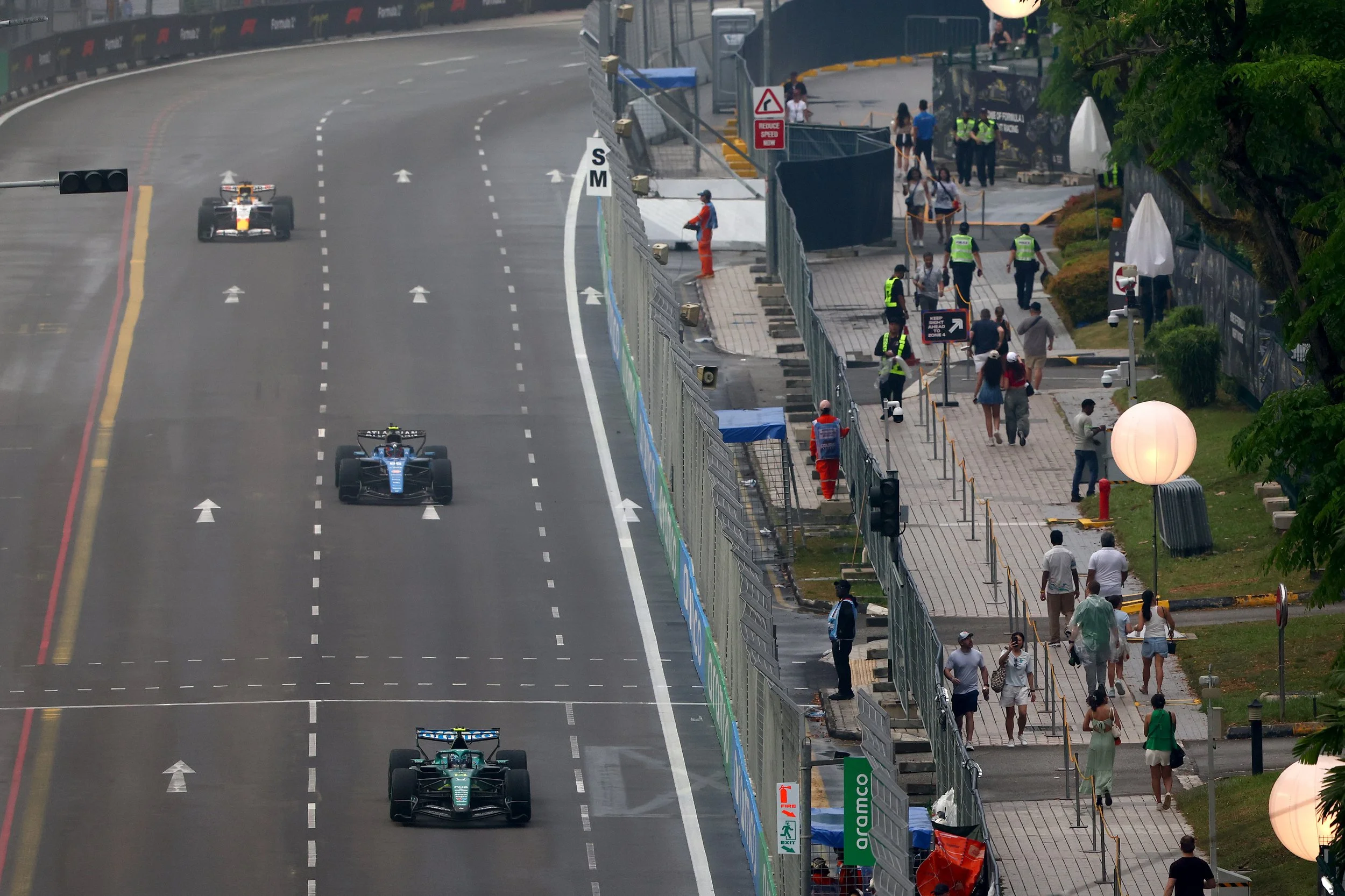
Race 17 – Singapore Grand Prix, Marina Bay | 9th–11th October 2026
Singapore Exposes Aston Martin’s Continuing Struggles as Both Cars Finish Outside the Points
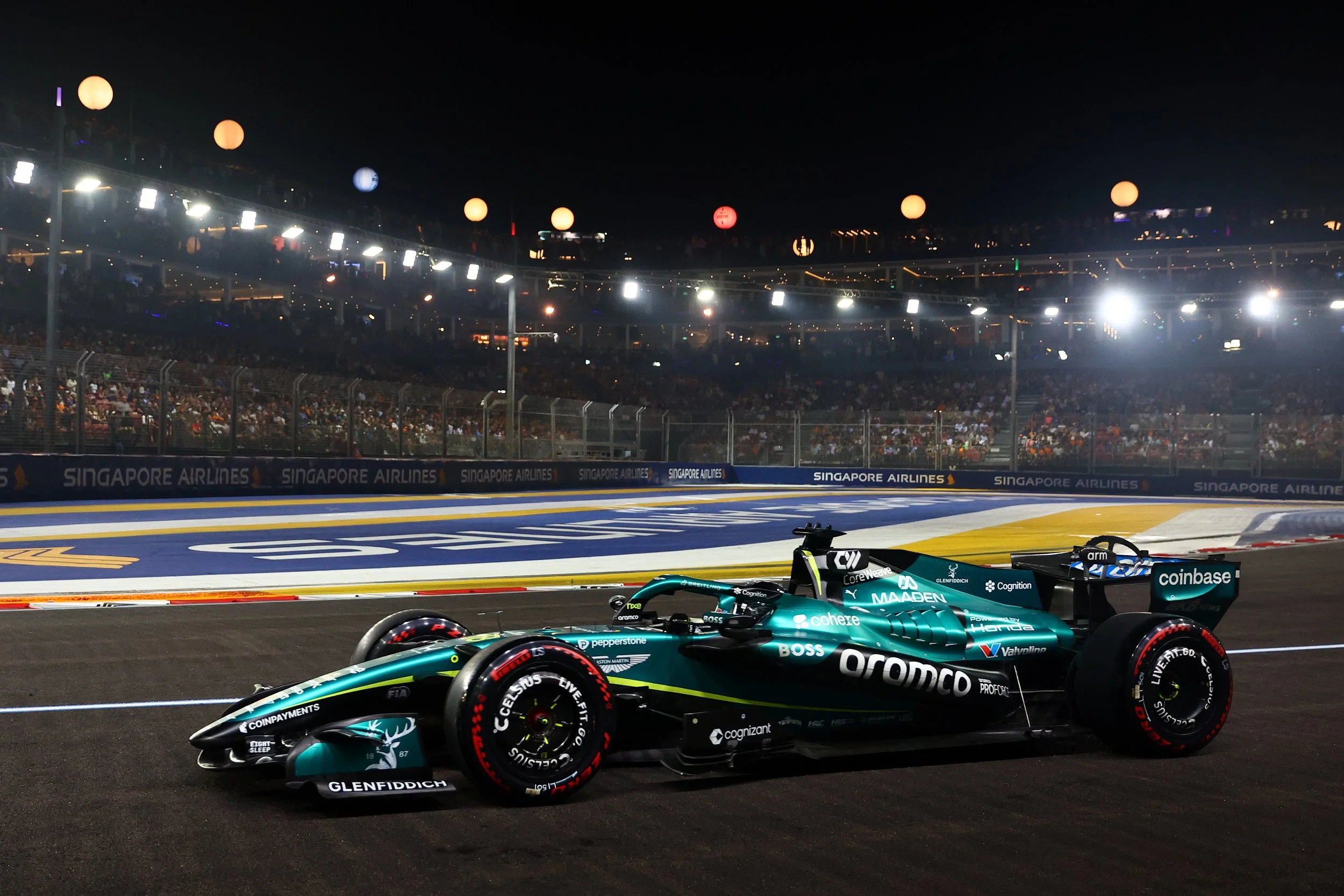
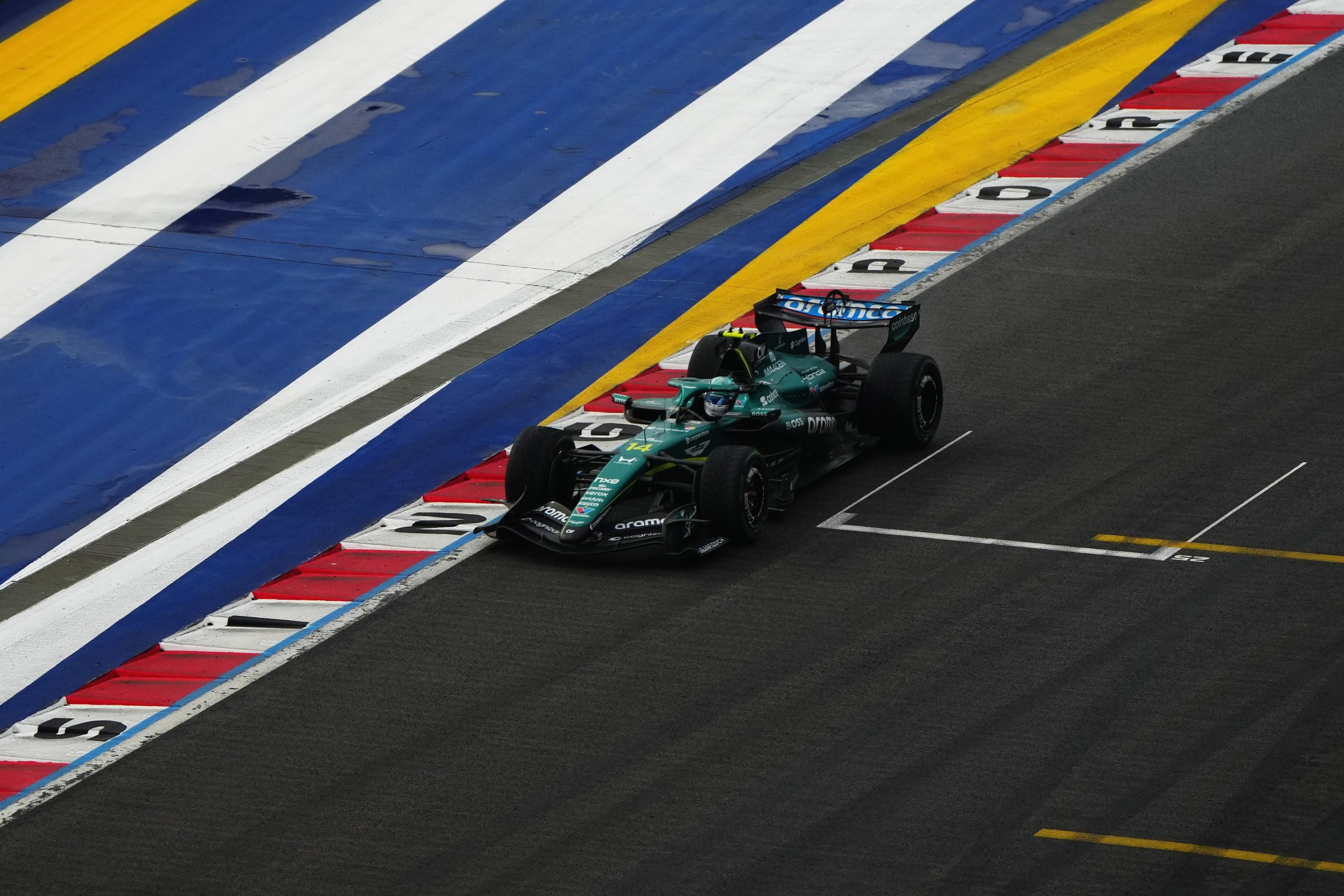
Aston Martin endured another difficult weekend at the Singapore Grand Prix, just seven days after Fernando Alonso had delivered the team's strongest result of 2026 in Malaysia. Alonso finished sixteenth at Marina Bay, one lap behind race winner Max Verstappen, while Lance Stroll retired with a clutch problem. Neither driver scored in Saturday's Sprint or Sunday's Grand Prix, leaving Aston Martin tenth in the Teams' Championship with seven points after 17 rounds.
The contrast with Sepang was particularly disappointing. In Malaysia, both AMR26s had reached Q2 together for the first time this season, with Alonso converting a more competitive weekend into four valuable points. Singapore's tight corners, demanding traction zones and unforgiving barriers presented a different challenge, and the team struggled to find the pace or driveability needed to compete effectively with its midfield rivals.
Friday's Sprint Qualifying provided the first indication of those difficulties. Alonso qualified fifteenth for the shorter race, with Stroll eighteenth, leaving both drivers facing a difficult task on a circuit where overtaking opportunities are limited. Their positions also suggested that the improved qualifying performance seen at Sepang had not carried over to Marina Bay.
Saturday's Sprint was delayed by approximately half an hour after heavy rain left standing water on parts of the circuit. Following an assessment of the conditions, the field completed formation laps behind the Safety Car before racing began on intermediate tyres. The slippery surface and poor visibility made the opening stages particularly challenging.
For Aston Martin, the Sprint brought mixed fortunes but no points. Alonso completed the 20-lap race in eleventh, taking advantage of retirements elsewhere without being able to break into the top eight. Stroll's afternoon ended early following contact with Sergio Pérez, which sent the Aston Martin into the barriers. The stewards investigated the incident but decided that no penalty was necessary.
Grand Prix qualifying later on Saturday provided little encouragement. Neither Aston Martin progressed beyond Q1, with Alonso seventeenth and Stroll nineteenth. Stroll also missed his braking point during the session and entered a run-off area, adding to a frustrating day.
Alonso was particularly candid about the team's lack of competitiveness. He explained that his final qualifying run had been clean and well managed, but the necessary pace simply wasn't available. With little to lose from his grid position, Aston Martin subsequently elected to replace his power unit ahead of Sunday's race.
Both drivers eventually started the Grand Prix from the pit lane following changes made before the race. Although this allowed the team to adjust its approach, it left Alonso and Stroll facing an even more difficult recovery through the field. Marina Bay's narrow layout and limited overtaking opportunities meant that any meaningful progress would depend on strategy, incidents ahead and the ability to maintain competitive lap times.
The race began in hot and humid conditions, with both Aston Martins starting on soft tyres before switching to mediums. Alonso completed a single pit stop and managed to reach the finish, but the AMR26 continued to struggle with driveability. Despite completing 61 of the scheduled 62 laps, he finished sixteenth, unable to challenge for the points.
Stroll's race proved even more frustrating. Having also started from the pit lane, he struggled to make progress before an overheating clutch brought his afternoon to a premature conclusion. He completed 36 laps before retiring, recording his second retirement of the weekend. The problem added to Aston Martin's continuing reliability concerns, which have repeatedly prevented the team from building momentum during the season.
Stroll's retirement also had consequences beyond Aston Martin's own race. The resulting Virtual Safety Car created a strategic opportunity for the leading teams, with Ferrari attempting to bring both Charles Leclerc and Lewis Hamilton into the pits. Hamilton missed the pit entry, while Leclerc completed his stop and subsequently moved ahead of his team-mate. Hamilton eventually fell to sixth as his tyres deteriorated during the closing stages.
At the front, Verstappen produced a commanding performance to secure his first Singapore Grand Prix victory. Starting from pole position, he defended his lead from Leclerc into the opening corner and gradually established control of the race. Despite communication difficulties that forced Red Bull to rely partly on pit-board messages, Verstappen completed all 62 laps to win by 7.335 seconds.
Leclerc finished second for Ferrari, while Kimi Antonelli completed the podium for Mercedes. Lando Norris and Oscar Piastri took fourth and fifth for McLaren, ahead of Hamilton. Liam Lawson finished seventh, Nico Hülkenberg eighth and George Russell ninth, with Isack Hadjar completing the points-paying positions.
Verstappen's victory was his second consecutive Grand Prix win following Sepang and the 73rd of his Formula One career. It also came on his 250th Grand Prix start, making the Singapore result a significant personal milestone as Red Bull continued its late-season improvement.
For Antonelli, third place strengthened his position at the top of the Drivers' Championship. The Mercedes driver now has 340 points, extending his advantage over team-mate Russell to 102 with six Grands Prix remaining. Mercedes also continues to lead the Teams' Championship with 578 points, ahead of Ferrari on 444 and McLaren on 339.
Aston Martin remains tenth with seven points, five behind Williams. Alonso sits seventeenth in the Drivers' Championship, having scored all seven of the team's points through his finishes at Monaco, Zandvoort and Sepang. Stroll remains twenty-first without a score.
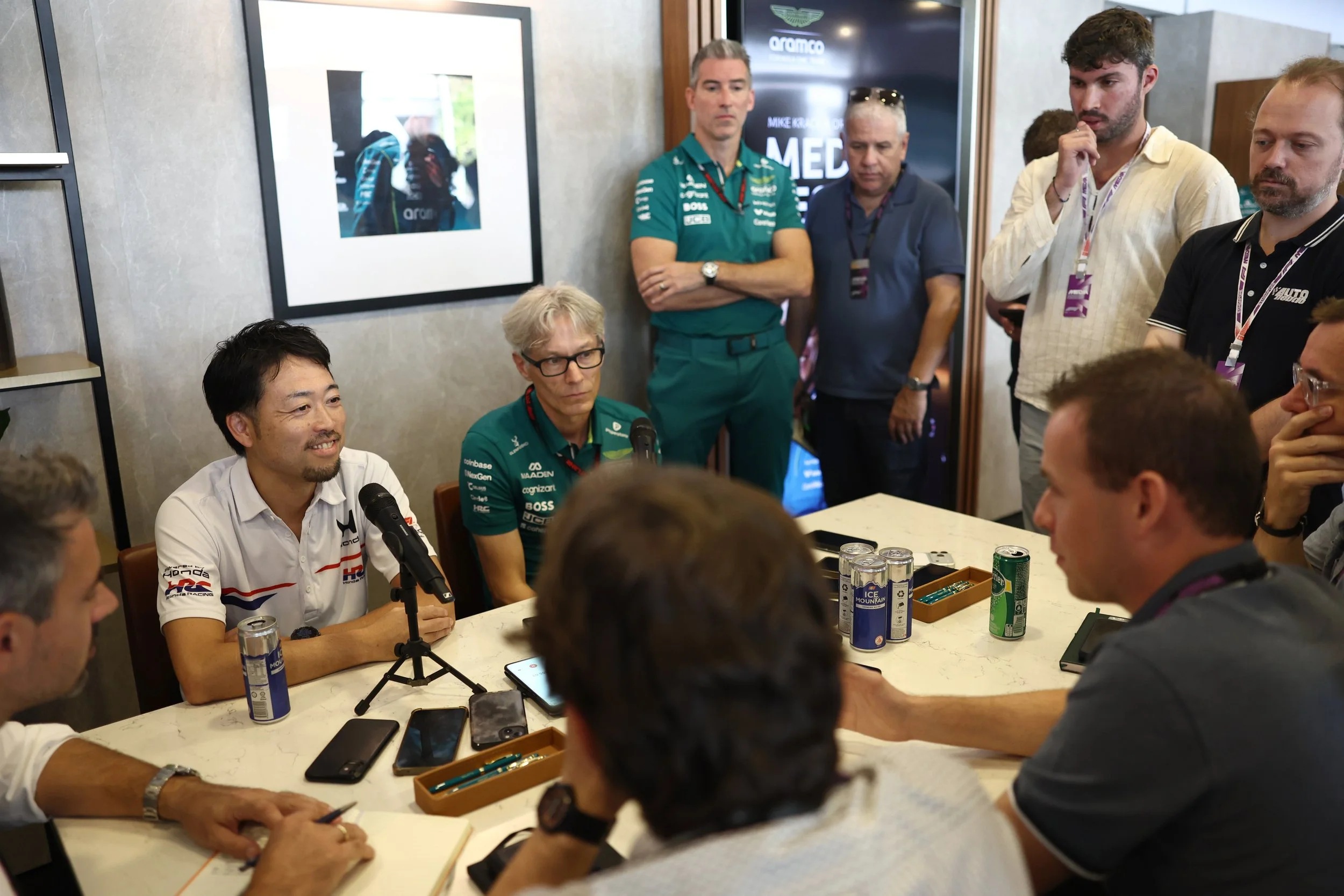
Following the race, Alonso acknowledged that the team had struggled with driveability throughout the weekend and expressed hope that the problems could be addressed before the next sequence of races. Stroll confirmed that an overheating clutch had caused his retirement, while Mike Krack emphasised the need to regroup and prepare for Austin.
For FTP, Singapore reinforces the uncertainty surrounding Aston Martin's occasional improvements during 2026. Sepang demonstrated that the AMR26 can produce a competitive midfield performance under favourable circumstances, particularly when the team qualifies reasonably well and takes advantage of changing race conditions. Marina Bay, however, exposed how quickly those gains can disappear when the circuit demands different characteristics from the car.
The disappointment was not simply that Aston Martin failed to score. Neither driver progressed beyond Q1, both started Sunday's race from the pit lane, and Stroll's retirement added another reliability problem to an already difficult campaign. Alonso's ability to complete the race offered some useful running, but sixteenth place provided little evidence that the underlying performance deficit had been reduced.
With six Grands Prix remaining, the challenge is to establish greater consistency rather than rely on occasional opportunities. Aston Martin's development work has produced encouraging moments, but the team has yet to demonstrate that those improvements can translate into dependable performance across different circuits.
The championship now heads to the United States Grand Prix at the Circuit of The Americas in Austin on 23rd–25th October. After the disappointment of Singapore, Aston Martin will be hoping to recover some of the competitiveness displayed at Sepang and give both drivers a more realistic opportunity to challenge for points as the 2026 season approaches its conclusion.
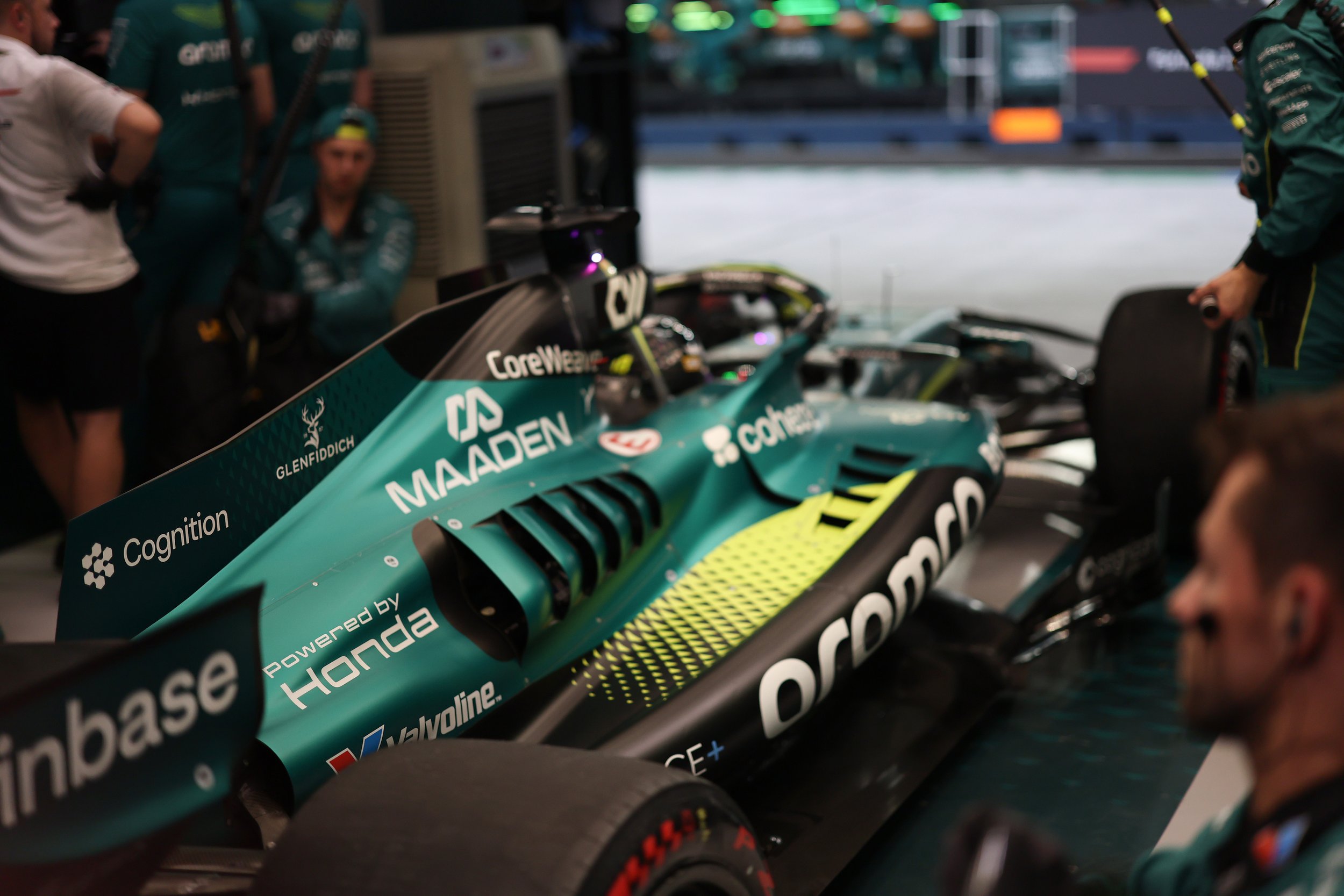
FTP Summary Line
Singapore brought Aston Martin back down to earth following its encouraging performance at Sepang. Fernando Alonso finished sixteenth, while Lance Stroll retired with a clutch problem, leaving both drivers without points across the Sprint weekend. The team remains tenth in the championship with seven points, five behind Williams.
With six Grands Prix remaining, Singapore highlighted the continuing challenges of competitiveness and reliability. Aston Martin now heads to Austin hoping to rediscover the pace shown in Malaysia and turn occasional promising performances into more consistent results.
Images © Honda Motor Co., Ltd. Used for editorial purposes.
Formula 1 • Round 17 • Aston Martin Focus
Singapore Grand Prix Result Snapshot
Marina Bay Street Circuit, Singapore • 9th–11th October 2026
Top 10
| Pos | Driver | Team | Gap / Time | Points |
|---|---|---|---|---|
| 1 | Max Verstappen | Red Bull Racing | Winner | 25 pts |
| 2 | Charles Leclerc | Ferrari | +7.335s | 18 |
| 3 | Kimi Antonelli | Mercedes | +24.573s | 15 |
| 4 | Lando Norris | McLaren | +40.506s | 12 |
| 5 | Oscar Piastri | McLaren | +49.644s | 10 |
| 6 | Lewis Hamilton | Ferrari | +53.188s | 8 |
| 7 | Liam Lawson | Racing Bulls | +81.666s | 6 |
| 8 | Nico Hülkenberg | Audi | +83.386s | 4 |
| 9 | George Russell | Mercedes | +84.677s | 2 |
| 10 | Isack Hadjar | Red Bull Racing | +90.862s | 1 |
Aston Martin Focus
| Result | Driver | Race Status | FTP Note |
|---|---|---|---|
| P16 | Fernando Alonso Aston Martin | 61 laps completed • 0 points Started from pit lane • Finished one lap down • Sprint P11 | Alonso reached the chequered flag but could not reproduce the competitiveness shown at Sepang. Starting from the pit lane, he finished sixteenth, outside the points. |
| DNF | Lance Stroll Aston Martin | Retired after 36 laps • 0 points Started from pit lane • Sprint DNF | Stroll retired with a clutch-related problem after 36 laps, completing a difficult weekend in which he also failed to finish Saturday's Sprint. |
FTP reading: Singapore brought Aston Martin back down to earth after Alonso's eighth place at Sepang. Alonso finished sixteenth and Stroll retired, with neither driver scoring in the Sprint or Grand Prix. The team remains tenth on seven points, five behind Williams. With six Grands Prix remaining, Austin offers the next opportunity to recover some competitiveness and improve reliability.
Classification reflects the Singapore Grand Prix result on 11th October 2026, over 62 laps. Official Formula 1 result • Teams' standings .
Race 16 – Bahrain Grand Prix in Malaysia, Sepang | 2nd–4th October 2026
Alonso’s Eighth Place Gives Aston Martin Its Best Result of 2026
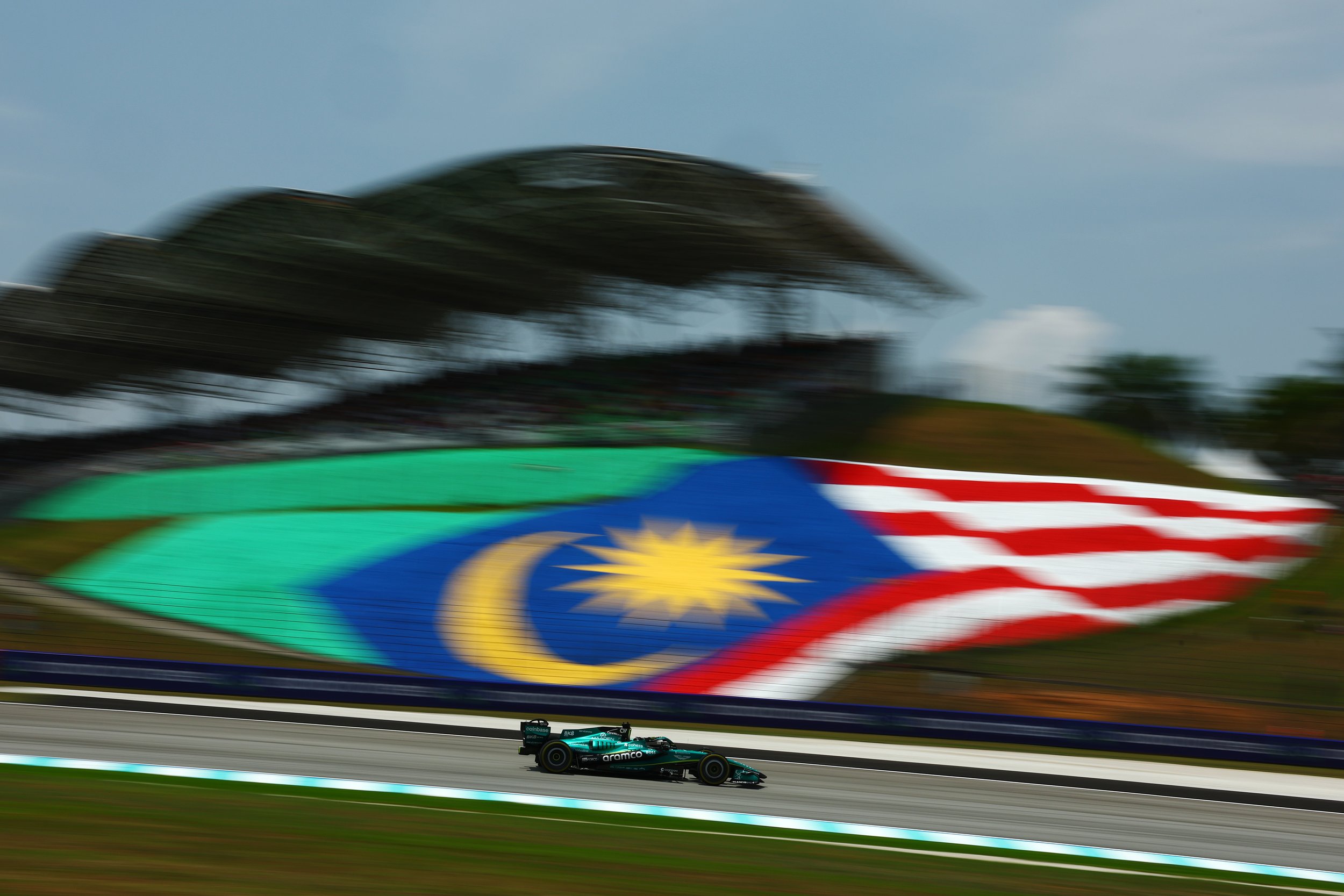
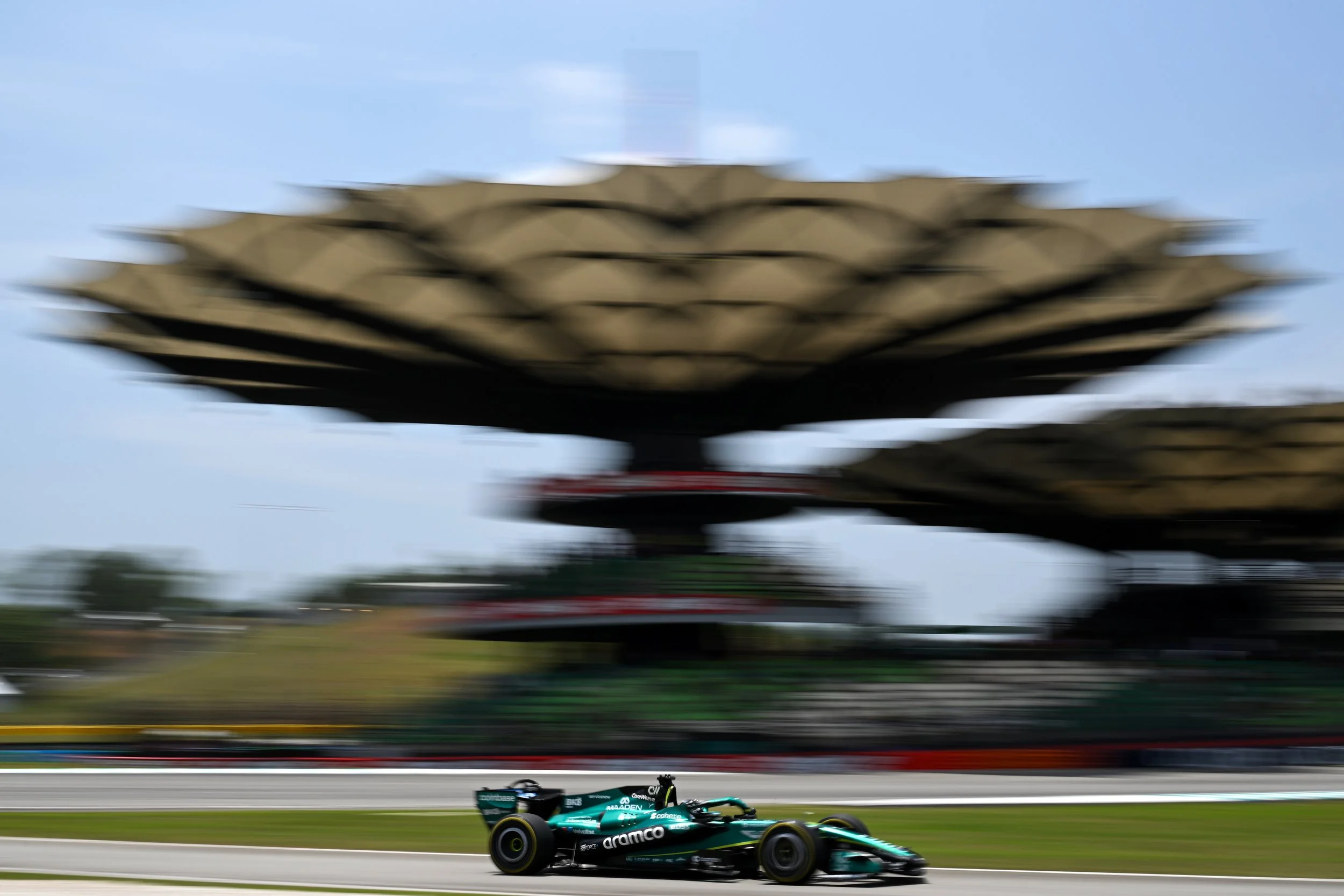
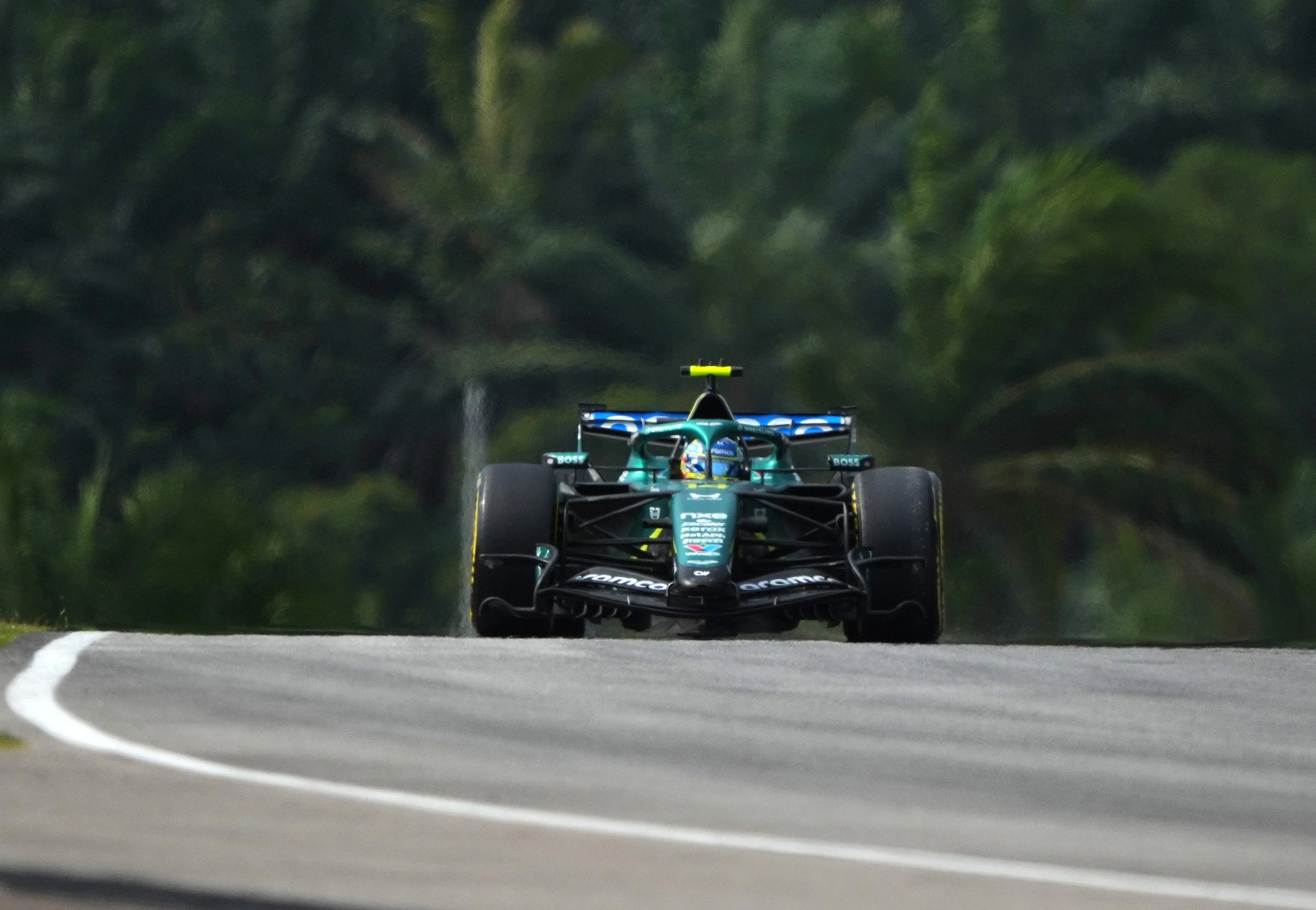
Aston Martin left Sepang with its strongest result of the season after Fernando Alonso finished eighth in a rain-disrupted Bahrain Grand Prix in Malaysia. Lance Stroll completed the race in twelfth, bringing both AMR26s to the chequered flag after the disappointment of another double retirement in Baku. Alonso’s four points more than doubled the team’s previous total, providing a welcome reward during a campaign in which opportunities to score have been scarce.
The improvement was visible before Sunday’s unsettled weather complicated the race. Both Aston Martins progressed to Q2 together for the first time this year, with Alonso qualifying twelfth and Stroll fourteenth. Starting closer to the midfield gave both drivers a more realistic opportunity to compete, while the result suggested that Sepang’s characteristics were allowing the team to extract more from its existing package.
Alonso remained cautious about what the performance represented. After qualifying, he explained that the car was substantially the same as at previous races and still lacked speed on the straights, but appeared better suited to Sepang. Stroll also reported feeling more comfortable during qualifying than in practice, although mistakes in Q2 left him believing that a little more had been possible.
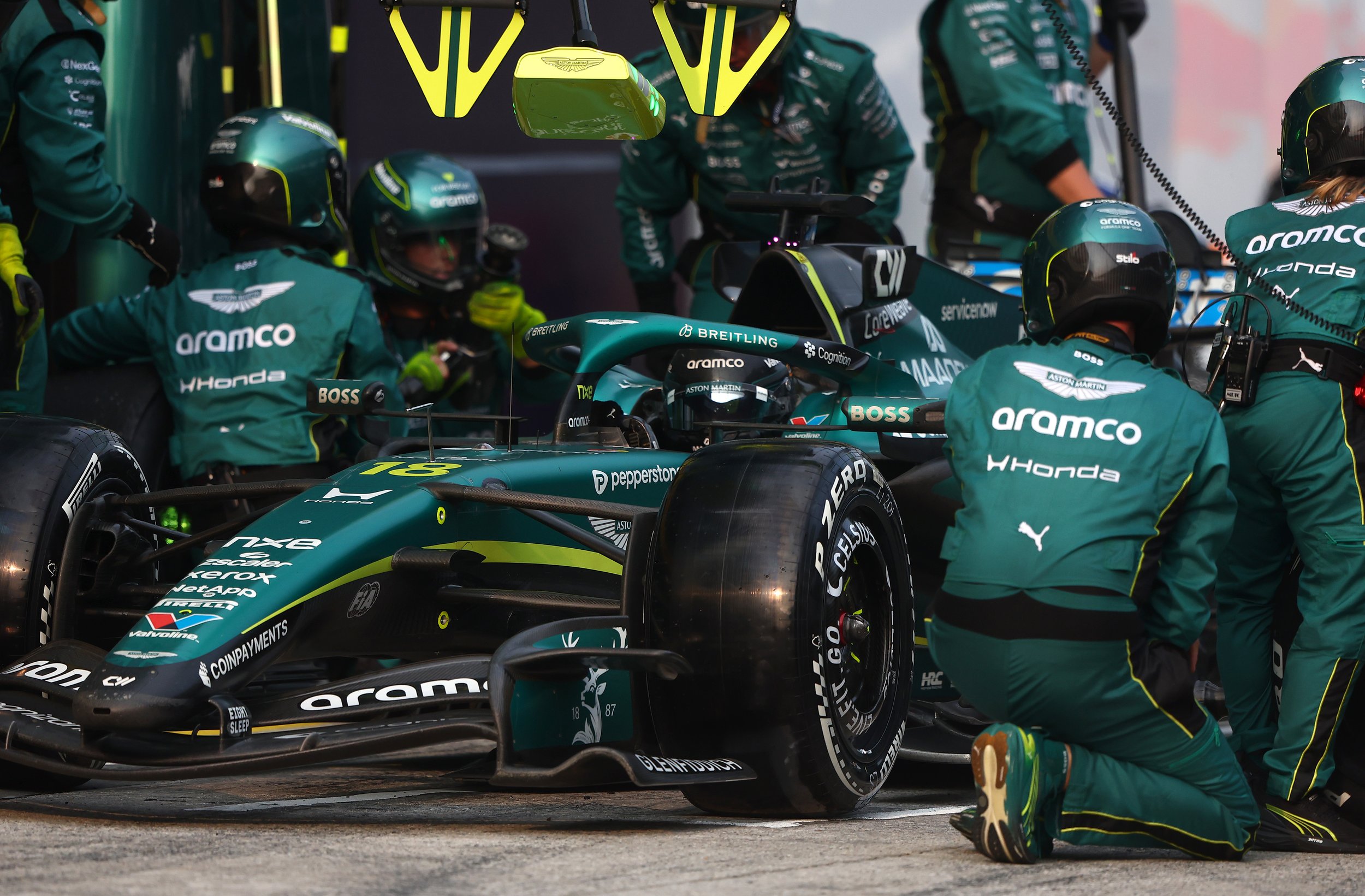
Heavy rain delayed Sunday’s race, with the starting procedure then suspended after several cars struggled to maintain speed during the initial formation lap. By the time the field prepared to race again, parts of the circuit were drying while others remained slippery. Aston Martin initially selected medium slick tyres for both drivers, but Stroll changed to intermediates during the running behind the Safety Car, before the standing start. Alonso stayed on the mediums, accepting a difficult opening phase while waiting for conditions to improve.
The first major opportunity to recover came with the Safety Car on lap nine. Both Aston Martins switched to hard tyres, with Stroll running eleventh and Alonso eighteenth when racing resumed. Alonso then began working his way forward, using two consecutive sets of hard tyres through the middle of the race to rebuild his challenge.
His progress included a pass on Esteban Ocon for eleventh on lap 36, followed by a move ahead of Arvid Lindblad four laps later to enter the points. That sequence was an encouraging part of Aston Martin’s afternoon: Alonso had already reached the top ten through overtaking before the late incidents further improved his position.
Alex Albon’s stoppage subsequently brought out a Virtual Safety Car and then a full Safety Car, creating another opportunity to change tyres. Alonso took softs for the closing stages, while George Russell’s retirement and Lando Norris’s excursion through the gravel moved him up to eighth. Norris recovered and applied pressure, but Alonso held his position to finish 0.621 seconds ahead of the McLaren, securing Aston Martin’s best finish of 2026.
Stroll also enjoyed a more competitive afternoon, although twelfth place left him outside the points. His early decision to switch to intermediates helped him recover from the initial tyre choice, and he remained involved in the midfield battles as strategies developed. Afterwards, he felt that he could have pushed his second set of hard tyres harder, believing that his caution had cost positions. Completing all 55 laps nevertheless gave him a full race to assess the car’s behaviour and a more positive weekend to build upon.
At the front, Max Verstappen claimed his first victory of the season after recovering from a start that had allowed both Mercedes drivers to move ahead. Red Bull’s pace on soft tyres helped him regain control, and he managed the final restart to win by 2.307 seconds from Kimi Antonelli. Lewis Hamilton completed the podium after recovering from Ferrari’s difficult opening on slick tyres, with Charles Leclerc fourth and Isack Hadjar fifth. Oscar Piastri and Liam Lawson finished sixth and seventh, ahead of Alonso.
Russell’s late retirement had significant championship consequences. Antonelli’s second place increased his advantage over his team-mate from 66 to 84 points, taking him to 320 against Russell’s 236. Mercedes continues to lead the Teams’ Championship with 556 points. Aston Martin remains tenth on seven, five behind Williams, while Alonso moves to seventeenth in the Drivers’ standings. Stroll remains twenty-first without a score.
For FTP, the encouragement comes from the weekend as a whole: stronger qualifying, overtaking opportunities and a finish for both cars, followed by points that reflected Alonso’s recovery and late-race defence. Sepang does not establish that Aston Martin’s performance and reliability difficulties have been resolved, particularly given the drivers’ acknowledgement that the circuit suited the AMR26 better. It does demonstrate what the team can achieve when it remains competitive enough to take advantage of an eventful race.
The next test comes immediately at Singapore’s Sprint weekend on 9th–11th October, with seven Grands Prix remaining. Aston Martin now has a stronger result to build upon, but the task is to turn that encouragement into more regular midfield competition and further points.

FTP Summary Line
Sepang delivered Aston Martin’s strongest result of the season, with Fernando Alonso finishing eighth and Lance Stroll twelfth after both drivers reached Q2. Alonso’s four points lift the team’s championship total to seven, providing welcome encouragement after the setbacks at Monza, Madrid and Baku.
With seven Grands Prix remaining, the challenge is to sustain that competitiveness across different circuits while improving reliability. Singapore’s Sprint weekend provides the next opportunity to build on Malaysia’s progress and turn occasional points finishes into more consistent results.
Images © Honda Motor Co., Ltd. Used for editorial purposes.
Formula 1 • Round 16 • Aston Martin Focus
Bahrain Grand Prix in Malaysia Result Snapshot
Sepang International Circuit, Malaysia • 2nd–4th October 2026
Top 10
| Pos | Driver | Team | Gap / Time | Points |
|---|---|---|---|---|
| 1 | Max Verstappen | Red Bull Racing | 1:47:14.808 | 25 pts |
| 2 | Kimi Antonelli | Mercedes | +2.307s | 18 |
| 3 | Lewis Hamilton | Ferrari | +4.919s | 15 |
| 4 | Charles Leclerc | Ferrari | +7.258s | 12 |
| 5 | Isack Hadjar | Red Bull Racing | +8.571s | 10 |
| 6 | Oscar Piastri | McLaren | +9.454s | 8 |
| 7 | Liam Lawson | Racing Bulls | +12.753s | 6 |
| 8 | Fernando Alonso | Aston Martin | +13.372s | 4 |
| 9 | Lando Norris | McLaren | +13.993s | 2 |
| 10 | Arvid Lindblad | Racing Bulls | +15.928s | 1 |
Aston Martin Focus
| Result | Driver | Race Status | FTP Note |
|---|---|---|---|
| P8 |
Fernando Alonso
Aston Martin |
55 laps completed • 4 points
Qualified P12 • Started P12 Finished +13.372s |
Alonso recovered from a difficult start on slick tyres in damp conditions, making the most of Safety Car periods and holding off Lando Norris at the finish. Eighth place delivered Aston Martin's best result of the season and lifted its championship total to seven points. |
| P12 |
Lance Stroll
Aston Martin |
55 laps completed • 0 points
Qualified P14 • Started P14 Finished +18.052s |
Stroll switched from slicks to intermediates early in the race and remained involved in the midfield battles. He finished twelfth, completing all 55 laps and ensuring both Aston Martins reached the chequered flag after a difficult sequence of recent races. |
FTP reading: Sepang brought Aston Martin's strongest result of 2026, with Alonso eighth and Stroll twelfth after both drivers reached Q2 together for the first time this season. Four points take the team's total to seven, although it remains tenth in the Teams' Championship. The improved pace and a finish for both cars provide encouragement, with the focus now on sustaining that progress at Singapore's Sprint weekend on 9th–11th October.
Classification reflects the FIA's final Bahrain Grand Prix in Malaysia results, checked on 5th October 2026. Race held on Sunday, 4th October, over 55 laps. FIA final classification • Official Formula 1 result • Teams' standings.
Race 15 – Azerbaijan Grand Prix, Baku | 24th–26th September 2026
Double Retirement at Baku Deepens Aston Martin’s Reliability Concerns
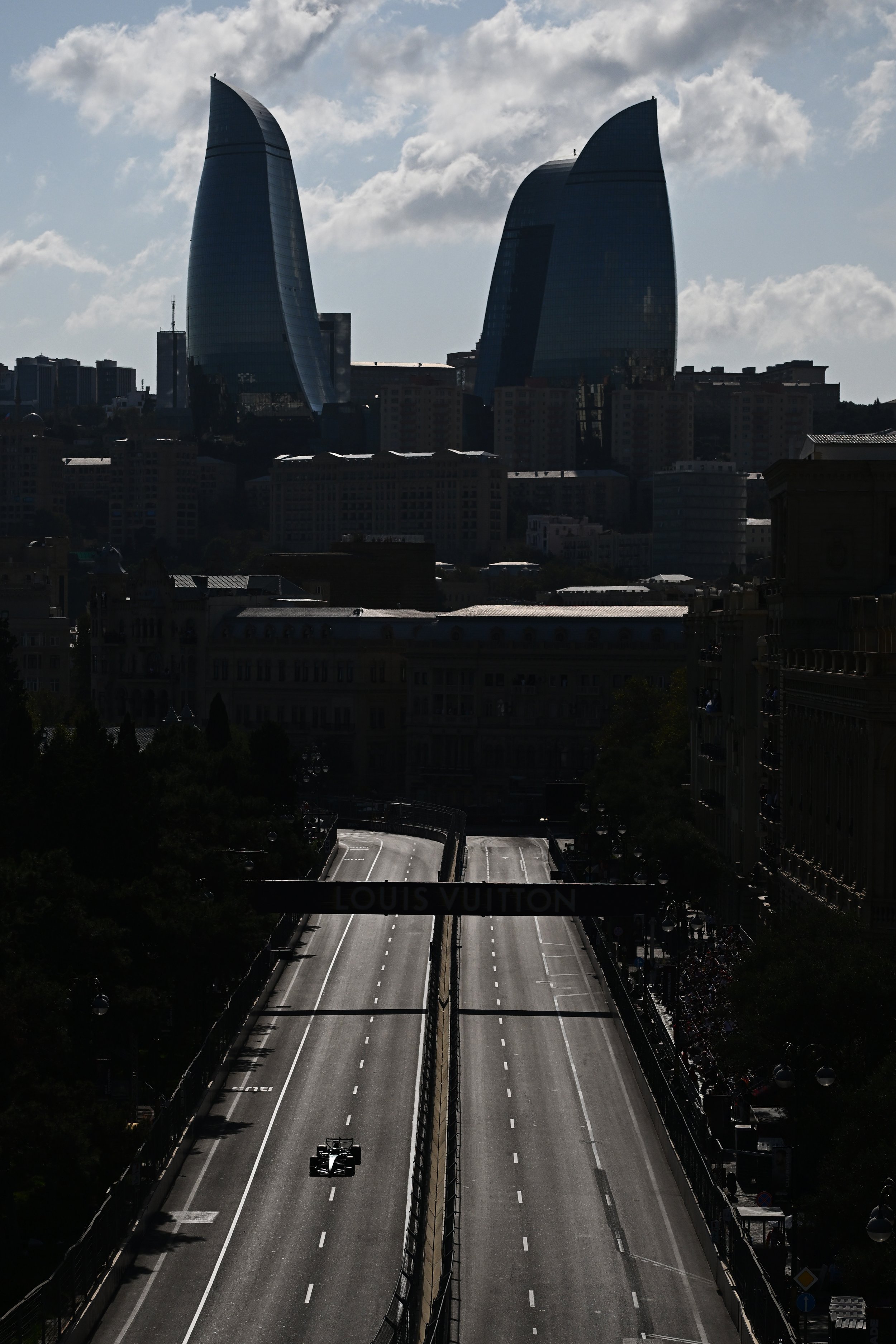
Aston Martin’s difficult 2026 Formula One campaign suffered another setback at the Azerbaijan Grand Prix, where Fernando Alonso and Lance Stroll both retired from Saturday’s race after starting from the back of the grid. Having already accepted substantial penalties for additional Honda power-unit components, the team arrived at the start knowing that Baku’s exceptionally long straights would expose the AMR26’s continuing performance limitations. The weekend ultimately delivered an even greater disappointment, with Stroll stopping after seven laps because of a water-pressure problem and Alonso retiring after completing 20 laps when his car began losing significant time on the straights.
The double retirement followed another scoreless weekend in Madrid and left Aston Martin tenth in the Teams’ Championship with just three points after 15 rounds. At the front, George Russell converted pole position into his third victory of the season, surviving two Safety Car periods and a determined late challenge from Max Verstappen to win by just 0.196 seconds. Isack Hadjar completed the podium on his return to racing for Red Bull, while championship leader Kimi Antonelli recovered from a difficult qualifying session to finish fifth.
Baku Exposes Aston Martin’s Straight-Line Weaknesses
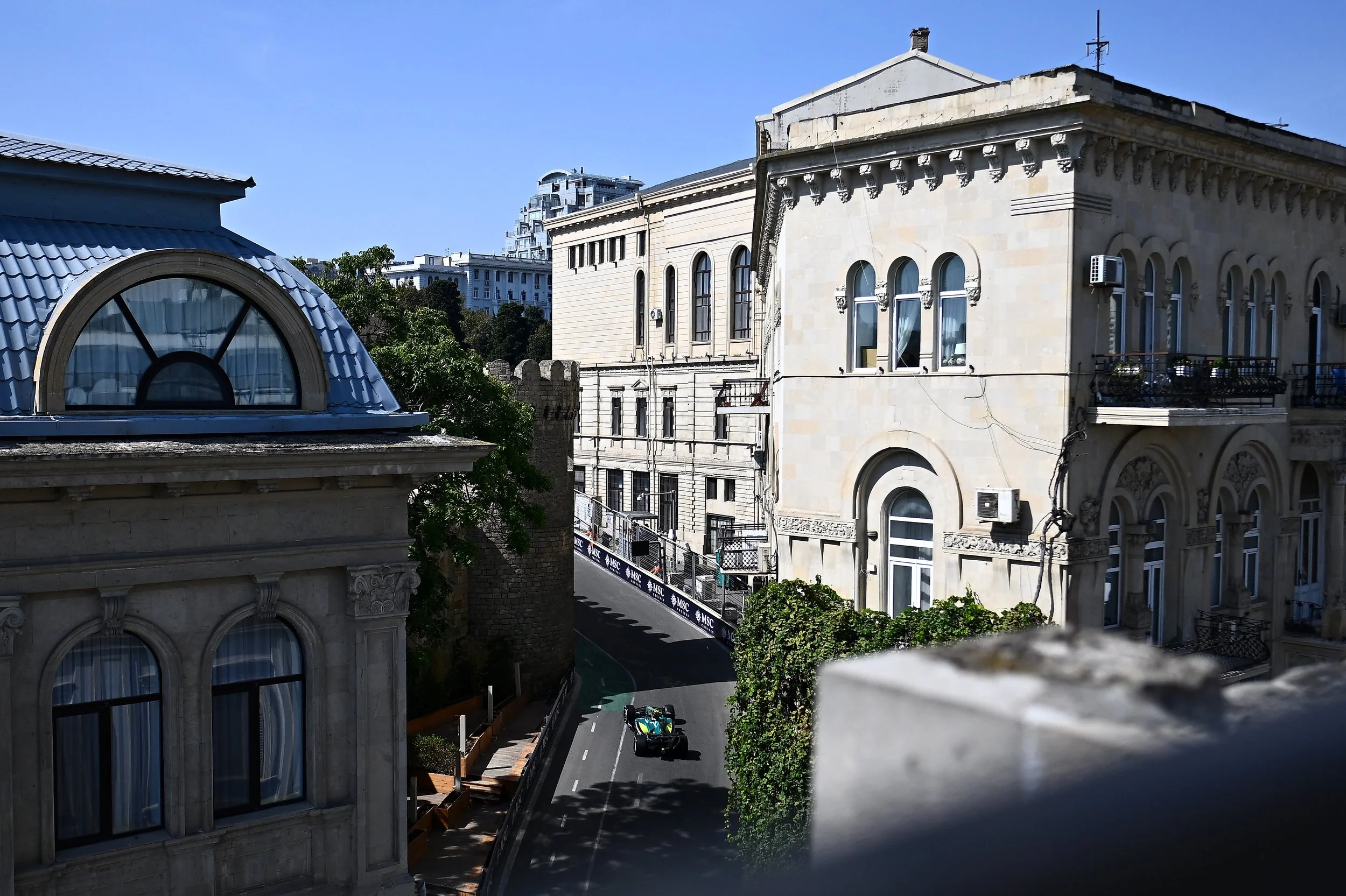
The Azerbaijan Grand Prix was always expected to present Aston Martin with a particularly demanding challenge. Baku combines slow, technical corners with an exceptionally long full-throttle section, placing competing demands on aerodynamic efficiency, mechanical grip and power-unit performance. The circuit’s main straight was particularly unforgiving for an AMR26 that had already struggled at Monza, where the Aston Martin-Honda package’s straight-line limitations were exposed throughout the weekend. Although the aerodynamic developments introduced in Hungary had provided encouragement at Zandvoort, Baku offered another opportunity to assess how much progress had genuinely been made.
Thursday’s opening practice sessions did little to improve the outlook. Alonso finished 19th in FP1, setting a 1:47.835, while Stroll was 21st with a 1:48.547. Both drivers initially ran on the hard compound before switching to mediums, giving the team an opportunity to assess the car’s behaviour around the demanding street circuit. FP2 proved more complicated for Alonso, whose session was interrupted by a suspected oil leak midway through the afternoon. He completed only nine laps and finished 22nd, while Stroll managed 24 laps and placed 21st. Although Aston Martin collected 79 laps across Thursday’s two sessions, the interruption to Alonso’s programme reduced the data available at a circuit where confidence and familiarity are particularly important.
Power-Unit Changes Bring Substantial Grid Penalties
Aston Martin had already decided to introduce additional Honda power-unit components for both cars, accepting that the changes would result in substantial grid penalties. Alonso received a new internal combustion engine, turbocharger and other components beyond his permitted seasonal allocation, with a further energy-store change adding to his penalty before final practice. Stroll also exceeded his allocation for several components, including the turbocharger, energy store and control electronics. The penalties effectively guaranteed that both Aston Martins would start from the back of the field regardless of their performances in qualifying.
The decision reflected the difficult circumstances facing Aston Martin and Honda during their first season together under Formula One’s new technical regulations. Introducing fresh components provided the team with an opportunity to continue its development and reliability work, but Baku was hardly the ideal venue to sacrifice track position. Overtaking opportunities exist along the enormous main straight, yet the narrow sections through the old city make traffic particularly costly, while a car struggling for straight-line speed can find itself vulnerable even when it performs reasonably well through the corners.
Both Aston Martins Eliminated in Q1
Friday’s final practice session and qualifying confirmed that Aston Martin remained towards the back of the field. Alonso finished 20th in FP3 with a 1:46.512, while Stroll was 22nd after completing only nine laps. The Canadian had also made contact with the barriers during the session, adding another complication to a weekend in which the team was already managing its power-unit changes. With the AMR26 struggling for both power and downforce around Baku, there was little indication that qualifying would produce a substantial improvement.
Alonso ultimately set a 1:46.593 to qualify 19th, while Stroll recorded a 1:47.337 and finished 21st. Neither driver progressed beyond Q1, leaving Aston Martin with another disappointing qualifying performance following its difficulties at Monza and Madrid. Once the grid penalties were applied, Alonso was relegated to 21st and Stroll to 22nd. At the front, Russell produced an outstanding 1:42.526 to claim pole position, finishing 0.837 seconds clear of Charles Leclerc, while Oscar Piastri and Hadjar occupied the second row. Championship leader Antonelli also had a difficult afternoon, crashing at Turn One during Q1 and leaving himself 16th on the starting grid.
Stroll’s Race Ends After Seven Laps
Both Aston Martins started Saturday’s 51-lap Grand Prix on the soft compound, with the wind having eased and track temperatures warmer than during qualifying. From the final row, Alonso and Stroll faced the difficult task of making progress against cars with greater straight-line performance, while hoping that Baku’s reputation for unpredictable races might provide opportunities through strategy or incidents elsewhere. At the front, Russell made a strong start from pole position and began establishing an advantage over Piastri, while Verstappen and Hadjar worked their way through the leading group.
Aston Martin’s race began to unravel almost immediately. Stroll completed just seven laps before the team instructed him to stop because of a water-pressure problem. The Canadian managed to park his AMR26 in a safe position, avoiding the need for a Safety Car or Virtual Safety Car, but his early retirement ended any possibility of recovering from 22nd on the grid. The failure was particularly frustrating because Aston Martin had already introduced additional power-unit components, yet another technical problem had prevented the car from completing even the opening phase of the Grand Prix.
Alonso Loses Speed Before Aston Martin Withdraws His Car
Alonso continued as Aston Martin’s sole remaining representative, but his afternoon was proving equally difficult. The Spaniard became involved in a battle with Valtteri Bottas’s Cadillac, although the AMR26’s lack of performance along Baku’s long straights made sustained progress increasingly difficult. With the leading cars gradually building their advantage, Alonso was already facing an uphill struggle to reach the points when he began experiencing an additional loss of speed. Rather than risk continuing with a suspected technical problem, Aston Martin eventually called him into the pits and retired the car after 20 completed laps.
The precise cause of Alonso’s retirement has not yet been confirmed. Chief Trackside Officer Mike Krack reported that Alonso had experienced suspected power-unit difficulties and was losing time on the straights, while the team also committed to investigating the water-pressure problem that ended Stroll’s race. The distinction is important: Aston Martin’s underlying performance deficit had been apparent throughout the weekend, but Alonso’s eventual retirement involved an additional problem beyond the car’s established lack of pace. Neither driver reached the halfway point, leaving the team without a meaningful opportunity to assess how its race strategy might have developed as the Grand Prix became increasingly unpredictable.
Safety Cars Transform the Battle for Victory
While Aston Martin’s race ended early, the contest at the front was gradually developing into one of the closest finishes of the season. Russell had controlled the opening phase after converting pole position into the lead, with Piastri initially occupying second while Verstappen and Hadjar worked their way through the field. The Red Bull drivers demonstrated strong race pace, particularly as the opening stint progressed, but Russell had established an advantage approaching ten seconds by the halfway point and appeared to have the Grand Prix under control.
The complexion of the race changed when Alex Albon locked up and crashed into the barriers at Turn Six, prompting the first Safety Car. The interruption allowed the leading drivers to make their pit stops while reducing the time lost relative to their rivals. Red Bull executed a double stop for Verstappen and Hadjar, while Russell retained his advantage at the front. When racing resumed, Verstappen moved ahead of Piastri into second, but the restart produced further drama behind them. Franco Colapinto locked up approaching Turn One and collided with his Alpine team-mate Pierre Gasly, who subsequently made contact with Lando Norris. All three drivers retired, forcing Race Control to deploy a second Safety Car while marshals cleared the damaged cars.
Russell Holds Off Verstappen in a Dramatic Finish
The second restart placed Russell under considerably greater pressure, with Verstappen now directly behind the Mercedes and determined to challenge for victory. Russell initially retained control, while Piastri suffered a costly mistake at Turn One and dropped out of podium contention. Antonelli, meanwhile, had recovered from 16th on the grid and continued climbing through the points, eventually passing Lewis Hamilton to secure fifth place. With the two Red Bulls running second and third, Verstappen began closing on Russell during the final laps as both drivers pushed their cars to the limit around Baku’s unforgiving street circuit.
The contest remained unresolved until the final metres. Russell briefly lost power after lifting for yellow flags caused by Bottas’s late accident, allowing Verstappen to close dramatically along the main straight. The Red Bull drew alongside as they approached the finish, but Russell held on to win by just 0.196 seconds, securing his third victory of 2026 and reducing Antonelli’s Drivers’ Championship advantage to 66 points. Hadjar completed an excellent return with third place, followed by Leclerc and Antonelli, while Hamilton finished sixth. Arvid Lindblad, Esteban Ocon, Oliver Bearman and Carlos Sainz completed the top ten. Russell also recorded the fastest lap of the race, setting a 1:44.916 on Lap 49.
Another Weekend Without a Complete Race Programme
For Aston Martin, the late-race drama only emphasised what had been lost through its early retirements. Baku eventually provided exactly the sort of unpredictable afternoon that teams starting from the back might hope to exploit, with two Safety Car periods, several accidents and significant changes throughout the order. There is no guarantee that either Aston Martin would have possessed sufficient pace to challenge for points, particularly given the difficulties apparent during qualifying and the opening laps. Nevertheless, neither driver remained in the race long enough to benefit from the opportunities that subsequently developed.
The more immediate concern is the combination of continuing performance limitations and recurring reliability problems. The substantial development package introduced in Hungary appeared to improve the AMR26’s behaviour, and Alonso’s ninth-place finish at Zandvoort demonstrated that the team could still compete for points under favourable circumstances. Monza subsequently exposed the car’s straight-line weaknesses and produced a double retirement, while Madrid brought another weekend disrupted by mechanical problems and race damage. Baku has now added two further technical retirements, leaving Aston Martin with insufficient clean running to establish whether the latest changes are delivering the progress it needs.
Krack acknowledged that the team had limited opportunities to compete on outright pace in Azerbaijan and confirmed that both retirements would require investigation. With eight Grands Prix remaining, Aston Martin remains tenth in the Teams’ Championship on three points, all scored by Alonso, who sits 19th in the Drivers’ standings. Stroll remains 21st and has yet to score. The immediate priority is therefore not simply finding additional performance from the AMR26, but ensuring that both cars can complete a full race weekend and generate the data required to make further progress.
Sepang Provides an Immediate Opportunity to Regroup
Formula One now heads directly to Malaysia for the Bahrain Grand Prix at Sepang on 2nd–4th October, the second meeting of a demanding triple-header that continues with Singapore the following weekend. The short turnaround gives Aston Martin limited time to investigate the problems experienced in Azerbaijan, establish whether further corrective measures are required and prepare both cars for a circuit with a very different combination of corners, braking zones and weather conditions. The team must also balance those immediate reliability concerns against its ongoing programme of aerodynamic and power-unit development.
Baku leaves Aston Martin facing an increasingly familiar challenge. The potential demonstrated by the Hungary upgrade and Alonso’s points finish at Zandvoort has not disappeared, but neither has it translated into consistent performance or reliability. Following another double retirement, Aston Martin needs a weekend in which the AMR26 can operate without major interruptions, allowing the team to assess its development work and give both drivers a realistic opportunity to compete. With the 2026 season entering its final eight rounds, that opportunity now moves to Sepang.
FTP Summary Line
Hungary demonstrated the potential of the upgraded chassis, and Zandvoort delivered two valuable points. Since then, Monza, Madrid and now Baku have exposed Aston Martin’s continuing performance and reliability problems, with Azerbaijan bringing another double retirement after both cars started from the back of the grid.
With eight races remaining and just three championship points, Aston Martin’s immediate priority is to resolve its reliability issues and complete a clean race weekend. Sepang provides the next opportunity to turn the promise of its development programme into consistent results.
Images © Honda Motor Co., Ltd. Used for editorial purposes.
Formula 1 • Round 15 • Aston Martin Focus
Azerbaijan Grand Prix Result Snapshot
Baku City Circuit, Azerbaijan • 24th–26th September 2026
Top 10
| Pos | Driver | Team | Gap / Time | Points |
|---|---|---|---|---|
| 1 | George Russell | Mercedes | 1:38:02.143 | 25 pts |
| 2 | Max Verstappen | Red Bull Racing | +0.196s | 18 |
| 3 | Isack Hadjar | Red Bull Racing | +10.704s | 15 |
| 4 | Charles Leclerc | Ferrari | +14.136s | 12 |
| 5 | Kimi Antonelli | Mercedes | +14.512s | 10 |
| 6 | Lewis Hamilton | Ferrari | +22.382s | 8 |
| 7 | Arvid Lindblad | Racing Bulls | +31.159s | 6 |
| 8 | Esteban Ocon | Haas F1 Team | +31.189s | 4 |
| 9 | Oliver Bearman | Haas F1 Team | +31.929s | 2 |
| 10 | Carlos Sainz | Williams | +32.416s | 1 |
Aston Martin Focus
| Result | Driver | Race Status | FTP Note |
|---|---|---|---|
| NC |
Fernando Alonso
Aston Martin |
20 laps completed
Qualified P19 • Started P21 |
Alonso started from the back of the grid following penalties for additional Honda power-unit components. The AMR26 struggled for straight-line speed, and the Spaniard eventually returned to the pits to retire after completing 20 laps. The team reported a suspected power-unit issue and is investigating the loss of speed. |
| NC |
Lance Stroll
Aston Martin |
7 laps completed
Qualified P21 • Started P22 |
Stroll also started from the back after penalties for additional power-unit components. His race ended early when a water-pressure problem prompted the team to instruct him to stop the car. He pulled into a safe position without requiring a Safety Car intervention. |
FTP reading: Baku delivered another double retirement for Aston Martin, with neither driver reaching the halfway point. Both AMR26s started at the back following power-unit penalties, and the circuit's long straights exposed the team's continuing performance limitations. Stroll retired with a water-pressure problem, while Alonso experienced a significant loss of speed before the team withdrew his car. Aston Martin leaves Azerbaijan without points, remaining tenth in the Teams' Championship on three points. Resolving the latest reliability issues will be an immediate priority before the next race at Sepang.
Classification reflects Formula 1's published provisional Azerbaijan Grand Prix results, checked on 27th September 2026. Race held on Saturday, 26th September. Official Formula 1 classification .
Race 14 – Spanish Grand Prix, Madrid | 11th–13th September 2026
Damage and Reliability Frustrate Aston Martin in Madrid
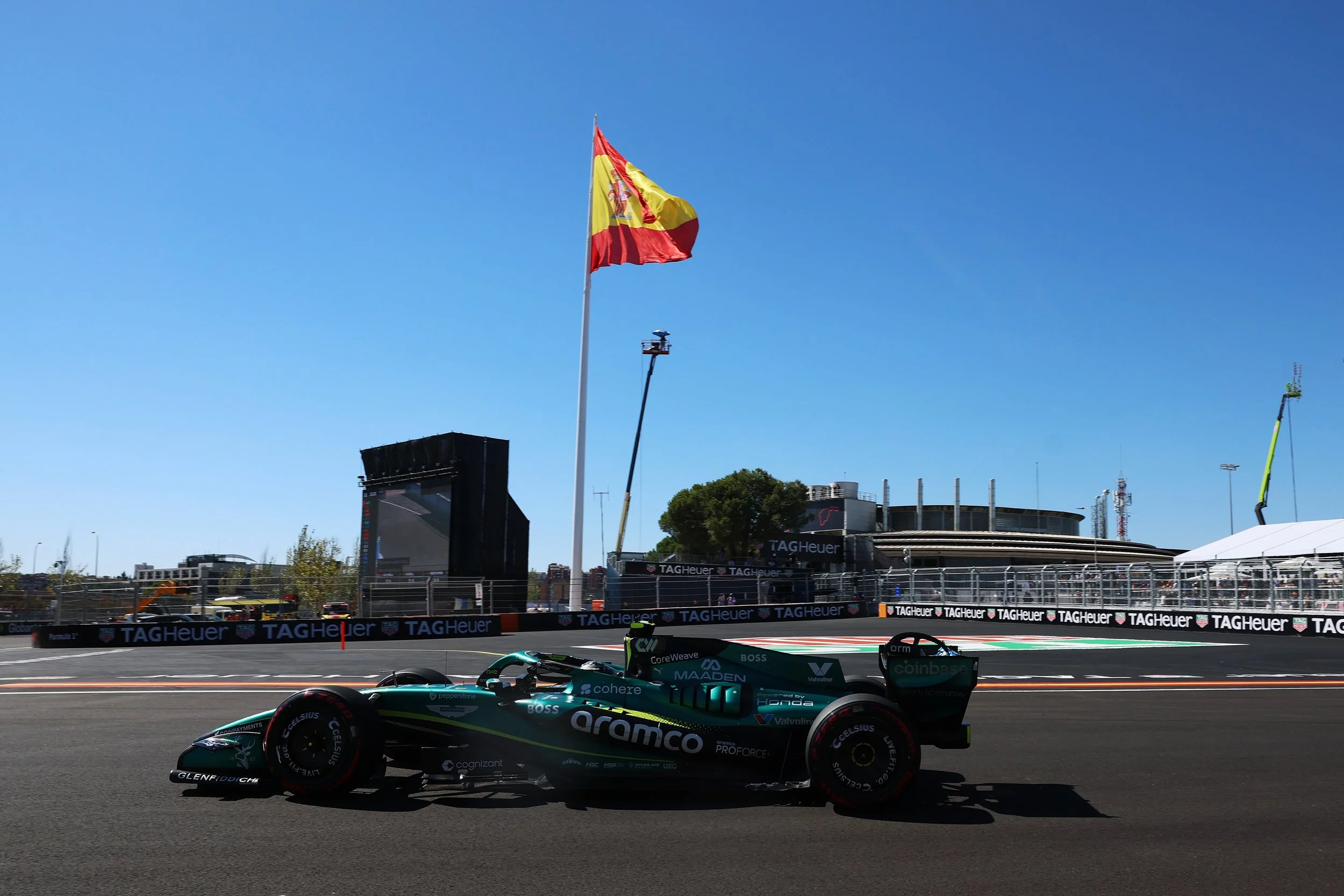
Aston Martin left Formula One’s inaugural Grand Prix at Madrid’s new Madring circuit without points after another difficult weekend for Fernando Alonso and Lance Stroll.
Alonso finished 17th after contact with fellow Spaniard Carlos Sainz damaged his front wing and forced an additional pit stop, while Stroll retired after only 12 laps when worsening brake problems brought his race to an early end.
It was another disappointing result following the double retirement at Monza, but Madrid presented a rather different picture. Aston Martin struggled for outright pace, particularly over one lap, yet mechanical issues repeatedly reduced the team’s running and both race programmes were subsequently compromised by damage.
Team Principal Adrian Newey therefore felt Aston Martin had not been able to demonstrate the AMR26’s true potential over the weekend.
Problems Begin on Friday
As every team began learning the new Madring circuit, Aston Martin’s opening day was disrupted almost immediately.
Alonso finished 15th in FP1 with a 1:36.473, but a clutch problem during the practice-start procedure delayed his participation in FP2 by around 20 minutes while the team repaired the car. When he eventually returned, traffic compromised his soft-tyre run and he ended FP2 17th on a 1:36.780.
Stroll had an equally difficult day. He was 19th in FP1 and 20th in FP2, before a suspected battery problem brought his second session to a premature end. On a completely new street circuit, where every lap was valuable for building driver confidence and understanding setup, losing running time on both cars was far from ideal.
Saturday brought more difficulties
Alonso could manage only 17th in FP3, with Stroll 19th, as Aston Martin remained towards the lower end of the timing screens. The team had also broken the overnight curfew while investigating Stroll’s battery pack and elected to replace several power-unit components, guaranteeing the Canadian a substantial grid penalty before qualifying had even begun.
Alonso Eliminated in Q1 - Stroll Unable to Set a Time
Qualifying confirmed that Madrid hadn’t produced the recovery Aston Martin had hoped for after Monza. Alonso set a 1:35.388 but was eliminated in Q1 in 18th position. The Spaniard felt that was probably close to the maximum available from the AMR26 and acknowledged before the race that overtaking around the Madring was likely to be difficult.
Stroll’s session effectively never began. A suspected water-pressure issue kept the #18 Aston Martin in the garage throughout Q1, leaving him without a qualifying time. Combined with the power-unit penalties already accumulated, he was eventually relegated to 21st on the starting grid.
It meant Aston Martin entered Sunday with Alonso 18th and Stroll close to the back, hardly the platform required for a points challenge at a circuit where track position was expected to carry particular importance.
Alonso and Sainz Clash in Their Home Grand Prix
Both Aston Martins started Sunday’s 57-lap race on the hard compound, committing to a long opening stint in the hope that strategy or race interruptions could provide an opportunity. At the front, pole-sitter Lando Norris resisted early attacks from Kimi Antonelli and began building a lead, while the Aston Martins battled amongst the cars towards the rear of the field.
For Alonso, the most significant moment came in a fight with Carlos Sainz at Turn Five. The two Spanish drivers made contact as Alonso attempted to challenge the Williams. Alonso felt Sainz had squeezed him towards the wall, and the stewards agreed that the Williams driver was responsible, subsequently handing Sainz a five-second penalty.
The sporting penalty, however, couldn’t repair Alonso’s car. The contact damaged the Aston Martin’s front wing and forced Alonso back into the pits for a replacement, costing further time and effectively removing any realistic opportunity to challenge for points. Alonso nevertheless continued to the finish, eventually crossing the line 17th, ahead of only Valtteri Bottas among the classified finishers.
His assessment afterwards was characteristically pragmatic. Aston Martin had needed an unpredictable race to offer a chance of changing its position, but that opportunity never really materialised. The additional stop following the Sainz contact only made the task harder.
Stroll’s Brake Failure Changes the Race at the Front
Stroll’s race was even shorter. The Canadian had picked up damage during the opening laps but initially attempted to continue. He then began experiencing increasingly serious brake problems, with the pedal becoming progressively longer.
After locking up at Turn 20, Stroll attempted to turn the Aston Martin around in the run-off area but was unable to do so and the car came to a stop. His race was over after 12 laps. Ironically, the retirement of an Aston Martin near the back of the field would become one of the decisive moments in the battle for victory. Race Control deployed a Virtual Safety Car while marshals removed Stroll’s AMR26.
Antonelli, Max Verstappen and George Russell were all able to pit at reduced time loss, but Norris had already passed the pit entrance when the VSC was called. By the time the McLaren stopped on the following lap, racing had resumed, and a slow seven-second tyre change compounded the damage. Norris emerged only fifth, while Antonelli had effectively been handed the strategic advantage that would eventually allow him to win the race. Few retirements from 21st on the grid can have had such a significant influence on the outcome of a Grand Prix.
Antonelli Capitalises on the Opportunity
Norris had appeared to be in control during the opening stint. After resisting Antonelli at the start, the reigning World Champion gradually extended his advantage and appeared to possess the strongest race pace.
The Virtual Safety Car changed everything. Antonelli took the inexpensive stop, while Ferrari’s Charles Leclerc remained out in the hope of a later Safety Car or red flag. When Leclerc finally stopped at the end of Lap 48, Antonelli inherited the lead. Behind him, Verstappen had Norris closing rapidly, but the Dutchman resisted the McLaren through the final laps.
Antonelli eventually won by 4.351 seconds from Verstappen, with Norris only another 0.738 seconds behind in third. It was Antonelli’s eighth victory from the opening 14 races of 2026, extending his Drivers’ Championship advantage over Mercedes team-mate George Russell to 81 points. Even Antonelli admitted afterwards that Norris probably deserved the victory on outright performance, such was the influence of the VSC timing.
Aston Martin Unable to Show Its True Pace
From Aston Martin’s perspective, Madrid ended with another blank scorecard: Alonso P17 and Stroll DNF. Yet the weekend requires a slightly more nuanced interpretation than Monza. At Monza, the AMR26’s lack of straight-line speed was exposed clearly throughout practice, qualifying and the race. Madrid also produced poor qualifying positions, but Aston Martin’s programme was repeatedly interrupted by reliability problems.
Alonso lost FP2 running because of a clutch issue. Stroll suffered a suspected battery problem on Friday. Further investigation prompted substantial power-unit component changes. A water-pressure problem then prevented him from qualifying. During the race, both Aston Martins sustained damage, before Stroll’s brake problem forced his retirement.
Newey described Sunday as a disappointing afternoon but stressed that those incidents had prevented Aston Martin from showing what the car could genuinely do. Alonso’s completed race at least provided further useful data on the updated package. That does not disguise Aston Martin’s underlying position. Alonso himself believed 18th was probably the maximum available in qualifying, suggesting that even without the reliability issues the AMR26 was unlikely to have been fighting near the front of the midfield.
Madrid therefore provided neither the confirmation of progress Aston Martin wanted nor definitive evidence that the improvements first seen in Hungary have disappeared.
Progress Has Yet to Become Consistency
The wider picture remains frustrating. The significant aerodynamic update introduced in Hungary produced an immediate improvement in the behaviour of the AMR26. At Zandvoort, Alonso converted some of that potential into a ninth-place finish and two championship points, describing the weekend as another step forward. Since then, however, Aston Martin has scored nothing.
Monza produced a double retirement on a circuit that heavily exposed the car’s power and straight-line weaknesses. Madrid was expected to provide a more representative test, but the combination of mechanical issues and race damage prevented the clean weekend needed to properly evaluate the package. After 14 rounds, Aston Martin therefore remains 10th in the Teams’ Championship with only three points.
Alonso sits 19th in the Drivers’ standings with all three of those points, while Stroll remains 21st and has yet to score. The most concerning element is no longer whether the upgrade has improved the car, there’s already evidence that it has. The challenge is producing a complete weekend in which the chassis, power unit, reliability, qualifying performance and race execution all come together.
Baku Brings More Changes
Aston Martin will now use the short break before the Azerbaijan Grand Prix to continue developing the AMR26. Newey confirmed after Madrid that the team intends to introduce further weight-saving measures at Baku, another step in Aston Martin’s attempt to optimise the heavily revised car.
Formula One heads to Azerbaijan on 24th–26th September, beginning the first of three consecutive triple-headers and an intense final phase of the championship comprising nine races in just 11 weeks.
Baku presents its own challenges. The enormous main straight will once again test the Aston Martin-Honda package’s straight-line performance, while the tight and technical sections through the old city will place greater emphasis on mechanical grip, braking stability and confidence, areas where the development work may provide a better opportunity to demonstrate progress.
Madrid therefore leaves Aston Martin without the result it wanted, but also without a completely definitive verdict on the latest AMR26.
FTP Summary Line
Hungary showed that the upgraded chassis could move forward. Zandvoort demonstrated that it could score points. Monza exposed the package’s weaknesses, while Madrid became too compromised by reliability issues and damage to provide the clean comparison Aston Martin needed.
Baku now offers another opportunity, but after two consecutive scoreless weekends, the priority is increasingly clear: Aston Martin needs not simply more potential, but a weekend in which that potential can finally be converted into a result.
Images © Honda Motor Co., Ltd. Used for editorial purposes.
Formula 1 • Round 14 • Aston Martin Focus
Spanish Grand Prix Result Snapshot
Madring, Madrid, Spain • 11th–13th September 2026
Top 10
| Pos | Driver | Team | Gap / Time | Points |
|---|---|---|---|---|
| 1 | Kimi Antonelli | Mercedes | 1:34:23.754 | 25 pts |
| 2 | Max Verstappen | Red Bull Racing | +4.351s | 18 |
| 3 | Lando Norris | McLaren | +5.089s | 15 |
| 4 | Charles Leclerc | Ferrari | +29.116s | 12 |
| 5 | George Russell | Mercedes | +29.829s | 10 |
| 6 | Liam Lawson | Red Bull Racing | +86.746s | 8 |
| 7 | Franco Colapinto | Alpine | +94.281s | 6 |
| 8 | Oscar Piastri | McLaren | +95.839s | 4 |
| 9 | Arvid Lindblad | Racing Bulls | +1 lap | 2 |
| 10 | Nico Hulkenberg | Audi | +1 lap | 1 |
Aston Martin Focus
| Result | Driver | Race Status | FTP Note |
|---|---|---|---|
| P17 |
Fernando Alonso
Aston Martin |
55 laps completed
Qualified P18 • Finished +2 laps |
Alonso's race was compromised by contact with Carlos Sainz while the pair fought for position. The incident damaged the AMR26's front wing and forced an additional pit stop for repairs. Sainz was subsequently penalised, but Alonso could recover only to 17th. |
| NC |
Lance Stroll
Aston Martin |
12 laps completed
Rear-grid start • Retired |
Stroll was unable to set a qualifying time after a suspected water-pressure issue and started from the rear following power-unit changes. Early race damage was followed by worsening brake problems, forcing his retirement and triggering the Virtual Safety Car. |
FTP reading: Madrid delivered another scoreless weekend for Aston Martin, but unlike Monza the final positions do not provide a completely clean measure of the AMR26. Alonso's race was compromised by contact and a front-wing change, while Stroll suffered both early damage and a brake-related retirement. Qualifying pace remained disappointing, however, with Alonso eliminated in Q1. Baku now provides the next opportunity to assess whether the progress seen in Hungary and at Zandvoort can be converted into another points-scoring result.
Classification reflects the official Formula One result following the Spanish Grand Prix at the Madring on 13th September 2026.
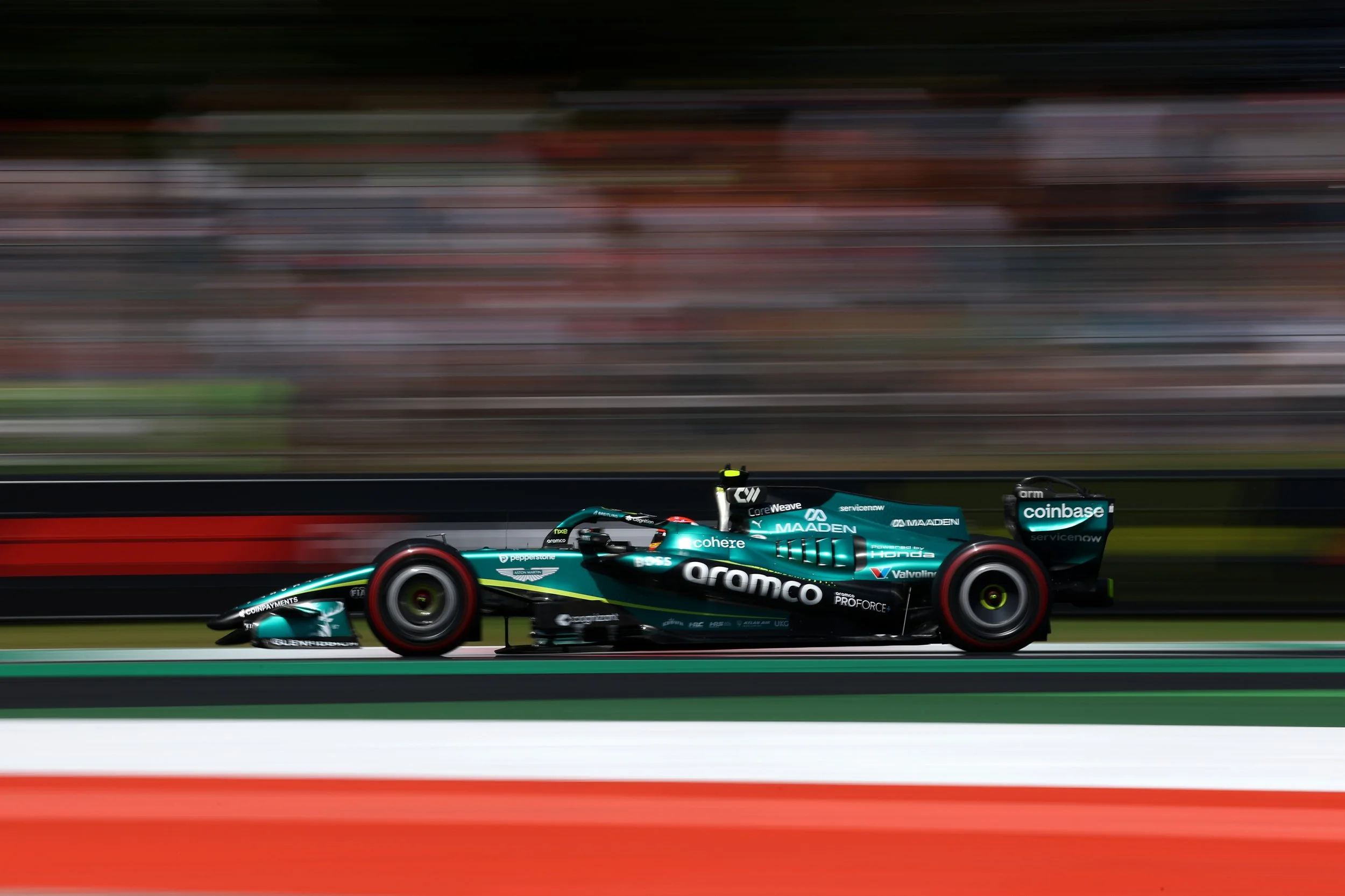
Race 13 – Italian Grand Prix, Monza | 4th–6th September 2026
Monza Exposes Aston Martin’s Straight-Line Deficit
Aston Martin’s improving form came to an abrupt halt at the Italian Grand Prix, where Fernando Alonso and Lance Stroll both retired after a weekend in which the AMR26 struggled badly with Monza’s high-speed, low-downforce demands.
Only two weeks after Alonso’s recovery to ninth at Zandvoort suggested that Aston Martin’s recent development work was beginning to produce results, Monza demonstrated how much work remains. Both cars were eliminated in Q1, Alonso ultimately started from the pit lane following power-unit changes, and neither AMR26 reached the second half of Sunday’s Grand Prix.
A Weekend Aston Martin Expected to Be Difficult
Monza was always likely to expose one of the weakest areas of Aston Martin’s current package. Its long full-throttle sections place enormous emphasis on outright power, energy deployment and aerodynamic efficiency, precisely the areas in which the AMR26 and Honda power unit remain behind the leading opposition.
The warning signs were clear on Friday. Alonso finished FP2 19th, 2.468 seconds from George Russell’s fastest time, with Stroll 22nd. Particularly revealing was Alonso’s gap of more than a second to the quickest Williams, illustrating the scale of Aston Martin’s deficit against its midfield rivals on a circuit dominated by straight-line performance.
Honda had made further adjustments to the combustion characteristics and associated settings following what it learned from the updated power unit’s debut at Zandvoort. The manufacturer believed those changes had improved driveability, but Monza provided a stark demonstration that a significant performance gap remains. Alonso nevertheless reiterated that he has “100%” confidence in Honda to close that deficit.
Both Aston Martins Eliminated in Q1
Saturday confirmed Aston Martin’s difficulties. Alonso recorded a 1:25.150 to qualify 21st, while Stroll was immediately behind in 22nd with a 1:25.222, leaving the two AMR26s occupying the final two positions in the qualifying classification. Alonso’s session was compromised further when an issue kept his car in the garage towards the end of Q1, preventing him from making another attempt on fresh tyres. Even so, he acknowledged afterwards that Aston Martin was simply lacking the necessary pace, particularly on Monza’s straights. Stroll was similarly clear about the fundamental problem, saying Aston Martin was “missing power”, while Mike Krack acknowledged that Monza’s high-speed characteristics did not suit the current package.
Aston Martin subsequently changed power-unit components on Alonso’s car under parc fermé conditions, meaning the Spaniard started Sunday’s race from the pit lane.
Early Red Flag Reshuffles the Race
Sunday’s 53-lap Grand Prix was disrupted early when Charles Leclerc suffered a heavy accident at the final corner, bringing out the red flag. The interruption reshuffled strategies throughout the field and helped bring drivers who had started towards the rear back into contention. Championship leader Kimi Antonelli was already making extraordinary progress from 19th on the grid, while Alonso emerged from the pit lane restart trying to make whatever progress was possible with the Aston Martin.
Alonso spent much of his short race fighting with the Cadillacs towards the rear of the field. With Aston Martin unable to challenge the established midfield cars on outright pace, opportunities depended largely on race circumstances and reliability elsewhere.
Kerb Damage Ends Alonso’s Race
Alonso’s afternoon ended when he ran wide through Turn Seven and struck a kerb, damaging the AMR26. Rather than risk aggravating the problem, Aston Martin brought the car back to the pits and retired it after 23 completed laps. Alonso explained afterwards that he had been trying to extract everything available from the car and battling the Cadillacs before the damage occurred. The retirement meant there would be no opportunity to repeat his Zandvoort recovery.
Importantly, the cause of Alonso’s retirement was not itself a Honda failure. His weekend had nevertheless demonstrated the wider performance challenge facing the Aston Martin-Honda partnership.
Hydraulic Problem Forces Stroll Out
Stroll lasted only a little longer. Aston Martin detected a hydraulic issue and instructed him to stop the car, triggering a Virtual Safety Car and completing a double retirement for the team. Stroll’s post-race assessment was particularly revealing. He acknowledged that the car had been struggling even before the hydraulic problem and again pointed towards Aston Martin’s lack of power as the major limitation at Monza.
Krack described it as an early finish for both cars while stressing that the circuit had not suited Aston Martin’s package. His attention immediately shifted towards Madrid, where the characteristics are expected to be less punishing for the AMR26.
Antonelli Produces Remarkable Home Victory
While Aston Martin endured one of its most difficult weekends of the season, Kimi Antonelli produced one of 2026’s standout drives. The Mercedes driver had been pushed back to 19th on the grid after taking new power-unit components, but rapidly worked his way forward. He was already 12th when the early red flag appeared and continued climbing through the field after the restart.
Antonelli ultimately fought his Mercedes team-mate George Russell for victory. A well-timed stop under a Virtual Safety Car left the Italian on fresher tyres, and he caught and passed Russell with four laps remaining. Antonelli crossed the line 3.857 seconds ahead of Russell, with Max Verstappen third for Red Bull. It was Antonelli’s seventh Grand Prix victory of the season and made him the first Italian driver to win the Italian Grand Prix since 1966.
A Reality Check, Rather Than a Reversal
Taken in isolation, Monza was an extremely poor weekend for Aston Martin: P21 and P22 in qualifying, followed by a double DNF and no championship points. It would, however, be premature to conclude that the progress demonstrated in Hungary and at Zandvoort has disappeared. Those circuits placed greater emphasis on the areas in which Aston Martin believes the latest AMR26 aerodynamic package has improved the car. Monza did almost the opposite, magnifying the current deficit in power and straight-line efficiency.
Hungary suggested that the chassis development was working. Zandvoort converted some of that improvement into points. Monza demonstrated that the complete Aston Martin-Honda package is not yet competitive across every type of circuit. Aston Martin consequently remains 10th in the Teams’ Championship with three points, all scored by Alonso. Monza has not changed its championship position, but it has provided another very clear indication of where development needs to be concentrated.
Madrid Provides a Very Different Test
Formula One now heads directly to the Spanish Grand Prix in Madrid on 11th–13th September, the championship’s first visit to the new circuit. For Aston Martin, the timing may be useful. Madrid presents a very different combination of corners and straights to Monza, providing an immediate opportunity to discover whether the more encouraging AMR26 performance seen before Italy can return.
Stroll said after Monza that Madrid looks “slightly better” for Aston Martin on paper, while Alonso will arrive hoping that the difficult Italian weekend proves to have been primarily circuit-specific. Monza therefore leaves Aston Martin with no points and few positives from the race itself, but with a clearer picture of the development task still ahead.
The chassis appears to be moving forward. The greater challenge is now ensuring that the complete Aston Martin-Honda package can do the same.
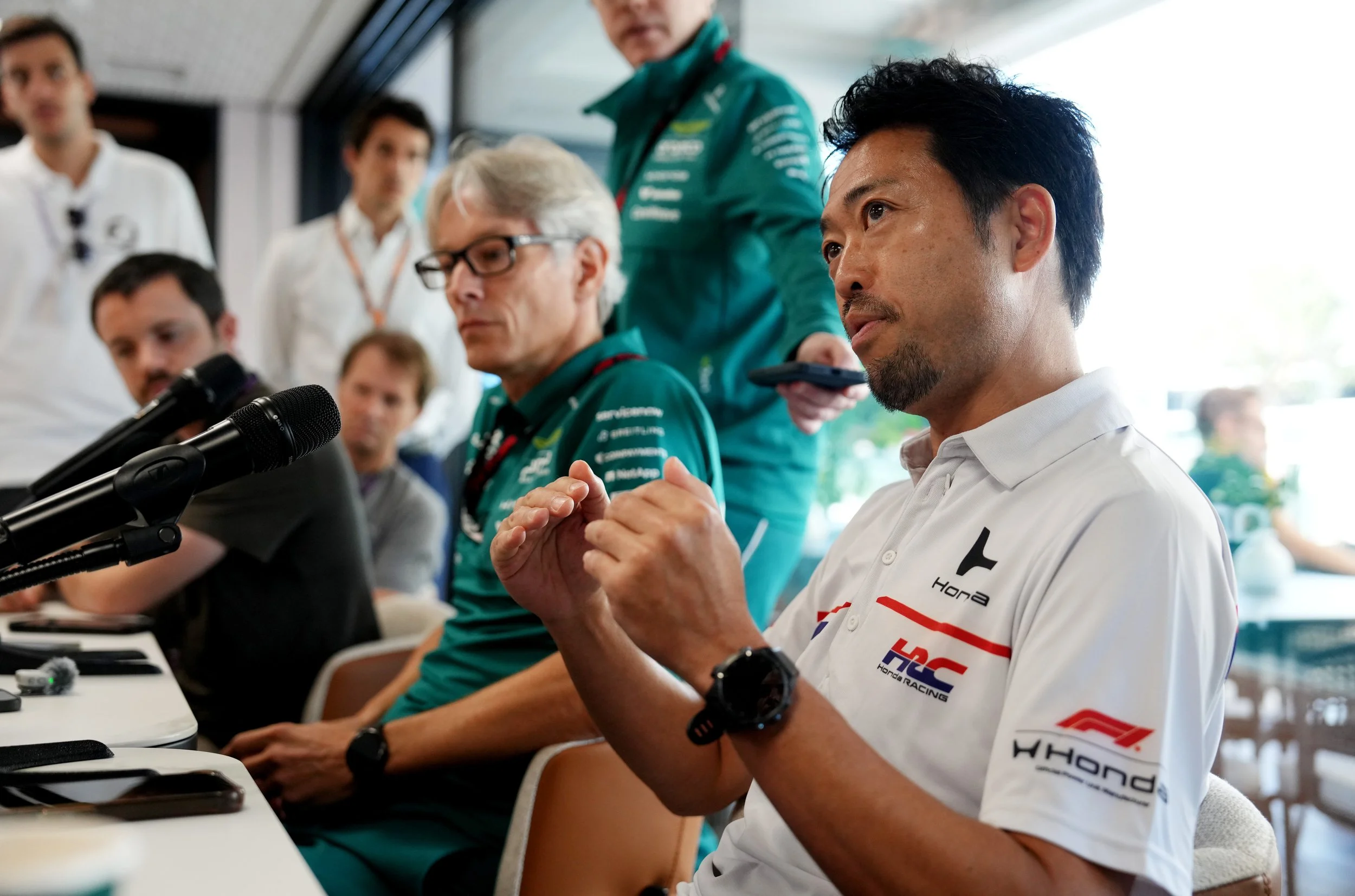
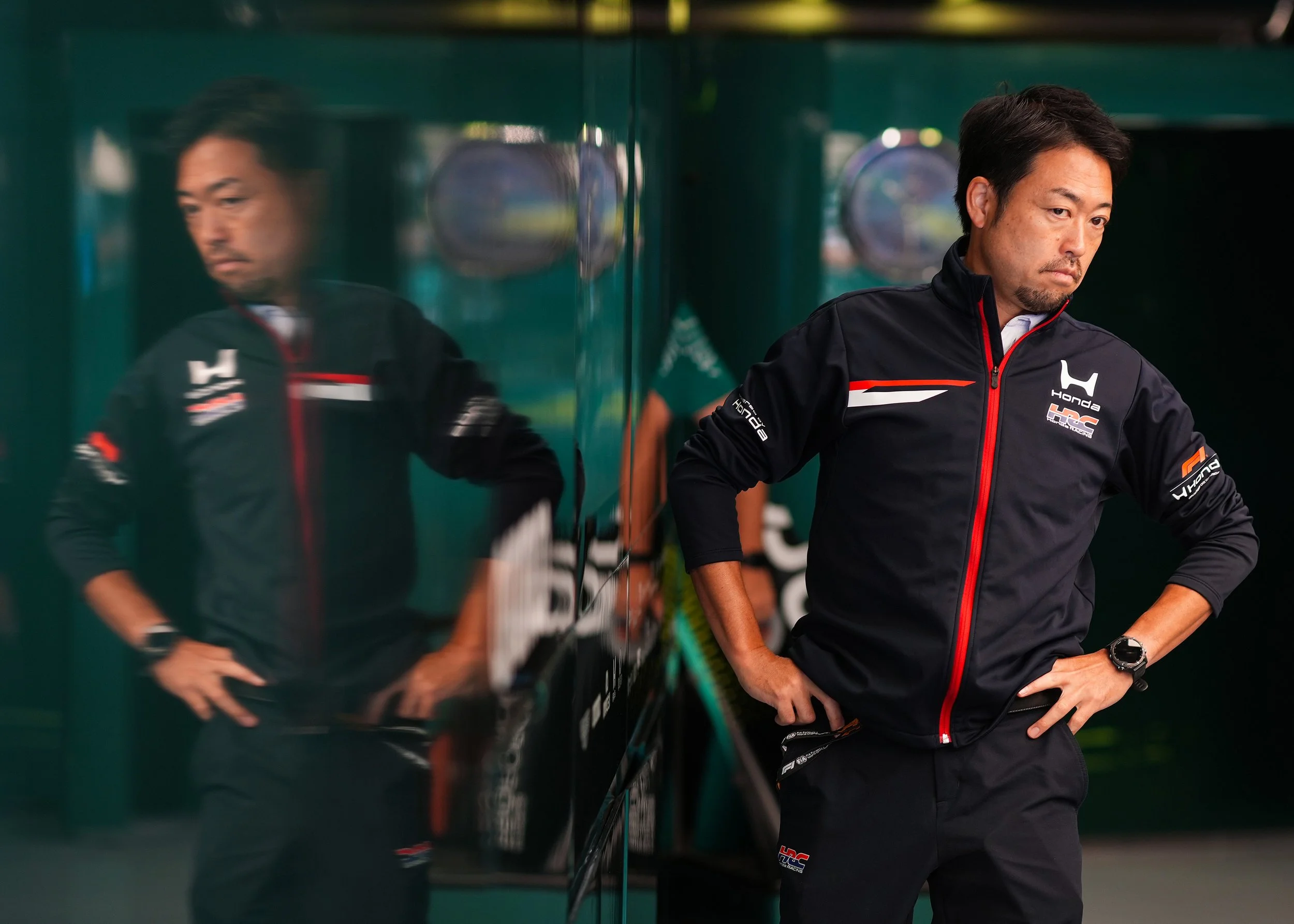
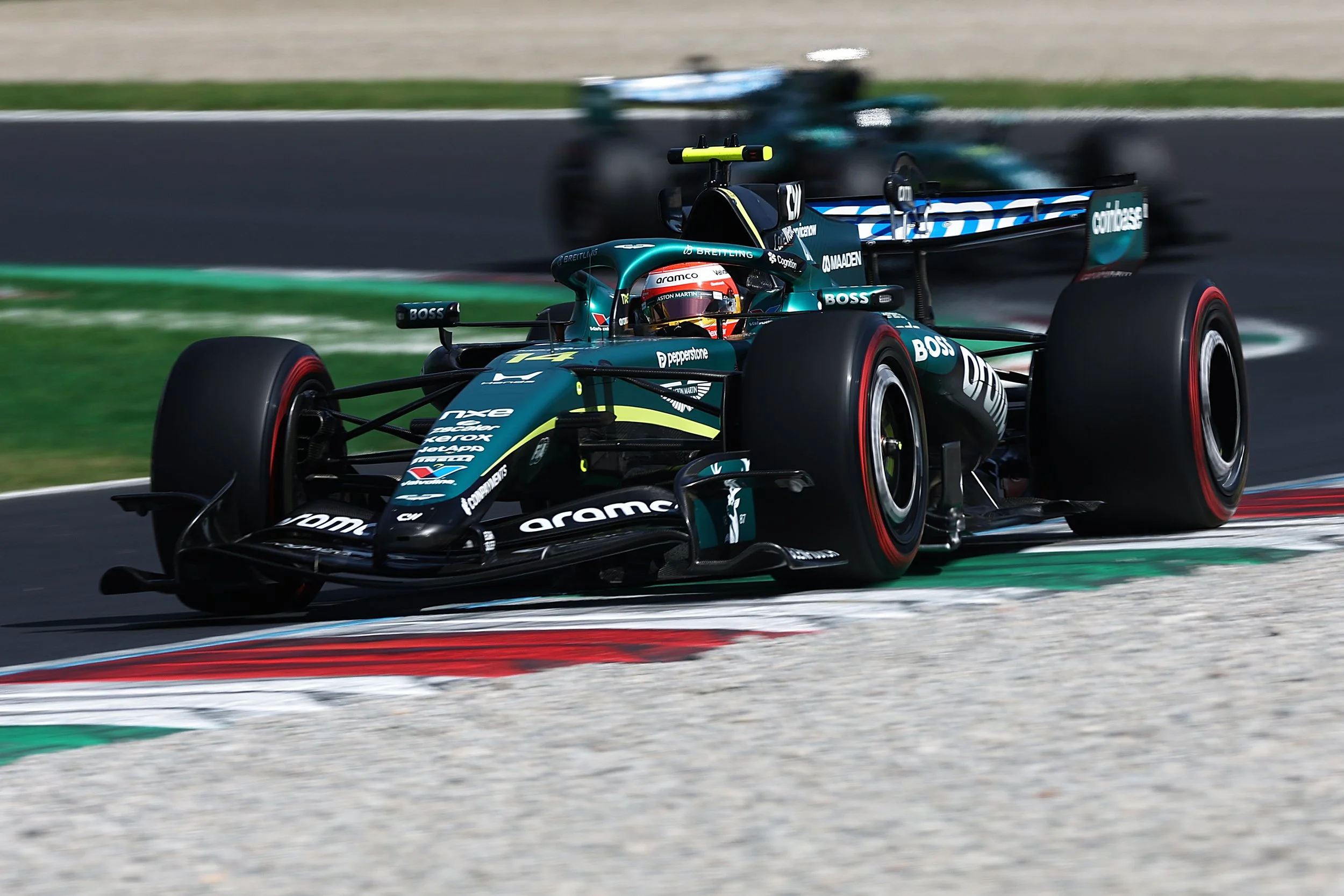
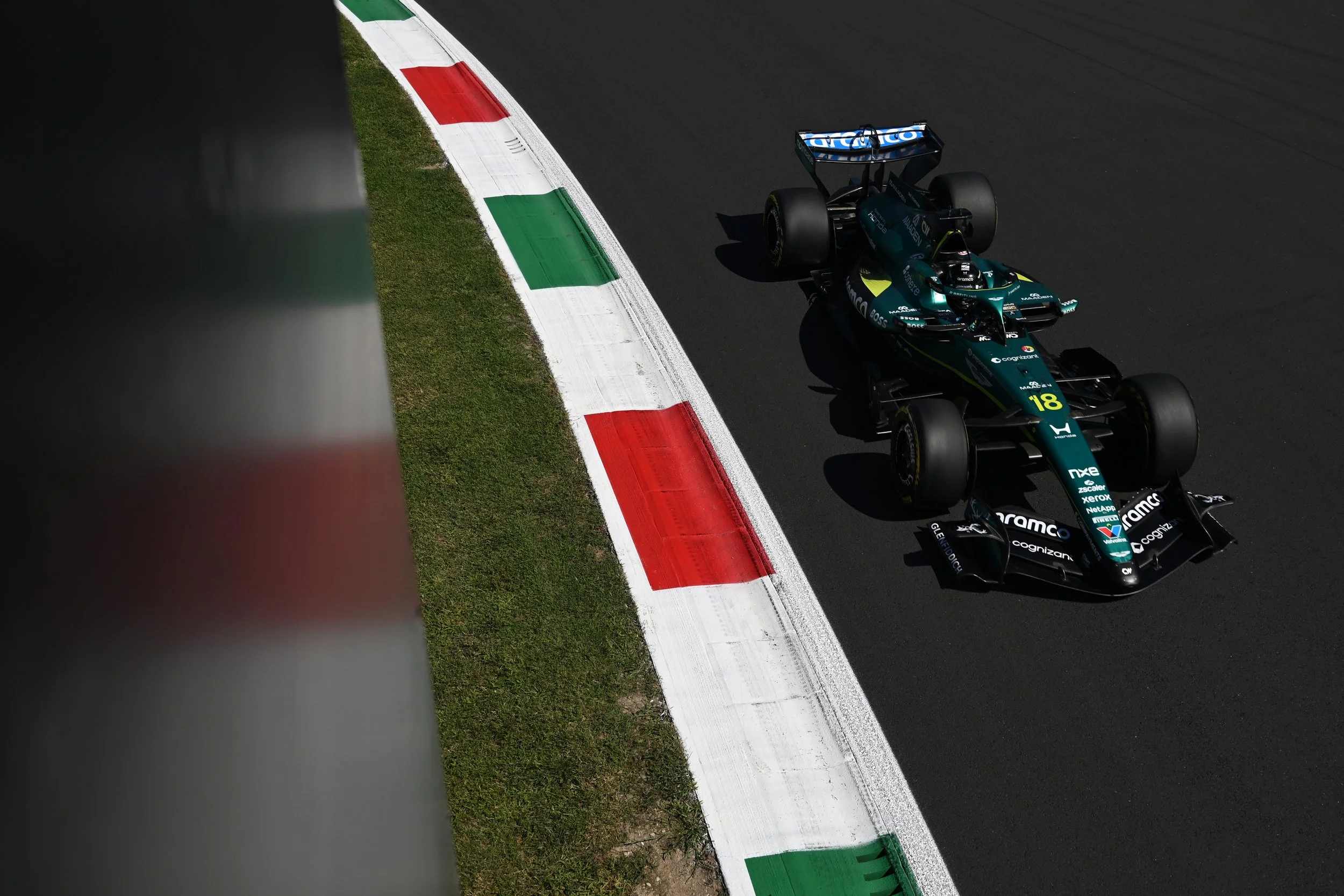
FTP Summary Line
Monza delivered a harsh reality check for Aston Martin, with both AMR26s eliminated in Q1 before Alonso and Stroll retired from the race. The weekend exposed the team’s current lack of power and straight-line efficiency, while reinforcing that the encouraging chassis progress seen in Hungary and at Zandvoort has not yet produced a complete package capable of performing consistently across every type of circuit.
Images © Honda Motor Co., Ltd. Used for editorial purposes.
Formula 1 • Round 13 • Aston Martin Focus
Italian Grand Prix Result Snapshot
Autodromo Nazionale Monza, Italy • 4th–6th September 2026
Top 10
| Pos | Driver | Team | Gap / Time | Points |
|---|---|---|---|---|
| 1 | Kimi Antonelli | Mercedes | 1:51:15.281 | 25 pts |
| 2 | George Russell | Mercedes | +3.857s | 18 |
| 3 | Max Verstappen | Red Bull Racing | +14.718s | 15 |
| 4 | Lando Norris | McLaren | +19.056s | 12 |
| 5 | Oscar Piastri | McLaren | +19.253s | 10 |
| 6 | Lewis Hamilton | Ferrari | +24.655s | 8 |
| 7 | Pierre Gasly | Alpine | +27.351s | 6 |
| 8 | Arvid Lindblad | Racing Bulls | +45.136s | 4 |
| 9 | Franco Colapinto | Alpine | +47.353s | 2 |
| 10 | Yuki Tsunoda | Racing Bulls | +58.187s | 1 |
Aston Martin Focus
| Result | Driver | Race Status | FTP Note |
|---|---|---|---|
| NC |
Lance Stroll
Aston Martin |
26 laps completed
Qualified P22 • Retired |
Aston Martin detected a hydraulic problem and instructed Stroll to retire the AMR26. His retirement completed a difficult weekend in which the car had struggled particularly with Monza's high-speed and straight-line demands. |
| NC |
Fernando Alonso
Aston Martin |
23 laps completed
Pit-lane start • Retired |
Alonso qualified 21st before starting from the pit lane following power-unit changes under parc fermé. His race ended after he ran wide at Turn Seven and struck the kerbs, causing damage that forced Aston Martin to retire the car. |
FTP reading: Monza delivered a sharp reality check after the encouragement of Hungary and Zandvoort. Both Aston Martins were eliminated in Q1 and both retired from the Grand Prix, while the circuit's long straights exposed the AMR26's current lack of power and straight-line performance. The recent chassis improvements remain significant, but Monza demonstrated that the complete Aston Martin-Honda package is still highly sensitive to circuit characteristics. Madrid provides the next test.
Classification reflects the official Formula One result following the Italian Grand Prix at Monza on 6th September 2026.
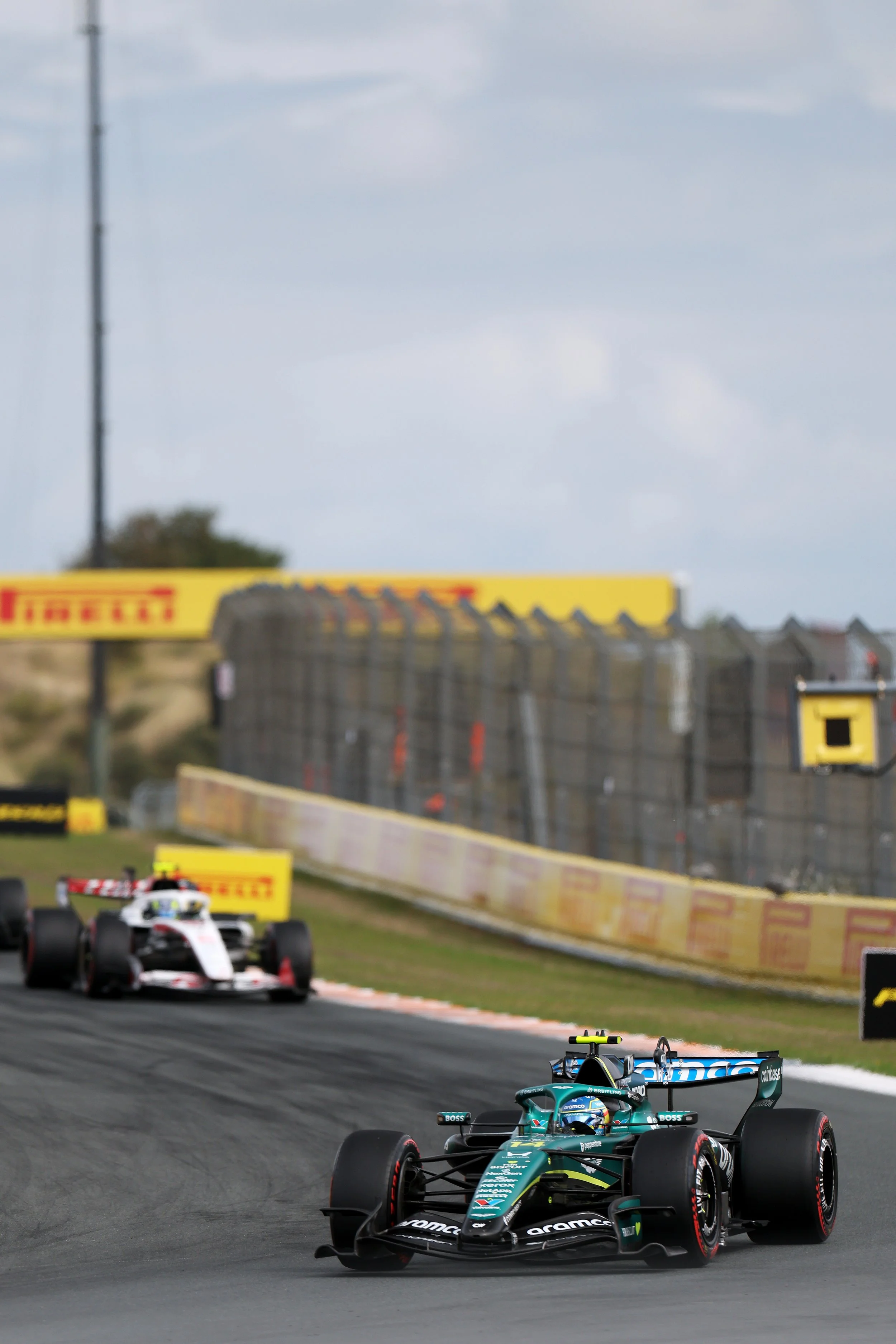
Race 12 - Dutch Grand Prix, Circuit Zandvoort | 21st - 23rd August 2026
Alonso Fights Back to Points at Zandvoort
Fernando Alonso produced Aston Martin’s best result since Monaco with an impressive recovery drive to ninth place in the Dutch Grand Prix, scoring two valuable championship points after starting 18th. It completed a weekend that had initially looked difficult for Aston Martin. Both AMR26s were eliminated in Q1, while Saturday’s Sprint had yielded 17th for Lance Stroll and 18th for Alonso. Yet the race pace told a rather different story, providing further evidence that the development work first seen in Hungary is beginning to move the car in the right direction.
A Difficult Saturday
Zandvoort was the first race weekend for Honda’s updated power unit and another opportunity for Aston Martin to understand the recent AMR26 aerodynamic developments. There were encouraging signs, but qualifying remained a clear weakness. Alonso qualified 18th with a 1:13.650, immediately ahead of Stroll in 19th on 1:13.818. Both were eliminated in Q1.
Despite the positions, Adrian Newey said both drivers were reporting significant improvements in the chassis and aerodynamic performance compared with earlier races. The remaining concern was driveability, something Aston Martin believes is preventing the drivers from extracting the car’s full potential over a qualifying lap.
Early Red Flag Resets the Race
Rain had fallen before Sunday’s Grand Prix, although the circuit was drying when both Aston Martins started on Soft tyres. The race was stopped by a red flag at the end of the opening lap, giving Aston Martin an opportunity to reset its strategy. Alonso restarted on a fresh set of Softs and made immediate progress, with the two AMR26s climbing to 14th and 15th by lap 10. Alonso then made the strategy work. He managed the Soft tyres for around 30 laps before switching to Hards, effectively committing to a one-stop race following the restart. As other strategies unfolded around him, the Aston Martin moved into the points.
Alonso Converts Progress into Points
The closing stages became a test of whether Alonso could hold onto ninth. Pierre Gasly closed onto the back of the Aston Martin, but Alonso successfully defended the position and crossed the line P9, completing 71 laps and scoring two points. From 18th on the grid, it represented a nine-place recovery.
Alonso said afterwards that finishing in the points had exceeded his expectations and described Zandvoort as “another step forward” for Aston Martin. Formula One’s own post-race assessment also highlighted the contribution of Honda’s upgraded power unit to the team’s improved performance. For a team that had spent much of the opening half of 2026 detached from the midfield, the significance was less about ninth place in isolation and more about being able to convert improved race pace into an actual championship result.
Stroll’s Race Ends Early
Lance Stroll’s afternoon was much more difficult. The Canadian picked up damage during the early stages, resulting in a handling problem that left the AMR26 sliding and lacking pace. Aston Martin tried two separate stints on the Hard tyre, but the problem persisted. Stroll was eventually retired after 45 laps, with Newey saying the team suspected damage to the car was responsible for the handling difficulties.
Norris Wins as Verstappen Falls Out
At the front, Lando Norris claimed his second consecutive Grand Prix victory, finishing 11.536 seconds ahead of championship leader Kimi Antonelli. George Russell completed the podium for Mercedes. The final Dutch Grand Prix of Zandvoort’s current Formula One era also brought disappointment for home favourite Max Verstappen, who retired without completing a racing lap.
Another Step, Not a Transformation
Aston Martin leaves Zandvoort with three championship points, all scored by Alonso, and remains 10th in the Constructors’ Championship. That position still illustrates how difficult 2026 has been. The AMR26 also remains vulnerable in qualifying, where 18th and 19th are clearly not where Aston Martin intends to operate. There is, however, now a developing pattern.
Hungary showed that the upgraded AMR26 could compete more credibly with the midfield. Zandvoort showed that Aston Martin could turn some of that improved performance into points.
The team still has considerable work ahead, particularly with the car’s driveability, but the gap to the competitive midfield no longer looks as immovable as it did earlier in the summer.
Monza Comes Next
Formula One now moves to the Italian Grand Prix at Monza on 4th–6th September. Its very different high-speed, low-downforce characteristics should provide another useful test of both Aston Martin’s recent chassis development and Honda’s updated power unit. Zandvoort doesn’t suddenly change the course of Aston Martin’s season. What it does provide is another piece of evidence that the recovery programme may finally be gaining traction.
Alonso’s P9 was the reward. The bigger question is whether Aston Martin can now make results like this less exceptional.
FTP Summary Line
Monza delivered a sharp reality check for Aston Martin after the encouragement of Zandvoort. Fernando Alonso and Lance Stroll both retired, while the AMR26’s lack of power and straight-line performance was brutally exposed by the circuit’s high-speed demands. Hungary and Zandvoort still suggest the chassis is improving, but Monza showed that the complete Aston Martin-Honda package remains highly circuit-sensitive. Madrid is now the next opportunity to see whether that progress can re-emerge.
Images © Honda Motor Co., Ltd. Used for editorial purposes.
Formula 1 • Round 12 • Aston Martin Focus
Dutch Grand Prix Result Snapshot
Circuit Zandvoort, Netherlands • 21st–23rd August 2026
Top 10
| Pos | Driver | Team | Gap / Time | Points |
|---|---|---|---|---|
| 1 | Lando Norris | McLaren | 2:04:44.859 | 25 pts |
| 2 | Kimi Antonelli | Mercedes | +11.536s | 18 |
| 3 | George Russell | Mercedes | +15.906s | 15 |
| 4 | Lewis Hamilton | Ferrari | +16.755s | 12 |
| 5 | Charles Leclerc | Ferrari | +17.258s | 10 |
| 6 | Oscar Piastri | McLaren | +32.332s | 8 |
| 7 | Liam Lawson | Red Bull Racing | +79.915s | 6 |
| 8 | Nico Hulkenberg | Audi | +1 lap | 4 |
| 9 | Fernando Alonso | Aston Martin | +1 lap | 2 pts |
| 10 | Pierre Gasly | Alpine | +1 lap | 1 |
Aston Martin Focus
| Result | Driver | Race Status | FTP Note |
|---|---|---|---|
| P9 |
Fernando Alonso
Aston Martin |
71 laps completed
Started P18 • Finished P9 • 2 pts |
Alonso produced a determined recovery from 18th on the grid to finish ninth. Aston Martin maximised the race strategically, while Alonso managed a long stint before defending strongly from Pierre Gasly during the closing stages to secure two valuable championship points. |
| NC |
Lance Stroll
Aston Martin |
45 laps completed
Started P19 • Retired |
Stroll picked up damage early in the race which created a serious handling problem. Despite an early tyre change, the AMR26 remained difficult to drive and Aston Martin eventually retired the car after 45 laps. |
FTP reading: Zandvoort provided Aston Martin with one of the clearest signs yet that the substantial AMR26 development package introduced in Hungary was beginning to deliver progress. Both cars were eliminated in Q1, but Alonso recovered from 18th to ninth through strong race execution and determined late-race defence, scoring two points. Stroll's retirement after early damage prevented a stronger team result, but Alonso described the weekend as another step forward.
Classification reflects the official Formula One result following the Dutch Grand Prix at Circuit Zandvoort on 23rd August 2026.
Race 11 - Hungarian Grand Prix, Hungaroring | 24th-26th July 2026
Upgraded AMR26 Brings Aston Martin Back into the Fight in Hungary
The Hungarian Grand Prix didn’t deliver the points Aston Martin wanted, but it produced something almost as important at this stage of the season: credible evidence that the AMR26 can be developed into a more competitive Formula One car.
Lance Stroll recovered from 20th on the grid to finish 13th, directly ahead of Fernando Alonso in 14th. Both drivers completed 69 of the race’s 70 laps and, for the first time in several difficult weekends, were able to compete meaningfully with the cars around them rather than simply circulate at the rear of the field.
At the front, Lando Norris claimed McLaren’s first Grand Prix victory of the season, finishing 15.080 seconds ahead of Max Verstappen. Championship leader Kimi Antonelli completed the podium for Mercedes after Oscar Piastri’s challenge ended with a late gearbox failure. Further back, however, Aston Martin’s improved performance represented one of the weekend’s most significant developments.
Aston Martin’s Major Upgrade Finally Arrives
Hungary had been identified months earlier as the introduction point for Aston Martin’s first substantial AMR26 development package. Rather than adding small updates over several races, Adrian Newey and his technical team had chosen to concentrate their resources on a much broader aerodynamic revision.
Aston Martin submitted 16 individual changes before the weekend. The package included revisions to the front wing and front brake ducts, extensive floor modifications, revised bodywork, changes around the rear suspension and rear brake ducts, and a redesigned rear wing intended to generate more cornering load without creating an equivalent increase in drag.
Newey described the package as an aerodynamic evolution rather than a completely new car. The chassis layout and front suspension remained unchanged, but the surfaces controlling airflow over, beneath and around the AMR26 had been extensively reworked. It was the first stage of a development programme that will continue after the summer break.
Encouraging Signs and an Early Setback
The first evidence was encouraging. Alonso finished Free Practice One in 13th, having completed 20 laps in the upgraded car. His position was particularly notable because the AMR26 had appeared competitive even before switching to the softest tyre compound.
Stroll’s session ended very differently. A failure involving the left-rear suspension pitched the Canadian into a spin between Turns Two and Three and brought out the red flag. The damage couldn’t be repaired before the second practice session, leaving Stroll without any FP2 running and depriving Aston Martin of valuable comparison data between its two cars.
Alonso continued alone in FP2 and finished 19th. The position itself was less impressive than his earlier result, but Aston Martin reported that the data gathered from the revised components broadly matched its simulation predictions. That correlation between the wind tunnel, simulator and circuit was an important indication that the team’s revised development tools were producing reliable information.
The interruption left Stroll playing catch-up throughout Saturday. He finished 18th in final practice, while Alonso placed 17th, but the greater significance would come during qualifying.
Alonso Reaches Q2 for the First Time
Alonso progressed beyond the opening qualifying session for the first time during the 2026 season. He set a 1:20.126 in Q1 before improving to 1:19.808 in Q2, securing 16th position on the grid.
It was only one place better than his previous highest starting position, but that statistic doesn’t fully reflect the improvement. Alonso had started from the back two rows at each of the previous five Grands Prix. Reaching Q2 and competing directly with recognised midfield teams therefore represented a substantial change from the performances seen at Silverstone and Spa. Alonso also reported that the car felt more consistent, more predictable and easier to drive. There was still performance to unlock, but the package had delivered broadly what Aston Martin expected from its first competitive appearance.
Stroll qualified 20th with a 1:20.659. He believed Q2 had been possible, but a tailwind approaching Turn 12 unsettled the car during his final attempt and sent him through the gravel. His limited Friday running had also left him with less time to understand the upgraded package and optimise its set-up.
Nevertheless, both drivers had moved closer to the midfield. Alonso started ahead of both Williams cars and both Cadillacs, while Stroll was separated from the Aston Martin of his team-mate by the two Williams entries. Only one week earlier at Spa, the two AMR26s had qualified 21st and 22nd and had been more than two seconds behind the next car.
Aston Martin Chooses an Aggressive Strategy
Both Aston Martins started the 70-lap Grand Prix on soft tyres. The decision gave Alonso and Stroll additional grip at the start while also creating the opportunity to use the faster compounds throughout the race rather than completing a long stint on the hard tyre. Stroll was brought into the pits after only eight laps, changing from softs to mediums. The early stop initially returned him to the rear of the field, where he fought with the two Cadillacs, but it also allowed him to attempt an undercut on the drivers immediately ahead.
Alonso remained on his original soft tyres until lap 34, extending his first stint considerably longer. He then changed to mediums, while Stroll made his second stop three laps later and returned to softs. Alonso completed his own second stop on lap 55, also fitting soft tyres for the final part of the race. Both cars therefore ran the same soft-medium-soft tyre sequence, but with markedly different timings. Stroll’s early stop and shorter middle stint ultimately allowed him to move ahead of Alonso, while the Spaniard’s extended opening stint kept him in the midfield battle for much of the race.
The decision to avoid the hard tyre was notable. In recent races, Aston Martin’s strategy had often been limited by the simple reality that its cars were racing only each other or the final few runners. Hungary gave the team sufficient pace to attempt an aggressive undercut and use differing stint lengths to compete with Alpine, Haas and Williams.
Stroll Recovers Seven Positions
Stroll crossed the line in 13th, gaining seven positions from his starting place and recording his best result of the season. The Canadian finished ahead of Alonso, Franco Colapinto’s Alpine, both Haas cars and both Williams entries. His recovery was achieved despite completing only 11 laps during Friday practice and missing FP2 entirely following the suspension failure.
Stroll said afterwards that it had been good to feel as though he was racing again. He described the Hungary package as Aston Martin’s most encouraging upgrade for a long time, while acknowledging that the team remained some distance from where it ultimately wanted to be. The result didn’t deliver a championship point, but it demonstrated that the AMR26 could now remain involved in a midfield race over a complete Grand Prix distance. That hadn’t been possible at Silverstone or Spa.
Alonso Completes Aston Martin’s Strongest Two-Car Result
Alonso finished 14th, two positions higher than he started and directly behind Stroll. He was able to follow and fight with midfield cars during the opening stages, providing further evidence that the upgraded AMR26 had improved both its consistency and its race pace. The Spaniard completed 69 laps and recorded his fastest lap on the soft tyre during lap 57. Although he eventually lost out to Stroll’s undercut, Alonso remained ahead of Colapinto, Esteban Ocon, Alex Albon, Carlos Sainz and Oliver Bearman at the finish.
Collectively, the two Aston Martins split the Alpine entries and defeated both Haas and Williams cars. It was Aston Martin’s strongest two-car performance of the season and a significant contrast with Spa, where Alonso finished two laps down and Stroll retired after 25 laps. Alonso described the weekend as a good step forward and said the revised car had given Aston Martin a solid baseline from which to develop. Most importantly, he believed the team had regained enough competitiveness to race the surrounding midfield.
No Points, but a Meaningful Change
Aston Martin still enters the summer break 10th in the Teams’ Championship with one point. Alonso’s inherited 10th place in Monaco remains the team’s only points finish from the opening 11 rounds, while Stroll has yet to score. It’s therefore important not to overstate the Hungarian result. Thirteenth and 14th are not the positions Aston Martin ultimately expects to occupy, and the team remains behind Haas, Williams, Audi, Alpine and Racing Bulls in the championship.
However, Hungary was the first race for some time in which the final positions didn’t tell the complete story. Aston Martin had moved from being detached at the back of the grid to fighting teams in the lower midfield. The drivers could follow other cars, attempt strategic undercuts and remain in contention throughout the race.
The improvement was also achieved with only the first stage of the planned upgrade programme. Newey said the track performance matched Aston Martin’s data predictions, providing confidence that the team is now following the correct development direction.
Zandvoort Becomes the Next Test
Formula One now enters its summer break before returning for the Dutch Grand Prix at Zandvoort on 21st-23rd August. Further Aston Martin upgrades are planned for the Netherlands, with additional development steps then expected at Monza and Baku. Honda is also scheduled to introduce its new-specification power unit at Zandvoort, addressing an area in which Alonso believes Aston Martin still needs additional performance, particularly in straight-line speed.
That makes the Dutch Grand Prix the next important stage in the AMR26’s recovery programme. Hungary established the first competitive baseline, but Zandvoort should bring together the next Aston Martin aerodynamic developments and Honda’s updated power unit. The Dutch weekend will also use Formula One’s Sprint format, leaving the team with only one conventional practice session before Sprint Qualifying. Aston Martin will therefore have limited time to understand the combined package and establish an effective set-up.
Hungary didn’t transform Aston Martin into a points-scoring team overnight. What it did provide was the first convincing indication that the AMR26’s underlying problems can be addressed. After the increasingly bleak performances at Silverstone and Spa, 13th and 14th at the Hungaroring represented more than two positions outside the points. It was the first sign that Aston Martin may finally be moving forwards.
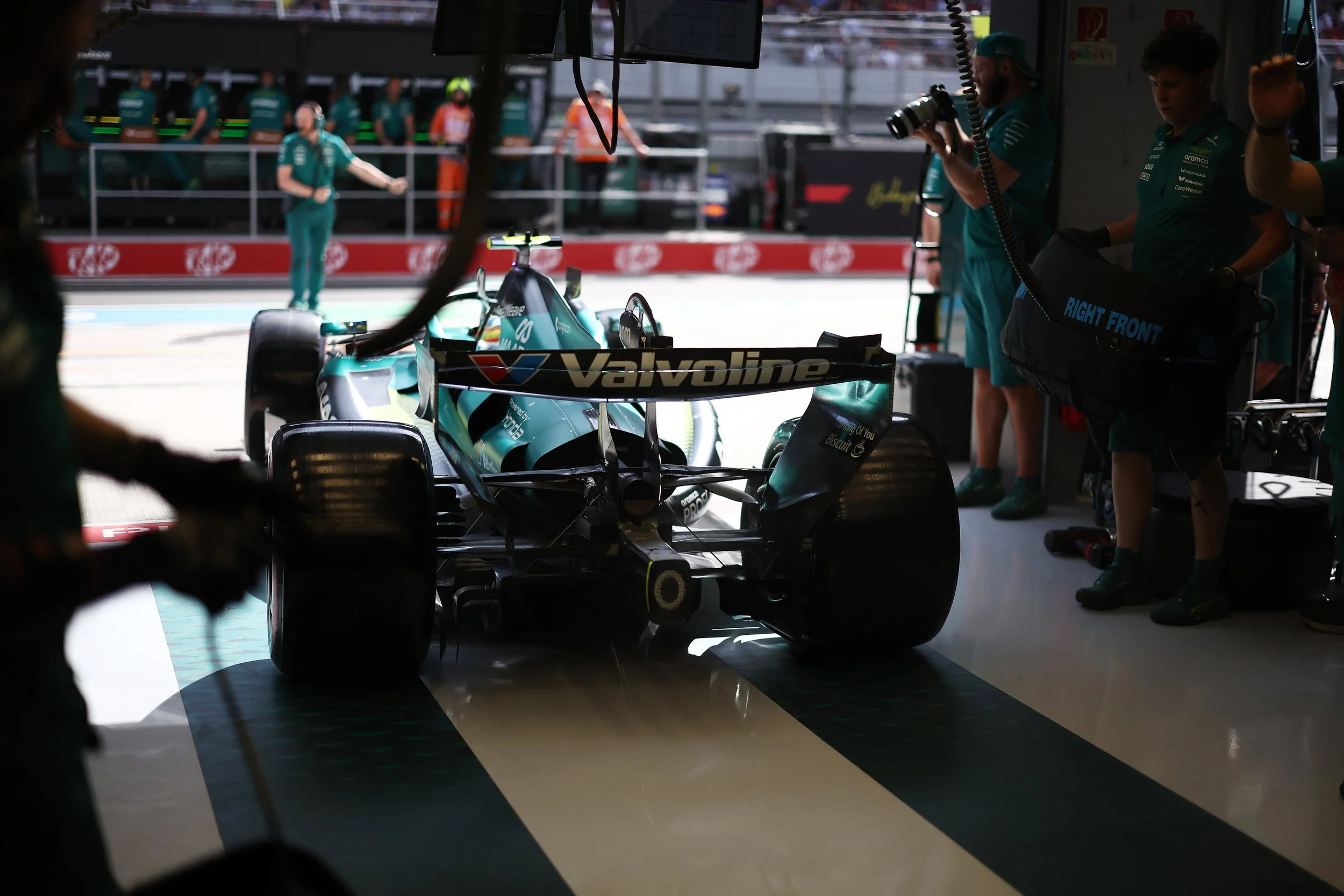
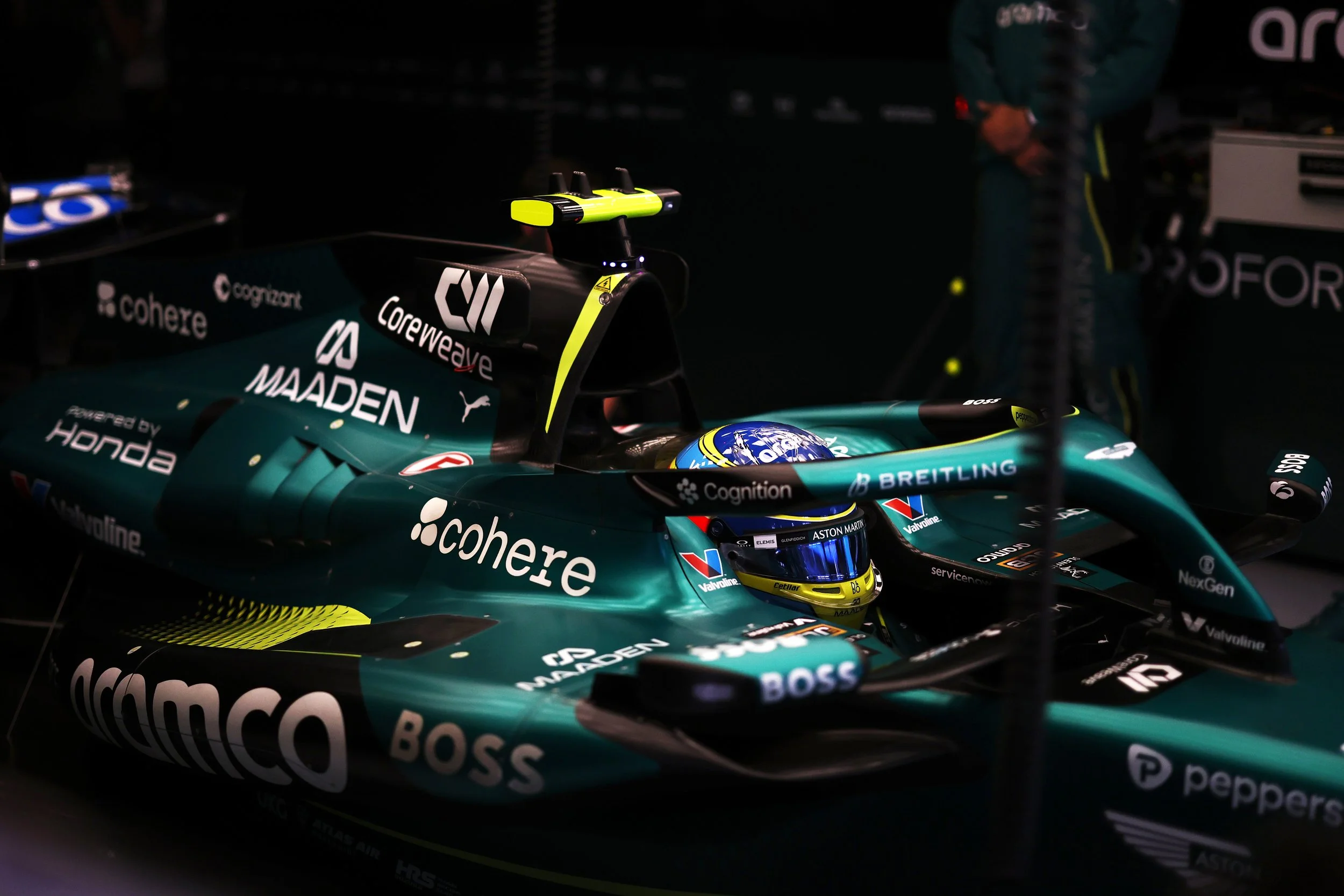
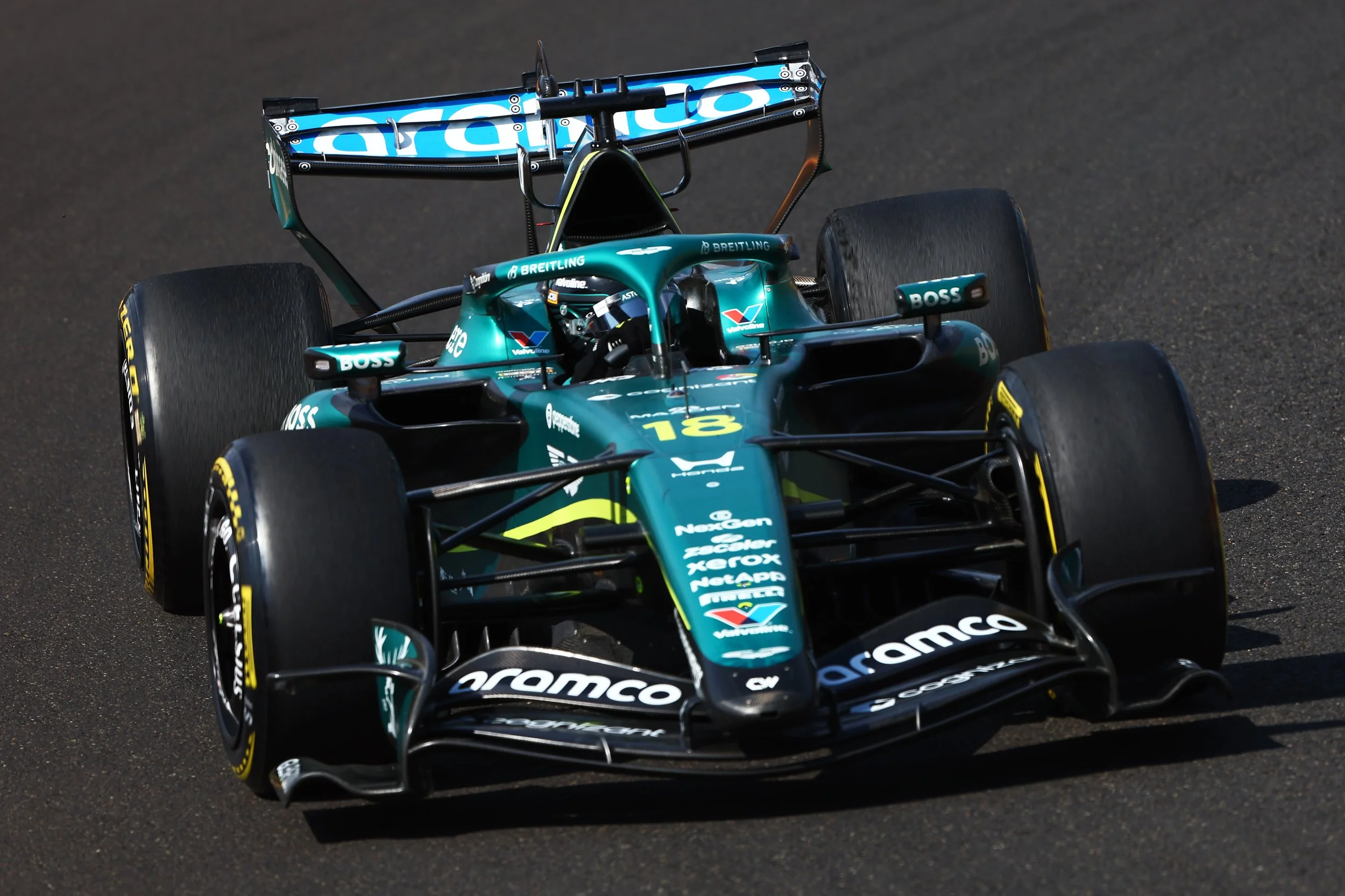
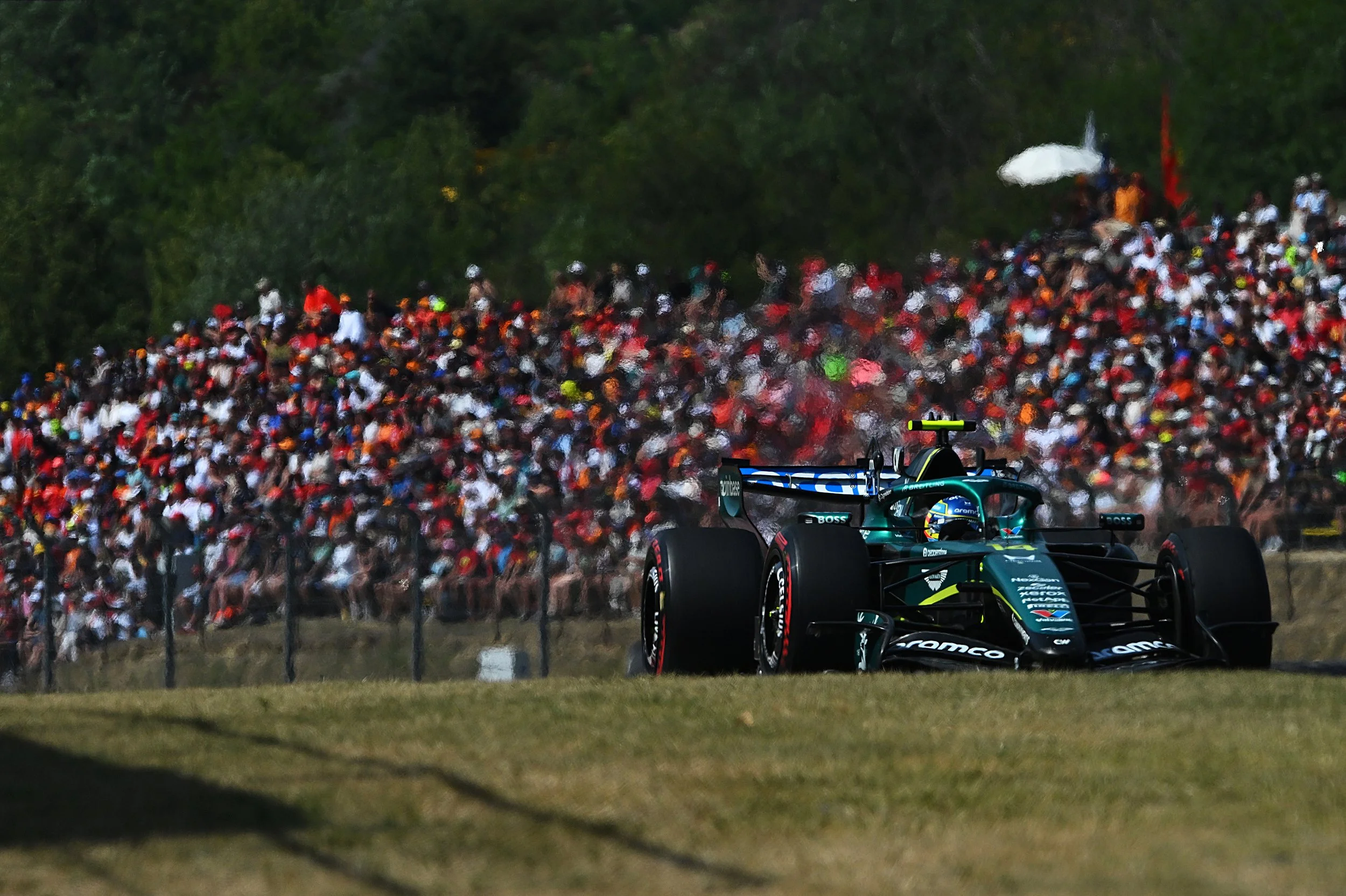
Formula 1 • Round 11 • Aston Martin Focus
Hungarian Grand Prix Result Snapshot
Hungaroring, Budapest • 24th–26th July 2026
Top 10
| Pos | Driver | Team | Gap / Time | Points |
|---|---|---|---|---|
| 1 | Lando Norris | McLaren | 1:39:56.180 | 25 pts |
| 2 | Max Verstappen | Red Bull Racing | +15.080s | 18 |
| 3 | Kimi Antonelli | Mercedes | +18.728s | 15 |
| 4 | Charles Leclerc | Ferrari | +23.840s | 12 |
| 5 | Lewis Hamilton | Ferrari | +24.540s | 10 |
| 6 | Isack Hadjar | Red Bull Racing | +55.488s | 8 |
| 7 | George Russell | Mercedes | +57.503s | 6 |
| 8 | Liam Lawson | Racing Bulls | +1 lap | 4 |
| 9 | Nico Hulkenberg | Audi | +1 lap | 2 |
| 10 | Arvid Lindblad | Racing Bulls | +1 lap | 1 |
Aston Martin Focus
| Result | Driver | Race Status | FTP Note |
|---|---|---|---|
| 13th |
Lance Stroll Aston Martin Aramco |
69 laps completed One lap behind |
Recovered seven positions from 20th on the grid and used an early undercut to move ahead of several rivals, leading Aston Martin’s strongest race of the season. |
| 14th |
Fernando Alonso Aston Martin Aramco |
69 laps completed One lap behind |
Raced competitively in the midfield but lost time when the Virtual Safety Car ended as he entered the pit lane, eventually finishing directly behind Stroll. |
FTP reading: Hungary brought no points, but it delivered the first clear sign that Aston Martin’s new AMR26 development direction is working. Stroll and Alonso finished 13th and 14th and were able to compete credibly with the midfield. Further Aston Martin upgrades and Honda’s new-specification power unit are due when Formula One returns at Zandvoort after the summer break.
Classification shown reflects the official Formula One race result published following the Hungarian Grand Prix.
FTP Summary Line
Hungary brought Aston Martin’s most encouraging Formula One performance of the 2026 season so far. Stroll recovered from 20th on the grid to finish 13th, directly ahead of Alonso in 14th, as both drivers returned to meaningful midfield competition.
The upgraded AMR26 still fell short of the points, and Aston Martin remains 10th in the Teams’ Championship with one point from 11 races. However, the car was more consistent, more competitive and significantly closer to the teams immediately ahead than it had been at Silverstone or Spa.
Hungary was only the first stage of Aston Martin’s planned development programme. Formula One now enters its summer break before returning at Zandvoort, where further AMR26 upgrades and Honda’s new-specification power unit are expected to provide the next major test of whether this progress can be sustained.
Images © Honda Motor Co., Ltd. Used for editorial purposes.

Race 10 – Belgian Grand Prix (Spa-Francorchamps | 17th–19th July 2026)
Spa Leaves Aston Martin at the Back Ahead of Crucial Hungary Upgrade
The Belgian Grand Prix provided another stark demonstration of Aston Martin’s current Formula One position. Fernando Alonso finished 19th and two laps behind the winner at Spa-Francorchamps, while Lance Stroll retired after 25 laps with a suspected gearbox problem. There had been little expectation of a sudden improvement in Belgium. Aston Martin had already identified the following Hungarian Grand Prix as the planned introduction point for its first significant AMR26 development package, leaving Spa as one final weekend with the car in its existing specification.
Even so, the scale of the team’s difficulty was difficult to ignore.
Aston Martin Locks Out the Final Qualifying Positions
Spa’s high-speed layout exposed the AMR26’s weaknesses from the opening practice sessions. Jak Crawford replaced Alonso during first practice, completing his development running while Stroll finished 21st. When Alonso returned for FP2, the two Aston Martins remained at the bottom of the order, with Stroll 21st and Alonso 22nd.
Saturday brought no meaningful improvement. Alonso qualified 21st with a 1:50.002, narrowly ahead of Stroll’s 1:50.177 in 22nd. The Aston Martins were more than two seconds slower than the Cadillac of Sergio Pérez immediately ahead of them in the Q1 classification. Both drivers were also carrying grid penalties following the introduction of additional power-unit components. In practical terms, those penalties changed little: the AMR26 had already locked out the final row on outright qualifying pace.
It was arguably Aston Martin’s poorest qualifying performance of the season so far. At Silverstone the team had lacked midfield pace, but at Spa it appeared detached even from the cars Aston Martin would normally regard as its immediate competitors.
A Difficult Race from the Beginning
Both Aston Martins started the 44-lap Grand Prix on the hard tyre, joining several other drivers beginning from the rear of the field. At the front, Kimi Antonelli recovered from briefly losing the lead to Max Verstappen and went on to win for Mercedes. Charles Leclerc finished second for Ferrari, with Verstappen completing the podium after an opening-lap incident eliminated George Russell and brought out an early Safety Car. For Aston Martin, there was no comparable opportunity to move forward.
Alonso and Stroll spent the race towards the rear, unable to challenge consistently for positions or take advantage of the early interruption. The team concentrated on operational execution, strategy and collecting information rather than expecting to compete for points. Mike Krack later acknowledged that Aston Martin simply did not have the performance needed to fight the cars ahead. The team attempted to maximise the areas it could control, but the fundamental limitation remained the pace of the AMR26.
Stroll Retires After 25 Laps
Stroll’s race ended after 25 laps when he began to feel a problem developing with the gearbox. Aston Martin called the Canadian into the pits and retired the car while the team investigated the issue. Stroll described the pace as broadly where Aston Martin had expected it to be and said the race had been difficult from the beginning.
It continued a troubling run of reliability problems for the second Aston Martin. Stroll had already retired in Barcelona with gearbox trouble and in Austria with a suspected ERS issue before reaching the finish at Silverstone. Spa therefore became his fourth retirement of an increasingly difficult campaign.
Alonso Reaches the Finish, Two Laps Down
Alonso continued to the chequered flag but finished 19th, completing 42 of the winner’s 44 laps. He was the final classified driver and finished behind Valtteri Bottas in the remaining Cadillac. The result brought no points and no indication that Aston Martin could naturally recover into the midfield without significant changes to the car.
Alonso’s assessment was characteristically measured. He said the team had done the best it could within the limitations of the car and had gathered useful information ahead of Hungary. That data-gathering element matters, but it should not disguise the result. Finishing two laps behind at Spa, after qualifying at the back of the grid, represents another major warning about the AMR26’s current performance level.
One Point from Ten Rounds
Aston Martin leaves Belgium 10th in the Teams’ Championship with one point. That point remains Alonso’s inherited 10th place from Monaco. Since then, the team has suffered a double retirement in Barcelona, finished last with Alonso in Austria, placed 18th and 19th at Silverstone and now recorded 19th and a retirement at Spa.
The sequence makes Aston Martin’s position increasingly clear. This is no longer simply a difficult opening phase or a temporary set-up problem. The AMR26, in its current form, is one of the least competitive cars in the field. Alonso remains 18th in the Drivers’ Championship with one point, while Stroll is 22nd and has yet to score.
Hungary Becomes the Defining Test
The Hungarian Grand Prix now carries greater significance than any previous round of Aston Martin’s season. A new AMR26 package is expected to make its debut at the Hungaroring. Krack confirmed after Spa that the team’s focus had moved immediately to Budapest and the introduction of those developments. Alonso stressed that Aston Martin must maximise every practice session in Hungary, understand the revised components and learn as much as possible about the new configuration.
It would be unrealistic to expect one upgrade to transform a backmarker into a regular points contender in a single weekend. The immediate test is more modest: can the package reduce the gap, move Aston Martin away from the final row and give Alonso and Stroll a realistic opportunity to compete with the lower midfield? Even that would represent a meaningful step after Spa.
The Belgian Grand Prix may eventually be remembered as the final race before Aston Martin began to recover. Equally, if Hungary produces little improvement, Spa will stand as evidence that the team’s problems run considerably deeper than one delayed upgrade package.

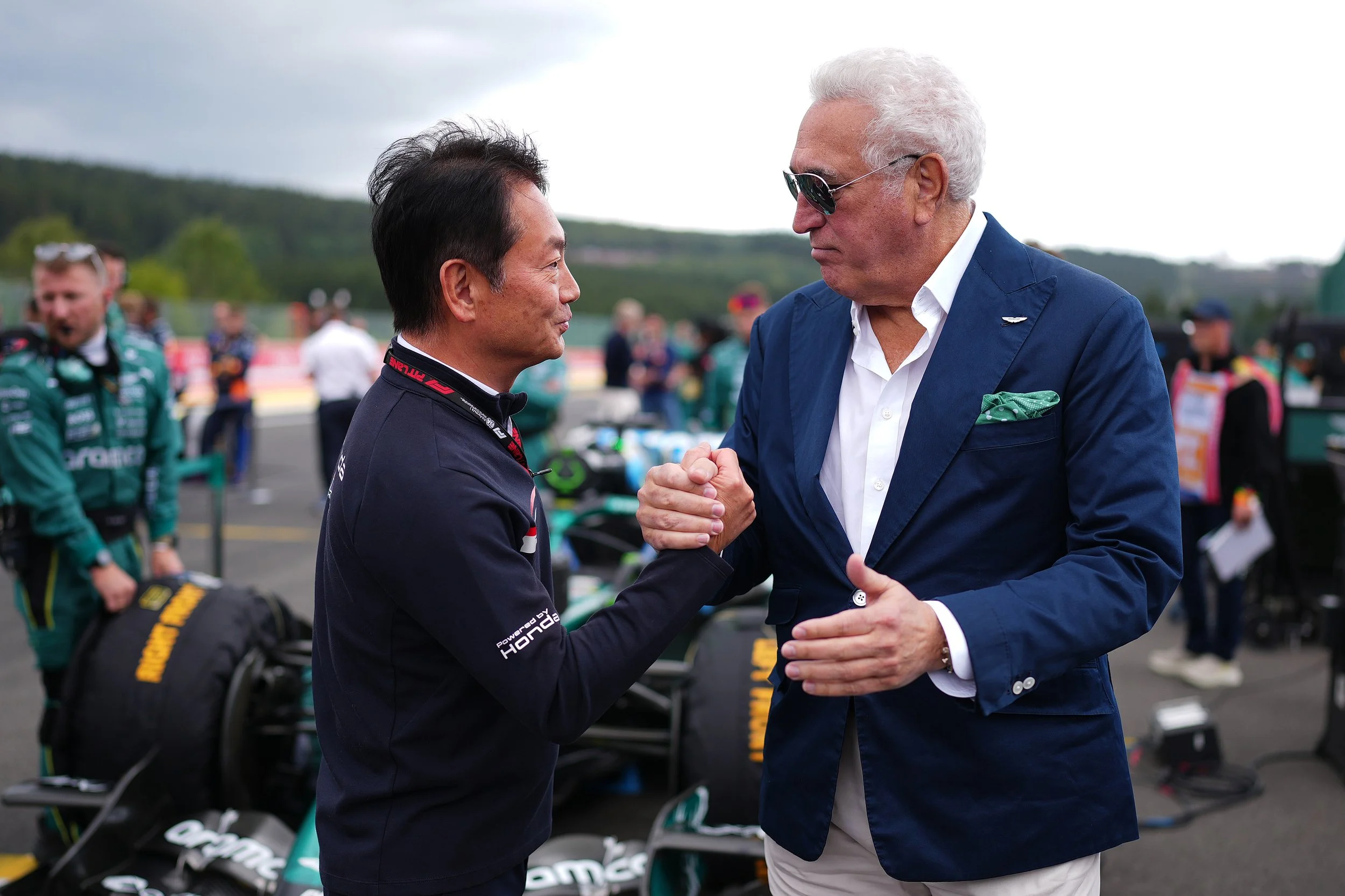

Formula 1 • Round 10 • Aston Martin Focus
Belgian Grand Prix Result Snapshot
Circuit de Spa-Francorchamps, Belgium • 17th–19th July 2026
Top 10
| Pos | Driver | Team | Gap / Time | Points |
|---|---|---|---|---|
| 1 | Kimi Antonelli | Mercedes | 1:24:42.479 | 25 pts |
| 2 | Charles Leclerc | Ferrari | +1.952s | 18 |
| 3 | Max Verstappen | Red Bull Racing | +11.586s | 15 |
| 4 | Lewis Hamilton | Ferrari | +17.245s | 12 |
| 5 | Oscar Piastri | McLaren | +18.988s | 10 |
| 6 | Isack Hadjar | Red Bull Racing | +23.307s | 8 |
| 7 | Lando Norris | McLaren | +24.014s | 6 |
| 8 | Gabriel Bortoleto | Audi | +49.140s | 4 |
| 9 | Arvid Lindblad | Racing Bulls | +50.406s | 2 |
| 10 | Franco Colapinto | Alpine | +76.037s | 1 |
Aston Martin Focus
| Result | Driver | Race Status | FTP Note |
|---|---|---|---|
| 19th |
Fernando Alonso Aston Martin Aramco |
42 laps completed Two laps behind |
Reached the chequered flag but finished as the final classified driver, with the AMR26 unable to challenge the cars ahead. |
| DNF |
Lance Stroll Aston Martin Aramco |
Retired after 25 laps Suspected gearbox issue |
Another reliability setback brought Stroll’s race to an early end after a difficult weekend at the rear of the field. |
FTP reading: Spa provided no improvement for Aston Martin. Alonso finished two laps behind the winner and Stroll retired after 25 laps, leaving the team dependent on its forthcoming Hungary development package for signs of meaningful progress.
Classification shown reflects the FIA provisional race result published following the Belgian Grand Prix.
FTP Summary Line
Spa brought another deeply disappointing result for Aston Martin. Alonso qualified 21st and finished 19th, two laps behind the winner, while Stroll qualified 22nd and retired after 25 laps with a suspected gearbox issue.
The AMR26 showed no realistic ability to compete for points and struggled even against the other teams at the rear of the grid. Aston Martin remains 10th in the Teams’ Championship with one point from ten races.
Hungary is now the season’s defining marker. The new development package does not need to perform a miracle, but it must demonstrate that Aston Martin can begin closing the gap and move away from the back of the Formula One field.
Images © Honda Motor Co., Ltd. Used for editorial purposes.

Race 09 - British Grand Prix (Silverstone | 4th - 5th July 2026)
Silverstone Brings No Home Comfort for Aston Martin
Aston Martin arrived at Silverstone hoping its home Grand Prix might at least offer encouragement before the next major step in the AMR26 development programme. Instead, the British Grand Prix became another difficult marker in a season that continues to test the team’s patience.
At the front, Charles Leclerc delivered Ferrari’s first victory of the 2026 season, winning a dramatic British Grand Prix ahead of George Russell and Lewis Hamilton. The race ended under Safety Car after Max Verstappen crashed late on, while championship leader Kimi Antonelli slipped back after a car issue and left Silverstone with his points lead reduced.
For Aston Martin, however, the home-race story was far less positive. Fernando Alonso finished 18th and Lance Stroll 19th, both a lap down and outside the points. It was another race where the AMR26 reached the chequered flag, but without the pace to trouble the midfield.
Alonso’s afternoon was compromised before the race had properly begun. His car came to a halt on the formation lap, and although he managed to get going again, he was forced to start from the pit lane. From there, the race became more about gathering information than fighting for position.
Both Aston Martins followed the same broad strategy, starting on Medium tyres before switching to Hards and then taking Softs during the late Safety Car period. That second stop did little to change the result, but it did at least give the team more data as it continues to work towards the next stage of the car’s development.
Stroll’s post-race comments summed up the problem. He described the car as suffering from heavy understeer and feeling unpredictable, which made it difficult to keep the AMR26 within track limits while still trying to extract performance. The Canadian eventually finished 19th, one place behind Alonso, as Aston Martin’s home Grand Prix ended without points.
The result leaves Aston Martin still on a single point after nine rounds, with Alonso’s Monaco 10th place remaining the team’s only score of the season. Silverstone was not a surprise in performance terms, but it was still a painful weekend for a team racing in front of its home crowd and based just across the road from the circuit.
The wider picture is now clear. Belgium comes next, but the major focus remains Hungary on 24th - 26th July. Aston Martin’s planned AMR26 upgrade package is expected to be one of the most important moments of its season. It may not transform the year overnight, but Silverstone showed again why the team urgently needs it to work.



Result Snapshot — British Grand Prix
| Pos | Driver | Team | Race outcome | FTP Note |
|---|---|---|---|---|
| 1st | Charles Leclerc | Ferrari | Race winner | Delivered Ferrari’s first win of the 2026 season and capitalised in a dramatic race that ended behind the Safety Car. |
| 2nd | George Russell | Mercedes | Finished +0.427s | A strong second place at home kept Mercedes firmly in command of the Constructors’ Championship. |
| 3rd | Lewis Hamilton | Ferrari | Finished +0.772s | Completed a Ferrari double podium at Silverstone and added another strong result to his 2026 campaign. |
Aston Martin Focus
| Pos | Driver | Team | Race outcome | FTP Note |
|---|---|---|---|---|
| 18th | Fernando Alonso | Aston Martin | Finished; 51 laps completed, one lap down | Started from the pit lane after a formation-lap systems issue. Reached the flag, but never had the pace to fight for points. |
| 19th | Lance Stroll | Aston Martin | Finished; 51 laps completed, one lap down | Another difficult afternoon for the AMR26, with Stroll describing heavy understeer and an unpredictable balance. |
FTP Summary Line
Silverstone offered no home-race breakthrough for Aston Martin. Alonso and Stroll both finished, but 18th and 19th underlined how far the AMR26 still has to go. With only one point from nine races, Aston Martin’s 2026 season remains in damage-limitation mode until the Hungary upgrade proves whether there is a real step forward to come.
Images © Honda Motor Co., Ltd. Used for editorial purposes.

Race 08 - Austrian Grand Prix (Red Bull Ring, Spielberg | 26th - 28th June 2026)
Aston Martin’s difficult 2026 Formula 1 season continued at the Austrian Grand Prix, with another weekend that offered very little comfort on the stopwatch or in the final classification.
At the front, George Russell delivered victory for Mercedes, holding off Max Verstappen and team-mate Kimi Antonelli at the Red Bull Ring. It was another result that strengthened Mercedes’ grip on the season and kept Antonelli at the head of the Drivers’ Championship.
For Aston Martin, however, Austria was a very different story. Fernando Alonso finished 18th, three laps down, while Lance Stroll retired after 45 laps. After the small lift of Monaco’s single point, and the disappointment of Barcelona, Austria felt like another blunt reminder that the AMR26 is still a long way from competitive. The warning signs were there from qualifying. Alonso and Stroll started 21st and 22nd, leaving Aston Martin at the very back of the field on one of the shortest laps of the season. When a car is still clearly detached on a short lap, the underlying gap becomes even harder to ignore.
From there, the race was always likely to be about survival rather than opportunity. Alonso reached the finish, but there was no realistic route into the points. Eighteenth place, three laps down, told its own story. This was not a case of a promising race being spoiled by strategy, traffic or bad luck. It was a weekend where the car simply did not have the performance to fight.
Stroll’s afternoon ended even earlier. His retirement after 45 laps, reported as a suspected ERS issue, added another reliability concern to a season that has already been heavy with technical frustration. For a team trying to build understanding and momentum around a struggling car, every lost race distance matters. It removes useful data, adds pressure and deepens the sense that Aston Martin is still firefighting rather than progressing cleanly.
The most concerning part of Austria was not just the result, but how little there was to build on. Monaco’s point had at least offered a small statistical lift, even if it came through survival and post-race penalties rather than clear pace. Barcelona then brought a double retirement. Austria brought one car home, but near the back, and the other did not make the finish.
From an FTP perspective, the honest reading is that Austria was one of Aston Martin’s clearest low points of the season so far. The AMR26 didn’t look like a car waiting to unlock a hidden result through better execution. It looked like a car waiting for major parts, major weight reduction, better drivability and a much bigger development step.
That’s why the next phase matters so much. Aston Martin hasn’t yet introduced the kind of significant upgrade package that could properly reset expectations. Until that arrives, races like Austria risk becoming repetitive: difficult qualifying, limited race pace, no points, and a post-race explanation built around learning rather than competing.
There are still reasons not to overreact completely. Formula 1 seasons can change direction once meaningful upgrades arrive, and Aston Martin’s wider project still has serious people, facilities and ambition behind it. But the current on-track reality is stark. One point from eight rounds is not just a slow start; it’s a crisis of competitiveness for a team that expected to be far further forward under the 2026 regulation reset.
Alonso remains the team’s only points scorer, thanks to Monaco. Stroll is still waiting to open his account. Aston Martin remains 10th in the Constructors’ Championship, ahead only of Cadillac, and the pressure now grows heading into Silverstone.
That home-race context makes the British Grand Prix particularly important, even if expectations must remain realistic. Silverstone will bring the spotlight, the factory story and the emotional weight of Aston Martin racing in front of its home crowd. But unless the car changes, the narrative is unlikely to change much. The team needs more than encouragement now. It needs performance.


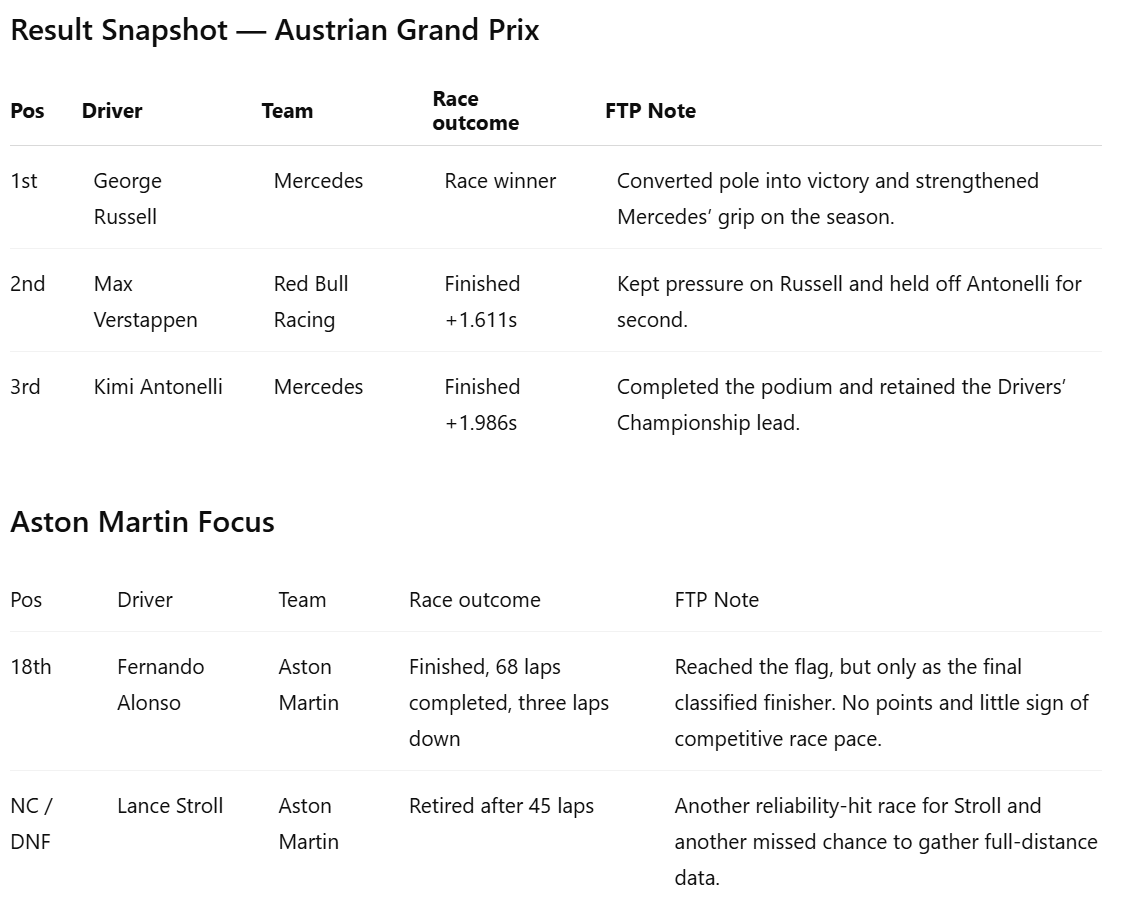
FTP Summary Line
Austria was another painful weekend for Aston Martin, with Fernando Alonso finishing 18th and three laps down, while Lance Stroll retired after 45 laps. The AMR26 still looks trapped in survival mode, and the team heads to Silverstone needing its next upgrade package to change the tone of the season.
Images © Honda Motor Co., Ltd. Used for editorial purposes.

Race 07 - Barcelona-Catalunya GP Race Report: A Painful Reality Check for Aston Martin
After the small lift of Monaco, the Barcelona-Catalunya Grand Prix delivered a brutal reminder of just how difficult Aston Martin Aramco’s 2026 Formula 1 season remains. This was Fernando Alonso’s home race weekend, in front of the passionate Spanish fans who have followed him for more than two decades. It should’ve been one of the emotional high points of the season. Instead, it became another weekend defined by lack of pace, reliability concerns and the growing wait for the team’s expected summer upgrade package.
Aston Martin arrived in Barcelona knowing the circuit was likely to expose the AMR26’s weaknesses. The Circuit de Barcelona-Catalunya is one of Formula 1’s most complete tests: long corners, high-speed direction changes, tyre degradation, a long main straight and heavy demand on aerodynamic balance. If a car lacks downforce, power delivery or stability, Barcelona usually finds it. Unfortunately for Aston Martin, that’s exactly what happened.
Qualifying Left Aston at the Back
The weekend had already started badly before the race began. Lance Stroll qualified 21st, while Fernando Alonso was 22nd, leaving both Aston Martins at the rear of the field. Alonso had spoken after qualifying about downshifting issues and how difficult the car had been to drive, while Stroll pointed to drivability problems, lack of downforce and a shortage of power. Mike Krack also accepted that Barcelona had exposed the team’s true pace.
That made Sunday a race of limitation rather than opportunity. The team opted for an alternative strategy, with both drivers starting on the hard tyre. Alonso, however, had to start from the pit lane after Aston Martin made power-unit-related changes to his car.
Lance Stroll: Early Gearbox Retirement
Stroll’s race was over almost before it had properly begun. Starting from 21st, the Canadian was called into the pits after only a handful of laps due to a gearbox issue. He later explained that he couldn’t select third or fourth gear in the final laps before retirement. It was a particularly frustrating outcome because, on a weekend when outright pace was already poor, Aston Martin badly needed race mileage, data and a clean run to understand the car. Instead, one AMR26 was out almost immediately.
Stroll’s assessment was simple but telling: there’s still a lot of work to do, and until the planned upgrade package arrives around the summer break, the team knows the difficult weekends are likely to continue.
Fernando Alonso: Home Race Ends with Battery Issue
Alonso’s race lasted longer, but the final outcome was the same. Starting from the pit lane, he ran the opening stint on the hard tyre and stayed out until the end of Lap 22 before switching to another set of hards. For a time, he was able to circulate and fight in the lower order, including with Sergio Perez’s Cadillac, but there was never any realistic prospect of points.
Then came the retirement. Alonso parked the car after 37 laps with a battery issue, ending what may be remembered as a deeply disappointing home race weekend. For the Spanish fans, it was a painful sight. Alonso had thanked them throughout the weekend for their support, and Aston Martin’s official reaction made clear how much the team appreciated seeing green in the grandstands. But Alonso himself admitted the team could not give the supporters what they wanted. That is perhaps the saddest part of the weekend. The emotion was there, the support was there, the performance was not.
A Race Won Elsewhere, But Aston Still Waiting
At the front, the Barcelona-Catalunya Grand Prix had its own major story, with Lewis Hamilton taking victory for Ferrari ahead of George Russell and Lando Norris. But for Aston Martin, this was not a race about trophies, podiums or strategy brilliance. It was about survival, diagnosis and patience.
The contrast with Le Mans weekend could hardly have been sharper. While Aston Martin’s Valkyrie and Vantage programmes were delivering endurance racing progress in France, the Formula 1 team was facing another difficult Sunday in Spain. It shows two very different Aston Martin motorsport stories unfolding at once. In endurance racing, the Valkyrie programme is visibly building momentum. In Formula 1, Aston Martin Aramco is still trying to get on top of the AMR26’s most fundamental limitations.
What It Means
Barcelona didn’t bring any points. It didn’t bring a finish for either driver. It didn’t bring evidence of a short-term turnaround. What it did bring was clarity.
The team already knew Barcelona would be a difficult circuit, and the result confirmed the scale of the challenge. The AMR26 continues to suffer from a combination of performance and reliability problems, with downforce, drivability, gearbox behaviour, battery performance and power-unit integration all part of the wider picture.
For Alonso, the home support remained the one bright spot. For Stroll, the early gearbox retirement was another painful missed opportunity. For the team, attention now turns to regrouping before Austria and continuing the push towards the upgrade package expected around the summer break.
After Monaco, there was at least one point on the board. After Barcelona, there’s no escaping the reality: Aston Martin’s 2026 Formula 1 recovery is still waiting to begin properly.
For now, the message is patience. The team understands many of the weaknesses, the drivers are still fighting, the fans are still there. But until the promised upgrades arrive, weekends like Barcelona may remain part of the painful road back.


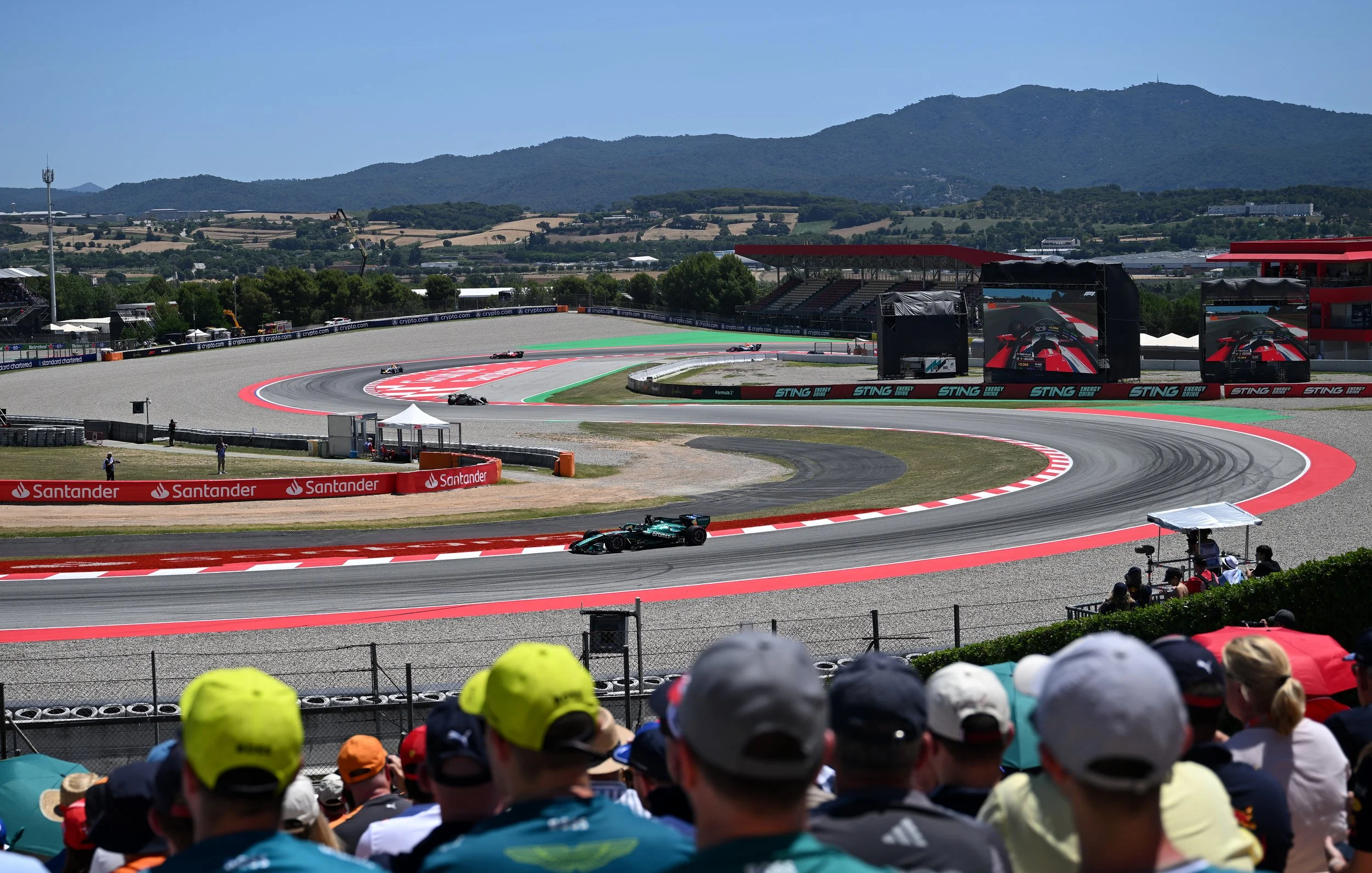


FTP Summary Line
Barcelona was a painful reality check for Aston Martin: Alonso’s home race ended with a battery issue, Stroll retired early with gearbox trouble, and the AMR26’s difficult start to 2026 continued.
Images © Honda Motor Co., Ltd. Used for editorial purposes.

Race 06 - Monaco, Aston Martin finally scores, but Monaco doesn’t hide the bigger AMR26 problem
The 2026 Monaco Grand Prix delivered the kind of drama only Monaco can produce: a dominant winner, late Safety Cars, a red flag, penalties, track-surface concerns and a heavily reshuffled points order. At the front, Kimi Antonelli continued his remarkable start to the season, taking victory for Mercedes ahead of Lewis Hamilton’s Ferrari and Isack Hadjar’s Red Bull. It was Antonelli’s fifth consecutive Grand Prix win and another clear sign that Mercedes currently has the strongest package in the early phase of the 2026 season.
The race changed shape late on. Lance Stroll crashed at Anthony Noghes on lap 60, bringing out the first Safety Car, before Charles Leclerc then crashed at the same corner. The FIA halted the race while debris was cleared and the track surface was inspected, with the governing body noting that a recently resurfaced section at the final corner had degraded and left asphalt debris on the racing line. After a lengthy stoppage, the race resumed for a short sprint to the flag, with Antonelli controlling the restart and completing the win.
For Aston Martin, Monaco finally produced the team’s first point of the 2026 Formula 1 season. Fernando Alonso had originally crossed the line 11th, but Sergio Perez was later penalised after the restart procedure, dropping the Cadillac driver from 10th to 15th and promoting Alonso into the final points-paying position. That gave Alonso 10th place and Aston Martin its first championship point of the year.
Alonso’s race was a reminder of why Monaco can still reward experience and opportunism, even when outright car performance is lacking. Aston Martin went aggressive early, stopping Alonso on lap three and committing to a strategy that required him to keep the car alive, stay out of trouble and then take advantage when the race came back towards him. The late Safety Car and red flag helped, but Alonso still had to manage the restarts and avoid the mistakes that caught out others. His reward was modest in pure championship terms, but important symbolically: Aston Martin is no longer pointless in 2026.
The other side of Aston Martin’s afternoon was far less positive. Stroll’s crash ended his race and triggered the first major late-race interruption. He said afterwards that the team had been dealing with drivability issues throughout the season, particularly inconsistent acceleration and deceleration, and that Monaco’s barriers leave no margin when the car behaves unpredictably. Mike Krack also said Aston Martin would investigate Stroll’s retirement, noting possible deceleration-phase issues and the breaking-up track surface as factors to review.
So while the headline is positive; Aston Martin scores its first point of the season, the underlying picture remains difficult. Alonso’s 10th place was earned through patience, survival and race management rather than a clear step forward in pace. Monaco rewarded the team for staying alert when others made mistakes, but it didn’t suddenly transform the AMR26 into a competitive midfield car.
For Fuel the Passion, the reading is honest but not dismissive. This was a useful result, and the first point with Honda power is a milestone worth noting. But Aston Martin still needs more than isolated opportunities created by chaotic races. As the championship moves on to Barcelona, the real question is whether the team can turn Monaco’s small reward into genuine performance progress.
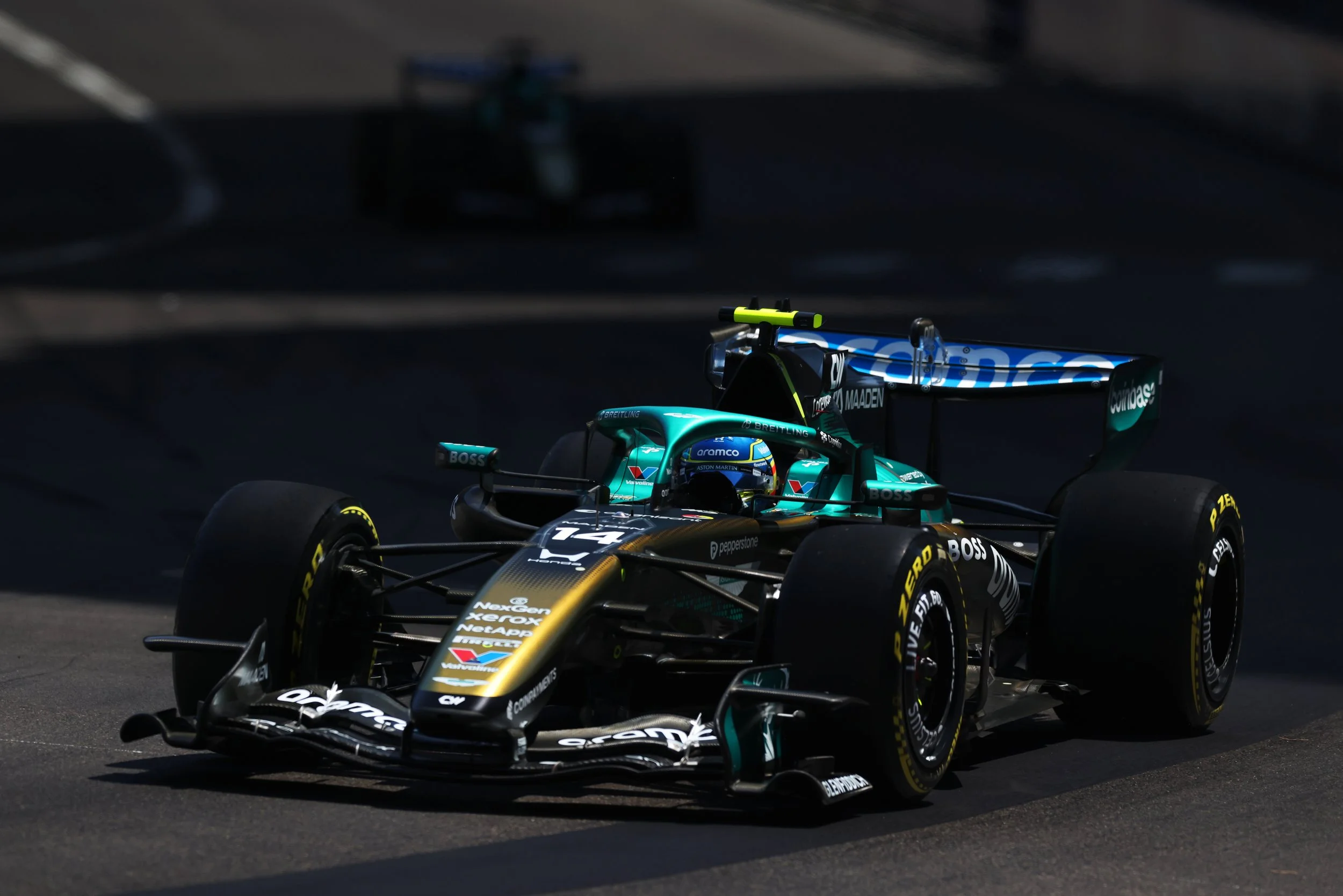


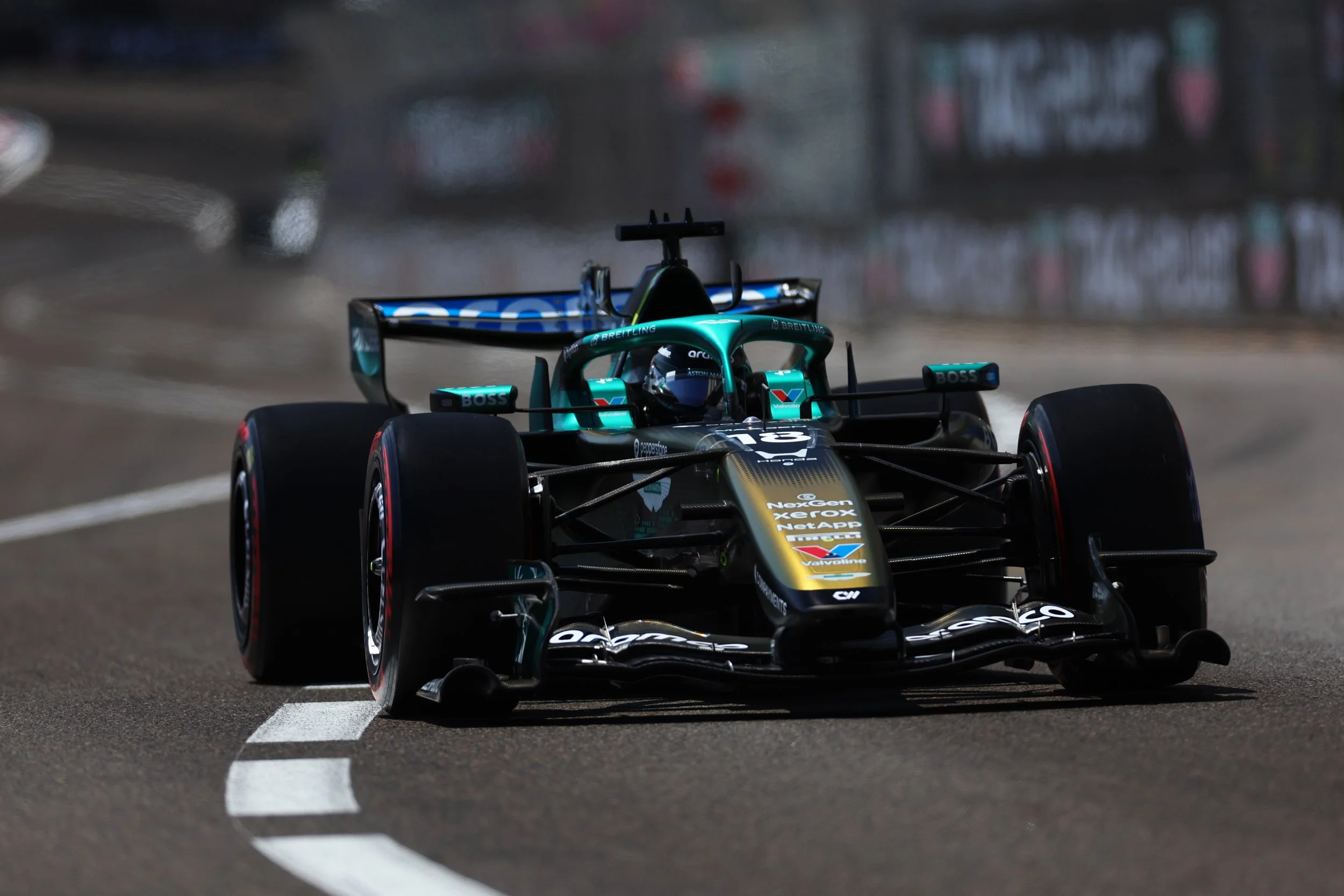

FTP Summary Line
Monaco finally gave Aston Martin its first point of the 2026 Formula 1 season through Fernando Alonso’s 10th place, but the result came from survival, race management and late-race chaos rather than a genuine AMR26 breakthrough.
Images © Honda Motor Co., Ltd. Used for editorial purposes.
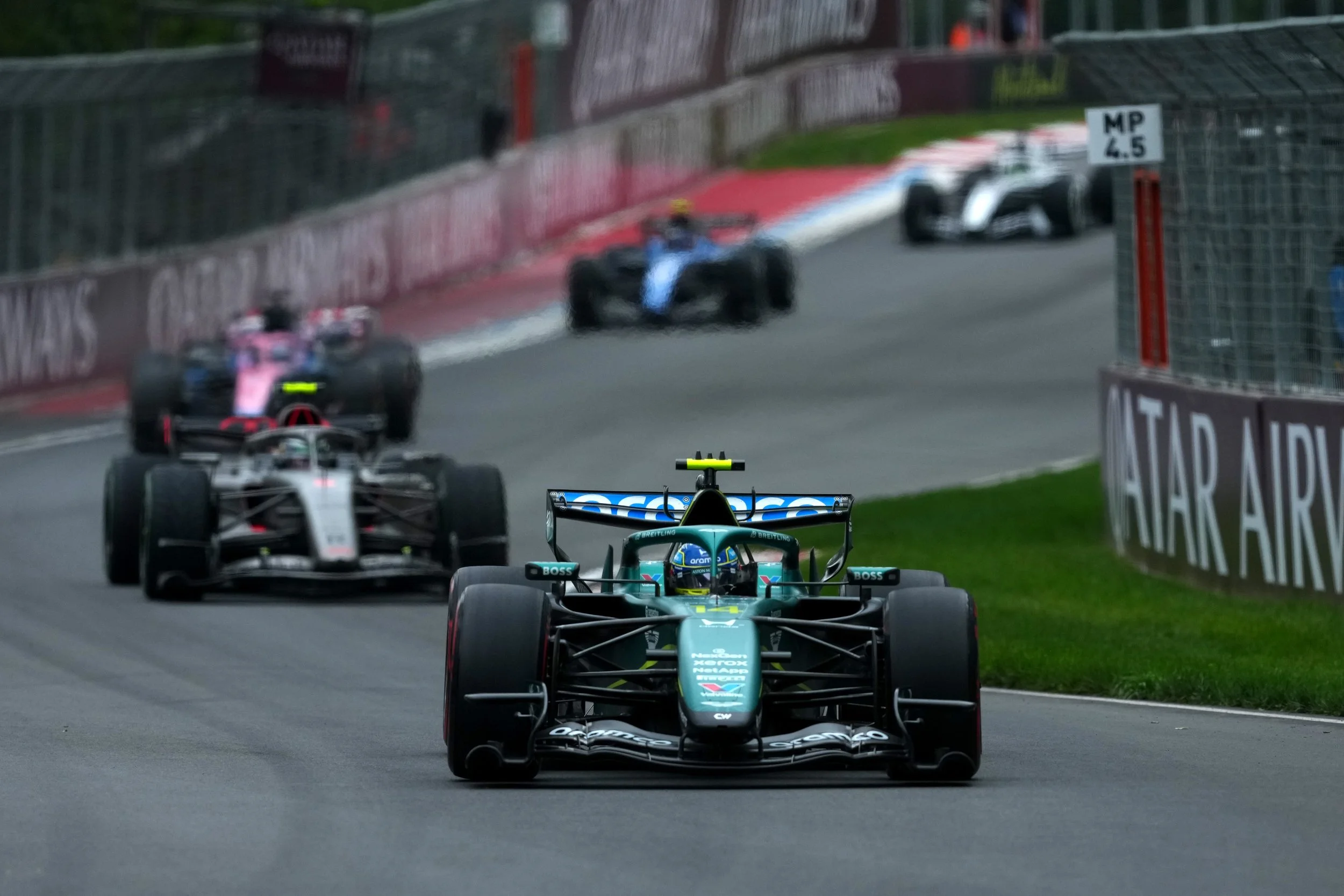
Race 05 - Canada
The Canadian Grand Prix offered Aston Martin a brief moment of encouragement, but not the result the team needed. After a difficult qualifying session, Fernando Alonso started 19th and Lance Stroll started from the pitlane after a battery change on his AMR26. Conditions were awkward at the start, with rain having fallen before the race and track temperatures much lower than the previous day, but the surface had dried enough for both Aston Martins to begin on Soft tyres.
Alonso made the better start. Aston Martin reported that he was already up to P14 by the end of Lap 1, and Alonso later said he had a good start and was “fighting into the top ten positions”. That’s probably the fairest way to describe it for FTP: not a confirmed points run, but a genuine early-race recovery from the back end of the grid into the edge of the top-ten battle.
The promise unfortunately didn’t last. Alonso pitted on Lap 21 for another set of Soft tyres, but after 23 laps he retired with what Aston Martin described as a seat issue. Mike Krack said the problem was making Alonso uncomfortable in the cockpit, so the team chose to retire the car on Lap 24. Alonso said the team had made the right call starting on Softs, but the seat problem ended his race early.
Stroll’s race was more straightforward but still outside the points. He pitted on Lap 16 for fresh Softs, then stopped again under the Virtual Safety Car on Lap 53 for Medium tyres. Aston Martin described his afternoon as a conventional two-stop race, and he ultimately finished 15th, four laps down. Stroll said it had been a difficult weekend, with the team struggling for grip and straight-line pace.
At the front, Mercedes’ Kimi Antonelli took another victory after George Russell retired from the lead fight with a power-unit issue. Ferrari’s Lewis Hamilton finished second, with Max Verstappen third for Red Bull. For Aston Martin, though, Canada kept the same broad theme as the opening part of the season: occasional signs of improvement, but still no points and no sustained race pace.
Aston Martin’s latest official Canadian GP reaction is clear and quite measured: Lance finished P15, Fernando retired because of a seat issue, and the team acknowledged it simply doesn’t have enough pace at the moment. Krack’s key line was that the team made a decent start with both drivers gaining ground, but “unfortunately, we do not have more pace at the moment and this is our position.”
The next stop is Monaco, a very different challenge and one where outright straight-line speed matters less than confidence, traction, braking stability and precision. For Aston Martin, that could make the weekend especially interesting. The AMR26 still needs a clear step forward, but Monaco may offer a better opportunity to understand whether the team can put Alonso and Stroll closer to the midfield fight when qualifying, track position and race execution become even more important than usual.

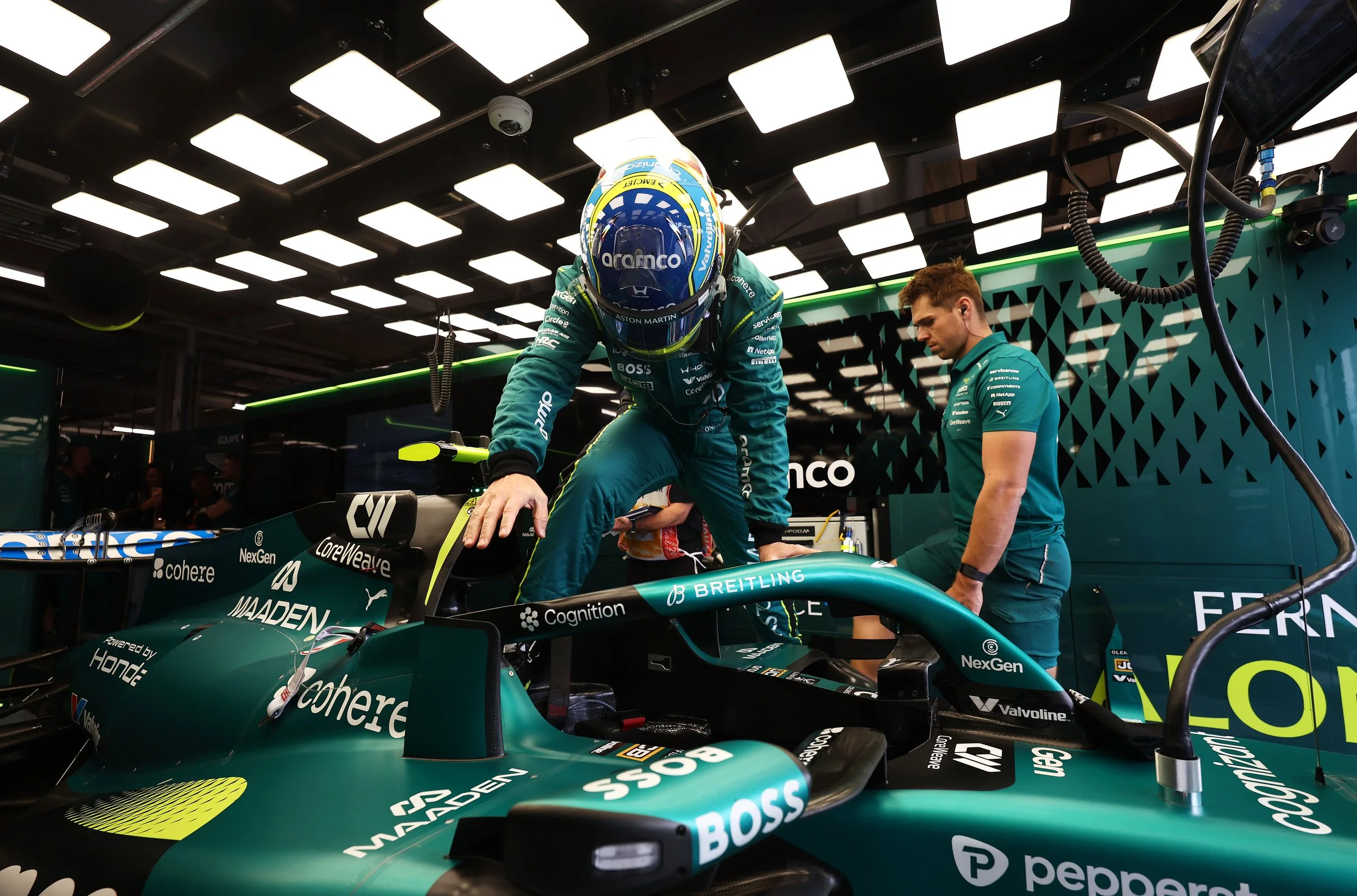

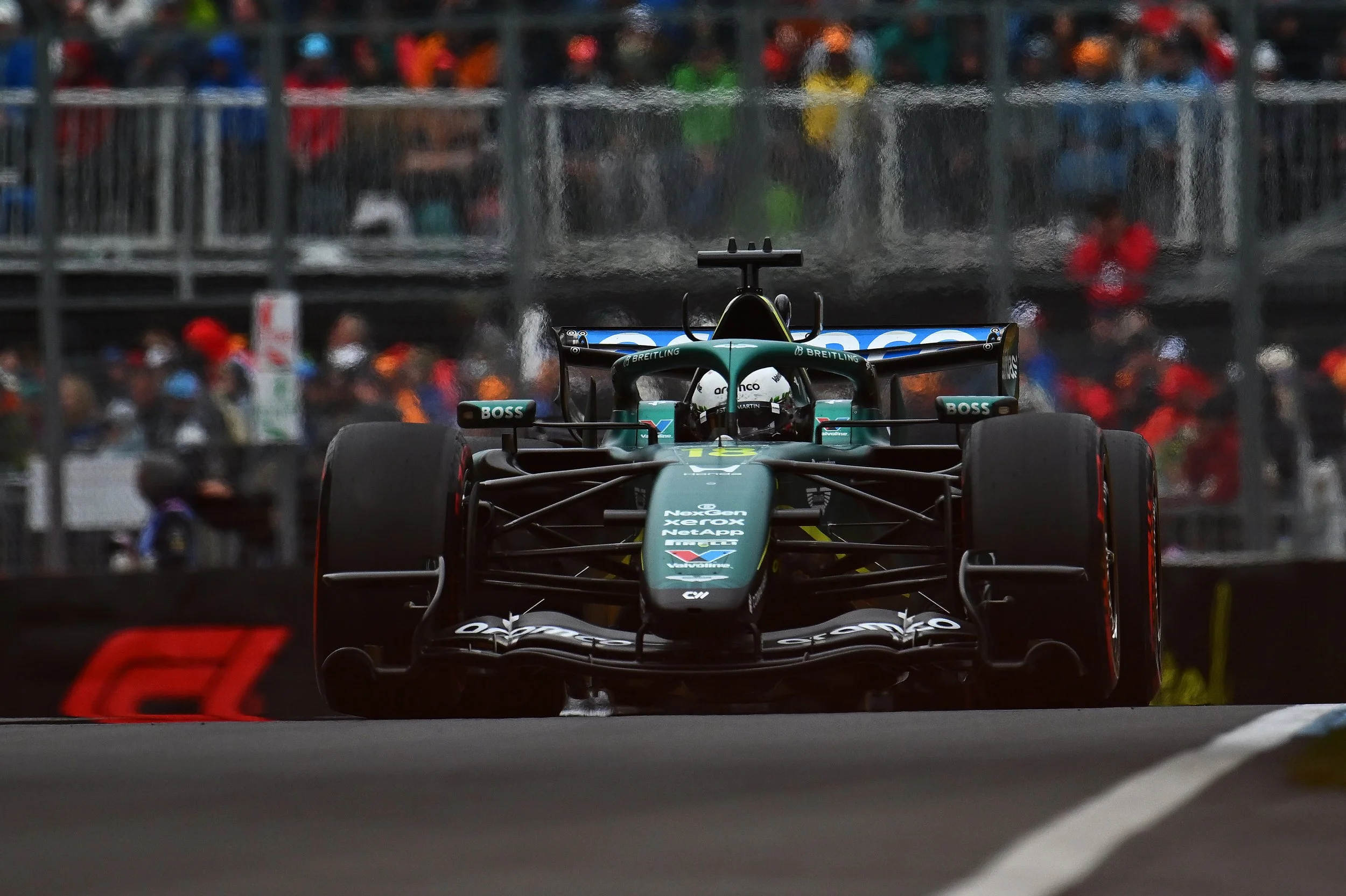
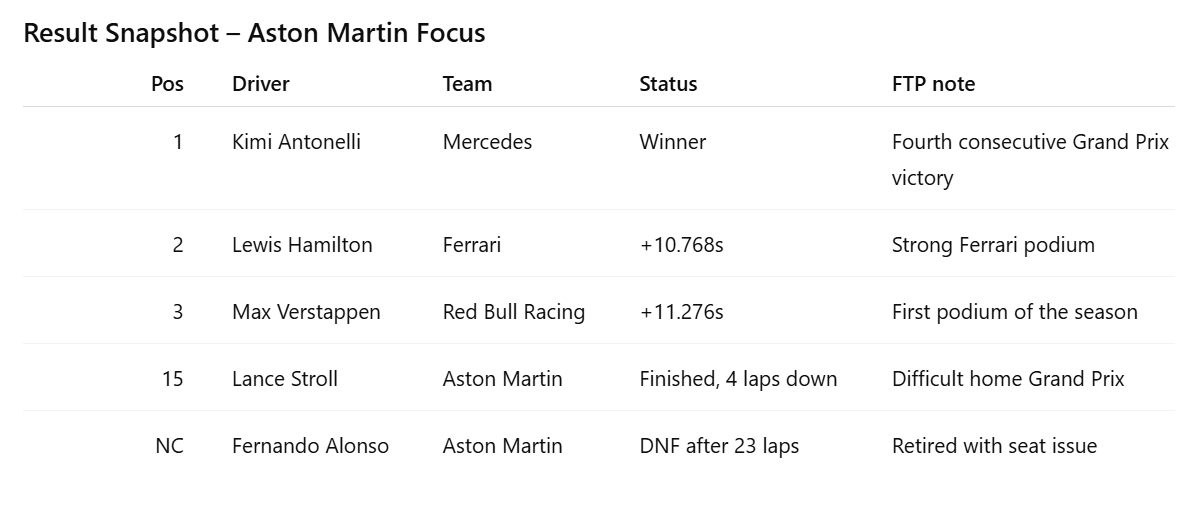
FTP Summary Line
Canada gave Aston Martin a brief early flash of promise through Fernando Alonso’s opening-lap progress into the points, but the weekend ultimately ended without reward: Lance Stroll finished 15th, while Alonso retired after 23 laps with a seat issue.
Images © Honda Motor Co., Ltd. Used for editorial purposes.

Race 04 - Miami
The fourth Grand Prix of the 2026 Formula 1 season took the championship to Miami, where Kimi Antonelli continued his remarkable early-season run with a third consecutive Grand Prix victory for Mercedes. Antonelli won ahead of Lando Norris for McLaren, with Oscar Piastri completing the podium after passing Charles Leclerc late on. George Russell finished fourth, Max Verstappen fifth, and Lewis Hamilton inherited sixth after Leclerc received a post-race penalty.
For Aston Martin, Miami was another non-scoring weekend, though both cars reached the finish. Fernando Alonso started 17th and finished 15th, one lap down. Lance Stroll started 18th and finished 17th, also one lap down. That gave Aston Martin a cleaner race distance than the opening rounds, but not a competitive result. The team left Miami still without points after four completed Grands Prix.
The race itself was eventful, with early incidents for Isack Hadjar and Pierre Gasly bringing out the Safety Car, while Verstappen and Leclerc both received penalties. Alonso was noted by the stewards for a yellow-flag infringement during the race, but the final classification still placed him 15th. From an Aston Martin point of view, the most important fact is simple: the AMR26 completed the race with both cars, but remained too far from the points-paying positions to change the competitive picture.
From a Fuel the Passion perspective, Miami was a small reliability step but not a performance step. After the difficult opening run of Australia, China and Japan, getting both Aston Martins to the flag was useful. But finishing 15th and 17th, still one lap down and still scoreless, shows that the team’s Formula 1 story remains one of recovery work rather than momentum. The next race in Canada now becomes another checkpoint for whether Aston Martin can turn race finishes into genuine progress.


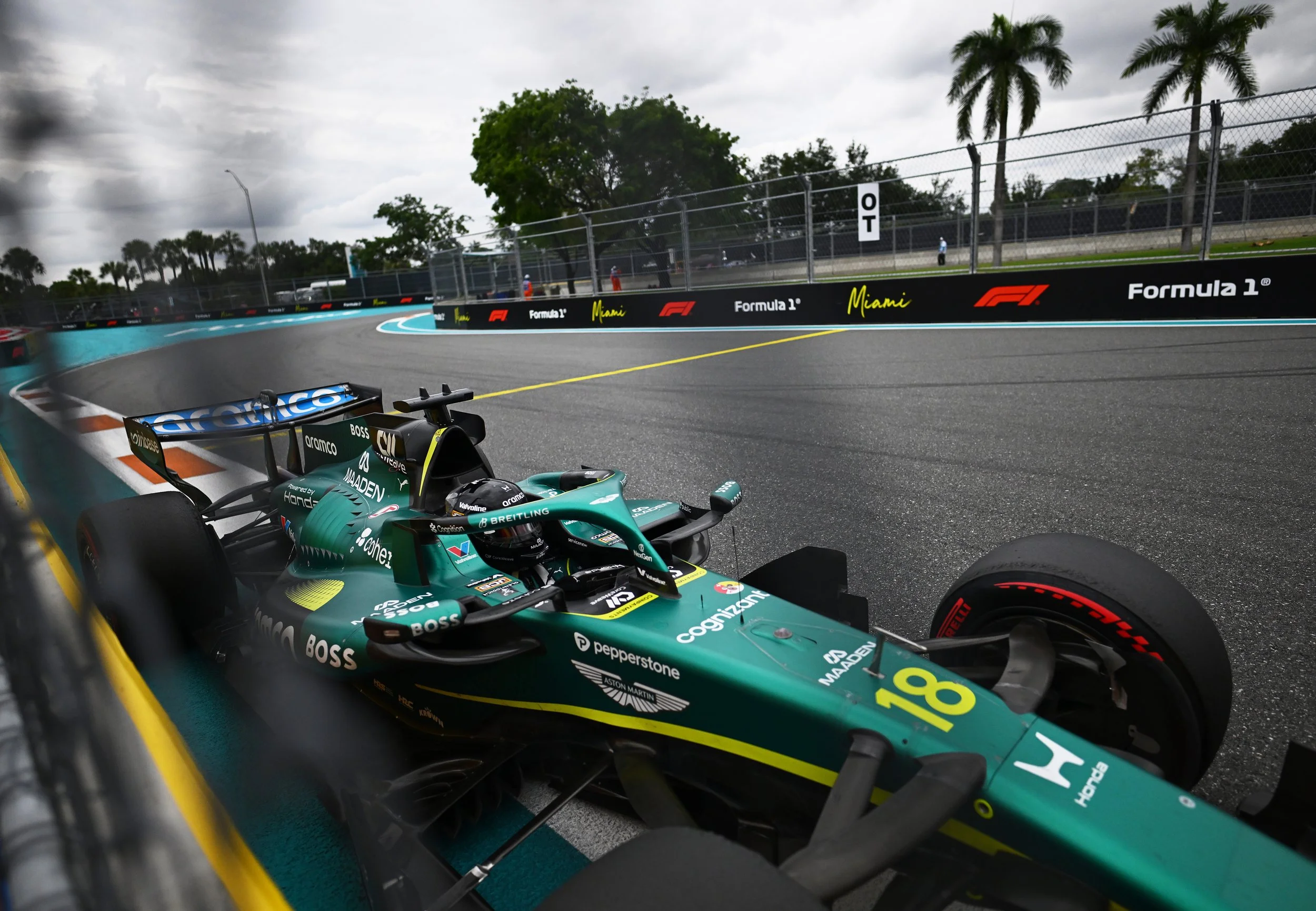
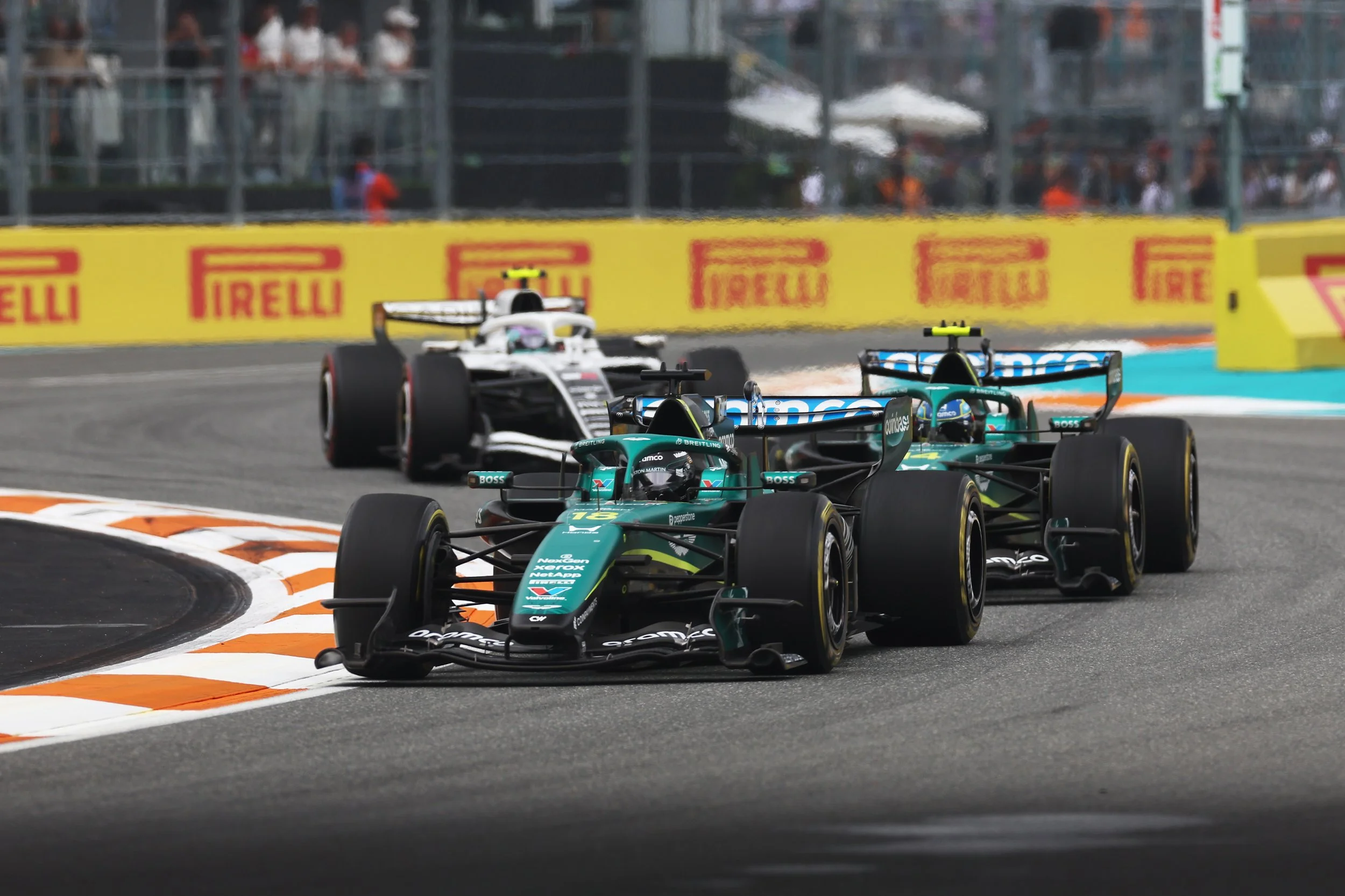
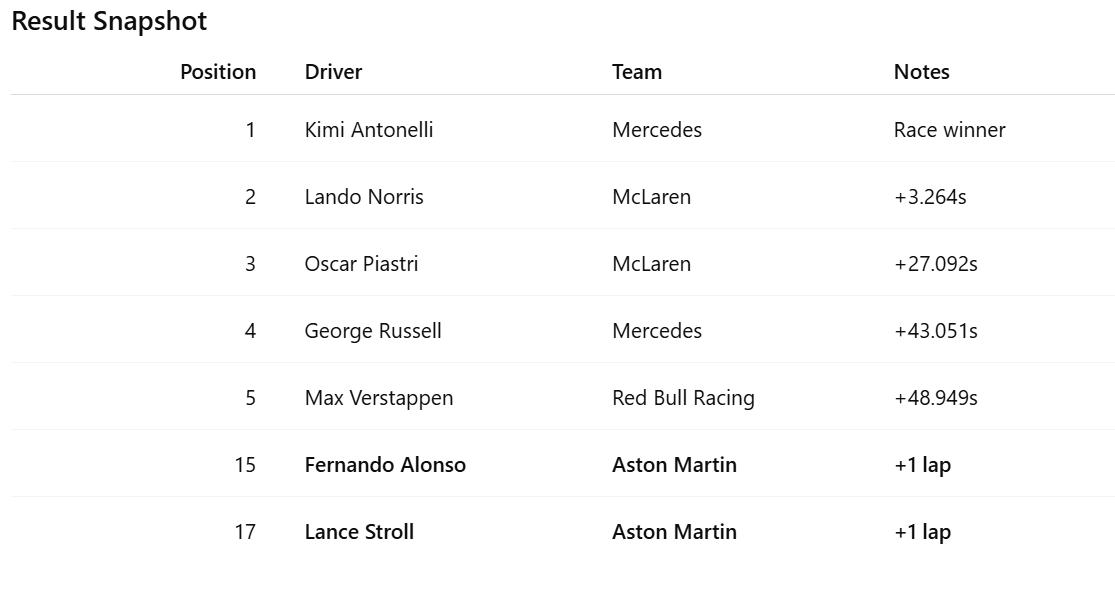
FTP Summary Line
Aston Martin left Miami with both cars classified, which was a cleaner outcome than some of the opening races, but still without points. Alonso finished 15th and Stroll 17th, both one lap down, leaving Aston Martin 11th in the constructors’ standings and still waiting for its first score of the 2026 season.
Images © Honda Motor Co., Ltd. Used for editorial purposes.
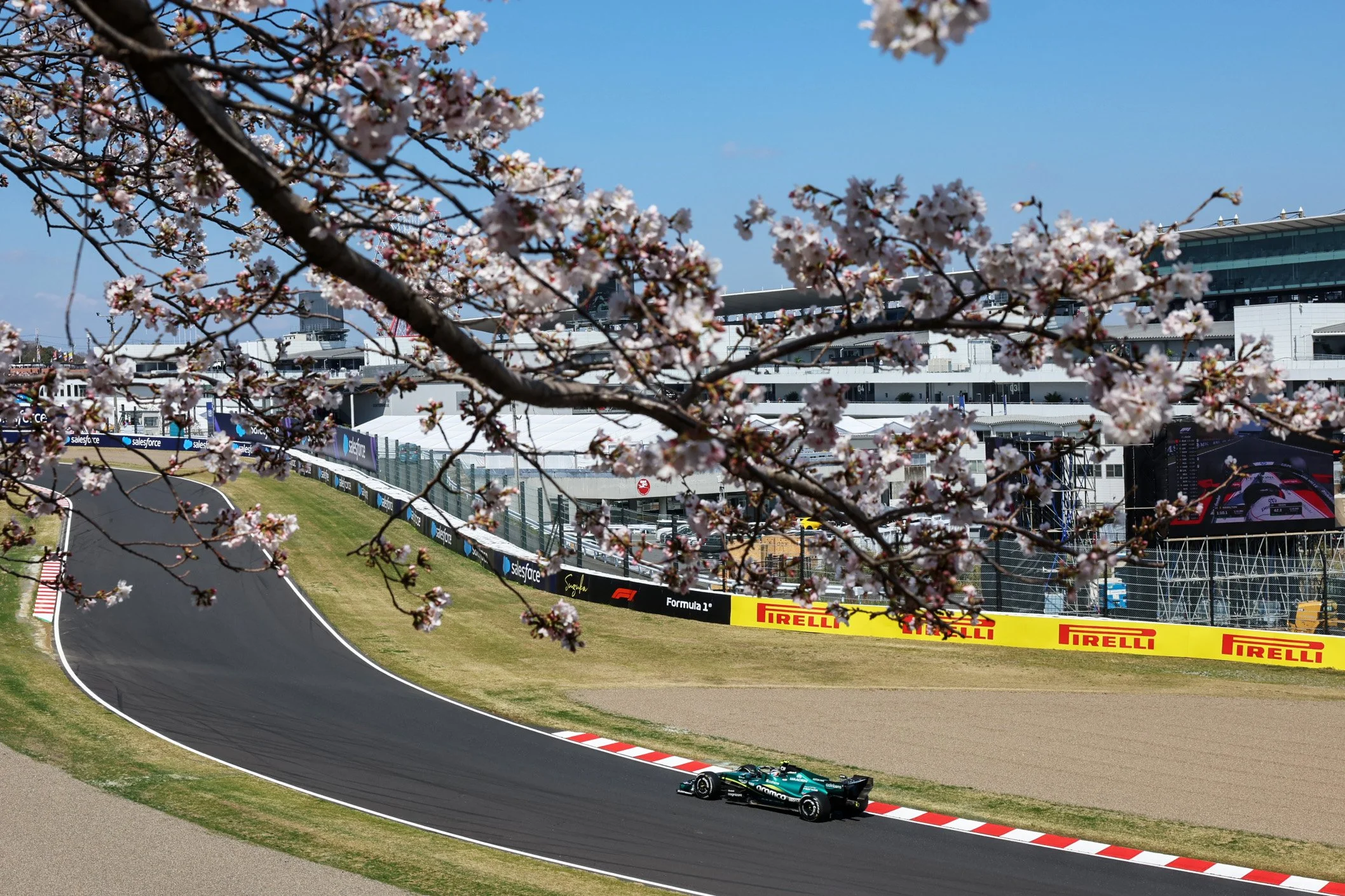
Race 03 - Japanese GP
The third Grand Prix of the 2026 Formula 1 season took place at Suzuka, where Kimi Antonelli continued Mercedes’ strong opening run by taking victory ahead of Oscar Piastri for McLaren and Charles Leclerc for Ferrari. George Russell finished fourth in the second Mercedes, with Lando Norris fifth for McLaren. It left Mercedes with another race win and confirmed Antonelli as one of the early headline stories of the season.
For Aston Martin, Japan was still a difficult weekend, but it did at least bring the team’s first chequered flag of the season. Fernando Alonso started 21st and finished 18th, one lap down, while Lance Stroll started 22nd and retired after 30 laps. The official race result listed Alonso 18th and Stroll as not classified, with both cars again outside the points.
The Aston Martin race was largely fought at the back of the field. Honda’s official race report noted that Alonso made a strong start, while Stroll also gained ground on the opening lap. The two Aston Martins then ran close together before the Safety Car period following Oliver Bearman’s crash, after which both cars pitted. Stroll was later called into the garage with a suspected issue, while Alonso continued and brought the car home despite a late off at the final chicane.
From a Fuel the Passion perspective, Suzuka was not a result to overstate. Aston Martin remained without points and without competitive pace. But after Australia and China had both ended without a classified finish, Alonso reaching the flag did represent a small but genuine step in terms of reliability and race-distance learning. The honest reading is that Japan gave Aston Martin something to build from, but not yet anything that looked like meaningful competitiveness.


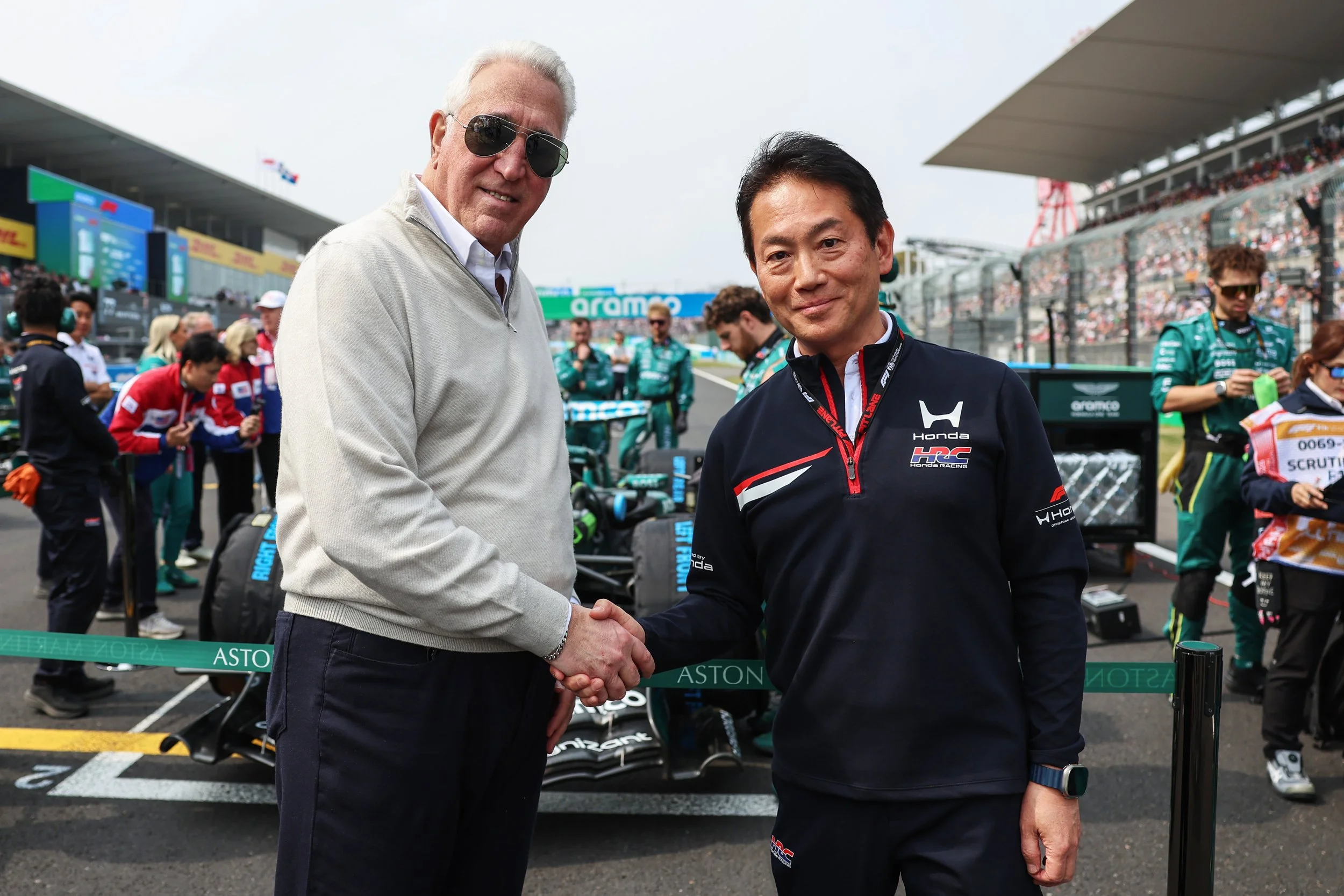

FTP Summary Line
Aston Martin left Japan still without points, but with Alonso securing the team’s first race finish of the season. It was a small reliability step after two very difficult opening rounds, though Stroll’s retirement and the lack of pace showed how much work remained before Miami.
Images © Honda Motor Co., Ltd. Used for editorial purposes.
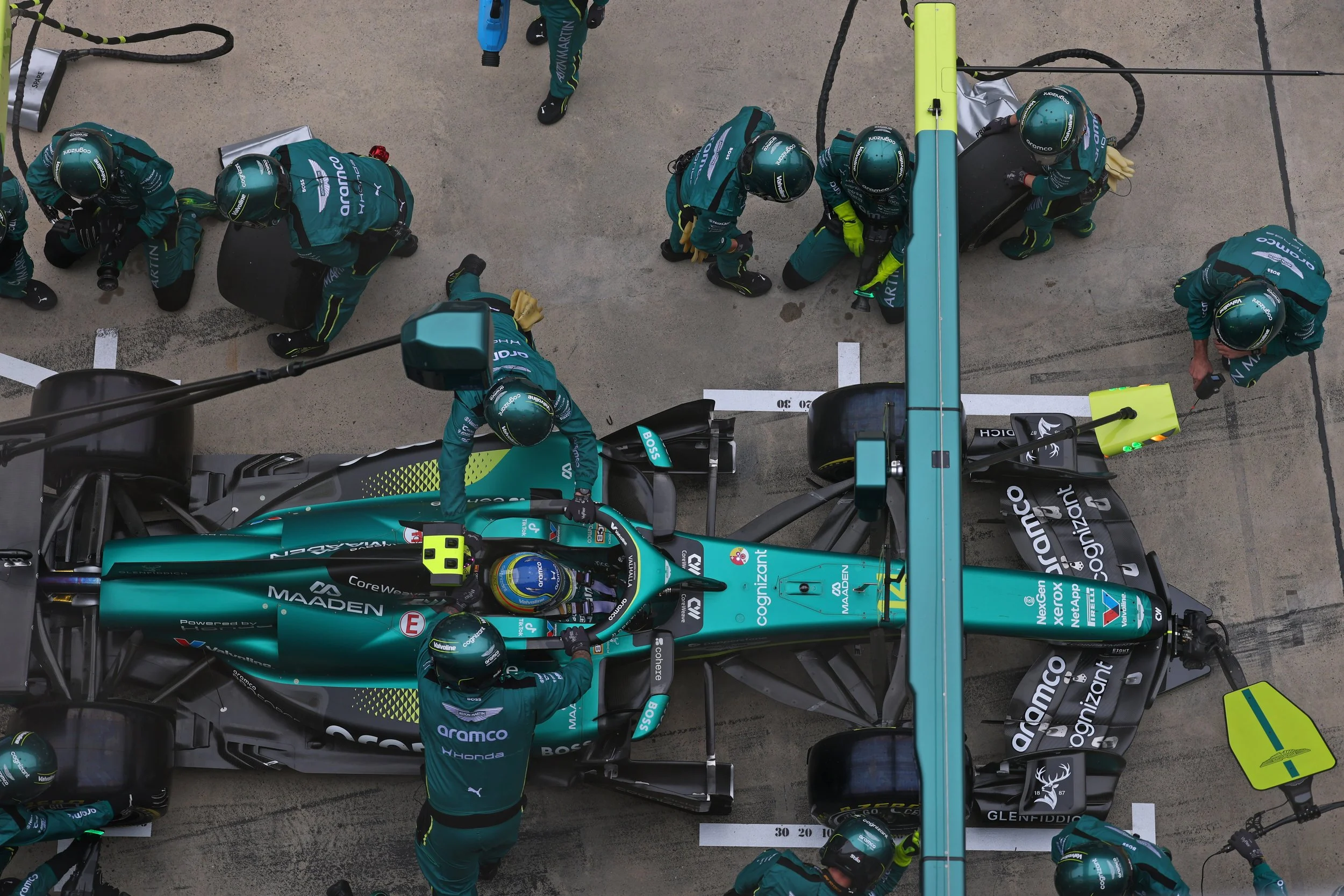
Race 02 - Chinese GP
The second Grand Prix of the 2026 Formula 1 season took the championship to Shanghai, where Kimi Antonelli claimed his first Formula 1 victory for Mercedes. After starting from pole, Antonelli briefly lost the lead to Lewis Hamilton at the start, but retook control before the end of Lap 2 and went on to win by 5.515 seconds from team-mate George Russell. Hamilton completed the podium for Ferrari, ahead of Charles Leclerc, while Oliver Bearman finished fifth for Haas.
For Aston Martin, China brought another difficult Sunday. Lance Stroll retired after just nine laps, his stranded car at Turn 1 causing the race’s only Safety Car period. Fernando Alonso lasted longer, completing 32 laps before also retiring. The official classification listed both Aston Martins as not classified, with Alonso and Stroll leaving Shanghai without points.
The wider race was marked by attrition as well as Antonelli’s breakthrough. Max Verstappen also failed to finish, while both McLarens, Oscar Piastri and Lando Norris, did not start after separate power-unit electrical issues. That wider context matters, but it does not soften Aston Martin’s position: in a race where reliability and survival could have offered opportunity, both AMR26s retired and the team left the second round still without a point.
From a Fuel the Passion perspective, the Chinese Grand Prix reinforced the early-season pattern rather than changed it. Australia had been a difficult opening chapter built around mileage and data-gathering; China was harder to frame positively because both cars again failed to reach the finish. At this stage, Aston Martin’s F1 story remained one of reliability, performance shortfall and the need to turn race weekends into usable progress before the season began to move away from them.
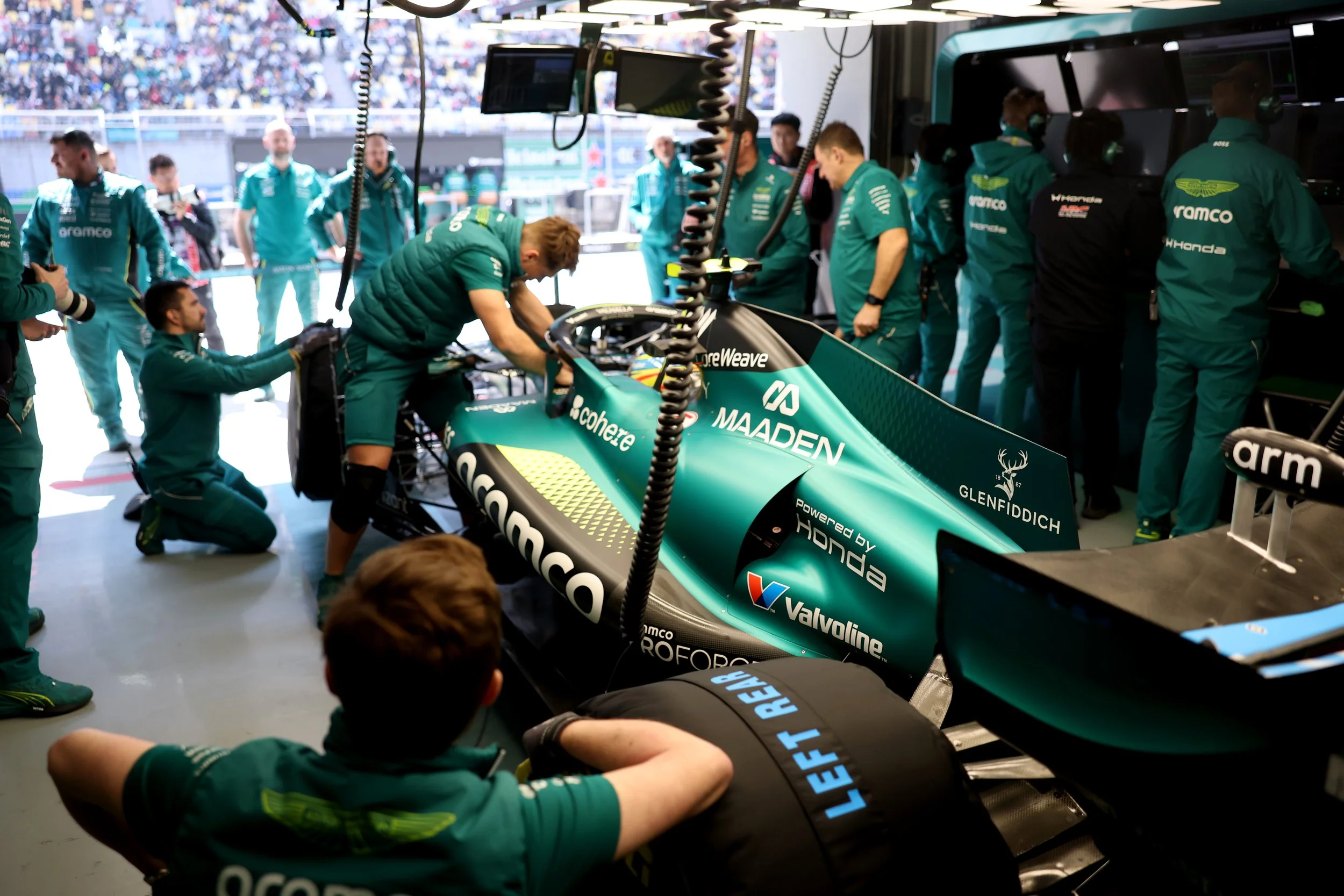


FTP Summary Line
Aston Martin left China with a second consecutive non-scoring weekend and another double non-classification. Stroll’s early retirement brought out the Safety Car, Alonso also failed to finish, and the team’s difficult start to 2026 continued without points or a clear competitive step forward.
Images © Honda Motor Co., Ltd. Used for editorial purposes.

Race 01 - Australian GP
The 2026 Formula 1 season began at Albert Park with Mercedes taking early control of the championship narrative. George Russell won the Australian Grand Prix for Mercedes, with team-mate Kimi Antonelli second and Charles Leclerc third for Ferrari. Lewis Hamilton finished fourth for Ferrari, while Lando Norris completed the top five for McLaren. For Aston Martin, however, the opening round was less about points and more about getting the AMR26 through meaningful running after a disrupted build-up.
Fernando Alonso started 17th and made an excellent opening lap, climbing to 10th by the end of Lap 1. That was the high point of Aston Martin’s race. Alonso later had to return to the pits for checks, briefly rejoined to gather further mileage, and was ultimately listed as not classified after completing 21 laps. Lance Stroll started from the back after missing qualifying, following an issue in FP3, and completed 43 laps before also being classified as not classified, 15 laps down.
The team’s own race reaction made clear that Australia was being treated partly as a learning exercise. Aston Martin said its drivers gathered information over a combined 64 laps, while Alonso described the start as the best part of his race and said the team had collected useful data from procedures that had been difficult to practise properly during the troubled pre-season and Melbourne weekend. Stroll also described the race as “like a practice session” for the team, with the aim of getting laps and trying different solutions.
From a Fuel the Passion perspective, this was not a race to dress up as progress in the normal competitive sense. Aston Martin left Australia with no points, no classified finish, and clear reliability and performance questions still to answer. But the weekend did at least provide mileage, pit-stop practice, race starts, and data for a team that had arrived in Melbourne short of clean running. The honest reading is that Australia was a difficult opening chapter, but also the first proper baseline from which Aston Martin could begin to measure whether the AMR26 could be made more reliable and more competitive over the following rounds.
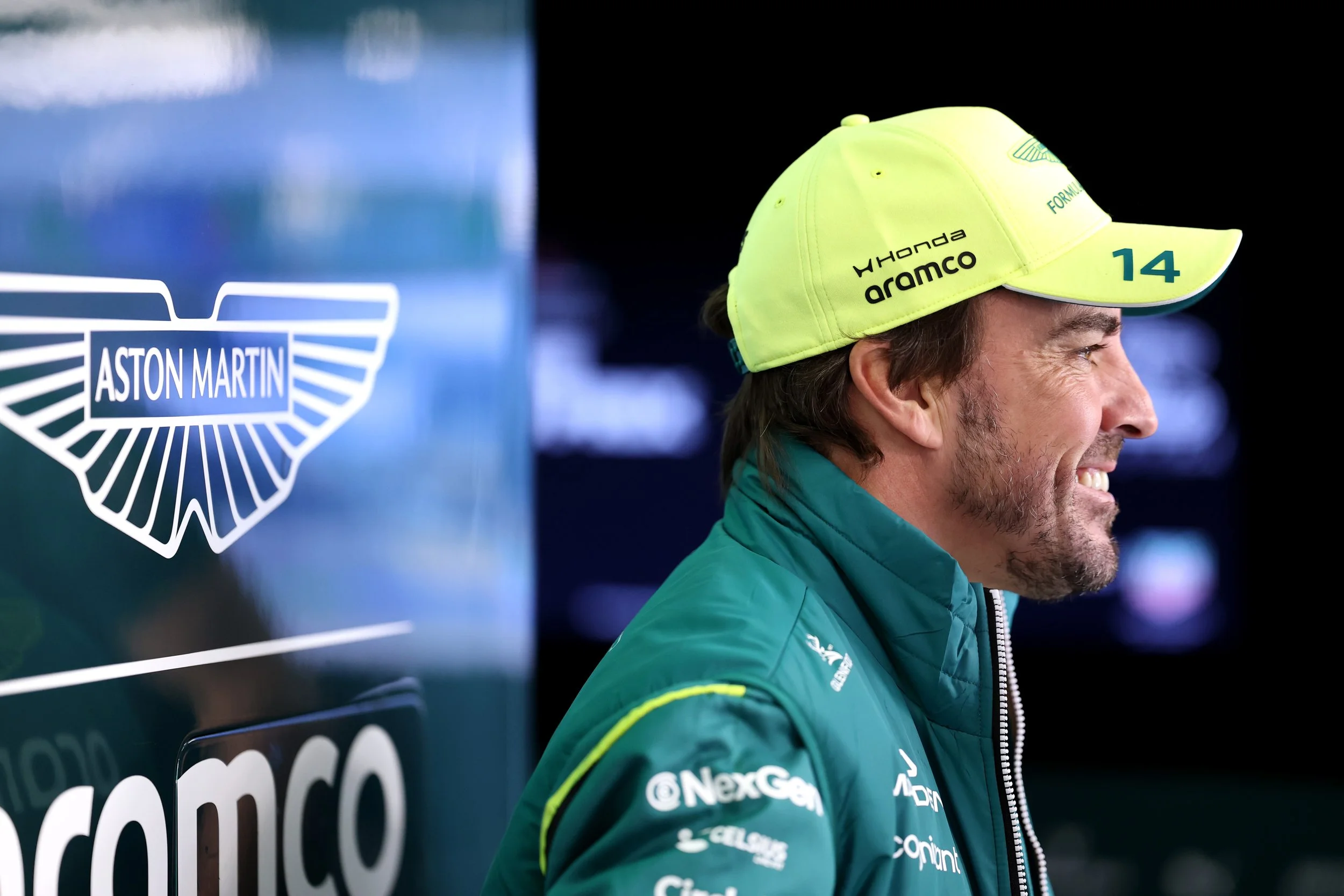


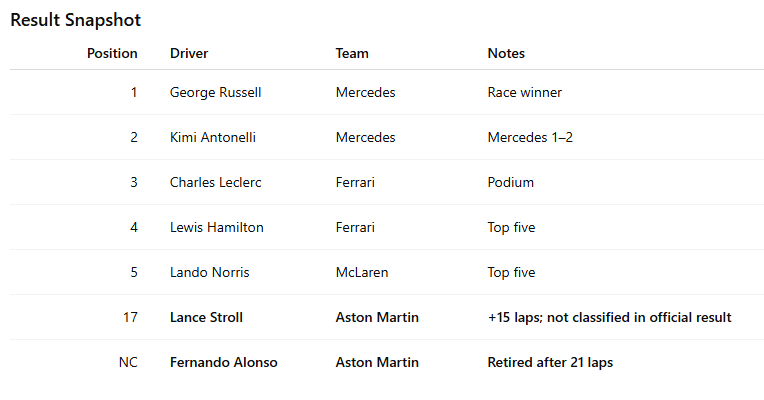
FTP Summary Line
Aston Martin left Australia without points or a classified finish, but with valuable early mileage after a deeply disrupted opening weekend. Alonso’s first lap showed instinct and racecraft; the wider result showed how much work still lay ahead.
Images © Honda Motor Co., Ltd. Used for editorial purposes.

Image © Honda Motor Co., Ltd. Used for editorial purposes.