Aston Martin 2025: A Hard Year for a Brand We Care About
Aston Martin Lagonda Global Holdings plc - Preliminary Results FY2025
Before we begin, it’s worth saying that what follows is my interpretation of Aston Martin’s preliminary results. Financial reports can be dense, technical and heavy with abbreviation, so this article aims to break the key elements into clearer, more digestible sections, not to sensationalise, but to understand calmly and accurately what the numbers are telling us.
I’m not an investment banker or corporate analyst, I’m an enthusiast who cares deeply about this marque. Taking the time to work through reports like this and to simplify them into manageable pieces, genuinely helps me better understand the financial position Aston Martin finds itself in. If it helps you do the same, then it’s served its purpose.
A Difficult Year - Explained Clearly
Some sets of results require excitement. Others require clarity.
The preliminary results published this morning by Aston Martin Lagonda Global Holdings plc fall into the second category. 2025 was not a strong financial year. But it is important to understand precisely why and what the numbers actually mean.
This article strips away the corporate phrasing and I try to explain the year in plain terms.

Image © Aston Martin Lagonda. Used for editorial purposes.
The Core Picture
In 2025 Aston Martin wholesaled 5,448 cars to dealers worldwide. That was 10% fewer than the 6,030 delivered in 2024. With regards to revenue, the total money generated from selling cars, parts, servicing and brand activities, fell from £1.58 billion to £1.26 billion, a decline of 21%.
“These figures are difficult, but clarity is always better than comfort.”
Profitability weakened more sharply. Gross profit (revenue minus the direct cost of building the cars) fell from £584 million to £370 million. Gross margin, the percentage of revenue remaining after production costs, declined from 36.9% to 29.4%.
The company reported an operating loss of £259 million and a total loss for the year of £493 million.
Before We Continue; A Few Financial Terms, Clearly Explained
Large corporate reports rely heavily on abbreviations. It is worth pausing to define the most important ones, as far as I understand them anyway!
Image © Aston Martin Lagonda. Used for editorial purposes.
ASP stands for Average Selling Price. It is the average revenue Aston Martin receives per car sold. In 2025, total ASP was £209,000, down from £245,000 in 2024. The drop was mainly due to fewer “Special” models, highly bespoke, high-margin cars that command significantly higher prices.
However, the core ASP, meaning the average price of the standard range models excluding Specials, actually rose 5% to £185,000. That reflects a more favourable mix from new models and higher-specification derivatives, alongside ongoing customisation.
EBIT stands for Earnings Before Interest and Tax. It measures operating profit before financing costs and tax are taken into account. It is a way of assessing how the underlying business performed before considering how it is funded. Aston Martin recorded an adjusted EBIT loss of £189 million in 2025, compared with an £83 million loss in 2024.
EBITDA goes one step further. It stands for Earnings Before Interest, Tax, Depreciation and Amortisation. Depreciation and amortisation are accounting charges reflecting past investment in factories and development. EBITDA therefore attempts to show cash-style operating performance before those non-cash charges. Adjusted EBITDA in 2025 was £108 million, down significantly from £271 million in 2024.
Free cash flow is another important measure. It reflects how much cash the company generated, or consumed, after paying operating costs, investing in new models and paying interest on debt. In 2025 Aston Martin recorded a free cash outflow of £410 million. In simple terms, more cash left the business than came in.
Finally, net debt represents total borrowings minus available cash. At the end of 2025 net debt stood at £1.38 billion, up from £1.16 billion a year earlier. That is a very large number by any measure. It is the figure I find myself returning to most when reading these results. How does a relatively low-volume, ultra-luxury manufacturer carry that level of debt sustainably?
“The answer lies in confidence, confidence in future margins, in product mix, in disciplined execution, and in access to capital markets.”
For those of us who care deeply about this marque, that debt figure is not just an accounting line. It is the financial weight the company must carry while it works to secure its future. Probably like you, I take a deep intake of breath every time I see a figure like that!
Why Did 2025 Deteriorate?
In my opinion, following the marque for a while now, the decline was not caused by a single event. First, as mentioned above, fewer high-margin Special models were delivered. Specials carry significantly higher profitability than core models. Even a relatively small reduction in volume can therefore have a disproportionate impact on profit.

Image © Aston Martin Lagonda. Used for editorial purposes.
Second, tariffs and geopolitical disruption weighed heavily. The introduction and adjustment of U.S. and Chinese tariffs created uncertainty and margin pressure. The Asia-Pacific (APAC) region, which includes China, Japan and other key Asian markets, saw wholesale volumes decline 21%, reflecting subdued demand and changes to luxury car taxation.
Third, Aston Martin invested heavily in product quality and warranty provisions. Approximately £65 million of additional warranty costs, dealer support and quality improvements were recognised compared with 2024. While negative for short-term margins, this reflects a deliberate attempt to strengthen long-term product robustness and customer satisfaction.
A Stronger Second Half
It would be misleading to ignore the improvement seen in the second half of the year.
“The fourth quarter was materially stronger than the first half.”
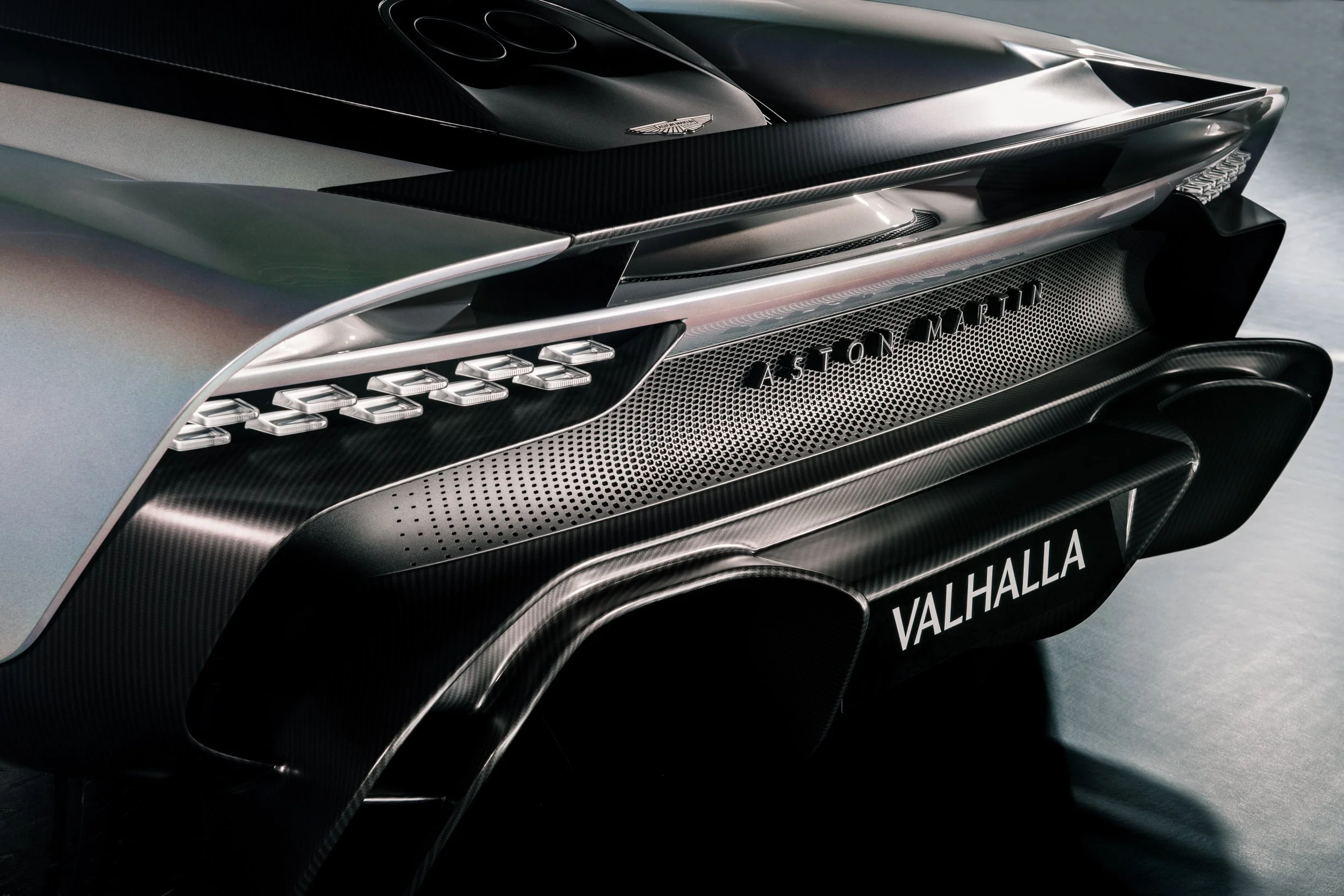
Image © Aston Martin Lagonda. Used for editorial purposes.
Aston Martin delivered its first 152 Valhalla units during the year, with deliveries concentrated in Q4. Gross margin improved sequentially to 31% in that quarter, and free cash flow turned modestly positive at £5 million.
This improvement was driven by product mix, particularly the introduction of higher-priced derivatives and the first deliveries of the mid-engined plug-in hybrid Valhalla. It’s both encouraging and pleasing to see that momentum clearly strengthened as the year progressed.
Valhalla is more than a halo car. It is financially important. The company expects a full year contribution from Valhalla in 2026, compared with the first 152 units delivered in 2025. Given its higher price positioning, that shift in mix is expected to lift margins meaningfully next year. In a business where overall volume is deliberately constrained by brand positioning, product mix becomes decisive.
A car like Valhalla does not simply add theatre to the range, it helps strengthen the balance sheet and beyond the spreadsheets, it is a remarkable looking machine. Bold, purposeful and unmistakably modern Aston Martin. One can only hope it will not be long before all 999 examples have an owner’s name against them, a sign not just of demand, but of renewed confidence in the future.
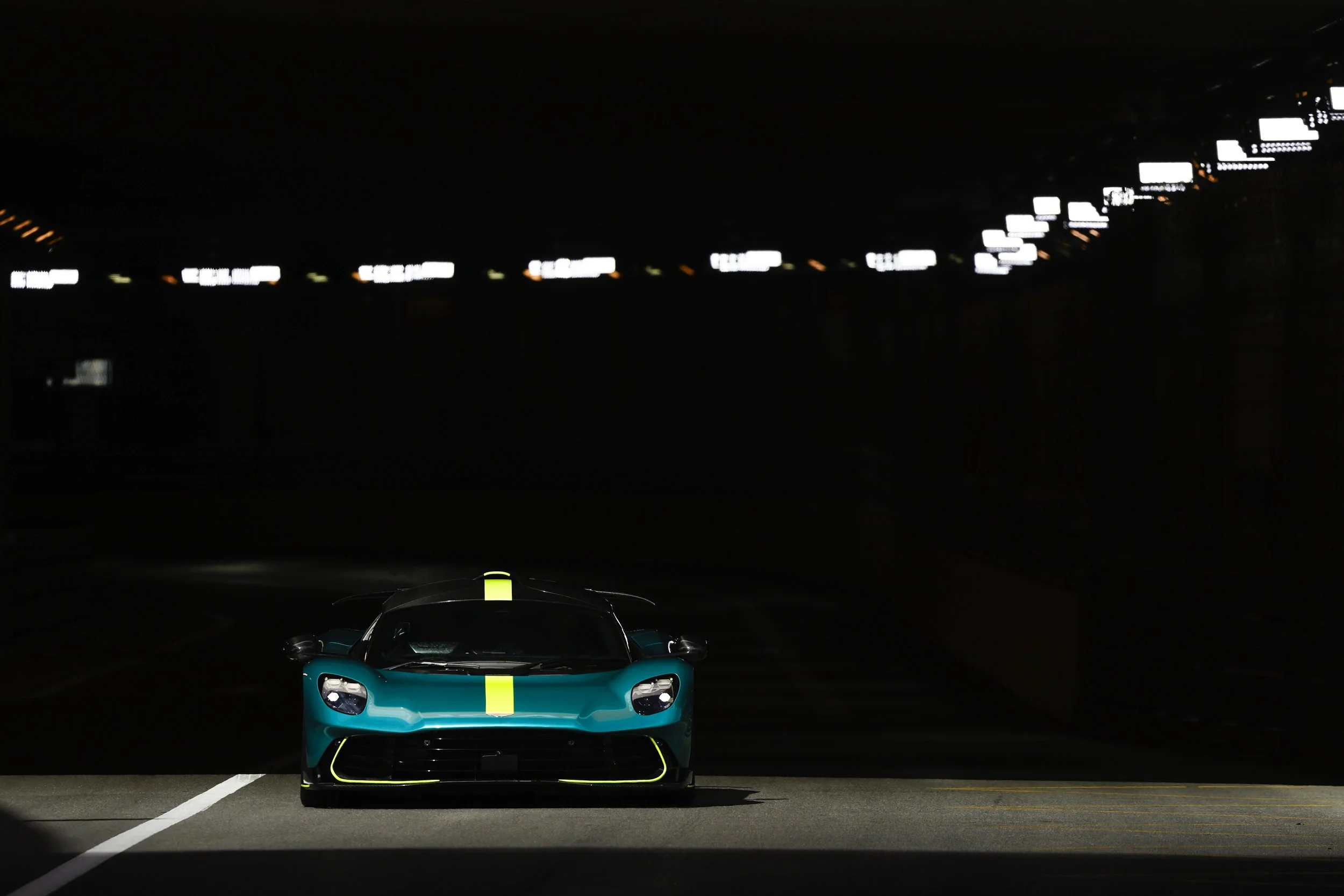
Image © Aston Martin Lagonda. Used for editorial purposes.
Cost Discipline and Restructuring
In October 2025 the company announced further cost actions, including workforce reductions of up to 20%. The restructuring charge recognised in 2025 was £18.7 million, with management expecting annualised savings of around £40 million, largely realised in 2026.
“As we’ve mentioned before, here on the Fuel the Passion platform, behind those percentages and provisions are real people.”
Redundancies mean difficult conversations, uncertainty, and significant changes to lives and families. Aston Martin is not just a balance sheet, it is engineers, craftspeople, designers and support staff whose skill and dedication have shaped the cars we admire. Our thoughts are very much with those affected.
Alongside workforce reductions, capital expenditure plans have also been revised downward. The five-year investment plan has been reduced from approximately £2 billion to £1.7 billion, partly through rephasing electric vehicle investment. Taken together, these measures reflect a clear shift towards tighter capital discipline in response to external pressures. Financial stability, at this stage, is being prioritised over expansion.
Debt and Liquidity - The Area to Watch
Of all the numbers in these results, the one I return to most is net debt, now £1.38 billion, up from £1.16 billion a year earlier, as discussed earlier in this article. That is a significant financial burden for a relatively low-volume manufacturer to carry.

Image © Aston Martin Lagonda. Used for editorial purposes.
Liquidity at year-end stood at £250 million. In simple terms, liquidity is the cash the company has available, plus the borrowing facilities it can draw upon if needed. Think of it as the financial breathing space, the room to manoeuvre while the business works to improve margins and generate cash.
Part of that breathing space comes from something called a Revolving Credit Facility. This is effectively a large overdraft agreed with banks. The company can draw funds when needed and repay them when cash flow improves, provided certain financial conditions, known as covenants, are met. Aston Martin has renegotiated the timing of those covenant tests, with the next formal test now not due until March 2027. Directors state they expect to remain compliant through the current planning period to June 2027. In my opinion and probably others, that amendment matters as it buys time.
The proposed £50 million from the sale of certain Formula One naming rights, mentioned in last weeks FTP Weekly Roundup will also strengthen liquidity. It is a meaningful sum in the context of the company’s cash position. Yet, again in my opinion, it is difficult not to reflect that naming rights are a long-term asset, selling them is a one-time action. Once that value is realised, it cannot be realised again in the same way.
None of this suggests imminent crisis. But it does underline the reality that Aston Martin must now deliver operational improvement. The balance sheet is stretched, even if it still has headroom. Improvement in margins, disciplined capital spending, and consistent execution are no longer optional, they are essential.
“Speaking personally, this is the part of the report that stays with me. The cars are exceptional. The heritage is extraordinary. But financial resilience is what ensures those things endure.”

Image © Aston Martin Lagonda. Used for editorial purposes.
2026 - The Year That Must Deliver
Management expects wholesale volumes in 2026 to be broadly similar to 2025. The improvement, therefore, is not expected to come from selling more cars, but from selling a more profitable mix, notably a full year of Valhalla deliveries and continued strength in higher-specification derivatives.
“2026 is no longer about ambition. It is about execution.”
Gross margin (the proportion of revenue remaining after production costs) is guided to improve into the “high 30 percent” range, up from 29% in 2025. Adjusted EBIT, operating performance before interest and tax, is expected to move materially toward breakeven. Capital expenditure is planned to reduce to around £300 million, reflecting tighter discipline around investment. Free cash outflow is also expected to improve materially, with the majority of 2026’s cash pressure anticipated in the first quarter before improving as the year progresses. Those are the expectations.
I very much hope they are achieved and perhaps even exceeded. Everything’s crossed that the enhanced product mix, cost control and operational focus begin to translate into sustained financial improvement as 2026 unfolds. For those of us who admire this marque, it would be encouraging to see the numbers finally start to reflect the strength of the cars themselves.
Final Reflections
A £493 million annual loss is significant. So is £1.38 billion of net debt. Those figures should not be minimised. They matter not just to investors, but to employees, suppliers, dealers and the wider community that surrounds this extraordinary British marque. Yet it is equally true that Aston Martin now has one of the freshest product portfolios in its modern history, an operational hybrid supercar programme in Valhalla, a revitalised core range, and a renewed emphasis on cost discipline.
Its association with Formula One continues to provide global brand visibility. However, it is important to be clear, Aston Martin Lagonda and the Aston Martin Formula One team are separate businesses with distinct ownership structures and financial accounts. Success on track does not automatically translate into improved profitability for AML, even if the brand halo effect remains valuable.
As we’ve seen, early indications from Bahrain testing suggest competitive challenges remain. If, in time, that programme were to achieve championship-level success, it would undoubtedly strengthen the global visibility and desirability of the Aston Martin name.
“But modern automotive economics are more complex than the old “win on Sunday, sell on Monday” slogan. Motorsport can enhance a brand; it does not fix a balance sheet.”
2025 was undeniably a year of pressure. 2026 now becomes a year of delivery. If margins recover as guided, and if Valhalla volumes materialise as planned, this period may come to be seen as a painful but necessary trough before stabilisation and improvement. If not, further financial measures may become necessary.
Image © Aston Martin Lagonda. Used for editorial purposes.
Speaking personally and I know many readers will feel the same, I genuinely hope we begin to see these figures improve as 2026 unfolds. Aston Martin means more than numbers on a balance sheet. It represents heritage, craftsmanship, British engineering and a brand that so many of us admire deeply. The announced job reductions are deeply significant for those affected and their families and that human reality must not be overlooked. From a corporate perspective, the position remains neither celebratory nor terminal. It is watchful and at Fuel the Passion, that is exactly how we will continue to follow it.
If you’ve read this far, I’d genuinely value your perspective. Do these results concern you? Or simply reinforce the need for patience? Thoughtful discussion is always welcome in the comments below.
Thanks for reading. I hope my interpretation assists your own.
Dan
Fuel the Passion
Editor’s Update – 25 February 2026:
Following publication, Aston Martin confirmed plans to reduce its workforce by approximately 20% as part of a £40m cost-saving programme. The human impact of these decisions is significant, and our thoughts are with those affected.
This article reflects my interpretation of publicly released information and does not constitute financial advice.

For all the latest Aston Martin news, don’t miss the FTP Weekly Roundup - published every Sunday at 6am.
Each edition brings together the key stories from across the Aston Martin world, including Formula 1, GT racing, road cars, heritage, business developments and community highlights.
To catch up with the newest edition, read the latest HERE.