
Fuel the Passion (FTP) Weekly Roundup
Week Ending 8th February 2026
Editor’s Introduction – Dan, Fuel the Passion
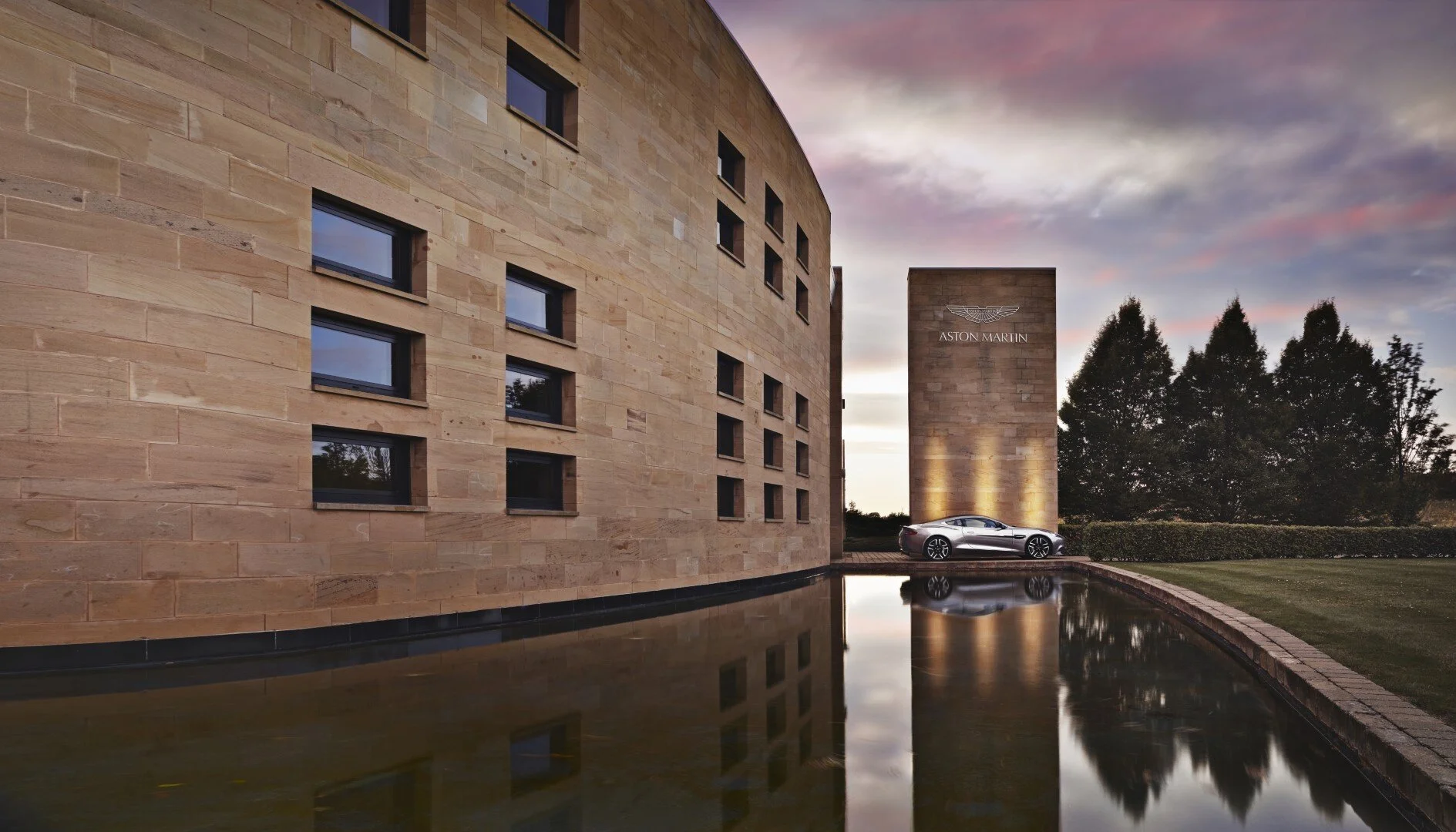
Image © Aston Martin Lagonda. Used for editorial purposes.
Before getting into the usual mix of racing news, road cars, heritage and community stories, it would feel wrong not to acknowledge the most sobering development of the week.
Aston Martin has confirmed the start of a global redundancy consultation, with up to 20% of roles potentially at risk. Behind every percentage point are real people; engineers, designers, back-office staff and specialists, many of whom will already be facing a deeply uncertain and worrying period. For those individuals and their families, this is not a headline, a chart or a footnote in a financial story; it is personal, stressful and unsettling.
Fuel the Passion exists because of the people behind the cars, past and present and it’s important to say this clearly and respectfully: our thoughts are with everyone affected across Gaydon, St Athan and beyond. Whatever the commercial realities, this is a difficult moment for the Aston Martin community.
“Aston Martin exists in more than one reality at once — world-class ambition on track, and very real challenges behind the scenes.”
With that context in mind, this week’s roundup inevitably reads a little differently. There is still innovation, ambition and brilliance on display; on track, on the road and in the heritage world, but it all sits alongside a reminder that the health of the brand ultimately depends on the people who build it. That balance matters. At Fuel the Passion, we don’t cherry-pick only the good news. We protect the record, tell the full story, and trust you to form your own view, informed, grounded, and honest.
Here’s everything you need to know from the past week.
Aston Martin & Formula One – Momentum Building for 2026
There’s now little doubt that Aston Martin Aramco Formula One Team’s 2026 project is gathering genuine momentum, not through noise or lap-time claims, but through intent, structure and engineering substance.
Right Image: © Honda Motor Co., Ltd. Used for editorial purposes.
The appointment of Jenson Button as Team Ambassador under a multi-year agreement is a clear signal of how the team wants to tell its story as it enters a new regulatory era.
Button brings more than profile. He brings credibility across multiple generations of Formula One, deep experience with Honda-powered machinery, and crucially, an ability to communicate change without hype. This is about continuity, reassurance and narrative as much as visibility.
That sense of substance over spectacle was reinforced by detailed technical discussion following the AMR26’s first appearance at the Barcelona shakedown. A particularly insightful breakdown came via Sky Sports F1, whose presenters and analysts went beyond surface-level visuals and dug into why this car looks and behaves differently.
Their observations echoed what many suspected: this is an aggressively packaged, aerodynamically driven car, unmistakably shaped by Adrian Newey’s philosophy. Key talking points included the visibly increased rake, the tightly packaged rear end, the unconventional suspension geometry, particularly at the rear and the way airflow is being managed from the nose through to the diffuser. The analysts highlighted how elements such as the nose profile, front suspension placement and rear suspension mounting appear designed as aerodynamic devices as much as mechanical ones, all serving the flow field rather than traditional convention.

Left Image: FTP created image for illustration purposes
Importantly, Sky’s coverage also addressed why the car ran in an unpainted, visually muted form.
This wasn’t about secrecy theatre; it was about data. With moving images making it harder to read fine detail, and with no need for final livery at this stage, the priority was gathering aero correlation data rather than presenting a finished product.
In other words: function first, form later.
You can watch the full Sky Sports F1 technical discussion here, and it’s well worth the time if you’re interested in the why behind the AMR26 rather than just the speculation:
That engineering-first mindset aligns closely with Newey’s own comments in recent interviews, where he has been clear that the AMR26 is not intended to be a “fully optimised” car at launch. Instead, the focus has been on fundamentals, mass distribution, packaging, suspension interaction and airflow management, deliberately leaving development headroom for the season ahead.
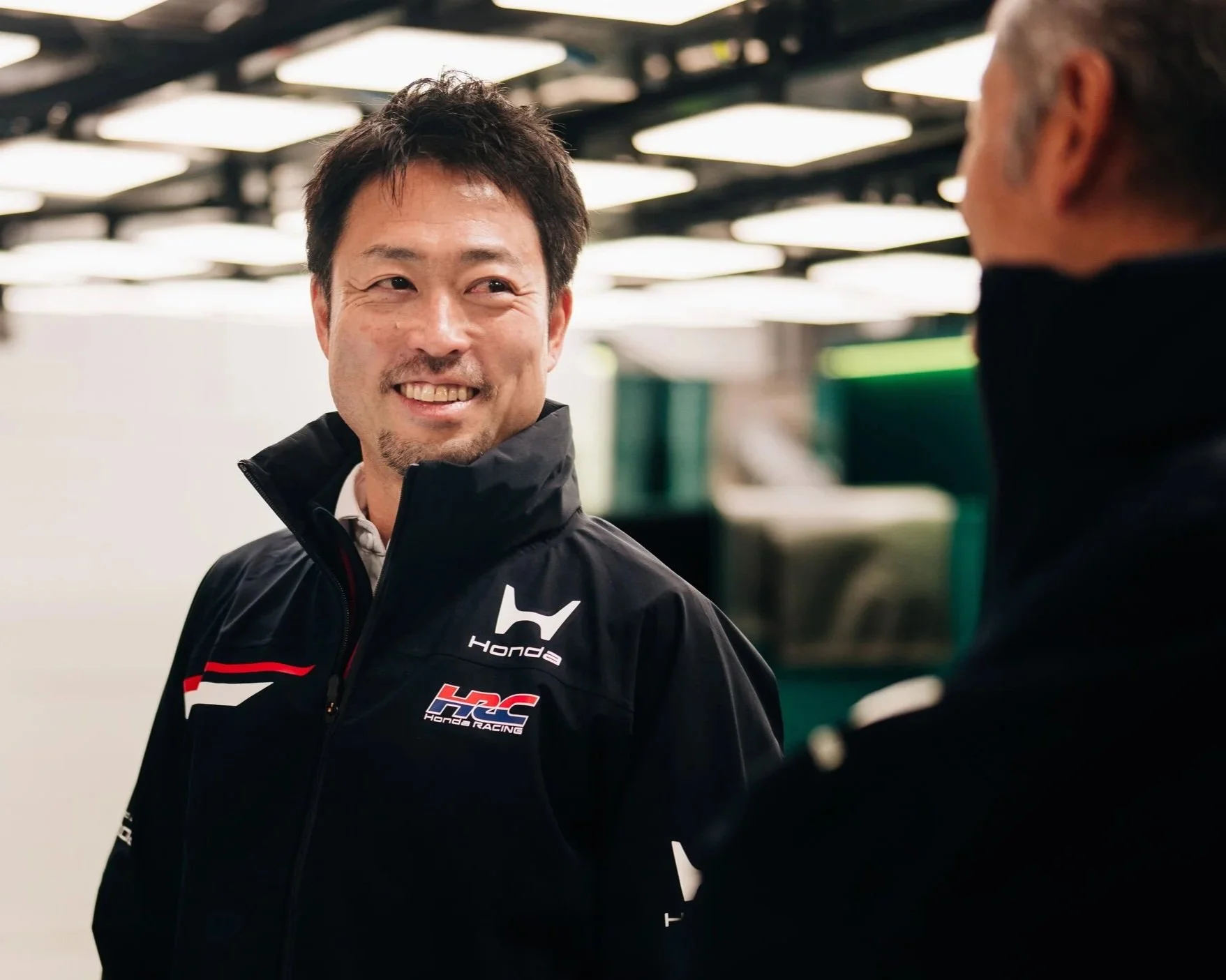
Image © Honda Motor Co., Ltd. Used for editorial purposes.
From the power unit side, Honda has struck a similarly measured tone. Trackside General Manager Shintaro Orihara has stressed that the immediate objective is understanding behaviour, not chasing peak numbers. Mileage accumulation, system checks and ensuring that the car and power unit operate as a single, integrated machine will define the next phase as testing moves to Bahrain.
Taken together, the messaging is unusually consistent. This is a rebuild year, technically, culturally and operationally. There is acceptance of short-term uncertainty in pursuit of long-term performance, and a willingness to resist premature judgement in favour of learning.
It may not deliver instant gratification, but for those paying attention, the direction of travel is becoming increasingly clear. Exciting times ahead!
AMR26 Unveiling: When and How to Watch

FTP Image: For illustration purposes
You may have seen the countdown clock on the front page of my website (if not, whilst on the front page, just scroll down a little and you’ll see the image to the left with the countdown displayed over the top)
The unveiling of the new Aston Martin Formula 1 car, the AMR26, takes place on Monday, 9 February 2026, with the main reveal beginning at 19:00 GMT.
Fans will be able to watch the unveiling live across several platforms. The primary digital broadcast will be via TikTok, where the team’s “Opening Night: An evening by design” experience begins with a pre-show at 18:15 GMT, followed by the official reveal at 19:00 GMT. Viewers can register and watch via the TikTok LIVE Event Registration, or follow the stream directly through the Aston Martin F1 Official Website. In the UK, the event will also be shown live on Sky Sports F1, and it is expected to be available on the team’s official YouTube channel and other social media platforms, ensuring fans worldwide won’t miss a moment.
Racing Beyond F1 – Aston Martin Returns to DTM with Intent
Away from Formula One, Aston Martin’s competition presence continues to broaden.
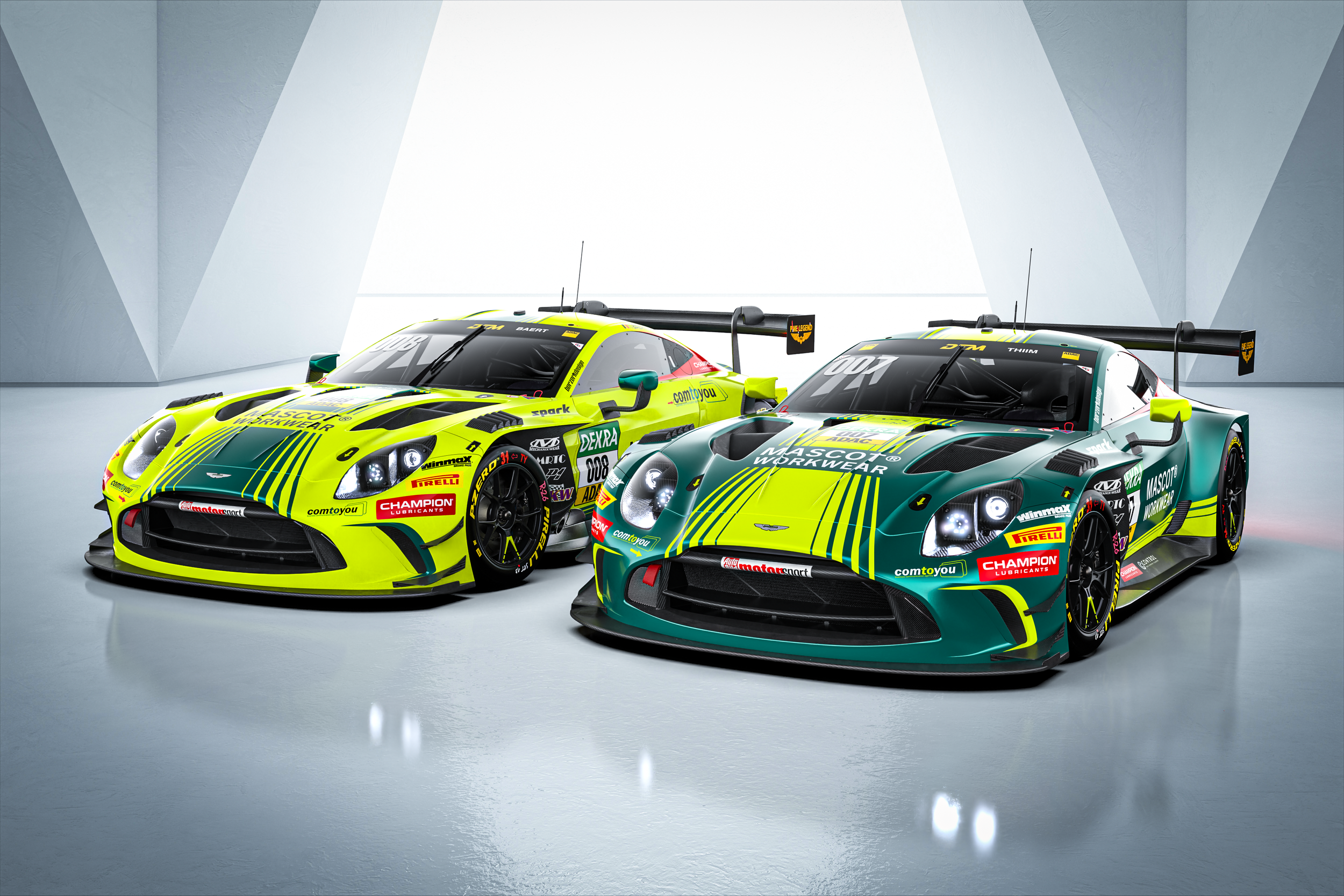
Image © Aston Martin Lagonda. Used for editorial purposes.
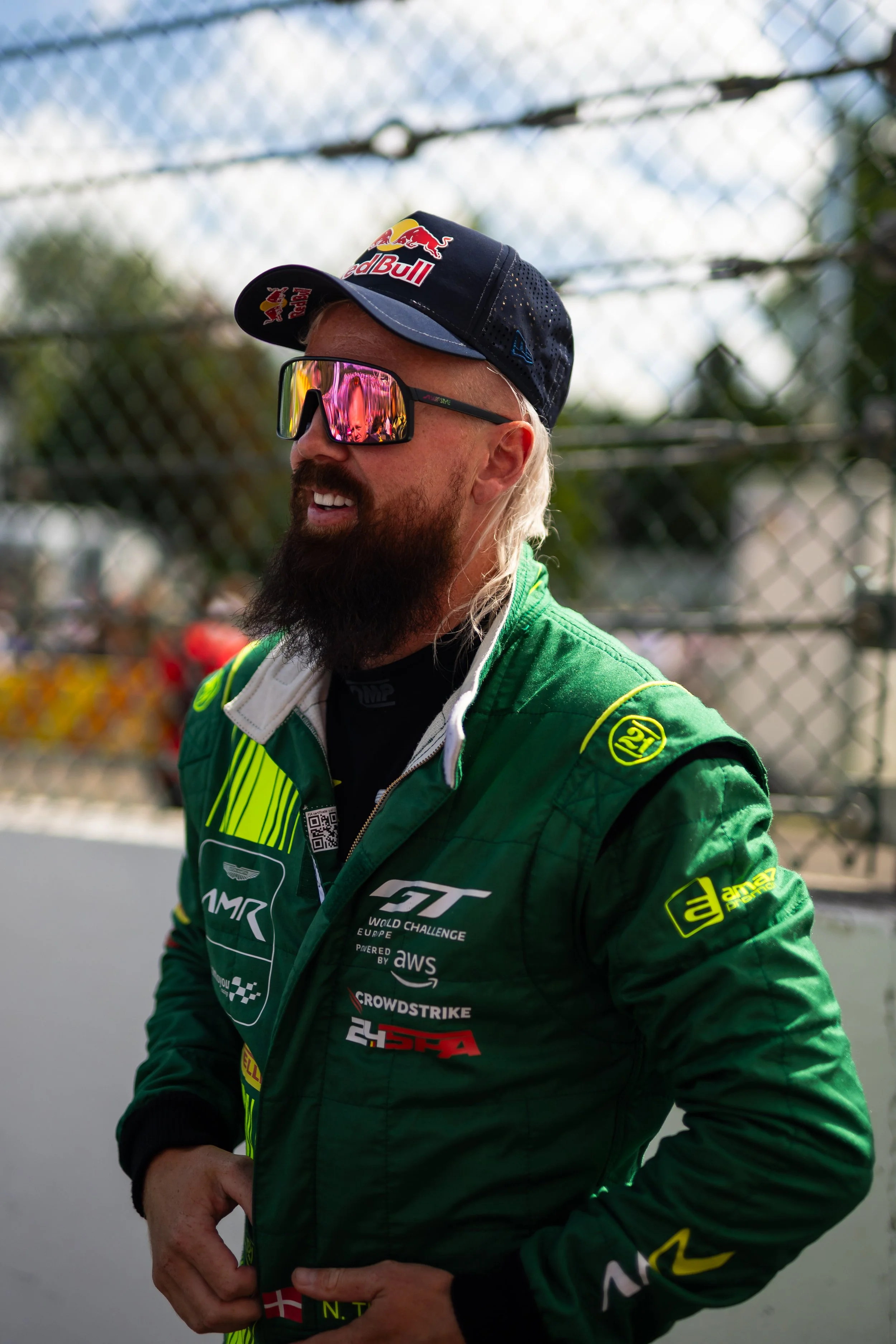
Image © Aston Martin Lagonda. Used for editorial purposes.
This week saw confirmation that Nicki Thiim will contest the 2026 DTM season with Comtoyou Racing, marking the first time a works Aston Martin driver has raced the marque’s Vantage GT3 in Germany’s premier GT championship.
For Thiim, it’s deeply personal, following in the footsteps of his father, DTM legend Kurt Thiim, but it’s also strategically significant for Aston Martin Racing.
DTM’s sprint-race format places huge emphasis on driver precision, setup clarity and consistency, areas where Vantage GT3 has already proven itself. With Comtoyou retaining Nicolas Baert alongside Thiim, this is not a vanity entry. Podium ambitions are real.
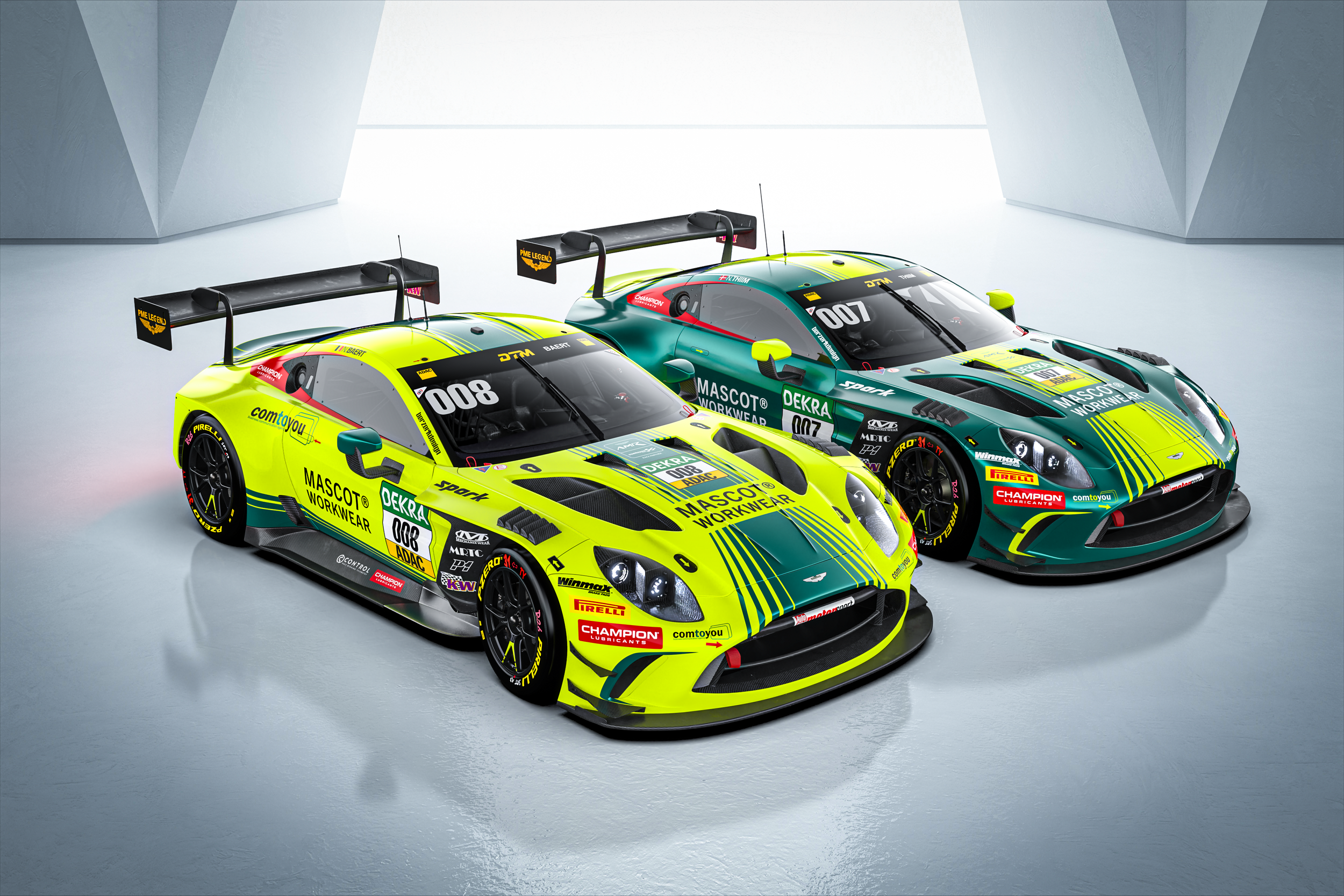
Image © Aston Martin Lagonda. Used for editorial purposes.
On a purely visual level, the Vantage GT3 wears its livery beautifully, and the 007 race number is a wonderful detail, a reminder that Aston Martin’s connection to James Bond still runs deep in the brand’s DNA.

Image © Aston Martin Lagonda. Used for editorial purposes.
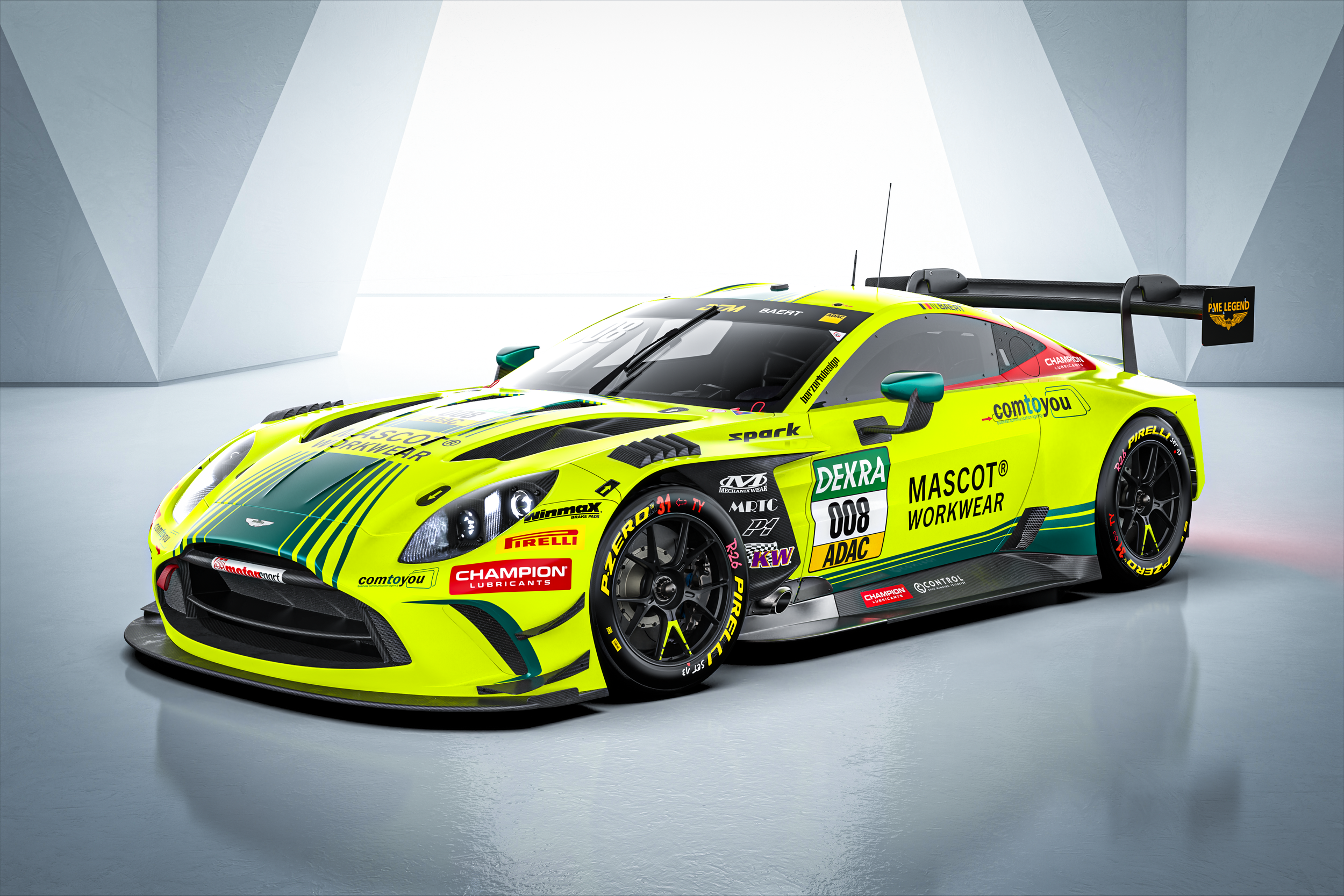
Image © Aston Martin Lagonda. Used for editorial purposes.
It also continues to reinforce something important: Aston Martin’s motorsport story is active across many arenas; Endurance, sprint, GT, and F1 are now part of a interconnected ecosystem.
AML StockWatch – A Cautious Five Weeks
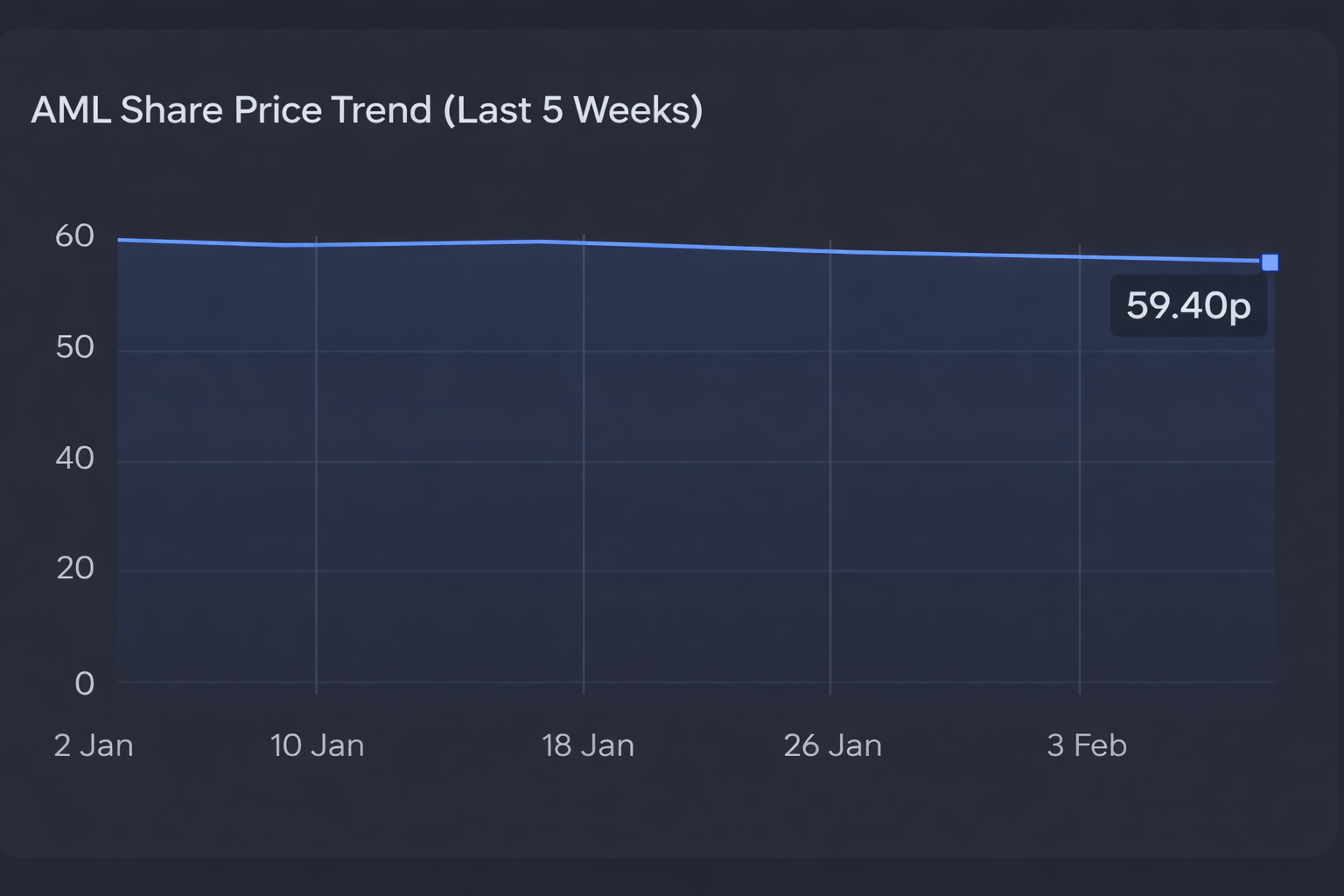
Over the past five weeks, Aston Martin Lagonda’s share price has told a quietly difficult story. Since early January, the stock has eased back from highs in the mid-60p range to close this week at 59.40p, representing a fall of just over eight per cent across the period.
January began with a degree of cautious optimism. Shares briefly touched 64.80p in the first half of the month, despite the long-standing backdrop of high net debt and the reality that Aston Martin remains a business in transition. Mid-January then brought renewed volatility, with a sharp dip followed by a short-lived recovery, a familiar pattern for a stock that continues to respond quickly to both good news and underlying concern.
As the month progressed, momentum faded. By late January the share price had settled back into the low-60s, with sentiment best described as watchful rather than confident. While there were positive signals, including encouraging early-year UK sales figures and anticipation around key future models, these were balanced against broader macro-economic pressure and the ongoing challenge of restoring sustainable cash flow.
FTP Chart for illustrative purposes only
In early February, the tone shifted again. News of cost-cutting consultations and potential redundancies, set against a still-fragile global outlook, weighed visibly on the stock.
The psychological 60p level was breached, with shares closing the week at 59.40p.
For context, none of this exists in isolation. The share price reflects a company navigating multiple realities at once: ambitious product plans, expanding motorsport investment, a passionate global following and, at the same time, the hard work of stabilising a complex business after years of turbulence. The market’s response over the last five weeks feels less like panic, and more like caution.
As ever, this isn’t about day-to-day movements, but about confidence in the longer road ahead. And right now, that road remains challenging, but very much still being driven. I would love to see the line on that graph consistently rise week after week, one day!?
Looking Ahead – Q4 2025 Results on the Horizon
We’re now only a couple of weeks away from a key moment for Aston Martin Lagonda, with the company scheduled to publish its Q4 / full-year 2025 results on Tuesday 24 February, followed by an earnings call the next morning. After a period marked by share-price pressure, cost-base reviews and a challenging macro-economic backdrop, these results will be closely watched as a temperature check on where the business truly stands heading into 2026.
“The upcoming Q4 results won’t just speak to markets — they matter to employees, owners and everyone invested in Aston Martin’s future.”
Market expectations suggest revenue of around £921 million for the quarter, with earnings still forecast to remain negative. But the focus will go well beyond headline numbers. Investors will be looking carefully at cash flow, debt position and whether revised 2025 guidance, adjusted after earlier operational disruptions has been met. Particular attention is likely to fall on the early impact of Valhalla deliveries, not as a volume play, but as a signal of execution, margin discipline and confidence in the ultra-luxury strategy.
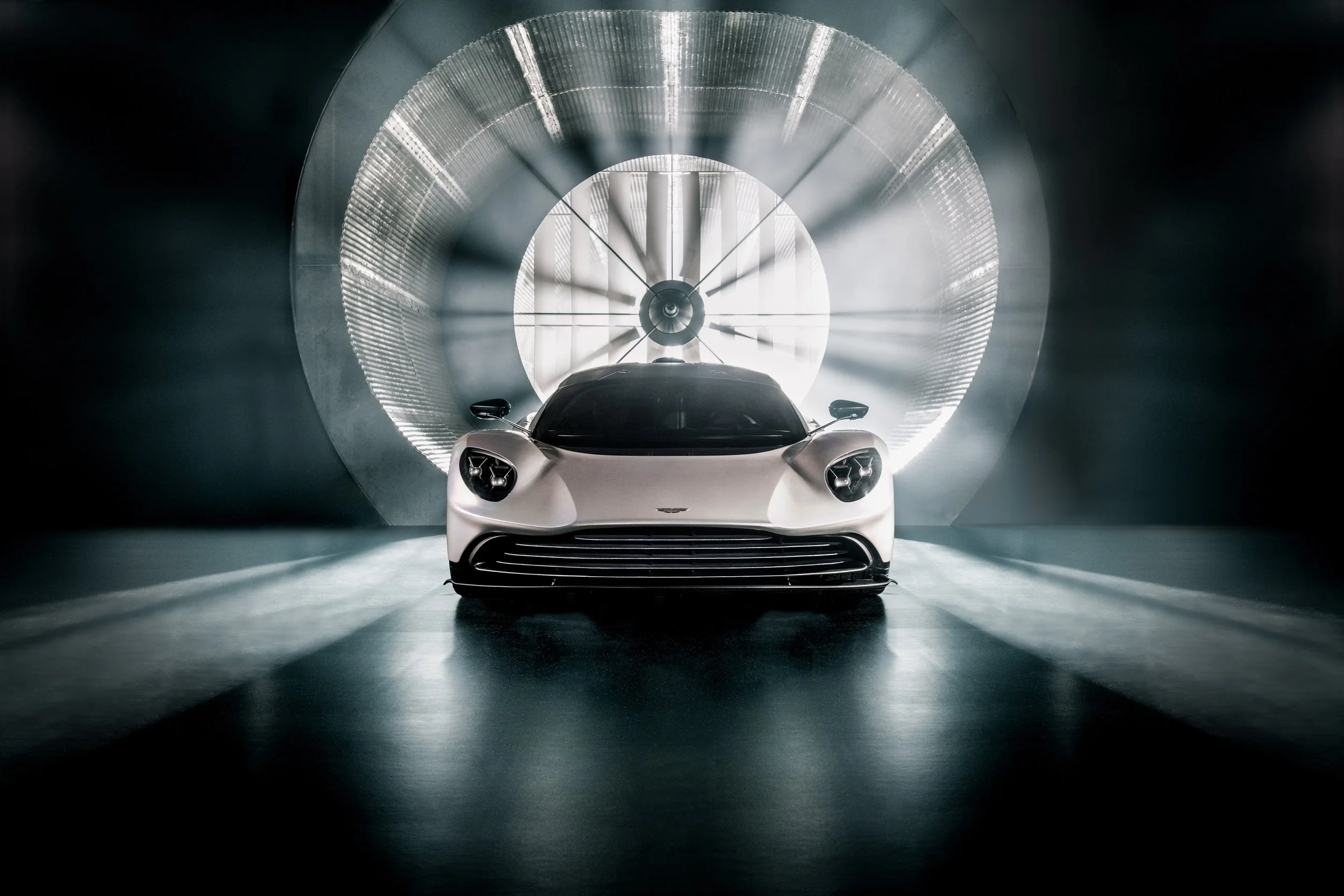
Image © Aston Martin Lagonda. Used for editorial purposes.
In many ways, these results represent a crossroads moment. They won’t answer every question overnight, but they should provide clearer direction on how effectively Aston Martin Lagonda is balancing ambition with financial reality. With consultation processes ongoing and the share price reflecting ongoing uncertainty, the Q4 update will matter not just to markets, but to employees, owners and enthusiasts alike, all hoping for tangible signs of stabilisation as the next chapter begins.
Road Cars – Vanquish, Vantage S & the Reality of Ownership
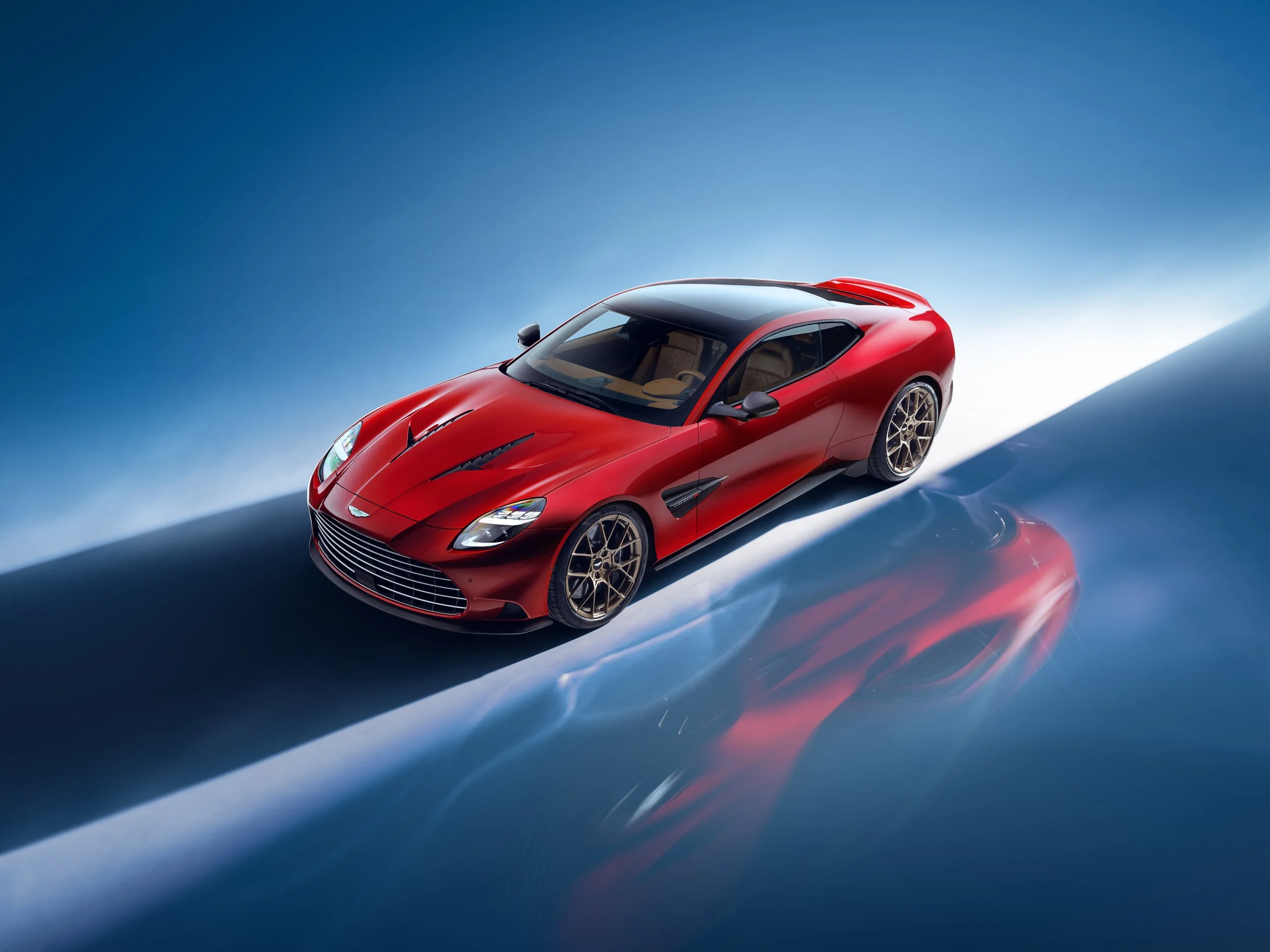
Image © Aston Martin Lagonda. Used for editorial purposes.
The new Aston Martin Vanquish continues to polarise opinion, and in truth, that’s exactly what a flagship V12 Aston probably should do.
High-profile reviews this week have rightly celebrated the theatre of the car: the sense of occasion, the drama of the V12, the sheer presence it brings to the road. Matt Watson’s carwow review on YouTube captures that emotional pull perfectly, the noise, the speed, the design, and the very British ability Aston Martin still has to make even hardened reviewers feel a little misty-eyed behind the wheel. It’s a car that appeals unapologetically to the heart.
But what made that review particularly interesting from an FTP perspective was not the performance figures, it was a moment many viewers may have glossed over. Visible headlight condensation, to the point where actual water droplets were present inside the unit.
For some, that’s a throwaway observation. For me, it isn’t.
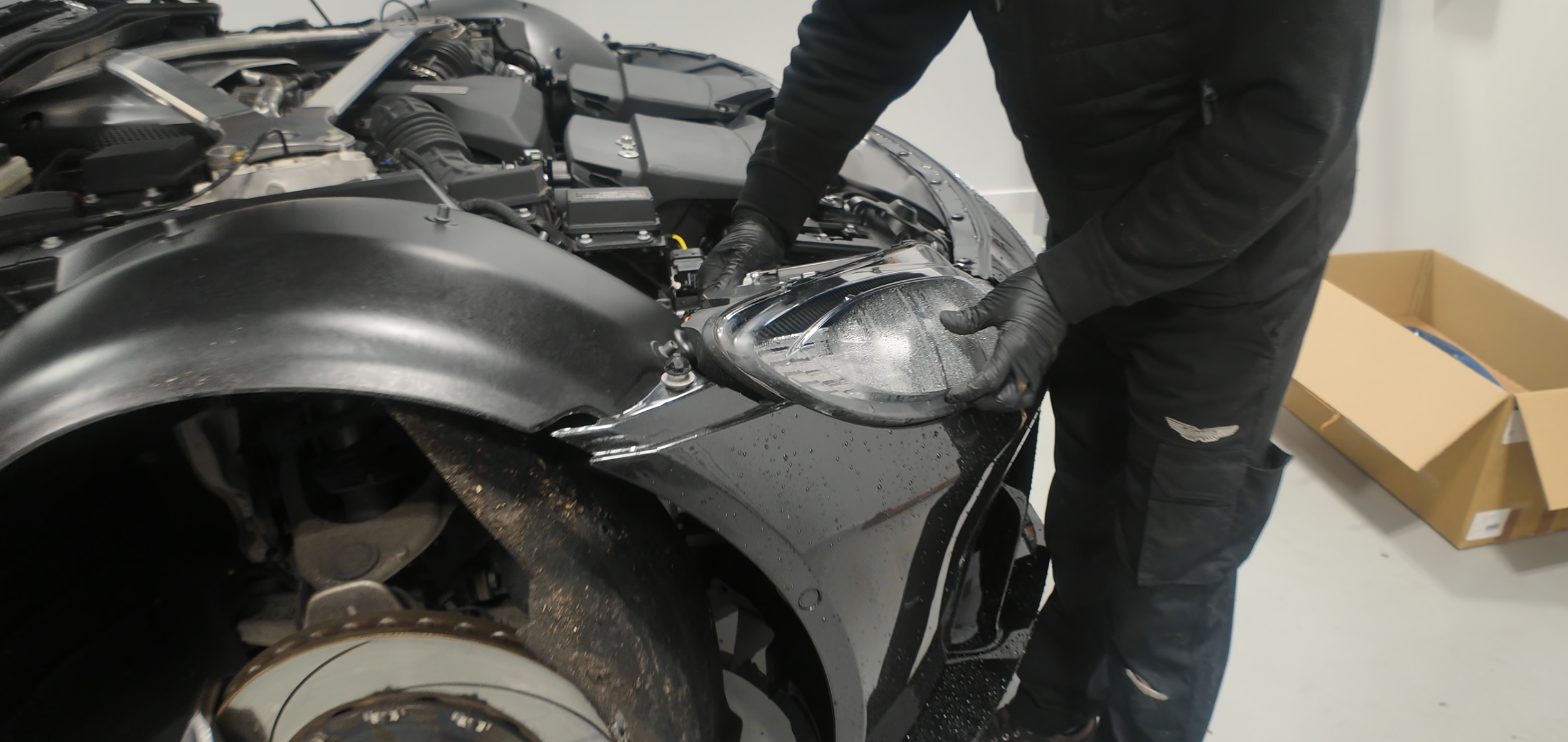
FTP Picture: Faulty headlight on the FTP Vantage being replaced at JCT600, Aston Martin, Leeds
I’ve lived this issue. What starts as “a bit of misting” can, in real ownership terms, escalate into warning lights, loss of function and, ultimately, complete headlamp failure.
In my own case, that journey ended with a brand-new headlamp replacement at significant cost, thousands of pounds for a single component, once the car was just out of warranty. That experience fundamentally changes how you view moments like the one shown in that Vanquish review. And I’m not alone.
“What begins as ‘a little misting’ can end as a four-figure repair — and that single moment can quietly turn admiration into hesitation.”
Since sharing my story, I’ve had multiple owners and would-be owners contact me privately to say the same thing: that stories like this, not catastrophic failures, but expensive, persistent niggles, have genuinely put them off buying an Aston Martin. These are people whose hearts want an Aston, but whose heads steer them towards something more “sensible” when faced with the reality of ongoing costs for items that, frankly, shouldn’t be failing on a car at this level.
This is why it matters. Headlight condensation isn’t about aesthetics. It’s about moisture ingress into what should be a sealed, high-tech assembly. And when that issue continues to appear, even occasionally, on modern flagship cars, it raises legitimate questions about long-term durability and ownership confidence, not just engineering brilliance. I genuinely felt disappointed when Matt Watson highlighted this issue on a brand new Aston Martin Vanquish.

Image © Aston Martin Lagonda. Used for editorial purposes.
By contrast, the story around the Vantage S has been almost universally positive.
Reviews from Hagerty (Alex Sobran) and Forbes (Karl Brauer) converge on the same conclusion: this is not reinvention for reinvention’s sake, nor a cynical exercise in adding an “S” badge and calling it a day.
Instead, the Vantage S feels like the result of careful, intelligent evolution, the kind that comes from engineers being given the space to refine a car they already understand deeply.
On paper, the changes appear modest. Power is up slightly, torque delivery sharpened, gearing tweaked. But both reviewers emphasise that the real transformation is not found in headline numbers or stopwatch gains. It’s in how the car responds. The way the engine picks up and sheds revs more eagerly. The way the throttle mapping feels more deliberate and communicative. The way the rear subframe’s solid mounting brings clarity and confidence without tipping the car into nervousness or discomfort.
“The Vantage S feels like the product of a team that knows exactly what it set out to build — and executed it with confidence.”
What stands out is the balance. Despite firmer responses and a more assertive character, neither review suggests the Vantage S has lost its ability to breathe with real roads. Ride quality remains composed. The car still works as a GT when you want it to, yet feels genuinely alive when driven with intent.

Image © Aston Martin Lagonda. Used for editorial purposes.
Crucially, both Hagerty and Forbes underline that this feels like a driver-focused car, not a spec-sheet exercise. The steering, the chassis communication, the predictable breakaway characteristics, all point toward a car designed to be driven hard and enjoyed deeply, rather than one chasing bragging rights at the expense of connection.
Put side by side, these two cars tell a nuanced and very current story about Aston Martin today.
I want Aston Martin to excel, to succeed, and I’ve said that many times before. That feeling isn’t unique to me; it’s one I know countless fellow owners, enthusiasts and would-be buyers share. When Aston Martin gets it right, it produces some of the most emotionally charged, characterful and desirable cars on sale anywhere. Machines that stop you in your tracks, make you feel something, and remind you why this brand matters in a way spreadsheets never can.
That’s precisely why moments like the Vanquish headlight condensation issue are so disappointing when they appear in high-profile reviews watched by millions around the world. Not because they negate the brilliance of the car, they don’t, but because they distract from it. I know not every eventuality can be engineered out, and I’m realistic enough to accept that no manufacturer is immune from issues. But headlight condensation is an issue that Aston Martin has wrestled with across multiple generations, and while other marques suffer similar challenges, that doesn’t make it acceptable here, especially at this level. I say all of this from a place of support, not criticism. I want to see Aston Martin thrive. And I firmly believe that by giving ownership experience the same obsessive attention it gives styling and speed, the brand can ensure that the dream doesn’t fade once the keys are handed over, but that it deepens instead.
Partnerships, Culture & Brand Power

Image © Aston Martin Lagonda. Used for editorial purposes.
Away from the noise of launches, lap times and lap charts, Aston Martin has also been making quieter, but no less meaningful moves that speak to the brand’s long-term direction.
The newly announced multi-year partnership with Breitling is one such example. This is not a relationship dreamed up in a boardroom for short-term exposure; it is a reconnection between two marques whose histories have been intertwined for over a century. From early innovations in precision timing and speed measurement, to shared cultural touchstones like James Bond, the DB5 on screen and a Q-modified Breitling on the wrist, the overlap is both authentic and earned.
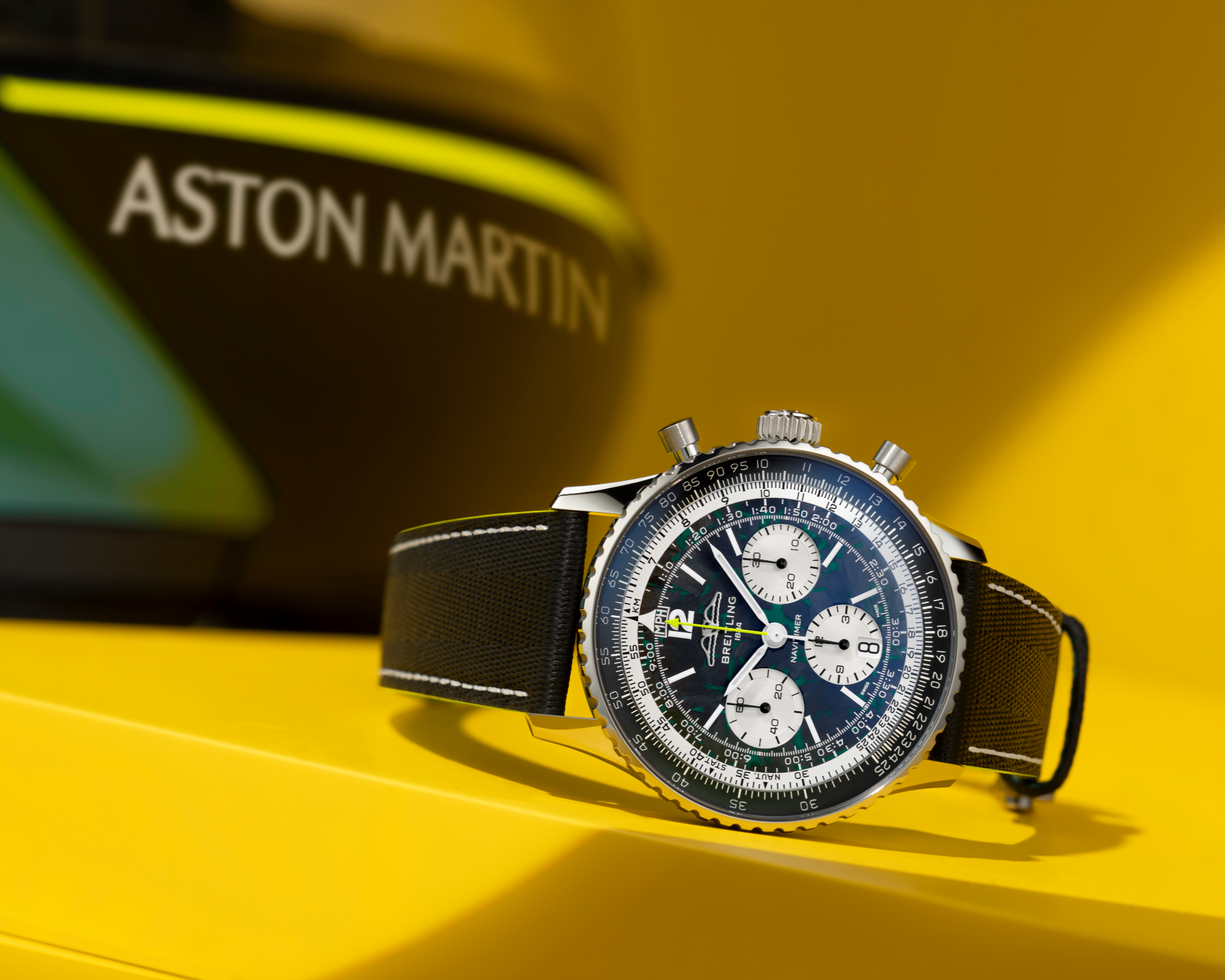
Image © Aston Martin Lagonda. Used for editorial purposes.
What makes this collaboration particularly interesting is its timing (pun absolutely intended!)
The partnership spans road cars, design and Formula One, with Breitling becoming Official Watch Partner of the Aston Martin Aramco Formula One Team, and the first Aston Martin-inspired timepiece due to be unveiled in 2026.
It tells us something important about how Aston Martin sees its future: one rooted in heritage, but expressed through modern platforms, global visibility and considered brand alignment rather than noise.
Alongside this, Aston Martin Aramco’s renewed partnership with TikTok highlights a different, but complementary, strand of the same strategy. This isn’t about chasing trends for the sake of it. Since first partnering in 2021, the team has reported a 30% year-on-year increase in followers and a four-fold rise in video views, supported by the growth of its Creator Collective programme. The emphasis here is controlled access, allowing fans and creators to engage with Formula One from the inside, without diluting the brand’s identity.
Taken together, these partnerships show a marque thinking carefully about relevance, storytelling and longevity. From Formula One to a new Aston Martin timepiece due in 2026, they reveal a brand leaning into its heritage while consciously shaping how it presents itself during a complex and pivotal moment in its history.
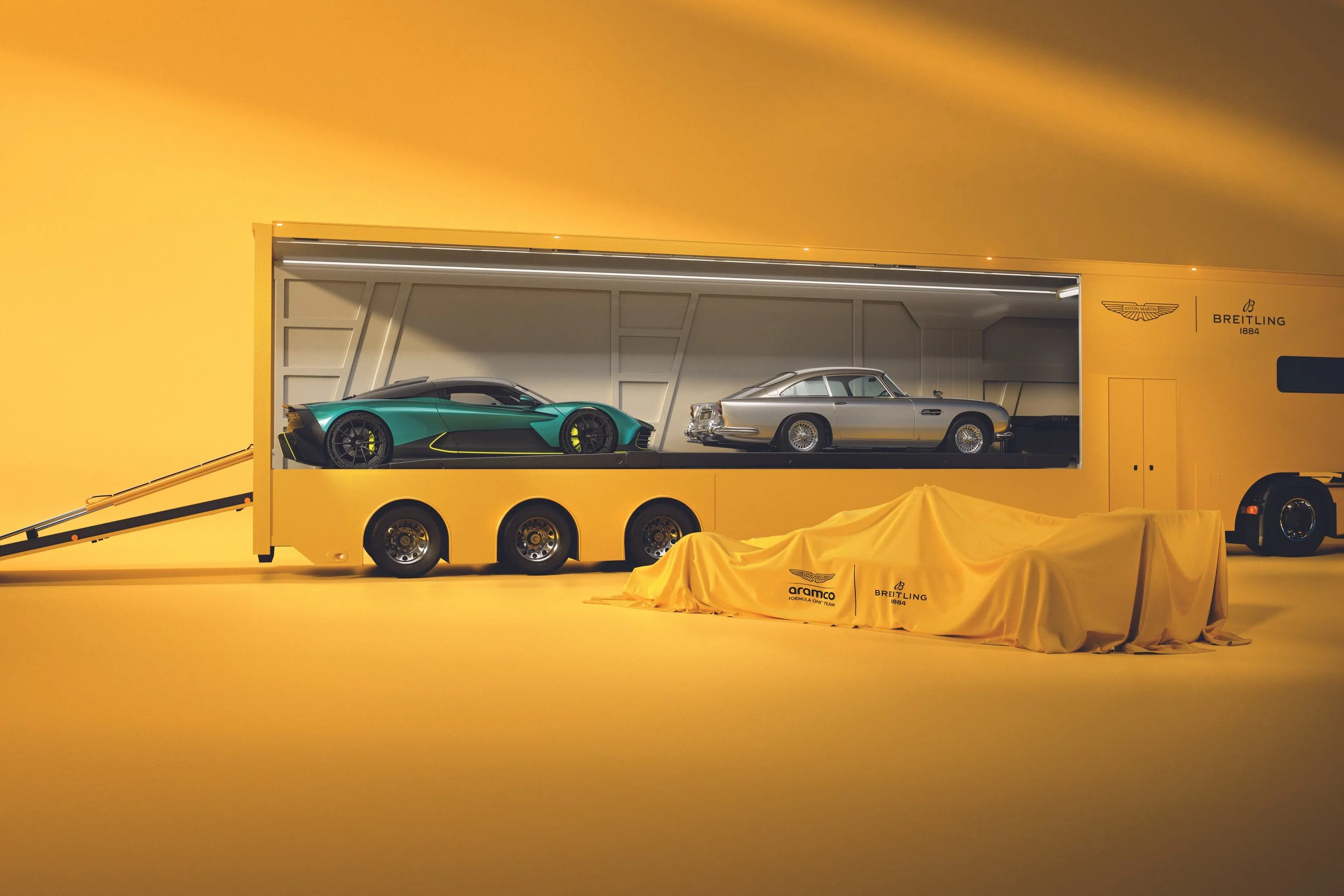
Image © Aston Martin Lagonda. Used for editorial purposes.
A More Difficult Story – Workforce Redundancies

Right: FTP created image
As already mentioned in my introduction, not all the news this week has been easy to write about. Aston Martin confirmed it has begun a global redundancy consultation process, with up to 20% of roles potentially affected, primarily across back-office and engineering functions.
The company has cited sustained pressure from US tariffs and wider macro-economic challenges.
This follows earlier warnings late in 2025 that jobs, including those at St Athan, could be at risk due to tariffs and weaker demand in China. Unite has confirmed consultations are ongoing, and Aston Martin has stated that departures are expected by April.
It’s a sobering reminder that behind the glamour, this is still a business under strain and that strategic resets often come with human cost. It deserves to be acknowledged with care, not buried beneath product launches.
Heritage & Collectability – A Bond Icon Returns

Left Image: corgimodelclub.com (editorial use)
On a lighter note, a lovely heritage moment this week: Corgi’s James Bond Aston Martin DB5 (No. 270) has officially arrived back in stock. This lovely model could be yours for £45.99.
Just click on the picture and we’ll take you straight into the Corgi store to find out more!
First issued in 1968, this silver DB5 was created in response to fans demanding a version that matched the on-screen car, complete with revolving number plates, tyre slashers, ejector seat and all the gadgetry that made the original famous. The new Silver Grille Edition faithfully recreates the rare first version and even includes the original bubble packaging and secret instructions.
For collectors, this is nostalgia done properly and a reminder of how deeply Aston Martin remains woven into popular culture.
Heritage, Print & Culture – The Paper Trail Still Matters
This week also served as a gentle reminder that Aston Martin’s story is still being told beautifully on paper, something many of us will quite literally have noticed as the familiar clatter of letterboxes announces one, if not several, Aston-related publications landing on the doormat. There is something quietly satisfying about physically holding a thoughtfully produced magazine or guide on a subject you genuinely care about, taking the time to read it properly, and returning to it later. That experience remains a simple pleasure, and one that still feels entirely relevant.
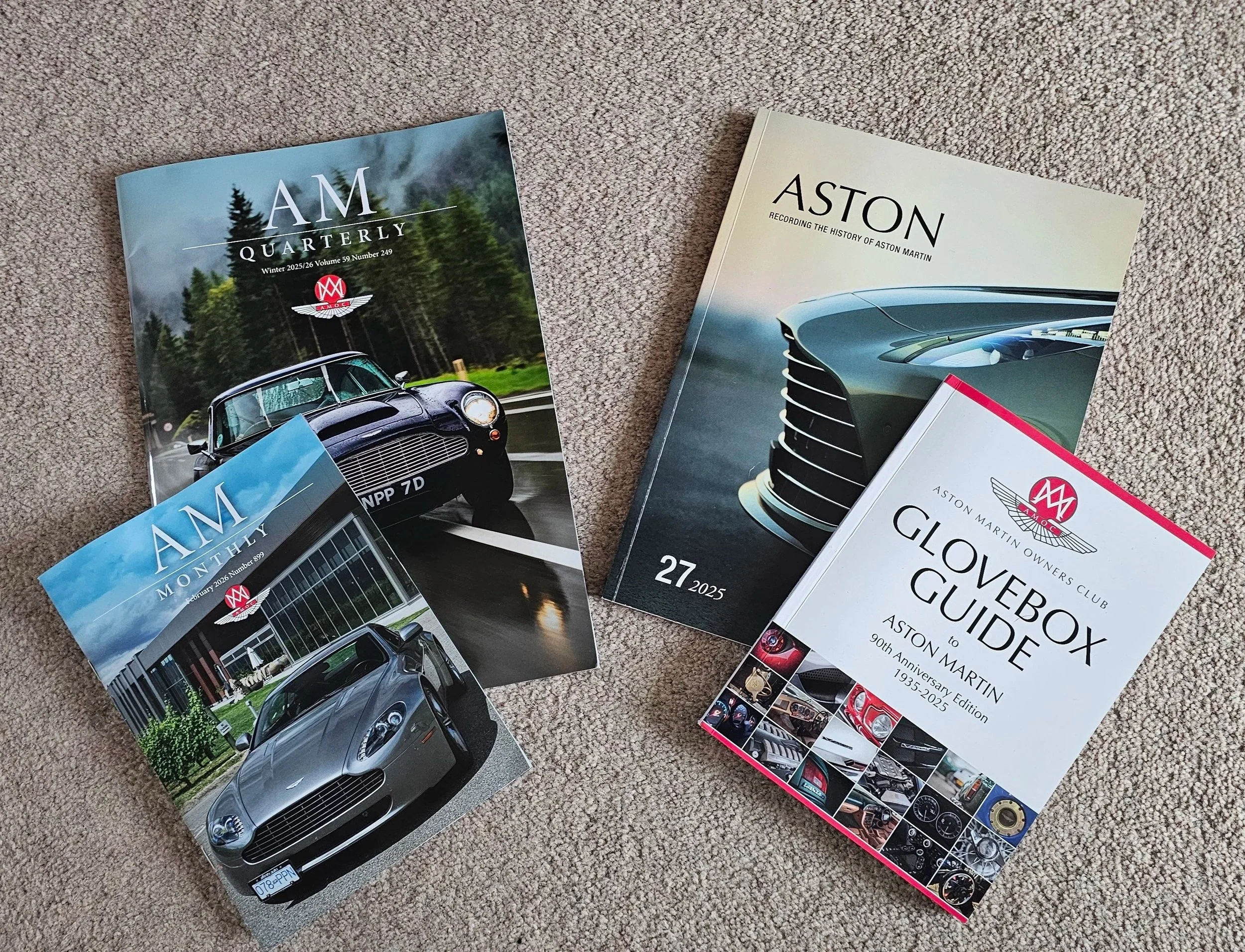
FTP Image of the lovely AM focused publiations
The AM Quarterly and AM Monthly are publications I genuinely look forward to receiving. Each serves a different purpose, yet together they form a layered, carefully curated record of the marque and its community. There is room within their pages for history, ownership stories, technical insight, event coverage and reflection, all presented with clarity and balance. They don’t rush to keep pace with the moment; instead, they allow stories to breathe, which makes them all the more rewarding to read.
What stands out most is the care behind them. These are publications shaped by people who clearly understand not only the cars, but the people drawn to them. Whether it’s a deep dive into a particular model, a quietly fascinating ownership journey, or a broader cultural perspective, they repay attention and invite revisiting the mark of something made to last.
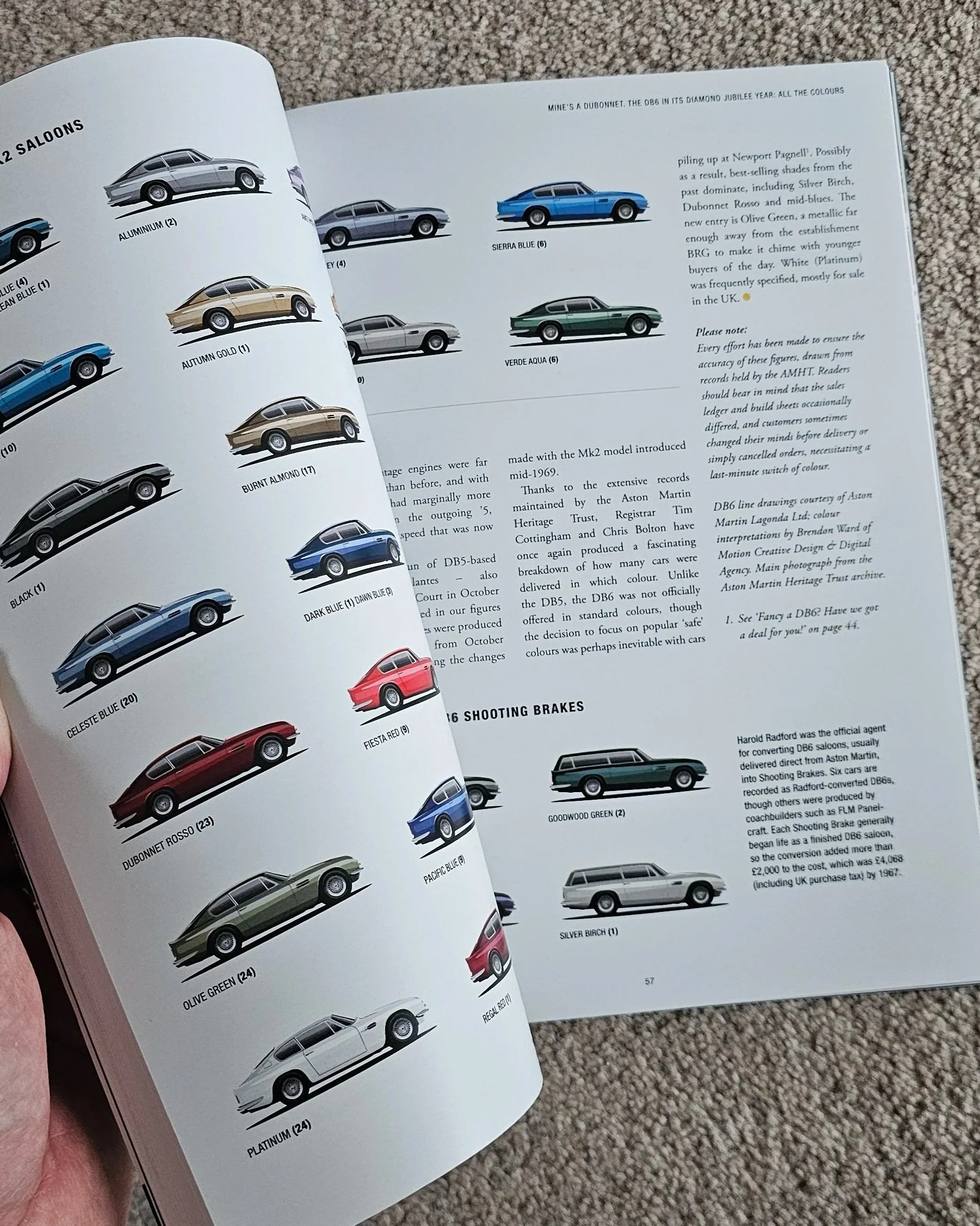
FTP Picture of ‘Aston’ publication
A particular highlight for me this week was the arrival of Aston, the annual magazine produced by the Aston Martin Heritage Trust.
I’ll be honest, I didn’t even know it existed until it landed, and reading it for the first time was a genuine and very welcome surprise. For a publication that appears only once a year, it contains an extraordinary amount of substance.
The writing is informative without being dry, rich in context without feeling academic, and grounded firmly in documented history. There is a clear sense of stewardship running through its pages, a desire not just to celebrate Aston Martin’s past, but to protect it, record it properly, and pass it on intact. The annual round-up alone is an invaluable reference point, quietly pulling together people, cars and moments in a way that future historians will be grateful for. I’ll admit, knowing the next edition is now another twelve months away means I’ll need to practice a little patience!
“Some stories deserve to be held, revisited, and kept — not scrolled past and forgotten.”
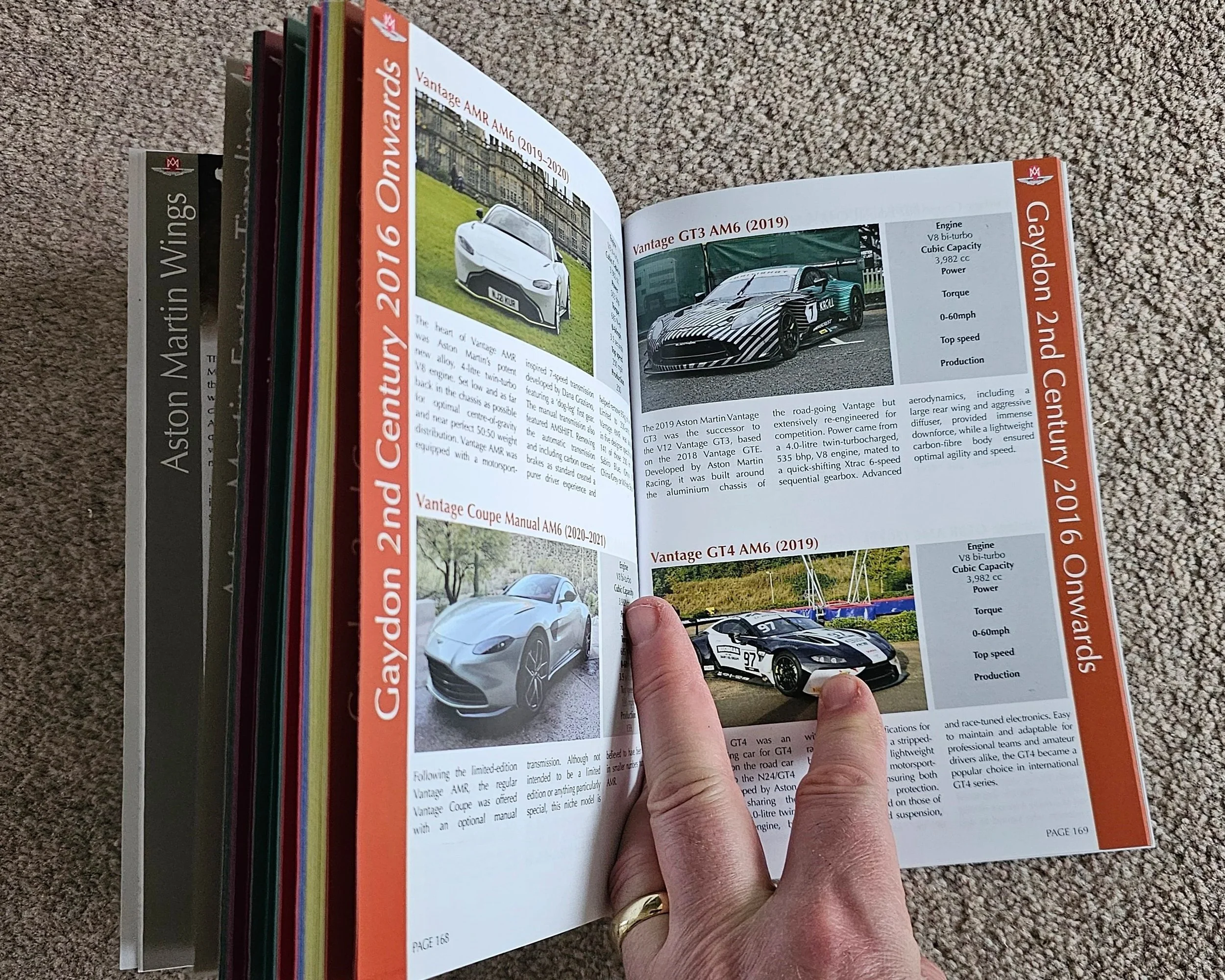
FTP Picture of AMOCs ‘Glovebox Guide’ publication
One publication that deserves particular recognition is the AMOC Glovebox Guide. This isn’t a routine magazine or a lightly refreshed handbook; it’s a one-off, deeply considered piece of work that has clearly required an enormous amount of research, coordination and care from a very small group of dedicated contributors.
Covering Aston Martin history and models from pre-war right through to the present day, the Guide is designed to be practical, authoritative and genuinely useful, whether you’re standing beside your car at an event or reaching for a trusted reference at home. It feels deliberately permanent: something you keep, return to, and rely on over time. In many ways, it quietly embodies what the Club does best; protecting knowledge, preserving the record, and sharing it thoughtfully with its Members.
One Badge, Two Worlds – Astons for Sale This Week
A glance at the current Aston Martin listings this week reveals not something extraordinary, but something quietly fascinating: just how broad the marque’s footprint really is.
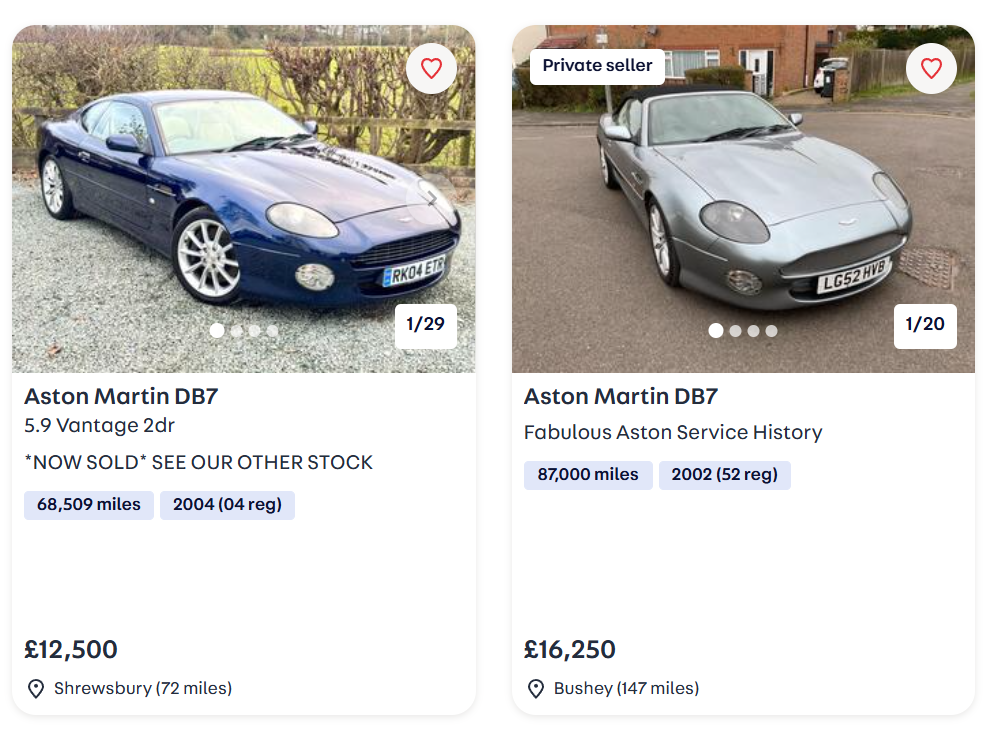
Click on the image and we’ll take you straight to Autotrader, Aston Martin section
At one end of the market sit early-2000s DB7s and DB9s, cars that were once aspirational flagships, now available at prices that feel almost surreal to those who remember them new.
This isn’t a failure of the brand, nor an anomaly. It’s simply the natural result of time, production volumes and the reality of running complex, hand-built grand tourers as they age.
These cars represent an accessible entry point into Aston Martin ownership, provided buyers go in with eyes open and budgets aligned to ongoing maintenance rather than headline purchase price.
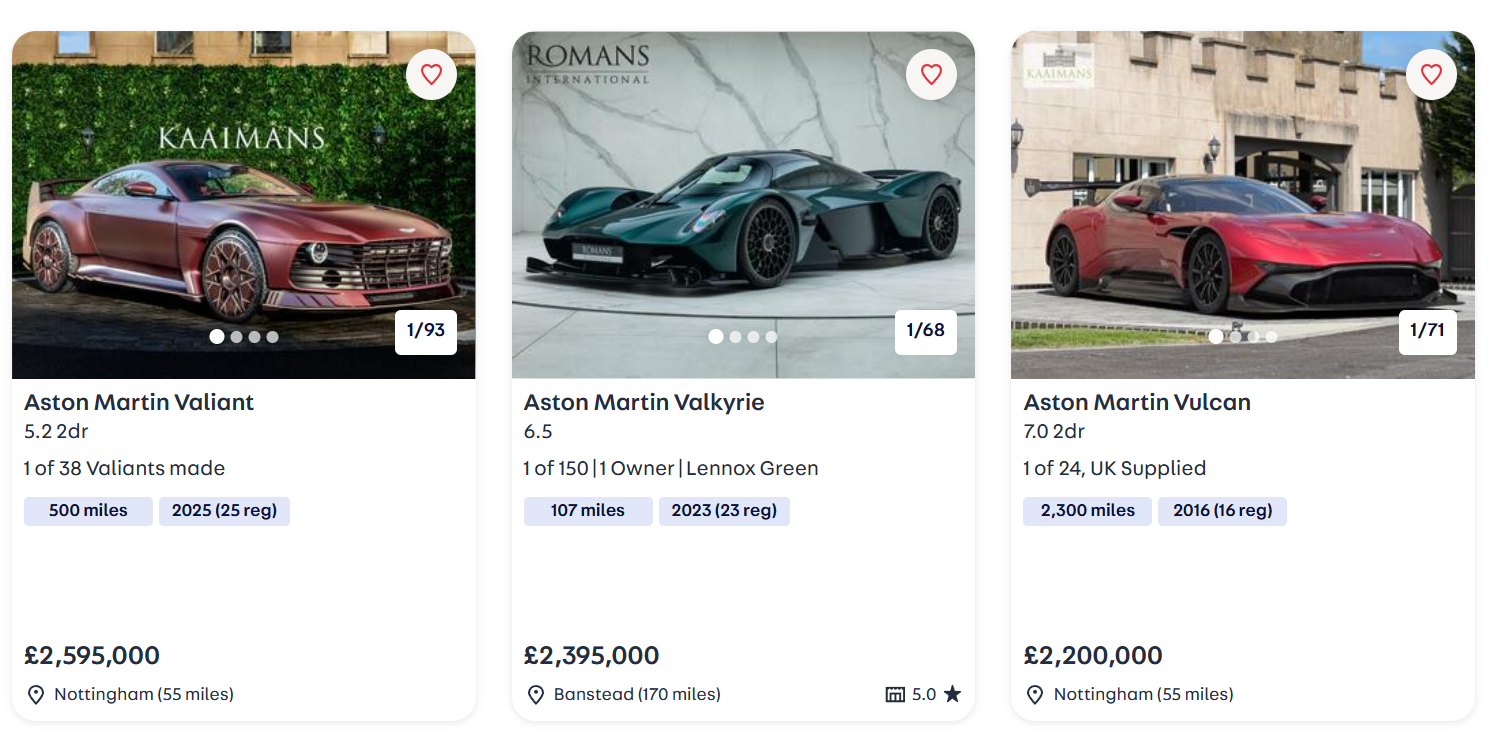
Click on the image and we’ll take you straight to Autotrader, Aston Martin section
At the other end of the spectrum are the modern halo cars: Valiant, Valkyrie and Vulcan, machines built in tiny numbers, often with tiny-digit production runs, conceived with no intention of mass appeal or depreciation curves.
These are not cars shaped by market forces in the conventional sense, but by engineering ambition, rarity and provenance. Their values reflect that intent, not just their performance. What matters here is context. Aston Martin isn’t one thing. It never has been. The same marque can produce a usable, ageing GT that now sits within reach of enthusiasts who once only dreamed, while simultaneously building some of the most extreme road and track cars of the modern era.
This spread tells a far more interesting story than prices alone ever could. It speaks to a brand that spans generations, intentions and experiences, from first-time buyers discovering Aston Martin for the first time, to collectors safeguarding the outer limits of what the marque can be. Whether you’re admiring a DB7 on a driveway or a Valkyrie behind velvet ropes, the thread connecting them is still unmistakably Aston Martin.
FTP Update – Behind the Scenes
Here at Fuel the Passion, it’s been a quieter period on the road, but not behind the scenes.
The FTP Vantage remains tucked away under cover as Yorkshire continues to deliver freezing temperatures, snow and heavily salted roads. Much as I’d like to be out driving, common sense wins here. The car is booked into Aston Martin Leeds later this month for its scheduled service, and I’m quietly hoping the weather gives us a clear enough window to make that journey without drama.
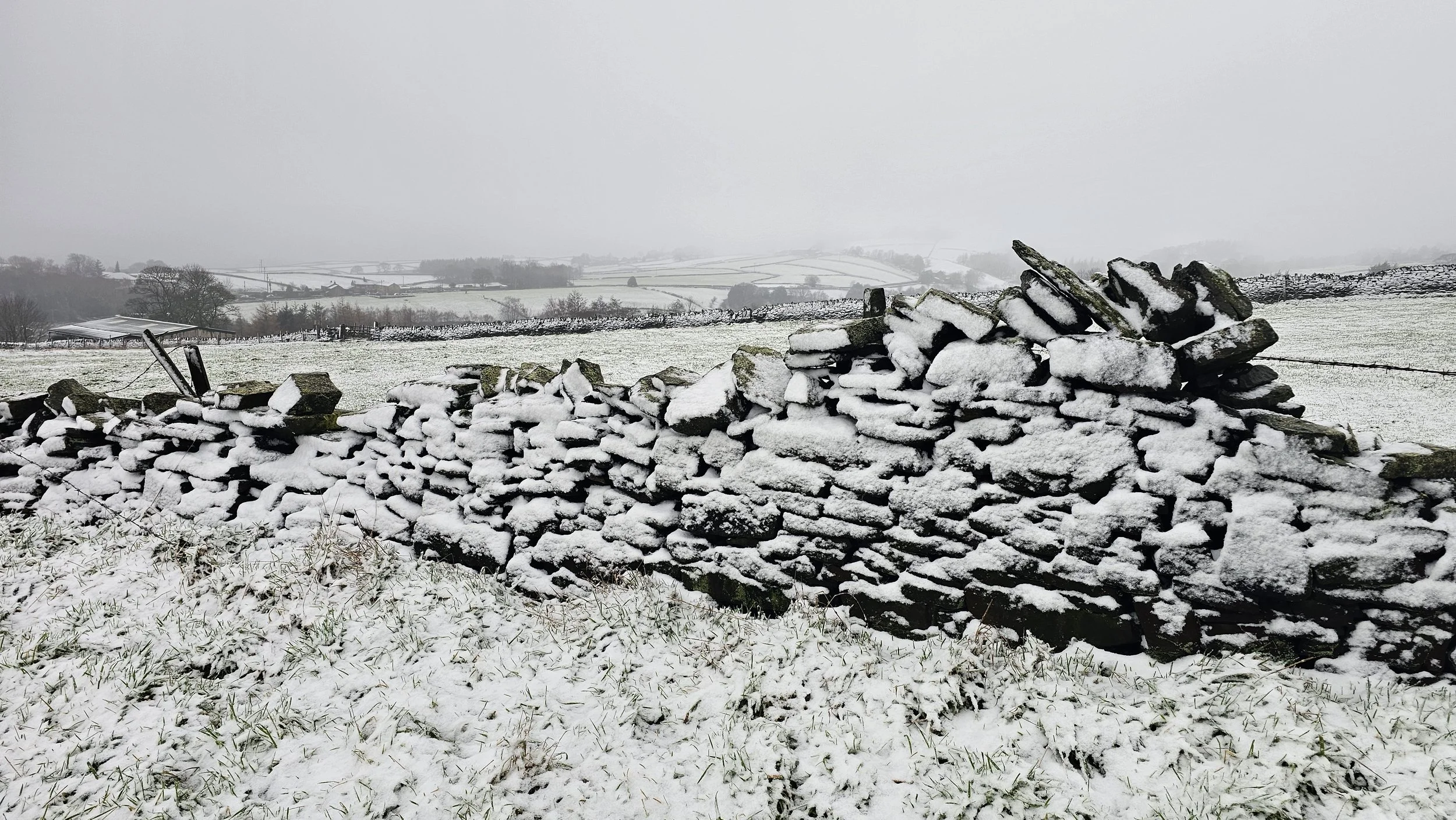
FTP Picture of a local scene taken earlier this week, Yorkshire, Great Britain
This pause has also coincided with a moment of financial reality that many owners will recognise. The recent £3,800 headlight replacement, necessary, unavoidable, and done for peace of mind, has undoubtedly dented my discretionary budget for 2026. We all work within limits, and that single repair has eaten into what would otherwise have been allocated to trips, filming opportunities and experiences later in the year. It’s not a complaint, just an honest reflection of what modern Aston Martin ownership can look like when things don’t quite go to plan. That said, quieter driving months are not wasted months.
Behind the scenes, a lot of time is being spent planning, exploring and firming up potential filming opportunities for later in the year. Nothing is guaranteed, these things rarely are, but laying the groundwork takes time, conversations, research and patience. In many ways, this part of the process is just as important as the filming itself, even if it’s far less visible.
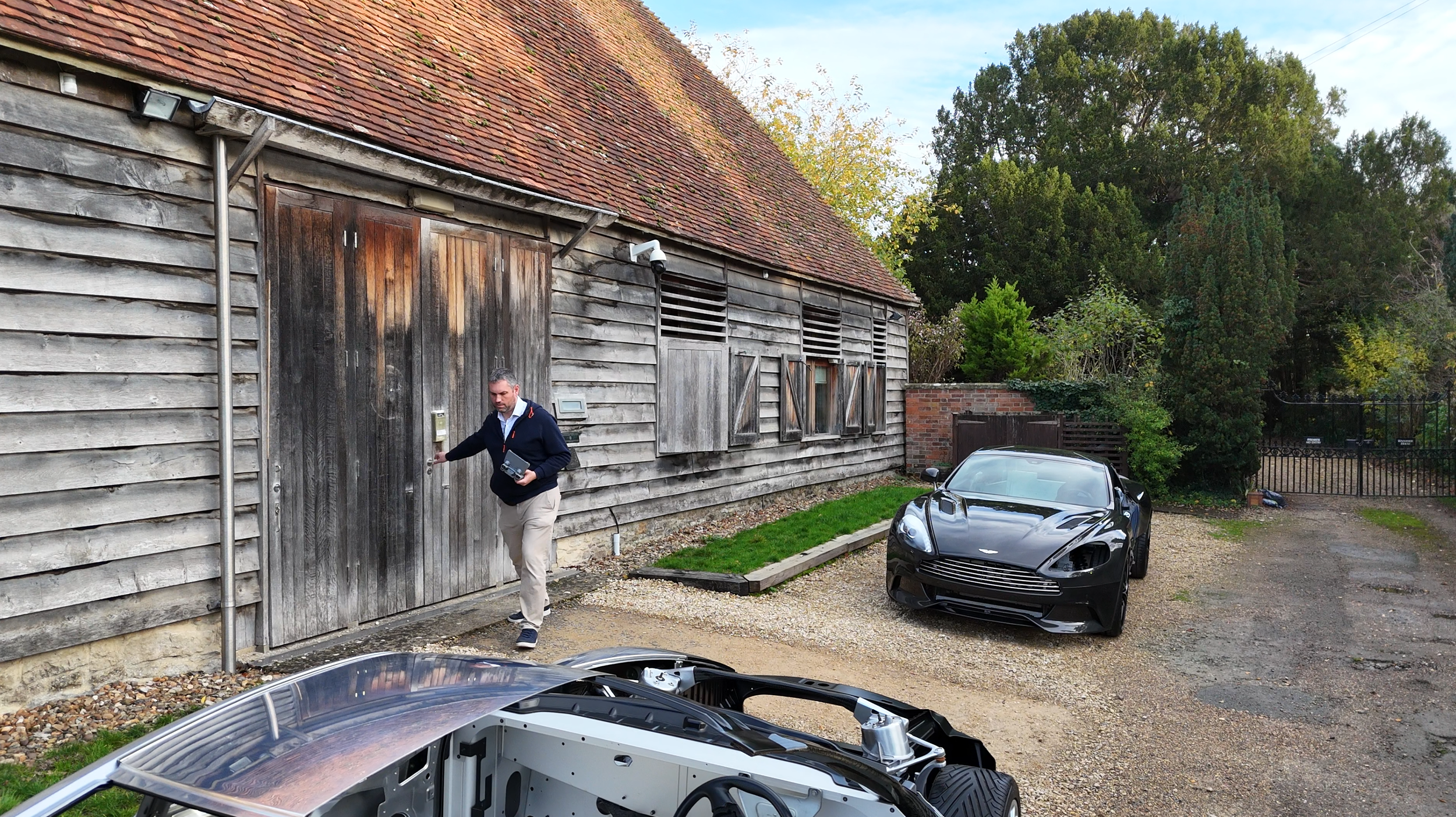
FTP Picture, me exiting AMHT Museum preparing to film AML Historian Steve Waddingham
During this week’s FTP Weekly Roundup edit, I dropped these two images into the roundup to give a small insight into what’s been occupying a fair bit of my time recently.
I’ve been deep into shaping a two-part Vanquish film series; Part One exploring how the first-generation Vanquish was conceived and built, and Part Two focusing on the evolution of the second-generation car. Both films feature Steve Waddingham (AML Historian), who brings the cut-away cars to life with his trademark clarity, depth of knowledge and infectious enthusiasm. It was genuinely a pleasure working alongside someone so passionate about Aston Martin’s engineering story, and so generous in sharing that knowledge with anyone who wants to understand how these remarkable cars were created.
“A Vanquish Without Makeup: Steve Waddingham Reveals What’s Normally Hidden”
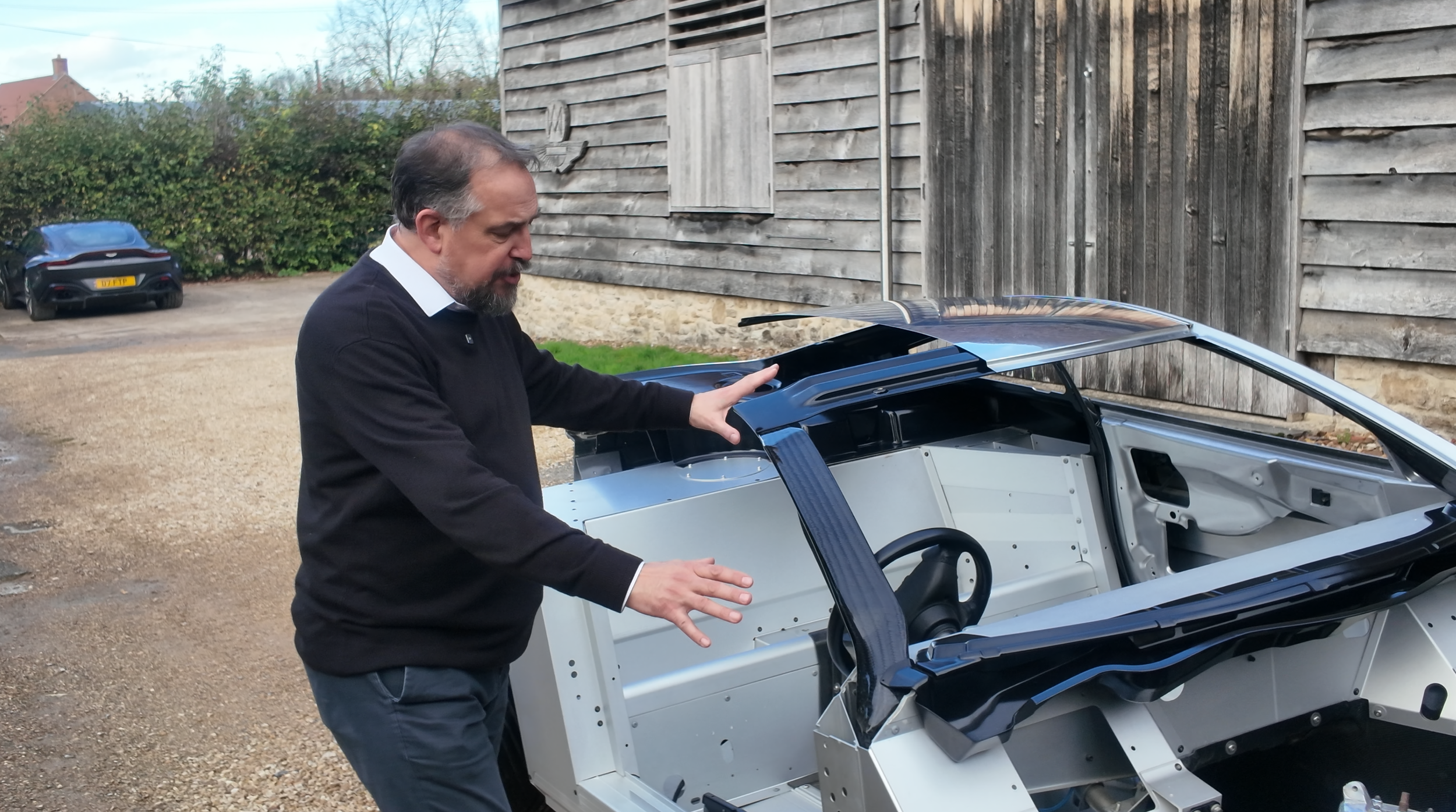
FTP Picture: Steve Waddingham (AML Historian) working his magic, talking through the unique build process of the first generation Vanquish (note the FTP Vantage in the background!)
With 2026 marking the Vanquish’s 25-year anniversary, it feels like exactly the right moment to tell that story properly. This will consist of two films, notably without me on camera and is planned for release in March.
What you won’t see in the finished films, of course, is everything that tried to derail us along the way. Low-flying helicopters (which briefly had us convinced someone was chasing an exclusive scoop), dogs barking in neighbouring gardens, delivery drivers determined to park right next to the Vanquish cut-outs, and visitors arriving at nearby properties at exactly the wrong moment. It all meant the filming took far longer than planned. Frustrating at times, yes, but the weather held, the footage came together beautifully, and looking back we had a great laugh along the way! I’m half-tempted to put together an outtakes reel… if only to prove that heritage storytelling isn’t always quite as serene as it looks on screen!
After that, attention turns to a long-overdue edit from Goodwood Revival. Looking back through the footage has been a reminder of just how special that event is: the cars, the atmosphere, the crowds, the period dress… and yes, the weather, including one thoroughly soaked day.
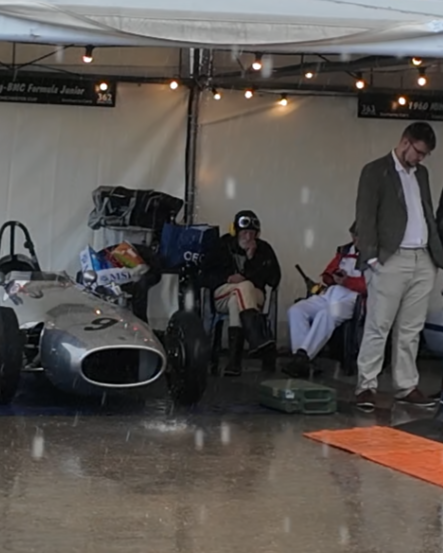
FTP Picture taken at Goodwood Revival 2025 on a very wet, rainy period over the weekend. Note the driver resting undercover, next to his lovely carriage!
The film will be a visitor’s-eye view of what Goodwood Revival really feels like, with some truly special Aston Martins captured up close, and it’s shaping up to be a film worth the wait.
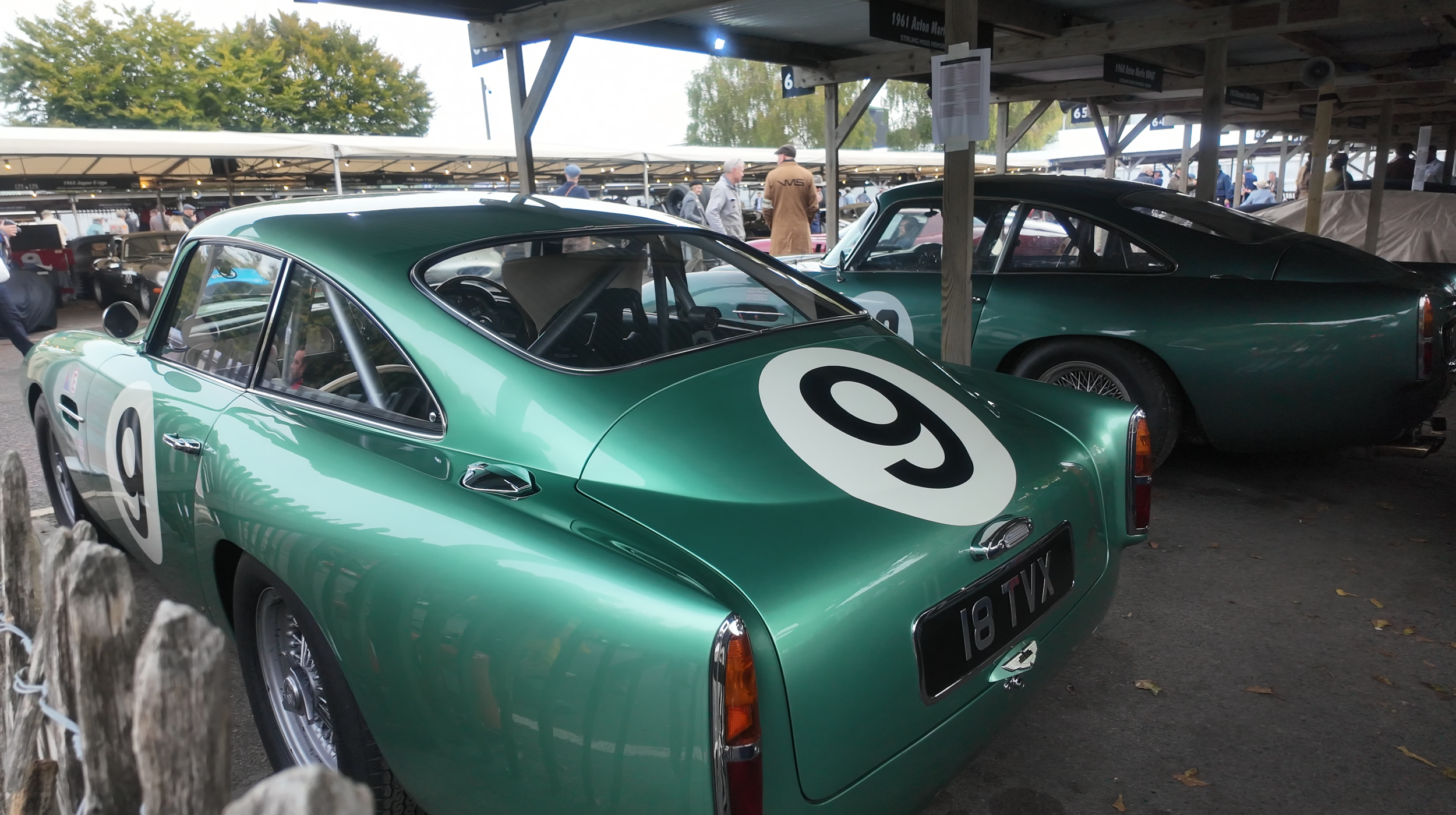
FTP Picture: A stunning pair of 1960s Aston Martin DB4 at Goodwood Revival 2025
I’ll also be attending the first AMOC Area 06 meeting of the year on Saturday 7 February, always a welcome way to ease back into the season and reconnect with the community.
So while this might look like a quieter phase from the outside, it’s very much a period of planning, reflection and preparation. And in a year that already promises plenty of stories, both good and challenging, that groundwork matters more than ever.
Closing Thoughts
This week has been a stark reminder that Aston Martin exists in multiple realities at once.
On one side, we see ambition, expansion and global visibility: the Aston Martin Aramco Formula One Team continuing to invest in people, partnerships and long-term presence on the world stage, including the appointment of Jenson Button as a new global ambassador. On the other, we see the deeply worrying reality of a redundancy consultation at Aston Martin Lagonda, with real employees facing uncertainty about their futures.

Image © Aston Martin Lagonda. Used for editorial purposes.
At first glance, those two stories can feel jarring, even uncomfortable. A world champion welcomed into the brand narrative at the same time as jobs are placed at risk. But they sit in different spheres of the Aston Martin universe. Closely connected, yes, but not the same business, not the same budgets, and not driven by the same commercial mechanics.
I explored this contrast in more depth in a previous FTP featured article late last year, looking at how Aston Martin’s road-car finances and its Formula One ambitions fit together. The short version remains relevant today: the F1 team operates on a different financial structure and timeline, designed as a long-term brand, technology and relevance strategy, not a simple cost line that can be repurposed overnight.
What has shifted, and what cannot be ignored, is the wider financial backdrop. Continued pressure on Aston Martin Lagonda’s share price reflects a market that remains cautious about the company’s near-term outlook. That doesn’t tell the whole story, share prices never do, but it is a visible indicator of the challenges the business is navigating, from global economic headwinds to cost control and investor confidence. In that context, the decision to consult on workforce reductions becomes more understandable, even if no less painful. And that’s where the human reality must remain front and centre.
Behind every headline, every market movement and every restructuring announcement are people, engineers, designers, technicians and support staff, who have helped build Aston Martin’s past and present. For those individuals and their families, this is not an abstract business adjustment; it is a worrying, emotional and deeply personal moment.
“I want Aston Martin to succeed — and that means celebrating its brilliance, while being honest about the challenges the business and its people are facing.”
As enthusiasts, owners and supporters, it is possible, and important, to hold both truths at the same time. We can admire the cars, celebrate the racing, welcome figures like Jenson Button into the Aston Martin story, and still acknowledge that this is a difficult and unsettling period for many within the wider business. Fuel the Passion has always been about more than machines. It’s about people, heritage and honesty. And in weeks like this, that honesty means recognising success and uncertainty side by side.
Our thoughts remain firmly with those affected by the redundancy consultation. The true strength of Aston Martin has always come from its people, and one can only hope that the road ahead brings greater stability for them, alongside continued success for the marque we all care so deeply about.
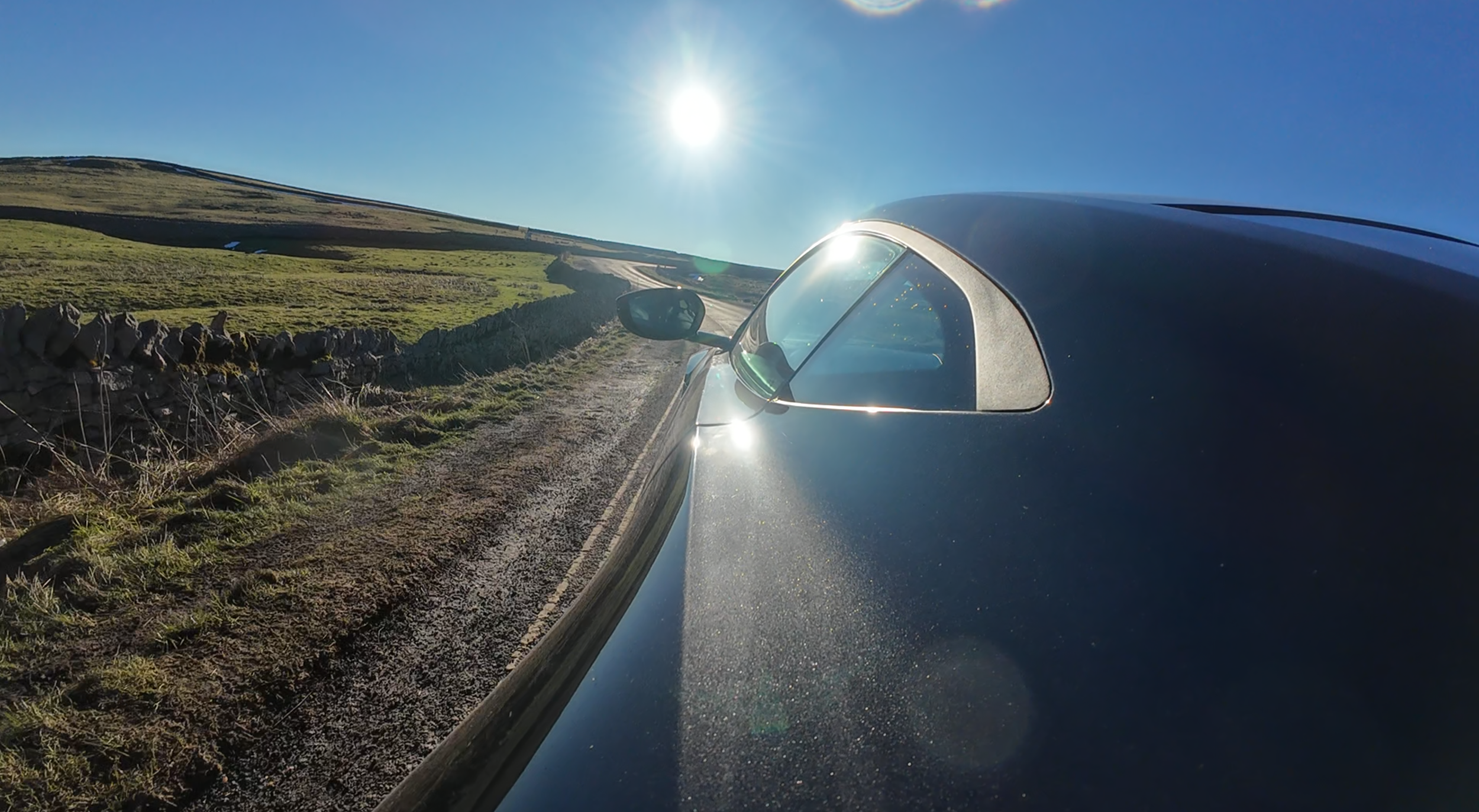
FTP Picture: Enjoying the FTP Vantage on some Derbyshire Roads (dodging potholes galore!)
Over to You
This week’s stories span a wide spectrum, from heritage and print culture, to modern Formula One ambition, road-car reality, and the very human challenges facing the business today. So I’d love to hear from you!
Which Aston Martin moment has stayed with you the longest; a car you owned, one you nearly bought, a drive you still think about, or even a magazine article that sparked the passion in the first place? And how do you feel Aston Martin is navigating this moment in its history, balancing ambition, heritage and the realities of ownership?
Fuel the Passion has always been about shared experience, not just headlines. If you’ve ever thought about writing your own FTP Featured Article, perhaps about your ownership journey, a particular car, an event, or a moment that made Aston Martin matter to you, I’d genuinely love to hear from you.
You can share your thoughts in the comments below, or get in touch directly at
fuelthepassion.dt@gmail.com
As ever, thank you for reading, supporting, and caring about this extraordinary marque. See you on the next one!
