
Aston Martin V8 Vantage - FTP Buyers Guide
What to Know Before Buying Aston Martin’s Most Tempting Modern Classic
Fuel the Passion is independent and this guide is not produced in association with Aston Martin Lagonda. It’s intended as editorial buying guidance for enthusiasts and prospective owners.
Estimated Read Time
A detailed guide to the Gaydon-era Aston Martin V8 Vantage, covering 4.3, 4.7, Coupe, Roadster, manual, Sportshift, Vantage S, special editions, known issues and buying checks.

Image © Fuel the Passion
Editor’s Introduction - Dan, Fuel the Passion
There are some Aston Martins that make the argument for themselves before you’ve even turned the key. The Gaydon-era V8 Vantage is one of them. The shape still looks right, the proportions still feel special, and the idea of a compact, naturally aspirated Aston Martin with a V8 engine, a manual gearbox option and proper everyday usability remains deeply appealing.
It’s also one of the Aston Martins that many people look at as their first real step into the marque. That’s completely understandable. Compared with many other Aston Martin models, the V8 Vantage can look surprisingly attainable. Early cars sit in a market space where the dream begins to feel possible rather than distant, and that’s exactly why this guide matters.
This guide is not here to put you off the V8 Vantage. Quite the opposite. It’s here because the car deserves to be bought properly, understood properly and enjoyed properly. Fuel the Passion is built around accuracy, enthusiasm and protecting the record. That means we can celebrate the car while still being honest about clutch checks, service history, deferred maintenance, Sportshift expectations, bodywork, lighting, Roadster roof checks and the real cost of buying a car that has been neglected.
The V8 Vantage is not a fragile car that should frighten buyers away, but nor is it an ordinary used sports car. The cheapest one is rarely the whole story. The best one is not always the newest, the lowest mileage, the most powerful or the one with the shiniest advert. The best car is the one whose condition, history, specification and maintenance record fit your budget and the way you intend to use it.
This guide should help you look past the badge, the noise and the excitement of the moment, and judge the actual car in front of you.
This Is a Living FTP Buyers Guide
This guide has been written as a living Fuel the Passion Buyers Guide. That means it will be updated as further specialist evidence, market data, parts information and owner experience become available.
The Aston Martin world is full of strong opinions, and some of them are extremely useful. Others are repeated so often that they start to sound like fact when they’re really only anecdote. The aim here is to separate confirmed information, specialist advice, owner experience and FTP editorial judgement as carefully as possible.
This guide is also not a substitute for a proper pre-purchase inspection. Use it to understand the car, ask better questions and identify areas that need checking. Before buying, especially if the car is expensive, modified, rare, low-mileage, poorly documented or showing faults, use an Aston Martin main dealer or respected marque specialist.
Important Information
This guide is general enthusiast information only and does not replace a professional Aston Martin inspection. A full disclaimer appears at the end.
What This Guide Covers
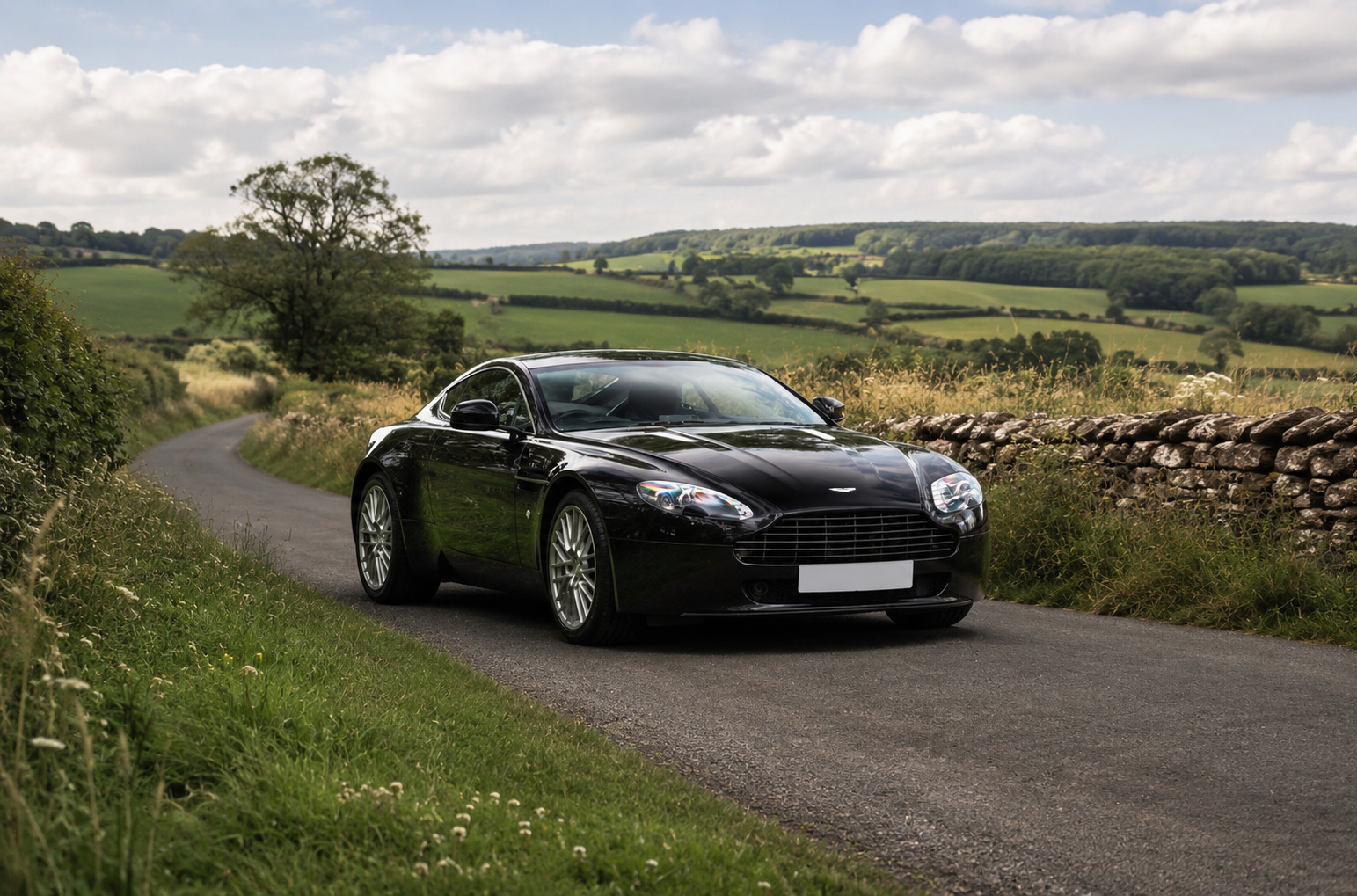
Image © Fuel the Passion
This guide covers the Gaydon-era Aston Martin V8 Vantage: the naturally aspirated V8 model launched in the mid-2000s and developed through 4.3-litre, 4.7-litre, Vantage S and later special-edition forms.
It does not cover the earlier Newport Pagnell V8 Vantage, and it does not cover the later turbocharged new-generation Vantage. Aston Martin has used the Vantage name across different eras, so it’s important to be clear about the car being discussed.
For clarity, this guide focuses on the first-generation Gaydon-era V8 Vantage family: Coupe, Roadster, 4.3, 4.7, manual, Sportshift, Vantage S, N400, N420, N430, V8 AMR and GT8. Most references place this V8 Vantage production period from 2005 to 2017, while some market and listing sources refer to 2005–2018 because of model-year and late-registration context.
This is a buying guide, not a workshop manual. It’s designed to help you understand the model, ask better questions, recognise warning signs and decide which version may suit you.
Why the V8 Vantage Still Matters
The V8 Vantage arrived at a defining time for Aston Martin. It followed the DB9 into the Gaydon era and brought the brand’s design language into a more compact, sporting package. The AMV8 concept had previewed the idea, and the production car carried much of that emotional punch into showrooms.

Image © Fuel the Passion
Part of the car’s appeal is that it doesn’t need explaining to an enthusiast. Long bonnet, compact cabin, powerful rear haunches, side strakes, clean proportions and a naturally aspirated V8 soundtrack.
It has the things people expect from an Aston Martin, but in a size and price bracket that can make ownership feel more realistic.
It’s also a car with genuine breadth. A Coupe can tour, carry luggage surprisingly well for a two-seat sports car, commute when looked after, and still feel special on a Sunday morning road. The Roadster adds open-top theatre and makes more of the soundtrack, although it also brings additional roof, seal and water-ingress checks. Manual cars appeal to those who want the most analogue experience. Sportshift cars need understanding rather than instant dismissal.
The V8 Vantage’s appeal is not only performance. It’s shape, sound, badge, cabin feel and occasion. That’s why it still draws people in.
4.3 vs 4.7: Which Engine Should You Buy?
The 4.3 versus 4.7 decision is one of the first choices buyers face, but it shouldn’t be reduced to “early bad, later good.” That would be far too simple.
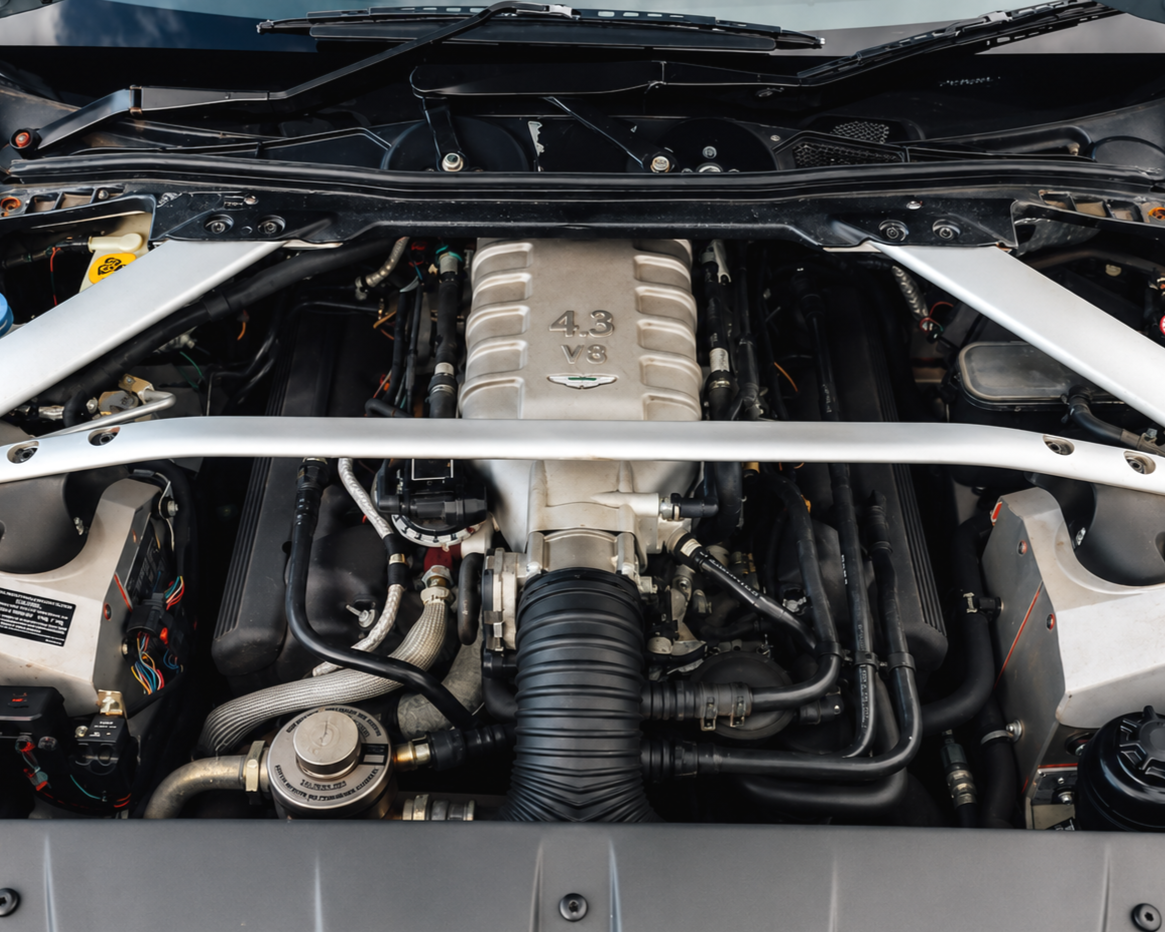
Image © Fuel the Passion
The original 4.3-litre V8 Vantage was the car that established the model. It was criticised by some for not having quite the performance edge they expected from the looks, but that doesn’t mean it should be dismissed.
Specialist and owner evidence both support the same general point: the 4.3 asks more of the driver. It rewards revs, gearbox use and involvement. For drivers who enjoy working a naturally aspirated engine rather than relying on easy torque, that can be part of the charm.
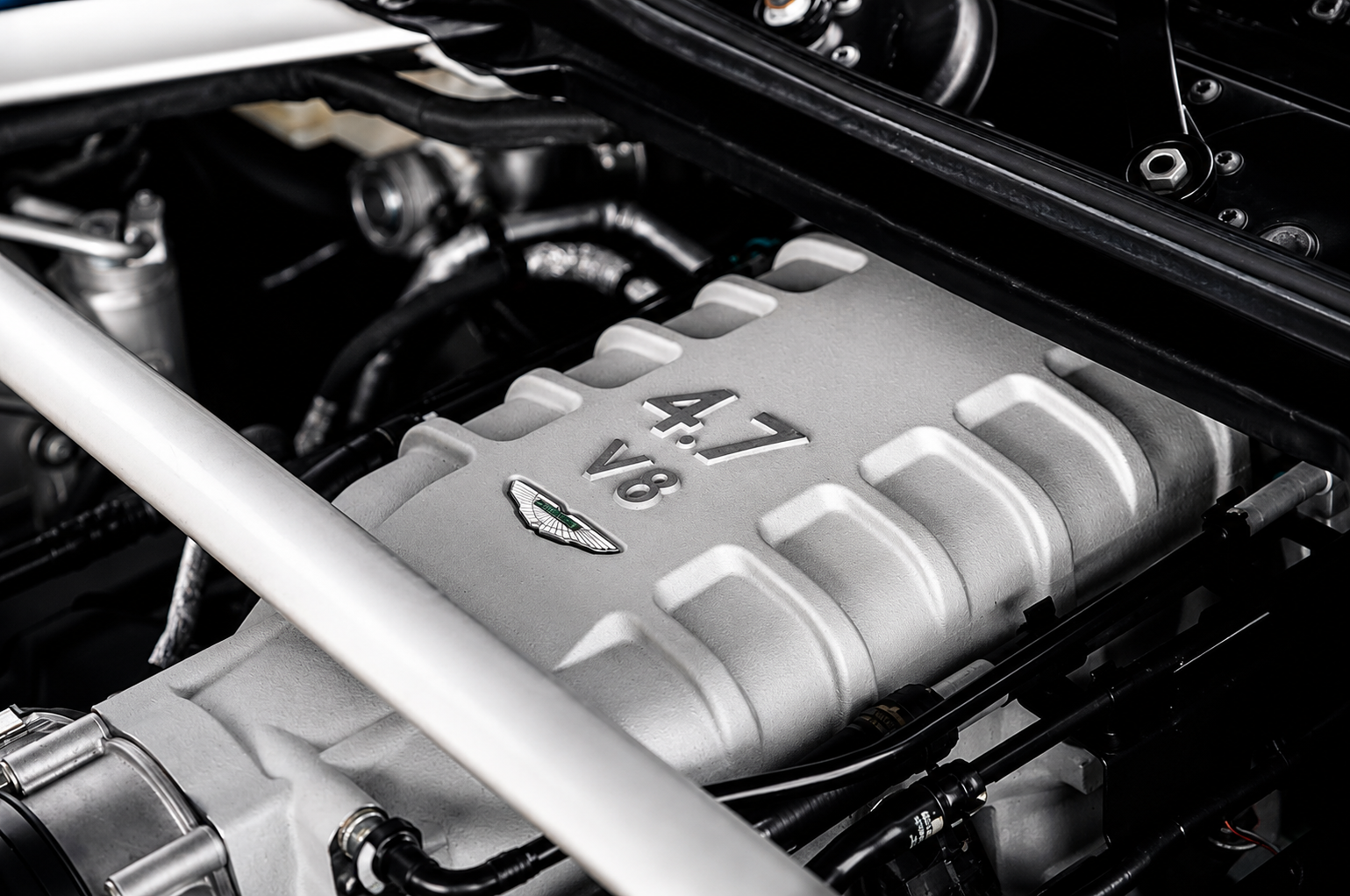
Image © Fuel the Passion
The later 4.7-litre car brought more flexibility and a stronger mid-range. In simple terms, it feels more muscular and more complete, especially if you want effortless progress without always chasing the upper rev range.
That doesn’t automatically make every 4.7 the better buy. A superbly maintained 4.3 with strong invoices, fresh tyres, good brakes, solid clutch history and clean bodywork can be a much better ownership proposition than a tired 4.7 that needs significant work immediately.
A good 4.3 is better than a tired 4.7. A good 4.7 is probably the more rounded car for many buyers. The right answer depends on condition, budget and what you want from the drive.
Coupe or Roadster?
The Coupe is probably the simpler all-round ownership proposition. It gives you the V8 Vantage shape in its cleanest form, useful luggage space, a parcel shelf behind the seats and fewer roof-related components to worry about.
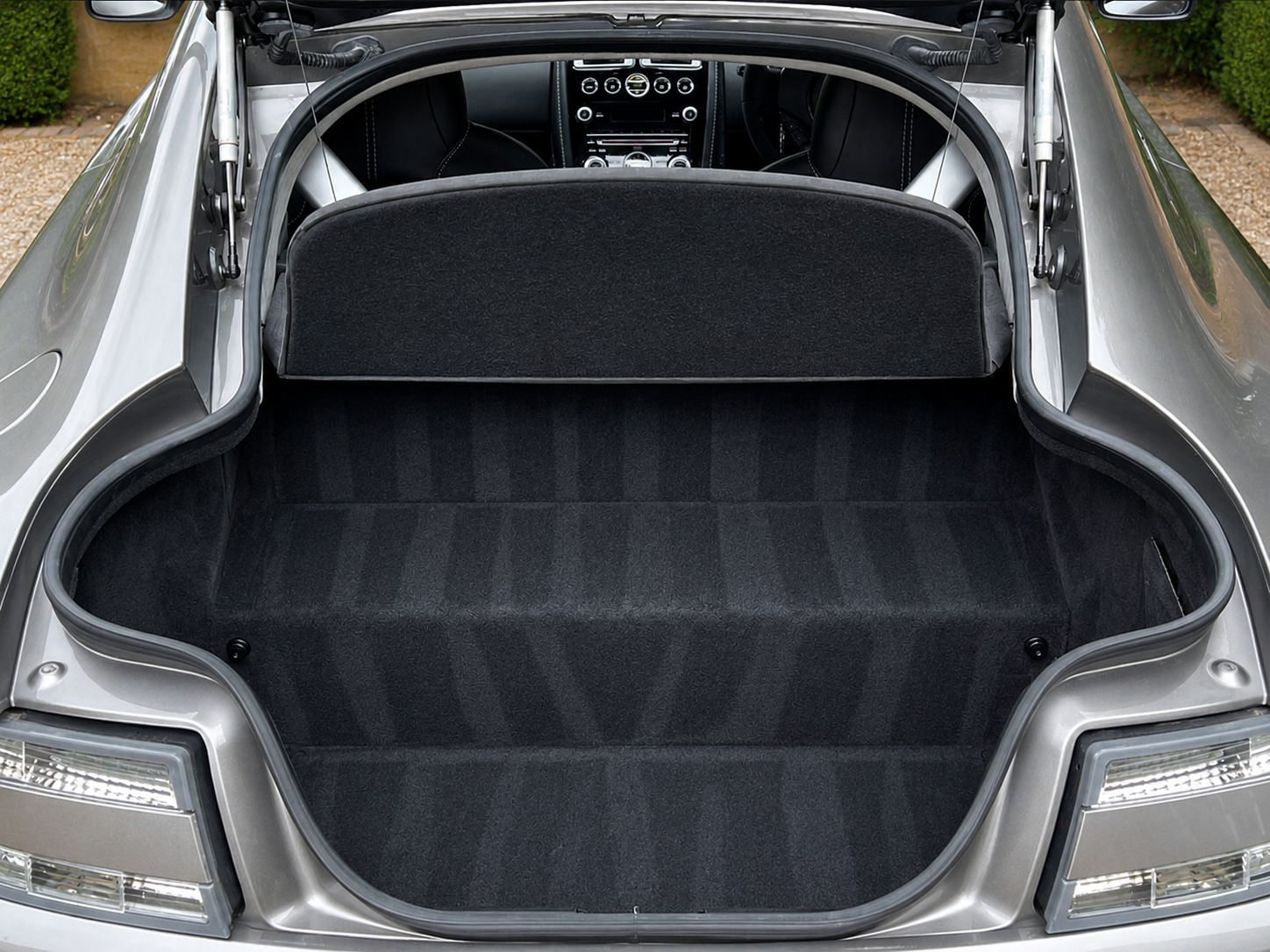
Image © Fuel the Passion
For touring, regular use and straightforward ownership, the Coupe makes a very strong case.
The Roadster adds something different. Open the roof and the V8 becomes a more immediate part of the experience. The car feels more theatrical, and for some buyers that will be the whole point. The trade-off is reduced luggage space and a roof system that needs checking properly.
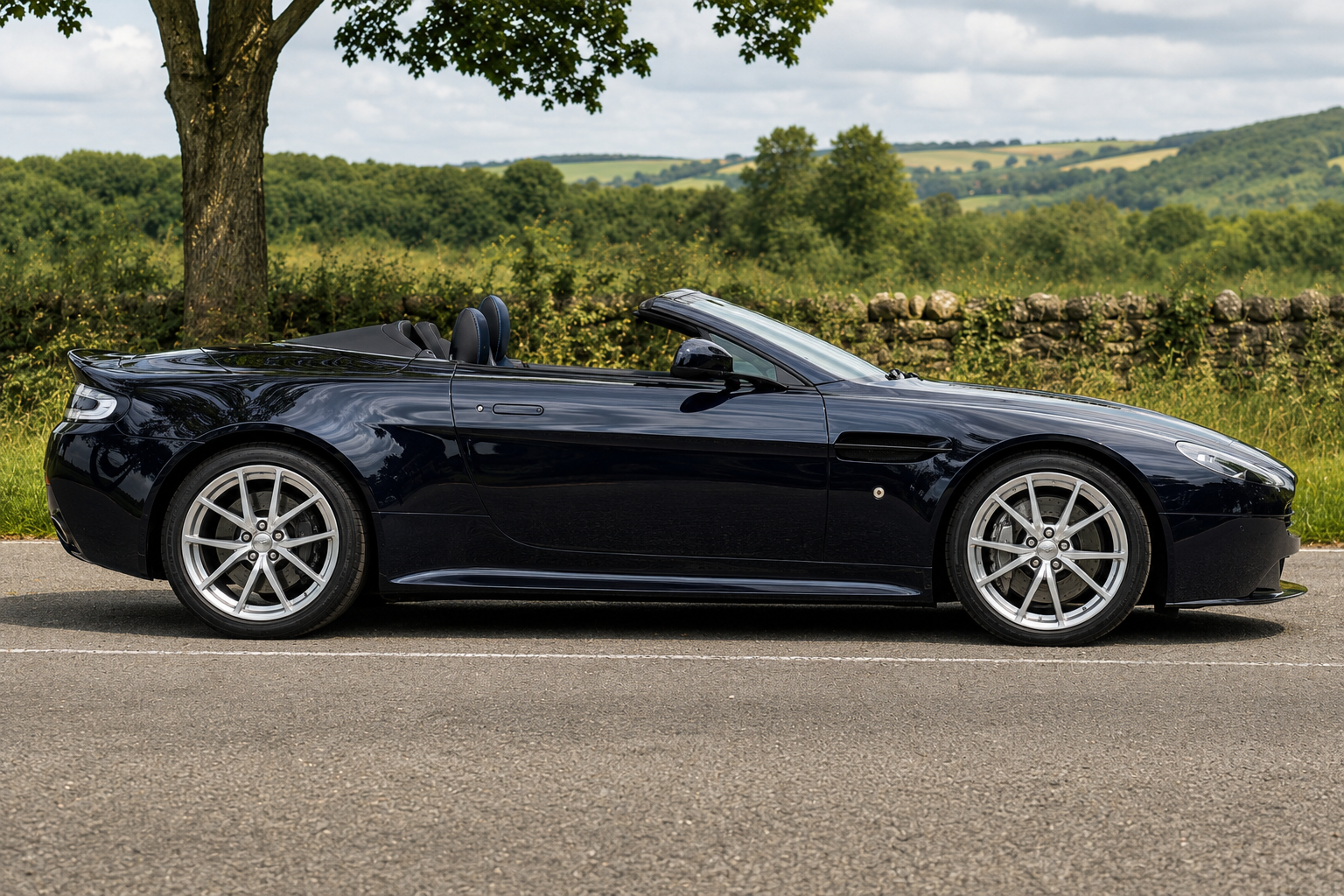
Image © Fuel the Passion
A Roadster buyer should operate the roof fully, ideally more than once, and check the fabric, seals, drains, cabin carpets, boot area, warning messages and hydraulic operation. Specialist roof repair routes and replacement-part routes exist, but that should be treated as repair and support evidence rather than proof that every Roadster has roof problems.
The Coupe is probably the simpler all-round ownership choice, especially for touring. The Roadster adds another layer of theatre, but only buy one after checking the roof, seals and water-ingress evidence properly.
Manual or Sportshift?
Gearbox choice can define the whole V8 Vantage ownership experience.
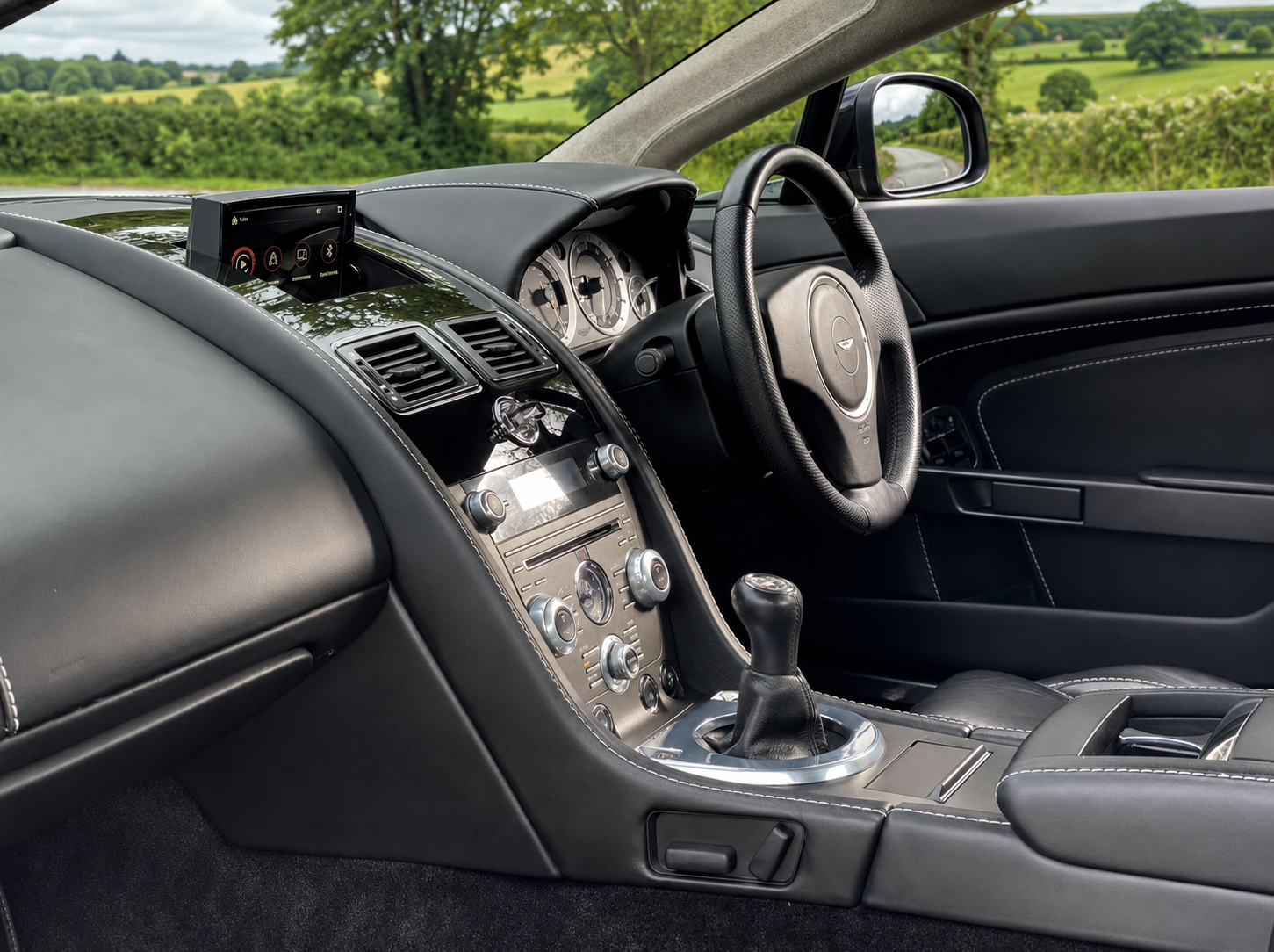
Image © Fuel the Passion
The manual has obvious appeal.
It suits the car’s analogue character, and for many buyers it’s the gearbox they imagine when they think of a naturally aspirated Aston Martin sports car. That doesn’t mean manual cars can be bought casually.
Clutch condition, bite point, shift quality, cable or linkage condition, gearbox oil history and any signs of slip or judder all matter.
Sportshift needs more explanation. It’s not a conventional automatic, it’s an automated manual transmission, and buyers who expect it to behave like a modern torque-converter automatic or dual-clutch gearbox may be disappointed. Driven properly, and in good condition, it can make sense. Driven with the wrong expectations, or bought with an unknown clutch, it can frustrate quickly.
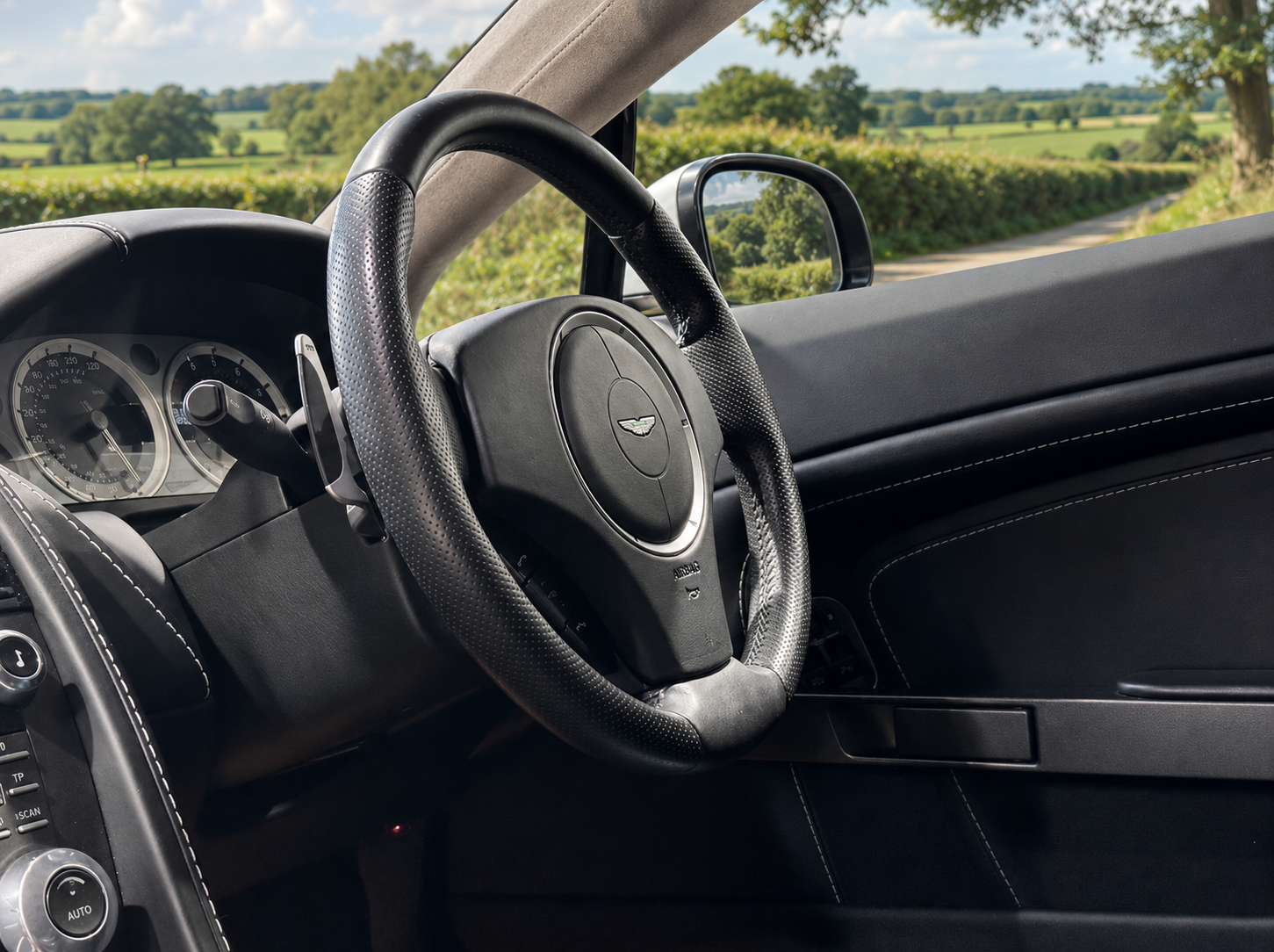
Image © Fuel the Passion
Sportshift cars should be assessed with the right diagnostic equipment where possible, especially for clutch-wear information.
Service history, software or campaign status and hydraulic recall or campaign history also matter on relevant cars.
If you want a conventional automatic, Sportshift is probably not for you. If you understand it as an automated manual and like the way it works, a well-sorted Sportshift car can be enjoyable. The only wrong answer is buying one without understanding it first.
Manual and Sportshift are different experiences rather than a simple good-versus-bad choice.
Vantage S and the Special Editions

Image © Fuel the Passion
The Vantage S should be treated as a meaningful derivative, not just a badge. It brought a sharper and more focused character, with more power, Sportshift II context and a stronger braking and chassis package than earlier standard cars. For buyers who like Sportshift II and want a later, sharper V8 Vantage, the Vantage S is one of the most convincing choices. The caution is that it still needs the same buying discipline as any other car. Vantage S brakes, tyres, clutch evidence, service history and cosmetic condition all need checking properly.
The N editions add another layer of interest. The N400, N420 and N430 each bring a more distinctive identity, and they will appeal to buyers who want something more unusual than a standard V8 Vantage. The important point is that special-edition appeal does not replace inspection. If you are paying extra for rarity, you need provenance, originality and correct specification.
The N editions are worth separating, because they’re not simply three versions of the same idea. The N400 came first and belongs to the earlier 4.3-litre era. It was closely tied to Aston Martin’s Nürburgring story, with a 400bhp version of the 4.3 V8, 420Nm of torque and the Sports Pack fitted as part of its more focused character. In simple buyer terms, the N400 is the early, Nürburgring-inspired, more collectible-feeling 4.3 special. It’s not a later 4.7 car, and it should be judged accordingly.
The N420 moved the idea on. Introduced as the successor to the N400, it was based on the 4.7-litre V8 Vantage and was offered as Coupe or Roadster, with either manual or Sportshift transmission. Its appeal was less about a big power increase and more about specification and character: Sports Pack suspension, a sports exhaust, carbon-fibre exterior parts and a useful weight saving over the standard car. For a buyer, the N420 is probably best understood as a lighter, sharper, motorsport-inspired 4.7 special, rather than a fundamentally different mechanical model.
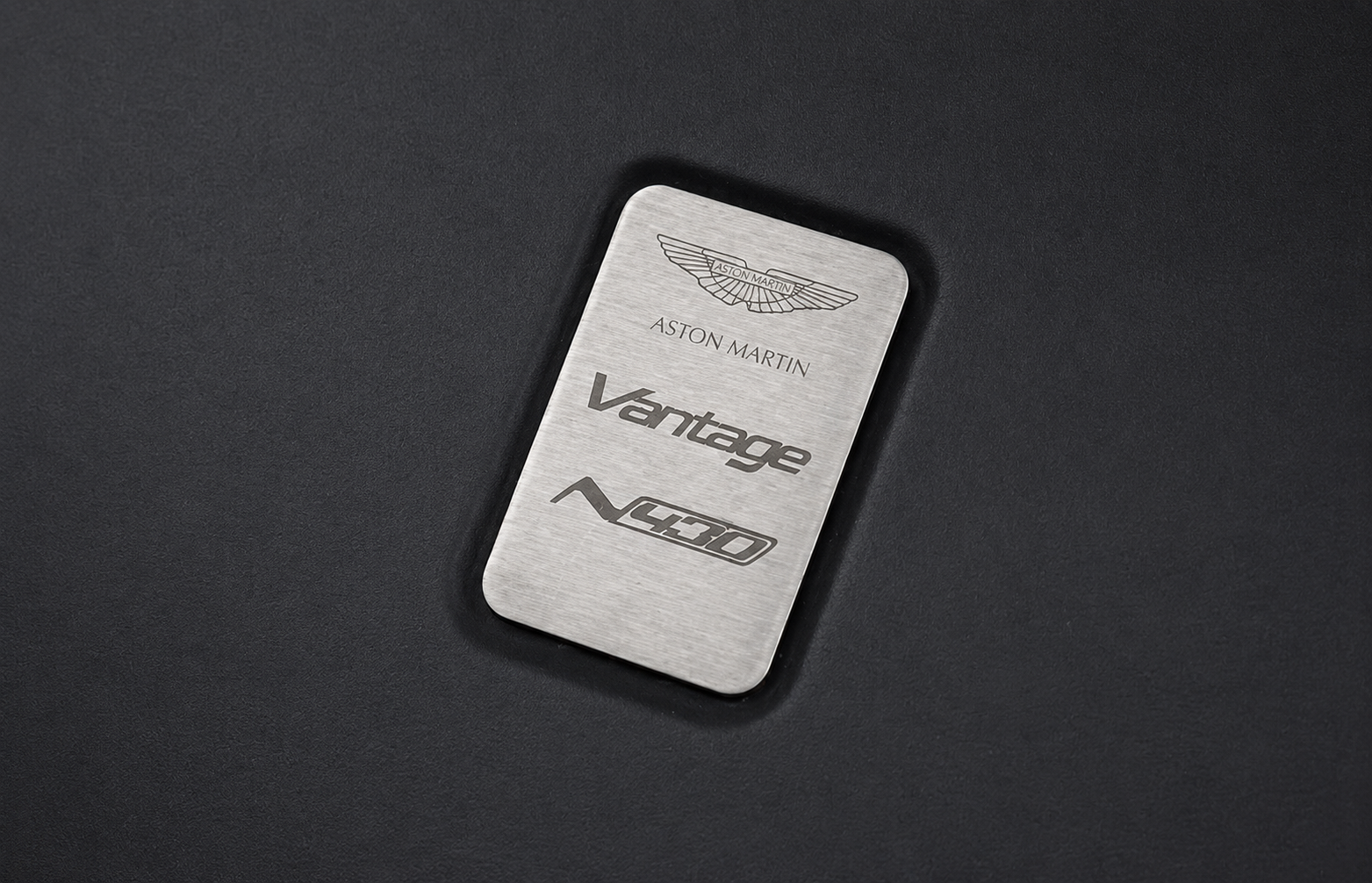
Image © Fuel the Passion
The N430 came later again and is more closely aligned with the Vantage S era. It used the Vantage S-style 430bhp engine and S suspension, with either six-speed manual or Sportshift II transmission, and added a more overtly visual, club-sport-inspired identity. That makes it different in character from both the N400 and N420: the N400 is the early 4.3 Nürburgring special, the N420 is the lighter 4.7 motorsport-inspired version, and the N430 is the later, more visually dramatic, Vantage S-related interpretation of the same broad “N” theme.
For buyers, the useful distinction is this: N400 for early 4.3 rarity and Nürburgring identity; N420 for 4.7 character, weight saving and motorsport flavour; N430 for later Vantage S-level performance and a stronger visual statement. None should be bought on badge alone. Originality, condition, service history, correct specification and provenance remain more important than the letter-and-number combination on the advert.
The V8 AMR is a late limited derivative and should be kept separate from the V12 AMR. It can sit inside the main guide as a rare and desirable road-car derivative, but buyers should check exact specification, originality and provenance.

Image © Fuel the Passion. Aston Martin Vantage GT8.
The GT8 is different again. Aston Martin’s own material confirms it as an official limited edition inspired by the V8 Vantage GTE. That means it should probably be treated as a specialist or collector sidebar rather than a normal V8 Vantage buying option.
A GT8 buyer is not simply choosing between 4.3 and 4.7. They’re buying rarity, provenance, lightweight specification, market sensitivity and specialist parts considerations.
N400, N420, N430 and AMR models can add rarity and identity, but they should still be bought on condition, history and originality. A special badge does not excuse weak maintenance evidence. The GT8 sits outside ordinary V8 Vantage buying advice and deserves collector-level due diligence.
Known Issues and What to Check
This section is not a claim that every V8 Vantage suffers from every issue listed. It’s more a buyer-check section. These are the areas that evidence suggests deserve attention before purchase.
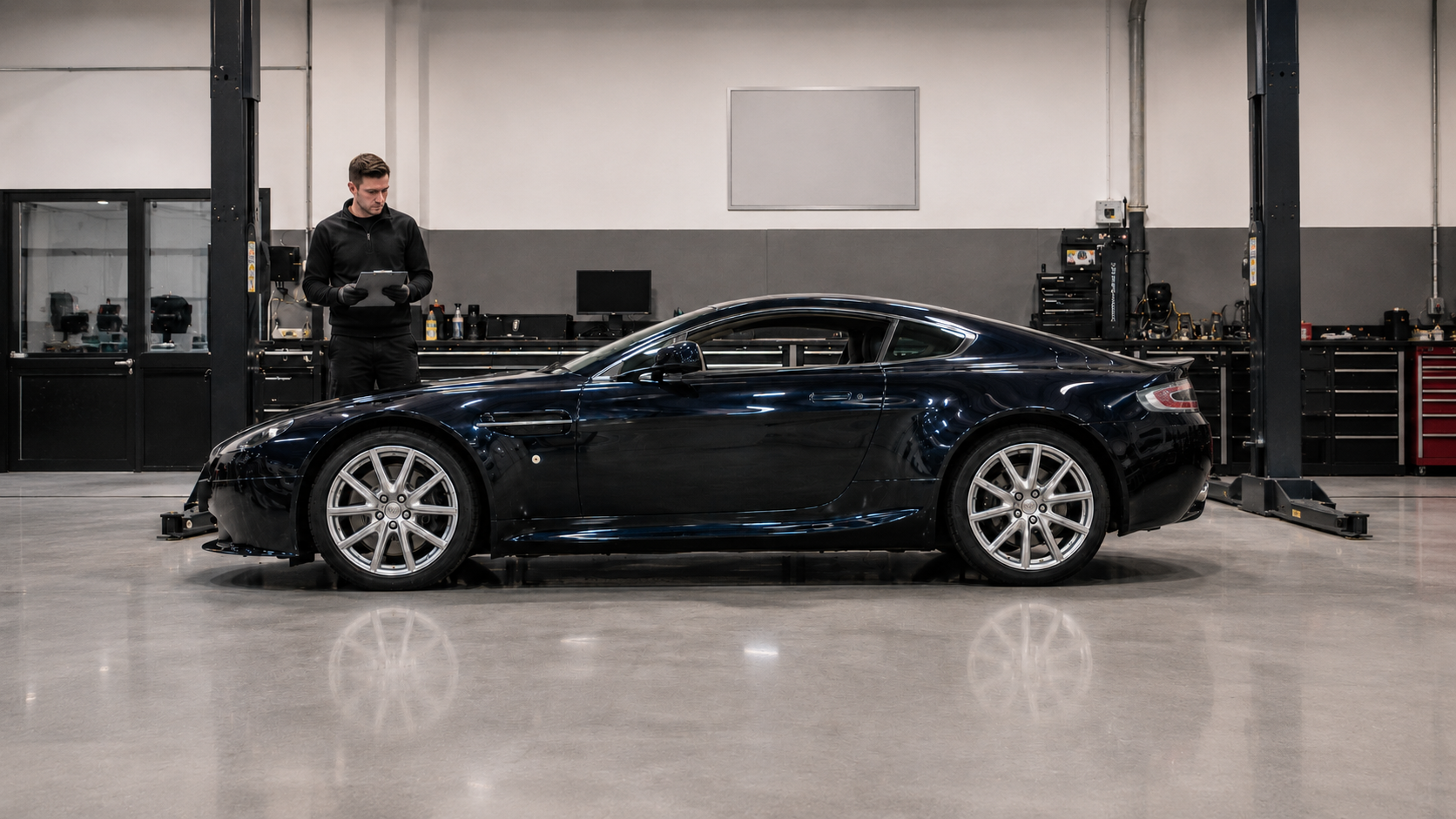
Image © Fuel the Passion.
Clutch
Clutch condition is one of the most important checks on any V8 Vantage. Mileage alone is not enough. Previous use, driving style, low-speed manoeuvring, traffic, hill starts and replacement quality all matter.
On manual cars, pay attention to bite point, pedal feel, judder, slip, difficulty selecting gears, difficulty coming out of gear and any burning clutch smell after manoeuvring. A high or vague bite point does not automatically condemn the car, but it should prompt deeper inspection.
On Sportshift cars, diagnostic clutch information can be very useful. Do not rely on seller reassurance alone. If the gearbox behaviour is poor and there is no clutch evidence, pause.
A documented twin-plate clutch upgrade should not automatically be treated as a negative. It may be a positive if it was properly specified, fitted, calibrated and documented. The danger is the undocumented upgrade: unknown parts, unknown installer, no calibration evidence and no clear explanation.
Sportshift
Sportshift should be understood before it’s judged. It’s an automated manual, not a conventional automatic. Check low-speed behaviour, paddle response, warning lights, clutch reading, software or campaign history and whether the car has had relevant recall or campaign work completed. A good Sportshift car can be enjoyable. A poorly understood one can disappoint quickly.
Oil Leaks
The timing or front-cover oil leak is supported strongly enough to include as a recognised inspection point. Specialist evidence describes the gasket between the block and timing cover leaking oil, with the issue becoming more relevant as cars age.
That does not mean every V8 Vantage leaks. It does mean buyers should inspect carefully around the front of the engine, underside and any area where oil may contaminate belts, pulleys or hot exhaust components. If oil is present, get a specialist opinion and a current repair quote before buying.
Suspension
Dampers, lower arms, bushes, wheel bearings and alignment all influence how the V8 Vantage feels. A tired car can still look beautiful but feel loose, crashy, vague or unsettled on the road. Check for knocks, clunks, uneven tyre wear, poor alignment, damper leaks and old advisories. If the car does not feel composed on the road, don’t simply assume “they all do that.” Get it checked.
Brakes
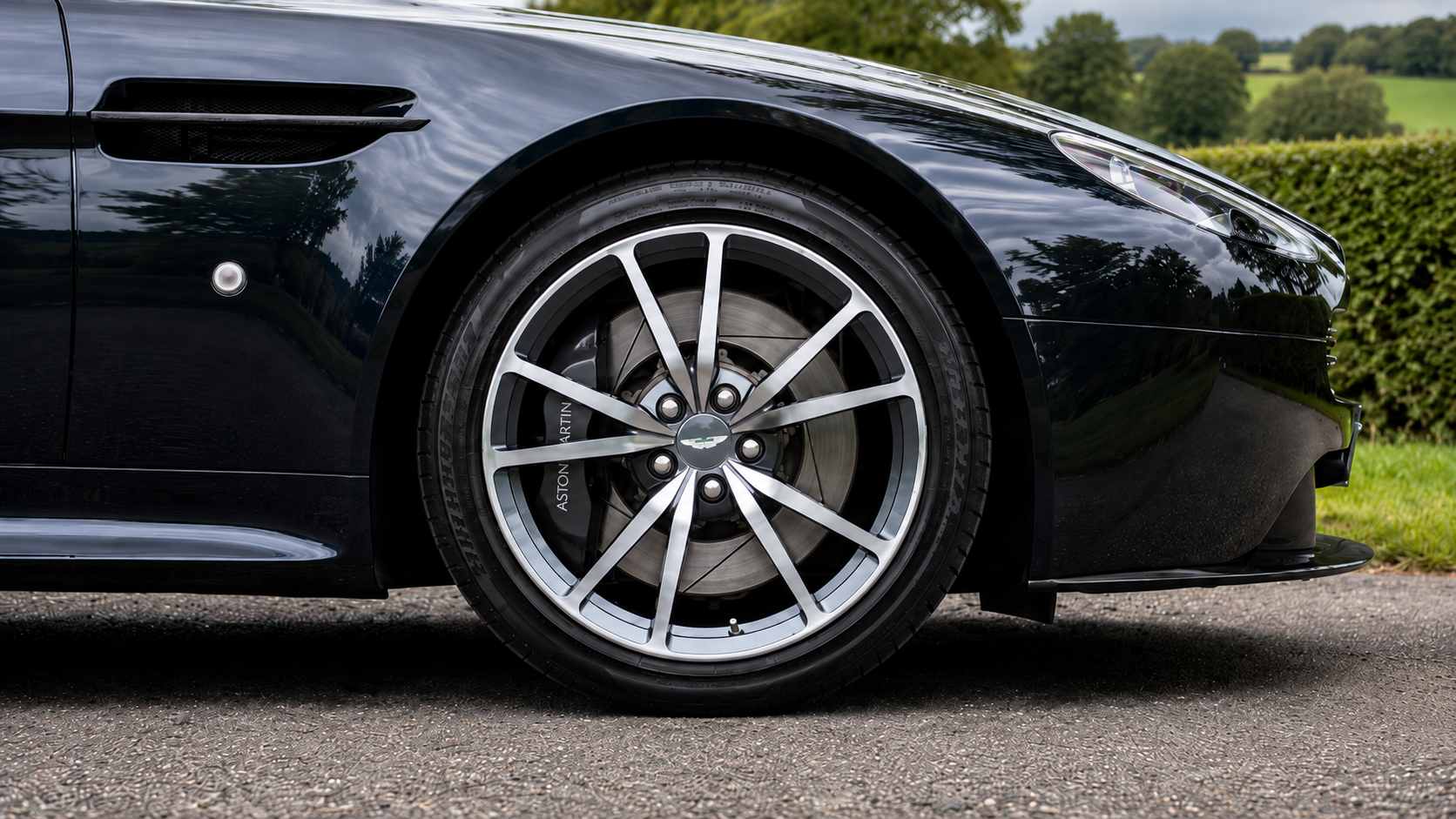
Image © Fuel the Passion.
Brake hardware differs across the range, especially when comparing earlier cars, later updates and Vantage S derivatives. Do not assume every V8 Vantage uses the same discs and calipers.
Check discs, pads, sensors, handbrake function and brake-fluid history. If the car is being bought for hard road or track use, brake condition and setup become even more important.
Still with us? The practical V8 Vantage checks continue here.
You are roughly halfway through the V8 Vantage Buyers Guide. From here, the focus continues through tyres, battery and electrics, cooling, lights, bodywork, interior condition, Roadster roof checks, service history, recalls, parts support, market position and final buying strategy.
Tyres
Tyres are a simple but revealing check. Look at age, brand, matching set, correct size, tread depth, sidewall condition and wear pattern. Low mileage does not make old tyres safe. Budget tyres or mismatched tyres on an Aston Martin sports car also tell you something about previous spending habits.
Battery and Electrics
Gaydon-era Aston Martins can be sensitive to weak batteries. A tired battery can create confusing electrical symptoms, so check battery age, charging behaviour and whether the car has been kept on a conditioner.
Test everything: windows, mirrors, locks, seat functions, infotainment, navigation screen, lights, warning messages, parking sensors and interior displays. A warning light should be diagnosed, not dismissed as “normal.”
Air-Conditioning and Cooling
Air-conditioning should be tested properly. The phrase “it just needs a regas” should be treated with caution unless there is evidence of pressure testing or proper diagnosis.
Cooling-system checks should include temperature stability, coolant condition, leaks, fan operation and any signs of overheating or coolant loss. For service intervals and coolant requirements, buyers should check the official service information and invoices for the specific car rather than relying on generic online advice.
Lights

Image © Fuel the Passion.
Headlight and rear-light condensation appears across owner and enthusiast evidence, and specialist repair routes exist.
Do not assume moisture in a lamp is harmless. It may remain cosmetic, or it may become expensive if electronics or LED functions are affected. Check every light function and get a current repair or replacement quote if condensation or failure is present.
Bodywork and Paint
Inspect the front bumper, bonnet leading edge, rear arch areas, door character lines, door handles, lower doors, mirror arms, windscreen surround, grille, undertray and underside. Stone chips are normal on a used performance car, but bubbling, poor repairs, accident evidence or unclear paintwork history need proper assessment.
A mechanical PPI may not fully cover cosmetics. Paint, trim and leather can be expensive to put right properly.
Interior
Check seat bolsters, leather shrinkage, dash and instrument-binnacle edges, headliner, door bars, seatbelts, control buttons, navigation screen operation, radio and instrument displays, window drop and carpets. A worn bolster is not necessarily a reason to walk away. Damp carpets, electrical faults, warning lights or poorly repaired trim may be more serious.
Roadster Roof

Image © Fuel the Passion
On a Roadster, operate the roof fully and check fabric, seals, drains, latches, hydraulic operation, warning messages, cabin dampness and boot dampness. Roof repair routes exist, but roof faults need diagnosis before purchase.
Service History: What Good Looks Like
A stamped service book is useful, but invoices tell the real story. A strong V8 Vantage history should show what was actually done, which parts were used, who did the work, and whether advisories were repaired or simply carried forward. Annual maintenance discipline matters, but the exact schedule should be checked against the official service information for the specific car.
The guide shouldn’t imply that only main dealer history is acceptable. A respected Aston Martin specialist can be a very strong part of a car’s history, especially if invoices are detailed and the car has clearly been maintained properly. What matters is not just the stamp, but the evidence behind the stamp.
Look carefully for gaps. Repeated MOT advisories, old tyres, no clutch evidence, no brake-fluid record, vague servicing, missing invoices or repeated fault-code work can all point towards deferred maintenance. The question is not simply “has it been serviced?” The better question is: Has this V8 Vantage actually had the right maintenance at the right time, or has it simply collected stamps while the expensive age-related work was quietly left for the next owner? Check the official schedule and the invoices for the specific car.
Recalls, Campaigns and VIN Checks
Recall and campaign status should be checked by VIN, not guessed from model year.
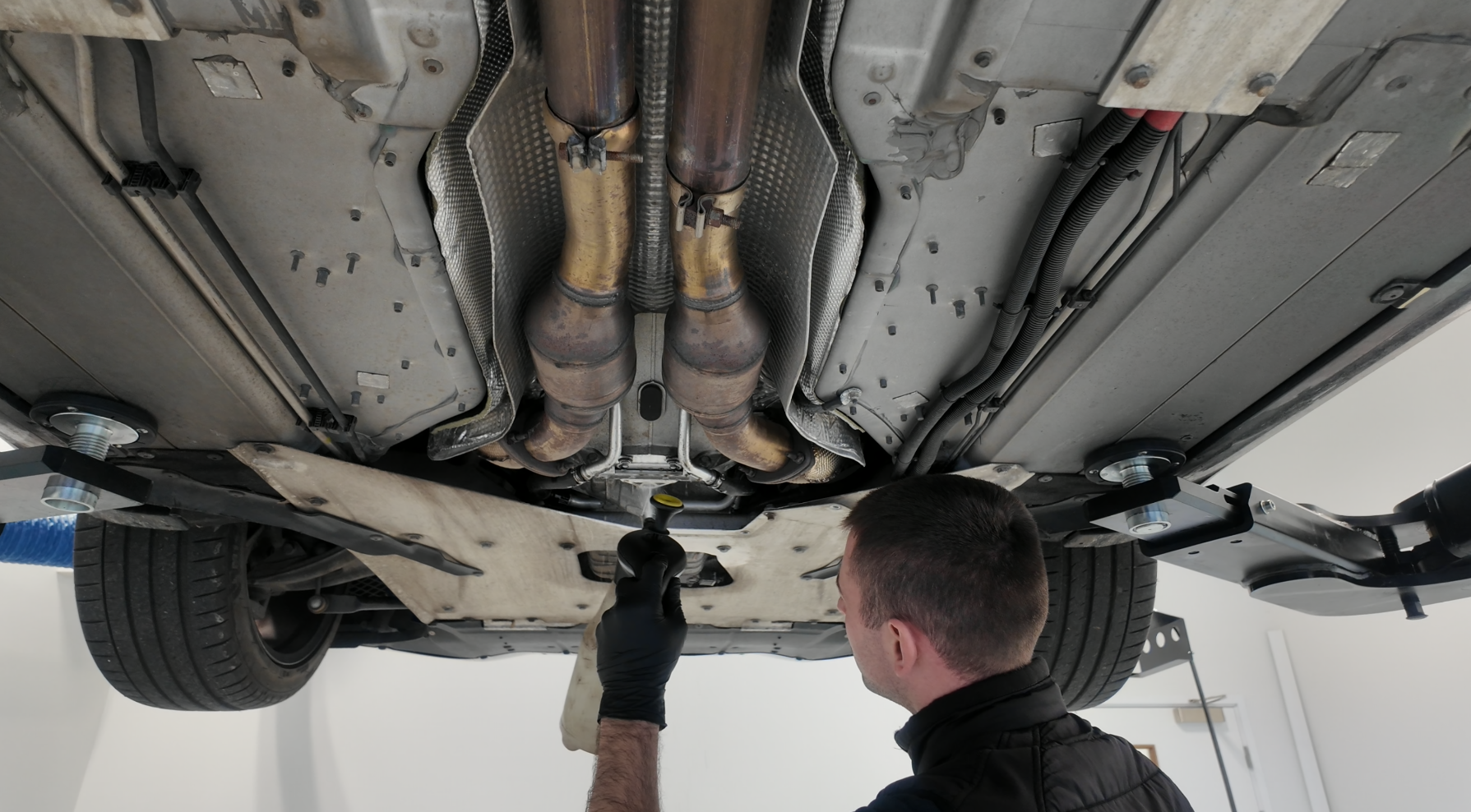
Image © Fuel the Passion
Aston Martin provides a Safety Campaign Checker, and UK buyers should also use the GOV.UK recall checker where possible. Some recall evidence found during research comes from NHTSA and other international sources, which are official for those markets but should not be assumed to apply automatically to every UK car.
Relevant campaign areas identified during research include accelerator or throttle pedal actions, seat-heater control, front lower suspension arm cam bolts, door-locking or double-locking, and Sportshift software or hydraulic connector campaigns on certain cars.
Certain cars were subject to recall or campaign action. Applicability can depend on VIN, market, build date, steering side and transmission. Check the specific car.
Do not assume recall work was completed just because the car has service history. Ask for evidence.
Parts Availability and Specialist Support
One of the encouraging findings from the research is that the Gaydon-era V8 Vantage appears to have relatively strong support through official, dealer, specialist and used-parts routes. Routine service parts, clutch routes, brake parts, suspension components and Roadster roof repair routes are all visible through multiple suppliers and specialists. That’s reassuring, but it’s not a blank cheque.
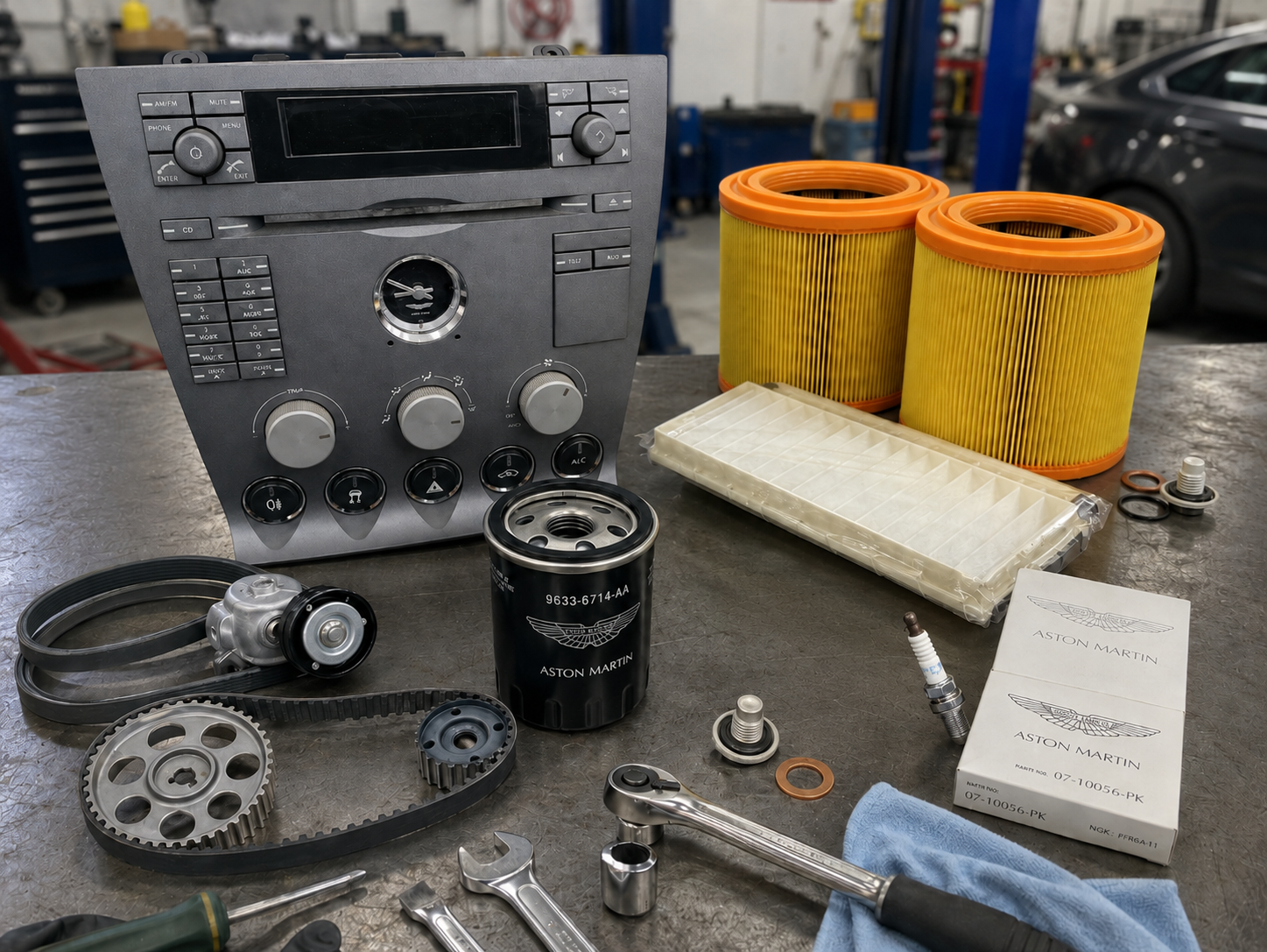
Image © Fuel the Passion
Some parts are more sensitive than others. Lighting units, interior trim, Roadster roof parts, electronic modules and certain body or trim pieces should be checked by exact part, exact fitment and current availability. A car with a “minor issue” is only minor if you know what the part costs, whether it’s available and what labour is involved.
Parts support exists, but buyers should check exact part availability before buying a car with known faults.
Current UK Market Snapshot - Market snapshot checked: May 2026
The Gaydon-era V8 Vantage remains one of the more accessible modern Aston Martins, but the market is broad. Early 4.3 Coupes still form the entry point, later 4.7 and Vantage S examples sit higher, N editions add special-edition appeal, and GT8 sits firmly in collector or specialist territory.
At the time of this refresh, live UK asking prices showed early 4.3 Coupe examples commonly in the mid-to-high £20,000s and low £30,000s, with some cars outside that depending on mileage, history and condition. Roadsters can overlap that territory, although roof condition and water-ingress checks become part of the buying decision.

Image © Fuel the Passion
Later 4.7 examples and Vantage S cars sat higher in the market, especially where the car was manual, low mileage, well specified or strongly presented. Special editions such as N400 and N430 sat in their own territory and need to be judged by provenance, originality, condition and how they compare with ordinary 4.7 and Vantage S cars.
GT8 should not be treated as a normal V8 Vantage buying option. At the time of this market snapshot, visible GT8 examples and aggregated valuation data placed it in a much higher collector or specialist market. Anyone buying a GT8 should think in terms of provenance, originality, accident history, specification, special parts and expert inspection rather than ordinary V8 Vantage value comparisons.
The important point is that asking prices are not achieved sale prices. A cheaper car needing clutch, brakes, tyres, dampers and paintwork may be worse value than a more expensive car with those items already done. Likewise, a low-mileage car with old tyres, long service gaps and weak invoices should not automatically be considered better than a higher-mileage car that has been properly used and maintained.
This is a snapshot, not a valuation certificate. Before buying, compare like with like: 4.3 against 4.3, 4.7 against 4.7, manual against Sportshift, Coupe against Roadster, and standard cars against N editions, AMR or GT8.
Which V8 Vantage Should You Buy?
There is no universal answer, but there are sensible directions.
If this is your first Aston Martin, a well-maintained 4.3 or 4.7 Coupe with strong invoices, clean inspection and no obvious deferred work may be the best place to start. Do not get distracted by the cheapest car if it leaves you with no money for the first year.
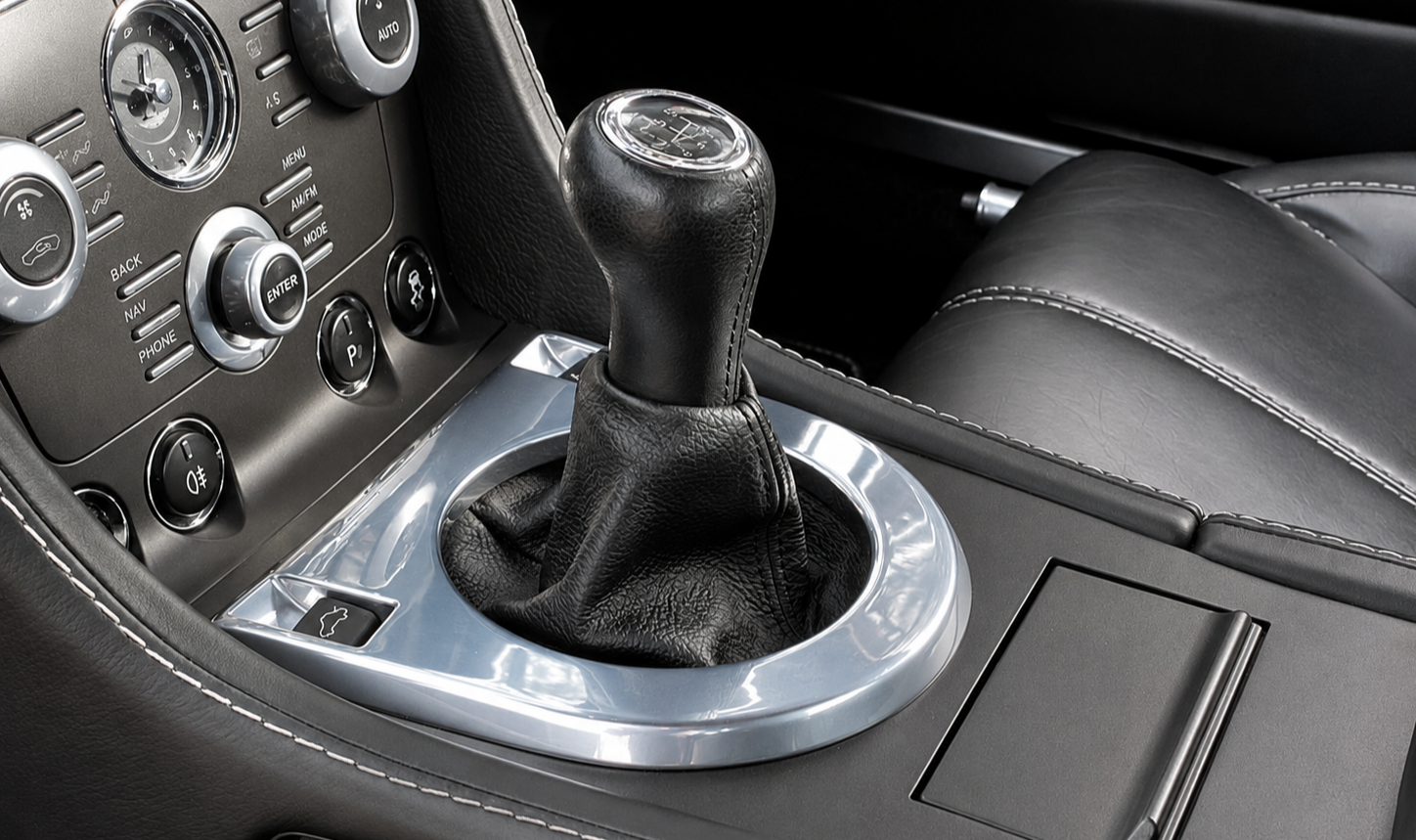
Image © Fuel the Passion
If you want the most analogue feel, a manual 4.3 or 4.7 has obvious appeal. The 4.3 asks you to work harder and may reward drivers who enjoy using revs. The 4.7 gives more torque and a broader performance feel.
If you want the best all-rounder, a strong 4.7 Coupe or Vantage S is likely to appeal. The 4.7 brings useful flexibility, while the Vantage S adds a more focused character. With Vantage S, make sure you understand the gearbox and accept the maintenance profile.
If you are curious about Sportshift, don’t buy blind. Drive it properly, get diagnostic clutch evidence and decide whether you genuinely like the system. A well-sorted Sportshift can be enjoyable. A misunderstood one can be the wrong car very quickly.
If you want a Roadster, buy the best roof-proven example you can. Open-top theatre is wonderful, but roof faults, seals, dampness and hydraulic issues need checking.
If you want something rare, N editions, V8 AMR and GT8 require a different mindset. Provenance, originality, correct parts and market evidence matter more. The GT8 should be treated as collector or specialist territory.
The best V8 Vantage is not simply the cheapest, newest, most powerful or lowest-mileage example. It’s the car whose condition, history, gearbox, specification and maintenance record fit your budget and the way you intend to use it.
What to Walk Away From

Image © Fuel the Passion
The right V8 Vantage will still look good after the inspection. Walk away, or at least pause, if the seller refuses an independent Aston specialist inspection, pushes for a quick sale before due diligence, cannot provide invoices for major work, dismisses warning lights, or claims expensive problems are “easy fixes” without quotes.
Be especially cautious of a Sportshift car with poor shift behaviour and no diagnostic clutch evidence; a manual car with slip, judder or difficult engagement; air-conditioning that “just needs a regas”; lighting condensation with no repair estimate; a Roadster roof fault without diagnosis; repeated MOT advisories; accident repair with no documentation; bypassed sensors or altered wiring; rodent damage; undocumented modifications; or a cheap car that needs clutch, brakes, tyres, suspension and cosmetic work at once.
A cheap V8 Vantage can still be a good buy, but only if everyone is honest about what it is. A lower-priced car with weak history, tired tyres, worn brakes, uncertain clutch condition, tired suspension and cosmetic issues is not really cheap. It’s simply asking the next owner to fund the work. Low mileage needs the same discipline. A low-mileage V8 Vantage with old tyres, weak recent maintenance and deferred advisories may be less appealing than a higher-mileage car that has been used, serviced and improved properly.
A modified car is not automatically bad. A properly documented clutch, suspension, brake or exhaust upgrade from a respected specialist may suit some buyers very well. The problem is the undocumented car: no invoices, unclear parts, unknown installer, questionable emissions implications or vague claims about improved performance.
If the car only looks good when you avoid the paperwork, ignore the warning lights, skip the PPI or believe every optimistic seller explanation, it’s not the right car, another one will come along.
Final Buyer Checklist
This checklist is not a diagnostic tool and does not replace a professional pre-purchase inspection. It’s intended to help you view the car with structure, ask better questions and identify areas that may need attention from a qualified Aston Martin technician or marque specialist before any purchase decision is made.

Image © Fuel the Passion
Paperwork
Check HPI, MOT history, VIN recall or campaign status, service book, invoices, clutch evidence, brake history, tyre age, battery history, modification invoices, both keys and accessories.
Exterior
Check stone chips, paint bubbling, mirror arms, door handles, lower doors, rear arches, windscreen surround, panel gaps, undertray condition, PPF and evidence of accident repair.
Lights
Check headlight condensation, rear-light condensation, LED function, indicators, brake lights and warning messages.
Interior
Check seat bolsters, dash leather, instrument binnacle, headliner, door bars, seatbelts, control buttons, navigation screen, displays, windows, locks, carpets and any damp smell.
Mechanical
Check cold start, hot running, smoke, oil leaks, coolant behaviour, temperature stability, warning lights, battery condition, air-conditioning and any non-standard wiring.
Underside
Use a ramp where possible. Check undertrays, oil contamination, suspension arms, bushes, dampers, brakes, tyres, exhaust, gearbox or transaxle leaks, cooling or AC pipes and accident evidence.
Gearbox and Clutch
On manual cars, check bite point, smooth engagement, shift quality, reverse and any clutch smell. On Sportshift cars, check paddle response, low-speed behaviour, warning lights, clutch data and campaign or software history.
Roadster
Operate the roof fully, check fabric, seals, drains, hydraulic operation, warning messages, boot dampness, cabin dampness and wind deflector or accessories.
Decision
If the car has strong history, clean inspection and no major urgent work, it may be a green-light car. If it has known work but is priced honestly, it may be an amber car. If it has weak history, warning lights, inspection resistance or unexplained repairs, treat it as red. Rare, heavily modified or collector-grade cars need specialist input.
FTP Final Verdict
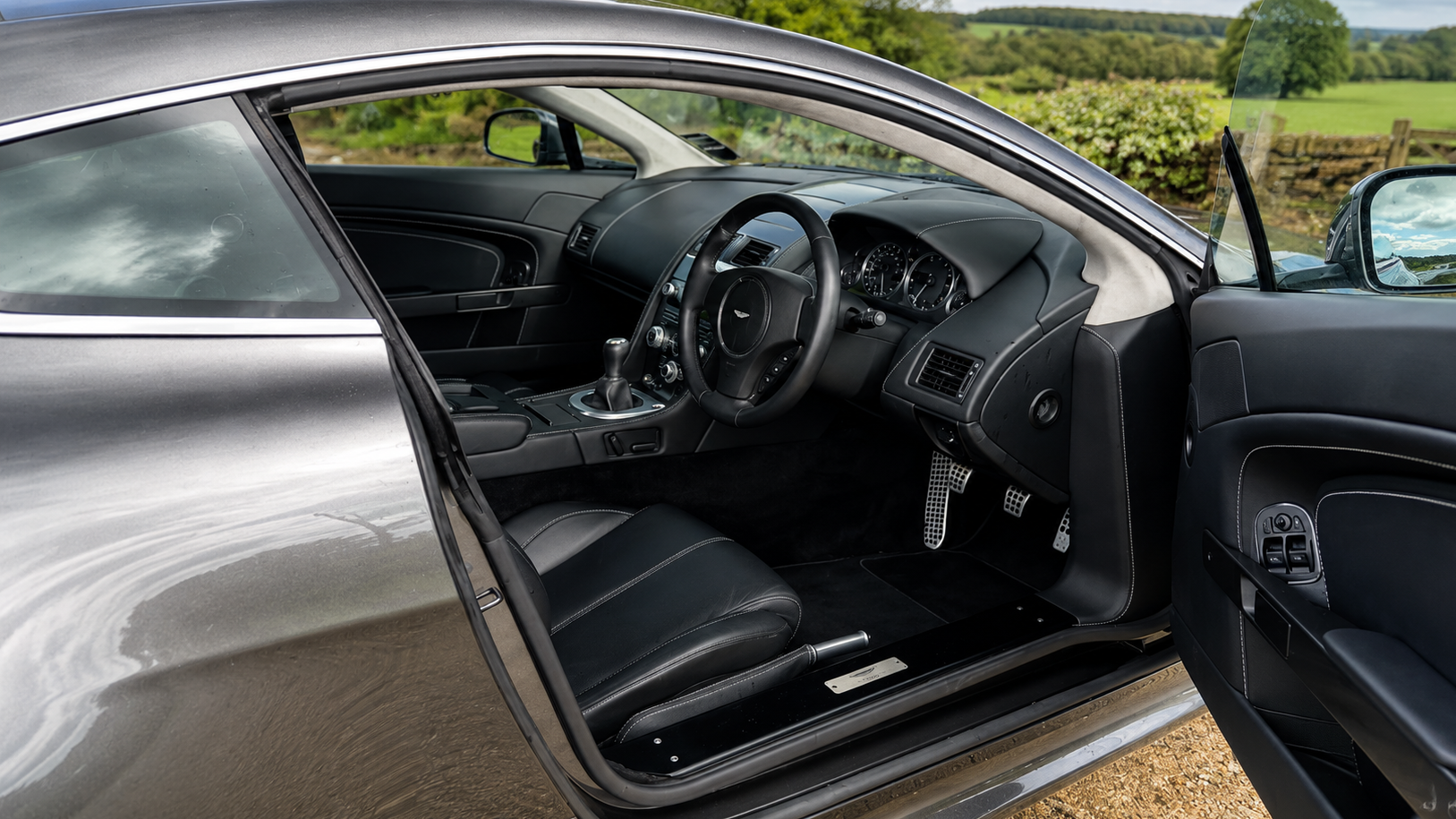
Image © Fuel the Passion
Bought well, the Aston Martin V8 Vantage remains one of the great modern Aston Martin ownership propositions. It has the looks, the sound, the badge, the naturally aspirated engine, the manual option, the Roadster theatre, the later Vantage S focus and enough everyday usability to make it more than a garage ornament.
Bought badly, it can turn an affordable dream into a frustrating first year. That’s not because the V8 Vantage is a bad car. It’s because a neglected Aston Martin still costs Aston Martin money to put right. The car deserves enthusiasm, but the buyer needs discipline. Look beyond the advert, read the invoices, get the inspection, understand the gearbox, price the work, check the recalls and keep a maintenance reserve.
Do that, and the V8 Vantage still makes a compelling case: one of the most beautiful, characterful and emotionally satisfying ways into modern Aston Martin ownership.
Owner Insight and Corrections
Do you own a Gaydon-era V8 Vantage? Have you lived with a 4.3, 4.7, Vantage S, Roadster, Sportshift, manual or one of the special editions? Fuel the Passion would love to hear from owners who can help make this guide even more useful.
Please comment below with your own ownership stories, buying advice, maintenance experiences, inspection tips, parts-availability observations or things you wish you’d known before buying. If something helped you, surprised you, cost more than expected, or made ownership better, sharing it may help another owner or a prospective buyer make a more informed decision.
Fuel the Passion especially welcomes well-documented owner experience, specialist advice and polite corrections that help keep this guide accurate. Please remember that comments are owner experiences, not professional diagnosis, and anyone buying a car should still arrange an independent Aston Martin specialist inspection before purchase.
If you have useful experience to add, please share it in the comments below and help another Aston Martin enthusiast.
Important Disclaimer
This guide is provided for general information, editorial commentary and enthusiast guidance only. Fuel the Passion is not a mechanical workshop, Aston Martin specialist, legal adviser, financial adviser, insurer, vehicle valuer or safety authority, and this guide should not be treated as professional advice. I am an Aston Martin enthusiast, owner and researcher, not a qualified mechanic or technician.
Every used Aston Martin is different. Condition, history, mileage, storage, previous repairs, modifications, recall or campaign status, parts availability, market value and likely running costs can vary significantly from car to car. Before buying, readers should verify the specific car’s history, condition, recall or campaign status, parts availability and likely costs, and should always arrange an independent inspection by an Aston Martin main dealer or respected marque specialist.
Fuel the Passion makes reasonable efforts to publish accurate, balanced and evidence-led information, but cannot guarantee that this guide is complete, current or suitable for any particular car, buyer or purchase decision. Any decision to view, inspect, buy, reject, repair, modify, insure, maintain or sell a vehicle remains the reader’s own responsibility. Nothing in this disclaimer is intended to exclude or limit liability where it would be unlawful to do so.
