
Aston Martin DB9 - FTP Buyers Guide
What to Know Before You Buy - Elegant, V12-powered and increasingly tempting, the Aston Martin DB9 is one of the defining cars of the Gaydon era. But the right car needs to be bought on evidence, not emotion alone.
Fuel the Passion is independent and this guide is not produced in association with Aston Martin Lagonda. It’s intended as editorial buying guidance for enthusiasts and prospective owners.
Estimated Read Time
A detailed guide to the Aston Martin DB9, covering Coupe and Volante models, early cars, 2009MY updates, DB9 GT, known issues, ownership costs and buying checks.
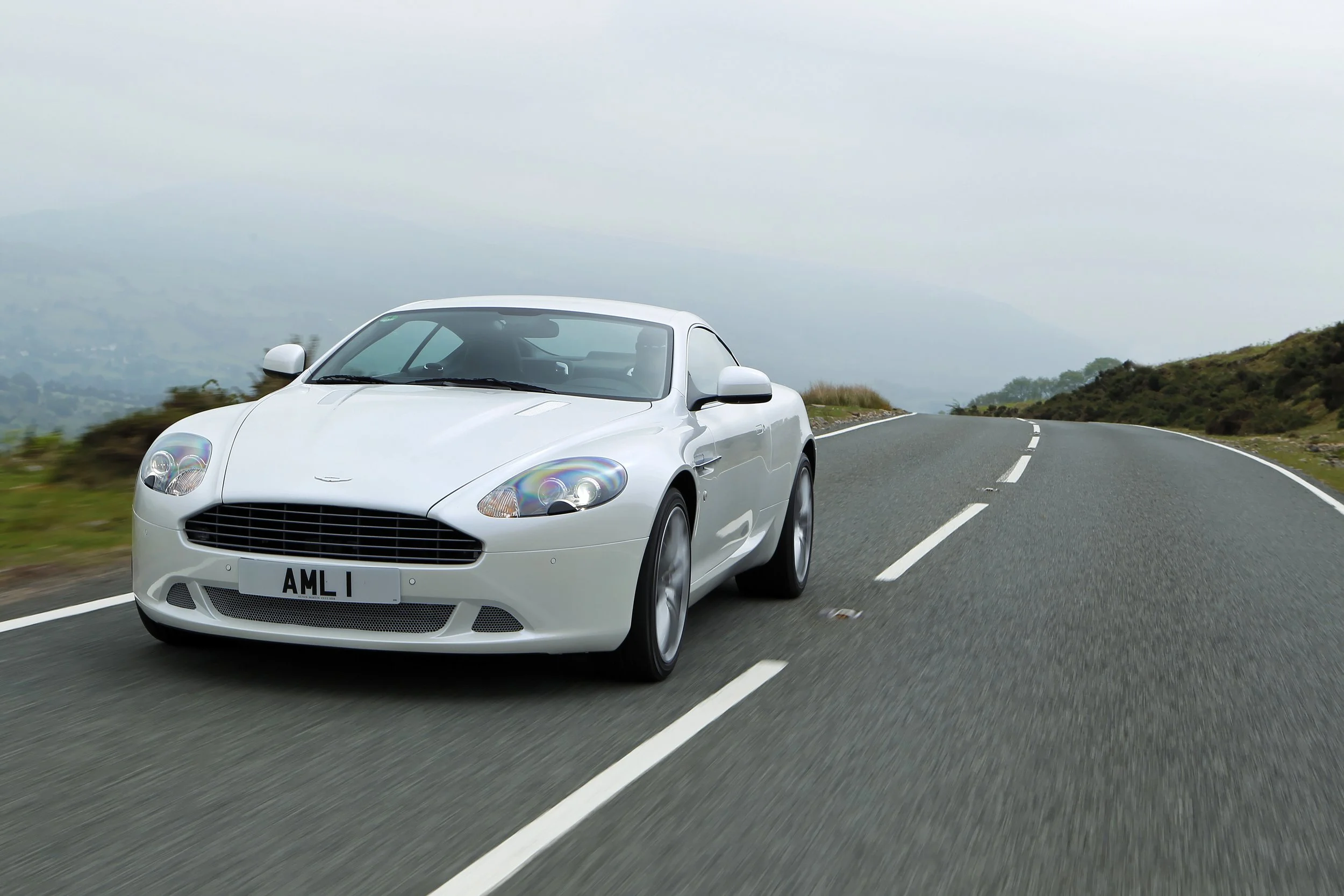
Image © Aston Martin Lagonda. Used for editorial purposes.
Editor’s Introduction - Dan, Fuel the Passion
There are some Aston Martins that feel important because they’re rare. There are others that feel important because they changed the direction of the company. The DB9 belongs firmly in the second group. For many of us, the DB9 is one of those cars that has never really faded. The shape still works, the V12 still feels special, the interior still has that old-school Aston Martin sense of occasion. It sits at a fascinating point in the brand’s history: modern enough to use, traditional enough to feel properly Aston Martin, and now old enough to require careful, evidence-led buying.
That is the opportunity and the trap. A DB9 may now cost similar money to a far more ordinary modern performance car, but it remains a hand-built V12 Aston Martin with Aston Martin-level maintenance expectations. Bought well, it can be one of the most rewarding modern-classic Astons of all. Bought badly, it can become expensive very quickly, not because the model is fragile by default, but because age, deferred maintenance, hidden misfire, tired suspension, paint bubbling, electrical modules, old tyres and superficial servicing can all arrive together.
The central message of this guide is simple: Buy the evidence, not just the dream. The dream is real, so is the need for discipline.
Important note
This guide is general enthusiast information only and does not replace a professional Aston Martin inspection. A full disclaimer appears at the end of this article.
What this guide covers
This guide covers the Aston Martin DB9 Coupe and DB9 Volante, from the earliest 450 bhp cars through to the final DB9 GT.
It includes:
early 450 bhp DB9 Coupe and Volante models
2009MY (Model Year) 470 bhp original-shape cars
Sports Pack and Premium Sports Pack considerations
2013MY (Model Year) heavily revised DB9 models
DB9 GT
DB9 GT Bond Edition
manual and automatic cars
Coupe versus Volante buying considerations
known inspection areas, service history, running costs and ownership checks
The short-lived Virage and the DBS are mentioned only where they help explain the DB9’s evolution and market position. They are related cars, but they’re not the focus of this guide.
The DB9 was sold for long enough that there is no single “best” version for every buyer. An early 450 bhp Coupe, a rare manual Volante, a 2009MY glass-key car, a 2013MY heavily revised DB9 and a DB9 GT may all wear the same basic name, but they can feel quite different to buy, drive and own.
Why the DB9 matters
The DB9 arrived at a crucial point in Aston Martin history. The DB7 had helped revive the company’s fortunes and introduced Aston Martin to a broader modern audience, but the DB9 represented a different level of ambition. Revealed in 2003 and introduced from 2004, the DB9 was the first production car built at Aston Martin’s new Gaydon factory and the direct successor to the DB7. It also marked the start of Aston Martin’s modern VH-platform era.
Image © Aston Martin Lagonda. Used for editorial purposes.
The DB9 carried the classic Aston Martin idea; long bonnet, big engine, luxurious cabin, discreet drama, into a more modern engineering and manufacturing period. A good DB9 still feels like that today: elegant, front-engined, V12-powered and properly grand-touring in character.
That technical and historical significance is also why DB9 buying needs to be taken seriously. These are no longer nearly-new luxury GTs sitting under main-dealer warranty. They are ageing VH-platform cars, and many have passed through several owners. Some will have been cherished, serviced properly and improved sympathetically. Others will have been bought because they looked affordable, then maintained only to the minimum required to keep them moving. The good DB9s are still very good cars. The wrong ones are usually not wrong because they’re DB9s, they’re wrong because the evidence is weak.
DB9 model history and timeline
2003 - 2004: DB9 revealed and launched
The DB9 was revealed at the 2003 Frankfurt Motor Show and introduced to customers from 2004. It was Aston Martin’s first Gaydon-built production car, the direct successor to the DB7 and the model that began the marque’s VH-platform era. Early cars used the 5.9-litre naturally aspirated V12 in 450 bhp form, with manual or six-speed ZF Touchtronic automatic transmission available.
For buyers today, the earliest cars are appealing because they offer the purest version of the original DB9 idea and often the lowest entry price. They can be wonderful cars, but they need careful inspection. Early interior technology, early key arrangements, old tyres, deferred suspension work, body bubbling, module issues and weak service evidence can quickly turn a tempting price into a much larger ownership commitment. The early DB9 is not a car to dismiss, it’s a car to inspect properly.
2004/2005 onwards: DB9 Volante joins the range
The DB9 Volante followed soon after the Coupe, being unveiled in 2004 and developed from the outset as a convertible rather than simply a Coupe with the roof removed.
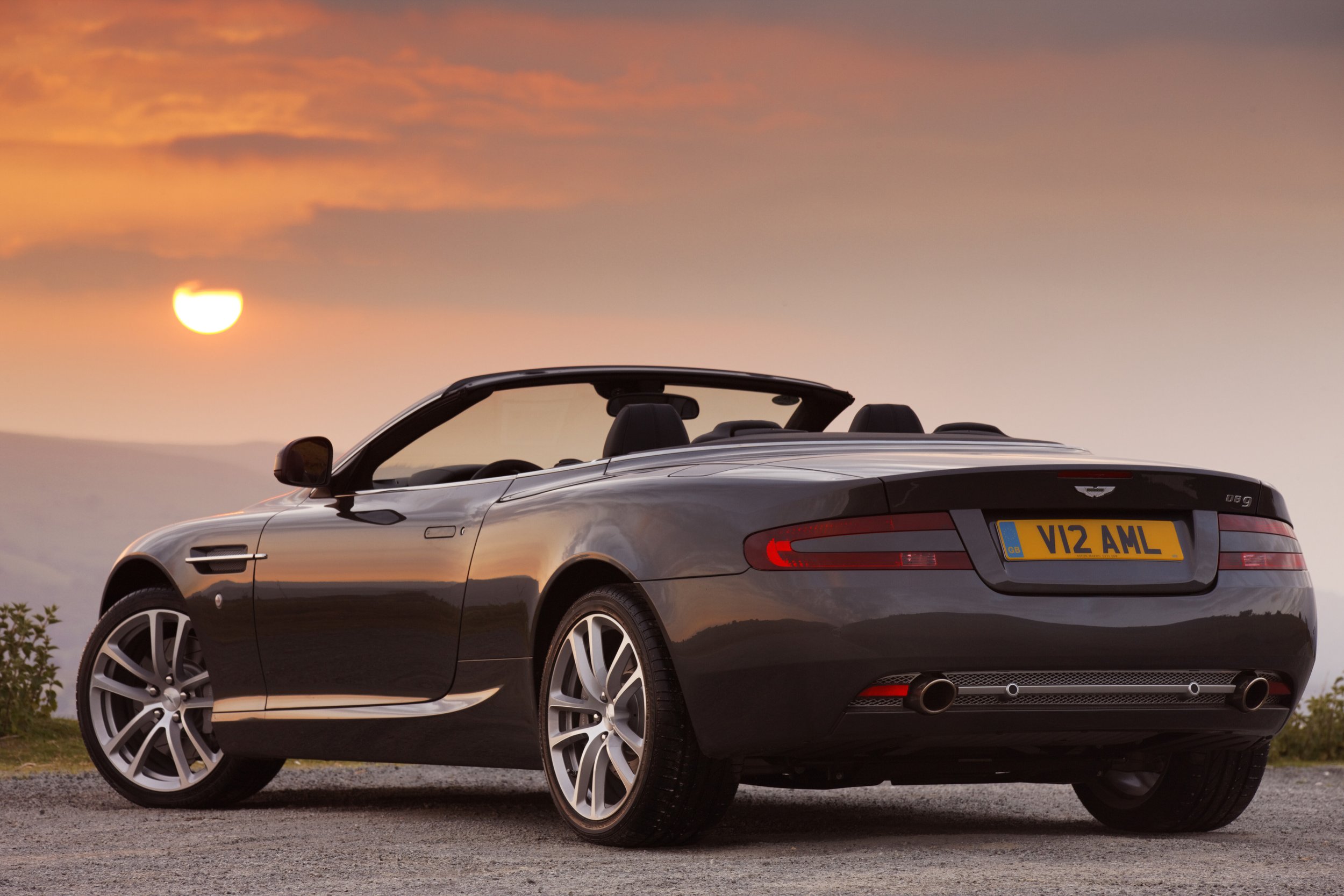
Image © Aston Martin Lagonda. Used for editorial purposes.
For buyers, the Volante adds open-air V12 theatre but also brings its own inspection needs. Roof operation, seals, drains, damp carpets, boot moisture, hydraulic function, warning messages and body control all need specific attention. A Volante should not be assessed as a Coupe with one extra switch.
2009MY (Model Year) onwards: the revised 470 bhp original-shape DB9
The first major DB9 update arrived for 2009MY, introduced in 2008. Power rose to 470 bhp and torque to 600 Nm. The update also brought chassis changes including Bilstein dampers, revised upper suspension arms and retuned suspension bushes, plus cabin revisions and the glass Emotional Control Unit key replacing the earlier conventional key arrangement.
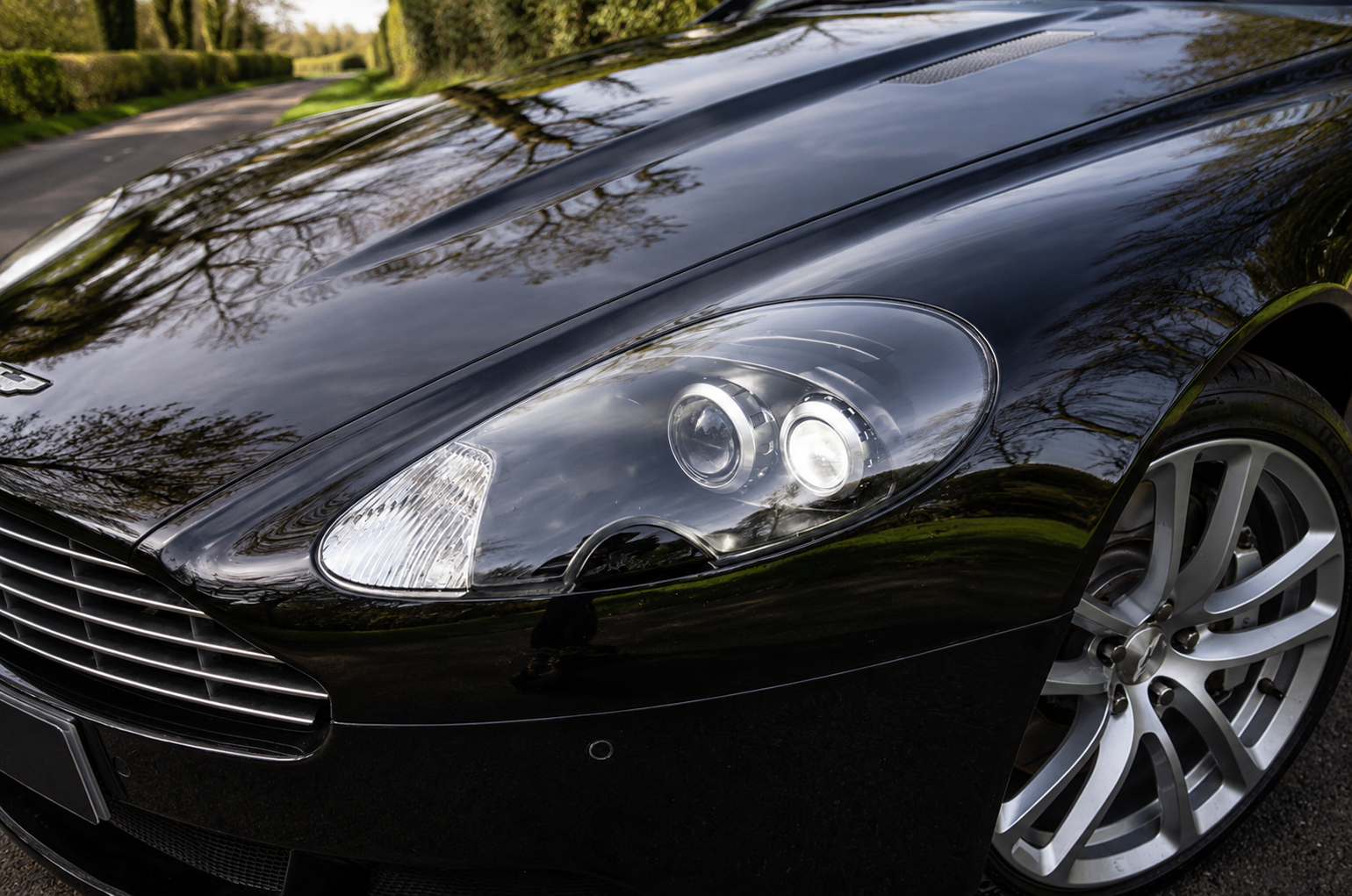
Image © Fuel the Passion
This is why many buyers view the 2009MY original-shape cars as one of the most appealing points in the DB9 range. They retain the cleaner early shape, but bring a more developed engine, chassis and cabin package. The same rule still applies: the best car is the one with the best evidence, not simply the one from the “right” model year.
A revised DB9 with tired dampers, old tyres, weak history and bubbling paint is not automatically a better buy than an earlier car that has been properly maintained.
Sports Pack and Premium Sports Pack - don’t confuse them
The Sports Pack needs to be understood separately from the 2009MY update. It was an earlier factory chassis and wheel package intended to sharpen the DB9’s responses, not simply another name for the 470 bhp update. Buyers should also distinguish the earlier Sports Pack from the later Premium Sports Pack. The Premium Sports Pack was linked to the DBS-style Adaptive Damping System before Adaptive Damping became standard on later DB9s.
For buyers, the important point is not just whether an advert says “Sports Pack” or “Premium Sports Pack”. The important point is what is actually fitted to the car now. Check the original specification, invoices, damper type, suspension refresh history, tyre condition and geometry. A Sports Pack name or advert description doesn’t replace a proper suspension inspection.
2011 - 2012: late original-shape DB9 and Virage overlap
The early 2010s are slightly confusing for DB9 buyers because Aston Martin’s range included DB9, DBS and the short-lived Virage. The Virage sat between DB9 and DBS in character and specification, and its influence would become important when Aston Martin heavily revised the DB9 for the 2013MY (Model Year).
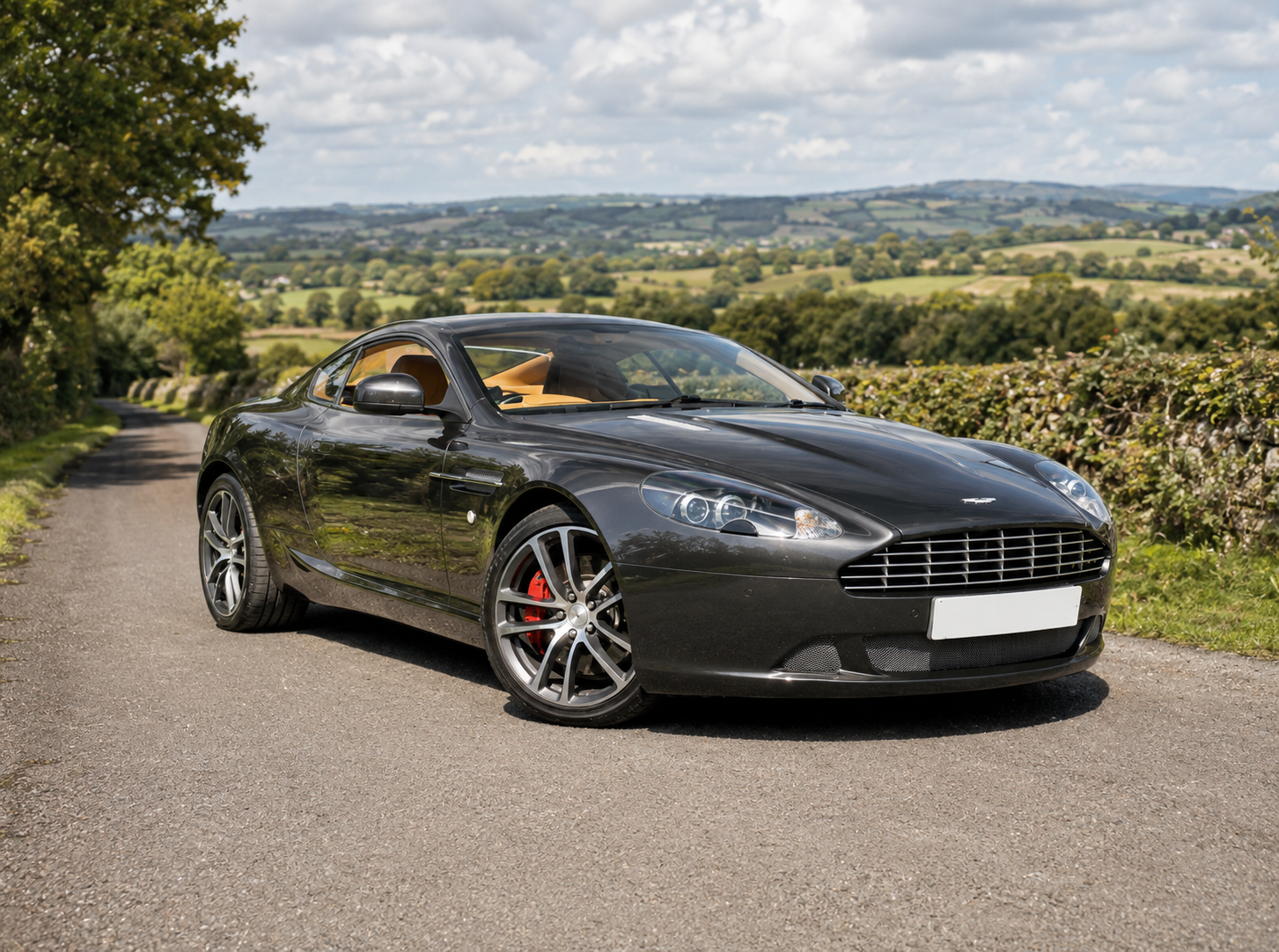
Image © Fuel the Passion.
For buyers, the important point is not to get lost in badge hierarchy. A late original-shape DB9, a Virage and a DBS can appeal to slightly different buyers, but condition, history and intended use should still guide the decision.
The Virage is useful context for understanding the DB9’s development, but it shouldn’t be folded into a DB9 buyers guide as though it’s the same car.
2013MY onwards: the heavily revised DB9
The 2013MY DB9 should be treated as a meaningful late VH-era revision, not merely a light facelift. The later car used the AM11 V12, quoted at 517 PS / 510 bhp and 620 Nm. It also brought standard carbon ceramic brakes, adaptive damping and a more assertive visual character influenced by the outgoing Virage.
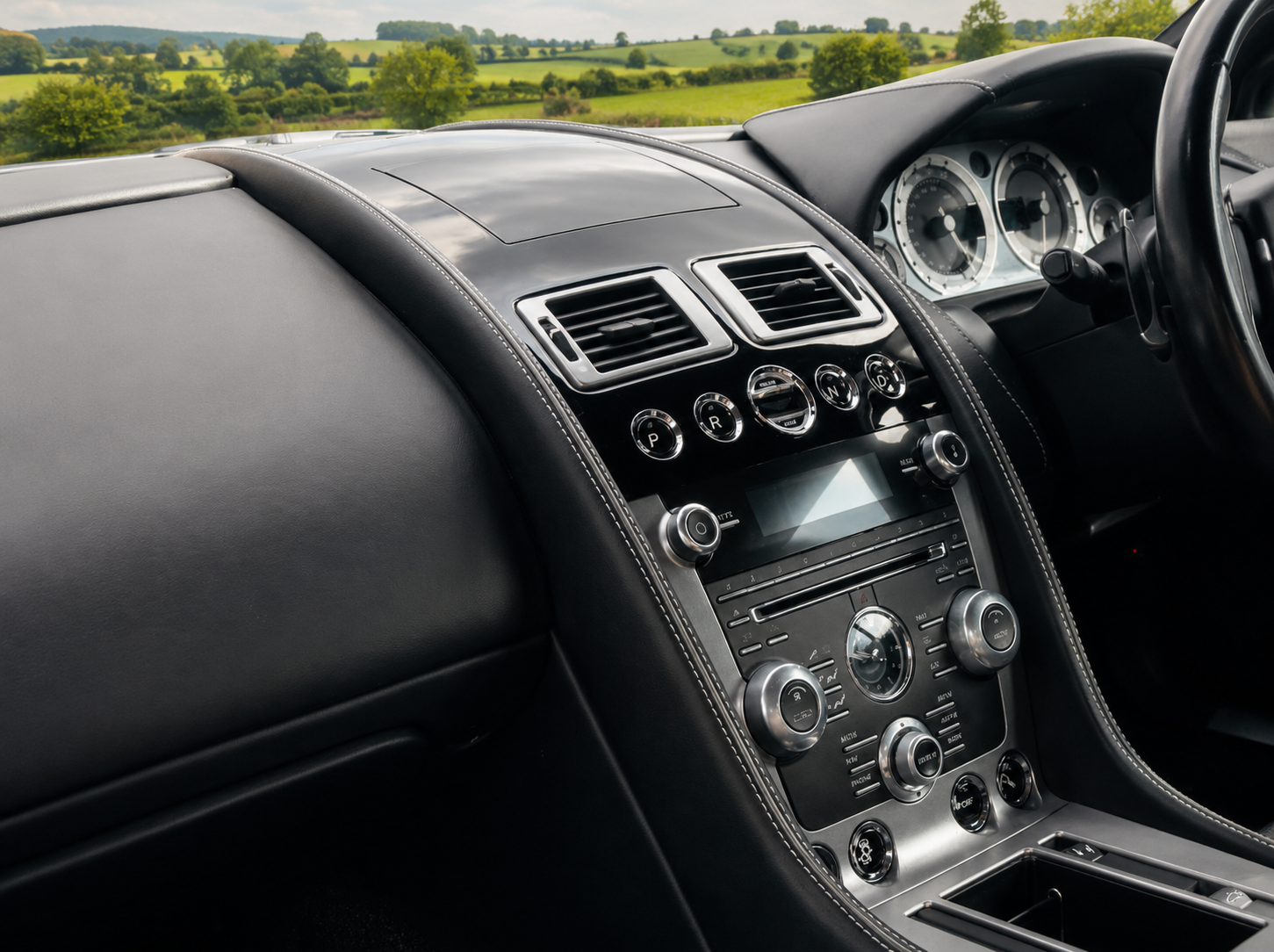
Image © Fuel the Passion.
For buyers, the 2013MY car changes the DB9 proposition. It’s more powerful, more assertive-looking, better braked and more technically developed. It also introduces more expensive inspection points, particularly around carbon ceramic brakes and adaptive damping.
A later DB9 may feel more rounded and more modern than an early car, but it’s not automatically risk-free. It still needs proper service evidence, tyre checks, battery history, bodywork inspection, electronic checks and a full specialist assessment.
A 2013MY DB9 should drive with polish. If it feels crashy, tired, vague or neglected, the badge and later styling should not distract from the inspection.
2015 - 2016: DB9 GT
The DB9 GT arrived as the final factory evolution of the DB9. Its V12 was uprated to 540 bhp / 547 PS and 620 Nm, making it the most powerful production DB9. The DB9 GT should be viewed as the final polish of the DB9 formula rather than a completely new car. It did not turn the DB9 into a different kind of Aston Martin, and it did not hide the fact that the model was nearing the end of its life before DB11 arrived. But it did give the outgoing DB9 more power, late-car equipment, improved showroom appeal and a stronger final identity.
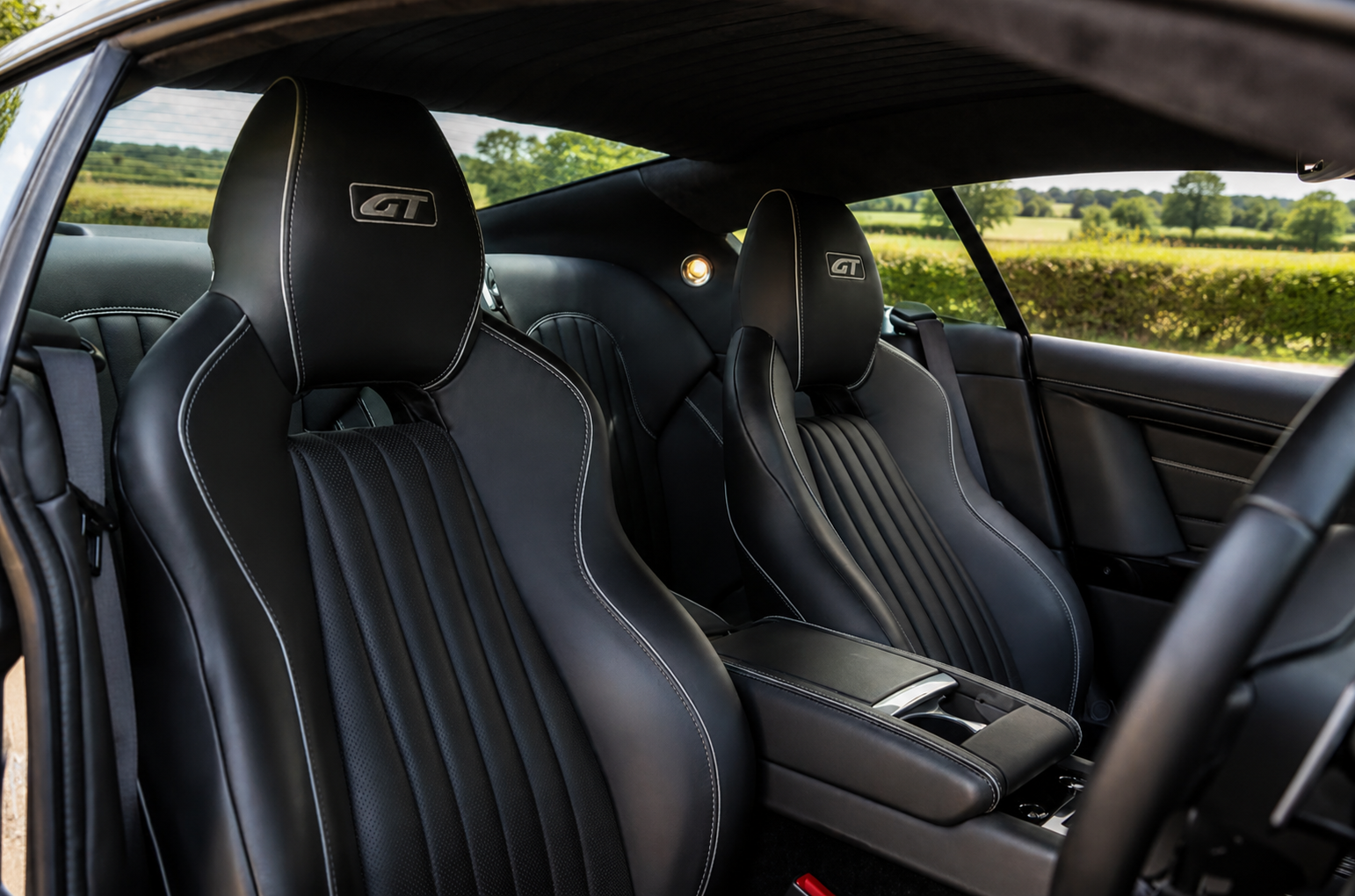
Image © Fuel the Passion
For many buyers, a DB9 GT will be the most desirable mainstream DB9. It’s the most powerful factory version and the most developed expression of the model. But the same buying discipline applies.
A DB9 GT with weak service history, old tyres, damaged carbon ceramic brakes, tired dampers, storage-related issues or poor paintwork shouldn’t be treated as safe simply because it’s late and desirable. The best DB9 GT is still the one with the right evidence.
DB9 GT Bond Edition
The DB9 GT Bond Edition should be treated as a collectable specification of the DB9 GT, not as a mechanically separate model.
It was announced in 2015 as a limited-run version of the DB9 GT, created to celebrate Aston Martin’s association with James Bond ahead of Spectre. Contemporary sources record the edition as limited to 150 examples worldwide and based on the DB9 GT. Mechanically, it followed the DB9 GT package rather than creating a new DB9 variant. Its appeal therefore sits in rarity, specification, official 007 association, provenance and completeness rather than a different driving experience. The Bond Edition added Spectre Silver paint, unique 007 badging and Bond-themed interior details. The collector package also included a 21-inch Globe-Trotter trolley case with embossed leather luggage tag and an Omega Seamaster Aqua Terra 150m James Bond Limited Edition watch with an Aston Martin strap.
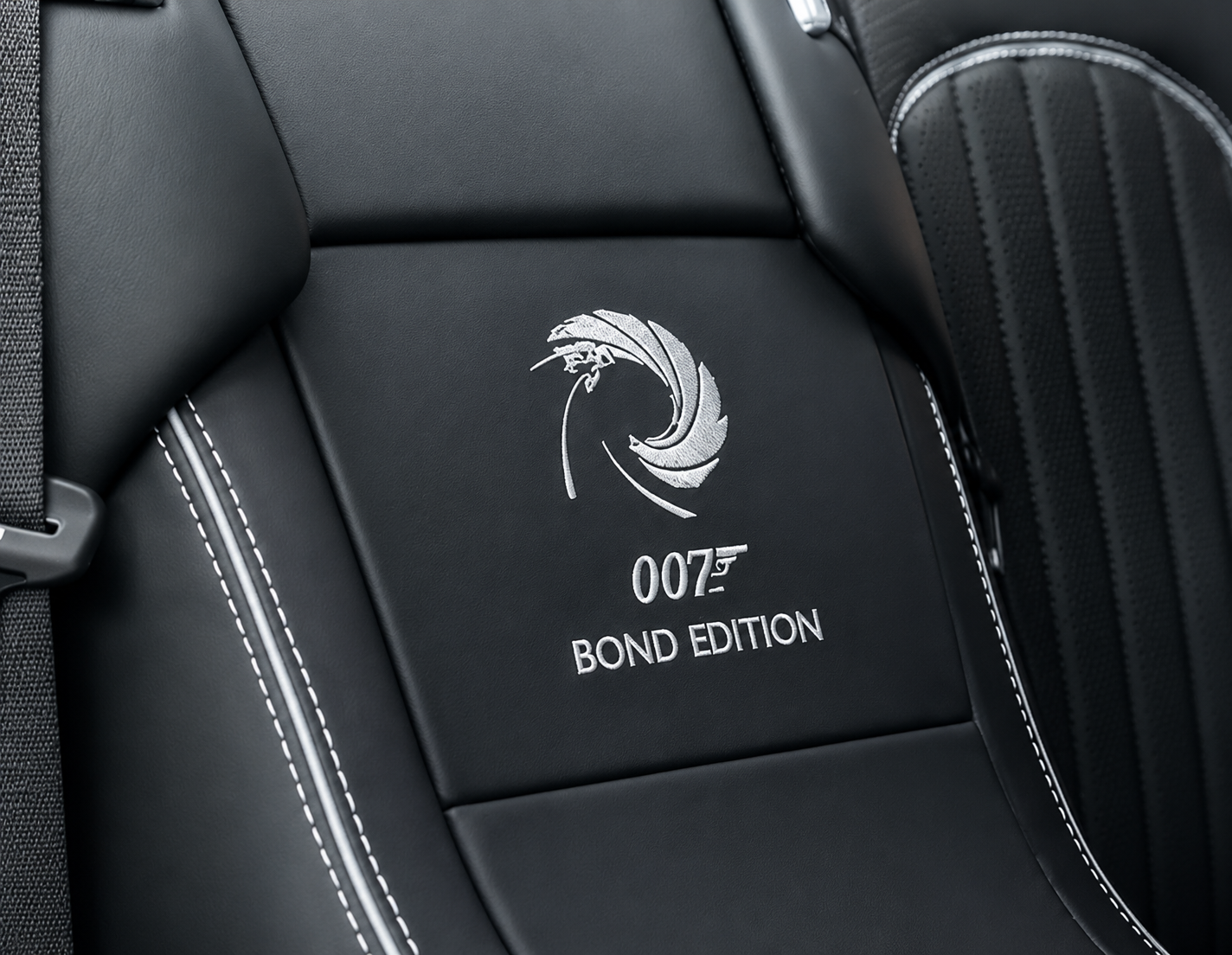
Image © Fuel the Passion.
There’s one production-number detail to handle carefully. Aston Martin announced the car as limited to 150 examples worldwide. A specialist dealer records 142 ultimately built, including 38 UK-delivered examples. Unless confirmed directly from Aston Martin build data, Fuel the Passion treats this as an announced-number versus specialist-record discrepancy rather than choosing one number as absolute.
A Bond Edition buyer should inspect the car in two ways; First, as a DB9 GT: service history, carbon ceramic brakes, tyres, adaptive damping, electronics, bodywork, storage and mechanical condition. Second, as a collector car: numbered plaques, original specification, books, papers, display case, Omega watch, Globe-Trotter case and any other original accessories.
A missing accessory may not affect how the car drives, but it may affect how complete the Bond Edition package is.
Market snapshot - May 2026
As of May 2026, UK advertised DB9 asking prices range very broadly. Early 450 bhp Coupes can be seen from the high-teens to low-£30,000s, while better-presented early cars and Volantes tend to sit higher. The 2009MY 470 bhp cars often occupy the mid-market, while the heavily revised 2013MY cars, DB9 GTs and GT Volantes sit at a clear premium.
These figures are a snapshot of advertised asking prices in May 2026, not confirmed sale prices or valuation advice. Condition, mileage, body style, colour, specification, service history, specialist preparation, tyre age, brake condition, suspension work, paintwork, number of owners and provenance can all move an individual DB9 significantly above or below these broad bands.
DB9 market snapshot
Approximate UK advertised asking ranges as of May 2026. These are guide bands only, not valuations or confirmed sale prices.
| DB9 type | Approximate May 2026 advertised range | FTP view |
|---|---|---|
| Early 450 bhp Coupe | c. £17,000–£35,000 | Entry cars can look temptingly cheap, but condition and history matter more than the headline price. |
| Early Volante | c. £22,000–£40,000 | Roof condition, water ingress and service history are critical. |
| 2009MY-on 470 bhp original-shape cars | c. £35,000–£50,000 | Often a sweet-spot area if the car is well maintained. |
| 2013MY-on heavily revised DB9 | c. £50,000–£70,000 | More powerful, later-feeling cars with carbon ceramic brakes and adaptive damping. |
| DB9 GT Coupe | c. £75,000–£80,000 | Final mainstream DB9; condition and carbon ceramic brake inspection still matter. |
| DB9 GT Volante | c. £85,000–£100,000 | Scarcer late open car; storage, roof, brakes and provenance all matter. |
| Manuals / rare specifications | Case-by-case | Rarity can add desirability, but only if condition supports the premium. |
| DB9 GT Bond Edition Collector market | Case-by-case | Treat separately because accessories, provenance and completeness affect value. |
The purpose of this snapshot is not to value any individual car. It’s to remind buyers that the cheapest DB9 is rarely the safest DB9, and the most expensive DB9 still needs proper inspection.
Coupe or Volante?
The first DB9 decision is simple in theory and quite personal in reality: Coupe or Volante?
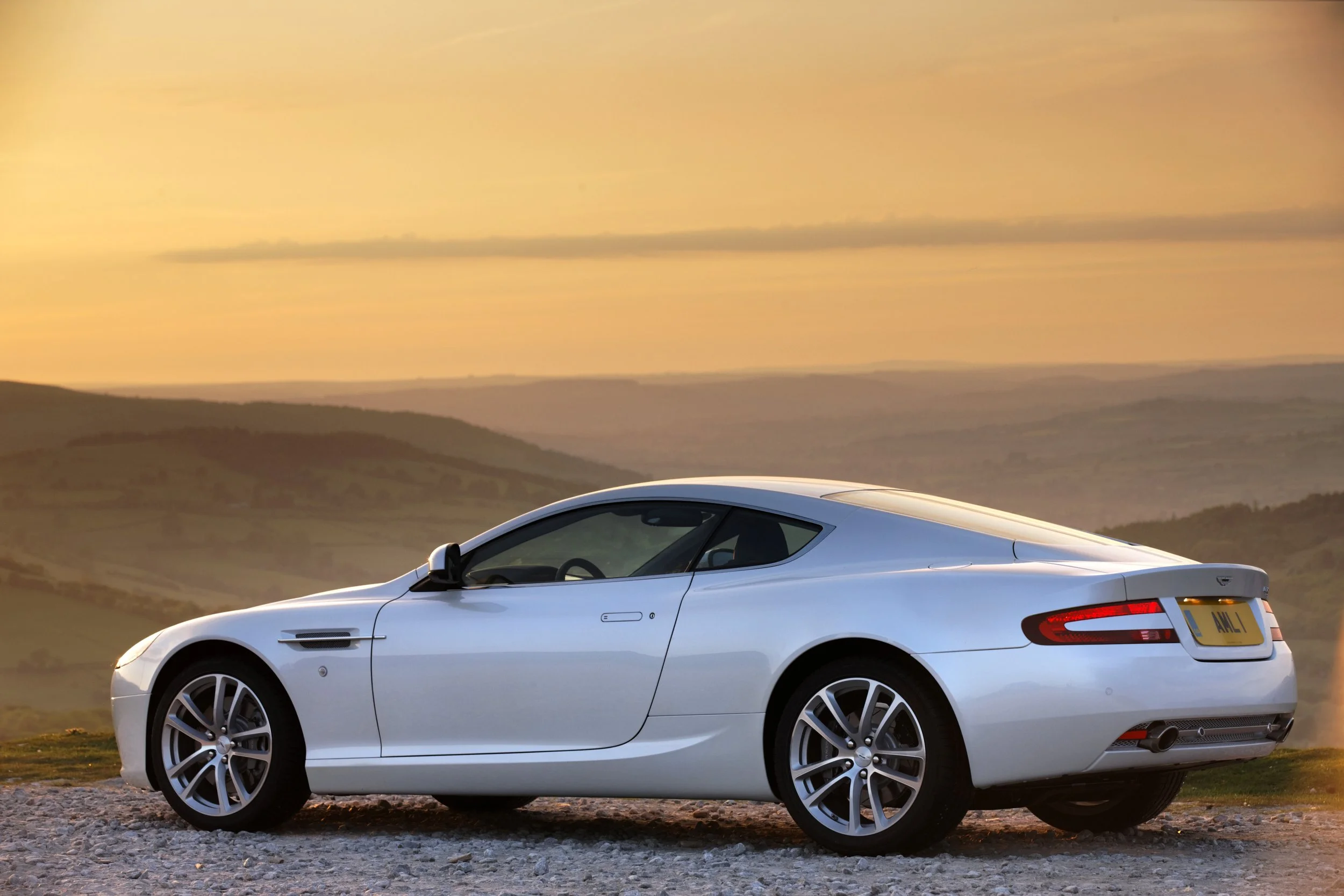
Image © Aston Martin Lagonda. Used for editorial purposes.
The DB9 Coupe is the purer shape. It gives you the cleanest version of the long-bonnet, short-deck silhouette, and for many buyers it will feel like the default DB9. It is also the simpler ownership proposition, with fewer roof-related systems, seals and water-ingress points to inspect than the Volante.
That doesn’t automatically make the Coupe the better car. It simply makes it the more straightforward one to assess.
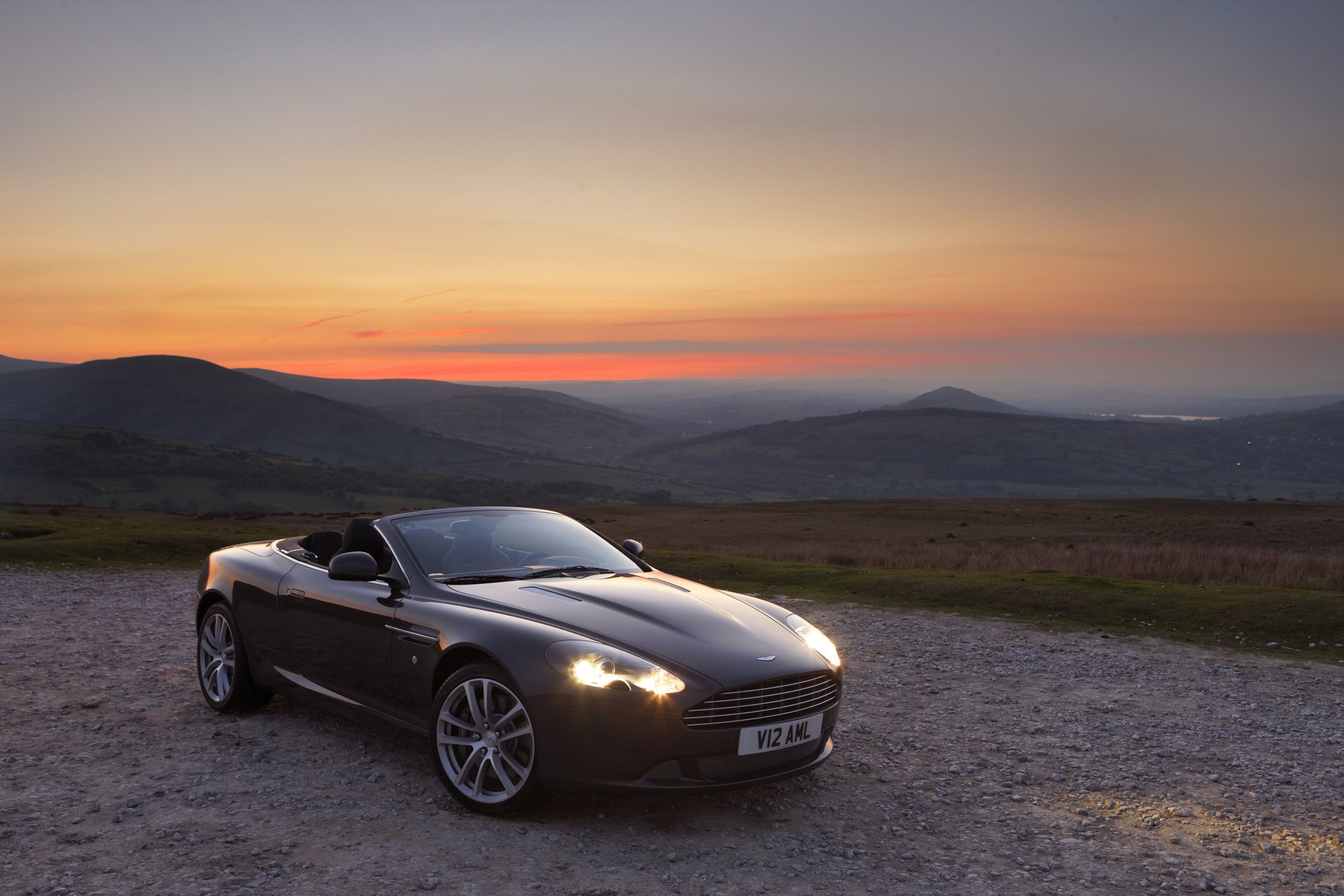
Image © Aston Martin Lagonda. Used for editorial purposes.
The DB9 Volante brings a different kind of appeal. Roof down, V12 ahead, leather-lined cabin around you, it turns the DB9 from a grand tourer into something more open and theatrical. For some buyers, that’ll be the whole point. A DB9 Volante on the right road, in the right weather, is a very compelling Aston Martin.
But the Volante needs its own inspection. It should not be treated as a Coupe with the roof added.
The roof should operate smoothly, quietly and consistently. The latches, motors, hydraulics, seals, drains, rear glass, tonneau cover, carpets and boot area all need checking. Any warning messages, hesitation, uneven movement, damp smell, stained trim or evidence of water ingress should be taken seriously.
A Volante buyer should also pay attention to body control. A convertible DB9 should still feel like a composed grand tourer, not a loose or unsettled car. Some scuttle shake or open-car character may be expected, but harshness, wandering, rattles, knocks or a lack of confidence on poor roads should lead to a proper suspension and chassis inspection.
A good Volante can be a glorious thing. A tired Volante can quickly become a car with Coupe running costs plus roof-system risk.
FTP buyer line:
If you want the cleanest shape and simplest ownership route, start with the Coupe. If you want open-air V12 theatre, buy the Volante, but only after a roof, water-ingress and chassis inspection by someone who understands these cars.
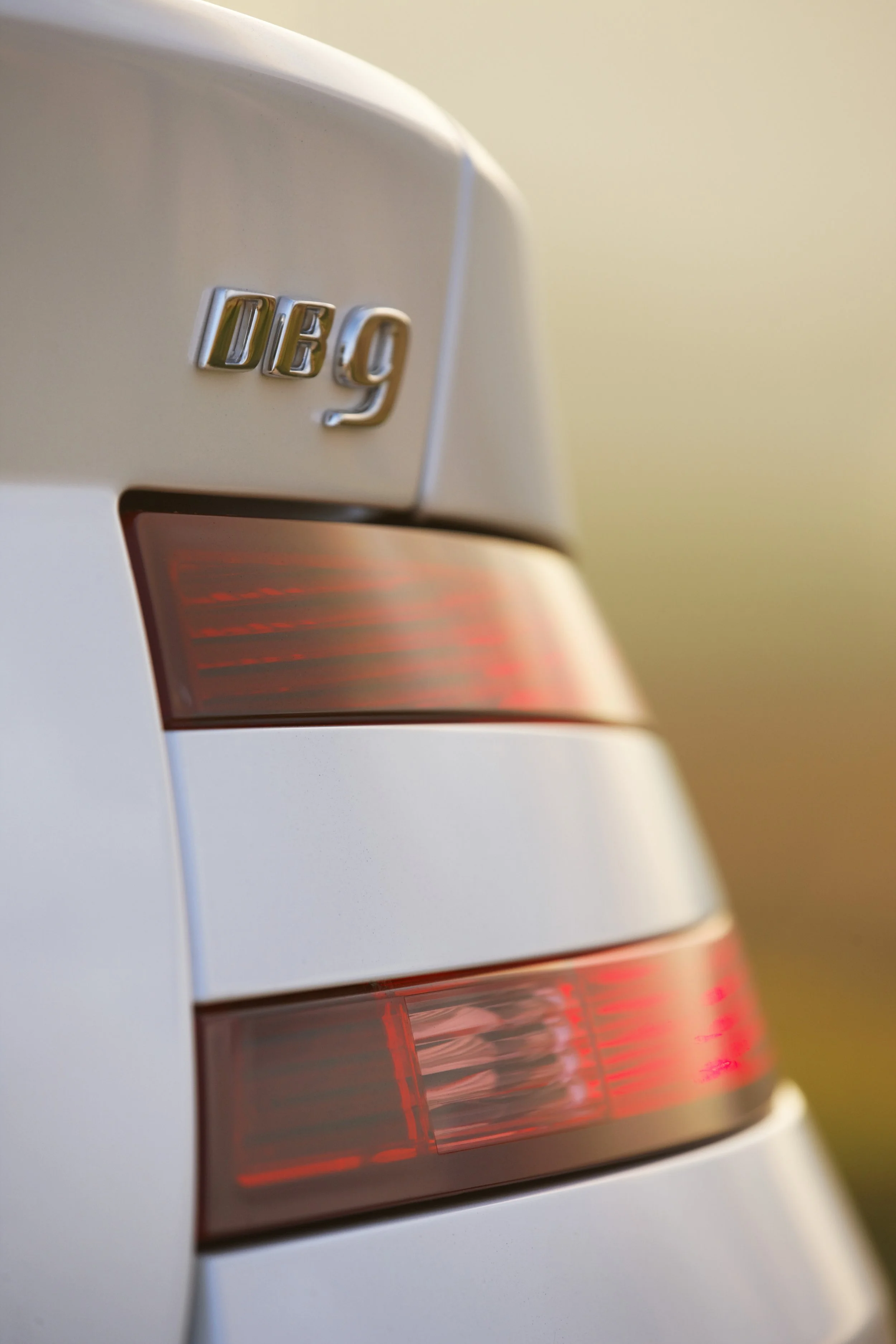
Image © Aston Martin Lagonda. Used for editorial purposes.
Which DB9 should you buy?
There is no single best DB9 for every buyer. That’s one of the most important points in this guide.
The best DB9 is not automatically the newest, rarest, lowest-mileage or most powerful one. It’s the car where condition, history, specification, inspection findings and price all make sense together.
A well-maintained early Coupe may be a better ownership prospect than a tired later car.
A carefully stored DB9 GT may be the most rounded version of all. A rare manual Volante may be hugely appealing, but only if the clutch, roof, tyres, service history and remedial spend are all understood.
A cheap DB9 may be a bargain, or it may simply be a car that needs several years of deferred maintenance paid for at once.
The DB9 has to be bought as an individual car, not as a model-year assumption.
Early 450 bhp DB9: original charm, but buy carefully
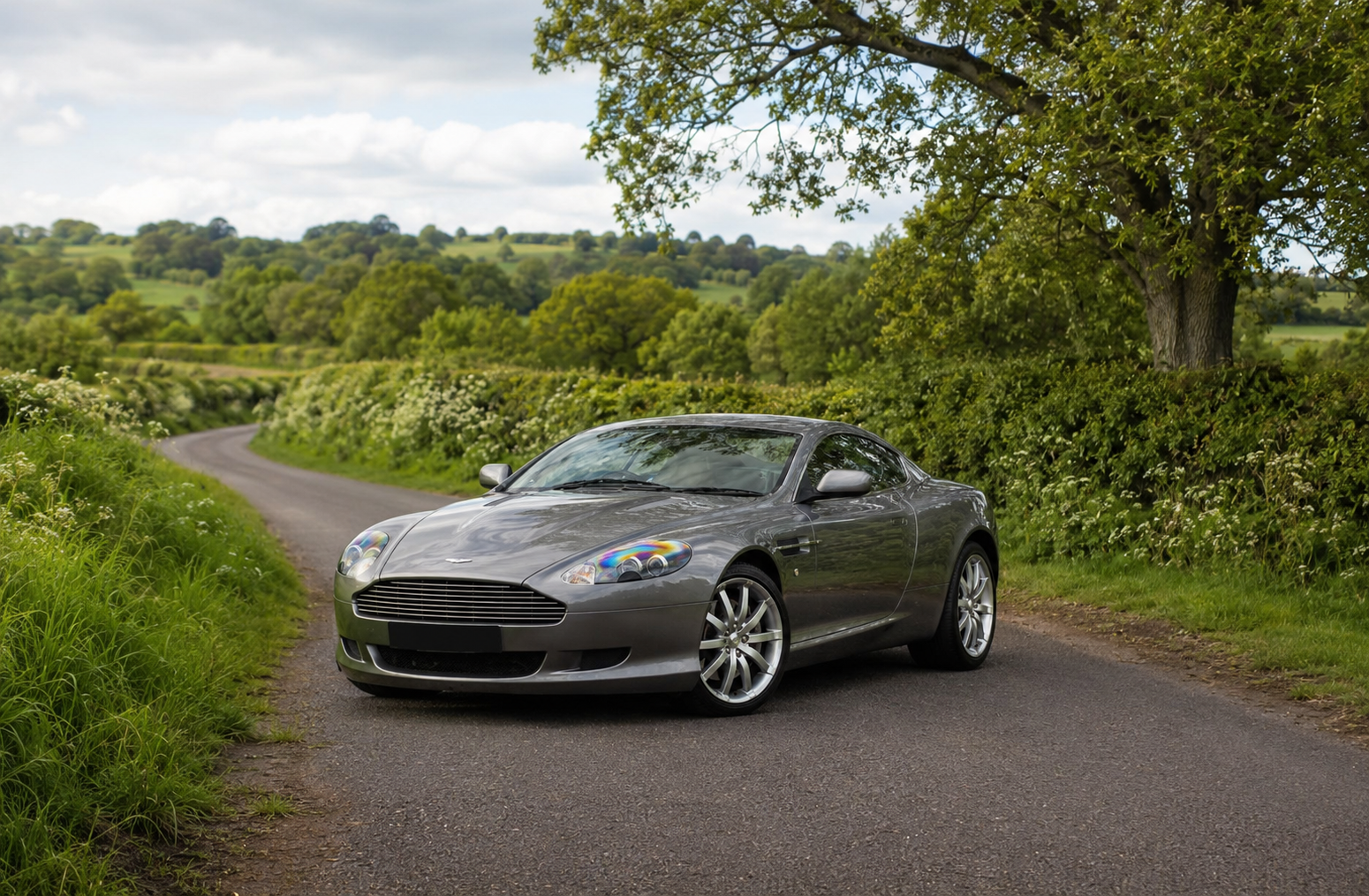
Image © Fuel the Passion
The early DB9 is where many buyers first become tempted. These cars have the original shape, the early cabin character, the naturally aspirated V12 and often the lowest advertised prices. They can look like extraordinary value for money. They can also be the easiest DB9s to buy badly. The early cars are now old enough for condition to vary enormously. Some have been cherished, maintained and continually improved. Others have tired paint, old tyres, dated or failing electronics, weak service evidence, worn suspension, air-conditioning issues and deferred engine maintenance.
This doesn’t mean early DB9s should be avoided, the opposite can be true. A strong early car should have good paint, a clean interior, detailed invoices, proper V12 diagnostic history, healthy suspension, working air-conditioning, good tyres, evidence of plugs and coils where relevant, and no unresolved warning lights. It should feel tight, smooth and cared for.
A weak early car may still look beautiful from ten paces. That’s not enough.
Best for: buyers who want original DB9 design, strong value and are prepared to prioritise condition over model-year prestige.
Be cautious of: tired paint, old tyres, weak invoices, misfire, poor air-conditioning, worn suspension, neglected modules and seller resistance to a specialist inspection.
2009MY (Model Year) 470 bhp cars: a likely sweet spot for many buyers
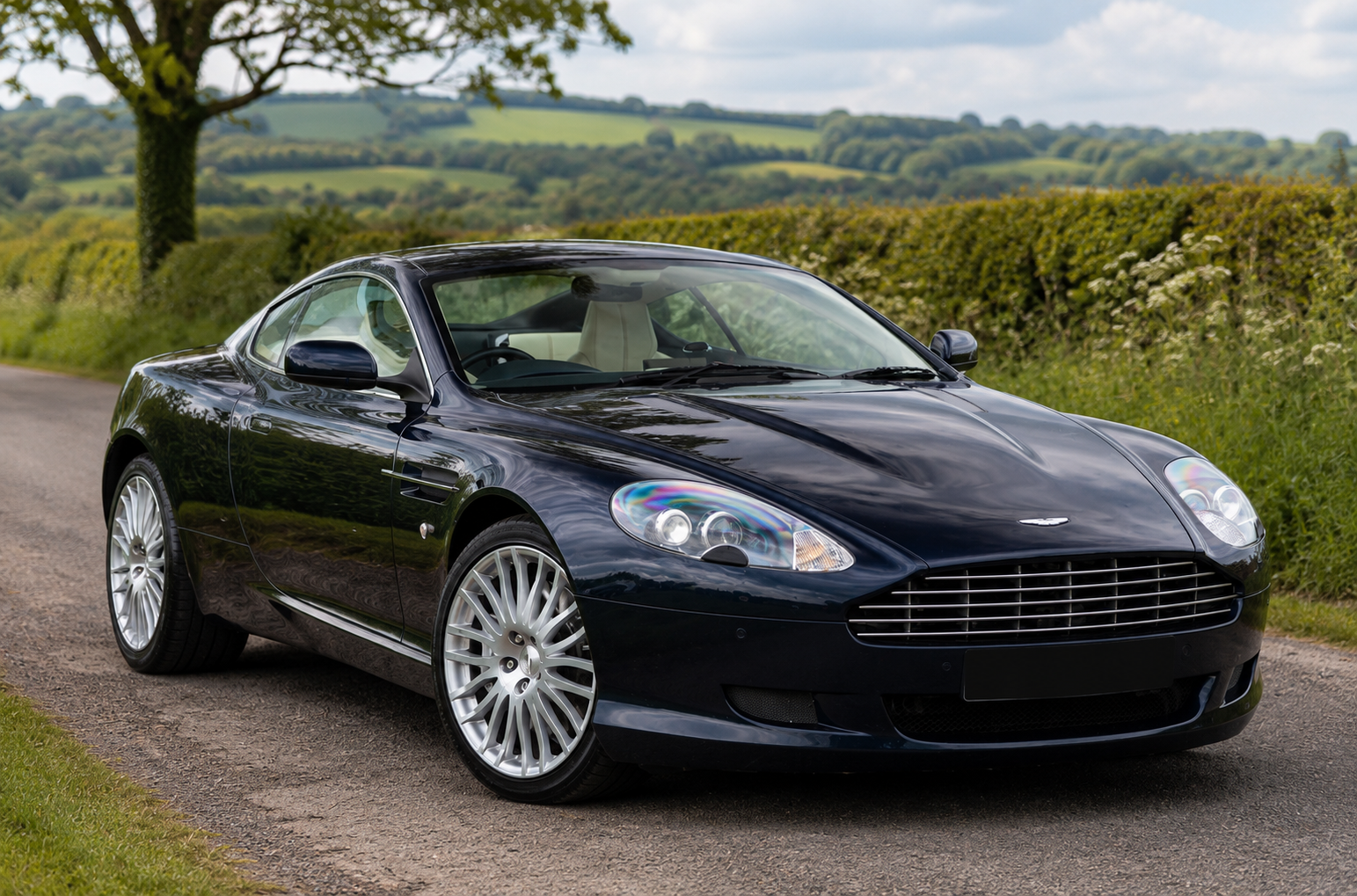
Image © Fuel the Passion
For many DB9 buyers, the revised original-shape cars are likely to be one of the natural sweet spots. They retain the cleaner early DB9 styling but bring a more developed feel, more power, revised chassis hardware and the later glass Emotional Control Unit key. The 2009MY update is important because it wasn’t simply a cosmetic refresh. Power rose to 470 bhp, torque to 600 Nm, and Aston Martin introduced Bilstein dampers, revised suspension components and cabin updates.
That makes these cars appealing, but it doesn’t make them automatically safe. They’re now old enough for deferred work to matter just as much as it does on early cars. A strong revised DB9 can give you much of the original car’s elegance with a more resolved ownership feel. A tired one can still need thousands spent to make it right.
Best for: buyers wanting an original-shape DB9 with later development and strong value.
Be cautious of: assuming “2009MY” means “sorted”. Check the actual car, not just the year.
Sports Pack cars: desirable, but check what is actually fitted
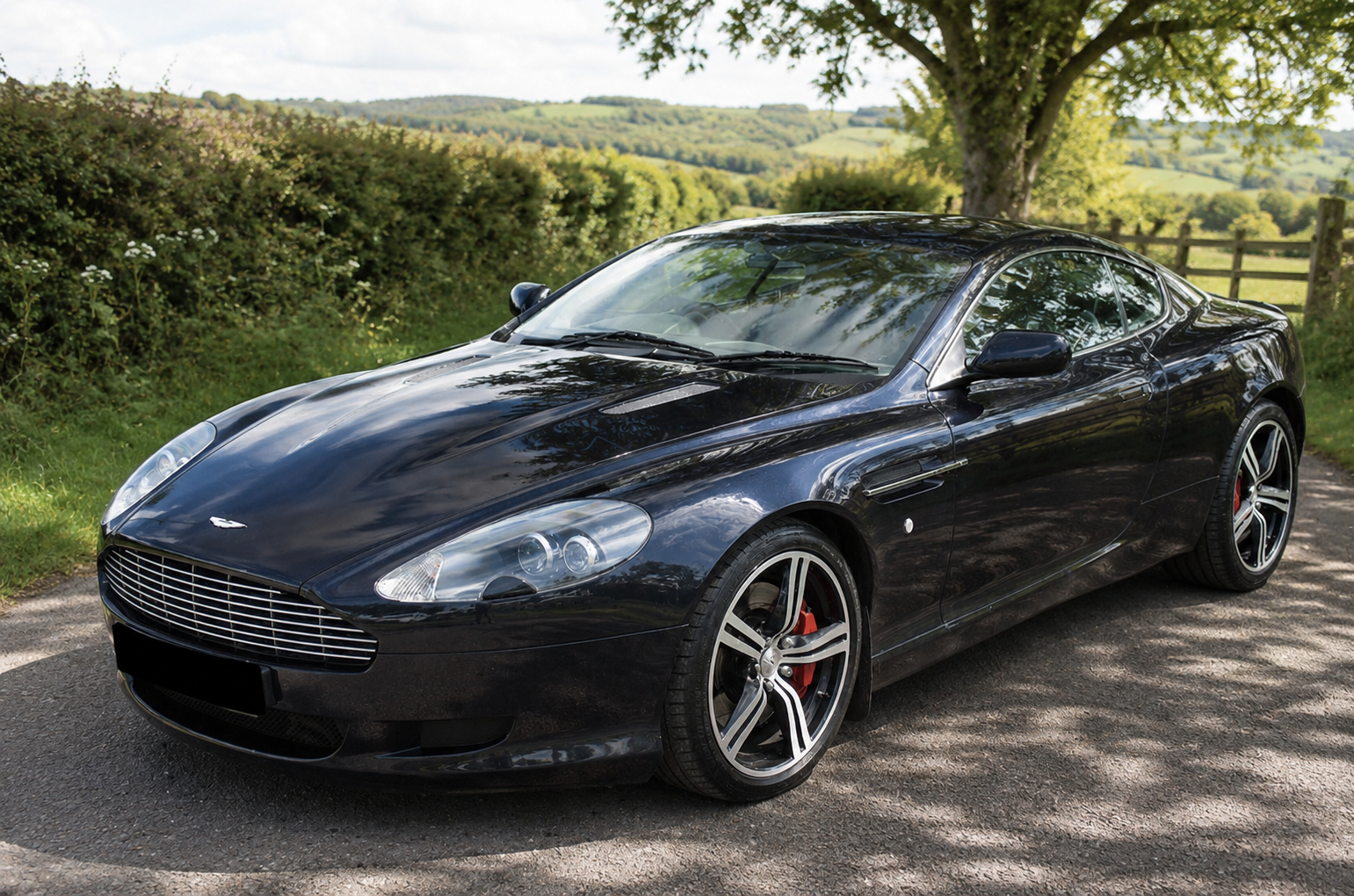
Image © Fuel the Passion
The original DB9 Sports Pack was introduced from July 2006 as a factory option for the DB9 Coupe, with dealer retrofit also possible. It was intended to sharpen the early DB9’s responses and is most easily recognised by its distinctive lightweight five-spoke forged alloy wheels, although wheels alone should never be treated as proof. A genuine Sports Pack car should be verified through the original build specification, dealer records, invoices or confirmation from an Aston Martin specialist.
The Sports Pack was more than a cosmetic wheel option. It brought a sharper chassis package, including revised springs, dampers, front anti-roll bar, lightweight wheels, titanium wheel nuts and a slightly lower ride height. However, buyers shouldn’t confuse this earlier Sports Pack with the later 2009MY DB9 update, or with the later Premium Sports Pack. The 2009MY update brought its own chassis and cabin revisions, while the Premium Sports Pack was a later option associated with adaptive damping before adaptive damping became standard on later DB9s.
This is why advert wording needs care. A car described as “Sports Pack” may be a factory Sports Pack car, a later adaptive-damper car, a car with Sports Pack wheels, or a car that has had parts retrofitted. The buyer’s task is to check what is actually fitted to the individual car.
A Sports Pack DB9 can be very desirable, but condition still matters more than the name. It should feel sharper and more controlled, not broken, crashy or nervous. Dampers, bushes, tyres, geometry and suspension history can transform how these cars feel. If it thumps, skips, crashes or feels loose, don’t assume that’s simply “Sports Pack character”. It needs specialist inspection.
Best for: buyers who want a sharper original-shape DB9 and are willing to verify the specification and inspect suspension condition properly.
Be cautious of: cars advertised as Sports Pack without supporting build records, cars wearing Sports Pack-style wheels only, harsh ride, tired dampers, poor tyres, uneven wear, old bushes and vague invoices.
2013MY (Model Year) heavily revised DB9: the more rounded later car
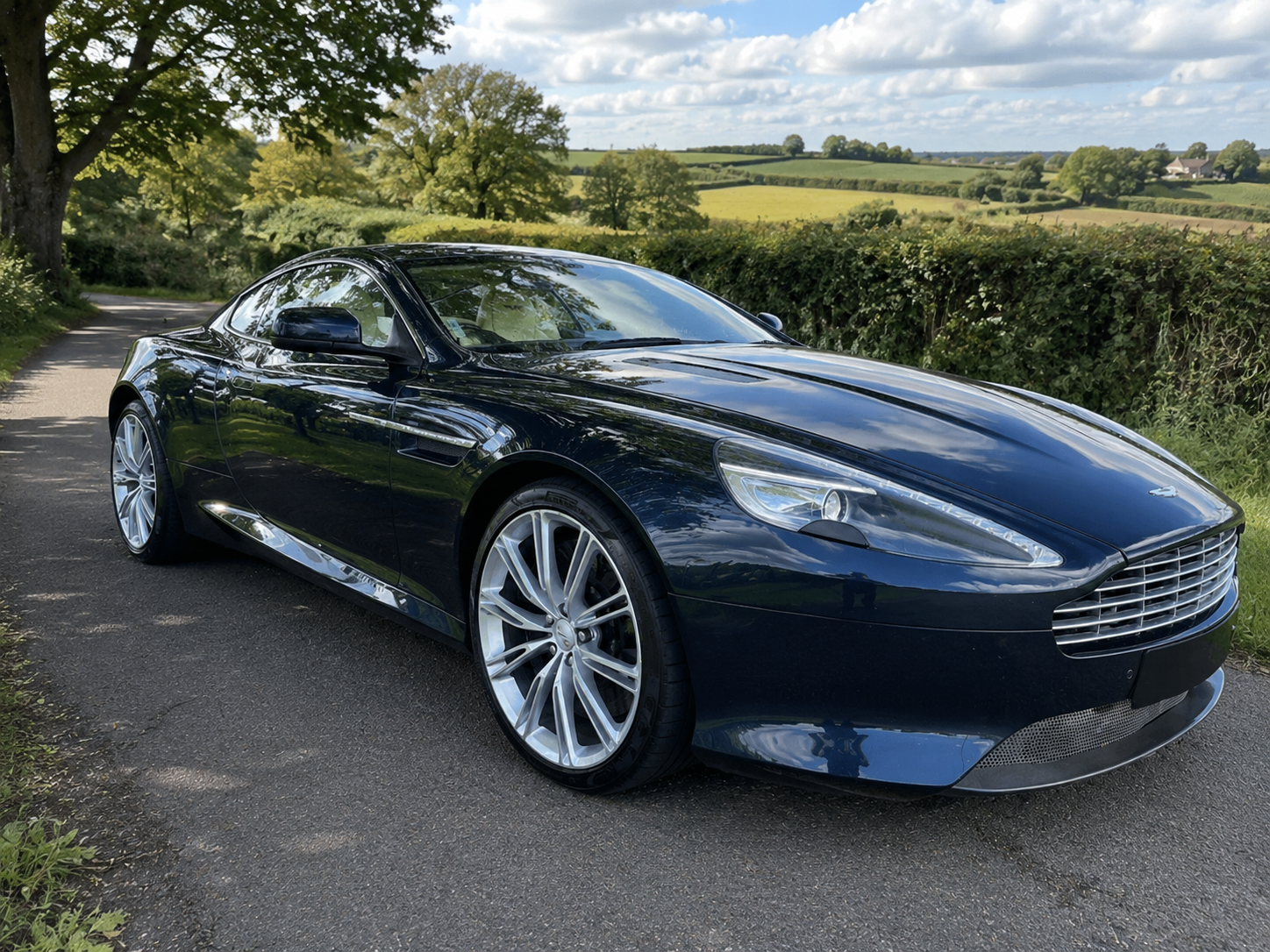
Image © Fuel the Passion
The heavily revised 2013MY DB9 deserves to be treated separately from the early cars. It’s not just a bumper-and-light refresh. The later car brought stronger V12 performance, carbon ceramic brakes, adaptive damping, revised styling and a more polished GT feel.
For many buyers, this may be the most rational DB9 if budget allows. It feels later, it brakes better, it has more power, it’s more developed and it has a broader chassis range thanks to adaptive damping.
But it also brings different inspection priorities. Carbon ceramic brakes must be checked carefully. Adaptive dampers must work properly. Tyres, suspension, service history, battery condition and electronics remain essential. A later DB9 can still suffer from storage issues, old tyres, paint bubbling, module faults and poor maintenance.
A heavily revised DB9 may cost more to buy, but if it’s been maintained properly it may reduce some of the post-purchase “catch-up” spending associated with cheaper early cars.
Best for: buyers wanting the most rounded mainstream DB9 without moving to the GT.
Be cautious of: carbon ceramic brake condition, adaptive damper faults, old tyres, weak service history and low-mileage cars that haven’t been serviced properly on time.
DB9 GT: the final polish
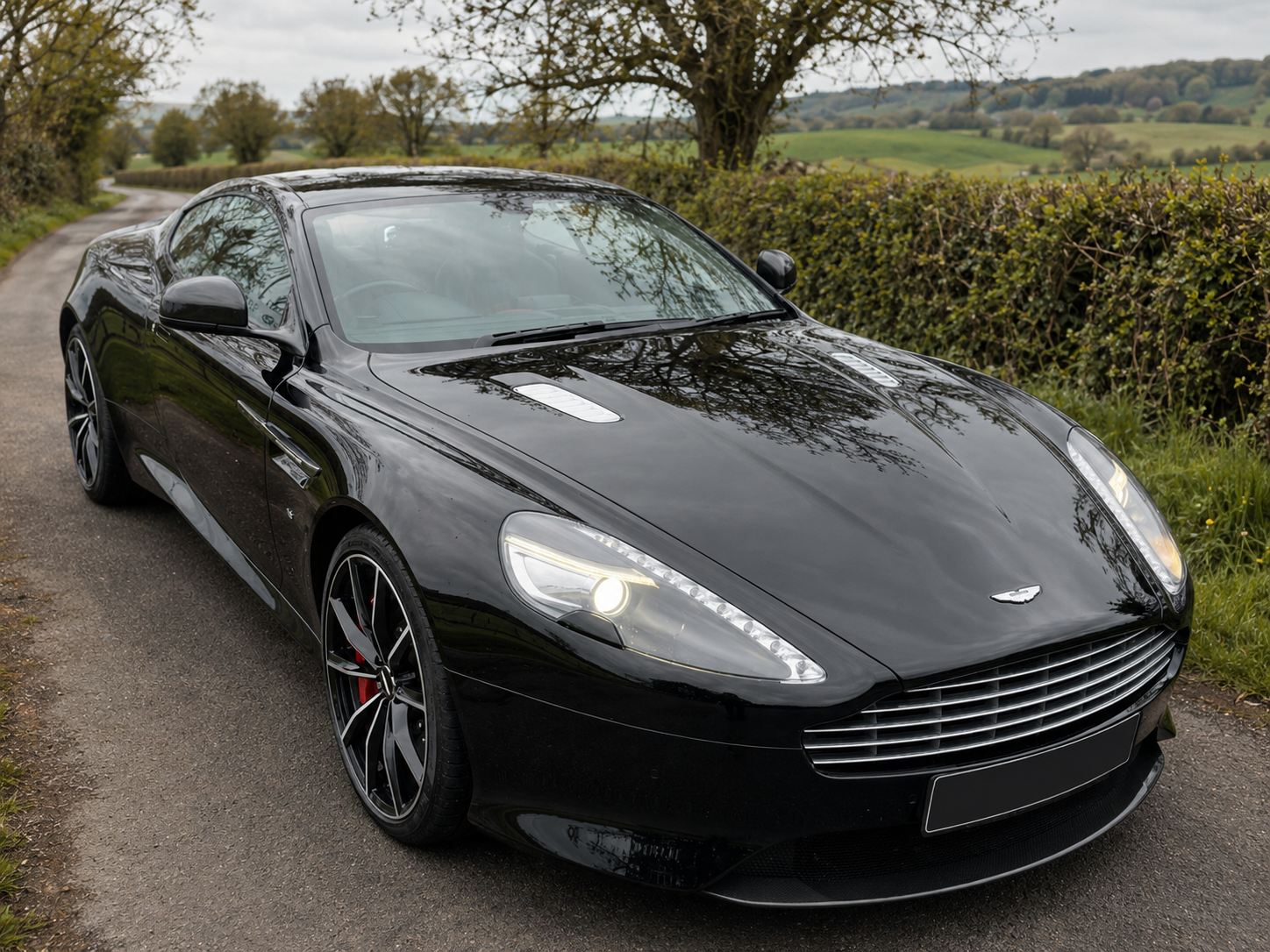
Image © Fuel the Passion
The DB9 GT is the final factory evolution of the DB9. It’s the most powerful DB9, the most developed and, for many buyers, the most desirable mainstream version. It also needs to be understood correctly. The DB9 GT was not a clean-sheet car. It was the final polish of a long-running model.
That isn’t a criticism so much as a definition of the car. The DB9 GT appeals because it’s the last and most polished expression of the naturally aspirated DB9 formula.
It still has hydraulic steering, a V12 soundtrack, elegant proportions and proper Aston Martin GT character.
A good DB9 GT should feel cohesive, not merely fast. It should ride properly, stop strongly, steer cleanly and feel special inside. If it’s been stored as a collector object, check time-based servicing, tyres, battery, fluids, brake condition and recommissioning evidence. Very low mileage is attractive, but it doesn’t remove maintenance obligations.
Best for: buyers wanting the final and most developed DB9.
Be cautious of: assuming GT status guarantees condition. Inspect carbon ceramics, damping, tyres, electronics, storage history and service records.
Manual DB9s: rare, but not automatically better
Manual DB9s are rare, and rarity always changes buyer behaviour. Some buyers will want a manual because it feels more interactive. Some will want one because they believe manual V12 Aston Martins will always be more desirable. Some will simply prefer the idea of changing gear themselves. That’s understandable, but it needs discipline.
A manual DB9 shouldn’t be bought just because it’s manual. It should be bought because it’s a good manual car. Clutch condition, bite point, pedal feel, gear engagement, service history and replacement evidence all matter. A rare manual with a tired clutch, poor tyres, weak history and looming remedial work may be a worse buy than a beautifully maintained automatic.
Best for: buyers who specifically want manual interaction and are prepared to inspect and pay accordingly.
Be cautious of: rarity clouding judgement. A manual clutch bill can quickly change the economics of the purchase.
Automatic DB9s: the natural GT choice
Most DB9s are automatic, and for most buyers that will be no bad thing. The DB9 is a grand tourer. The automatic suits its long-distance character, its V12 torque and its role as a car to cover ground smoothly. It’s not a modern dual-clutch gearbox, and even the DB9 GT’s Touchtronic II felt dated to some reviewers by 2015, but it’s part of the DB9’s character. The right question is not “is it as fast as a modern gearbox?” It’s “does it work properly, smoothly and in a way that suits how I want to use the car?”
A good automatic DB9 should engage cleanly, shift smoothly, respond properly to kickdown, behave consistently when hot and cold, and show no warning messages or harsh thumps. Paddle response should be tested, but buyers shouldn’t expect modern supercar shift speed.
Best for: most DB9 buyers, especially those wanting the car as a proper GT.
Be cautious of: harsh shifts, warning lights, delayed engagement, leaks and any seller who dismisses gearbox behaviour without evidence.
Engine and V12 health
The DB9’s naturally aspirated V12 is one of the main reasons people want the car in the first place. It gives the DB9 much of its character: smooth, muscular, cultured when cruising and dramatic when extended. It’s also a key part of why the DB9 still feels special today.
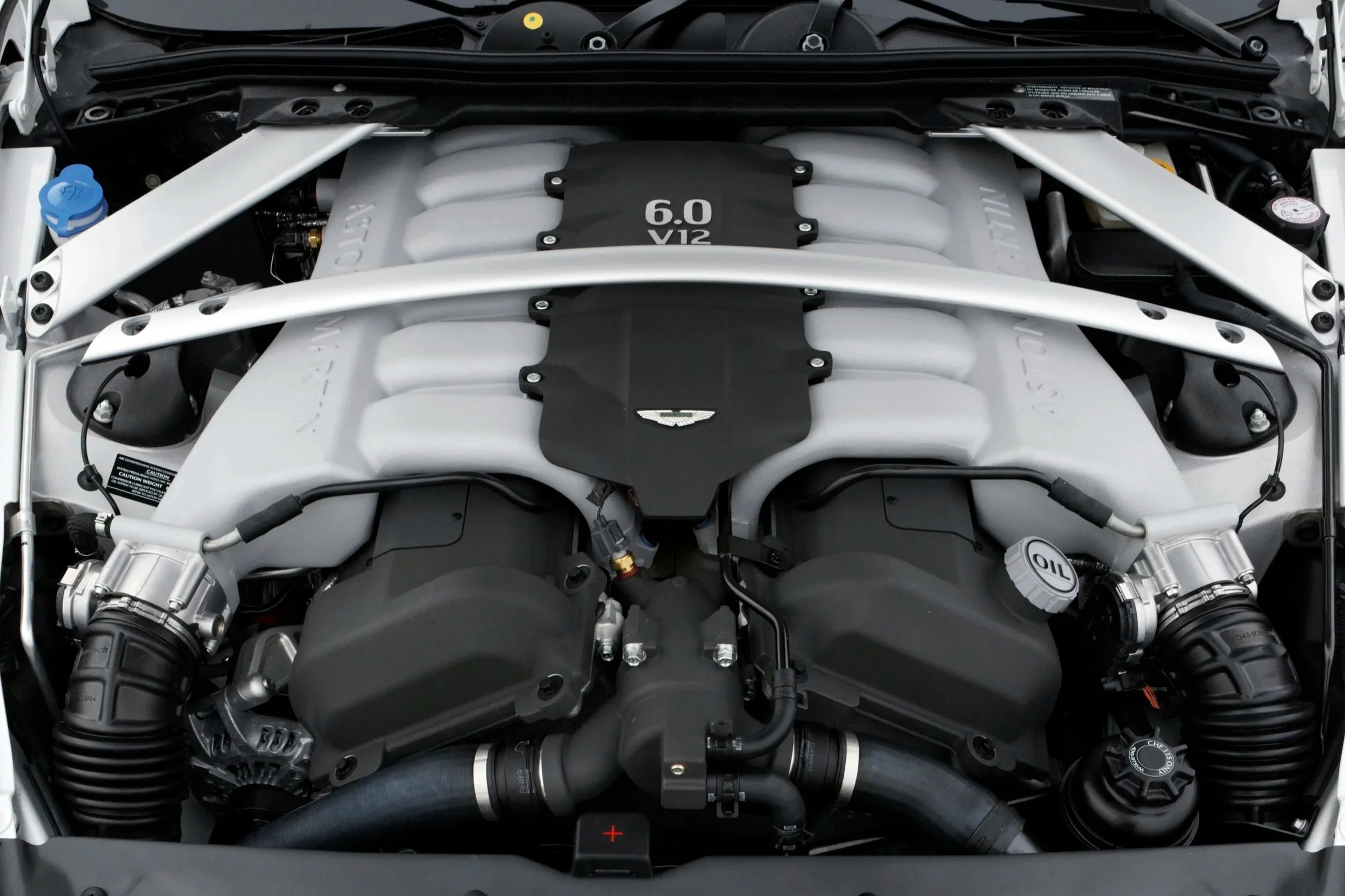
Image © Aston Martin Lagonda. Used for editorial purposes.
The important point for buyers is that the V12 should not be treated as frightening by default. Specialist and owner evidence generally supports the view that a well-maintained DB9 V12 can be robust and long-lived.
There are owner examples with significant mileage, regular use and strong reliability records. There are also low-mileage cars that have given excellent service when properly maintained.
The risk comes when a buyer assumes that smooth running and a beautiful engine note are enough. A DB9 can sound wonderful and still need deeper inspection. A proper pre-purchase inspection should look beyond the obvious. It should include cold start, hot start, idle quality, warning lights, stored codes, live diagnostic data, evidence of misfire, oil level, oil leaks, coolant behaviour, service history and invoice evidence for plugs, coils and related age-sensitive items. A good DB9 V12 should start cleanly, idle smoothly, pull without hesitation, show no warning lights and feel strong throughout the rev range. It shouldn’t shudder under load, hesitate, tick heavily, smoke, overheat or show evidence of unresolved engine-management faults.
The buyer should ask a simple question: Has this car merely been serviced, or has it been properly inspected by someone who understands Aston Martin V12s?
Those are not always the same thing.
Misfire, plugs, coils and PCV / breather checks
Misfire is one of the most important DB9 buyer-check areas. This doesn’t mean every DB9 is about to suffer a major engine problem. It means that misfire on a DB9 V12 deserves proper attention, because the possible consequences can be more serious than a slightly rough idle. The difficulty is that misfire may not always be obvious to the driver. A car may idle reasonably well, show no immediate dashboard warning and still have low-level misfire activity that a proper Aston Martin diagnostic check can detect. A generic scan that shows no current fault codes is not the same as a thorough V12 health assessment.
What is PCV?
PCV means Positive Crankcase Ventilation. It is part of the engine’s breather system, which removes crankcase fumes and oil vapour and feeds them back into the intake. On the DB9 V12, the PCV valves and breather pipework are buried around the inlet manifold area, so they are often checked when plugs, coils or manifold-off work is being done. A poor breather/PCV system can allow excess oil vapour into the intake, create vacuum issues and contribute to rough running or misfire symptoms.
Plugs and coil packs therefore need careful attention. The DB9 has twelve cylinders, and access makes plug and coil work more involved than on a simple everyday car. A buyer should look for invoice evidence, not just a verbal assurance. If plugs and coils have been replaced, when was the work done, who did it, and were any related issues found at the time?
The PCV or breather system also deserves attention. Several pieces of specialist and owner evidence point towards breather-related oil consumption and oil vapour entering the intake as an area to check. This is not something a buyer should try to diagnose on the driveway, but it’s exactly the sort of issue an Aston Martin specialist should be alive to during inspection.
A sensible buyer checklist for this area would include:
invoice evidence for spark plugs and coil packs
smooth idle from cold and hot
no hesitation or shudder under load
no check-engine or check-emissions warning
proper diagnostic scan and misfire data review
oil level and oil-consumption history
PCV / breather inspection where appropriate
no seller explanation of “it’s probably just a sensor” without evidence
A DB9 with a misfire should not be bought on the basis that it can be “sorted later” unless the cause, consequences and cost are properly understood before purchase.
The primary catalyst debate
The primary catalyst subject needs careful, balanced handling. Some Aston Martin specialists take a strong view that unresolved misfire can damage the primary catalytic converters, and that catalyst material may then create serious engine risk. Other specialist voices are less alarmist about how frequently this occurs. That means the correct buyer-guide response is not panic, and it’s not to present one modification route as the automatic answer.
What is a primary catalyst?
A primary catalyst is one of the first catalytic converters in the exhaust system, positioned close to the engine so it heats up quickly and starts reducing emissions soon after start-up. Inside is a honeycomb-like material that helps clean the exhaust gases. The DB9 debate exists because unresolved misfire can send unburned fuel into the exhaust, which may overheat or damage the catalyst. Some specialists argue that if catalyst material breaks up, it can create serious engine risk. Others are less convinced that this happens frequently. For buyers, the sensible point is not to panic, but to treat misfire, emissions warnings and catalyst modifications as issues that need proper specialist diagnosis and documentation.
The practical lesson is simpler and safer: A DB9 with misfire, emissions warnings, rough running or unresolved engine-management issues needs proper diagnosis before purchase.
A buyer should ask whether the car is standard or modified. If the exhaust or catalyst system has been altered, the buyer needs to know who did the work, why it was done, whether the ECU has been remapped, whether original parts are retained, whether the car passes MOT emissions properly, and whether the modification has been declared to insurers.
This guide does not recommend primary catalyst removal. Emissions-system changes can raise MOT, legal, insurance, originality and resale issues, particularly on a road car. A modified DB9 may still be a good car, but the modification must be properly documented, correctly executed and understood by the buyer.
The DB9 catalyst debate is a reason to take misfire seriously, not a reason to panic-buy modifications.
Oil leaks, cooling and air-conditioning
The DB9 is now old enough that fluid leaks and cooling-system condition need careful inspection. Even a small leak can become expensive if access is awkward or if the car has been driven for a long period without proper diagnosis. Oil leaks should be checked around the engine, undertrays, timing-cover area, sump area and any visible staining beneath the car. A clean underside is reassuring, but it’s not proof on its own. A car may have been cleaned before sale. Invoices, inspection reports and specialist comments are more useful than a freshly wiped undertray.
Transmission cooler lines are another area to inspect. Owner evidence has flagged leaks around cooler lines and hose connections on some cars, so a proper ramp inspection should include the rear transaxle area, cooler lines and any staining or fluid residue.
Cooling system health is equally important. Check radiator condition, fans, coolant level, signs of overheating, coolant smell, pressure issues and any history of radiator or hose replacement. A DB9 should not be running hot, losing coolant or relying on repeated top-ups.
Air-conditioning should also be tested properly. Weak air-con may sound minor, but on an Aston Martin it can point towards condenser leaks, compressor issues or deferred maintenance. A simple re-gas is not proof of repair. The question is whether the system holds pressure and works properly over time.
A buyer should ask:
does the car run at the correct temperature?
has the radiator ever been replaced?
does the air-conditioning blow properly cold?
has the system simply been re-gassed or actually repaired?
are there oil or transmission-fluid leaks underneath?
have the undertrays been removed for proper inspection?
A car with leaks, weak cooling or non-functioning air-conditioning may still be buyable, but the cost should be understood before money changes hands.
Still with us? The deeper DB9 inspection checks begin here.
You are roughly halfway through the DB9 Buyers Guide. From here, the focus moves further into gearbox behaviour, suspension, brakes, tyres, bodywork, electrics, Volante roof checks, service history, ownership costs and the evidence that separates a good DB9 from a risky one.
Gearbox and drivetrain
Most DB9s are automatic, and that shouldn’t be seen as a weakness. The DB9 is a grand tourer, and the Touchtronic automatic suits the car’s character well when it’s working properly. It’s smooth, relaxed and well matched to the V12’s torque. It’s not a modern dual-clutch gearbox. Even in later DB9 GT form, some reviewers felt the six-speed automatic was dated compared with newer rivals. That’s part of the car’s age and character. The buyer should not expect modern supercar shift speed. The buyer should expect smooth engagement, clean changes, predictable kickdown and no harsh behaviour.
On a test drive, the automatic should be assessed from cold and again once warm. Select Park, Reverse, Neutral and Drive. Check for delay, thumps, warning messages, harsh engagement, slipping, vibration or odd noises. Use the paddles and check kickdown. Look underneath for transaxle leaks and cooler-line issues.
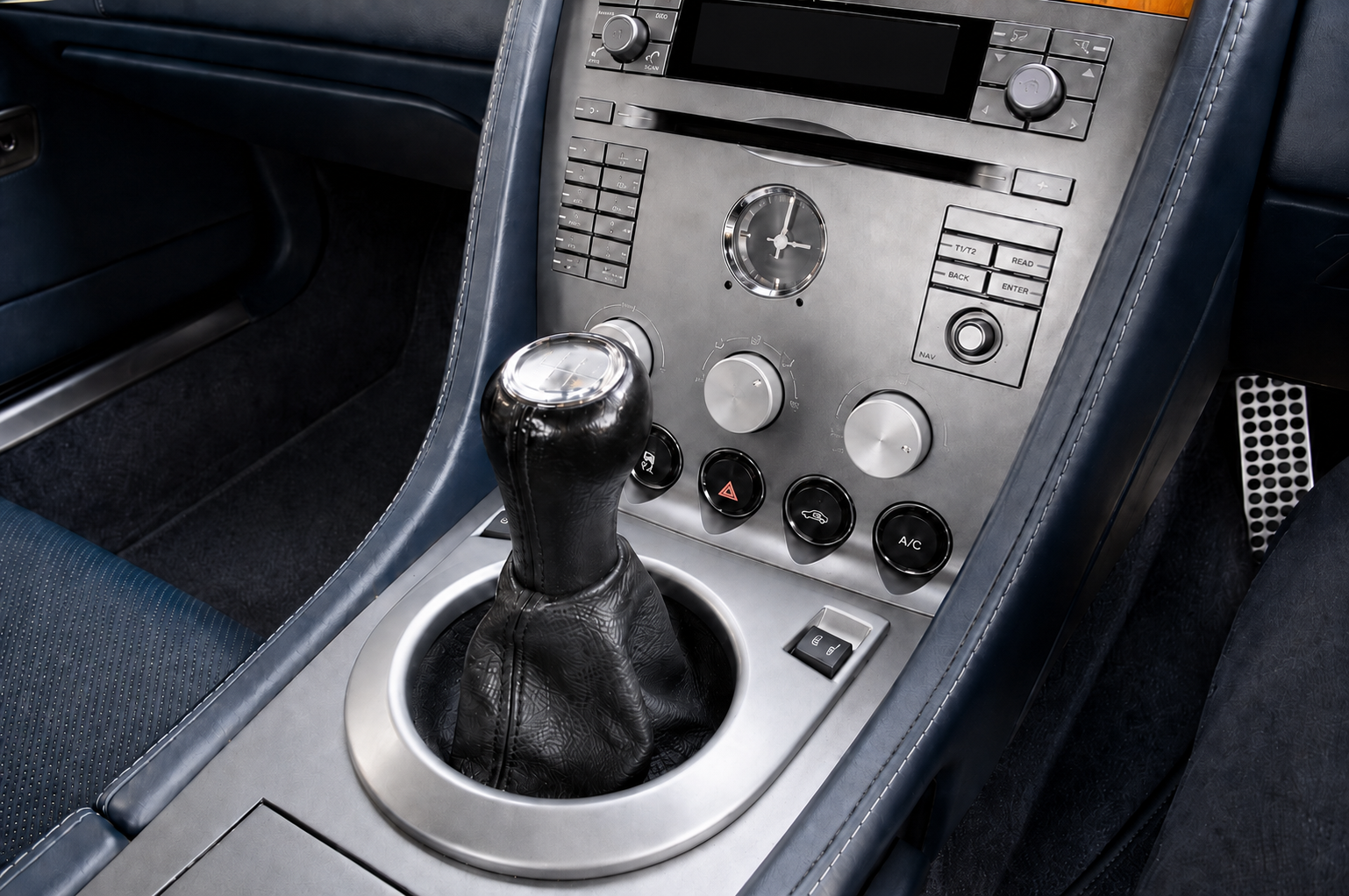
Image © Fuel the Passion
Manual DB9s are a different proposition. They’re rarer and may be more desirable to some buyers, but rarity should not overrule condition. A manual car needs a careful clutch and gearbox assessment. A high bite point, slipping, judder, heavy or wooden feel, poor second-gear engagement or awkward reverse selection should all be taken seriously.
A rare manual DB9 with clutch work due can quickly become far less attractive once the true all-in cost is calculated.
The gearbox decision should be framed honestly: The automatic is the natural DB9 choice for most buyers. The manual is for those who specifically want it, understand the rarity premium and are prepared to inspect it properly.
Suspension, steering and ride quality
Suspension condition is one of the most important parts of a DB9 inspection. The DB9 is a grand tourer. Even the more focused versions should still feel composed, controlled and capable of covering distance. If a car feels crashy, loose, vague, unsettled, nervous or harsh over ordinary roads, do not simply accept that as “old Aston character”.
A tired DB9 can feel very different from a sorted one. The evidence gathered repeatedly points towards the same areas: dampers, wishbones, bushes, springs, geometry, tyres and previous suspension work. Early damper specification, later Bilstein updates, Sports Pack cars and adaptive damping on later cars all need careful treatment, but the buyer principle is clear.
The car should be driven on roads that reveal its condition. A smooth dual carriageway is not enough. Drive over typical UK surfaces, listen for knocking or creaking, feel for body control, check whether the car tracks straight, and look for uneven tyre wear.
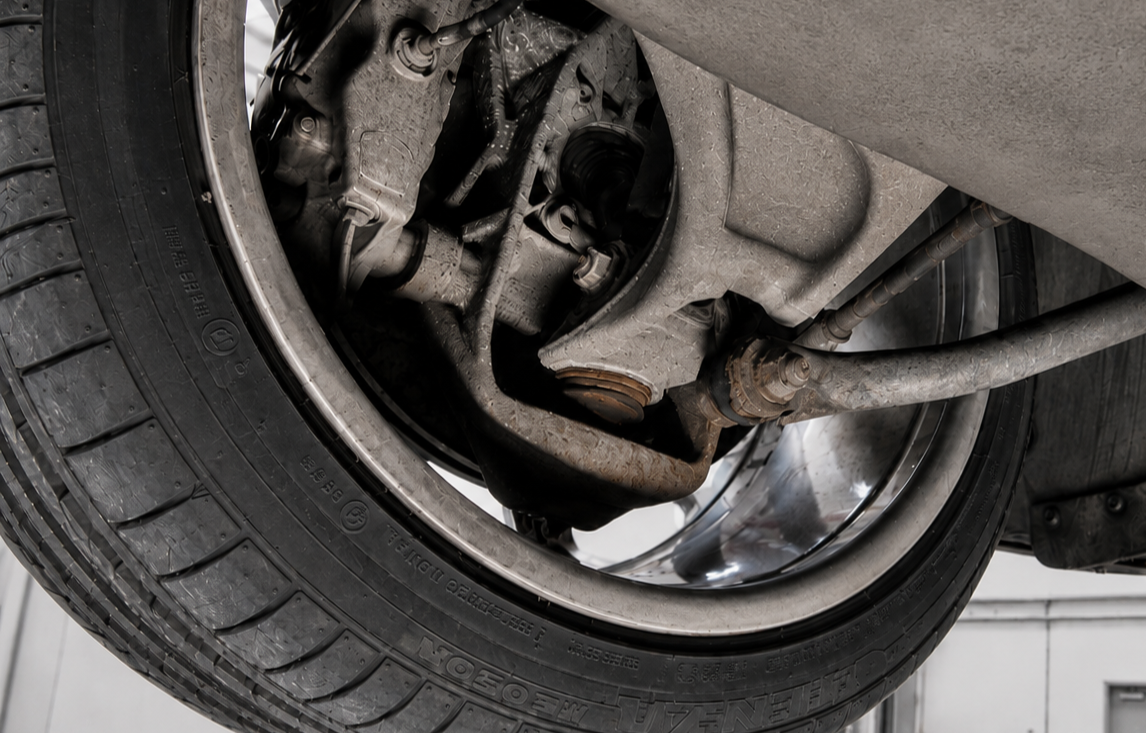
Image © Fuel the Passion
On a ramp, the inspection should include:
wishbone arms
bushes
dampers
springs
ball joints
steering components
subframes and mounting points
underbody condition
geometry evidence
tyre wear pattern
Later adaptive-damper cars need additional checks. The Normal, Sport and Track modes should operate correctly, with no warning lights and a noticeable but appropriate change in behaviour. A late DB9 should not be assumed healthy simply because it has adaptive damping. The system still relies on dampers, bushes, tyres and geometry being right.
A properly sorted DB9 should still feel like a grand tourer. If it crashes, skips, thumps or wanders, budget for specialist suspension inspection.
Brakes: steel and carbon ceramic
The DB9’s brake inspection depends heavily on model phase. Earlier cars use steel brakes. These should be checked like any heavy, powerful performance car: disc condition, pad life, calipers, brake lines, brake fluid, corrosion, vibration, pedal feel and service history. Brake squeal can occur, especially if the car has stood or been used gently, but persistent squeal, pulsing, vibration or weak pedal feel should not be dismissed.
Later heavily revised cars and DB9 GTs bring carbon ceramic brakes. They’re a major benefit when healthy, giving strong stopping power and excellent resistance to fade, but they also introduce a more serious replacement-cost exposure. Mileage alone does not tell the whole story. Carbon ceramic discs need to be inspected for chips, cracks, edge damage, surface condition, correct pads and evidence of track use or poor handling.
A low-mileage GT with carbon ceramics still needs brake inspection. A car stored for long periods may have old tyres, battery issues, moisture-related concerns or brake condition questions despite its mileage.
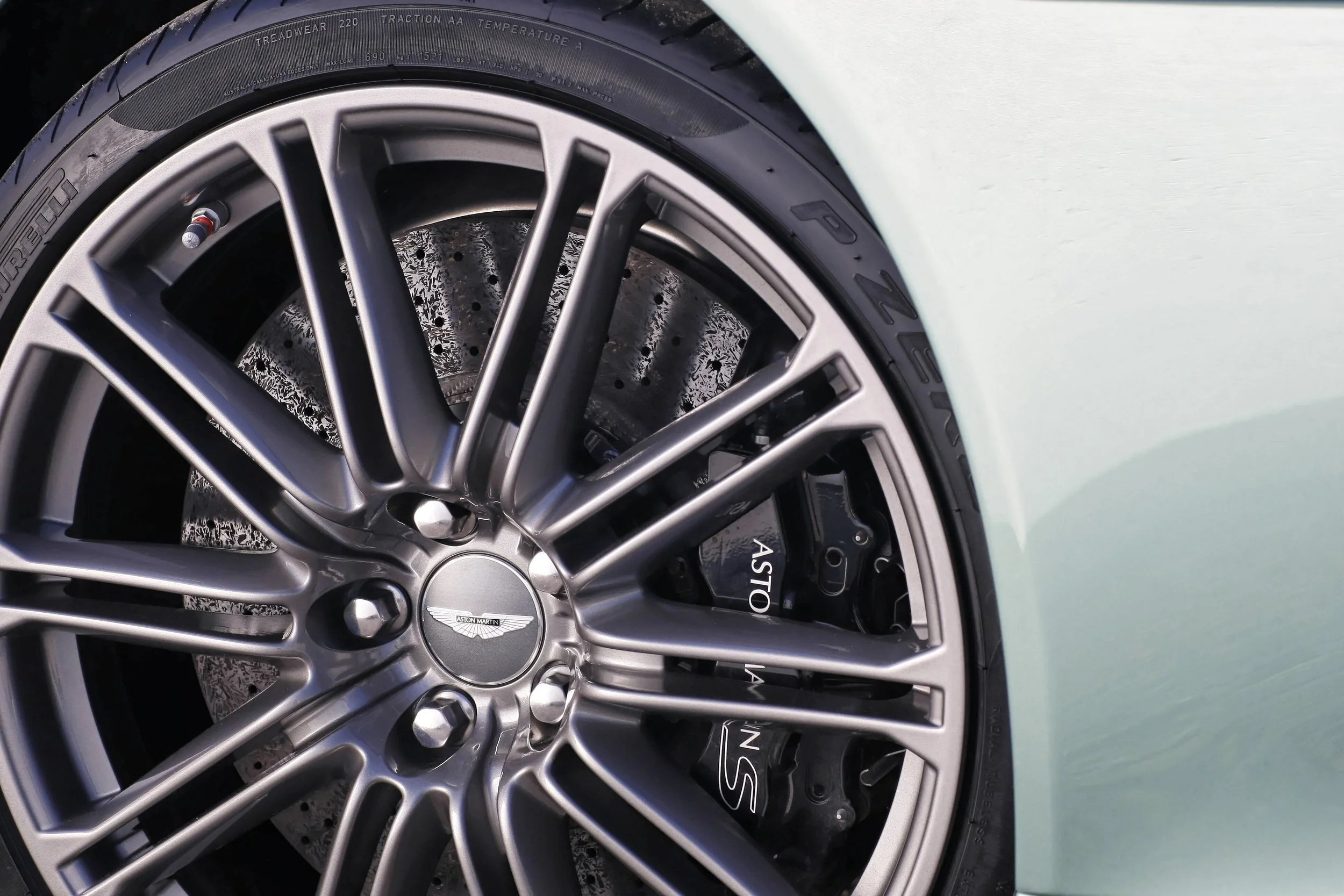
Image © Aston Martin Lagonda. Used for editorial purposes.
A buyer should check:
steel disc corrosion and lip
pad depth and quality
brake-fluid history
caliper condition
brake lines
vibration or pulling under braking
carbon ceramic chips or cracks
carbon ceramic pad compatibility
warning messages
evidence of hard use
Unexpected carbon ceramic brake replacement can be expensive and should be considered before purchase.
Tyres and wheels
Tyres are a major DB9 buying clue. A car on old, mismatched, budget or perished tyres may not drive as Aston Martin intended. It may also suggest an owner who has been trying to run the car cheaply. On a heavy, powerful, rear-wheel-drive V12 GT, tyre quality is not cosmetic. It affects steering, braking, ride, traction and confidence.
Check all four tyre date codes. Look at tread depth, inner-edge wear, sidewalls, cracking, brand, matching axle pairs and whether the tyres suit the car. Low-mileage DB9s can still be on old rubber. A car that’s done very few miles over many years may need tyres despite healthy tread depth.
Wheels also deserve inspection. Look for cracks, buckles, kerb damage, corrosion, poor refurbishments and correct specification. Chrome or polished finishes may suffer cosmetic deterioration, and aftermarket wheels should be checked for quality, offset, tyre fitment and insurance disclosure.
A DB9 with excellent paint and tired tyres is telling you something. It may have been polished more than it’s been maintained.
Bodywork, paint bubbling and corrosion
The DB9 is a beautiful car, but it’s also a car that needs to be inspected slowly and in the right light. This is one of the most important areas of any DB9 purchase. Buyers should not assume that a shiny DB9 is a clean DB9. The shape can distract you. The paint can look wonderful in photographs. A freshly detailed car can hide a lot at first glance. But the DB9 is now old enough for paint bubbling, edge corrosion, previous repair quality and stone-chip damage to be major buying factors.
The issue is often not conventional rust in the old-fashioned sense. The DB9 uses aluminium and composite panels, and much of the evidence points towards bubbling or corrosion appearing around edges, fixings and panel interfaces. That distinction is important because the problem may be cosmetic rather than structural, but proper repair can still be specialist and expensive.
The bodywork check should not simply be: “Is there any bubbling?” It should also be: “Has any previous paintwork been done properly?”
A DB9 may have had paint repair for perfectly reasonable reasons. Stone chips, bumper scuffs and cosmetic bubbling are not unusual on cars of this age. The concern is poor preparation, poor colour match, overspray, masking lines, thick paint, unresolved bubbling beneath a quick repair, or a seller who cannot explain what’s been done.
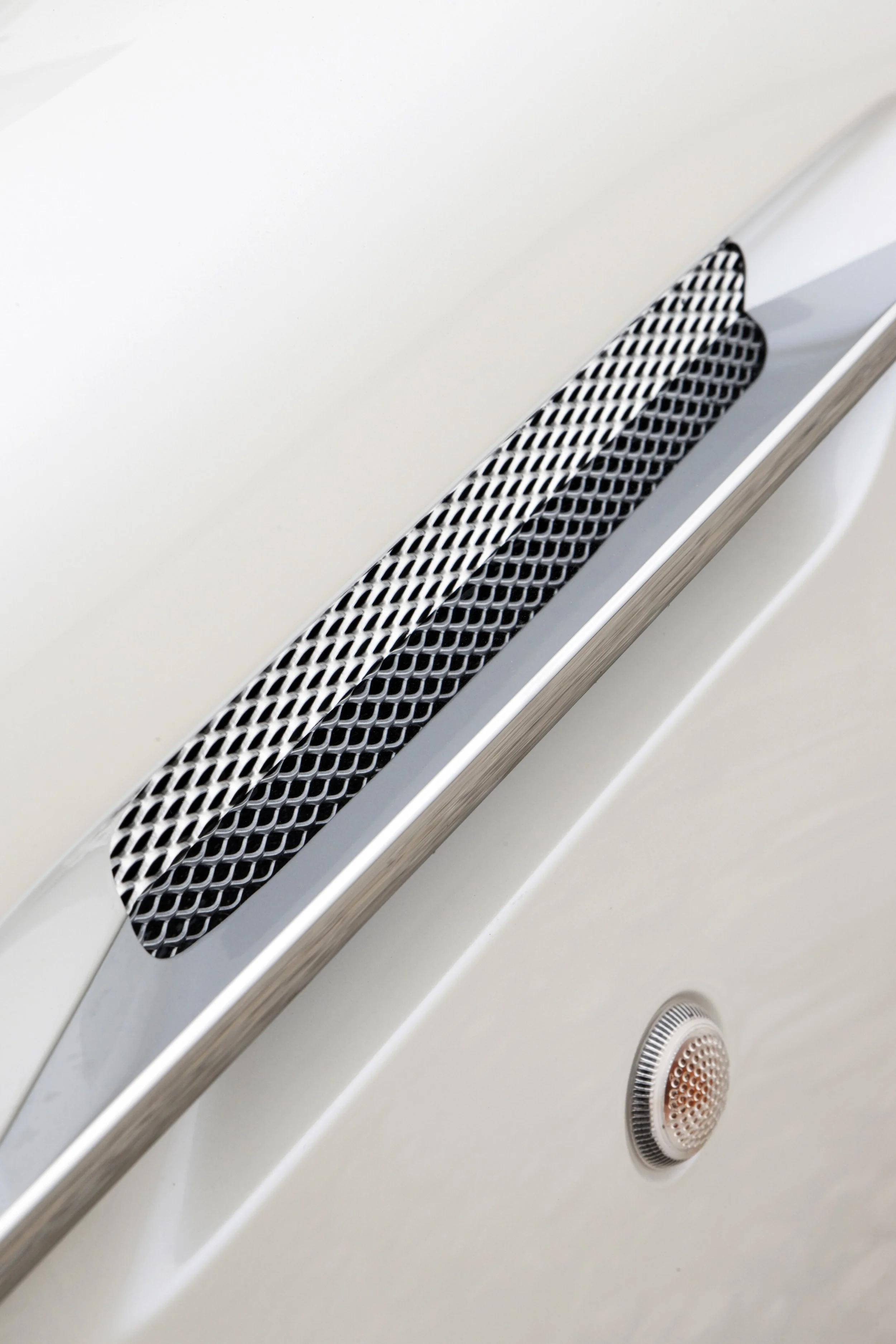
Image © Aston Martin Lagonda. Used for editorial purposes.
A proper DB9 bodywork inspection should include:
door handles
door locks
mirror arms and stalks
rear light surrounds
rear screen edges
bonnet edges and underside
boot lid edges
roof edges
wheelarches
lower doors
front wings
front bumper and splitter
rear bumper and diffuser area
panel gaps
paint texture
colour match in direct light
overspray and masking lines
evidence of accident repair
The car should ideally be viewed outside, in daylight, and then again under strong indoor lighting if possible. A DB9 can look very different under showroom lights, dull weather and direct sunlight.
Paint bubbling doesn’t automatically make a DB9 a bad car, and a previously painted car is not automatically a car to avoid. But poor repair quality, widespread bubbling, unexplained paintwork or corrosion being dismissed as “nothing” should all slow the buyer down. A good DB9 should look special up close, not just from across the forecourt.
Front wings, bumpers and stone-chip repairs
The front of a DB9 works hard. The nose is low, the bonnet is long, and the front bumper and splitter area are vulnerable to stone chips, kerbs, ramps and poor approach angles.
Front-end repainting is not necessarily a red flag. Many cared-for DB9s will have had front-end paintwork to correct stone chips or lower bumper scuffs. The important questions are whether the work was done well, whether the colour match is accurate, whether the paint texture is consistent and whether the repair was cosmetic or accident-related.
Some sources raise early front-wing bubbling as a potential inspection point, although the exact cause and affected years should be treated cautiously unless verified on the individual car. Inspect early front wings carefully for bubbling, waviness, previous repair or paint mismatch rather than making assumptions.
A DB9 buyer should look closely at:
leading edge of the bonnet
top and edges of the front wings
front bumper colour match
lower splitter condition
stone-chip rash
evidence of paint protection film
quality of any repainting
panel alignment around the nose
A front bumper respray may be perfectly acceptable. A poor front bumper respray on an otherwise expensive-looking DB9 tells you something about how carefully the car may have been maintained.
Mirror arms, door handles and small details
Small exterior details matter on a DB9 because they can reveal how the car has lived. Mirror arms and stalks are a repeated inspection area. Bubbling, flaking or corrosion here can look minor, but it still affects the car’s presentation and may require specialist cosmetic work to correct properly. Door handles and door locks should also be checked closely, both for bubbling around the surrounding area and for operation.
The DB9’s swan doors are part of the theatre of the car, but they’re also practical inspection points. Open both doors fully, they should rise cleanly and hold their position. Weak door struts are not catastrophic, but they’re a useful sign of age and attention. Door alignment, latch operation, window drop and central locking should all be checked at the same time.
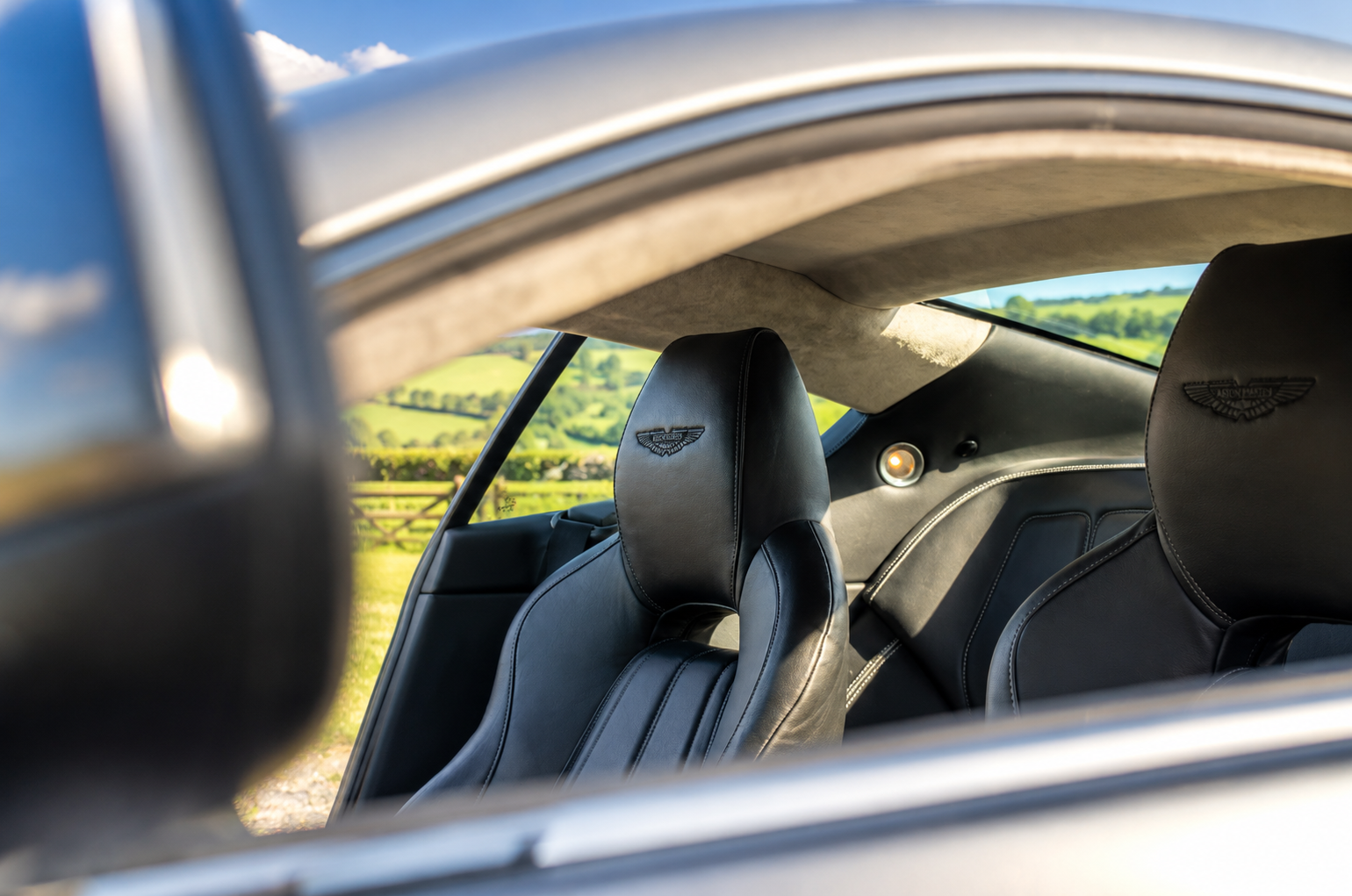
Image © Fuel the Passion
Look for:
bubbling around the door handles
bubbling around door locks
mirror stalk corrosion or flaking
weak door struts
door drop or poor alignment
lazy latches
window drop faults
remote locking issues
The DB9’s details are part of its appeal. If the details are tired, the buyer should ask what else has been allowed to age.
Lights, condensation and lamp units
Headlights and rear lights should be inspected carefully. Some misting can occur on many cars and may clear naturally, but standing water, persistent condensation, staining inside the lens, failed LEDs or warning messages are different matters. Aston Martin lamp units can be expensive, and moisture-related issues should not be dismissed too casually. I know from experience, Aston Martin lights are very expensive. Check out my experience concerning my FTP Vantage as an example. There’s a specific section on a headlight replacement HERE. I appreciate that’s on a 2019 Vantage, but it just illustrates the high cost of replacing lighting units. I was not prepared for how much that would be.
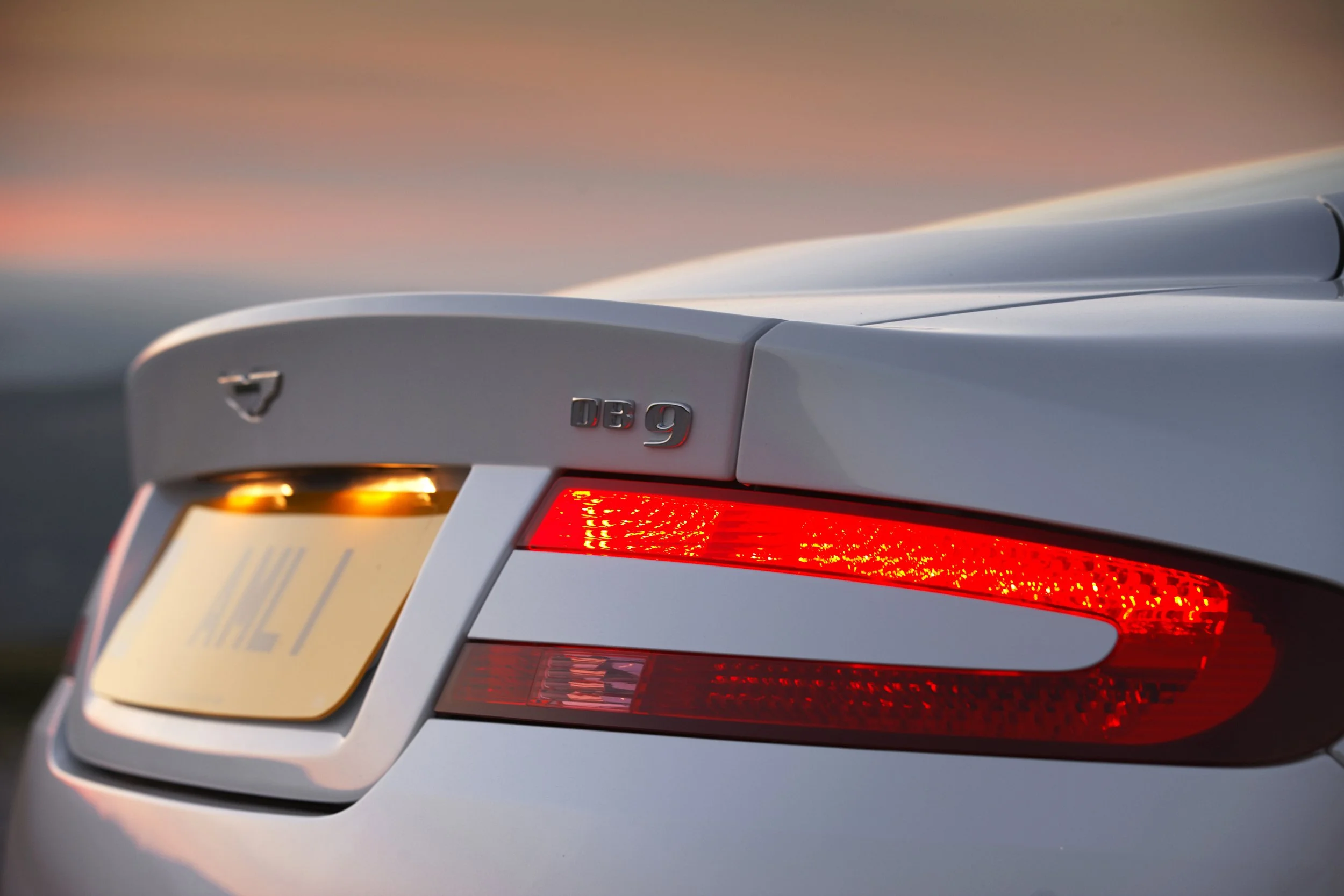
Image © Aston Martin Lagonda. Used for editorial purposes.
Check:
headlight lenses
rear light lenses
condensation that does not clear
water staining
failed bulbs or LEDs
warning messages
previous replacement evidence
mismatched lamp units
cracks or poor sealing
This is a good example of the wider DB9 buying rule: a small fault may not be frightening, but it should still be priced, understood and documented.
Interior condition: leather, trim and seats
The DB9 cabin is one of the main reasons to buy the car. Even now, a good DB9 interior can feel properly special: leather, metal, veneer, a low driving position and that sense of sitting inside something hand-built rather than generic. But the same interior can also show age.
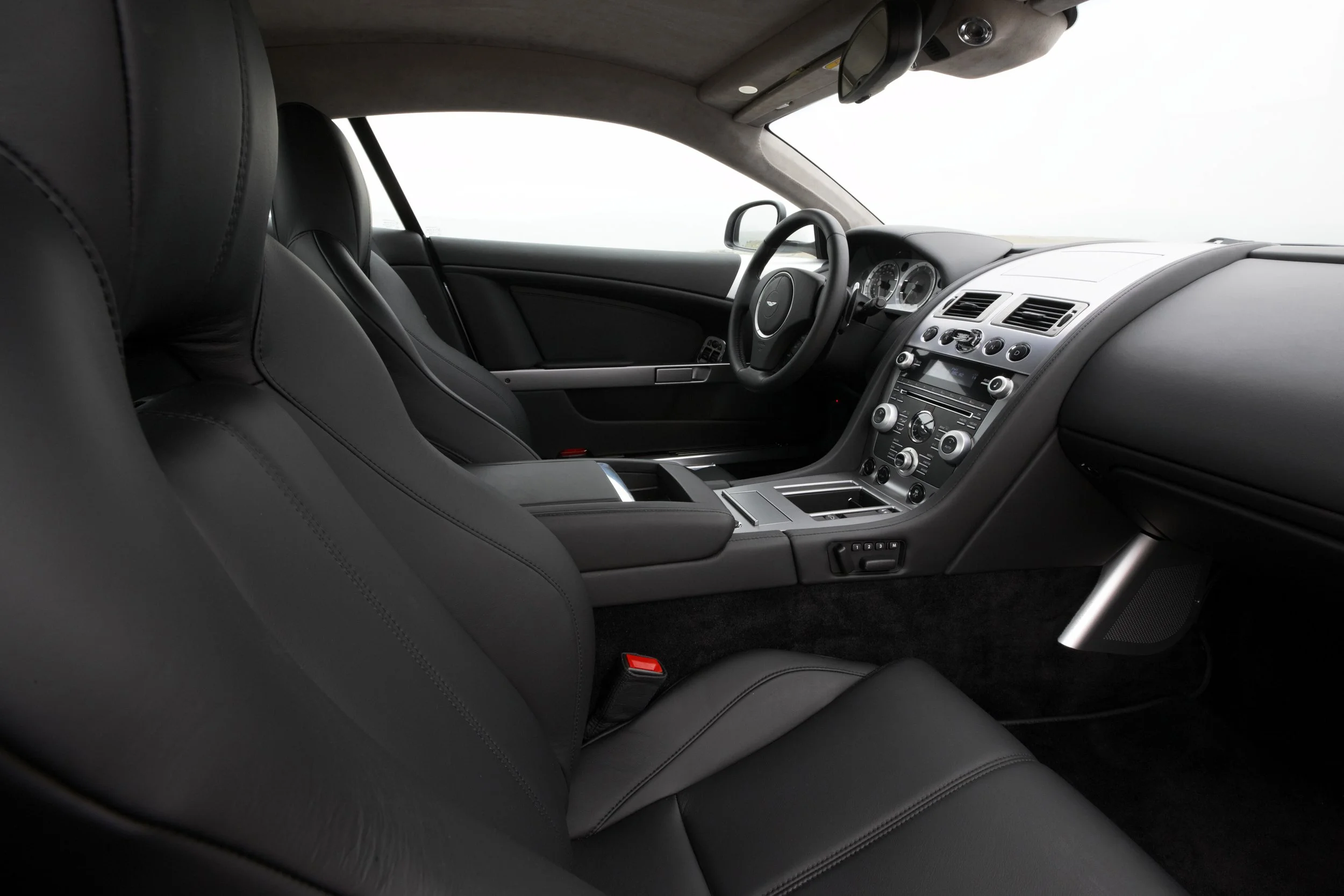
Image © Aston Martin Lagonda. Used for editorial purposes.
Leather condition should be inspected carefully. Look at the driver’s outer bolster, seat base, seat back, stitching, seat piping, dashboard leather, airbag cover area, binnacle, centre console, door tops, rear side panels and headlining. Leather shrinkage, lifting, peeling, hardening, staining or poor retrim work can all affect the way the car feels.
Seats deserve their own attention. The DB9 is a grand tourer, but seat comfort is personal. Some owners find the seats comfortable over distance, others don’t. The buyer should spend proper time in the actual car. Don’t just sit in it for thirty seconds while excited. Adjust the seat, steering wheel and mirrors. Check lumbar support, bolster condition, seat heating, memory functions and whether the seat suits your back.
A DB9 should feel special, but it also has to fit you.
Rear seats, boot and everyday usability
The DB9 is a 2+2, but buyers should be realistic about what that means. The rear seats are occasional seats, they may work for small children, short trips or extra luggage, but they shouldn’t be treated as proper adult accommodation. Before buying, test your actual use case. If children will use the rear seats, try the child seats. If touring is the plan, bring the luggage or at least measure what you expect to carry.
If the car will be used regularly, check visibility, parking, seat access, storage and whether the low seating position works for you.
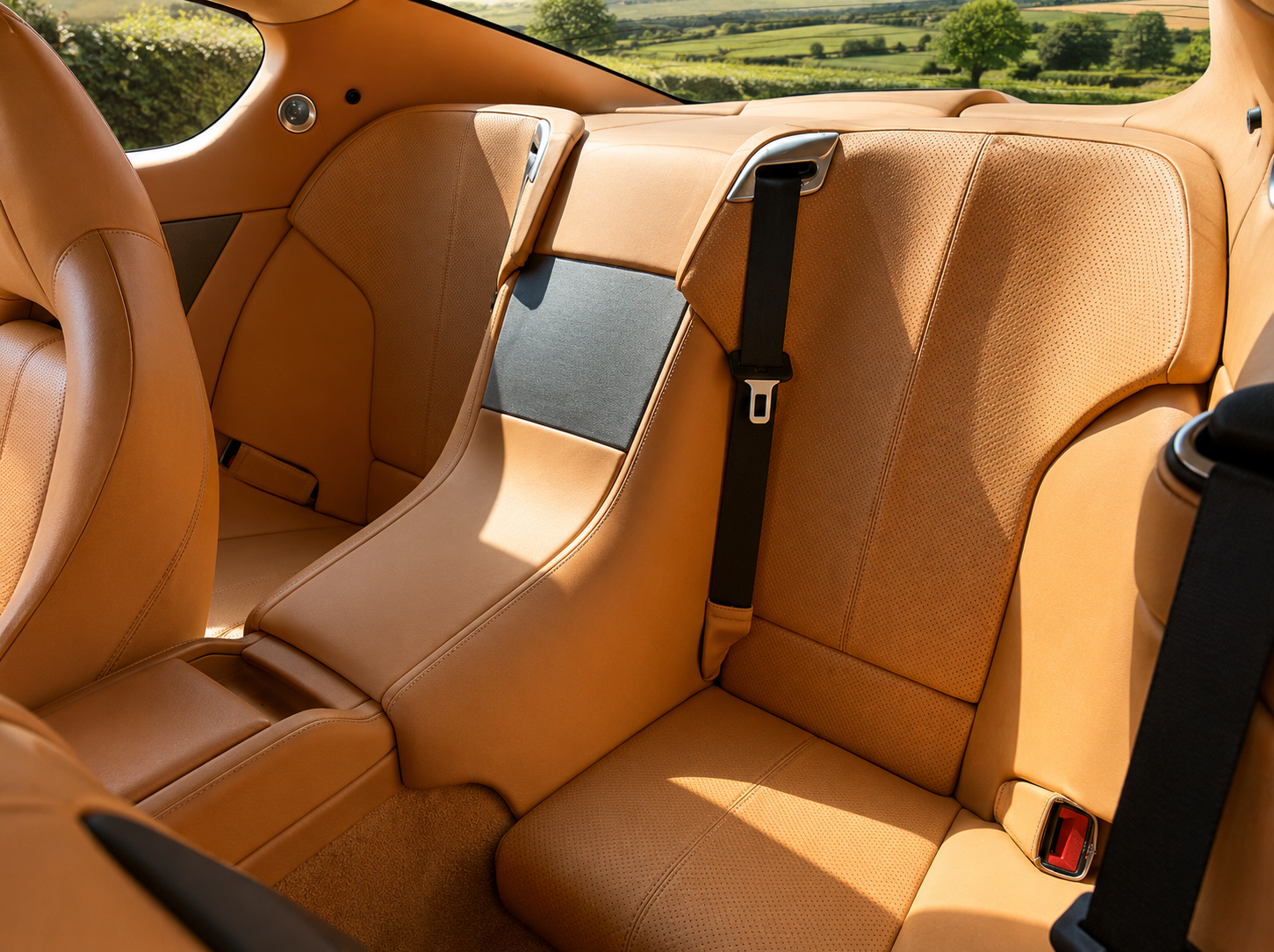
Image © Fuel the Passion
Check:
rear seat space
front-seat movement
access to rear seats
boot space
glovebox and door pockets
parking sensors
reversing camera where fitted
low front clearance
visibility on narrow roads
The DB9 can be surprisingly usable, but it is still a low, wide, V12 Aston Martin. The buyer should test the life they plan to live with it.
Infotainment, navigation and audio
The DB9’s infotainment varies significantly by age, but no DB9 should be judged by modern touchscreen standards. Early cars have dated navigation and control systems. Later cars improved, with Garmin navigation and later DB9 GT-era systems feeling more polished, but even these are still old compared with modern cars.
The right question is not whether the system feels new. It’s whether it works correctly, whether the buyer can live with it, and whether any upgrades have been installed properly.
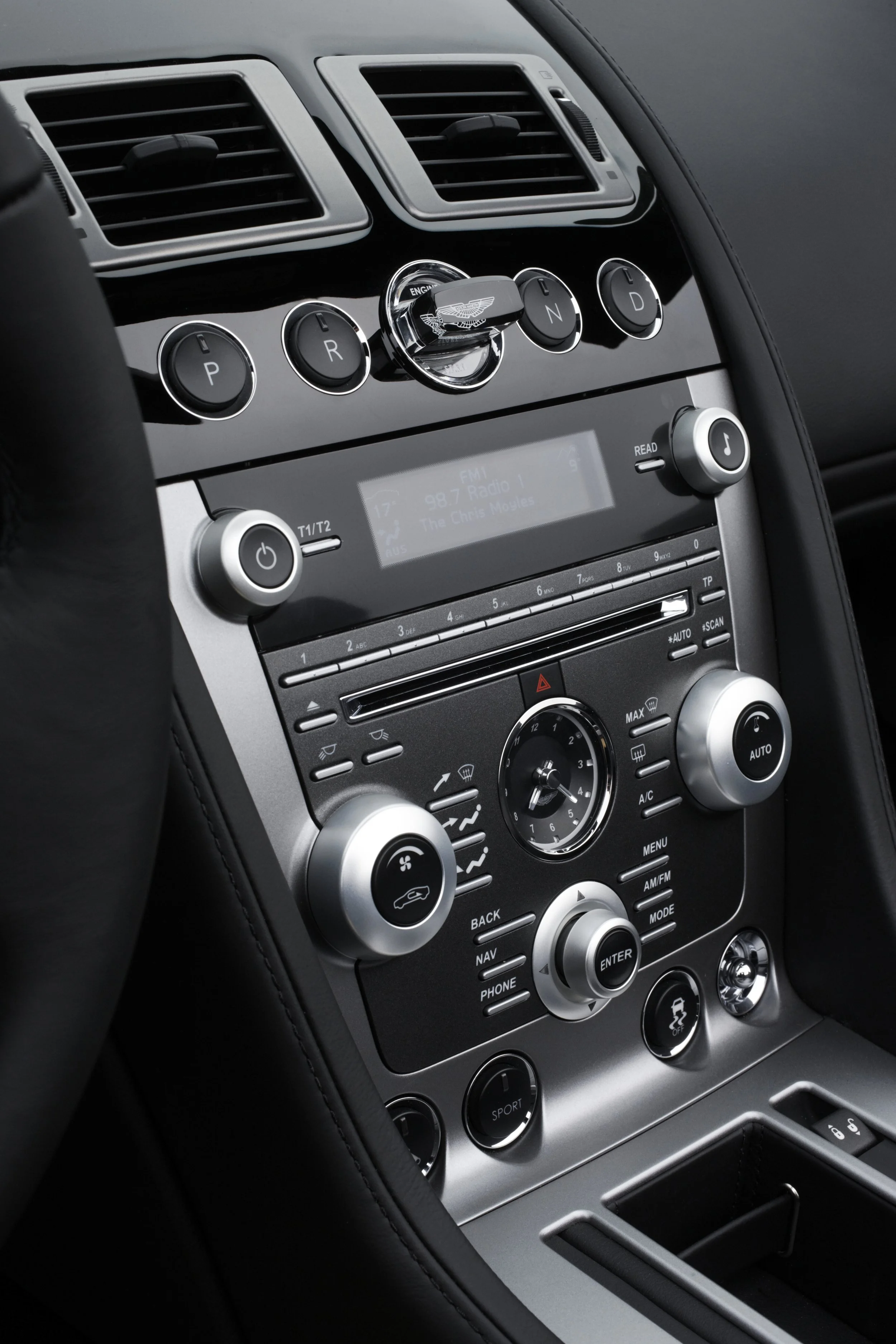
Image © Aston Martin Lagonda. Used for editorial purposes.
Check:
navigation screen rises and retracts properly
screen does not click, stick or grind
radio works
all speakers work
amplifier works when cold and warm
Bluetooth phone function
iPod/USB/AUX where fitted
CD changer where fitted
parking sensor audio
reversing camera display
steering wheel controls
any aftermarket CarPlay or audio upgrade
wiring quality behind upgrades
A tired infotainment system may not spoil the car for some buyers. A poorly installed upgrade or failing amplifier might.
Keys, key dock and security equipment
Keys are a surprisingly important DB9 inspection point. Early cars have a more conventional key arrangement, while later cars introduced the glass Emotional Control Unit key. The glass key is part of the later DB9 theatre, but it can chip, wear or be missing. All keys should be present, working and physically checked.
Do not accept “the spare is at home” without follow-up. Check both keys. Make sure they lock and unlock the car, start the car and work with the alarm. Check the key dock on later cars and inspect the condition of the glass key.
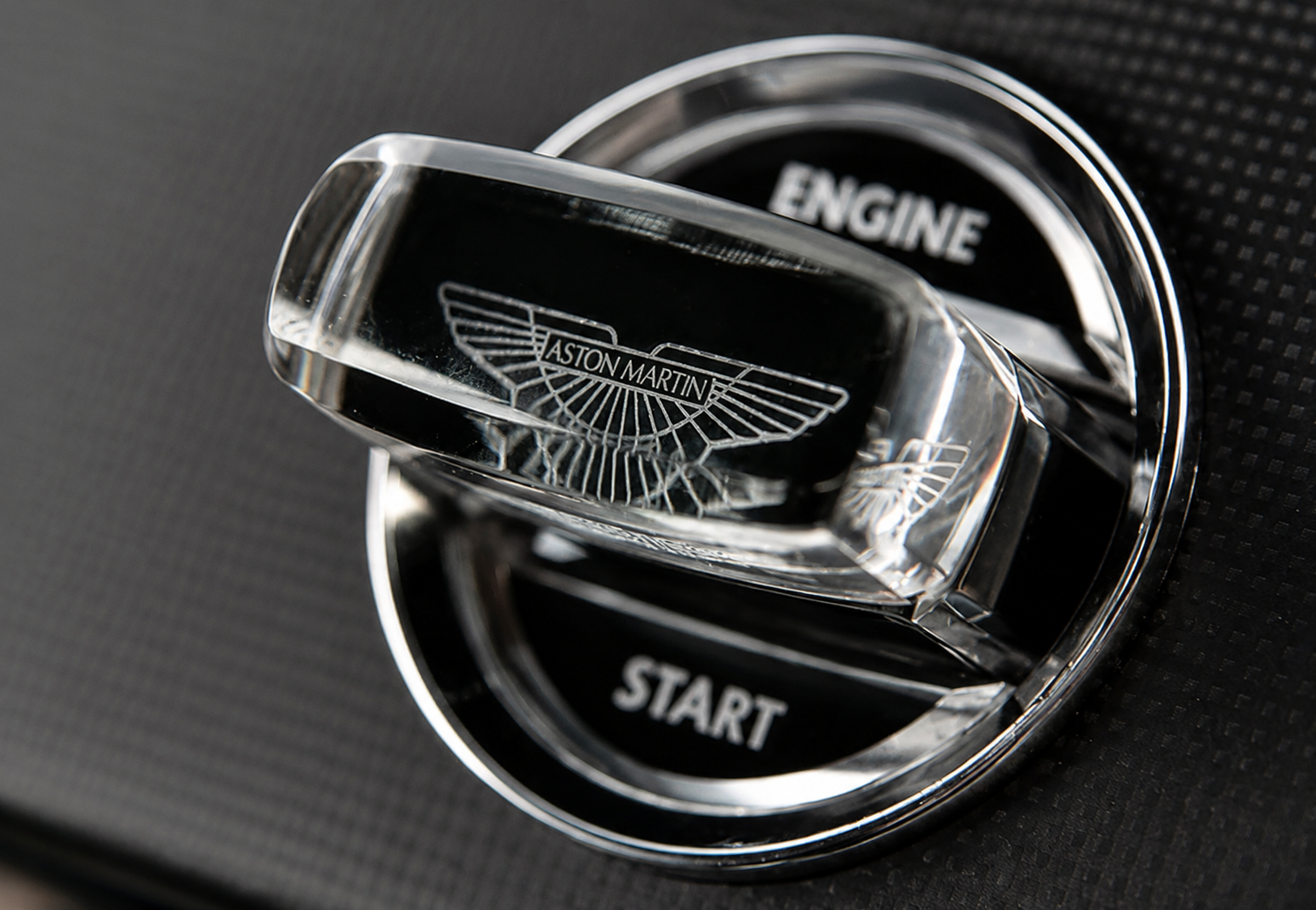
Image © Fuel the Passion
Check:
main key
spare key
valet key if supplied
glass key condition
chipped or cracked crystal
remote locking
alarm operation
key dock
immobiliser behaviour
A missing or damaged key is not just a small inconvenience. It’s a negotiation point and potentially a sign of how carefully the car’s file has been kept.
Door modules, window drop and electrical checks
The DB9’s doors and windows need careful checking. The frameless windows should drop and rise correctly when the doors are opened and closed. Door modules, window regulators and related electronics appear repeatedly in owner and specialist evidence, so this should be a firm buyer-check area.
Open and close each door several times. Watch the window drop. Listen for grinding, hesitation or clicking. Check that the glass seals properly when the door closes. Test the central locking, mirror adjustment, interior lights, window switches and door handles.
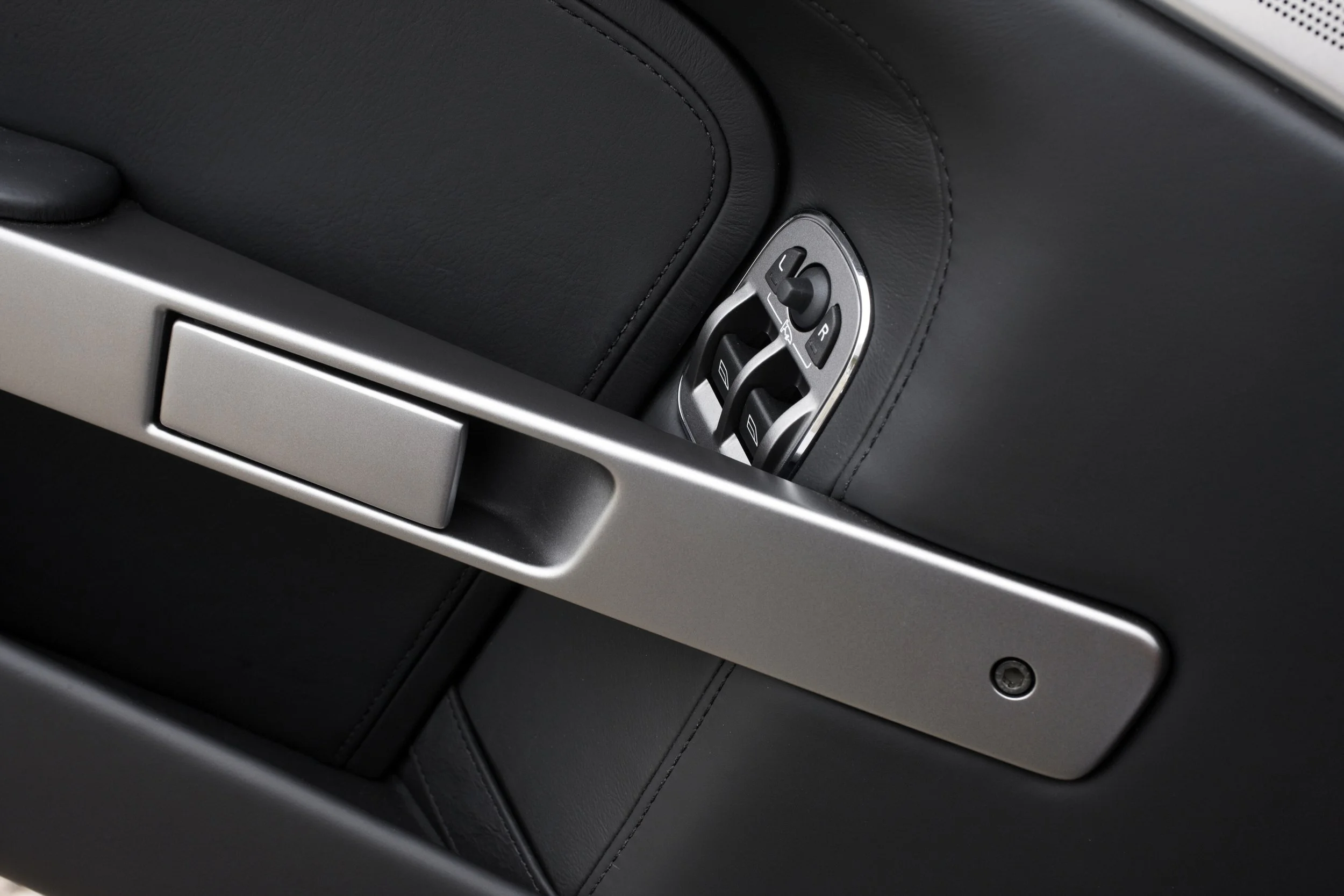
Image © Aston Martin Lagonda. Used for editorial purposes.
Check:
window drop both sides
window rise both sides
regulator noise
glass alignment
door locks
mirror adjustment and folding
central locking
interior lights
alarm behaviour
stored module fault codes
Electrical faults should not be dismissed as “just an Aston thing.” They should be diagnosed.
Warning lights, SRS and modules
A DB9 with warning lights needs explanation before purchase. This applies to check-engine, check-emissions, airbag/SRS, suspension, brake, gearbox and roof warnings. A seller may say a light is “just a sensor”, but the buyer should ask for evidence. A diagnostic report matters more than reassurance.
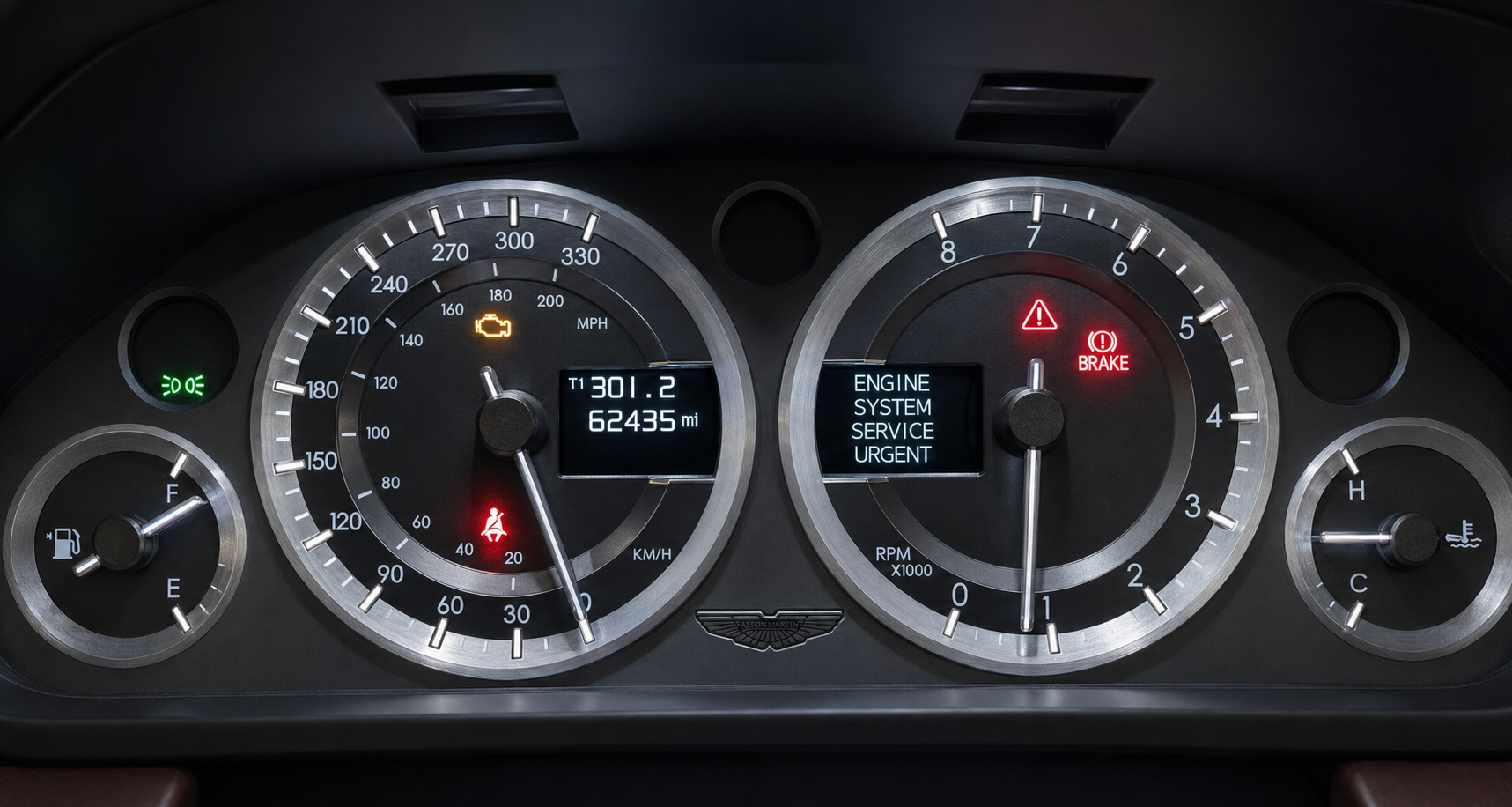
Image © Fuel the Passion
Check:
all warning lights illuminate and go out correctly
no airbag/SRS warning remains
no check-engine or emissions warning
no suspension warnings
no gearbox warnings
no roof warnings on Volante
diagnostic scan report available
low-voltage codes investigated
seller has not simply cleared faults before viewing
A DB9 should not be bought blind with dashboard warnings present unless the buyer has priced and understood the repair.
Battery condition and low-voltage behaviour
Battery health is not just a small ownership detail on a DB9. Low voltage can create warning lights, strange module behaviour, alarm issues and confusing electrical symptoms. A buyer should ask how the car has been stored, whether it’s been kept on a battery conditioner, how old the battery is and whether any tracker or alarm system has caused drain. Very low-mileage cars need particular attention because they may have spent long periods standing.
A low-mileage DB9 that has been stored properly, conditioned and serviced on time is a different prospect from one that has simply sat with stale fluids, old tyres and a weak battery.
Check:
battery age
battery brand/specification
conditioner use
charger lead fitted
low-voltage fault history
tracker drain
alarm behaviour
module resets
storage conditions
This doesn’t mean every electrical oddity is battery-related. It means battery condition should be checked before chasing more complex faults.
Volante roof, seals and water ingress
The Volante needs its own section because it brings risks and inspection points beyond the Coupe. A DB9 Volante roof should operate smoothly and consistently. It should not pause halfway, strain, twist, creak heavily, trigger warning messages or need persuasion. Roof faults can involve switches, latches, hydraulics, modules, wiring, seals, drains or alignment. None of these should be guessed at during a viewing.
Operate the roof more than once. Ideally, check it from cold and after the car has been running. Watch the movement from both sides. Listen for uneven noises. Check the tonneau cover, rear glass, fabric, stitching and seals. Then check for water.
Look at the carpets, footwells, behind seats, boot area, roof stowage area and any hidden corners where damp can sit. Smell matters too, a musty DB9 Volante deserves caution. Water ingress can damage trim and electronics, and it can be difficult to trace.
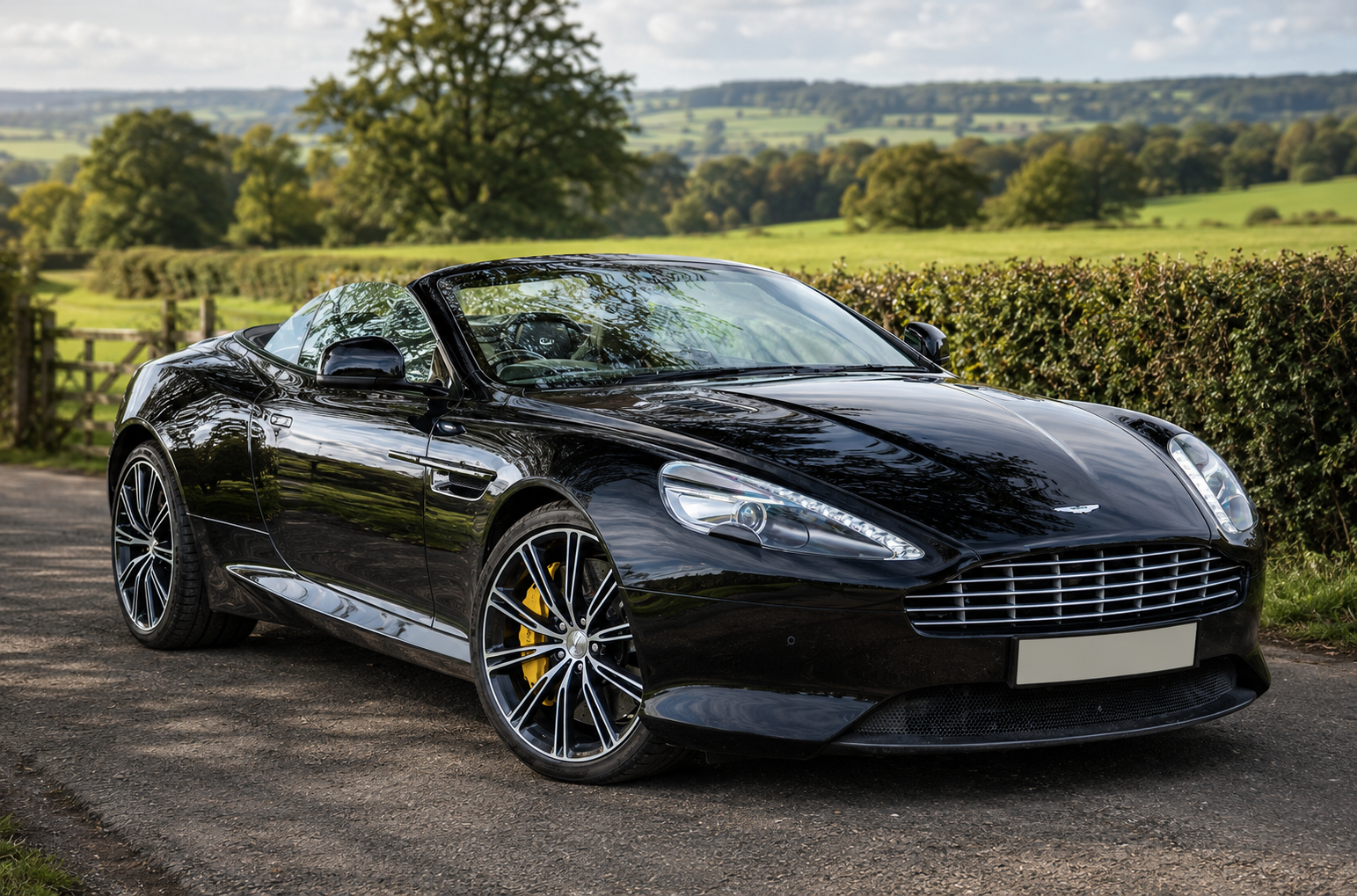
Image © Fuel the Passion
A Volante buyer should check:
roof opens and closes smoothly
roof completes cycle without warnings
latches operate correctly
hydraulic system is quiet and even
no visible leaks
fabric condition
rear glass condition
seals and rubbers
drains
boot moisture
damp carpets
musty smells
tonneau alignment
roof module fault history
wind noise on test drive
chassis shake or rattles
The Volante is not a car to buy simply because it looks beautiful with the roof down. It has to work properly with the roof up, roof down and after heavy rain.
Service history: invoices matter more than stamps
A DB9 should not be bought on service-book stamps alone. A stamped book is reassuring, but it doesn’t tell the whole story. It tells you the car was seen. It doesn’t tell you what was actually done, what was advised, what was deferred, what was repaired properly, or what the previous owner chose not to authorise. That distinction is central to buying a DB9 well.
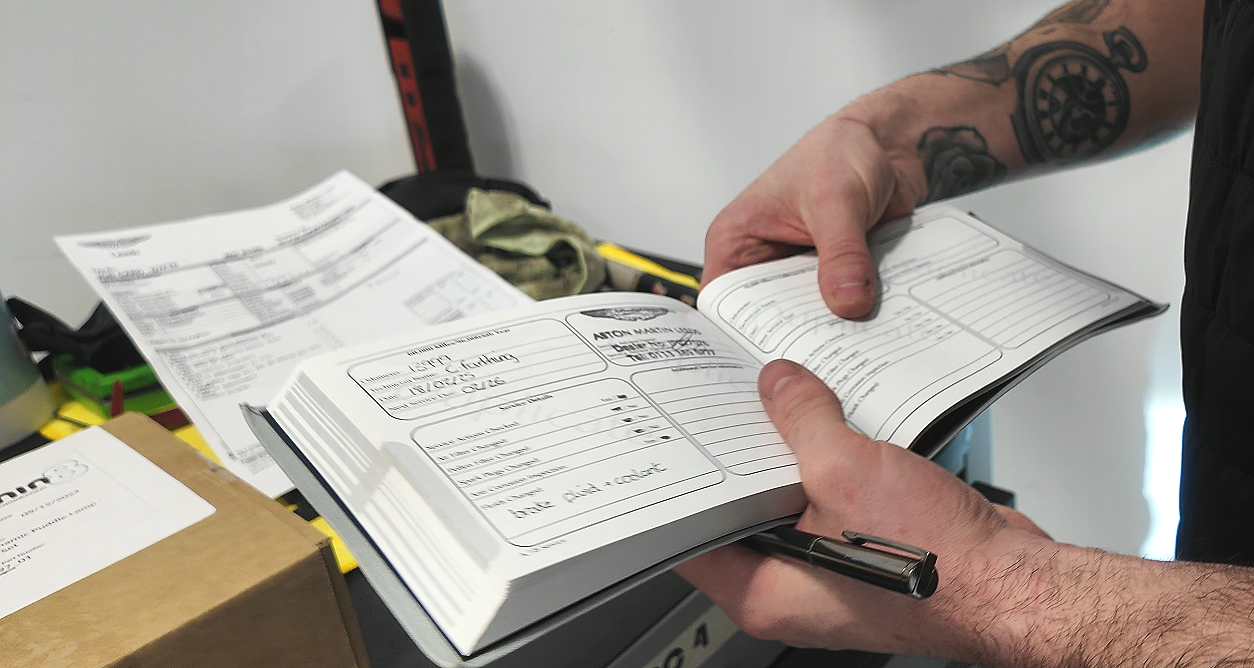
Image © Fuel the Passion
For a DB9 buyer, the ideal history file should include more than annual stamps. You want to see invoices for servicing, tyres, brakes, spark plugs, coil packs, PCV or breather work, suspension arms, dampers, bushes, air-conditioning repairs, batteries, modules, paintwork, roof work on Volantes, recall or campaign checks, and diagnostic investigation where warning lights or misfire have appeared.
A DB9 with a specialist history can be excellent. A DB9 with main-dealer history can also be excellent. The badge at the top of the invoice is less important than the quality and detail of the work, although early main-dealer history can be useful because recalls, campaigns and service bulletins may be more likely to have been captured during the warranty period.
The buyer should ask:
Are there invoices, or only stamps?
Who maintained the car?
Was it an Aston Martin dealer or recognised marque specialist?
Were advisories completed or deferred?
Are plugs, coils and related V12 service items documented?
Has suspension work been done?
Has air-conditioning work been properly diagnosed?
Has the car had any warning lights, misfire or emissions issues?
Have recalls and safety campaigns been checked by VIN?
Does the seller have a recent inspection report?
A thin history file does not automatically make a DB9 bad, but it increases risk. On a car like this, absence of evidence should not be treated as evidence that everything is fine.
A stamped service book tells you the car was seen. Detailed invoices tell you what was actually done.
Recall, safety campaign and VIN checks
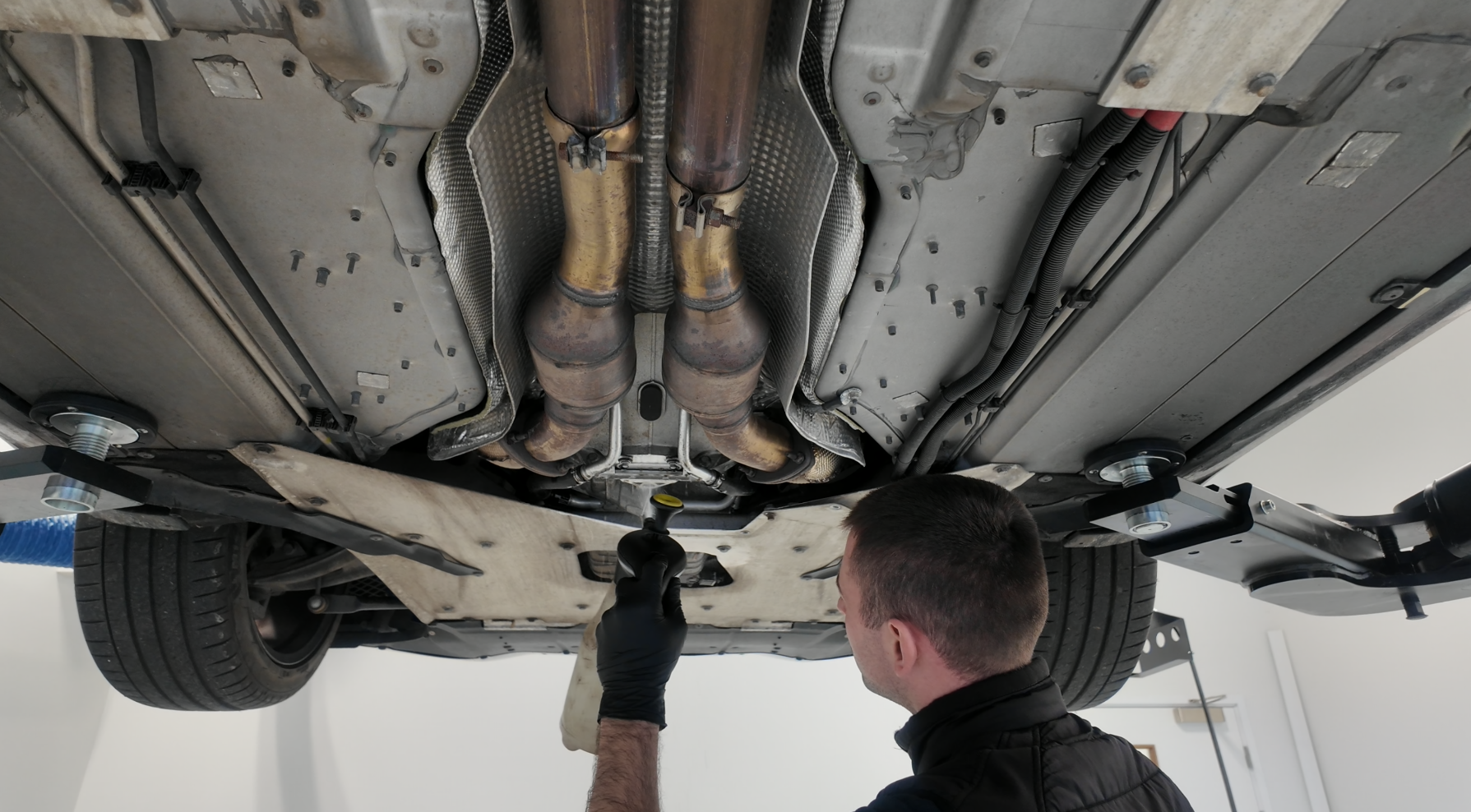
Image © Fuel the Passion
Before buying any DB9, ask an Aston Martin dealer or recognised marque specialist to check the car’s VIN for outstanding recalls, safety campaigns and service actions. Aston Martin’s own Safety Campaign Checker is VIN-based, and the VIN is the safest way to confirm whether a specific vehicle is affected. you can also check the VIN via their Safety Campaign Checker or by clicking on the image above.
UK buyers should also use the GOV.UK recall checker by registration number. That service can show safety recalls that have not been checked or fixed, and it also links into MOT history. But it should not replace an Aston Martin VIN-level check, because non-safety service actions or campaigns may not always appear in the same way as public safety recalls.
Do not assume that a generic recall list applies to every DB9. Recalls can be market-specific, VIN-specific and sometimes superseded by later actions.
The buyer’s task is not to memorise every DB9 recall. It’s to confirm that the specific car being considered has no outstanding recall, safety campaign or service-action issue before purchase.
The specialist PPI should be treated as part of the purchase cost
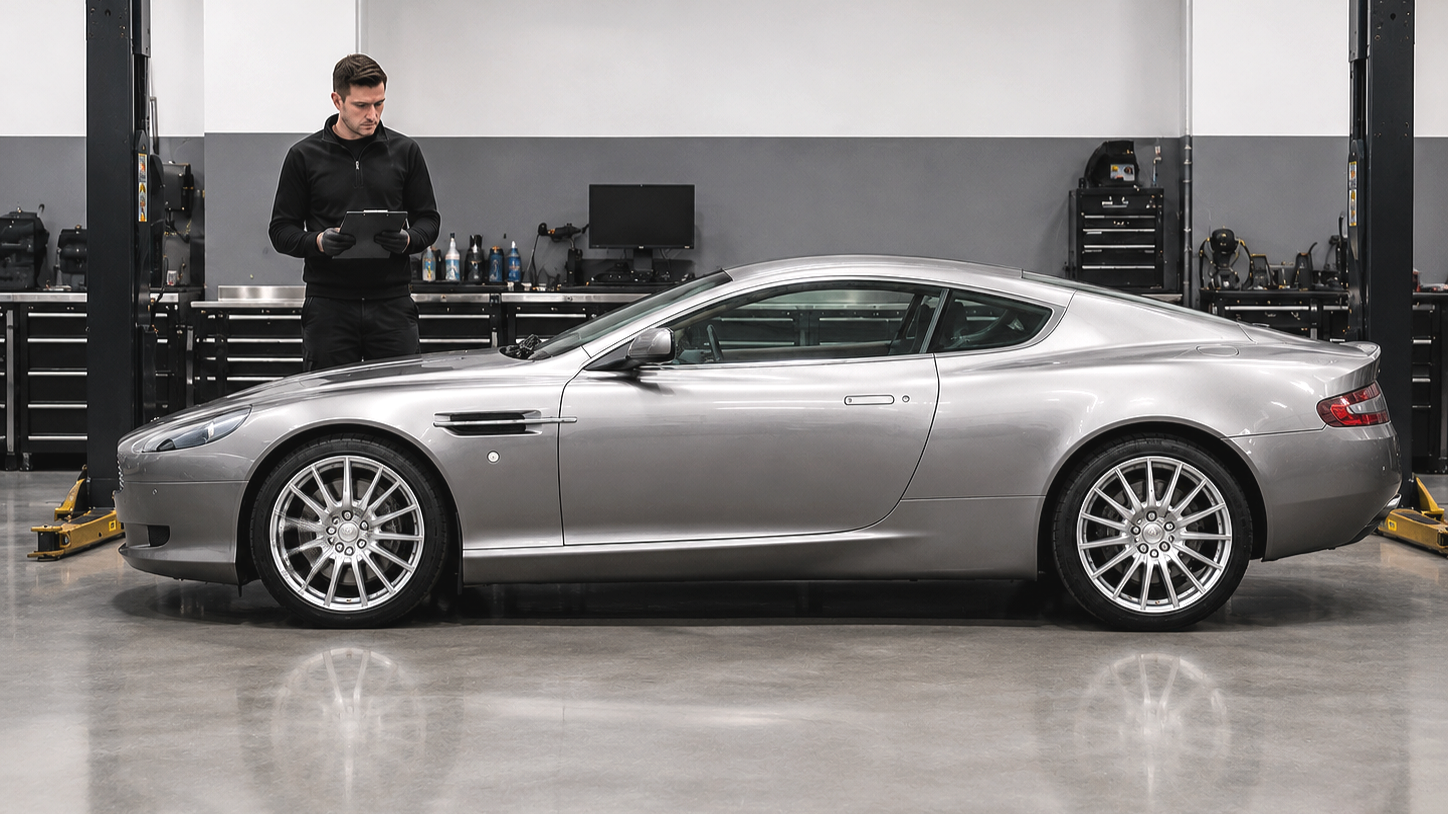
Image © Fuel the Passion
A proper Aston Martin specialist pre-purchase inspection should be treated as part of the cost of buying a DB9. It’s not an optional extra, it’s not something to do only if the seller seems uncertain. It’s part of buying a hand-built V12 Aston Martin with complex electrics, expensive brakes on later cars, age-sensitive suspension, potential body bubbling, and engine-health checks that may not be obvious from a quick test drive.
A PPI should include:
cold start and hot start
diagnostic scan
misfire data where possible
engine leak inspection
cooling-system inspection
gearbox and transaxle check
clutch assessment on manuals
suspension and bush inspection
damper condition
brake condition
tyre age and wear
underbody inspection
air-conditioning function
door modules and window drop
warning lights and stored codes
body bubbling and paint repair quality
roof operation and water ingress on Volantes
recall and campaign status by VIN
A seller who resists a specialist PPI is telling the buyer something. It may be nothing more than inconvenience, but on a DB9, the buyer should not ignore it. A good DB9 should welcome inspection.
Routine servicing is not ordinary-car servicing
A DB9 may be usable, but it’s not ordinary to service. The issue is not that a DB9 is impossible to work on. The issue is that it needs time, care and someone who respects the car. Rushed servicing can create damage that wasn’t there before: stripped fasteners, damaged undertrays, poor refitting, incorrect fluids or missed inspection opportunities.
A detailed service invoice should show more than “oil and filter”. It should ideally show what was inspected while the car was apart. On a DB9, the quality of the service process is part of the car’s condition. A buyer should be wary of vague phrases such as “serviced locally” unless the work can be evidenced. Some local independent garages are excellent and careful. Others may not understand the access, underbody panels, diagnostic needs or model-specific issues of a VH-era Aston Martin.
This guide simply makes the point that a DB9 deserves marque-aware maintenance.
A DB9 does not need fear. It needs the right people, the right time and the right evidence.
Establishing a baseline after purchase
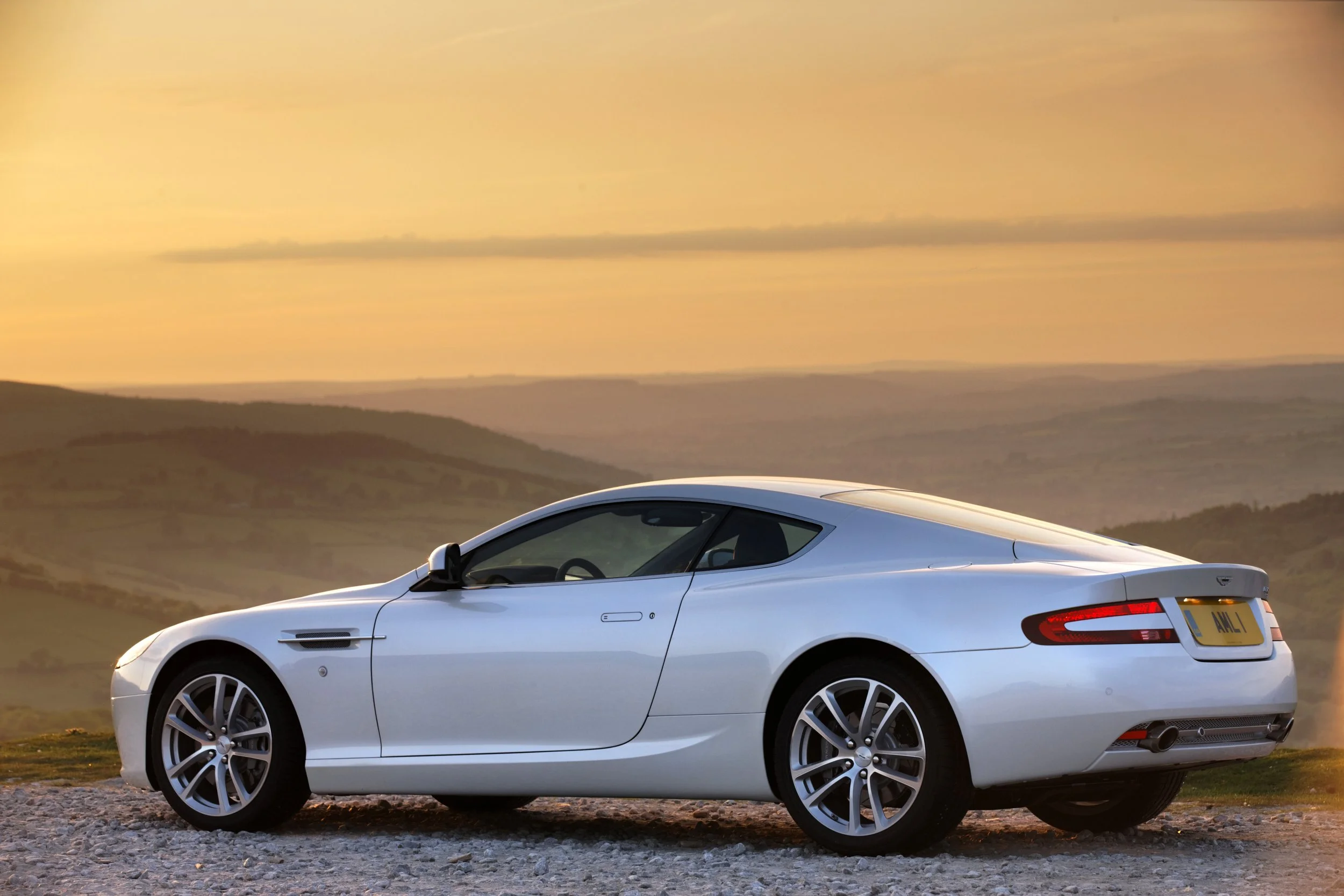
Image © Aston Martin Lagonda. Used for editorial purposes.
A newly purchased DB9 should be treated as the beginning of ownership, not the end of the buying process. Even with a good history file, it can be sensible to establish a baseline. That may mean a full inspection, fresh fluids, battery check, tyre review, diagnostic scan and a clear plan for upcoming work. If the history is thin, a baseline service becomes even more important.
A baseline doesn’t mean replacing everything unnecessarily, it means knowing where you stand. On a DB9, uncertainty can become expensive. A buyer should want to know the condition of the oil, brake fluid, coolant, tyres, battery, plugs, coils, air-conditioning, brakes and suspension rather than guessing. A sensible first-year plan may be the difference between enjoying the car and constantly reacting to surprises.
Low mileage, high mileage and storage
Mileage shouldn’t be judged in isolation. A low-mileage DB9 can be highly desirable, especially a late DB9 GT or special edition. But low mileage doesn’t remove time-based maintenance needs; oil ages, brake fluid absorbs moisture, tyres harden, batteries weaken, air-conditioning seals can dry, brakes can suffer from standing, modules dislike low voltage.
A high-mileage DB9 shouldn’t be dismissed automatically either. There are owner examples of DB9s used properly for long-distance grand touring and maintained accordingly. The lesson is not that mileage doesn’t matter, it’s that maintenance, use, improvement and evidence can matter more.
The right question is not simply: How many miles has it done? The better questions are: How has it been used? How has it been stored? How has it been maintained? What has already been replaced? What is still original? What evidence proves the story?
A low-mileage garage queen with old tyres, weak battery history and limited recent servicing may need recommissioning. A higher-mileage car with detailed invoices, fresh tyres, sorted suspension and regular use may be the healthier proposition.
Warranty or maintenance reserve?
Some buyers will prefer an Aston Martin warranty or specialist warranty where available. Others will self-insure by keeping a dedicated maintenance reserve. There’s no single answer. The right choice depends on the car, provider, exclusions, cost, mileage, age, buyer risk tolerance and how the car will be used.
A warranty is only as useful as the claims it actually covers. Read the exclusions carefully. Does it cover wear-and-tear? Does it cover carbon ceramic brakes? Does it cover roof modules? Does it cover suspension components? Does it require dealer servicing? Does it exclude pre-existing faults?
Self-insuring also needs discipline. It only works if the buyer genuinely keeps money aside.
Either buy meaningful cover with your eyes open, or keep a realistic reserve. FTP advice, is don’t buy a DB9 with neither.
Modifications and sympathetic upgrades
Modified DB9s need careful, balanced treatment. A modified car isn’t automatically a poor buy. Some DB9s have been improved thoughtfully by marque specialists or knowledgeable owners. But the quality, purpose and documentation of modifications are everything.
A buyer should separate:
thoughtful specialist upgrades
reversible factory-style improvements
cosmetic personalisation
poor-quality modifications
undocumented emissions changes
loud exhausts that ruin GT refinement
aftermarket electronics installed badly
wheel changes with incorrect offset
suspension changes that damage ride quality
Common DB9 modifications may include exhaust changes, catalyst changes, remaps, suspension upgrades, brake upgrades, wheel changes, infotainment upgrades, later-style interior details, retrims and cosmetic alterations.
The buyer should ask:
Who carried out the work?
Is there an invoice?
Are original parts included?
Has the ECU been remapped?
Does the car pass MOT emissions properly?
Has the insurer been informed?
Does the exhaust drone?
Are warning lights present?
Is the modification reversible?
Does it suit the DB9’s grand-touring role?
Will it help or hurt future resale?
A louder DB9 is not automatically a better DB9. The factory balance between theatre and refinement is part of the car’s appeal. The most sensitive area is emissions equipment. This guide doesn’t recommend primary catalyst removal or any emissions-system modification. If a car has had catalyst or exhaust work, the buyer should treat it as a specialist, legal, MOT, insurance, originality and resale issue.
A modified DB9 is not automatically wrong. An undocumented DB9 modified without a clear plan is the concern.
Exhausts: sound versus suitability
The DB9’s V12 sound is one of the great pleasures of ownership, so it’s no surprise that many owners consider exhaust changes. Some systems can enhance the car beautifully. Others can introduce drone, harshness, excessive volume or a character that doesn’t suit a long-distance GT. A DB9 is not a track toy by default, it’s a grand tourer, and the exhaust should still allow conversation, motorway use and relaxed driving.
A buyer should test a modified exhaust in real conditions:
cold start
low-speed town driving
motorway cruising
gentle throttle
full throttle
cabin drone
valve operation if fitted
MOT/emissions status
quality of welding and installation
whether original parts are retained
If the exhaust is part of why you love the car, that’s fine. Just make sure it doesn’t become part of why you stop using it.
Special editions and rare specifications
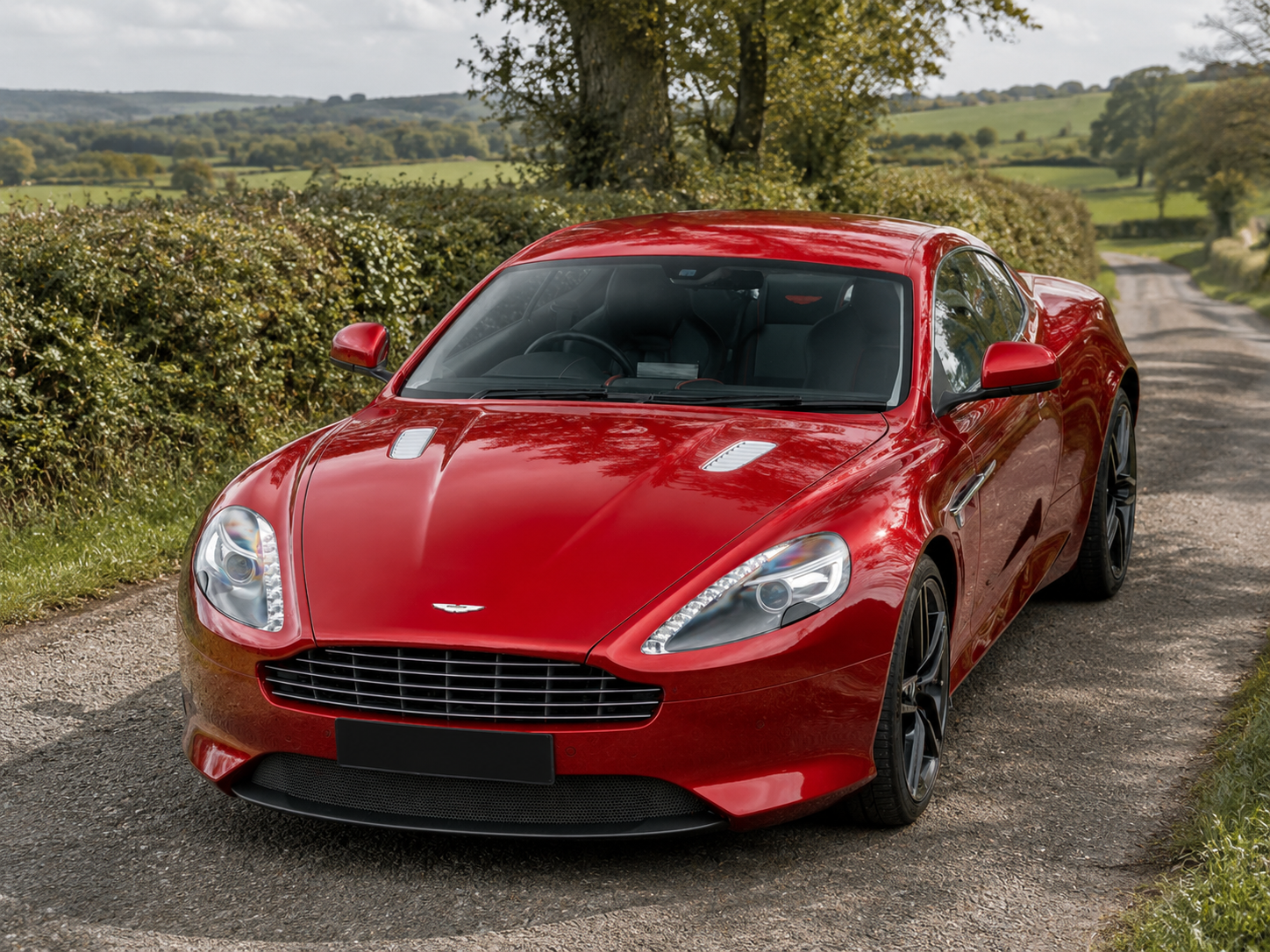
Image © Fuel the Passion
The DB9 had a long life, so special editions and rare specifications need to be handled carefully. They don’t dominate this guide, but buyers should understand that specification can influence desirability, value and inspection priorities.
The key principle is this: Rare does not automatically mean right.
A rare DB9 still needs the same inspection as any other DB9. Sometimes it needs more.
Carbon Black and Carbon White
The Carbon Black and Carbon White cars are best treated as specification-led special editions rather than mechanically separate DB9 models.
The buyer advice is simple: verify the edition, specification, paint, trim, wheels, service history and whether any carbon or special trim is original and undamaged. Do not pay a premium for a name without checking that the car is genuinely what it claims to be.
Paperwork and provenance
Start with the file before you fall for the car. Check the V5, HPI status, MOT history, VIN, service book, invoices, recall or campaign status, ownership history, specification, both keys, manuals, accessories and any evidence of warranty work or previous inspection reports.
A strong DB9 history file should show more than annual stamps. Look for detailed invoices showing what was actually done: servicing, plugs, coils, brake fluid, tyres, brakes, suspension, air-conditioning, batteries, paintwork, modules, roof work on Volantes and diagnostic investigation where warning lights or misfire have appeared.
As already mentioned above, before purchase, ask an Aston Martin dealer or recognised marque specialist to check the VIN for recalls, safety campaigns and service actions. UK buyers should also check the registration through GOV.UK, but a VIN-level Aston Martin check remains the most useful route for model-specific confirmation.
Key question:
Does the paperwork support the car’s condition, or is the seller asking you to take it on trust?
What to walk away from, or at least pause before buying

Image © Fuel the Passion
Not every issue should automatically rule out a DB9, but some should make the buyer stop and investigate properly before going any further. Be especially cautious if the seller refuses a specialist Aston Martin PPI, the history file is thin, warning lights or misfire are dismissed without diagnosis, the tyres are old or poor quality, the suspension feels crashy or unsettled, body bubbling is widespread or badly repaired, a Volante shows roof or water-ingress problems, a manual clutch feels tired, modifications are undocumented, or the car is priced as excellent while clearly needing catch-up maintenance.
Good DB9s usually have coherent stories, detailed invoices and sellers who are comfortable with inspection. If the explanation keeps changing, the paperwork is missing, or you’re being asked to trust the dream rather than the evidence, pause before buying.
Final buyer advice
The best DB9 is not always the newest, rarest, lowest-mileage or cheapest car. It is the car where the evidence matches the condition. A good DB9 should have a strong file, detailed invoices, clean diagnostics, healthy V12 behaviour, sorted suspension, good tyres, clean bodywork, working electronics and a seller who is comfortable with proper inspection.
The wrong DB9 often looks tempting for exactly the same reason the right one does. It has the badge, the shape, the leather, the V12 and the dream. The difference is what sits underneath. Buy the car after the inspection, not before it.
Owner insight and corrections
Do you own an Aston Martin DB9 Coupe or Volante? Have you run one for years, bought one recently, maintained one professionally or learned something important during ownership?
Fuel the Passion welcomes evidence-led owner insight, specialist advice and corrections that help keep this guide accurate.
Please comment below with your own DB9 experience, especially if you can help other owners or prospective buyers understand what to look for. Useful contributions might include service history lessons, PPI findings, common age-related issues, Volante roof experience, clutch or gearbox experience, suspension refreshes, paint bubbling repairs, parts availability, running costs or long-term ownership reflections.
The aim is not to create fear around the DB9. It’s to help people buy, maintain and enjoy these cars properly. If you can help another owner or future Aston Martin buyer, please share your story below. Alternatively, if you have useful pictures to share and are willing to form part of this guide, you can always send us, Fuel the Passion an email with details.
Disclaimer
This Fuel the Passion Buyers Guide is intended as general enthusiast information only. It is not professional mechanical, legal, financial, insurance, valuation, investment or safety advice.
It does not replace an independent inspection by a qualified Aston Martin technician, Aston Martin dealer or recognised marque specialist. Every DB9 is different, and condition, history, mileage, storage, use, market value, parts availability and repair costs vary from car to car.
Before buying any Aston Martin DB9, readers should verify the car’s condition, service history, MOT history, HPI status, VIN, recall and safety campaign status, specification, ownership file, parts availability and current repair costs. Any warning lights, misfire, emissions issues, roof faults, brake concerns, suspension problems, electrical faults or signs of water ingress should be investigated professionally before purchase.
Any modification, especially to emissions, catalyst, exhaust, ECU, suspension, brakes or safety systems, should be checked carefully for quality, legality, MOT implications, insurance disclosure, originality and resale impact.
Readers should also verify parts availability before purchase, especially for model-specific trim, electronics, lighting, roof, brake and special-edition items.
Fuel the Passion does not recommend buying any car solely on the basis of this guide. Always obtain professional advice, inspect the individual car and make your own informed decision.
