
Why We Won’t Let Aston Martin Die — The Emotional Economics of the DB5 (and What It Means for Bond’s Next Car)
By Dan, Fuel the Passion
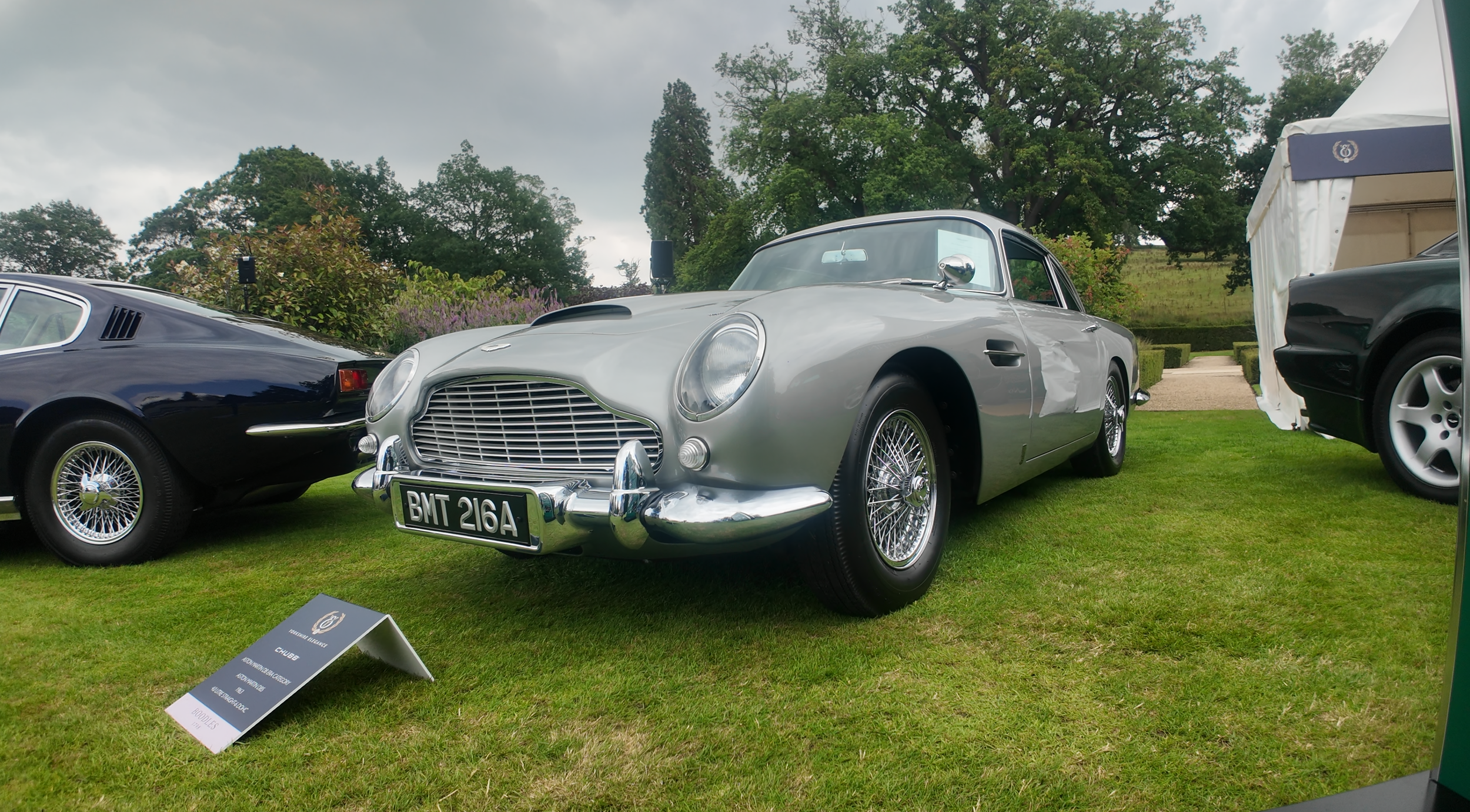
Introduction; A Car, a Feeling, a Question
Every so often, a story emerges that pulls you back into the heart of why we love cars in the first place. For me, it was the recent tale of a couple reuniting with their family’s Aston Martin DB5, a car purchased for £900 in the early 1970s, left to gradually deteriorate through the decades, and now restored by Aston Martin Works to a value approaching one million pounds. On the surface, it’s a wonderful family story. But beneath it sits a deeper question:
Why does the Aston Martin DB5 still hold such extraordinary power, emotionally, culturally, and financially, sixty years after it first graced our roads?
And more intriguingly: What does the DB5’s enduring appeal tell us about Aston Martin’s future, about James Bond’s next chapter, and about the unspoken bond so many of us feel with both? This article is my attempt to explore that connection, part history, part economics, and part heartfelt reflection on why some brands feel too meaningful to imagine the world without them.
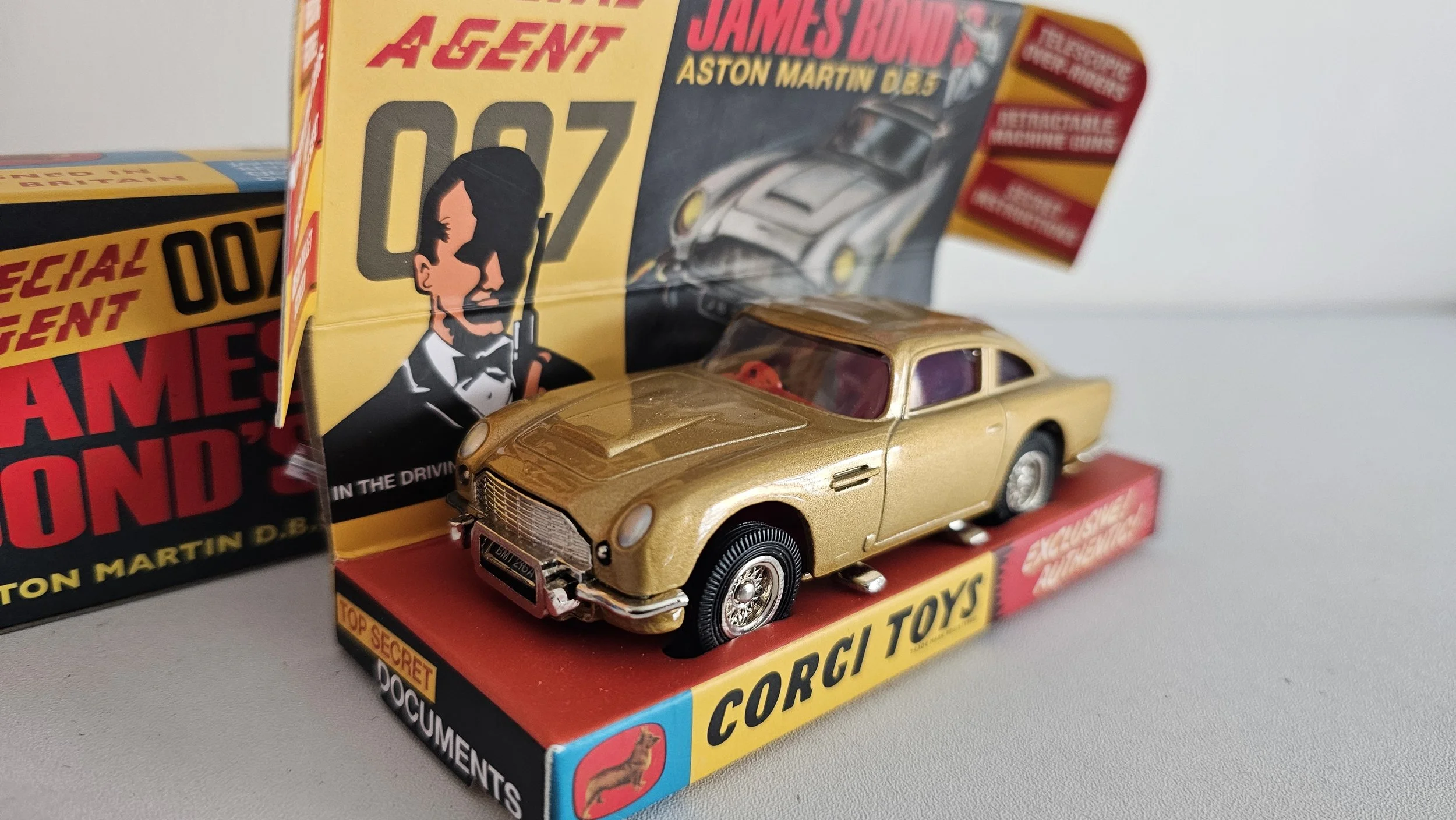
For many people, owning an Aston Martin DB5 will forever remain a dream rather than a reality. Values are now well beyond the reach of most enthusiasts, and that’s exactly why objects like this special gold-edition DB5 model by Corgi carry such emotional weight.
It’s a beautifully detailed tribute to the car that cemented Aston Martin’s place in popular culture through its association with James Bond, and today these models have become rare and increasingly collectible in their own right.
At the time of writing this article, upon checking on Amazon, there is currently just one available, and it’s a reminder that for many of us, a model like this is the closest we’ll ever come to owning a DB5 ourselves, a tangible way to keep the story alive. You can view the model HERE.
The DB5: A Legend Forged in Metal and Myth
The Aston Martin DB5 is not the fastest classic car ever built, nor is it the rarest. Yet it stands apart as one of the most recognisable objects in popular culture. Its silhouette alone seems loaded with memory, a kind of visual shorthand for style, coolness, and a particularly British form of elegance. When it appeared beside Sean Connery in Goldfinger in 1964, it became more than a car; it became an icon. James Bond elevated the DB5 to a mythical status that no marketing campaign could ever replicate.
But the DB5’s power isn’t only cinematic. It represents an era of craftsmanship that feels almost sacred today: Superleggera coachwork, hand-formed aluminium panels, engines built by artisans rather than machines. The car carries the weight of a different world, one where time moved slower and work was done with both hands and heart. And that resonance is part of what makes its value so enduring.
How the DB5’s Value Has Risen Across Six Decades
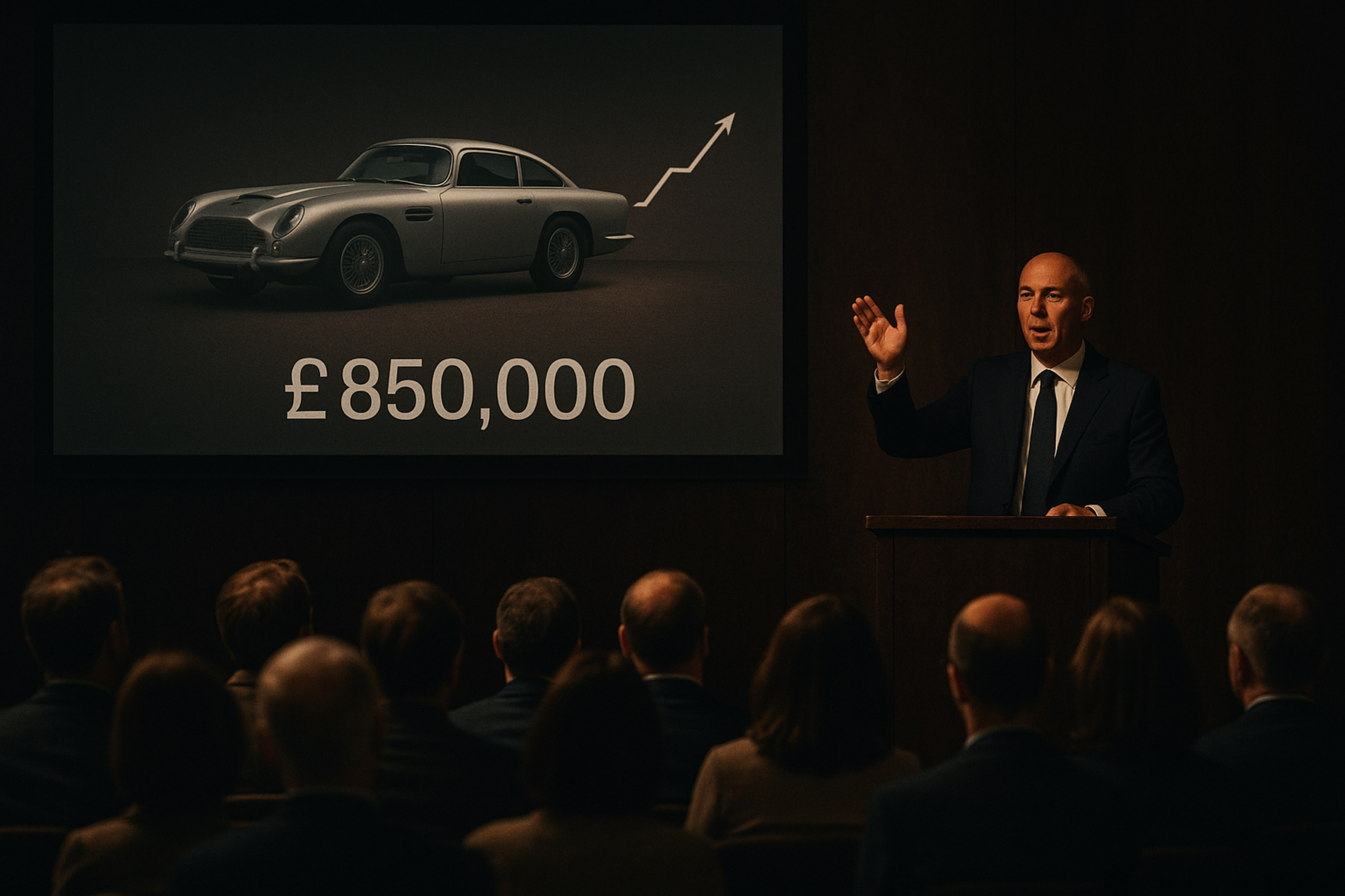
It’s astonishing to trace the DB5’s journey through the market. When new in 1964, it cost just over £4,000. By the 1970s it could be bought for little more than £1,000, making it, unbelievably, in hindsight, an affordable used GT car. Through the 1980s, prices climbed steadily into the £20,000–£40,000 range as classic car enthusiasm grew. By the 1990s, helped by the DB5’s welcome return in GoldenEye, values rose further into the region of £40,000 to £90,000.
Then something changed. Through the 2000s and into the 2010s, Aston Martin’s rising global prestige and repeated Bond appearances in Skyfall and Spectre transformed the DB5 from a desirable classic into a cultural artefact. Prices surged from hundreds of thousands to nearly a million pounds, and in rare cases, including film-connected cars, into the multi-million-pound territory. Today, a well-restored matching-numbers DB5 sits comfortably between £650,000 and £1,000,000, depending on provenance and condition.
People often ask, “How can a car be worth so much?” But the truth is, the DB5 isn’t just valued for what it is. It’s valued for what it represents.
The Power of Movies to Transform Car Values
Cinema has a remarkable ability to elevate ordinary cars into extraordinary icons. The Mustang GT 390 from Bullitt, the “Eleanor” Mustang from Gone in 60 Seconds, the DeLorean from Back to the Future, each gained a kind of cultural immortality once they hit the screen. Their auction prices show the same trend: a film doesn’t simply feature a car; it gifts it emotional significance.
Yet even among these examples, the DB5 stands alone. Most film cars enjoy a brief surge of attention, perhaps a decade or two of heightened interest. But the DB5 has enjoyed sixty years of renewed affection, thanks to its recurring role in the Bond franchise. Every time it appears, whether in GoldenEye, Skyfall or No Time To Die, a new generation falls in love with it.
The DB5 is the only movie car in history that has remained relevant not through nostalgia, but through continuous reinvention. And that makes it priceless.
The DB5 Continuation Cars and the Power of Rebirth
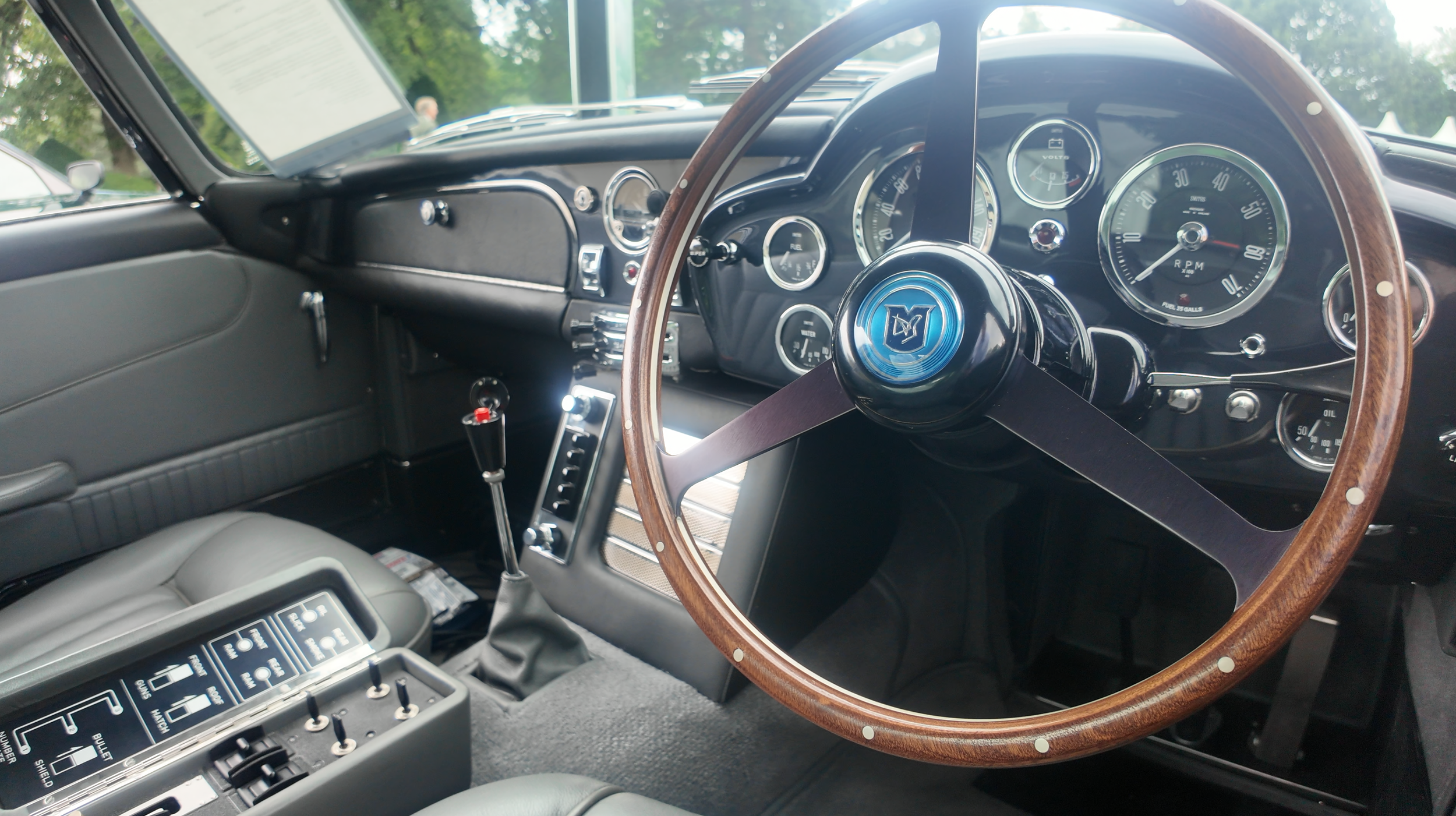
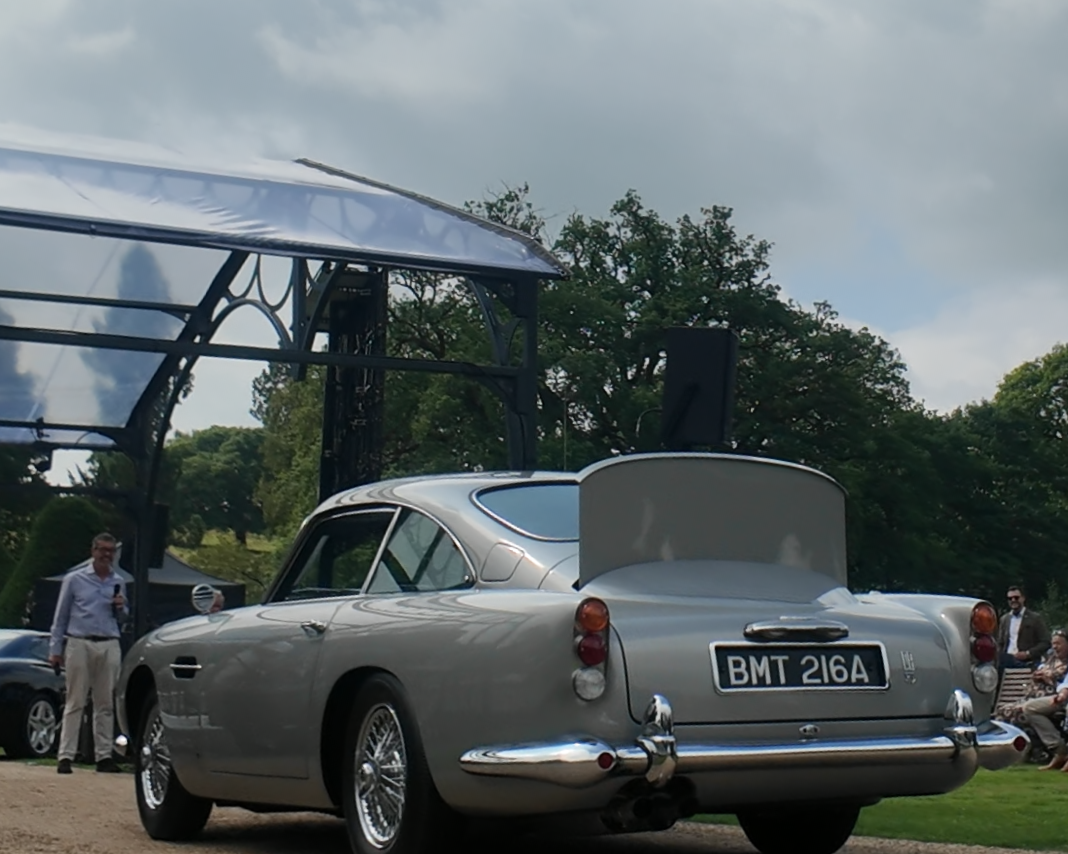
Aston Martin Works demonstrated just how powerful the DB5’s mythology remains when they built the DB5 Goldfinger Continuation cars between 2020 and 2022. These were lovingly crafted recreations, complete with simulated gadgets, smoke screens, revolving number plates, even faux machine guns. They weren’t road legal, and didn’t need to be. They sold for £2.75 million each, and all twenty-five units were spoken for almost immediately.
I filmed one of these at Yorkshire Elegance earlier this year, and even with modern hypercars nearby, it was the DB5 that drew the crowd. People filled the space around it not because it was rare or expensive, but because it touched something familiar inside them. That is emotional economics in action: the value of a story becoming the value of a car.
James Bond and Aston Martin:
An Unbreakable Bond?
Aston Martin’s partnership with James Bond isn’t a contractual inevitability, it’s a cultural marriage. When Bond reappeared in a BMW Z3 in the mid-1990s, the reaction from fans was lukewarm at best. It just didn’t feel right. And when Pierce Brosnan’s Bond returned to the DB5 in GoldenEye, cinema audiences felt something click back into place.
People expect Bond and Aston Martin to remain connected because that pairing transcends product placement. It has become narrative continuity. When Daniel Craig’s Bond opens the garage door in Skyfall to reveal the DB5, the moment isn’t just about a car, it’s about identity.
And it is here, in this connection, that Aston Martin’s brand power is repeatedly renewed. Every time the DB5 appears on screen, Bond reminds the world that Aston Martin still exists, still matters, and still represents something that no other brand quite captures.
The DB10 and the Future That Could Have Been
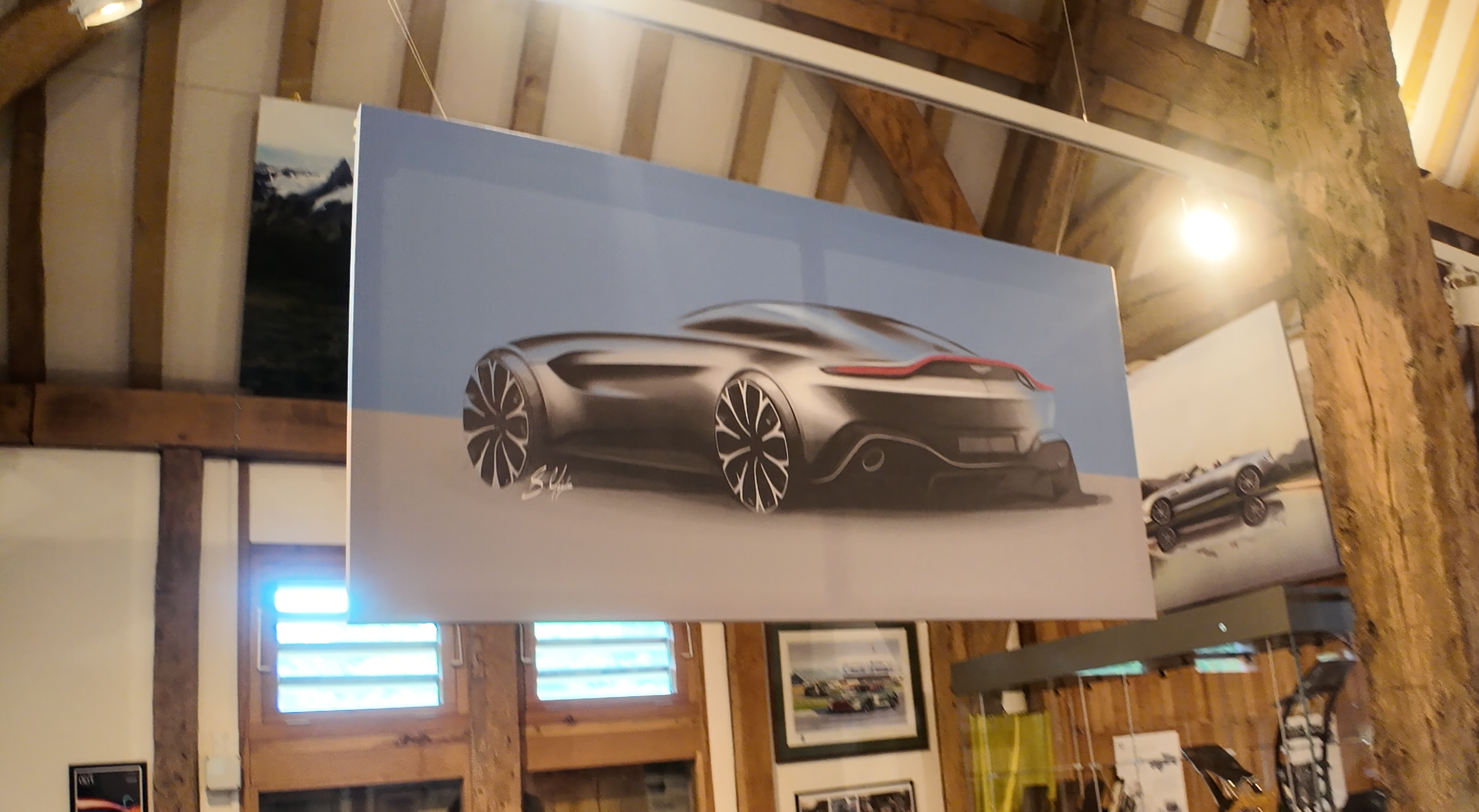
When Spectre introduced the stunning Aston Martin DB10, the world was captivated. Its purity of line, its modern aggression, and its unmistakable Bond aura made it one of the most compelling concept cars Aston had ever built. But only ten examples were produced for the film. Only two survived as functioning cars. One sold for £2.4 million, and today its value is likely between £3 million and £5 million.
The public never got a chance to buy the DB10. The road-going 2018 Vantage borrowed some of its design DNA, but it wasn’t the DB10. And because desire is deeply emotional, that gap between expectation and reality left something on the table. Collectors still ask what might have happened if Aston Martin had produced even a limited run of DB10-inspired road cars, perhaps three or four hundred units. Would they have sold? Almost certainly. Would they have become instant collector’s items? Without doubt.
This isn’t about hindsight criticism. It’s about understanding how powerful the Bond connection can be when used to its full potential.
Collector’s Corner

I was recently sent details of this beautifully produced special collectors’ edition celebrating the cars that became stars of both the big and small screen. From Bond to Bullitt, The Italian Job to Fast & Furious, this premium issue explores the machinery that helped shape cinematic motoring history.
As you would expect, Aston Martin features prominently, examining the marque’s enduring on-screen legacy and the cultural impact of its most famous appearances. Alongside high-quality photography, the edition promises in-depth features and thoughtful historical context, making it as much a keepsake as a read.
To view this issue CLICK HERE.
If you enjoy the intersection of film, heritage and iconic automotive design, this may well be one to add to your collection.
This section contains an affiliate link. If you choose to purchase, Fuel the Passion may earn a small commission — at no additional cost to you. It doesn’t increase the price you pay, but it does help support the site and keep Fuel the Passion independent.
Can a Future Bond Car Help Aston Martin?
Aston Martin has weathered more storms than most brands could survive. Financial difficulties, changing ownership, global market pressures, yet the company continues to exist because people want it to. Aston Martin is more than a business; it’s a symbol. And symbols endure not because they’re practical, but because they’re meaningful.
So could a future Bond-era Aston Martin, bold, limited, unforgettable, help revitalise the brand’s commercial fortunes? In my view, the answer is that it could, if executed with vision. Bond alone won’t “save” Aston Martin, but Bond has the power to ignite worldwide interest, renew emotional loyalty, and inspire desire on a scale few marketing channels can match. That’s the magic of cultural storytelling.
And the DB5 proves it works. Not once, but over and over again.

A Brand We Refuse to Lose
This final reflection is personal. When I watched No Time To Die, I didn’t just want James Bond to survive; I expected him to. And that expectation came from a place of deep emotional investment, the same place that makes me hope Aston Martin survives every challenge it faces.
The world feels richer with Aston Martin in it. The DB5 shows us why. It represents something timeless: beauty, craftsmanship, defiance, Britishness, and the kind of romance that makes you believe in stories again.
Perhaps that is the real emotional economics of the DB5. It isn’t worth a million pounds because of aluminium panels or engine displacement. It’s worth a million pounds because we want Aston Martin to endure. Because we want brands that stand for something to remain standing. Because some things, like Bond, like Aston Martin, like the DB5, feel too deeply rooted in our cultural imagination to ever allow them to fade.
And maybe that’s the real lesson for the future. The DB5 carries the heritage. The next Bond car could carry the hope. And as long as passion exists, genuine, heartfelt passion, the story of Aston Martin isn’t finished.
Not yet. Not ever, if we have anything to do with it!
This article reflects personal opinions and interpretations by Fuel the Passion and is not affiliated with or endorsed by Aston Martin Lagonda, the Aston Martin Owners Club, EON Productions, or any related brands.
