
THE OTHER ASTON MARTINS
Inside the Vantage, Vantage S & DBX707 — The Unseen Heroes of Formula One
By Dan, Fuel the Passion
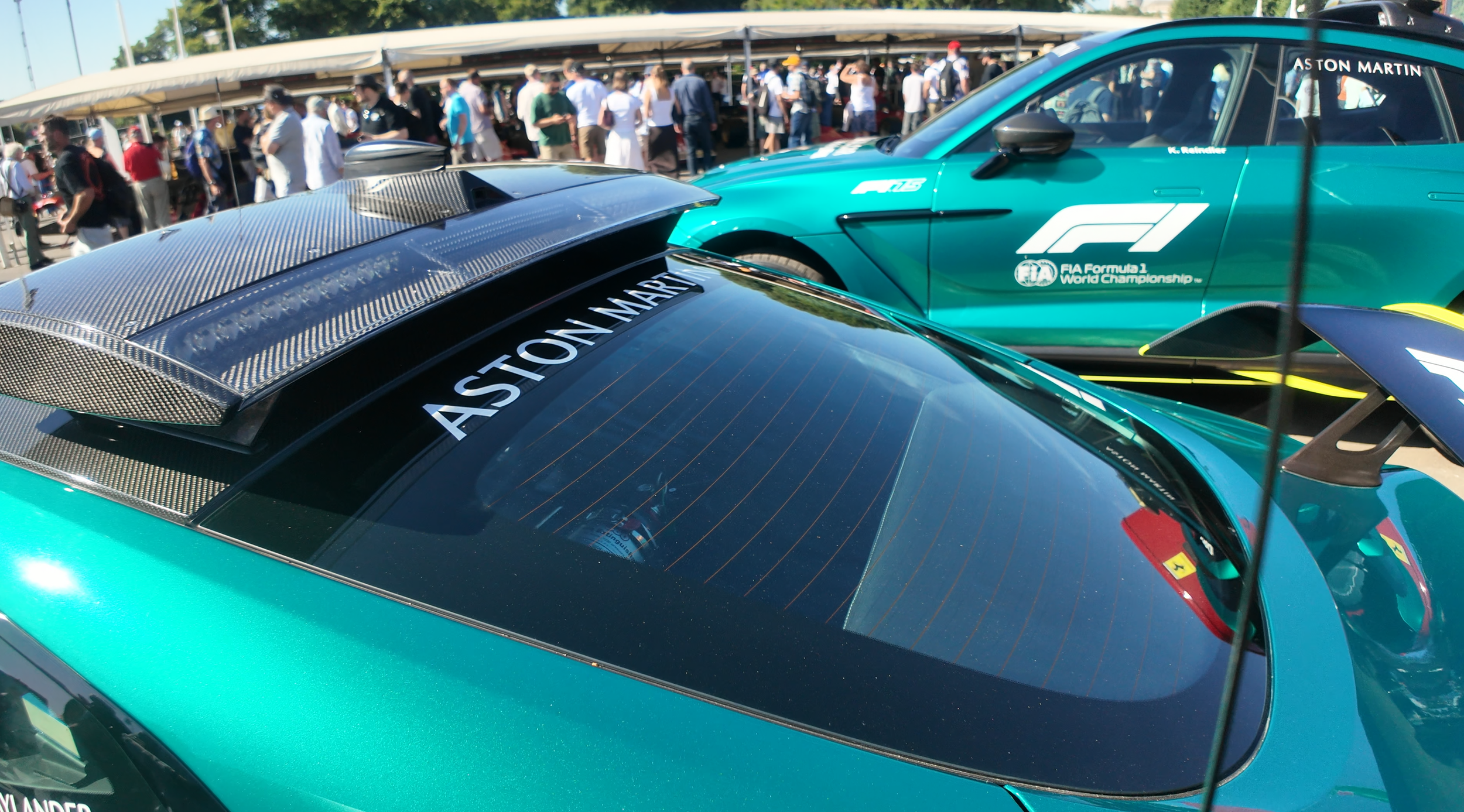
FTP Picture: Aston Martin Safety & Medical Car - Goodwood, Festival of Speed 2025
When the Green Car Appears, the World Often Holds Its Breath
There is a particular quiet in Formula One, not the mechanical kind, but the human kind. It arrives the instant something goes wrong: when a driver slews sideways into a barrier or when a sudden shower transforms a corner into a skating rink. Crowds hush. Marshals leap into motion. The race hangs in the balance.
And then, through the tension, an Aston Martin emerges.
British Racing Green glowing under circuit floodlights. Amber lights pulsing. A Vantage gliding through chaos with a composure that seems almost otherworldly. It's one of the great contrasts of modern sport: twenty of the fastest machines ever created dutifully following an Aston Martin. Not because it is quicker, but because… … in this moment, it is wiser.
Yet the journey to that moment is far longer and far more dramatic than most fans realise. This is the untold story of the other Aston Martins, the ones that don’t chase victory, but protect it.
A Slow and Chaotic Beginning
Whilst researching for this article, I was surprised to find that the idea of a Safety Car in Formula One began in near-farce. At the 1973 Canadian Grand Prix (two years prior to my arrival in this world), officials deployed a Porsche 914 to manage the race… only for it to accidentally pick up the wrong leader. Confusion reigned. Nobody knew who was actually winning. It took hours to sort out the final result.
For decades after, the Safety Car appeared sporadically, sometimes a Lamborghini at Monaco, sometimes a borrowed road car, but nothing about it felt official or consistent. It was a patchwork solution to a problem the sport wasn’t fully ready to confront. All that seems unthinkable in the current age!
That changed in 1993 when Formula One finally formalised the Safety Car system. That still seems fairly recent, in F1 terms and when I compare that to my own place in the world, in 1993, I was starting my career in full paid work, and to think the safety car system had only been formalised in that year, makes me realise even more - I’m getting on a bit! And from 1996 onwards, Mercedes-AMG took charge for nearly 25 years, defining what a modern F1 Safety Car looked like.
Until Aston Martin entered the picture.
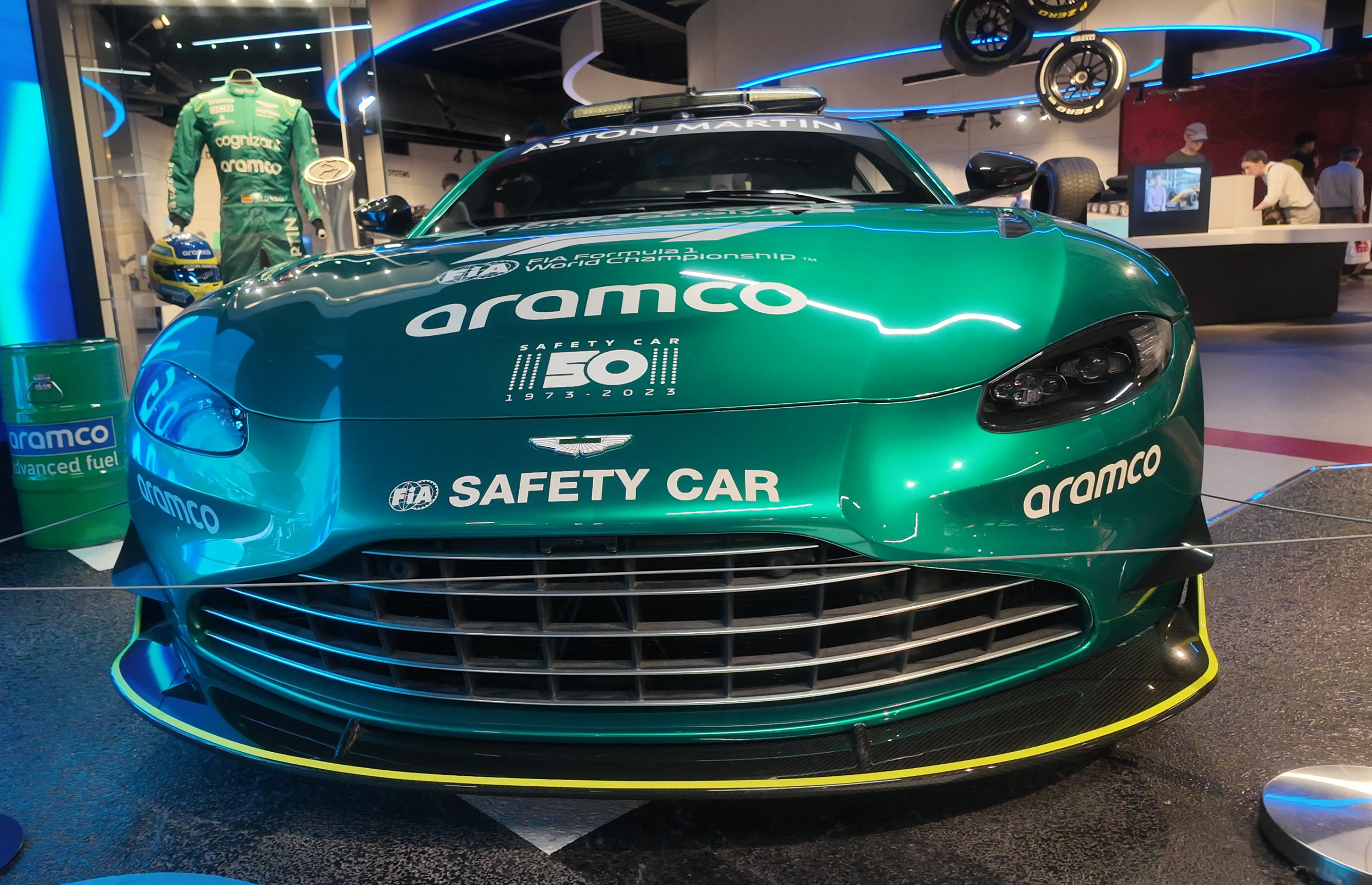
2021 - When Aston Martin Returned as Both Racer and Guardian
Aston Martin’s 2021 return to Formula One as a works team was already historic. As an Aston Martin fan for as long as I can remember, I was so pleased to see the Aston Martin name back racing in the Formula One series. But behind the scenes, another visually significant move was happening: Aston Martin would share Safety Car and Medical Car duties with Mercedes for the first time in a generation. This was an exciting time for Aston Martin fans.
From the moment the first Vantage Safety Car rolled out in Aston Martin Racing Green with bright lime accents, it became clear that something had shifted. Suddenly, the car leading Formula One under its most delicate moments wasn’t just a technical asset, it was a symbol.
Beautiful. Unmistakably British. Calm in a storm. And instantly iconic.
For me, it made me fall deeper in love with the brand and little did I know at that time, just 3 years later, I would be in a position to purchase my very own Aston Martin, which didn’t look too different from the car that often led the pack in a Formula One race!
The Vantage - A Car Built to Lead When Others Cannot
The Safety Car version of the Vantage was no showroom novelty. It was a finely honed machine engineered to handle the strangest job in motorsport: to be fast enough to stop Formula One cars freezing to death behind it, yet predictable enough to keep the highly tuned F1 machinery and their drivers safe.
Safety Car laps are uniquely aggressive. They demand heat in the tyres, precision from the driver, and reassurance for a field of impatient racers weaving behind. The Vantage met every challenge with authority. It cut through rain, sleet, spray and sunset glare with a confidence that felt almost poetic. I loved it. Cameras adored it. Fans embraced it. Even critics had to admit: it looked spectacular leading a Grand Prix.
And in those quiet, tense moments when the race was neutralised, the Aston became a sort of emotional ballast. The car that steadied the heartbeat of Formula One.
The DBX707 - Speed With Purpose
If the Safety Car is the conductor, the Medical Car is the cavalry.
The DBX707 entered the paddock as the world’s most powerful luxury SUV, and left it as the fastest ambulance on the planet. FIA Medical Delegate Dr Ian Roberts and his drivers trust it with their lives. The big Aston sprints toward danger with startling agility, its engine note rising like a battle cry as it carries medics and equipment to a scene no one ever hopes to see.
There is something deeply moving about the DBX707 in this role. I think it’s a machine of elegance, which is transformed into a vehicle of responsibility. Powerful, dependable, and unashamedly purpose-driven.
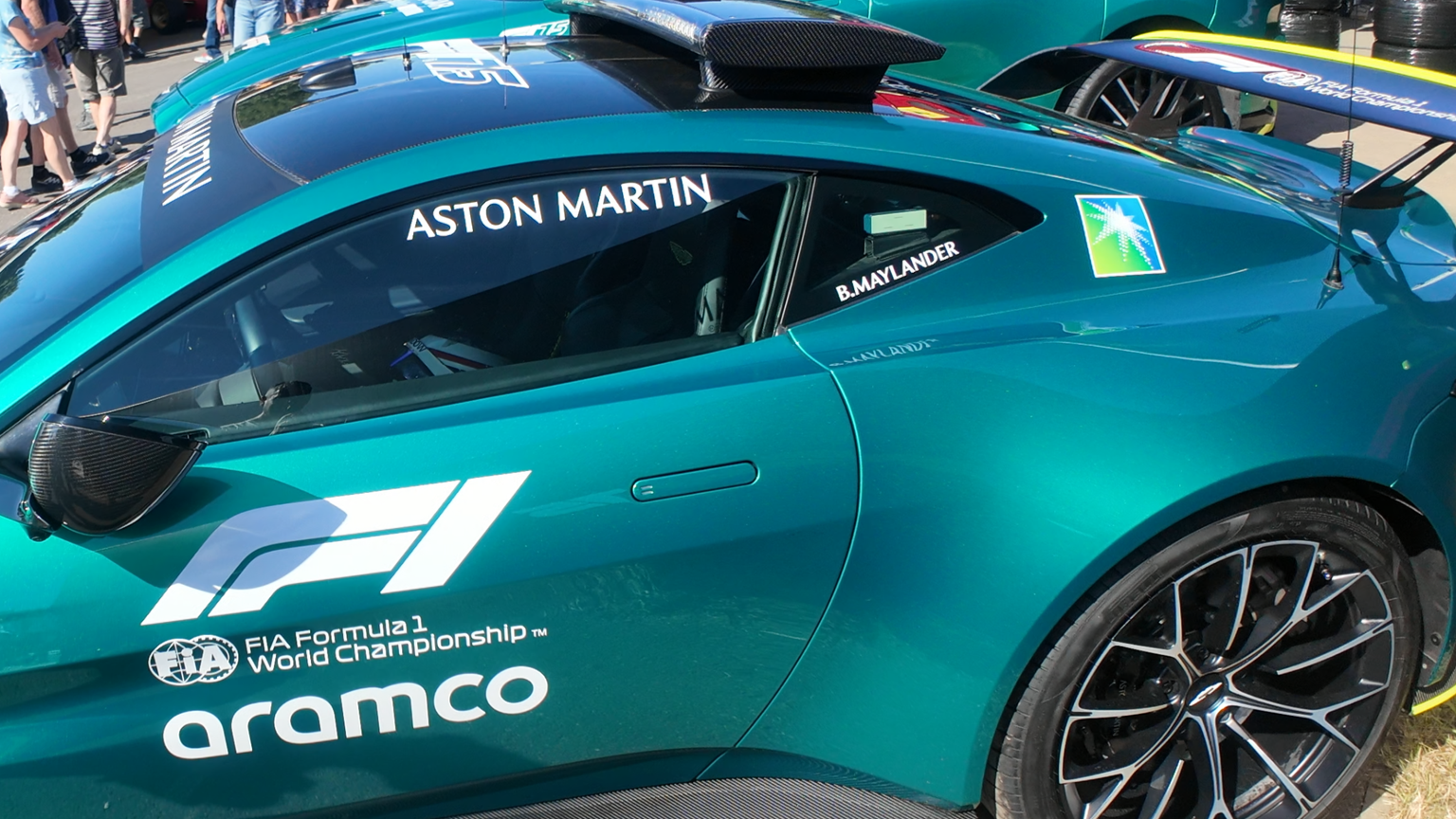
The Hands Behind the Wheels
At the centre of it all is Bernd Mayländer, the unassuming constant of Formula One. For over two decades he has led more laps than any champion; always at caution, never celebrated, always essential. His sense of judgement, calm and discipline matches perfectly with Aston Martin’s character.
Beside him, Dr Roberts and the FIA medical team carry the courage of first responders. They run toward danger, trusting their Aston Martin to deliver stability and safety at the precise moment it’s needed most.
When Controversy Arrived - and Why It Helped
No Formula One story is complete without driver complaints, and Aston Martin had its shining moment in 2022 when Max Verstappen declared the Vantage “too slow,” comparing it to a turtle. George Russell chimed in with similar frustrations. Fans laughed. The media had a field day! I must admit when I first heard this, I was felt gutted for the brand.
But beneath the noise was something far more flattering: the drivers wanted the Aston to go faster. They trusted it. They expected it to match their hunger for speed. Their impatience was, in its own way, a compliment.
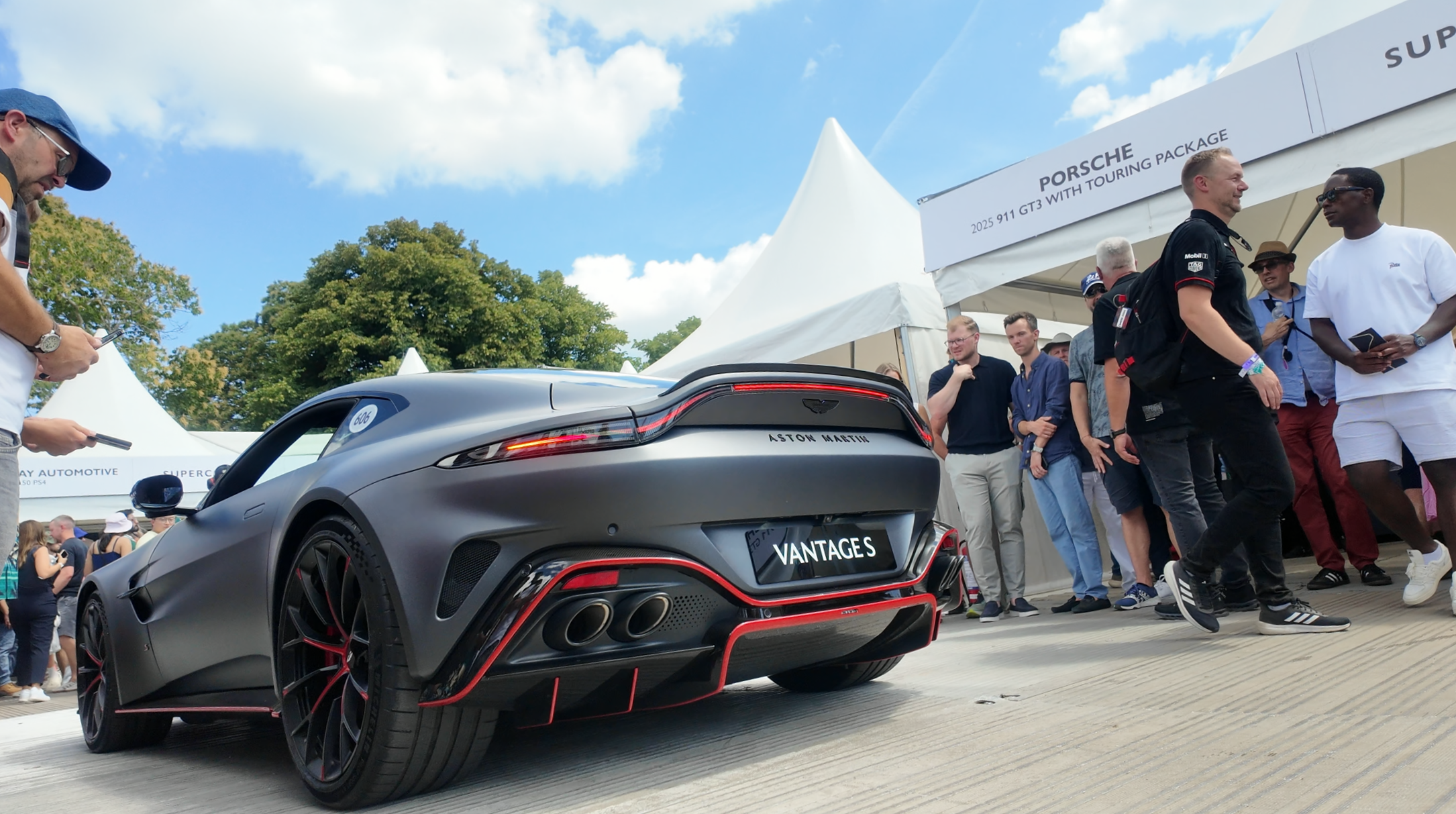
And Aston Martin listened. Just look at at the picture below!
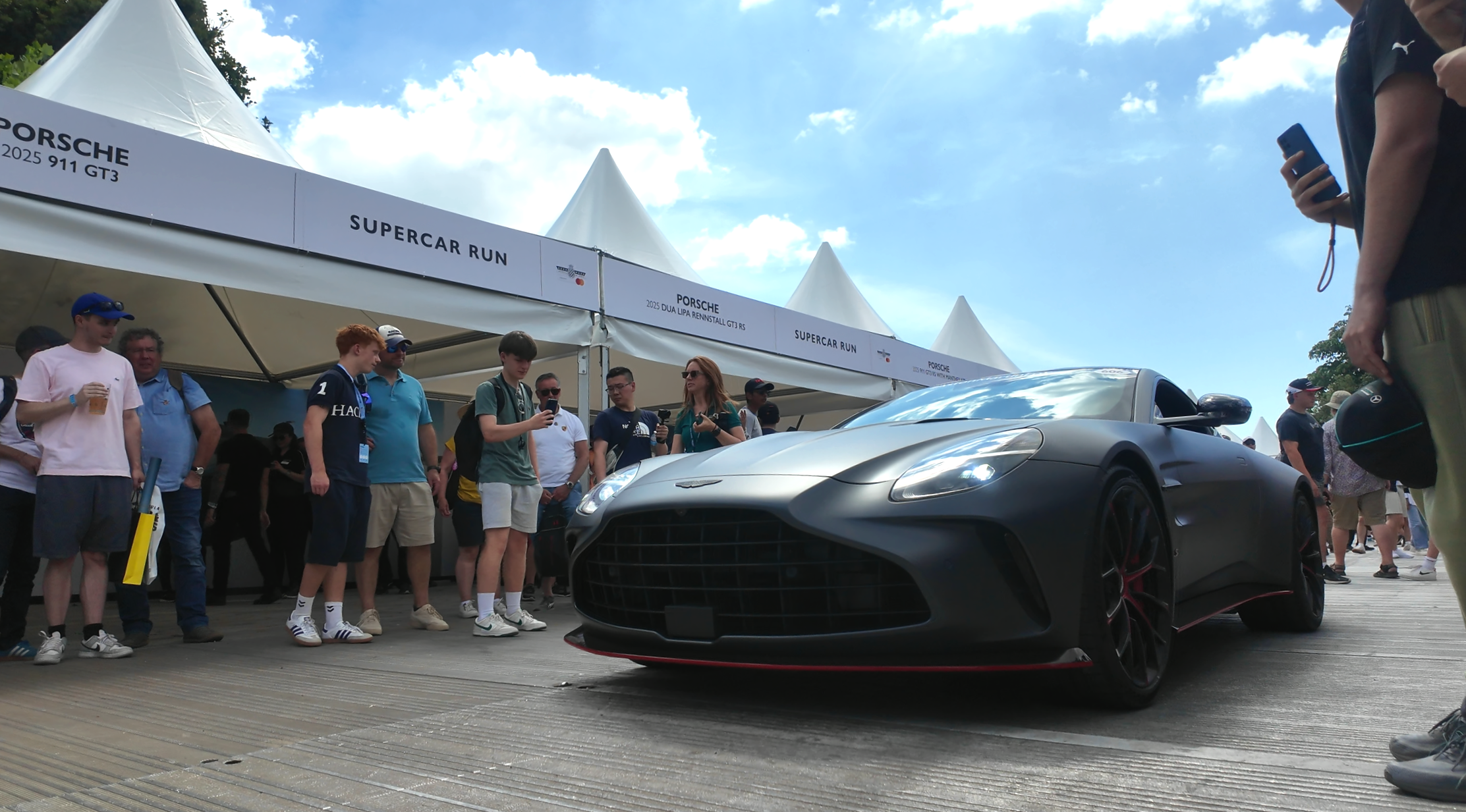
FTP Picture: Goodwood Festival of Speed, 2025 - Aston Martin Vantage S is revealed to the world
2025 - The Vantage S Raises the Bar
Perhaps fittingly, the evolution that followed felt almost like a response. In 2025, Aston Martin unveiled the new Vantage S Safety Car, and from its very first deployment it carried a new intensity; faster, sharper, more composed.
The Vantage S didn’t just look the part. It moved with authority. With its increased power, improved chassis and refined aerodynamics, it held the higher, more consistent pace Formula One drivers crave behind the Safety Car. Tyres stayed warmer. Restarts felt smoother. Complaints faded into silence.
I certainly felt, that it was as if Aston Martin had reached into the sport’s collective heartbeat and steadied it.
Perhaps fittingly, the evolution that followed felt almost like a response. In 2025, Aston Martin unveiled the new Vantage S Safety Car, and from its very first deployment it carried a new intensity; faster, sharper, more composed.

FTP Picture: Aston Martin Vantage S at Goodwood Festival of Speed 2025
The Vantage S didn’t just look the part. It moved with authority. With its increased power, improved chassis and refined aerodynamics, it held the higher, more consistent pace Formula One drivers crave behind the Safety Car. Tyres stayed warmer. Restarts felt smoother. Complaints faded into silence.
I certainly felt, that it was as if Aston Martin had reached into the sport’s collective heartbeat and steadied it.
When Aston Martin adds an “S” to a Vantage, in my opinion, it’s never been about shouting louder, it’s about sharpening the blade. The Vantage S, first introduced in 2011, was conceived as the driver’s Vantage: more focused, more responsive, and more intent on involvement than the standard car. Power was gently lifted, but the real transformation lay beneath the skin; a quicker steering rack, stiffer suspension, larger brakes and revised aerodynamics all worked together to give the car a tighter, more purposeful feel on the road.
The introduction of the Sportshift II gearbox further reinforced its sporting character, while subtle visual changes hinted that this was no ordinary Vantage. More than a trim level, the Vantage S represented Aston Martin’s belief that true performance isn’t just measured in numbers, but in feel, a philosophy that continues today, where the S badge still signifies a deeper connection between car, road and driver and having seen the new 2025 Vantage S up close at Goodwood Festival of Speed earlier this year, I thought it looked every bit worthy of the S badge!
2024 - The Monza Crash: A Rare and Sobering Moment
But even heroes have difficult days.
In late August 2024, during a high-speed test lap before the Italian Grand Prix weekend, the Aston Martin Vantage Safety Car spun at Monza’s legendary Parabolica, now named Curva Alboreto, and slid violently into the TecPro barrier. Gravel sprayed into the air. The car hit hard. Social media lit up with disbelief. By now, I had bought my one previous owner, 2019 Aston Martin Vantage, and was loving it, but when I saw this crash, I was as keen as everyone else to find out more. It certainly captured my attention.
Bernd Mayländer and his passenger climbed out unharmed, which almost felt miraculous considering the force involved.
What caused the crash?
From what I can make out, no one has ever confirmed. Some whisper brake fade. Others suspect a sudden instability under heavy load at one of Formula One’s fastest corners. But the FIA issued no definitive explanation. A replacement Safety Car took over. The weekend continued.
But the message lingered.
Even the car designed to lead Formula One through danger is not immune to it. The Monza crash was a reminder that safety is a pursuit, not a guarantee and that even the most prepared machine lives on the same razor’s edge as the sport it serves.
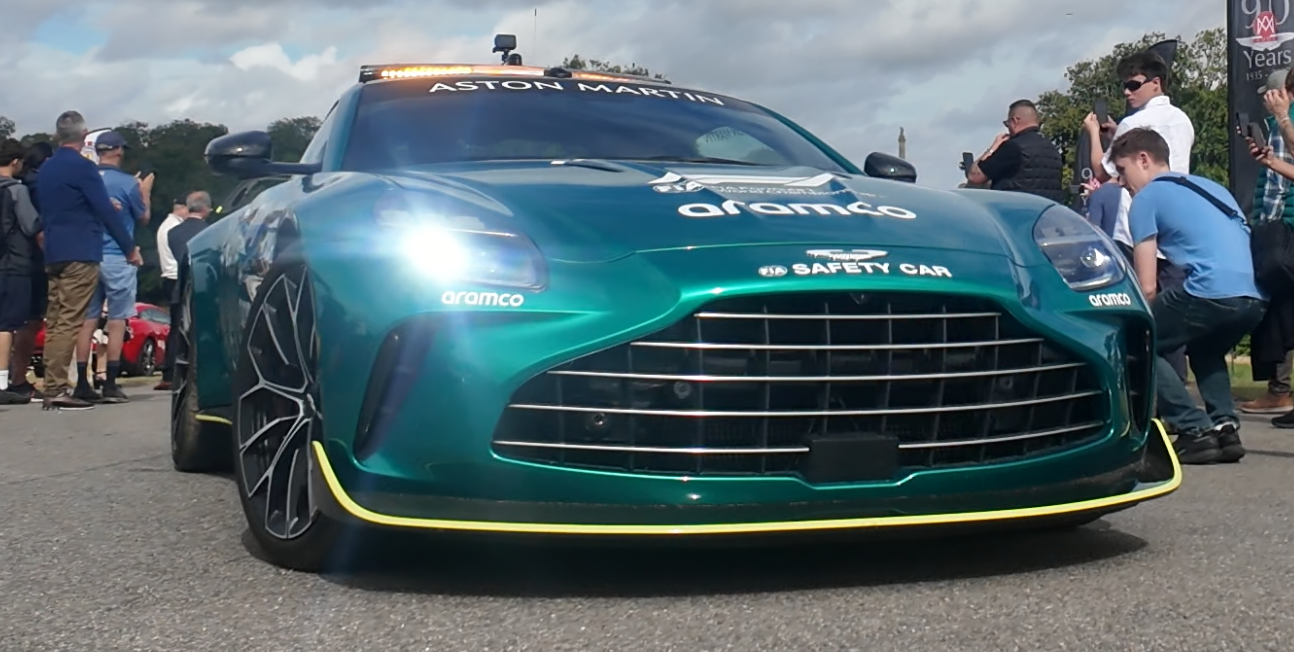
FTP Picture: Aston Martin Vantage FIA Safety Car at Salon Prive, Bleinheim Palace 2025
A Fan Favourite - And a Great Option for Customers
Fans adored the Safety Car. Its silhouette. Its stance. The green-and-lime livery that almost glowed under floodlights. It became one of the most photographed cars in modern Formula One, second only to the race winners.

The Aston Martin Configurator is amazing, and great to waste away a few hours designing your dream Aston, even in Safety Car colours!
Aston Martin, with its signature cheekiness, leaned into the enthusiasm. On the Aston Martin configurator; www.astonmartin.com/en-gb/configurator - any customer with imagination (and deep pockets!) can recreate a car astonishingly close to the FIA Safety and Medical Cars.
As you can see on the image opposite, the same deep greens, the same bright lime or yellow accents, the same menacing gloss-black packs. It is not an official “Safety Car specification,” of course, but the pieces are all there. Fans noticed. And some bought.
Suddenly the Safety Car wasn’t just an object of admiration. It became a buildable dream!
No official sales numbers exist, but the halo effect is obvious. The Vantage F1 Edition became a talking point around the world. The DBX707 gained recognition as the “Official FIA Medical Car.” High-profile customers mirrored the Safety Car spec. And Aston Martin, regardless of its finishing positions, enjoyed a visibility in Formula One unmatched by many front-running teams.
The Safety Car wasn’t just in the race. It was in the culture.
Aston Safety Cars in the Real World - AMOC Pride
Then came something special: the FIA Safety Car began appearing at Aston Martin Owners Club events, bridging the world of motorsport and the world of ownership in a way few brands could imagine.
At Salon Privé, I filmed the official Safety Car led a procession of customer Aston Martins across the majestic grounds of Blenheim Palace. At the 2025 Celebrating Vantage event at the British Motor Museum, it sat proudly among members’ cars, a surreal moment where heroes of the track mingled with heroes of personal passion. I even managed to position my FTP Vantage alongside the Safety Car for my closing remarks and of course a sensational Thumbnail for the video. To watch that video, simply click on the image below and we’ll take you straight there!
The community embraced it instantly. The Safety Car wasn’t just an F1 asset anymore. It was ours! - It was part of our Aston story and family!
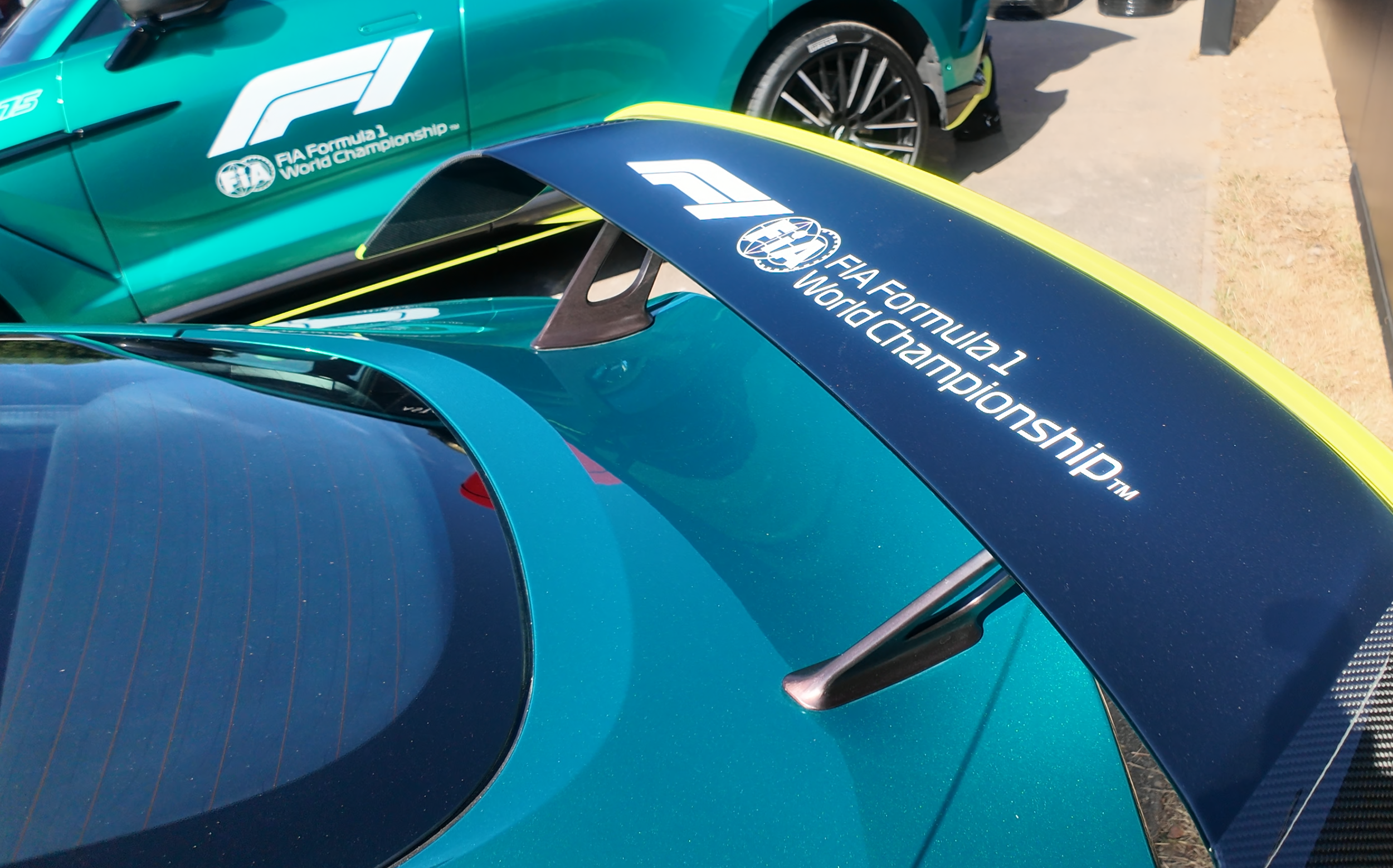
Who Chooses the Safety Car?
Behind the scenes, the politics of motorsport, brand heritage and commercial rights collided. While the paperwork passed through the hands of Formula One Management and the FIA, the aesthetic and emotional choice, a Vantage in British Racing Green with a lime accent, a DBX turned medical responder; carried unmistakable meaning. Some saw it as a bold attempt by Aston Martin to reclaim an iconic place in global motorsport; others whispered it was the sort of strategic move only possible when a carmaker has both a works team and promotional ambition tied closely together.
Whilst researching this article, I could find no public record saying “this idea came from Lawrence Stroll,” or “this came from Aston Martin’s board.” What we do know is that when the Safety Car took its place in the pit lane next to its Mercedes counterpart, it signalled a new chapter, one written in heritage-paint, adrenaline and a little bit of daring. The silent handshake between commercial partners and regulators, between brand ambition and FIA scrutiny, had produced something far more than a support vehicle.
And to get there, the car had to earn its place. It wasn’t simply about badge or beauty: the Vantage and DBX submitted to rigorous testing, proving they could handle high-speed circuits, repeated hard laps, braking loads, communications gear, and medical kit demands. In F1’s high-stakes theatre, trust is earned. And from what I’ve read, Aston Martin earned it!
So What About 2026 and Beyond? The Next Chapter?
With major regulation changes on the horizon, the future of the Safety Car role is unwritten. Hybridisation, electrification, sustainability, they may shape what leads Formula One next. But I believe Aston Martin has carved itself into the story so deeply that the idea of a Grand Prix weekend without a green Vantage at the front feels almost unthinkable. I would certainly feel that something was missing.
Whether the partnership continues or evolves, the impression remains: Aston Martin changed what a Safety Car can be. It’s an iconic image at every Formula 1 weekend!

Final Thoughts - The Aston Martin That Leads the World
Most fans will never sit in an F1 paddock. They will never feel the heat of tyres cooling after qualifying, or hear the sharp breath of a driver moments before lights-out.
But they all see one Aston Martin.
The Vantage.
The Vantage S.
The DBX707.
The green cars that bring calm when chaos arrives.
They don’t win trophies.
They don’t appear on podiums.
But they make every race possible.
In a sport obsessed with speed, I often think that the most important car is often the one that slows everyone down. And when that moment comes, when Formula One bows to caution, when hope and safety take precedence over glory, it is an Aston Martin that leads the way. Its deep, glorious V8 rumble rolls across the circuit, richer and more soulful than the very cars it protects. A sound that reassures. A presence that steadies. Proud. Unmistakably Aston Martin.
The hero in green.
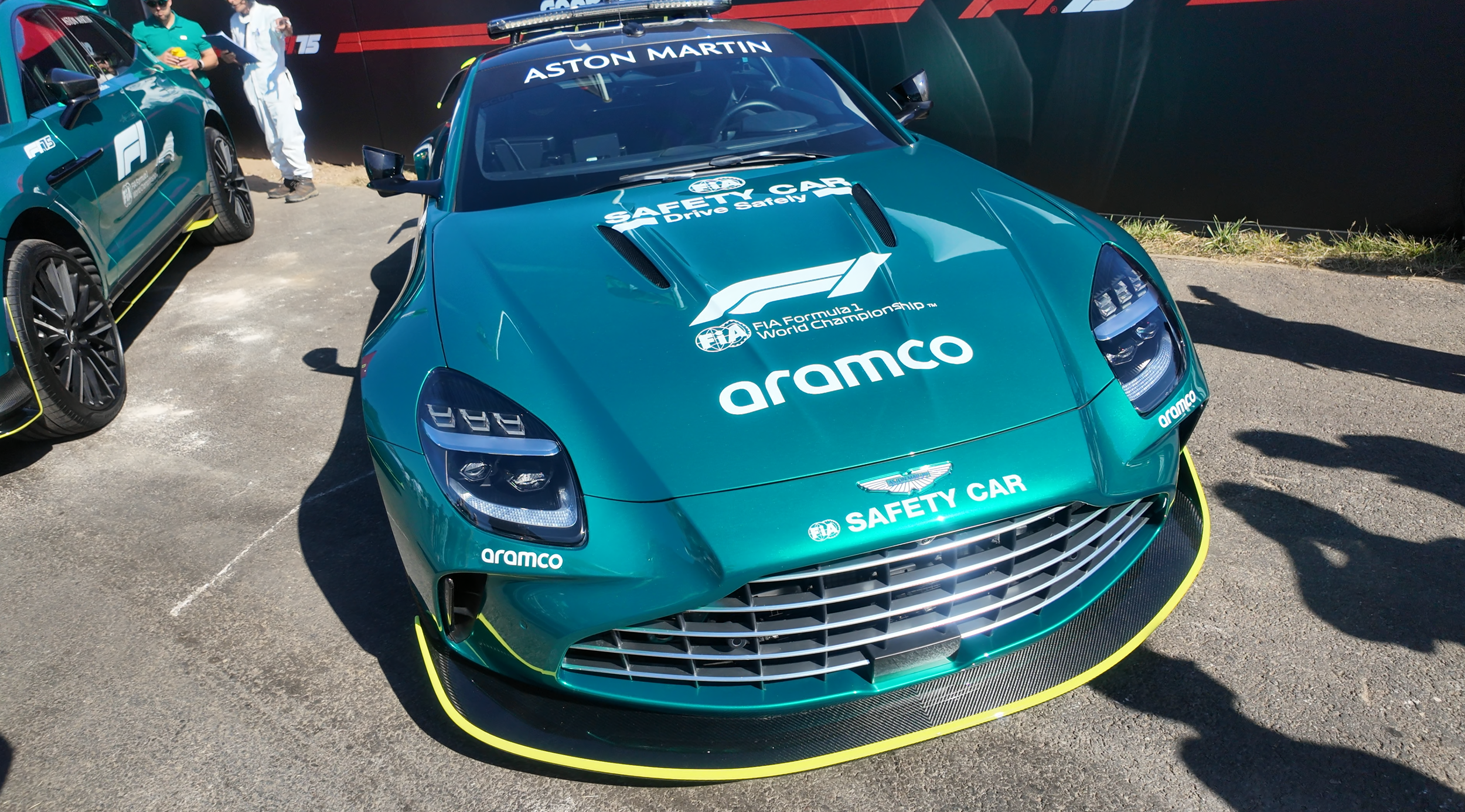
FTP Picture: Aston Martin FIA Safety Car, Goodwood Festival of Speed 2025
Do you prefer the sound of the Aston Martin Safety Car to the modern F1 engines?
I know what my ears say…
Tell me your verdict below!
