
Should You Upgrade to the 2025 Aston Martin Vantage?
One Owner’s Honest Experience & Thoughts After Trading In His 2019 Model
Guest Contributor: George Johnson
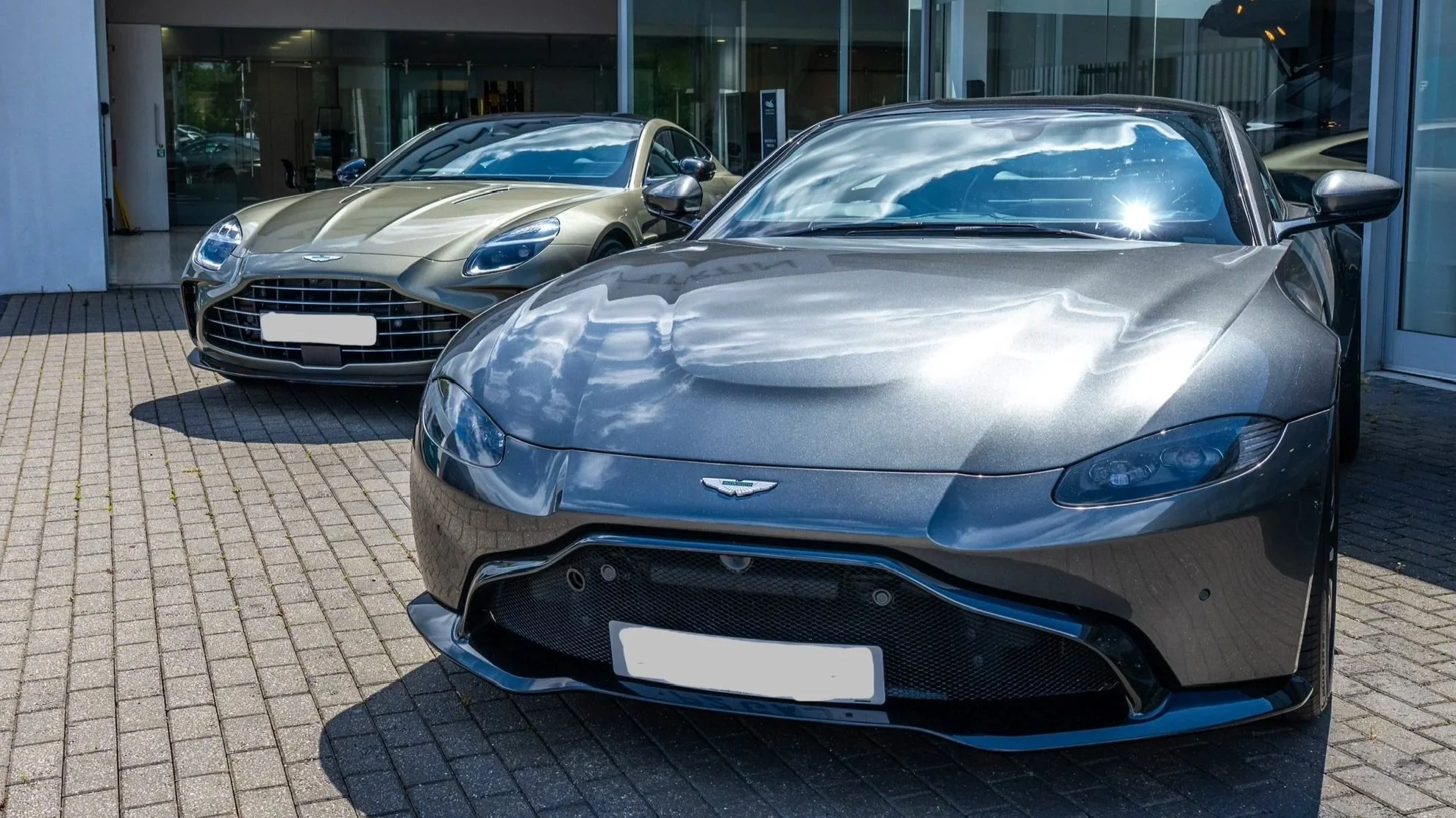
Photograph © George Johnson 2026. Reproduced with permission.
Editor’s Introduction - Dan, Fuel the Passion
I’d known of George for some time through the early days of Fuel the Passion, thoughtful comments, measured observations, always constructive. We first met in person last summer at the Vantage celebration at the British Motor Museum, fitting, really, given the subject of this article.
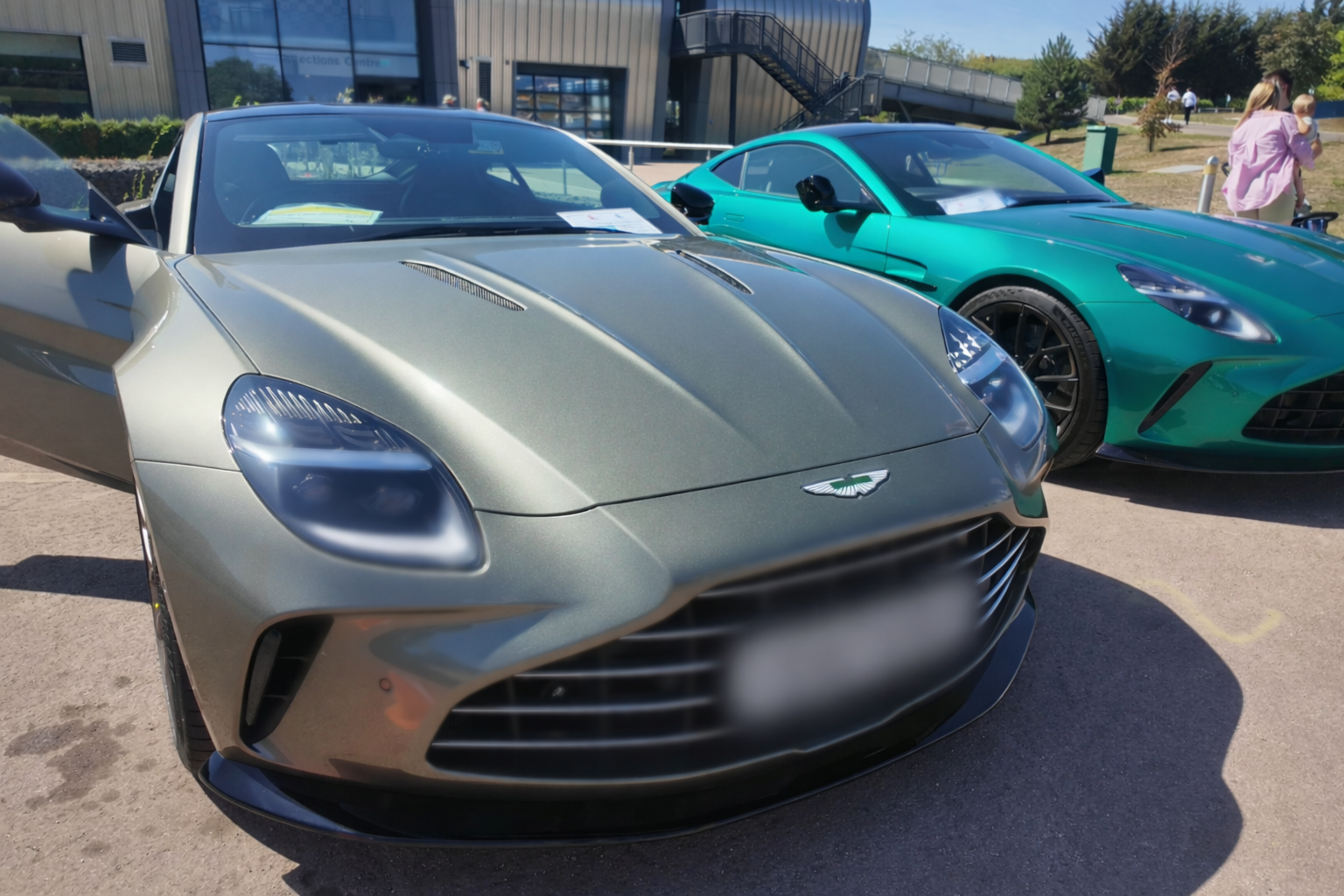
Image © Fuel the Passion - Georges’ new Vantage - British Motor Museum (AMOC) Aston Martin Vantage Celebration Day
At that event, George had recently taken delivery of the latest 2025-generation Vantage.
I filmed his new car and captured his early impressions on the day, you can watch that film HERE, which takes you directly to the moment we chat about his new Vantage.
What makes this story particularly interesting to me is that I still own the previous-generation Vantage, the same era car George had recently decided to trade in. So this isn’t an upgrade story viewed from a distance. It’s a decision that sits close to home. We’ve all read polished road tests of the new car. What follows is something far more useful: a considered, owner-led evaluation from someone who lived with the earlier model for years, weighed the financial and emotional realities carefully, and then stepped into the next chapter.
If you’re currently asking yourself whether to keep your current car, which may just be a previous generation Vantage or make the jump to the latest generation, I suspect George’s experience will resonate.
Over to George.
A Personal Perspective
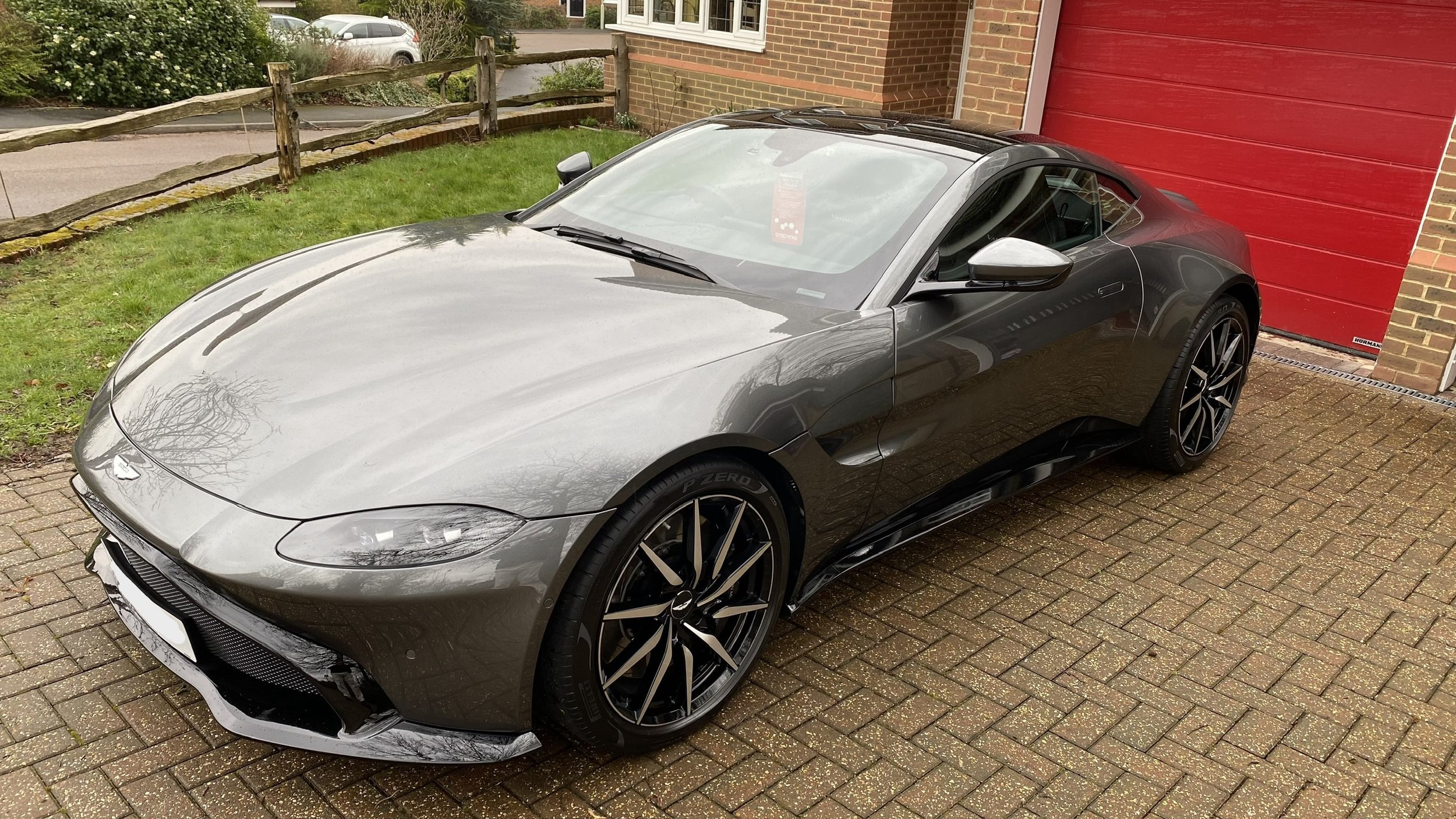
Photograph © George Johnson 2026. Reproduced with permission.
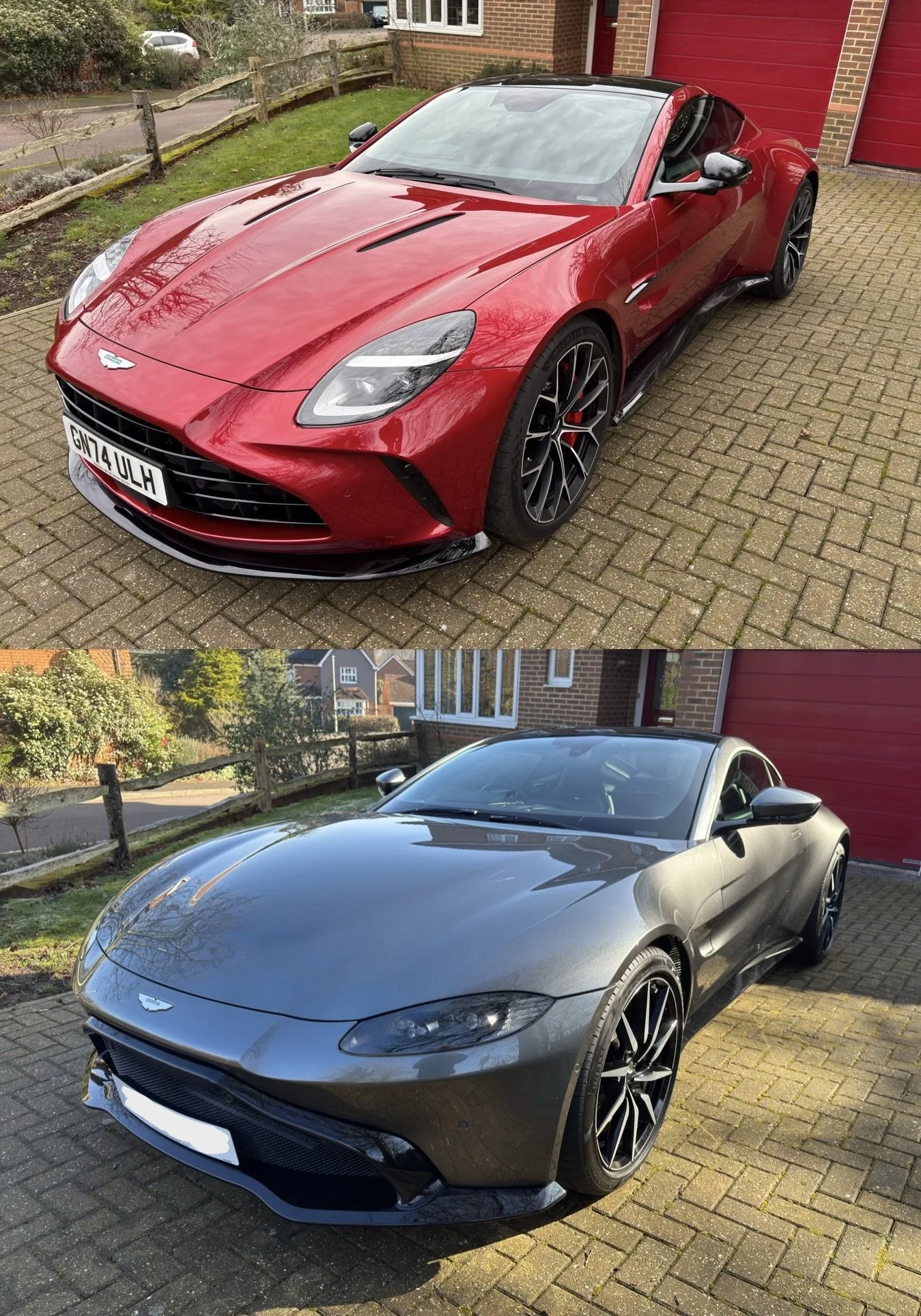
At the start of 2025, with the UK Government’s 2030 ban on new petrol car sales looming in the background, I found myself asking a difficult question; Do I continue enjoying my 25,000-mile 2019 Magnetic Silver Aston Martin V8 Vantage Coupe? Or, given the overwhelmingly positive press surrounding the updated 2025 model, was this the right moment to part-exchange and step into the new generation?
This wasn’t an impulse decision. It was something I tried to approach methodically.
Taking an Objective Approach
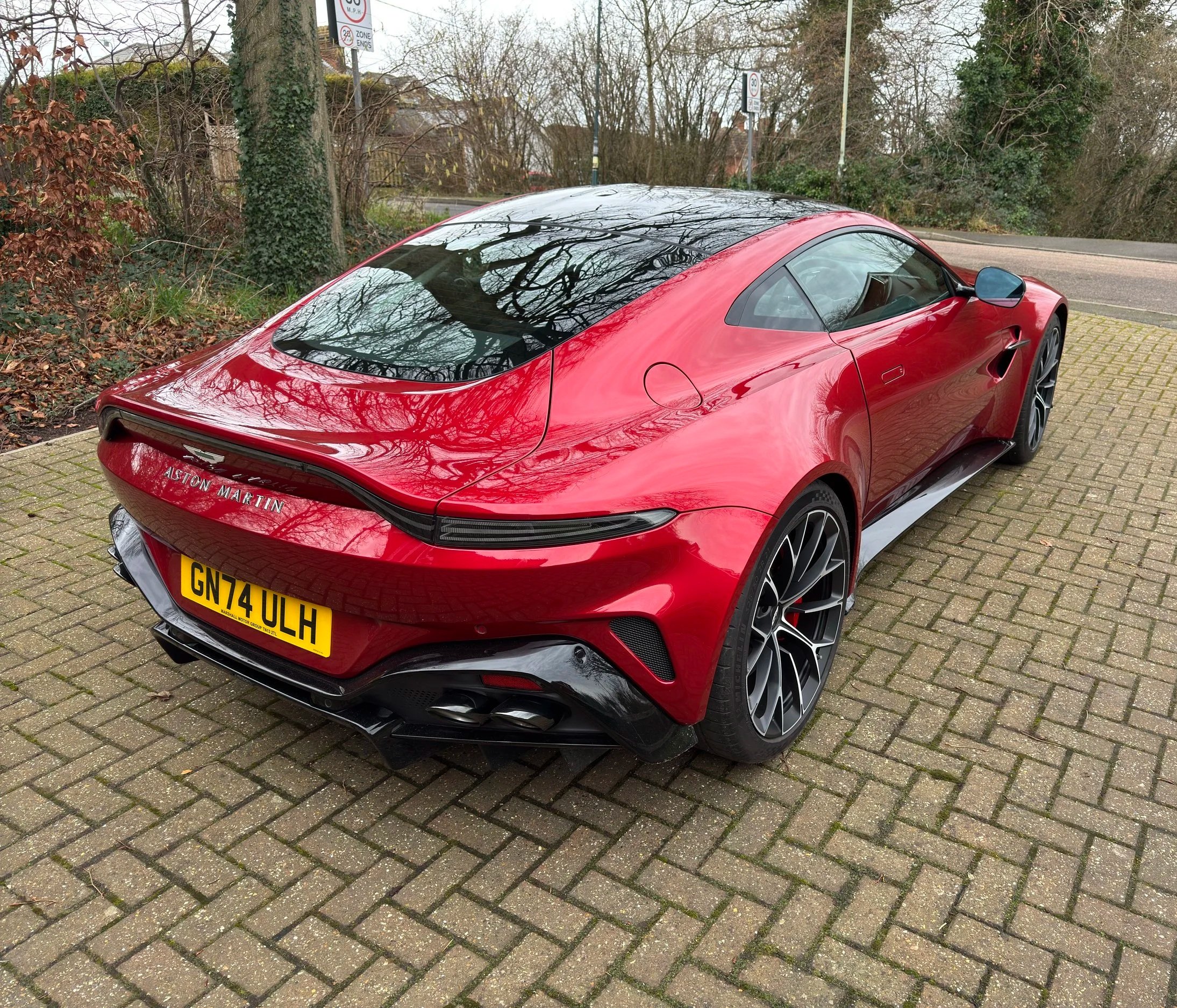
Photograph © George Johnson 2026. Reproduced with permission.
To avoid making a purely emotional decision, I arranged an extended test drive and committed to analysing the experience honestly.
Having a good relationship with my local Aston Martin dealer meant that they were happy to offer me their (Hyper Red) Vantage demonstrator for a weekend.
That generosity proved invaluable. Rather than a brief, polished showroom drive, I covered around 300 miles across different road types and in varying conditions. It allowed me to test assumptions, challenge forum myths, and properly experience the car as an owner might, not as a journalist on a tightly scripted route.
The weekend included heavy rain, proper British weather, double-wiper-speed territory, which turned out to be unexpectedly useful.
Weighing Up the ‘For’ and ‘Against’
To organise my thinking, I compiled detailed ‘For’ (positives) and ‘Against’ (negatives) lists.
On the positive side, this felt like an ideal window of opportunity to update the car in good time before the UK’s 2030 ban on new petrol car sales, Aston’s anticipated hybrid transition (I have no desire to own an ‘electrified Aston’), or further impending EU vehicle restrictions (EU7, etc.).
Photograph © George Johnson 2026. Reproduced with permission.
The test drive revealed that the 2025 Vantage felt very solid, ‘planted’, and generally more sure-footed on the road, making my 2019 Vantage feel more ‘fragile’ by comparison.
As mentioned above, much of the test drive was done in heavy rain (double wiper speed!) and the Michelin Pilot Sport S5 tyres gripped so much better than the OEM Pirelli P Zeros fitted to the 2019 car. The wider rears (335/40) may well have helped grip in the wet at high speed.
Fears of over-firm suspension and a ‘crashy’ ride on ‘Sports’ setting (especially on typical British pot-holed roads) were ill-founded, and I found the drive as comfortable as my 2019 Vantage. The car also did not skip its tyres when moving forward on full lock, a very annoying feature of the previous generation car.
The 2025 car was better built and felt of higher quality (better assembled & no unsightly panel gaps), employed higher quality materials, had good sound dampening of panels and the rear diffuser didn’t rattle (a fault on many last generation cars). Additionally, there was no brake squeal on the newer car (notoriously quite bad on the previous generation).
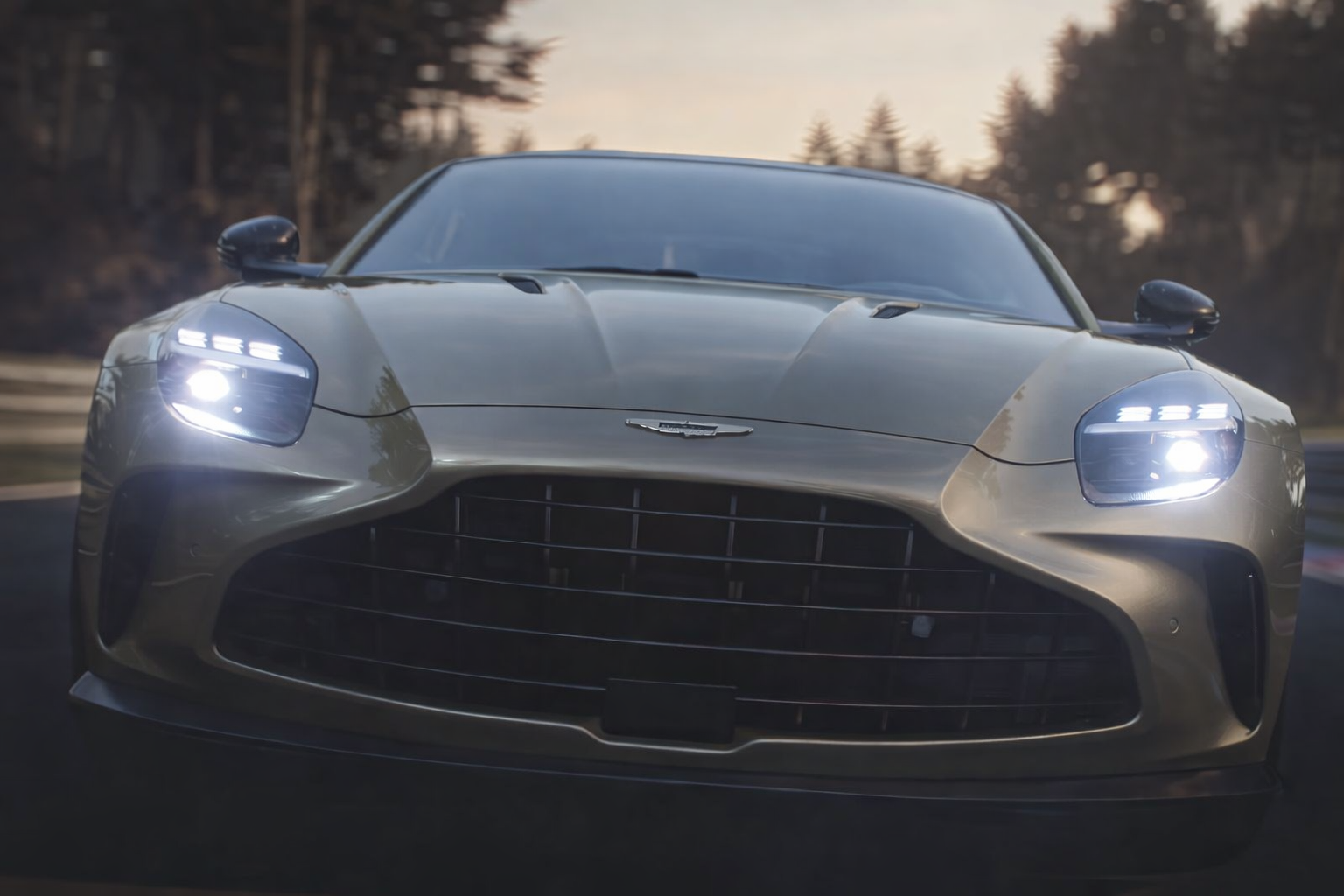
Image © Fuel the Passion
Illumination from the headlights is considerably better than my 2019 car and the (adaptive dipping) matrix elements continuously adjust the beam pattern to give the best illumination of the road ahead (whilst avoiding dazzling oncoming traffic).
“A fun ‘gimic’ is that the light beams do a little ‘dance’ when they come on at night — light beams sweep inwards then outwards a couple of times as the engine is started.”
The engine sound is generally OK (in spite of OPFs and EU mandated heavy sound-deadening requirements). Although missing some of the timbre of the previous (non-OPF) car, the characteristic low-end Aston/AMG rumble was there and most enjoyable. Annoyingly, engine sound is also piped over the speakers in the cabin, something that also appears in my ‘negatives’ list.
Using Shell V-Max petrol, I obtained a good average of 33mpg with the new car on the motorway, similar to my 2019 car.
Contrary to expectations, it was incredibly easy to turn off the EU mandated ADAS ‘driver aids’ (Lane Keep Assist, Lane Departure Warning, Anti-Collision Braking, Automatic Speed Limiter, etc.) before each drive and it only required two button presses to turn it all off (or press the ‘custom button’ to turn off selected ‘features’ only). This is especially useful since these automatically reset to ‘On’ each time the engine is started.
The new car has some nice design improvements inside & out, including a Glovebox (finally, somewhere handy to store the User Guide, a torch and other small/thin ‘miscellanea’), a divider in the cup holder that can be moved from side to side in order to accommodate different & unequal sized drinks containers, and a wireless charging pad under the centre console. Although the latter is very helpful (and provides convenient storage for a phone), the phone does get very warm when charged. The selectable colours and brightness of the cabin lighting is also a nice touch.
The new air vents are beautifully designed and work really well, form & function working in harmony. It’s also nice to see manual vent control (rather than trying to adjust from an on-screen menu). Ditto the lovely physical knurled knobs for temperature & volume.
Image © Fuel the Passion
A new car means 5 years free servicing and 3 years warranty & breakdown cover, both of which had expired on the 2019 car, requiring ongoing additional payments. Everything reset with a new car, new tyres, new components, zero mileage wear, etc.
The 2025 car has adaptive cruise control and adaptive auto-dipping headlights, which my 2019 model doesn’t. It also comes with wireless Apple CarPlay and Android Auto (unlike the 2019 Vantage, which needs a clunky adapter to deliver these services). In addition, the new Astons can be upgraded to Apple CarPlay Ultra, which gives total control of the whole car using the Apple CarPlay interface.
Despite being 3cm wider at the rear and 3cm longer, the 2025 car still fitted easily into my garage, though extra caution has to be taken as gaps are smaller. The updated Vantage received excellent reviews from most established magazines (EVO, CAR, Auto Express, Autocar, Top Gear) as well as on YouTube (Henry Catchpole, Steve Sutcliffe, Chris Harris, Harry Metcalfe, Mat Watson).
It was also lovely to be able to play music from a USB stick whilst still being able to simultaneously listen to Waze directions (or WhatsApp/iMessage messages on CarPlay). In my 2019 Vantage, you can have either but not both simultaneously (requires setting EITHER Media USB 1 (after-market IDCore CarPlay adapter) OR USB 2 (USB stick)). As the new car uses USB-C, I did have to buy a USB-C stick though.
On the negative side, finances were impossible to ignore. Was the £130,000 ‘cost-to-change’ worth it? There would be high initial depreciation, the UK Government’s recently doubled ‘showroom tax’ VED (£5,490) from April 2025, and roughly three times the insurance cost for the new car due to its higher value.
“There was also the simple fact that there was nothing wrong with my current car. It is my ideal specification, in good condition and has already largely depreciated.”
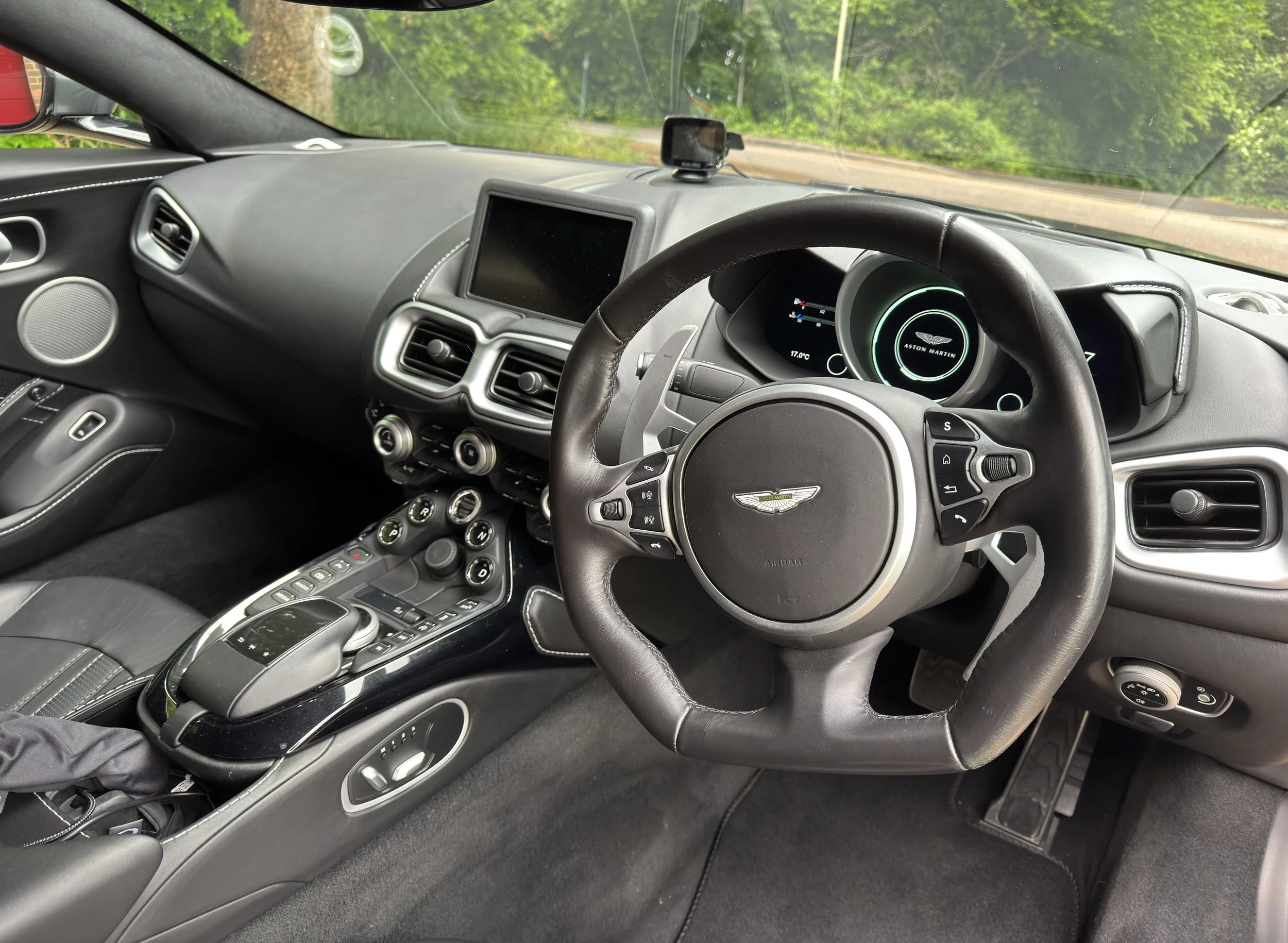
Photograph © George Johnson 2026. Reproduced with permission. Interior of George’s 2019 Aston Martin Vantage
There would be inconvenience and cost involved in removing and transferring my after-market stereo & security systems from the 2019 to the 2025 car.
I also don’t actually want (or need) that extra engine power (656BHP (2025) vs 503BHP (2019)), which adds higher insurance costs.
Initially, I didn’t find using the new touch-screen interface or the new Mercedes-based steering wheel touch controls intuitive. I struggled with simple things like reducing the brightness of the screen (it really lights up the cabin brightly at night!) or reducing the bass audio setting (the last person to borrow the car had turned it up to ‘Max’, making it very unnatural and distorted). Turning the screen off is easy with a single button press on the centre console, though. It took me quite some time (& experimentation) to find out how to set the speed limiter (essential with all the 50MPH average speed zones in the UK) or how to adjust the adaptive cruise control. On the 2019 car, all these functions are carried out simply by a single steering wheel stalk, which I find much more intuitive.
Fortunately the DB12 user manual (available at the time and detailing similar functionality) gave clues, especially as there was no paper manual provided and the e-manual for the ‘new new Vantage’ wasn’t available at the time (it is now accessible online).
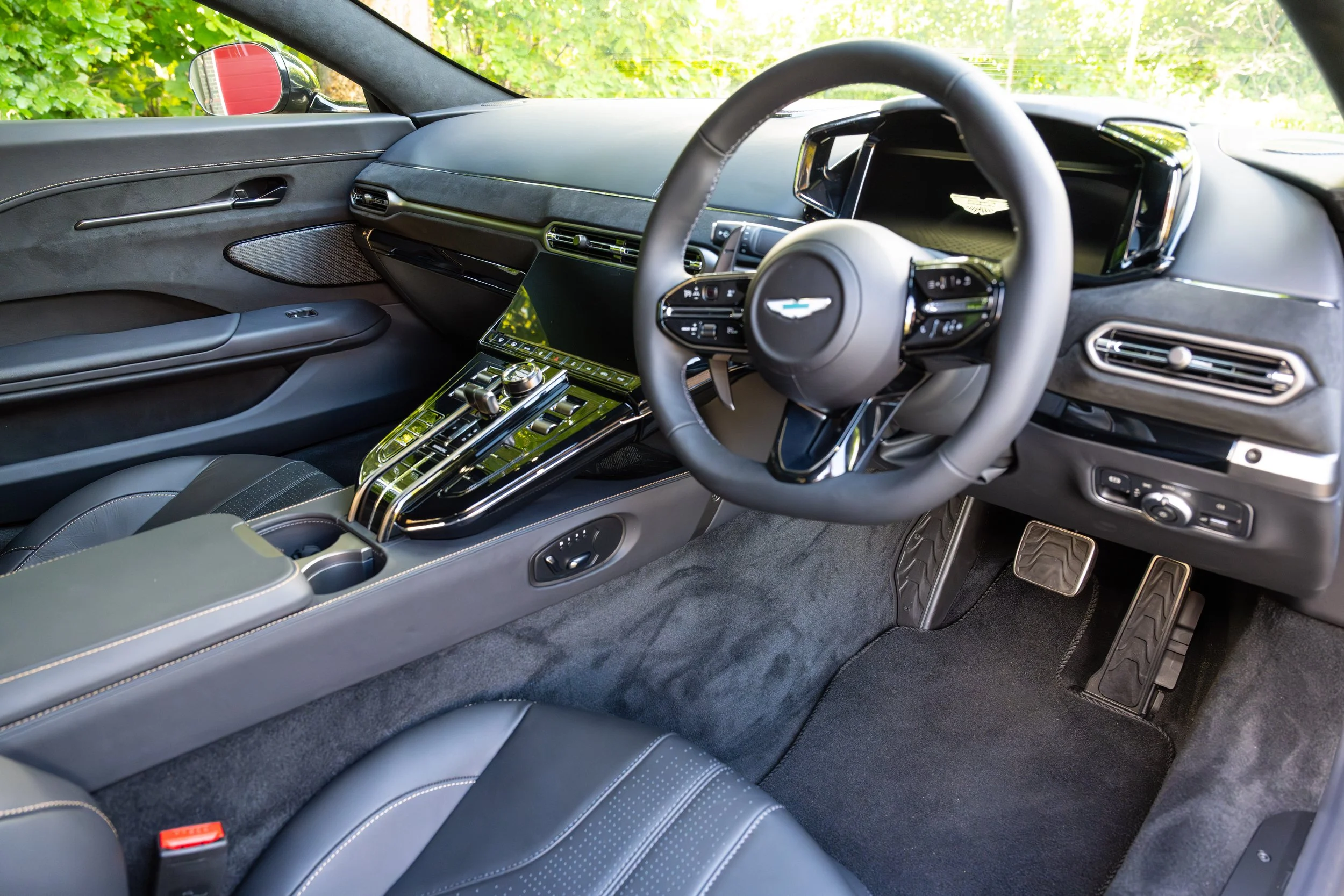
Photograph © George Johnson 2026. Reproduced with permission. Interior of the 2025 Vantage.
I miss the traditional elegant Aston P R N D glass gear selection buttons. The ‘mini shifter’ on the new car just doesn’t feel as premium to use. The ‘Manual’ button below it feels a clumsy solution that other manufacturers have solved more elegantly. On the new car, it’s easy to inadvertently activate a ‘touch’ button, triggering features like seat heating/cooling, infotainment on/off, park distance control or cameras. On the old car, the centre console buttons had to be physically pressed to activate them.
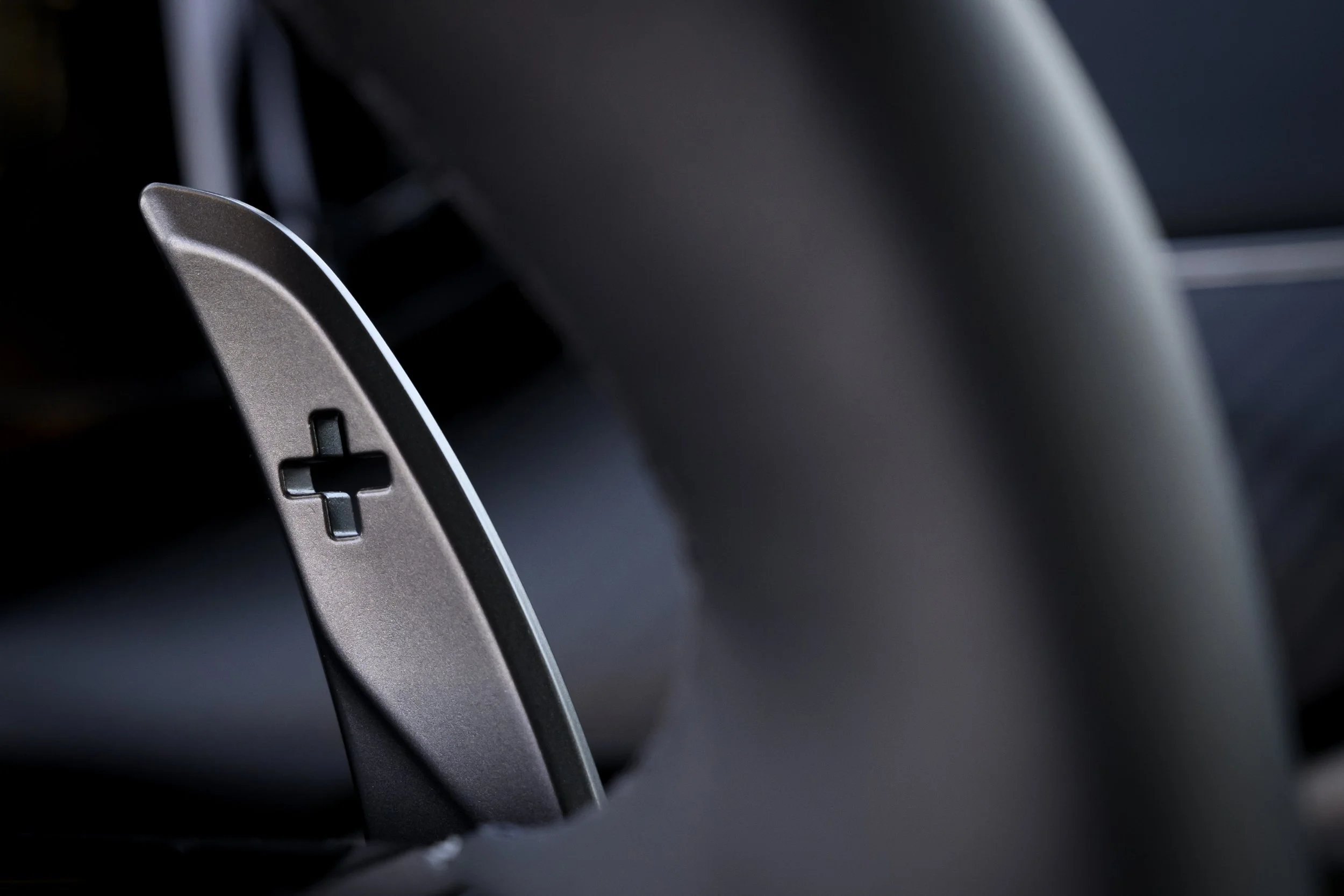
Image © Aston Martin Lagonda. Used for editorial purposes.
The ‘flappy paddles’ are now attached to the steering wheel (as opposed to my preferred column-mounted option on my 2019 car). They also don’t function like the last car, where pulling both paddles would put the car into ‘Neutral’ and a sustained pull on the right paddle would select ‘Drive’ (from ‘Park’ or ‘Neutral’)”. In my opinion, the steering wheel itself is far too thick (more like a BMW ‘M’ model), reducing road feedback feel.
The inclusion of EU mandated ADAS ‘driver aids’ that have to be turned off every time the car is started remains a mild irritation (even though, as noted earlier, it is easy to disable them).
The basic stereo system does not sound good, dead and distorted with no sense of dynamics or staging, though I always planned to transfer over my custom Audison/Hertz aftermarket system (along with extensive Dynamat® or Skinz® to ‘deaden’ noisy panels).
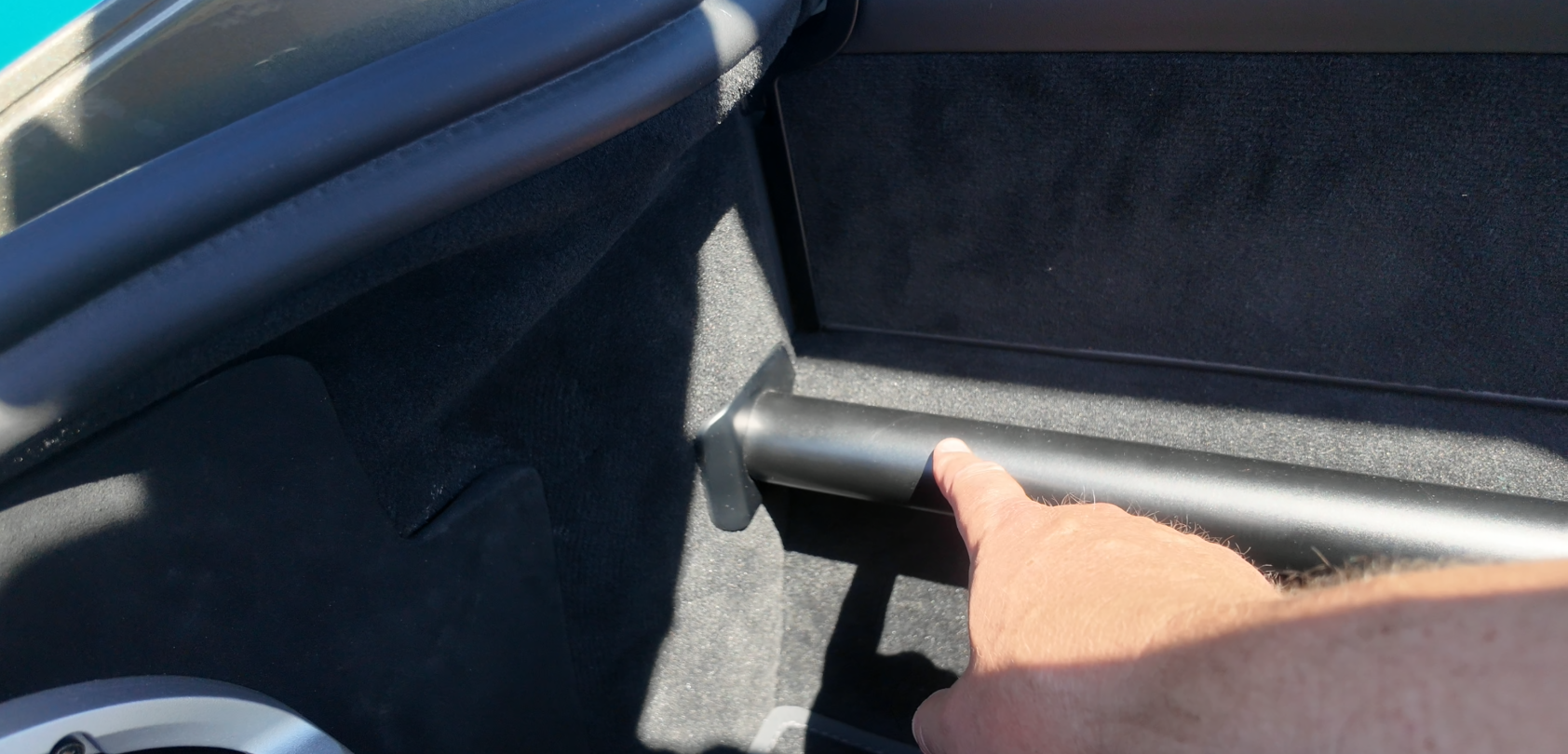
Image © Fuel the Passion
The metal cross-strut bar in the boot (for increased torsional stiffness) reduces boot space slightly and is made of a thinnish metal that ‘rings’ when tapped. Covering this with Dynamat®, Skinz® and/or carpet will acoustically deaden this.
I miss the Mercedes (i-drive like) control dial on the 2019 car for operating the infotainment. The touch screen soon showed fingerprint smudges all over, and keeping a micro-fibre cloth in the door pocket became essential. I also found selecting functions on the touch screen more distracting (and difficult, especially over bumpy roads) than scrolling with the control dial of the 2019 car.
I miss the physical oil ‘dip stick’ (‘seeing is believing’) of the 2019 car. Like most new cars now, the 2025 car only has electronic engine oil level sensing/checking. Although the new frameless door mirrors look elegant, the glass is more open to the elements and became dirtier more quickly than the old car, which has a protective cowling partially sheltering the glass. I was driving through lots of rain during the test drive, so perhaps this is less of an issue in fairer weather.
There is also Aston Martin Connected Car Services, the Aston Martin App and Communication Services, involving use of my data and an additional subscription after the first year. Note that there is no app on the 2019 car, though it is still connected, with telematics and user data sent to Aston Martin.
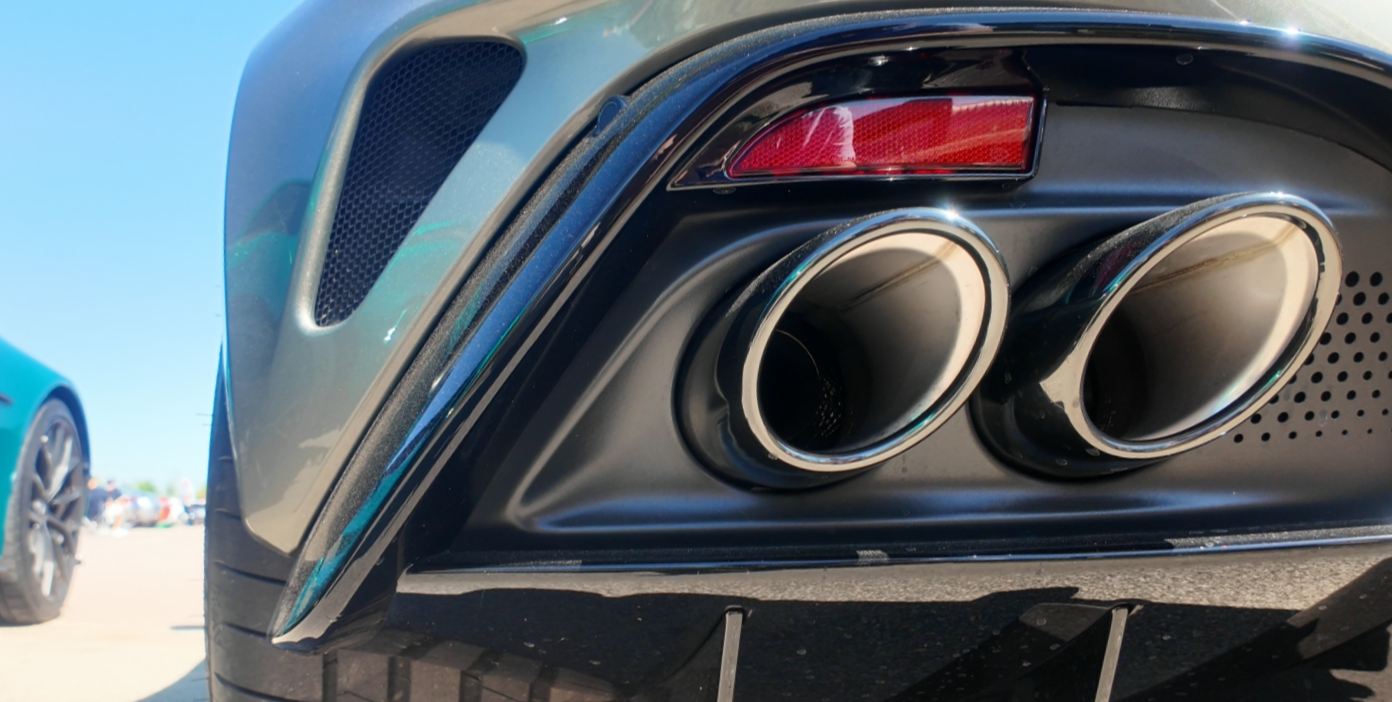
Image © Fuel the Passion
The EU mandated soft limiter and OPF ‘muffled/quieter exhaust’ are undesirable. The 2025 car does still ‘pop & bang’, albeit more subtly. Engine sound is piped over the speakers and I suspect some is also mechanically channelled into the cabin. It is not possible to defeat this officially, however during the fitting of my after-market stereo system, the installer identified a simple way to bypass this unwanted addition.
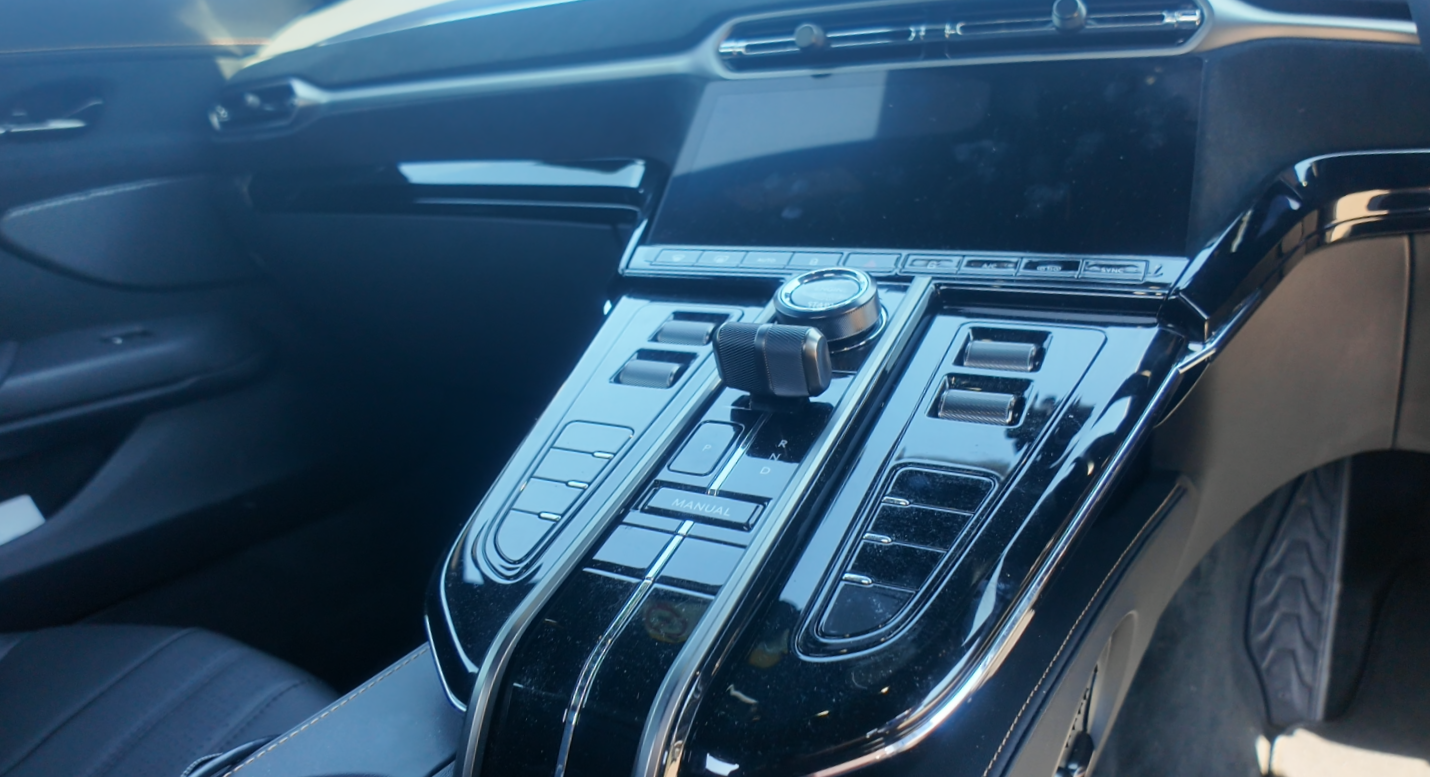
Image © Fuel the Passion
The 2025 car is bigger (3cm wider at the rear, 3cm longer) and heavier, more complex (more radiators, electronics, etc.), meaning more to go wrong. I also prefer some design features of the 2019 car, the beautiful clamshell bonnet, thinner rimmed steering wheel, preferred column-mounted ‘flappy paddles’, dial-driven infotainment, and fewer ‘fingerprint magnet’ gloss black surfaces. Whilst the usability of the touch screen infotainment system is significantly improved compared to the previous ‘Mercedes-based’ system, I do miss the control wheel of the 2019 model, which allows intuitive selection without having to look at the screen.
Finally, I anticipated teething issues with a newly released model (early release and buggy software). As you’ll see below, this concern turned out to be quite prophetic.
Summary of My Findings
Overall, the extended full weekend test drive (300 miles) was extremely helpful and enabled me to understand how the car behaved and drove on different types of roads and under different lighting conditions. I would encourage anyone seriously contemplating buying the 2025 Vantage to book an extended test drive.
I really thought that the driving experience of the new car was much better, it put a huge smile on my face and the car has benefitted from the many improvements and handling refinements that the Aston Martin engineers have made inside and out. As Brits say, it really was like comparing ‘chalk ’n cheese’ versus my 2019 Vantage.
Taking everything into account, even with the 19 negatives, I was so impressed with how good the new car was that,
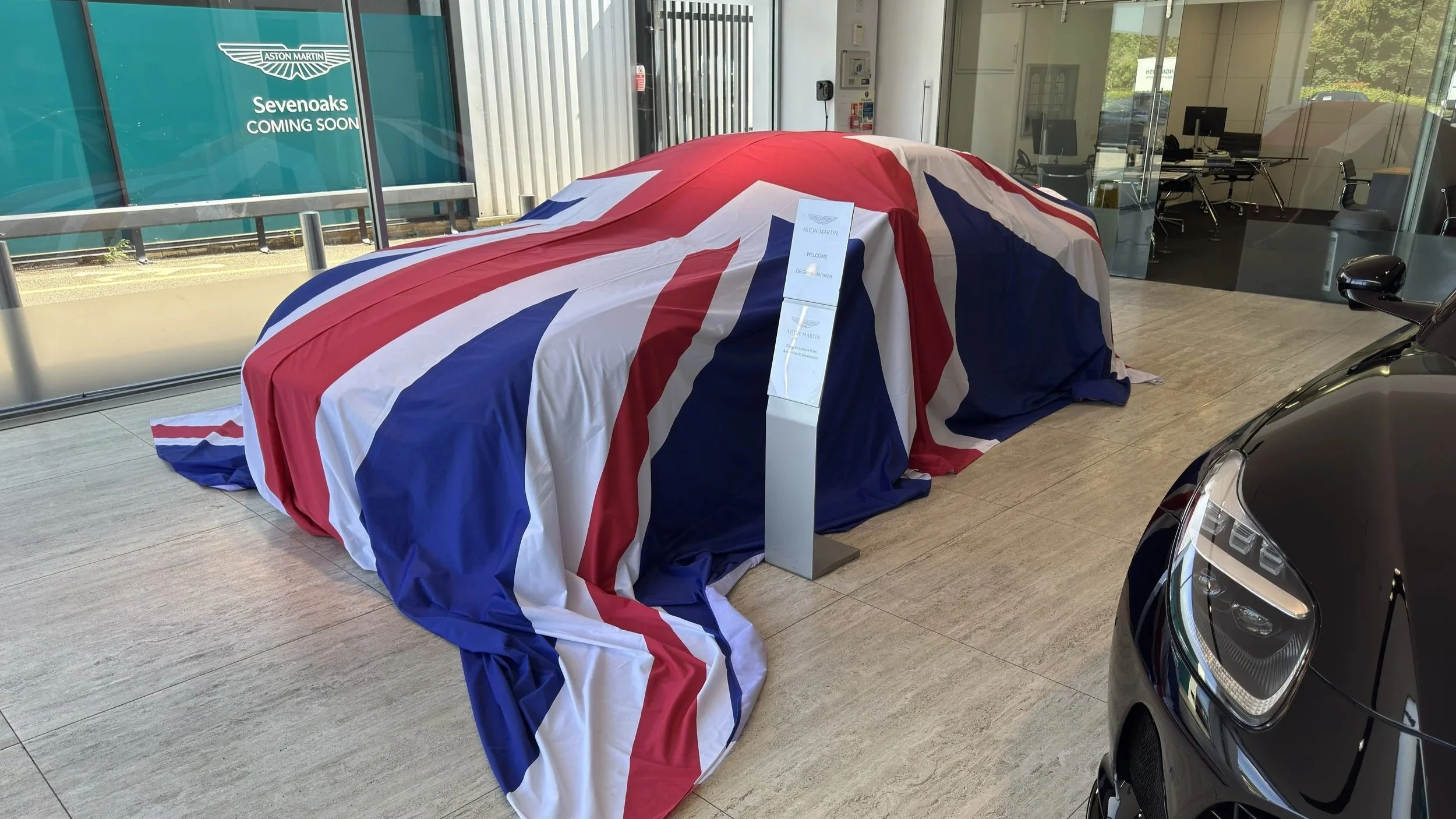
“…shortly after the January 2025 test drive, I placed a factory order for a brand new Vantage.”
Lead time was anticipated to be 8 months but turned out to be only 5 months (built in May 2025 and delivered in June).
Photograph © George Johnson 2026. Reproduced with permission.
Hints and tips in specifying the car

Image © Fuel the Passion - JCT600, Aston Martin, Leeds
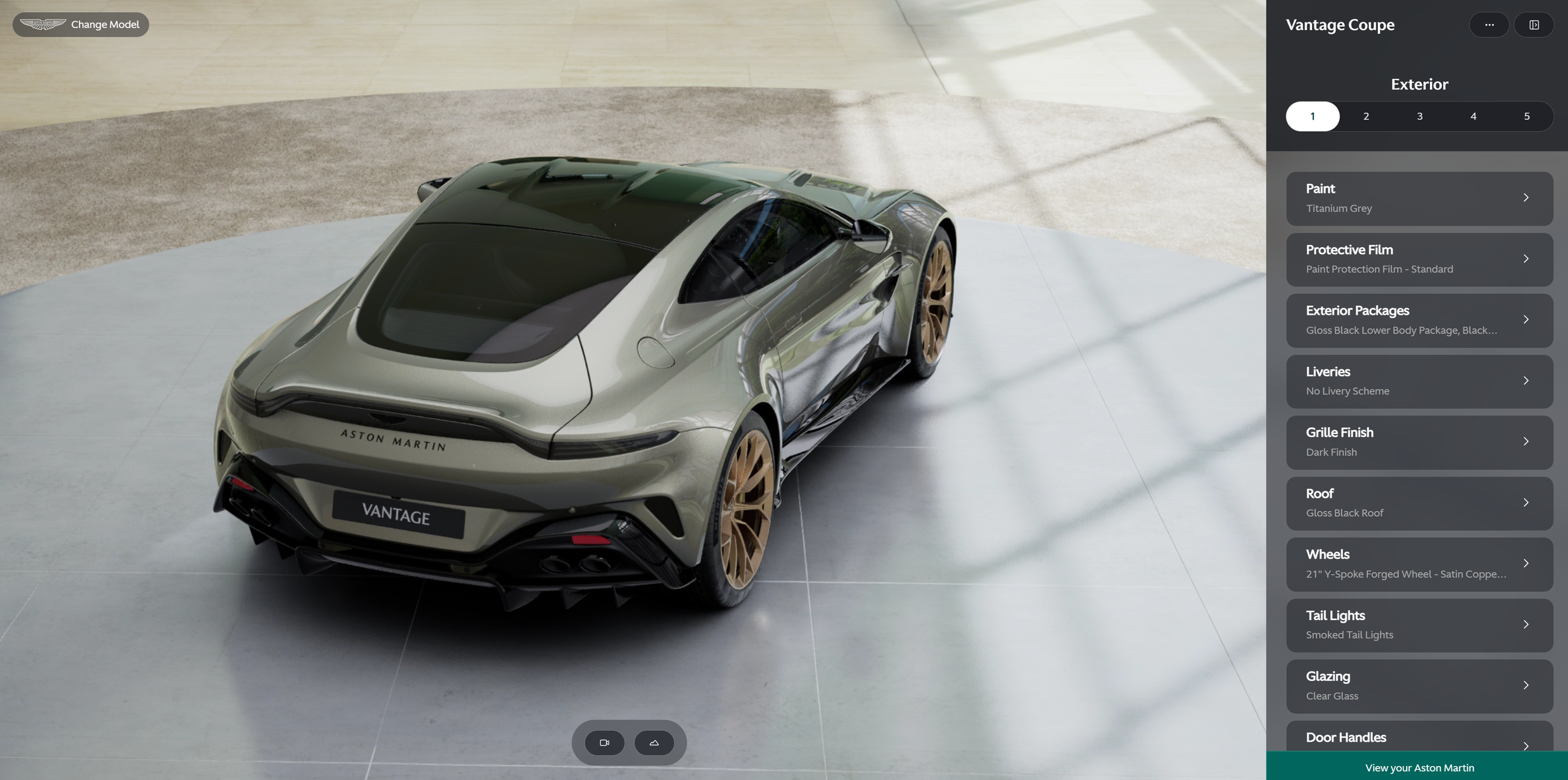
Image © Aston Martin Lagonda. Used for editorial purposes.
Like many new prospective car buyers, I spent significant time on the excellent Aston Martin configurator, trying different interior and exterior options, and producing a virtual brochure of the configured car.
Bear in mind however that seeing a representation of the car on a computer/tablet/phone screen alone can be deceptive, and I’d encourage potential purchasers to visit their local Aston Martin main dealer to see what the colours actually look like under different lighting (artificial, sunlight, etc). This is a great way to see if the shade & paint ‘sparkle’ is the same as you expected (or better/worse).
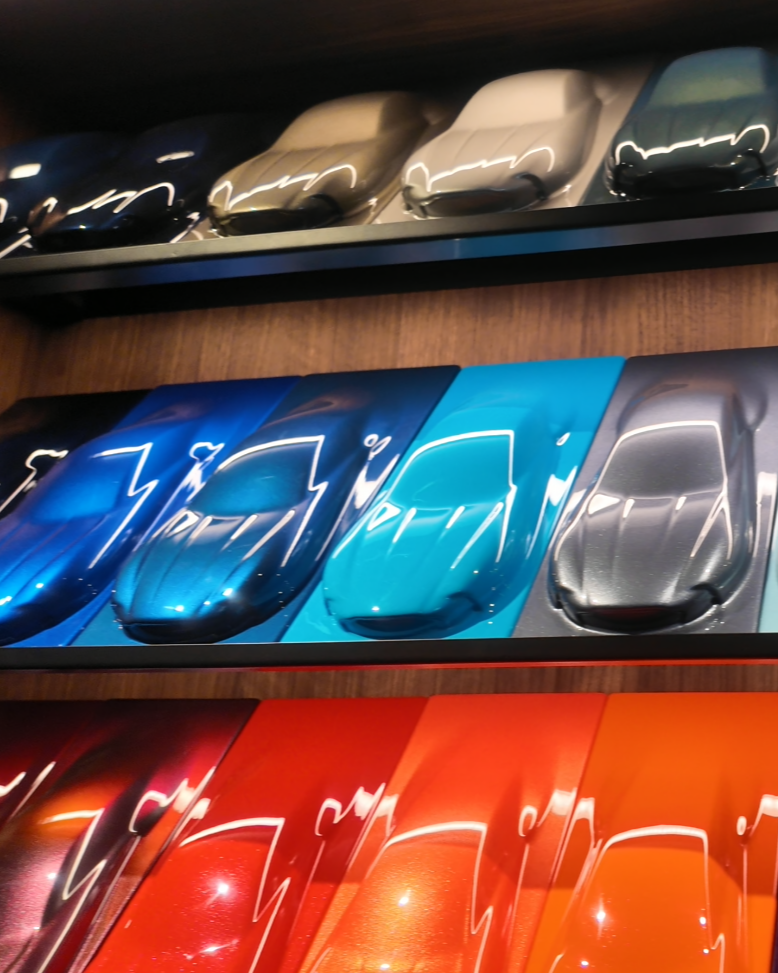
Image © Fuel the Passion
I ended up compiling a priority list of colours to subsequently inspect at the dealer;
1. Titanium Grey (Signature Metallic) - bronze wheels
1. Malachite Green (Signature Metallic) - bronze wheels
2. Liquid Crimson (Signature Metallic)
3. Plasma Blue (Signature Metallic)
4. Concours Blue (Metallic)
5. Aluminite Silver (Signature Metallic)
6. Podium Green (Racing Line)
7. Ghillies Green (Metallic)
8. Magneto Bronze (Signature)
9. Volcano Red (Metallic)
It’s immediately apparent (from examination of Aston Martin’s Timeless used car site) that silvers, greys and blacks are by far the most prevalent colours (the configurator is rich with multiple shades of these colours as well), no doubt partly driven by the popularity of the colour of James Bond’s Astons, all of which have been silver/grey. Indeed my 2019 car was painted in Magnetic Silver, which was truly gorgeous and the luscious shine and deep sparkle really ‘popped’ in the sunlight when the car was clean.
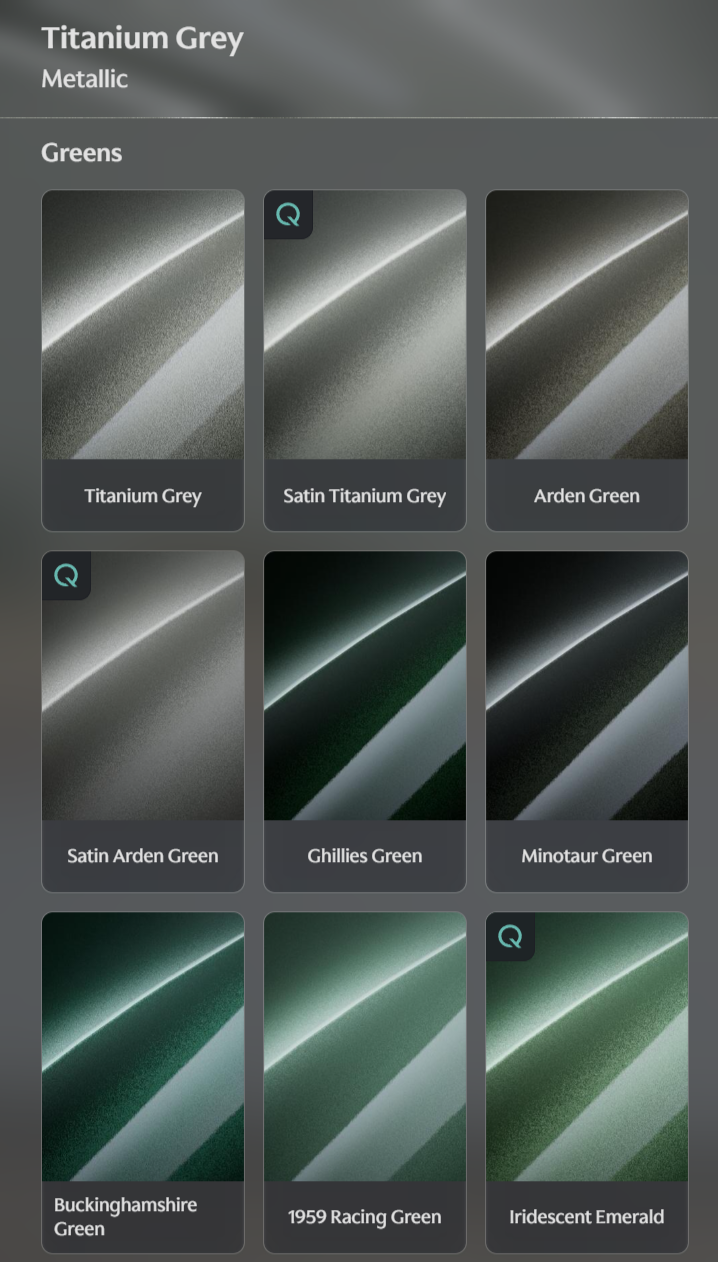
Image © Aston Martin Lagonda. Used for editorial purposes. Aston Martin Configurator (Just a small sample of colours under the ‘Greens’ section).
I therefore really wanted my next Aston to be a different colour (to make it feel ‘different’), and as you can see from my priority list above, spent much time focussed on the ‘green palette’ of the configurator.
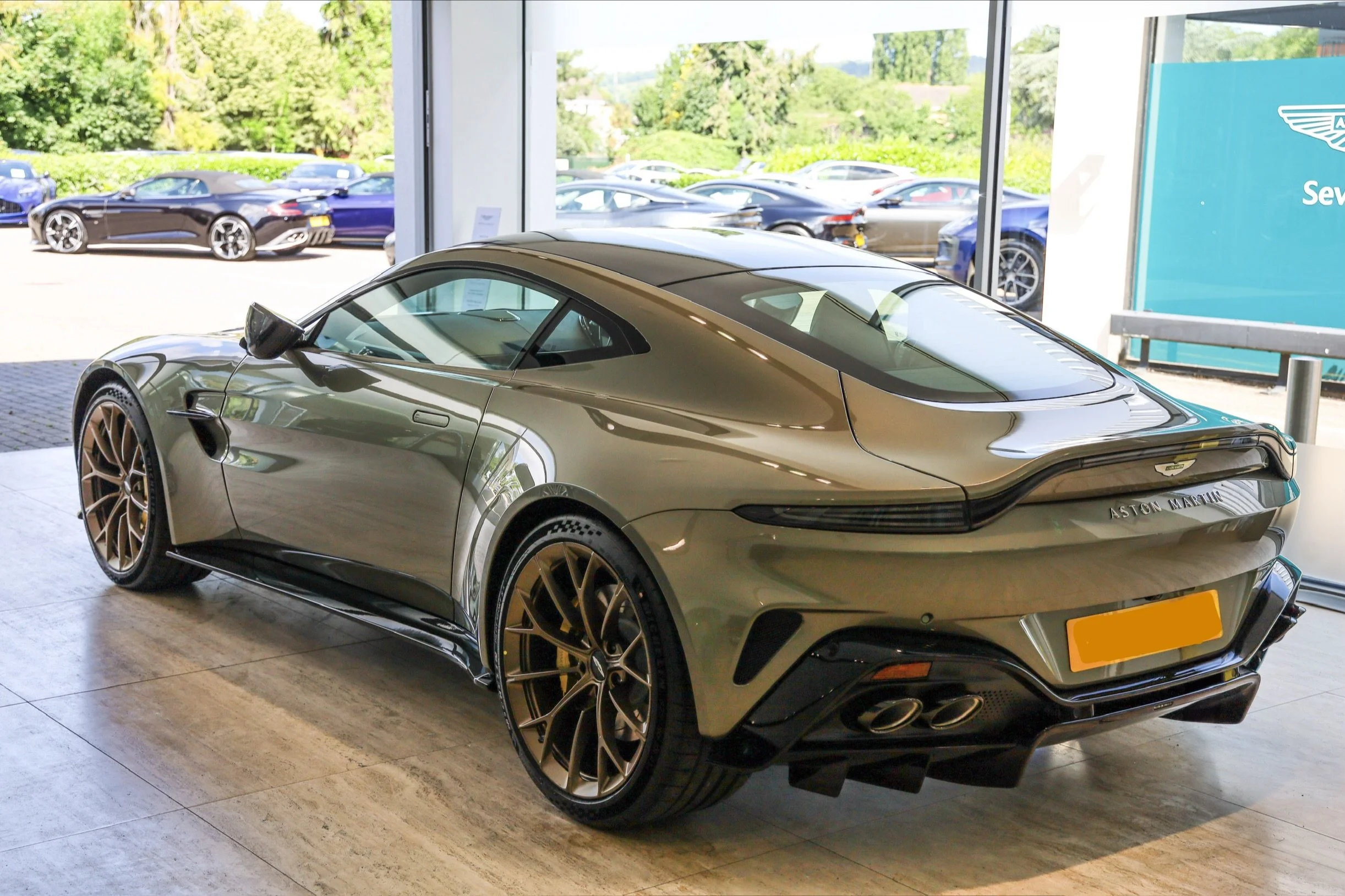
For example, my final chosen colour (Titanium Grey) isn’t grey at all - rather a sandy, golden colour with a definite green fleck/hue with a deep sparkle, and is listed on the DVLA log book as ‘Green’!
My worry at the time about choosing Podium or Malachite Green (both lovely colours) was that fashions change, and these intense greens (whilst fashionable now) may not age as well as a more subtle hue.
The configurator has countless options, and multiple ways to make the car as individual as you’d like. Some may prefer a ‘stealthy’ look (wheels, grille, lettering and wing badge all in black) with maybe a satin finished dark paint, whilst there will be others who prefer their wheels, grille, lettering and wing badge in bright chrome with a bright gloss body colour to accentuate the elegant shape of the car.
When I was buying the car, only the standard V8 Vantage Coupe existed, however there’s now Coupe & Roadster variants in both ‘S’ and non-‘S’ specification.
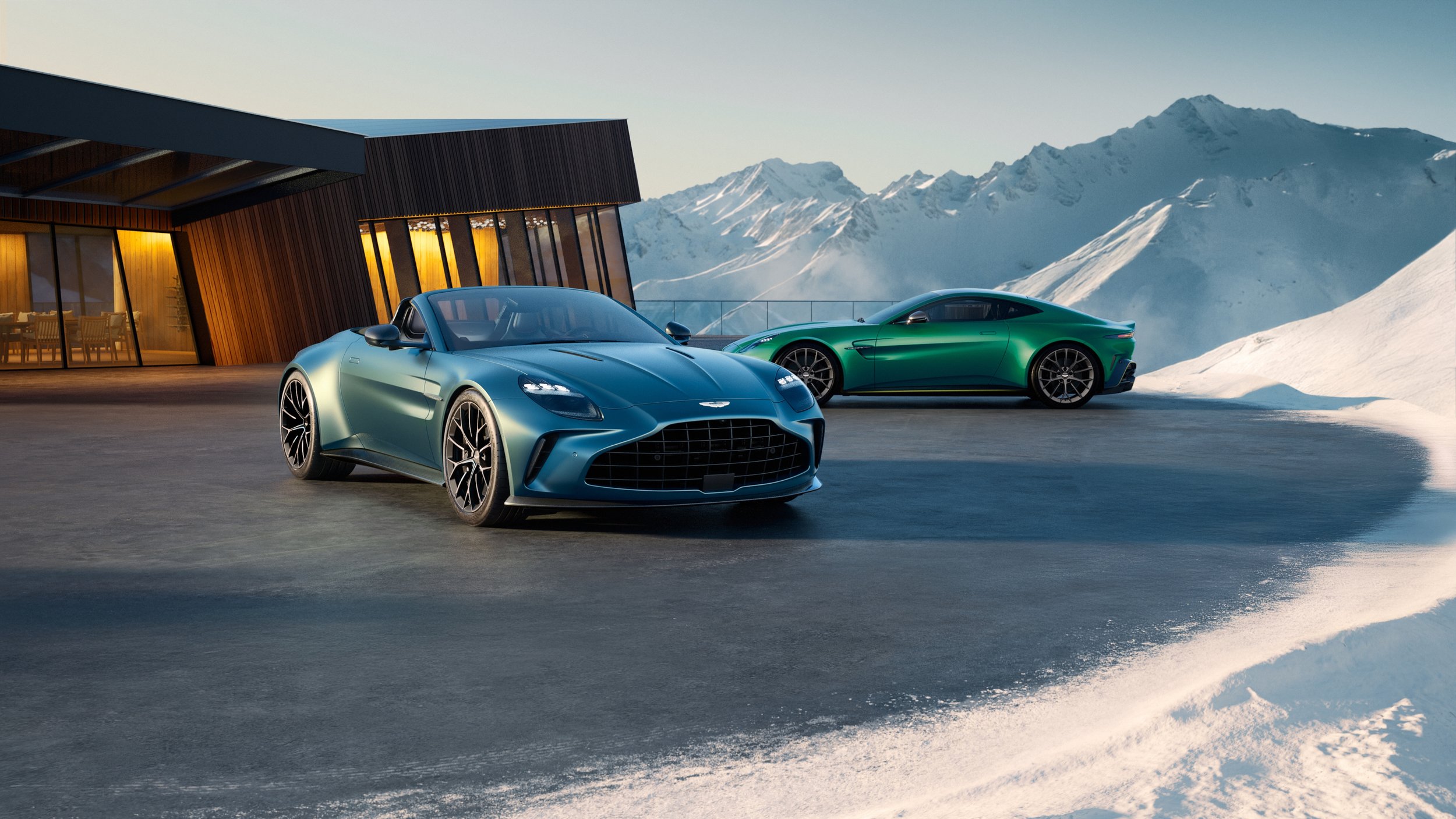
Image © Aston Martin Lagonda. Used for editorial purposes.
One downside of the configurator is that there are no prices given for any options, and it is very easy to get carried away, only to find that you’ve added over £50,000 (or more) in options! Indeed, the early 2024 showroom cars frequently were loaded with over £60,000 of options! At the time, Aston Martin dealers were not allowed to give out price lists of options, however by looking at the printed paper specifications next to the showroom cars, I compiled an options price list. Additionally, many on-line leasing companies now helpfully show option prices if you configure a car. Carbon fibre trim, carbon-ceramic brakes and ‘Q-Paint’ are some of the priciest options, so care is needed if you want to keep the options costs down.
Be mindful when choosing the interior colour. I really wanted to specify ‘Oxford Tan’ as my interior colour, however when a swatch sample of this leather was placed on top of the demonstrator’s black dashboard, it resulted in unacceptable levels of glare/reflection that made seeing clearly through the windscreen a real challenge. For that reason, I ended up choosing a black interior (reduced dashboard reflection) but with a subtle twist of a ‘Copper Tan’ contrasting stitch.
Other considerations
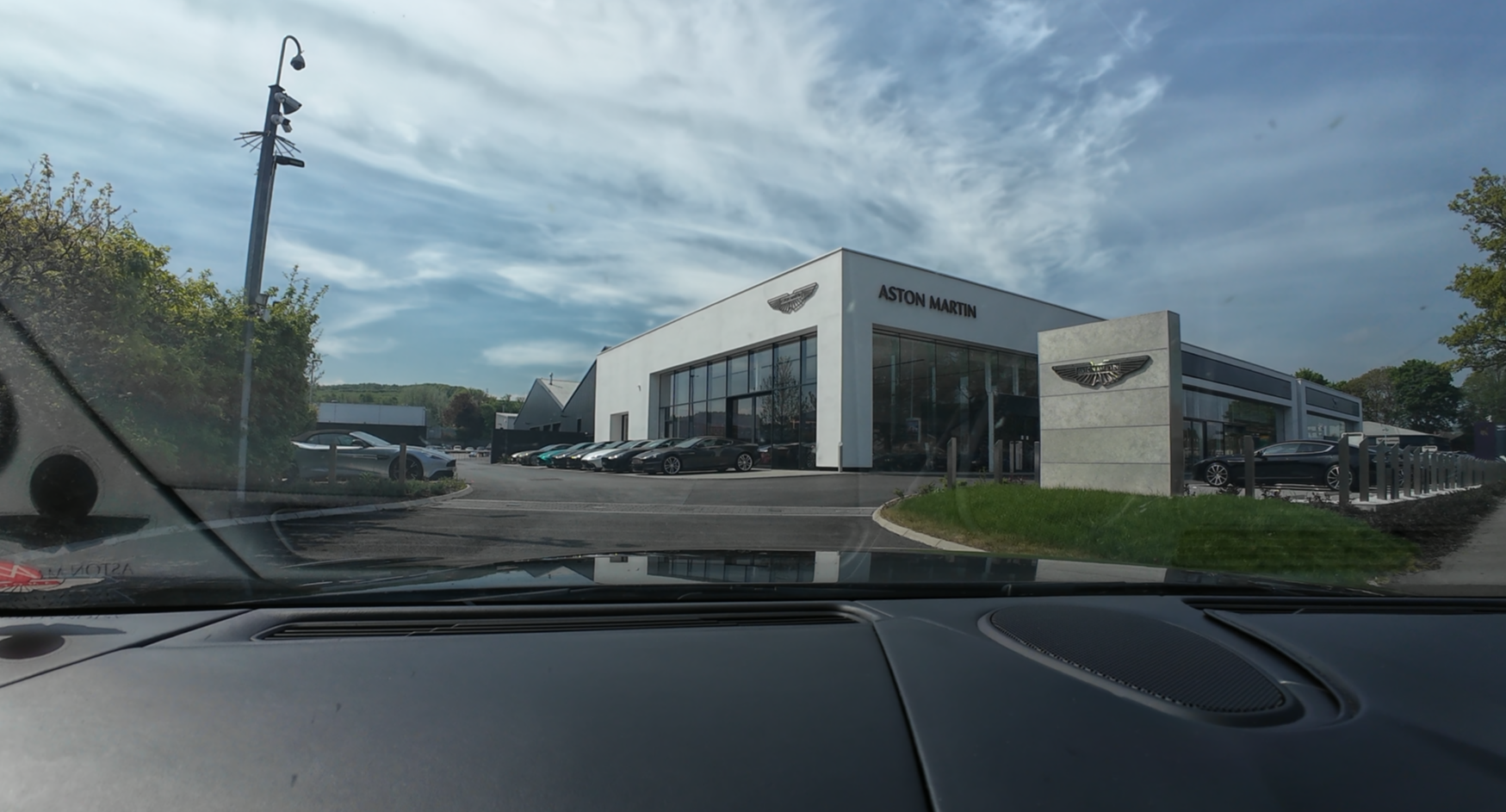
Image © Fuel the Passion, JCT600 Aston Martin Leeds
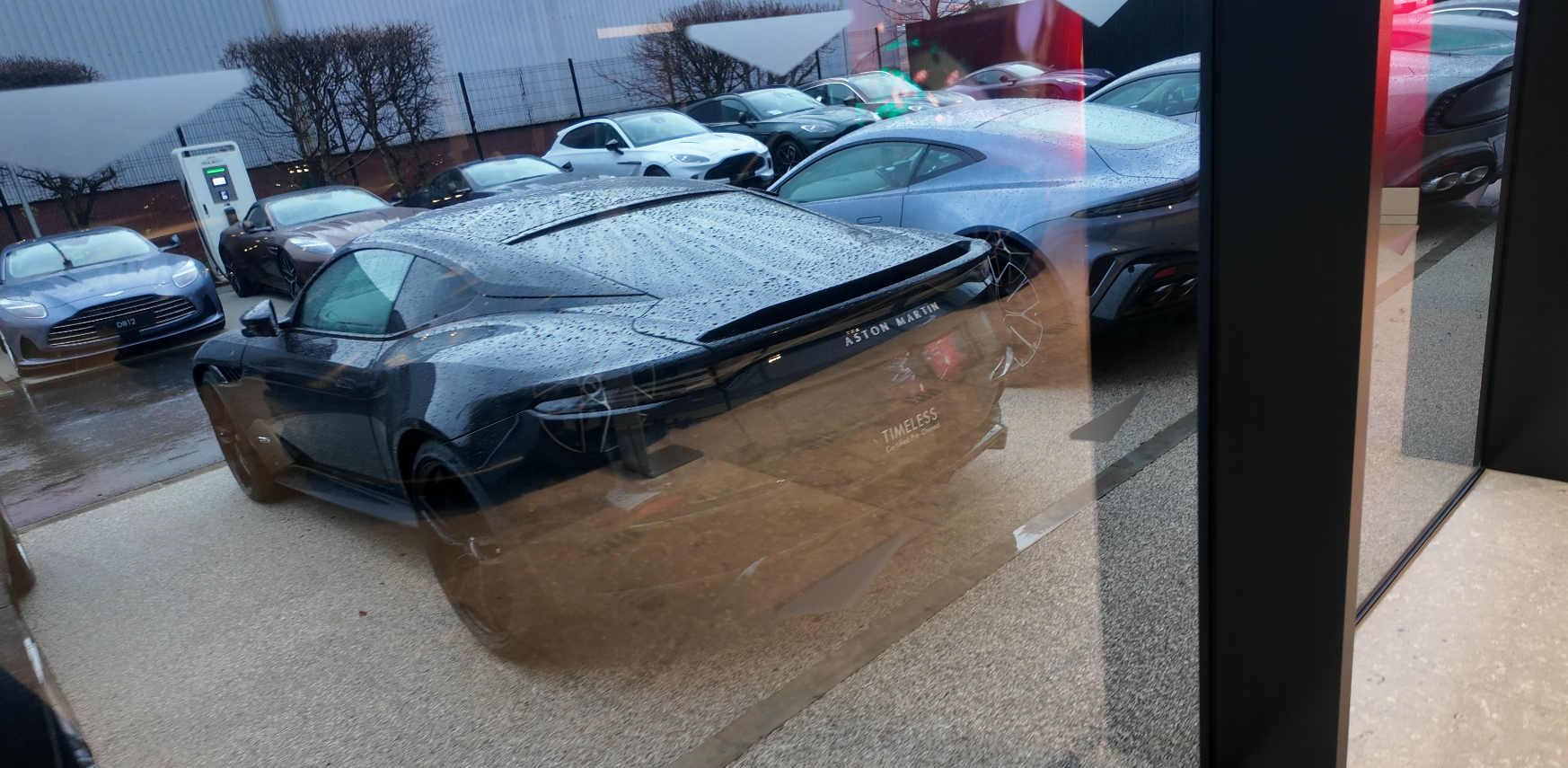
Image © Fuel the Passion, Timeless Range for Sale, JCT600 Aston Martin, Leeds
Anyone buying a brand new car needs to go into this with open eyes, given that the largest depreciation of the car will be in the first years.
You can use this knowledge to your benefit is securing a 2 year (or older) ‘pre-loved’ (Timeless) latest model car at typically one third off the original price.
Bear in mind though that you will only have the remainder of the warranty and service plan left, so will need to start paying for annual services & extended warranty (if chosen) sooner. If you plan to keep the car for 5 years (or longer), then depreciation (whilst still present) will be less of a factor - my 2019 Vantage lost less than 50% of its initial value after 6.5 years. I’ve seen Audis and BMWs that have lost more than that in the first 1-2 years!
Astons are usually mileage sensitive, and whilst they shouldn’t be treated as ‘Garage Queens’, do need a regular drive out to be enjoyed and to keep everything in working order. You will notice though that higher mileage examples usually command a lower price than more moderate mileage cars.
Picture Right: © George Johnson 2026. Reproduced with permission.
Another way of reducing purchase price is to make the dealer an offer on an existing brand-new showroom model.
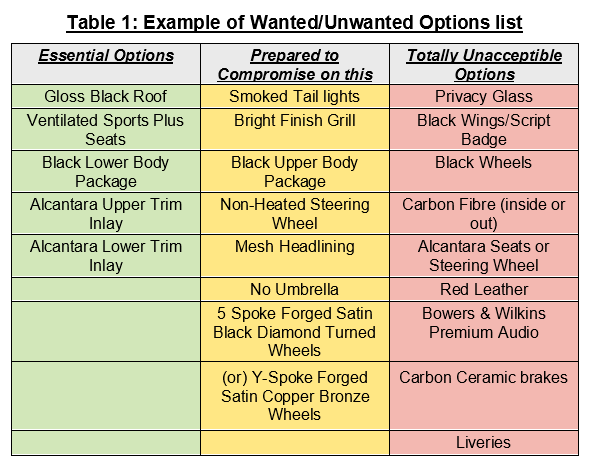
Whilst there are good discounts to be obtained (it helps the dealer clear stock and helps the factory’s sales figures), bear in mind that you will have to compromise on the specification. You may end up missing out on options you really want, whilst ending up with options you really don’t care for.
If you try this route, you may find it helpful to compile a table (similar to Table 1 above) to help you assess how far off the mark is the showroom model from what you want.
As with my last Aston, I factored in the cost to have the new car professionally detailed (elimination of swirls, scratches and paint defects such as ‘orange peel’ from the factory), full coverage with clear PPF (Paint Protection Film), and ceramic coated (to maintain hydrophobicity - water beads off the car without use of Polishes). Prices and quality of these services can vary widely, and solicitation of recommendations and feedback from fellow Aston (or other premium car) owners who have had these services is advised.
My experience is that many small independent operators offer as good (or better) quality than the big multi-branch operations, with excellent come-back, warranty and guarantee. Dan’s experience with Max Car Care, where he had his FTP Vantage fitted with partial PPF is a great example. It’s worth noting that PPF is a sacrificial layer, and it’s easier to replace stone-damaged PPF than perform a quality factory-approved respray.
Finally, for those seeking a satin finish to their paintwork, it is possible to have satin PPF applied, with the benefit that if a return to a gloss finish is required, this is simply achieved by removal of the PPF.
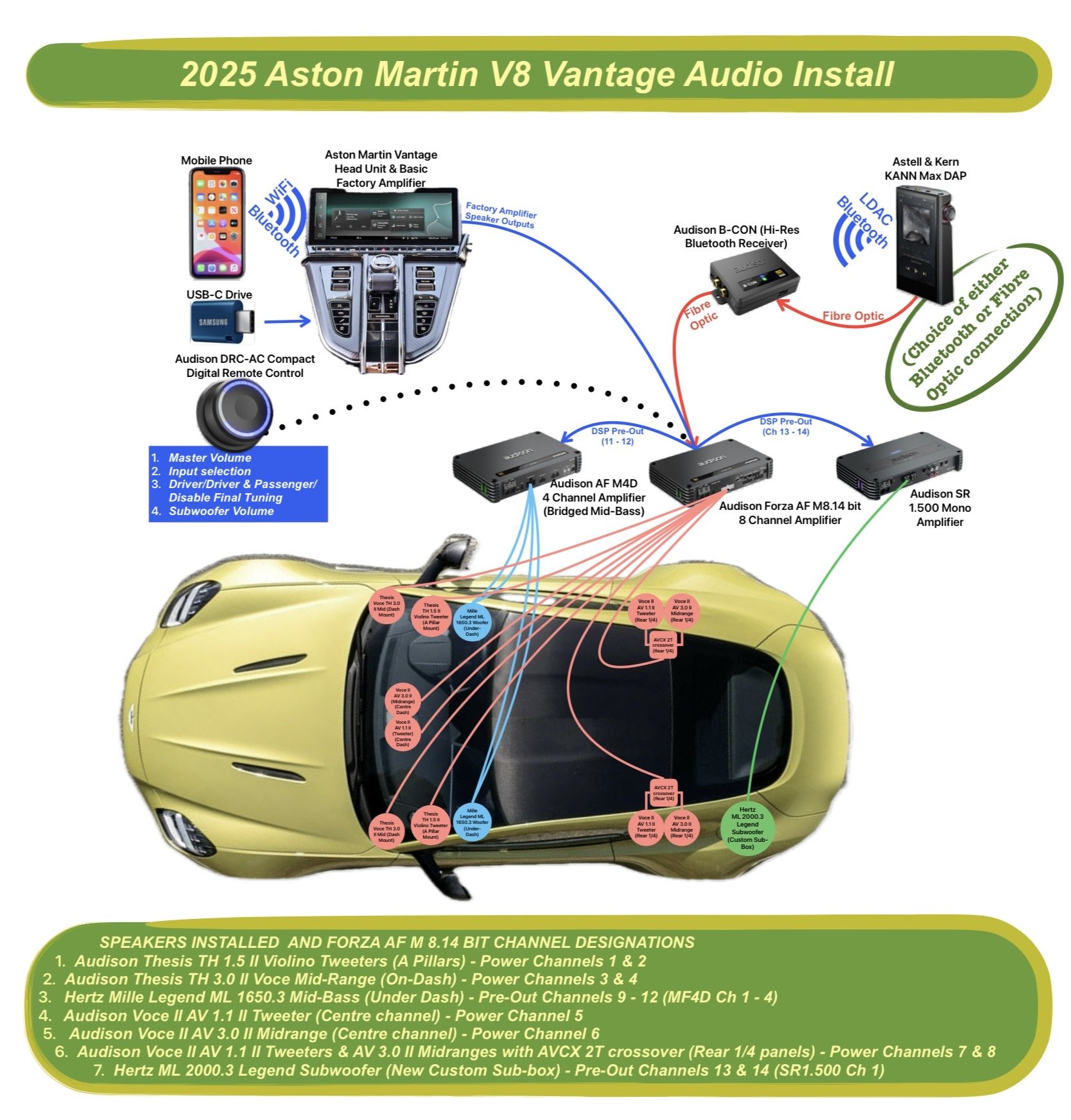
Whist many Aston owners will eschew any type of audio upgrades in their car (stating that listening to the V8 AMG engine should be sufficient) my advice for music lovers and audiophiles is to save £7,000 by not ticking the ‘Bowers & Wilkins Premium Audio’ options box, and instead spend the money at a reputable after-market audio installer having a bespoke (designed specifically to your taste) system installed. Here is a diagram of the after-market audio system installed in my 2025 Vantage (Dan, Fuel the Passion, may share further details of this in an upcoming FTP blog after my car has featured in Volume 14 of ‘Driving Sounds’ Magazine);
Photograph © George Johnson 2026. Reproduced with permission.

Image © Fuel the Passion
Finally, Dan has written an excellent article on Aston Martin security (click on the picture opposite to be taken straight there), that is well worth a read, especially if deciding on whether to fit additional layers of security to a new vehicle.
Eight months on, how’s the new car?
Whilst I’ve thoroughly enjoyed driving the car (and receiving lots of fantastic feedback wherever I go), it hasn’t been fault-free. Whilst there were some physical warranty issues (e.g. missing under-bonnet bump stop, split rear boot lid rubber seal, vinyl not properly glued to the rear quarter panels, the odd unwanted vibration, etc), the biggest issues have been with the many glitches and bugs in the software (both screens randomly turning off (leaving the driver unaware of what speed they are travelling!) or not turning on at all at start-up, failure of the ADAS systems and countless warning lights appearing on the dashboard).
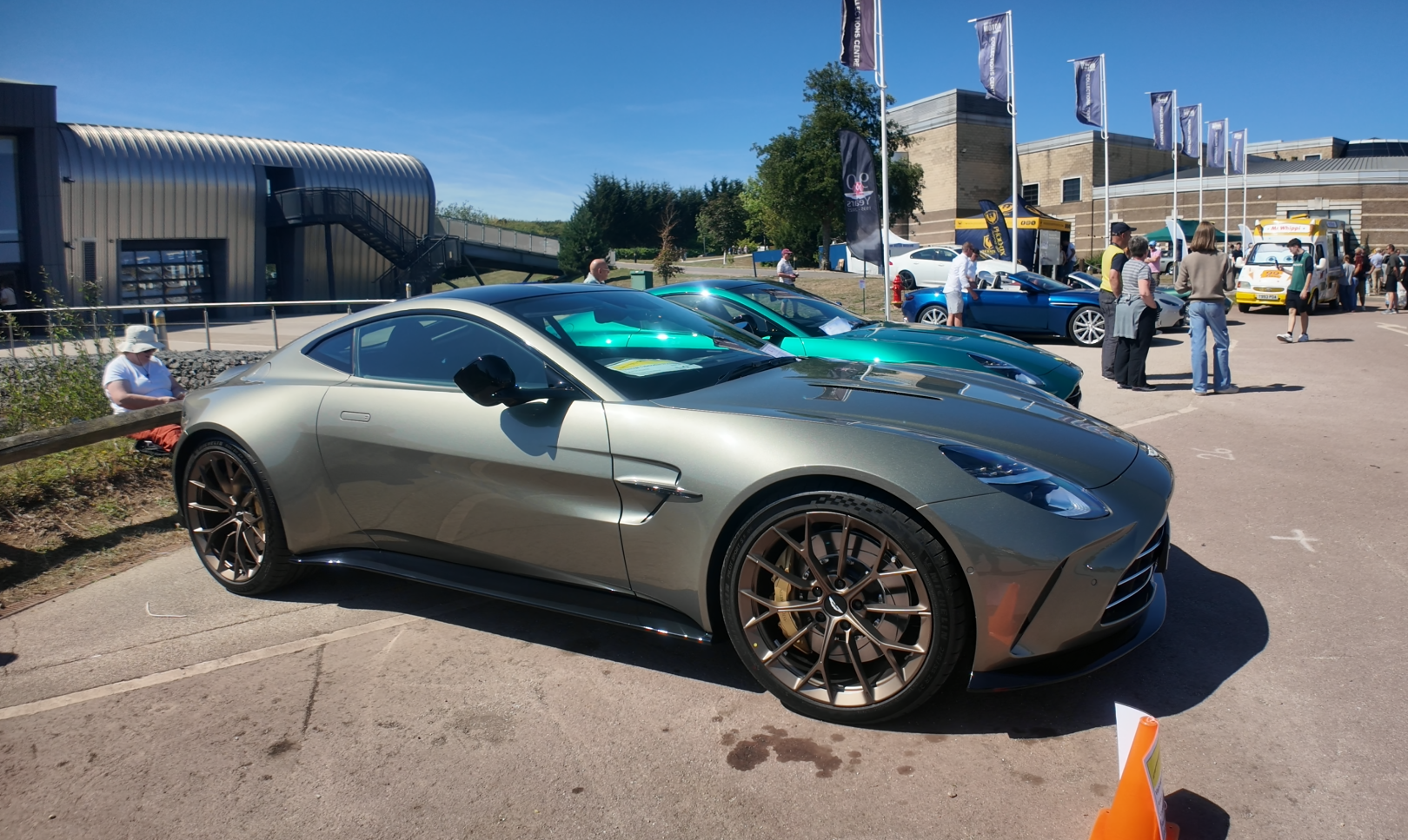
Image © Fuel the Passion
The car has just spent a whole week in my local Aston Martin dealership having numerous large software updates applied to it (must be connected to Aston’s computer at the Gaydon factory via the AMDS diagnostic system), and (touch wood) so far, I’ve not seen recurrence of any of the previous issues.
The dealership also fitted the new boot seal and bonnet bump stop, resolved the rogue vibrations and the factory are currently remanufacturing the panels with the missing glue (takes 6-8 weeks).
I have noted some light condensation inside both headlamp units (in cold weather), and although the dealership has said that this isn’t of concern, I am keeping an eye on this situation.
So, not fault free, but I am grateful to have a helpful dealership, and am still enjoying driving the car. I do not have buyer’s remorse over the change and I’m appreciating the improvements of the 2025 model day-by-day.
I have now gained good familiarity of the controls (touch screen, steering wheel, etc.), and can easily access the correct buttons to control the car. Developing good ‘muscle memory’ has taken time, and this is probably the biggest area of difference between the generations of Vantage.
My wrap up
Photograph © George Johnson 2026. Reproduced with permission.
Whilst this article has been produced in good faith to describe my personal journey in evaluating, deciding, and finally trading in my 6.5-year-old Vantage for the latest model, it is not designed to be comprehensive, but rather illustrative of considerations that you might wish to make if in a similar position.
The article is also not intended to give financial advice (e.g. there is no discussion of financing options), however you may want to seek independent financial advice from a qualified financial adviser before proceeding with any significant financial outlay.
Please comment below if you found this article helpful and feel free to provide feedback in the comments section below.
Editor’s Closing Reflection – Dan, Fuel the Passion
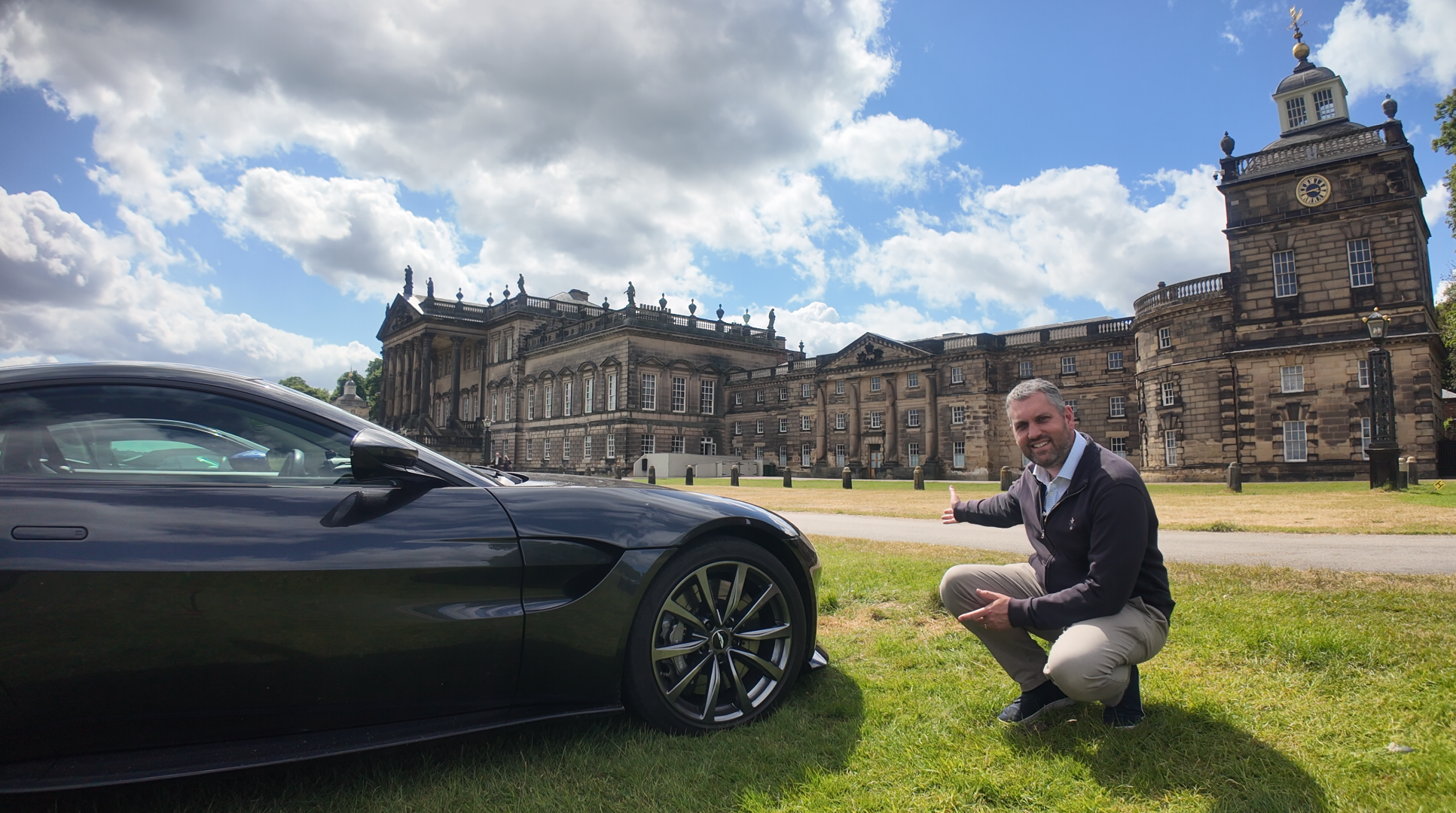
Image © Fuel the Passion, Dan with the ‘FTP Vantage’
Reading George’s experience has been fascinating for me personally, because I still own the earlier-generation Vantage, the same era car he ultimately chose to trade in. His points about refinement, build quality and day-to-day usability improvements resonate, particularly having driven the new car myself. At the same time, his honesty about cost, complexity and early software teething issues reinforces something I value deeply: these decisions are rarely simple.
In my own case, the reality is straightforward, I simply don’t have the funds to trade my car in for a new Vantage, even if part of me would love to. I fell in love with the Vantage after seeing the DB10 on the big screen, and that feeling hasn’t changed. I love the shape, the lines and the noise too much. That car still gives me everything I hoped it would when I first saw it in a Bond film.
And yet, I also genuinely admire the new generation. It’s sharper, more resolved and clearly evolved. George’s experience shows just how far Aston Martin has moved the car on.
My sincere thanks to George for taking the time to put fingertips to keyboard and for being willing to share his experience and his photographs, so openly with the Fuel the Passion community. Owner-led stories like this are what make this platform special. If reading this has prompted you to reflect on your own Aston Martin journey, whether it’s an upgrade, a restoration, a first purchase or a memorable road trip, I would genuinely love to hear from you.
If you’d like to share your story, drop me an email at fuelthepassion.dt@gmail.com.

For all the latest Aston Martin news, don’t miss the FTP Weekly Roundup - published every Sunday at 6am.
Each edition brings together the key stories from across the Aston Martin world, including Formula 1, GT racing, road cars, heritage, business developments and community highlights.
To catch up with the newest edition, read the latest HERE.
