
Week Ending 19th July 2026
Editor’s Introduction - Dan, Fuel the Passion
It’s been another full and memorable week for Fuel the Passion, both behind the camera and out on the road. On Friday evening, the latest FTP film, Unforgettable, went live on the Fuel the Passion YouTube channel. The film follows the Aston Martin Owners Club Spring Concours at Alnwick Castle, where club members were granted the rare privilege of displaying their cars within the castle grounds.
It was an extraordinary setting and one that gave the event a character all of its own. The film covers a wonderfully varied collection of Aston Martins, ranging from the compact and much-discussed Cygnet to a V12-powered DB11, alongside a remarkable older Aston Martin with genuine Le Mans competition history. I was also able to speak with several owners about their cars, their experiences and the stories behind them.
The combination of the castle, the surrounding landscape and rows of Aston Martins created scenes that genuinely justified the film’s title. By the time this Roundup is published on Sunday morning, Unforgettable will have been available to watch since 6pm on Friday, and I’ll include a direct link for readers who’d like to experience the event for themselves, just click on the image below and we’ll take you straight there;
No sooner had that project reached the finish line than the FTP Vantage was back on the road again. After last week’s visits to the RAC Concours at Epsom and the Goodwood Festival of Speed, this week took me closer to home for Yorkshire Elegance at Grantley Hall in North Yorkshire.
What a magnificent venue, and what an impressive collection of cars. Aston Martin was particularly well represented, with everything from beautiful classics to some of the marque’s most dramatic modern creations. I filmed most of the Aston Martins on display, and a full Fuel the Passion film from Yorkshire Elegance will follow once I’ve had time to work through the footage. That film won’t be ready in time to accompany this Roundup, but I can share some of my own photographs from the day.
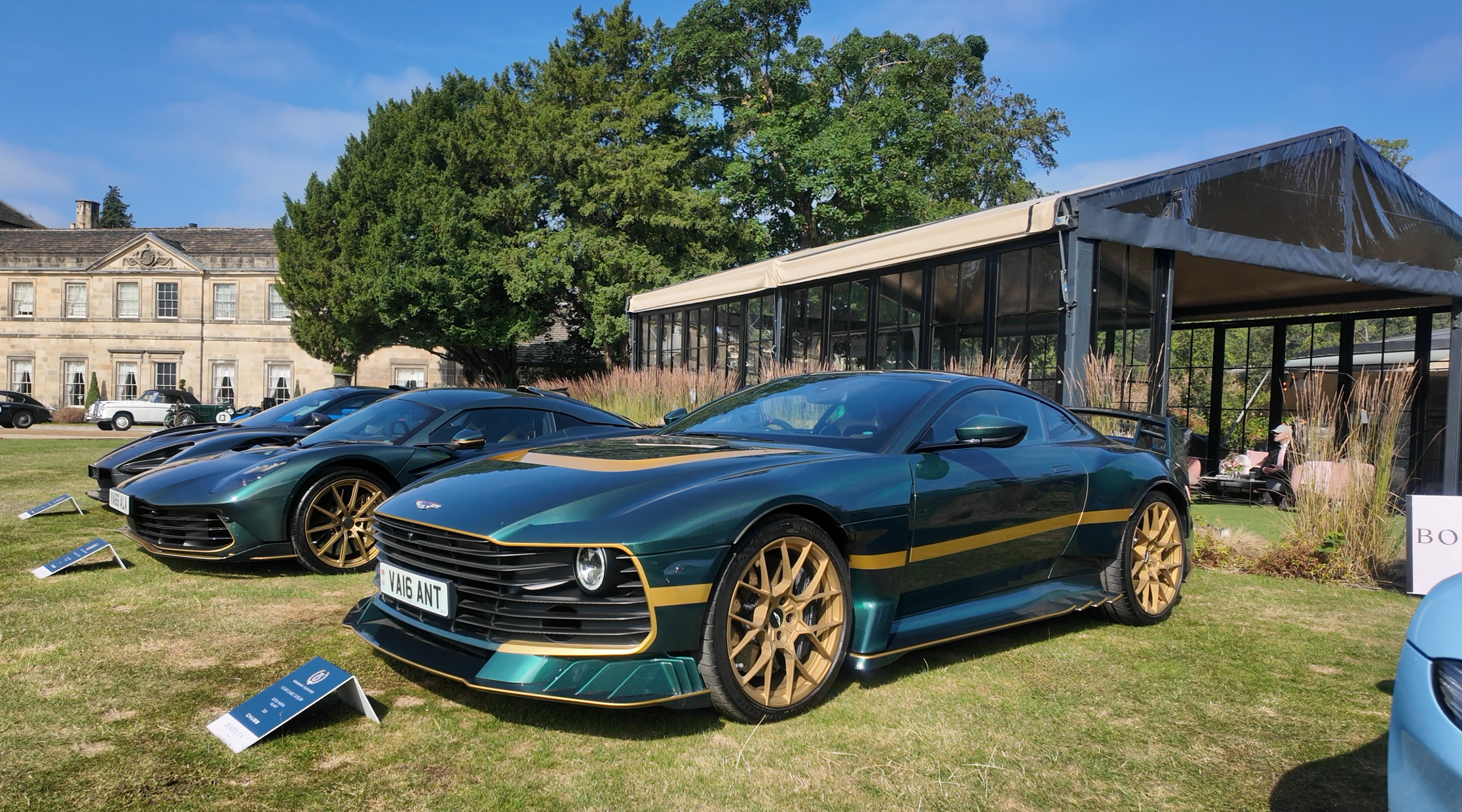
Image © Fuel the Passion Valhalla and Valiant parked side by side at Yorkshire Elegance 2026
The Valkyrie we’d recently seen at Goodwood made another appearance, while one of the most memorable sights was a Valhalla and Valiant parked side by side in matching green-and-gold specifications. Both offered an extraordinary demonstration of what Aston Martin can achieve with carbon fibre. Green and gold could easily have become excessive, yet on these two cars the combination looked bold, purposeful and remarkably coherent.
One of the classics at Grantley Hall will also reappear later in this issue. The Aston Martin Works DB6 Mk2 Fuel Injection we’d already selected as our Car of the Week was there in person, giving FTP the opportunity to photograph the actual car rather than relying solely on its sales listing.
There was also a rather more unexpected new Aston Martin to consider this week: the Dreadnought, created for Call of Duty. you may have already seen an image of it on the front page of this website advertising this issue of the roundup. It’s a serious bit of fun, but appearing within one of the modern era’s most recognisable gaming franchises could prove an astute way of introducing Aston Martin to a younger and far wider audience. We’ll explore the full story later in this Roundup, accompanied by plenty of images.
Away from the concours lawns, castle grounds and computer games, the wider Aston Martin week produced a mixture of encouragement and frustration. The Valkyrie achieved its first double points finish of the season, while Heart of Racing repeatedly demonstrated front-running qualifying speed without receiving the race results that pace appeared to deserve.
At Circuit Paul Ricard, so far this weekend however, Blackthorn Racing provided a much happier conclusion. Jonny Adam placed the #97 Vantage GT3 Evo on overall pole before he and Charles Bateman converted that performance into an excellent Pro-Am victory in Saturday’s opening International GT Open race. A second qualifying session and race follow today (Sunday 19th July, the same day this roundup goes live), with the FTP Motorsport Hub carrying full reports, completed results and the championship implications early next week.
In Formula One, Spa arrived before Aston Martin’s major Hungary update and with few illusions about the limitations of the current AMR26.
Then, late in the week, Aston Martin Lagonda formally confirmed that it’s discussing potential new financing with prospective providers. With the company’s half-year results approaching, that adds another important layer to Adrian Hallmark’s continuing effort to place the business on a sustainable financial footing.
We’ll return to that later. First, we begin where the timing screens have already delivered their verdict: a weekend in which Aston Martin frequently possessed the speed to start near the front. Sometimes the race denied the result that pace deserved, but at Paul Ricard, Blackthorn Racing made sure that pole position became a victory.
Three Poles, Double Valkyrie Points - but No Aston Martin Podium
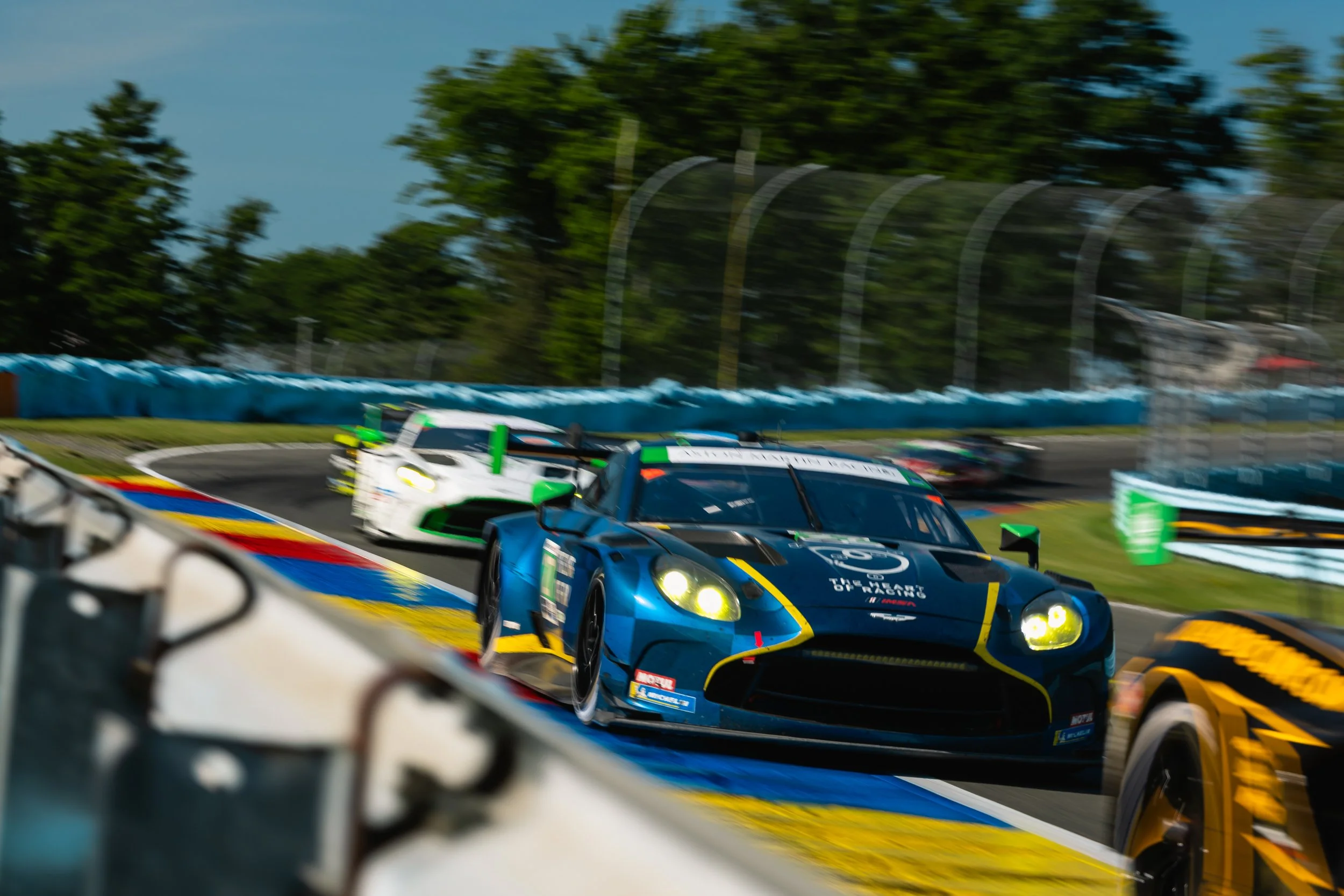
Image © Aston Martin Lagonda. Used for editorial purposes.
That was especially true for The Heart of Racing, which managed the unusual achievement of placing three different Aston Martins on pole across two continents and three categories during the same weekend. It was an impressive demonstration of the underlying pace within the Vantage racing programme, although the results on Sunday were less generous than the qualifying sheets had promised.
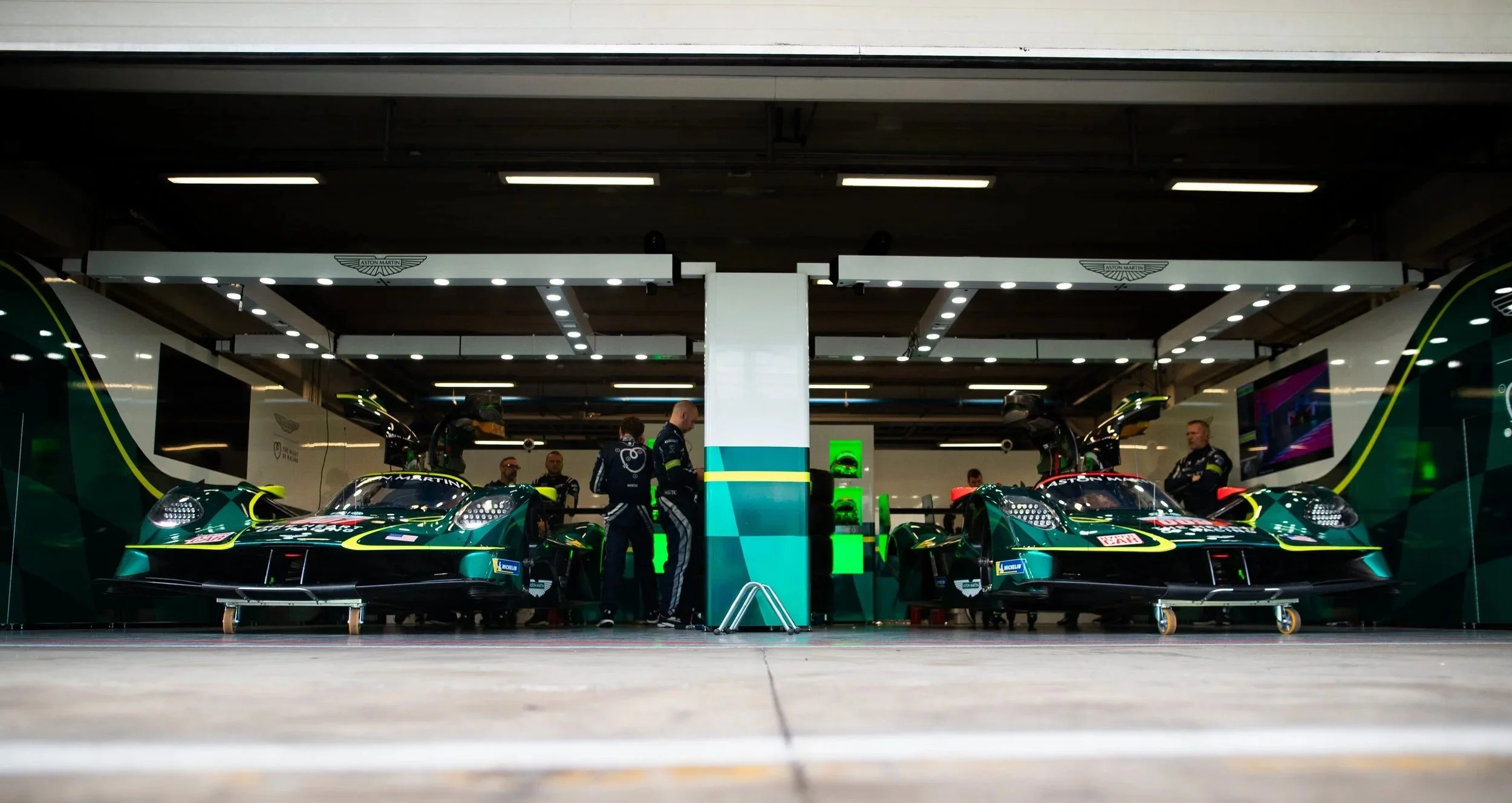
Image © Aston Martin Lagonda. Used for editorial purposes.
We begin in Brazil, where the Aston Martin THOR Team Valkyries recorded their first double points finish of the 2026 FIA World Endurance Championship season at the Six Hours of São Paulo.
Harry Tincknell and Tom Gamble brought the #007 Valkyrie home in sixth, while Marco Sørensen and Alex Riberas finished ninth in the #009. It was the #009 car’s first points finish of the season and another encouraging indication that the Valkyrie is becoming a more consistent presence among the established Hypercar contenders.
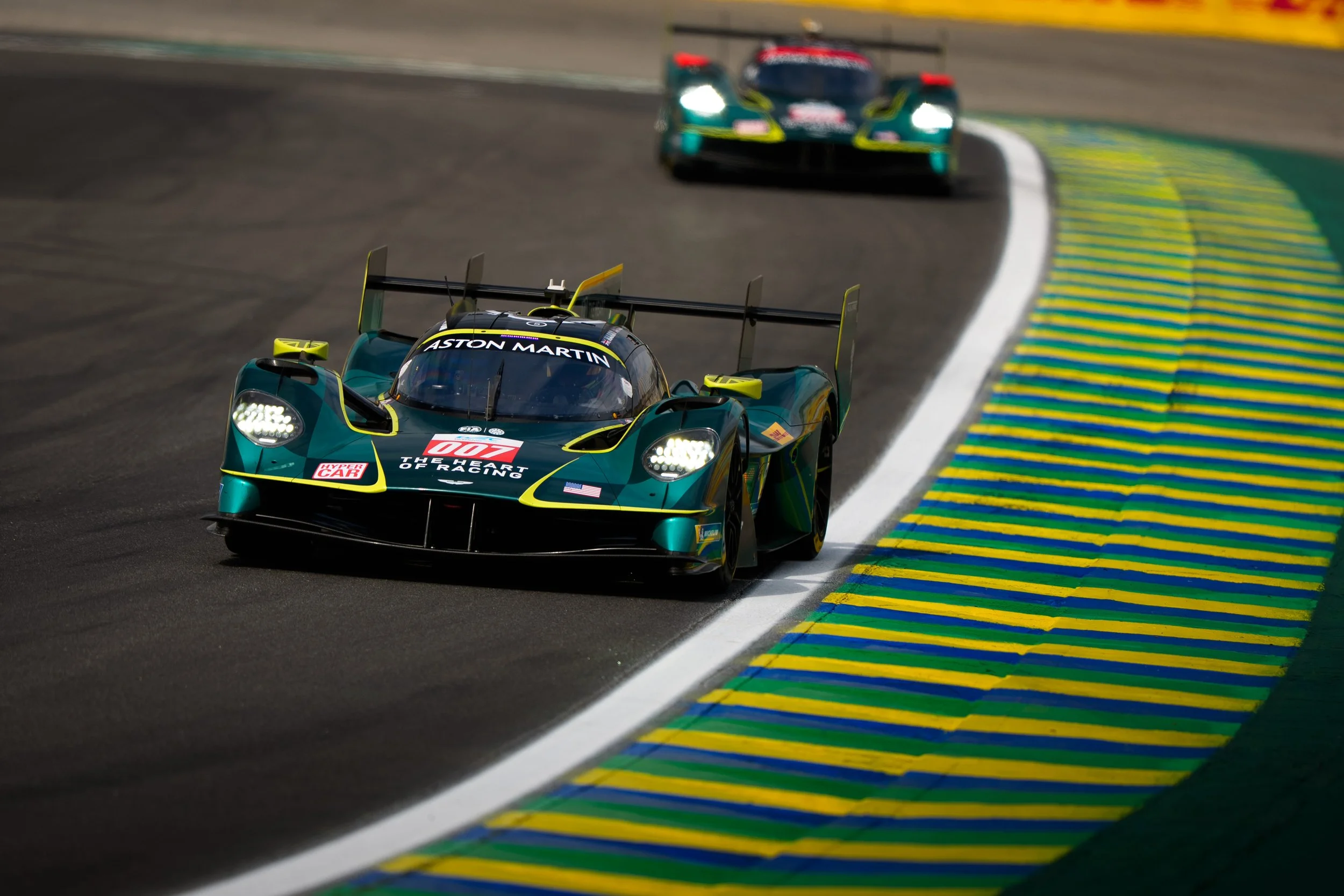
Image © Aston Martin Lagonda. Used for editorial purposes.
The official result is also worth clarifying, as some early reports placed the #007 seventh. The final classification confirms sixth position, 35.5 seconds behind the winning #15 BMW after 242 laps, with the #009 ninth. BMW won ahead of Ferrari and Cadillac.
Sixth and ninth may not sound spectacular in isolation, but the context is important. Both Valkyries completed the race on the lead lap, the #007 finished ahead of factory entries from Ferrari, BMW, Alpine, Toyota, Genesis, Peugeot and Porsche, and the programme continues to turn promising pace into increasingly credible race results.
The LMGT3 weekend produced a very different story. Gray Newell had already taken the #23 Heart of Racing Vantage into Hyperpole before Kobe Pauwels, standing in for Dudu Barrichello, secured an excellent class pole position. Unfortunately, the race didn’t reward that performance. The pole-sitting #23 Vantage eventually finished 18th in LMGT3, while the sister #27 car came home 13th. Racing Team Turkey by TF Sport took the class victory.
While Pauwels was putting an Aston Martin at the front in Brazil, Barrichello was doing exactly the same thing in Canada.
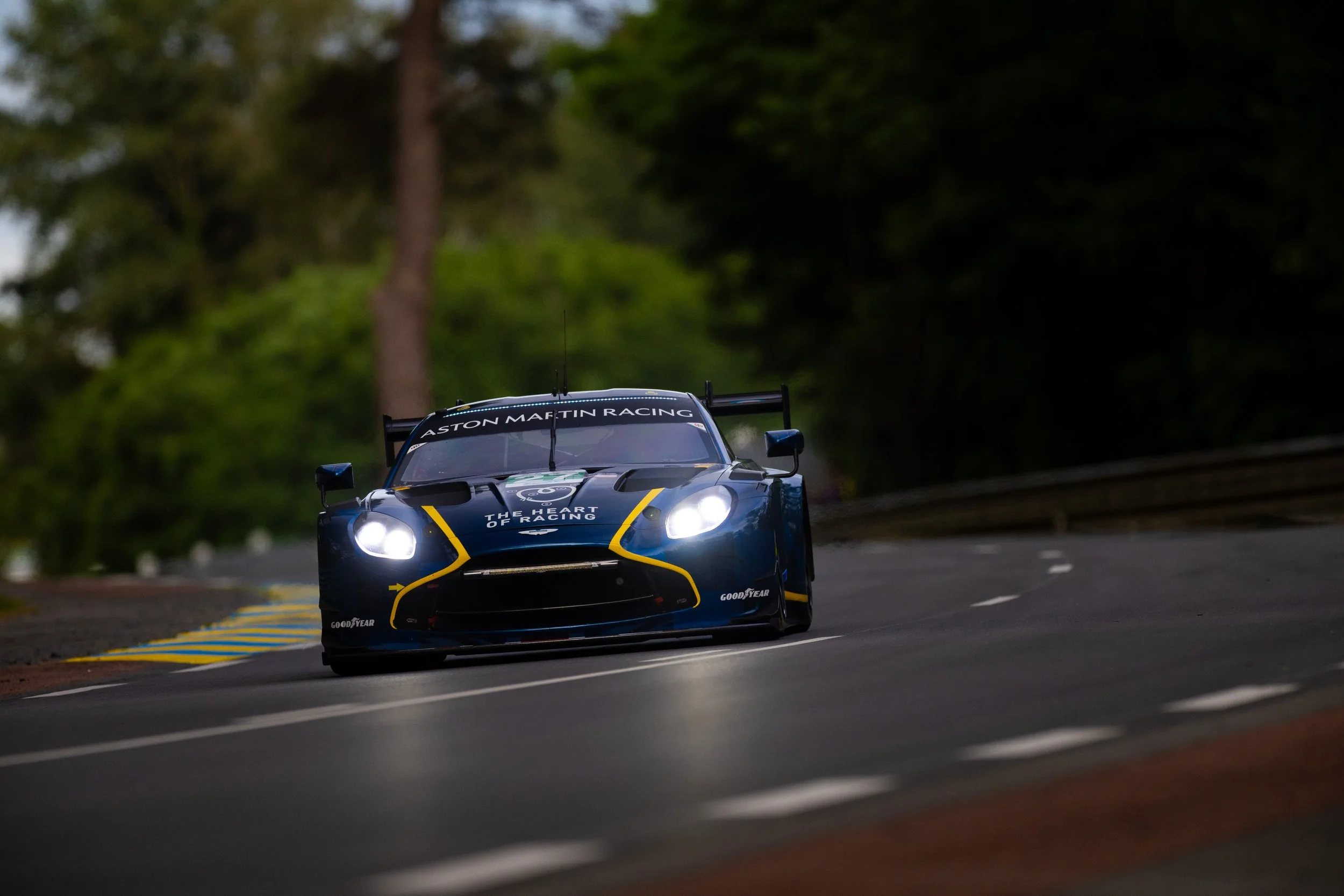
Image © Aston Martin Lagonda. Used for editorial purposes.
At Canadian Tire Motorsport Park, Dudu placed the #27 Heart of Racing Vantage on GTD pole for the IMSA Chevrolet Grand Prix. A penalty during the opening pit-stop sequence then pushed the car almost two laps behind, leaving Roman De Angelis with a substantial recovery job.
De Angelis worked his way back to sixth in GTD, limiting the damage on a day that could easily have produced a far worse result. Importantly, Barrichello retained the championship lead and now holds a 92-point advantage with four GT races remaining.
The newly formed Car Blanche operation also completed its first GTD PRO race. Scott Andrews qualified the #68 Vantage fifth in class before he and Valentin Hasse Clot brought the car home in tenth, a useful completed race from which the new programme can begin building.
Heart of Racing’s third pole of the weekend came in the IMSA Michelin Pilot Challenge, where Hannah Greenemeier placed the #26 Vantage GT4 at the front of the Grand Sport field. It was her first pole in the championship and followed team-mate Hannah Grisham’s pole at Watkins Glen.
Once again, however, pole didn’t become a podium. Greenemeier and Grisham finished 15th in class, while Car Blanche’s #66 Vantage GT4 of Trenton Estep and Allen Patten delivered the strongest Aston Martin result with an excellent fourth place.
Three poles, three different Aston Martins and three separate categories represented an outstanding qualifying weekend for Heart of Racing. Yet the best race result among those pole-winning cars was sixth. That contrast perhaps tells the story more clearly than any individual result: the speed is present, but motor racing rarely rewards pace without adding several layers of complication first.
For the Valkyrie, São Paulo was nevertheless another meaningful step forward. For Barrichello, sixth preserved a valuable championship advantage. For Pauwels and Greenemeier, the poles provided further evidence of two young drivers making a strong impression within Aston Martin racing machinery.
Full reports, race results and updated championship tables are available through the FTP Motorsport Hub.
From Aston Martins that demonstrated plenty of speed in qualifying, we move to Formula One, where the team arrived at Spa knowing the current AMR26 was unlikely to be flattered by either the stopwatch or the circuit.

Affiliate link note: Some links may be affiliate links, which means Fuel the Passion may earn a small commission if you purchase through them, at no extra cost to you. Thank you for your support.
Spa Before the Turning Point
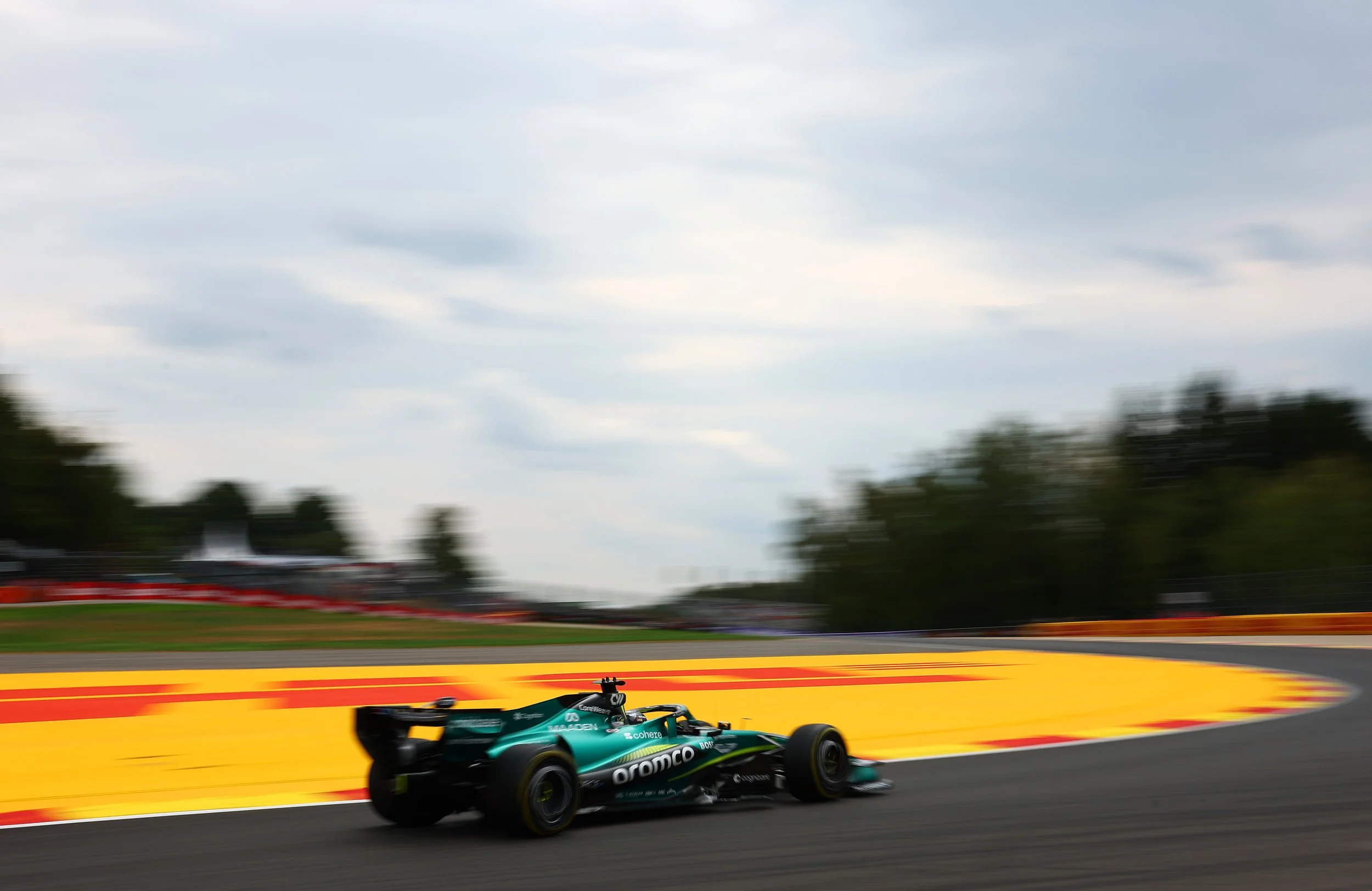
Image © Honda Motor Co. Ltd & Aston Martin Aramco. Used for editorial purposes. Belgium Grand Prix 2026.
From Aston Martins that repeatedly showed enough speed to lead their respective classes, we move to a rather different competitive picture in Formula One. Aston Martin arrived at Spa-Francorchamps expecting the Belgian Grand Prix to expose the weaknesses of the current AMR26 and neither the drivers nor the team attempted to disguise the scale of the challenge.
Lance Stroll had already suggested that Spa could prove to be Aston Martin’s most difficult circuit of the season. Chief Trackside Officer Mike Krack broadly agreed, explaining that it isn’t simply the length of the lap that presents a problem, but the particular combination of long straights, steep elevation changes and high-speed corners.
Spa has rarely been a place where a car can hide its shortcomings. In 2026, the demands created by the new power-unit regulations add another layer of complexity.
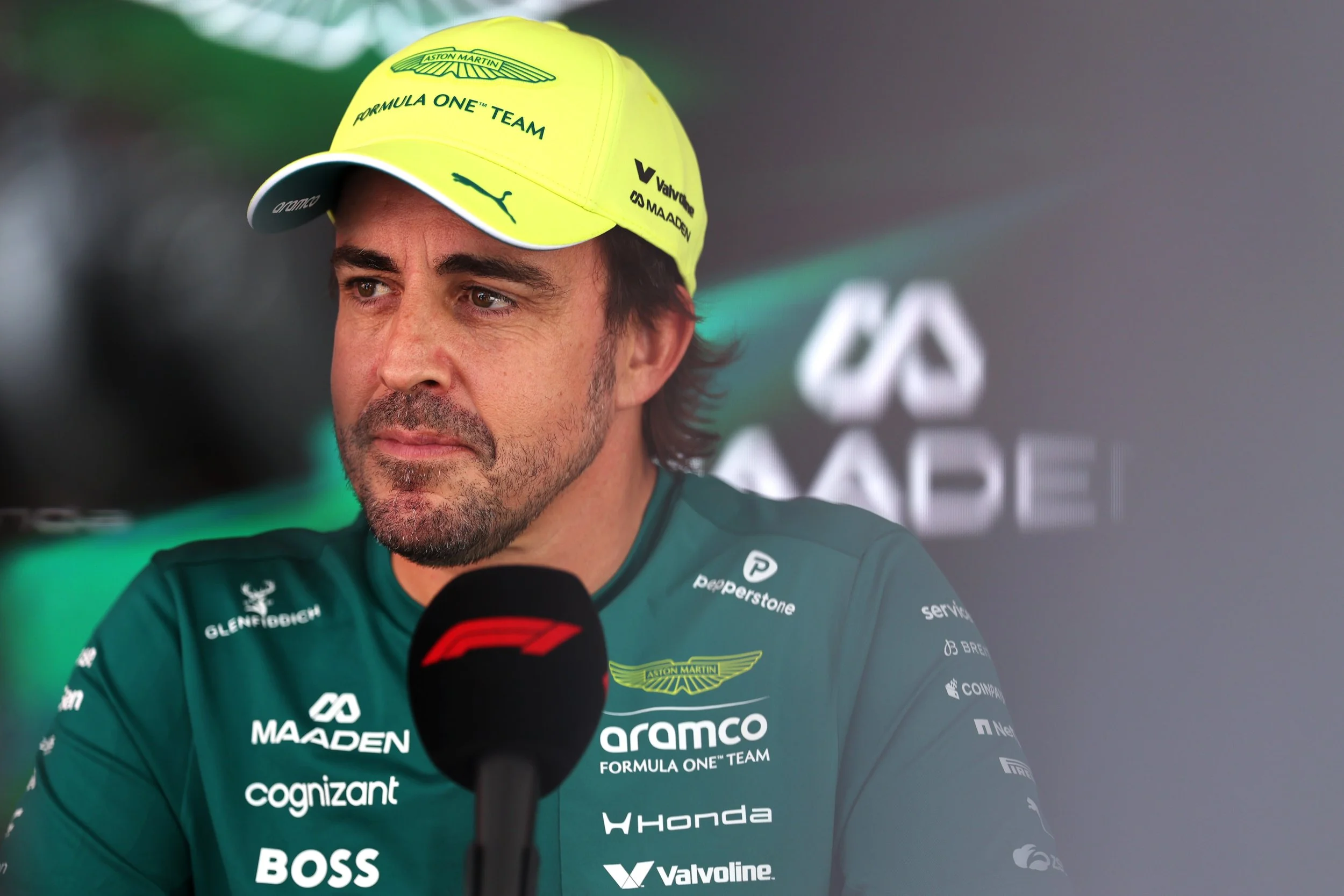
Image © Honda Motor Co. Ltd & Aston Martin Aramco. Used for editorial purposes. Fernando Alonso at the Belgium Grand Prix 2026.
Fernando Alonso explained that deploying too much electrical energy between La Source and the end of the Kemmel Straight could leave the car without sufficient assistance through the lengthy middle sector. Saving energy there, however, risks sacrificing speed on the most obvious overtaking sections of the lap. Honda must therefore choose where electrical deployment provides the greatest overall benefit rather than simply using everything at the beginning and hoping the battery writes a polite apology later.
Honda’s Trackside General Manager and Chief Engineer, Shintaro Orihara, acknowledged that Spa would be particularly demanding for the MGU-K. If deployment begins too early on the straights, the car risks losing significant speed before reaching their end. The compromise between acceleration, harvesting and terminal velocity is therefore likely to be visible throughout the weekend.
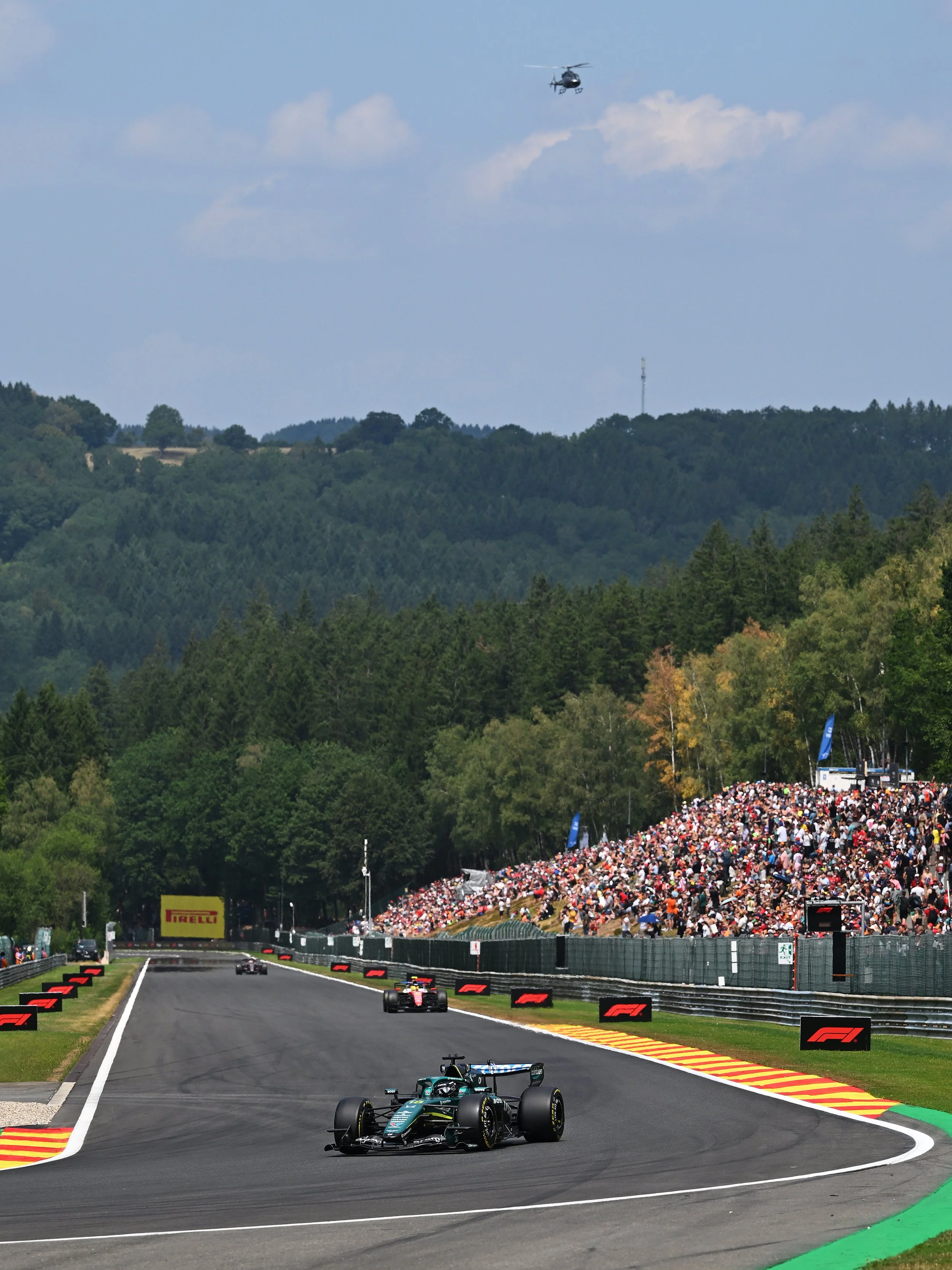
Image © Honda Motor Co. Ltd & Aston Martin Aramco. Used for editorial purposes.
Aston Martin’s third driver, Jak Crawford, took Fernando Alonso’s place during Friday’s opening practice session. It was Crawford’s third FP1 appearance of the season and completed the required rookie outings on Alonso’s side of the garage. The 21-year-old has already driven the AMR26 in Japan and Austria, alongside his wider testing work for the team.
The opening session offered little immediate reassurance. Stroll and Crawford finished 21st and 22nd respectively, more than five seconds away from Max Verstappen’s leading time, while Stroll’s session ended in the gravel. Practice results always require context, particularly when one car is being driven by a reserve driver and teams are following different programmes, but the positions broadly reflected Aston Martin’s warnings before the weekend.
Saturday qualifying confirmed that Aston Martin had found no meaningful breakthrough at Spa. Fernando Alonso qualified 21st and Lance Stroll 22nd, with both AMR26s eliminated in Q1 and occupying the final two places. Both drivers also carry grid penalties following component changes, leaving Sunday’s Belgian Grand Prix as another exercise in damage limitation before the team’s much-discussed upgrade arrives in Hungary. Whatever happens at Spa, the more consequential Aston Martin weekend follows immediately afterwards.
Hungary Upgrade Represents a Major Undertaking
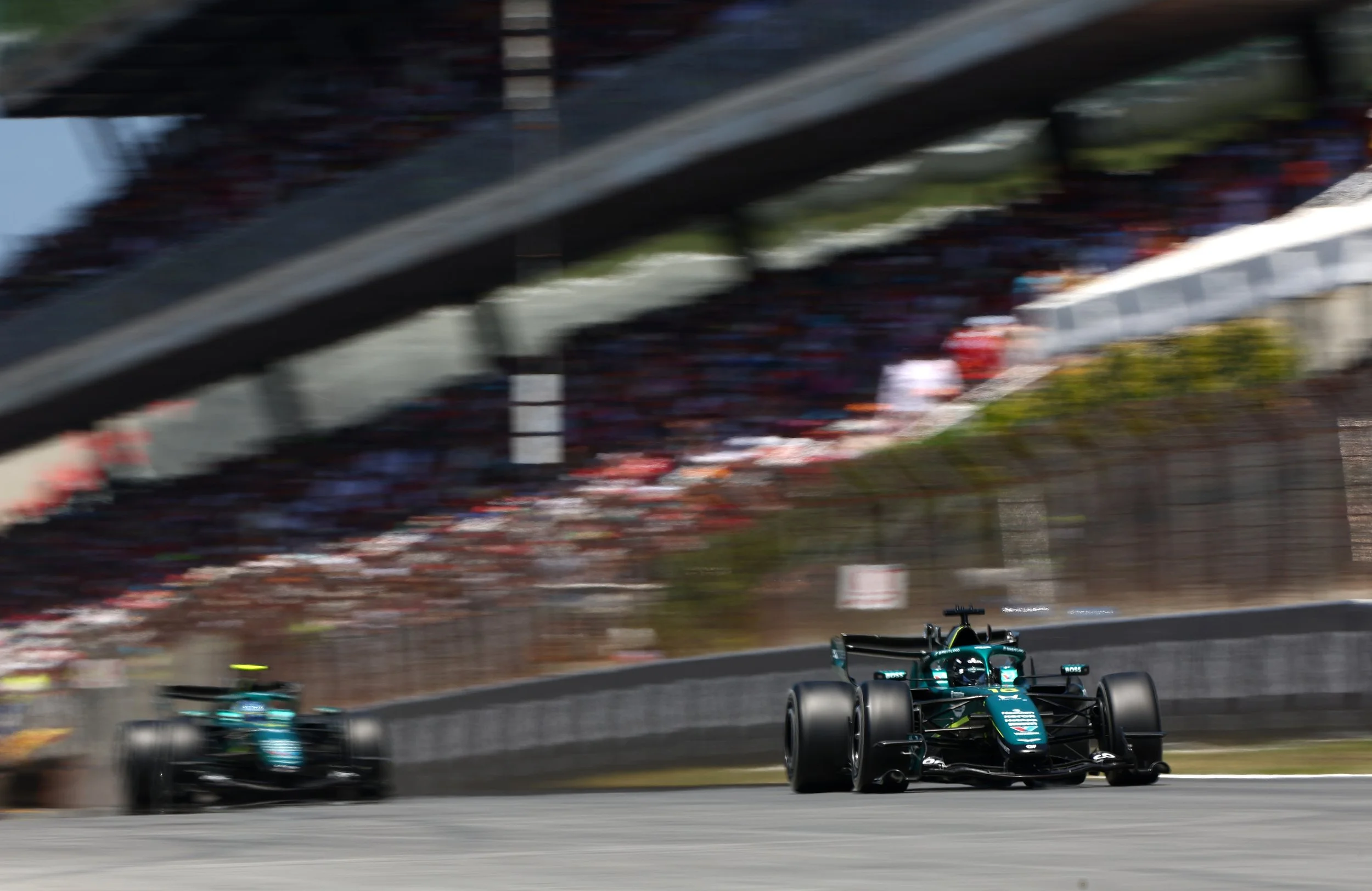
Image © Honda Motor Co. Ltd & Aston Martin Aramco. Used for editorial purposes.

Affiliate link note: Some links may be affiliate links, which means Fuel the Passion may earn a small commission if you purchase through them, at no extra cost to you. Thank you for your support.
The Hungarian Grand Prix is expected to introduce the first substantial development package for the AMR26 since the early part of the season. Aston Martin deliberately resisted producing a stream of smaller updates after concluding that a few tenths of a second wouldn’t materially alter the car’s position near the rear of the field.
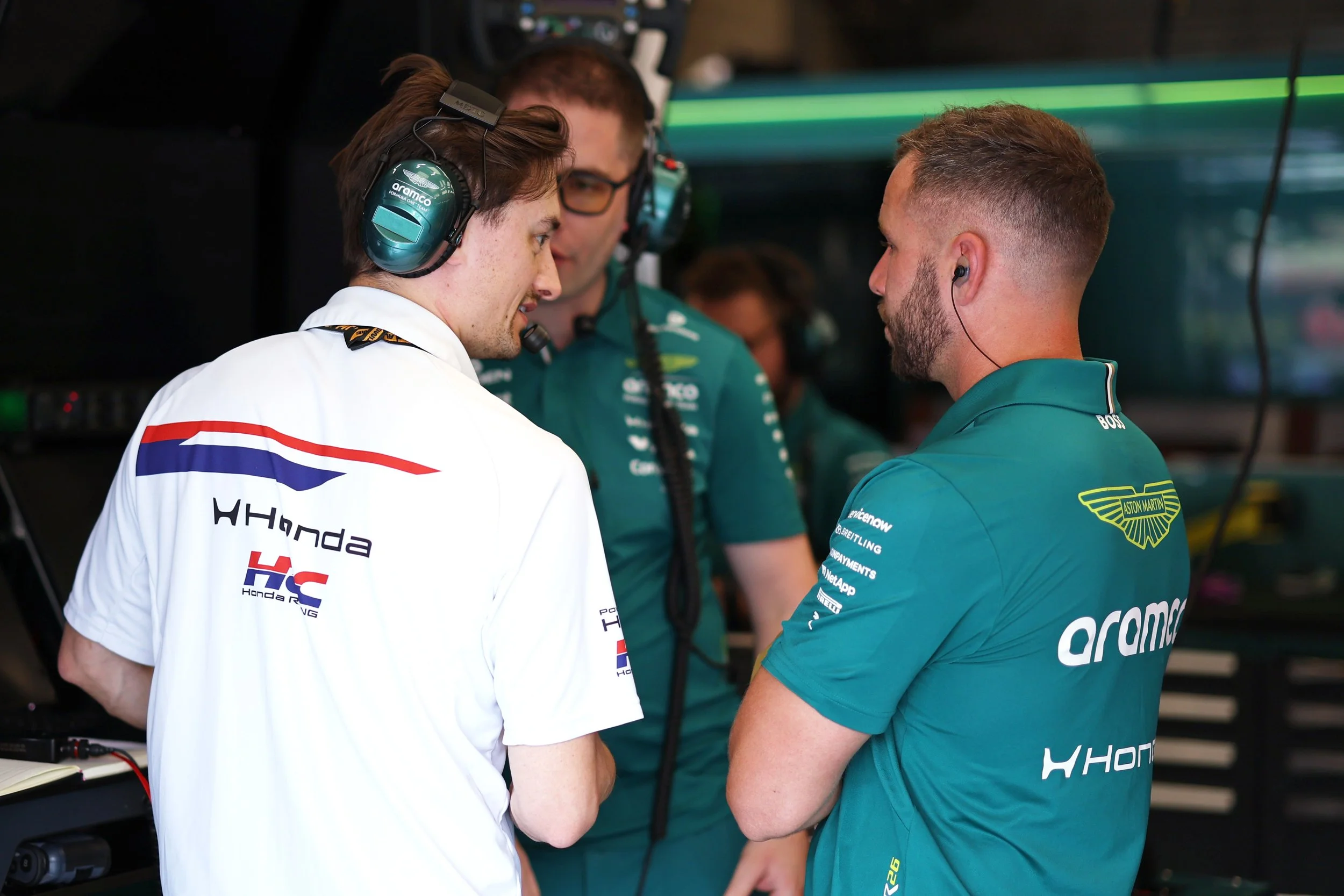
Image © Honda Motor Co. Ltd & Aston Martin Aramco. Used for editorial purposes.
That decision has required patience from everyone involved, not least Alonso and Stroll, but the reasoning was understandable. Manufacturing repeated minor revisions would have consumed money and production capacity under the cost cap without necessarily changing the competitive picture. The alternative was to concentrate the team’s resources upon a more complete attempt to address the car’s underlying problems.
Krack has described the Hungary package as a “big undertaking”, with the factory working flat out to prepare sufficient components for both cars. The intention is to equip Alonso and Stroll equally, although the compressed production timetable may leave Aston Martin with fewer spare parts than it would ideally carry to a Grand Prix.
Reports suggest the work extends beyond a conventional collection of new aerodynamic surfaces, potentially involving weight reduction and revisions substantial enough to require renewed FIA homologation. Some publications have therefore called the car a B-spec AMR26. The temptation will be to judge the package entirely by Aston Martin’s position on the timing screen in Budapest. Fernando Alonso has offered a more useful standard. He doesn’t expect one development package to turn the AMR26 into a race-winning car. The more important question is whether the new parts demonstrate that Aston Martin understands what has gone wrong and can correct the aerodynamic and drivability weaknesses affecting the present car.
That distinction is important. Moving from the final row of the grid into the lower midfield would hardly resemble the transformation many hoped to see at the beginning of the Honda partnership. It could nevertheless provide evidence that the team’s simulation, wind-tunnel and trackside data are finally moving in the same direction. Without that correlation, adding more parts merely produces a faster route towards the wrong answer.
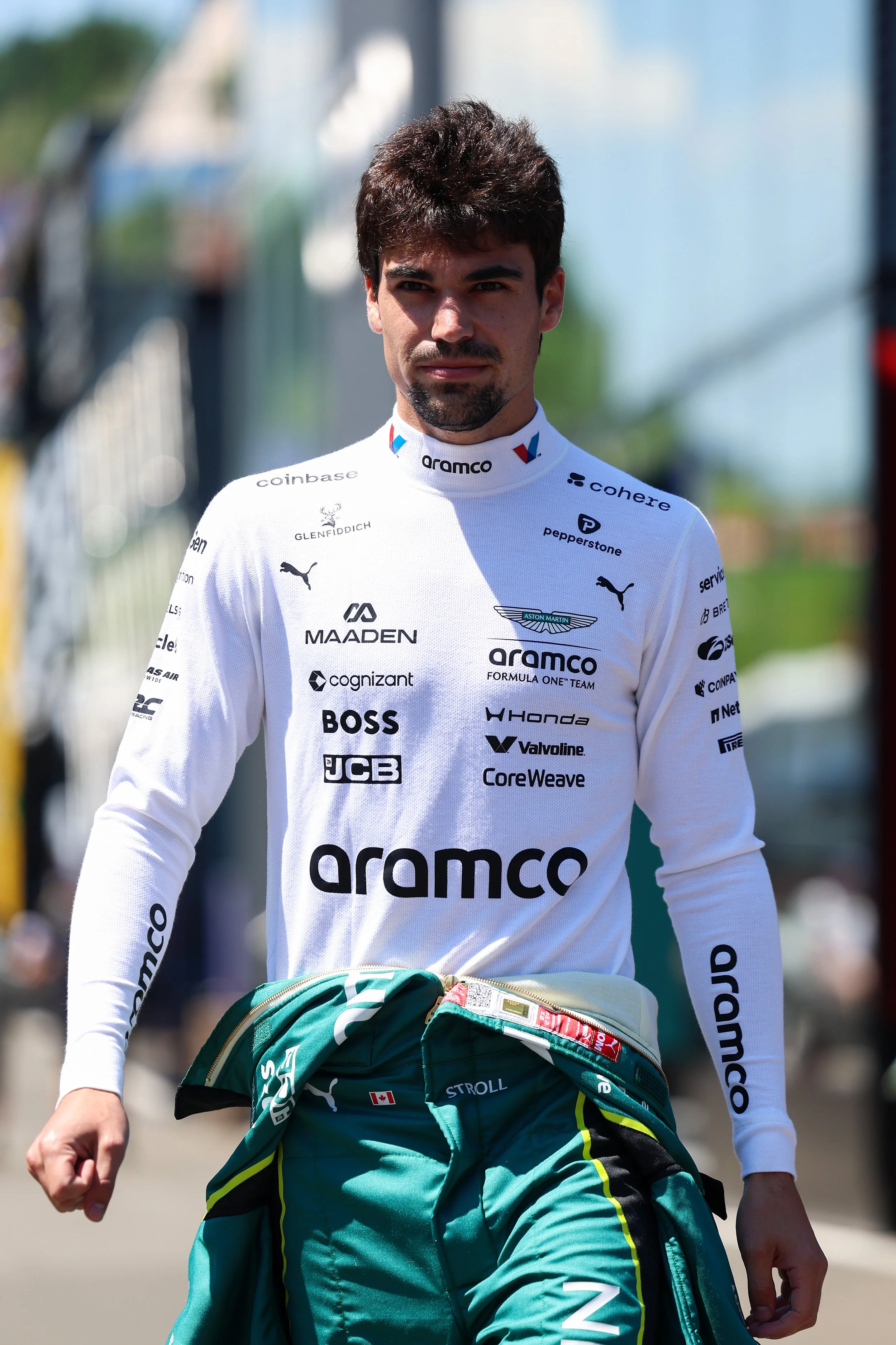
Image © Honda Motor Co. Ltd & Aston Martin Aramco. Used for editorial purposes.
Lance Stroll has been similarly direct. If the Hungary package fails to improve the chassis, he doesn’t believe Honda’s subsequent engine development will solve Aston Martin’s wider problems by itself. That isn’t criticism of Honda so much as an acknowledgement that the AMR26’s difficulties are shared across the complete package.
Honda Update to Follow at Zandvoort
The chassis changes in Hungary will be followed by a separate Honda power-unit update after Formula One’s summer break.
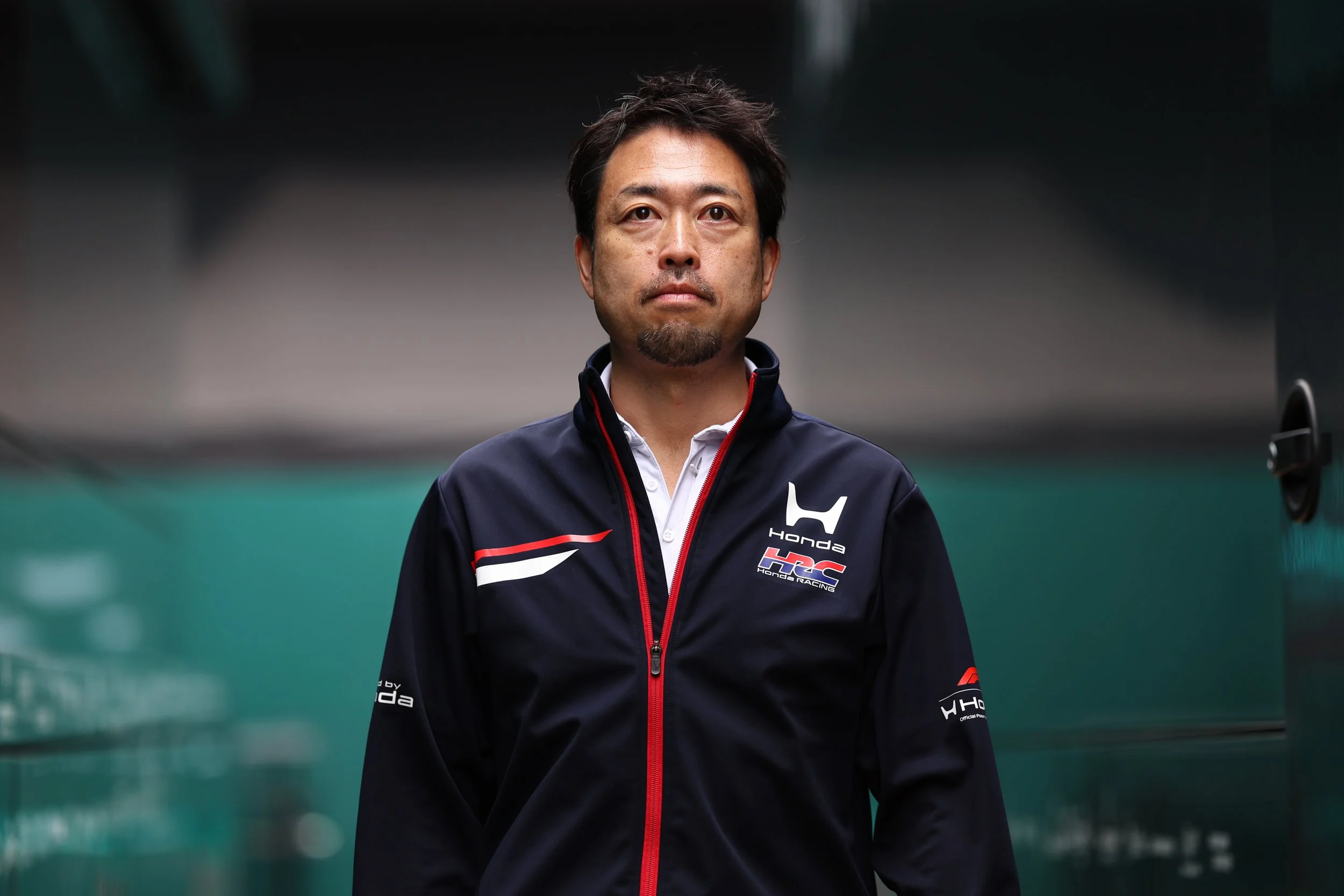
Image © Honda Motor Co., Ltd. Used for editorial purposes. Shintaro Orihara, HRC.
Orihara has indicated that the revised specification is expected for the Dutch Grand Prix at Zandvoort, meaning Belgium and Hungary provide two final race weekends from which Honda can gather information using the current unit.
That creates a two-stage development programme: Aston Martin’s major chassis and aerodynamic package in Budapest, followed by Honda’s power-unit response in the Netherlands.
Neither should be treated as an instant cure. Aston Martin has scored only one point during the opening nine rounds, and the deficit cannot realistically be removed through a single new floor, bodywork package or engine specification. The value of these developments will lie in whether they establish a credible route forward—first by improving the car’s behaviour, and then by reducing the power-unit and energy-management disadvantages that have compounded its problems.
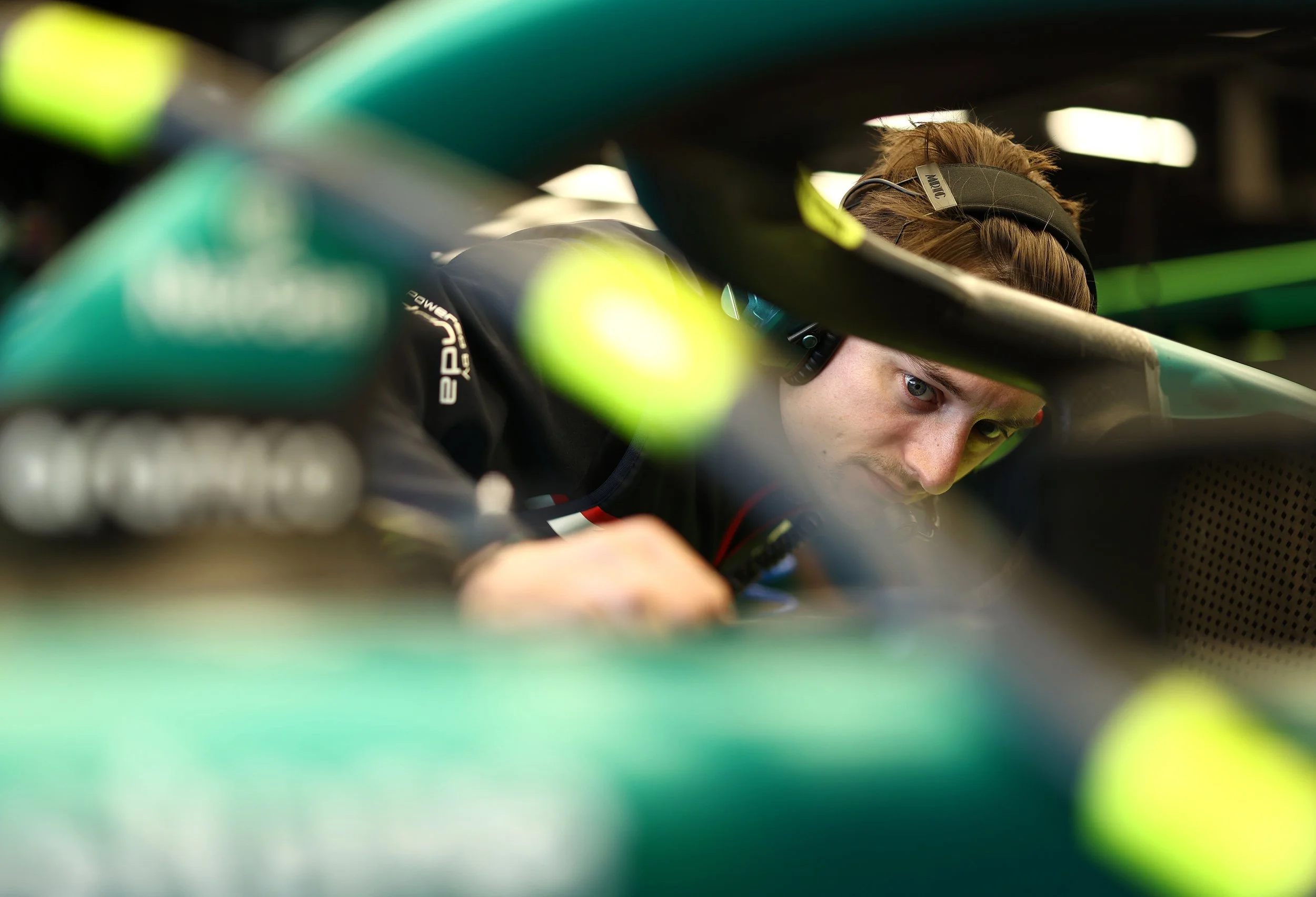
Image © Honda Motor Co., Ltd. Used for editorial purposes.
Spa, therefore, is less a surprise crisis than the conclusion of an uncomfortable opening chapter. Aston Martin already knew this circuit was unlikely to suit the AMR26. Hungary will tell us rather more: not whether the team has completed its recovery, but whether it has finally identified the correct road.
Aston Martin GT3s Take on France and Italy
While Aston Martin’s Formula One team waits for its first substantial technical response, the marque’s customer-racing programme has a rather more immediate opportunity to collect points this weekend. Across events at Circuit Paul Ricard and Misano, seven Vantage GT3s are competing in two closely fought European championships.
Affiliate link note: Some links may be affiliate links, which means Fuel the Passion may earn a small commission if you purchase through them, at no extra cost to you. Thank you for your support.
Blackthorn Shows Early Pace at Paul Ricard
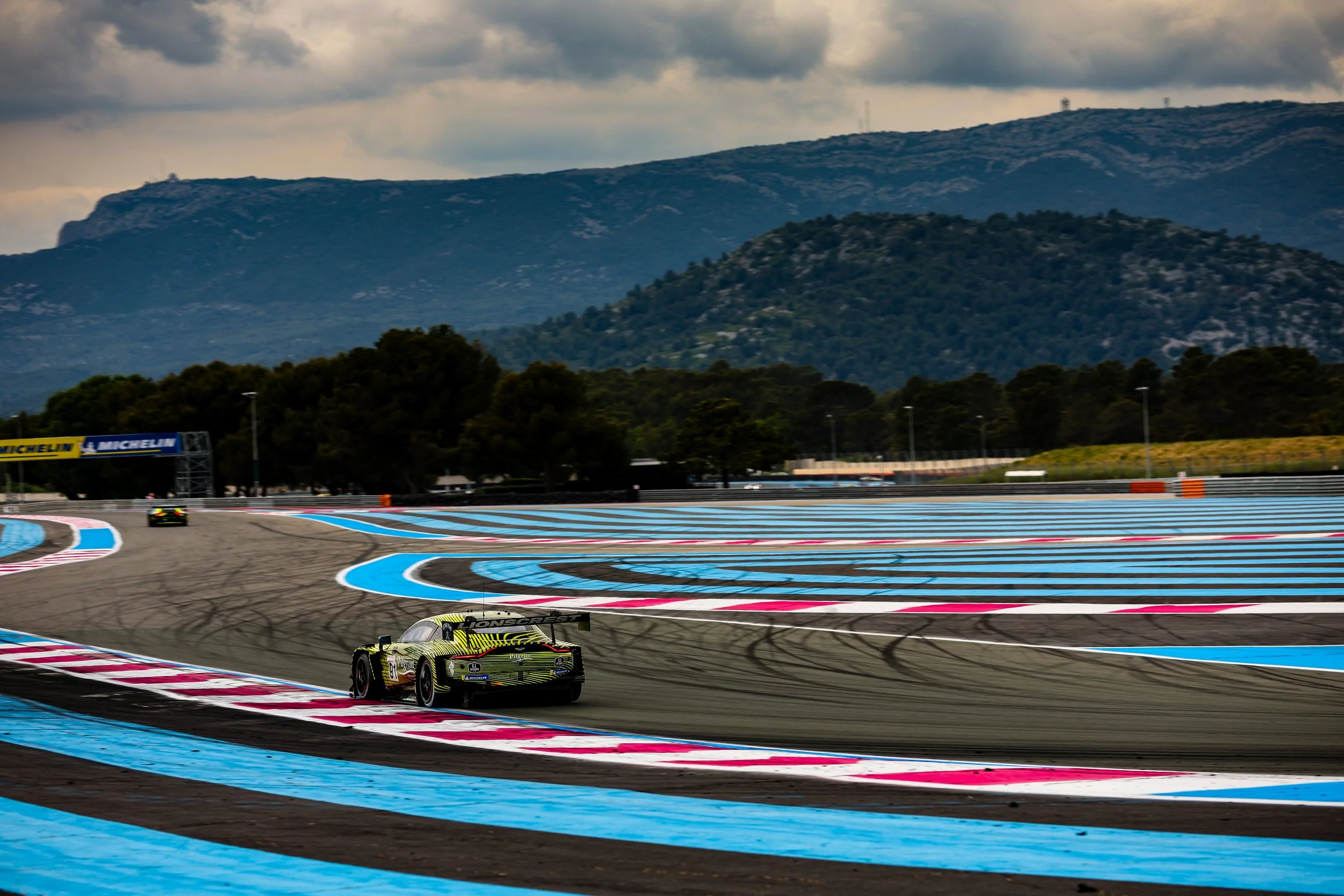
Image © Blackthorn Racing. Used for editorial purposes.
The International GT Open has reached the beginning of its second half, with a 30-car field gathering at Paul Ricard in southern France.
For Blackthorn Racing, this is an important point in the Pro-Am championship. Charlie Bateman and Jonny Adam entered the weekend 17 points behind the class leader, Alexander Fach, following a difficult Hungarian round that prevented them from making greater progress in the standings. They remain firmly involved in the title contest, but with the season moving beyond its halfway point, the opportunities to recover lost ground are beginning to narrow.
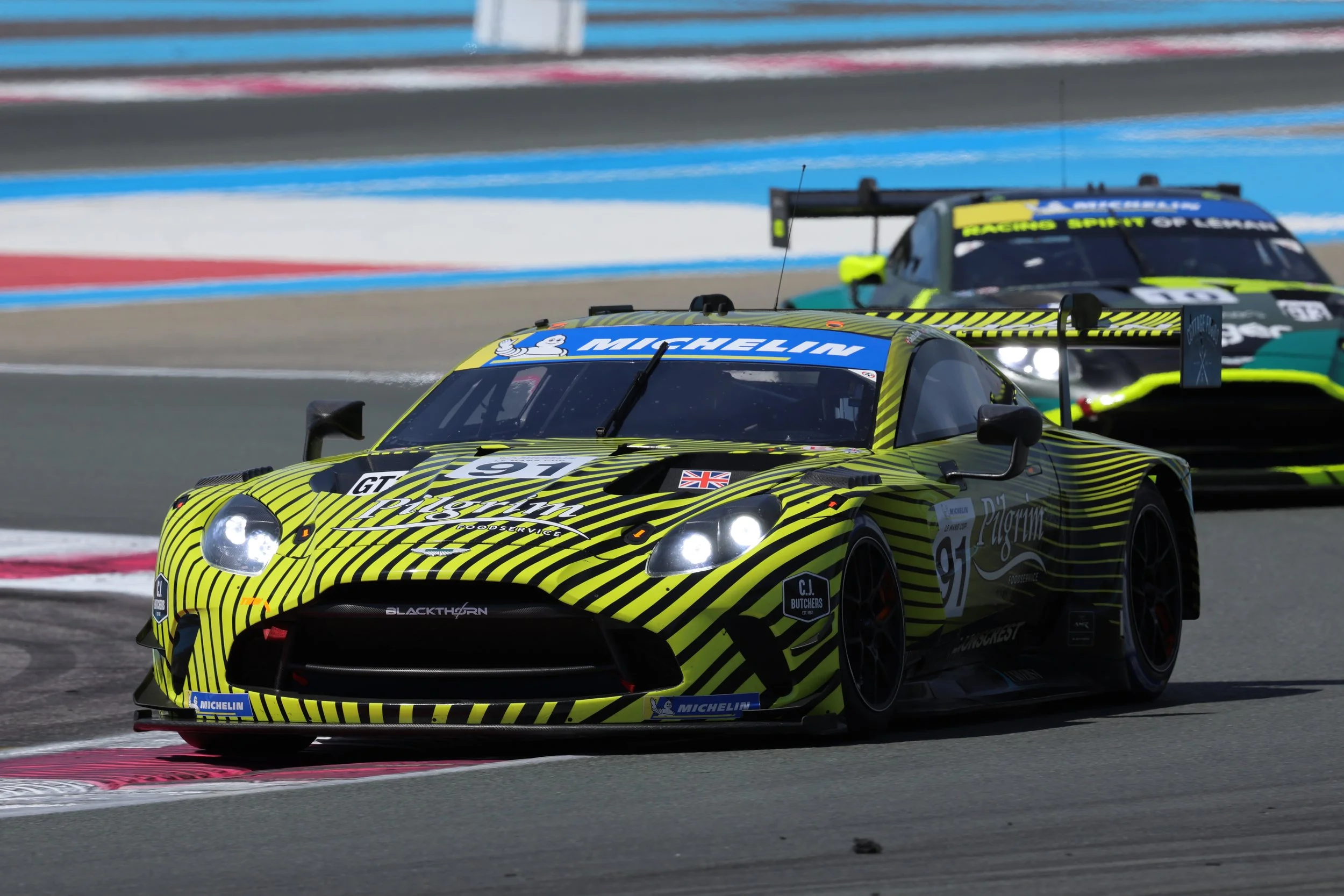
Image © Blackthorn Racing. Used for editorial purposes.
Friday’s running provided an encouraging start. In very hot conditions, Blackthorn’s Aston Martin was third-fastest overall, only 0.093 seconds behind the quickest Team Motopark Mercedes. With the first 17 cars covered by a single second, the margins were every bit as close as the championship position suggests.
It doesn’t guarantee anything once qualifying, pit stops and race traffic become involved, recent Aston Martin weekends have provided enough evidence of that, but it does show that the Vantage began the event with competitive pace.
There’s a second Aston Martin interest at Paul Ricard through Good Speed Racing. Piotr Wira and Tomasz Magdziarz arrived with one Am-class victory already secured this season and remain part of a particularly close championship contest. The leading three crews entered the round separated by only five points, with Good Speed among the principal challengers immediately behind them.
A late change means Wira will contest the Paul Ricard races alone, increasing the physical demands at a circuit where high temperatures were already influencing Friday’s running.
Blackthorn Converts Sensational Pole into Pro-Am Victory at Paul Ricard (Updated whilst editing this Roundup)
Blackthorn Racing delivered one of the standout Aston Martin performances of the weekend as Jonny Adam placed the #97 Vantage GT3 Evo on overall pole position for the opening International GT Open race at Circuit Paul Ricard and the team then converted that qualifying speed into a valuable Pro-Am victory.
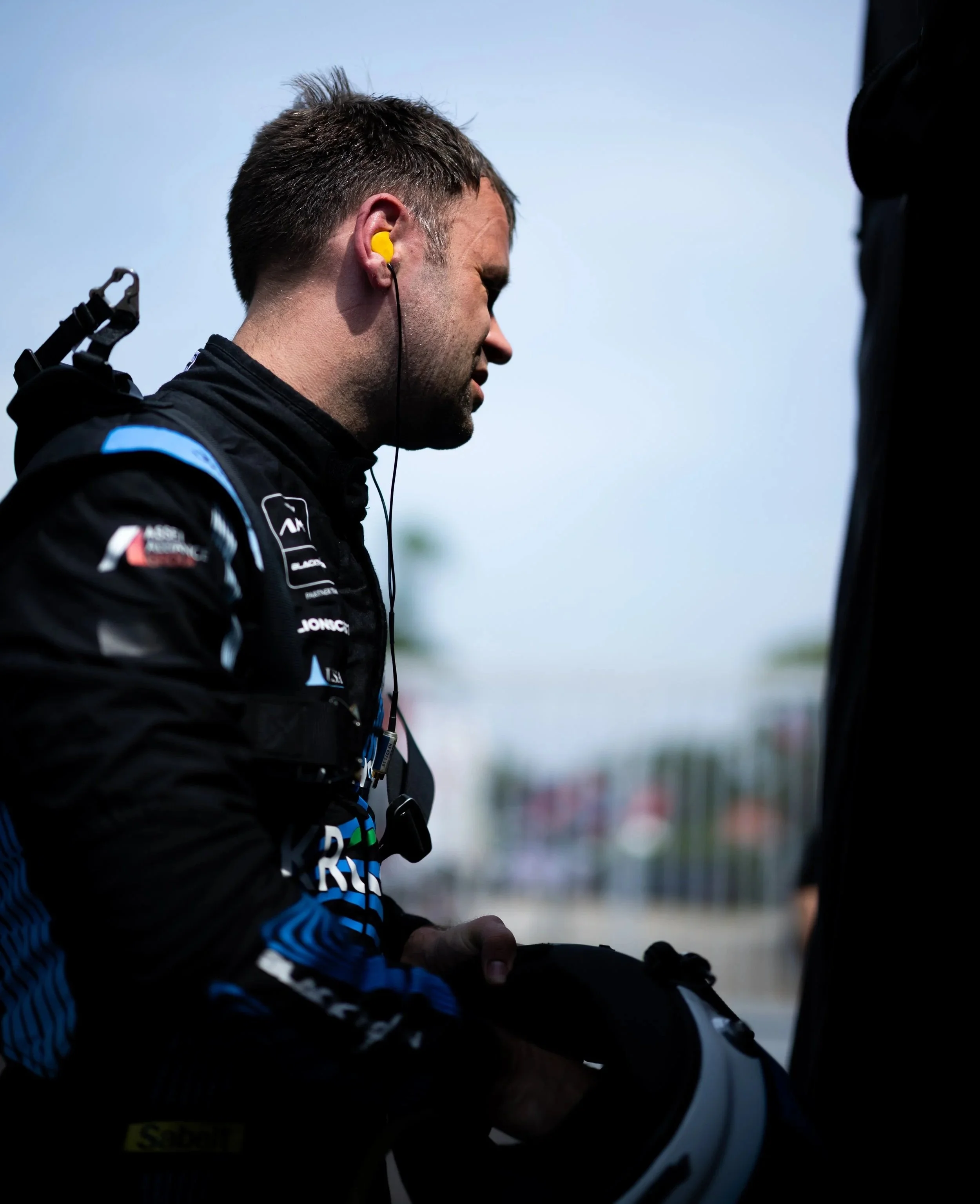
Image © Blackthorn Racing. Used for editorial purposes.
Competing alongside Charlie Bateman, Adam produced his decisive lap in the closing moments of an exceptionally tight qualifying session. His 2:02.112 secured Blackthorn’s first pole position in the International GT Open, beating Ben Tuck’s Ferrari by just 0.041 seconds, with only 0.073 separating the leading three cars and less than four tenths covering the top six.
That made the achievement all the more impressive. This wasn’t simply a class pole: the Blackthorn Aston Martin outpaced the entire field, including the leading fully professional entries, on one of the fastest and most technically demanding circuits on the calendar.
It was also Aston Martin’s first International GT Open pole at Paul Ricard since Charlie Eastwood achieved the feat for TF Sport in 2020. Adam felt the circuit’s characteristics played to the strengths of the Vantage, while also crediting the wider Blackthorn team for delivering a car capable of challenging at the very front.
Adam made a strong start and retained the overall lead, but a substantial first-corner accident further down the field brought out the Safety Car. Seven laps of neutralised running prevented him from building the advantage Blackthorn might otherwise have hoped to establish before the compulsory driver change.
When the pit window had played out, Bateman emerged third overall and remained at the head of the Pro-Am category. Although the outright victory eventually went to the ZRS Motorsport Porsche, Bateman maintained Blackthorn’s class advantage and brought the #97 Aston Martin home to secure an excellent Pro-Am victory.
For a team continuing to build its European racing programme, Saturday represented another important statement of intent. Blackthorn arrived in France already firmly involved in the Pro-Am championship contest, and an overall pole followed by a class victory has strengthened that challenge while providing valuable momentum ahead of Sunday’s second qualifying session and race.
It was an outstanding day for the team: a brilliantly judged qualifying lap from Jonny Adam, Blackthorn’s first GT Open pole position and a well-earned Pro-Am victory shared with Charlie Bateman. It also provided another convincing demonstration of the Vantage GT3 Evo’s ability to compete at the front of an exceptionally close international field.
Five Vantage GT3s at Misano
Across the border in Italy, Aston Martin has an even larger presence in the GT World Challenge Europe Sprint Cup, where a record 44-car field is racing at Misano.
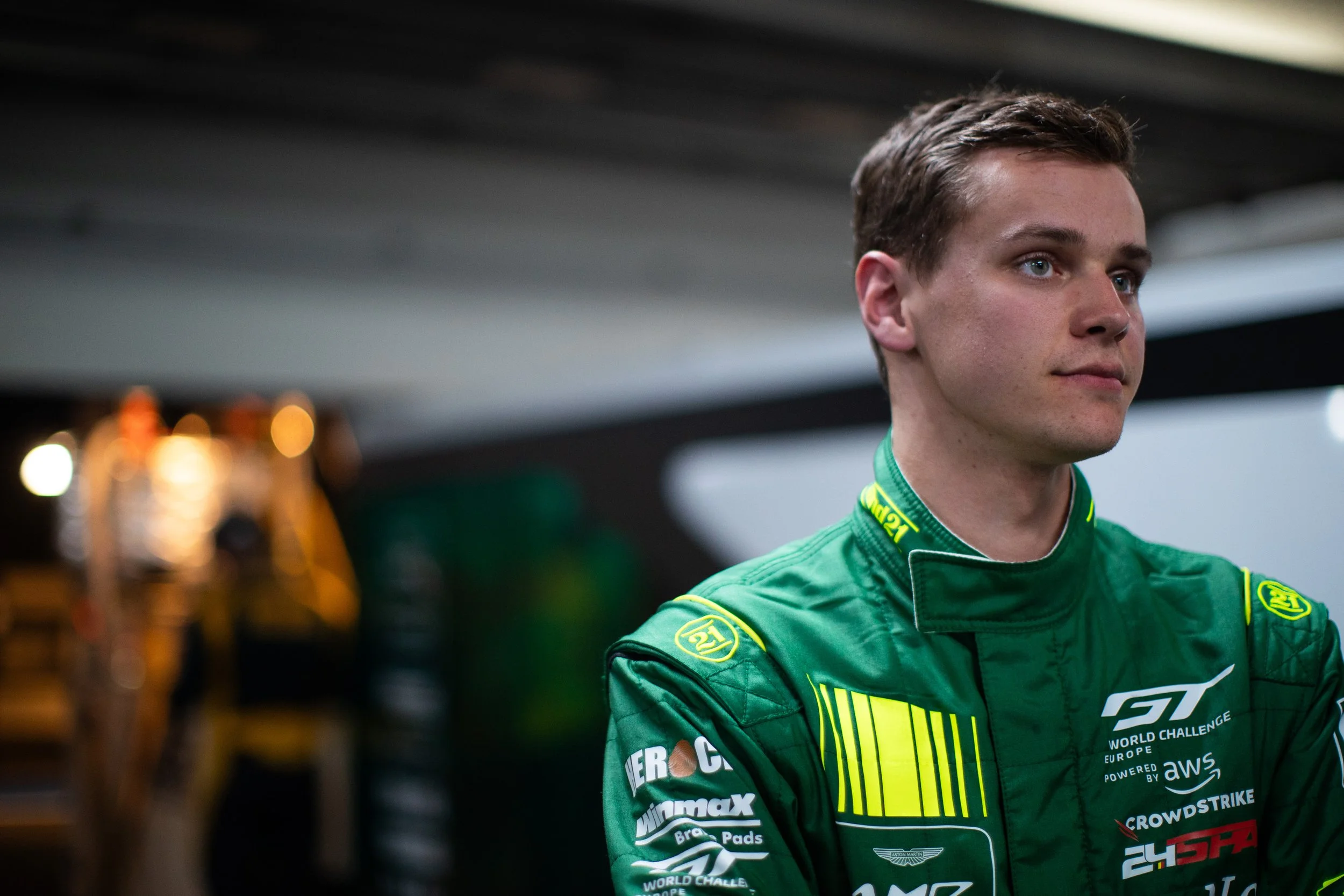
Image © Aston Martin Lagonda. Used for editorial purposes. Kobe Pauwels.
Three Vantages are entered by Comtoyou Racing. Nicki Thiim and Kobe Pauwels share the #7 Pro-class car, Felice Jelmini and Marcelo Tomasoni compete in the #11 Bronze Cup entry, while Arthur Dorison and Oliver Söderström drive the #21 in the Silver Cup.
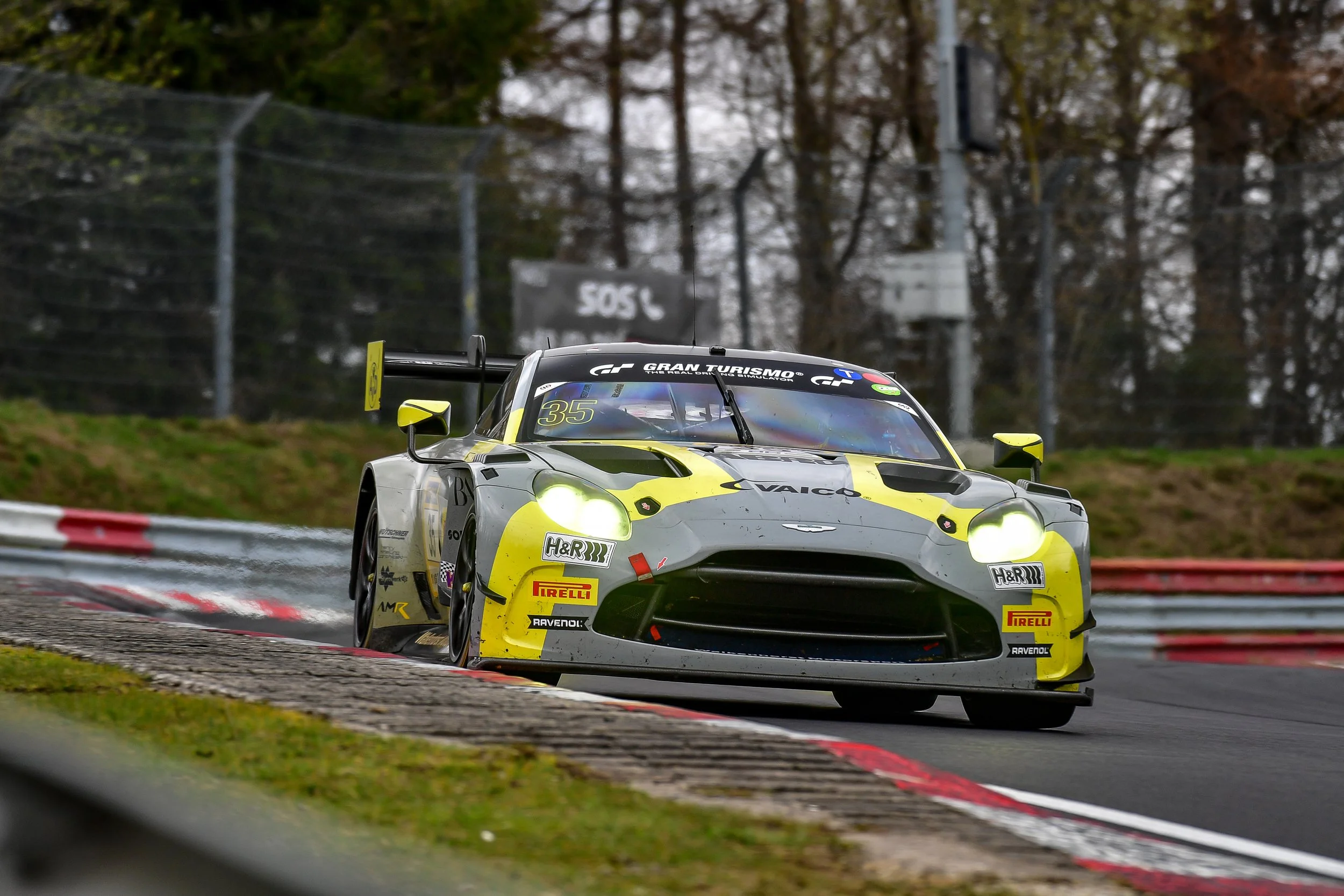
Image © Aston Martin Lagonda. Used for editorial purposes.
Walkenhorst Motorsport adds two further Silver Cup Vantages: the #34 of Jamie Day and Mateo Villagomez and the #35 shared by Gaspard Simon and Maxime Robin.
That gives Aston Martin representation in three separate classes and several possible routes to a meaningful result. The #7 Comtoyou car carries the principal overall challenge, while the Silver Cup contains three Aston Martins in what’s expected to be one of the weekend’s most competitive categories.
The Misano format provides two very different tests. Saturday evening’s opening race begins shortly before sunset and continues into darkness, while Sunday’s second contest takes place in the heat of the afternoon. The change in temperature and track conditions leaves teams with little time to adapt between the two races.
Friday practice didn’t place an Aston Martin at the top of the overall times, although tightly packed sessions and different run programmes make it difficult to draw firm conclusions before qualifying. The important evidence will arrive when the field races under the lights on Saturday evening.
Saturday qualifying was led by the #34 Walkenhorst Motorsport Vantage GT3 Evo, which secured 12th overall and emerged as the strongest of the five Aston Martins. Comtoyou Racing endured a more difficult session, with its three entries qualifying 34th, 35th and 38th ahead of Saturday evening’s opening race.

Image © Aston Martin Lagonda. Used for editorial purposes.
The GT4 European Series opener at Misano produced a particularly strong result for Racing Spirit of Léman’s #74 Aston Martin Vantage GT4 Evo. In a highly eventful race in which each of the early leaders retired, Clément Seyler and Pedro Garcia kept themselves in contention and brought the Silver Cup entry home fourth overall and fourth in class, narrowly missing the podium.
The sister #72 Pro-Am Vantage of David Kullmann and Florent Grizaud endured a more difficult contest and was classified 27th overall and ninth in Pro-Am after completing 29 of the 34 laps. Both Aston Martins return for Sunday’s second race, with the #74 crew aiming to convert its impressive pace into a podium finish.
With Blackthorn pursuing the Pro-Am leaders, Good Speed fighting within the Am contest and five further Vantages spread across the Misano field, this is a particularly busy weekend for Aston Martin’s customer teams.
Both events will still be in progress when this Roundup goes live on Sunday morning. The FTP Motorsport Hub will carry the completed race reports, key Aston Martin results and revised championship tables early next week.
Aston Martin Confirms Financing Discussions Ahead of H1 Results
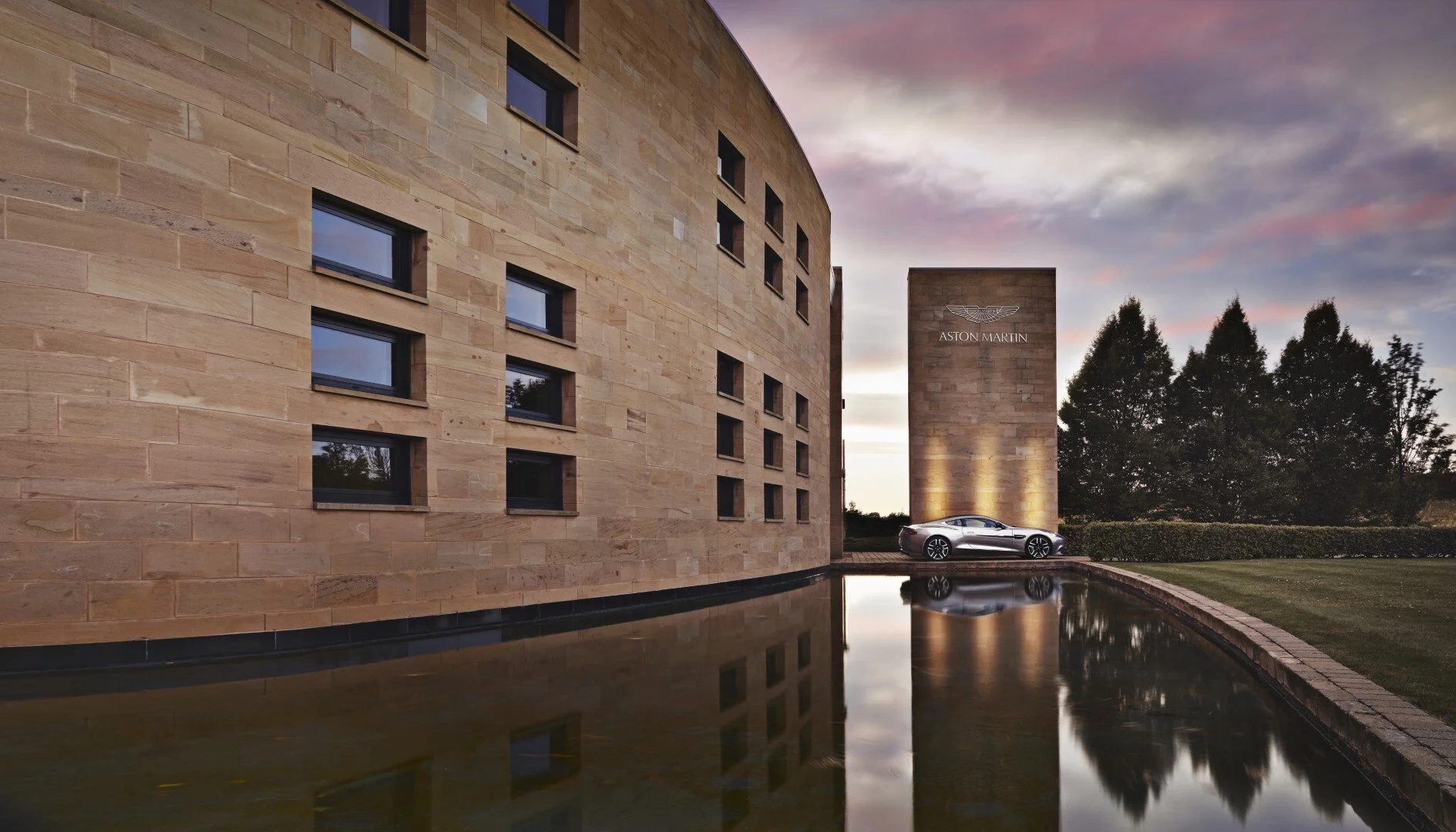
Image © Aston Martin Lagonda. Used for editorial purposes.
The race teams will spend this weekend trying to convert speed into championship points. At Aston Martin Lagonda, the figures requiring attention are measured rather differently, and late on Friday, the company formally acknowledged that it’s discussing potential new financing.
The statement followed reports that Aston Martin was seeking additional debt funding to strengthen its liquidity position. The company confirmed that its Board regularly reviews its capital structure and strategic options, including ongoing discussions with potential financing providers. It added that its focus remains upon delivering the expected improvement in 2026 financial performance while maintaining sufficient liquidity to carry out that strategy.
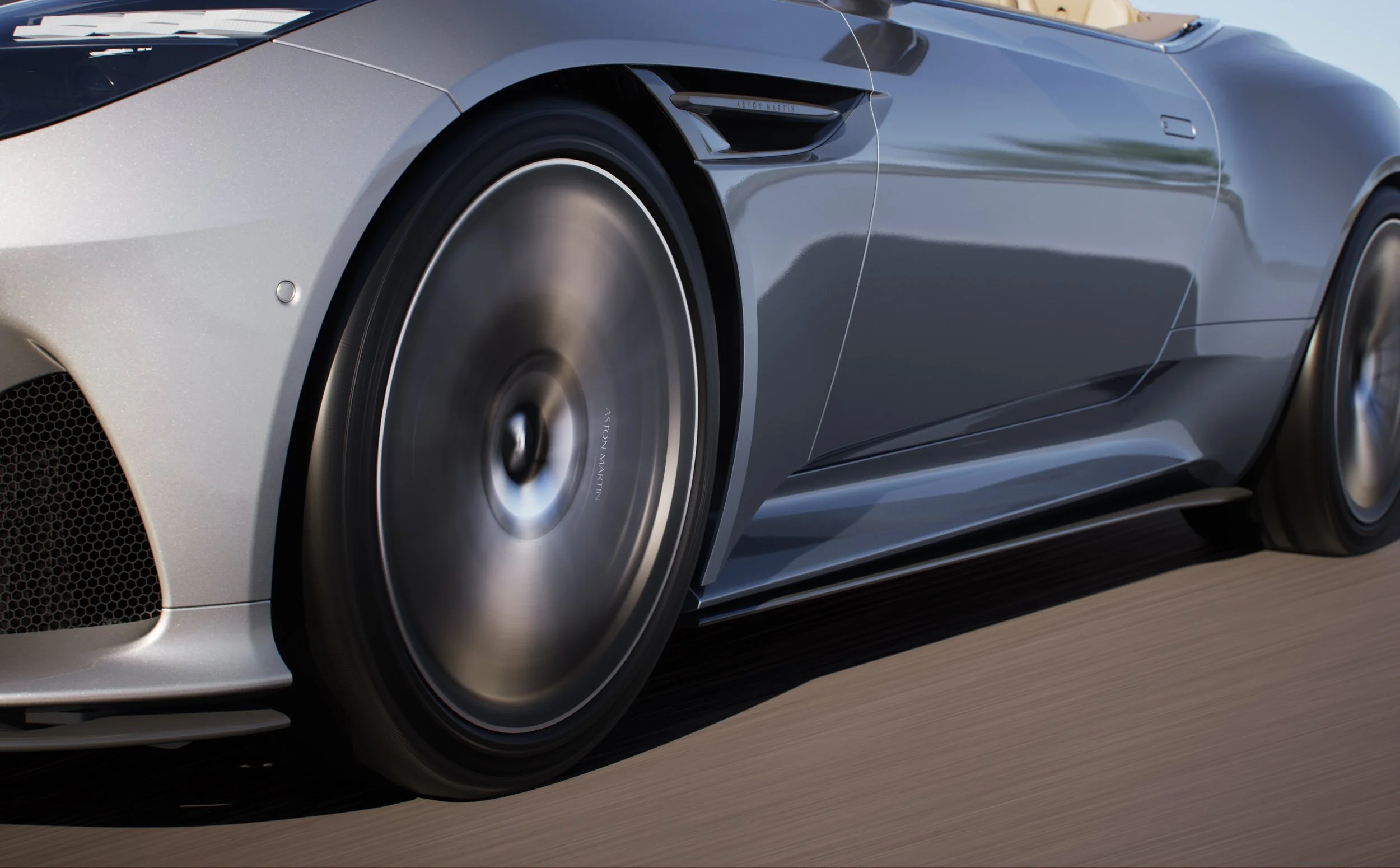
Image © Aston Martin Lagonda. Used for editorial purposes. DB12 Volante.
That confirmation is important. The existence of financing discussions is no longer merely an anonymous media claim, although Aston Martin has not announced an agreement, identified a lender or disclosed how much it might seek to raise. The more specific details still come from reporting rather than from the company itself. Bloomberg reported that the parties involved include HPS Investment Partners, part of BlackRock, and that one option under consideration is asset-backed borrowing structured through a so-called drop-down transaction. Reuters subsequently carried the report and Aston Martin’s response.
In simplified terms, such a structure could involve transferring selected assets into another part of the group and using them to support new borrowing. Which Aston Martin assets might be involved, the amount of finance available and the terms demanded by lenders remain unknown. Until something is formally agreed, it would be unwise to present the reported structure as a completed transaction or even as the only option being considered.
Nevertheless, the discussions underline why cash and debt remain among Adrian Hallmark’s most urgent challenges.
Aston Martin ended the first quarter with £177.4 million in cash, total reported liquidity of approximately £178 million and net debt of £1.459 billion. A separate £50 million committed facility from members of the Yew Tree Consortium increased pro-forma liquidity to around £230 million. Free-cash outflow during the quarter was £116.8 million, only marginally better than the corresponding period in 2025.
There was improvement elsewhere. Revenue increased by 16 per cent to £270.4 million, gross margin rose from 27.9 to 34.7 per cent and adjusted EBITDA moved from a £4.4 million loss to a positive £23.2 million. Deliveries of Specials, including 102 Valhallas, played an important part in that progress.
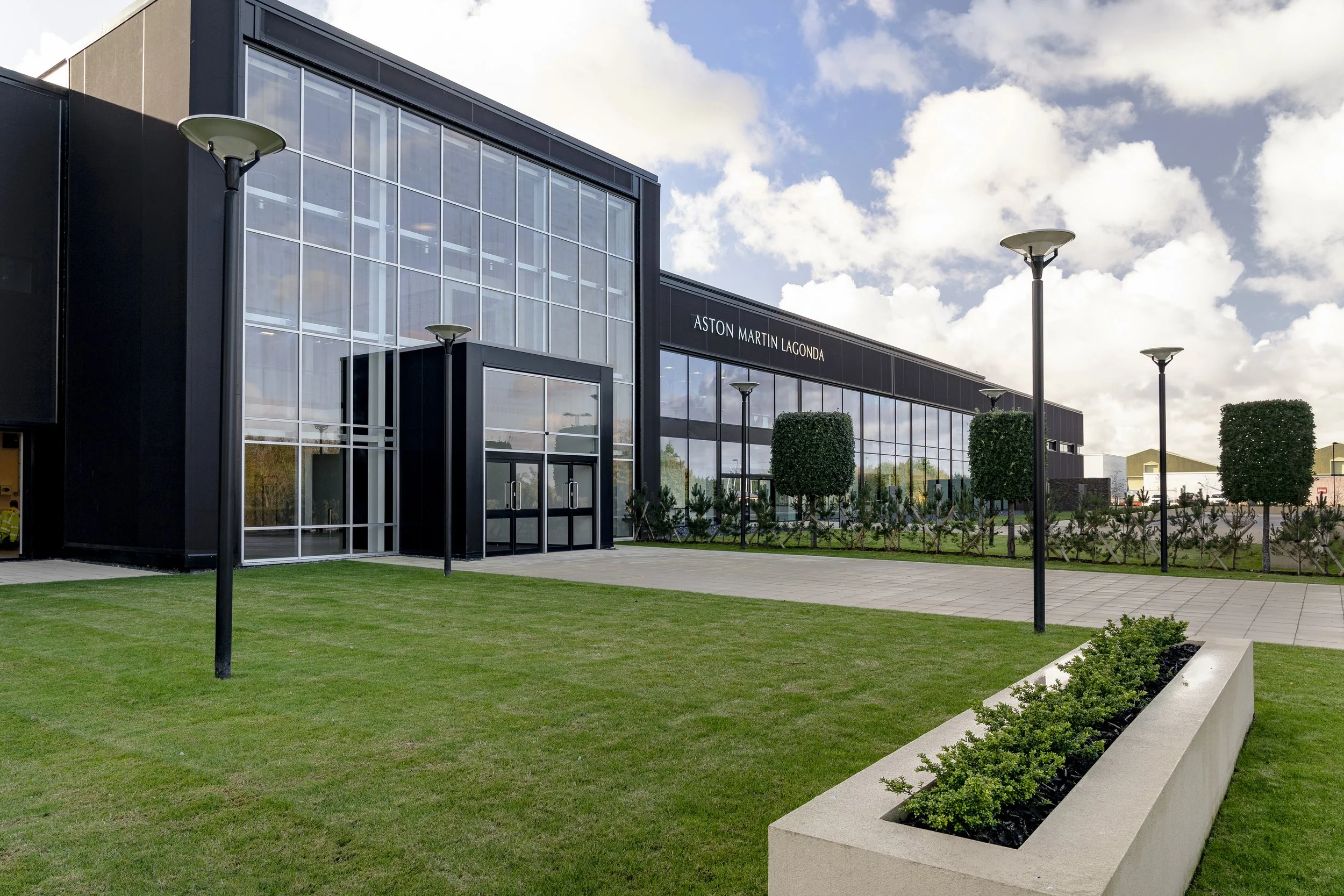
Image © Aston Martin Lagonda. Used for editorial purposes.
That combination explains the position rather neatly. Aston Martin’s operational direction showed signs of improvement during Q1, but the business continued to consume cash and carry a substantial debt burden. Exploring further liquidity therefore doesn’t automatically mean that the turnaround programme has failed; it means the company needs sufficient financial room for that programme to continue.
It also doesn’t necessarily contradict Hallmark’s recent comment that Aston Martin shouldn’t require new investors if it delivers its plan. A lender providing debt finance isn’t the same as a new shareholder injecting equity. It would, however, bring additional borrowing costs and potentially new security over company assets, making the eventual terms every bit as important as the amount raised.
Aston Martin will publish its H1 2026 results on Wednesday 29th July at 8am BST, covering the six months to 30th June.
Those figures should provide a clearer view of:
the cash balance and liquidity position at the end of June;
net debt and financing costs;
whether the heavy Q1 cash outflow eased during the second quarter;
progress with Valhalla deliveries;
whether Aston Martin’s expectations for the full year remain intact;
and, perhaps, whether these financing discussions have moved closer to a conclusion.
FTP will examine those results carefully when they’re published. For now, the balanced interpretation is that Aston Martin has confirmed it’s exploring additional financial options, but it hasn’t announced a completed deal or said that its present resources are exhausted.
The timing inevitably attracts attention, yet the financing discussion forms only one part of a wider plan. To understand what Aston Martin is attempting to finance and how Adrian Hallmark expects the company eventually to support itself, we need to look at the turnaround strategy he described in greater detail this week, a story we’ll continue to watch.
Hallmark Puts More Detail Behind Aston Martin’s Turnaround
The reported financing discussions naturally raise an important question: what is Aston Martin trying to fund, and how does Adrian Hallmark expect the company eventually to support itself? Regular FTP readers will recognise that this isn’t a strategy which appeared suddenly this week.
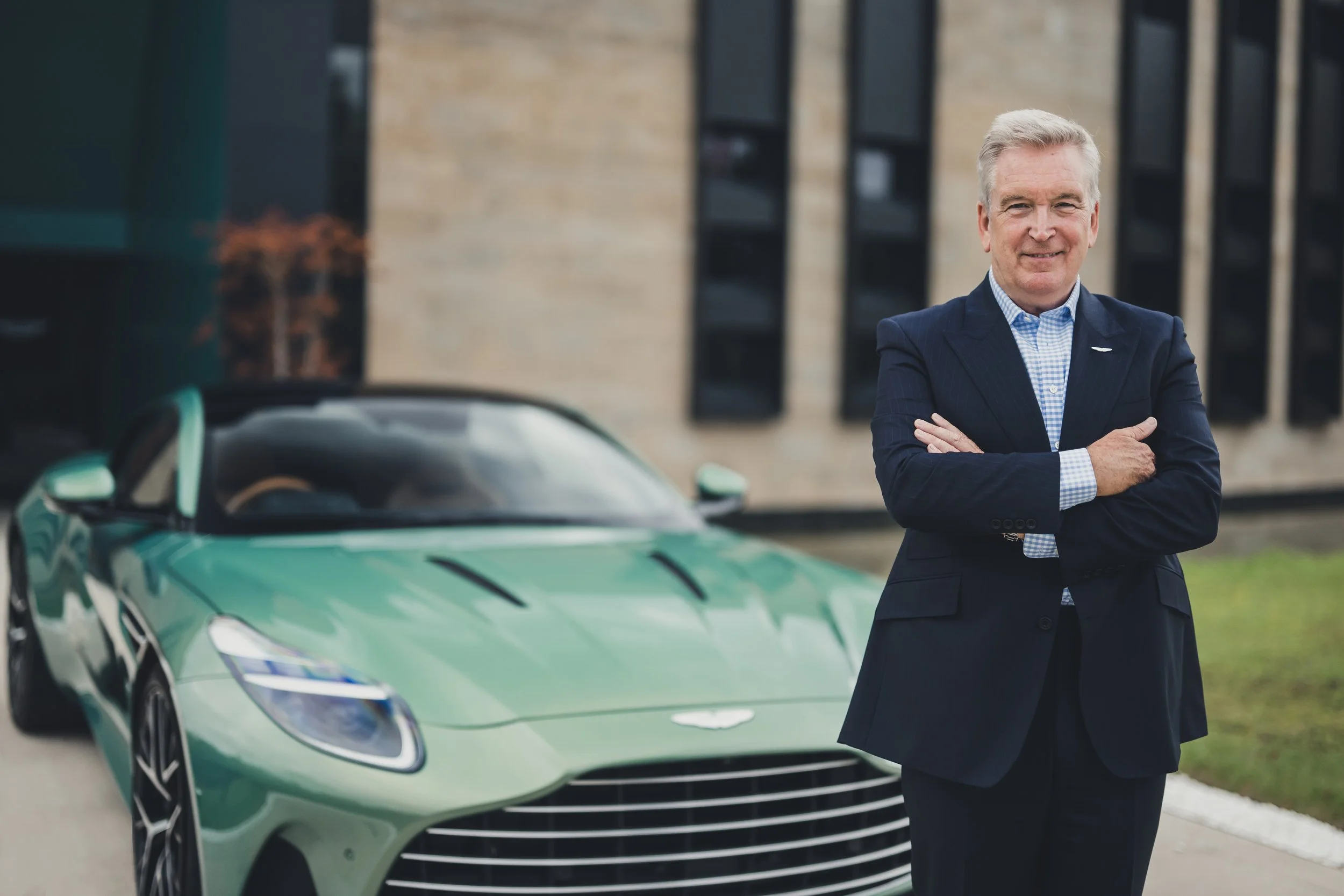
Image © Aston Martin Lagonda. Used for editorial purposes.
In Weekly Roundup Issue 29, we examined Hallmark’s intention to create a smaller, more disciplined and more profitable Aston Martin, one potentially built around fewer core models, but with a greater number of meaningful derivatives. That discussion also covered personalisation, customer relationships, the continued emotional importance of the V12 and Hallmark’s reluctance to pursue electrification before the market and business case are ready.
We returned to the subject in much greater engineering detail in Issue 32, when Hallmark described Aston Martin’s clean-sheet modular architecture for its next generation of sports cars and SUVs. That included greater component sharing, improved structural rigidity, rear-wheel steering, 48-volt mild-hybrid assistance and provision for fully electric powertrains later in the architecture’s life.
Issue 32 also explored the work Aston Martin has undertaken to preserve its V12 through small-volume regulatory provisions, what FTP described as regulatory breathing room rather than a loophole. The latest Auto Express interview doesn’t change that direction. Instead, it provides more detail about the commercial and operational plan needed to make it financially viable.
More Activity Within the Existing Range
Hallmark has again highlighted the relatively small number of derivatives Aston Martin had previously planned for its existing models. He offered the Vantage as an example. Only two versions had apparently been scheduled across five years, while a manufacturer such as Porsche might create many more derivatives from one core model family. That doesn’t mean Aston Martin needs to fill its range with barely distinguishable variants. As we argued in Issue 29, the additions need to bring genuine character, purpose and a reason for customers to care.
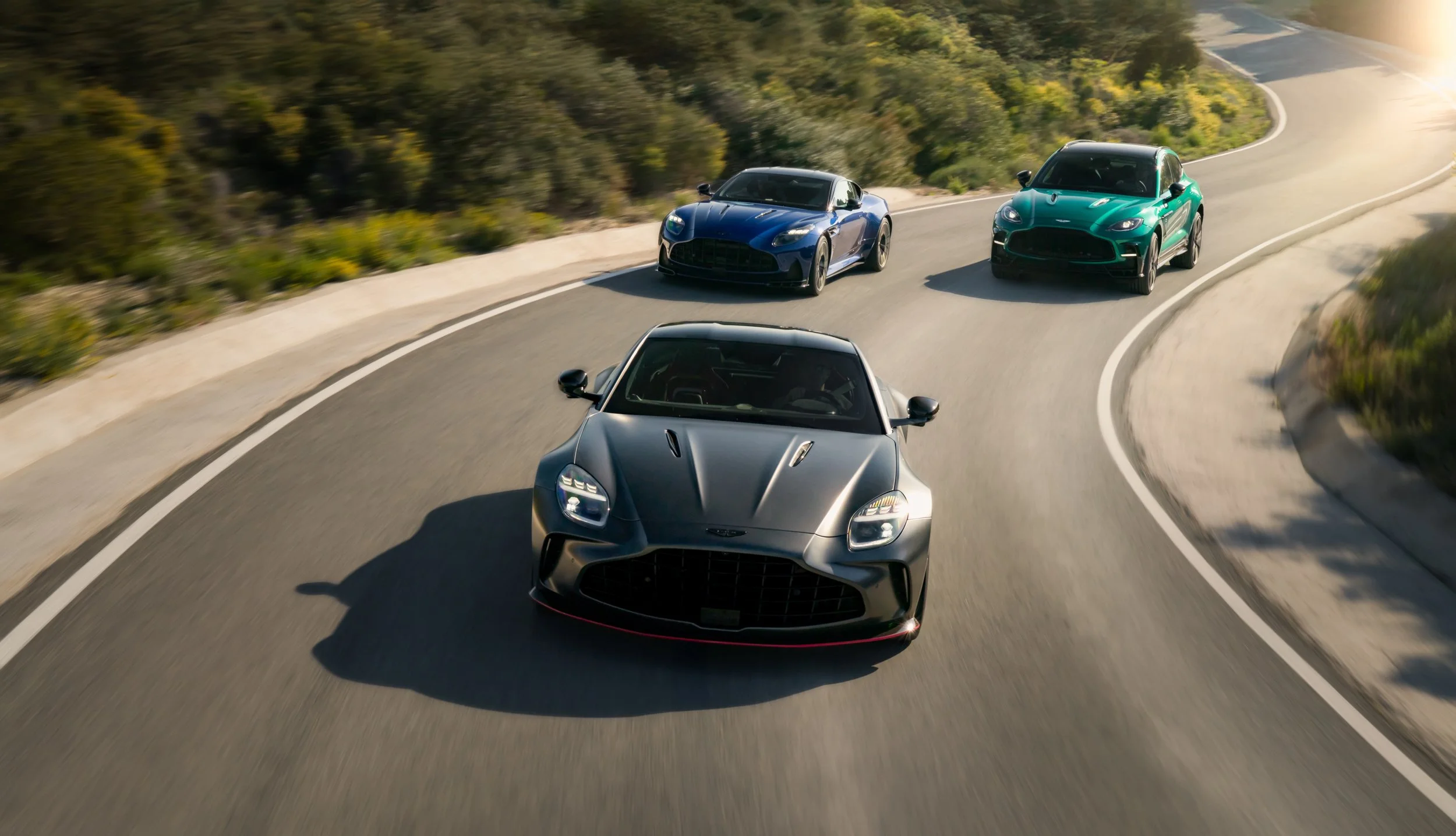
Image © Aston Martin Lagonda. Used for editorial purposes.
The DBX S, Vantage S and DB12 S demonstrate the approach already taking shape. Each uses an established model as its foundation but introduces greater performance, a sharper identity and a higher-value proposition. Hallmark now says Aston Martin has seven or eight product developments planned annually for the next few years, before the new-generation cars discussed in Issue 32 begin arriving.
One possibility is a more focused, road-legal Vantage influenced by the GT3 racing car. Hallmark responded enthusiastically when the idea was raised, although he didn’t confirm a model, specification or launch date. With the visibility and growing success of the Vantage GT3 programme, it would be a logical connection. For now, though, it remains a strong hint rather than a formal product announcement.
Aston Martin’s 199 Missing Options
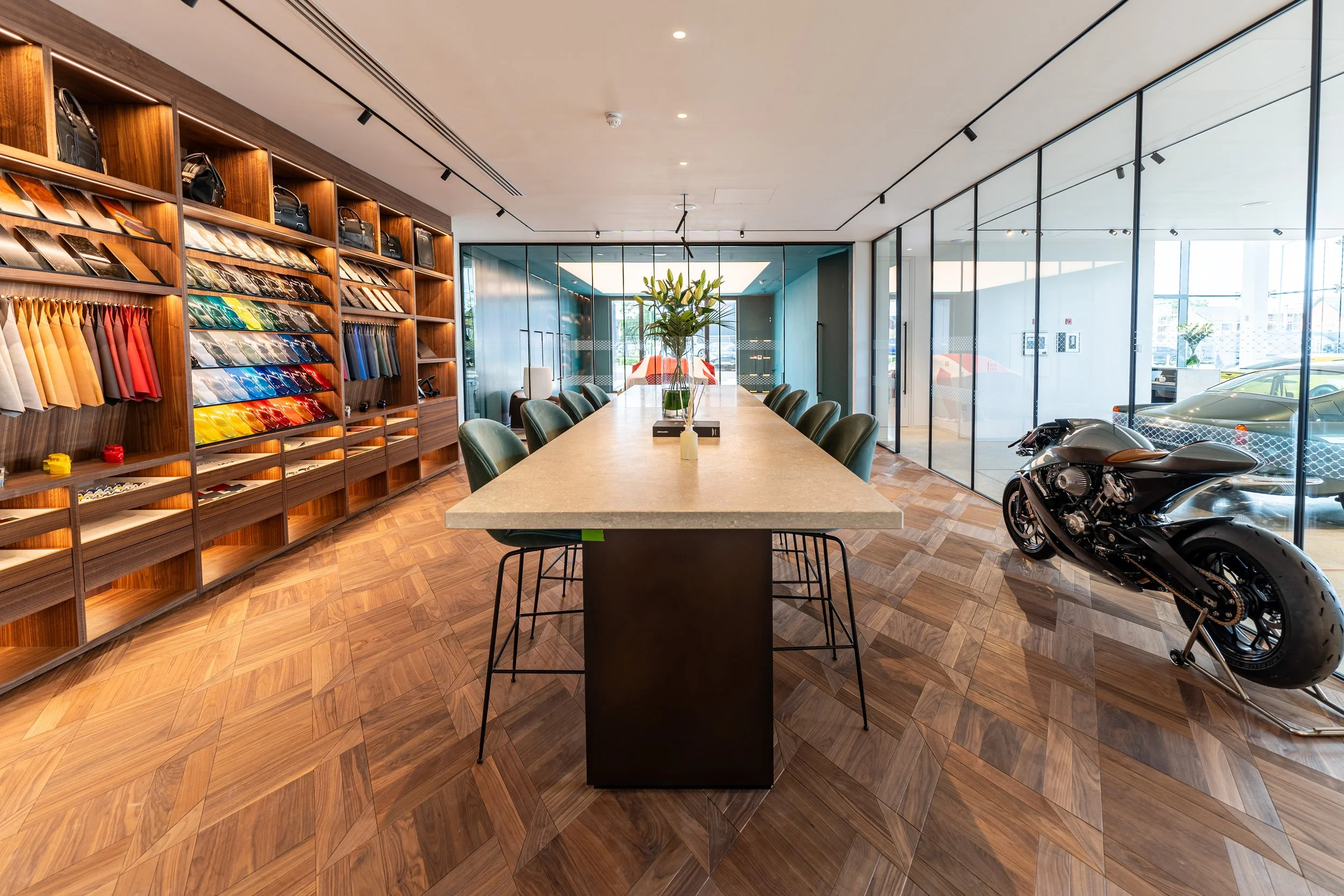
Image © Aston Martin Lagonda. Used for editorial purposes. Aston Martin Birmingham
The interview also provides more detail about personalisation, another subject Hallmark discussed in the Oxford Marketing Society conversation we referenced in Issue 29.
Aston Martin compared its options catalogue with those offered collectively by Ferrari, Lamborghini, Rolls-Royce, Bentley, McLaren and Porsche. The review reportedly identified 199 options available from those manufacturers that Aston Martin didn’t offer. Not all 199 will necessarily be useful or desirable, but the finding suggests Aston Martin has been missing opportunities to increase both customer choice and revenue.
Image © Aston Martin Lagonda. Used for editorial purposes.
Titanium wheels, titanium exhaust systems and more sophisticated audio systems are among the additions being introduced. Q by Aston Martin already demonstrates what the company can achieve at the highest level of personalisation. Hallmark’s wider aim appears to be making more appealing and profitable choices available through the normal ordering process, not merely to the small number of customers commissioning fully bespoke cars.
For someone spending well into six figures, greater choice can make the car feel more individual. For Aston Martin, each carefully selected option raises the value of the sale without requiring another vehicle to pass along the production line.

Affiliate link note: Some links may be affiliate links, which means Fuel the Passion may earn a small commission if you purchase through them, at no extra cost to you. Thank you for your support.
Building the Company Around 6,000 Cars
The most significant new detail concerns scale. Previous plans were based on Aston Martin eventually producing approximately 10,000 cars annually. That assumption influenced staffing, manufacturing capacity, investment and the wider cost base.
Hallmark has now reshaped the company around approximately 6,000 cars per year.
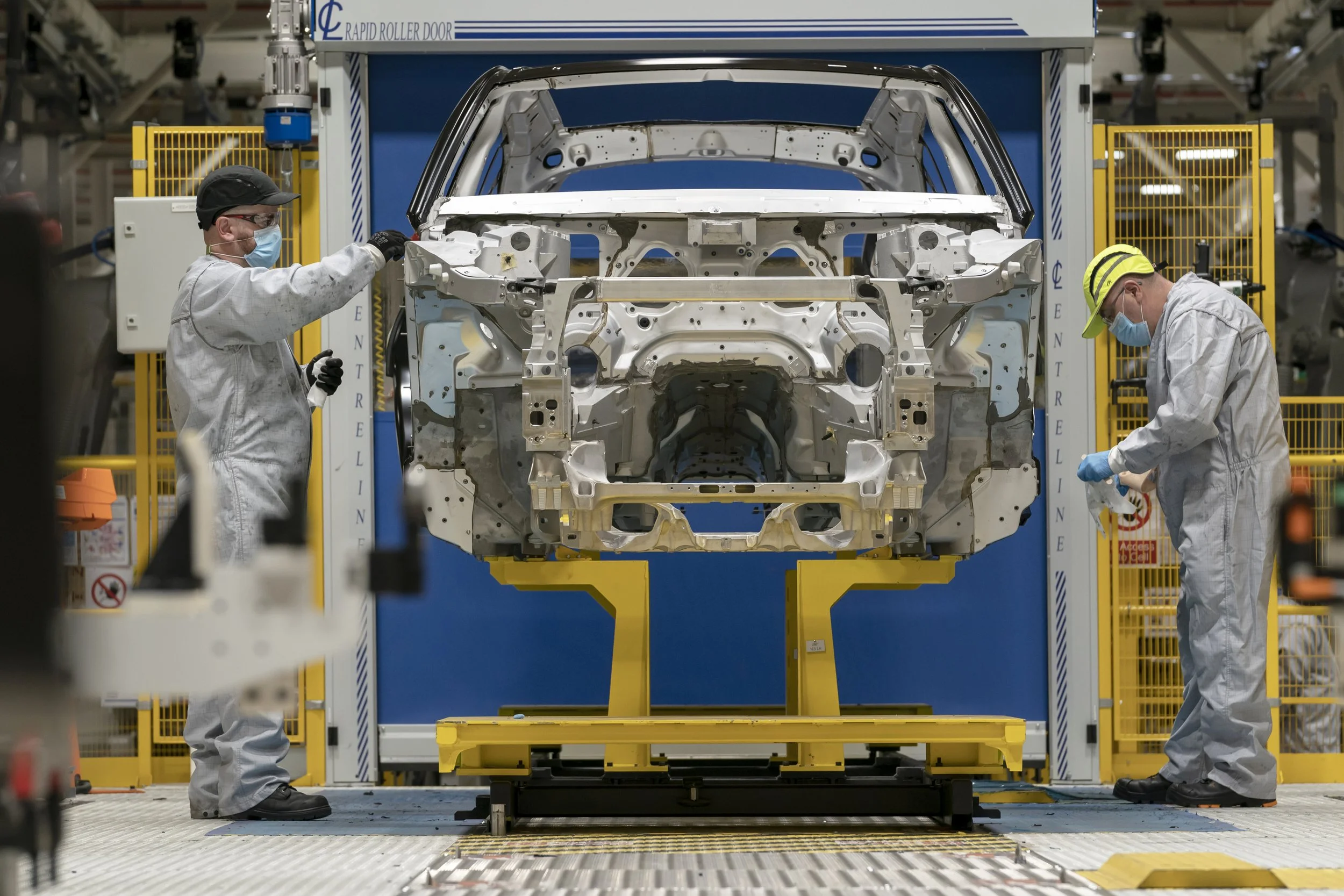
Image © Aston Martin Lagonda. Used for editorial purposes. Aston Martin St Athan.
That fits the direction we identified in Issue 29. Aston Martin doesn’t necessarily need to become much larger; it needs to become profitable and financially sustainable at the volumes its market can realistically support. Lower production can also help preserve exclusivity, provided every vehicle generates sufficient contribution and the cost of developing, manufacturing and selling it is controlled properly.
Hallmark says Aston Martin has reduced its cost base by approximately 30 per cent, following production reductions, restructuring and two rounds of redundancies. Those savings aren’t simply encouraging percentages. They represent difficult consequences for the employees and families affected. They also reveal how extensively the business is being altered behind the product launches and attractive imagery.
Aston Martin is running 26 separate programmes focused on costs, profitability and cash improvement. Hallmark expects the benefits to become increasingly visible towards the end of 2026 and through 2027.
He originally believed the turnaround might take around 18 months. His present assessment is closer to two years.
That revised timetable isn’t necessarily evidence that the plan has failed. Industrial turnarounds rarely follow their first schedule precisely, especially when tariffs, softer luxury demand and regulatory uncertainty are involved. The crucial question is whether operational progress begins turning into improved cash generation before Aston Martin uses up the financial room required to complete the transformation.
Not Beating Ferrari, Learning From It
The Auto Express headline described Aston Martin’s plan to “beat Ferrari,” but Hallmark’s explanation is considerably more grounded. Ferrari has created a highly profitable business through controlled production, frequent but clearly differentiated derivatives, strong personalisation revenues and carefully managed scarcity.

Image © Aston Martin Lagonda. Used for editorial purposes. Aston Martin Badge on Valhalla.
Aston Martin cannot simply copy that model and it shouldn’t try to become Ferrari wearing a different badge. It can, however, learn from those underlying commercial principles. The objective is to offer customers more reasons to order, greater opportunity to personalise and stronger motivation to return. At the same time, Aston Martin must stop structuring itself around optimistic volume assumptions and ensure that every car contributes meaningfully to the wider business.
This week’s interview therefore adds numbers and operational detail to the direction FTP has followed since Issue 29. The product and engineering strategy hasn’t changed; the financial machinery behind it is becoming clearer.
Aston Martin’s cars remain highly desirable. The reaction to the DB12 S, the attention surrounding Valhalla and the remarkable collection gathered at Yorkshire Elegance all demonstrate the emotional strength of the marque. The continuing challenge is converting that desirability into dependable profit and positive cash flow.
Additional borrowing could create more time, but it cannot replace a sustainable business. Hallmark’s task remains reaching the point at which Aston Martin funds its future through the cars it builds rather than repeatedly returning to shareholders and lenders.
The H1 results on 29th July should offer the next meaningful indication of whether that process is gaining traction. FTP will examine those figures in detail in Weekly Roundup Issue 35 on Sunday 2nd August.
For now, the latest interview doesn’t reveal a new Aston Martin strategy. It shows the existing one becoming more defined: lower realistic volumes, more meaningful derivatives, greater personalisation, tighter costs and a much stronger financial contribution from every car sold.
Aston Martin Enters the Digital Battlefield
Adrian Hallmark’s strategy is principally concerned with selling better cars more profitably, but not every future Aston Martin customer will first encounter the marque inside a dealership. Some may discover it while being chased across a digital battlefield by a heavily armoured V12 SUV.

Image © Aston Martin Lagonda. Used for editorial purposes. In-game Aston Martin Dreadnought
Aston Martin unveiled the Dreadnought this week, a bespoke vehicle created exclusively for Call of Duty: Modern Warfare 4 videogame. It isn’t an Aston Martin you’ll find in a showroom - or, perhaps fortunately, approaching in the opposite direction on a narrow Yorkshire road. It’s a digital-only, military-inspired machine developed with Activision and Infinity Ward for use within the game.
It’s also a serious bit of fun. To watch Aston Martins own release of the digital only vehicle, click on the image below;
The design imagines how Aston Martin’s performance and luxury identity might be translated into an armoured all-wheel-drive tactical vehicle. Dreadnought combines a carbon-fibre structure with a V12 soundtrack, defensive armour and the aggressive proportions required to survive rather more hostile surroundings than the usual country-house concours.
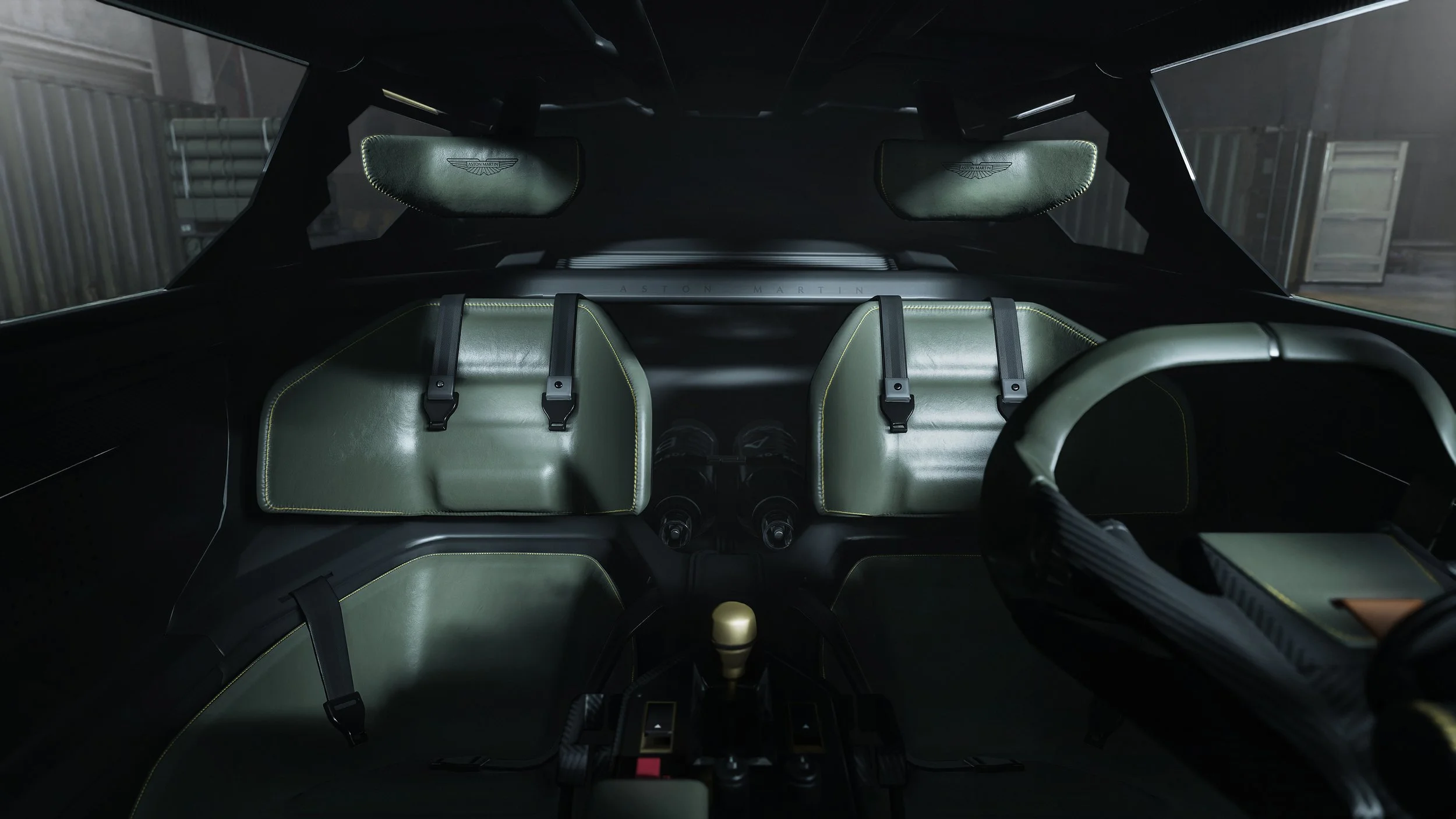
Image © Aston Martin Lagonda. Used for editorial purposes. In-game Aston Martin Dreadnought
The familiar Aston Martin grille remains, although it appears to have spent some time at a military training establishment. Its substantial body is finished in Chiltern Green, with herringbone carbon fibre and satin-gold detailing. Inside, Oxford Tan upholstery introduces a recognisable element of Aston Martin luxury to a vehicle whose other priorities include protection, speed and avoiding digital incoming fire.
The name is equally deliberate. “Dreadnought” carries associations with heavily armed British battleships and the idea of fearing nothing, appropriate for a vehicle intended to become a valuable and formidable asset within the game.
Although the vehicle itself exists principally in the digital world, Aston Martin also produced a full-size physical interpretation for display at Fanatics Fest in New York. That gives the project a degree of substance beyond an ordinary vehicle skin added to a game, even though Aston Martin has offered no suggestion that Dreadnought is being considered for production.
Top Gear Gets a Closer Look
Top Gear was given early access to the Dreadnought in New York and filmed a detailed walkaround of the full-size model before its public unveiling. The video makes clear that this is exactly that, a static model rather than a functioning V12 vehicle, but it also shows just how much thought has gone into translating Aston Martin design into such an unfamiliar shape.

Image © Aston Martin Lagonda. Used for editorial purposes. In-game Aston Martin Dreadnought
Despite the enormous 40-inch off-road tyres, twin-damper suspension detailing, oversized tow hooks and enough lighting to make night-time visibility fairly academic, there are recognisable Aston Martin cues throughout.
Top Gear points to the familiar bonnet S-line, the sculpted waist and references at the rear to Victor, Valour, Vulcan and Valkyrie. The physical model has no finished interior, although the in-game renders show the Oxford Tan leather, wide digital display and substantial physical controls imagined for the cabin.
The video reaches much the same conclusion as FTP. Dreadnought is an extraordinary departure from Aston Martin’s normal territory, yet it still looks recognisably related to the company’s road cars and limited-production specials. Top Gear also raises the inevitable production question, while acknowledging that a one-off private commission would seem more plausible than a conventional model programme. For now, though, it remains a digital creation supported by one very large and very convincing display model. You can see their video, by clicking on the image below;
More Than a Novelty
It would be easy to dismiss the project as little more than an unusual licensing exercise, but that would overlook its potential value. Call of Duty is one of the most recognisable gaming franchises of the modern era, with a global audience extending far beyond traditional luxury-car buyers. Aston Martin says the collaboration is intended to introduce its design language, performance identity and sense of exclusivity to a younger and broader group of potential enthusiasts. Modern Warfare 4 is due to launch globally on 23th October 2026 across major console and PC platforms.
Most of the people who encounter Dreadnought will not be ordering a Vanquish next week. That isn’t really the point.
Luxury brands need to build familiarity and aspiration long before many customers are in a position to buy their products. A teenager who first becomes interested in Aston Martin through a game may later follow the Formula One team, watch Valkyrie at Le Mans, visit a concours or begin looking at used Vantages and DB9s. The journey from a digital vehicle to a real Aston Martin garage will be extremely long for most players, but every enthusiast’s interest begins somewhere.
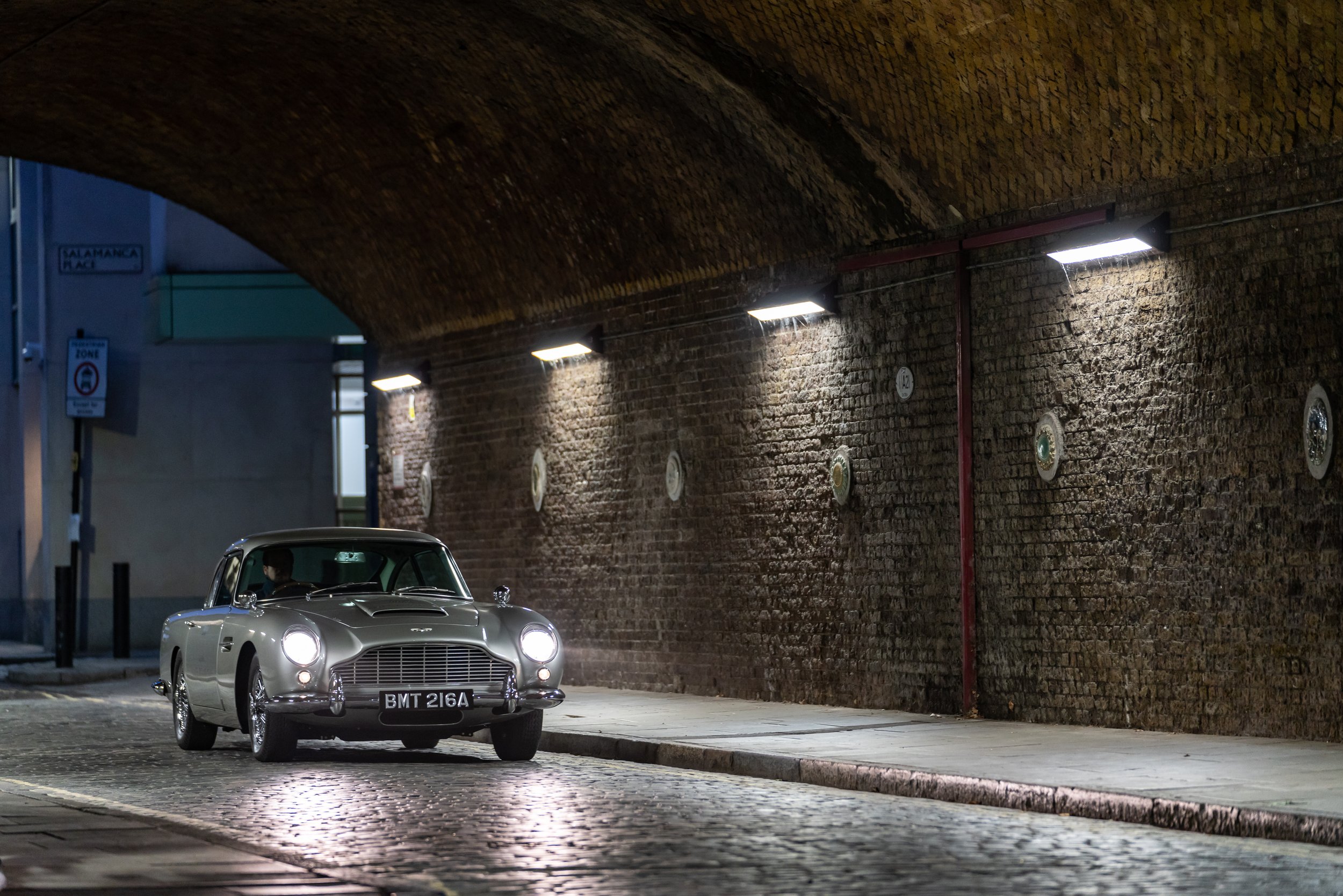
Image © Aston Martin Lagonda. Used for editorial purposes.
There’s a parallel with the role played by films, posters, toy cars and racing games for previous generations. Many people developed an affection for Aston Martin through the DB5 without ever expecting to own one. Digital entertainment now provides another route into that same sense of aspiration.
Dreadnought therefore makes strategic sense precisely because it doesn’t attempt to behave like a conventional Aston Martin advertisement. It places the marque inside an established entertainment world and allows the vehicle itself to become part of the experience. Whether players pause for long enough to admire the Oxford Tan upholstery while someone is firing at them remains less certain.
A Possible Future for Bond’s Opponent?
The vehicle’s cinematic proportions inevitably invite another thought. There’s no suggestion of any connection between Dreadnought and a future James Bond production, and FTP has no inside information to suggest otherwise.
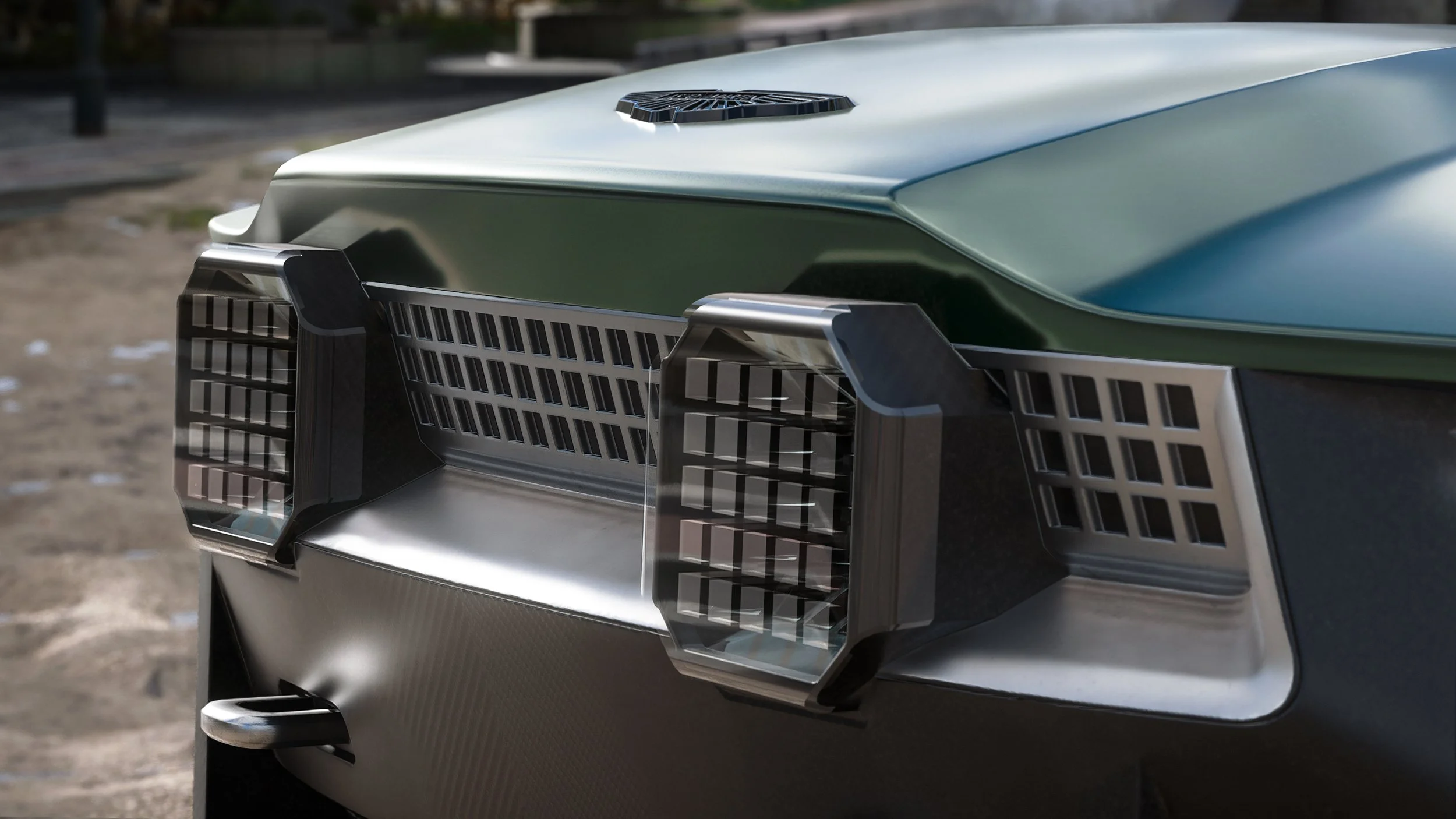
Image © Aston Martin Lagonda. Used for editorial purposes.
Yet its armoured body, dramatic presence and all-action character make it remarkably easy to imagine within that world.
It feels less like Bond’s next company car and more like the vehicle sent to prevent him reaching the third act.
That’s purely a little FTP speculation, but it demonstrates how convincingly Aston Martin has translated its design identity into something far removed from its normal road cars. Even under the armour, exaggerated ride height and tactical equipment, Dreadnought still looks recognisably like an Aston Martin.

Affiliate link note: Some links may be affiliate links, which means Fuel the Passion may earn a small commission if you purchase through them, at no extra cost to you. Thank you for your support.
DB7 GT Joins Forza Horizon 6
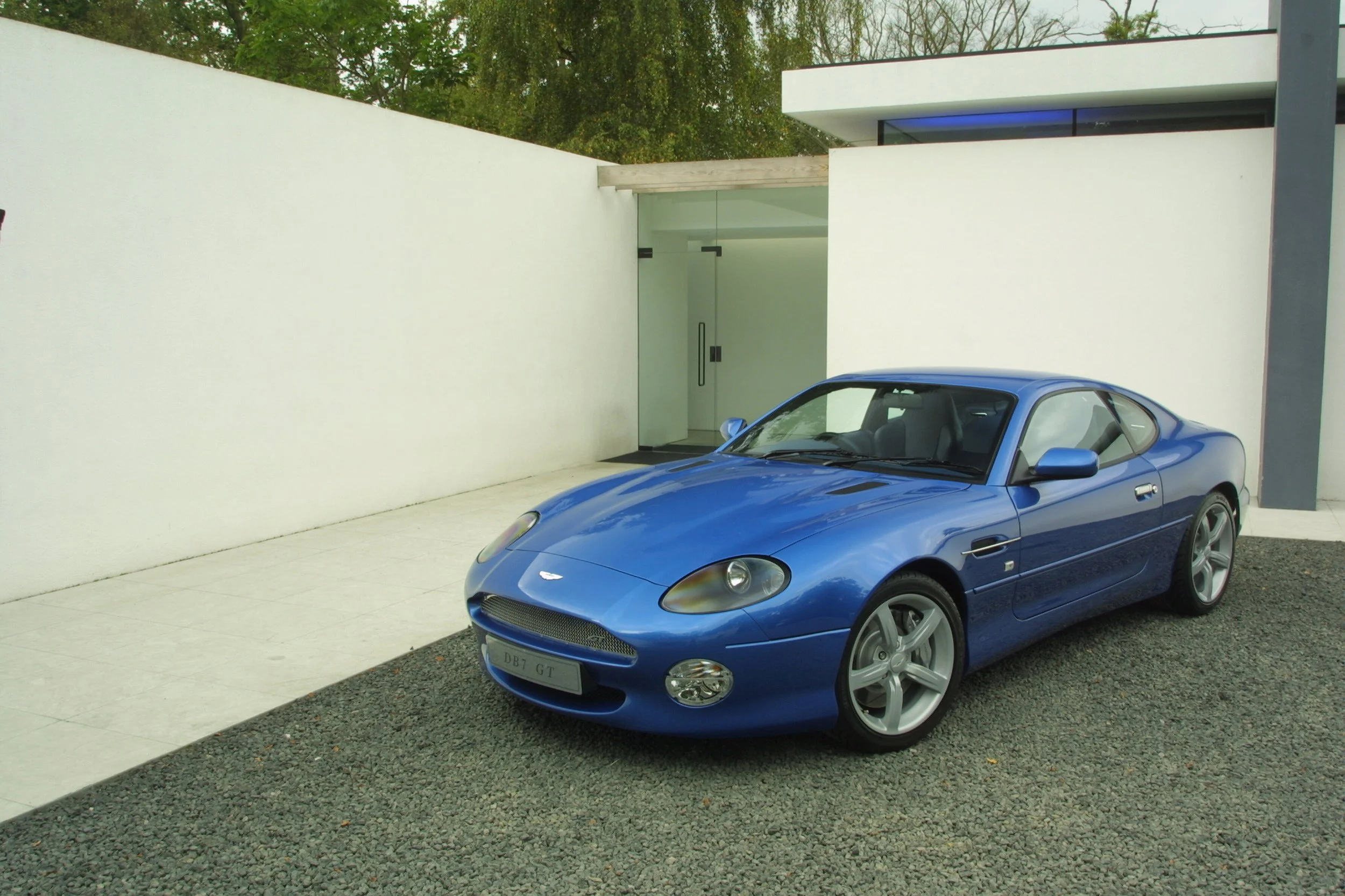
Image © Aston Martin Lagonda. Used for editorial purposes. DB7 GT.
Dreadnought wasn’t Aston Martin’s only gaming appearance this week. At the opposite end of the digital spectrum, the 2003 Aston Martin DB7 GT was added to Forza Horizon 6 through the game’s Car Pass on 16th July. Rather than imagining a fictional future, Forza has introduced players to one of the most focused and collectible versions of the DB7.
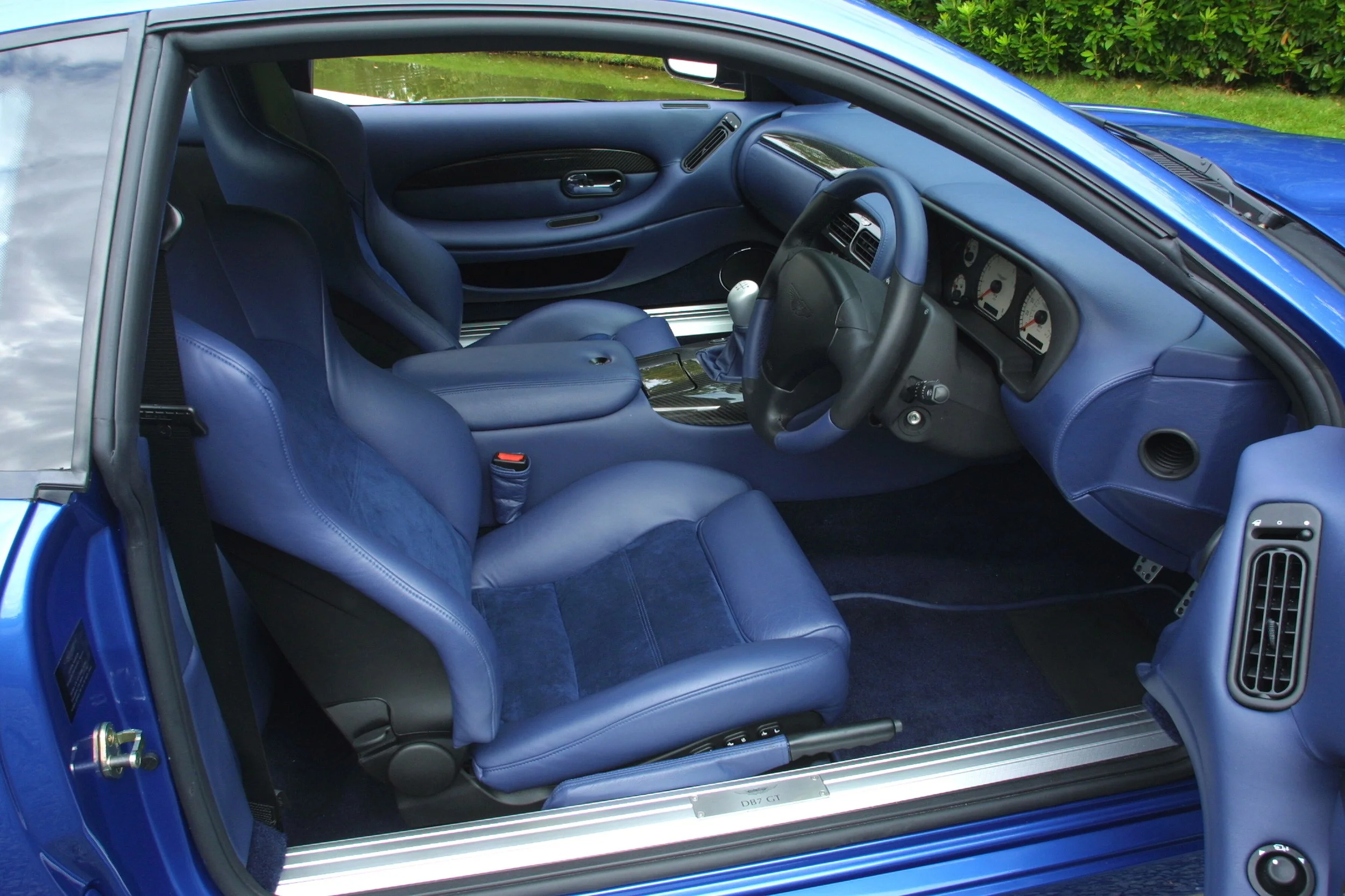
Image © Aston Martin Lagonda. Used for editorial purposes.
Launched at the 2002 British Motor Show, the DB7 GT was the most sporting regular-production development of the V12 DB7. Its 6.0-litre engine produced 435bhp, sending its power through a six-speed manual gearbox. Aston Martin also revised the suspension, brakes, aerodynamics and body detailing to create a car with a considerably sharper character than the standard DB7 Vantage.
Only 190 manual GTs were produced, alongside 112 automatic GTAs. The GT can be recognised by details including its bonnet vents, revised grille, unique wheels and reshaped rear spoiler.
Its arrival in Forza gives the car another opportunity to reach an audience that may know the DB5, modern Vantage or Valkyrie, but have less familiarity with the model that helped transform Aston Martin’s fortunes during the 1990s and early 2000s.
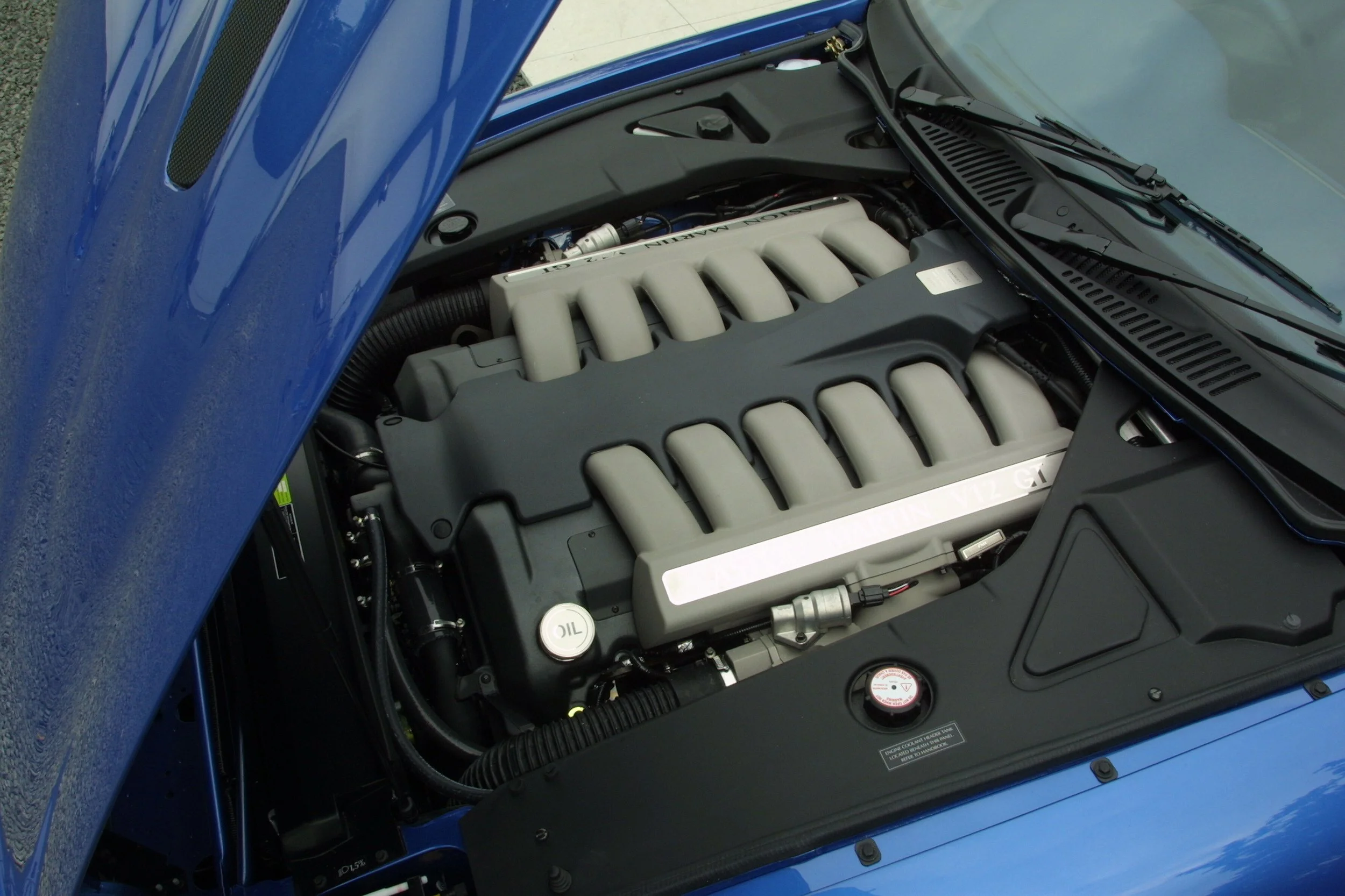
Image © Aston Martin Lagonda. Used for editorial purposes.
There’s something pleasing about the contrast between the two gaming stories. On one side stands Dreadnought: fictional, armoured, digitally intelligent and apparently prepared for the collapse of civilisation. On the other is the DB7 GT: elegant, analogue by comparison and equipped with a V12, a manual gearbox and just enough boot space for civilisation to remain worth saving.
Together, they demonstrate two very different ways of keeping Aston Martin visible within digital culture. One creates an entirely new fantasy; the other allows a rare part of the marque’s recent history to be discovered and enjoyed by a new generation.
After armoured tactical vehicles and virtual garages, it seems a good moment to return to Aston Martins that can actually be driven on public roads, where this week’s writers found plenty to admire in the DB12 S, Valhalla and the enduring beauty of the marque itself.
Why People Still Want an Aston Martin
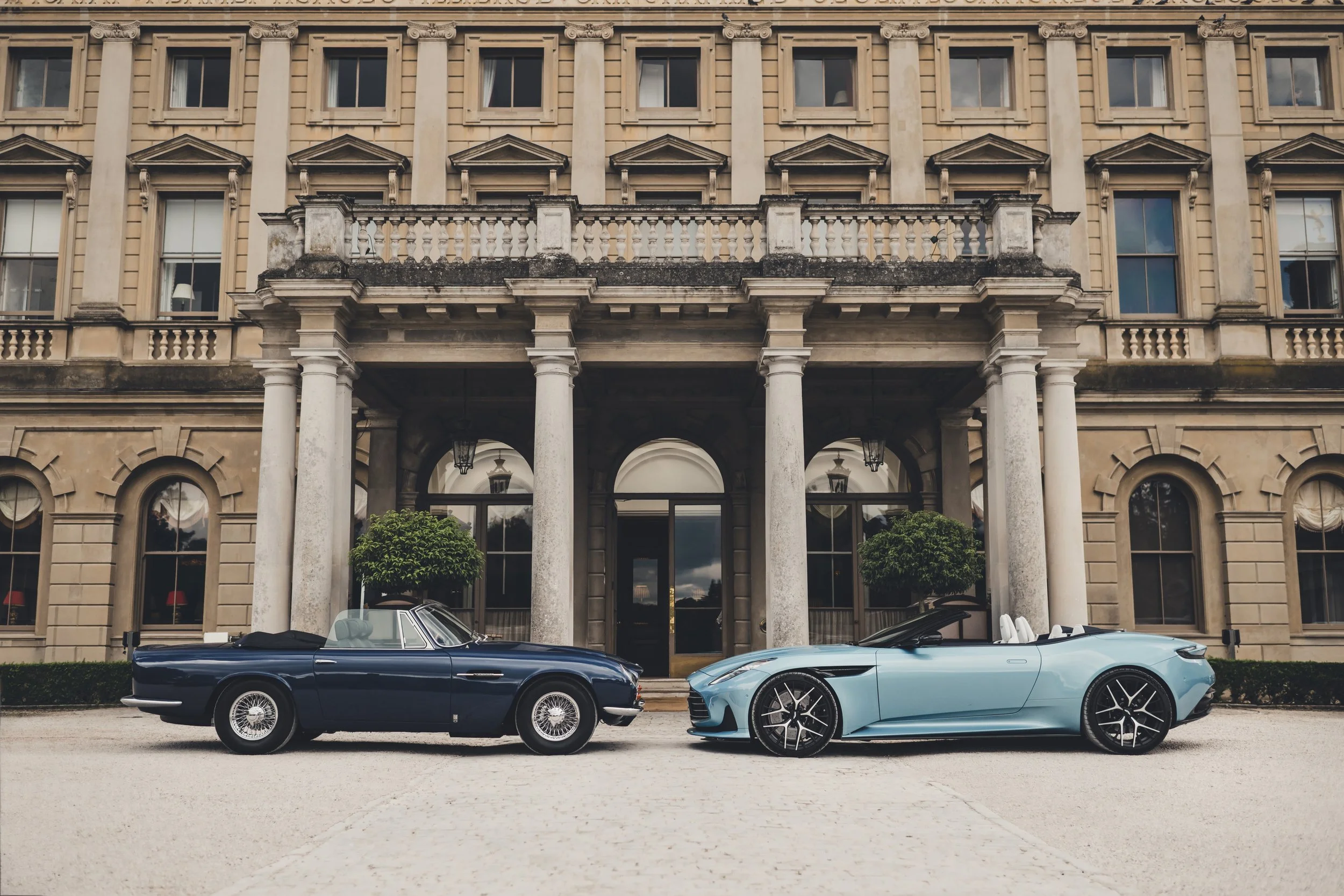
Image © Aston Martin Lagonda. Used for editorial purposes.
The company’s financial position, future architecture and turnaround strategy have understandably occupied a considerable part of recent FTP coverage. Yet spreadsheets only explain one side of Aston Martin’s story. The other is emotional: why the cars continue to attract attention, inspire affection and make otherwise rational people reconsider their financial priorities.
Three very different features published this week approached that question from three different generations of Aston Martin.
“There Is No Car More Beautiful Than an Aston Martin”
Writing for The Spectator Australia, Tanya Gold offers an unusually personal celebration of Aston Martin design.

Image © Aston Martin Lagonda. Used for editorial purposes.
Her starting point was a Vantage encountered at the Penzance Rotary Club Classic Car & Bike Show. Despite the gathering’s assortment of unusual machinery, Gold’s conclusion was emphatic: the most beautiful car present was the Aston Martin. In her view, it usually is.
The article then returns to the DB12 S, which she drove in France earlier this year. This isn’t a conventional road test filled with braking distances, lap times and carefully measured luggage capacity. Instead, Gold describes the way the car looks, feels and alters the driver’s mood.
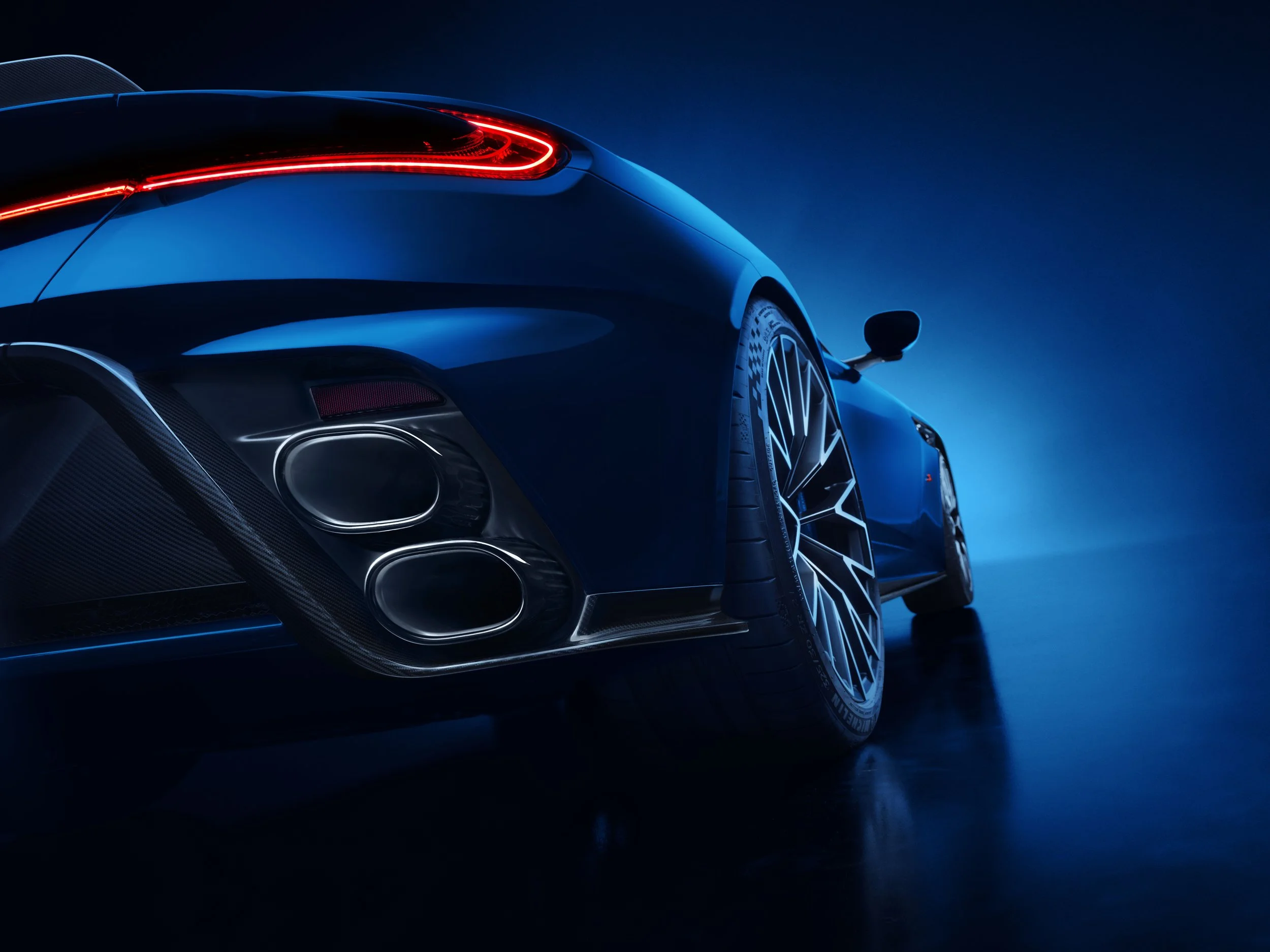
Image © Aston Martin Lagonda. Used for editorial purposes. DB12 S.
She praises its responsive steering, reassuring grip and ability to place substantial performance within the reach of an ordinary driver. Most of all, however, she responds to its appearance.
In a modern market filled with increasingly large, defensive-looking vehicles, the DB12 S represents something beautiful, indulgent and unapologetically desirable.
Gold’s writing is deliberately colourful and occasionally provocative, and FTP doesn’t need to repeat every comparison to appreciate her underlying point.
Aston Martin’s financial difficulties are real. They require disciplined management, improved cash generation and a business model capable of supporting future products. Yet the company still possesses an asset that cannot be created through restructuring alone: people look at its cars and want them.
That emotional response doesn’t settle a debt repayment or improve quarterly cash flow. It does, however, explain why Aston Martin remains worth discussing, and why customers continue to care about its survival.
Across France in the Aston Martin Valhalla

Image © Aston Martin Lagonda. Used for editorial purposes. Aston Martin Valhalla.
If Gold’s DB12 S experience represents the modern Aston Martin grand tourer, Matthew MacConnell’s feature for Select Car Leasing explores the company’s more extreme end. MacConnell drove the Valhalla approximately 350 miles through France, travelling from near Paris towards Le Mans as part of a wider Aston Martin convoy. The journey included fast roads, motorways, historic racing locations, Champagne country and the inevitable occasions when the route planning became less elegant than the car.
Image © Aston Martin Lagonda. Used for editorial purposes.
The Valhalla’s figures are extraordinary. Its twin-turbocharged V8 and electric motors produce a combined 1,064bhp, while its carbon-fibre construction and mid-engined layout place it much closer to the supercar world than Aston Martin’s traditional front-engined GTs. Yet the most revealing aspect of the article isn’t the acceleration.
MacConnell found that the Valhalla could deliver its performance with remarkably little intimidation. On quieter roads, the response was immediate and dramatic; on the motorway, it settled into a composed cruise. His conclusion was that the car’s greatest achievement lay in making more than 1,000bhp feel both outrageous and approachable.
Living with it also created a different challenge: almost everywhere the car went, people stopped, photographed it, followed it or attempted to position themselves alongside it on the road. Fuel stops, village streets and junctions became temporary motor shows.
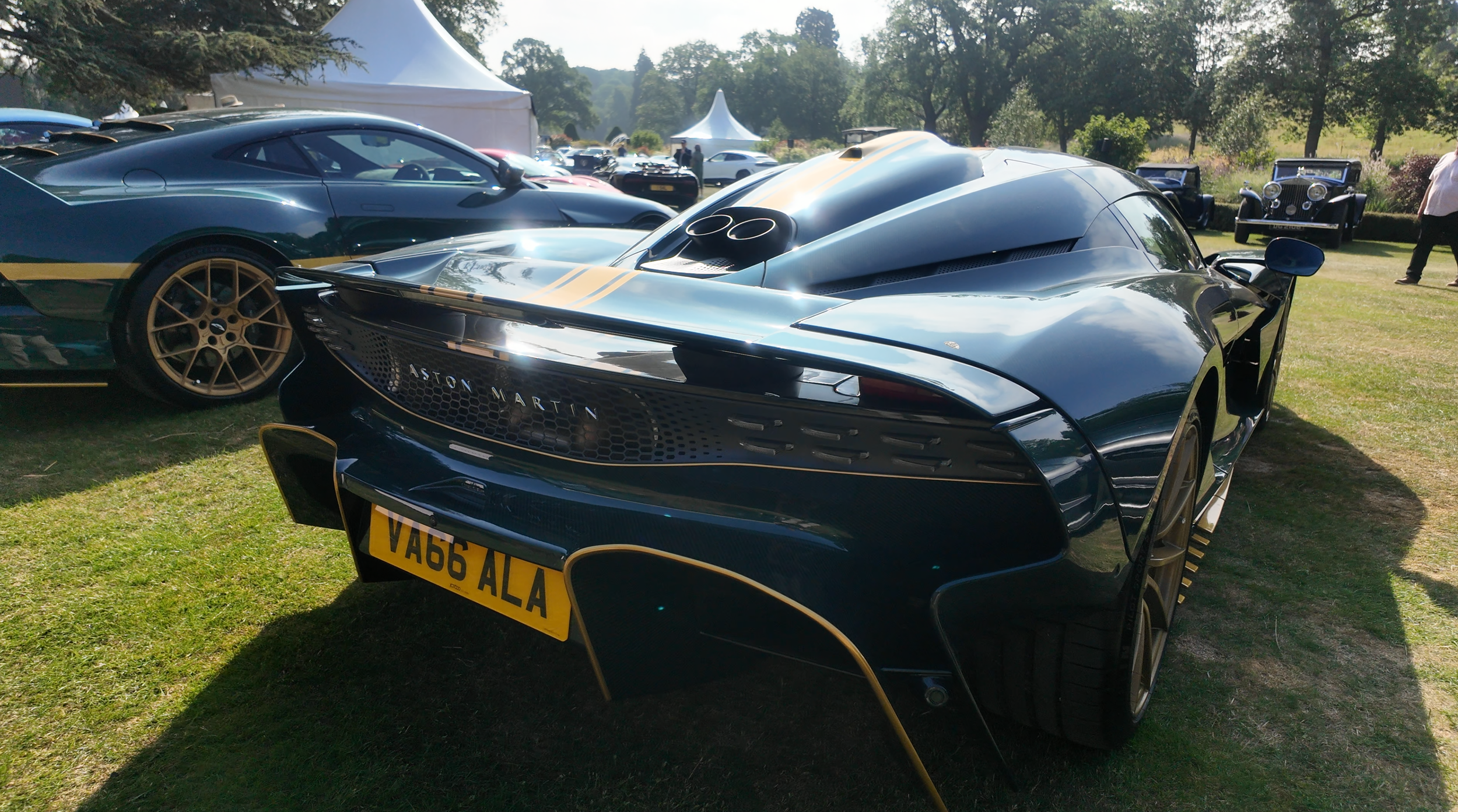
Image © Fuel the Passion. Valhalla at Grantley Hall, Yorkshire Elegance 2026
We saw something similar at Yorkshire Elegance. Even when surrounded by rare classics and important modern cars, Valhalla has an ability to pull attention towards itself. Parked beside the matching green-and-gold Valiant at Grantley Hall, it looked extraordinarily complex and futuristic, yet still recognisably part of the Aston Martin family.
The article doesn’t pretend that an £850,000 Valhalla is a realistic everyday proposition for most readers. As we’ve covered and found in previous reviews, it does demonstrate something important about the completed car: Aston Martin appears to have created a machine capable of delivering spectacular performance without making every ordinary mile feel like a punishment.
That broad usability is essential. A road car cannot live permanently at the Nürburgring, however often its marketing department might wish otherwise.
A Glorious Anachronism from 1986
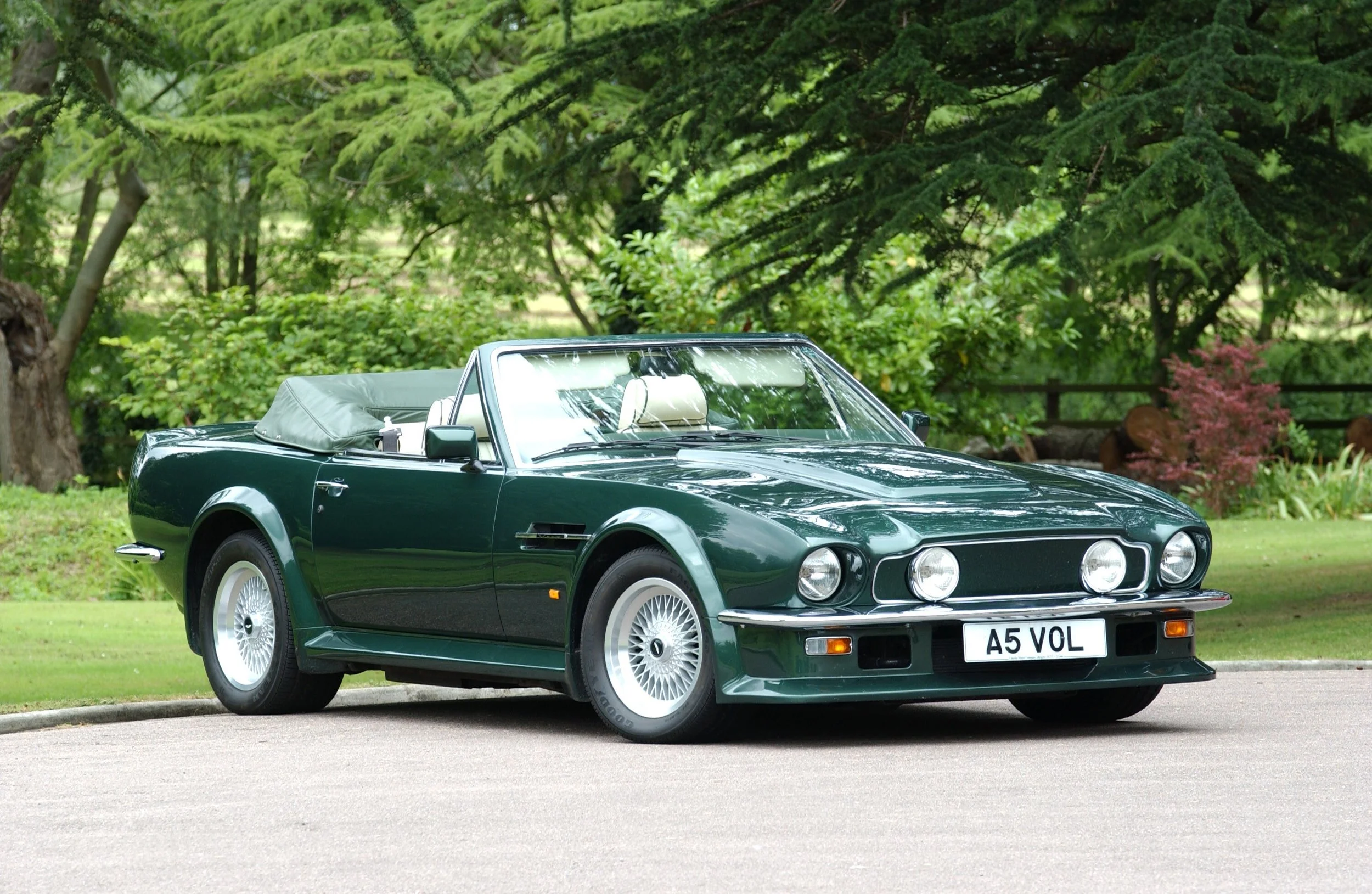
Image © Aston Martin Lagonda. Used for editorial purposes. Aston Martin V8 Vantage Volante.
A third feature takes us back four decades. Country Life has republished David Tomlinson’s 1986 assessment of the Aston Martin V8 Vantage Volante, a car then associated with Aston Martin’s claim to produce the world’s fastest production model. This should be understood as an archive road test rather than a modern review. Its interest lies in experiencing the Aston Martin of 1986 through contemporary eyes, complete with the prices, expectations and comparisons of the period.
Tomlinson found a car that already felt old-fashioned beside the latest mass-produced machinery. Its controls were heavy, its ergonomics eccentric and its thirst considerable. The manual ZF gearbox required commitment, the clutch demanded a strong leg and the large car carried its considerable weight with more authority than delicacy…
…and yet the appeal remained unmistakable.
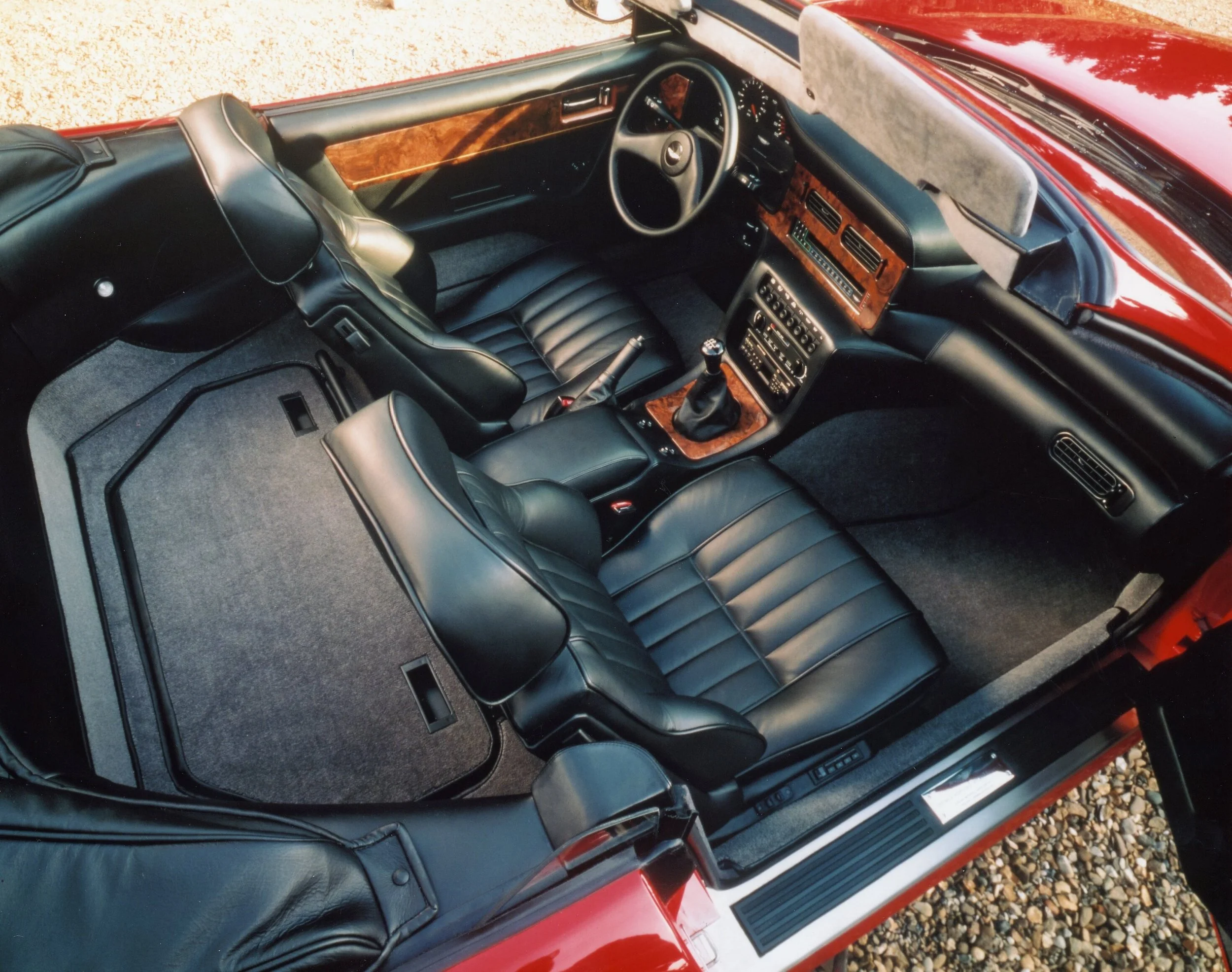
Image © Aston Martin Lagonda. Used for editorial purposes.
The handmade construction, leather, lacquered walnut, immense V8 performance and sense of occasion placed it in a category few rivals could occupy. Tomlinson regarded it less as a direct competitor to an ordinary sports car and more as a sporting alternative to a Rolls-Royce; traditional, expensive, deeply individual and constructed according to standards the wider industry was already leaving behind.
His final judgement described the Aston Martin as an anachronism, but a glorious one. Read today, the article feels relevant beyond nostalgia. Aston Martin still operates differently from most manufacturers. It continues to build comparatively small numbers of expensive cars, carries an unusual burden of engineering complexity and asks customers to value character and craftsmanship alongside objective performance.
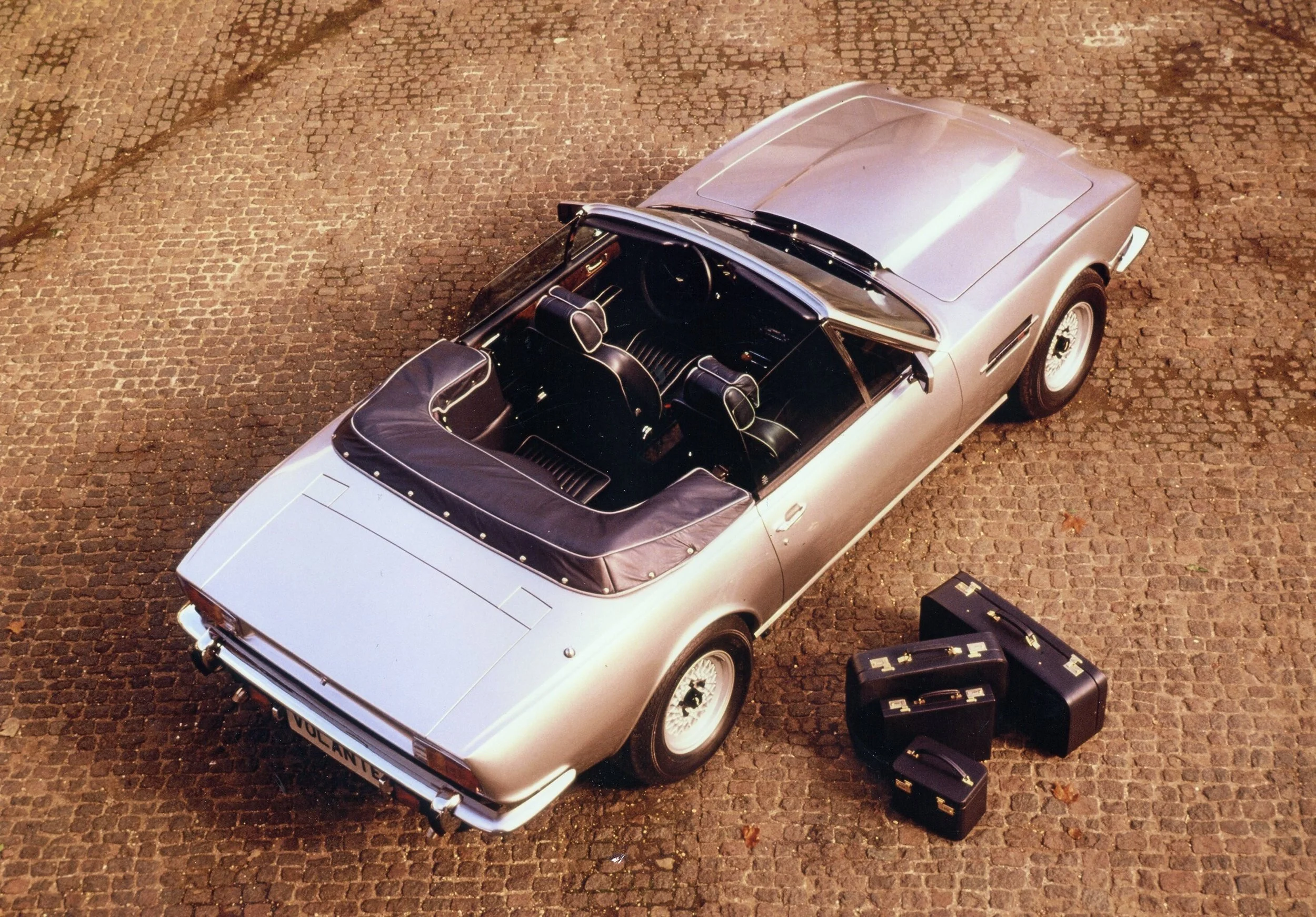
Image © Aston Martin Lagonda. Used for editorial purposes.
The difference is that modern buyers no longer accept charm as an excuse for every weakness. A DB12 S must be beautiful and intuitive. Valhalla must be spectacular and usable.
The next generation will need to preserve Aston Martin’s personality while meeting expectations for quality, technology and reliability that were far less demanding in 1986.
Together, these three pieces form a useful portrait of the marque. The V8 Vantage Volante demonstrates where the tradition came from. The DB12 S shows how the grand-touring formula has evolved. Valhalla points towards a more technically ambitious and electrified performance future.
The details have changed enormously, but the essential reaction remains familiar: people stop, look and feel something.
Aston Martin’s task is to ensure that emotional strength is matched by an equally convincing business beneath it. From the cars themselves, we now turn to some of the people and programmes behind them, including the young trainees being given an unusual view inside the Valkyrie’s World Endurance Championship campaign.
Opening Doors Behind the Racing Programmes
The cars discussed in the previous section demonstrate how Aston Martin continues to inspire enthusiasm across several generations. Turning that enthusiasm into a career, however, usually requires something more practical: an opportunity to enter a workshop, meet the people doing the work and discover that motorsport involves far more occupations than those visible on the starting grid.
From Work Experience to a Motorsport Career
An official 24 Hours of Le Mans feature published this week explored how the Aston Martin THOR Team is attempting to create some of those opportunities.
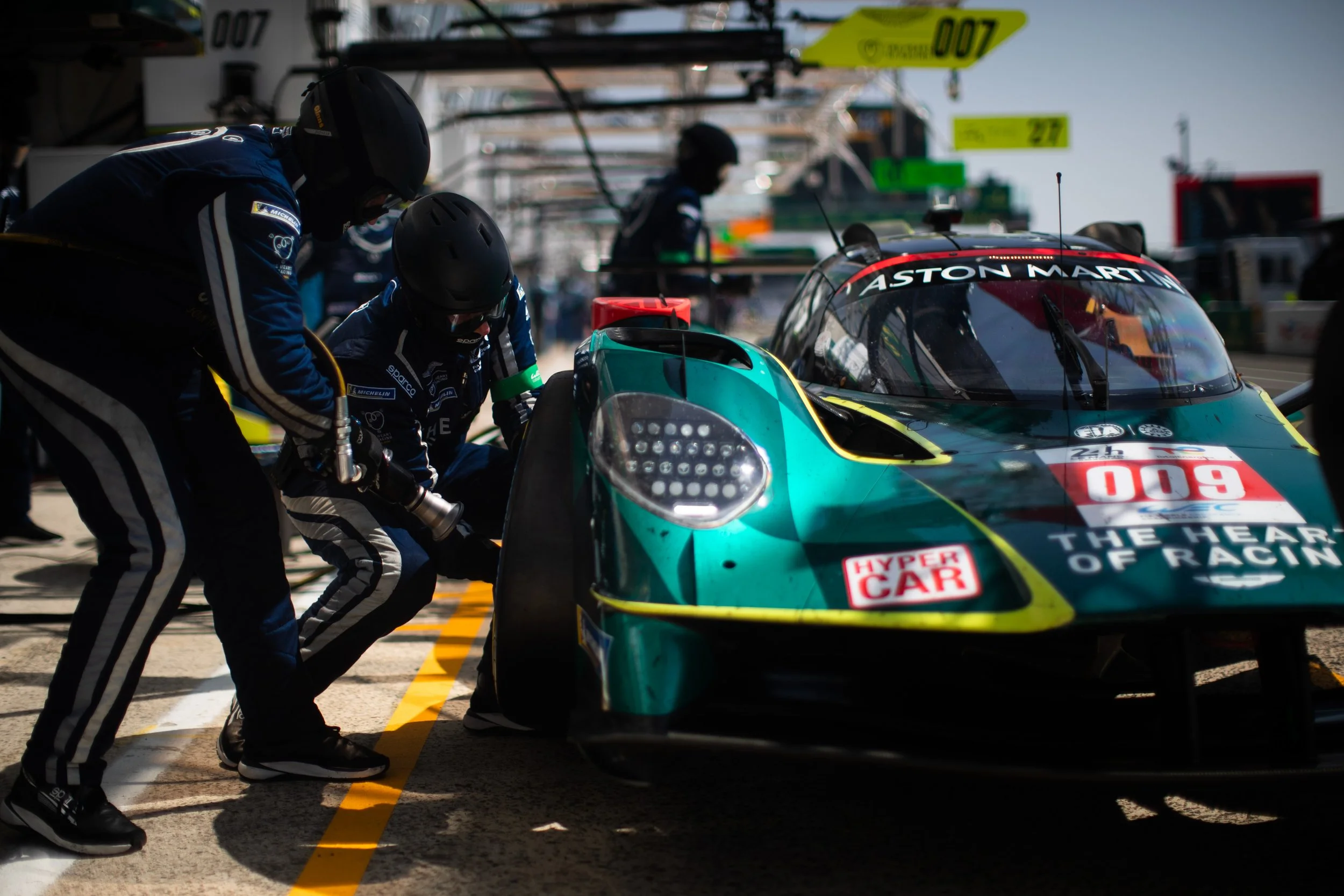
Image © Aston Martin Lagonda. Used for editorial purposes. Valkyrie Pitstop.
Behind the two Valkyrie Hypercars lies a large network of engineers, mechanics, technicians, logistics specialists, strategists and support staff. Many young enthusiasts may understand the excitement of racing without necessarily realising how many different professions are required to place two cars on the Le Mans grid.
The article tells the story of Hugo, who initially joined the team through a short workplace-discovery placement. That introduction subsequently developed into a job contract, and he now works alongside the technical operation, assembling components and contributing to sub-assembly work at the team’s headquarters. It’s a modest story compared with the spectacle of two V12 Valkyries racing through the night at Le Mans, but it illustrates how access can alter someone’s direction completely. A young person may arrive simply wanting to see a racing workshop and leave with a clearer understanding of where their skills could fit within the sport.
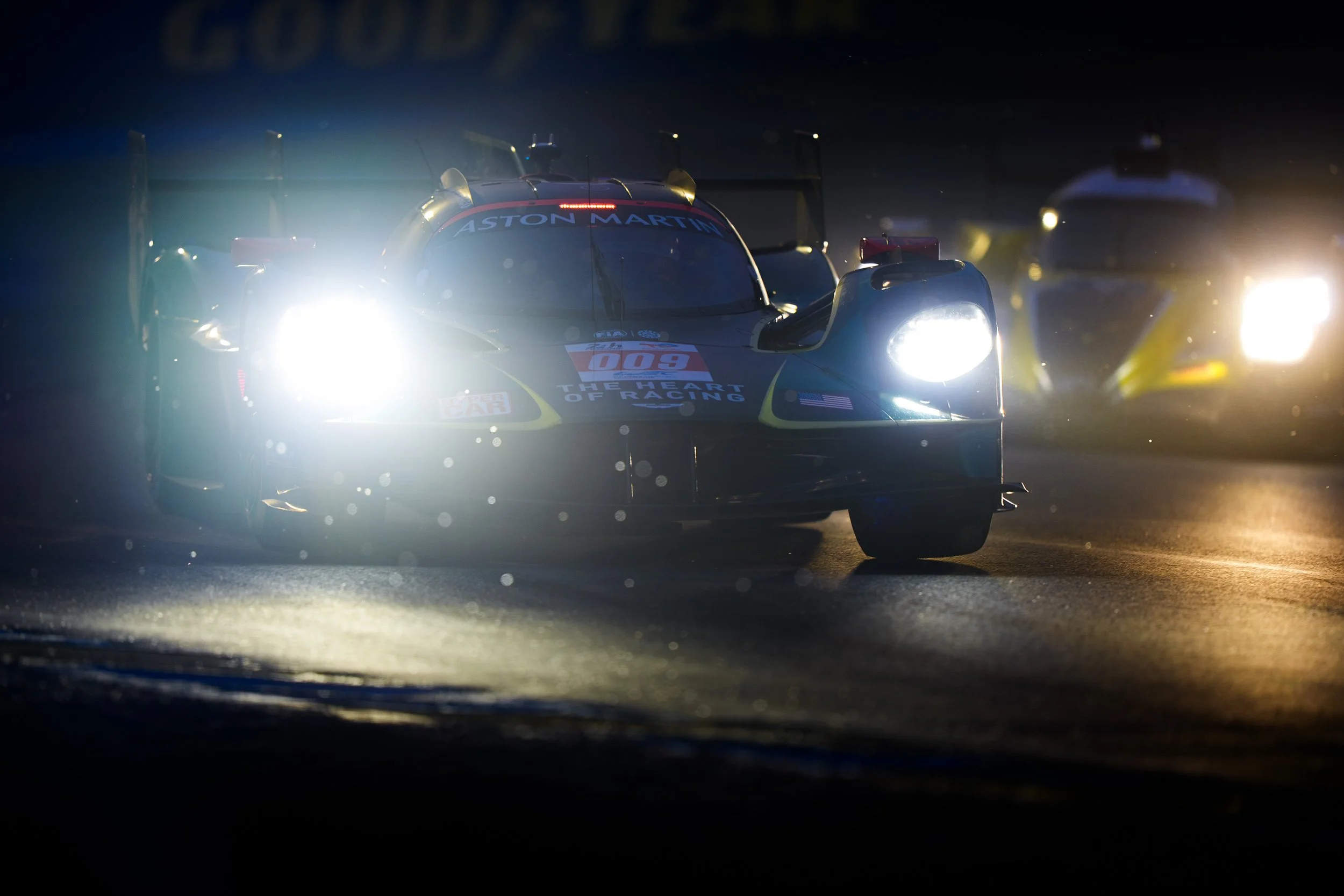
Image © Aston Martin Lagonda. Used for editorial purposes. Valkyrie at night.
The team is also involved with the Garage École du Mans initiative. During the week before this year’s 24 Hours of Le Mans, a student was placed within the team’s race operation, observing the engineers, the preparation of the Hypercar and the organisation required to compete in one of motorsport’s most demanding events.
There’s an important difference between describing a motorsport career in a classroom and standing inside a working Le Mans garage. The latter reveals the precision, teamwork and responsibility behind every apparently simple action. It also shows that the glamorous moments seen by spectators depend upon a great deal of patient work performed away from the cameras.
The THOR Team’s programme won’t solve the wider difficulty of entering professional motorsport, but it can make that first step feel less remote. The strongest line in the original feature is also the simplest idea behind it: every great career begins because somebody opens a door.
Aston Martin F1’s Goodwood Debut
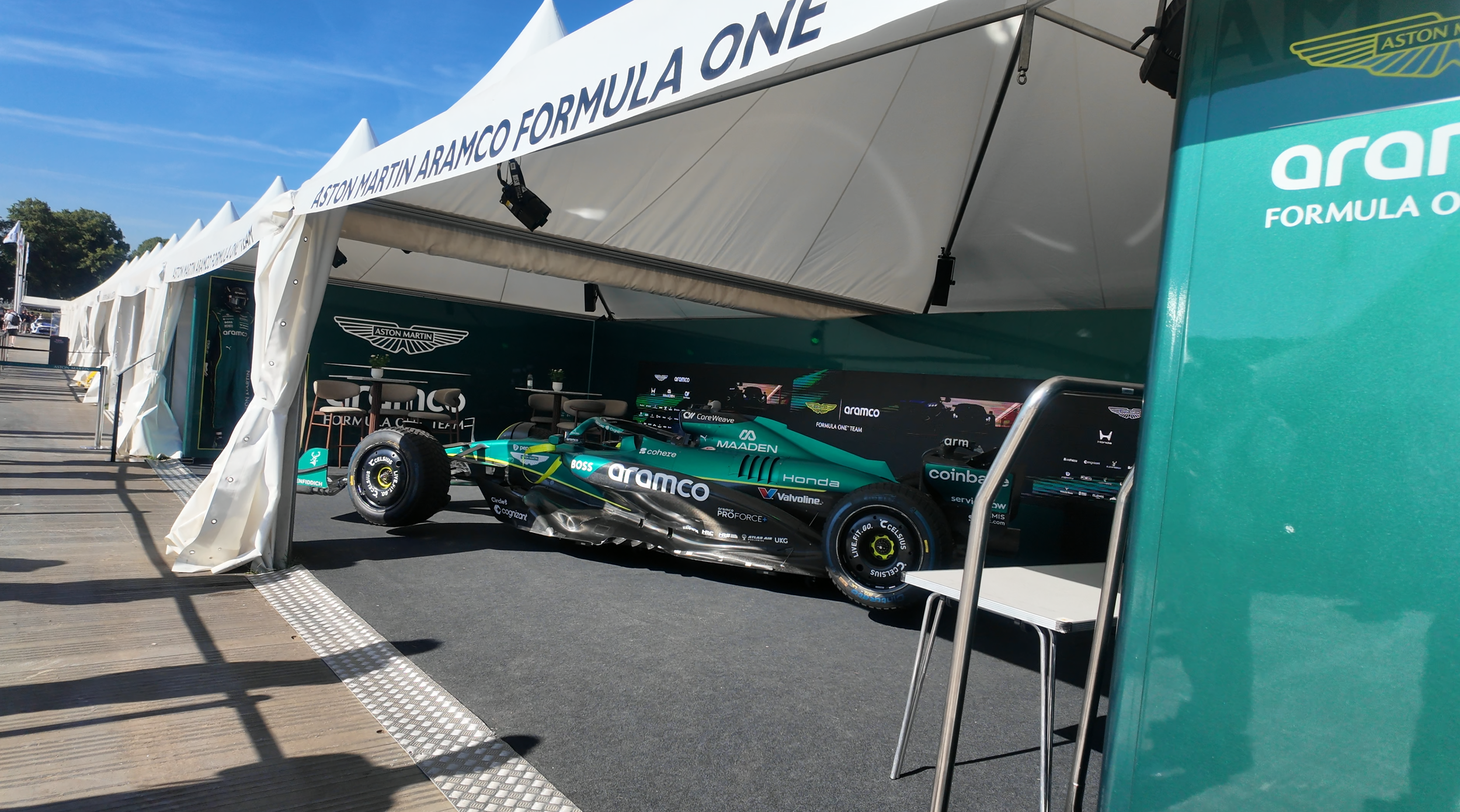
Image © Fuel the Passion. AMR25 at Goodwood FOS 2026
Readers of FTP Weekly Roundup Issue 32 may remember our first-hand coverage of Aston Martin’s focused display at the Goodwood Festival of Speed.
I attended on the Thursday after receiving an invitation from Blackthorn Racing, whose battle-scarred Ecurie Ecosse Vantage GT3 provided one of the most memorable sights of my visit. A Fuel the Passion film covering that day will follow shortly, including the Blackthorn story and much more from around the Festival.
The visit also gave me the opportunity to see the AMR25 Formula One car alongside Aston Martin’s road-going display. The DB12 S, Vantage S and DBX S formed the principal focus, supported by Vanquish, Valhalla and Valkyrie.
Although I didn’t see the AMR25 or the road cars running up the Goodwood Hill during my Thursday visit, Issue 32 included links to footage of their Hillclimb appearances, saving readers the job of searching through YouTube to find them. That allowed us to combine my own photographs and observations from the display with the spectacle of the cars in motion.
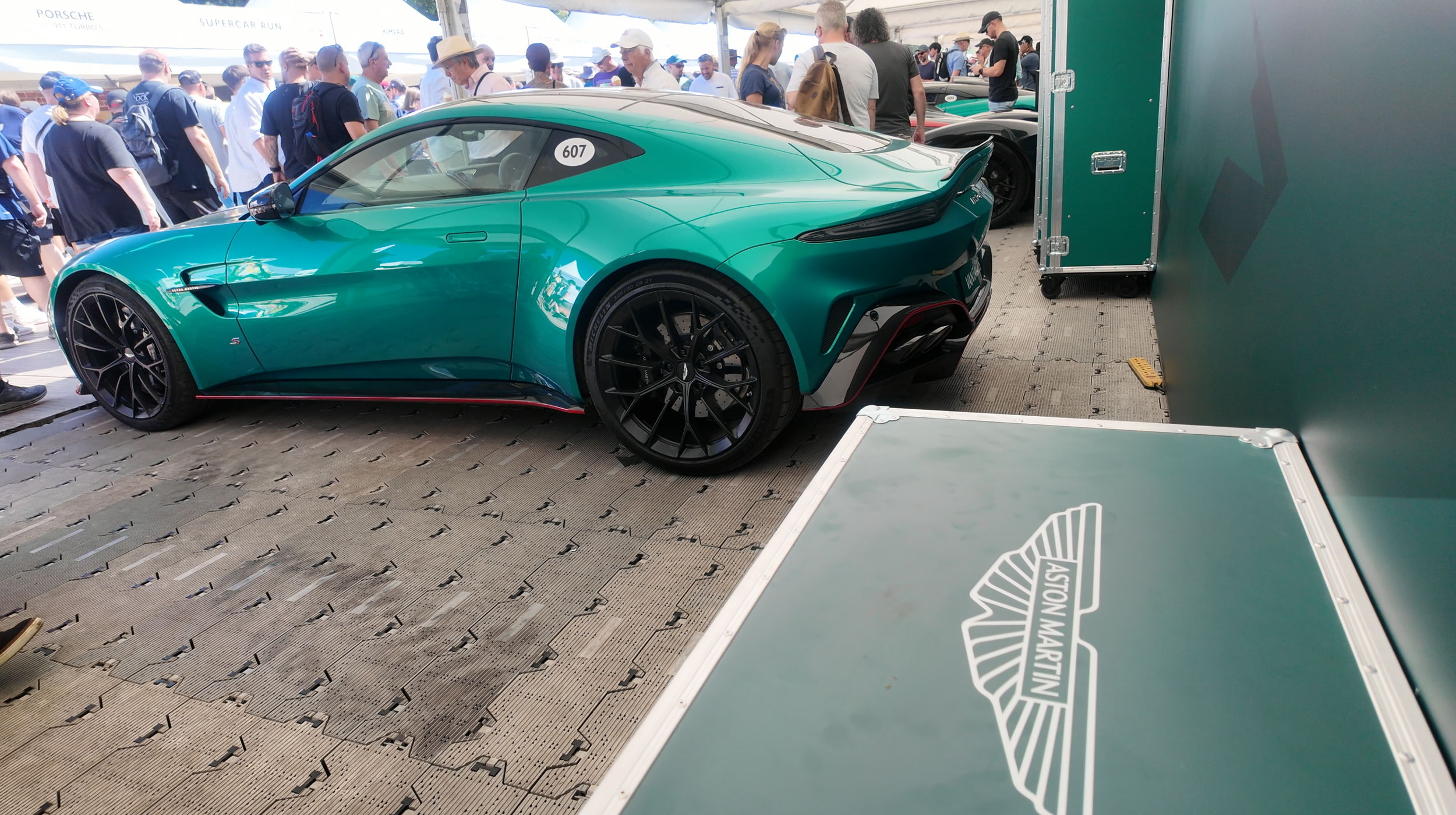
Image © Fuel the Passion. Vantage S at Goodwood FOS 2026.
Our coverage last week concentrated mainly upon Aston Martin’s road-car presence and the public’s reaction to seeing the current range gathered together. Despite the display being relatively modest beside some of Goodwood’s larger manufacturer installations, the cars attracted a steady flow of visitors and plenty of appreciative comments about their design, presence and British identity.
Aston Martin has since published more detail about another important part of the weekend: the Formula One team’s first official appearance at the Festival of Speed.
The AMR25 completed four runs of the Hillclimb, with Jessica Hawkins driving on Saturday before Jak Crawford took over on Sunday. Hawkins also appeared in Honda machinery, while Aston Martin’s fan zone gave visitors the opportunity to use simulators, explore team merchandise and engage more closely with the F1 operation.
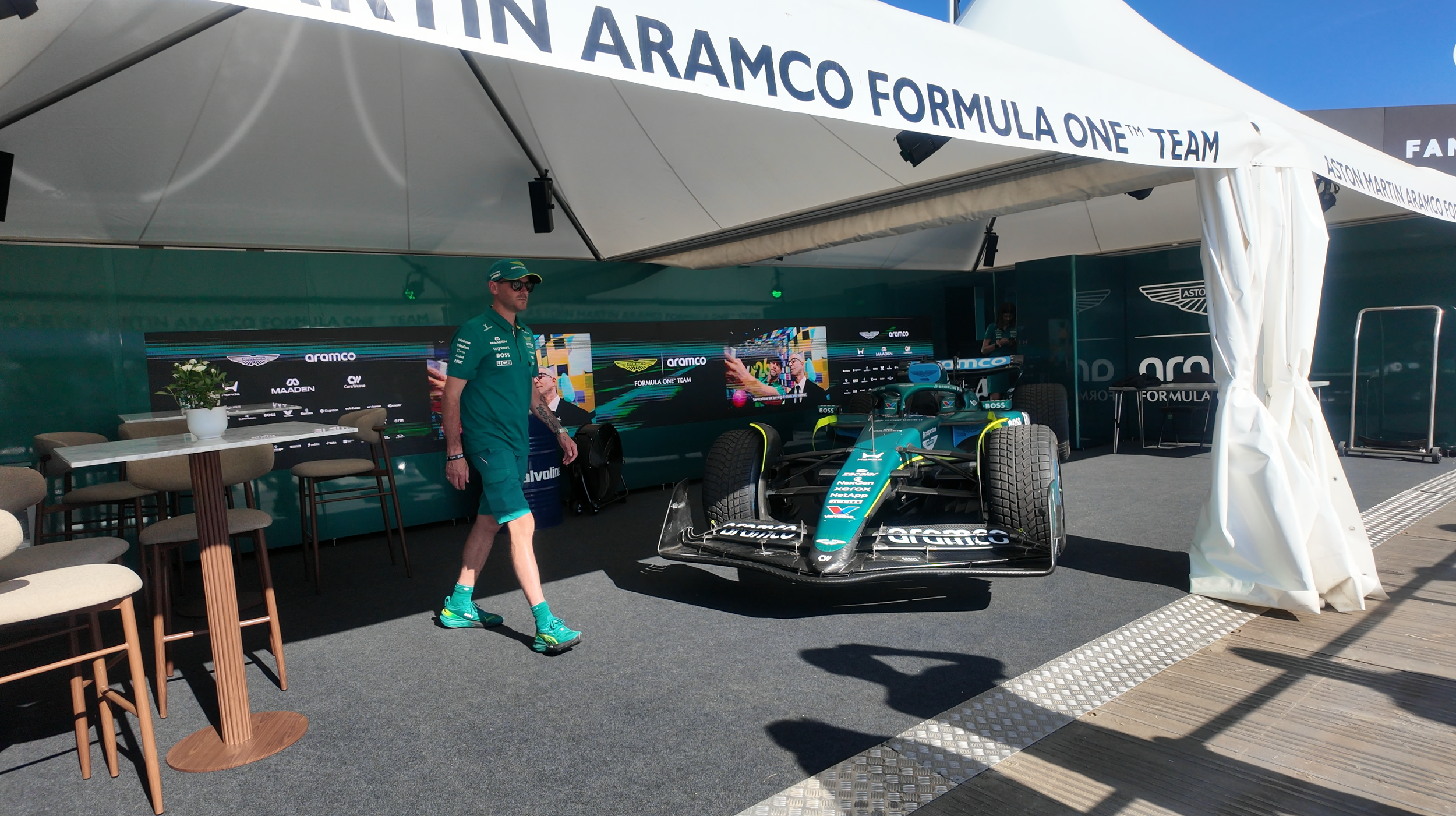
Image © Fuel the Passion. AMR25 at Goodwood FOS 2026
This adds a useful final chapter to the story we began in Issue 32. The AMR25 wasn’t merely positioned beside the road cars as a static centrepiece; it became an active part of the event, allowing spectators to hear and see a contemporary Aston Martin Formula One car away from the controlled surroundings of a Grand Prix weekend.
Goodwood’s atmosphere makes that access particularly valuable. At a race, most spectators experience Formula One through fencing and from a considerable distance. On the Hill, the machinery feels more immediate, while the drivers become part of a wider celebration rather than figures hidden inside a competitive paddock.
The appearances also provided valuable visibility for Hawkins and Crawford, both of whom hold active roles within Aston Martin’s current driver structure.
Last week, we considered whether Aston Martin’s present road cars still create an emotional response when people encounter them in person. From what I saw and heard around the Supercar Paddock, the answer was emphatically positive. Aston Martin’s subsequent account of the AMR25’s Hillclimb runs completes the picture, extending that connection from the road-car display to the Formula One team itself.
The THOR Team initiative and Aston Martin’s Goodwood participation operate on very different scales, but both demonstrate the value of making motorsport more accessible, whether by opening the workshop door to a trainee or opening the throttle in front of thousands of spectators.
Market Watch - Strong Aston Martin Results at Woodcote Park
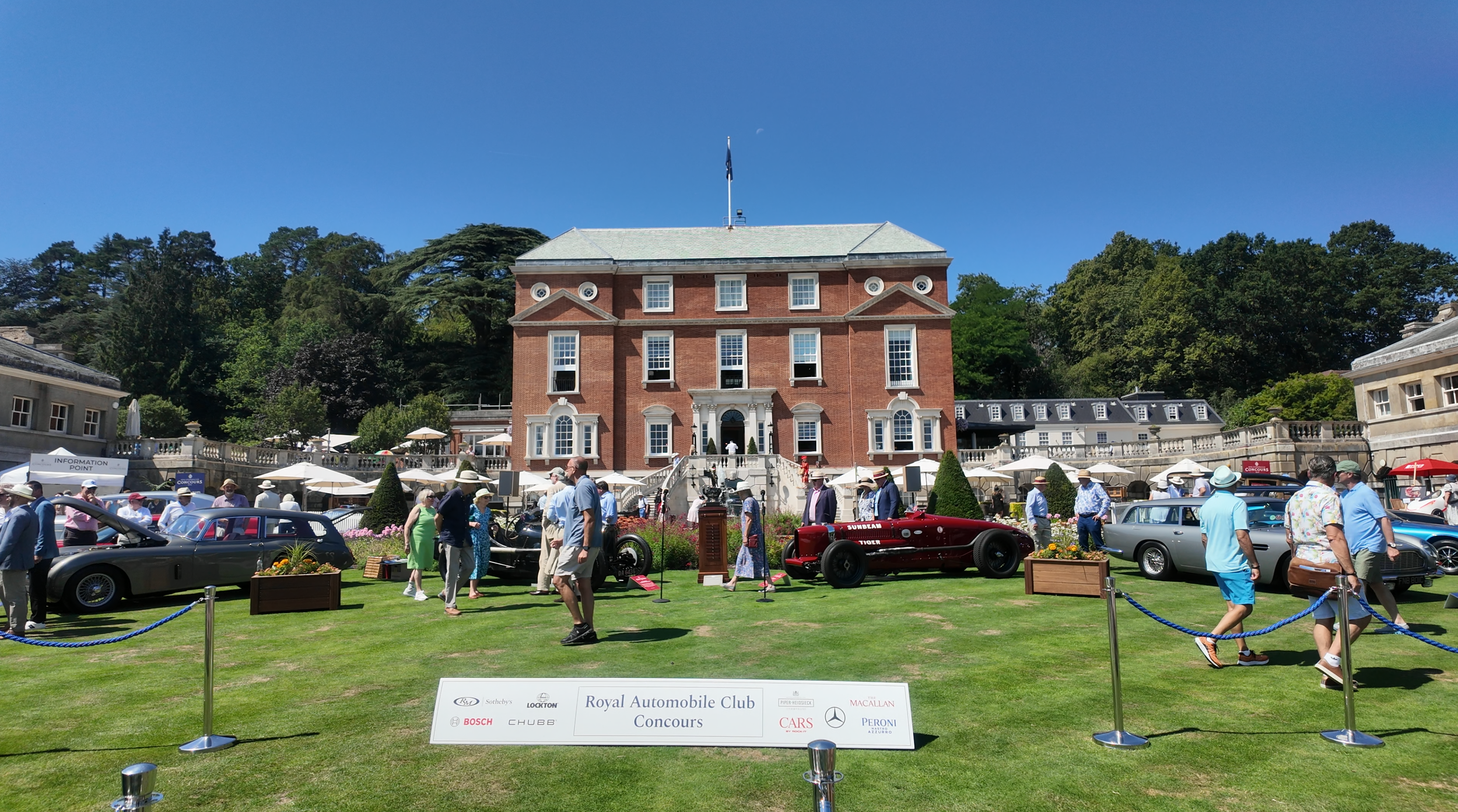
Image © Fuel the Passion. RAC Concours, Woodcote Park 2026
From the opportunities being created for motorsport’s next generation, we return to several Aston Martins from earlier generations and the substantial figures achieved when they crossed the auction block at Woodcote Park.
Last week’s FTP Weekly Roundup included my visit to the RAC Concours at Woodcote Park in Epsom, where an exceptional collection of cars was displayed throughout the grounds. Running alongside the concours was RM Sotheby’s auction, and the completed results provide a useful market follow-up to the cars we saw there.
The most valuable Aston Martin result came from a DB5 Shooting Brake by Harold Radford, which sold for £848,750. These coachbuilt estates occupy a particularly distinctive corner of Aston Martin history, combining the familiar DB5 shape with considerably greater practicality and extraordinary rarity.
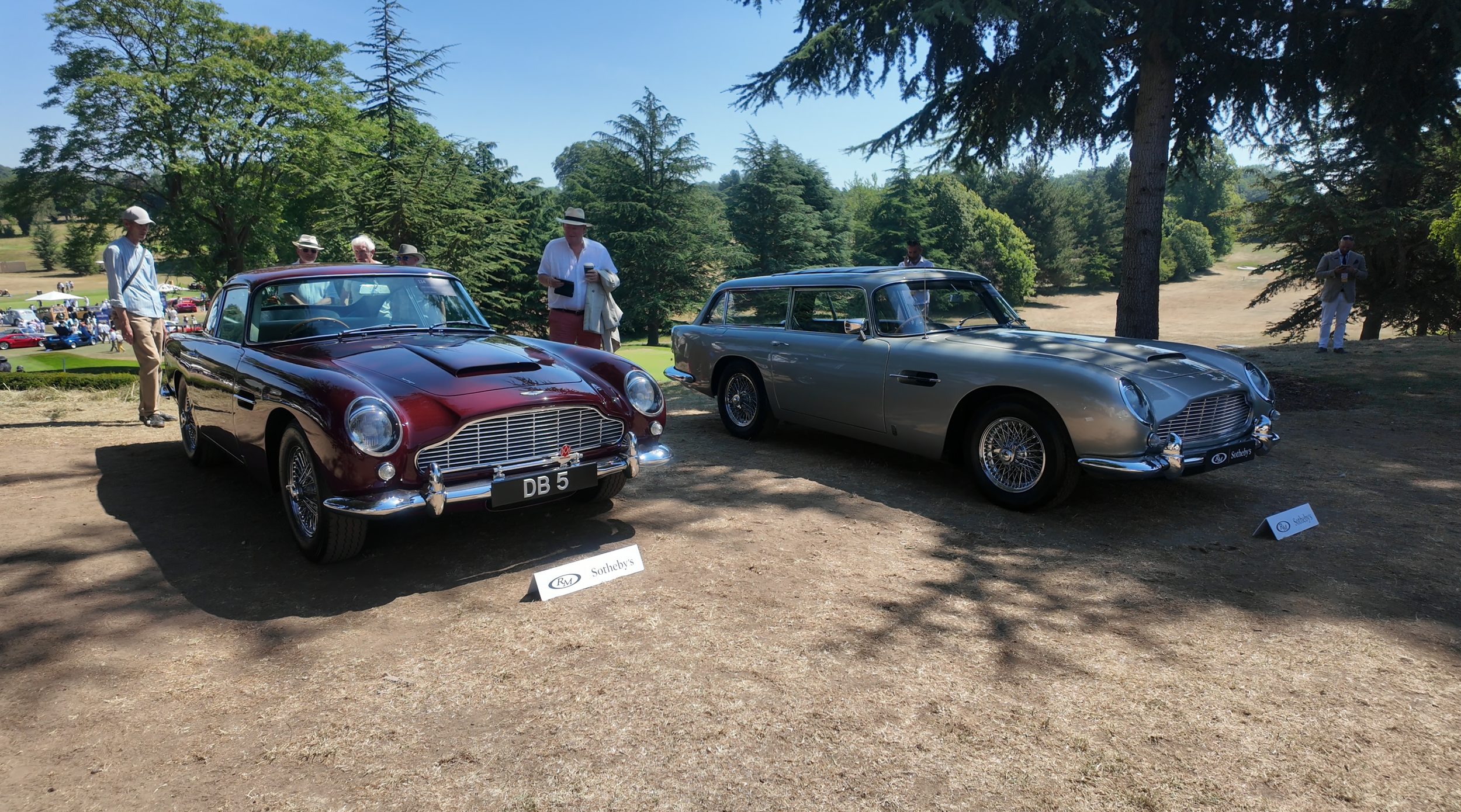
Image © Fuel the Passion. Side by side - DB5 Shooting Brake by Harold Radford & the 1965 Aston Martin DB5 - RAC Concours, Woodcote Park 2026
They can sometimes provoke divided opinion; some regard the additional bodywork as an inspired extension of the DB5, while others prefer the purity of the original coupé. The market, on this occasion, had little difficulty making up its mind.
A conventional 1965 Aston Martin DB5 followed closely at £792,500. As ever with cars of this value, specification, condition, restoration history, originality and provenance all influence the final figure. One sale shouldn’t be treated as a definitive valuation for every DB5, but the result confirms that the best examples continue to command serious attention.
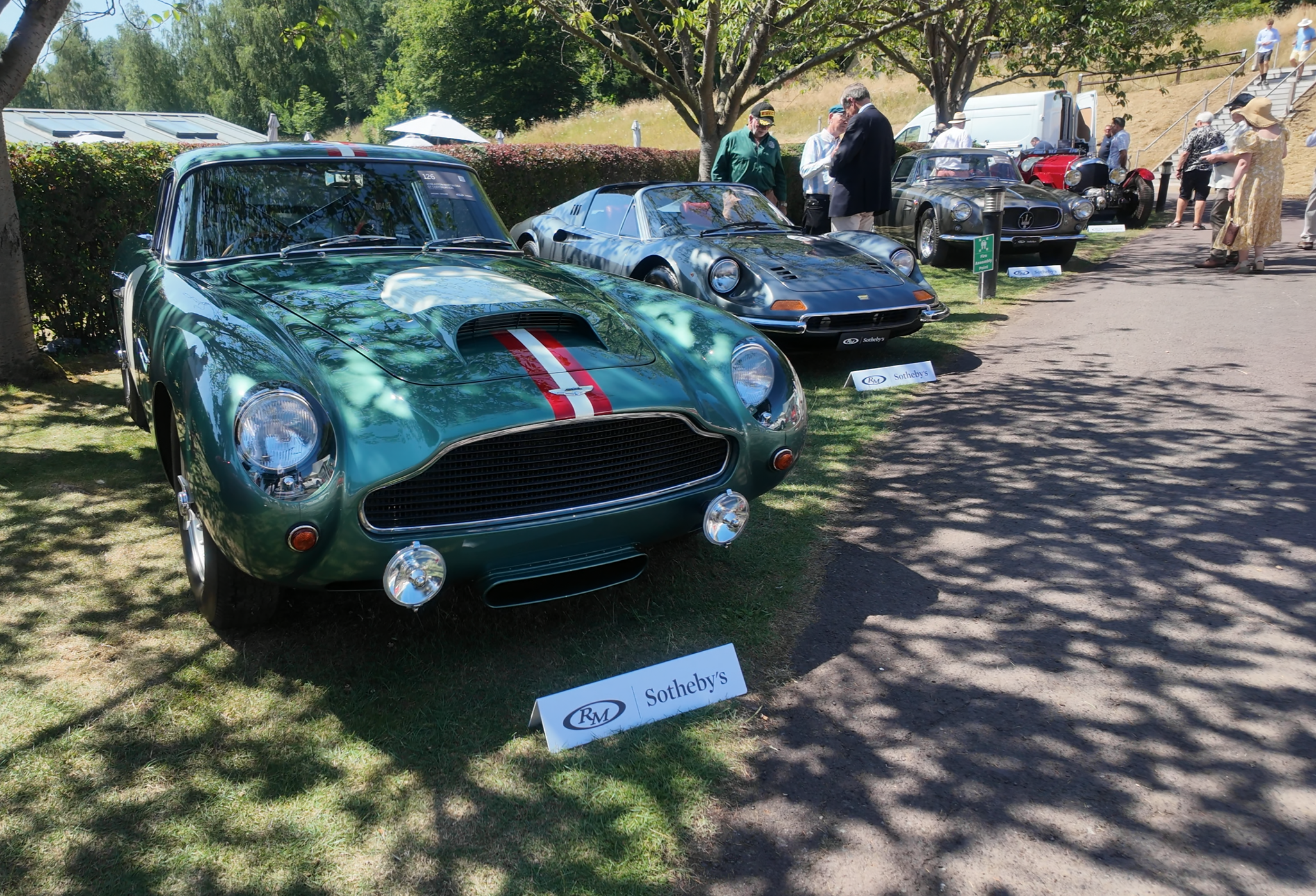
Image © Fuel the Passion. DB4 GT Continuation. RAC Concours, Woodcote Park 2026
As mentioned in last weeks issue, my favourite car at RAC Concours, was this DB4 GT Continuation which achieved £477,500. Aston Martin Works produced these cars using the original DB4 GT construction methods, combining period-correct appearance and engineering with a more recent build date. They remain unusual market propositions: neither surviving 1960s originals nor conventional modern replicas, but factory-created continuations carrying Aston Martin provenance in their own right.
The result illustrates that collectors continue to place considerable value on that authenticity, even while recognising the clear distinction between a continuation car and an original DB4 GT constructed during the model’s first production period.
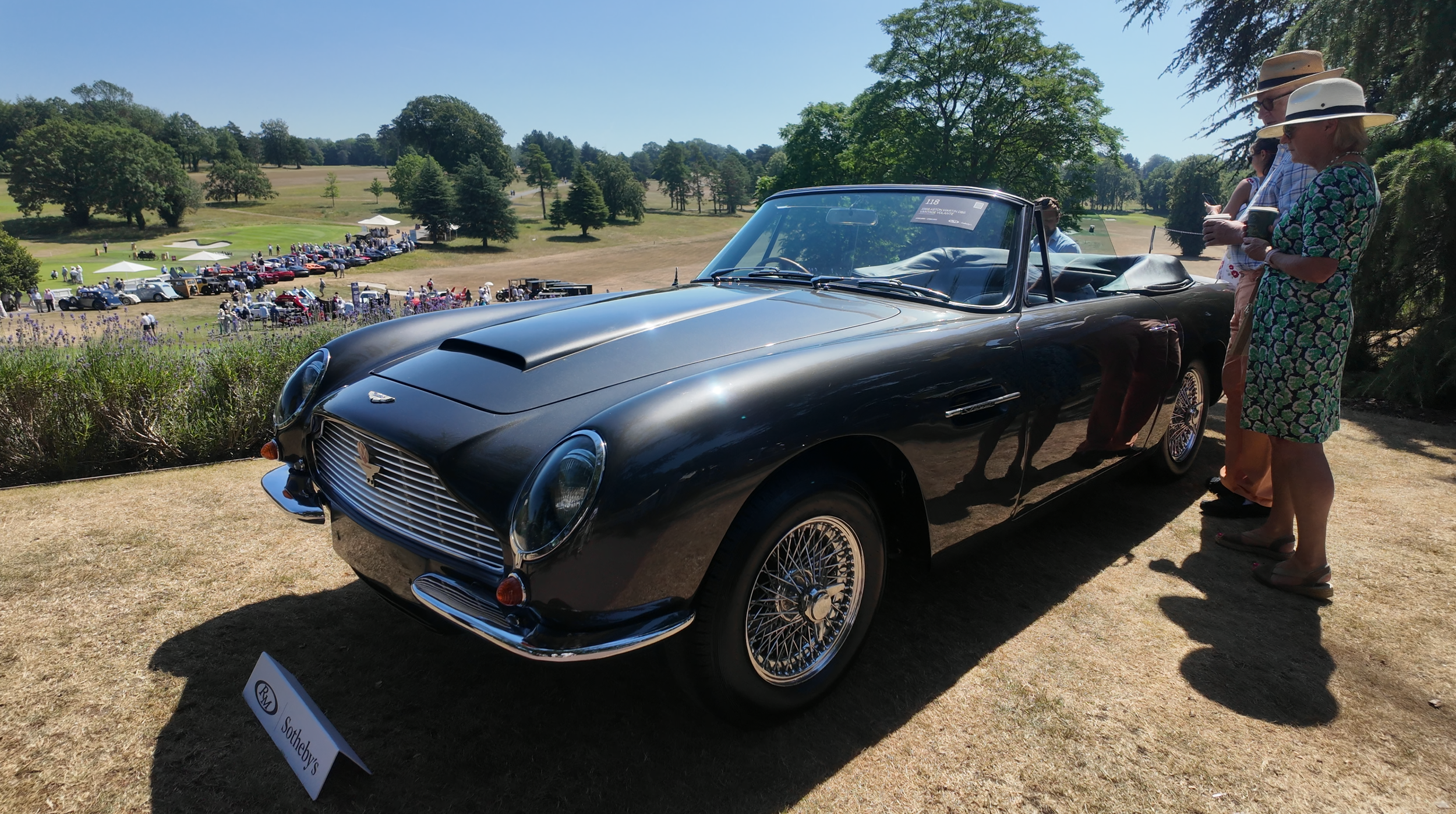
Image © Fuel the Passion. DB6 Vantage Volante. RAC Concours, Woodcote Park 2026
A DB6 Vantage Volante also produced a notable result at £432,500. The combination of open coachwork, Vantage specification and DB6 refinement makes it one of the most desirable variants from the later David Brown era.
Together, these sales contributed to an auction that generated almost £16 million across the wider catalogue. The Aston Martin results were strong, but they shouldn’t automatically be interpreted as evidence that values are rising throughout the market.
Exceptional cars often produce exceptional figures. Rarity, provenance, presentation and the atmosphere created by a prestigious live auction can make an enormous difference. A headline result for a Radford Shooting Brake tells us relatively little about an average DB5 requiring substantial restoration, just as the price of a DB6 Vantage Volante doesn’t determine the value of every DB6.
What the results do show is that buyers remain willing to compete for historically significant Aston Martins when the specification and quality are right.
There’s also a pleasing connection between the auction and this week’s FTP activity. Having seen several of these important cars at Woodcote Park, I encountered another particularly rare David Brown-era Aston Martin only days later at Yorkshire Elegance. It didn’t cross an auction block. Instead, it stood among the concours displays at Grantley Hall wearing an Aston Martin Works sales plate and it had already been selected as this week’s FTP Car of the Week. Before we arrive at that particularly rare DB6, however, there’s a broader question worth considering: what happens when classic Aston Martins become too valuable to use?
A recent JayEmm on Cars film takes that debate onto the road, arguing that the DB6’s softer values may now offer something more important than investment potential, the chance for these cars to be bought, driven and enjoyed by a new generation.
Is This the Moment to Buy and Actually Drive a DB6? (The photographs used to support this section is not the car featured in the JayEmm on Cars film)
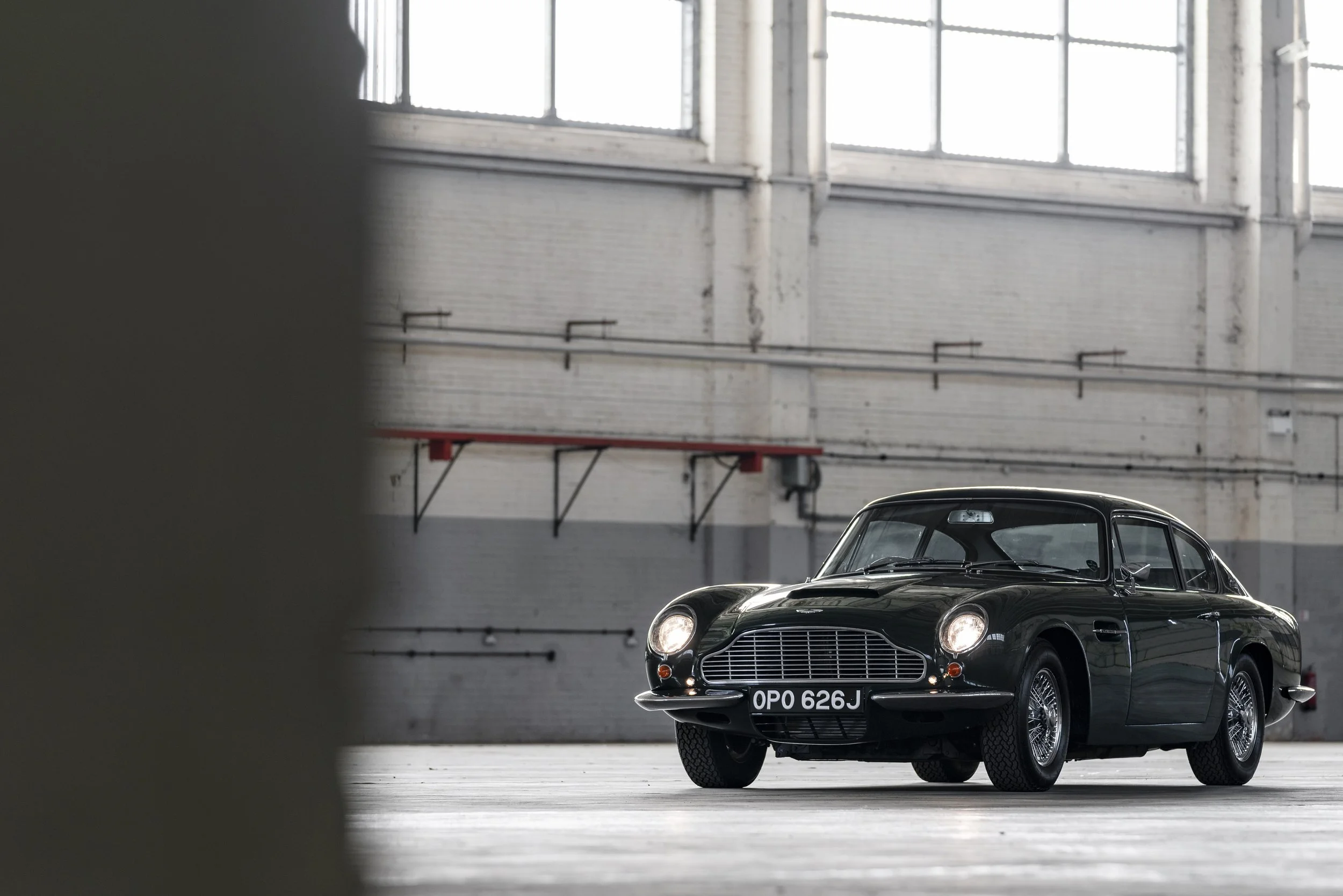
Image © Aston Martin Lagonda. Used for editorial purposes. Aston Martin DB6
We deliberately held this video over from last week because Issue 32 was already particularly full. That now feels rather fortunate, as JayEmm on Cars’ latest film fits perfectly with the unexpected DB6 theme running through this Roundup. In “There Has NEVER Been a Better Time to BUY AND DRIVE an Aston Martin DB6: Here’s Why,” James Martin drives a 1969 DB6 Mk2 and considers whether softening values could ultimately be good for the car’s future.
The example featured (as you can see in the video featured at the end of this section) is an appealing survivor rather than a fully restored showpiece. Finished in its original Caribbean Pearl, it retains much of its period character but has benefited from sensible work, including an engine rebuild, power steering and a conversion from its original three-speed automatic gearbox to a ZF five-speed manual. A Harvey Bailey handling kit also helps make it feel more responsive than its age might suggest.
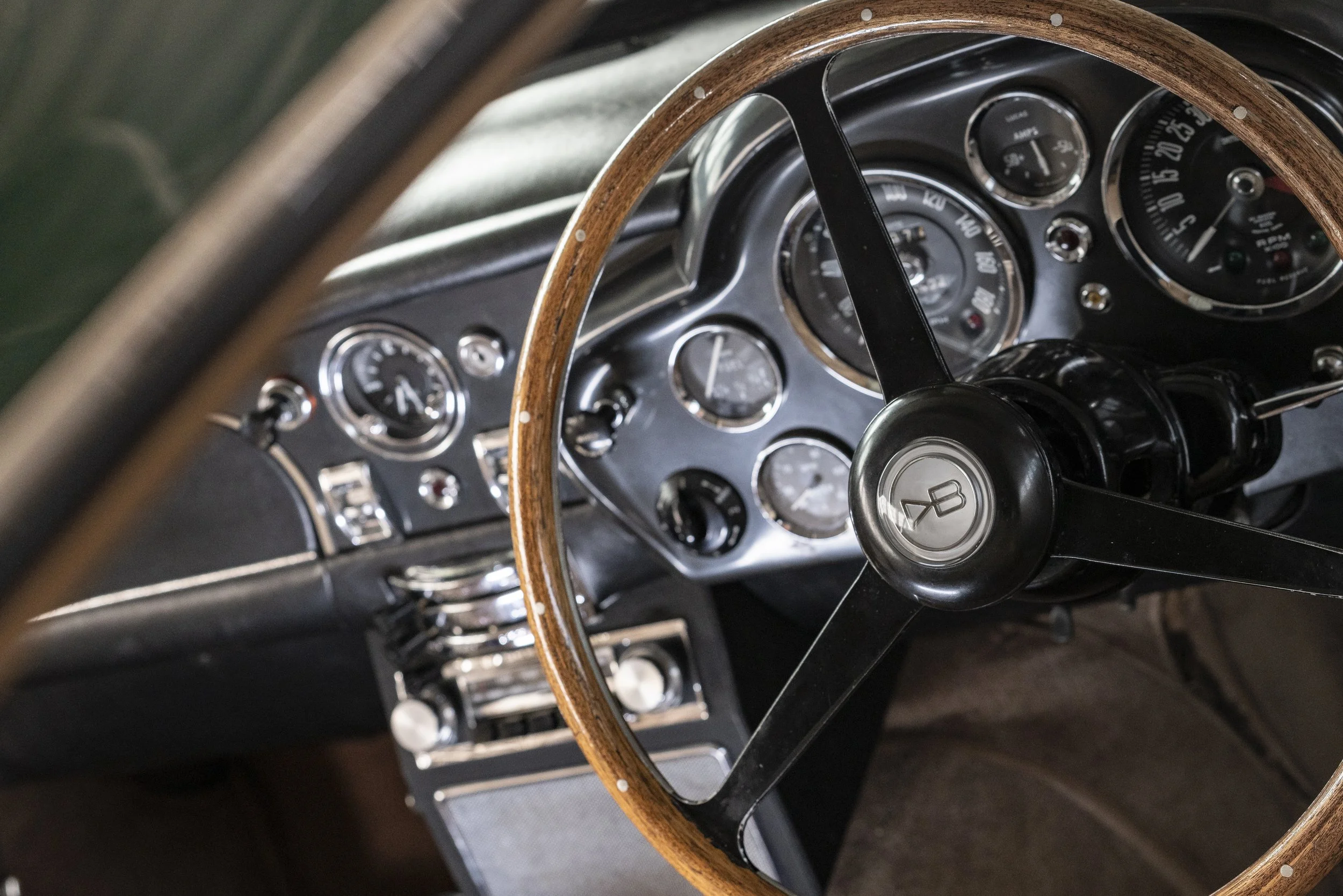
Image © Aston Martin Lagonda. Used for editorial purposes. DB6 Interior.
JayEmm argues that the DB6 deserves to emerge from the DB5’s considerable shadow. It offers the familiar David Brown-era view, straight-six soundtrack and sense of occasion, while providing a longer wheelbase, more usable rear seating and greater touring practicality. The DB5 may remain the famous one, but that fame carries a substantial financial premium.
His broader argument is more interesting than a simple comparison of prices. As the most desirable classics rise into seven-figure territory, they risk becoming financial assets rather than cars. Values can encourage owners to preserve and restore important machinery, but beyond a certain point those same values may discourage people from driving it.
Cars disappear into collections, occasionally emerging for concours appearances but rarely fulfilling the purpose for which they were built.
The DB6 appears to be occupying a different position. JayEmm notes that examples once insured or advertised at figures approaching £300,000 - £350,000 can now be found considerably closer to £160,000 - £200,000, depending upon specification and condition. Those remain substantial sums, but the gap between a DB6 and a DB5 has become difficult to ignore.
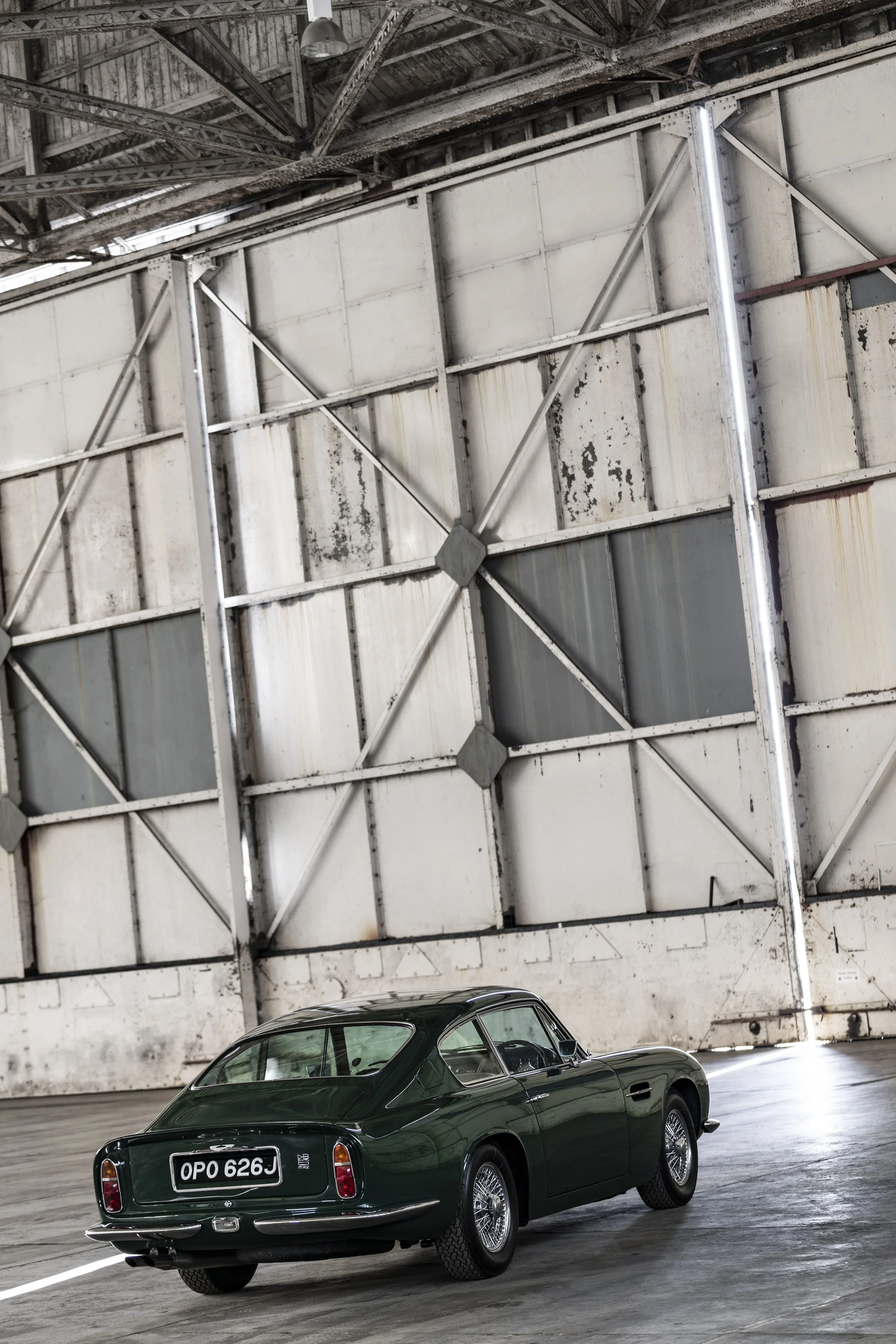
Image © Aston Martin Lagonda. Used for editorial purposes. DB6.
Falling values are rarely welcomed by existing owners, yet they may have one positive consequence: allowing a new generation of enthusiasts to regard the DB6 as a car to use rather than an untouchable investment. That point feels particularly relevant.
The long-term future of classic Aston Martins depends upon more than preserving them physically. They also need people who want to understand them, maintain them and experience the smells, sounds, heavy controls and imperfections that separate them from modern machinery.
JayEmm’s DB6 isn’t especially fast by contemporary standards, nor does it offer modern comfort, safety or reliability. Yet at ordinary road speeds it provides something many much quicker cars struggle to reproduce: a powerful sense of occasion and a direct connection with another period of British motoring. His conclusion is therefore less about predicting whether DB6 prices have reached their lowest point and more about encouraging owners to continue using these cars while they still can.
That seems a worthwhile message. A classic Aston Martin kept in perfect condition has historical value, but one seen, heard and enjoyed on the road also has cultural value. The people who preserved these cars when they were comparatively inexpensive did so because they loved them, not because a graph suggested they might outperform the stock market.
I’ll include a direct link to JayEmm’s film below. It also leads perfectly into this week’s FTP Car of the Week: another DB6 Mk2, but one representing a much rarer and more technically ambitious chapter in the model’s history.
FTP Car of the Week - 1970 Aston Martin DB6 Mk2 Fuel Injection
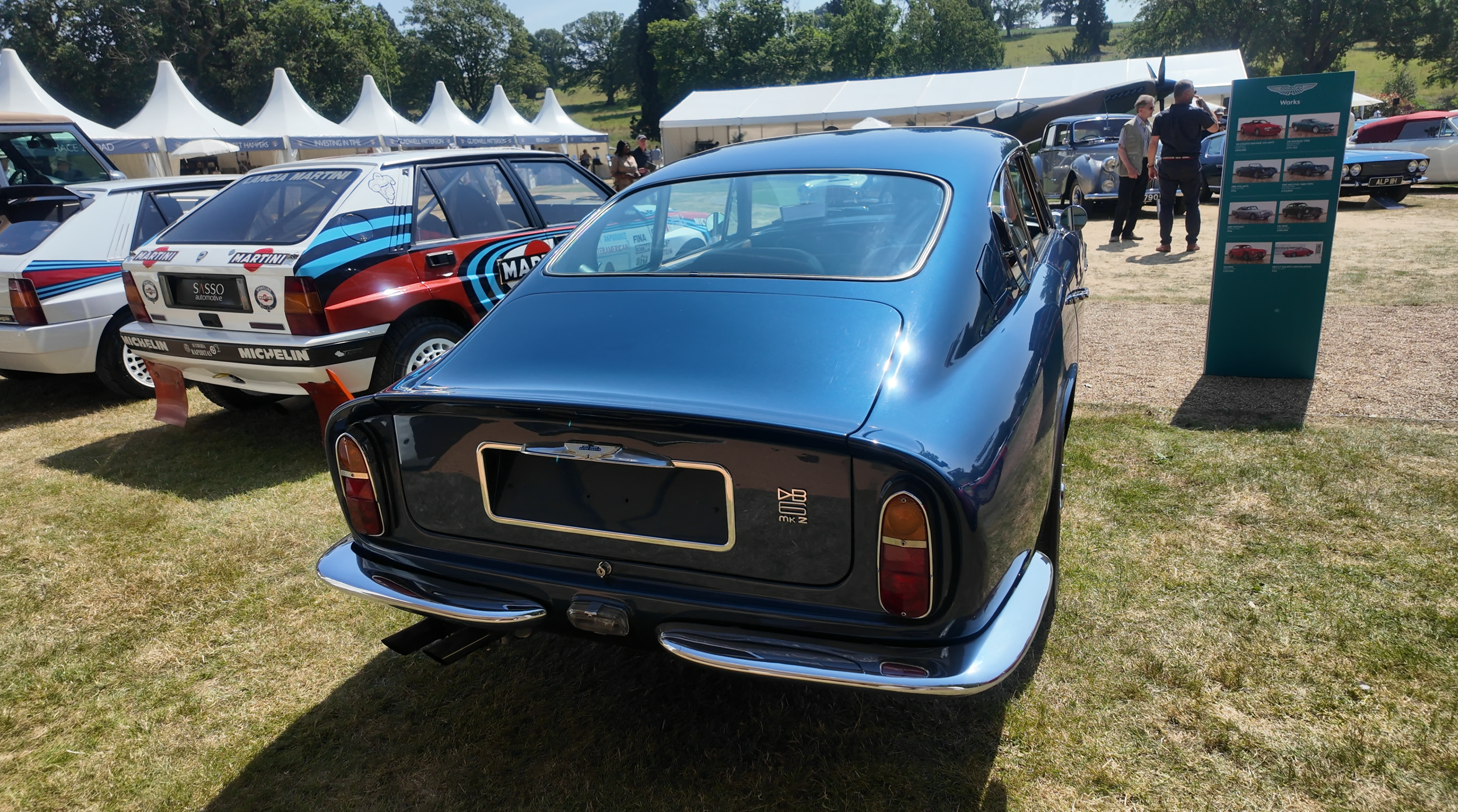
Image © Fuel the Passion - 1970 Aston Martin DB6 Mk2 Fuel Injection on display on the Aston Martin Works stand, Yorkshire Elegance 2026
After several remarkable David Brown-era Aston Martins achieved substantial figures at Woodcote Park, this week’s choice brings us to another particularly rare DB6, but one I was able to examine away from the auction room.
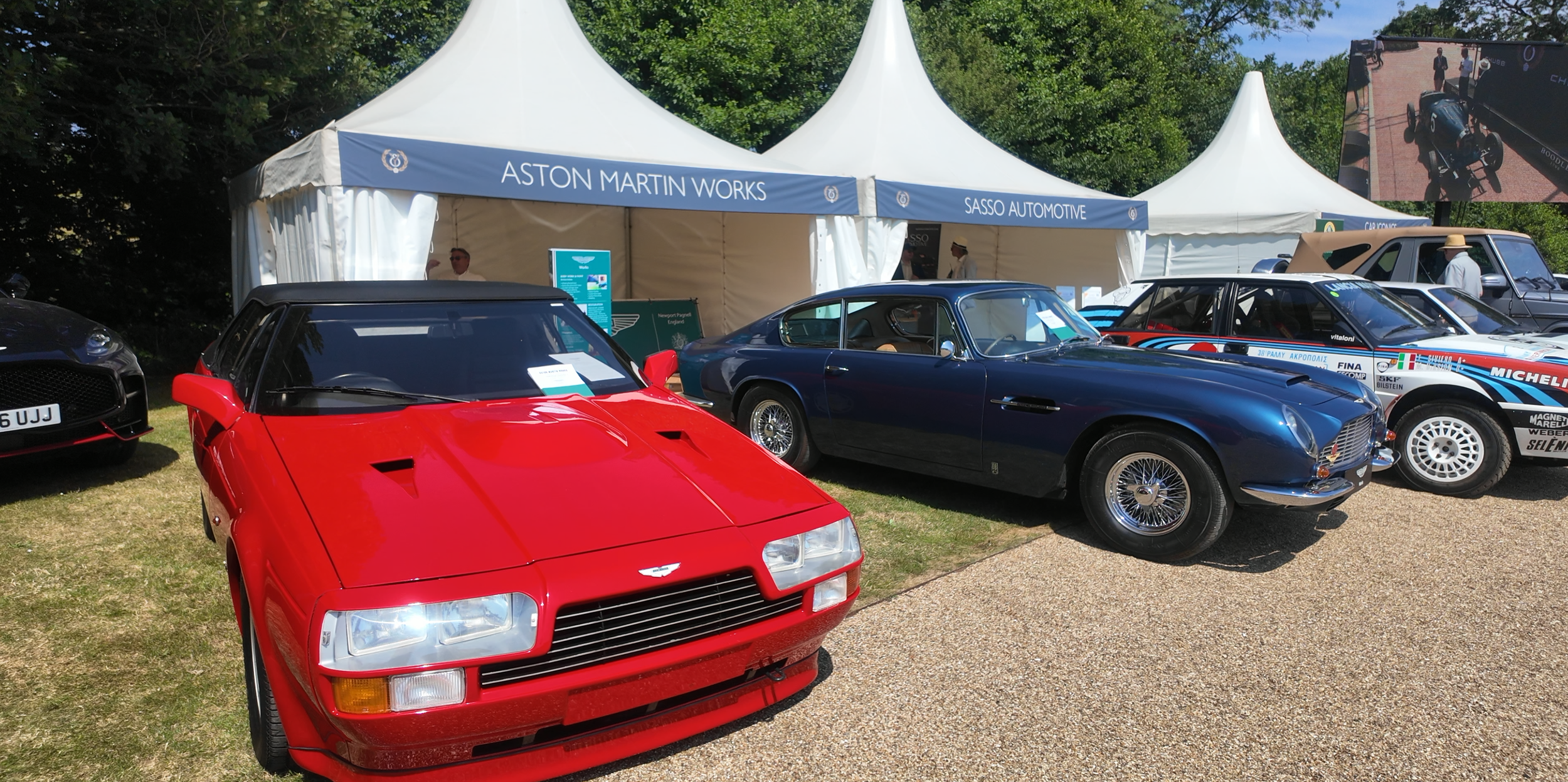
Image © Fuel the Passion - 1970 Aston Martin DB6 Mk2 Fuel Injection on display on the Aston Martin Works stand, Yorkshire Elegance 2026
We’d already selected this 1970 Aston Martin DB6 Mk2 Fuel Injection, currently offered by Aston Martin Works, before I travelled to Yorkshire Elegance. Imagine my surprise, therefore, when the very same car appeared among the displays at Grantley Hall.
That encounter immediately made it a stronger choice for FTP Car of the Week. Rather than illustrating the feature entirely with photographs taken from a dealer listing, we can use FTP’s own images of the car in the magnificent Yorkshire Elegance surroundings.
The Final Development of the DB6
The DB6 Mk2 represented the final development of the model and arrived towards the end of the David Brown six-cylinder era. Its changes weren’t confined to the name. Wider DBS-style wheels required more pronounced wheelarch flares, while the interior adopted front seats related to those used in the DBS. Power-assisted steering became standard, and buyers could choose between the ZF five-speed manual gearbox and an automatic transmission.
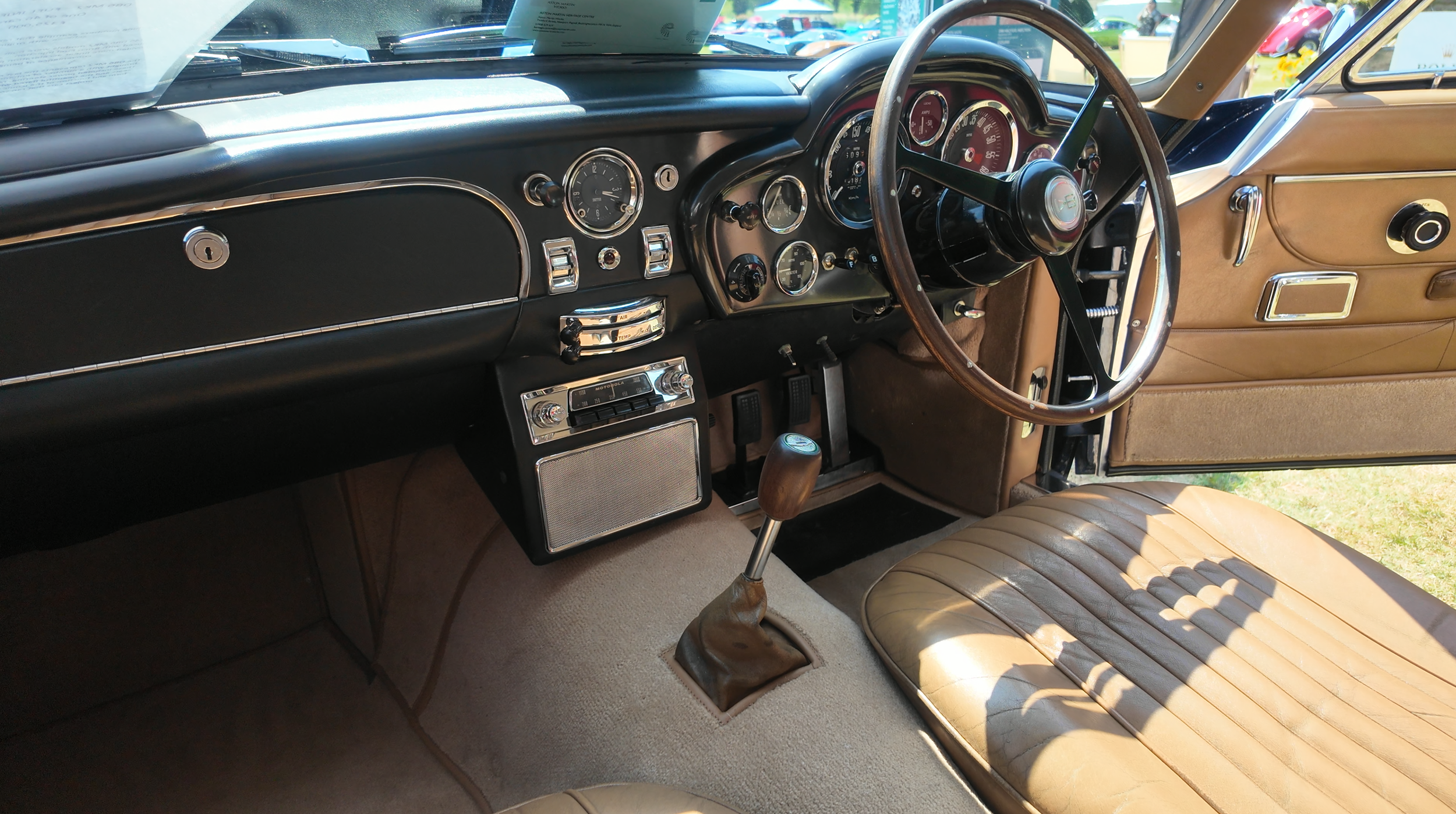
Image © Fuel the Passion - 1970 Aston Martin DB6 Mk2 Fuel Injection on display on the Aston Martin Works stand, Yorkshire Elegance 2026
The car offered by Aston Martin Works is a manual example, registered on 20th October 1970, finished in blue with a Fawn interior. At the time of writing, the official Works listing displays a price of £325,000. Even among DB6 Mk2s, this car’s fuel-injection designation makes it especially unusual.
One of Only 46
Aston Martin Works identifies the car as one of only 46 DB6 Mk2s fitted with fuel injection. The system was supplied by AE Brico and represented an ambitious attempt to move the familiar four-litre straight-six beyond its traditional carburettor arrangement.
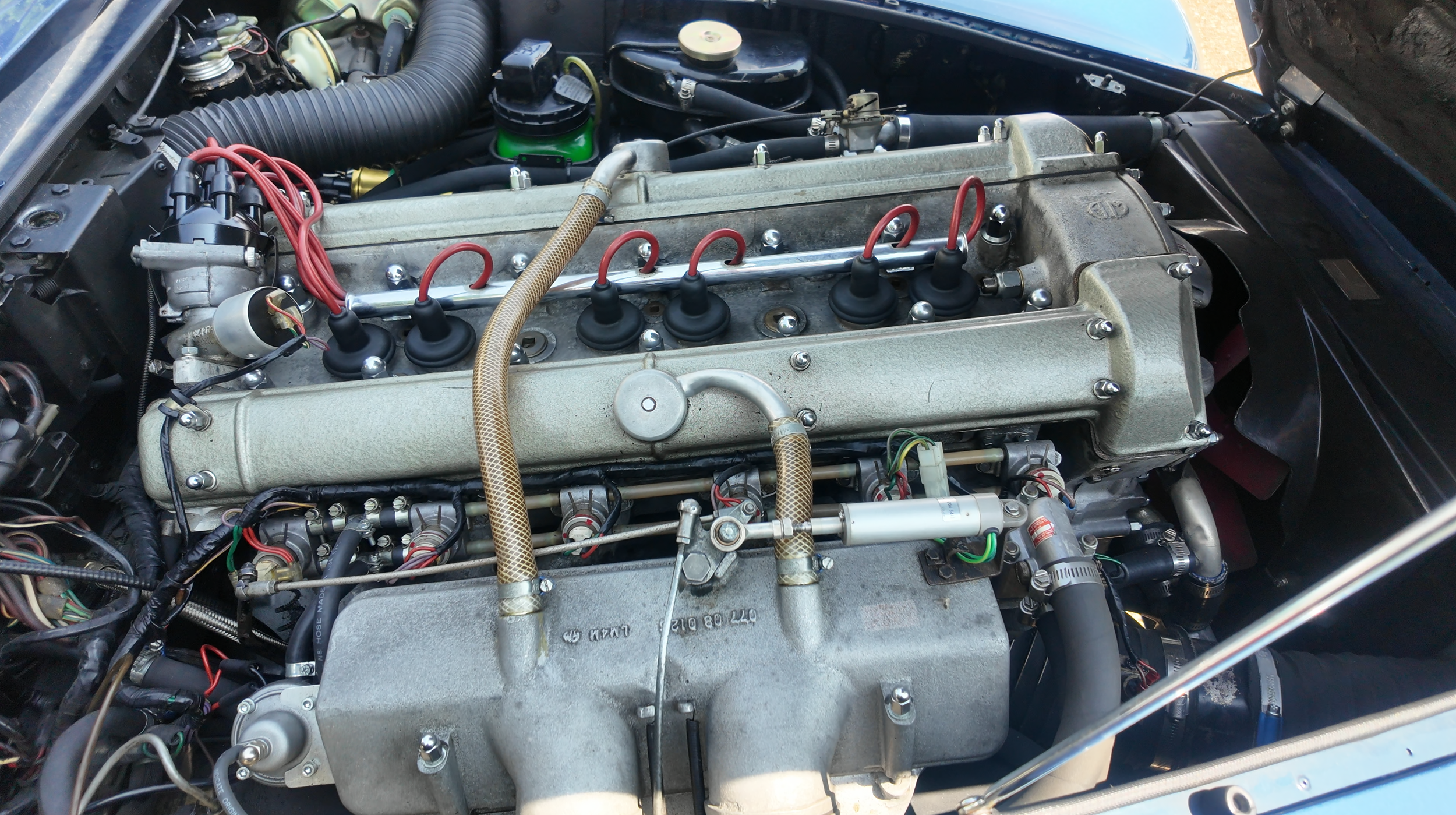
Image © Fuel the Passion - 1970 Aston Martin DB6 Mk2 Fuel Injection on display on the Aston Martin Works stand, Yorkshire Elegance 2026
This wasn’t modern fuel injection in the sense we understand today. The AE Brico electronic system was innovative for its time, but it didn’t establish a reputation for effortless reliability. Many of the 46 cars were subsequently converted to carburettors, making surviving or correctly restored fuel-injection examples particularly uncommon.
That history is part of what makes the car so interesting.
The fuel-injected DB6 Mk2 wasn’t necessarily the definitive answer to every engineering problem. In fact, its rarity partly reflects a technology that proved more difficult to perfect than Aston Martin had hoped. Yet it demonstrates that the company was willing to experiment and pursue a more technically advanced solution at the very end of the DB6’s production life. It’s therefore rare for two reasons: few were built, and fewer still are likely to retain, or have been returned to the specification that made them unusual in the first place.
Is £325,000 Justified? At £325,000, this sits well above the level of many standard DB6s and some Vantage examples. It’s therefore difficult to describe it as an obvious bargain. But price comparisons become less straightforward when only 46 cars were produced in this specification. A conventional DB6 may be easier to value through comparable sales; a fuel-injected Mk2 depends far more heavily upon originality, provenance, mechanical condition and how completely its unusual equipment has survived.
Recent market guides place ordinary DB6s and DB6 Vantages considerably below this Works asking price on average, although averages inevitably mix together cars of very different condition, specification and history. The Works association also contributes to the proposition. A buyer isn’t simply considering a rare specification but purchasing through the marque’s historic Newport Pagnell home, with the access to expertise and provenance research that implies.
Even so, rarity alone doesn’t make £325,000 inexpensive. The car needs to be an outstanding and historically convincing example to support that figure. For FTP, however, Car of the Week isn’t necessarily the cheapest Aston Martin or the one offering the greatest performance for the money. It’s the car whose specification, history or story makes it unusually worthy of attention. This DB6 qualifies comfortably.
From the Sales Listing to Grantley Hall
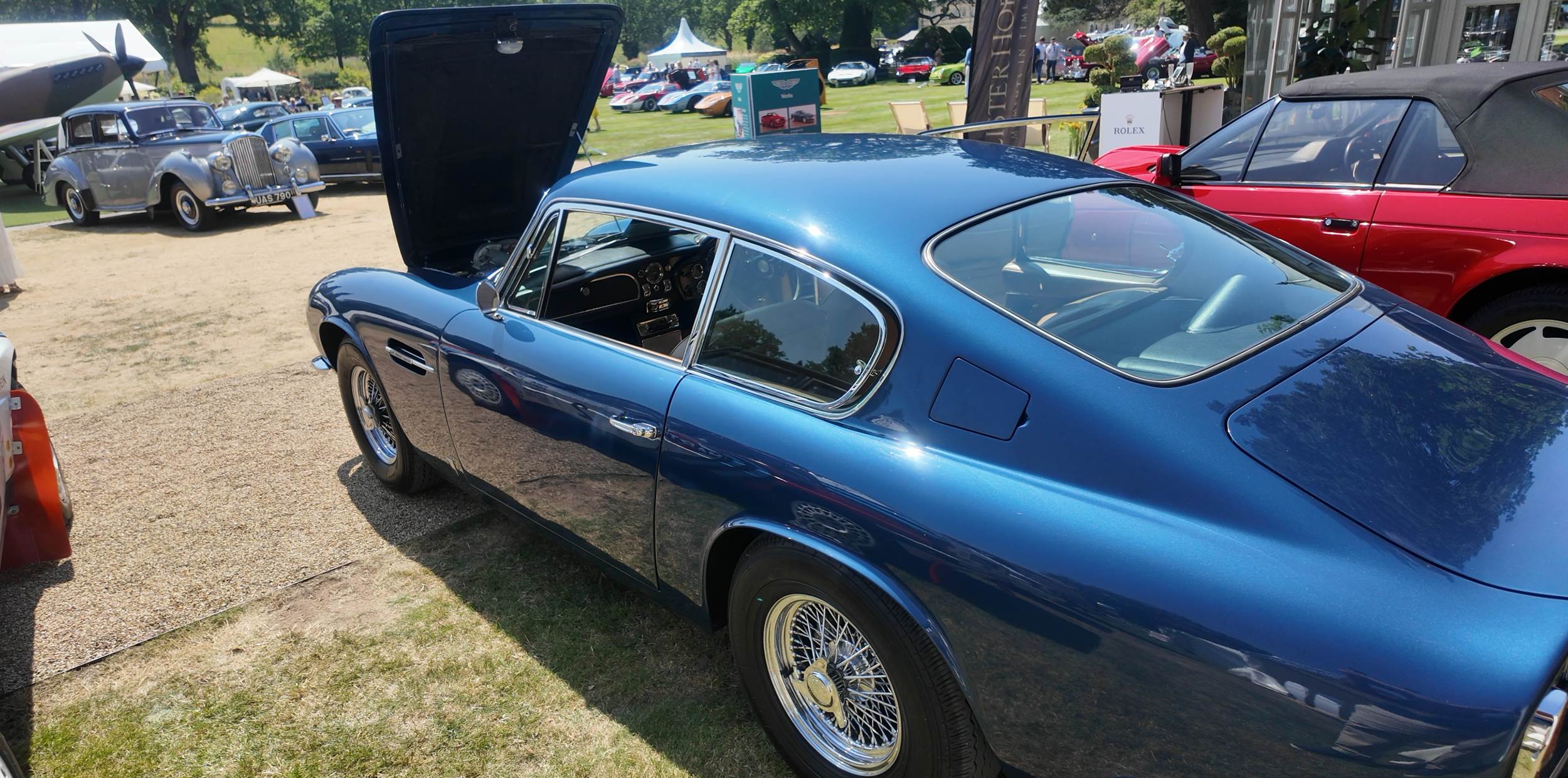
Image © Fuel the Passion - 1970 Aston Martin DB6 Mk2 Fuel Injection on display on the Aston Martin Works stand, Yorkshire Elegance 2026
Seeing the car at Yorkshire Elegance also changed the way I thought about it. A dealer listing naturally encourages us to concentrate upon numbers: price, production total, registration date and specification. At Grantley Hall, the DB6 became part of a much broader visual history of Aston Martin.
The restrained blue exterior and Fawn cabin looked particularly elegant among the concours displays. Its proportions felt very different beside the modern carbon-fibre complexity of Valhalla, Valiant and Valkyrie, yet the family relationship remained visible. It was also a reminder that important classic Aston Martins don’t need to shout. The fuel-injection story is hidden beneath a shape that many visitors may simply have admired as a beautiful DB6.
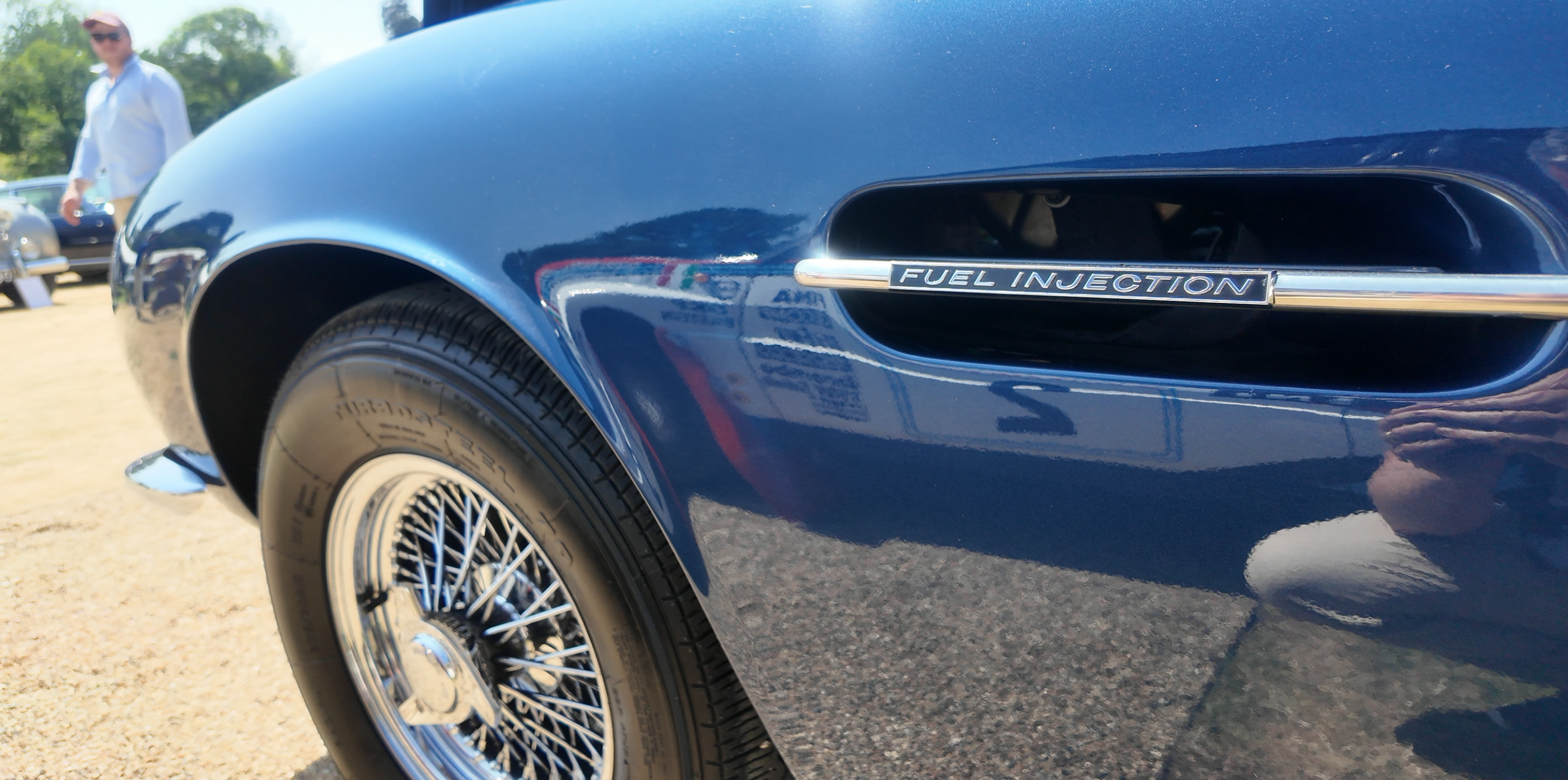
Image © Fuel the Passion - 1970 Aston Martin DB6 Mk2 Fuel Injection on display on the Aston Martin Works stand, Yorkshire Elegance 2026
That combination makes it a particularly appropriate FTP choice: quietly elegant from the outside, technically ambitious underneath and carrying a story that only becomes more interesting once you begin looking beyond the bodywork. A film from Yorkshire Elegance will follow when editing time allows.
For this week’s Roundup, however, our own photographs allow readers to see the very car currently offered by Aston Martin Works in the surroundings where I encountered it. At £325,000, it certainly isn’t a casual purchase. But as one of only 46 fuel-injected DB6 Mk2s, it represents a fascinating and rarely seen moment in Aston Martin engineering history and a very worthy FTP Car of the Week.
From one of the most unusual Aston Martins at Grantley Hall, we now return to everything happening behind the scenes at Fuel the Passion, including the newly released Unforgettable, and the next appointment for the FTP Vantage.
FTP Update - From Alnwick Castle to Grantley Hall
The DB6 Mk2 Fuel Injection was only one small part of another extremely busy week behind the scenes at Fuel the Passion. As you’ve hopefully seen, and as mentioned in the introduction, the latest FTP YouTube film, Unforgettable, went live at 6.30pm on Friday and is now available to watch. It follows the Aston Martin Owners Club Spring Concours at Alnwick Castle, where members were given the rare privilege of displaying their cars within the castle grounds.
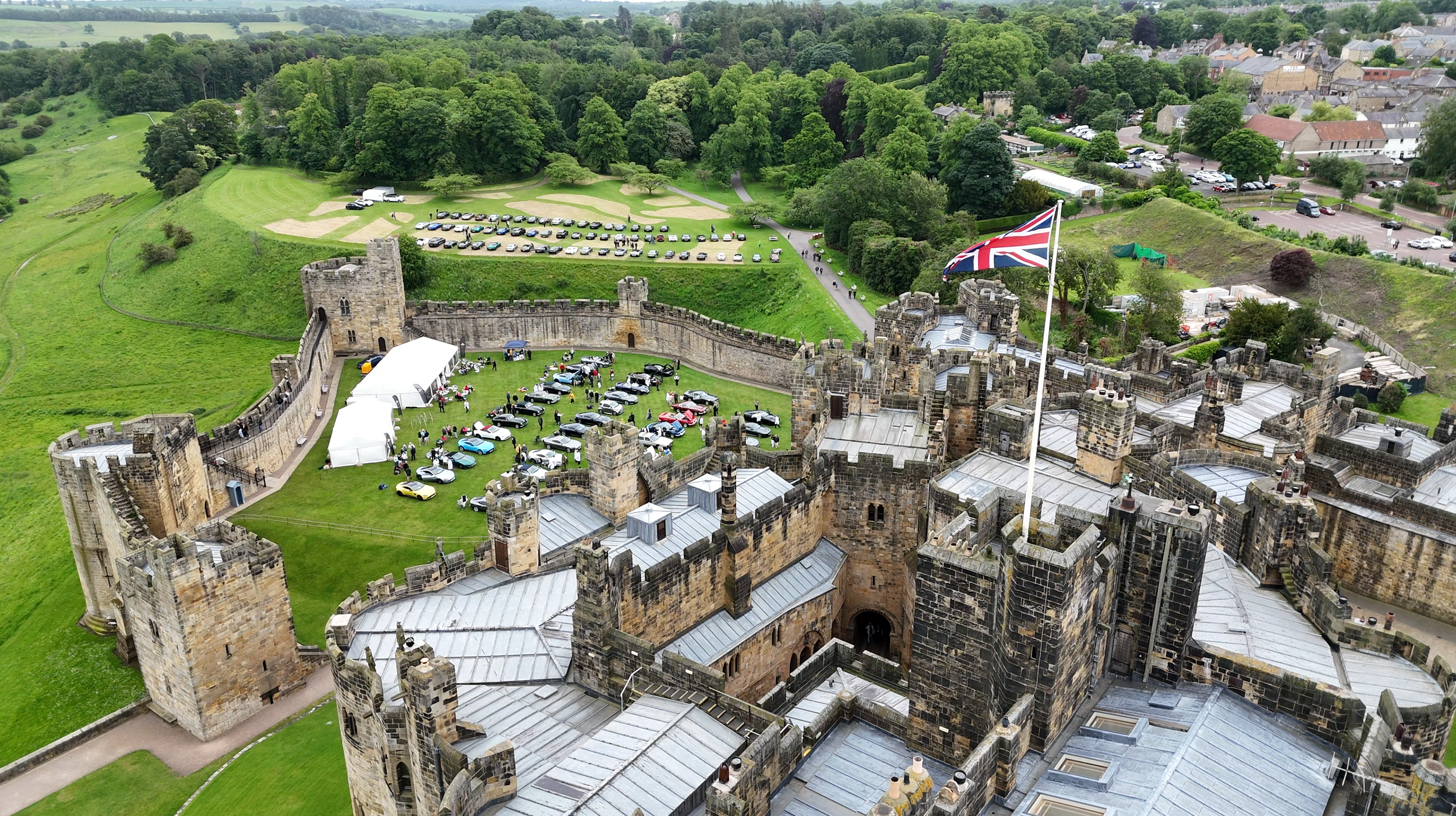
Image © Fuel the Passion. Alnwick Castle, AMOC Spring Concours 2026 from the FTP Film ‘Unforgettable’
That access created an extraordinary setting for the film. The Aston Martins ranged from a Cygnet and a V12-powered DB11 to a much older car with genuine Le Mans competition history. I also spoke with several owners, allowing them to explain the stories behind their cars and what brought them to this remarkable gathering in Northumberland.
With the castle, its grounds and rows of Aston Martins forming the backdrop, the finished film genuinely earns the title Unforgettable. I’ll include a direct link below for anyone who hasn’t yet had the opportunity to watch it.
Finishing that edit has allowed attention to turn towards the next films already waiting in the FTP production queue.
A video from my visit to the Goodwood Festival of Speed will follow, after Blackthorn Racing kindly invited me to attend on the Thursday. Their battle-scarred Ecurie Ecosse Vantage GT3 provided one of the day’s most memorable stories, but the film will also cover much more from around the Festival, including Aston Martin’s road cars, the AMR25 and the atmosphere surrounding one of the year’s largest motoring events.
Then there is Yorkshire Elegance at Grantley Hall. Aston Martin was exceptionally well represented, and I filmed what I believe was most of the marque’s display. The setting was magnificent, the variety of cars was remarkable and the matching green-and-gold Valhalla and Valiant made a particularly striking pairing.
Producing both films properly will take time, but the footage is safely captured and each visit deserves more than a hurried edit simply to place something online quickly.
The FTP Vantage Heads to Aston Martin Leeds
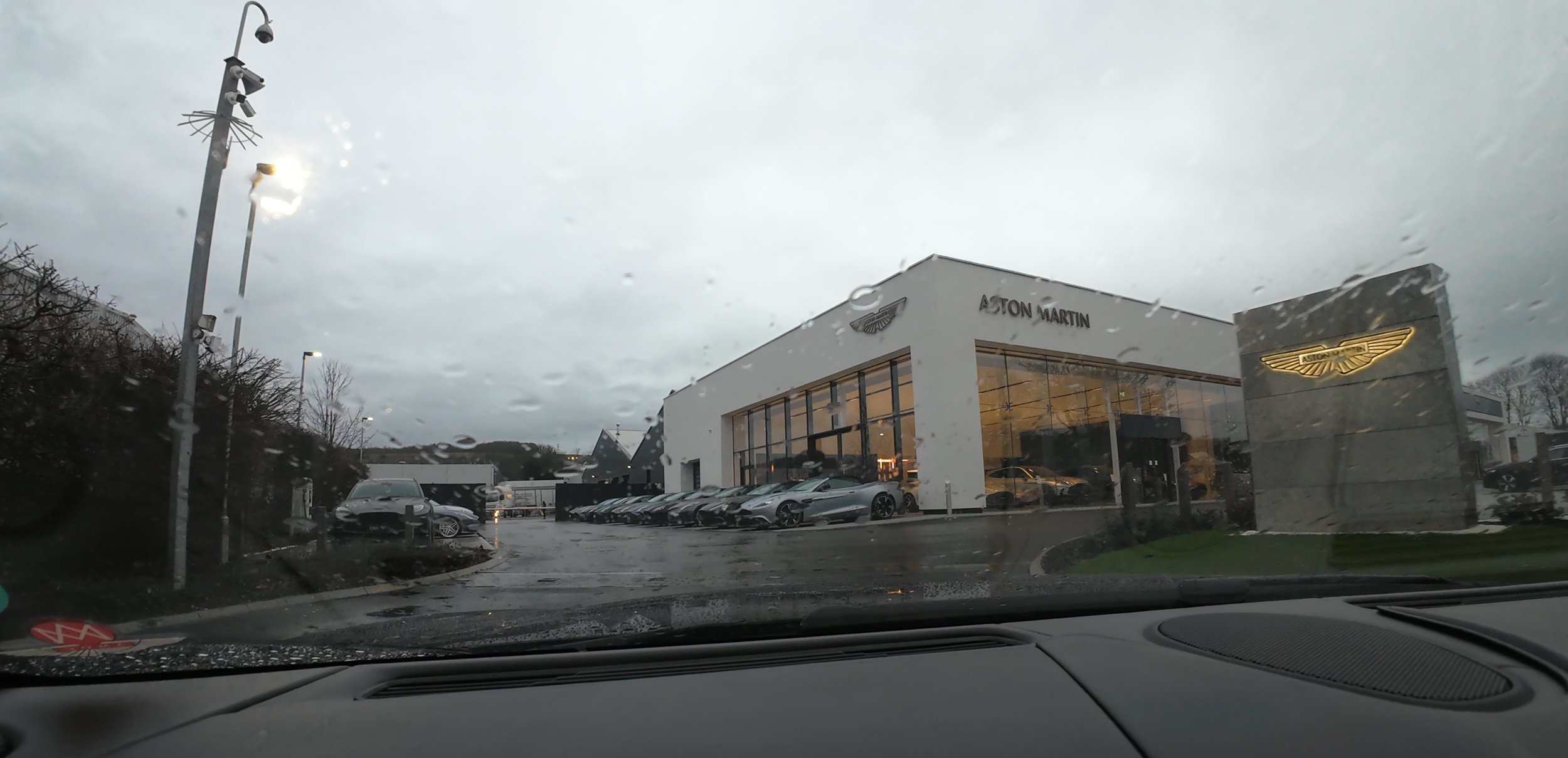
Image © Fuel the Passion. JCT600 Aston Martin Leeds, this image is from Winter, early 2026.
Next week, the FTP Vantage returns to JCT600 Aston Martin Leeds for its MOT. The appointment is routine, but visits to Aston Martin Leeds rarely feel entirely ordinary. There always seems to be something rare, unusual or particularly tempting in the showroom, and I’ve been given permission to film the cars currently on display while the Vantage is being attended to.
That visit will form the basis of a shorter Fuel the Passion video, combining a brief ownership update with a look around the dealership’s current selection. The MOT may be the practical reason for going, but experience suggests the cars inside the showroom will provide rather more attractive footage than the inspection itself.
Final Adjustments to the Vanquish Film
There has also been movement on the outstanding Vanquish film, that I feel I’ve been talking about for weeks now (apologies for that!). Aston Martin has returned with a small number of requested amendments following its review of the edit. As FTP retains responsibility for the post-production work, I’ll make those changes before submitting a revised version for what we hope will be final approval. That’s at the top of my list for next week.
The requested adjustments are relatively minor, but the film is an important project and it’s worth taking the time to complete it properly. Once approval is secured, I’ll be able to share more about how and when the finished work will appear.
So, while one film has reached the channel, several more are progressing behind the scenes. From Alnwick Castle and Grantley Hall to Goodwood, Newport Pagnell and Aston Martin Leeds, there is no shortage of material waiting to be shaped into the next Fuel the Passion stories. With the FTP Vantage preparing for its MOT, Aston Martin’s H1 results approaching and several race championships moving into important stages of their seasons, next week’s diary already looks considerably less peaceful than an empty concours lawn!
Closing Reflection
It’s difficult to think of many weeks that could place an armoured Aston Martin created for Call of Duty, a V12 Valkyrie scoring World Championship points and three very different DB6 stories within the same Roundup! Yet it’s the DB6 that has provided this week’s unexpected thread.
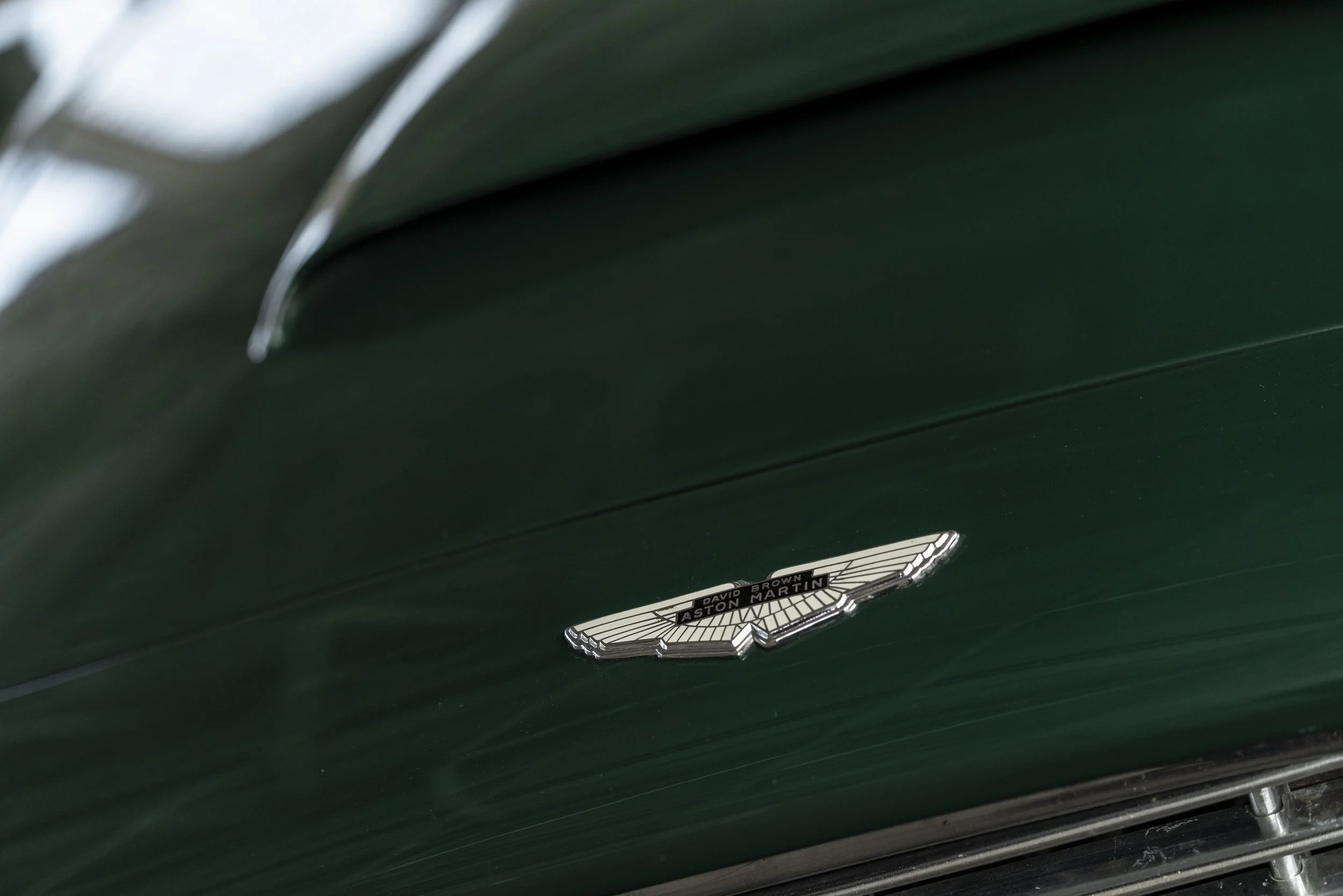
Image © Aston Martin Lagonda. Used for editorial purposes. DB6.
At Woodcote Park, a DB6 Vantage Volante achieved £432,500, reminding us how strongly collectors will still compete for exceptional David Brown-era Aston Martins. JayEmm then offered a different perspective, arguing that softer values for more conventional DB6s may create an opportunity for a new generation to buy, drive and enjoy them rather than regard every surviving example as an investment that must remain hidden away.
Finally, at Yorkshire Elegance, I encountered the rare DB6 Mk2 Fuel Injection already selected as our FTP Car of the Week. Its story isn’t simply about value, it represents Aston Martin experimenting with new technology at the end of the DB6’s production life, an elegant grand tourer concealing a particularly ambitious piece of engineering beneath its bonnet.
That feels like an appropriate reminder of what these cars should represent. Preservation matters, but so does participation. A DB6 sitting beneath a cover may remain immaculate; one seen travelling through the countryside, arriving at an event or introducing another enthusiast to the sounds and sensations of an older Aston Martin remains part of a living story.
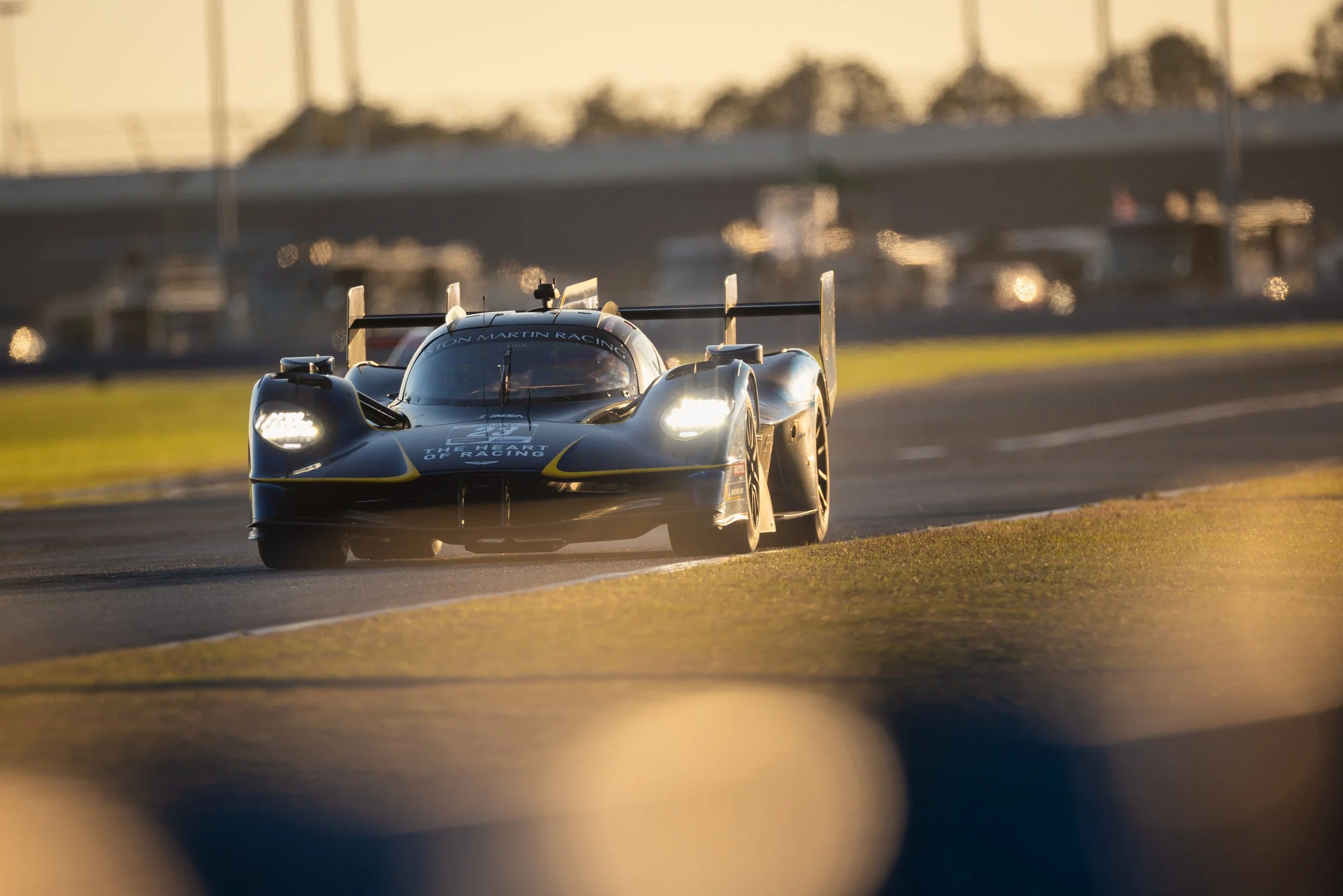
Image © Aston Martin Lagonda. Used for editorial purposes.
The same balance between heritage and progress runs throughout the wider marque. Aston Martin can celebrate the craftsmanship of the David Brown era while developing hybrid supercars, competing with Valkyrie in the World Endurance Championship and creating an armoured digital vehicle for one of the world’s best-known gaming franchises.
Not every idea will appeal equally to everyone, but Aston Martin has rarely built its identity by remaining entirely predictable.
There are, of course, more serious questions beneath the beautiful cars and creative projects. The confirmed financing discussions underline the pressure still facing Aston Martin Lagonda, while Adrian Hallmark’s restructuring must begin converting improved products and stronger margins into dependable cash generation. The H1 results on 29th July should provide a much clearer indication of whether that progress is beginning to take hold.
On the circuits, Blackthorn Racing has already given Aston Martin supporters something to celebrate this weekend, at Paul Ricard, converting Jonny Adam’s overall pole position into a valuable Pro-Am victory with Charlie Bateman on Saturday. There’s still a second qualifying session and race to come on Sunday (the same day this roundup goes live), while the wider weekend also continues at Spa and Misano. Full Aston Martin reports and updated championship standings will follow in the FTP Motorsport Hub, while Formula One’s visit to Hungary may offer the first meaningful evidence that development of the AMR26 is finally moving in the right direction, but first Spa.
For Fuel the Passion, there is plenty still to come. Unforgettable is now available to watch, while films from Goodwood and Yorkshire Elegance are waiting in the editing queue. The FTP Vantage is also preparing for its MOT and another visit to Aston Martin Leeds, where experience suggests a supposedly routine appointment may again be interrupted by something rather rare in the showroom. In fact, I know there’s a special car which I will film and of course talk about in a future video.
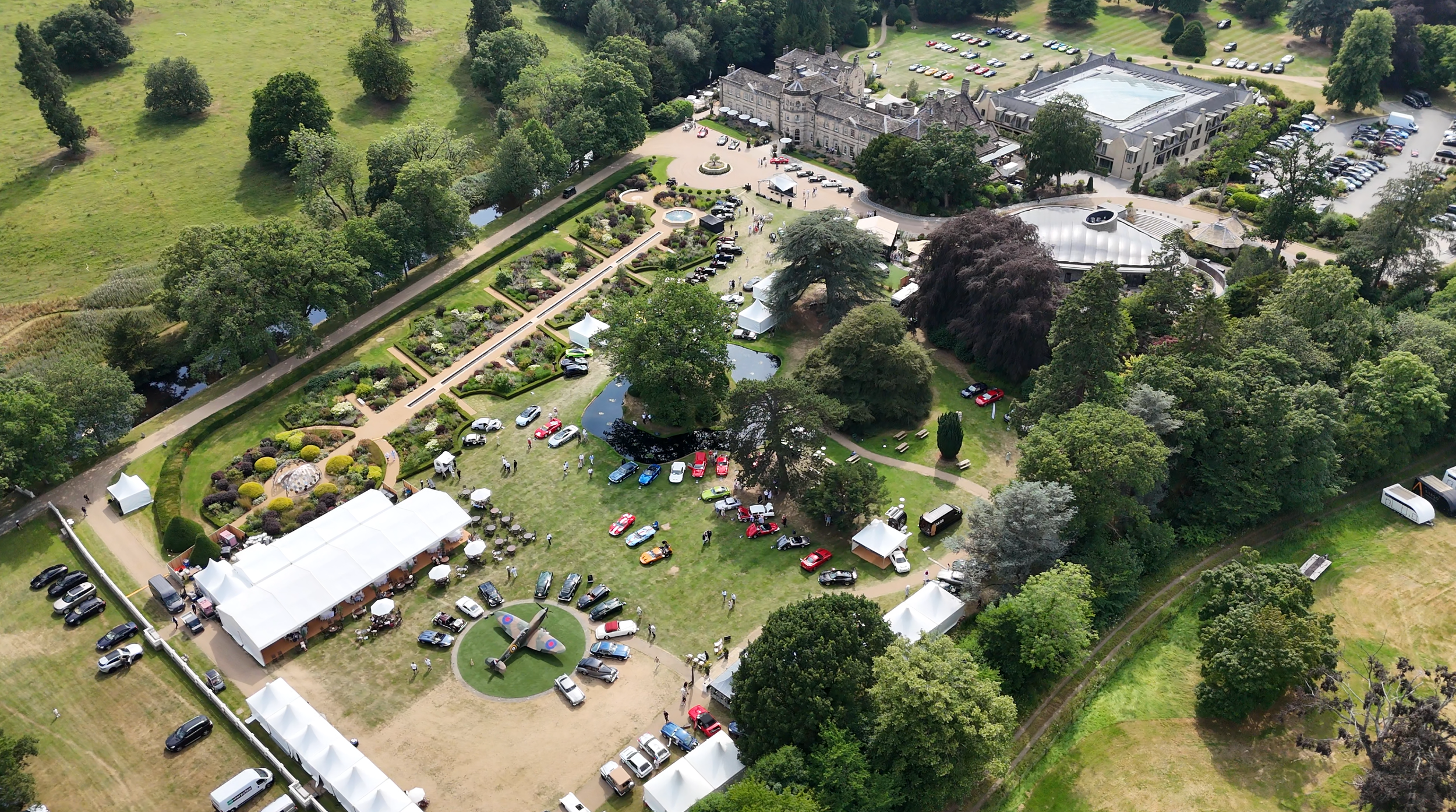
Image © Fuel the Passion. Yorkshire Elegance 2026 - Grantley Hall, Yorkshire
From the castle grounds at Alnwick to the concours lawns of Grantley Hall, this week has shown how easily Aston Martin’s past and future can occupy the same space. Sometimes the story is written on a timing screen. Sometimes it arrives on 40-inch tyres with enough armour to survive a digital battlefield, and sometimes it’s found in a DB6; beautiful, imperfect and still at its best when someone turns the key and drives it.
Thank you, as always, for reading and supporting Fuel the Passion👍. See you on the next one! 👆
Kind regards,
Dan
Fuel the Passion - Where Every Drive Tells a Story
Join the Conversation 💬
We’d love to hear your thoughts. You’re welcome to answer either of this week’s questions, or simply share your own view on anything Aston Martin - whether it’s something you’ve read here, a car that’s caught your attention, or a subject you think deserves further discussion. We would love to hear from you, leave some comments in the section below👇
1. Is the Aston Martin Dreadnought a brilliantly judged way to introduce the marque to a younger global audience - or does an armoured Call of Duty vehicle stretch the Aston Martin identity too far?👇
2. Adrian Hallmark wants Aston Martin to become smaller, more exclusive and more profitable, with fewer core models but more distinctive derivatives. Is that the right route to long-term stability, or does the company still need greater sales volume to secure its future?👇
Still fancy a little more Aston Martin reading?
If you’ve reached the end of this week’s Roundup and still fancy exploring a little further, there’s plenty more to enjoy across the Fuel the Passion website.
You can head over to the FTP Motorsport Hub, where we’re continuing to build detailed race reports, result tables, classification updates and championship standings for Aston Martin’s racing programmes across the season.
There’s also the new FTP Aston Martin Buyers Guide section, which has now gone live with the first three guides: DB9, VH-generation V8 Vantage and DB11. More models will be added over time, with each guide designed to offer honest, enthusiast-focused guidance for anyone researching or dreaming about their next Aston Martin.
If you missed it earlier, our latest FTP Featured Article is now live too: Aston Martin and Le Mans: The Long Road Back to Victory. It looks at why Le Mans still means so much to Aston Martin, why the 1959 DBR1 victory remains the emotional benchmark, and why the modern Valkyrie Hypercar programme is such an important chapter in the story.
I’ll include the links below, so feel free to make yourself a coffee, settle in, and keep exploring.👍
