
Issue 21 - Fuel the Passion (FTP) Weekly Roundup
Week Ending 26th April 2026
Editor’s Introduction - Dan, Fuel the Passion
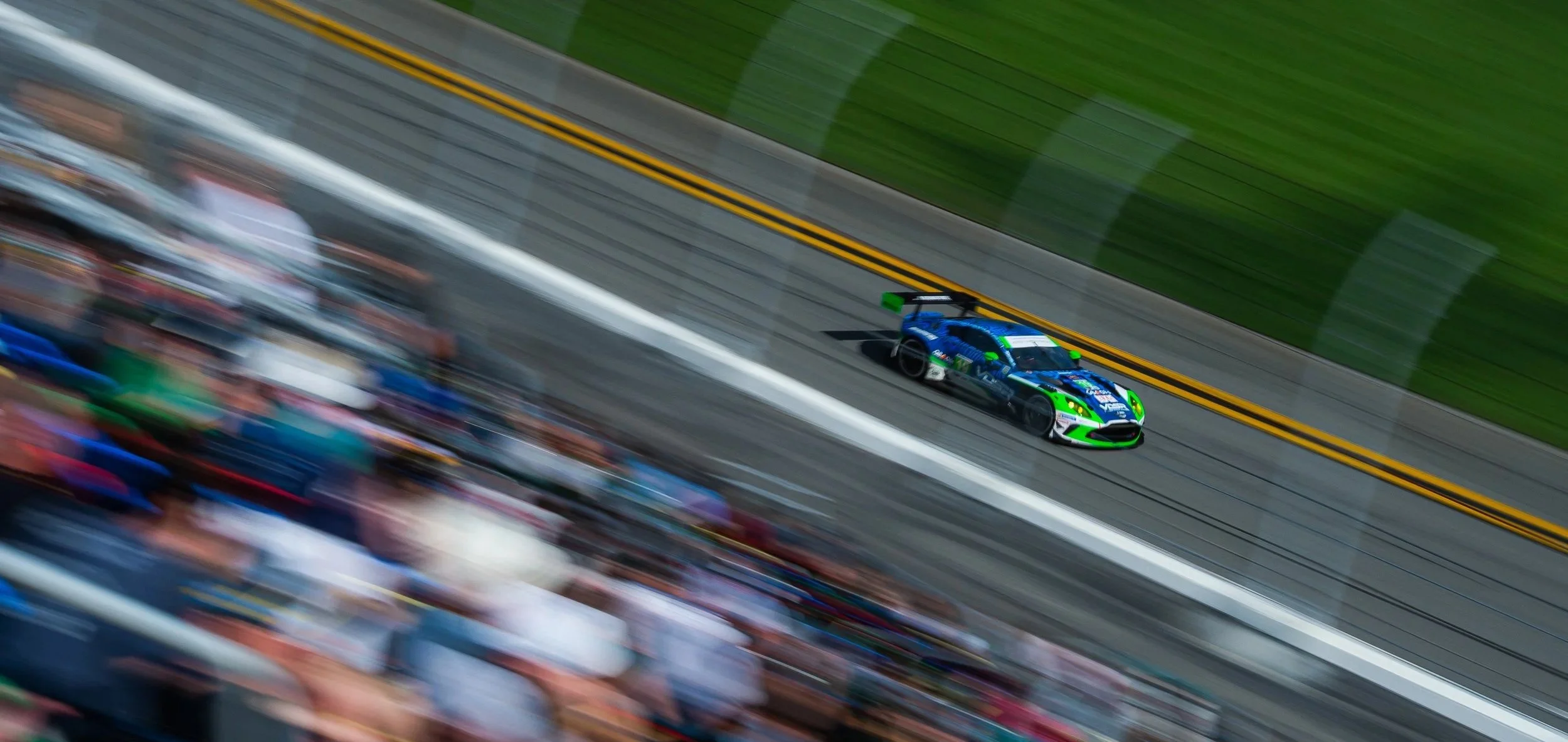
Image © Aston Martin Lagonda. Used for editorial purposes. VDSR Vantage at speed.
As this week’s edition goes live, the countdown to Miami is beginning to feel rather important for Aston Martin Formula 1. The long and unscheduled gap in the calendar has given the team and Honda time they would not otherwise have had: time to study, regroup, manufacture parts, work through countermeasures and try to understand just how much of the early-season pain can be reduced before the cars return to the track.
That, of course, is the question none of us can properly answer yet. There’s been no shortage of speculation, and plenty of strong opinion, but until the cars run again in Miami we simply will not know how much progress has been made. The picture may look better, it may still look very difficult, it may, as is often the way in Formula 1, sit somewhere awkwardly between the two.
What makes this week interesting, though, is the contrast across the wider Aston Martin racing world. While the F1 team continues to search for answers, the Vantage GT3 has continued to build a far more encouraging story elsewhere. From Imola to British GT, DTM, GT World Challenge America and the build-up to Spa, as mentioned in previous weekly roundups, there’s a growing sense that Aston Martin’s customer and partner racing programmes are becoming one of the stronger threads of 2026.
So this week, we begin where last week’s edition left us slightly short of time: with Imola, Valkyrie, The Heart of Racing and Aston Martin THOR Team. Then we move through a busy and rather promising GT landscape before finally returning to Formula 1, Miami, Honda, and the unanswered question that will shape next week’s edition: has Aston Martin found a meaningful step forward, or merely bought itself more time to understand the problem? As always, let’s dig in…
Imola Revisited: Valkyrie, THOR and The Heart of Racing
Last week, we left Imola slightly unresolved. The timing of the roundup meant we could cover the build-up, the promise, the concern, and Marco Sørensen’s heavy Prologue accident, but not the race itself. This week, with the dust properly settled, we can return to it with more detaill and of course the final results.
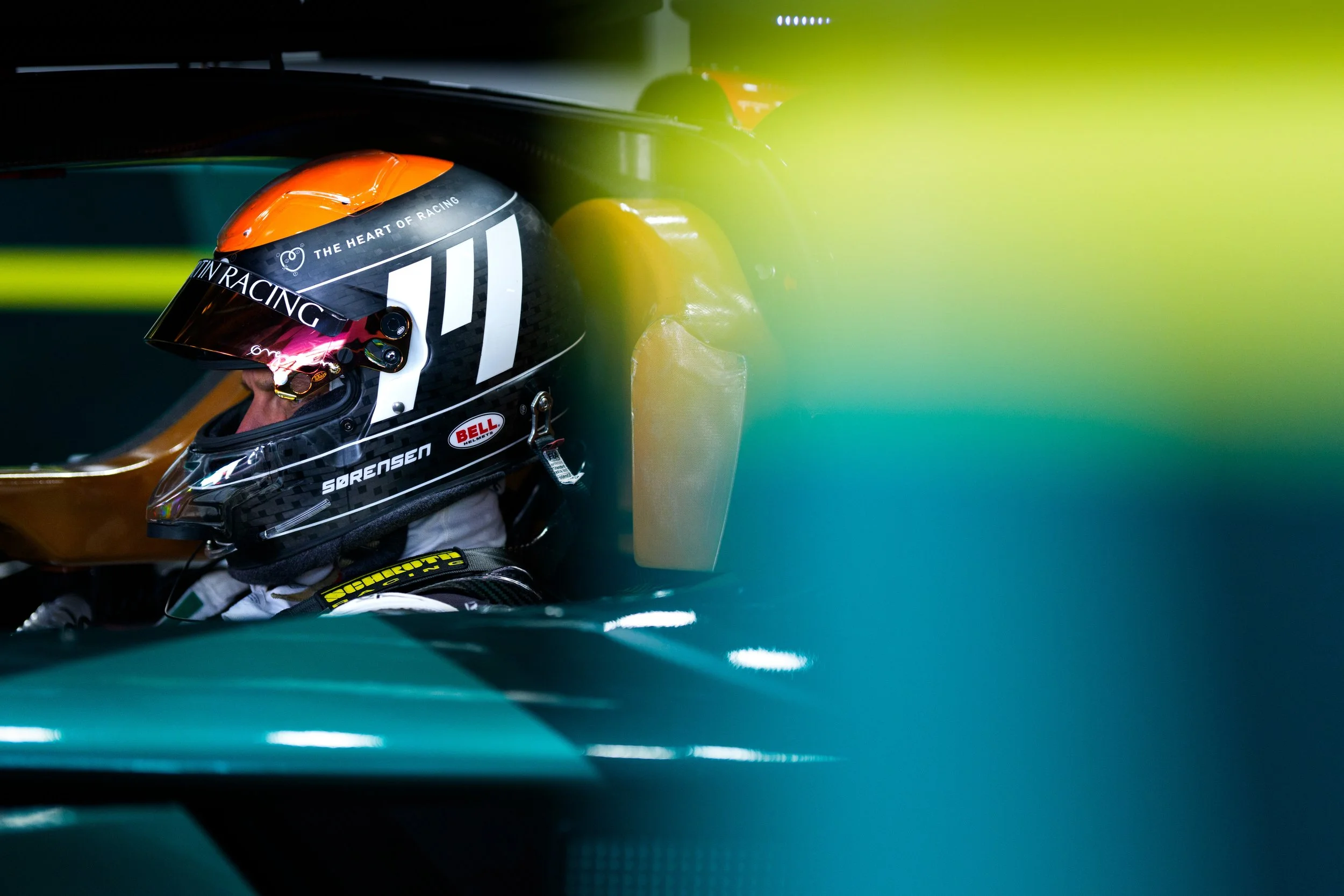
Image © Aston Martin Lagonda. Used for editorial purposes. Sorensen in cockpit.
The simple headline is that Aston Martin’s FIA World Endurance Championship weekend was not dramatic glory, but it was useful progress. In Hypercar, the #007 Aston Martin THOR Team Valkyrie of Harry Tincknell and Tom Gamble finished ninth overall and ninth in class, one lap down, giving the Valkyrie programme its first WEC points of the season.
The sister #009 car, shared by Álex Riberas and Marco Sørensen, finished 14th, also one lap down, which mattered in its own way given that the crew had required a new chassis following Sørensen’s Prologue crash earlier in the week.
That’s why Imola should probably be viewed as a step rather than a statement. The #007 result was not a fluke, Heart of Racing’s own recap notes that the car ran inside the top ten for much of the six hours, with a highest position of seventh, but nor was it proof yet that the Valkyrie is ready to fight with Toyota and Ferrari at the front. It was more measured than that: a point-scoring finish, valuable race mileage, and another layer of understanding for a car that is still being learned in public.
There were also small signs of genuine pace beneath the result. The official classification shows the #007 Valkyrie’s best race lap as a 1:32.489, which was fractionally quicker than the winning Toyota’s listed best lap of 1:32.490. That should not be over-interpreted, because one lap doesn’t equal race pace, strategy strength or tyre consistency. But it does matter as a useful little clue.
“Somewhere inside the Valkyrie, when the conditions and traffic align, there is speed to work with.”
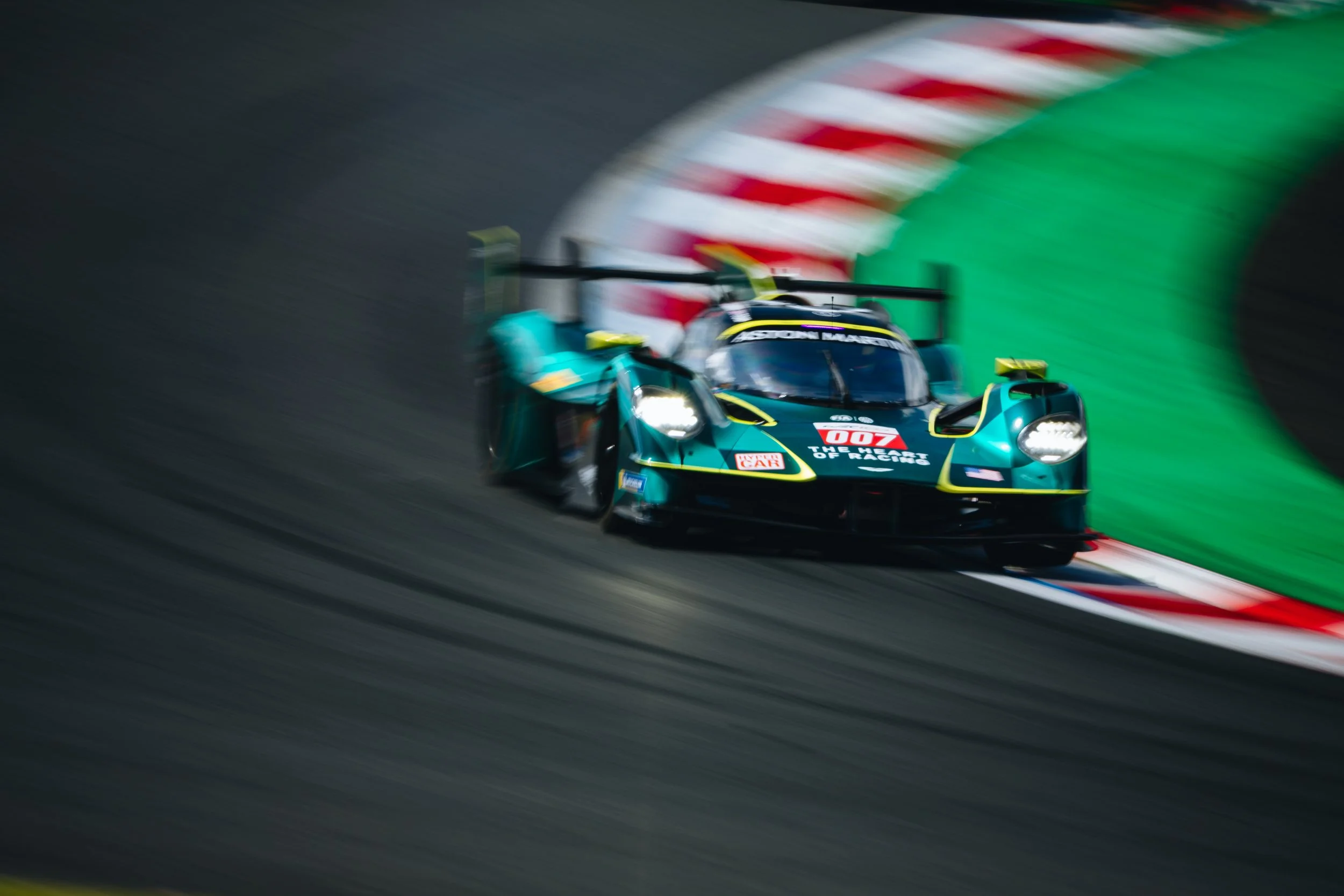
Image © Aston Martin Lagonda. Used for editorial purposes. #007 Valkyrie.
The more telling comments came from the drivers. Tincknell described Imola as a difficult circuit for the car, particularly because of the kerbs and low-traction sections, but said there was plenty to be confident about looking ahead. Gamble struck a similar tone, calling it a positive start and noting that Aston Martin was “night-and-day better” compared with where it had been at Imola the previous year. That feels like the right way to read it, not triumphalist, but not gloomy either.
For the #009 crew, the result looked modest on paper, but the context matters. After the disruption of the Prologue crash and chassis change, simply completing 212 of the 213 laps and getting through the race was not insignificant. Sørensen said the pace was not too bad, but that the car had started too far back to make full use of it, while Riberas described Imola as a hard track for the Valkyrie but still spoke of a “massive step forward” and reasons to be optimistic for Spa.
For readers who want a more visceral sense of what the Valkyrie programme now sounds and feels like from inside the car, as you can see, below I’ve included a link to the FIA WEC onboard footage from the #007 Valkyrie at Imola. Aston Martin have also released footage for the #009 car. It’s four hours long, so this isn’t one for a quick coffee break in full, but even a few minutes gives you a wonderful impression of the noise, speed and intensity of the car in traffic. The opening shots are fascinating too, with the driver’s helmet and breathing equipment giving the cockpit an almost sci-fi feel, part endurance racer, part Star Wars stormtrooper. It’s a small detail, but it reminds you just how physical and other-worldly these modern Hypercars have become. I’ve started the clip below from a period in the race, when the #007 Valkyrie is behind a Heart of Racing Vantage GT3 - two Aston Martins racing on the same circuit at the same time, but on different racing journey’s.
The LMGT3 side of the garage told a similar mixed story. The #23 Heart of Racing Aston Martin Vantage AMR LMGT3 of Gray Newell, Kobe Pauwels and Jonny Adam finished ninth in class and scored points, with Adam driving into the top ten during the final hour. The #27 car, shared by Ian James, Zacharie Robichon and Mattia Drudi, was classified 17th after completing 146 laps, its race undone late on by a suspension failure after earlier showing enough pace to suggest a much stronger result had been possible.
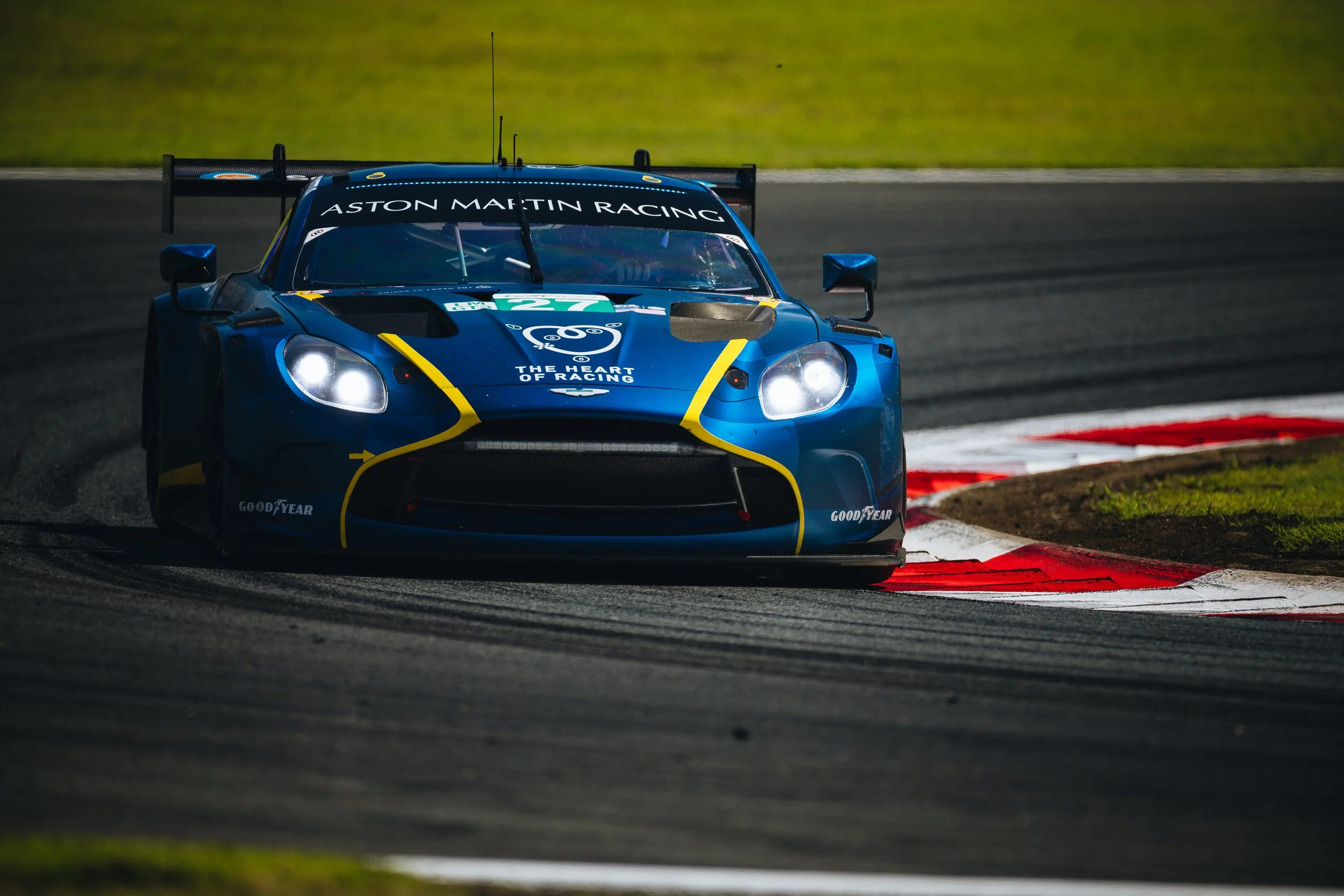
Image © Aston Martin Lagonda. Used for editorial purposes. #27 GT3 Vantage
That last point is important, because the Vantage had shown real speed earlier in the weekend. Kobe Pauwels topped LMGT3 in FP2 in the #23, and Mattia Drudi put the #27 at the top of LMGT3 in FP3. So the race result alone doesn’t tell the whole story. As with the Valkyrie, the message from Imola was not that everything is suddenly solved. It was that there is pace, there is promise, and there is still a gap between showing potential and converting it cleanly across a full WEC weekend.
The next stop for Aston Martin’s WEC programme is Spa-Francorchamps from 7th - 9th May, before the season builds towards Le Mans in June. Spa should tell us something different. Imola was tight, technical and not obviously kind to the Valkyrie. Spa is faster, more flowing, and, judging by the tone from the Aston Martin camp, a circuit where they believe the car may have a better chance to show what is beginning to emerge underneath.
Aston Martin’s Wider Racing World Steps Forward
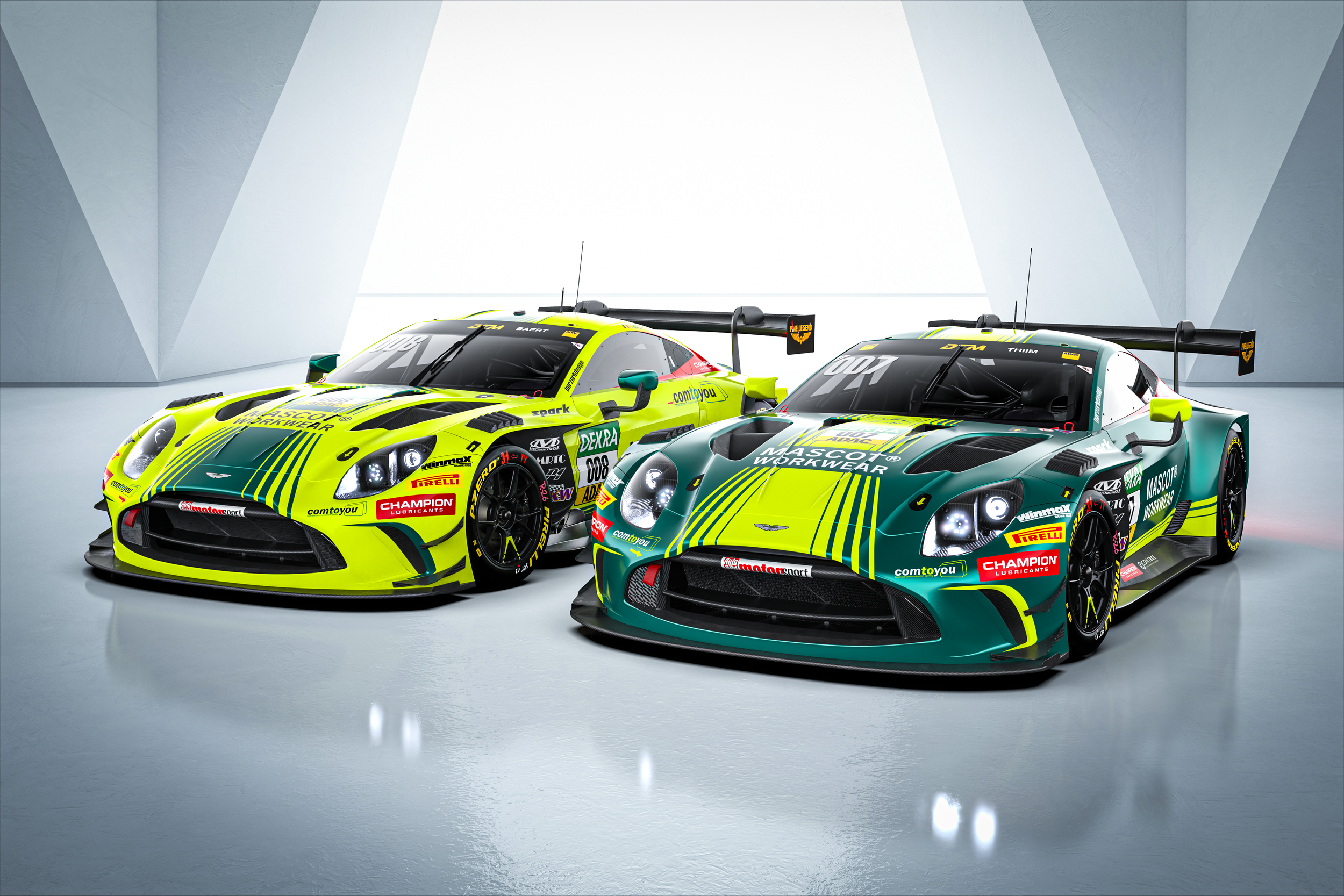
Image © Aston Martin Lagonda. Used for editorial purposes. Comtoyou Racing DTM.
If Imola gave us the serious, measured WEC picture, the wider racing landscape offered something broader and, in many ways, more encouraging.
One of the themes we’ve touched on several times in recent editions is that Aston Martin’s motorsport story in 2026 shouldn’t be judged through Formula 1 alone. F1 will always dominate the headlines, and understandably so, but it can also distort the wider picture. Right now, while the AMR26 remains a difficult and unresolved story, the Vantage GT3 and GT4 programmes are giving Aston Martin something rather different: depth, activity and visible momentum across a number of important championships.
That matters, because Aston Martin’s identity has never sat neatly in one paddock. The marque’s competition history has always moved between works ambition, customer racing, privateer commitment and those slightly romantic stories of people taking Aston Martins into hard races because they believe in the car and the badge. In that sense, the current spread of activity feels very Aston Martin. Not always dominant, not always straightforward, but busy, determined and genuinely alive.
This weekend alone gives us plenty to watch. British GT begins its season at Silverstone, DTM starts at the Red Bull Ring, Comtoyou adds another Aston Martin thread in ADAC GT Masters, Rebel Rock Racing brings the Vantage GT3 to GT World Challenge America at COTA, and the build-up to the CrowdStrike 24 Hours of Spa already has a very appealing Belgian-Aston flavour thanks to Sarah Bovy and Comtoyou.
So, before we return later to the unresolved question of Formula 1 and Miami, it’s worth spending some time with the part of Aston Martin’s racing world that currently feels much more settled: the GT arena, where the Vantage is not waiting to prove whether it belongs, but is already out there fighting.
British GT Begins at Silverstone: A Strong Aston Martin Presence
Closer to home, the British GT Championship begins its 2026 season today at Silverstone with the Silverstone 500, and there’s plenty of Aston Martin interest to follow.
Because this roundup goes live at 6am on Sunday, practice and qualifying should already be complete by the time many of you read this. The main event, however, is still ahead: a three-hour race around Silverstone later today (Sunday 26th April), running from 13:00 to 16:00. That gives this section a slightly different feel from a normal recap. It’s not quite a result story yet, but it’s very much a “keep an eye on this today” story.
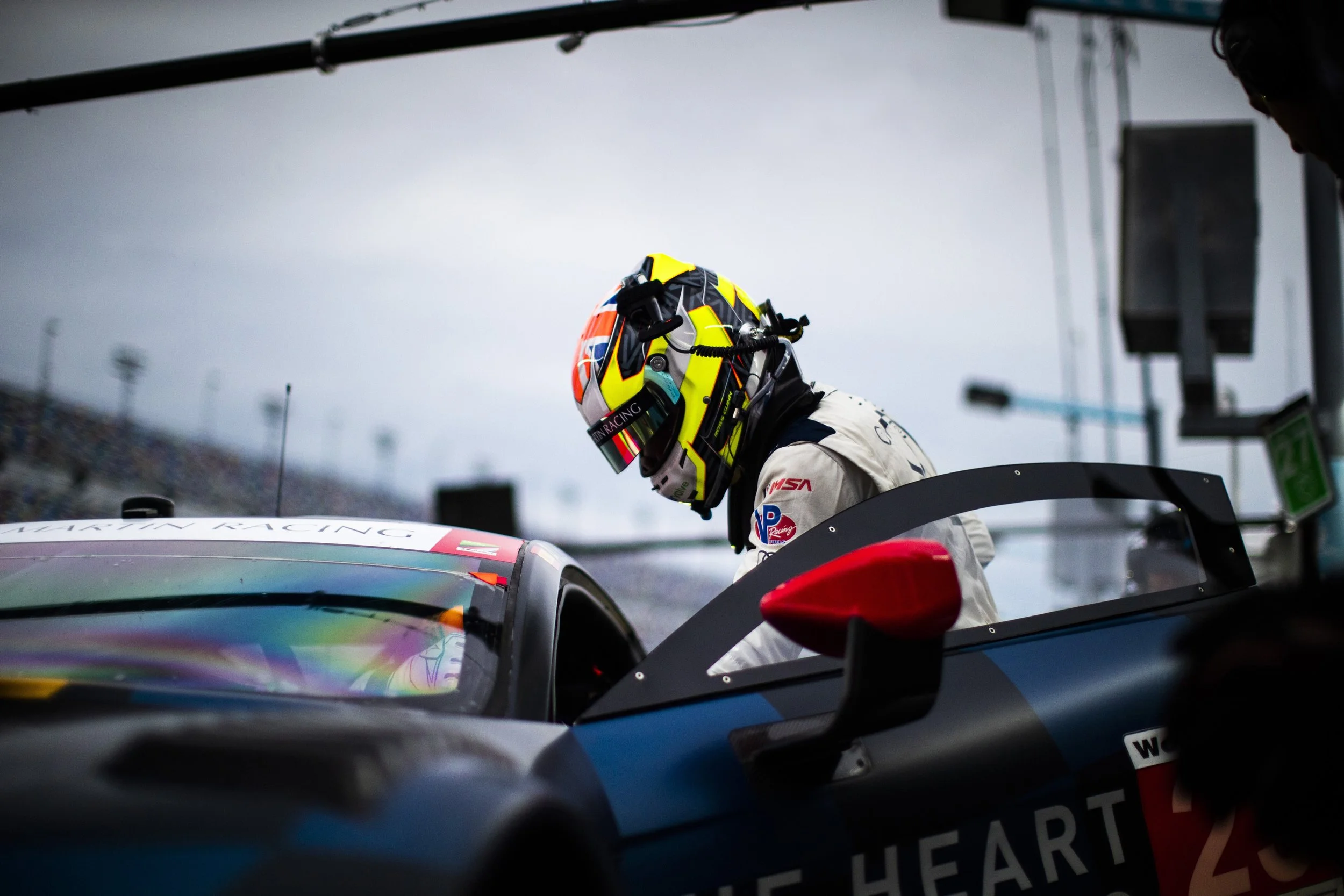
Image © Aston Martin Lagonda. Used for editorial purposes. Ross Gunn.
At GT3 level, Aston Martin will be represented by Beechdean Motorsport, with Andrew Howard and Ross Gunn in the #7 Vantage AMR GT3 Evo. That pairing immediately gives the Aston Martin presence some weight.
Howard and Beechdean have long been part of the modern Aston Martin racing story, while Gunn brings serious factory-level experience and pace. In a competitive GT3 field, they look like a very natural focal point for Aston Martin followers.
The GT4 field gives the marque even broader representation. There are Vantage AMR GT4 Evo entries for Jessica Hawkins and Will Orton with MK Racing, Darren Turner and Daniel Lavery with Grange Racing with FSR, Ronan Pearson and John Hartshorne with GBR Stratton Motorsport, and James Townsend and Joe Wheeler with Townsend Racing powered by Fox Motorsport. That’s a healthy Aston Martin presence across the grid, and it’s especially good to see names such as Hawkins and Turner giving the GT4 field a blend of profile, experience and development value.
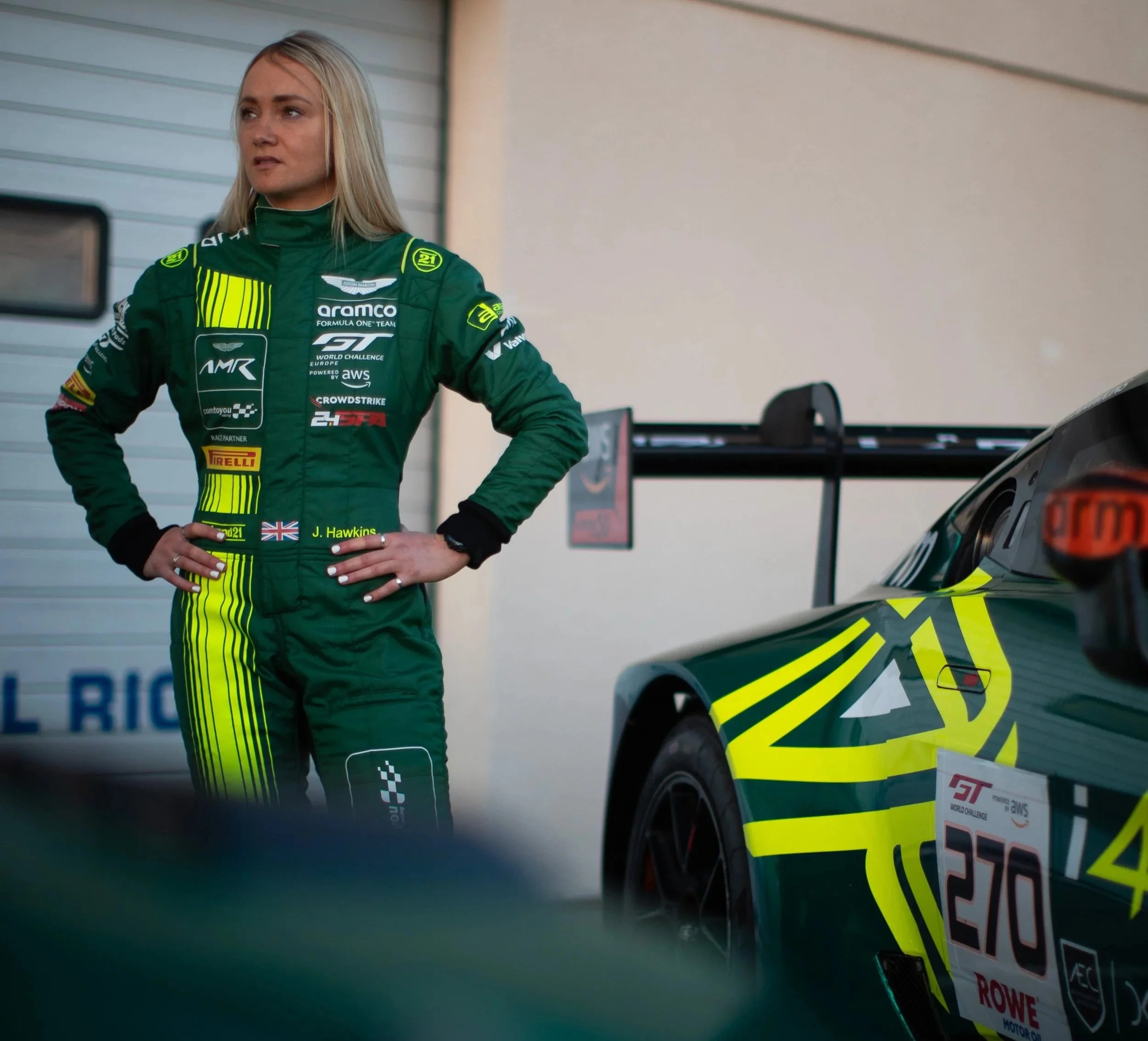
Image © Aston Martin Lagonda. Used for editorial purposes. Jessica Hawkins.
What makes British GT worth following is that it often sits in a sweet spot between professional ambition and proper enthusiast accessibility. It has serious drivers, serious teams and serious machinery, but it still feels close enough to the ground for spectators and club-level followers to connect with it.
For Aston Martin, that matters. The Vantage GT4 in particular is one of those cars that keeps the brand visible in the places where future drivers, customers and fans often first encounter modern GT racing.
So today’s Silverstone 500 is another useful piece in this week’s wider picture. While Valkyrie continues to develop on the world stage and the GT3 cars spread across Europe and America, British GT gives Aston Martin a strong home-racing thread as well. It will be well worth seeing where the Vantages stand once the chequered flag falls this afternoon. We’ll follow up next week.

DTM Begins at the Red Bull Ring: Nicki Thiim’s Aston Martin Homecoming
From Silverstone, we move to Austria, where the 2026 DTM season begins this weekend at the Red Bull Ring. For Aston Martin followers, the important detail isn’t simply that the Vantage GT3 is back on the DTM grid, but that Nicki Thiim is now racing it for Comtoyou Racing.
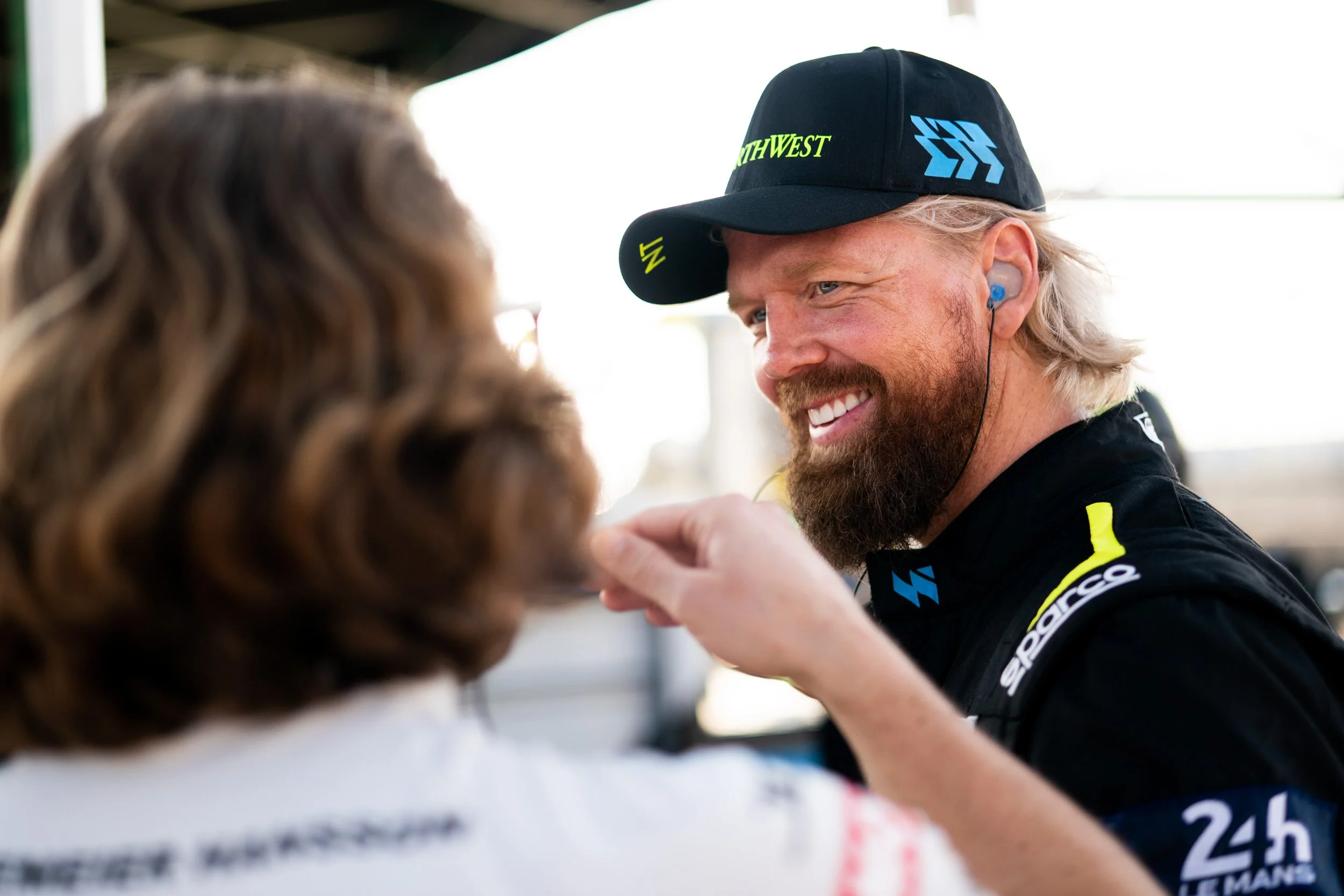
Image © Aston Martin Lagonda. Used for editorial purposes. Nicki Thiim.
There is something rather fitting about that. Thiim has been part of the Aston Martin family for a decade, and while he has already achieved an enormous amount in GT and endurance racing, DTM carries a different emotional weight for him. His father, Kurt Thiim, won the DTM title in 1986, and Nicki has spoken this week about Aston Martin success in the championship being probably the last major item on his racing bucket list. That gives this story a human warmth beyond the usual driver-line-up announcement.
This is not simply a factory driver taking on another programme. It is a driver returning to a championship that means something to his family, this time in a car and brand that genuinely feel like home.
By the time this roundup goes live on Sunday morning, the first DTM race of the weekend will already have been run, with Sunday qualifying and the second race still to come. DTM’s Spielberg weekend runs from 24th - 26th April, with Race 1 on Saturday and Race 2 on Sunday, so this is another story to watch as the day unfolds.
There’s also a wider Aston Martin point here. Aston Martin confirmed earlier this year that Thiim would contest the full 2026 DTM season with Comtoyou, marking the first time a works Aston Martin driver has raced a Vantage GT3 in the championship. That matters because DTM remains one of Europe’s most visible GT3-based series, and Aston Martin needs its customer and partner programmes to be seen in places like this. It’s not enough for the Vantage to be competitive only in familiar endurance settings; it needs to carry credibility across different formats, circuits and audiences.
“There’s a second Comtoyou Aston Martin thread at the Red Bull Ring too.”
In ADAC GT Masters, the Belgian team is running an Aston Martin Vantage GT3 Evo for Jamie Day and Baudouin Detout, with the opening round also taking place this weekend in Austria. ADAC describes the project as part of a longer-term “Road to DTM” idea, which makes it a useful companion to Thiim’s senior programme rather than a detached side note.
Taken together, the Red Bull Ring weekend feels like another good example of where Aston Martin’s wider racing presence is beginning to look joined-up. One Vantage in DTM with a highly experienced works driver and a strong personal story; another in ADAC GT Masters with younger drivers and a development pathway in mind. It’s exactly the kind of layered motorsport activity that can sometimes be lost beneath the noise of Formula 1, but for Aston Martin, it may prove just as important in building the credibility of the Vantage GT3 over a full season.
GT World Challenge America: Rebel Rock Brings Aston Martin to COTA
From the Red Bull Ring, Aston Martin’s GT3 story stretches across the Atlantic to Texas, where Rebel Rock Racing is bringing the Vantage AMR GT3 Evo into GT World Challenge America at COTA.
COTA, for anyone less familiar with the abbreviation, is the Circuit of the Americas in Austin, Texas. It’s best known to many as the home of the United States Grand Prix, but this weekend it’s hosting the second round of the 2026 GT World Challenge America season. The official entry list confirms the #71 Rebel Rock Racing Aston Martin Vantage AMR GT3 Evo in Pro-Am, with Robin Liddell and Frank DePew sharing the car.
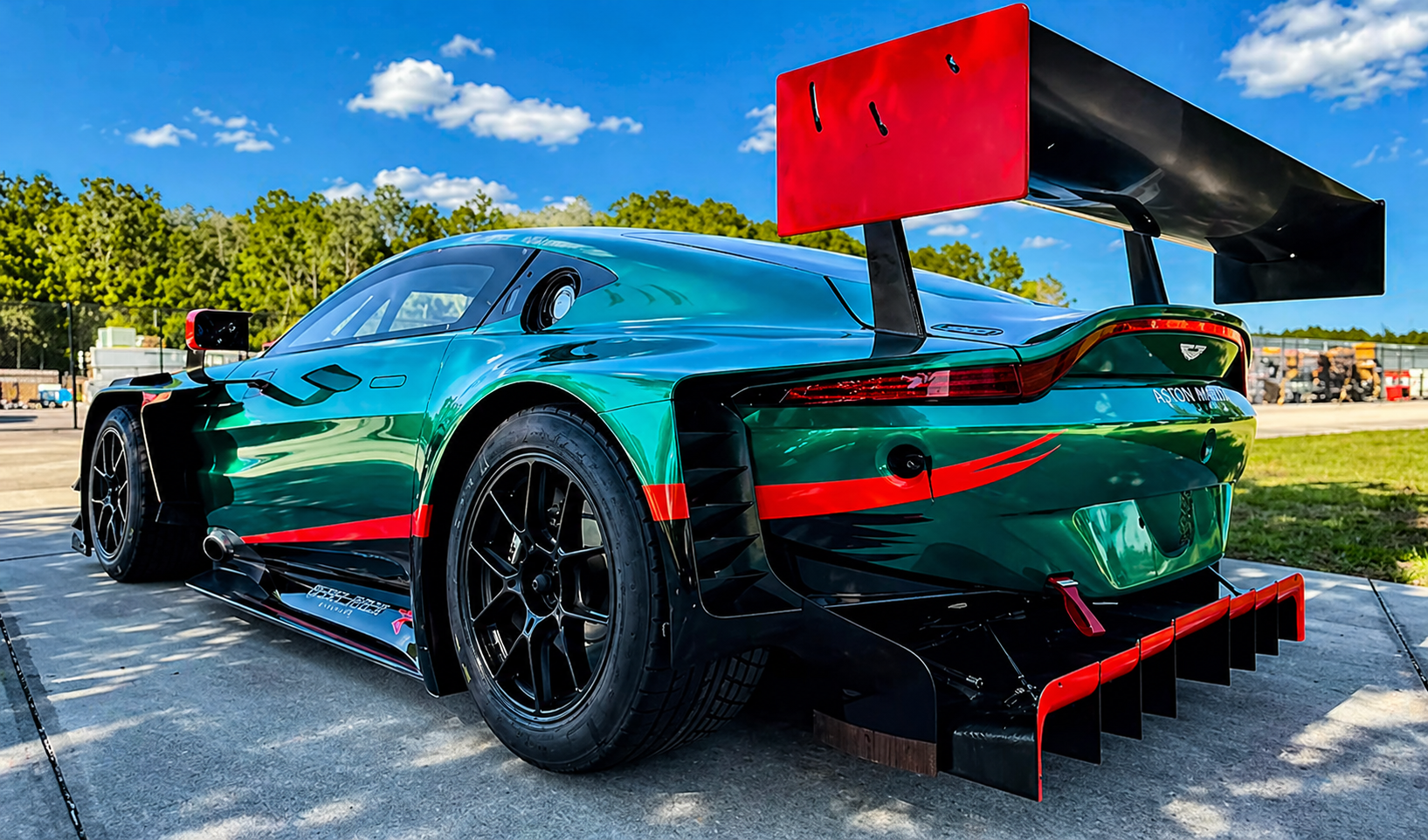
Image © Rebel Rock Racing. Used for editorial purposes.
Rebel Rock is a familiar name to followers of IMSA Michelin Pilot Challenge, but this marks a step into full-time GT3 competition. Liddell has described the move as “a big step” for the team, and that feels like the right way to read it.
This isn’’t just a one-off novelty appearance with an Aston Martin on the entry list; it’s part of Rebel Rock’s broader move into GT World Challenge America with the Vantage GT3 Evo.
There’s also something encouraging about the wider grid. Sportscar365 reported a 22-car entry for the COTA weekend, with Rebel Rock joining the Pro-Am ranks and adding further variety to the championship’s second round. In a season where Aston Martin’s wider GT presence is becoming one of the more positive threads to follow, this American programme adds another useful layer.
The timing also helps the story. While British GT begins at Silverstone and Comtoyou pushes Aston Martin colours at the Red Bull Ring, Rebel Rock gives the Vantage GT3 an American foothold on the same weekend. It’s another reminder that the modern Aston Martin racing picture is not centred on one team, one championship or one continent.
“The badge is appearing in more places, with more partners, and increasingly with the Vantage GT3 Evo as the common thread.”
As with several of this week’s stories, we should be careful not to overstate it. Rebel Rock’s GT3 programme is just beginning, and COTA will be as much about learning as headline results. But that’s still meaningful. Programmes like this are how a GT car builds its reputation over time: not only through victories, but through teams choosing it, learning it, developing with it and putting it into serious competition across different series.
Aston Martin’s Next Generation: Zhenrui Chi Joins the Driver Academy
Away from the immediate race weekends, Aston Martin also made a quieter but still interesting move this week by confirming that Zhenrui Chi has joined the Aston Martin Aramco Driver Academy.
Chi is 17, and is described by the team as one of China’s most promising young racing drivers. His signing follows an evaluation process which first brought him into the Academy’s orbit at Mugello, before Aston Martin tracked his progress through the 2025 season across European and Middle Eastern F4 categories.
For Aston Martin, this isn’t headline-grabbing in the same way as a Formula 1 upgrade story or a GT3 race result, but it does matter. The modern Aston Martin racing programme is increasingly broad, stretching from Formula 1 through GT3, endurance racing, junior single-seaters and driver development. Bringing Chi into the Academy strengthens that pathway, and also places Aston Martin more visibly into the global junior racing conversation. He joins an Academy roster which already includes Mari Boya, Mathilda Paatz, Ava Lawrence and Roland Nagy, giving the programme a noticeably international feel. Chi will race in an Aston Martin Aramco-liveried car, carrying the marque’s green into the Formula Regional paddock.
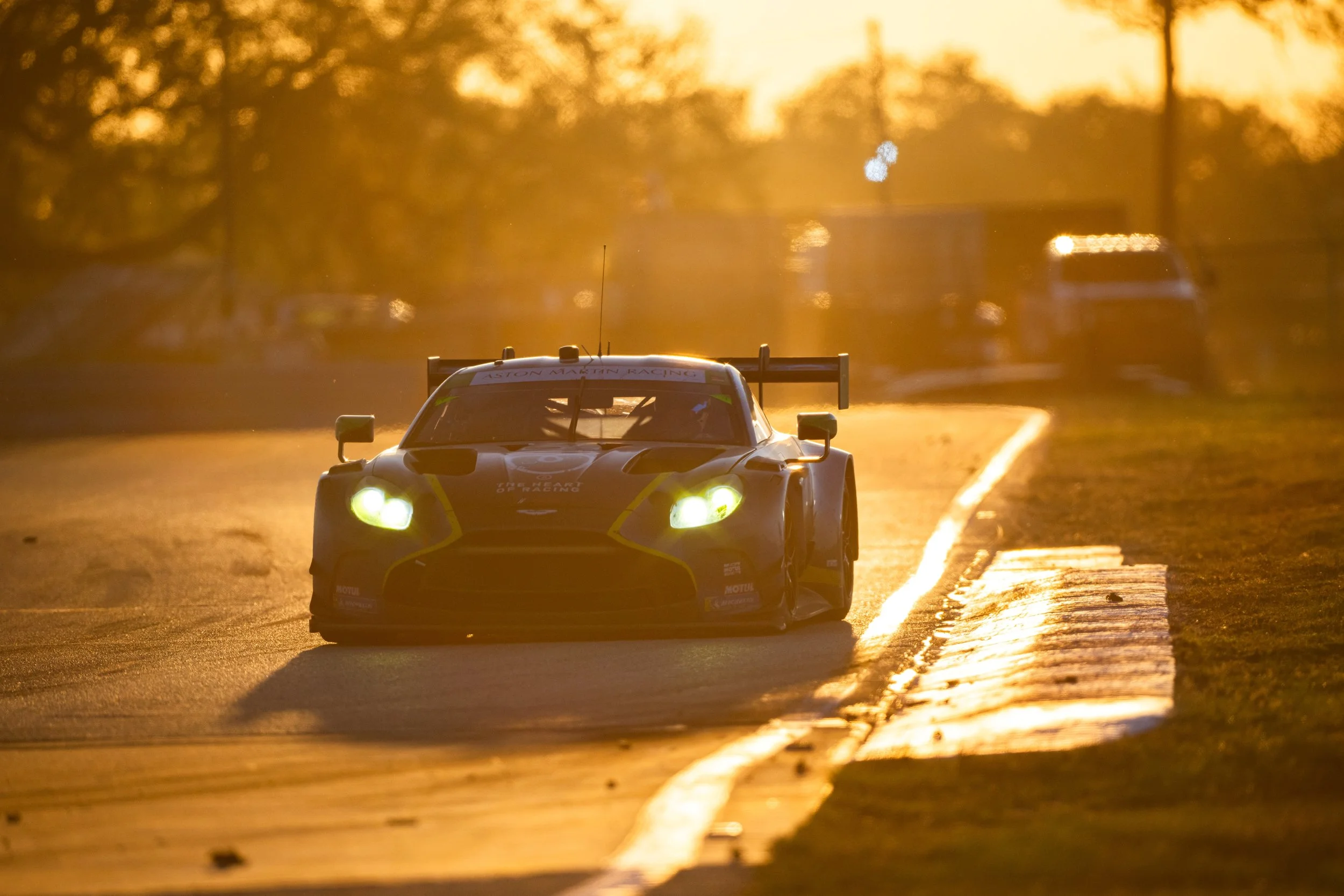
Image © Aston Martin Lagonda. Used for editorial purposes. Vantage GT3 at sunset.
That wider pathway was also reflected in Aston Martin’s feature this week on Mari Boya, who recently made his GT3 debut with Comtoyou Racing at Paul Ricard alongside Lance Stroll and Roberto Merhi in an Aston Martin Vantage GT3.
Boya’s comments were interesting because they gave a glimpse of what happens when a single-seater driver steps into a very different form of racing. He spoke about needing to be more patient with the car, adapting to the lower level of downforce and learning how much concentration and stamina are required over a long stint. That’s exactly the sort of experience that can broaden a young driver, especially one preparing to return to Formula 2 at Miami and Montréal.
There was also a nice human detail in the story. Boya explained that it was Lance Stroll who invited him to join the GT3 effort, with the call coming while Stroll was in Suzuka. Boya admitted he had missed it at first because it was around five o’clock in the morning in Spain, but once they spoke, the opportunity clearly meant a great deal to him.
It’s easy to treat driver academies as distant background programmes, but these are the strands that often shape the next generation of racing talent. Aston Martin’s senior Formula 1 team is under pressure, and rightly so given its difficult start to 2026, but the wider structure being built around the team remains important. Whether in Formula Regional, F1 Academy, Formula 2 or occasional GT3 opportunities, Aston Martin is steadily placing more young drivers into meaningful environments where they can learn, adapt and represent the brand.
In a week where much of the Formula 1 discussion has been about vibration, reliability and lost performance, it’s worth remembering that motorsport progress is not only measured by what happens in the next Grand Prix. Sometimes it’s also found in the quieter work of building the future.
Formula 1: Miami Will Tell Us More Than the Rumour Mill Can
After a strong week for Aston Martin in GT racing, attention inevitably turns back to Formula 1, where the next real answer will not come from a headline, a podcast clip, or a paddock theory, but from the stopwatch in Miami.
The unusual gap in the F1 calendar has given Aston Martin and Honda something they probably didn’t expect after Japan: time. With Bahrain and Saudi Arabia postponed, the team has had a longer break than originally planned before the Miami Grand Prix weekend on 1st - 3rd May. For a team dealing with vibration, reliability and limited running during the opening phase of the season, that time may prove valuable. Equally, it doesn’t automatically mean the problems are solved.
Image © Honda Motor Co., Ltd. Used for editorial purposes.
Honda’s Shintaro Orihara has been clear that the work hasn’t stopped. Team members from Aston Martin and Honda Racing Corporation have been working together at HRC’s Research and Development Centre in Sakura, with Orihara saying the focus has been on enhancing countermeasures before Miami. His message was measured rather than triumphant: things will take time, but the work is continuing.
That feels like the correct way to read the situation. There’s been a lot of speculation around Aston Martin’s difficult start to 2026, and understandably so. The team hasn’t scored a point from the opening three races, the AMR26 has been held back by vibration and reliability concerns, and it hasn’t yet been possible to judge the car’s true chassis performance with any confidence. But speculation is still speculation. Until the cars run properly in Miami, under the new weekend format and with whatever countermeasures Aston Martin and Honda are prepared to use, nobody outside the team can say with certainty where they really stand.
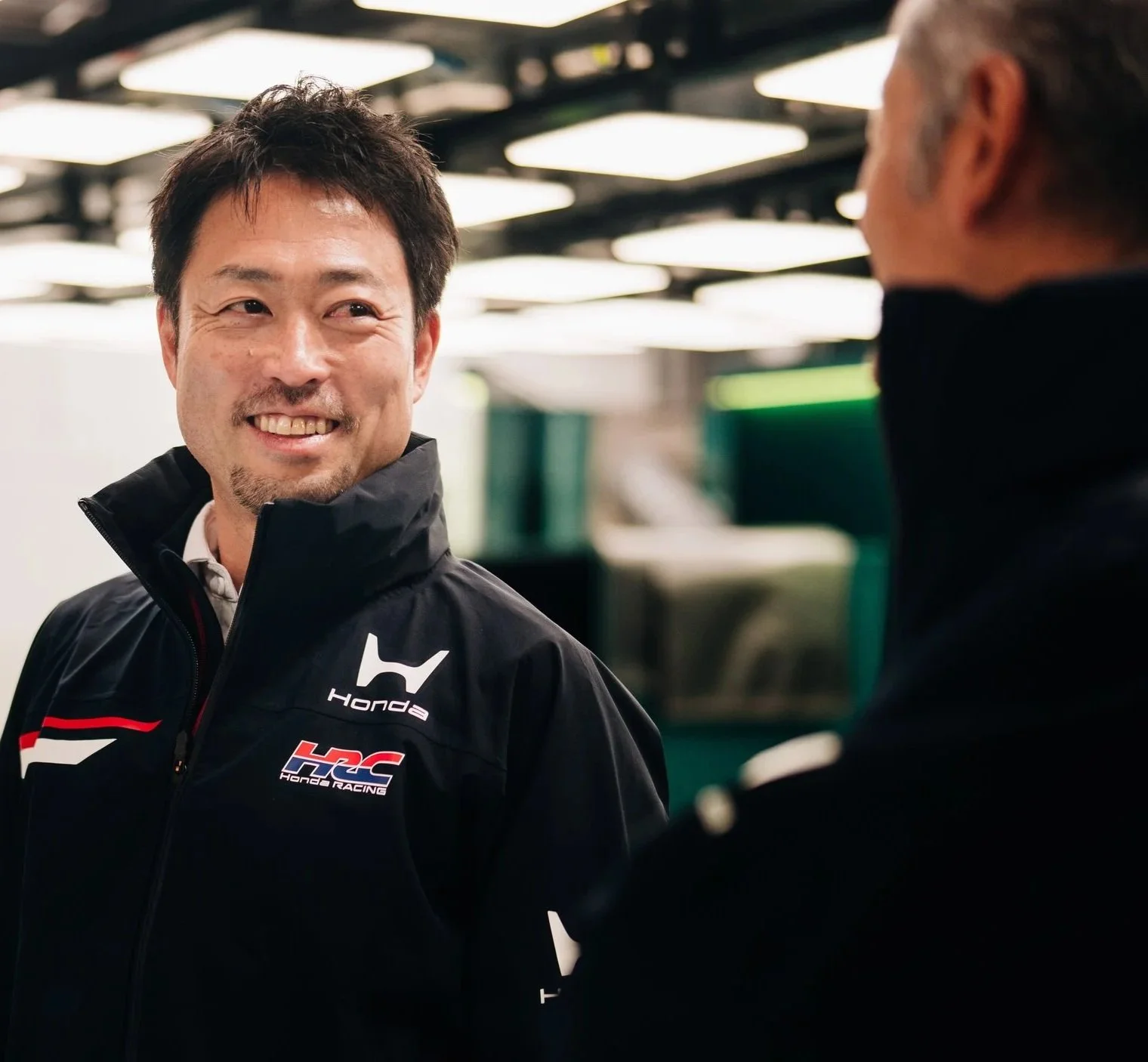
Image © Honda Motor Co., Ltd. Used for editorial purposes. Shintaro Orihara - HRC.
There are reasons for cautious optimism. Fernando Alonso completing a race distance in Japan, even one lap down, was still a meaningful step after the earlier reliability interruptions. Mike Krack described that as significant, while also acknowledging that the overall performance level remains far from where it needs to be. That balance matters. Aston Martin can take encouragement from improved running, but there is no need to dress it up as a turning point before the evidence exists.
The regulation picture adds another layer. Sky Sports F1’s discussion this week around the proposed 2026 changes underlined just how much Formula 1 is still learning about these new power units and energy deployment rules. The suggested tweaks appear to be more scalpel than sledgehammer: changes to energy harvesting, super-clipping, boost deployment and possibly start-line safeguards, all intended to improve drivability and reduce some of the more awkward characteristics seen in the opening rounds.
For Aston Martin, that creates both opportunity and complication. Any regulation adjustment that makes the cars easier to drive more consistently could help, but every team will be learning at the same time. Miami is also a Sprint weekend, which means very limited practice before competitive sessions begin. That’s not ideal for a team trying to validate solutions, understand its car and rebuild confidence.
So, this feels like a moment for patience rather than prediction. Aston Martin may arrive in Miami with genuine progress. They may still find that the problem is stubborn and inconsistent. They may discover that reliability has improved but pace remains elusive. All three outcomes are possible. What matters is that Miami should give us a clearer first reading, not the whole answer, and certainly not the final judgement on Aston Martin’s 2026 season, but the first proper look at whether this extended break has allowed the team and Honda to move from containment towards recovery.
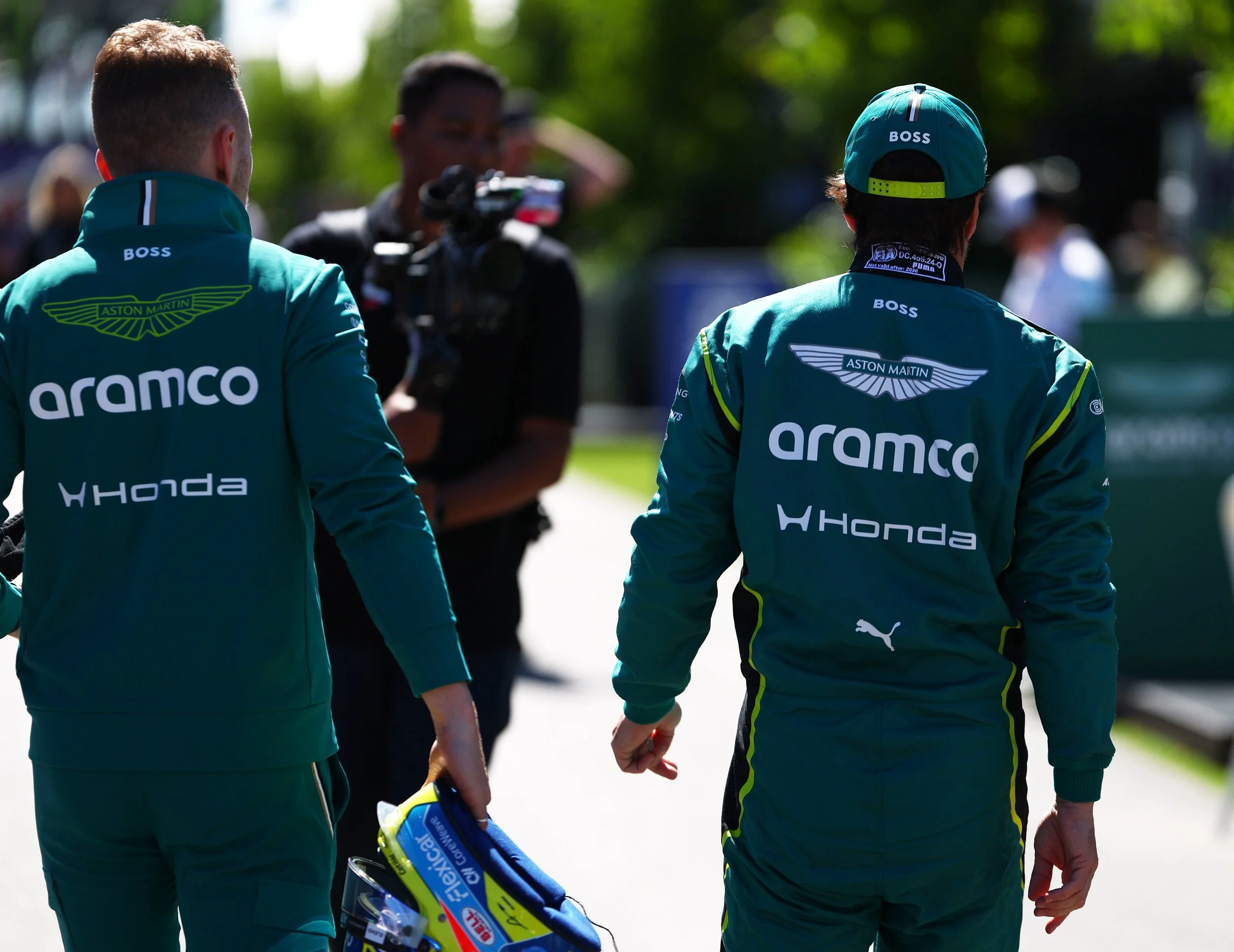
Image © Honda Motor Co. Ltd & Aston Martin Aramco. Used for editorial purposes. Fernando Alonso.
For now, the honest position is simple: Aston Martin needed time, and unexpectedly, the calendar gave them some. Next weekend, we will begin to see what they’ve done with it.
Coming Next Sunday: Inside Aston Martin’s Global Dealer Network
From Walton-on-Thames to Tokyo, from Newport Pagnell to New York, Aston Martin’s dealer network is far more than a map of showrooms.
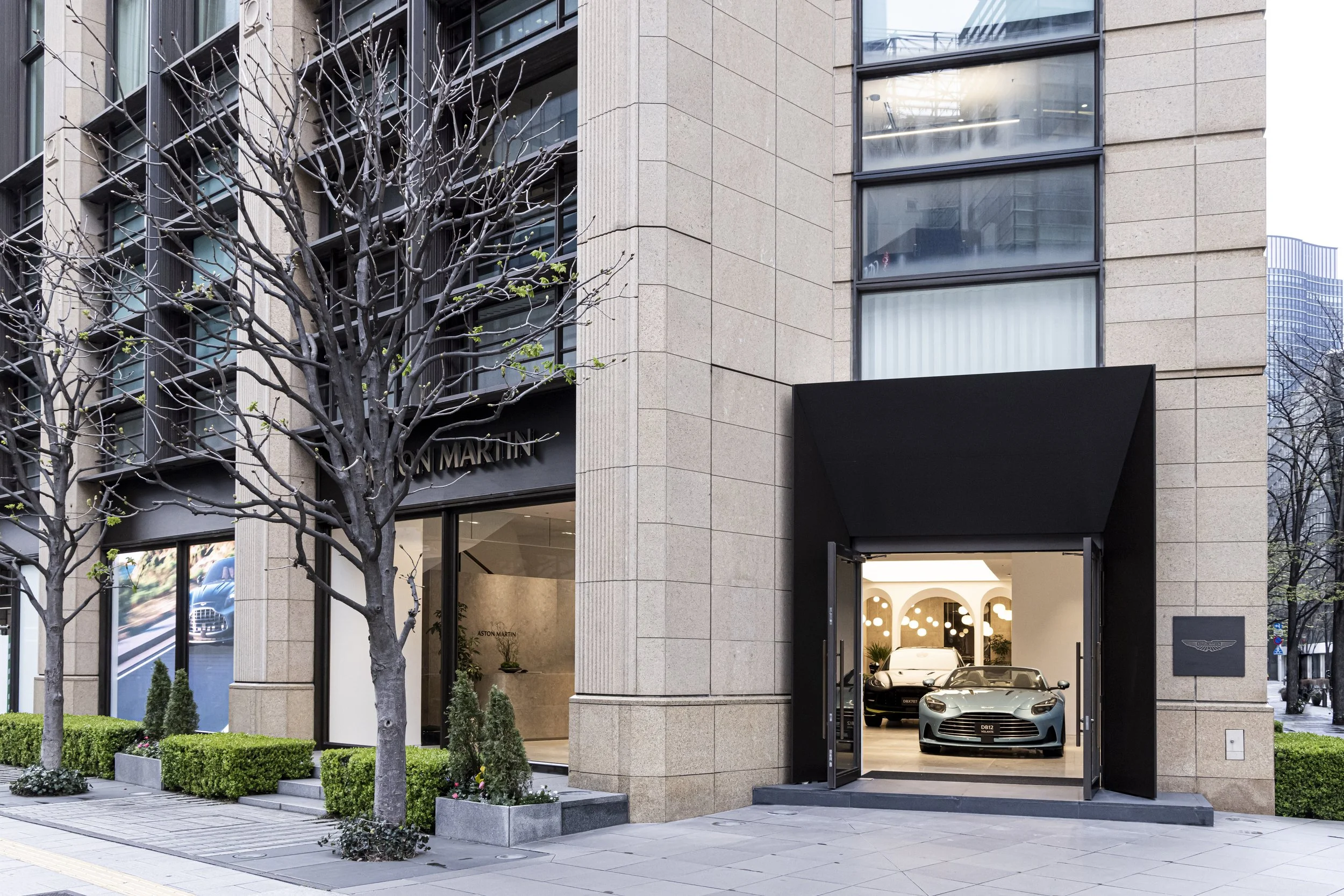
Image © Aston Martin Lagonda. Used for editorial purposes.
Next Sunday’s FTP Featured Article takes a closer look at one of the most important, but often overlooked, parts of the Aston Martin world: the places and people that represent the marque in real life.
For many owners, the dealership is where the dream begins. But it’s also where the Aston Martin promise is tested, through sales, servicing, trust, heritage knowledge, aftersales support and the long-term ownership experience.
In this new feature, we explore how Aston Martin’s global dealer network has evolved, why names such as HWM, JCT600, Dick Lovett and Aston Martin Works matter, and how modern flagship spaces in places like New York and Tokyo fit into the marque’s ultra-luxury future.
Inside Aston Martin’s Global Dealer Network
Published next Sunday at 6am on Fuel the Passion Website
Away From the Circuits: Wings, Country Houses and Aston Martin Stories With Longer Shadows
Away from the racetrack, one of the stranger Aston Martin stories of the week continued to gather attention: the ongoing logo dispute involving Aston Martin, Geely and the London EV Company.

Image © Aston Martin Lagonda. Used for editorial purposes.
At first glance, it sounds almost too odd to be a serious corporate story. Aston Martin, whose wings have been part of the marque’s identity since 1927, is reportedly challenging a proposed badge for LEVC, the electric taxi maker owned by Geely.
The awkwardness, of course, is that Geely is also a major Aston Martin shareholder, with a significant stake (approximately 17% - third largest shareholder) in the business and representation at board level. As you can see from the image below, placed side by side, it’s not difficult to see why Aston Martin may feel uncomfortable.

Image © Aston Martin Lagonda & Geely proposed logo. Used for editorial purposes.
The two emblems are not identical, and the lower badge clearly has its own central motif, but the broad visual language is hard to ignore.
Both rely on a horizontal winged form, both carry that sense of spread and symmetry, and both use the idea of outstretched wings to suggest movement, prestige and identity.
For Aston Martin, that matters. The wings are not just a badge on the bonnet; they are one of the most recognisable symbols in British motoring. They carry nearly a century of accumulated meaning - Le Mans, Newport Pagnell, Bond, DB cars, Vantage, Vanquish, Valkyrie, and the quieter emotional pull that draws so many of us to the marque in the first place. A logo like that is not merely graphic design.
“It’s heritage, reputation and commercial value, all distilled into a few lines.”
That’s what makes the story more than a simple trademark disagreement. Protecting a brand’s visual identity is not unusual; car makers guard their emblems, shapes, names and design language very carefully. But when the dispute involves a company connected to one of your own major investors, it inevitably carries a different tone. It becomes a reminder that modern Aston Martin is not just a maker of beautiful cars, but a complex global business with overlapping partnerships, shareholders and commercial interests. It’s legally interesting, commercially awkward and symbolically rather strange, but it’s not something to inflate beyond the available facts. The important point is that the Aston Martin wings remain one of the most valuable identifiers the company has. In a luxury brand, that kind of visual recognition is not decoration; it’s part of the asset base.
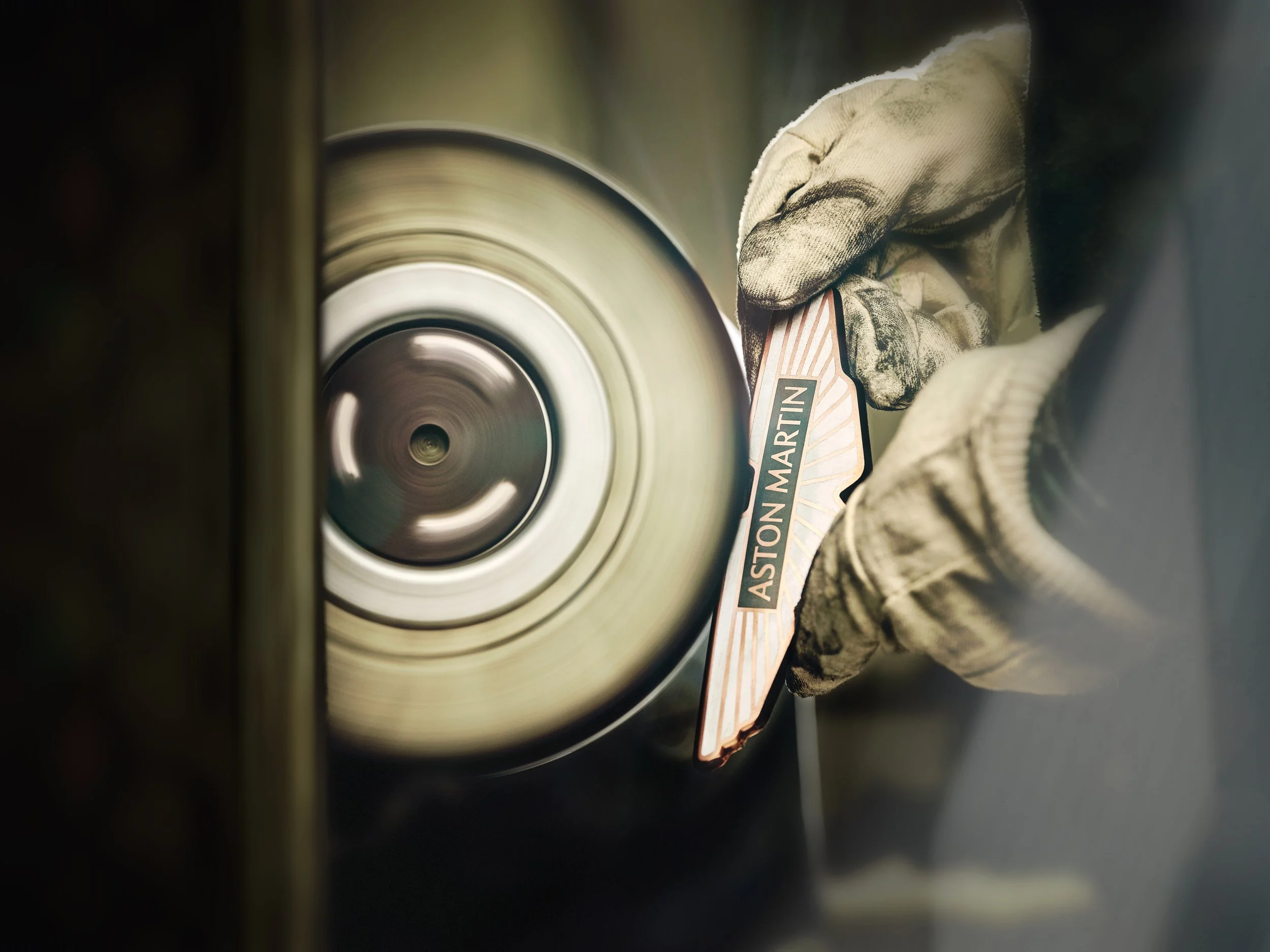
Image © Aston Martin Lagonda. Used for editorial purposes.
From a modern corporate dispute, we then move to a very different kind of Aston Martin story, one rooted not in the courtroom, but in the drawing room.

Battlecrease Hall: A Quiet Room in Aston Martin History

Image © Google Earth. Used for editorial purposes.
Robb Report carried a lovely piece this week on Battlecrease Hall in Shepperton, a historic English estate now on the market (with an asking price of around £2.95 million) and reportedly connected with one of the most important business moments in Aston Martin’s modern history.
The house was once owned by Walter Hayes, the former Ford executive who played such an important role in Aston Martin’s survival and direction during a difficult period. According to the property’s lore, it was inside Battlecrease Hall that the agreement for Ford to acquire Aston Martin was reached.

Image © Google Earth. Used for editorial purposes.
It’s a small story in one sense, a property listing with an Aston Martin connection. But it’s also a reminder that the marque’s history is not only written in factories, race circuits and design studios. Sometimes the future of a company turns quietly in a room somewhere, over conversations that only later become part of the wider story.
Walter Hayes remains one of those figures who deserves to be remembered properly in the Aston Martin story. The Ford era is sometimes discussed rather bluntly, often through the lens of parts-sharing or corporate ownership, but without that period the Aston Martin we know today may have looked very different indeed.
“If Battlecrease Hall really was the setting for that agreement, then it becomes one of those curious places where a private house briefly intersected with the fate of a British car maker.”
That, really, is why these smaller stories matter. They’re not headline-grabbers in the way Formula 1 or a new model launch might be, but they add texture. Aston Martin has always lived partly in these overlapping worlds: industry, design, racing, finance, country houses, film sets, showrooms and private owners’ garages. The more you follow the marque, the more you realise how often the most interesting threads are found just off the main road.
One-77 Revisited: Aston Martin’s Great Modern Statement
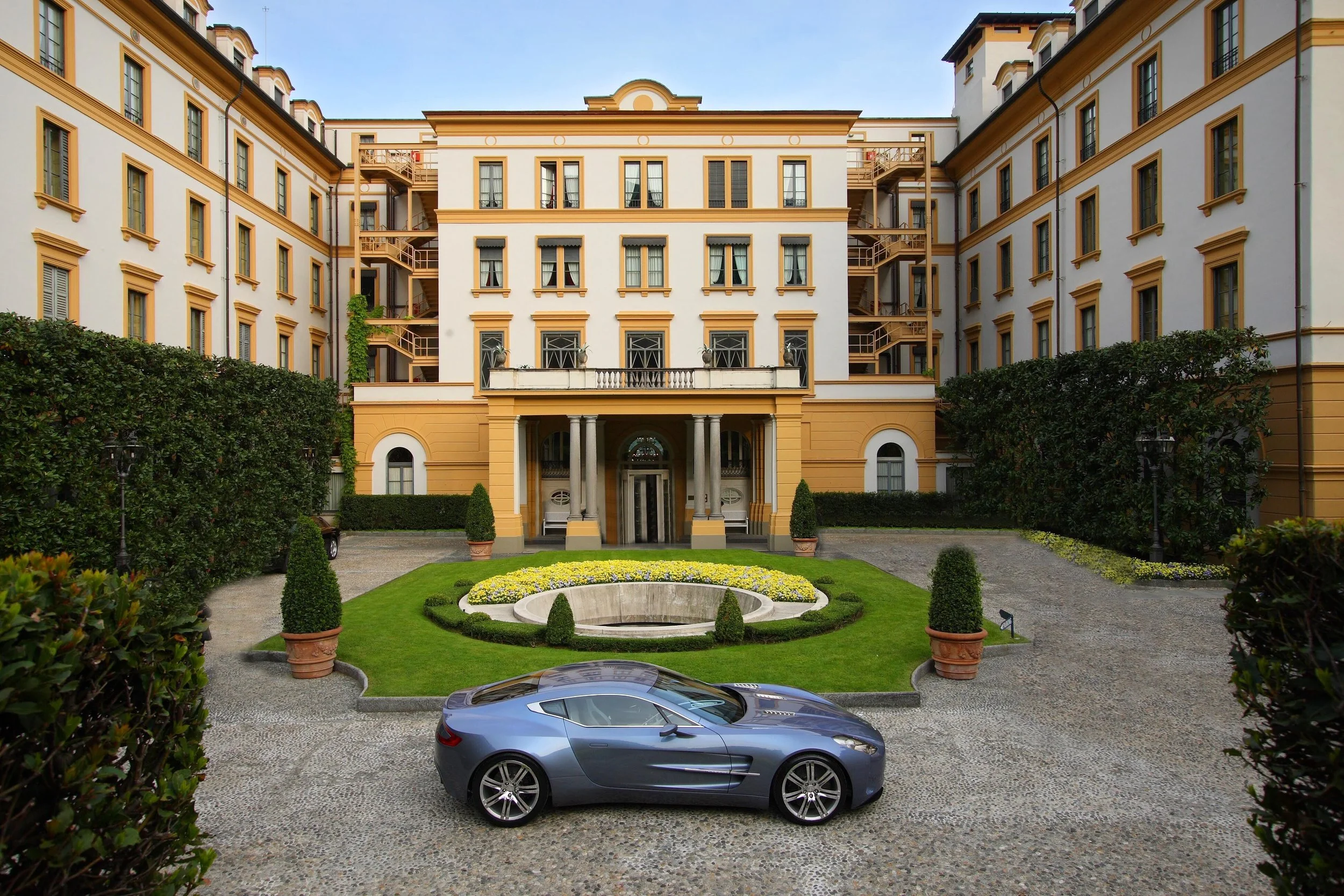
Image © Aston Martin Lagonda. Used for editorial purposes.
Amid the week’s newer headlines, there was also something rather special in looking back at the Aston Martin One-77 - a car that still feels every bit as dramatic now as it did when the world first caught sight of it. The Petersen Automotive Museum’s recent feature describing it as Aston Martin’s original modern hypercar was a timely reminder of just how significant this machine really was.
Part of the One-77’s appeal has always been the way Aston Martin revealed it. The first glimpse came at the 2008 Paris Motor Show, where the car appeared only as a maquette, tantalisingly hidden beneath a grey pin-stripe cover, with just enough of the front corner visible to stir intrigue. The fuller picture followed at the Geneva Motor Show in March 2009, where Aston Martin displayed a metallic blue mock-up alongside a rolling chassis and complete powertrain, making it clear that this was not merely a styling exercise. This was intended to be the company’s defining statement car of the era.
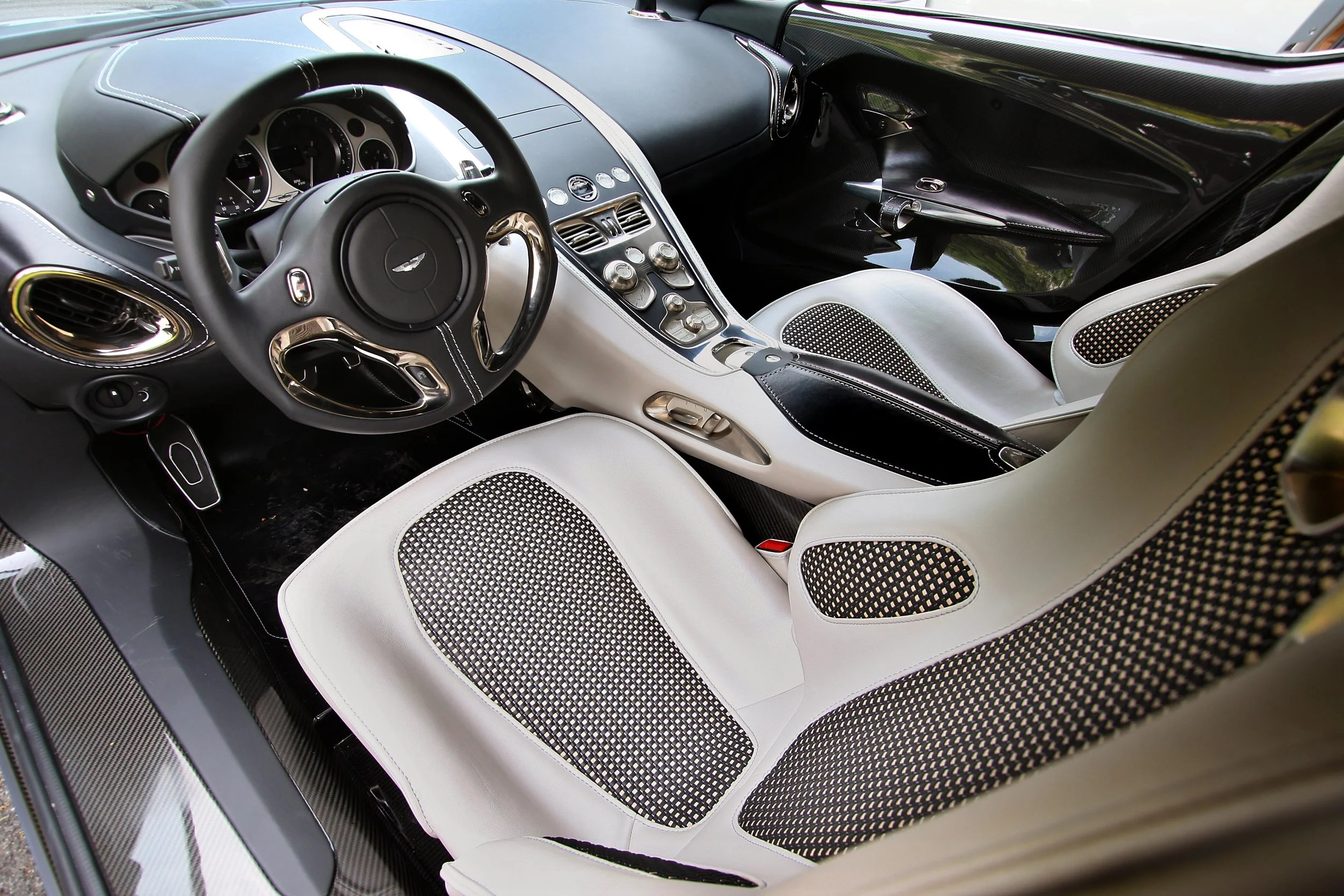
Image © Aston Martin Lagonda. Used for editorial purposes.
“So exclusive was it that buyers needed a £200,000 deposit to secure one, with production limited, of course, to just 77 examples.”
When the finished car made its public debut a month later at the Concorso d’Eleganza Villa d’Este on the shores of Lake Como, it did exactly what Aston Martin would have hoped: it won the Design Award for Concept Cars and Prototypes. That recognition felt entirely fitting. The One-77 fused advanced engineering with a sense of handcrafted artistry that very few manufacturers could match.
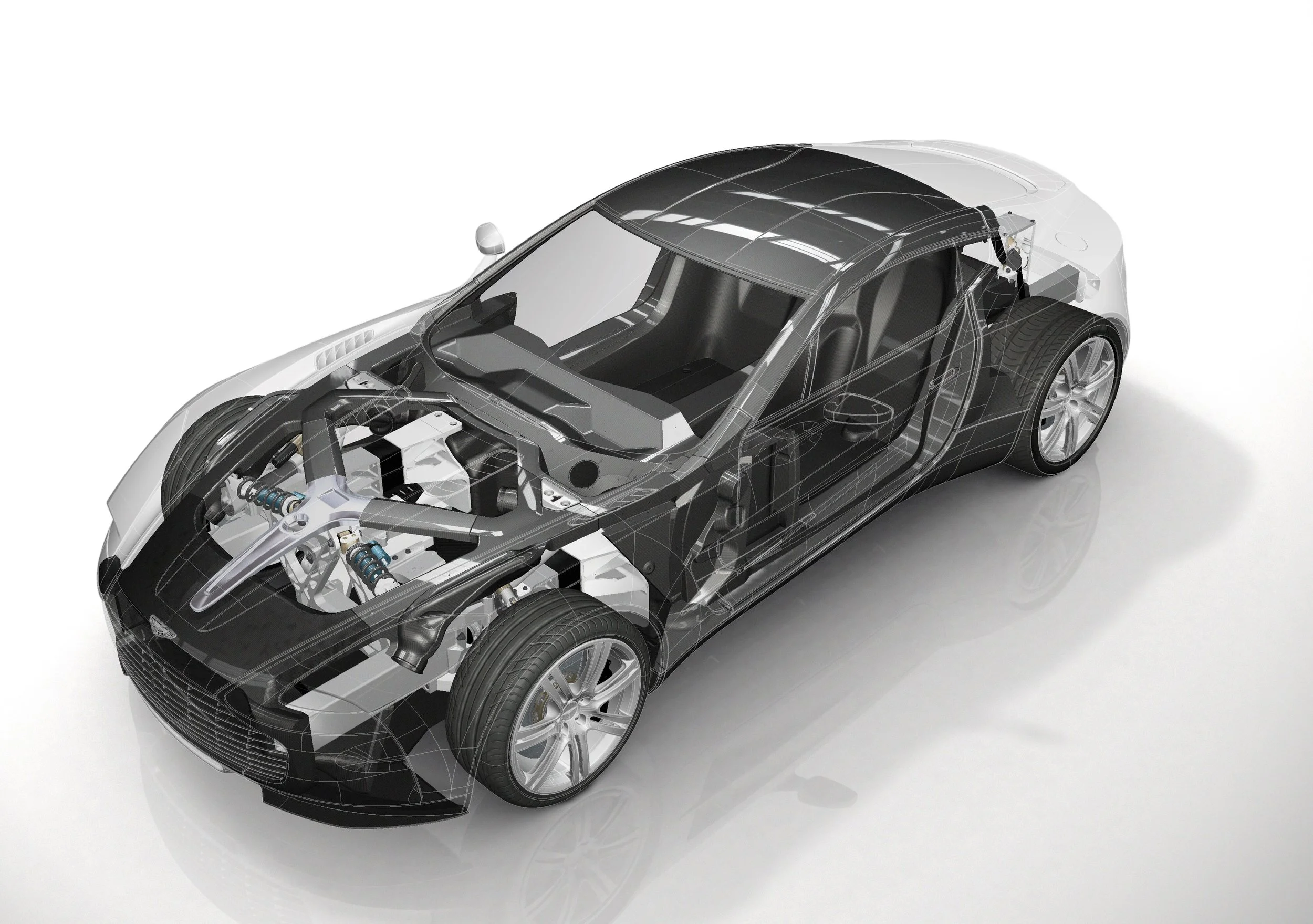
Image © Aston Martin Lagonda. Used for editorial purposes.
At its heart was an immensely rigid carbon-fibre monocoque, clothed in a seamless aluminium body shaped by hand, and powered by a glorious 7.3-litre V12. With 220mph performance, it became the fastest Aston Martin of its time, but what really set it apart was not simply speed. It was the sheer sense of occasion.
That, perhaps, is why the One-77 still resonates so strongly. It was not a car built only to chase numbers or headlines, it was Aston Martin showing what it could do when design, craftsmanship and engineering ambition were allowed to meet without compromise. In many ways, it remains one of the clearest expressions of Aston Martin as an automotive art form; rare, expensive, technically fascinating, and unapologetically emotional.

Image © Aston Martin Lagonda. Used for editorial purposes.
The timing of this renewed attention felt especially enjoyable from a Fuel the Passion point of view, because at Salon Privé London last weekend I had the chance to spend time around a One-77 and interview its owner for an upcoming FTP YouTube film, which comes out next week. That sort of encounter always adds another layer to cars like this. The One-77 can so easily live in the imagination as a poster car or a distant icon, but seeing one in person, and hearing from someone who actually owns and understands it, brings the story back to something more human. Perhaps that’s the real magic of the One-77: beneath all the rarity and spectacle, it’s still a car capable of making people stop, stare, and feel something.
Incidentally, Octane Magazine, which I’ve been a subscriber for many years, is featuring a story on the One-77 in it’s July issue. Talking of Octane Magazine…
Valhalla in Print: Another Voice Joins the Wider Review Picture
We’ve already spent quite a bit of time in recent editions of the FTP Weekly Roundup gathering the early Valhalla reviews into one place, partly because this is not an ordinary new Aston Martin. It’s one of those cars where the first wave of independent impressions matters, not just because of the performance figures, but because of what they reveal about Aston Martin’s direction. You can see a roundup of reviews in one place via a short video produced by Aston Martin themselves, which you’ll find via the FTP cinema screen on the front page. I love those 46 seconds!

Image © Aston Martin Lagonda. Used for editorial purposes.
Those earlier reviews seemed to settle around a broadly similar theme. Yes, the Valhalla is hugely fast. Yes, it’s technically complex. Yes, it sits a long way from the traditional front-engined Aston Martin grand tourer formula many of us grew up with. But what stood out most was that the car did not appear to feel cold, remote or purely numerical. The better reviews suggested something more rounded: a car that uses its hybrid system, aerodynamics and electronic control not simply to chase lap time, but to create a surprisingly accessible, involving and confidence-giving driving experience.
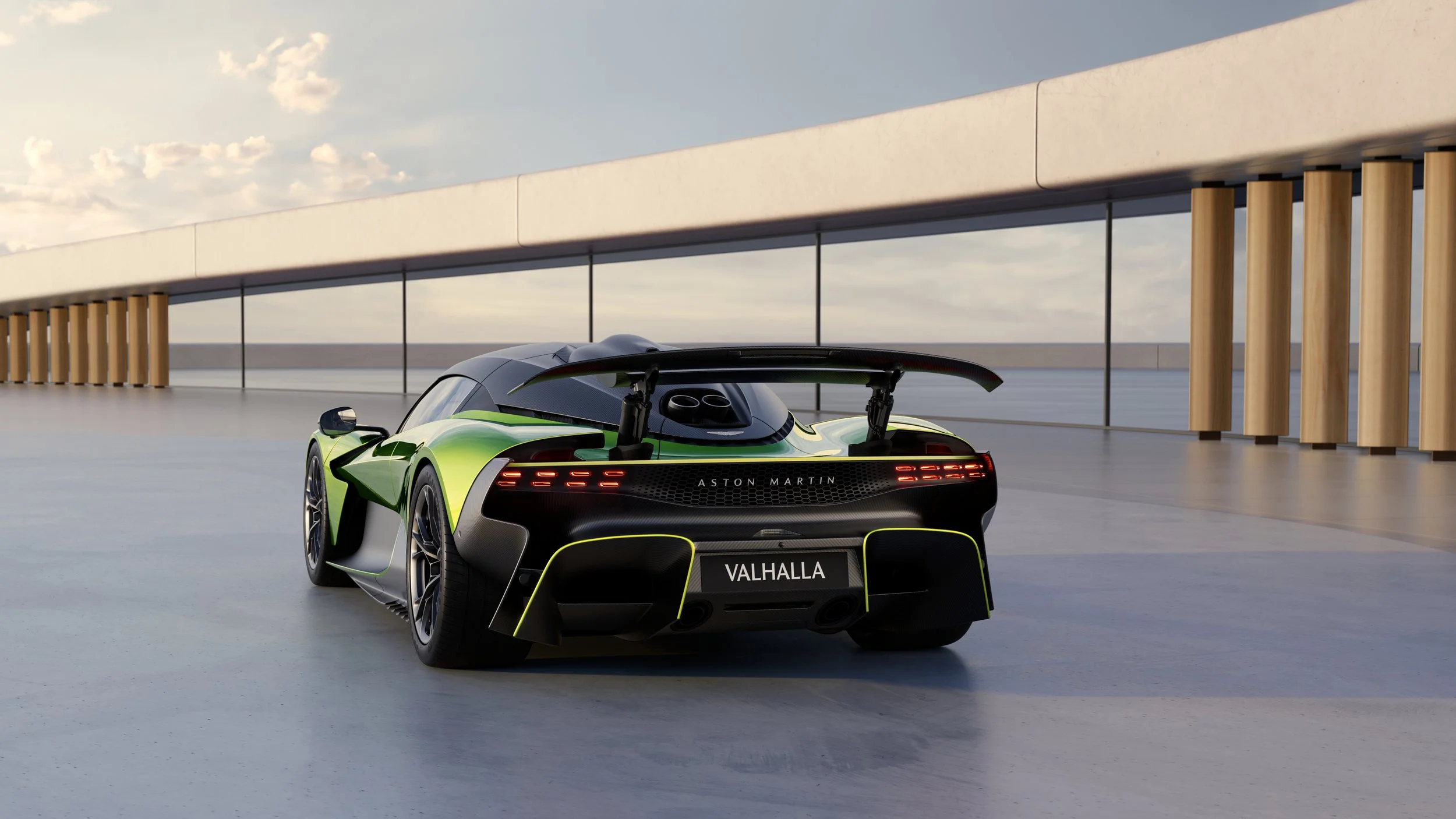
Image © Aston Martin Lagonda. Used for editorial purposes.
That’s why the latest June edition of Octane, feels like a useful addition to the wider Valhalla picture rather than a separate story altogether. Written by Stephen Dobie, with photography by Aston Martin, the feature frames the Valhalla as a “new age hero”, which is a phrase that feels carefully chosen.
This is not Aston Martin trying to recreate a DB9, DBS or One-77 with modern ingredients. It’s something more deliberate: mid-engined, hybridised, heavily shaped by aerodynamics, and clearly influenced by what Aston Martin has learned from Valkyrie.
In that sense, Octane’s impression appears to overlap quite neatly with the reviews we’ve already followed. The magazine recognises the extraordinary technical content, the flat-plane 4.0-litre twin-turbo V8, three electric motors, over 1,000bhp, active aerodynamics and serious performance intent, but the more interesting point is not simply the numbers, it’s whether Aston Martin has managed to make all of that complexity feel natural, emotional and worthy of the wings.
That’s been the recurring question around Valhalla from the start. Aston Martin has never really been at its best when chasing numbers alone. The great cars tend to leave something more lasting behind: shape, sound, proportion, theatre, confidence and memory. From what the wider review picture now seems to suggest, Valhalla may have a better chance of doing that than some people expected when the concept first appeared.
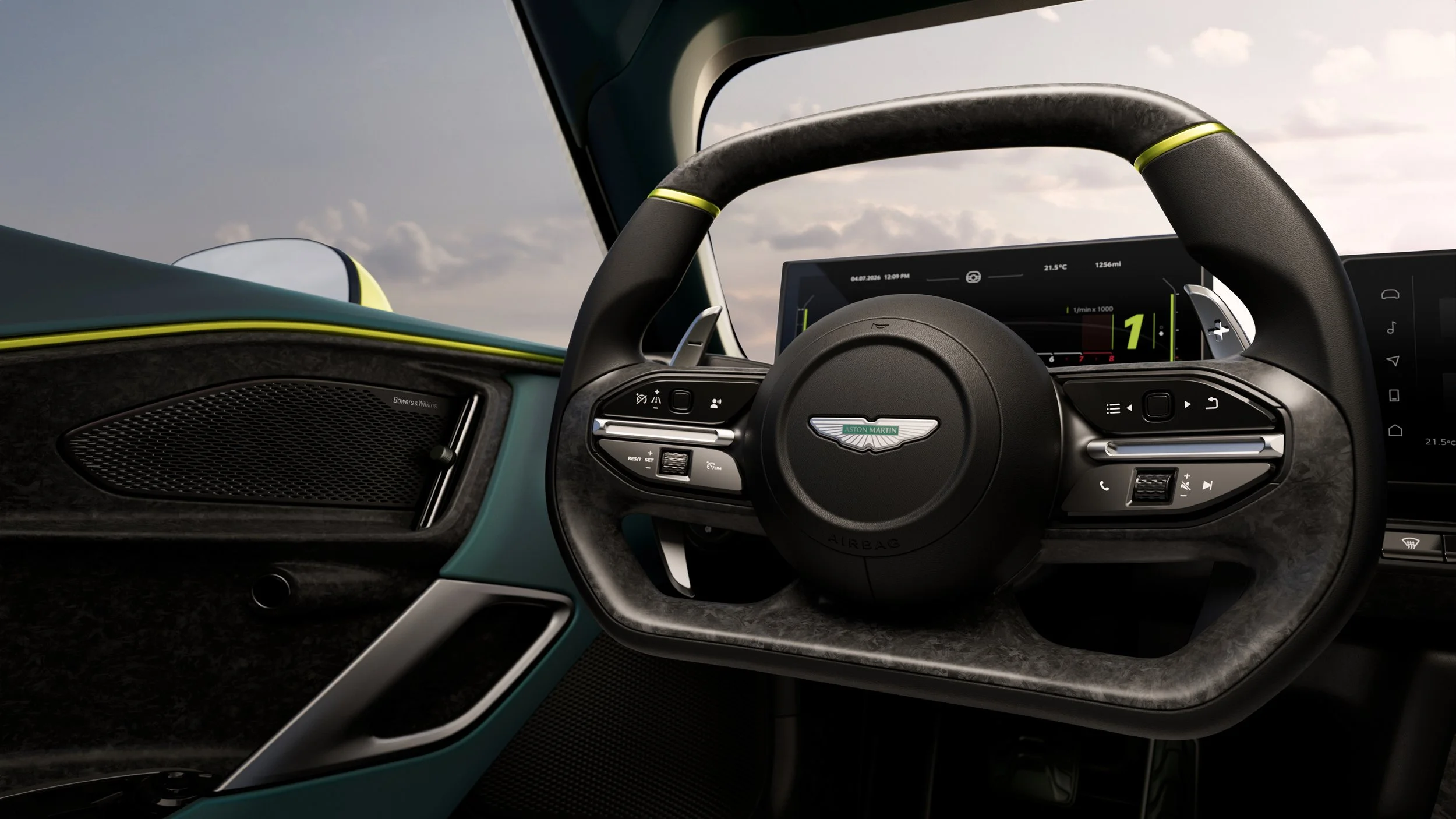
Image © Aston Martin Lagonda. Used for editorial purposes.
It’s also worth placing the car in a longer Aston Martin story. The One-77, which we have also touched on this week, was a million-pound statement of old-world craft meeting serious engineering: carbon structure, hand-formed aluminium and naturally aspirated V12 drama.
Valkyrie then pushed Aston Martin into something far more extreme, with Adrian Newey’s aerodynamic thinking taking the brand into almost prototype territory. Valhalla appears to sit between those worlds.
“It’s not as uncompromising as Valkyrie, but it is far more radical than any traditional Aston Martin GT.”
What makes this latest Octane feature useful, is that it reinforces the sense that Valhalla should not be dismissed as merely a specification-sheet Aston Martin. The early reviews, the public reaction we’ve followed in recent weeks, and now this print feature all seem to point towards the same conclusion: this is a very different kind of Aston Martin, but not necessarily one that has lost sight of what makes the marque special.
Whether it becomes a true Aston Martin great will take years to judge properly. That will depend not just on launch reviews, but on how owners live with the car, how reliably it performs, how it ages, and whether it continues to feel special once the initial excitement has passed. But as a signpost towards Aston Martin’s hybrid performance future, Valhalla now feels like one of the most important road cars Gaydon has produced in years.
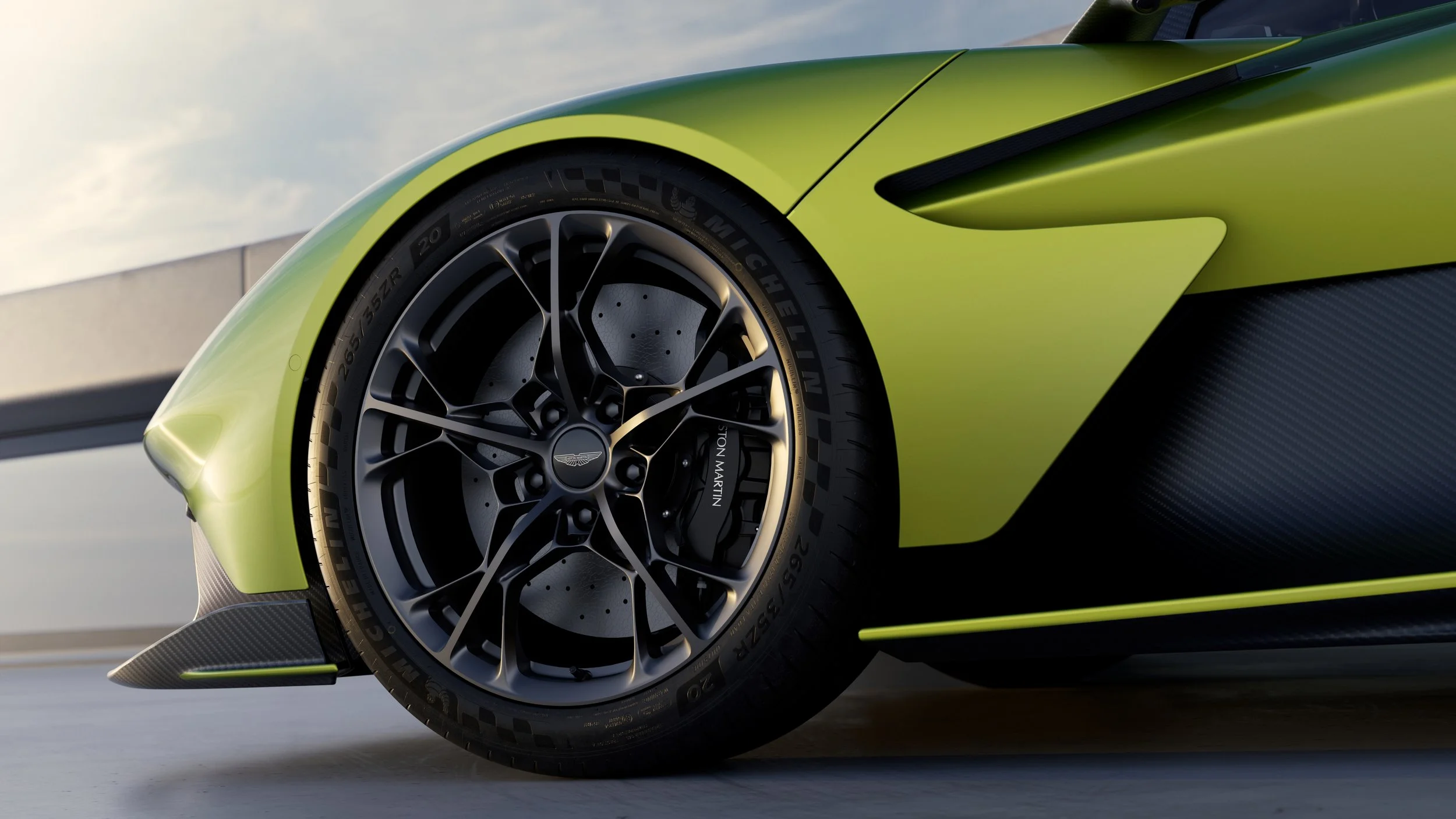
Image © Aston Martin Lagonda. Used for editorial purposes.
Car of the Week: 2018 Aston Martin Vantage GT8
This week’s Car of the Week could hardly be more appropriate. After a roundup filled with Vantage GT3 and GT4 activity, from British GT at Silverstone to DTM, COTA, Spa and the wider Aston Martin customer-racing picture, the choice naturally falls to one of the most motorsport-flavoured road-going Vantages of the modern era: the Aston Martin Vantage GT8.
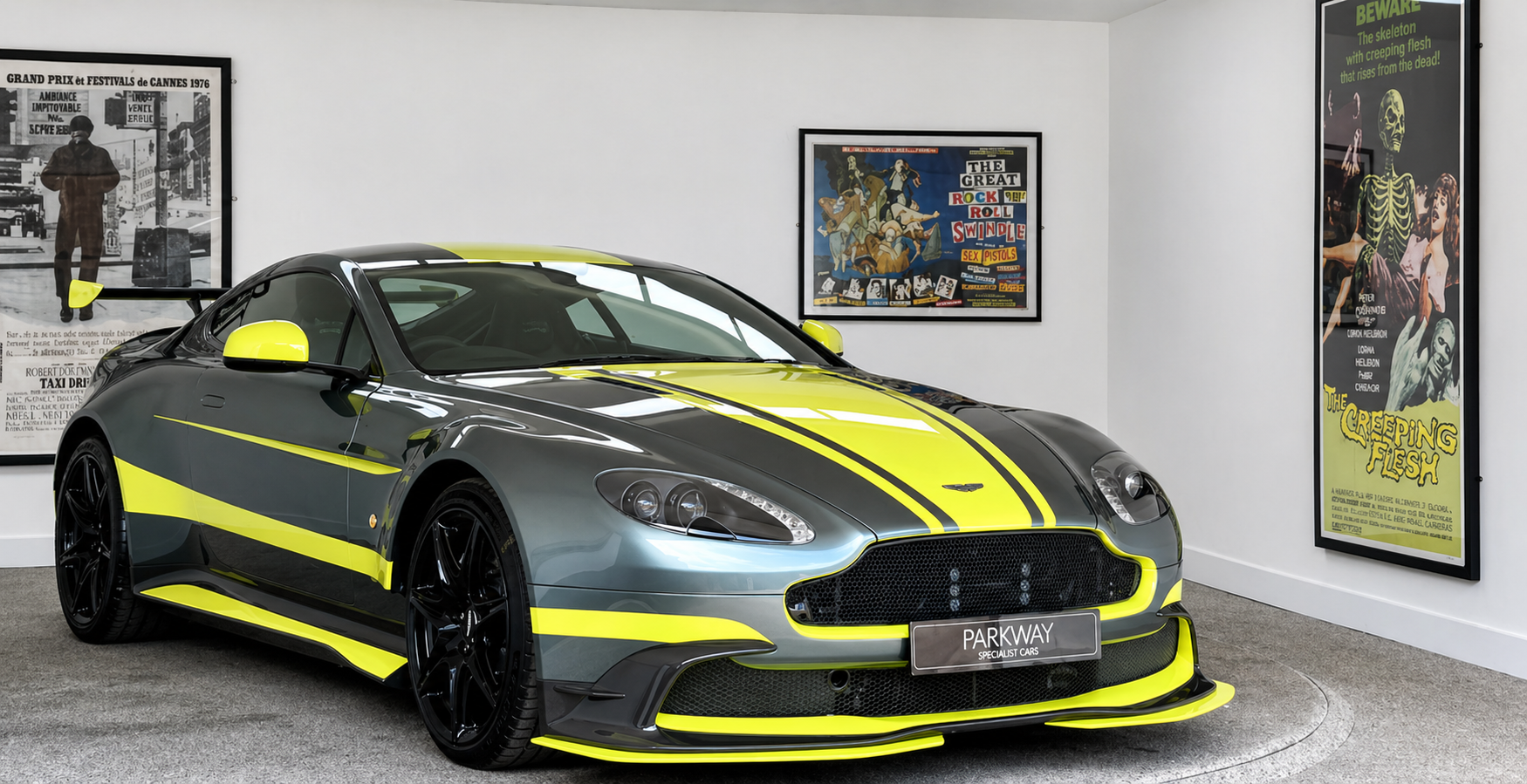
Image © Parkway Specialist Cars. Used for editorial purposes.
The GT8 was launched in April 2016 and was strictly limited to just 150 examples worldwide. It was inspired by the V8 Vantage GTE race car, and Aston Martin described it at the time as one of the lightest and most extreme V8 Vantage variants produced.
“In simple terms, this was the old VH-era Vantage turned up into something sharper, rarer and much more visually dramatic.”
Under the bonnet sat Aston Martin’s naturally aspirated 4.7-litre V8, producing 440bhp and 361lb ft of torque. Contemporary road tests quoted 0–60mph in 4.4 seconds and a 190mph top speed, which still feels properly serious today, even if modern performance figures have moved on. What matters with the GT8, though, is not just the numbers. It’s the whole feel of the thing: lighter, louder, lower, more focused, and available with a six-speed manual gearbox.
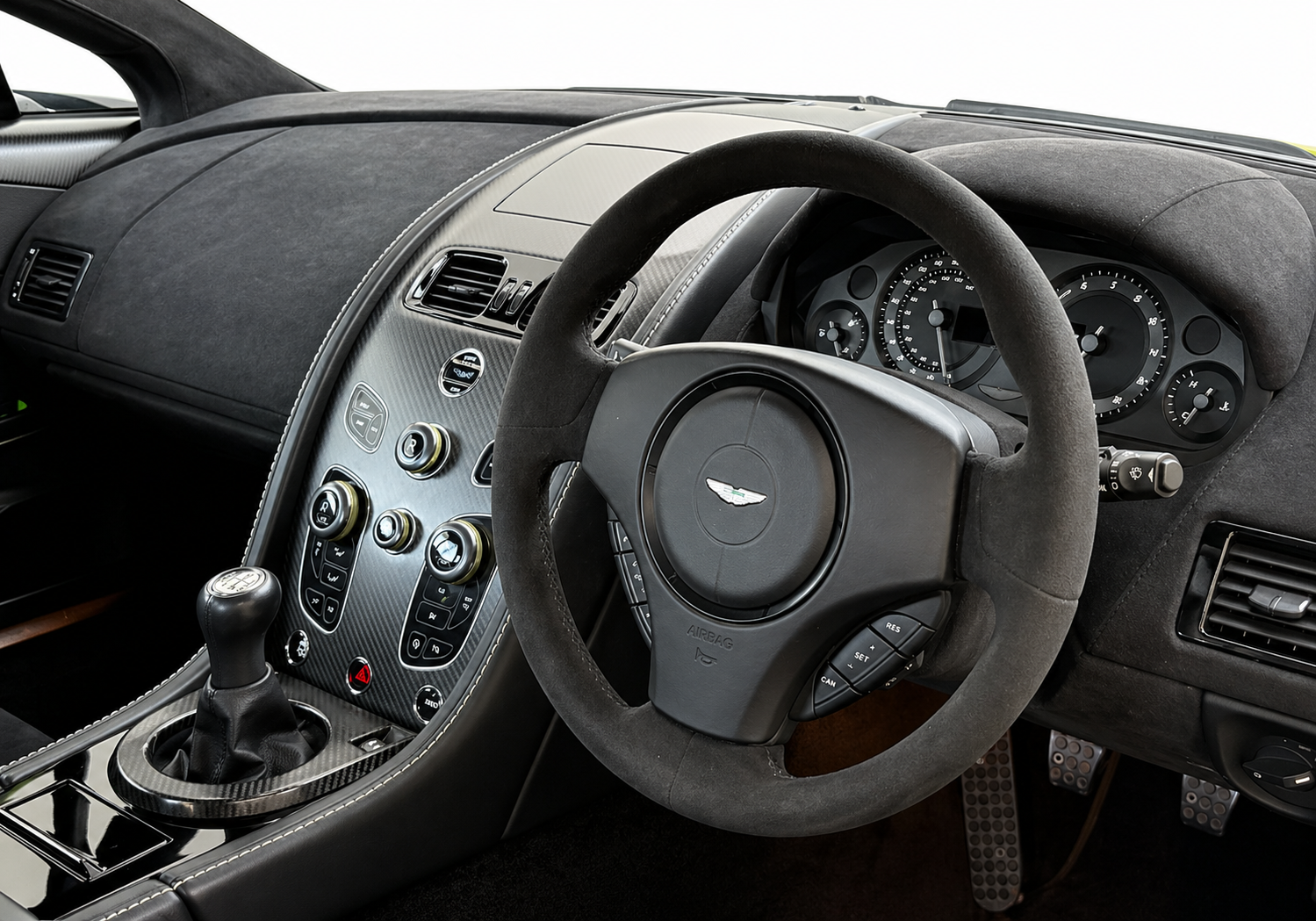
Image © Parkway Specialist Cars. Used for editorial purposes.
When new, the GT8 started from around £165,000 before options, though many cars were specified well beyond that. That context makes this week’s example especially interesting.
The car we’ve chosen is a 2018 Aston Martin Vantage GT8 manual coupe offered by Parkway Specialist Cars in Mansfield, finished in Stirling Green with lime detailing, showing just 3,958 miles, and currently advertised at £149,995.
The reason it stands out is simple: you just don’t see many of them. When I searched this week, only three appeared openly available, and that scarcity is part of the GT8’s appeal. This was never a volume model, never a mainstream Vantage, and never really a car aimed at those who wanted quiet discretion. With its big aero, carbon details and GTE-inspired attitude, it was Aston Martin allowing the Vantage to wear its racing influence much more openly.
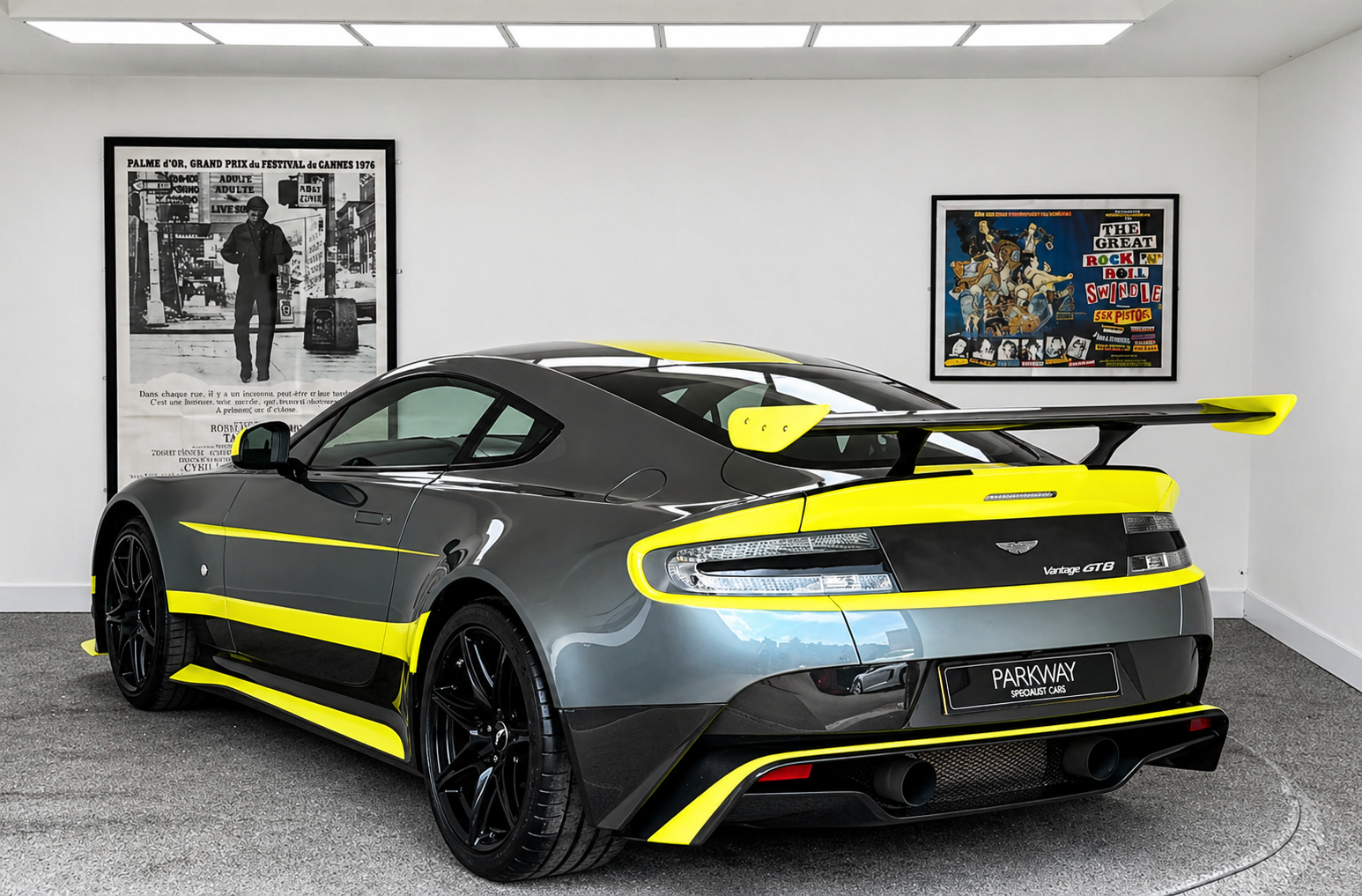
Image © Parkway Specialist Cars. Used for editorial purposes.
That links beautifully to this week’s wider roundup. We have spent much of the edition talking about the Vantage as a competition platform: GT3 Evos in Britain, Europe and America; GT4 cars at Silverstone; and the continuing strength of Aston Martin’s customer-racing presence.
The GT8 feels like the road-car echo of that same spirit. It belongs to a different generation of Vantage, of course, but the idea is familiar: take Aston Martin’s compact sports car, sharpen the edges, reduce the politeness, and let some of the racing character come through.
There’s also a nice historical position to it. The GT8 arrived towards the end of the old Vantage’s life, just before Aston Martin moved into the modern AMG-powered era, the model of Vantage which I’m lucky enough to own. That makes it feel like one of the last great naturally aspirated expressions of the VH-platform Vantage: a car that still had the old-school Aston Martin soundtrack, the analogue feel, and the muscular simplicity that so many enthusiasts now look back on with increasing affection.
So this week’s Car of the Week is not simply a rare Aston Martin for sale, it’s a fitting companion to a roundup where the Vantage has once again been doing much of the heavy lifting for Aston Martin around the world.
FTP Update: Salon Privé, Goodwood and the Films Taking Shape
After a fairly busy few days away from the keyboard, this week’s FTP update naturally begins with Salon Privé London.
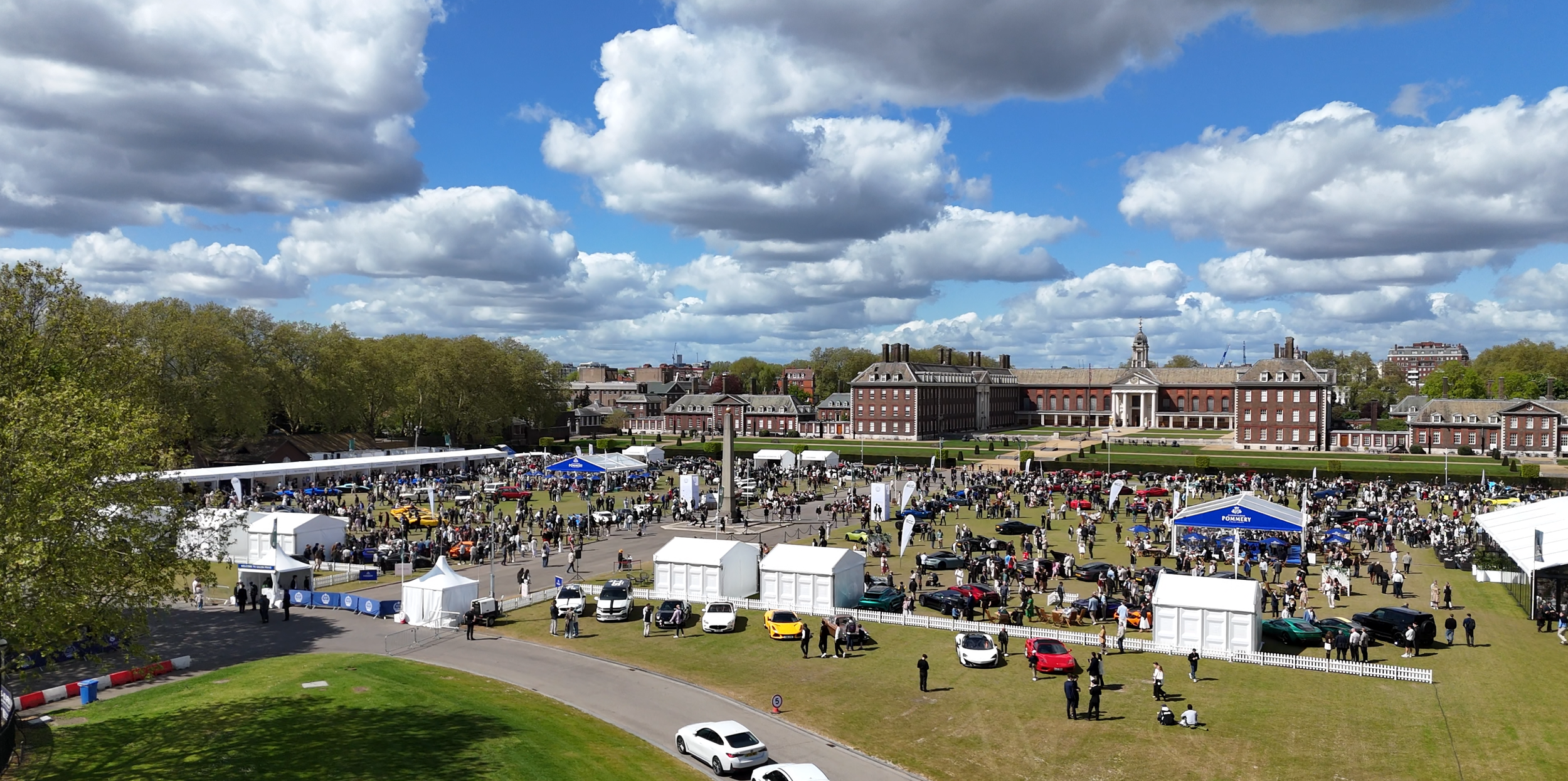
Image © Fuel the Passion. Royal Hospital London, Salon Privé.
Last weekend I was fortunate enough to attend and display the FTP Aston Martin Vantage as part of the SCC Private Members display. It was one of those lovely spring occasions where everything seemed to come together: the setting at the Royal Hospital Chelsea, the weather, the cars, the atmosphere, and the chance to spend time around people who genuinely enjoy sharing these machines rather than simply parking them and walking away.
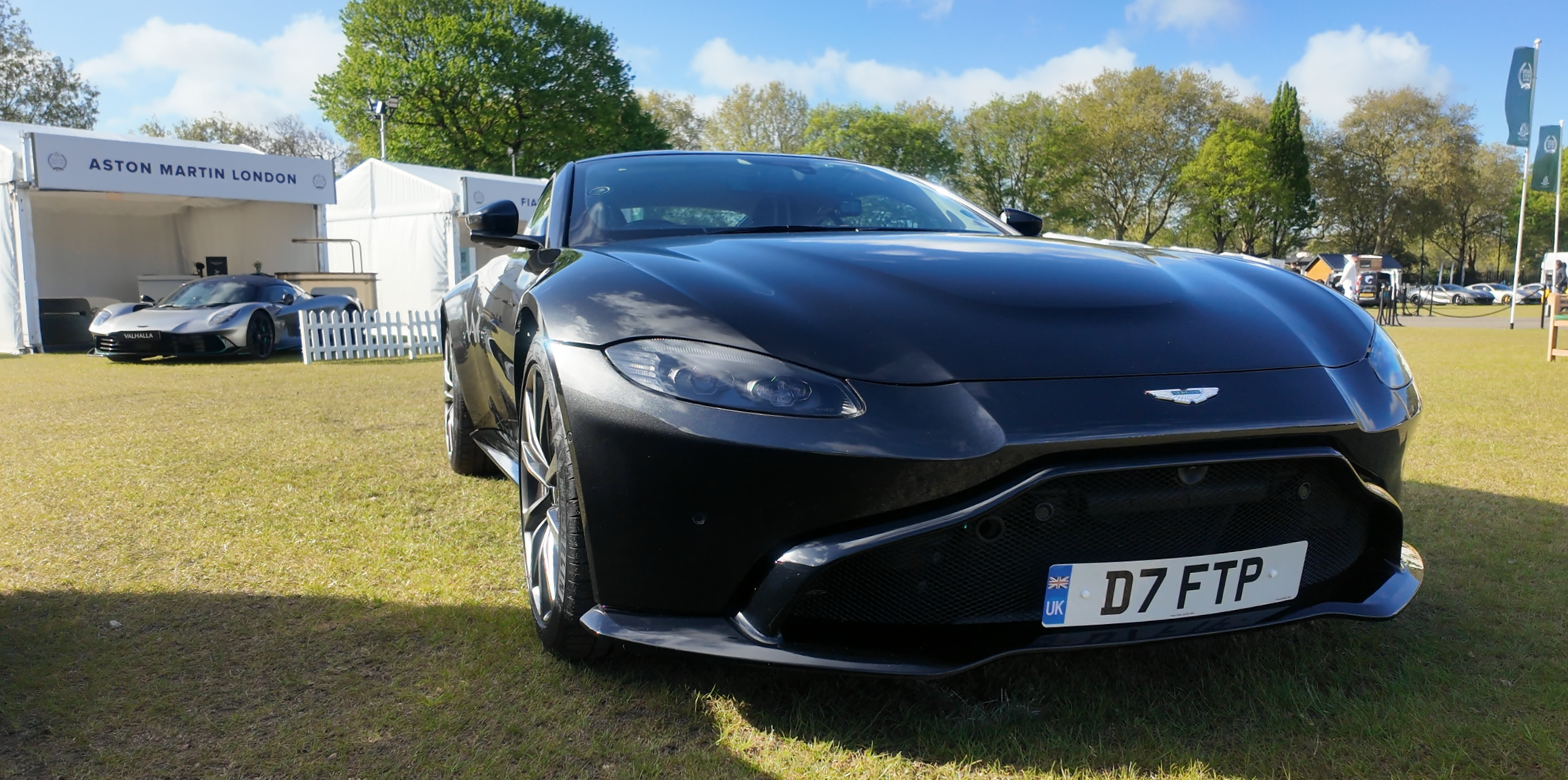
Image © Fuel the Passion. The FTP Vantage, early morning having just assumed position at Salon Privé, just in front of the Aston Martin London stand with the Valhalla in the background.
There will be a full Fuel the Passion YouTube film from the day, once I have worked through the footage. The plan is to include the broader atmosphere of the event, a look at some very special Aston Martins, and, most excitingly, an interview with the owner of a One-77. That feels especially timely given this week’s wider reflection on Aston Martin halo cars, from One-77 through Valkyrie and Valhalla.
But one of the moments I will remember most from Salon Privé was not simply admiring the extraordinary cars on display, wonderful though they were. It was inviting a few young, very enthusiastic petrolheads to sit in the FTP Vantage, press the start button, and give the throttle a little blip. The reaction was priceless. The smiles on their faces, the crowd that gathered around the car, and the positive comments from onlookers are things I will not forget quickly.
Moments like that matter. For those youngsters, the memory of sitting in an Aston Martin, hearing it fire into life and feeling that sense of occasion may stay with them for years. Who knows, perhaps one day one of them will want to own an Aston Martin themselves.
“That’s how passion begins: not through brochures or statistics, but through real experiences that lodge somewhere deep in the imagination.”
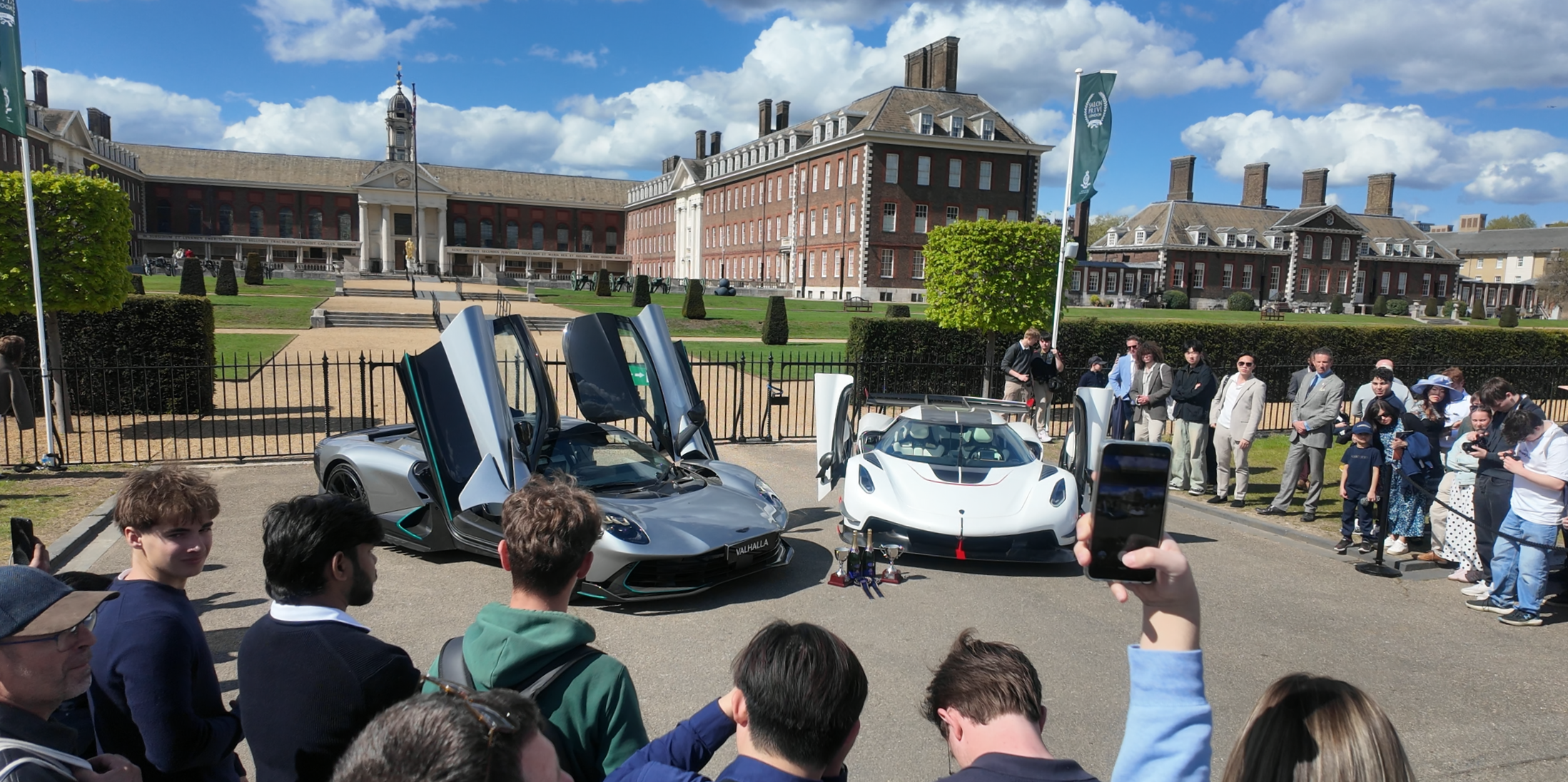
Image © Fuel the Passion. The Aston Martin Valhalla, on show at Salon Privé
The following day brought a very different but equally special kind of motoring occasion: the Goodwood Members’ Meeting, which I attended with my Dad. He has now been a GRRC member for 20 years, and Goodwood marked that milestone by awarding him a GRRC medal in a lovely presentation box. It was a genuinely touching moment, and one that meant a great deal.
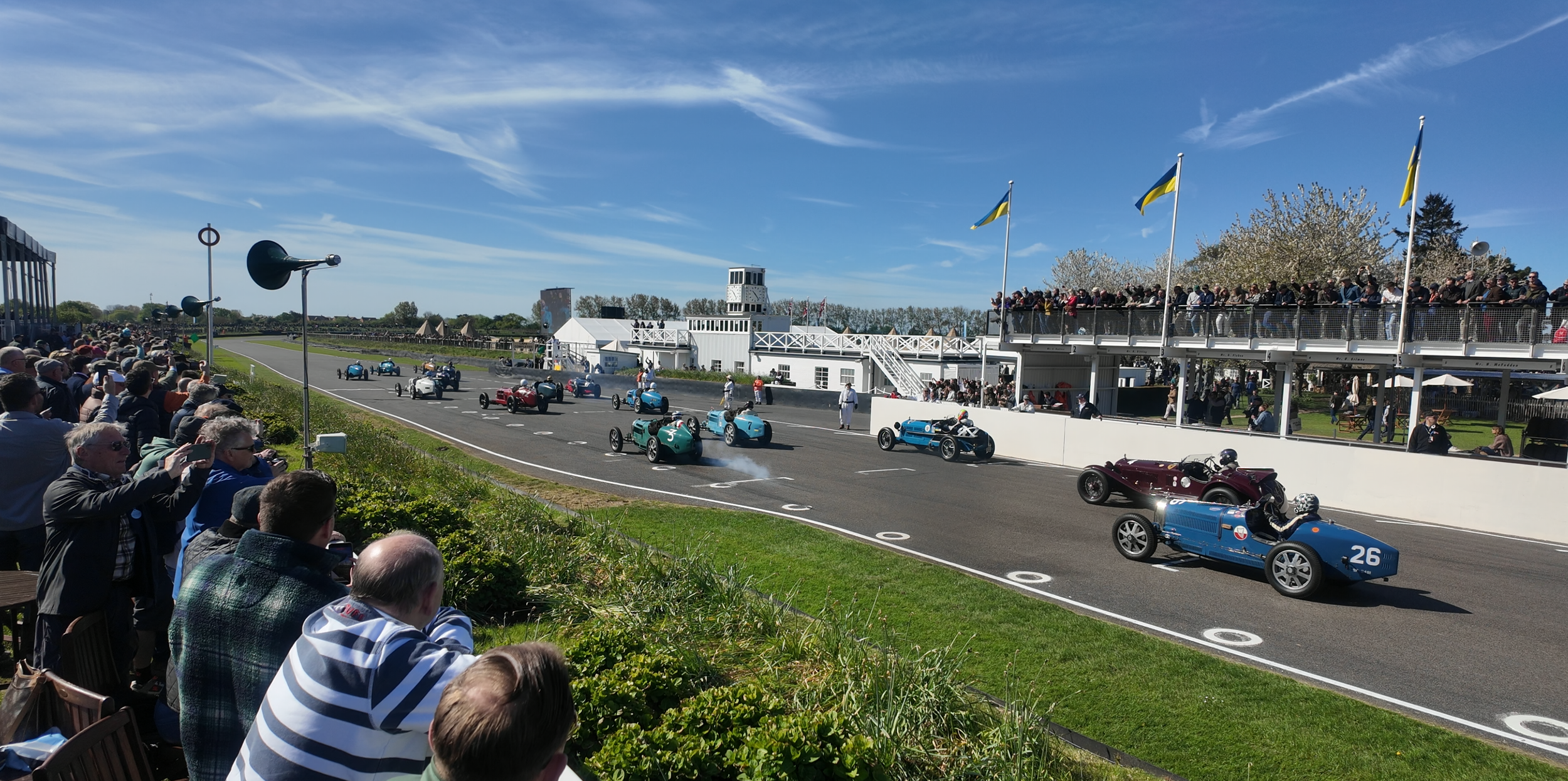
Image © Fuel the Passion, Goodwood Members Meeting 2026.
It’s been a real privilege to accompany my Dad to so many Goodwood events over the years. We’ve shared some wonderful memories there: great races, remarkable cars, brilliant drivers, in the company of great friends and those unmistakable Goodwood scenes that seem to stay with you long after the event has passed.
There have also, of course, been a few thoroughly cold and wet memories along the way, but somehow even those become part of the story. Goodwood has a way of doing that.

Behind the scenes, the Vanquish 25th anniversary video series has now reached an important stage. The edits are done, and it’s taken some time to pull the films together properly. The next step is clearance: making sure the organisations I have worked with are happy with the edits before anything goes live. The series was filmed with Steve Waddingham at Aston Martin Works, Newport Pagnell, and at the Aston Martin Heritage Trust Museum and created in collaboration with Aston Martin Works, the Aston Martin Owners Club and the Aston Martin Heritage Trust. We are still aiming for a May release, and I’m really looking forward to sharing it once that final approval process is complete.
That project has taken a huge amount of care, but it’s shaping into something very special: not just a story about a car, but about the people who built it, signed it off, painted it, trimmed it, cared for it, and still understand why it matters. The other benefit of reaching this stage is that it now frees me up to return to editing my own Fuel the Passion films for the channel. The next one will be the Salon Privé London video, which I’m looking forward to working on next week.
So, as ever, the website, YouTube channel and wider FTP work continue to move together. Some weeks are about writing. Some are about filming. Some are about events, family memories, research, editing, clearance and trying to keep on top of everything at once. This week has been a little bit of all of that, which, in many ways, is exactly how Fuel the Passion seems to work best.
Closing Reflection
That brings us neatly to the end of a very broad Aston Martin week. For me, what stands out most is the contrast. In Formula 1, Aston Martin still feels like a story waiting for its next proper answer. Miami will tell us more, but for now there is only cautious language, hard work behind the scenes, and the hope that the extra time between races has been used well. No one outside the team can know yet whether that will translate into visible progress.
Elsewhere, though, the picture feels rather more active and encouraging. The Valkyrie programme took another useful step at Imola, the Vantage GT3 and GT4 continue to appear across more grids, and Aston Martin’s customer-racing presence feels busy in exactly the way a serious GT programme should. From Silverstone to COTA, Spa, the Red Bull Ring and the Nürburgring, there’s a lot more going on beneath the Formula 1 headline than casual observers might realise.
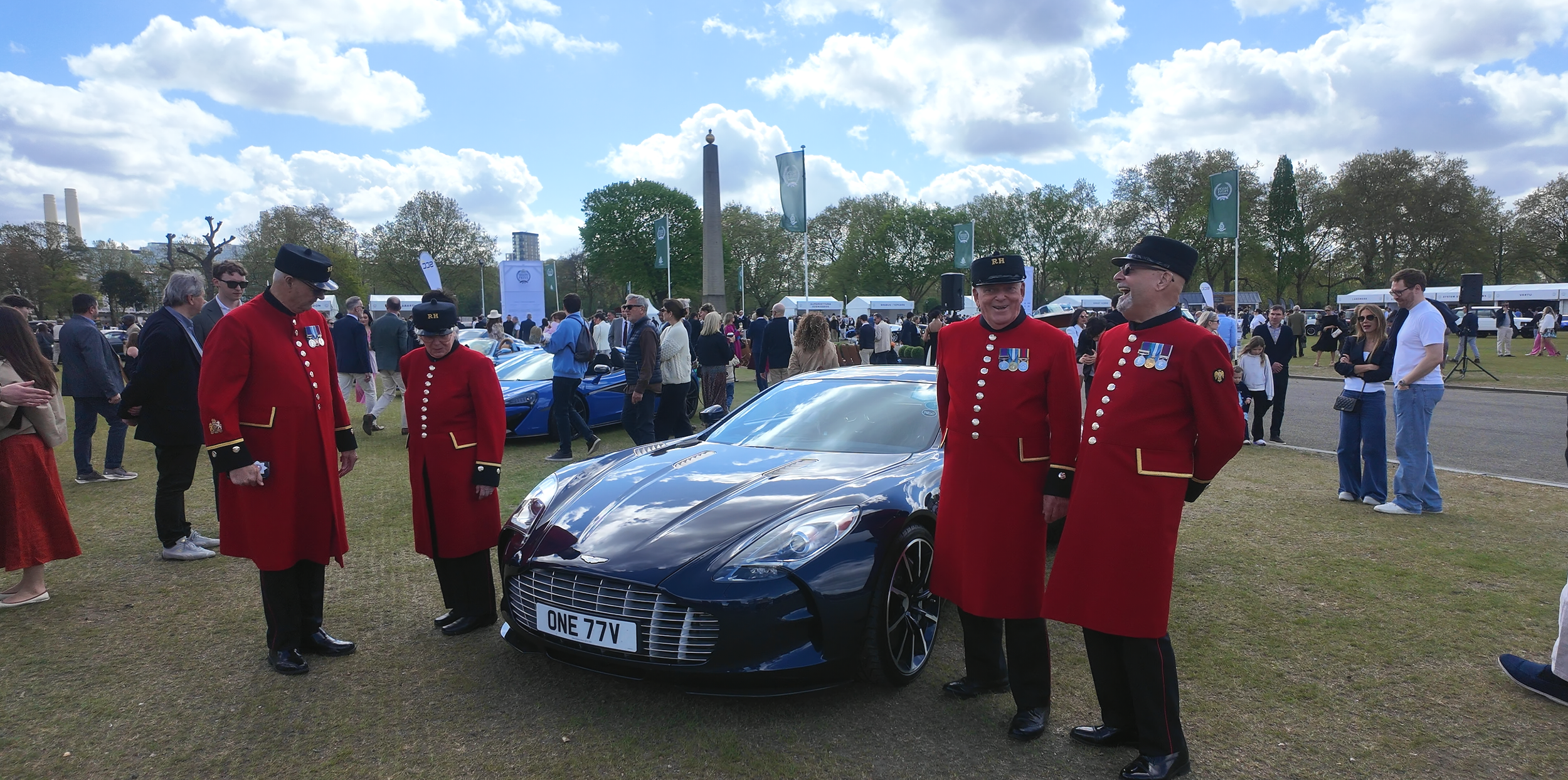
Image © Fuel the Passion. Lovely Chelsea Pensioners gathering around the One-77 at Salon Privé.
The road-car and heritage stories carried their own weight too. The One-77 reminded us what Aston Martin can do when it builds a true statement car, which particularly resonated this week, after getting up close to the One-77 in the picture opposite last weekend.
Valhalla continues to gather a broadly positive media picture as a very different kind of halo machine for a very different age.
The GT8, this week’s Car of the Week, gave us a perfect road-going echo of the Vantage’s competition spirit and even the more unusual stories, the Geely logo dispute, Battlecrease Hall, and the wider thread of Aston Martin history, all reminded us that this marque is never just about the latest press release.
Next week should be a significant one. Miami will give us a first proper look at whether Aston Martin and Honda have made meaningful progress. We will also have Aston Martin Lagonda’s Q1 financial results to digest, and, as it is the first Sunday edition of the month, we will return to the fuller AML Share Watch and oil / petrol price context as well.
For now, though, this week felt like a useful reminder of why the Aston Martin story is so compelling to follow. It’s rarely simple, it’s sometimes contradictory, but across racing, road cars, heritage, ownership and community, there’s always something worth looking at properly and that, really, is what Fuel the Passion is here to do!
Until next time, have a great week. See you on the next one! 👆
Over to You
As always, I’d love to hear your thoughts in the comments below 👇
What was your favourite story or feature in this week’s roundup? Was it the Imola WEC follow-up, the wider GT racing momentum, the One-77 and Valhalla reflections, the Geely logo dispute, or this week’s Vantage GT8 Car of the Week?
I’m also interested to know whether this kind of broader, more connected weekly format is something you’d like me to continue developing. The aim is not just to list Aston Martin stories, but to join the dots between racing, road cars, heritage, ownership and the wider community.
Finally, what Aston Martin should we feature in future Cars of the Week? It could be a rare classified find, a special edition, a forgotten model? The important point, is that it must be for sale. I would love to hear your thoughts 👇
