
Week Ending 19th April 2026
Editor’s Introduction - Dan, Fuel the Passion
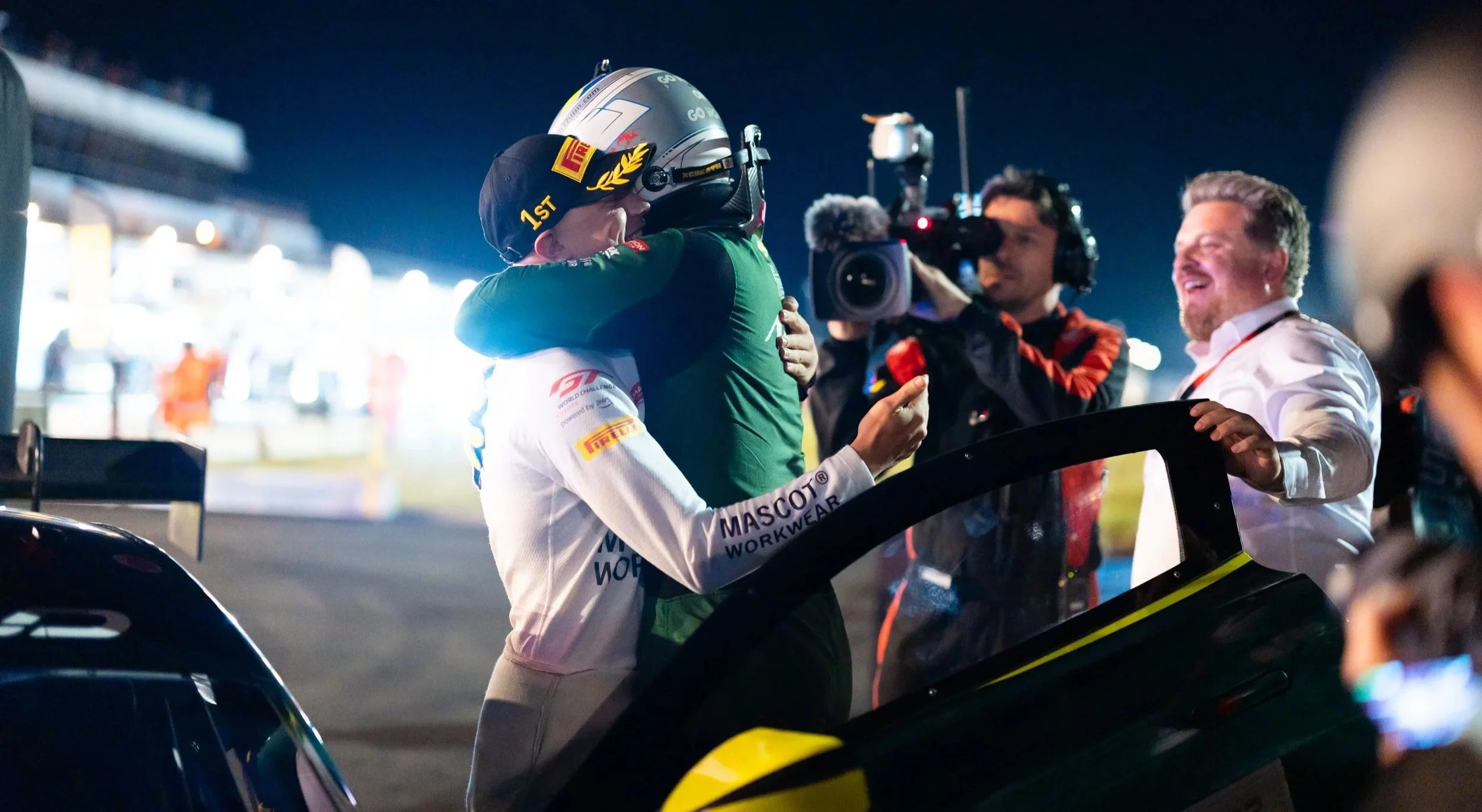
Image © Aston Martin Lagonda. Used for editorial purposes. That Winning Feeling!
There are some weeks in the Aston Martin world when one story seems to dominate everything else, and then there are weeks like this one, where the more revealing picture only really comes into view once you stand back and take the whole thing in together.
On the one hand, Formula 1 remains an uncomfortable watch. The wider mood around Aston Martin’s Grand Prix effort still feels heavy, and even the most loyal supporters are finding it difficult to ignore the scale of the challenge now facing the team. But elsewhere, the story has felt rather more encouraging. Over the past few days, Aston Martin’s wider racing world has looked properly alive, with significant victories, strong supporting performances, and the sort of breadth across multiple championships that serves as a timely reminder of just how far the marque’s influence still stretches beyond the Formula 1 paddock.
That contrast runs right through this week’s edition. From Paul Ricard to Barcelona, from Okayama to the early signs emerging at Imola, Aston Martin has given us plenty to talk about away from Grand Prix racing. Beyond the circuit, there’s just as much to reflect on too, from the continuing strength of the current road-car range to some genuinely interesting glimpses into Aston Martin Works, Valhalla, Vantage S and the wider public mood surrounding the brand. As you go through this weeks roundup, you’ll also notice that I’ve included rather more YouTube links than usual in this week’s roundup. That’s no accident, as quite a few of them are genuinely worth a watch, because they add useful texture, perspective and a bit of extra enjoyment to the Aston Martin stories sitting behind this week’s edition.
There’s also a small format change worth mentioning. From here on, AML Share Watch and the oil / petrol price section will move to the first Sunday roundup of each month, where I’ll look back over the previous five weeks rather than treating them as weekly snapshots. The more I’ve worked through these editions, the more it has felt as though the smaller weekly movements often create more noise than clarity. A slightly longer view feels the better approach for now, and should make those sections more useful in the long run, but let me know what you think.
This edition has also been written on Thursday, a day earlier than usual, because I’m heading away for the weekend. The slight downside is that I won’t be in a position to track every late development right through to Sunday in the normal way. The upside, I hope, is that the weekend itself should lead to more Fuel the Passion films to come on the YouTube channel, which is never a bad trade.
So while this roundup still has its more difficult notes to strike, it also carries something that has perhaps felt a little too rare at times recently: variety, momentum, and a sense that Aston Martin’s story is still being written in many more places than Formula 1 alone. So as normal, grab a hot drink, get comfortable and let me take you through this weeks Aston Martin news. Let’s dig in…

Before we move on, a quick thank you.
Fuel the Passion has now passed 3,000 subscribers on YouTube, which I genuinely do not take for granted, especially in such a niche space focused on a single marque. What began as a simple idea has grown into a wonderful community of people who share a love for these cars and their stories.
The next milestone is 5,000 subscribers by 1st January 2027. Whether we get there or not, it feels a challenge worth aiming for. If you haven’t yet subscribed and would like to, I’d genuinely love you to. Simply click on the link below, which will take you to the Fuel the Passion YouTube channel, then look for the subscribe button. It’s completely free to do, and it really does help boost the channel and everything Fuel the Passion is trying to build. Thank you for being part of the journey.
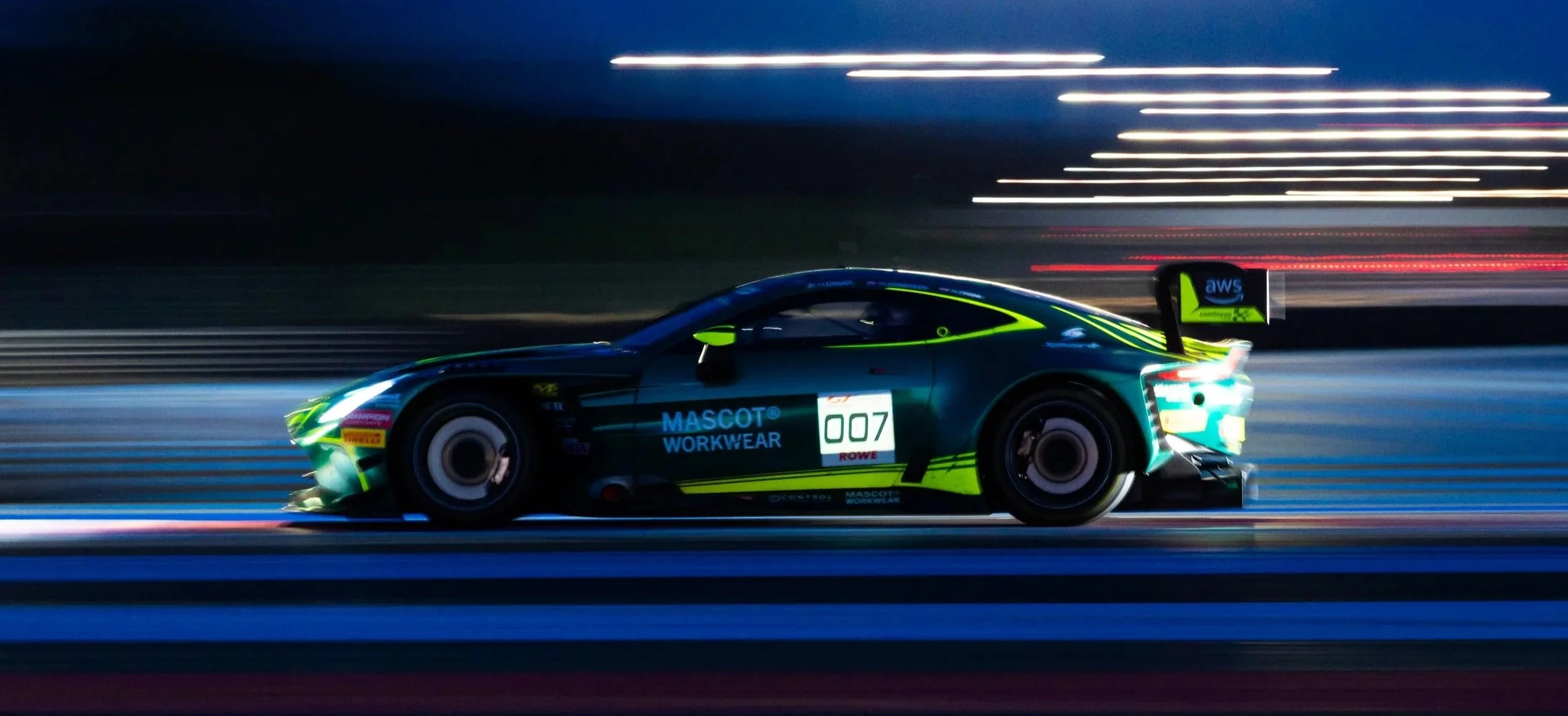
Image © Aston Martin Lagonda. Used for editorial purposes. Aston Martin GT3 007 in action.
This week, the motorsport section is a little more substantial than usual, and I think that’s justified. There’s simply a great deal happening across Aston Martin’s racing world at the moment, and reducing it all to a few passing paragraphs would not really do the stories justice. Away from Formula 1, the marque is currently active across several meaningful programmes at once, and over the past few days those strands have produced enough results, setbacks and signs of promise to deserve proper space in this edition.
Aston Martin’s Wider Racing World Comes Alive
If the Formula 1 picture still feels stuck in an uncomfortable holding pattern, the same could not really be said of Aston Martin’s wider racing world over the past few days. In truth, this was one of those rare weekends where the marque’s broader motorsport footprint suddenly felt vivid again, not in a vague or symbolic sense, but in hard results, visible momentum and genuine activity across multiple championships. That mattered, because while Formula 1 naturally attracts the loudest headlines, Aston Martin has always been more interesting than any single programme on its own and last weekend was a timely reminder of that. Across Europe and Japan, Aston Martin found itself winning, competing, recovering and reappearing in the sort of varied competitive settings that have long helped define the marque’s sporting identity.
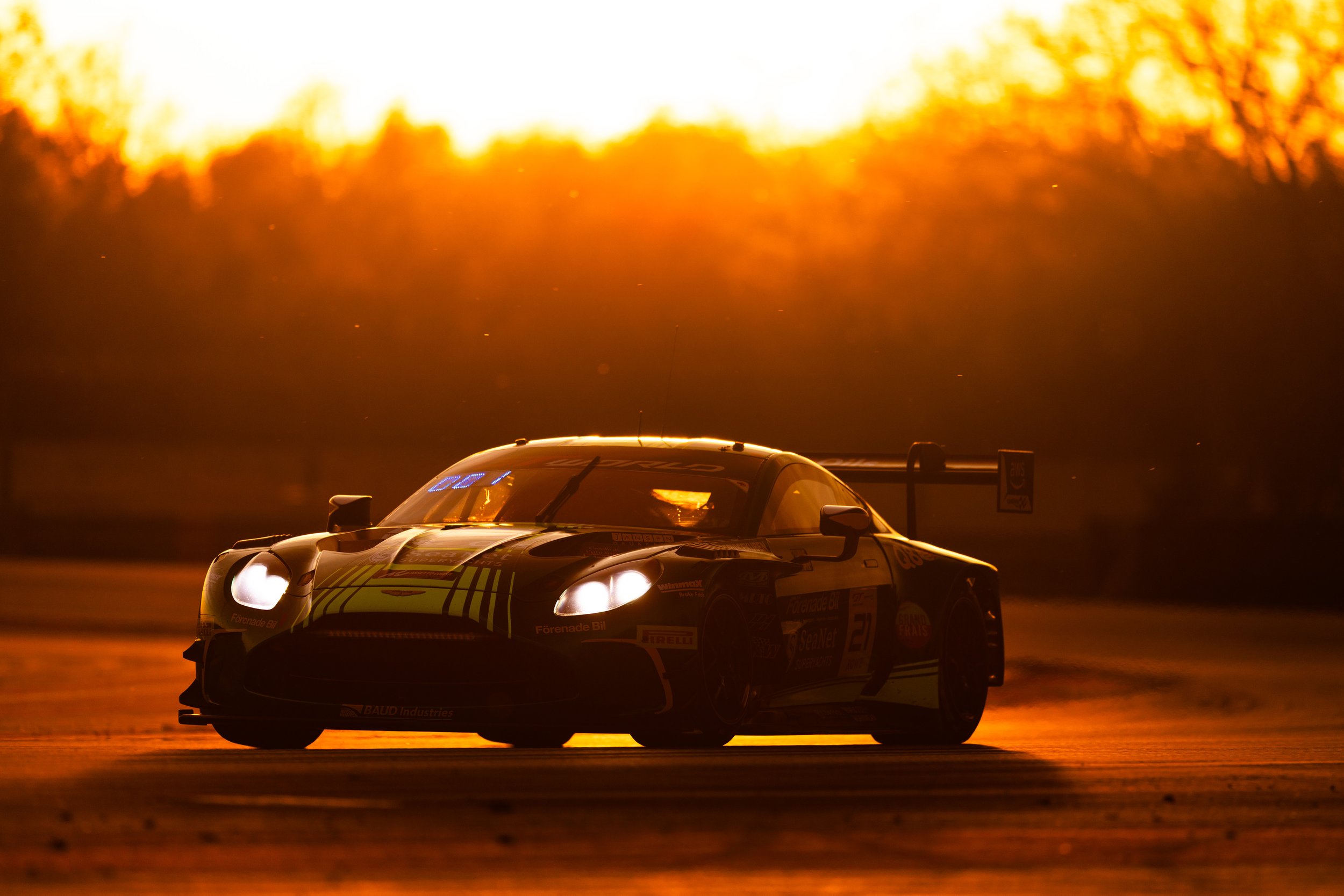
Image © Aston Martin Lagonda. Used for editorial purposes. En-route to 3rd place in the Silver Cup
There’s the dramatic GT World Challenge Europe success at Paul Ricard, where Aston Martin fought back to win one of the season’s most significant endurance races. There was a GT3 class victory in the Michelin Le Mans Cup at Barcelona, even if that same event also brought frustration for Blackthorn Racing.
There was another class win in Japan at Okayama and in the background, attention was already beginning to turn toward Imola, where Aston Martin’s Valkyrie Hypercar programme moved another step closer to its latest major test, while Heart of Racing provided more encouraging signs in LMGT3.
Taken together, it made for a much healthier Aston Martin racing picture than Formula 1 alone might currently suggest. Not a perfect one, certainly, and not one without setbacks, but it was active, relevant and, above all, encouraging in a way that has felt worth properly recognising. Out of all those strands, it was Paul Ricard that delivered the clearest headline of the lot.
Paul Ricard: Aston Martin Fights Back to Win GT World Challenge Europe Opener
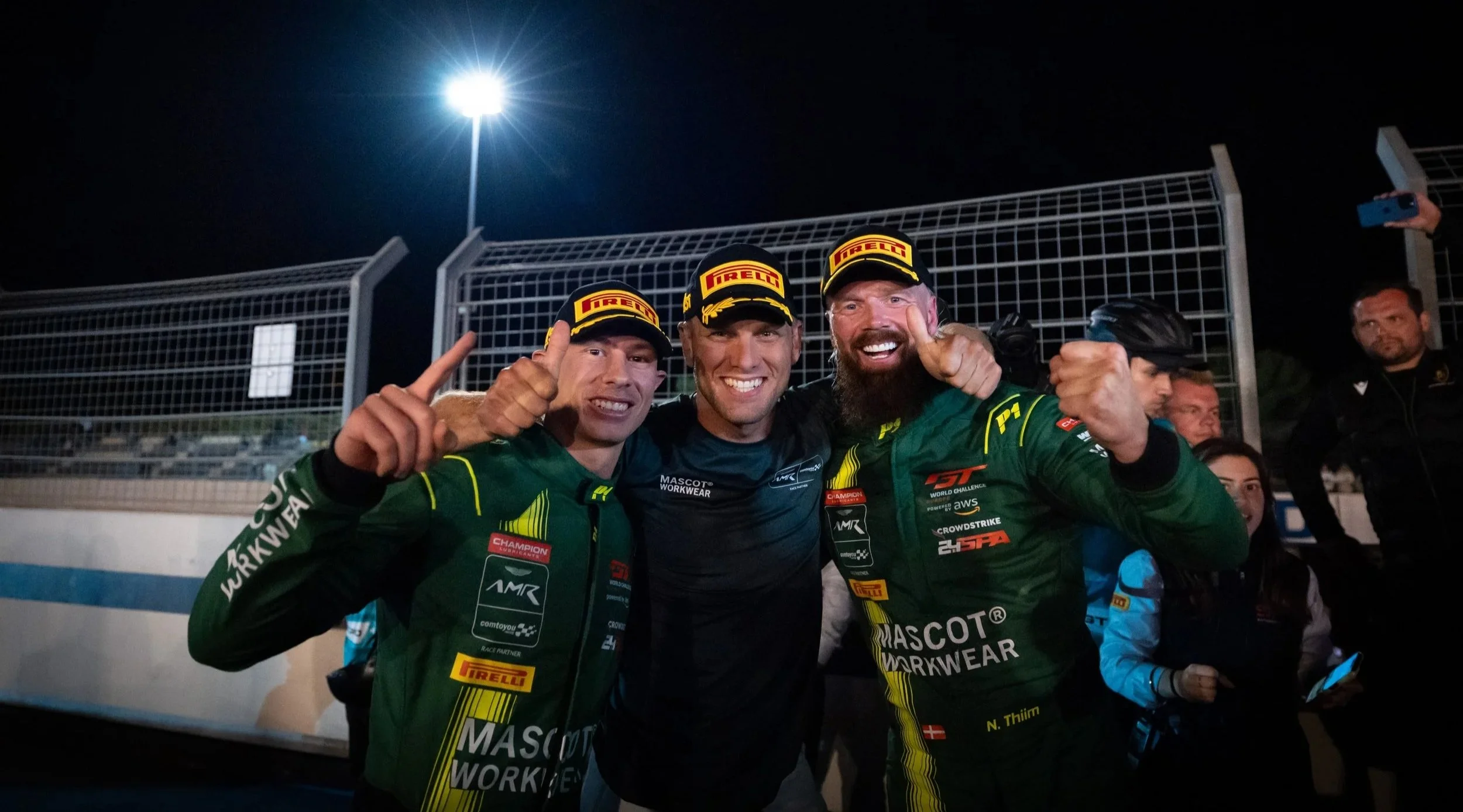
Image © Aston Martin Lagonda. Used for editorial purposes. Drudi, Sorensen and Thiim celebrate.
If Aston Martin needed one clear, emphatic headline from its wider racing weekend, Paul Ricard provided it. In the opening round of the 2026 GT World Challenge Europe Endurance Cup, the #7 Comtoyou Racing Aston Martin Vantage GT3 of Nicki Thiim, Marco Sørensen and Mattia Drudi delivered a dramatic overall victory, snatching the lead with less than ten minutes of the six-hour race remaining.
“What made the result especially satisfying was that this was no straightforward lights-to-flag success.”
For much of the race, the #48 Mercedes-AMG Team Mann-Filter entry looked to have matters under control, and Aston Martin’s own challenge had already been complicated by an early puncture for Sørensen at the end of the opening stint. Yet the #7 Vantage stayed close enough to matter, remained in strategic contention, and then came alive when the race tightened late on.
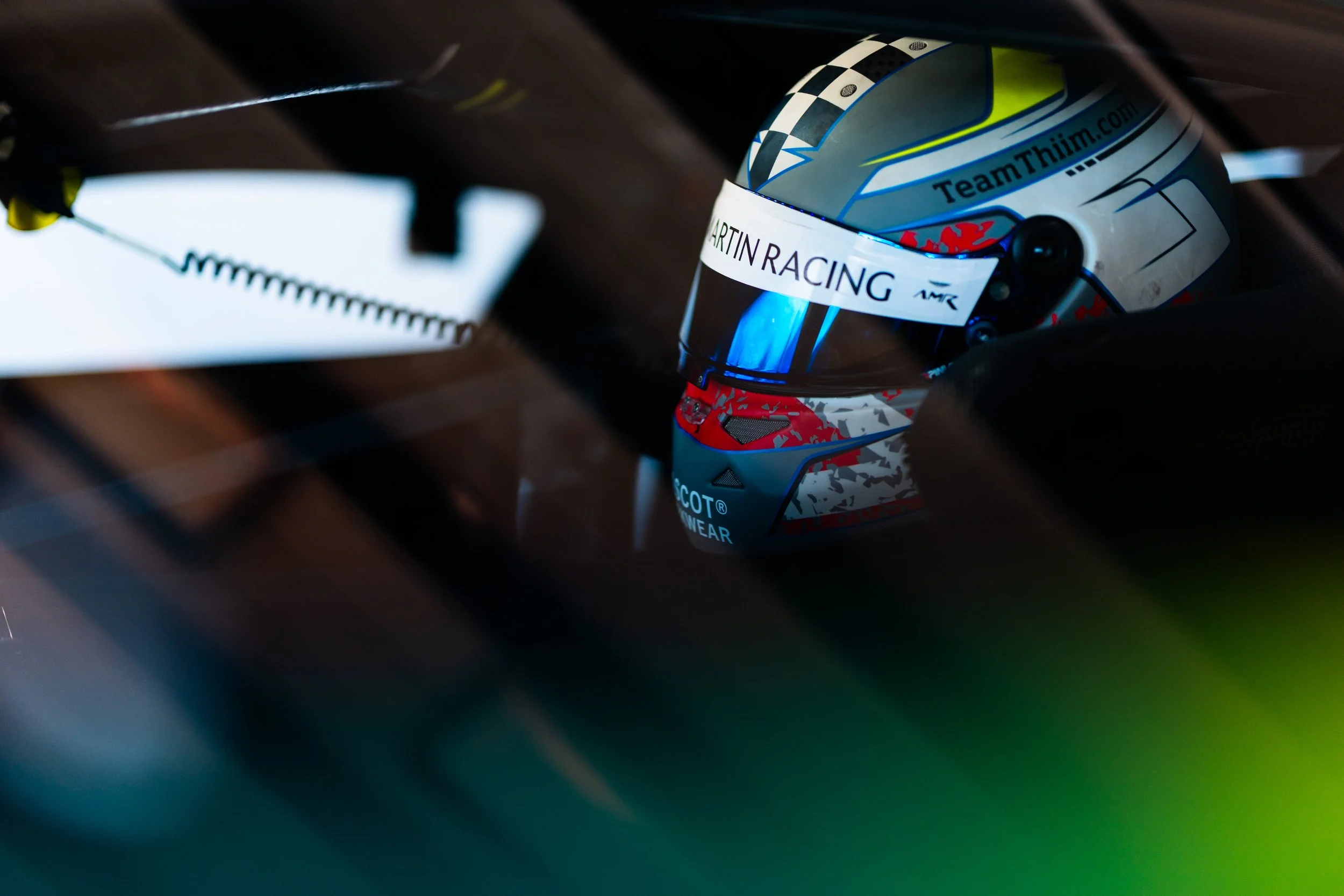
Image © Aston Martin Lagonda. Used for editorial purposes. Nicki Thiim in his Aston.
From there, Nicki Thiim did what Nicki Thiim so often seems to do in these situations: he turned pressure into opportunity. He worked through traffic, hauled the Aston Martin back onto the tail of Lucas Auer’s leading Mercedes, and then forced the issue in the closing minutes.
When Auer ran wide under pressure, Thiim needed no second invitation, diving through to take a victory that had looked unlikely for much of the evening.
“GT World Challenge Europe’s official report described it as a “sensational late victory,” and that really does feel about right.”
There was wider significance to it as well. The win gave Aston Martin its first GT World Challenge Europe victory since the 2024 Spa 24 Hours, and it instantly gave the marque one of its most important race results of the season so far. In a week when Aston Martin’s Formula 1 story still felt heavy and unresolved, Paul Ricard offered something rather different: a proper fightback, a proper result, and a proper reminder that Aston Martin’s GT racing strength remains very real when the circumstances allow it to shine.
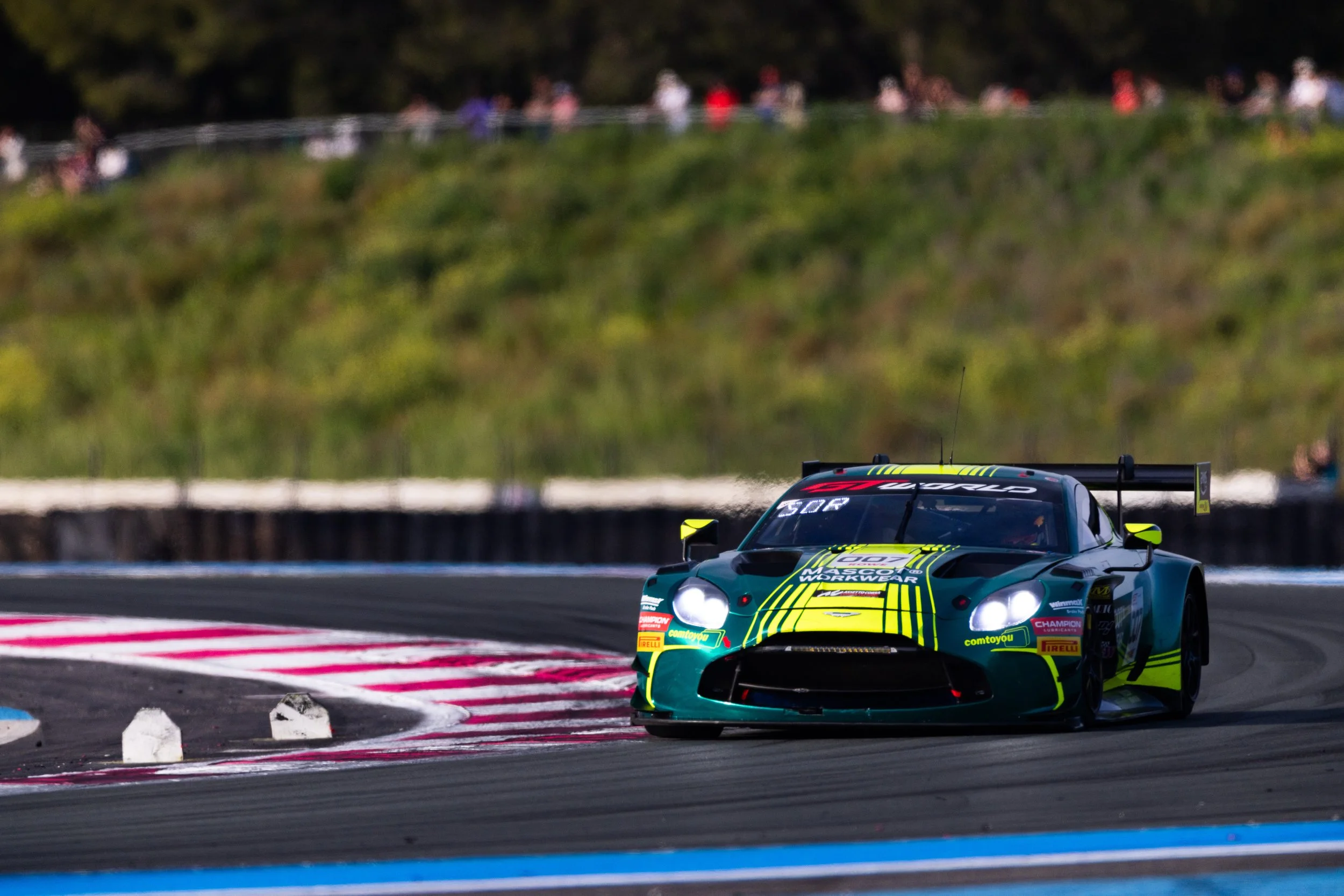
Image © Aston Martin Lagonda. Used for editorial purposes. 007 Vantage on track.
Beyond the winning car, Paul Ricard also gave us a broader Aston Martin picture worth setting out clearly, because all seven Vantage GT3 entries had their own story to tell.
Where All Seven Aston Martins Finished at Paul Ricard
The outright win naturally took the headline, but one of the more interesting things about Paul Ricard was the sheer scale of Aston Martin’s presence across the field. With seven Vantage GT3 entries represented in the race, the result sheet offered a much broader picture than the #7 car alone.
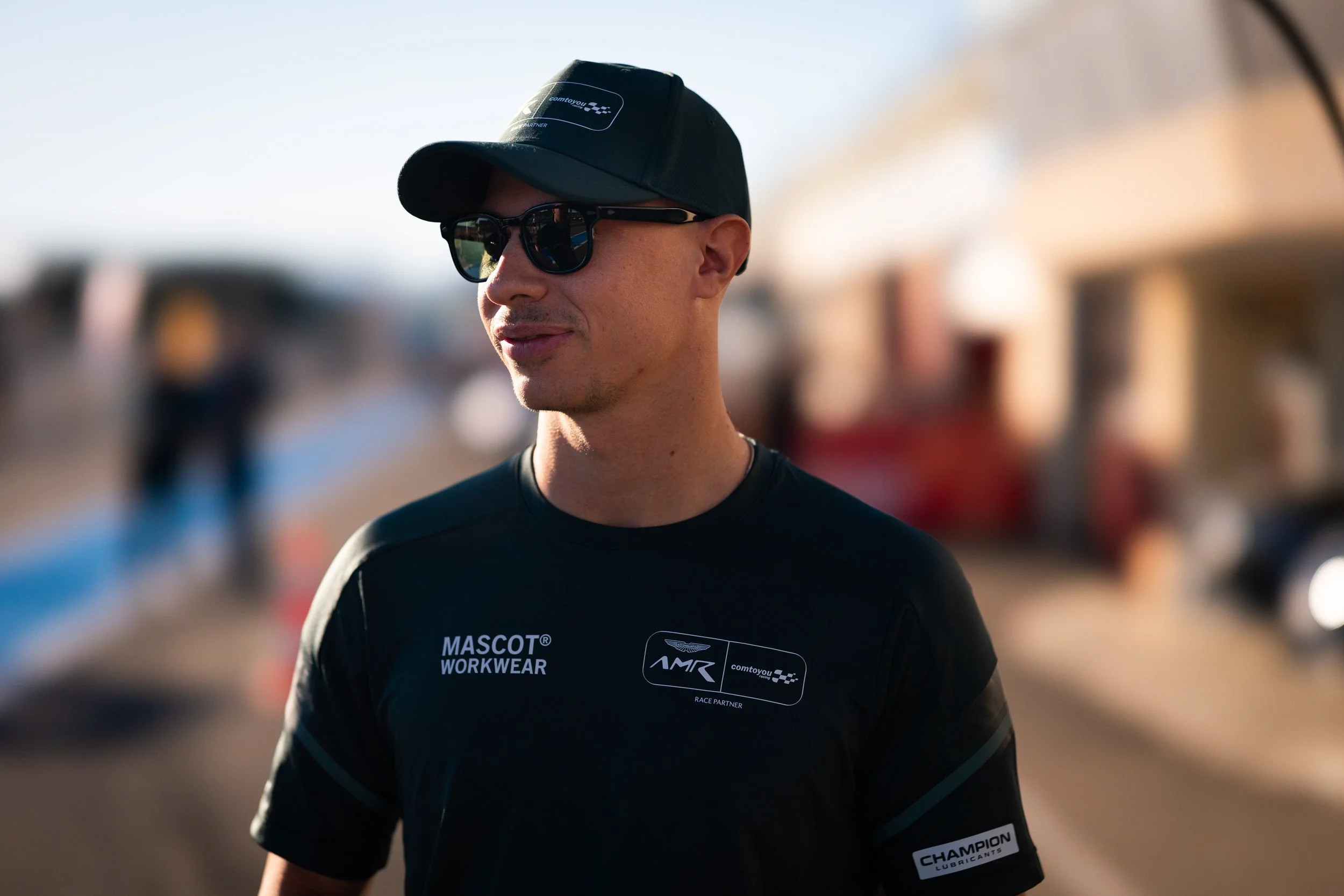
Image © Aston Martin Lagonda. Used for editorial purposes. Mattia Drudi.
At the front, of course, the story belonged to Comtoyou Racing’s #7 Aston Martin Vantage GT3, which took overall victory through Mattia Drudi, Marco Sørensen and Nicki Thiim after 176 laps.
But further down the order, the Aston Martin spread looked far more mixed. Comtoyou’s #21 car, driven by Oskar Söderström, Sébastien Baud and Kobe Pauwels, finished 20th overall, though that result only tells part of the story because it also secured a Silver Cup podium after starting from class pole. Walkenhorst Motorsport’s #35 Aston Martin of Mateo Villagomez, Etienne Ischer and Gilles Simon finished 34th overall, while Ecurie Ecosse Blackthorn’s #56 entry of Jonny Adam, Toby Wood and Giacomo Petrobelli came home 41st.
Behind them, Comtoyou’s #11 Aston Martin, driven by Marco Tomasoni, Anthony Muss and Kyle Marcelli, finished 44th overall, and the #18 Comtoyou car shared by Roberto Merhi, Lance Stroll and Mari Boya ended the race 48th, 13 laps down after a far more difficult evening than its early promise had suggested. The final Aston Martin on the result sheet, Greystone GT’s #44 entry of Tom Pintos, Joe Kelly and Jake Rattican, was classified 49th and not classified.
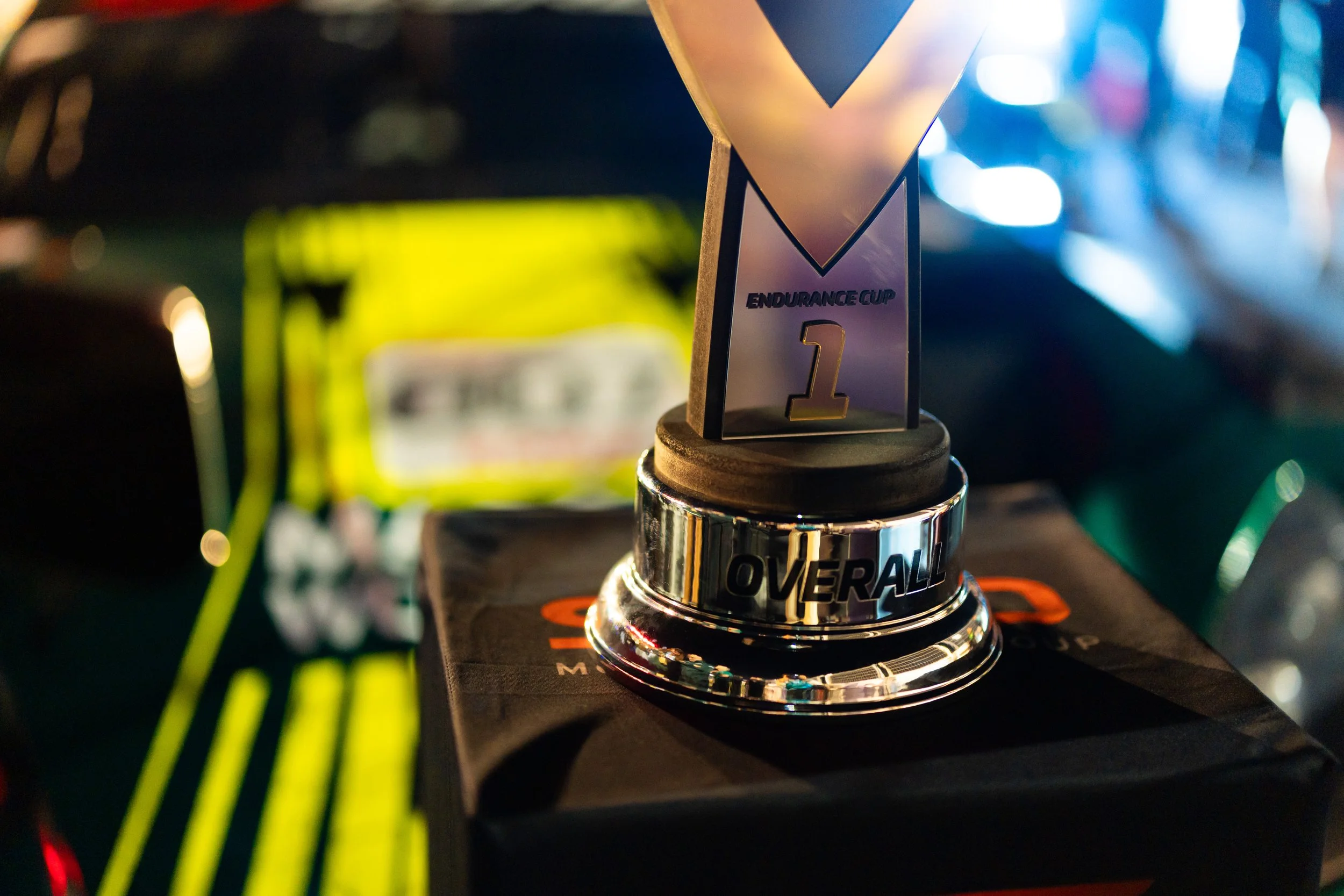
Image © Aston Martin Lagonda. Used for editorial purposes. Winners Trophy Paul Ricard.
So, taken as a whole, Paul Ricard was a reminder that Aston Martin’s wider GT3 presence remains both substantial and varied. One car delivered the glory, another reached the Silver Cup podium, and several others endured the kind of attritional, untidy evening that six-hour GT racing so often produces.
It was, in other words, a convincing Aston Martin result at the front, but a much more complicated one once you looked deeper into the field. One of those supporting stories, inevitably, was the extra attention drawn by Lance Stroll’s unexpected GT3 outing during Formula 1’s enforced April pause.
Lance Stroll’s GT3 Debut During Formula 1’s Break
Among the supporting Aston Martin stories at Paul Ricard, Lance Stroll’s GT3 debut was always going to attract a little extra attention. With Formula 1’s April schedule disrupted after the Bahrain and Saudi Arabian Grands Prix were removed from the calendar, Stroll used the enforced break to step into Comtoyou Racing’s #18 Aston Martin Vantage AMR GT3 EVO alongside Roberto Merhi and Mari Boya.
“On paper, there was enough in the weekend to suggest this was more than a simple novelty appearance.”
The #18 Aston Martin qualified 10th in the combined qualifying classification at Paul Ricard, which at least hinted at some underlying pace before the race itself became more complicated.
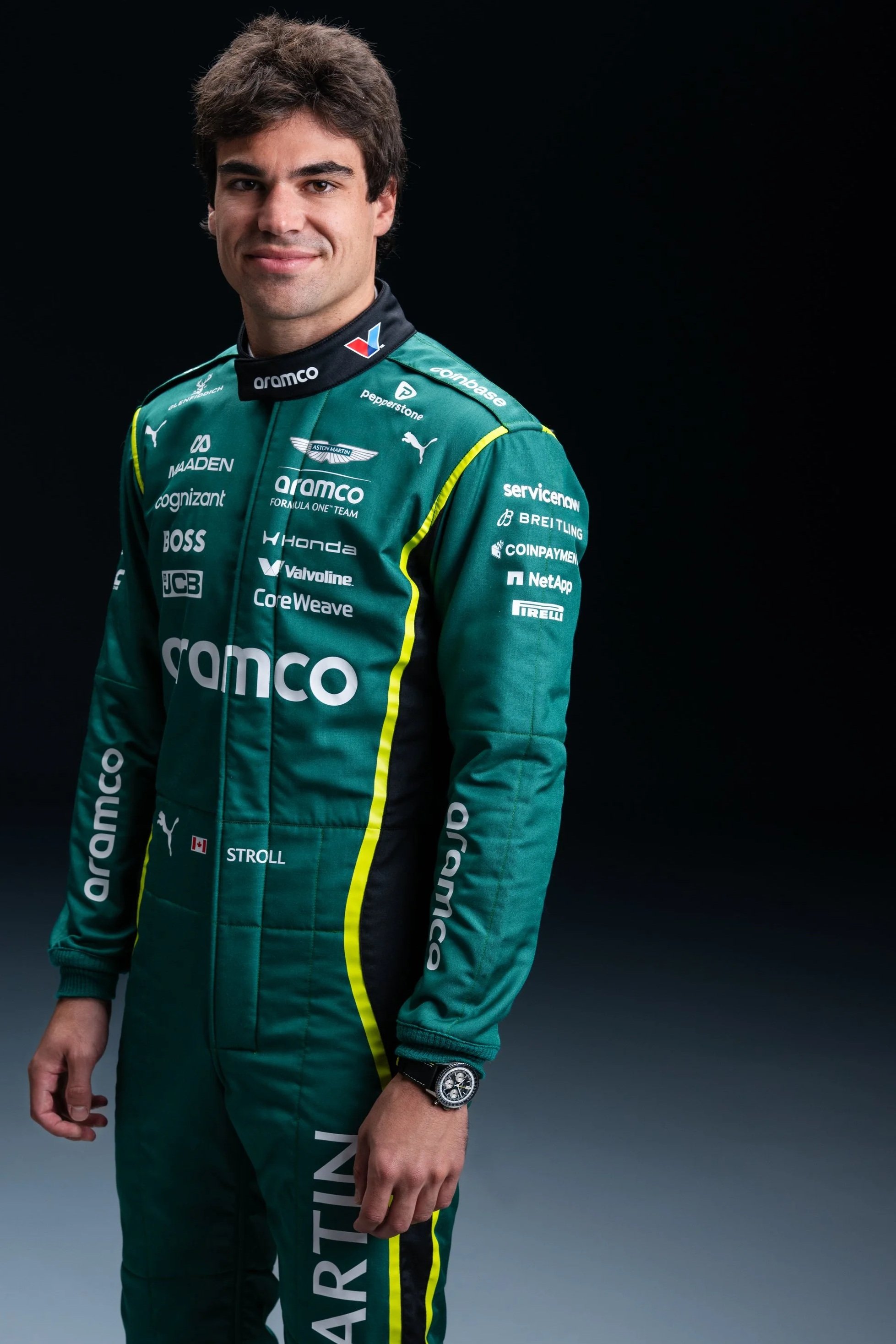
Image © Honda Motor Co. Ltd & Aston Martin Aramco. Used for editorial purposes.
In the race, however, that promise never really translated into a clean result. The #18 entry ultimately finished 48th overall, and broader reporting after the event described the run as troubled rather than headline-grabbing, with incidents, penalties and a late gear-selection issue all contributing to a frustrating outcome. Motorsport.com’s post-race coverage noted that Stroll still came away encouraged by the experience, but the result itself was clearly a long way removed from Aston Martin’s much happier story at the front of the field.
That’s probably the right way to frame it in the wider context of this week’s roundup. Stroll’s appearance added an interesting crossover moment between Aston Martin’s Formula 1 and GT programmes, especially during this unusual spring pause. But it remained very much a subplot.
The real Aston Martin headline at Paul Ricard was the outright victory of the #7 car, and the broader significance of a marque that suddenly looked far more competitive and alive outside Formula 1 than within it.
If Paul Ricard gave Aston Martin its clearest endurance-racing headline of the week, Barcelona offered something slightly different: another GT3 success, but with a much more mixed emotional picture around it.
Barcelona: Aston Martin Wins Michelin Le Mans Cup GT3
If Paul Ricard gave Aston Martin its biggest endurance-racing headline of the week, Barcelona quietly added another success of real substance. In the opening round of the 2026 Michelin Le Mans Cup, Philipp Sager and Valentin Hasse Clot took the GT3 class win in the #10 Racing Spirit of Léman Aston Martin Vantage, finishing a lap clear of the nearest Porsche despite a post-race 10-second penalty.
What made the result especially worthwhile was the nature of the race itself. This was not a calm, routine season opener. Barcelona was shaped by repeated interruptions, including an opening-lap Safety Car, a second Safety Car shortly after the restart, and then a Full Course Yellow that quickly became another Safety Car after further incidents left multiple cars stranded in the gravel. In other words, this was the sort of stop-start, unsettled race that demands patience, judgment and a little composure as much as outright pace.
Within that, Aston Martin’s GT3 story had a bit of ebb and flow to it. The #11 Code Racing Development Aston Martin had started from GT3 pole and briefly led early on, but as the race developed it was the #10 Racing Spirit of Léman car that emerged as the stronger Aston Martin contender. Hasse Clot had to chase down the leading Ferrari, manage the implications of the later penalty, and still build the margin required to secure the class win once the arithmetic became clear. The official race report makes the point neatly:
“…the Aston Martin didn’t simply inherit the result, it had to go and earn it.”
That matters in the wider context of this week’s roundup, because it reinforces the same broader theme that had already begun to emerge at Paul Ricard. Away from Formula 1, Aston Martin’s GT racing programme was not merely showing up; it was delivering properly competitive results in meaningful championships. Barcelona may not have carried quite the same spotlight as GT World Challenge Europe, but it still gave Aston Martin another class victory, another reason for confidence, and another reminder that the marque’s wider racing picture looked far healthier than its F1 one.
That said, Barcelona was not an entirely uncomplicated Aston Martin story, because as touched on last week, for Blackthorn Racing, the weekend ended before the race had even properly begun.
Blackthorn’s Setback Before Barcelona
For Blackthorn Racing, however, Barcelona brought a very different sort of story. While Aston Martin still emerged from the Michelin Le Mans Cup opener with a GT3 victory through Racing Spirit of Léman, Blackthorn’s own weekend ended before the race had even begun, after Claude Bovet’s accident in the Bronze collective test forced the withdrawal of the team’s #91 Aston Martin Vantage GT3 Evo. He had been due to share the car with Tom Canning.
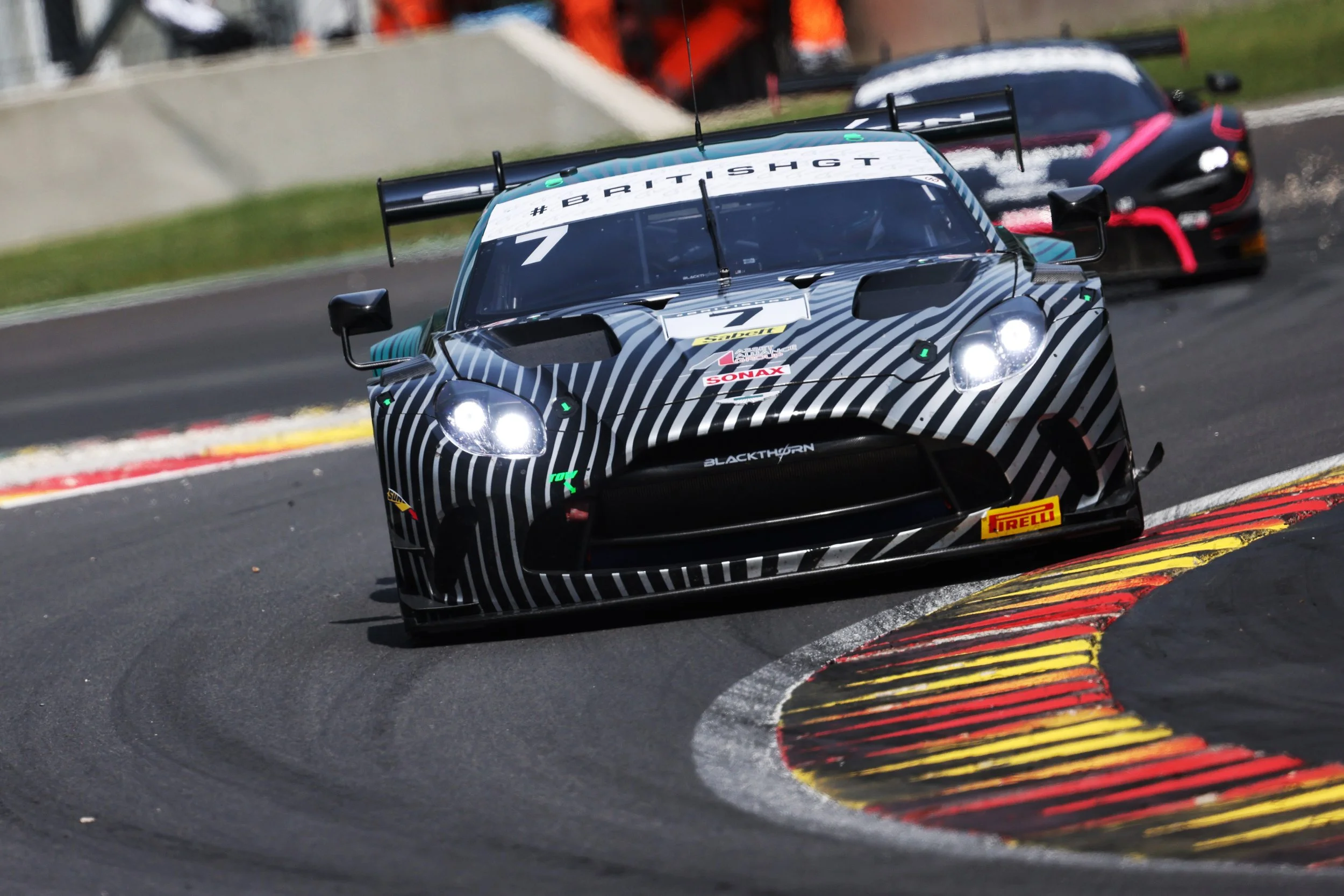
Image © Aston Martin Lagonda. Used for editorial purposes. Blackthorn Aston Martin GT3.
That was an especially frustrating outcome because it denied Blackthorn any real opportunity to show what the programme might have been capable of in race conditions. In a championship where momentum, mileage and early-season rhythm matter, losing the opening round before qualifying had even properly begun is about as unwelcome a start as a team can have.
It also gives the Barcelona story a little more emotional weight from an FTP point of view. On the surface, this was still a positive Aston Martin weekend in Michelin Le Mans Cup terms, because the marque won the GT3 class. But that success sat alongside real disappointment for one of the Aston Martin teams we are following closely this season. That contrast matters, because it stops the wider picture from becoming too neat.
So, Barcelona ultimately gave Aston Martin both sides of racing in one weekend: the satisfaction of a class win, and the frustration of a campaign interrupted before it had even really started. If Barcelona added a second European victory to Aston Martin’s weekend, the picture looked even stronger once attention turned further east.
Okayama: Aston Martin Wins GT300 in Japan
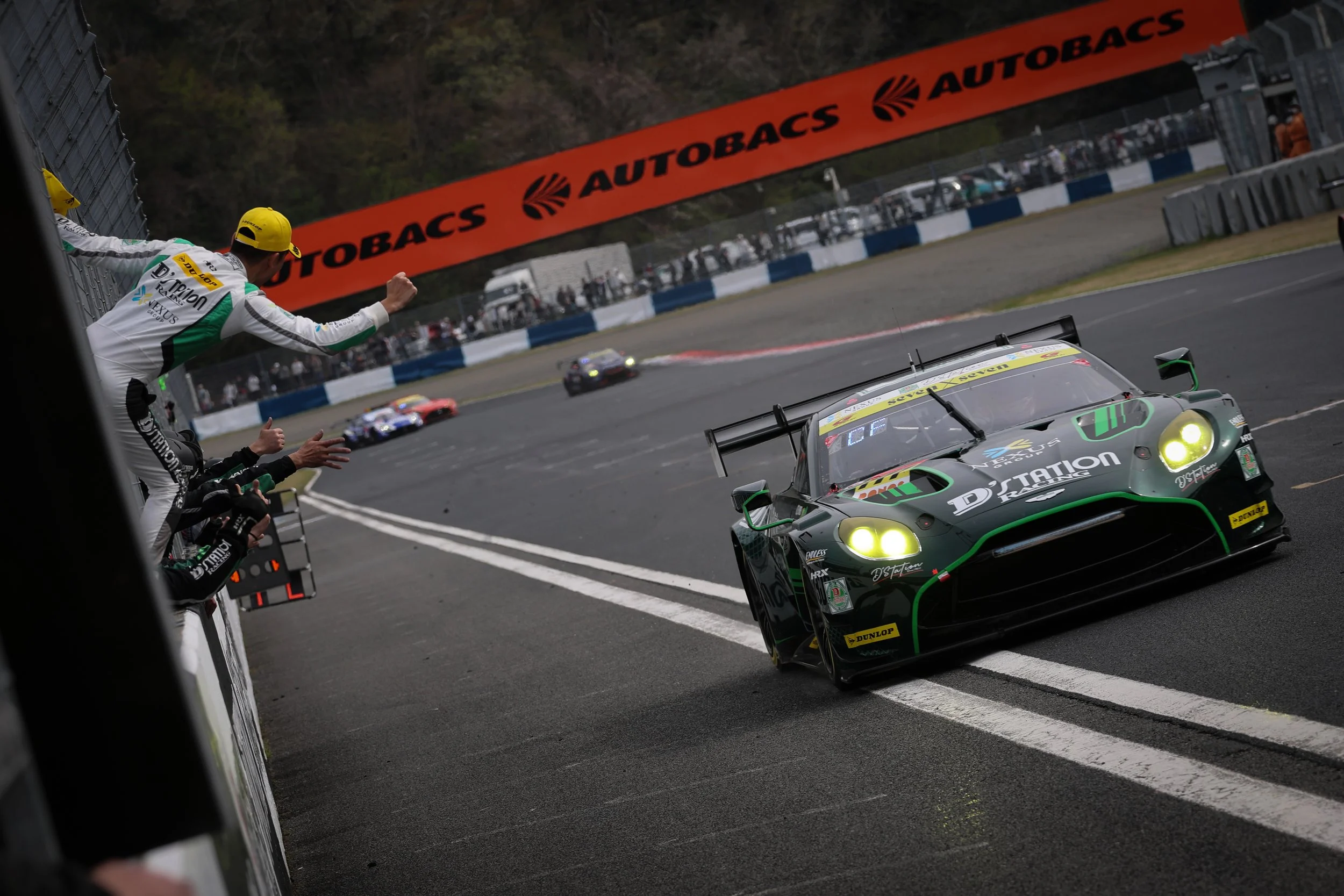
Image © Aston Martin Lagonda. Used for editorial purposes. D’station Racing winning at Okayama.
As if Paul Ricard and Barcelona were not already enough to underline the point, Aston Martin’s wider racing weekend also reached Japan. In the opening round of the AUTOBACS SUPER GT Championship at Okayama, D’station Racing gave Aston Martin yet another reason for encouragement by winning the GT300 class with the Vantage GT3. (media.astonmartin.com)
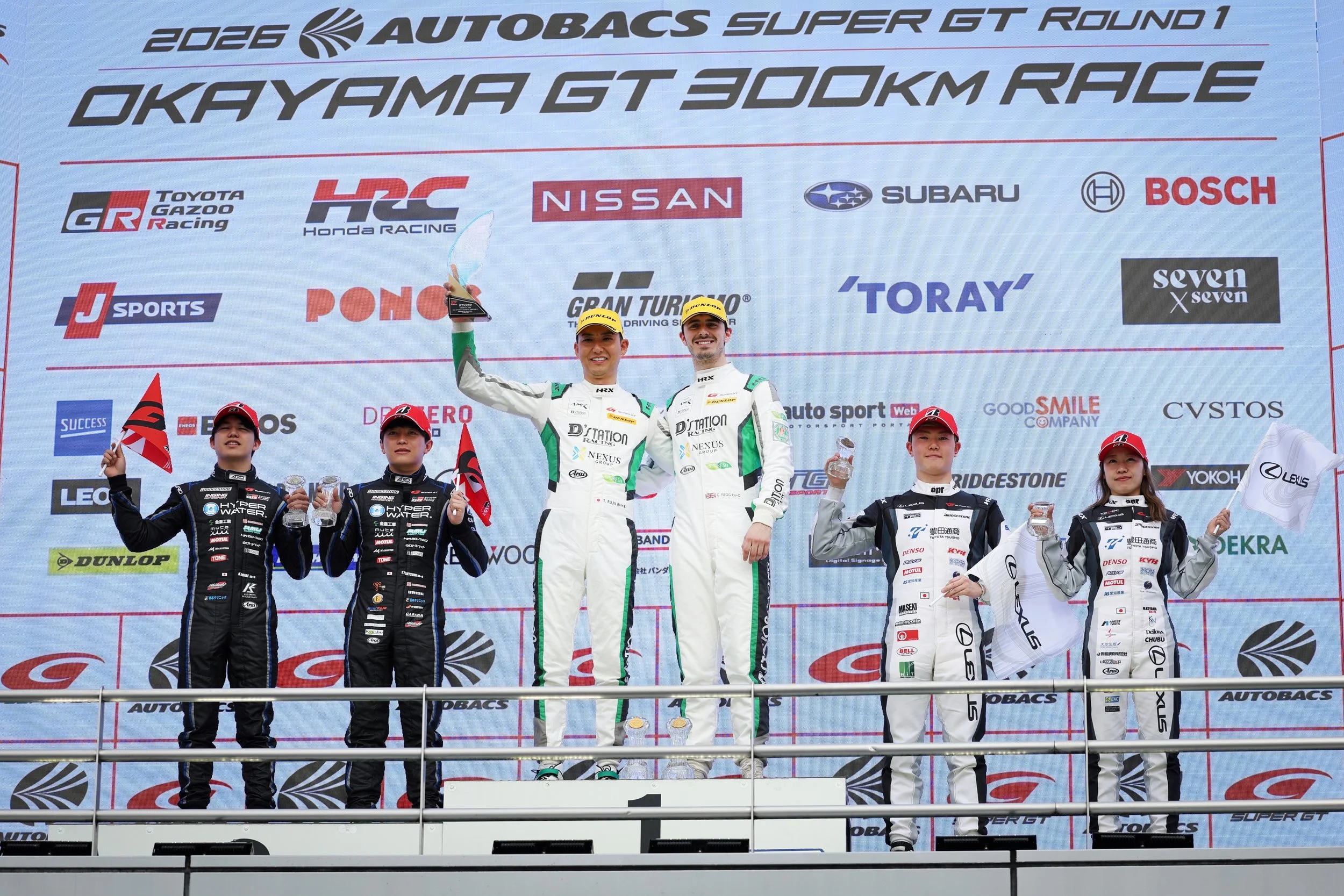
Image © Aston Martin Lagonda. Used for editorial purposes. Okayama Podium.
Driven by Tomonobu Fujii and Charlie Fagg, the car converted pole position into a lights-to-flag victory, which gave the result a rather more controlled feel than the dramatic fightback story at Paul Ricard or the stop-start complexity of Barcelona.
In other words, this was Aston Martin winning in a different way again: not through recovery, and not through attrition, but through outright command of its class from the front. (media.astonmartin.com)
That matters because it turns what might otherwise have felt like a couple of isolated successes into something broader and more convincing.
“Across one weekend, Aston Martin had now won in GT World Challenge Europe, Michelin Le Mans Cup GT3, and SUPER GT GT300.”
That’s not just a pleasing statistical quirk; it’s a genuine reminder that Aston Martin’s competition story still carries real depth, (media.astonmartin.com) and if that left the wider racing picture looking healthier, attention was already beginning to shift toward another significant stage altogether, because at Imola, Aston Martin’s World Endurance Championship story was moving into much more serious territory.
Imola WEC Build-Up: Mixed Aston Martin Picture
Attention is already turning toward Imola, where Aston Martin’s World Endurance Championship story is about to enter a significant new phase. This weekend matters, not only because the marque’s wider endurance presence continues to grow, but because the Valkyrie Hypercar programme is now moving into another major public test at the highest level.
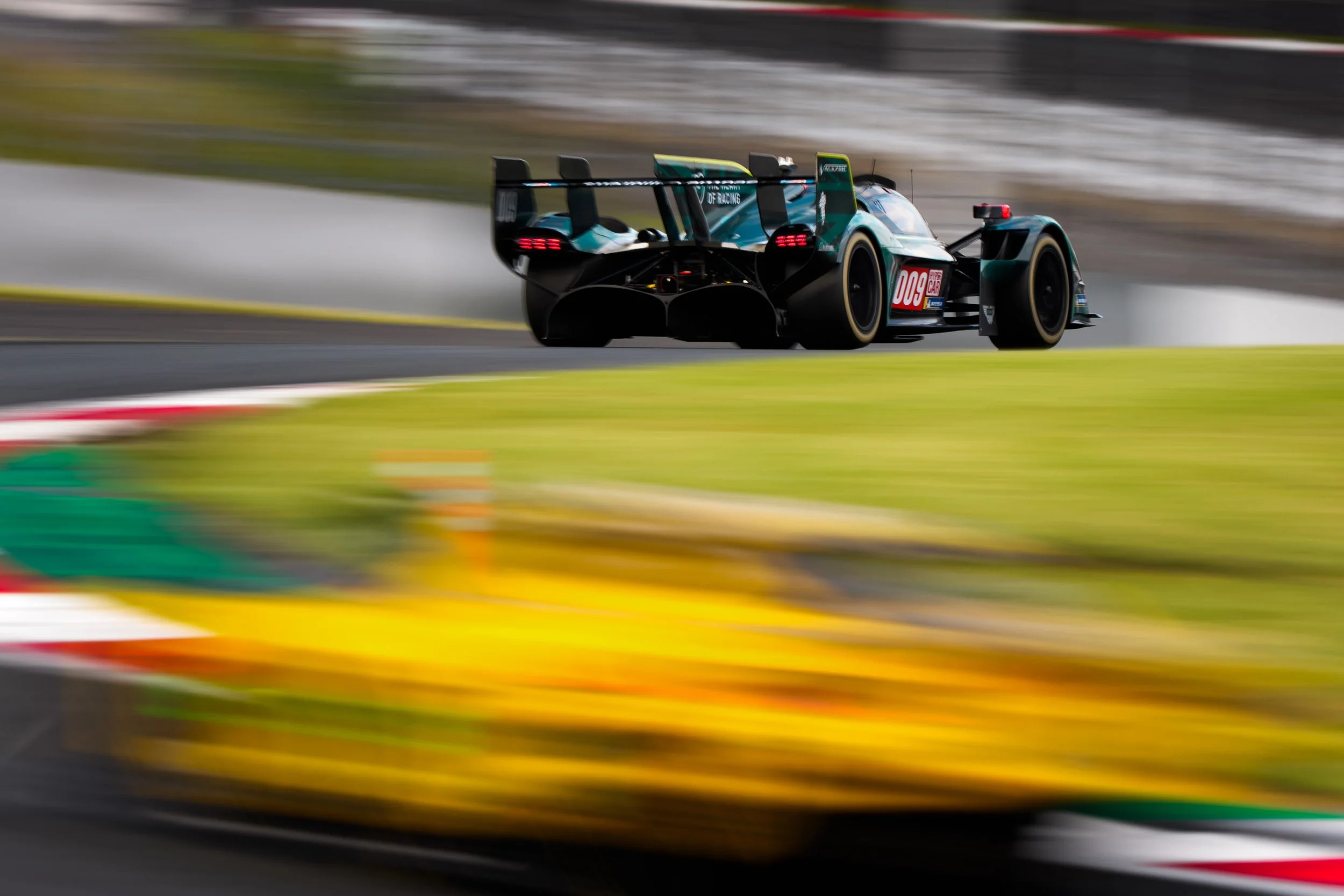
Image © Aston Martin Lagonda. Used for editorial purposes. Valkyrie #009 in action.
The early picture from the Imola Prologue, however, was a mixed one. On the Hypercar side, Aston Martin suffered an obvious setback when Marco Sørensen crashed the #009 Valkyrie heavily at Tamburello, forcing a chassis change and costing the team valuable running time.
Sørensen was thankfully unhurt, but it was still an unwelcome interruption at precisely the point Aston Martin would have wanted clean preparation and steady mileage.
The early picture from the Imola Prologue, however, was a mixed one. On the Hypercar side, Aston Martin suffered an obvious setback when Marco Sørensen crashed the #009 Valkyrie heavily at Tamburello, forcing a chassis change and costing the team valuable running time. Sørensen was thankfully unhurt, but it was still an unwelcome interruption at precisely the point Aston Martin would have wanted clean preparation and steady mileage.
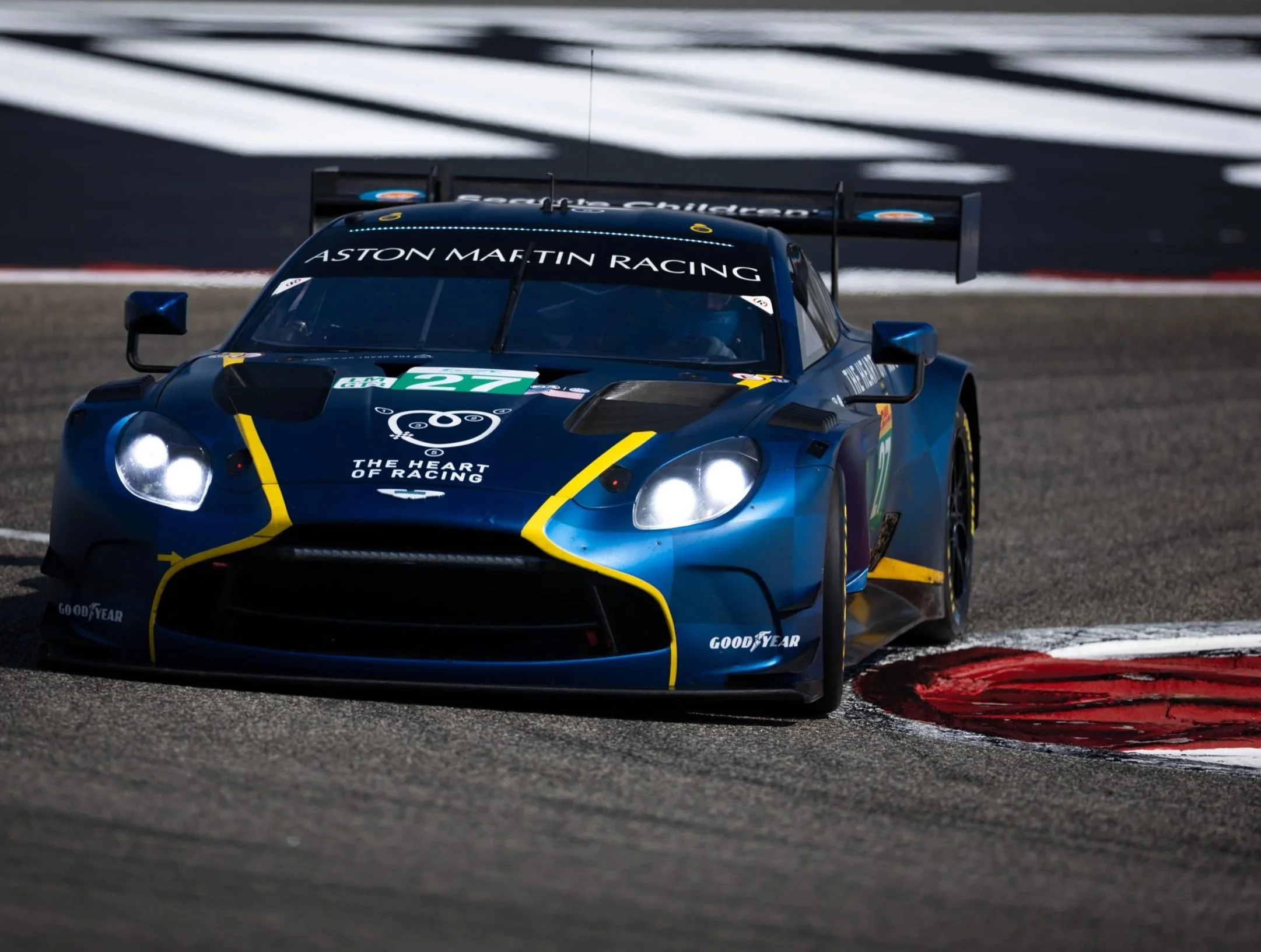
Image © Aston Martin Lagonda. Used for editorial purposes.
Yet the story was not entirely downbeat. In LMGT3, Aston Martin had much more reason for encouragement, with Mattia Drudi putting the #27 Heart of Racing Aston Martin Vantage AMR LMGT3 at the top of the class times with a 1:42.698. That doesn’t remove the difficulties on the Valkyrie side, but it does help balance the wider Aston Martin picture at Imola: one strand still learning under pressure, another already looking competitive and composed.
Because this edition is being written a little earlier than usual, I won’t be in a position to update the roundup with qualifying results or the full race story from Imola. So, we’ll return to Aston Martin’s WEC weekend properly in next week’s roundup, once the Valkyrie’s latest test and Heart of Racing’s LMGT3 challenge have played out in full.
Aston Martin’s endurance story doesn’t end at Imola, of course, because Heart of Racing’s momentum has also been building elsewhere.
IMSA Note: Dudu Barrichello’s Early Momentum with Heart of Racing
Aston Martin’s endurance story does not stop in Europe, either. Across the Atlantic, Eduardo “Dudu” Barrichello has made a notably strong start to his first full IMSA season with The Heart of Racing, collecting two podium finishes, a pole position at Sebring, and the early GTD points lead heading into Long Beach.
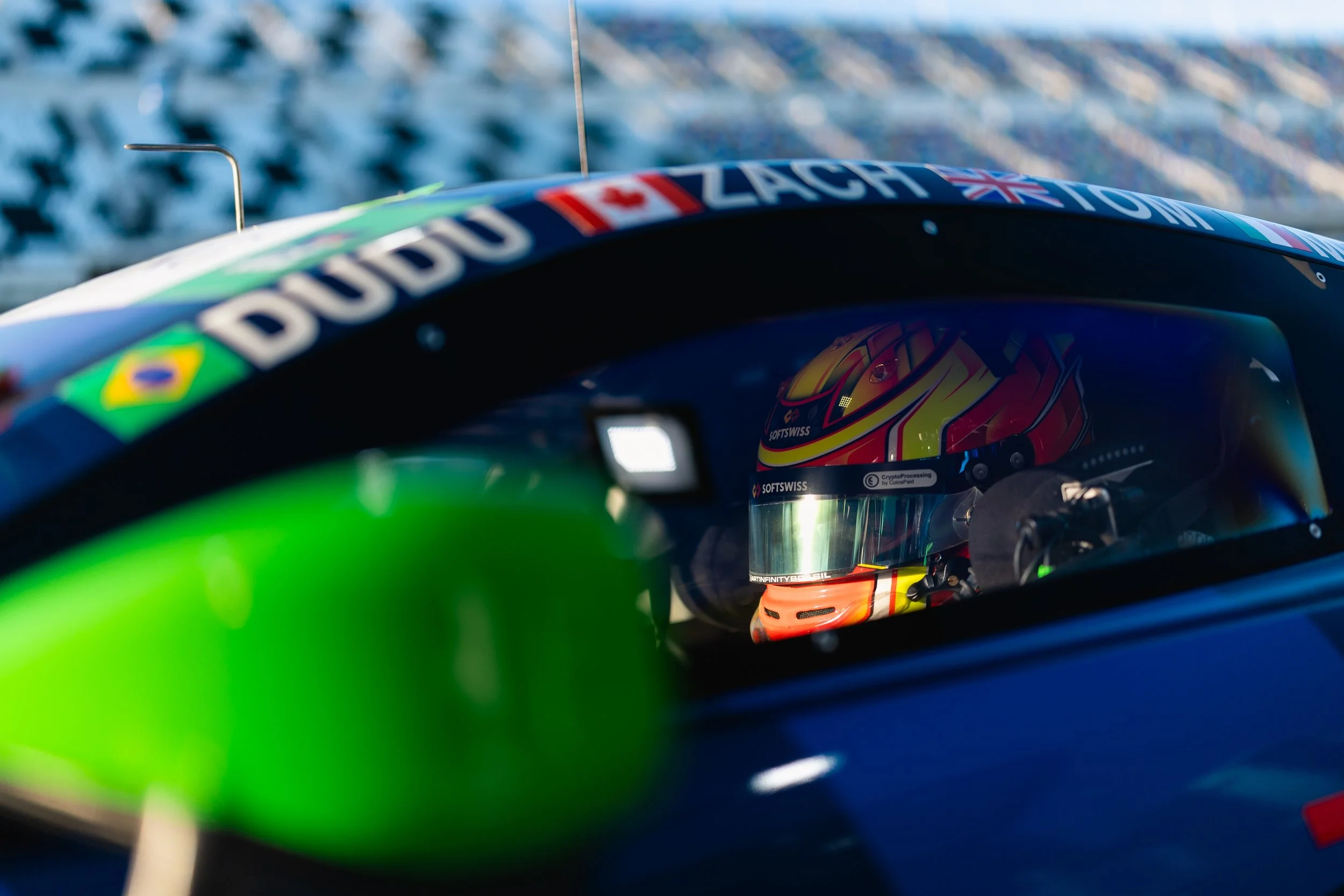
Image © Aston Martin Lagonda. Used for editorial purposes. Barrichello in his Aston.
That matters in this week’s wider Aston Martin context because it reinforces the same basic point already visible at Paul Ricard, Barcelona and Imola: away from Formula 1, the marque’s broader racing footprint has looked active, competitive and increasingly well spread across multiple programmes.
Heart of Racing, in particular, continues to feel like one of the healthiest and most convincing strands in Aston Martin’s current motorsport picture.
If all of that offered Aston Martin supporters a more encouraging view elsewhere, Formula 1 itself still remained the uncomfortable exception.
Formula 1 Reality Check: Brundle’s “Horror Show” Verdict
If Aston Martin’s wider racing world has looked unexpectedly alive over the past week, Formula 1 still remains the uncomfortable exception. That has been the awkward contrast running beneath much of this edition: while Aston Martin has been winning, challenging and showing real depth elsewhere, its Grand Prix effort continues to feel stuck in a far less encouraging place.
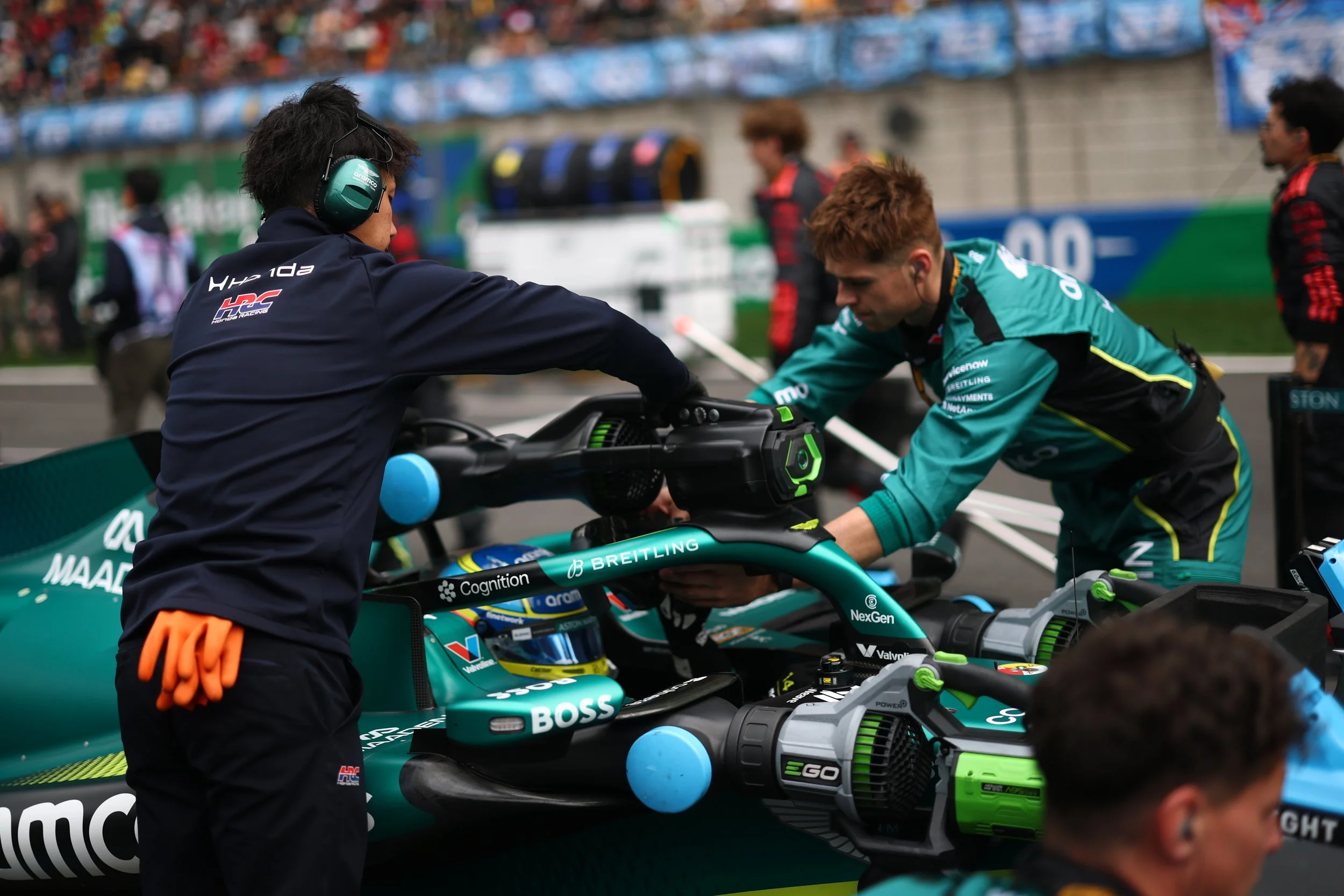
Image © Honda Motor Co. Ltd & Aston Martin Aramco. Used for editorial purposes.
Martin Brundle’s verdict this week was, characteristically, blunt. Describing Aston Martin’s start to 2026 as a “horror show”, he argued that there is no quick fix in sight, with the team still wrestling with the now-familiar combination of vibration, reliability and overall pace deficit. The language is strong, certainly, but the broader point is difficult to dismiss.
Through the early part of the season, Aston Martin has not merely looked off the pace; it has looked like a team dealing with problems deep enough to resist any easy short-term solution.
That matters because the wider context is so stark. This is not an Aston Martin team short of ambition, investment or high-level technical brainpower, but right now, none of that changes the simple visual truth of what’s happening on track. The AMR26 has been unreliable, uncomfortable and uncompetitive, and the sense now is that the team is not facing a bad weekend or two, but a more fundamental technical problem that may take considerably longer to unwind than anyone around Silverstone would’ve wanted.
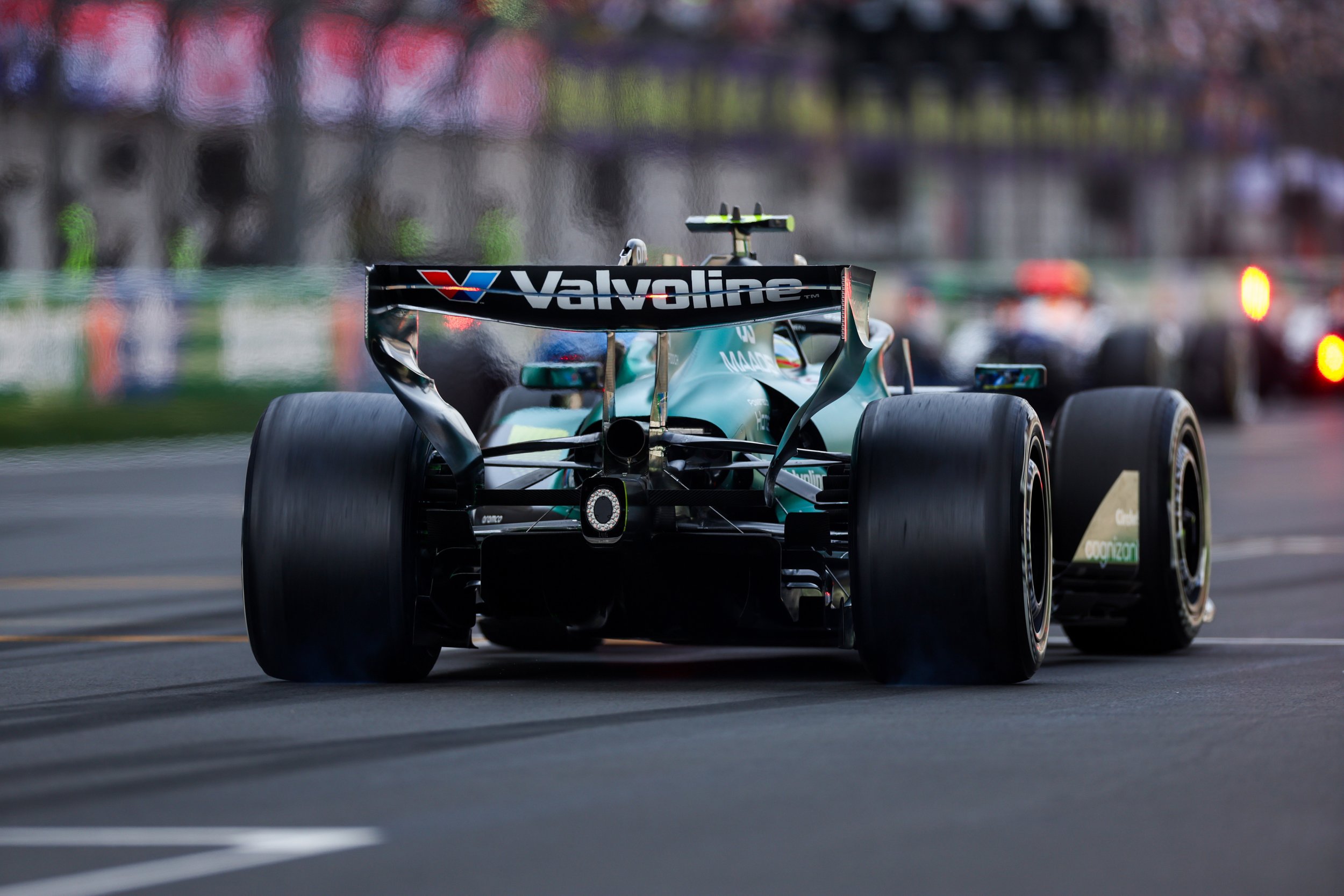
Image © Honda Motor Co. Ltd & Aston Martin Aramco. Used for editorial purposes.
In some ways, that only made the wider racing results covered earlier in this roundup feel more significant. They don’t solve Aston Martin’s Formula 1 problems, of course, and nor should they be used to disguise them. But they do at least remind us that Aston Martin’s competitive story is currently far healthier once you widen the lens beyond one struggling Grand Prix programme.
The next obvious question, then, is what this unusual spring break actually allows Aston Martin to do before the season resumes.
Miami Becomes the Next Key F1 Checkpoint
That brings Aston Martin to the next obvious question: what can realistically change before Miami?
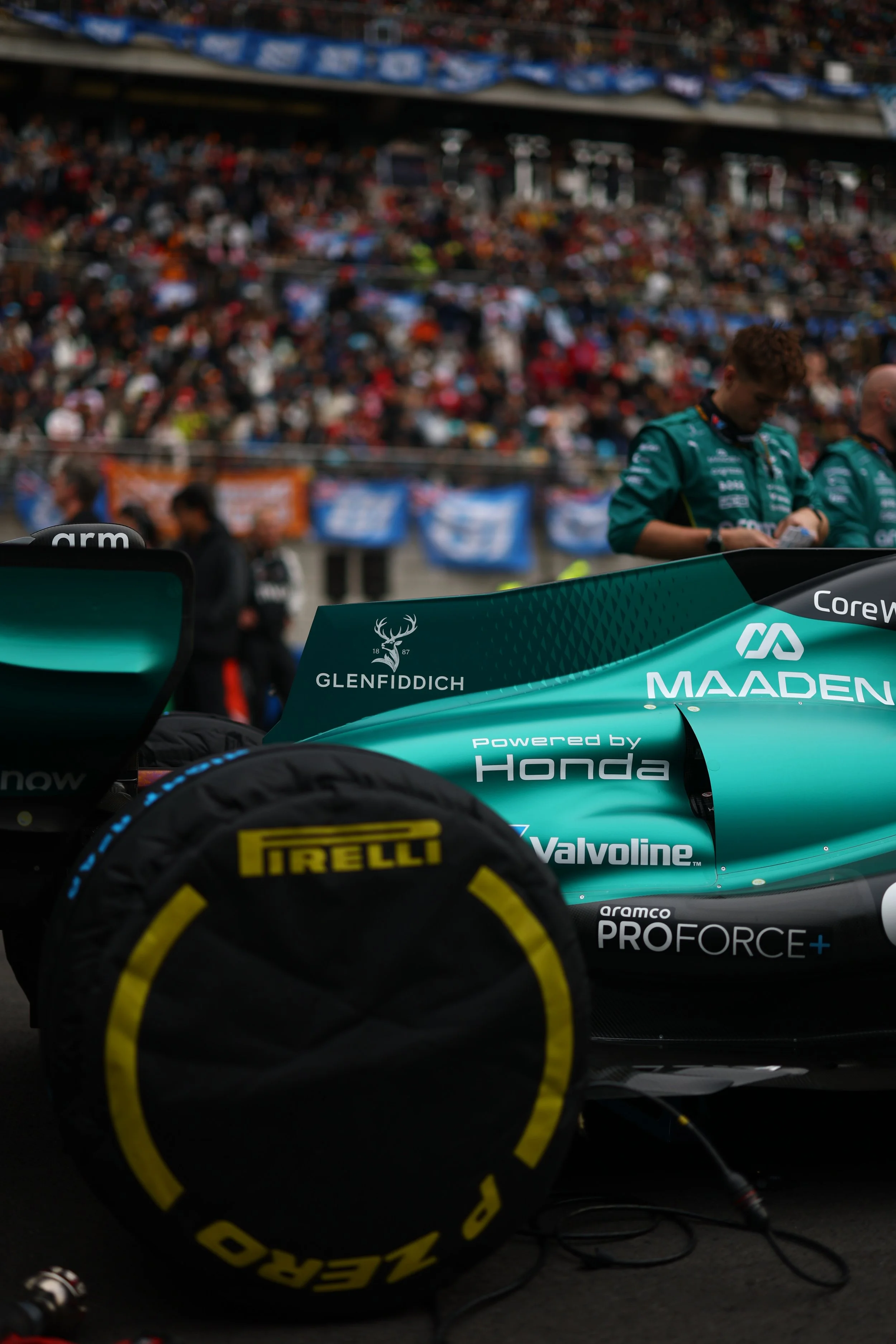
Image © Honda Motor Co. Ltd & Aston Martin Aramco. Used for editorial purposes.
As we know, with the Bahrain and Saudi Arabian Grands Prix no longer occupying their usual place in the April calendar, the team has been handed an unusual gap in the season, not long enough to reinvent the car, but long enough to make the next race feel more important than it otherwise might have done.
That, in turn, makes Miami feel like the next meaningful checkpoint for Aston Martin’s Formula 1 campaign. Not because it’s guaranteed to bring some dramatic transformation, and certainly not because one race weekend will suddenly solve what appear to be deep-rooted problems, but because it should give the clearest indication yet of whether the team has managed to make any useful progress during the enforced pause. Right now, even modest improvement would matter.
That’s probably the fairest way to frame it for now. There’s no value in promising a breakthrough before it happens, and equally no value in pretending the break itself is irrelevant.
We’ve talked about this before, obviously Aston Martin has been given a little breathing space, the real issue is what it can do with it. If Miami shows signs of greater stability, cleaner running and even a small step forward in competitiveness, that will at least give the team something to build from. If not, the sense that this is becoming a much longer and more uncomfortable season will only deepen.
That slightly uneasy mood around Formula 1 has made some of Aston Martin’s recent road-car and brand messaging even more interesting to watch, especially when Fernando Alonso himself is placed at the centre of it. I’ll be interested in your thoughts on the next story in this week roundup.
Fernando Alonso, Valhalla, and the Shadow of Formula 1
Released on YouTube on Wednesday of this week, Aston Martin’s short “Defining Mastery” film with Fernando Alonso and Valhalla was, on the face of it, exactly the sort of brand piece the company currently does very well. It was stylish, concise and confident, using Alonso’s extraordinary longevity and experience to reinforce the idea that Valhalla is not simply another halo road car, but one shaped by a driver whose career has been built on discipline, obsession and hard-earned technical understanding. In that respect, the film worked rather well.
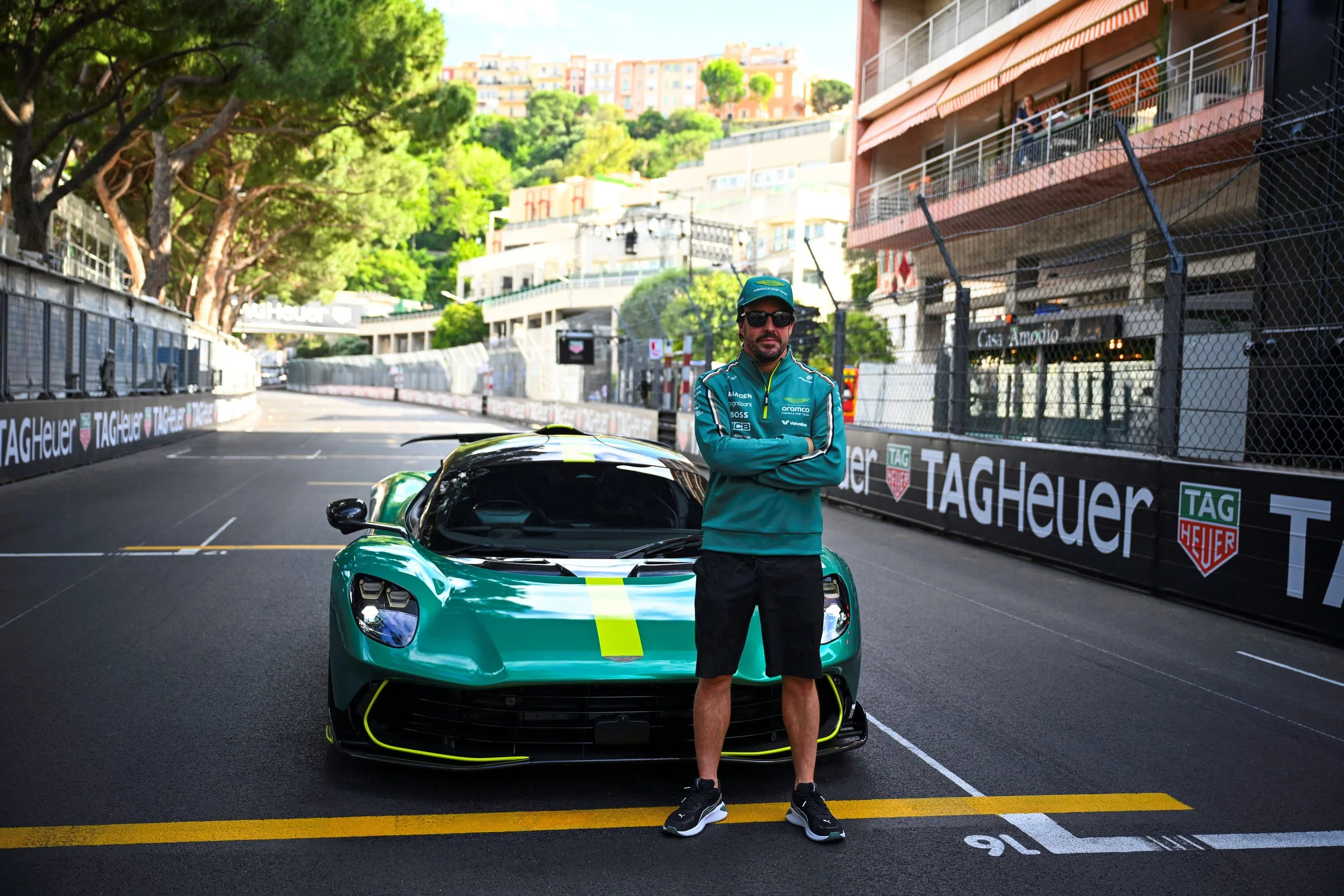
Image © Aston Martin Lagonda. Used for editorial purposes. Valhalla, Alonso, Monaco.
What made it especially interesting this week, though, was not just the film itself, but the reaction beneath it.
A noticeable number of public comments quickly moved away from Valhalla and back toward Aston Martin’s Formula 1 struggles, drawing comparisons between the brilliance and confidence of the road car and the far more troubled reality of the current AMR26. That comes as no surprise and we all would’ve predicted this kind of reaction.
The car may be Valhalla, the face may be Alonso, but for many people the conversation still drifts back toward the Formula 1 team.
That doesn’t diminish the film itself, nor does it lessen the importance of Alonso’s role in Valhalla’s wider development story. If anything, it sharpens the contrast. Here’s Aston Martin presenting one of its most exciting and admired modern road cars through one of the sport’s most respected drivers, and yet a good portion of the audience still sees the shadow of a struggling Grand Prix programme hanging over it. In that sense, the video became a rather neat snapshot of Aston Martin’s current moment: admired road cars, admired driver, strong storytelling, but a Formula 1 team whose problems remain difficult to separate from the brand’s wider public image. Watch the film, by clicking on the image below. What do you think? Let me know in the comments below. 👇
Away from Formula 1 altogether, however, Aston Martin’s visibility beyond the circuit has continued to tell a more polished and composed story.
Seaham Hall and Aston Martin Newcastle Launch Luxury Guest Partnership
Away from the circuit, Aston Martin’s wider brand presence was visible this week through a new partnership between Seaham Hall and Aston Martin Newcastle. Seaham Hall is a five-star coastal hotel and spa resort in Seaham, County Durham, and the collaboration is designed to bring Aston Martin more directly into the hotel’s luxury guest experience. (seaham-hall.co.uk)
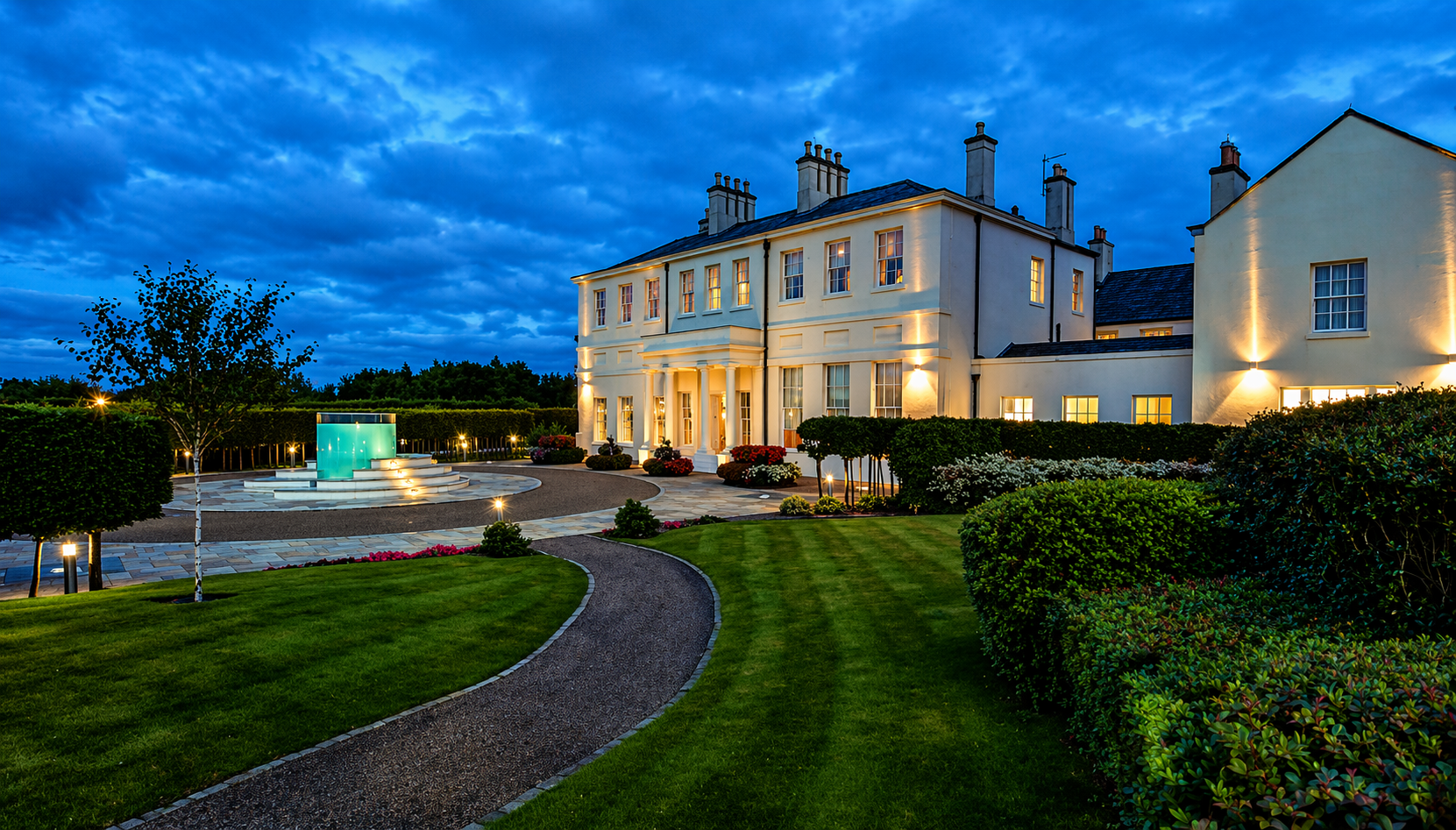
Image left: Seaham Hall, County Durham
The arrangement appears to centre on exclusive events, Aston Martin showcases and test-drive opportunities, with reporting also pointing to tailored hotel packages that give guests access to Aston Martin vehicles during their stay.
That makes this more than a simple display partnership. It’s a hospitality-led brand collaboration, using Aston Martin as part of the wider premium experience Seaham Hall is offering to its guests. (businessdurham.co.uk)
What’s not yet clear from the publicly available material is exactly how those driving opportunities are structured. I’ve not seen reliable published detail confirming whether the Aston Martin access is automatically included for hotel guests, limited to specific packages, or available at an additional cost. So that part is best treated cautiously for now. But the broader intention is clear enough: to place Aston Martin in a luxury setting where the cars, the location and the guest experience all reinforce one another. If a reader of this article decides to try this experience yourself, please get in touch, I would love to know what your stay was like, it certainly looks like a lovely place and with a drive in one of the latest Aston Martin models, what a nice touch that would bring to a week or weekend get away!
If that partnership showed Aston Martin at ease in its broader luxury world, the next supporting item felt lighter and more playful: a short Valhalla film that neatly captured just how positive the mood around the car currently is.
Before we move on, did you miss this first time round?
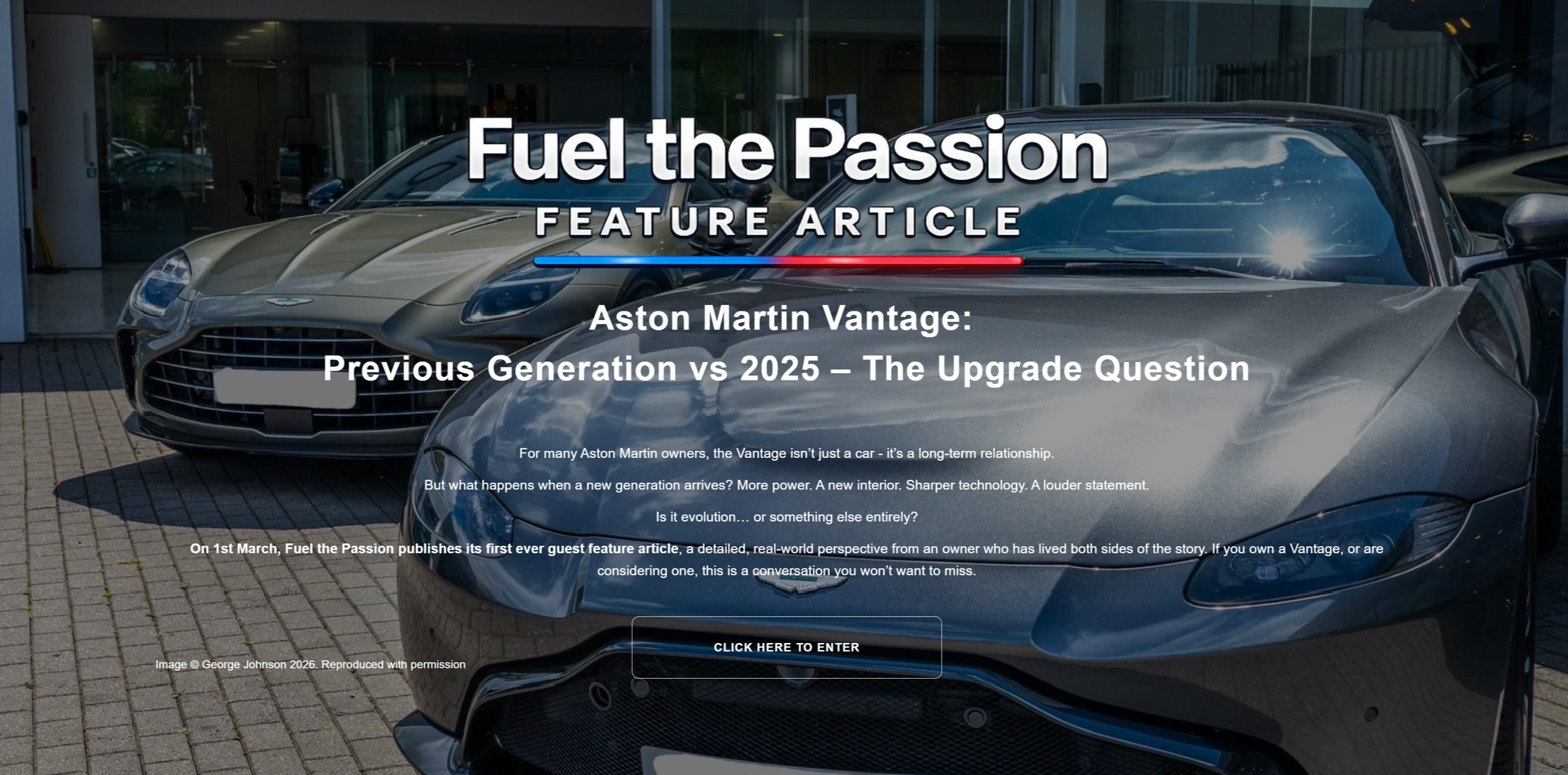
While partnerships like Seaham Hall and Aston Martin Newcastle show how the marque continues to present itself in aspirational luxury settings, one of the things I’ve always wanted Fuel the Passion to do is go a step further than the polished surface. What does Aston Martin ownership actually feel like when the decisions are real, the money is real, and the emotional pull of the cars meets everyday reality? That’s exactly why the only guest article currently published on Fuel the Passion remains so worth reading.
If you missed it when it first appeared, George Johnson’s guest feature on whether to upgrade from a 2019 Aston Martin Vantage to the 2025 model is a fantastic and thoughtful owner-led piece of writing.
Rather than offering a polished road test from a distance, George writes from lived experience, weighing up the real positives, the real negatives, the financial cost, the emotional pull, and the practical reality of making the change. It is honest, detailed and genuinely useful, especially if you’re asking yourself whether to keep the car you know and love, or step into Aston Martin’s latest chapter.
👇If you haven’t yet read it or missed it first time round, just click on the image below and we’ll take you straight there 👇
If reading George’s piece makes you think about your own Aston Martin story, perhaps an ownership journey, buying decision, restoration, road trip or memorable event with photographs to support it, I’d genuinely love to hear from you. You could even feature in your own guest article, here on Fuel the Passion.
Aston Martin’s 46-Second Valhalla Review Film Says It All
We’ve already covered the broader wave of Valhalla first-drive reactions in edition 18 of the FTP Weekly Roundup, so I don’t want to repeat all of that ground here. But I did still want to include this short Aston Martin film because it’s a neat companion piece to that earlier coverage and, if you missed it, it’s well worth a look.
Aston Martin published “The best Aston Martin I have ever driven” | Valhalla Media Reviews on YouTube on 30th March 2026, and although it’s only a brief clip, it works rather well. Rather than trying to explain the full technical story of Valhalla, it simply leans into the strength of the media reaction, using short flashes of the car alongside upbeat reviewer quotes to reinforce the sense that Aston Martin may genuinely have created something very special.
In truth, because the previous Weekly Roundup had already dealt with the bigger Valhalla review story in more depth, I thought this short film was better placed on the front page of the FTP website and included here as a lighter supporting item, just in case you hadn’t seen it. It doesn’t add a great deal of new information, but it does add confidence, atmosphere and a useful reminder of just how positive the mood around Valhalla currently is. This YouTube film is below, just click on it to view, it’s only 46 seconds long;
That same sense of road-car confidence, however, has not been limited to Valhalla alone.
Road Car Watch: Vantage S Reviewed by evo’s Henry Catchpole
If Valhalla continues to generate excitement as Aston Martin’s bold new halo car, the Vantage S has been attracting a rather more grounded, but still very encouraging kind of praise. Writing in evo, Henry Catchpole describes the car as a more focused, more intense evolution of what was already one of the strongest road cars in Aston Martin’s current range, praising its added power, sharper attitude and the fact that it still remains genuinely usable alongside all that extra intent.

Image © Aston Martin Lagonda. Used for editorial purposes.
That feels especially relevant because it reinforces a pattern that we’ve already been noting in recent editions of the FTP Weekly Roundup. A recent edition, for example, carried our broader coverage of the increasingly enthusiastic first-drive reaction to Valhalla, and the same basic theme seems to be surfacing again here.
Aston Martin’s current road cars are attracting the sort of praise that feels more than merely polite.
“There’s a growing sense that the marque is producing cars critics genuinely admire, not simply respect in theory.”
What also stands out in Catchpole’s verdict is the balance of it. He’s not presenting the Vantage S as some overblown reinvention, nor as a stripped-out special that loses sight of what made the standard car work. Instead, the sense from evo is that Aston Martin has judged the formula rather well: a little more edge, a little more theatre, a little more focus, without tipping the car into something needlessly compromised. At 671bhp, with chassis and aero tweaks to match, it’s clearly a serious machine, but one still intended to be enjoyed rather than merely admired on paper.

Image © Aston Martin Lagonda. Used for editorial purposes.
In that sense, Catchpole’s review feels less like an isolated burst of praise and more like further confirmation of something Aston Martin supporters will be pleased to hear: however uneasy some of the wider conversation around the company may still become, the cars themselves keep making a convincing case.
The Vantage S appears to be another example of that, not a dramatic reset, but a confident, intelligent step on from a car that was already giving Aston Martin good reason to feel proud.
If the Vantage S suggests Aston Martin still knows how to refine a strong formula, another recent road-car assessment points to something slightly broader again: the sense that even the marque’s convertibles are now entering a more convincing era.
Road Car Context: PistonHeads on the DB12 Volante

Image © Aston Martin Lagonda. Used for editorial purposes.
Another road-car piece I wanted to include this week came from PistonHeads, where Matt Bird used the DB12 Volante to make a slightly broader point about Aston Martin’s current direction. The article was published on 2nd April 2026, and in truth I left it to one side at the time simply because the last couple of Weekly Roundups have already been full. But it felt too interesting to ignore altogether, so this edition seemed the right place to bring it in, before it got a little too dated.

Image © Aston Martin Lagonda. Used for editorial purposes.
What makes the piece especially worthwhile is that it’s not simply praising the DB12 Volante as a handsome, fast Aston Martin. The more interesting argument is that Aston Martin’s convertibles may now have entered a more convincing era altogether. For many years, the marque’s open-top cars often came with at least some degree of qualification.
They were glamorous, desirable and full of occasion, certainly, but not always quite as resolved or compelling as their coupe equivalents. Bird’s point is that the DB12 Volante may be the car that finally breaks that old pattern. That matters more than it might first appear, because it speaks to a wider change in Aston Martin’s current road-car story.
“The article does not simply praise the DB12 Volante in isolation…”
…it suggests it may represent the beginning of a stronger modern Aston Martin convertible line, one that now extends into the newer Vantage Roadster and Vanquish Volante. In other words, the improvement is not being framed as a one-off, but as part of a broader rise in the quality and confidence of the current range.

Image © Aston Martin Lagonda. Used for editorial purposes.
For this week’s roundup, that fits neatly with the pattern already emerging elsewhere. Valhalla continues to gather enthusiastic reaction. The Vantage S is being warmly received by serious road testers and here, the DB12 Volante is being described not simply as a good Aston Martin convertible, but as evidence that the marque may finally have moved beyond some of the old caveats that used to follow its open-top cars around.
That road-car confidence, however, does not only create praise. Sometimes it also creates more interesting and slightly trickier questions, particularly when rarity, value and long-term appeal enter the conversation.
Nicholas Mee’s Vanquish Zagato Value Proposition
One of the more interesting road-car pieces this week came not from a conventional review at all, but from Nicholas Mee & Company, who used a beautifully presented 2016 Aston Martin Vanquish Zagato Coupe to pose a much broader question about Aston Martin ownership, value and long-term appeal, see the video below;
At first glance, it’s simply an elegant sales film for a very special car: car number 16 of 99, finished in Lava Red, with just 2,200 miles, a single owner, and all the visual theatre you would expect from a Vanquish Zagato.
“But what made the piece stand out was the argument sitting underneath it.”
Nicholas Mee was not merely saying that this is a rare and desirable Aston Martin. The more interesting point was that, at this level of the market, a genuine financial and emotional question starts to open up: would you rather buy a heavily optioned new DB12, or place your money into a rare, naturally aspirated V12 Aston that may already have done most of its depreciating?
That’s a properly interesting Aston Martin question, because there’s no neat answer to it. The DB12 is newer, more modern, more obviously usable as an everyday grand tourer, and still represents Aston Martin’s current direction. But the Vanquish Zagato offers something the DB12 cannot: rarity, final-era VH-platform significance, a 595bhp naturally aspirated V12, and the kind of visual drama that only a limited-run Zagato Aston seems able to carry without apology. It feels less like a rational choice and more like a deeply characterful one.
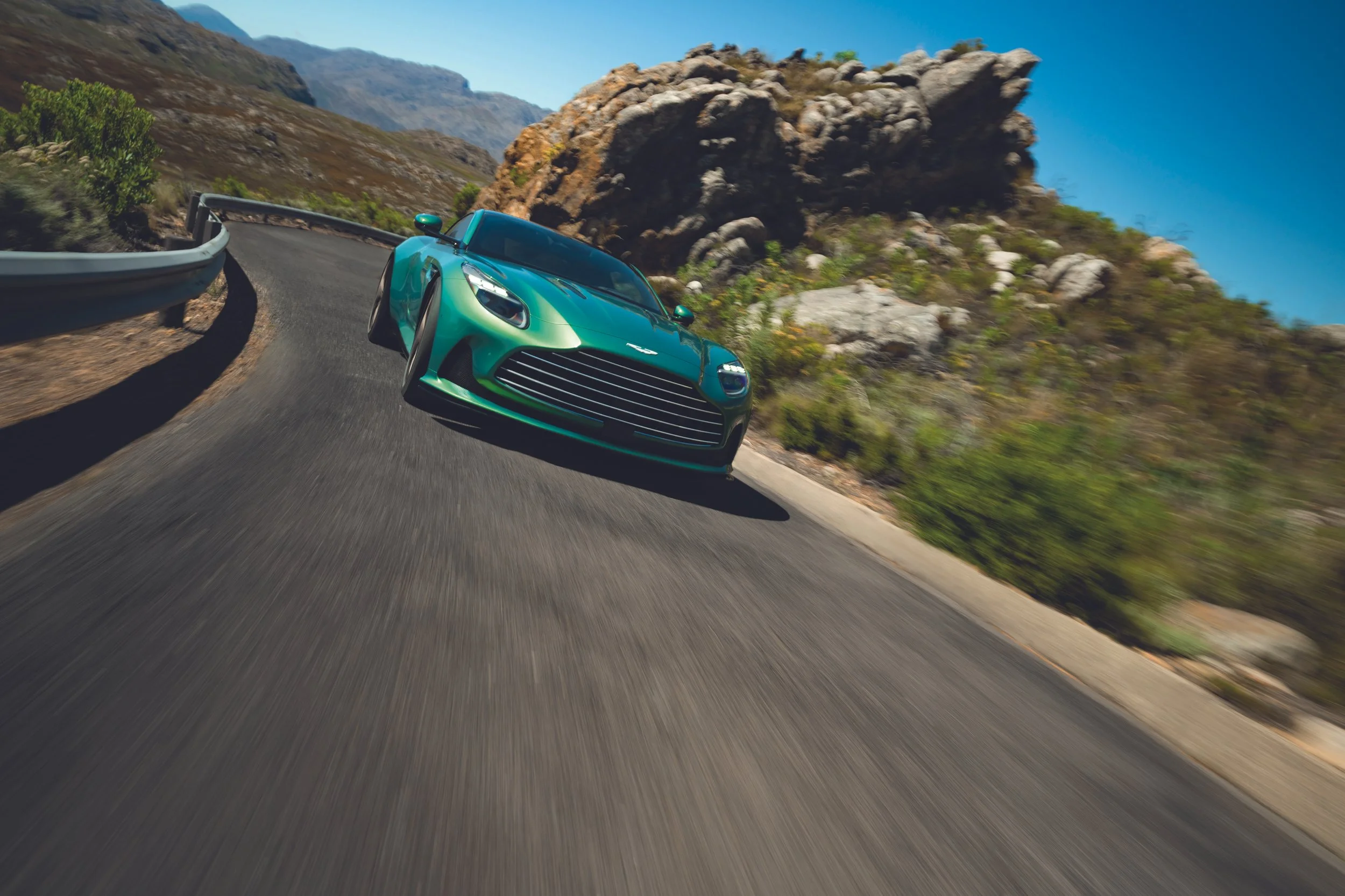
Image © Aston Martin Lagonda. Used for editorial purposes. DB12 on the road.
Nicholas Mee’s own line, naturally, is that the Zagato now presents a more stable ownership proposition than a new DB12, which is perhaps to be expected from a specialist dealer handling such a car. Still, the wider point remains worth exploring.
If a DB12 can easily move north of £250,000 once well specified, while a low-mileage Vanquish Zagato sits in a similar territory but with rarity and collector appeal already built in, then the question becomes rather more fascinating than it first sounds.
For me, that’s what makes this worth including. Not because it provides a definitive answer, but because it opens up exactly the sort of discussion Aston Martin enthusiasts tend to enjoy. Do you buy the more modern car, with all of its updated design and technology, or the rarer, more evocative one? Do you prioritise current usability, or the sense that you may be buying one of the marque’s last naturally aspirated V12 “peak cars”?
“That’s a very Aston Martin dilemma, and a very good one.”
If that film raised interesting questions about value at the top end of Aston Martin ownership, another YouTube piece this week brought things back down to a more familiar and practical reality: the cost of keeping an older Aston Martin healthy once the cosmetic work is done and the mechanical truth begins to reveal itself.
Aston Martin Works Through Mr JWW’s DBS Story
Another YouTube piece that felt worth including this week came from Mr JWW, who returned to Aston Martin Works with his DBS after a fresh wave of mechanical concerns began to surface. On one level, it’s a straightforward ownership video about a car developing problems after an earlier cosmetic restoration. But in a broader Aston Martin sense, it becomes something more useful than that: a reminder that restoring the appearance of a car is only one stage in the journey, and that the deeper mechanical reality can often arrive later, and at considerable cost.
That’s what made the film interesting. Mr JWW is very open about the fact that the major work previously carried out at Works was aesthetic rather than mechanical, and that some of the underlying issues tied to the DBS’s earlier life were still waiting to show themselves. What follows is a growing list of smaller faults, age-related wear, and more expensive unknowns, all of which feels entirely believable to anyone who has spent time around older Aston Martins. It’s not dramatic in an exaggerated sense, it’s simply the sort of ownership reality that can sit quietly behind even a car that looks spectacular on the surface.
The other reason it earns a place here is the insight it gives into Aston Martin Works itself. The video is not only about one DBS needing attention; it also offers a glimpse into the wider Newport Pagnell world of marque expertise, heritage knowledge and specialist aftercare. From the technician-led diagnosis to the extraordinary machinery sitting around the site, it reinforces the sense that Aston Martin Works remains something rather special: part service centre, part restoration house, part heritage department, and part living archive of the brand.
That was especially enjoyable to watch having only been there myself a couple of weeks ago. A few of the surroundings, and indeed some of the cars in the background, felt instantly familiar. So while this isn’t a major news story in the conventional sense, it still deserves a place in this week’s roundup. It says something useful about Aston Martin ownership, about the value of proper marque expertise, and about the continuing importance of Works in the wider Aston Martin story.
If that brought Aston Martin ownership back to earth in practical terms, this week’s Car of the Week heads in a slightly different direction again: rarity, period significance, and one of the more intriguing DBS special editions of the modern era.
Car of the Week: 2011 Aston Martin DBS UB-2010 Edition
This week’s Car of the Week is a rather special one: a 2011 Aston Martin DBS UB-2010 Edition, offered by Parkway Specialist Cars with 30,212 miles recorded and with an asking price of £74,995.00 (at the time of this Roundup publication). Even by DBS standards, this is not an ordinary car. The UB-2010 was created to mark Dr Ulrich Bez’s tenth year as Aston Martin chief executive, and when the model was first announced the planned production run was just 40 cars in total; 20 Coupes and 20 Volantes.
What makes the UB-2010 especially interesting is that it was effectively used to showcase Aston Martin’s early Works Service Tailored thinking. The specification is what gives it its identity: Azurite Black paint, metallic bronze leather, woven leather seat inserts, Cryptic Titan fascia trim, and special UB-2010 plaques signed by Dr Bez. (From the picture below, it does look rather stunning! - to see more images of this car, click on the image or the underlined sections above and we’ll take you straight there).
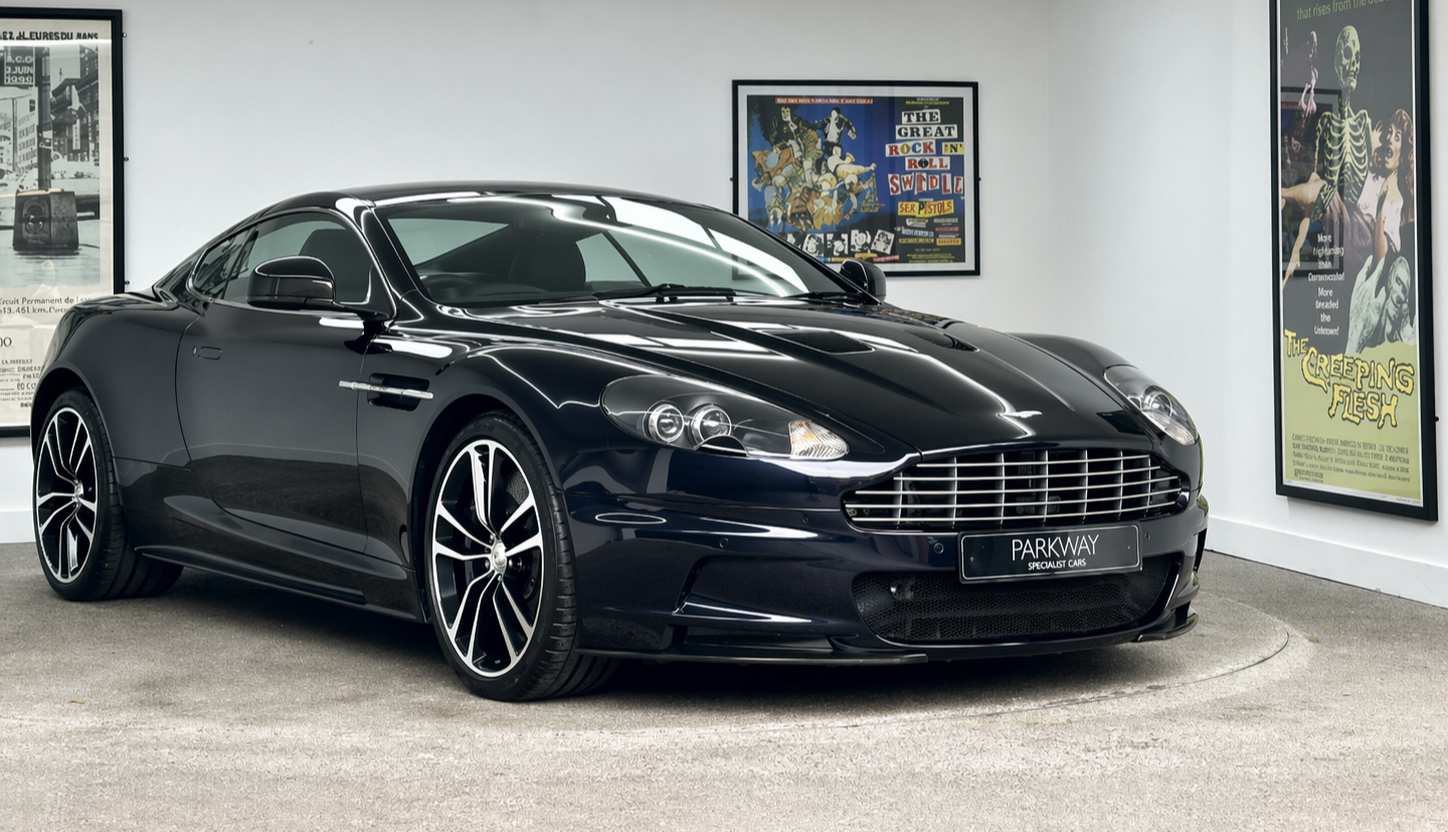
Image © Parkway Specialist Cars. Used for editorial purposes.
In other words, this was not simply a DBS with a different badge attached, but a carefully considered limited-run car tied to a very specific Aston Martin chapter. There’s also the suggestion that the UB-2010 may have ended up even rarer than Aston Martin’s original launch figure implied. While the intended run was 40 cars, later specialist reporting has suggested actual production may have been lower, with only a fraction of those cars ultimately built. That figure is best treated with some care, but even without leaning too heavily on it, the model’s rarity and distinct identity are clear enough.
That’s really why it works so well as this week’s selection. It’s not simply a handsome DBS in an attractive colour, but a Bez-era commemorative special, rooted in a period when Aston Martin was still placing great emphasis on personalisation, occasion and that slightly more bespoke Newport Pagnell-to-Gaydon transitional feel. With the standard DBS already one of the great modern Astons, the UB-2010 adds just enough rarity and backstory to make it particularly appealing.
Today, Dr Bez still remains closely connected to the Aston Martin world through his role as President of the Aston Martin Owners Club and as a Council Member of the Aston Martin Heritage Trust. That gives a car like this an added layer of meaning, because it is tied not only to an important period in Aston Martin’s modern history, but also to someone who still has a valued place within the marque’s wider community today. I’ve been fortunate enough to meet Dr Bez on a couple of occasions now. He presented my second prize in the International Concours in Austria last year, and I also had the privilege of meeting him again earlier this year at the AMOC Awards ceremony and it’s great that he’s still so heavily connected with the brand.
Rather neatly, this is not the only older Aston Martin to have sparked an interesting video-led coincidence around Fuel the Passion recently.
A Small Harry’s Garage Coincidence, and a Nice Bit of Aston Martin Timing
One of those small but rather pleasing coincidences also arrived around last week’s Car of the Week. As readers may remember, that feature focused on the Aston Martin V8 Vantage V600, a car that still carries real weight in Aston Martin enthusiast circles as one of the more muscular and memorable expressions of the Gaydon-era Vantage story.
Almost at the same time, Harry’s Garage released a video that brought Aston Martin back into view from a slightly different angle, helping create one of those neat moments where separate strands of Aston Martin content suddenly seem to talk to each other. It wasn’t directly connected in any formal sense, of course, but the timing made it feel like a small continuation of the same broader conversation: older Astons, analogue character, and the enduring appeal of cars that still feel mechanical, distinctive and a little bit unruly in the best possible way. See Harry’s excellent video below;
That’s really why it felt worth noting here. Sometimes the value of these overlaps is not in the size of the story itself, but in the way they help reinforce a mood. The current Aston Martin world can move very quickly between Formula 1 frustration, modern road-car optimism, heritage depth and ownership reality. A moment like this quietly reminds you that the older cars still retain a powerful presence in that wider picture, and that they continue to surface naturally in the content serious enthusiasts are watching.
It also serves as a useful reminder that the Aston Martin story is always moving across very different registers at once: heritage, ownership reality, modern product confidence and wider business pressure, often all in the same week. With that in mind, this feels like the right point in the roundup to briefly explain one small editorial change going forward regarding AML share coverage and fuel-price tracking.
A Brief Note on AML Share Watch, Oil and Petrol Prices
As mentioned briefly in the introduction, this also feels like the right point to mention a small editorial change to the FTP Weekly Roundup going forward. After nearly 20 weeks of tracking AML share movements, and more recently oil prices and petrol-at-the-pump costs on a weekly basis, I’ve come to feel that the shorter view doesn’t always tell us very much on its own. I’m still learning in this area, and the more I’ve followed it, the more it’s seemed that the smaller weekly movements can sometimes create more noise than clarity.
So from here on, those sections will move to the first Sunday roundup of each month, where I’ll look back over the previous five weeks instead. My hope is that this will make them calmer, clearer and more meaningful, allowing us to spot the broader trend rather than reacting to every small shift in isolation, and with that small housekeeping note in place, it feels like the right moment to end this week’s edition with a brief update from Fuel the Passion itself.
FTP Update
A quick Fuel the Passion update before closing this week. This edition has been written a little earlier than usual, as I’m heading down to Surrey to stay with my parents ahead of a busy motoring weekend. On Saturday I’ll be attending Salon Privé London, and on Sunday I’ll be going to the Goodwood Members’ Meeting with my dad, so with a bit of luck that should lead to at least one new film on the Fuel the Passion YouTube channel soon afterwards.
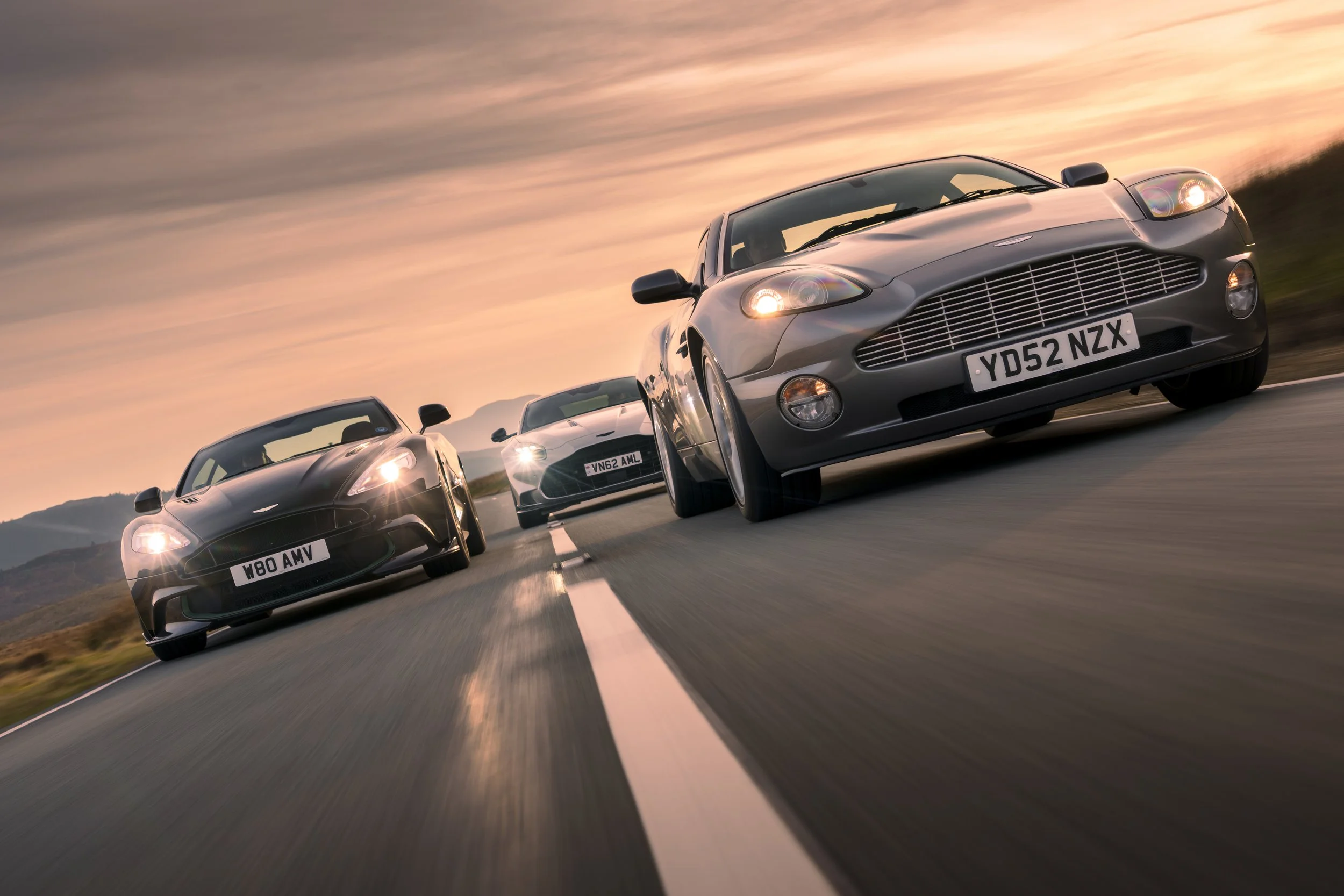
Image © Aston Martin Lagonda. Used for editorial purposes.
Behind the scenes, I’m also continuing to work on the Vanquish video series, and in the process I seem to be becoming a slightly self-taught student of microphones, sound and how to improve audio quality in the edit. As anyone who makes films will know, the learning never really stops, but I’m enjoying that side of it more and more.
I’ve also begun some deeper research into the VMF cars, Aston Martin’s post-war competition comeback story, after being completely captivated by the VMF 63 registration plate when I saw it for the first time last year on display at the Aston Martin Heritage Trust Museum in Oxfordshire. The more I looked into those cars, the more I wanted to understand them properly, so with a bit of luck that Featured Article will land at some point in the summer months.
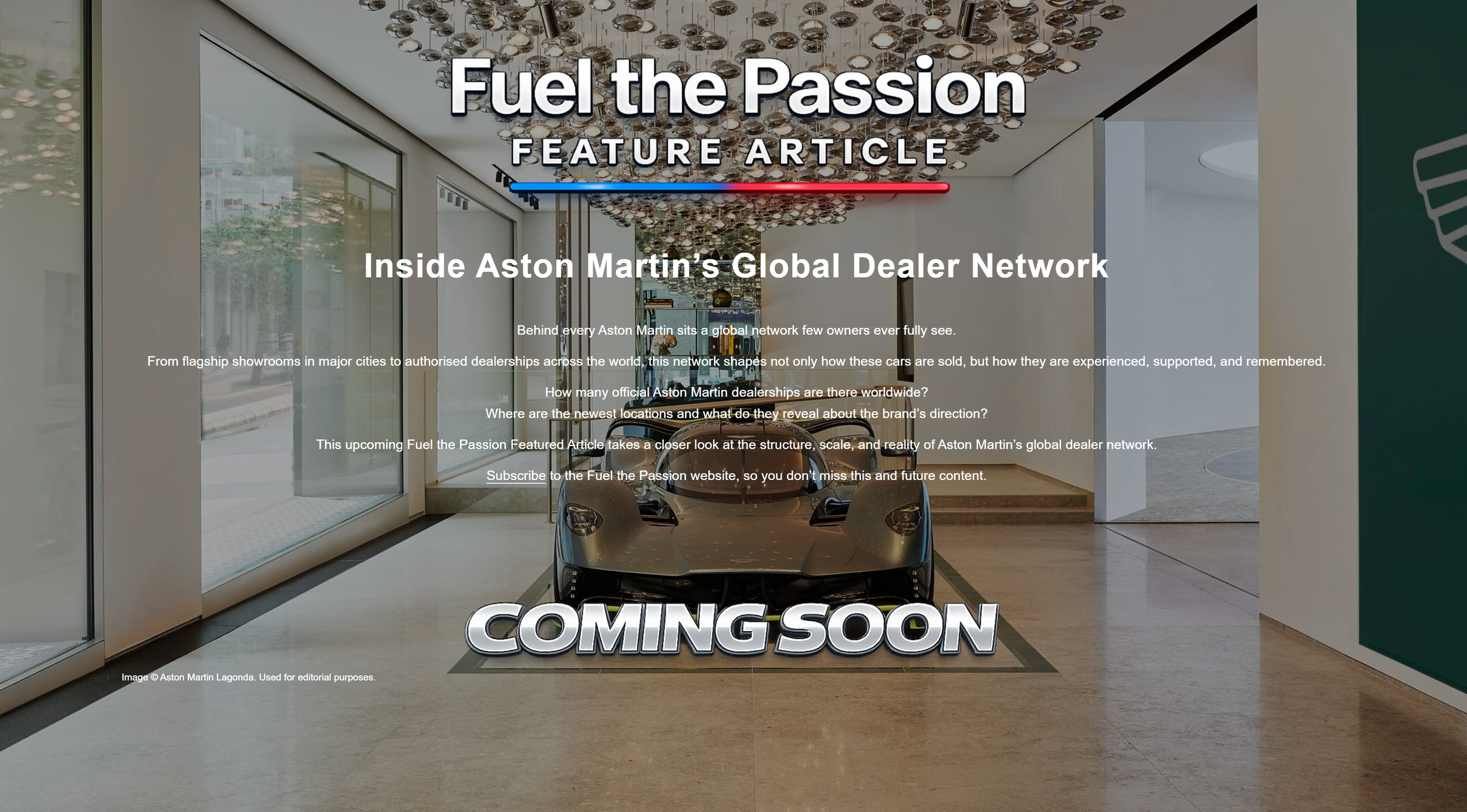
Finally, I’ve now put the finishing touches to the next Fuel the Passion Featured Article (see picture below), which goes live on Sunday 3rd May 2026 at 6am: Inside Aston Martin’s Global Dealer Network. The Aston Martin Lagonda images I’ve used throughout that piece are genuinely stunning and, on their own, make it worth a look when it goes live. In truth, it’s the sort of article that makes me want to wander into a showroom in New York or Japan, spend an afternoon choosing every last option, and place an order on the spot. Yet another line added to this week’s lottery ticket to try and make that a reality!
For now, though, this week’s roundup leaves Aston Martin in a familiar but fascinating place: not without its frustrations, but still full of life, interest and reasons to keep paying attention.
Closing Reflection
Taken together, this has felt like one of those Aston Martin weeks that rewards a slightly wider lens. Formula 1 still remains difficult, and there’s no real sense yet that the team’s deeper problems are close to disappearing, but we’ll wait to see what happens in Miami in a few weeks time. That part of the story continues to demand honesty, but beyond the Grand Prix paddock, the wider Aston Martin picture has looked far more alive.
There’s been significant race wins, encouraging signs in endurance racing, strong road-car praise, thoughtful ownership stories, and the sort of heritage-rich details that remind you why this marque still manages to hold people’s attention so easily. Not every strand has been straightforward, and not every story has pointed in the same direction, but that’s part of what makes Aston Martin interesting in the first place. It rarely sits neatly in one box for very long.
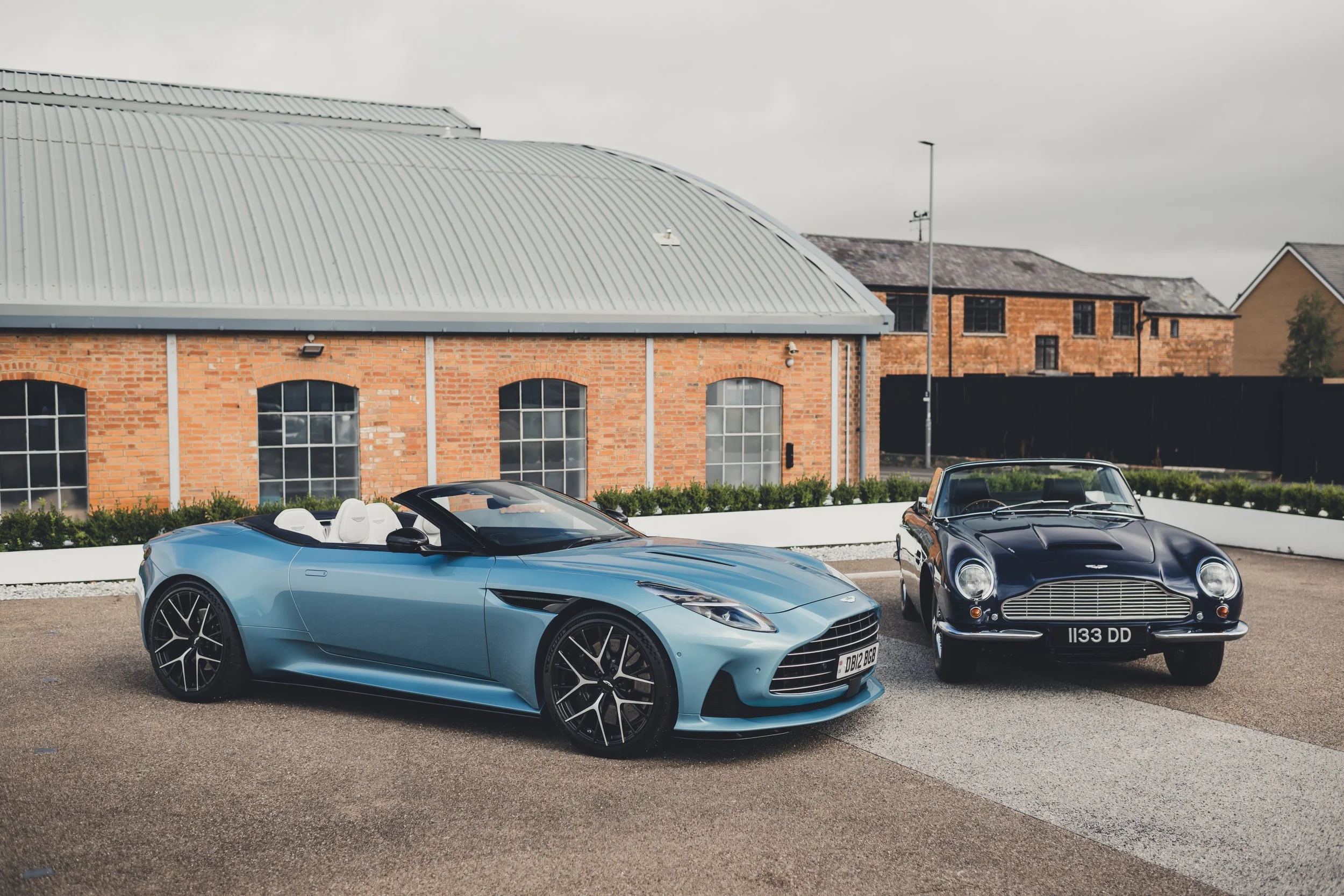
Image © Aston Martin Lagonda. Used for editorial purposes.
Perhaps that’s the clearest feeling to take away from this week’s roundup. Aston Martin is still a company and a marque living with tensions: triumph and frustration, confidence and uncertainty, beauty and complication, often all at once.
But even in a difficult period, there’s still more than enough quality, depth and character in its world to keep the story moving, and to keep us all watching with interest.
As always, thank you very much for reading. If you enjoy these weekly roundups, do consider subscribing to the Fuel the Passion website, and if you haven’t already, I’d also be hugely grateful if you would subscribe to the Fuel the Passion YouTube channel as well.
Before I sign off, a couple of questions for you this week;
If you had the choice, would you go for the rare Vanquish Zagato or a brand-new DB12 built exactly to your own specification?
Perhaps just as interestingly, which of this week’s Aston Martin racing stories stood out most to you; Paul Ricard, Barcelona, Okayama, or the early Imola picture?
Please leave your thoughts about these questions or anything else that comes to mind in the comments section below 👇. Many thanks, as always👍 .
Kind regards,
Dan
See you on the next one! ☝️
