
Date Published: 6th September 2026
Two years after Adrian Hallmark took charge of Aston Martin Lagonda, elements of a familiar methodology are becoming increasingly visible. During his previous tenure at Bentley, the Crewe manufacturer moved from heavy operating losses to some of the strongest financial results in its history. Aston Martin presents a very different challenge: smaller, separately listed, heavily indebted and with considerably less room for error. Can principles that helped reshape Bentley work at Gaydon too?
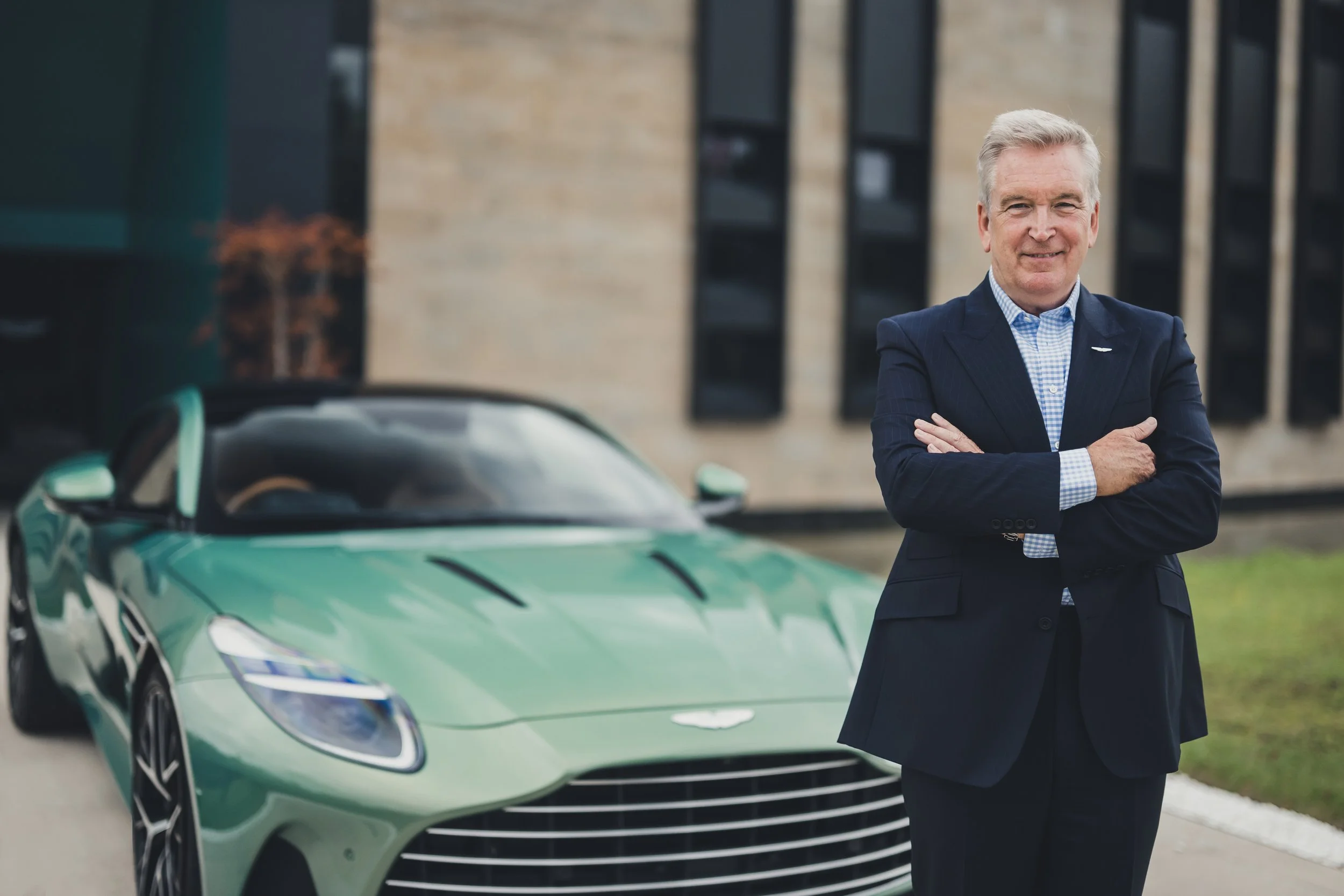
Image © Aston Martin Lagonda. Used for editorial purposes.
Two Years On
Adrian Hallmark took charge of Aston Martin Lagonda on 1st September 2024. Two years on, there’s enough evidence to begin asking what’s changed.¹
He arrived with more than 25 years of senior automotive experience, but one entry on his CV was particularly relevant. Hallmark had spent the previous six years as Chairman and Chief Executive of Bentley Motors, overseeing a period during which the economics of that business changed dramatically.
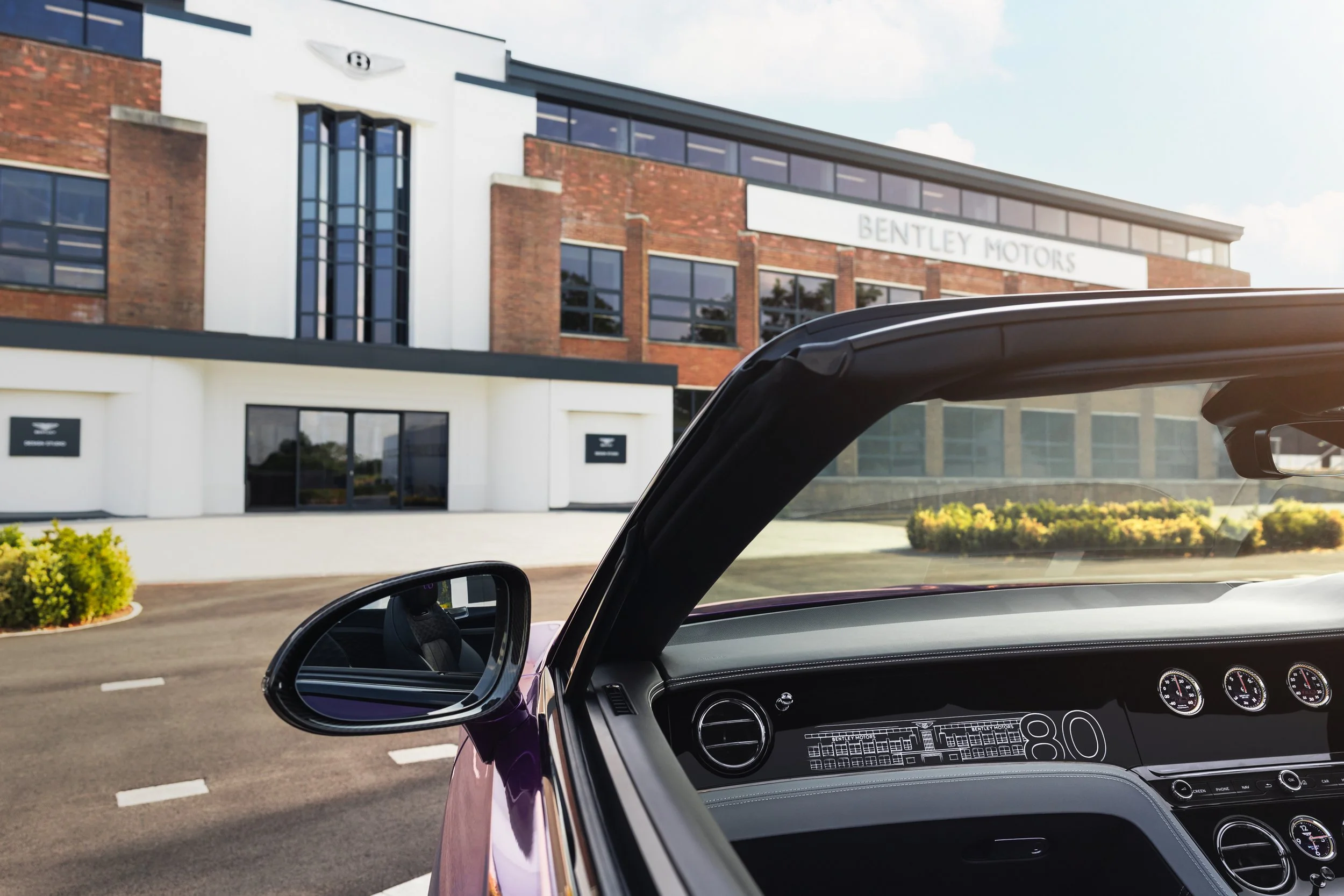
Image © Bentley Motors. Used for editorial purposes.
His Bentley experience doesn’t mean Aston Martin should become another Bentley. The two manufacturers have different histories, products, corporate structures, customer bases and financial circumstances. Nor can everything that’s happened at Aston Martin since September 2024 reasonably be attributed to its CEO.
Many of today’s cars, product programmes and commercial initiatives were established before Hallmark arrived.
The connection is more interesting.
During a 2026 discussion with the Oxford Marketing Society, Hallmark described Aston Martin’s transformation in words that provide the central premise for this article:
“Similar methodology to that which we did at Bentley and have done before but just faster and in a different situation.”⁷
That gives Fuel the Passion a clear question to investigate:
What happened at Bentley, can elements of a similar methodology now be identified at Aston Martin, and can it work here?
FTP wants to see Aston Martin flourish for generations to come. That’s precisely why we believe the harder questions are worth asking. Success cannot ultimately be measured only by whether Aston Martin produces beautiful, desirable or critically acclaimed cars. The business also needs consistent profitability, positive cash generation, the ability to fund future products and, over time, less dependence on repeated external financing.
Two years is too early to declare that journey complete. It’s not too early to examine its direction.
1. The Bentley Hallmark Walked Into
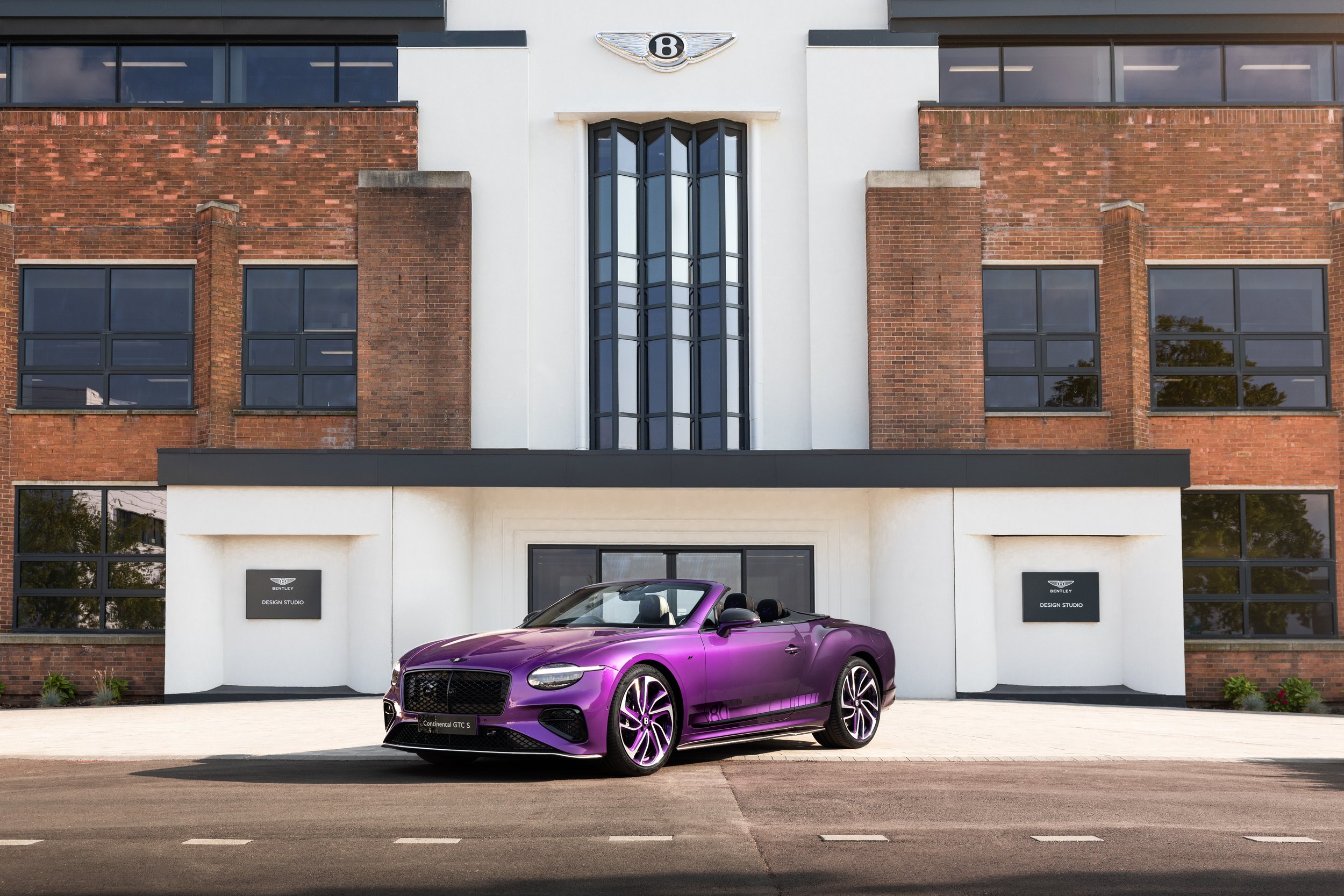
Image © Bentley Motors. Used for editorial purposes.
Looking back from Bentley’s later record results, it’s easy to forget how difficult the starting point was. Hallmark became Bentley Chairman and CEO in February 2018. The financial year in which he arrived subsequently became an extremely poor one for the company.
Bentley delivered 10,494 cars to customers during 2018 and generated €1.548 billion of revenue. Its operating result was a €288 million loss, equivalent to an operating margin of negative 18.6 per cent.² It would be inaccurate to describe the €288 million as a loss Hallmark simply inherited; he joined during the year to which the result relates. The figure nevertheless illustrates the scale of the problems surrounding Bentley near the beginning of his tenure.
Operating margin shows how much operating profit or loss a business produces relative to the revenue it generates.
It is particularly useful because it allows us to compare the economics of a business even when revenue changes substantially from one year to another.
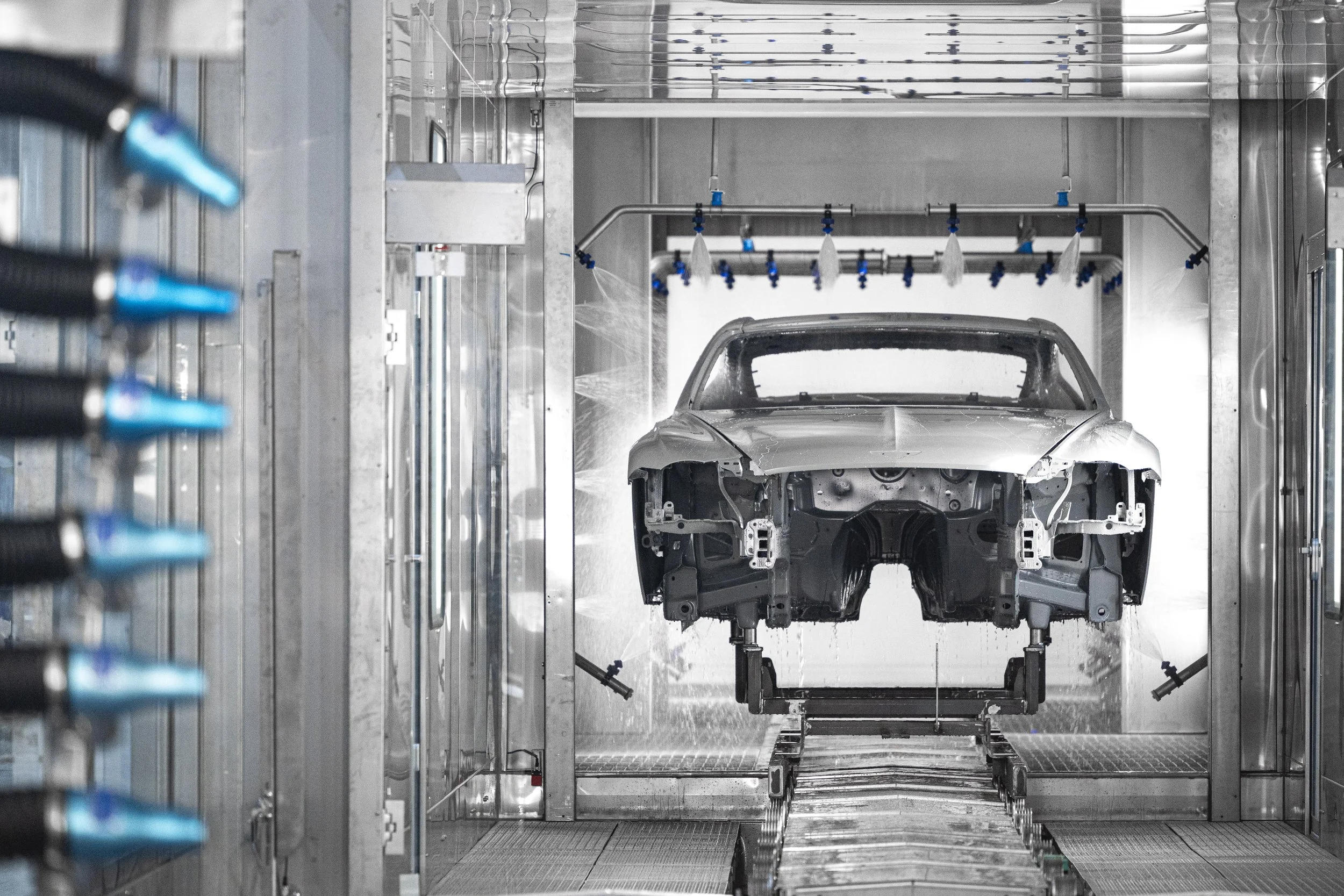
Image © Bentley Motors. Used for editorial purposes.
Volkswagen attributed the poor result partly to delays surrounding the ramp-up of the new Continental GT and adverse exchange-rate effects.²
Hallmark later provided his own operational account. He recalled serious inefficiencies within Bentley’s manufacturing operation and described spending time on the production line, involving employees in understanding the problems and identifying a large number of individual issues requiring attention.⁶
That’s Hallmark’s retrospective description of his management approach rather than an independently audited account of every operational problem at Crewe. It does, however, give an insight into the philosophy he says he applies when confronting a troubled operation: understand the problems, involve the people closest to them, identify what needs to change and act.
The subsequent financial performance can be measured more objectively.
2. From Losses to Record Profitability
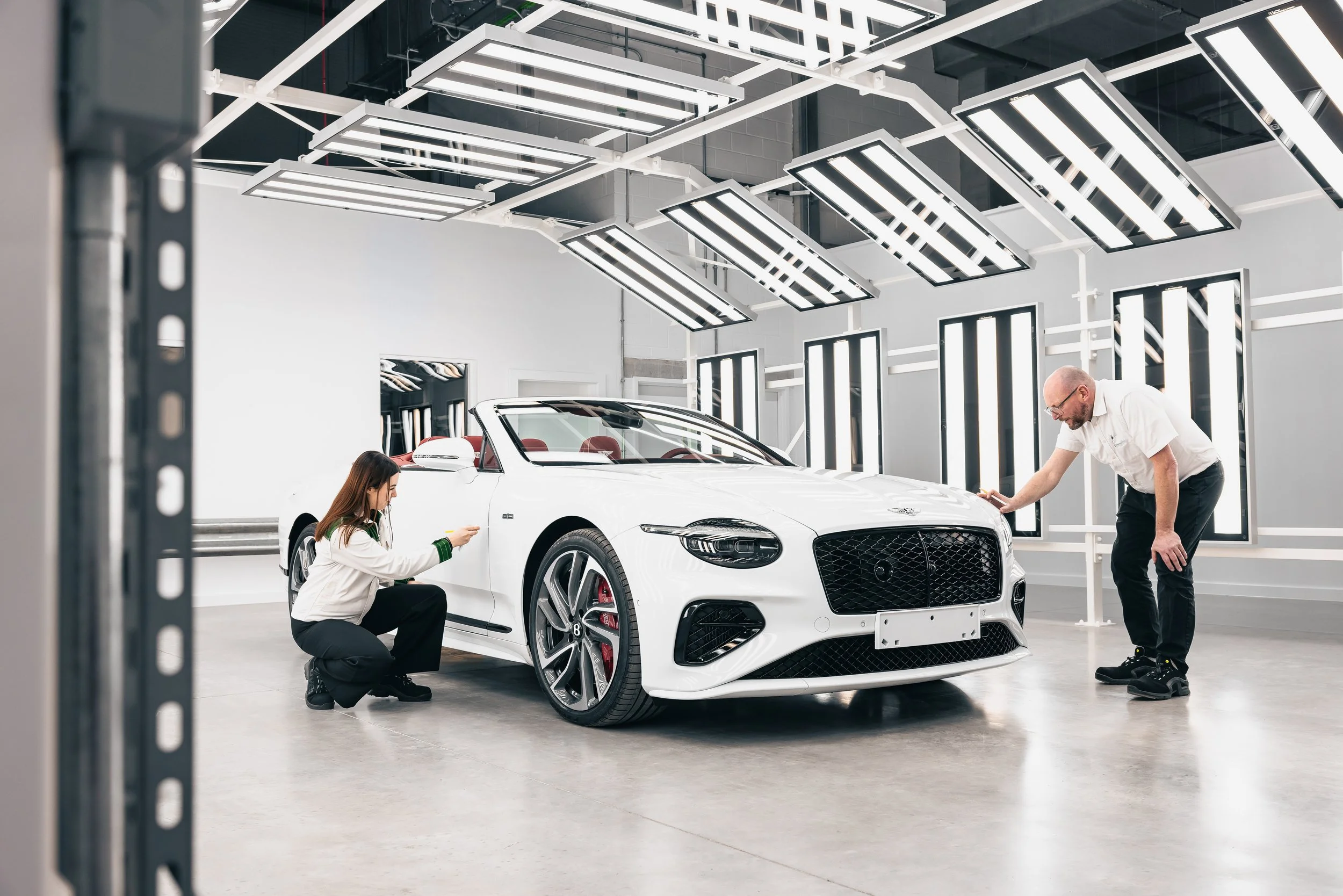
Image © Bentley Motors. Used for editorial purposes.
In 2019, Bentley’s customer deliveries increased relatively modestly, from 10,494 to 11,006. Revenue rose from €1.548 billion to €2.092 billion. The operating result changed much more dramatically.
The €288 million operating loss became a €65 million profit, while operating margin recovered from negative 18.6 per cent to positive 3.1 per cent.² Volkswagen didn’t attribute the recovery to vehicle volume alone. It also identified savings from Bentley’s continuing efficiency programme, together with product mix and currency effects.²
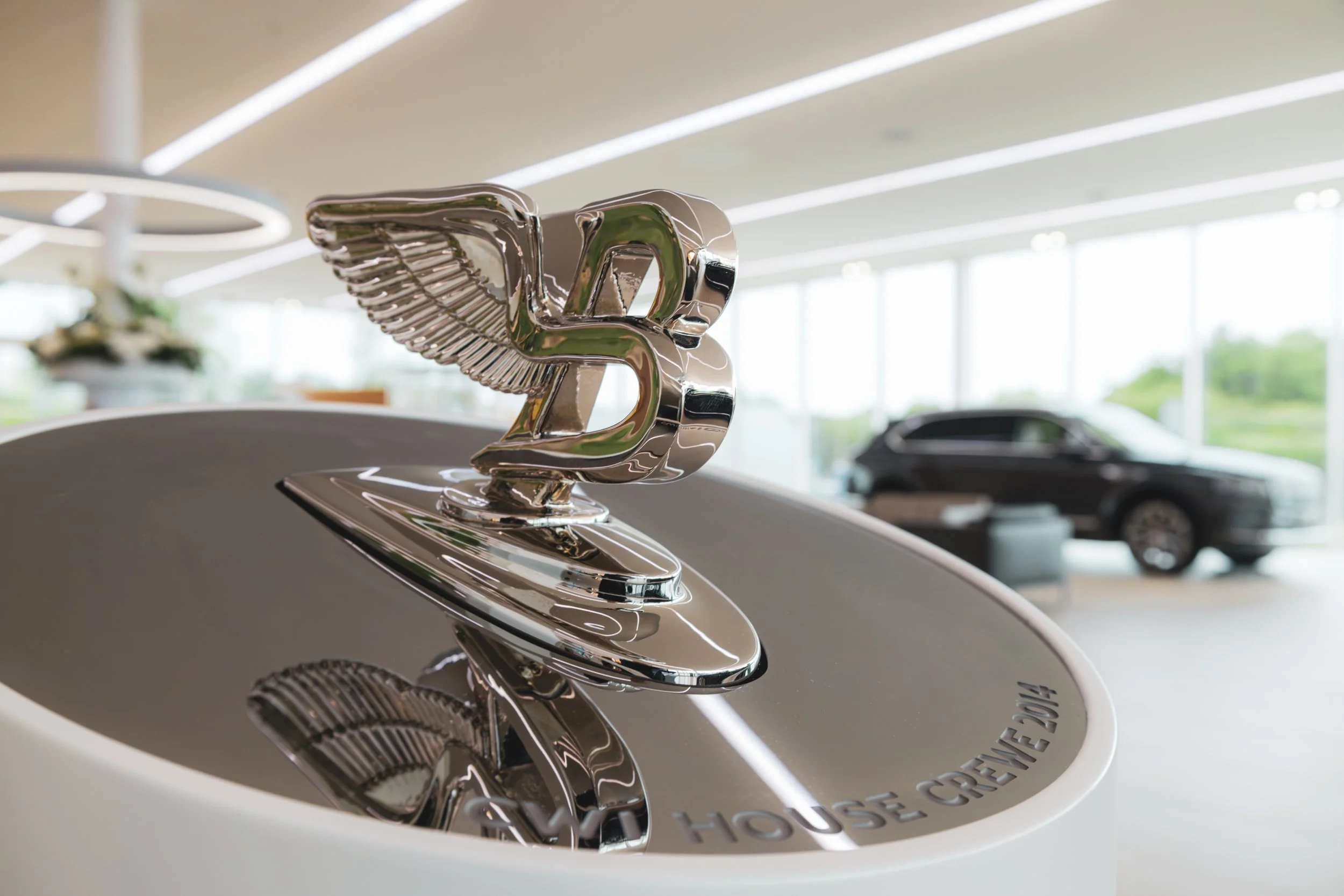
Image © Bentley Motors. Used for editorial purposes.
Bentley remained profitable through the disruption caused by the Covid-19 pandemic in 2020, before the improvement accelerated during 2021. That year it delivered 14,659 vehicles to customers, generated approximately €2.8 billion of revenue and recorded €389 million of operating profit, producing an operating margin of 13.7 per cent.³
Then came 2022. Bentley delivered 15,174 cars, approximately four per cent more than the previous year. Operating profit increased by 82 per cent, reaching €708 million, while operating margin climbed to 20.9 per cent.⁴
The contrast is striking: a relatively small rise in vehicle deliveries accompanied an enormous increase in operating profit.
Bentley pointed to richer product specifications, additional options, limited editions, Coachbuilt cars, increased personalisation and the benefits of restructuring. It also explicitly referred to a strategy of value over volume.⁴ The business had become substantially better at generating economic value from the cars its customers were already buying.
3. Value Over Volume

Image © Bentley Motors. Used for editorial purposes.
If 2022 demonstrated what Bentley could achieve in a record year, 2023 arguably provides the more revealing test. Customer deliveries fell from 15,174 to 13,560. Revenue declined from €3.384 billion to €2.938 billion, while operating profit fell from the exceptional €708 million achieved in 2022 to €589 million. Despite those declines, Bentley retained an operating margin of 20.1 per cent.⁵

Image © Bentley Motors. Used for editorial purposes.
The company highlighted strong levels of personalisation, greater option uptake and a richer derivative mix. Azure, S and Speed derivatives had become substantially more prominent within the range, while Mulliner, limited editions and Coachbuilt cars continued to give customers opportunities to spend more tailoring individual vehicles.⁵
Hallmark’s language by this stage was explicit. The focus was on customer value rather than simply maximising sales volume, alongside disciplined management of the cost base.⁵
This is where the idea of a “Bentley playbook” becomes useful, provided its limits are understood. It was not a formula created by one individual. Thousands of Bentley employees contributed, as did the wider management team, the company’s product cycle, market conditions and the industrial environment of the Volkswagen Group.
Hallmark’s strategy also evolved. Earlier in his tenure he had discussed opportunities for greater volume. What emerged over time was a business increasingly capable of creating more value without relying on continually increasing production. Fuel the Passion’s synthesis of the later Hallmark-era Bentley approach is therefore relatively straightforward:
fix the operation; control the cost base; build genuine customer demand; create greater value through specification, derivatives and personalisation; protect exclusivity rather than chasing volume for its own sake; and use stronger economics to support future investment.
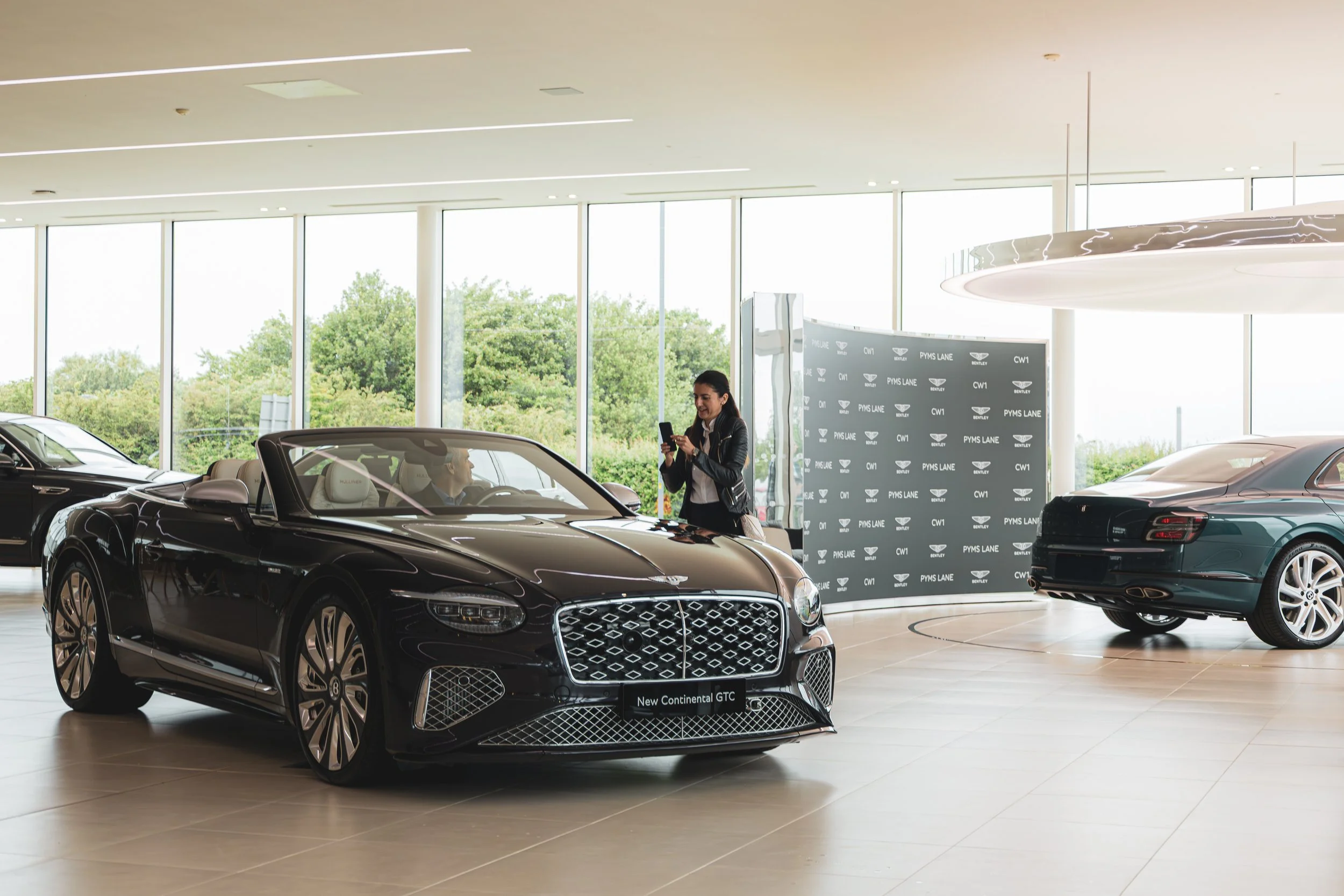
Image © Bentley Motors. Used for editorial purposes.
Following its record 2022 results, Bentley described its profitability and demand outlook as providing a self-funding basis for a €3 billion programme of future investment.⁴ That wording shouldn’t be stretched into a claim that Bentley had eliminated every requirement for capital or financing. It does show that Bentley considered its underlying profitability strong enough to support the investment required for its future product programme.
For Aston Martin, that is arguably more relevant than Bentley’s absolute production volume. The lesson is not how many Bentleys were sold; it’s how much more economically productive each sale, specification and customer relationship eventually became.
4. Similar Methodology, Different Situation
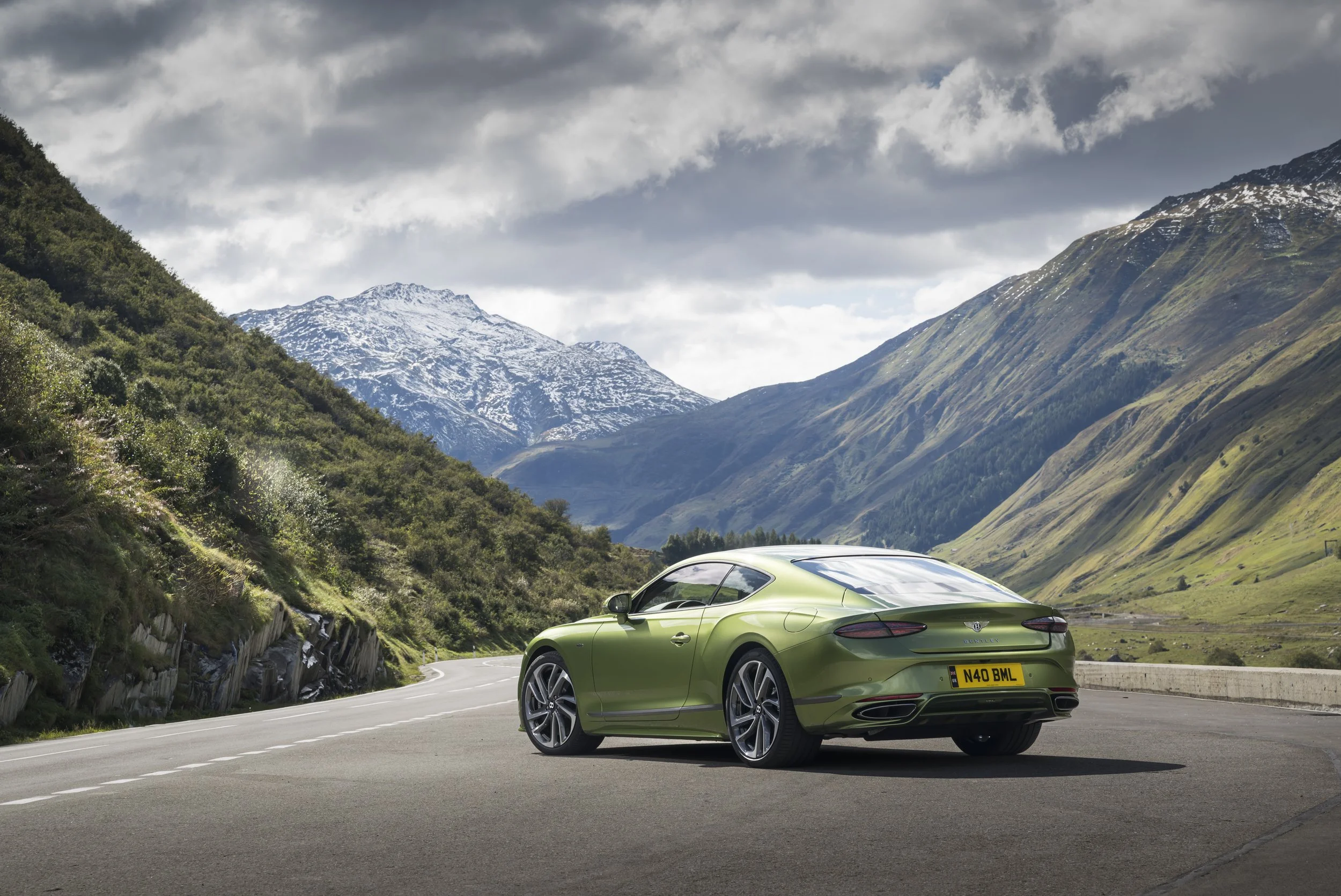
Image © Bentley Motors. Used for editorial purposes.
Hallmark’s Oxford comments become particularly interesting when read alongside his description of what success at Aston Martin would look like. He discussed profitability, sustainable foundations, future products, cash generation and returns, cost reduction, making investment in future products and assets more efficient, and improving the efficiency of the wider business.⁷
Then came the comparison:
“Similar methodology to that which we did at Bentley and have done before but just faster and in a different situation.”⁷
The final words deserve particular attention. Similar methodology. Different situation.
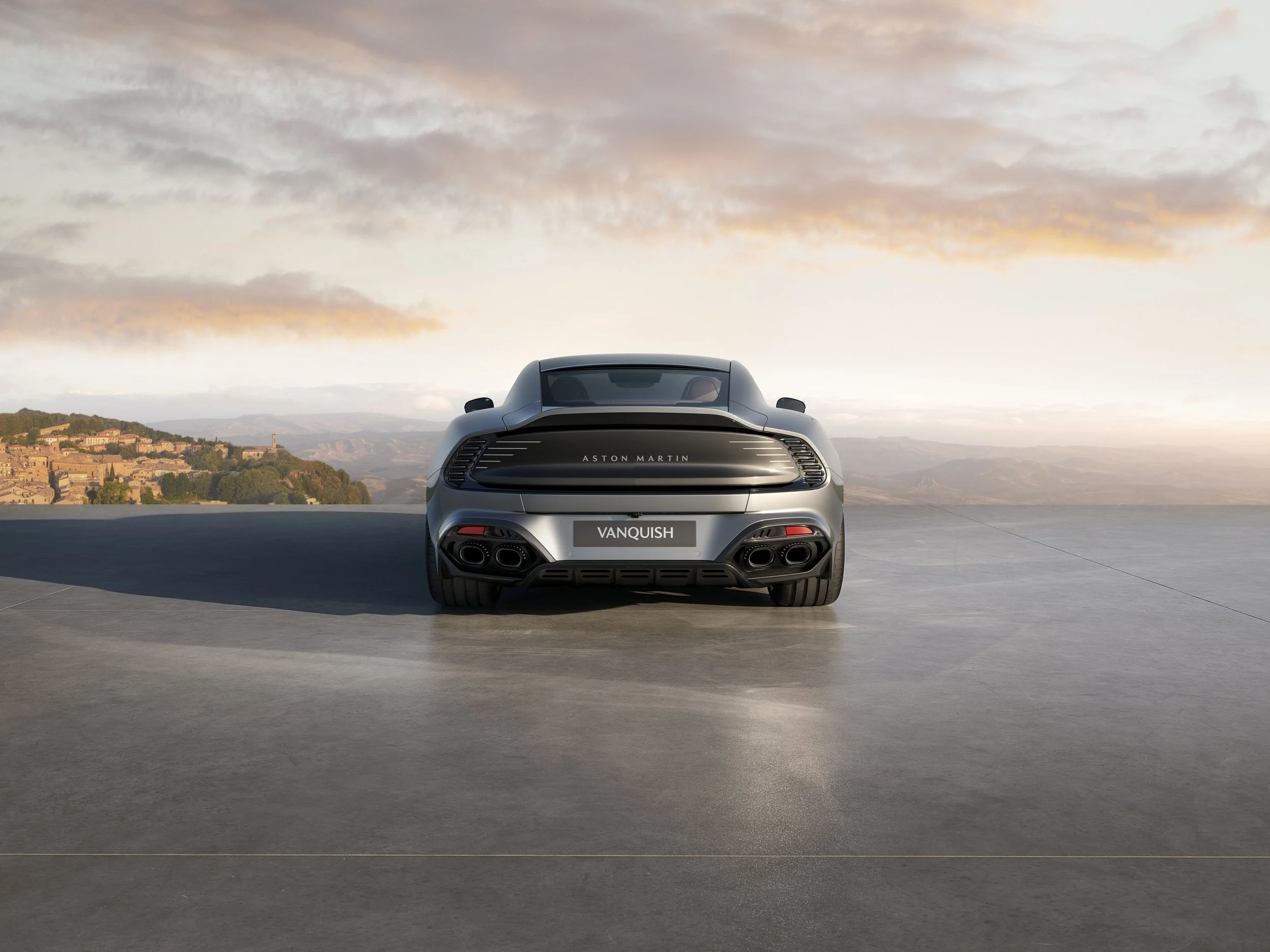
Image © Aston Martin Lagonda. Used for editorial purposes. Aston Martin Vanquish 25
Fuel the Passion uses the phrase “Bentley playbook” as shorthand for that broad methodology. It’s not Hallmark’s phrase, and the comparison should not imply that Aston Martin is simply copying Bentley.
The more useful question is whether those same broad principles can succeed in a company with very different economics, and whether, two years on, we can now see enough evidence that they are actually being applied.
Before assessing that, we first need to establish what Hallmark actually inherited.
5. What Hallmark Actually Inherited
One of the easiest mistakes to make when assessing a chief executive is to credit them with everything that appears after they walk through the door. At Aston Martin, that would produce a particularly misleading picture.

Image © Aston Martin Lagonda. Used for editorial purposes. Aston Martin DB12.
The DB12 had been unveiled in May 2023 and was already in customer delivery before Hallmark became CEO.¹⁰
The current Vantage followed in February 2024, with production and initial deliveries beginning during the spring.¹¹
The upgraded DBX707 was also reaching customers during 2024.⁹ These were important parts of Aston Martin’s product renaissance, but they were not conceived under Hallmark.
Vanquish perhaps illustrates the point most clearly. Aston Martin publicly unveiled its new V12 flagship on 2nd September 2024, one day after Hallmark formally took office. Taken in isolation, that timing could easily create the impression of a new product arriving with the new CEO. In reality, Aston Martin had already told investors before his appointment that its forthcoming V12 flagship would be revealed in September, with deliveries expected during the fourth quarter of 2024.⁹ Its fundamental design, engineering and development were therefore substantially established before Hallmark arrived.

Image © Aston Martin Lagonda. Used for editorial purposes.
Hallmark inherited Vanquish. Its launch, subsequent development and commercial life have taken place during his tenure.
That distinction is not simply FTP being cautious about attribution. Hallmark himself made much the same point during his August 2026 conversation with evo.
He said most of what Aston Martin had delivered during his first 22 months had been delivered by people who were already at the company when he joined. His description of the CEO’s role centred on identifying the right objectives, aligning the organisation behind them and creating the structure required to deliver.²¹
That gives us a more useful way of judging these two years. The interesting question is not which cars can be labelled “Hallmark cars”. It’s what happened to the business model around those cars once he arrived.
Valhalla - Where Inheritance Became Intervention
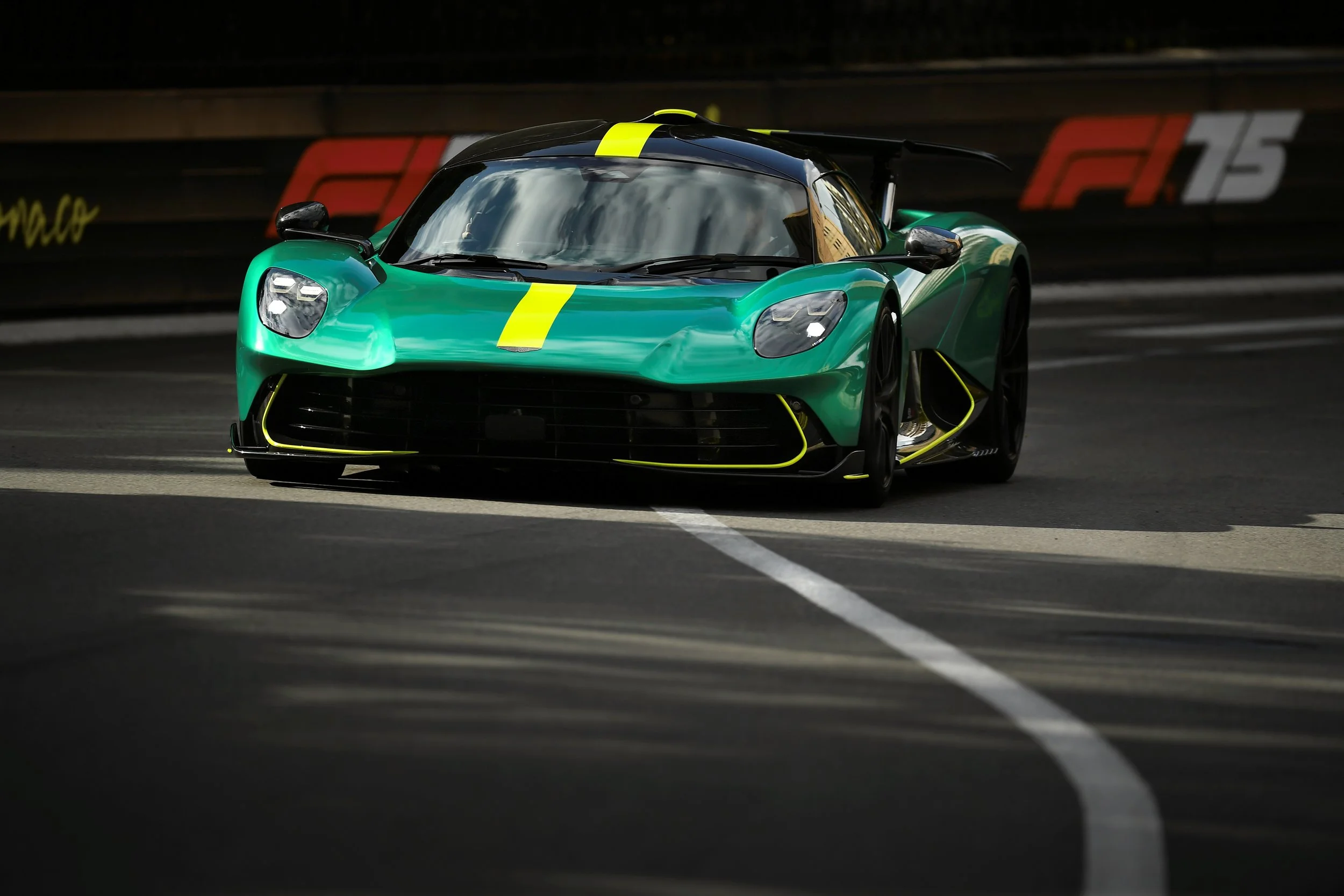
Image © Aston Martin Lagonda. Used for editorial purposes. Aston Martin Valhalla.
Valhalla gives us a much clearer example of where an inherited programme began to become a Hallmark-era responsibility. The mid-engined hybrid supercar had been in development for years before September 2024. Its fundamental concept, carbon structure, hybrid powertrain layout and broad technical direction cannot reasonably be attributed to Hallmark.
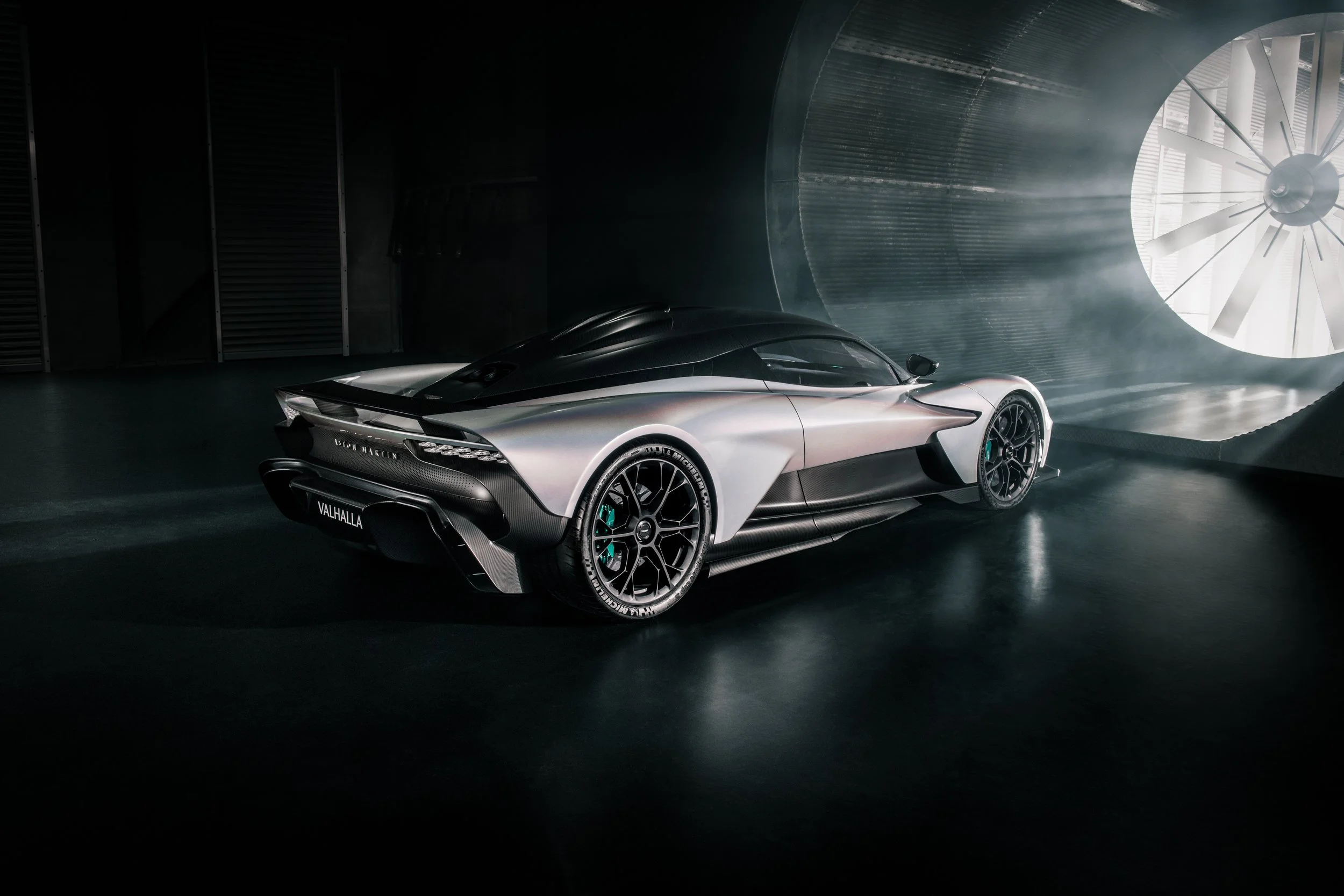
Image © Aston Martin Lagonda. Used for editorial purposes. Aston Martin Valhalla.
Until recently, however, the public evidence gave us only a general idea of his involvement in getting the car through final development. The August evo interview changes that.
Hallmark said his first detailed project review took place in September 2024. At that point, according to his account, the technical layout was already defined, but Aston Martin had not yet built or driven a prototype and the programme was aiming for a first-quarter 2025 launch.
Hallmark said that timetable was stopped and described the following months as an intensive development period involving daily meetings, detailed issue lists, suppliers and engineering teams working through the car’s integration and validation.²¹
That’s considerably more substantial than simply saying Valhalla happened to arrive while Hallmark was CEO.
Hallmark didn’t create Valhalla, but its final development, validation and launch execution became a genuine Hallmark-era intervention.

Image © Aston Martin Lagonda. Used for editorial purposes. Aston Martin Valhalla.
By H1 2026, the consequences were no longer confined to engineering. Aston Martin delivered 225 Specials during the first half, almost entirely represented by Valhalla, making the programme an important contributor to the improvement in revenue and gross profit.¹⁴
Valhalla therefore occupies an interesting position within this story. Its origins pre-date Hallmark by years, yet the way it was finally brought through development and the economic role it now plays sit firmly within the period we are assessing.
The Ingredients Were Already in the Cupboard
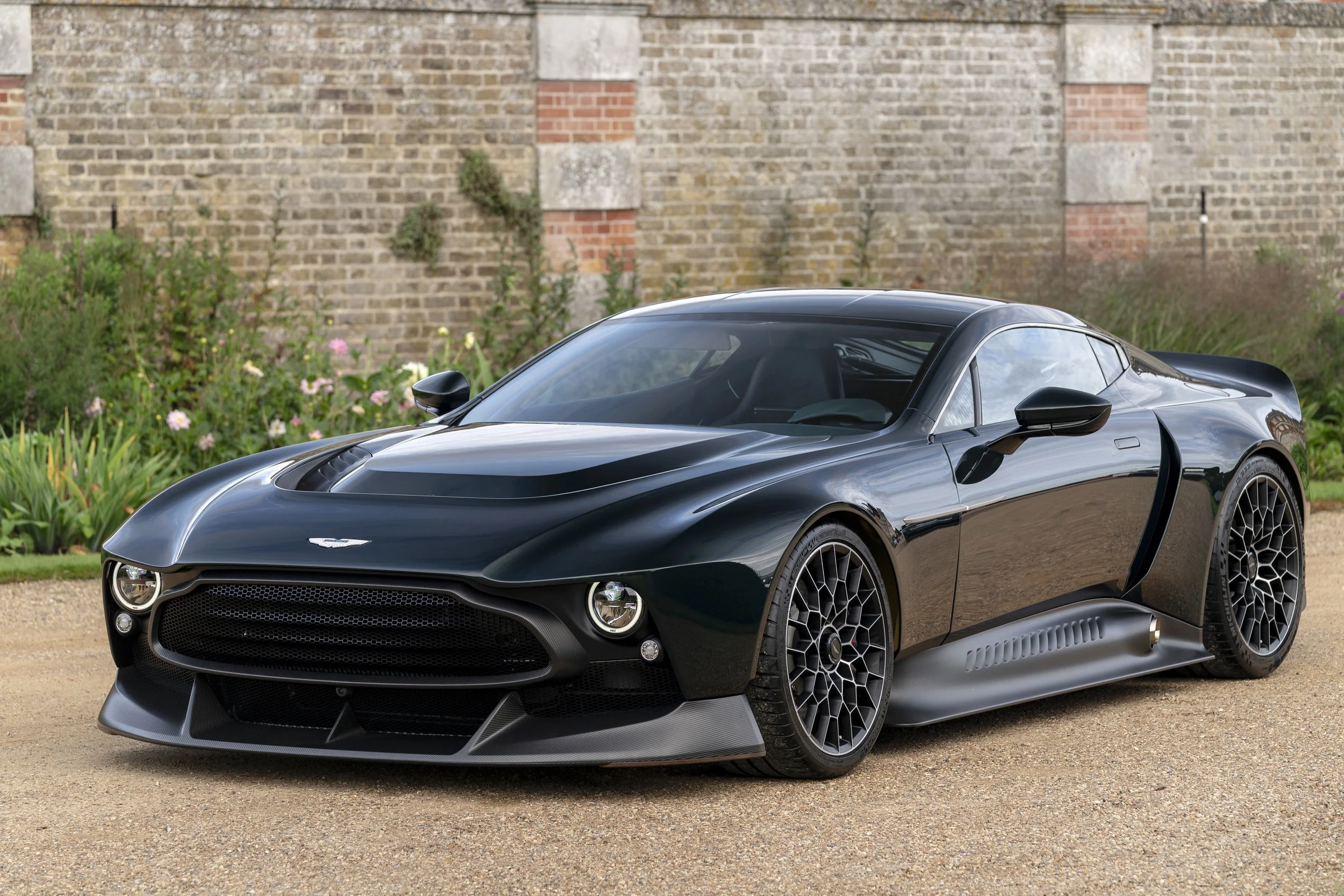
Image © Aston Martin Lagonda. Used for editorial purposes. Aston Martin Victor.
The same care is necessary when discussing Q, personalisation and Specials. Aston Martin already knew how to create scarce, enormously desirable cars before Hallmark arrived. Valkyrie, Valour, Valiant, Victor, DBS 770 Ultimate and V12 Vantage had demonstrated that capability. Q by Aston Martin was established, while personalisation was already recognised as commercially important.⁸
Demand-led production was not invented in September 2024 either. Aston Martin had already been talking about balancing supply and demand, while retail volumes were running ahead of wholesales during H1 2024.⁹ Hallmark therefore inherited many of the ingredients now associated with the turnaround.
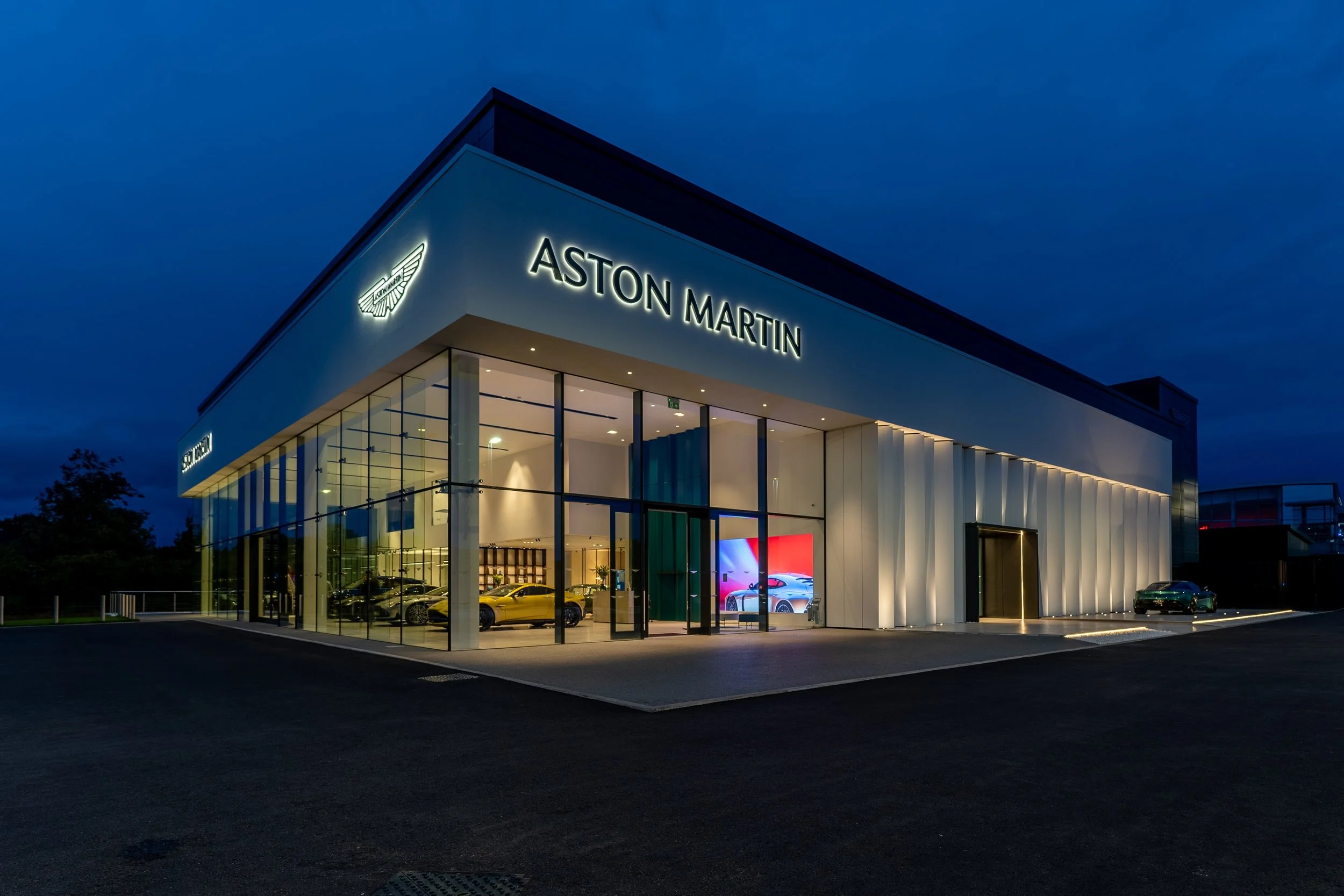
Image © Aston Martin Lagonda. Used for editorial purposes. Aston Martin Birmingham
The potentially important difference lies in how those ingredients are being organised, intensified and connected. Q becomes more than somewhere to select an unusual paint colour. Derivatives become more than occasional product updates.
Specials become more than glamorous halo projects. Customer relationships extend beyond the moment somebody signs an order form, while engineering architectures are increasingly expected to support several commercially distinct products rather than a single car followed by years of inactivity.
Taken separately, few of those ideas are entirely new. Taken together, they begin to look like a business model.
The Other Side of the Inheritance
The cars were only half of what Hallmark inherited. Aston Martin generated £1.633 billion of revenue in FY2023, achieved a gross margin of 39.1 per cent and reported £305.9 million of adjusted EBITDA.⁸ Those figures demonstrated that the company could generate substantial revenue from some very expensive cars.
Further down the financial statements, the weakness became much clearer. Adjusted EBIT remained a £79.7 million loss, free cash outflow was approximately £360 million, while net debt stood at £814.3 million at the end of 2023.⁸ By 30th June 2024, two months before Hallmark took office, net debt had increased to approximately £1.19 billion.⁹

Image © Aston Martin Lagonda. Used for editorial purposes. Aston Martin Valhalla, Rome
Aston Martin had proved repeatedly that it could make people desire its cars. It had not yet proved that it could convert that desirability into consistent operating profitability and sustainable positive cash generation.
Hallmark has since offered his own diagnosis of what he found inside the business. Speaking to evo, he argued that the problem was not simply a lack of investment. Aston Martin had received billions of pounds of investment during the preceding years and, in some activities, he believed the company was spending considerably more than comparable organisations he knew.
In his assessment, some of Aston Martin’s difficulty came from overspending rather than underspending.²¹
That’s Hallmark’s judgement rather than an independently audited conclusion, and FTP treats it accordingly. It nevertheless helps explain why cost, capital efficiency and extracting more value from money already spent have become such prominent parts of his programme.

Image © Aston Martin Lagonda. Used for editorial purposes. Aston Martin Vantage
Hallmark inherited an Aston Martin with a substantially renewed product range, extraordinary brand recognition and considerable engineering capability. He also inherited a manufacturer carrying heavy debt, consuming large amounts of cash and still searching for a business model capable of making those strengths pay consistently.
That’s the starting point from which his first two years should be judged.
6. From Great Cars to a Business Model
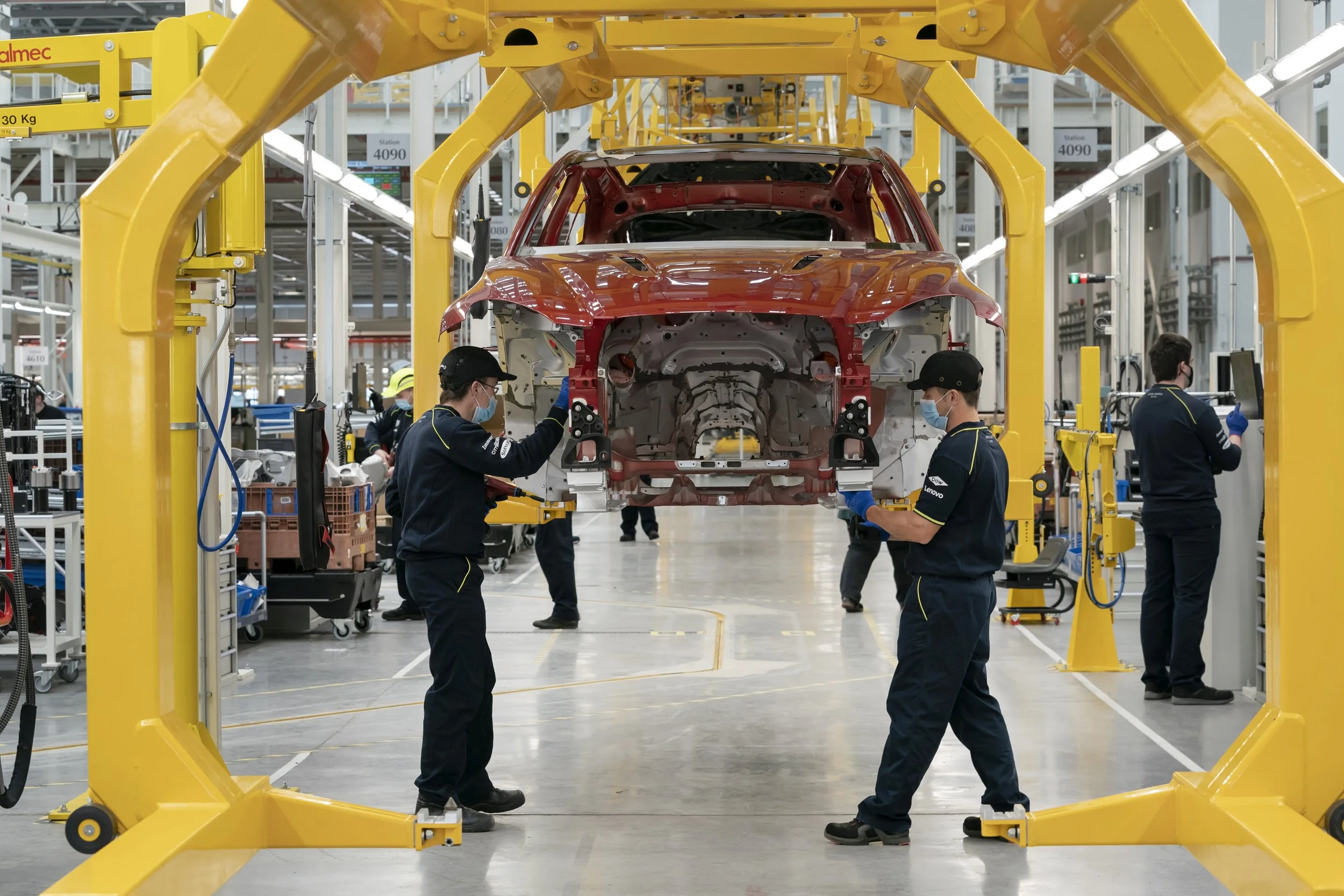
Image © Aston Martin Lagonda. Used for editorial purposes. Aston Martin, St Athan
Perhaps the biggest change in our understanding since FTP first began researching this article is that Hallmark’s intended business model is now much clearer. Earlier in his tenure, we could identify pieces of the strategy through company statements: demand before indiscriminate volume, more personalisation, more derivatives, better quality, tighter costs and improved launch discipline.¹² During the summer of 2026, Hallmark began joining those pieces together more explicitly.
Speaking to Road & Track, he rejected the previous assumption that Aston Martin needed to grow towards 10,000 annual sales for the economics to work, describing instead an attempt to reverse-engineer the business around a materially smaller scale. He used roughly 6,500 cars as an illustration in that conversation.¹⁶ In his later Bloomberg interview, he described a business model centred on around 6,000 annual sales, accompanied by a credible contribution from high-value Specials, for the next three to four years while Aston Martin prepares its next generation of cars.²²
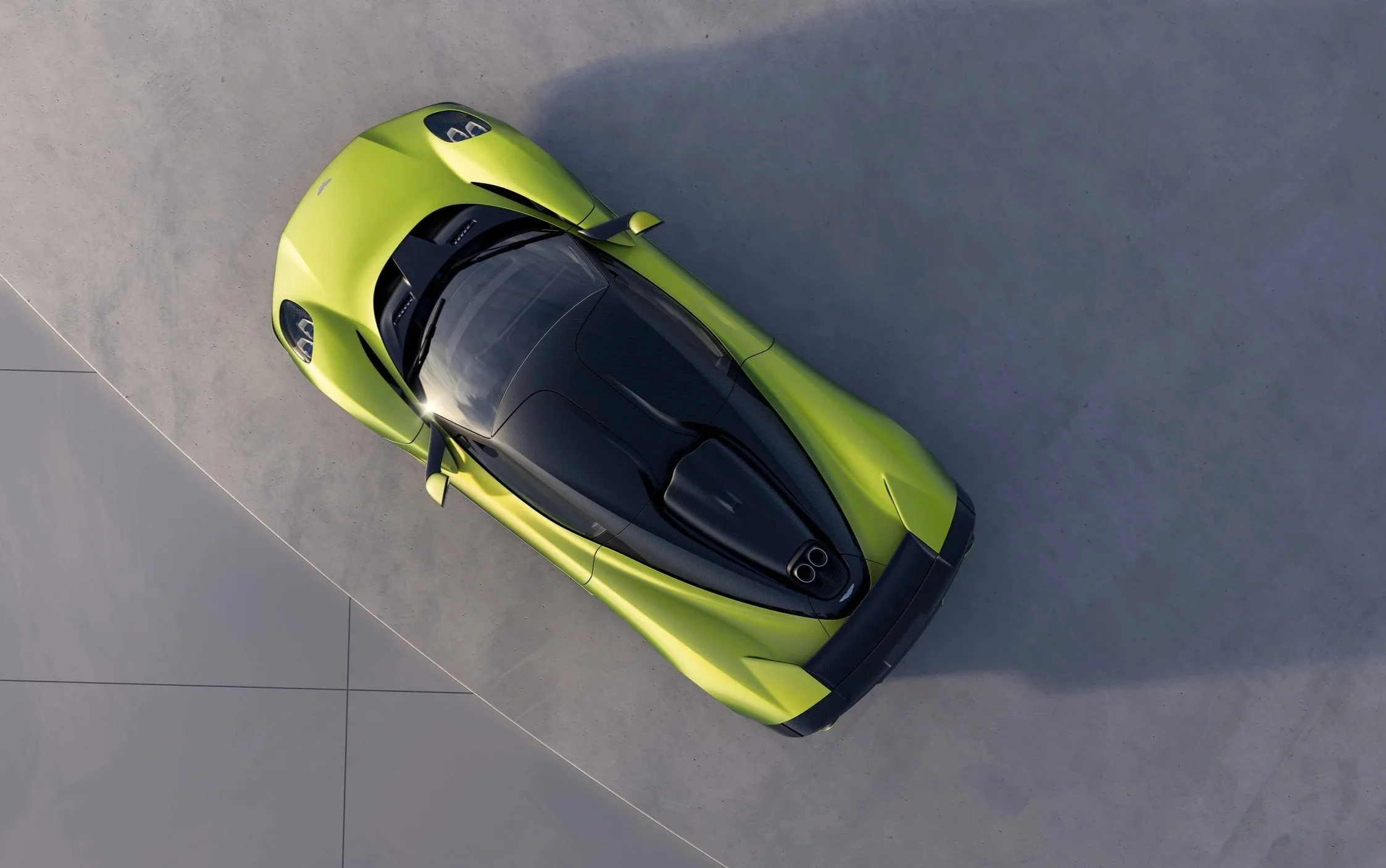
Image © Aston Martin Lagonda. Used for editorial purposes. Aston Martin Valhalla
These conversational figures should not be confused with formal company guidance. Aston Martin’s official FY2026 outlook remains for wholesales broadly similar to FY2025’s 5,448, including approximately 500 Valhalla deliveries.¹⁴
The significance is therefore not whether the eventual number proves to be exactly 6,000, 6,500 or something between them. It’s that Hallmark is describing a company whose economics should no longer depend upon continually increasing production simply to make the business work.
That brings us remarkably close to the principle examined earlier at Bentley.
The Core Has to Work
There’s an obvious temptation, particularly when Aston Martin launches something as dramatic as Valhalla or Valen, to imagine that exceptionally expensive limited-production cars can somehow solve the whole financial problem. Hallmark’s own explanation is more grounded.
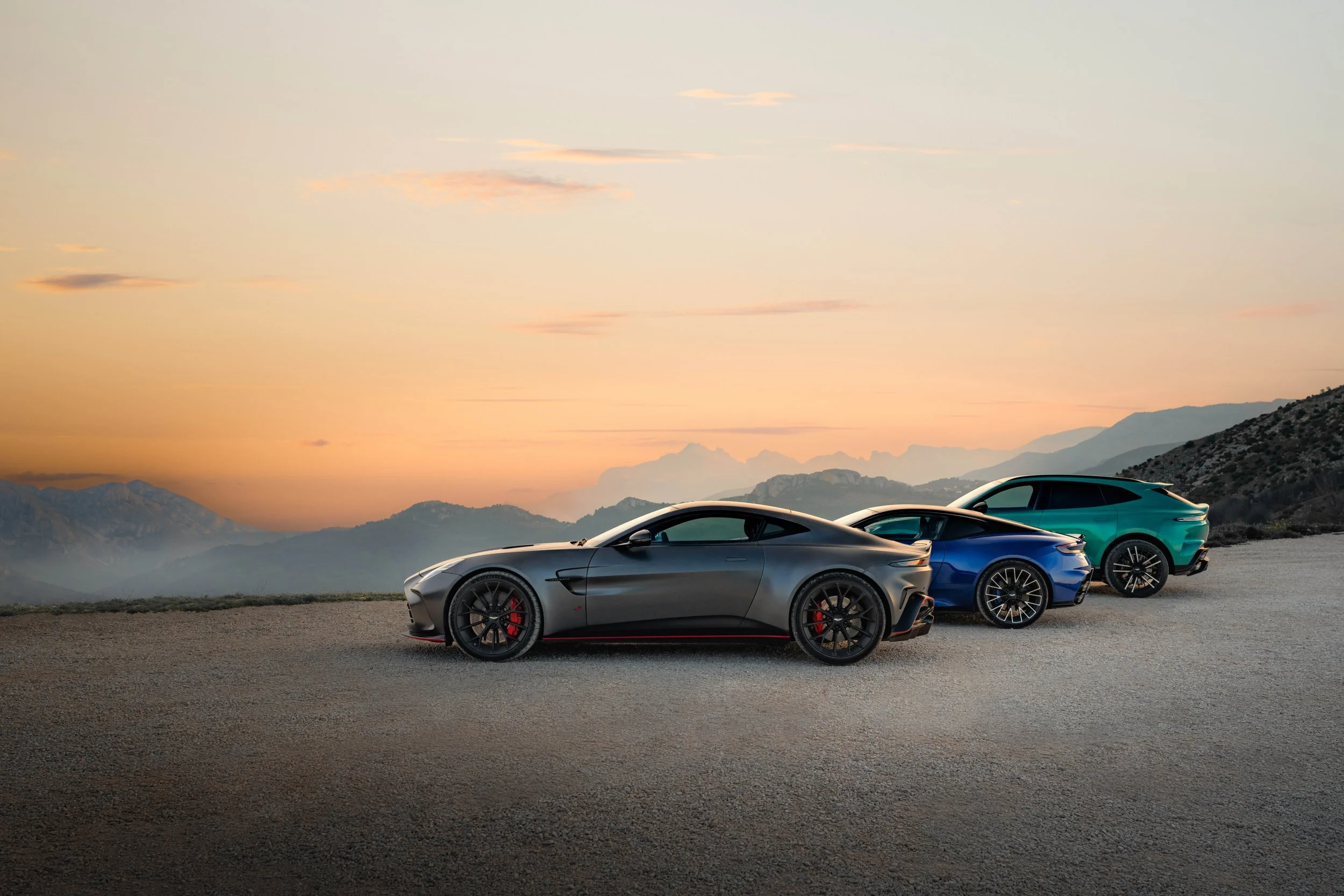
Image © Aston Martin Lagonda. Used for editorial purposes. Aston Martin S Family
Asked by Bloomberg about Aston Martin’s route back towards profitability, he began with the core range. His first requirement, he said, was to make those products more profitable, while reducing the company’s cost structure so that the business could generate profit and cash at much lower volume than previously planned.
Specials such as Valhalla could then provide an additional acceleration to financial performance above that stronger foundation.²²
That distinction is fundamental to FTP’s assessment.
Vantage, DB12, Vanquish and DBX cannot simply become supporting actors while a succession of seven-figure Specials carries the company. The core products have to make sufficiently strong economic contributions in their own right, after which Q personalisation, derivatives and Specials can add further value.
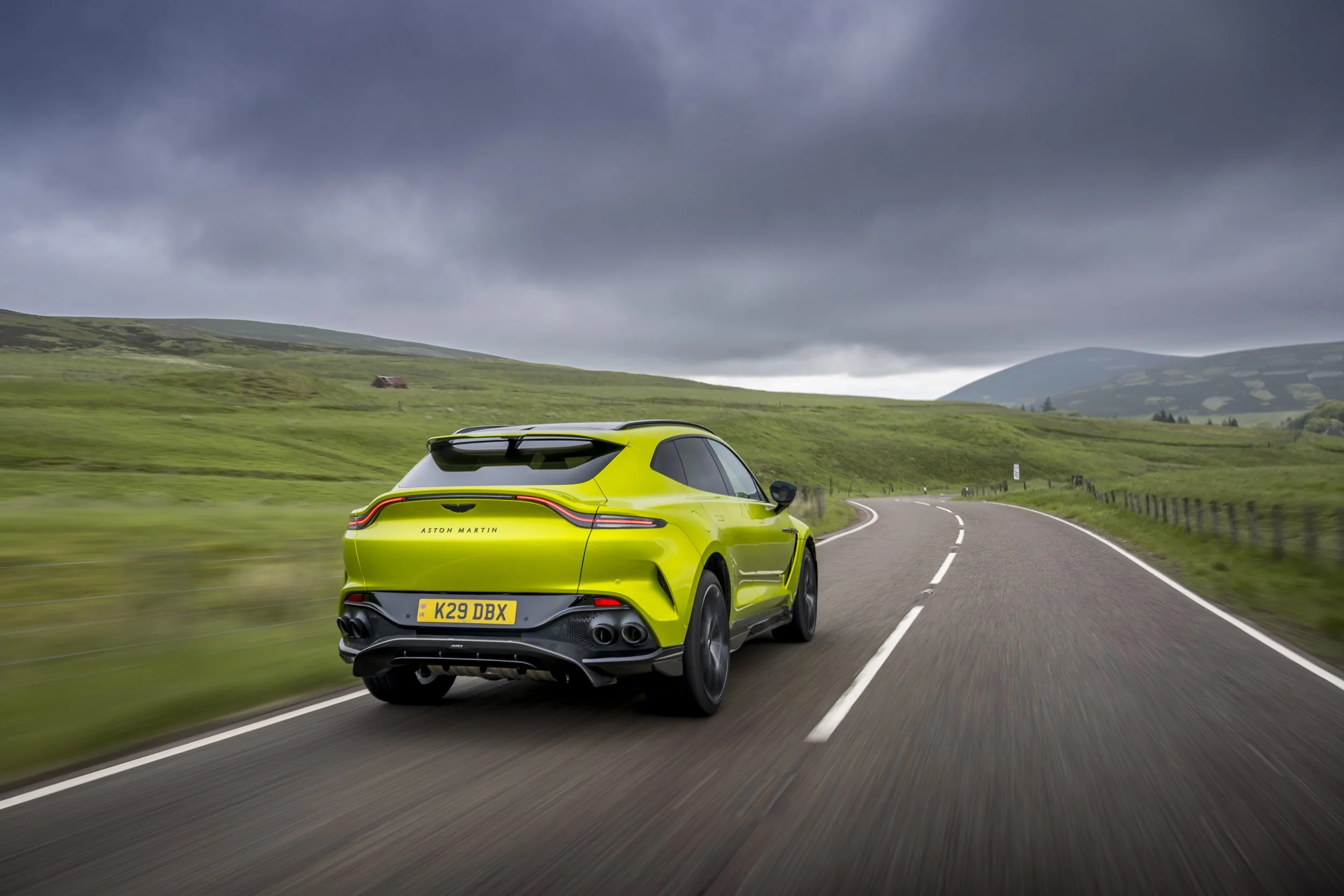
Image © Aston Martin Lagonda. Used for editorial purposes. Aston Martin DBX707
There’s also one area where Hallmark himself acknowledges that more work is required. He told Road & Track that DBX is the current product whose true potential, in his view, Aston Martin has not yet achieved.¹⁶ The SUV has already been commercially important to the company, but Hallmark believes it has greater potential than the business has so far extracted from it.
That admission is useful because it prevents this strategy becoming an abstract discussion about percentages and limited editions. If Aston Martin is going to work at lower overall volume, every major part of the core portfolio needs to make a credible contribution.
Demand Before Volume
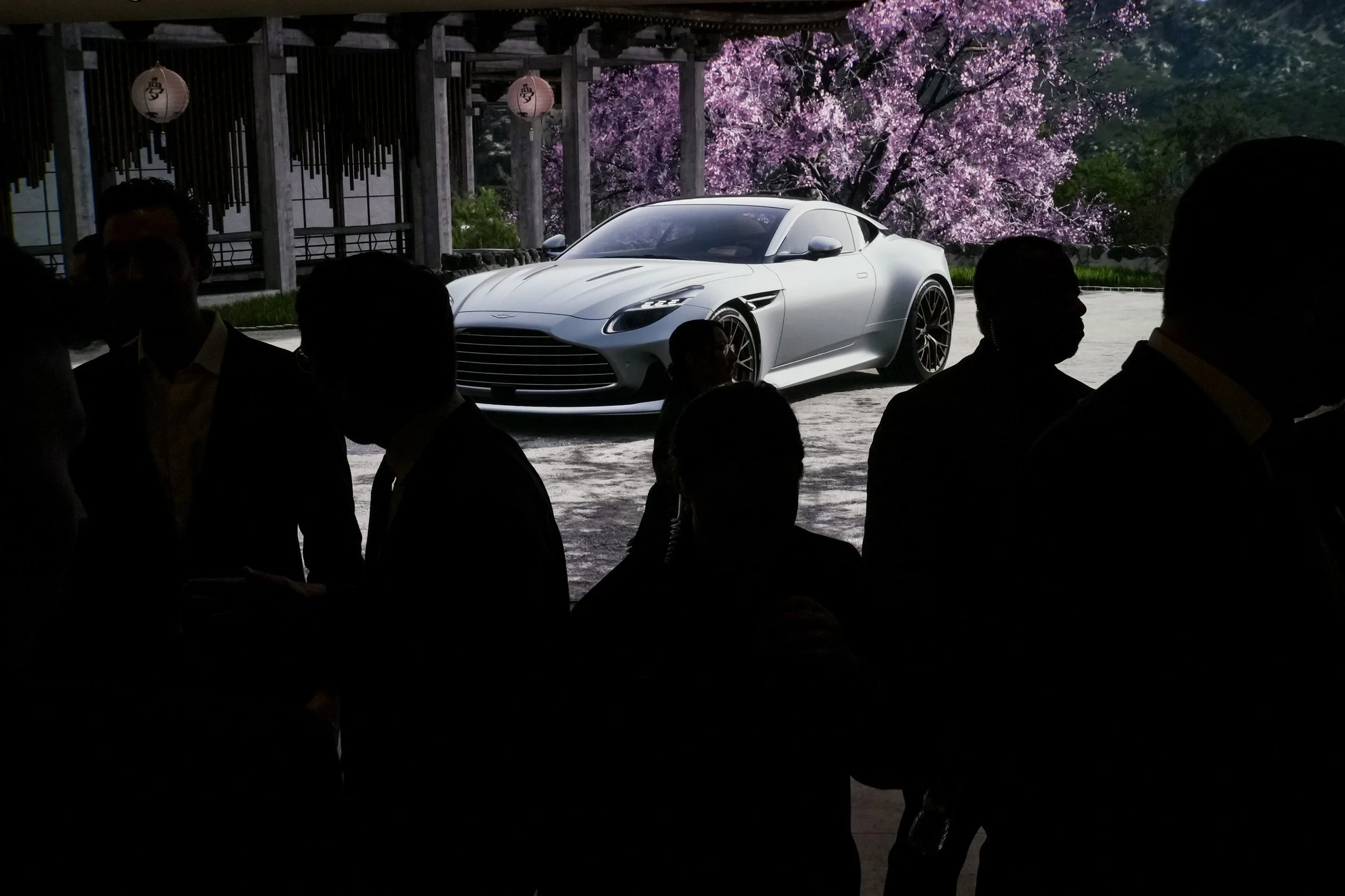
Image © Aston Martin Lagonda. Used for editorial purposes. Q New York.
The production side of the strategy is becoming easier to identify. In H1 2026, Aston Martin reported that core retail volumes exceeded wholesales by more than 30 per cent, while continuing to emphasise a disciplined balance between production and underlying customer demand.¹⁴
For readers less familiar with automotive accounting, the distinction is useful. A wholesale is normally a car sold by Aston Martin to its dealer network; a retail represents a dealer subsequently selling a car to the end customer. If wholesales persistently race far ahead of genuine retail demand, cars can accumulate in the network, become older stock and eventually require incentives or manufacturer support to clear.
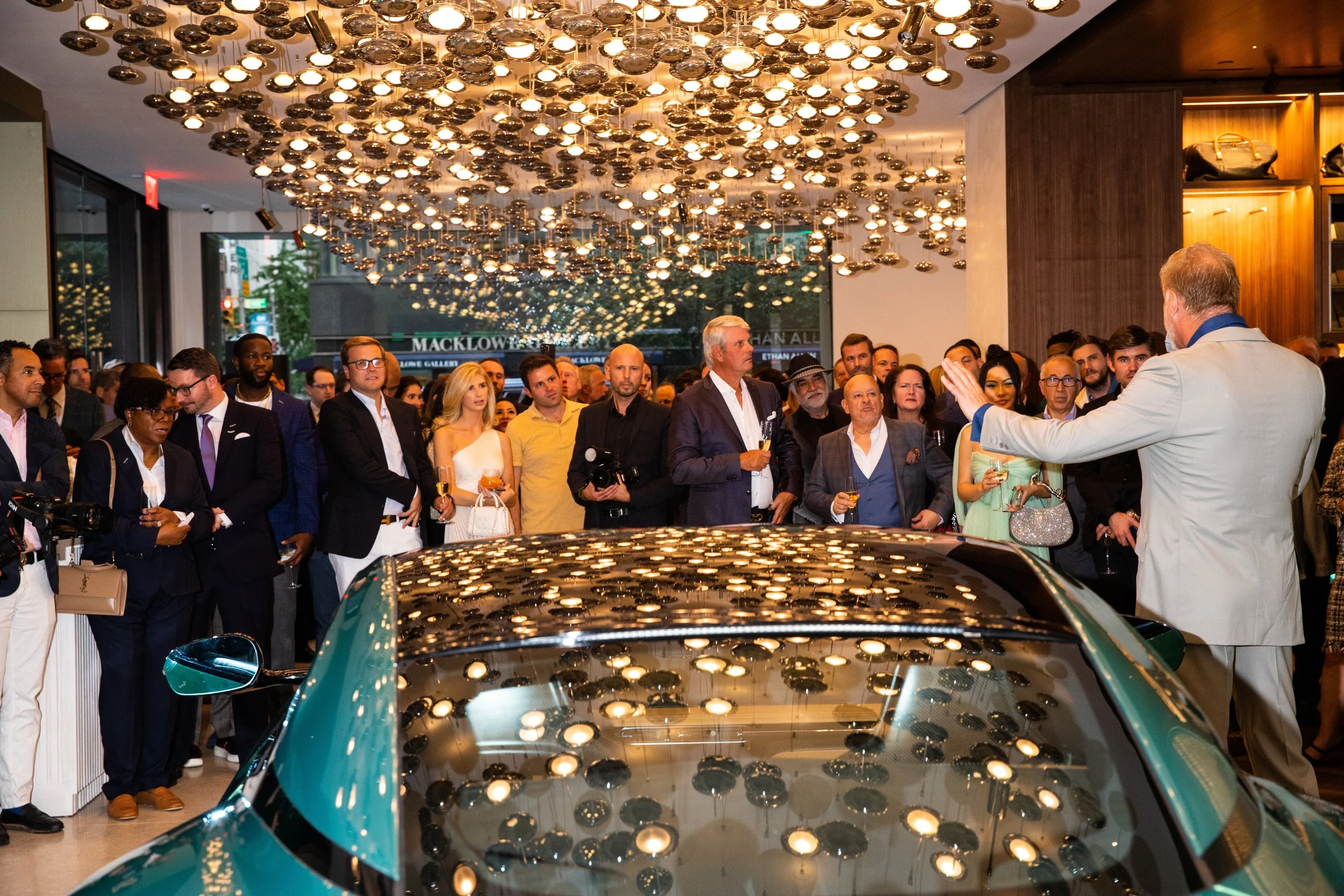
Image © Aston Martin Lagonda. Used for editorial purposes. Q New York.
That’s particularly undesirable for a luxury marque whose pricing relies partly on scarcity and desirability. Aston Martin was still dealing with some of that legacy during the first half of 2026. Targeted support to dealers reducing aged inventory contributed to core average selling price falling five per cent year-on-year to £182,000.¹⁴
The official H1 results call gives us a more precise picture. Hallmark said the stock-reduction programme was approximately 70–80 cars behind where management had expected it to be at half-year, although the position was hundreds of cars better than at the beginning of 2026. The principal remaining issue was DBX stock in the United States, and management expected much of the residual imbalance to work through as the second half progressed.²⁵
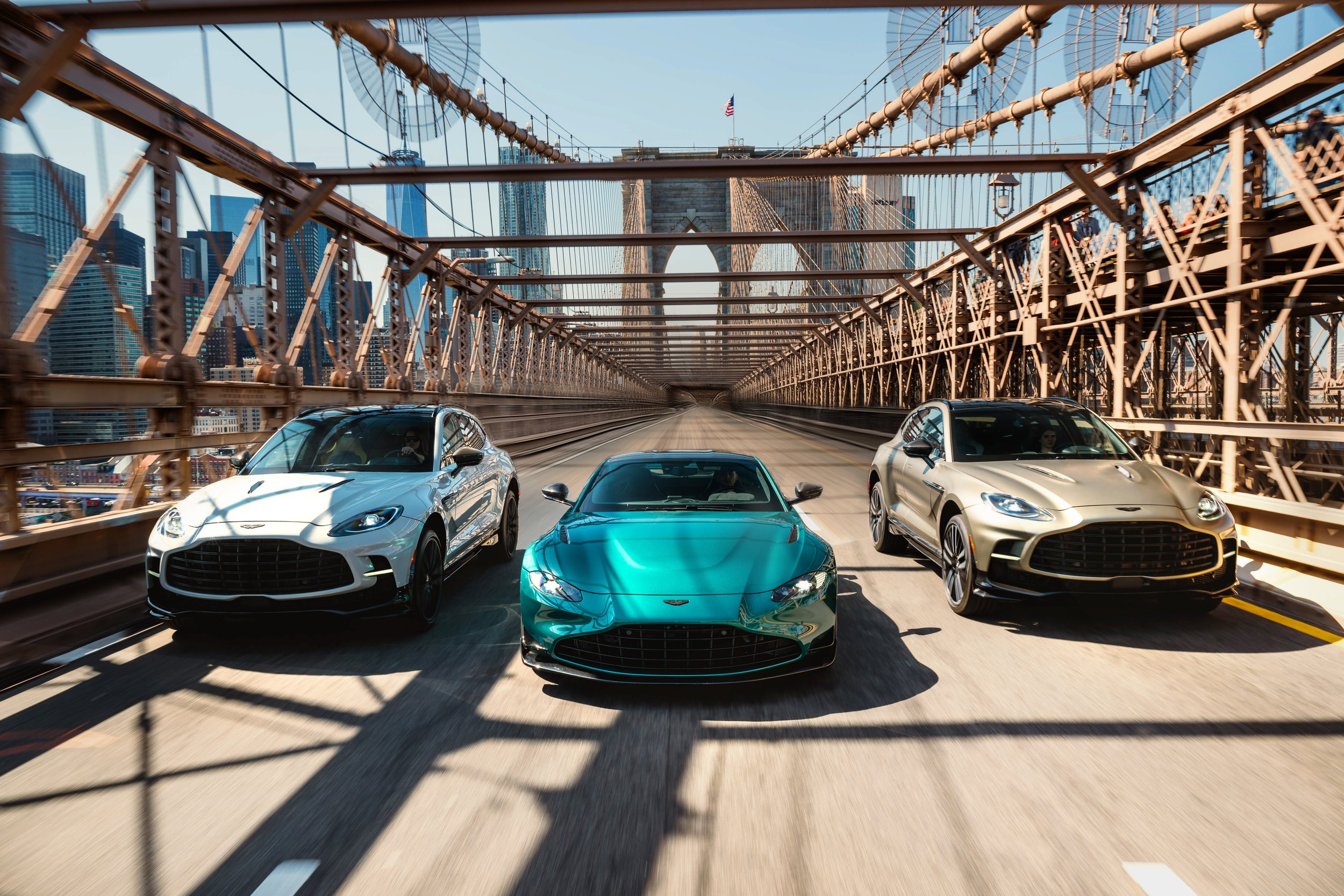
Image © Aston Martin Lagonda. Used for editorial purposes. Aston Martin in the United States.
That means the appropriate conclusion is neither that Aston Martin still has an uncontrolled inventory problem nor that the clean-up is finished. It’s well advanced, but not complete at the latest reported point.
Giving Customers a Reason to Look Again
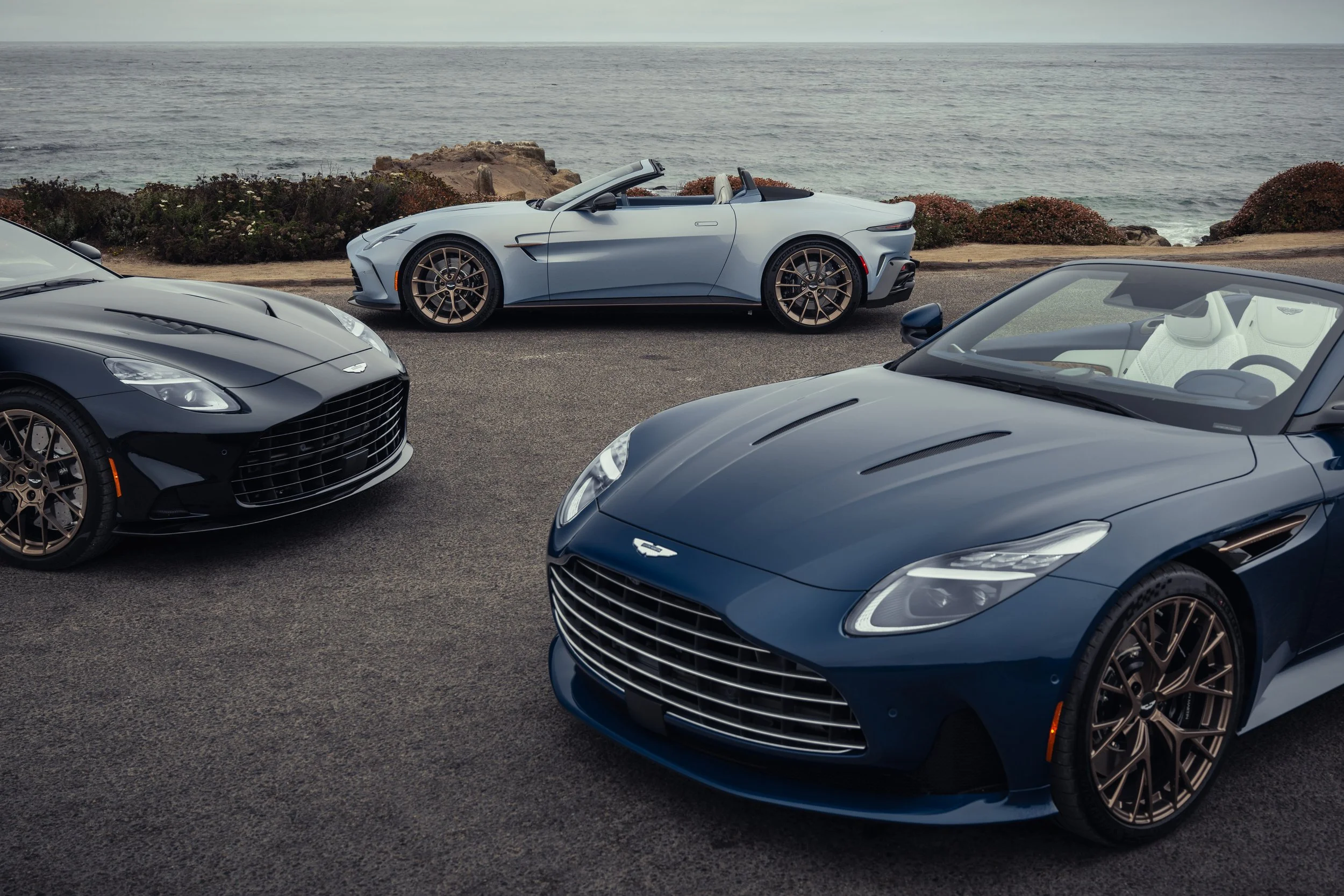
Image © Aston Martin Lagonda. Used for editorial purposes. Aston Martin Thrillseeker Collection
Another part of Hallmark’s philosophy is now becoming highly visible in the cars themselves. During the evo conversation, Hallmark described the commercial challenge facing any luxury manufacturer. Leave a model unchanged for too long and customers who bought one several years ago have little reason to return. Change it too often and a customer who has only just taken delivery may feel their expensive purchase has immediately become outdated.
Image © Aston Martin Lagonda. Used for editorial purposes. Aston Martin Thrillseeker Collection
His preferred answer is a controlled rhythm of meaningful product development, with each nameplate receiving different interpretations over its life rather than simply waiting years for the next complete replacement. He discussed variations capable of becoming faster, louder and more focused in one direction, or smoother, quieter and more comfortable in another.²¹
In the motor industry, a derivative is a distinct version of an existing model rather than an entirely new car developed from the ground up.
It can share the same basic model family and much of its underlying engineering, while receiving meaningful changes to areas such as performance, chassis tuning, styling, equipment, luxury or character.
The Vantage S remains part of the Vantage family, but changes to its performance, chassis and specification give customers a different proposition without Aston Martin having to create an entirely unrelated vehicle architecture.
That philosophy is already visible through the S family. During 2025, Aston Martin said it launched seven new core derivatives, including expansion of its high-performance S range through DBX S, Vantage S and DB12 S.¹³ Public evidence doesn’t establish precisely when every individual project was first approved, so FTP won’t pretend each derivative was conceived personally by Hallmark.
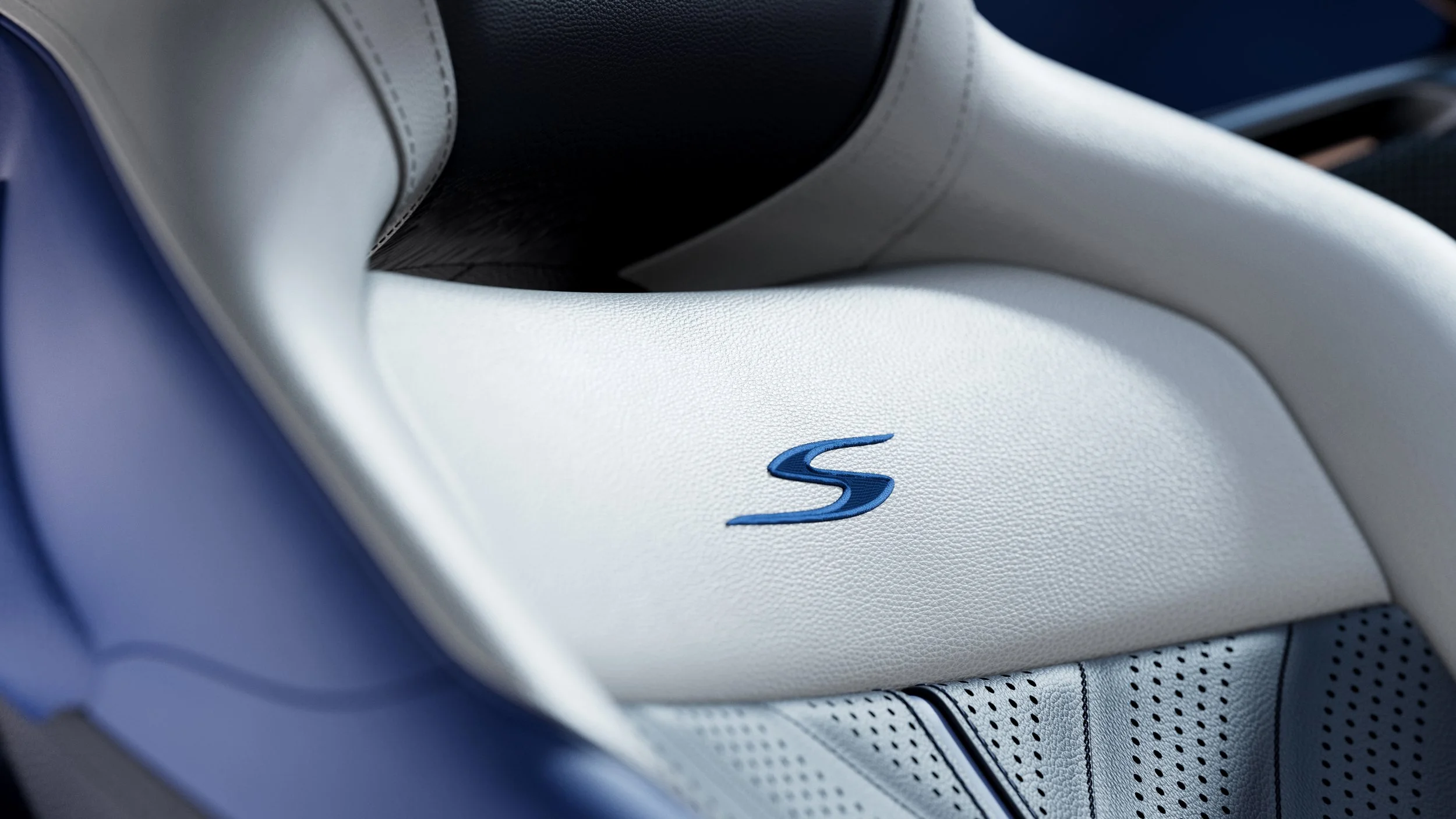
Image © Aston Martin Lagonda. Used for editorial purposes. Aston Martin DB12 S
What we can say more confidently is that the increased cadence itself is entirely consistent with the strategy he has repeatedly described. There’s now some early evidence of customer response too.
During the H1 2026 results call, Hallmark said Aston Martin had approximately four to five months of orders across the core S models, while the company said those derivatives were helping underpin a stable core order book.²⁵
That still doesn’t tell us the ultimate profit generated by each derivative. It does take us one step beyond product announcements: customers appear to be ordering the cars.
What Might Come Next Is Already Being Tested
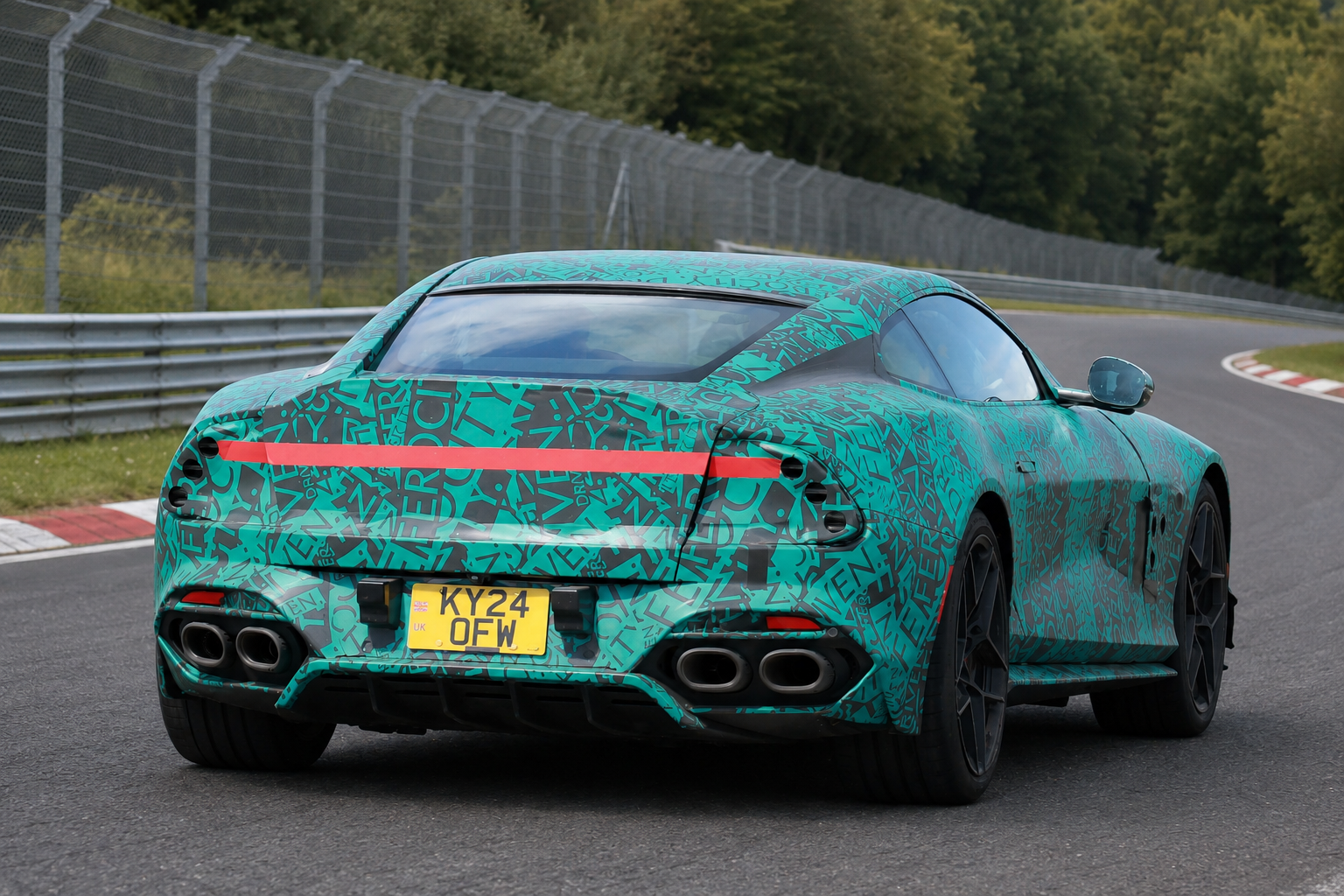
Image © Fuel the Passion. For illustrative purposes.
The next stage may already be visible beneath camouflage.
During 2026, increasingly specialised Vantage and Vanquish development cars have been photographed testing, including at the Nürburgring. The more extreme Vantage prototype has prompted widespread speculation about a potential Vantage RS or similarly positioned model, while modified Vanquish test cars have generated speculation around a future Vanquish S.²⁴
FTP has already examined both prototypes in the Weekly Roundup, and the caution applied there remains important. Aston Martin has not formally confirmed either of those model names, while an earlier Vanquish mule was described as testing an experimental exhaust arrangement rather than confirming a production derivative. The cars therefore don’t prove that a Vantage RS or Vanquish S will arrive exactly as imagined by the automotive press.
What they do demonstrate is continuing engineering activity around existing nameplates at precisely the moment Hallmark is describing much greater variation within those model families. That makes the prototypes interesting not as gossip about badges, but as possible early evidence of the strategy being implemented physically.
Valen - A New Aston Martin From Familiar Foundations
If the S derivatives demonstrate one part of Hallmark’s philosophy, Valen pushes the same principle considerably further.

Image © Aston Martin Lagonda. Used for editorial purposes. Aston Martin Valen.
Publicly revealed at Monterey on 14th August 2026, Valen is limited to 150 cars and uses Aston Martin’s 5.2-litre twin-turbocharged V12 producing 850PS and 1,000Nm. Its full carbon-fibre body, bespoke lighting, substantially different surface treatment and new interior architecture create something visually far removed from the regular front-engined range, while Aston Martin says weight can be reduced by up to 110kg compared with its existing core V12 platform.²⁰
That combination makes Valen particularly interesting in this article. Many important Aston Martins launched during Hallmark’s tenure were programmes he inherited at advanced stages. Valen is useful for a different reason: it’s perhaps the clearest physical expression yet during his leadership of the product philosophy he’s been describing.
That doesn’t mean Hallmark designed Valen, nor do we have reliable evidence establishing precisely when the project was conceived or first approved. Marek Reichman and Aston Martin’s design and engineering teams deserve the appropriate authorship for the car itself. The significance lies in the way the product works commercially.

Image © Aston Martin Lagonda. Used for editorial purposes. Aston Martin V12 Engine
Speaking to evo, Hallmark described Aston Martin as possessing two particularly valuable engineering “toolkits”: the current front-engined V12 architecture and the mid-engined technology created through Valhalla.
By changing powertrain, gearbox, suspension and complete body systems around those foundations, he said Aston Martin could create very different cars with distinct positioning, while allowing enough time between them to preserve exclusivity.²¹
He identified Valen as the first Special developed from the current front-engined 12-cylinder architecture.²¹ The connection becomes easier to see when we look at the car itself. Valen is not simply a Vanquish with another 15PS and a large price attached.
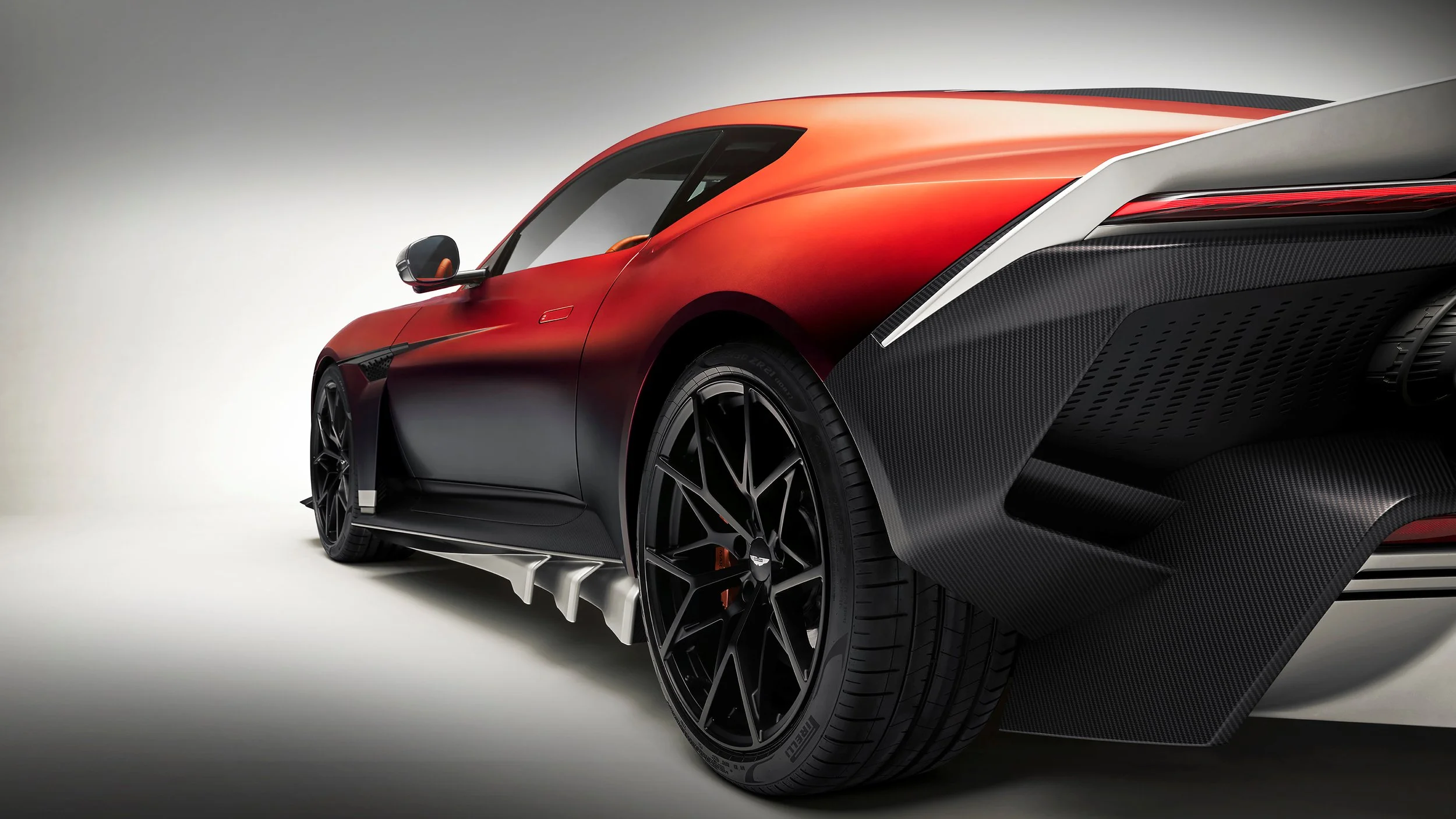
Image © Aston Martin Lagonda. Used for editorial purposes. Aston Martin Valen.
The common engineering foundation provides a starting point, but Aston Martin has surrounded it with different bodywork, materials, weight-saving measures, transmission calibration, chassis tuning, aerodynamics, electronics and a new interior treatment.²⁰
Marek Reichman’s description adds another useful dimension. Where Valour and Valiant deliberately drew part of their character from Aston Martin’s past, he described Valen as more deliberately future-facing, moving some of the visual and technological thinking developed elsewhere within the company into the familiar front-engined V12 format.²¹
The business logic can therefore be expressed quite simply:
Aston Martin is attempting to take engineering it’s already paid to develop and use it as the foundation for products different enough in design, character and positioning to command a very different level of customer value.
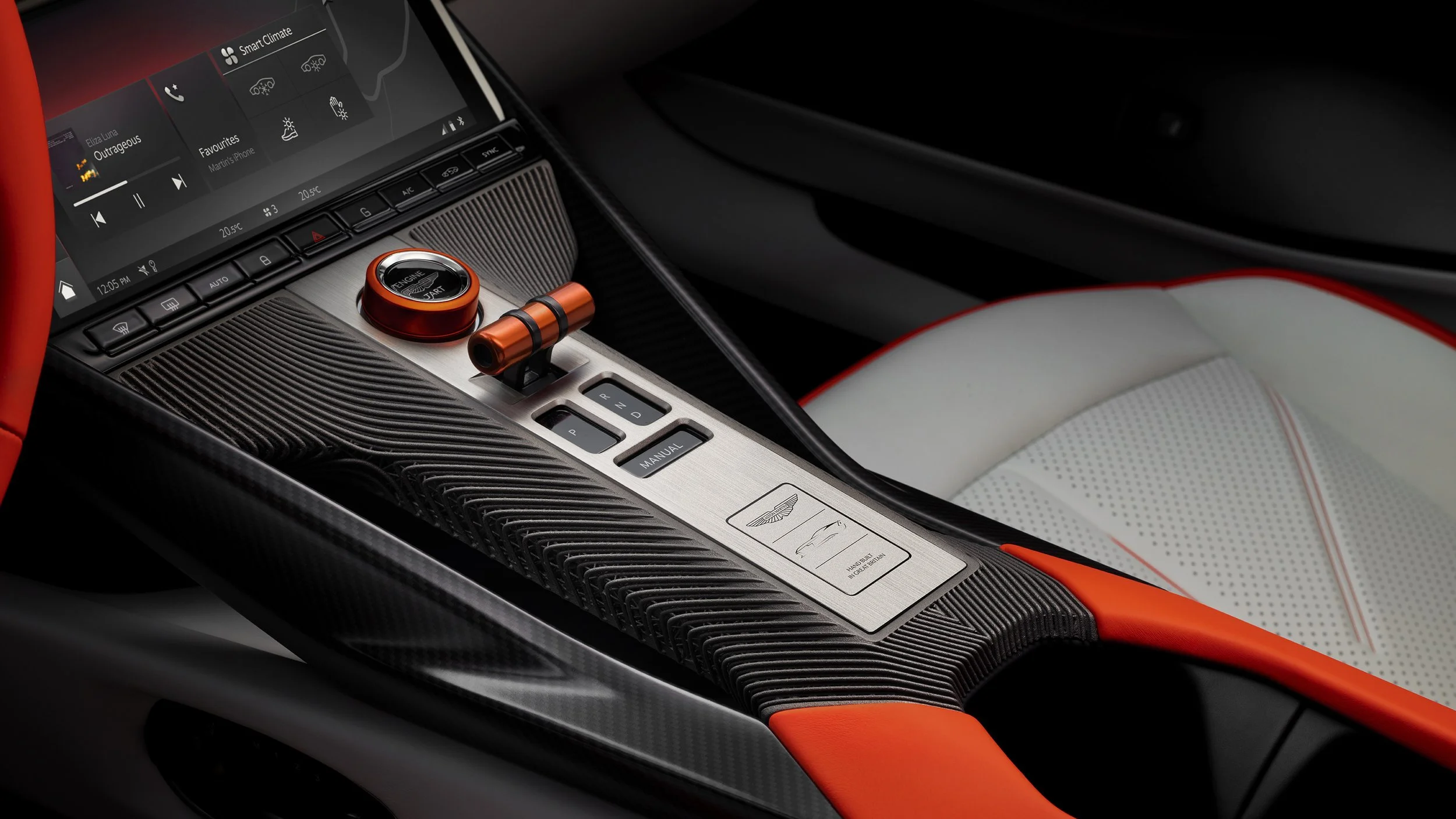
Image © Aston Martin Lagonda. Used for editorial purposes. Aston Martin Valen.
For a manufacturer trying to become sustainably profitable without depending on ever-higher volume, that’s potentially powerful. It’s not automatically profitable. Developing a 150-car carbon-bodied Special still requires engineering, tooling, suppliers, manufacturing complexity, regulatory testing and approval, and customer support. Aston Martin doesn’t disclose Valen’s programme margin, so FTP cannot calculate the financial return.
What we can observe is how neatly Valen fits the economic philosophy Hallmark is now describing.
Specials Are Not a Side Project
This is an area where our interpretation has evolved as the evidence has improved.

Image © Aston Martin Lagonda. Used for editorial purposes. Aston Martin Valhalla
When Valhalla began contributing materially to Aston Martin’s 2026 results, one reasonable question was whether the apparent recovery would remain once those extraordinarily valuable deliveries became less prominent.
That question is still relevant, but it needs framing correctly.
Aston Martin itself now says high-margin Specials are an intentional and fundamental component of its future financial model. During the H1 results presentation, Hallmark described the company as one of a small number of brands capable of consistently creating exclusive, limited-production, high-margin Specials and said they would remain a fundamental part of Aston Martin’s future financial success.²⁵

Image © Aston Martin Lagonda. Used for editorial purposes.
That means the test should not be whether Aston Martin can somehow succeed without Specials. The more useful test is: Can Aston Martin create sufficiently strong economics in the core business that Specials enhance the company rather than compensate for weakness underneath?
Hallmark’s Bloomberg explanation supports precisely that interpretation. He began with more profitable core cars, then described Valhalla and other high-value products as providing an additional financial boost above them.²² That’s a much stronger model than asking a handful of spectacular cars to carry the whole company.
Whether Aston Martin can deliver it consistently is still to be demonstrated.
Specials as Customer Acquisition
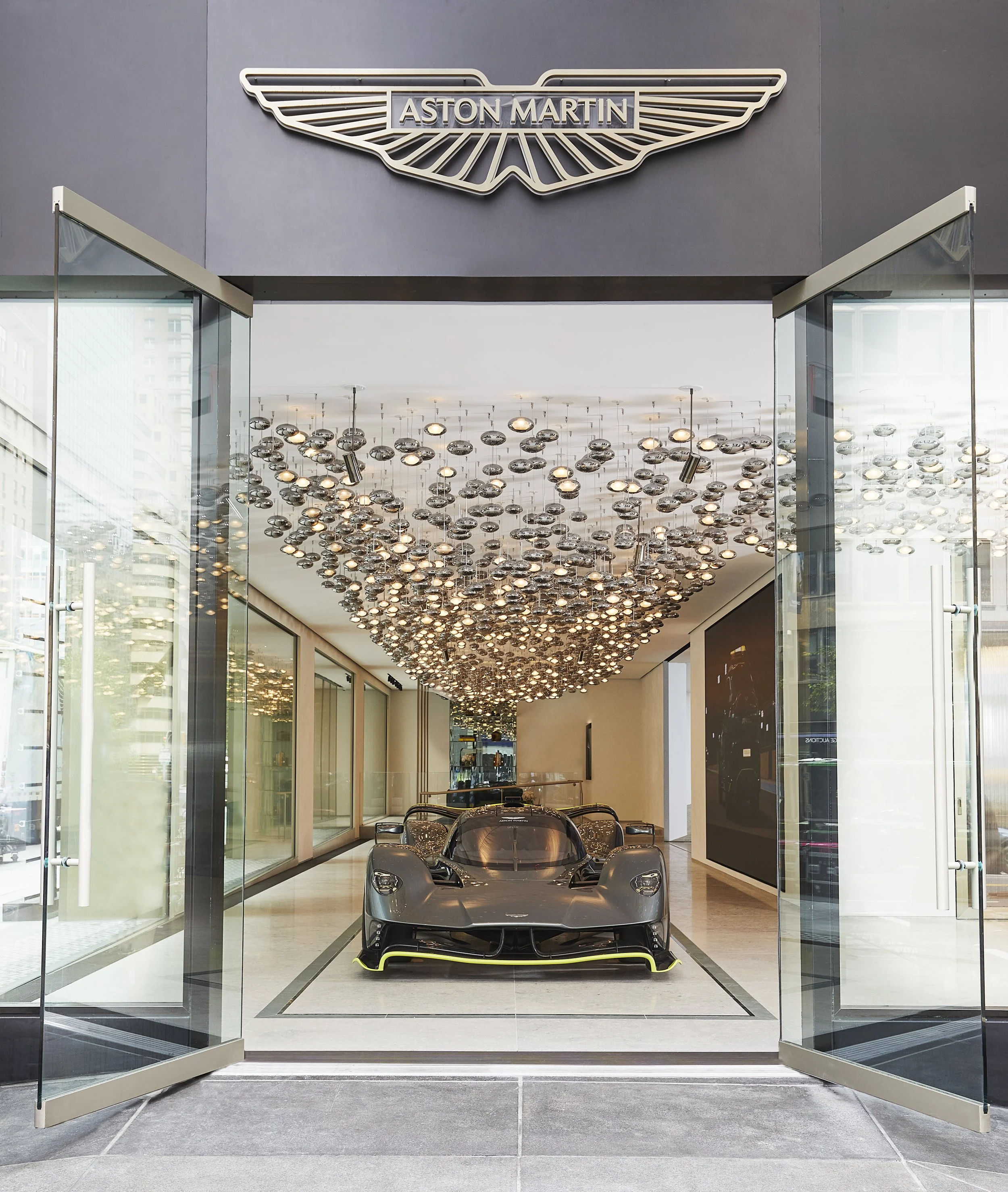
Image © Aston Martin Lagonda. Used for editorial purposes. Aston Martin Valkyrie. Q New York.
The value of those products may extend beyond the first purchase. Hallmark has said in interview that a very high proportion of Valkyrie buyers were new to Aston Martin and that Valhalla has similarly attracted many customers who had not previously bought from the marque.²¹ Those are management-side customer claims rather than independently audited disclosures, so FTP doesn’t use them as hard financial data. The strategy they describe is nevertheless significant.

Image © Aston Martin Lagonda. Used for editorial purposes. Aston Martin Ginza, Tokyo
Someone entering Aston Martin through a seven-figure Special is not valuable only because of that transaction. If the relationship is developed successfully, that customer may later purchase a Vanquish, Vantage, another Special or commission an extensively personalised car through Q.
The economics then extend beyond the Special itself.
This is the idea of customer lifetime value: attract someone capable of buying at the highest end of the market, understand their tastes, build a relationship and create credible reasons for them to return. That helps explain why Valhalla and Valen can be commercially important even though their production numbers are tiny beside a mainstream manufacturer.
Making Every Aston More Valuable
The same philosophy appears further down the range through personalisation.

Image © Aston Martin Lagonda. Used for editorial purposes.
In H1 2026, unique personalisation represented approximately 17 per cent of core vehicle revenue.¹⁴ Hallmark has also spoken repeatedly about widening Aston Martin’s options catalogue after benchmarking what rival luxury manufacturers allow their customers to specify.¹² ¹⁷
For a low-volume manufacturer, the attraction is straightforward.
If a customer already buying a £150,000, £200,000 or £300,000 Aston Martin spends materially more tailoring it, the company can increase revenue from that vehicle without needing an equivalent increase in factory volume.
That principle is strikingly similar to the one that became increasingly important at Bentley through Mulliner, higher specifications, Coachbuilt projects and richer derivatives.
The qualification remains financial. More options can also create engineering, procurement and manufacturing complexity, so increased revenue is useful only if Aston Martin manages the associated costs well enough for the additional spending to improve the economics of each car. At present, the commercial direction is clear. The full margin outcome is still developing.
Knowing the Customer Better
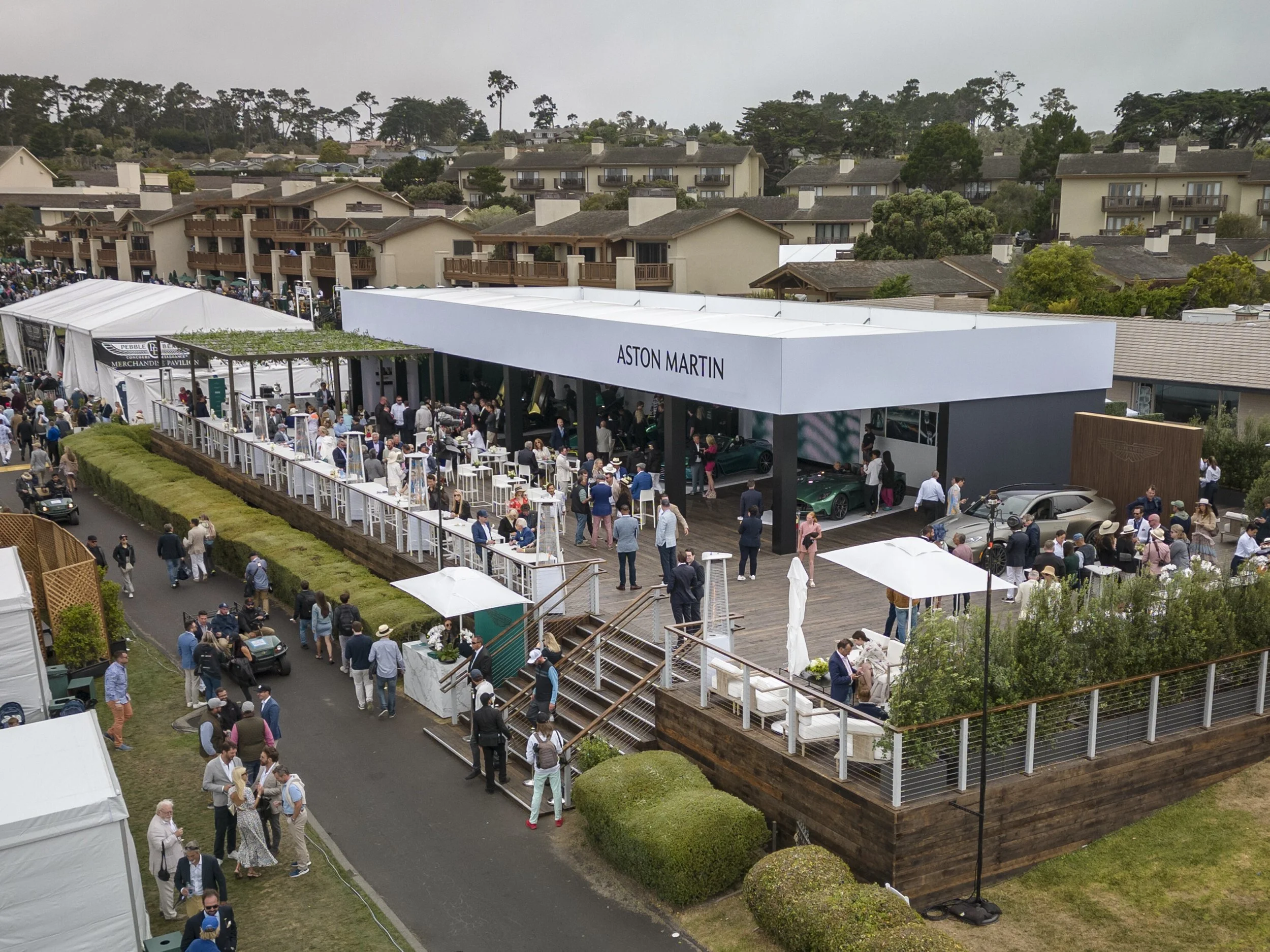
Image © Aston Martin Lagonda. Used for editorial purposes. Aston Martin Pebble Beach
Hallmark’s emphasis on value doesn’t end when the vehicle leaves the showroom. Aston Martin’s 2025 Annual Report described its recently created Private Office as assigning the company’s top 500 clients a primary Aston Martin contact supported by specialist VIP resources.¹³
In the more recent evo interview, Hallmark referred more broadly to the Private Office in relation to Aston Martin’s top 1,000 customers.²¹
FTP has been unable to find a later formal company document explaining whether the programme has expanded from 500 to 1,000, whether Hallmark was describing a wider customer group around it, or whether the difference simply reflects conversational shorthand. We therefore will not pretend the two figures are directly interchangeable. The direction is more important than forcing a false precision onto the number.

Image © Aston Martin Lagonda. Used for editorial purposes. Aston Martin Pebble Beach
Aston Martin is attempting to create more structured relationships around the people most likely to buy repeatedly, particularly those moving between core cars, Q commissions and the company’s Specials.
The approach also helps explain Aston Martin’s increasing emphasis on events. Hallmark told evo that Formula One weekends, Goodwood and Monterey can bring hundreds of existing and potential high-value customers together for long periods, creating a more intimate relationship than the traditional motor-show model where enormous sums could be spent on a temporary stand while hoping the right buyer happened to walk past.²¹
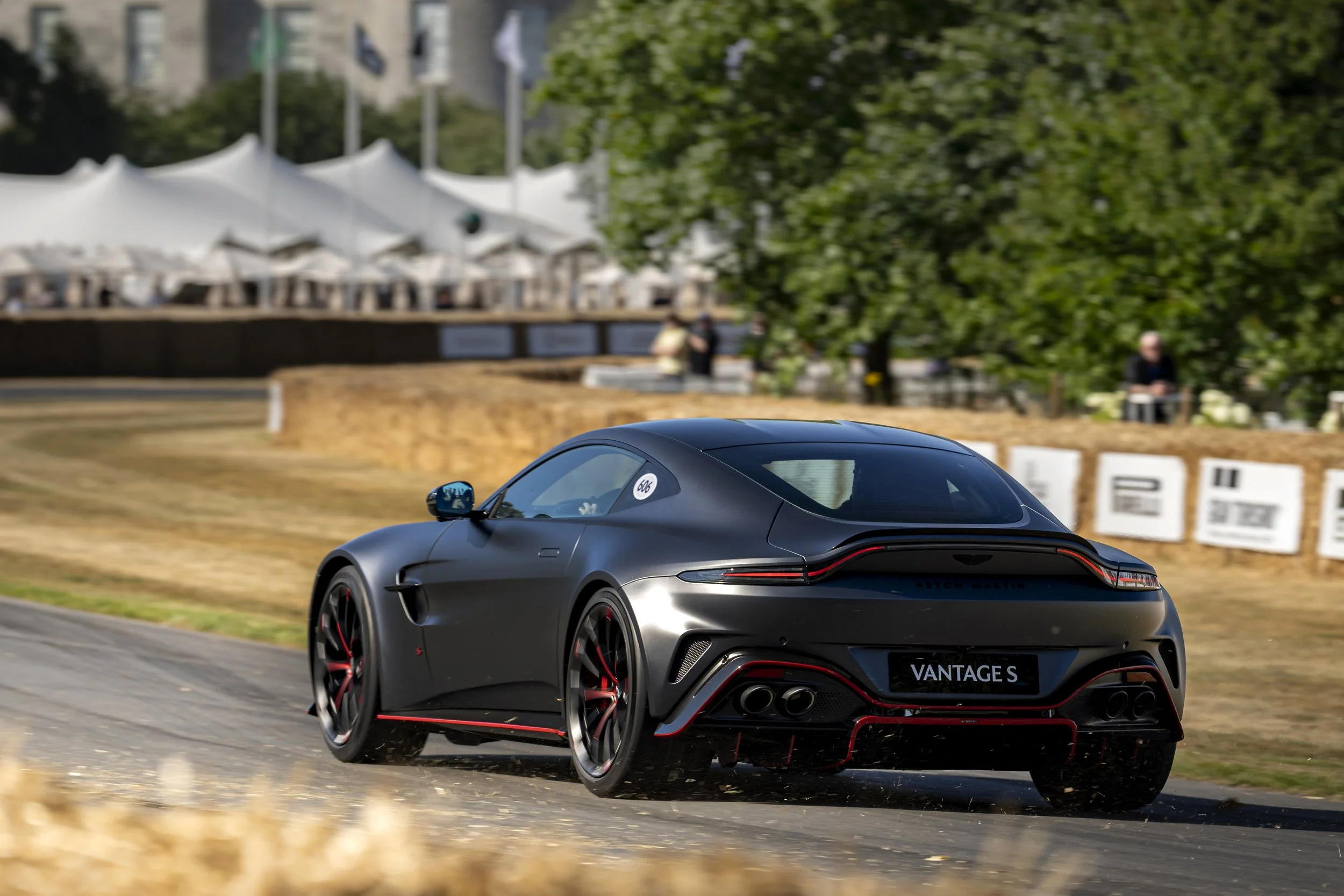
Image © Aston Martin Lagonda. Used for editorial purposes. Aston Martin Vantage S at Goodwood Festival of Speed.
The philosophy is less about making a hard sales pitch and more about turning Aston Martin ownership into a continuing relationship with the marque. For a company seeking greater value from a relatively small customer population, the commercial logic is easy to understand.
Where Formula One Fits
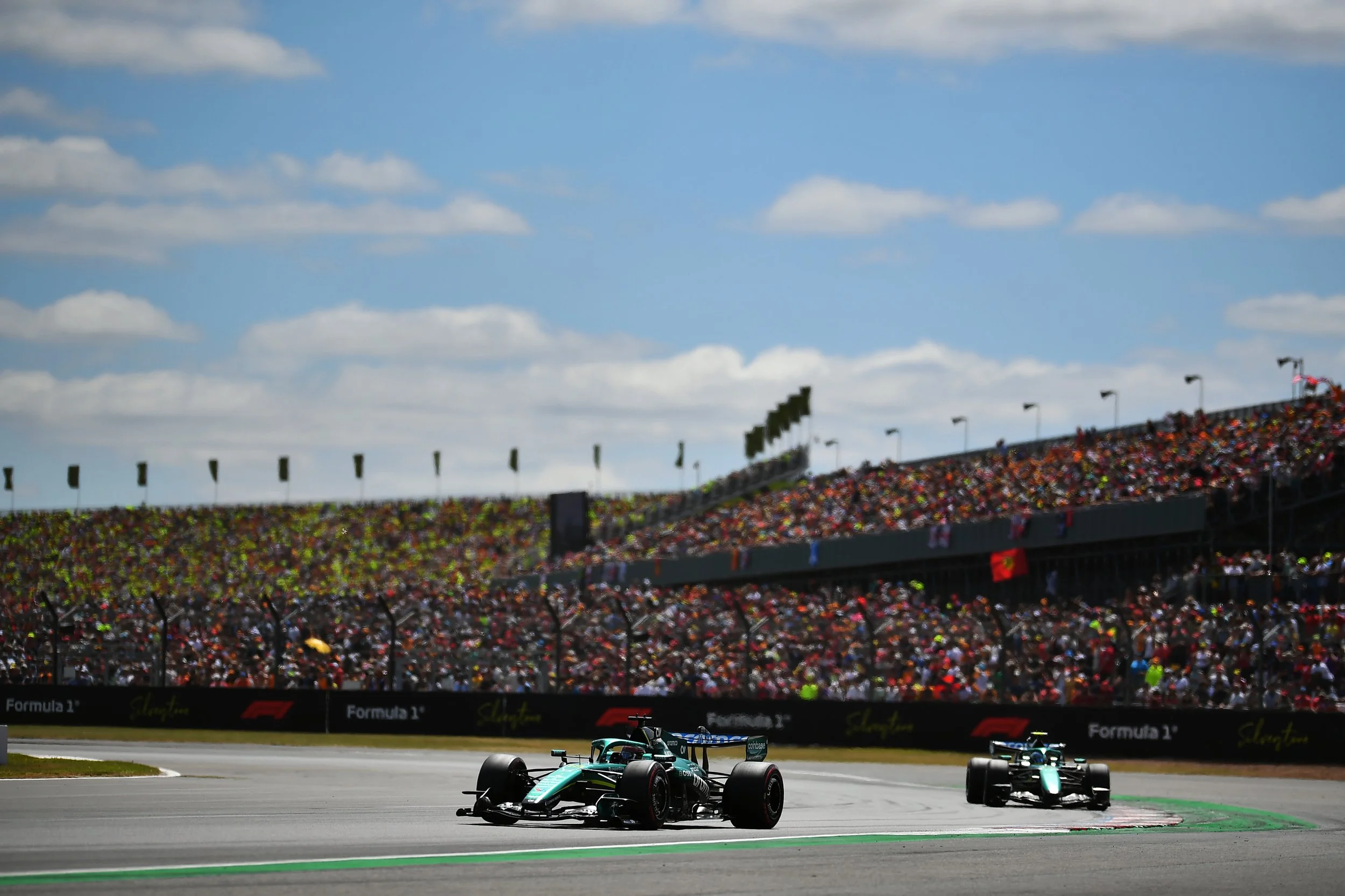
Image © Honda Motor Co. Ltd & Aston Martin Aramco. Used for editorial purposes. British Grand Prix 2026, Silverstone.
Formula One inevitably complicates any discussion of Aston Martin’s finances because the racing team carries the same name while being financially distinct from Hallmark’s road-car company. FTP has explored this subject in detail previously in our Featured Article How Aston Martin’s Finances and F1 Ambitions Fit Together, so there’s little value in repeating the whole explanation here.
The essential point is straightforward.
Aston Martin Lagonda Global Holdings plc - AML, the listed road-car manufacturer led by Adrian Hallmark, and the Aston Martin Aramco Formula One Team are separate financial entities.
AML’s own February 2026 shareholder circular identifies AMR GP Holdings as the company that owns and operates the Formula One team. During 2025, AML sold its investment in the F1 operation, generating approximately £106 million of net proceeds according to its Annual Report. In March 2026, AML then completed a separate £50 million transaction granting AMR GP specified long-term rights relating to the use of the Aston Martin name and associated branding within Formula One.¹³ ¹⁴ ²⁸
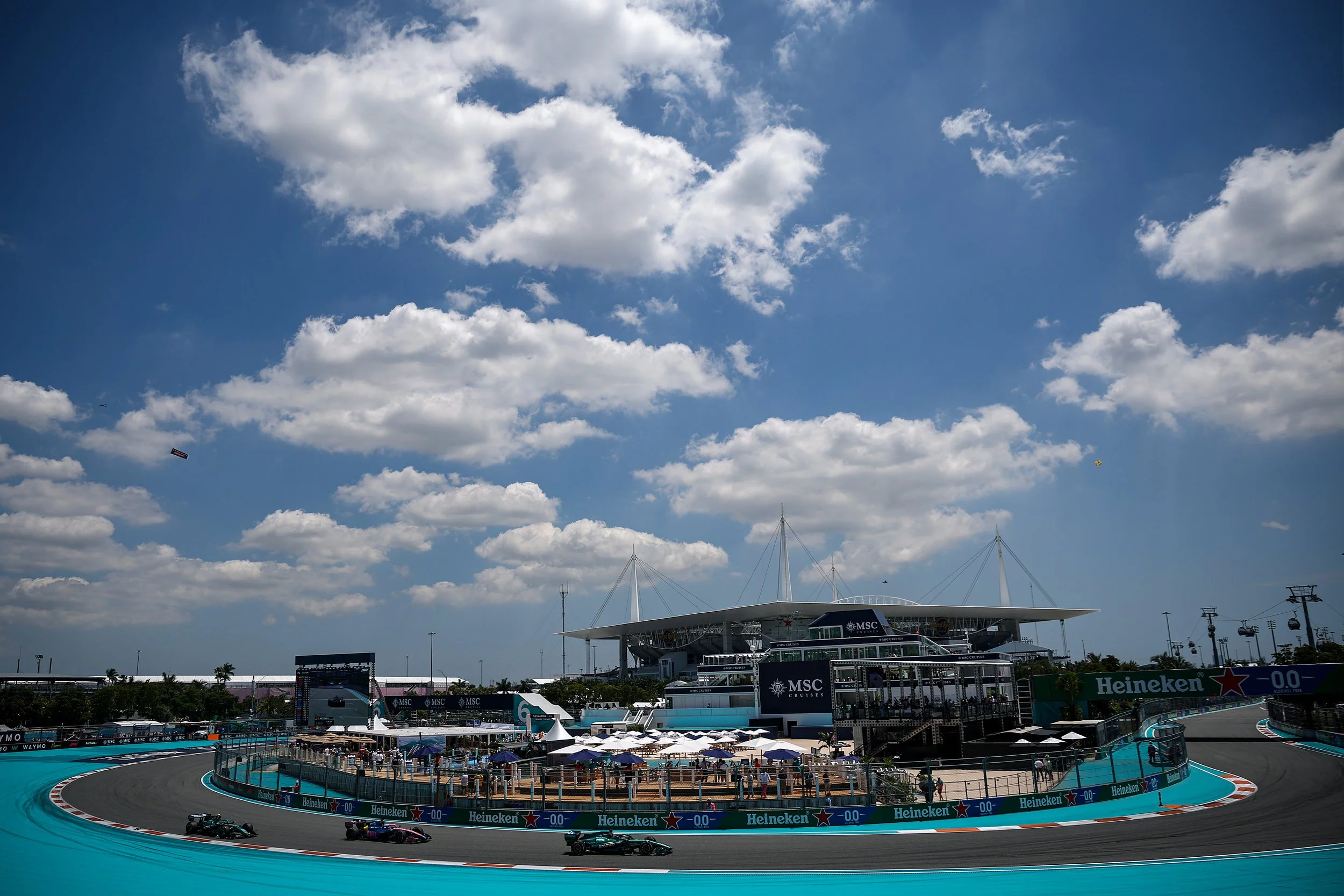
Image © Honda Motor Co. Ltd & Aston Martin Aramco. Used for editorial purposes. Miami Grand Prix 2026.
This distinction has become particularly relevant again. On 20th August 2026, Robert Wood Johnson acquired a strategic minority stake in the Aston Martin Aramco Formula One Team and joined its Board as Vice Chairman. The team said his focus would be commercial growth, particularly in the United States, while Lawrence Stroll remains Executive Chairman and controlling shareholder.²³
Johnson’s investment is therefore not an equity investment in Aston Martin Lagonda and shouldn’t be interpreted as new funding entering Hallmark’s road-car balance sheet. The separation doesn’t make Formula One irrelevant to Hallmark’s strategy.
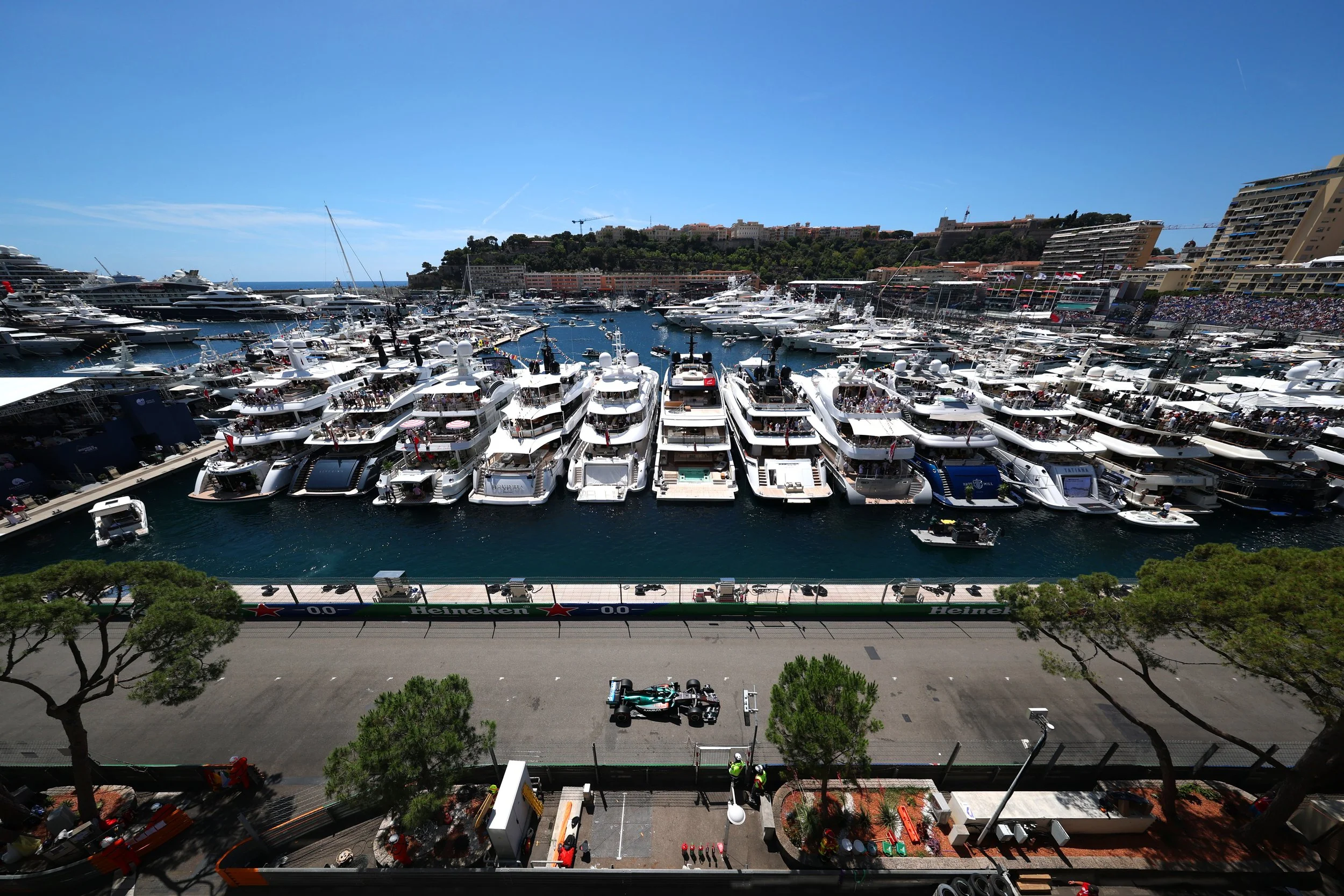
Image © Honda Motor Co. Ltd & Aston Martin Aramco. Used for editorial purposes.
AML itself says it uses the global reach of the Aston Martin Aramco Formula One Team to promote brand awareness,¹⁴ while Hallmark has described Formula One as an exceptionally powerful global platform for a manufacturer producing only a few thousand cars each year.
He’s also emphasised its value as a place to engage existing and potential Aston Martin customers in premium environments over an entire race weekend.²¹
The relationship is therefore more nuanced than saying either that the two businesses are one operation or that they have nothing to do with each other.
The Formula One team and AML have separate ownership structures and finances, but the Aston Martin name deliberately connects their commercial interests. Investment into the racing team shouldn’t be confused with road-car expenditure, while its global reach can still create considerable brand and customer value for AML.
For Hallmark’s value-over-volume strategy, that global stage could be unusually useful.
The Less Glamorous Side - Cost and Efficiency
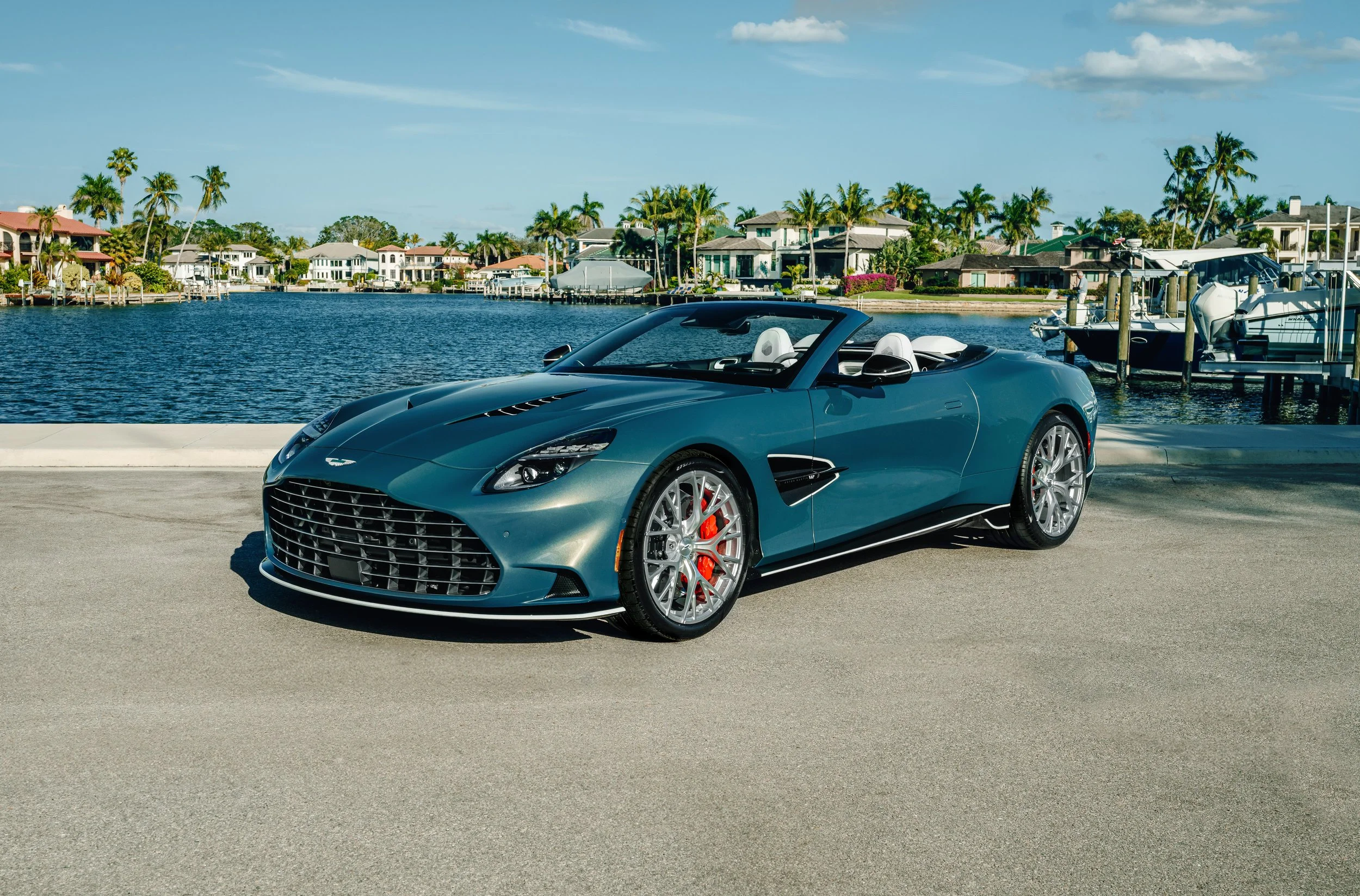
Image © Aston Martin Lagonda. Used for editorial purposes. Aston Martin Vanquish Volante Wave Edition
Beautiful cars and wealthy customers make better photographs, but Aston Martin’s turnaround won’t succeed without the less glamorous work behind them. Cost reduction has been one of the clearest Hallmark-era interventions.
During FY2025, adjusted operating expenditure excluding depreciation and amortisation fell from approximately £313 million to £262 million, a reduction of 16 per cent.¹³ Aston Martin also cut capital expenditure and reduced its planned five-year investment programme from approximately £2.0 billion to £1.7 billion for 2026–2030.¹³ That doesn’t mean every cost line has simply continued falling.
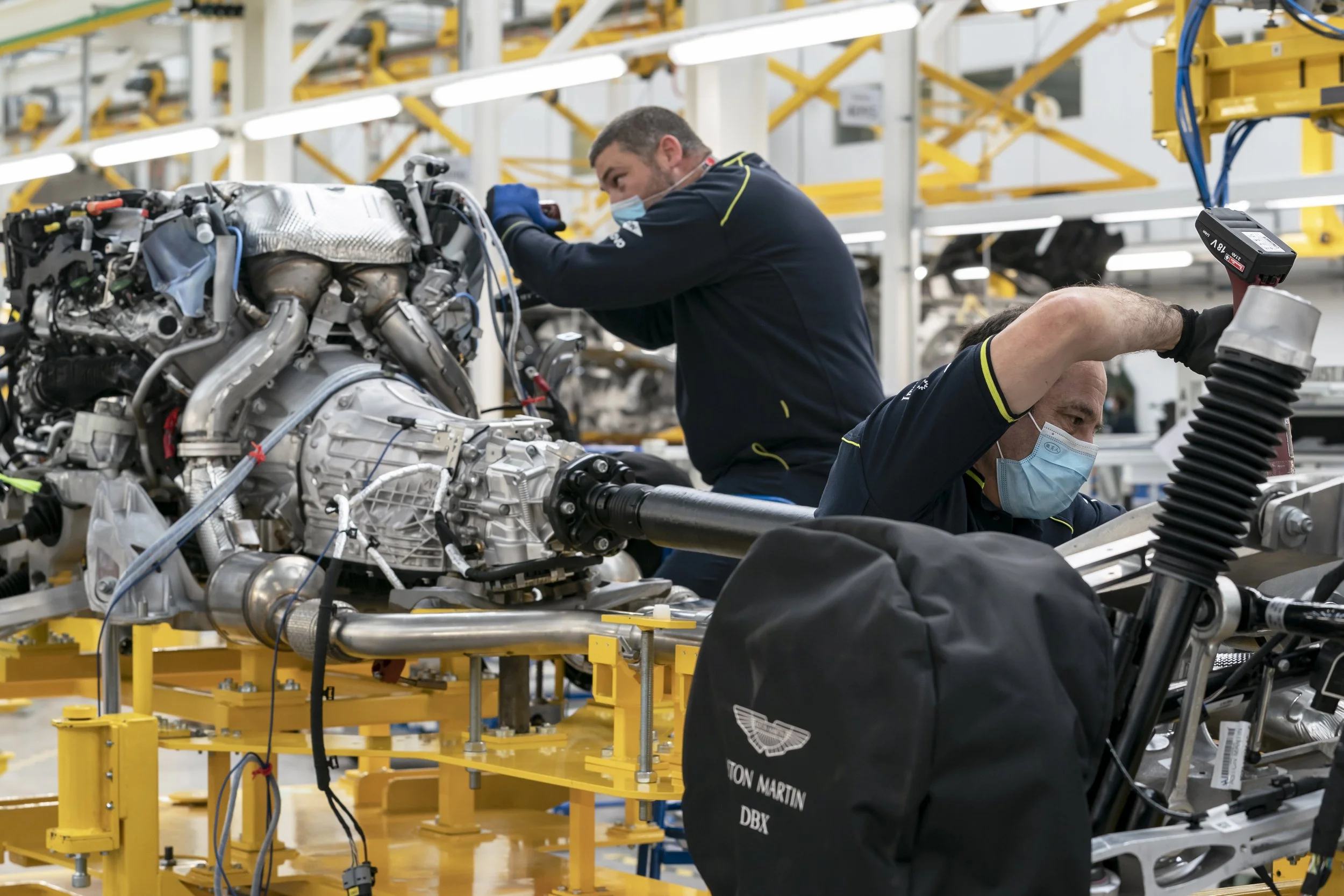
Image © Aston Martin Lagonda. Used for editorial purposes.
During H1 2026, adjusted operating expenditure excluding depreciation and amortisation actually increased 16 per cent year-on-year, from £130 million to £150 million.¹⁴ The improvement in gross profit instead benefited from increased volume and product mix, lower manufacturing costs, transformation benefits and lower levels of some exceptional quality, software and customer-support costs incurred previously.
That’s a more realistic picture of a turnaround than imagining every expense line travelling smoothly downwards.
The objective is not merely to spend less. It’s to remove expenditure and complexity that don’t create sufficient value while protecting the engineering, manufacturing, craft and customer-service capability an ultra-luxury manufacturer still needs. That leads directly to the most sensitive part of the restructuring.
The Human Cost
Cost reduction involves people, and no serious assessment should hide that behind financial terminology. Aston Martin’s first organisational programme, announced in February 2025, ultimately resulted in the departure of approximately 100 colleagues.¹⁴ Later that year, following another review of costs and capital expenditure, the company began consultation on proposals that could’ve reduced its workforce by up to 20 per cent.¹³ ¹⁴ That second figure was a proposal, not a completed redundancy total.
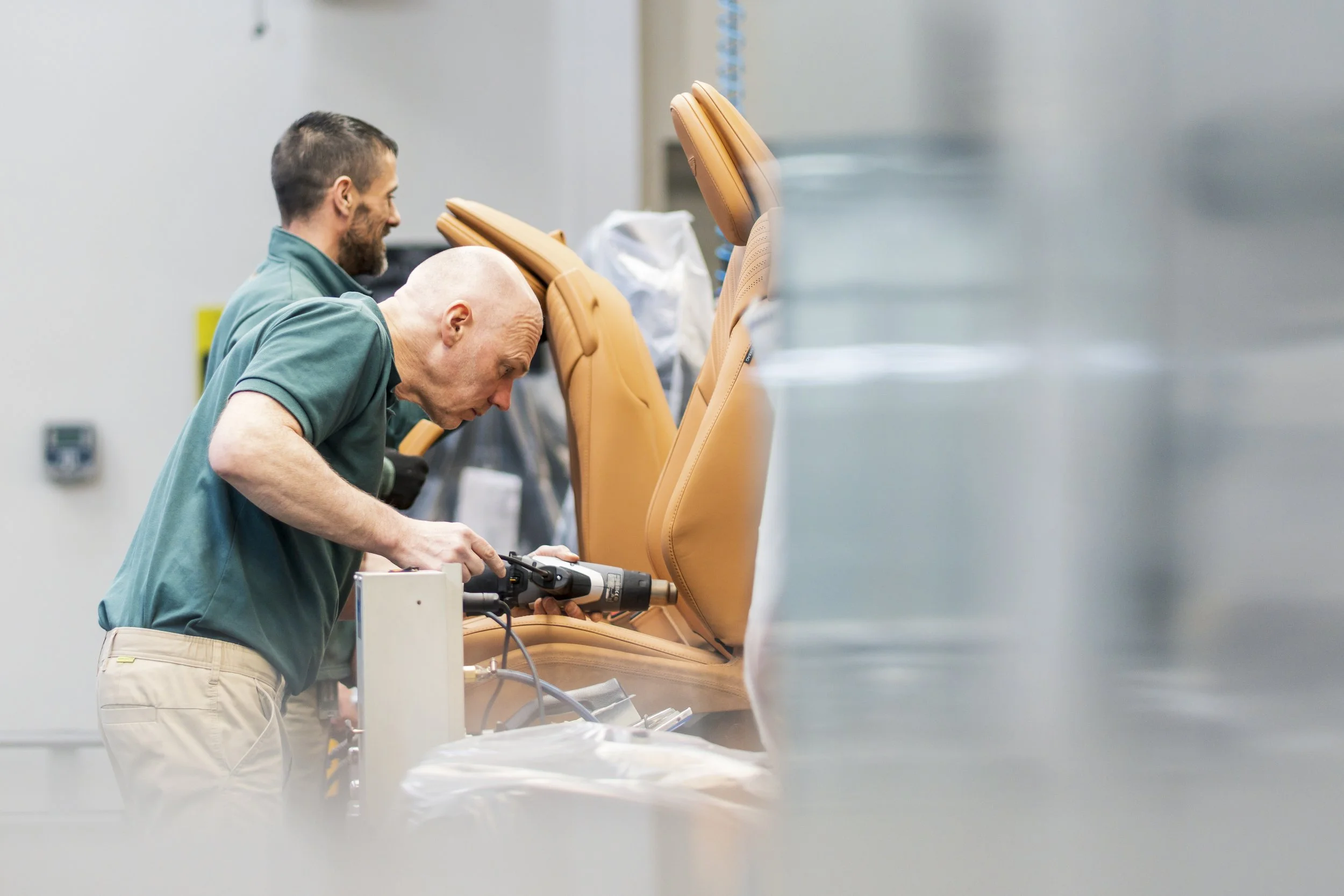
Image © Aston Martin Lagonda. Used for editorial purposes.
By H1 2026, Aston Martin said further assessment had resulted in some employees remaining within the business in restructured roles, while savings not achieved through workforce reductions had been found elsewhere. The company also released £5.4 million of the restructuring provision it no longer expected to use.¹⁴ There’s therefore no responsible way to add “100 departures” to “20 per cent” and produce a definitive total. FTP won’t create one.
Hallmark subsequently offered more context to Bloomberg, saying workforce reduction itself was not the strategy; the objective was to make the company more efficient and align its cost structure with the revenue and contribution level management believed could realistically be sustained over the following years.²² That explains management’s rationale. It doesn’t remove the human consequence for those whose jobs have been affected.
The longer-term test is whether Aston Martin can become a leaner organisation without hollowing out the capability required to design, engineer, manufacture and support the cars on which its future depends. Two years is too early to answer that conclusively.
Quality - Where Cost and Product Meet
Quality provides perhaps the clearest example of why customer experience and operational efficiency cannot be separated. Hallmark’s retrospective account of Bentley placed considerable emphasis on identifying production problems and removing their causes before the economics of the business could improve.⁶ At Aston Martin, quality and launch discipline have similarly become explicit strategic priorities.¹²
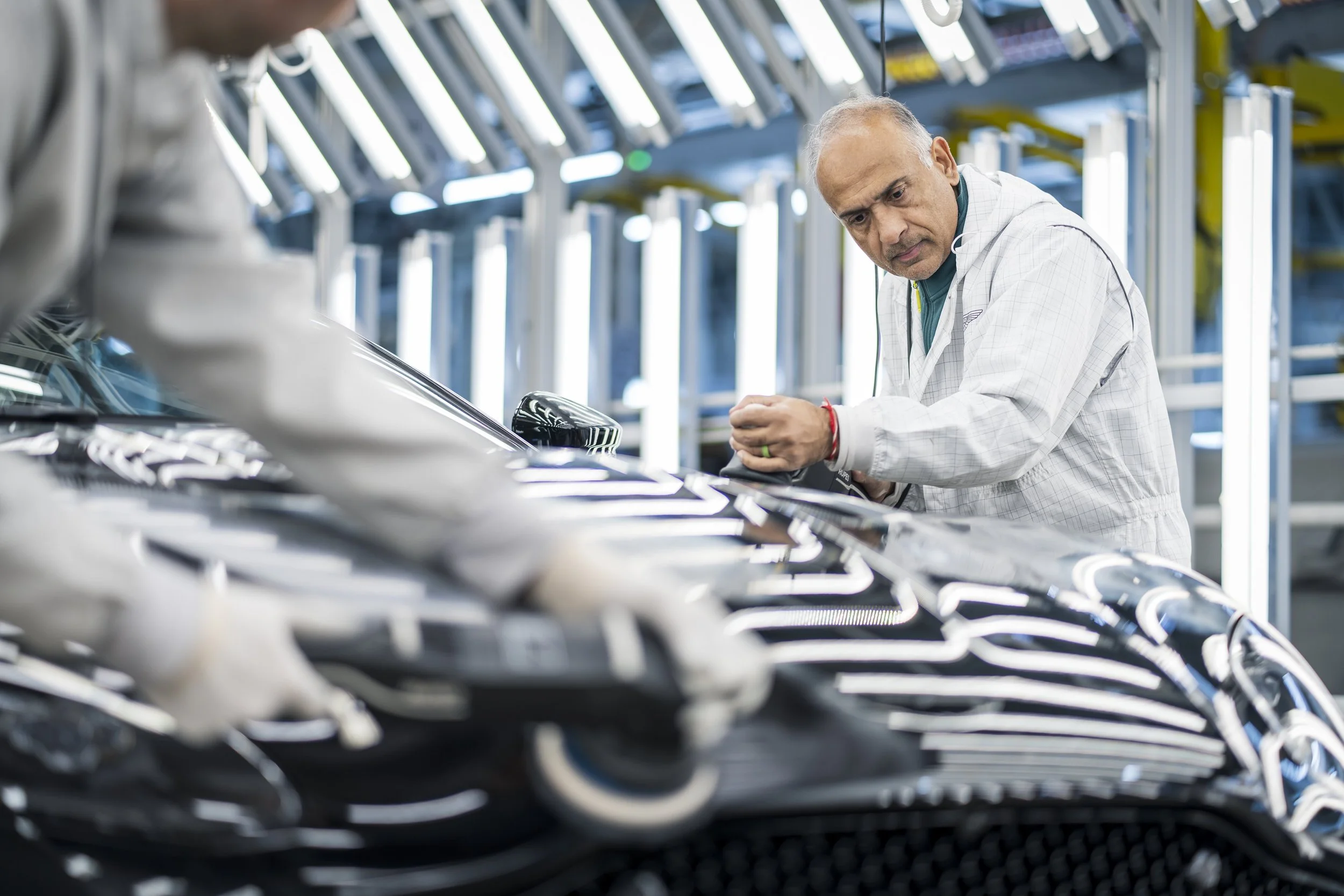
Image © Aston Martin Lagonda. Used for editorial purposes.
AML’s 2025 Annual Report says its internal right-first-time measure improved from approximately 65 per cent in mid-2024 to 95 per cent during H2 2025, alongside improved customer-satisfaction scores across the new core models.¹³ That’s substantial progress according to Aston Martin’s own measure.
There’s an important qualification. The company’s stretching formal quality objectives within the 2025 remuneration scorecard were not fully achieved, so we should not describe quality as a solved problem.
The August Bloomberg interview introduced another, separate indicator. Hallmark said that when he joined Aston Martin, approximately 25 per cent of cars required post-production rework, while he put the current figure at around one per cent. He linked that improvement directly with efficiency: fewer cars needing rectification after they leave the main production process means fewer additional hours and resources tied up correcting them.²²
Those figures should not be merged. A right-first-time measure improving from 65 to 95 per cent and a post-production rework measure moving from around 25 to one per cent are clearly different indicators, and the public record does not provide sufficient detail for FTP to reconcile them mathematically. Both also come from Aston Martin or its CEO rather than from independent reliability research.
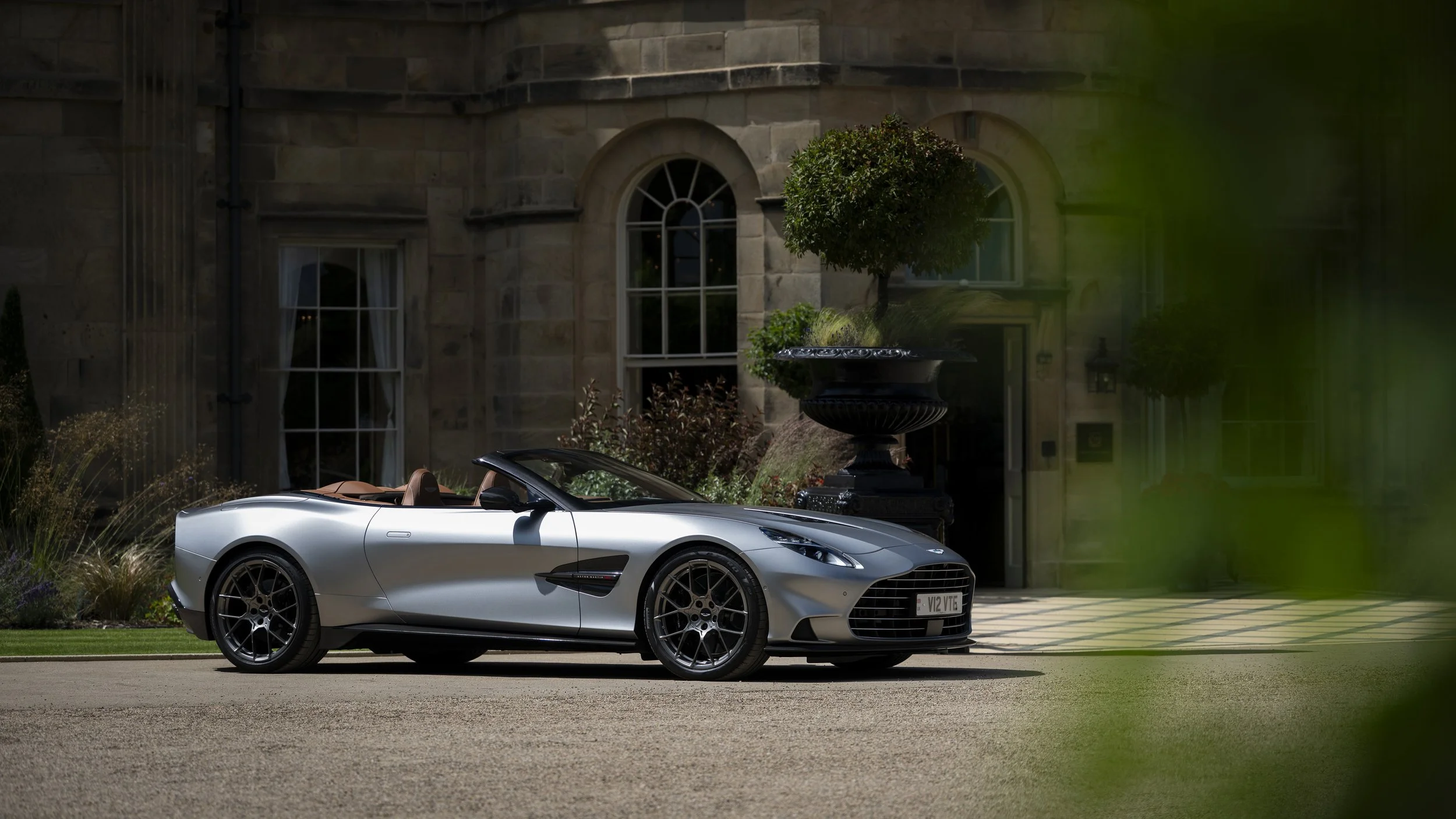
Image © Aston Martin Lagonda. Used for editorial purposes. Aston Martin Vanquish Volante Satin Aluminite Silver
The responsible conclusion is therefore more measured:
Aston Martin reports substantial improvement in its internal production-quality measures, while also acknowledging that its more stretching quality objectives have not all been achieved.
If those improvements continue and translate into lower warranty, rectification and dealer-support costs, the financial consequence could eventually be almost as important as the customer benefit.
What Do the First Signs Tell Us?

Image © Aston Martin Lagonda. Used for editorial purposes. Aston Martin Birmingham
By this point, a much more coherent picture begins to emerge. Production is being aligned more closely with genuine retail demand while older dealer inventory continues to be cleared. The derivative cycle is accelerating, with the S cars providing early evidence of customer order cover and camouflaged prototypes suggesting that further differentiation within existing nameplates is already under development.
Personalisation is being treated as a meaningful commercial tool. Private Office and customer events seek to deepen relationships with buyers most capable of purchasing repeatedly. Formula One provides a global stage without being mistaken for the same corporate balance sheet.
At the top of the range, Valhalla is already contributing materially to reported performance, while Valen demonstrates how an established engineering architecture can be turned into something with a very different appearance, character and market position. Specials are no longer presented merely as glamorous halo products; Aston Martin now describes them as a fundamental contributor to its future financial success.
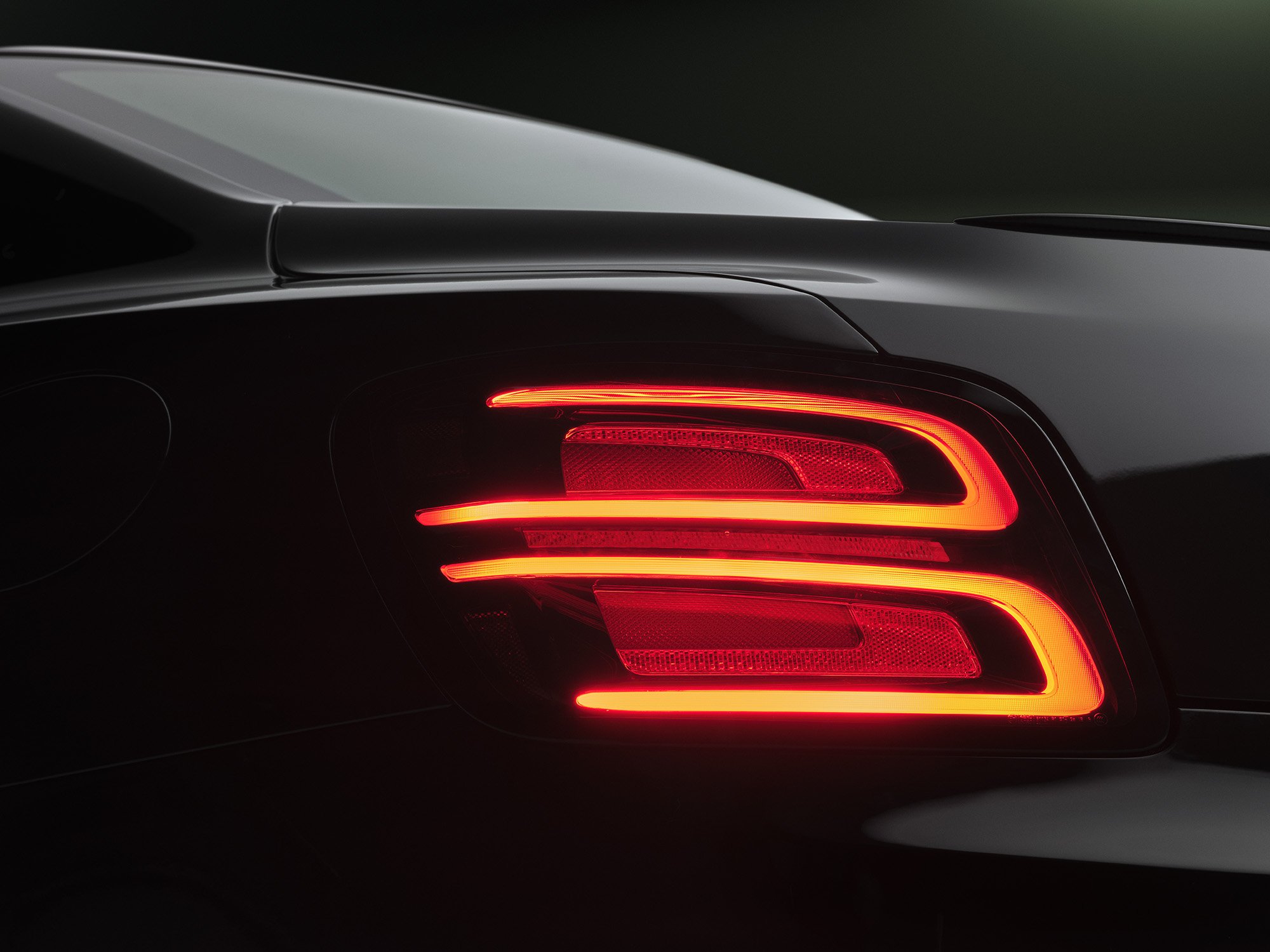
Image © Bentley Motors. Used for editorial purposes. Bentley Spur.
Underneath all of that sits the less visible work: cost reduction, quality, production efficiency, restructuring and an attempt to make the capital already invested in the business work harder. The resemblance to several principles visible during Hallmark’s Bentley years is becoming increasingly difficult to ignore. Whether the economics have followed far enough is a different question.
For that, we need the scoreboard.
7. The Two-Year Scoreboard
Financial reporting has an unfortunate ability to make a relatively simple question sound unnecessarily complicated.
For FTP, the question is easier to understand:
Is Aston Martin becoming a healthier business than it was before Adrian Hallmark arrived?
There’s no conveniently published set of accounts dated precisely 1st September 2024, so the cleanest available comparison is between H1 2024, completed before Hallmark took office, and H1 2026, the latest formal half-year result available when this article was prepared.⁹ ¹⁴ Product mix can move Aston Martin’s results considerably from one six-month period to another, particularly at such low volumes. This is therefore not a perfect laboratory experiment, but it gives us two comparable reporting periods using the company’s own measures.
| Measure | H1 2024 | H1 2026 | What it tells us |
|---|---|---|---|
| Gross margin | 38.6% | 33.8% | Recently recovering, but still below the pre-Hallmark level |
| Adjusted EBITDA | £62.2m | £62.7m | Almost exactly back to where it was two years earlier |
| Adjusted EBIT | -£99.8m | -£108.9m | The underlying operation remains loss-making on this measure |
| Free cash flow | -£312.6m | -£197.6m | Cash consumption has improved considerably but remains substantial |
| Net debt at 30 June | £1.194bn | £1.545bn | The financial burden is materially larger |
The result is more interesting than either a success story or a failure story.
Gross Margin - What Is Left After the Direct Cost of the Car?
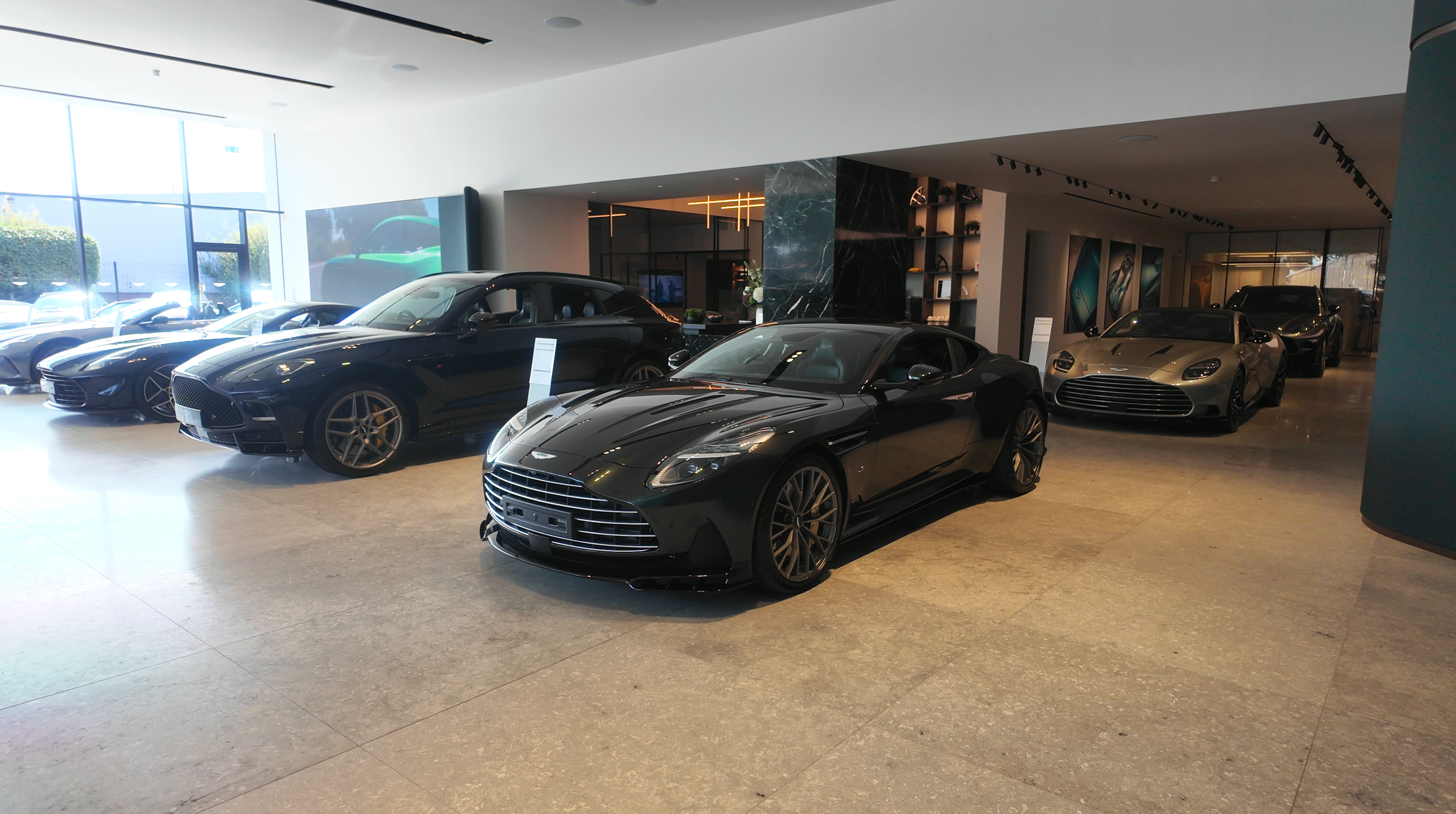
Image © Fuel the Passion. Aston Martin Leeds, JCT600 Showroom
Imagine Aston Martin sells a car for £200,000. It obviously doesn’t retain the whole £200,000, because producing and supplying that vehicle carries substantial direct costs. Gross margin tells us, in percentage terms, how much revenue remains after those direct costs have been deducted, before the wider organisation is paid for.
In H1 2024, Aston Martin’s gross margin stood at 38.6 per cent. It subsequently fell sharply, reaching 27.9 per cent in H1 2025, before recovering to 33.8 per cent in H1 2026.⁹ ¹⁴ AML says the recent improvement benefited from higher volumes, the richer product mix including Valhalla, lower manufacturing costs and other transformation benefits, partly offset by dealer support and foreign-exchange effects.¹⁴
The recovery from 2025 is substantial. The latest margin is still below the equivalent period before Hallmark arrived. Those two observations can comfortably coexist.
Adjusted EBITDA - Encouraging, but Not the Final Profit Number
Adjusted EBITDA provides one way of looking at how Aston Martin’s underlying trading operation is performing before several significant costs are taken into account. It’s useful when comparing how the business is developing from one reporting period to another, but it shouldn’t be confused with Aston Martin’s final profit or with the amount of cash the company has generated.
I think this is one of those financial terms worth explaining properly, so we’ve included a simple FTP guide below;
EBITDA stands for Earnings Before Interest, Tax, Depreciation and Amortisation.
In simple terms, it gives us a view of how the underlying business is trading before several major financial and accounting costs are taken into account. Think of it as looking at part of the operating engine before some of the wider costs of owning, financing and investing in the company are added.
Aston Martin also removes certain items that it identifies separately when presenting its underlying performance. That produces Adjusted EBITDA.
It is useful for comparing Aston Martin’s trading performance from one period to another, but it is not the same as final profit and it does not tell us how much cash the company generated.
Adjusted EBITDA was £62.2 million in H1 2024 and £62.7 million in H1 2026.⁹ ¹⁴ On this particular measure, Aston Martin has therefore returned almost exactly to the level it reported two years earlier.
That’s considerably healthier than H1 2025, when adjusted EBITDA was negative £3 million, and provides further evidence of recovery from that particularly difficult period. It does not, however, show that Aston Martin has already moved decisively beyond its pre-Hallmark position.
One final point is worth remembering: adjusted EBITDA is a measure defined and reported by Aston Martin under its own published accounting definitions. It’s particularly useful for comparing Aston Martin with itself over time, but it’s not a replacement for adjusted EBIT, free cash flow or the statutory bottom line. Those tougher measures come next.
Adjusted EBIT - A Harder Test

Image © Aston Martin Lagonda. Used for editorial purposes.
EBIT stands for Earnings Before Interest and Tax. It goes further than EBITDA because depreciation and amortisation are included, which is particularly relevant for a manufacturer such as Aston Martin that has invested heavily in vehicles, software, engineering and tooling. Aston Martin then reports adjusted EBIT after excluding certain items that it identifies separately when presenting the underlying performance of the business.
Put simply, adjusted EBIT asks a tougher question than adjusted EBITDA because more of the cost associated with Aston Martin’s investments is now being recognised before we decide whether the underlying operation is profitable.
Amortisation is a way of spreading the cost of certain non-physical investments over the years in which they are expected to provide value.
For a car manufacturer, this can include qualifying development costs relating to new vehicles and technology. Rather than recognising the entire cost in one period, the cost is gradually charged against earnings over the asset’s useful life.
The practical question is simple:
After accounting for more of the cost of operating and investing in the company, is Aston Martin’s underlying business profitable on this measure?
At the latest reported position, the answer remains no. Adjusted EBIT was a £99.8 million loss in H1 2024, deteriorated to a £121.5 million loss in H1 2025, then improved to a £108.9 million loss in H1 2026.⁹ ¹⁴ The recovery from the particularly weak 2025 period is welcome. The latest result remains slightly worse than the equivalent pre-Hallmark comparison.
Free Cash Flow - Perhaps the Clearest Test
Profit and cash are related, but they’re not the same thing. A company can report an accounting profit while still consuming cash, which is why free cash flow is so important in Aston Martin’s situation. In simplified terms, it helps us ask whether the operating business is generating enough cash to cover its investment and net cash-interest requirements, or whether the shortfall still has to be financed from somewhere else.
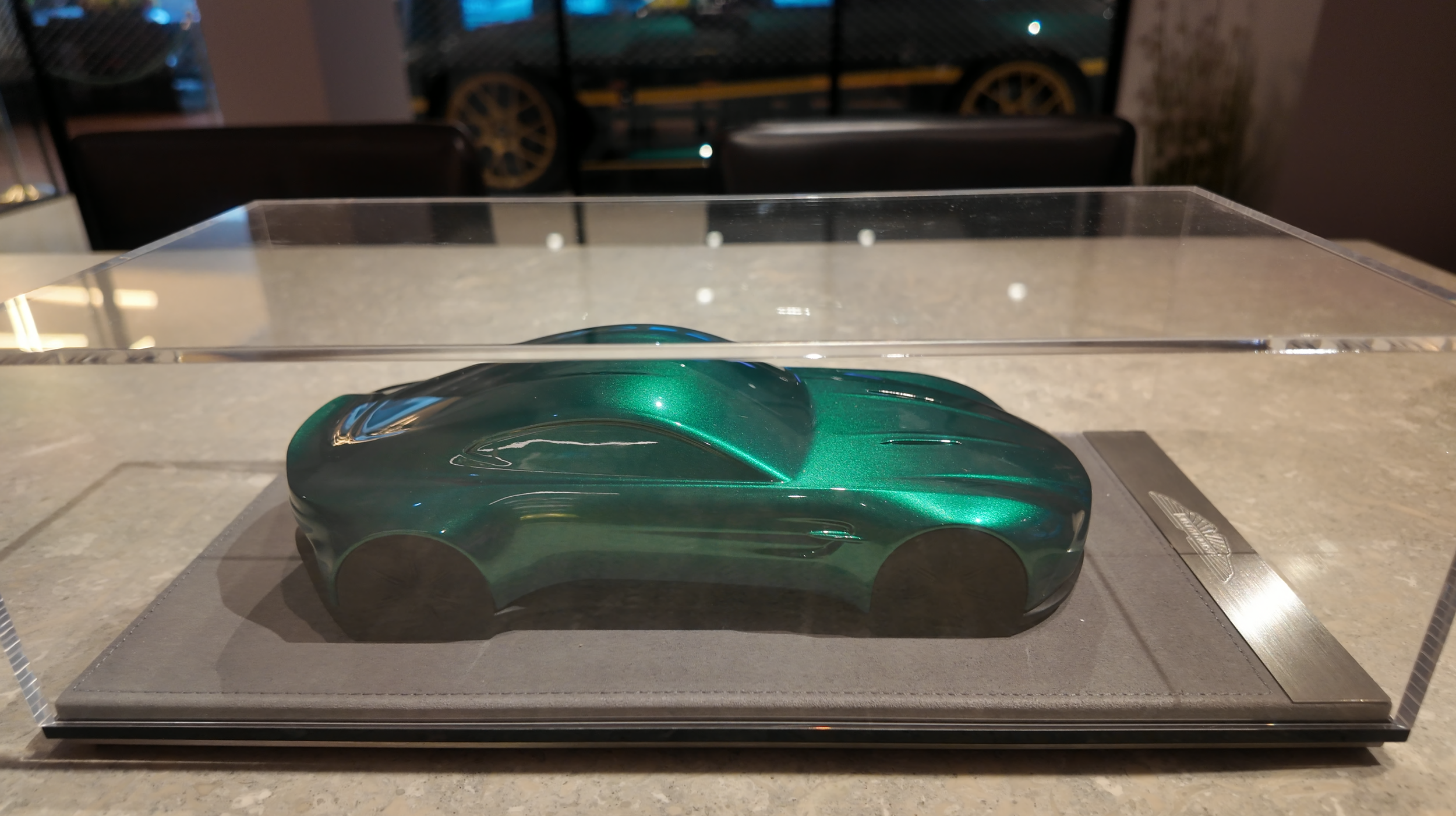
Image © Fuel the Passion. Paint Sample Model, Aston Martin, Leeds. JCT600.
H1 2024 produced a £312.6 million free cash outflow.
H1 2025 deteriorated slightly further to £321.0 million.
H1 2026 improved to a £197.6 million outflow.⁹ ¹⁴
Compared with H1 2024, Aston Martin therefore reduced the six-month cash outflow by approximately £115 million. That’s meaningful progress. It also means almost £200 million still flowed out rather than in during those six months. A sustainable turnaround eventually requires the second part of that sentence to change.
Debt - The Burden Is Larger

Image © Aston Martin Lagonda. Used for editorial purposes. Las Vegas Dome.
At 30th June 2024, around two months before Hallmark became CEO, Aston Martin reported net debt of approximately £1.194 billion.⁹ At 30th June 2026, reported net debt stood at approximately £1.545 billion.¹⁴ That’s approximately £351 million higher between the two reporting dates. Hallmark didn’t create Aston Martin’s original debt burden. He arrived at a manufacturer already carrying substantial financing and consuming large quantities of cash.
After two years, however, the balance sheet is unavoidably part of the assessment of the turnaround under his leadership. On debt reduction, progress has not yet been achieved.
2025 - The Year That Fell Short

Image © Aston Martin Lagonda. Used for editorial purposes.
FY2025 deserves particular attention because it was Hallmark’s first full calendar year as Aston Martin CEO. At the beginning of that year, Aston Martin was targeting positive adjusted EBIT for FY2025 and positive free cash flow during the second half. As market conditions and the company’s own expectations deteriorated, guidance was subsequently revised.¹² ¹³

Image © Aston Martin Lagonda. Used for editorial purposes.
That changing guidance needs to be acknowledged because it would be unfair to imply Aston Martin continued promising the original targets unchanged until year-end. The eventual result nevertheless fell well short of where the year began.
Full-year adjusted EBIT was approximately a £189 million loss, while free cash outflow reached approximately £410 million. Net debt finished the year at about £1.380 billion.¹³
Aston Martin’s own remuneration disclosures also recorded that the financial thresholds attached to adjusted EBIT and free cash flow were not achieved.¹³ Tariffs, weaker conditions in China, geopolitical uncertainty and deliberate expenditure on warranty, quality and dealer support all form part of the explanation.
They provide important context. They don’t change the result. Aston Martin did not achieve the financial objectives with which it entered 2025, and that must remain part of any fair judgement of Hallmark’s first two years.
H1 2026 - The First More Convincing Evidence
The first half of 2026 looked materially better than the especially weak equivalent period a year earlier. Revenue increased 38 per cent to £628.6 million. Gross profit rose 68 per cent to £212.5 million. Gross margin improved from 27.9 to 33.8 per cent, while adjusted EBITDA moved from negative £3.0 million to positive £62.7 million. Free cash outflow reduced from £321.0 million to £197.6 million.¹⁴
Those are genuine improvements in Aston Martin’s reported performance.
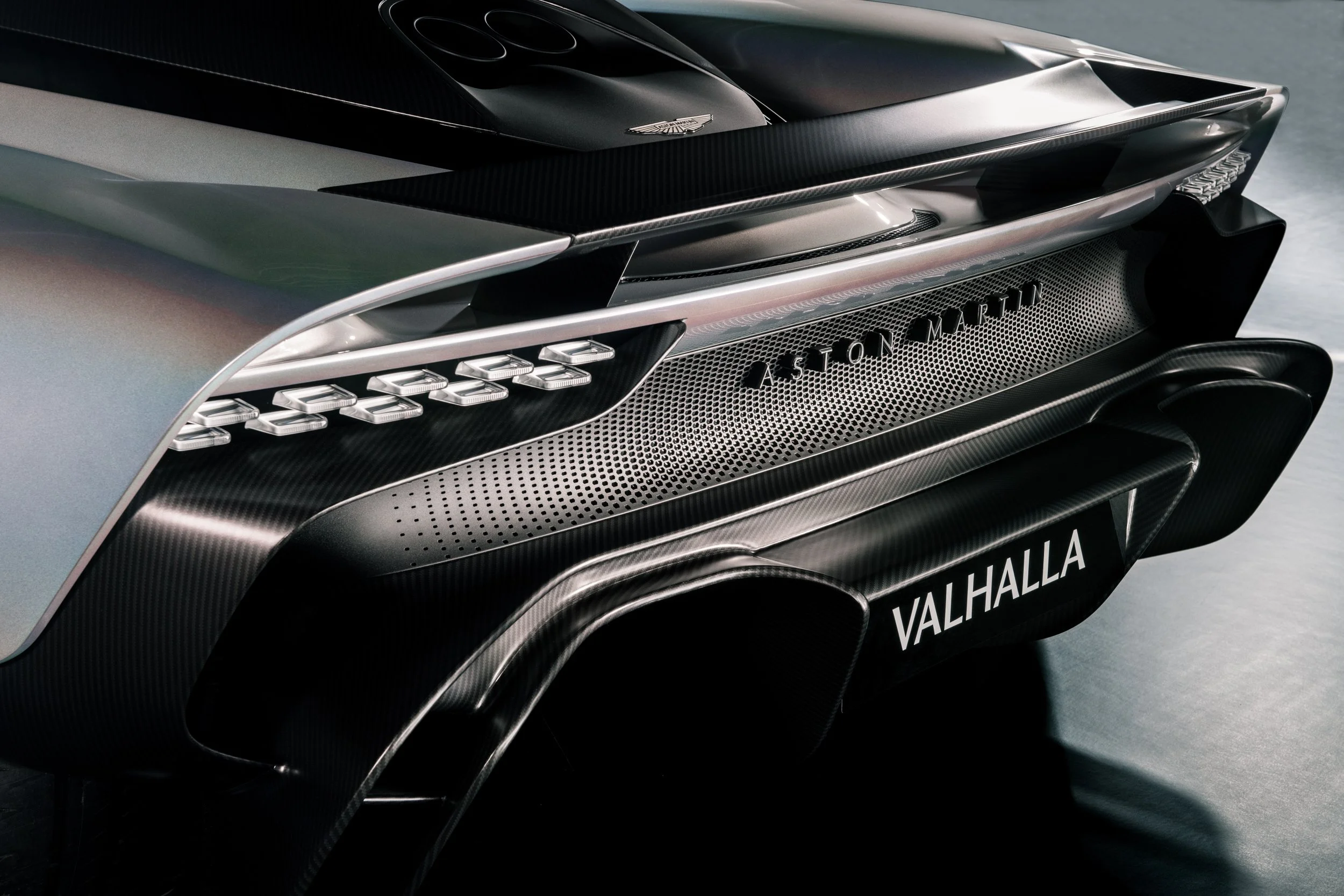
Image © Aston Martin Lagonda. Used for editorial purposes. Aston Martin Valhalla
Valhalla played an important role. Specials increased from 18 cars in H1 2025 to 225 in H1 2026, almost entirely represented by Valhalla.¹⁴ Our analysis now treats that contribution differently from the way we might have done before Hallmark explained the intended model more clearly. Valhalla’s contribution is not something that should simply be stripped away to reveal a supposedly “real” Aston Martin beneath it. Specials are deliberately part of the business the company is trying to build.
The more revealing question is whether they sit above an increasingly healthy core operation. At present, that answer remains incomplete.

Image © Aston Martin Lagonda. Used for editorial purposes.
Core retail demand is encouraging, the S derivatives have order cover and the company reports lower manufacturing costs. Yet core average selling price (ASP) was still under pressure from dealer support, adjusted EBIT remained negative and the core business has not yet demonstrated the level of profitability Hallmark says it must ultimately achieve.
So H1 2026 represents stronger evidence of movement. It’s not yet proof of arrival.
Hallmark Has Put Down His Own Marker
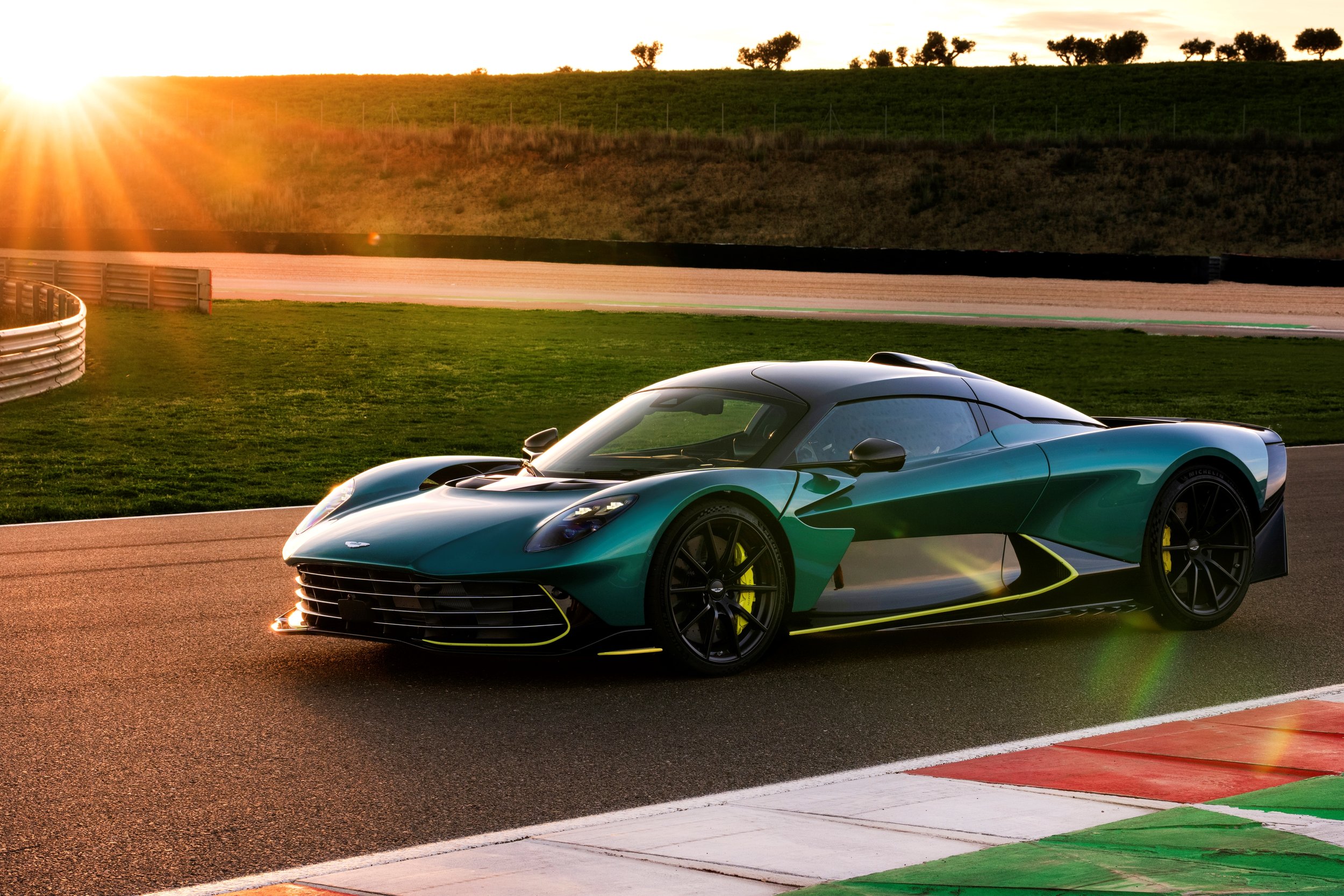
Image © Aston Martin Lagonda. Used for editorial purposes. Aston Martin Valhalla
The recent Bloomberg interview gives the next phase of this turnaround an unusually clear test. Hallmark said Aston Martin should be in a position during the second half of 2026 and into 2027 to demonstrate that it’s turned the corner, including positive cash generation rather than cash burn and positive EBIT rather than negative EBIT.²² That’s significant. It’s also Hallmark’s forward-looking expectation, not an achieved financial result and not the same thing as formal company guidance.
Aston Martin’s official FY2026 guidance is more cautious. It expects adjusted EBIT margin to improve towards breakeven, while full-year free cash flow is still expected to remain an outflow, albeit materially improved from FY2025’s £410 million.¹⁴ The distinction is useful rather than problematic.
Formal guidance tells us what the company is officially forecasting for FY2026. Hallmark’s interview tells us what he believes the business should begin proving as the turnaround progresses into its next phase. At the latest reported position used for this article, positive adjusted EBIT and positive free cash flow had not yet been demonstrated.
Hallmark has effectively given us part of the test for the next edition of this story himself.
What Does the Scoreboard Really Tell Us?
Aston Martin’s financial position after two years cannot fairly be reduced to either “everything is working” or “nothing has changed”.

Image © Fuel the Passion. Aston Martin, Leeds. JCT600.
The 2025 low point has been followed by measurable operational improvement. Gross margin has recovered significantly, adjusted EBITDA has returned to positive territory and the rate of cash consumption has reduced. Manufacturing efficiencies are appearing in Aston Martin’s own reporting, while the product and customer strategy is substantially clearer than it was when Hallmark arrived.
The H1 2024 comparison prevents the story becoming too comfortable. Gross margin remains below its pre-Hallmark level. Adjusted EBIT remains a loss. Free cash flow remains negative. Net debt is materially higher.
FTP’s assessment is therefore deliberately balanced:
There’s increasingly credible evidence that Aston Martin’s operating performance is moving in the right direction. There is not yet evidence that the financial turnaround has been completed.
That distinction becomes even more important when we return to the second half of Hallmark’s Oxford statement.
Similar methodology. Different situation.
Aston Martin really is a very different situation.
8. Why Aston Martin Is the Harder Test
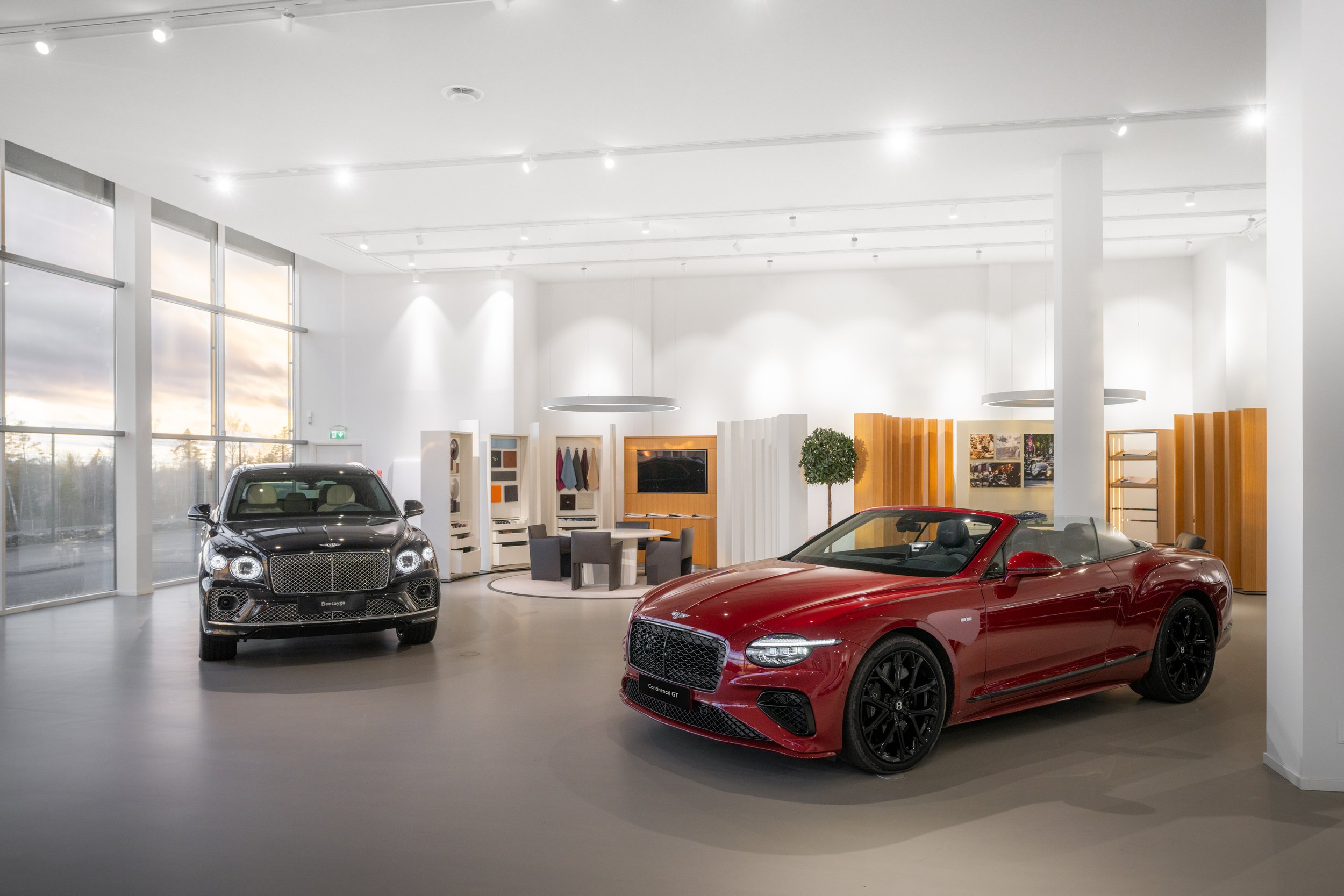
Image © Bentley Motors. Used for editorial purposes.
The growing similarity between parts of Hallmark’s Aston Martin strategy and the later Bentley philosophy should not disguise the enormous differences between the two companies. Bentley operates within the Volkswagen Group. That doesn’t mean Volkswagen simply paid every bill or removed the requirement for Bentley to become commercially successful. The €288 million operating loss recorded in 2018 demonstrates how serious Bentley’s own difficulties became.

Image © Bentley Motors. Used for editorial purposes.
It does mean Bentley sits within one of the largest automotive groups in the world, where technology, engineering resources, procurement strength, platforms and economies of scale can be leveraged across multiple manufacturers. Volkswagen places Bentley within its Progressive Brand Group alongside Audi, Lamborghini and Ducati and explicitly refers to the advantages of group strength and synergies.¹⁸
Aston Martin Lagonda is structured very differently. It’s a separately listed company and has instead developed important technology relationships with Mercedes-Benz AG, Geely and Lucid. AML says those strategic arrangements can provide access to technologies that might otherwise be prohibitively expensive for a company of its scale to develop entirely internally.¹⁹ That flexibility is valuable.
It doesn’t give Aston Martin Volkswagen’s industrial scale.
Smaller Scale, Similar Complexity

Image © Bentley Motors. Used for editorial purposes.
Bentley delivered 13,560 cars to customers during 2023.⁵ Aston Martin reported 5,448 wholesales during 2025.¹³ Those numbers use different measures, Bentley customer deliveries and Aston Martin wholesales, so FTP won’t pretend they form a precise like-for-like comparison. However, they do illustrate the broad difference in scale.
Image © Aston Martin Lagonda. Used for editorial purposes.
The awkward reality for a small automotive manufacturer is that many development costs don’t shrink neatly just because fewer cars are ultimately sold. Safety validation, software, electronic architectures, emissions compliance, tooling, homologation, powertrains, manufacturing systems, warranty and engineering all require substantial investment.
A company producing around 5,000 or 6,000 cars therefore has far fewer vehicles across which to recover some of those costs than a manufacturer producing materially greater volumes.
Hallmark’s emerging answer is not to turn Aston Martin into Bentley by chasing Bentley-sized production. He’s attempting to make Aston Martin-scale economics work. His recent descriptions of a company designed around broadly the 6,000-car level, supported by strong core economics and a credible contribution from Specials, illustrate the point.¹⁶ ²² If that model succeeds, it would represent an important change from believing that growth in volume itself must eventually solve the problem.
The £1.5 Billion Weight on the Balance Sheet

Image © Aston Martin Lagonda. Used for editorial purposes. Aston Martin DB12 Goldfinger Edition
Whatever operational progress is being made, Aston Martin’s financial burden remains formidable. At 30th June 2026, the company reported approximately £1.661 billion of gross debt, £114.9 million of cash and net debt of approximately £1.545 billion.¹⁴
These terms are related, but they describe different parts of Aston Martin’s financial position. Understanding the distinction becomes particularly important when we look at the company’s new financing.
AML currently expects approximately £160 million of net cash interest during FY2026.¹⁵
The simplest way to understand that interest bill is to remember that cash can only be spent once. Money used to service financing cannot simultaneously be invested in the next generation of cars, manufacturing improvements, electronics, powertrains or debt reduction.
This is why saying Aston Martin merely needs to “make a profit” understates Hallmark’s challenge.
The company eventually needs to generate sufficient profit and sufficient cash to support future investment while comfortably meeting the financial obligations created by its existing capital structure. That is a considerably higher bar.
What Does the £550 Million Financing Actually Do?
In July 2026, Aston Martin completed a new £550 million debt-financing package consisting of a £450 million Senior Secured Term Loan and a £100 million Delayed Draw Term Loan. The main loan is priced at 6.75 percentage points above SONIA, the Sterling Overnight Index Average, a benchmark UK interest rate, and matures in July 2031.¹⁴

Image © Fuel the Passion. Aston Martin Showroom under construction in London, Summer 2026
Part of the £450 million proceeds was used to repay existing facilities and transaction costs, with the balance available for general corporate purposes. Had the net proceeds been held at 30th June, Aston Martin says pro-forma liquidity would have been approximately £340 million, compared with the reported £145 million at that date.¹⁴ The transaction therefore gives the company considerably more financial breathing room.
It’s important not to call it a £550 million cash injection as though somebody simply handed Aston Martin half a billion pounds with no corresponding obligation. It’s debt financing, part of which refinances other facilities and which brings interest costs and contractual conditions of its own. The H1 accounts disclose, for example, that the Senior Secured Term Loan carries a minimum-liquidity covenant tested monthly from August 2026, in simple terms, a contractual requirement for Aston Martin to maintain at least a specified level of available financial resources.¹⁴
Aston Martin says it expects to remain compliant with its covenant requirements through the going-concern review period to 30th September 2027, the period over which management has assessed whether the company has sufficient resources to continue operating and meet its obligations as they fall due.¹⁴
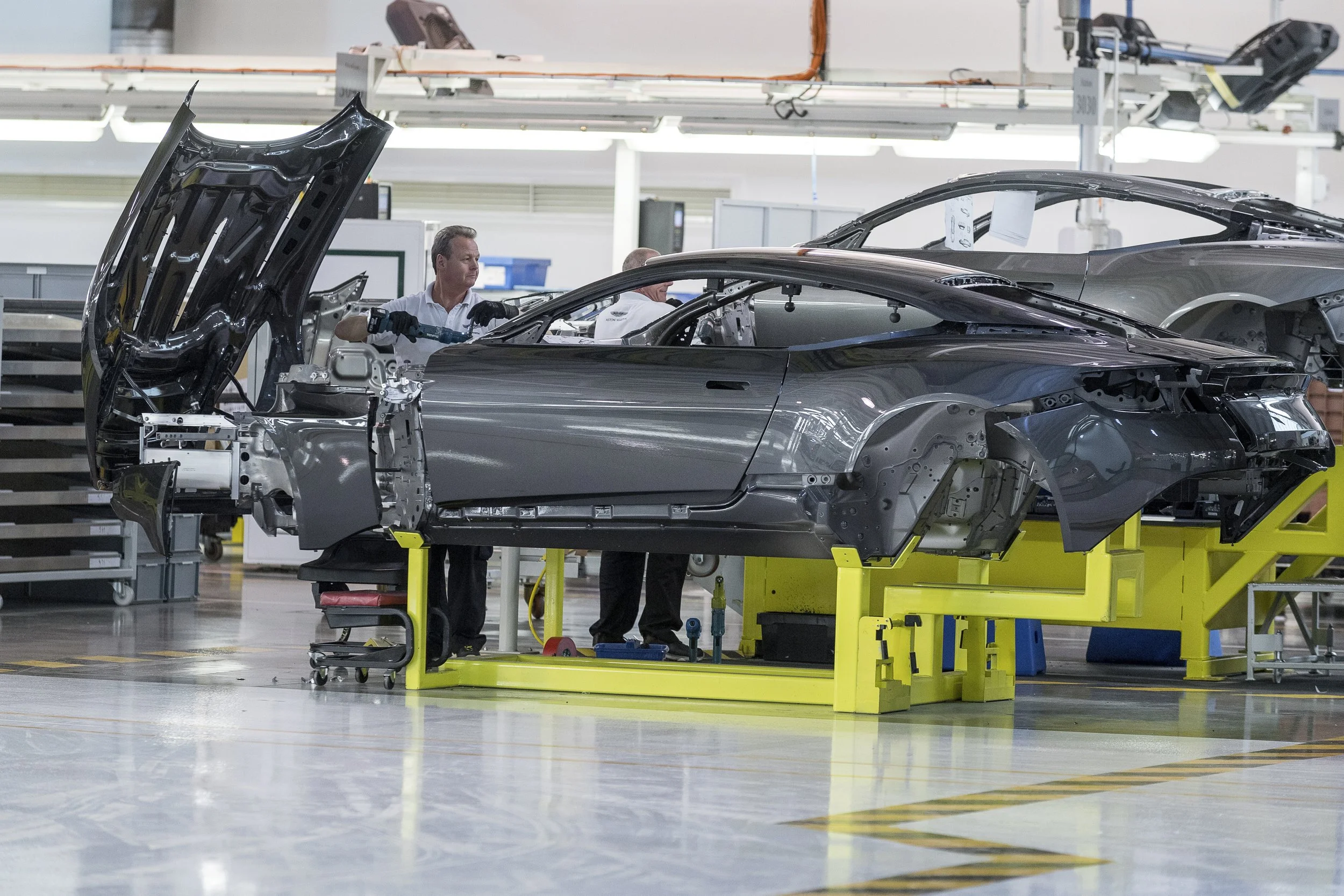
Image © Aston Martin Lagonda. Used for editorial purposes.
Hallmark subsequently told Bloomberg that he believes the July financing gives Aston Martin sufficient flexibility to execute its current business plan, including existing cars, derivatives and preparation for the next generation.²²
That’s useful evidence of management’s view of the company’s present financial runway. It’s not evidence that Aston Martin can never require outside capital again.
The stronger proof will come if the business reaches the positive cash generation Hallmark expects and can increasingly fund its ordinary future requirements from the economics of its own operations.
The Financing Was Not Without Controversy

Image © Aston Martin Lagonda. Used for editorial purposes. Aston Martin Valhalla.
The transaction also attracted opposition. Following the July deal, a group of existing creditors challenged aspects of its structure and threatened legal action, arguing that the arrangements affected assets and security supporting existing debt. Aston Martin subsequently defended the transaction and published additional information in response to investor questions.²⁷
FTP has no basis for judging the eventual legal merits of that dispute and will not speculate about an outcome that had not been resolved publicly when this article was prepared. Its existence is nevertheless relevant. Improving liquidity and reducing financial risk are not automatically the same thing. The new financing gives Hallmark more room in which to execute the plan, while the underlying debt and financing burden remain substantial.
Borrowing can buy time for a turnaround. A successful turnaround eventually has to make that time pay.
Making the Billions Already Spent Work Harder

Image © Aston Martin Lagonda. Used for editorial purposes.
The newer Hallmark interviews reveal another important part of the capital strategy. Aston Martin intends to extract more value from the engineering and technology it already possesses before replacing it.
This is visible in today’s products. The same broad front-engined architecture can support Vanquish, increasingly differentiated core derivatives and now a car as visually and dynamically distinct as Valen. Valhalla creates a separate mid-engined toolkit with potential relevance beyond the first 999 cars.
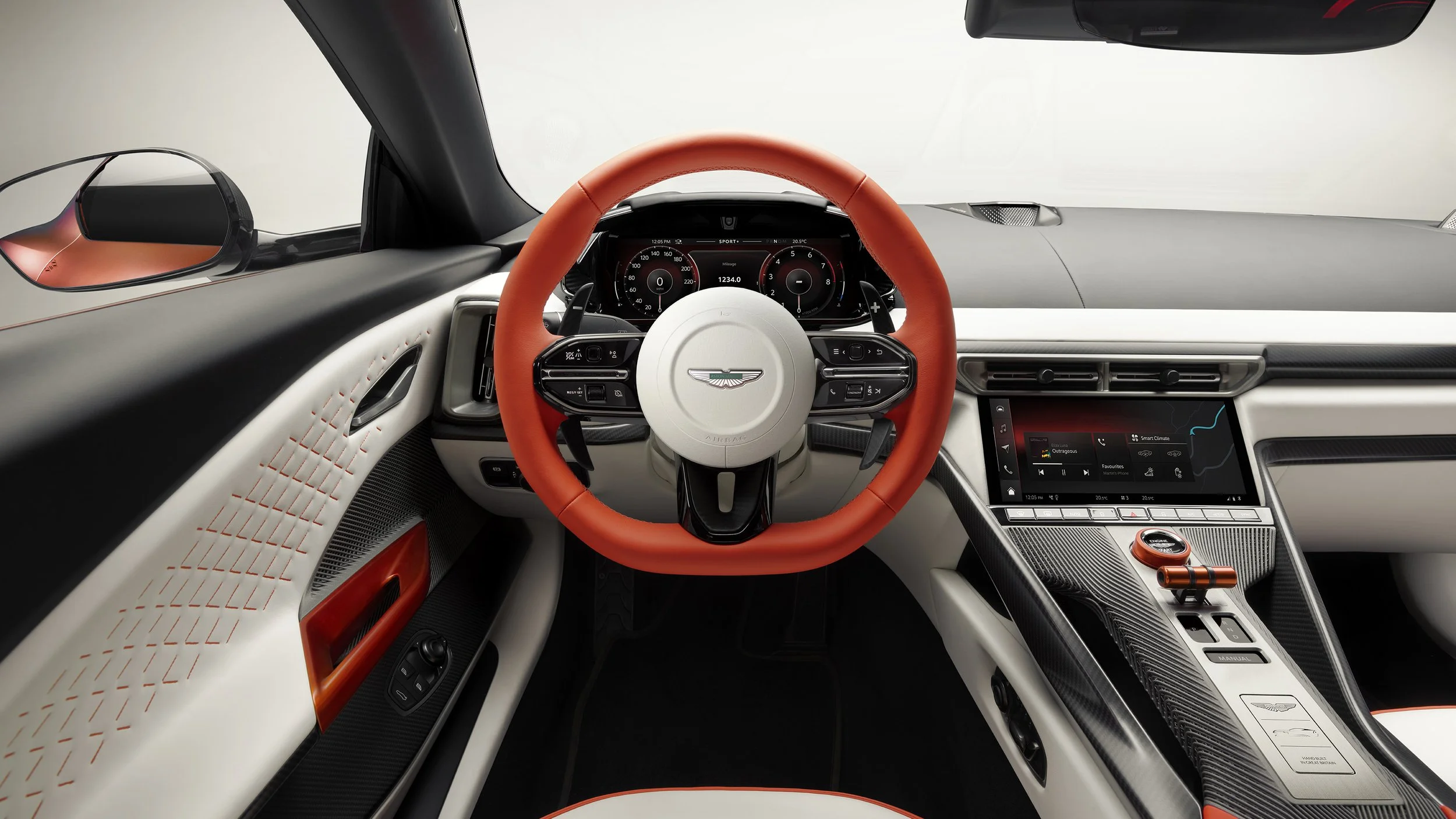
Image © Aston Martin Lagonda. Used for editorial purposes. Aston Martin Valen interior.
Hallmark’s evo comments also place Aston Martin’s electrification timetable within this economic thinking. He described the company as delaying rather than rejecting battery-electric vehicles, with major BEV investment pushed further into the future while Aston Martin seeks greater returns from current products and prepares appropriate future powertrain options.²¹
The precise timing of future electric and hybrid products remains capable of changing as regulation, technology and customer demand evolve, so FTP would be wary of treating any 2026 interview as a permanent powertrain promise.
The wider capital principle is more durable:
Aston Martin cannot afford to abandon expensive engineering before extracting a sensible return from it, but neither can it ignore the technology required for the next generation.
Hallmark is attempting to bridge those two requirements.
The Next Generation May Be the Deeper Change
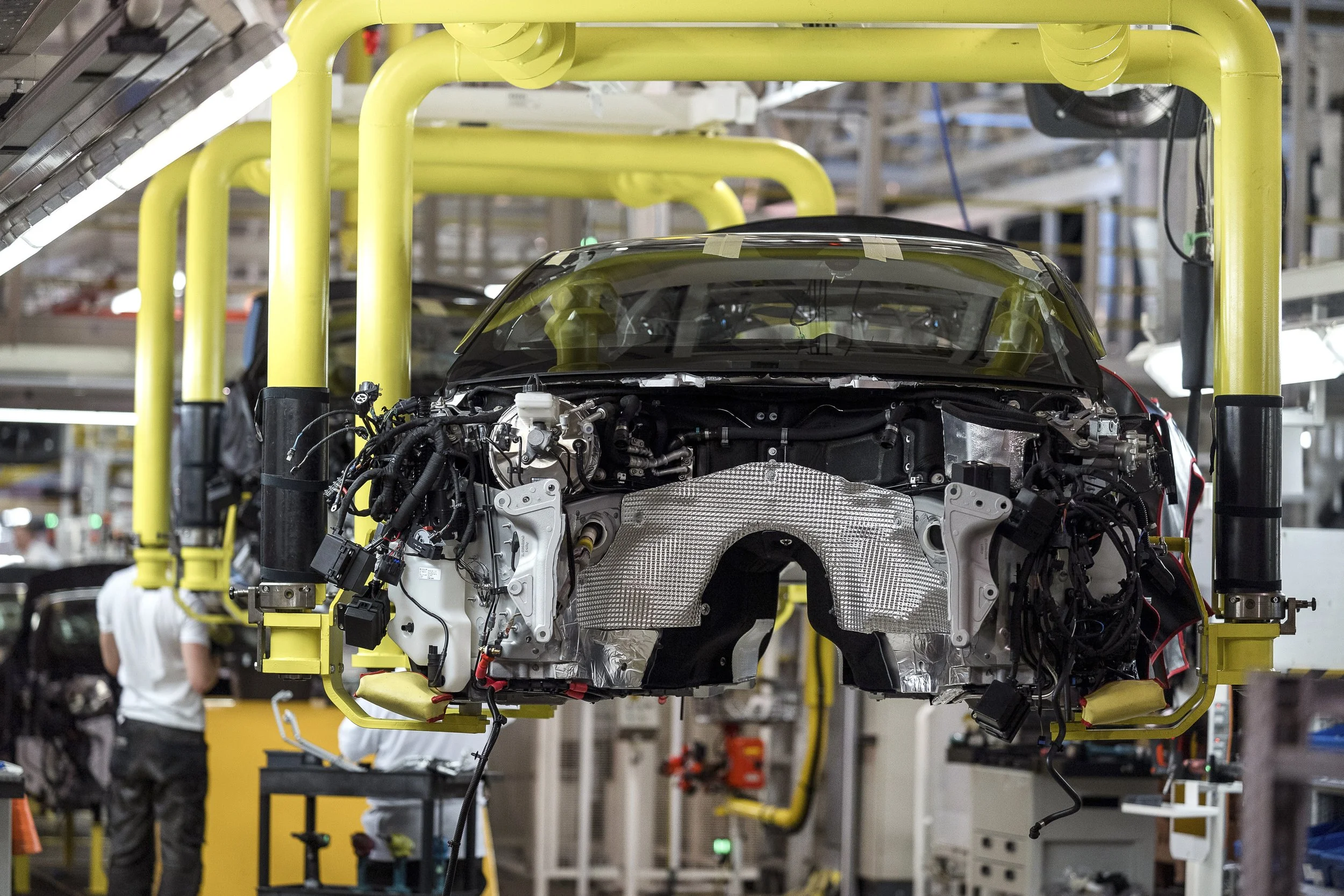
Image © Aston Martin Lagonda. Used for editorial purposes.
Perhaps one of the most important findings in our research has relatively little visual glamour attached to it. The same philosophy being applied to today’s cars is now beginning to influence how the next generation is being engineered.
Aston Martin’s 2025 Annual Report says the company is optimising product-development processes to maximise cross-carline component sharing, reduce complexity and drive engineering efficiencies.¹³ That statement becomes much more interesting alongside Hallmark’s July interview with Auto Express.
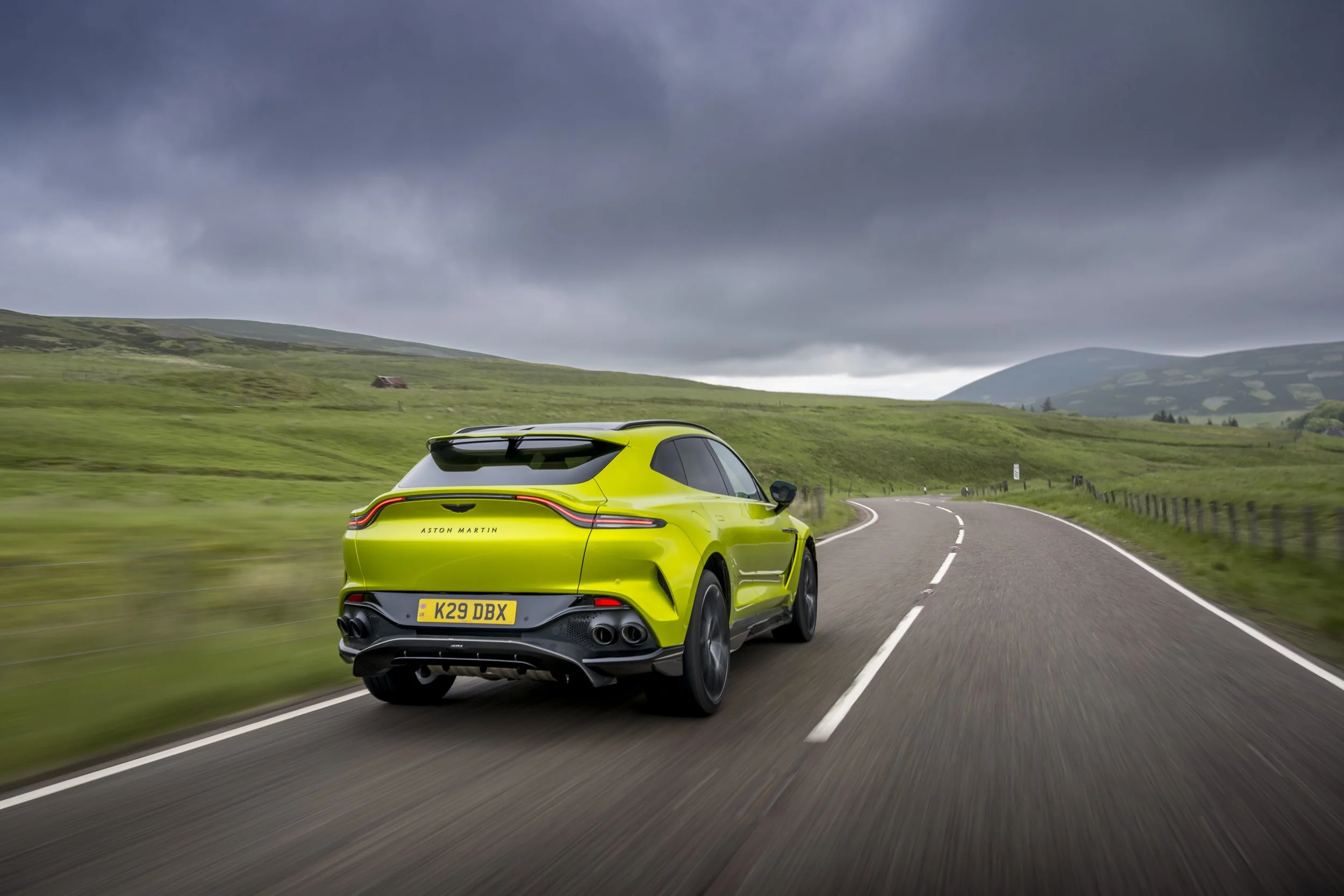
Image © Aston Martin Lagonda. Used for editorial purposes.
He described a new modular architecture intended to allow substantially greater commonality across Aston Martin’s future sports cars and SUVs, covering areas including powertrains, electronic systems and other major components. He even discussed a future in which very different Aston Martin products could make greater use of common manufacturing infrastructure.²⁶
The official H1 results call independently confirms that work is accelerating. Hallmark said contracting is under way for a revised body platform, new powertrains, electronic architectures, modules and systems for the regeneration of core products beginning in approximately three to four years.²⁵
This could prove more structurally important than any individual S model. With the current generation, Hallmark is trying to make expensive engineering that Aston Martin has already paid for generate more commercial opportunities. With the next generation, the ambition appears to be to design unnecessary duplication and complexity out before those costs are incurred in the first place.
That takes the Bentley comparison considerably deeper than personalisation and derivatives. It begins to address the economics of how a very small car company can afford to keep developing world-class products.
9. Two Years On - Will It Work?
Fuel the Passion established its tests before reaching a conclusion. By “tests”, we mean the practical measures we believe should determine whether Aston Martin’s turnaround is genuinely succeeding: stronger underlying demand, more value from each customer, improving margins and operating profitability, positive cash generation, a reduction in financial dependence and a business capable of funding its future without weakening the products and expertise on which the marque depends.
Setting those measures in advance is important. It prevents us from choosing whichever statistics happen to support a convenient conclusion after the event and gives us a consistent standard against which to judge both the encouraging evidence and the areas where progress has yet to be demonstrated.
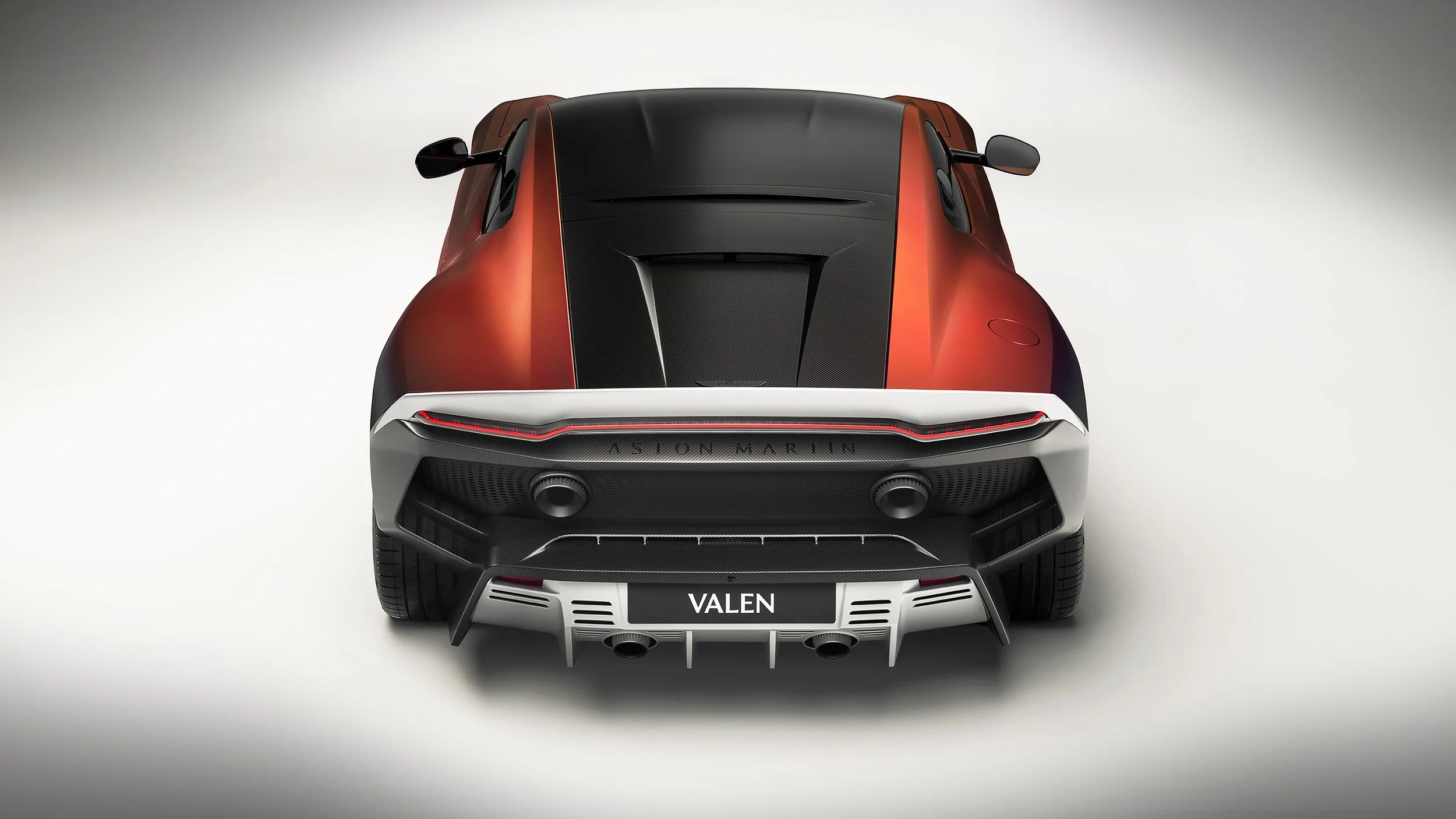
Image © Aston Martin Lagonda. Used for editorial purposes. Aston Martin Valen.
That becomes especially relevant now because the latest evidence contains plenty to be enthusiastic about. Valen is spectacular, Valhalla is contributing materially, quality measures appear to be improving and Hallmark can now explain his strategy with considerably greater clarity.
None of those things should allow us to move the goalposts after seeing the results.
| Test | Position after two years | FTP assessment |
|---|---|---|
| Demand before volume | Encouraging | Retail is running ahead of wholesale and the business is being designed around lower sustainable volume, although aged stock was not completely cleared at H1. |
| More value from each customer | Developing strongly | Personalisation, options, Private Office, derivatives and Specials are becoming increasingly connected. |
| Gross-margin recovery | Improving | Strong recovery from H1 2025, but still below H1 2024. |
| Operating profitability | Improving, but still negative | Adjusted EBIT remains a loss. |
| Free cash flow | Materially better, but still negative | Cash consumption has reduced considerably, but AML is not yet consistently cash-generative. |
| Debt reduction | Not achieved | Net debt is materially higher than the last clean pre-Hallmark reporting point. |
| Cost reduction without damaging capability | Too early to judge fully | Restructuring and efficiency measures are substantial; the long-term effect on capability still needs monitoring. |
| Core-range economics, with Specials enhancing rather than carrying the business | Unproven | Hallmark says the core must become more profitable, while Valhalla shows how Specials can strengthen the model above it. |
| Ability to fund its own future | Not achieved | External financing remains important and free cash flow has not yet become positive. |
Has Hallmark Changed Aston Martin’s Direction?
FTP believes the evidence increasingly supports yes.
That conclusion doesn’t require us to pretend Hallmark arrived at Gaydon with a blank sheet of paper. He didn’t. DB12, Vantage, Vanquish, Valhalla, Q, Specials and the beginnings of demand-led production all pre-date his appointment in one form or another. What has become increasingly recognisable during the past two years is the economic philosophy connecting those assets.
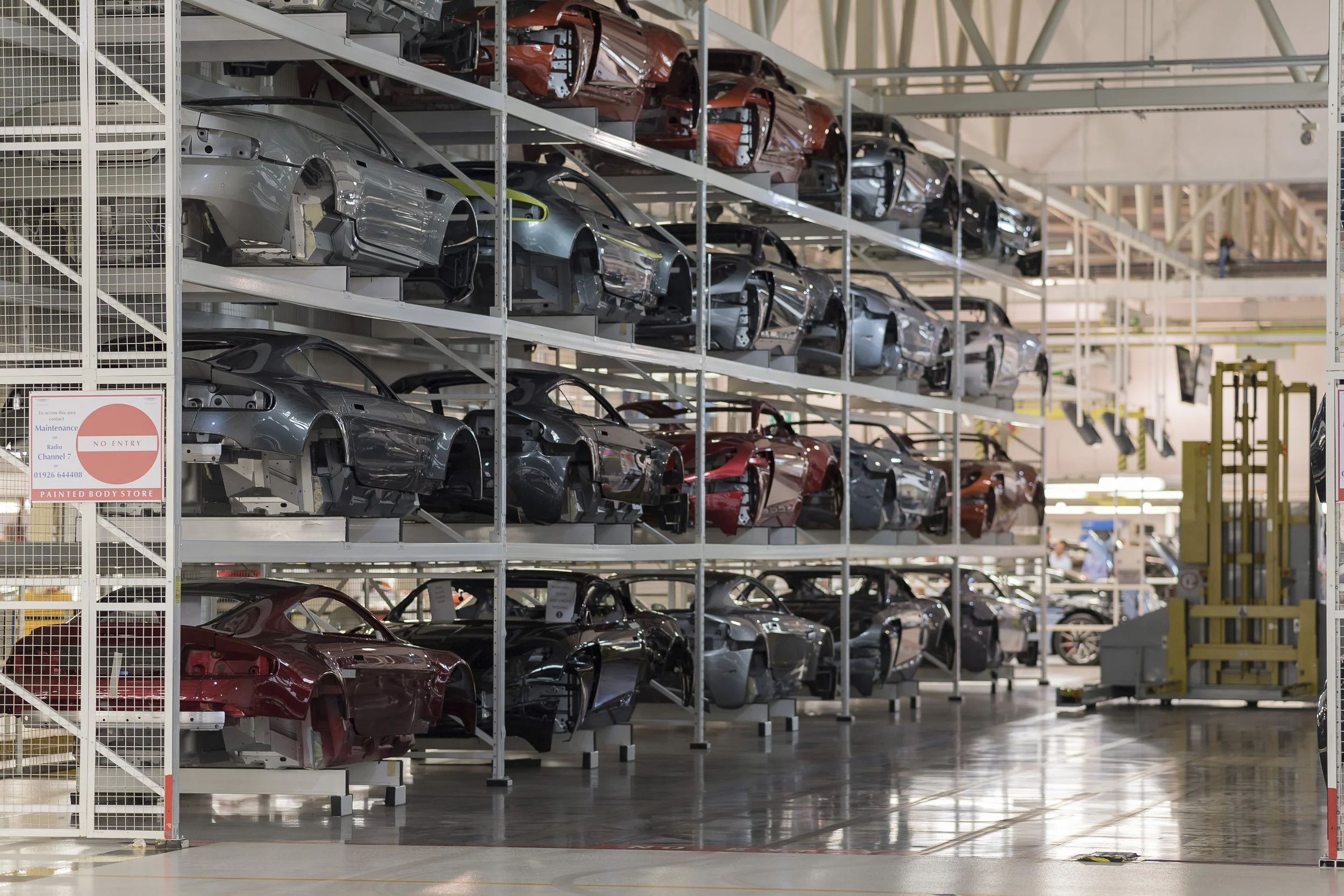
Image © Aston Martin Lagonda. Used for editorial purposes.
Production is being considered against genuine retail demand rather than volume for volume’s sake. Existing nameplates are being expected to generate more frequent commercial opportunities through meaningful derivatives. Q and options are being developed as sources of additional customer value.
High-value client relationships are becoming more structured, while Specials are being positioned both as profitable products and as ways of attracting and retaining collectors capable of buying repeatedly.
Cost, quality, manufacturing efficiency and capital allocation sit underneath that product strategy rather than existing as separate corporate exercises. Most tellingly, Hallmark told Bloomberg that the work of much of his first two years had been to establish a clearer strategy based on value-led rather than volume-led growth.²²
Coming after the Bentley evidence examined earlier in this article, the parallel is striking.
It still doesn’t mean Aston Martin is copying Bentley. It does mean FTP’s “Bentley playbook” shorthand has become more relevant rather than less.
Is There Evidence That It Is Beginning to Work?
Here, FTP’s answer is also yes, cautiously.
H1 2026 provides measurable evidence beyond management language. Revenue, gross profit and gross margin improved materially against the prior year, adjusted EBITDA returned to positive territory and free cash outflow reduced considerably.¹⁴
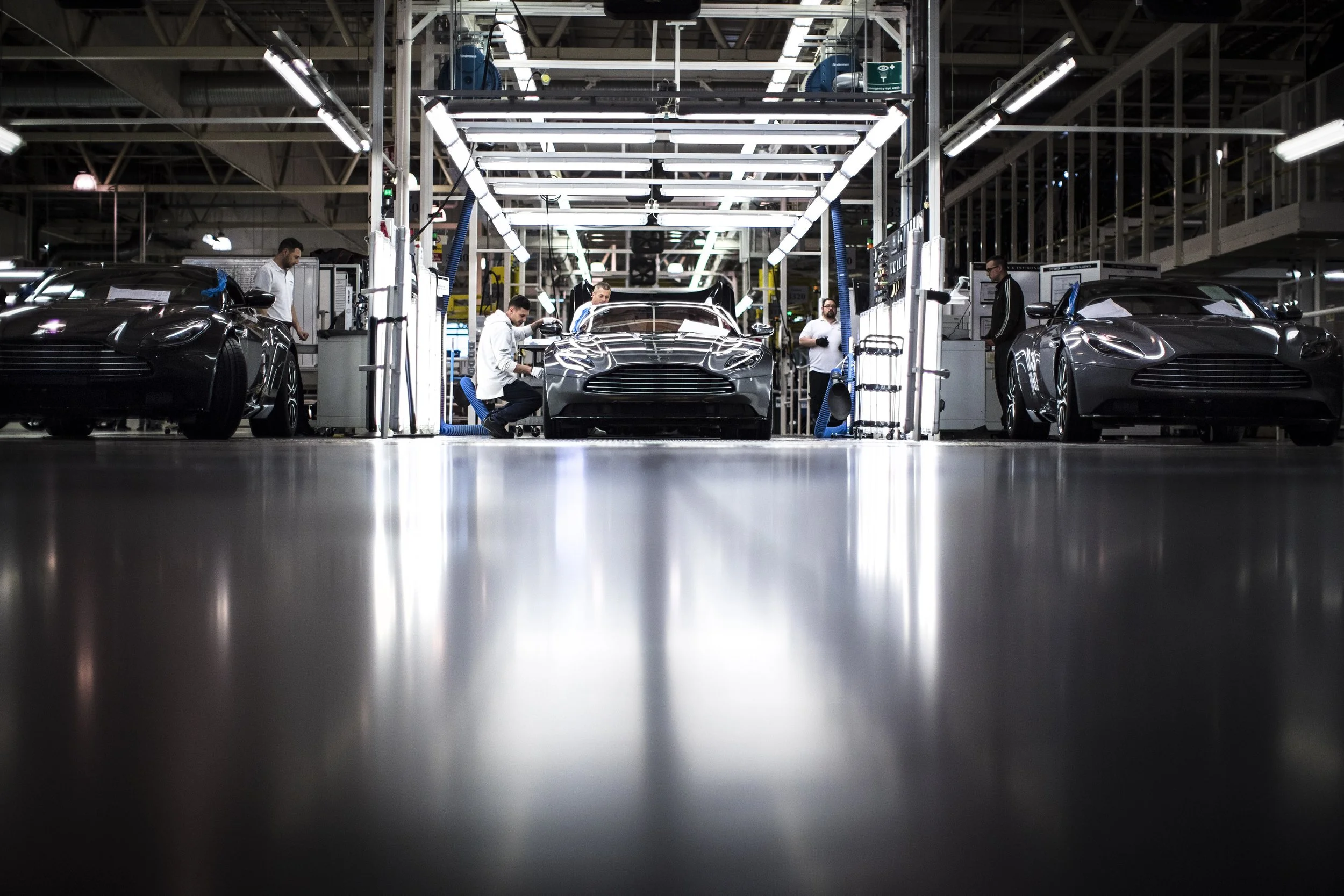
Image © Aston Martin Lagonda. Used for editorial purposes.
The operational evidence has broadened too. Retail demand is running ahead of wholesale. S derivatives have early order cover. Aston Martin reports lower manufacturing costs and substantial improvements in internal production-quality measures. Aged inventory has reduced significantly, even though the clean-up was not fully complete at half-year.¹³ ¹⁴ ²⁵
Valhalla has demonstrated the financial significance a high-value programme can have, while Valen provides perhaps the clearest product illustration yet of Aston Martin taking familiar engineering and turning it into something with a substantially different identity and commercial position.
The next-generation architecture work suggests Hallmark’s approach may also be moving beyond optimising the current model cycle and into the structural economics of future cars. Those are meaningful signs of progress. They should not be confused with evidence that the destination has been reached.
Adjusted EBIT remains negative. Free cash flow remains negative. Net debt is formidable. Core ASP remained under pressure during H1 2026 because of dealer support.
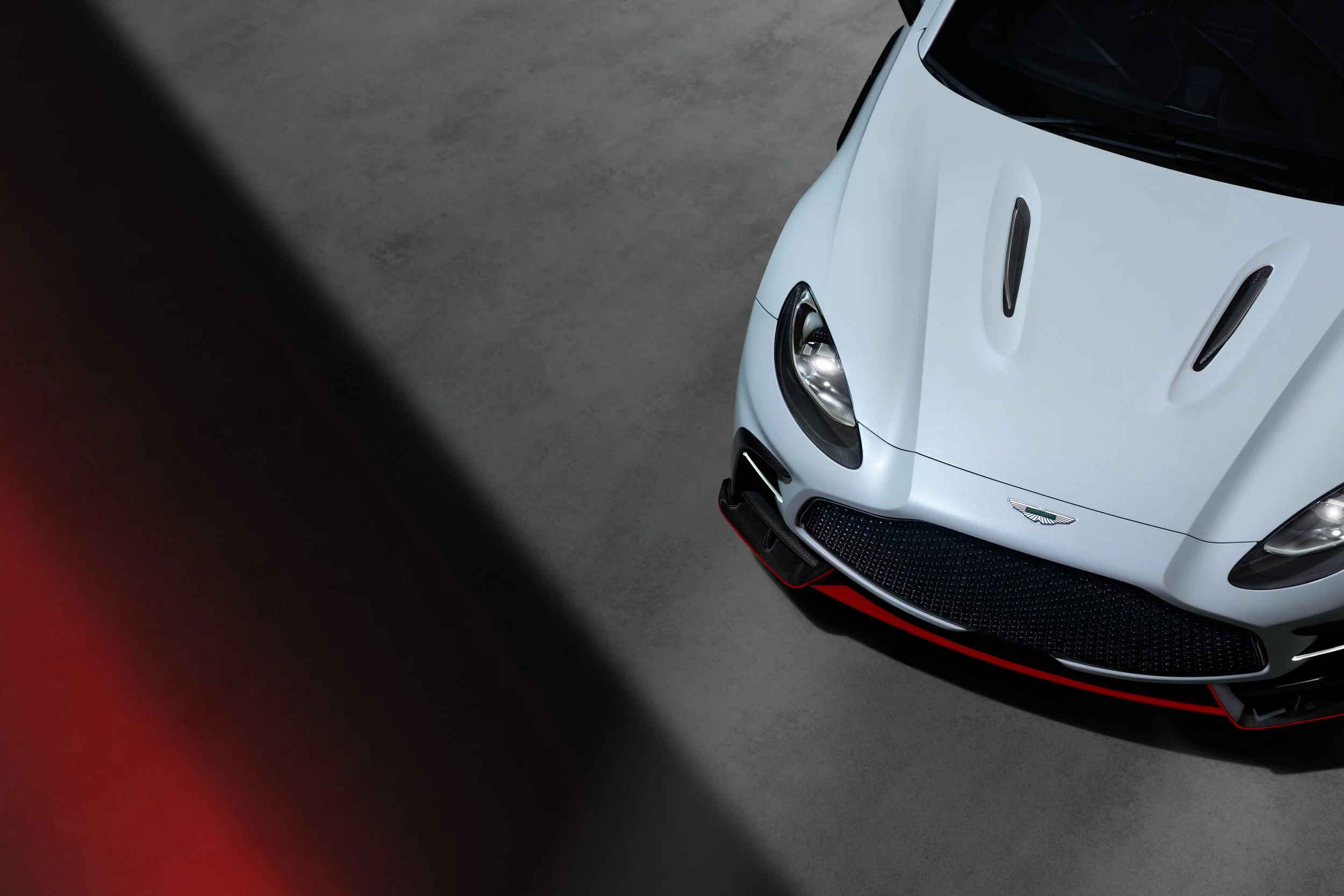
Image © Aston Martin Lagonda. Used for editorial purposes. Aston Martin DBX S
DBX has not achieved the potential Hallmark believes it should. External debt financing has been required to strengthen liquidity, and the core-range economics Hallmark himself says must form the foundation of the model have not yet been demonstrated at the level required for us to declare success.
The most defensible assessment remains:
There’s credible and growing evidence that parts of Hallmark’s strategy are improving Aston Martin’s underlying operation. There’s not yet sufficient evidence to demonstrate a completed financial turnaround.
That’s not sitting on the fence. It’s what the available evidence supports.
Is Aston Martin Financially Sustainable Yet?
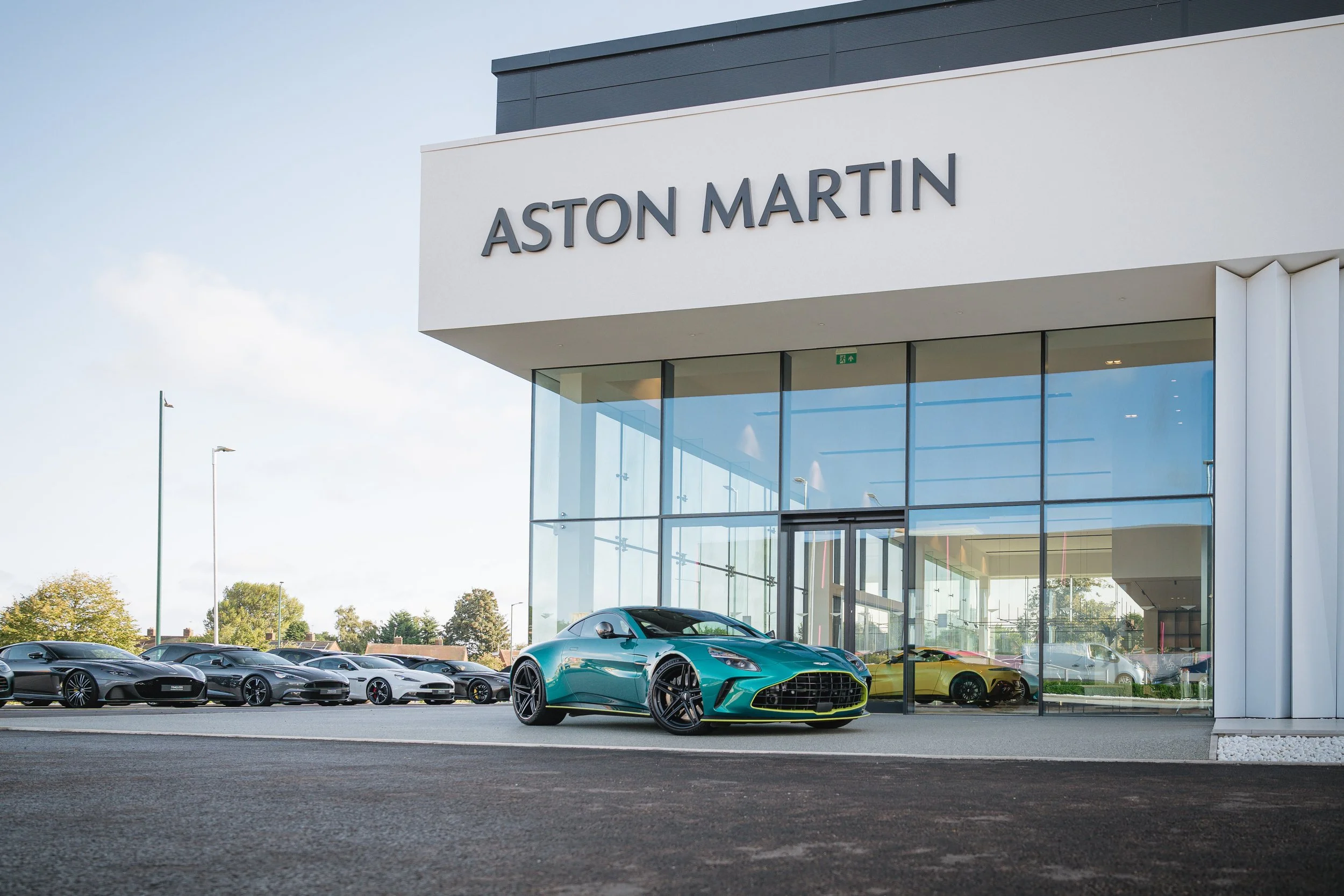
Image © Aston Martin Lagonda. Used for editorial purposes. Aston Martin Birmingham
No. The launch of Valen, encouraging quality figures and another round of confident interviews do not change that answer. Nor should they. For the purposes of this article, a financially sustainable Aston Martin is one capable of operating with consistent underlying profitability, generating enough cash to support ordinary future investment, comfortably servicing its financial obligations and, over time, reducing its dependence on repeated external capital.
That definition doesn’t mean a healthy manufacturer must have no debt, never refinance anything or never raise outside capital again. It means the underlying business eventually needs to carry its own weight. At the latest reported position, Aston Martin hasn’t reached that point.
Adjusted EBIT remains negative. Free cash flow remains negative. Net debt stood at approximately £1.545 billion at 30th June 2026, while another substantial debt-financing transaction has recently been required to increase financial flexibility.¹⁴ Hallmark believes that financing now provides sufficient room to execute the strategy.
The decisive proof will be whether the business eventually converts that room into sustained profit and positive cash generation.
Valen Changes the Picture - Not the Verdict
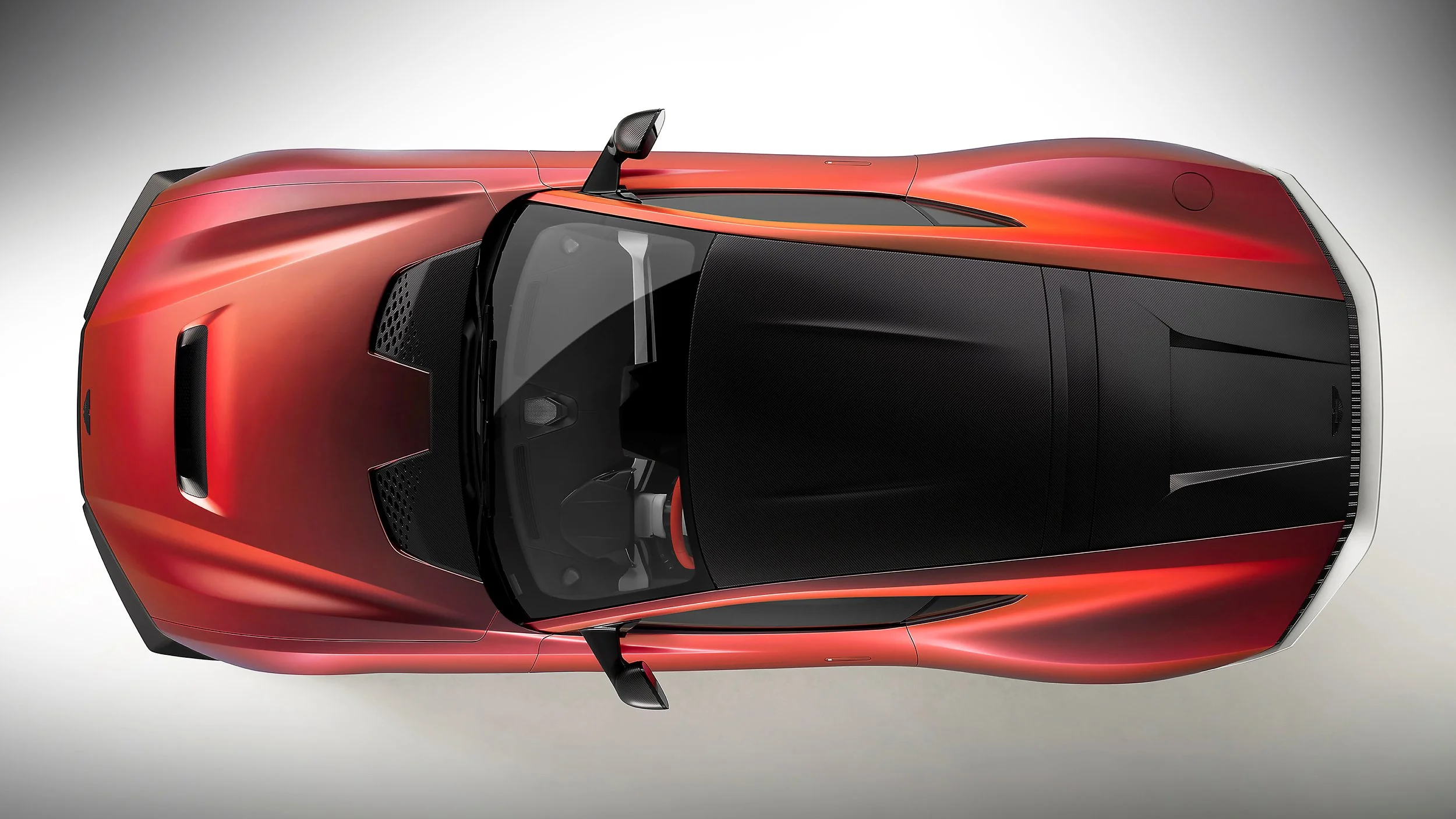
Image © Aston Martin Lagonda. Used for editorial purposes. Aston Martin Valen
Valen deserves a prominent place in a two-year Hallmark assessment, but not because its unveiling somehow improved Aston Martin’s balance sheet overnight. Its importance is strategic.
Here’s a car built from an existing architectural family yet given a dramatically different body, interior, dynamic character and market position; a Q-led Special created with Aston Martin’s newly formed Special Vehicle Operations capability; an extensively personalisable product aimed at collectors; and, according to Hallmark, the first of a small number of Specials to emerge from the current front-engined V12 architecture.²⁰ ²¹

Image © Aston Martin Lagonda. Used for editorial purposes. Aston Martin Valen
Several strands of the emerging strategy become visible in one vehicle. That makes Valen much more significant to this article than simply being Aston Martin’s newest car. It also reinforces why the core range cannot be forgotten.
One hundred and fifty Valens cannot by themselves create a financially sustainable Aston Martin. Neither can 999 Valhallas.
Those products can add highly valuable revenue, strengthen margin, attract extraordinarily wealthy customers and help recover returns from engineering already created. The foundation beneath them still has to work.
Hallmark now says exactly that himself.
The Next Test Is Becoming Much Clearer
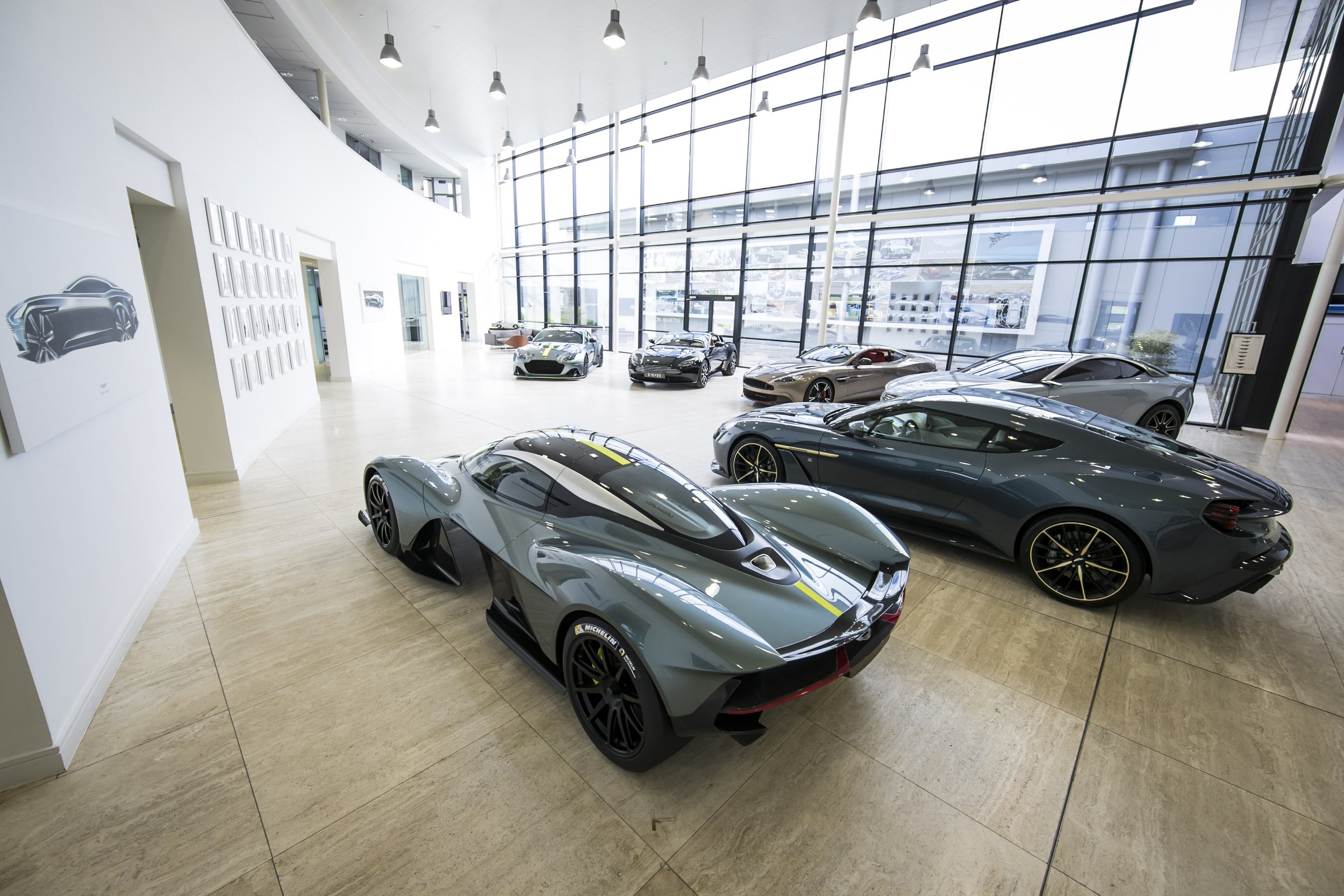
Image © Aston Martin Lagonda. Used for editorial purposes. Aston Martin HQ, Gaydon, Main Foyer.
One advantage of Hallmark talking more openly about the economics is that future judgement becomes easier. He’s described approximately the scale at which he believes Aston Martin can work, identified greater core profitability as the foundation, explained the role of Specials, and publicly pointed towards positive EBIT and positive cash generation as evidence that the company has turned the corner.²² That creates accountability.
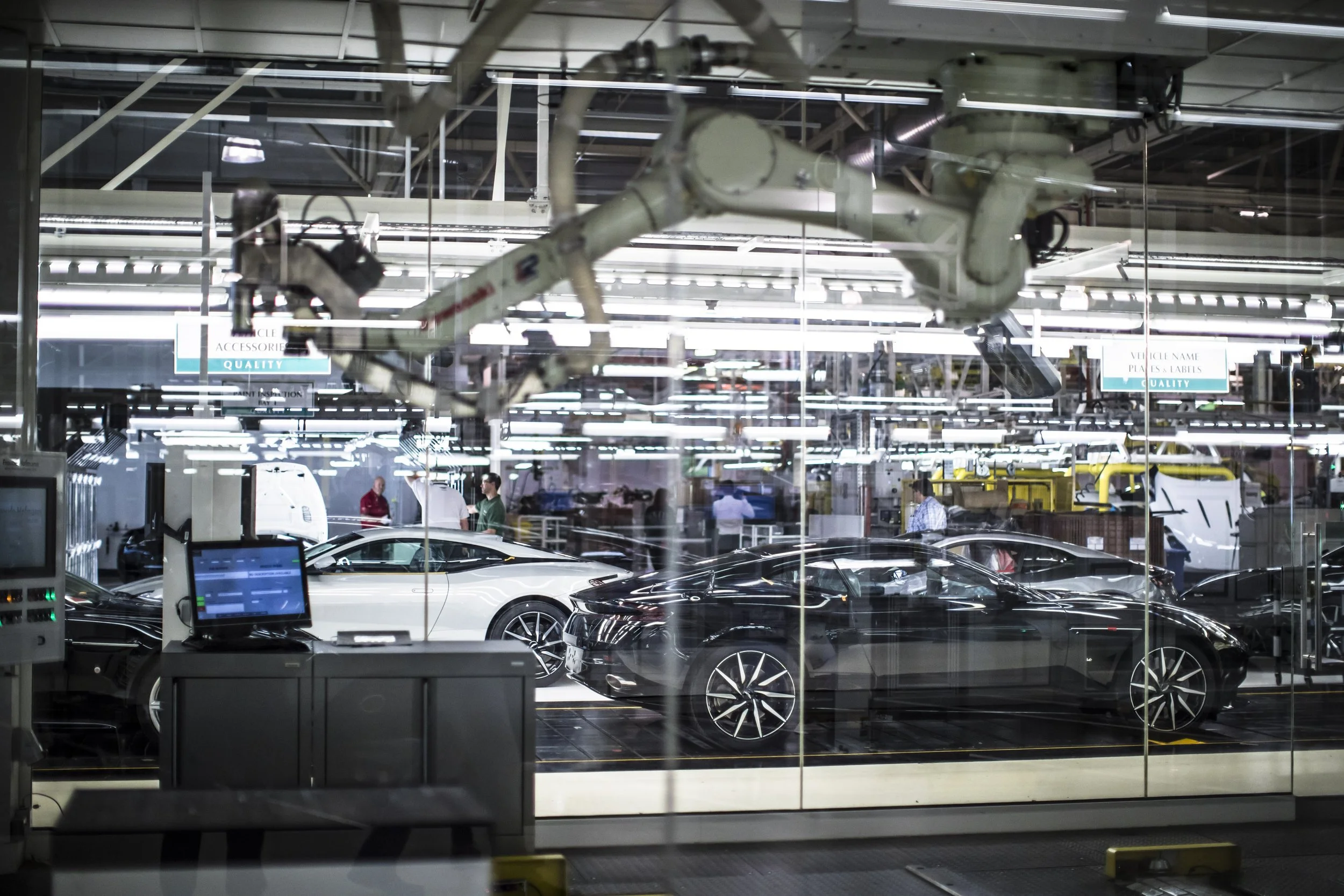
Image © Aston Martin Lagonda. Used for editorial purposes.
If Aston Martin begins delivering those outcomes during H2 2026 and into 2027, the evidence supporting the turnaround will become considerably stronger. If positive EBIT and cash generation continue to move further into the future, another attractive derivative or spectacular Special will not answer the financial questions.
There’s also a deeper test approaching.
The next generation of Aston Martins must demonstrate whether greater component sharing, reduced complexity and better capital efficiency can genuinely lower the structural cost of being a tiny global car manufacturer. That will take considerably longer than two years to judge. For now, Hallmark has moved from explaining what Aston Martin needs to change towards giving us increasingly visible examples of how he intends to change it. The next phase needs to prove the economics.
Two Years On - FTP’s Assessment
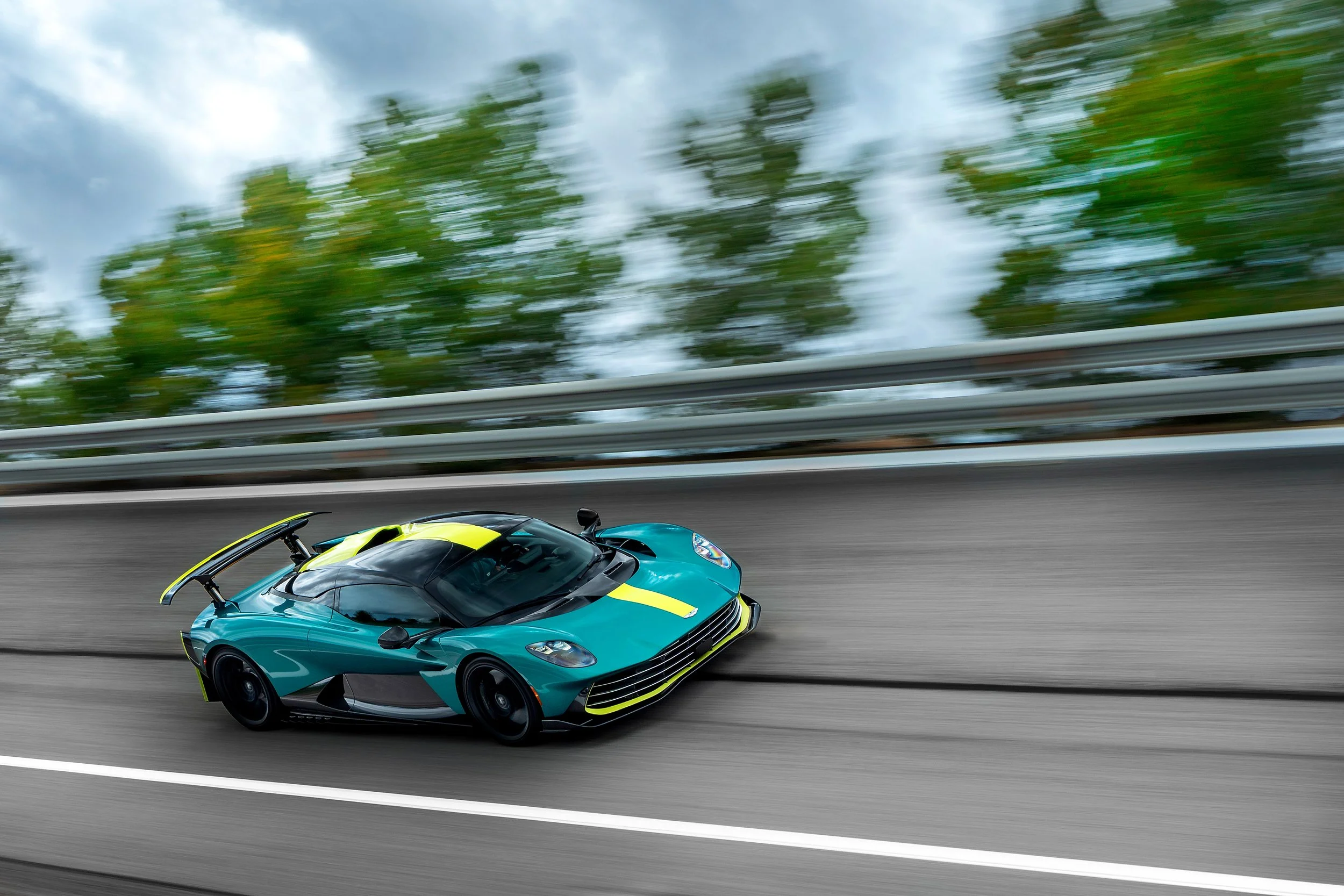
Image © Aston Martin Lagonda. Used for editorial purposes. Aston Martin Valhalla
So, two years after Adrian Hallmark arrived at Gaydon, what difference has he actually made? The answer is more interesting than pointing towards the cars launched during his tenure. Hallmark inherited much of Aston Martin’s current product renaissance. DB12 and Vantage were already in market, Vanquish was on the verge of launch, Valhalla was deep into a long development programme, Q was established and Aston Martin already possessed considerable experience creating highly exclusive Specials.
He also inherited a company carrying substantial debt, consuming cash and still unable to translate its considerable product and brand strengths into sustained operating profitability. What’s become increasingly identifiable during his first two years is the business model being built around those assets.

Image © Aston Martin Lagonda. Used for editorial purposes. 60th Anniversary of Volante Edition
Hallmark is attempting to make Aston Martin viable at lower, more exclusive levels of production; improve the profitability of the core cars; create a controlled rhythm of genuinely different derivatives; use personalisation to increase the value of each vehicle; build deeper relationships with the customers most likely to buy repeatedly; develop a carefully spaced programme of high-value Specials; improve manufacturing quality; reduce unnecessary cost; and make expensive engineering investment generate more commercial opportunities before it’s replaced.
Valen arrived at an almost perfect moment for this assessment because several of those ideas can be seen physically in one car. The possible next Vantage and Vanquish derivatives suggest the same philosophy may be moving further through the core range. The next-generation architecture work suggests the thinking may eventually reach much deeper into how Aston Martins are engineered and manufactured. Yet the harder financial evidence cannot be left behind.
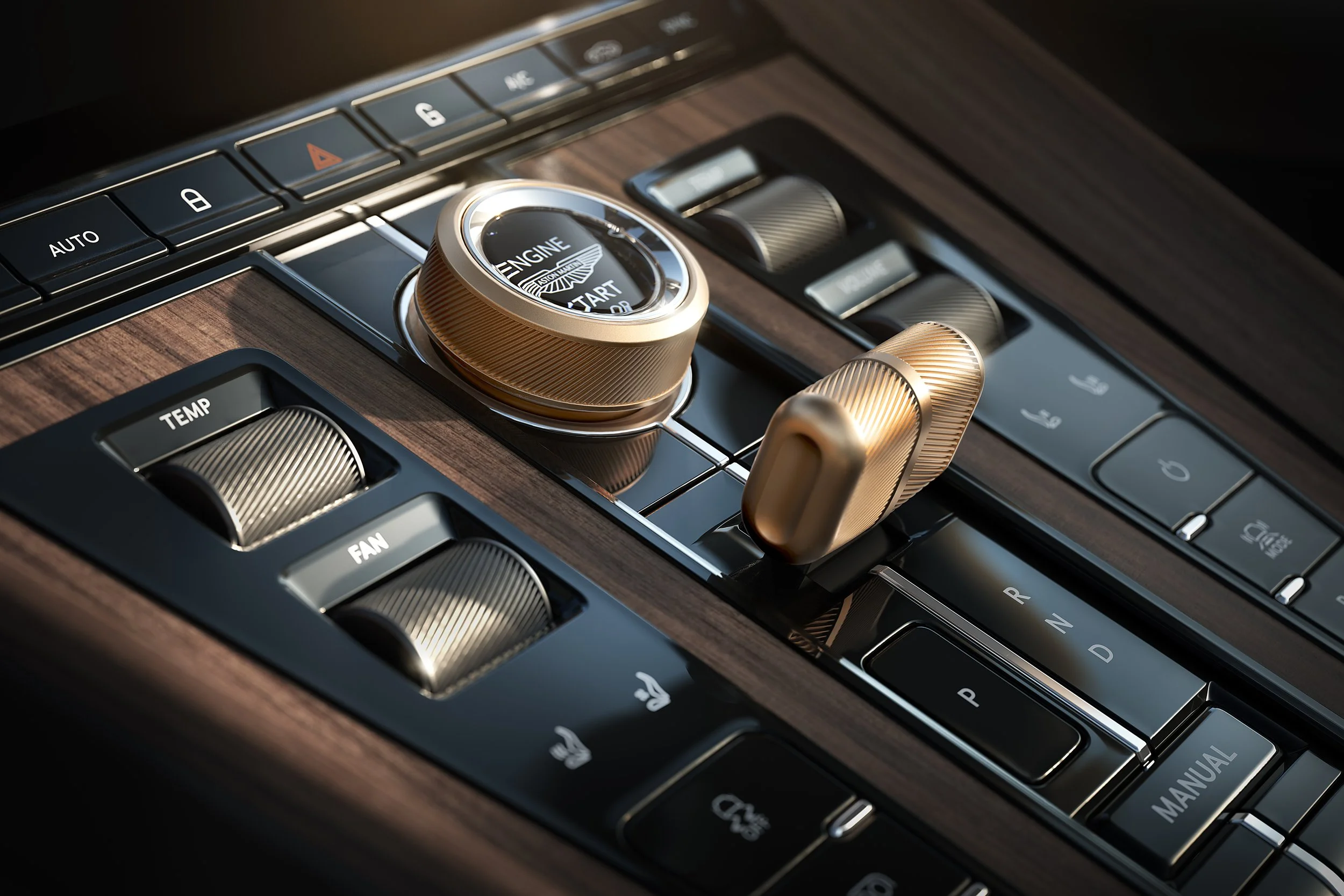
Image © Aston Martin Lagonda. Used for editorial purposes.
FY2025 fell short of Aston Martin’s original ambitions. Adjusted EBIT remains negative. Free cash flow remains negative. Net debt is materially higher than the cleanest pre-Hallmark reporting point. External financing continues to play an important role in giving the company sufficient room to execute its plans. For those reasons, FTP doesn’t believe the evidence supports declaring Hallmark’s turnaround a success after two years.
We equally don’t believe the evidence supports dismissing it as a failure.
There’s a difference between evidence that a turnaround programme is changing a business and evidence that the turnaround has succeeded. Aston Martin currently has considerably more of the former than the latter.
Two years has been enough for the strategy to show its shape. The next years will tell us whether that shape becomes a sustainable business.
Aston Martin Does Not Need to Become Bentley
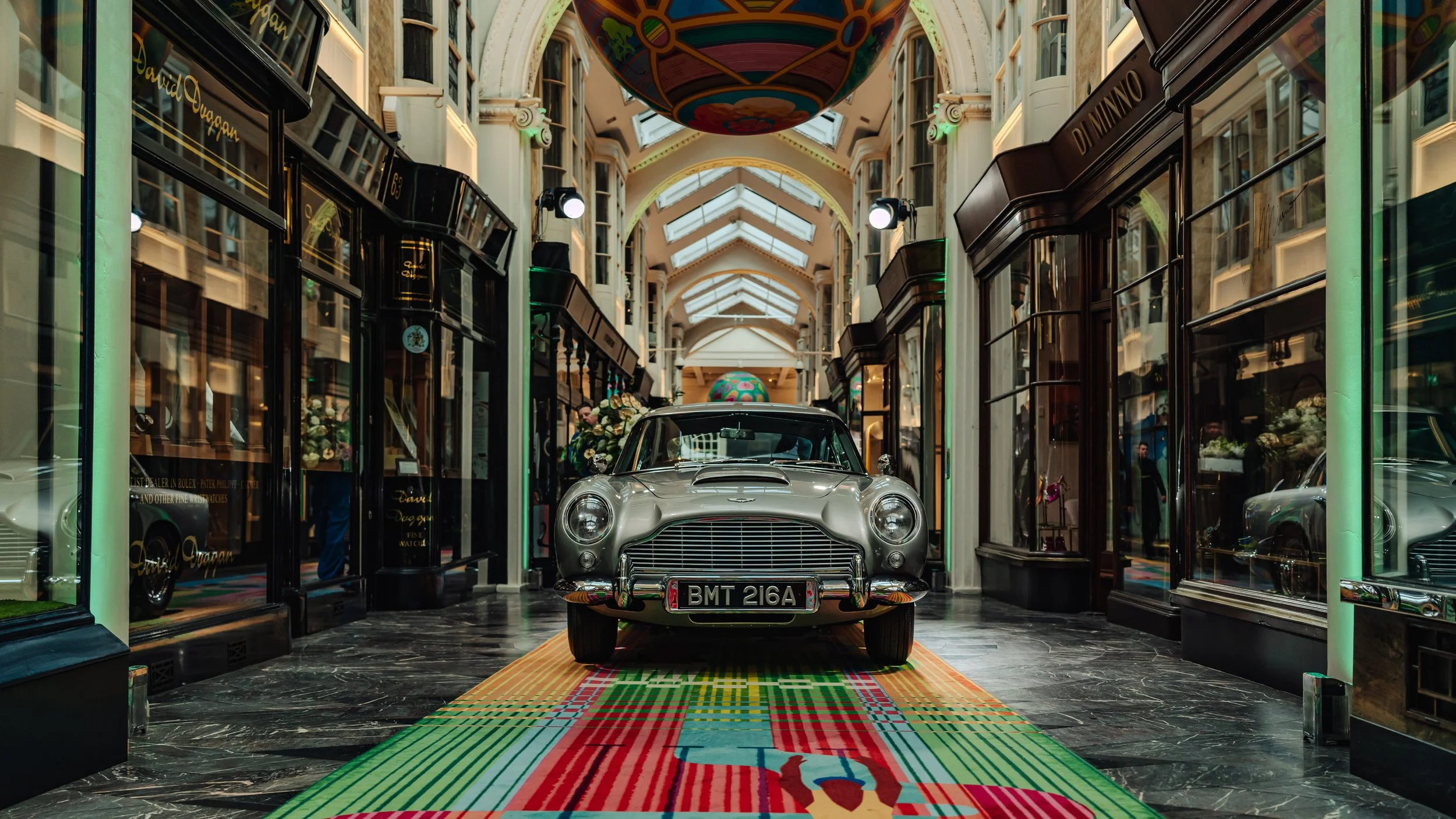
Image © Aston Martin Lagonda. Used for editorial purposes.
The question posed in the title of this article was never whether Aston Martin should turn itself into another Bentley. It should not.
Aston Martin’s sporting identity, engineering character, history, scale and sense of exclusivity are central to what makes the marque distinctive. Attempting to reproduce Bentley’s volumes or simply turn Q into another Mulliner would miss the deeper lesson completely.
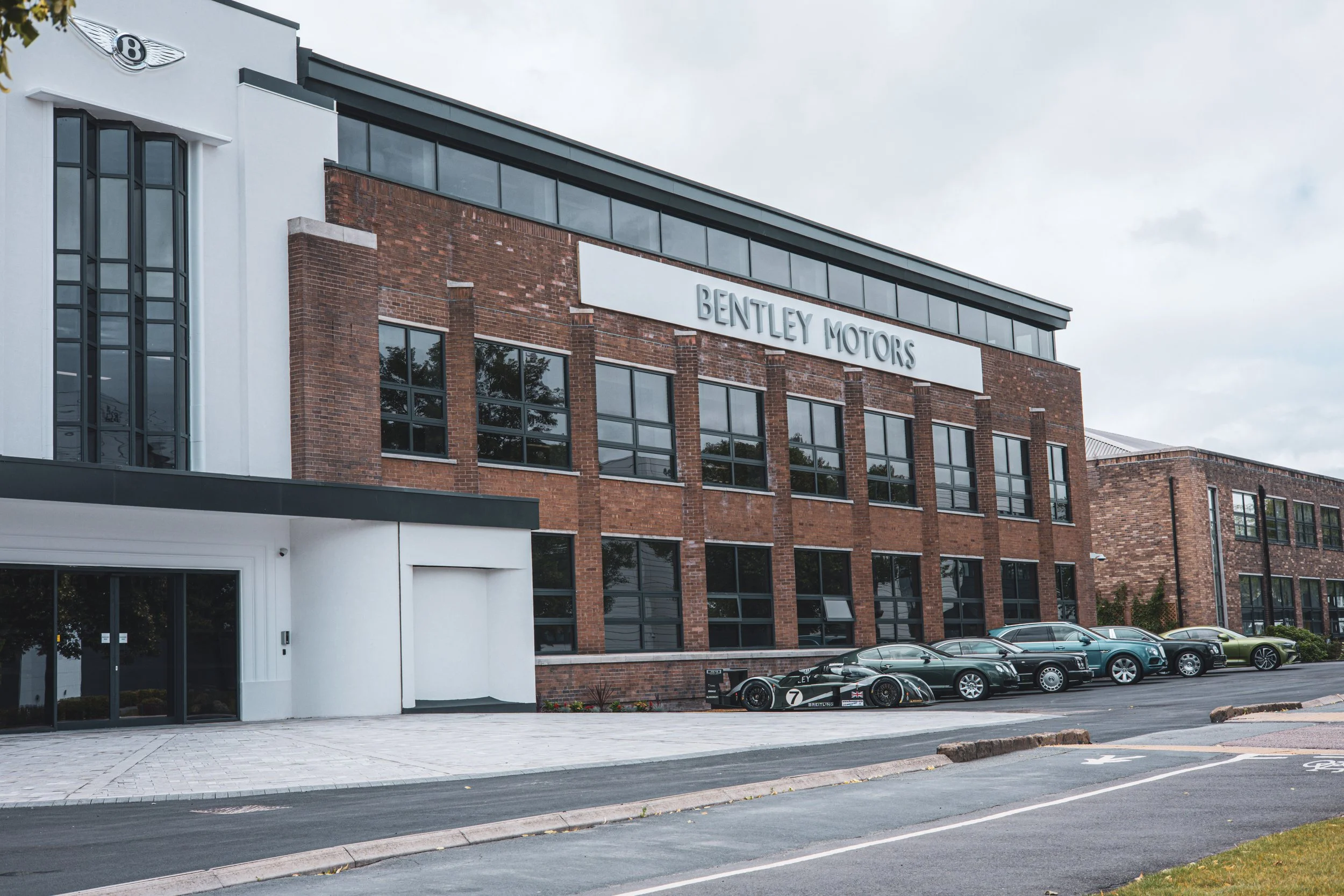
Image © Bentley Motors. Used for editorial purposes.
What Bentley demonstrated during Hallmark’s tenure was that an ultra-luxury manufacturer could become substantially better at extracting economic value from the products and customers it already possessed. Richer specifications, meaningful derivatives, personalisation, disciplined costs and better operational execution helped create a company whose profitability remained remarkably strong even when annual customer deliveries fell.⁴ ⁵
Aston Martin needs to apply the principle on its own terms. Its version will inevitably look different. It’s smaller, more indebted and doesn’t sit within the industrial structure of Volkswagen Group. Its products are more overtly sporting, while Valkyrie, Valhalla and now Valen allow it to operate in parts of the collector market that create their own opportunities.
The method nevertheless has a familiar logic.
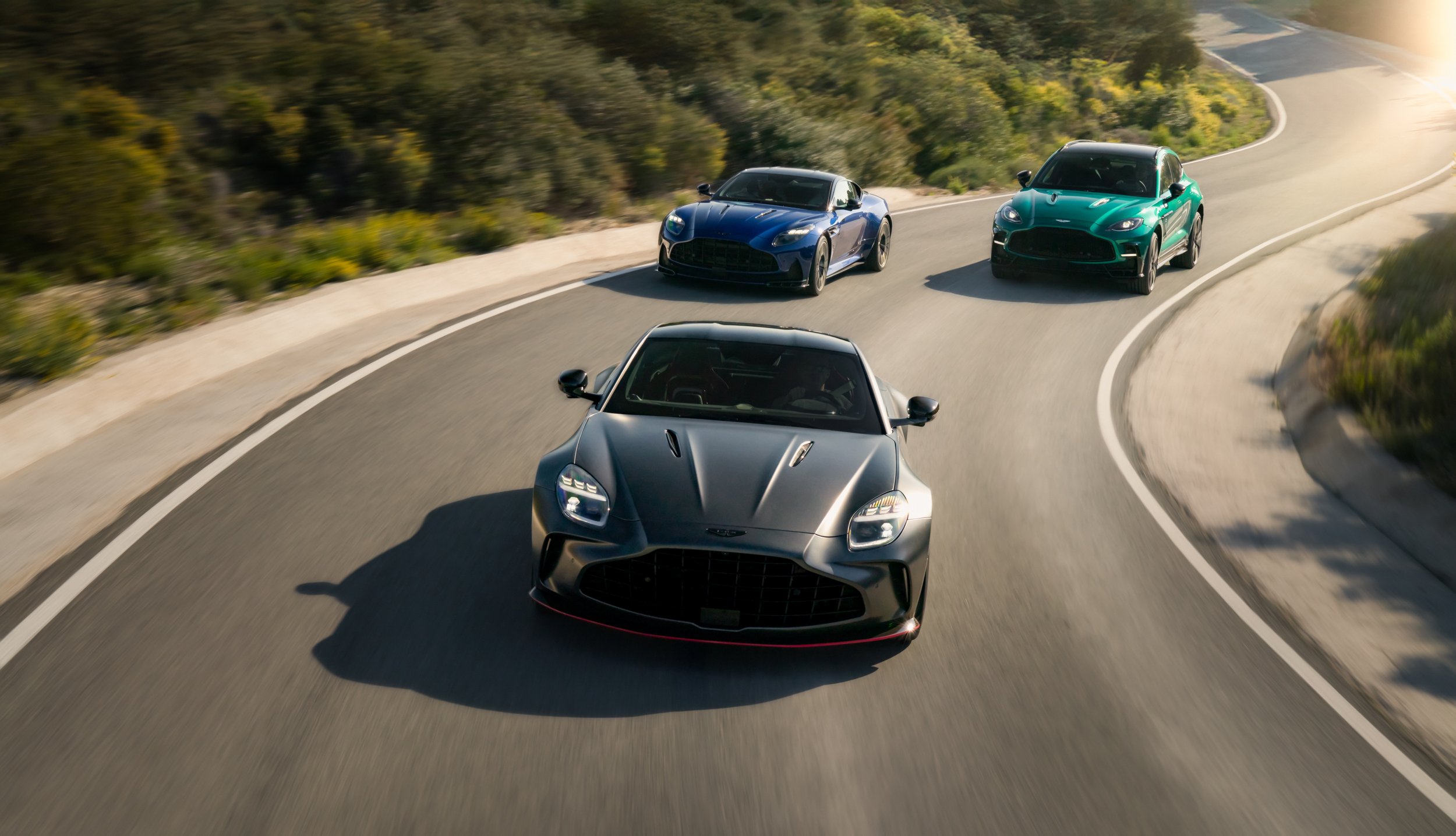
Image © Aston Martin Lagonda. Used for editorial purposes.
Make the core cars strong enough economically to provide the foundation. Use existing investment intelligently. Give customers genuine reasons to return. Make personalisation commercially meaningful. Protect exclusivity by resisting indiscriminate volume.
Use Specials to strengthen the business rather than disguise weakness beneath it. Control cost without eroding capability. Design the next generation with less unnecessary complexity, then turn those stronger economics into the cash required to fund what comes afterwards.
Put another way:
Adrian Hallmark doesn’t need to make Aston Martin another Bentley. He needs to help Aston Martin make its exclusivity pay for its future.
Two years after he arrived, we can see much more clearly how he intends to try. The newer products, financial reporting and interviews have made the strategy easier to understand. H1 2026 provides the first more convincing evidence that parts of it may be gaining traction.
The next stage is less about explaining the plan. It’s about proving it.

Image © Aston Martin Lagonda. Used for editorial purposes. Aston Martin Valen.
If Aston Martin can move from negative EBIT to positive EBIT, from consuming cash to generating it and eventually from repeated dependence on new financing towards a business whose own economics comfortably support its future, the case for Hallmark’s methodology will become considerably stronger.
Until then, optimism should remain accompanied by evidence. For those of us who genuinely want Aston Martin to flourish for generations to come, that’s exactly how it should be.
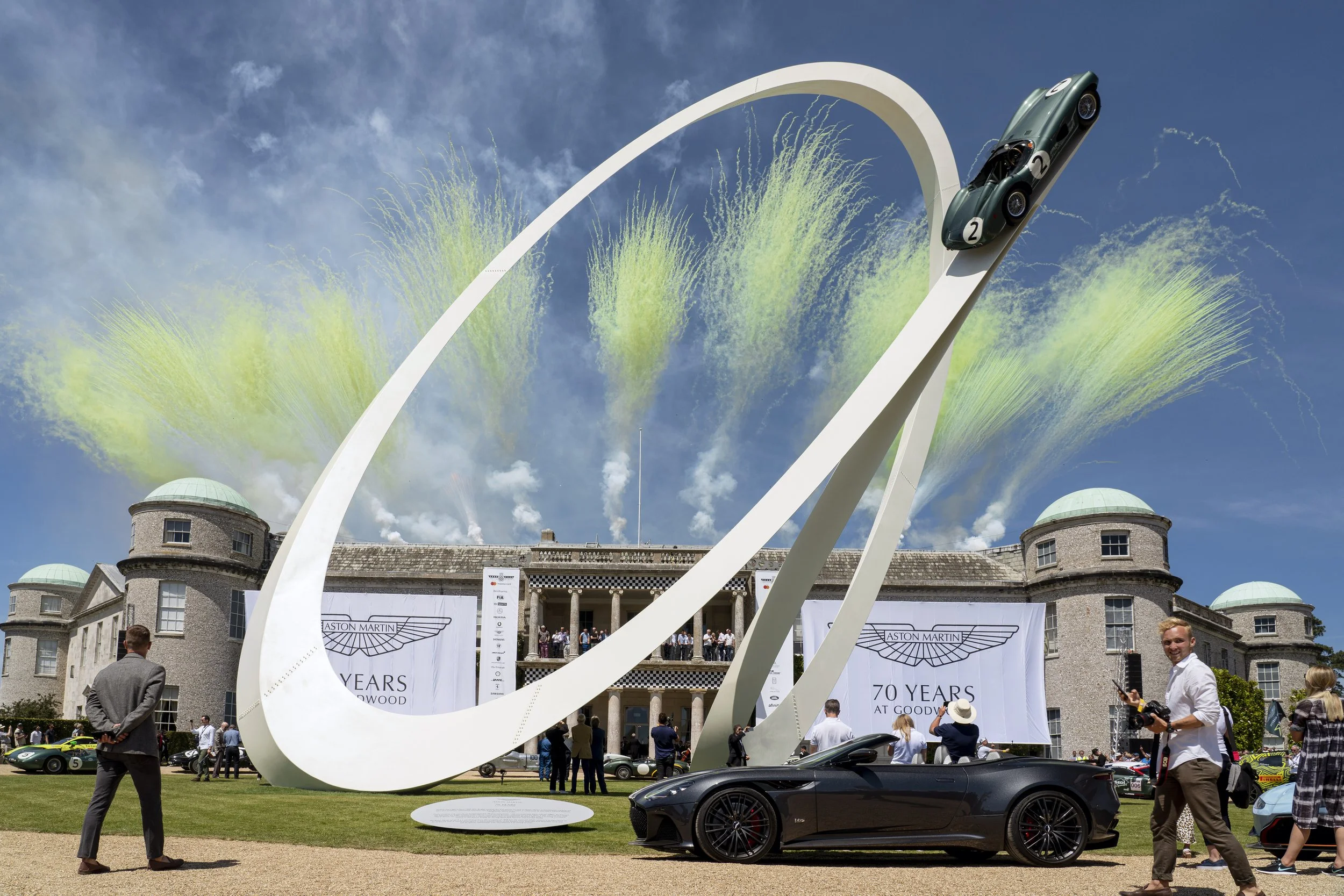
Image © Aston Martin Lagonda. Used for editorial purposes.
A Final Note from Fuel the Passion
This has been one of the most substantial Featured Articles Fuel the Passion has undertaken. The research, cross-checking and attention to detail required to trace the chronology, verify financial figures, distinguish inherited programmes from Hallmark-era decisions and test competing pieces of evidence has taken considerable time. The purpose has never been to find reasons either to praise Aston Martin uncritically or to criticise it for the sake of a headline. We wanted to understand, as fairly and accurately as we could, what Adrian Hallmark inherited, what has changed during his first two years, what appears to be working and where the evidence tells us there’s still further to go.
That’s also why so much care has gone into the sources behind this article. Wherever possible, FTP has relied on Aston Martin’s own published financial results, Annual Reports and regulatory disclosures, alongside Hallmark’s interviews, official product information and carefully identified supporting sources. Where something remains uncertain, we’ve tried to say so rather than present assumption as fact.
We also know that an article of this scale contains an enormous amount of information. If you believe we have made a factual error, misinterpreted a source or overlooked evidence that materially changes something we have written, please contact Fuel the Passion. We will examine it against the available evidence and, where a correction or clarification is justified, we will make the appropriate editorial amendment. Accuracy and trust are more important to us than defending a sentence simply because we published it first.
Most importantly, none of the scrutiny in this article should be mistaken for a lack of support for Aston Martin. Quite the opposite. Fuel the Passion exists because of a fascination with this extraordinary British marque: its cars, its people, its history and perhaps also its remarkable ability to endure. Aston Martin’s past is not simply a succession of beautiful cars and famous victories. It’s also a story of financial difficulty, changing ownership, extraordinary ambition, reinvention and, repeatedly, survival in circumstances that might have ended the story of a less determined company.
That history is still being written. Adrian Hallmark is now a significant part of it. He has taken responsibility for Aston Martin at another important moment in the marque’s long life, and the decisions being made today will help determine what kind of company it becomes in the years ahead. After two years, FTP believes there are genuine reasons for encouragement, accompanied by important questions that only future results can answer.
We place considerable hope in Hallmark’s experience, the people working alongside him and the direction now becoming visible. Our wish is not simply for Aston Martin to survive another difficult chapter, but to emerge from it stronger: building extraordinary cars, treating its customers and employees well, investing confidently in its future and becoming financially secure enough to preserve the independence of thought and character that make an Aston Martin an Aston Martin.
Aston Martin has spent more than a century proving that adversity doesn’t have to define its ending. Adrian Hallmark’s task now is to help ensure that the next chapter is remembered not simply for another survival, but for the moment this remarkable marque finally built the sustainable future its history deserves.
That’s what Fuel the Passion hopes to see, and why we will continue watching, supporting and reporting the journey with both enthusiasm and an open eye.
Thanks for reading. See you on the next one! 👍
💬 We’d genuinely welcome your thoughtful comments (below) on what you’ve just read, whether you agree with our assessment, see things differently, or simply want to share your own perspective on where Aston Martin goes from here. 👇
| No. | Source | Evidence used in this article |
|---|---|---|
| 1 | Aston Martin Lagonda — CEO Appointment / Governance Disclosures, 2024. | Confirms Adrian Hallmark became Chief Executive Officer and Executive Director on 1 September 2024. |
| 2 | Volkswagen Group — Annual Report 2019: Bentley. | Used for Bentley’s 2018 and 2019 customer deliveries, revenue, operating result and operating margin, together with Volkswagen’s explanation of the 2019 improvement. |
| 3 | Volkswagen Group — Annual Report 2021: Bentley. | Used for Bentley’s 2021 customer deliveries, revenue, operating profit and operating margin. |
| 4 | Bentley Motors / Audi — FY2022 Results, March 2023. | Used for Bentley’s €708 million operating profit, 20.9 per cent operating margin, four-per-cent delivery growth versus 82-per-cent operating-profit growth, together with commentary on personalisation, richer specifications, restructuring, value over volume and Bentley’s description of a self-funding basis for future investment. |
| 5 | Bentley Motors / Audi — FY2023 Results, March 2024. | Used for Bentley’s 13,560 customer deliveries, €589 million operating profit, 20.1 per cent return on sales, derivative mix, personalisation and comments concerning customer value rather than simply increasing volume. |
| 6 | Advertising Week Europe — Adrian Hallmark, 2022. | Used for Hallmark’s retrospective account of Bentley’s operational problems, production-line work, employee involvement and his description of the turnaround methodology. |
| 7 | Oxford Marketing Society — Adrian Hallmark interview, 2026, approximately 53:12. | Used for Hallmark’s discussion of profitability, sustainable foundations, cash generation, cost, capital efficiency and his comparison between Aston Martin’s transformation methodology and that previously employed at Bentley. The central quotation used in this article was manually verified by Fuel the Passion against the original recording. |
| 8 | Aston Martin Lagonda — FY2023 Results. | Used for FY2023 revenue, gross margin, adjusted EBITDA, adjusted EBIT, free cash flow, net debt and the pre-existing product, Specials and personalisation strategy. |
| 9 | Aston Martin Lagonda — H1 2024 Results. | Used as the principal pre-Hallmark financial comparison and for product chronology, retail-versus-wholesale commentary and Aston Martin’s net debt position at 30 June 2024. |
| 10 | Aston Martin — DB12 Launch Announcement, May 2023. | Used to establish that DB12 was unveiled and entered its customer-delivery phase before Hallmark became CEO. |
| 11 | Aston Martin — New Vantage Launch Announcement, February 2024. | Used to establish that the current Vantage programme and initial customer deliveries pre-date Hallmark’s arrival. |
| 12 | Aston Martin Lagonda — FY2024 Results / Adrian Hallmark CEO Review, February 2025. | Used for Hallmark’s early Aston Martin strategy concerning demand, value per vehicle, personalisation, derivatives, quality, launch discipline, restructuring and initial financial expectations. |
| 13 | Aston Martin Lagonda — Annual Report and Accounts 2025. | Used for FY2025 results, the transformation programme, Private Office, derivative activity, operating-cost measures, quality indicators, restructuring and workforce disclosures, the F1 investment disposal, future component-sharing strategy and management remuneration outcomes. |
| 14 | Aston Martin Lagonda — H1 2026 Interim Results, 29 July 2026. | Used for H1 2026 revenue, gross margin, adjusted EBITDA, adjusted EBIT, free cash flow, debt and liquidity, Valhalla and Specials contribution, retail-versus-wholesale position, personalisation, dealer support, workforce updates, FY2026 guidance, July financing arrangements and covenant disclosures. |
| 15 | Aston Martin Lagonda — H1 2026 Results Presentation. | Used particularly for FY2026 guidance, expected net cash interest, capital expenditure and other forward-looking financial measures. |
| 16 | Road & Track — Adrian Hallmark interview, June 2026. | Used for Hallmark’s description of a lower intended operating scale, greater variation within core model families, future performance and luxury derivatives, and his assessment that DBX has not yet achieved its full potential. |
| 17 | Auto Express — Adrian Hallmark interview, July 2026: Aston Martin turnaround and product strategy. | Used for the accelerated derivative programme, wider options strategy, cost restructuring and Hallmark’s description of seven or eight product actions annually ahead of the next generation. |
| 18 | Volkswagen Group — Brand and Group Structure. | Used to explain Bentley’s position within the Volkswagen/Audi industrial structure and the advantages available through group technology, procurement, economies of scale and industrial synergies. |
| 19 | Aston Martin Lagonda — Strategic Technology Relationships, H1 2026. | Used for Aston Martin’s strategic relationships with Mercedes-Benz AG, Geely and Lucid and AML’s explanation that partnerships can provide access to technologies that may otherwise be disproportionately expensive for Aston Martin to develop independently. |
| 20 | Aston Martin — Valen Launch Announcement, 14 August 2026. | Used for Valen’s official launch, 150-car production limit, 850PS and 1,000Nm V12, full carbon-fibre body, weight-saving programme, new interior architecture, Q by Aston Martin positioning and involvement of Aston Martin’s newly formed Special Vehicle Operations capability. |
| 21 | The evo Podcast — Adrian Hallmark and Marek Reichman interview, August 2026. | Used for Hallmark’s account of his first 22 months at Aston Martin, the role of the existing team, his assessment of previous expenditure, Valhalla’s final development, derivative and Specials cadence, engineering “toolkits”, customer acquisition, Private Office, customer events, Formula One engagement and current thinking on future electrification. Also used for Marek Reichman’s comments on Valen’s future-facing design direction. |
| 22 | Bloomberg Television / Bloomberg Talks — Adrian Hallmark interview with Romaine Bostick, 15 August 2026. | Used for Hallmark’s description of core-product profitability, lower-volume economics, the contribution of Specials, the approximately 6,000-car business model, expected movement towards positive EBIT and cash generation, quality and post-production rework, cost restructuring and his assessment of the flexibility provided by the July financing. Bloomberg Television and Bloomberg Talks are the same underlying interview and are therefore treated as one source. |
| 23 | Aston Martin Aramco Formula One Team — Robert Wood Johnson Acquires Strategic Minority Stake, 20 August 2026. | Used to establish that Johnson’s investment is in the Formula One team rather than Aston Martin Lagonda, together with his appointment as Vice Chairman, intended focus on commercial growth particularly in the United States, and Lawrence Stroll’s continuing role as Executive Chairman and controlling shareholder. |
| 24 | Car and Driver / Carscoops / supporting automotive media — Aston Martin Vantage and Vanquish prototype reporting, 2026. | Used as supporting evidence of continued development activity around the current Vantage and Vanquish families. Media descriptions such as “Vantage RS” and “Vanquish S” remain unconfirmed by Aston Martin and are treated in this article as speculation rather than confirmed production identities. |
| 25 | Aston Martin Lagonda — H1 2026 Results Transcript, 29 July 2026. | Used for Hallmark’s comments on Specials as a fundamental contributor to future financial success, S-derivative order cover, option uptake, aged-stock reduction, residual US DBX inventory and contracting for the regeneration of Aston Martin’s next generation of core products. |
| 26 | Auto Express — Future Aston Martin: Next-Generation Sports Car and SUV, July 2026. | Used for Hallmark’s detailed account of Aston Martin’s planned modular next-generation architecture, greater component commonality and the objective of creating greater engineering and manufacturing efficiency across different vehicle types. |
| 27 | Aston Martin Lagonda creditor / investor clarification, together with Financial Times and Reuters reporting — July–August 2026 financing dispute. | Used to acknowledge creditor objections and the threatened legal challenge concerning aspects of the £550 million financing structure, together with Aston Martin’s response. FTP makes no assumption about the eventual legal outcome. |
| 28 | Aston Martin Lagonda — General Meeting Circular, 20 February 2026. | Used to establish that AMR GP owns and operates the Aston Martin Aramco Formula One Team and to explain the separate £50 million transaction concerning specified long-term Formula One naming and branding rights. |
