
Issue 17 - Fuel the Passion (FTP) Weekly Roundup
Week Ending 29th March 2026
Editor’s Introduction - Dan, Fuel the Passion
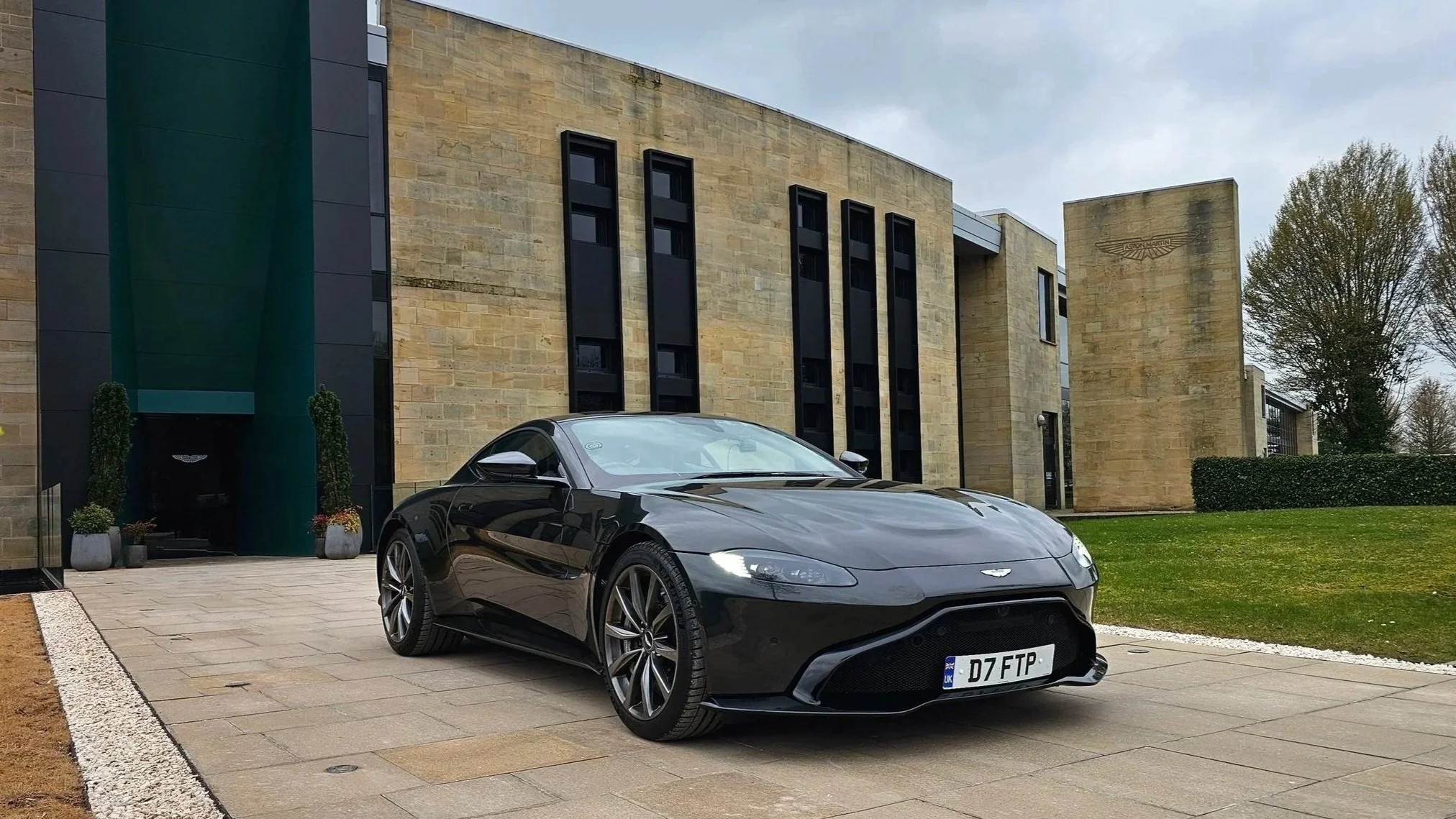
Image © Fuel the Passion, FTP Vantage on ‘the bridge’ at Aston Martin Lagonda HQ, Gaydon (Taking the FTP Vantage back to where it was created - very special)
Some weeks in the Aston Martin world arrive in such a rush that the challenge is not finding enough to cover, but deciding how best to shape it all when the diary itself has been moving just as quickly. This has been one of those weeks.
As mentioned in last Sunday’s edition, this week’s FTP Weekly Roundup has been written and finalised a little earlier than usual, because this weekend I’m away in the FTP Vantage on an AMOC trip to the Cotswolds with fellow Aston Martin owners. That does, of course, mean this edition will miss some of the very latest developments that may have emerged later across the Japanese Grand Prix weekend. But it also means there should be a new Fuel the Passion film of some sort to come from the trip before too long, which feels a fair trade.
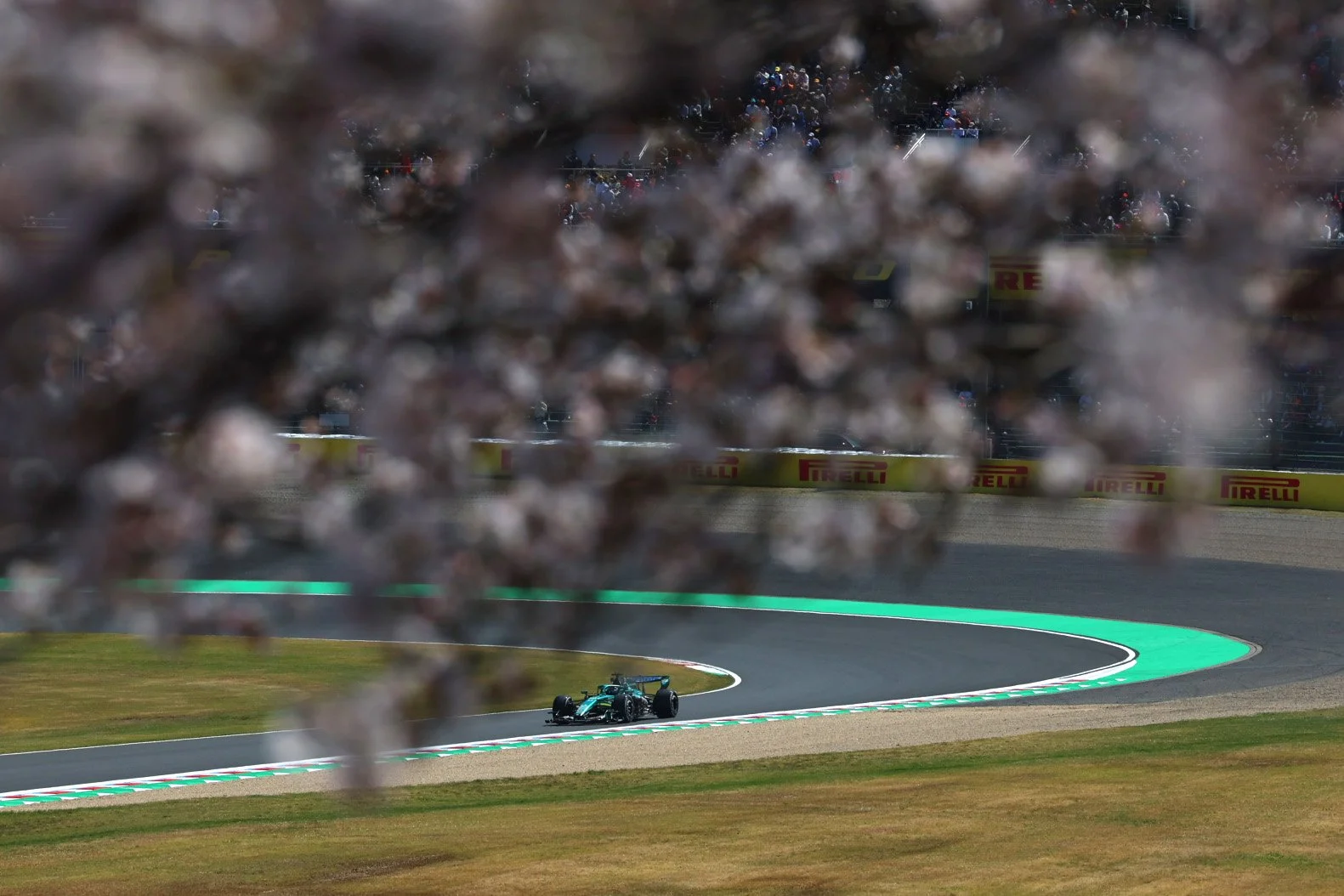
Image © Honda Motor Co. Ltd & Aston Martin Aramco. Used for editorial purposes. Lance Stroll of Canada driving the (18) Aston Martin F1 Team AMR26 Honda on track during practice ahead of the F1 Grand Prix of Japan at Suzuka Circuit on March 27, 2026
Even so, there is still plenty here worth your time. Aston Martin’s Formula 1 story remains under intense scrutiny heading into Suzuka, with Honda offering a measured but revealing update on where things stand and the wider questions around structure, leadership and recovery showing no real sign of disappearing.
Away from Formula 1, we also return, as promised, to The Heart of Racing’s Sebring weekend. Last week’s edition only had room for a brief late update after the race had already unfolded, but with Aston Martin now having issued its own post-race account, there is a fuller and more rounded story to tell about the Vantage GT3 Evo’s near-miss, the Valkyrie’s continuing development run, and what Sebring really meant in the wider Aston Martin motorsport picture.
There is also a strong road-car and heritage thread running through this week’s edition. On Wednesday, Aston Martin Lagonda marked the 25th anniversary of the Vanquish with an official retrospective on all three generations of its flagship model, and that feels especially timely given some of the other Vanquish-related threads gathering in this week’s roundup. More on that a little later. On the Fuel the Passion side, I’ve also had a rather special couple of days of my own, including first visits to Aston Martin HQ at Gaydon and Aston Martin Works at Newport Pagnell. Taking the FTP Vantage back to Gaydon, to the place where it was first created, made the trip feel even more special, more on that later.
So, while this week’s roundup may be a little more fixed in time than usual, I hope it still does what it is here to do: bring together the most meaningful Aston Martin stories already taking shape, place them in context, and offer something thoughtful to sit down with on a Sunday morning. With Formula 1 still casting the longest shadow over Aston Martin’s current story, that feels the natural place to begin.
Aston Martin F1
With this week’s edition being finalised before the Japanese Grand Prix weekend had fully played out, the fairest way to handle Aston Martin’s Formula 1 story is not to pretend we have the final word on Suzuka, but to focus on the shape of the situation as the team arrived there. In truth, that picture was already clear enough. Aston Martin reached Japan still trying to steady a project that has begun 2026 in a far more difficult place than anyone at Silverstone or Sakura would have wanted.
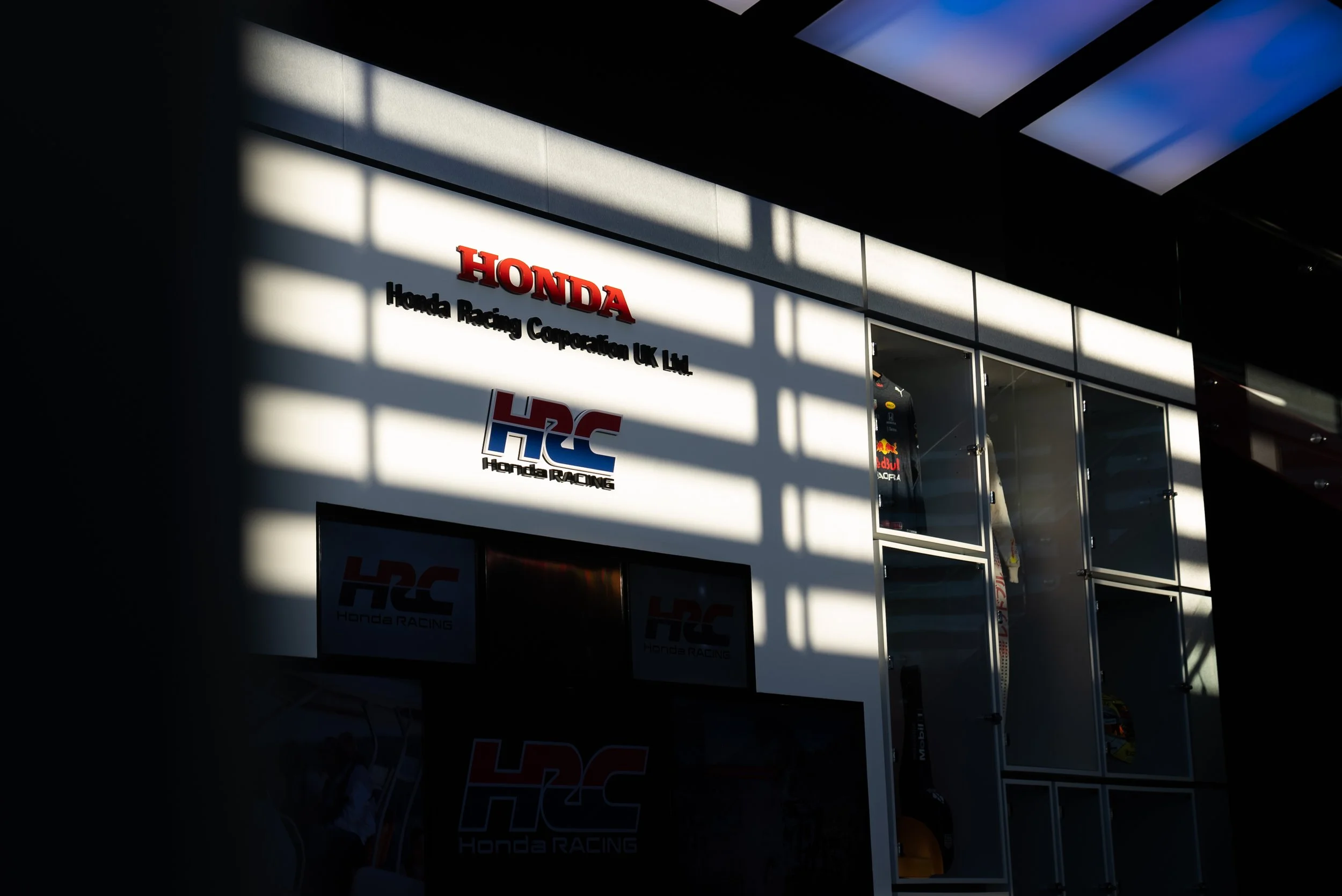
Image © Honda Motor Co., Ltd. Used for editorial purposes.
The most useful update came not from rumour or paddock theatre, but from Honda itself. In its official Japanese Grand Prix preview, HRC acknowledged that there had been some progress in China in terms of battery reliability after reducing the vibration affecting the systems.
But it also made clear that more solutions were still needed to identify the cause of the vibrations reaching the drivers, while performance remained below target, particularly in energy management.
That matters because it gives perhaps the clearest grounded summary yet of where Aston Martin and Honda really stand: not in complete disarray, certainly, but still some distance from anything that could honestly be described as a breakthrough.
That left Suzuka looking less like a likely reset and more like an important diagnostic weekend. Honda’s tone was measured rather than panicked, but it was hardly reassuring in any simple sense. There had been learning, yes, and some limited progress, but the core driver-affecting issue had not gone away. On a circuit as demanding as Suzuka, and at Honda’s own home race, that only sharpened the focus.
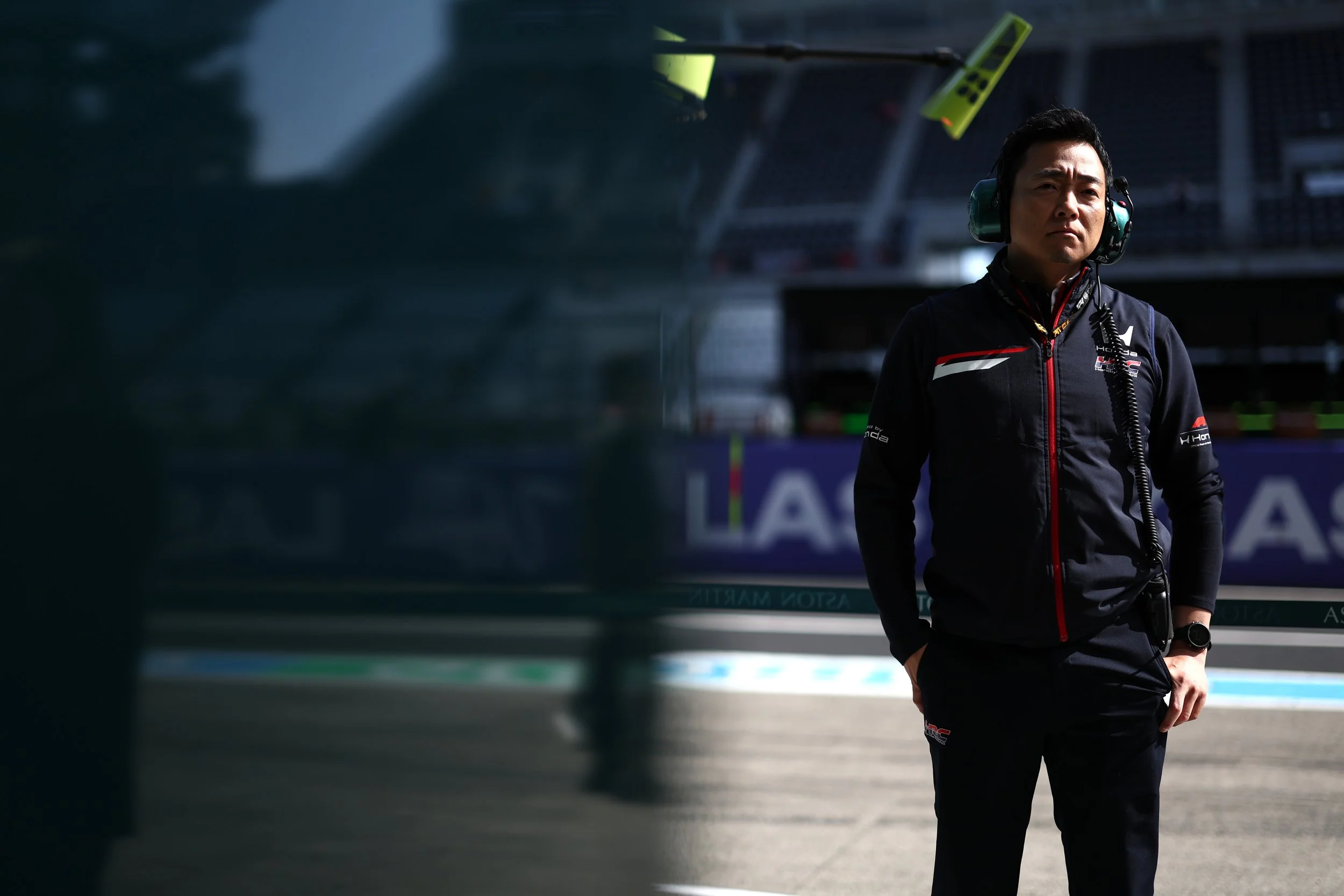
Image © Honda Motor Co., Ltd. Used for editorial purposes.
If anything, the official wording reinforced the sense that Aston Martin’s early-season trouble sits across several layers at once: reliability, vibration, energy deployment, and the wider challenge of bedding in an all-new works relationship under very public pressure.
That broader pressure helps explain why so much of the conversation around Aston Martin has now drifted beyond lap times alone and into questions of leadership and structure. The Jonathan Wheatley story has not gone away. His departure from Audi has only strengthened the outside assumption that Aston Martin may yet move toward a more conventional team-principal arrangement, even if no such appointment has been formally confirmed by the team. Set against Lawrence Stroll’s recent insistence that Adrian Newey’s role is deliberate by design rather than evidence of organisational confusion, the picture feels less like immediate panic and more like an unfinished leadership shape still settling into place.
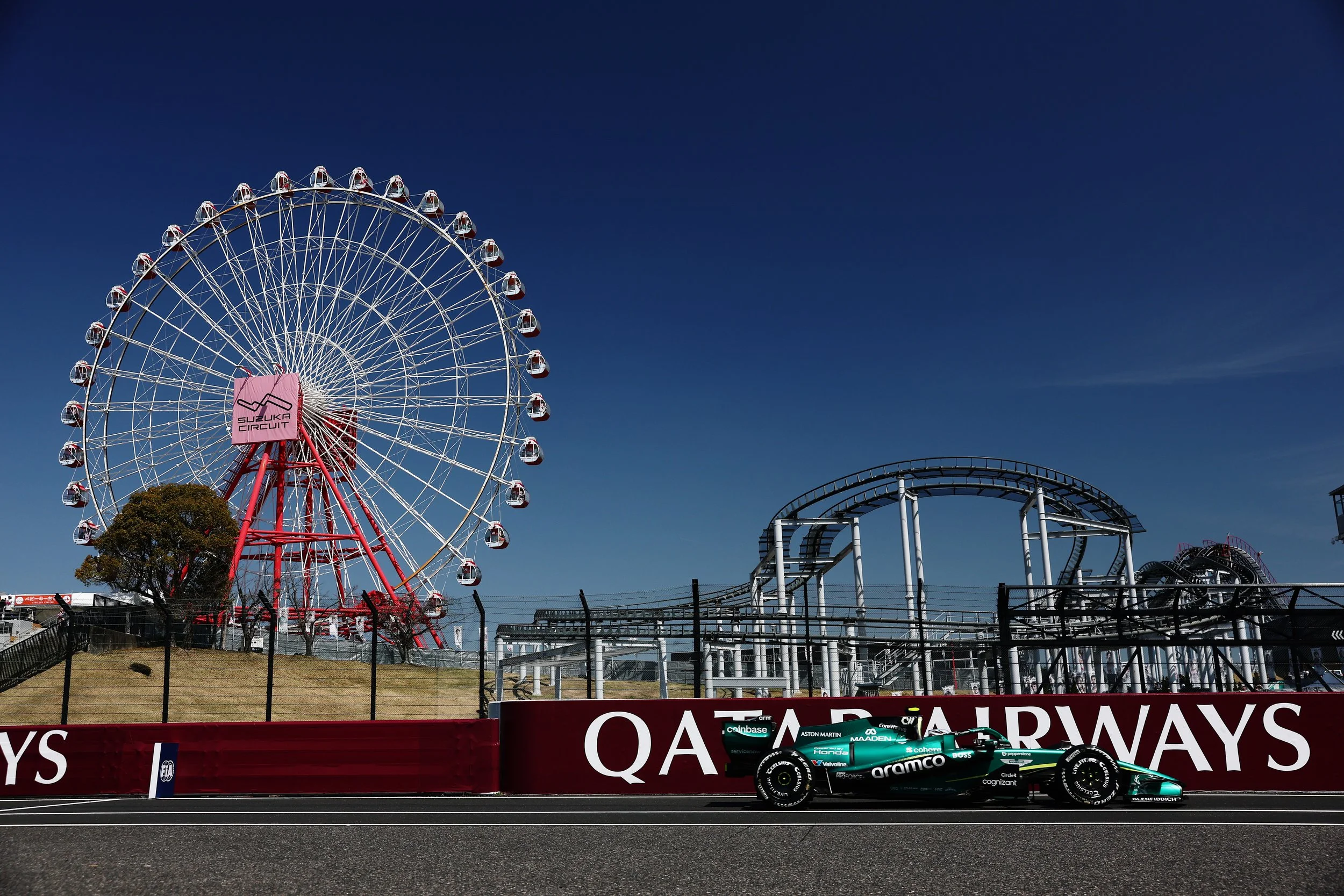
Image © Honda Motor Co. Ltd & Aston Martin Aramco. Used for editorial purposes. Jak Crawford of United States driving the (34) Aston Martin F1 Team AMR26 Honda on track during practice ahead of the F1 Grand Prix of Japan at Suzuka Circuit on March 27, 2026
Some of the more thoughtful analysis this week has made a similar point from slightly different directions. The BBC’s reading of events, Mark Hughes in Motor Sport, and other more measured reporting have all broadly landed in the same territory: if Aston Martin does place a more traditional operational figure alongside Newey, that would be better understood as an attempt to free him to do what he does best, rather than any kind of punishment for the team’s poor start. That feels an important distinction.
“Newey’s value was never likely to lie in the endless administrative, political and public-facing demands of modern Formula 1 management…”
…but in technical authority, creative judgement and shaping the car itself. The more difficult question is whether Aston Martin can now build enough stability around that vision, because Formula 1 rarely rewards teams that keep having to rearrange themselves at the top.
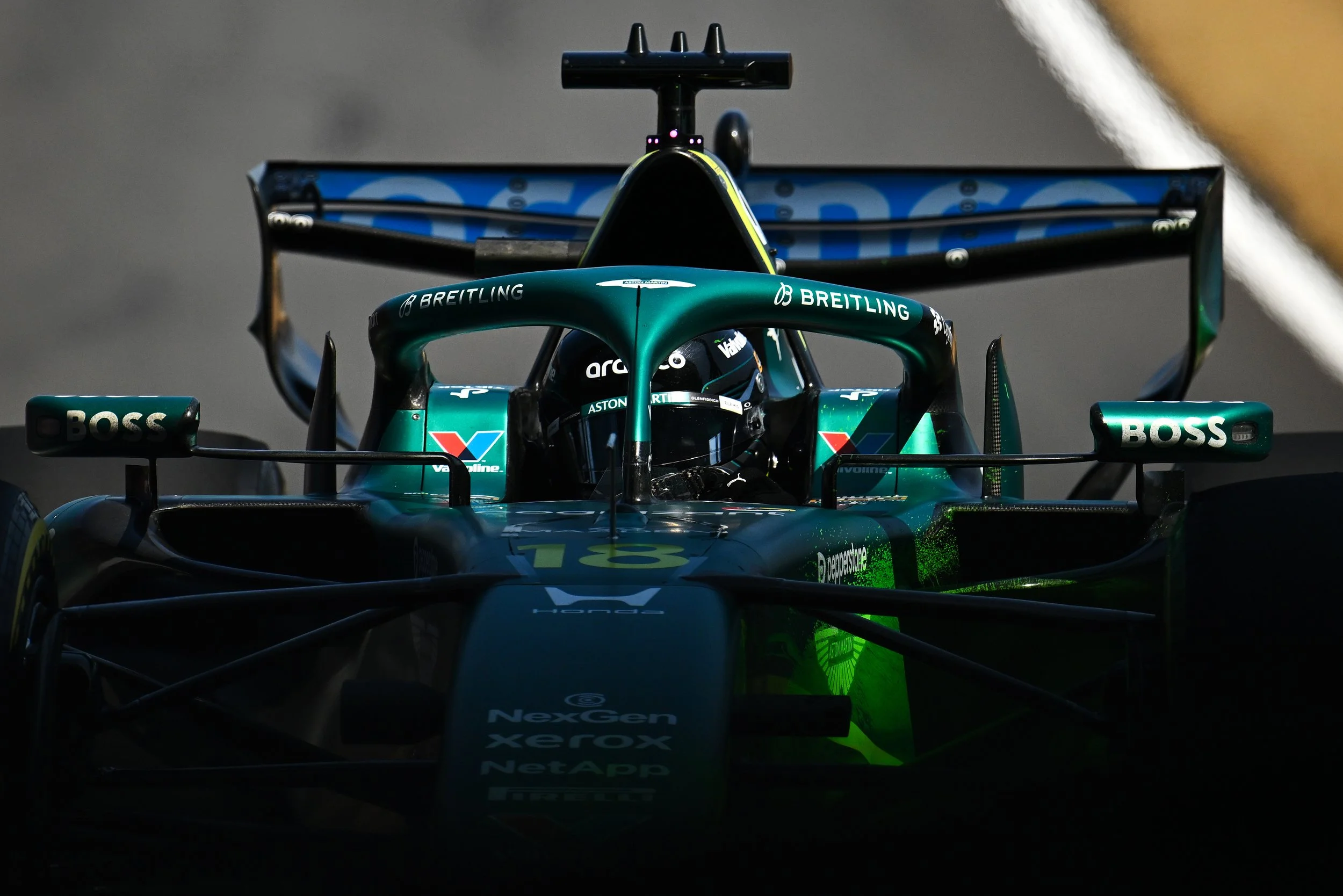
Image © Honda Motor Co. Ltd & Aston Martin Aramco. Used for editorial purposes.
Not all the meaningful voices this week came from outside, though. Lance Stroll struck a noticeably calmer tone than much of the surrounding commentary, arguing in essence that Aston Martin still needs mileage, data and time with the AMR26 before stronger conclusions can fairly be drawn. There is no miracle in that, and no guarantee either, but it was a useful reminder that inside the garage the picture is still being framed as frustrating rather than hopeless.
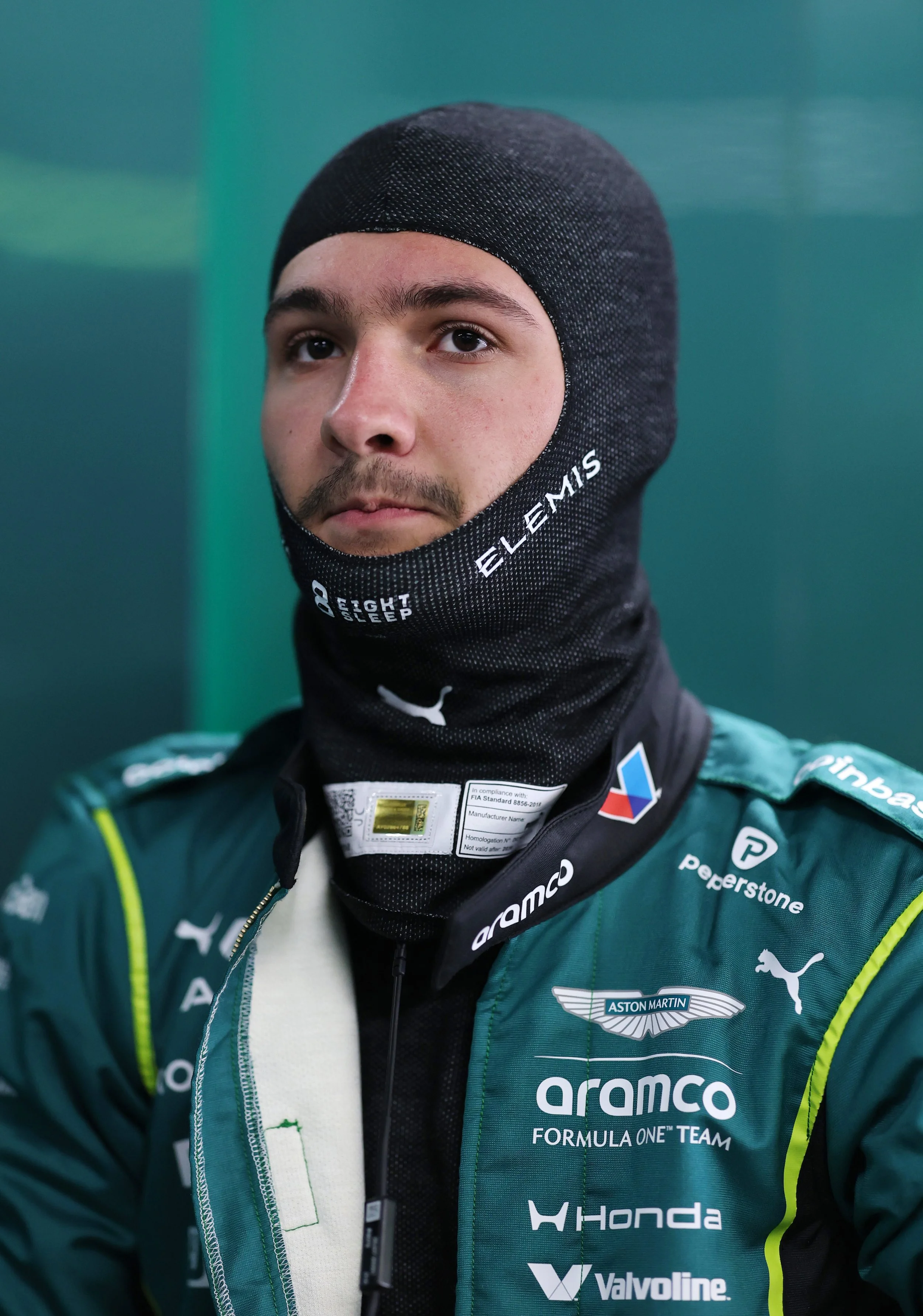
Image © Honda Motor Co. Ltd & Aston Martin Aramco. Used for editorial purposes. Jak Crawford of United States and Aston Martin F1 Team prepares to drive in the garage prior to practice ahead of the F1 Grand Prix of Japan at Suzuka Circuit on March 27, 2026
A small but quietly important moment this weekend comes with the confirmation that Jak Crawford will take part in Free Practice One at Suzuka, stepping into Fernando Alonso’s AMR26.
It marks his first FP1 outing in his role as Aston Martin’s Third Driver and forms part of the team’s mandated rookie programme, but it is more than just a regulatory exercise.
Crawford has already built up meaningful mileage in Formula 1 machinery, with over 3,000km completed and two FP1 sessions under his belt in recent months, and this latest run offers him the opportunity to translate extensive simulator work into real-world experience at one of the sport’s most demanding circuits.
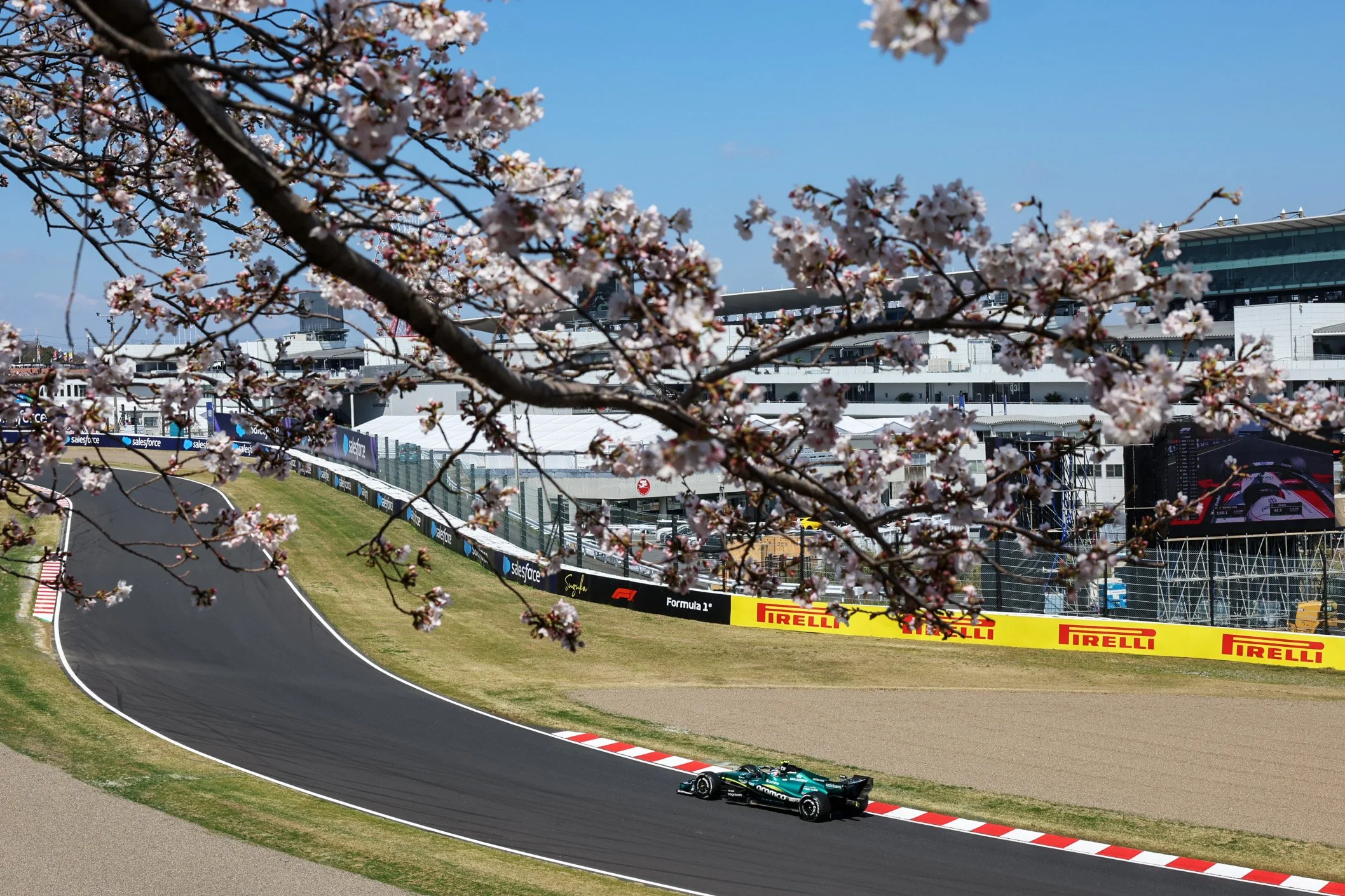
Image © Honda Motor Co. Ltd & Aston Martin Aramco. Used for editorial purposes. Jak Crawford of United States driving the (34) Aston Martin F1 Team AMR26 Honda on track during practice ahead of the F1 Grand Prix of Japan at Suzuka Circuit on March 27, 2026 in Suzuka, Japan.
For a driver who has yet to race at Suzuka, it represents a valuable step forward, both for his own development and for the team, as Aston Martin continues to invest in its next generation of talent.
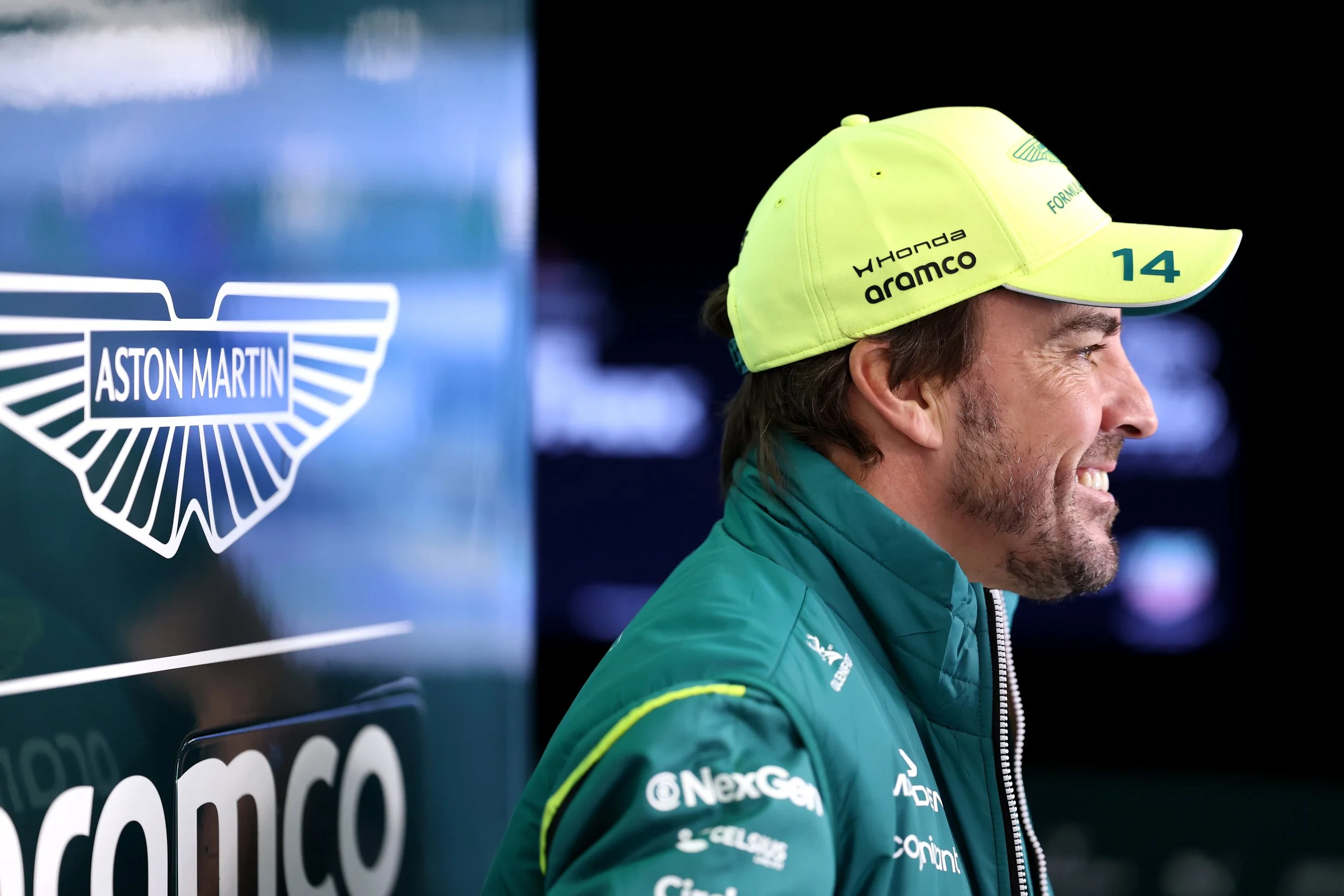
Image © Honda Motor Co. Ltd & Aston Martin Aramco. Used for editorial purposes.
There was also a more human note to the week, with Fernando Alonso missing media day after the birth of his first child before joining the team in time for Friday running. Congratulations Fernando!
It is not a story that needs overplaying, especially given how private Alonso generally is, but it did add a brief moment of perspective to a week otherwise dominated by technical headaches and organisational scrutiny.
There is, however, one further piece of context worth keeping in view. As noted in last week’s roundup, the disruption to the calendar caused by the conflict in the Middle East means that once Suzuka is complete, Formula 1 pauses for longer than expected before the next round. For most teams, that would simply be an awkward break in momentum. For Aston Martin and Honda, it may yet prove rather more useful than that.
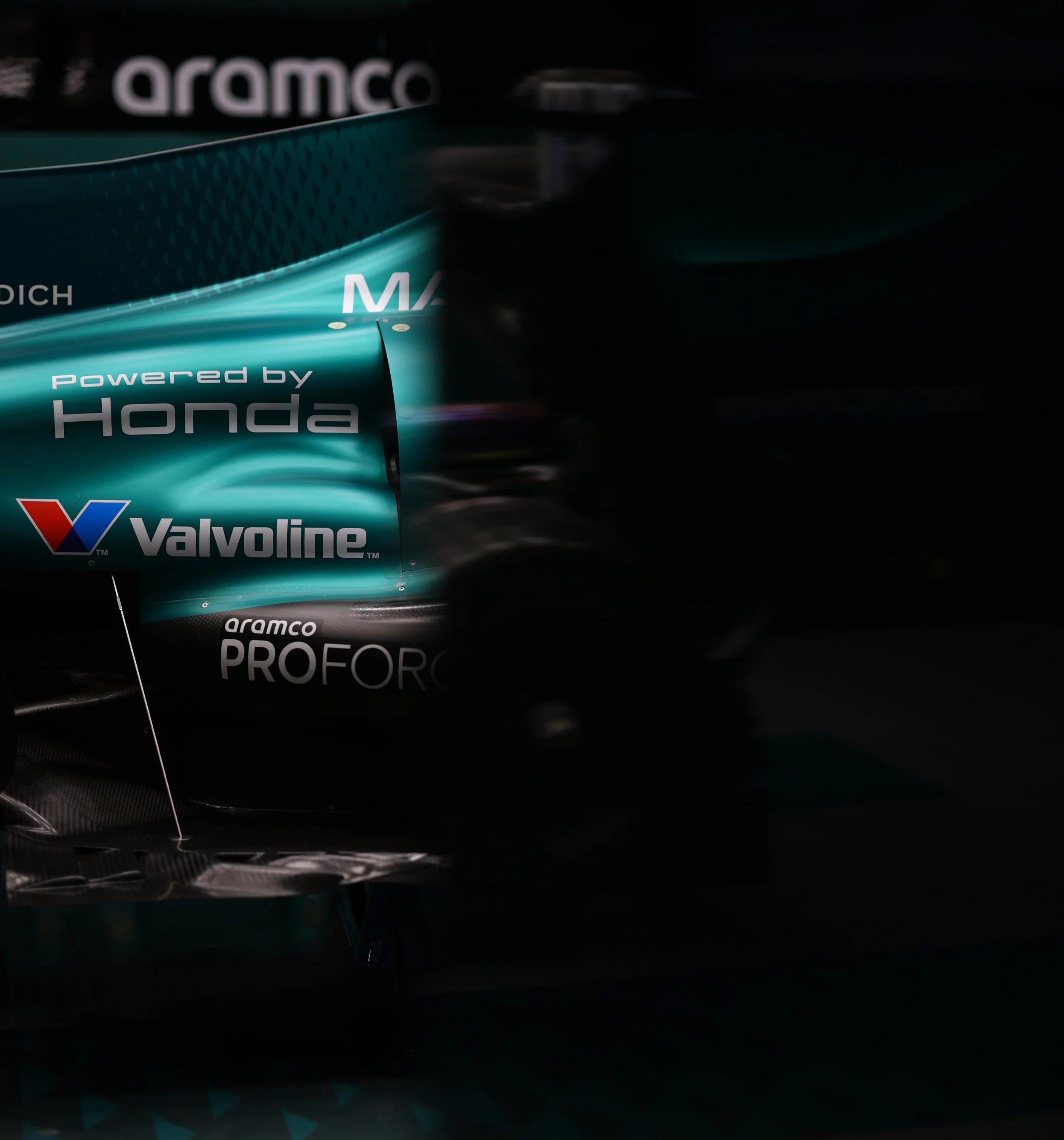
Image © Honda Motor Co. Ltd & Aston Martin Aramco. Used for editorial purposes.
A project that very obviously needs time to diagnose, regroup and work methodically through a layered set of problems has suddenly been given more breathing space than it might otherwise have had.
That does not guarantee a solution, of course, and nor should it be dressed up as one.
But at this stage of the season, the extra time may be one of the few genuine advantages available to them.
That wider concern has not gone unnoticed outside the team either. David Coulthard was among those to weigh in this week, suggesting that the deeper issue may be less about driver discomfort in isolation and more about what the vibration could be doing to the underlying reliability of the package. It was a useful point, not because it suddenly changed the facts, but because it showed how Aston Martin’s early-season problems are being interpreted beyond the garage itself.
Aston Martin’s Friday at Suzuka brought a little encouragement, even if not yet a genuine shift in the wider picture. Shintaro Orihara, Honda’s Trackside General Manager and Chief Engineer, said the team gathered “useful data” across free practice to better understand where it needs to go to reduce vibrations, “not only for the battery system but also for the driver”, which at least suggests some progress in diagnosis. He also described it as a “smooth session on both cars”, with plenty of mileage completed, something Aston Martin and Honda badly needed after such a troubled start to the year. The caveat, though, remains familiar enough: “our pace is not where we want it to be,” Orihara admitted, leaving Aston Martin still searching overnight for answers before FP3 and qualifying. In other words, Friday appears to have offered useful learning and a little stability, but not yet the performance breakthrough the team is still waiting for.
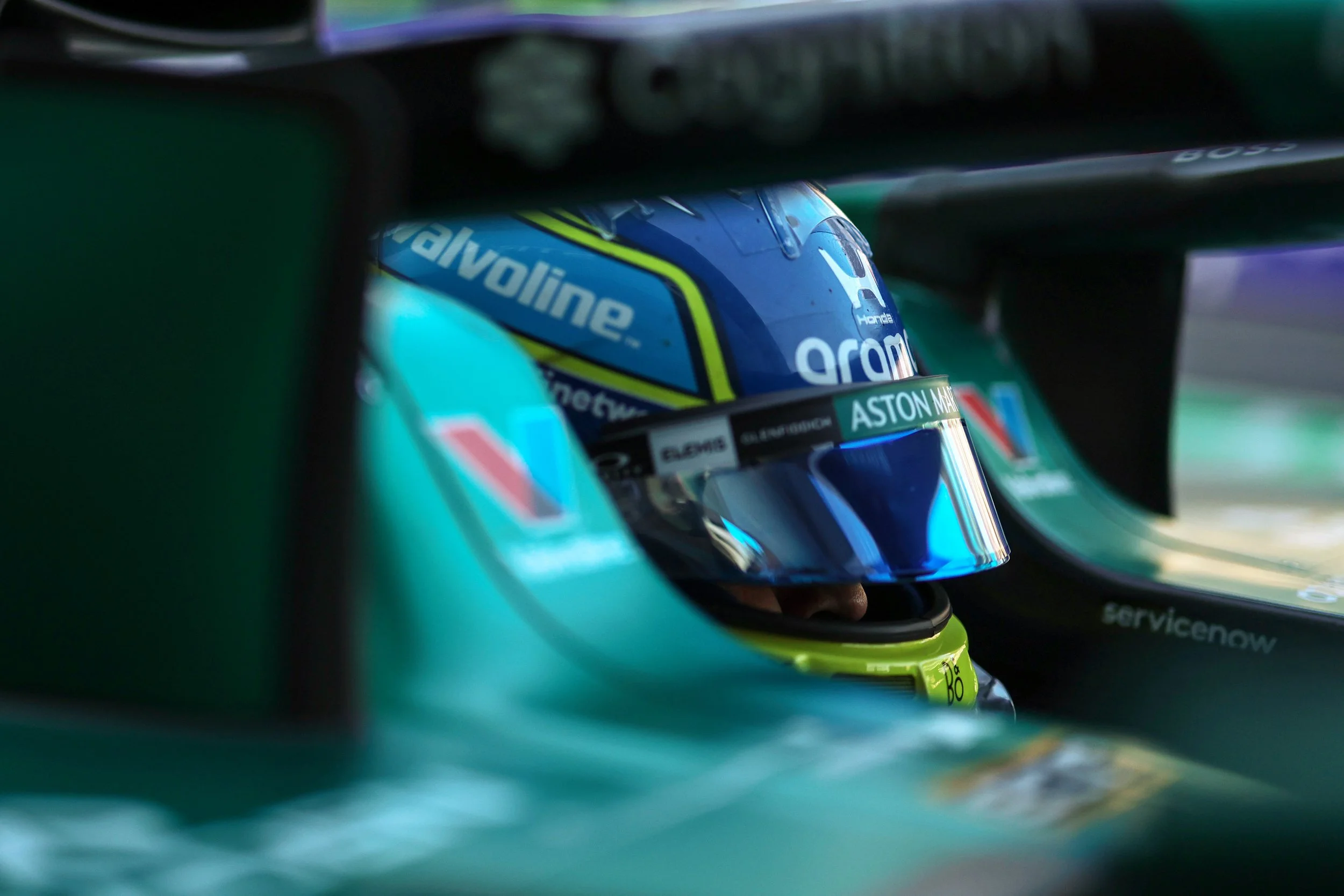
Image © Honda Motor Co. Ltd & Aston Martin Aramco. Used for editorial purposes. Fernando Alonso of Spain and Aston Martin F1 Team prepares to drive in the garage during practice ahead of the F1 Grand Prix of Japan at Suzuka Circuit on March 27, 2026
So the Aston Martin Formula 1 picture, by the time this edition was put to bed, remained awkward rather than resolved. There were signs of learning, some evidence of limited progress, and a little more clarity around how the team may ultimately wish to organise itself.
But there was still no escaping the fact that Aston Martin arrived at Honda’s home race with too many unanswered questions and too little proven performance. That, for now, is the honest state of play.
Elsewhere, though, Aston Martin’s motorsport story looks rather healthier, because Sebring gave us exactly the follow-up promised last week: a fuller picture of a Vantage GT3 Evo fighting at the very front, and a Valkyrie programme continuing to learn the hard way at endurance racing’s sharpest end.
Aston Martin Motorsport: Sebring Revisited, with Promise and Frustration in Equal Measure
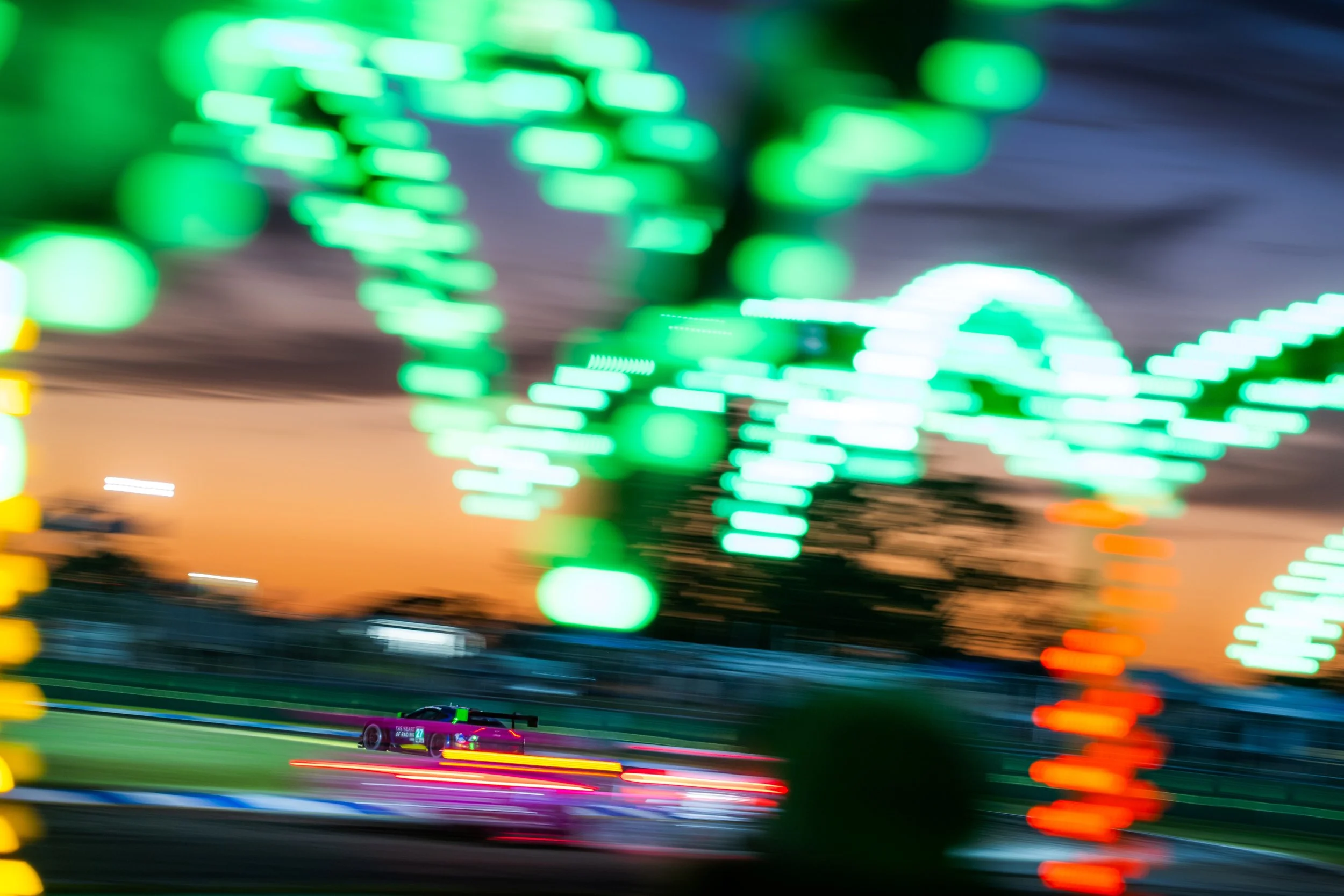
Image © Aston Martin Lagonda. Used for editorial purposes.
As promised in last week’s roundup, Sebring deserves a fuller return now that the dust has settled and Aston Martin has issued its own account of the weekend. The late race update carried in last Sunday’s edition captured the immediate mood well enough, but with a little more distance the wider picture becomes clearer. For Aston Martin, this was not simply a story of second place in GTD and a finish for the Valkyrie in GTP. It was a weekend that said something more meaningful about where two very different programmes currently stand.
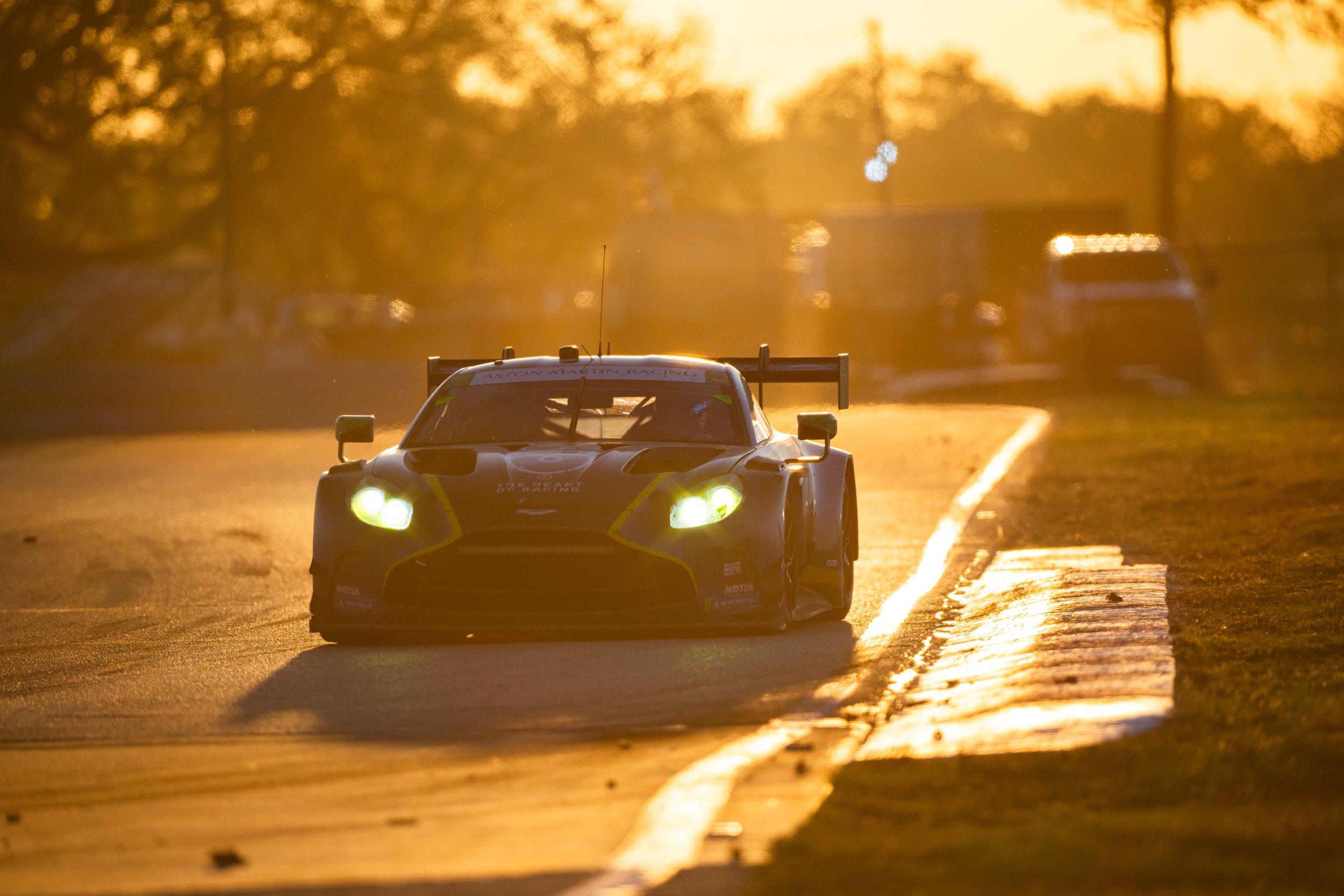
Image © Aston Martin Lagonda. Used for editorial purposes.
On the GT side, the headline remains one of genuine competitiveness. The Heart of Racing’s No. 27 Vantage GT3 Evo was a victory contender throughout the 12 Hours of Sebring and, in truth, looked capable of winning one of endurance racing’s great events.
Eduardo Barrichello’s class pole on his Sebring debut was impressive enough on its own, but the race itself mattered even more.
Barrichello, Zach Robichon and Tom Gamble all took turns controlling the shape of the contest, and while the result ultimately became another painful near-miss rather than a breakthrough victory, Aston Martin’s own post-race statement underlined just how strong the underlying performance really was.
That matters, because the official Aston Martin summary adds weight to what was already obvious from the race itself. This was not a fortunate podium picked up through attrition or chaos. The Vantage was quick, robust and strategically flexible across one of the harshest races on the calendar.
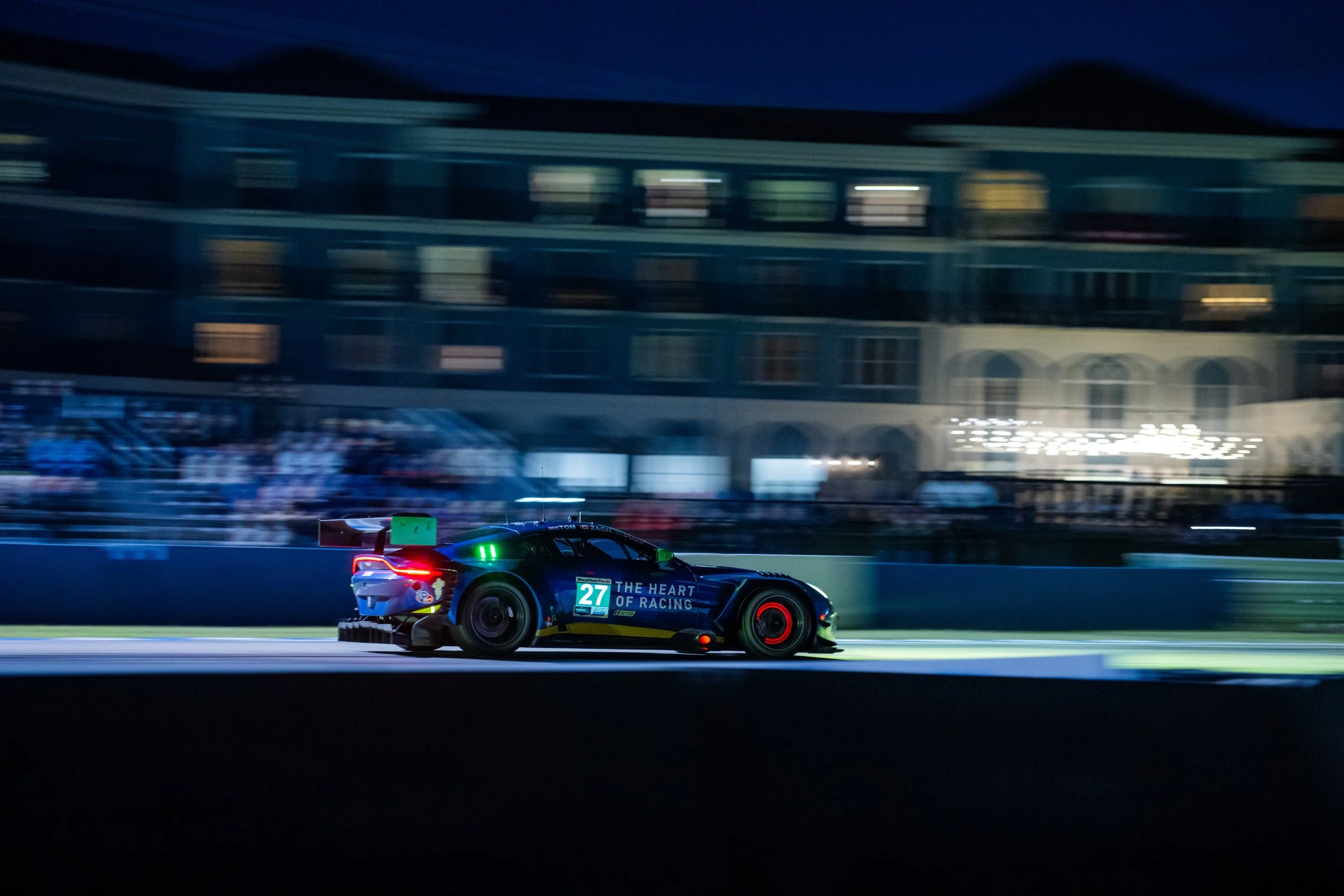
Image © Aston Martin Lagonda. Used for editorial purposes.
Aston Martin described it as a third IMSA podium in just two races for Vantage, following the strong Daytona opener, and noted that the car remains unbeaten in GTD qualifying in 2026. Barrichello’s lap also meant that Vantage currently holds GT pole positions at Sebring, Daytona and Le Mans, which is no small statement about the platform’s continuing depth and credibility at the sharp end of global GT racing.
There was also something very familiar, and rather Aston Martin, about the way the race unfolded. Sebring is not kind to racing cars, strategies or nerves, and The Heart of Racing had to fight through setbacks just to stay in the argument.
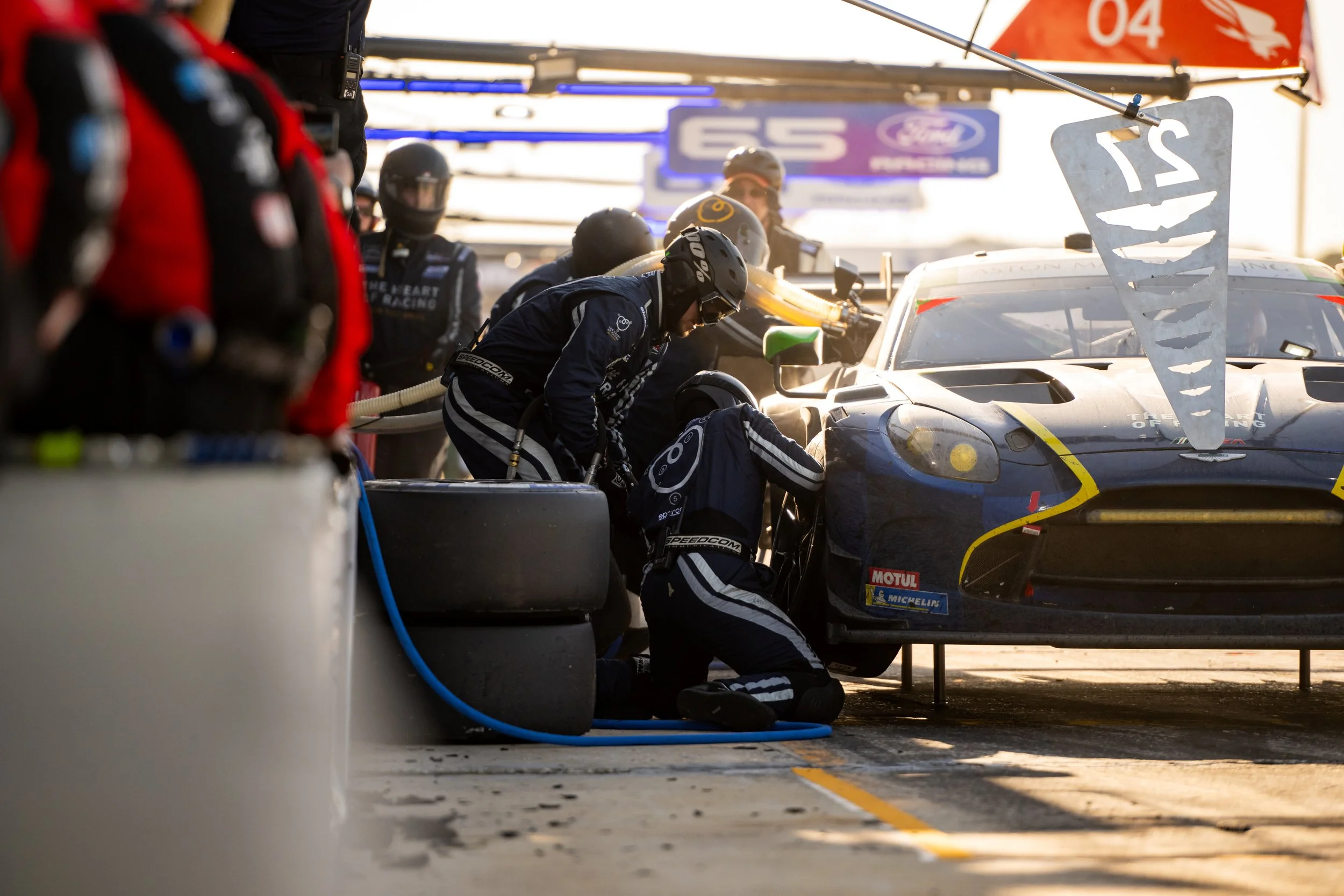
Image © Aston Martin Lagonda. Used for editorial purposes.
A false alarm triggered an unscheduled stop, a pitlane penalty cost further ground, and yet the combination of driver consistency, Vantage pace and clever use of the cautions put the car back where it belonged: at the front, fighting for the win when it mattered most.
That alone says a great deal about the team and the car. It is why Tom Gamble’s disappointment afterwards felt entirely understandable. Second at Sebring is a strong result by any sensible measure, but when victory looks within reach so late on, it is only natural that it should still sting.
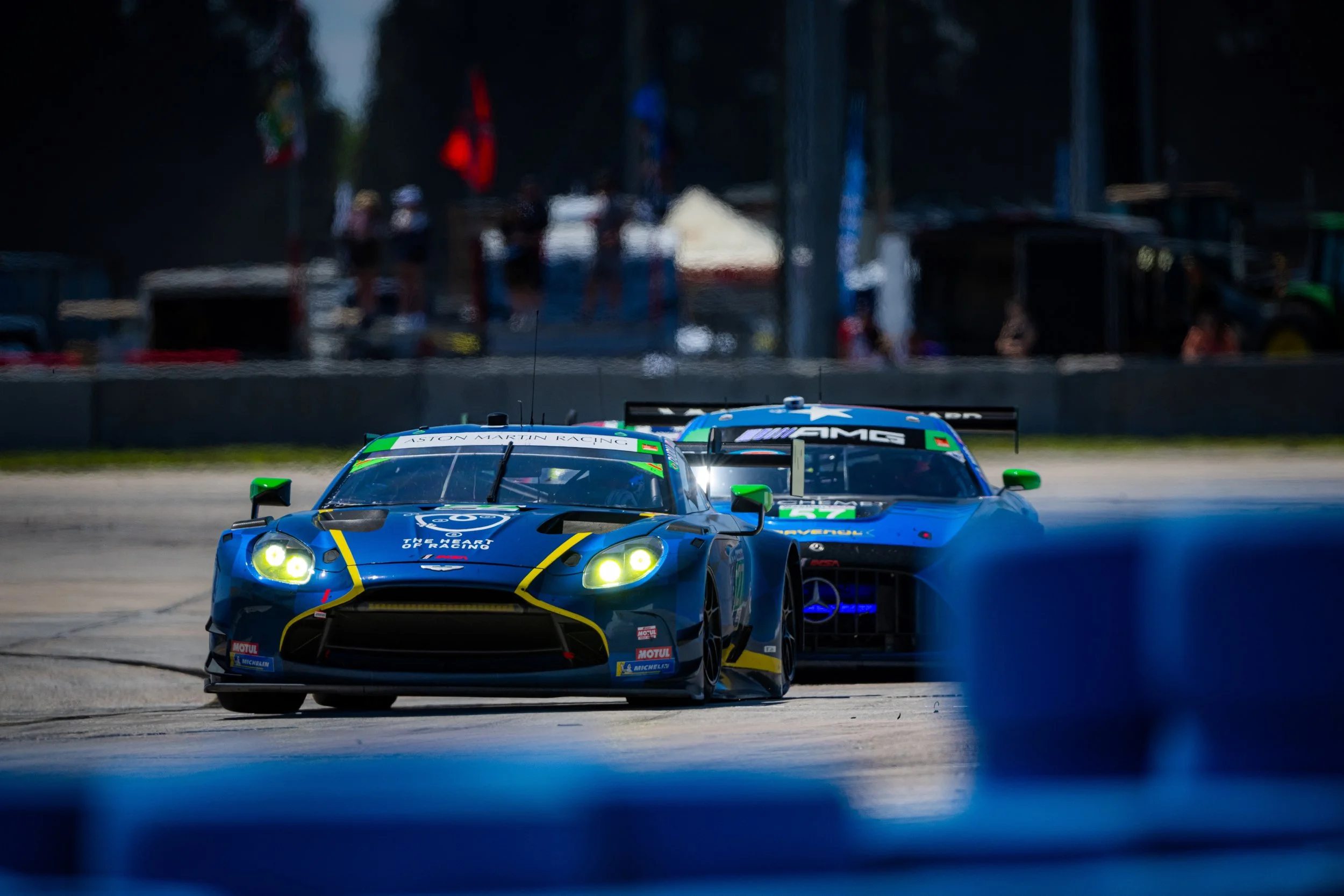
Image © Aston Martin Lagonda. Used for editorial purposes.
Even so, the broader GT picture is undeniably encouraging.
Ian James was right to say there were plenty of positives to take away, not least the fact that The Heart of Racing leaves Sebring with the GTD championship lead.
Adam Carter’s remarks from Aston Martin’s side were useful too, because they put the emphasis where it belongs: on consistency of pace, competitiveness in changing conditions, and the ability to remain in the fight throughout a stop-start, caution-heavy endurance race.
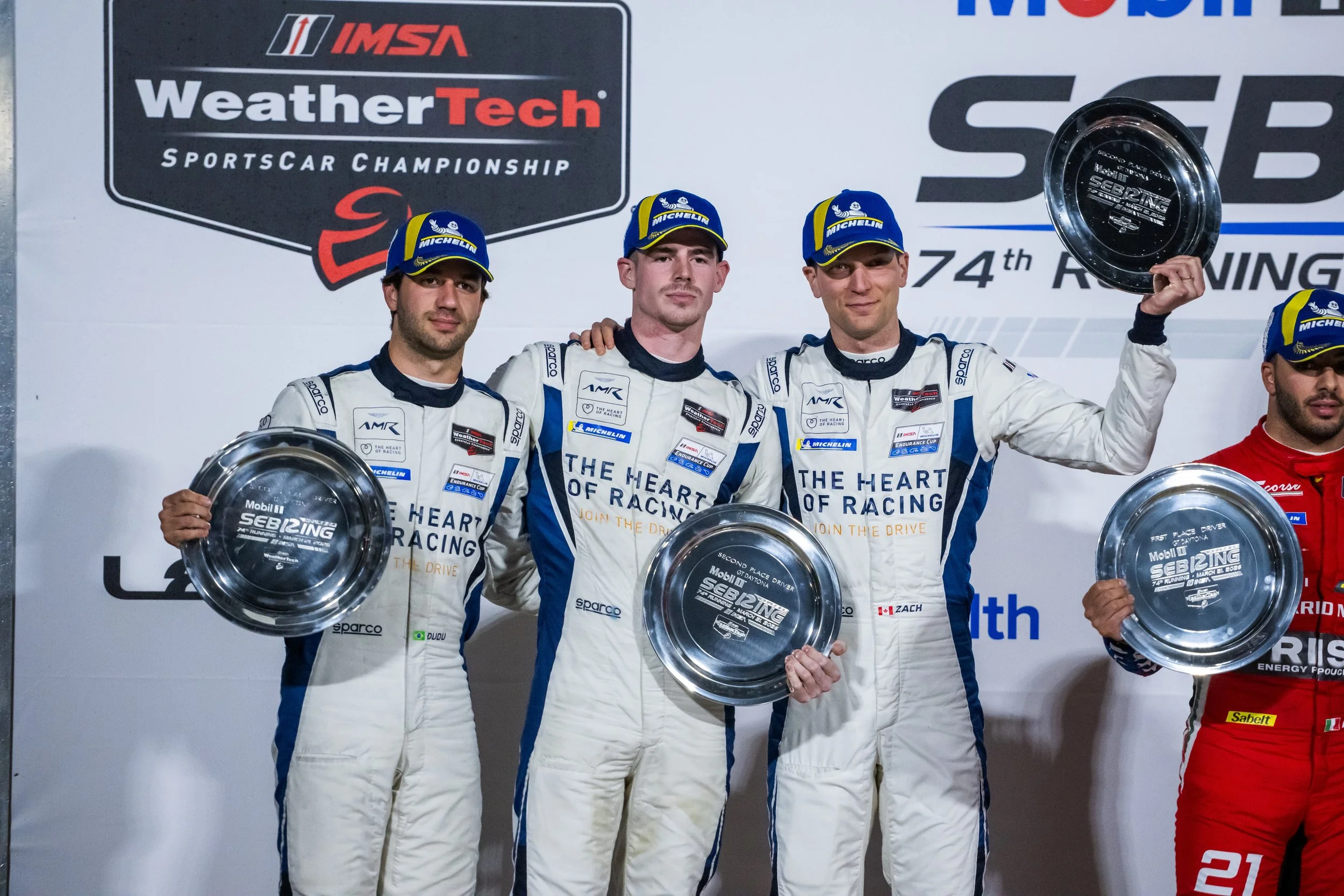
Image © Aston Martin Lagonda. Used for editorial purposes.
In other words, while Formula 1 currently feels fragile and unresolved, the Vantage GT3 Evo continues to do something much more reassuring. It turns up at major events and looks like a proper contender.
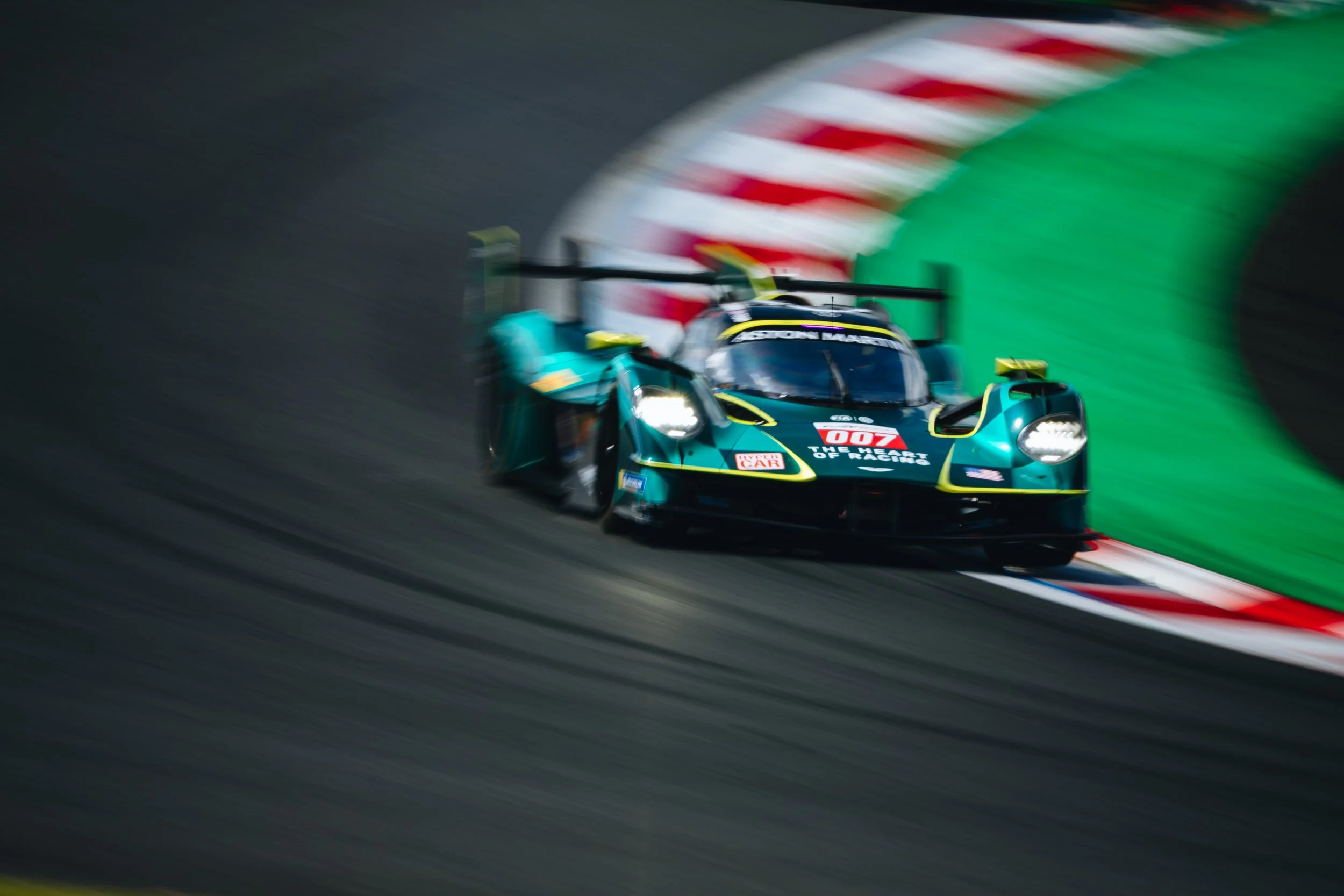
Image © Aston Martin Lagonda. Used for editorial purposes.
The Valkyrie story, of course, sits in a very different place.
Here the question was never going to be whether Aston Martin could simply dominate at will, but whether the programme could continue to absorb the brutal lessons of top-class endurance racing and come away stronger for it.
As briefly noted last week, the No. 23 car ran cleanly for much of the race before a re-fire issue during a pit stop cost it significant time. On paper, ninth in class is not the sort of result that stops the world. But Sebring has always been one of the toughest durability tests in motorsport, and the fact that Valkyrie could get back out, keep going and gather more meaningful mileage still counts for something.
That is the key distinction. The Vantage story is already one of mature competitiveness; the Valkyrie story remains one of development under pressure. One is there to win now, the other is there to learn what only races like this can teach it. Both matter, but in very different ways and when placed side by side, they actually tell a rather revealing story about Aston Martin’s wider motorsport identity in 2026. Formula 1 may currently dominate the headlines, but elsewhere the marque’s racing world looks broader, steadier and, in places, much healthier than the grand prix picture alone might suggest.
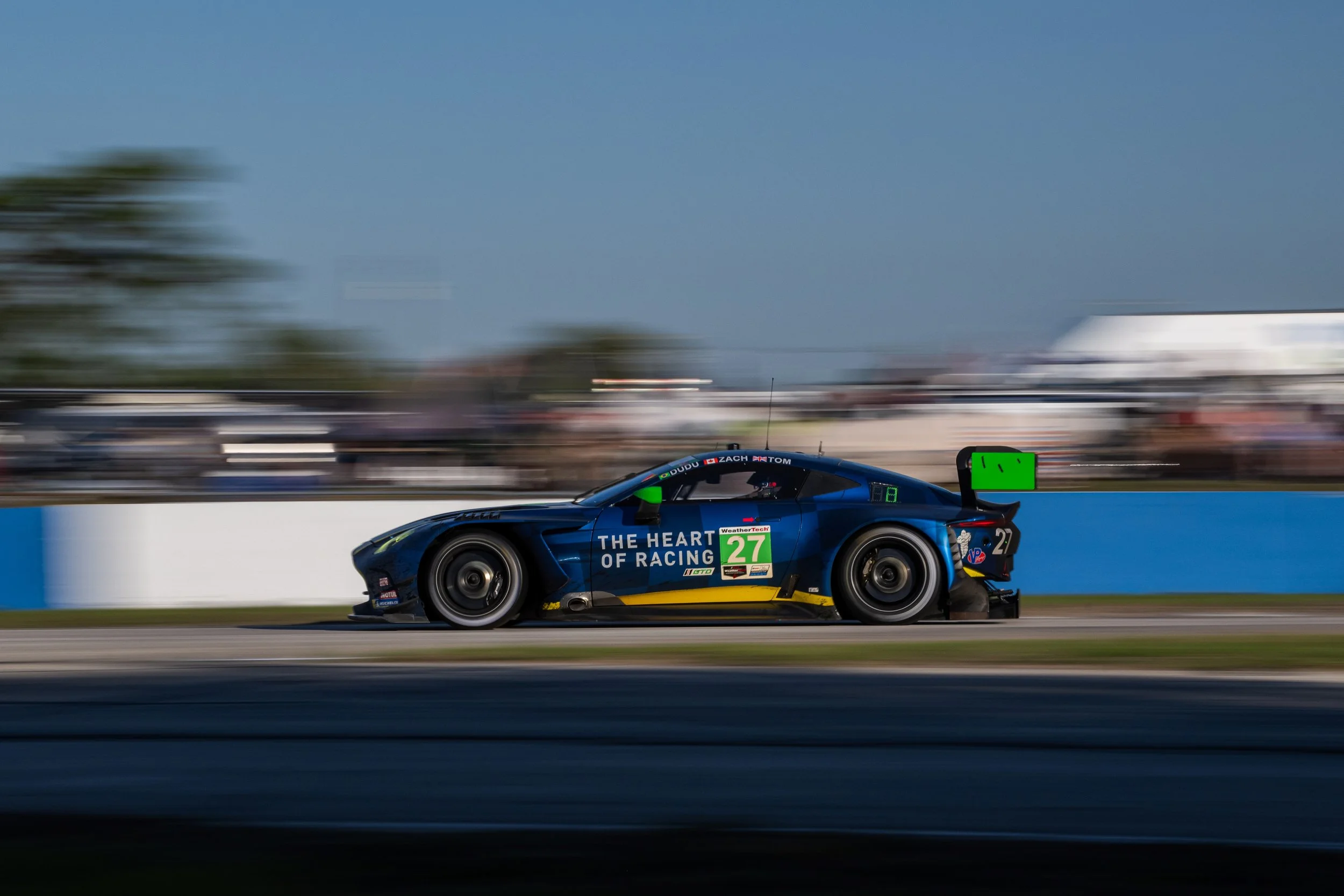
Image © Aston Martin Lagonda. Used for editorial purposes.
Sebring, then, felt like a weekend of promise and frustration in equal measure. The Vantage GT3 Evo left Florida with more proof of its quality, even if victory slipped away at the end, while the Valkyrie continued the unglamorous but necessary work of becoming race-proven in the top class. Taken together, it was exactly the sort of follow-up last week’s brief update hinted at: a story worth returning to properly, because the result alone never quite told the full tale.
From there, Aston Martin’s wider GT story does not really lose momentum, because Sebring was not the only reminder this week that beyond Formula 1, the marque’s competition life still contains a good deal of ambition, substance and character.
Blackthorn Racing: ambition with character
This is where Blackthorn Racing comes into view. It may sit a little further from the loudest headlines, but in many ways that is exactly why it feels worth following. Some of the most interesting Aston Martin stories are not always the biggest. They are the ones still taking shape, driven by people with a clear sense of purpose and a genuine love for the machinery they are racing.
A good example came in Historic Motor Racing News this week, which spoke to Blackthorn owner and driver Claude Bovet about the journey that brought him into both modern GT racing and historics. Bovet explained that he began racing in the UK only a few years ago, first with a Ferrari 458 Challenge, then a Lamborghini Huracán Super Trofeo Evo2, before moving toward prototypes and GT3 machinery.
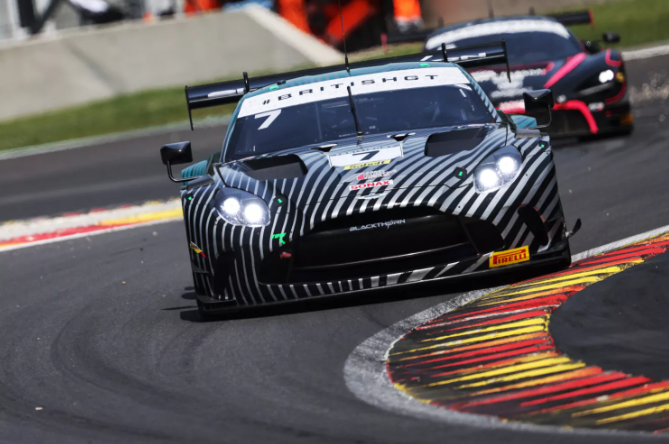
Image © Aston Martin Lagonda. Used for editorial purposes.
But it was GT3 racing that truly took hold, to the point that he bought three Aston Martin Vantage GT3 EVOs and turned Blackthorn into an AMR Partner Team.
What makes that especially interesting is that the story does not stop with modern GT ambition. Running alongside it is a clear affection for historic racing, rooted in a more personal place. Bovet described stumbling across an Austin Healey 3000 FIA car that immediately spoke to him, partly because of childhood memories of his father’s Healey 100, and partly because of the simple timelessness of the shape itself. From there the picture becomes more rounded: a team owner building a serious Aston Martin GT programme, while also embracing the very different rhythm and spirit of historic motorsport.
His reflections on the Le Mans Classic were particularly telling. Racing a 1961 Healey 3000 there, in torrential rain and darkness, clearly left a lasting impression, but so too did the atmosphere in the paddock. Bovet spoke warmly about how approachable and supportive the historic racing world felt, despite the competition itself still being intense. That matters, because it says something about the sort of environment Blackthorn is choosing to be part of, and perhaps the sort of team culture it is building around itself as well. There is also no shortage of ambition in what comes next.
“Bovet says Blackthorn’s longer-term aim is not simply to race, but ultimately to reach the 24 Hours of Le Mans with its own team.”
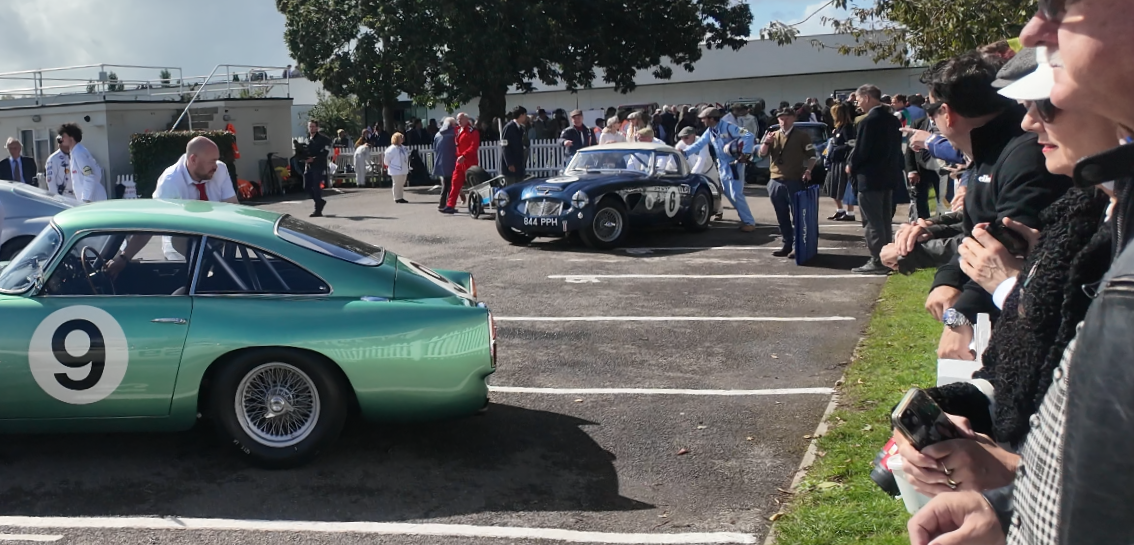
Image © Fuel the Passion, an Austin Healey at Goodwood Revival 2025
Alongside that, he plans to continue campaigning the Healey in events such as Spa and Silverstone, while also keeping an eye on Goodwood as a place he clearly reveres.
That combination of present-day GT3 seriousness and historic racing enthusiasm makes Blackthorn feel more than just another entry on a timing screen. It feels like a team with a proper motorsport appetite.
For Aston Martin, that matters. Sebring showed the Vantage still fighting hard at the front on a major stage, but stories like Blackthorn’s remind us that the marque’s racing life is broader than one result or one championship. It is also carried by independent teams, owner-drivers and long-term projects that still see Aston Martin as the right badge to build something around.
From one evolving competition story to one of Aston Martin’s most established and evocative names, Wednesday of this week then brought a timely reminder of just how much weight the word Vanquish still carries.

Before we move on, a quick thank you.
Fuel the Passion has now passed 3,000 subscribers on YouTube, which I genuinely do not take for granted, especially in such a niche space focused on a single marque. What began as a simple idea has grown into a wonderful community of people who share a love for these cars and their stories.
The next milestone is 5,000 subscribers by 1st January 2027. Whether we get there or not, it feels a challenge worth aiming for. If you haven’t yet subscribed and would like to, I’d genuinely love you to. Simply click on the link below, which will take you to the Fuel the Passion YouTube channel, then look for the subscribe button. It’s completely free to do, and it really does help boost the channel and everything Fuel the Passion is trying to build. Thank you for being part of the journey.
Vanquish at 25 - a flagship line comes of age
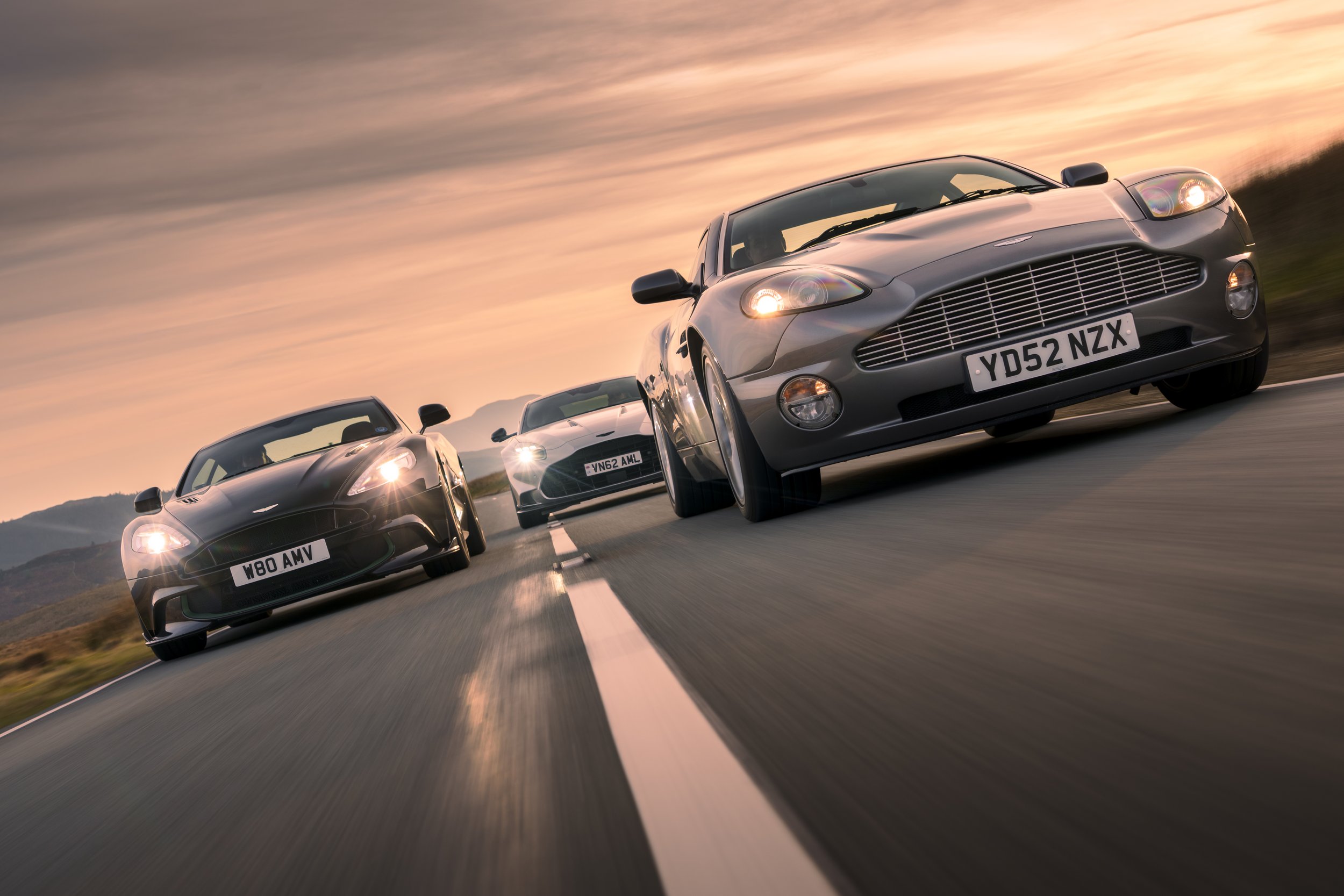
Image © Aston Martin Lagonda. Used for editorial purposes.
Aston Martin marked 25 years of the Vanquish this week, celebrating a nameplate that has now stretched across three distinct generations of flagship front-engined performance car. That anniversary matters, because Vanquish has never really been just another model in the range. When the original V12 Vanquish arrived in 2001, it was presented as something more ambitious than that: a technological and stylistic statement, and ultimately the last major Aston Martin to be built at Newport Pagnell before the shift to Gaydon.
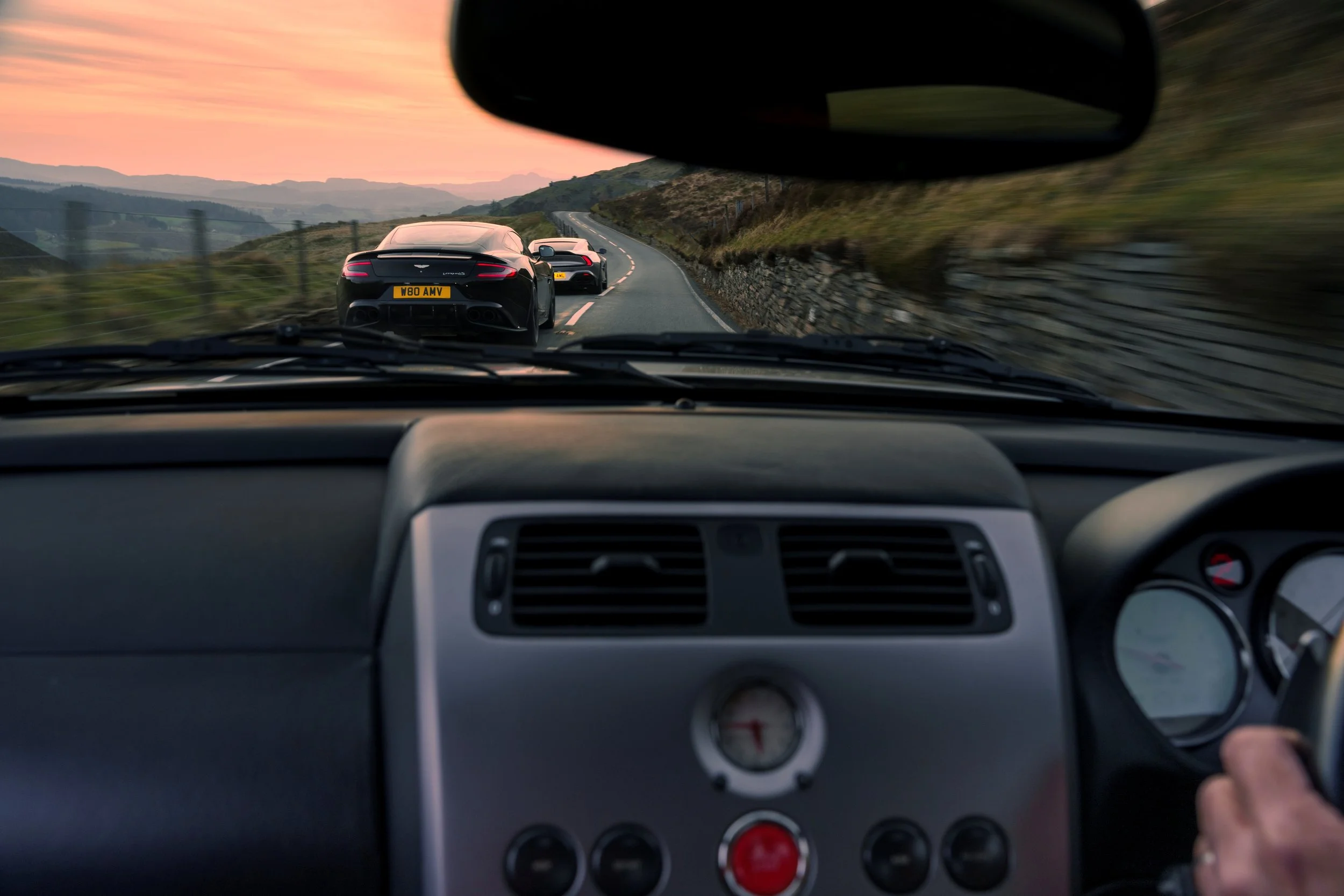
Image © Aston Martin Lagonda. Used for editorial purposes.
With its 6.0-litre V12, paddle-shift gearbox, aluminium and composite construction and unmistakable sense of occasion, it felt then like a car designed to draw a line between the old Aston Martin and the one that was about to emerge.
The second-generation Vanquish, launched in 2012 ahead of production from 2013, did something slightly different. It took the emotional appeal of the first car and gave it a more contemporary edge, leaning heavily into carbon-fibre construction, stronger performance and a broader grand touring brief. Aston Martin’s own anniversary release points to its lighter body, 565bhp V12, available 2+0 or 2+2 seating, and genuine long-distance usability, which perhaps explains why that car now feels like such an important bridge between the old VH-era world and the more modern Aston Martin that followed.
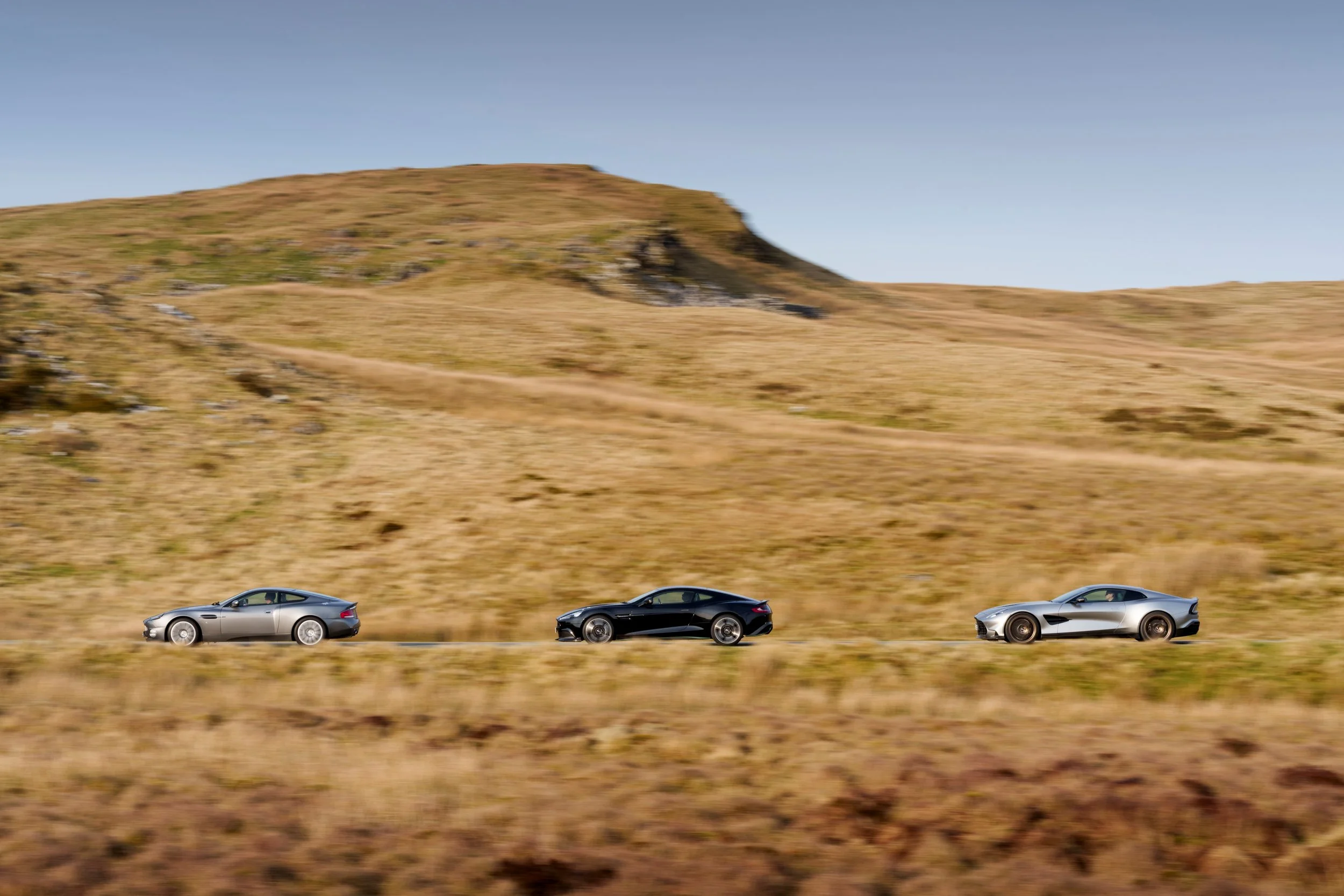
Image © Aston Martin Lagonda. Used for editorial purposes.
Today’s third-generation Vanquish, first revealed in 2024, sits at the top of the current front-engined line-up and, on paper at least, carries the bloodline to its most extreme point yet. Aston Martin says its 5.2-litre twin-turbo V12 produces 835PS and 1000Nm, enough for 0-60mph in 3.3 seconds and a 214mph top speed, while production is limited to fewer than 1,000 cars a year. That is serious performance by any standard, but what makes the anniversary interesting is not simply that the newest car is the fastest.
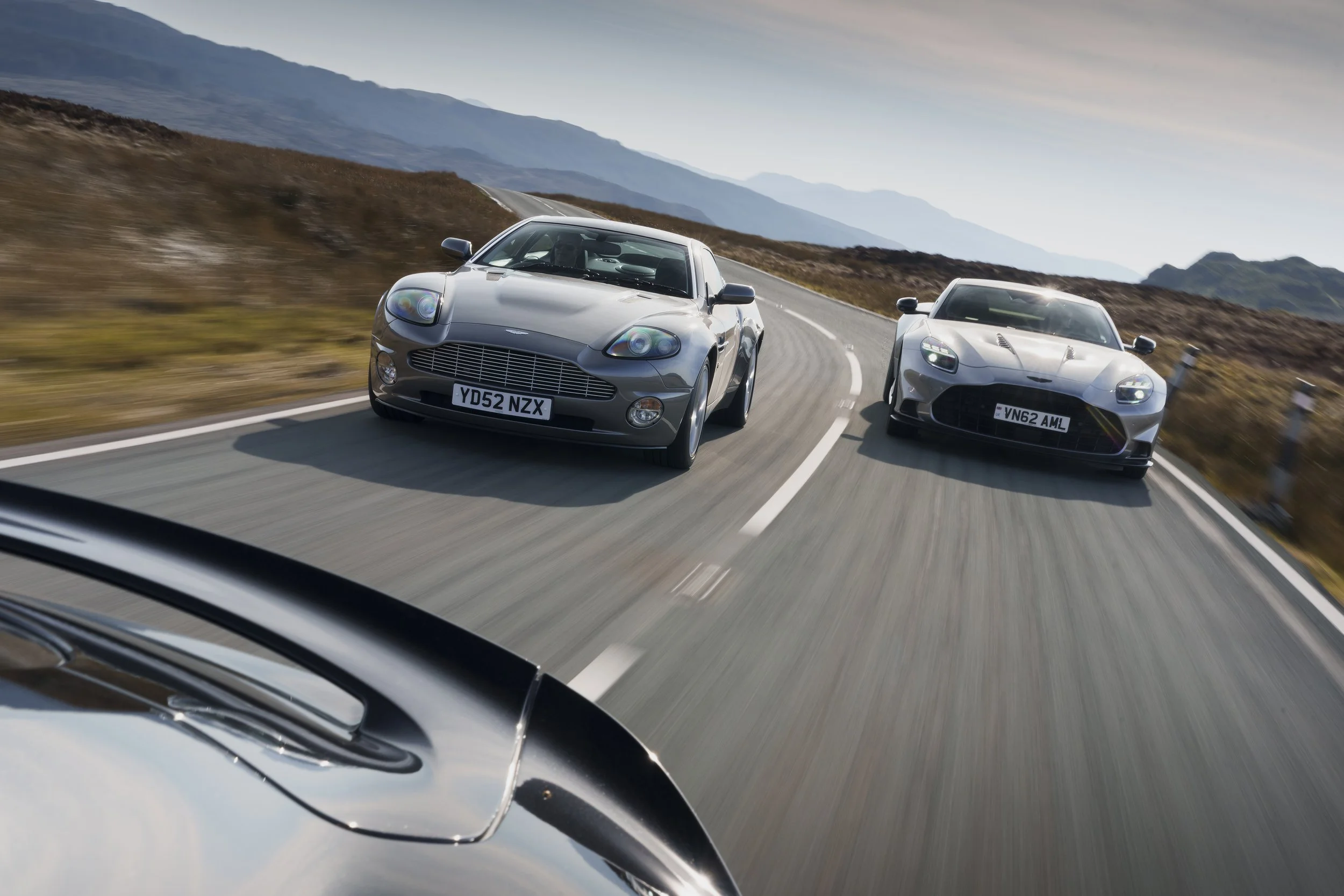
Image © Aston Martin Lagonda. Used for editorial purposes.
It is that Aston Martin is clearly trying to present all three Vanquish generations as part of one continuous idea: the flagship as a place where design, engineering ambition and theatre are allowed to stretch a little further.
There is also something rather fitting in the timing. Vanquish remains one of those Aston Martin names that still carries real weight, not because it has been overused, but because it has been used sparingly and with purpose.
Adrian Hallmark described it this week as a symbol of what Aston Martin is capable of creating, while AML historian Steve Waddingham reflected on the strength of the name itself and the way each generation has tried to live up to it. That feels about right. Vanquish has not always been the easiest car to define, but it has almost always represented the marque at full stretch.
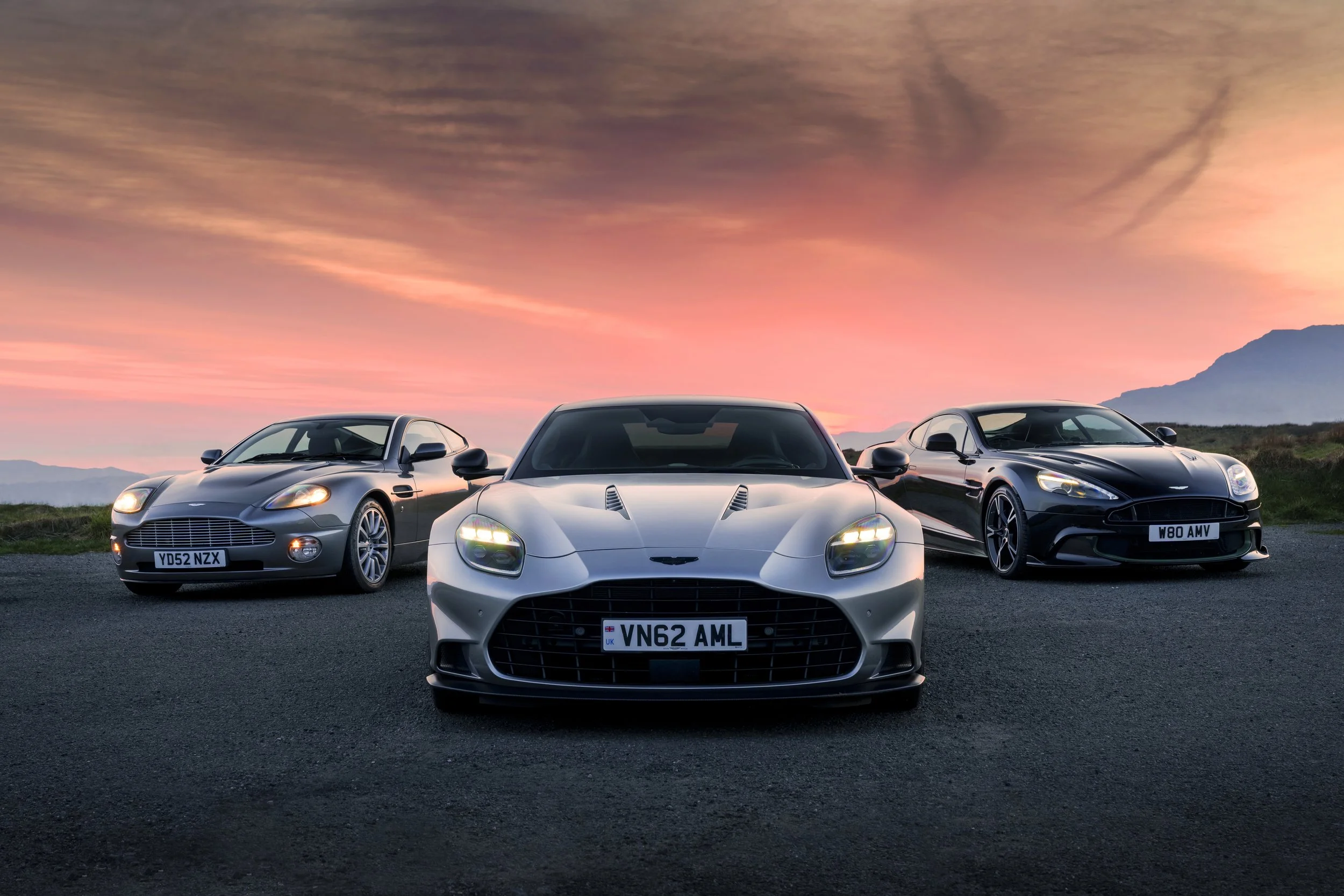
Image © Aston Martin Lagonda. Used for editorial purposes.
From a Fuel the Passion point of view, that made this anniversary feel especially well timed, because away from the press release itself, Vanquish has quietly become one of the real threads running through my own week as well.
DBX S review watch - from dogs and Dolomites to deeper scrutiny
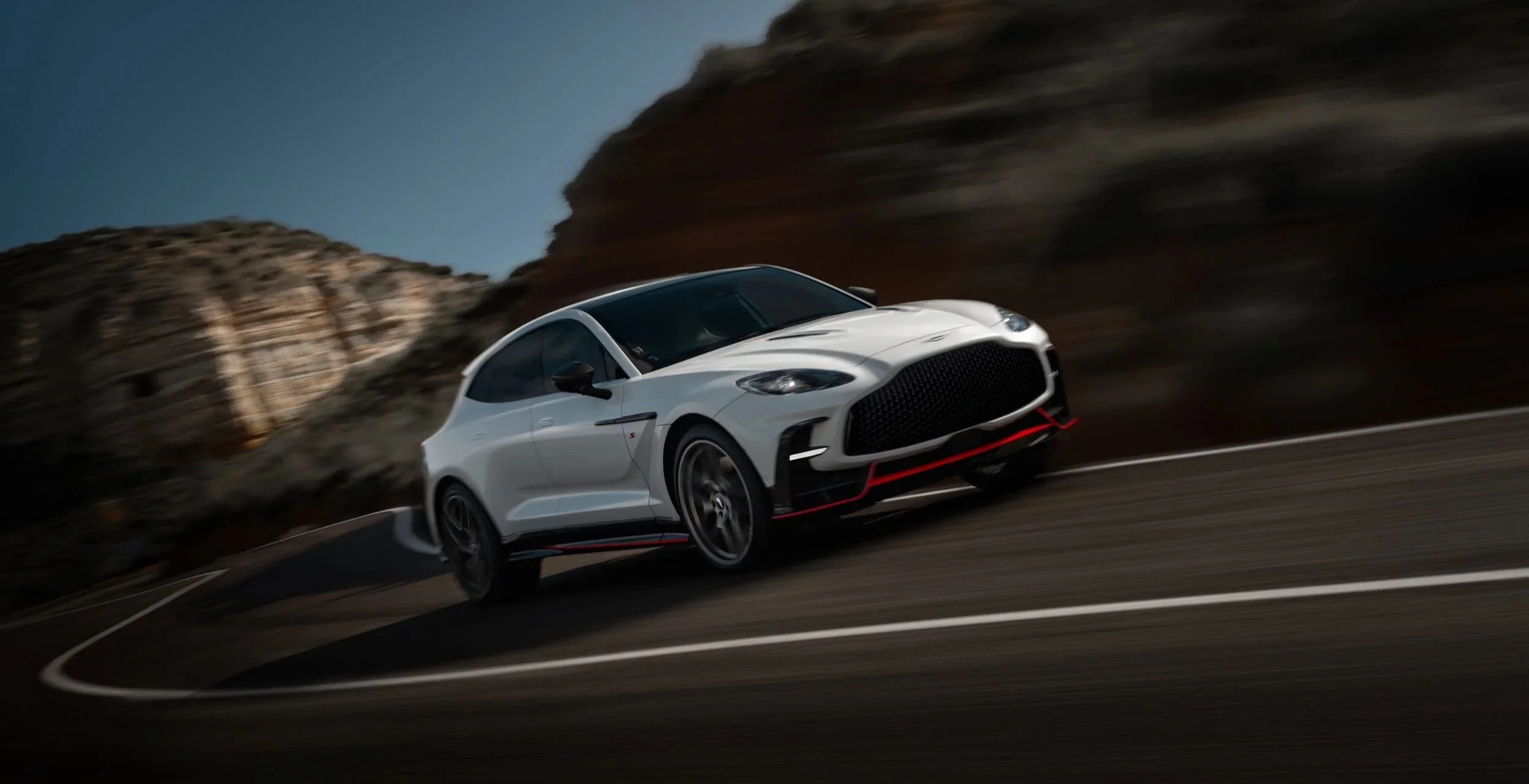
Image © Aston Martin Lagonda. Used for editorial purposes.
If Vanquish at 25 gave this week’s roundup its sense of history, the DBX S brought things sharply back to Aston Martin’s present-day road-car story. We have already kept tabs on this car in recent editions, first as it carried two rescue dogs across the Highlands in Forbes, and then as it headed off into the Dolomites in another test by Tatler. This week, the picture widened again, with fresh reviews from Motor1 and The Truth About Cars, which added more weight to the picture, giving a clearer sense of how Aston Martin’s latest, more focused version of the DBX is being received.
What feels different now is that the broader spread of coverage starts to show not just excitement, but consensus. Across the latest reviews, the 717bhp V8, sharper steering and impressive chassis control all came in for praise, as did the car’s ability to carry its pace with real composure rather than brute force alone. More than one reviewer came away struck by the same thing: that for all its size, weight and sheer presence, the DBX S still feels surprisingly well resolved on a proper road. That matters, because Aston Martin is clearly trying to walk a careful line here.
“The DBX S is meant to be a more focused and more assertive expression of the already formidable DBX707, but not so extreme that it becomes tiresome or absurd to live with.”
On that front, the latest road tests were largely reassuring. Ride quality, seat comfort and long-distance usability were all praised, which only reinforces the impression formed in those earlier Highland and Alpine outings: this is not merely an SUV with a louder exhaust and a larger number on the bootlid, but a car Aston Martin has worked hard to make fast, dramatic and still properly usable.

Image © Aston Martin Lagonda. Used for editorial purposes.
The interior, too, continued to attract approval, particularly where Aston Martin has resisted the temptation to bury every function behind layers of screen menus.
Reviewers noted the value of physical controls, strong seat comfort and a cabin that still feels like an Aston Martin rather than a generic luxury performance product. Even so, the coverage was not without qualification.
Several writers questioned whether the changes are truly transformative or simply a more assertive evolution of what was already there, while pricing remains hard to ignore. Once the option list starts to bite, the numbers climb very quickly indeed, pushing the DBX S into territory where even sympathetic reviewers begin to sound a little wide-eyed.
There were also some familiar grumbles around technology, particularly Apple CarPlay Ultra and infotainment glitches, which is perhaps not quite the sort of modern talking point Aston Martin would most like repeated. That does not sink the broader verdict, but it does matter, because at this end of the market buyers are entitled to expect polish as well as theatre.
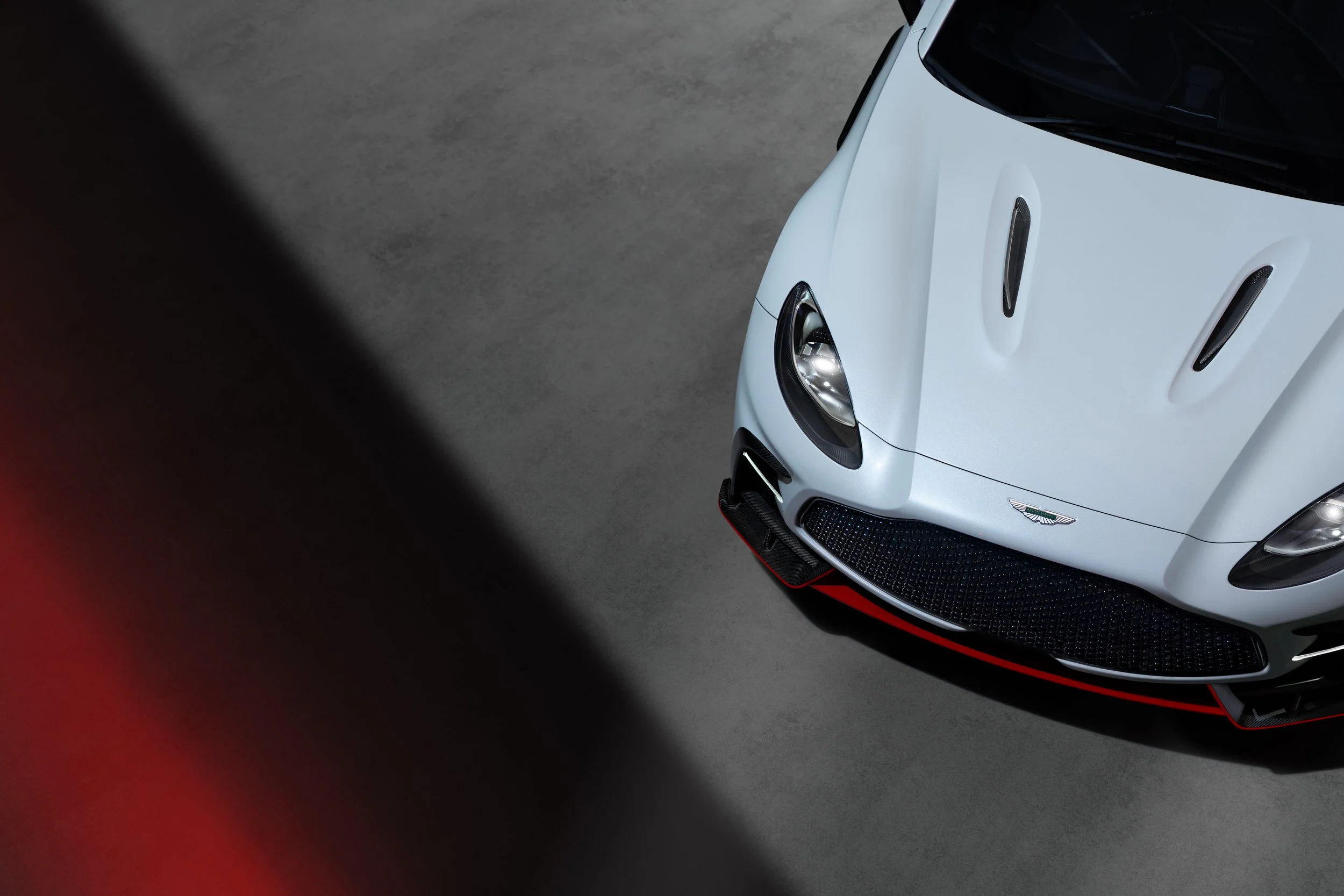
Image © Aston Martin Lagonda. Used for editorial purposes.
So the mood around the DBX S this week felt slightly more mature than the earlier “dogs in Scotland” and “DBX S in the Dolomites” adventures.
The sense from these most recent reviews, is that Aston Martin has built a very talented, very fast and very likeable performance SUV, but one whose extra edge comes with fair questions around value, complexity and whether the most expensive lightweight options really matter as much in the real world as they do on the configurator. In other words, the DBX S still appears to be a strong Aston Martin, but not one entirely immune from the scrutiny that serious money inevitably invites.
From Aston Martin’s newest high-performance SUV, it feels rather nice to turn to something from a very different age of the marque, because this week’s Car of the Week arrives with a V12, a more old-school sense of occasion, and a Vanquish badge that still carries enormous weight.
Car of the Week - a Vanquish S that fits the moment perfectly
If Aston Martin Lagonda’s Vanquish at 25 announcement this week was a reminder that the name now stretches across three generations of flagship GT, this week’s Car of the Week feels like a particularly well-timed way of bringing that story back to where it began. Nicholas Mee & Company is currently offering a 2008 Aston Martin Vanquish S, finished in Onyx Black over Obsidian Black hides, and it is exactly the sort of car that makes AML’s anniversary tribute feel all the more real.
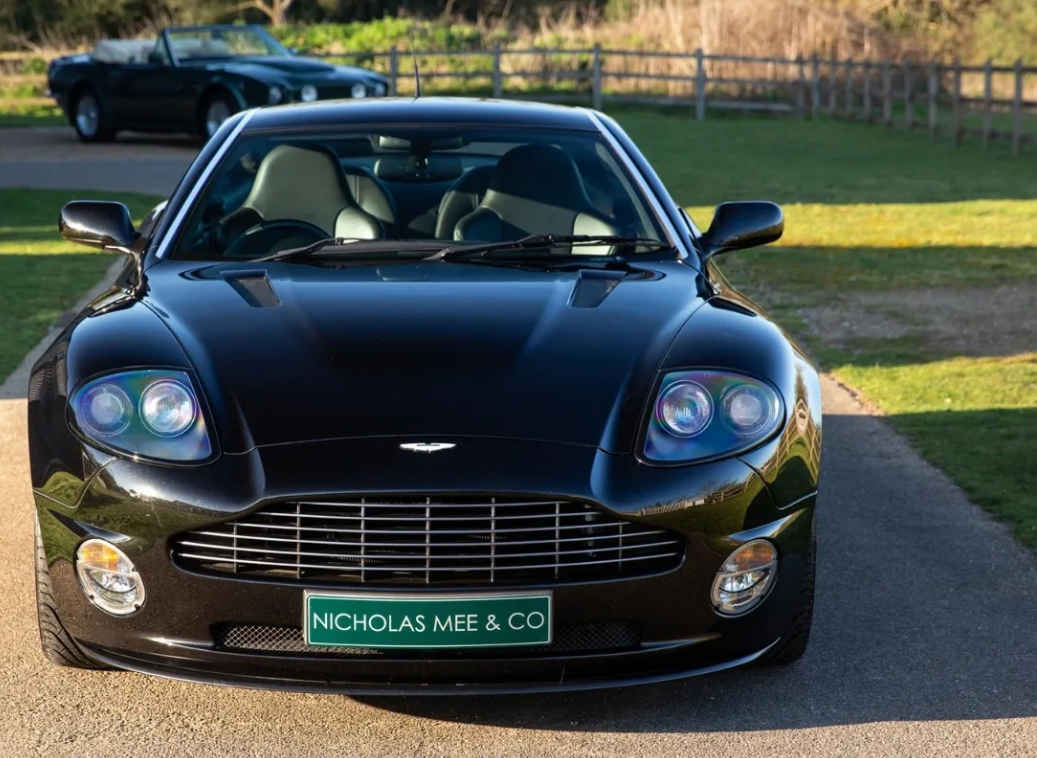
Image © Nicholas Mee & Company, used for editorial purposes
Showing just 10,829 miles, this is presented as a superb, low-mileage, late-production example of one of Aston Martin’s most important modern cars, and that description is justified.
The first-generation Vanquish S was not simply a faster version of an existing model. It was the final expression of the original Vanquish idea, the last Vanquish to be hand-built by the skilled craftsmen at Newport Pagnell, and a car that helped usher Aston Martin into a new era through its aluminium and carbon-fibre structure, its bold Ian Callum design language and its more assertive interpretation of the marque’s V12 grand touring formula.
That matters even more in a week like this, because Vanquish has never been just another Aston Martin badge. It has always carried a sense of flagship intent. In the case of the Vanquish S, that came with 520bhp from the marque’s mighty 6.0-litre V12, a top speed of more than 200mph, and a character that combined real pace with the kind of long-legged comfort and road presence Aston Martin has always done so well when it is at its best. Nicholas Mee is quite right to describe it as a car with heroic, iconic and timeless styling. Even now, that still holds up.
What makes this specific example especially interesting, though, is where it appears to sit in the model’s timeline. The dealer says the car was completed by Aston Martin in June 2007, first supplied by Aston Martin Cardiff, and was registered in May 2008. Nicholas Mee further states that, according to its research…
“…this is understood to be the last UK right-hand-drive Vanquish S, with only seven more cars built before the Vanquish S Ultimate models began.”
The specification only strengthens the appeal. Alongside the standard 2007-model-year Vanquish S upgrades, this car was ordered with Bluetooth, a heated front screen, red brake calipers, chrome exterior door releases, front stoneguards, a 2+2 seating arrangement, quilted headliner, Alcantara seat inserts and St James Red stitching.
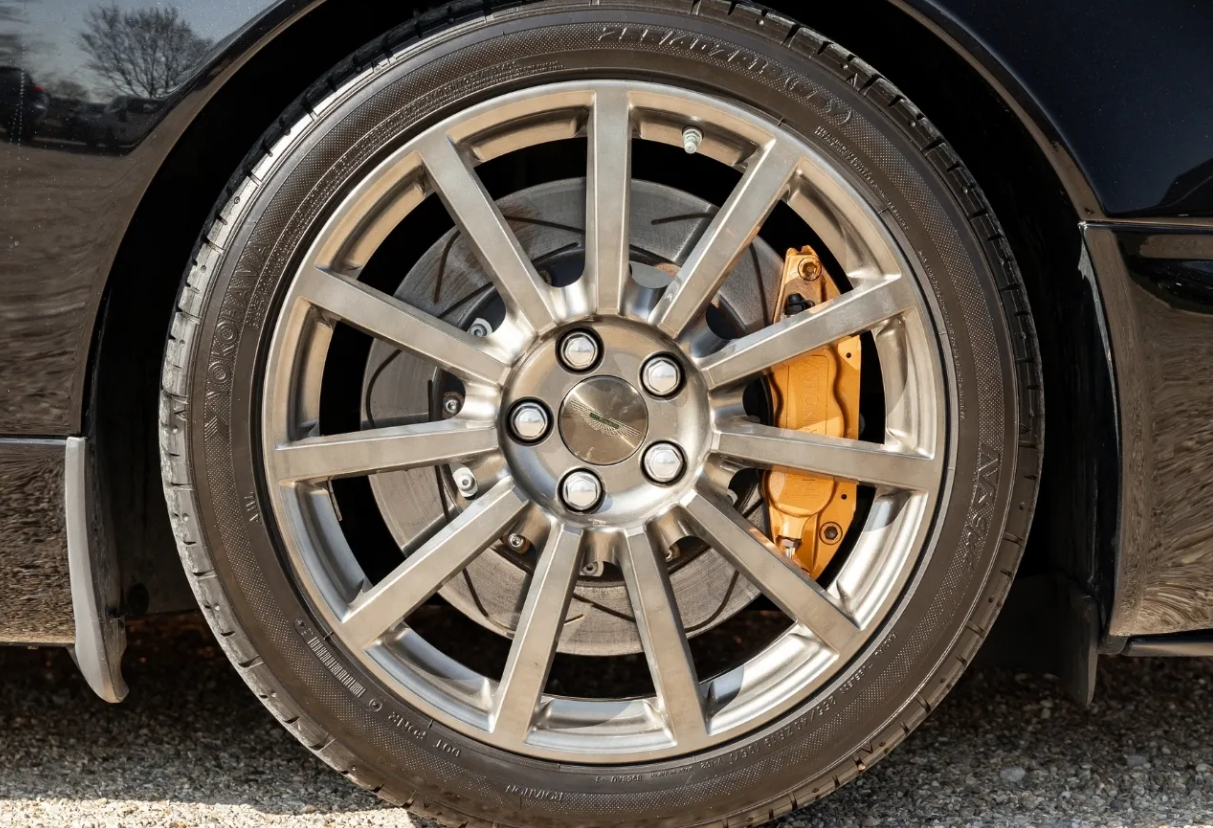
Image © Nicholas Mee & Company, used for editorial purposes
More recently, the wheels have been refinished in graphite grey and the brake calipers in gold, both of which the dealer says could be returned to original specification if preferred.
It is a tasteful, interesting combination and one that adds just enough individuality without losing the car’s broader sense of restraint.
There is also reassurance in the history. Serviced early in life by Aston Martin main agents and maintained by Nicholas Mee’s own factory-trained technicians since 2020, the car is described as being in superb condition throughout, with fresh servicing and preparation, 12 months MOT, 12 months warranty, a substantial history file, a custom-fit cover and even a relevant cherished registration number included in the sale. In other words, this is not simply an evocative Vanquish S on paper, but a properly presented example being offered by one of the best-known Aston Martin specialists in the country.
If this one has caught your eye, I’d encourage you to click on the link attached to the Vanquish name at the beginning of this section, you’ll see it underlined, and have a proper look through all the specifics on Nicholas Mee’s website. As with so many of these Car of the Week picks, I have a feeling this is a very desirable model and may not be around for long!
That, really, is why it fits this week so well. In the very week Aston Martin has looked back across 25 years of Vanquish, here is a late, low-mileage, Newport Pagnell-built Vanquish S that captures exactly why the name still carries such weight. It is not just a used Aston Martin for sale. It is a tangible reminder of the first chapter in a flagship bloodline AML itself has just chosen to celebrate.
Oil price volatility remains part of the ownership backdrop
Oil remained a live story again this week, with prices swinging sharply on the back of fast-moving developments in the Middle East. By around 2pm on Thursday 26 March, Brent crude had recovered to roughly $107.50 a barrel, while WTI was back near $93.50, after earlier weakness gave way to a strong rebound as ceasefire hopes faded and concern around the Strait of Hormuz returned.
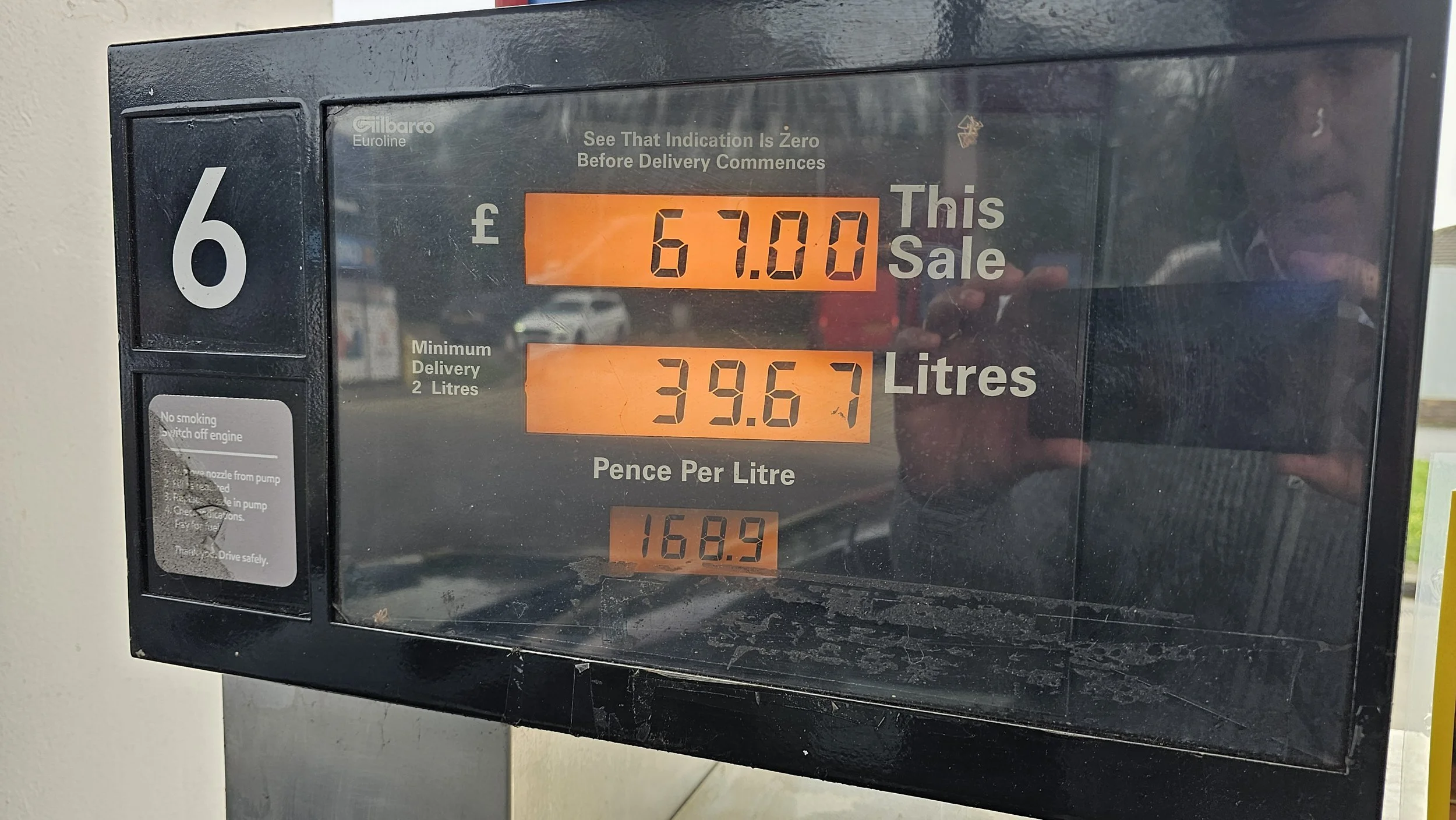
Image © Fuel the Passion
That matters because it continues a theme already touched on in last week’s roundup. Then, Brent had surged above $119 before easing back; this week, the pattern was different in detail but similar in mood: sudden swings, fragile confidence and a market still reacting quickly to geopolitical headlines.
For Aston Martin owners, the point is not to overstate every move in crude, but simply to recognise the backdrop. When oil remains this volatile, pump prices and the wider feel of running a performance car can become a little more uncertain too. It does not change why we love these cars, but it is still part of the real-world picture around using them.
AML Share Watch

Image © Fuel the Passion
A quick note on Aston Martin Lagonda’s share price, which I would normally report at the Friday market close as part of the usual weekly rhythm. But due to going away this weekend resulting in this week’s roundup being finalised on Thursday, the picture below reflects where things stood at around 3pm on 26 March, and there may of course have been some slight movement by the time markets closed on Friday.
Even with that caveat, the broader direction remains clear enough. AML was trading at 38.14p on Thursday afternoon, having already touched a fresh 52-week low of 35.66p earlier in the day. The week itself has been another volatile one: a strong bounce on Monday, a sharp drop on Tuesday, further weakness on Wednesday, and then a modest recovery on Thursday. Step back a little further and the picture remains sobering. The shares are now down by roughly 36 per cent over the last five weeks, underlining that this is not a one-day wobble but part of a much longer and more uncomfortable slide in market confidence.
As ever, the share price is best treated here as a weekly reading of sentiment rather than a judgement on the cars, the heritage or the wider appeal of the marque. Even so, it remains a useful indicator of just how fragile the financial mood around Aston Martin still feels.
AMOC Update - Monaco preview and a special DB3S in the spotlight
Image © Aston Martin Owners Club - Front page of the AMOC website, used for editorial purposes
The Aston Martin world is never shaped only by headlines, market nerves or motorsport pressure. One of the reasons the marque continues to hold its appeal is the strength of the community around it, and the AMOC provided another neat reminder of that this week.
Members were invited to an RM Sotheby’s Monaco auction preview on 24th April at the Grimaldi Forum, with an RM Sotheby’s specialist on hand and a complimentary catalogue included. On one level, that is simply a pleasant club benefit. On another, it is exactly the sort of thing that shows the AMOC still doing what it does well: giving members access not just to events, but to important cars and the wider heritage world that surrounds Aston Martin.

Image © Fuel the Passion, an Aston Martin DB3S Racing Car, Goodwood Revival 2025
The picture on the left, is of an Aston Martin DB3S, that I filmed whilst at Goodwood Revival, not the DB3S that will appear at RM Sotheby’s auction.
The real point of interest, of course, is the car at the centre of it all: 1955 Aston Martin DB3S chassis #111, one of only 20 customer DB3S models built. That alone would be enough to command attention, but this example also carries proper period significance, having appeared on the Aston Martin stand at the 1955 British Motor Show at Earls Court.
In other words, this is not merely another valuable old racing car heading to auction, but a car with genuine depth in the marque’s competition and display history.
I strongly suggest you click HERE to see the actual DB3S being referred to and which will be a real feature car at the RM Sotheby’s Auction. It’s an amazing Aston Martin.
It is a small story in one sense, but a worthwhile one. Weeks like this can easily become dominated by Formula 1 struggles, oil-price swings and the broader pressures surrounding Aston Martin as a business. Club notes like this quietly remind you that there is another side to the marque too: one built on access, enthusiasm, shared interest and a continuing connection to some very special machinery indeed. If you’re not yet a member of the Aston Martin Owners Club, just click on the AMOC front page image above and we’ll take you straight to the right place to find out more.
From that club-world link to Aston Martin’s past, it feels natural to bring things a little closer to home, because this week also included a rather special couple of days of my own in the FTP Vantage.
FTP Update - back to Gaydon, on to Newport Pagnell, and deeper into Vanquish
If the AMOC note was a reminder of Aston Martin’s wider community and heritage world, this week’s FTP update brought things rather closer to home, because I had the privilege of spending a very special couple of days down south with the FTP Vantage.
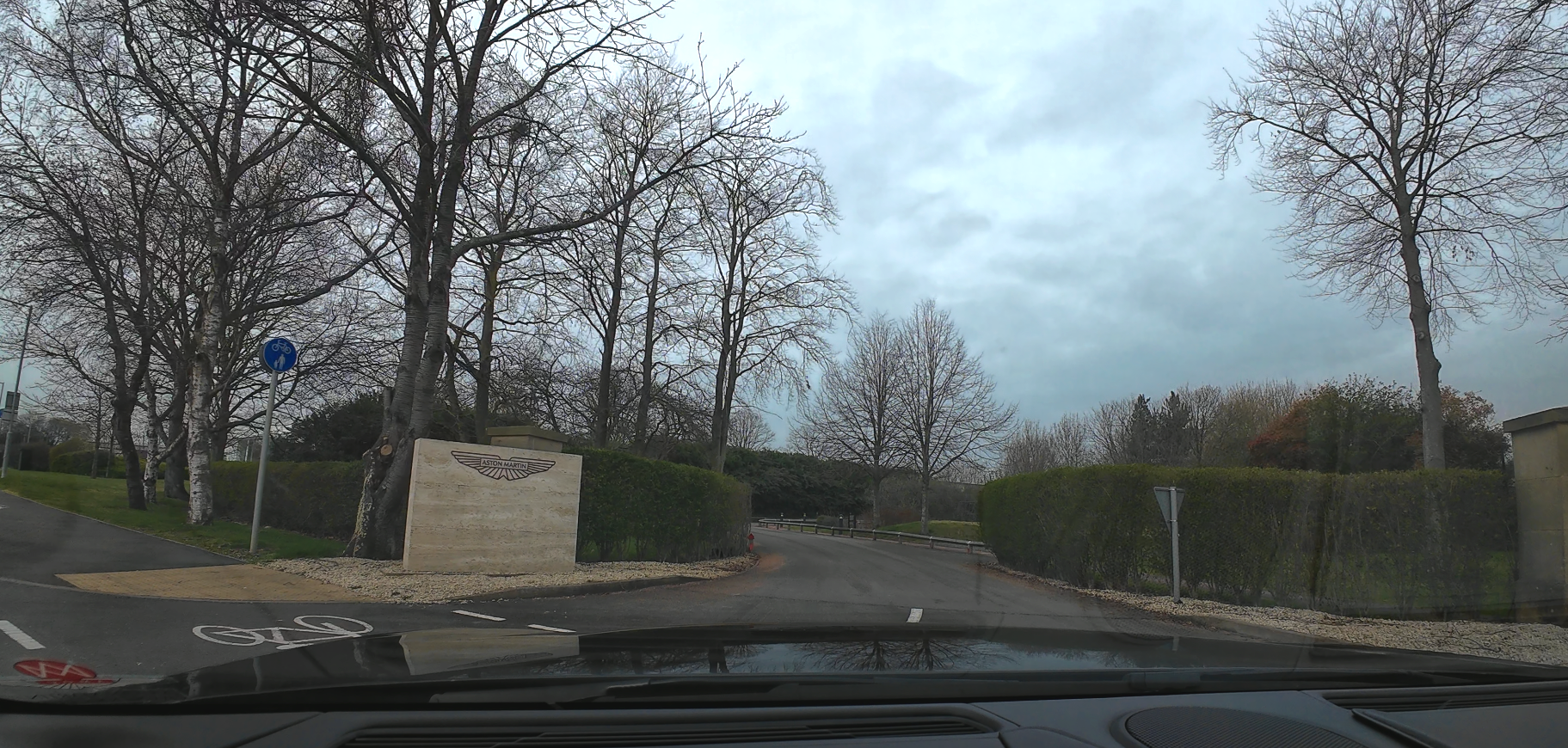
Image © Fuel the Passion, turning into Aston Martin HQ, Gaydon
Earlier in the week, I drove the car back to Aston Martin HQ at Gaydon - back, in other words, to the place where it was first created. I had never been there before, so that alone made the visit feel significant.
To arrive in the FTP Vantage and then step inside the headquarters of the marque itself was a genuine privilege.
I was not permitted to film or take photographs inside, for entirely understandable reasons, and while part of me naturally wishes I could have shared more of it with you, there was also something rather special about that. It meant I could simply be present in the moment and take it all in properly. I was, however, allowed to take a few shots of the FTP Vantage outside the main building, as you can see in this section, which at least gives me a small way of sharing the visit with you.
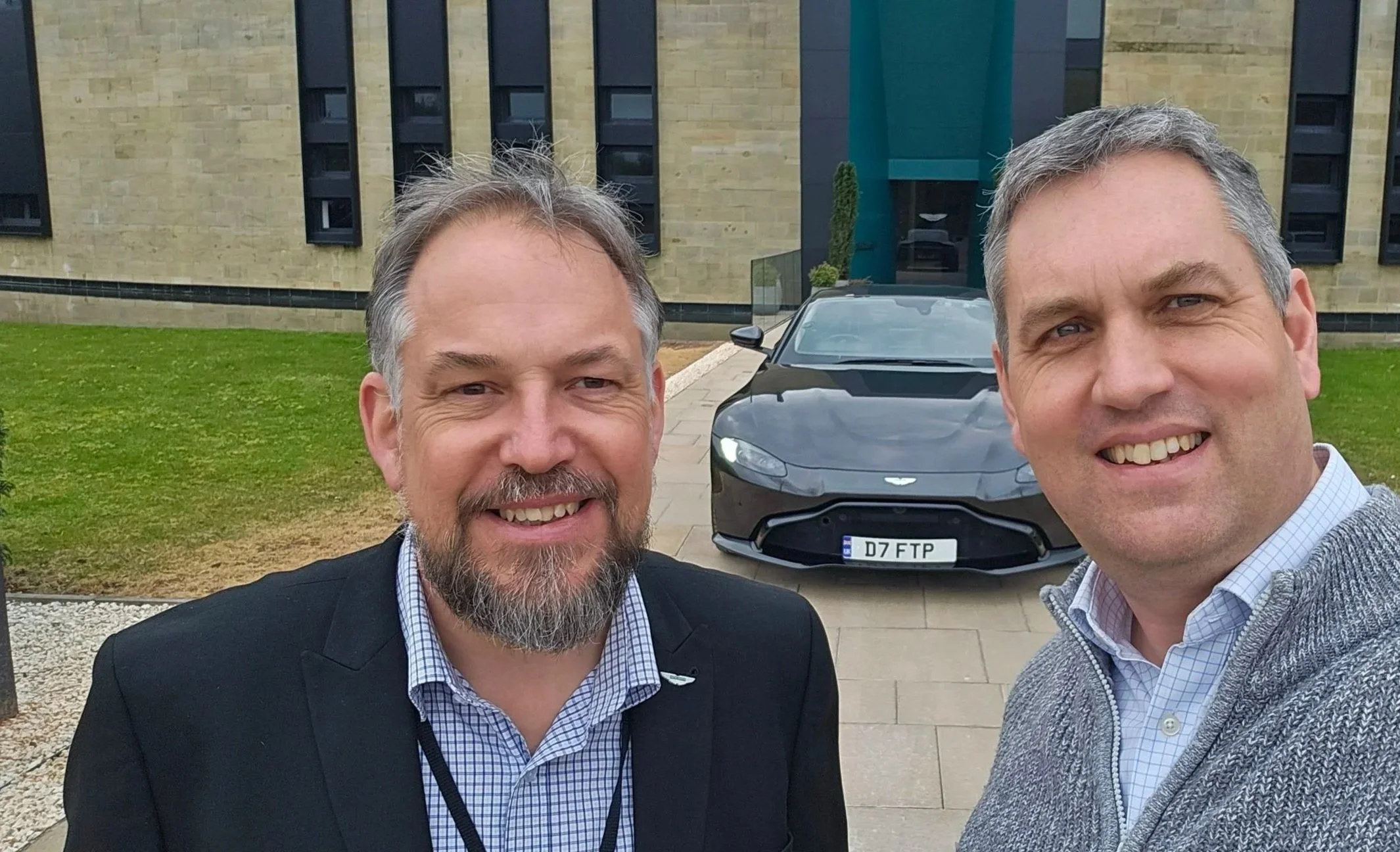
Image © Fuel the Passion, Dan from FTP and ‘Wadder’ outside AML HQ, Gaydon
I was met by Steve Waddingham, or ‘Wadders’, as many know him, the excellent and world renowned AML Historian, and it was lovely to begin the visit in his company. He is one of those people who immediately puts you at ease: warm, friendly, caring and deeply passionate about Aston Martin after many years with the company.
Throughout this section I’m also including a few exclusive photographs, some of which will later appear as moving images in the final set of Vanquish films. One of the nice things about reading and visiting this website is that you do often get these little sneak previews along the way.
Even the opening moments of the day left an impression. The main foyer itself, with a beautiful selection of current Aston Martins on display, already felt like a fitting introduction. But then, turning right past reception, the sense of occasion stepped up again. Ahead was a long corridor lined in Aston Martin Racing Green, leading to an extraordinary line-up of green Aston Martins: DBR22, Valkyrie, Valour, the Vantage Safety Car and the DBX S Medical Car. It was not something I had expected, and we spent a little time simply standing there admiring a collection that brought together some of the marque’s rarest and most dramatic modern machinery in one place.
Then came the moment that really stayed with me. After a coffee, Steve led me through another broad corridor where one entire wall carried the names of all the people who have worked for Aston Martin Lagonda. It began with the founders, Lionel Martin and Robert Bamford, and stretched forward through the decades: former CEOs, technicians, embroiderers, mechanics and thousands of others whose work has shaped the marque in ways most of us will never fully see.
“It was a striking reminder that Aston Martin is not only a badge, or a collection of beautiful cars, but the accumulated effort of countless people over many years, and as that wall gave way to the huge open expanse of the factory itself, the feeling was simple enough: wow!”
From there, the visit continued into the production areas, where I was able to see numerous Aston Martins at various stages of build. What struck me most was not simply the number of cars, but the atmosphere around them: the attention to detail, the quiet sense of care, and the shared determination to get things right. The standout moment, if there had to be one, was seeing multiple Valhallas together under factory lighting, all in build, all looking absolutely stunning. I do not imagine I will ever again see so many of them in one place at the same time. Alongside those were Vantages and DB12 S models, each one a reminder that, whatever other pressures may surround Aston Martin as a business, the cars themselves can still stop you in your tracks. That has always been part of the marque’s power. You never really see a bad one.
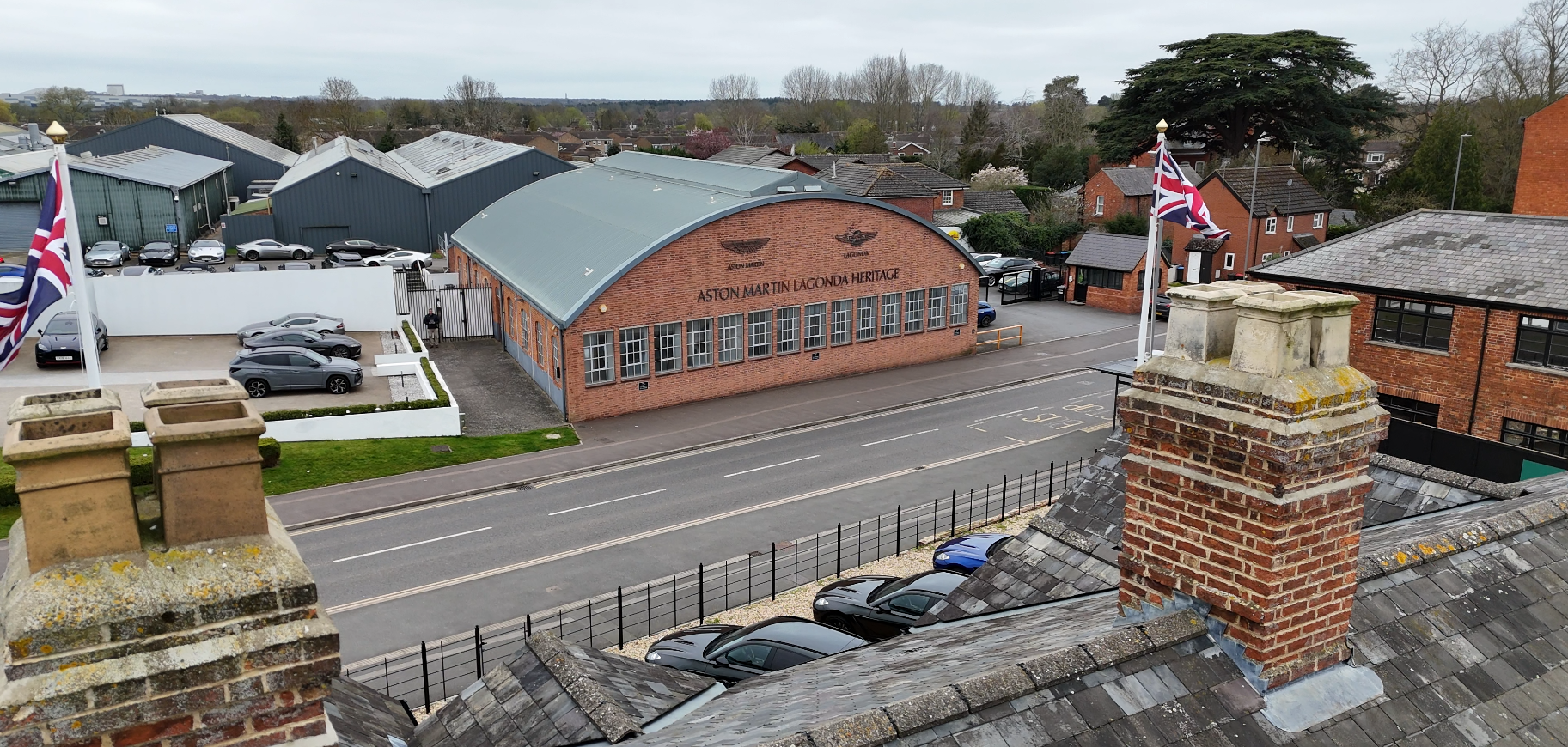
Image © Fuel the Passion, AML Newport-Pagnell, Bucks
The following day brought a rather different but equally special experience: Aston Martin Works at Newport Pagnell. There, I filmed the ever-wonderful Steve Waddingham as he interviewed a number of Aston Martin people connected to Vanquish, whether through its original build 25 years ago or through the service, maintenance and refurbishment work that continues today.
Spending time with those individuals was one of the real highlights of the trip. Like Wadders, some had given a lifetime to Aston Martin, and being around that kind of knowledge, commitment and affection for the marque was a privilege in itself. There were some amazing cars there too, which only added to the sense that I was moving through two very important parts of Aston Martin’s living story.
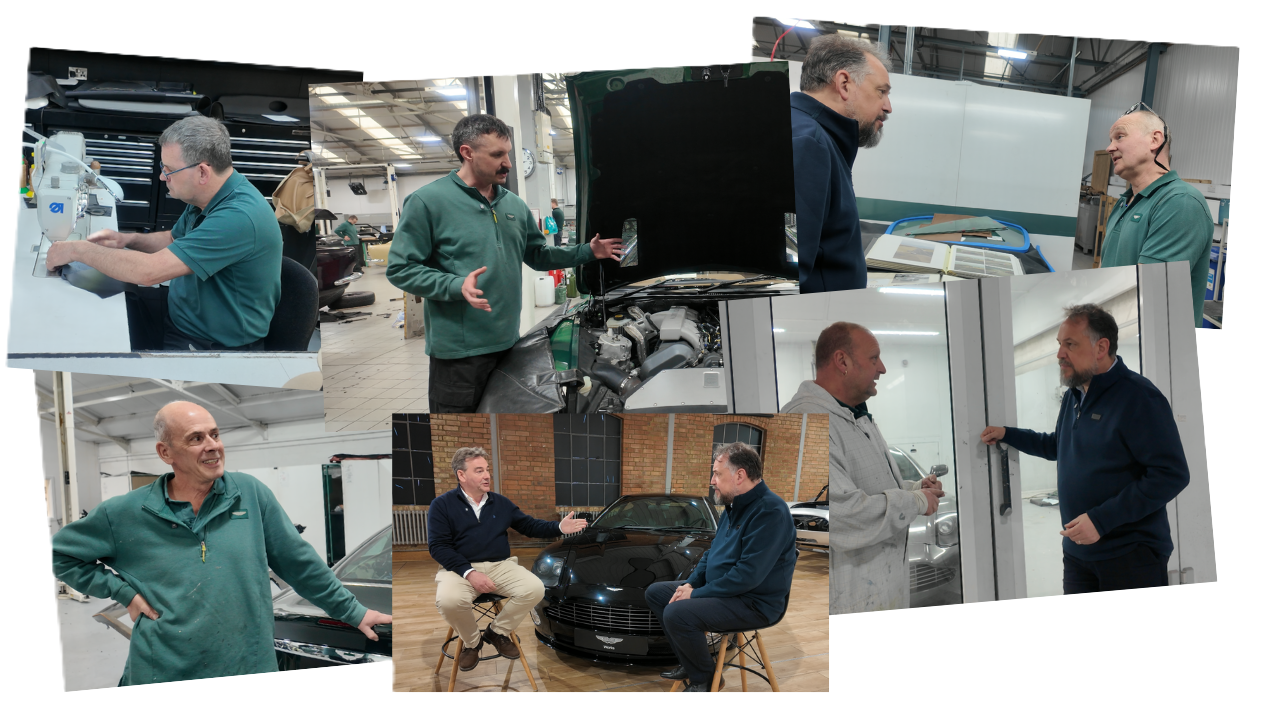
Image © Fuel the Passion
All of that forms part of a new set of films I’m working on in collaboration with the Aston Martin Owners Club and the Aston Martin Heritage Trust to mark the 25th anniversary of the Aston Martin Vanquish. The original hope had been to begin releasing those in April, but having now seen just how much strong material we captured and how many thoughtful, passionate contributions came from the people involved, I think it is only fair to take a little longer and do the editing properly. So, in truth, May now feels more likely.
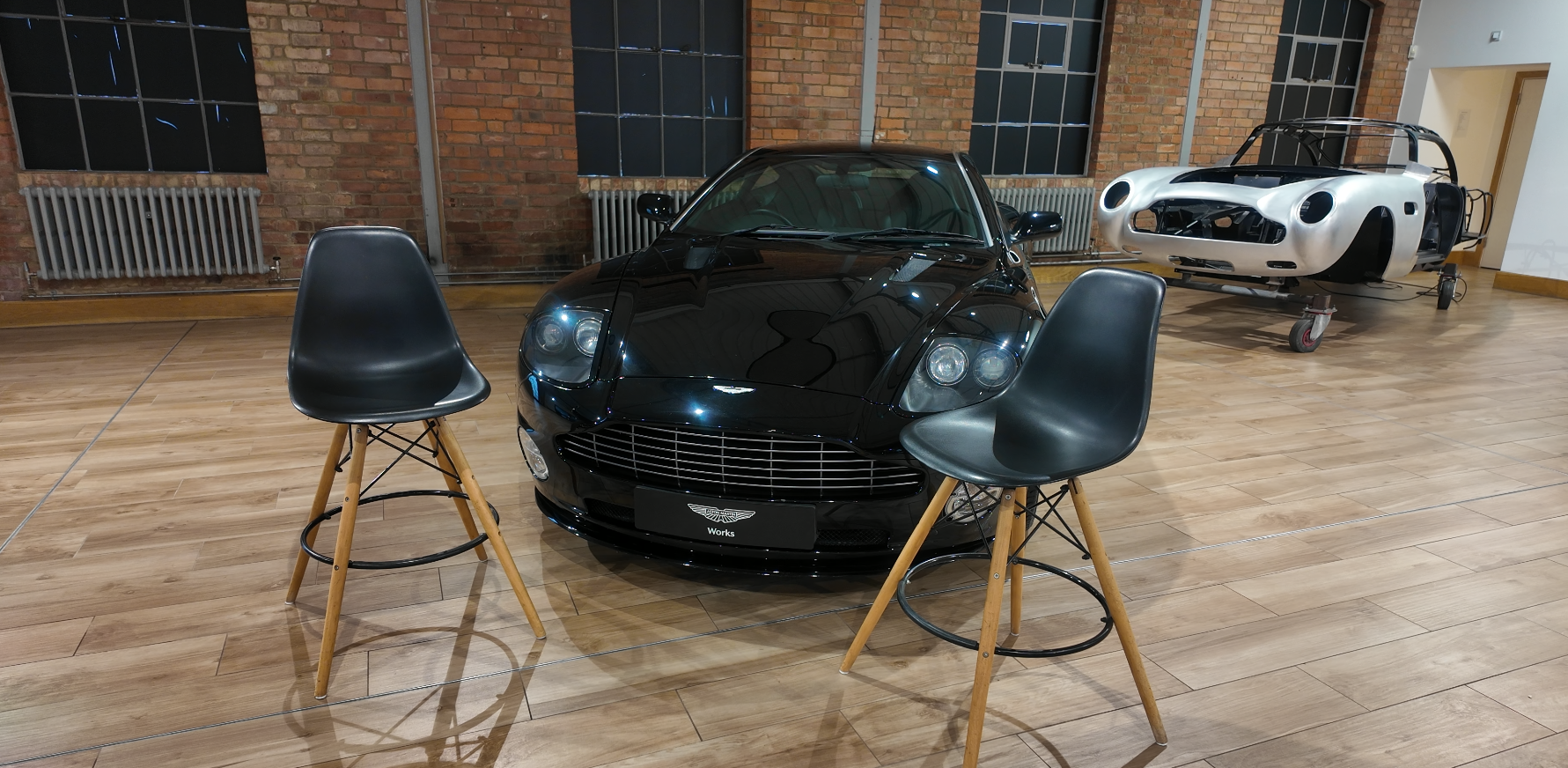
Image © Fuel the Passion
Of course, I also spent a bit of time looking at the cars in the adjoining showroom and in the room in the photograph above, but more on that in films to come.
So yes, it was a very special couple of days. If opportunities to tour the factory do come around again in future, and you care about the marque, I would say take them. You will not be disappointed. From there, it feels right to step back and pull the whole week together, because this has been one of those Aston Martin weeks where several different versions of the marque have all been visible at once.
Closing Thoughts
Perhaps the clearest impression left by this week is that Aston Martin still refuses to be reduced to a single storyline. Yes, Formula 1 remains the most unsettled part of the picture, and there is no point pretending otherwise. By the time this edition was finalised, the questions around Honda, vibration, leadership shape and outright competitiveness had not gone away. If anything, Suzuka felt less like a clean turning point and more like another important point of reference in a season that still needs time, patience and a good deal of honest problem-solving. That remains the harder edge of Aston Martin’s current reality.
Yet, elsewhere, the story looked rather different. Sebring gave us the fuller follow-up promised last week, with the Vantage GT3 Evo again showing that Aston Martin still knows how to build a car capable of fighting at the front when the conditions are right. Blackthorn Racing, in its own quieter way, added to that broader sense that beyond Formula 1 there is still real substance, ambition and character in the marque’s competition life. Not everything in Aston Martin’s racing world currently feels troubled. Some of it, in truth, feels rather encouraging.
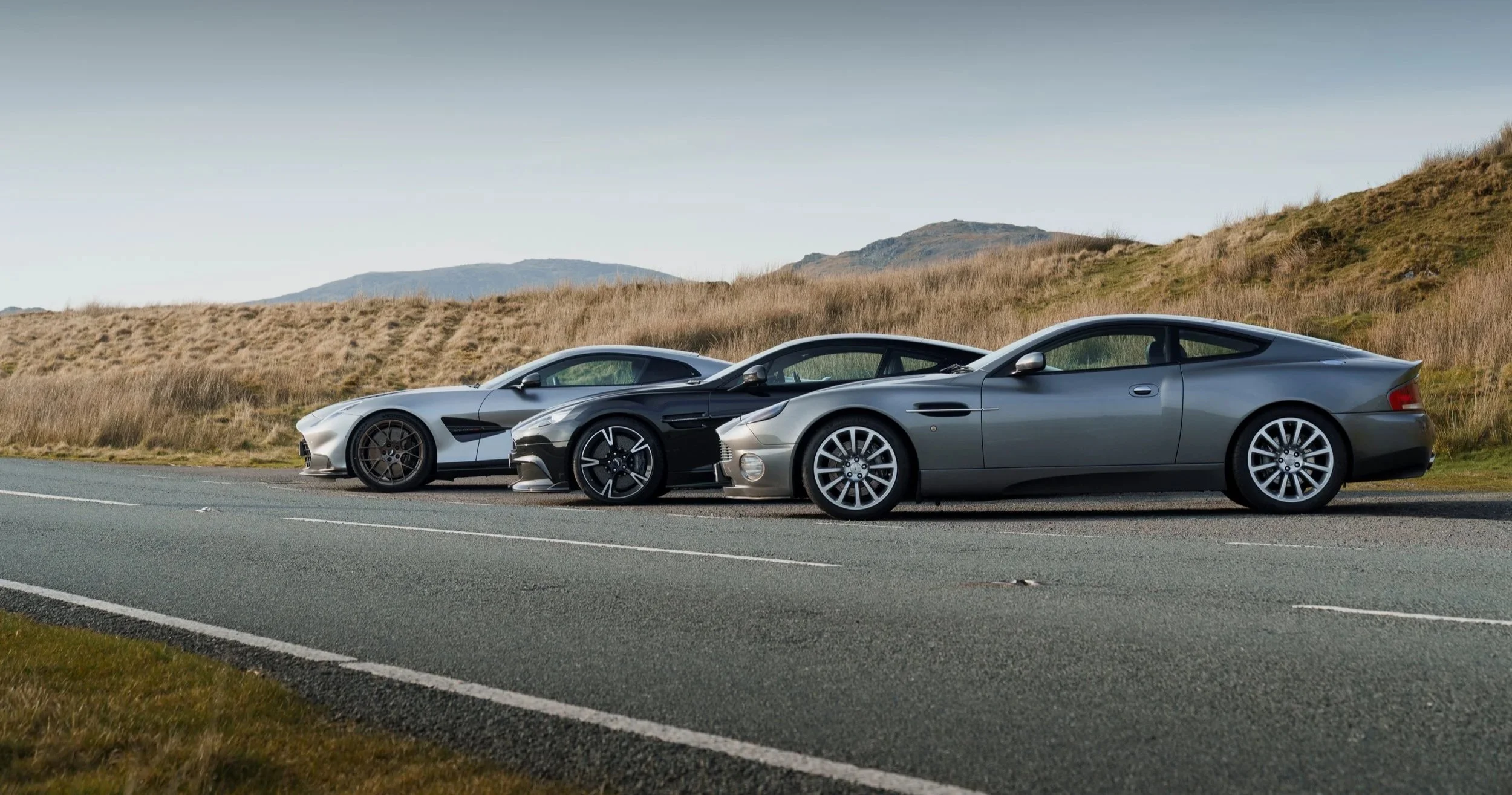
Image © Aston Martin Lagonda. Used for editorial purposes.
Then there was the Vanquish thread running through the week, which gave this edition a slightly different kind of weight. Aston Martin’s own 25th anniversary reflection reminded us that certain model names still carry genuine meaning, while the late Vanquish S chosen as this week’s Car of the Week showed how easily that history can still come alive in the present.
Add in the latest DBX S reviews, and the road-car picture this week felt more confident than anxious: not flawless, certainly, but still rich with the sort of design, theatre and engineering appeal that explains why the marque continues to matter.
For me personally, though, this week will probably be remembered most for those two days down south. Taking the FTP Vantage back to Gaydon, to the place where it was first created, and then spending time at Aston Martin Works in Newport Pagnell, felt genuinely special. It was one of those rare reminders that Aston Martin is not just a product or a headline, but a long, living story shaped by people, the men and women who design, build, restore, maintain and care about these cars over decades. That is easy to say from a distance. It is something else entirely to stand among it and feel it properly.
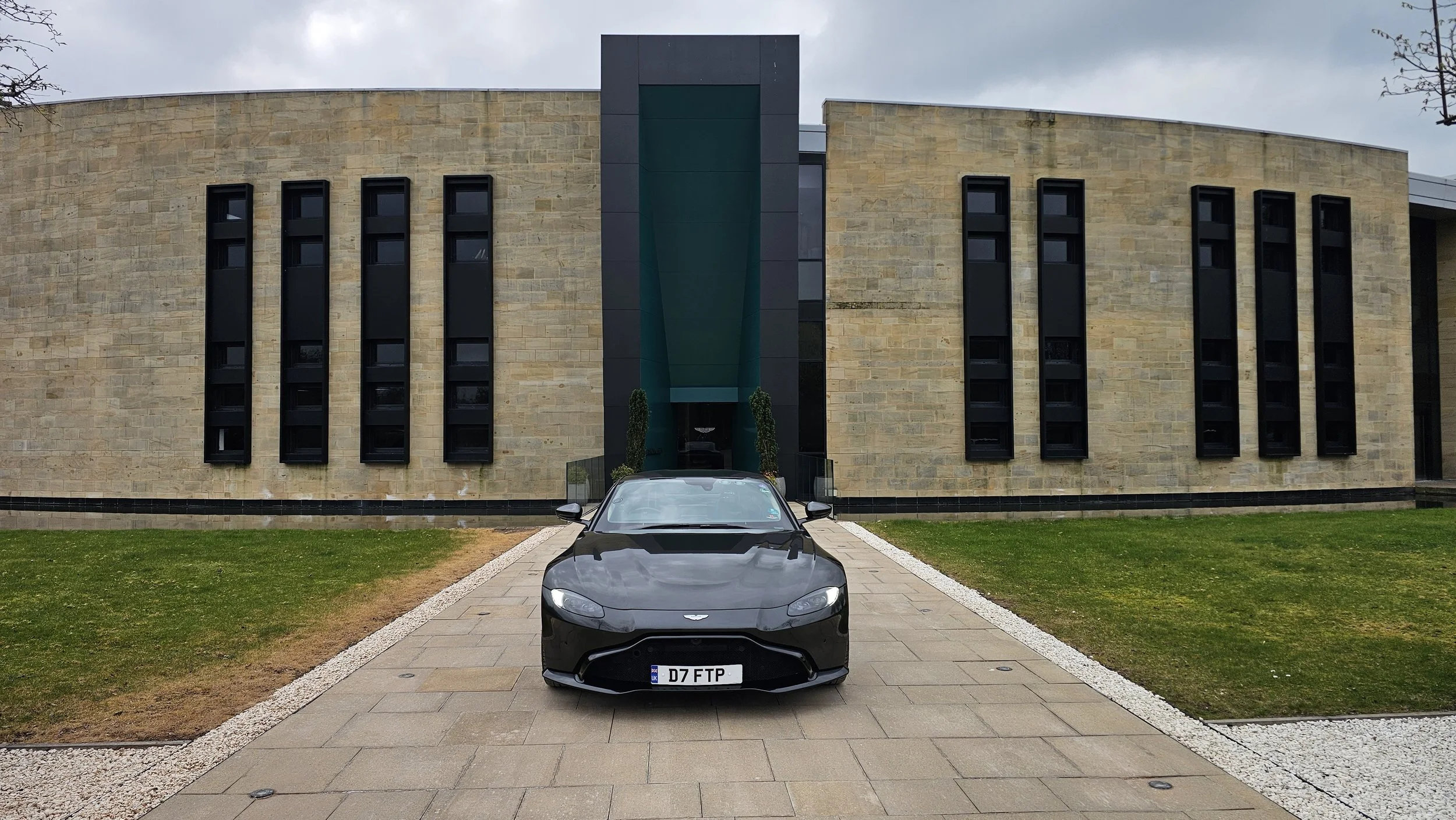
Image © Fuel the Passion, driving the FTP Vantage home, outside AML HQ, Gaydon, UK
A final small note, then, just by way of honesty. As mentioned in last week’s edition, and again at the start of this one, this roundup was written and finalised earlier than usual because I’m away this weekend in the FTP Vantage on an AMOC trip to the Cotswolds. That means some of the very latest developments from later in the Japanese Grand Prix weekend may not be reflected here in the way they normally would be. I hope readers will understand. The trade-off, I suspect, is that there will be another Fuel the Passion film to come from the trip before too long.
So, if this week proved anything, it is that Aston Martin still lives in several different worlds at once: pressured in some places, inspiring in others, frustrating here, deeply impressive there. Perhaps that has always been part of the fascination. Thank you, as always, for reading and for being here and when you’ve finished this week’s roundup, do let me know which part stayed with you most in the comments below. I love reading them and will respond to every one. 👇
Have you ever visited Aston Martin HQ at Gaydon or been lucky enough to take part in a factory tour? If the opportunity came up in future, is it something you’d jump at? Do leave a comment below, I’d genuinely love to hear. 👇 Have a great week. See you on the next one! 👆
Watch one of the latest films from Fuel the Passion
If you haven’t seen it yet, a recently published video takes you behind the scenes of real Aston Martin ownership, the kind of detail that often sits beneath the surface but matters deeply over time. From workshop insights to the small but telling upgrades that shape the ownership experience, it’s an honest look at life with a modern Vantage; the good, the unexpected, and everything in between.
If you’re an owner, thinking of becoming one, or simply curious about what these cars are really like to live with, I think you’ll find it a worthwhile watch. Click on the image below and we’ll take you straight there. 👇
