
Week Ending - 31st May 2026
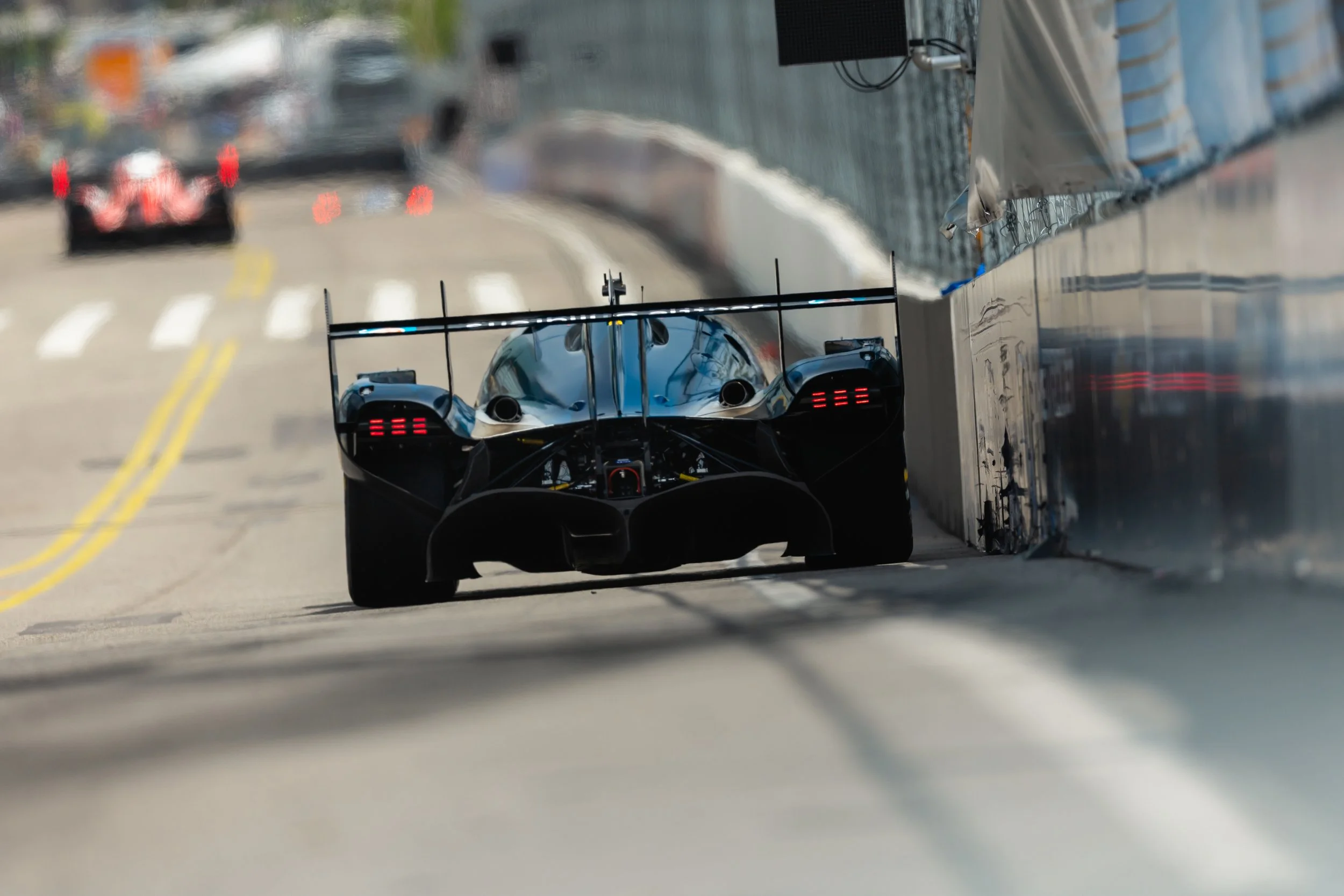
Image © Aston Martin Lagonda. Used for editorial purposes. Valkyrie pushing the limits, Detroit 2025.
The picture above says a lot about Aston Martin’s week: Valkyrie pressed hard against the walls in Detroit, a V12 endurance racer taking on one of IMSA’s most unforgiving street circuits. It’s a reminder that, even while Aston Martin’s Formula One story remains difficult, the wider racing picture still has energy, momentum and plenty to follow.
In Canada, Aston Martin Aramco endured another frustrating Grand Prix weekend, with the AMR26 again raising questions around performance, development direction and, this time, Fernando Alonso’s comfort inside the car. Yet away from F1, the news was far brighter. British GT brought strong Aston Martin results at Oulton Park, Mathilda Paatz claimed Aston Martin Aramco’s first F1 ACADEMY victory, Blackthorn Racing are back in action at Monza this weekend, in GT World Challenge Europe, and also this weekend the THOR-run Valkyrie returns to IMSA action on the streets of Detroit. For Blackthorn, it’s another important opportunity to keep building momentum in a very busy Aston Martin GT3 programme.
There’s also a growing sense of anticipation around Le Mans. We’re now only around two weeks away, and the countdown is starting to feel very real. The clocks are already running on the Fuel the Passion front page, while the larger Aston Martin race countdowns in the FTP Motorsport Hub continue to track everything we cover across the season. From Valkyrie in the top class to the Vantages in GT, Le Mans is edging closer, and I, for one, cannot wait to see how the Aston Martins get on.
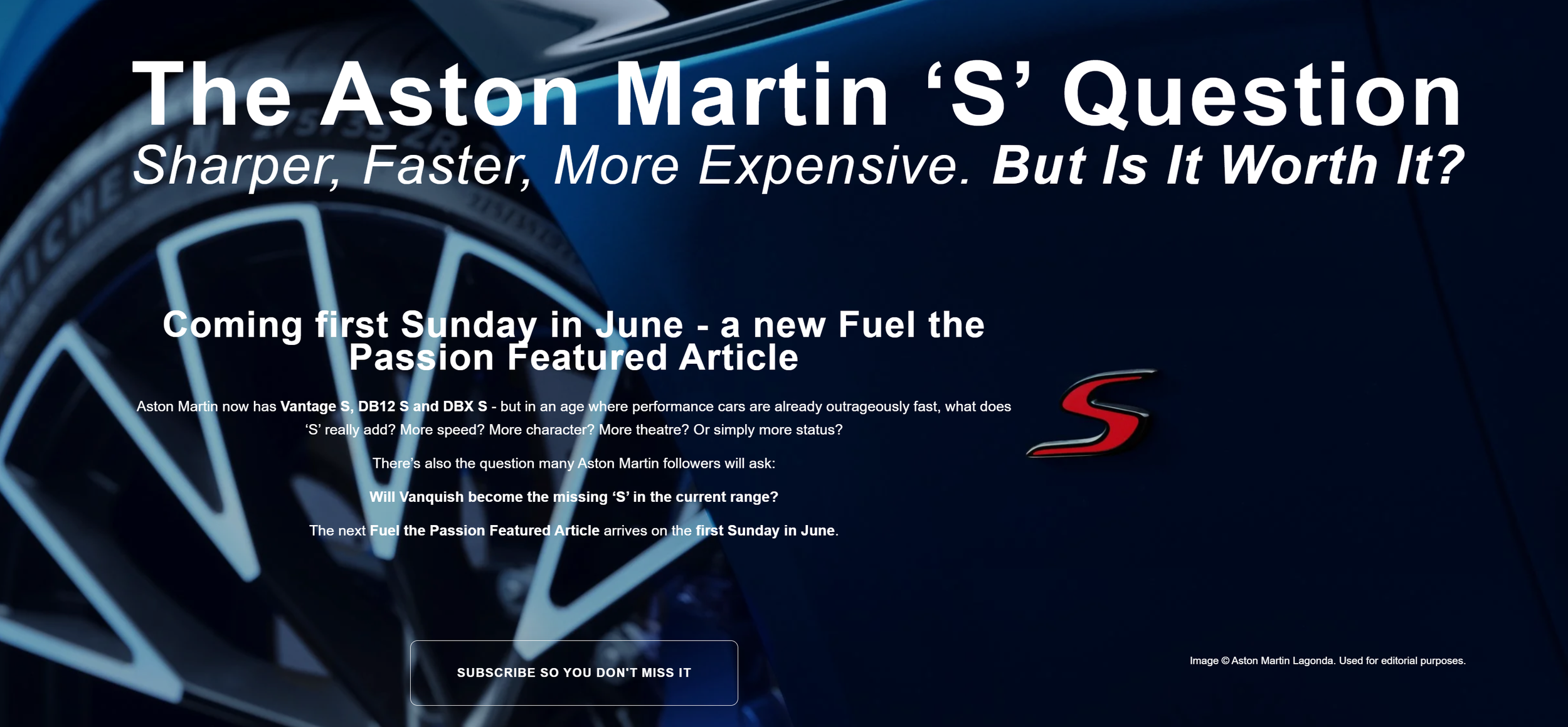
Away from the circuits, the road-car world has been no quieter. The latest S-badged Aston Martins continue to draw attention, with fresh review coverage of DB12 S, DBX S and Vantage S adding useful context ahead of the June Fuel the Passion feature looking at what the modern “S” badge really means. There is heritage too, with AMHT pieces on David Brown and Victor Gauntlett, a thoughtful look back at Lagonda at 50, and another timely reminder that the original Vanquish still has a special pull in its 25th anniversary year.
So this week’s Roundup starts where the tension was most obvious: Formula One, Canada, and an Aston Martin team still searching for answers.
Aston Martin Motorsport - Canada, Oulton Park and Detroit
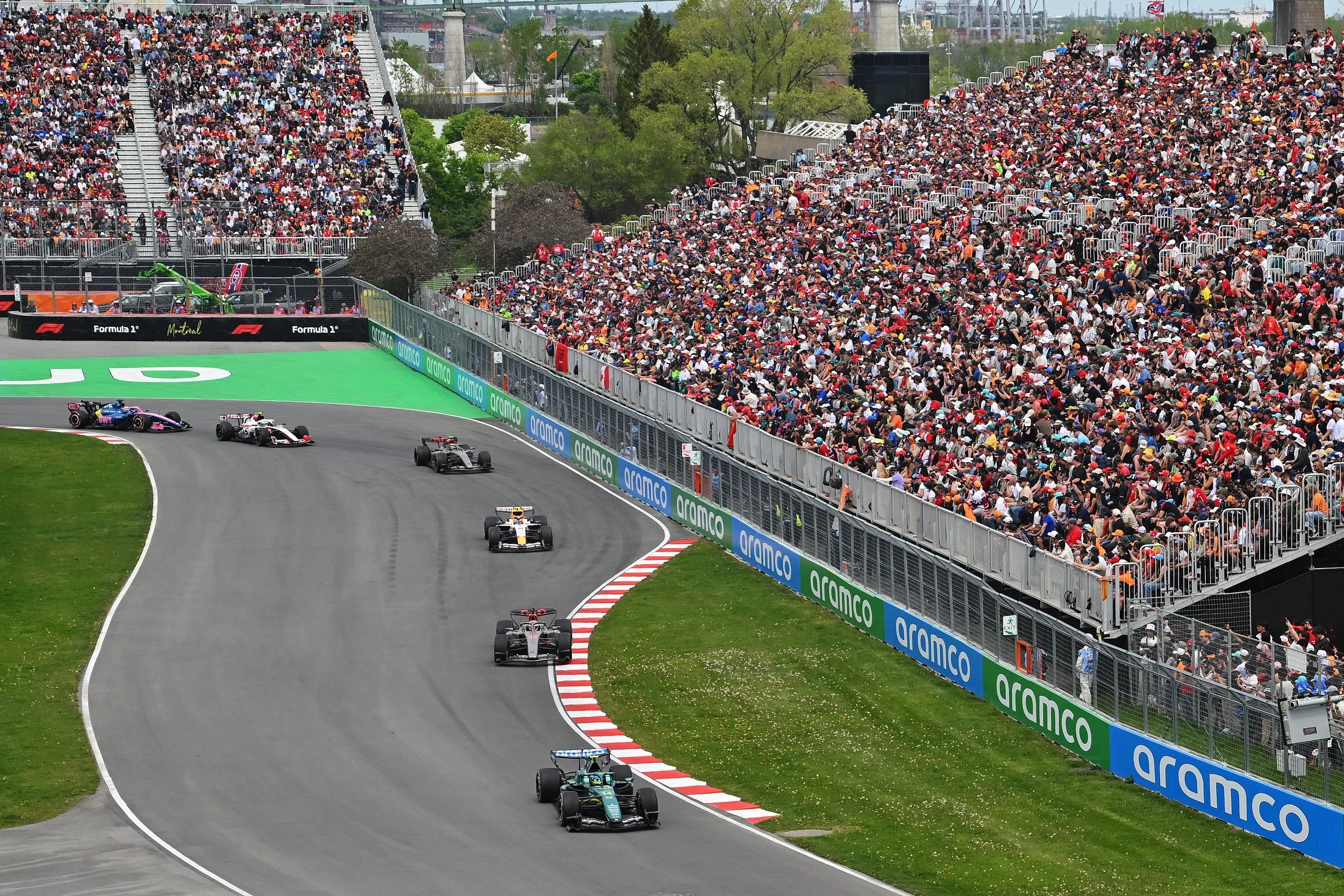
Image © Honda Motor Co. Ltd & Aston Martin Aramco. Used for editorial purposes.
The Canadian Grand Prix weekend was another difficult one for Aston Martin Aramco, but it also gave us a clearer picture of where the team currently is with the AMR26. On track, the headline result belonged elsewhere, with Kimi Antonelli taking victory ahead of Lewis Hamilton and Max Verstappen. For Aston Martin, Lance Stroll finished 15th at his home Grand Prix, while Fernando Alonso retired after 23 laps with what was initially described as a seat problem. On its own, that might sound like a small technical irritation. In reality, the detail that emerged afterwards made it more interesting.
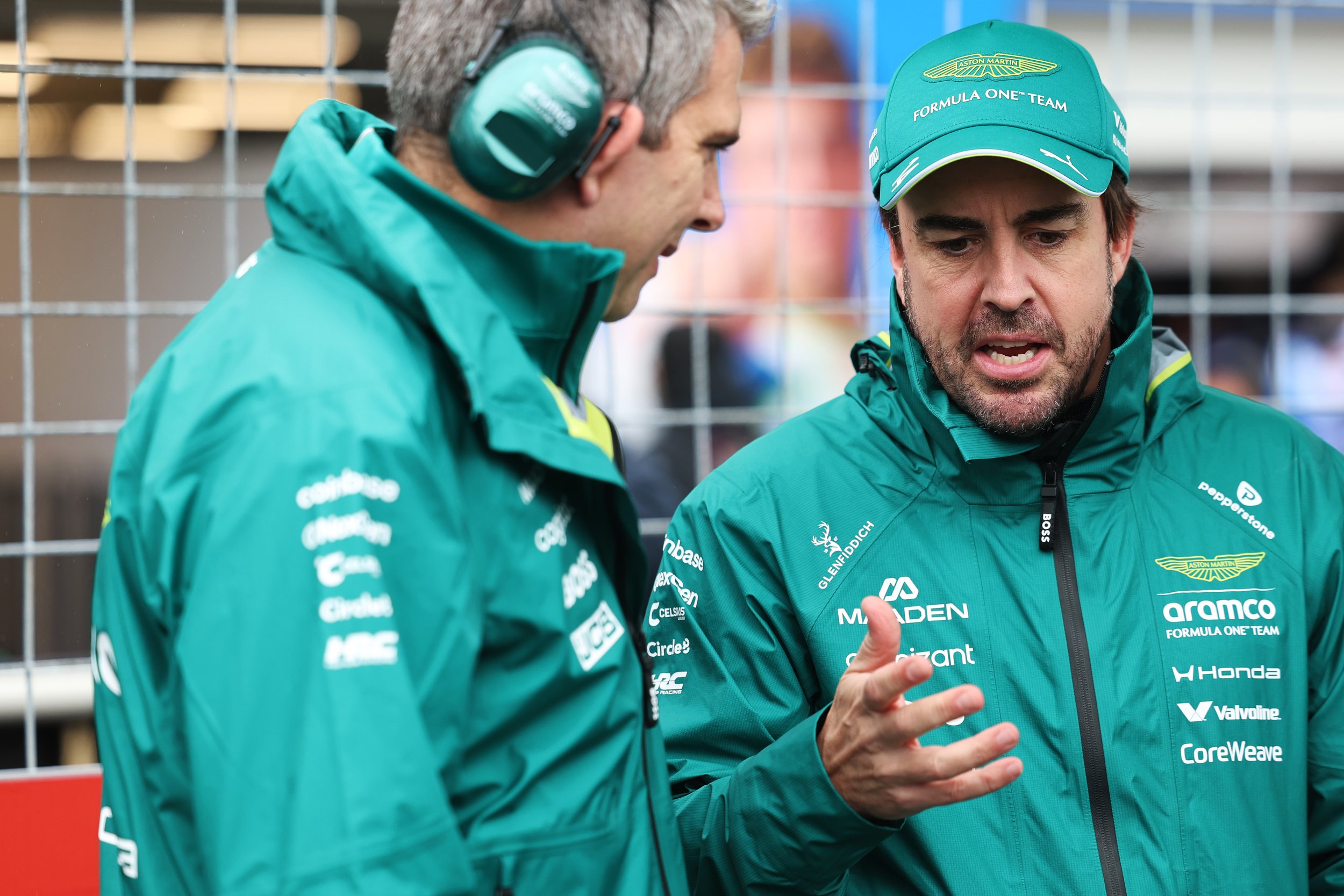
Image © Honda Motor Co. Ltd & Aston Martin Aramco. Used for editorial purposes.
Several reports this week suggested the issue was not simply a poorly fitting seat insert, but potentially linked to the more reclined cockpit position Aston Martin has adopted with the AMR26.
In modern Formula One, driver position is not just about comfort. Teams chase every possible advantage in centre of gravity, airflow and packaging, and the driver is very much part of that design puzzle. The problem, as Canada appeared to show, is that there’s a point where the pursuit of performance can begin to compromise the person inside the car.
Mike Krack indicated that Aston Martin may need to reconsider the positioning, with Alonso having become increasingly uncomfortable as the race went on. The team had already tried changes after discomfort during the sprint, but by the Grand Prix the issue had become too much to ignore. With the car out of points contention and no realistic weather opportunity ahead, Alonso and the team chose to stop the pain rather than continue circulating.
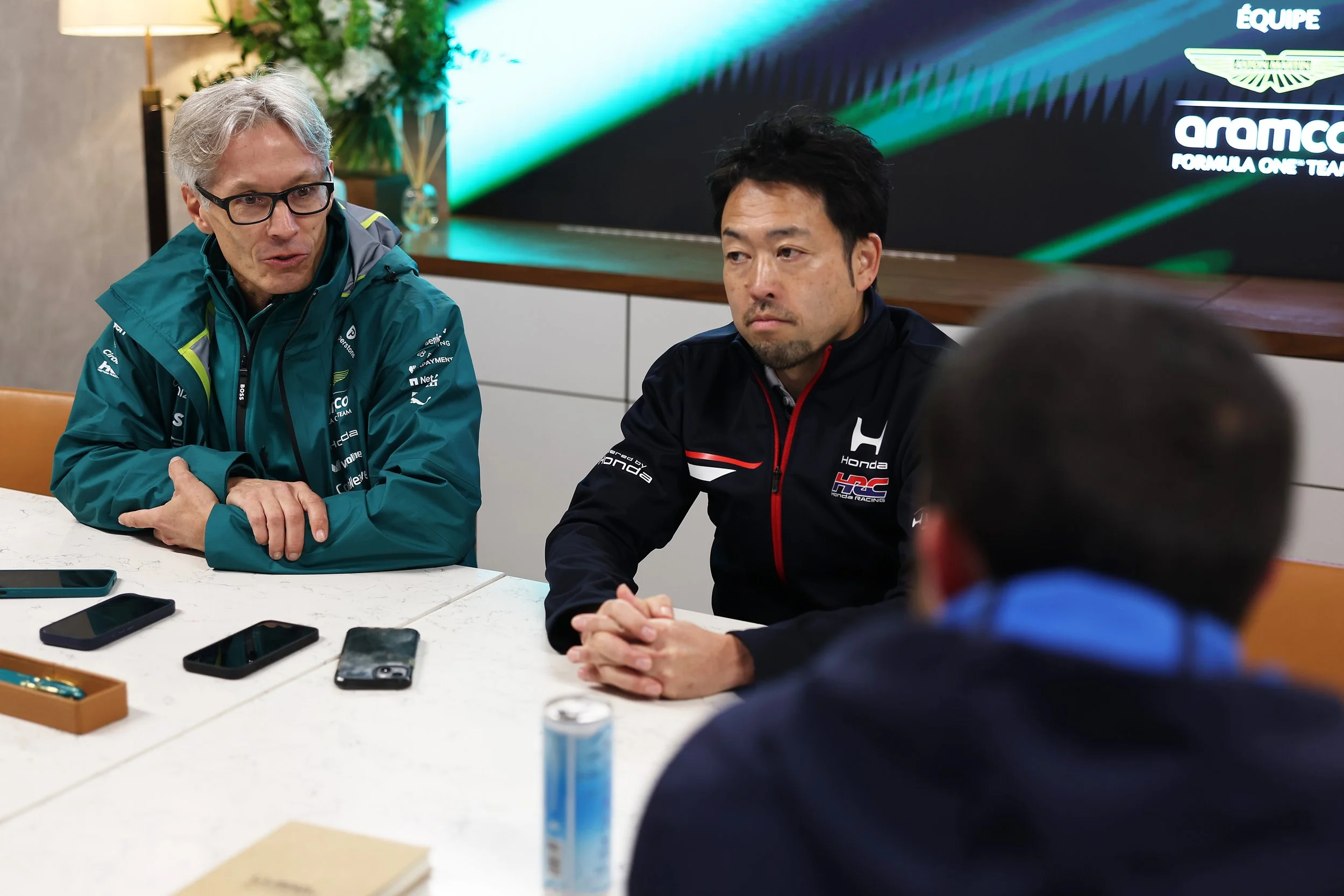
Image © Honda Motor Co. Ltd & Aston Martin Aramco. Used for editorial purposes.
It would be easy to turn that into a dramatic story about a failed design, but that would probably be too blunt. A more balanced reading is that the AMR26 is still revealing its compromises.
Aston Martin and Honda are improving reliability and understanding more about the package, but as the car runs more consistently, new issues are surfacing. Driver comfort, driveability, gearbox synchronisation, energy deployment and power unit performance are all part of the same bigger picture: this is a team still working through the fundamentals of a new car and power unit combination.
That also helps explain why Aston Martin has not been rushing visible upgrade packages onto the car. Motorsport.com reported this week that the AMR26 has not received an official upgrade package since the Japanese Grand Prix specification, with the team apparently choosing not to spend budget cap and production resource on small changes that would not meaningfully alter its competitive position. Alonso’s explanation was quite revealing: if the car is running near the back and the next group is around a second up the road, adding two tenths here or there may not be enough to change the result. The team appears to be waiting for a more substantial development step around the summer, rather than chasing marginal gains that could add stress without changing the outcome.
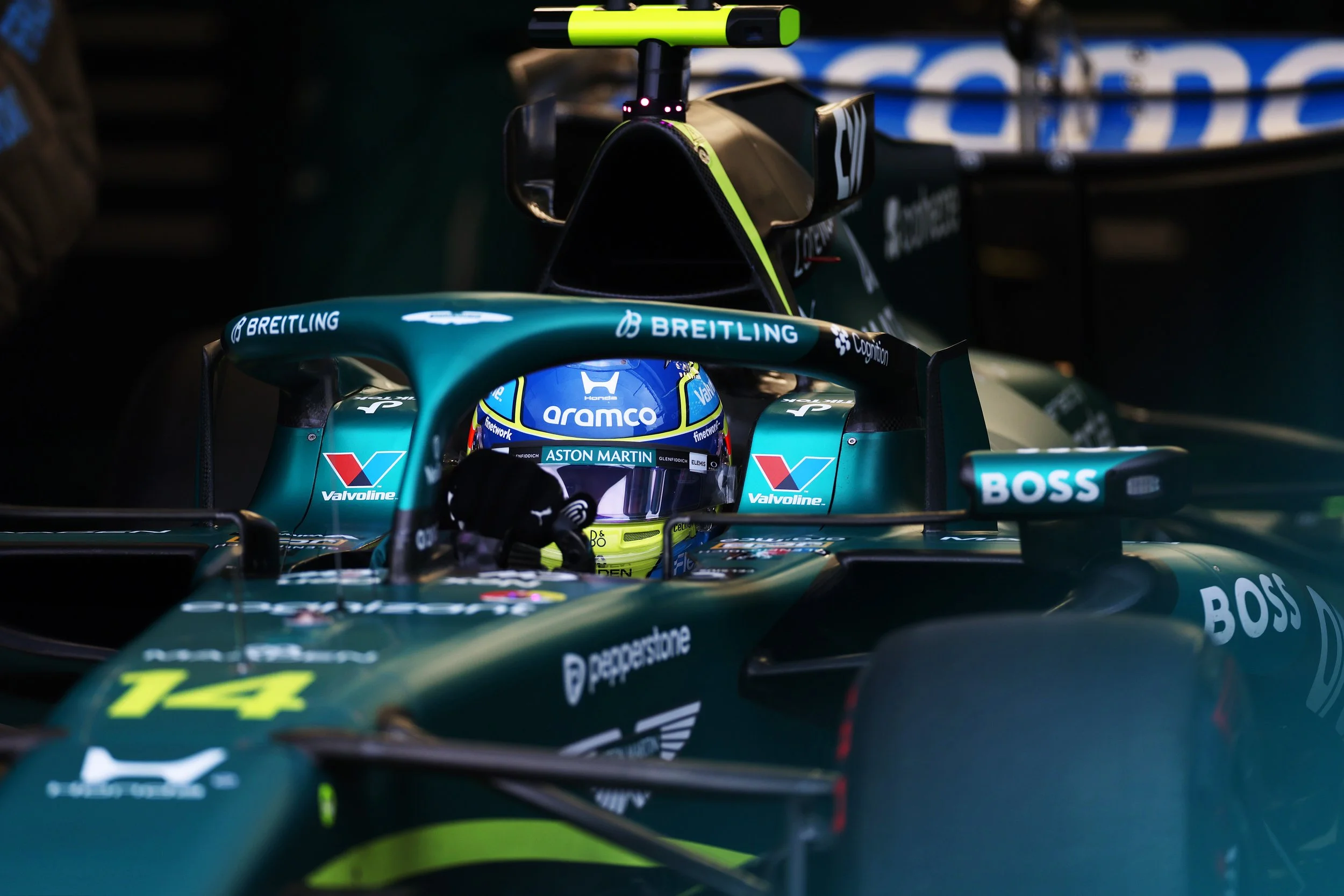
Image © Honda Motor Co. Ltd & Aston Martin Aramco. Used for editorial purposes.
Honda’s own comments fit that same theme. Shintaro Orihara pointed towards the summer shutdown as a possible stage where some power unit improvement may begin to show, with combustion performance and friction reduction among the focus areas. Again, this shouldn’t be read as a promise of an instant turnaround. It feels more like the latest indication that Aston Martin’s 2026 recovery is going to be gradual, technical and probably frustrating at times.
There was also some paddock speculation this week around Aston Martin’s wider leadership structure, including reports about Adrian Newey’s reduced presence while recovering from health issues and the curious “Jonathan Wheatley, Aston Martin” parking sign in Montréal, which the Canadian GP promoter reportedly described as a printing error. For now, that remains speculation rather than confirmed team news. What is fair to say is that Aston Martin’s difficult start to 2026 has moved some external attention beyond the car itself and towards the question of who is steering the recovery effort around it.
Thankfully, the wider Aston Martin racing story this week was not all frustration.
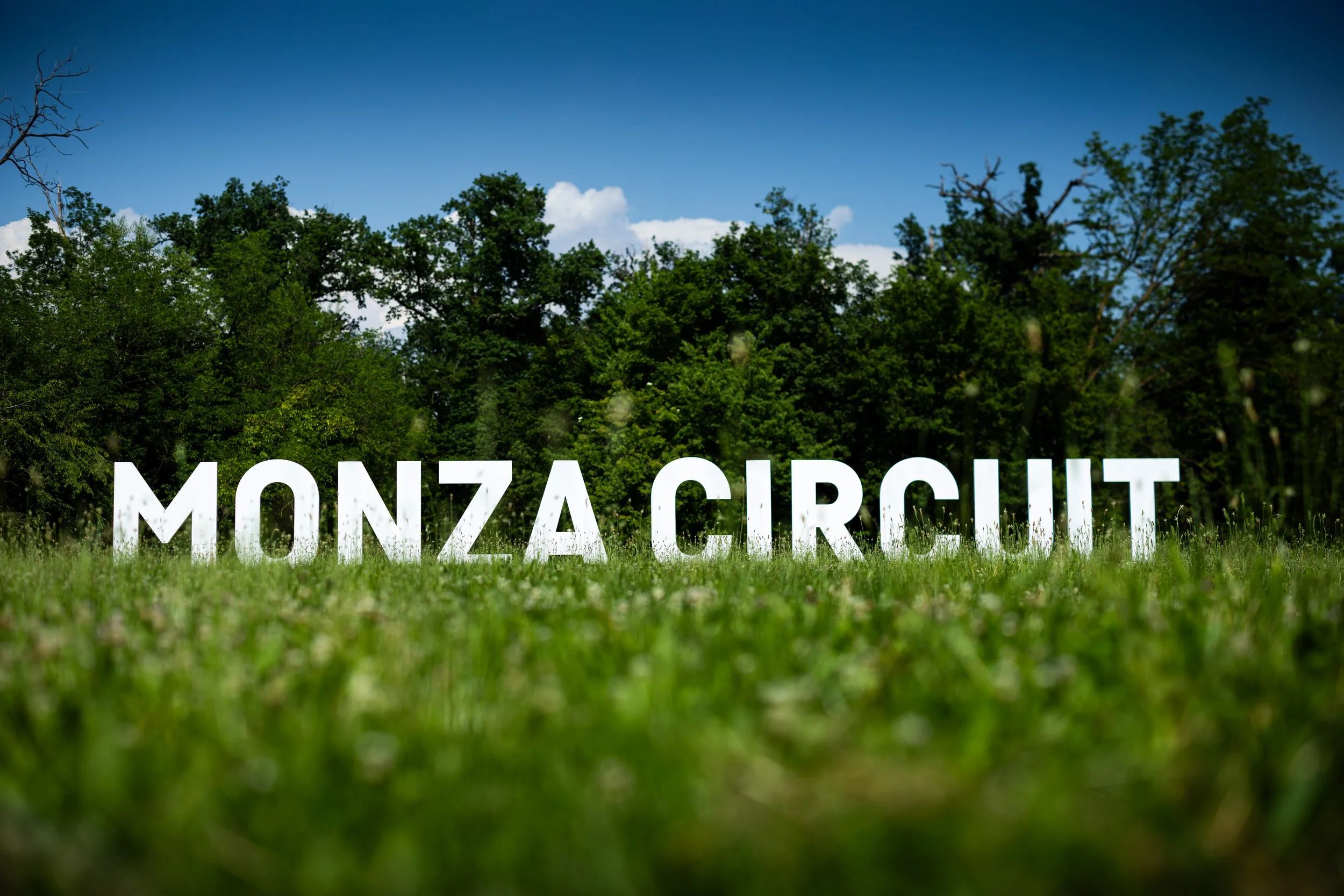
Image © Blackthorn Racing. Used for editorial purposes.
Blackthorn Racing is also back on the FTP watchlist this weekend, with Ecurie Ecosse Blackthorn heading to Monza for the GT World Challenge Europe Endurance Cup. The #56 Aston Martin Vantage AMR GT3 EVO is listed in the Bronze Cup with Jonny Adam, Lorcan Hanafin and Giacomo Petrobelli, and it’lll be another useful marker in what has already become a fascinating multi-series Aston Martin campaign.
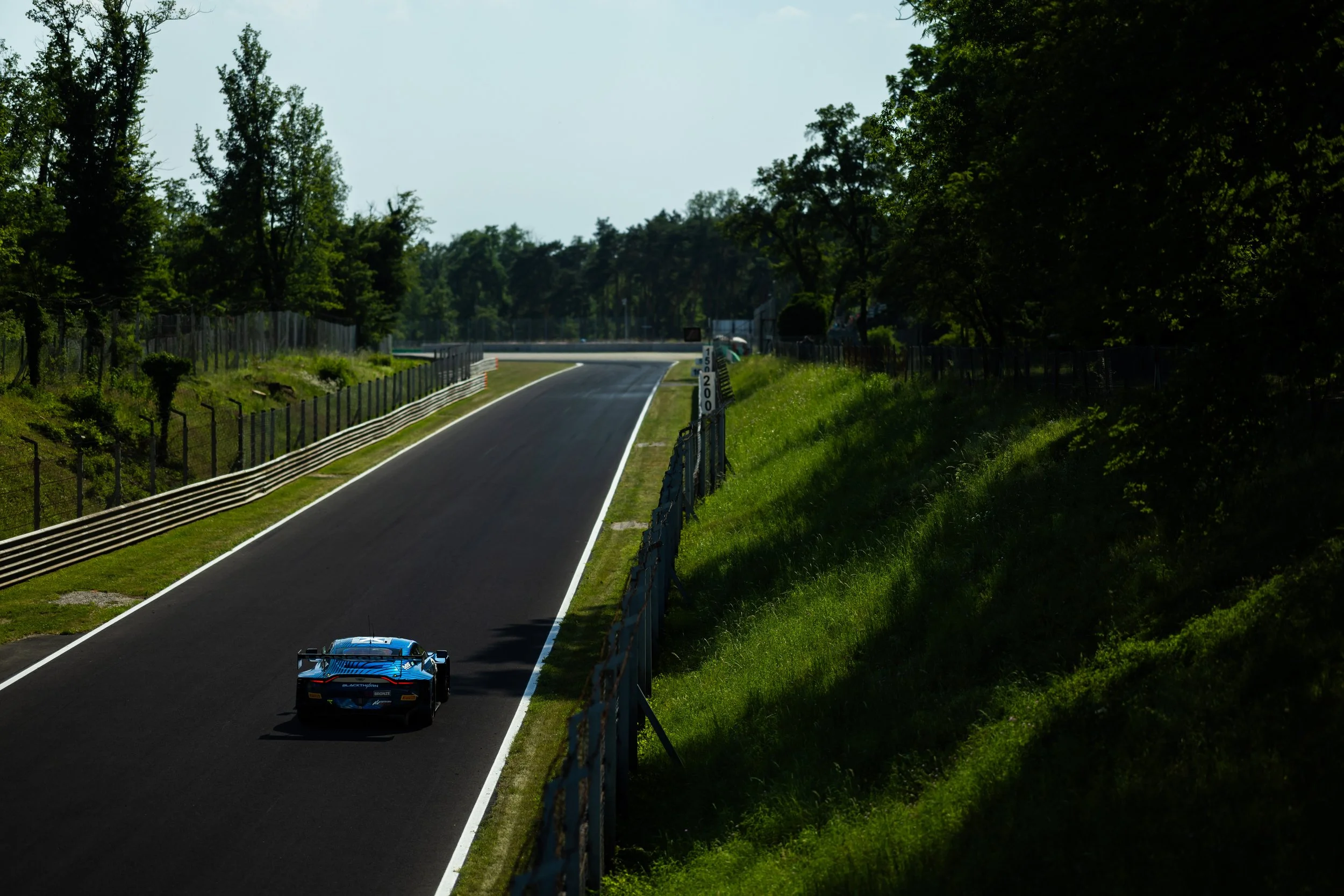
Image © Blackthorn Racing. Used for editorial purposes.
We’ve been following Blackthorn’s season closely in the FTP Motorsport Hub because their programme tells a proper customer-racing story: Asian Le Mans success in Abu Dhabi, promise but frustration in GT World Challenge Europe at Paul Ricard, a disrupted Michelin Le Mans Cup start, and stronger International GT Open form with a Pro-Am win at Portimão followed by a Pro-Am podium at Spa.
That mixture of highs, setbacks and recovery is exactly what makes the team worth tracking, and hopefully Monza gives them another opportunity to build momentum.
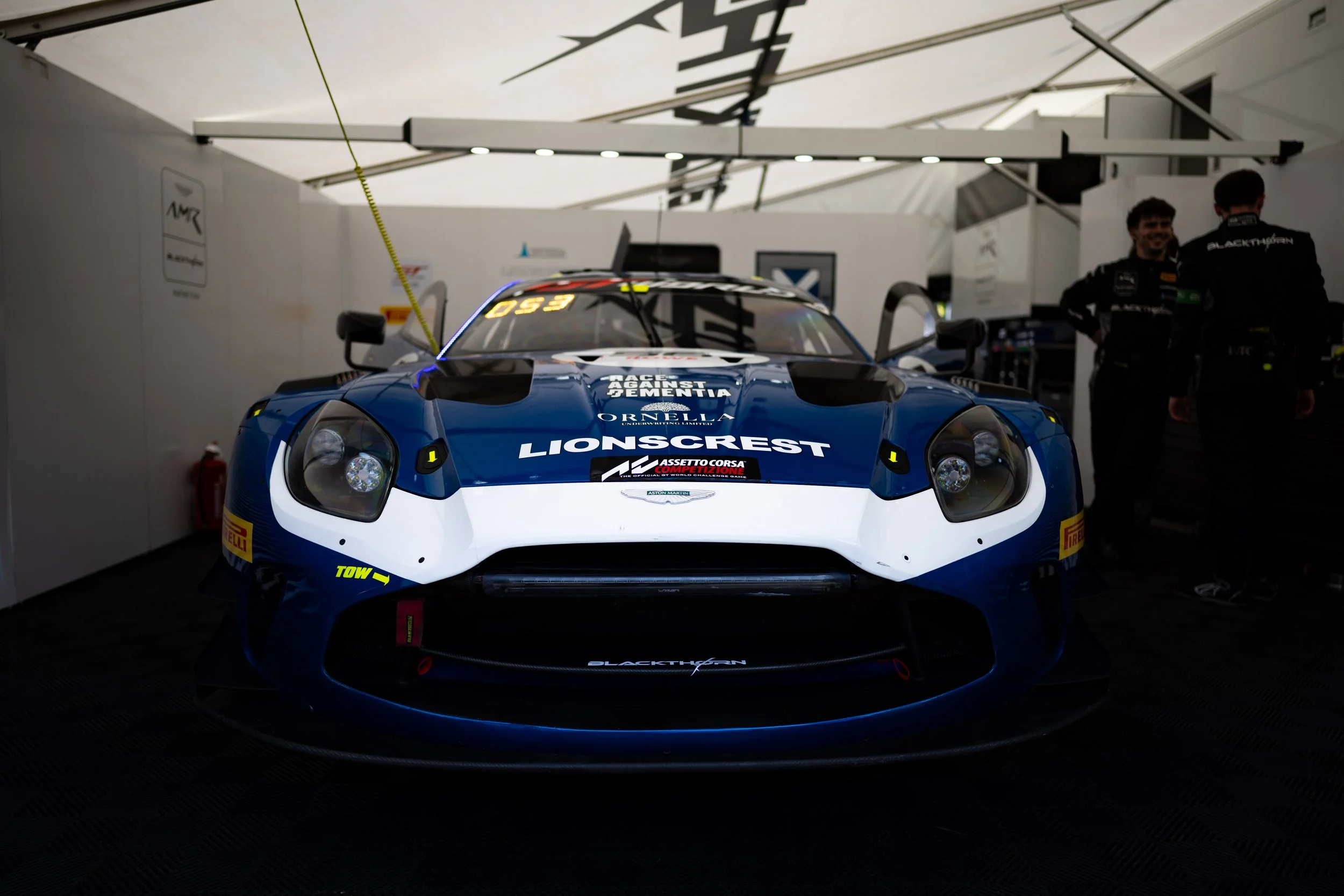
Image © Blackthorn Racing. Used for editorial purposes.
Behind the scenes, work is also underway to redesign and expand the Blackthorn Racing – Featured Team section in the FTP Motorsport Hub.
Now that we have access to stronger photographic material, the aim is to give this ambitious Aston Martin programme a more detailed and visually engaging home on the site, with better race context, richer updates and a closer look at how their season develops across the different championships.
In Montréal, there was a much brighter Aston Martin Aramco result in F1 ACADEMY, where Mathilda Paatz claimed her maiden victory in the series and Aston Martin Aramco’s first F1 ACADEMY win. After qualifying fifth, she finished third in the opening race, won the Reverse Grid Race and then added fifth in a wet Feature Race. That meant two trophies, three top-five finishes and 35 championship points from the weekend.
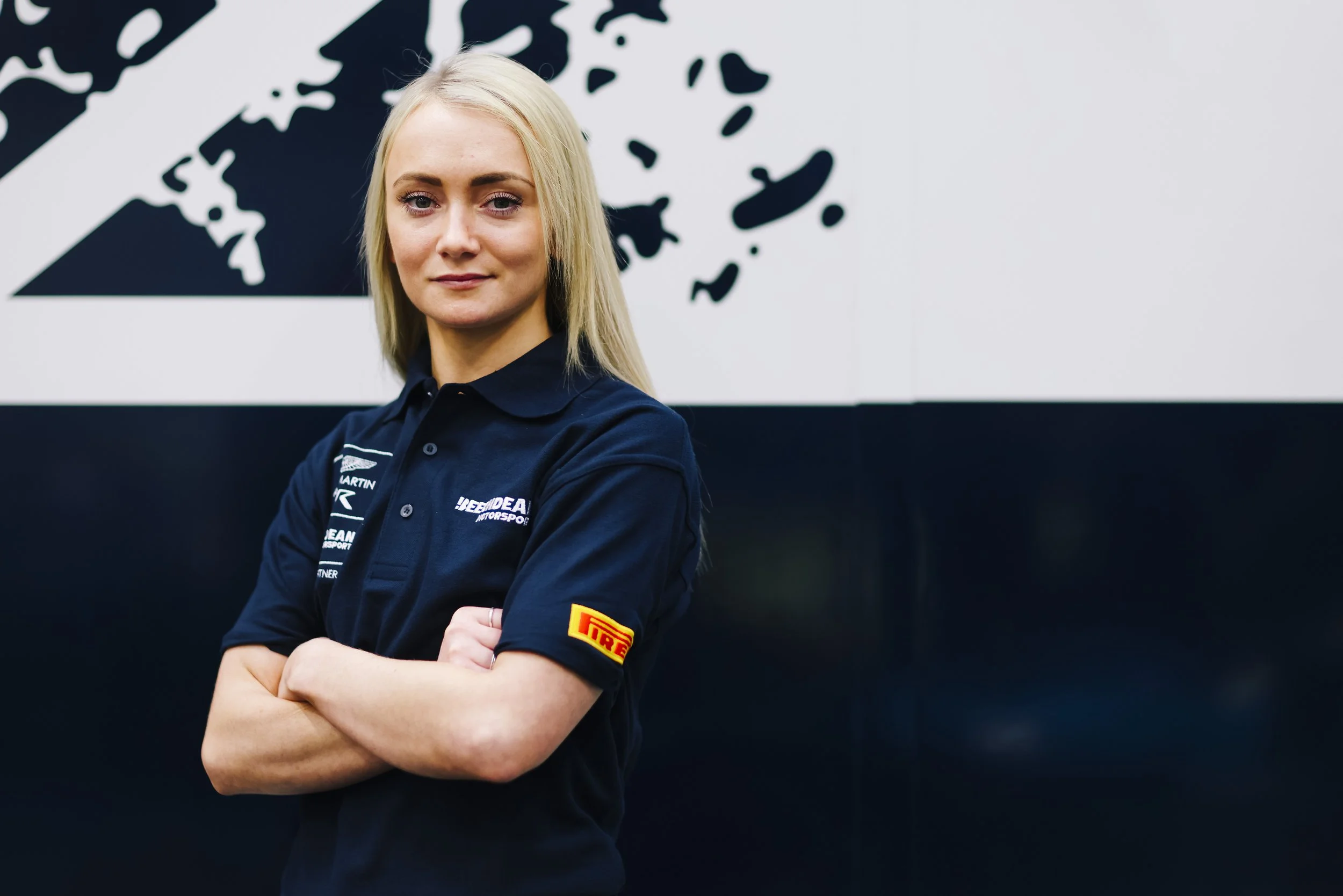
Image © Aston Martin Lagonda. Used for editorial purposes.
It was a strong response after a difficult opening round in Shanghai, and a reminder that Aston Martin Aramco’s wider driver development story is beginning to produce meaningful moments.
Jessica Hawkins, Head of F1 ACADEMY at Aston Martin Aramco, praised Paatz’s maturity and consistency, and that neatly links us to British GT, because Hawkins had her own successful Aston Martin weekend at Oulton Park.
British GT was at Oulton Park for rounds two and three of the 2026 season, and Aston Martin had plenty to be encouraged by. In GT3, Beechdean Motorsport’s #7 Aston Martin Vantage AMR GT3 Evo, driven by Andrew Howard and Ross Gunn, started both races from pole and finished second in both. Race 1 was particularly close, with Beechdean missing victory by just two tenths of a second. Those results leave Howard and Gunn leading the GT3 Drivers’ Championship, while Beechdean sits firmly in the GT3 Teams’ fight.
The GT4 story was even stronger. MK Racing’s #21 Aston Martin Vantage AMR GT4 Evo, driven by Will Orton and Jessica Hawkins, continued its excellent start to the season with second place in both Oulton races. That makes three second-place finishes from the opening three races, and keeps Orton and Hawkins right in the GT4 championship picture.
Then came the Aston Martin GT4 highlight of the weekend: Grange Racing by FSR’s #27 Vantage AMR GT4 Evo, driven by Daniel Lavery and Darren Turner, won GT4 in Race 2, just ahead of the MK Racing Aston Martin. An Aston Martin one-two in GT4 is a very good way to leave Oulton Park, and a welcome reminder that while the Formula One story is difficult at the moment, Aston Martin’s customer racing programme continues to deliver strong results. To read more detail about the British GT, you can visit the dedicated section in the FTP Motorsport Hub HERE.
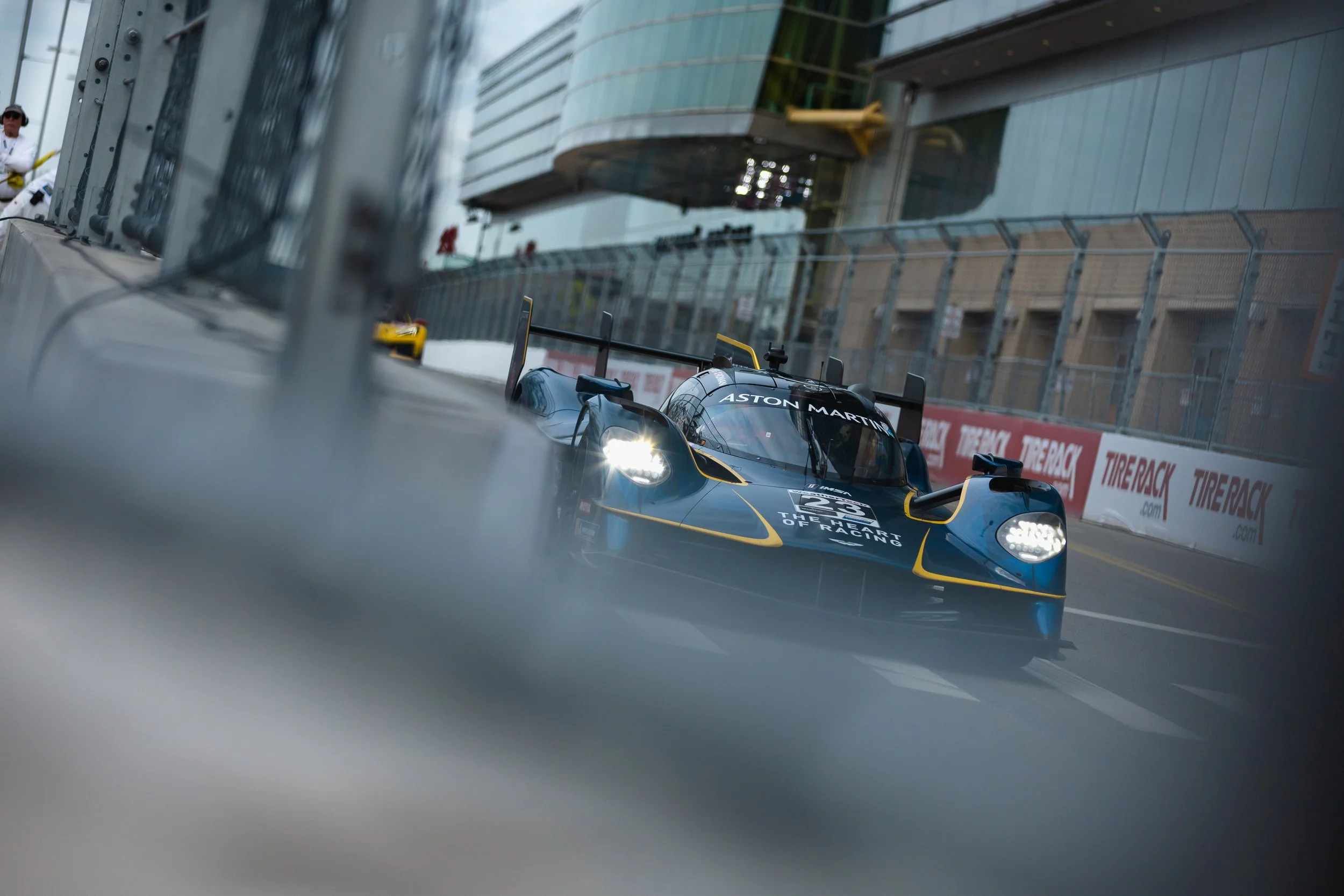
Image © Aston Martin Lagonda. Used for editorial purposes. Valkyrie in the Detroit Streets 2025.
From Oulton Park, the focus now moves across the Atlantic, where the Aston Martin Valkyrie returns to IMSA WeatherTech SportsCar Championship action this weekend in the Chevrolet Detroit Sports Car Classic. The #23 Valkyrie, run by the Aston Martin THOR Team, will be driven by Ross Gunn and Roman De Angelis around the tight, bumpy Detroit street circuit.
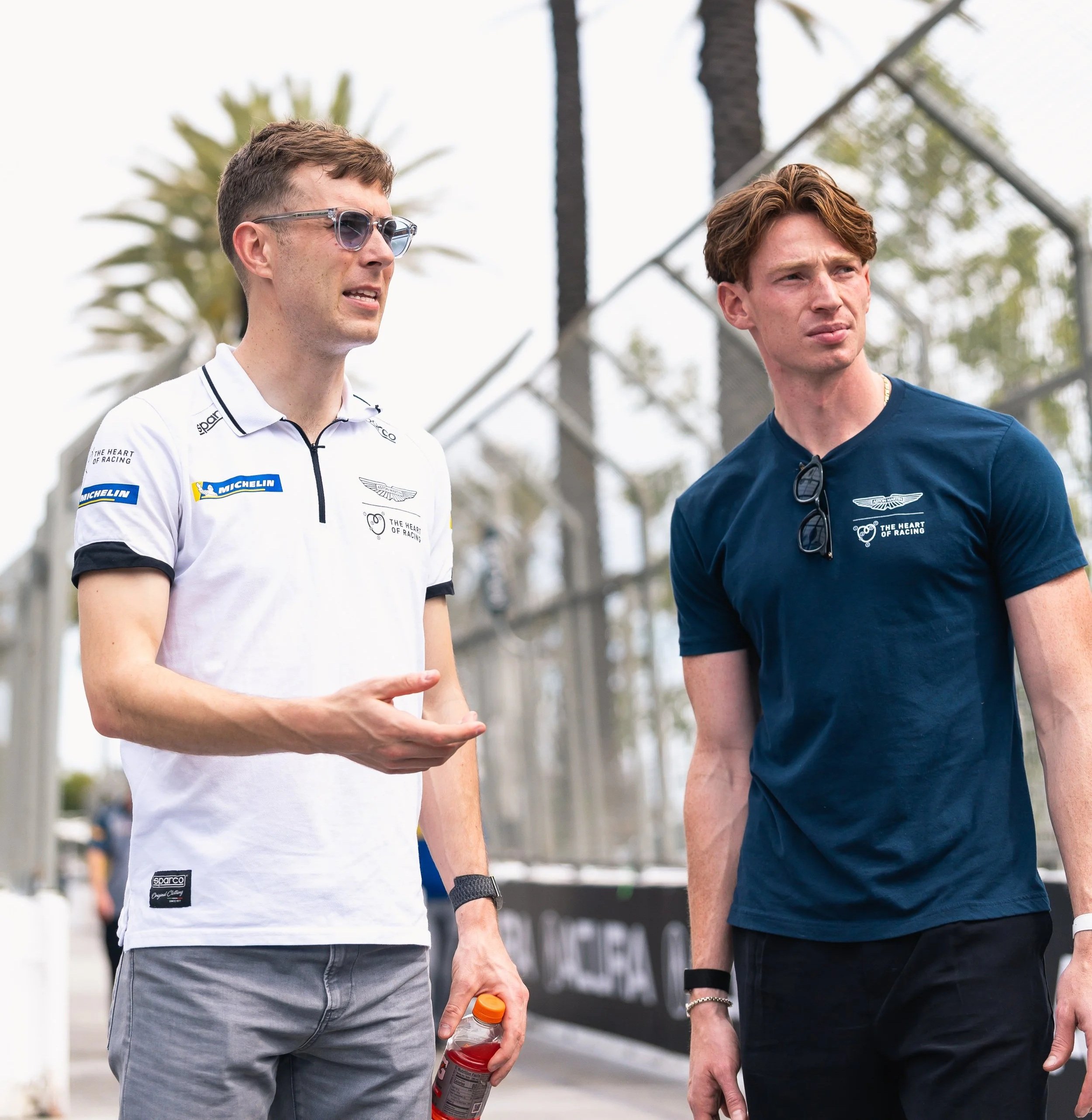
Image © Aston Martin Lagonda. Used for editorial purposes. Ross Gunn & Roman-De-Angelis.
Detroit is not an easy place to take a hypercar. The circuit is short, narrow and dominated by 90-degree corners, so braking stability, traction and clean execution will matter enormously.
Aston Martin itself has been realistic about that challenge, but there are reasons for optimism. Valkyrie recently scored its best FIA World Endurance Championship result so far with fourth at Spa, showed strong pace at Laguna Seca in IMSA, and was competitive at Long Beach before contact ended its chances of a stronger result.
What makes the Valkyrie programme so compelling is that it still feels like Aston Martin doing things the hard way, but also the Aston Martin way. It’s the only road-derived hypercar competing in both WEC and IMSA, and the only V12-powered car in the Detroit GTP field. That matters emotionally as well as technically. In an era of highly optimised prototype racing, the Valkyrie still carries a recognisable thread back to the road car and to Aston Martin’s long tradition of dramatic, characterful engineering.
A full IMSA Detroit race report is now available in the FTP Motorsport Hub, covering the Chevrolet Detroit Sports Car Classic, the #23 Aston Martin THOR Team Valkyrie’s bruising street-race finish, and the useful Aston Martin GT3 footnote many readers may not realise, the Vantage GT3 EVO did not race at Detroit because GTD was not part of the WeatherTech field for this round. Detroit was therefore a Valkyrie-only IMSA weekend for Aston Martin, while the Vantage GT3 story resumes when the GTD class returns.
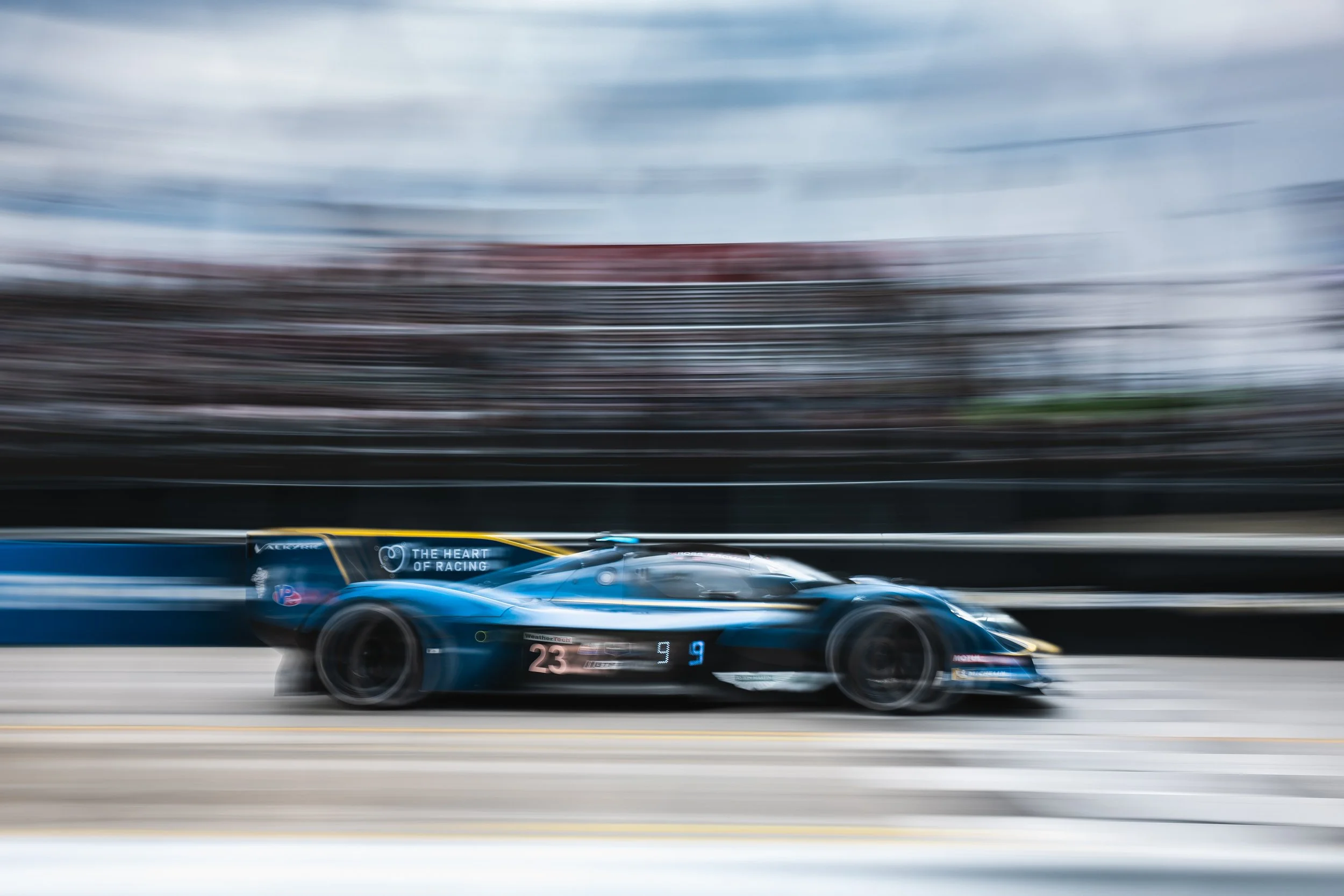
Image © Aston Martin Lagonda. Used for editorial purposes. Valkyrie at speed, Detroit 2025
That brings us neatly to Le Mans. We are now only around two weeks away, and the countdown is starting to feel properly real. There are countdown clocks on the Fuel the Passion front page, and the larger race countdown section in the FTP Motorsport Hub continues to track all the Aston Martin racing we cover across the season. From Valkyrie in Hypercar to the Vantage entries in GT, Le Mans is getting closer, and I cannot wait to see how the Aston Martins perform.
Road Cars: Aston Martin’s “S” Moment Comes Into Focus
From racing cars on city streets, British circuits and Formula One’s most demanding weekends, the story now moves back to the road, although, in Aston Martin’s case, the line between race-bred intent and grand touring polish is never very far away.
Over recent editions of the FTP Weekly Roundup, we’ve already featured a steady run of reviews covering Aston Martin’s latest S-badged models. The broad direction has been clear: whatever challenges may exist elsewhere in the Aston Martin world, Gaydon is producing road cars that are scoring very highly with reviewers and, more importantly, still feel special. DB12 S, DBX S and Vantage S have all been praised in different ways, not simply for outright performance, but for character, sound, chassis tuning, interior quality and that sense of occasion Aston Martin has to get right.
So this week’s latest review coverage doesn’t arrive in isolation. It adds another layer to a bigger picture that’s been forming for some time: Aston Martin’s modern “S” badge appears to be less about chasing one headline number and more about sharpening the complete car. A little more power, yes, but also more response, more presence, more theatre and, where it works best, a clearer sense of identity. That timing is useful too. The June Fuel the Passion feature will look more closely at what the modern Aston Martin “S” badge really means, not just historically, but in the context of the cars Aston Martin is building right now.
DB12 S: sharper, louder, still a proper grand tourer
Country Life’s Matthew MacConnell spent time with the Aston Martin DB12 S in the South of France, with the launch based around Château La Coste and roads leading towards Marseille. It’s the kind of setting that naturally suits an Aston Martin grand tourer: sun, vineyards, sweeping roads and a car designed to make the journey feel like part of the occasion.
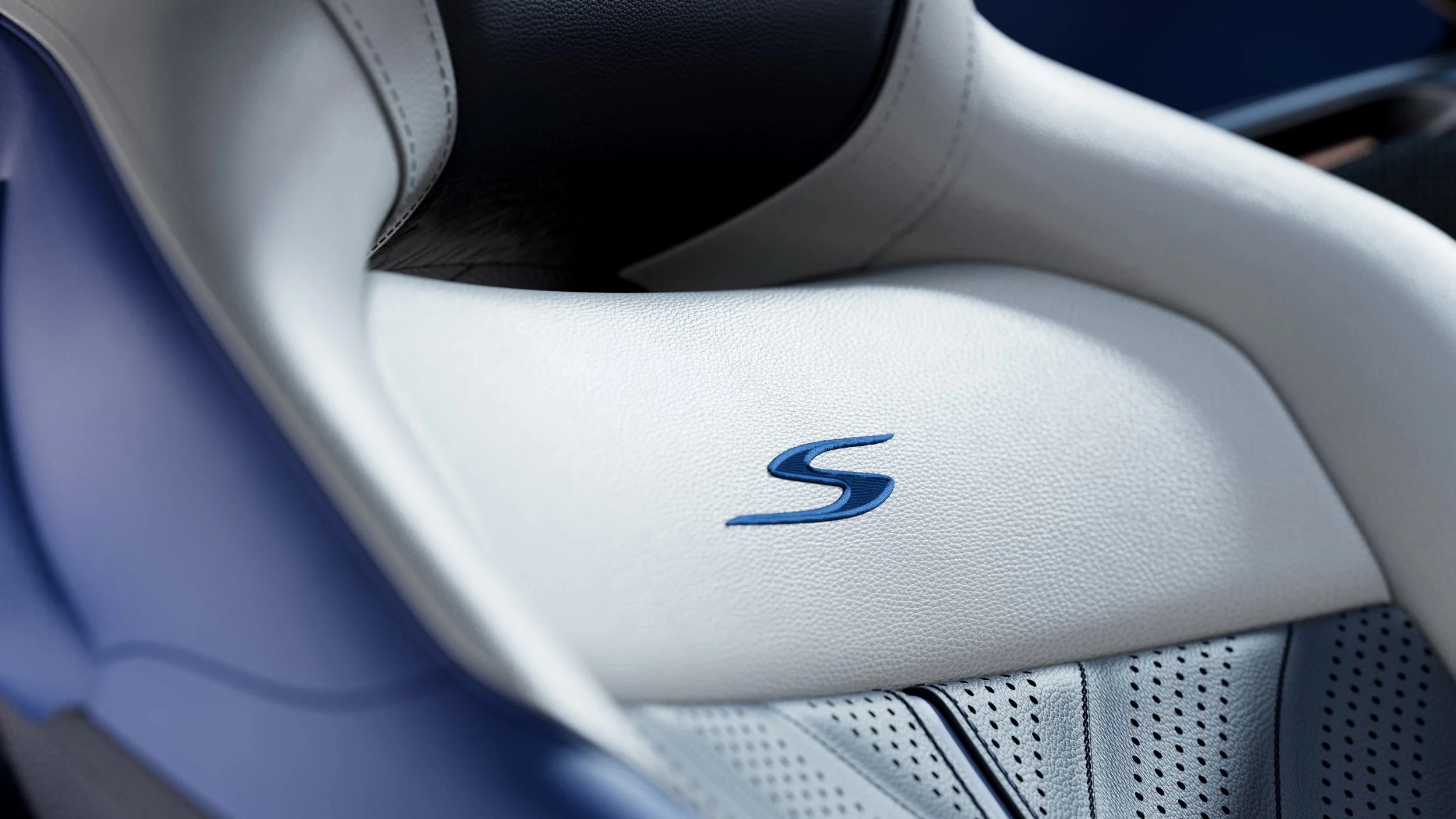
Image © Aston Martin Lagonda. Used for editorial purposes.
The review picks up on the key point about the DB12 S. This is not simply a DB12 with a large power increase and a new badge. The extra power is relatively modest, but the package is broader than that: revised aerodynamics, stacked exhaust tips, stiffer anti-roll bars, Bilstein DTX adaptive dampers and changes to the chassis and electronic differential settings. In other words, the “S” treatment is about sharpening the whole car rather than chasing one headline figure.
What comes through strongly is that the DB12 S still appears to understand its role as a super tourer. The review praises its civilised ride and long-distance character, but also the way Sport Plus mode and the optional titanium exhaust bring the car more vividly to life. That’s exactly the space Aston Martin seems to be trying to occupy with the modern S badge: more attitude, more response, more theatre, but without turning the car into something harsh or one-dimensional.
DBX S: brilliant SUV, difficult options conversation
Motor1 also reviewed the 2026 Aston Martin DBX S, and this one is interesting for a slightly different reason. The review is broadly positive about the car itself, particularly its chassis, performance and interior quality, but it also raises a fair question about how far buyers need to go with options.
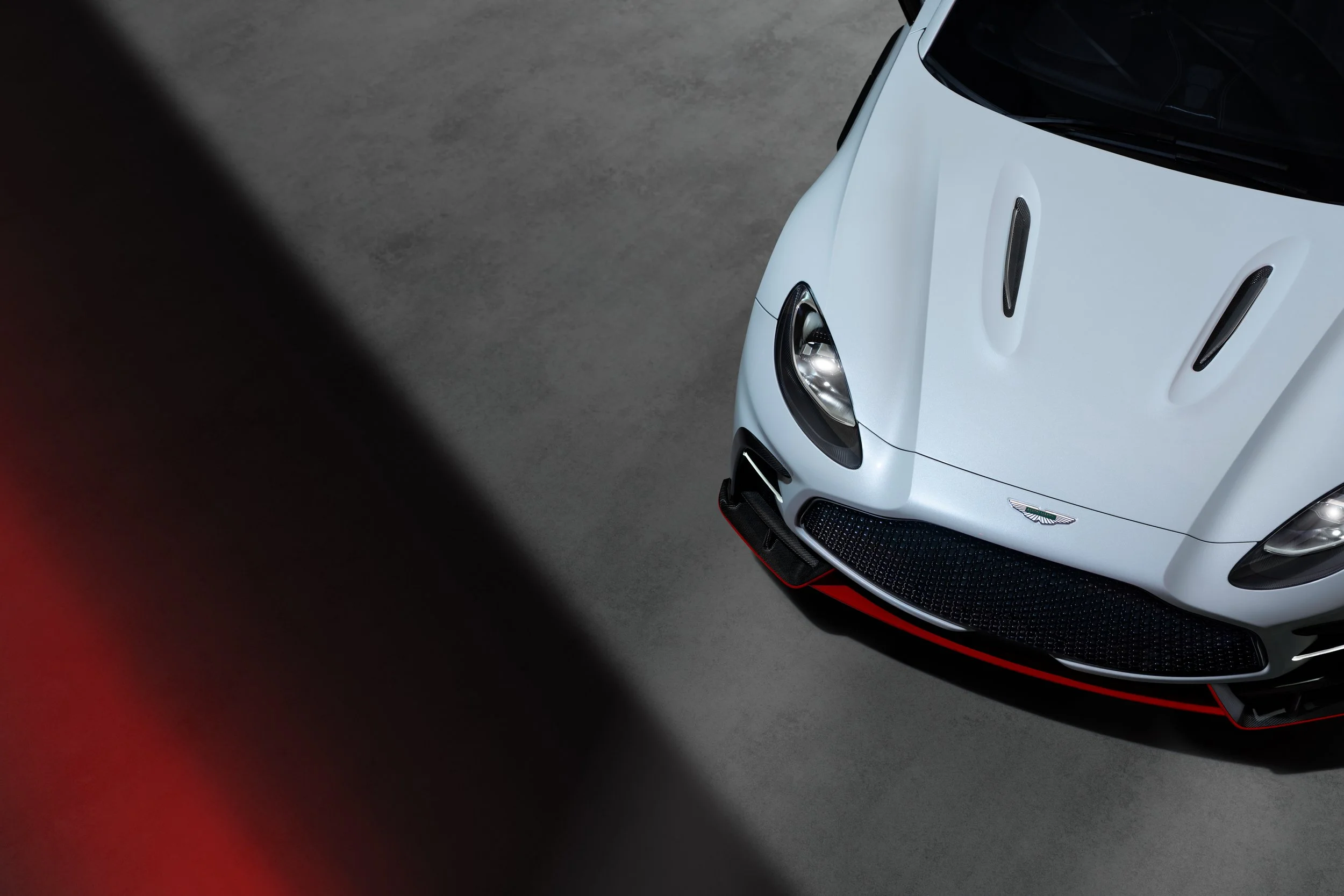
Image © Aston Martin Lagonda. Used for editorial purposes.
The DBX S sits above the DBX707, using a 4.0-litre twin-turbo V8 producing 717 horsepower and 664lb ft of torque. Motor1 notes the same 3.3-second 0-60mph time as the DBX707, while the S receives changes including a retuned steering rack and the potential for significant weight saving through options such as a carbon-fibre roof and 23-inch magnesium wheels.
The reviewer clearly liked the way the DBX S drives, describing it as agile and praising the way Aston Martin’s own chassis tuning helps disguise the size and mass of the car. That’s important, because DBX has always been at its best when it feels like a proper Aston Martin rather than simply a fast luxury SUV wearing the badge.
Where the review becomes more cautious is around price and specification. The test car carried a very large options list, and the reviewer questioned whether the most extreme specification choices would make sense for many buyers using the car as a daily driver. That feels like a fair and useful point. The DBX S may be a very impressive performance SUV, but for real-world buyers the sweet spot may depend heavily on how it’s specified.
Vantage S: Cars with Luke joins the conversation
We also had fresh YouTube review coverage of the new Aston Martin Vantage S, with Cars with Luke taking a first drive on the sort of twisting roads near Monaco that suit a compact Aston Martin sports car rather well. The full video can be viewed by clicking on the image below. The Vantage S does look very good in that red!
This is not a long-form technical review, but it’s a useful first impression because it captures something that written reviews can sometimes struggle to convey: whether the car actually feels alive on the right road. Luke describes the Vantage S as the latest Vantage with “everything turned up” more power, stronger looks and a little less weight, before highlighting the Supernova Red paint, Club Sport White detailing, carbon exterior package, carbon ceramic brakes, optional carbon seats and the new bonnet vents with carbon lips.
The sound also gets attention. In Sport Plus, he picks up on the downshift crackles and says the car sounds good, while also suggesting Aston Martin may have reduced the amount of augmented sound coming through the speakers compared with the standard Vantage and Vanquish, which he felt had previously been too present in the cabin. That’s an interesting point, because sound and theatre are such an important part of what modern Aston Martins need to get right. Most importantly, the car appears to deliver where it matters. On the road, Luke describes the Vantage S as feeling like a proper sports car and says he is “genuinely having fun,” praising the way the suspension deals with corners and how the car feels as though it’s dancing underneath him.
Taken alongside the DB12 S and DBX S review coverage, the Vantage S completes a neat current Aston Martin picture. Across coupe, SUV and sports car, the modern S badge appears to be about more than power alone. It’s about sharper response, stronger visual identity, more sound, more focus and, at its best, a little more emotional edge.
That’s why this run of reviews feels more significant than ordinary road-test coverage. They help answer a bigger question we’ll return to in the June Fuel the Passion feature: is “S” still a meaningful Aston Martin badge in 2026? Based on the reviews so far, the answer appears to be yes, provided it’s understood as a complete character package rather than simply a power upgrade.
That also gives us a useful bridge into the next part of this week’s Roundup, because while the modern cars are busy defining what Aston Martin is becoming, the heritage stories this week remind us how often the marque has had to reinvent itself before.
Heritage and Culture: the people, cars and stories that shaped Aston Martin
AMHT remembers David Brown and Victor Gauntlett
The Aston Martin Heritage Trust has published two recent pieces that sit very neatly together, because they look at two very different Aston Martin survival stories.
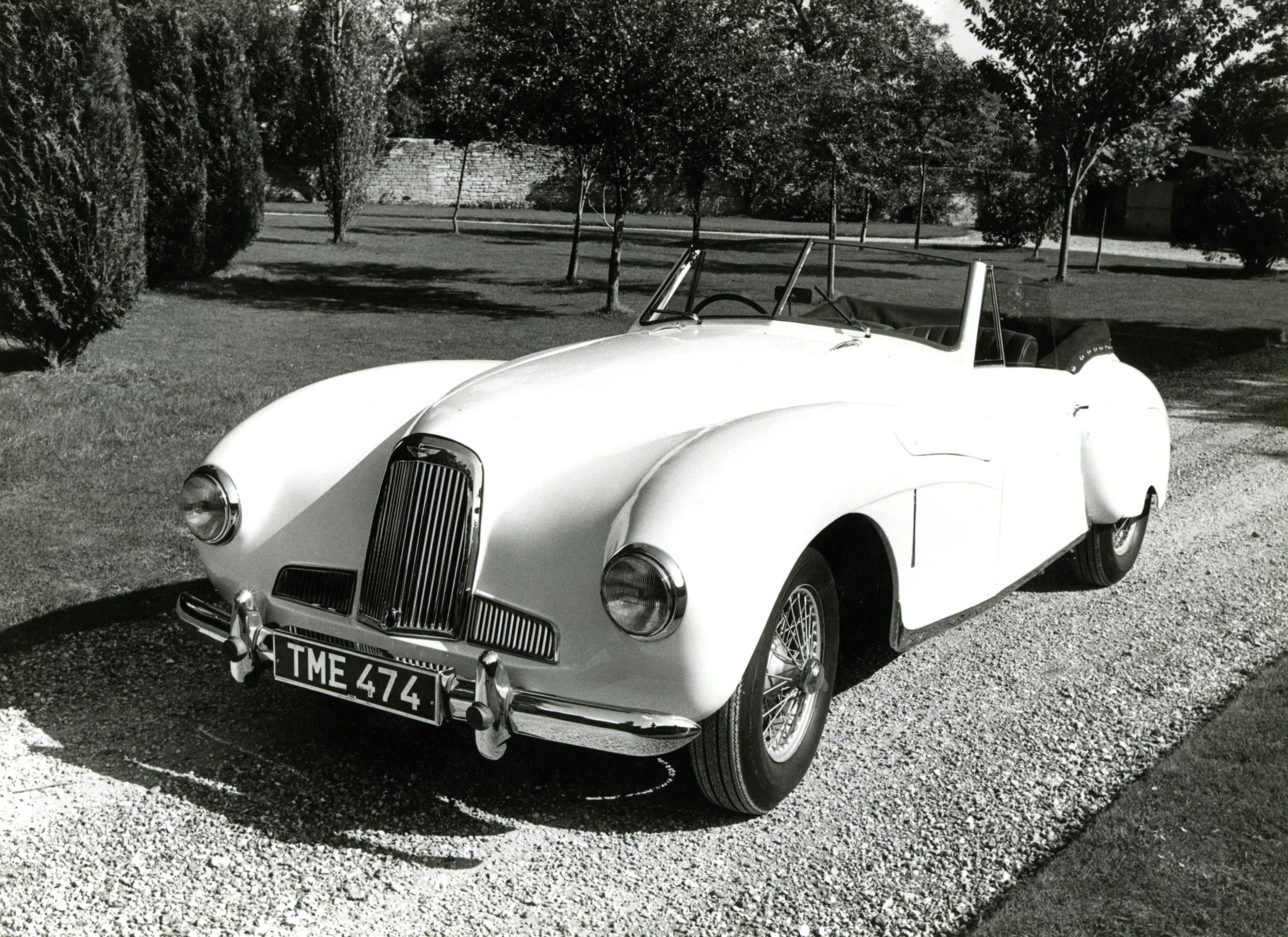
Image © Aston Martin Lagonda. Used for editorial purposes. Aston Martin DB1.
The first looks back at David Brown, whose birthday on 10th May offered a timely reminder of just how much Aston Martin’s modern identity still owes to him. Brown’s background was not in glamorous sports cars, but in engineering, gears and tractor manufacturing in Huddersfield. Yet when he saw that a luxury car company was for sale after the Second World War, he recognised the potential in Aston Martin and bought the business in 1947.
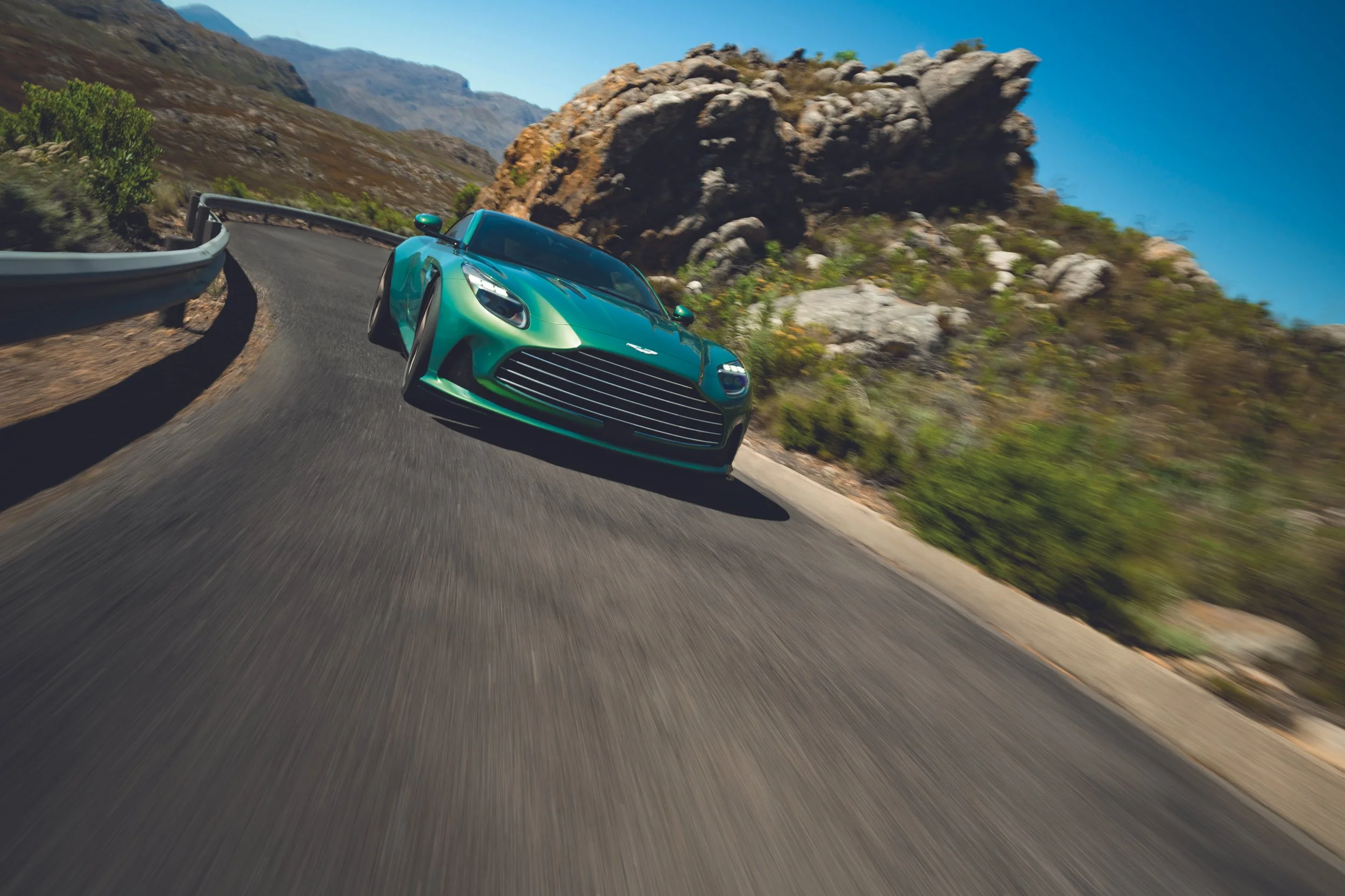
Image © Aston Martin Lagonda. Used for editorial purposes. Aston Martin DB12.
His later acquisition of Lagonda helped give the company access to engine technology, and under his ownership Aston Martin entered the DB era. That legacy still runs through the marque today, not only in the continued use of the DB initials, but in the idea of an Aston Martin as a refined, powerful, distinctly British grand tourer.
The AMHT article also touches on Aston Martin’s 1959 Le Mans victory, which feels rather appropriate as we count down towards this year’s race.
You can read the full AMHT article here: From Tractors to Touring Cars: The Story of David Brown. I very much recommend it.
The second AMHT piece reflects on Victor Gauntlett, another hugely important figure, but from a very different chapter. Where David Brown helped give Aston Martin its post-war direction and identity, Gauntlett is remembered for helping keep the company alive during the fragile late-1970s and 1980s period.
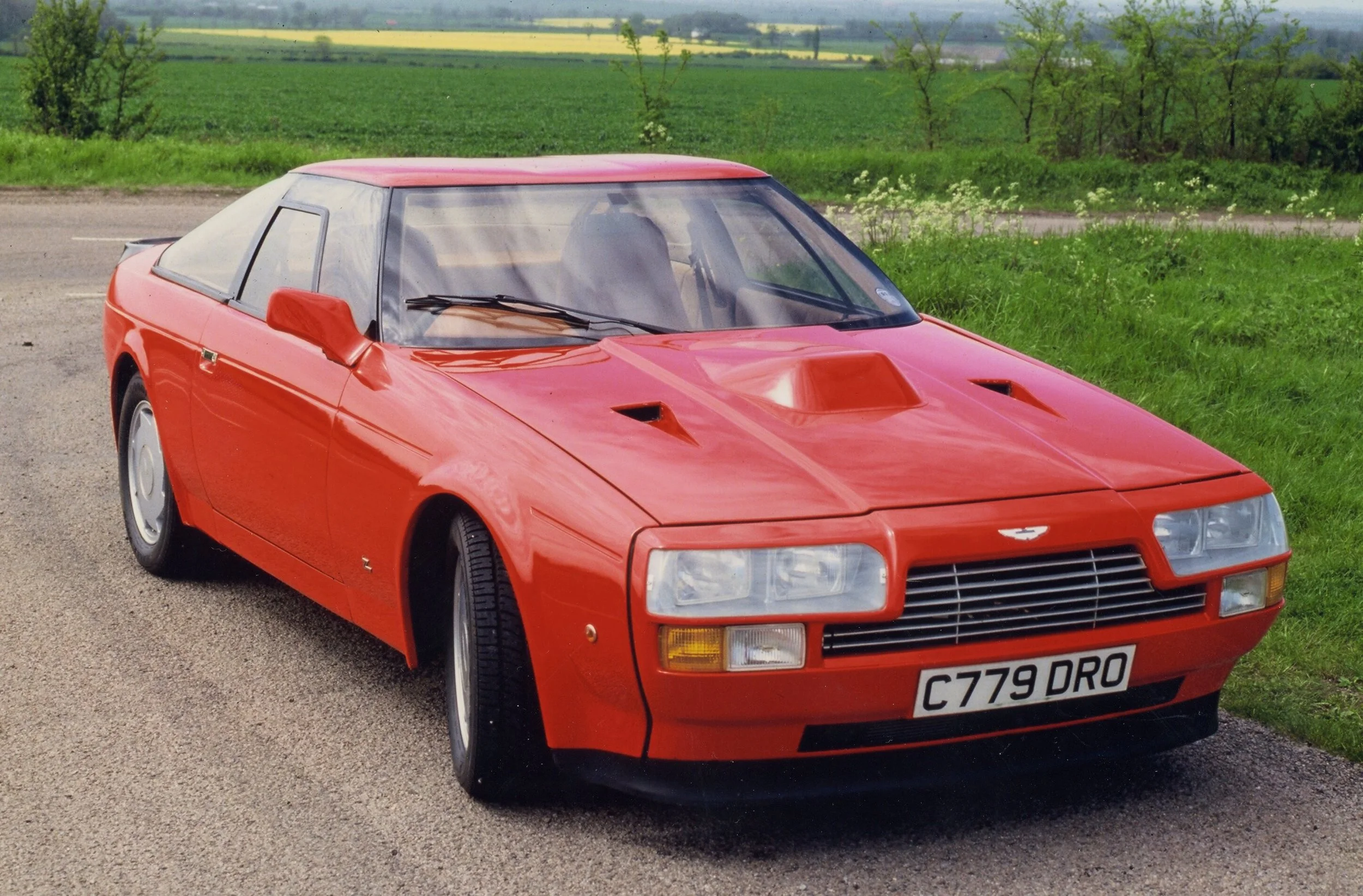
Image © Aston Martin Lagonda. Used for editorial purposes. Aston Martin V8 Vantage Zagato.
The article looks back at Gauntlett’s energy, personality and belief in the marque, along with the renewed James Bond connection, the V8 Vantage Zagato, motorsport projects such as Nimrod and AMR1, and the later support that helped move Aston Martin towards greater stability.
One particularly fascinating part of the Gauntlett story is his connection with Zagato. During the 1980s, Gauntlett helped revive Aston Martin’s relationship with the Italian coachbuilder, leading to the sharply styled V8 Vantage Zagato Coupe and later the Volante. It was exactly the sort of bold, exclusive project Aston Martin needed at the time: dramatic, attention-grabbing and capable of injecting both prestige and momentum into a company still fighting for stability.
It’s a reminder that Aston Martin’s history has never simply been about cars. It’s also been about people prepared to believe in the company when its future was far from certain.
You can read the full AMHT article here: Victor Gauntlett: The Man Who Kept Aston Martin Alive. Again I very much recommend it.
Lagonda at 50: Aston Martin’s boldest survival gamble?
That theme of survival and reinvention continued with Autocar’s feature on the Aston Martin Lagonda at 50. The William Towns-designed Lagonda remains one of the most extraordinary cars ever to wear an Aston Martin-related badge: long, low, sharply wedged and full of technology that felt wildly ambitious in the 1970s.
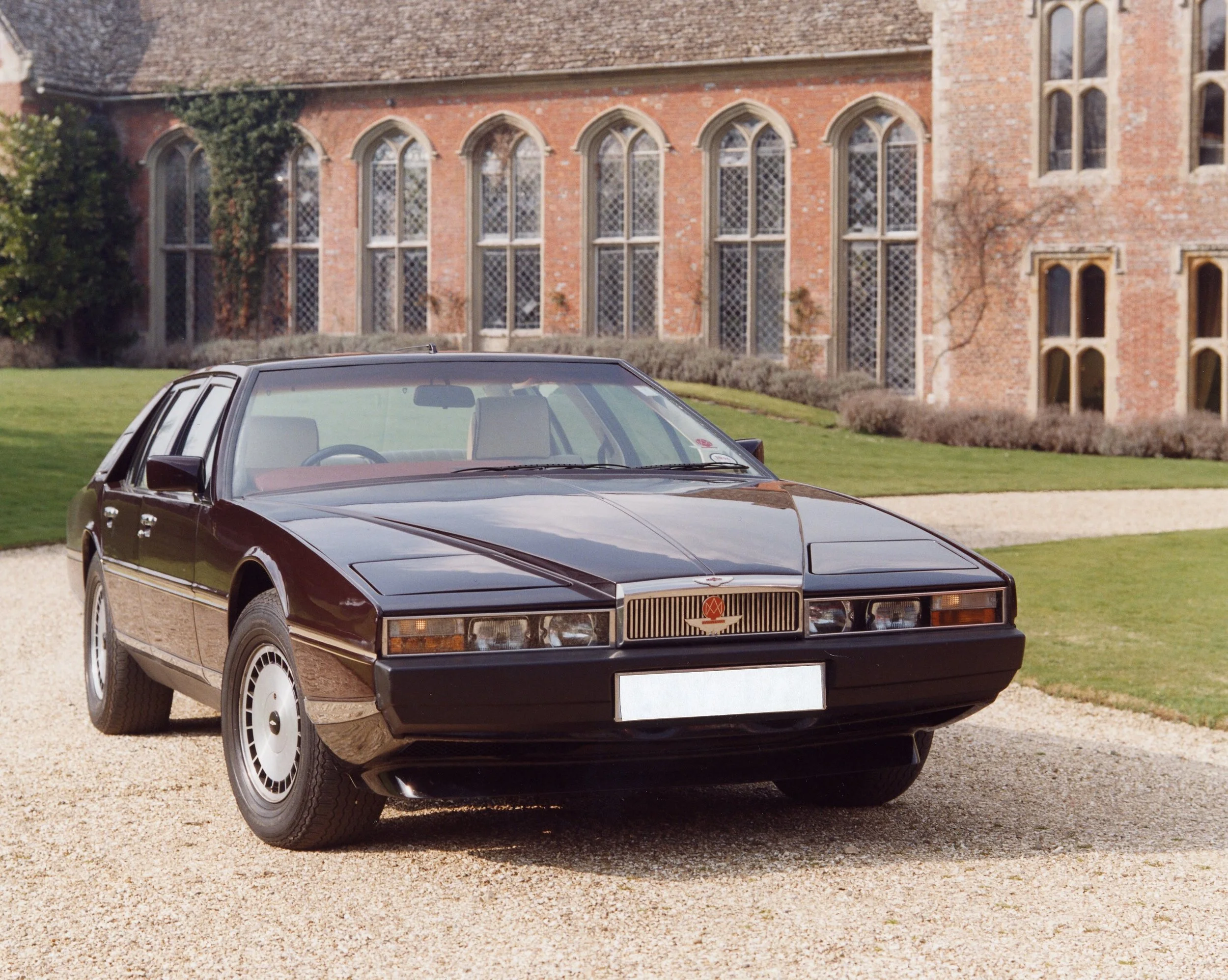
Image © Aston Martin Lagonda. Used for editorial purposes. Lagonda Series 2.
Autocar’s piece is interesting because it doesn’t treat the Lagonda merely as a curiosity. It frames the car as a serious attempt to secure Aston Martin’s future after the company had only recently emerged from receivership. This wasn’t just a motor show talking point, it was intended to be a saviour model, and with more than 600 eventually built, it played a more meaningful role in Aston Martin history than its reputation sometimes suggests.
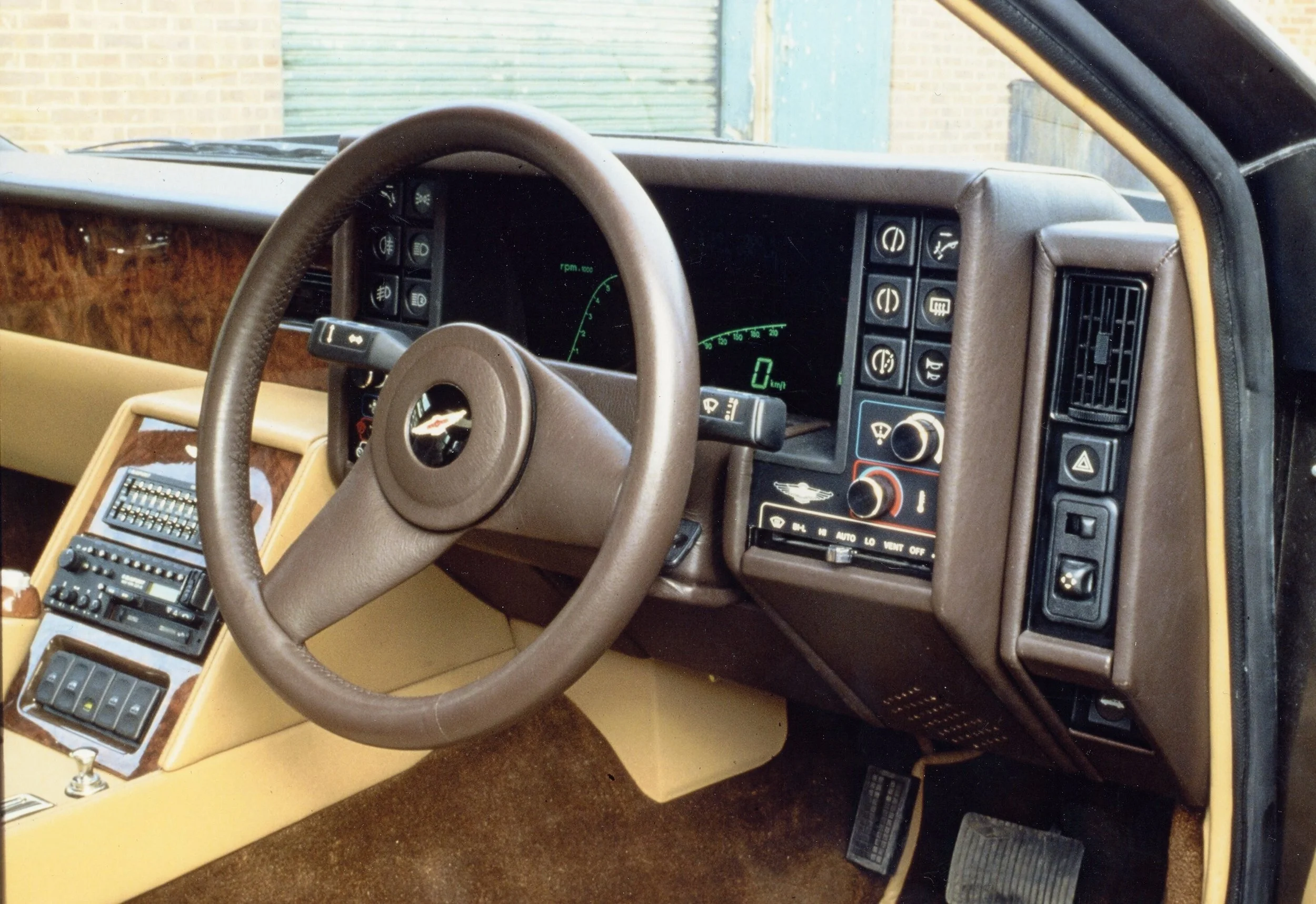
Image © Aston Martin Lagonda. Used for editorial purposes. Lagonda Series 2 interior.
The detail is fascinating too: hand-formed aluminium bodywork, digital instrumentation, touch-sensitive controls, Connolly leather, walnut, Wilton carpets and a Tadek Marek V8 beneath that astonishing shape.
The article also adds a more nuanced view of the car’s reliability reputation, suggesting that damp-related corrosion in complex electrical contacts contributed to its problems in the UK and Northern Europe, while hotter markets such as the Middle East and California were better suited to it.
The bigger question Autocar raises is whether Lagonda could ever again provide Aston Martin with a separate space for luxury, refinement, technology and perhaps electrification. Aston Martin’s current position is that there are no near-term Lagonda plans, so this shouldn’t be read as a revival story. But as a piece of heritage thinking, it’s a useful reminder that some of Aston Martin’s most important moments have come when conventional thinking was not enough.
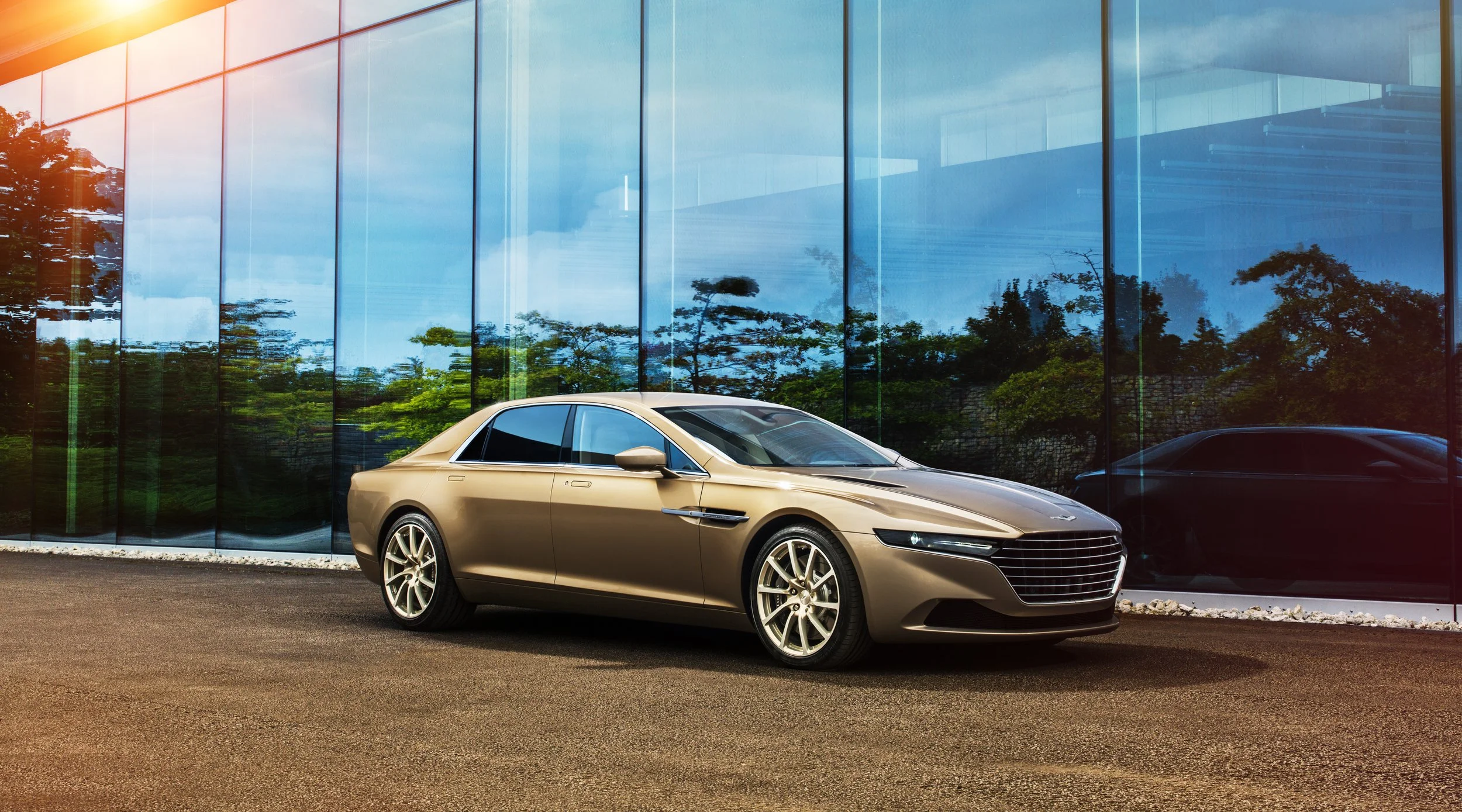
Image © Aston Martin Lagonda. Used for editorial purposes. Lagonda Taraf.
Regular readers may remember we touched on the modern Lagonda story back in FTP Weekly Roundup Issue 15, when an exceptionally rare Lagonda Taraf crossed the block at Amelia.
That car now feels like a useful modern footnote to this week’s Lagonda at 50 discussion. The Taraf appears to remain the last modern production car sold under the revived Lagonda name: an ultra-exclusive, V12-powered luxury saloon that tried to reinterpret the idea of a Lagonda for a very different era.
Seen alongside the original William Towns wedge, it reminds us that Lagonda has often been used by Aston Martin as a place for bold, unconventional luxury thinking, even if, for now, the name remains dormant.
Vanquish at 25: the culture-shock Aston
The Vanquish anniversary thread also continued this week, with Yahoo Autos carrying a Classic & Sports Car piece by Steve Sutcliffe looking back at the original Ian Callum-designed V12 Vanquish.
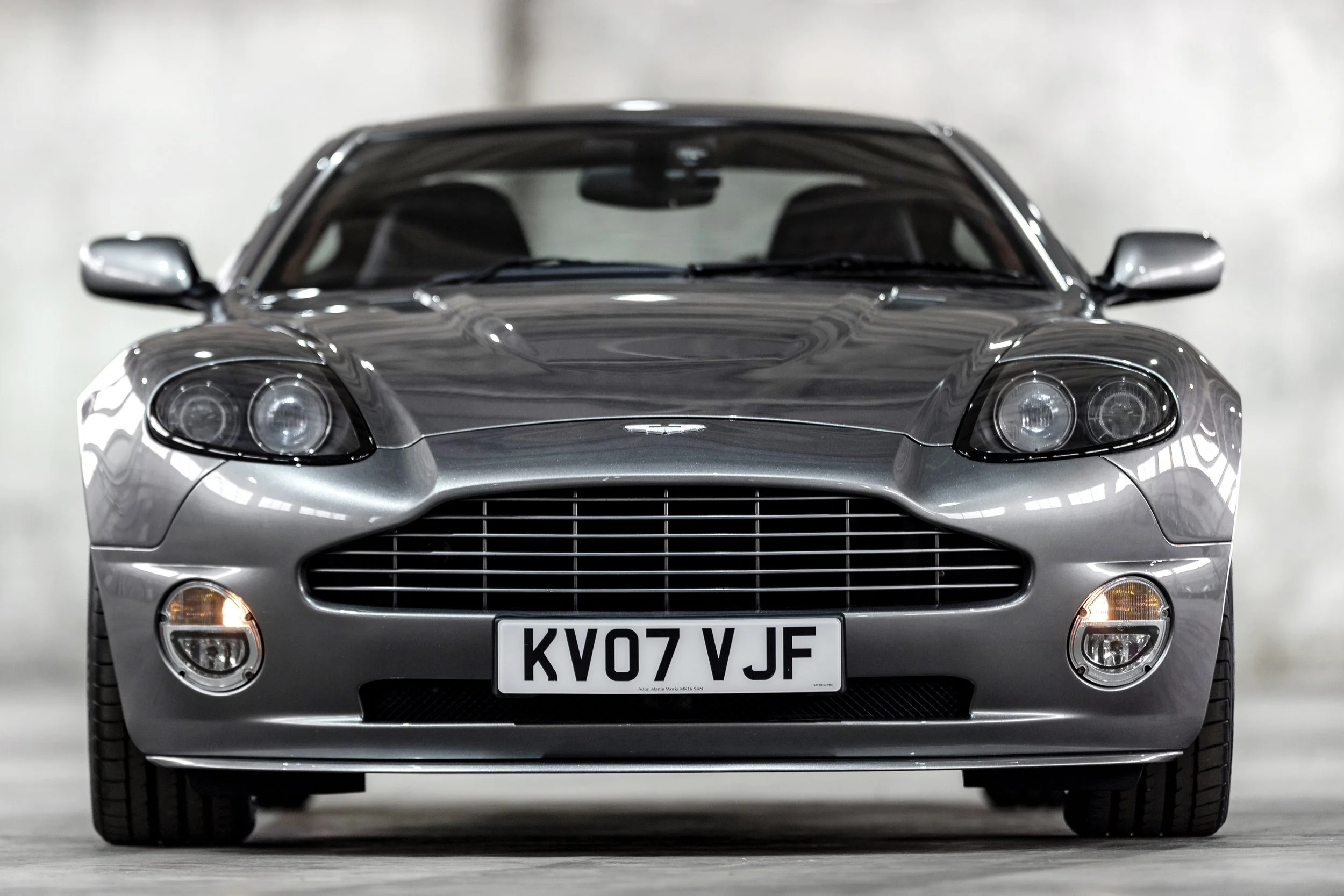
Image © Aston Martin Lagonda. Used for editorial purposes.
It’s a timely read because the Vanquish sits in that fascinating space between old and new Aston Martin. It had the drama, craftsmanship and V12 character people expected, but also brought aluminium and carbonfibre construction, a paddle-shift transmission and a much more modern design language. At launch, that made it feel like a culture shock. Twenty-five years on, it feels more like one of the key bridges between the Newport Pagnell tradition and the Aston Martin era that followed.
The piece also reminds us why the original Vanquish still has such a hold over people. Built between 2001 and 2007, with around 2,590 examples produced, specialist sources commonly cite 2,589 production cars, while some features quote slightly different totals, the original V12 Vanquish remains one of the defining Aston Martins of the modern era. It combined a 5.9-litre V12, 460bhp, a claimed 196mph top speed and one of the great modern Aston Martin shapes. It wasn’t perfect, and ownership costs were never going to be light, but as an object of design, sound and occasion, it remains a very special thing.
Conveniently, if all this Vanquish talk has you in the mood, the Fuel the Passion Vanquish 25th Anniversary trailer is now live. It’s only two minutes long, so if you haven’t watched it yet, why not? Only joking. For ease, you can view it below;
Hopefully, we’ll be getting the AML approval for the longer form content covering the Vanquish, very soon. We’ll keep you posted.
Bond, books and Aston Martin’s cultural pull
There was also a curious Bond-related story this week, with The Telegraph reporting that Vaseem Khan, author of the new Q spin-off novel Quantum of Menace, was steered away from giving Q an Aston Martin because the cars are treated as belonging more to the film side of the Bond franchise than the literary world. Instead, Q gets a Caterham Seven kit car, which is actually quite a fitting choice for a gadget master who might enjoy building something himself. Bond, meanwhile, drives a Bentley in the novel, reflecting Ian Fleming’s books more closely than the film mythology many of us now instinctively picture.
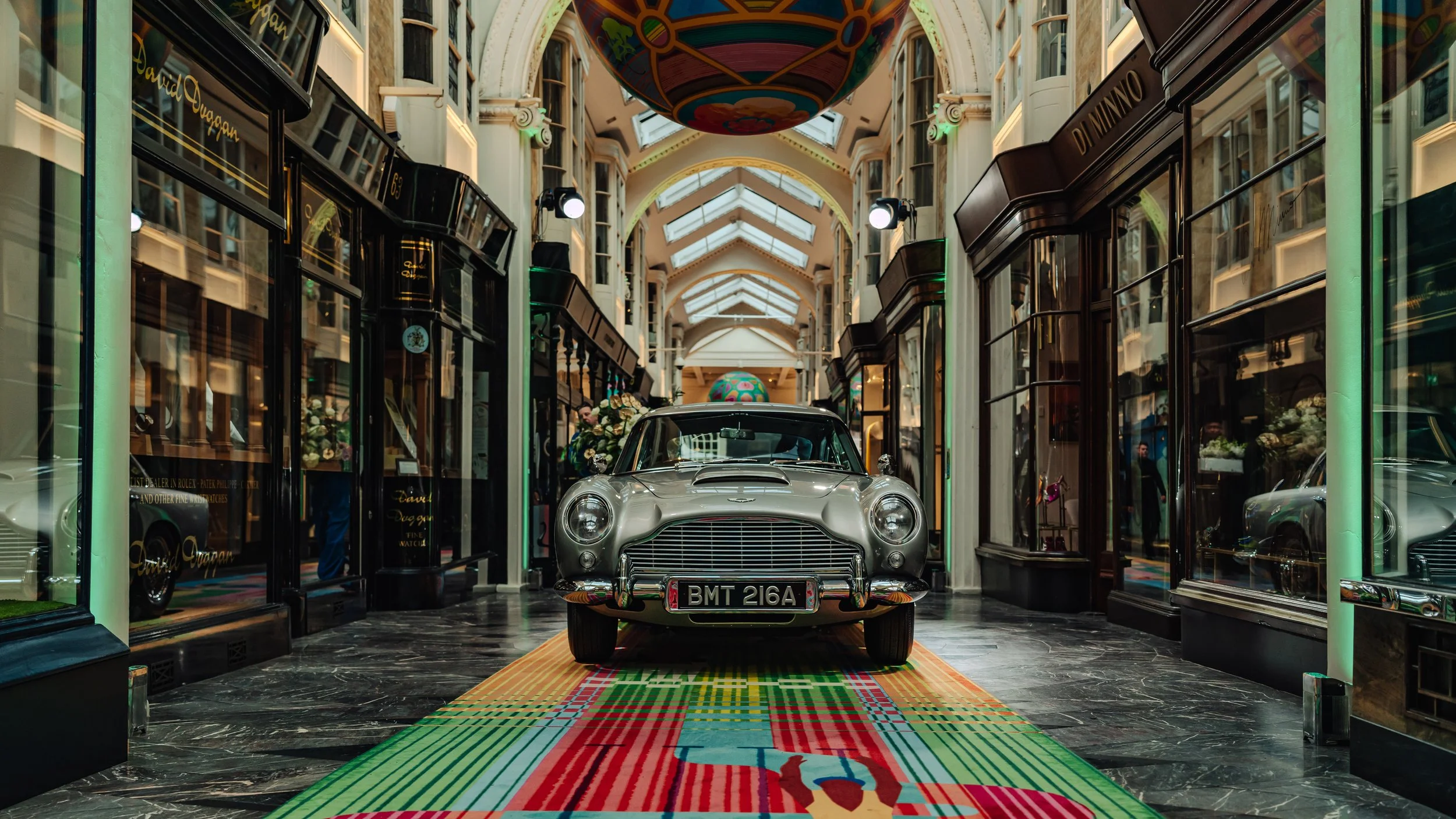
Image © Aston Martin Lagonda. Used for editorial purposes.
Regular readers may remember that we touched on the wider Bond question recently in FTP Weekly Roundup Issue 24, when reports suggested Amazon MGM’s search for the next James Bond was gathering pace. At the time, we were careful to say that this was Bond news rather than confirmed Aston Martin news.
There was no confirmation that Aston Martin would appear in the next film, nor any indication of which cars might be used. But with the next 007 era beginning to take shape, the marque’s long-standing association with Bond remains impossible to ignore.
That’s what makes this latest Q story interesting. Aston Martin’s Bond connection is now so strong that its absence from a Bond-related story can become the story itself. Whether in film, books or wider popular culture, the marque has become deeply embedded in the 007 imagination, even when the lawyers, rights holders and franchise boundaries appear to draw the line in different places.
From Bond culture, it’s only a small step to the wider question of how Aston Martin presents itself beyond the cars themselves. That was also visible this week through Aston Martin Aramco’s latest lifestyle collaboration, which shows the Formula One team continuing to stretch its identity beyond the pit lane and into the world of British luxury, craftsmanship and fan engagement.
Aston Martin Aramco: Jenson’s Journal, luxury, lifestyle and fan engagement
Aston Martin Aramco published the second entry in Jenson Button’s Journal, with the 2009 World Champion reflecting on life in Monaco and why the Principality means so much to racing drivers.
Button describes Monaco as far more than yachts, glamour and nightlife. For many drivers, it becomes a genuine base: close to France and Italy, ideal for cycling and training, and home to a wider sporting community away from the intensity of the paddock. He also explains why the Monaco Grand Prix feels so different from any other race, with qualifying often defining the weekend and the race itself demanding total concentration as the barriers seem to close in lap after lap.
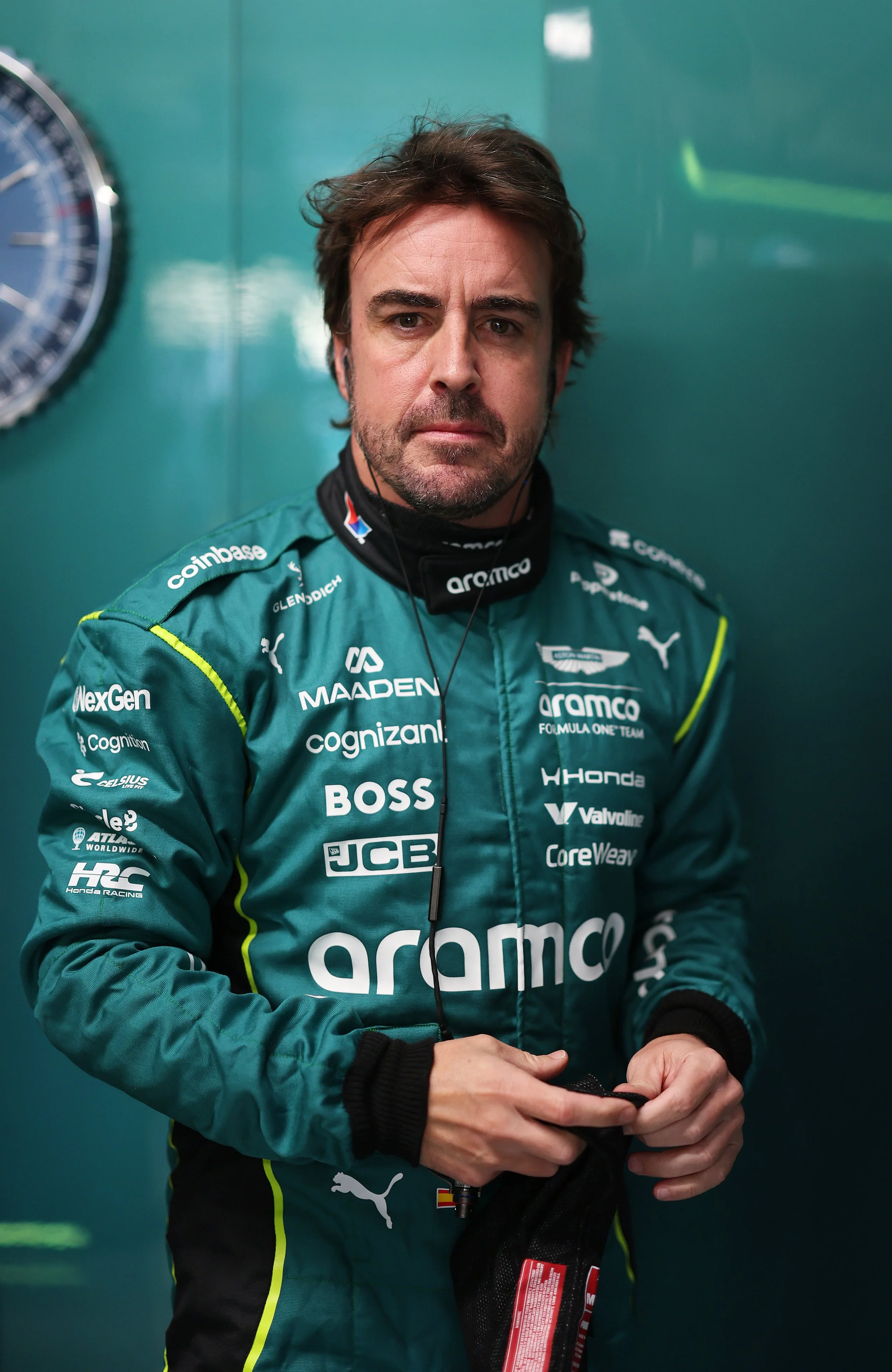
Image © Honda Motor Co. Ltd & Aston Martin Aramco. Used for editorial purposes.
There’s a lovely personal touch as Button recalls his own Monaco victory in 2009, describing the emotion of crossing the line and the “Super Monday” celebrations that followed.
He also touches on the Triple Crown, saying he doesn’t expect to complete it himself, but would love to drive the Aston Martin Valkyrie at Le Mans one day, not least because it would give him the chance to drive an Adrian Newey-designed car.
Button also points to Fernando Alonso as probably the best-placed driver to complete the Triple Crown, given that Alonso has already won Monaco and Le Mans and has previously led the Indy 500.
Aston Martin Aramco announced a new collaboration with Smythson of Bond Street, with a motorsport-inspired collection due to launch from October 2026. The range will include stationery, travel and tech accessories in Aston Martin Aramco colourways, with the headline piece being a bespoke Circuit Journal designed for Formula One fans.
That’s a very Aston Martin kind of partnership. It’s not about lap time, tyre strategy or development parts, but it does say something about how the team wants to position itself. Smythson brings British heritage, stationery, leather goods and craftsmanship; Aston Martin Aramco brings Formula One, modern luxury branding and a growing fan base. Together, it’s another reminder that the Silverstone team is being presented not simply as a racing operation, but as part of a much wider luxury lifestyle platform.
The team also published a feature with Atlas Air Worldwide CEO Michael Steen, marking Mental Health Awareness Month and reflecting on wellbeing in high-pressure environments. Again, this is not racing news in the traditional sense, but it does sit within the modern Formula One landscape. F1 teams are no longer just race teams, they’re technology businesses, logistics operations, brand platforms and, increasingly, places where conversations about pressure, performance, leadership and resilience are made public.
In Aston Martin Aramco’s case, that feels particularly relevant. The on-track story may be difficult at the moment, but the commercial and partner platform around the team remains very active. From Atlas Air and Smythson to recent lifestyle, fan and product collaborations, the team continues to build an identity that reaches beyond the race weekend itself.
There was also a rumoured fan-collectable note doing the rounds this week, with reports suggesting a possible LEGO Technic Aston Martin AMR26 set for later in the year. That remains unconfirmed, so it should be treated only as a rumour for now. But even as a rumour, it fits the same wider pattern: Aston Martin Aramco’s presence is increasingly being felt not only on track, but in the objects, products and experiences that fans engage with away from the circuit.
That idea of Aston Martin as something more than machinery leads us neatly into this week’s Car of the Week, because sometimes an Aston Martin is not simply a car for sale. Sometimes it’s a piece of modern marque history, a track machine, a collector object and a reminder of just how wild Gaydon can be when it’s given permission to build without compromise. Just a warning - some amazing photographs coming up!
FTP Pick of the Week: Two Aston Martin Vulcans at Kaaimans
From luxury collaborations and fan collectables, we move to something rather more extreme, because this week’s FTP Pick of the Week is not one Aston Martin, but two.
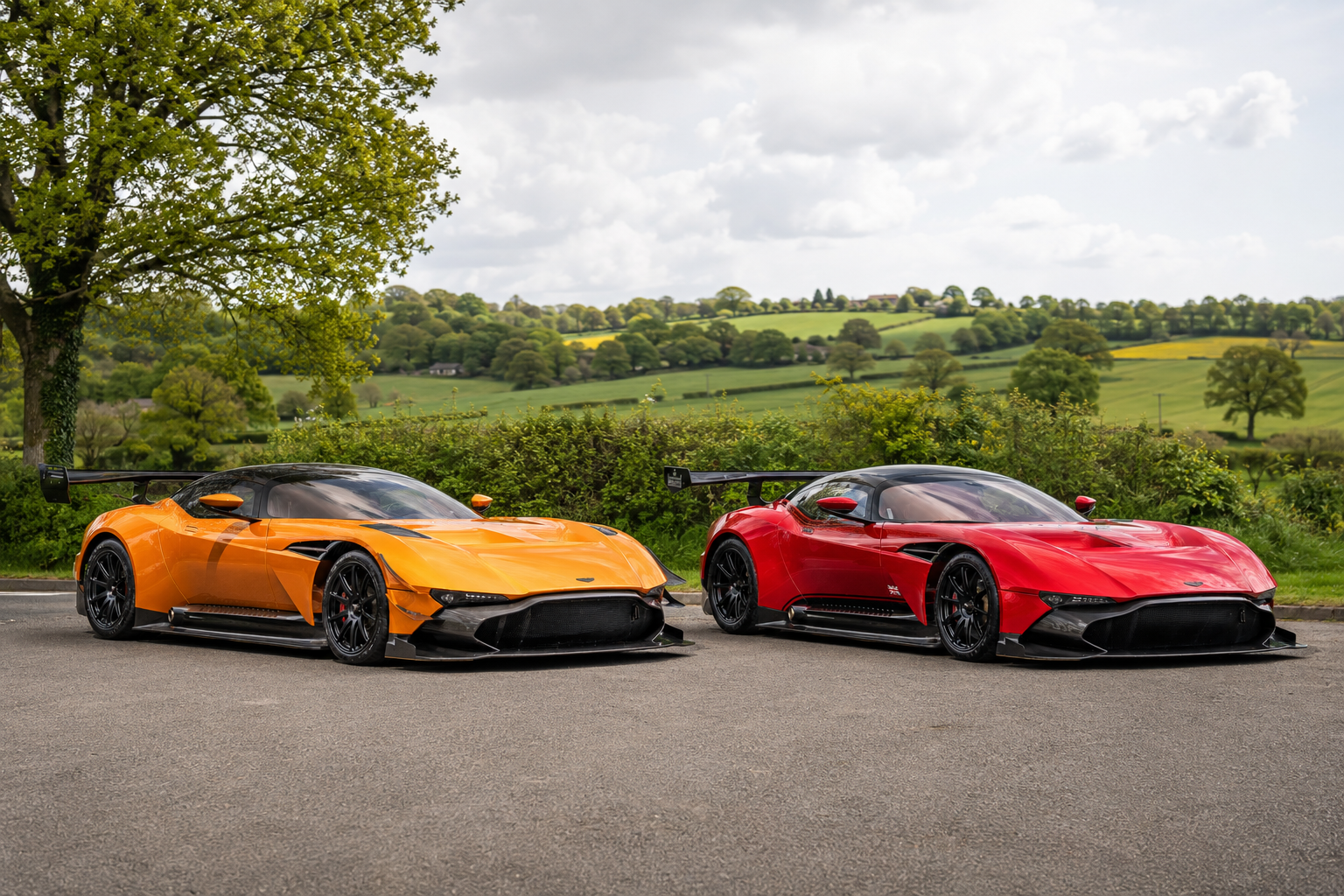
Image © Fuel the Passion
Kaaimans International in Nottingham currently has two Aston Martin Vulcans listed for sale. That alone is enough to stop any Aston Martin enthusiast in their tracks. Only 24 Vulcans were built worldwide, so seeing one offered publicly is special. Seeing two at the same venue, at the same time, feels like a proper moment.
The first is a 2016 Aston Martin Vulcan finished in Special Volcano Red Metallic over a Black and Spicy Red interior. According to the Kaaimans listing, this car is Chassis No. 23 of 24, UK supplied, showing 2,300 miles and priced at £1,995,000. It has the ingredients that made the Vulcan such an outrageous creation: a naturally aspirated 7.0-litre V12 producing more than 820bhp, an Xtrac six-speed sequential racing transmission, carbon-fibre monocoque and body panels, Multimatic pushrod suspension, Brembo carbon-ceramic brakes, centre-lock magnesium wheels, side-exit exhausts and a full racing cockpit with Recaro carbon seats and six-point harnesses.
Alongside it is an Aston Martin Vulcan AMR Pro (the lovely orange Vulcan pictured at the top of this feature), listed at £2,195,000. The current Kaaimans website detail currently appears lighter for this car, but the AMR Pro name matters. Aston Martin announced the AMR Pro upgrade in 2017 as a performance package available to existing Vulcan owners, it was not just a cosmetic treatment. The package added louvred front arch panels, dive planes, revised splitter vanes, a lighter engine cover, shortened gearing and a dramatic dual-plane rear wing with Gurney flaps and slotted endplates.

Image © Aston Martin Lagonda. Used for editorial purposes. Vulcan AMR Pro. (Not the one for sale at Kaaimans International).
The numbers underline the point. Aston Martin said the AMR Pro package increased downforce from 3,150N to 4,000N at 100mph, while also moving the aerodynamic centre of pressure forwards to improve front-end grip, steering response and traction. In other words, the AMR Pro took an already extreme track-only Aston Martin and made it sharper, more responsive and more focused again.
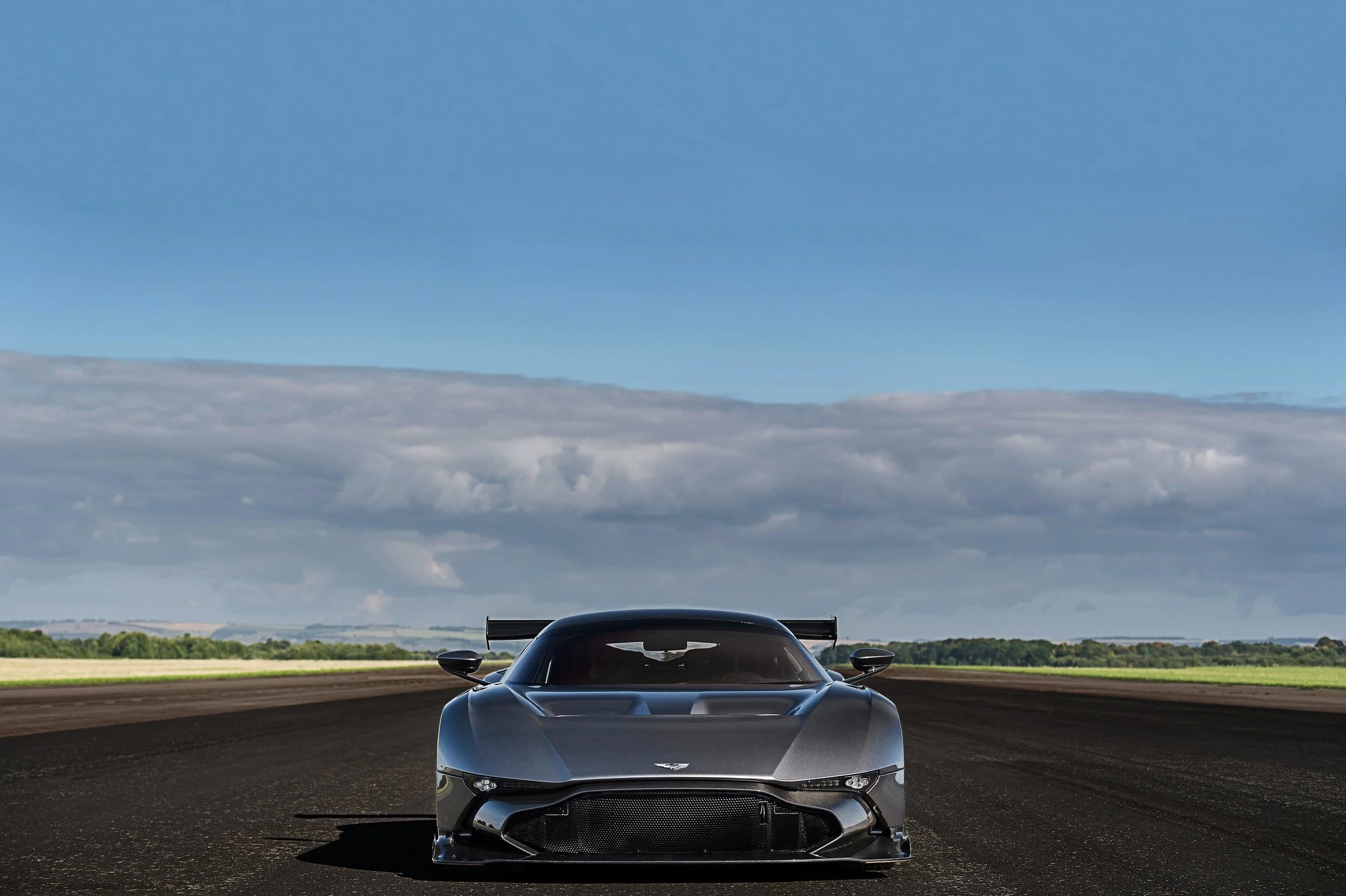
Image © Aston Martin Lagonda. Used for editorial purposes.
That’s why this week’s pick feels worthy of making an exception to the usual single-car format. This is not simply a case of two expensive cars being listed together, it’s two examples of one of Aston Martin’s most uncompromising modern machines, from a total production run of only 24, appearing at the same dealer at the same time.
That’s rare in the literal sense, but also rare emotionally. Vulcan sits in that slightly wild corner of Aston Martin history where the normal rules of grand touring refinement are pushed aside in favour of noise, downforce, carbon fibre and circuit-only intent.
The name was no accident either. Aston Martin’s Vulcan took inspiration from the Avro Vulcan, the extraordinary British delta-wing bomber that became one of the most recognisable aircraft of the Cold War. Aston Martin even brought the two together in 2015, creating the remarkable image shown below: the track-only Aston Martin Vulcan on the ground, with the Avro Vulcan passing overhead. It’s one of those rare images where car and aircraft, name and spirit, genuinely meet. Stunning!
Aston Martin Vulcan meets Avro Vulcan, two very different British machines united by one wonderfully dramatic name.

Image © Aston Martin Lagonda. Used for editorial purposes. Aston Martin Vulcan, with the Vulcan Bomber flying in the background. (Amazing!)
The aircraft first flew in prototype form on 30th August 1952, entered RAF service in the mid-1950s, and formed part of Britain’s V-bomber nuclear deterrent force alongside the Vickers Valiant and Handley Page Victor. The RAF Museum notes that the Vulcan helped provide Britain’s airborne nuclear deterrent until that role passed to Polaris submarines in 1969, while the final Vulcan squadrons were disbanded in 1984.
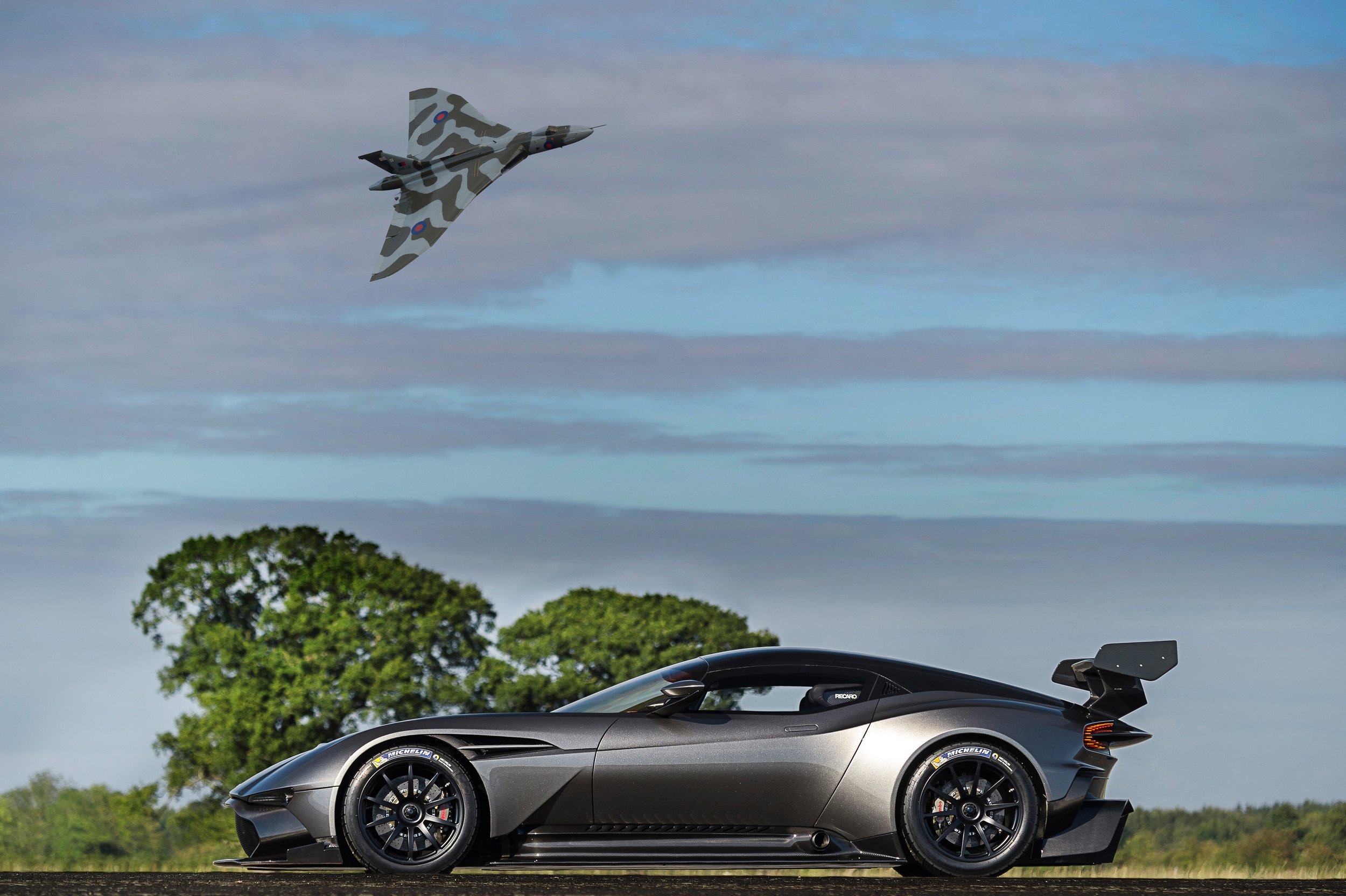
Image © Aston Martin Lagonda. Used for editorial purposes.
That makes the name especially fitting. The Aston Martin Vulcan wasn’t built to be subtle, practical or compromised. It was Aston Martin at full theatrical force: dramatic, loud, technically extreme and unmistakably British. Seeing it photographed with the aircraft that inspired its name is a lovely reminder that this car was always intended to be more than just a track machine.
It was a statement. (What fantastic pictures!).
It also links beautifully with the rest of this week’s Roundup. As Valkyrie takes on IMSA in Detroit and Le Mans draws ever closer, the Vulcan reminds us that Aston Martin’s modern halo-car story didn’t arrive from nowhere. Before Valkyrie took Aston Martin back towards the top class of endurance racing, Vulcan showed what could happen when Gaydon built something purely for the track, free from road-car expectations and championship regulations.
So this week, the pick is not a usable grand tourer, a tempting modern classic or a brave-value Vantage. It’s something far less rational and far more dramatic: two Vulcans, side by side in Nottingham, representing Aston Martin’s wilder side in stereo! Amazing!
FTP Updates: Vanquish, Whitby and a first look at Aintree Sprinting
From two of the wildest Aston Martins ever built, it feels right to come back to what’s been happening closer to home at Fuel the Passion this week and, fittingly, Vanquish is very much part of that story too.
This week I released a short promotional film for the AMOC Aston Martin Festival 2026, which takes place at the British Motor Museum, Gaydon, on Sunday 21st June 2026. Following last year’s Vantage Celebration, the spotlight this year turns to 25 years of Aston Martin Vanquish, from the original V12 Vanquish, through the second-generation car, to the latest model. All Aston Martins are welcome, of course, and the event should be a wonderful gathering of owners, enthusiasts, specialists and cars from across the marque. The video is now live on the Fuel the Passion YouTube channel, and it’s very much intended as a simple invitation: bring your Aston Martin, join AMOC and the Aston Martin Heritage Trust at Gaydon, and be part of a very special day. After everything we’ve been covering around Vanquish this year, it feels like one of those events that should have a lovely atmosphere. If you haven’t yet had time to watch that short video, it’s below;
I have also now downloaded all the footage from the AMOC Area 06 drive-out to Whitby, although I’ve not yet had chance to start editing it properly. That will hopefully be next week’s job. The footage includes some lovely drone shots, scenery and, naturally, a fine selection of Aston Martins making their way across Yorkshire. It should make for a very different kind of FTP film: less formal, more relaxed, and hopefully a nice snapshot of the club side of Aston Martin ownership. A big thank you to fellow AMOC members putting up with me, stopping and getting the cars to re-group so I could get some great shots with the drone. Well, it’s not often you see a number of varied Aston’s together on lovely roads. As a teaser, a couple of shots below, great British Aston Martins, being driven as intended, across stunning British Countryside;
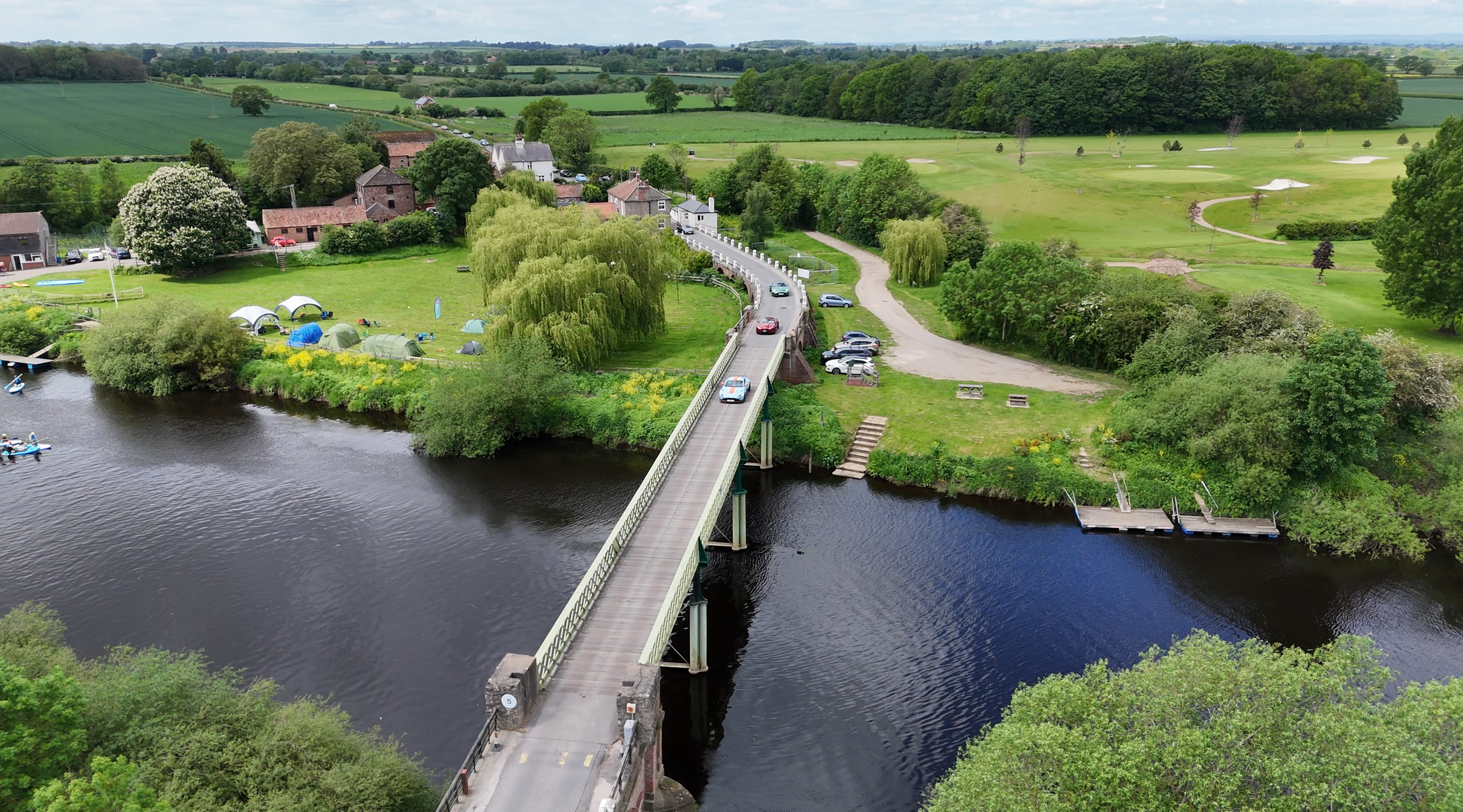
Image © Fuel the Passion. Aldwark Toll Bridge, over the River Ouse, North Yorkshire.
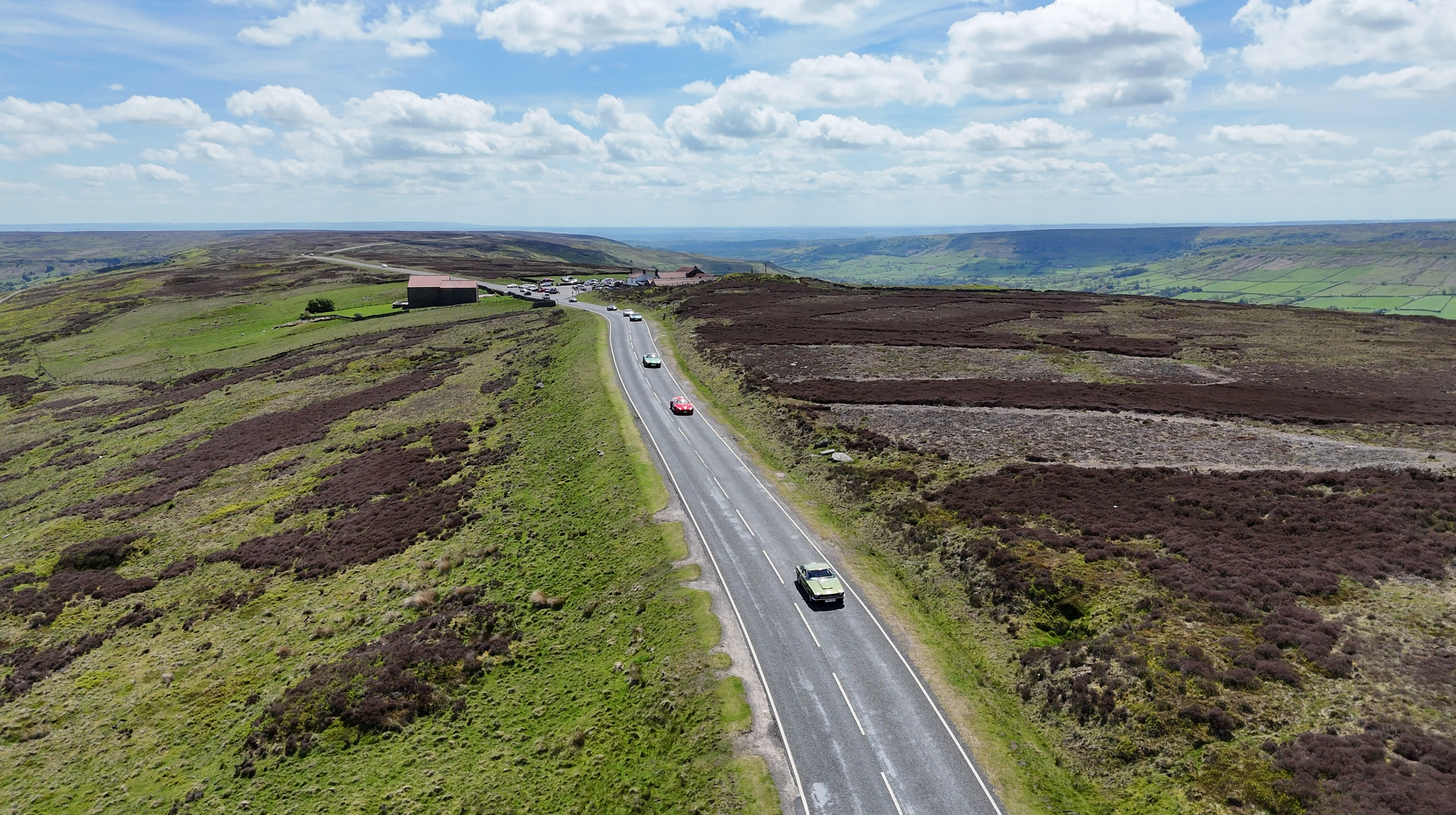
Image © Fuel the Passion. Blakey Ridge, North York Moors - The AMOC convoy crosses the exposed moorland road near The Lion Inn, with the North York Moors opening out on either side.
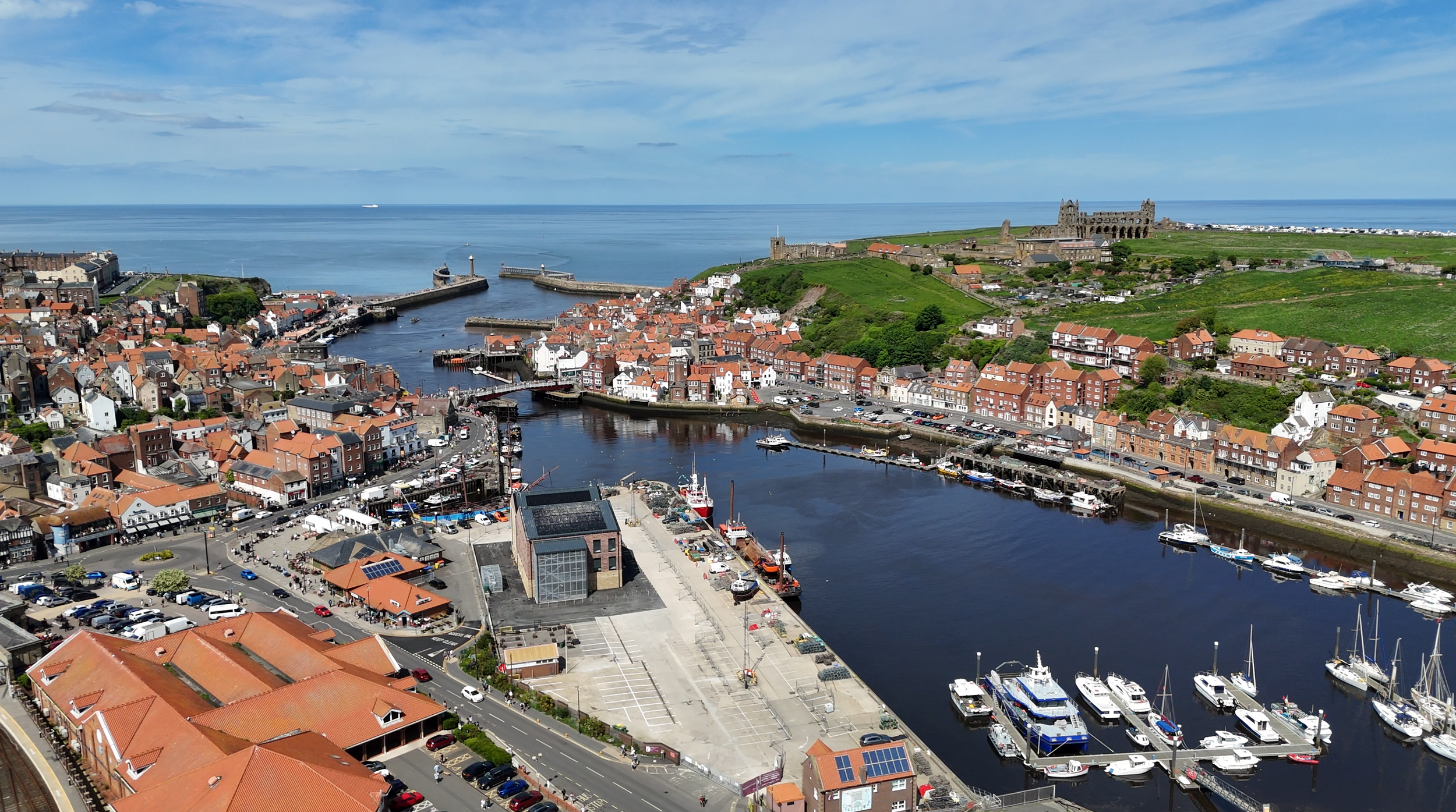
Image © Fuel the Passion. Whitby UK
Yesterday I was also at Aintree Race Circuit for my first proper look at sprint motorsport. For those unfamiliar with it, sprinting is one of the oldest forms of motorsport: cars run individually against the clock rather than racing wheel-to-wheel, with practice runs followed by timed runs where the quickest time decides the result. It’s a wonderfully direct format; one driver, one car, one course, and a stopwatch.
Aintree itself has real motorsport history. Although most people know the venue through horse racing and the Grand National, the motor racing circuit opened in 1954 and went on to host the British Grand Prix five times, in 1955, 1957, 1959, 1961 and 1962. Its modern sprint use keeps that competition heritage alive in a very accessible club motorsport setting.
I wasn’t competing, but there were a few AMOC members who were taking part, so the plan was to go along, understand what the discipline is all about, and hopefully gather enough footage, including some onboard material from competitors, to produce a short FTP film. I’ve included a couple of shots from the day below;
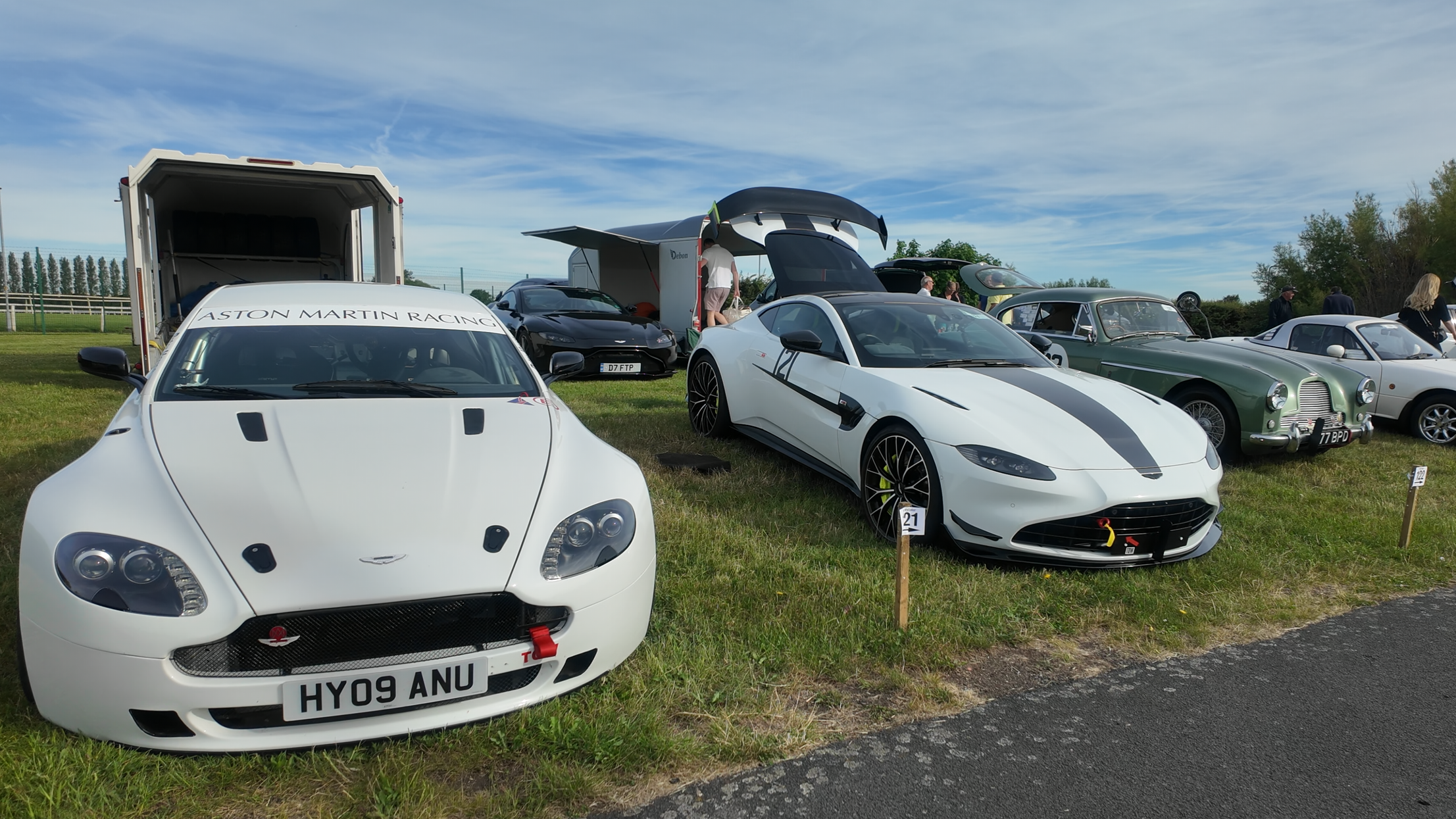
Image © Fuel the Passion, Peter House Vantage GT4 AMR, Tom Whittaker Vantage F1, Peter Watts DB2/4 Mk2 and you can even see the FTP Vantage sitting quietly in the background
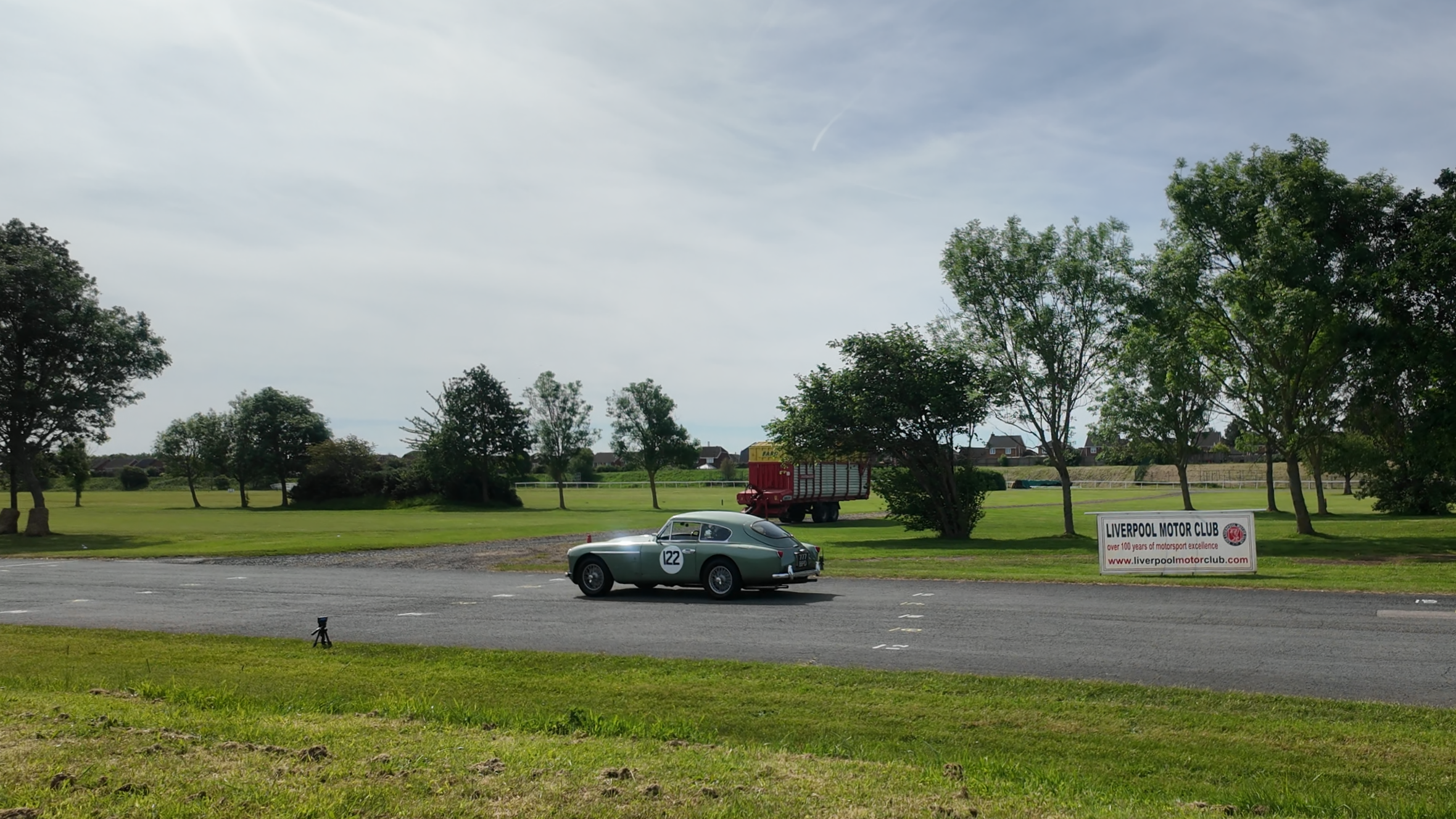
Image © Fuel the Passion, Peter Watts in his Aston Martin DB2/4 Mk 2 having just left the start line
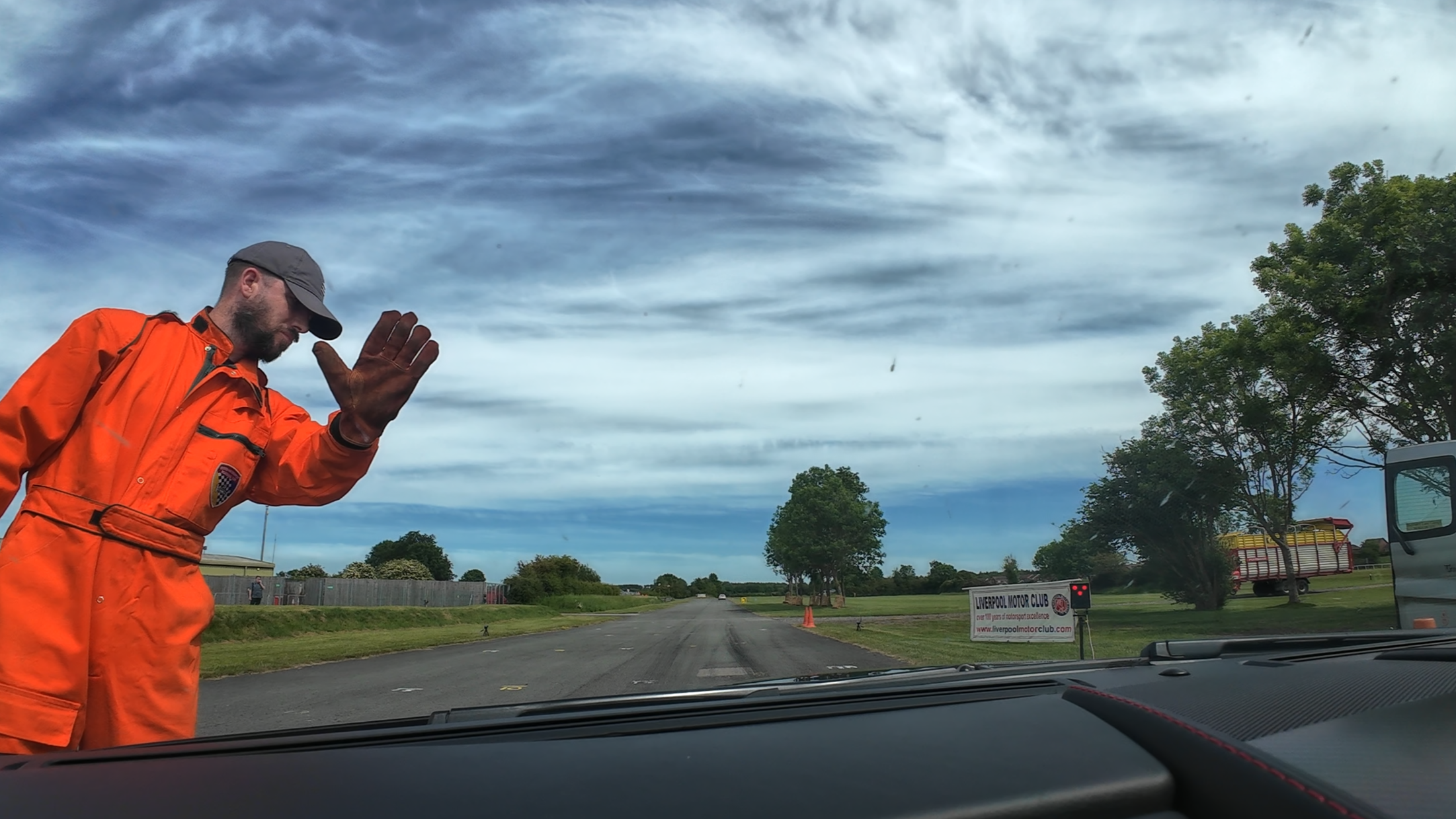
Image © Fuel the Passion, Tim Price pulling up to the start line in his Aston Martin Vantage V12 S
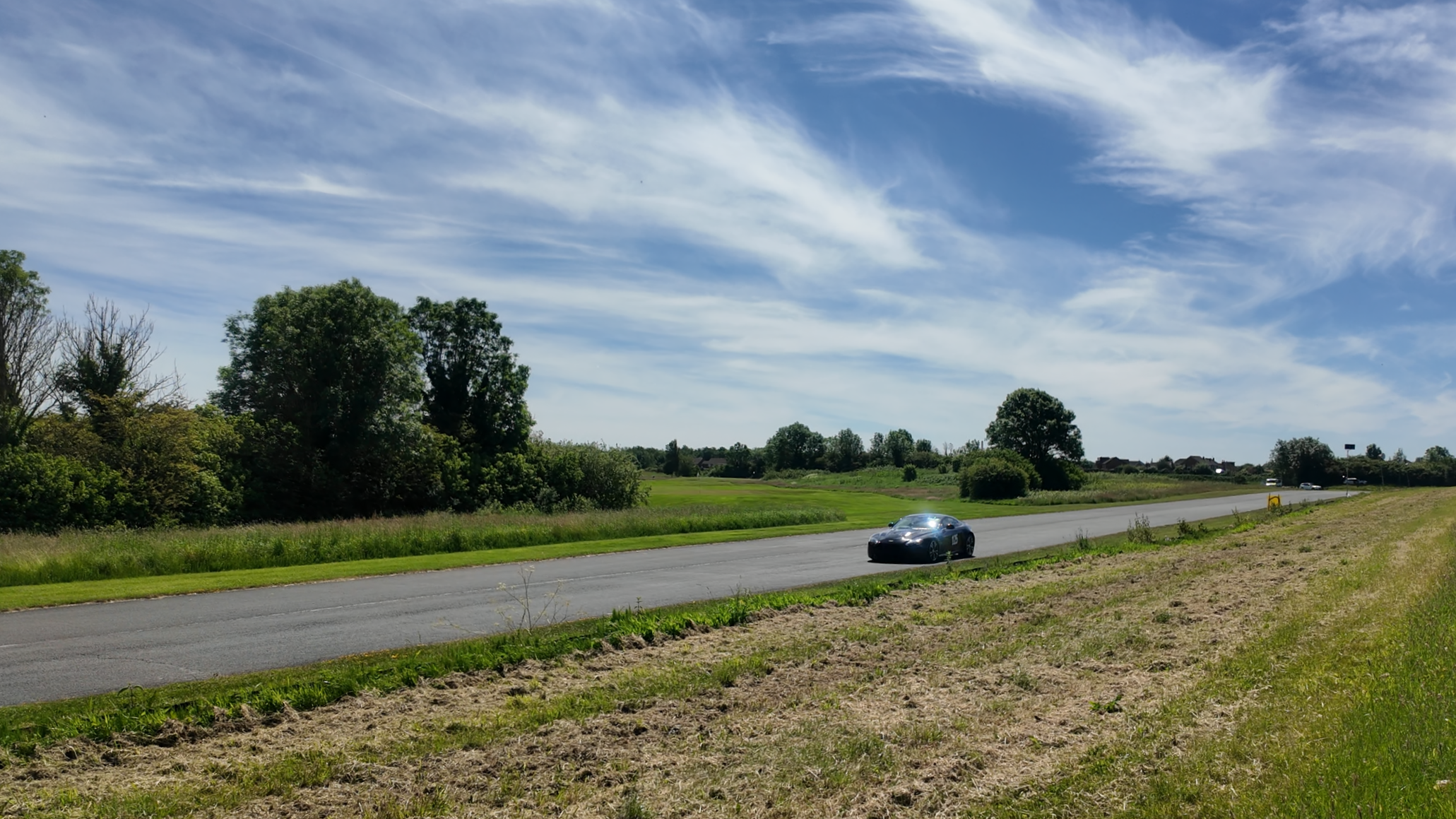
Image © Fuel the Passion, Tim Price out on track giving it some, in his Aston Martin Vantage V12 S
It’s another side of Aston Martin enthusiasm that deserves a closer look: owners using their cars, supporting each other, and getting involved in motorsport at a very human, club-level scale.
So, between the Vanquish celebration film, the Whitby drive-out and a first visit to Aintree, there’s plenty of FTP content now waiting in the edit queue. As ever, the challenge is simply finding enough hours in the week to do it justice!
Final thoughts
That brings us to the end of this week’s FTP Weekly Roundup, and it’s been one of those editions that shows just how wide the Aston Martin world really is.
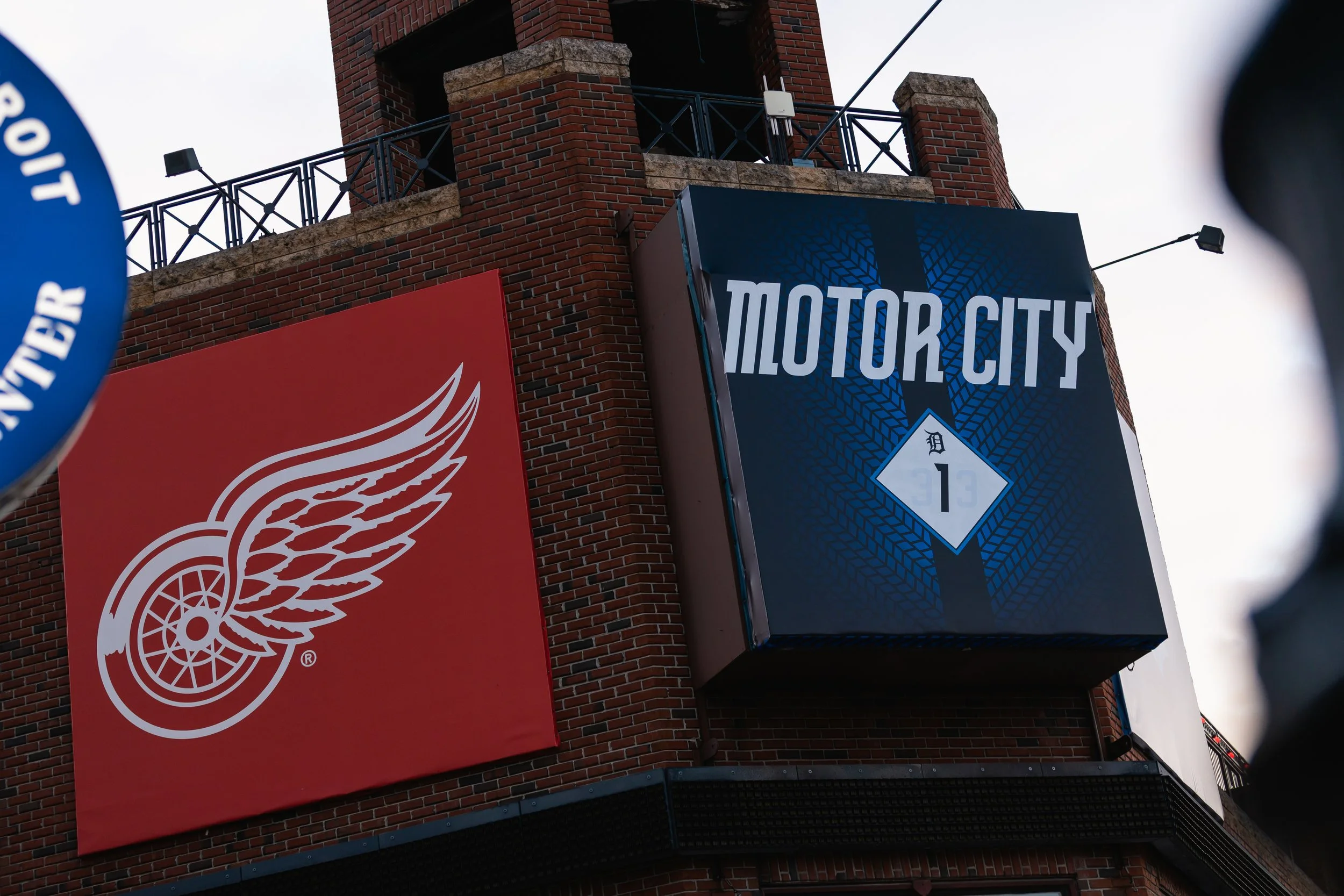
Image © Aston Martin Lagonda. Used for editorial purposes. Detroit, Motor City, USA.
There was frustration in Formula One, where Canada left Aston Martin Aramco with more questions to answer, not least around Fernando Alonso’s cockpit discomfort and the wider challenge of getting the AMR26 back into a more competitive place.
Yet elsewhere, the racing picture felt far more encouraging: British GT at Oulton Park brought strong Aston Martin results, Mathilda Paatz delivered Aston Martin Aramco’s first F1 ACADEMY victory, Blackthorn Racing remains firmly on the FTP watchlist, and Valkyrie has taken Aston Martin back to the streets of Detroit in IMSA.
Le Mans is also now close enough to feel very real. With around two weeks to go, the countdown clocks are running on the Fuel the Passion front page and in the FTP Motorsport Hub, and attention is starting to turn towards one of the biggest Aston Martin weekends of the year. From Valkyrie in Hypercar to the Vantages in LMGT3, there’s plenty to look forward to.
Away from the circuits, this week also gave us more evidence of Aston Martin’s road-car momentum. The DB12 S, DBX S and Vantage S are all helping define what the modern “S” badge means, while the heritage stories around David Brown, Victor Gauntlett, Lagonda and Vanquish reminded us that Aston Martin has always been shaped by reinvention, resilience and the people willing to fight for its future.
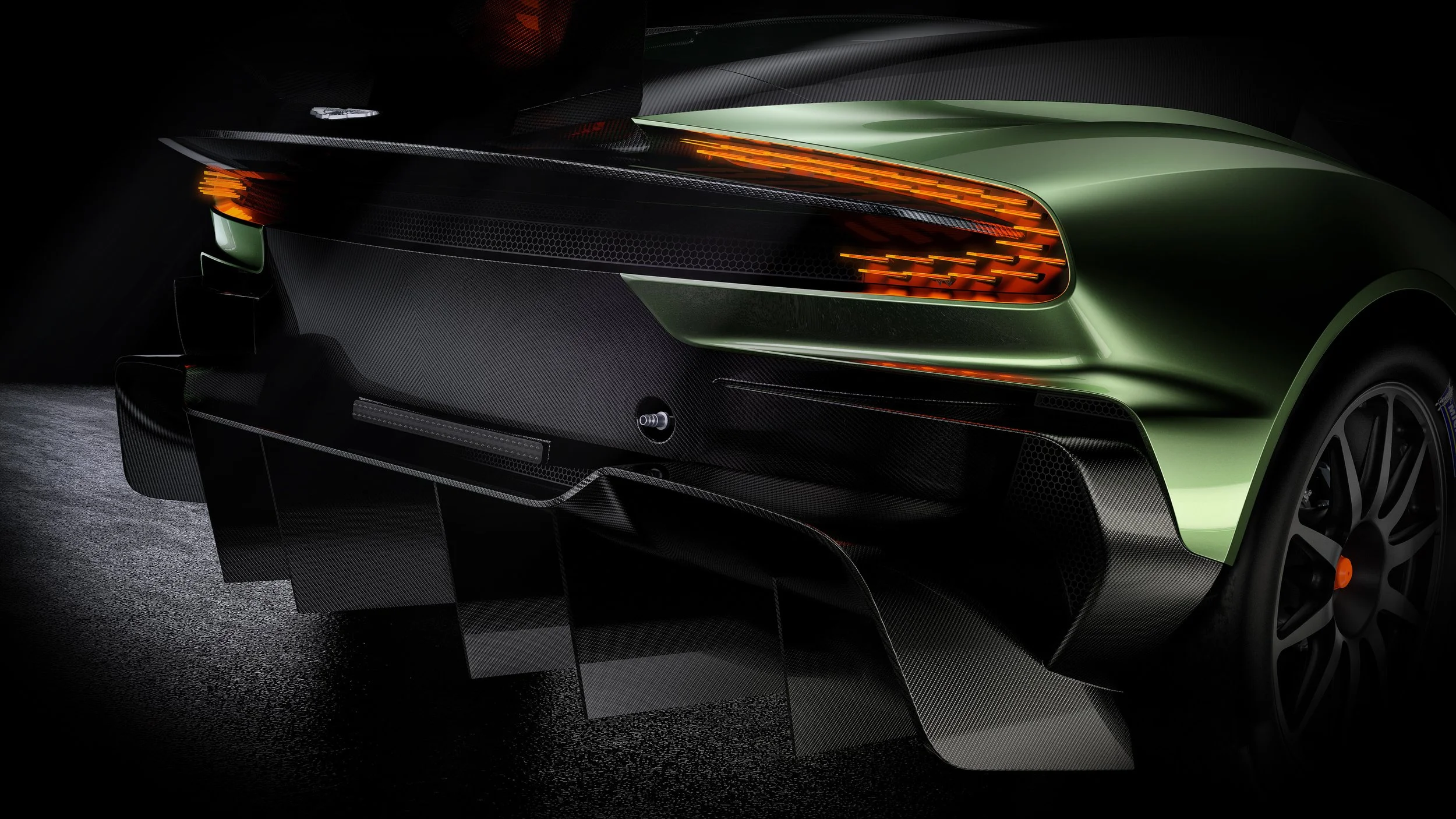
Image © Aston Martin Lagonda. Used for editorial purposes. Aston Martin Vulcan.
The Car of the Week brought that theme together in suitably dramatic fashion. Two Aston Martin Vulcans, both for sale at the same venue, is not something you see every day, and what stunning pictures, both on the actual Kaaimans website and from Aston Martin Lagonda, especially the Vulcan pictures with the Vulcan Bomber flying above.
You certainly don’t get to see that very often, probably never again, hence so worth sharing.
It felt like the right way to end a Roundup that has moved from Detroit street circuits and Le Mans countdowns to Bond, Zagato, Lagonda and one of Aston Martin’s wildest track-only creations. As always, thank you for reading, watching and supporting Fuel the Passion👍.
More Aston Martin stories next week, see you on the next one👆.
This week has shown almost every side of Aston Martin: racing, road cars, heritage, Bond, luxury and the wild world of Vulcan. Which side of the marque draws you in most and why? I would love to hear you thoughts in the comments below👇.
Explore more from Fuel the Passion
Enjoyed this week’s Roundup? There’s plenty more Aston Martin content to explore across Fuel the Passion;
FTP Motorsport Hub
Follow Aston Martin’s 2026 racing season across F1, WEC, IMSA, British GT, International GT Open, Michelin Le Mans Cup and more, including the Le Mans countdown and our growing Blackthorn Racing Featured Team section.
Aston Martin Vanquish 25th Anniversary Trailer
Our short trailer celebrating 25 years of Vanquish is now live. If you have not watched it yet, it is only two minutes long, no pressure.
FTP YouTube Channel
For event films, Aston Martin road trips, heritage visits, dealership tours and owner-focused stories, head over to the Fuel the Passion YouTube channel.
FTP Featured Articles
Longer-form Aston Martin stories, guides and features, including heritage, ownership, events and future buyer-focused content.
