The Hunter Vantage and the Aston Martins That Dared to Be Different
Date Published: 1st November 2026
Your Guide to The Bloodline
Why did Aston Martin give the 2018 Vantage such a radically different face? This investigation explores the origins of the controversial Hunter grille, the influence of DB10 and Vulcan, and the thinking of the designers who dared to challenge Aston Martin's familiar appearance.
We'll follow the Vantage from its launch and customer reaction to the introduction of the Vane grille, explore its remarkable motorsport story, investigate production numbers and rarity, and examine the design connections running through Aston Martin's history to the striking new Valen.
An in-depth journey through Aston Martin's design history.
You were approximately 0% through this featured article.

Image © Fuel the Passion. For illustrative purposes. From left to right, the Aston Martin Vulcan, the Aston Martin Vantage, the Aston Martin Valen.
EDITOR’S INTRODUCTION, DAN - FUEL THE PASSION
There’s a slight complication when trying to write objectively about the original face of the 2018-generation Aston Martin Vantage. There’s one sitting on my drive. The FTP Vantage is a 2019 car, complete with the low-set mesh treatment Aston Martin would later formally call the Hunter grille.[1] I chose the car because I wanted the Vantage itself, not because I expected to investigate the history of its nose one day.
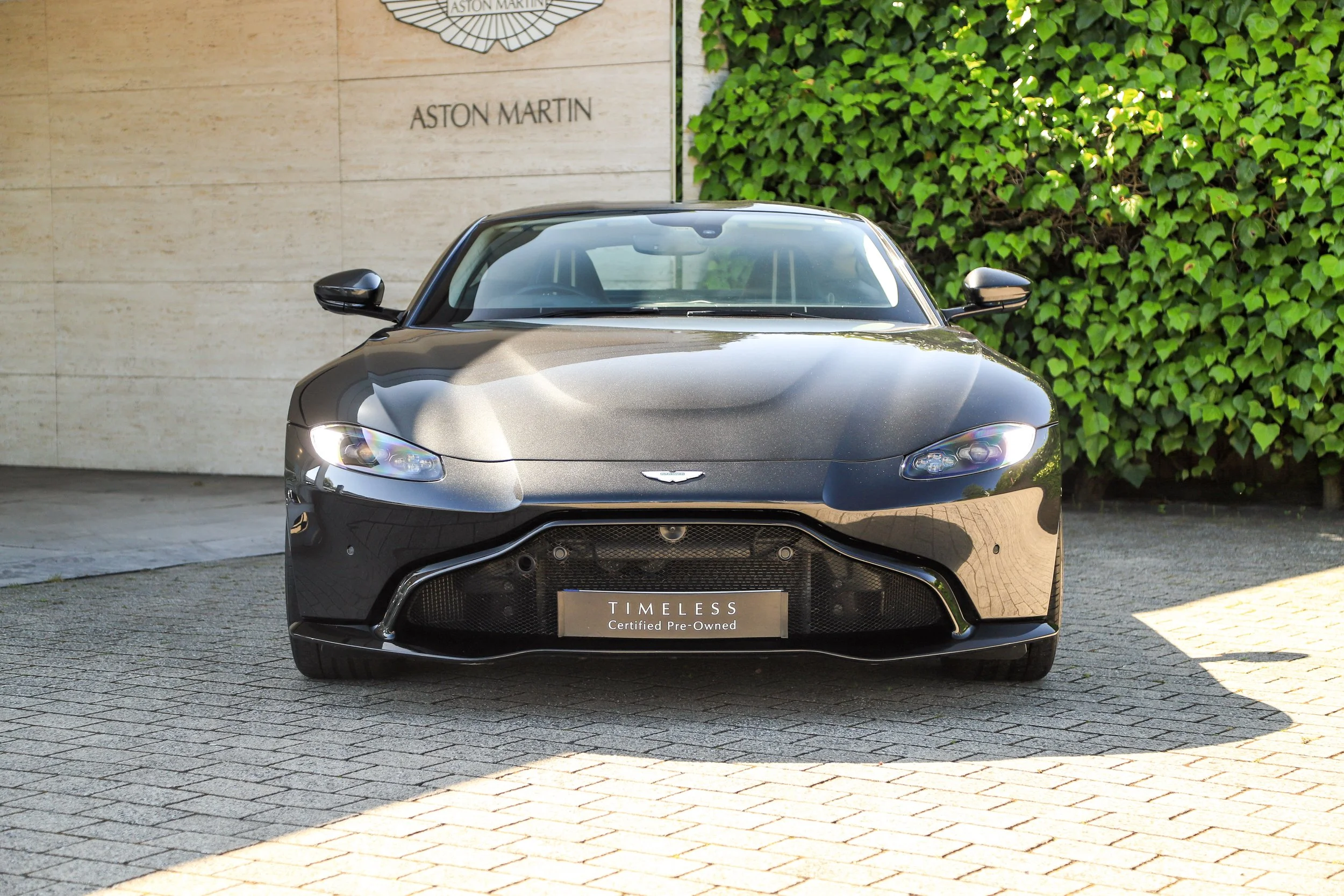
Image © Fuel the Passion. FTP Vantage. Collection Day August 2024 - Aston Martin Sevenoaks.
“Owning one is certainly no evidence that Aston Martin got the design right. If anything, it makes the question more interesting.”
Look at one today and it’s difficult to imagine quite how disruptive the Vantage appeared when it was unveiled on 21st November 2017, ahead of customer deliveries in 2018. Its headlights were unusually slim beside those of contemporary Aston Martins, the uninterrupted clamshell bonnet seemed enormous and, beneath them, sat a low, wide opening covered not by the familiar horizontal vanes of an Aston Martin grille but by exposed mesh.
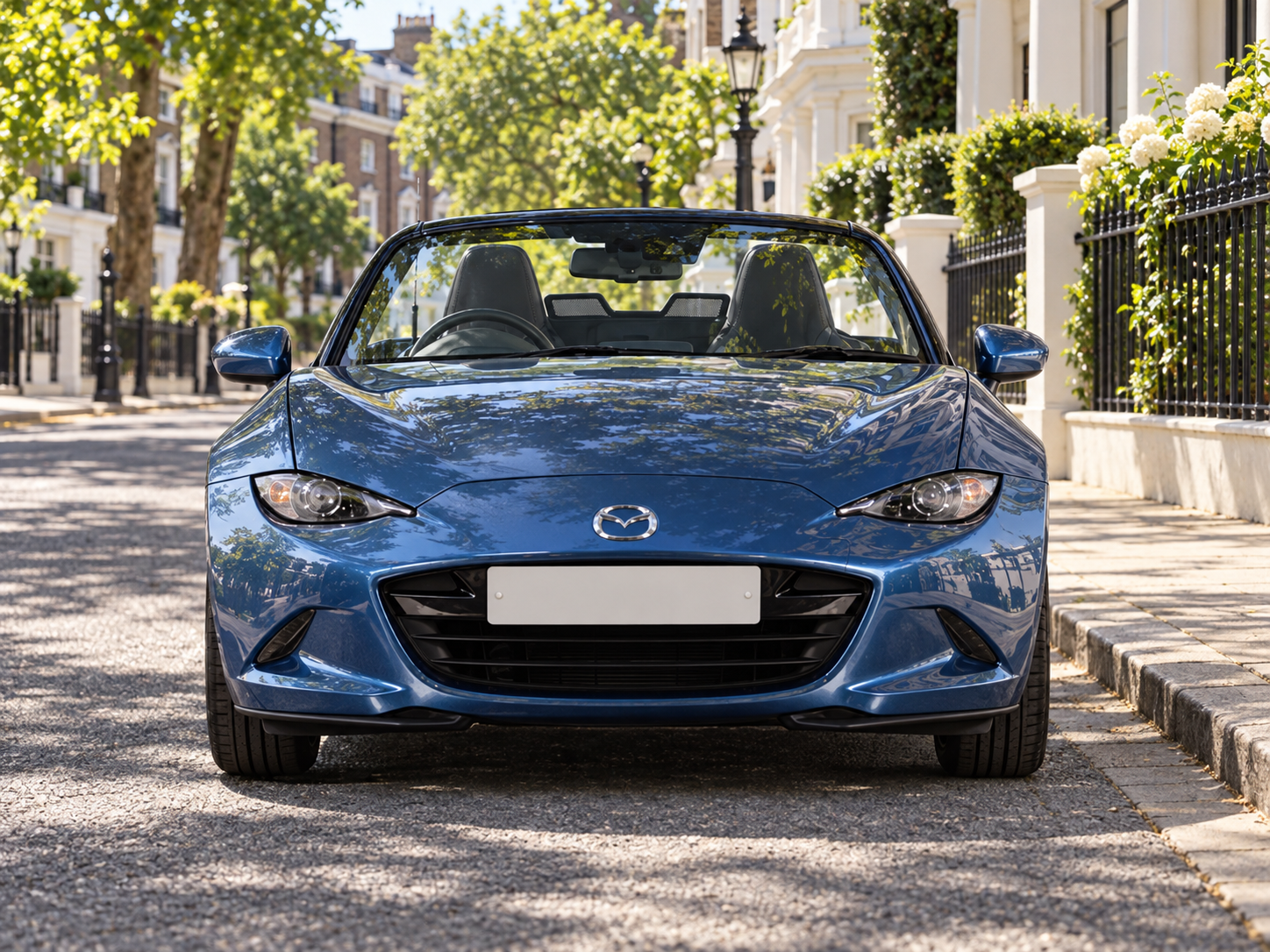
Image © Fuel the Passion. For illustrative purposes. Metallic Blue Mazda MX-5.
To some observers it was exciting, predatory and genuinely different; to others it appeared unfinished. The headlights prompted immediate comparisons with the Mazda MX-5, while the enormous mouth attracted descriptions considerably less flattering.
Previous Vantages had been widely celebrated for their elegance, yet this one appeared almost determined to challenge what an Aston Martin was supposed to look like. Those reactions were there from the beginning, but the extraordinary thing is that they did not arise because Aston Martin had accidentally wandered too far from its own design language. It meant to.
The real Hunter story is therefore much larger than an argument about whether mesh or vanes make for the prettier grille. It asks a considerably more interesting question:
How much of the familiar face of an Aston Martin can you change before people stop seeing an Aston Martin?
THE BLOODLINE • DESIGN HISTORY
A Note on Terminology
Aston Martin described the new Vantage itself as a “hunter” at its 2017 launch. The company's public use of “Hunter grille” as the name for the original mesh treatment came later, alongside the alternative Vane grille in February 2020. [1]
THE FACE EVERYONE KNEW
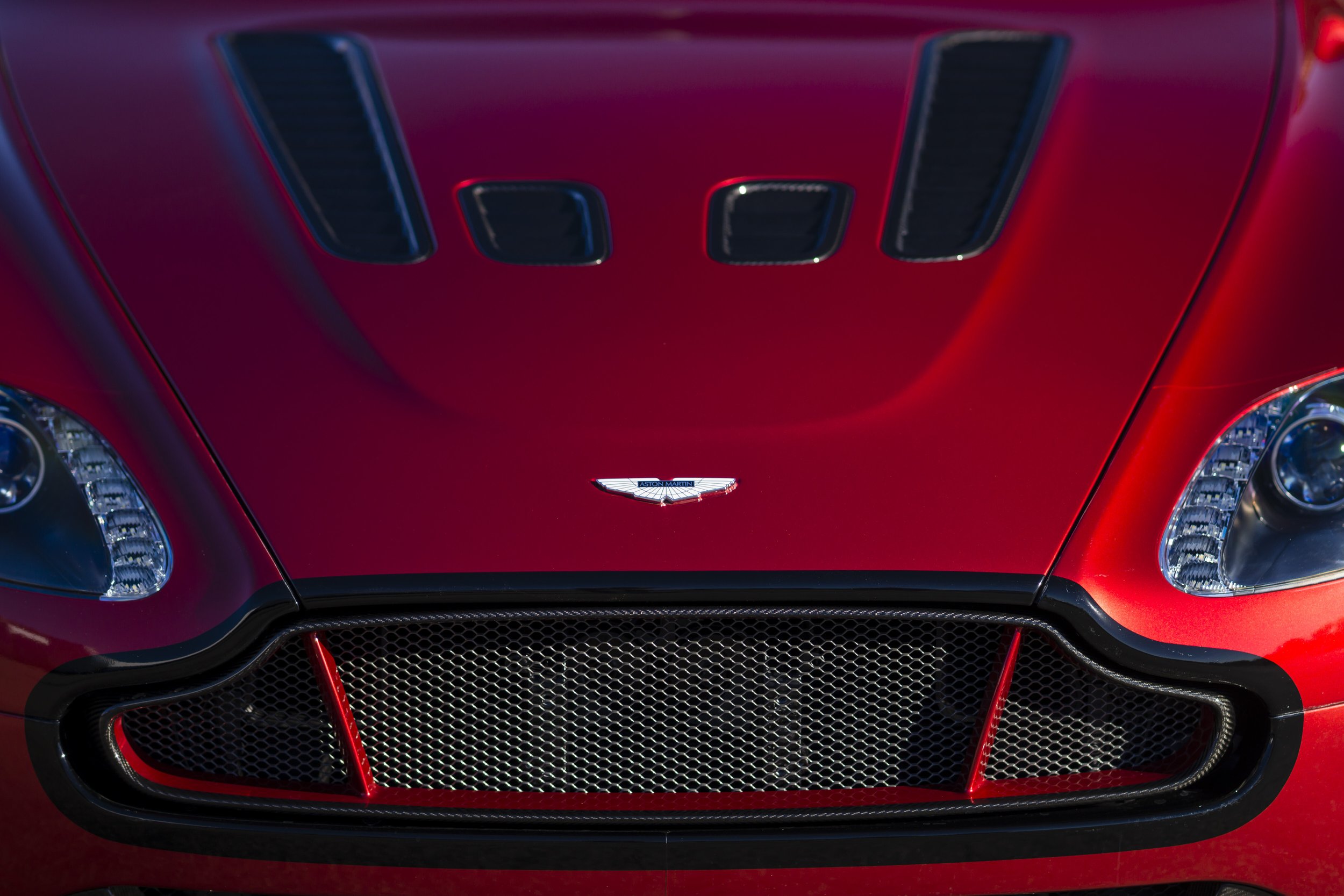
Image © Aston Martin Lagonda. Used for editorial purposes. Aston Martin Vantage V12 S.
The Aston Martin grille has never been completely immutable. Its proportions have changed, its internal treatment has evolved and certain models have departed dramatically from the familiar formula.
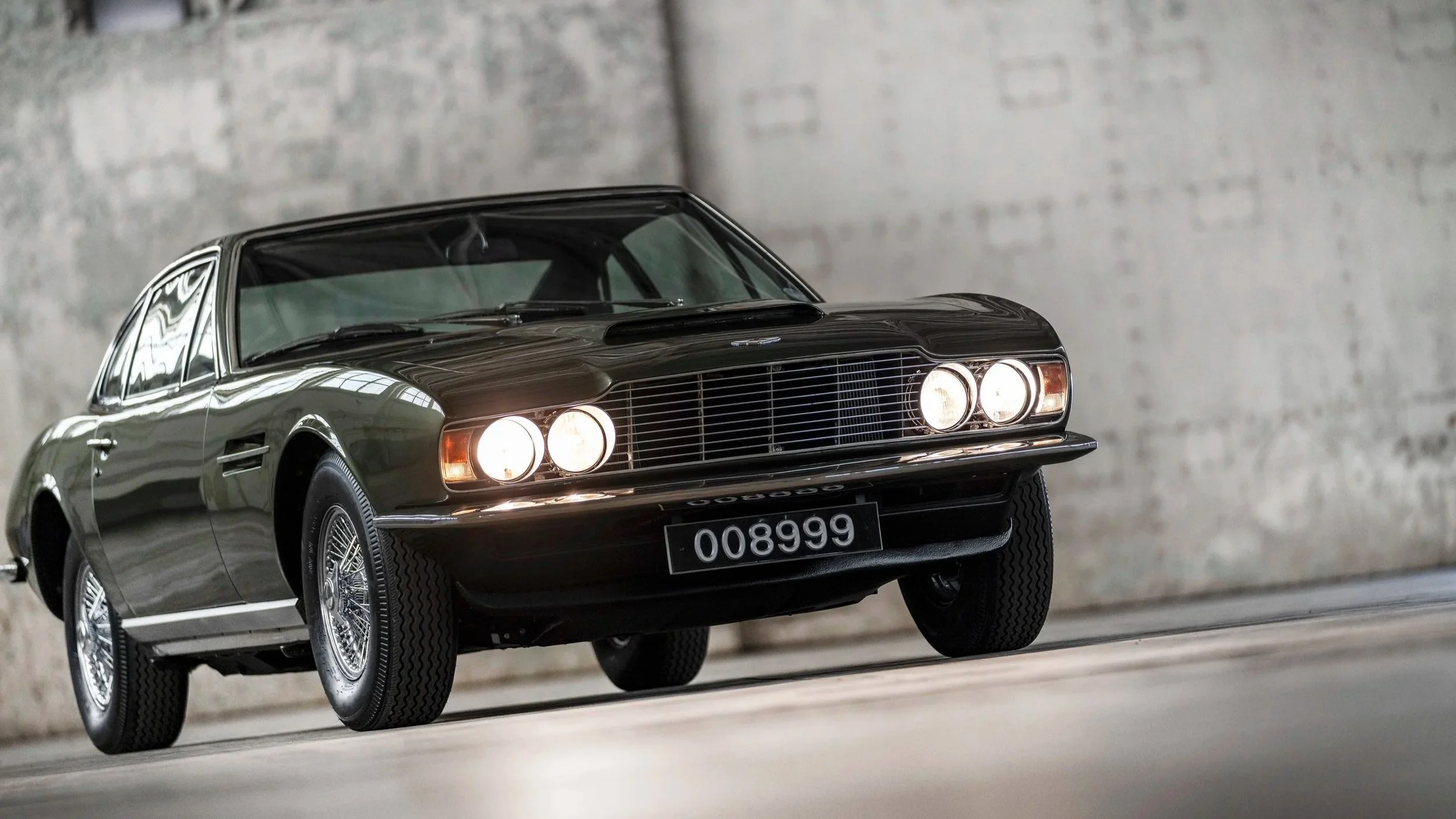
Image © Aston Martin Lagonda. Used for editorial purposes. Aston Martin DBS.
The William Towns-designed DBS of 1967 introduced a notably different full-width face, while Zagato collaborations have repeatedly demonstrated how freely Aston Martin identity can be interpreted without necessarily being lost.
Nevertheless, across successive generations the grille became one of the marque's strongest visual signatures and, by the Gaydon era, one of the most instantly recognisable faces in the motor industry.
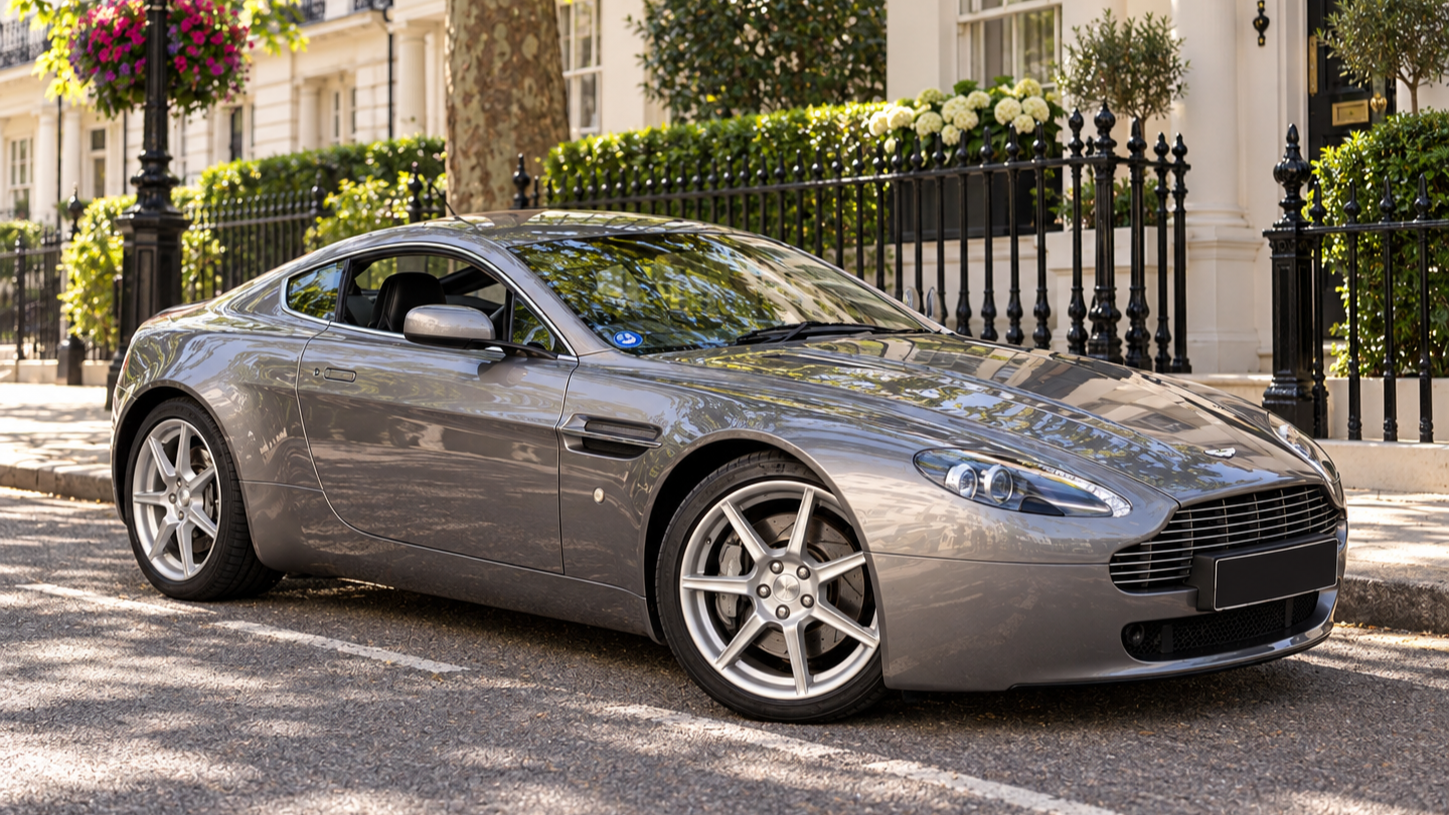
Image © Fuel the Passion. For illustrative purposes.
The V8 Vantage introduced in 2005 combined that familiar opening with substantial headlamps, restrained surfacing and beautifully judged proportions, quickly establishing itself as one of the defining modern Astons. Aston Martin later recorded some 25,000 sales across that generation, making it the best-selling model in the company's history at the time.[2]
Its successor therefore inherited an awkward problem. Aston Martin was not replacing an unloved design crying out for reinvention; it was replacing one of the most admired and commercially successful cars it had ever made.
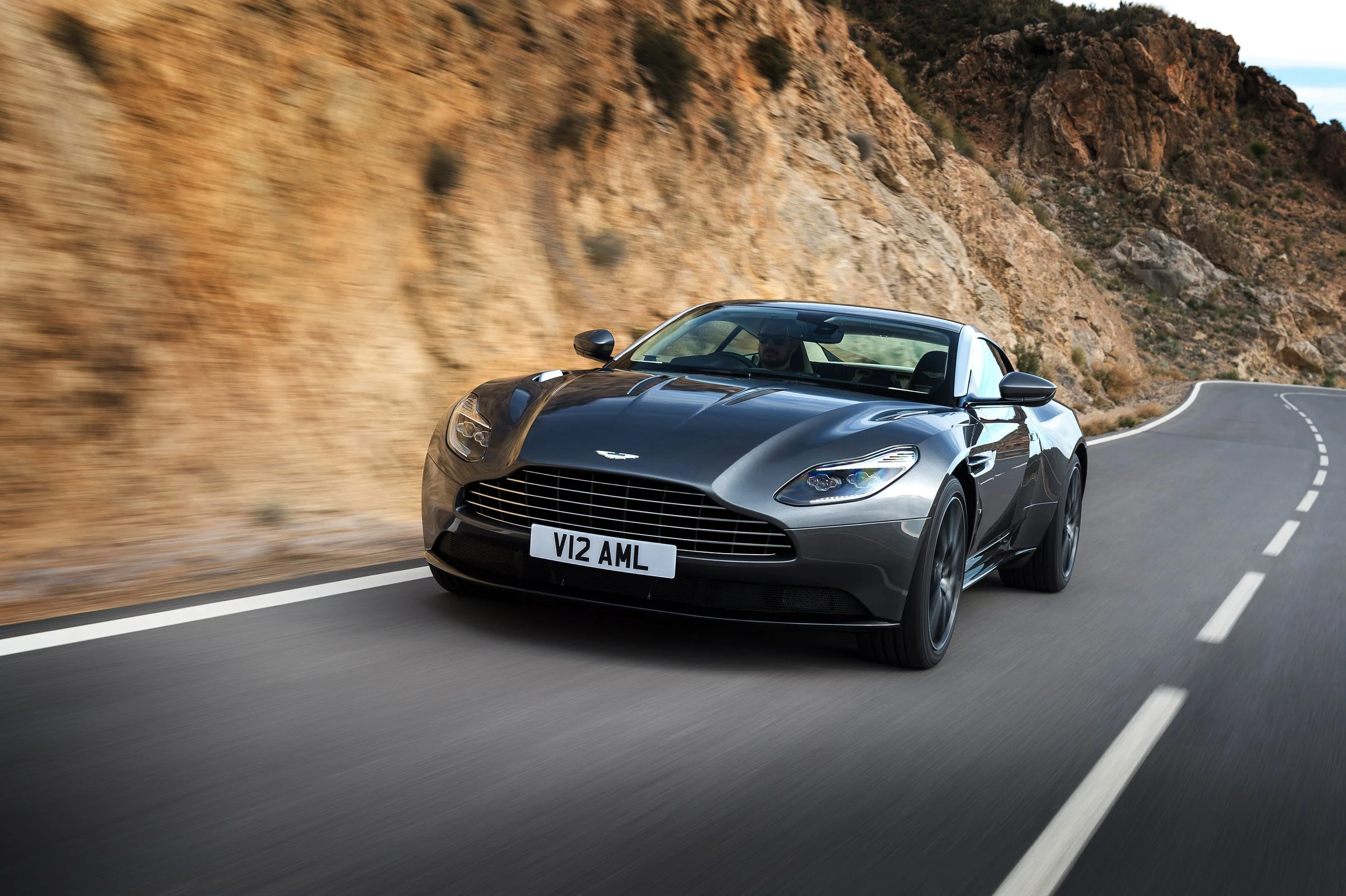
Image © Aston Martin Lagonda. Used for editorial purposes. Aston Martin DB11.
There was another concern inside the company. DB9, Vantage and Vanquish had developed sufficient family resemblance that Aston Martin's management believed the next generation required much clearer individual identities. Eight months before the new Vantage was unveiled, Andy Palmer was already describing its forthcoming design as “more revolutionary” than DB11 and offered an intriguing shorthand: imagine DB10 mated with the Vulcan.[3]
More revealing was the brief he had given Marek Reichman. Palmer joked that his mother ought to be able to walk into an Aston Martin showroom and immediately distinguish Vantage from DB11. It was a light-hearted way of expressing a serious objective: the next Vantage was not supposed to be a smaller DB11.
It needed a character, and a face, entirely of its own.
NO MORE RUSSIAN DOLLS

Image © Fuel the Passion. For illustrative purposes.
Marek Reichman was discussing the same transformation before anybody outside Aston Martin had seen the finished car. Reichman’s wider design philosophy provides useful context for that transformation. His interviews emphasise Aston Martin’s enduring proportions and identity while making room for greater differences between models. By March 2017, he was explaining how that approach would give the next Vantage a character clearly distinguishable from DB11.[4, 5]
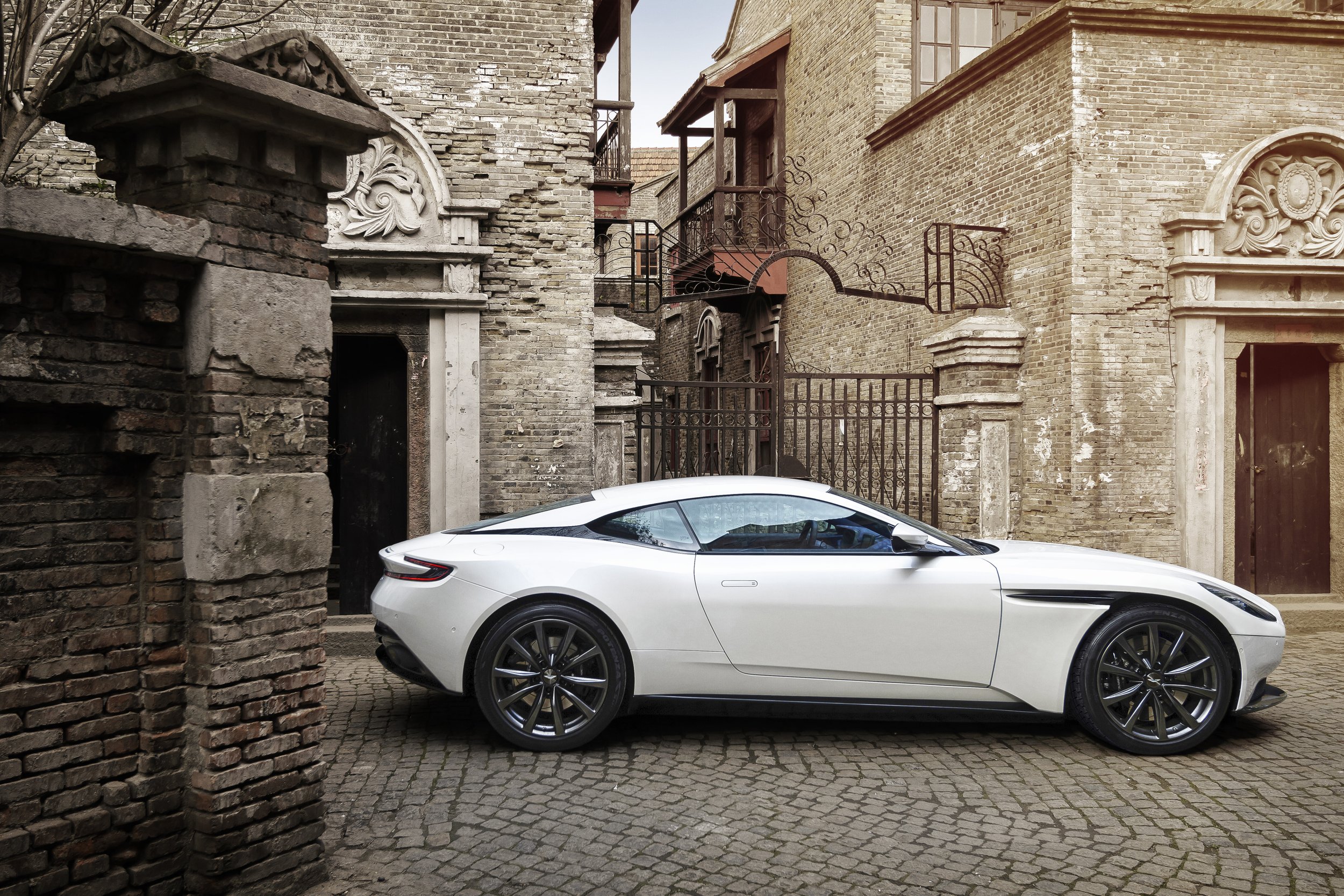
Image © Aston Martin Lagonda. Used for editorial purposes. Aston Martin DB11.
Speaking in March 2017, he explained that, aside from details such as the door handles and badge, the coming Vantage would share remarkably little that was visually recognisable with DB11.[4] More important still was his thinking about what actually made the front of an Aston Martin identifiable.
Reichman argued that the characteristic upper “hill”, or inflection at the top of an Aston grille, could carry part of the marque's identity without necessarily requiring the familiar grille vanes beneath it. Valkyrie provided an extreme example: there was effectively no conventional grille, yet its face, upper body language and proportions still made it recognisable as an Aston Martin.[4]
That changes the way Hunter should be understood. Aston Martin was not necessarily attempting to discard its heritage; it was exploring whether that heritage could be abstracted, retaining enough of the underlying geometry, proportion and surface language for recognition while removing some of the familiar objects through which that recognition had traditionally been achieved.
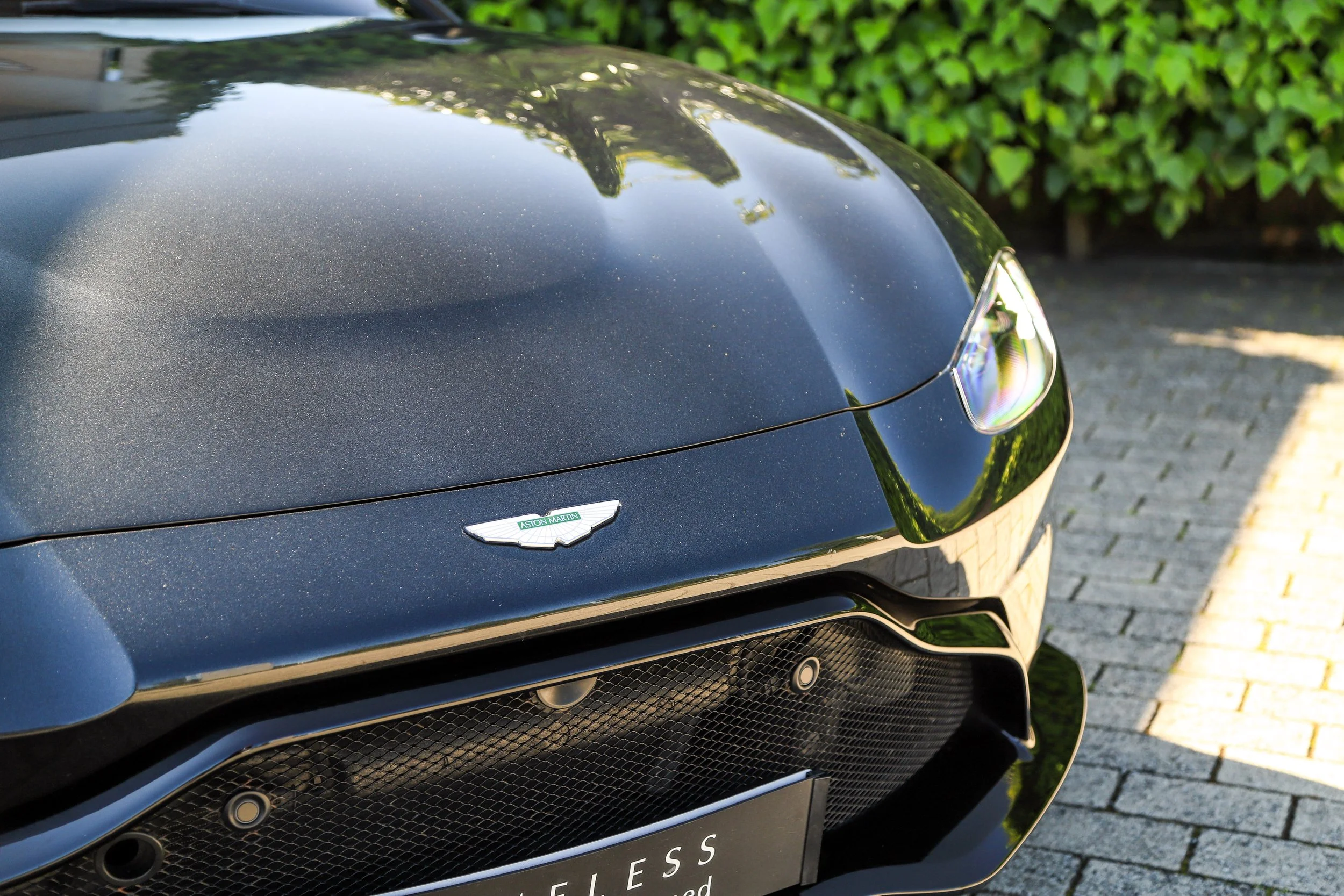
Image © Fuel the Passion. FTP Vantage, Collection day, Aston Martin Sevenoaks 2024.
By 2019, Reichman would articulate the contrast even more clearly. Aston Martin, he said, had escaped a showroom populated by “Russian dolls”.
DB11 represented the more genteel and conventionally beautiful Aston, whereas Vantage was intended to be something more elemental, direct and predatory — the Hunter.
Most strikingly, he acknowledged that Vantage “doesn't have a typical Aston Martin face”.[5] That’s not the language of a designer who accidentally lost the marque's identity. It’s the language of one consciously testing where that identity resided.
Reichman also returned to the importance of the underlying S-curvature or upper frontal geometry, arguing that those deeper cues could preserve Aston Martin's bloodline even when the literal grille changed dramatically.[5] Hunter therefore represented considerably more than a new grille. It embodied a different theory of what an Aston Martin needed in order to remain an Aston Martin.
BOND, THE SHARK AND THE SIDE ALLEY
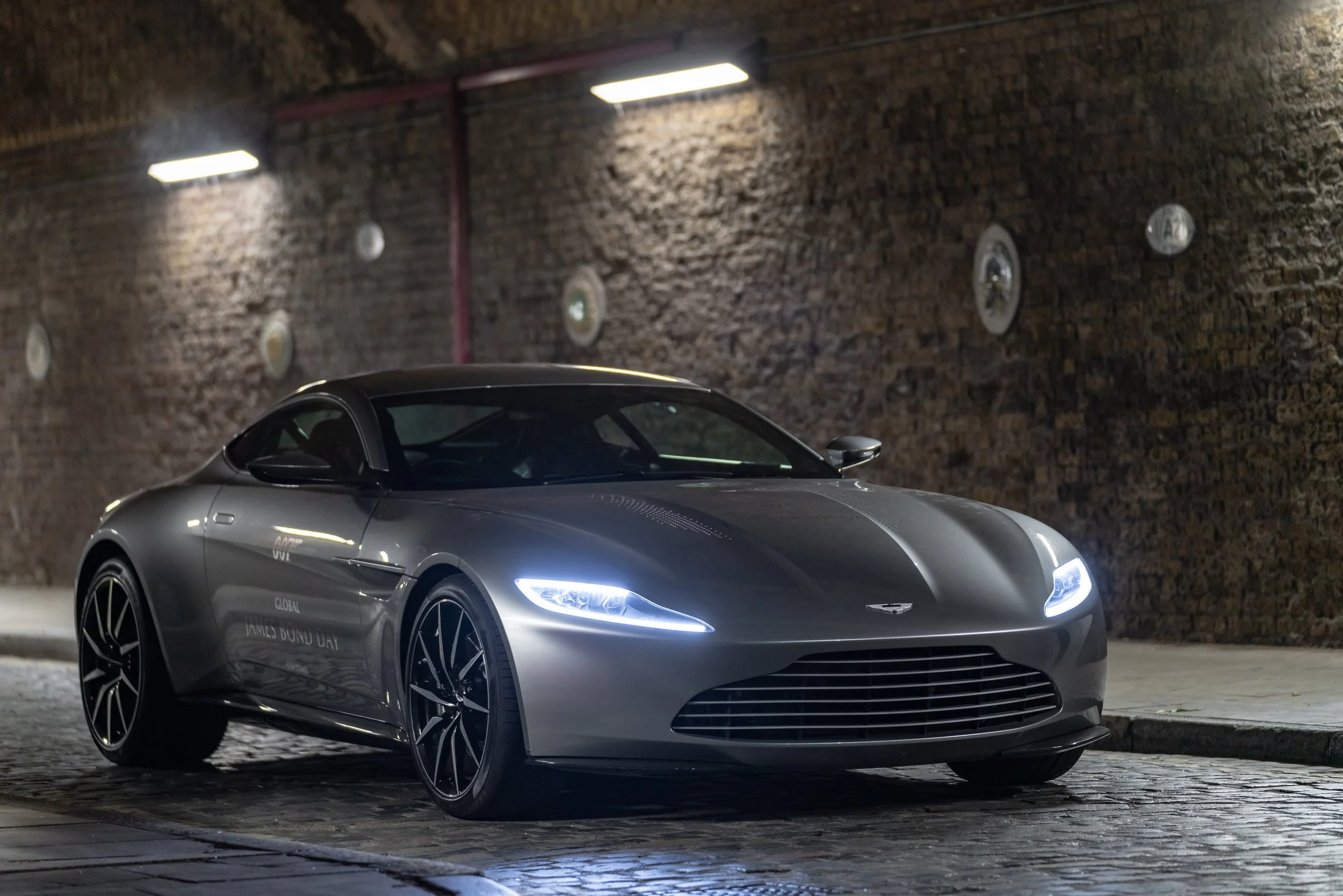
Image © Aston Martin Lagonda. Used for editorial purposes. Aston Martin DB10.
The route towards that car is more complicated than the familiar story that Aston Martin simply transformed James Bond's DB10, revealed for Spectre in December 2014, into the production Vantage. Work on the next Vantage was already underway when Bond entered the picture.
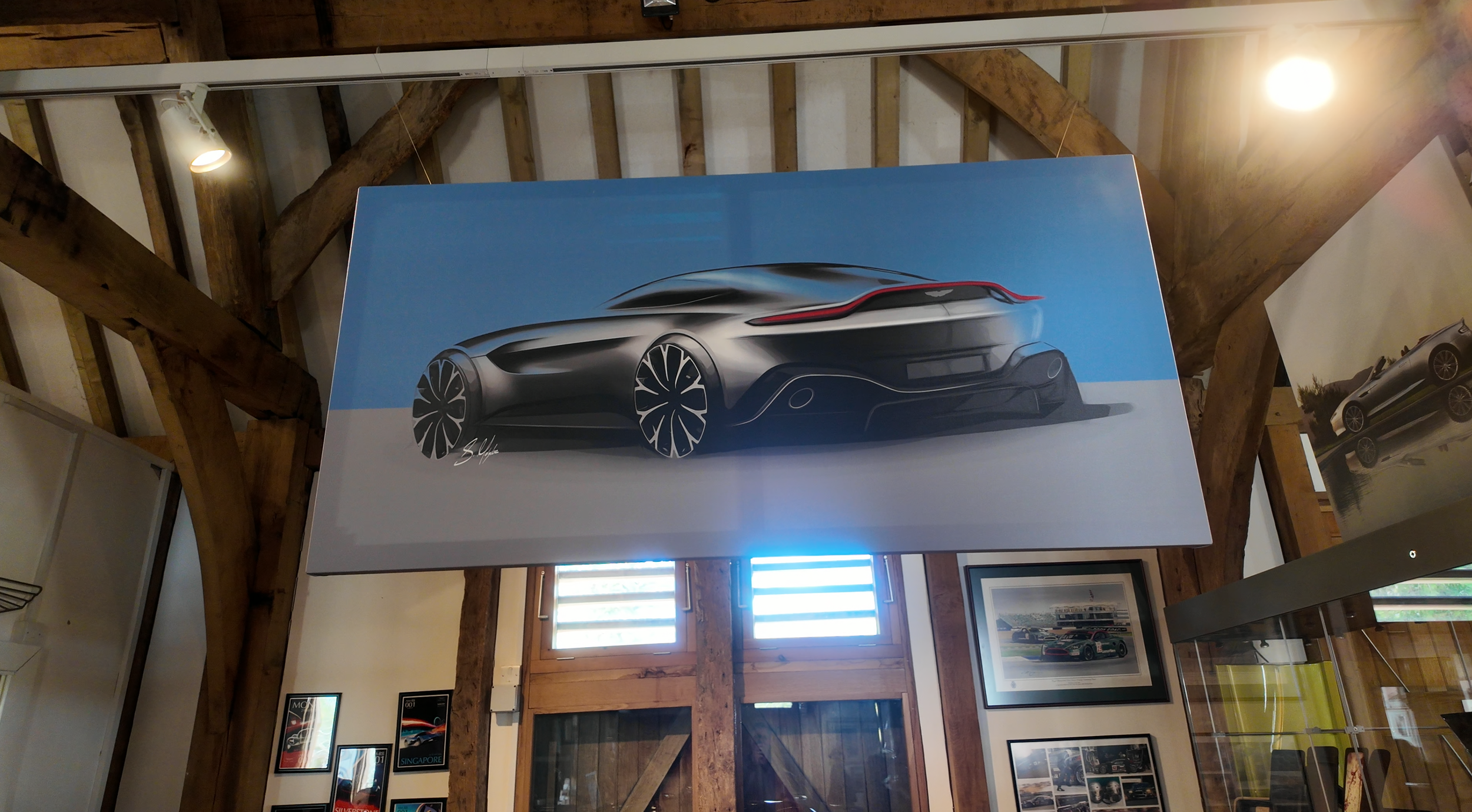
Image © Fuel the Passion. The actual image that was on the studio wall. Here on display at the Aston Martin Heritage Trust Museum, Oxfordshire, UK.
Designer Sam Holgate recalled that Aston Martin was engaged in very early Vantage work when the Bond producers noticed one of his proposals on the studio wall. He was beginning a full-size Vantage clay when the selected idea branched into what became the DB10 for Spectre.[6]
Holgate later described DB10 as a “side alley” to the continuing Vantage programme, but it was an unusually useful one. Aston Martin suddenly had the opportunity to observe closely related forms on a full-size moving car, under natural and cinematic lighting, in different environments and from angles that no studio model could replicate. The design team could see what worked, what didn’t and how people responded before taking that experience back into the production programme.[6]
Reichman's own account later supplied an intriguing missing detail. Speaking to WIRED in October 2021, he recalled a drawing of a future sports car, the car that would eventually become Vantage, displayed beside a reference image of a shark when members of the Bond production team visited the design studio. When director Sam Mendes asked about the drawing, Reichman recalled explaining that it depicted Aston Martin’s future two-seat sports car: the more agile, dramatic hunter in its range.[7]

Image © Fuel the Passion. For illustrative purposes.
This was a participant's retrospective account, and recollections of the precise development timetable do not entirely agree. The broader design connection, however, can be tested against statements Reichman made at the time. In an interview published by Top Gear on 15th October 2015, Reichman described the DB10 grille as recessed into a negative surface, like the face of a shark. He explained that its grille sat in shadow, giving the car a darker, predatory character, and confirmed that Aston Martin expected to carry some of the DB10’s design influences into future cars.[8]
Later that month, on Jay Leno's Garage, he confirmed that elements of DB10 would appear on future Aston Martins. He explained that the unusual nose had been considered with future production requirements in mind, while making clear that the Bond car itself was mechanically adapted from the outgoing 4.7-litre V8 Vantage. DB10 was therefore neither a finished prototype of the 2018 Hunter nor an unrelated styling exercise. It was a remarkable opportunity to give a developing design language physical form and see it perform beyond the studio.[9]
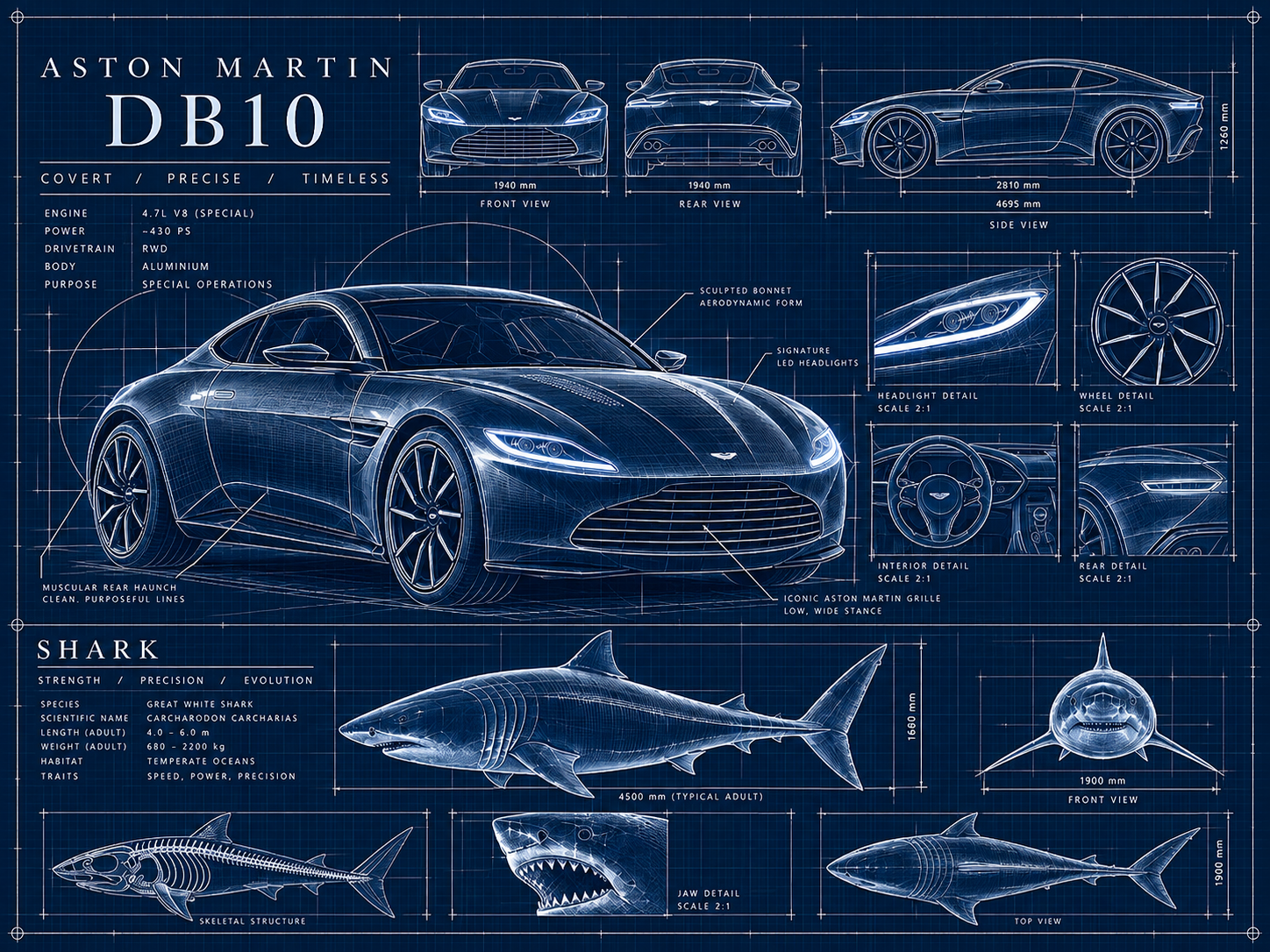
Image © Fuel the Passion. For illustrative purposes.
The predatory imagery was documented before the production Vantage appeared: the 2016 D&AD entry for DB10 described its low, shadowed front end through the imagery of a shark-like hunter.[10] That doesn’t settle every detail of the early design chronology, but it establishes that the language was not invented after Hunter's controversial launch.
DB10 was therefore important, but it was only part of the story. Another Aston Martin was preparing to push the company's face much further.
VULCAN — THE BIGGER BROTHER
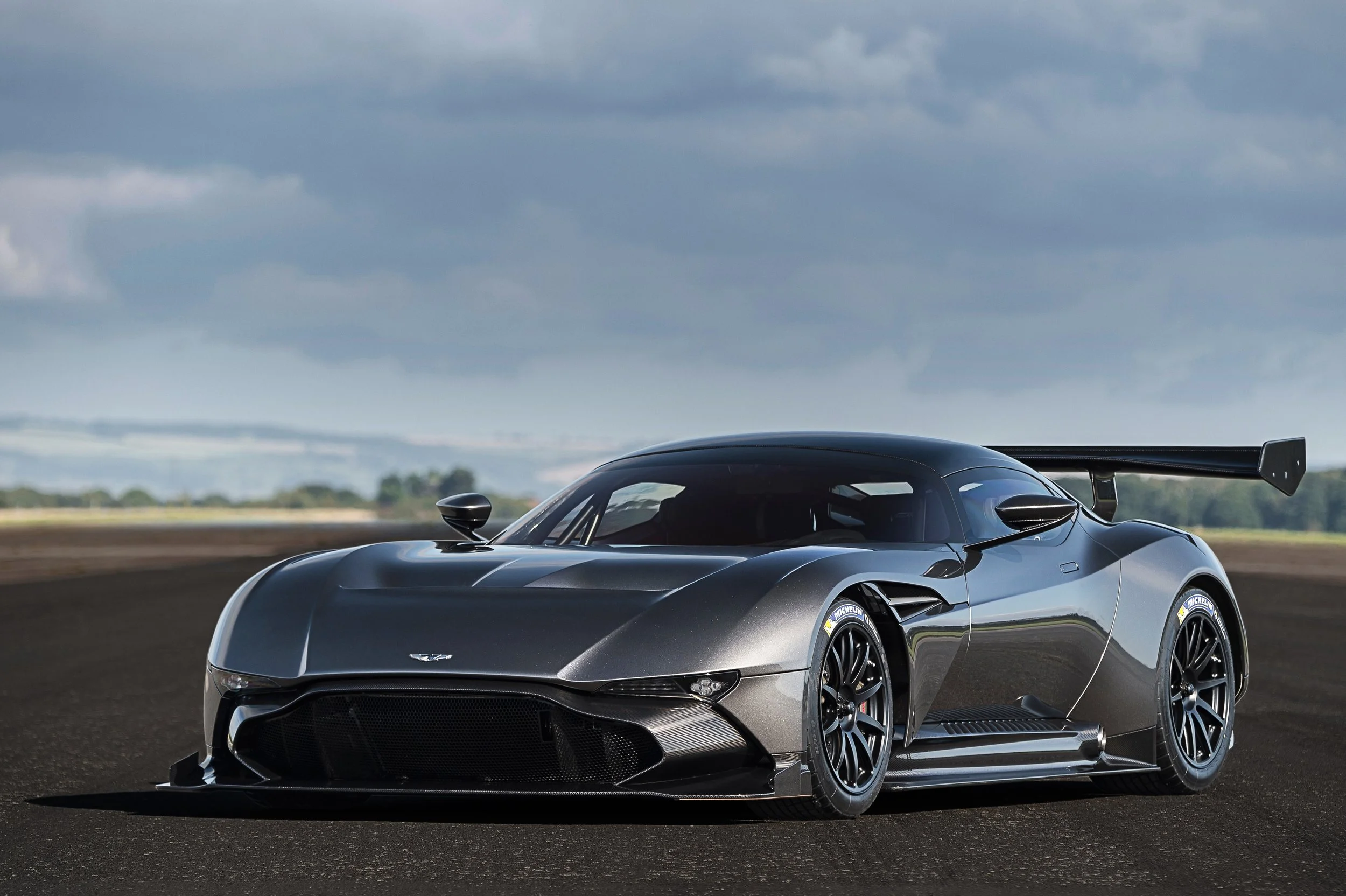
Image © Aston Martin Lagonda. Used for editorial purposes. Aston Martin Vulcan.
The Aston Martin Vulcan arrived in 2015 as an extreme track-only machine with little reason to respect the conventions of an everyday road car. Low, wide, carbon-bodied and visually ferocious, it reduced the familiar grille to something much closer to an aerodynamic opening and relied increasingly upon its shark-like nose, surfacing and proportions to carry Aston Martin identity.
If the later Hunter Vantage was the road-going predator, Vulcan was its bigger brother who had spent considerably longer in the gym.
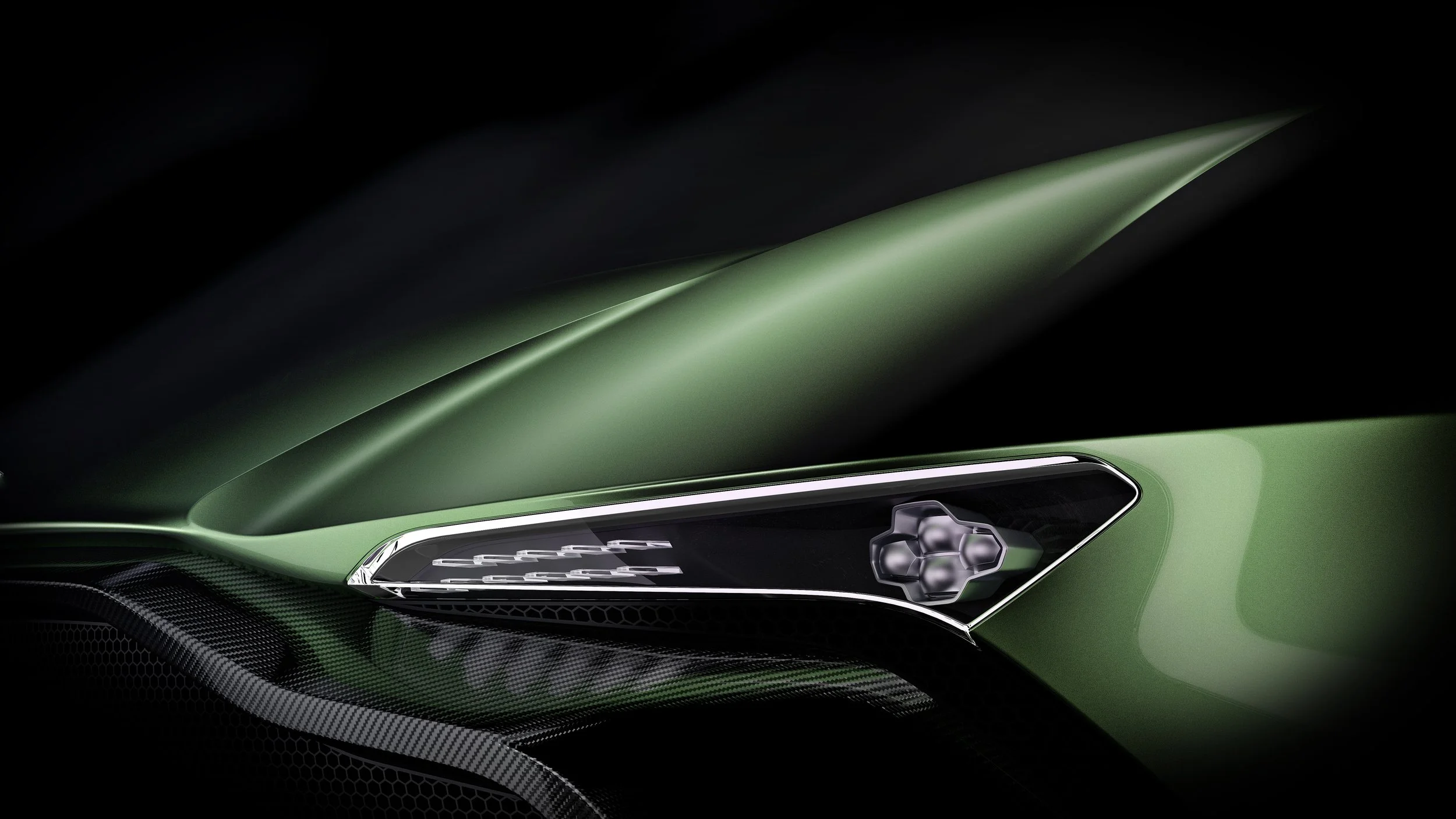
Image © Aston Martin Lagonda. Used for editorial purposes. Aston Martin Vulcan.
There’s a temptation to see the resemblance retrospectively and assume the connection simply because the cars look related. The contemporary evidence makes the relationship considerably stronger than that.
In February 2015, as Vulcan was introduced, Reichman said its front-end treatment would have “a huge influence for our future sports cars”.[11] He spoke of future cars becoming more athletic and of allowing technical and aerodynamic function to exert greater influence over the design.
Reichman made that future direction particularly clear in an interview published by PitstopWeekly on 14th November 2015, during the Dubai International Motor Show. He explained that both Vulcan and DB10 offered clues to Aston Martin's coming front-end design, and contrasted the character of the next DB9 with the next V8 Vantage: the former would be gentler in appearance, while the latter would be more aggressive. That contemporary prediction supports the intention to give the next Vantage a distinctly sharper identity, without requiring us to infer specific grille or headlamp details from the interview.[12]
Two years later the production Vantage arrived, and Aston Martin itself said its predatory stance had been inspired by the extreme track-only Vulcan.[2] Reichman described the road car as blending the design languages of DB10 and Vulcan into something sculpted, dynamic, pure and elemental; in Aston Martin's Rankin launch material he went further, describing Vulcan as “a car without a traditional grille.”[13] That wording is crucial.
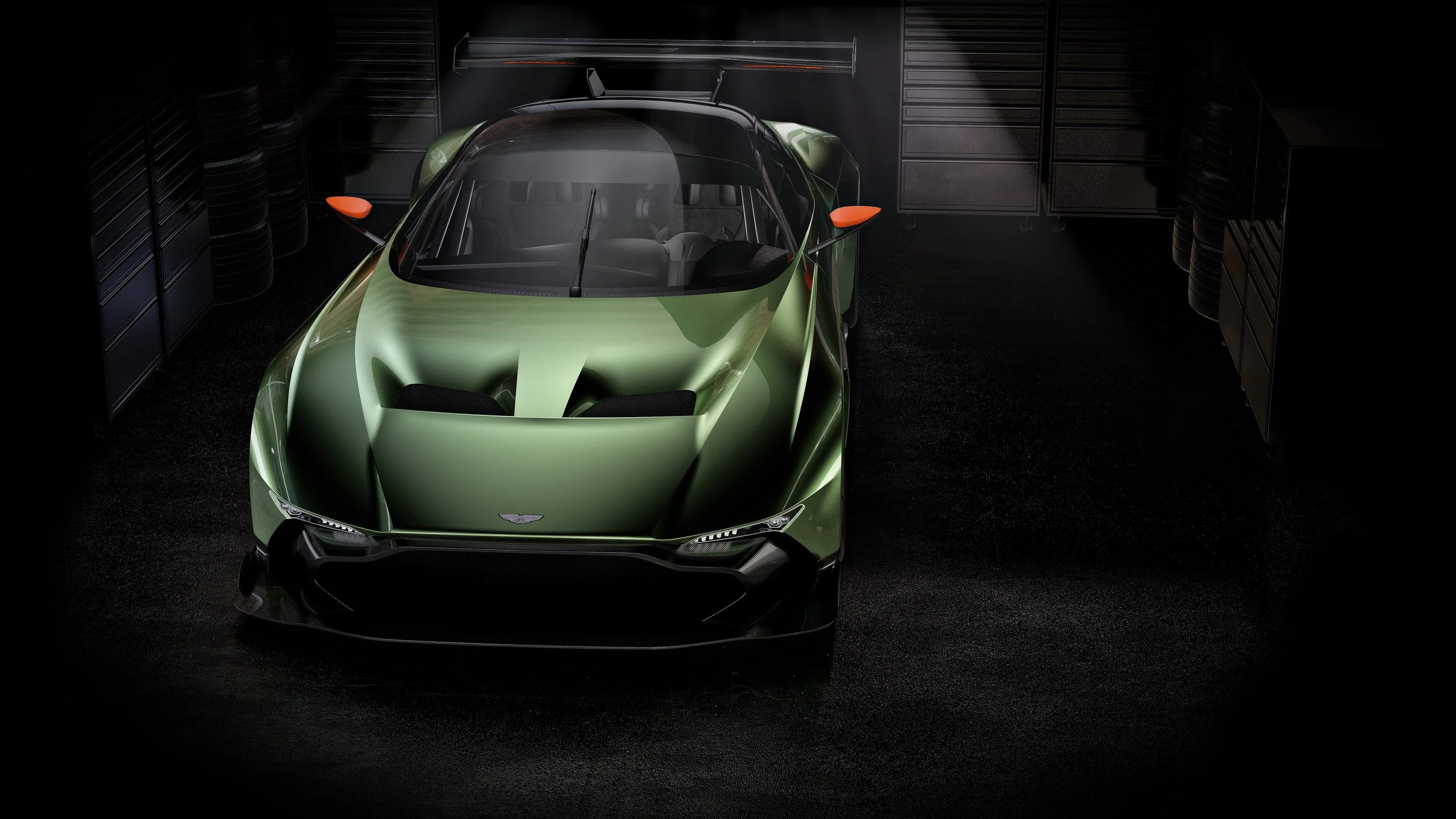
Image © Aston Martin Lagonda. Used for editorial purposes. Aston Martin Vulcan.
Vulcan demonstrated that an Aston Martin didn’t necessarily have to carry its traditional grille as a separate piece of visual jewellery. The underlying form, upper curvature, stance and proportions could carry more of the recognition instead.
Hunter took part of that idea and placed it somewhere far more challenging: not on a tiny-volume track special, but on Aston Martin's series-production sports car and successor to one of the most familiar modern Astons ever built.
Seen in that context, the route towards Vantage becomes richer than the simple proposition that DB10 became the production car. Early Vantage thinking branched into DB10, the Bond car provided an unusual opportunity for real-world observation, Vulcan pushed Aston's front-end language towards a much more extreme place, and those influences eventually converged in the road-going Vantage.
The shark had been circling for some time.
WHAT IF AN ASTON DIDN'T NEED THE TRADITIONAL ASTON GRILLE?
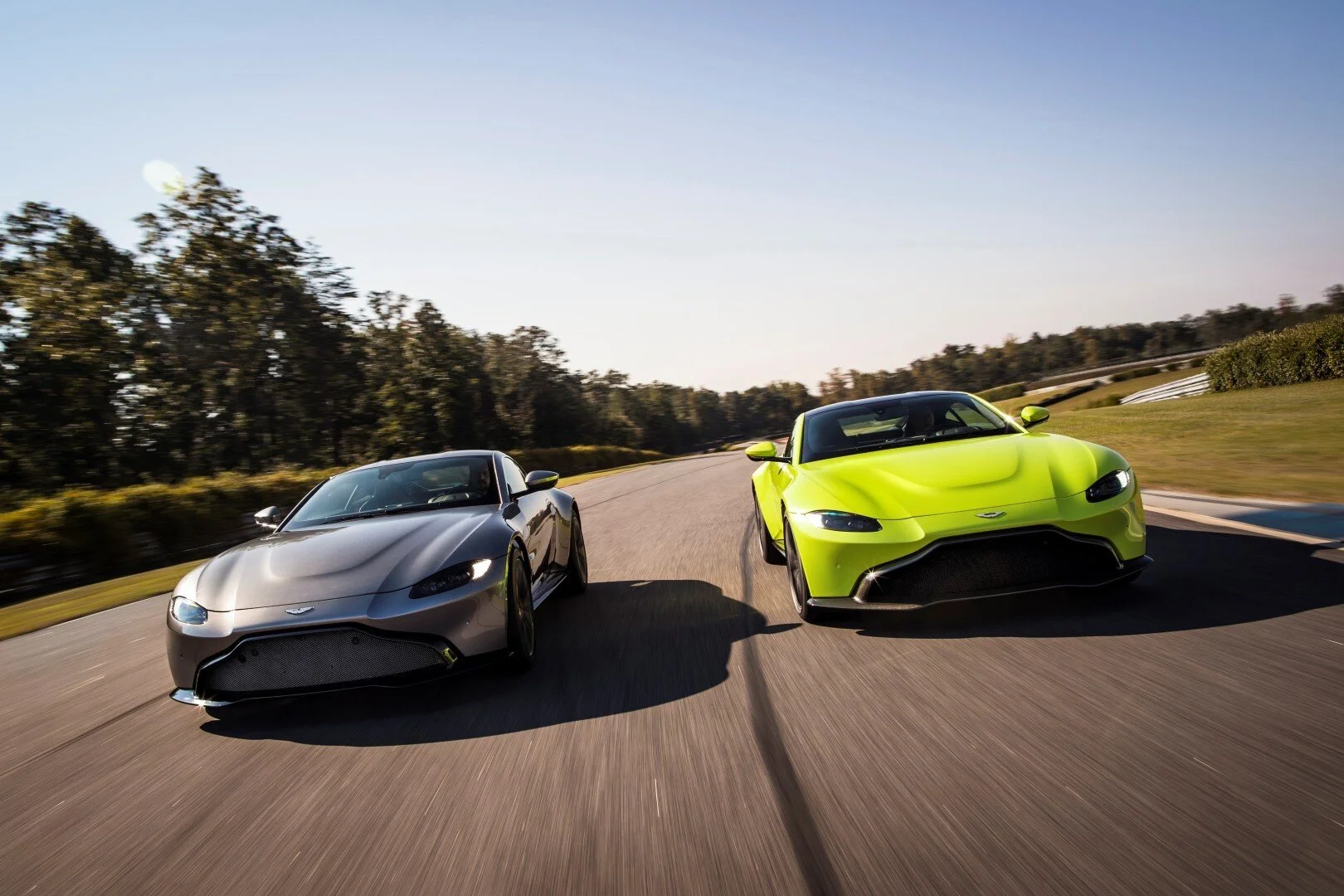
Image © Aston Martin Lagonda. Used for editorial purposes. The Hunter - Aston Martin Vantage.
When journalists finally drove the Vantage in Portugal in April 2018, criticism of the front was already impossible to ignore, yet Reichman didn’t retreat from the philosophy behind it. Asked about the compact headlights and the disappearance of the conventional Aston grille structure, he explained how little packaging space was available around the wheelarch and clamshell-bonnet architecture.
“More provocatively, he questioned why a sports car should carry what he estimated at 15–20kg of grille structure at its furthest-forward point, exactly where additional mass was least desirable dynamically.” [14]
That figure was Reichman's estimate rather than an independently measured Hunter weight saving, and it shouldn’t be repeated as though Aston Martin had conclusively removed 15 or 20 kilograms from the production car. The philosophy behind the remark is more important than the number. The opening existed because the Vantage needed to breathe, cool its engine and feed air where it was required. Why, in Reichman's reasoning, should Aston Martin then add a substantial ornamental structure simply because history said that an Aston traditionally wore one?
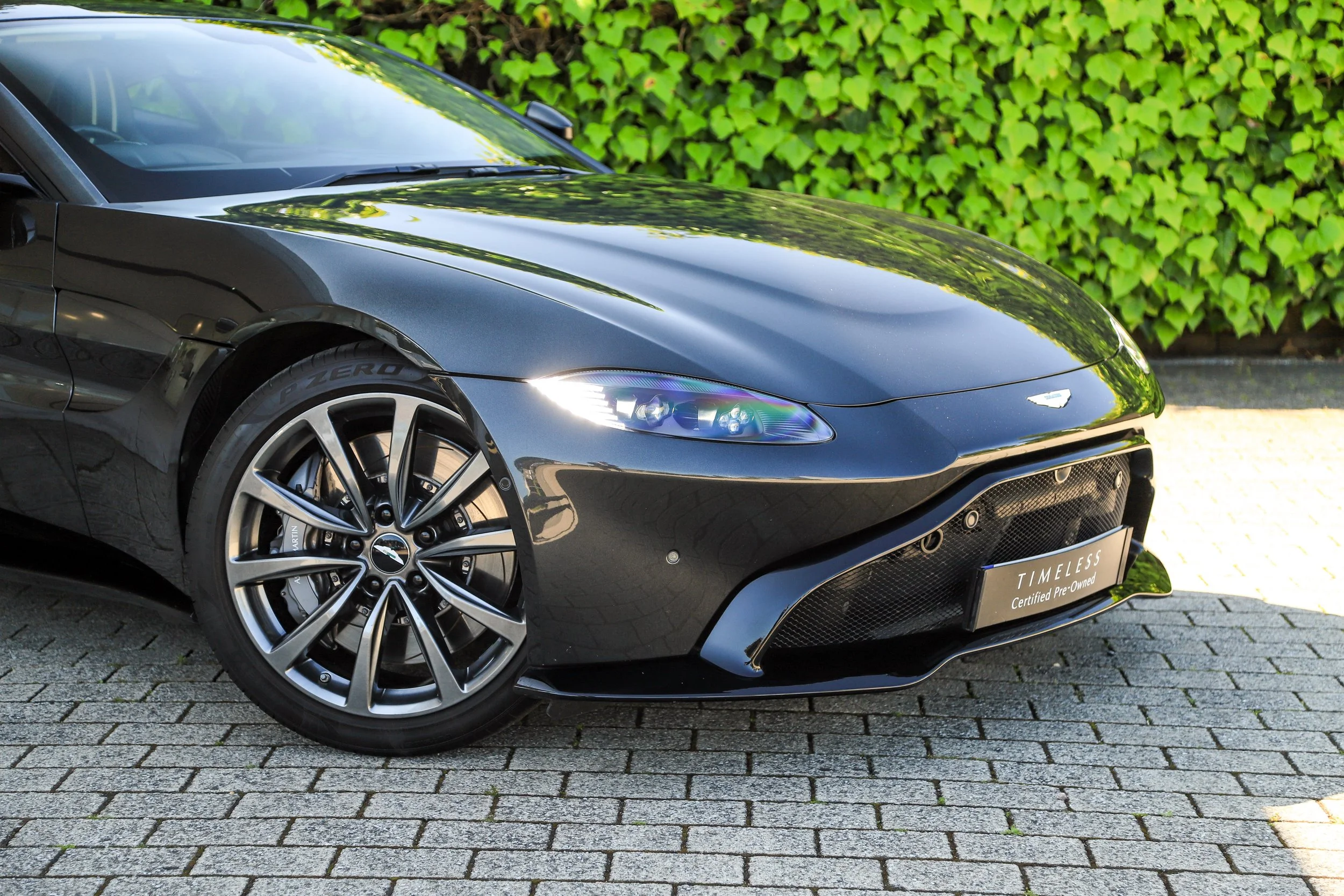
Image © Fuel the Passion. FTP Vantage, Collection day, Aston Martin Sevenoaks 2024.
The production Vantage did not, of course, literally have no grille. Aston Martin's own specification referred to its grille mesh and offered different finishes.[2] What largely disappeared was the traditional grille as a separate ornamental object.
The air opening remained and enough of the historic upper geometry survived to hint at the bloodline, but the vanes, visual frame and much of the jewellery were gone. The surrounding bodywork was being asked to do more.
A useful way of understanding Hunter is therefore that it didn’t simply delete the Aston Martin grille. It deconstructed it.
Affiliate link note: Some links may be affiliate links, which means Fuel the Passion may earn a small commission if you purchase through them, at no extra cost to you. Thank you for your support.
THE EYES THAT CHANGED THE FACE
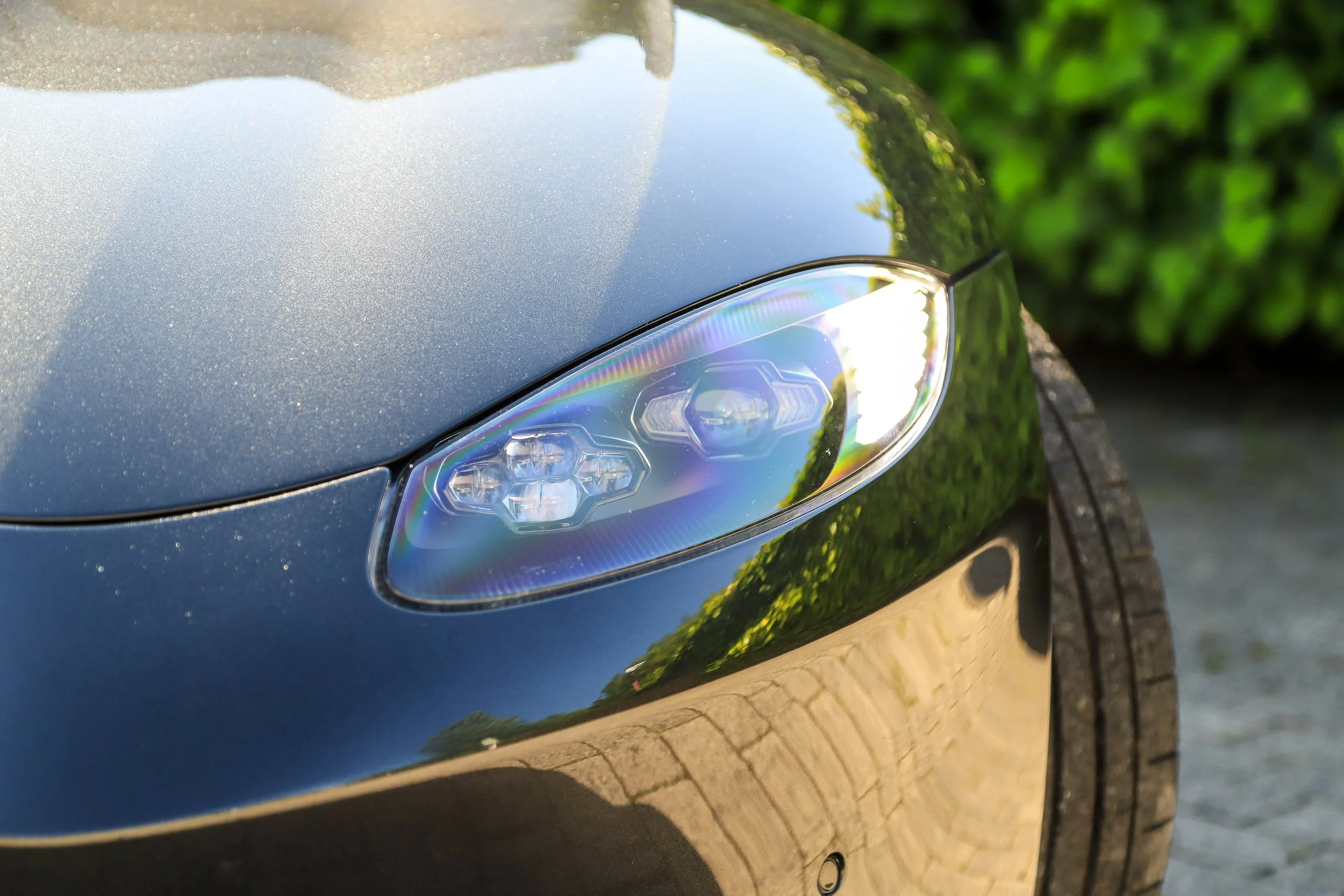
Image © Fuel the Passion. FTP Vantage, Collection day, Aston Martin Sevenoaks 2024.
The grille has dominated much of the Hunter debate ever since, although the original evidence suggests that concentrating on the mouth alone misses half of what happened. The headlights deserve equal billing.
Aston Martin described them as ultra-slim LEDs, creating a new graphic signature intended to give Vantage a strong, individual identity.[2] Their compact form was partly dictated by packaging; Reichman demonstrated how restricted the available space had become around the front wheel, its turning envelope and the clamshell bonnet.[14]
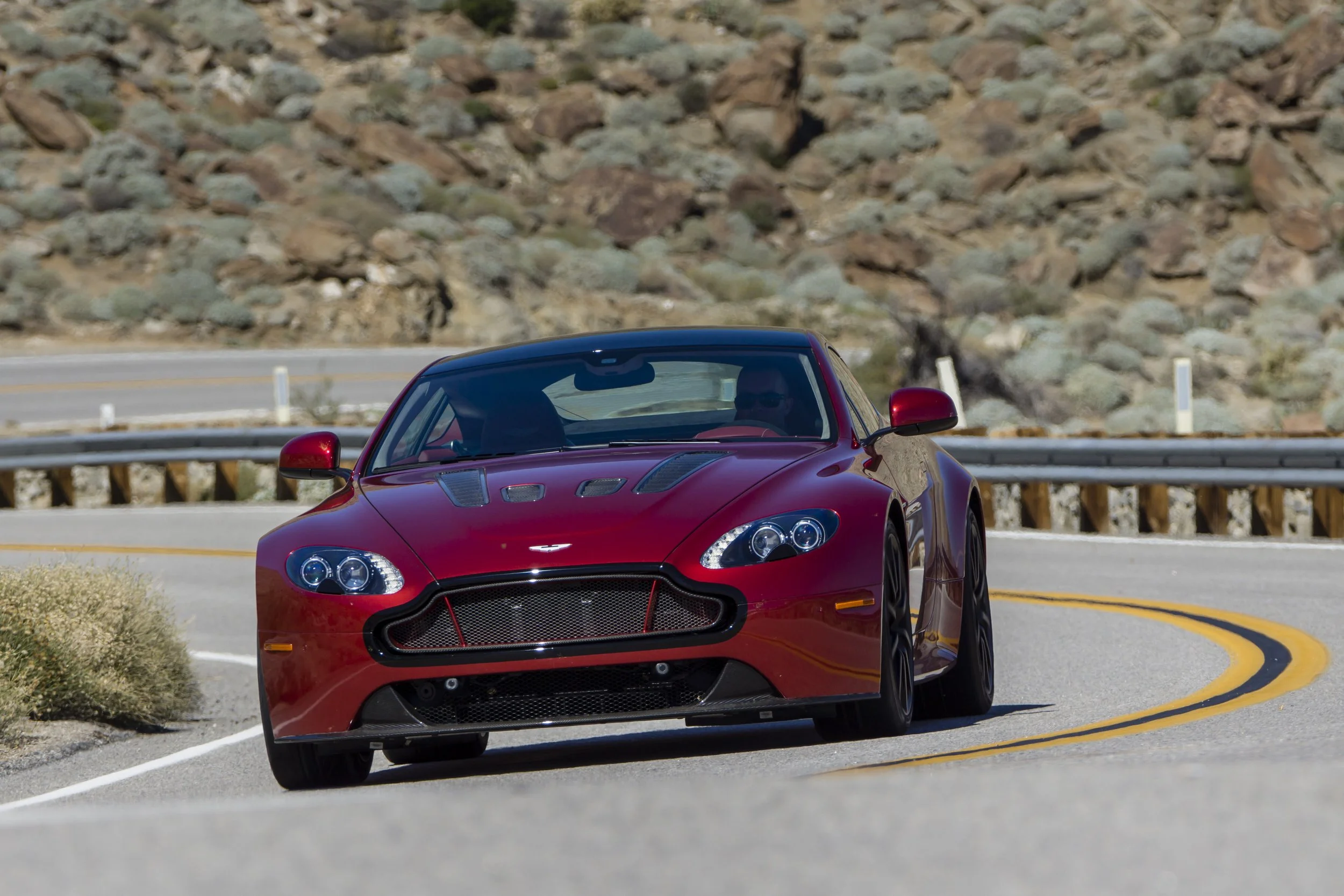
Image © Aston Martin Lagonda. Used for editorial purposes. Aston Martin Vantage V12 S.
Compact lighting itself was not an Aston Martin invention. LED and laser technologies were already allowing manufacturers to reduce optical packages dramatically, and the years since have made narrow lighting signatures far more commonplace.
Seen through 2026 eyes, the Hunter’s lamps can appear less radical in scale than they did alongside the larger lights of previous Astons in 2017.
That changing visual reference point is important. What Aston Martin did particularly boldly was alter two of the strongest components of the face at the same time. Other manufacturers could shrink their lights while retaining an unmistakable grille or established lighting signature; Vantage changed both the eyes and the mouth.
Public reaction immediately reflected that. Comments beneath Shmee150's reveal-day film repeatedly compared the lights with those of the Mazda MX-5/Miata, while the grille, nose and perceived loss of familiar Aston Martin elegance attracted criticism too.[15] Other viewers applauded precisely the aggression and individuality that troubled their fellow commenters.
There’s no evidence that Mazda influenced Aston Martin's design. The comparison is useful for another reason: people rarely analyse an unfamiliar face by consciously measuring every curve. A handful of powerful graphics can trigger an immediate association. Aston Martin intended those narrow eyes to help create a new and unmistakable Vantage. A substantial part of the audience unmistakably saw something else.
THE SHOCK ARRIVES
On 21st November 2017, the new Vantage emerged. The official language left little room for ambiguity. Aston Martin described a predatory stance, muscular flanks, broad haunches, minimal overhangs and an individual identity; Reichman's explanation presented a light and elemental Hunter whose design had grown from DB10 and Vulcan.[2]
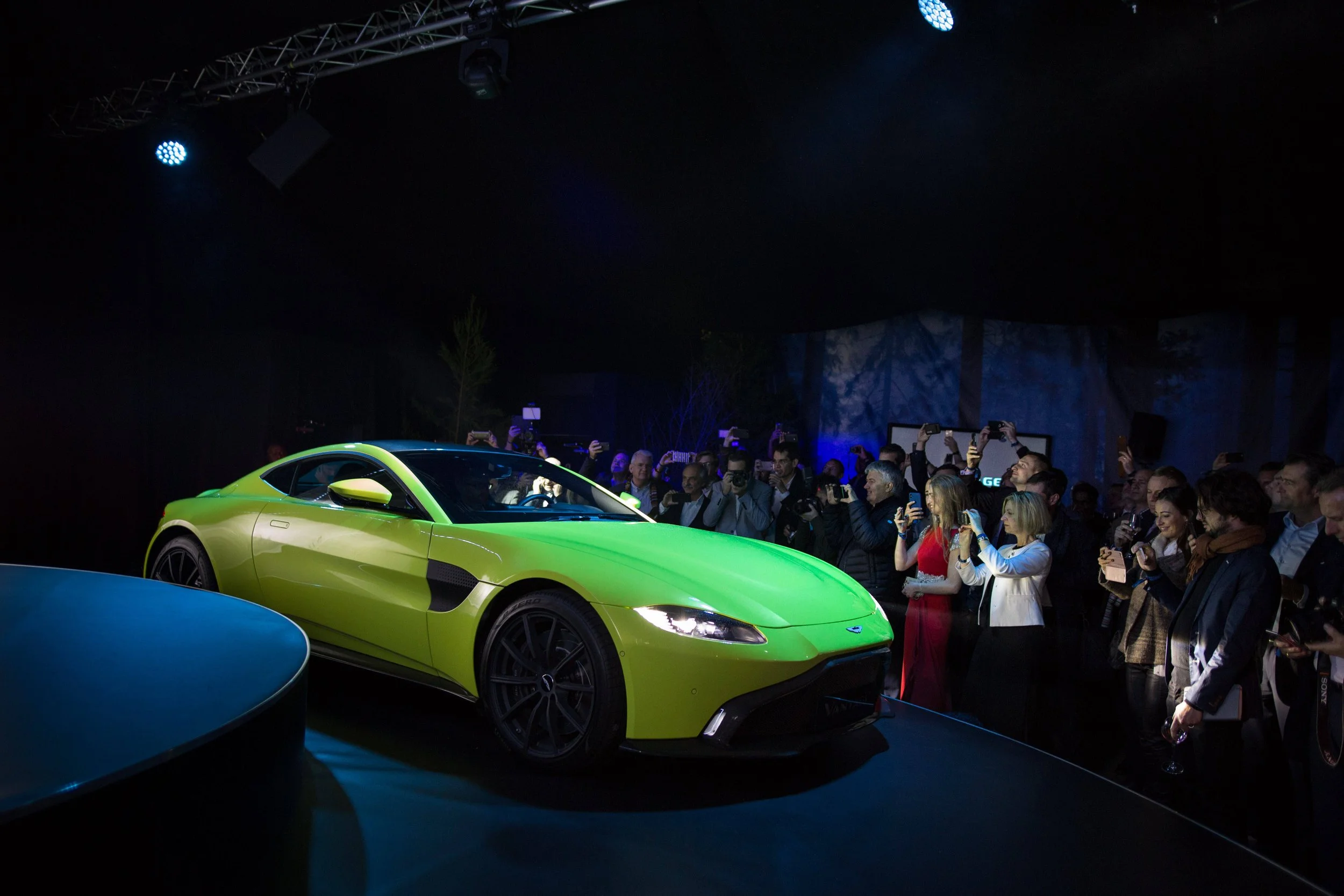
Image © Aston Martin Lagonda. Used for editorial purposes. Aston Martin Vantage Launch 2017.
The presentation amplified the idea. Lime Essence paint, dark mesh, sharp contrast details, narrow lamps and that enormous low opening combined with Rankin's “beautiful won't be tamed” campaign to celebrate aggression rather than apologise for it.[13] Some people recoiled, while others welcomed the aggression and individuality Aston Martin was pursuing.
Miles Nurnberger, then Aston Martin's exterior design boss, later made clear that the design team had anticipated resistance. Discussing the loss of the familiar veined grille, he said: “This'll upset some people, no doubt.”[16]
His broader point was equally revealing: Aston Martin had become very good at refining one strand of its design, but there had been many strands historically and the company wanted to explore them again.[16] That remark feels particularly significant with the benefit of hindsight. The reaction didn’t teach Aston Martin's designers that they had accidentally produced something radical; radicalism was built into the brief.
What the company couldn’t yet know was how much commercial weight that resistance would eventually carry. There was also something else happening on 21st November 2017 which becomes much more important when this Vantage is viewed historically. Aston Martin was not only unveiling a new road car. It was revealing its next racing Vantage too.
THE HUNTER TAKES TO THE WORLD STAGE
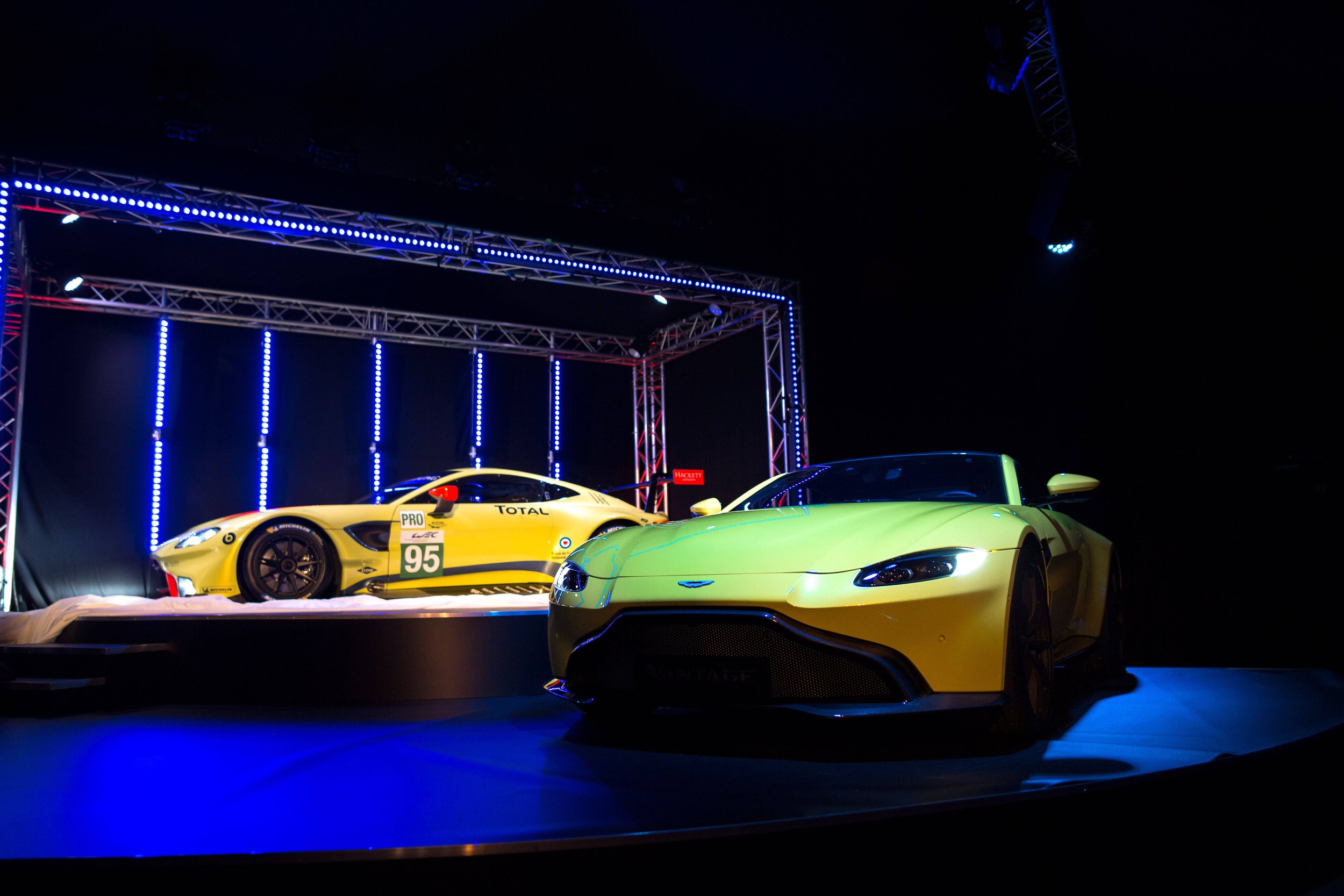
Image © Aston Martin Lagonda. Used for editorial purposes. Aston Martin Vantage Launch 2017.
On 21st November 2017, Aston Martin unveiled something rather more significant than an entirely new Vantage road car. Appearing alongside it was the Vantage GTE, the company's next contender for the FIA World Endurance Championship, developed in parallel with its road-going counterpart in what Aston Martin described as an “unprecedented synchronised launch”.[17]
Three days later, Aston Martin released a nine-minute documentary entitled Vantage GTE: The Birth of a Future Champion. Following the car from its earliest development through construction, testing and launch, the film offers a fascinating contemporary insight into what was happening behind the scenes at Aston Martin Racing.[18]
The documentary also answers an important question. Just how closely related were the road-going Vantage and its racing counterpart?
Former Aston Martin CEO Andy Palmer explains that the decision to replace the existing Vantage provided an opportunity to bring the two programmes together from the outset. Rather than developing a competition car only after the production model had been completed, the company wanted technology and knowledge to move in both directions, from road to racetrack and back again.
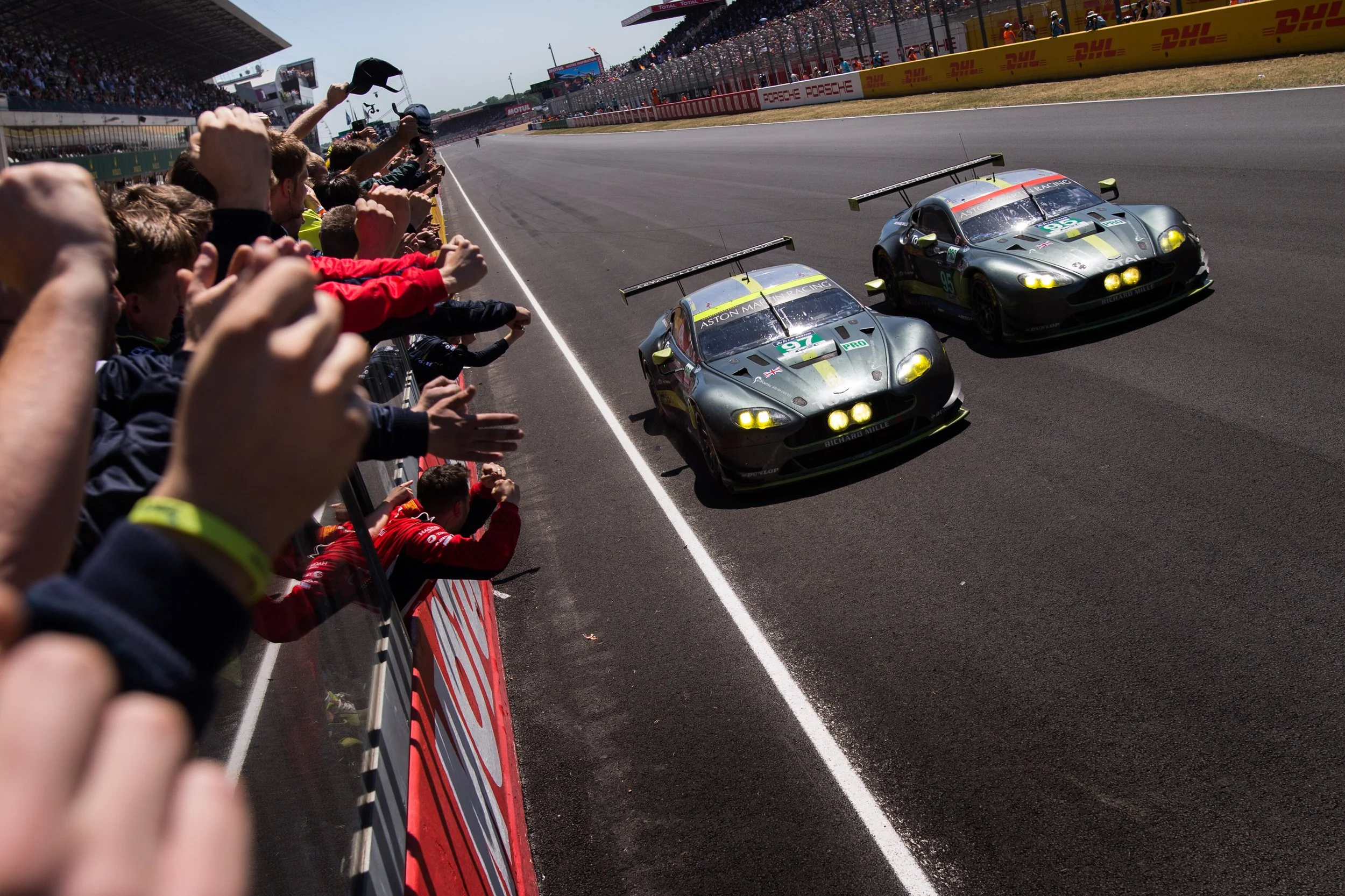
Image © Aston Martin Lagonda. Used for editorial purposes.
It was an ambitious approach, particularly given what the new GTE was expected to achieve. Its predecessor had enjoyed considerable success, including victory in GTE Pro at the 2017 24 Hours of Le Mans. The outgoing racing Vantage had become one of Aston Martin Racing's great endurance competitors, but its underlying road-car architecture was approaching the end of its life.
The replacement needed to carry that reputation forward while confronting Ferrari, Porsche, Ford, Corvette and BMW in one of motorsport's most demanding categories.
FROM DESIGN STUDIO TO RACETRACK
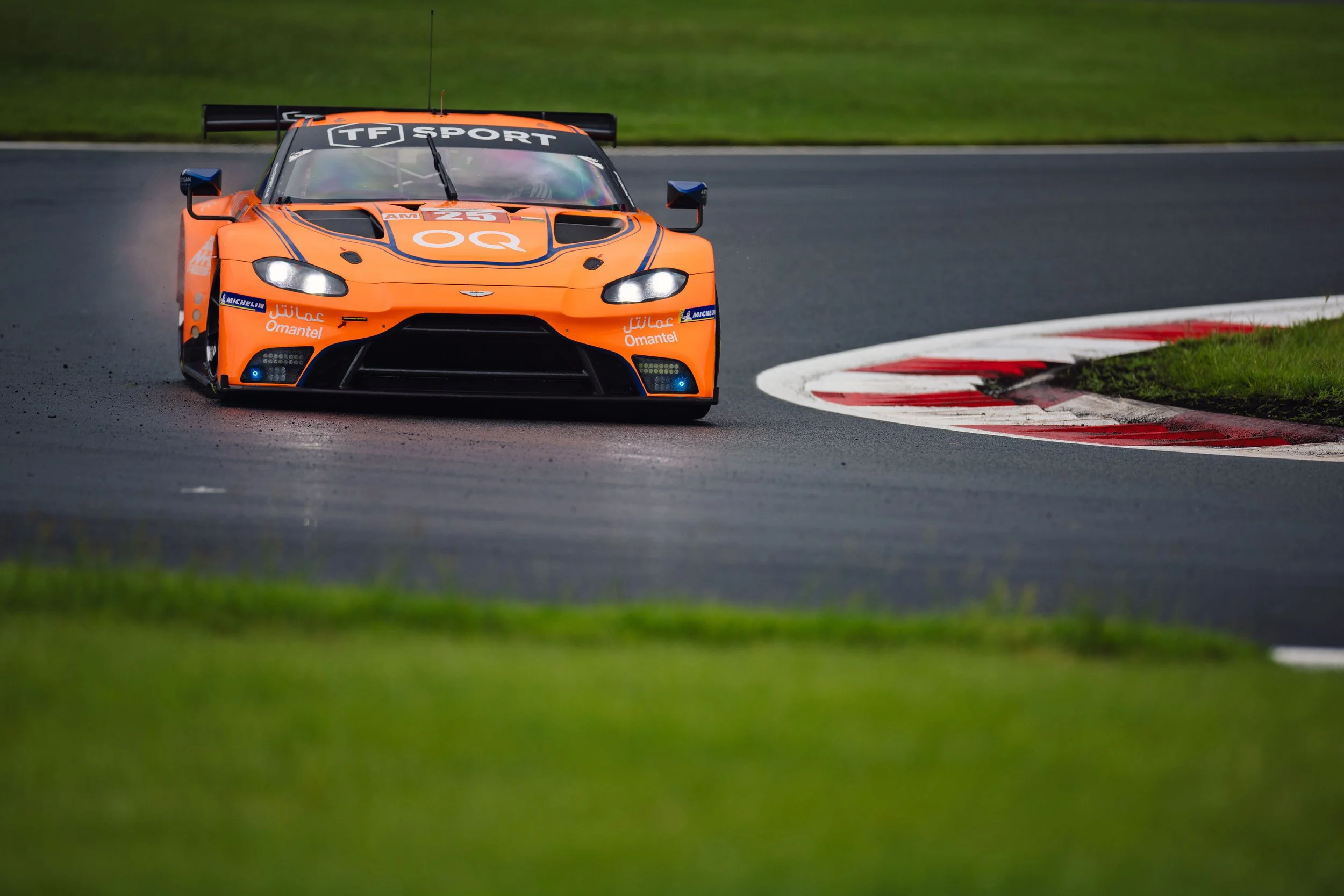
Image © Aston Martin Lagonda. Used for editorial purposes. ORT by TF Vantage Race Car.
What makes the documentary especially valuable is the opportunity to hear directly from the people developing the car. The racing engineers describe working much more closely with Aston Martin's designers and engineers at Gaydon, receiving the production Vantage's computer-aided design data and adapting it to meet the requirements of international GT competition.[18]
One of the greatest advantages was the underlying aluminium architecture. The new-generation Vantage offered a lighter, stiffer bonded structure, providing a strong foundation upon which the competition car could be developed. Every component still required extensive engineering analysis, however, with the racing team using computer simulations to understand the forces it would experience on track.
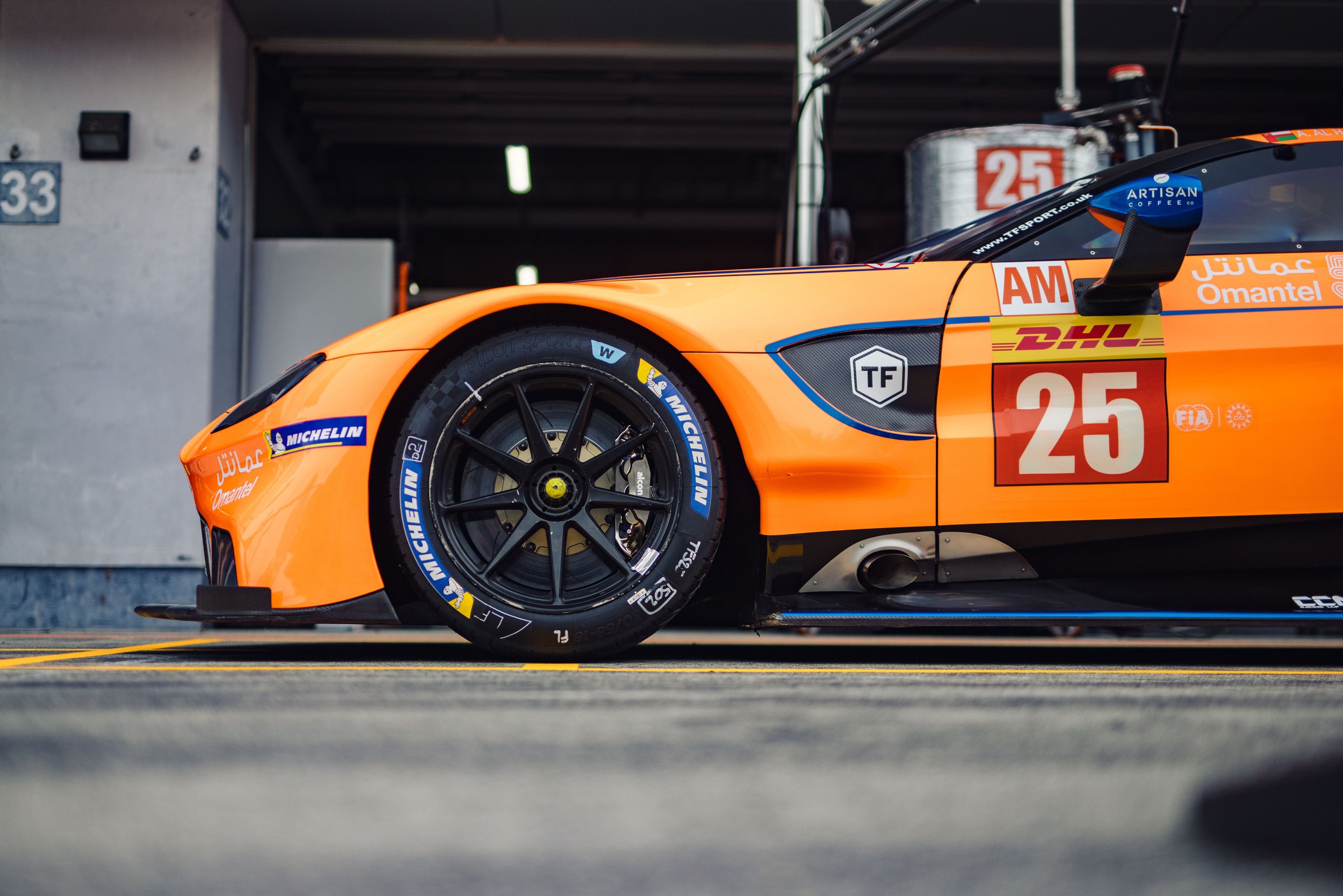
Image © Aston Martin Lagonda. Used for editorial purposes. ORT by TF Vantage Race Car.
The new engine presented another opportunity, along with some considerable challenges. Both versions of Vantage were built around a 4.0-litre Mercedes-AMG-derived twin-turbocharged V8. For the racing engineers, the change from the previous naturally aspirated V8 demanded particular attention to cooling and heat management. The competition engine underwent extensive dynamometer testing, including checks of its oil system, pressures and calibration, before the team could begin extracting its full racing potential.[18]
Meanwhile, the documentary follows the physical construction of the GTE, from the preparation of the chassis and installation of the roll cage to the intricate routing of its wiring, the fuel system and the development of its suspension and braking components. New technical partnerships brought Öhlins dampers and bespoke Alcon braking equipment into the programme, while the team worked relentlessly to reduce unnecessary weight and keep the car's centre of gravity as low as possible.
“Watching the process unfold, it becomes obvious why describing the GTE as simply a Hunter Vantage fitted with racing equipment would be misleading.”
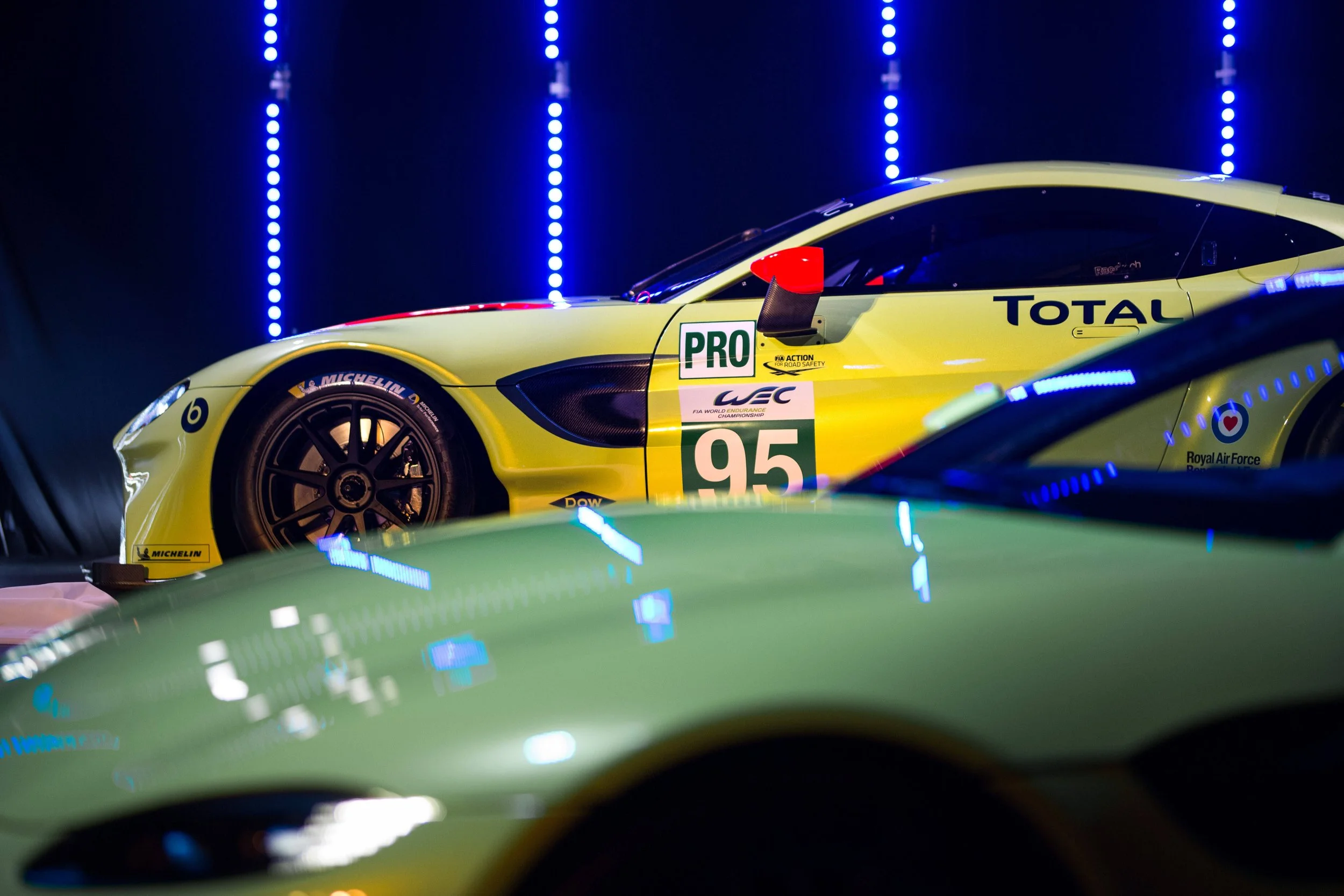
Image © Aston Martin Lagonda. Used for editorial purposes. Aston Martin Vantage Launch 2017.
This was a purpose-built competition machine, developed for an entirely different environment, but one whose foundations were deliberately connected to the production car from the very beginning. There was also an important design connection. Aston Martin's original announcement described how Marek Reichman's design team had worked with Aston Martin Racing to take the new Vantage's styling language and amplify it for the WEC version.[17] The relationship becomes particularly striking when the two finished cars are viewed together.
The low nose, narrow headlights, enormous frontal opening and broad muscular haunches all carry something of the Hunter's character, but on the racing car those features appear entirely at home. Surrounded by aggressive aerodynamic bodywork, racing tyres and an enormous rear wing, the predatory appearance that divided opinion on the road becomes a natural expression of the car's competition purpose.
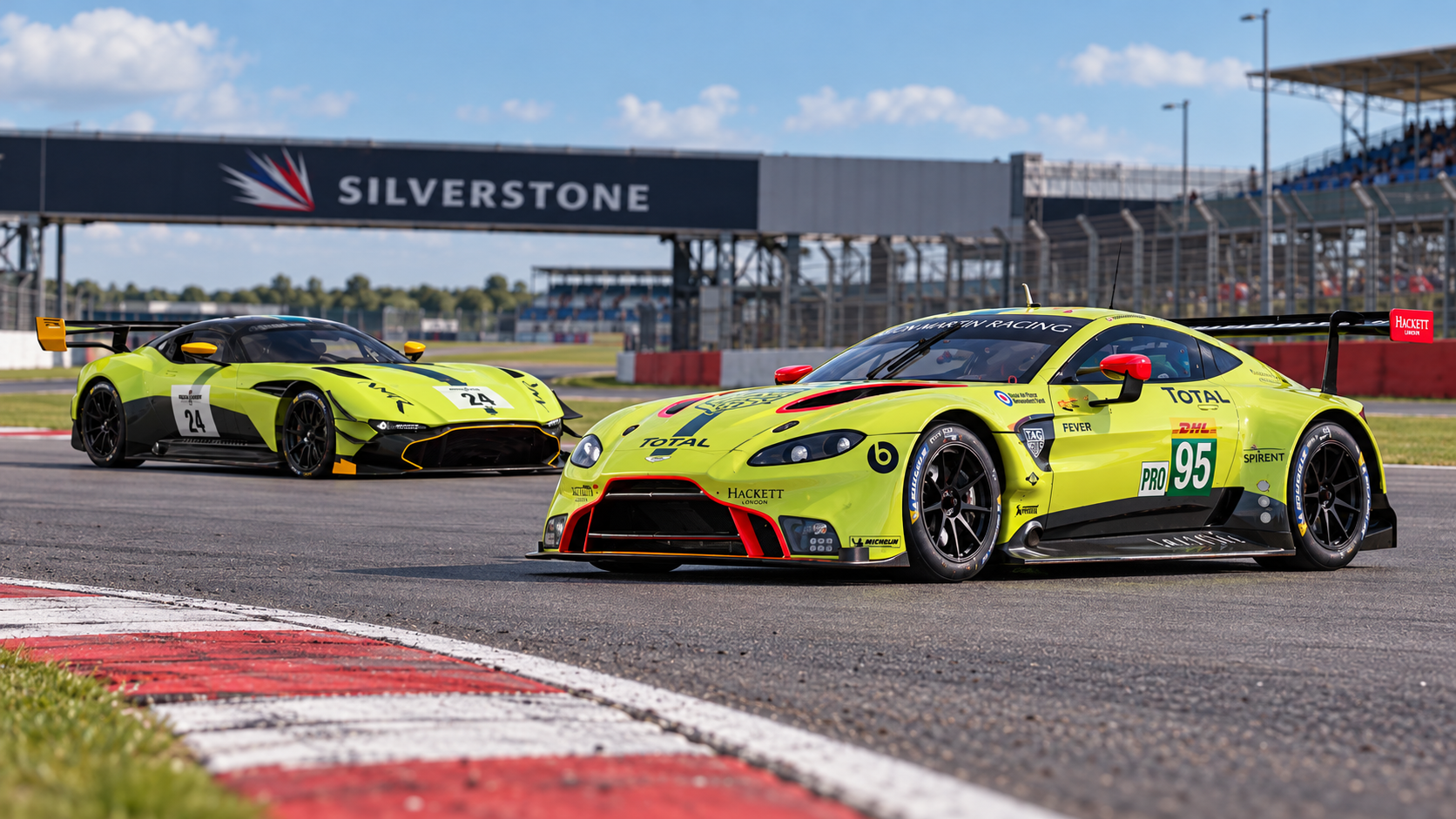
Image © Fuel the Passion. For illustrative purposes.
The connection with Vulcan is equally satisfying. That extraordinary track-only Aston had helped inspire the road-going Vantage's aggressive design, while the Hunter's racing counterpart carried elements of the same visual language back onto the circuit.
Rather than a straightforward sequence of cars borrowing parts from one another, it was a period in which Aston Martin's road and competition programmes were increasingly influencing one another.
EIGHTEEN MONTHS TO PROVE THE IDEA
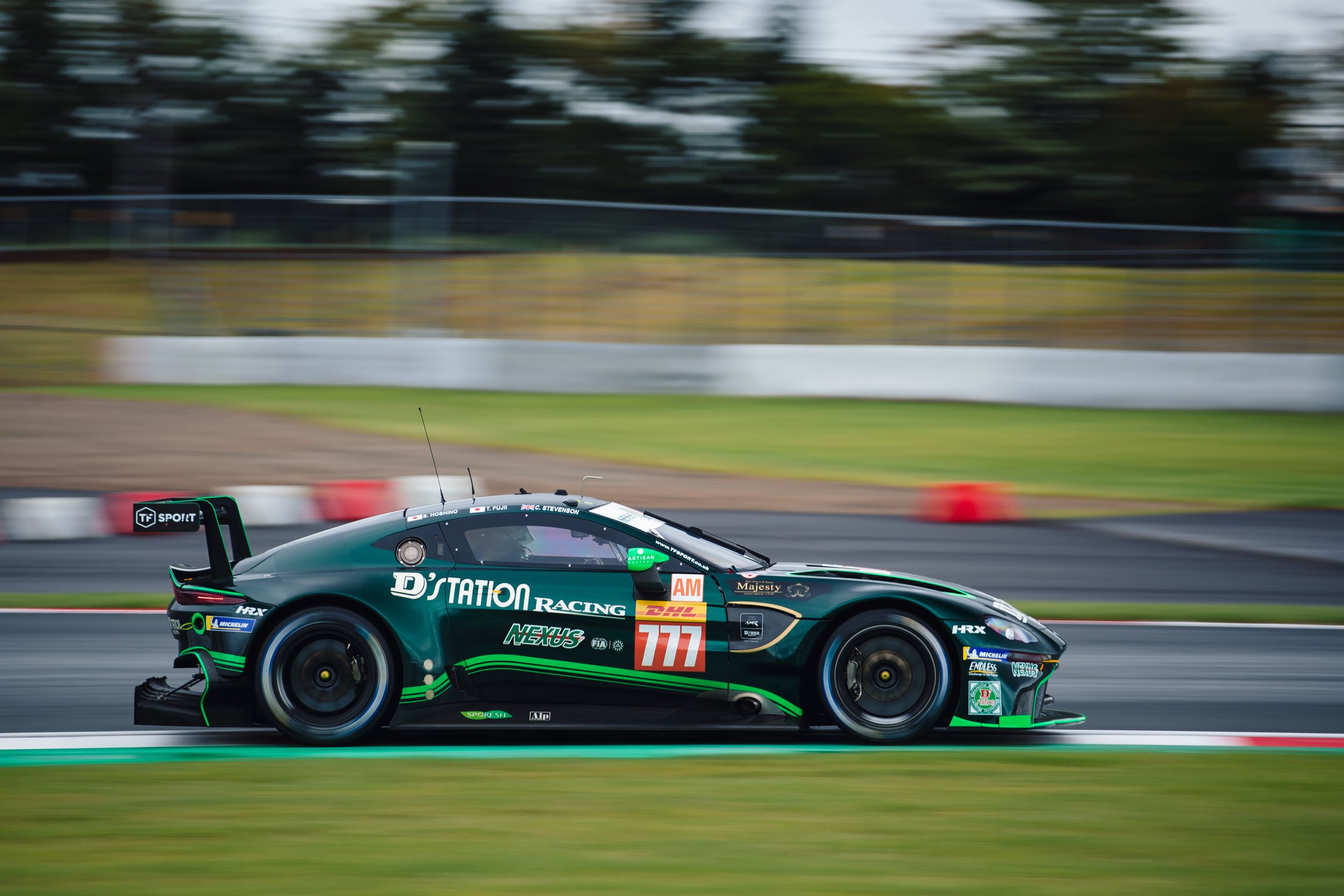
Image © Aston Martin Lagonda. Used for editorial purposes. D’Station Racing Aston Martin Vantage.
The documentary follows approximately 18 months of development, culminating in the new GTE's testing programme and its eventual unveiling in London.[18] By August 2017, the engineers were preparing the car for its first shakedown, following months of design, simulation and component development. The film subsequently takes us to Sebring in Florida, where the new Vantage was undergoing demanding endurance testing.
“The reaction from the drivers provides another revealing insight.”
Compared with the outgoing Vantage GTE, the new car was described as noticeably stiffer, with improved aerodynamic downforce and a very different engine character. The twin-turbo V8 delivered substantially more torque than its naturally aspirated predecessor, while the new platform offered the team a foundation with considerable development potential.
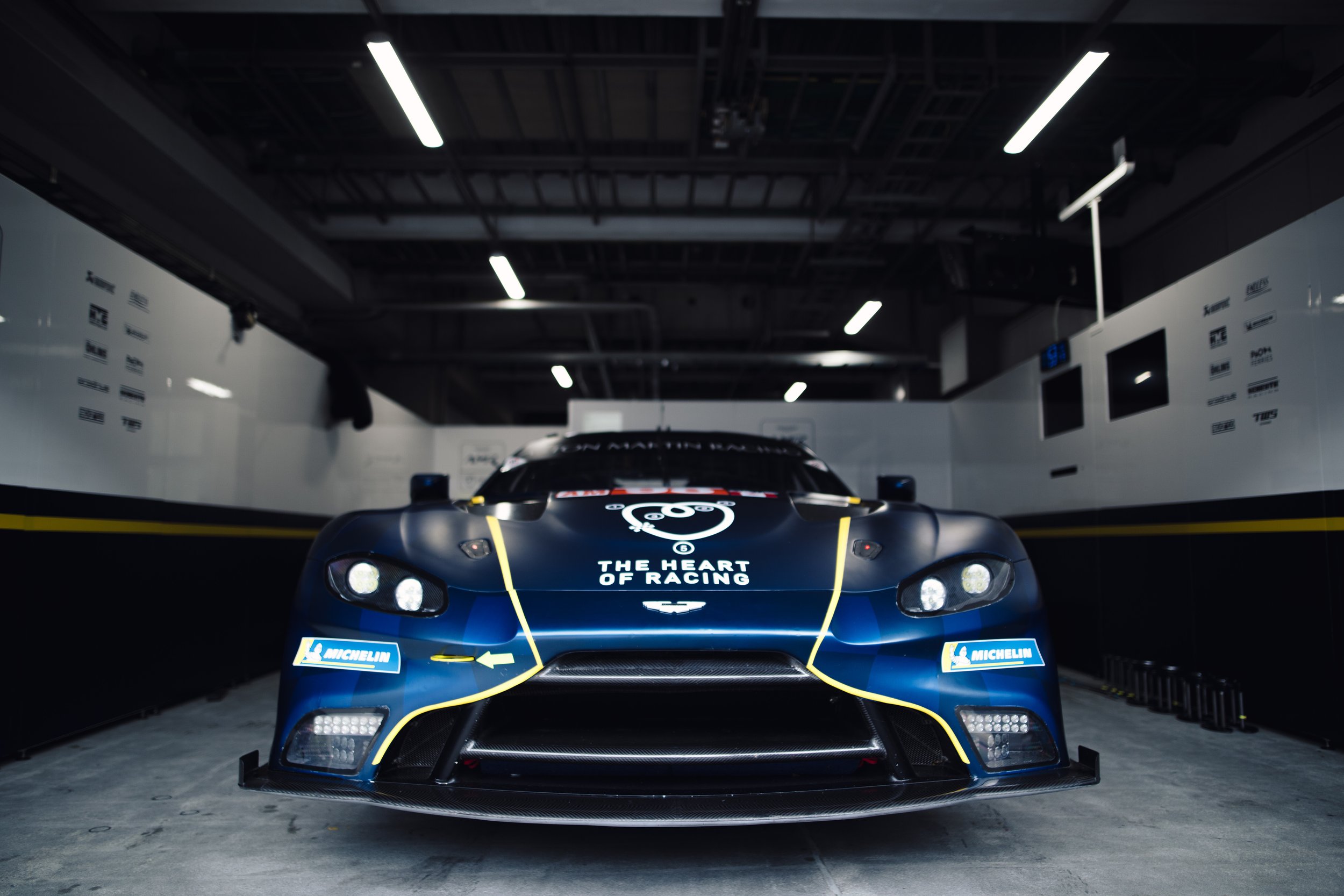
Image © Aston Martin Lagonda. Used for editorial purposes. Heart of Racing Vantage GTE.
This was particularly important because the previous racing Vantage had been developed and refined over many seasons. Aston Martin Racing had extracted an extraordinary amount of performance from it, but the new car represented the opportunity to begin again with more modern technology. By its November 2017 launch, the GTE had already covered more than 13,000km of testing, including extensive durability work. Further development would take the total to approximately 35,000km across 14 circuits before its competitive debut at Spa-Francorchamps in May 2018.[17] The ambition was unmistakable.
Towards the end of the documentary, the team speaks confidently about challenging for the World Endurance Championship and returning to Le Mans with a car capable of winning. At that moment, of course, none of those ambitions had yet been realised.
Affiliate link note: Some links may be affiliate links, which means Fuel the Passion may earn a small commission if you purchase through them, at no extra cost to you. Thank you for your support.
FROM CONTENDER TO CHAMPION
The Summer 2018 issue of Vantage: An Independent Aston Martin Magazine captured the programme at a particularly interesting moment. Richard Meaden's “24-Hour Fever” followed the new GTE around the period of its first Le Mans, including the perspective of Darren Turner, before history had decided whether Aston Martin's latest racer would fulfil its promise.[19]
It did not conquer Le Mans immediately. The 2018 24 Hours was only the GTE's second competitive outing and, although both works cars reached the finish, the new machine did not yet possess class-winning pace. Reliability had provided a foundation; speed and development still had to follow.
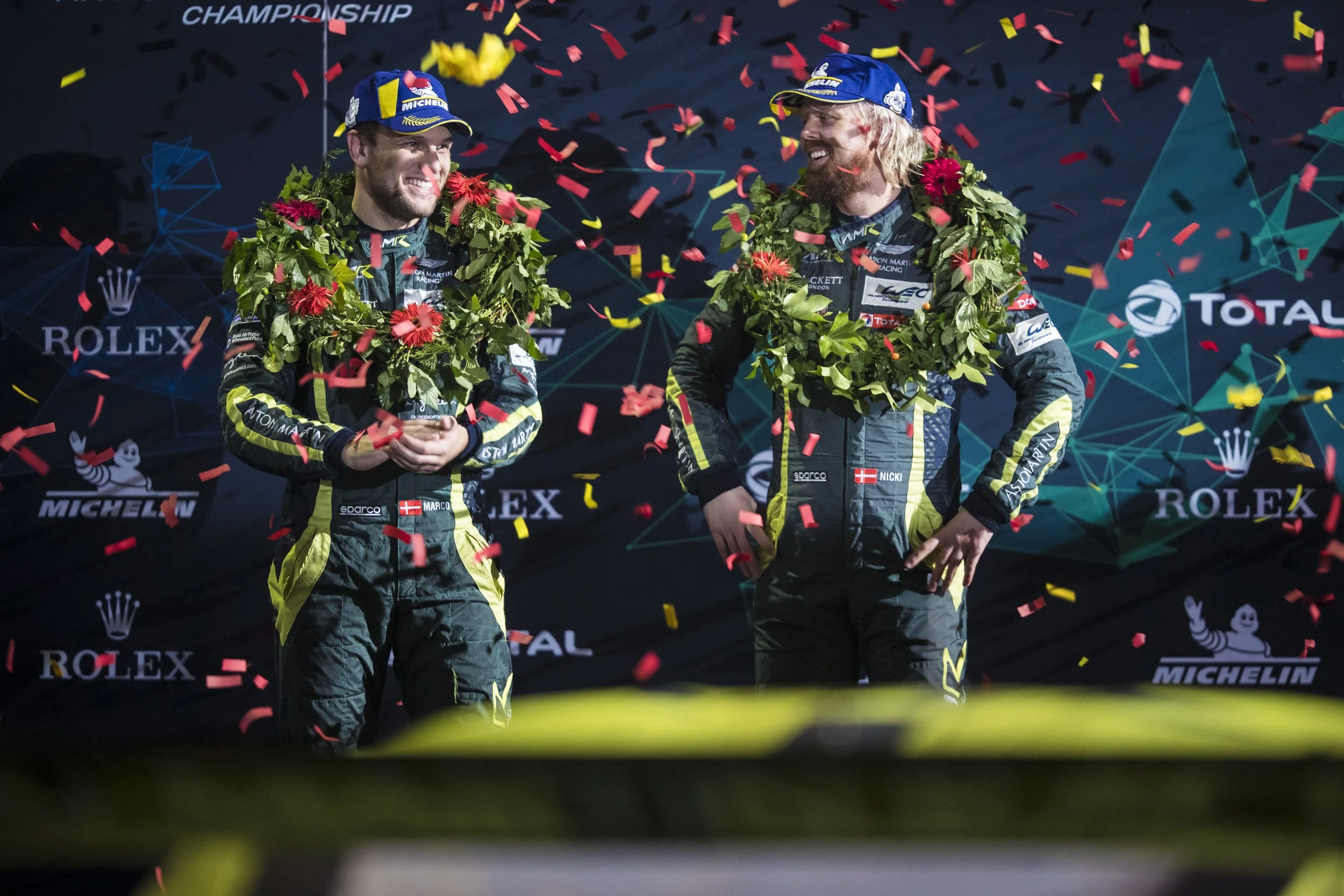
Image © Aston Martin Lagonda. Used for editorial purposes. Thiim & Sorensen first win for Vantage GTE, China 2018.
The breakthrough arrived in November 2018, when Nicki Thiim and Marco Sørensen secured the new Vantage GTE's first FIA World Endurance Championship victory at Shanghai, driving the #95 Aston Martin through extraordinarily difficult conditions. It was only the car's fifth WEC outing.[20]
Further success followed as the team continued developing the car. During the 2019/20 FIA World Endurance Championship, Aston Martin secured the GT Manufacturers' World Championship, while Thiim and Sørensen claimed the drivers' crown.
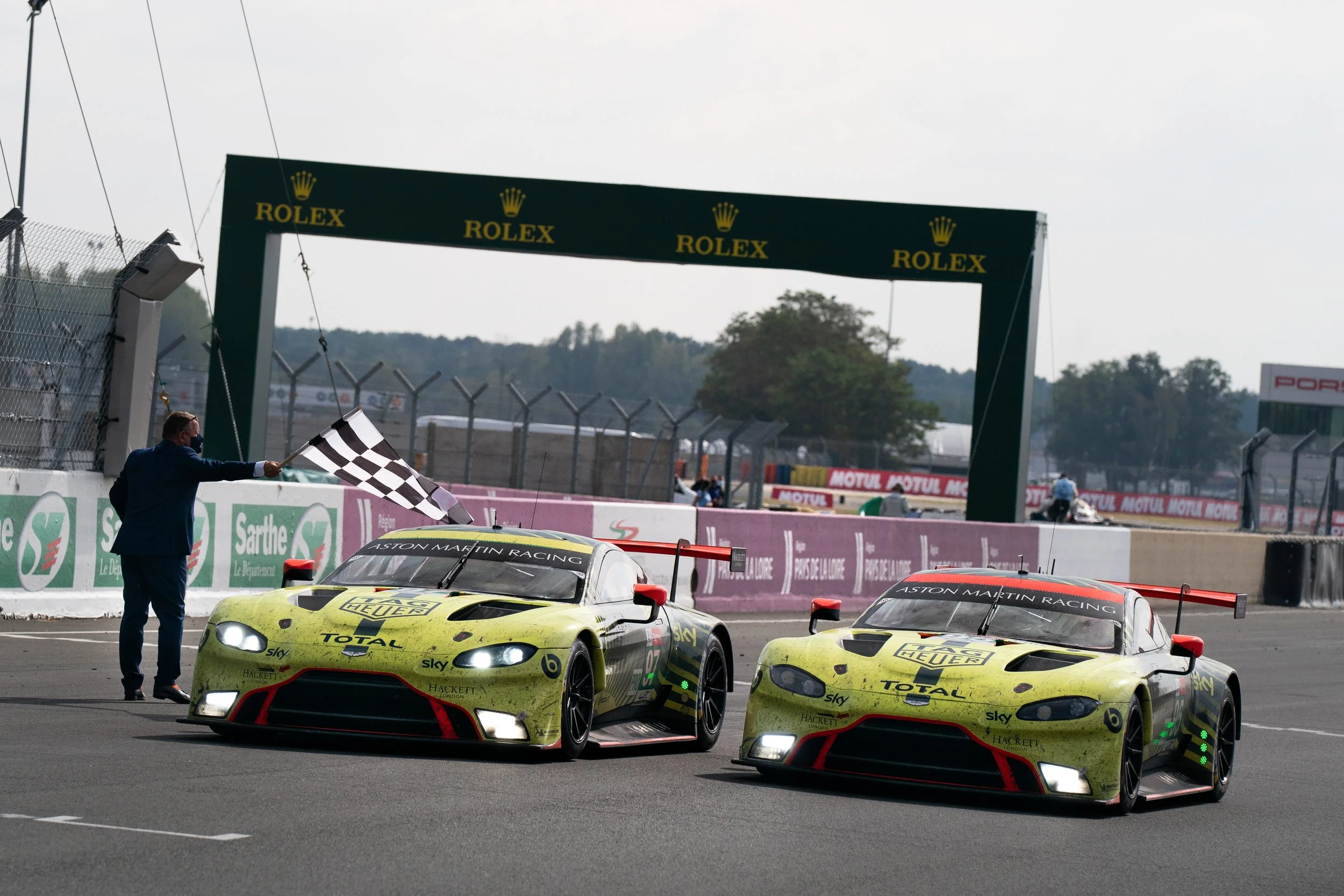
At the delayed 2020 24 Hours of Le Mans, the Vantage achieved something particularly remarkable, winning both GTE classes. Alex Lynn, Maxime Martin and Harry Tincknell took GTE Pro victory in the #97 works car, while TF Sport secured the GTE Am win.
“Aston Martin subsequently described 2020 as its most successful racing season since 1959.” [21]
The works GTE Pro programme would eventually conclude, but the car's story continued. TF Sport returned to win GTE Am at Le Mans in 2022, and by 2023 Aston Martin credited this generation of Vantage GTE with four world championship titles and three Le Mans class victories since its competitive debut.[22]
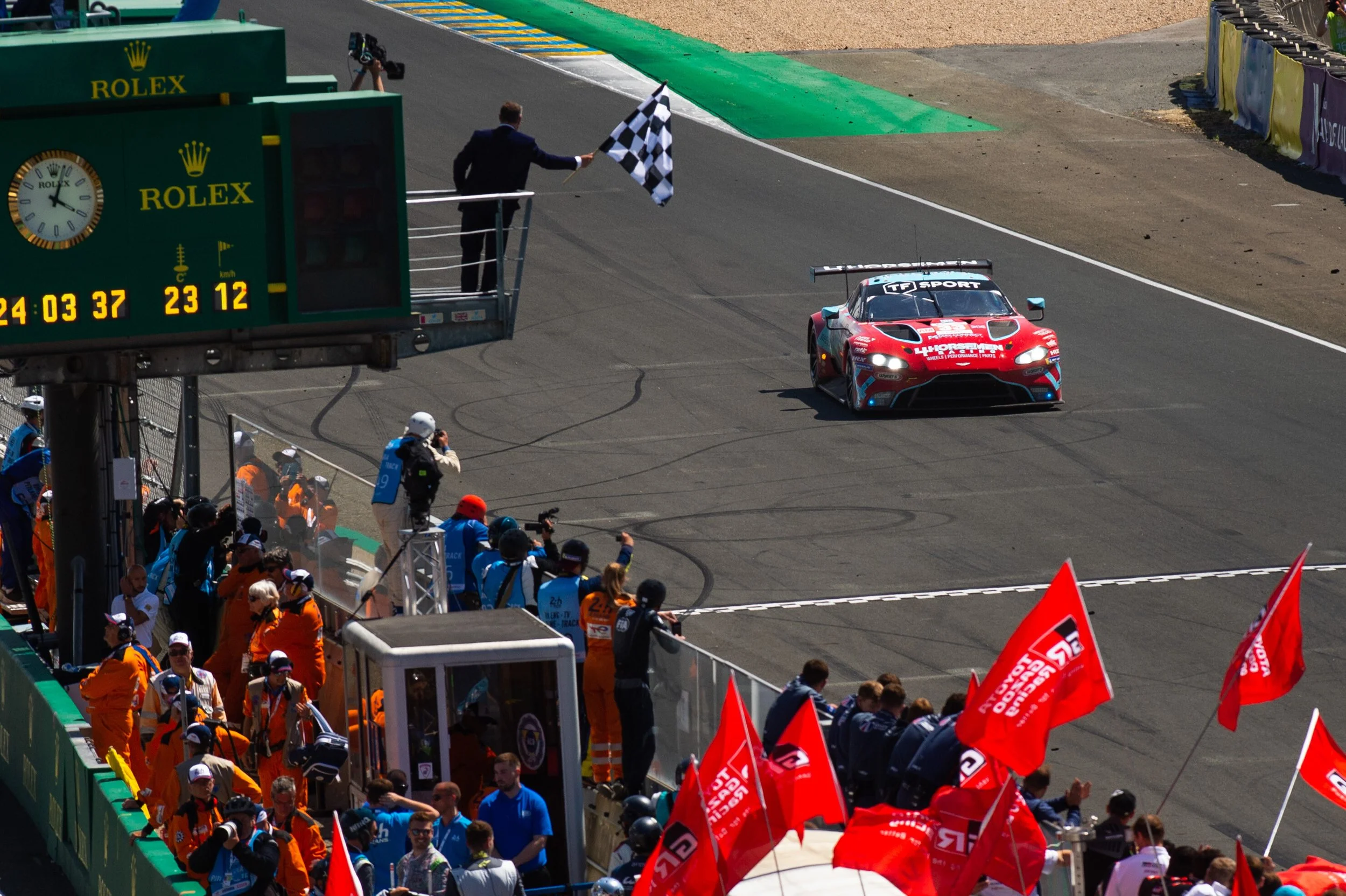
Image © Aston Martin Lagonda. Used for editorial purposes. World Champions & LM Winners in 2022.
The related GT3 and GT4 programmes extended the generation's sporting legacy even further, recording victories and championships across international and national competitions, including success in IMSA and at the Rolex 24 at Daytona.[22]
Looking back at Aston Martin's November 2017 documentary with the benefit of hindsight, something particularly satisfying emerges. We are watching the development of a car whose engineers, designers and drivers genuinely believed they were creating a future champion. At the time of filming, that confidence was still a prediction. The victories, championship titles and Le Mans successes were yet to come. History would ultimately vindicate much of their ambition.
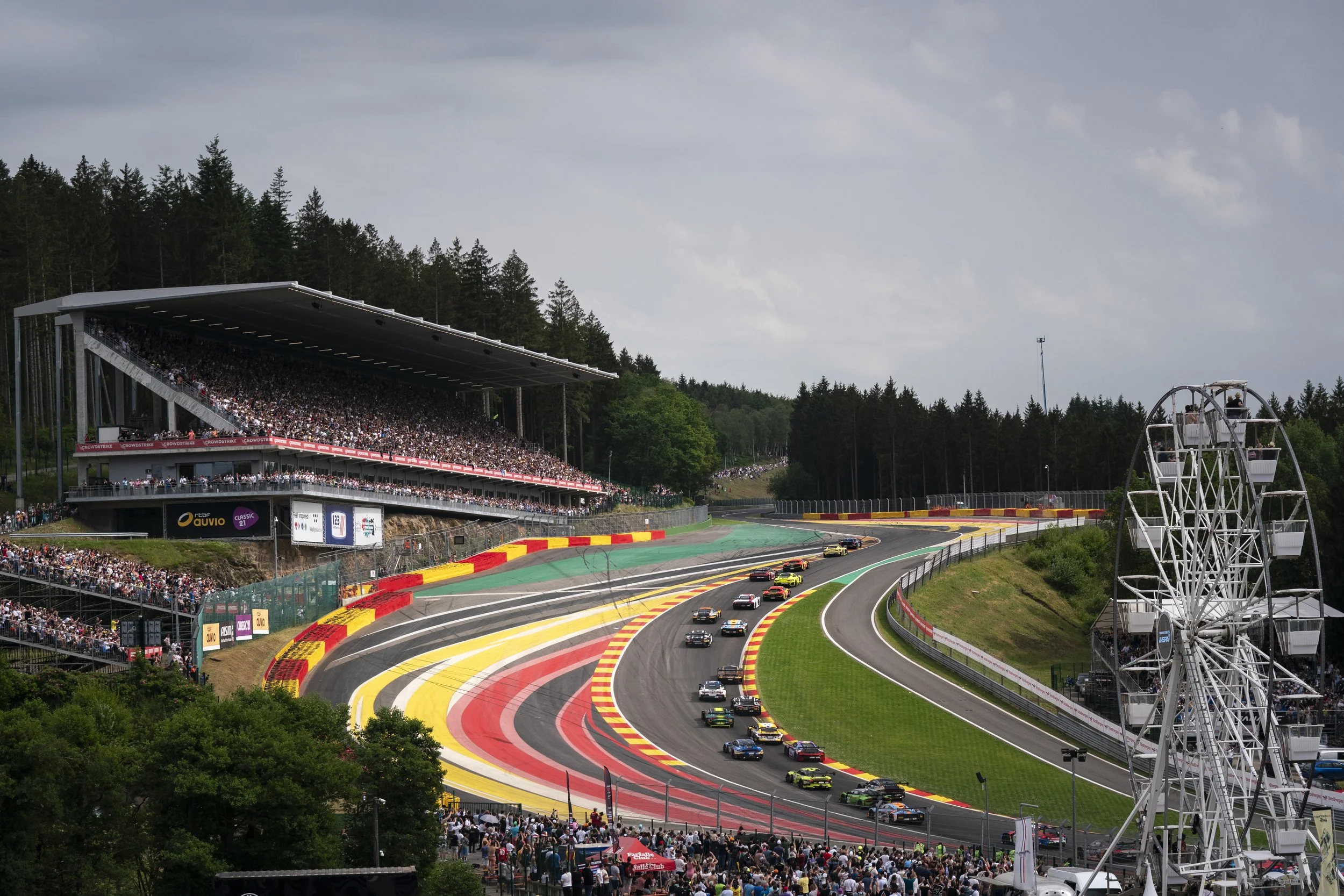
Image © Aston Martin Lagonda. Used for editorial purposes. Race Start, Spa.
For our Hunter investigation, however, the significance goes beyond the trophies. The design language that some enthusiasts believed made the new road car look less like a traditional Aston Martin became part of the identity of one of the marque's most successful modern racing generations.
Across the world's great circuits, from Le Mans and Spa to Sebring, Silverstone and Fuji, the distinctive face of this Vantage became familiar through years of competition, often appearing under floodlights, through rain and spray, covered in grime and bearing the marks of endurance racing.
Motorsport success cannot establish whether a road car is beautiful. The GTE's achievements don’t invalidate the reservations of those who disliked Hunter's appearance. What they do demonstrate is that the controversial new design was capable of representing Aston Martin successfully on a very different world stage. The Hunter-generation Vantage was no longer simply the sports car that had divided opinion at its unveiling.
It had become part of Aston Martin's modern racing history.
A SPECIALIST VIEW FROM 2018
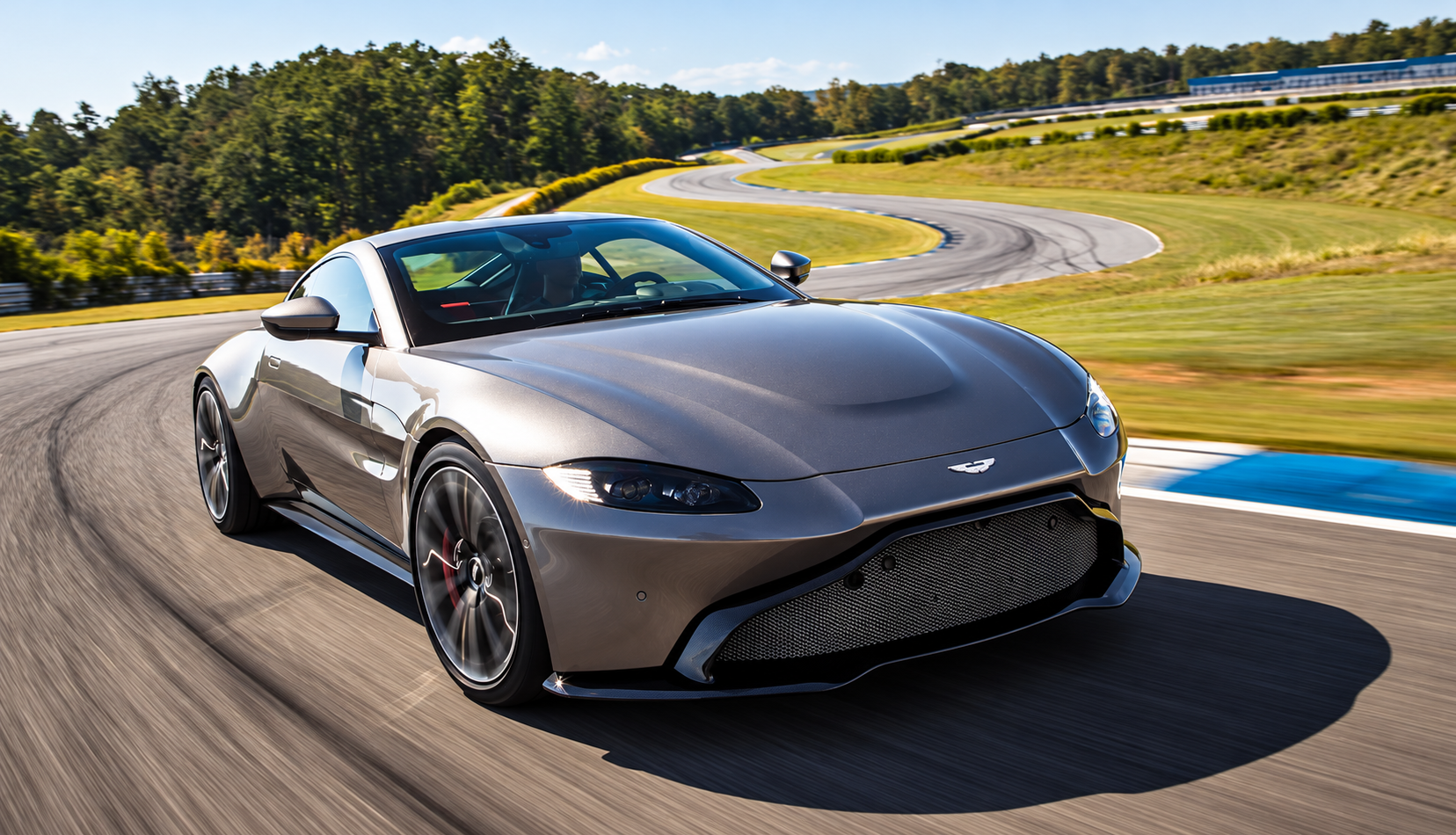
Image © Aston Martin Lagonda. Used for editorial purposes. Aston Martin Vantage.
A contemporary Aston Martin specialist magazine adds another perspective. In the Summer 2018 issue of Vantage: An Independent Aston Martin Magazine, Richard Meaden assessed the production car on UK roads in “Shock of the New”.[23]
His response is particularly useful because his reservations are not confined to the exposed mesh. Meaden admired much of the Vantage's road presence and found several angles highly convincing, but identified the complete nose — particularly the relationship between its widely separated eyes and unusual mouth — as the challenging area. Within months of launch, an Aston-specialist publication was therefore describing essentially the same phenomenon revealed by the wider public reaction.
“This was a face argument, not simply a grille argument.”
Meaden also placed that appearance against the more refined facial character traditionally associated with Aston Martin, exposing one of Hunter's deepest tensions: the deliberate movement from elegance towards aggression.
Once he drove it, however, another side of the story asserted itself. The Vantage was unquestionably a serious sports car rather than a smaller DB11 or diluted grand tourer. Its sharper responses and muscular performance character gave it legitimate connections to some of the harder-edged Vantages in Aston Martin history even where its appearance departed dramatically from recent tradition.[23]
The new car could therefore look less conventionally Aston while feeling, in another sense, intensely Vantage.
WAS EVERYONE REALLY AGAINST IT?

Image © Aston Martin Lagonda. Used for editorial purposes. Aston Martin Vantage.
No — and that’s one of the easiest retrospective myths to dismantle. Period reviews contained significant praise alongside the criticism, and many enthusiasts welcomed Aston Martin's determination to stop every model from resembling the next.
Then, in July 2018, Vantage won the Auto Express 2018 Design Award.[24] That accolade does not transform one editorial award into a scientific measure of public opinion, but it does make the idea of universal rejection impossible to sustain.
The more accurate description is that Hunter was not universally hated; it was unusually difficult to ignore.
One person could look at it and see Aston Martin finally taking a creative risk, while another saw the disappearance of qualities they had valued for years. Both responses existed from the beginning, and understanding the intention was never the same thing as liking the result.
WHEN THE HUNTER MET THE CUSTOMER
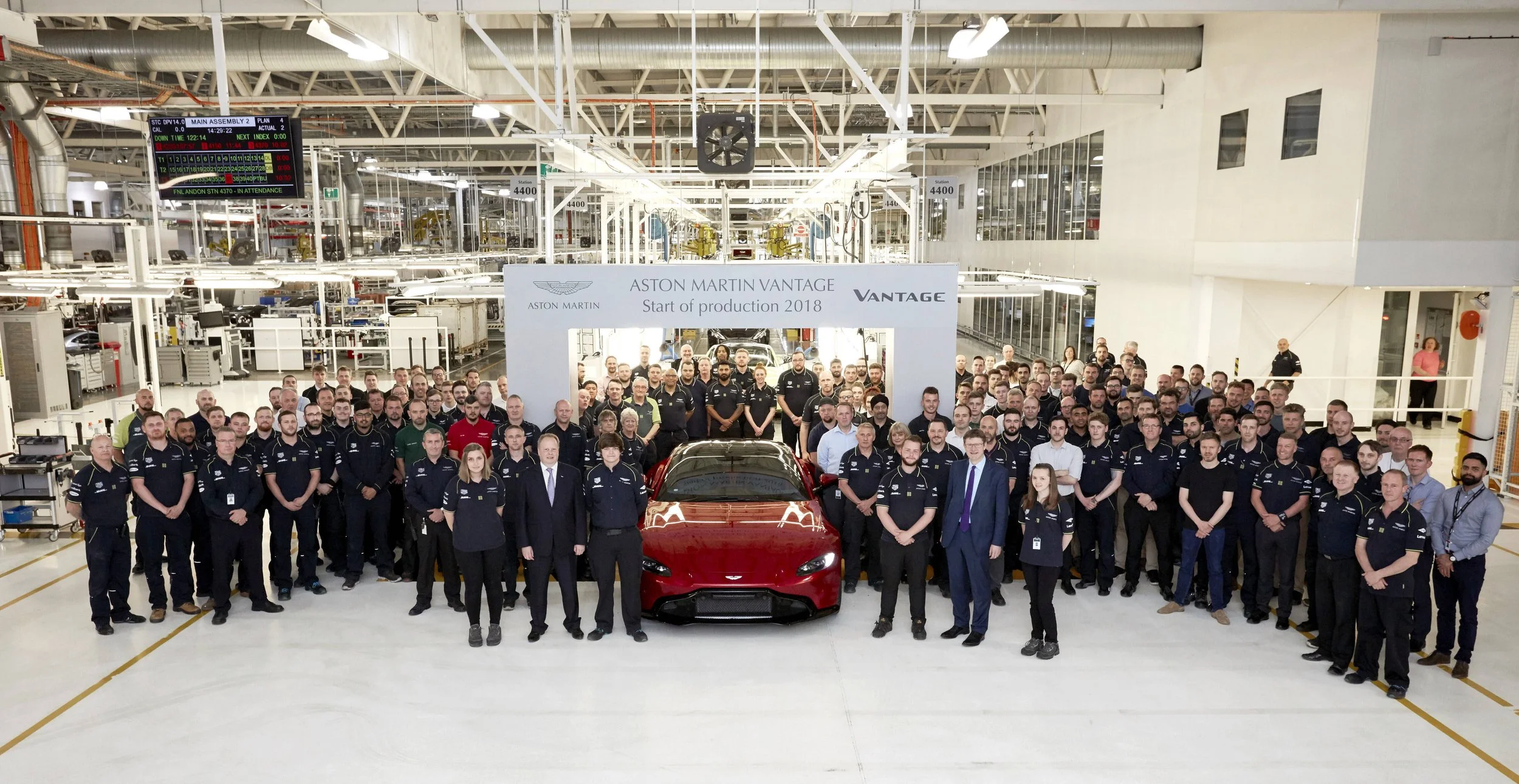
Image © Aston Martin Lagonda. Used for editorial purposes.
The styling debate might have remained an enthusiast argument had the commercial picture not become more complicated during 2019.
Initially, Aston Martin remained confident. When production began at Gaydon on 17th May 2018, Palmer said the company believed the new model could surpass the success of its predecessor. Importantly, he described the route to that ambition as retaining its important existing owners while also repositioning Vantage to create new customers in new countries.[25]
“That undermines another tempting mythology. Aston Martin was not knowingly sacrificing its traditional customers in order to chase younger ones. It wanted both.”
As 2019 progressed, reality became more complicated. Aston Martin's annual report records that the sports-car segment in which Vantage competed contracted by around 13%, while the company acknowledged that demand had fallen short of its expectations despite the car increasing its share of that declining market.[26] The causes Aston identified were broader than styling. Product awareness needed strengthening, lease propositions required better communication, residual values and dealer inventory needed attention, and important additions to the range, including the Roadster and other derivatives, were still to arrive.[26]
That combination is important because Vantage could simultaneously gain market share in a shrinking segment and still sell below the volumes Aston Martin's business planning required. The simplistic explanation — people disliked Hunter, therefore Vantage didn't sell — does not survive the company's own evidence. Neither does the opposite argument.
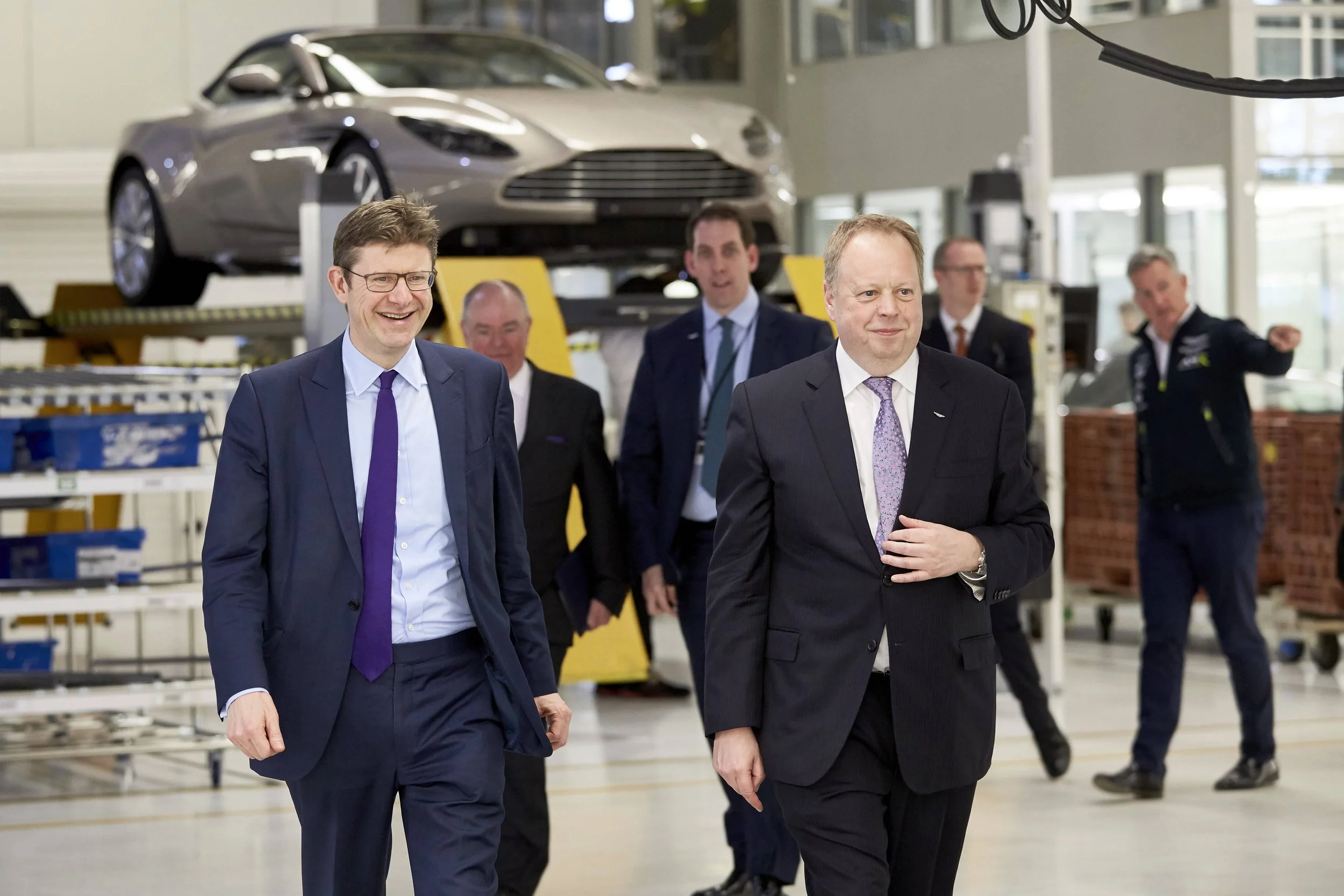
Image © Aston Martin Lagonda. Used for editorial purposes. Man on right - Andy Palmer, CEO Aston Martin during Hunter Vantage era.
Hunter did have a documented commercial consequence. During Aston Martin's 2019 full-year results discussion in February 2020, Palmer described the company's investigation into the Vantage volume shortfall and acknowledged criticism that the Hunter grille looked overly aggressive, saying it was driving away some of Aston Martin's more traditional customers. He directly linked that finding to the introduction of a softer, more classical grille option.[27]
That’s perhaps the strongest commercial evidence in the entire Hunter story. The critics were not merely making noise in comment sections; some of them were customers Aston Martin wanted to retain. How many? The company never tells us.
ASTON OFFERS A CHOICE
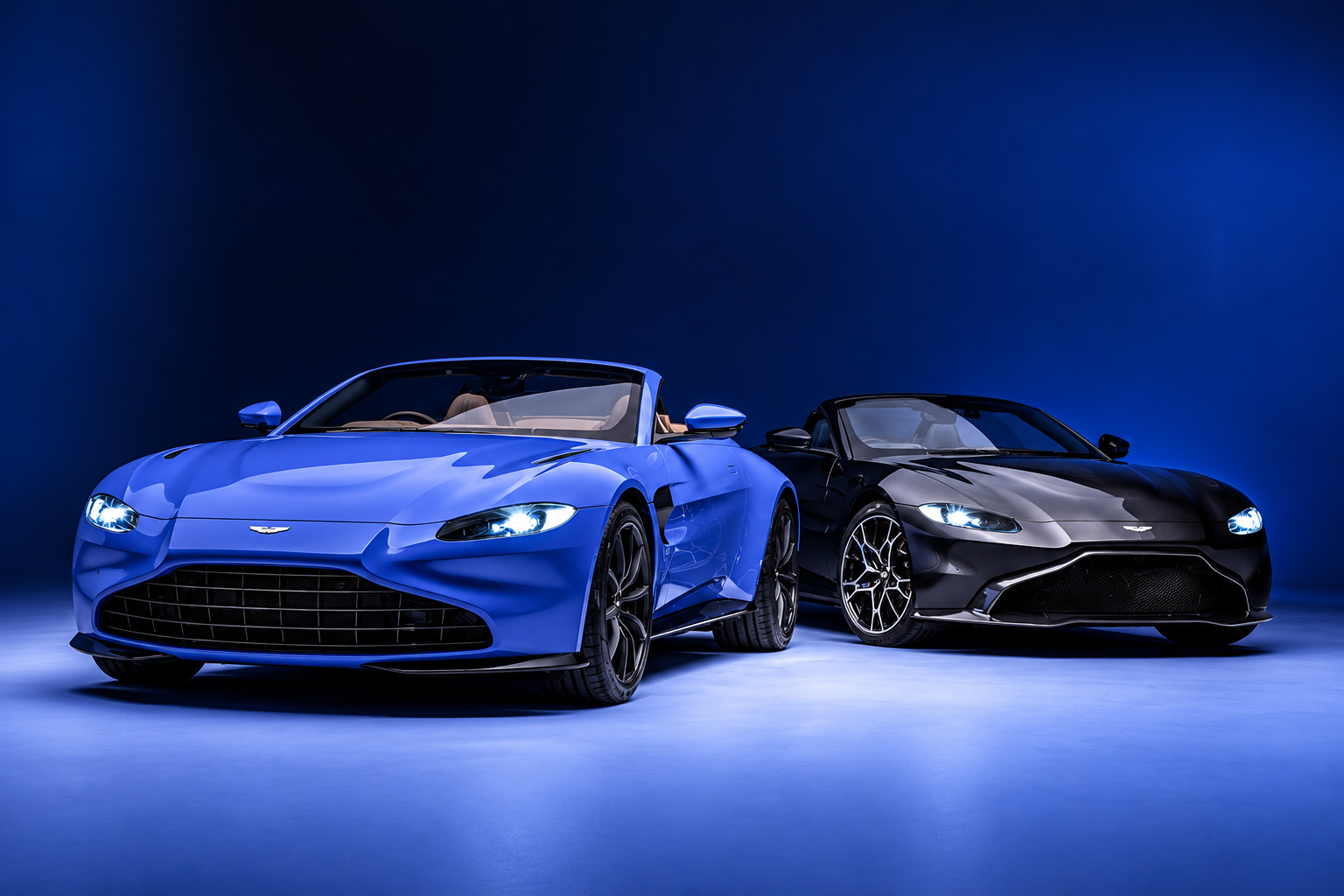
Image © Aston Martin Lagonda. Used for editorial purposes.
The challenge facing Aston Martin was now clear. Hunter had delivered the distinctive, aggressive identity its designers wanted, but that same appearance had become a barrier for some potential customers. The company needed a way to broaden the Vantage's appeal without abandoning the character that made the new generation so different from its predecessor.
Rather than redesigning the car, Aston Martin chose to offer an alternative interpretation of its front end. It was a pragmatic response to customer feedback, but also an interesting moment in the marque's design history: two different answers to the question of what a modern Aston Martin should look like.
On 12th February 2020, Aston Martin publicly offered that choice.

Image © Aston Martin Lagonda. Used for editorial purposes. Aston Martin Vantage, Vane Grille.
Alongside the launch of the new Vantage Roadster, the company announced that customers would now be able to choose between two different interpretations of the car's front end. For the first time, Aston Martin formally placed two names beside one another. The original mesh treatment became the track-inspired Hunter grille, while a more traditional Vane grille, featuring the familiar horizontal elements of the classic Aston Martin face, became available on both Coupe and Roadster.[1]
“Crucially, Vane did not replace Hunter. Aston Martin was not withdrawing the original design, nor was it declaring that Reichman's bold interpretation had been a mistake.”
Instead, it was broadening the appeal of the Vantage range, offering a more classical appearance to customers who preferred it while retaining the aggressive original for those who appreciated its individuality.
The announcement also reignited the debate among motoring journalists. Rather than settling the disagreement over the Vantage's appearance, Aston Martin had provided two different answers to the same design question, allowing buyers to decide which better expressed their idea of a Vantage.[28]
There was also a particularly appropriate historical occasion for the change. The year 2020 marked the 70th anniversary of the Vantage name, providing Aston Martin with a natural opportunity to celebrate its heritage by reintroducing the familiar vaned grille treatment. That was the context emphasised in the official announcement, although Palmer's commercial comments provide another important explanation for the timing.[1][27]
Those explanations are not mutually exclusive. The anniversary offered an elegant way to reconnect Vantage with its past, while customer feedback had demonstrated the commercial value of offering a more traditional face. Aston Martin had not abandoned Hunter. It had recognised that there was room for more than one interpretation of what a Vantage should look like.
FUEL THE PASSION · READING MILESTONE
You're Halfway Through The Bloodline
We've traced Hunter's origins through DB10 and Vulcan, explored the reaction to its controversial design and followed the Vantage onto the world's great racetracks.
Aston Martin has now offered customers a choice between Hunter and Vane. But what became of the original design? Ahead lies the question of rarity, changing perceptions and the intriguing connections between Hunter and Aston Martin's latest creations.
HALFWAY THROUGH THE BLOODLINE
Approximately 28–30 minutes of reading remain

Image © Aston Martin Lagonda. Used for editorial purposes.
MORE THAN FIVE HORIZONTAL BARS
Vane was not simply a handful of metal strips clipped across the existing mesh. Aston Martin Works' official accessory documentation shows that transforming an existing Hunter involved a different bumper and splitter design as part of the vaned-grille installation.[29] The change therefore extended further into the front-end assembly than five horizontal bars might suggest.
A car fitted with Aston Martin Works' authorised Vane conversion would occupy an interesting historical position. The treatment would remain authentic Aston Martin, but would no longer match the frontal configuration in which that car originally left Gaydon.
Factory-original and factory-authorised are not quite the same thing. That distinction may become increasingly relevant as this generation moves from being simply a used performance car towards recognised design history.
DID VANE FIX IT?
That depends entirely upon who’s answering. Some contemporary observers preferred it immediately; others did not.
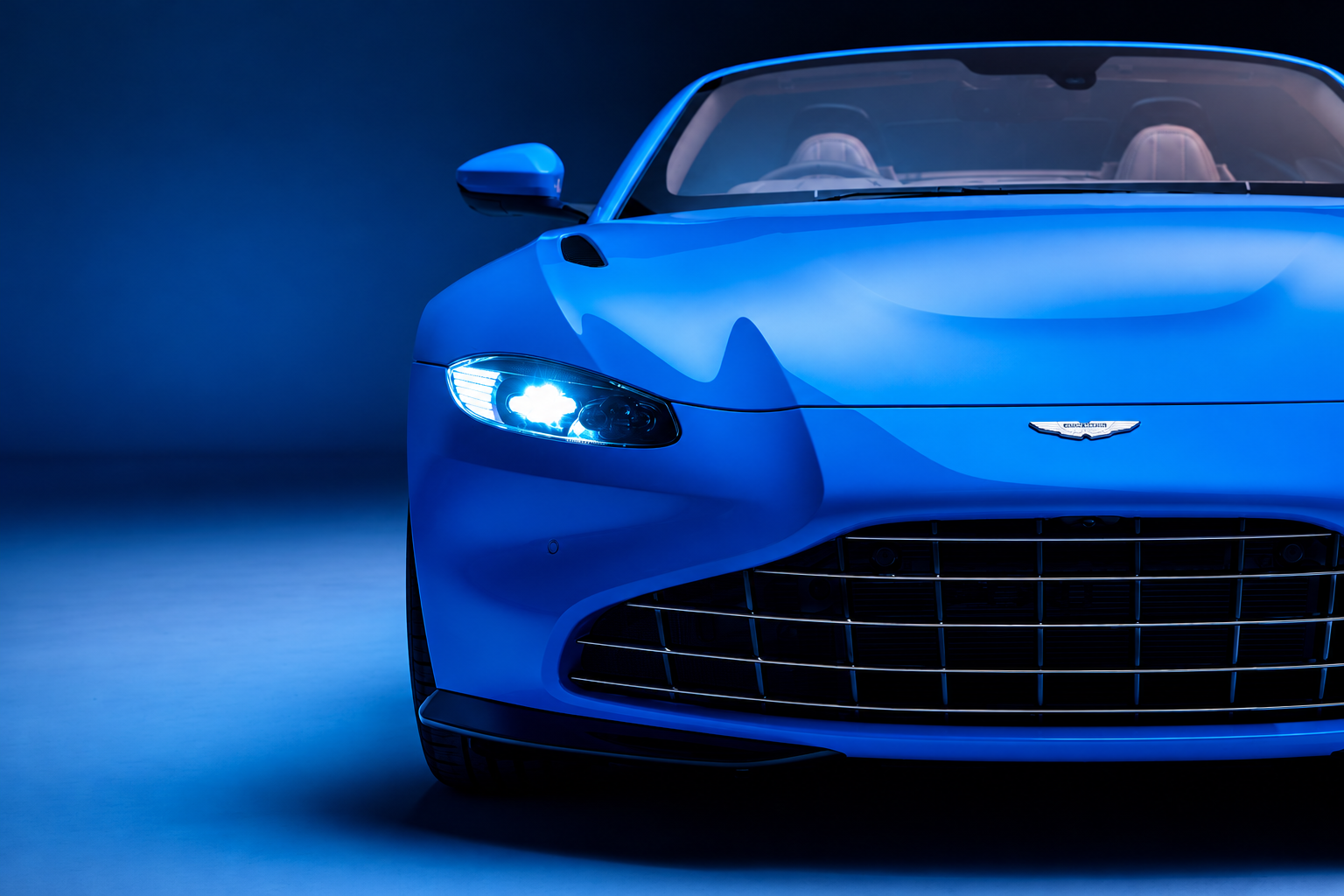
Image © Aston Martin Lagonda. Used for editorial purposes.
When Top Gear placed the two treatments side by side on the day Vane was announced, it judged the new grille softer and perhaps more conventionally pretty, while simultaneously admitting that it had grown fond of the original mesh treatment.[28]
More importantly, the rest of the face remained substantially unchanged. The slim lamps, vast bonnet, underlying proportions and unusually low nose were still there, and the MX-5 association persisted among observers who had always located the resemblance primarily in the headlights rather than in the grille.
By late 2020 that distinction had become unusually explicit. A shareholder question put directly to Aston Martin argued that the problem was not the grille, but the lights. Aston Martin's response defended Vantage as its most focused sports car, saying such a role demanded a bold and distinctive design language, while pointing to the Vane grille as the available alternative.[30]
In that sense, Vane became an accidental control experiment. One extremely conspicuous part of the face changed while most of the surrounding architecture remained. If the exposed mesh had been the entire problem, the argument should have disappeared. It didn’t. Vane restored a familiar piece of Aston Martin vocabulary, but it didn’t rewrite the sentence around it.
WHAT MAKES A VANTAGE A VANTAGE?
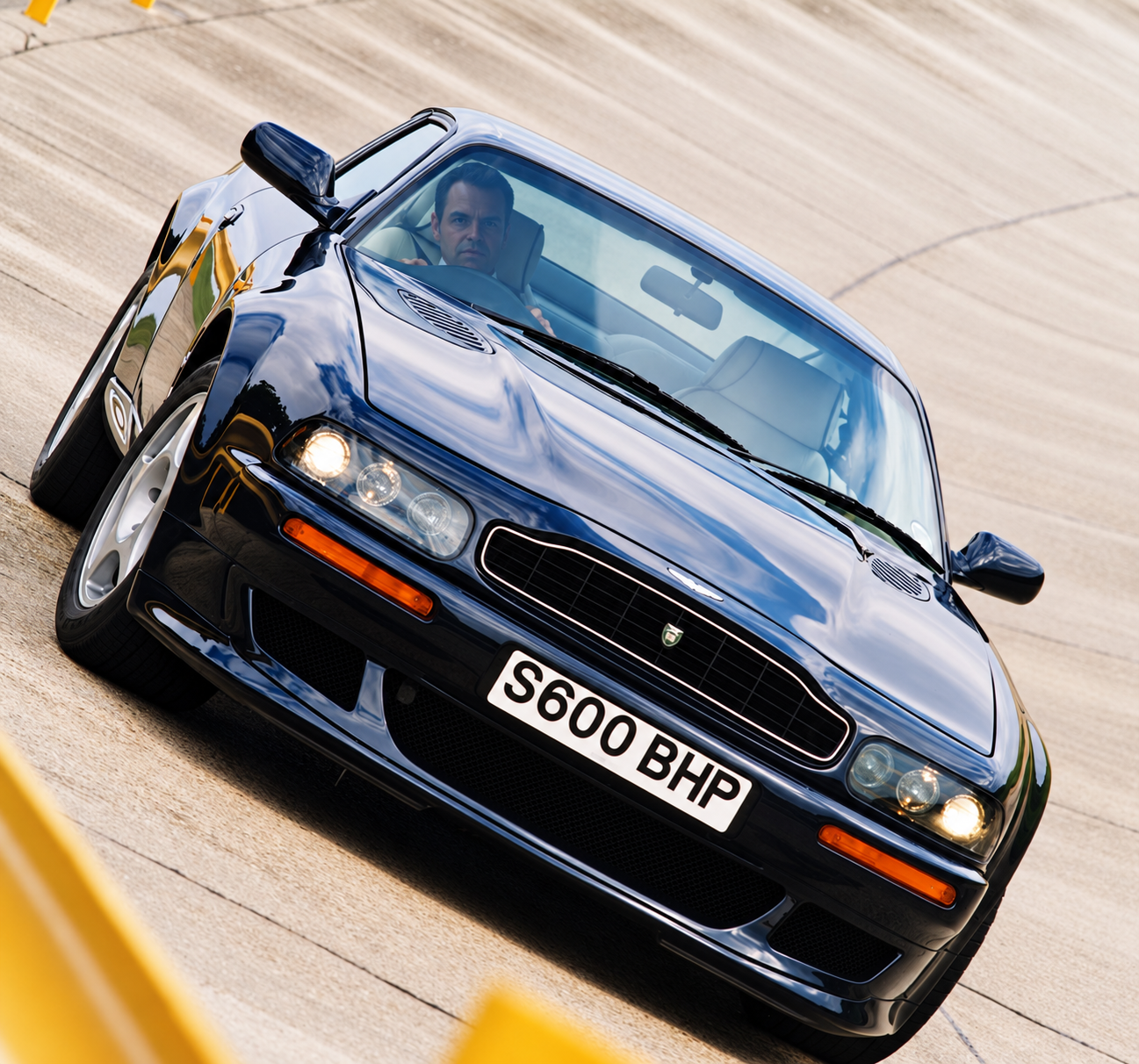
Image © Aston Martin Lagonda. Used for editorial purposes. Aston Martin Vantage V600.
There’s another reason the grille cannot carry the entire story: different people locate Aston Martin — and Vantage — identity in different places. For some it’s the grille; for others it lies in elegance, engine character, sound, gearbox, steering feel, performance or a particular kind of sporting personality.
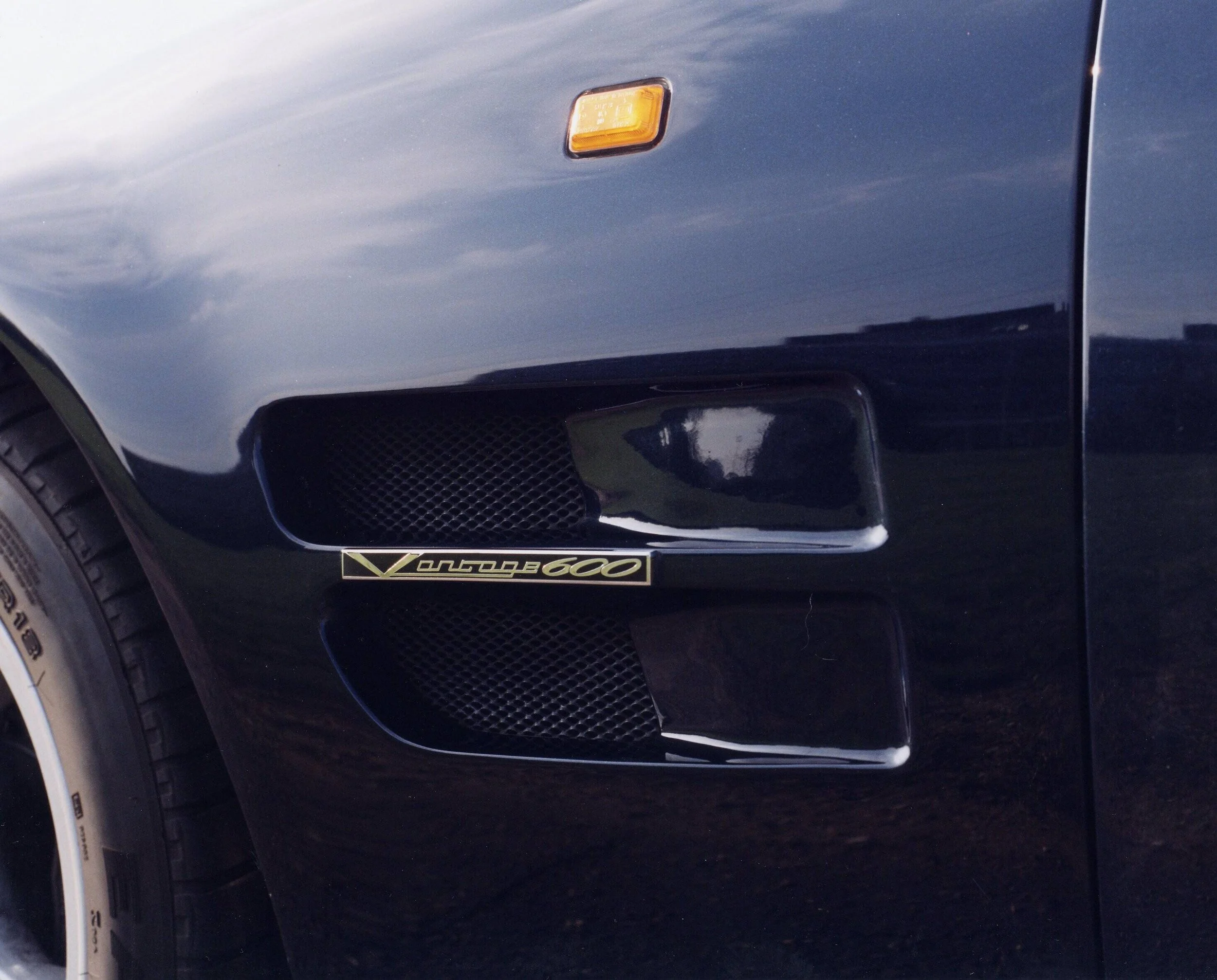
Image © Aston Martin Lagonda. Used for editorial purposes. Aston Martin Vantage V600.
The companion feature to Richard Meaden's road test in Vantage Issue 22 makes that particularly clear. Peter Tomalin's “Meeting the Family” placed the new car alongside a succession of historic Vantages, from early uprated DB cars through the V8 era, V550, V600 and the Gaydon V8 Vantage.[31]
The exercise demonstrates that Vantage itself has never meant one completely fixed thing. In the 1950s and '60s it could identify a higher-performance engine specification; later the name became associated with increasingly muscular derivatives and, eventually, with some of Aston Martin's most formidable standalone cars. By 2005 it identified the company's compact production sports-car range.
“The visual language changed repeatedly, but the recurring idea ran deeper: performance, excitement and sporting intent.”
That makes the 2018 car's relationship with its predecessors considerably more interesting. Tomalin and the Aston enthusiasts involved in the comparison retained reservations about the new Vantage's appearance, particularly head-on, yet those reservations didn’t prevent the modern car from making an enormous impression once they experienced it dynamically.
Tomalin's conclusion was essentially that the new model had reinvented Vantage as a full-on sports car.[31] These were not people unfamiliar with Aston Martin history. They were immersed in it, yet they could simultaneously find the face difficult and the complete car enormously convincing. Visual Aston-ness and sporting Vantage-ness were not necessarily the same thing.
SECOND THOUGHTS

Image © Aston Martin Lagonda. Used for editorial purposes. Aston Martin ‘Hunter’ Vantage.
As the years passed, something else happened: some people changed their minds. Reviewers and owners have explicitly described the design as growing on them, while some later came to prefer Hunter to Vane because the original mesh appeared more naturally integrated into the surfaces designed around it. Those individual reassessments do not establish a wider change in public opinion.
By 2022, evo's Stuart Gallagher could revisit the original car and argue that Hunter was one of the stronger elements in its design. In his assessment, the relative visual simplicity of the grille allowed the enormous clamshell bonnet and surrounding surfacing to do the talking, whereas the more traditional slatted treatment made the nose appear more contrived.[32] Others never agreed. Some still disliked the lamps, the MX-5 comparison never completely disappeared, and plenty continued to believe that Vane improved the car substantially.

Image © Fuel the Passion. FTP Vantage taking in the view on the mighty Grossglockner High Alpine Road, September 2024.
The 2018 Vantage magazine comparison helps us separate two effects often bundled together under the phrase “it grew on me.” The enthusiasts involved did not necessarily decide that the frontal appearance had suddenly become beautiful; driving the car made their styling reservations less decisive in their judgement of the complete machine.[31]
That’s a subtler and more believable process. Repeated exposure can alter aesthetic judgement, seeing a car physically can reveal surfaces that photographs flatten, colour can change the way a design reads, and driving it can alter the emotional weight attached to appearance. None of those mechanisms proves the original critics were wrong.
There was, however, a fascinating prediction from Goodwood Road & Racing as early as June 2020. Writing about an independent attempt to give the Vantage a more conventional nose, Bob Murray openly acknowledged the controversy surrounding Hunter before concluding;
“We suspect that in decades to come it will be the Vantages with the original hunter look that will be the sought-after cars.” [33]
It wasn’t a valuation forecast and there has certainly not been enough time to declare the prediction correct. What makes it interesting is the logic behind it. The feature that led Aston Martin to offer customers an alternative face could eventually become the very thing that most clearly identifies the original expression of this generation. Regardless of how many owners chose the factory-authorised conversion, a car retaining its original Hunter front preserves the clearest physical expression of what the company attempted in 2017.
That doesn’t automatically make it more valuable. It does make it more historically specific. Hunter has unquestionably undergone reappraisal, but that is not the same thing as universal rehabilitation.
ONE GENERATION, SEVERAL FACES
Nor did the Vantage family evolve neatly from Hunter into Vane. It branched. The manual AMR appeared while Hunter remained the regular treatment. From 2020, Coupe and Roadster customers could choose between Hunter and Vane, while later derivatives introduced other interpretations of mesh, framing and aerodynamics.
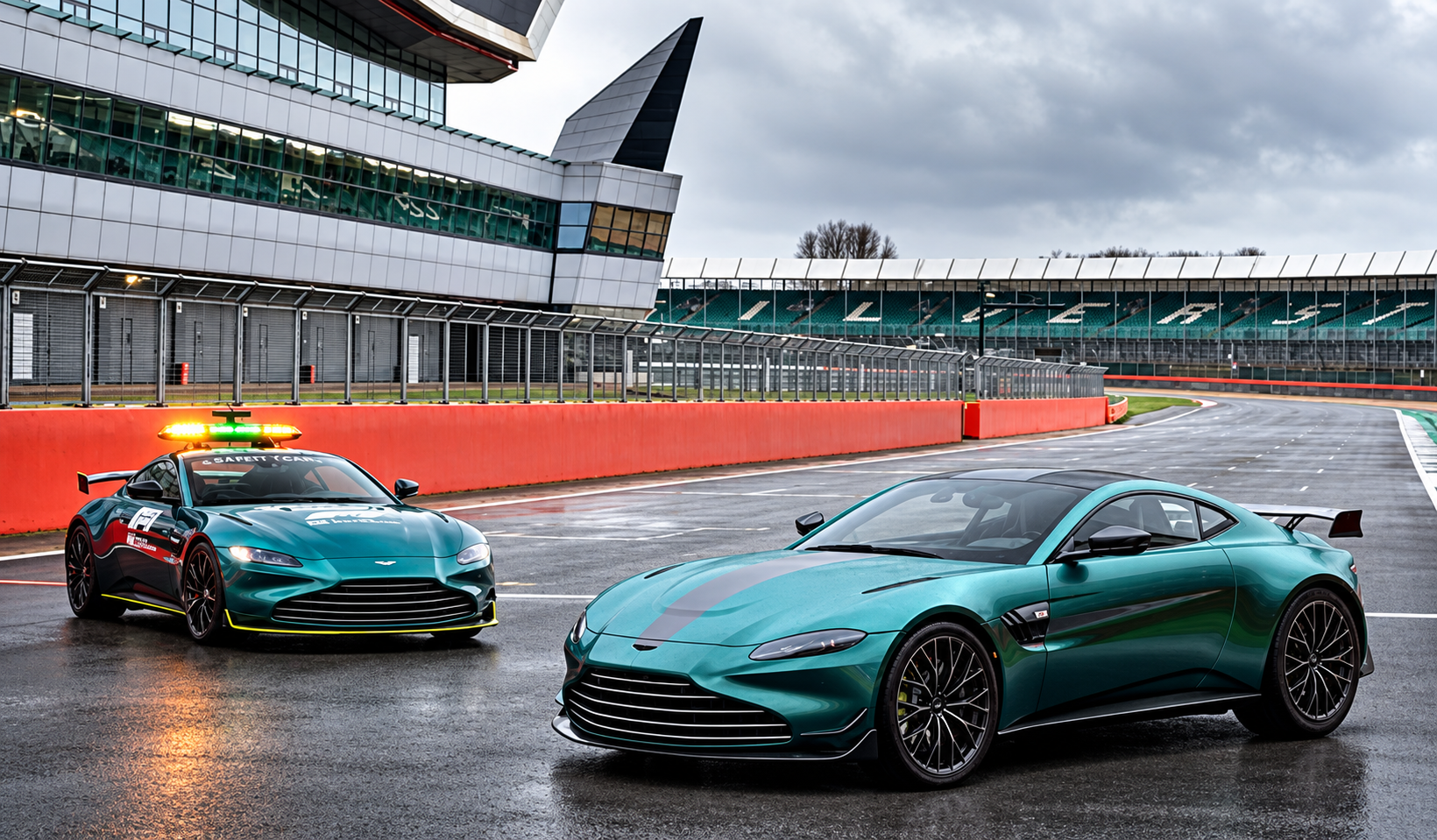
Image © Aston Martin Lagonda. Used for editorial purposes.
The Vantage F1 Edition provides particularly useful evidence against another retrospective simplification. Launched in 2021 as the most track-focused production Vantage to that point, it used a vaned grille as standard.[34]
Aston Martin had described Hunter as track-inspired, but the F1 Edition demonstrates why that phrase shouldn’t be interpreted as a technical rule declaring exposed mesh essential to serious performance. Aston Martin was perfectly capable of creating a more powerful, faster, more aerodynamically developed and more track-focused Vantage around a vaned treatment.[34]
Hunter's track inspiration belongs principally to its character and design genealogy, rather than to an engineering requirement that performance demanded mesh. The actual competition cars make the distinction clearer still. They carried this generation's low, aggressive visual identity onto the circuit, but were purpose-built racing machines whose cooling, aerodynamic and regulatory requirements belonged to a very different world.
Road-car Hunter and racing Vantage form part of the same visual story. They are not the same technical solution.
THE NUMBER WE DON'T KNOW
Image © Fuel the Passion. For illustrative purposes.
How many Hunters were built?
Aston Martin has never published a definitive worldwide production figure for the original Hunter-grille Vantage. Nevertheless, the company's financial records allow us to make a reasoned estimate of how many may have left the factory wearing that distinctive mesh front.
Between 2018 and 2019, Aston Martin recorded 4,445 wholesale units in its Sports category, which included Vantage. The original Hunter grille was the regular production treatment of the new-generation Vantage until the alternative Vane grille arrived in February 2020. However, the published figures are dealer wholesales for a reporting category, not a verified count of Hunter-equipped cars. Our model therefore treats those early volumes as a starting proxy rather than an established Hunter production total.[26]
From 2020 to 2022, the company recorded another 4,003 Sports-category wholesales. For 2023, Aston Martin combined Sports and GT models in its reporting, requiring us to estimate Vantage's contribution rather than treating the entire category as Vantage production.

Image © Fuel the Passion. For illustrative purposes.
So how should we divide the later cars between Hunter and Vane?
For this investigation, Fuel the Passion has adopted a straightforward central assumption: from 2020 onwards, half of Vantage buyers selected Hunter and half selected Vane. We don't know the actual factory ordering split, but an even division provides a transparent starting point without presuming that either design overwhelmingly dominated demand.
Using that assumption, together with a modelled 2023 Vantage contribution and a modest allowance either side of the 50/50 split, Fuel the Passion estimates that approximately 6,500–7,400 factory-original Hunter-grille Vantages may have been built worldwide, with a central estimate of around 6,900 cars.
This is Fuel the Passion's own scenario-based estimate, not an Aston Martin-confirmed production figure. It uses reported dealer wholesales as a proxy for vehicles manufactured, assigns the 2018–2019 Sports-category figures to the early Hunter period and models both Vantage's contribution to the 2023 reporting category and the proportion of later customers choosing Hunter rather than Vane. The resulting range illustrates what our assumptions produce; it’s not a statistically established minimum or maximum. The table below sets out the calculation so readers can examine those assumptions for themselves.
FUEL THE PASSION • ORIGINAL RESEARCH
How many Hunters were built?
Estimated factory-original Hunter-grille Vantages worldwide, 2018–2023. A Fuel the Passion scenario-based estimate, not an official Aston Martin production count or a verified production range.
| Calculation | Lower | Central | Upper |
|---|---|---|---|
| 2018 Sports wholesales | 2,195 | 2,195 | 2,195 |
| 2019 Sports wholesales | 2,250 | 2,250 | 2,250 |
| 2018–2019 Hunter modelling proxy | 4,445 | 4,445 | 4,445 |
| 2020–2022 Sports wholesales | 4,003 | 4,003 | 4,003 |
| 2023 Vantage estimate Modelled share of 3,530 Sport/GT wholesales | 700 | 975 | 1,250 |
| Estimated 2020–2023 Vantage total | 4,703 | 4,978 | 5,253 |
| Assumed Hunter share from 2020 | 45% | 50% | 55% |
| Modelled 2020–2023 Hunter cars | 2,116 | 2,489 | 2,889 |
| Estimated original Hunter total |
How we calculated the estimate
Step 1 — Establish the early Hunter period. Our model assigns the reported 2018 and 2019 Sports-category wholesales to Hunter, producing an initial proxy of 4,445 vehicles. This is a simplifying assumption: the category is not a verified Hunter-only production count, and the outgoing Vantage generation was still being replaced during 2018. The figure must therefore be understood as a modelling input rather than an established number of Hunters built.
Step 2 — Establish the later volumes. Aston Martin reported 4,003 Sports wholesales for 2020–2022. For 2023, we estimate that Vantage represented 700–1,250 of the 3,530 combined Sport/GT wholesales. The 2023 figures are assumptions, not reported model-specific totals.
Step 3 — Apply the grille split. Our central scenario assumes half of the 2020–2023 cars were ordered with Hunter. We test 45% and 55% to show how a small difference in that assumption changes the result. We apply these proportions to the full 2020 volume for simplicity, despite Vane becoming available in February.
Step 4 — Round the scenarios. The calculated results are approximately 6,561–7,334. We round outwards to publish a practical working range of 6,500–7,400 cars worldwide. These are the outcomes of our selected modelling scenarios, not statistically established minimum and maximum production figures.
These calculations use reported dealer wholesales as a proxy for vehicles manufactured. They do not account for differences in production and delivery timing, individual factory specifications or subsequent Hunter-to-Vane conversions.
There’s also a distinction between how many cars were originally specified with Hunter and how many retain that appearance today. Aston Martin Works offered factory-authorised conversions to Vane, meaning some original Hunters may now wear the alternative grille. Without individual build and conversion records, the number still retaining their original front remains unknown.
Our estimate therefore concerns the factory-original Hunter population, not the number of unmodified Hunters surviving today. It gives us a plausible sense of scale while leaving room for revision if more detailed factory records become available.
WHAT ARE THE ODDS OF SEEING ONE?
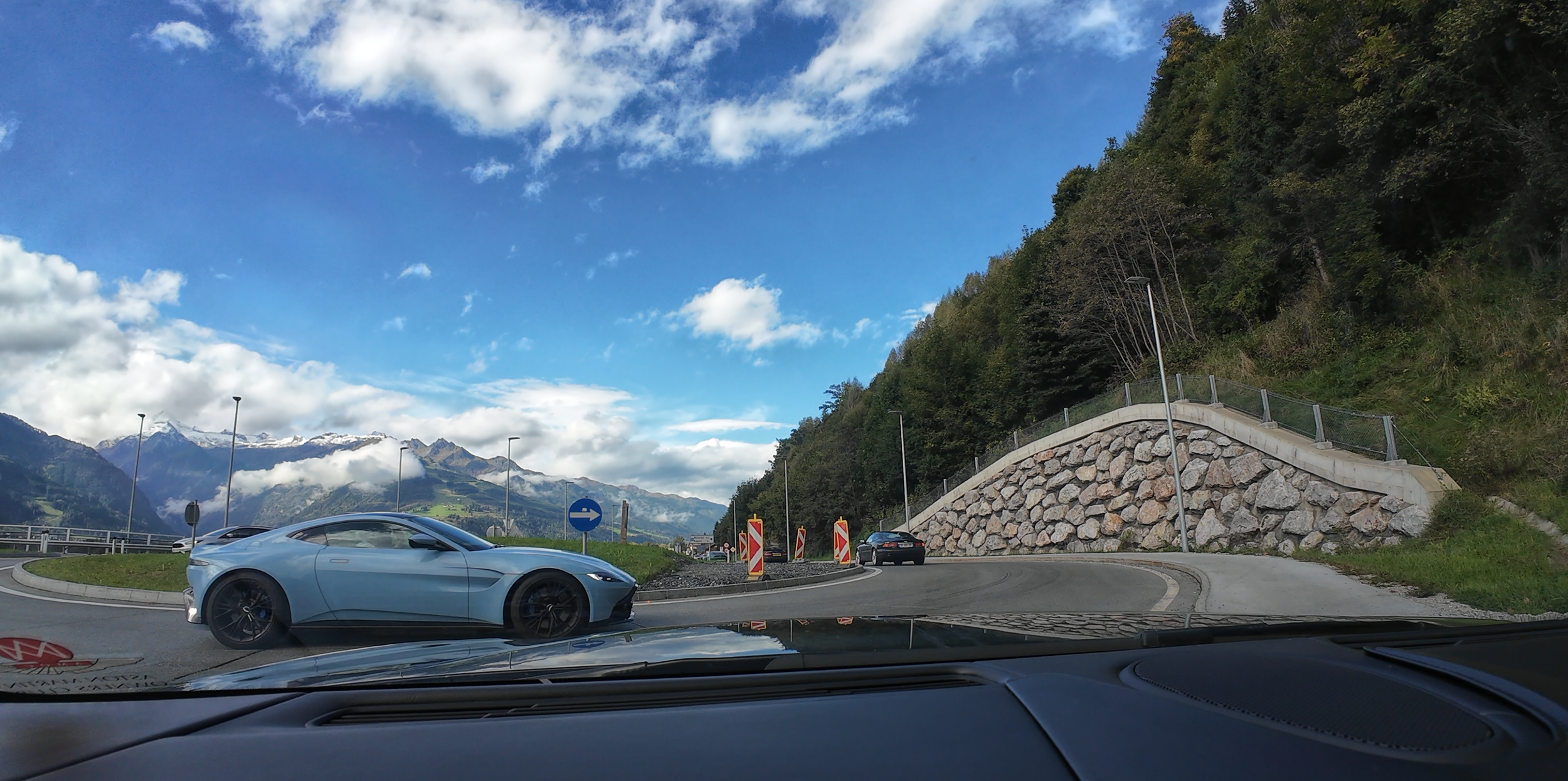
Image © Fuel the Passion. AMOC 90th Anniversary Celebrations, Austria 2025.
There’s another way of considering Hunter's rarity. Not simply how many examples were built worldwide, but how likely are you to encounter one during an ordinary journey on British roads? Having explored the potential worldwide production figures, we can now bring our investigation a little closer to home. According to DVLA-derived registration data, 2,486 Aston Martin Vantages were first registered in the UK between 2018 and 2023. The figures peaked in 2019, when 759 were registered, compared with 489 in 2018. Between 2020 and 2023, a further 1,238 were registered.[35]
These totals require some interpretation. The 2018 registrations may include cars from the outgoing Vantage generation, while registrations from 2020 onwards can include both Hunter and Vane. The available records don't identify which grille was originally fitted to each vehicle.
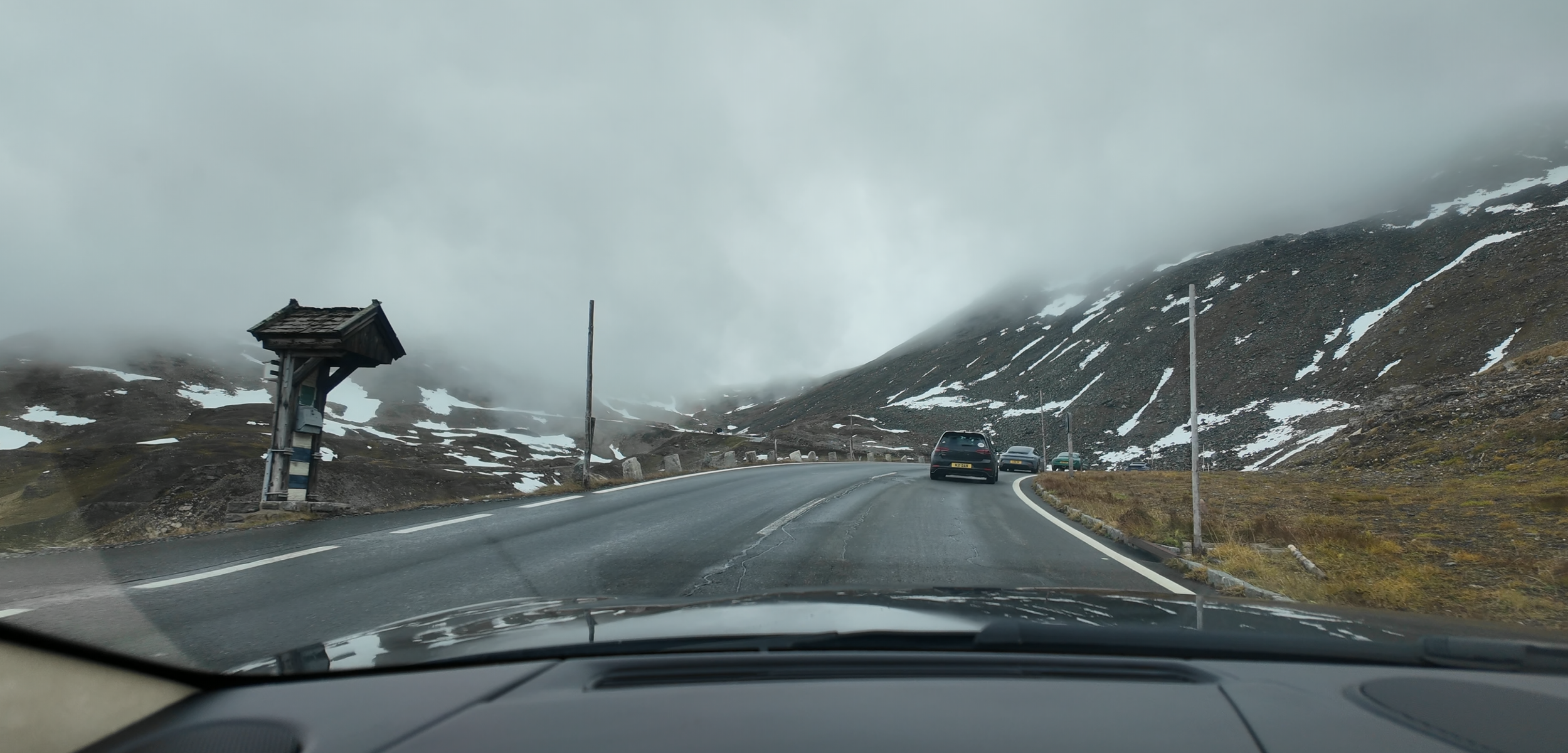
Image © Fuel the Passion. FTP Vantage, Behind the Glass Driving Tour, Austrian Alps September 2024 (The only Aston Martin on the Tour!)
For our calculation, Fuel the Passion has therefore applied the same central assumption used in our worldwide production estimate: approximately half of Vantages registered from 2020 onwards were originally specified with Hunter. We've also allowed for uncertainty surrounding the 2018 transition and the number of cars subsequently leaving the licensed UK population.
On that basis, FTP estimates that approximately 1,400–1,900 factory-original Hunter Vantages may remain licensed for use on British roads. This includes vehicles originally built with Hunter that may subsequently have been converted to Vane; it isn't a count of cars still wearing their original grille.
Now consider the wider picture. At the end of June 2026, the Department for Transport recorded 42.9 million licensed vehicles across the United Kingdom.[35] Against that enormous vehicle population, our estimated Hunters represent approximately 0.0033–0.0044% of licensed UK vehicles, or roughly one factory-original Hunter Vantage for every 23,000–31,000 vehicles.
That’s quite a contrast for a car that generated so much attention when it first appeared.
But what does that rarity actually mean when you're out driving? Could we go a step further and estimate how often an ordinary motorist might see one?
It's an intriguing question, and although no calculation can predict precisely which cars we might encounter, we can at least explore the possibilities.

Image © Fuel the Passion. FTP Vantage, Autumn Drive 2025.
An analysis of DVSA MOT records suggests that the average British car covered approximately 6,700 miles during 2025.[35] If we imagine a driver encountering between 10 and 20 other vehicles per mile, that would represent approximately 67,000–135,000 vehicle encounters over the course of a year.
Of course, those aren't necessarily different vehicles, nor are all cars driven equally. Many Aston Martins spend more time tucked away in garages than commuting to work or negotiating supermarket car parks.
For our illustration, FTP has therefore assumed that a Hunter Vantage covers approximately 3,000 miles annually, less than half the mileage of the average British car. We've also allowed for the possibility that around 20% of factory-original Hunters have subsequently been converted to Vane or otherwise no longer retain their distinctive original front.
These are deliberately illustrative assumptions, not established findings about Hunter ownership. Likewise, our assumed number of encounters per mile isn't based on a measured national traffic survey. Nevertheless, applying them to our estimated UK Hunter population produces an interesting result.
“Under this simplified FTP model, an average-mileage British driver might encounter an original Hunter-grille Vantage just once or twice during an entire year of ordinary motoring.”
It isn't a measured national sighting frequency, and the model assumes vehicles mix randomly on the road, which they plainly don't. Someone living near an Aston Martin specialist or travelling regularly through an affluent area might encounter several, while another driver could go years without seeing one. The actual figure could be higher or lower depending on road conditions, geography, vehicle usage and the proportion of cars retaining their original grille.
Nevertheless, the calculation offers an illustration of how an already small vehicle population becomes even less visible when the cars themselves may be driven only occasionally.
Think about that for a moment. Thousands of miles travelled over an entire year, countless cars passing in the opposite direction, and perhaps just one or two occasions when that unmistakable Hunter grille appears ahead of you.
Remove the Aston Martin gatherings, concours lawns, dealer forecourts and journeys deliberately planned around the marque. Think instead about an ordinary supermarket run, a motorway journey or a wet Tuesday afternoon with no Aston Martin event for miles.
When did you last see an original Hunter-grille Vantage coming the other way?
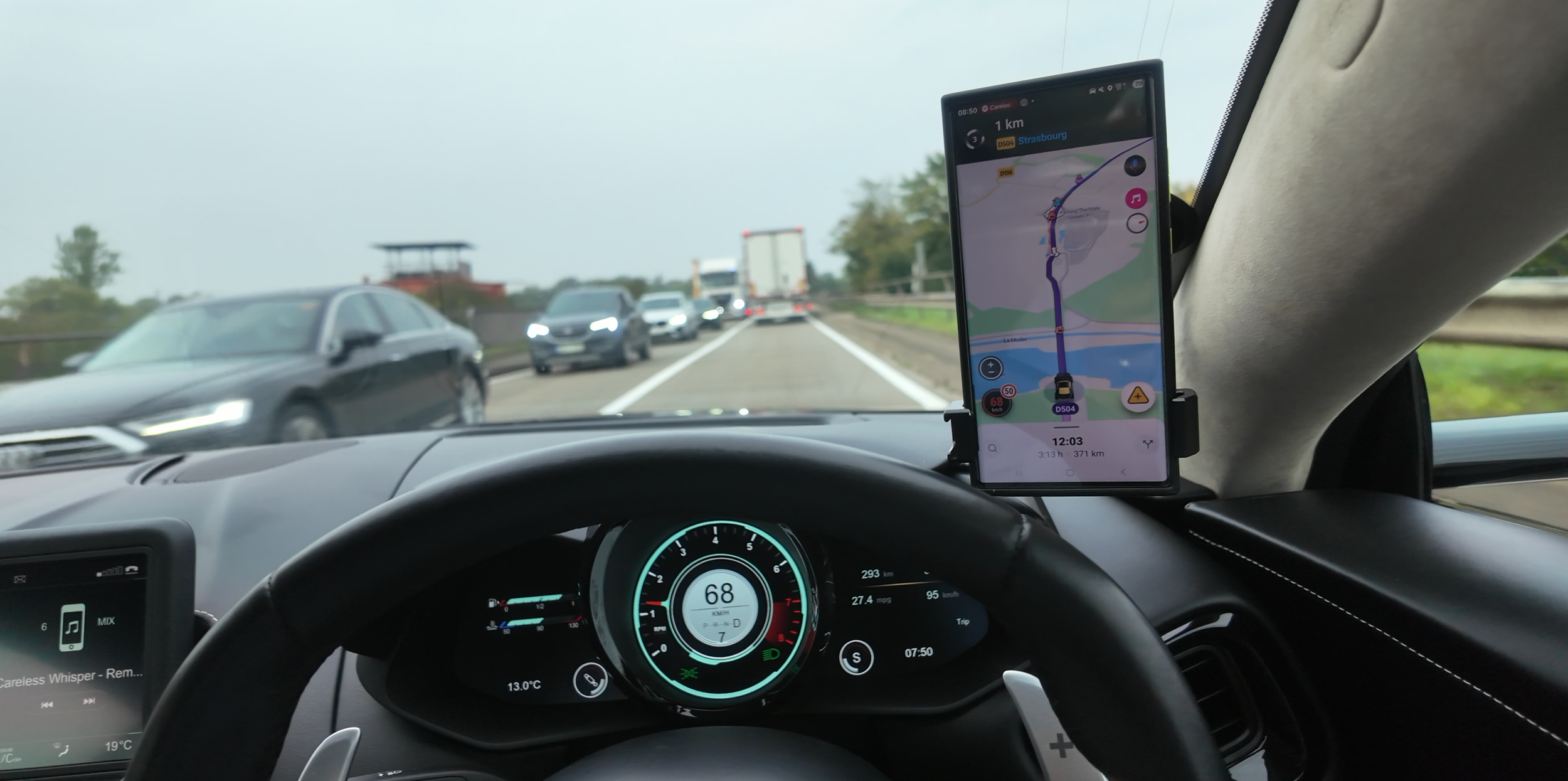
Image © Fuel the Passion. On board the FTP Vantage, France, 2025.
I know how rarely I encounter another during my own ordinary journeys. That experience is personal rather than scientific, of course, but our investigation offers a possible explanation. Even using our estimated UK population, the number of cars still retaining that distinctive original face and actually being driven could be remarkably small.
Perhaps that's part of what makes the Hunter so interesting today. When Aston Martin introduced the new Vantage in 2017, its appearance was impossible to ignore. It provoked admiration, criticism and considerable debate.
“Almost a decade later, the car that once divided opinion has become an increasingly unusual sight.”
The initial shock of Hunter's design has long since faded and, as the years pass, some of the familiarity is beginning to fade with it. What once appeared almost confrontational can now feel refreshingly unusual.
ANOTHER ANSWER
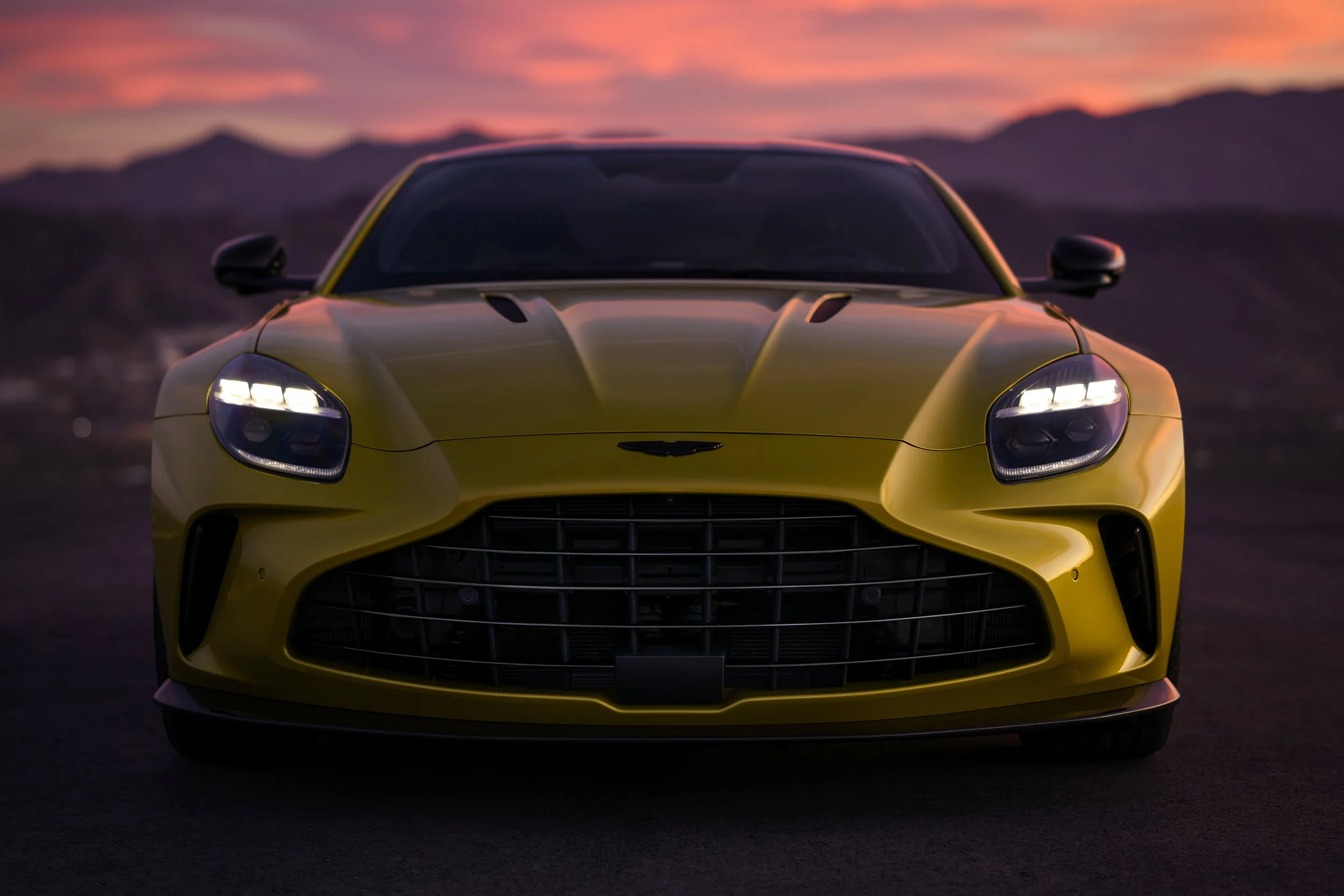
Image © Aston Martin Lagonda. Used for editorial purposes. Aston Martin Vantage.
In February 2024, Aston Martin changed the face of Vantage again. This time there was no alternative grille inserted into substantially the same original architecture. Aston Martin described a completely redesigned front end: the body became 30mm wider, the recontoured vaned grille aperture grew by 38%, and mass airflow increased by 29%. Additional cooling intakes, a new splitter, Matrix LED headlamps and the return of the traditional Aston Martin side strake completed the transformation.[36]
The revised engine created genuine demands for additional cooling. Power had risen to 665PS and 800Nm, increases of 30% and 15% over the preceding standard Vantage.[36] Greater airflow, however, doesn’t inherently require familiar horizontal vanes. That remains a design decision.
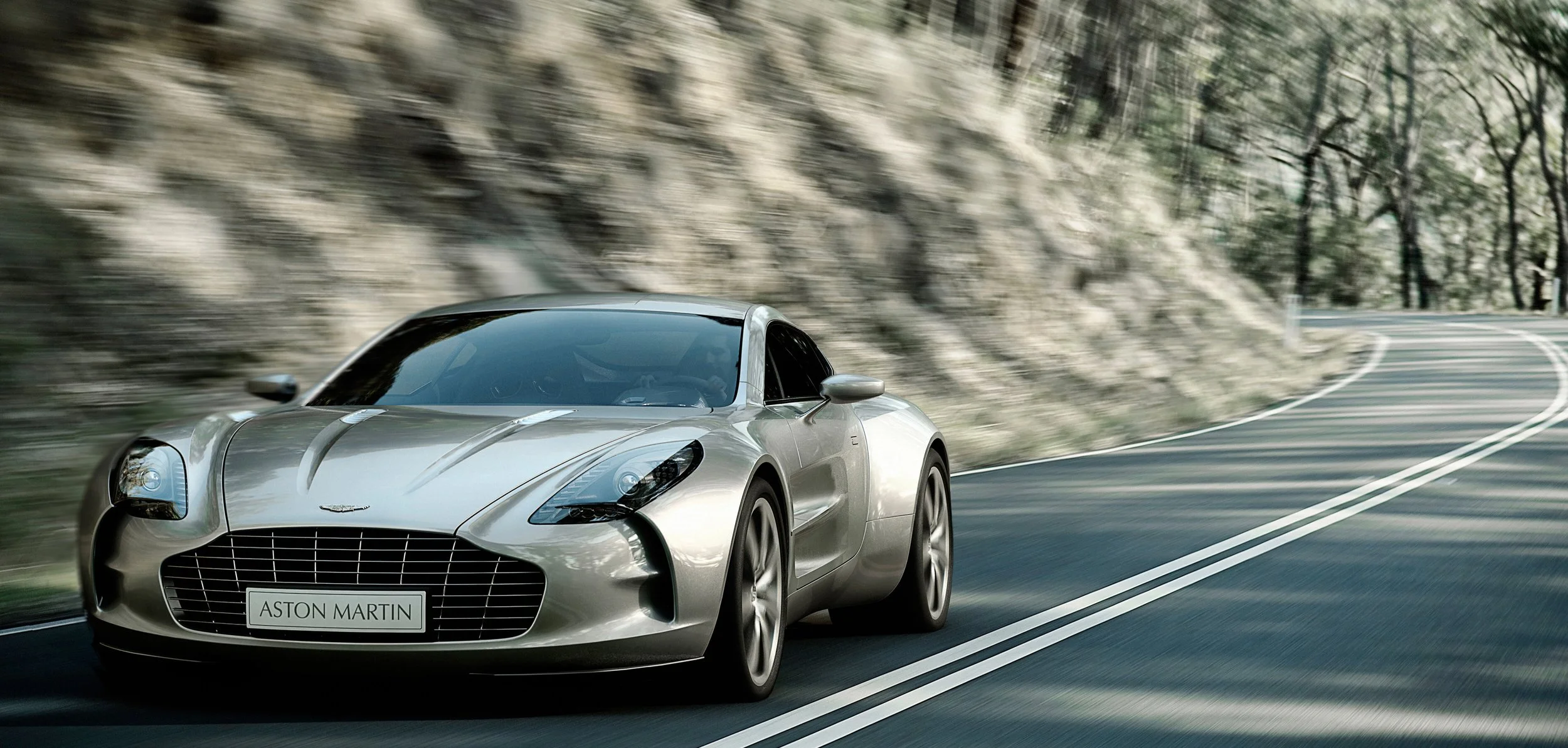
Image © Aston Martin Lagonda. Used for editorial purposes. One-77.
Reichman's explanation of the revised appearance didn’t say Hunter had been wrong. Instead, he described the enormous increase in performance as an opportunity to accentuate Vantage's physique and muscularity, drawing some inspiration from One-77 while retaining elegance of form and proportion.[36]
Describing the 2024 Vantage as Aston Martin finally “fixing” Hunter therefore goes beyond the evidence. What the newer design unquestionably does is restore several visual identifiers the 2018 car had deliberately challenged: the dominant vaned grille, more prominent headlamp graphics, the traditional side strake and a stronger immediate relationship with Aston Martin's contemporary core range.
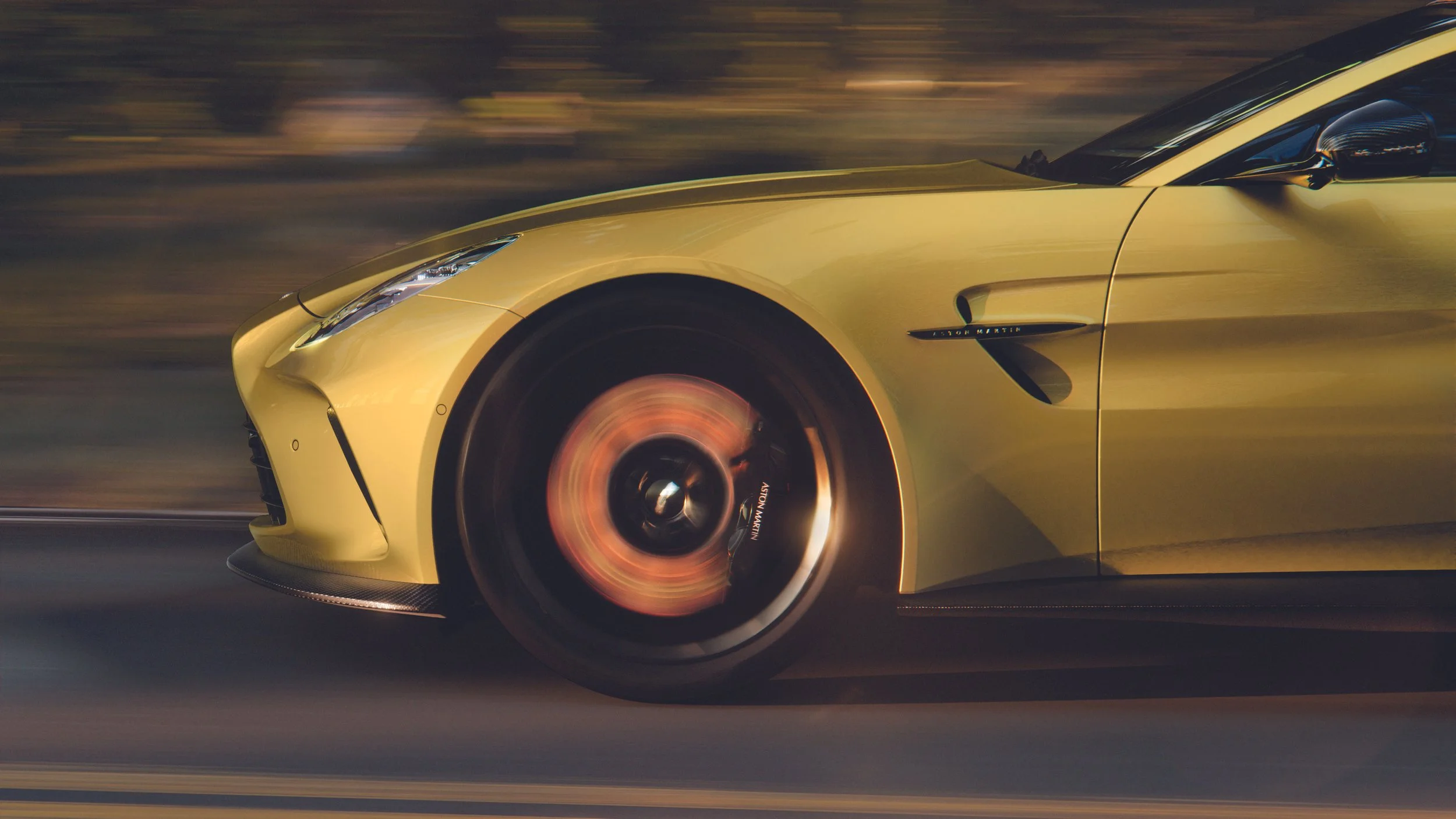
Image © Aston Martin Lagonda. Used for editorial purposes.
Yet the car is not less aggressive. Quite the reverse. The difference lies in how that aggression is expressed. The 2018 car found aggression through reduction and abstraction, stripping familiar objects away and making the mouth itself dominant. The 2024 Vantage reaches a similarly forceful destination through amplification, making familiar Aston Martin objects bigger, broader, more muscular and more explicit.
Seen only through the Vantage story, the sequence appears almost conveniently neat: Aston Martin experimented with Hunter, customers divided, Vane broadened the choice and the familiar face ultimately returned.
But look beyond the Vantage, and a different picture emerges. Aston Martin wasn't simply returning to traditional designs. Elsewhere in its range, the company continued to explore bold and sometimes unconventional ideas. To understand how these different interpretations developed, it's worth looking at the order in which Aston Martin introduced some of its most significant models during this period.
FUEL THE PASSION • THE BLOODLINE
The Order of Things
A selection of significant Aston Martins and design developments, showing how the Hunter Vantage fitted into the marque's evolving design story.
| Year | Model / Development | Significance |
|---|---|---|
| 2014 | Aston Martin DB10 | Bespoke sports car publicly unveiled in December for the James Bond film Spectre, which was released in 2015. Its design offered an early glimpse of Aston Martin's evolving visual language and subsequently provided valuable experience for the developing Vantage programme. |
| 2015 | Aston Martin Vulcan | Radical track-only supercar revealed in February, with striking styling and extreme aerodynamic treatment. |
| 2016 | Aston Martin DB11 | First production model launched under Aston Martin's Second Century Plan. Introduced before the Hunter Vantage. |
| 2017 | Vantage — Hunter | Revealed in November with its radical mesh grille and distinctive new face. A defining moment in the evolution of Aston Martin's sporting design. |
| 2018 | Hunter Production Begins | The new Vantage entered production at Gaydon in May, bringing the controversial Hunter grille to customers. |
| 2018 | DBS Superleggera | Aston Martin's new flagship GT arrived after the Hunter Vantage had entered production. |
| 2020 | Vantage Roadster & Vane | The alternative Vane grille became available, giving customers a different interpretation of the Vantage's front end while retaining Hunter as a factory option. |
| 2023 | Aston Martin DB12 | Introduced in May as the first of Aston Martin's next generation of sports cars. |
| 2024 | Revised Vantage | An extensive redesign introduced a substantially different front end, marking a new visual chapter for the Vantage. |
| 2026 | Aston Martin Valen | Revealed in August as an exclusive V12 supercar, with dramatic bodywork and production limited to 150 cars. Another bold interpretation of Aston Martin's sporting identity. |
MORE THAN ONE WAY TO LOOK LIKE AN ASTON MARTIN
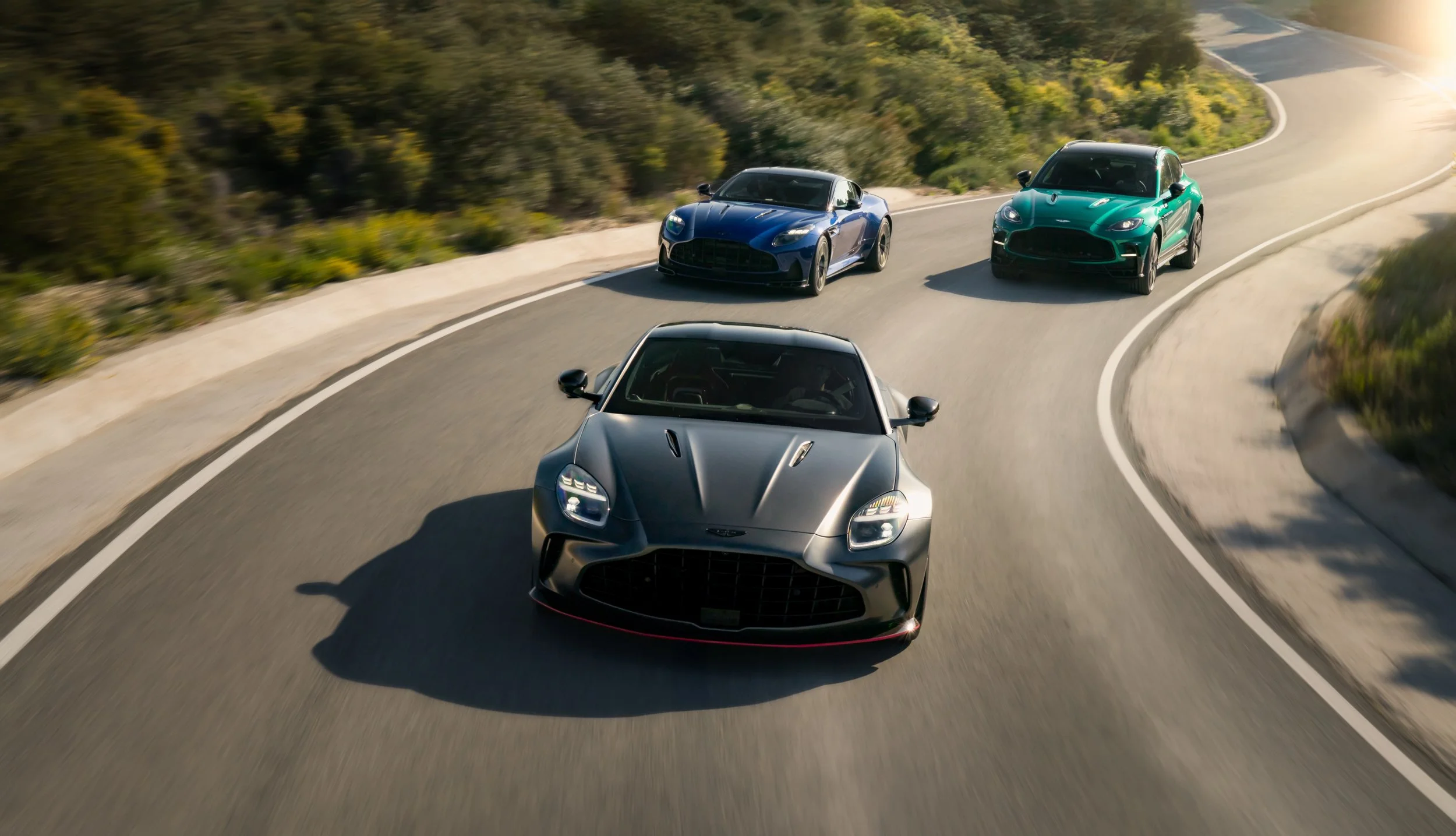
Image © Aston Martin Lagonda. Used for editorial purposes. Current S Range.
Aston Martin has spent generations building a reputation for making exceptionally good-looking cars. That reputation has survived enormous changes in ownership, technology, performance, proportion and purpose, partly because the company has never been restricted to one interpretation of beauty.
The current core range demonstrates the continuing strength of the traditional Aston Martin face. DB12, the latest Vantage, Vanquish and DBX retain a dominant and immediately recognisable grille, allowing the proportions, surfacing and level of aggression around it to evolve without leaving the viewer in much doubt about the badge on the bonnet.
There’s nothing unadventurous about that approach. The familiar Aston grille remains one of the most powerful visual signatures in the motor industry precisely because, after decades of evolution, it still works.
“Running alongside it is a more muscular interpretation of Aston Martin history.”
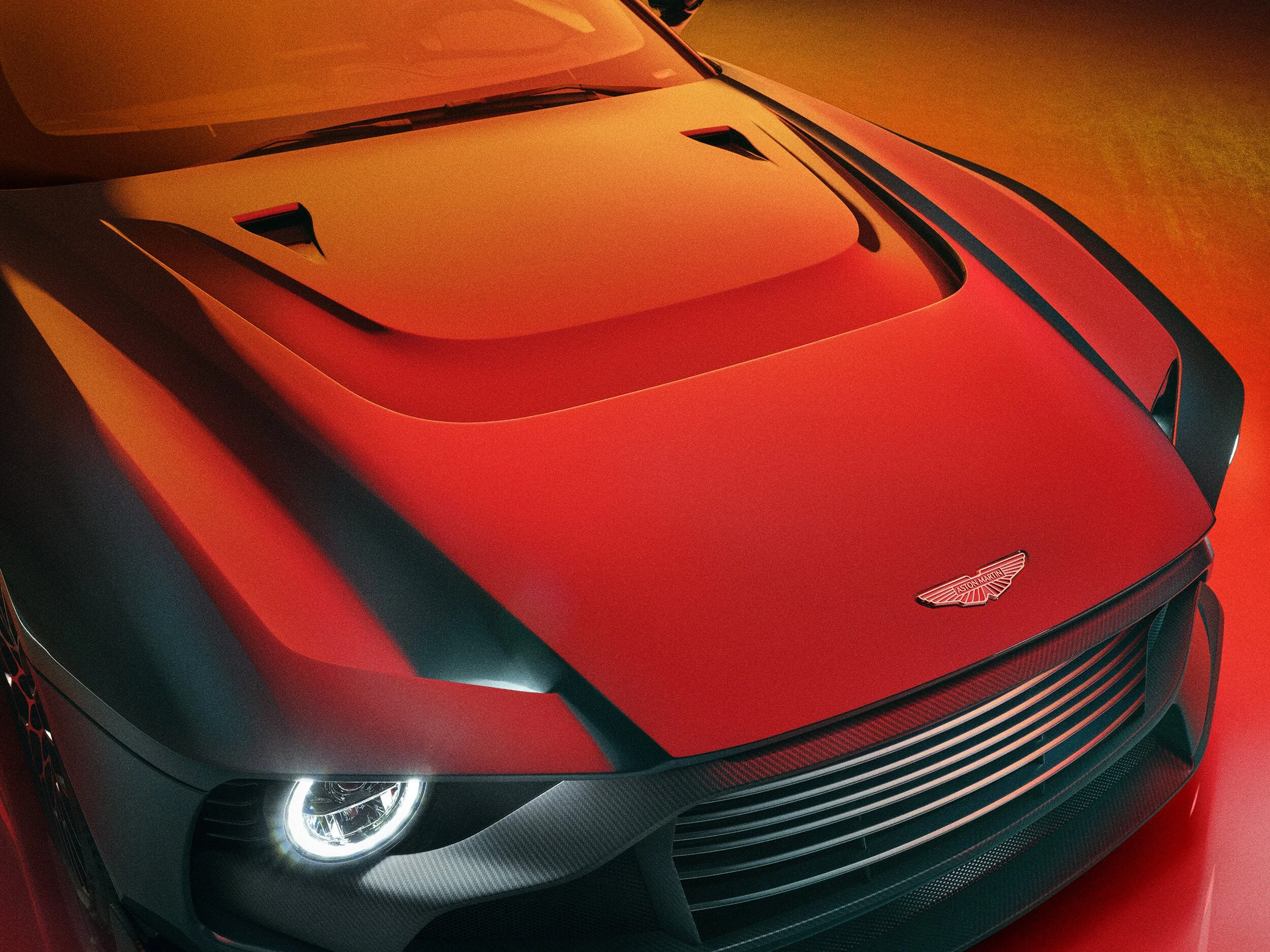
Image © Aston Martin Lagonda. Used for editorial purposes. Aston Martin Valour.
Victor, Valour and Valiant belong naturally in this conversation because they don’t reject traditional Aston identity so much as turn up its physical intensity. Aston Martin describes Valour's bloodline through the original V8 Vantage, the Vantage-based RHAM/1 “Muncher”, the later twin-supercharged V600 and the extraordinary one-off Victor, using the language of “unbridled brawn” to characterise that heritage.[37]

Image © Aston Martin Lagonda. Used for editorial purposes. Aston Martin Valiant.
Valiant takes the idea further. Born from Fernando Alonso's request for a lighter, more extreme version of Valour, it is broad, muscular and unapologetically aggressive, with Reichman describing its character through dramatic form and obvious motorsport influence.[38]
It seems reasonable to think of those cars as part of Aston Martin's modern muscle bloodline: a strand reaching back into the brutal front-engined performance Astons of the past and reinterpreting their intimidation through modern materials and engineering.
Aston Martin's aerodynamic programmes, meanwhile, approach the question of identity from a very different direction.
WHEN AERODYNAMICS STARTS REDRAWING THE FACE
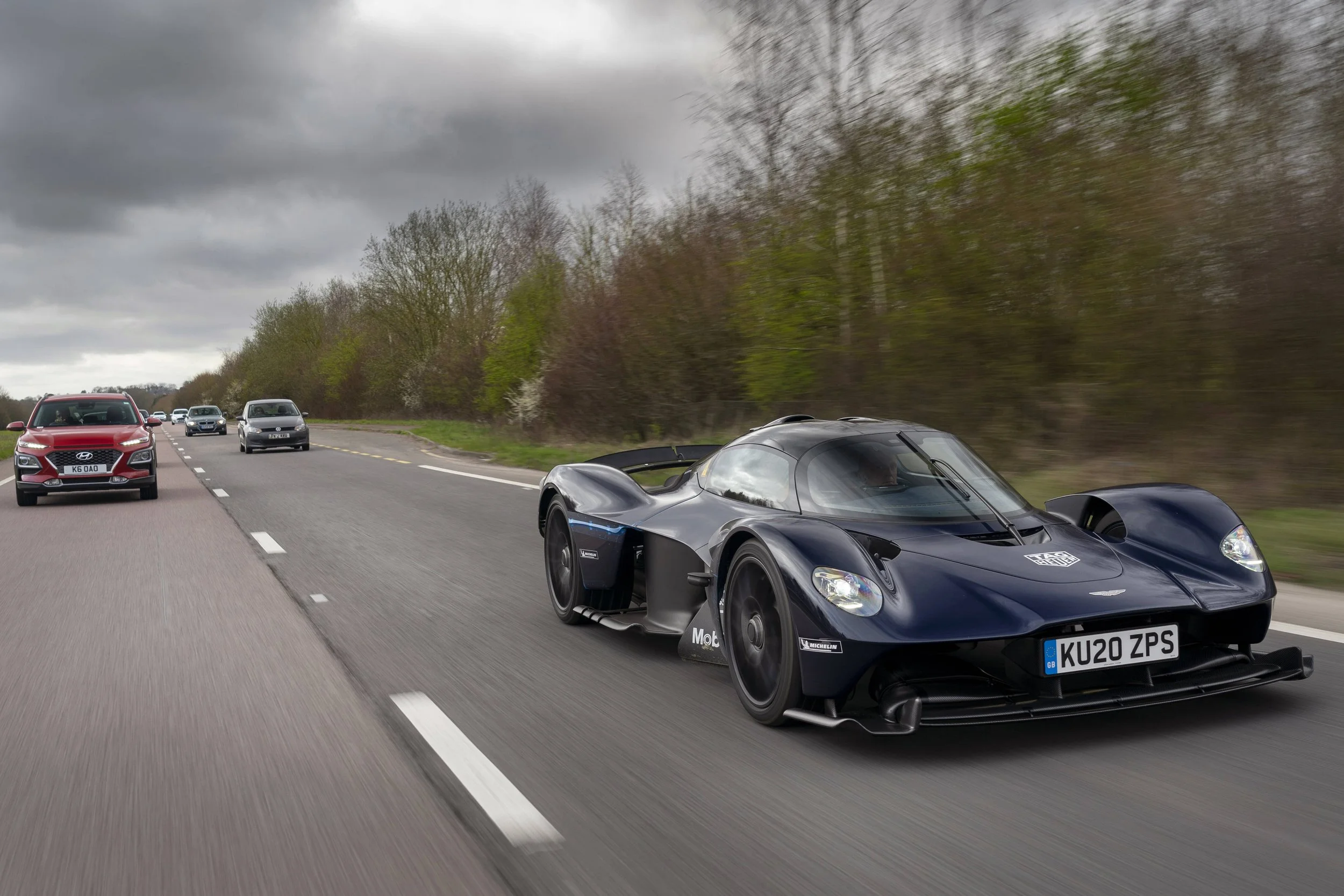
Image © Aston Martin Lagonda. Used for editorial purposes. Aston Martin Valkyrie.
Valkyrie demonstrates what happens when aerodynamic requirement becomes so dominant that the conventional concept of a front grille almost ceases to be useful. Vast passages of air and negative space determine much of its architecture, leaving Aston Martin's designers with the challenge of weaving recognisable identity into a shape unlike anything the company had previously put on the road.
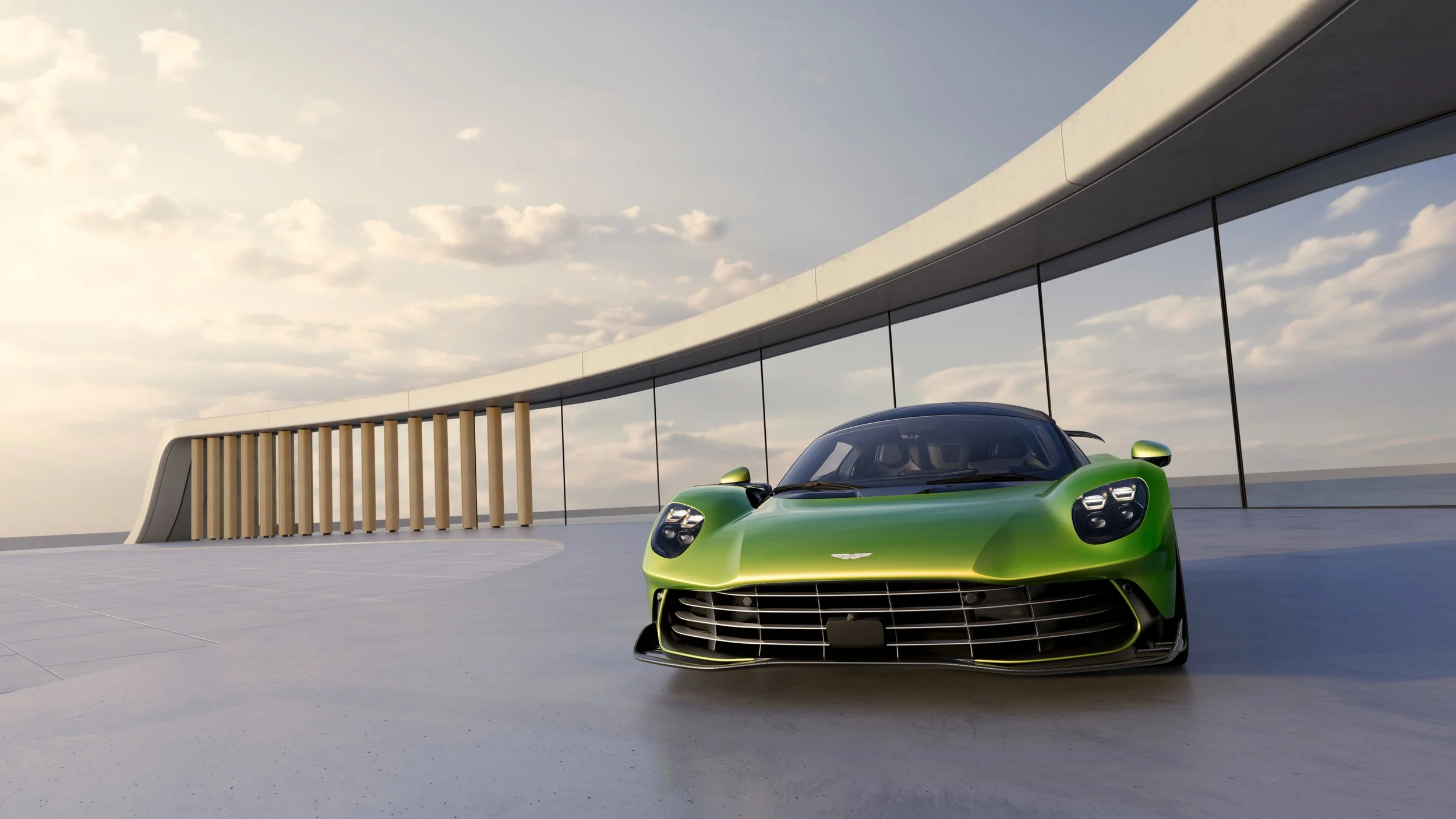
Image © Aston Martin Lagonda. Used for editorial purposes. Aston Martin Valhalla.
Valhalla carries lessons from that programme into Aston Martin's first series-production mid-engined supercar. Its carbon structure, enormous aero workload, active surfaces and airflow management belong to a very different world from the front-engined DB cars, yet Aston Martin deliberately retains a recognisable traditional grille at the nose. Hidden behind it, remarkably, sits an active front wing.[39]
Marek Reichman's account of what Aston Martin learned from Valkyrie is especially revealing. In a 2026 evo podcast interview alongside CEO Adrian Hallmark, Reichman reflected on Valkyrie and noted that Aston Martin had effectively taken the conventional grille away, yet people still recognised the car as an Aston Martin. That experience prompted him to question how much of Aston Martin's familiar visual language could be removed while still leaving a car instantly recognisable as an Aston Martin.[40]
“It’s difficult to imagine a design question more relevant to the Hunter story.”
Reichman was talking about Valkyrie, not retrospectively claiming that the 2018 Vantage had been created as part of some carefully plotted decade-long experiment, and it would be wrong to manufacture that connection. Yet the philosophical continuity is striking. Years earlier, while explaining the coming Vantage, he had already argued that the conventional grille veins could disappear provided enough of Aston Martin's deeper geometry and character remained.[4] In 2026 he’s still wrestling with the same fundamental design question, only now with the experience of Valkyrie and Valhalla behind him.
How little is enough? How obvious does an Aston Martin need to be? Where does recognition actually live?
Reichman also explained that the lessons learned from new aerodynamic and cooling challenges don’t remain isolated within the mid-engined programmes. Each iteration teaches the design team something, and the resulting aesthetic thinking can be applied back into other Aston Martins.[40] The ideas therefore don’t travel in a neat straight line. They move between programmes, evolve with engineering requirements and occasionally return years later in an entirely different form.
That evolving design conversation brings us back to the front-engined Aston Martin, and to Valen.
VALEN — THE FUTURE ENTERS THE CONVERSATION
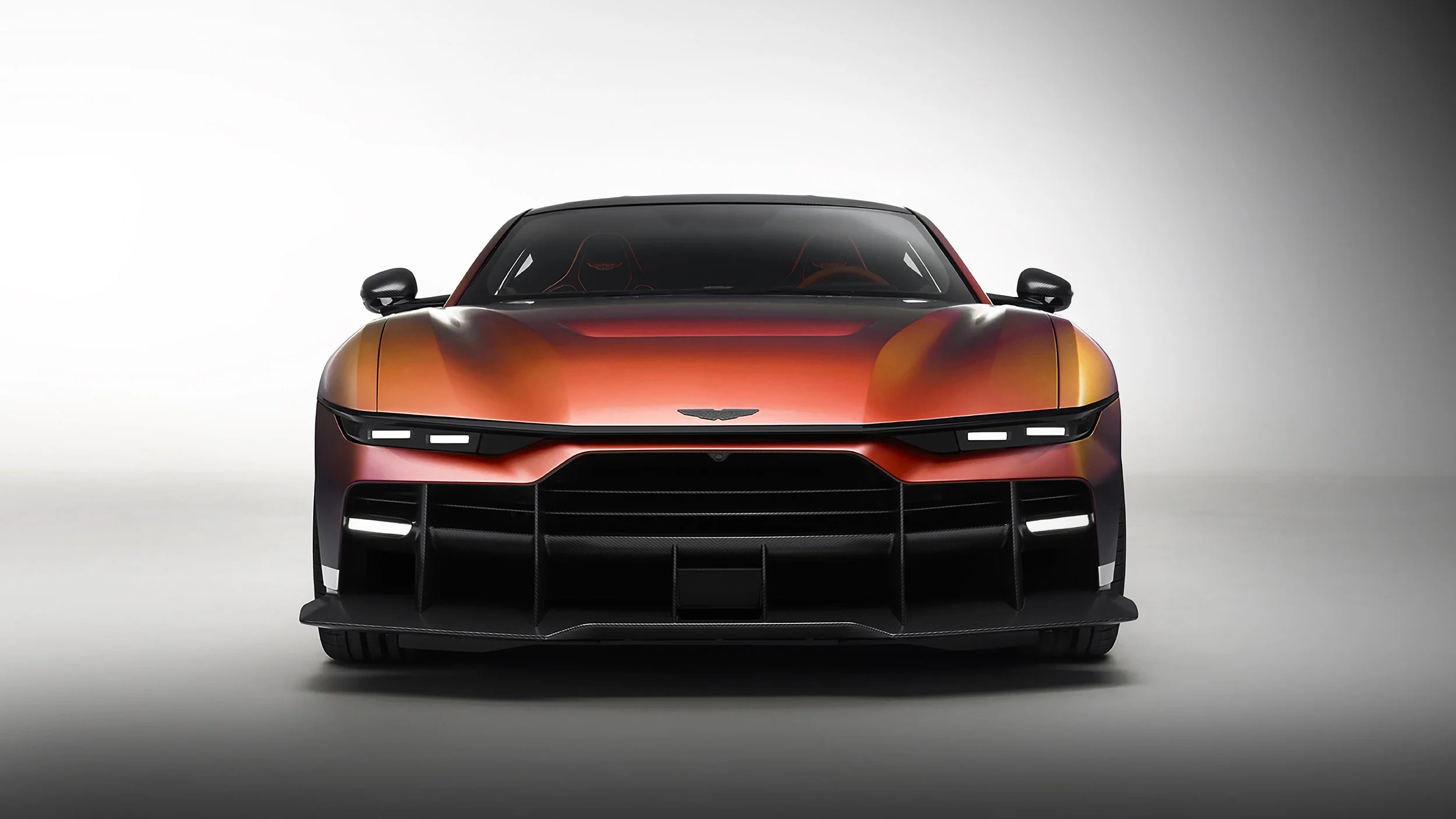
Image © Aston Martin Lagonda. Used for editorial purposes. Aston Martin Valen.
Valen is relevant to the Hunter story because Aston Martin has explained what its latest provocative design is intended to represent. Unveiled in August 2026, Valen is an 850PS, 1,000Nm, carbon-bodied V12 special limited to 150 cars worldwide.[41] Its purpose, engineering, price and production volume place it in a completely different world from a regular series-production Vantage, and Aston Martin has never described it as a descendant of Hunter.
The design comparison is therefore one of philosophy rather than confirmed ancestry.
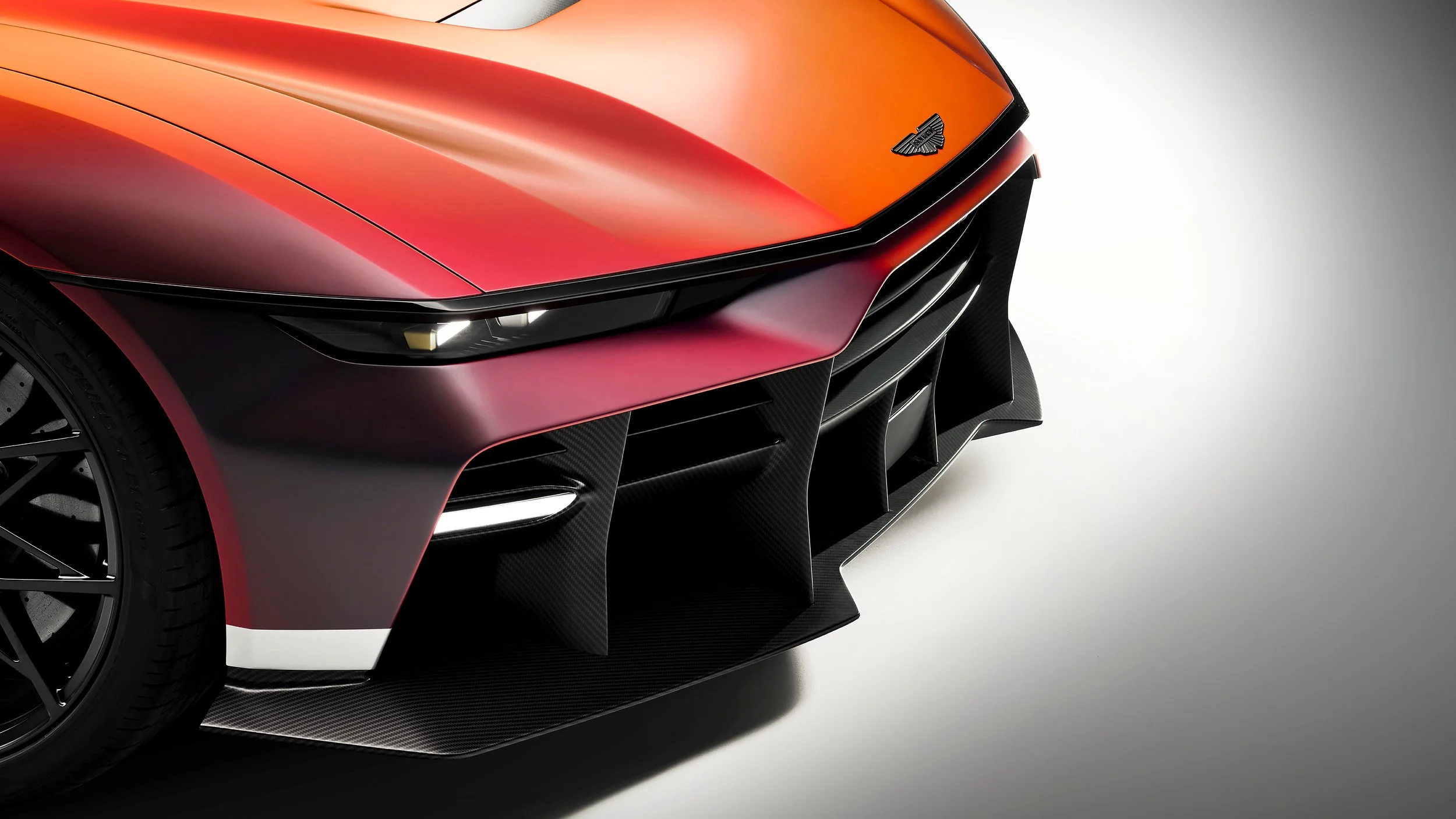
Image © Aston Martin Lagonda. Used for editorial purposes. Aston Martin Valen.
Valen's headlamps are deeply recessed beneath the plunging bonnet and visually disappear when unlit. Its radiator aperture becomes more angular and is filled by bold geometric mesh, while the familiar Aston Martin S-curve moves beneath the sharp edge of the bonnet in what the company calls a “deliberate evolution into new territory.”[41]
Reichman's explanation of the project describes Valen as a significant departure from what came before, using a new form language and sharper surface treatment to express a more provocative, attacking front-engined supercar.[41]
The evo interview adds a further piece of context. Reichman explicitly contrasts Valen with Victor, Valour and Valiant. Those cars, he says, were strongly connected with celebrating Aston Martin's history; Valen, by contrast, is conceived as a celebration of Aston Martin's future rather than a retrospective celebration of its past.[40]
The aim is to take forward-thinking technology and the newer visual language emerging from Aston Martin's broader portfolio and apply it to what comes next, while remaining within that deeply traditional front-engined, V12 Aston Martin format.[40] He even describes Valen conceptually as a front-mid-engined car with the visual attitude of something that wishes it were rear- or mid-engined.[40]
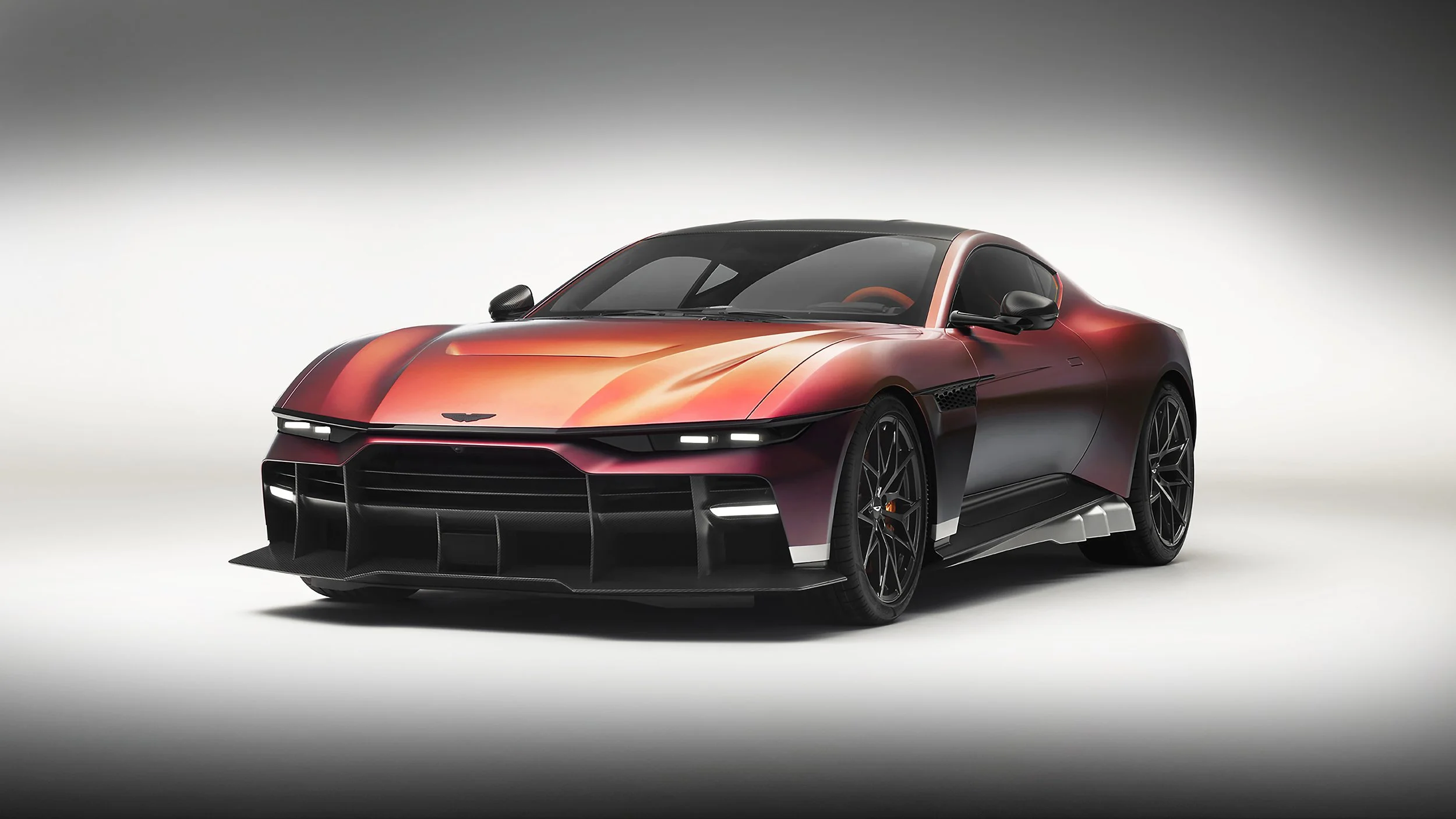
Image © Aston Martin Lagonda. Used for editorial purposes. Aston Martin Valen.
Hunter challenged the conventional grille-object while asking upper curvature, proportion, stance and surface to carry more of Aston Martin's identity. Valen manipulates some of the same underlying facial grammar, moving the familiar S-curve away from its expected visual position, recessing the lamps and allowing a more architectural aperture to dominate the face.
These programmes were not a simple sequence of successors. AM-RB 001, later named Valkyrie, was unveiled before the Hunter Vantage, and Valhalla emerged later. Reichman has explained that design lessons from aerodynamic programmes can inform Aston Martin's broader range.[40] That’s the thinking behind FTP's Bloodline theme. Vulcan tested a grille-reduced, predatory expression on a track-only car; Hunter gave a related visual attitude a much larger public stage; Valen explores another assertive face for a front-engined V12 special.
“The connections are not all the same kind, but together they reveal how often Aston Martin has challenged its own design conventions.”

Image © Fuel the Passion. For illustrative purposes.
Look at these three Aston Martins together: the original Hunter Vantage, the Valen and the Vulcan. Different cars, conceived for different purposes, yet there's something unmistakably familiar about the way their front ends are shaped.
Look at the mouths. Each presents a broad, assertive opening, framed by sculpted bodywork and headlights that give the car an unmistakable sense of purpose. The proportions differ, as do the details, but the underlying visual idea is remarkably consistent. It doesn't establish that one car was directly designed from another, nor does it need to. What we can see is a recurring willingness to move beyond Aston Martin's more traditional interpretation of its famous grille.
Perhaps that's the clearest way of understanding the bloodline. Not as a documented sequence of cars copying one another, but as a shared design philosophy that surfaces at different moments in Aston Martin's history.
ASTON MARTIN HAS BEEN HERE BEFORE
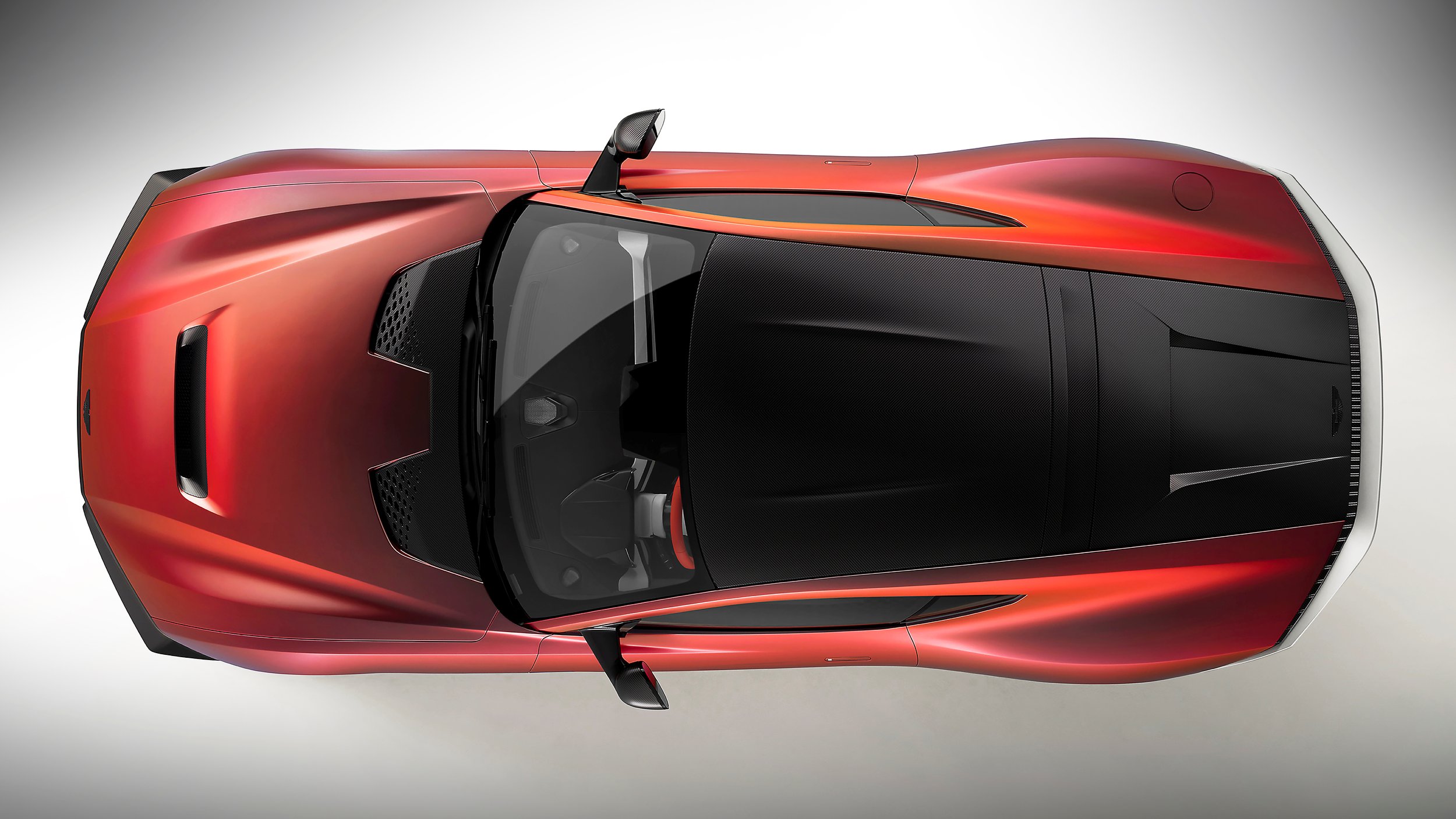
Image © Aston Martin Lagonda. Used for editorial purposes. Aston Martin Valen.
There’s another parallel between Valen and Hunter which may be more revealing than the physical resemblance.
During the same evo conversation, Adrian Hallmark openly acknowledged that some customers might be outraged by Valen. Reichman developed the point, explaining that Aston Martin's customers have different tastes: some respond deeply to the resonance of the past, while others actively want something unexpected and future-facing.[40]
The comparison with Hunter is revealing because its launch had already shown that an unconventional face could inspire admiration and resistance at once, eventually prompting Aston Martin to broaden the Vantage range. That experience doesn’t establish that Hunter directly inspired Valen; it shows the company has encountered divided reactions before. The commercial circumstances, however, could hardly be more different.
Hunter was the new Vantage. It replaced Aston Martin's most successful production model, had to sit in dealerships around the world and carried meaningful volume expectations. It needed to retain traditional Aston owners while simultaneously attracting new ones. When part of that existing customer base objected strongly enough to affect demand, Aston Martin had to respond.
Valen is limited to 150 cars.

Image © Aston Martin Lagonda. Used for editorial purposes. Aston Martin ‘Hunter’ Vantage. Start of production.
Hunter had to persuade the broader Aston Martin sports-car customer to accept the experiment; Valen's 150-car limit brings different expectations of production scale and commercial performance. That distinction allows much greater freedom in the way the two programmes can be evaluated.
Aston Martin can now place a confidently traditional face on the current Vantage, DB12 and Vanquish while allowing a car such as Valen to occupy much more provocative territory. It doesn’t need one design language to satisfy every interpretation of what an Aston Martin should be.
In fact, that breadth may be one of the most interesting things happening at Aston Martin today.

Image © Fuel the Passion
A DESIGN ECOSYSTEM, NOT A FAMILY OF RUSSIAN DOLLS
It’s tempting to organise these cars into a neat family tree, but the more revealing picture is of a design team drawing selectively upon Aston Martin's past while absorbing new lessons from engineering and aerodynamics. The traditional front grille remains central to DB12 and today's Vantage, the muscular heritage strand is visible in cars such as Victor and Valour, and the shapes of Valkyrie and Valhalla are influenced heavily by airflow. None of these approaches prevents the others from existing.
Reichman's 2026 evo conversation captures the approach: Aston Martin's history offers design possibilities rather than a rule that every model must repeat the familiar shape.[40] Hunter occupies a particularly exposed moment within that broader experimentation because its challenge to convention reached a regular production sports car.
SO WAS HUNTER A MISTAKE?
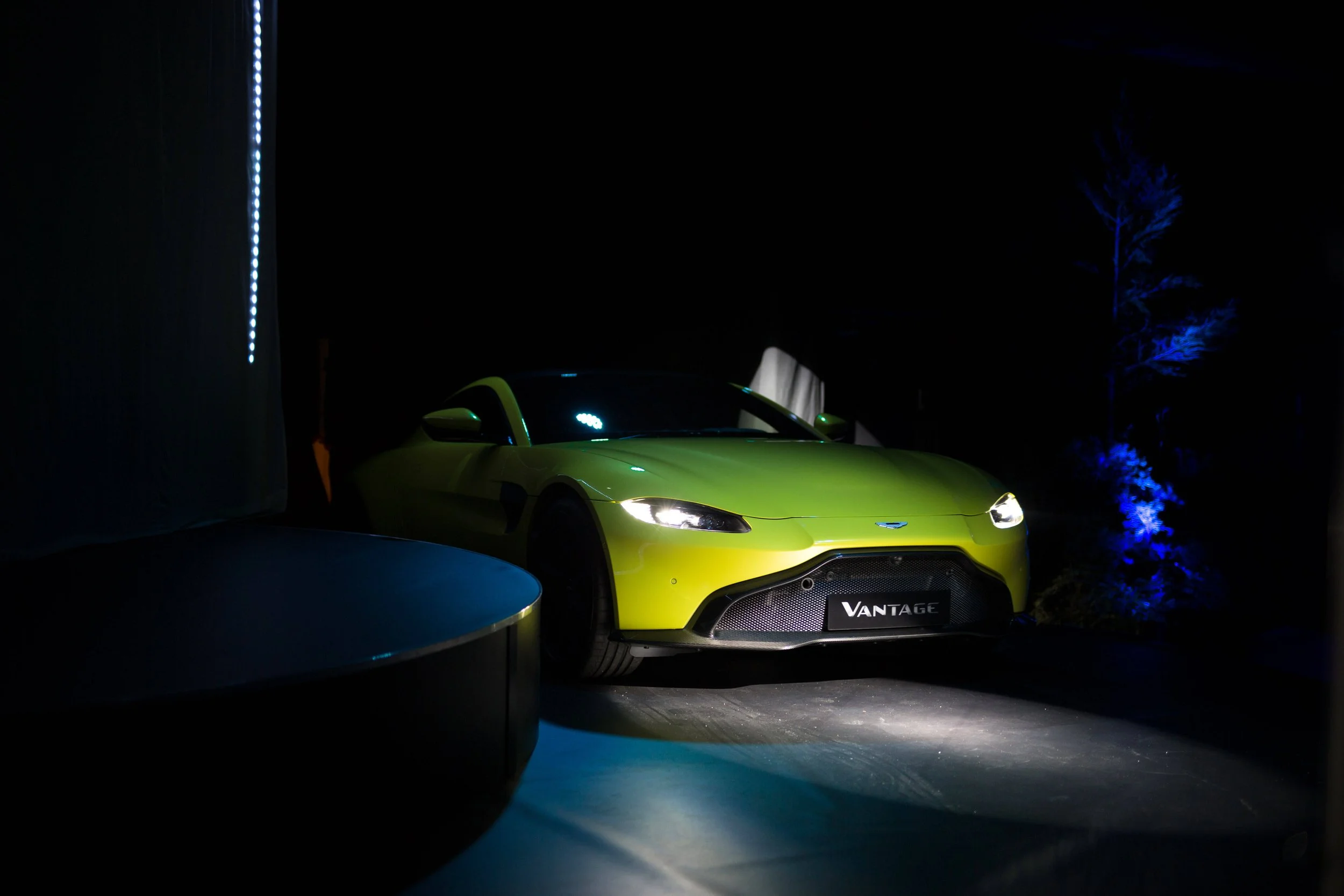
Image © Aston Martin Lagonda. Used for editorial purposes.
That remains, ultimately, an aesthetic judgement rather than a historical fact. What the evidence can establish is that Hunter achieved several things Aston Martin deliberately wanted it to achieve — and imposed costs the company later chose to address.

Image © Aston Martin Lagonda. Used for editorial purposes. CEO of AML at the time of ‘Hunter’ Vantage production, Andy Palmer (man on left).
It certainly differentiated Vantage. Nobody could plausibly confuse the 2018 sports car with DB11, and it created an identity so particular to this generation that the car remains instantly recognisable years after production of the original face ended. It also challenged some customers' understanding of how an Aston Martin should look. Palmer eventually acknowledged that the grille's aggression had driven some traditional buyers away.[27]
Differentiation and customer resistance can coexist. Neither outcome proves that Hunter was a failed design, just as later admiration cannot establish that its original critics were wrong. The evidence leaves room for both judgements.
There’s an instructive historical parallel. At the Aston Martin Heritage Trust's Walter Hayes Memorial Lecture in January 2024, Reichman reflected on William Towns' startling Lagonda and Bulldog designs, recognising how shapes once regarded as unusually forceful or brutal had acquired renewed appreciation. His point was not about Hunter, and it cannot tell us how the Vantage will be valued in future. It does remind us, though, that an unconventional design's reputation can change as the visual world around it changes.[42]
The historical parallels cannot settle whether Hunter is beautiful. They do, however, place its boldness within a wider Aston Martin tradition.
WHAT HUNTER ACTUALLY CHANGED
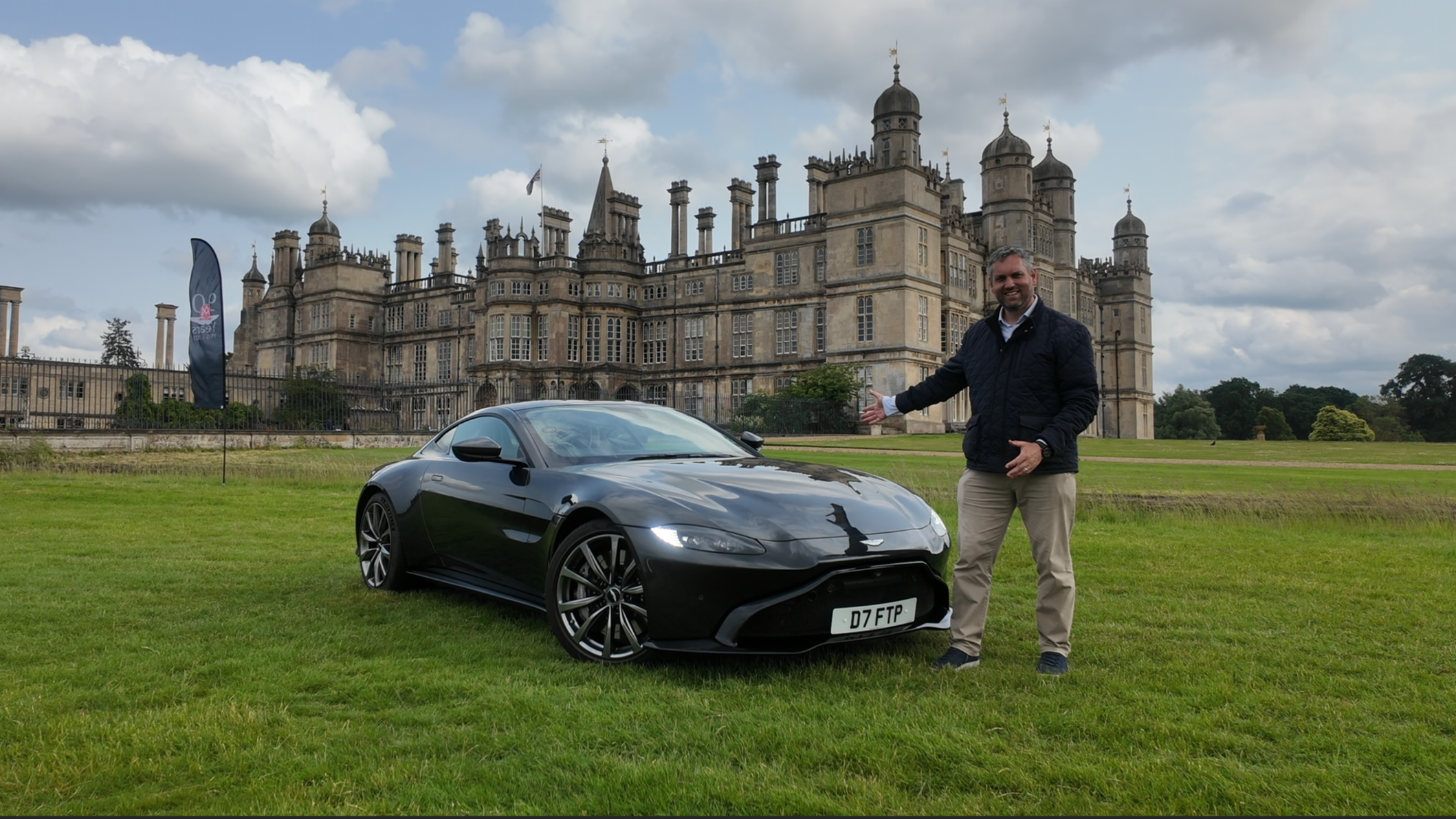
Image © Fuel the Passion, Dan & FTP Vantage, achieving second in class at AMOC Spring Concours 2025.
Living with an original Hunter has made this history personal, but researching it has also helped me see the car more clearly. I still admire the familiar Aston Martin grille, and I understand why some customers missed it when the new Vantage appeared. The original car was not designed to offer a more delicate version of its predecessor. It was meant to look like something different, and it did.
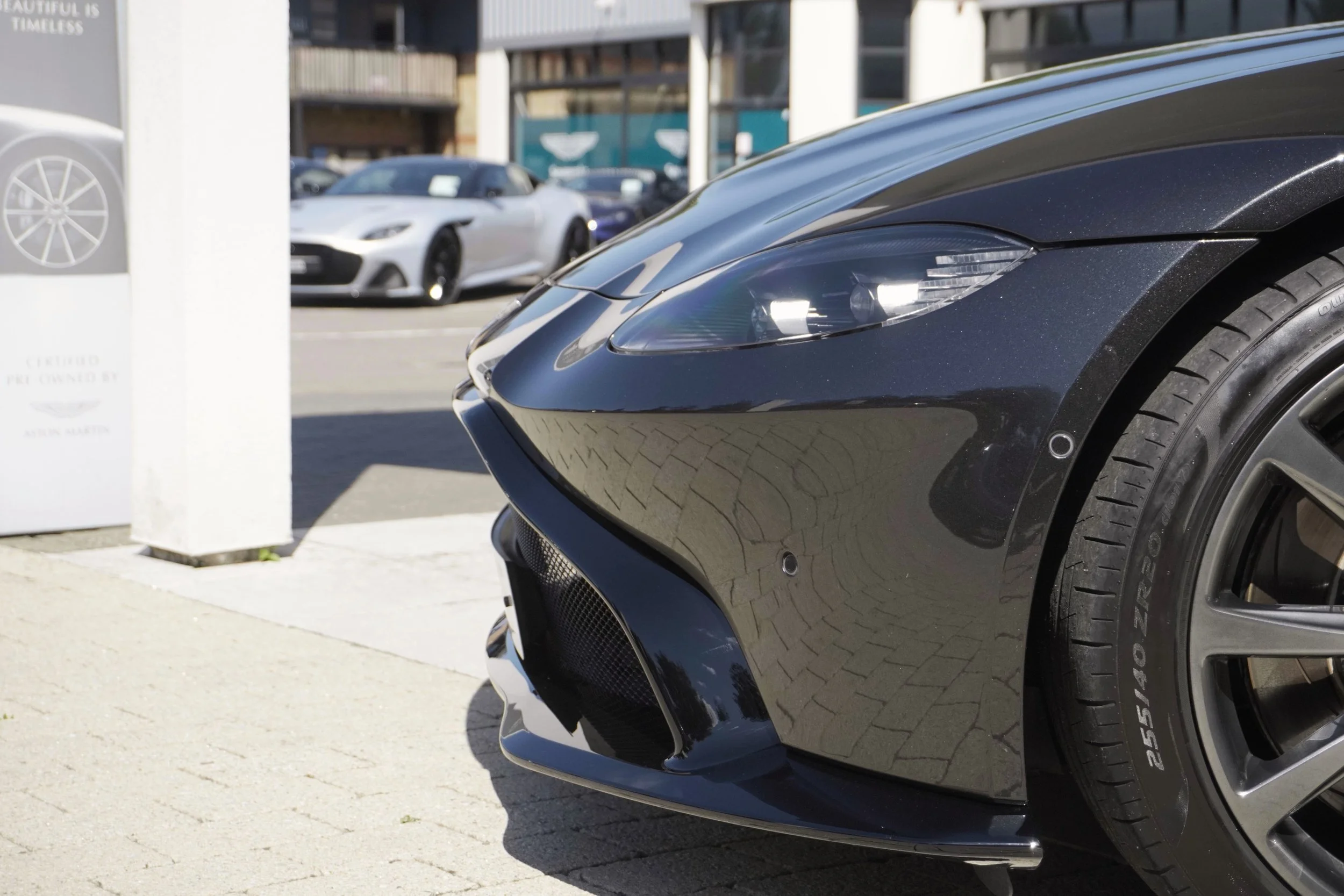
Image © Fuel the Passion. FTP Vantage collection day, August 2024.
I notice that distinction during ordinary drives, rather than at motor shows: in the sweep of the enormous clamshell bonnet, the low nose appearing in a shop-window reflection, or the unusual expression of the headlights when I walk back towards the car. Familiarity has not made the Hunter face disappear into the background. If anything, the design still makes me look twice.
That affection doesn’t prove Hunter was right for everyone. Aston Martin broadened the choice with Vane, and the comprehensively revised 2024 Vantage restored a more explicit version of the familiar grille. It’s entirely possible to appreciate those decisions while still preferring the original mesh-fronted car. What we cannot do is treat taste as a statistic or assume that an enthusiastic owner's opinion settles the question.
Nor should we confuse historical importance with future value. Goodwood's prediction that original Hunter-look cars might eventually become sought-after remains a prediction, not a proven market trend.[33] I rarely encounter another on my own drives, but that experience tells us nothing reliable about the number remaining on British roads.
For me, Hunter's lasting interest lies elsewhere. Aston Martin gave one of its most important series-production sports cars a deliberately unfamiliar face, anticipating that not everyone would welcome it. The response was mixed, the commercial decisions that followed were real, and the design became an unmistakable part of this Vantage generation's identity.
The company can now celebrate its classic design signatures while also making cars such as Valen. Those differing approaches do not settle the argument about Hunter's beauty; they show that the argument belongs within a much broader history of experimentation at Aston Martin.
I bought my Vantage because I loved the way it looked and drove, not because I ever expected to write about the history of its grille. Having followed that history back through DB10 and Vulcan and forward into Aston Martin's latest design conversations, I appreciate something else about the car I see on the driveway.

Image © Fuel the Passion. FTP Vantage, Reims Historic Motorsport Buildings, September 2024.
FUEL THE PASSION • RESEARCH ARCHIVE
Sources & Evidence
The following sources are numbered according to their first appearance in the article. References to printed publications are identified by issue and page details where available. Supplementary publications used to verify financial calculations and the historical chronology are grouped under the relevant numbered references.
42 NUMBERED REFERENCES| Ref | Source | Date | Used for | Evidence type |
|---|---|---|---|---|
| REFERENCES 1–10 | ||||
| [1] | 12 Feb 2020 | Hunter and Vane factory nomenclature; simultaneous grille options | Manufacturer announcement | |
| [2] | 21 Nov 2017; webpage dated 22 Nov | Launch styling, heritage, specifications and Vulcan inspiration | Manufacturer announcement | |
| [3] | 16 Mar 2017 | Revolutionary design intention; differentiation from DB11 | Contemporary interview | |
| [4] | 28 Mar 2017 | Upper grille geometry, traditional vanes and model differentiation | Contemporary interview | |
| [5] | 19 Mar 2019 | Russian dolls, Hunter identity and atypical Vantage styling | Interview by Loz Blain | |
| [6] | 4 Dec 2014; 21 Nov 2017 | DB10's December 2014 public unveiling; Sam Holgate's recollections and DB10's relationship to Vantage development | Official film announcement and contemporary interview | |
| [7] | 5 Oct 2021 | Retrospective shark sketch and Hunter concept | Interview | |
| [8] | 15 Oct 2015 | Recessed grille, shark symbolism and future design direction | Interview by Sam Philip | |
| [9] | 26 Oct 2015 | DB10 design and mechanical foundations | Contemporary interview | |
| [10] | 2016 | Shark-like Hunter design description | Award archive | |
| REFERENCES 11–20 | ||||
| [11] | Feb–Jun 2015 | Vulcan's influence on future sports-car design | Contemporary journalism and manufacturer release | |
| [12] | 14 Nov 2015 | Vulcan and DB10 clues to future styling | Contemporary interview | |
| [13] | Nov 2017 | Launch campaign and design language | Manufacturer announcement | |
| [14] | 10 and 16 Apr 2018 | Headlamp packaging and estimated grille-structure weight | Contemporary motoring journalism | |
| [15] | 21 Nov 2017 | Illustrative contemporary viewer reactions | Video and comments | |
| [16] | 11 Apr 2018 | Miles Nurnberger's acknowledgement of criticism | Interview by Jason Barlow | |
| [17] | 21 Nov 2017 | Parallel road and racing development | Manufacturer announcement | |
| [18] | 24 Nov 2017 | Simultaneous road and racing development; engineering collaboration; shared architecture and engine foundations; construction, Sebring testing and launch | Original manufacturer documentary | |
| [19] |
Vantage: An Independent Aston Martin Magazine
— Richard Meaden, “24-Hour Fever”
|
Summer 2018, Issue 22, from p. 42 | First GTE Le Mans experience | Specialist print journalism |
| [20] | 18 Nov 2018 | First WEC victory at Shanghai | Manufacturer race report | |
| REFERENCES 21–30 | ||||
| [21] | 14 Nov 2020 | WEC championship and Le Mans successes | Manufacturer motorsport report | |
| [22] | 4 Oct 2023 | Historical Vantage GTE and customer-racing achievements | Manufacturer motorsport announcement | |
| [23] |
Vantage: An Independent Aston Martin Magazine
— Richard Meaden, “Shock of the New”
|
Summer 2018, Issue 22, pp. 70–77 | Original Vantage road-test verdict | Specialist print journalism |
| [24] | Jul 2018 | Vantage's Design Award | Manufacturer announcement | |
| [25] | 17 May 2018 | Production and customer strategy | Manufacturer announcement | |
| [26] |
Aston Martin Lagonda — 2019 Annual Report
Supporting report: H1 2020 Results — historical wholesale comparisons
Supporting report: 2020 Annual Report — sales comparison
Supporting report: FY2021 Results — 2020 and 2021 Sports wholesales
Supporting report: 2022 Annual Report — 2022 Sports wholesales
Supporting report: FY2023 Preliminary Results — combined Sport/GT wholesales
|
FY2018–FY2023 | 2019 sports-car market contraction and Vantage sales performance; reported 2018–2022 Sports-category wholesales; 2023 combined Sport/GT wholesales. Financial evidence underpinning FTP's scenario-based estimate of factory-original Hunter-grille Vantages. |
Corporate financial reporting
Reported wholesale figures are distinguished from FTP's own estimated Vantage volumes and grille-selection assumptions.
|
| [27] | 27 Feb 2020 | Traditional customer reaction and commercial challenges | Corporate results discussion | |
| [28] | 12 Feb 2020 | Hunter-versus-Vane assessment | Independent motoring journalism | |
| [29] | 2020 onward | Factory-authorised conversion and front-end components | Manufacturer service information | |
| [30] | 4 Dec 2020 | Headlight criticism and Aston Martin's response | Corporate shareholder document | |
| REFERENCES 31–42 | ||||
| [31] |
Vantage: An Independent Aston Martin Magazine
— Peter Tomalin, “Meeting the Family”
|
Summer 2018, Issue 22, pp. 78–108 | Vantage heritage and enthusiast assessment | Specialist print journalism |
| [32] | 7 Apr 2022 | Reassessment of the Hunter grille | Independent motoring journalism | |
| [33] | 11 Jun 2020 | Prediction concerning original Hunter desirability | Independent motoring commentary | |
| [34] | 22 Mar 2021 | Performance developments and standard Vane grille | Manufacturer announcement | |
| [35] | Aug–Sep 2026; mileage relates to 2025 | DVLA-derived Vantage first registrations, 2018–2023 (2,486); total licensed UK vehicles at June 2026 (42.9 million); DVSA MOT-derived 2025 average annual mileage (6,727 miles). Underlying published data for FTP's modelled UK Hunter population, rarity and illustrative annual-sighting scenarios. |
Government statistics and independent DVLA/DVSA data analyses
The mileage average covers vehicles represented in the MOT dataset, rather than every licensed car. Hunter survival, grille retention, usage and traffic-encounter assumptions are FTP modelling inputs, not measured national figures.
|
|
| [36] | Mar 2016; Jun 2018; May 2023; Feb 2024 | The 2024 Vantage's revised styling, cooling and performance specifications; supplementary manufacturer evidence for the introduction dates of DB11, DBS Superleggera and DB12 in “The Order of Things” chronology. | Manufacturer announcements and corporate presentation | |
| [37] | 11 Jul 2023 | Historic high-performance design influences | Manufacturer announcement | |
| [38] | 26 Jun 2024 | Valiant's origins and design philosophy | Manufacturer announcement | |
| [39] | Official model information | Valhalla's aerodynamics and grille architecture | Manufacturer technical information | |
| [40] | 14 Aug 2026 | Valen design philosophy and predicted reactions | Contemporary interview | |
| [41] | 14 Aug 2026 | Valen design, specifications and production limit | Manufacturer announcement | |
| [42] | 23 Jan 2024; video published Jun 2024 | William Towns, Lagonda and Bulldog design reflections | Heritage lecture | |
FUEL THE PASSION • JOIN THE CONVERSATION
Now, Over to You.
We've explored the history, the controversy and the design connections that make Hunter such an intriguing chapter in Aston Martin's story. But this is a debate that deserves more than one perspective.
Was the Hunter grille a design mistake, or was it simply ahead of its time?
We'd love to hear your thoughts. Whether you've always admired Hunter's distinctive appearance or never quite warmed to it, tell us what you think in the comments below.