
What to Know Before Buying Newport Pagnell’s V12 Flagship
Fuel the Passion is independent and this guide is not produced in association with Aston Martin Lagonda. It’s intended as editorial buying guidance for enthusiasts and prospective owners.
Estimated Read Time
A detailed guide to the first-generation Aston Martin Vanquish, covering model history, variants, gearbox choices, known issues, ownership costs and buying checks.
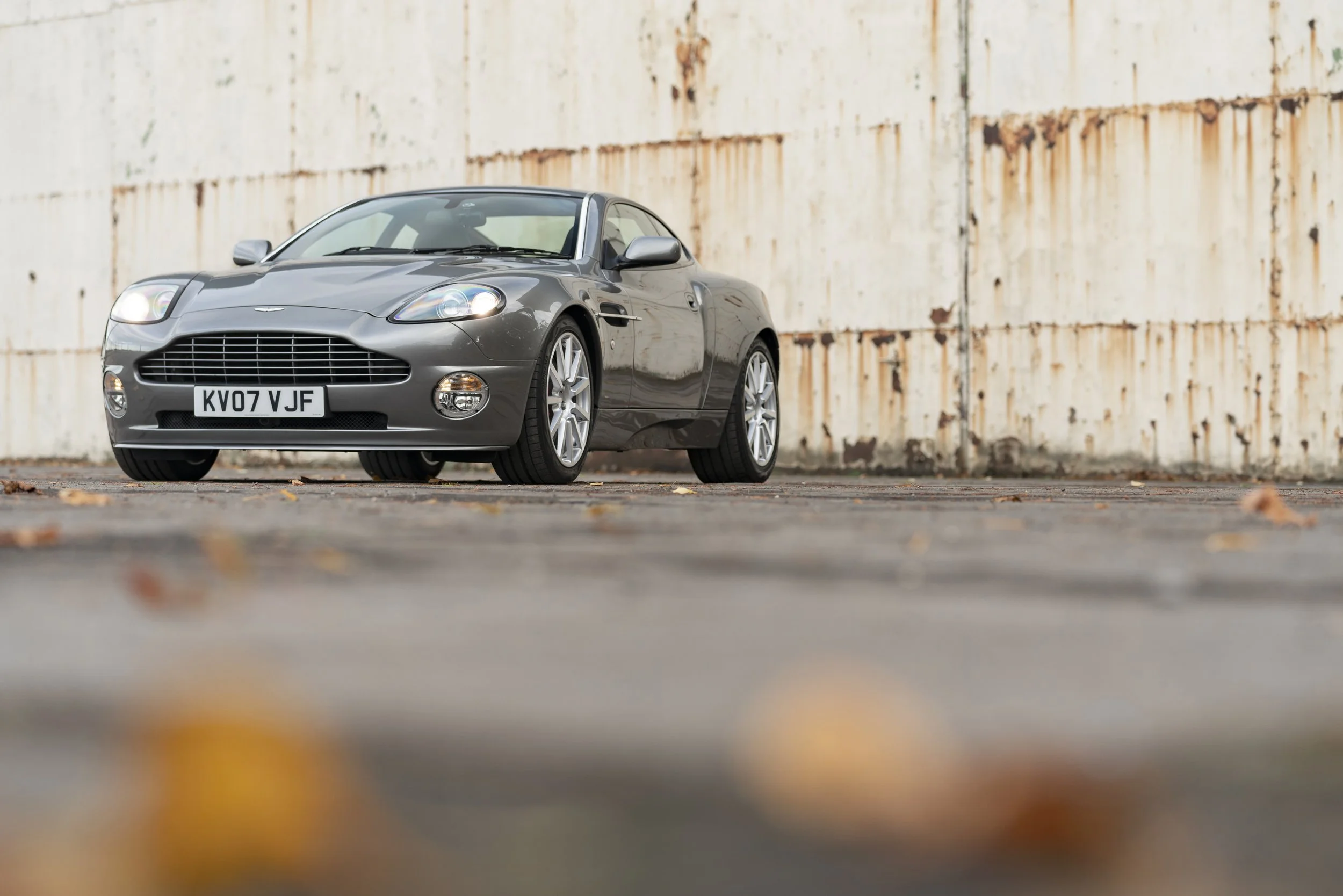
Image © Aston Martin Lagonda. Used for editorial purposes.
Editor’s Introduction - Dan, Fuel the Passion
The first-generation Aston Martin Vanquish is one of those cars that is too often reduced to a few easy headlines. It was the Bond car from Die Another Day. It was the Aston Martin with the controversial paddle-shift gearbox. It was the expensive flagship that suddenly had to justify itself once the DB9 arrived. All of those things are part of the story, but none of them properly explains why the original Vanquish still matters.
To understand the Vanquish, you have to see it as a car built between two Aston Martin worlds. On one side was the old Newport Pagnell era: hand-built craftsmanship, traditional skills, low-volume production and a sense of occasion that had defined Aston Martin for decades. On the other side was the future: bonded aluminium, carbon fibre, a naturally aspirated V12 engine and the more modern Aston Martin era that would soon gather pace at Gaydon.
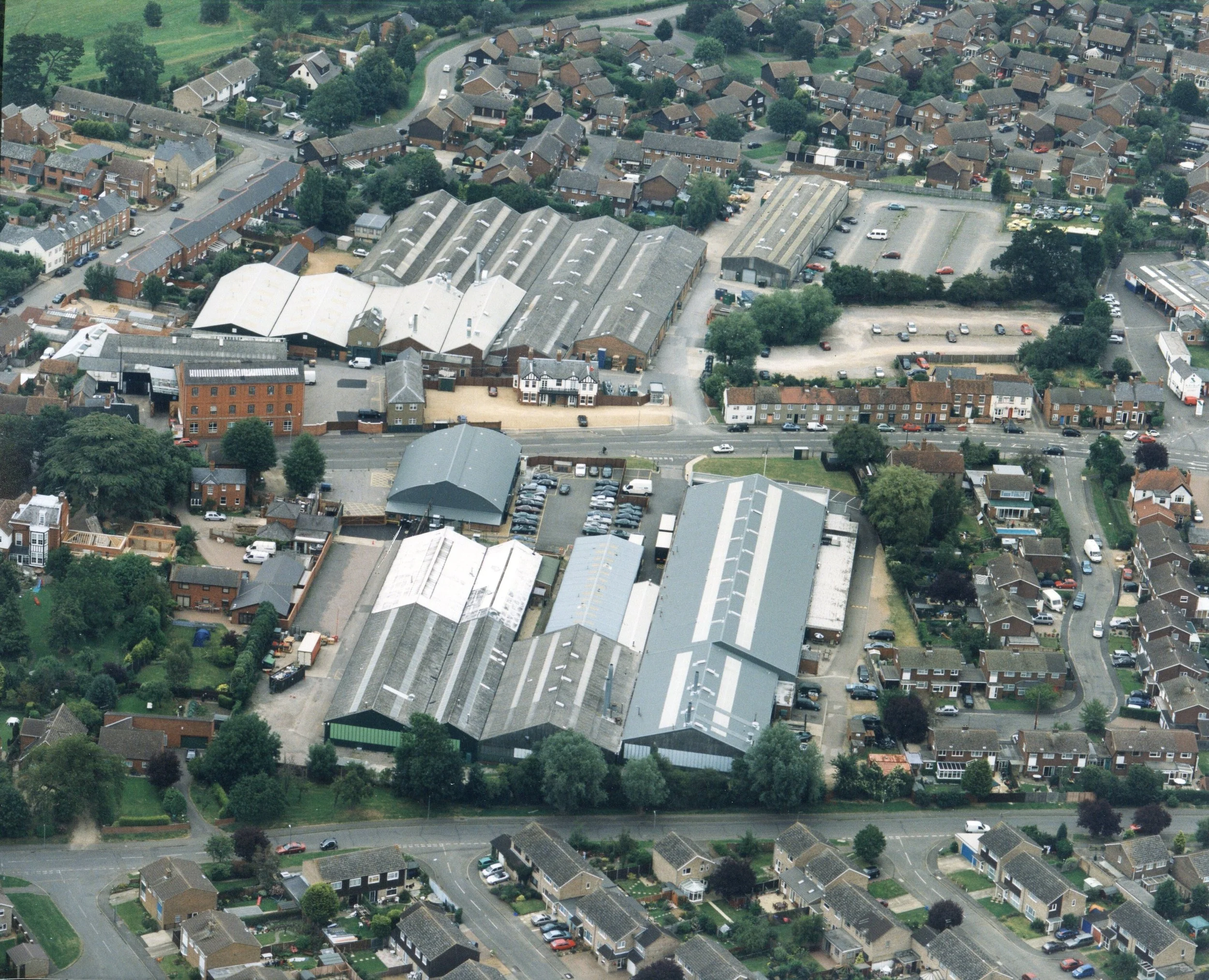
Image © Aston Martin Lagonda. Used for editorial purposes. Aston Martin Works, Newport Pagnell.
That’s what makes the first-generation Vanquish so fascinating. It was built at Newport Pagnell, but it was not built like the older Newport Pagnell cars. Beneath Ian Callum’s muscular bodywork was a structure that moved Aston Martin into a new technical age, with an aluminium tub, carbon-fibre transmission tunnel, carbon-fibre A-pillars, composite sections and hand-finished superformed aluminium panels. It was modern and traditional at the same time, which is exactly why it feels so different from the DB7 before it and the DB9 after it.
The design still has enormous presence. The broad stance, powerful rear haunches, long bonnet and compact cabin give the Vanquish a very different character from the cleaner, sleeker Aston Martins that followed. It doesn’t look like a car designed purely by committee or aerodynamic calculation. It looks like a proper front-engined Aston Martin grand tourer with muscle, theatre and confidence.
But this isn’t a car to buy on looks alone. A first-generation Vanquish is now a specialist modern classic, and that means condition, history and expert inspection matter enormously. The best cars can be deeply rewarding: charismatic, usable, beautifully made in places and full of V12 character. The wrong car can become expensive very quickly, especially if it has hidden corrosion, weak gearbox or clutch history, tired brakes, ageing electronics, poor repair work or years of deferred maintenance.
The gearbox also deserves a fairer discussion than it often receives. The original Vanquish was not fitted with a conventional automatic gearbox. It used an electro-hydraulically operated manual system controlled by paddles, and it needs to be judged as such. Some buyers will want the originality and theatre of the factory paddle-shift setup. Others will be drawn to Aston Martin Works manual conversions or other specialist conversions. There’s no single right answer for every buyer, but there’s one consistent rule: the paperwork, condition, setup and quality of the individual car matter more than the argument itself.
This guide is intended to help you approach the first-generation Vanquish with both enthusiasm and caution. It’s a car with genuine historical significance, but also one that demands proper buying discipline. The aim is not to frighten buyers away, nor to romanticise the car beyond reason. It’s to explain what the Vanquish is, why it matters, where the main risks sit, and how to give yourself the best chance of buying a good one.
Because when a Vanquish is right, it remains one of the great modern Aston Martins: a Newport Pagnell-built V12 flagship, shaped by Ian Callum, full of old-world craftsmanship and new-era ambition. Not just the Bond car. Not just the gearbox debate. The missing link between old Aston Martin and modern Aston Martin.
Important Information
The FTP Aston Martin Buyers Guides are provided for general information and enthusiast guidance only. They are not a substitute for a professional inspection, specialist mechanical advice, legal advice, financial advice, insurance advice or independent valuation.
What This Guide Covers
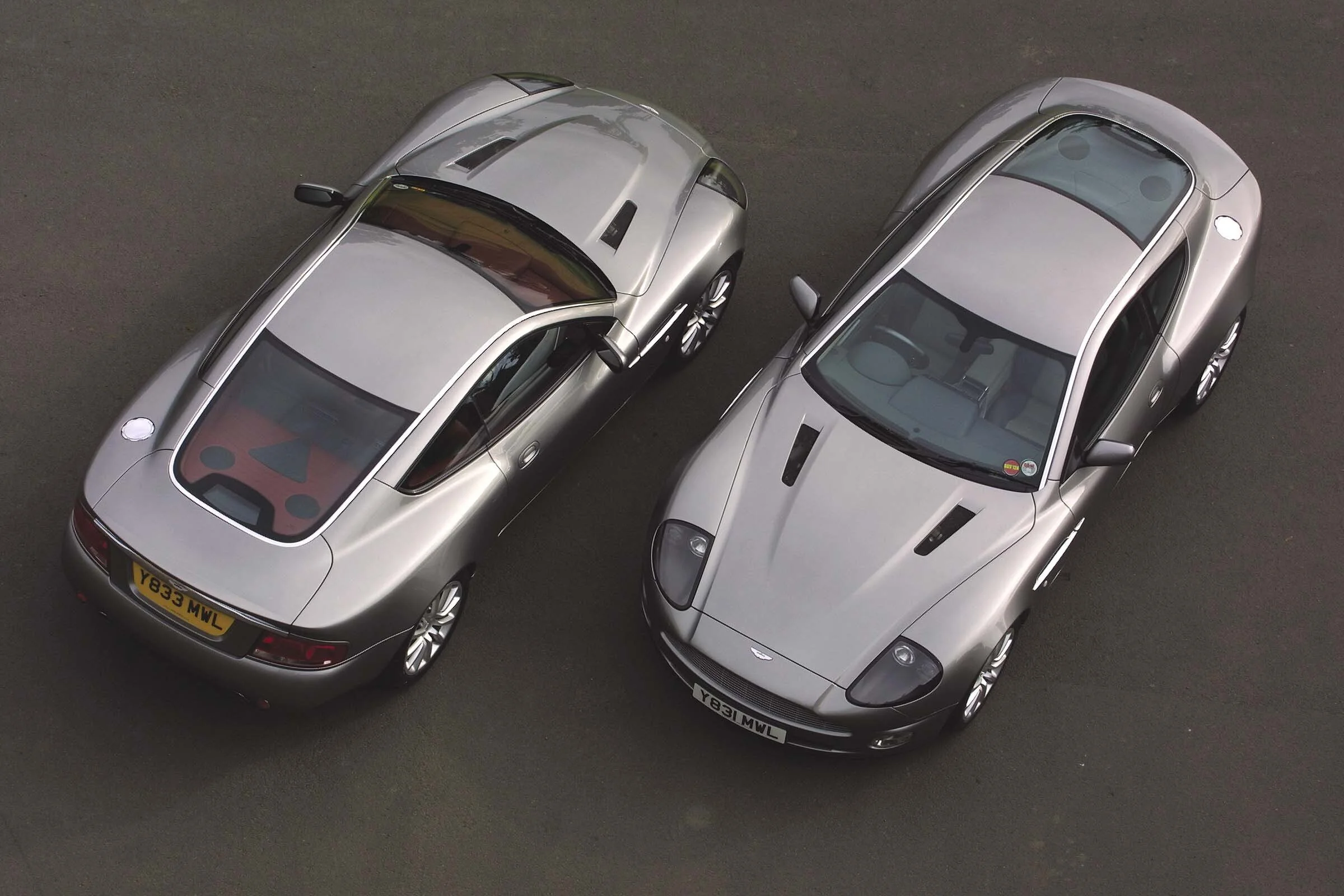
Image © Aston Martin Lagonda. Used for editorial purposes.
This FTP Buyers Guide focuses on the first-generation Aston Martin Vanquish, produced from 2001 to 2007. It covers the original V12 Vanquish, the rare Sport Dynamic Pack cars, the later Vanquish S and the final Vanquish S Ultimate Edition.
It also considers Aston Martin Works manual conversions and other specialist gearbox conversions where they’re relevant to buyers. These cars now form an important part of the Vanquish market, but they need to be judged carefully. A manual-converted Vanquish is not automatically better or worse than an original ASM/SSM car. ASM/SSM stands for Auto Shift Manual / Select Shift Manual. In plain English, it’s Aston Martin’s electro-hydraulically operated manual gearbox system: a manual gearbox controlled by paddles, with the clutch and gear selection operated by hydraulic and electronic systems rather than a traditional clutch pedal and gear lever.
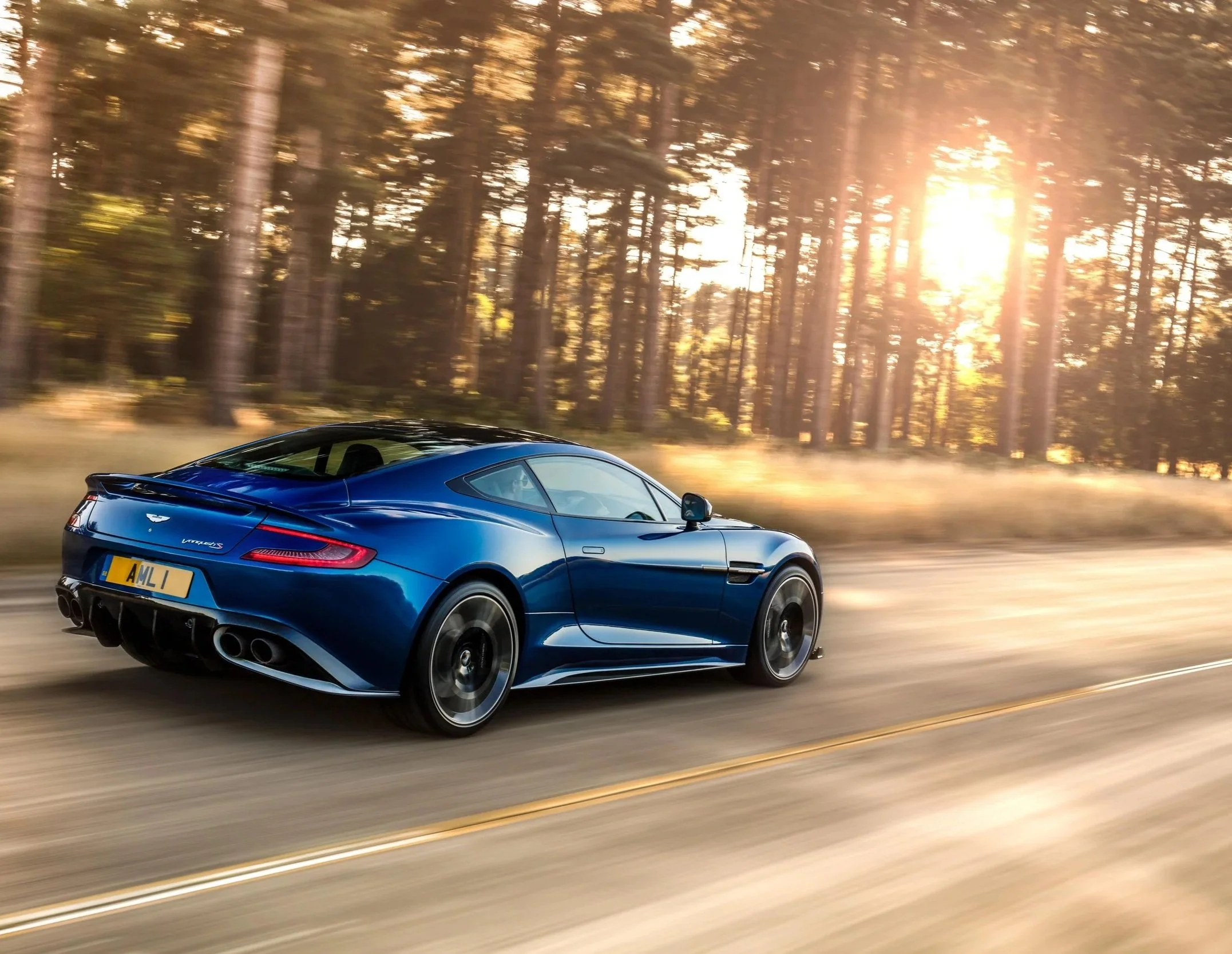
Image © Aston Martin Lagonda. Used for editorial purposes. Second generation Vanquish S.
This guide does not cover the second-generation Vanquish launched in 2012, the Vanquish Zagato, or the latest Vanquish. Those are separate cars with different platforms, different ownership considerations and different buyer profiles. The DB7, DB9, DBS and later V12 Vantage may be mentioned for context, but they’re not the focus here.
The aim is to help prospective buyers understand what makes the first-generation Vanquish special, what separates the different versions, how the car was built, how it should drive, what the main known issues are, and what to check before buying one.
As with all FTP Buyers Guides, this should be treated as general enthusiast information rather than a substitute for professional advice. A first-generation Vanquish is a specialist modern classic, and any serious purchase should be supported by a detailed inspection from an Aston Martin main dealer, Aston Martin Works at Newport Pagnell, or a recognised independent specialist with proper first-generation Vanquish experience.
Brief History - From Project Vantage to Vanquish
The first-generation Vanquish didn’t appear in isolation. By the late 1990s, Aston Martin had already regained important momentum with the DB7, a car that brought the marque back to a wider audience and helped stabilise the company after a difficult period.
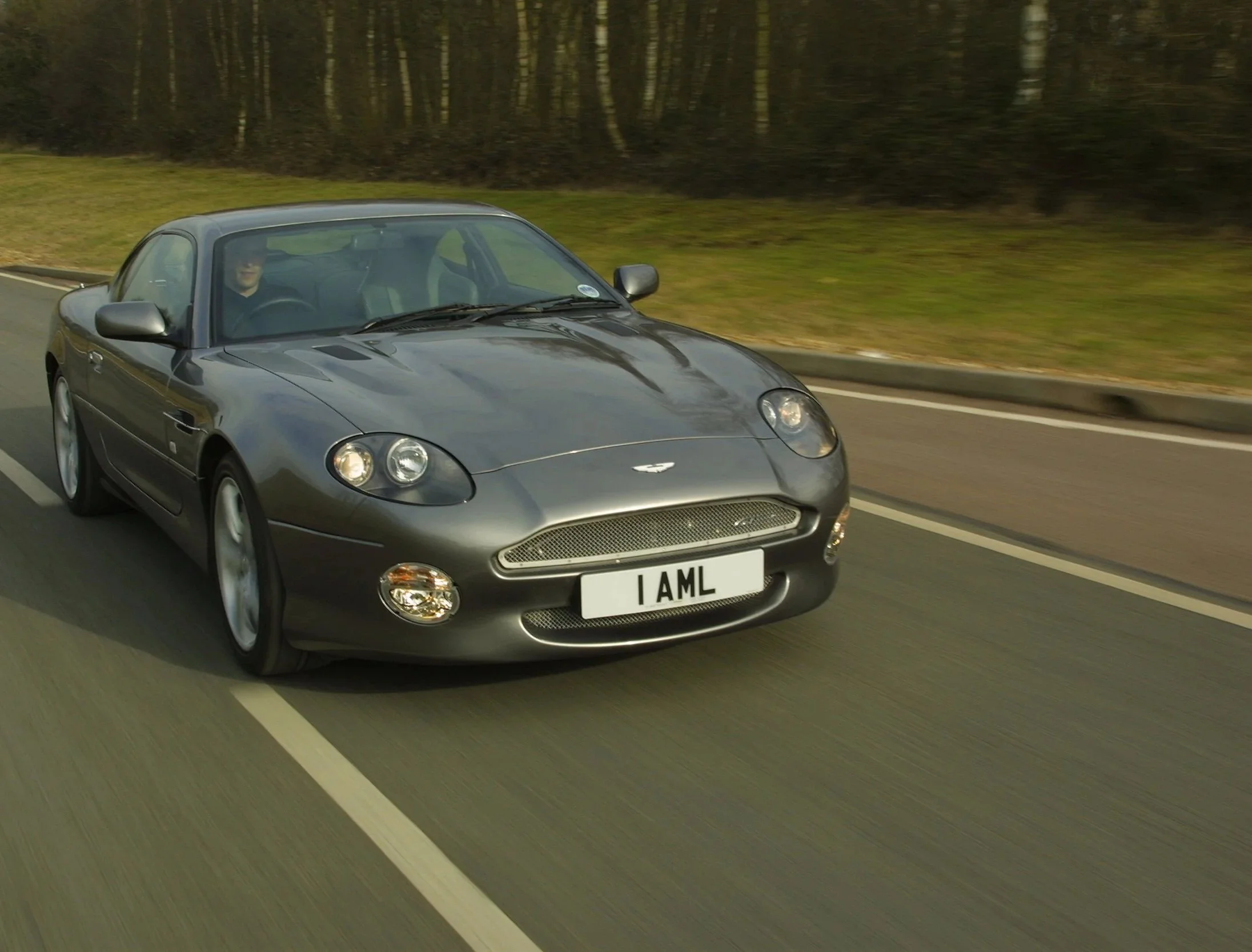
Image © Aston Martin Lagonda. Used for editorial purposes. DB7 GT.
But the Vanquish had a different role. If the DB7 helped Aston Martin recover, the Vanquish showed what the company wanted to become next.
The story really begins with Project Vantage, the dramatic concept car first shown in 1998. Styled under Ian Callum, it previewed much of the shape and attitude that would later define the production V12 Vanquish. The broad shoulders, powerful stance, long bonnet and muscular rear haunches were all there, pointing towards a more assertive Aston Martin flagship.
When the production Vanquish arrived, it carried that concept-car drama into a road car. It was publicly revealed at the Geneva Motor Show in March 2001, but Aston Martin had already been showing the car privately to early customers before then. The Aston Martin Heritage Trust, often shortened to AMHT, has preserved a first-generation Vanquish cutaway car that was used to show prospective customers not only the shape of the new car, but also the radically different way it was constructed.
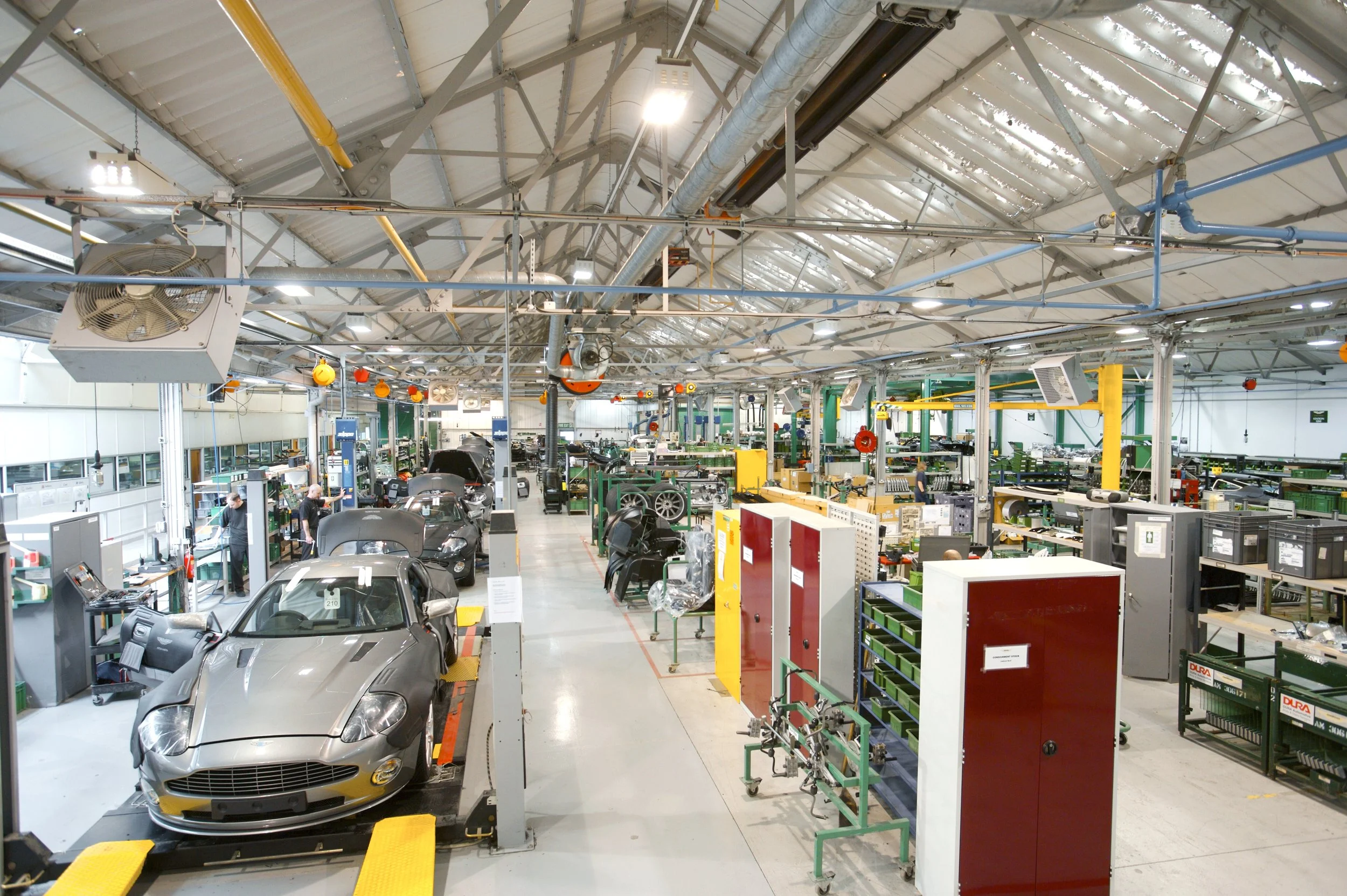
Image © Aston Martin Lagonda. Used for editorial purposes. V12 Vanquish production at Aston Martin Newport Pagnell
That construction mattered. The Vanquish was still built at Newport Pagnell, but it was not simply a continuation of the old Newport Pagnell method. It used bonded aluminium, carbon fibre and composite structures in a way that moved Aston Martin into a more modern technical era, while still relying on traditional craftsmanship and hand-finishing. That combination is central to the car’s identity.
Power came from Aston Martin’s naturally aspirated 5.9-litre V12, giving the Vanquish the performance and sound expected of a true flagship. It was a big, powerful, front-engined grand tourer rather than a lightweight sports car, and that positioning is important for buyers to understand. The Vanquish was built for presence, speed, distance and theatre.
Its public profile increased further in 2002 when it appeared in Die Another Day. The Bond connection gave the car global recognition and remains part of its appeal today, but it shouldn’t be allowed to dominate the story. The Vanquish matters not just because it was a film car, but because it was Aston Martin’s early-2000s statement of ambition.
The later Vanquish S sharpened the formula with more power, revised chassis settings, improved braking, aerodynamic changes and a 200 mph-plus headline that made it Aston Martin’s fastest roadgoing car at the time. It helped move the Vanquish further away from the DB9 and gave the model a more focused flagship identity.
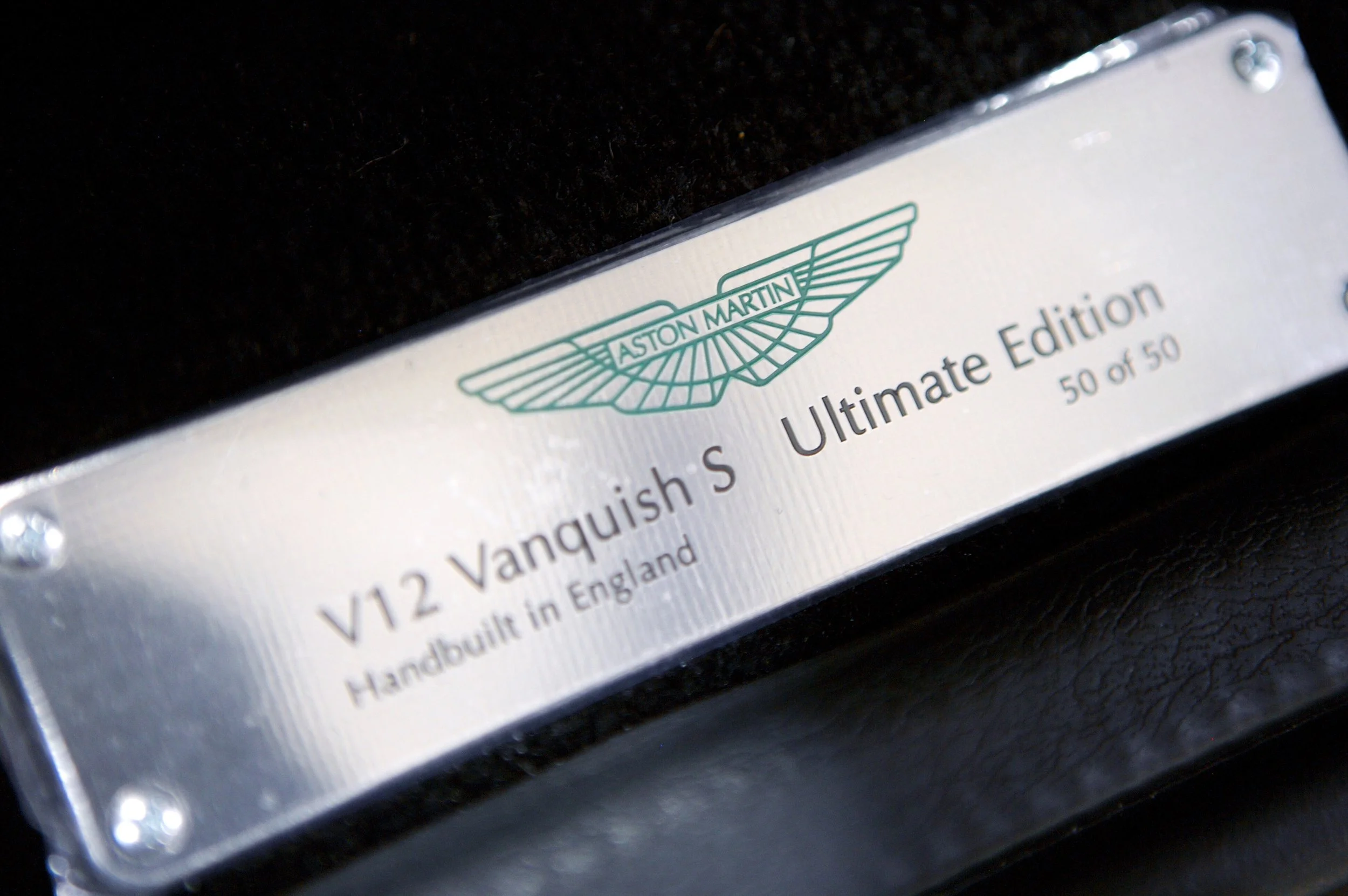
Image © Aston Martin Lagonda. Used for editorial purposes. A plaque denoting the final V12 Vanquish S Ultimate Edition.
Production came to an end in 2007 with the Vanquish S Ultimate Edition, marking not only the end of the first-generation Vanquish, but also the closing chapter of series-production Aston Martin road cars at Newport Pagnell. That gives the car a significance that goes beyond performance figures or market values.
The first-generation Vanquish is therefore best understood as a bridge. It followed the DB7, preceded the Gaydon-era DB9, and carried Aston Martin from old-world hand-built tradition into a more modern technical future. That’s why it remains such an important car, and why buying one properly deserves real care.
Model Timeline and Variants
Before looking at known issues or buying strategy, it’s worth understanding the main versions of the first-generation Vanquish. The differences matter because the market doesn’t treat every Vanquish the same way, and neither should a buyer.
At a simple level, the range can be divided into the original V12 Vanquish, the rare Sport Dynamic Pack cars, the later Vanquish S, the final Ultimate Edition and manual-converted examples. Each has its own appeal, but condition and history remain more important than badge hierarchy.
Model Timeline and Buyer Relevance
A quick guide to the main first-generation Vanquish variants before looking more closely at condition, history and specialist inspection.
| Version | Approximate Period | Headline Output | Buyer Relevance |
|---|---|---|---|
| V12 Vanquish | 2001–2005 | 460 bhp | The original concept and purest early Vanquish character. |
| Sport Dynamic Pack | Late original Vanquish period | 460 bhp | Rare dynamic upgrade package before the full Vanquish S. |
| Vanquish S | 2004/2005–2007 | 520 bhp | More developed, sharper and generally more sought after. |
| Vanquish S Ultimate Edition | 2007 | 520 bhp | End-of-line collector appeal and Newport Pagnell significance. |
| Manual-converted cars | Post-production / Works and specialist support era | Varies by car | More involving to some buyers, but must be judged on provenance and quality. |
FTP note: bhp stands for brake horsepower. It is useful for comparing the main Vanquish variants, but condition, history, gearbox health and specialist inspection matter far more than numbers alone.
Original V12 Vanquish
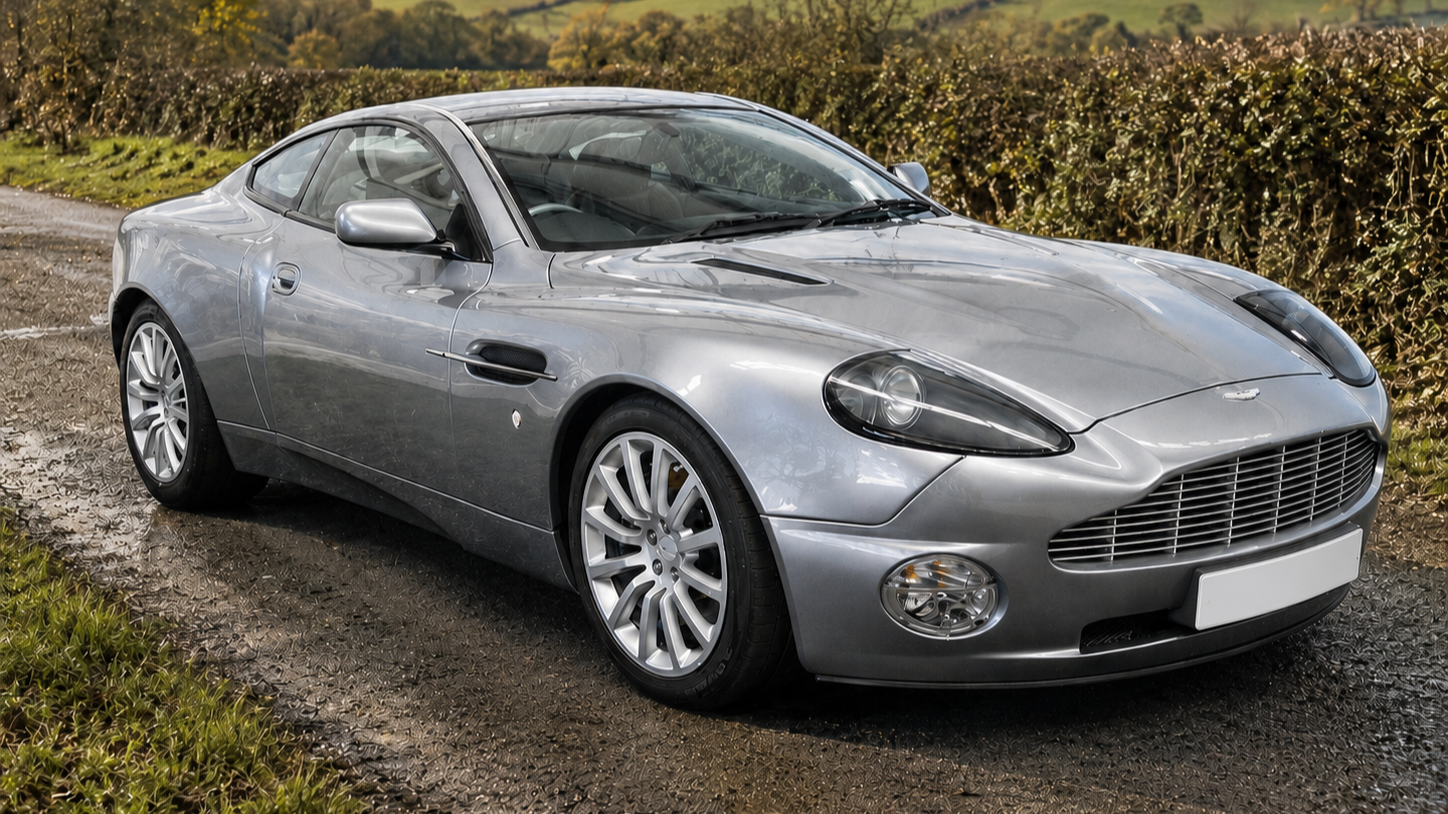
Image © Fuel the Passion. 2004 Vanquish V12.
The original V12 Vanquish entered production in 2001 and established the car’s core identity: Ian Callum styling, Newport Pagnell craftsmanship, a naturally aspirated 5.9-litre V12 and an electro-hydraulically operated six-speed manual gearbox controlled by paddles.
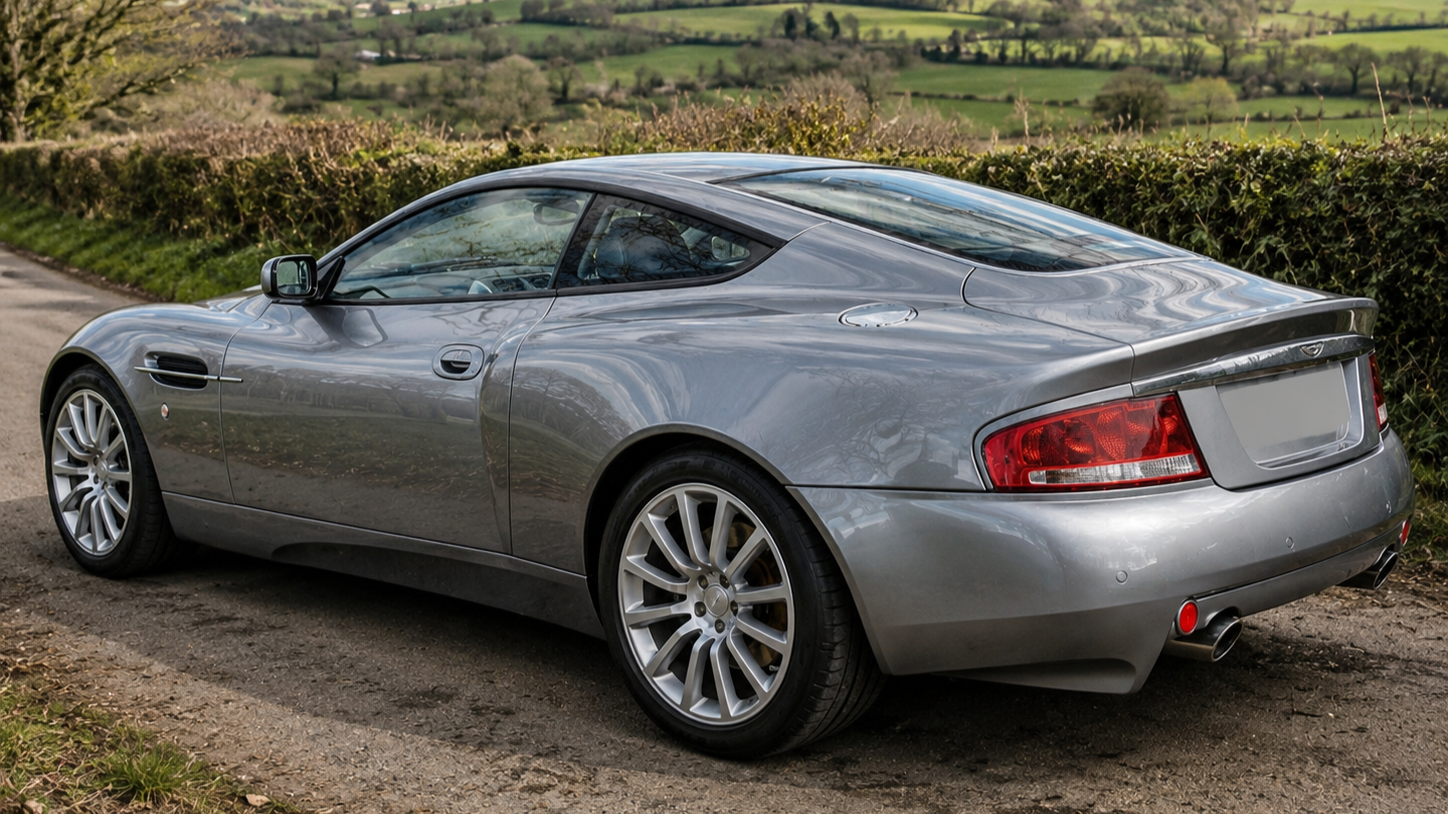
Image © Fuel the Passion, 2004 Vanquish V12.
With 460 bhp, the original Vanquish was a serious performance car when new, but it’s best understood today as a muscular grand tourer rather than a modern supercar. It’s about presence, torque, sound and occasion. A good original Vanquish can be a very satisfying driver’s car, especially for buyers who want the earliest and cleanest expression of the design.
The original car may also be the intelligent route into first-generation Vanquish ownership, provided the example is genuinely well maintained. A strong standard Vanquish with excellent specialist history, a healthy gearbox, clean subframes and good mechanical evidence may be a better purchase than a tired Vanquish S bought only for the badge.
Sport Dynamic Pack
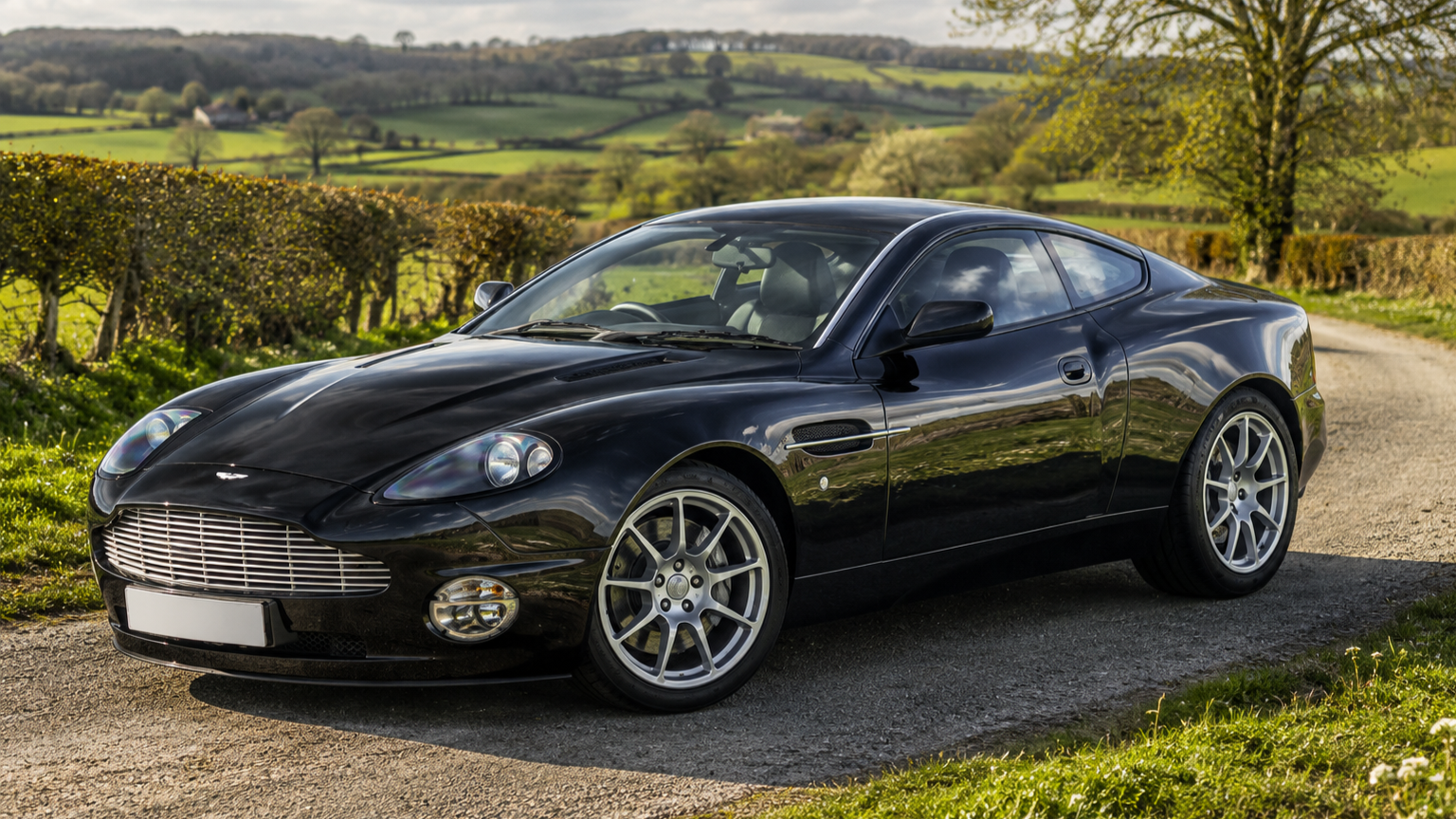
Image © Fuel the Passion. Vanquish V12 Sports Dynamic Pack Edition.
The Sport Dynamic Pack, often shortened to SDP, is one of the more interesting and sometimes overlooked parts of the Vanquish story. It effectively gave the original Vanquish a more focused dynamic specification before the arrival of the full Vanquish S.
Depending on the individual car and market, Sport Dynamic Pack features can include uprated brakes, revised suspension, quicker steering and specific lightweight wheels. It did not bring the 520 bhp engine of the Vanquish S, but it did sharpen the way the original Vanquish drove.
Identifying a genuine first-generation Aston Martin Vanquish equipped with the rare Sports Dynamic Pack (SDP) requires the keen eye of a detective. At a distance, the car retains the muscular, understated silhouette penned by Ian Callum, completely devoid of any external "SDP" badging to give away its upgraded pedigree.
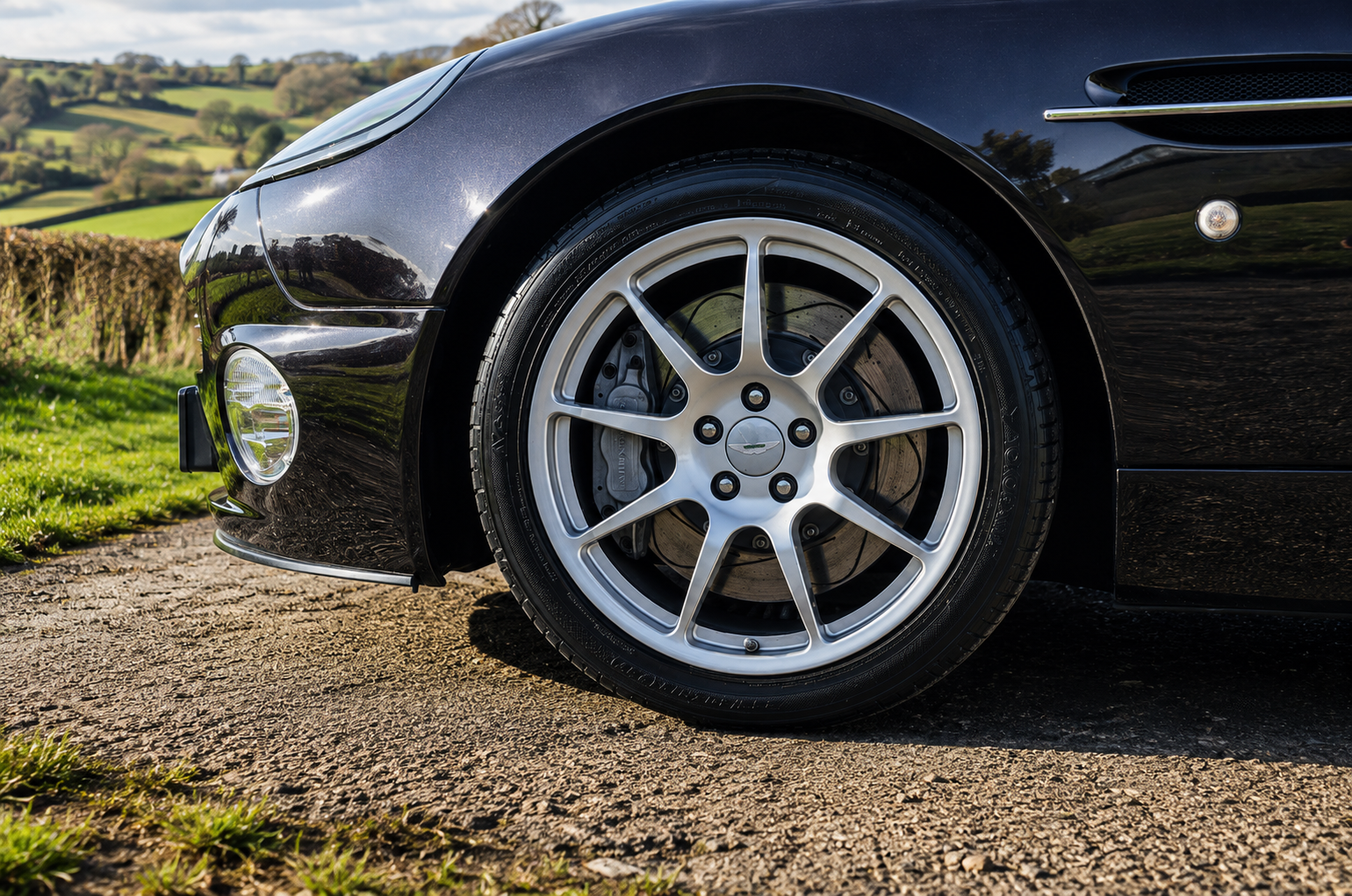
Image © Fuel the Passion. Vanquish V12 Sports Dynamic Pack Edition.
As you walk up to the vehicle, the first clue reveals itself in the car's stance. It sits exactly 5 millimetres lower to the tarmac than a standard Vanquish, a subtle drop courtesy of factory-shortened, high-performance springs. Crouching down to inspect the corners, your eyes are immediately drawn to the wheels. Instead of the standard car’s heavier 12-spoke design, a true SDP car showcases elegant, lightweight 9-slim-spoke alloy wheels, which shed significant unsprung weight.
Peer through those thin spokes, and the definitive mechanical hardware comes into view: massive 378 mm front brake discs marked by a distinct pattern of elliptical grooves, clamped tightly by imposing six-piston calipers.
The Crucial Caveat: Look Beneath the Surface
However, looking at the car is no longer enough to guarantee its authenticity. Because Aston Martin parts are interchangeable, a standard Vanquish owner over the last two decades could have easily purchased a set of the coveted 9-spoke factory wheels or upgraded their braking system to replicate the SDP aesthetic.
For buyers, the important point is verification. Don’t pay a premium simply because a listing describes a car as a Sport Dynamic Pack example. Check the original specification, build records, invoices and specialist confirmation. If genuine, a Sport Dynamic Pack car can be a very appealing enthusiast choice: rarer than a standard Vanquish, less obvious than a Vanquish S, and potentially one of the best-balanced early cars.
Vanquish S
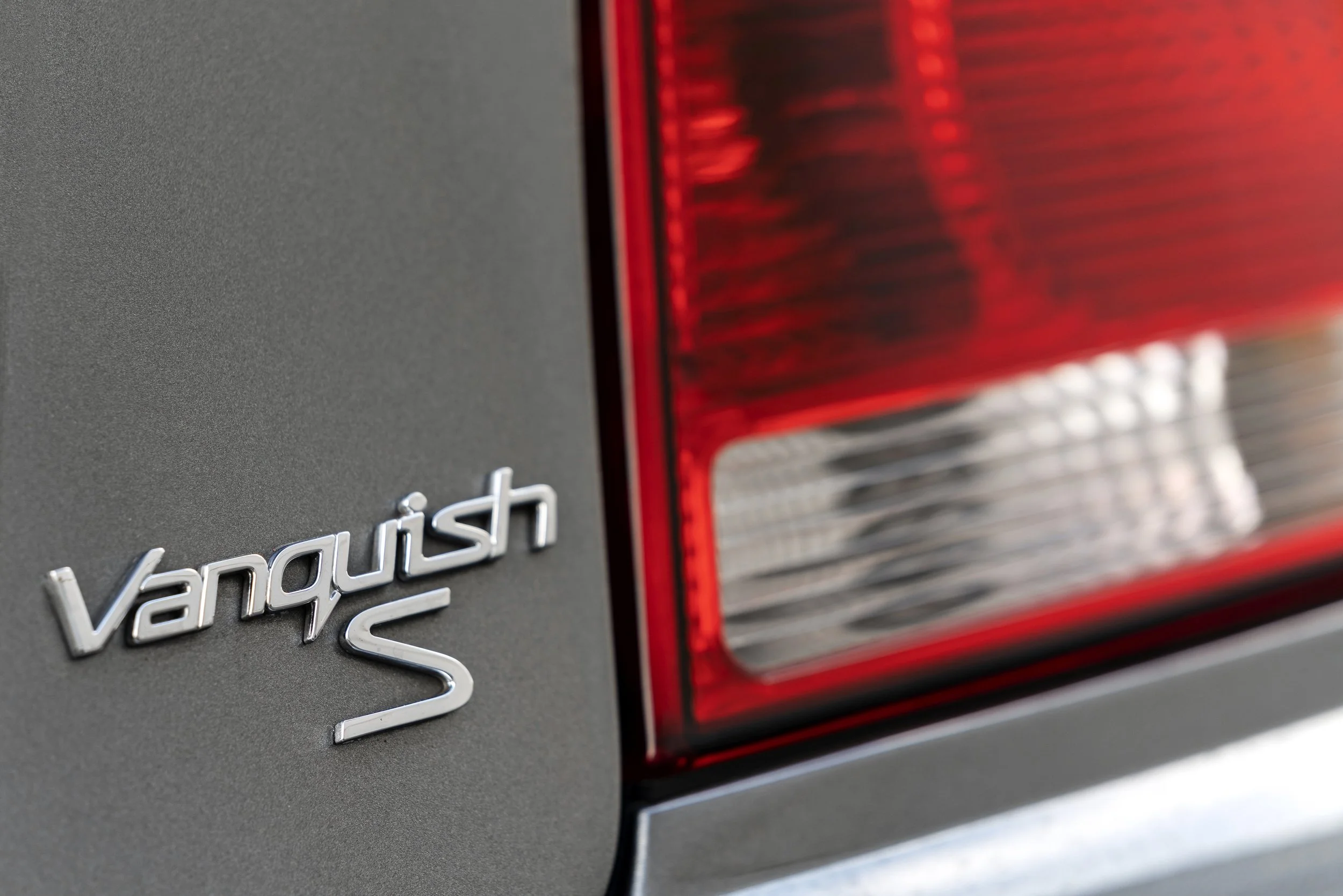
Image © Aston Martin Lagonda. Used for editorial purposes.
The Vanquish S was the major development of the first-generation car. Announced in 2004 and sold through the final years of production, it raised power from 460 bhp to 520 bhp and pushed the model into 200 mph-plus territory.
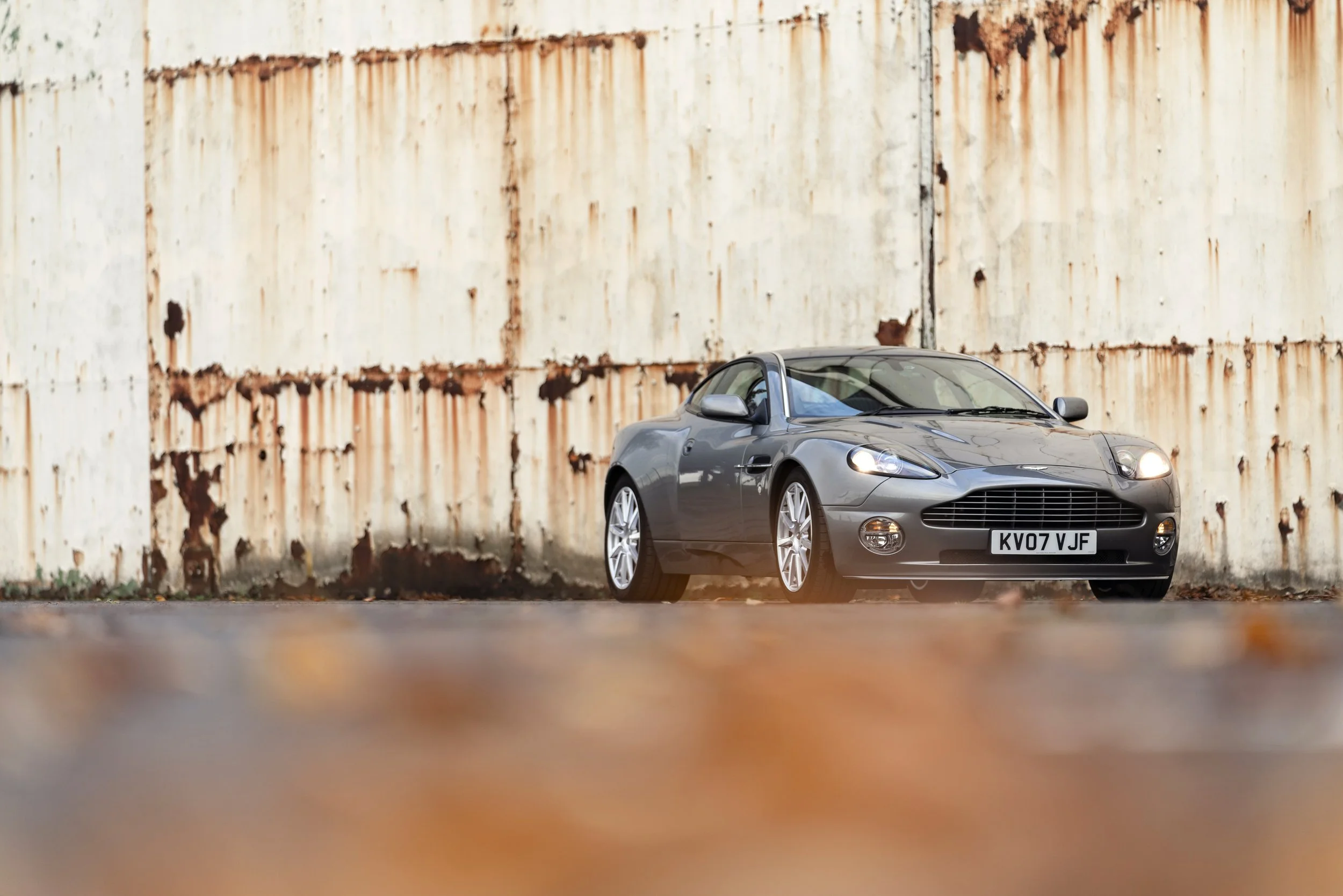
Image © Aston Martin Lagonda. Used for editorial purposes. Vanquish S.
The S was not simply a Vanquish with extra power. It brought a more developed package, including engine changes, revised gearing, aerodynamic updates, improved braking, stiffer and lower suspension, and quicker steering. Period reviews recognised that the S felt faster, tighter and more focused than the original Vanquish, even if the gearbox continued to divide opinion.
For many buyers, the Vanquish S will be the most desirable regular-production version. It’s the later, sharper and more developed car, and it often sits higher in the market as a result. But the usual warning still applies: a tired S is not automatically a better buy than an excellent original Vanquish. Buy the individual car, not just the letter on the boot lid.
Vanquish S Ultimate Edition
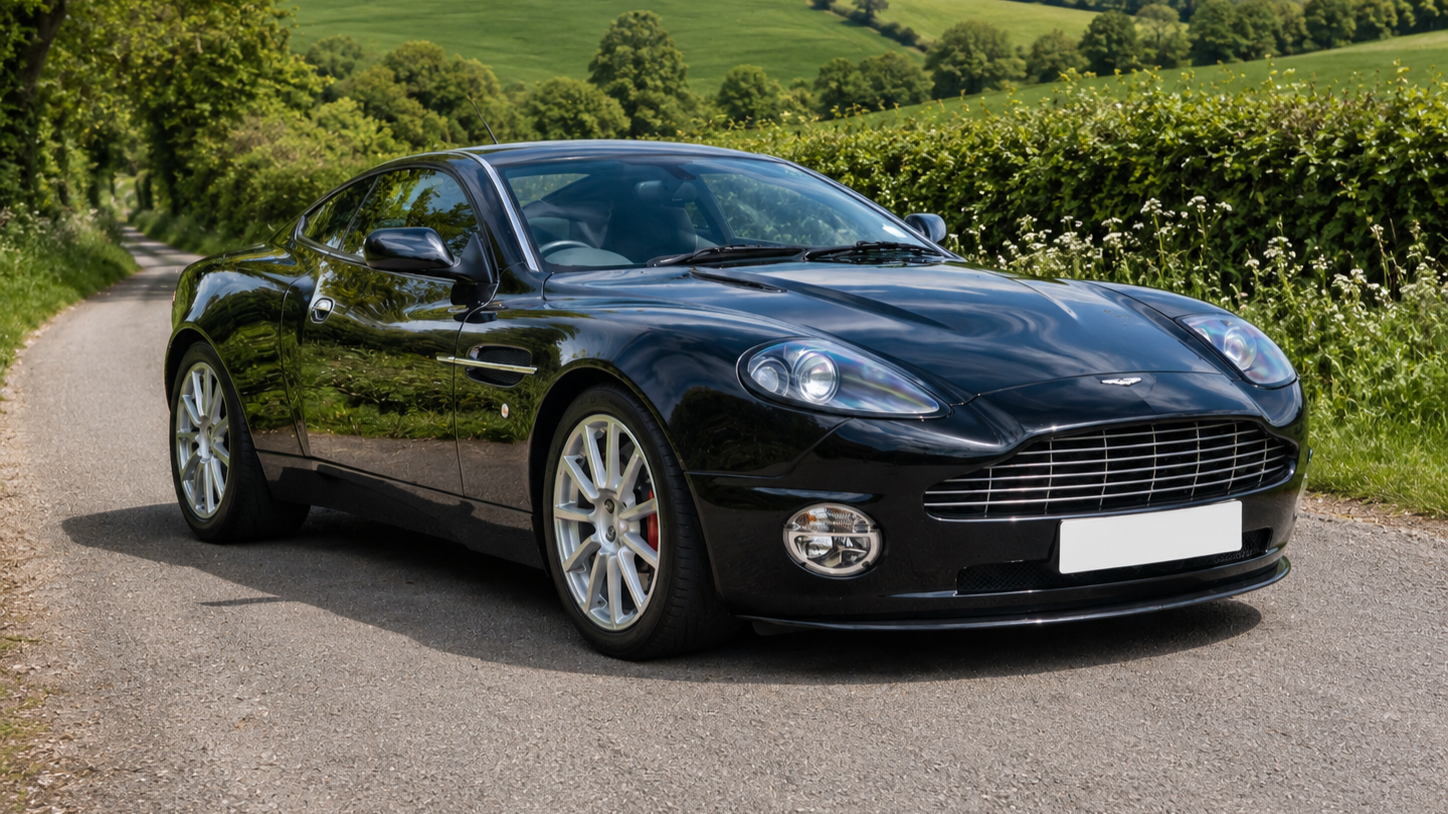
Image © Fuel the Passion. Vanquish V12 Ultimate Edition.
The Vanquish S Ultimate Edition marked the end of first-generation Vanquish production and the closing chapter of series-production Aston Martin road cars at Newport Pagnell. That gives it a significance beyond specification alone.
Ultimate Edition cars are generally treated as collector-grade examples, and rightly attract strong interest when they appear. However, buyers should be careful with production-number claims and individual-market details. The final run is commonly described as 50 cars, although Aston Martin’s own anniversary material has distinguished between the European-market Ultimate cars and a small number of additional Middle East-market white examples.
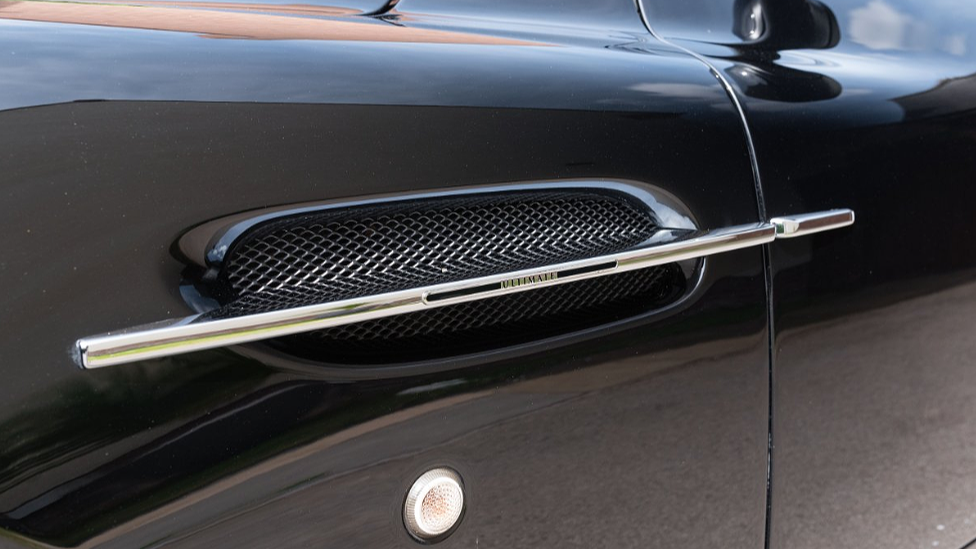
Image © Fuel the Passion. Vanquish V12 Ultimate Edition.
The story of the first-generation Aston Martin Vanquish S Ultimate Edition unfolds as you approach the vehicle, revealing a masterclass in subtle exclusivity. Walking up to the car, you are initially met by its menacing Ultimate Black metallic paintwork. While it looks starkly dark from a distance, moving closer under direct sunlight reveals an intricate shimmer of red and blue undertones. If you look incredibly closely at the side strake mesh behind the front wheels, you might catch the glint of a tiny, discrete exterior wing badge identifying its rare pedigree.
Opening the driver’s door reveals the Ultimate Edition’s more exclusive character. The polished metal sill plaques identify the car as part of the final Ultimate Edition run, while the cabin continues the darker, more restrained theme. Obsidian Black semi-aniline leather, coarse silver stitching, a leather-bound headlining and dark chrome interior detailing all help separate it from a standard Vanquish S.
As with any rare Vanquish, the safest approach is to verify the individual car rather than relying on assumptions. Check the build record, original specification, provenance, market destination and supporting documentation. If rear seating, trim finish, plaque details or other Ultimate Edition features matter to you, make sure they are confirmed by the car’s own records. An Ultimate Edition may be rare and historically important, but it still needs the same inspection discipline as any other Vanquish: subframes, gearbox, clutch, cooling system, brakes, electrics, bodywork and accident history all matter.
Manual Conversions and Other Gearbox Routes
Manual-converted Vanquishes are now an important part of the market. Aston Martin Works manual conversions carry particular appeal because of their official provenance and Newport Pagnell connection. There are also specialist manual conversions and, more rarely, torque-converter automatic conversions carried out to suit buyers who want a different driving experience.
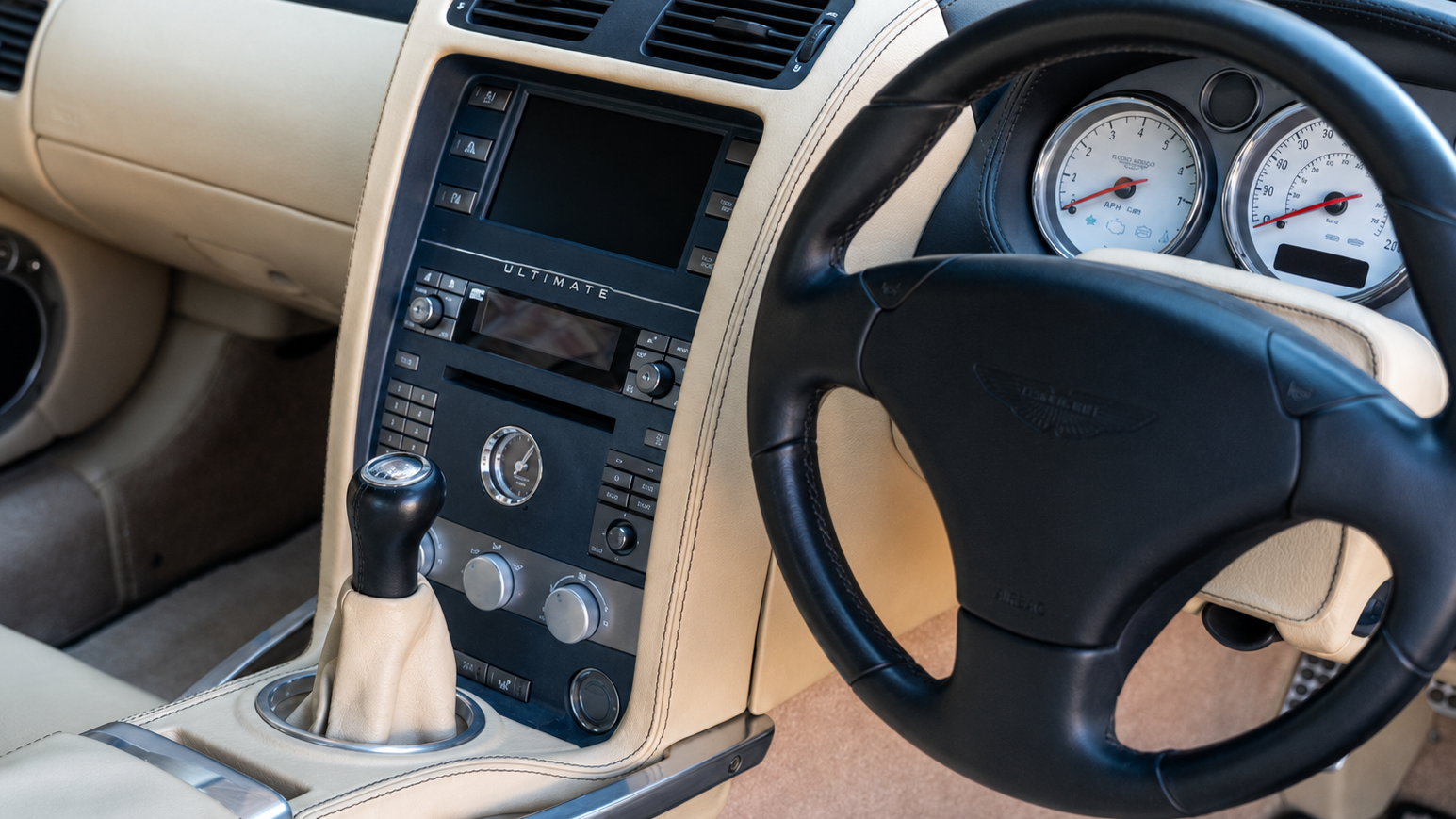
Image © Fuel the Passion. A Manual Conversion Aston Martin Vanquish V12.
This topic deserves its own full section later in the guide, but it’s worth introducing here because gearbox type can affect desirability, value and buyer profile.
A manual conversion is not automatically right or wrong. Some buyers will prefer the originality and theatre of the factory ASM/SSM system. Others will want the involvement of three pedals. Some may want a more relaxed grand touring setup. The key questions are who carried out the work, how well it is documented, whether the conversion has been properly engineered, how the car drives and whether the asking price reflects the whole car rather than the gearbox alone.
The Buyer’s Takeaway
The first-generation Vanquish range is not a simple ladder where each later version is automatically better than the one before it. The original car has purity and design significance. The Sport Dynamic Pack has rarity and driver appeal. The Vanquish S has performance and development. The Ultimate Edition has end-of-line historical importance. Manual-converted cars bring another layer of desirability for the right buyer.
But whatever the version, the same buying rule applies: condition, history, inspection and specialist evidence matter most.
Construction and Craftsmanship - Why the Vanquish Is Different
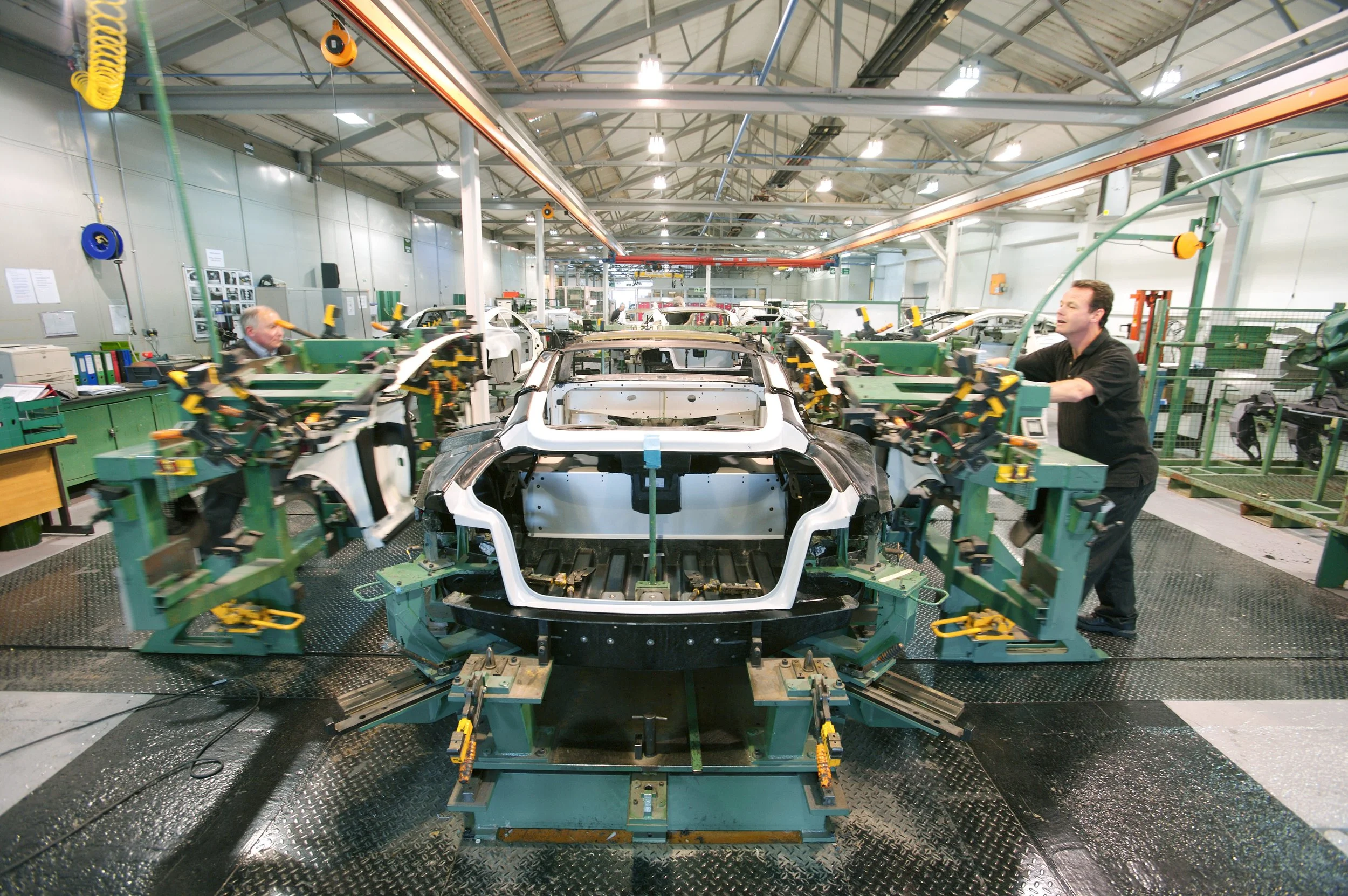
Image © Aston Martin Lagonda. Used for editorial purposes. V12 Vanquish Production at Aston Martin Newport Pagnell.
One of the most important things to understand about the first-generation Vanquish is that it was not simply an old Newport Pagnell Aston Martin with a new body. It was built at Newport Pagnell, and it carried much of the atmosphere and craftsmanship associated with that famous site, but the way it was constructed was very different from the earlier hand-built cars.
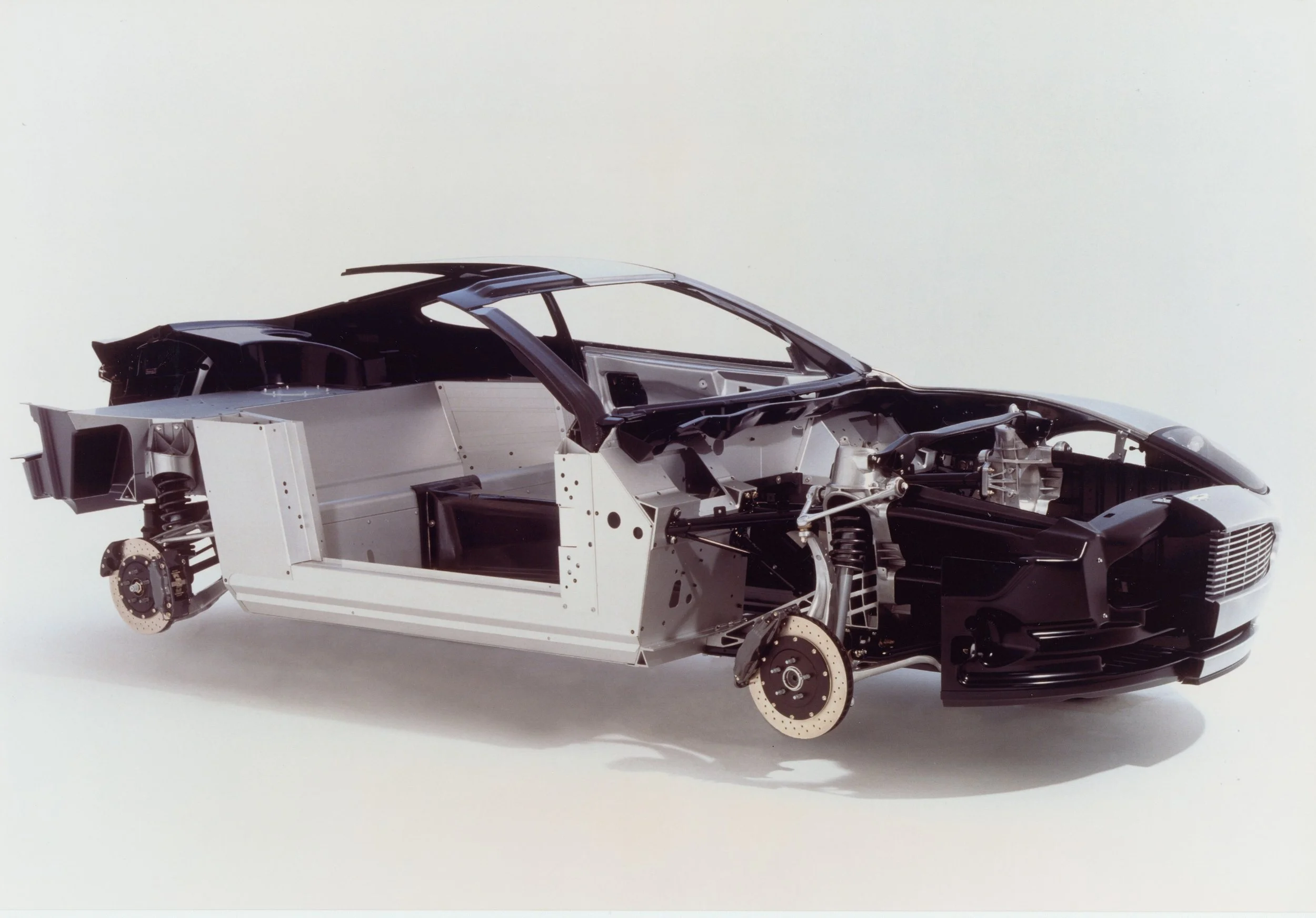
Image © Aston Martin Lagonda. Used for editorial purposes. The cutaway Vanquish created to illustrate the composite construction - now owned by the Aston Martin Heritage Trust.
Previous Newport Pagnell Aston Martins had developed from more traditional steel chassis and body-frame thinking. The Vanquish moved the story on. Its core structure used an aluminium tub, bonded aluminium extrusions, composite sections and carbon fibre in key areas. That made it a far more technically ambitious car than many people realise, and it’s one of the reasons the Vanquish should be viewed as a bridge between old Aston Martin and the modern era that followed.
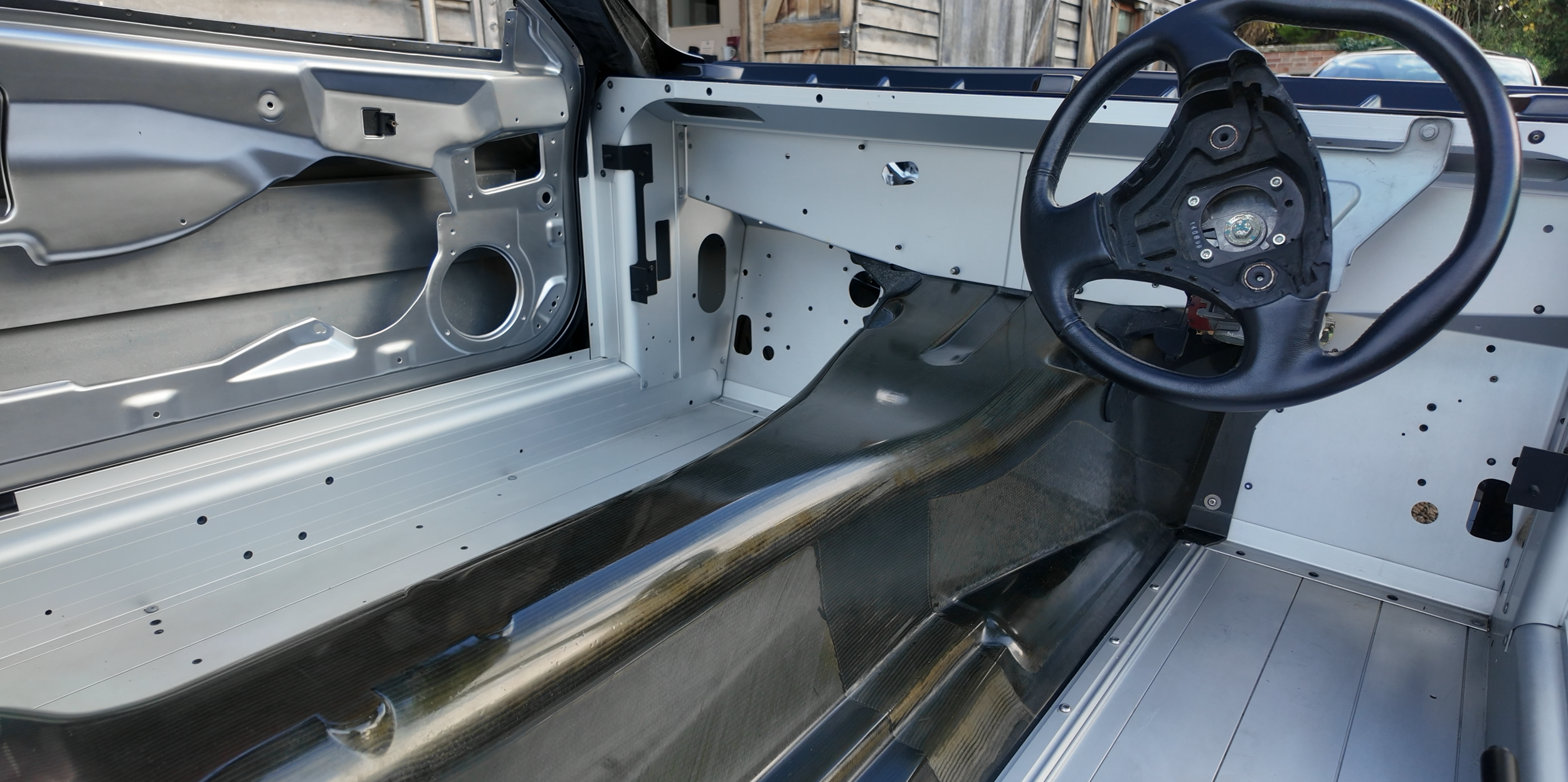
Image © Fuel the Passion. First Generation Vanquish Cut-Out Car.
At the centre of the car was the aluminium tub, with a carbon-fibre transmission tunnel bonded into the middle. That transmission tunnel was not just an exotic material choice. It formed part of the car’s central strength, almost the spine of the Vanquish. The car also used carbon-fibre A-pillars, helping to create a strong windscreen and roof structure, while the front and rear crash structures used carbon fibre and composite thinking in ways that were advanced for a road car of this period.
This is an area where video context is particularly useful. FTP filmed the Aston Martin Heritage Trust first-generation Vanquish cutaway car as part of the Vanquish 25th Anniversary coverage, showing the aluminium tub, carbon-fibre transmission tunnel, bonded structure, composite sections and hand-finished details beneath the skin, that video has already been placed near the top of this buyers guide and if you skipped it, it’s well worth a view.
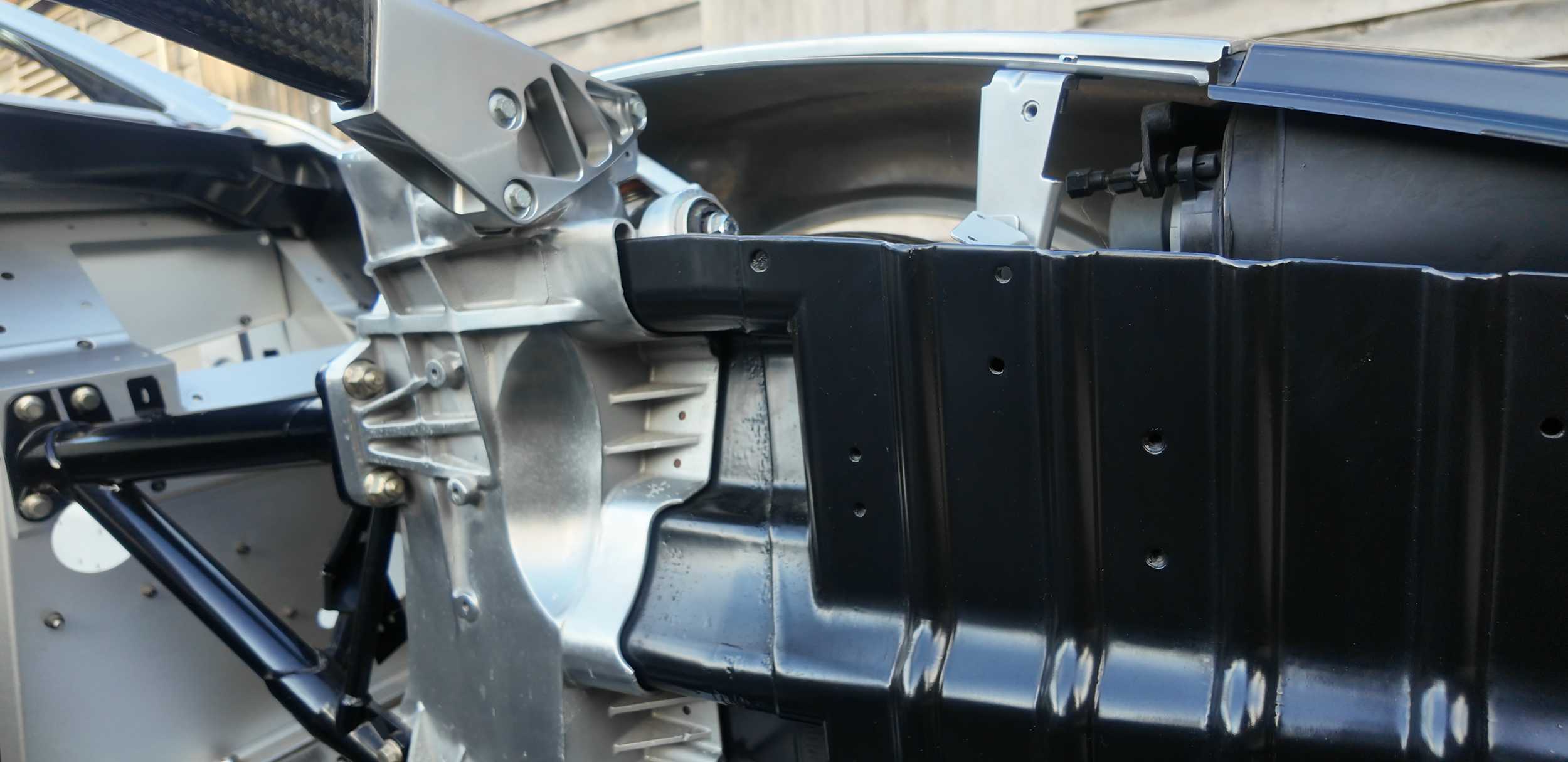
Image © Fuel the Passion. First Generation Vanquish Cut-Out Car.
The construction method also explains why accident history and repair quality matter so much. The Vanquish was not a conventional welded structure. Much of the car relied on bonding, with rivets used largely to locate panels while the adhesive cured. In the event of damage, especially to bonded structural areas or crash structures, correct repair procedures and proper specialist knowledge become essential. This is not a car where a buyer should accept vague explanations about “minor repairs” without evidence.
That doesn’t make the Vanquish something to fear, but it does mean it needs to be assessed properly. A clean-looking car with poor accident-repair history may be a far worse buy than a higher-mileage car with excellent documentation and specialist inspection reports. Panel fit, paint quality, repair invoices, underside condition and evidence of correct structural work all matter.
The outer panels add another layer to the Vanquish story. The front and rear wings were superformed aluminium, but they were not simply pressed, fitted and forgotten. Once the panels arrived at Newport Pagnell, traditional panel-beating skills were still required. The edges had to be finished by hand, using hammers, dollies, filing and sanding to achieve the final shape and feel. That is a wonderful example of what makes the Vanquish so unusual: modern materials and processes, completed with old-world craftsmanship.
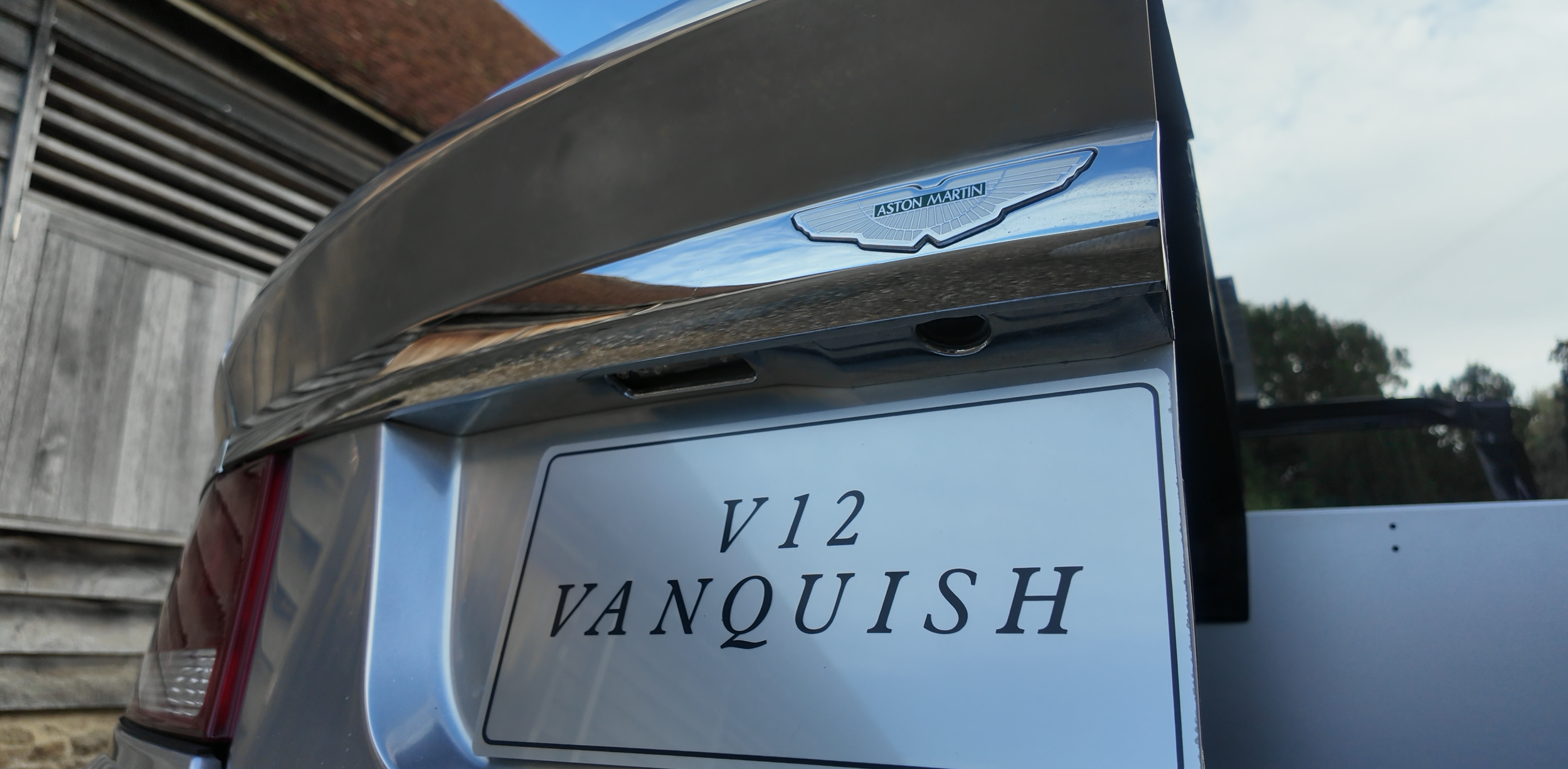
Image © Fuel the Passion. First Generation Vanquish Cut-Out Car.
The same applies to the boot lid, which was a particularly labour-intensive piece of work. Its outer and inner panels were formed and then finished by hand, with the edge folded, hammered, filed and sanded into shape. This was not mass-production in the ordinary sense. It was still a car with human hands all over it.
Those details matter because they change the way you look at the car. The Vanquish is sometimes criticised for being heavy, complex or caught between eras, but that’s also what gives it its character. It was not a pure modern aluminium-platform car like the DB9 that followed, and it was not a traditional old-school Newport Pagnell car either. It sat between those worlds.
For a buyer, this construction story has two meanings.
First, it makes the Vanquish more special. The car has genuine depth beneath the styling: carbon fibre, bonded aluminium, composite structures, hand-finished panels and a level of construction ambition that was highly unusual for Aston Martin at the time.
Second, it means the buying process needs to be serious. Bodywork, corrosion, accident history, paint repairs, panel alignment and structural condition should all be inspected by someone who understands these cars. A Vanquish can look magnificent in a showroom or advert, but the important questions are often underneath the skin.
This is why the first-generation Vanquish deserves more than a quick visual inspection and a short test drive. Its construction is part of its appeal, but also part of its risk. Buy a good one, and you are buying one of the most interesting Aston Martin structures of the modern era. Buy a badly repaired or poorly maintained one, and the same complexity that makes the car special can quickly become expensive.
The best way to view the Vanquish is therefore simple: it’s a hand-finished, low-volume, technically ambitious Aston Martin. It should be bought with the same respect.
Engine, Gearbox and Driving Character
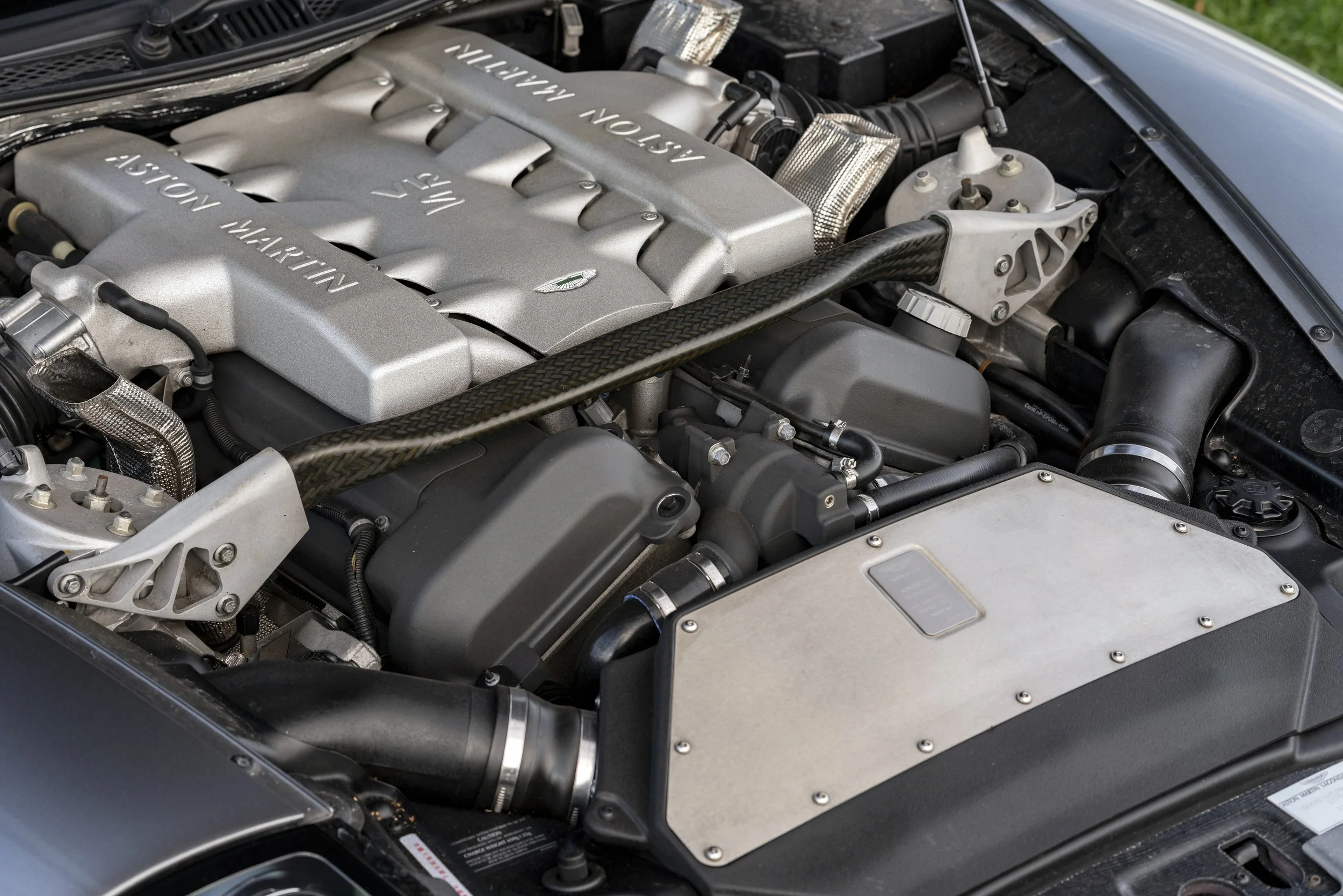
Image © Aston Martin Lagonda. Used for editorial purposes. Aston Martin Vanquish V12.
The first-generation Vanquish is defined by its naturally aspirated V12. It’s one of the main reasons the car still has such emotional pull today. In an era when many modern performance cars have become turbocharged, hybridised or digitally filtered, the Vanquish offers something more traditional: a large-capacity front-mounted V12, a long bonnet, rear-wheel drive and a sense of theatre every time it starts.
The original V12 Vanquish used Aston Martin’s 5.9-litre V12 producing 460 bhp and 400 lb ft of torque. The later Vanquish S increased output to 520 bhp and 425 lb ft, supported by wider changes to the engine, gearing, brakes, suspension, steering and aerodynamics. On paper, the S is clearly the faster and more developed car. On the road, both versions are best understood as muscular grand tourers rather than lightweight sports cars.
Original Vanquish vs Vanquish S
Both first-generation Vanquish models use Aston Martin’s naturally aspirated 5.9-litre V12, but the later Vanquish S brought more power, more torque and a sharper flagship character.
| Version | Engine | Power | Torque | Character |
|---|---|---|---|---|
| V12 Vanquish | 5.9-litre naturally aspirated V12 | 460 bhp | 400 lb ft | Original, muscular and more relaxed in grand touring character. |
| Vanquish S | 5.9-litre naturally aspirated V12 | 520 bhp | 425 lb ft | Sharper, faster and more developed, with stronger flagship appeal. |
FTP note: bhp stands for brake horsepower. These figures help explain the difference between the original Vanquish and Vanquish S, but condition, tyres, suspension, gearbox health and maintenance history will have a huge effect on how any individual car feels.
The V12 is smooth, strong and full of character, but the Vanquish doesn’t deliver its performance like a modern turbocharged Aston Martin. It builds speed with a broad, cultured surge rather than a sudden hit of boost. That’s part of the charm. This is not a car that feels frantic or lightweight. It feels substantial, long-legged and deeply mechanical.
That weight is important to understand. A first-generation Vanquish is not a nimble sports car in the mould of a Vantage, nor is it as polished and modern as a DB9 or second-generation Vanquish. It has a more old-school physicality. You feel the size, the mass and the engineering of the car. On the right road, that gives it a wonderful sense of occasion. On the wrong road, or in poor condition, it can feel heavy, loose or less precise than a buyer might expect.
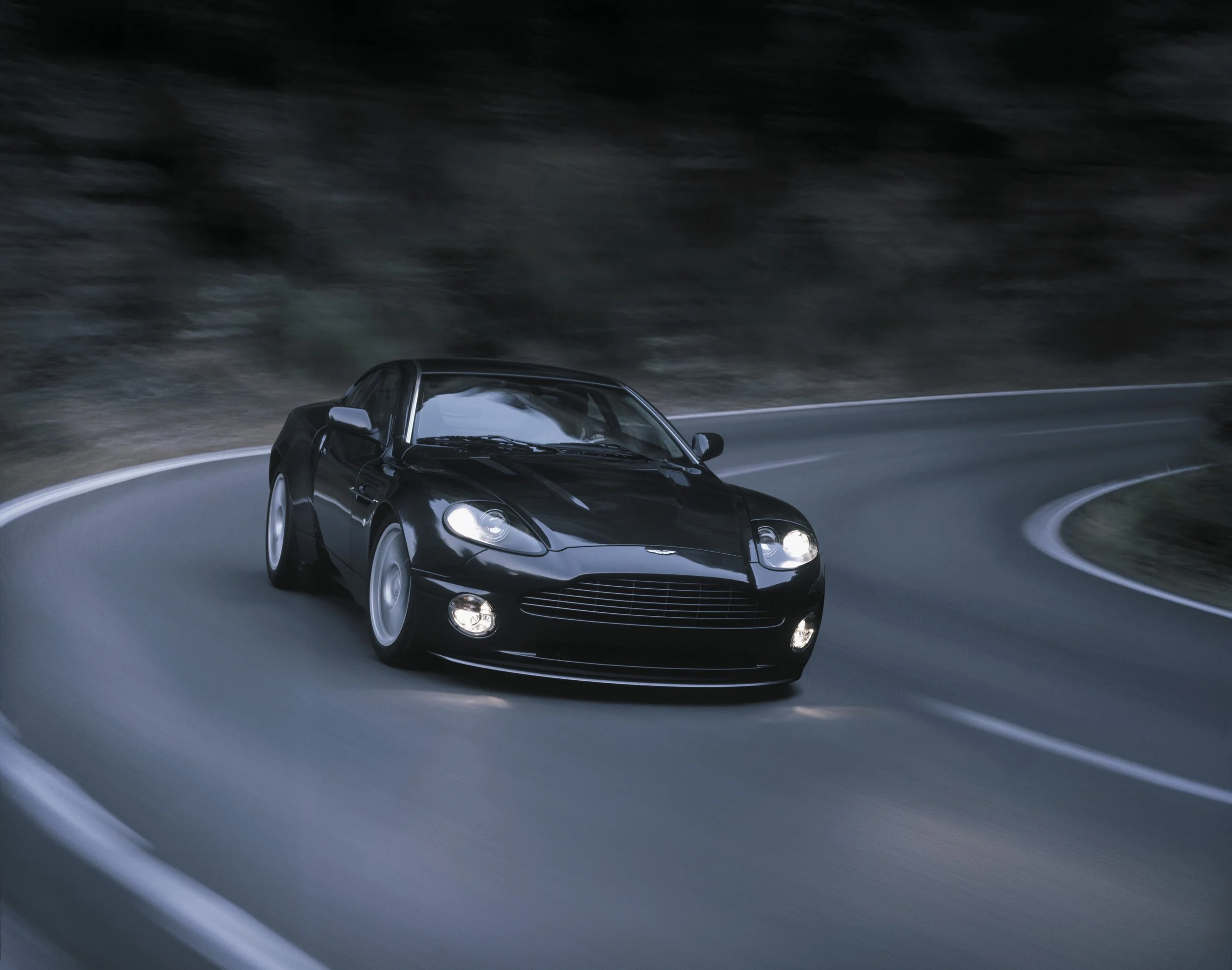
Image © Aston Martin Lagonda. Used for editorial purposes. Aston Martin Vanquish V12.
This is why condition has such a big effect on how a Vanquish drives. Tyres, suspension bushes, dampers, geometry, brakes and wheel condition can all transform the car. A Vanquish on old, hardened or unsuitable tyres may feel nervous, vague or unsettled. A well-maintained car on fresh, appropriate tyres with properly sorted suspension and geometry can feel far more composed and confidence-inspiring.
The original car has a slightly softer, more grand touring flavour. The Vanquish S feels more focused, with its extra power, quicker steering, improved braking and sharper chassis settings. That does not make the original car redundant. Some buyers may prefer its purity and slightly calmer character, especially if they want a road-focused grand tourer rather than the most developed version. Others will naturally be drawn to the S because it gives the Vanquish more speed, more presence and stronger market desirability.
The gearbox is impossible to ignore, but it deserves its own full section. For now, the key point is simple: the original Vanquish was not fitted with a conventional automatic gearbox. It used an electro-hydraulically operated manual system, controlled by paddles. That means it has a clutch, it has a manual gearbox at its core, and it needs to be driven with some mechanical sympathy.
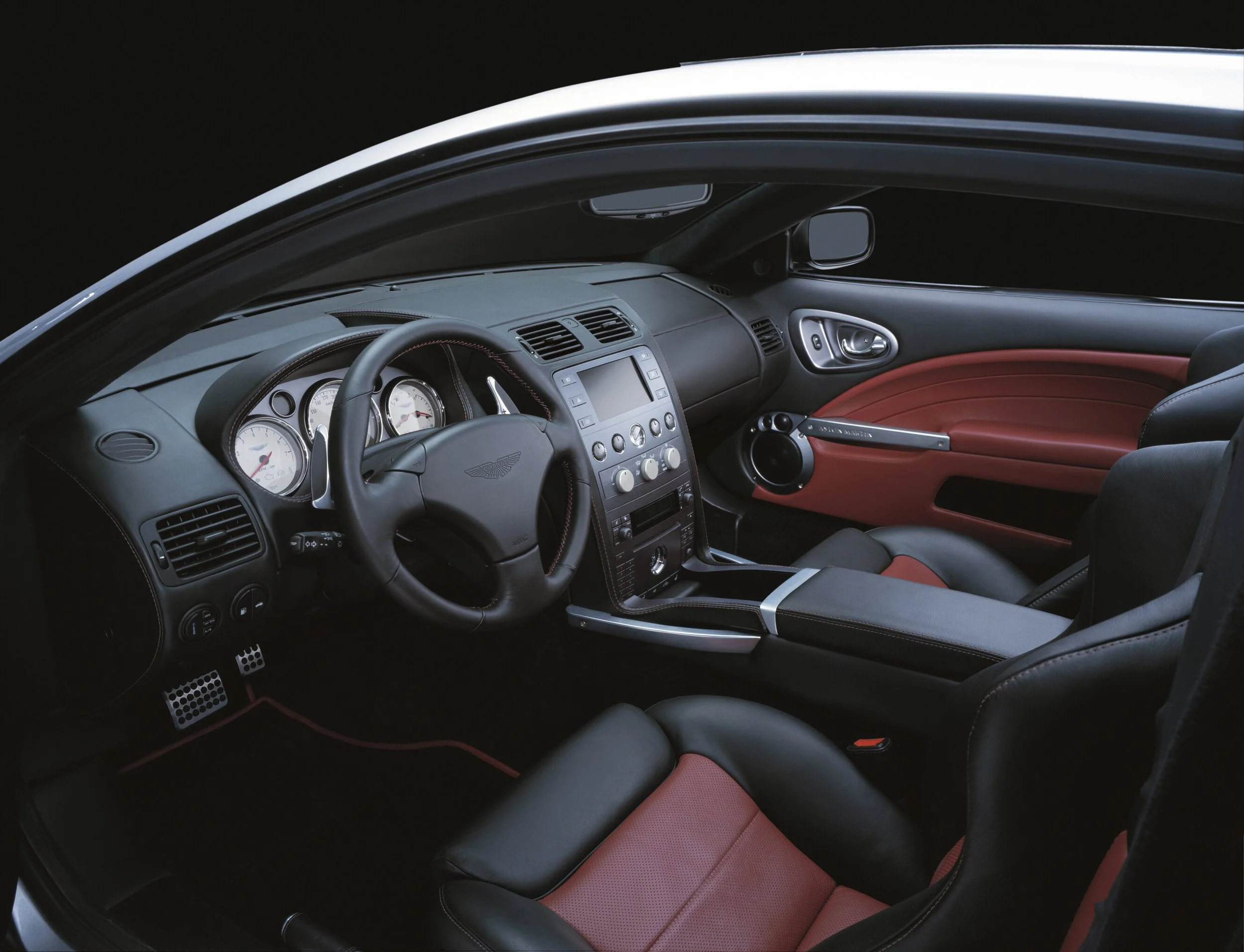
Image © Aston Martin Lagonda. Used for editorial purposes. Aston Martin Vanquish V12.
A healthy ASM/SSM Vanquish should not be judged like a modern dual-clutch gearbox or a later ZF automatic. ZF is the German transmission specialist whose modern torque-converter automatic gearboxes are used in many later performance and luxury cars. The Vanquish system is from an earlier era and will not shift with modern speed or smoothness. Low-speed manoeuvring also needs understanding. But when the system is set up correctly and the driver works with it, rather than against it, it can suit the car’s early-2000s grand touring character.
This is one of the most important buying lessons. A poor gearbox experience may be the result of unrealistic expectations, but it may also be a warning sign of clutch wear, hydraulic issues, sensor faults, pump problems, poor setup or deferred maintenance. A short test drive around town is not enough. The gearbox needs to be assessed properly, ideally by someone who understands the Vanquish system.
The best Vanquish test drives are not about chasing modern performance figures. They’re about judging health, consistency and character. The V12 should feel strong and clean, the car should track properly, the brakes should inspire confidence, the suspension should feel controlled rather than tired, the gearbox should behave consistently. The whole car should feel like a substantial, hand-built V12 grand tourer, not a fragile old supercar being forced to perform.
When a first-generation Vanquish is right, it has a very special rhythm. Let the V12 do the work, use the torque, give the gearbox time. Flow with the car rather than trying to bully it. Driven that way, it begins to make sense. It’s not trying to be a Ferrari 575, a DB9 or a modern Vantage. It’s its own thing: a big, dramatic, Newport Pagnell-built Aston Martin flagship with a magnificent V12 and a character that belongs very much to its moment in time.
The Gearbox Question - ASM/SSM, Manual and Other Routes
No part of the first-generation Vanquish creates more debate than its gearbox. For some buyers, it’s the one thing that defines the car’s character. For others, it’s the one thing that puts them off. The truth sits somewhere in the middle, and it deserves a more balanced explanation than the Vanquish often receives.
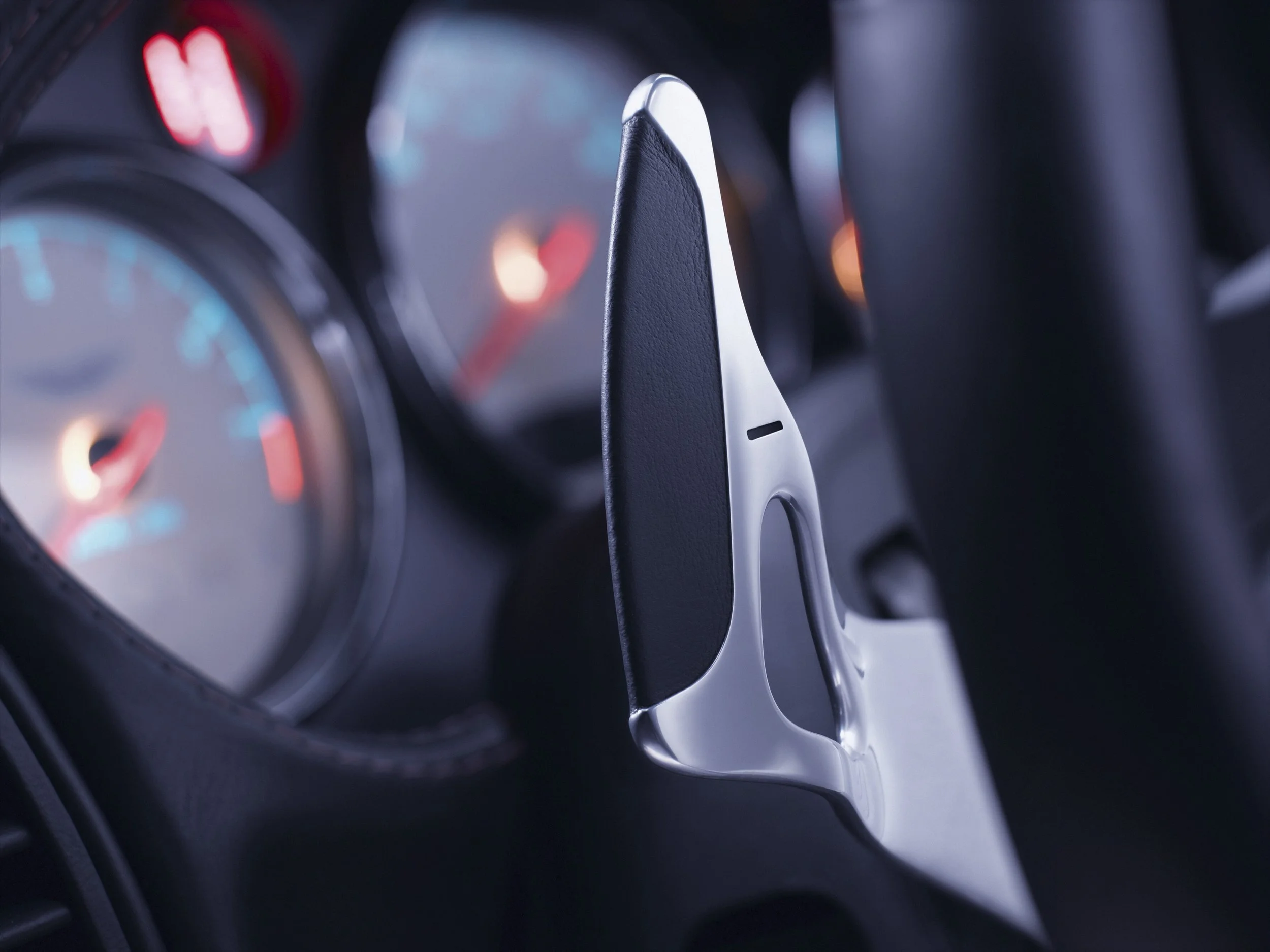
Image © Aston Martin Lagonda. Used for editorial purposes. Aston Martin V12 Vanquish.
The original Vanquish was fitted with Aston Martin’s ASM/SSM system, meaning Auto Shift Manual / Select Shift Manual. In plain English, this is an electro-hydraulically operated manual gearbox. It’s controlled by paddles, but underneath it’s not a conventional automatic gearbox. It has a clutch, it has a manual gearbox at its core. The difference is that the clutch and gear selection are operated by hydraulic and electronic systems rather than by the driver’s left foot and a traditional gear lever.
That distinction matters enormously. A Vanquish should not be judged as though it has a modern dual-clutch gearbox or a later torque-converter automatic. It will not shift with the speed, smoothness or low-speed ease of a modern automatic Aston Martin. It belongs to an earlier era of automated manual transmissions, when manufacturers were trying to bring motorsport-style paddle shifting to road cars before the technology had become truly seamless.
Why the Reputation Became So Strong
The Vanquish gearbox was criticised heavily in period road tests, and that reputation has followed the car ever since. Some of that criticism was fair. The system can feel jerky if driven badly, poorly set up, worn, or compared directly with much newer gearboxes. Low-speed manoeuvring can feel clumsy, and automatic mode is rarely the best way to experience the car.
However, it’s also easy to oversimplify the issue. A healthy, properly maintained and correctly driven Vanquish can feel far better than the old caricature suggests. The gearbox needs understanding. The driver should work with it, not against it. Lift slightly during upshifts, use the V12’s torque, avoid treating it like a modern automatic and give the system time to do what it was designed to do.
This is why the gearbox should be assessed carefully on any test drive. A poor shift quality might simply be unfamiliarity, but it might also point to clutch wear, hydraulic problems, sensor issues, pump weakness, poor calibration or deferred maintenance. The difference between character and fault is something a Vanquish specialist is best placed to judge.
How a Healthy ASM/SSM Vanquish Should Behave
A good original Vanquish should select gears consistently, engage reverse properly, pull away cleanly and change gear with a predictable rhythm. It may not feel modern, but it should not feel random, confused or reluctant.
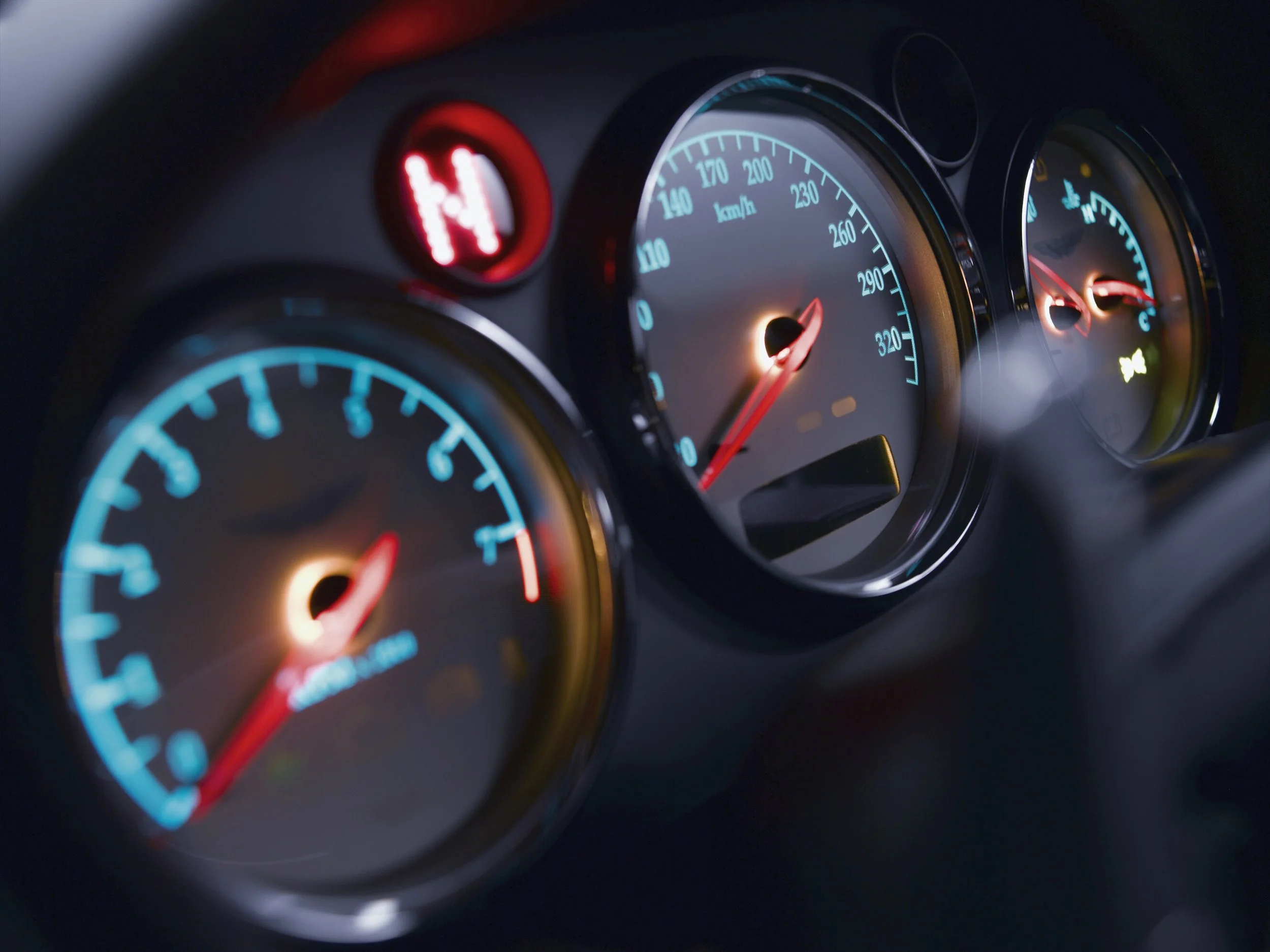
Image © Aston Martin Lagonda. Used for editorial purposes. Aston Martin V12 Vanquish.
On inspection and test drive, pay close attention to whether the gearbox selects neutral, first and reverse cleanly; whether the hydraulic pump primes correctly; whether the car hesitates, skips gears or refuses shifts; whether warning lights or gearbox messages appear; how the clutch takes up from rest; whether there is excessive slipping, shuddering or rev flare; and whether there is evidence of clutch replacement, gearbox setup or specialist diagnostic work.
Do not rely on the seller saying “they all do that”. Some quirks are normal for the system, but faults should not be excused as character. Equally, do not condemn a car simply because the gearbox doesn’t behave like a modern automatic. The Vanquish needs to be judged as a Vanquish.
How to Drive It Properly
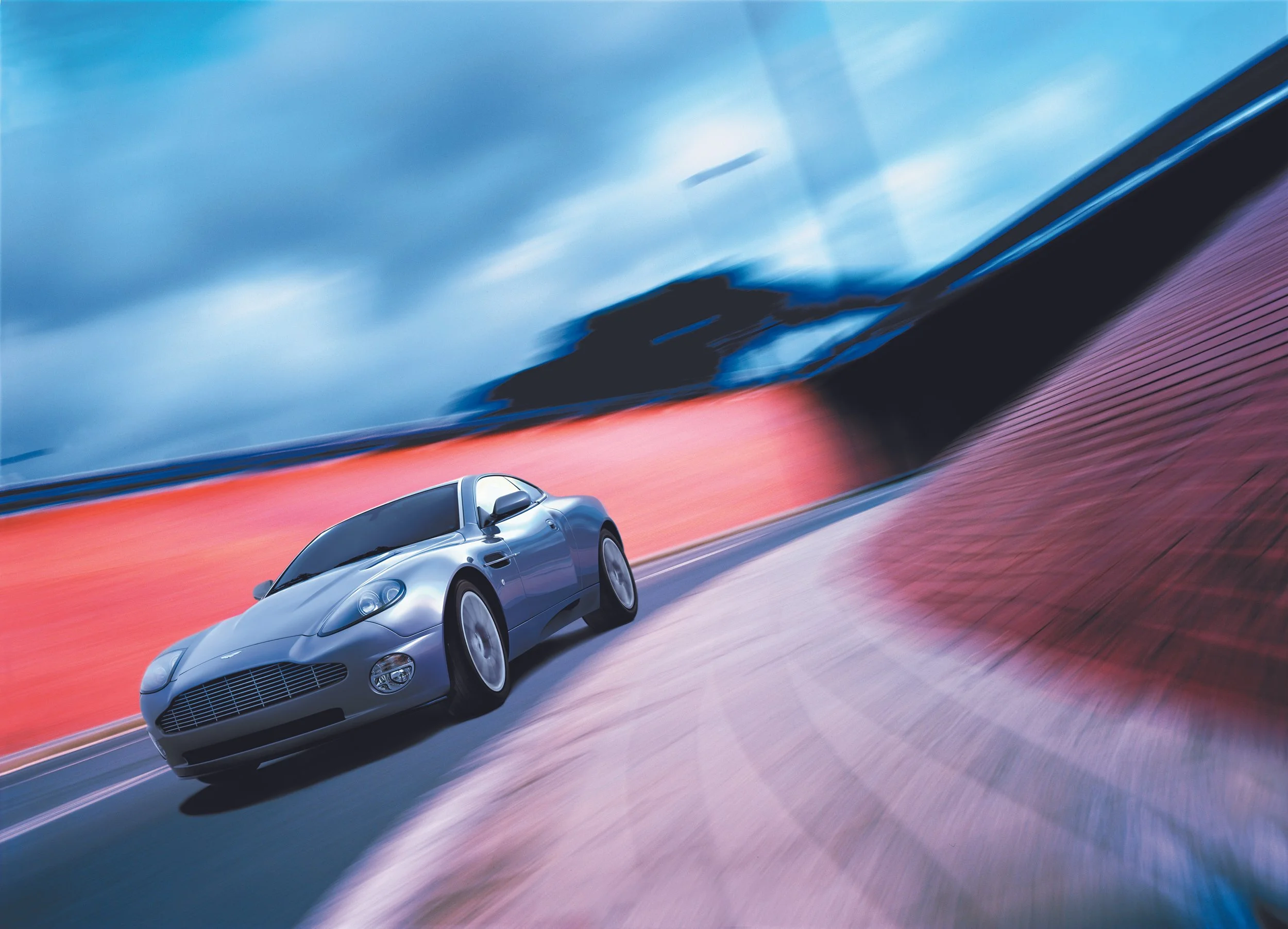
Image © Aston Martin Lagonda. Used for editorial purposes. Marketing Image of the Aston Martin Vanquish V12.
Technique matters. The Vanquish responds best when the driver uses the paddles deliberately and gives the drivetrain a moment of mechanical sympathy during shifts. A small lift of the throttle can make changes smoother. Using the torque of the V12 rather than chasing constant gear changes can also make the car feel more natural.
This is where Aston Martin Heritage Trust’s guidance on how to drive a first-generation Vanquish will be particularly useful for readers. Anyone seriously considering an original ASM/SSM car should understand how the system is meant to be used before deciding whether they like it. The video has been placed, below, just click on the image and watch the 11 minute video. It’s well worth watching.
Driven properly, the original gearbox can become part of the Vanquish experience. The pump priming, the paddles, the mechanical pause between shifts and the need to drive with some involvement all belong to the car’s early-2000s character. It’s not perfect, but it is authentic.
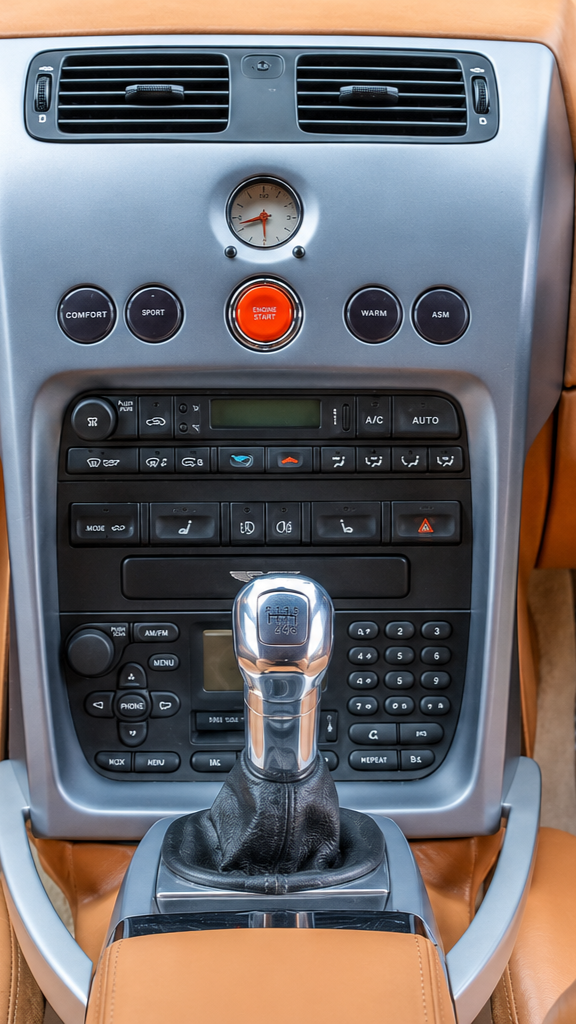
Image © Fuel the Passion. Vanquish Manual Conversion
Aston Martin Works Manual Conversions
For buyers who want a more traditional three-pedal experience, Aston Martin Works manual conversions are now an important part of the Vanquish story. These conversions carry strong appeal because of their official connection to Newport Pagnell and the fact they were developed by the people most closely associated with the car.
A Works manual-converted Vanquish can be very desirable. It gives the driver direct control of clutch and gear selection, removes the automated shift system and adds a level of interaction some buyers feel the car always deserved. For many enthusiasts, it’s the most appealing way to experience a first-generation Vanquish.
However, a manual conversion should still be judged carefully. It does not automatically make a poor car good. The buyer still needs to inspect the whole vehicle: structure, subframes, clutch, brakes, suspension, electronics, cooling system, history file, accident record and overall condition. The conversion paperwork should be clear, complete and ideally supported by Aston Martin Works documentation where applicable.
Specialist Manual Conversions
There are also manual conversions carried out by independent Aston Martin specialists, and these should be treated on their own merits. Some independent specialists have deep first-generation Vanquish knowledge and may be highly experienced in converting, maintaining and supporting these cars.
A specialist manual conversion should not be viewed as second-best simply because it wasn’t carried out by Aston Martin Works. The important questions are the quality of the engineering, the experience of the specialist, the documentation behind the conversion, how well the car drives and whether the work is properly supported for the future.
With any manual-converted Vanquish, ask who carried out the conversion, what parts and engineering were used, whether the work is fully documented, whether the car has been inspected since conversion, whether the pedal layout and gearshift feel suit you personally, and whether the car can be maintained confidently by a recognised Vanquish specialist.
The fairest approach is to judge each car individually. A documented Aston Martin Works conversion will appeal to some buyers because of its official provenance. A well-executed independent specialist conversion may appeal just as strongly to others because of its driving feel, engineering quality and specialist support. In either case, the conversion should add to an already good car, not distract from weaknesses elsewhere.
Torque-Converter Automatic Conversions
A smaller number of Vanquishes have been converted to use a torque-converter automatic gearbox. This is a different route again. For some owners, it may make sense if the aim is relaxed grand touring and easier low-speed use rather than maximum originality or driver involvement.
This type of conversion may suit a buyer who loves the look, sound and presence of the Vanquish but does not want the original ASM/SSM system or a manual conversion. However, it’s likely to appeal to a narrower audience and should be approached with the same questions: who carried out the work, how well is it documented, how does the car drive, how easy is it to support, and how does the conversion affect value and originality?
First-generation Aston Martin Vanquish models converted to a torque-converter automatic exhibit smooth, creep-forward movement, lack the factory pump priming noise, and feature documentation from specialists indicating a major transmission overhaul. These high-end conversions, replace the original, Automated Sequential Manual (ASM) system with a conventional automatic gearbox.
A torque-converter automatic conversion is not necessarily wrong, but it changes the character of the car. Buyers should be clear about what they want from the Vanquish before choosing that route.
Originality Versus Usability
The gearbox question ultimately comes down to buyer priorities. If originality matters most, a well-maintained ASM/SSM car may be the right choice. It preserves the Vanquish as Aston Martin built it and keeps the full early-2000s character intact.
If driver involvement matters most, a documented Works or Independent Specialist manual conversion may be highly appealing. If relaxed touring matters most, an excellent original car driven properly may still be enough, while a well-documented automatic conversion could appeal to a specific type of buyer.
There is no single correct answer for every buyer. The wrong answer is buying any gearbox version without proper evidence.
The Buyer’s Takeaway
Do not buy or reject a first-generation Vanquish purely because of the gearbox. Understand it first.
The original ASM/SSM system is not a modern automatic and should not be judged as one. A healthy example can be rewarding if driven properly, but a worn or poorly set-up car can become expensive quickly. Manual conversions can add involvement and desirability, but they don’t remove the need for a proper inspection. Documentation and support are critical.
The best approach is simple: drive the car, understand the system, inspect it properly and buy on evidence rather than reputation.
Known Issues and Buyer Checks
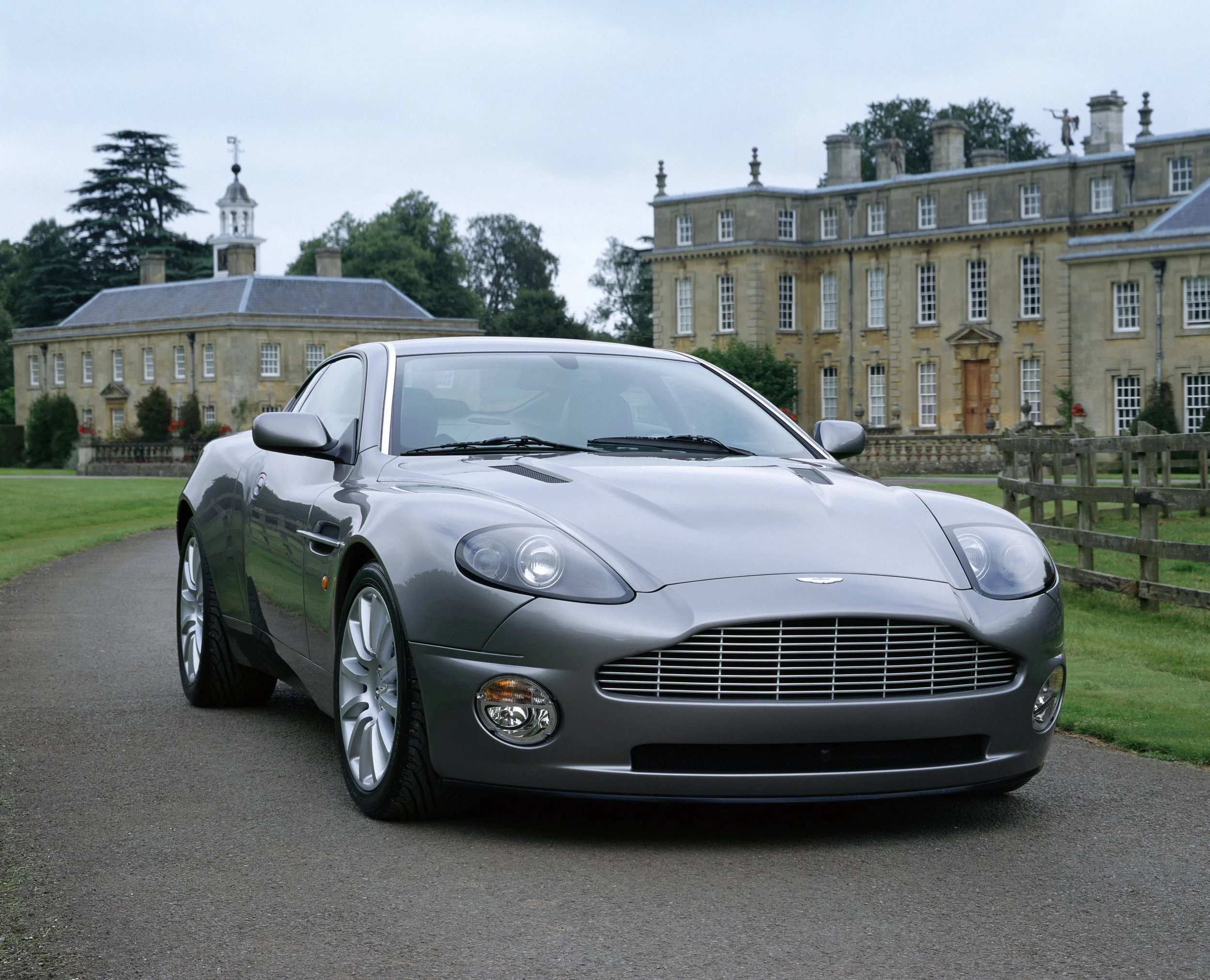
Image © Aston Martin Lagonda. Used for editorial purposes. Aston Martin Vanquish V12.
A first-generation Vanquish is not a car to fear, but it’s a car to inspect properly. The best examples can be superb things: charismatic, beautifully presented, mechanically healthy and deeply rewarding to own. The problem is that a poor example can still look magnificent in photographs, sound wonderful on start-up and feel tempting on a short viewing. That is why evidence matters. Do not buy a Vanquish on colour, mileage or romance alone. Buy it on condition, history, specialist inspection and the quality of the ownership file.
This section highlights the main areas a prospective buyer should investigate before purchase. It’s not a substitute for a proper inspection, but it should help you understand where the big questions sit.
Front Subframe Corrosion
Front subframe corrosion is one of the most important checks on a first-generation Vanquish. This is an area where buyers should not rely on a casual look underneath the car or a clean MOT history. MOT stands for Ministry of Transport test, the annual UK roadworthiness test for cars over three years old. A clean MOT history is useful, but it’s not the same as a detailed Vanquish inspection. The undertray needs to come off so the steel front subframe and its mounting areas can be inspected properly.
A car can look very smart from above while hiding corrosion underneath. Any serious pre-purchase inspection should include a detailed underside assessment, ideally by someone who knows where these cars suffer and how to distinguish light surface corrosion from a more serious structural concern.
A seller who refuses proper underside inspection should make you cautious. That does not automatically mean the car is bad, but it does mean you do not have the evidence needed to make a confident decision.
Rear Subframe and Dissimilar-Metal Corrosion
The front subframe gets much of the attention, but it should not be the only corrosion check. Rear subframe areas, rear mounting points, wheelarch brackets, undertray fixings and areas where different materials meet should also be inspected carefully.
The Vanquish uses an interesting mix of aluminium, steel, composite and carbon fibre. That’s part of what makes it special, but it also means corrosion, electrolytic reaction and poor previous repairs need to be taken seriously.
Look for bubbling, staining, disturbed fixings, poor underseal repairs, evidence of trapped moisture, missing fasteners or signs that undertrays have not been removed for a long time. If there’s any doubt, get a specialist opinion before purchase.
Gearbox, Clutch and ASM/SSM System
The gearbox deserves its own dedicated section elsewhere in this guide, but it also belongs here because it is one of the biggest inspection priorities.
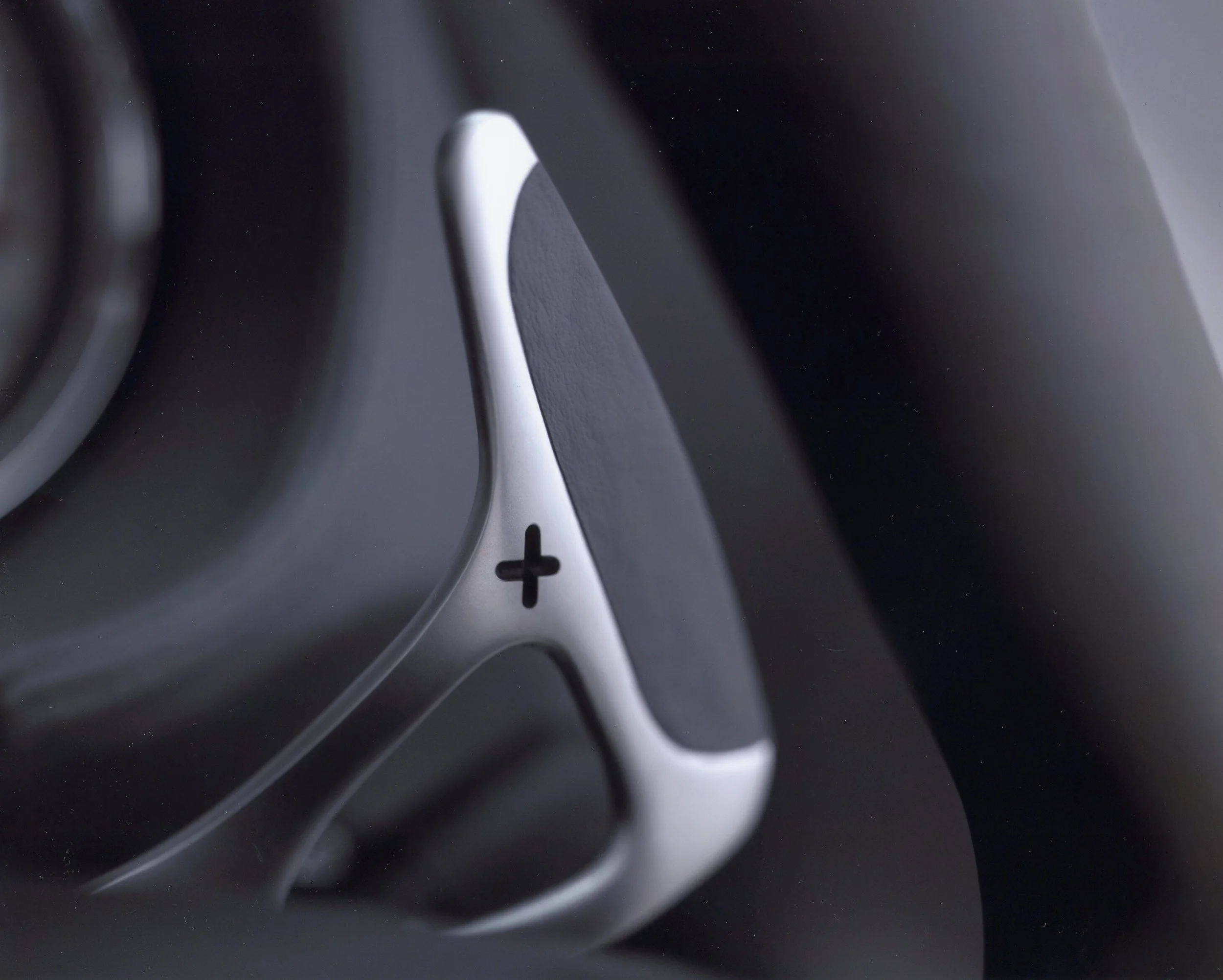
Image © Aston Martin Lagonda. Used for editorial purposes.
On a test drive, the car should select gears consistently, engage first and reverse cleanly, pull away predictably and change gear with a recognisable rhythm. It will not feel like a modern automatic gearbox, but it shouldn’t feel confused, random or reluctant.
Check for gearbox warning lights or messages, difficulty selecting neutral, first or reverse, skipping gears, refusal to change up or down, excessive clutch slip, shuddering when pulling away, inconsistent low-speed behaviour, poor pump priming, evidence of clutch replacement or adjustment, and specialist diagnostic reports.
Do not accept “they all do that” as a blanket explanation. Some character is normal. Faults are not.
Still with us? The big buying checks begin here.
You are roughly halfway through the Vanquish Buyers Guide. From here, the focus moves deeper into the practical ownership areas that matter most: engine health, cooling, brakes, suspension, tyres, electronics, bodywork, service history and inspection discipline.
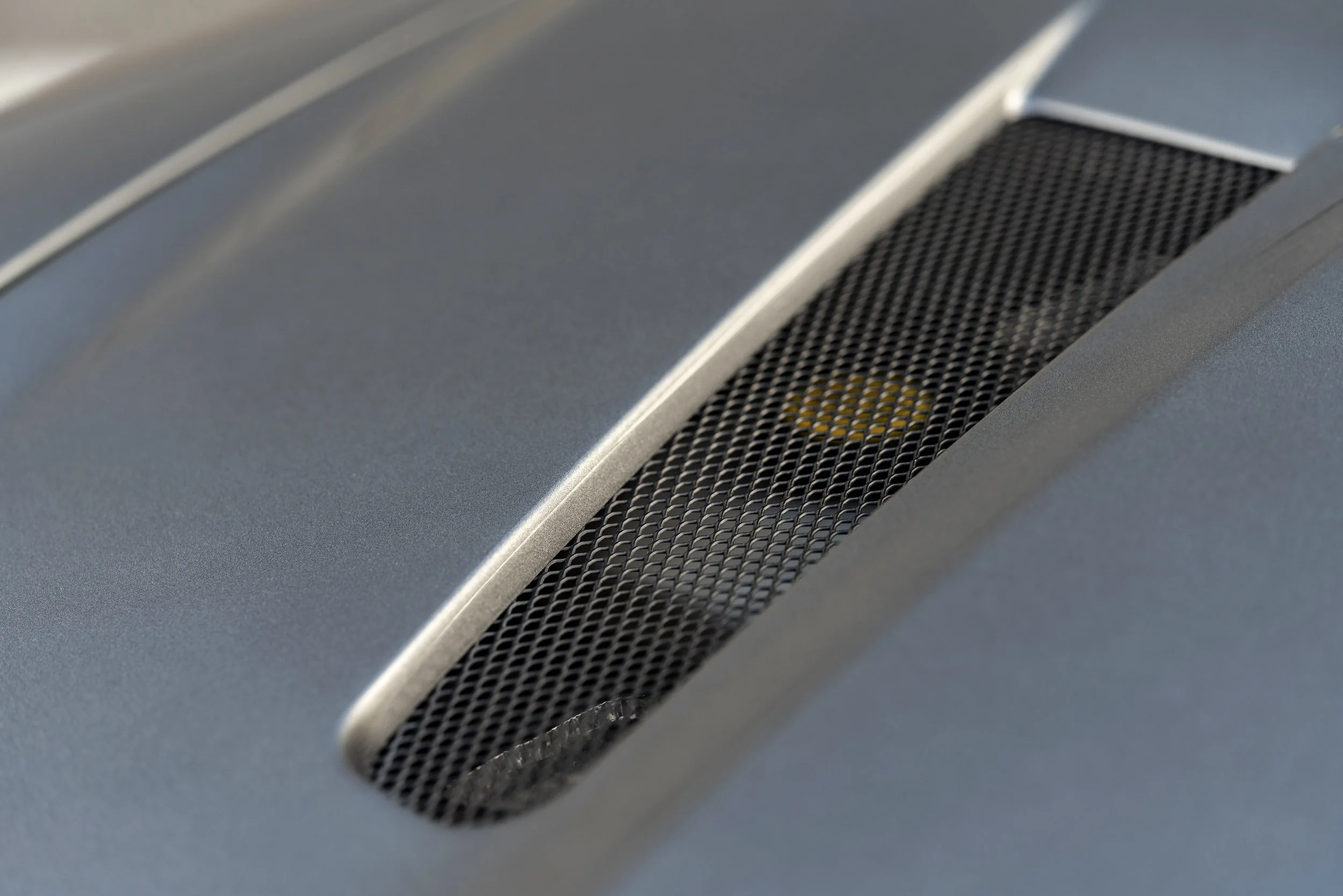
Image © Aston Martin Lagonda. Used for editorial purposes. Aston Martin V12 Vanquish.
Misfires, Coil Packs, PCV System and Oil Contamination
The V12 is a major part of the Vanquish’s appeal, but any misfire, rough running or warning light should be taken seriously. Coil packs are often discussed, but they are not the only possible cause of misfires on these cars.
Buyers should also be aware of the PCV system. PCV stands for Positive Crankcase Ventilation, which is part of the engine’s breathing system. Faults here, along with vacuum leaks, oil contamination around spark-plug areas or cam-cover seal issues, can contribute to running problems.
A seller saying “it probably just needs a coil pack” is not enough. You want evidence of proper diagnosis. A Vanquish V12 is not an engine for guesswork or cheap assumptions. The engine should start cleanly, idle smoothly, pull strongly and show no signs of hesitation, smoke, overheating or unresolved warning lights. A diagnostic scan should form part of any serious inspection.
Cooling System
Cooling-system condition matters on any V12 Aston Martin, and the Vanquish is no exception. Heat, age, low use and deferred maintenance can all create problems.
Check coolant history, pipework, thermostat housing areas, water manifold areas, radiator condition, leaks, staining, smell of coolant and any history of overheating. Also look for evidence that issues have been repaired properly rather than temporarily disguised.
A healthy car should hold temperature properly and should not show signs of coolant loss. Any uncertainty around the cooling system should be investigated before purchase, not after.
Brakes
The Vanquish is a heavy, powerful V12 grand tourer, so brake condition matters. Do not judge the brakes by pad thickness alone.
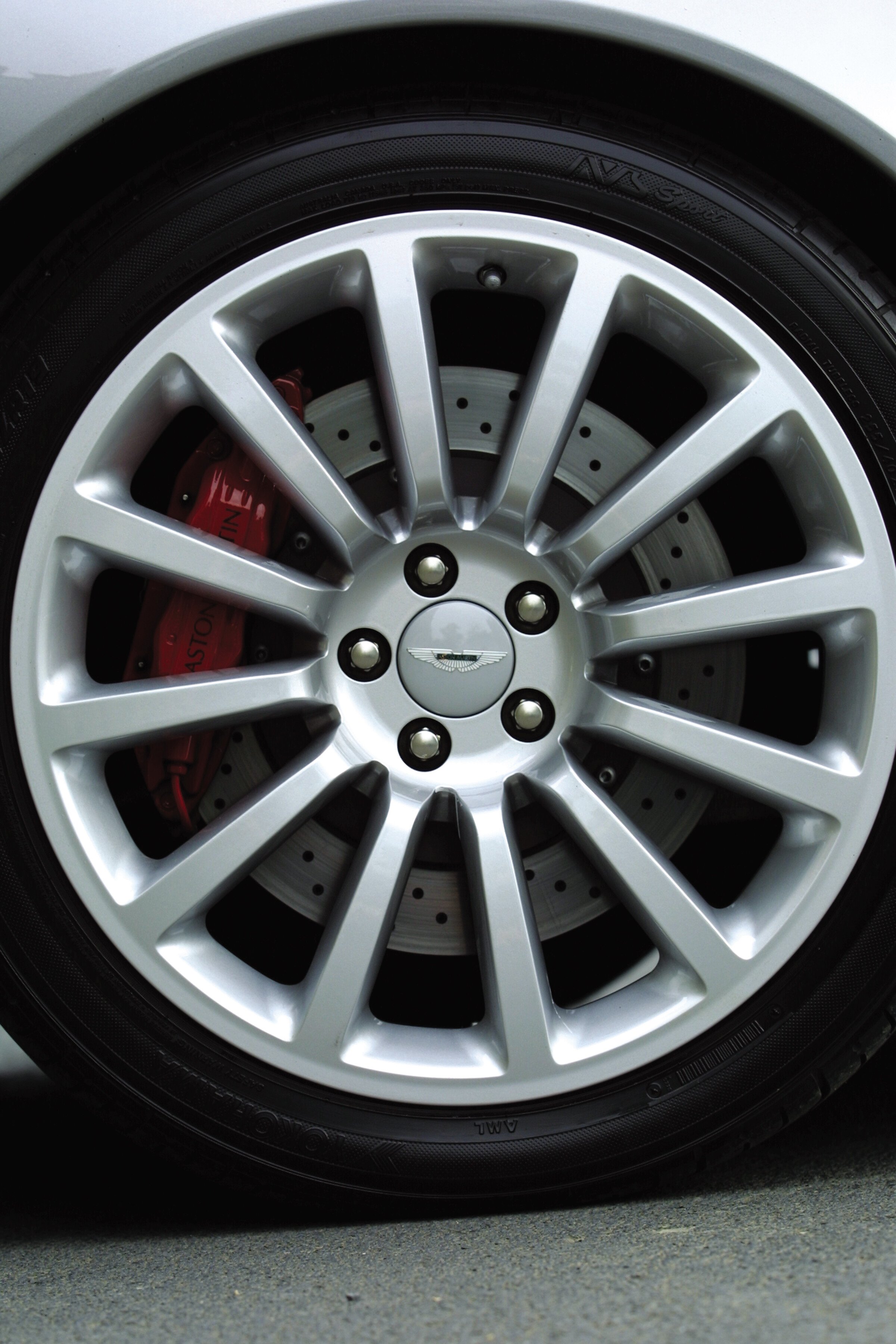
Image © Aston Martin Lagonda. Used for editorial purposes.
Check for disc wear, vibration, judder, corrosion, heat cracking, uneven wear, sticking calipers and poor pedal feel. On Vanquish S cars, pay particular attention to the condition of the braking system and any known floating-disc behaviour. Rattles, vibration or evidence of hard use should be investigated properly.
Recent brake invoices are valuable, but they should be read carefully. What was replaced? Which parts were used? Was the work carried out by someone familiar with the car? A cheap-looking car needing major brake work may not be cheap for long.
Suspension, Bushes, Dampers and Geometry
Low mileage does not guarantee fresh suspension. A Vanquish that has spent long periods unused can still suffer from tired bushes, perished rubber, leaking dampers, worn links and poor geometry.
On a test drive, listen for knocks, clonks, rattles or looseness over poor surfaces. The car should feel substantial and composed, not vague or unsettled. If it feels floaty, nervous or imprecise, do not automatically assume “that is just how they drive”. Tyres, suspension wear and alignment can make a huge difference.
A proper inspection should check suspension arms, bushes, dampers, anti-roll bar links, gaiters and geometry. Evidence of recent suspension refresh work is a strong positive, especially on a car intended for regular use.
Tyres
Tyres are a bigger issue than many buyers expect. A Vanquish on old, hardened or unsuitable tyres may feel nervous, vague or disappointing, even if the rest of the car is fundamentally sound. Check the tyre brand, model, size, condition and date codes. Date codes show when the tyre was manufactured. A car with plenty of tread can still be on old rubber, and old tyres can transform the way a heavy, powerful grand tourer feels.
A fresh, high-quality set of appropriate tyres can make a Vanquish feel more stable, more accurate and more confidence-inspiring. Old tyres should be treated as both a safety concern and a negotiation point.
ECUs, Electronics and Low-Use Problems
ECU stands for Electronic Control Unit. In simple terms, an ECU is one of the car’s electronic control modules. A first-generation Vanquish has a number of electronic systems, and age, low use, weak batteries and poor jump-starting practice can all create problems.
Test everything. Windows, mirrors, seats, air conditioning, central locking, alarm, instruments, infotainment, lights, warning messages and dashboard functions should all be checked. Do not assume small electrical issues are harmless. On a low-volume Aston Martin, small problems can become awkward if parts or diagnosis are difficult.
Battery condition also matters. A Vanquish that has been left unused, repeatedly jump-started or run with a weak battery may develop electrical gremlins. Evidence of proper battery maintenance and use of a good conditioner is a positive sign.
Bodywork, Paint Bubbling and Panel Fit
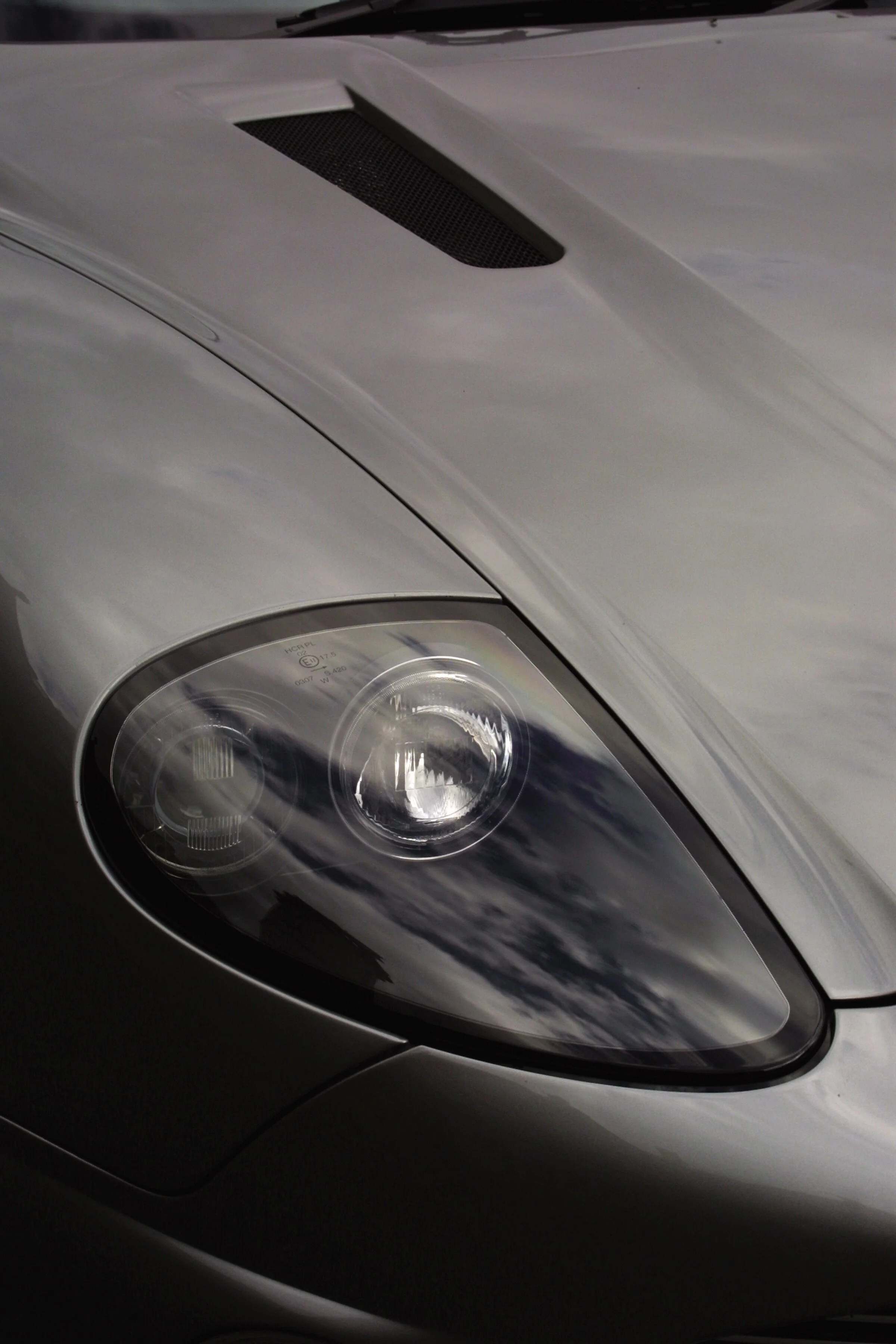
Image © Aston Martin Lagonda. Used for editorial purposes. Aston Martin V12 Vanquish.
The Vanquish’s bodywork is part of its beauty, but it also deserves close inspection. Look carefully at panel edges, door shuts, lower body sections, wheelarch areas, strakes, roof edges and any areas where paint bubbling may begin.
Paint bubbling, corrosion beneath the finish or uneven panel gaps should be investigated. Some issues may be cosmetic, but others may point to corrosion, poor repairs or previous accident damage.
Because the Vanquish uses bonded structures, aluminium panels, composite sections and hand-finished bodywork, repair quality matters enormously. A poor paint repair, badly aligned panel or vague accident history should not be ignored.
Accident Repair
Accident history is especially important on a Vanquish because of the way the car was built. Its bonded aluminium, carbon-fibre and composite construction requires proper knowledge and correct repair procedures.
Ask for clear documentation of any previous damage. Minor paintwork is one thing; structural repair is another. If a car has had significant accident damage, you need to know who repaired it, how it was repaired, whether correct procedures were followed and whether the work is supported by proper invoices and photographs.
A car with documented, high-quality specialist repair may still be worth considering. A car with vague stories, mismatched paint, unexplained panel gaps or missing paperwork should be approached with real caution.
Heat Shielding and Exhaust Insulation
Heat shielding and exhaust insulation are not cosmetic details. They protect surrounding components from the heat generated by the exhaust system and drivetrain.
Check that shielding is present, secure and in good condition. Missing, damaged or badly repaired heat protection can expose nearby components to unnecessary heat and may suggest poor previous maintenance.
This is one of those inspection areas that is easy to overlook on a viewing, but it can matter greatly over time.
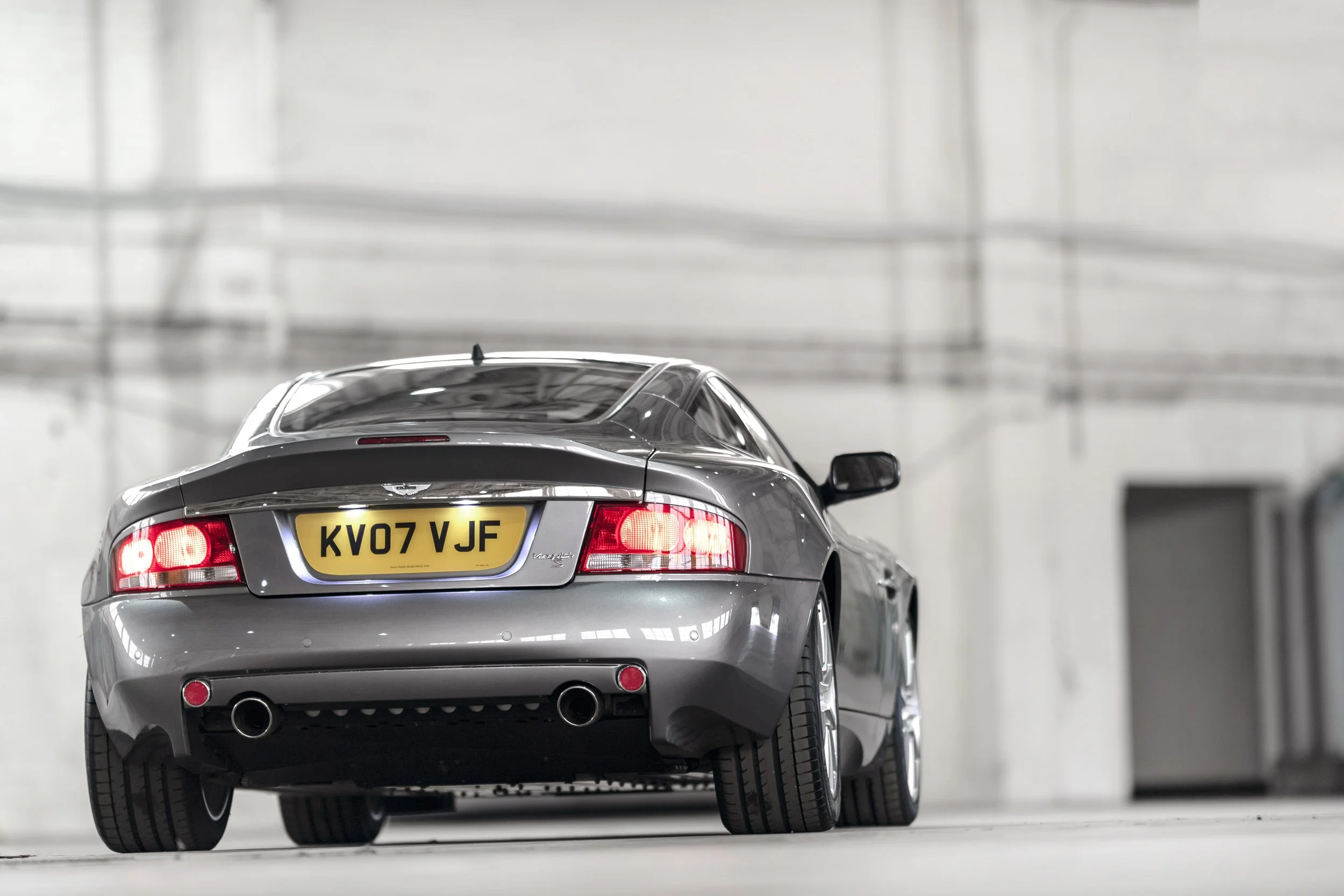
Image © Aston Martin Lagonda. Used for editorial purposes. Aston Martin V12 Vanquish.
Differential and Rear-End Noise
Listen carefully for differential or rear-end noise on the test drive. The differential is the rear axle unit that helps send power to the rear wheels while allowing them to rotate at different speeds when cornering.
Whining, clunking, leaks or vibration should be investigated. Rear-end work on a low-volume Aston Martin can be specialist territory, so do not dismiss noises as normal unless a knowledgeable specialist agrees.
Check for fluid leaks, recent servicing evidence and any invoices relating to differential or rear suspension work.
Service History and Recommissioning
A Vanquish with low mileage is not automatically a better car. Long periods of inactivity can create their own problems: stale fluids, weak batteries, flat-spotted tyres, perished rubber, sticking brakes, electrical issues and clutch or gearbox concerns.
A car that has been used regularly and serviced properly may be a stronger purchase than a garage queen that has simply been stored and polished.
Look for a detailed history file, not just stamps. Invoices should show what has actually been done. A strong ownership file may include servicing, brake work, tyres, suspension refresh, clutch or gearbox work, cooling-system attention, diagnostic reports, corrosion inspections and specialist comments.
If a car has recently come out of long-term storage, ask what recommissioning has been carried out. A fresh MOT is not the same as a proper recommissioning programme.
VIN, Recalls and Safety Campaigns
VIN stands for Vehicle Identification Number. It is the car’s unique identity number, and it should be used to check the car’s history, specification and any applicable recalls or safety campaigns. Before buying, check the VIN through Aston Martin’s own safety campaign or recall checking process where available, and also use the GOV.UK recall checker. Ask the seller for evidence that any applicable recall or service campaign work has been completed.
This is especially important on early cars and on any car with incomplete paperwork.
Warning Signs
The following should make you slow down, negotiate heavily or walk away:
no specialist inspection;
refusal to remove undertrays for inspection;
visible subframe corrosion;
vague or missing gearbox history;
poor clutch take-up;
gearbox warning lights or selection problems;
unresolved engine warning lights or misfires;
weak battery or repeated jump-start history;
old tyres;
cooling-system concerns;
brake judder or expensive brake wear;
poor accident-repair evidence;
paint bubbling with no explanation;
thin service history;
seller claims that serious faults are “normal”.
None of these automatically means every car is beyond saving, but they do mean you need evidence, expert advice and a realistic budget.
Positive Signs
A strong Vanquish will usually have:
detailed service history;
invoices, not just stamps;
recognised Aston Martin main dealer, Aston Martin Works or Vanquish specialist involvement;
evidence of clutch and gearbox assessment;
clean undertray-off inspection;
documented subframe condition;
good tyres of the correct type and age;
recent brake and suspension evidence;
cooling-system maintenance;
healthy battery and electrical behaviour;
clear recall or campaign checks;
honest seller knowledge;
no vague stories around accident damage or repairs.
The best cars tend to feel consistent. The paperwork, seller, inspection and test drive all tell the same story.
The Buyer’s Takeaway
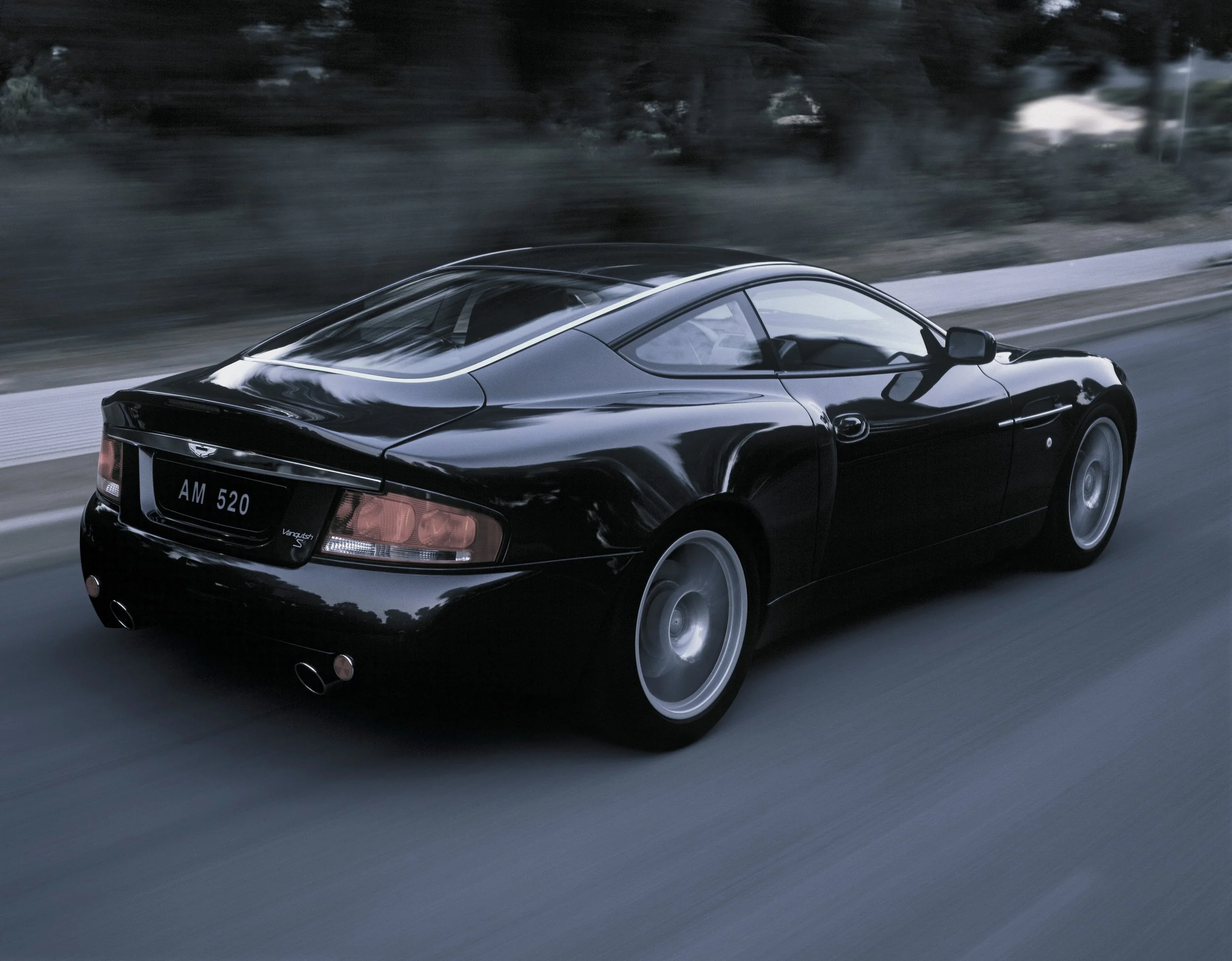
Image © Aston Martin Lagonda. Used for editorial purposes. Aston Martin Vanquish V12 S
The first-generation Vanquish is a specialist modern classic. Its main risks are now well understood: subframe corrosion, gearbox and clutch condition, cooling-system health, brake and suspension wear, electrical issues, bodywork condition, accident-repair quality and parts availability. That shouldn’t put buyers off, it should simply shape the way they buy.
A good Vanquish can be a magnificent ownership proposition. A poor one can become expensive quickly. The difference is rarely luck. It’s evidence, inspection and buying discipline.
Ownership Costs, Parts and Specialist Support
The first-generation Vanquish is not necessarily a fragile car, but it’s a specialist one. A healthy, well-maintained Vanquish can be a deeply rewarding Aston Martin to own and use, but a neglected car can become expensive very quickly.
This is not a car where the purchase price tells the whole story. A Vanquish that looks tempting because it’s cheaper than the others may simply be carrying deferred maintenance, corrosion, clutch wear, tired brakes, old tyres, weak suspension, cooling-system concerns or unresolved electrical issues. The real cost of ownership begins with the condition of the car you buy.
Routine Servicing
Routine servicing should be treated as the baseline, not the full cost of ownership. A normal annual service on a healthy Vanquish may be relatively manageable by Aston Martin standards, especially if the car is already in good condition and has been looked after properly. But the service invoice alone does not tell you whether the car is genuinely sorted.
A proper ownership budget should allow for annual servicing, inspection, fluids, tyres, brake wear, battery care and smaller age-related items. It should also include a contingency for larger Vanquish-specific work. These are low-volume V12 Aston Martins, and they are now old enough for age to matter just as much as mileage.
The right question is not simply, “How much does a service cost?” It’s, “What major age-related work has already been done, and what is still waiting for me?”
Mileage Is Not the Whole Story
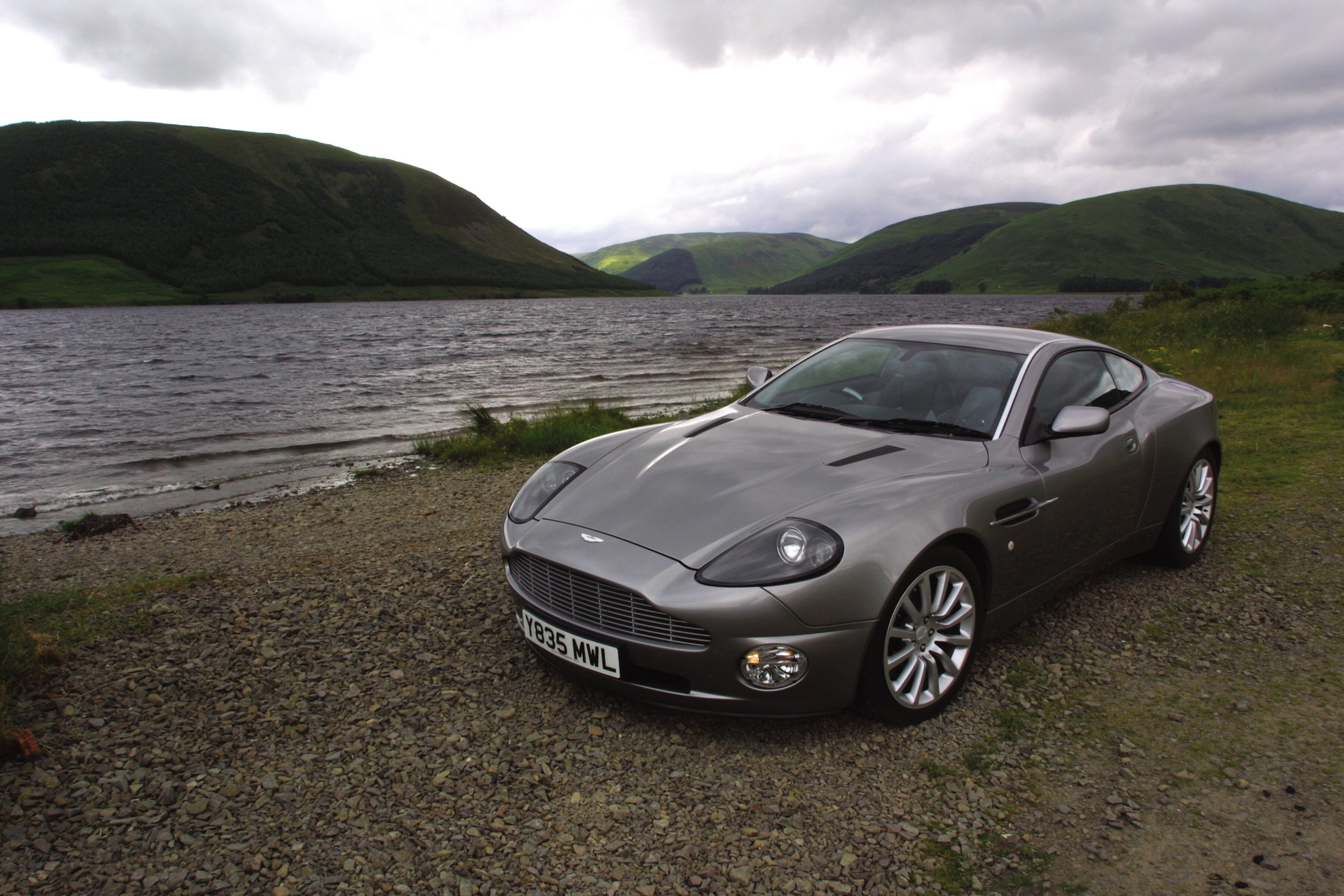
Image © Aston Martin Lagonda. Used for editorial purposes. V12 Vanquish.
Low mileage can be attractive, especially on a collector-grade Vanquish S or Ultimate Edition, but it shouldn’t be confused with low maintenance. A car that’s spent long periods unused may still need attention.
Rubber hardens. Tyres age. Fluids degrade. Batteries weaken. Brakes can stick or corrode. Suspension bushes can perish. Electrical systems can become temperamental. A clutch can suffer from low-speed manoeuvring and poor driving technique even if the odometer reading is modest. A regularly used Vanquish with excellent service history, proper specialist care and evidence of recent mechanical refresh work may be a stronger ownership proposition than a very low-mileage car that has simply been stored.
Specialist Support Matters
The first-generation Vanquish is not a car for general guesswork. It needs support from people who understand the model, its construction, its gearbox system and its known weak points.
An Aston Martin main dealer with Vanquish experience may be entirely appropriate, and many cars will have been maintained correctly within the official dealer network. Aston Martin Works at Newport Pagnell also has obvious heritage appeal, particularly for cars with Works history, manual conversions or significant provenance. Equally, a recognised independent Aston Martin specialist with proper first-generation Vanquish experience can be invaluable, especially for inspection, diagnosis, gearbox assessment, corrosion checks and pragmatic long-term ownership advice.
The badge above the workshop door matters less than the evidence of knowledge. The important thing is that whoever inspects or maintains the car understands the first-generation Vanquish properly.
Gearbox and Clutch Costs
The gearbox and clutch are among the most important ownership considerations. The original ASM/SSM system has a clutch, hydraulic components, sensors and control systems that need proper diagnosis and setup. A poorly set-up or worn system can make the car unpleasant to drive and expensive to fix. A healthy system, driven properly, can suit the character of the car. That’s why evidence is so important.
Before buying, look for clutch replacement or clutch-wear evidence, gearbox setup or calibration records, specialist diagnostic reports, hydraulic pump or actuator work, sensor replacement where relevant, and invoices from people who understand the system.
Don’t assume that a car with no obvious warning light is automatically healthy. Equally, do not assume every original ASM/SSM car is a problem waiting to happen. The condition of the individual system is what matters.
Manual Conversions and Long-Term Support
Manual-converted Vanquishes can be highly desirable, especially if converted by Aston Martin Works. They may offer greater driver involvement and stronger appeal to some buyers, but they shouldn’t be treated as maintenance-free simply because the automated shift system has been removed.
A manual-converted car still needs the same structural, mechanical and electrical checks as any other Vanquish. The conversion itself should also be documented clearly. Buyers should know who carried out the work, when it was done, what parts were used, whether the car has been inspected since, and whether the conversion is supported by Aston Martin Works or a recognised specialist.
A manual conversion may make the car more appealing to one buyer and less appealing to another. It can influence value, originality, usability and resale audience. Treat it as an important part of the car’s identity, not a magic cure for every Vanquish concern.
Corrosion and Structural Costs
Corrosion is one of the areas where a cheap Vanquish can become expensive very quickly. Front subframe condition, rear subframe areas, mounting points, undertray fixings and dissimilar-metal areas all need proper inspection.
Because much of the car’s construction is bonded and because the Vanquish uses a mix of aluminium, steel, composite and carbon fibre, structural condition and repair quality matter enormously. You don’t want to discover hidden corrosion or poor accident repair after purchase.
A proper underside inspection before buying is far cheaper than discovering major structural work later. The undertrays need to come off. If the seller will not allow proper inspection, you should be cautious.
Brakes, Tyres and Suspension
The Vanquish is a heavy, powerful V12 grand tourer. It needs good brakes, good tyres and healthy suspension to feel right. Brake work can be expensive, especially if discs, pads, calipers or related components need attention. Suspension wear can also have a major effect on the way the car drives. Tired bushes, worn dampers, poor geometry or old tyres can make a Vanquish feel vague, unsettled or disappointing.
Tyres deserve particular attention. A car with old or unsuitable tyres may drive poorly even if the rest of the car is fundamentally sound. Fresh, correct, high-quality tyres can transform the car’s steering, stability and confidence.
These are not cosmetic costs. They directly affect safety, feel and enjoyment.
Cooling System and Engine Ancillaries
The V12 is the heart of the Vanquish, but buyers should budget for proper cooling-system and engine-ancillary care. Coolant pipes, thermostat housing areas, water manifolds, radiators, hoses, sensors, coil packs, Positive Crankcase Ventilation components and related seals all need to be treated seriously as the cars age.
A misfire should always be diagnosed properly rather than guessed at. A well-maintained engine should start cleanly, idle smoothly, pull strongly and hold temperature properly. Any unresolved warning light, rough running, coolant smell, overheating history or vague explanation should be investigated before purchase.
Electronics and Battery Care
The Vanquish was a technically ambitious low-volume car, and its electronic systems need to be kept healthy. Electronic control modules, sensors, wiring, batteries and related systems can be sensitive to poor maintenance and low use.
A weak battery can cause or exaggerate electrical issues. Repeated jump-starting, long periods without a battery conditioner and poor storage habits can all create problems.
Good ownership usually includes proper battery care. A quality battery conditioner, regular use and prompt investigation of warning messages are all sensible. Electrical faults should not be dismissed as “just old Aston things”.
Parts Availability
Parts availability is an important part of first-generation Vanquish ownership. Support exists through Aston Martin main dealers, Aston Martin Works and independent specialists, but buyers should not assume that every part is instantly available or inexpensive.
Some components may be straightforward. Others may be expensive, specialist, remanufactured or dependent on the right supplier. Certain known weak points now benefit from specialist-engineered solutions, which is good news for owners, but it also reinforces the need to have proper support lined up before purchase.
This is especially important with gearbox components, structural parts, trim, electronics, braking systems and model-specific items. Before buying a car with a known fault, find out whether the necessary parts are available, who can fit them and what the realistic cost might be.
Main Dealer, Aston Martin Works or Independent Specialist?
There is no single right answer for every owner. An Aston Martin main dealer with the right experience can be a perfectly valid support route, especially for cars with official dealer history. Aston Martin Works brings additional heritage status and Newport Pagnell provenance, which may be especially relevant for collector-grade cars, Ultimate Editions, Works manual conversions or owners who value that connection.
A respected independent Aston Martin specialist can also bring deep practical knowledge, model-specific experience and pragmatic solutions. For a regularly used car, the right independent specialist may be just as important as official history.
The best approach is to choose support based on the car, your intended use and the quality of the people involved. What matters most is that the car is maintained by someone who understands the first-generation Vanquish in detail.
Budgeting Sensibly
A sensible Vanquish ownership budget has three layers;
The first layer is routine annual care: servicing, fluids, MOT, inspection, battery care and smaller maintenance items.
The second layer is age-related refresh work: tyres, brakes, suspension, cooling-system components, rubber parts, electrical diagnosis and general recommissioning.
The third layer is major Vanquish-specific work: clutch and gearbox issues, subframe corrosion, structural repairs, significant brake work, parts scarcity, manual-conversion questions or major engine-related diagnosis.
The problem comes when buyers only budget for the first layer. A Vanquish bought cheaply because layers two and three have been ignored may become expensive very quickly.
The Buyer’s Takeaway
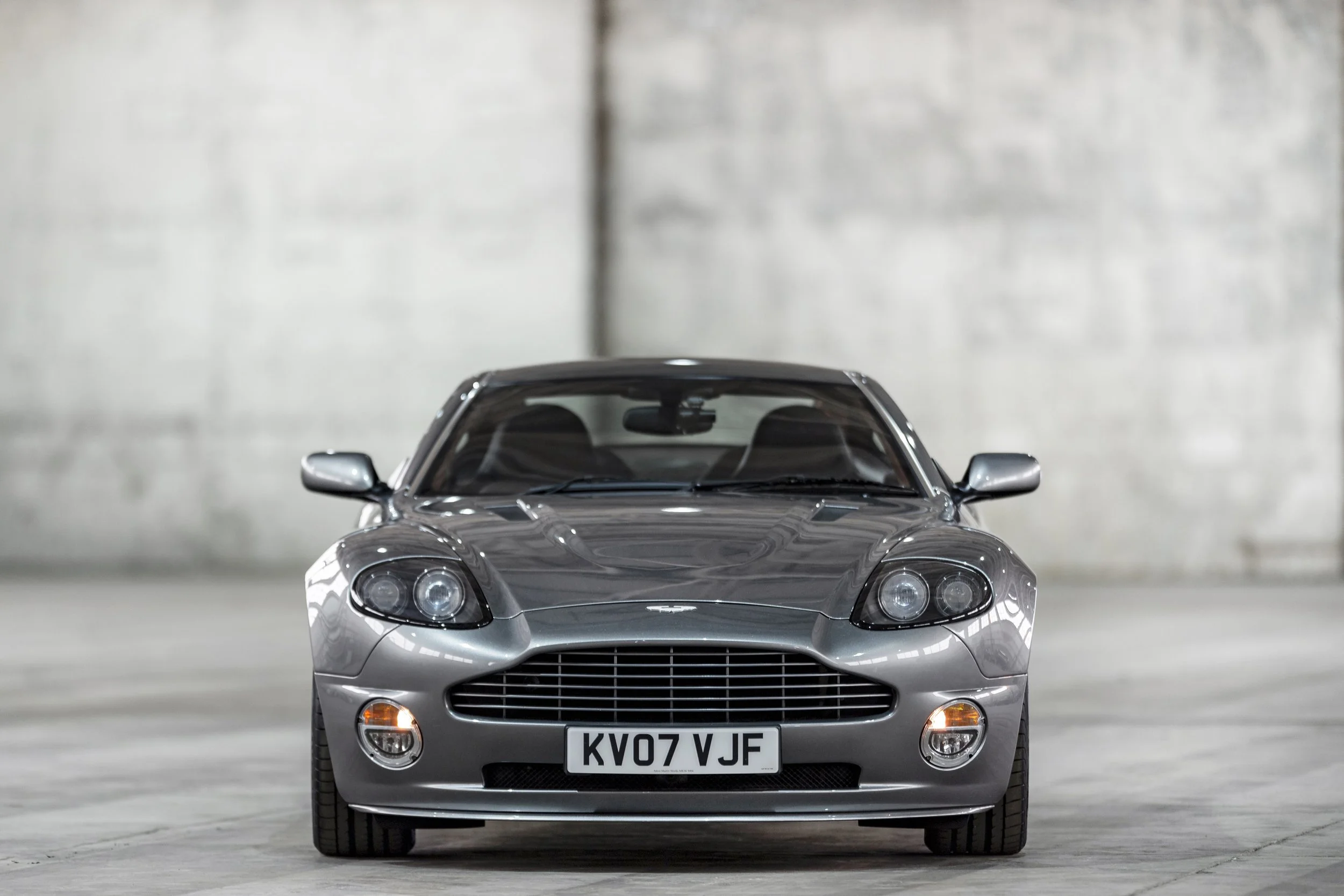
Image © Aston Martin Lagonda. Used for editorial purposes. Aston Martin Vanquish S V12
A first-generation Vanquish should not be bought because it looks inexpensive compared with newer Aston Martins. It should be bought because you understand what it is: a low-volume, Newport Pagnell-built V12 flagship with specialist construction, specialist systems and specialist support needs.
The best cars are not necessarily the lowest-mileage cars or the cheapest cars. They’re the cars with the clearest evidence: strong service history, specialist invoices, healthy gearbox and clutch behaviour, clean underside inspection, good tyres, sorted brakes, sound cooling system, working electronics and honest provenance.
Buy a good Vanquish with the right support behind you, and it can be a magnificent thing. Buy a poor one because it looks cheap, and it may teach you very quickly why the best example was the better buy all along.
Market Position and Buying Strategy
The first-generation Vanquish market is not as simple as “buy the cheapest one” or “buy the most expensive Vanquish S you can find”. These cars vary enormously according to condition, mileage, provenance, specification, gearbox type, service history, colour, market destination, accident history and the quality of previous maintenance.
That makes the Vanquish a car where the buying strategy matters as much as the budget. The right example may cost more to buy, but less to sort. The wrong example may look like an opportunity, but only because the expensive work has been left for the next owner.
The most important rule is simple: buy the car with the strongest evidence.
A good Vanquish should have a proper history file, clear servicing records, detailed invoices, known clutch and gearbox history, evidence of underside inspection, good tyre and brake condition, healthy electronics and no vague stories around accident repair or corrosion. A car with all of that is usually worth taking seriously, even if it’s not the cheapest example available.
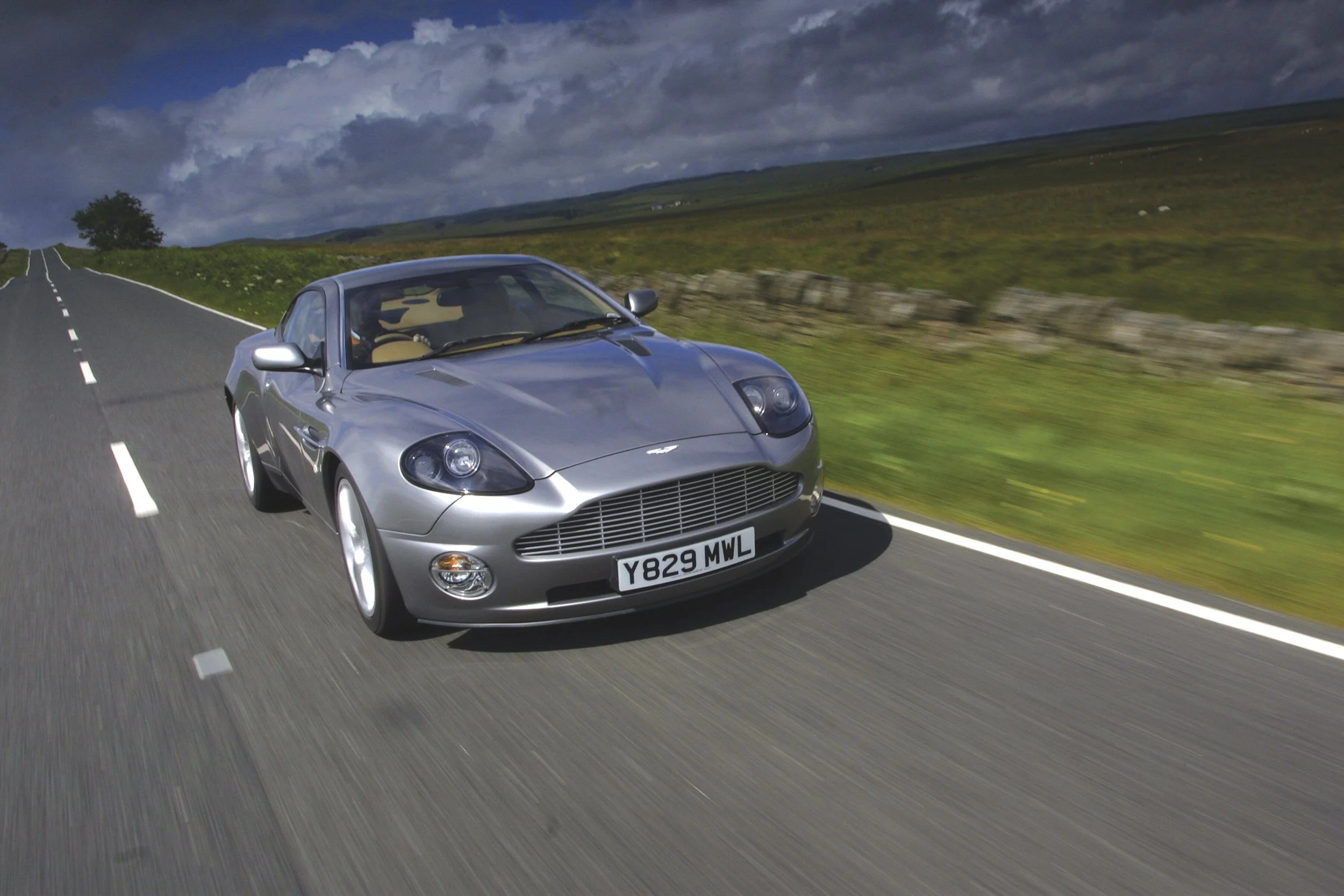
Image © Aston Martin Lagonda. Used for editorial purposes.
Standard V12 Vanquish
The original V12 Vanquish can be a very appealing buy. It gives you the earliest expression of Ian Callum’s design, the Newport Pagnell-built construction, the naturally aspirated V12 and the full character of the original car.
For some buyers, this may be the sweetest route into first-generation Vanquish ownership. It’s the original concept, and a well-maintained standard car can feel deeply special without necessarily carrying the same market premium as a Vanquish S or Ultimate Edition.
The key is condition. A strong standard Vanquish with excellent history, clean subframes, a healthy gearbox and sorted maintenance is usually a better buy than a tired Vanquish S bought only because it’s the later model.
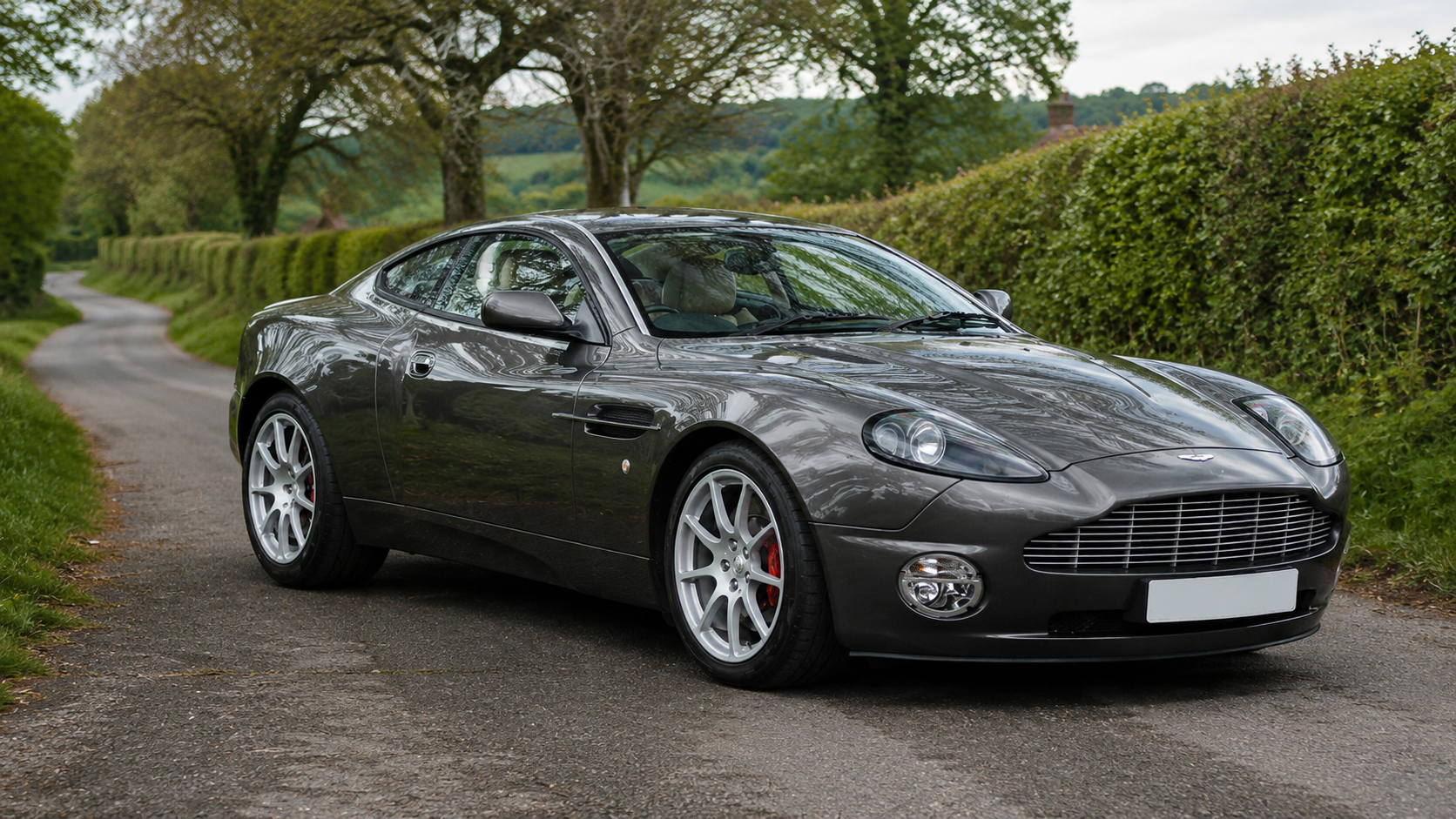
Image © Fuel the Passion
Sport Dynamic Pack
The Sport Dynamic Pack is a rare and interesting middle ground. It sharpened the original Vanquish before the arrival of the full Vanquish S, usually bringing dynamic upgrades such as uprated brakes, revised suspension, quicker steering and specific lightweight wheels.
For an enthusiast buyer, a genuine Sport Dynamic Pack car can be very attractive. It has rarity, driver appeal and a slightly more focused character than a standard early car, without becoming a full Vanquish S.
However, verification is essential. Do not rely purely on an advert description. Check the original build record, specification, invoices and specialist confirmation before paying any premium.
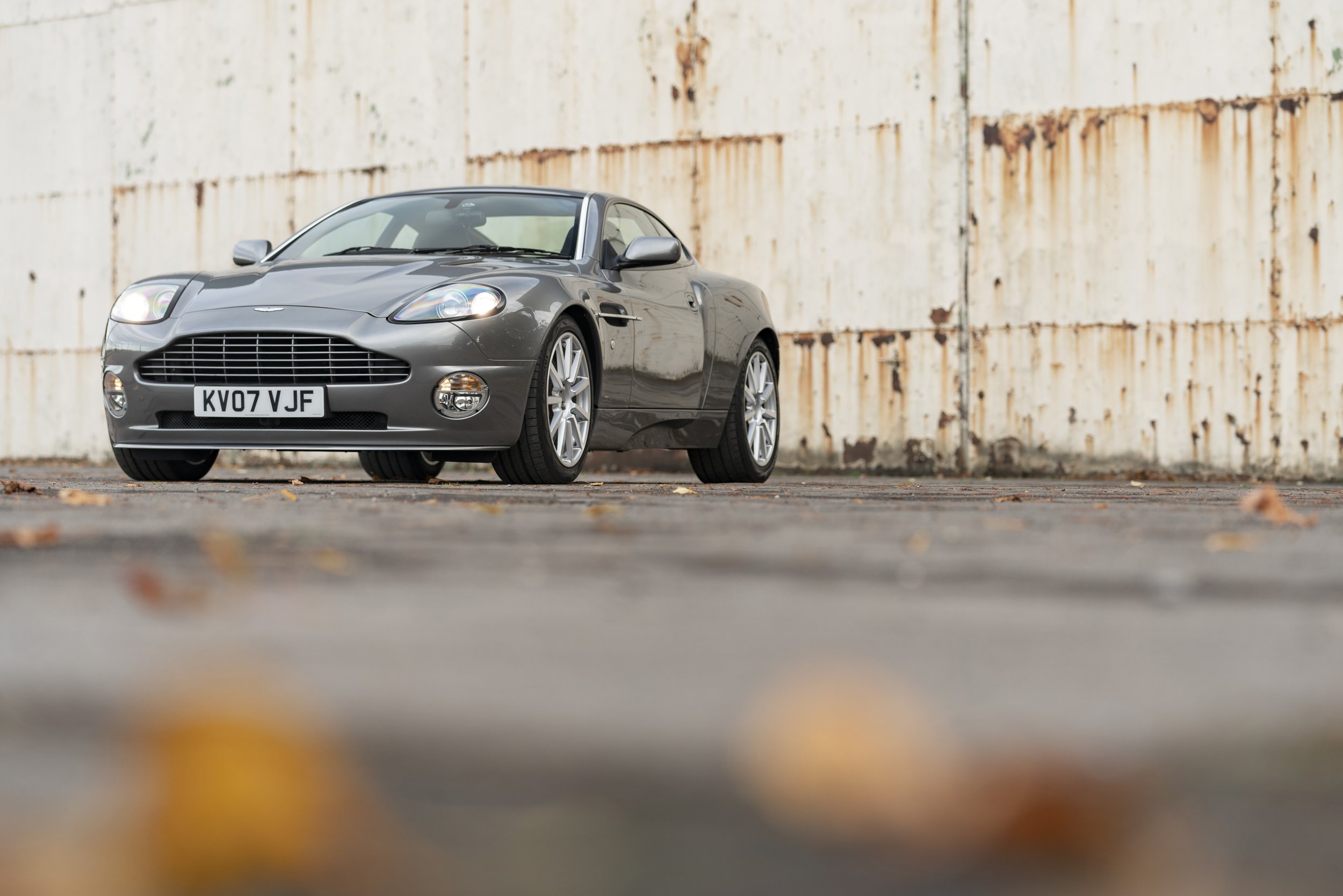
Image © Aston Martin Lagonda. Used for editorial purposes.
Vanquish S
The Vanquish S is the obvious flagship choice for many buyers. It has more power, sharper dynamics, improved brakes, aerodynamic changes and the 200 mph-plus headline that made it Aston Martin’s fastest roadgoing car at the time.
As a result, the Vanquish S often attracts stronger demand and higher values than the standard car. It is the more developed version and, for many people, the most complete regular-production first-generation Vanquish.
But the S badge does not remove the need for discipline. A poor Vanquish S can still have subframe corrosion, gearbox issues, clutch wear, old tyres, tired brakes, weak electronics, cooling-system concerns or incomplete history. Buy the individual car, not just the model hierarchy.
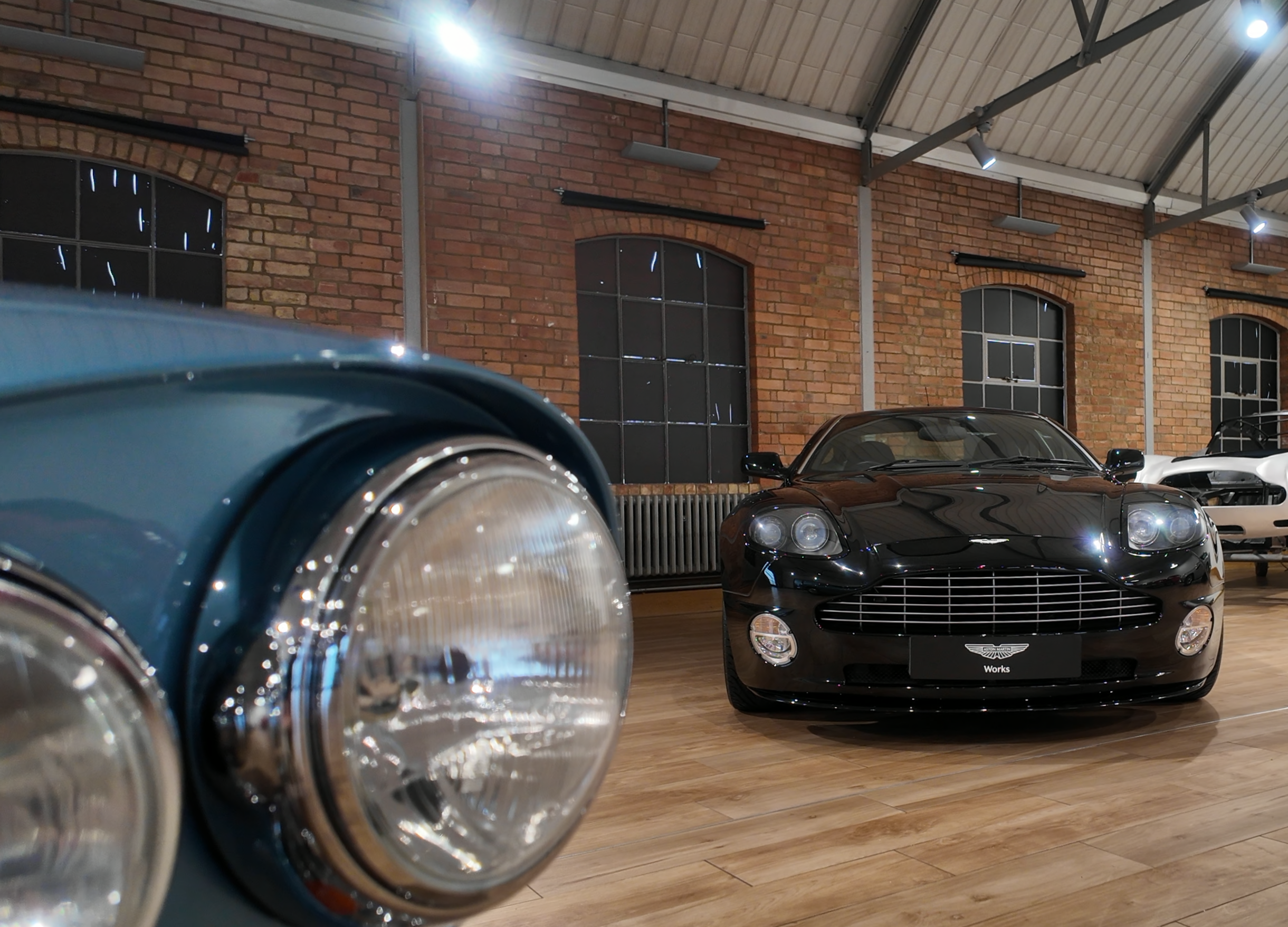
Image © Fuel the Passion
Ultimate Edition
The Vanquish S Ultimate Edition sits at the collector end of the first-generation market. It marked the end of Vanquish production and the closing chapter of series-production Aston Martin road cars at Newport Pagnell. That historical significance gives it a special place in the range.
An Ultimate Edition may suit a buyer who values rarity, provenance and end-of-line significance more than outright use. But it should still be inspected like any other Vanquish. Rare does not automatically mean healthy.
Before buying an Ultimate Edition, verify the build record, market destination, original specification, provenance and supporting documentation. Be careful with production-number claims, especially around European-market Ultimate cars and additional Middle East-market examples. The individual car’s paperwork matters more than a seller’s headline description.
Manual Conversions
Manual-converted Vanquishes are now an important part of the market. Aston Martin Works conversions are likely to carry particular appeal because of their official Newport Pagnell connection, but other specialist conversions also exist and should be judged on their own evidence.
A manual conversion may add driver involvement and desirability for some buyers, but it is not automatically the right choice for everyone. Some buyers will prefer the originality and theatre of the factory ASM/SSM system.
The key questions with any converted car are who carried out the conversion, when it was done, what documentation supports it, how well the car drives, whether a specialist is willing to support it, how the conversion affects originality and future saleability, and whether the price reflects the entire car rather than just the gearbox.
A manual conversion can be highly desirable, but it should not distract from the usual checks. Subframes, bodywork, brakes, cooling, suspension, electronics, tyres and accident history still matter.
Low Mileage and Collector Cars
Low mileage can be attractive, particularly on rare or collector-grade cars. But low mileage should not be treated as proof of mechanical health.
A Vanquish that has spent long periods unused may need recommissioning. Tyres can age, fluids can deteriorate, brakes can stick, batteries can weaken, rubber components can perish and electrical issues can appear. A low-mileage car with poor recent maintenance may be less appealing than a higher-mileage car that has been used regularly and maintained properly.
For collector cars, provenance and originality matter. For driver’s cars, recent maintenance, condition and usability may matter more. Decide which kind of buyer you are before comparing cars.
Cheap Cars and Project Cars
There may be Vanquishes advertised at tempting prices, but buyers should be very careful. A cheap Vanquish is rarely cheap by accident.
A car may be priced lower because of weak history, looming clutch work, poor gearbox behaviour, corrosion, tired brakes, old tyres, accident history, paint issues, electrical problems, missing documentation or parts availability concerns.
That doesn’t mean every lower-priced car should be ignored. Some may be honest cars needing known work. But the price should reflect the reality. If a seller says a fault is “minor” or “just needs” something, ask for proper diagnosis and cost evidence.
The danger is buying a car that needs several major jobs at once. Once corrosion, gearbox, clutch, brakes, suspension, tyres, cooling and electronics begin to overlap, a bargain can quickly stop looking like one.
The Buyer’s Strategy
The best strategy is to narrow your priorities first.
If you want originality, focus on a well-maintained factory ASM/SSM car with excellent history.
If you want the most developed regular model, look closely at Vanquish S examples.
If rarity matters, investigate genuine Sport Dynamic Pack cars and Ultimate Editions carefully.
If driver involvement is the priority, consider a properly documented manual-converted car.
If regular use is the aim, don’t become obsessed with ultra-low mileage. A properly maintained and regularly exercised car may be the better ownership proposition.
Whatever route you choose, the strongest car is usually the one with the best evidence. Not the lowest mileage. Not the cheapest price. Not the biggest promise. The best evidence.
Which First-Generation Vanquish Should You Buy?
There’s no single perfect first-generation Vanquish for every buyer. The right car depends on what you want from ownership: originality, driving involvement, rarity, collectability, usability or value. The key is to be honest about your own priorities before you start viewing cars.
Best for Originality
If originality matters most, look for a well-maintained factory ASM/SSM car. That could be either an original V12 Vanquish or a Vanquish S, depending on budget and preference. The appeal here is that you are buying the car as Aston Martin intended it: paddle-shift automated manual gearbox, V12 engine, Newport Pagnell construction and the full early-2000s flagship experience.
The most important thing is health. The gearbox should work properly, the clutch should have evidence, the history file should be strong and the car should have been maintained by an Aston Martin main dealer, Aston Martin Works, or a recognised Vanquish specialist with proper model knowledge.
Best for Driving Involvement
For maximum driver involvement, a documented manual-converted Vanquish will be very tempting. A well-executed conversion can make the car feel more mechanical, more interactive and more natural to some drivers.
Aston Martin Works manual conversions are likely to be especially desirable because of their official provenance, but any manual-converted car should be judged carefully. The conversion should be properly documented, well engineered and supported by a convincing history file.
Don’t buy a manual-converted car just because it has three pedals. Buy it because the whole car is right.
Best for the Most Developed Factory Car
For many buyers, the Vanquish S will be the strongest all-round choice. It has the extra power, sharper chassis, improved brakes and greater market desirability. It’s the later and more developed version of the car. A good Vanquish S can feel like the model brought to maturity. It also carries the appeal of Aston Martin’s 200 mph-plus flagship claim from the period.
But it still needs the same checks as any other Vanquish. A poor S is not better than an excellent standard car.
Best for Rarity
For rarity, there are two obvious routes: the Sport Dynamic Pack or the Vanquish S Ultimate Edition.
A genuine Sport Dynamic Pack car may appeal to the enthusiast who wants something rarer and more driver-focused than a standard car, but less obvious than a Vanquish S. An Ultimate Edition is the collector’s choice, especially for someone who values end-of-line significance and the final Newport Pagnell production story.
In both cases, verification is essential. Do not pay rarity money without documentation.
Best for Regular Use
For regular use, the best Vanquish may not be the lowest-mileage car. It may be a well-maintained example that has been exercised properly, serviced consistently and kept mechanically fresh.
A car intended for regular use should have good tyres, strong brakes, sorted suspension, a healthy cooling system, reliable electronics and a gearbox that behaves properly. It should feel ready to enjoy, not like a museum piece being dragged back into life.
A standard Vanquish, Vanquish S or manual-converted car could all work well for this role, provided the condition is right.
Best Avoided
The cars to be most careful with are those that rely on romance rather than evidence. Be cautious of any Vanquish with poor or missing service history, no recent specialist inspection, refusal to remove undertrays, visible subframe corrosion, gearbox warning lights or selection issues, vague clutch history, unresolved misfires, cooling-system concerns, tired brakes or suspension, old tyres, weak battery or electrical problems, unclear accident history, fresh paint with no explanation, or seller claims that serious issues are “normal”.
Some cars can be rescued, but the price needs to reflect the work required. A first-generation Vanquish is not a car where you want to discover the truth after purchase.
The Simple Answer
For most buyers, the best first-generation Vanquish is not necessarily the rarest, fastest, cheapest or lowest-mileage car. It’s the car with the strongest evidence, strong history, clean underside, healthy gearbox, sensible mileage, good tyres, proper servicing, clear provenance, honest seller, specialist inspection.
That’s the Vanquish to buy.
Pre-Purchase Inspection Checklist
A proper pre-purchase inspection, often shortened to PPI, is essential before buying a first-generation Vanquish. This should be carried out by an Aston Martin main dealer, Aston Martin Works, or a recognised Vanquish specialist with the right model experience.
The checklist below is not a replacement for a professional inspection, but it should help buyers understand what needs to be checked.
1) Identity and Paperwork
Check the VIN, which stands for Vehicle Identification Number. This is the car’s unique identity number and should match the registration documents, service records and any build information.
Before purchase, check that the VIN matches the car and paperwork, the V5C registration document is present and correct, the original build specification is available where possible, the service book and invoices are consistent, the MOT history makes sense, recall or safety campaign evidence is present, and any import, export, finance, title, insurance write-off or accident-history questions are resolved.
For UK cars, the V5C is the registration document often referred to as the logbook. It confirms the registered keeper, but it’s not proof of ownership.
Don’t rely only on the service book. Invoices tell the real story.
2) Service History
Look for detailed maintenance evidence, not just stamps. A strong history file should show regular servicing, Aston Martin main dealer, Aston Martin Works or recognised specialist involvement, clutch and gearbox records, brake invoices, suspension work, cooling-system work, tyre replacement, battery replacement or conditioner use, corrosion inspections, diagnostic reports and recommissioning work if the car has been stored.
A long gap in history needs explaining. A low-mileage car with little evidence is not automatically a better car.
3) Underside and Subframes
The undertrays should be removed for inspection. This is one of the most important Vanquish buying checks. Inspect the front subframe, front subframe mounts, rear subframe areas, rear mounting points, wheelarch brackets, undertray fixings, signs of trapped moisture, corrosion around dissimilar materials, previous repairs, poor underseal work and accident damage.
Don’t buy on MOT history alone. An MOT is not the same as a detailed Vanquish underside inspection.
4) Gearbox and Clutch
The original ASM/SSM system is an electro-hydraulically operated manual gearbox. It has a clutch, hydraulic components, sensors and control systems, all of which need checking. Assess neutral selection, first gear engagement, reverse engagement, smooth pull-away, clutch take-up, signs of slipping or shuddering, gear skipping, refusal to select gears, gearbox warning messages, hydraulic pump priming, evidence of clutch replacement, evidence of gearbox setup or calibration and diagnostic scan results.
If the car has been manual-converted, check who carried out the conversion, when it was done and what documentation supports it.
5) Engine
The V12 should start cleanly, idle smoothly and pull strongly. Check cold-start behaviour, idle quality, warning lights, misfires, smoke, oil leaks, coolant leaks, coil-pack history, spark-plug history, PCV system condition, vacuum leaks, cam-cover seal issues and diagnostic scan results.
6) Cooling System
Check coolant level, coolant history, radiator condition, hoses and pipework, thermostat housing areas, water manifold areas, staining or residue, signs of overheating, cooling fans and temperature behaviour on the test drive. Any coolant smell, leak, staining or overheating history should be investigated before purchase.
7) Brakes
Check disc condition, pad condition, brake judder, vibration, caliper condition, brake fluid history, handbrake operation, brake warning lights, uneven wear, heat damage and Vanquish S brake-specific concerns where relevant. Don’t assume brakes are healthy because the car has low mileage.
8) Suspension and Steering
Check bushes, dampers, springs, anti-roll bar links, ball joints, gaiters, steering feel, wheel alignment, knocks or clonks, uneven tyre wear and ride quality. A Vanquish should feel substantial and controlled. If it feels loose, vague or nervous, find out why.
9) Tyres and Wheels
Check tyre brand, tyre model, correct size and rating, tread depth, tyre date codes, cracks or flat spots, wheel condition, wheel corrosion, buckles, vibration and tyre-pressure monitoring where fitted. Old tyres can make a Vanquish feel much worse than it really is. Fresh, correct tyres are a major positive.
10) Electronics and Interior
The Vanquish has several electronic systems, and they should all be checked carefully. Test windows, mirrors, seats, seat memory where fitted, air conditioning, heating, central locking, alarm, lights, dashboard display, warning messages, infotainment, stereo, parking sensors where fitted, battery condition and evidence of jump-starting issues.
Electrical faults should not be dismissed casually.
11) Bodywork and Accident Repair
Check panel gaps, paint match, bubbling, corrosion around panel edges, door shuts, roof edges, wheelarches, strakes, lower body sections, boot floor area, front crash structure evidence, rear repair evidence, overspray, mismatched fixings and photographs or invoices for any repair work.
Because of the Vanquish’s bonded aluminium, carbon-fibre and composite construction, repair quality matters enormously.
12) Heat Shielding and Exhaust
Check exhaust condition, exhaust mounts, heat shielding, exhaust insulation, signs of heat damage, rattles, leaks, corrosion and non-standard exhaust modifications. Heat protection is not cosmetic. Missing or damaged heat shielding should be investigated.
13) Test Drive
A test drive should include cold start, low-speed manoeuvring, normal road driving and, where safe and legal, stronger acceleration and braking. Assess engine smoothness, gearbox behaviour, clutch take-up, steering feel, braking confidence, suspension noises, straight-line stability, vibration, temperature control, warning lights, electrical behaviour and overall confidence.
A good Vanquish should feel consistent. It may feel old-school, but it should not feel neglected.
14) Final Inspection Rule
Don’t buy a first-generation Vanquish without proper inspection. The car may be beautiful, rare and emotionally irresistible, but this is still a low-volume V12 Aston Martin with specialist construction and specialist systems. A detailed inspection is not an optional extra. It is part of buying the car properly.
Final Thoughts - The Buyer’s Mindset
The first-generation Aston Martin Vanquish is not a car that can be understood from a specification sheet alone. On paper, it may be slower than newer Aston Martins, less polished than a DB9, heavier than some rivals and burdened with a gearbox reputation that has followed it for years.
But that’s not the whole story.
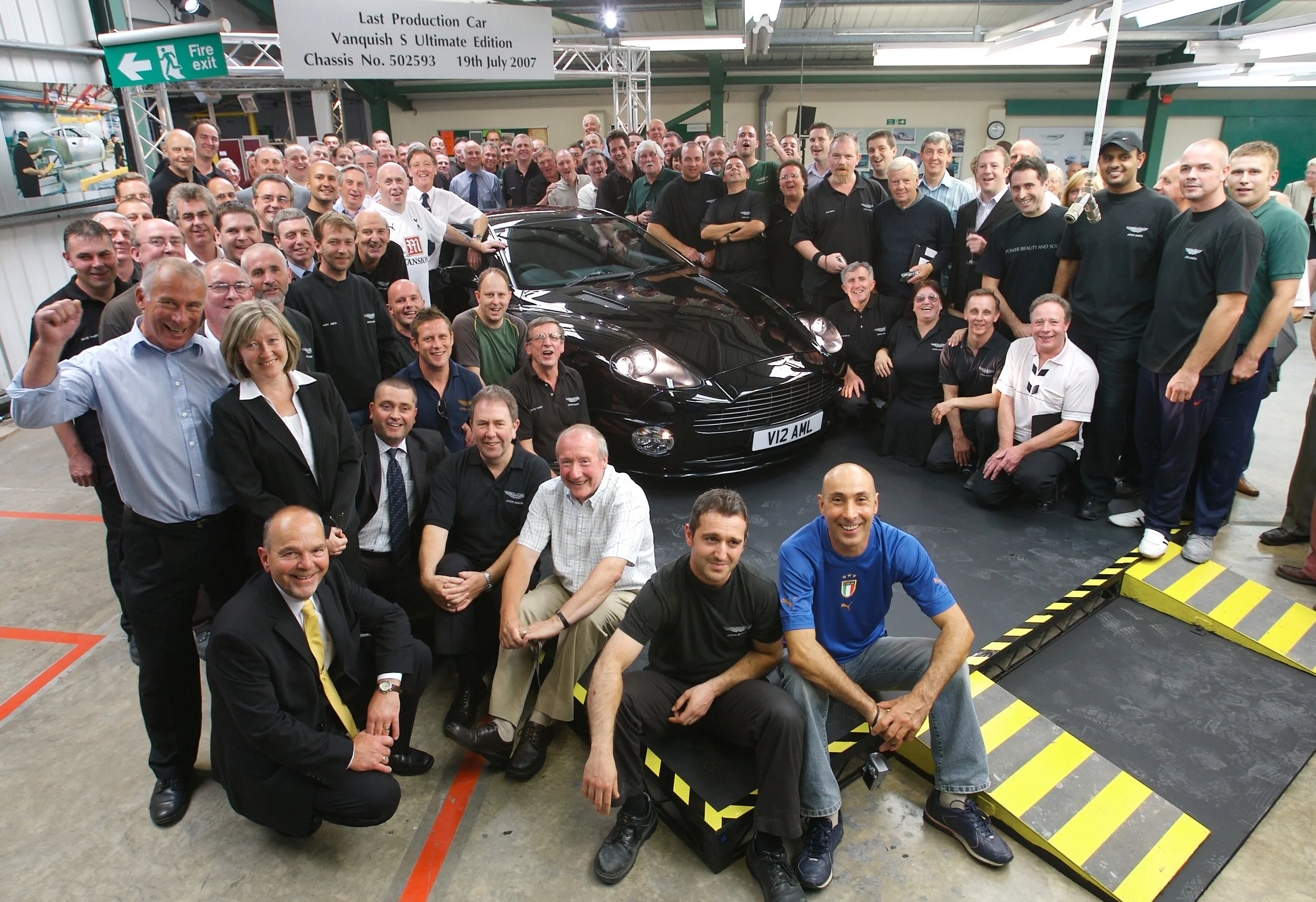
Image © Aston Martin Lagonda. Used for editorial purposes. The final V12 Vanquish S Ultimate Edition rolls off the production line. Aston Martin, Newport Pagnell, UK.
The Vanquish is one of Aston Martin’s great modern icons because it sits at a unique point in the marque’s history. It was hand-finished at Newport Pagnell, styled by Ian Callum, powered by a naturally aspirated V12 and built using a structure that moved Aston Martin towards a more modern technical era. It was old and new at the same time.
That’s why it still matters.
Image © Aston Martin Lagonda. Used for editorial purposes. Vanquish S.
It has beauty, presence and theatre in abundance. It feels special before it’s even moved. The shape, the stance, the cabin, the long bonnet and the sound of the V12 all remind you that this was Aston Martin’s flagship, not just another used grand tourer. But emotion should not replace judgement. A Vanquish needs to be bought with care. The gearbox needs understanding. The subframes need inspection. The clutch needs evidence. The tyres, brakes, suspension, cooling system, electronics and bodywork all need proper assessment. The history file matters, the seller matters, the specialist inspection matters.
The best Vanquish ownership stories usually start with patience. Wait for the right car. Ask the difficult questions. Get the proper inspection. Understand which version suits you. Don’t be seduced by the cheapest car, the lowest mileage or the most dramatic advert. A good Vanquish can be magnificent. It can be a grand tourer, a modern classic, a collector piece, a weekend car, a manual-converted driver’s car or simply one of the most charismatic Aston Martins of its era.
A poor Vanquish can be expensive, frustrating and difficult to put right. That’s the difference this guide is trying to help you understand.
Buy with your heart, certainly. A Vanquish deserves that. But let your head check the underside, the gearbox, the history file and the invoices first.
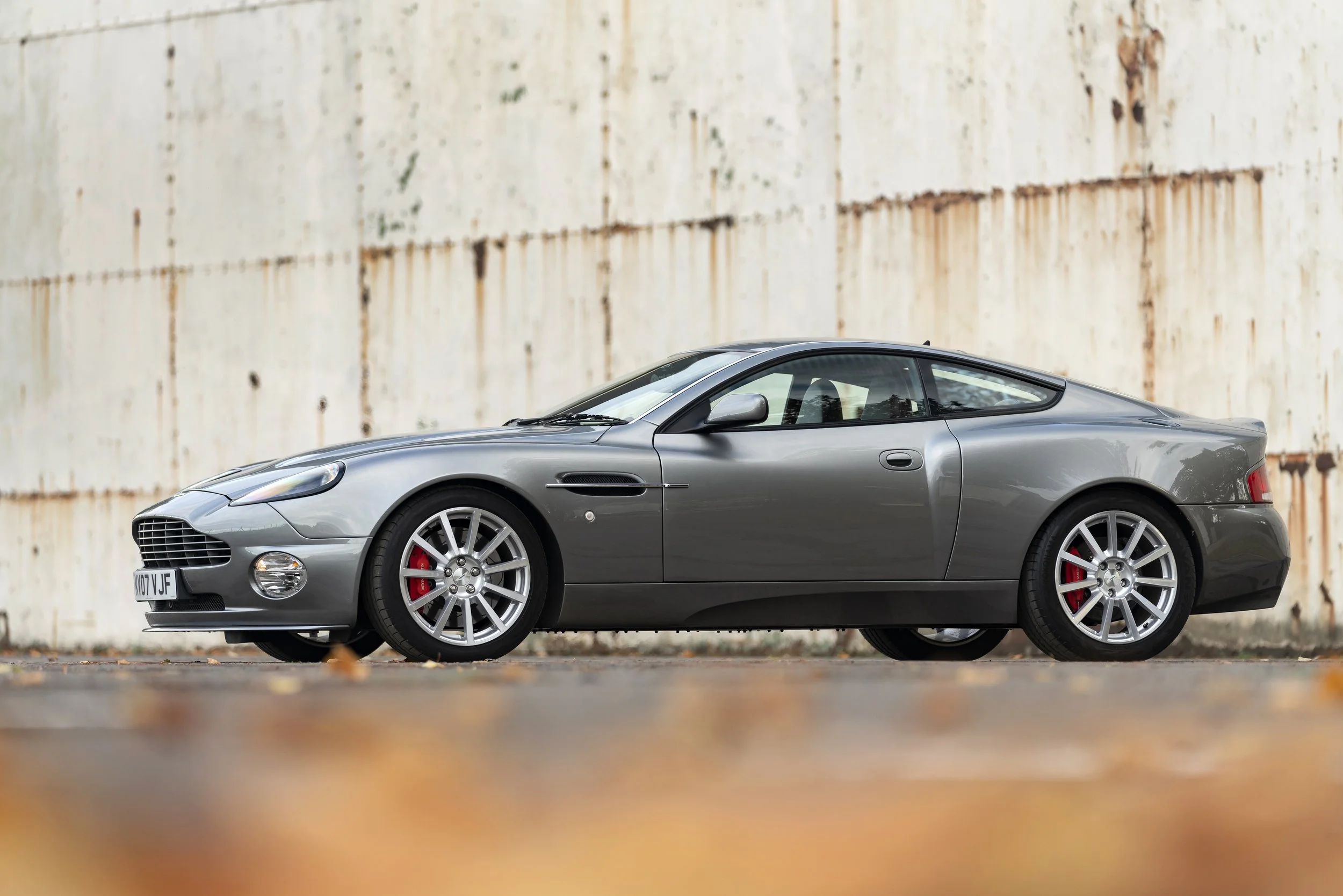
Image © Aston Martin Lagonda. Used for editorial purposes.
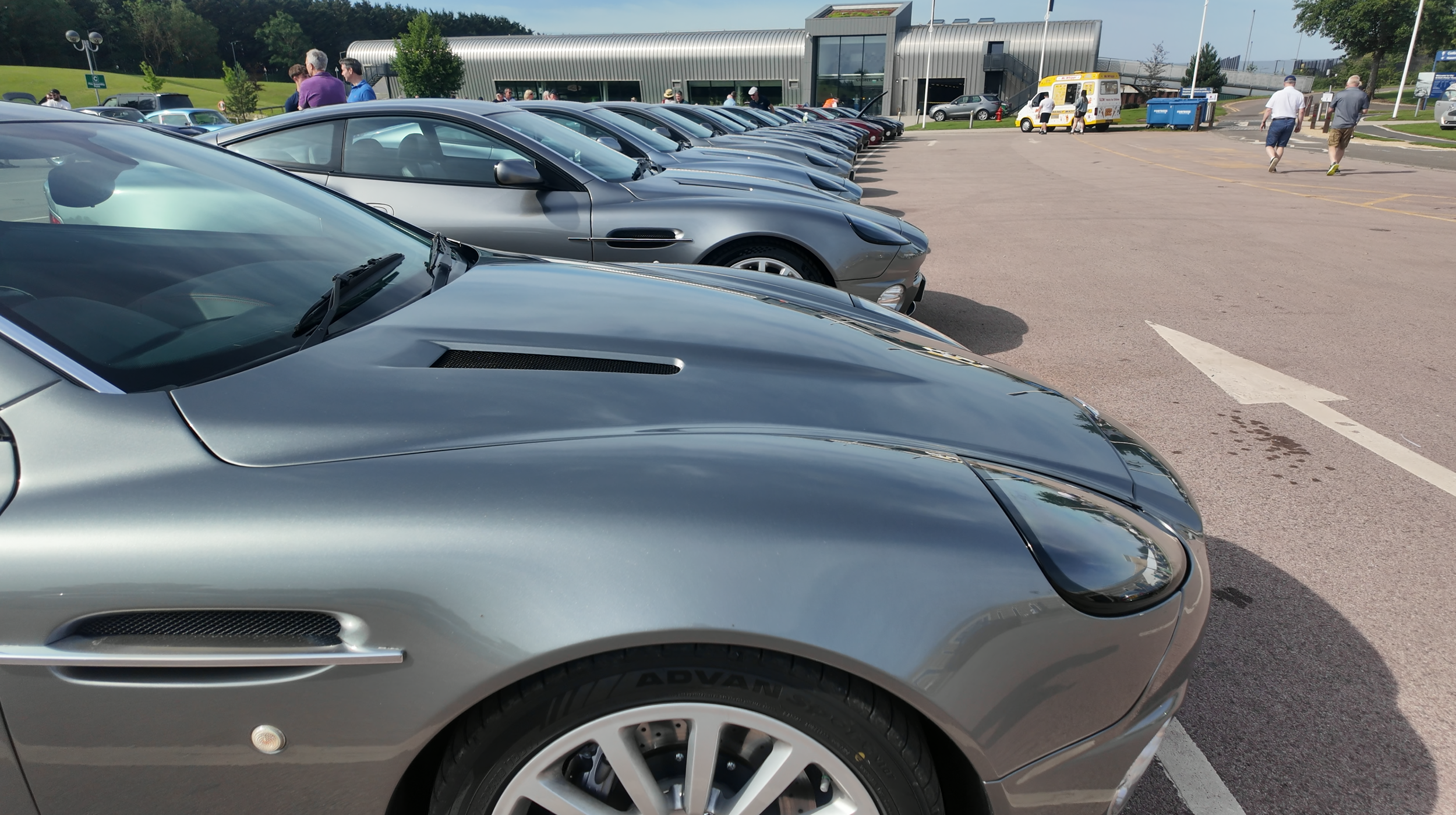
Image © Fuel the Passion. AMOC Festival 2026, British Motor Museum, Gaydon, UK
Get that balance right, and the first-generation Vanquish remains what it always promised to be: a Newport Pagnell-built V12 flagship, full of craftsmanship, ambition and theatre.
Not just the Bond car.
Not just the gearbox debate.
One of the great modern Aston Martins.
Independence Note, Disclaimer and Owner Contribution Request
Fuel the Passion is an independent Aston Martin enthusiast website and YouTube channel. This guide has been written to help prospective buyers and enthusiasts understand the first-generation Aston Martin Vanquish more clearly, using publicly available information, specialist insight, owner experience, period reviews and FTP’s own Aston Martin content.
This article is not produced in association with Aston Martin Lagonda and is not paid promotion. It’s provided for general editorial information and enthusiast guidance only.
Nothing in this guide should be treated as mechanical, technical, legal, financial, insurance, taxation, valuation, investment or safety advice. It’s not a substitute for a professional inspection, specialist diagnosis, independent valuation, legal advice or your own due diligence.
Every first-generation Vanquish is different. Condition, history, mileage, market, specification, maintenance quality, storage, usage, repair history, accident history, gearbox condition, parts availability and future costs can vary significantly from car to car.
Before buying any Vanquish, you should arrange a proper pre-purchase inspection with an Aston Martin main dealer, Aston Martin Works, or a recognised Vanquish specialist with appropriate first-generation Vanquish experience. You should also independently verify the car’s Vehicle Identification Number, original specification, service history, MOT history, recall or safety campaign status, ownership record, finance status, import or export history, accident or insurance write-off history, mileage, repair records and current parts availability for any known faults.
Any market observations in this guide are intended as broad context only. They are not valuation advice, investment guidance or a guarantee of future value. Asking prices, sale prices, demand, parts costs and maintenance costs can all change.
Links, videos, third-party comments, specialist references and owner experiences are included to help inform readers, but they should not be treated as a guarantee of accuracy, condition or outcome. Buyers should make their own enquiries and take professional advice where appropriate.
A Final Word from Fuel the Passion
The first-generation Vanquish is one of those Aston Martins that rewards patience, understanding and care. It is not a car to rush into, but it is absolutely a car worth taking seriously. Find the right example, look after it properly, and it can offer something very special: Newport Pagnell craftsmanship, V12 theatre, Ian Callum design and a sense of occasion that few modern cars can match.
That is why this guide exists. Not to frighten anyone away from buying a Vanquish, but to help enthusiasts approach the car with clearer eyes, better questions and a deeper appreciation of what makes it so important.
If you already own a first-generation Vanquish, your experience can help make this guide even better. Real-world ownership stories, maintenance experiences, gearbox observations, inspection tips and buying advice are incredibly useful for future owners, so please feel free to share your thoughts in the comments below.
And if you buy a Vanquish after reading this guide, I would genuinely love to hear from you. Did the guide help? Was there anything you wish you had known earlier? The more real-world knowledge owners and buyers share, the more useful these guides become for the wider Aston Martin community.
Thanks for reading, and as always, thank you for supporting Fuel the Passion.
Where Every Drive Tells a Story.
