
Issue 35 - Fuel the Passion (FTP) Weekly Roundup
Week Ending 2nd August 2026
Editor’s Introduction - Dan, Fuel the Passion
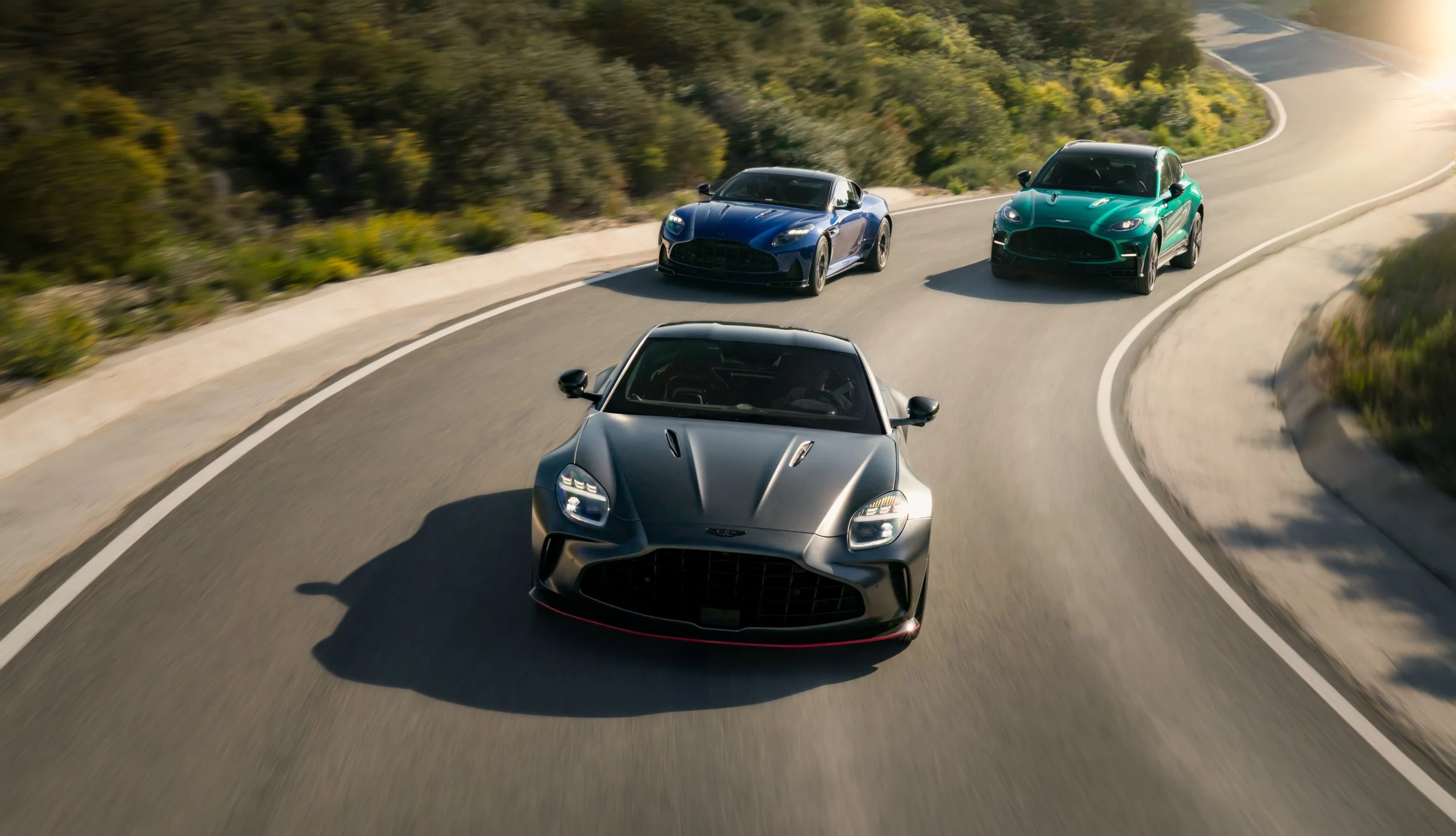
Image © Aston Martin Lagonda. Used for editorial purposes. The current Aston Martin ‘S’ range.
Welcome to Issue 35 of the FTP Weekly Roundup. Aston Martin’s latest half-year financial results sit at the centre of this edition. The figures show genuine progress in several important areas: more cars delivered, stronger revenue, improved gross profit, a healthier margin and a meaningful reduction in cash outflow. At the same time, the company remains heavily indebted, interest payments continue to absorb an enormous amount of money and the wider loss-making position can’t simply be overlooked.
That combination has produced very different headlines. Some reports have concentrated on Valhalla deliveries, rising sales and better operating performance. Others have focused almost entirely on debt, borrowing costs and the widening loss before tax. As ever, the reality sits somewhere between the two. Aston Martin is improving, but it’s doing so while carrying a financial burden that continues to restrict the choices available to it.
We’ll work carefully through the results in clear, everyday language, explain what has changed and consider what the figures actually tell us about the business beneath the debt. Publishing alongside this roundup at 6am is our new FTP Featured Article, Aston Martin Beyond the Debt: What Could the Future Hold? It takes a deeper look at what Aston Martin’s borrowing and interest payments are costing, how much cash the underlying business would still have consumed without them, and what greater financial freedom might mean for the marque, its people and the cars still to come.
It’s also been an exceptionally productive week here at Fuel the Passion. Last Sunday, during the first-generation Vanquish’s 25th-anniversary year, we published our complete Buyers Guide to this landmark Aston Martin. The timing now feels especially appropriate following the release of a new Aston Martin Heritage Trust podcast, Ep 56 – The AMOC Festival Celebrating 25 Years of the Vanquish, which brings together former Aston Martin leaders, engineers, specialists and owners to reflect on the car’s development, character and lasting importance. The episode includes valuable discussion around the original automated-manual transmission, early engineering challenges, the evolution of the second-generation Vanquish and the experiences of people who continue to use and enjoy these cars today.
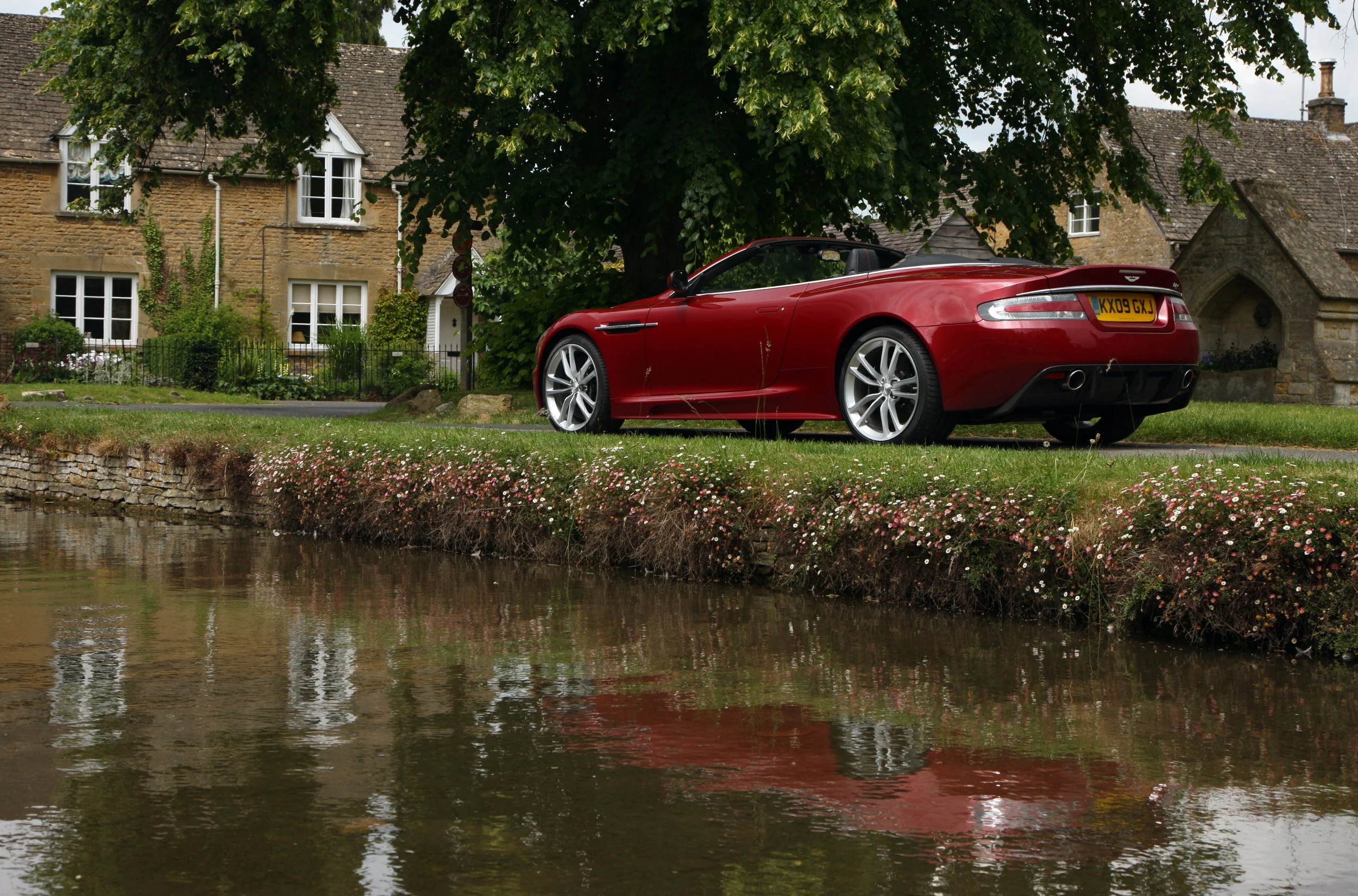
Image © Aston Martin Lagonda. Used for editorial purposes.
A few days later, following repeated requests from readers, the new VH-era Aston Martin DBS Buyers Guide joined the library. Research is already under way for the next guide, covering the second-generation Vanquish, and we’re inviting owners to help us make it as useful and honest as possible by sharing their own experiences.
As you’ve no doubt noticed, we’ve also been making a significant visual change across the Fuel the Passion website. The familiar red, white and blue palette, which reflected the Union Jack and FTP’s British identity, is gradually being replaced by a more recognisably Aston Martin-inspired combination of Podium Green, AMR Lime, Onyx Black, Neutron White and Trophy Silver.
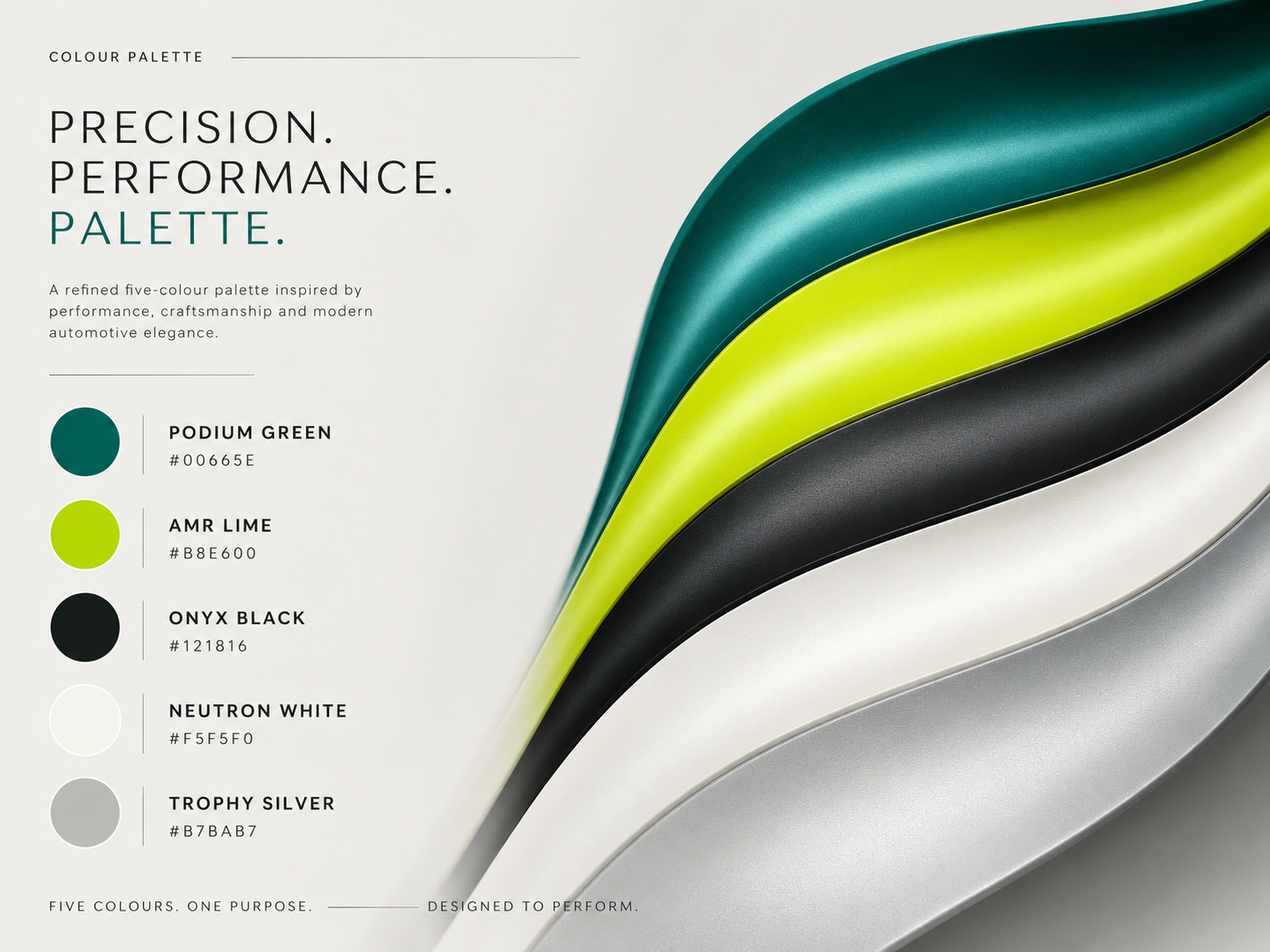
Image © Fuel the Passion. The new FTP Colour Guide/Palette, introduced August 2026.
The aim is to move away from a look that could occasionally feel a little too close to emergency-services branding and towards something that feels more naturally at home within the Aston Martin family. The transition is still under way, and we’re discovering that changing the colour palette across an entire website is no small task, but we believe it’s worth the effort.
Keeping FTP fresh means continuing to evolve, refine and modernise what we do, and we would be very interested to hear what you think of the new direction in the comments below.
We’ve also introduced another small but useful feature across the FTP website, following a suggestion from one of our readers, for which I’m very grateful. As you’ll have seen at the top of this roundup, and will increasingly see across future Weekly Roundups and Featured Articles, we’re now adding an estimated read time. You’ll also find a clearly marked halfway point further down the page. It’s only an estimate, based on the number of words and a reasonable average reading speed, but it should give you an immediate sense of whether you need a cuppa, a cuppa and a biscuit, or, for some of our longer pieces, a cuppa, a main meal and pudding too! I hope it proves useful. It’s also worth saying that many of the changes we make begin with suggestions from you, the readers. We value all your comments, suggestions and support. We listen, and when a good idea comes along, we’re very happy to act on it, so please keep them coming. Comments below in this article, or you can contact us here.
The FTP Motorsport Hub has been equally busy. Full reports are now available from the Hungarian Grand Prix, where Aston Martin showed its first convincing signs of Formula One progress this season, and from a difficult but important DTM weekend at Oschersleben for Nicki Thiim and Comtoyou Racing. We’ll bring you the essential highlights here before looking ahead to another substantial weekend of Aston Martin competition at Magny-Cours and Road America.
We’ll also explore Aston Martin’s remarkable UNLEASHED programme, following our recent film Aston Martin Heaven: UNLEASHED, and explain how the Vantage GT4 we filmed fits into a much wider programme of circuit access, professional coaching, technical support and driver development.
As this is the first roundup of August, we’ll also return to our monthly look at Aston Martin Lagonda’s share price. There’s a great deal to cover, but the central theme running through this week is a simple one: progress can be real without the underlying difficulties having disappeared. Aston Martin’s latest results, its Formula One development and the wider activity surrounding the marque all offer reasons to look forward with interest, but also with the patience, balance and honesty these stories deserve.
With that wider picture in mind, we turn first to the most significant Aston Martin story of the week: Wednesday’s publication of the company’s financial results for the first six months of 2026. They reveal clear operational progress, but also a level of debt and financing cost that continues to influence almost every part of Aston Martin’s future. Let’s get stuck in!
Aston Martin Lagonda H1 2026 Results
Progress Beneath the Financial Pressure
Financial results can quickly become difficult to follow. Aston Martin’s report contains several different measures of profit and loss, accounting adjustments, cash-flow figures and abbreviations that can make two apparently contradictory headlines seem equally plausible. The simplest place to begin is with the cars.
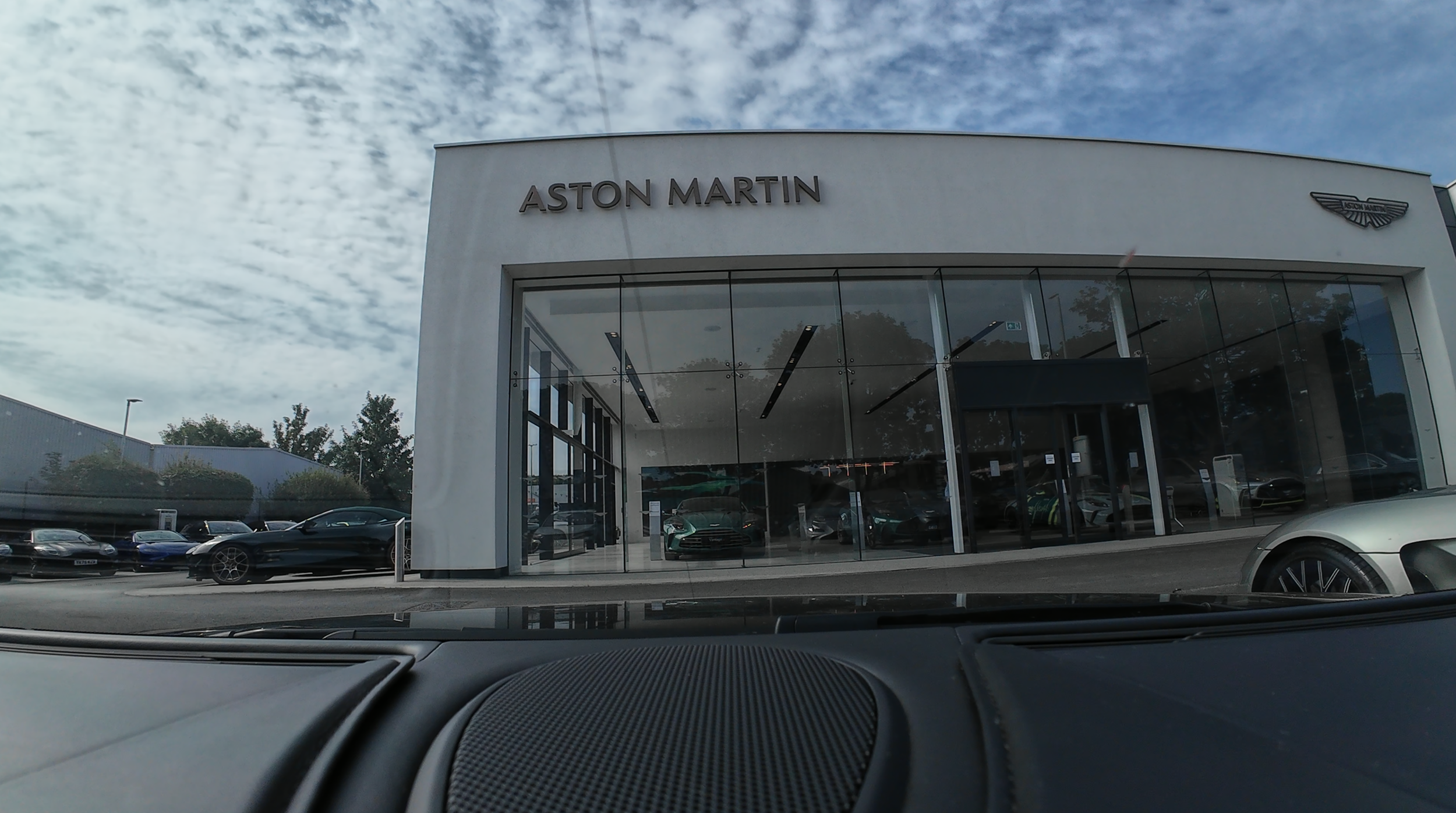
Image © Fuel the Passion. JCT600, Aston Martin, Leeds
During the first half of 2026, Aston Martin wholesaled 2,331 vehicles, an increase of 21% compared with the same period last year. A wholesale is normally recorded when Aston Martin supplies a car to its dealer network; it doesn’t necessarily mean that the dealer has sold it to its final customer at that same moment.
Core-model wholesales, which exclude limited-production Specials, increased by 11% to 2,106 cars. Every geographical region recorded year-on-year growth, while Aston Martin said dealers’ retail sales of core models exceeded the number supplied to them by more than 30%.
That last figure is particularly important. It suggests dealers were selling cars to customers more quickly than Aston Martin was replacing them, helping reduce older stock already held across the network rather than simply filling showrooms with more vehicles.
Revenue increased by 38% to £628.6 million, while gross profit rose by 68% to £212.5 million.
Gross profit is the money remaining after the direct cost of producing the cars has been deducted, but before wider operating, development, financing and other expenses are taken into account. Aston Martin’s gross margin, the percentage of revenue retained as gross profit, improved from 27.9% to 33.8%. Put more simply…
Aston Martin retained almost 34 pence in gross profit from every pound of revenue, compared with approximately 28 pence during the same period last year.
Valhalla Begins to Make Its Contribution

Image © Aston Martin Lagonda. Used for editorial purposes. Aston Martin Valhalla.
Valhalla played a central role in that improvement. Aston Martin delivered more than 220 examples during the first half, with the company recording 225 Specials in total compared with just 18 during the same period in 2025. Almost all were Valhallas.
Because Valhalla carries a much higher price than Aston Martin’s regular production models, it had a considerable effect on the overall figures. The company’s total average selling price increased by 17% to approximately £241,000, while the average selling price of the core range fell by 5% to £182,000. That reduction in core-model pricing doesn’t necessarily mean Aston Martin simply cut the advertised prices of its cars. The company said the figure was affected by targeted financial support provided to dealers as they worked to clear older stock.
There’s a cost to doing that, because incentives reduce the amount Aston Martin ultimately earns from each affected car. However, removing aged inventory is an important part of restoring a healthier relationship between production, dealer supply and genuine customer demand.

Image © Aston Martin Lagonda. Used for editorial purposes. Aston Martin Ginza Interior.
Options and personalisation also remain highly significant. Aston Martin said optional equipment contributed approximately 17% of core-model revenue, an illustration of why paint, trim, carbon-fibre details and more extensive personalisation can be so valuable to an ultra-luxury manufacturer.
A Stronger Operation - But Not Yet a Profitable One
The improvement carried through to several measures of operating performance. Adjusted EBITDA moved from a £3 million loss in H1 2025 to a positive £62.7 million this year. EBITDA stands for earnings before interest, tax, depreciation and amortisation. It offers one view of how the underlying operation is performing before several substantial costs are included.
It isn’t the same as final profit and it isn’t cash in the bank. Nevertheless, moving from a negative figure to a positive one suggests that higher volumes, Valhalla deliveries, stronger gross profit and lower manufacturing and quality-related costs were beginning to have a meaningful effect. Adjusted operating loss, shown in the accounts as adjusted EBIT, improved from £121.5 million to £108.9 million.
The reported operating loss narrowed much more sharply, from approximately £135 million to £57 million. However, that reported figure benefited from the accounting gain associated with the sale of Aston Martin Formula One naming rights to AMR GP, so it shouldn’t be viewed as an entirely like-for-like measure of the underlying car business.
Why Did the Loss Before Tax Widen?
This is where the results become more complicated, and where many of the more negative headlines originated. Despite the improvements in volumes, revenue and gross profit, Aston Martin’s reported loss before tax widened from £140.8 million to £154.2 million. Its adjusted loss before tax increased more substantially, from £130.1 million to £207.4 million. The main explanation is financing.
Image © Aston Martin Lagonda. Used for editorial purposes. DB12 Volante.
Adjusted net financing costs increased from £8.6 million to £98.5 million. At first glance, that appears to suggest Aston Martin’s actual interest payments increased more than elevenfold, but that isn’t what happened. The year-on-year comparison was heavily affected by changes in the value of Aston Martin’s US-dollar-denominated debt. The first half of 2025 included a £72 million non-cash currency gain, while H1 2026 included an £11 million non-cash loss.
These are accounting movements caused by exchange rates rather than an equivalent amount of cash being paid out during the period. The contrast between last year’s large gain and this year’s loss made the reported movement in finance costs appear particularly dramatic. That context doesn’t make the financing burden insignificant. Aston Martin still paid £75.1 million in net cash interest during the first half, up from £69.4 million a year earlier. Its expected net cash-interest cost for the full year has also increased from approximately £150 million to £160 million following the new financing.
Cash Flow Shows Clear Improvement
Cash flow provides one of the more encouraging parts of the report. Aston Martin’s free cash outflow reduced from £321 million to £197.6 million during the first half. Free cash flow measures the cash generated or consumed after operating the business, investing in future products and paying financing costs. A negative number means more cash left the company than it generated through those activities.
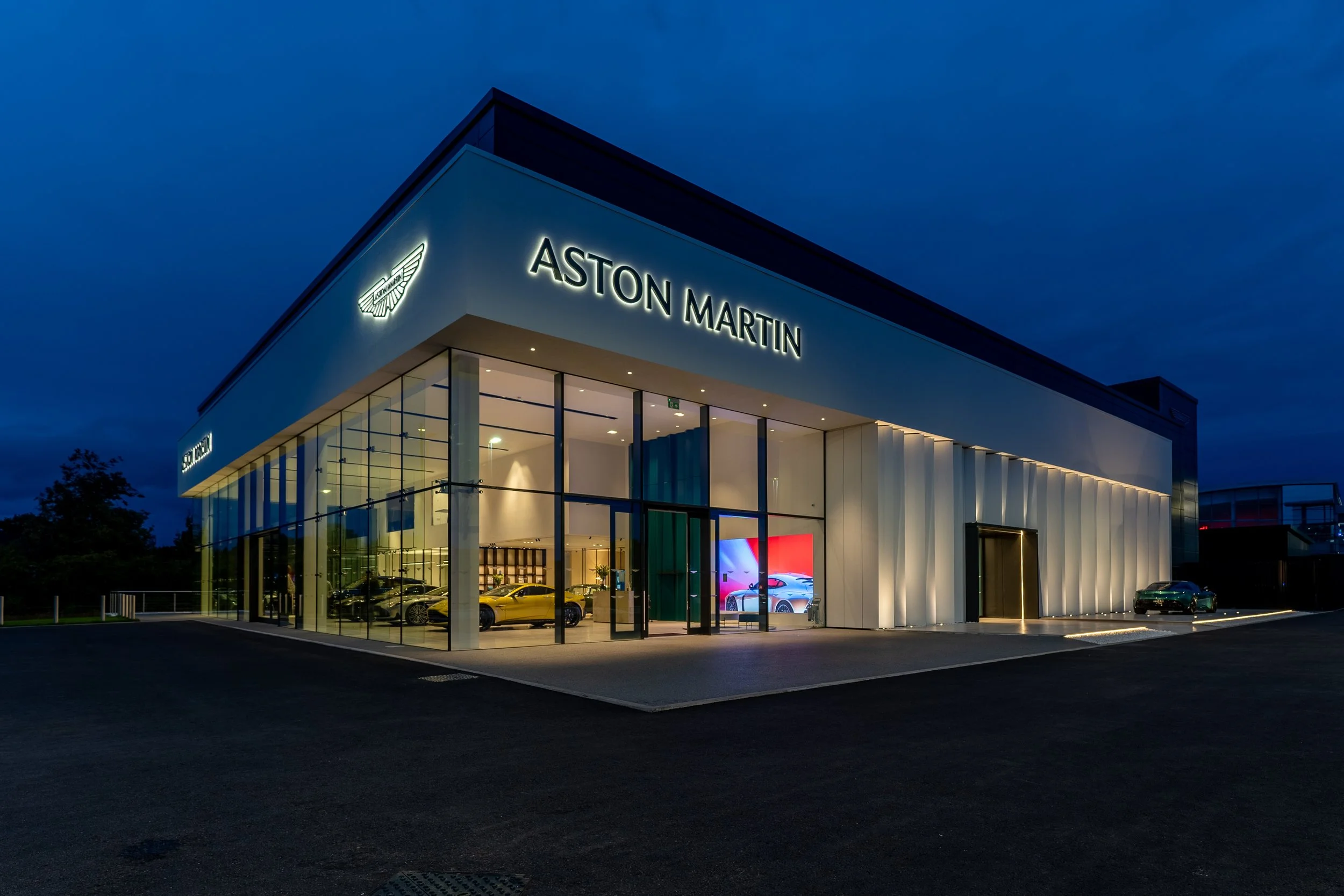
Image © Aston Martin Lagonda. Used for editorial purposes. Aston Martin Birmingham.
Cash used by day-to-day operations improved dramatically, from an £81 million outflow to just £2.3 million. Investment spending also fell from £170.6 million to £120.2 million, although Aston Martin expects expenditure to increase during the second half as work continues on future products and technology.
The second quarter offered the clearest sign of operational improvement.
Aston Martin reported a free cash outflow of £80.8 million, compared with £200.7 million during the same quarter last year. Of that £80.8 million, £72.5 million represented net cash interest. Before that payment, the remaining illustrative outflow was approximately £8.3 million, close to break-even.
That’s encouraging because it suggests the underlying operation came much closer to supporting itself during the quarter. It isn’t the same as achieving genuine free-cash-flow break-even, however. The interest payment was a real obligation and couldn’t simply be removed from Aston Martin’s financial reality. One quarter also doesn’t establish a lasting trend, particularly when interest payments and vehicle deliveries aren’t evenly distributed throughout the year.
Debt Remains the Central Concern
At 30th June 2026, Aston Martin reported:
£114.9 million in cash
£145.2 million in total liquidity
£1.661 billion in gross debt
£1.545 billion in net debt
Liquidity includes cash already held and borrowing facilities that were available to the company. It shouldn’t be confused with profit or spare money that Aston Martin can spend without consequence. Net debt increased from £1.380 billion at the end of 2025 to approximately £1.545 billion six months later. The change partly reflects the cash consumed during the period, along with additional borrowing and currency movements.

Image © Aston Martin Lagonda. Used for editorial purposes. DB12 Volante.
The £550 million financing completed in July arrived after the reporting date. It consists of a £450 million senior secured term loan and a further £100 million facility that can be drawn later. Part of the initial proceeds repaid Aston Martin’s fully used £170 million revolving credit facility and borrowing from members of the Yew Tree Consortium. The remaining amount provides additional corporate liquidity.
Aston Martin said that, had the new financing been completed before the end of June, its available liquidity would have been approximately £340 million rather than £145.2 million. That gives the company more breathing room and greater resilience while it continues its transformation. It doesn’t reduce the underlying debt burden. The loan is priced at 6.75 percentage points above the prevailing Sterling Overnight Index Average, usually shortened to SONIA, and matures in July 2031. The interest rate reflects the level of risk accepted by the lenders and adds to Aston Martin’s future financing costs.
The structure of the agreement has also been questioned by some existing creditors, who argue that assets pledged to the new lender may have been moved beyond their reach. Aston Martin has defended the arrangement, saying it complies with its obligations and provides the resilience needed to execute its current and future product plans. FTP isn’t in a position to determine the contractual dispute between Aston Martin and its lenders. The relevant point for readers is that the new facility improves short-term liquidity, but does so through further expensive borrowing rather than by removing the debt.
Affiliate link note: Some links may be affiliate links, which means Fuel the Passion may earn a small commission if you purchase through them, at no extra cost to you. Thank you for your support.
What Aston Martin Expects Next
Aston Martin has retained its main operational guidance for 2026. It expects full-year wholesale volumes to remain broadly similar to the 5,448 cars supplied in 2025, including approximately 500 Valhalla deliveries. Gross margin is expected to improve into the high-30% range, while the adjusted operating margin is forecast to move towards break-even. Capital investment is expected to reduce to approximately £300 million for the year, and free cash outflow should improve materially from the £410 million recorded in 2025.

Image © Aston Martin Lagonda. Used for editorial purposes. Aston Martin Valhalla, Rome.
Management expects the final quarter to be the strongest of the year for volumes, supported by further Valhalla deliveries, additional core-model derivatives and continued benefits from its transformation programme. There are still considerable external risks. Aston Martin continues to contend with US tariffs, weakness in China, changing ultra-luxury vehicle taxation, global supply-chain dependence and uncertainty arising from conflict in the Middle East.
The company says the direct impact of the latest geopolitical disruption was limited during the first half, but it continues to monitor the potential effect on demand, customer confidence and supply.
Image © Fuel the Passion
Why the Headlines Looked So Different
The results produced an unusually wide range of interpretations. Some coverage concentrated on the 38% increase in revenue, the 68% rise in gross profit, the improved margin and Valhalla’s contribution. Others focused on the widened pre-tax loss, the £1.545 billion net-debt position and the high cost of Aston Martin’s new financing.
Investors’ Chronicle retained its “Sell” recommendation and concentrated heavily on debt, financing costs and the performance of Aston Martin’s bonds. Reuters took a more balanced position, acknowledging the improved operation while noting that the second-quarter adjusted operating loss was worse than market expectations. The Financial Times placed particular emphasis on the structure and cost of the £550 million financing arrangement.
None of those perspectives tells the whole story by itself.
Aston Martin hasn’t completed its turnaround merely because revenue and gross profit increased. Equally, the widening loss before tax doesn’t mean that the improvements elsewhere in the business are meaningless.
FTP View
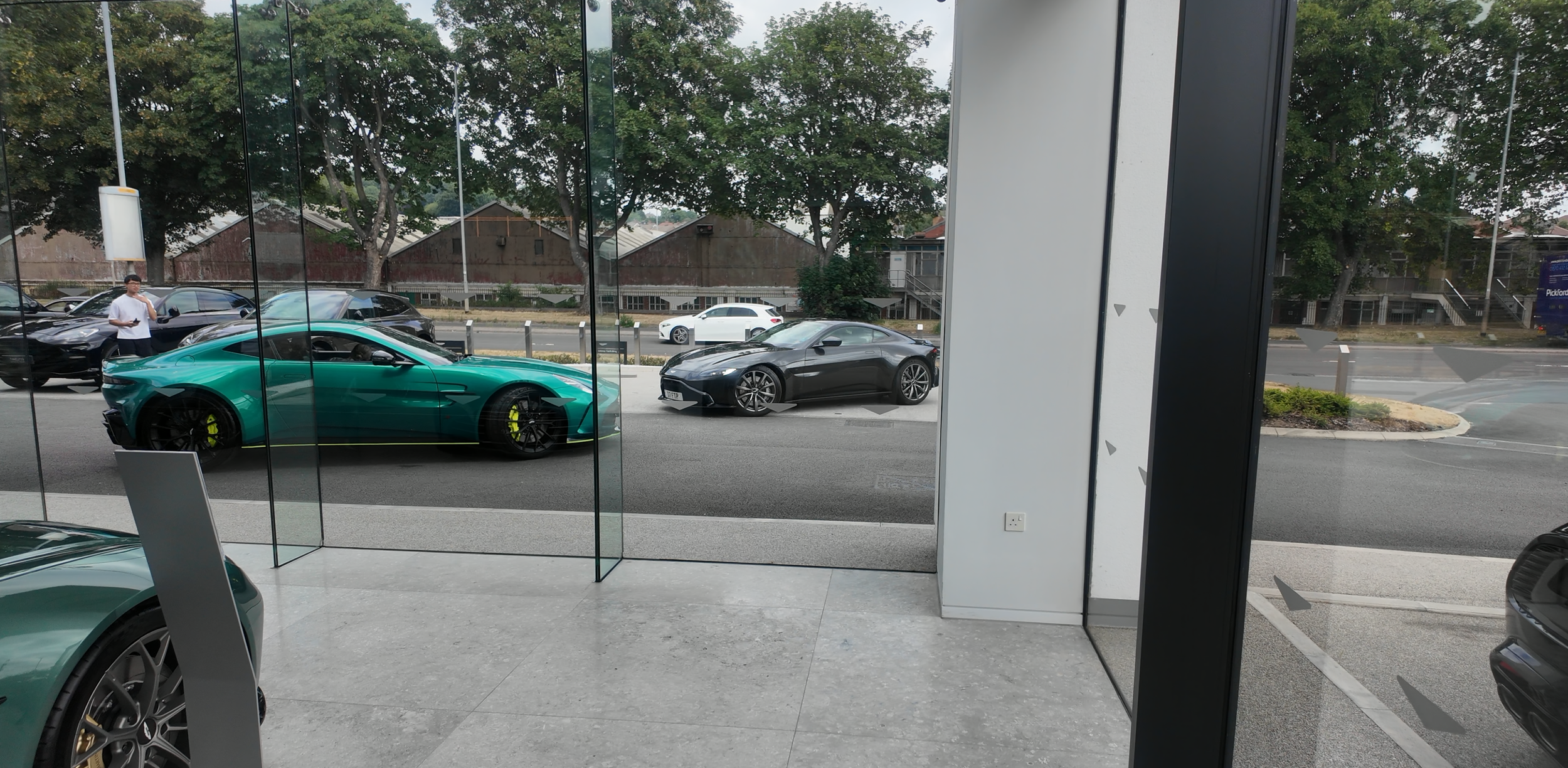
Image © Fuel the Passion. FTP returns after its MOT at JCT600, Aston Martin Leeds. July 2026.
The clearest conclusion is that Aston Martin’s underlying operation has improved considerably, but the company’s financial structure continues to absorb much of the benefit.
It sold more cars, recorded growth across every region, generated substantially more revenue and gross profit, improved its margin and reduced its free cash outflow.
Valhalla is now making the contribution Aston Martin has long expected from it. Core retail sales running ahead of wholesale supply also suggests progress is being made in reducing dealer stock and aligning production more closely with genuine demand. Those achievements shouldn’t be dismissed. Neither should the remaining risks.
Image © Fuel the Passion
Aston Martin is still loss-making, net debt has risen to approximately £1.545 billion and interest payments continue to remove cash that could otherwise support investment, reserves or debt reduction. The new financing provides valuable time and flexibility, but at a substantial cost. The first half therefore isn’t proof that Aston Martin is secure, nor is it evidence that the turnaround has failed. It shows a business beginning to operate more effectively beneath a very demanding financial burden.
The task now is to demonstrate that this progress can continue beyond one half-year period, through sustained customer demand, disciplined production, stronger margins and, ultimately, genuine cash generation after interest and investment have been paid.
Before leaving Aston Martin’s corporate news, there was one further development this week, separate from the company’s new borrowing, that carries particular importance for many former and current employees: a £180 million transaction securing the benefits of the Aston Martin Lagonda Pension Scheme.
Aston Martin Pension Scheme Secures £180 Million Aviva Buy-In
Image © Aston Martin Lagonda. Used for editorial purposes.
Separate from Aston Martin Lagonda’s new corporate borrowing, another important financial development was announced this week, one focused not on funding future cars, but on protecting the retirement benefits of people connected with the company.
Aviva has completed a £180 million full buy-in with the Aston Martin Lagonda Pension Scheme, covering approximately 540 pensioners and 1,050 deferred members.
A pension buy-in means the scheme’s trustees purchase an insurance policy designed to match the pension payments due to members. Aviva will provide payments to the scheme, which will continue paying benefits to members in the normal way. It therefore strengthens the security behind those pensions, but it shouldn’t be confused with Aston Martin reducing its reported automotive debt by £180 million. The transaction concerns the pension scheme and its obligations to members, not the £550 million financing package discussed in the company’s half-year results.
The deal was led by pension adviser LCP, which said the transaction had been achieved several years earlier than the scheme had originally expected. Aviva described the process as one that provided speed and certainty, while Aston Martin said it was pleased to support an arrangement intended to provide greater long-term financial security for members.
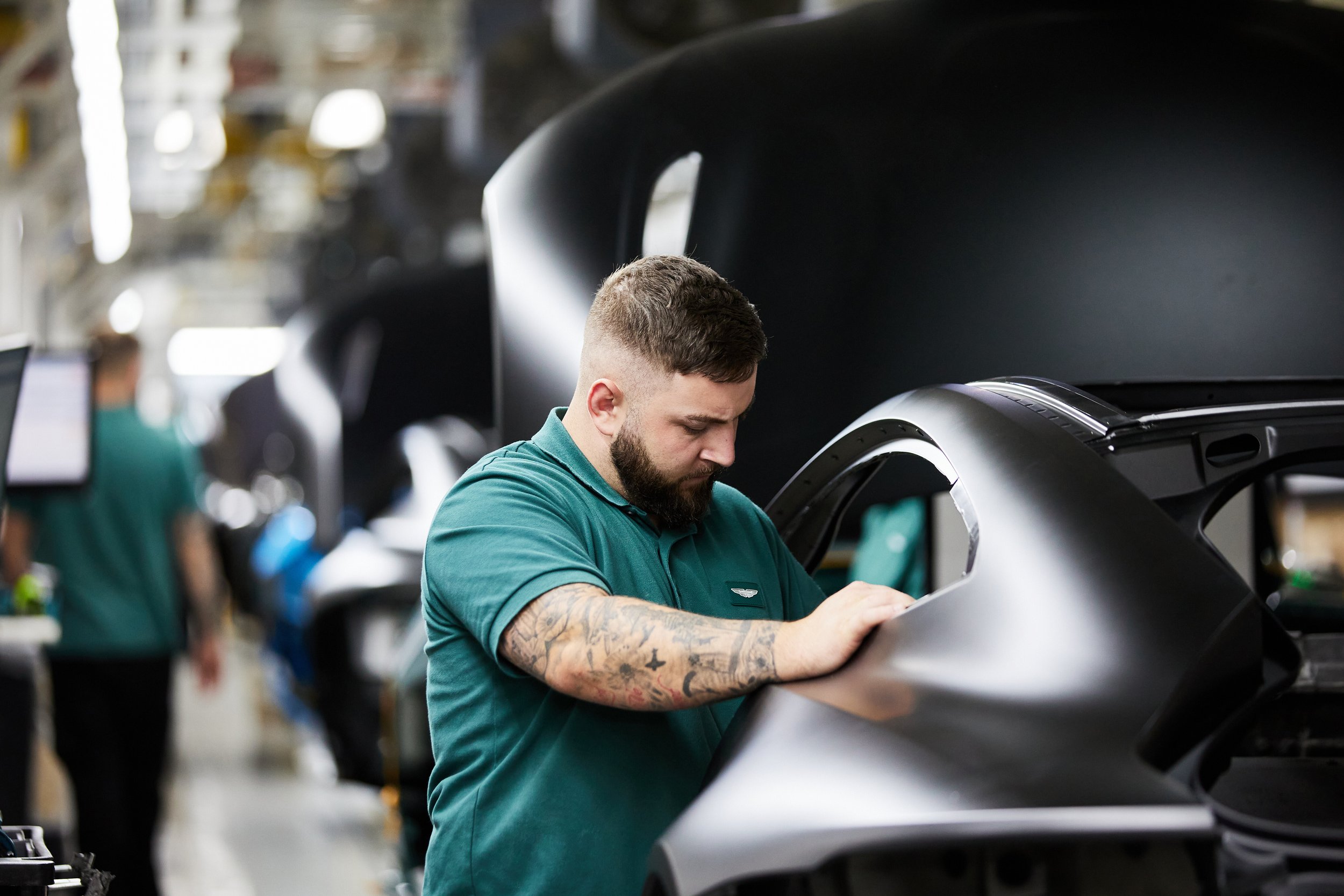
Image © Aston Martin Lagonda. Used for editorial purposes.
Behind the value of the transaction are people who spent part of their working lives supporting Aston Martin. For them, the significance lies not in the size of the headline figure, but in the added protection now standing behind the benefits they’ve earned.
FTP View
Corporate financial reporting often reduces people to liabilities, provisions and percentages. A transaction such as this offers a useful reminder that pension obligations represent real careers, real families and promises made over many years. The buy-in doesn’t resolve Aston Martin Lagonda’s wider debt position, nor should it be presented as part of the company’s operating turnaround. It is, however, a constructive and important development for the scheme’s members, and one that deserves recognition alongside the more difficult financial headlines.
While Aston Martin’s road-car business spent the week under the close attention of investors and lenders, its Formula One team provided a rather different sign of progress on track in Hungary.
Hungarian Grand Prix - Aston Martin Finally Returns to the Midfield Contest
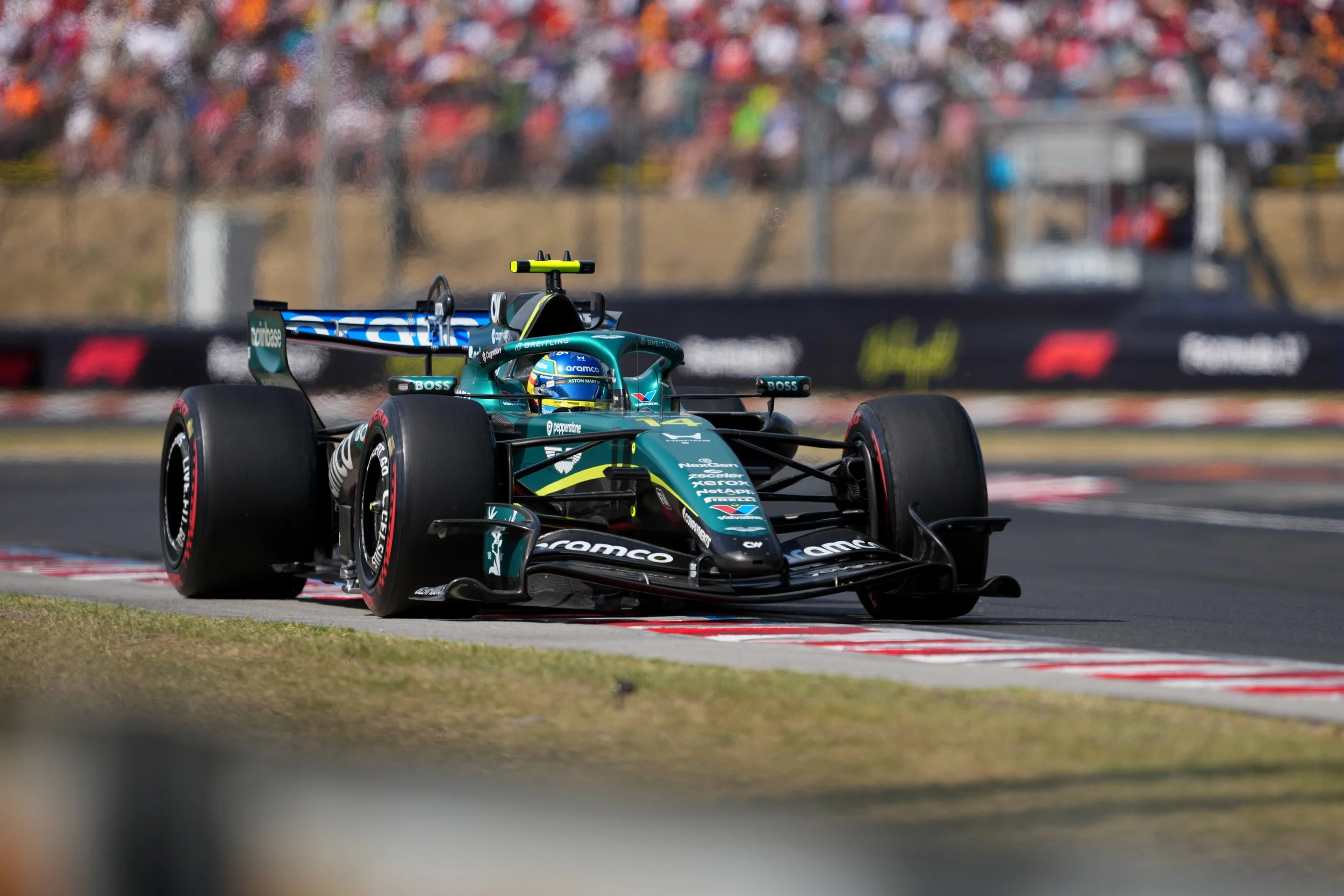
Image © Honda Motor Co. Ltd & Aston Martin Aramco. Used for editorial purposes. AMR26 Hungaroring 2026.
After two especially difficult weekends at Silverstone and Spa, Aston Martin arrived at the Hungaroring with the most substantial revision yet made to the AMR26. As we’ve discussed in previous weekly roundups, rather than introducing a succession of smaller changes, the team had concentrated much of its development work into one major package. Updates extended across the front wing and nose, brake ducts, floor, bodywork, rear suspension and rear wing, with the different elements intended to work together rather than as isolated modifications.
The result wasn’t a sudden return to the points, but it was the first convincing evidence this season that Aston Martin had taken a meaningful step towards the midfield.
Fernando Alonso progressed into the second part of qualifying for the first time in 2026 and secured 16th on the grid. Lance Stroll endured a more disrupted weekend after a suspension problem curtailed his running on Friday, leaving him to start 20th after being caught by a gust of wind during qualifying. Both drivers began Sunday’s race on the soft tyre, but Aston Martin divided their strategies.
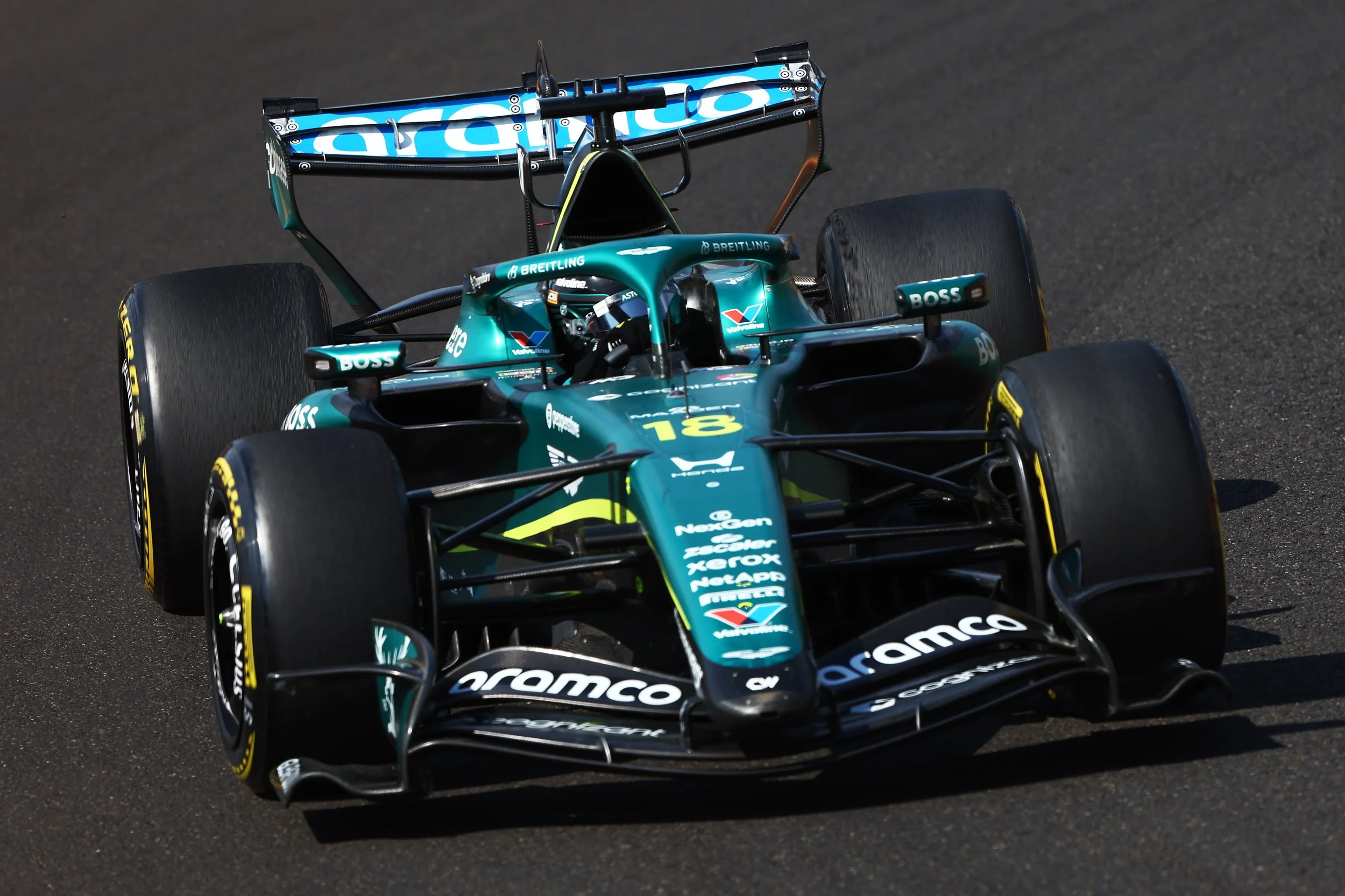
Image © Honda Motor Co. Ltd & Aston Martin Aramco. Used for editorial purposes.
Stroll stopped after eight laps for medium tyres, using the undercut to move ahead of several cars. Alonso extended his opening stint to 34 laps before changing to mediums, giving the team two different approaches from which to learn about the revised car.
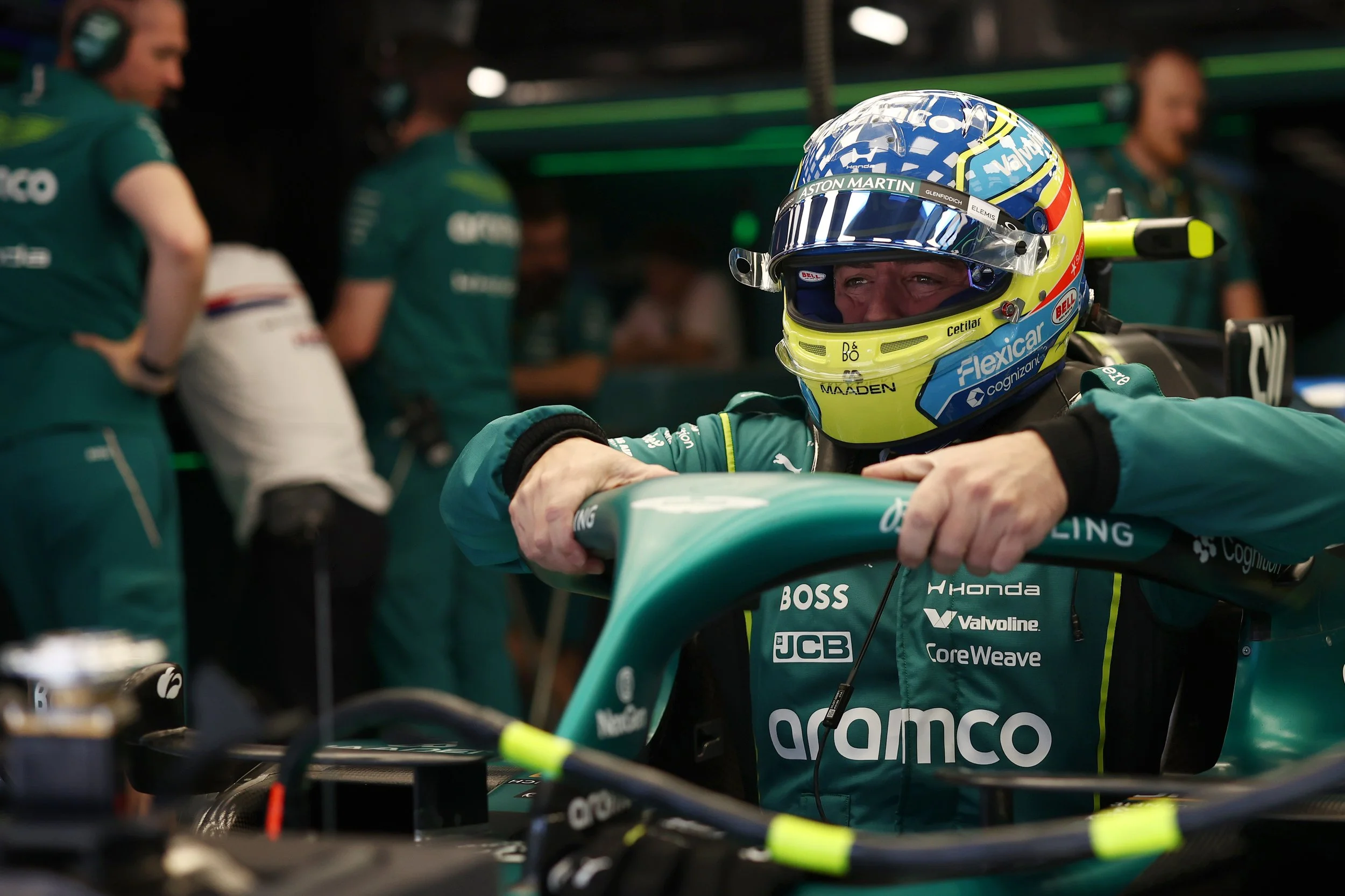
Image © Honda Motor Co. Ltd & Aston Martin Aramco. Used for editorial purposes.
A late Virtual Safety Car, caused by Oscar Piastri’s retirement, briefly elevated Stroll to 12th. Alonso stopped for another set of soft tyres, but the Virtual Safety Car period ended just as he entered the pit lane, costing him time under full racing conditions.
By the chequered flag, Stroll had climbed from 20th to 13th, his best result of the season, with Alonso immediately behind in 14th. The two Aston Martins finished between the Alpines and ahead of both Haas and Williams cars. There were still no championship points, and 13th and 14th aren’t results Aston Martin ultimately aspires to celebrate. Their significance lies in what happened around them.
For much of the opening part of the season, the AMR26 had struggled not only for pace but also to remain involved with the main midfield group. In Hungary, both drivers could follow and compete with cars that had previously been out of reach.
Alonso said the car once again offered enough competitiveness to follow the midfield during the opening part of the race, describing the new specification as a useful baseline from which Aston Martin could continue developing. Stroll was similarly encouraged, saying the team had been “in the mix with the midfield for the first time this year”. The weekend also supplied an important body of reliability data. Both cars completed the race distance with the new components, something Aston Martin needed after several weekends in which technical problems had restricted running and slowed its ability to understand the car.
FTP View
Hungary shouldn’t be portrayed as a breakthrough in the conventional Formula One sense. Aston Martin didn’t score, challenge the leading teams or suddenly become a regular top-ten contender. It was, however, the first weekend of 2026 in which the team looked as though it genuinely belonged in the midfield fight. That distinction is important. Moving from the rear of the field into a competitive group may not produce an eye-catching result immediately, but it creates the opportunity to develop the car against meaningful opposition, explore more varied strategies and take advantage when races become unpredictable.
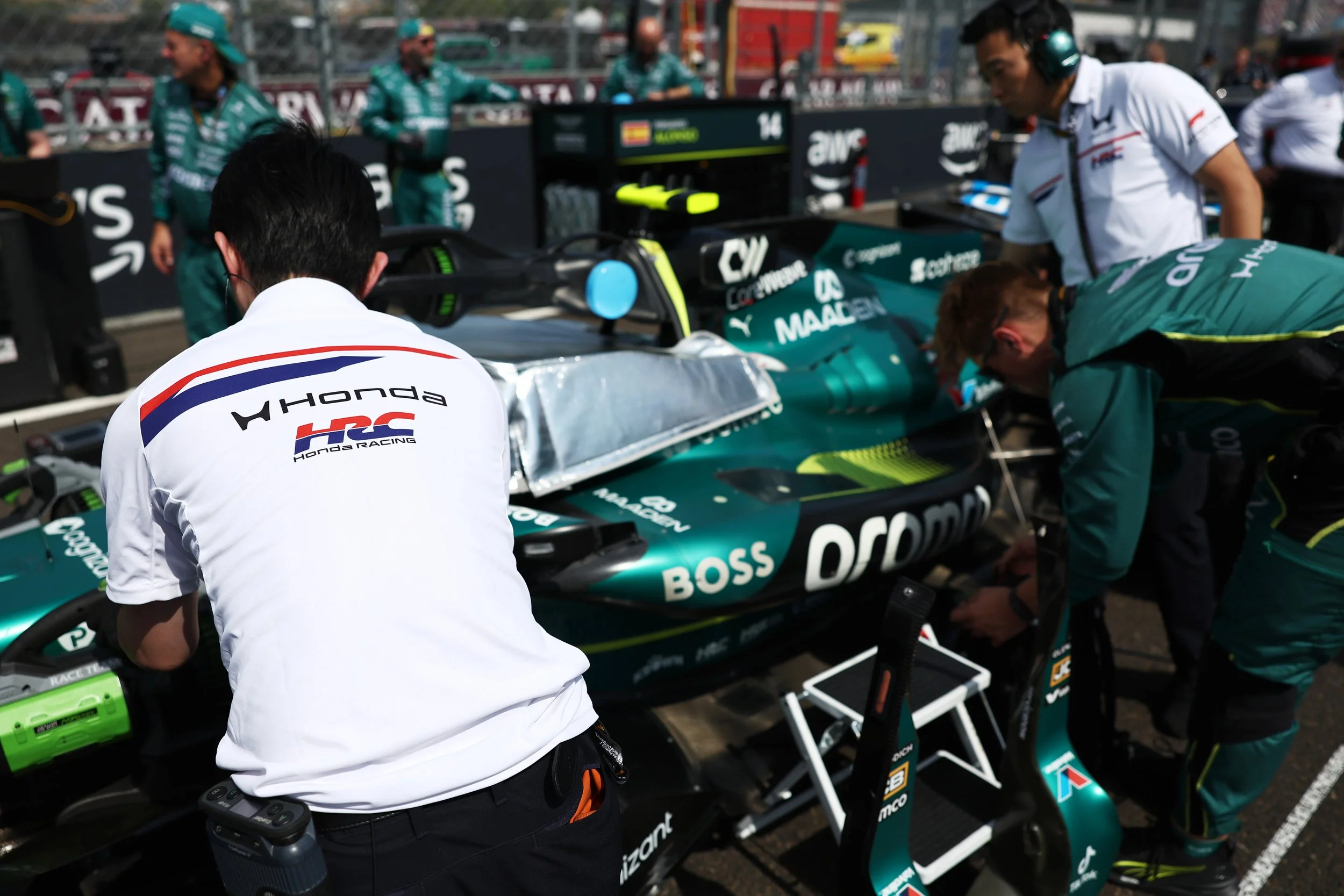
Image © Honda Motor Co. Ltd & Aston Martin Aramco. Used for editorial purposes.
Alonso reaching Q2 was encouraging. Stroll recovering seven places after losing valuable practice running was equally useful. Most importantly, the upgraded AMR26 appears to have moved in the direction Aston Martin’s simulations and development work suggested it would. One circuit can’t confirm that the improvement will translate everywhere. The Hungaroring rewards cornering ability and places less emphasis on straight-line speed than several venues still to come. Aston Martin must now establish whether the same gains remain visible across different track layouts.
For the moment, Hungary offered something that had been largely absent from the first half of the season: tangible progress rather than another promise that better performance would eventually arrive.
The chassis update is only one part of that developing picture. In the days following the Grand Prix, attention remained at the Hungaroring as Honda’s revised power unit completed its first track running, opening the next chapter in Aston Martin’s attempt to turn an encouraging weekend into sustained progress.
Honda’s Revised Power Unit Runs as the Next Phase Begins
Aston Martin remained at the Hungaroring after the Grand Prix, first supporting Pirelli’s tyre-testing programme and then conducting a filming day on Wednesday. That filming day provided the first opportunity to run Honda’s revised power unit inside the upgraded AMR26. The new specification is planned to make its competitive debut at the Dutch Grand Prix at Zandvoort, the first race following Formula One’s summer break.
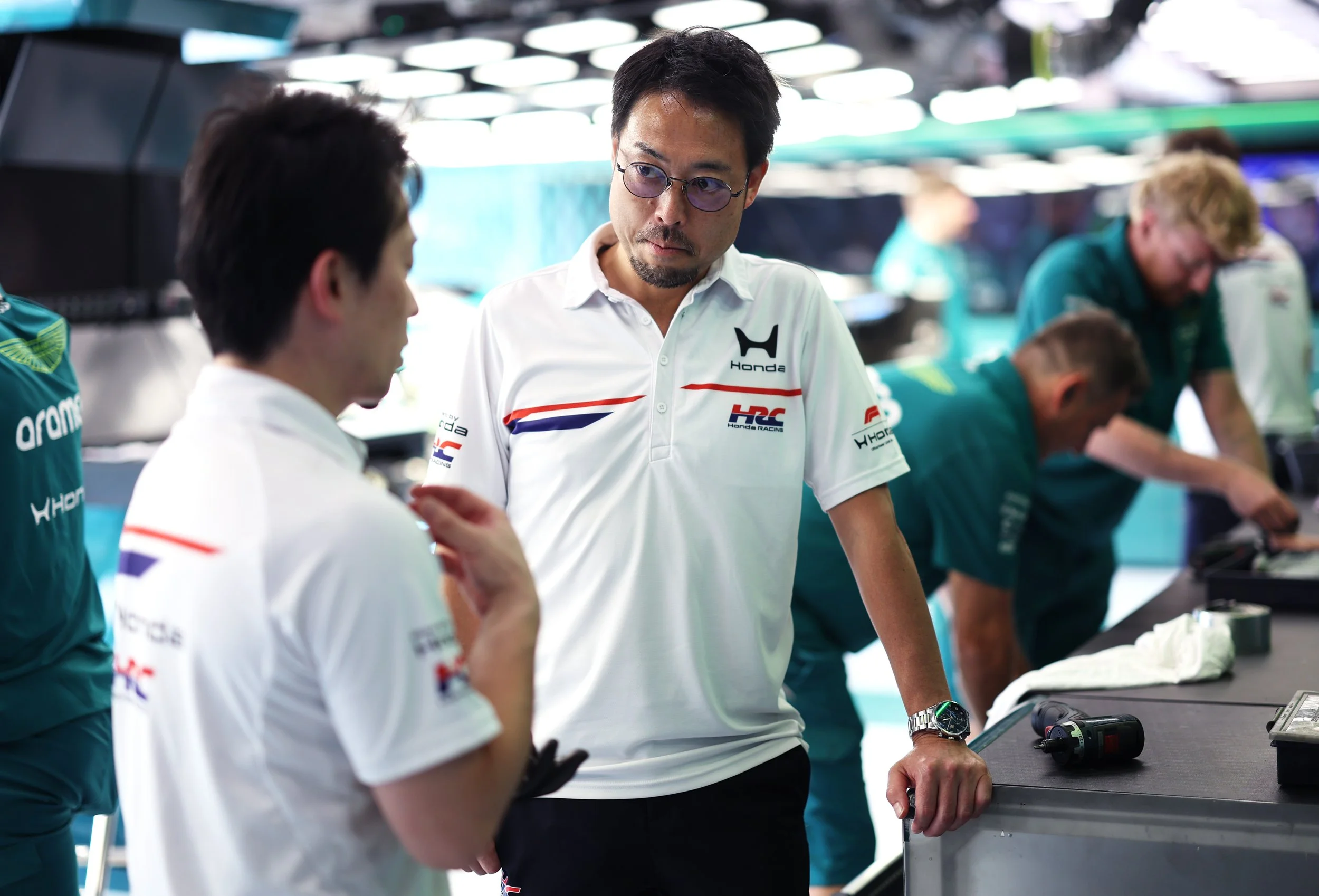
Image © Honda Motor Co., Ltd. Used for editorial purposes. Shintaro Orihara HRC.
Shintaro Orihara, Honda’s Trackside General Manager and Chief Engineer, said the Hungarian weekend had allowed Honda to support the integration of the power unit with Aston Martin’s heavily revised chassis and gather data ahead of the next race. The filming day therefore represented more than a promotional exercise. It offered the first chance to check that the revised engine, its software, cooling requirements and supporting systems worked correctly within the latest version of the car before competitive running resumes.
No official figure has been given for the expected increase in power or lap-time improvement. Claims of gains approaching 50 brake horsepower or half a second per lap have appeared elsewhere, but neither Aston Martin nor Honda has confirmed them. We’ll therefore leave those numbers where they belong, in the category of unverified speculation. What has been confirmed is that Honda believes the revised unit represents an important development step and that Aston Martin intends to introduce it at Zandvoort.
The Chassis Programme Is Continuing Too
Honda’s work won’t arrive in isolation. Adrian Newey described the Hungary package as only the first part of Aston Martin’s planned upgrade programme. Further changes are expected at Zandvoort, followed by additional developments at Monza and Baku. That detail helps place the Hungarian result in context. Aston Martin didn’t spend much of the first half making a succession of minor alterations to the original AMR26. It instead stepped back, concentrated its research and introduced a much broader aerodynamic revision once it believed the different parts could work together.
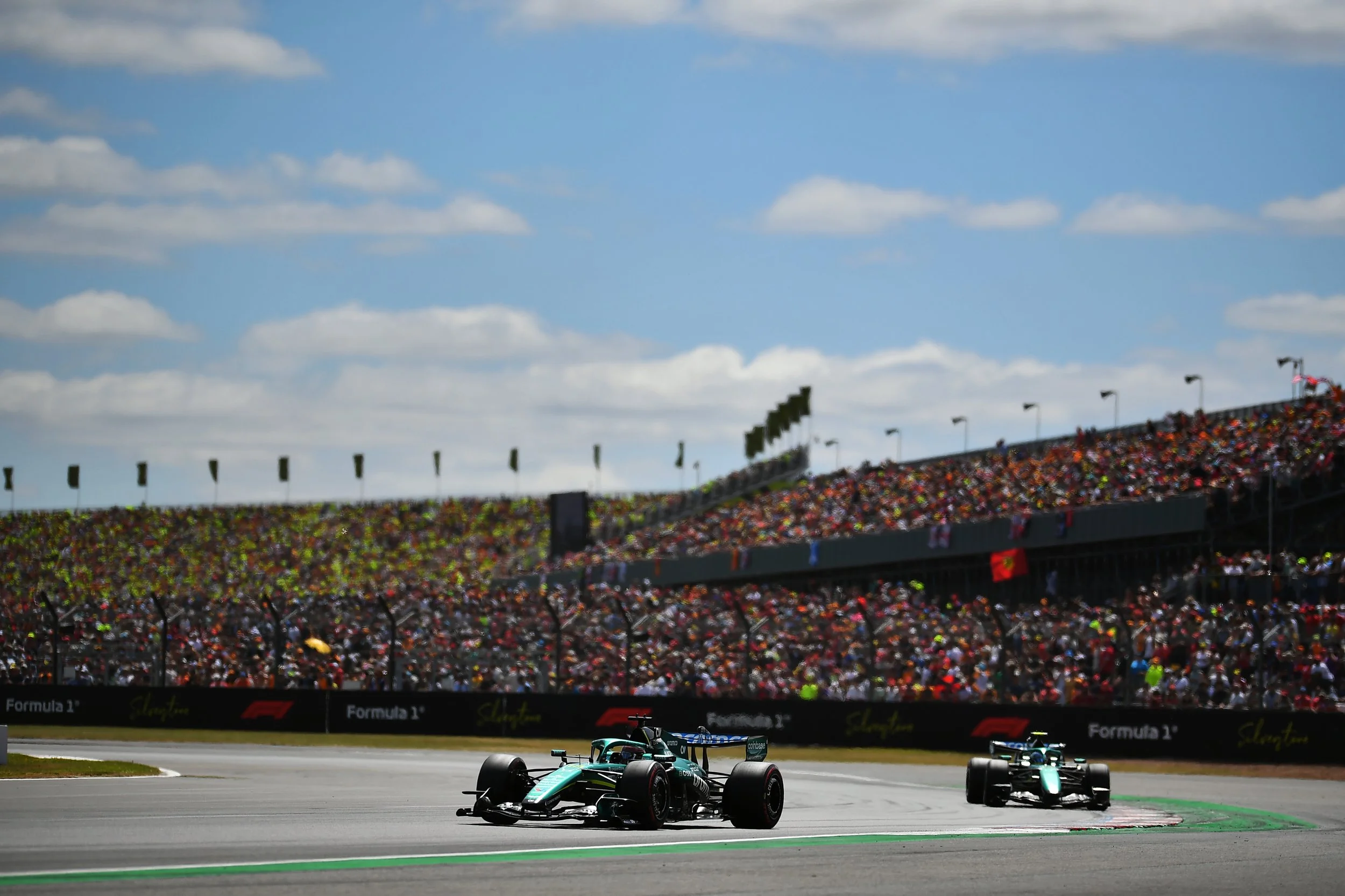
Image © Honda Motor Co. Ltd & Aston Martin Aramco. Used for editorial purposes. Both AMR26’s earlier this season at the British Grand Prix.
Newey said the immediate objective was to restore Aston Martin to “a point of respectability” before attempting to move further forward. It’s modest language by Formula One standards, but appropriate after a first half in which the team was frequently detached from the main midfield group. One of the most encouraging details from Hungary wasn’t simply the finishing positions. Newey said the car’s performance corresponded with Aston Martin’s data predictions, suggesting improved agreement between the team’s simulation tools and what actually happened on the circuit.
That relationship, usually called correlation, is essential. A team can spend enormous amounts of time developing parts in simulation and the wind tunnel, but those tools only become truly valuable when their predictions are accurately reflected on track. Newey described the Hungary result as a strong indication that Aston Martin was now following the right development path for both the immediate and longer-term future.
Aston Martin and Honda Work Through a Difficult Beginning
The first six months of Aston Martin and Honda’s new partnership have tested both organisations. A completely new chassis, a new-generation power unit and the integration of teams based in Silverstone and Sakura created a considerable technical and organisational challenge. Reliability problems and a lack of performance quickly placed the partnership under pressure.
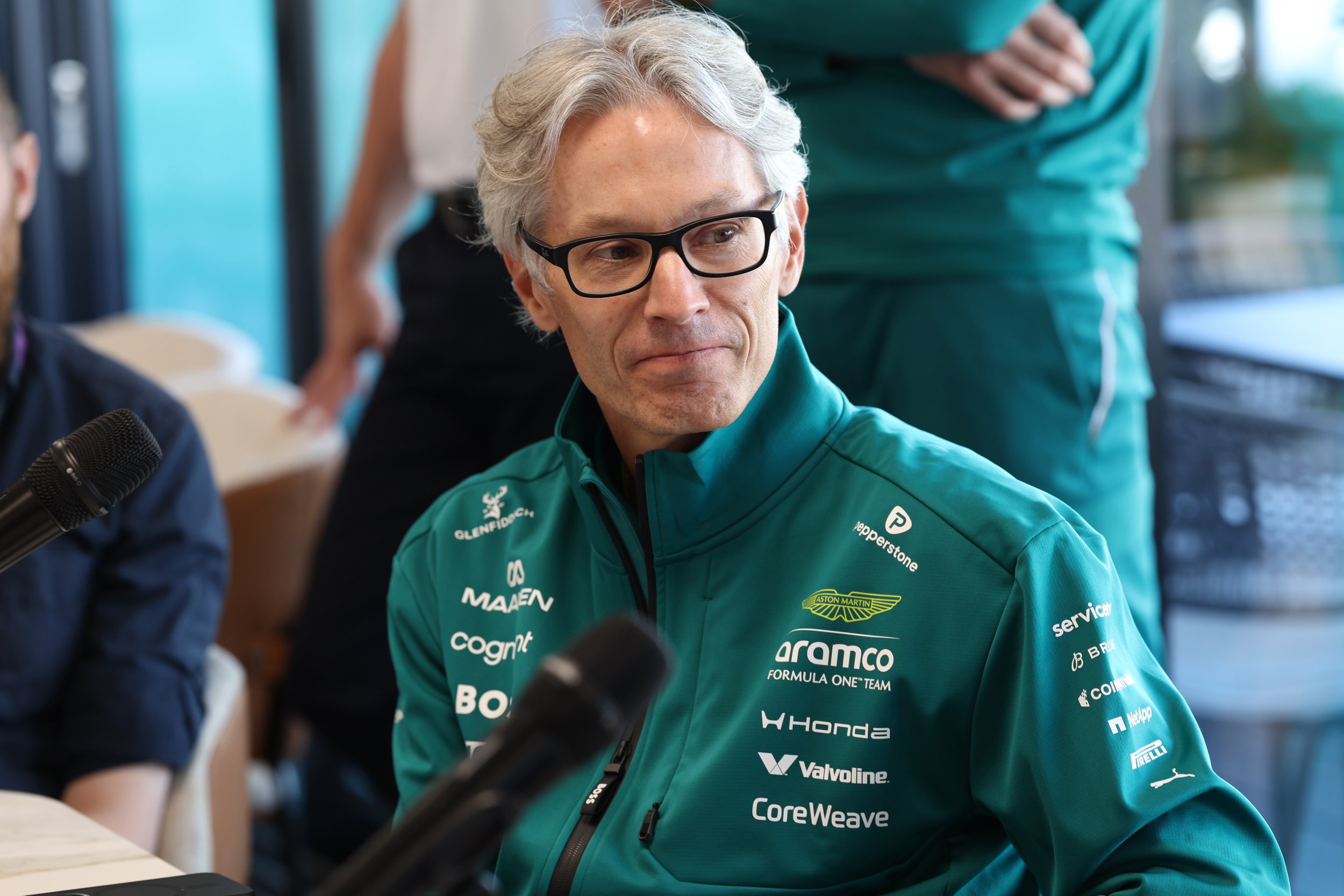
Image © Honda Motor Co. Ltd & Aston Martin Aramco. Used for editorial purposes. Mike Krack.
Mike Krack, Aston Martin’s Chief Trackside Officer, offered an unusually candid account of how the two organisations responded. He said it would have been easy for either side to point the finger, but both instead accepted that they needed to solve the problems together. Krack believes the difficult meetings and experiences of the opening half strengthened relationships in the garage, within the engineering offices and across the wider collaboration between Aston Martin’s Silverstone headquarters and Honda’s base in Japan.
That doesn’t guarantee that the new power unit will deliver an immediate transformation. It does suggest that the partnership has resisted the temptation to divide into separate camps when results were poor. In a works relationship, the engine and chassis can’t be treated as independent products. Packaging, cooling, energy deployment, electrical systems, software and aerodynamic requirements are all interconnected. An improvement in one area may create new opportunities, or new complications, elsewhere. The filming day was therefore another stage in learning how the complete Aston Martin–Honda package functions, rather than simply inserting a more powerful engine into the same car.
The Work Taking Place Away from the Circuit
Reserve driver Jak Crawford has also offered a glimpse into the less visible side of Aston Martin’s development process. Speaking in an interview reported by Motorsport Week, Crawford explained that feedback from his simulator sessions is being followed by senior technical figures including Adrian Newey and Enrico Cardile. He described the atmosphere inside the team as positive despite the difficult start to the season and said it was encouraging to see simulator work being noticed and used.
Those comments don’t prove that Aston Martin has solved its problems. They do, however, help explain how upgrades such as the Hungary package are developed. The work begins long before a finished component appears in the garage. Drivers complete simulator programmes, engineers assess different configurations, the results are compared with wind-tunnel and computational data, and the most promising direction is gradually turned into physical parts.
Crawford’s contribution also continued on track in Hungary, where Aston Martin remained after the Grand Prix to assist Pirelli with development testing before conducting the separate Honda filming day. Pirelli had confirmed ahead of the weekend that Aston Martin, Audi and Alpine would participate in the post-race tyre programme.
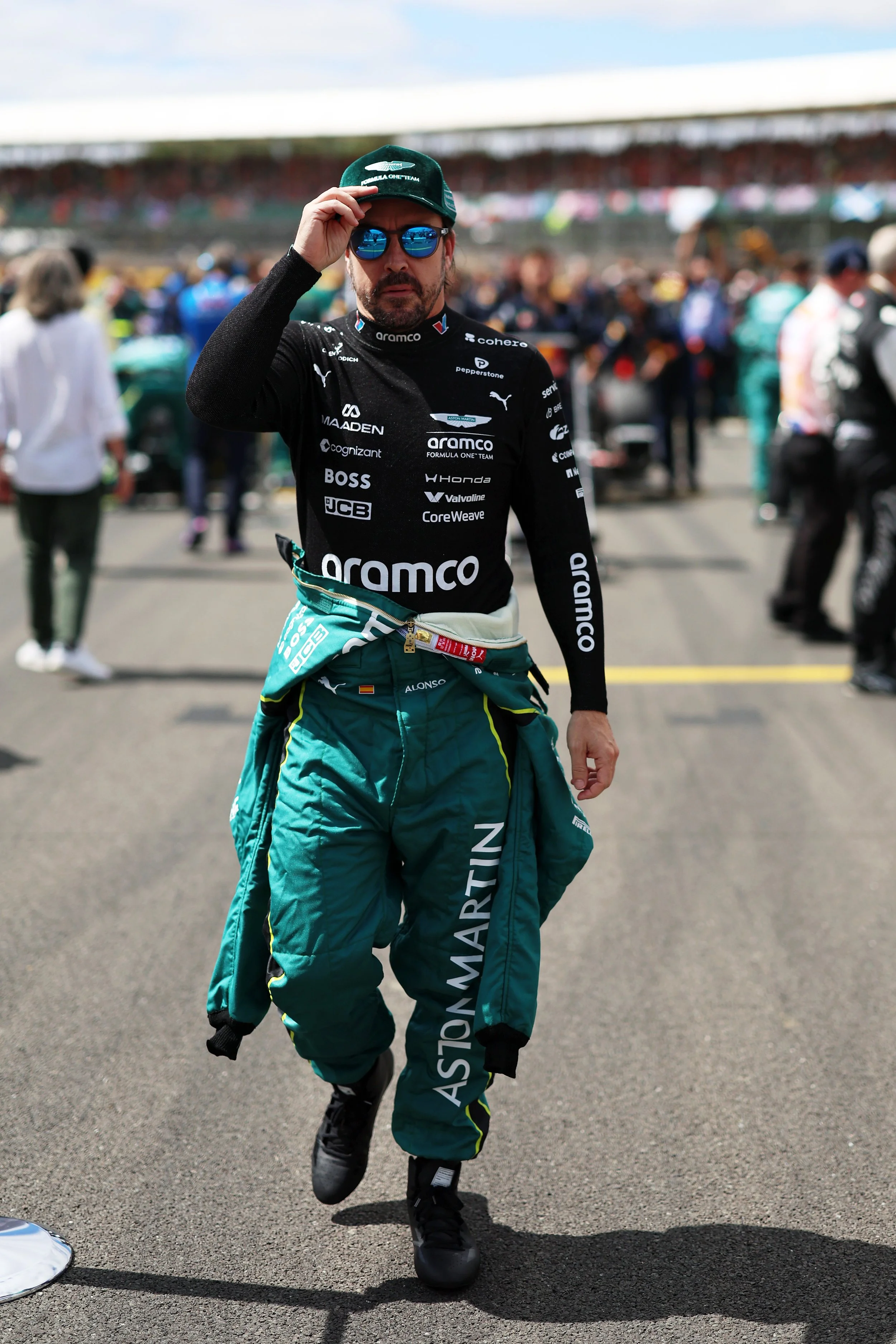
Image © Honda Motor Co. Ltd & Aston Martin Aramco. Used for editorial purposes.
Fernando Alonso at 45
Fernando Alonso celebrated his 45th birthday during the Hungarian Grand Prix weekend, inevitably prompting another round of discussion about how long he may continue in Formula One. The question is no longer whether Alonso possesses the motivation or ability to compete. His performances continue to demonstrate both. The greater uncertainty is whether Aston Martin’s development programme can mature quickly enough to give him the competitive machinery he’s been waiting for.
Hungary supplied the first tangible evidence of progress, while Honda’s revised power unit and Aston Martin’s further chassis changes will provide the next indications after the summer break. For Alonso, the decision is likely to involve far more than one result or one upgrade. He’s effectively judging whether Aston Martin’s facilities, technical leadership, Honda partnership and development culture can come together while he remains able, and willing, to make full use of them.
There are other ambitions he could pursue beyond Formula One, but Aston Martin remains the one unresolved project capable of offering something he hasn’t yet achieved: another serious opportunity at the front of a Grand Prix field.
FTP View
The encouraging part of Aston Martin’s current position isn’t that one upgrade has solved everything. It hasn’t. The more meaningful change is that several parts of the programme are beginning to move at the same time. The revised chassis performed broadly as Aston Martin’s development tools predicted. Further aerodynamic changes are already planned. Honda has completed the first track running of its revised power unit. The technical relationship between Silverstone and Sakura appears to have grown stronger through the difficulties of the opening half.
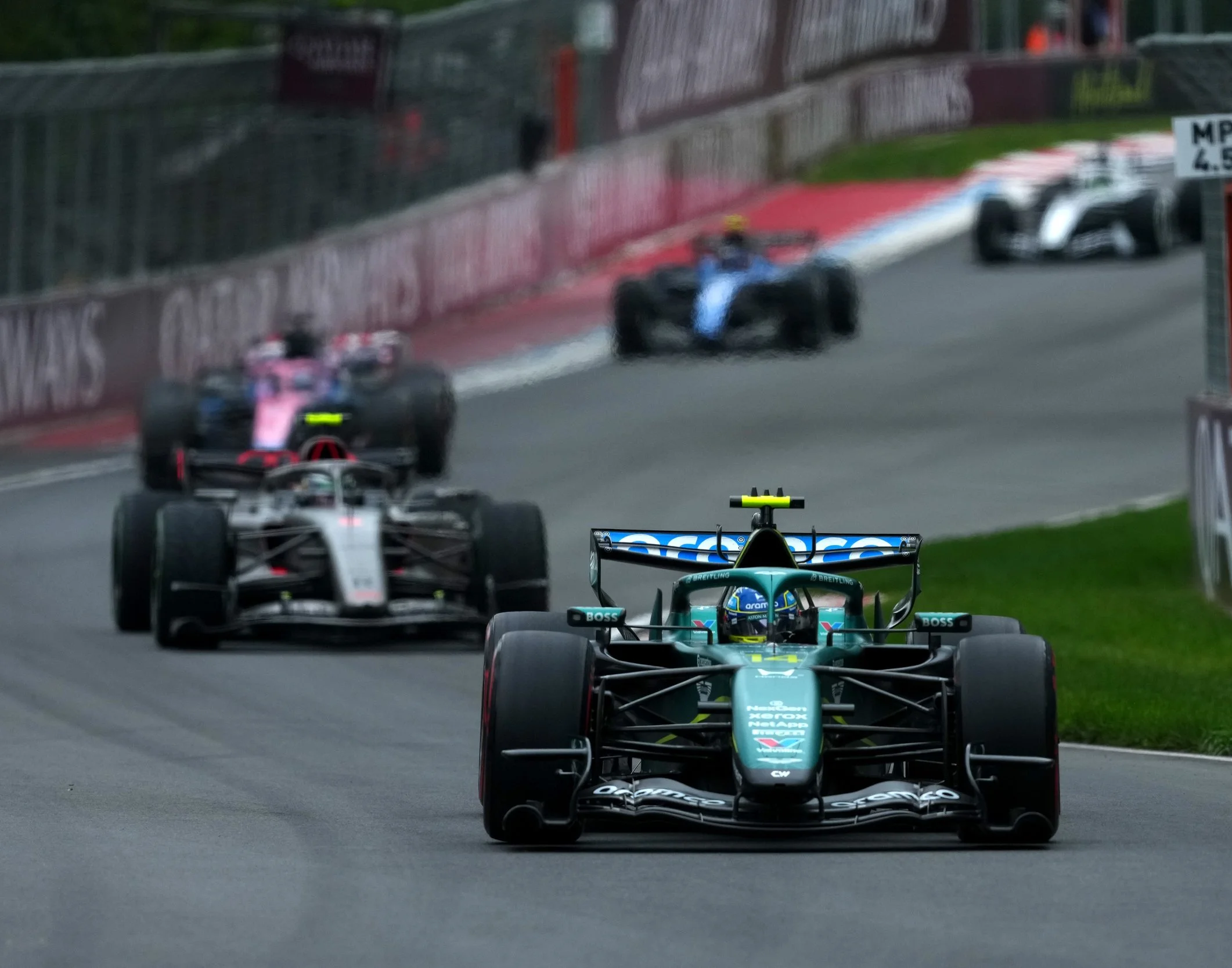
Image © Honda Motor Co. Ltd & Aston Martin Aramco. Used for editorial purposes. Alonso, Canadian Grand Prix 2026.
Zandvoort will now provide the next test. Its narrow, banked and technically demanding layout should allow Aston Martin to examine whether the chassis progress seen in Hungary can be repeated, while also gathering the first competitive evidence from Honda’s new specification. Even then, one weekend won’t provide the complete answer.
Monza’s emphasis on efficiency and straight-line performance, followed by the very different challenge of Baku, will reveal much more about the breadth of the improvement.
For the first time this season, however, Aston Martin approaches the next sequence of races with some evidence beneath its optimism.
Formula One attracts the largest audience, but Hungary wasn’t the only important Aston Martin result from last weekend. In Germany, Nicki Thiim arrived at Oschersleben leading the DTM standings after his remarkable Norisring double, only to encounter a considerably more difficult chapter in his championship campaign.
Affiliate link note: Some links may be affiliate links, which means Fuel the Passion may earn a small commission if you purchase through them, at no extra cost to you. Thank you for your support.
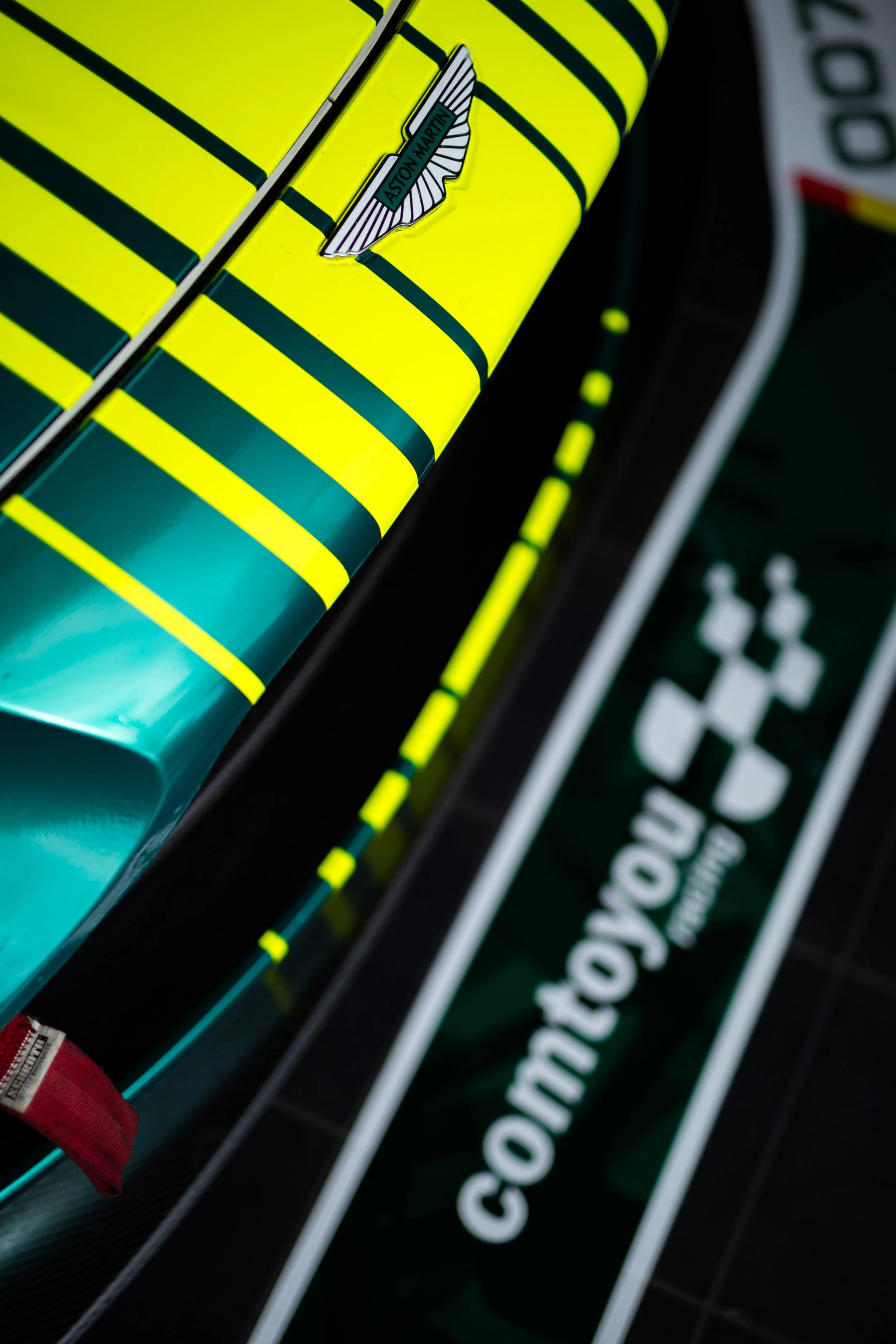
Image © Aston Martin Lagonda. Used for editorial purposes.
DTM at Oschersleben - A Difficult Weekend Brings Thiim’s Championship Lead to an End
Nicki Thiim arrived at Oschersleben at the top of the DTM Drivers’ Championship, three weeks after producing a remarkable clean sweep for Comtoyou Racing and Aston Martin at the Norisring. The fifth round of the season brought a sharp change in fortune.
Thiim struggled to extract competitive pace from the #7 Aston Martin Vantage GT3 throughout the weekend, qualifying 18th for Saturday’s race while carrying 20kg of success ballast following his previous victory. The ballast system is intended to make it more difficult for a recent winner to dominate repeatedly. In a championship where the field is routinely separated by fractions of a second, the additional weight can have a substantial effect on acceleration, braking, tyre behaviour and the car’s ability to change direction.
From 18th on the grid, Thiim worked his way forward to finish 12th. It represented a respectable recovery and secured several valuable championship points, but it was a considerable contrast to the pace Aston Martin had shown at the Norisring. At the front, Thomas Preining converted pole position into victory for Manthey Porsche, while two strong results across the leading group allowed Maro Engel to move ahead of Thiim in the championship.
An Extraordinary Tyre Error on Sunday
Thiim carried no success ballast into Sunday, but any hope of a stronger result was undermined during qualifying by an unusual tyre-fitting error. The larger rear tyres had been mounted on the wheels fitted to one side of the Aston Martin, while the smaller front tyres were placed on the other. Because the front and rear tyres differ in width, diameter and rolling circumference, the car was effectively running at different heights and wheel speeds from one side to the other.
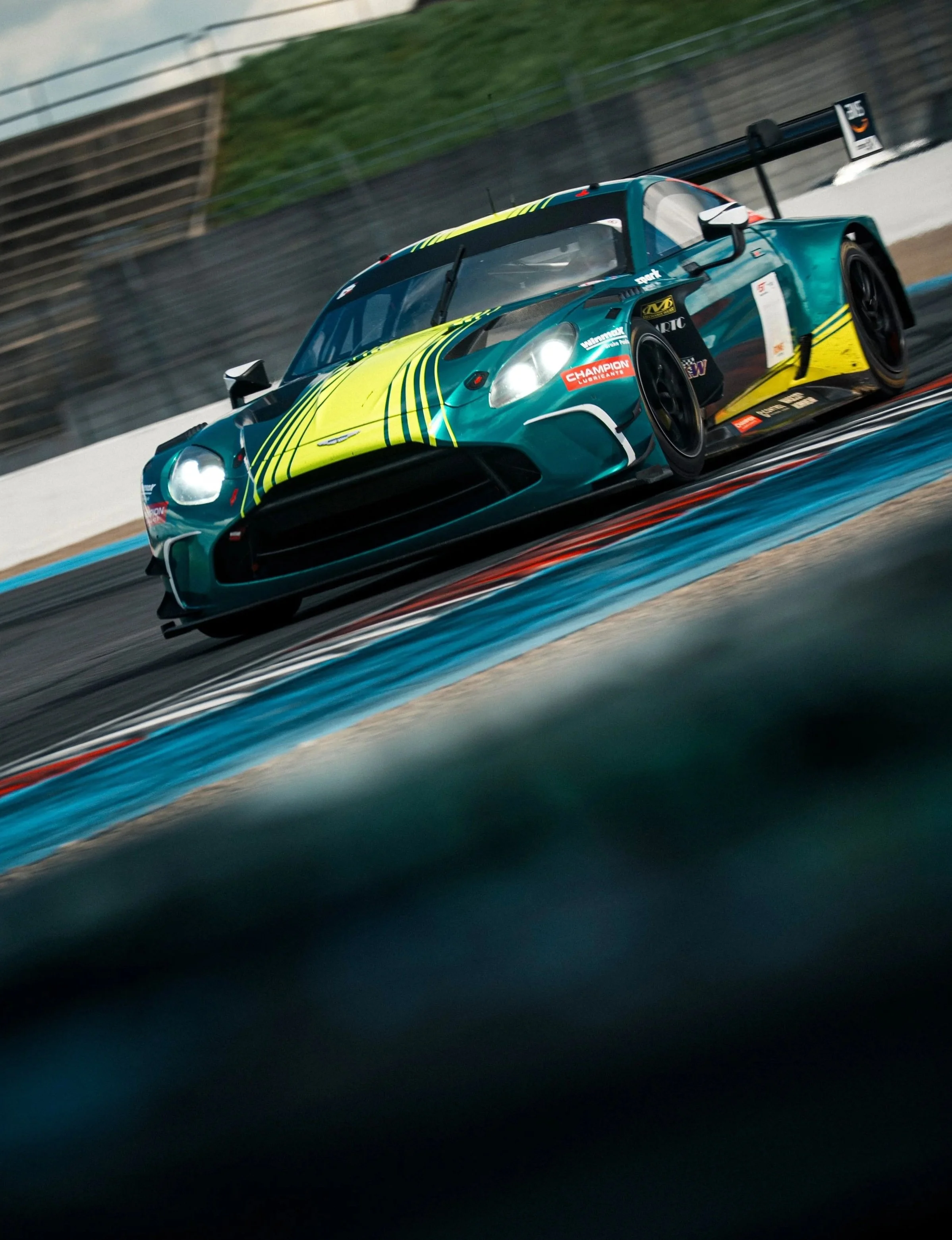
Image © Aston Martin Lagonda. Used for editorial purposes.
The consequences extended well beyond an unsettled balance. The unequal wheel-speed readings disrupted the anti-lock braking system and placed additional strain on the differential, which had to be replaced after qualifying. Despite the problem, Thiim qualified 19th and was promoted to 18th on the final grid following a penalty for another competitor. Comtoyou Racing was also permitted to replace the affected tyres before the race.
The team responded with two excellent pit stops, helping Thiim recover to 13th by the finish. Mirko Bortolotti won the race for Lamborghini, with Maro Engel taking second and extending his newly acquired championship advantage. Thiim was understandably frustrated, but he was careful to separate the tyre error from the work of his own crew. The problem originated during the tyre-mounting process, although the incident has also prompted discussion about whether such a visible mismatch should have been identified before the wheels were fitted to the car.
For FTP, it’s enough to say that an avoidable error severely compromised a championship contender’s qualifying session. Assigning responsibility beyond the established facts adds little to the race story.
The Championship Position
Thiim collected seven points from the two races and leaves Oschersleben second in the Drivers’ Championship:
Maro Engel; 145 points
Nicki Thiim; 124 points
Lucas Auer; 123 points
The gap to Engel is now 21 points, while Thiim holds only a single-point advantage over Auer.
That represents a significant reversal from the high of the Norisring, but the title challenge remains very much alive. Six races remain across the Nürburgring, Sachsenring and Hockenheim, leaving ample opportunity for the championship picture to change again.
FTP View
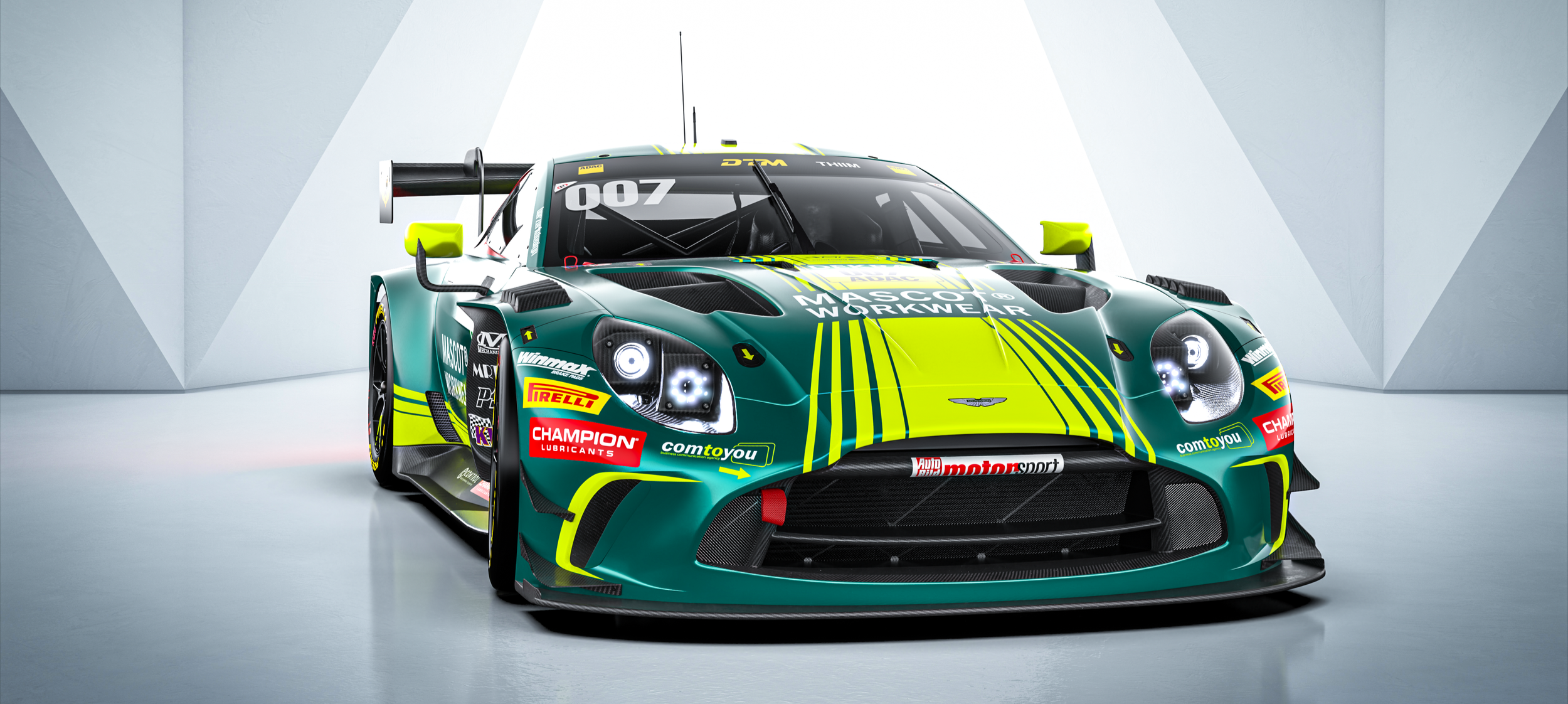
Image © Aston Martin Lagonda. Used for editorial purposes. Thiim, Comtoyou Racing Aston Martin Vantage GT3
Oschersleben was a weekend to endure rather than enjoy. Saturday’s additional weight made an already closely matched field more difficult to overcome, while Sunday’s tyre error removed any realistic opportunity to demonstrate whether the Vantage could perform more strongly without the ballast.
Even so, the weekend shouldn’t be explained entirely through misfortune. Comtoyou Racing and Aston Martin didn’t possess the front-running pace they had displayed at the Norisring, and Thiim started towards the rear in both races. The two recovery drives still limited the damage. Finishing 12th and 13th from 18th on the grid demonstrated persistence from Thiim and strong execution from the crew, particularly during Sunday’s pit stops.
DTM rarely allows momentum to continue uninterrupted. The field is too close, circuit characteristics vary considerably and the championship’s performance-balancing measures can quickly alter the competitive order. Thiim has lost the lead, but he remains second after ten races and continues to carry Aston Martin’s first serious DTM title challenge.
The full Oschersleben report, complete race results and updated standings are available in the FTP Motorsport Hub.
From last weekend’s difficult championship contest, attention now turns to what lies immediately ahead. Aston Martin will be represented across several classes and forms of racing at Magny-Cours and Road America, from Sprint Cup Vantage GT3s to the naturally aspirated V12 Valkyrie competing at the top level of IMSA.
The Aston Martin Racing Weekend Ahead
GT World Challenge Europe at Magny-Cours
The GT World Challenge Europe Sprint Cup returns at Magny-Cours with a substantial 45-car entry, including five Aston Martin Vantage GT3s shared between Comtoyou Racing and Walkenhorst Motorsport. Comtoyou’s #7 Vantage brings together Nicki Thiim and Kobe Pauwels, giving Thiim an immediate opportunity to move on from his difficult DTM weekend at Oschersleben. The team will also field the #11 car for Felice Jelmini and Marcelo Tomasoni, alongside the #21 entry of Arthur Dorison and Oliver Söderström.
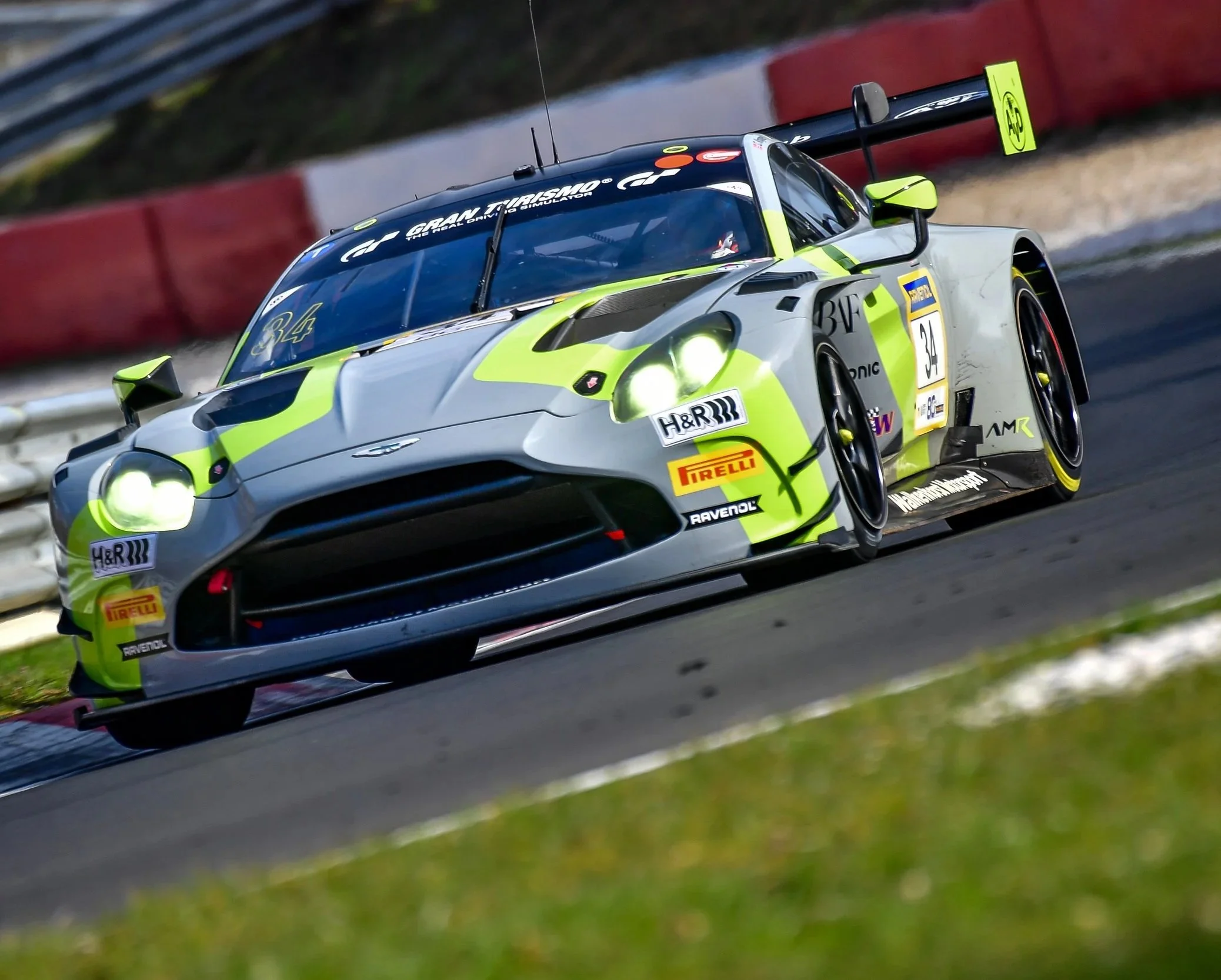
Image © Aston Martin Lagonda. Used for editorial purposes.
Walkenhorst Motorsport will continue its Silver Cup campaign with the #34 Vantage of Jamie Day and Mateo Villagómez, joined by Gaspard Simon and Maxime Robin in the #35 car. Aston Martin left the previous Sprint Cup meeting at Misano with two Silver Cup podium finishes. Magny-Cours offers the next opportunity to build on those results, while the #7 Comtoyou car will be hoping for a cleaner weekend after a technical problem affected its progress in Italy.
The opening race takes place on Saturday evening, with Race 2 following on Sunday afternoon. By the time this roundup is published, Saturday’s result will be known, so as usual we’ll cover this weekends race activities in full reports in the FTP Motorsport Hub early next week and touch on them briefly in next weeks roundup.
Time for a cuppa?
You’re roughly halfway through Issue 35. From here, we move to IMSA at Road America, Aston Martin UNLEASHED, the monthly AML Share Price Watch, heritage, Vanquish and this week’s four-car DBX comparison.
IMSA at Road America
Across the Atlantic, Road America hosts the six-hour Motul SportsCar Endurance Grand Prix, with Aston Martin represented at both ends of the IMSA WeatherTech SportsCar Championship field.
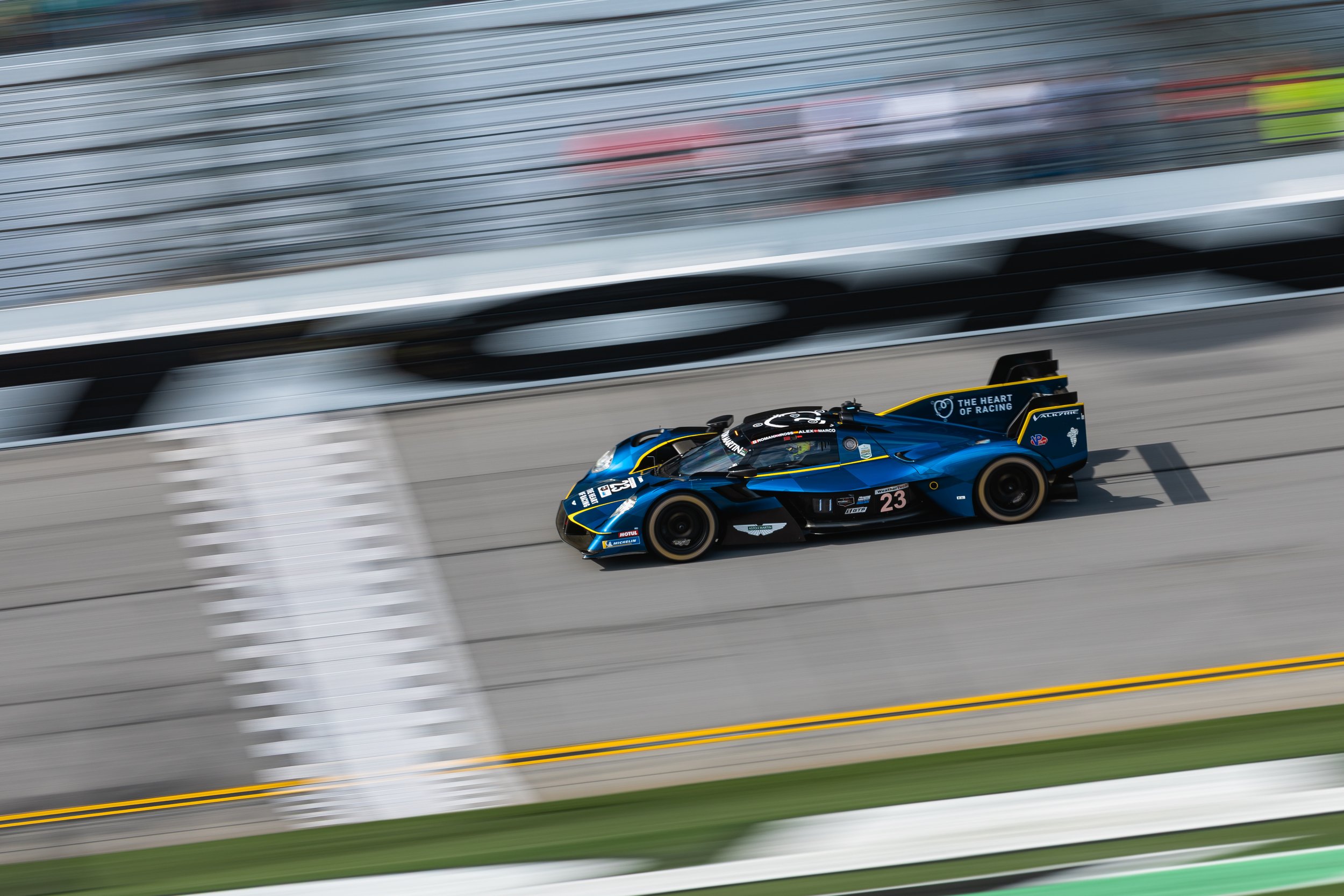
Image © Aston Martin Lagonda. Used for editorial purposes.
At the head of the entry, the #23 Aston Martin THOR Team Valkyrie returns to the Grand Touring Prototype class with Ross Gunn and Roman De Angelis. The Valkyrie programme remains one of the most ambitious competition projects in Aston Martin’s history. Powered by a naturally aspirated V12 and competing against purpose-built hybrid prototypes, it continues to develop through every race distance completed, every pit stop and every body of data gathered.
Road America’s long straights, fast corners and substantial elevation changes should provide another demanding examination of the car’s performance, efficiency and reliability.
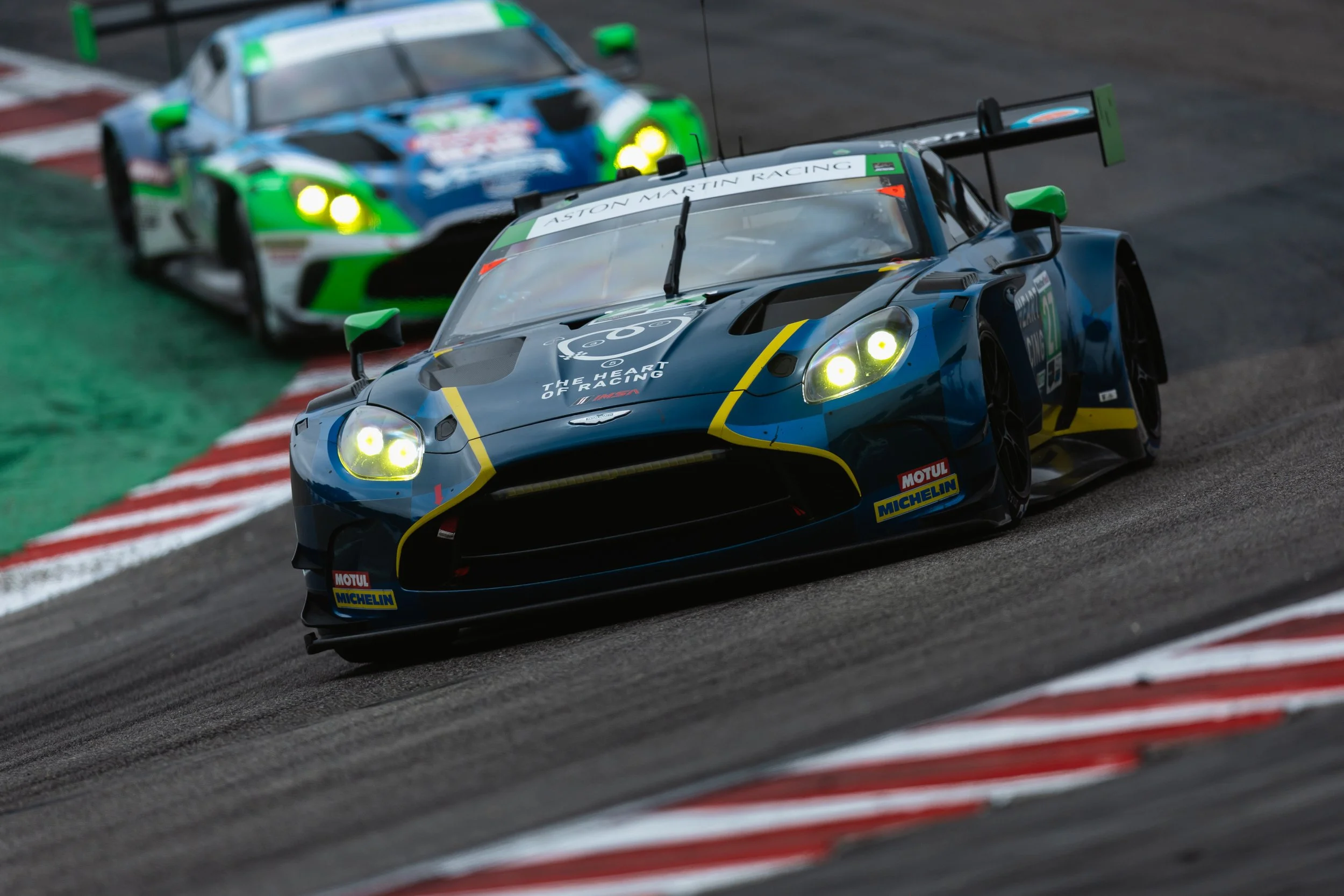
Image © Aston Martin Lagonda. Used for editorial purposes.
In the GT Daytona category, The Heart of Racing’s #27 Vantage GT3 arrives as the championship leader. Its advantage was reduced at Canadian Tire Motorsport Park, where a promising weekend began with pole position but ended with sixth in class. Road America now offers the chance to respond and protect that lead as the season moves towards its decisive stages. The wider entry also contains another Vantage GT3, while Aston Martin will be represented by several Vantage GT4s in Saturday’s supporting Michelin Pilot Challenge race.
The six-hour WeatherTech Championship race begins on Sunday afternoon UK time. Full reports from both Road America and Magny-Cours will follow in the FTP Motorsport Hub early next week, including results, key Aston Martin performances and any resulting movement in the championship standings.
From professional racing, we now move into a very different form of circuit experience: one created to help owners explore some of Aston Martin’s most focused machines with professional coaching, engineering support and access to major international tracks.
From Owning an Extraordinary Car to Learning How to Use It
From professional racing, we now move into a very different form of circuit experience: one created to help owners explore some of Aston Martin’s most focused machines with professional coaching, engineering support and access to major international tracks.
The name UNLEASHED appeared prominently on one of the most remarkable cars featured in our recent film, Aston Martin Heaven: UNLEASHED, a specially presented Vantage GT4 that we were able to examine closely at Aston Martin Leeds. If you haven’t yet had the chance to watch that film yet, I’ve placed it below;
It would be easy to assume that UNLEASHED is simply the name of that particular car or a special edition of the Vantage GT4. The full picture is rather broader.
UNLEASHED is Aston Martin’s most focused track-experience programme, created for owners of Valkyrie and other limited-production, track-focused Aston Martins. Aston Martin describes it as its highest expression of circuit performance, combining access to major Formula One venues with extensive technical support and the level of hospitality expected around its most exclusive customer programmes.
This isn’t a conventional public track day where participants arrive, attend a short briefing and then join an open session.
Each UNLEASHED event is structured around helping owners understand their cars, develop their own technique and progressively explore performance that would be extremely difficult, and entirely inappropriate, to approach on the public road.
What Does an UNLEASHED Event Include?
Aston Martin’s official programme describes two-day events supported by championship-winning drivers, engineers and other specialists. Participants can receive individual driver coaching, vehicle data and video analysis, trackside technical support and preparation using the AMR-C01 racing simulator. The programme also includes motorsport physiotherapy and post-driving recovery support, acknowledging that operating one of these cars properly is physically demanding as well as technically complex.
The experience continues away from the circuit through five-star accommodation, trackside hospitality, organised dinners and the opportunity to spend time with other owners who share an interest in some of Aston Martin’s most specialised machinery. That combination is important. UNLEASHED isn’t presented purely as a luxury event with some track driving included, nor as a stripped-back competition test. It attempts to combine serious driver development with the wider Aston Martin experience.
The 2026 calendar began at Circuit Paul Ricard in France during April and continued at the Red Bull Ring in Austria in May. A further event is planned for Monza in Italy during September. There are a number of short video tasters on Aston Martins YouTube Channel, which show UNLEASHED events, see below the one I’ve selected to illustrate what they’re about, it’s only 53 seconds long. As I said on the latest FTP film - time for another line on the lottery!
In the video below, you get a couple of glimpses of the GT4 Vantage in the same livery as the one on show in JCT600 Aston Martin, Leeds, but at 38 seconds in you see the whole car for a fraction of a second - see if you can spot it!
How Do Owners Gain Access?
Aston Martin describes UNLEASHED as an invitation-only programme.
Its public information says it’s designed for Valkyrie owners and owners of suitable track-focused Special Editions. Interested customers can enquire through Aston Martin Experiences, but registering an interest shouldn’t be confused with purchasing a normal admission ticket or receiving automatic acceptance. Eligibility is likely to depend upon the car involved, the driver’s experience, event availability and the specific requirements of the programme.
An owner considering participation would therefore be best advised to speak with Aston Martin Experiences, their Aston Martin dealer or Aston Martin Racing to understand whether their car qualifies and what preparation or licensing may be required.
Image © Fuel the Passion
We shouldn’t suggest that every Aston Martin owner, or even every independently purchased racing-car owner, can simply book a place. The official wording is deliberately selective.
The business card opposite was sitting in the front windscreen of the Unleashed GT4 on display at JCT600, Aston Martin, Leeds.
Where Does the Vantage GT4 UNLEASHED Edition Fit In?
The car featured in our film represents a particularly focused route into this world.
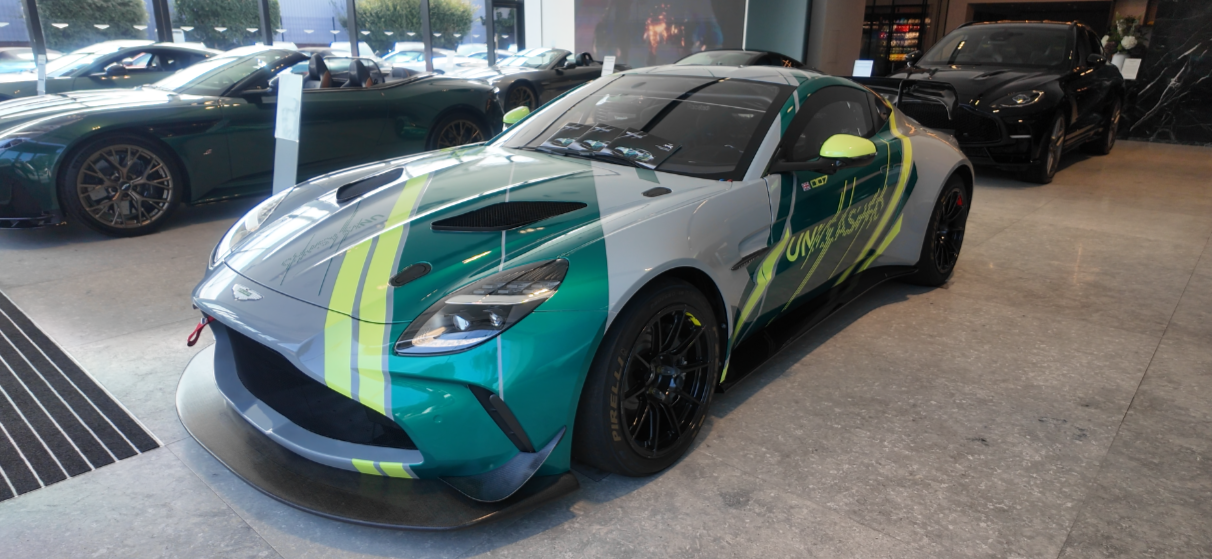
Image © Fuel the Passion. Aston Martin GT4 Unleashed - JCT600, Aston Martin, Leeds
The Aston Martin Racing brochure supplied to FTP describes an Aston Martin Vantage GT4 UNLEASHED Edition package, priced at £350,000 excluding VAT.
This isn’t simply an entry fee for two track events. The package is centred around a genuine Vantage GT4 racing car and combines the vehicle with equipment, preparation and access intended to help its owner begin using it.
According to the brochure, the package includes a choice of limited-edition UNLEASHED livery, a Racetech GT4 seat and six-point harness, passenger-seat installation, an adjustable pedal box, a dedicated performance engine map, an adjustable carbon-fibre rear wing and a bespoke GT4 braking system. Technical equipment includes a VBOX video and data-capture system, air jacks, safety stands and a selection of consumable parts. Racewear, including a suit, boots, gloves and fire-resistant underwear, is also included.
Most significantly, the package includes entry to two European UNLEASHED events, with full technical support, accommodation, trackside hospitality, catering, shared circuit transfers, garage space and a two-hour simulator-training session at Base Performance. The brochure lists vehicle transportation, storage, insurance, additional guests, personal coaching, extra hotel accommodation, tyres and wheels among the items that may require separate arrangements or additional cost.
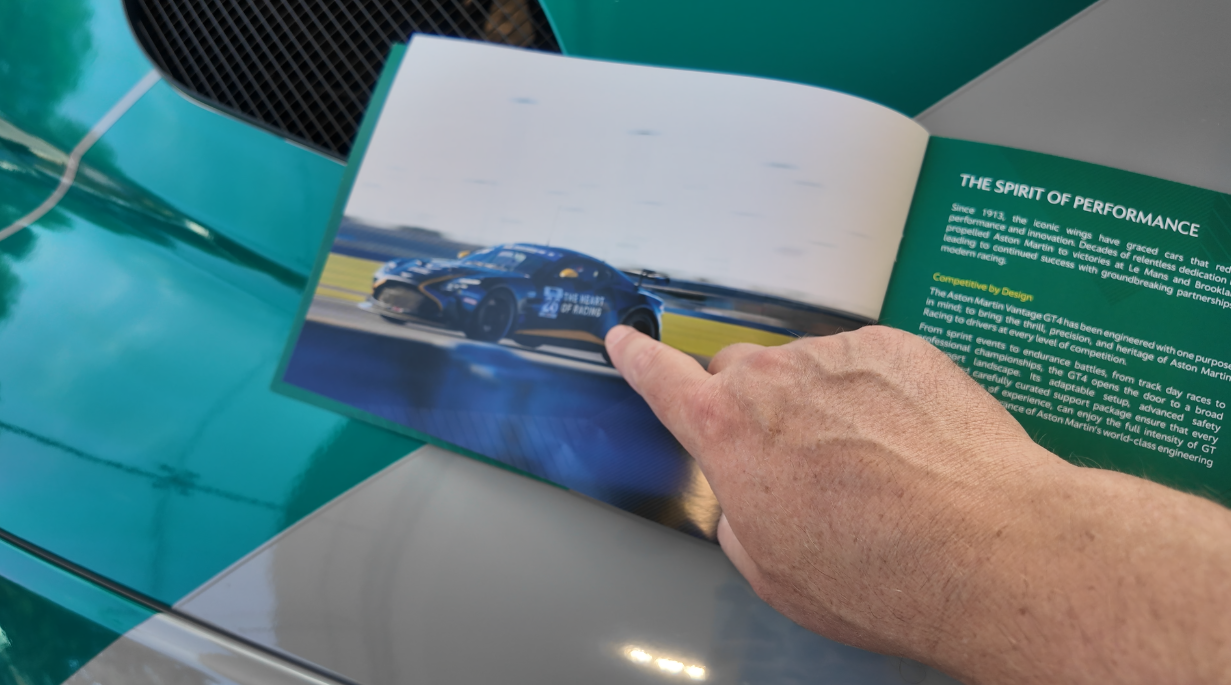
Image © Fuel the Passion. Dan, looking through the Vantage GT4 UNLEASHED Brochure at JCT600, Aston Martin, Leeds.
It also states that participants require a current Association of Racing Drivers Schools National B race licence, or a recognised equivalent, or must attend with a suitably qualified driver coach holding an appropriate instructor’s licence. Those details underline the difference between this package and purchasing a high-performance road car with an optional track experience attached.
The Vantage GT4 is a competition machine. It requires proper support, knowledge and preparation, and the UNLEASHED package is designed to provide a structured starting point rather than leaving the owner to assemble every part of that operation independently.
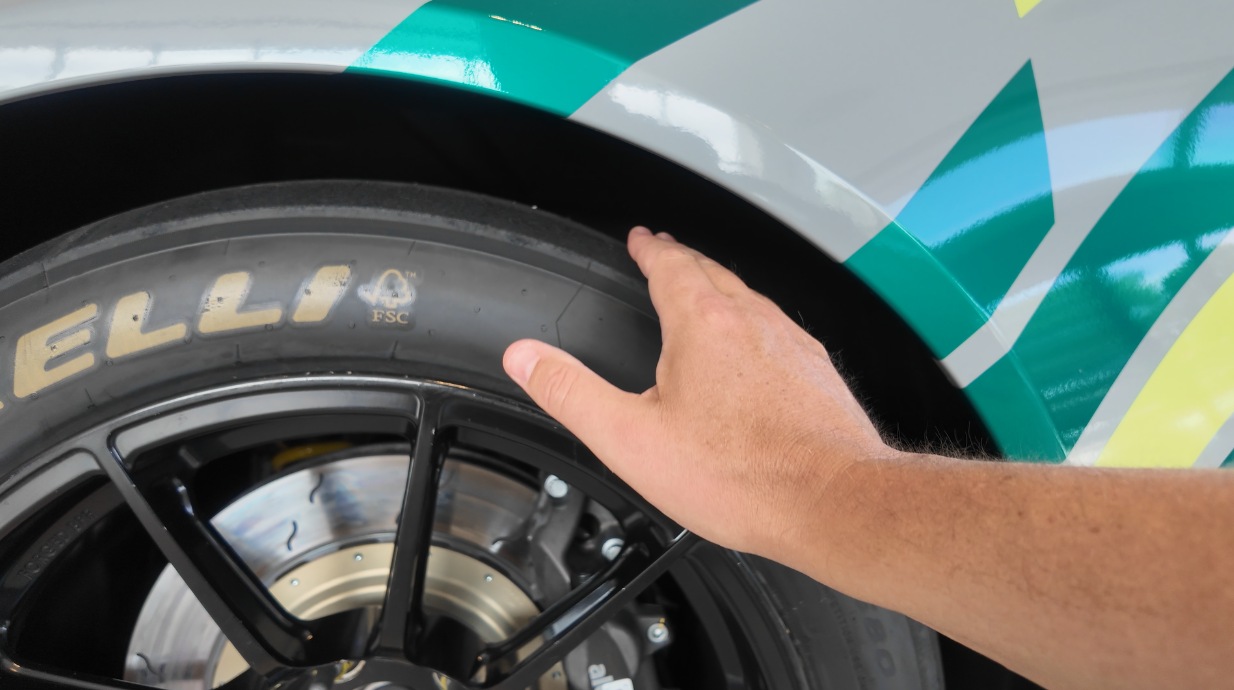
Image © Fuel the Passion. Aston Martin GT4 Unleashed - JCT600, Aston Martin, Leeds
The Vantage GT4 we filmed at Aston Martin Leeds was therefore more than an unusually liveried showroom exhibit. It represented a complete proposition: a genuine Aston Martin racing car, supported by a programme intended to help its owner understand it and gradually uncover what it can do.
Our full film, Aston Martin Heaven: UNLEASHED, explores that car in much greater detail, alongside several other particularly special Aston Martins discovered during our visit to Aston Martin Leeds.
From the rarefied world of track-only machinery, attention now returns to two more familiar measures of the marque’s wider position: what investors currently believe Aston Martin Lagonda is worth.

Affiliate link note: Some links may be affiliate links, which means Fuel the Passion may earn a small commission if you purchase through them, at no extra cost to you. Thank you for your support.
AML Share Price Watch - Investors Remain Cautious Despite Signs of Progress

As this is the first FTP Weekly Roundup of August, we return to our monthly look at Aston Martin Lagonda’s share-price performance.
Over the five weeks from Friday 26th June to Friday 31st July, Aston Martin Lagonda shares fell from 37.00p to 34.98p. That represents a reduction of 2.02p, or approximately 5.5%. During that period, the price reached a high of 40.10p on 2nd July before falling to a five-week, and 52-week low of 34.84p on 22nd July. Friday’s closing price was therefore only 0.14p above that recent low.
Wednesday’s publication of Aston Martin’s half-year results produced a particularly unsettled response. The shares initially fell by as much as 2%, before recovering to trade around 1.5% higher at approximately 37p during the morning. That improvement didn’t hold, and the shares eventually closed on Wednesday at 35.80p, below the previous day’s level. By Friday evening, they had fallen further to 34.98p.
The reaction reflected the same conflict contained within the results themselves.
Investors could see higher sales, stronger revenue, an improved gross margin and the growing contribution from Valhalla. They could also see a widened loss before tax, approximately £1.545 billion of net debt and a financing burden that continues to absorb a substantial amount of cash. In simple terms, the market appeared to acknowledge that Aston Martin’s operation had improved without becoming convinced that the progress was yet strong enough to outweigh the financial risk.
The Longer-Term Comparison
The five-week decline looks relatively modest when compared with what has happened over a longer period.
Six months ago, the nearest comparable trading day was Friday 30th January 2026, when the shares closed at 61.30p. Friday’s 34.98p close is 26.32p lower, representing a fall of approximately 42.9% in six months.
On 31st July 2025, Aston Martin Lagonda shares closed at 70.05p. They have therefore lost 35.07p, or approximately 50.1%, over the past year. Put more simply, the market value attached to each share has roughly halved in 12 months.
The comparison with two years ago is more striking still. On 31st July 2024, the shares closed at 155.40p. Compared with Friday’s 34.98p close, that represents a decline of 120.42p, or approximately 77.5%. A share worth around £1.55 two years ago is now valued by the market at just under 35p.
These figures don’t mean Aston Martin’s cars, factories or brand have suddenly become worth 77.5% less in any simple or direct sense. A company’s share price reflects what investors are prepared to pay for a small ownership stake after considering its assets, future prospects, debts, risks and the number of shares in circulation. Aston Martin has also issued additional shares during this period, so share-price movement alone doesn’t provide a complete measure of the company’s changing total market value.
Nevertheless, the direction is difficult to ignore:
Five weeks: down approximately 5.5%
Six months: down approximately 42.9%
One year: down approximately 50.1%
Two years: down approximately 77.5%
FTP View
Friday’s close leaves Aston Martin Lagonda shares near their lowest level of the past year, despite the operational improvements recorded during the first half of 2026.
That doesn’t mean investors dismissed those improvements completely. Wednesday’s movement showed that the stronger revenue, margins and Valhalla deliveries initially attracted some support. The difficulty is that every positive operational figure continues to be viewed alongside substantial losses, rising net debt and expensive borrowing.
The five-week movement is therefore only the latest part of a much longer decline in confidence. Aston Martin now needs to demonstrate that its improving operation can be sustained, that Valhalla deliveries can continue as planned and, most importantly, that stronger margins can eventually translate into genuine cash generation after investment and interest have been paid.
Until there is clearer evidence of that progress, the share price is likely to remain one of the starkest illustrations of the gap between enthusiasm for Aston Martin’s cars and investor confidence in the financial structure behind them.
FTP note: Share prices can move for many reasons, including wider market conditions, trading volumes and changing investor sentiment. This section is provided for editorial context and doesn’t constitute investment advice.
Heritage and Market Watch
The Aston Martin Lagonda That Cost More Than a Rolls-Royce
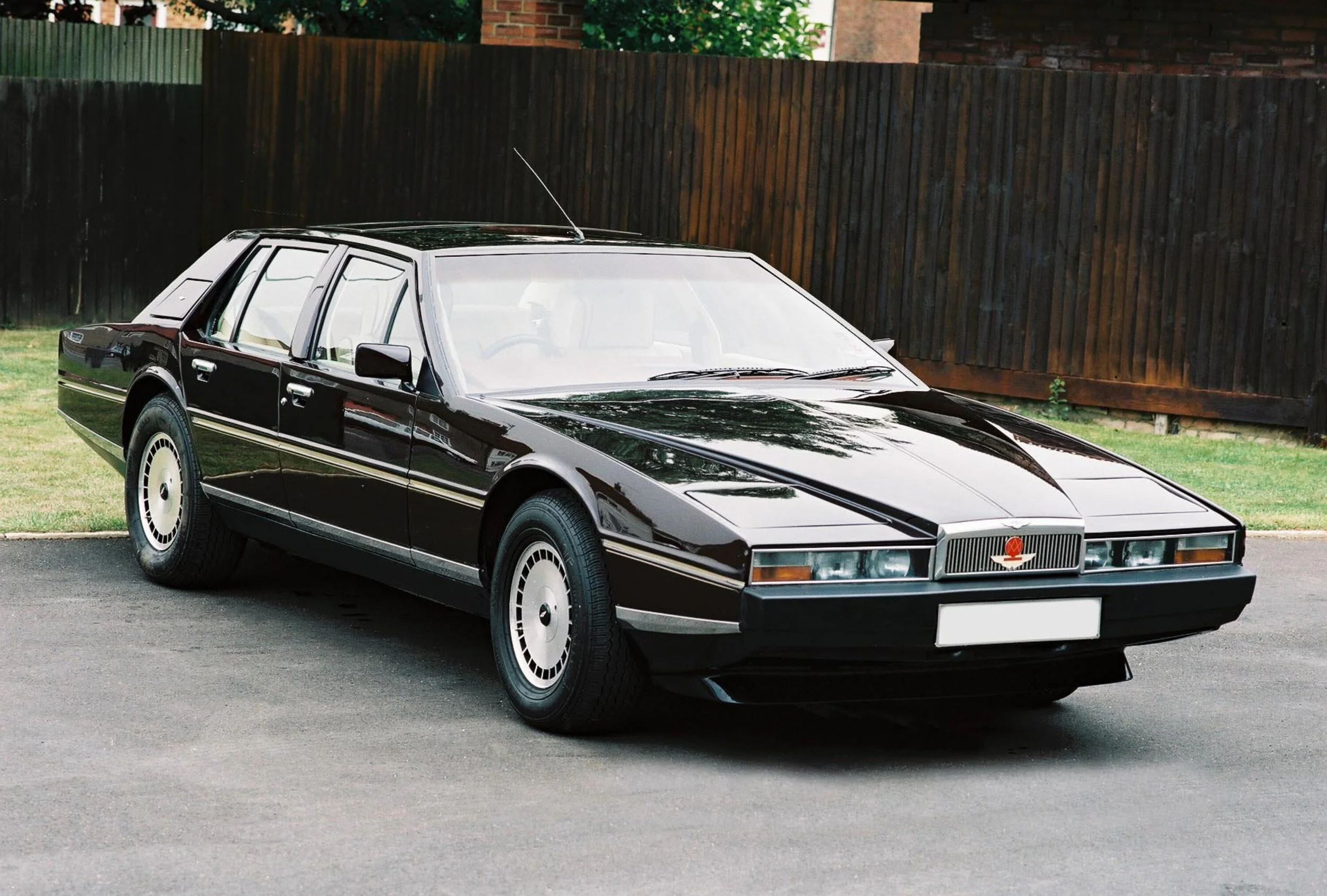
Image © Aston Martin Lagonda. Used for editorial purposes. William Towns’ dramatic, wedge-shaped luxury saloon - Lagonda.
The name Lagonda is most commonly associated with William Towns’ dramatic, wedge-shaped luxury saloon, introduced in 1976 with its digital instruments and futuristic touch-sensitive controls, as shown in the image above.
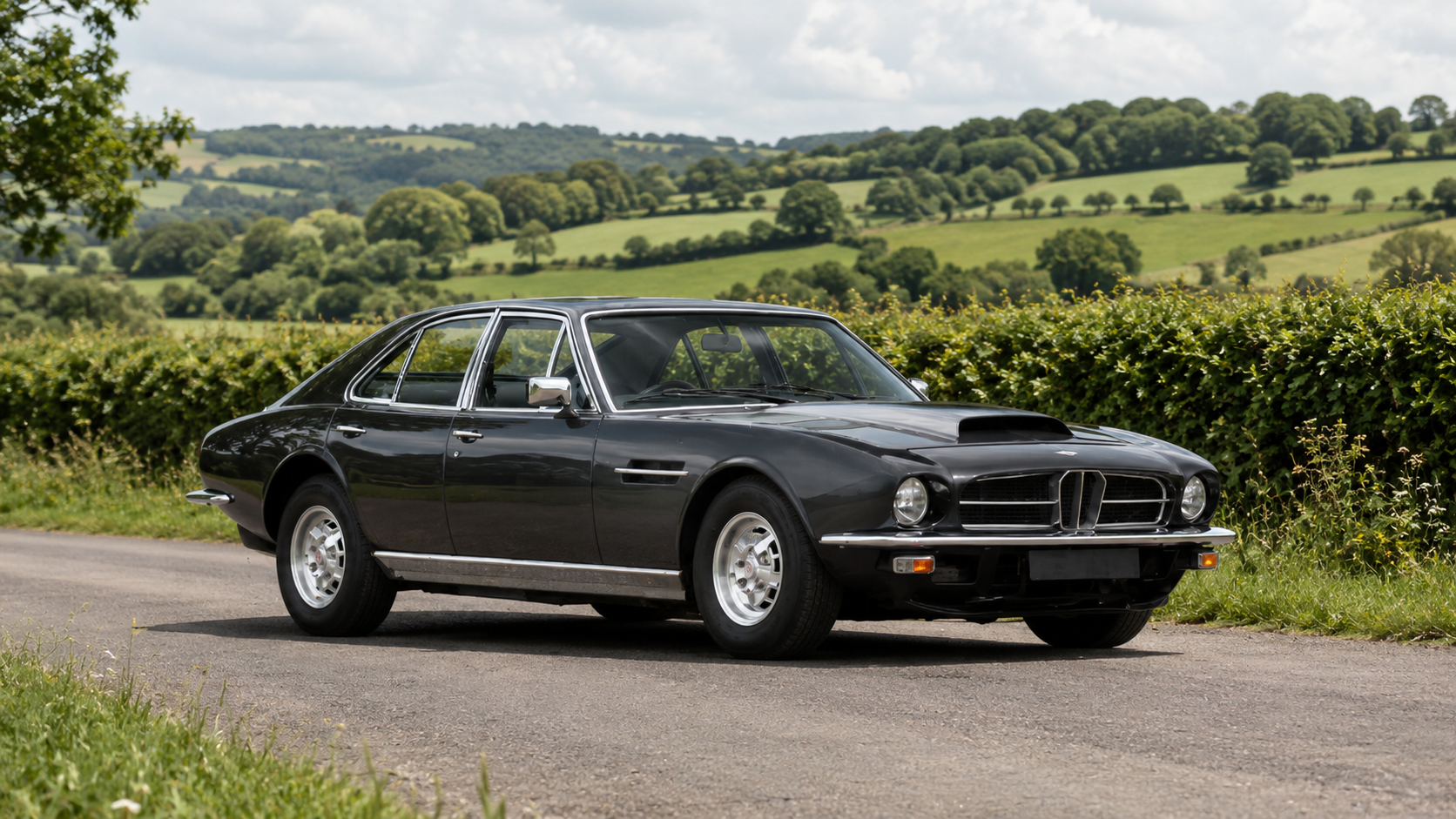
Image © Fuel the Passion. Aston Martin Lagonda V8 Series One example.
Two years earlier, however, Aston Martin had produced something considerably more traditional, and far rarer.
The Aston Martin Lagonda V8 Series One was effectively a longer-wheelbase, four-door relation of the contemporary Aston Martin V8. Just seven examples were built, making it one of the rarest production Aston Martins of its era.
A newly published Classic Driver feature has brought renewed attention to chassis 12003, the third of those seven cars and the actual example displayed by Aston Martin at the 1974 London Motor Show. The car was originally finished in Tourmaline Blue with an off-white interior. It now wears Cumberland Grey paintwork over Connolly Wildberry leather, a specification applied during an extensive restoration and upgrading programme completed between 2002 and 2004.
More Expensive Than the Silver Shadow
When new, the Lagonda V8 Series One carried a base price of £14,040. That was almost 25% more than the two-door Aston Martin V8 and more than £1,000 above the price of a Rolls-Royce Silver Shadow. It was therefore positioned at the very highest end of the luxury-car market, just as the oil crisis was sharply reducing demand for large, expensive and fuel-hungry cars.
The timing could hardly have been more difficult. Aston Martin entered receivership only weeks after the model’s public debut, and production ended after seven cars. That commercial failure shouldn’t obscure the ambition behind it. The Series One attempted to combine Aston Martin performance and hand-built character with the rear-seat space and presence expected of a top-level luxury saloon. Its rarity today is partly the result of that unfortunate moment in history.
A Considerably More Powerful Lagonda Today
The car originally used Aston Martin’s 5.3-litre V8, paired in most examples with a three-speed Chrysler automatic gearbox. Only two of the seven were reportedly supplied with a five-speed manual transmission. Chassis 12003 has since been transformed mechanically.
R.S. Williams rebuilt the engine to its 7.0-litre specification in 1992. A further rebuild followed in 2019 using an Aston Martin-supplied continuation block. Classic Driver describes its output as between 450 and 480 horsepower, while the current dealer listing quotes 500 brake horsepower. The important point is that it now possesses considerably greater performance than the original Series One specification.
The car’s history also contains a significant connection to Aston Martin itself. In 2010, it was purchased on behalf of the company by then-chief executive Dr Ulrich Bez and remained within the factory collection until 2017. His signature can still be seen on the engine’s airbox. Following another repaint in 2022, the Lagonda appeared at the 2023 Concours of Elegance at Hampton Court Palace, where it received a Class Honours award. It’s now being offered for sale by Dylan Miles Ltd, with the price available only upon application.
Chassis 12003 is more than simply one of seven cars. It’s the model’s original London Motor Show exhibit, a former member of Aston Martin’s own collection and a car whose later restoration and mechanical development have added another layer to its story. Purists may debate the changes from its original colour and engine specification. Others will appreciate that it has been maintained, used, developed and repeatedly presented to the public rather than disappearing entirely from view.
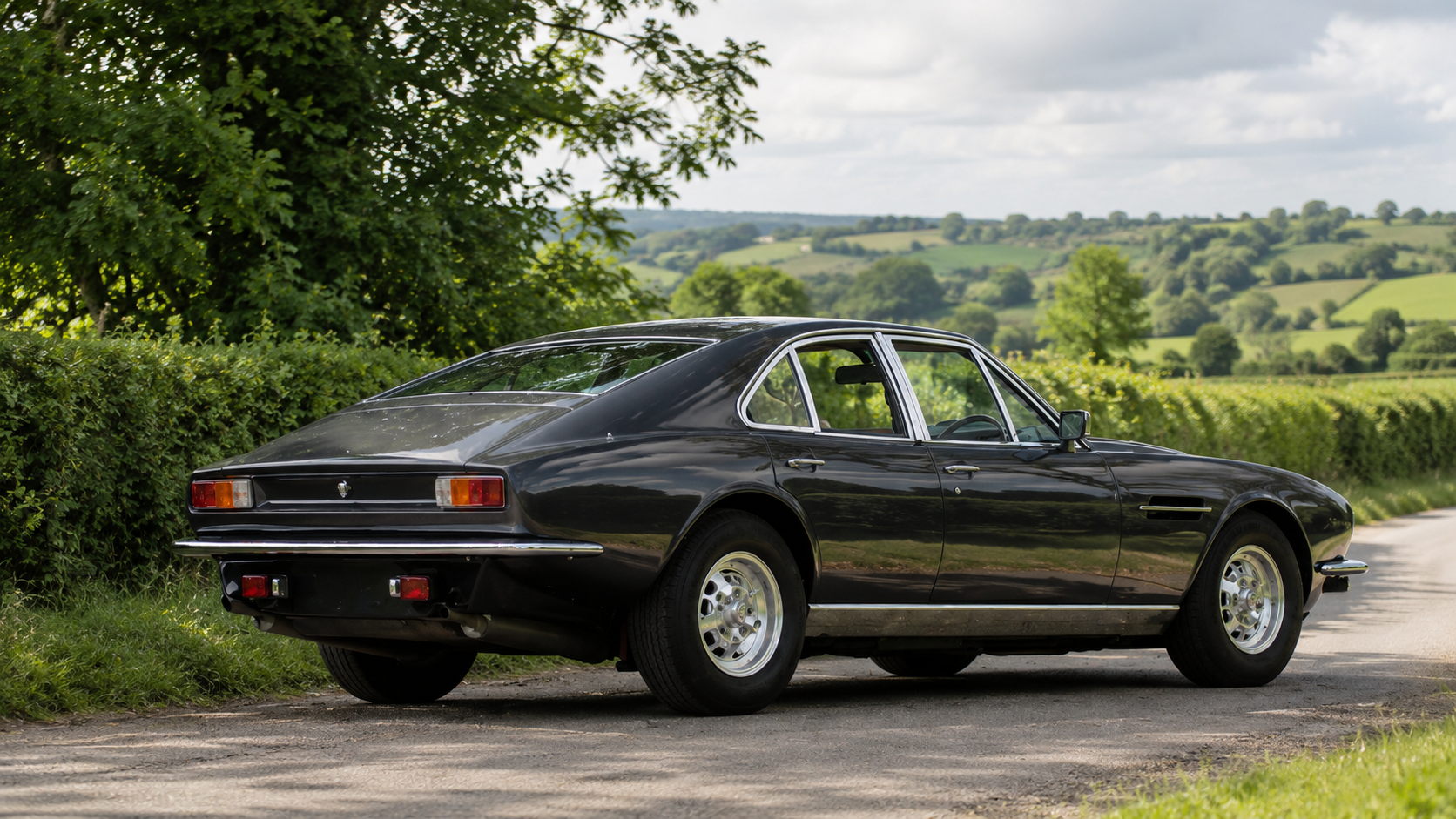
Image © Fuel the Passion. Aston Martin Lagonda V8 Series One example.
Either way, it’s an intriguing reminder that Aston Martin’s history isn’t composed only of successful sports cars and celebrated grand tourers. Some of its most interesting creations emerged from moments of uncertainty, ambition and financial pressure, circumstances that make this forgotten four-door Aston especially relevant more than half a century later.
From one of Aston Martin’s rarest and least familiar models, we move to a car whose place in the marque’s modern history is far more widely recognised. Twenty-five years after the first-generation Vanquish arrived, the Aston Martin Heritage Trust has revisited its story through the people who helped create, develop, maintain and enjoy it.
Aston Martin Heritage Trust Celebrates 25 Years of Vanquish
Image © Aston Martin Heritage Trust. Used for editorial purposes. Front page of the AMHT Website. Click on the image to be taken direct to the AMHT website.
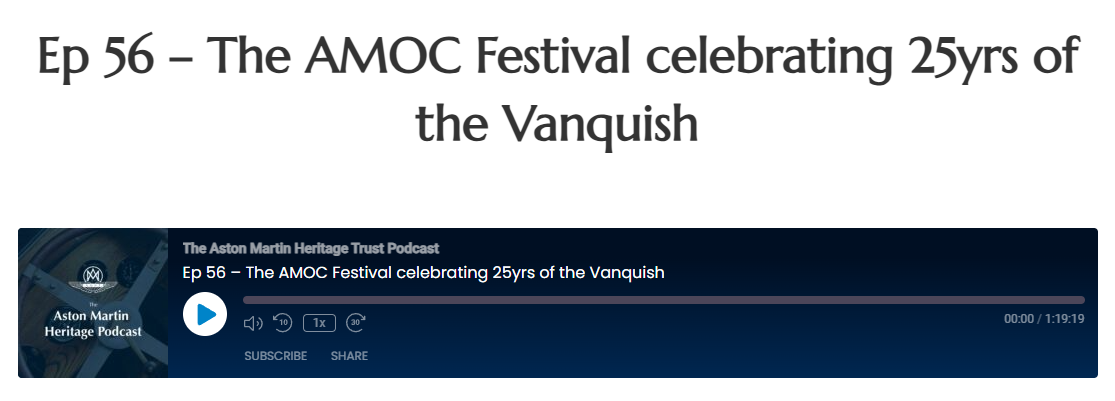
The Aston Martin Heritage Trust has released a new episode of its Heritage Podcast, recorded at the Aston Martin Owners Club Festival at the British Motor Museum.
Ep 56 – The AMOC Festival Celebrating 25 Years of the Vanquish captures a remarkable gathering of all three generations, but it’s the people surrounding the cars who make the programme especially worthwhile.
Former Aston Martin chief executive Dr Ulrich Bez reflects on the original Vanquish’s journey towards production, the standards he believed the car needed to meet and the wider importance of the model to Aston Martin’s future. There are also first-hand recollections from engineers who worked through some of the early technical challenges, including the often-discussed automated-manual transmission.
That conversation may prove particularly interesting to anyone who has formed an opinion of the gearbox without experiencing a properly maintained and correctly set-up example. Owners offer their own perspectives too, and not all of them follow the familiar narrative surrounding the car.
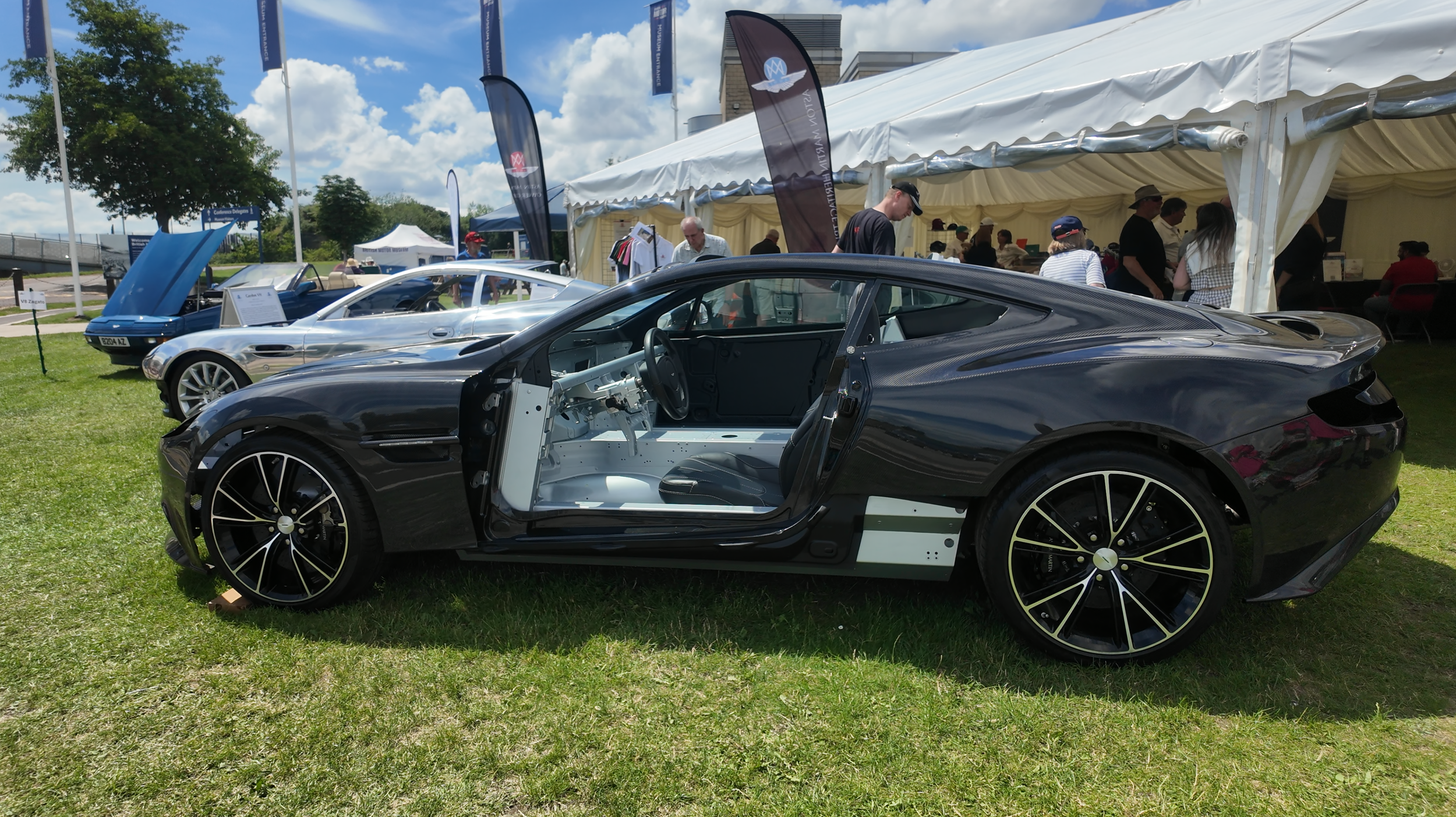
Image © Fuel the Passion. The Vanquish cutaway cars at AMOC Festival, 2026.
Elsewhere, Steve Waddingham revisits cars he remembers from the production line, while the Heritage Trust’s first- and second-generation cutaway Vanquishes reveal just how different the engineering beneath them really is.
There are stories behind colours, specifications, long-held ambitions, European journeys and cars that have become deeply personal to the people who own them. The programme moves naturally between company history, engineering detail and the kind of informal owner conversations that could only emerge at an event such as this.
FTP View
The episode is an excellent companion to the Vanquish’s 25th-anniversary celebrations and to our recently published FTP First-Generation Aston Martin Vanquish Buyers Guide.
Rather than retelling everything here, we’d encourage readers to follow the link, just click on the image below and enjoy the full programme. It offers more than a history of the Vanquish, it reveals the decisions, challenges, memories and affection that have gathered around the car over the past quarter of a century.
The many owner voices within the episode also reinforce why lived experience is so important to the FTP Buyers Guide project, a subject we’ll return to in our FTP Update later in the roundup.
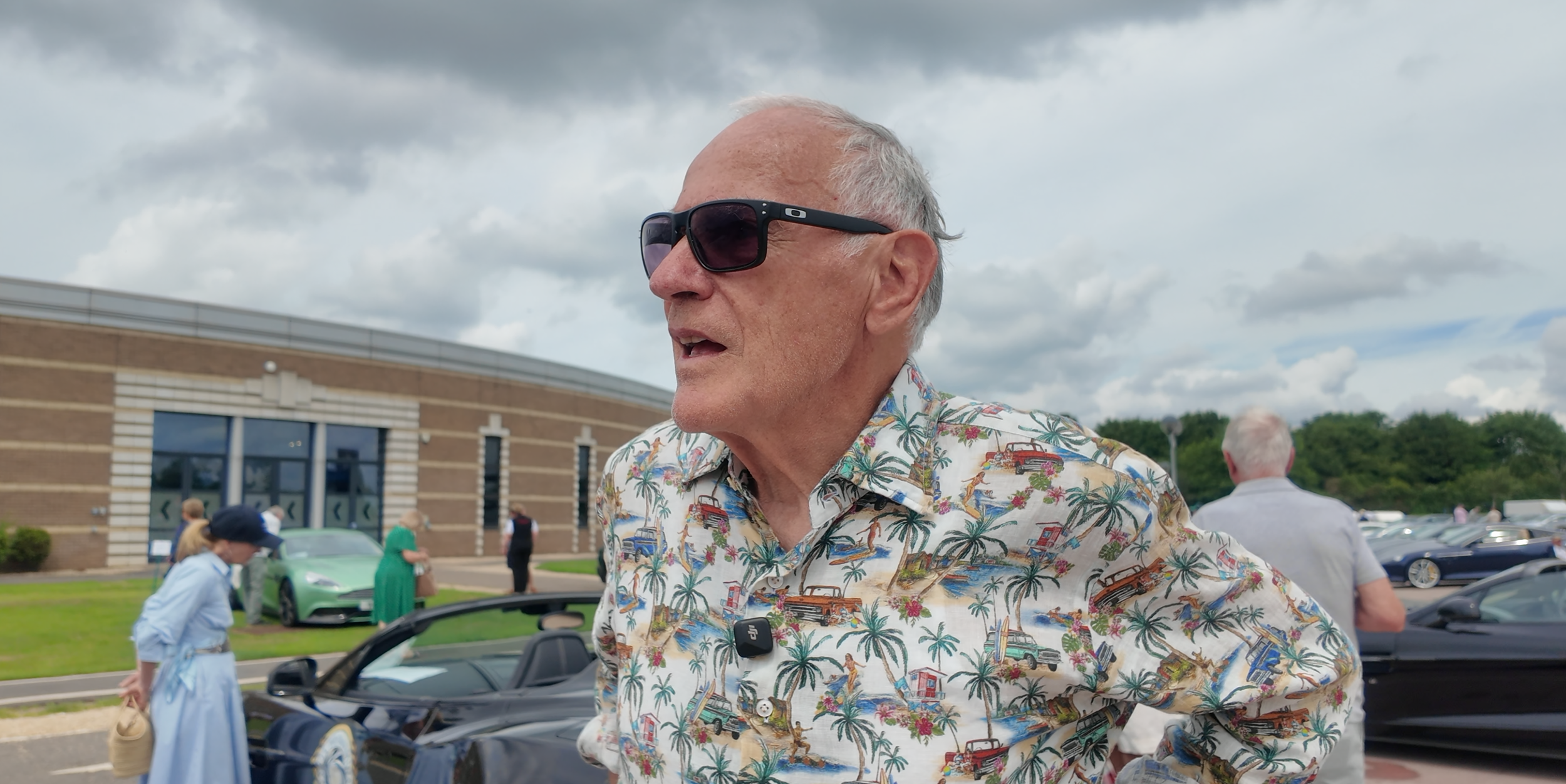
Image © Fuel the Passion. Dr Ulrich Bez at the AMOC Festival, 2026.
Fuel the Passion was also present at the AMOC Festival at the British Motor Museum, where we filmed numerous Aston Martin Vanquishes from across the generations and had the privilege of speaking with Dr Ulrich Bez. We’ll soon begin editing our own film from the event, bringing together the cars, people and atmosphere of this important anniversary celebration. In the meantime, the Heritage Trust podcast offers an excellent opportunity to revisit the day and hear many of those stories first-hand.
From a celebration that brought together all three generations of Vanquish, we move to another Aston Martin name viewed from several different angles. This week, rather than choosing a single car, our FTP Car of the Week brings together four examples of the DBX, each representing a different stage, specification and price point, to ask a much more revealing question.
FTP Car of the Week - Four Aston Martin DBXs - How Much DBX Do You Really Need?
Our four choices span six years of DBX production and an extraordinary £180,006 difference between the least and most expensive examples. At one end sits an almost-new, extravagantly specified DBX S advertised at just under £250,000. At the other is an early DBX that has covered nearly 50,000 miles and can now be bought for less than £70,000.
Between them are two cars that may represent the most persuasive middle ground: a later original DBX priced below £100,000 and an updated DBX707 offering the latest-generation cabin and substantially greater performance for £157,990.
They may share the same underlying idea, but these four cars present very different versions of DBX ownership.
2026 Aston Martin DBX S - £249,995. The first car is impossible to overlook. To see the advert click HERE.
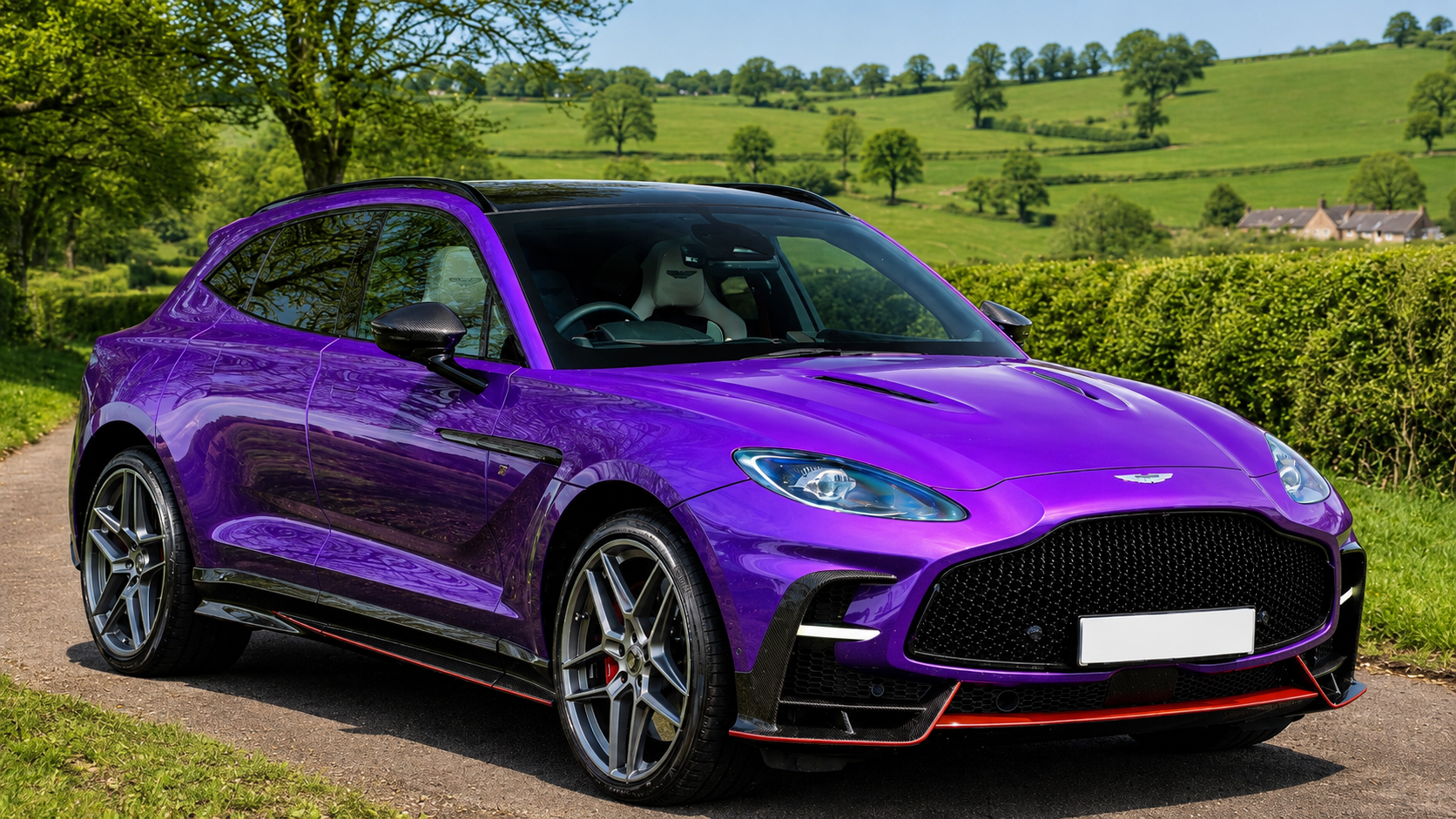
2026 DBX S
Advertised by Aston Martin Newcastle, this Digital Violet DBX S has covered only 612 miles and was registered in May 2026. The dealer describes it as the highest-value DBX it has ever sold and says the car was originally part of a three-DBX collection before a move overseas brought it back to the market.
Its specification is suitably dramatic. Digital Violet Q Special paint is combined with an Onyx Black and Blush Pearl Metallic leather interior, supported by extensive carbon-fibre exterior packages, a carbon upper body treatment and the distinctive red detailing around its lower bodywork. Further equipment includes Bowers & Wilkins audio, cooled front and rear seats, Sports Plus seating, a heated sports steering wheel, a panoramic roof and an extensive selection of Q and S-specific interior details.
According to the dealer, the original specification exceeded £325,000, making the current asking price a considerable reduction despite the car having travelled barely more than delivery mileage. This is the DBX for someone who wants rarity, individuality and maximum visual impact. Its appeal isn’t based on value in the conventional sense. It’s about having the most distinctive and highly specified example in the group.
2025 Aston Martin DBX707 - £157,990. The second car is an updated DBX707 offered by Aston Martin Leeds. To see the advert click HERE.
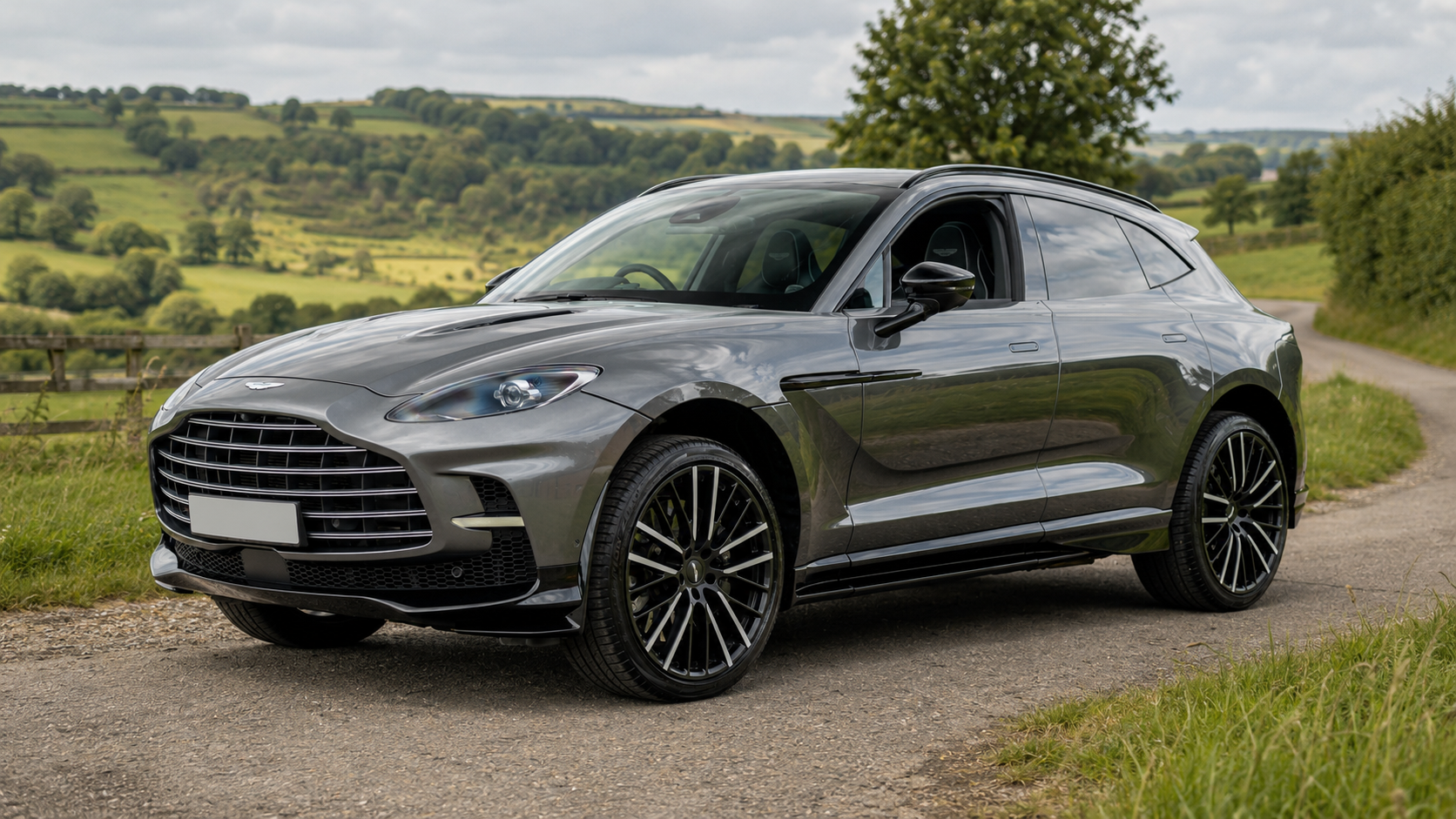
2025 DBX707
Registered in September 2025 and showing 11,145 miles, it’s finished in Magnetic Silver with an Onyx Black interior. Its specification includes 23-inch satin-black and diamond-turned wheels, smoked rear lights, ventilated front and rear seats, dark-chrome interior jewellery, contrast stitching, privacy glass and a powered tailgate with gesture control.
This car belongs to the substantially revised generation of DBX707, bringing Aston Martin’s new interior architecture, modern infotainment system and a cabin much closer in design and technology to the company’s current sports-car range.
At £92,005 less than the purple DBX S, it still delivers the performance and updated interior most buyers would associate with today’s DBX, albeit with more mileage and a considerably more restrained specification.
For many, this may be the strongest all-round proposition here: modern enough to feel current, powerful enough to provide the full DBX707 experience and far removed from the near-£250,000 cost of the flagship car.
2023 Aston Martin DBX - £97,980. Our third choice is a one-owner original DBX advertised by Auto100. To see the advert click HERE.
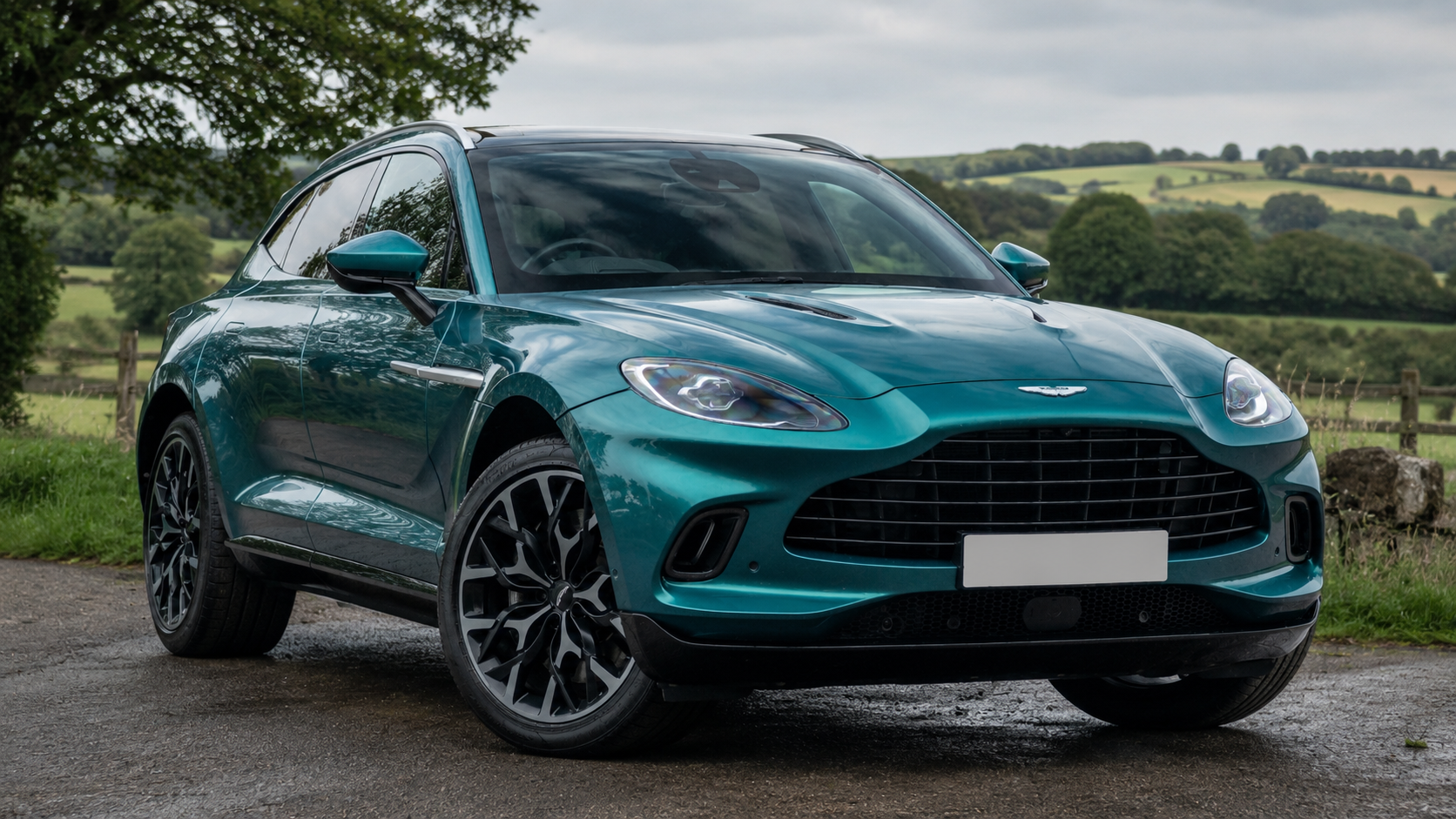
2023 DBX
Finished in Aston Martin Racing Green over an Onyx Black leather and Alcantara interior, it has covered 21,000 miles and comes with a full Aston Martin service history.
Its specification includes Sports Plus seats, a sports exhaust upgrade, a fixed panoramic glass roof, 22-inch satin-black and diamond-turned Ribbon wheels, Aston Martin Premium Audio, heated and ventilated 16-way memory seats, a 360-degree camera, an Alcantara headlining and gloss-black lower body trim.
At £97,980, this is where the comparison becomes especially interesting. It doesn’t offer the newer interior or the outright performance of the DBX707, but it remains a beautifully specified, modern Aston Martin with considerable pace, genuine long-distance comfort and all the practicality that made the DBX such an important addition to the range.
It costs almost £60,000 less than the silver DBX707 and more than £150,000 less than the DBX S. For an owner who values colour, condition, history and everyday ability more than possessing the latest version, its case is difficult to ignore.
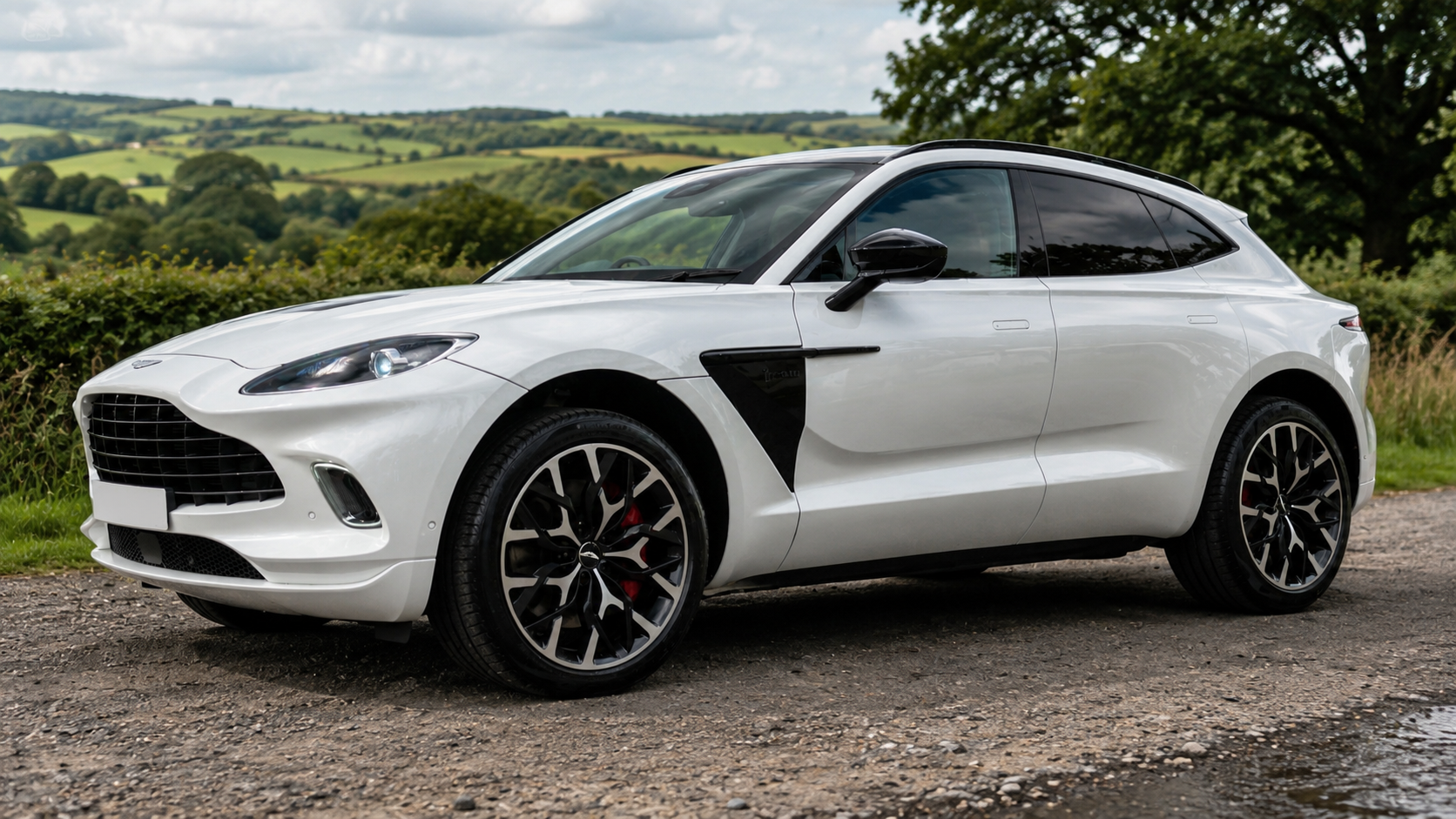
2020 Aston Martin DBX - £69,989. The final car takes us back to the beginning of the DBX story. To see the advert click HERE.
2020 DBX
Registered in 2020, this white example is advertised by RW Cars for £69,989 and has covered 48,100 miles. Its mileage is considerably higher than the other three, and the advert information available to us provides less detail about its history and optional specification. Any prospective buyer would therefore need to examine its servicing, maintenance, condition and warranty position particularly carefully.
Even so, the price is striking.
For less than £70,000, this remains an Aston Martin DBX powered by the 4.0-litre twin-turbocharged V8, with four-wheel drive, five-seat practicality and the performance expected of the model. The comparison with the purple car is extraordinary. The DBX S costs more than three and a half times as much, yet both belong recognisably to the same family and fulfil broadly the same practical role.
The older car clearly won’t provide the same performance, technology, condition or exclusivity. It does, however, show how accessible early DBX ownership has become, and why purchase price should only be considered alongside the cost of maintaining such a complex, high-performance luxury vehicle.
FTP View
There isn’t one correct answer here. The purple DBX S is the emotional choice: rare, extravagant and specified without restraint. The silver DBX707 may be the technical sweet spot, combining the updated cabin with exceptional performance at a substantial saving over the flagship car. The green 2023 DBX offers perhaps the most balanced proposition of all. It retains the original interior, but brings a beautiful specification, full Aston Martin history and a price below £100,000. Then there’s the white 2020 car. Its mileage and earlier age demand greater scrutiny, but it lowers the point of entry by another £28,000 and places DBX ownership within reach of buyers who may previously have considered the model far beyond their budget.
That leaves the question we began with: How much Aston Martin DBX do you really need?
Would you spend almost £250,000 for the rare specification and near-new condition of the DBX S? Would the updated DBX707 be your choice? Is the green original DBX the strongest mixture of specification and value, or does the opportunity to buy an Aston Martin DBX for less than £70,000 make the earliest car impossible to overlook?
Whichever car each reader chooses, placing all four together reveals how broad the DBX market has become. One model name now covers everything from a relatively accessible used Aston Martin to a highly personalised flagship costing almost a quarter of a million pounds.
From four very different routes into DBX ownership, we turn to the latest developments here at Fuel the Passion, including two newly published Buyers Guides, our next Vanquish research project and a Featured Article examining what Aston Martin’s recent financial results could mean for its longer-term future.
Affiliate link note: Some links may be affiliate links, which means Fuel the Passion may earn a small commission if you purchase through them, at no extra cost to you. Thank you for your support.
FTP Update - New Buyers Guides, a New Featured Article and the Next FTP Film
It’s been an especially productive week across the Fuel the Passion website, Buyers Guide library, Motorsport Hub and YouTube channel.
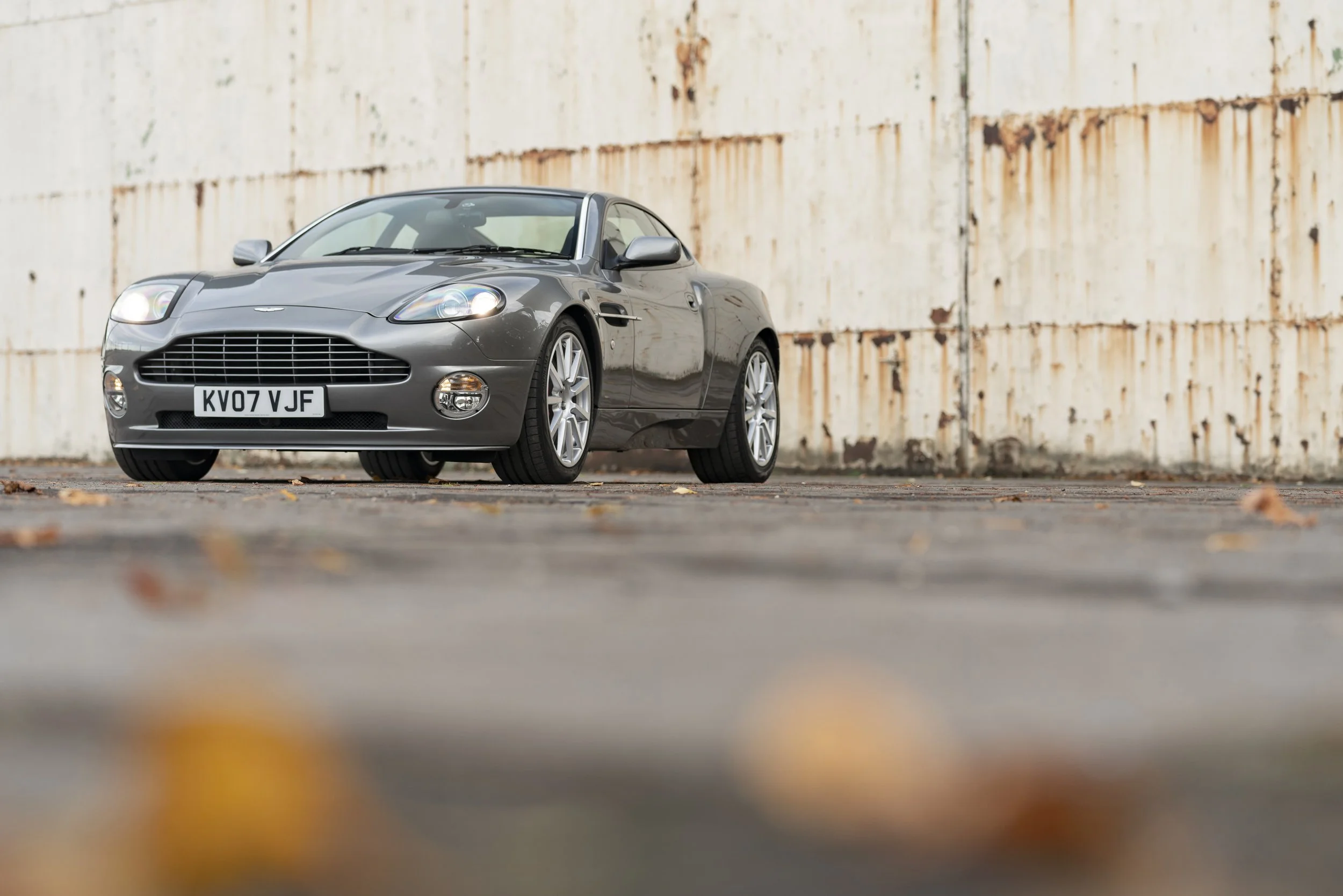
Image © Aston Martin Lagonda. Used for editorial purposes. Aston Martin Vanquish V12.
Last Sunday, during the first-generation Vanquish’s 25th-anniversary year, we published our complete FTP Aston Martin Vanquish Buyers Guide. The guide brings together the car’s history, engineering, model development, servicing considerations, transmission behaviour, ownership costs and the checks that should form part of any serious inspection. Particular care has been taken over the original automated-manual transmission, explaining how it works, why condition and correct adjustment matter, and why it should not automatically be dismissed in favour of a manual conversion.
Where cars have been converted, our approach remains positive but neutral. Any conversion should be judged on the quality of the engineering, its documentation, inspection, driving experience and the long-term support available.
The newly released Aston Martin Heritage Trust podcast featured earlier in this roundup makes an excellent companion to the guide, adding the voices of former company leaders, engineers, specialists and owners to the practical information we have assembled.
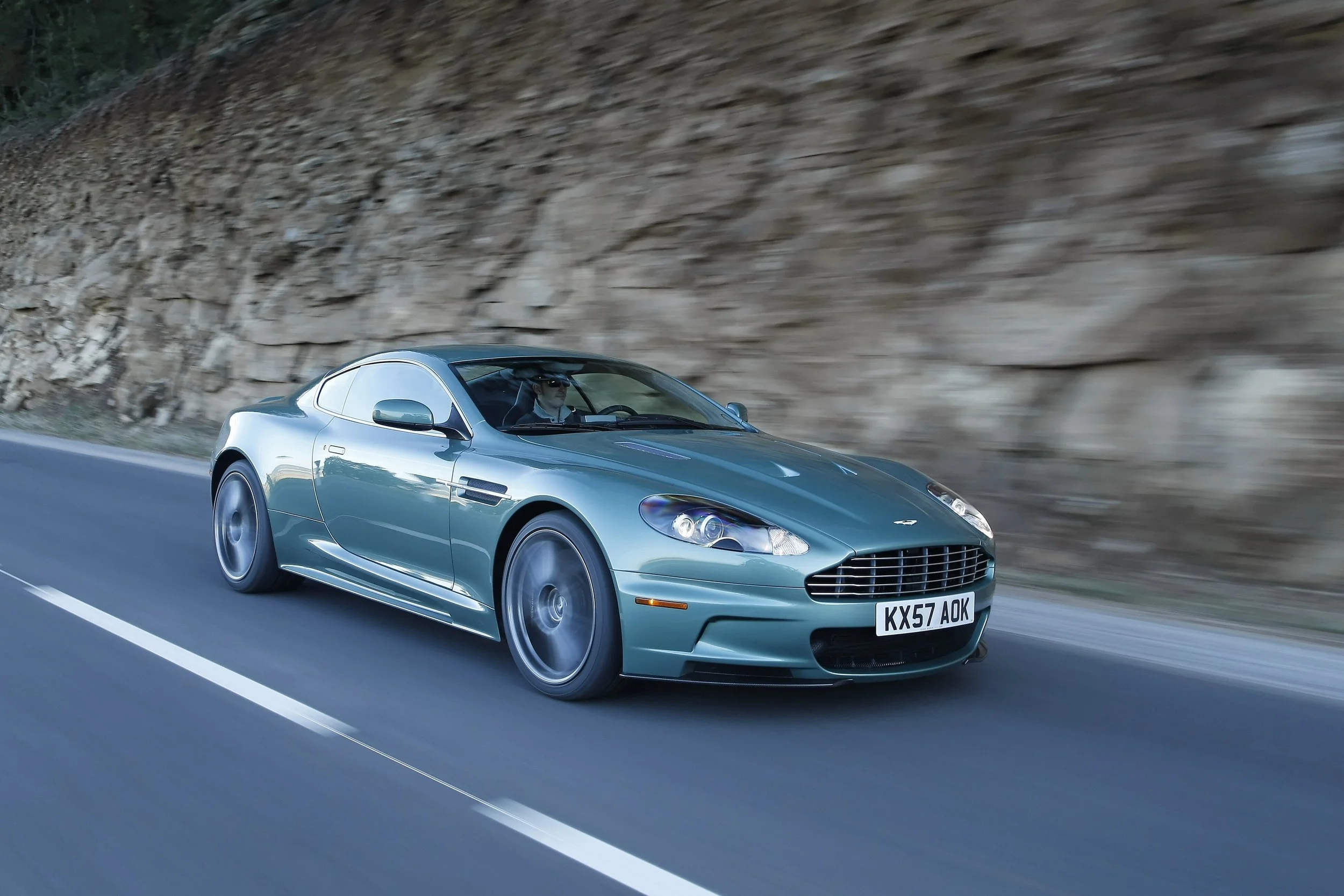
Image © Aston Martin Lagonda. Used for editorial purposes. Aston Martin DBS.
Only a few days later, following repeated requests from readers, we published our new guide to the VH-era Aston Martin DBS. Produced between 2007 and 2012, the DBS occupies a particularly appealing place in Aston Martin history. It combines the familiar VH-era platform with carbon-fibre body panels, carbon-ceramic brakes, a more powerful V12 and the presence expected of the marque’s flagship grand tourer.
The guide covers both Coupé and Volante, along with manual and Touchtronic 2 automatic cars. As with every FTP Buyers Guide, the aim is not to discourage ownership with a catalogue of possible faults, but to help buyers understand the car, recognise the signs of good ownership and approach a purchase with realistic expectations.
The DBS guide now joins our existing guides to the VH-era V8 Vantage, DB9, DB11 and first-generation Vanquish. A separate, detailed guide to the VH-era V12 Vantage is planned for the future.
Research Begins for the Second-Generation Vanquish
Our next major Buyers Guide will cover the second-generation Aston Martin Vanquish, introduced in 2012 and later joined by the Vanquish S. Research is already under way, and we would particularly like to hear from owners willing to share their experiences. Useful subjects include servicing, reliability, engine and gearbox behaviour, suspension, brakes, electrical systems, bodywork, interior trim, repairs, preventative maintenance and the checks you would recommend before purchase.
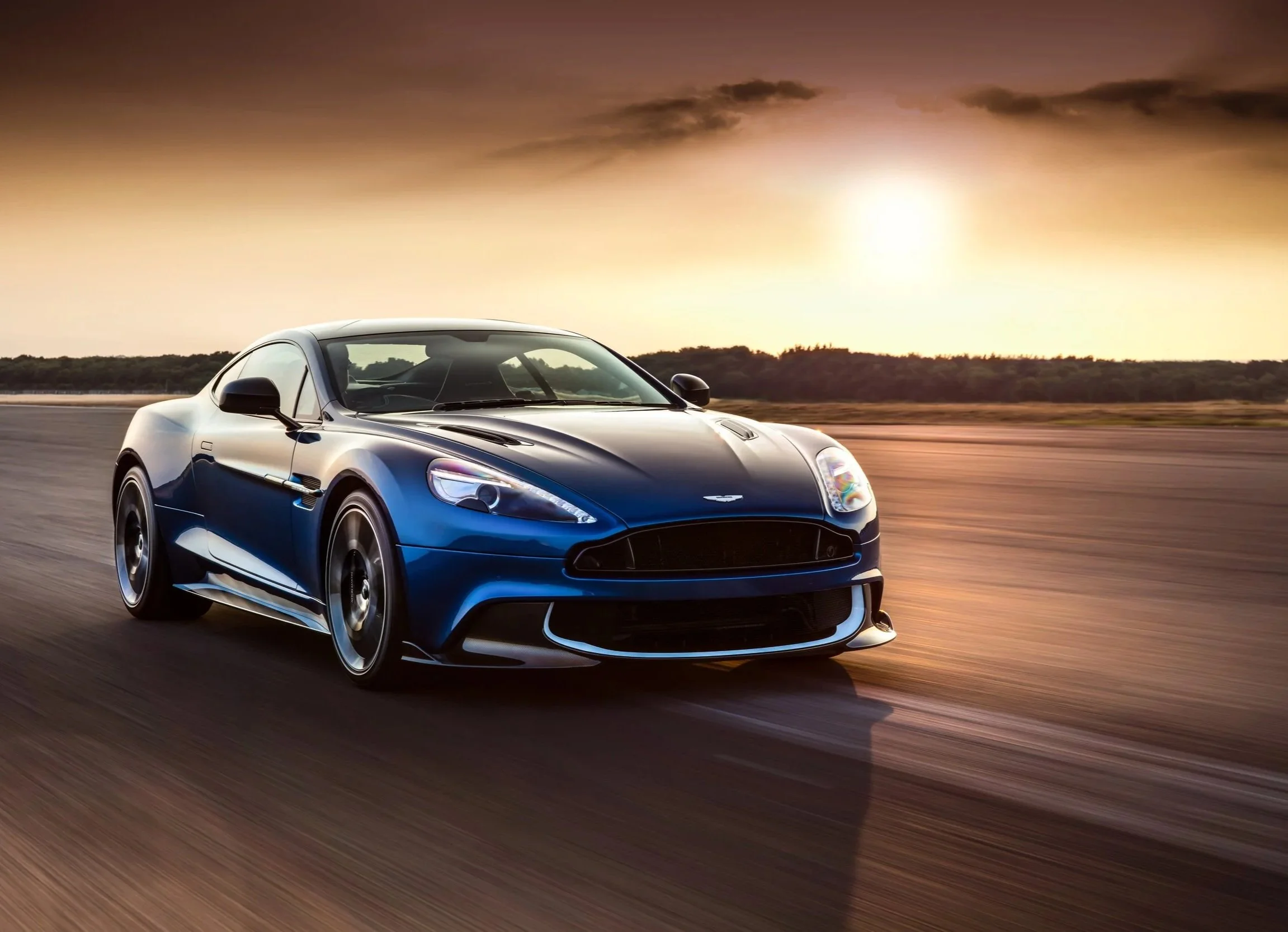
Image © Aston Martin Lagonda. Used for editorial purposes. Aston Martin Vanquish S.
We are equally interested in the positive side of ownership: how the car performs over long journeys, what it’s like to live with, which options have proved worthwhile and why owners chose the Vanquish over other Aston Martins. Owners who would like their experience to be considered can email fuelthepassion.dt@gmail.com. With permission, relevant contributions may be incorporated into the finished guide and credited appropriately.
For models already covered by an FTP Buyers Guide, owners are welcome either to email us or leave a comment beneath the relevant guide.
New Featured Article
Published alongside this roundup is our latest Featured Article: Aston Martin Beyond the Debt: What Could the Future Hold?
The article looks beyond the immediate headlines surrounding borrowing, losses and refinancing to examine Aston Martin Lagonda’s wider position. There’s no attempt to minimise the seriousness of approximately £1.545 billion in net debt, substantial interest costs or the continuing pressure on cash flow. Those figures remain central to any honest assessment of the company. However, debt is not the whole story.
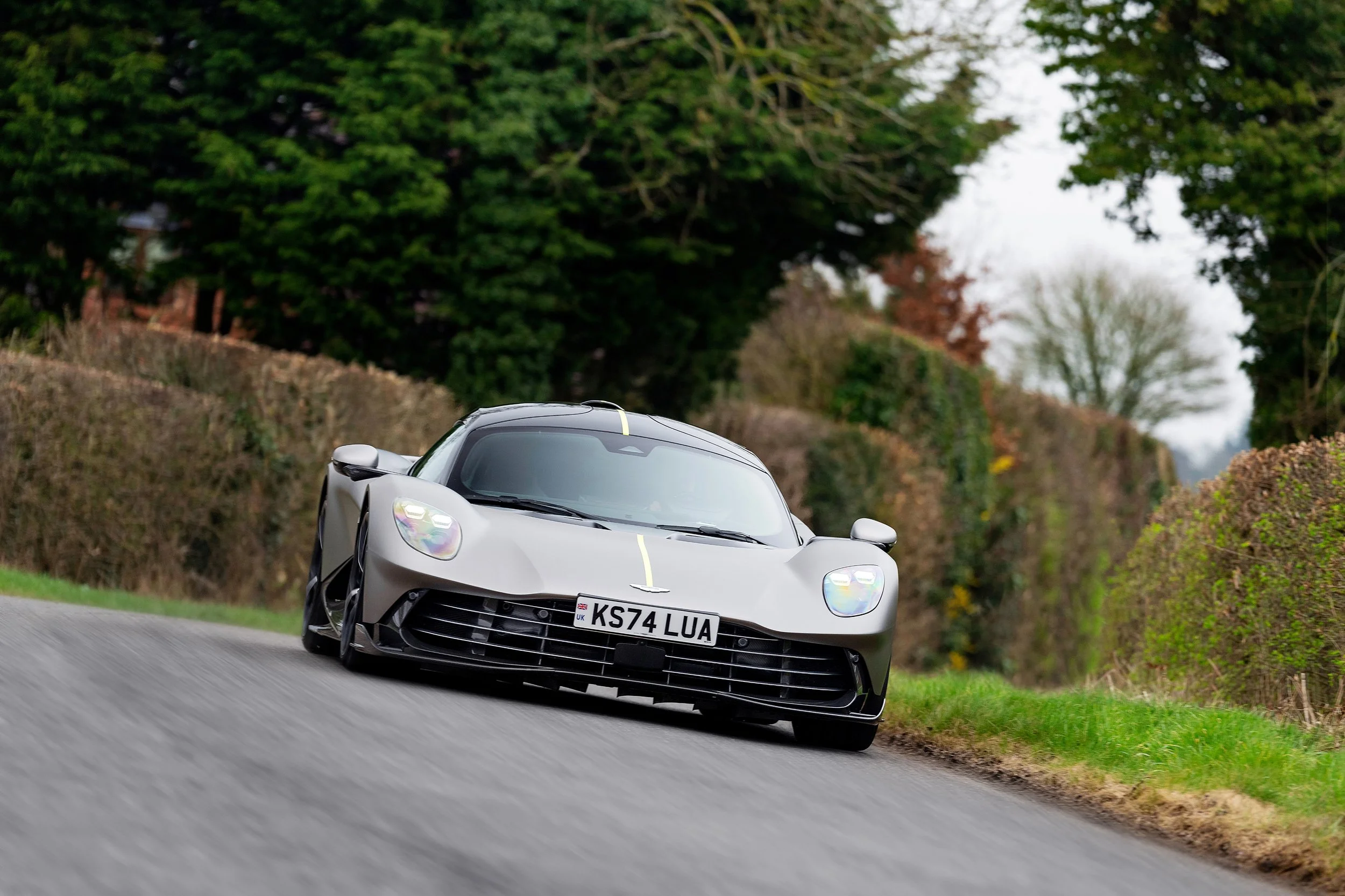
Image © Aston Martin Lagonda. Used for editorial purposes. Aston Martin Valhalla.
The article also considers the improving operational signs visible during the first half of 2026, including stronger wholesale volumes, rising revenue, a better gross margin, increasing Valhalla deliveries and a reduction in cash outflow. The central question is whether Aston Martin can convert those improvements into sustained cash generation before the weight and cost of its financial structure restrict progress further.
It’s not investment advice or a prediction of what the share price may do. It’s an attempt to explain, in accessible terms, why Aston Martin’s current situation is both deeply challenging and more complicated than the most dramatic headlines suggest.
Aston Martin Heaven: UNLEASHED
As mentioned last week, our latest YouTube film, Aston Martin Heaven: UNLEASHED, was recorded during a recent visit to Aston Martin Leeds while our own Vantage was undergoing its annual MOT. The centrepiece is the extraordinary Vantage GT4 UNLEASHED Edition featured earlier in this roundup, but it was far from the only remarkable car we encountered.

Image © Fuel the Passion. Aston Martin DB12 S in Minotaur Green.
The film also includes a Minotaur Green DB12 S (as you probably know by now, my favourite Aston Martin colour!), a new Vanquish, a striking Valiant, a V12 Vantage and the former Formula One Safety Car used during the dramatic final race of the 2021 season in Abu Dhabi. Our thanks go to the Aston Martin Leeds team for allowing us the time and access needed to examine the cars properly and share them with the FTP audience.
Coming Next: Concours des Légendes at Wilton House
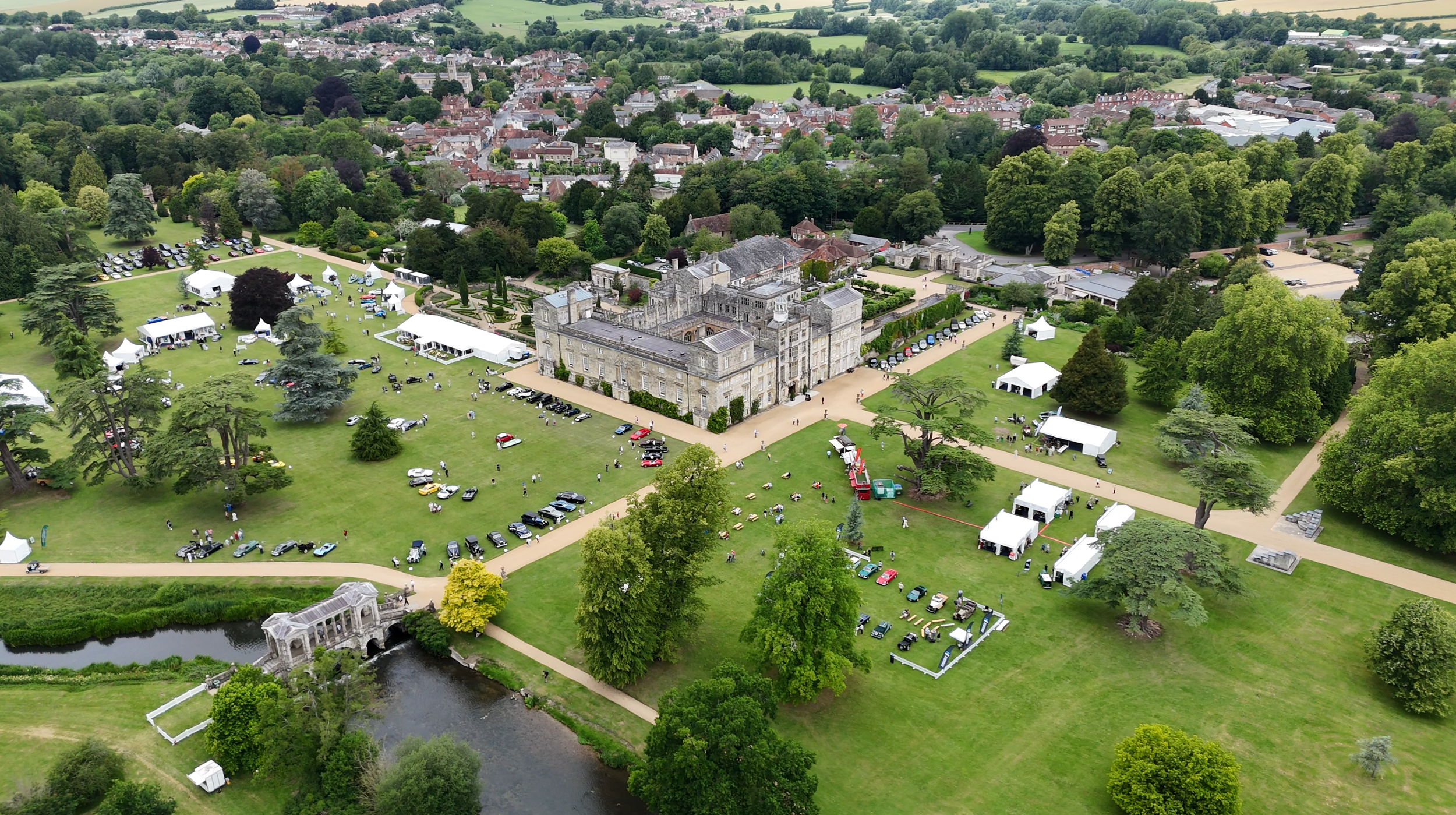
Image © Fuel the Passion. Concours des Légendes at Wilton House
The next Fuel the Passion film to enter the edit will be our visit to Concours des Légendes at Wilton House. The event was held within the beautiful grounds of Wilton House, near Salisbury, providing a particularly elegant setting for a carefully selected collection of cars and the people connected with them. A number of Aston Martins were displayed across the event, and we were able to film several of them within those remarkable surroundings.
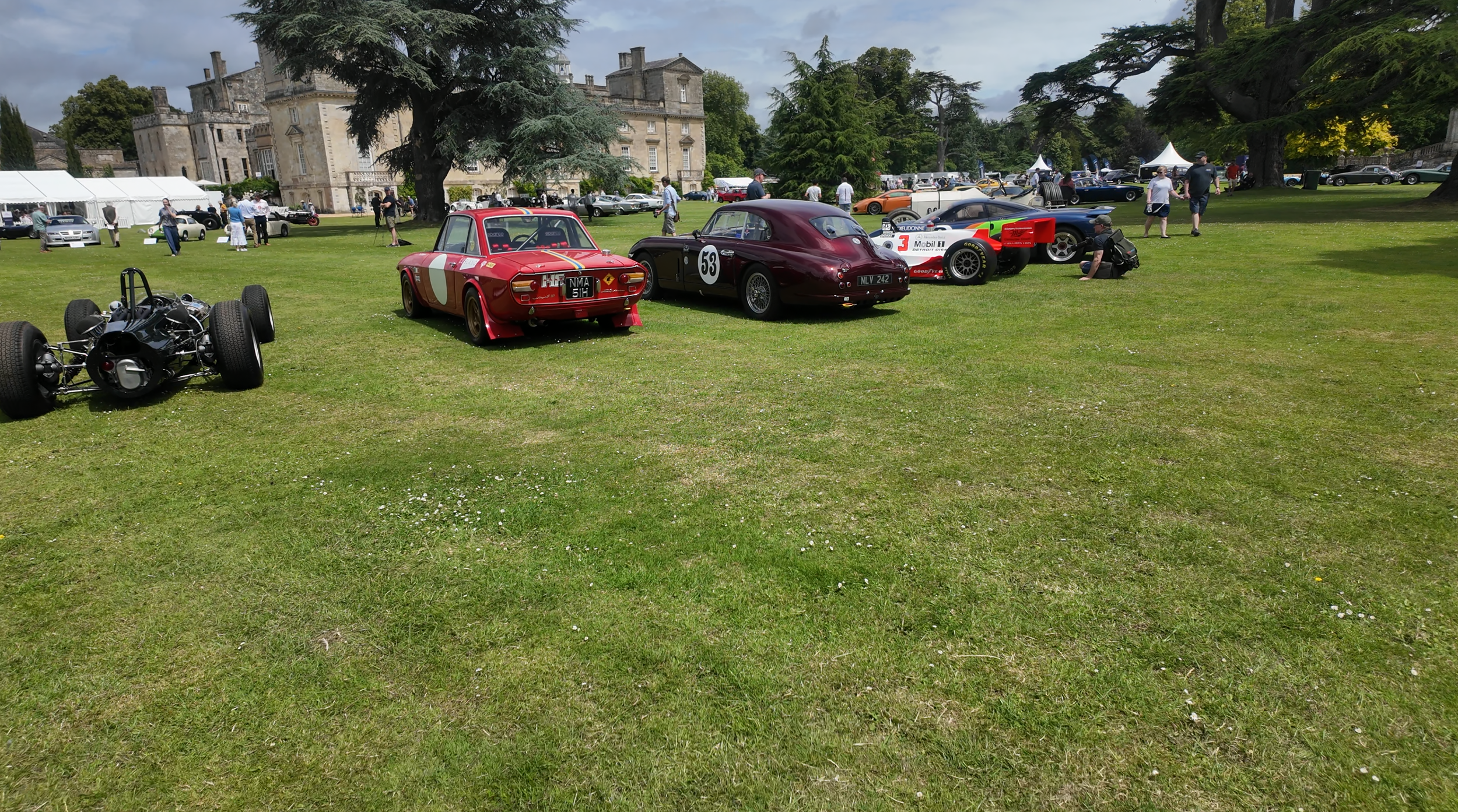
Image © Fuel the Passion. Concours des Légendes at Wilton House. Aston Martin DB2 on display.
We also spoke with the owner of an Aston Martin DB2 whose relationship with the car extends far beyond preparing it for display. Having restored the car, the owner has gone on to race it for many years. That interview captures exactly the kind of story we enjoy sharing through Fuel the Passion: not simply the history or value of a car, but the commitment required to restore it, the experiences created by competing in it and the relationship that develops over years of ownership.
The finished film will bring together the beauty of Wilton House, the wider atmosphere of the event, the Aston Martins on display and the story of a DB2 that was restored not merely to be admired, but to continue being used as intended. Editing will begin shortly, and we look forward to sharing the film with you soon.
Motorsport Hub
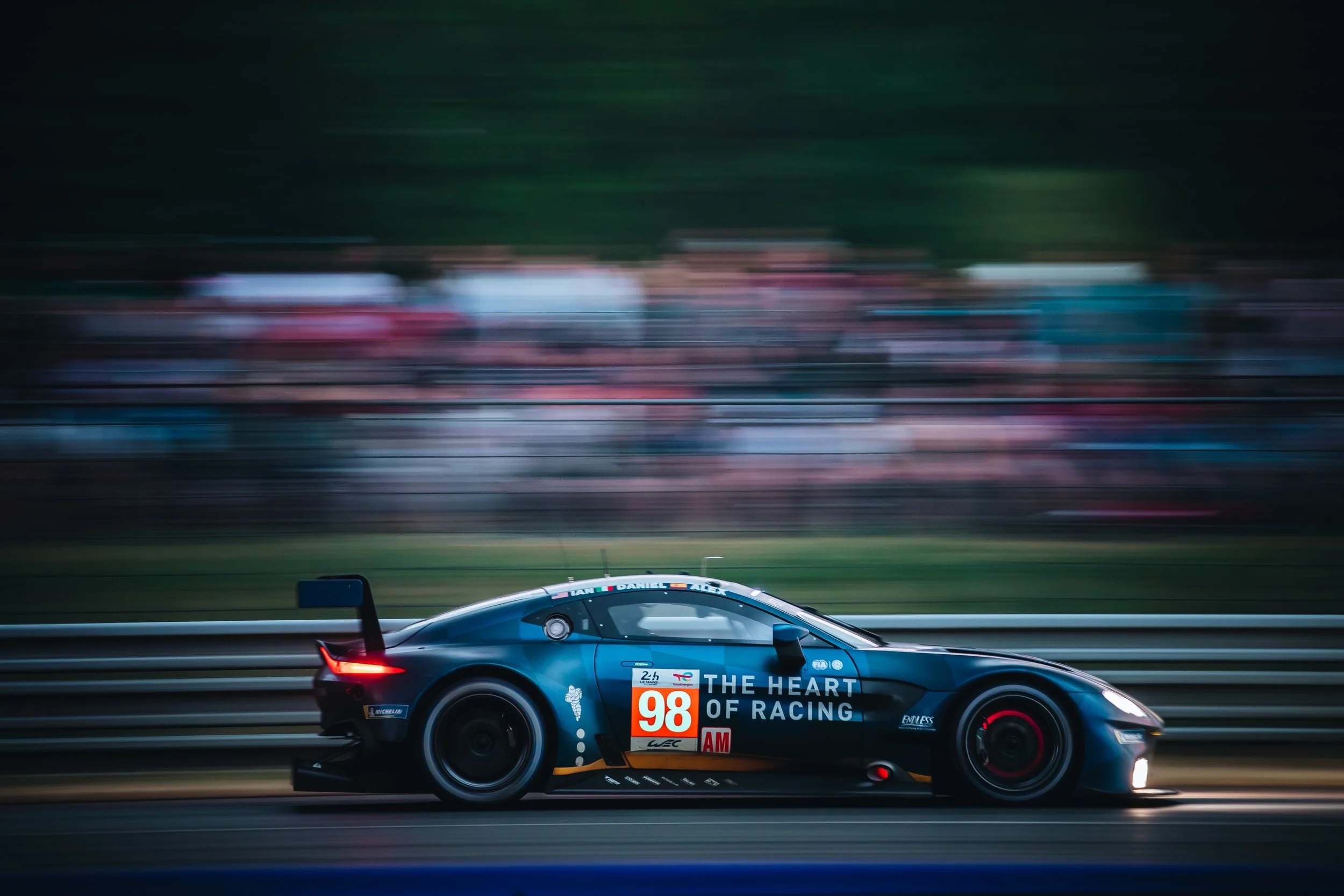
Image © Aston Martin Lagonda. Used for editorial purposes. Heart of Racing Aston Martin Vantage GT3 - same era as the FTP Vantage. Nice!
The FTP Motorsport Hub continues to grow alongside the Weekly Roundup. Our full reports cover Formula One, the World Endurance Championship, IMSA, DTM, GT World Challenge Europe, British GT, International GT Open, the Michelin Le Mans Cup and Aston Martin’s other major competition programmes. Detailed coverage from Oschersleben is already available, while reports from Magny-Cours and Road America will follow early next week once the weekend’s racing is complete.
The Motorsport Hub gives each championship the space it deserves without forcing every result into an already substantial Weekly Roundup. Here, we can present the wider picture; within the Hub, readers can explore full results, championship positions and the Aston Martin stories behind each race.
Final Thoughts
The evolution of Fuel the Passion is visible not only in the stories we cover, but in the website itself. Our move towards Podium Green, AMR Lime, Onyx Black, Neutron White and Trophy Silver is still under way, but it’s already helping FTP feel more naturally at home within the Aston Martin world. I’d be very interested to hear what you think of the new direction in the comments below.
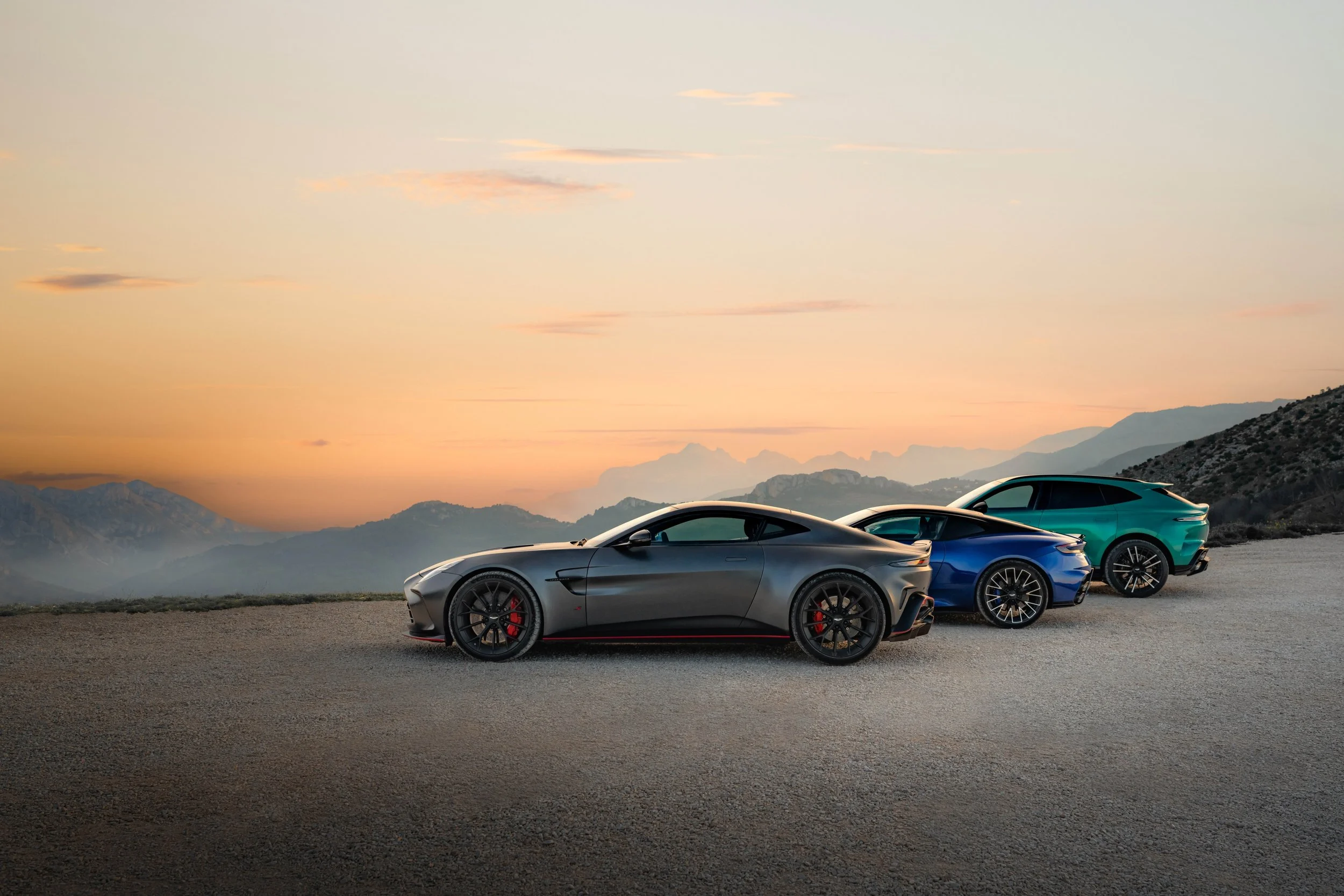
Image © Aston Martin Lagonda. Used for editorial purposes.
Issue 35 has brought together several very different sides of Aston Martin. The half-year results showed genuine operational improvement, but also made clear how strongly debt and financing costs continue to shape the company’s future. The pension buy-in offered a more reassuring development for former and current employees, while the Hungarian Grand Prix finally delivered some tangible evidence that the Formula One team’s technical work may be beginning to translate onto the circuit.
Elsewhere, Nicki Thiim’s difficult weekend at Oschersleben demonstrated how quickly momentum can change in DTM, while the races at Magny-Cours and Road America underline the breadth of Aston Martin’s current competition involvement.
The Heritage Trust podcast returned us to the people and engineering behind the Vanquish, while this week’s four-car DBX comparison showed just how widely one Aston Martin model can now vary in age, specification, performance and price.
Image © Fuel the Passion. Concours des Légendes at Wilton House
Here at Fuel the Passion, the publication of two new Buyers Guides, a major Featured Article and the beginning of our Wilton Concours edit reflect the same broad purpose that guides everything we produce. We want to explain the difficult subjects clearly, preserve the stories behind the cars, help owners and prospective buyers make better-informed decisions, and celebrate the people who continue to use these Aston Martins rather than simply admire them from a distance.
Whether that means understanding a company balance sheet, learning how an automated-manual Vanquish should be driven, following a racing programme or listening to the owner of a restored DB2 describe years of competition, the most meaningful stories are rarely found in specifications alone. They’re found in experience, commitment and the relationship between people and cars.
Thank you, as always, for reading Issue 35 of the FTP Weekly Roundup. See you on the next one!
💬 We’d Love to Hear Your Thoughts
You’re welcome to answer either of this week’s questions, or simply share your own view on anything Aston Martin - whether it’s something you’ve read here, a car that’s caught your attention, or a subject you think deserves further discussion. We would love to hear from you, leave some comments in the section below👇
Our FTP Car of the Week brought together four very different Aston Martin DBXs, ranging from an early example at just under £70,000 to a highly specified DBX S at almost £250,000. Which one would you choose, and what would influence your decision most: price, age, mileage, specification, performance or simply the character of the individual car?
We’d also be interested to know what you made of Aston Martin Lagonda’s half-year results. Did our explanation of the figures make the position clearer, and did the accompanying Featured Article help put the debt, losses and operational progress into proper context? These are complicated subjects, so please tell us honestly where we could explain things more clearly or provide more useful detail.
As you’ve no doubt noticed, the FTP website is gradually moving away from its original red, white and blue colour scheme towards our new palette of Podium Green, AMR Lime, Onyx Black, Neutron White and Trophy Silver. The transition is still under way, but what do you think of the new direction? Does it feel more naturally at home within the Aston Martin world?
Your thoughts certainly don’t have to be limited to those two questions. You’re always welcome to share anything connected with Aston Martin, ownership or the wider community. Have you attended an event, worked on your car, discovered something interesting, or simply enjoyed a memorable drive somewhere recently?
Please add your thoughts in the comments. As always, we genuinely enjoy hearing from you.👇
Still Fancy a Little More Aston Martin Reading?
If you’ve reached the end of this week’s Roundup and would still like to explore a little further, there’s plenty more to discover across the Fuel the Passion website.
You can visit the FTP Motorsport Hub, where we continue to build detailed race reports, result tables, classification updates and championship standings across Aston Martin’s international racing programmes.
There’s also the growing FTP Aston Martin Buyers Guide library. We now have complete guides covering the DB9, VH-generation V8 Vantage, DB11, first-generation Vanquish and the VH-era DBS.
Each guide is written to offer honest, enthusiast-focused help for anyone researching, buying, owning or simply learning more about these cars. They cover the model’s history, versions, ownership considerations, servicing, known issues, buying checks and the details that can make the difference between a rewarding purchase and an expensive mistake.
Our next guide will focus on the second-generation Vanquish, and research is already under way. Owners are very welcome to contribute their own experiences and help us make the finished guide as accurate and useful as possible.
Published alongside this Roundup is our latest FTP Featured Article: Aston Martin Beyond the Debt: What Could the Future Hold?
It looks beyond the immediate headlines surrounding debt, losses and refinancing to examine the wider position of Aston Martin Lagonda. The article considers both the seriousness of the financial pressure and the signs of operational improvement seen during the first half of 2026.
I’ve included the links below, so feel free to make yourself a coffee, settle in and keep exploring. 👍
