
Issue 41 - Fuel the Passion (FTP) Weekly Roundup
Week Ending 13th September 2026
Your guide to Issue 41
This week’s Roundup travels from Formula One, WEC and British GT to Aston Martin’s financial story, the new AMB 002 Roadster, collector cars, Goodwood and the latest developments from FTP.
Read it from beginning to end, explore the sections that interest you most, or return whenever you have a quiet moment. However you choose to enjoy Issue 41, thank you for spending some of your time with FTP.
There’s plenty worth discovering.
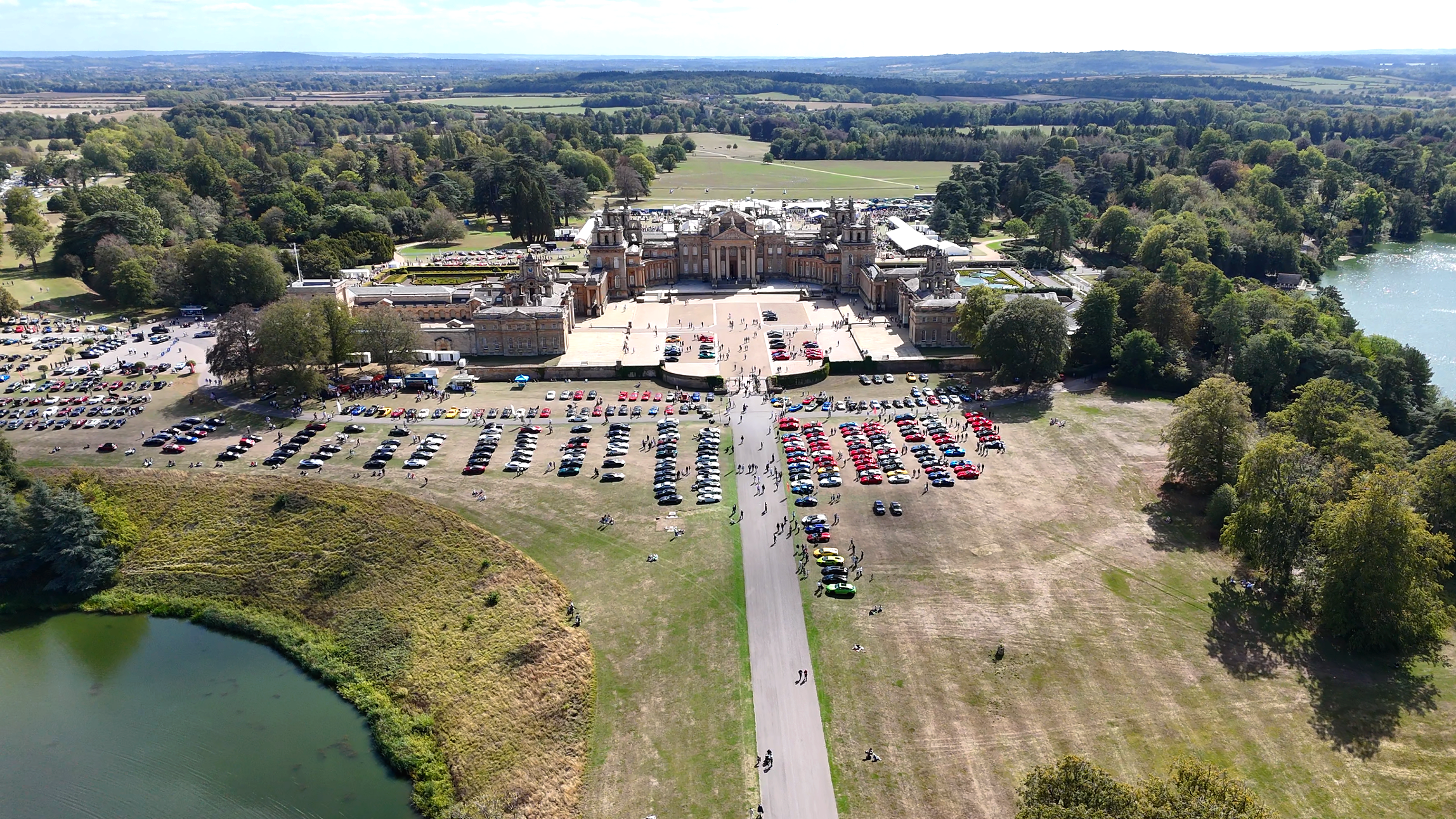
Image © Fuel the Passion. Blenheim Palace, Salon Privé, 2026
Editor’s Introduction - Dan, Fuel the Passion
Welcome to Issue 41 of the Fuel the Passion Weekly Roundup. Last Sunday’s edition left several questions hanging in the air. Could the encouraging signs we had seen from Aston Martin’s Formula One car at Zandvoort carry across to the very different demands of Monza? Could the Valkyrie take another meaningful step towards the front of the World Endurance Championship field at COTA? Could Heart of Racing add to Vantage’s already impressive record in Texas? Back here in Britain, how would Aston Martin’s two GT4 championship challenges develop at Donington? We now have the answers, although they don’t all point in the same direction.
Monza proved a particularly difficult weekend for Aston Martin and Honda, reinforcing some of the concerns we’ve been following throughout this first season of their partnership.
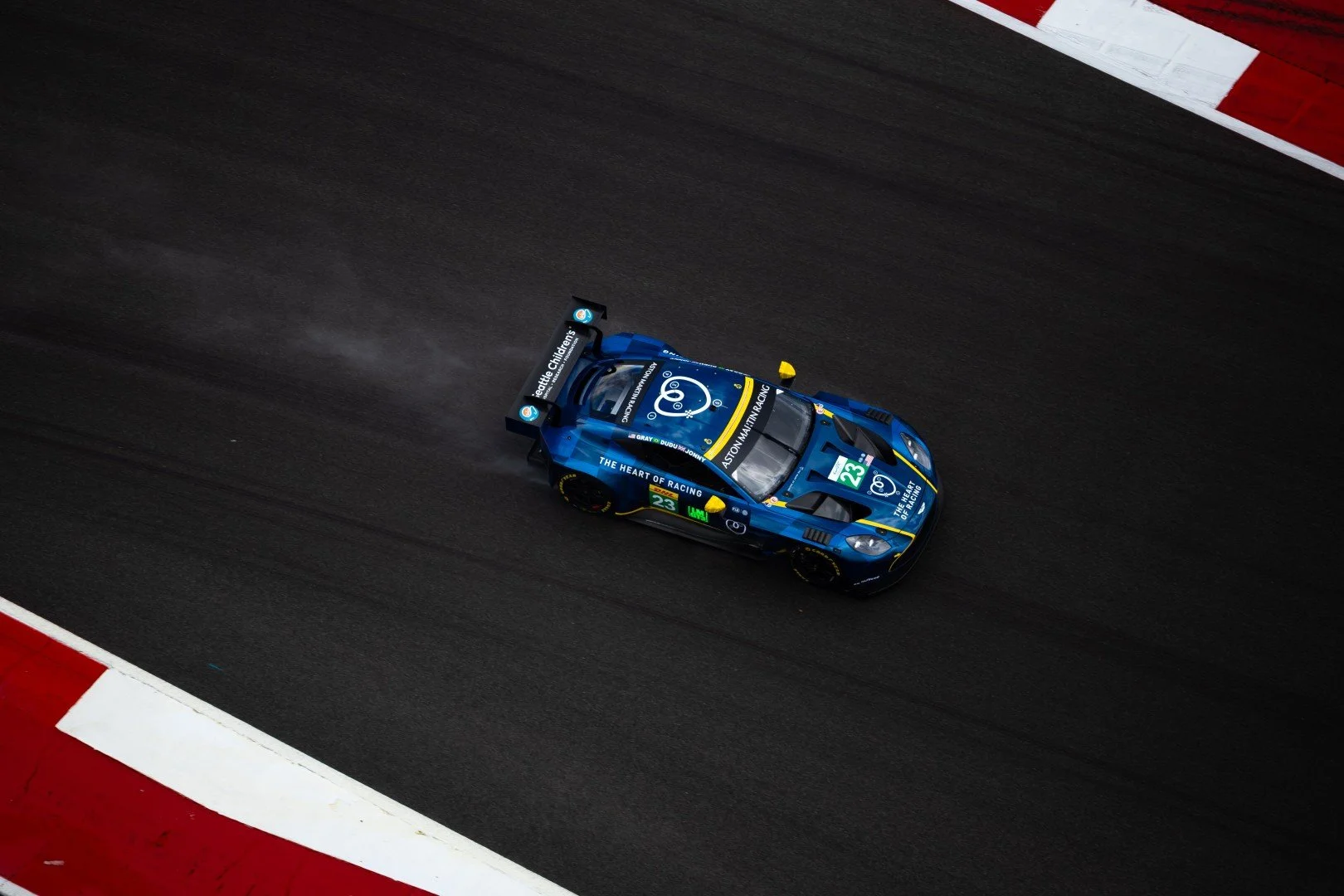
Image © Aston Martin Lagonda. Used for editorial purposes. #23 Vantage.
Across the Atlantic, however, the picture was considerably brighter. Heart of Racing converted Vantage’s pace into victory at the Circuit of the Americas, a second Aston Martin joined it on the LMGT3 podium, while Valkyrie came closer than ever to its first World Endurance Championship podium.
British GT brought another important milestone too, with one Aston Martin crew securing the GT4 Pro-Am title while another remains firmly in contention for the overall GT4 crown.
There’s plenty happening away from the circuit as well. Only last Sunday, FTP published our detailed assessment of Adrian Hallmark’s first two years at Aston Martin, looking at the genuine progress being made while also confronting the debt, continuing losses and financing challenges that remain unresolved. Just days later, a much more dramatic interpretation of Aston Martin’s financial position has reached hundreds of thousands of viewers on YouTube, generating a sizeable debate about the company’s finances, ownership and even what it means for Aston Martin to remain “British”.

Image © Aston Martin Lagonda. Used for editorial purposes. Brough Superior AMB 002 Roadster.
Aston Martin has also unveiled the AMB 002 Roadster with Brough Superior, the first road-legal motorcycle produced by the partnership, following the track-only AMB 001 and AMB 001 Pro.
We’ll take a closer look at both stories this week, including the engineering and design behind the new motorcycle, and the evidence behind some of the financial claims now circulating so widely.
My own week with Aston Martin has been rather less desk-bound. Saturday took FTP to Salon Privé at Blenheim Palace, where Aston Martin Owners Club cars filled a magnificent display between the Palace and the lake, alongside some particularly interesting owner stories that I was fortunate enough to capture on camera. Sunday then brought the Concours of Elegance at Hampton Court Palace, an extraordinary collection of Aston Martins, some significant concours success for the marque and one completely unexpected invitation that ended with me travelling through the Palace grounds in the passenger seat of one of the rarest Aston Martins there.
There’s now a considerable amount of footage safely banked from those events, alongside several other FTP films already waiting in the edit. The order of that queue is about to change, however, because by the time this Roundup reaches you on Sunday morning, I will have spent another weekend with cameras in hand, this time at Silverstone with Blackthorn Racing during the Michelin Le Mans Cup. More on all of that later in the FTP Update.
Issue 41 has therefore been prepared a little earlier than usual, giving me the time needed to build and lay out the Roundup properly before heading to Silverstone. So let’s begin by returning to a question we posed only seven days ago.
Would Aston Martin’s progress at Zandvoort survive the very different test of Monza? As it turned out, Monza provided a fairly emphatic answer.
Monza Answers the Question — Aston Martin and Honda Still Have Work to Do
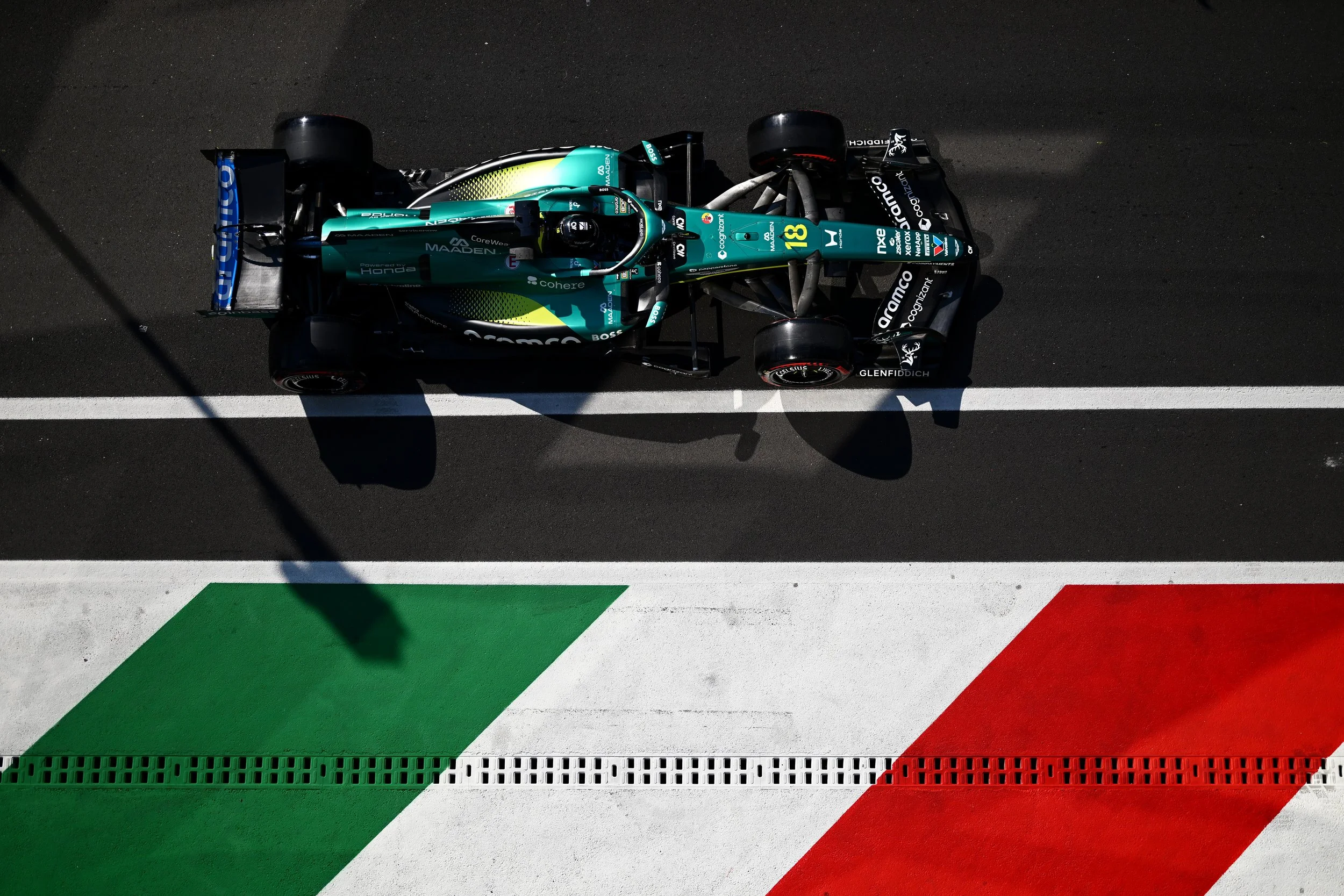
Image © Honda Motor Co. Ltd & Aston Martin Aramco. Used for editorial purposes. Lance Stroll, Italian Grand Prix 2026.
Last Sunday, we described Monza as an important test of whether the progress Aston Martin had shown at Zandvoort was beginning to travel with the car rather than simply reflecting a circuit that happened to suit it particularly well. The answer, unfortunately, was fairly clear.
Aston Martin and Honda endured one of their most difficult weekends of the season in Italy, with Fernando Alonso and Lance Stroll qualifying at the back of the field before both cars retired from the Grand Prix. The contrast with Zandvoort, where Alonso had finished ninth and the AMR26 had looked considerably more competitive, was stark. Yet rather than disproving all of the progress seen in the Netherlands, Monza probably told us something more useful: the improvements are real, but they’re not yet broad enough to make the car competitive across very different circuit types. That distinction is important.
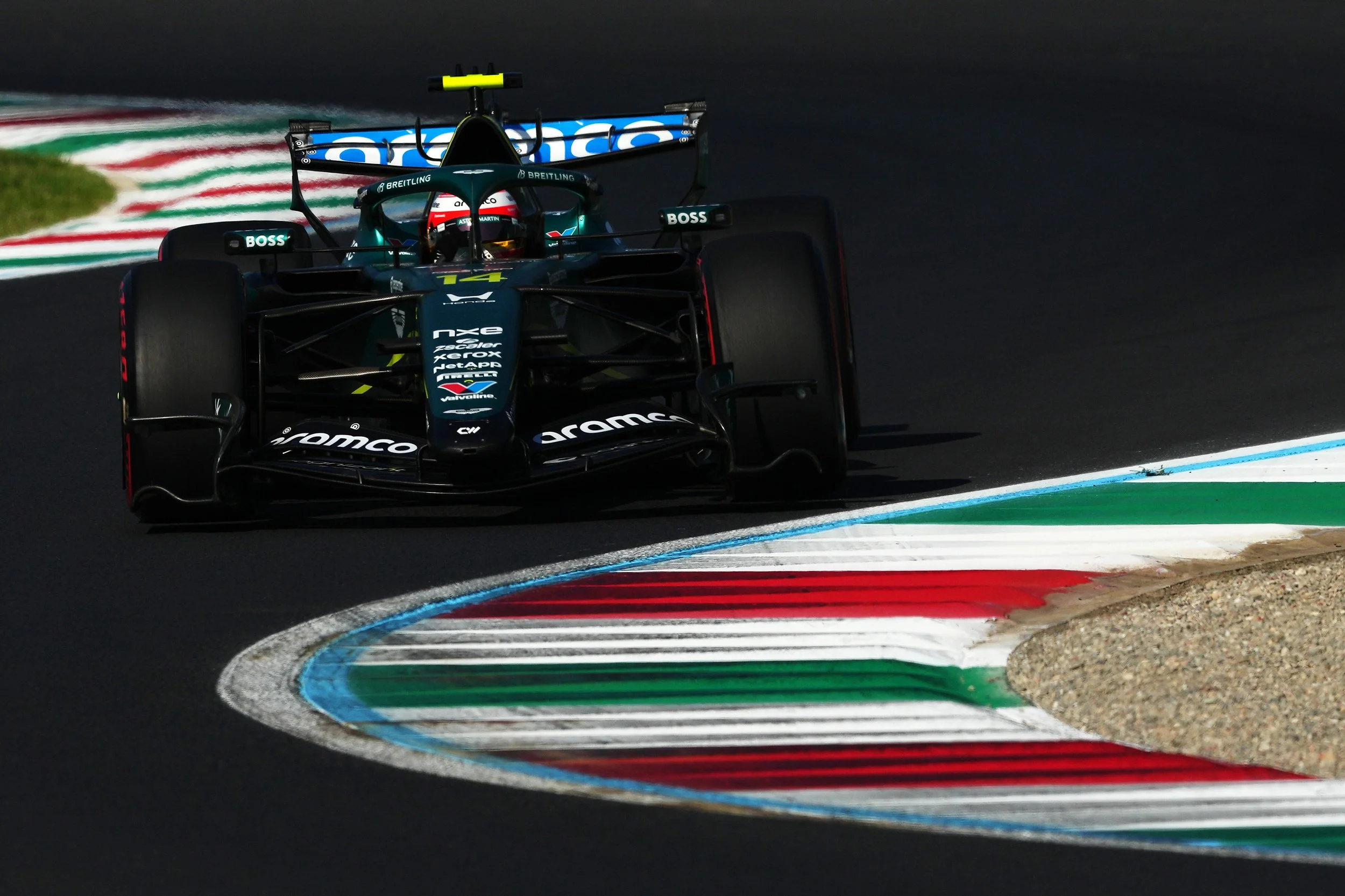
Image © Honda Motor Co. Ltd & Aston Martin Aramco. Used for editorial purposes. Fernando Alonso, Italian Grand Prix 2026.
Monza places an unusually heavy premium on efficiency, straight-line speed and confidence under braking from very high speeds. Aston Martin had already acknowledged before the weekend that those characteristics were likely to expose areas where the current package remained vulnerable, particularly when combined with a Honda power unit that is still relatively early in its development.
Friday offered little reason to think those concerns had been misplaced. Alonso ended second practice 19th, while Stroll was 22nd, with Alonso more than two seconds away from the fastest time. Stroll spoke afterwards about weaknesses in both driveability and power, while Aston Martin ambassador Pedro de la Rosa acknowledged that Monza was proving as challenging as the team had expected.
Qualifying then made the scale of the problem even clearer.
Alonso was 21st and Stroll 22nd, locking out the final row of the grid. Alonso’s session was further compromised by an issue that prevented him completing the fresh-tyre run he had been hoping for, but even without that interruption, the team acknowledged that the underlying pace was not where it needed to be.
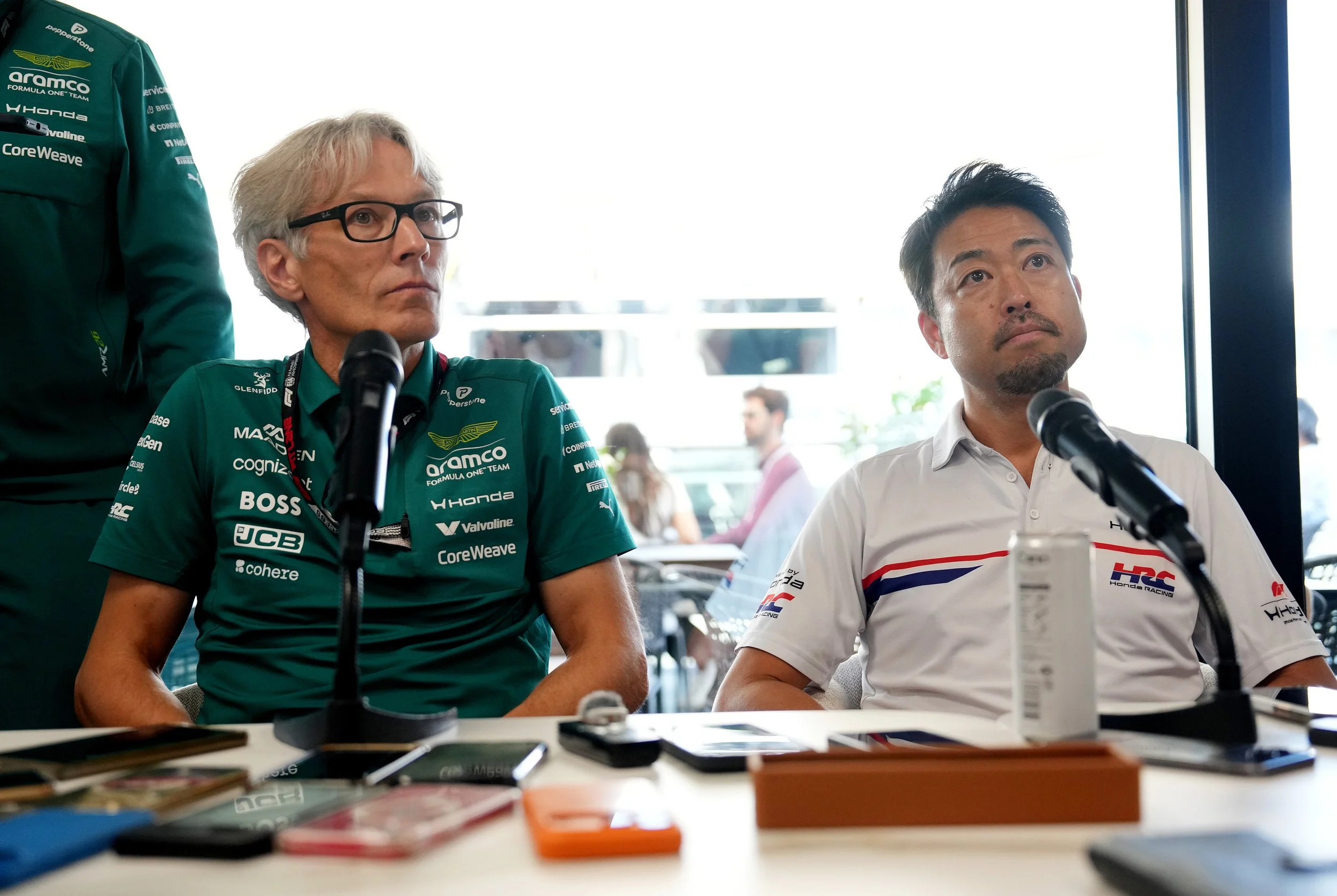
Image © Honda Motor Co. Ltd & Aston Martin Aramco. Used for editorial purposes. AMR F1 Press Conference, Italian Grand Prix 2026.
Team Principal Mike Krack pointed towards Monza’s high-speed nature as a particularly poor match for the current AMR26 package, with straight-line performance again proving a substantial limitation.
Alonso eventually started from the pit lane following a power-unit change, but his afternoon never developed into the recovery drive Aston Martin might have hoped for. After running wide and striking the kerb at Turn 7, the car sustained damage and the team elected to retire it rather than risk worsening the problem. Stroll’s race also ended prematurely, this time with what Aston Martin described as a suspected hydraulic problem. Two cars started the weekend already facing an uphill task; neither reached the chequered flag.
There’s a temptation after a weekend like this to conclude that the encouraging showing at Zandvoort was somehow misleading. I don’t think that’s quite fair. Aston Martin has clearly found something useful in the aerodynamic package introduced through Hungary and developed further into Zandvoort. What Monza showed is that better cornering performance cannot fully compensate when another part of the performance equation remains sufficiently weak. At circuits where straight-line efficiency and power deployment become more influential, the present limitations are simply harder to disguise.
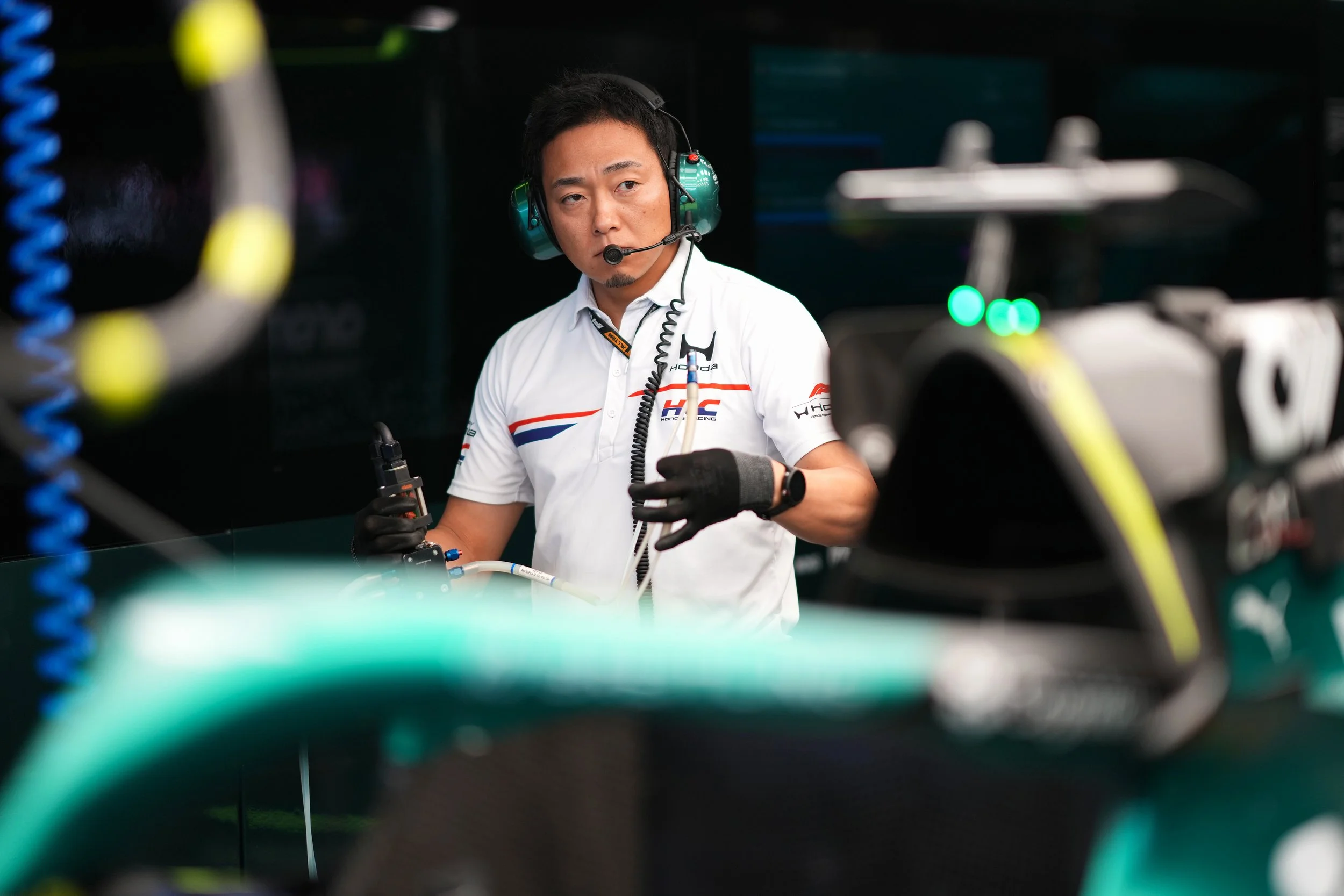
Image © Honda Motor Co. Ltd & Aston Martin Aramco. Used for editorial purposes. A HRC Mechanic, Italian Grand Prix 2026.
Honda is not hiding from that either. The manufacturer has continued working on combustion settings and driveability, and the internal indications from its recent revisions have apparently been positive. The difficulty is that incremental improvement is not the same thing as closing the gap.
Alonso himself made an interesting distinction before Monza, saying that he retains “100%” confidence in Honda, while also making clear that this cannot become an open-ended development project. In his view, Aston Martin and Honda need to reach the required level within the next two or three years rather than allowing the process to stretch indefinitely. That’s not the language of somebody abandoning the project. It is, however, the language of a driver who understands that the next phase has to produce measurable results.
The same applies on the chassis side. Enrico Cardile (Aston Martin Aramco Formula One Team’s Chief Technical Officer) has now indicated that the substantial aerodynamic work introduced around Hungary and Zandvoort is likely to represent the final major aerodynamic package for the 2026 car, although weight reduction and smaller areas of development will continue. Attention is increasingly turning towards 2027. Importantly, that does not mean Aston Martin is discarding everything it’s learned this year and starting again because the current concept has failed.
Cardile’s explanation is more nuanced than that. The 2027 car will be new in the literal sense, every component will be redesigned for the next generation, but Aston Martin believes the conceptual direction it’s recently established is the correct one. In other words, the team expects next year’s car to evolve the lessons of the AMR26, rather than abandon them.
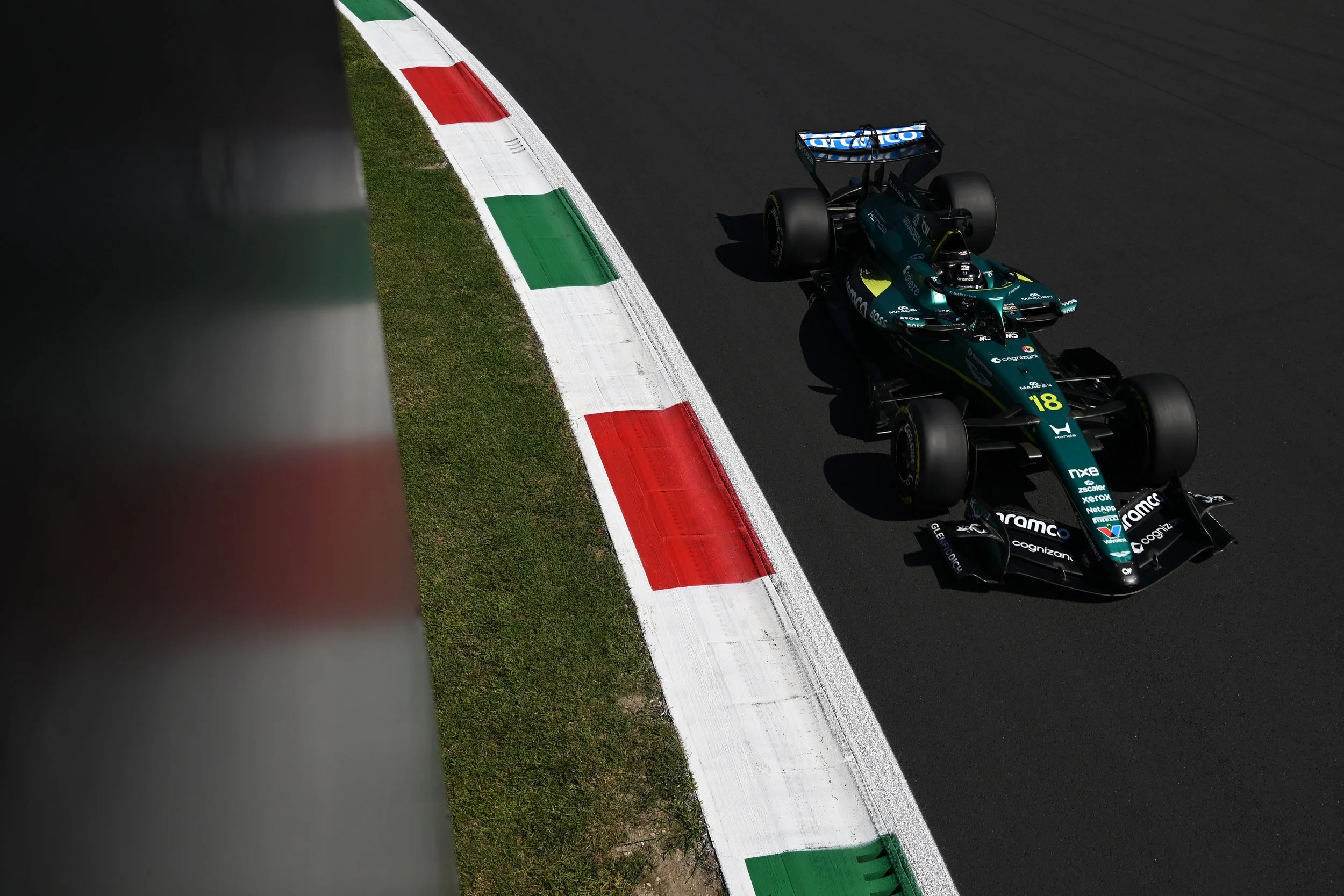
Image © Honda Motor Co. Ltd & Aston Martin Aramco. Used for editorial purposes. Lance Stroll, Italian Grand Prix 2026.
That makes Monza useful, however uncomfortable the weekend may have been. Zandvoort showed what the car can do when its stronger characteristics are allowed to come forward. Monza exposed the areas where the package remains much less forgiving. Both are valuable pieces of evidence for a team trying to understand not simply how to improve the car it has today, but how to avoid carrying the same weaknesses into the one it’s building for tomorrow.
Regular readers will know that FTP has resisted treating every encouraging Aston Martin weekend as proof of a breakthrough, just as we’ve resisted turning every difficult weekend into evidence that the whole project is failing. Monza fits somewhere in between.
There has been progress. There’s also still a considerable amount of work to do.
If Aston Martin and Honda are serious about turning this partnership into a front-running Formula One programme, weekends like Monza may ultimately prove every bit as informative as the more enjoyable ones.
If Monza exposed how much work still lies ahead for Aston Martin and Honda in Formula One, the picture across the Atlantic was considerably more encouraging. At the Circuit of the Americas, Aston Martin’s endurance programmes produced one of their strongest weekends of the season, with Heart of Racing converting Vantage pace into victory, while Valkyrie came closer than ever to a first World Endurance Championship podium.
COTA Delivers — Vantage Wins as Valkyrie Closes on the Podium
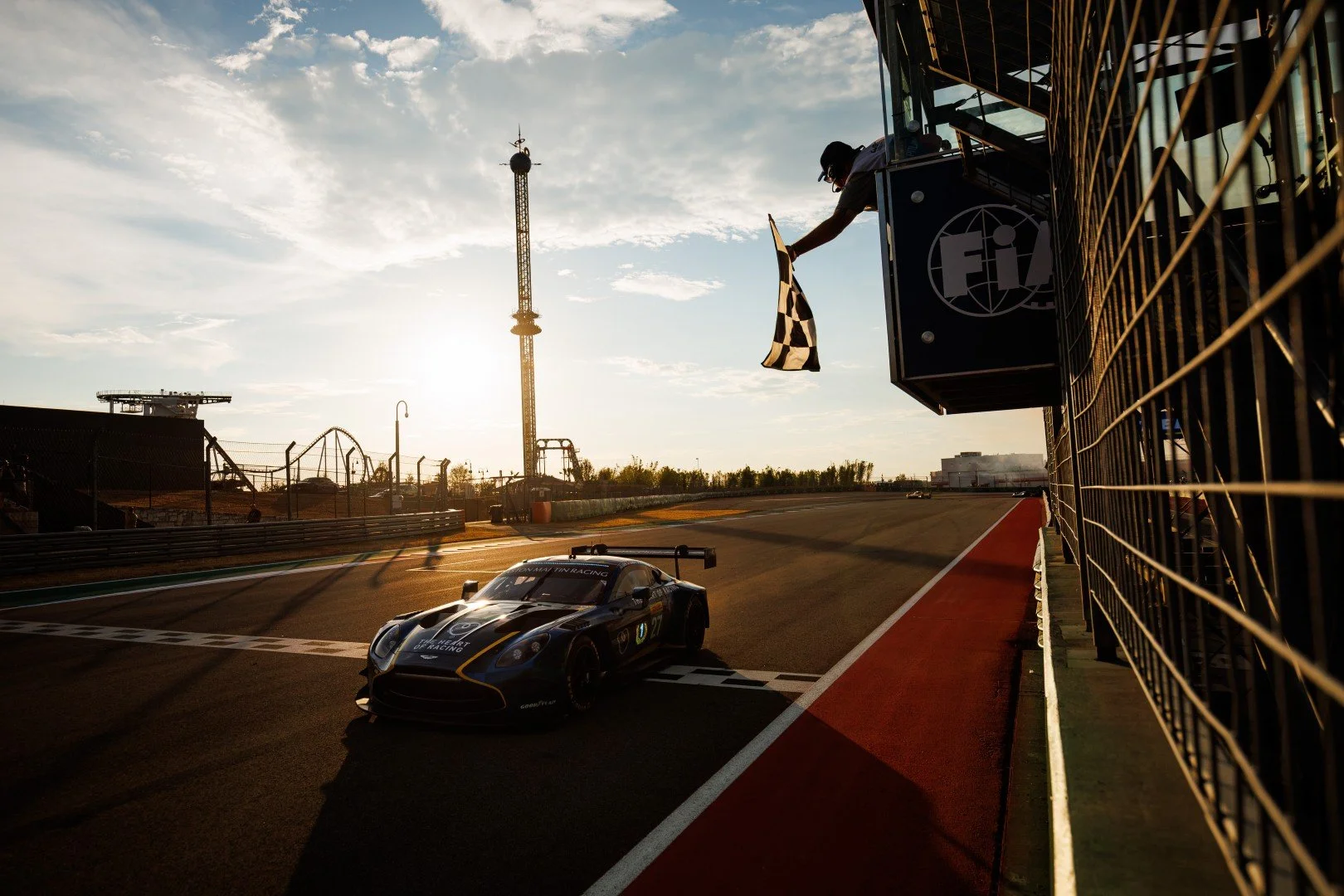
Image © Aston Martin Lagonda. Used for editorial purposes. Vantage Chequered Flag.
At the end of Issue 40, we deliberately left the Lone Star Le Mans story unfinished. The race didn’t begin until several hours after last Sunday’s Roundup had been published, so we left readers with two questions: could Valkyrie take another step towards the front, and could Heart of Racing add another chapter to Vantage’s formidable record at the Circuit of the Americas? The answer to both was yes.
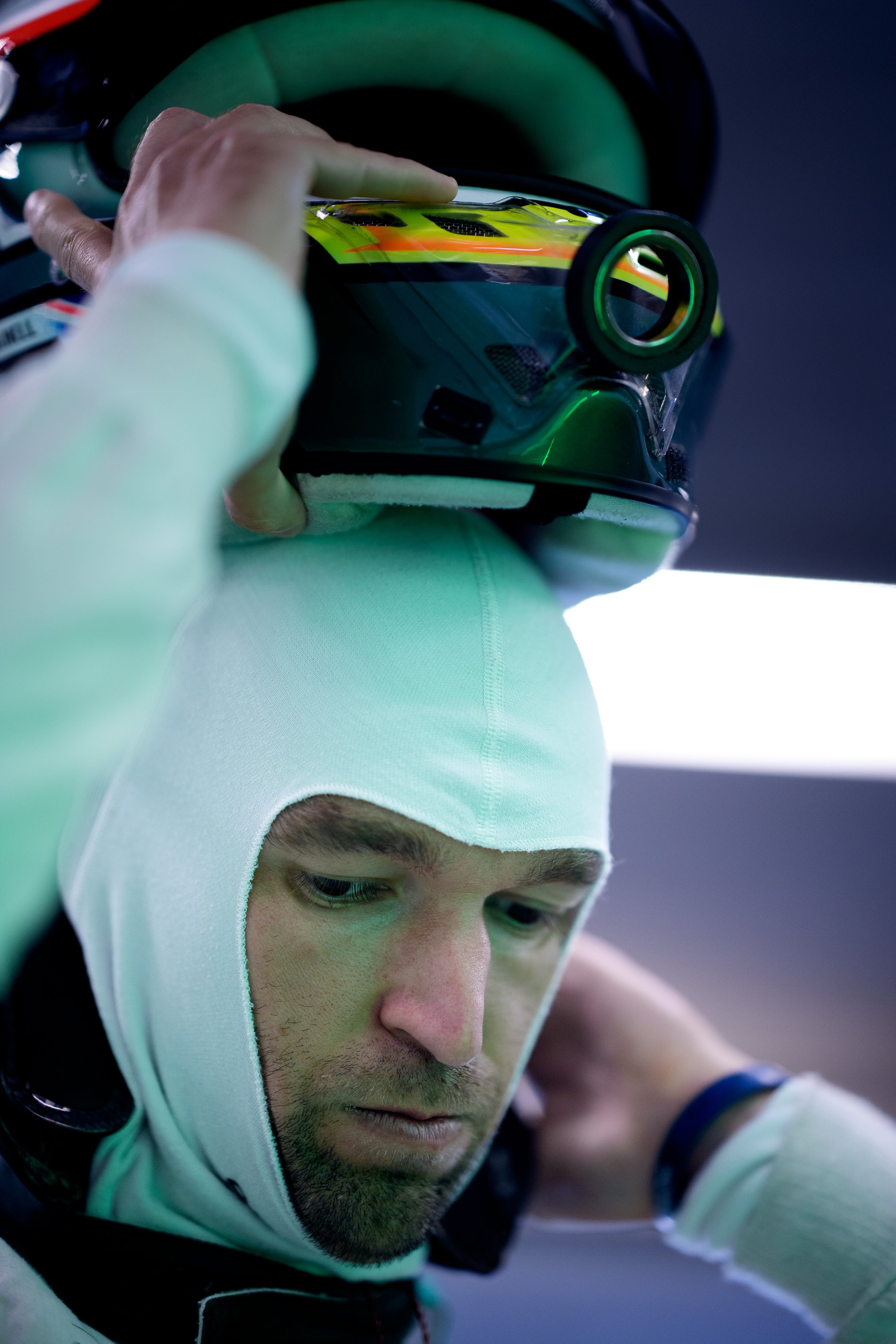
Image © Aston Martin Lagonda. Used for editorial purposes. Harry Tincknell.
Perhaps the first clue came before the race itself.
In the Hypercar class of the Fédération Internationale de l’Automobile (FIA) World Endurance Championship (WEC), Harry Tincknell put the #007 Aston Martin Valkyrie at the top of both the second and third free-practice sessions.
His final practice lap was only four thousandths of a second clear of the nearest Genesis, but the significance lay less in the margin than in the fact that Valkyrie had again demonstrated genuine front-running pace across successive sessions rather than producing one isolated quick lap.
The production-based LMGT3 category then produced an even stronger Aston Martin result in qualifying.
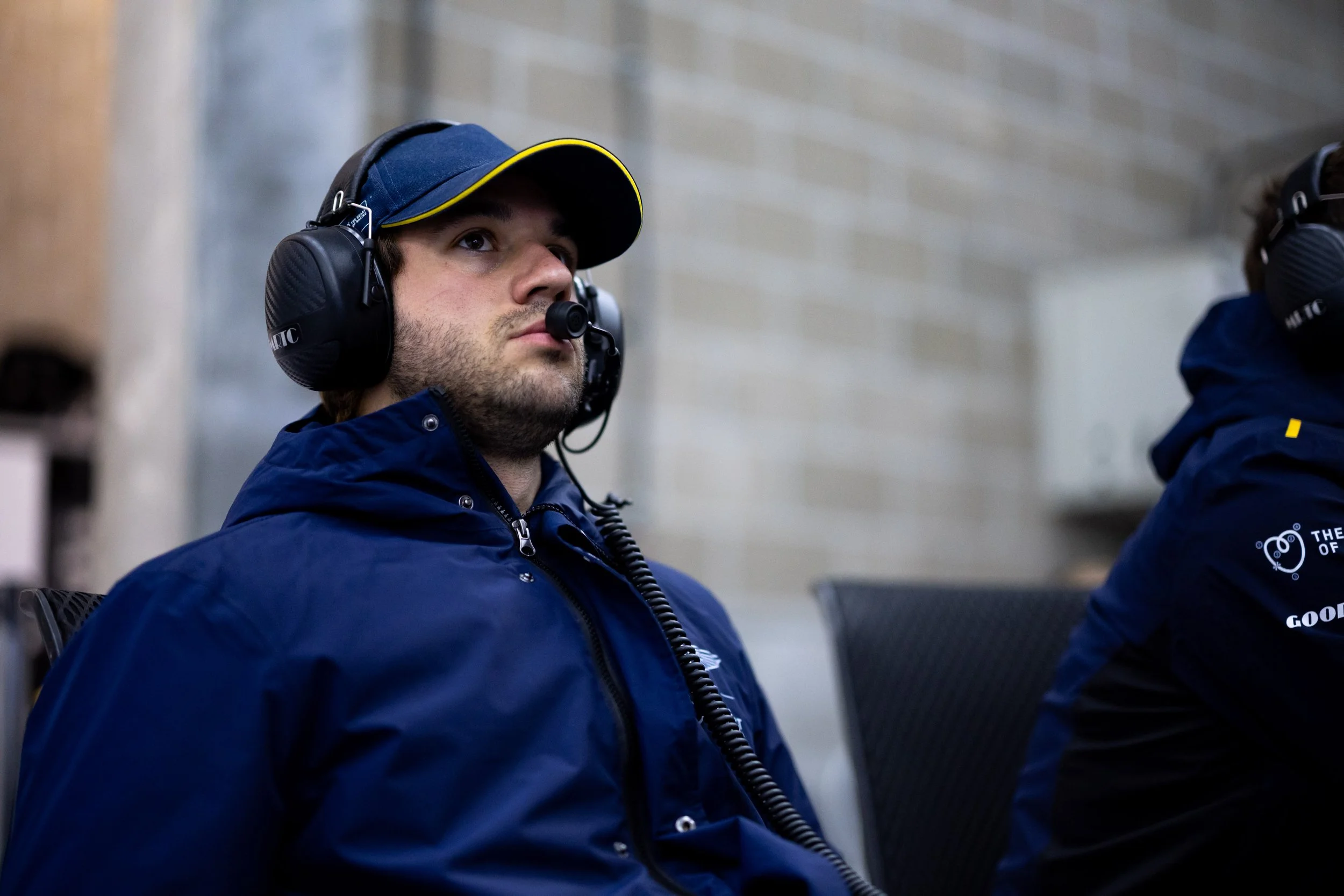
Image © Aston Martin Lagonda. Used for editorial purposes. Dudu Barrichello.
Eduardo “Dudu” Barrichello put the #23 Heart of Racing Vantage on pole, just 0.124 seconds ahead of Zacharie Robichon in the sister #27 car. It gave Aston Martin a complete front-row lockout and continued a remarkable qualifying sequence for Heart of Racing: an Aston Martin has now taken LMGT3 Hyperpole at each WEC round since Spa, following pole at Le Mans and again in São Paulo.
That was impressive enough. Converting it into a six-hour race result was another challenge entirely.
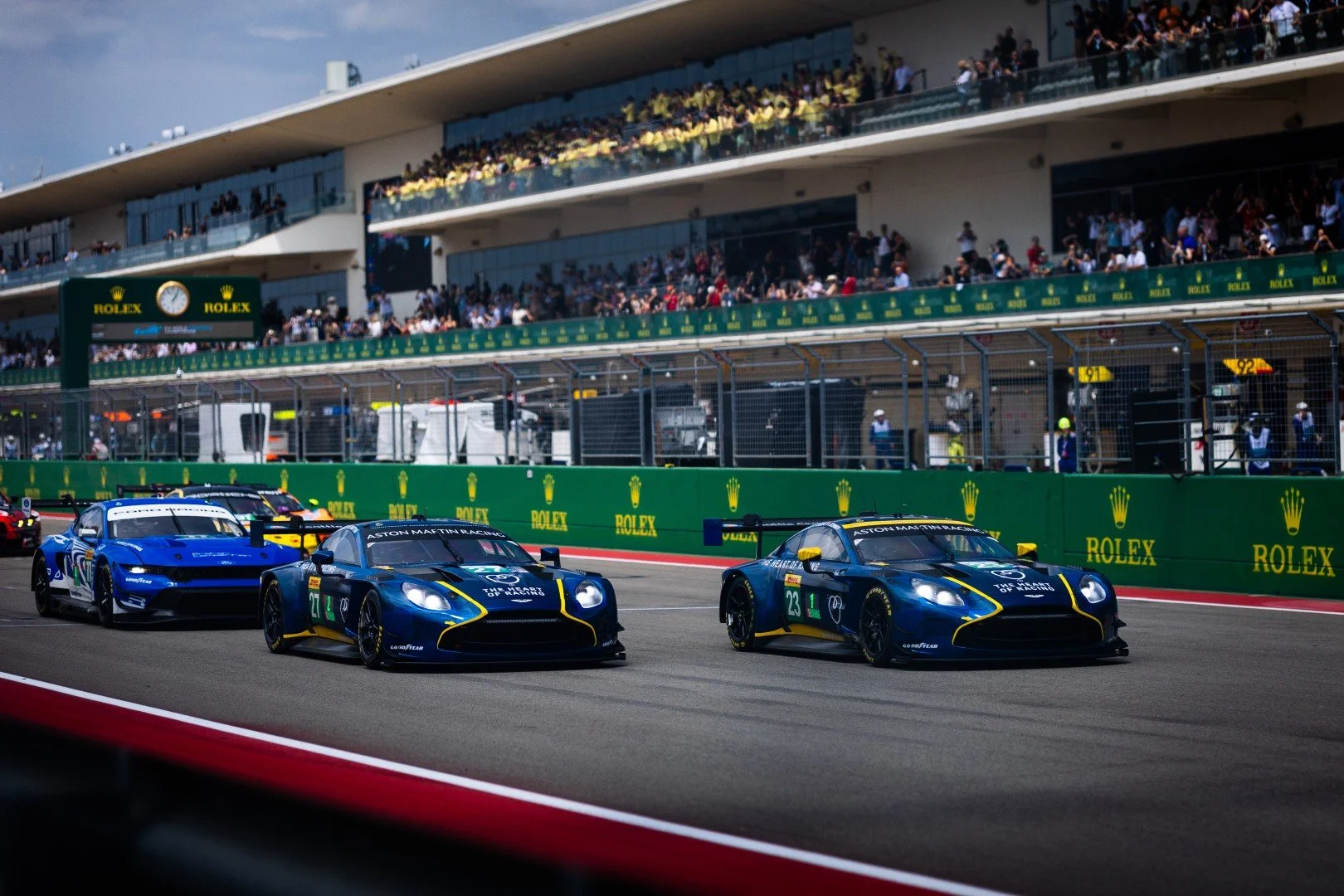
Image © Aston Martin Lagonda. Used for editorial purposes.
The early stages didn’t simply become an Aston Martin procession. Ford initially moved its two Proton Competition Mustangs into the leading positions, while the Manthey DKR Porsche also became a serious contender as the race developed. Penalties and incidents gradually changed the order, but Heart of Racing still had to put together a clean strategy and execute it properly.
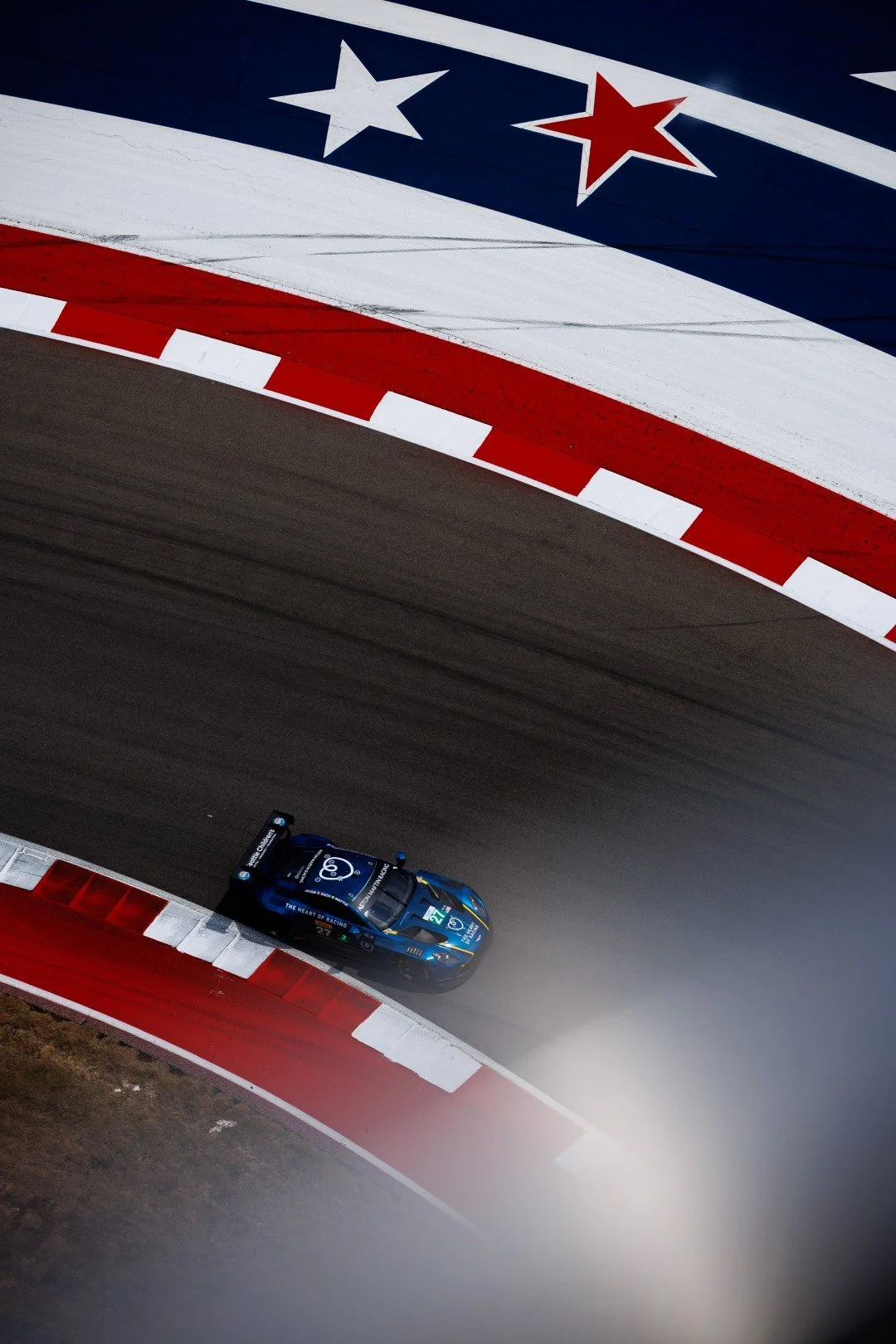
Image © Aston Martin Lagonda. Used for editorial purposes. #27 Vantage.
Starting the #27 Vantage from second, Ian James kept the car in contention through a difficult opening stint and handed over to Zacharie Robichon still running second.
Robichon then moved the Aston Martin into the lead during the second hour, passing the Porsche before eventually handing over to Mattia Drudi for the closing phase.
Drudi’s final stint was anything but comfortable.
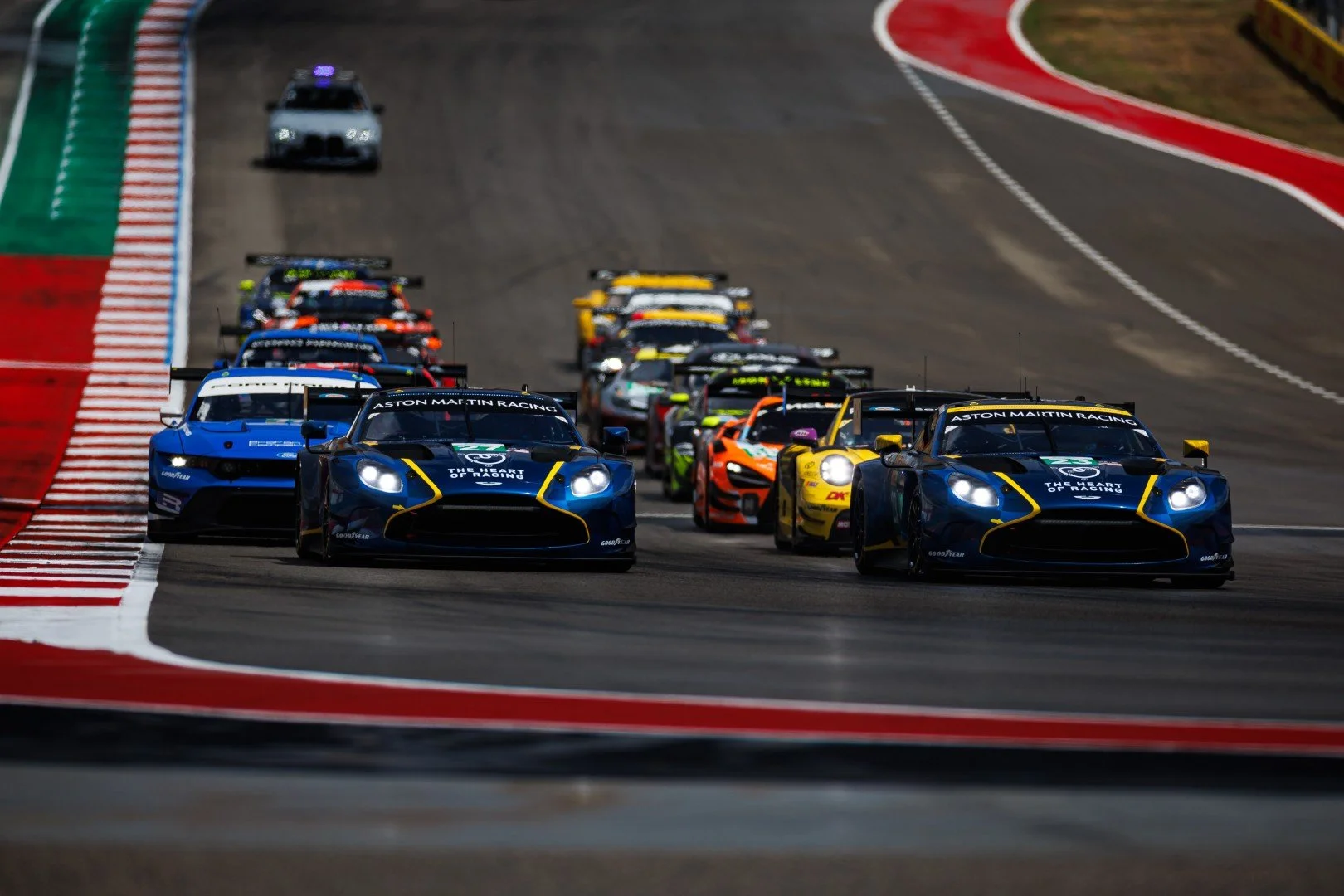
Image © Aston Martin Lagonda. Used for editorial purposes. Vantages leading the pack.
A late Safety Car compressed the field and removed much of the advantage Heart of Racing had built. Worse still, the air-conditioning in the #27 stopped working, sending the cockpit temperature upwards at precisely the point Drudi needed maximum concentration. Once racing resumed, however, he used the fresh tyres to create breathing space and then managed the gap to the pursuing Porsche through the final stages.
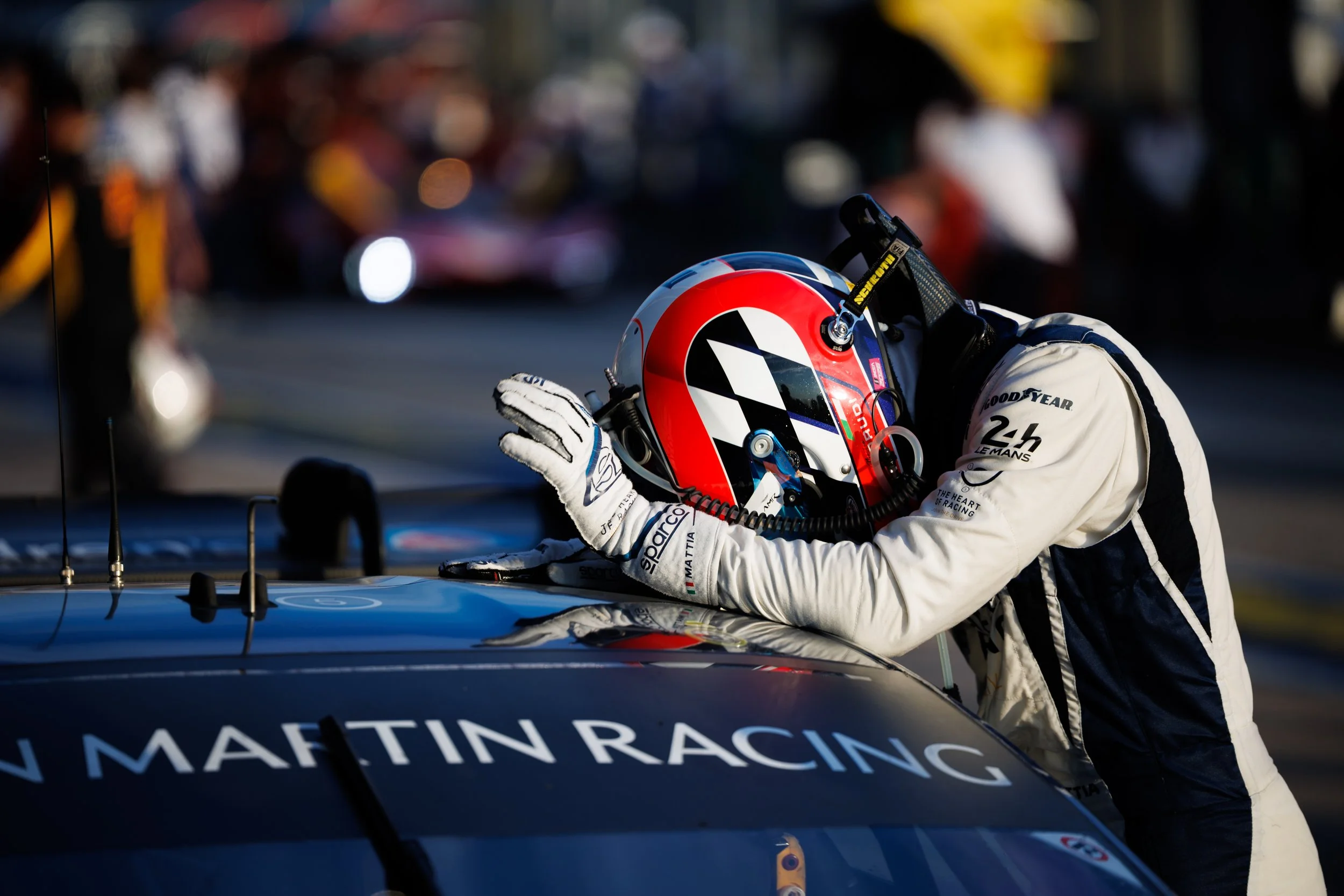
Image © Aston Martin Lagonda. Used for editorial purposes. Drudi spent after victory.
The result was the #27 Vantage’s first WEC victory of 2026 and Heart of Racing’s first LMGT3 victory for two years.
It was also a particularly significant result for the drivers. Robichon and Drudi both collected their first WEC victories, while James, who is also Heart of Racing Team Principal, added a second COTA win in three years following the team’s 2024 success at the same circuit.
That 2024 race, regular readers may remember, was where the current-generation Vantage took its maiden WEC LMGT3 victory.
There was more to come.
The pole-sitting #23 Vantage of Gray Newell, Dudu Barrichello and Jonny Adam remained inside the leading group throughout the race. Newell and Adam kept the car in contention before Barrichello became involved in a fierce fight for the final podium position after the last Safety Car. He held on to take third, giving that crew a second podium in three WEC races following its third place at the 24 Hours of Le Mans.
Taken together, first and third represented Heart of Racing’s first WEC double podium.
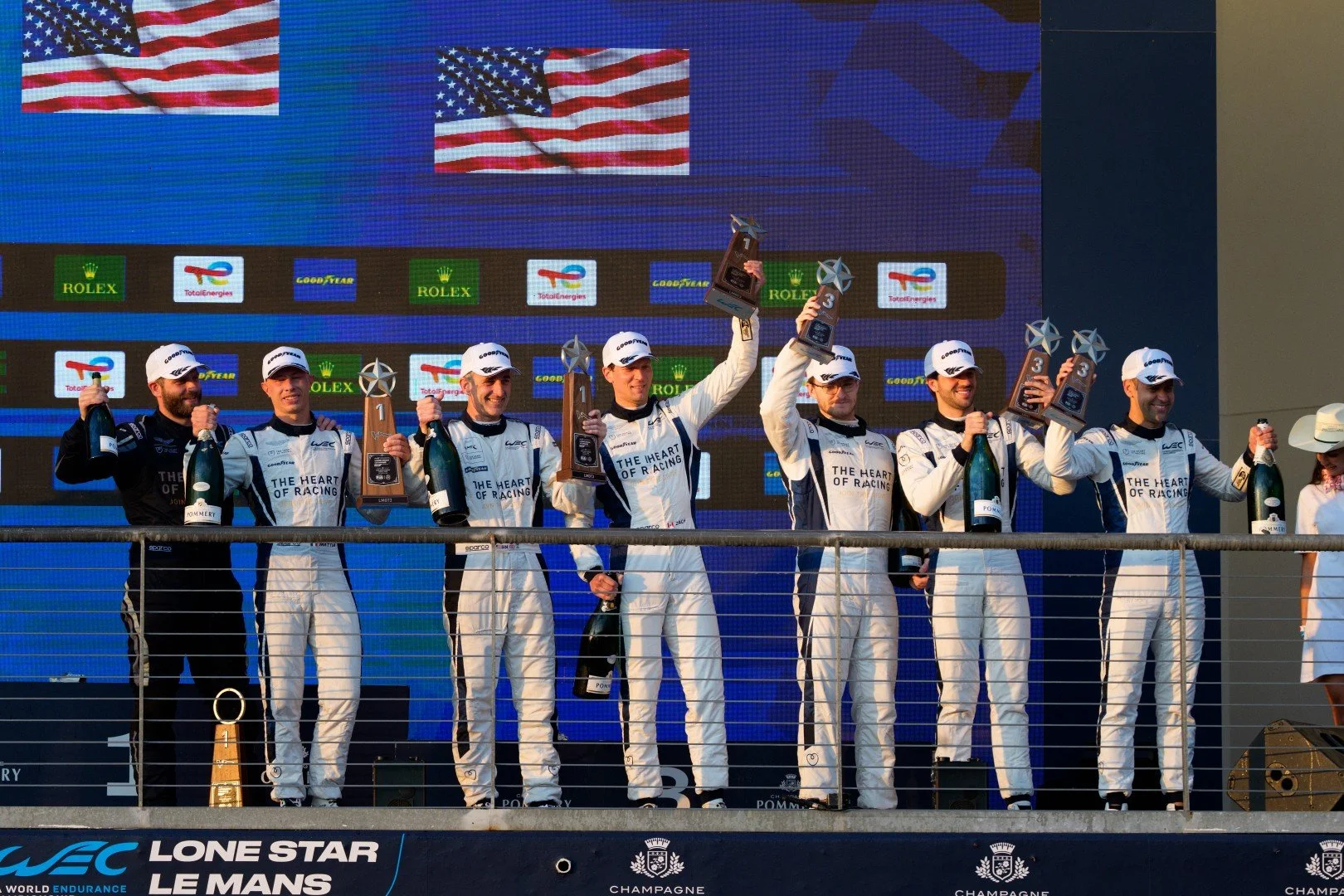
Image © Aston Martin Lagonda. Used for editorial purposes. Vantage Podium.
There are championship consequences too. The #23 crew moves to fourth in the FIA Endurance Trophy for LMGT3 Teams on 49 points, level with the third-placed #92 Porsche and 27 points behind the championship leader. The victorious #27 moves to sixth on 44 points. With 78 points still available across the remaining three rounds, both Aston Martins remain mathematically involved in the title fight.
Valkyrie Gets Tantalisingly Close
While Vantage was converting its Texas pedigree into another victory, the Valkyrie programme was providing a different kind of encouragement.
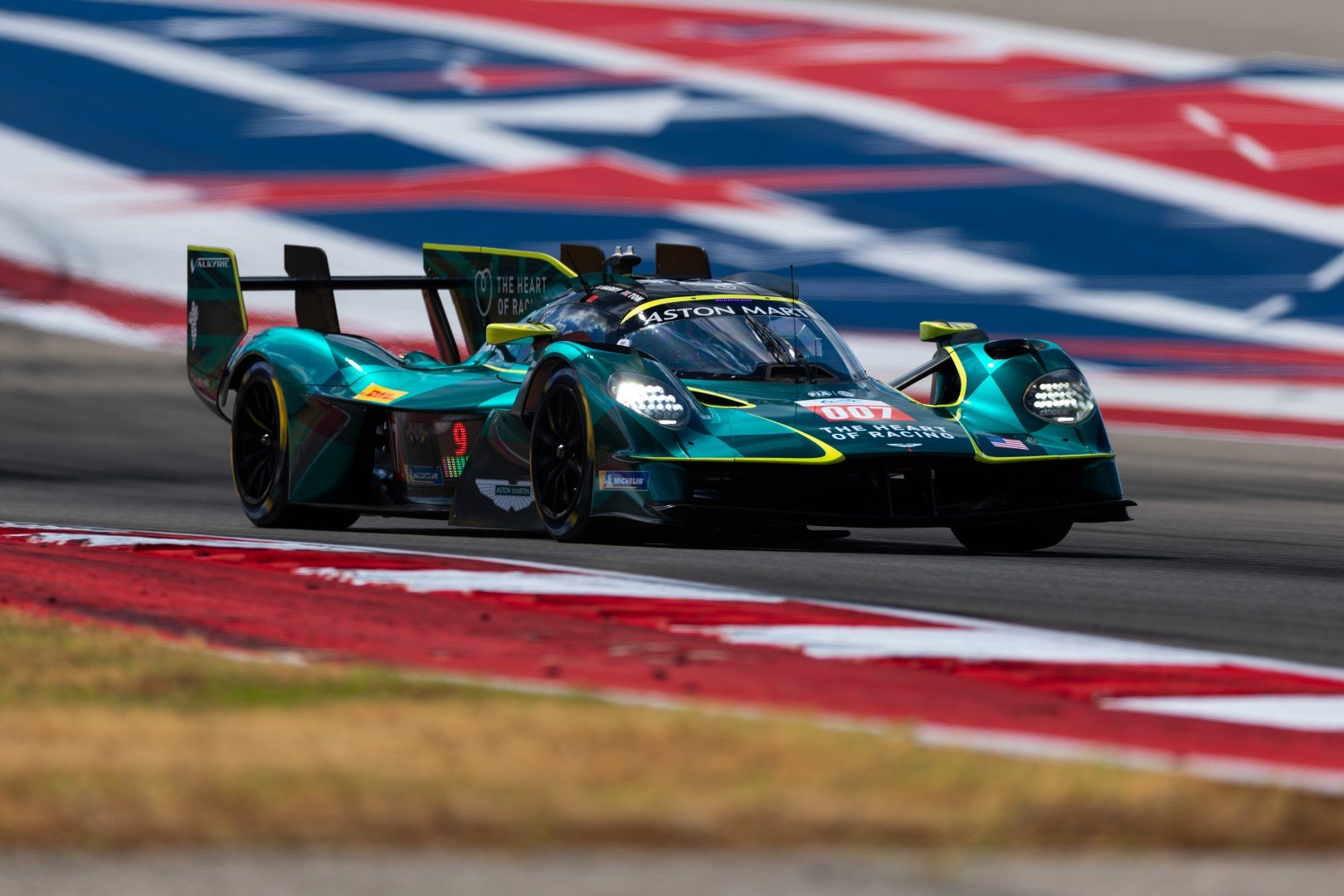
Image © Aston Martin Lagonda. Used for editorial purposes. #007 Valkyrie.
Issue 40 looked at the direction of travel rather than one individual result. The #007 had finished fourth at Spa, eighth at Le Mans and sixth at São Paulo, while the dedicated Silverstone development test we covered in Issue 38 had shown Aston Martin and The Heart of Racing beginning to explore how much more could be extracted from the car. COTA was therefore another useful measure of whether that progress was continuing.
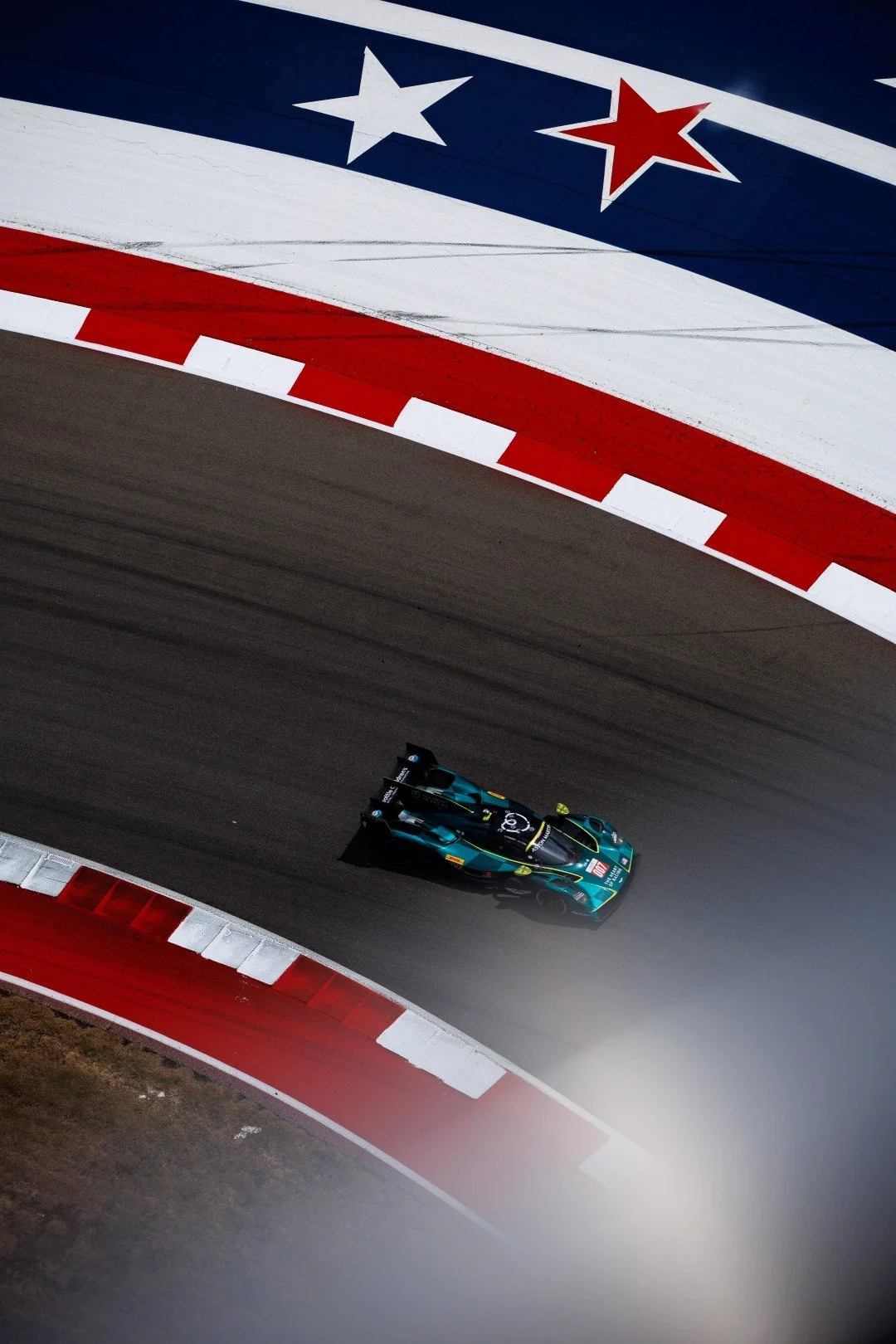
Image © Aston Martin Lagonda. Used for editorial purposes. #007 Valkyrie.
The #007, shared at Austin by Tom Gamble and Harry Tincknell, eventually finished fourth.
There’s a small accuracy point worth making here. Aston Martin described the COTA result as Valkyrie’s “best finish yet” in WEC, but regular FTP readers will know that the car had already finished fourth at Spa earlier this season. I think the more precise description is that COTA matched Valkyrie’s best WEC finishing position, but brought it considerably closer to an actual podium. The #007 crossed the line less than three seconds behind third place.
That distinction actually makes the result more interesting rather than less.
At Spa, fourth place demonstrated that Valkyrie could achieve a strong result. At COTA, after topping two practice sessions and then racing to within a few seconds of the podium, there was a little more evidence that the car is beginning to operate closer to the leading group through an entire weekend.
Aston Martin Head of Endurance Adam Carter was suitably measured afterwards, pointing out that many of the teams Valkyrie is competing against have years more accumulated data and experience with their respective Hypercars. His emphasis remained on continuing to understand the car and seeing how much more can be achieved before the end of 2026.
A first WEC podium still hasn’t arrived, and fourth place shouldn’t be turned into a victory by another name. Yet the gap between showing promise and actually threatening the podium is becoming noticeably smaller. Aston Martin also remains locked in its fight with Alpine for fifth in the Hypercar manufacturers’ championship, so there’s still something tangible to pursue through the closing rounds.
For anyone wanting the complete classifications, championship tables and wider Aston Martin results from Texas, they are available through the FTP Motorsport Hub.
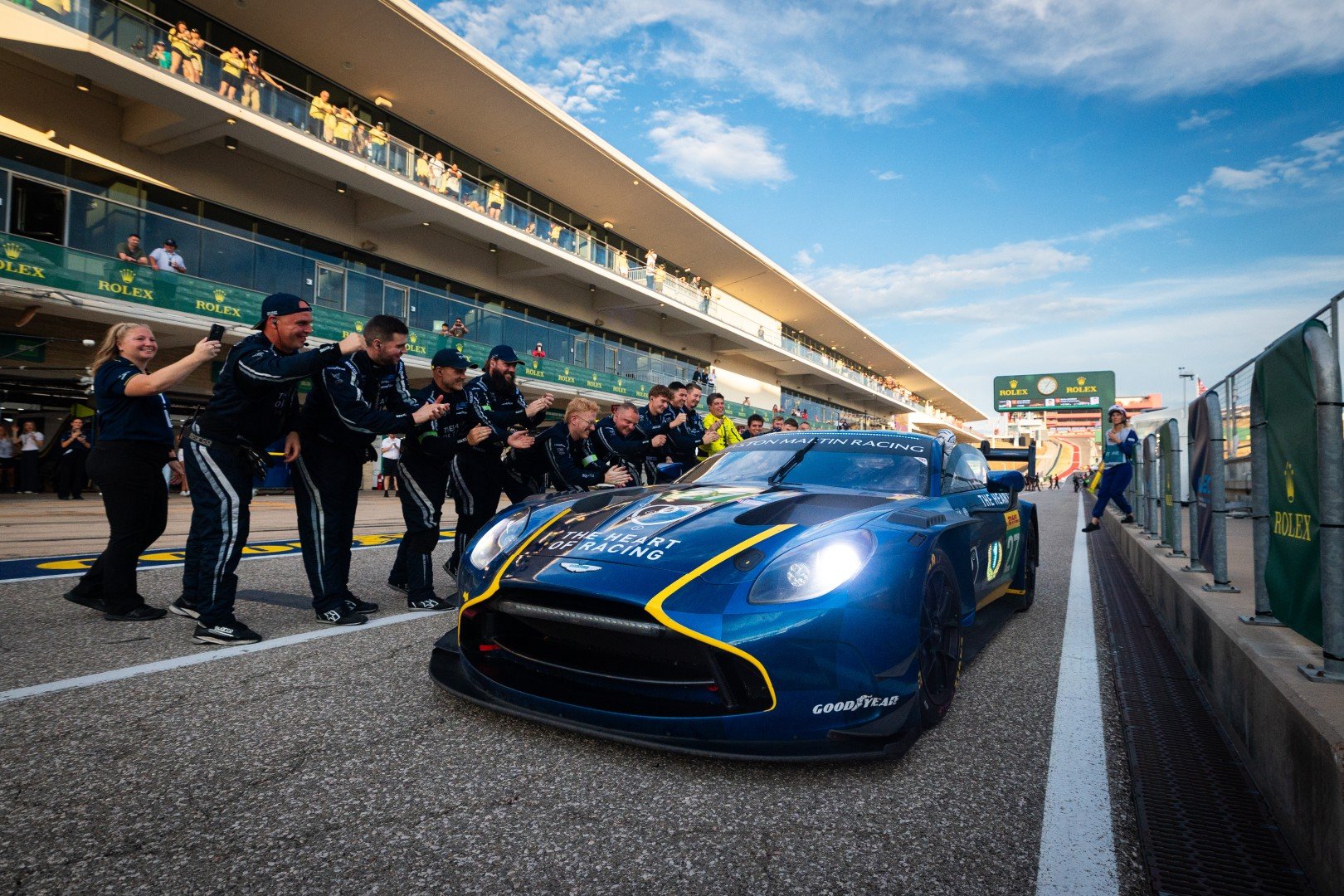
Image © Aston Martin Lagonda. Used for editorial purposes. #27 Vantage, Pit Lane.
COTA therefore answered the questions we left open last Sunday rather neatly. Vantage did add another chapter to Aston Martin’s extraordinary record in Austin, while Valkyrie took another measurable step towards the front.
The next Aston Martin championship story brings us much closer to home. At Donington Park, one Vantage GT4 pairing arrived with a championship lead to defend, while another left with an Aston Martin title already secured.
Lavery and Turner Crowned as Hawkins and Orton Stay in the Fight
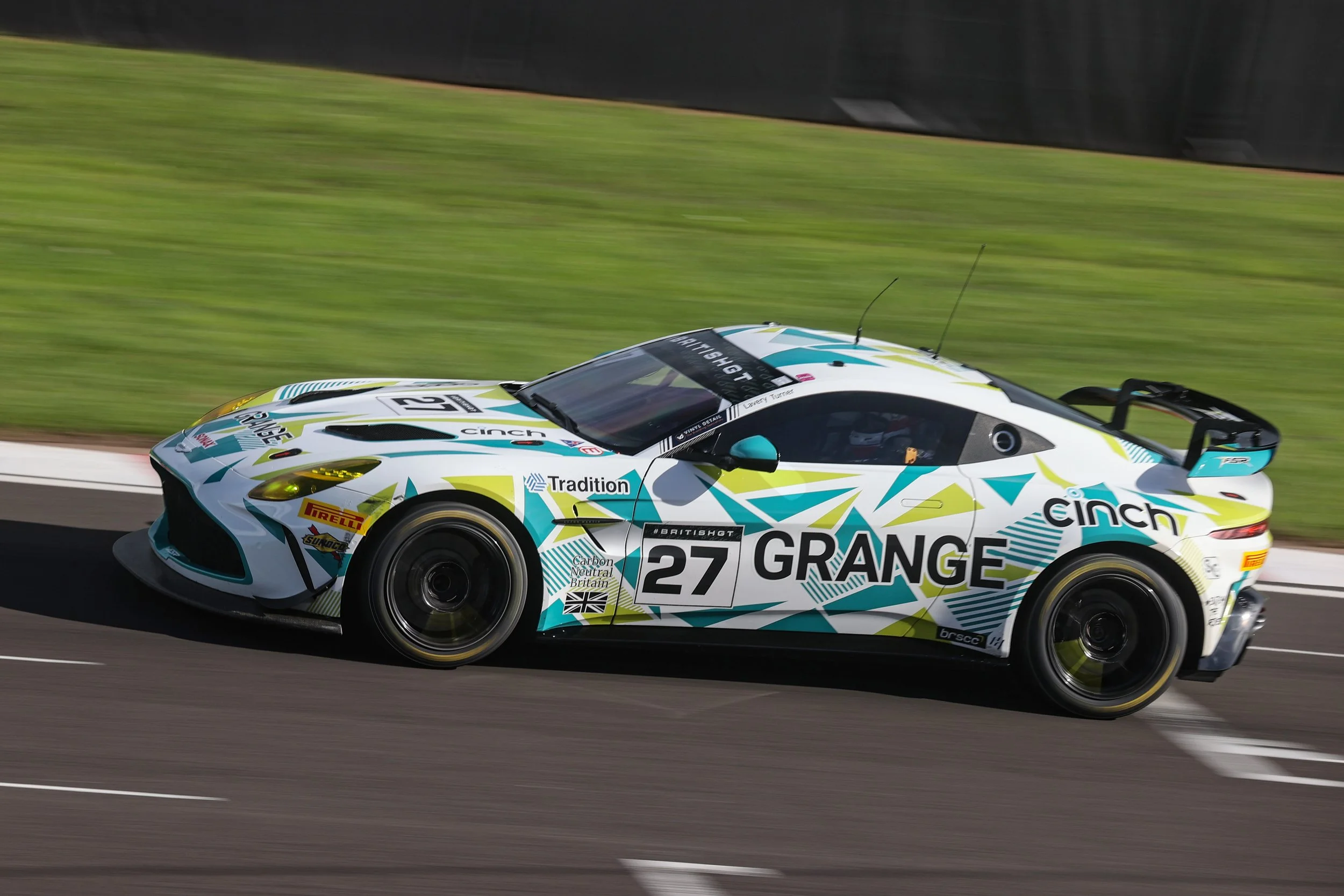
Image © Aston Martin Lagonda. Used for editorial purposes. British GT. GT Pro-Am Winning Vantage.
British GT arrived at Donington Park with Aston Martin holding an enviable position in GT4. When FTP last reported fully on the championship after Snetterton, Jessica Hawkins and Will Orton had moved the #21 MK Racing Vantage AMR GT4 Evo into the overall GT4 championship lead on 106 points, while Daniel Lavery and Darren Turner had built a very different challenge through four Pro-Am victories and sat only 7.5 points behind their fellow Aston Martin pairing.
Donington has now changed that picture again. The two-hour race began in difficult wet conditions before gradually drying, making tyre choice and timing especially important. In the overall GT4 contest, Paddock Motorsport’s McLaren eventually controlled the race to take victory, but behind it both of Aston Martin’s principal championship crews had significant business of their own to settle.
For Daniel Lavery and Darren Turner, the outcome could hardly have been better.
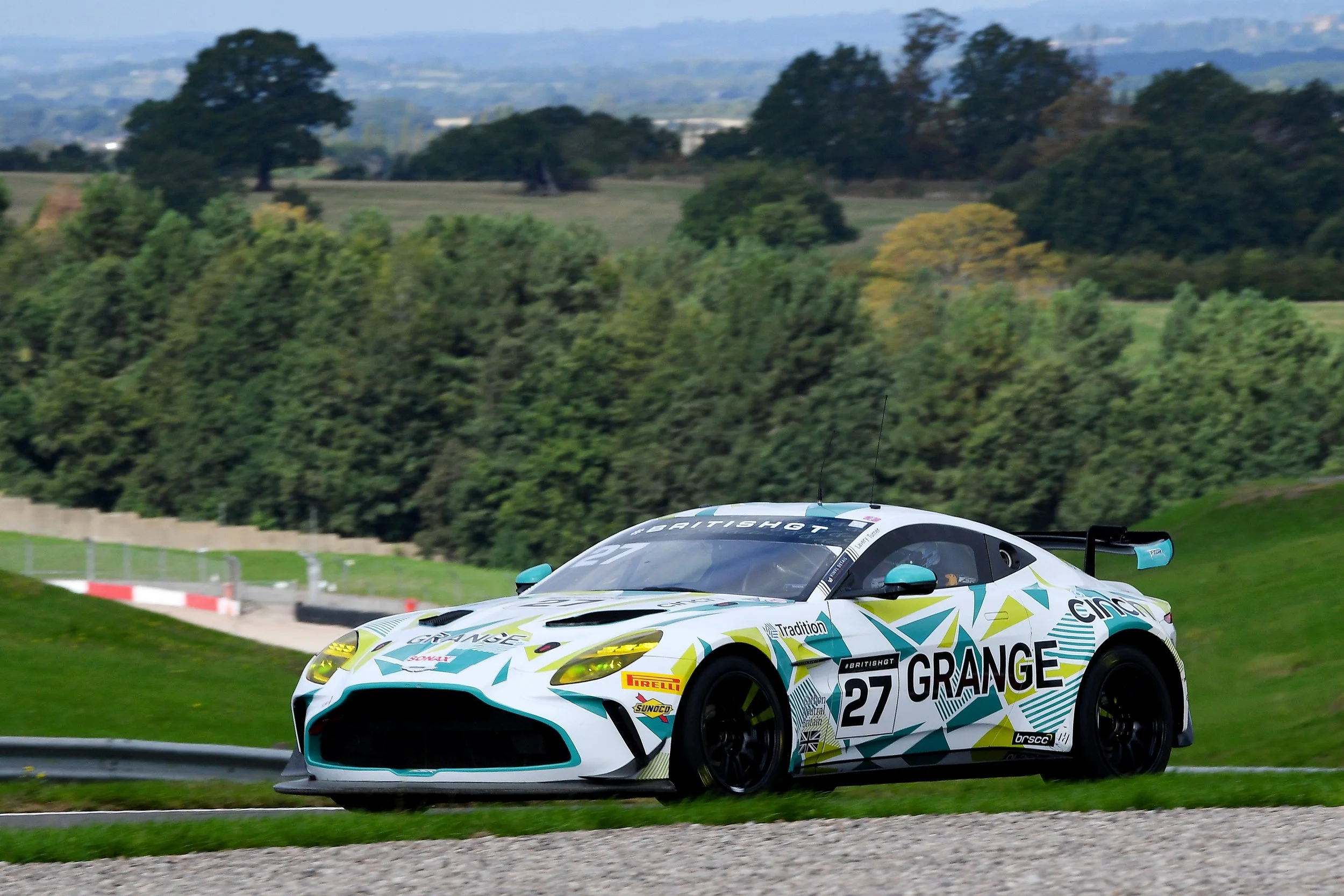
Image © Aston Martin Lagonda. Used for editorial purposes. British GT. GT Pro-Am Winning Vantage.
Starting fourth in the combined GT4 qualifying order, the #27 Grange Racing with FSR Aston Martin remained among the leading cars throughout the changing conditions. Lavery was involved in the early fight behind the leading McLaren, while the pair ultimately brought the Vantage home fourth overall in GT4 and first in Pro-Am.
It was their fifth consecutive GT4 Pro-Am victory. More importantly, it was enough to secure the 2026 British GT GT4 Pro-Am Championship with one race still remaining. Lavery and Turner therefore became the first British GT champions to be crowned this season.
For Lavery, the achievement comes in his first British GT campaign alongside one of Aston Martin’s most experienced factory drivers. For Turner, it adds another title to a remarkable record in the category. He previously won the GT4 Pro-Am crown with Matt Topham in both 2021 and 2022, making this his third British GT Pro-Am championship. There’s a particularly satisfying continuity to their season.
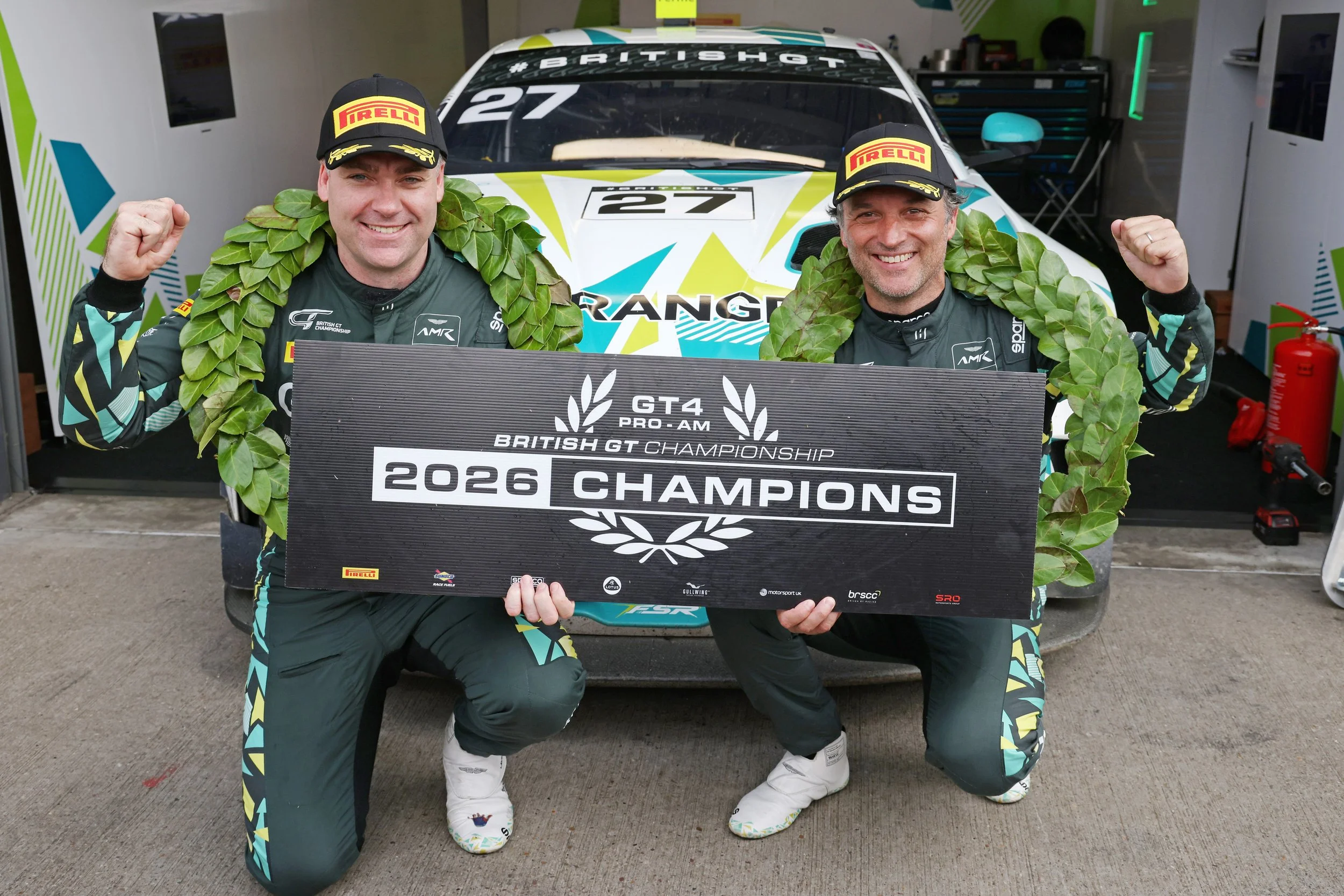
Image © Aston Martin Lagonda. Used for editorial purposes. Dan & Darren are Champions!
Earlier in the year, Lavery and Turner were not the obvious championship headline. Their campaign gathered momentum through victories at Oulton Park and Spa before the Snetterton double gave them four consecutive Pro-Am wins and pushed them firmly into the wider GT4 title conversation. Donington has now converted that run into something tangible: an Aston Martin championship title secured before the finale.
A Costly Penalty for Hawkins and Orton
For Hawkins and Orton, the Donington story was more frustrating. The #21 MK Racing Aston Martin arrived as the overall GT4 championship leader and looked capable of strengthening that position. Hawkins and Orton were on course for another strong result before the car received a drive-through penalty for speeding in the pit lane. That penalty proved expensive.
Instead of the podium finish that had appeared possible, the Aston Martin dropped to sixth in GT4. At the same time, Jack Collins and Branden Templeton finished second in their BMW, while Hadley Simpson and Thomas Holland recovered to third in the Innovation Racing Ginetta. The consequences are significant, but far from terminal.
Collins and Templeton now head to the Brands Hatch finale level on points with Simpson and Holland at the top of the championship, while Hawkins and Orton sit third, just six points behind. Considering how costly the Donington penalty was, six points is still a very manageable deficit.
There’s another small advantage too. Because Hawkins and Orton didn’t finish on the podium at Donington, they head to Brands Hatch without success-related compensation time from this result, while some of their rivals will have additional time to serve during the mandatory pit stop. That doesn’t guarantee anything, but in a championship this close, every detail has the potential to influence the finale.
The overall GT4 crown therefore remains very much alive for Aston Martin.
Lavery and Turner are mathematically involved in that outright contest too, although their principal achievement is already secure. Whatever happens at Brands Hatch, they will arrive there as the 2026 GT4 Pro-Am champions.
Beechdean Still Mathematically Alive in GT3
Aston Martin also remains involved, albeit more distantly, in the overall GT3 championship. Andrew Howard and Ross Gunn brought the #7 Beechdean Motorsport Vantage AMR GT3 Evo home fourth overall at Donington, keeping their championship hopes mathematically alive heading into Brands Hatch.
That result is particularly noteworthy given the wider context we covered recently. Howard has already announced that 2026 will be his final full season as a driver, making Brands Hatch his scheduled final British GT weekend before moving into a fully off-track role with Beechdean.
So the championship now heads towards what should be a fascinating finale on 26th–27th September. One Aston Martin title is already secure. Another remains very much within reach. For full classifications, championship standings and Aston Martin results from Donington, readers can follow the FTP British GT Motorsport Hub.
From championships won on the race track, we now move into an entirely different piece of Aston Martin engineering and one that, for the first time, can legally leave the circuit behind altogether.
With Donington complete, attention now turns to what comes next and Aston Martin has an exceptionally busy weekend ahead. Across Formula One, DTM, the Michelin Le Mans Cup, European Le Mans Series and International GT Open, there are championship battles to follow, while Blackthorn Racing will remarkably have Aston Martins competing in two countries at the same time.

Aston Martin Motorsport - A Very Busy Weekend Ahead
Before we leave the race track this week, there’s one more thing worth looking at. Aston Martin has an unusually busy weekend ahead across several of the championships followed through the FTP Motorsport Hub, with Formula One in Madrid, Michelin Le Mans Cup and European Le Mans Series action at Silverstone, International GT Open at Hockenheim and DTM at the Sachsenring.
There’s a timing issue I should explain. Because this edition of the Roundup has been prepared before I leave for Silverstone on Friday morning, some of Saturday’s racing will already have taken place by the time you read this on Sunday. There’s a timing issue I should explain. Because this edition of the Roundup has been prepared before I leave for Silverstone on Friday morning, some of Saturday’s racing will already have taken place by the time you read this on Sunday. This section therefore sets out the Aston Martin storylines we’re following across the weekend, and we can return to the results properly once I return from Silverstone.
Formula One - A Completely New Test in Madrid
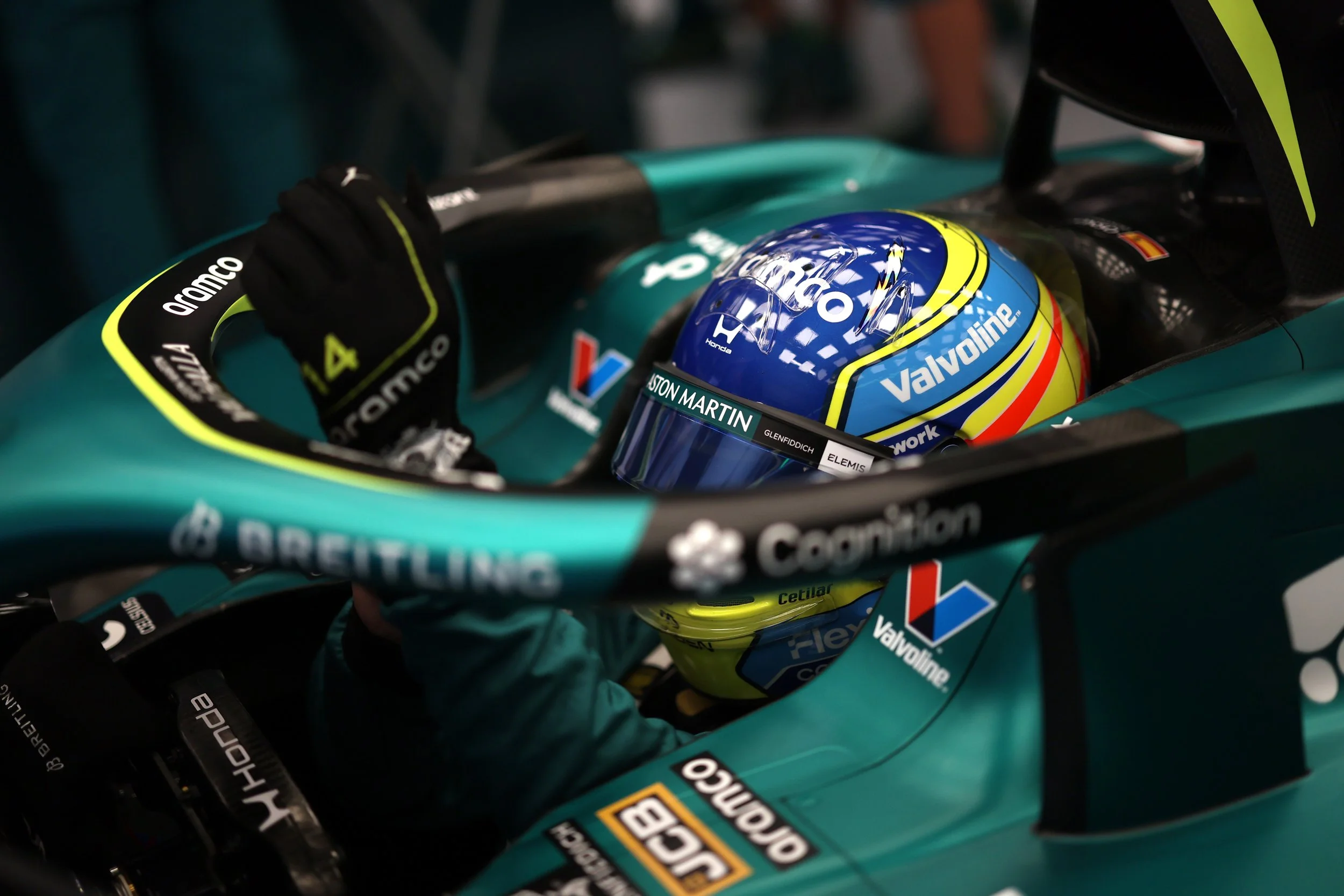
Image © Honda Motor Co. Ltd & Aston Martin Aramco. Used for editorial purposes. Fernando Alonso.
Just one week after Monza, Aston Martin and Honda move from one of Formula One’s fastest circuits to somewhere nobody has raced before. The Spanish Grand Prix takes place at the new Madring in Madrid from 11th–13th September, marking Formula One’s first race at the new 22-corner venue. It combines public roads and purpose-built sections, while the heavily banked La Monumental is unlike anything else on the current calendar.
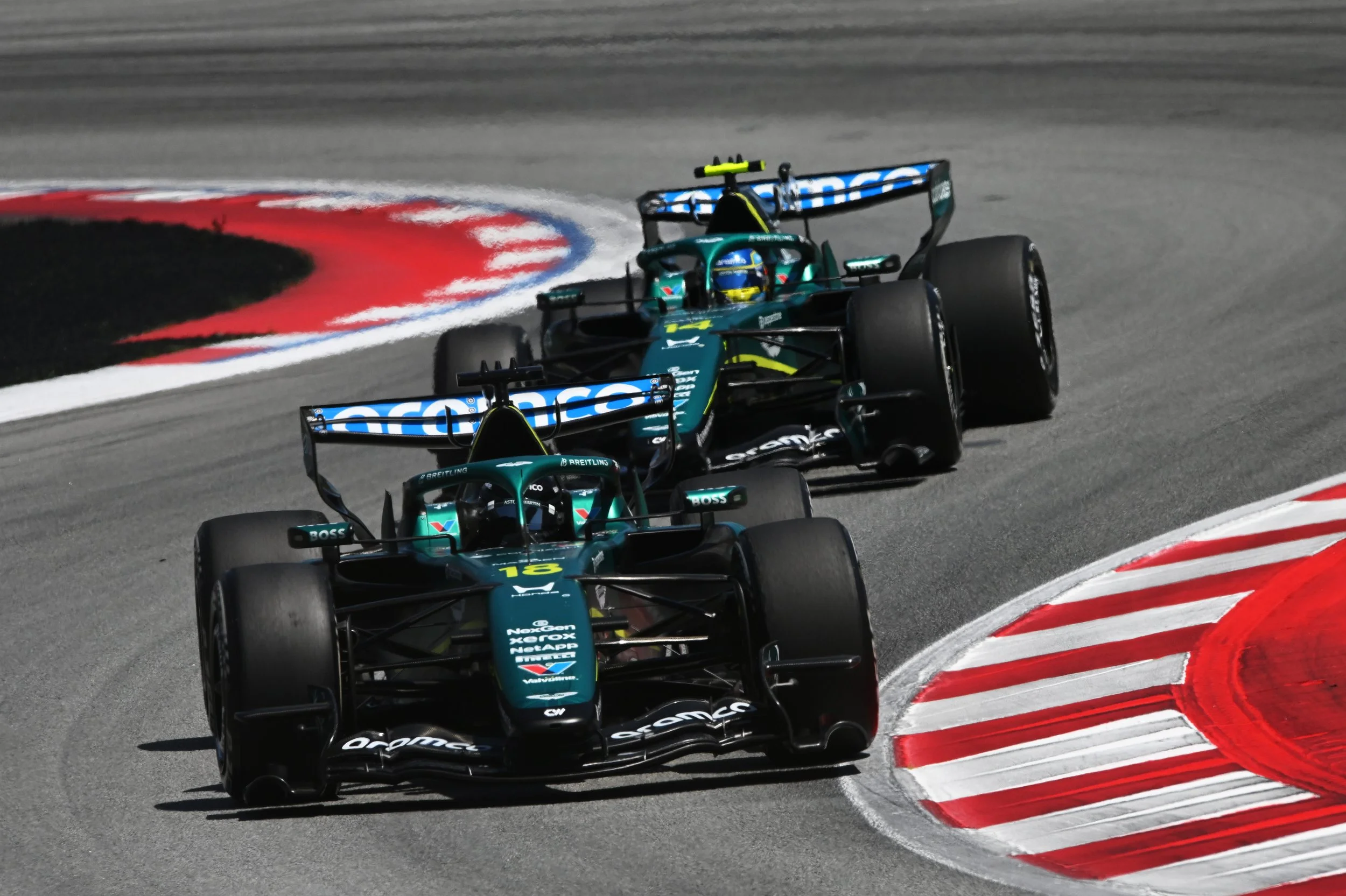
Image © Honda Motor Co. Ltd & Aston Martin Aramco. Used for editorial purposes.
That makes it particularly interesting after the problems Aston Martin experienced at Monza. Mike Krack said after the Italian Grand Prix that the team hoped to be more competitive in Madrid, and Aston Martin believes the circuit’s mixture of tighter sections, braking zones and less sustained emphasis on outright straight-line speed should provide a kinder test for the AMR26 than Monza did.
For Fernando Alonso, of course, it’s also another home Grand Prix, although even he will arrive relying principally on simulator work rather than previous circuit experience. Sunday’s race will therefore provide another useful answer to the question we’ve been following through the last few Roundups: how much of Aston Martin’s recent improvement travels with the car when the circuit characteristics change?
Silverstone - Two Aston Martins and a GT3 Championship Fight
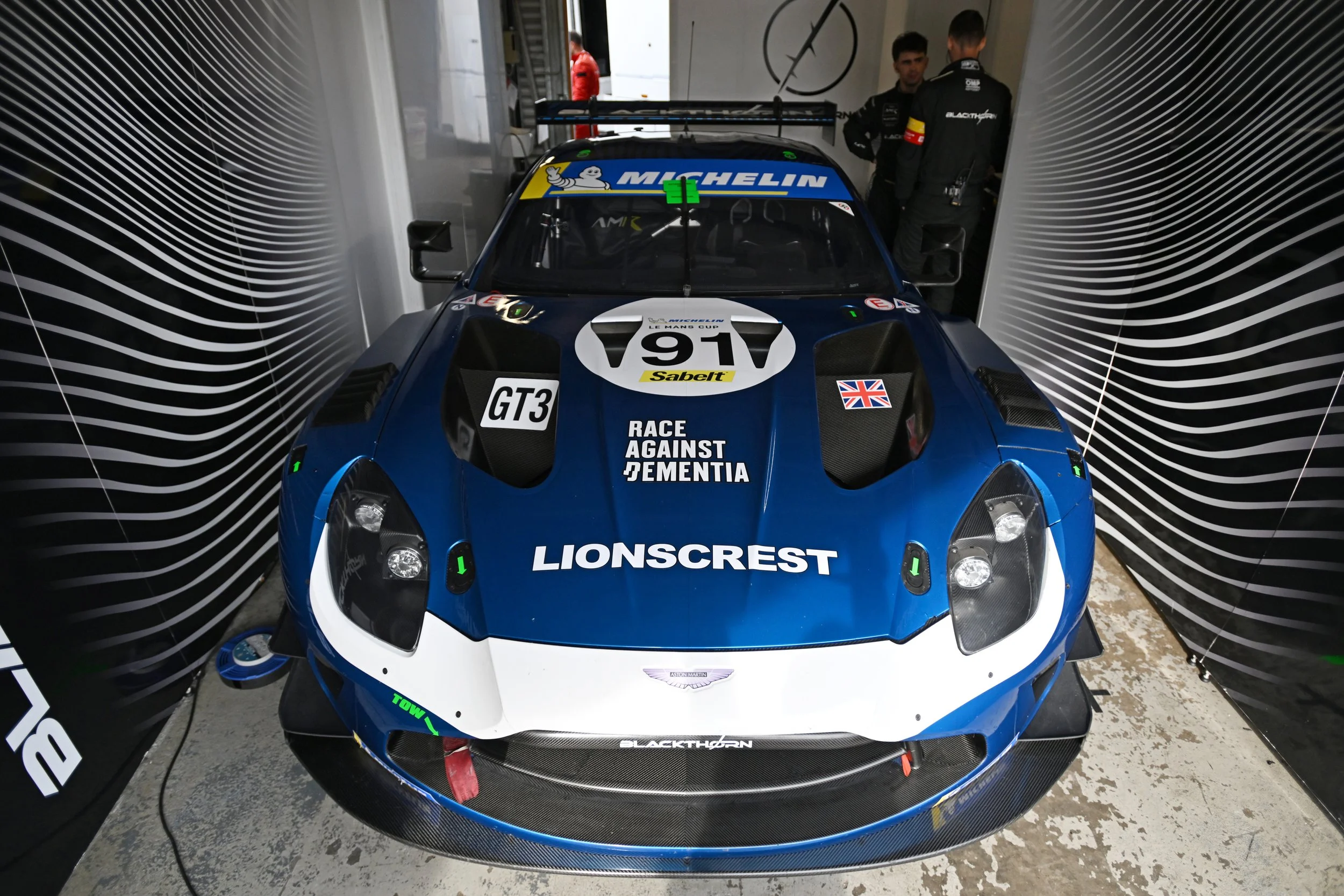
Image © Blackthorn Racing. Used for editorial purposes.
This is the weekend I’ll be seeing rather more closely. The Michelin Le Mans Cup visits Silverstone from 11th–12th September for a two-hour race on the full Grand Prix circuit, with ten GT3 cars among a 45-car field. FTP will be embedded with the #91 Écurie Écosse Blackthorn Aston Martin Vantage GT3, shared by team owner Claude Bovet and Tom Canning.
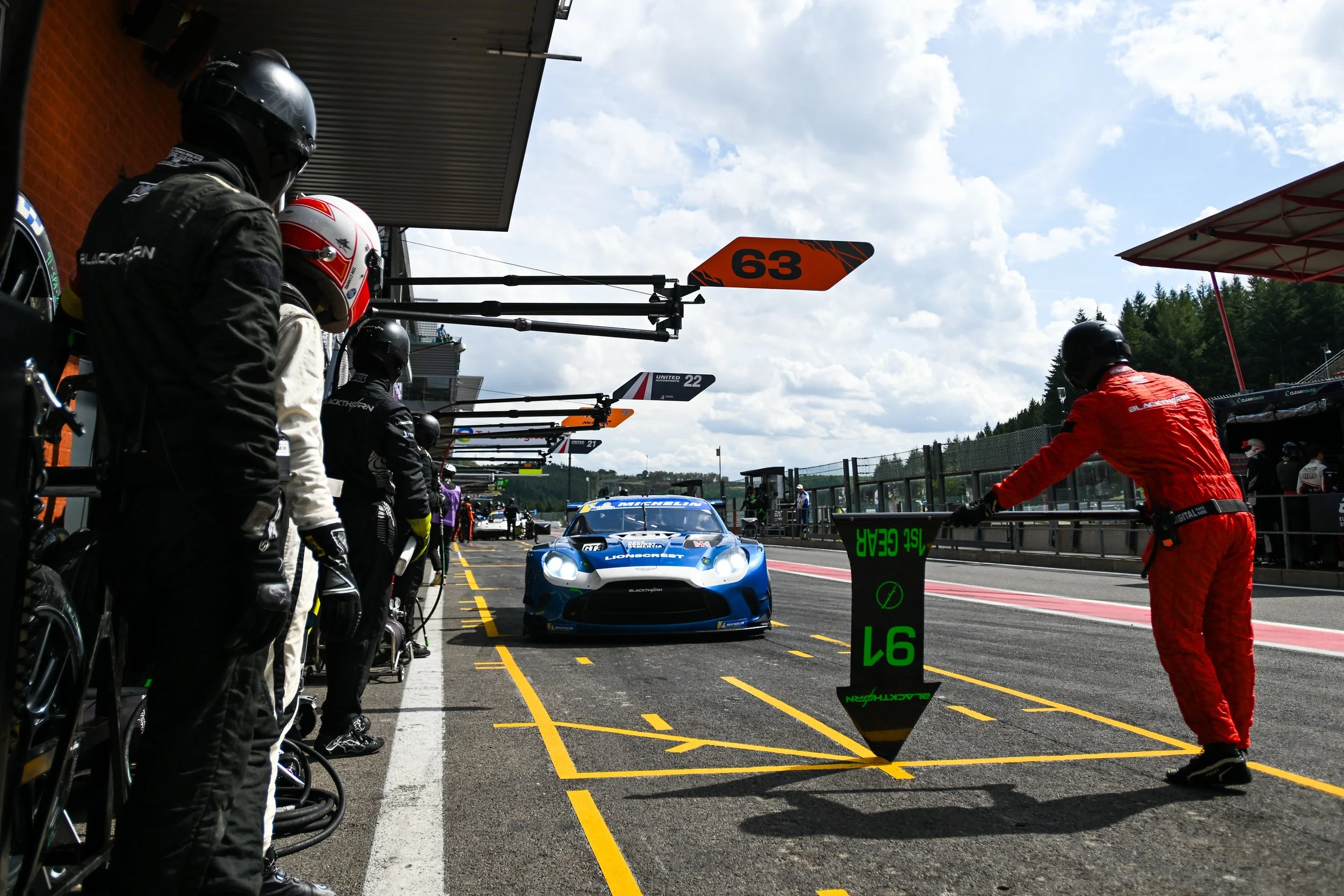
Image © Blackthorn Racing. Used for editorial purposes.
Their season has not produced the results the team would have wanted so far. The #91 sits tenth in the GT3 teams’ standings on eight points, but that’s precisely why Silverstone is interesting. This is an opportunity to see what the numbers on a results sheet cannot show: how a GT3 team prepares, reacts and operates through a race weekend.
There’s also another Aston Martin championship story elsewhere on the same grid. The #10 Racing Spirit of Léman Aston Martin heads to Silverstone leading the GT3 standings, with Philipp Sager holding 90 points and a 21-point advantage over Oscar Lee Ryndziewicz. Valentin Hasse Clot returns alongside him for the British round.
So while my cameras will naturally be concentrated on Blackthorn, there’s a genuine Aston Martin title battle developing elsewhere in the same race.
Blackthorn on Two Fronts - Hockenheim
Blackthorn will actually be racing Aston Martins in two different countries at the same time.
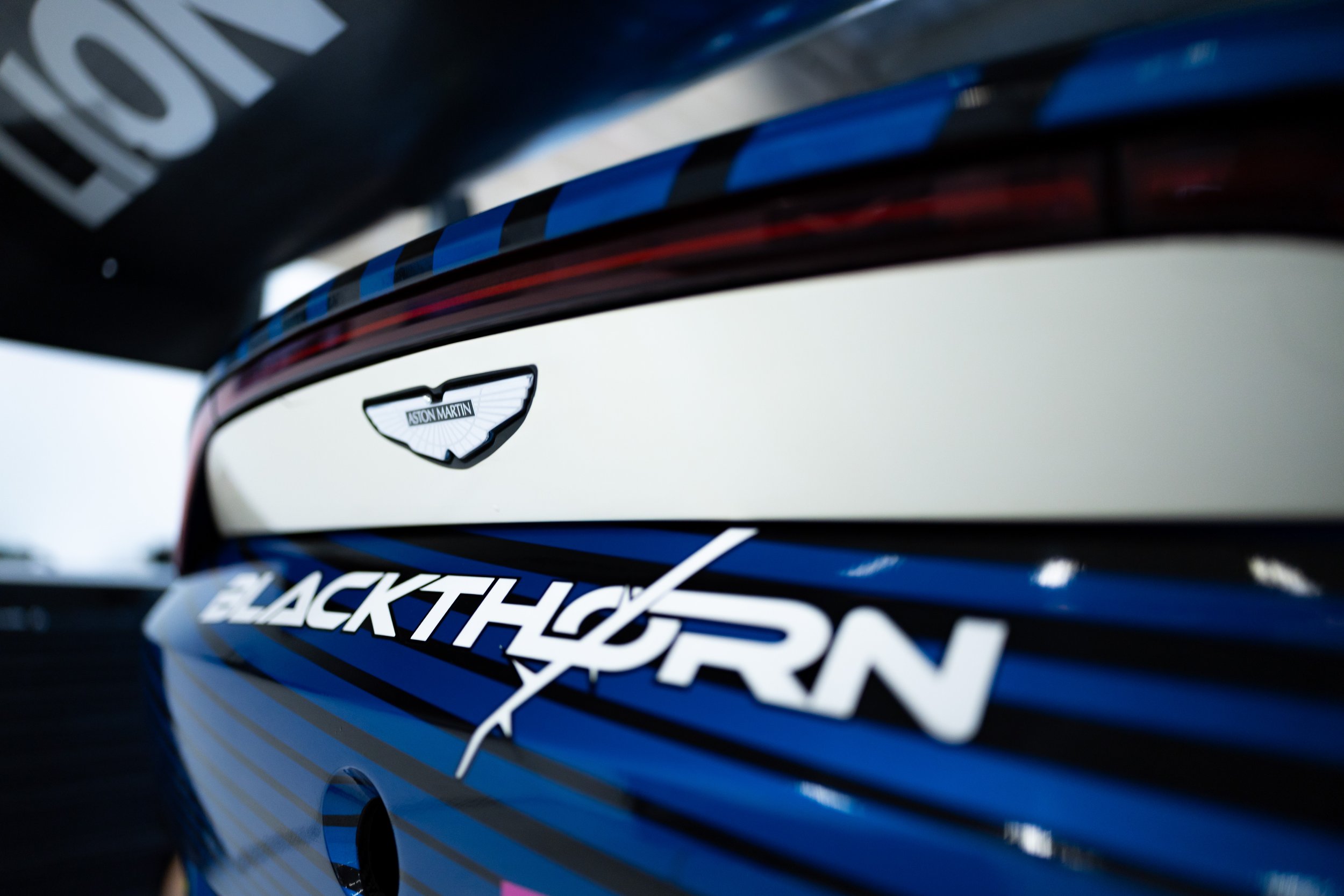
Image © Blackthorn Racing. Used for editorial purposes.
While Claude Bovet and Tom Canning compete at Silverstone, the team’s #97 Aston Martin Vantage GT3 Evo will be at Hockenheim for the sixth round of the International GT Open, with Charles Bateman and Jonny Adam reunited in the Pro-Am entry.
This one carries serious championship significance. Bateman heads into Hockenheim second in the Pro-Am standings, only five points behind leader Alexander Fach, after he and Adam reignited their title challenge with a superb double Pro-Am victory at Paul Ricard.
There are 27 cars entered at Hockenheim, with two races across Saturday and Sunday. So while FTP is following one Blackthorn Aston Martin inside the garage at Silverstone, another will be fighting for a European GT title in Germany. That’s quite a weekend for the team.
DTM - Thiim Remains in the Championship Hunt
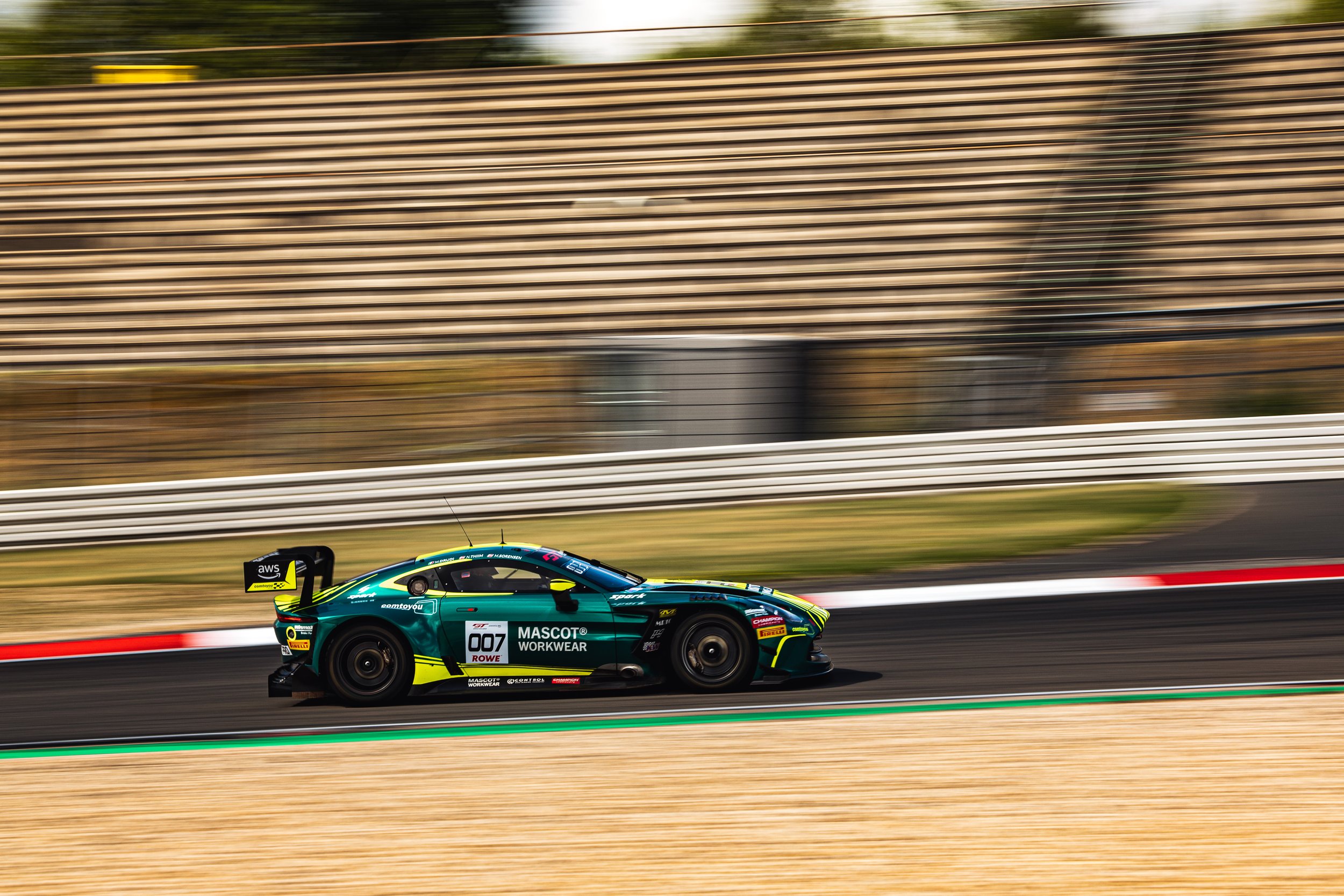
Image © Aston Martin Lagonda. Used for editorial purposes.
There’s another important Aston Martin title fight at the Sachsenring. Nicki Thiim and Comtoyou Racing arrive at the penultimate DTM meeting still firmly involved in the championship. After the Nürburgring, Thiim sits third on 139 points, 21 behind championship leader Maro Engel and only 20 behind Thomas Preining in second.
That position is significant when we remember how far Aston Martin has already come in DTM this season. Thiim delivered the marque’s first-ever DTM victory at the Norisring, then completed a remarkable double victory across the weekend. Now there are only the Sachsenring races and October’s Hockenheim finale remaining.
So the #7 Comtoyou Vantage is no longer merely trying to demonstrate that Aston Martin can compete in DTM. It’s still trying to win the championship.
Another Aston Martin at Silverstone on Sunday
The Silverstone weekend continues after Saturday’s Michelin Le Mans Cup race with the European Le Mans Series four-hour race on Sunday.
Aston Martin is represented in LMGT3 by the #59 Racing Spirit of Léman Vantage AMR LMGT3, with Valentin Hasse Clot returning to the car for the British round. The four-hour race begins at midday local time on Sunday.
So by the time Issue 41 reaches you on Sunday morning, some of these stories will already have begun to develop and several will still have a full day of racing ahead. For complete results and championship standings as they develop, the FTP Motorsport Hub remains the best place to follow Aston Martin across the different series. All these race results will appear there early next week.
One thing is already certain: Aston Martin will have a lot of racing cars in a lot of important places this weekend.
With the motorsport picture set for another busy weekend, we can finally leave the race track, although, appropriately enough, the next Aston Martin-related machine we’re looking at began its life there.
AMB 002 Roadster — Aston Martin and Brough Superior Take Their Partnership onto the Road

Image © Aston Martin Lagonda. Used for editorial purposes. Aston Martin & Brough Superior AMB002 Roadster.
The relationship between Aston Martin and Brough Superior began with something deliberately extreme.

Image © Aston Martin Lagonda. Used for editorial purposes. Aston Martin & Brough Superior AMB001 PRO.
The AMB 001, unveiled in 2019, was the first motorcycle to carry Aston Martin’s design influence into a collaboration with the historic British motorcycle marque. Only 100 were produced, each built by Brough Superior in Toulouse, France, and the 180hp machine was intended exclusively for track use. Three years later came the even more focused AMB 001 Pro, increasing output to 225hp, reducing dry weight to 175kg and limiting production to just 88 examples.
The Valkyrie AMR Pro in the background is no coincidence. Aston Martin says the AMB 001 Pro was directly inspired by its no-rules, track-only hypercar. Two very different machines united by the same pursuit of uncompromised circuit performance.

Image © Aston Martin Lagonda. Used for editorial purposes. Aston Martin & Brough Superior AMB002 Roadster.
Now the partnership is moving in a rather different direction. Revealed on Wednesday 9th September, the new AMB 002 Roadster is the first motorcycle created by Aston Martin and Brough Superior that has been designed for use on public roads. It isn’t a road-converted version of either of the earlier bikes. Aston Martin says it’s been designed and engineered from scratch, with no carry-over componentry, creating a third distinct motorcycle within a partnership that’s clearly becoming more than an occasional design exercise.
For me, there’s a particularly nice piece of FTP continuity here. Regular readers and viewers may remember the extraordinary AMB 001 Pro that I filmed at the Goodwood Festival of Speed earlier this year. Seeing that machine in person reinforced just how unusual the Aston Martin–Brough Superior collaboration already was, part motorcycle, part piece of engineering sculpture and very obviously conceived without the compromises required for everyday road use.
If you haven’t yet seen the AMB 001 Pro featured in FTP’s Survived Spa – Goodwood film, simply click the image below and we’ll take you straight to the part of the video where this extraordinary track-only motorcycle appears.
The AMB 002 changes that equation. A New 1,083cc V-Twin.
At its heart is an entirely new 1,083cc four-stroke, water-cooled V-twin engine, producing 130bhp and 110Nm of torque.

Image © Aston Martin Lagonda. Used for editorial purposes. Aston Martin & Brough Superior AMB002 Roadster.
That power figure is considerably lower than the AMB 001 Pro’s 225hp, but the two motorcycles have very different purposes. The Pro was built as an uncompromising track machine; the AMB 002 has instead been tuned to deliver strong low and mid-range torque, with Aston Martin and Brough Superior placing the emphasis on accessible performance and enjoyment on the road rather than chasing an outright circuit-focused number.
The engine itself is produced at Brough Superior’s headquarters in Toulouse, where its cases are machined from solid billet using computer-controlled machining before being assembled in-house.
That engineering approach extends to perhaps the most striking component underneath the bodywork. The AMB 002 uses a titanium backbone frame milled from a solid billet, weighing just 5kg. Combined with carbon-fibre body panels and fuel tank, Aston Martin says this helps give the motorcycle a low centre of gravity and an even 50:50 weight distribution. Overall weight is just 190kg.
On paper, that combination of relatively low mass, 130bhp and plentiful torque should make the AMB 002 an extremely serious road motorcycle without requiring the extraordinary performance envelope of the track-only Pro.
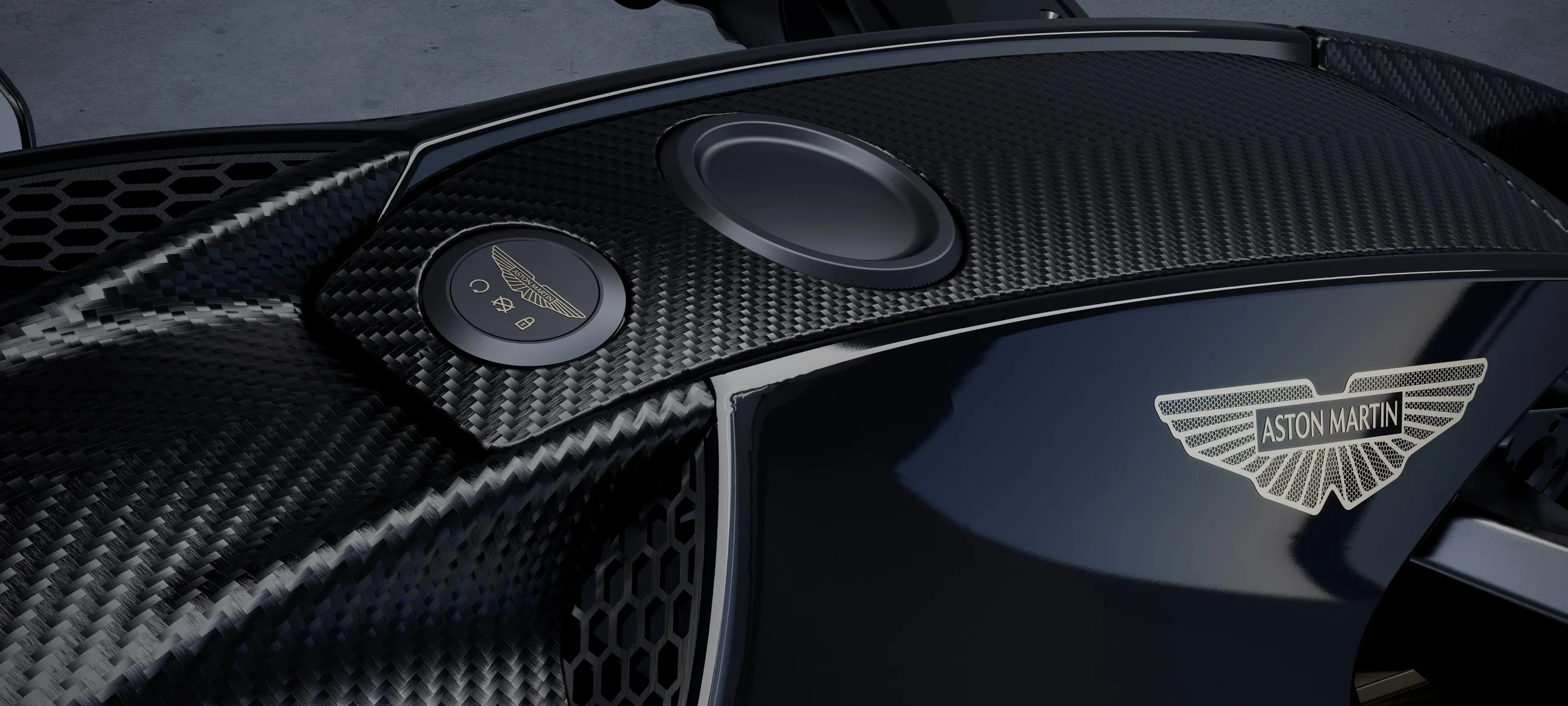
Image © Aston Martin Lagonda. Used for editorial purposes. Aston Martin & Brough Superior AMB002 Roadster.
The Suspension Is Rather Unusual Too.
Look closely at the front of the motorcycle and you won’t find a conventional pair of telescopic forks. Instead, Brough Superior uses what it calls its Fior double-wishbone front suspension.

Image © Aston Martin Lagonda. Used for editorial purposes. Aston Martin & Brough Superior AMB002 Roadster.
In simple terms, the system separates some of the forces created by steering, suspension movement and braking rather than asking conventional fork legs to deal with them all together. One of the practical benefits is reduced brake dive, the tendency for the front of a motorcycle to compress sharply under heavy braking.
Aston Martin says this also helps maintain more consistent front-end geometry while braking and cornering, giving the rider greater stability and steering precision. The system itself isn’t entirely new to the partnership; a version was already used on the AMB 001 Pro, but it’s been further developed for the very different demands of the road-going AMB 002.
Aston Martin Design — Without Simply Making a Car on Two Wheels
The photographs are probably where many FTP readers will spend the most time, because there are numerous Aston Martin references hidden within the AMB 002 without the bike simply looking like an attempt to turn one of the company’s cars into a motorcycle. The sculpted carbon-fibre fuel tank and side fairings form much of the main body, while crescent-shaped openings through the flanks help with engine cooling and airflow.

Image © Aston Martin Lagonda. Used for editorial purposes. Aston Martin & Brough Superior AMB002 Roadster.
More recognisable Aston Martin cues appear as you look closer. The familiar side strake has effectively been reinterpreted for the motorcycle, piercing through the fairing and extending forward around the headlamp.
At the rear, a series of narrow lighting blades takes inspiration from cars including the Vulcan, Valkyrie and Valhalla, while the twin oval exhaust outlets incorporate ribbed detailing referencing the finishers found on Vanquish, DB12 S and DBX S. There are subtler connections too: keyless operation, a backlit ignition button and hand-finished leather seat pads all bring elements of Aston Martin’s road-car approach into the motorcycle.

Image © Aston Martin Lagonda. Used for editorial purposes. Aston Martin & Brough Superior AMB002 Roadster.
Marek Reichman, Aston Martin’s Executive Vice President and Chief Creative Officer, described creating an Aston Martin motorcycle for the road as a “long-term dream” following the two track-only machines. This isn’t simply Brough Superior engineering wearing an Aston Martin badge. Aston Martin’s own design studio has been involved in shaping the motorcycle, while Brough Superior provides the specialist motorcycle engineering and manufacturing expertise.
More Bikes — But Still Very Few

Image © Aston Martin Lagonda. Used for editorial purposes. Aston Martin & Brough Superior AMB002 Roadster.
There’s another interesting difference between the three generations. Only 100 AMB 001s were produced, followed by a maximum of 88 AMB 001 Pros. Aston Martin and Brough Superior now plan to build 300 AMB 002 Roadsters.
Three hundred is hardly mass production, but it’s a noticeable expansion.
That perhaps tells us something about how the partnership itself is developing. Aston Martin’s Director of Brand Diversification, Stefano Saporetti, describes it as having moved from a limited collaboration into a longer-term commercial relationship, with the company seeing appetite for Aston Martin’s design language beyond four wheels. A road-legal product naturally opens that relationship to customers who actually want to use their motorcycle rather than own something restricted to private circuits.
First deliveries are scheduled to begin in the third quarter of 2027, and Aston Martin says initial orders are already being taken. One detail not included in Wednesday’s announcement is the price. Given the specification, materials, hand-built nature and limited production, nobody should expect the AMB 002 to occupy conventional motorcycle territory, but Aston Martin and Brough Superior have not yet announced a price.
From Something to Admire to Something to Ride
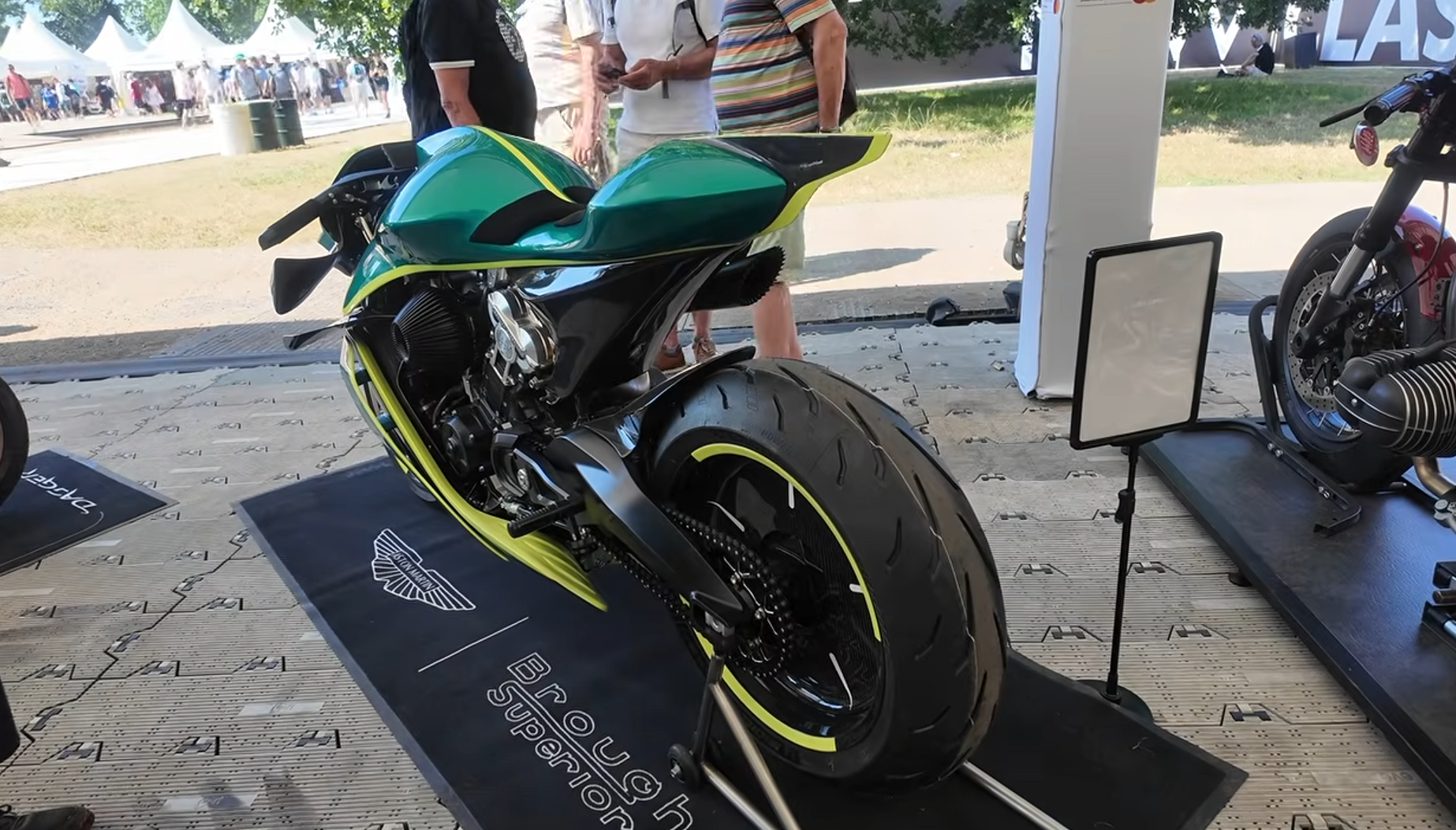
Image © Fuel the Passion. AMB001 PRO at Goodwood Festival of Speed 2026.
For somebody like me who came across the AMB 001 Pro at Goodwood only a few months ago, the progression is fascinating. The first two motorcycles demonstrated what Aston Martin design and Brough Superior engineering could produce when road legality wasn’t part of the brief. The AMB 002 now has to retain enough of that extraordinary character while becoming something its owner can actually ride away from home on.
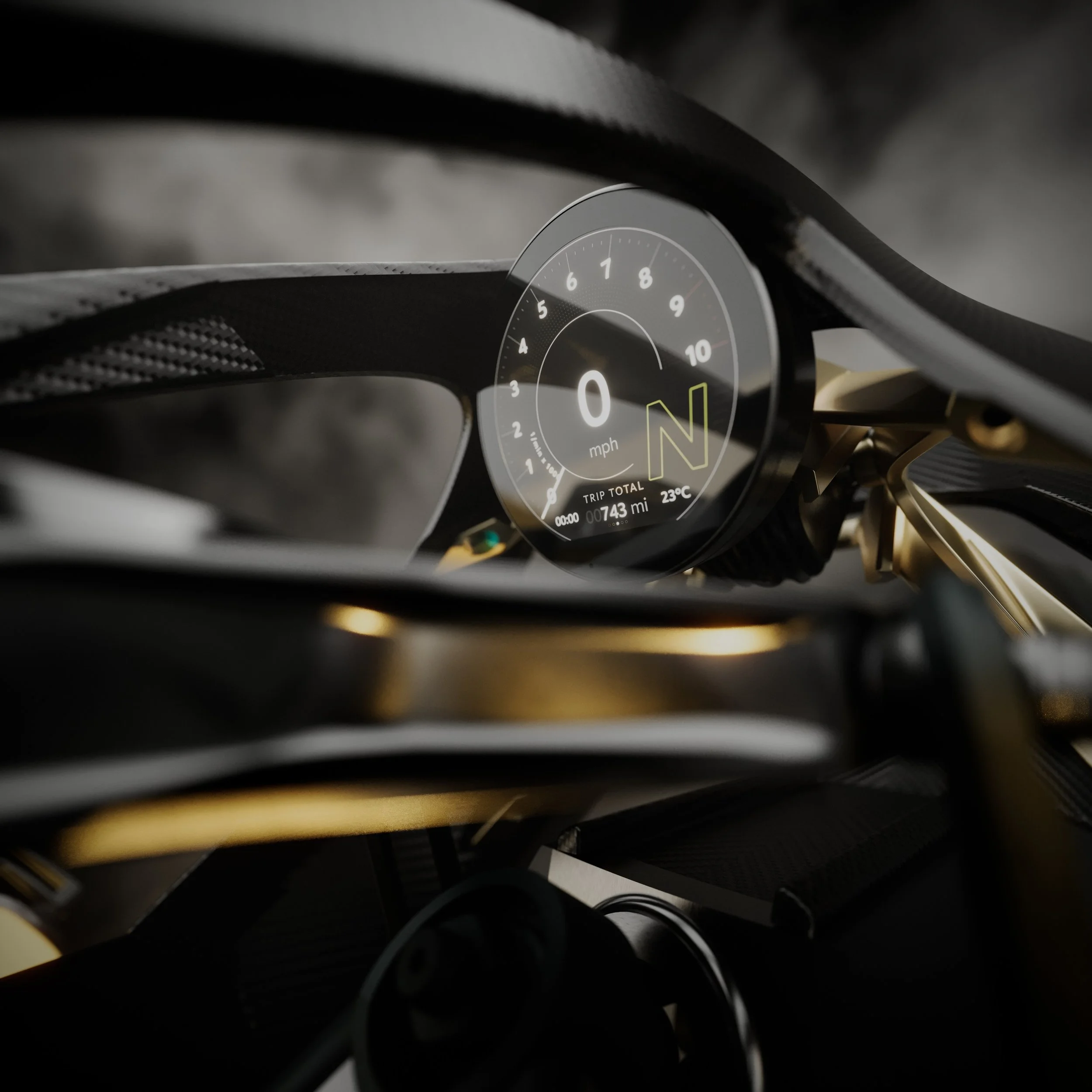
Image © Aston Martin Lagonda. Used for editorial purposes. Aston Martin & Brough Superior AMB002 Roadster.
It’s still exotic. It’s still limited. With a billet-machined titanium frame, carbon-fibre construction and highly unusual front suspension, nobody could accuse it of suddenly becoming conventional. But the AMB 002 takes this collaboration out of the display hall and away from the private circuit.
For the first time, an Aston Martin and Brough Superior motorcycle belongs on the road.
The timing also makes the next story particularly interesting. While Aston Martin is looking for new ways to extend the value and reach of its name beyond four wheels, a very different conversation about the value, ownership and future of that same name has been spreading rapidly online this week.
Aston Martin’s Financial Troubles Go Viral — But Does the Story Stack Up?
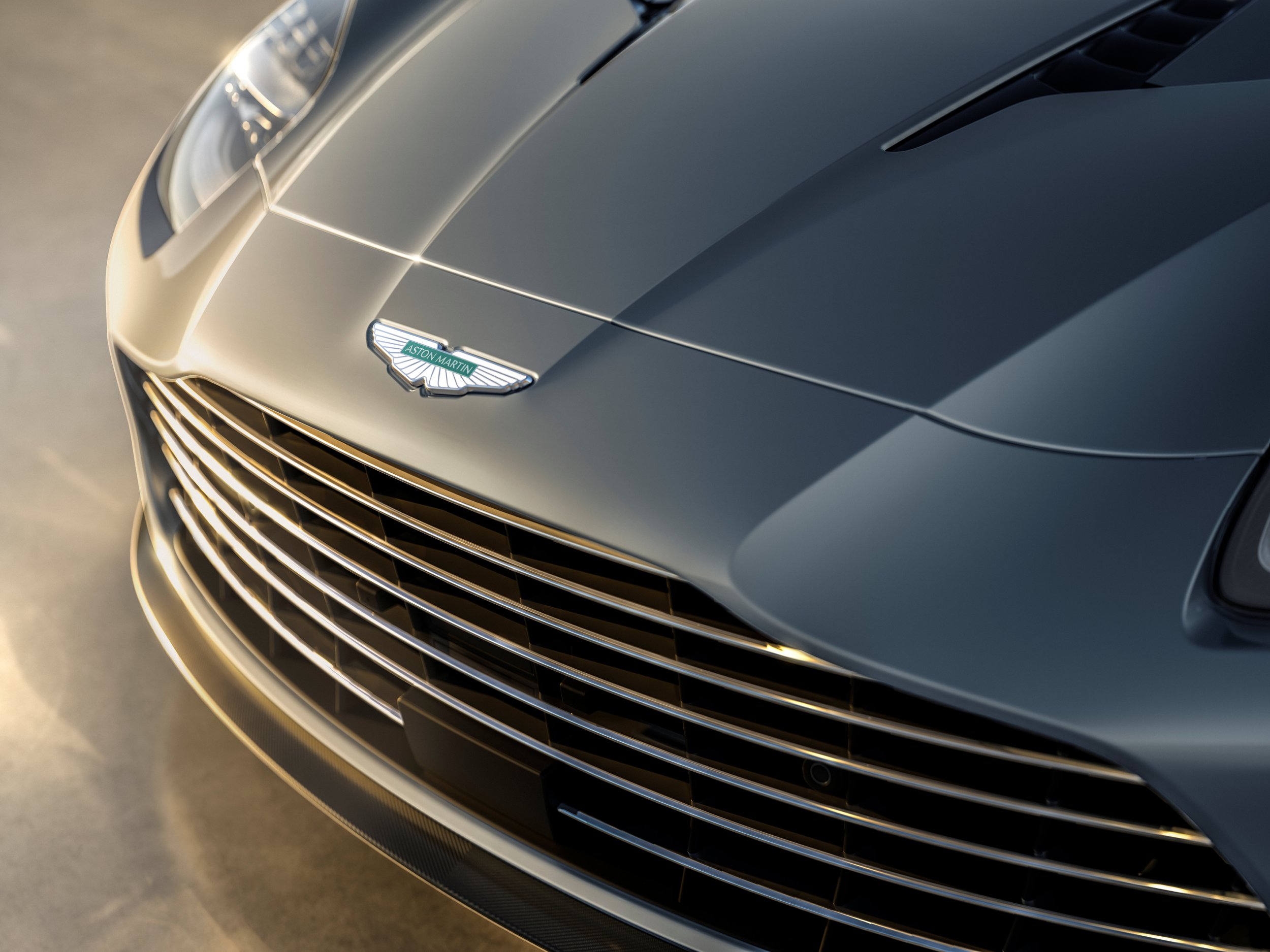
Image © Aston Martin Lagonda. Used for editorial purposes. Aston Martin Vanquish 25.
Aston Martin’s financial difficulties are hardly a new subject for regular FTP readers. We’ve followed the company’s debt, losses, repeated capital requirements and more recent £550 million financing in considerable detail. Only last Sunday, our Featured Article, Adrian Hallmark: Two Years On – Can the Bentley Playbook Work at Aston Martin?, spent considerable time examining precisely the question at the heart of Aston Martin’s current turnaround: can a company producing increasingly desirable and valuable cars finally convert that success into sustainable profitability and dependable cash generation?
Our conclusion was deliberately uncomfortable rather than reassuring. Aston Martin is not financially sustainable yet.
The operational evidence is improving, but adjusted operating profit remains negative, free cash flow has yet to become sustainably positive and the company continues to carry a very substantial debt burden. Hallmark may have more financial breathing room with which to execute his plan, but the business still needs to prove that it can increasingly fund its future through its own underlying economics rather than repeated external financing. That background is useful, because a rather more dramatic interpretation of Aston Martin’s situation has been travelling far beyond the usual enthusiast audience this week.
The YouTube channel The Sleeper List, which had around 21,400 subscribers when FTP reviewed the film on Wednesday, published a video on 4th September entitled “Aston Martin Lost 98% of Its Value — Here’s WHY.”
By Wednesday morning it had accumulated more than 326,000 views and around 390 comments. For a channel of that size, that’s considerable reach.
The film goes well beyond Aston Martin’s latest financial results. It links the company’s debt and losses with its international shareholder base, Geely’s previous interest in increasing its involvement, the expiry of a shareholding restriction in 2024, the controversial £550 million refinancing, the Lucid technology agreement and Aston Martin’s sale of Formula One naming rights.
Its eventual proposition is considerably stronger: another takeover is likely, Geely is the obvious buyer and little now stands between the Chinese automotive group and control of Aston Martin. There’s enough truth within the underlying financial story to make the film compelling.
But does the entire argument withstand closer scrutiny?
The Financial Problems Are Real
It’s worth beginning with the part that should not be disputed. Aston Martin reported a £88.7 million loss before tax in the second quarter of 2026, compared with £61.2 million during the equivalent period last year. At 30th June, reported net debt stood at approximately £1.545 billion. Those are difficult numbers. They’re also only part of the same set of results.
Second-quarter revenue increased 62 per cent year-on-year to £358.2 million. Gross profit increased 93 per cent, from £61.4 million to £118.6 million, while the operating loss improved from £67.4 million to £47.6 million. Across the first half, gross margin increased from 27.9 to 33.8 per cent. None of that makes £1.545 billion of net debt disappear.
It does demonstrate why describing Aston Martin simply as a company whose losses are getting worse misses an important part of what’s currently happening underneath. That’s exactly the distinction FTP explored last Sunday. There’s evidence of operational improvement, occurring inside a company whose financial structure remains extremely challenging. Both things can be true at once.
The £550 million financing referred to in the film is also real, as is the dispute that followed it. FTP has already examined that extensively in previous Roundups and again in our Hallmark investigation. It consists of a £450 million senior secured term loan and a further £100 million delayed-draw facility. Part of the money refinanced existing facilities, while the overall package increased Aston Martin’s available liquidity and gave management more room in which to pursue its business plan. It’s borrowing, not £550 million of free money.
Existing creditors subsequently challenged aspects of the transaction and threatened legal action. FTP has consistently distinguished those creditor allegations from anything established by a court, and that distinction remains important now. So the video has not discovered an imaginary financial problem.
The more interesting questions concern some of the conclusions built upon it.
You’ve reached the halfway point
That’s the first half of Issue 41 complete.
Still ahead: Aston Martin’s ownership and financial questions, Jaguar Land Rover’s restructuring, Market Watch, our Valhalla Car of the Week, Goodwood, the FTP Update and plenty more besides.
Who Actually Owns Aston Martin?
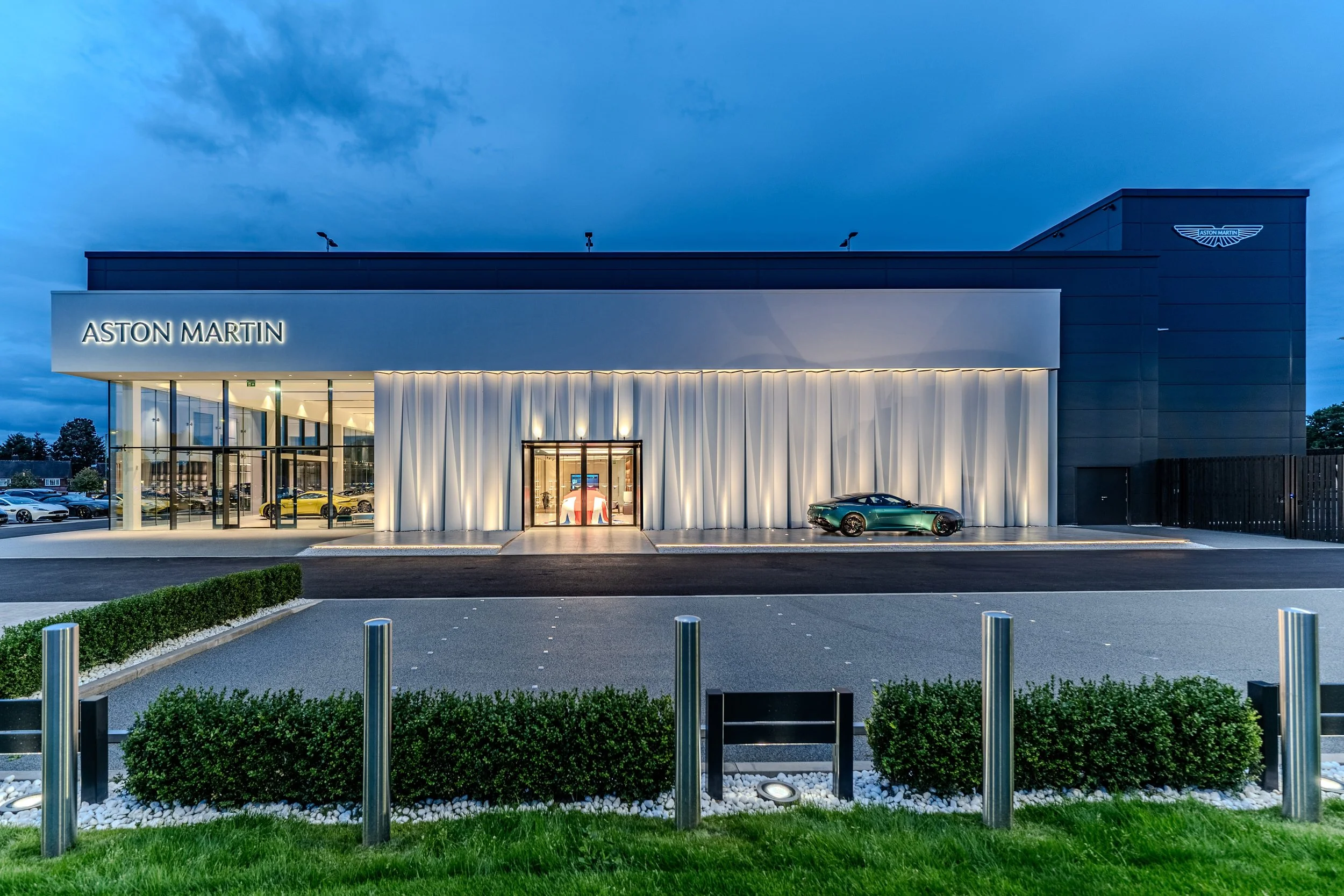
Image © Aston Martin Lagonda. Used for editorial purposes. Aston Martin Birmingham.
One of the film’s central arguments is that Aston Martin is effectively owned from overseas and that Geely is now positioned to take control. Aston Martin undeniably has a highly international shareholder base. However, some of the percentages quoted in the video no longer reflect the most recent figures disclosed by Aston Martin.
The company’s 2025 Annual Report records Li Shufu, representing Geely, at 14.08 per cent, the Public Investment Fund at 13.88 per cent and Mercedes-Benz at 7.54 per cent. Ernesto Bertarelli had a disclosed interest of 14.92 per cent.
Lawrence Stroll’s disclosed interest was 32.99 per cent, but that figure needs careful interpretation. Aston Martin specifically notes that it includes shares also disclosed through Yew Tree Overseas and Ernesto Bertarelli. Those percentages therefore cannot simply be added together as if every figure represented a separate block of shares.
That’s a good example of how shareholder structures can become misleading when converted into a simple graphic or narration.
Geely certainly has influence. Its relationship agreement gives it board representation, and in 2023 it invested approximately £234 million to increase its then shareholding to around 17 per cent. Aston Martin described that transaction at the time as creating a long-term partnership. Its previous interest in a greater role is also well documented.
Image © Aston Martin Lagonda. Used for editorial purposes.
Geely explored an investment in Aston Martin during the 2020 funding process, and in 2022 formed part of the Atlas Consortium with Investindustrial, which proposed an investment package worth up to £1.3 billion. Aston Martin rejected that proposal, saying its structure could’ve allowed the consortium to acquire a controlling or potentially majority position without paying existing shareholders a takeover premium. So there’s genuine history behind the Geely discussion.
Where we think the video goes too far is in turning possibility into inevitability.
The Expired Standstill Does Not Mean the Door Is Wide Open
Image © Aston Martin Lagonda. Used for editorial purposes.
The film places considerable emphasis on 1st August 2024. That date is relevant. When Geely increased its investment in 2023, it agreed not to take its holding beyond 22 per cent until 1st August 2024, except under specified circumstances. That standstill has indeed expired. But the assertion that the only thing now standing between Geely and a controlling stake is whether Geely decides it wants one is much too simple. Aston Martin is a publicly listed UK company and remains subject to the UK Takeover Code.
Under Rule 9, if an individual shareholder, together with anyone considered to be acting in concert with it, acquires interests carrying 30 per cent or more of the voting rights, it would normally be required to make an offer to the remaining shareholders unless the Takeover Panel grants a waiver. That does not make a future Geely bid impossible. It means moving from a 14 per cent strategic shareholding to control is not simply a matter of quietly buying whatever remains available in the market. There would be financing, shareholder, regulatory and Takeover Code consequences to navigate.
Most importantly, there’s currently no evidence presented by the film that Geely has decided to launch such an offer. An expired restriction tells us what Geely is no longer contractually prevented from doing within that agreement. It doesn’t tell us what Geely intends to do next.
The Lucid Deal Needs a Small but Important Correction
The film also uses Aston Martin’s relationship with Lucid as evidence of the company repeatedly surrendering ownership in exchange for technology and cash. There’s a legitimate discussion to have about Aston Martin’s dependence on outside technology partners. Mercedes-AMG and Lucid are both important to its future product plans. But one figure in the film is misleading.

Image © Lucid. Used for editorial purposes.
The Lucid agreement did involve the issue of 28,352,273 Aston Martin shares. It also required phased cash payments. However, those cash payments totalled $132 million, not more than $200 million in cash. Aston Martin valued the shares at approximately $100 million when the agreement was announced, making the combined shares-and-cash consideration approximately $232 million.
That may appear a small distinction, but it illustrates why financial storytelling benefits from separating cash, equity and total transaction value. They’re not interchangeable.
Has Aston Martin Really “Lost 98% of Its Value”?
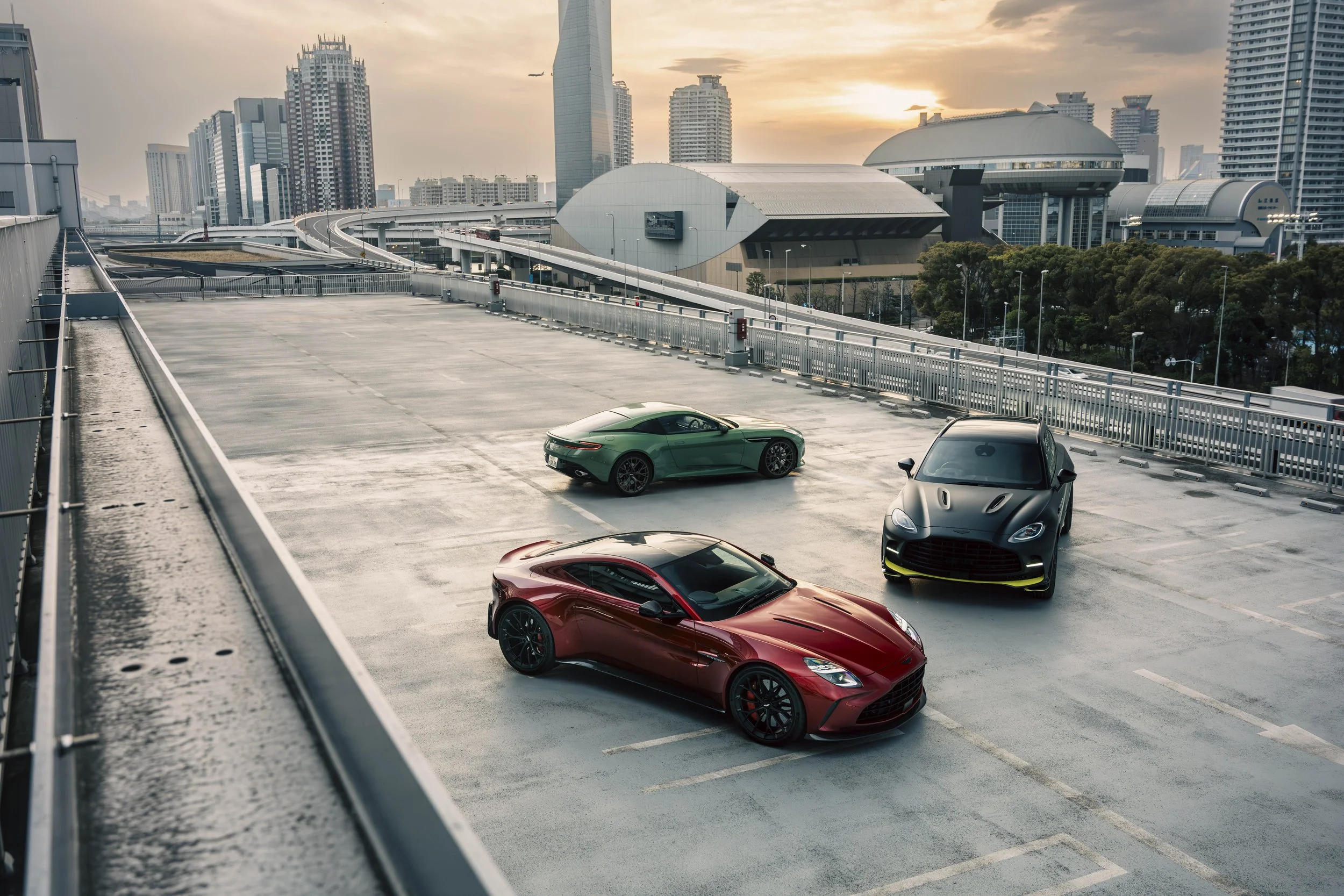
Image © Aston Martin Lagonda. Used for editorial purposes. Aston Martin in Tokyo.
There’s no sensible way to disguise the destruction of shareholder value since Aston Martin floated in 2018. The original shares were priced at £19, valuing Aston Martin at more than £4 billion. Anyone who invested at flotation and remained exposed through the subsequent collapse, capital raises and restructuring has endured an extraordinarily painful experience.
But describing this simply as Aston Martin having “lost 98% of its value” requires some qualification.
A share price is not the same thing as the total value of the business, and Aston Martin’s capital structure has changed enormously since the flotation. The company has issued very large quantities of new shares, completed rights issues and raised further equity on several occasions. Comparing one share then with one share now therefore provides a powerful illustration of the experience suffered by longstanding shareholders, but it’s not a clean measure of the percentage by which the economic value of the entire company has fallen. The underlying point remains severe.
Aston Martin’s flotation has been disastrous for long-term shareholder value. That’s strong enough without needing the headline to do more work than the underlying calculation can properly support.
Does Lotus Tell Us Aston Martin’s Future?
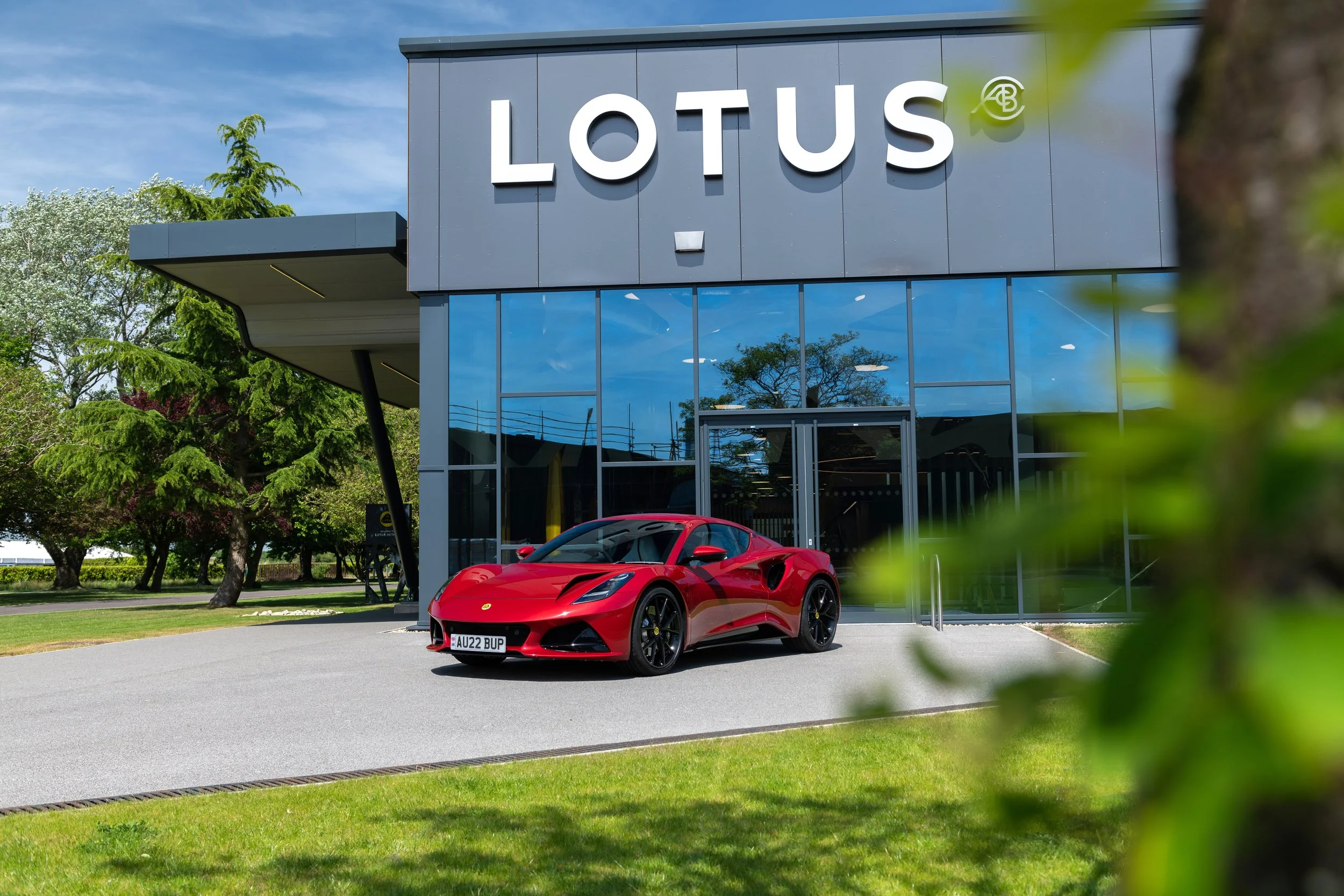
Image © Lotus. Used for editorial purposes.
The film then turns to Lotus. Geely acquired a controlling stake in Lotus in 2017. Hethel continues to develop and manufacture the Emira, while Lotus’s newer electric models have involved substantial manufacturing operations in China. That’s an interesting precedent. It’s not evidence of a future Aston Martin industrial plan.
Even if Geely were eventually to acquire Aston Martin, and, to be clear, no such transaction has been announced, it does not logically follow that Aston Martin engineering or manufacturing would move to China. Corporate strategies differ. Brands differ. Manufacturing economics differ. Governments and regulations differ. Lotus can illustrate one possible ownership model. It cannot tell us what an unannounced owner would do with an acquisition that has not happened.
The Comments May Be the Most Interesting Part
Where this film becomes especially relevant to FTP is not simply in whether every number is correct. It’s in how widely the story has travelled.
Around 390 comments had accumulated beneath the video when we reviewed it. They’re not a scientific opinion poll, and YouTube was displaying them using its Top comments sorting rather than presenting a random sample. They nevertheless offer a useful window into the conversation being generated.
There is no single consensus.
Some viewers express genuine concern about Aston Martin’s debt, repeated fundraisings and history of financial difficulty. Others direct their criticism towards management decisions, Lawrence Stroll, Formula One expenditure or the emphasis on extremely expensive Specials and hypercars. British ownership and identity clearly provoke strong emotions too. Yet perhaps surprisingly, there’s also a sizeable body of opinion arguing that Geely ownership would not necessarily be a bad outcome. Several viewers point towards Volvo and suggest that access to the capital and engineering resources of a much larger automotive group could actually strengthen Aston Martin.
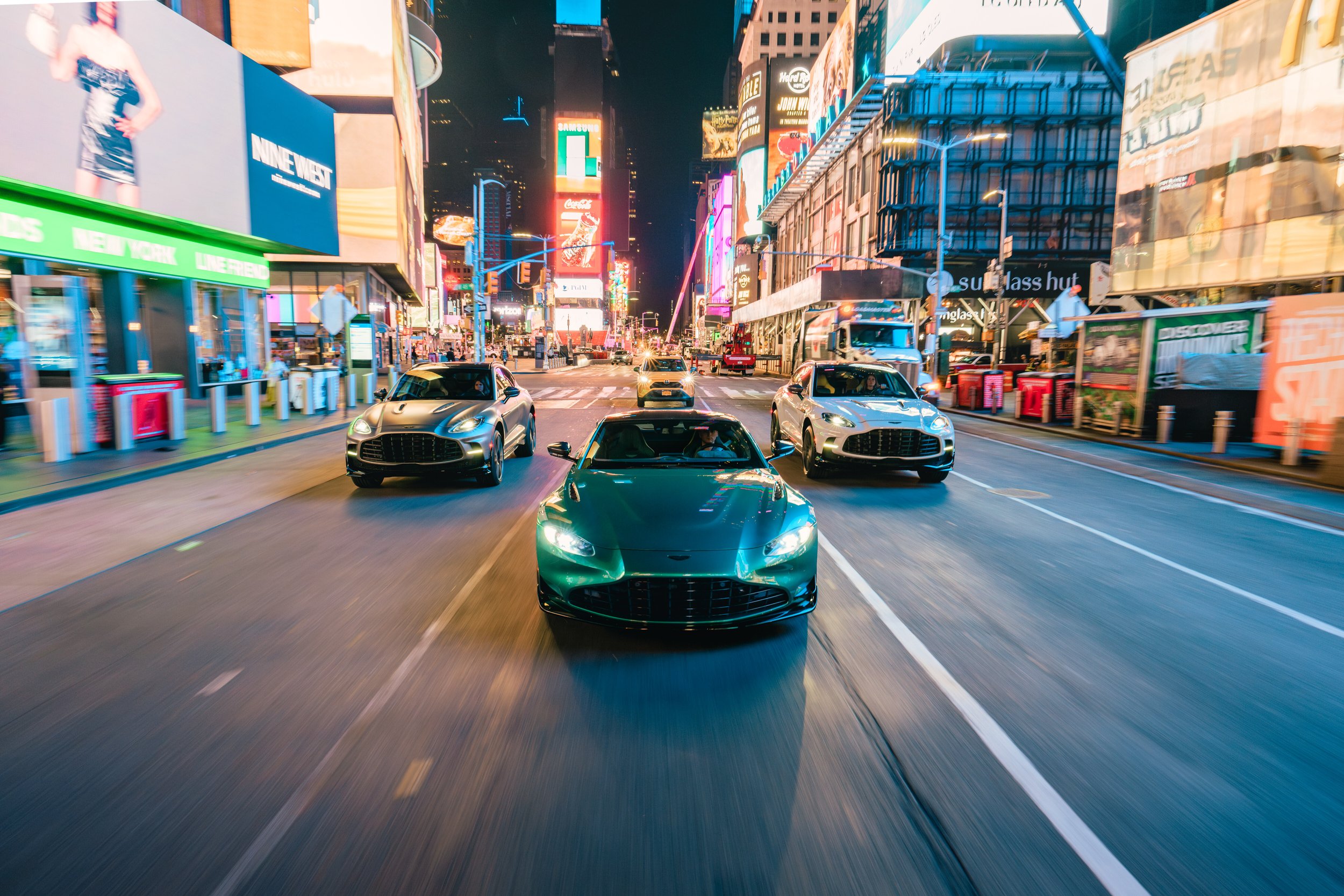
Image © Aston Martin Lagonda. Used for editorial purposes.
Another group takes issue with the film itself, questioning parts of its financial analysis, the way share-price decline is equated with company value and the suggestion that Chinese ownership automatically means British engineering and manufacturing would disappear. There are owners praising the current cars, too. One commenter describes having a fourth new Aston Martin on order, while others separate their admiration for the products from their concern about the company behind them.
That perhaps tells us more than a binary question of whether the film is “right” or “wrong”.
Outside the dedicated Aston Martin community, perception of the company is complicated. There remains enormous affection for the cars and the badge. There’s also considerable awareness that Aston Martin has struggled repeatedly to make the economics of producing those cars work, and there are very different opinions about whether preserving Aston Martin’s British identity depends upon the nationality of the people providing its capital.
FTP’s View
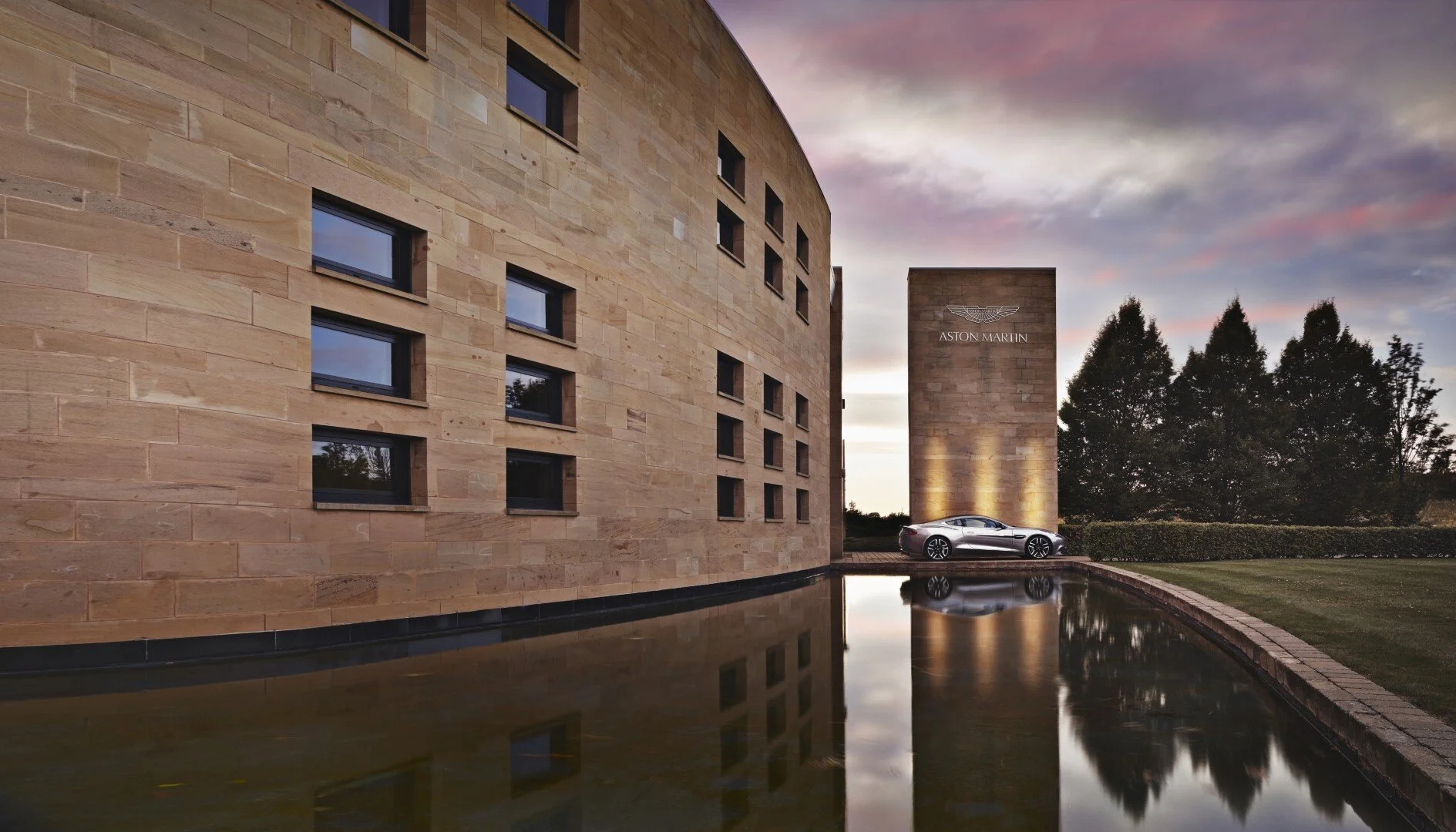
Image © Aston Martin Lagonda. Used for editorial purposes. AML HQ, Gaydon.
There’s a reason this particular video has travelled so far. Aston Martin genuinely does provide the ingredients for a compelling financial story: a globally famous marque, extraordinary cars, more than a century of survival, repeated financial crises, £1.5 billion of net debt, wealthy international shareholders and a Chinese automotive group that has previously explored a larger role.
The mistake would be to conclude that because many of the ingredients are real, every conclusion drawn from them must therefore follow. FTP reached a much less dramatic conclusion only last Sunday. There are now credible signs that Aston Martin is operating better. Revenue, gross profit and gross margin have improved. Production is becoming more disciplined, Hallmark is trying to redesign the economics of the business around lower volume and higher customer value, and the July financing has created additional room in which to execute that plan. But the company remains loss-making. Debt remains extremely high. Positive, sustainable free cash generation has yet to be proven. External financing remains central to the story.
That’s why our answer last Sunday to the question of whether Aston Martin is financially sustainable today was no. It remains no.
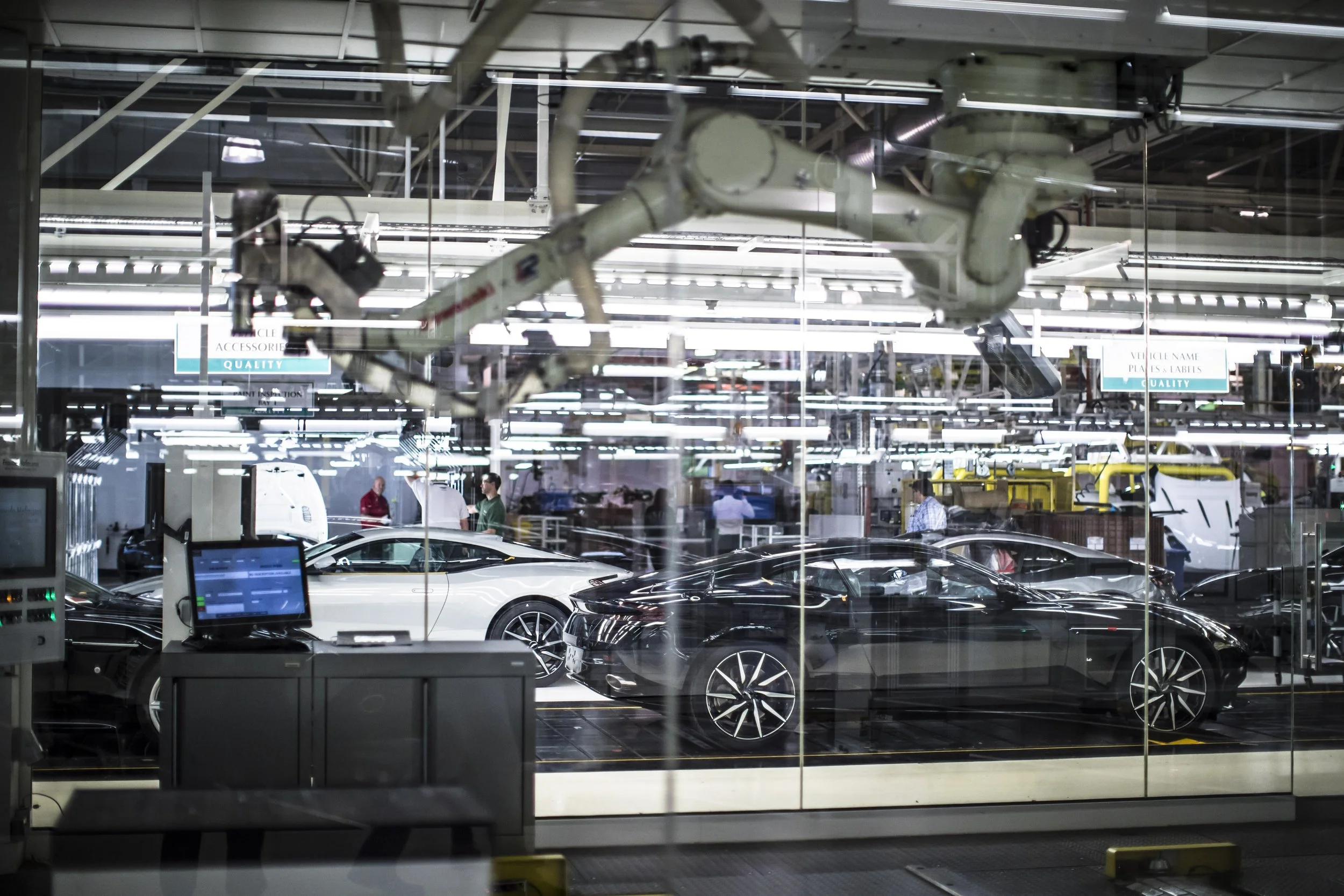
Image © Aston Martin Lagonda. Used for editorial purposes.
What we do not yet have evidence to say is that another takeover is imminent, that Geely has decided to make one, or that Aston Martin’s future manufacturing footprint has already been determined somewhere outside Gaydon. At present, the available evidence does not support those conclusions. FTP will continue to follow developments as they emerge.
If this week’s viral discussion demonstrates how exposed Aston Martin remains to questions about financial resilience, another famous name in Britain’s luxury-car industry has just provided a reminder that scale and deep-pocketed ownership do not remove those pressures entirely. At Jaguar Land Rover, thousands of jobs are now set to disappear as the company pursues a substantial new cost-reduction programme.
Why JLR’s 4,000 Job Cuts Matter to Aston Martin
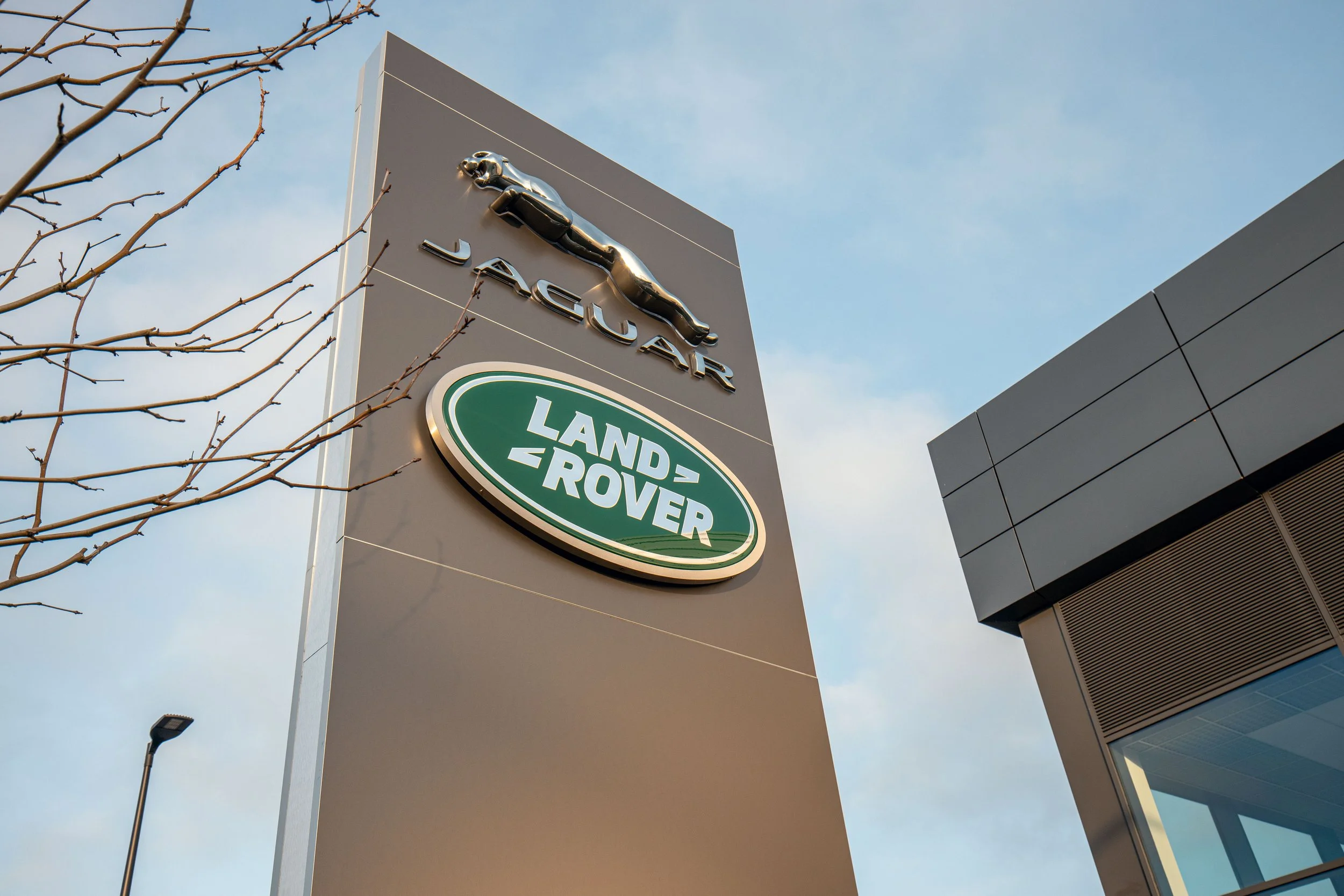
Image © JLR. Used for editorial purposes.
This is a Jaguar Land Rover story, but there’s a very specific reason it belongs in an Aston Martin Roundup.
Only last Sunday, FTP examined Adrian Hallmark’s attempt to reshape Aston Martin into a lower-volume, more financially sustainable luxury manufacturer, with tighter control of production, costs and capital. This week, one of Britain’s much larger luxury-car groups has announced a substantial restructuring of its own, cutting thousands of jobs while trying to reduce the number of vehicles it needs to sell before the business breaks even.
The companies are very different. Jaguar Land Rover is considerably larger than Aston Martin and has the backing of Tata Motors, whereas Aston Martin remains an independent listed manufacturer carrying a substantial debt burden. Their financial circumstances shouldn’t be confused. But some of the pressures behind JLR’s announcement, high investment requirements, changing demand, growing competition from Chinese manufacturers, tariffs, technological transition and the need to reduce fixed costs, are precisely the kinds of forces Aston Martin must navigate too.
That’s why this story is relevant.
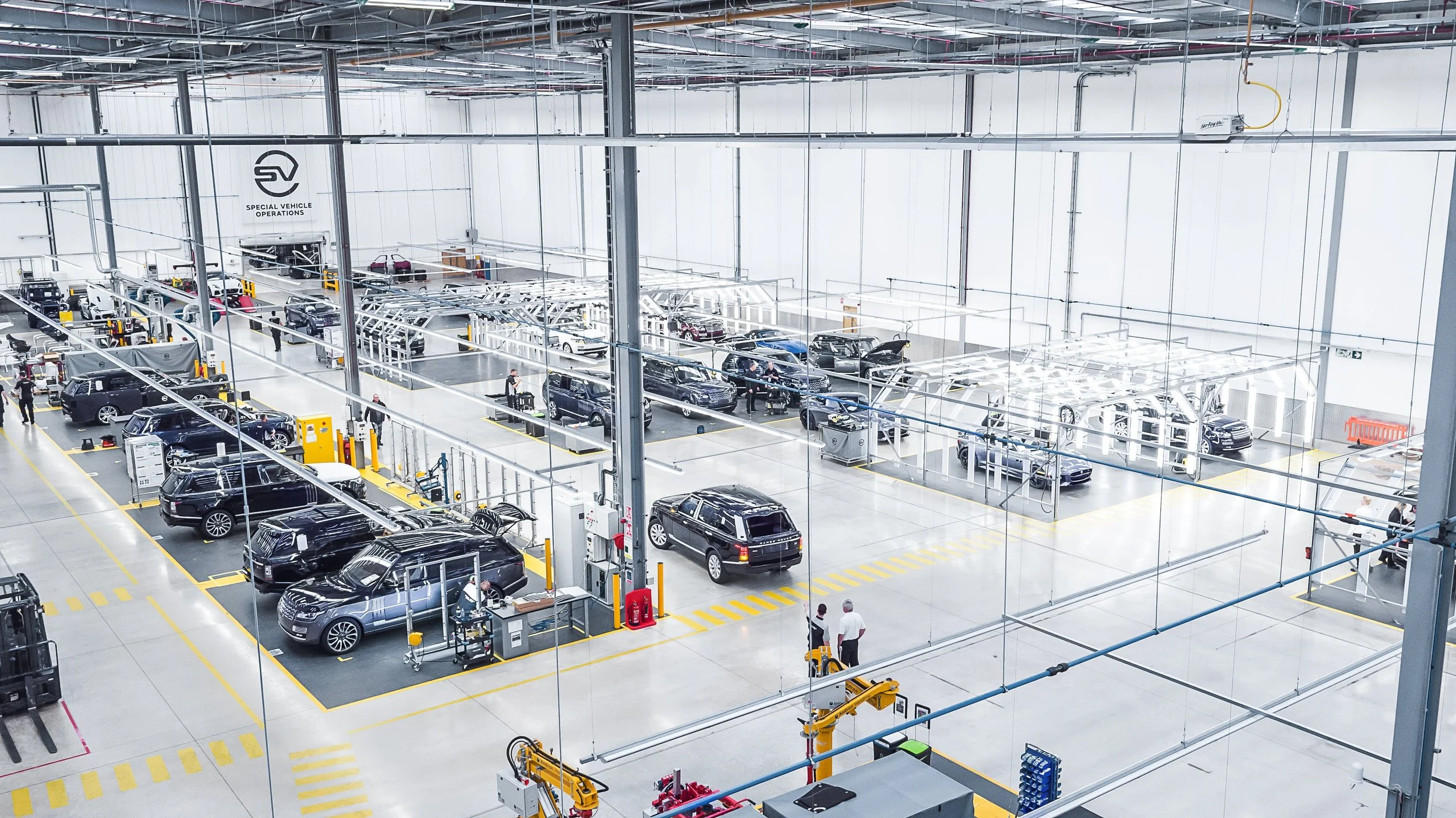
Image © JLR. Used for editorial purposes.
JLR plans to cut around 4,000 jobs globally over the next two years, equivalent to almost ten per cent of its workforce, as part of a programme designed to deliver approximately £1.7 billion of savings.
The company employs around 43,000 people worldwide, approximately 34,000 of them in the UK, although it has not yet specified precisely how the reductions will be distributed. The programme is expected to focus primarily on voluntary redundancies.
There’s a clear economic objective behind the restructuring. JLR wants to lower the point at which its business breaks even to approximately 300,000 vehicles annually. Put simply, it wants the company to be able to cover its costs and begin generating profit at a significantly lower production volume.
That language should sound familiar to anyone who read FTP’s Adrian Hallmark Featured Article last Sunday.
One of the central themes of Hallmark’s strategy is that Aston Martin cannot simply chase ever-greater production numbers in the hope that volume will eventually solve the economics of the business. Instead, the company needs to generate more value from each car, control supply more carefully, reduce the amount of capital tied up in the operation and ultimately create a business capable of producing sustainable cash at a lower level of annual production.
JLR is approaching the problem from a vastly greater scale, but the underlying principle is recognisable: a luxury manufacturer has to make its cost base work at the level of demand the market can realistically support.
Pressure From Several Directions
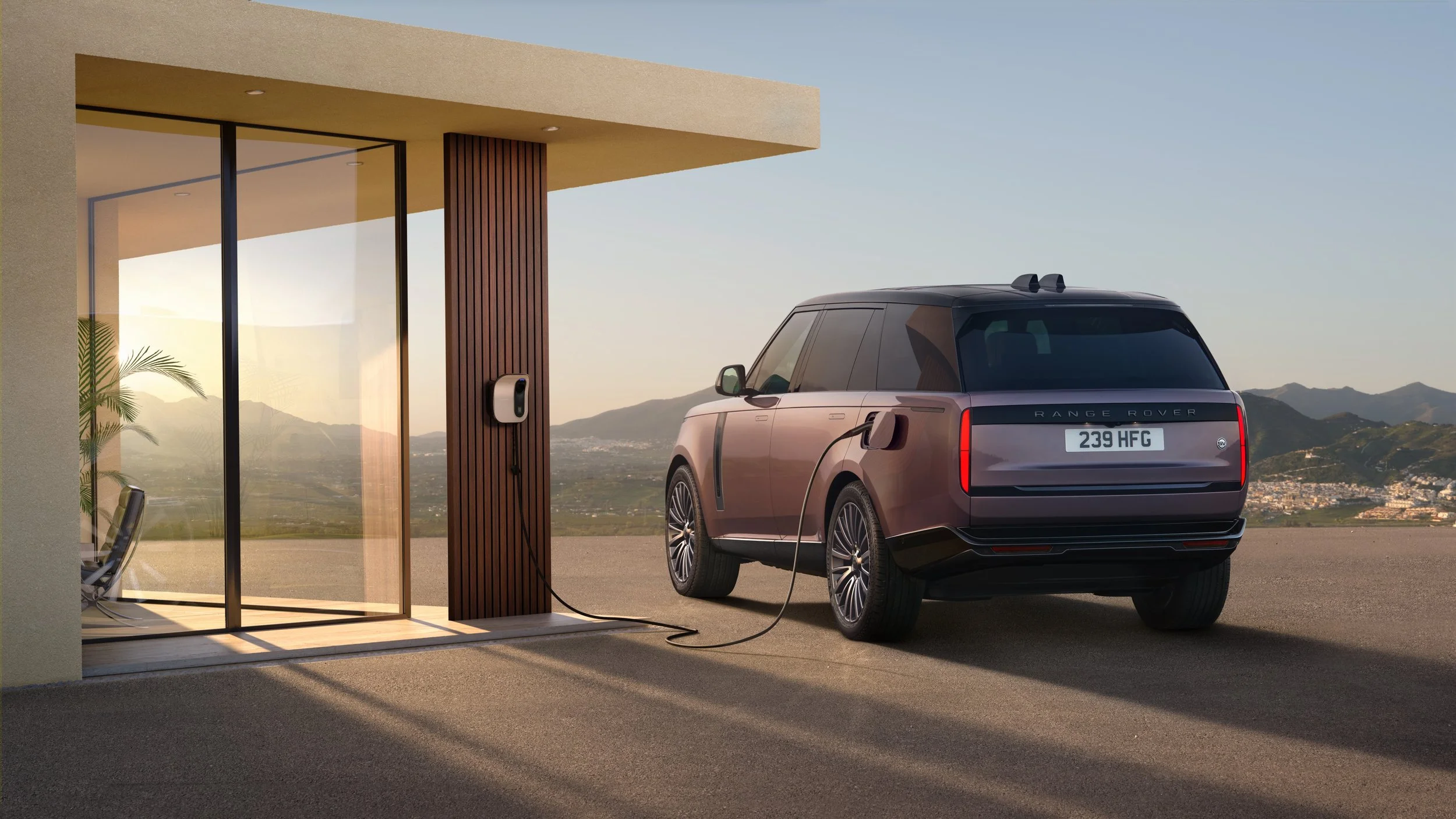
Image © JLR. Used for editorial purposes. Range Rover Electric on charge.
JLR has not blamed one single factor for the reductions. The company is operating against increasingly intense global competition, particularly from rapidly developing Chinese manufacturers, alongside tariffs, geopolitical uncertainty and the enormous investment required as the industry transitions towards new powertrains, software and digital technology.
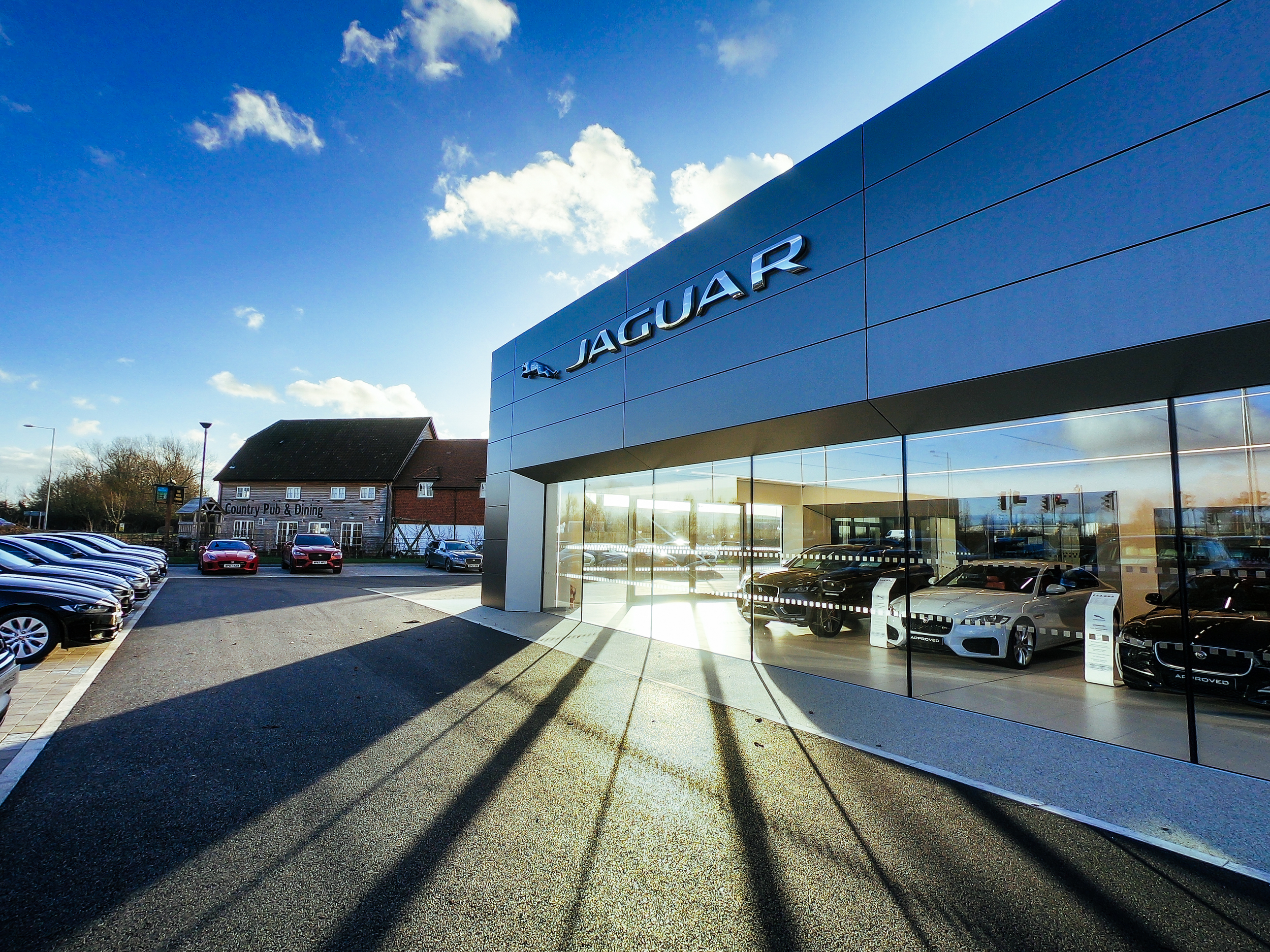
Image © JLR. Used for editorial purposes.
There’s also some more specific recent history. JLR continues to deal with the consequences of the major cyberattack that disrupted its operations during 2025, while weaker sales and trade pressures have added further strain. This is where the comparison with Aston Martin becomes useful, while recognising that the two businesses are experiencing very different circumstances.
Aston Martin is also investing heavily in future products and technology while simultaneously trying to improve the economics of the existing business. It has Mercedes-Benz technology relationships, the Lucid electric-vehicle agreement, continuing development of its own product portfolio and an expensive transition towards the next generation of vehicles, all while Hallmark is attempting to reduce inventory, improve margins and create sustainable free cash flow.
Neither company has the luxury of simply cutting expenditure and standing still.
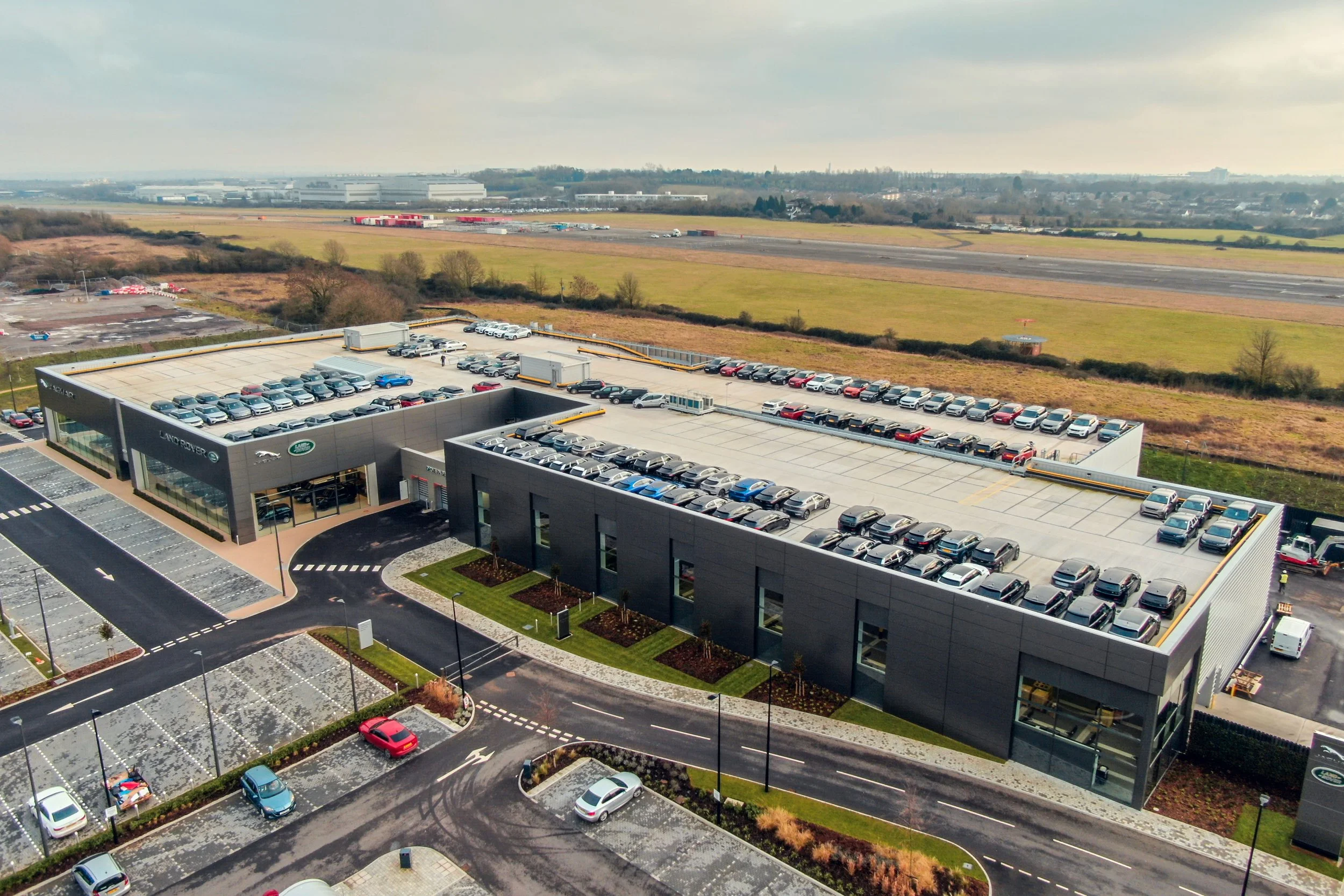
Image © JLR. Used for editorial purposes.
JLR illustrates that point particularly clearly. Despite seeking approximately £1.7 billion of savings and reducing its workforce by thousands of people, the company still expects to invest somewhere between £15 billion and £18 billion over the next five years, covering future models, electrification, manufacturing and digital technologies. Five new models are planned during the coming year.
At first glance, cutting costs while investing billions may appear contradictory. In reality, it’s one of the defining challenges confronting established car manufacturers. The next generation of vehicles requires enormous amounts of capital, so the existing organisation has to become sufficiently efficient to help pay for that future.
Scale Does Not Remove the Pressure
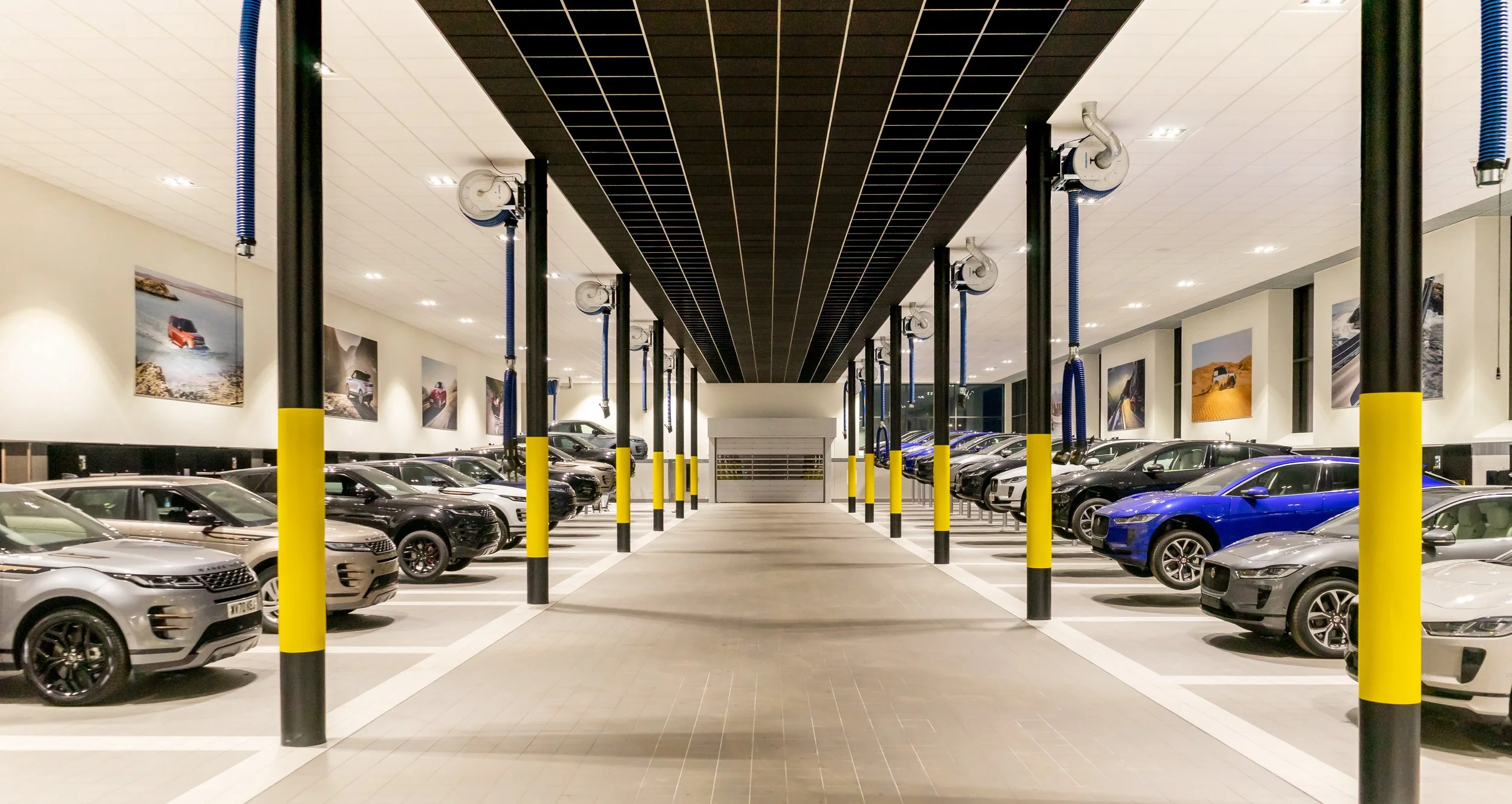
Image © JLR. Used for editorial purposes.
This is perhaps the most useful Aston Martin perspective. JLR is larger than Aston Martin, produces vastly more vehicles and sits within Tata Motors. It has resources and scale Aston Martin simply does not possess. Yet even that doesn’t insulate a luxury-car manufacturer from difficult decisions. Chinese competition can change remarkably quickly. Trade barriers can alter the economics of individual markets. Technology programmes require billions of pounds before the resulting products generate revenue. Consumer demand can shift, while fixed manufacturing and employment costs remain.
Aston Martin has the additional complication of its debt burden and repeated need for external capital, which makes its own financial position considerably more fragile in some respects. But the pressures don’t exist in isolation at Gaydon. They’re part of a much wider transformation taking place across the premium and luxury automotive industry.
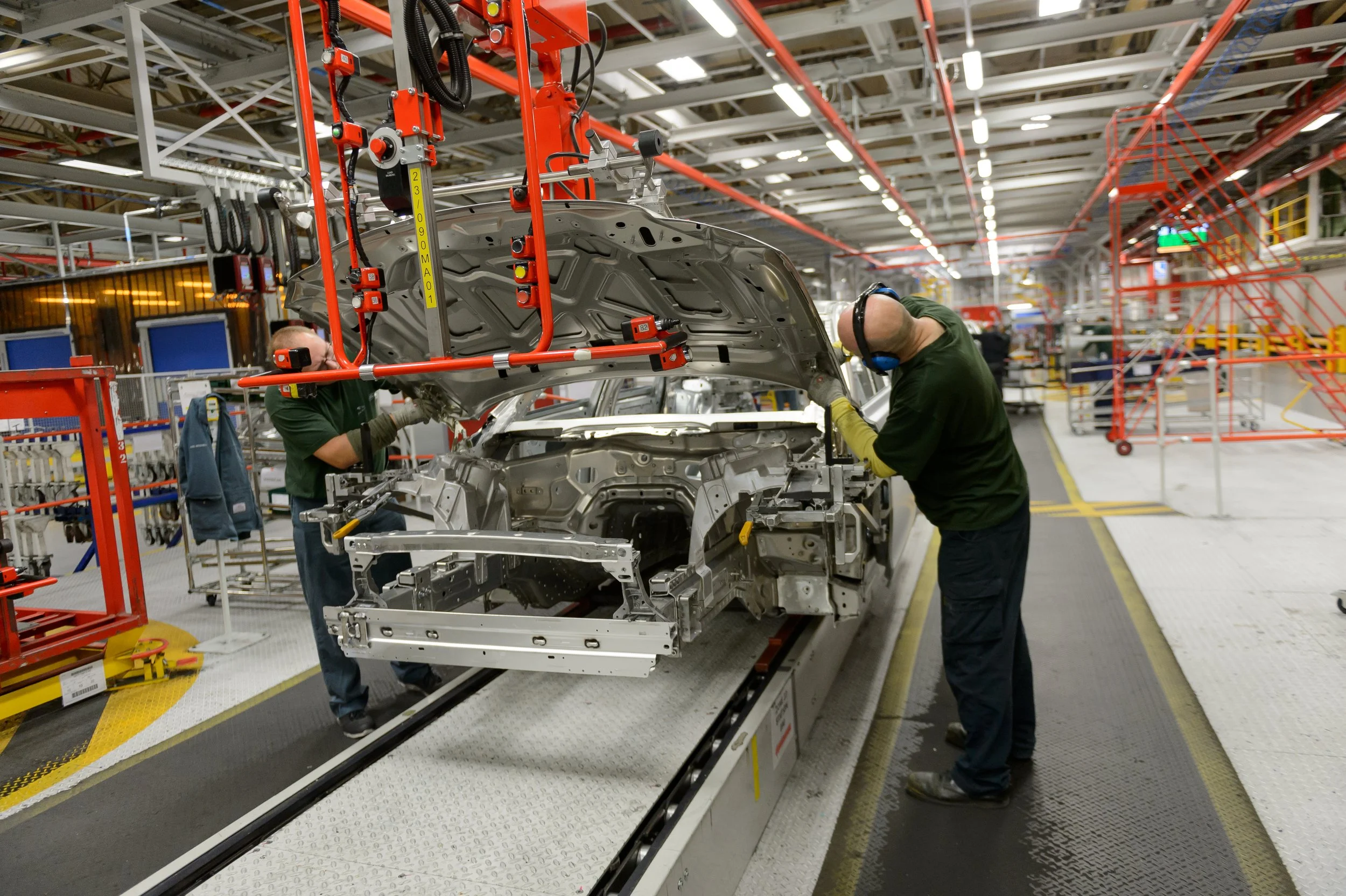
Image © JLR. Used for editorial purposes.
There’s also a human side which shouldn’t disappear beneath all of the financial terminology. Around 4,000 jobs represent thousands of individual careers and families facing uncertainty. Cost reductions and break-even targets may make sense when presented in a financial plan; the consequences are considerably more personal for the people affected.
For FTP, that’s ultimately why this story is worth including. Last Sunday we examined whether Adrian Hallmark can create an Aston Martin capable of surviving and eventually prospering at lower volume, with stronger margins and much greater financial discipline. This week, Jaguar Land Rover, a far bigger, better-capitalised British luxury manufacturer, has demonstrated that it’s wrestling with its own version of the same fundamental question:
How do you fund the enormous cost of the future while making the business you have today considerably more efficient?
The scale may be different. The challenge is increasingly familiar.
From the economics of building new luxury cars, we turn to a very different measure of value: what collectors are prepared to pay for Aston Martins that left the factory decades ago. There are still two cars on the FTP Market Watch list awaiting their turn beneath the auction lights, while another particularly strong group of Aston Martins is about to head to Goodwood.
FTP Market Watch — Three Significant Aston Martins Head for Goodwood
Before adding anything new to the FTP Market Watch this week, there are two outstanding cars from recent Issues to keep firmly on the radar.
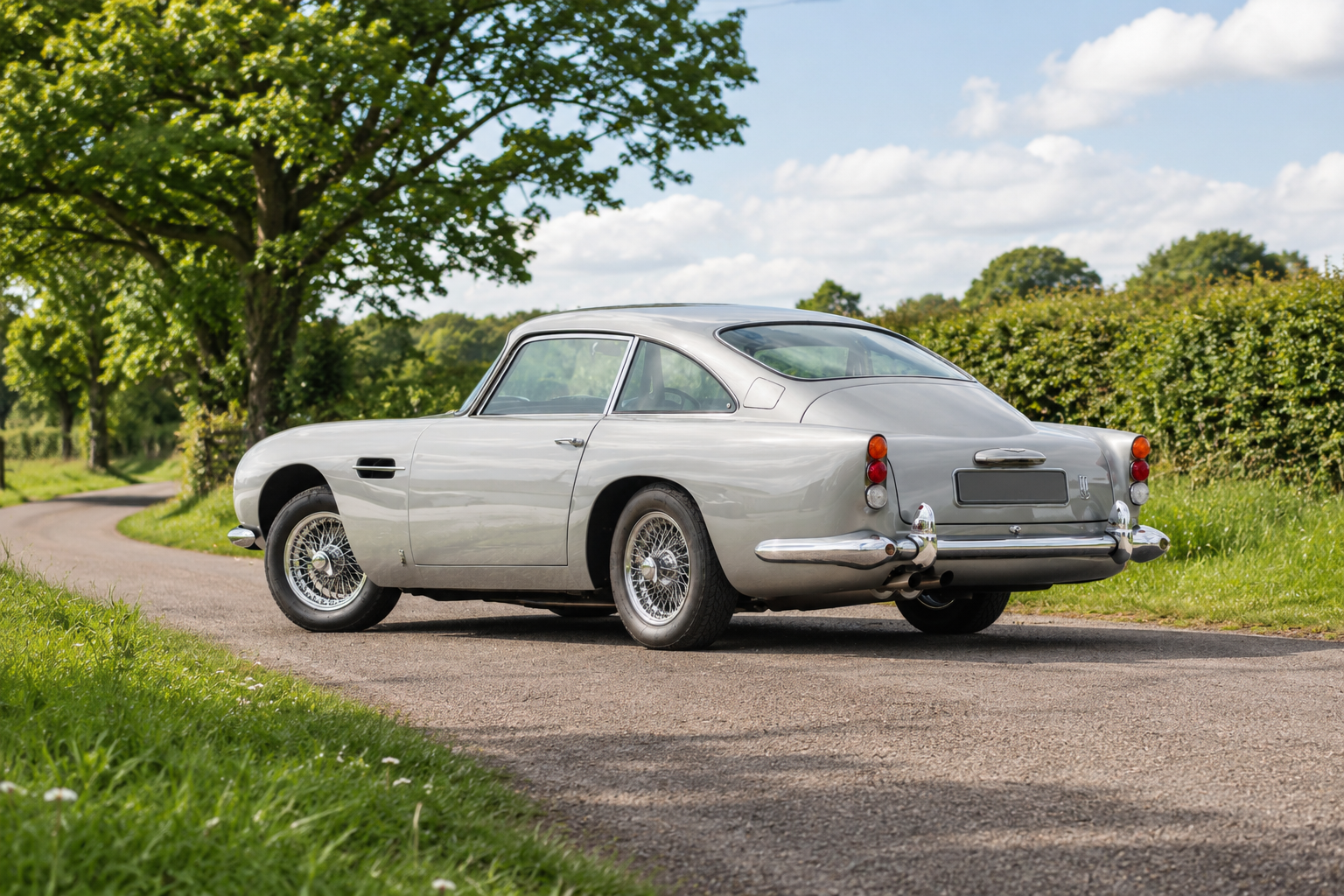
Image © Fuel the Passion. Aston Martin DB5, used for illustrative purposes.
In Issue 40, we highlighted a particularly rare 1965 Aston Martin DB5 Vantage, chassis DB5/2228/L, which is heading to RM Sotheby’s Zürich Auction on 26th September. According to Aston Martin Heritage Trust records quoted by RM Sotheby’s, only 60 closed DB5s were originally equipped with the Vantage engine, with just 21 configured in left-hand drive. This car was built in Silver Birch over Dark Blue Connolly leather, equipped with the Vantage engine and five-speed manual gearbox, and supplied new in 1965.
The Zürich sale takes place on Saturday 26th September, so the DB5 remains firmly on our watchlist.
Our Issue 39 watch is further away still. The extraordinary 1987 Aston Martin Lagonda Series 3 Shooting Brake converted by Roos Engineering is due to be offered by Broad Arrow in Zürich on 7th November, without reserve and with an estimate of CHF 250,000–350,000.
It’s one of only 76 Series 3 Lagondas and was the example whose shooting-brake conversion was undertaken by Roos Engineering in Switzerland with Aston Martin approval and factory-supplied components. The conversion began after the car was acquired in 1996 and was completed in 2000.
So both of those stories remain open.
This week, however, we can add another sale containing some very serious Aston Martin machinery.
Goodwood Revival — 19th September
Bonhams returns to the Goodwood Revival on Saturday 19th September, and Aston Martin is particularly well represented in the catalogue. Three cars in particular caught our eye.
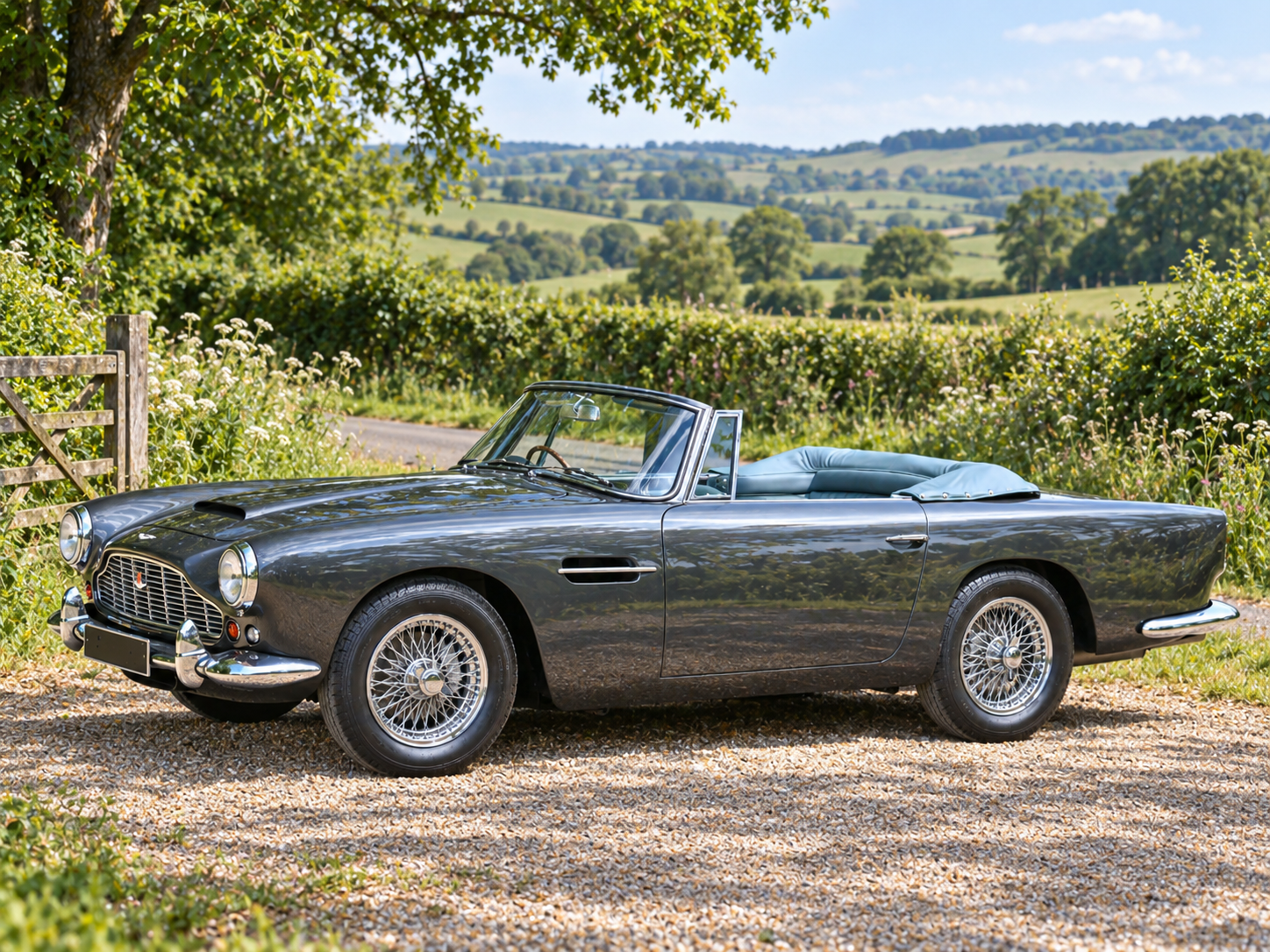
Image © Fuel the Passion. For illustrative purposes.
1962 Aston Martin DB4 Vantage Convertible
Estimate: £700,000–£900,000
This looks likely to be one of the headline Aston Martins of the sale. Click HERE to see the actual car.
Chassis DB4C/1072/R is a 1962 Series IV DB4 Convertible with the desirable Special Series Vantage engine. Only 70 DB4 Convertibles were produced between 1961 and 1963, making the open DB4 one of the rarest production Aston Martins of the David Brown period, excluding the DB4 GT Zagato. Fewer than 35 are reported to have left the factory with the Special Series engine. That 3.7-litre straight-six used a higher compression ratio, larger valves and triple SU carburettors to produce approximately 266bhp, around 26bhp more than the standard DB4 engine.
The provenance is particularly attractive. The car has reportedly had just two owners from new and is now presented in Gunmetal Grey over light grey leather. Bonhams says it has undergone an extensive restoration and shows fewer than 76,000 miles.
With a £700,000–£900,000 estimate, this is not simply another DB4 appearing at auction. The combination of open coachwork, Vantage specification and exceptionally limited ownership history makes the eventual result particularly interesting.

Image © Fuel the Passion. For illustrative purposes.
1936 Aston Martin 2-Litre Speed Model Competition Two-Seater
Estimate: £500,000–£600,000
Click HERE to see the actual car.
If the DB4 represents the elegant David Brown era, the second car takes us much further back into Aston Martin’s competition history. Chassis L6/713/U is a 1936 2-Litre Speed Model Competition Two-Seater, one of the small number of Speed Models constructed during the period and carrying genuine competition provenance. It is Lot 280 at Goodwood. Its history includes T.A.S.O. Mathieson, the influential racing driver, photographer and author, and an appearance in the 1948 Spa 24 Hours. The car has also previously formed part of Nick Mason’s collection.
Bonhams has placed it at £500,000–£600,000. Cars like this are particularly difficult to assess purely through headline estimates because competition history, originality, documentation and period provenance can have such a significant influence on collector demand.
It’s therefore one where the achieved price will tell us considerably more than the estimate alone.
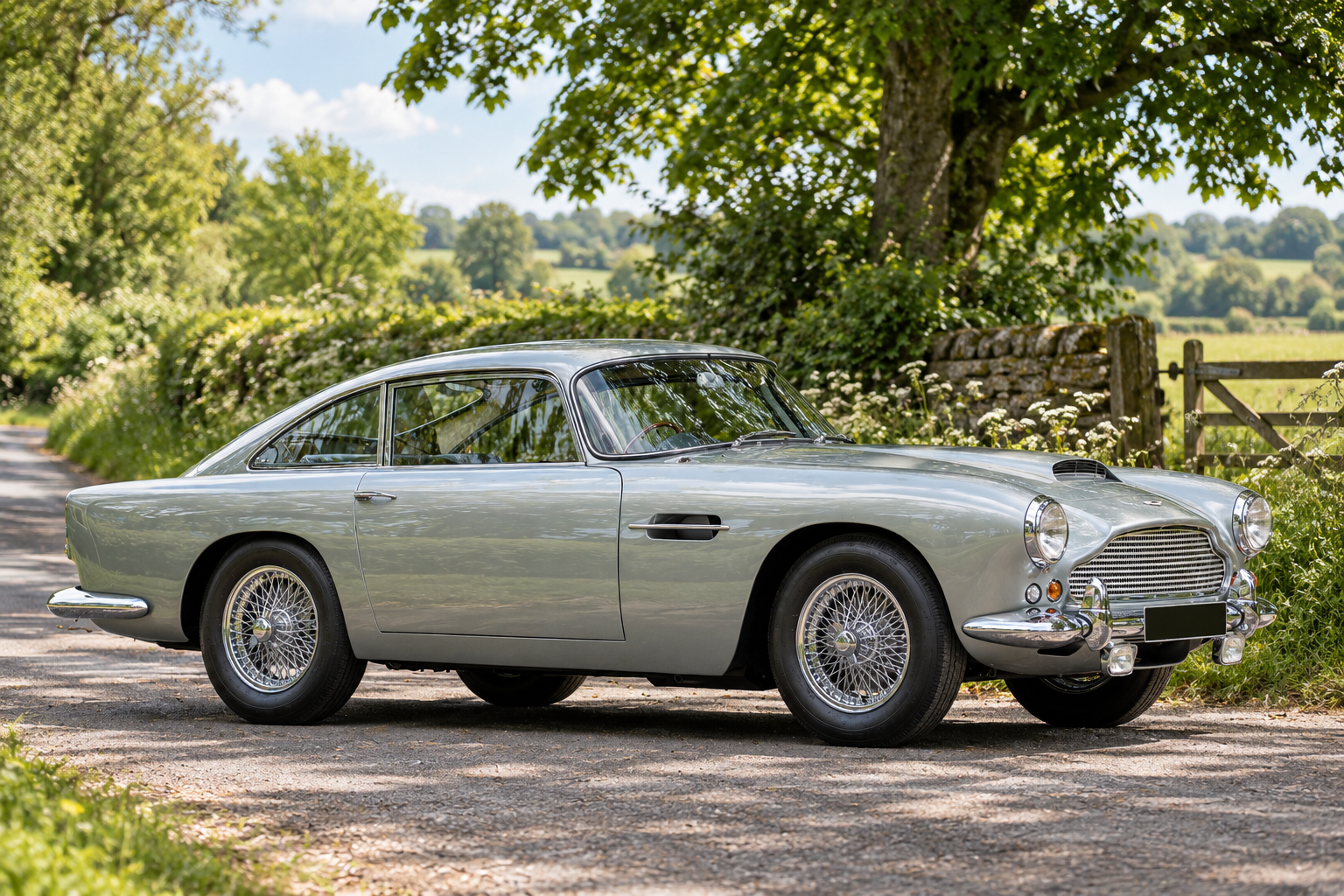
Image © Fuel the Passion. For illustrative purposes.
1961 Aston Martin DB4 Series III
The third Aston Martin is interesting for a completely different reason.
Click HERE to see the actual car.
Chassis DB4/718/R is a 1961 DB4 Series III, originally purchased by Castrol Ltd as an executive car and delivered directly to Castrol House in London. Factory records show it was finished in Snow Shadow Grey over Dark Blue Connolly leather and equipped with items including fog lamps, a heated rear window and Motorola radio.
Its more recent history is particularly fascinating. When the same chassis surfaced at auction in Monterey in 2014, it was essentially a barn-find DB4, still retaining its matching-numbers engine but requiring substantial restoration. RM Sotheby’s recorded the Castrol connection and extensive early factory servicing when it offered the car at the time. More than a decade later, DB4/718/R has returned in a very different condition. The car has subsequently undergone an extensive restoration and is now being offered at Goodwood as Lot 281.
That makes this one particularly interesting to follow: we’re not simply looking at another restored DB4, but a car whose journey from Castrol executive transport to long-hidden barn find and ultimately restored collector car can be traced over more than six decades.
Estimates Are Only the Beginning
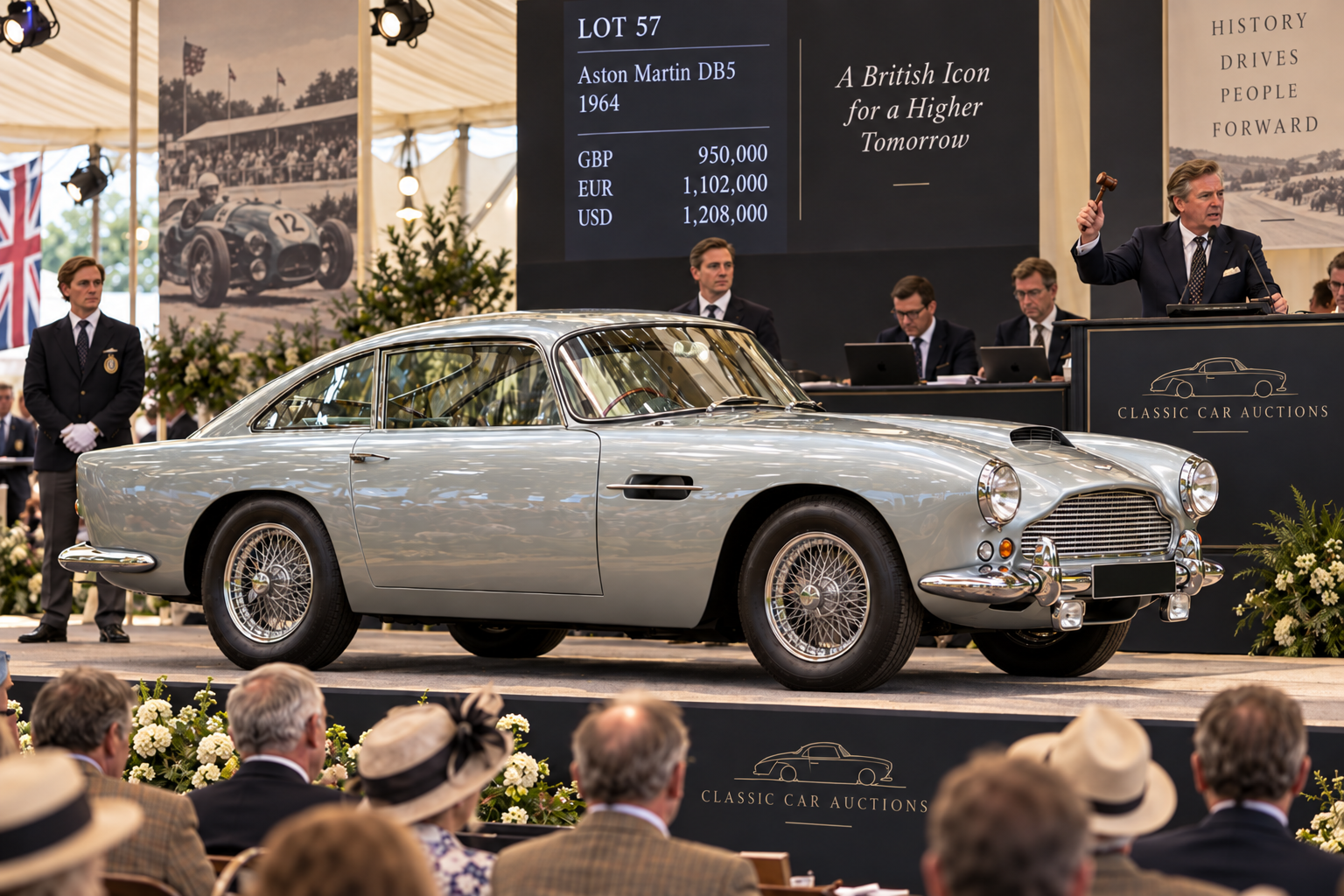
Image © Fuel the Passion. For illustrative purposes only.
As always with FTP Market Watch, these figures are auction estimates, not valuations achieved in the market. The DB4 Convertible may carry an estimate approaching £1 million, the Speed Model may be pitched above half a million pounds and the restored Series III DB4 may attract strong attention, but none of those numbers tells us what a buyer will actually be prepared to pay when bidding begins.
The Bonhams sale takes place on Saturday 19th September during the Goodwood Revival. FTP will be at Goodwood that weekend, so rather than rush the auction results into the following morning’s Roundup, we’ll return to them properly in a later edition once the Revival weekend is complete.
Meanwhile, our longer-term Market Watch remains open too:
26th September - RM Sotheby’s Zürich: 1965 DB5 Vantage, DB5/2228/L.
7th November - Broad Arrow Zürich: 1987 Lagonda Series 3 Shooting Brake by Roos Engineering.
Goodwood will not only be about what changes hands under the auctioneer’s hammer. Elsewhere across the Revival weekend, Aston Martin history will be very much alive too, and the Aston Martin Heritage Trust is preparing its own presence, complete with a new partnership and a particularly special car on display.
AMHT Heads to Goodwood Revival - with a New Coffee Partnership
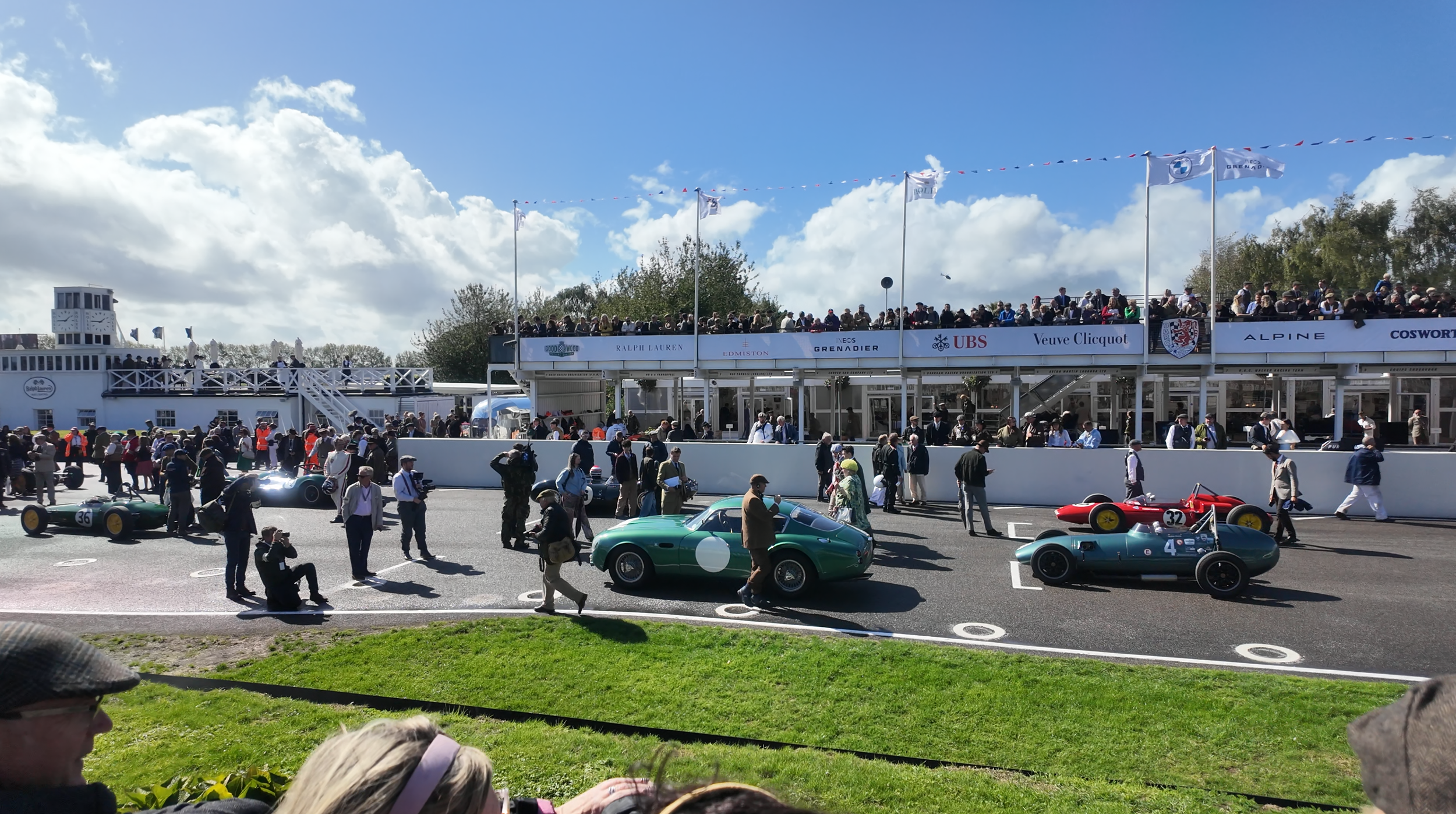
Image © Fuel the Passion. Goodwood Revival 2025.
The Aston Martin Heritage Trust will be exhibiting at this year’s Goodwood Revival from 18th-20th September, with the team based on Stand 385 near the East Entrance. Alongside the Trust’s heritage presence, Goodwood will also mark the launch of a new partnership with Automobili Caffè, which becomes AMHT’s Official Coffee Partner.
Visitors to the stand will be invited to enjoy coffee courtesy of Automobili Caffè, while new members joining the Trust during the weekend will receive a special welcome gift.
The partnership is intended to continue beyond Goodwood too, with an AMHT Member Refuel benefit offering preferential pricing to members while also generating an ongoing contribution towards the charitable work of the Trust. There’s another reason for Aston Martin enthusiasts to stop by. AMHT says visitors will also have the opportunity to see an exceptional DB Mk III, kindly provided by Aston Martin Works, as well as learn more about the Trust’s work and future plans.
There’s also a nice FTP connection here. During my visit to Aston Martin Works earlier in the year to film the Vanquish feature, I spent some time filming a particularly special DB Mk III in the showroom. I won’t assume this is the same car heading to Goodwood, but if it is, visitors to the AMHT stand will be seeing something genuinely worth stopping for.
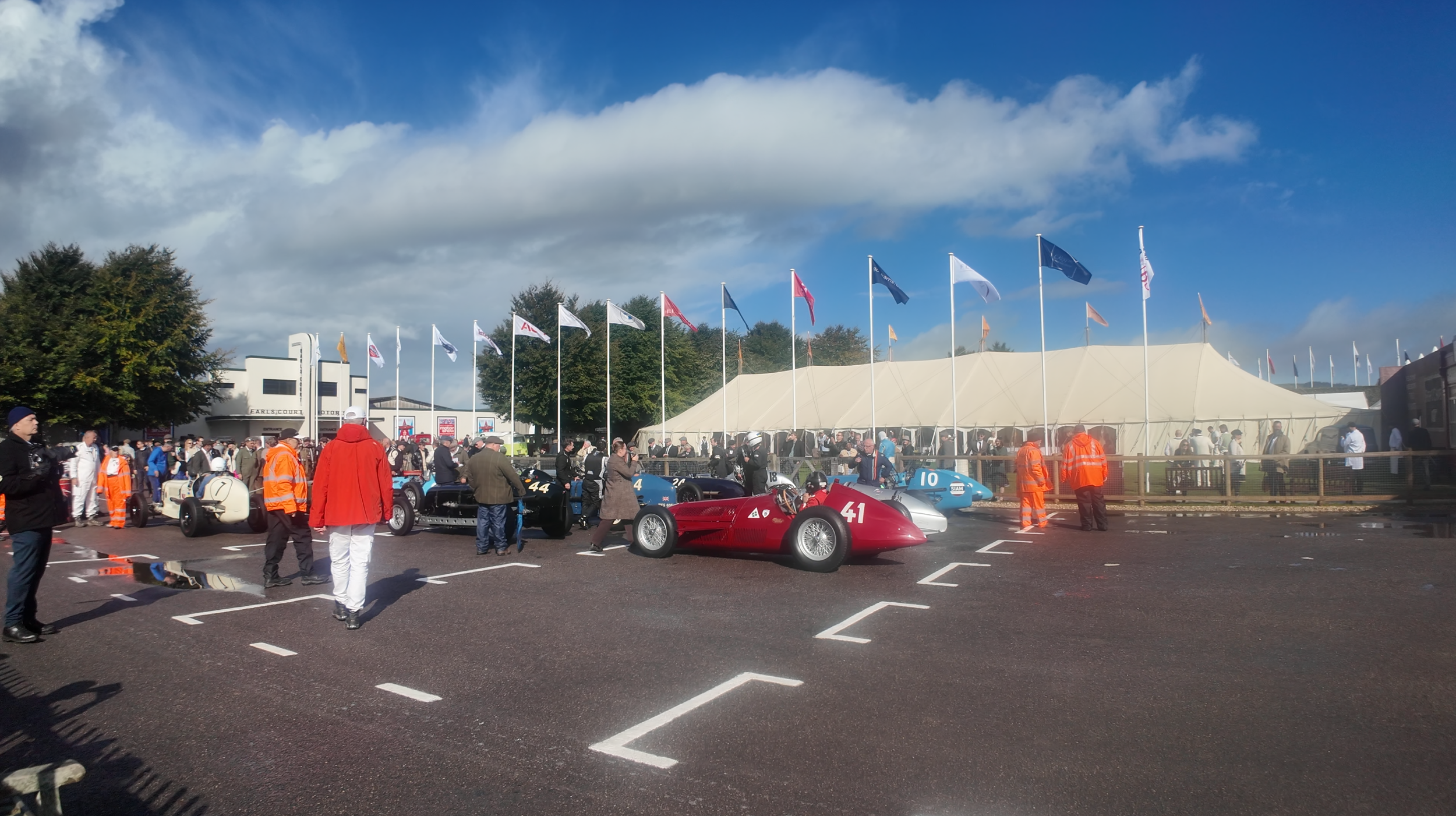
Image © Fuel the Passion. Goodwood Revival 2025.
FTP will be at Goodwood Revival that weekend too, so this is one stand I’ll certainly be making time to visit. For anyone attending, look out for the Aston Martin Heritage Trust on Stand 385, near the East Entrance.
From celebrating Aston Martin’s heritage at Goodwood, we move to something considerably newer, and scarcely any easier to find. A 2026 Valhalla has appeared on the open market, giving us a rare early glimpse of what one of Aston Martin’s most significant new models is now being asked to fetch outside the factory order book.
FTP Car of the Week
2026 Aston Martin Valhalla - £1,099,995
There are weeks when FTP Car of the Week is chosen because of a fascinating history, an unusual specification or simply because an overlooked Aston Martin deserves another look. This week, rarity did most of the work for us.

Image © Fuel the Passion. For illustrative purposes only.
A 2026 Aston Martin Valhalla has appeared for sale through European Prestige NI in Belfast. Although we’ve already seen one or two examples pass through the international auction market, Valhallas appearing openly in UK dealer stock remain an exceptionally unusual sight.
This particular car was first registered on 10th August 2026, has covered just 193 miles and is being offered at £1,099,995, VAT qualifying. Finished in Helios Yellow Metallic over a Black Alcantara interior, it’s hardly a Valhalla designed to disappear quietly into the background.
Limited to 999 examples worldwide, Valhalla occupies an important place in Aston Martin’s modern history. It’s the marque’s first series-production mid-engined plug-in hybrid supercar, pairing a 4.0-litre twin-turbocharged V8 with three electric motors to produce a combined 1,079PS and 1,100Nm of torque. 0–62mph takes a claimed 2.5 seconds, while top speed is 217mph. In Race mode, its active aerodynamics can generate more than 600kg of downforce at 150mph. Yet Valhalla was never intended simply to be a smaller Valkyrie.
The challenge was to take some of the technology, aerodynamic thinking and lessons learned from Aston Martin’s most extreme projects and turn them into something that could genuinely be used on the road. That makes seeing 193 miles already showing on this example rather nice. Someone has at least started using it.
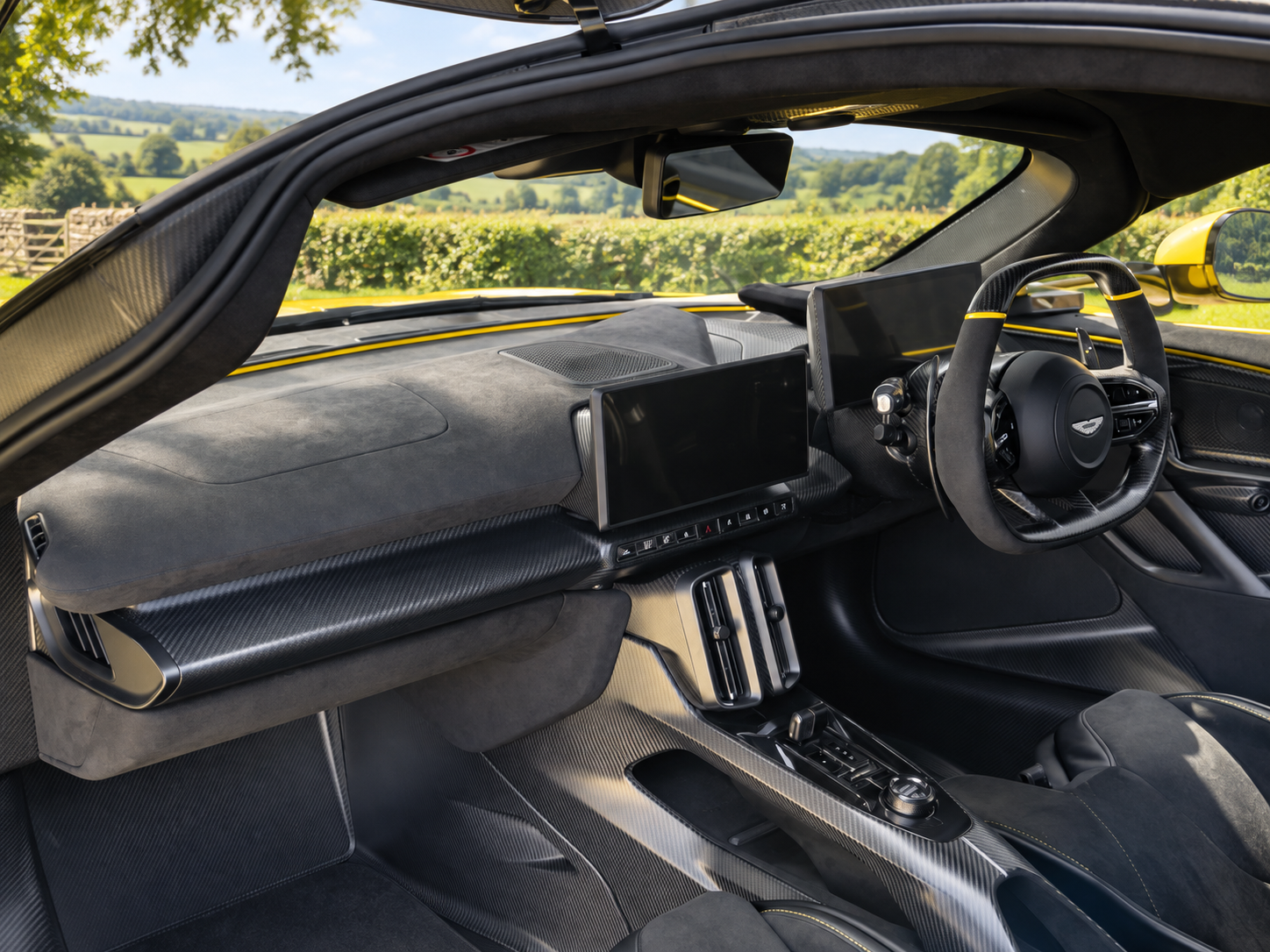
Image © Fuel the Passion. For illustrative purposes only.
The colour is difficult to ignore. Helios Yellow Metallic emphasises Valhalla’s dramatic aerodynamic surfaces particularly well, especially against the black roof, exposed carbon-fibre elements and darker detailing.
This example also carries a particularly strong visual specification, including Valkyrie-style multi-spoke wheels, extensive gloss-black exterior detailing, whole-car Paint Protection Film, a front suspension lift and a Black Alcantara interior with carbon-fibre trim and yellow contrast stitching.
There are plenty of further details within the specification, but rather than reproduce the complete options list here, readers can view the full advert and photographs directly.
View the full Valhalla listing → CLICK HERE
What Does £1.1 Million Tell Us?
Perhaps the most interesting number in the advert isn’t 1,079PS. It’s £1,099,995.
We need to be careful about what that figure represents. This is an asking price, not an achieved sale price. We also don’t know the original invoice value of this particular Valhalla, so it would be misleading simply to compare £1.1 million with the model’s basic starting price and describe the difference as a premium. Personalisation on cars at this level can add very substantial sums.
What the advert does give us, however, is something rather useful: an early UK retail-market marker for Valhalla, and FTP already has something with which to compare it. Regular readers may remember that a Valhalla appeared in our Monterey Market Watch in Issue 38. A 2026 example offered through Mecum produced a published sale result of $1,512,500, which we converted at the time to approximately £1.12 million. That makes the £1,099,995 being asked for this Belfast car rather intriguing. The figures are remarkably close.
They’re not directly comparable, of course. Different cars, specifications, countries, taxes and circumstances all affect the number, while one is an achieved auction result and the other remains a dealer asking price. But when a secondary market is this young, every genuine sale and publicly advertised example gives us another small piece of evidence. We’re effectively watching the Valhalla market being created in real time.
That’s quite unusual for FTP Car of the Week. Normally we’re examining cars with decades of depreciation, restoration, provenance and collector behaviour behind them. Valhalla has almost none of that history yet. There’s another reason Valhalla is particularly relevant to FTP at the moment. Only last Sunday, our Adrian Hallmark Featured Article examined the increasingly important role the car is playing within Aston Martin’s business. During the first half of 2026, Aston Martin delivered 225 Specials, almost entirely represented by Valhalla, with those cars making an important contribution to revenue and gross profit.
So Valhalla is no longer simply an ambitious future product appearing on motor-show stands. Cars are being built. Customers are receiving them. Some are being driven and, inevitably, the first examples are beginning to find their way back onto the market.
Would You Pay £1.1 Million?
Helios Yellow probably won’t appeal to everyone, although I think it works remarkably well on Valhalla. The contrast with the dark carbon and black detailing helps reveal just how complicated the bodywork is, rather than hiding some of those shapes within a more subdued colour. The more interesting question may be what happens to Valhalla values as deliveries continue.
Will immediately available cars maintain seven-figure prices? Will values soften as more of the 999 examples reach customers? Will certain specifications and colours ultimately become more desirable than others? At this stage, the market is still too young to answer those questions with any confidence. But at £1,099,995 with only 193 miles covered, this Helios Yellow example gives us another valuable marker to follow.
From one of Aston Martin’s newest and most technologically ambitious cars, we turn now to what has been happening a little closer to home at FTP, because the past few days have brought two remarkable events, a significant new addition to the website and preparations for a very different weekend at Silverstone.
FTP Update - Two Days, Two Extraordinary Aston Martin Gatherings
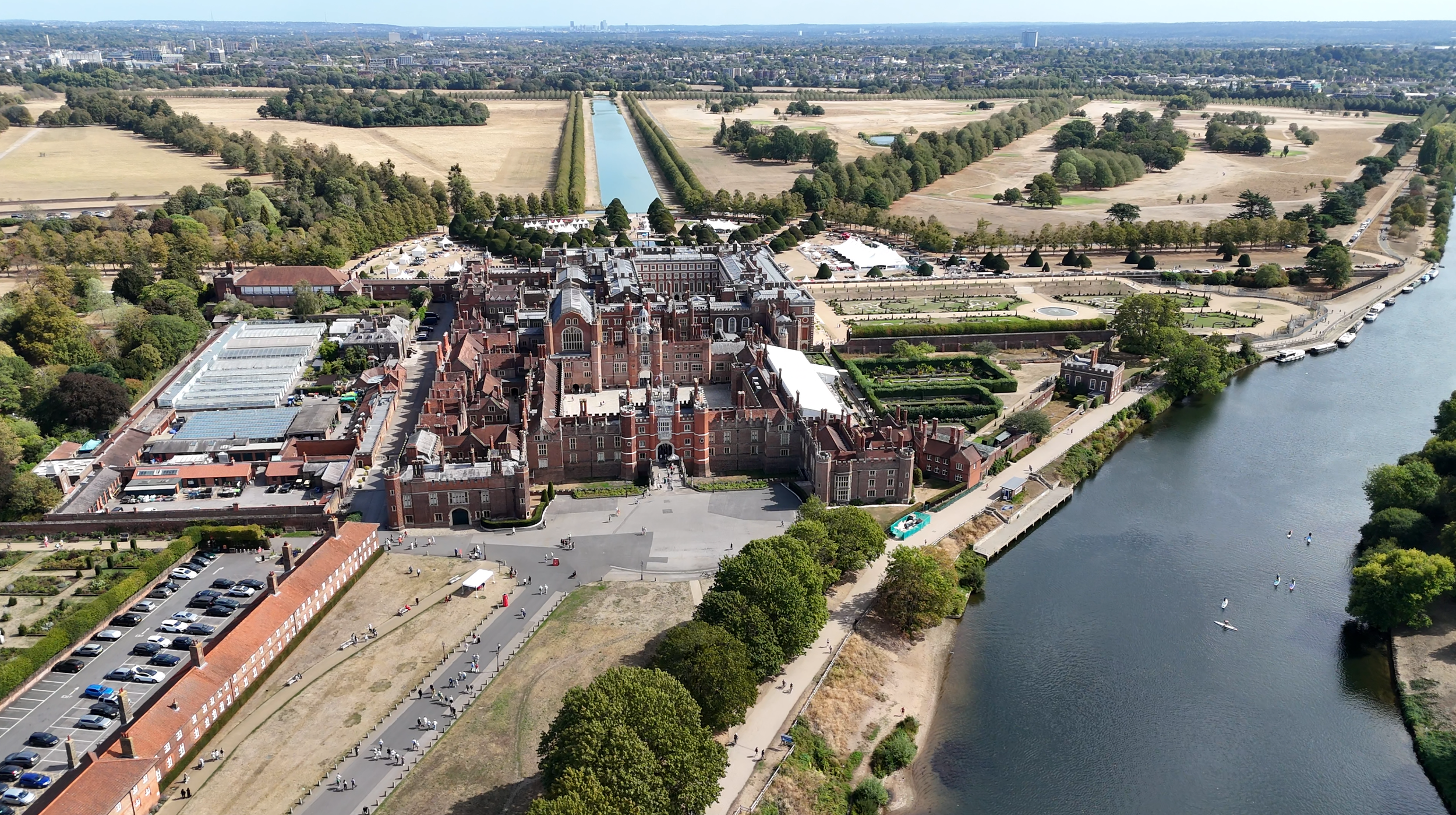
Image © Fuel the Passion. Concours of Elegance at Hampton Court Palace
Last weekend turned into something of an Aston Martin double-header for FTP. Saturday took me to Salon Privé at Blenheim Palace, followed less than 24 hours later by the Concours of Elegance at Hampton Court Palace on Sunday. Both events shared a remarkably similar atmosphere: stunning British surroundings, exceptional Aston Martins and some lovely people to meet along the way. Between them, we came home with an enormous amount of footage and several stories I hadn’t expected to capture when I set off.
Salon Privé - Blenheim Palace
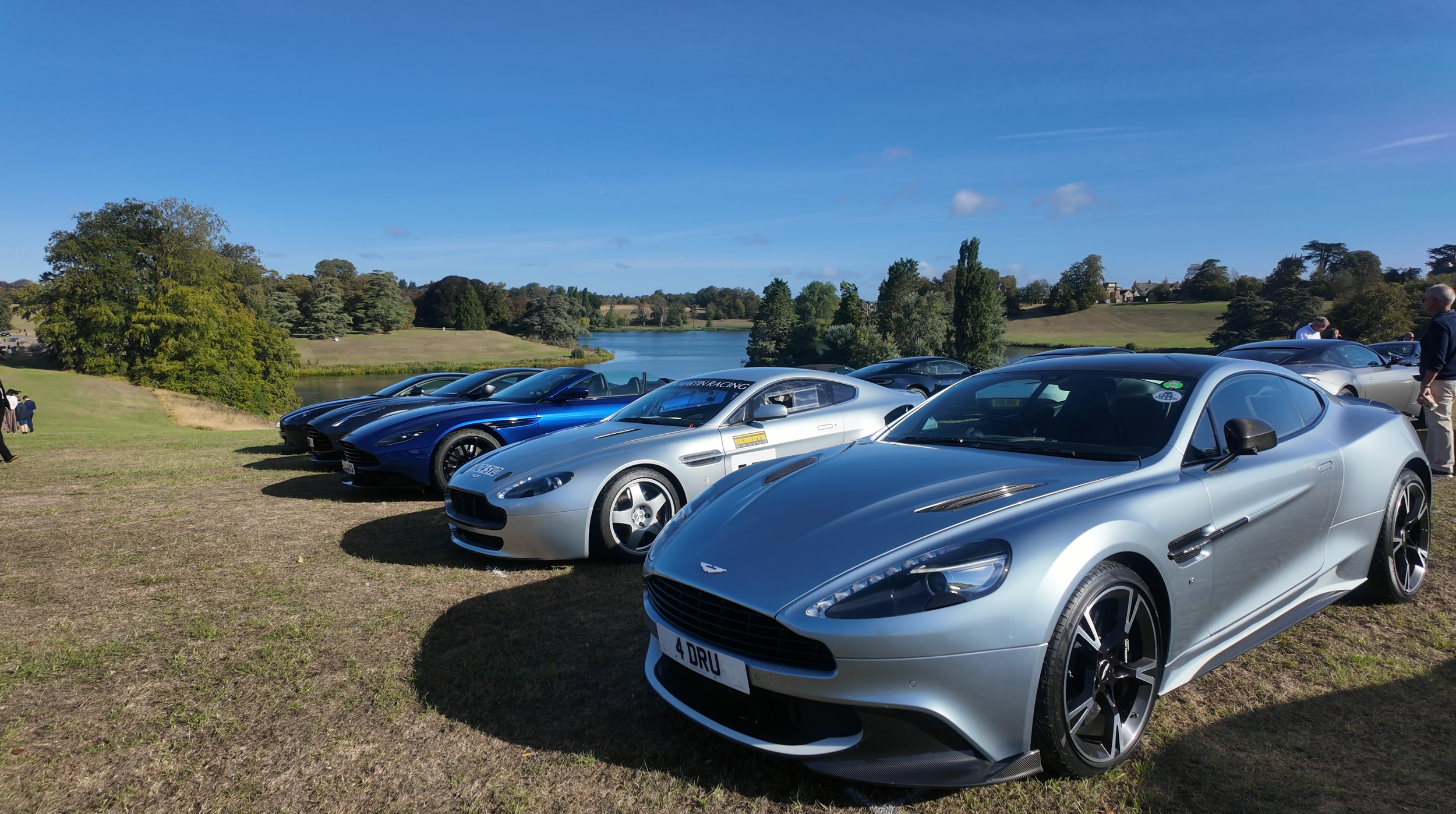
Image © Fuel the Passion. Salon Privé - Blenheim Palace
The Aston Martin Owners Club presence at Blenheim was quite something. Around 100 Aston Martins were gathered close to the Palace, creating one of those displays where it’s almost impossible to know where to point the camera first. The setting between the Palace and the lake certainly helped. I filmed as much of the display as possible, but one of my favourite moments came from spending time with the owner of a beautifully restored DB2/4 Mk1.
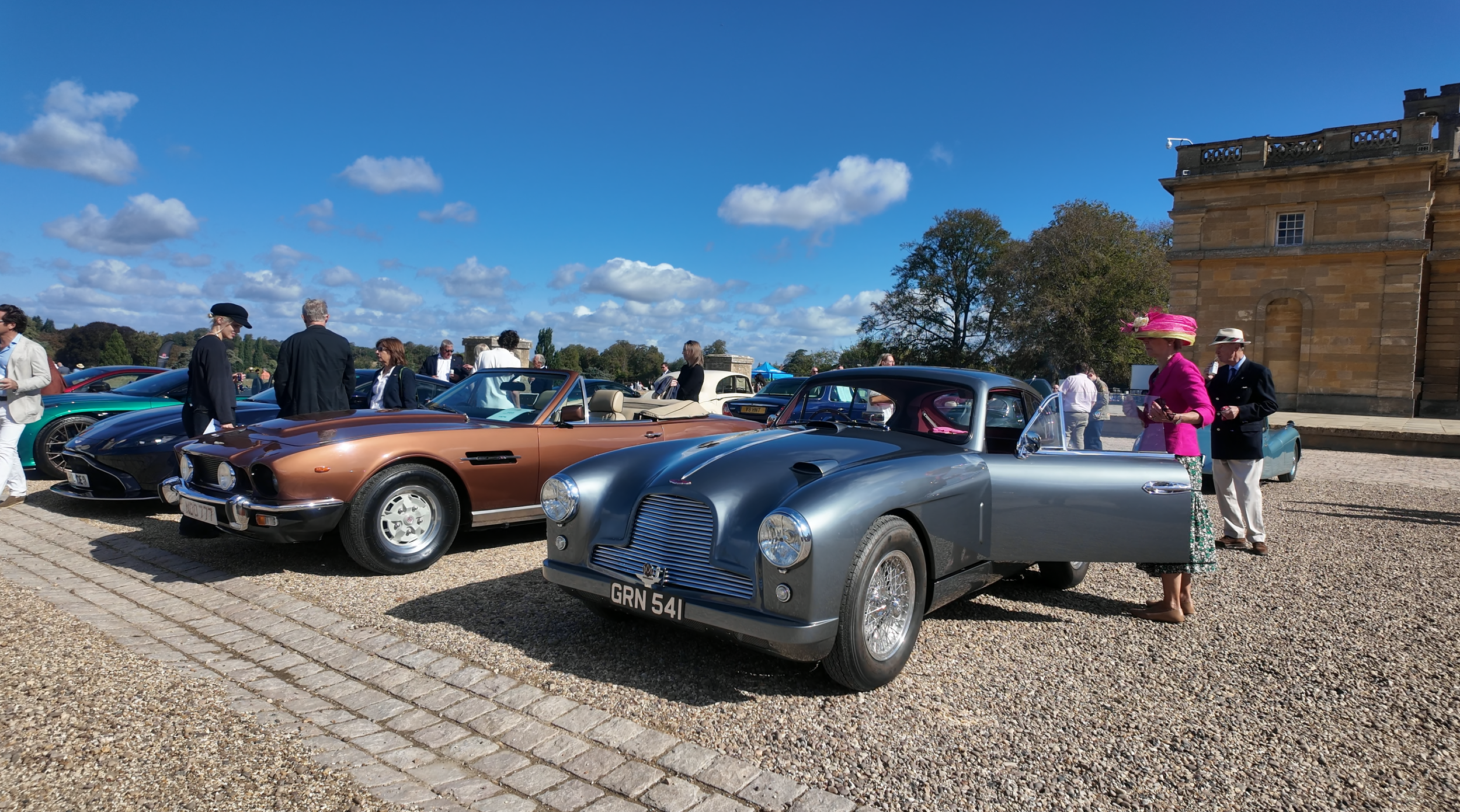
Image © Fuel the Passion. Salon Privé - Blenheim Palace
The restoration had taken around ten years, and the result was immaculate. What made it especially worthwhile for FTP was not simply filming the finished car, but hearing from the person who had lived through that restoration and could explain some of the work, ownership experience and history behind it.
The official AMOC report subsequently confirmed that a 1954 DB2/4 Mk1 was among just five cars selected from the club display to progress further within the Salon Privé judging process.
Elsewhere, Aston Martin itself had brought the latest members of its current range, including the newer S derivatives and Valhalla, while another DB2 provided a further opportunity to talk with its owner about the realities of owning, maintaining and ultimately deciding to sell a classic Aston Martin.
There will be much more from Blenheim when the full FTP film reaches the edit.
Hampton Court, and a Surprise I Wasn’t Expecting
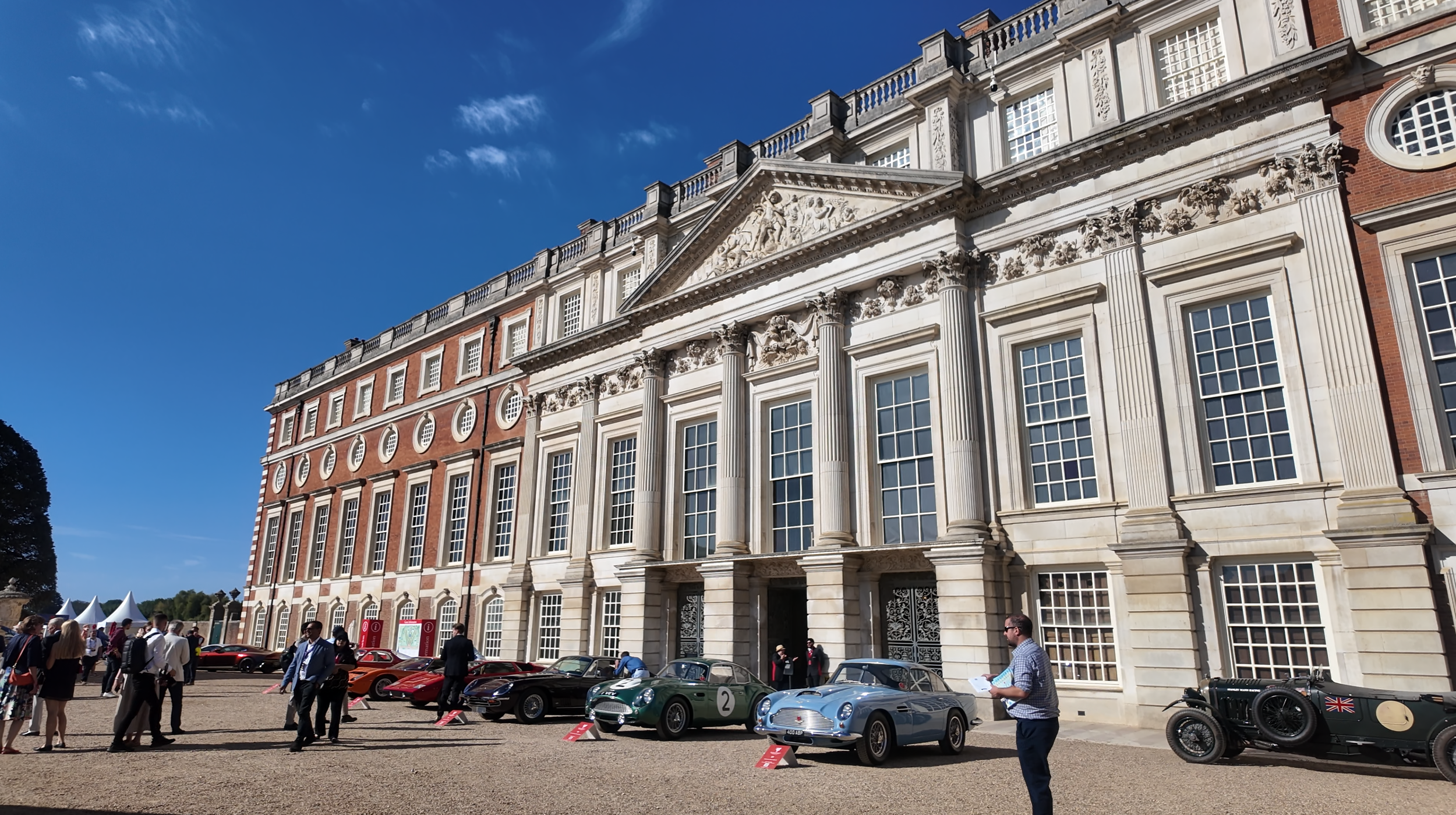
Image © Fuel the Passion. Concours of Elegance at Hampton Court Palace
Sunday brought that same special atmosphere, this time within the magnificent surroundings of Hampton Court Palace. The Concours of Elegance at Hampton Court Palace assembled some exceptional Aston Martins, and I made a point of filming every one I could find in detail rather than simply collecting quick shots as I walked around.
Several later moved from their display positions towards the presentation area beside the water, which gave me the opportunity to film them actually moving as well as sitting still. Among them were cars including the Valkyrie, One-77, DB3S, DB4 GT Zagato, DBSC prototype and a number of other particularly significant Aston Martins.
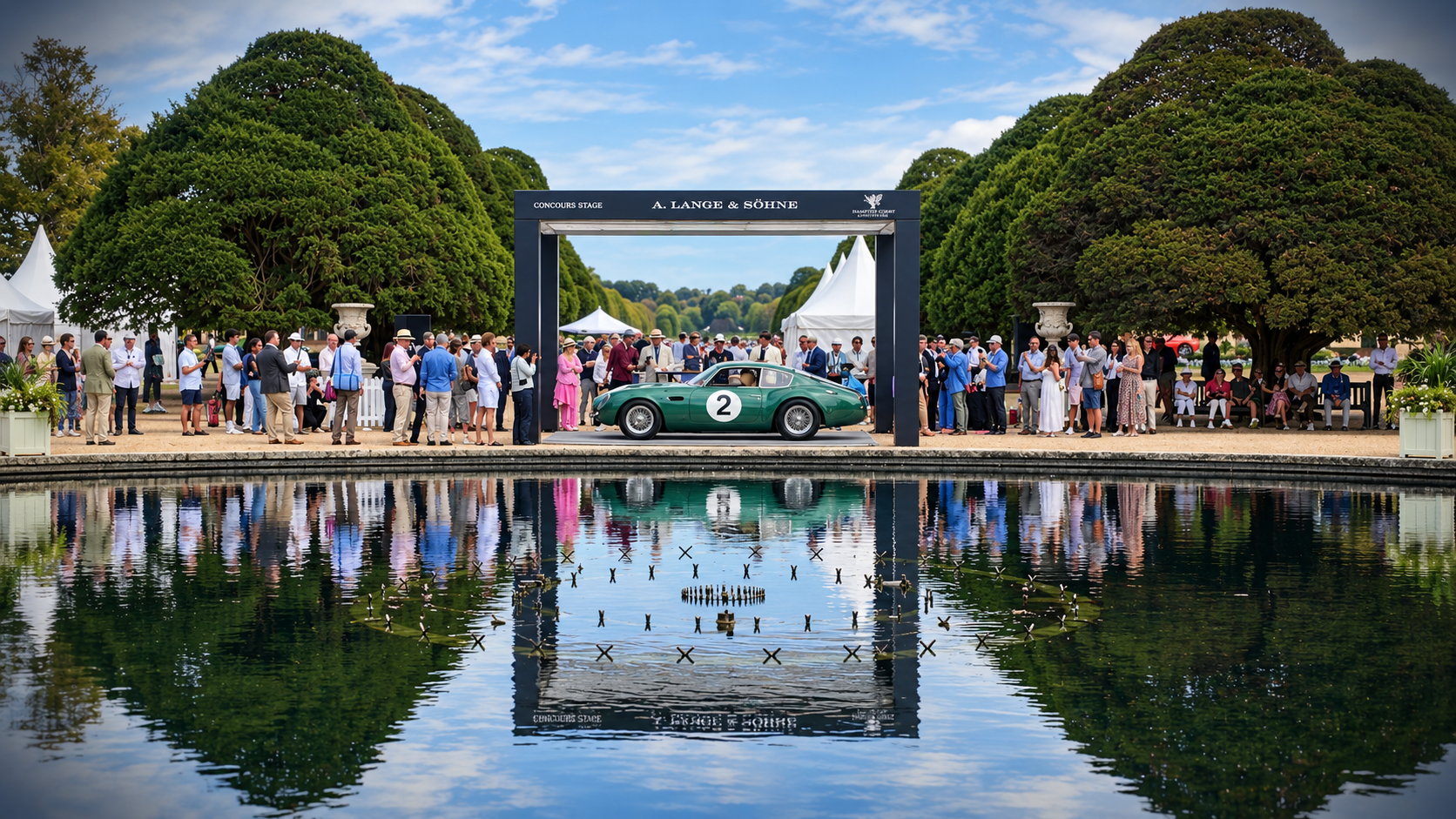
Image © Fuel the Passion. Concours of Elegance at Hampton Court Palace
The surroundings provided some wonderful opportunities too. Cars travelling towards the stage beside the water produced reflections that should look superb in the finished film, while later in the afternoon I was also able to get the drone into the air and capture the Palace and concours from above.
The celebrated 1960 DB4 GT Zagato ‘1 VEV’ (pictured above) won both the 1960s Decade Award and Finest Aston Martin, while the extraordinary 1966 Aston Martin DBSC prototype by Touring received the Art of Bespoke Award and finished second in the Finest Carrozzeria Touring Superleggera judging. The One-77 was recognised among the Future Classics, while the DB3S and DB4 GT also collected awards.
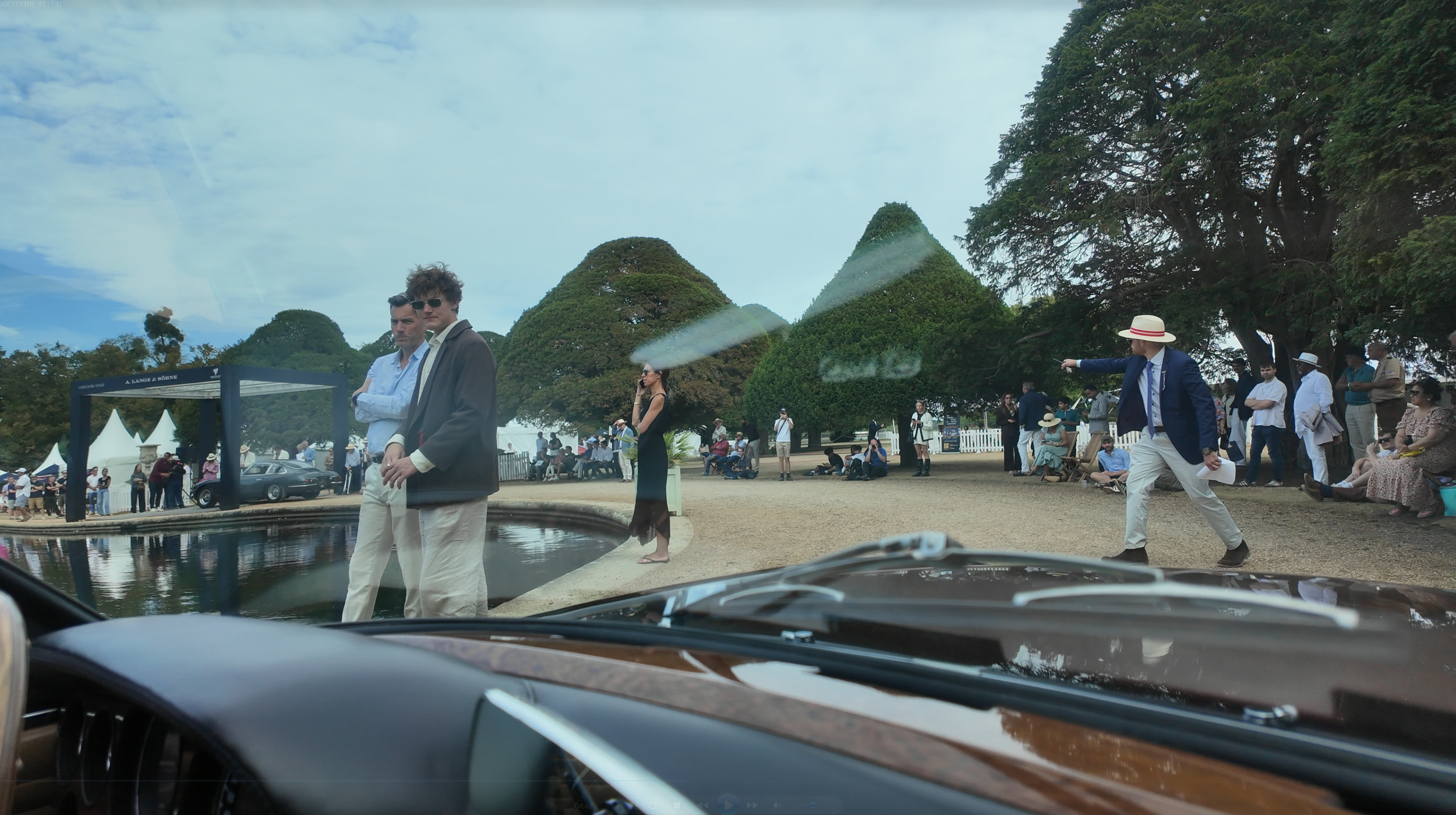
Image © Fuel the Passion. Concours of Elegance at Hampton Court Palace
But my most memorable moment happened away from the formal results. I was unexpectedly invited into the passenger seat of one of only two Touring-built DBSC prototypes. Cameras were already with me, so I was able to record the journey as we moved through the crowds, around the water and towards the presentation area before eventually returning to the display.
It’s difficult to imagine a better way to experience such a rare piece of Aston Martin history than from inside it. The DBSC itself is fascinating. Created by Carrozzeria Touring in 1966 as part of Aston Martin’s exploration of a potential successor to the DB6, only two prototypes were constructed.
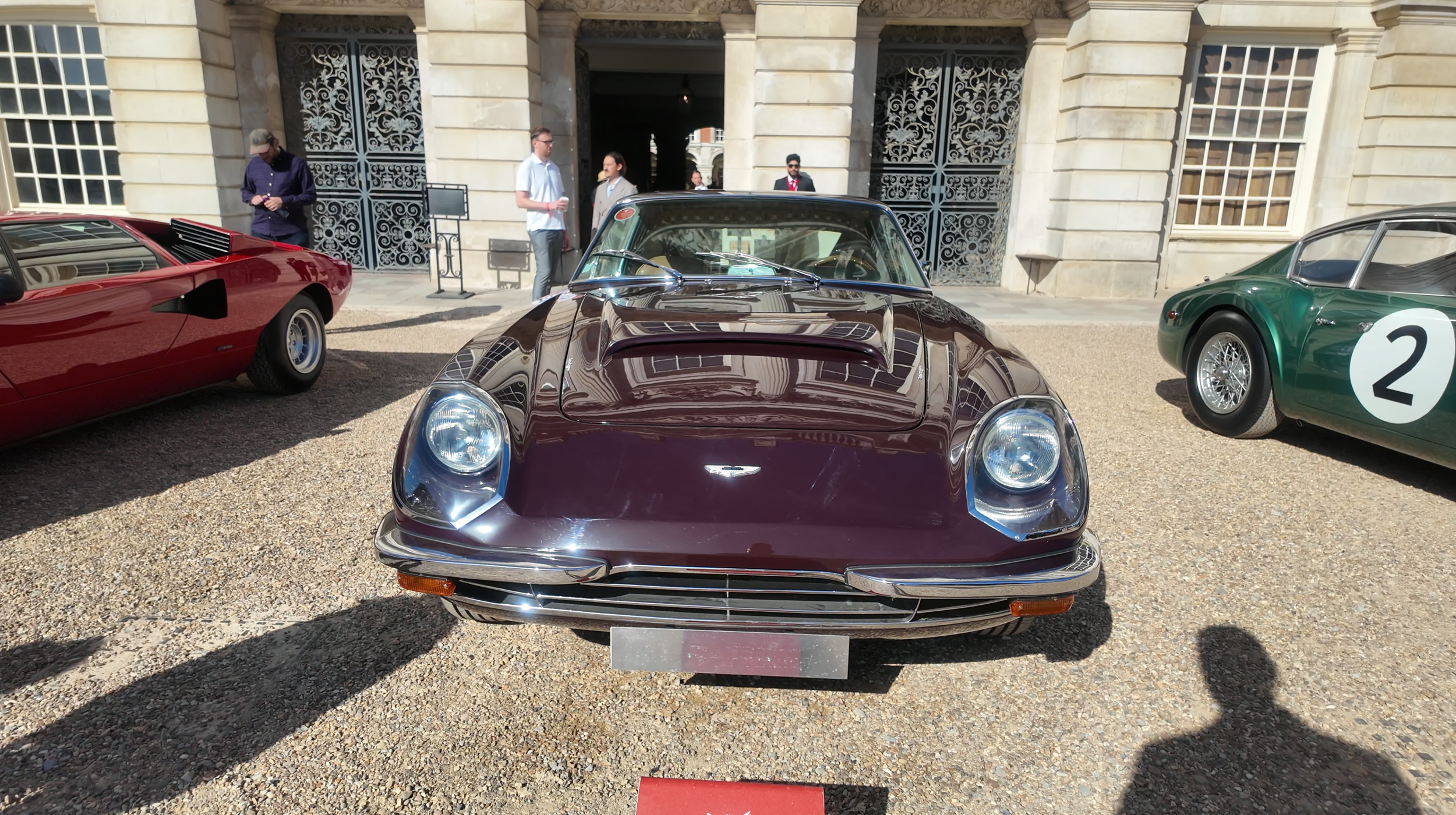
Image © Fuel the Passion. Concours of Elegance at Hampton Court Palace. 1 of 2 1966 Aston Martin DBSC Touring.
Aston Martin ultimately pursued a different design direction for the production DBS, leaving the Touring cars as extraordinary survivors from a road the company chose not to take. That unexpected passenger ride will certainly have a prominent place in the Hampton Court film.
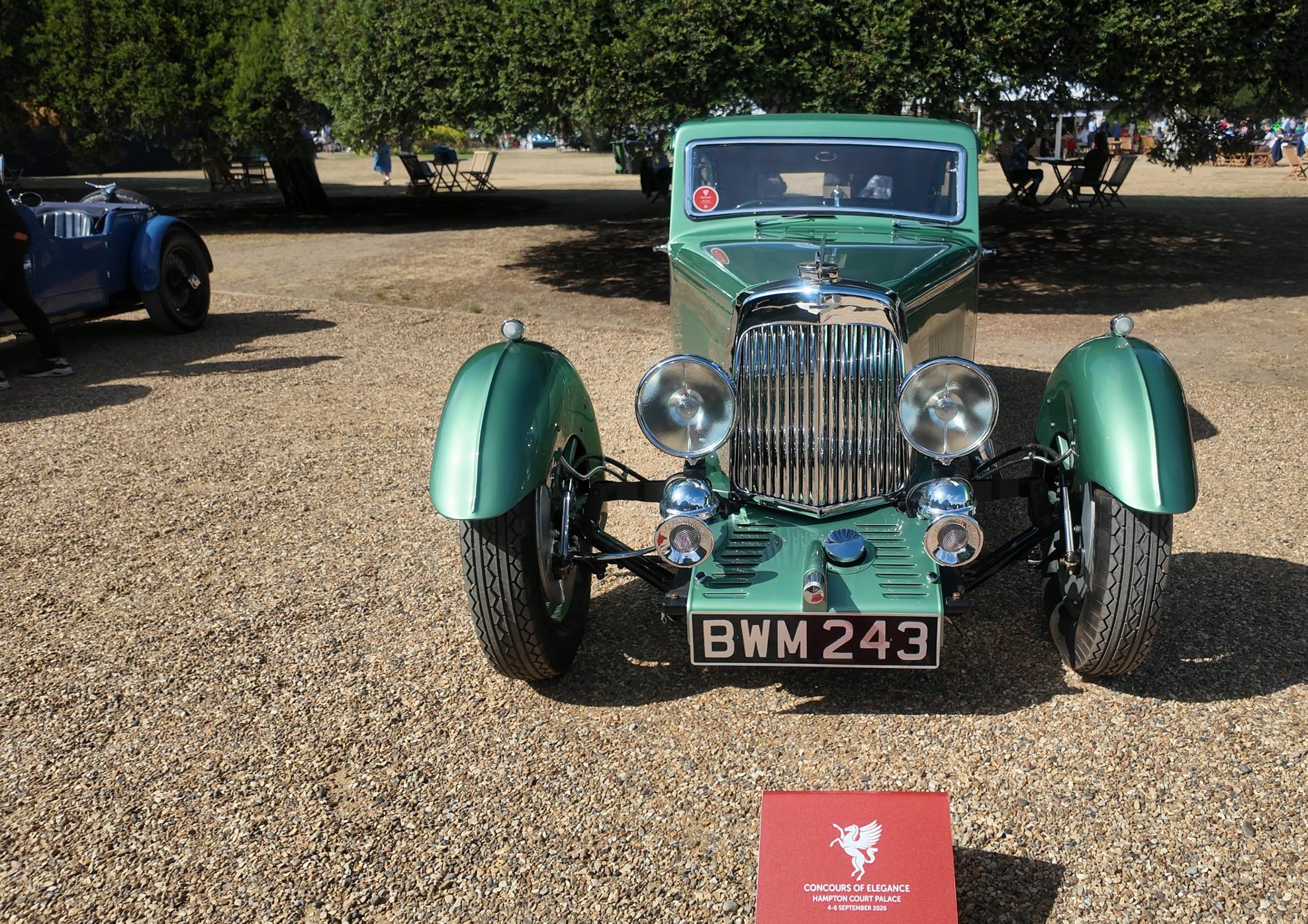
Image © Fuel the Passion. Concours of Elegance at Hampton Court Palace. 1935 Aston Martin Mk2 Sports Saloon.
There was another unexpected opportunity too. During the day I met a specialist involved in the restoration of pre-war Aston Martins, based not too far from FTP in the north of England. We discussed the possibility of visiting the workshop in the future and filming the restoration process properly. If that comes together, it could become another fascinating human story for the channel.
New on FTP — The Anniversary Calendar
Image © Fuel the Passion. The FTP Aston Martin Anniversary Calendar.
As mentioned last week, there’s also been an important addition to the Fuel the Passion website. At the beginning of September, the new FTP Aston Martin Anniversary Calendar went live after a considerable amount of research behind the scenes.
The aim is straightforward: to bring significant Aston Martin, Aston Martin Owners Club, Aston Martin Heritage Trust and relevant James Bond anniversaries together in one place so enthusiasts, clubs, event organisers and anyone planning future Aston Martin activity can see what important dates are approaching. But simply producing a list of dates wasn’t enough.
Accuracy is fundamental to FTP, particularly when organisations may eventually use the calendar to help plan events or commemorations. So alongside the calendar sits an Evidence Register, showing the research and sources supporting the dates we publish. Where an exact day can be reliably established, we use it.
Where an exact day can be reliably established, we use it. Where the available evidence supports only a month or year, the calendar reflects that level of precision.
The project will continue to evolve as additional anniversaries are researched and verified, and we would genuinely welcome help from readers. If you spot something missing, believe a date requires correction or have primary evidence that could strengthen an existing entry, please get in touch.
Explore the FTP Anniversary Calendar → HERE
Hopefully it will become a useful long-term reference rather than something people look at once and forget.
A Growing Queue of FTP Films
There is now an unusually large amount of FTP footage safely stored and waiting for the edit. Work has already begun on the AMOC Festival at the British Motor Museum, while footage is also banked from Yorkshire Elegance at Grantley Hall, Salon Privé at Blenheim Palace and the Concours of Elegance at Hampton Court.
That’s before we add this weekend’s motorsport filming. The simple reality is that FTP has recently been able to capture remarkable material faster than I can edit and publish it. I see that as a good problem to have. These films are not going anywhere, and I would rather take the time to turn each event into a properly researched story than rush footage onto YouTube simply to clear a queue.
It also means there should be plenty of Aston Martin material to take us through the autumn and winter months. There will, however, be one change to the intended publishing order.
Silverstone Will Come First
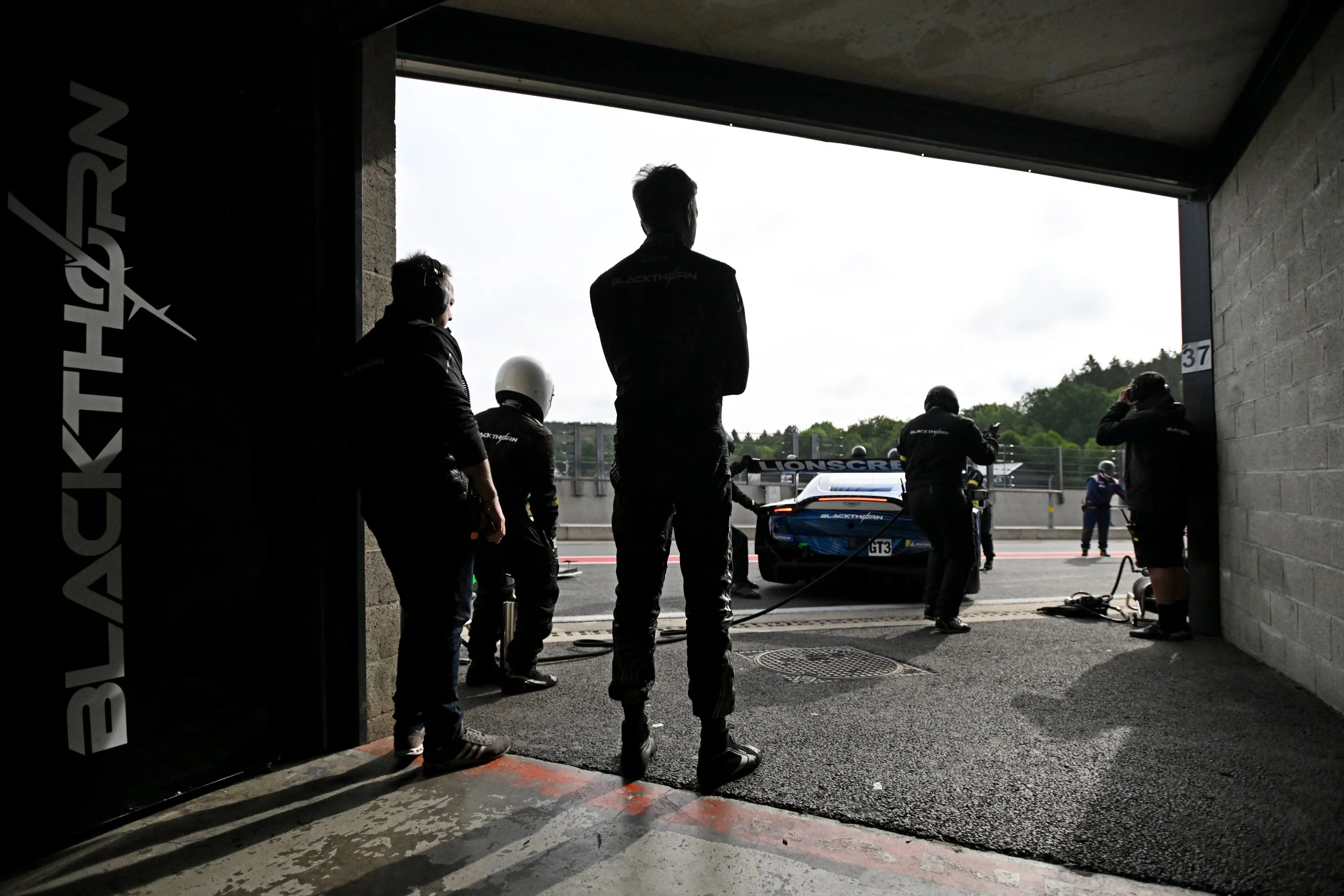
Image © Blackthorn Racing. Used for editorial purposes.
By the time many of you read this Roundup on Sunday morning, my weekend with Blackthorn Racing at Silverstone will already have taken place. FTP has been invited inside the team during the Michelin Le Mans Cup weekend, following the #91 Écurie Écosse Blackthorn Aston Martin Vantage GT3 shared by Claude Bovet and Tom Canning.
This represents a very different filming opportunity from the concours events of last weekend. Rather than watching the racing from the public side of the barriers, the intention is to capture what happens inside the garage, paddock and team environment, the preparation, pressure, personalities and decisions that spectators don’t normally get to see. Regular readers may remember that in Issue 40 I wrote that I was hoping FTP would be able to get inside the Blackthorn operation at Silverstone. That hope has now become the assignment.
Because motorsport footage is particularly time-sensitive, the Blackthorn Silverstone film will move to the front of the editing queue once I return home. The AMOC Festival, Yorkshire Elegance, Blenheim and Hampton Court films will follow. So hopefully the channel will become nice and busy over the coming weeks. Perhaps the most satisfying part is that the material is becoming increasingly varied, from concours lawns and historic Aston Martins to workshops, owners, rare prototypes and now the inside of a working GT racing team.
The cars may bring us through the door. The stories and people behind them are increasingly where FTP is finding its most interesting material.
Closing Reflection
If there’s one thing Issue 41 illustrates particularly well, it’s just how many different versions of Aston Martin can exist at the same time. At Monza, we saw a Formula One team still searching for consistency and a partnership with Honda that remains firmly in development.
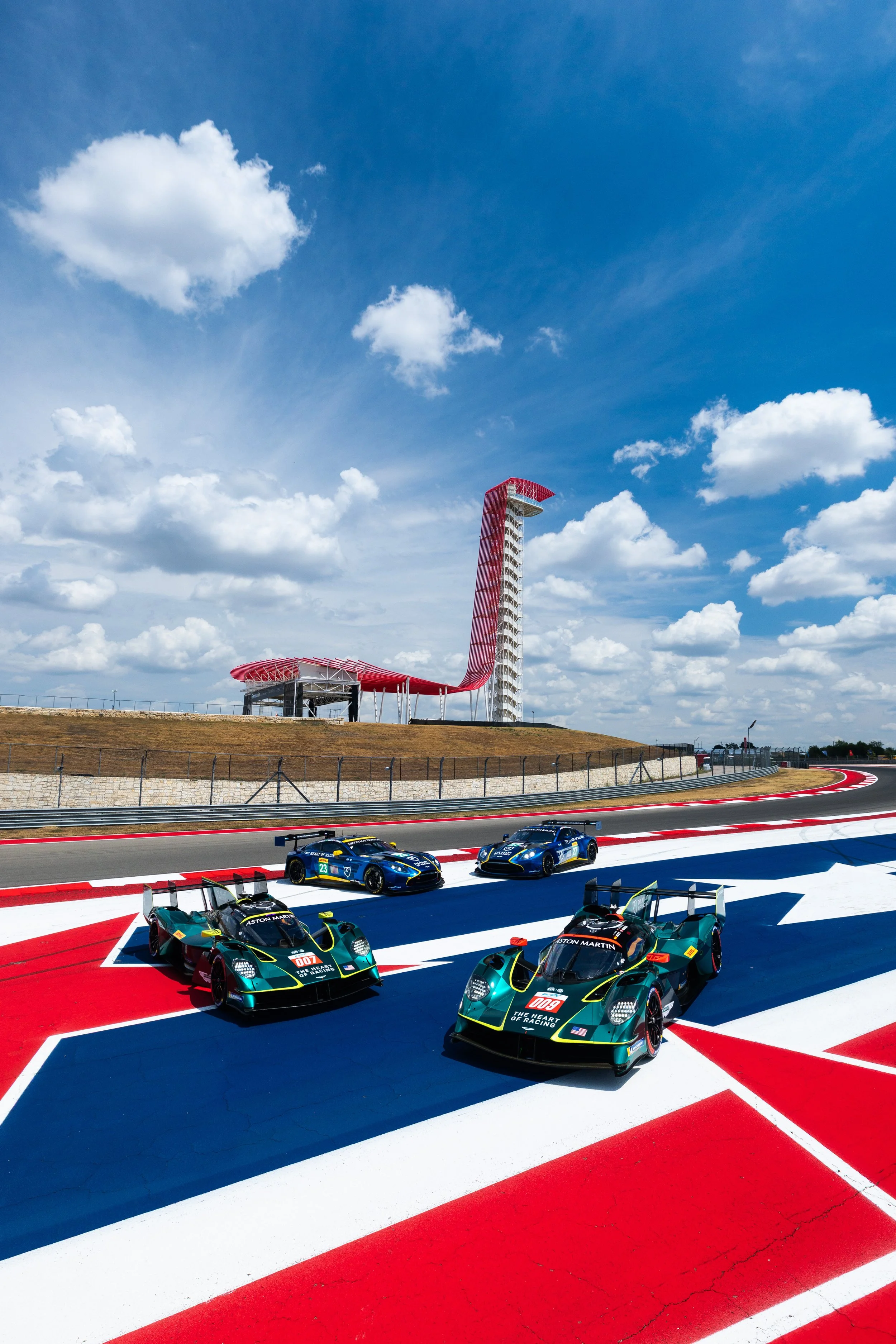
Image © Aston Martin Lagonda. Used for editorial purposes.
At COTA, the picture was almost the opposite: Vantage winning, Heart of Racing delivering a double podium and Valkyrie edging ever closer to the front of the World Endurance Championship field.
Then there’s the road-car side of the story. Valhalla is now reaching customers and beginning to appear on the open market, while the new AMB 002 Roadster shows Aston Martin pushing its design language into a completely different kind of machine.
At the same time, difficult questions remain around debt, ownership, capital and long-term financial sustainability. That tension is becoming one of the defining features of modern Aston Martin. The products are often extraordinary. The brand remains globally desirable. The motorsport presence is broader than it’s been for years. Yet none of that removes the need for the underlying business to become stronger, more disciplined and ultimately capable of funding its own future.
What makes Aston Martin so fascinating to follow is that all of those stories sit alongside more than a century of history.
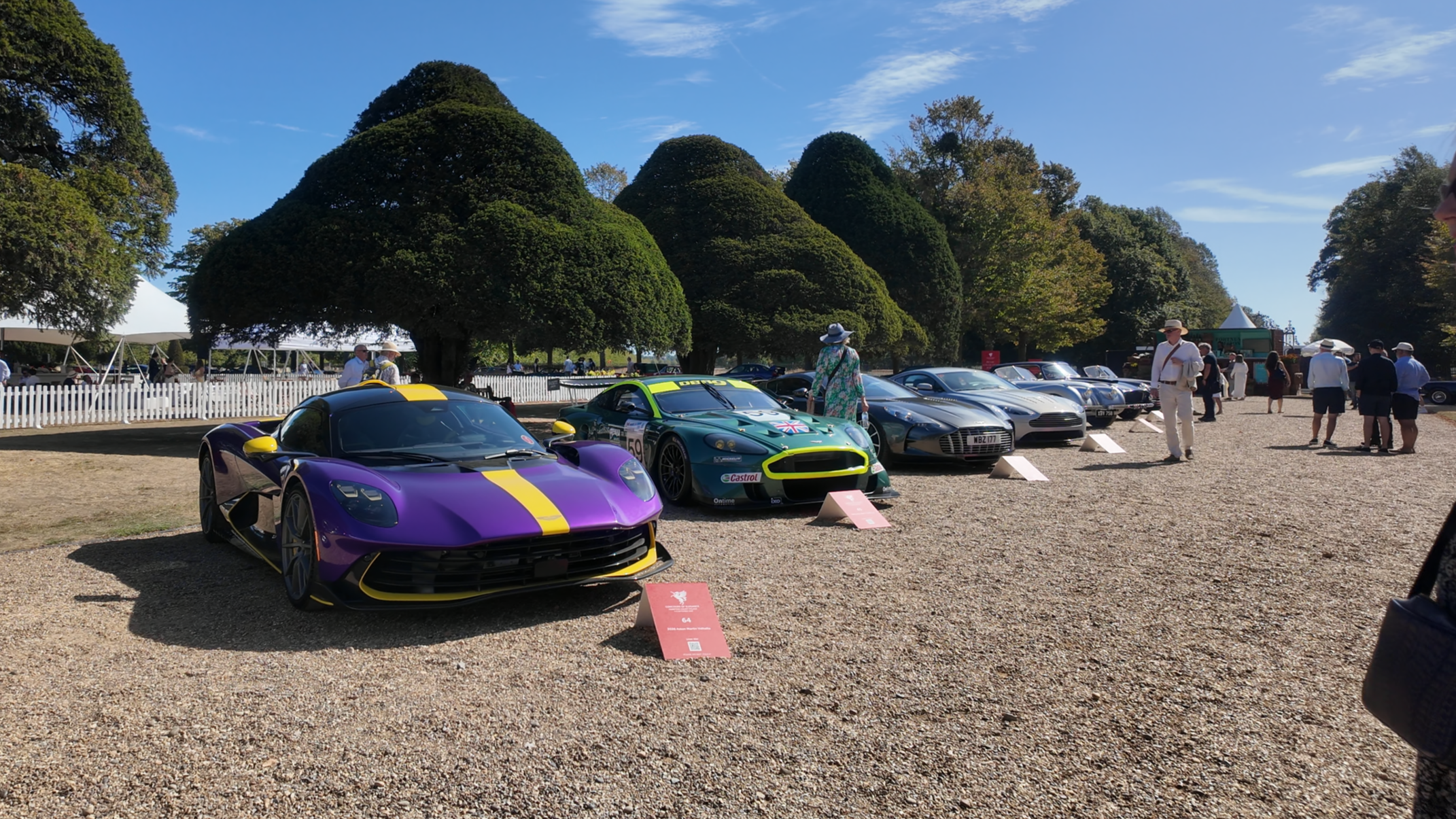
Image © Fuel the Passion. Just some of the amazing Aston Martin cars on show at Hampton Court 2026.
Last weekend at Blenheim Palace and Hampton Court brought that home rather vividly. One moment I was filming cars whose stories stretch back decades; the next I was sitting inside one of only two Touring-built DBSC prototypes, being driven through the grounds towards the concours presentation area.
A few days later, the focus shifts again, this time to Silverstone, inside the Blackthorn Racing garage and into the workings of a modern GT team. That contrast is really what FTP is becoming about. Not simply the cars themselves, but the people who build them, race them, restore them, collect them, own them and keep their stories alive.
There’s a great deal happening around Aston Martin at the moment, and not all of it points in the same direction. Perhaps that’s exactly why there’s so much worth following.
Before I finish, a heartfelt thank you to everyone who has spent time with this week’s Roundup. I know these editions are substantial. Some of you will read Issue 41 from beginning to end in one sitting, while others may dip into a section over breakfast, return later in the day, or spread it across several days as time allows. However you choose to read it, I’m enormously grateful that you choose to spend some of your time with Fuel the Passion.
Whether you’ve been reading FTP for months, have supported it from the beginning, or have only discovered us recently, thank you for being here, thank you for reading, and thank you for continuing to share this remarkable Aston Martin journey with us. 💚💛
See you on the next one!👆
Kind regards,
Dan
Fuel the Passion
Where Every Drive Tells a Story.
Join the Conversation
As always, we would genuinely welcome your thoughts. You can answer any of the questions below, or if something else in this week’s Roundup caught your attention, or if there’s anything else Aston Martin related, feel free to comment on that instead.
1. Jaguar Land Rover is cutting thousands of jobs while still planning to invest billions in future products and technology. Does that make Adrian Hallmark’s lower-volume, higher-value strategy at Aston Martin look more sensible, or does it underline just how difficult the luxury-car market has become?
2. The AMB 002 is Aston Martin and Brough Superior’s first road-legal motorcycle. Do you see projects like this as a worthwhile extension of the Aston Martin brand, or should the company keep its focus firmly on four wheels?
3. Valhalla is now beginning to appear on the open market at around £1.1 million. Do you think early examples will hold that kind of value as more cars are delivered, or will the market settle once the initial scarcity begins to ease?
Where next?
