
Issue 38 - Fuel the Passion (FTP) Weekly Roundup
Week Ending 23rd August 2026
Estimated read time: approximately 50 minutes
There’s plenty to explore this week, so take your time. Read it in one sitting, dip in and out, or return whenever it suits you. We’ve also marked an unofficial halfway point immediately after our weekend motorsport coverage, just before we return to Valen and the wider road-car stories.
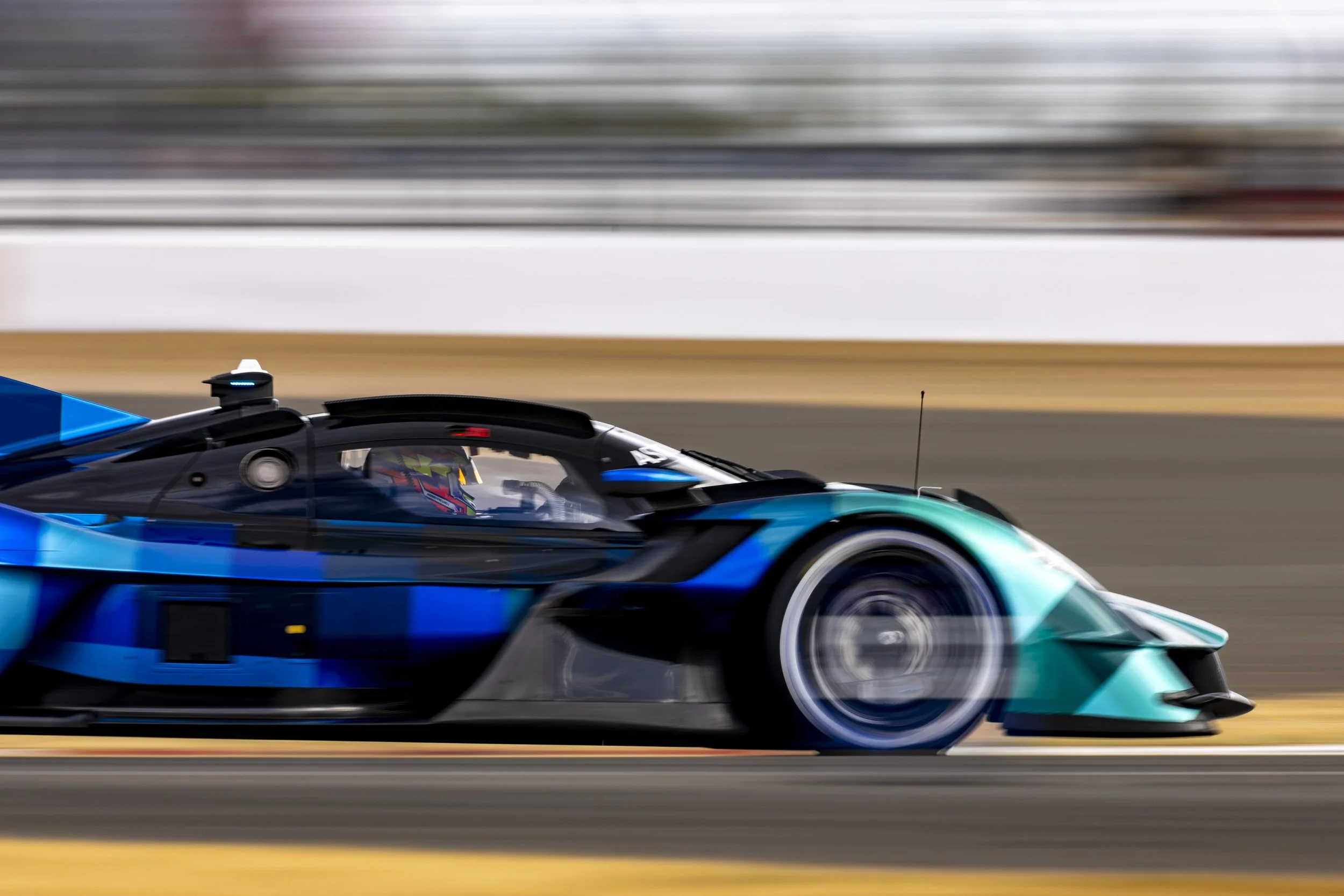
Image © Aston Martin Lagonda. Used for editorial purposes. Aston Martin THOR Valkyrie completes testing at Silverstone.
Editor’s Introduction - Dan, Fuel the Passion
Welcome to Issue 38 of the Fuel the Passion (FTP) Weekly Roundup. Whether you’re joining me as it appears on Sunday or catching up later, I’m very pleased to have your company. After last week’s extraordinary heat across the United Kingdom and much of Europe, the change in temperature has been unmistakable. I hope the cooler conditions have brought some welcome relief where you are and made day-to-day life a little more comfortable again.
This edition is less about one headline-grabbing unveiling than about watching several important Aston Martin stories change shape. At Silverstone, the Valkyrie returned to the Grand Prix circuit for a dedicated development test, giving us the clearest indication yet that Aston Martin is already thinking beyond its present level of performance. The Formula One team, meanwhile, has welcomed a new strategic minority investor and Vice Chairman, bringing a significant American commercial presence to its board. At Snetterton, Aston Martin crews altered the shape of a championship fight, followed by news that one of the series’ defining figures will step away from full-time modern motorsport at the end of the season.
We’ve also been looking forward to sharing something of our own. Our new film from the Goodwood Festival of Speed is now live, taking us behind the scenes with a Blackthorn Racing Vantage GT3 that arrived at Goodwood still carrying the dirt, damage and scars of a gruelling endurance race.
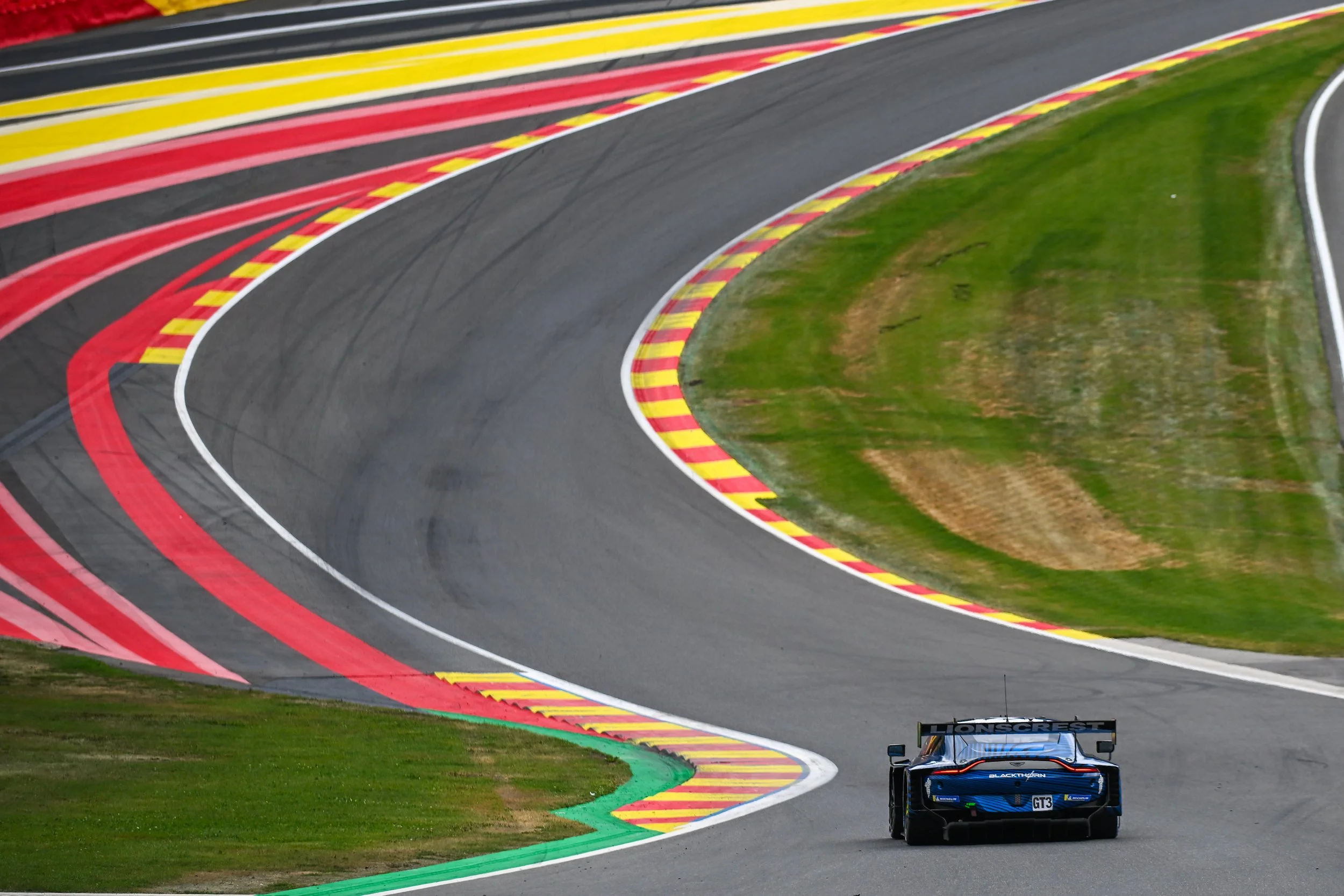
Image © Blackthorn Racing. Used for editorial purposes.
Its timing feels particularly appropriate: the film looks back at the team’s battle during the CrowdStrike 24 Hours of Spa, while Blackthorn has returned to the same Belgian circuit this weekend for the Michelin Le Mans Cup. I’ll tell you much more about the film in the FTP Update, but if you haven’t yet seen it, you can watch it HERE.
On the road-car side, we return to Valen one week after its unexpected Monterey debut to examine the wider media response and consider whether opinion has begun to settle. Two Nürburgring development cars then raise fresh questions about a possible Vanquish S and a considerably wilder Vantage, potential signs of the more differentiated product strategy Adrian Hallmark has been describing.
There’s heritage and ownership to explore as well. We’ll return to Monterey after one of the most important Aston Martins offered during auction week failed to find a buyer, while FTP Car of the Week brings a competition history that deserves careful telling. Each of these subjects asks what comes next when development, investment, competition or collecting meets the realities beyond the initial announcement.
Silverstone therefore feels like the right place to begin. The Valkyrie programme we’ve followed through its early competitive life was back on circuit, not chasing a race result, but exploring where Aston Martin and The Heart of Racing might take it next.
Valkyrie Begins Exploring What Comes Next
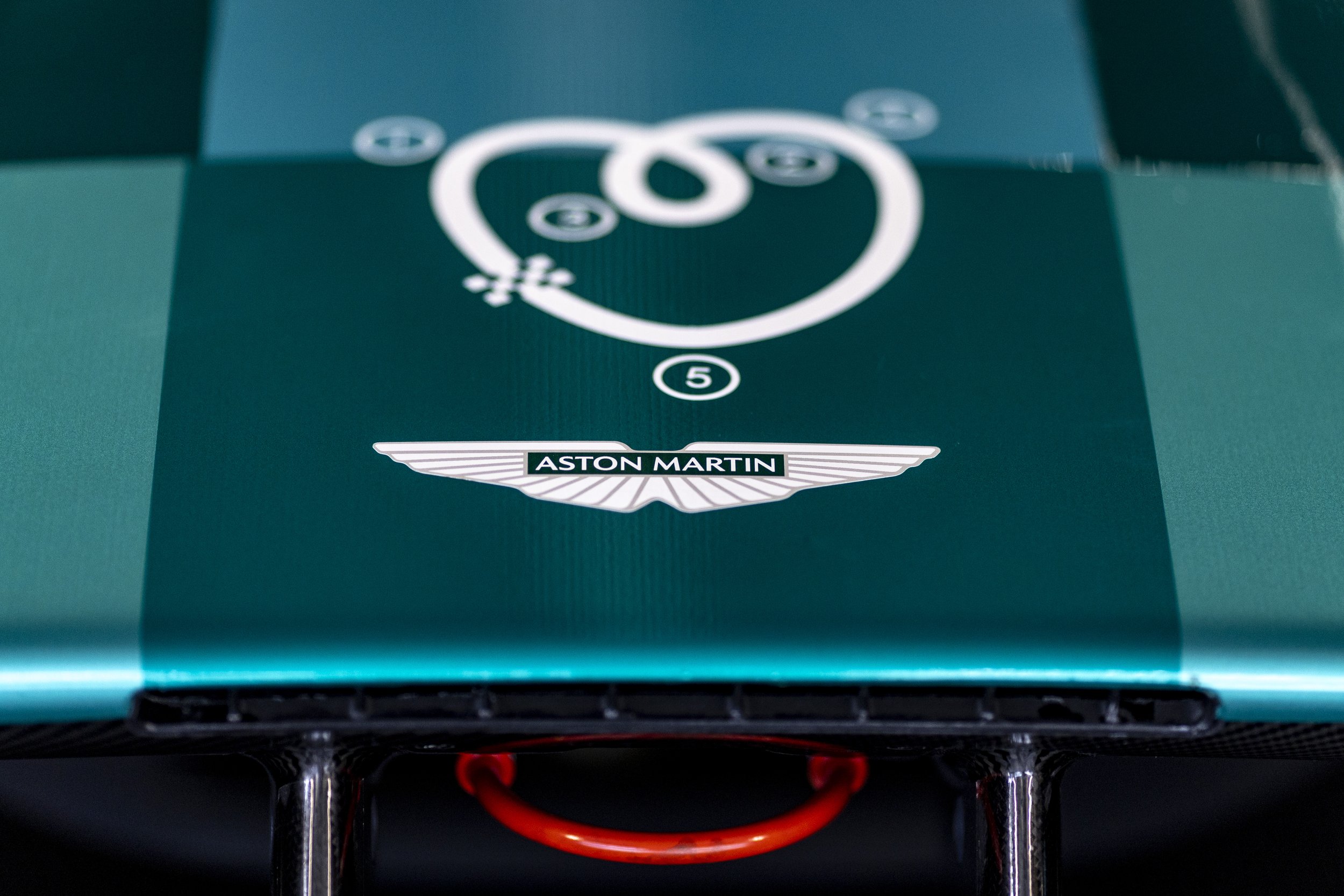
Image © Aston Martin Lagonda. Used for editorial purposes. Aston Martin THOR Valkyrie completes testing at Silverstone.
In Issue 36, we wrote that “the Aston Martin Valkyrie programme continues to evolve before our eyes”. That observation followed an eventful appearance at Road America, where the #23 Valkyrie recovered from two drive-through penalties to cross the line in second place, only for a further penalty to leave it officially classified fifth.
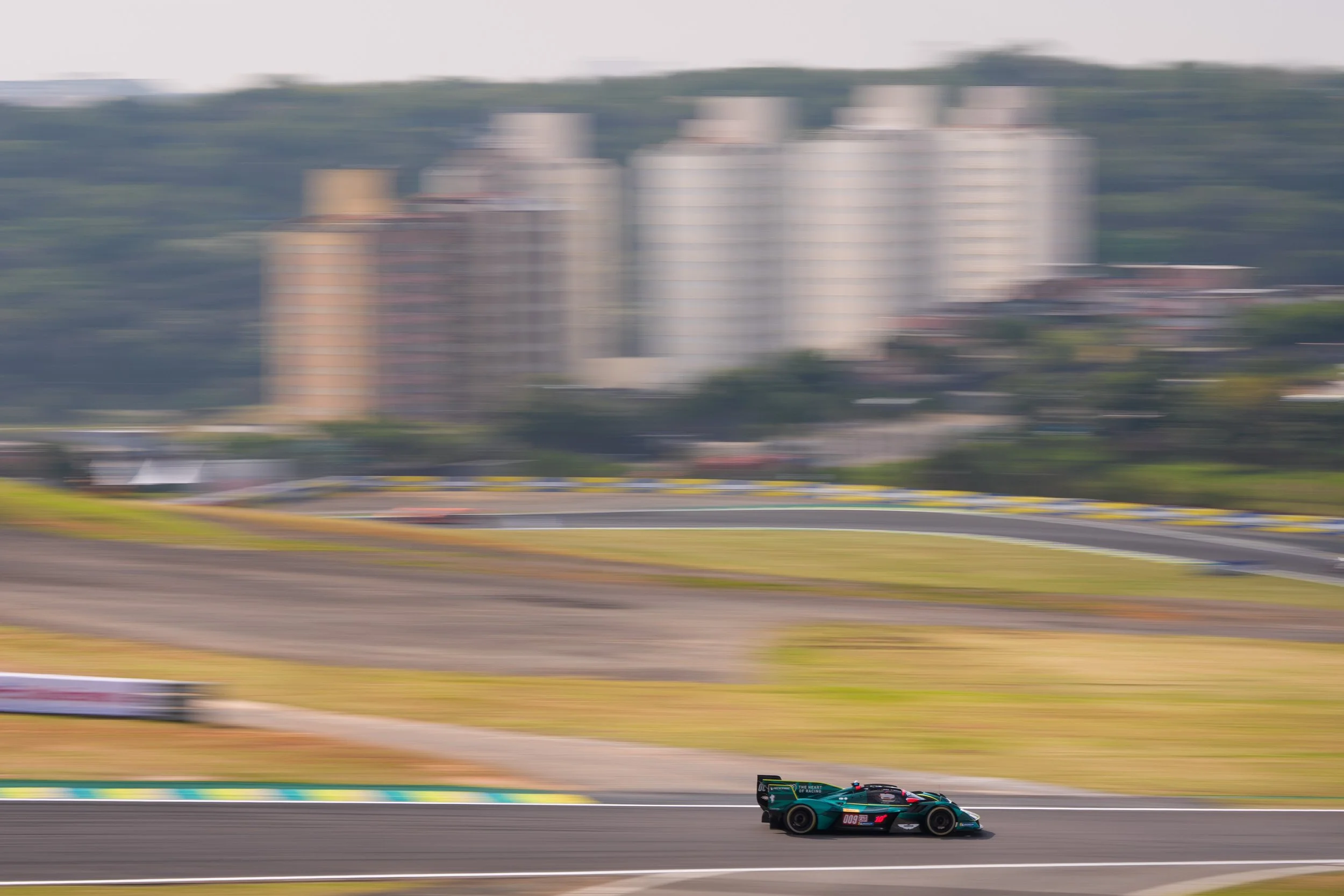
Image © Aston Martin Lagonda. Used for editorial purposes. Valkyrie, São Paulo
Coming after both Valkyries had scored points in the Fédération Internationale de l’Automobile (FIA) World Endurance Championship (WEC) at São Paulo, Road America offered another indication that the programme was beginning to move forward. This week, that development became far more deliberate.
On Wednesday 19th August, the works Aston Martin THOR Team (the initials refer to The Heart of Racing), took a development version of the Valkyrie Hypercar to Silverstone. Works drivers Ross Gunn and Harry Tincknell shared the driving around the 3.66-mile Grand Prix circuit as the team evaluated a range of technical ideas and began exploring the car’s future development direction.
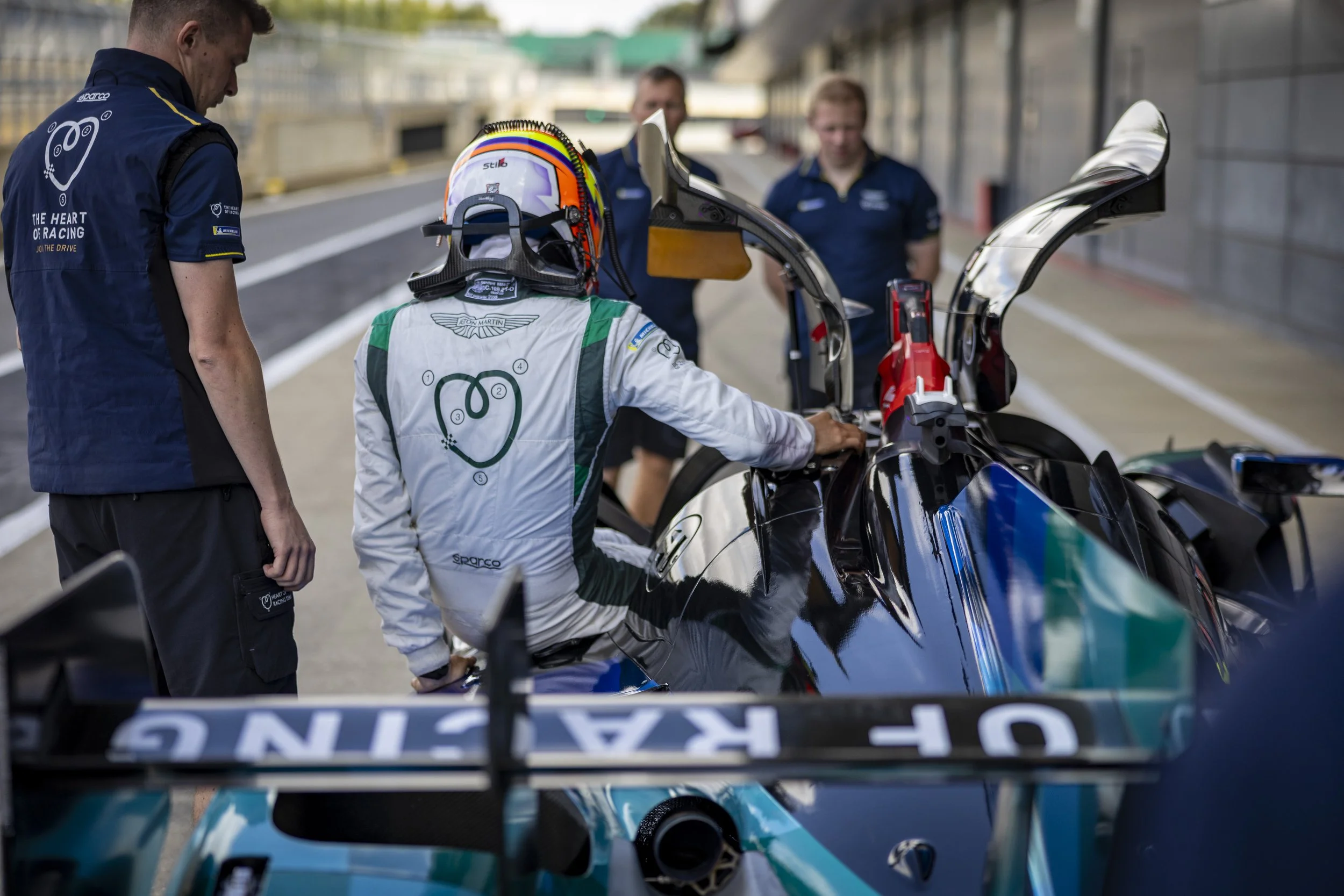
Image © Aston Martin Lagonda. Used for editorial purposes. Aston Martin THOR Valkyrie completes testing at Silverstone.
This was the first time the development Valkyrie had run on the full Silverstone Grand Prix circuit, but it wasn’t simply a homecoming demonstration or promotional exercise. Aston Martin described it as an extensive test designed to build upon everything the team has learned during the Valkyrie’s first 18 months of competition. The Valkyrie has now accumulated meaningful race mileage in both the WEC and the International Motor Sports Association (IMSA) WeatherTech SportsCar Championship, giving its engineers a much clearer understanding of how the car behaves across different circuits, conditions and tyre windows.
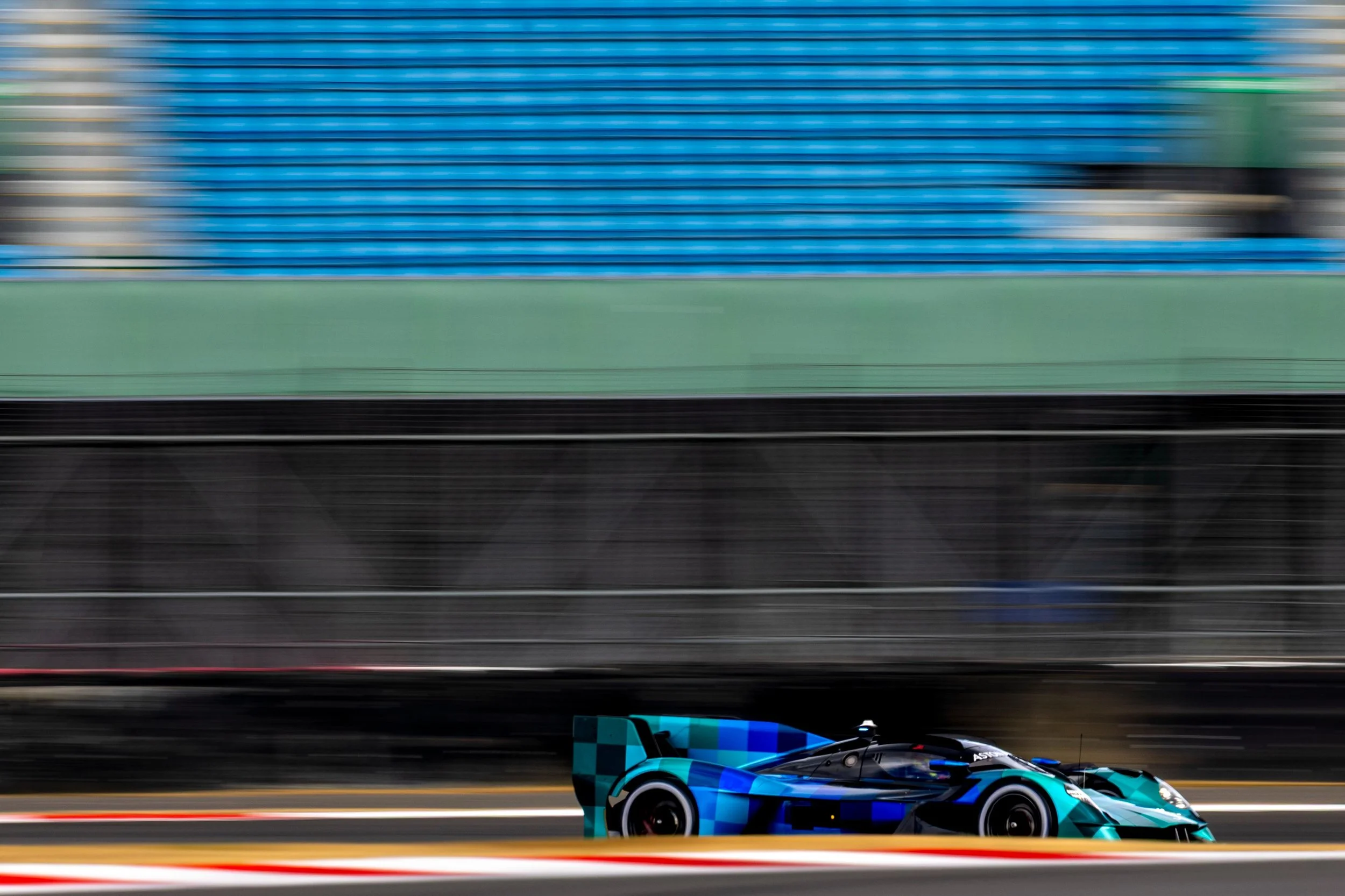
Image © Aston Martin Lagonda. Used for editorial purposes. Aston Martin THOR Valkyrie completes testing at Silverstone.
Silverstone provided an opportunity to take that knowledge away from the pressure of a race weekend and use it to examine where further performance might be found.
At the centre of the car remains its extraordinary, modified 6.5-litre naturally aspirated V12, capable of revving to 11,000rpm. Although the engine produces more than 1,000bhp in its standard form, the competition car is restricted by the Hypercar regulations to 500kW, or approximately 680bhp. Finding additional performance is therefore not simply a matter of turning up the power. Progress must come from making the complete car work more effectively within a tightly controlled set of regulations.
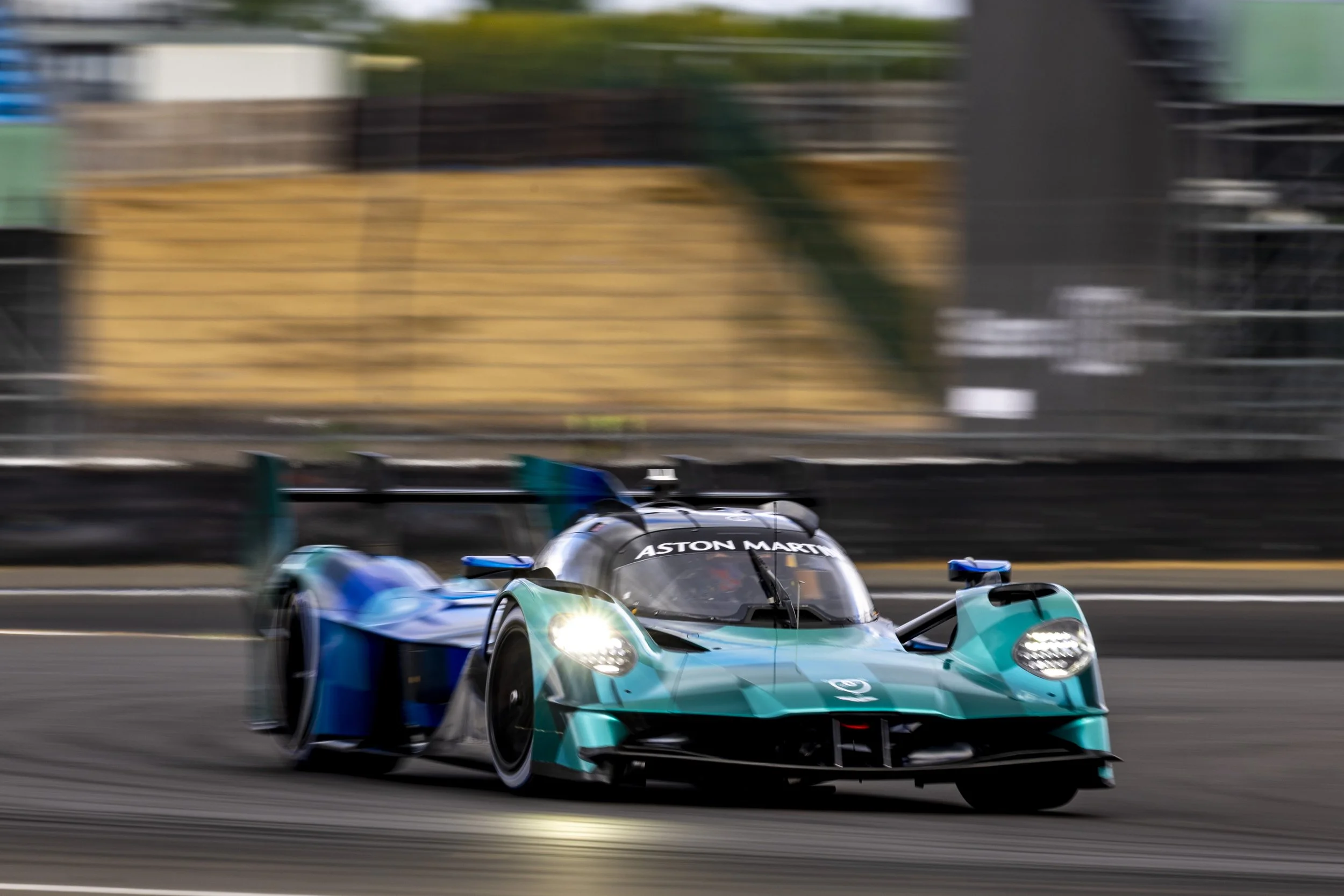
Image © Aston Martin Lagonda. Used for editorial purposes. Aston Martin THOR Valkyrie completes testing at Silverstone.
Aston Martin hasn’t disclosed the individual components or areas tested at Silverstone, nor has it published lap times or direct comparisons with the existing race car. It would consequently be premature to present the test as evidence of a sudden performance breakthrough. What it does provide is clear evidence that the Valkyrie programme has entered another phase, with the team now able to use its racing experience to investigate specific future improvements.
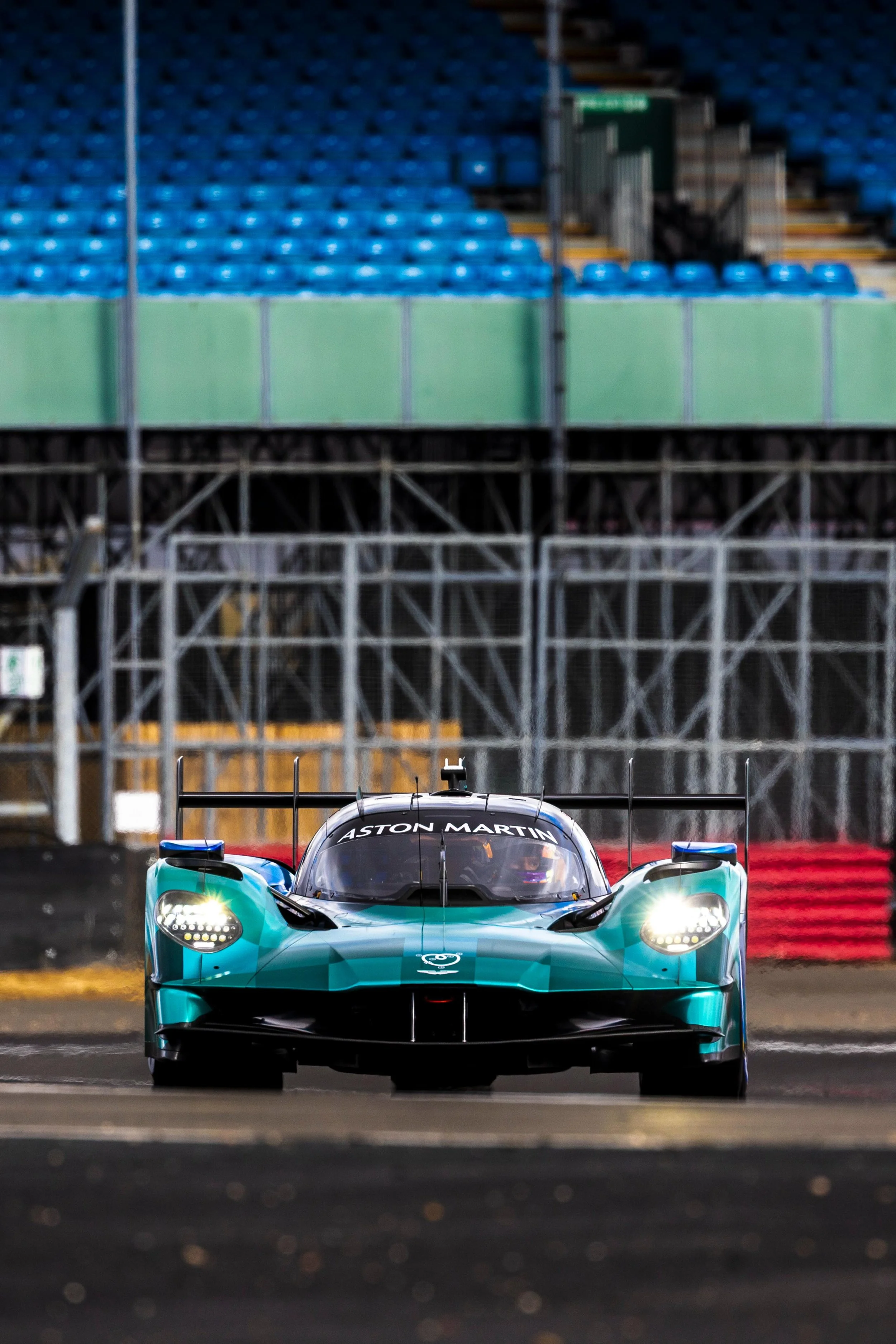
Image © Aston Martin Lagonda. Used for editorial purposes. Aston Martin THOR Valkyrie completes testing at Silverstone.
Team Principal Ian James described the session as “a significant day for Valkyrie” and concluded his comments with the intriguing promise that “there’s more to come”.
Aston Martin Head of Endurance Motorsport Adam Carter was similarly measured, explaining that the team is only beginning to explore new areas of performance now that it’s established a deeper understanding of the car.
The location also carried longer-term significance. The WEC will return to Silverstone from 23rd–25th April 2027
…bringing the championship back to the United Kingdom for the first time since 2019. Wednesday’s running allowed Aston Martin to begin gathering relevant circuit and Michelin tyre information well in advance of that event.
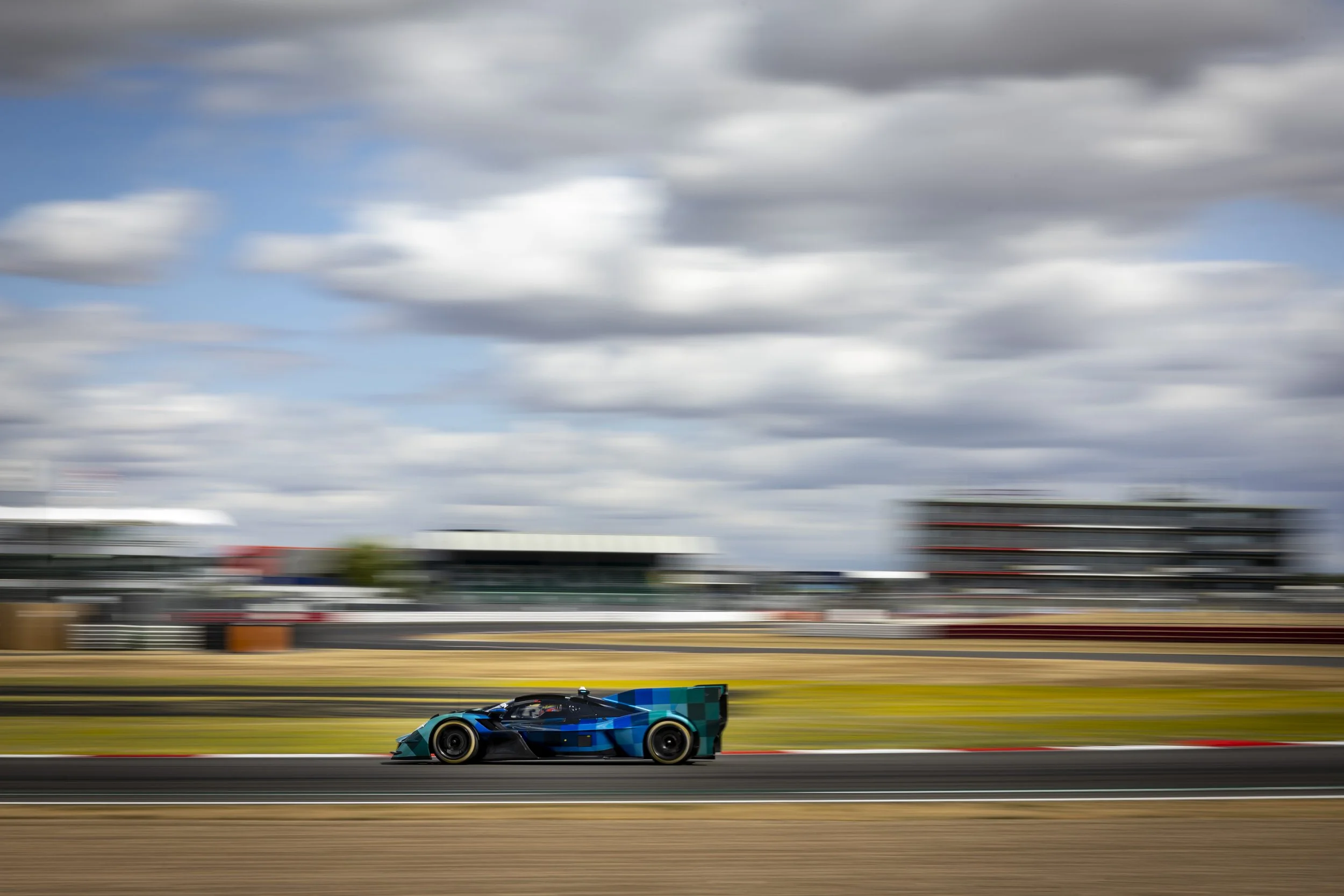
Image © Aston Martin Lagonda. Used for editorial purposes. Aston Martin THOR Valkyrie completes testing at Silverstone.
For British supporters, the 2027 race should provide the first opportunity to see the Valkyrie competing at the highest level of international endurance racing on home soil. For Aston Martin, it will be a particularly important appearance for a car conceived, developed and operated from the United Kingdom.
FTP cannot wait for the WEC’s return to Silverstone, and I will do everything I can to be there to see the Valkyrie racing for myself. Despite following the programme so closely, I have yet to see it compete in person at any circuit, Le Mans included, so the prospect of finally hearing that V12 at full voice on home soil is particularly exciting. My motorsport to-do list remains a long one!
A test is not a race result, of course, and the next questions remain unanswered: which of the ideas evaluated at Silverstone will progress, when might they appear on the competition car, and how much difference will they make against the established Hypercar manufacturers?
What we can say is that the recent signs of progress at São Paulo and Road America are not being treated as an endpoint. They’re feeding directly into the Valkyrie’s next stage of development, and FTP will continue following that process through the Motorsport Hub.
Silverstone has therefore supplied both of this week’s leading Aston Martin stories. The circuit hosted the Valkyrie’s next development step, while the Formula One organisation based alongside it has welcomed a significant new minority investor and Vice Chairman.
Robert Wood Johnson Joins Aston Martin’s Formula One Project
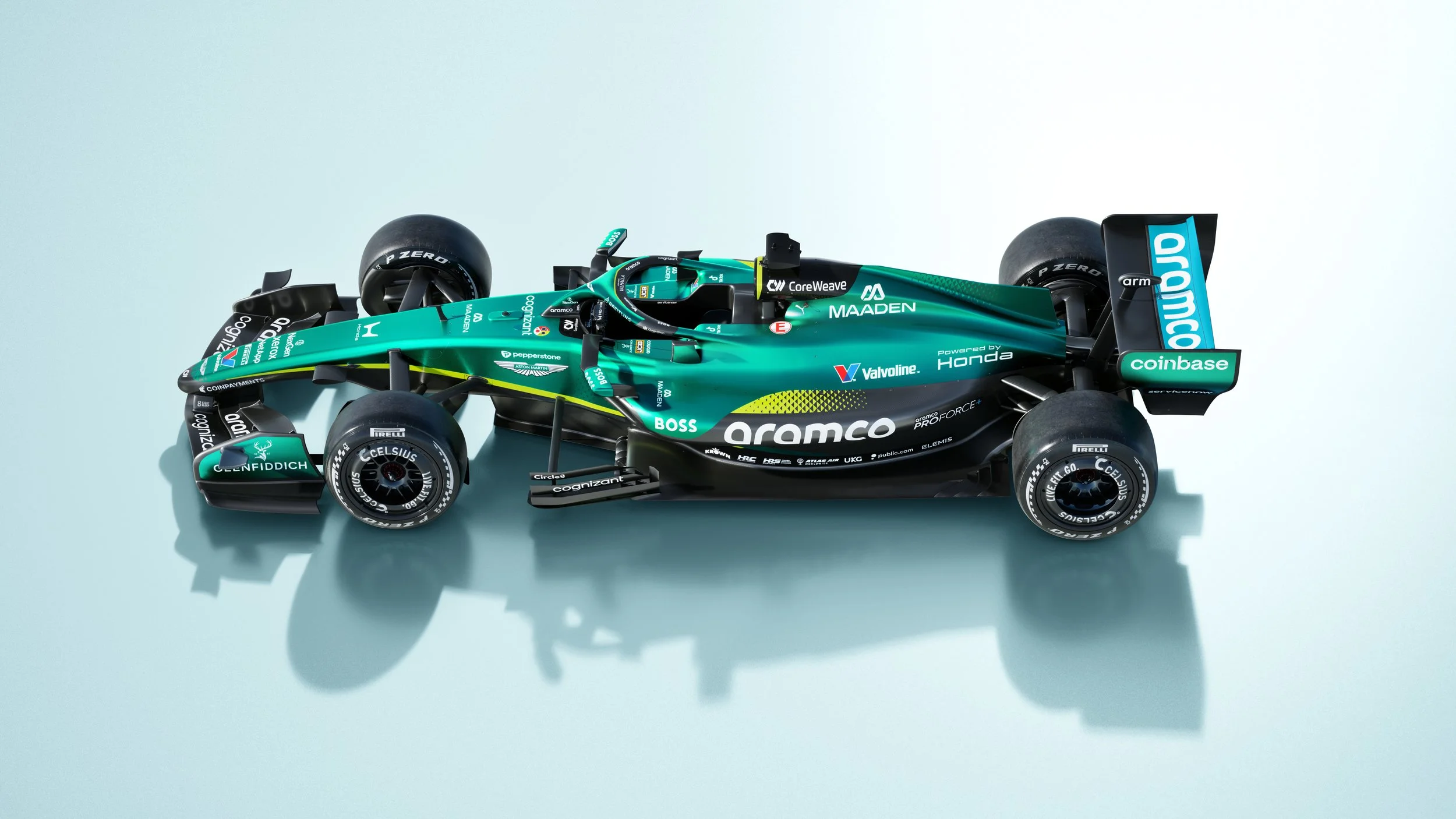
Image © Honda Motor Co. Ltd & Aston Martin Aramco. Used for editorial purposes.
The new arrival at Silverstone is Robert Wood “Woody” Johnson, an American businessman, experienced sports investor and former United States Ambassador to the United Kingdom. On Thursday, the Aston Martin Aramco Formula One Team announced that Johnson had acquired what it described as a “strategic minority stake” in the company. He has also joined the team’s Board of Directors as Vice Chairman with immediate effect.
Before considering what his arrival could mean, there’s an important distinction to make.
As we explained in Issue 12 of the FTP Weekly Roundup, Aston Martin Lagonda and the Aston Martin Formula One team are separate legal and financial entities. The publicly listed road-car company previously held a 4.6% interest in the Formula One operation, but sold that holding for £110 million in 2025.
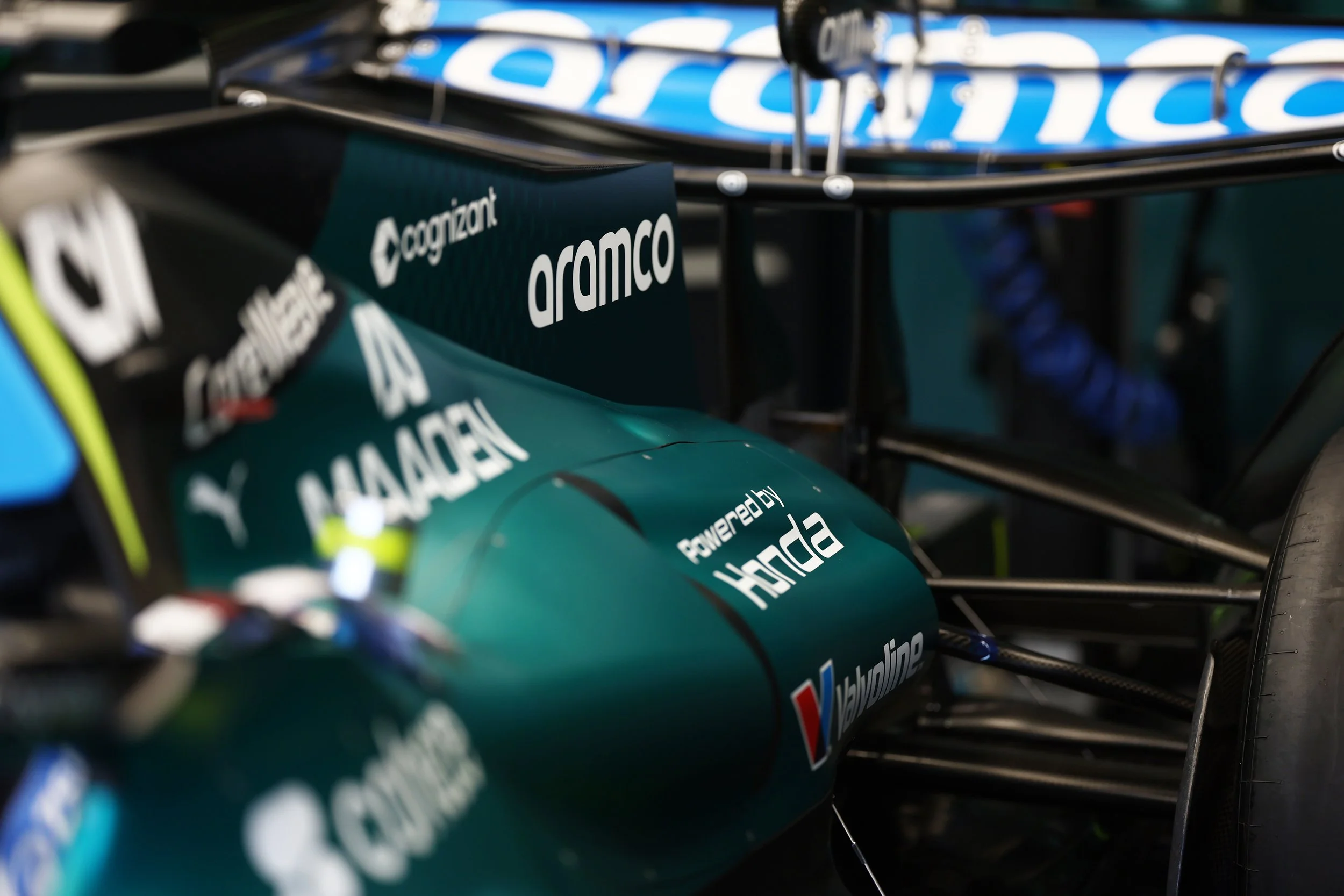
Image © Honda Motor Co. Ltd & Aston Martin Aramco. Used for editorial purposes.
Johnson’s investment is therefore in the privately owned Formula One team, not Aston Martin Lagonda. It doesn’t give him a stake in the road-car manufacturer, nor does it directly represent new funding for Aston Martin Lagonda.
That separation is easily missed when both organisations carry the Aston Martin name, but it is important whenever investment, ownership or financial stories appear. This announcement strengthens the ownership and commercial structure surrounding the Formula One operation; it does not change the shareholding of the road-car company.
The precise size and financial value of Johnson’s stake haven’t been disclosed. The announcement also doesn’t explain whether he’s purchased existing shares from another investor or provided fresh capital directly to the business. We should consequently avoid attaching unconfirmed figures to the deal or presenting it as a specific injection of money into the race-car development programme.
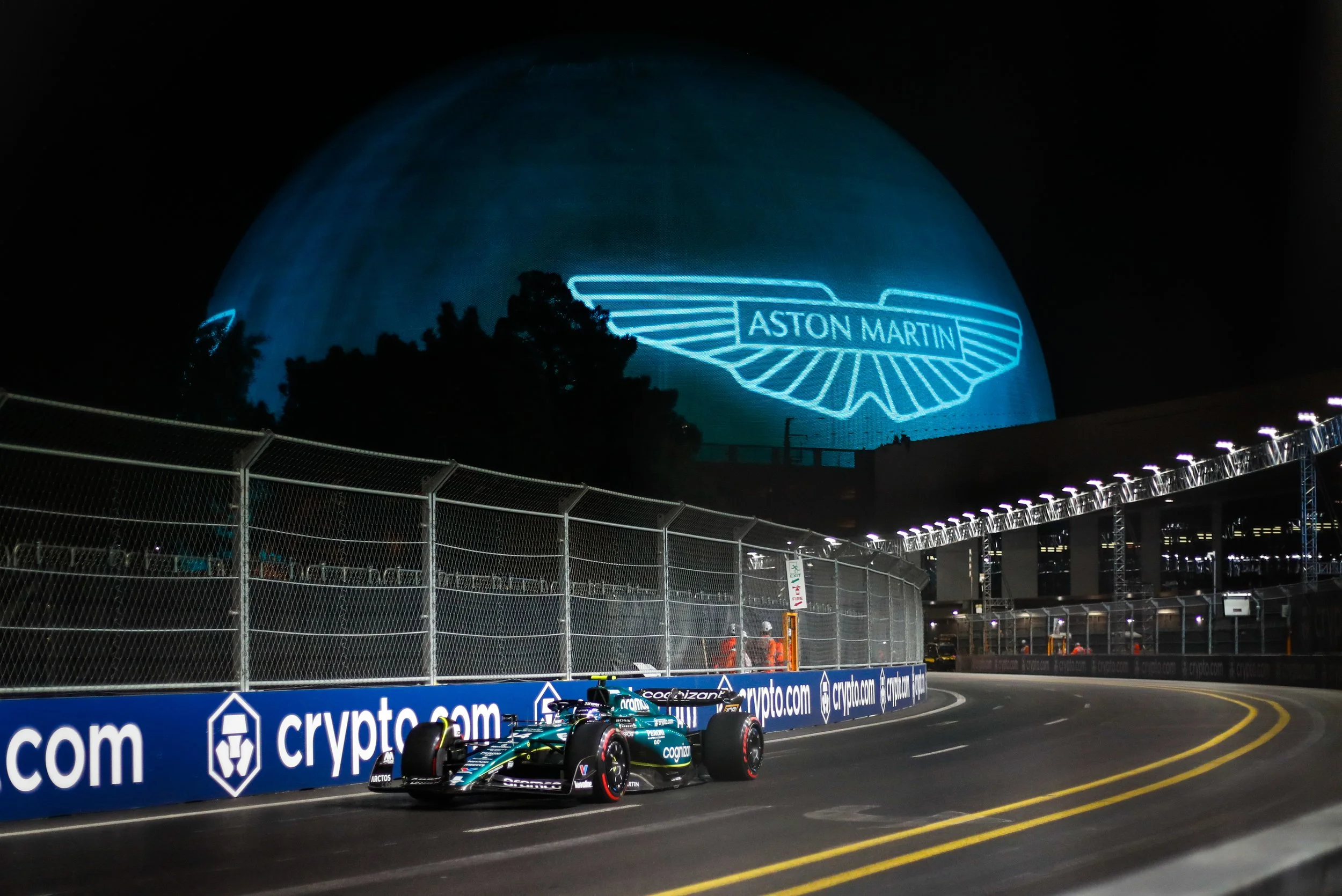
Image © Honda Motor Co. Ltd & Aston Martin Aramco. Used for editorial purposes. Aston Martin advertising on the Sphere, Las Vegas.
What has been confirmed is Johnson’s intended role. His focus will be on supporting the team’s commercial growth, particularly in the United States, rather than becoming involved in its day-to-day management or engineering decisions.
Lawrence Stroll remains Executive Chairman and controlling shareholder. He will continue to manage and control the organisation, which means Johnson’s appointment shouldn’t be interpreted as a transfer of power at Silverstone.
Johnson does, however, bring considerable experience from elsewhere in international sport. He has owned the New York Jets of the National Football League since 2000 and currently holds a 43% interest in English Premier League club Crystal Palace. His time as US Ambassador to the United Kingdom between 2017 and 2021 also gave him established relationships on both sides of the Atlantic.
Aston Martin believes that combination of sporting investment, commercial experience and international contacts could help create new partnerships and opportunities for the team. In practical terms, that may involve sponsorship, hospitality, fan engagement and collaboration with organisations across Johnson’s existing sporting network, although no individual projects have yet been announced.
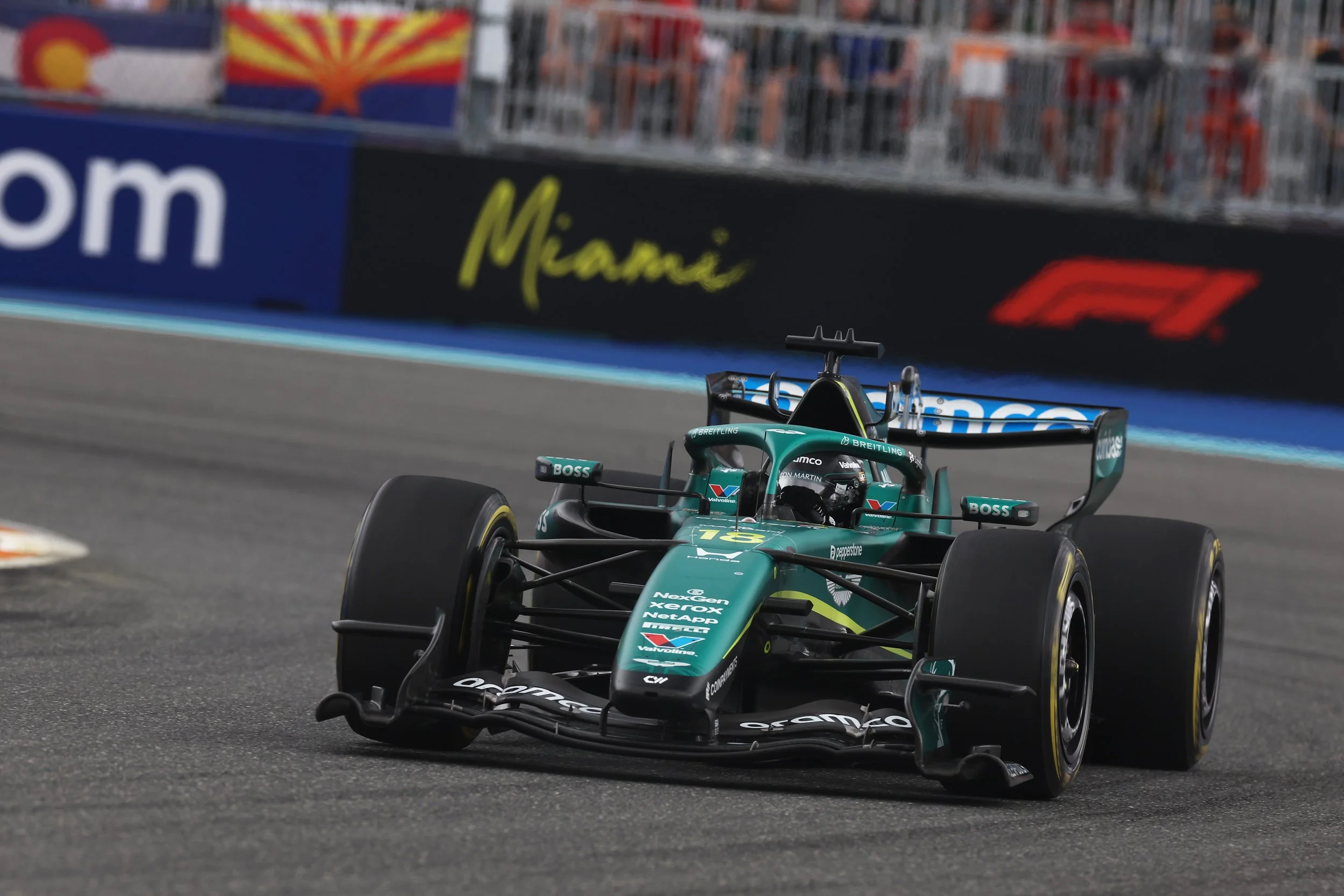
Image © Honda Motor Co. Ltd & Aston Martin Aramco. Used for editorial purposes. Lance Stroll at the Miami Grand Prix 2026.
The emphasis on the United States is understandable. Formula One’s American audience has grown considerably in recent years, and the team already recognises the importance of turning increased interest in the sport into longer-term support, stronger commercial partnerships and a broader Aston Martin following.
There could also be an indirect benefit for the wider marque. A more commercially successful Formula One team places the Aston Martin name before a larger international audience and strengthens the sporting, technological and performance associations surrounding it. The timing of Johnson’s arrival overlaps neatly with comments Adrian Hallmark made during his recent interview with the evo podcast. Speaking from the perspective of Aston Martin Lagonda, Hallmark emphasised the exposure and global platform Formula One provides for the Aston Martin brand, helping it reach an audience far beyond those who might currently be in a position to buy one of its cars.
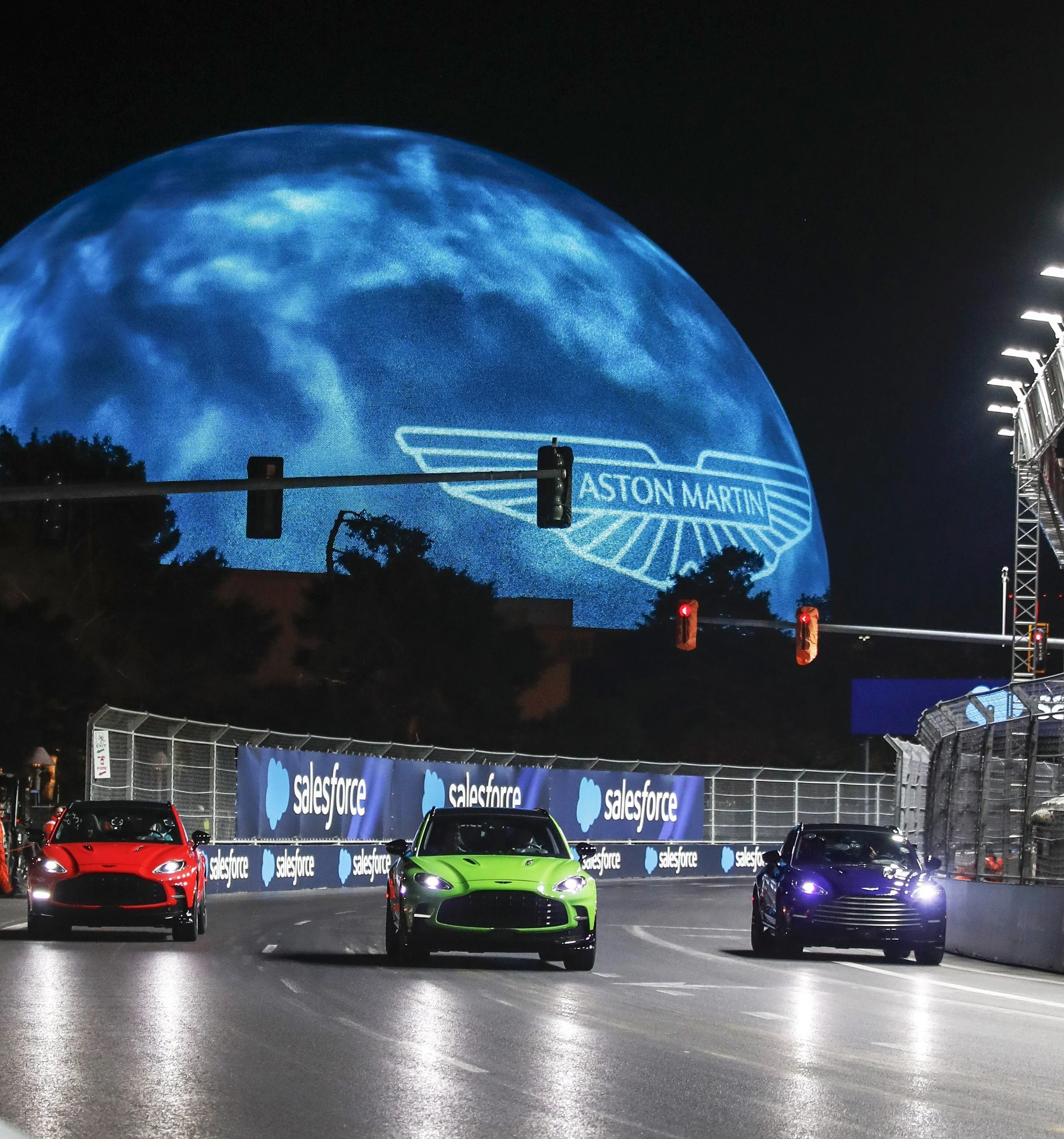
Image © Aston Martin Lagonda. Used for editorial purposes. Aston Martin advertising on the Sphere, Las Vegas.
That helps explain why Johnson’s appointment could be relevant beyond the Formula One team itself. His responsibility is to expand the team’s commercial reach, particularly in the United States, while Hallmark sees Formula One’s visibility as an important way of building awareness, interest and aspiration around the Aston Martin name.
The two organisations remain legally and financially separate, but they’re not strategically isolated from one another. If Johnson helps the Formula One team attract more partners, supporters and attention in the United States, the resulting exposure may also strengthen recognition of Aston Martin’s road cars in one of the company’s most important markets.
This is the same relationship we examined in our FTP Featured Article, How Aston Martin’s Finances and F1 Ambitions Fit Together. Formula One provides Aston Martin with a global platform that would be extremely difficult for a manufacturer of its size to reproduce through conventional marketing alone.
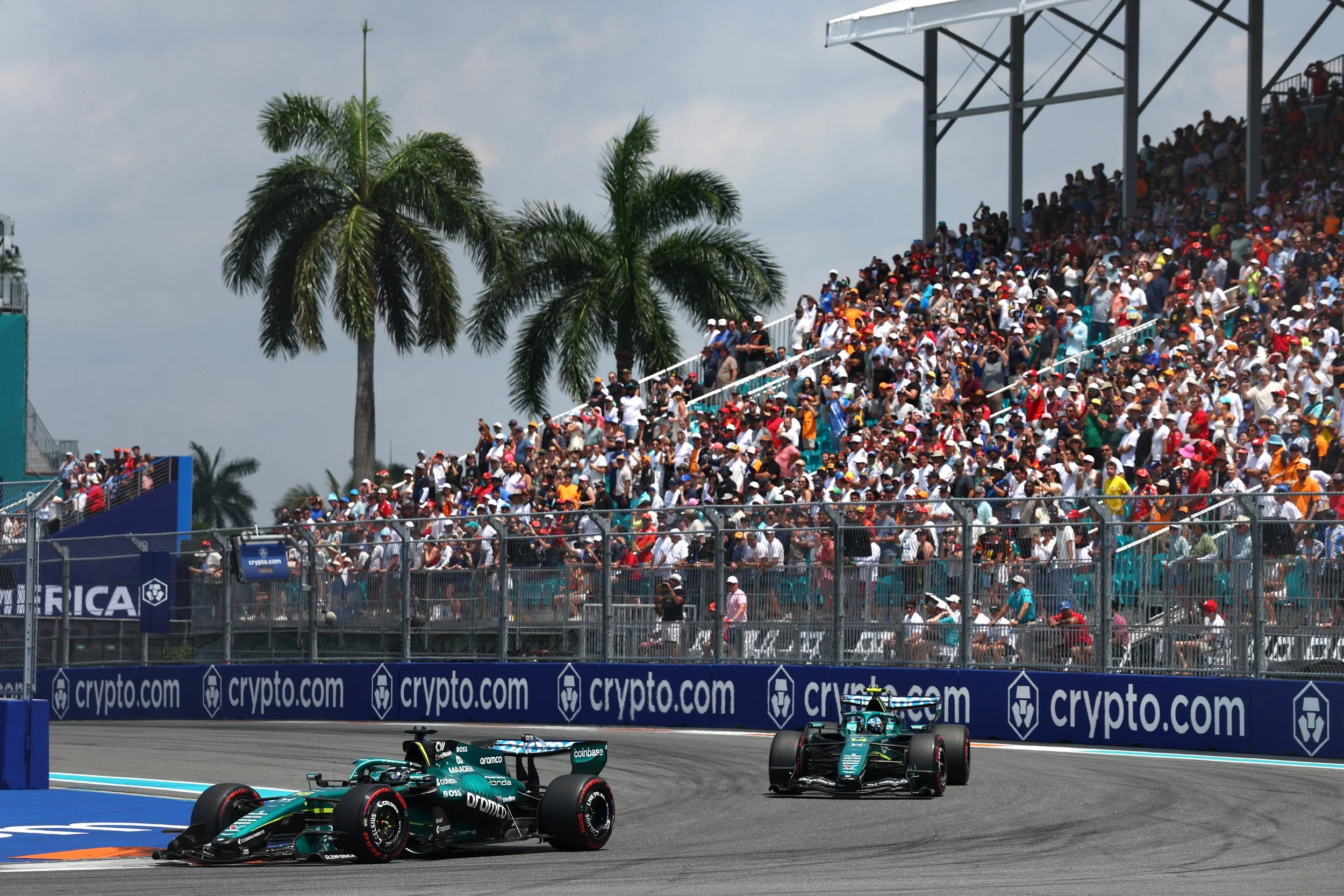
Image © Honda Motor Co. Ltd & Aston Martin Aramco. Used for editorial purposes. Lance Stroll and Fernando Alonso, at the Miami Grand Prix 2026.
Johnson said he shares Lawrence Stroll’s ambition to build an organisation capable of competing at the highest level of the sport. His experience may help expand the commercial foundations beneath that ambition, but his appointment is not an engineering upgrade and will not immediately make the AMR26 faster.
For now, this is best viewed as another significant piece being added around the Formula One project: a well-connected American investor, a clear focus on commercial expansion and another indication that outside investors continue to see considerable value in Aston Martin’s Silverstone-based team.
The business structure may be strengthening, but this weekend at Zandvoort attention returns to the circuit, where progress will still be measured in lap time, reliability and championship points.
Affiliate link note: Some links may be affiliate links, which means Fuel the Passion may earn a small commission if you purchase through them, at no extra cost to you. Thank you for your support.
Zandvoort Puts Aston Martin and Honda’s Progress to the Test
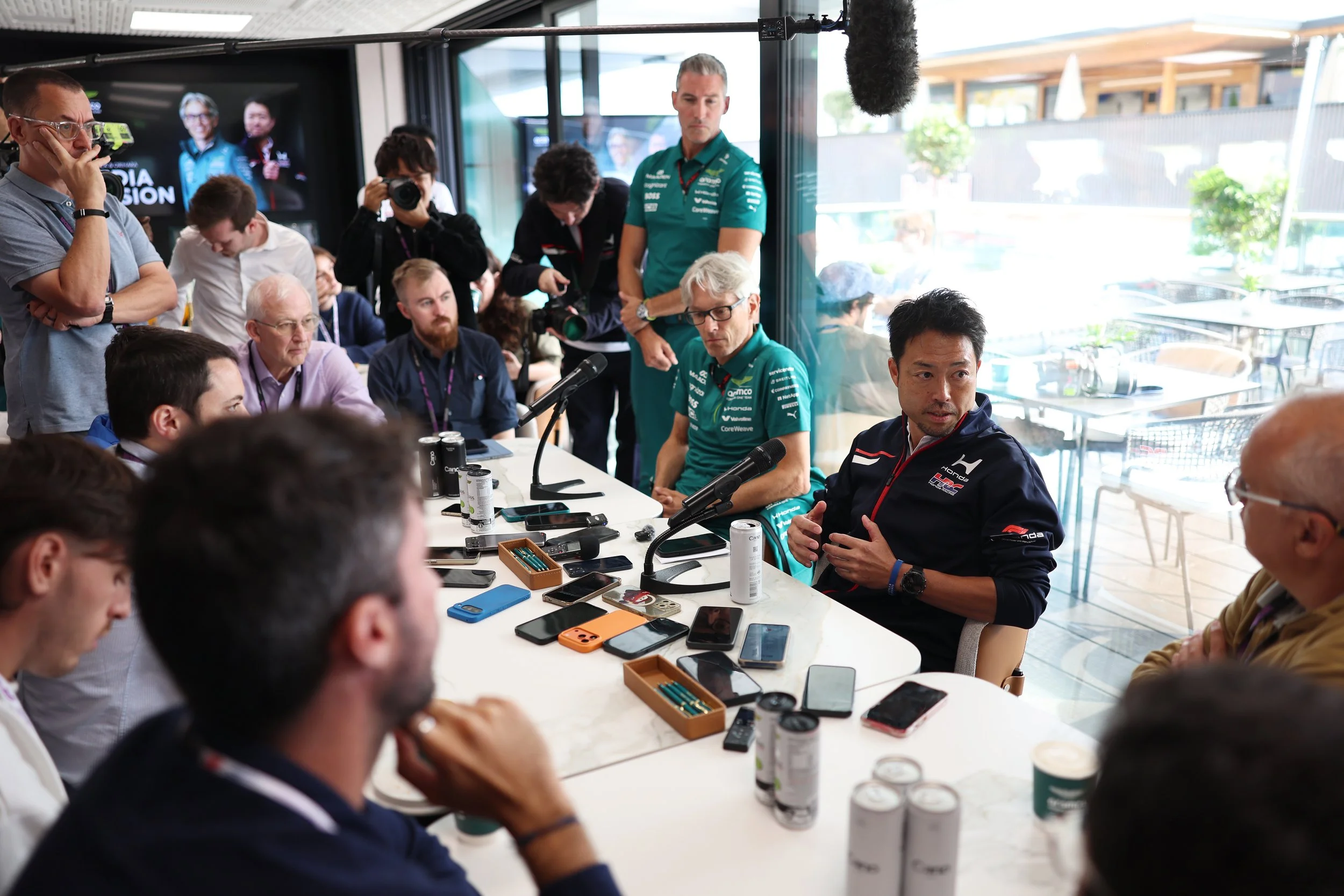
Image © Honda Motor Co. Ltd & Aston Martin Aramco. Used for editorial purposes. Mike Krack, Chief Trackside Officer of Aston Martin F1 Team and Shintaro Orihara, Trackside General Manager and Chief Engineer of Honda Racing Corporation speak to media, ahead of the F1 Grand Prix of Netherlands at Circuit Zandvoort. August 2026.
That examination is already under way. In Issue 37, we described Zandvoort as the next important reading for Aston Martin and Honda. The reasoning was straightforward: Hungary gave us the first evidence that the extensively revised AMR26 had moved closer to the midfield, but the second part of the development programme, Honda’s new power-unit specification, was still waiting to make its competitive debut.
This weekend, those two strands finally come together.
Honda has now confirmed that its updated RA626H power unit includes changes to the internal combustion engine, together with smaller revisions to the battery and other components. The central objective is increased performance, but Honda has continued to resist attaching a public horsepower figure to the update.
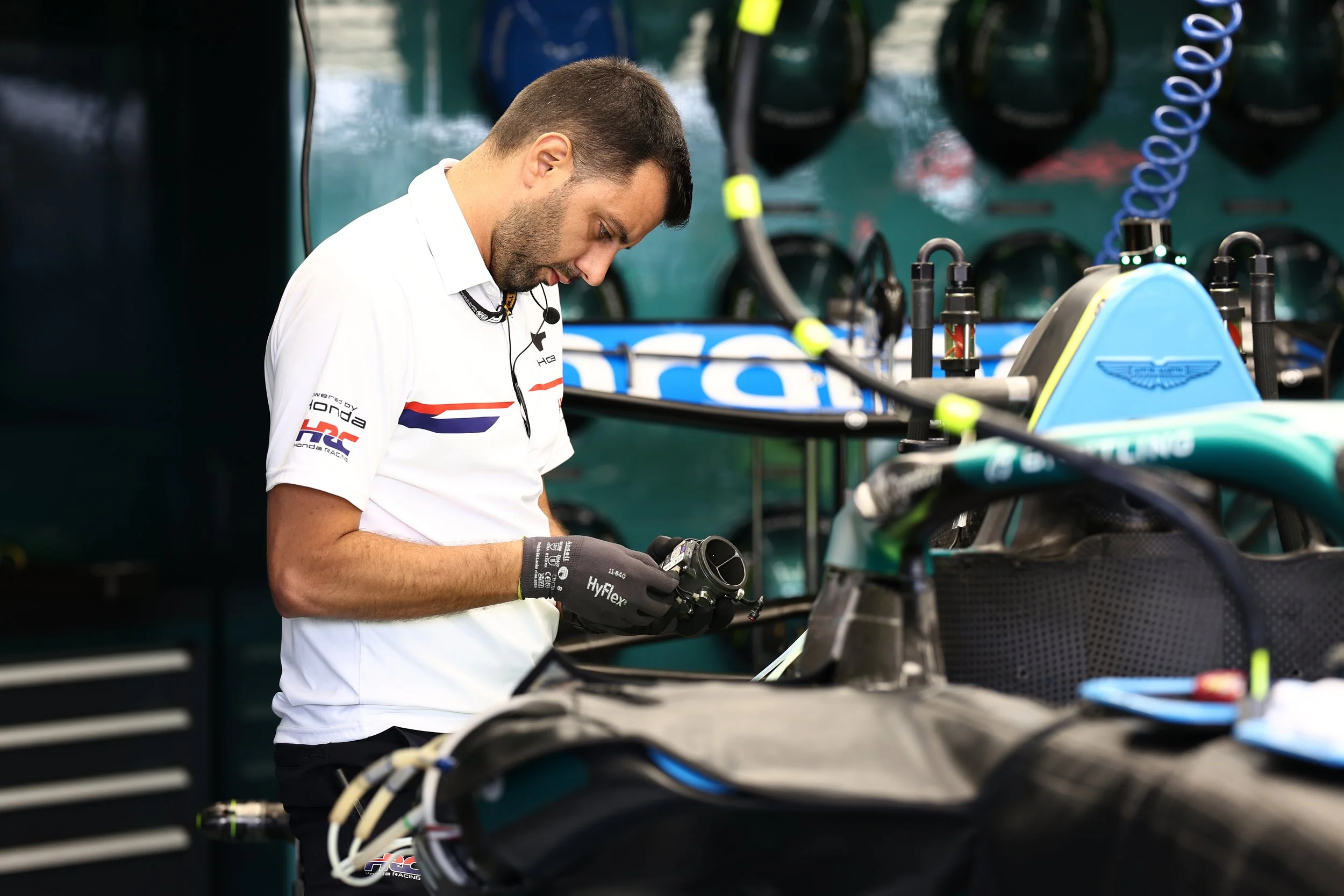
Image © Honda Motor Co. Ltd & Aston Martin Aramco. Used for editorial purposes. HRC Mechanic preparing the AMR26 at the Dutch Grand Prix 2026.
That’s worth remembering amid some of the more dramatic claims circulating online. Honda says it’s achieved its own internal development target; it hasn’t promised a particular lap-time gain or suggested that Aston Martin will suddenly leap towards the front of the grid.
The technical changes are nevertheless substantial. Honda has revised the engine’s pre-chamber, altered the piston shape and modified parts of the lubrication system. In simple terms, the pre-chamber is a small area around the ignition point that helps begin and spread combustion inside the cylinder. Improving that process should allow the engine to burn its fuel more quickly and effectively, while reducing friction within the lubrication system should release a little more usable performance.
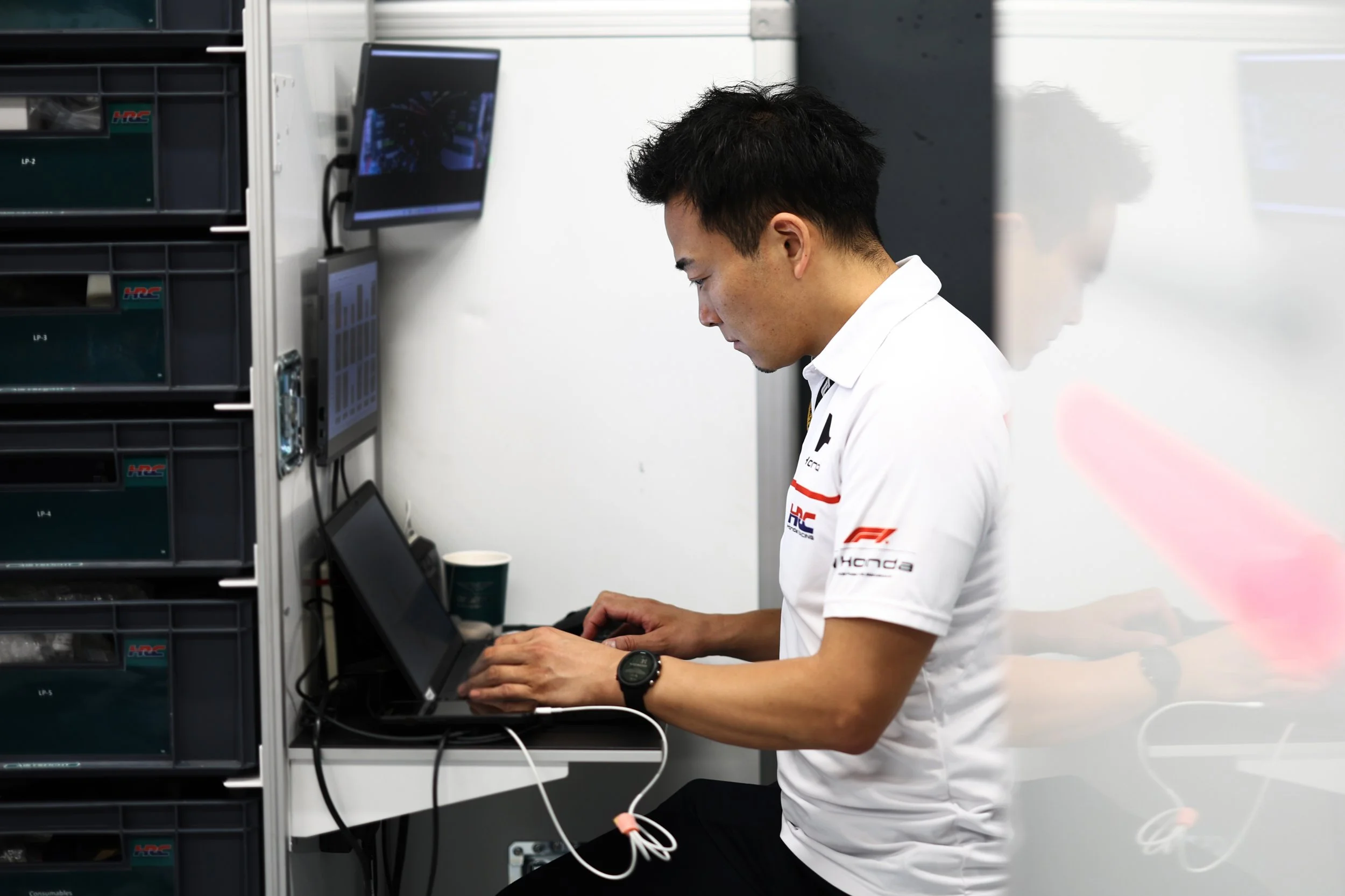
Image © Honda Motor Co. Ltd & Aston Martin Aramco. Used for editorial purposes. HRC Mechanic preparing the AMR26 at the Dutch Grand Prix 2026.
Honda has also made maximum use of the Additional Development and Upgrade Opportunities system, usually shortened to ADUO. This gives power-unit manufacturers additional permitted spending and bench-testing time where their performance falls sufficiently behind the established reference level.
The system is intended to prevent one manufacturer remaining trapped with a substantial disadvantage throughout a regulation cycle.
For Honda, it’s created the opportunity to address some of the weaknesses exposed during a very difficult opening half of its new works partnership with Aston Martin.
The official Honda preview goes further than simply describing an engine update. It says that combining the improved AMR26 with Honda’s second-specification power unit is expected to help Aston Martin join the midfield battle and compete for points. That’s a more meaningful target than an unverified horsepower claim. Hungary suggested that the revised chassis could finally race among parts of the midfield, even though Lance Stroll and Fernando Alonso finished only 13th and 14th. The result itself was modest, but the way the car behaved, its improved correlation with Aston Martin’s simulation work and its ability to remain involved with other cars provided the encouragement.
Zandvoort should now tell us whether adding Honda’s contribution moves that recovery forward.
That same question prompted an interesting discussion between David Coulthard, Naomi Schiff and Will Buxton on the latest episode of Up To Speed. The panel regarded Aston Martin’s Hungary package as a genuine step forward and suggested that further performance could emerge as the team refines its setup and combines it with Honda’s revised power unit.
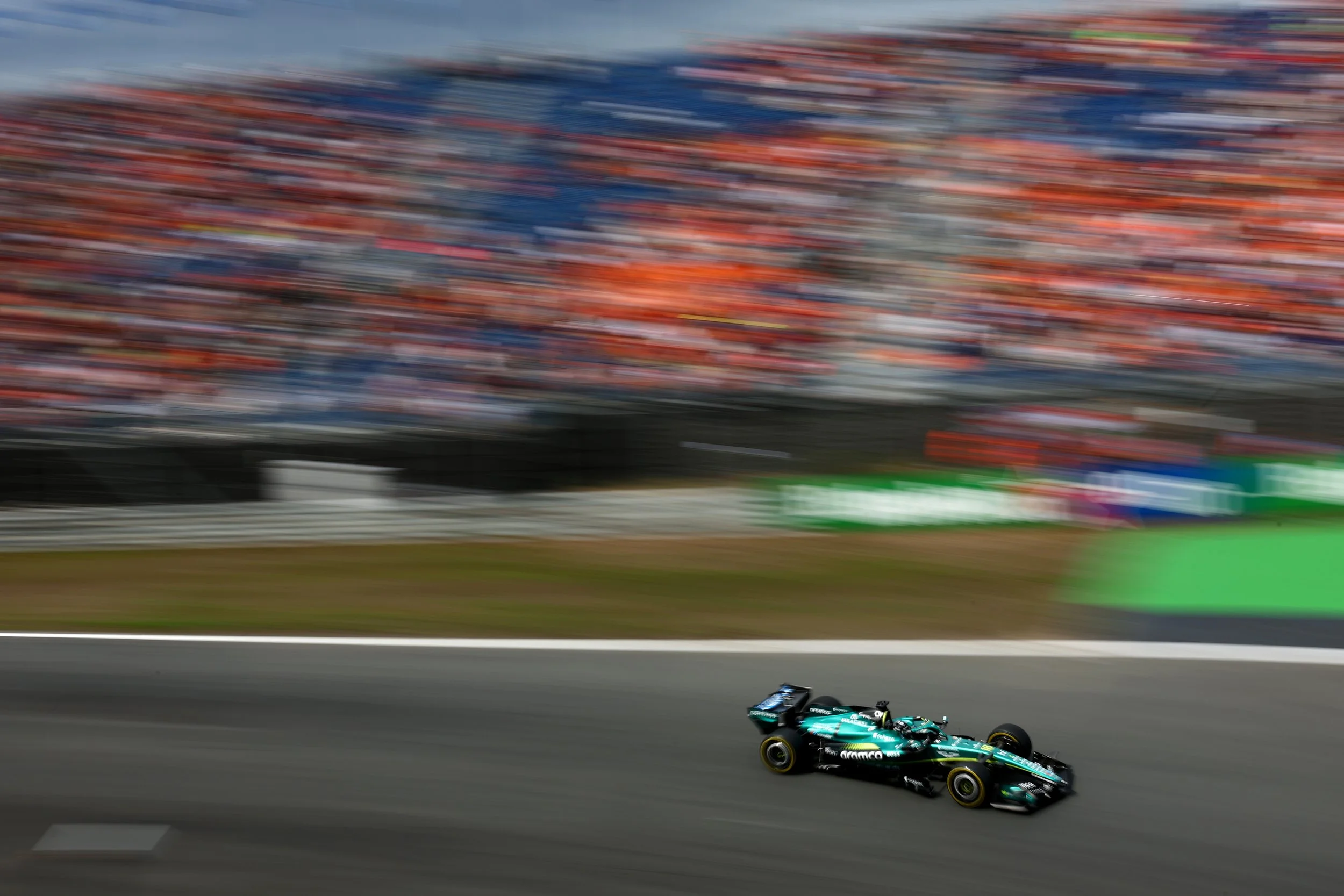
Image © Honda Motor Co. Ltd & Aston Martin Aramco. Used for editorial purposes. AMR26 out on track at the Dutch Grand Prix.
Coulthard referred to paddock speculation surrounding the size of Aston Martin’s chassis and power-unit deficits, but neither the programme nor FTP has verified those estimates. They should not be treated as a reliable prediction of the performance Zandvoort will deliver.
Schiff drew encouragement from Honda’s history, recalling how its difficult return with McLaren eventually developed into championship-winning technology. Coulthard nevertheless argued that the chassis and overall integration of the car remain the greater differentiators, pointing to occasions when McLaren outperformed the Mercedes works team despite both using the same power unit.
The panel’s conclusion closely reflects the evidence available to FTP: additional performance from Honda should help, but Aston Martin’s recovery will depend upon how successfully the complete AMR26 package works together.
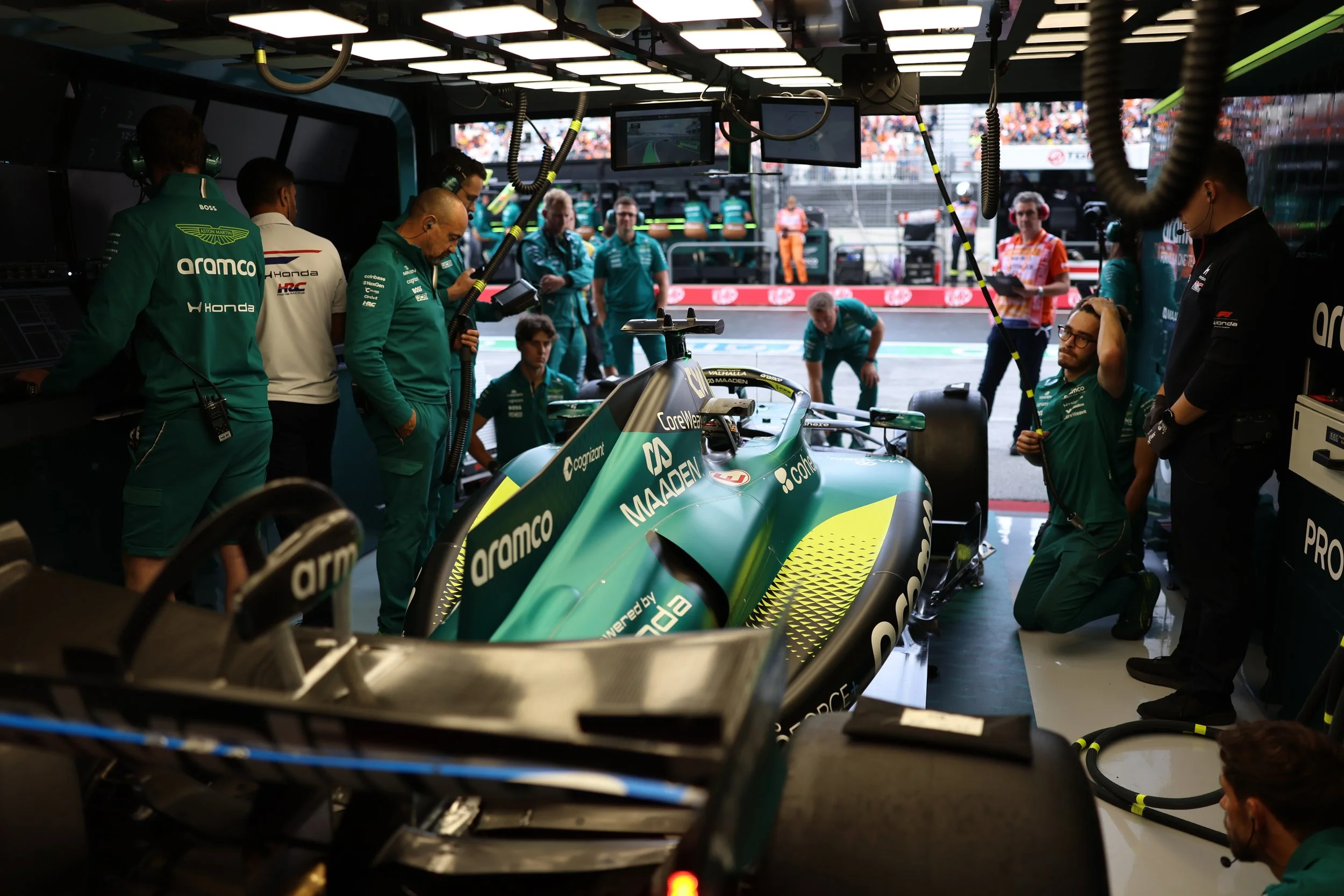
Image © Honda Motor Co. Ltd & Aston Martin Aramco. Used for editorial purposes. AMR26 in the pit garage at the Dutch Grand Prix.
Aston Martin has also introduced further revisions to the AMR26 at Zandvoort, including changes around the front wing, floor fences and diffuser winglet, building upon the major development package introduced in Hungary. These appear to be refinements rather than another wholesale redesign, but their arrival reinforces the sense that the team is trying to develop the chassis and power unit together rather than treating them as separate problems.
The difficulty is time. Zandvoort is a Sprint weekend, leaving Aston Martin and Honda with only one conventional practice session before Sprint Qualifying begins. The engineers must evaluate the new power unit, check reliability, refine its driveability and establish a workable car setup within a very compressed programme.
A normal Grand Prix weekend offers three practice sessions. Here, any early interruption, unexpected behaviour or wrong setup direction carries a much greater cost. That makes the Saturday evidence particularly valuable.
Zandvoort delivers a difficult first verdict
Saturday has provided a more complicated answer than Aston Martin and Honda would have hoped for. Friday’s sole practice session had offered a reasonable starting point, with Fernando Alonso 12th and Lance Stroll 18th, but Sprint Qualifying exposed fresh driveability difficulties with Honda’s revised power unit.
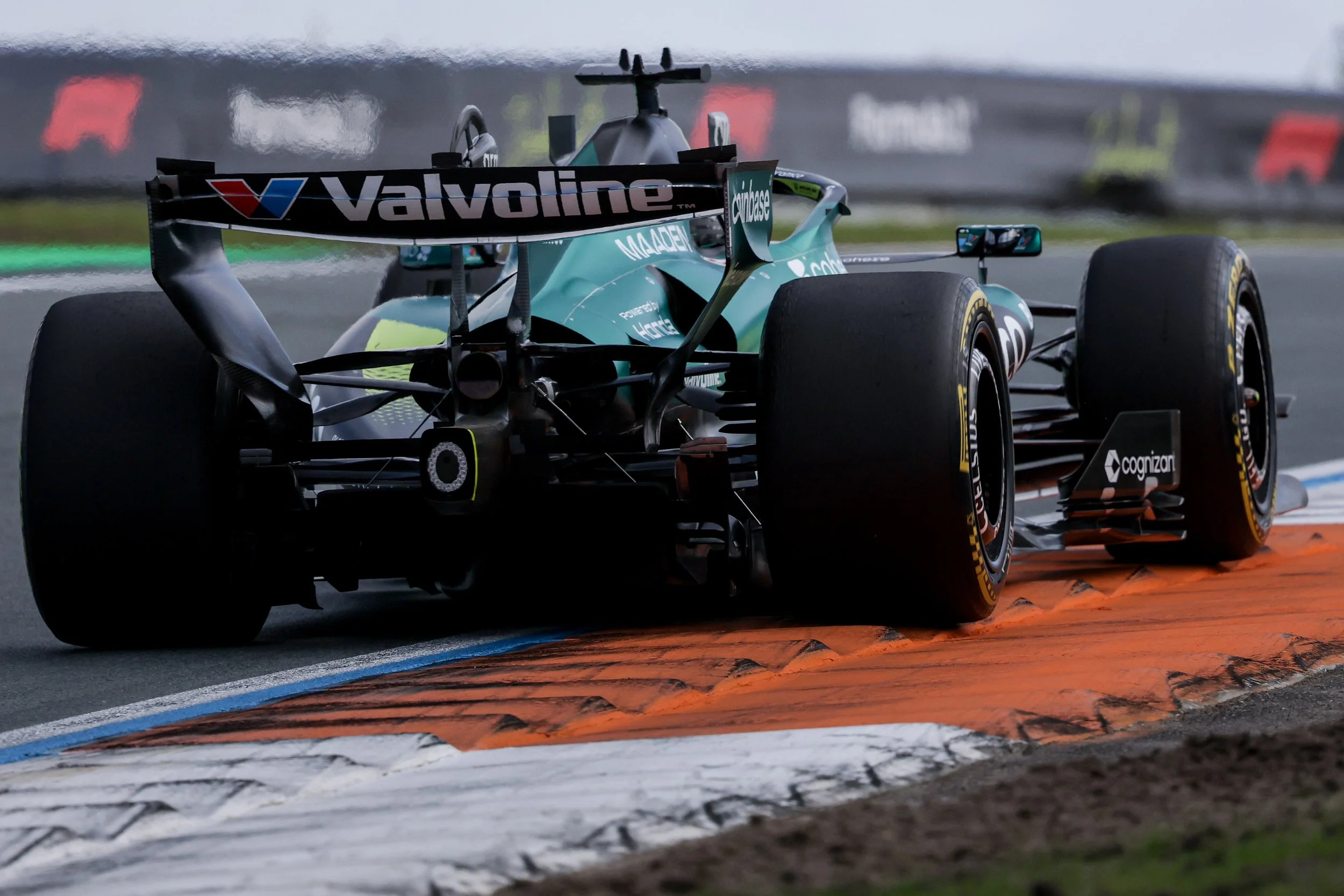
Image © Honda Motor Co. Ltd & Aston Martin Aramco. Used for editorial purposes. Lance Stroll, AMR26 at the Dutch Grand Prix.
Alonso reported that the car was difficult to stop at times, while a problem with Straight Mode, the 2026 system designed to reduce aerodynamic drag on designated sections of the circuit, meant the rear wing didn’t operate as intended. He qualified 22nd for the Sprint, with Stroll 19th.
Aston Martin subsequently made set-up changes to Alonso’s car, requiring him to start Saturday morning’s 24-lap Sprint from the pit lane. Both drivers gained positions during the opening laps, but there was no breakthrough towards the points. Stroll finished 17th and Alonso 18th.
Grand Prix qualifying later in the afternoon produced a closer fight, although both Aston Martins were again eliminated in Q1. Alonso qualified 18th with a 1:13.650 and Stroll 19th with a 1:13.818. Alonso was just 0.098 seconds away from the Q2 cut-off, underlining how tightly compressed this part of the field remains.
The positions themselves are disappointing, but the technical picture underneath them is more nuanced. Adrian Newey reported that both drivers are seeing “significant steps forward with the chassis and aero performance” suggesting that the progress made with Aston Martin’s major Hungary development package has not simply disappeared.
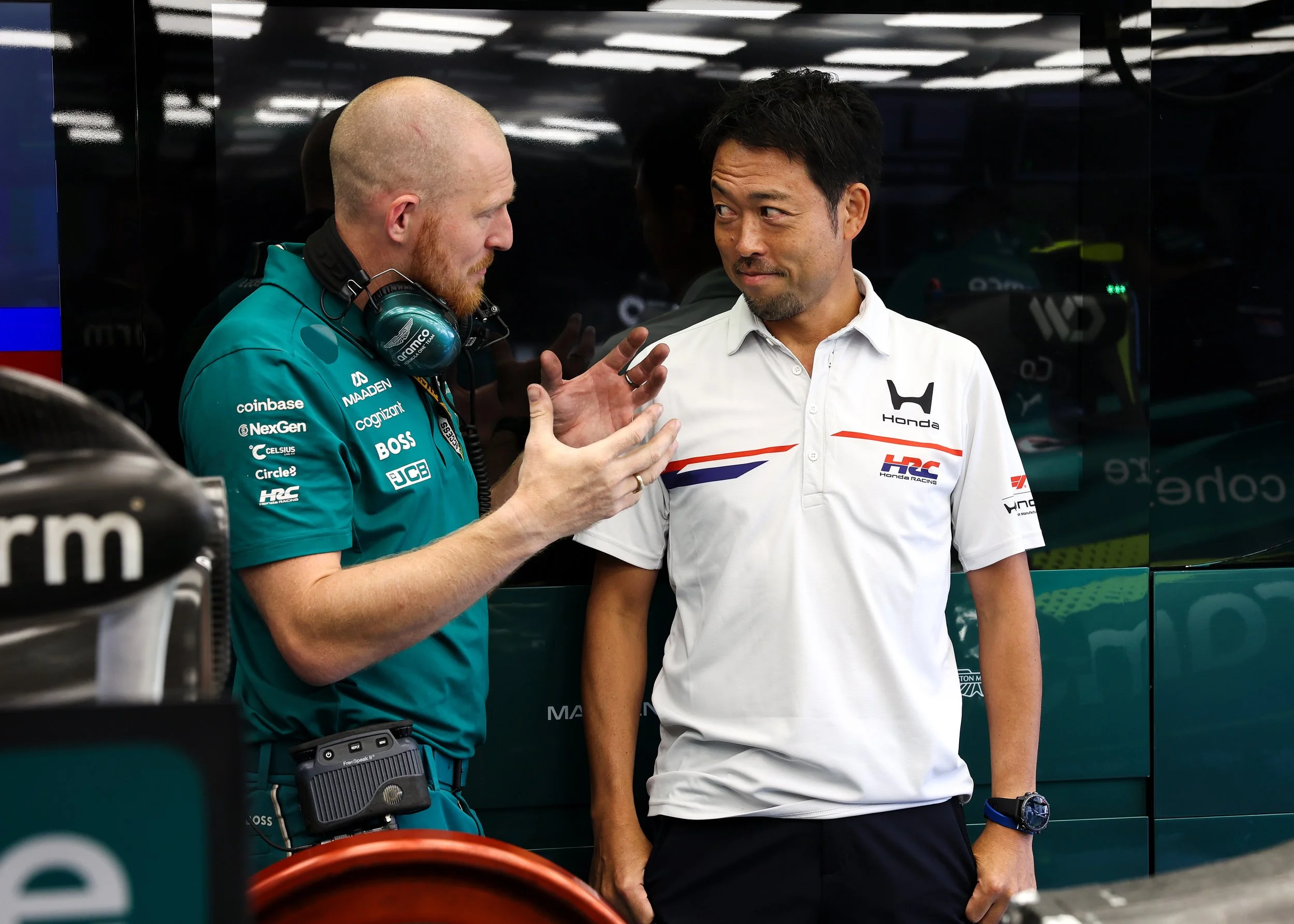
Image © Honda Motor Co. Ltd & Aston Martin Aramco. Used for editorial purposes. Shintaro Orihara at the Dutch Grand Prix
There was encouragement from Honda too. In information supplied directly by Honda Racing Corporation (HRC), Trackside General Manager and Chief Engineer Shintaro Orihara confirmed that the new-specification engine completed both the Sprint and qualifying without reliability issues. Work at HRC Sakura overnight and again after the Sprint had also improved control of the internal combustion engine and the consistency of its combustion behaviour.
There’s still work to do. Orihara explained that Honda must ensure the engine delivers what the driver needs at precisely the right moment, with improving driver confidence now the immediate priority. So while Zandvoort has not yet produced the performance leap Aston Martin and Honda hoped to see on the timing screens, Saturday has at least provided evidence that the revised engine is running reliably and that progress is being made in understanding how to extract more from it.
FTP Assessment
The stopwatch remains more important than the optimism. Aston Martin sits tenth among the 11 constructors with only one point, so nobody should pretend that one encouraging weekend in Hungary has resolved the larger performance problem.
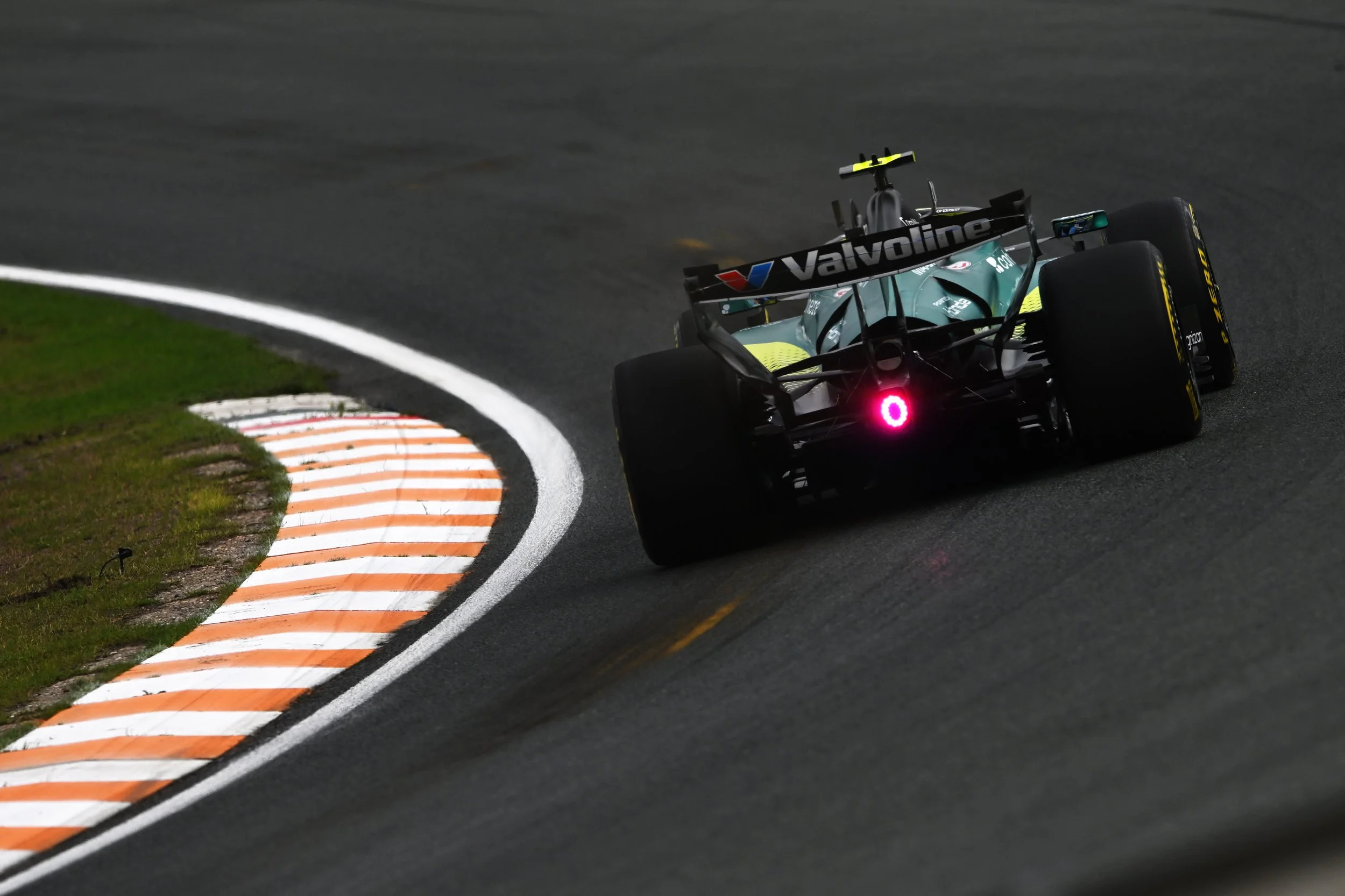
Image © Honda Motor Co. Ltd & Aston Martin Aramco. Used for editorial purposes. Fernando Alonso, AMR26 at the Dutch Grand Prix.
Saturday at Zandvoort has instead produced a mixed picture. The chassis and aerodynamic direction appears to be improving, Honda’s revised engine has completed its first competitive Saturday without reliability problems, and HRC is already making progress with its behaviour. Yet the complete AMR26-Honda package is still not consistently competitive enough.
That doesn’t make Hungary a false dawn, nor does it justify declaring Honda’s new engine specification a failure after one Sprint weekend with only a single practice session. It does demonstrate how much integration, refinement and performance still needs to be found before Aston Martin can regularly fight in the midfield rather than occasionally reaching it.
Looking to Sunday
The Grand Prix will provide the next part of that answer, but it takes place at 2:00pm BST on Sunday, several hours after this Roundup is published.
We’ll be watching closely to see whether Alonso and Stroll can make progress from the back of the grid and, just as importantly, whether the longer race distance reveals more about the development of the AMR26 and Honda’s revised power unit.
Full Dutch Grand Prix coverage will follow in the FTP Motorsport Hub early next week, and we’ll return to Aston Martin’s progress in Issue 39 once we have the complete Zandvoort weekend to assess.
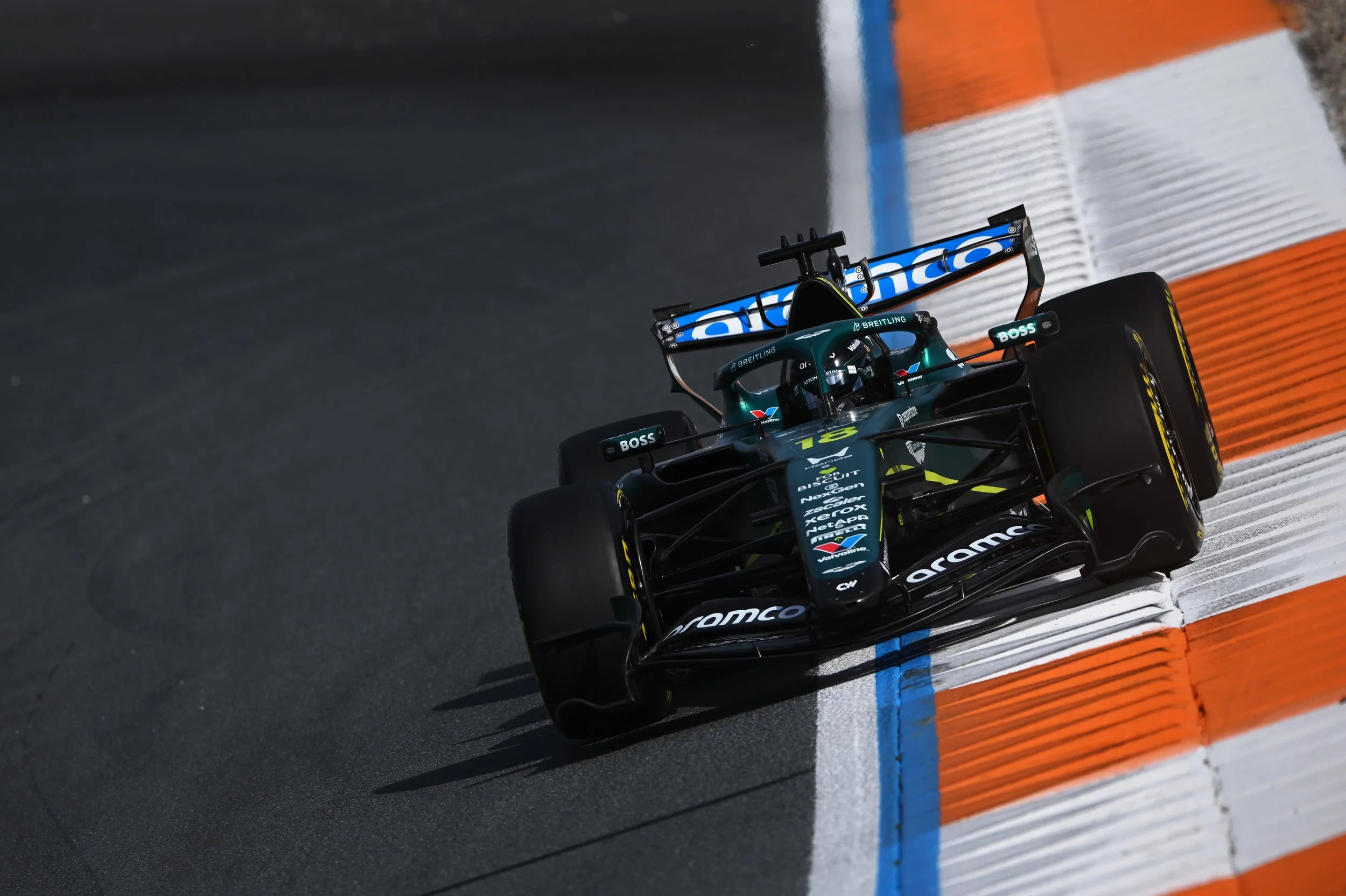
Image © Honda Motor Co. Ltd & Aston Martin Aramco. Used for editorial purposes. Lance Stroll in the AMR26, Dutch Grand Prix.
Zandvoort is not the only Aston Martin race taking place this weekend. While Honda and the Formula One team begin their second half of the season in the Netherlands, Blackthorn Racing is back at Spa-Francorchamps for the Michelin Le Mans Cup, bringing us neatly to the rest of this week’s Aston Martin motorsport.
Affiliate link note: Some links may be affiliate links, which means Fuel the Passion may earn a small commission if you purchase through them, at no extra cost to you. Thank you for your support.
Blackthorn Returns to Spa - This Time in the Michelin Le Mans Cup
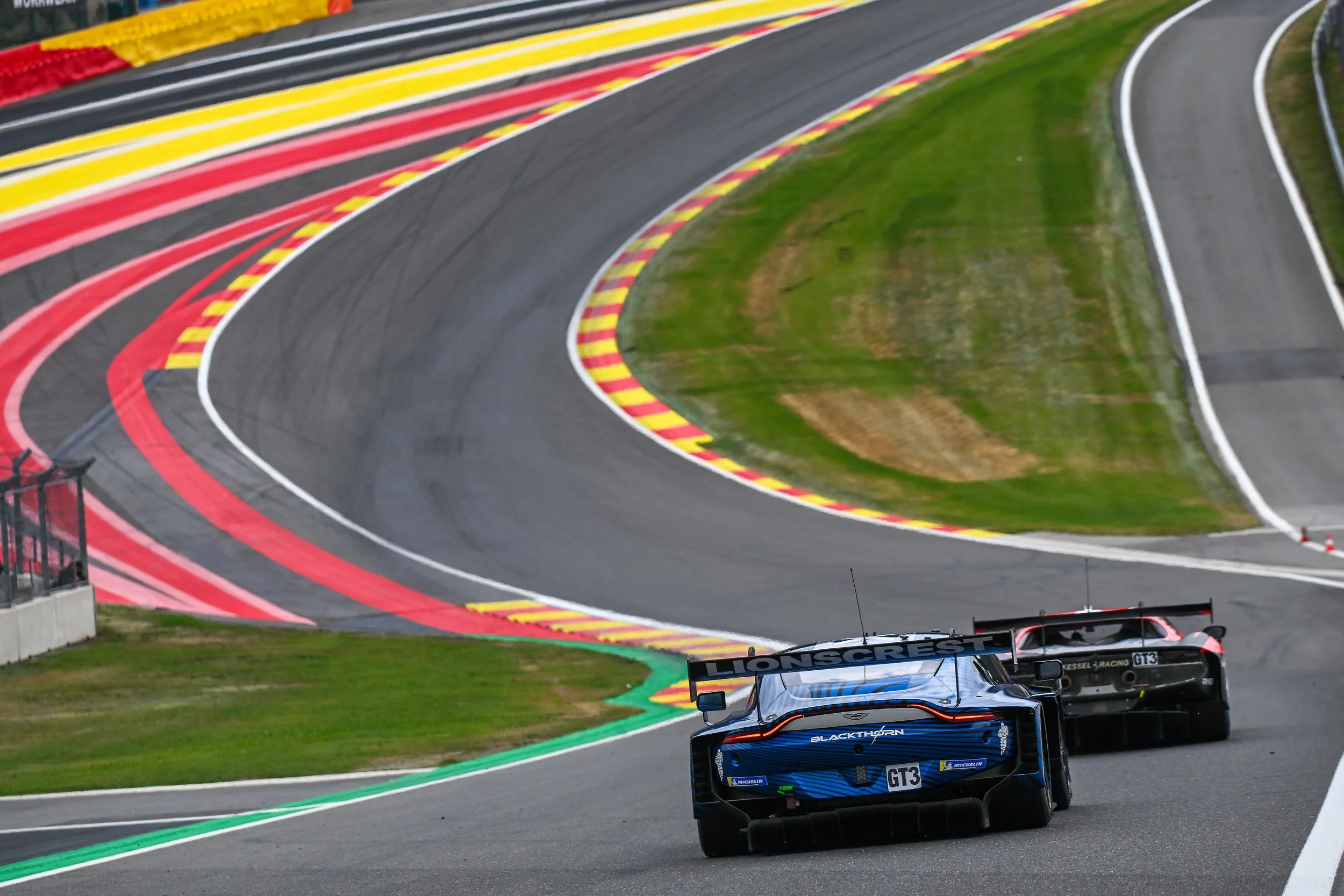
Image © Blackthorn Racing. Used for editorial purposes. #91 Ecurie Ecosse Blackthorn Aston Martin Vantage AMR GT3 Evo, Spa-Francorchamps, August 2026.
From Zandvoort, our attention turns to Spa-Francorchamps, where Blackthorn Racing is back on track with the #91 Ecurie Ecosse Blackthorn Aston Martin Vantage AMR GT3 Evo. Regular readers may remember that we closed Issue 37 with this weekend approaching. Spa is therefore the next chapter in a Blackthorn story we’ve been following closely throughout 2026, rather than an isolated race meeting.
The timing feels particularly appropriate for FTP. Our new Goodwood Festival of Speed film shows Blackthorn’s #56 Aston Martin still carrying the dirt, damage and battle scars of the CrowdStrike 24 Hours of Spa. This weekend’s #91 is a different car, with Claude Bovet and Tom Canning sharing the driving, and it’s competing in a different championship.
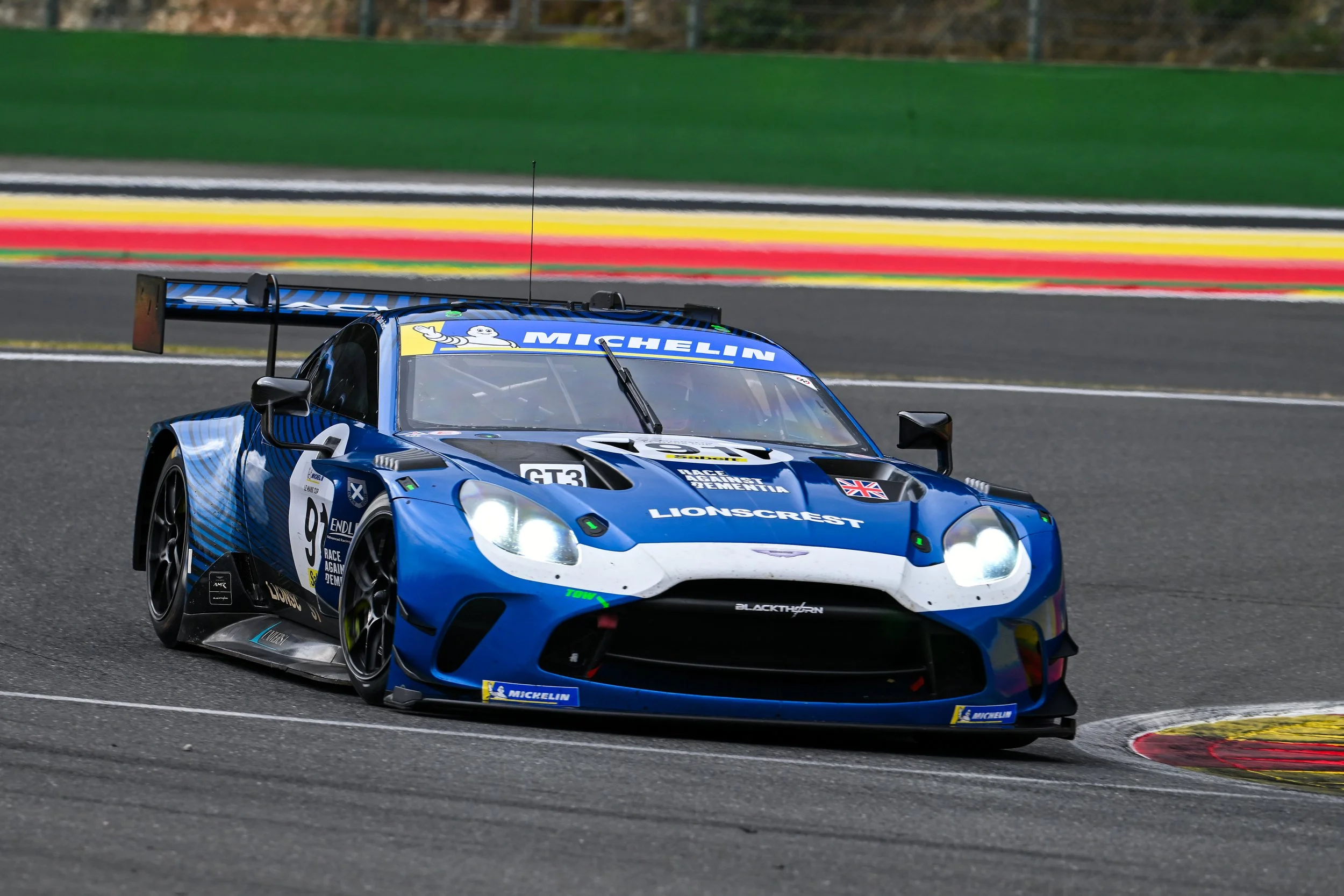
Image © Blackthorn Racing. Used for editorial purposes. Spa-Francorchamps, August 2026.
Even so, seeing Blackthorn return to the same circuit gives the film and this weekend’s racing a rather lovely connection. We’ll return to the film properly in the FTP Update later in the Roundup; here, the attention belongs to the #91.
The Michelin Le Mans Cup has been the more difficult part of Blackthorn’s multi-series season. Barcelona ended before the race after the #91 was withdrawn following Claude’s accident during the Bronze Driver Collective Test. Le Castellet was more constructive, with Claude and Tom finishing sixth in GT3 and scoring the team’s first eight points of the campaign.
Road to Le Mans then produced another difficult outing. Blackthorn entered two Aston Martins on the full Circuit de la Sarthe, but neither completed the distance. The #91 was classified after nine laps, while the additional #90 entry completed eight.
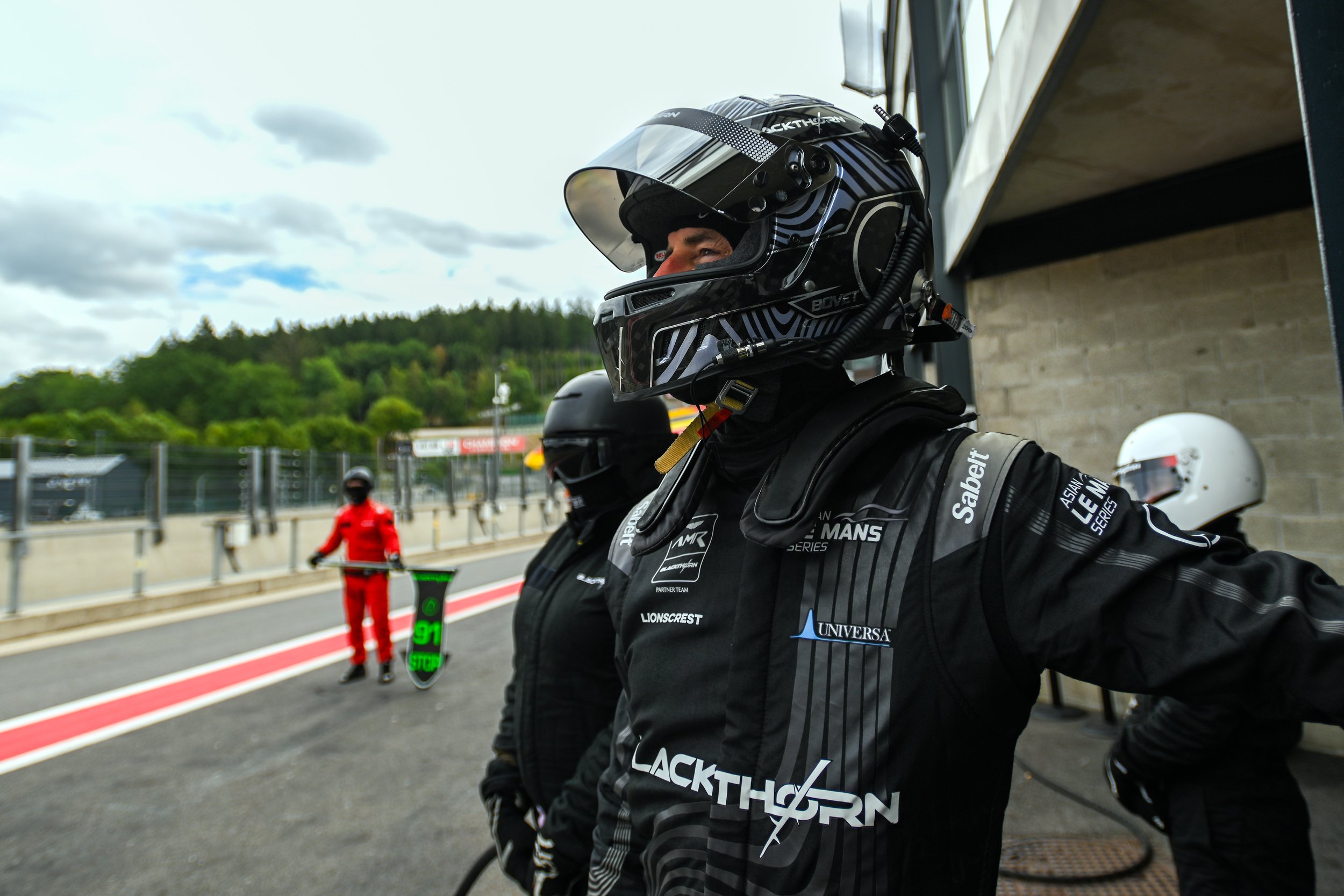
Image © Blackthorn Racing. Used for editorial purposes. Claude Bovet, Spa-Francorchamps, August 2026.
Those results left Blackthorn tenth in the GT3 Teams’ Championship heading into Spa, with Claude and Tom 14th in the drivers’ standings on eight points. The immediate objective is therefore less about forcing an unrealistic championship narrative and more about building upon the completed race and points scored at Le Castellet.
Spa provides a considerable test. The official entry list contains 45 cars: 24 in the main LMP3 prototype category, 11 in LMP3 Pro/Am and ten in GT3. The #91 must therefore share the circuit with 35 faster prototypes, making the management of traffic, pit-stop timing and any safety-car periods an important part of the race.
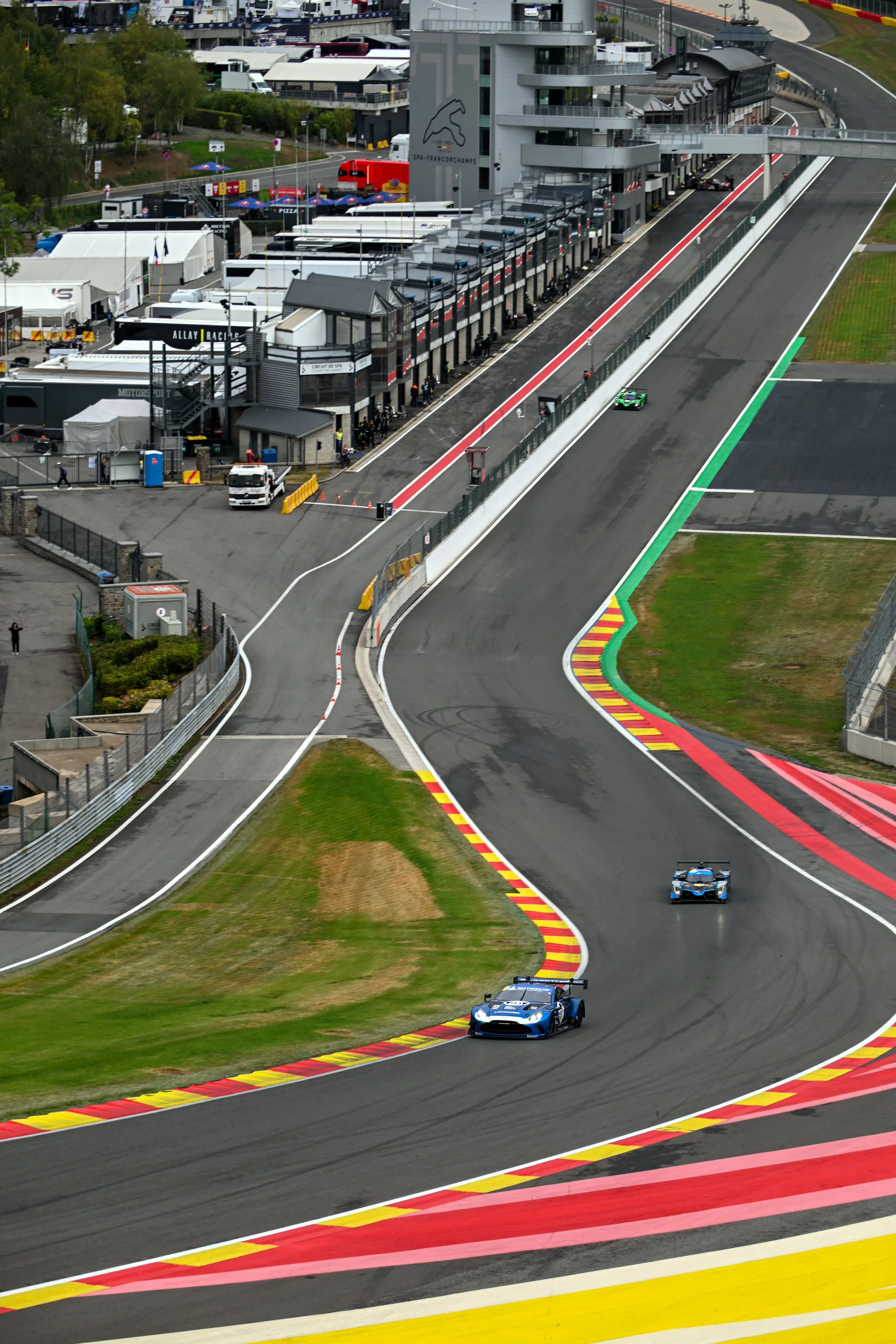
Image © Blackthorn Racing. Used for editorial purposes. Spa-Francorchamps, August 2026.
The scale of the event is particularly striking. Ten years have passed since the Michelin Le Mans Cup held its first race at Spa with a grid of only 12 cars. This year, 90 drivers representing 28 nations are taking part.
SATURDAY AT SPA - FIRE ENDS BLACKTHORN’S RACE AT LES COMBES
Saturday began in difficult conditions at Spa-Francorchamps, with a wet GT3 qualifying session placing Claude Bovet and Tom Canning’s #91 Écurie Écosse Blackthorn Aston Martin Vantage AMR GT3 Evo seventh in class for the afternoon’s Michelin Le Mans Cup race.
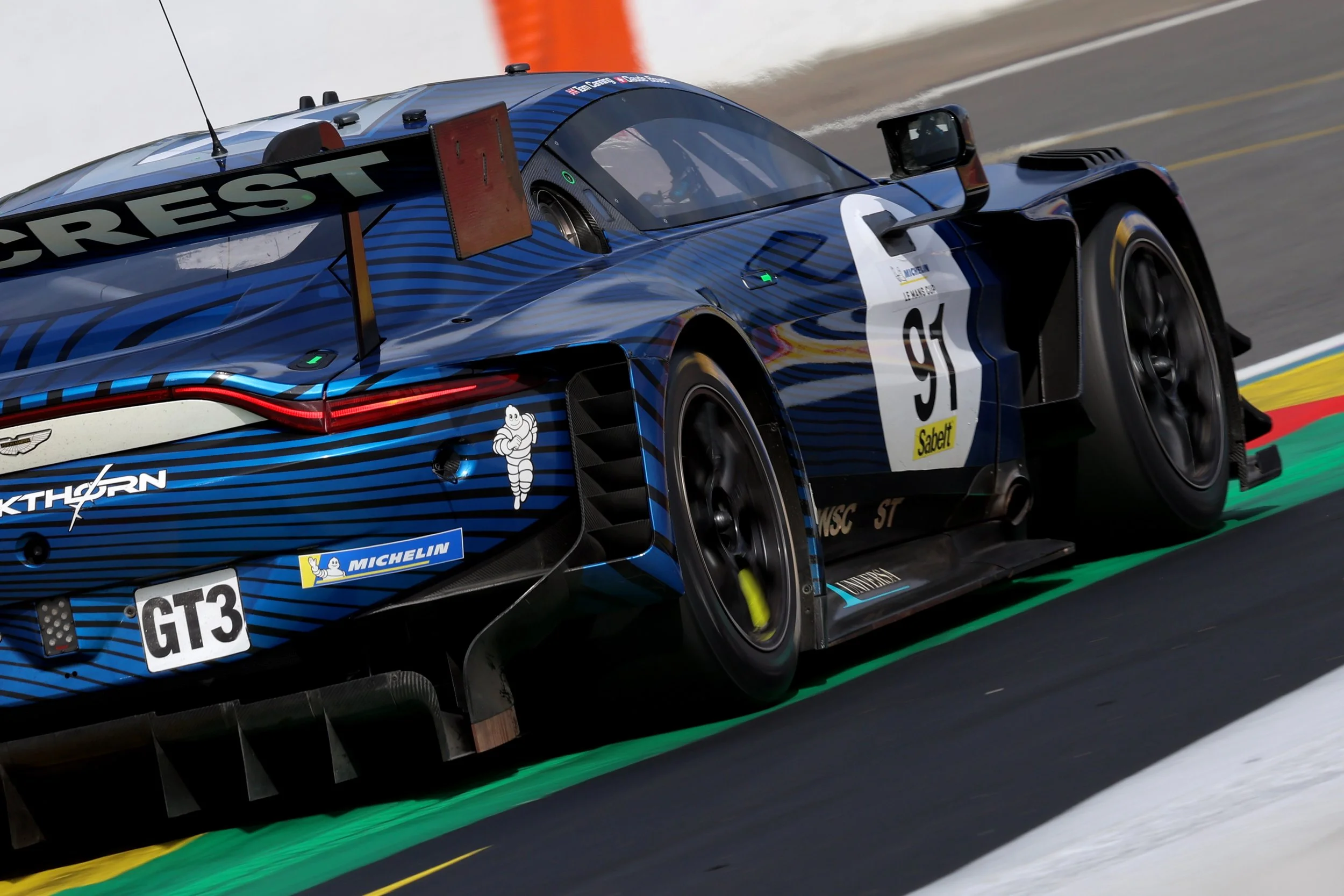
Image © Blackthorn Racing. Used for editorial purposes. Blackthorn Racing Aston Martin Vantage GT3 at Spa-Francorchamps, August 2026.
What followed was an extraordinarily disrupted two hours. Safety Cars, Full Course Yellows and incidents repeatedly interrupted the running, making rhythm difficult to establish for anyone as Blackthorn worked its way through another demanding afternoon at Spa.
The #91 remained in contention through much of that disruption, with Canning taking over from Bovet for the second part of the race. However, with 24 laps completed, the Aston Martin’s afternoon came to a premature end when Canning pulled off at Les Combes with smoke and fire visible around the front-right corner of the car.
During the live broadcast, commentators suggested that what they could see appeared to be a brake disc on fire. At the time of writing, however, Blackthorn has not confirmed the cause of the failure, and FTP will not speculate beyond what could be seen during the television coverage.
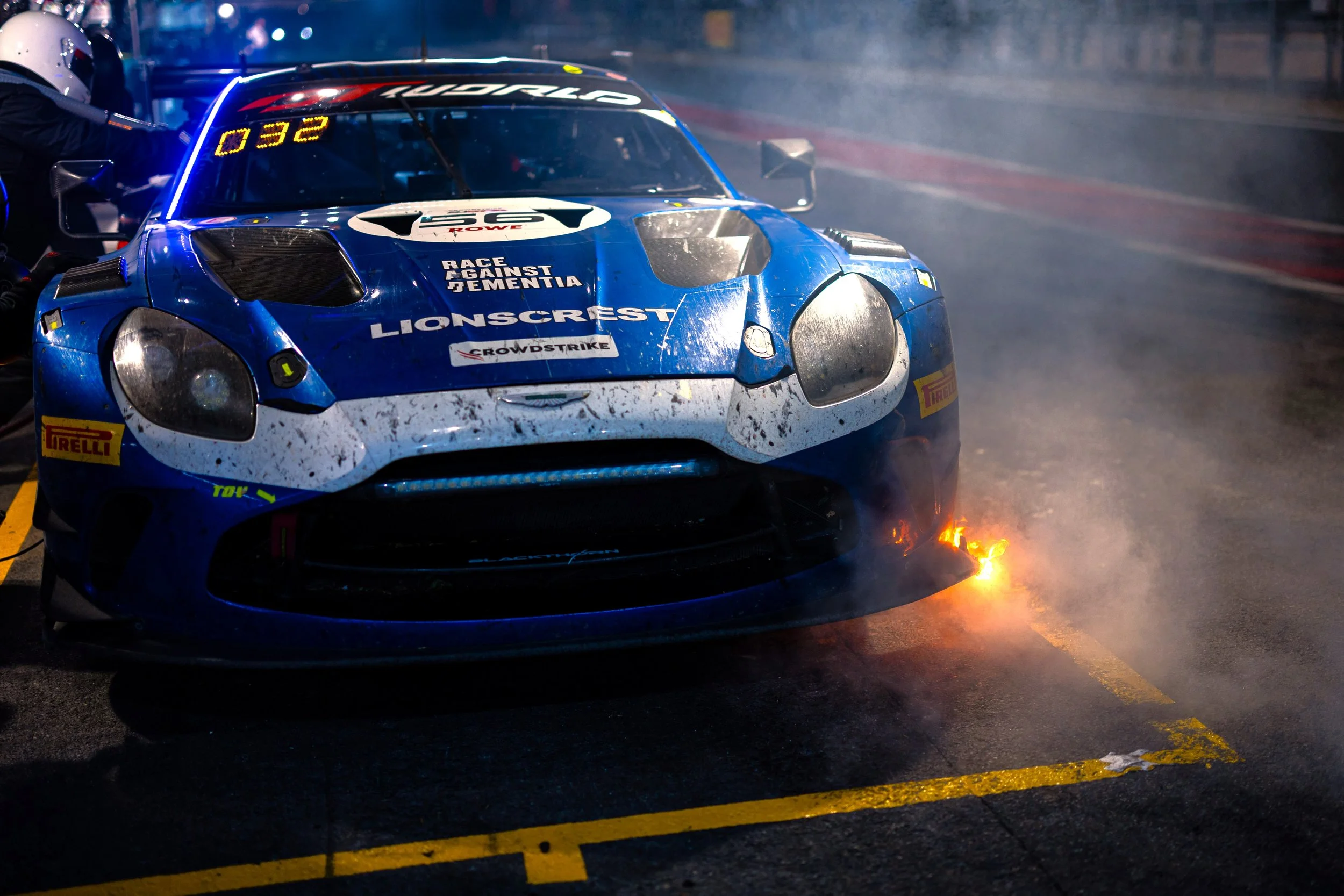
Image © Blackthorn Racing. Used for editorial purposes. CrowdStrike 24 Hours of Spa fire incident, June 2026
Inevitably, the sight of another Blackthorn Aston Martin smoking at Spa brought back memories of the team’s dramatic CrowdStrike 24 Hours of Spa only a matter of weeks ago.
That earlier incident involved the #56 Vantage GT3 and occurred on the opposite front corner. Speaking directly to FTP at Goodwood, Claude Bovet explained how a brake disc had exploded during the night, the car lost the tyre and returned to the pits dragging its damaged front corner before that area subsequently caught fire.
The cause of Saturday’s #91 incident has not been confirmed, and there is presently no evidence to suggest the two failures were connected. Unfortunately for Blackthorn, the retirement meant no championship points from Spa, leaving the team 10th in the Michelin Le Mans Cup GT3 Teams’ standings on eight points.
It was a frustrating conclusion to a weekend that had once again demonstrated just how unforgiving Spa-Francorchamps can be, and another chapter in what has already become a remarkably eventful season for FTP’s Featured Team.
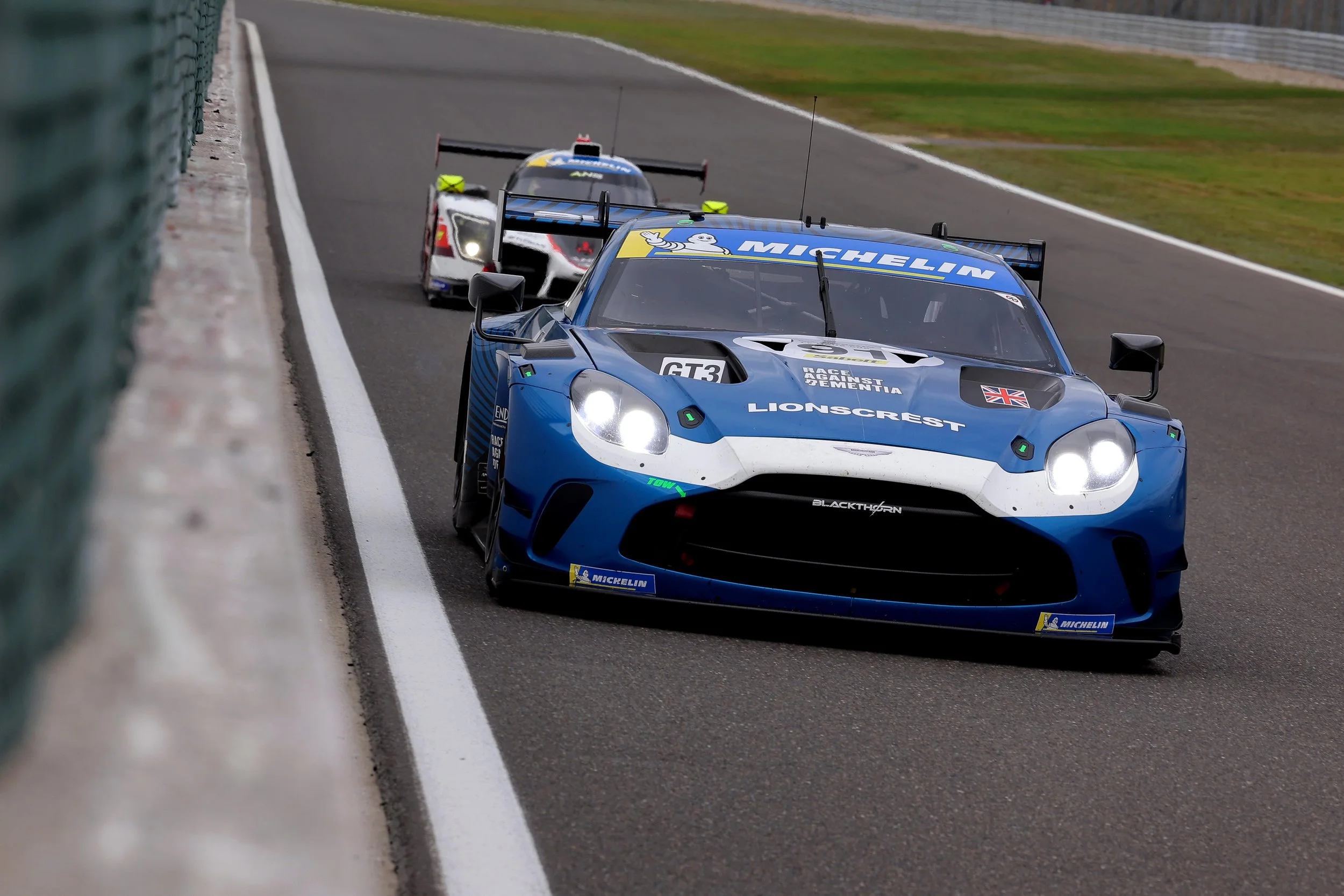
Image © Blackthorn Racing. Used for editorial purposes. Blackthorn Racing Aston Martin Vantage GT3 at Spa-Francorchamps, August 2026.
Following weekends such as this is precisely why Blackthorn became FTP’s Featured Team. Victories and podiums are naturally the easiest results to celebrate, but the more difficult campaigns can reveal just as much about how a developing racing programme responds, learns and moves forward.
FTP has been following the #91 throughout the weekend. We’ll add the full Spa race report, classification and updated championship position to the FTP Motorsport Hub and our Blackthorn Racing Season Tracker early next week.
From Spa, we now return to last weekend’s British GT action at Snetterton, where two Aston Martin crews left Norfolk with their championship positions considerably strengthened.
Hawkins and Orton Put Aston Martin on Top of British GT4
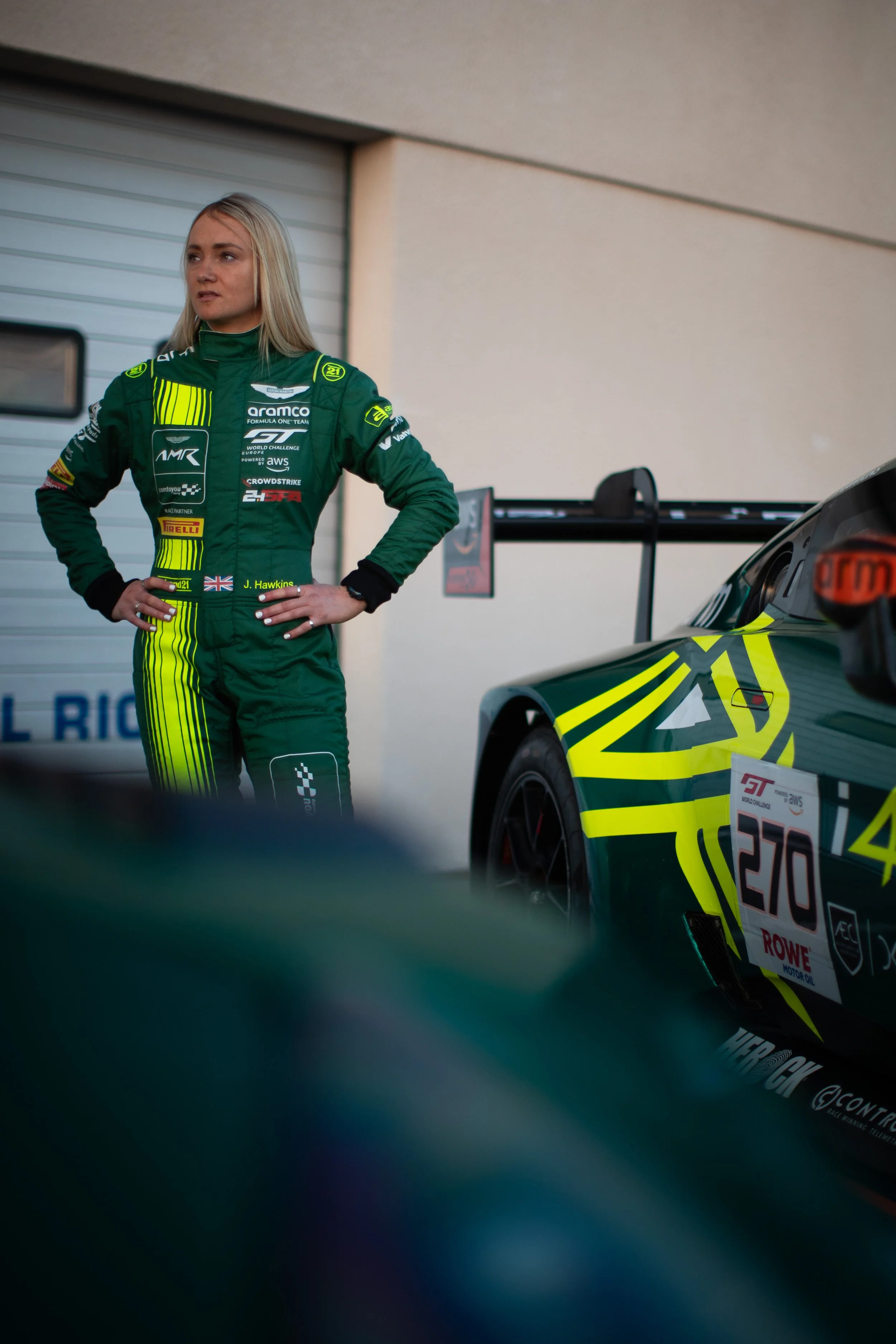
Image © Aston Martin Lagonda. Used for editorial purposes. Jessica Hawkins.
When we left British GT in Issue 37, Jessica Hawkins and Will Orton were just 1.5 points away from the overall GT4 lead. Snetterton’s two one-hour races have now reversed that position: the #21 MK Racing Aston Martin Vantage AMR GT4 Evo leaves Norfolk leading both the overall GT4 and GT4 Silver championships.
Hawkins and Orton finished Race 1 second overall in GT4 and second in Silver. Hawkins made an excellent start from seventh in the GT4 order and kept the Aston Martin clear of the incidents around her before handing over to Orton, who completed another controlled run to the podium.
Daniel Lavery and Darren Turner also added another GT4 Pro-Am victory for Grange Racing with FSR. Despite serving an additional ten seconds during their pit stop following the previous win at Spa, the #27 Aston Martin finished fourth overall in GT4 and first in Pro-Am.
Beechdean Motorsport recovered to sixth overall in the opening race after Andrew Howard spun the #7 Vantage AMR GT3 Evo at Hamilton. Ross Gunn then placed the Aston Martin on outright pole for Race 2 and led the opening stint, briefly raising hopes of Beechdean’s first British GT victory for 11 years. That opportunity slipped away when Howard spun shortly after the driver change, allowing Morgan Tillbrook’s McLaren through. A second excursion near the end cost another position, but Howard and Gunn still finished third overall, securing a welcome GT3 podium.
There was significant news from Beechdean after Snetterton too. Team Principal and driver Andrew Howard has announced that he will retire from full-time motor racing at the end of the 2026 season, bringing a 27-year driving career to a close. Howard has been one of the defining amateur competitors of the modern British GT era, becoming the first Am driver to win the overall championship twice, in 2013 and 2015, both with Aston Martin machinery. His achievements also include the 2016 European Le Mans Series GTE title and two appearances at the 24 Hours of Le Mans. His final British GT weekend as a full-time driver is scheduled for Brands Hatch on 26th - 27th September, although Howard has indicated that historic racing may still form part of his future. Beechdean Motorsport itself will continue, with Howard moving into a fully off-track role as the team considers its GT3 programme for 2027.
In GT4, Lavery and Turner completed a superb double Pro-Am victory by finishing second overall in Race 2. Hawkins and Orton, meanwhile, carried a 17-second pit-stop handicap from their earlier runner-up finish but still brought the #21 home fifth overall and third in Silver.
Their closest championship rivals, Thomas Holland and Hadley Simpson, retired from Race 2 with an apparent engine problem. Hawkins and Orton’s fifth place was therefore sufficient to move them into the overall GT4 lead. The MK Racing pairing now has 106 points, 1.5 ahead of Holland and Simpson. They also lead the GT4 Silver standings by 7.5 points, while MK Racing holds the overall GT4 Teams’ Championship lead.
Lavery and Turner remain firmly involved too. Their two Snetterton class victories have moved them to 98.5 points, only 7.5 behind their fellow Aston Martin drivers. Hawkins and Orton have built their challenge through remarkable consistency, while Lavery and Turner have now collected four Pro-Am victories. Those contrasting approaches leave two Aston Martin crews firmly inside a four-way GT4 title fight.
Only the two-hour races at Donington Park and Brands Hatch remain. Full Snetterton reports, classifications and updated tables can be found in the FTP British GT Motorsport Hub.
British GT is not the only championship in which an Aston Martin entered last weekend with a title challenge to protect. At the Nürburgring, Nicki Thiim faced another important DTM round, and a considerably more difficult weekend.
Thiim Keeps Aston Martin in the DTM Title Fight
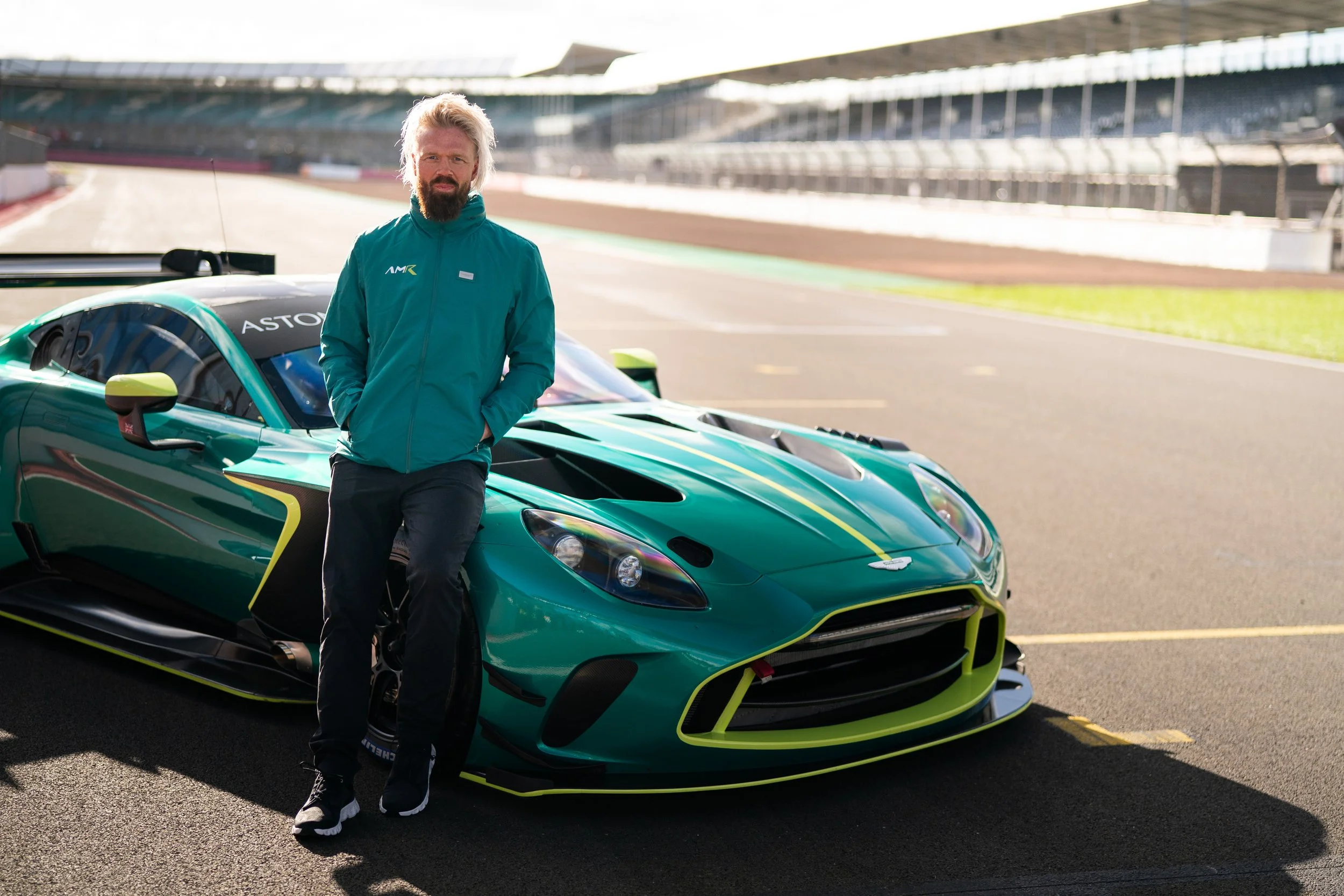
Image © Aston Martin Lagonda. Used for editorial purposes. Thiim with Vantage.
Sunday’s second qualifying session and race took place after Issue 37 was published, leaving our Nürburgring DTM story unfinished.
Saturday had already proved difficult for Nicki Thiim. After qualifying 11th, he received a penalty lap following contact with Tom Kalender’s Mercedes-AMG and eventually finished Race 1 in the same position. The result dropped the #7 Comtoyou Racing Aston Martin driver from second to fourth in the championship.
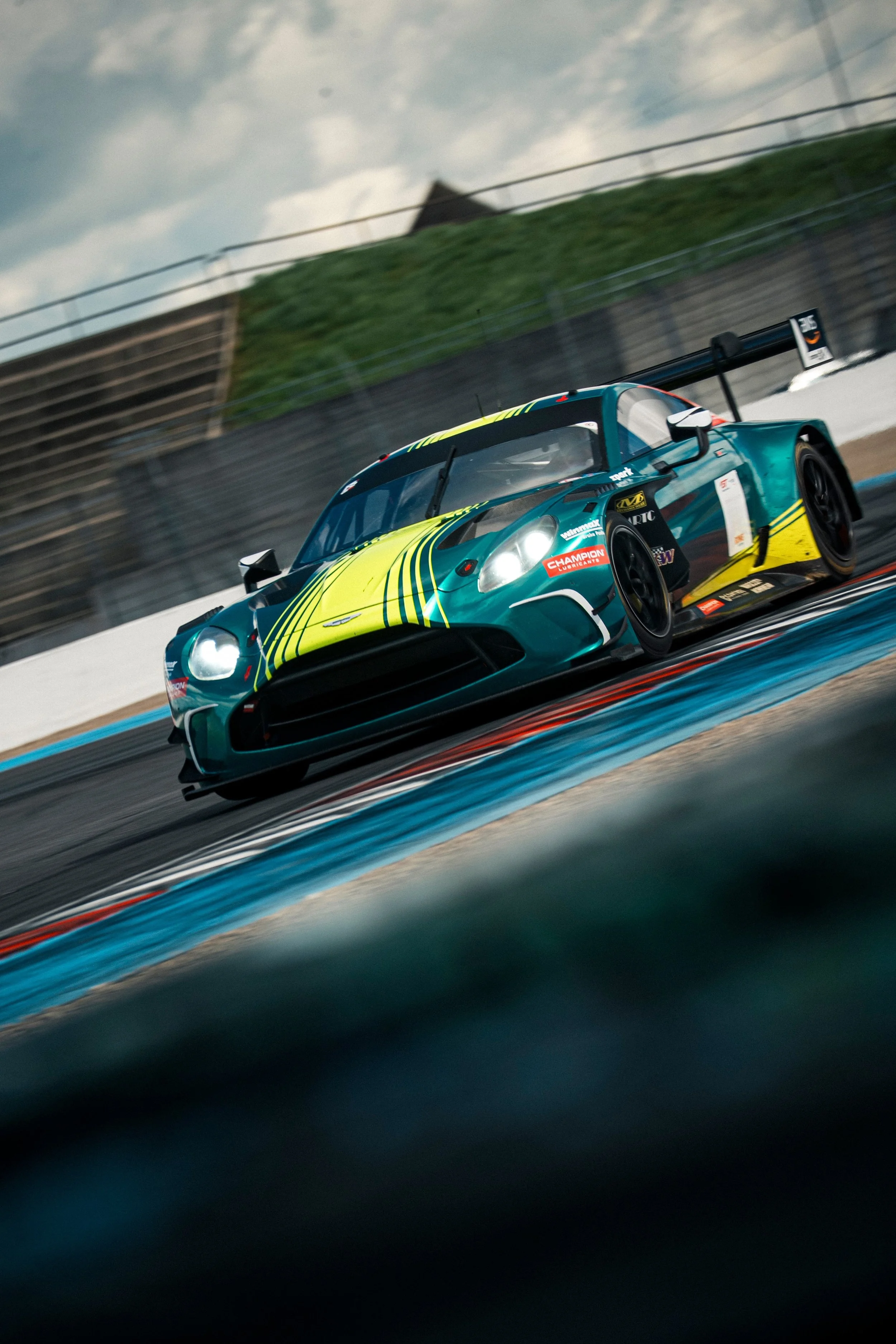
Image © Aston Martin Lagonda. Used for editorial purposes. Comtoyou Racing Aston Martin Vantage GT3.
Sunday produced a stronger response. Thiim qualified fourth, only 0.158 seconds from pole, before an opening-lap collision eliminated title rivals Maro Engel, Lucas Auer and Kelvin van der Linde. The Aston Martin featured as high as third during the pit-stop sequence, but drivers on fresher tyres moved ahead during the closing stages and Thiim eventually finished seventh.
Thiim scored 14 points across the weekend and leaves the Nürburgring third in the Drivers’ Championship on 139 points.
Engel retains the lead on 160 points, with Thomas Preining only one point behind him. The Nürburgring didn’t deliver another Aston Martin podium, but Sunday prevented Saturday’s setback from becoming considerably more damaging. Thiim arrived second in the standings and 21 points behind Engel; he leaves third, but remains exactly 21 points from the lead.
Five drivers are now covered by 25 points with four races remaining at the Sachsenring and Hockenheim. Aston Martin’s title challenge is therefore still very much alive, although Thiim and Comtoyou Racing must rediscover the front-running consistency demonstrated during their remarkable Norisring double victory.
The complete Nürburgring report, result tables and updated standings can be found in the DTM section of the FTP Motorsport Hub.
From Germany, our attention moves across the Atlantic to Virginia International Raceway, where Aston Martin has both Heart of Racing’s IMSA programme and CSM’s newly converted Vantage GT4 entries to follow.
Affiliate link note: Some links may be affiliate links, which means Fuel the Passion may earn a small commission if you purchase through them, at no extra cost to you. Thank you for your support.
CSM (Czabok-Simpson Motorsport) Begins Its Aston Martin Chapter as Heart of Racing Defends the GTD Lead
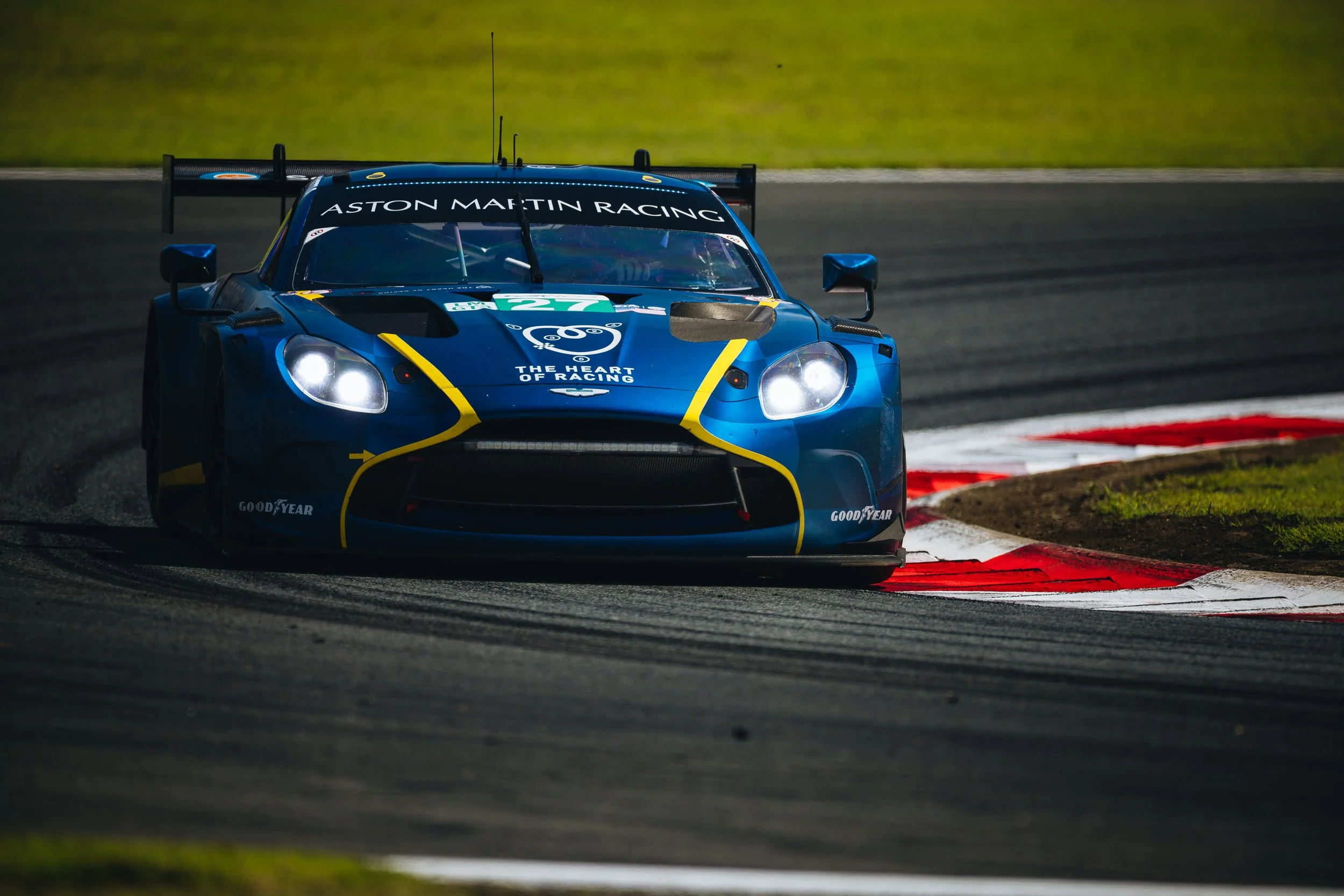
Image © Aston Martin Lagonda. Used for editorial purposes. #27 Heart of Racing Aston Martin Vantage.
Virginia International Raceway (VIR) places two very different Aston Martin customer-racing stories on the same bill this weekend: CSM begins a new GT4 chapter, while Heart of Racing attempts to protect a slender GTD championship lead. Issue 37 introduced CSM’s decision to switch both IMSA Michelin Pilot Challenge Grand Sport entries to the Aston Martin Vantage AMR GT4 Evo for the final three rounds of 2026.
Gordon Scully and Morgan Burkhard continue together in the #2, while Ismaeel Ellahi and Ayrton Houk share the returning #3. Ellahi already has race-winning experience of the Vantage after taking a Grand Sport X victory at Canadian Tire Motorsport Park, but VIR represents the team’s first Michelin Pilot Challenge race with its new Aston Martins.
The immediate objective is to establish a competitive baseline while gathering the knowledge CSM needs for 2027. Three race weekends should reveal rather more about how the Vantage responds to Michelin Pilot Challenge conditions, particularly across two cars and two different driver pairings.
Saturday’s Michelin Pilot Challenge race took place too late in the production schedule for us to include a properly verified result in this edition. Rather than rush the outcome into Issue 38, we’ll bring the complete story of CSM’s first race weekend with its two Aston Martin Vantage AMR GT4 Evos to the FTP Motorsport Hub early next week, together with the result, key developments and what the team learned from its first competitive outing with the cars.
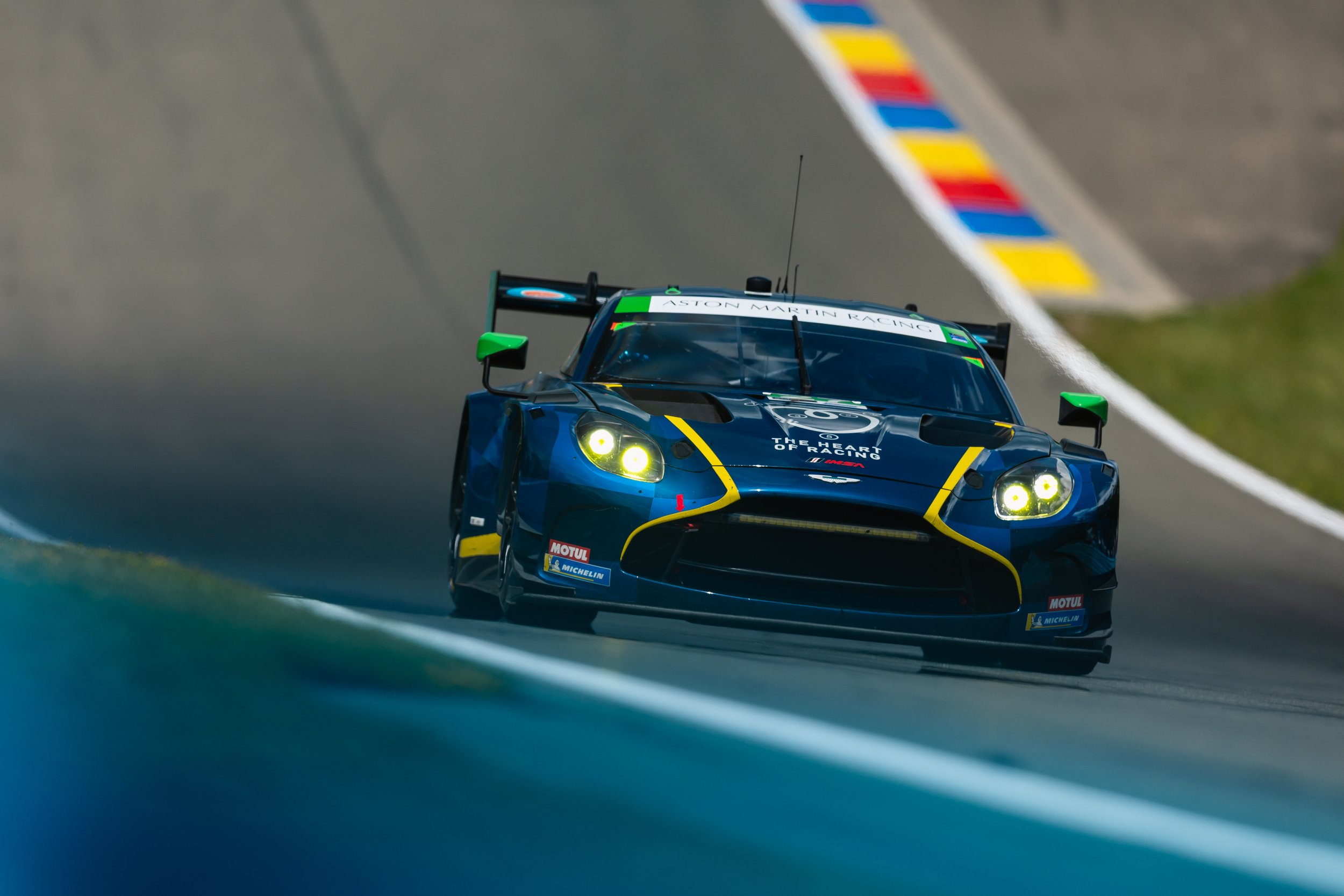
Image © Aston Martin Lagonda. Used for editorial purposes. #27 Heart of Racing Aston Martin Vantage.
Sunday brings the more established side of Aston Martin’s VIR challenge. Dudu Barrichello and Tom Gamble share Heart of Racing’s #27 Vantage GT3 Evo, with Barrichello arriving as the GTD championship leader. However, a post-race penalty at Road America reduced his advantage to only 24 points, placing renewed importance upon this weekend’s GT-only Michelin GT Challenge.
A second Vantage GT3 Evo appears in GTD PRO. Car Blanche returns to the professional category with Valentin Hasse Clot and Marco Sørensen in the #68, having already secured podium finishes in both of its previous GTD appearances.
WeatherTech Championship qualifying also takes place after the main production deadline for Issue 38, so we’ll resist adding provisional late-night information here. The complete qualifying picture, Sunday’s race result and the resulting championship implications for Heart of Racing will instead be covered in the FTP Motorsport Hub early next week, with the key Aston Martin developments returning in Issue 39.
The two-hour-and-40-minute race begins at 17:10 BST on Sunday, several hours after Issue 38 has been published. FTP will be keeping a close watch on both Aston Martins, with the full VIR story and updated championship position appearing in the IMSA section of the Motorsport Hub early next week.
With the final VIR results still to come, we leave Virginia and return to Monterey, where the conversation surrounding Aston Martin’s newest special has continued long after its unveiling. Valen dominated Issue 37 at very short notice; one week later, a much wider media verdict is beginning to form, and it’s anything but unanimous.
You’ve reached our unofficial halfway point
A natural place to pause and top up the coffee. From here, we leave the circuits behind and return to Valen one week after its unveiling, consider what those Nürburgring prototypes might reveal, hear how Vanquish and Valhalla are being received on the road, explore Monterey’s auction results and meet a competition-proven DB2 Vantage.
One Week On: Has the World Warmed to the Aston Martin Valen?

Image © Aston Martin Lagonda. Used for editorial purposes. Aston Martin Valen.
When Aston Martin revealed Valen during Monterey Car Week, Issue 37 was published less than 48 hours later. We examined the engineering, the positioning and the first reactions surrounding the car, but the wider response was still developing. A week later, the picture is clearer.
Among the media coverage reviewed by FTP, the overall tone is more positive than negative. There’s considerable admiration for Valen’s engineering, V12 theatre and willingness to pursue a genuinely different identity. Agreement largely disappears, however, when the conversation turns to its appearance.
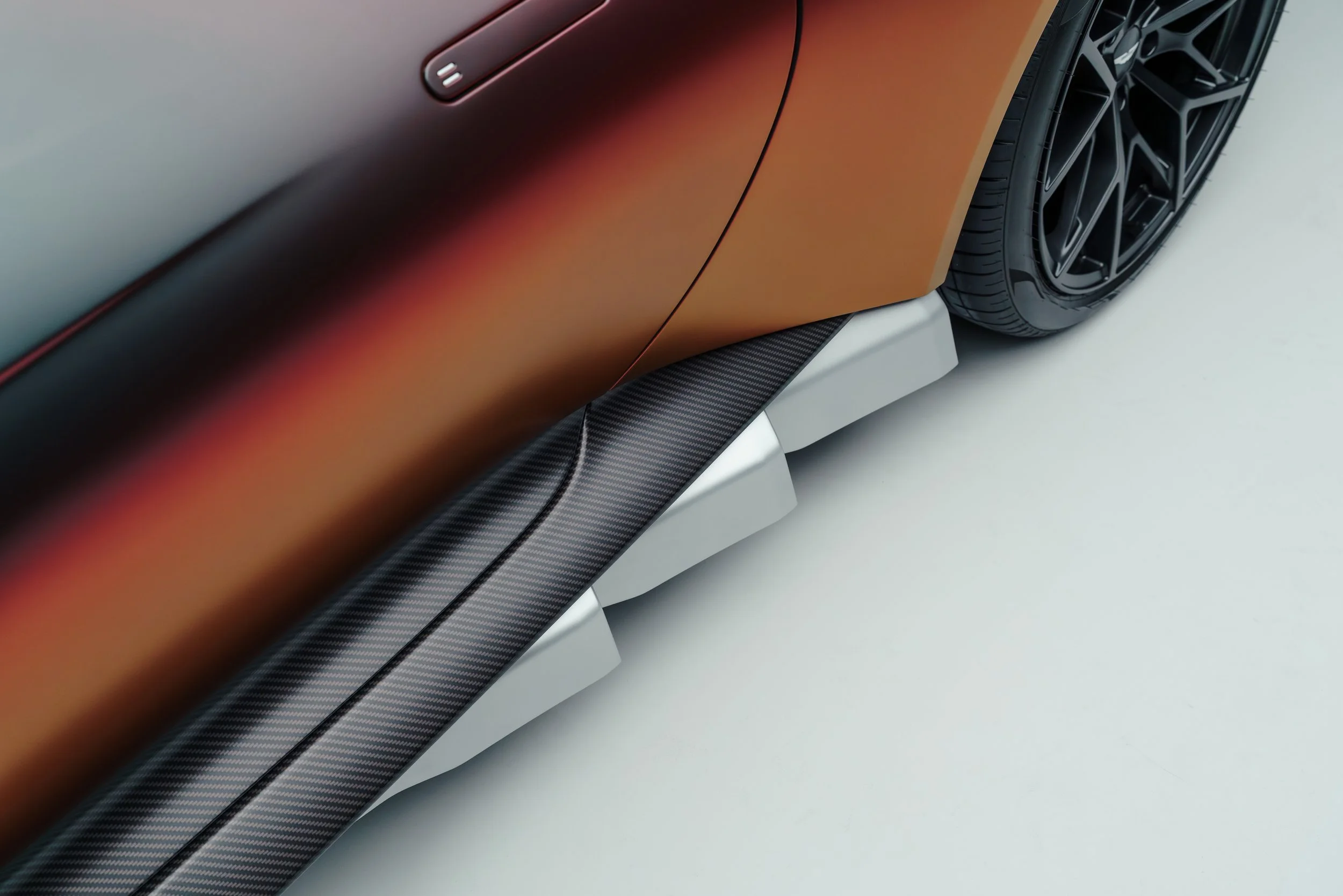
Image © Aston Martin Lagonda. Used for editorial purposes. Aston Martin Valen.
Top Gear offered the most direct criticism, asking why the new Aston Martin is not beautiful. Its argument is that Valen exchanges the refined, understated elegance traditionally associated with the marque for slatted aerodynamics, vortex generators, exposed carbon and a stacked exhaust arrangement.
For those who want their flagship Aston Martin to remain restrained and conventionally elegant, Top Gear’s advice is effectively to look towards Vanquish instead.
Motor1 looked at many of the same features and reached a very different conclusion. Its first impression was of a car that might belong to a Bond villain rather than James Bond, but that sinister character was regarded as part of the appeal. The publication concluded that Valen’s devilish appearance works and described it as potentially Aston Martin’s wildest special yet.
Car and Driver occupied something closer to the middle ground. It noted that Aston Martin’s front-engined V12 grand tourers have traditionally been among the company’s classiest cars, whereas Valen introduces a far more aggressive, race-car-influenced personality. That’s not necessarily a criticism, but it recognises just how far the design has moved from the restraint of Vanquish.
The newer AutoTrader video review was more enthusiastic. Rory Reid praised the mixture of painted and exposed carbon surfaces, the functional aerodynamic details and the colour-changing Satin Andromeda Red finish. The dramatic negative space, visible rear tyres, diffuser, full-width light bar and four exhaust outlets led AutoTrader to describe the rear as a “beast”.
Away from the arguments about beauty, the engineering has received much broader approval.
Road & Track concentrated upon the extensive weight reduction, revised suspension, sharper throttle calibration and remarkable 12-into-four titanium exhaust system. Its coverage presents Valen as a properly altered machine with a more visceral purpose, rather than a Vanquish wearing an expensive carbon-fibre body.
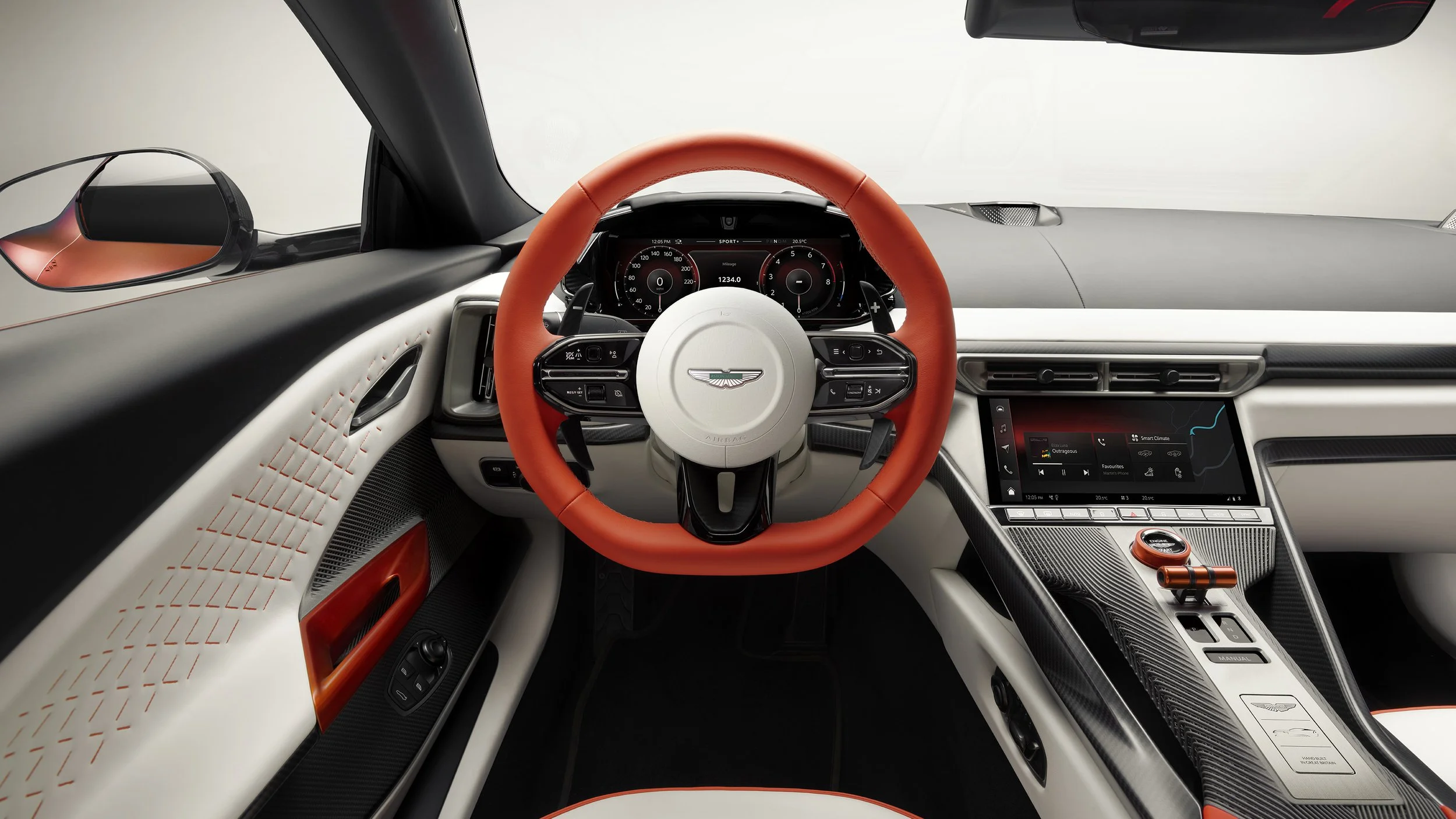
Image © Aston Martin Lagonda. Used for editorial purposes. Aston Martin Valen.
PistonHeads reached a similar conclusion. It praised Aston Martin’s efforts to minimise the sense of component carryover, noting that little of Vanquish remains visually apparent beyond the basic proportions. The revised interior, lighter construction and substantial chassis changes also help support the argument that Valen possesses genuine technical substance beneath its provocative appearance. One reservation concerns the decision to use an eight-speed automatic transmission.
Valour and Valiant both placed their manual gearboxes near the centre of their appeal, while Ferrari has now introduced the open-gated 12Cilindri Manuale. PistonHeads therefore questioned whether Aston Martin had missed an opportunity by returning to an automatic, even with the faster shift strategies developed through the Vantage GT4 racing programme.
The weight figure also requires some care. Aston Martin says Valen can be up to 110kg lighter than its core V12 platform, but reaching that maximum requires the optional lightweight package, which contributes 16.9kg of the saving. A final certified unladen weight had not been published when the car was unveiled.
Perhaps the clearest indication of how Valen has been received comes from the reported customer response. PistonHeads says Aston Martin was confident before Monterey that all 150 production positions were already spoken for. Car and Driver separately reports that there were more applicants than cars available. Aston Martin’s public launch announcement does not formally confirm that the entire production run has sold out, so these remain media reports rather than an official declaration. Nevertheless, they suggest the customers able to buy Valen have not been discouraged by the debate surrounding its design.
The emerging verdict is therefore more nuanced than a simple question of whether people like it.
Most appear to admire the engineering, the V12, the exhaust system and the effort Aston Martin has made to give the car a personality of its own. The disagreement is over whether its brutality represents a successful new direction or the loss of some of the elegance upon which Aston Martin built its reputation.
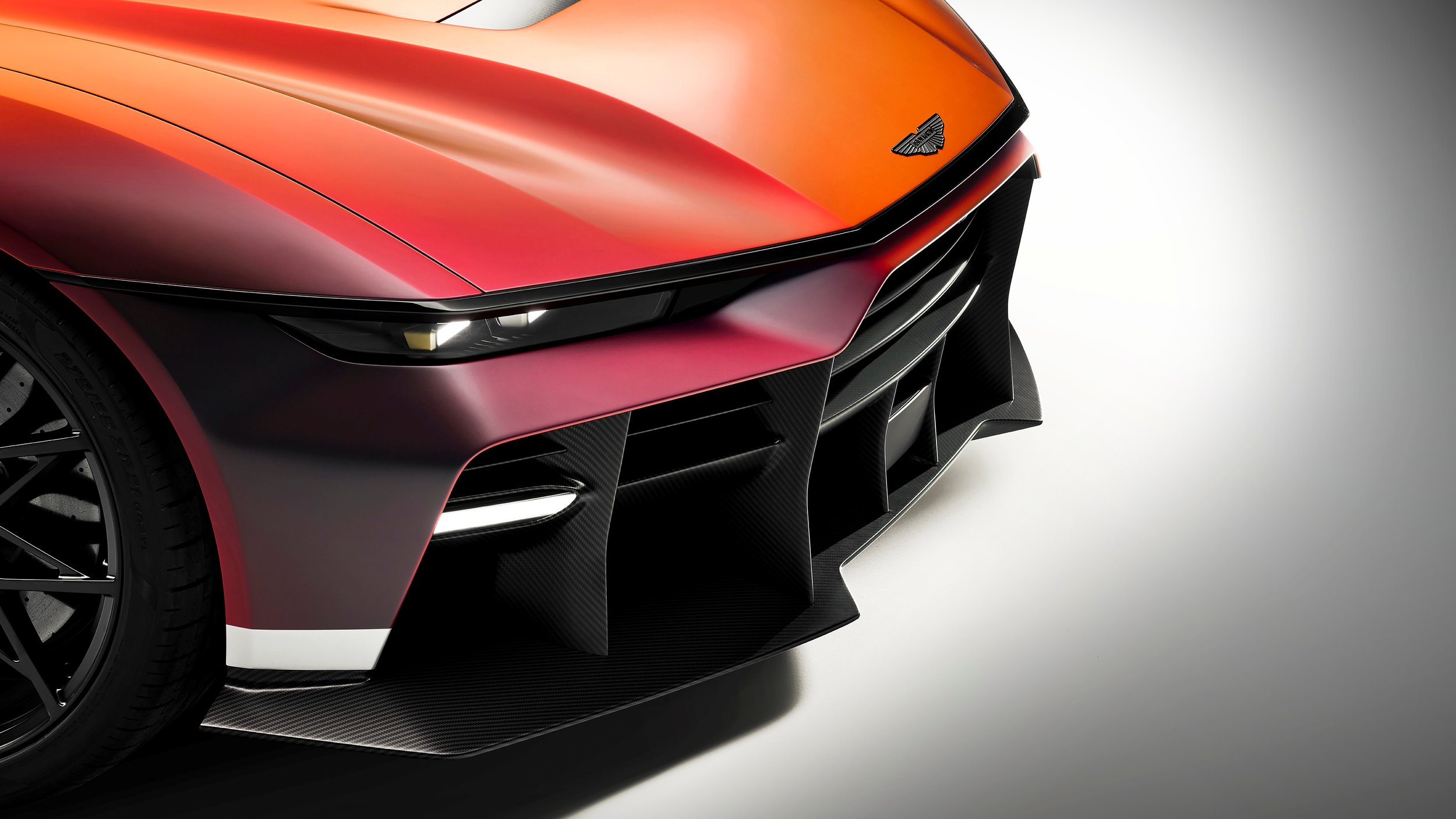
Image © Aston Martin Lagonda. Used for editorial purposes. Aston Martin Valen.
There is one important limitation to every verdict published so far: nobody has yet delivered a proper road or track test. These remain static assessments, technical briefings and first impressions. The final judgement on whether Valen drives as dramatically as it looks will have to wait.
FTP’s position hasn’t changed. We still love it.
Not because every line conforms to the traditional definition of Aston Martin beauty, but because the company has taken a risk, pushed its front-engined formula forward and supported the visual drama with meaningful engineering. Valen was created to provoke a reaction, and one week after its unveiling, very few people appear indifferent to it.
Whatever readers make of Valen’s design, its arrival demonstrates Aston Martin’s determination to create more distinctive and highly differentiated cars around its established foundations. It may not be the only evidence of that direction. Two development cars seen testing at the Nürburgring have now raised further questions: is Aston Martin preparing a Vanquish S, and something considerably wilder for the Vantage?
Vanquish S? A Wilder Vantage? Hallmark’s Strategy Begins to Show
Adrian Hallmark’s plan for Aston Martin doesn’t depend upon continually introducing completely new model lines. The company instead intends to extract more from its existing platforms, creating harder, faster or more luxurious derivatives with sufficiently different characters to attract different customers.
In his recent Auto Express interview, Hallmark described a programme of seven or eight product developments annually over the next few years. He separately told Road & Track that Aston Martin would take core products such as Vantage in a sportier direction, not as a road-legal GT3 car, but as something more extreme than the company has previously attempted.
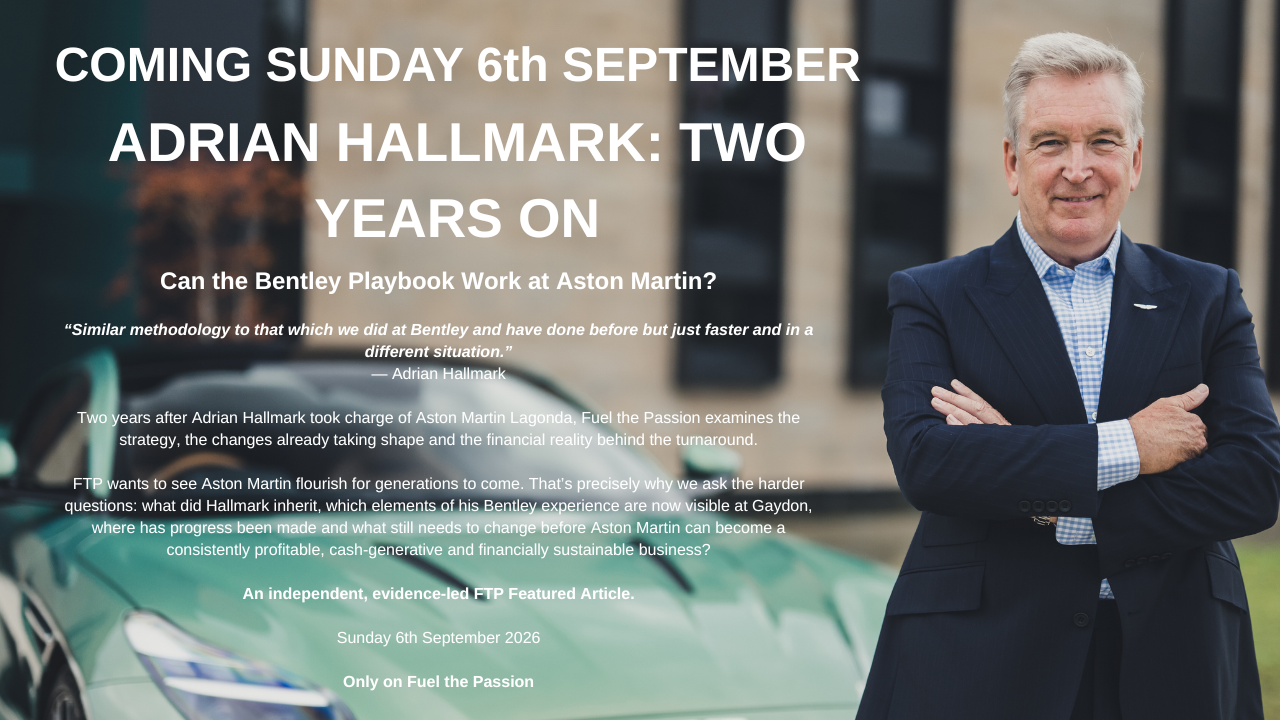
Image © Aston Martin Lagonda. Used for editorial purposes.
FTP will examine this wider strategy in much greater depth in our next Featured Article, Adrian Hallmark: Two Years On - Can the Bentley Playbook Work at Aston Martin? publishing on Sunday 6th September. We will consider the changes already taking shape, how Hallmark’s experience at Bentley is influencing the turnaround and what still needs to change before Aston Martin can become consistently profitable, cash-generative and financially sustainable.
Two prototypes now offer possible evidence of that strategy taking physical form. In June, FTP’s Featured Article, The Aston Martin S Question, examined the Vantage S, DB12 S and DBX S before asking one obvious question: could Vanquish become the missing S in Aston Martin’s current range?
The latest Nürburgring photographs have brought that question back. Autoevolution identifies the lightly camouflaged development car as a future Vanquish S. The prototype carries a deeper front splitter, changes around the rear spoiler and diffuser and an extraordinary experimental exhaust arrangement, with additional outlets appearing both low in the rear bumper and behind the panel between the light blades.
That does not, however, confirm what the car is. When an earlier version of the mule appeared, Aston Martin told evo that it was testing a proposed exhaust system inspired by Valhalla. The company offered no confirmation that the system would reach production. Valen has since been revealed with its own unusual combination of upper and lower exhaust outlets, adding another possible explanation for some of the development hardware.
The honest FTP position is therefore unchanged. A Vanquish S remains historically plausible, and the prototype shows that Aston Martin is actively investigating further development of the platform. Its identity, production prospects, power, price and eventual name remain unconfirmed.
The Vantage prototype provides a clearer indication of where Aston Martin may be heading. The latest photographs show a much more production-ready car with a prominent fixed rear wing, a deeper front splitter with dive planes, additional front-wing ventilation, a reshaped grille, a more complex diffuser and four exhaust outlets repositioned towards its centre. Car and Driver calls it a possible Vantage RS, while other reports have suggested that the AMR name could return.
Neither badge has been confirmed, and Aston Martin has not announced its power output, specification or launch timing. What can be seen, however, fits Hallmark’s description unusually well: a core Vantage taken considerably further in a sporting direction, with more aggressive aerodynamics and a much clearer circuit-influenced character.
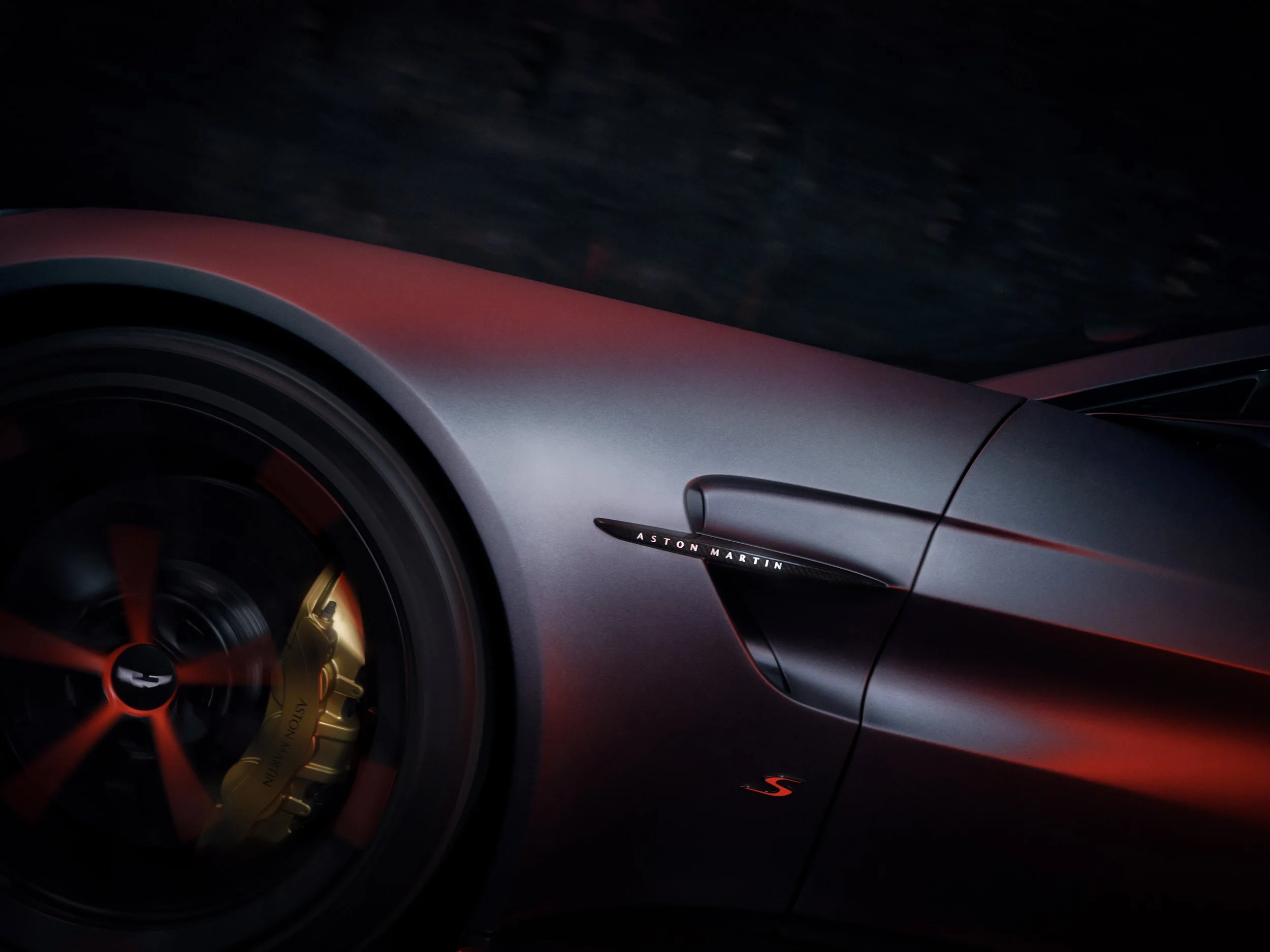
Image © Aston Martin Lagonda. Used for editorial purposes. Aston Martin Vantage S.
One figure already beginning to circulate around this car is around 700bhp, although Aston Martin has confirmed nothing of the sort and FTP is looking more closely at where that figure has originated before treating it as fact.
If it does prove accurate, however, it raises a question we explored in our June Featured Article, The Aston Martin S Question: when the existing Vantage is already extraordinarily powerful, does the next, more focused derivative necessarily need more horsepower to justify itself?
Our view then was that increasingly the answer lies elsewhere, in chassis development, weight, aerodynamics, braking, calibration, response and, ultimately, the connection between car and driver. A 700bhp Vantage would undoubtedly provide an attention-grabbing headline, but the much more interesting question will be what Aston Martin has done with the car beyond the number.
These prototypes don’t yet provide all the answers, but they do make Aston Martin’s developing product strategy easier to see. The Vanquish S question remains open, while the extreme Vantage appears to be moving steadily closer to production.
The Nürburgring prototypes may hint at what Aston Martin produces next, but three new YouTube films have provided a different kind of evidence this week: how two of its present flagships are being received away from official launches and carefully structured media drives.
Beyond the Launch: Vanquish and Valhalla Meet the Road
Exotic Car Hacks began with a standalone review of a newly acquired Vanquish (click on the video above). Having owned around a dozen Aston Martins and driven this example regularly in varied weather, the presenter delivered an unusually emphatic verdict: this was the best Aston Martin he had owned or driven.
Design, craftsmanship, comfort, infotainment, soundtrack and the overall sense of occasion received particular praise. More importantly, living with the car had apparently answered his original question about why Vanquish needed to exist above DB12. His description of it as a “sports-car version of Rolls-Royce” is subjective, but it neatly captures the combination of performance, luxury and presence Aston Martin appears to be pursuing.
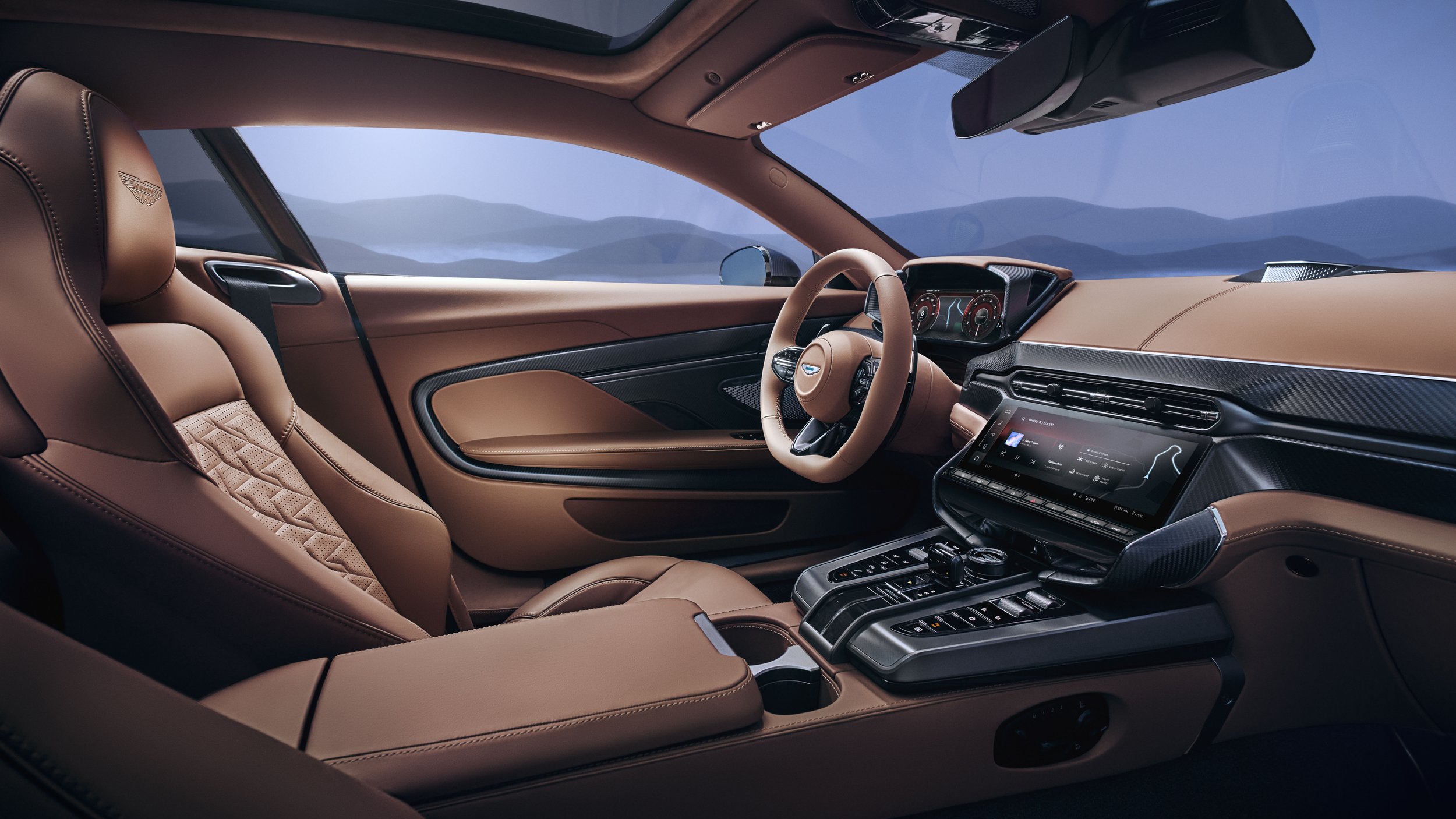
Image © Aston Martin Lagonda. Used for editorial purposes. Aston Martin Vanquish Interior.
The enthusiasm was not entirely uncritical. An overly thick steering wheel, crowded controls and driver-assistance settings that reset between journeys were identified as frustrations.
A follow-up comparison with the Ferrari 12Cilindri strengthened that assessment (click on the video below). Because the presenter owns both cars, the verdict was formed through everyday use rather than a short back-to-back encounter.
The Ferrari was credited with faster, more precise gear changes, a sportier driving character and tighter assembly. Some minor rattles and trim imperfections were reported in the Vanquish. Nevertheless, the Aston Martin was judged to be the more convincing grand tourer, winning through its design, cabin craftsmanship, comfort, soundtrack and ability to make even an ordinary journey feel special.
Valhalla produced a similarly enthusiastic reaction in a road drive by ThatDudeinBlue. The greatest surprise was not its extraordinary performance, but how approachable it appeared to be. Despite the car’s considerable width and low seating position, the driver found it easy to place, impressively smooth and more comfortable on the road than expected. Its firm, natural-feeling brake response and sense of agility also stood out.
Some of the accompanying technical narration requires clarification. The production Valhalla was developed directly with Aston Martin Performance Technologies (AMPT), although knowledge gained from the Valkyrie programme and Aston Martin’s earlier work with Adrian Newey helped inform it. Its downforce is generated by the active aerodynamic surfaces, underbody and Venturi tunnels, not by exhaust gases passing over the rear wing. Aston Martin’s official technical overview explains the system in detail.
Taken together, the three films present an encouraging picture. Vanquish is being recognised as a genuinely distinctive luxury grand tourer rather than simply a faster DB12, while Valhalla appears capable of making its formidable technology and performance surprisingly usable on the road.
Driving impressions remain personal, however, and predictions about depreciation require firmer evidence than an individual purchase or forecast. For that, we return to Monterey, where published auction results provide a much broader view of what collectors are currently prepared to pay for Aston Martins old and new.
FTP Market Watch: What Monterey Told Us About Aston Martin Values
Monterey Car Week can make almost every number appear enormous. For Aston Martin followers, however, the most useful story was not one headline-grabbing sale, but the variety of cars testing the market, from early DB2s and DB4s to modern Zagato collaborations, Valhalla and Valkyrie.
The Zagato We Promised to Revisit
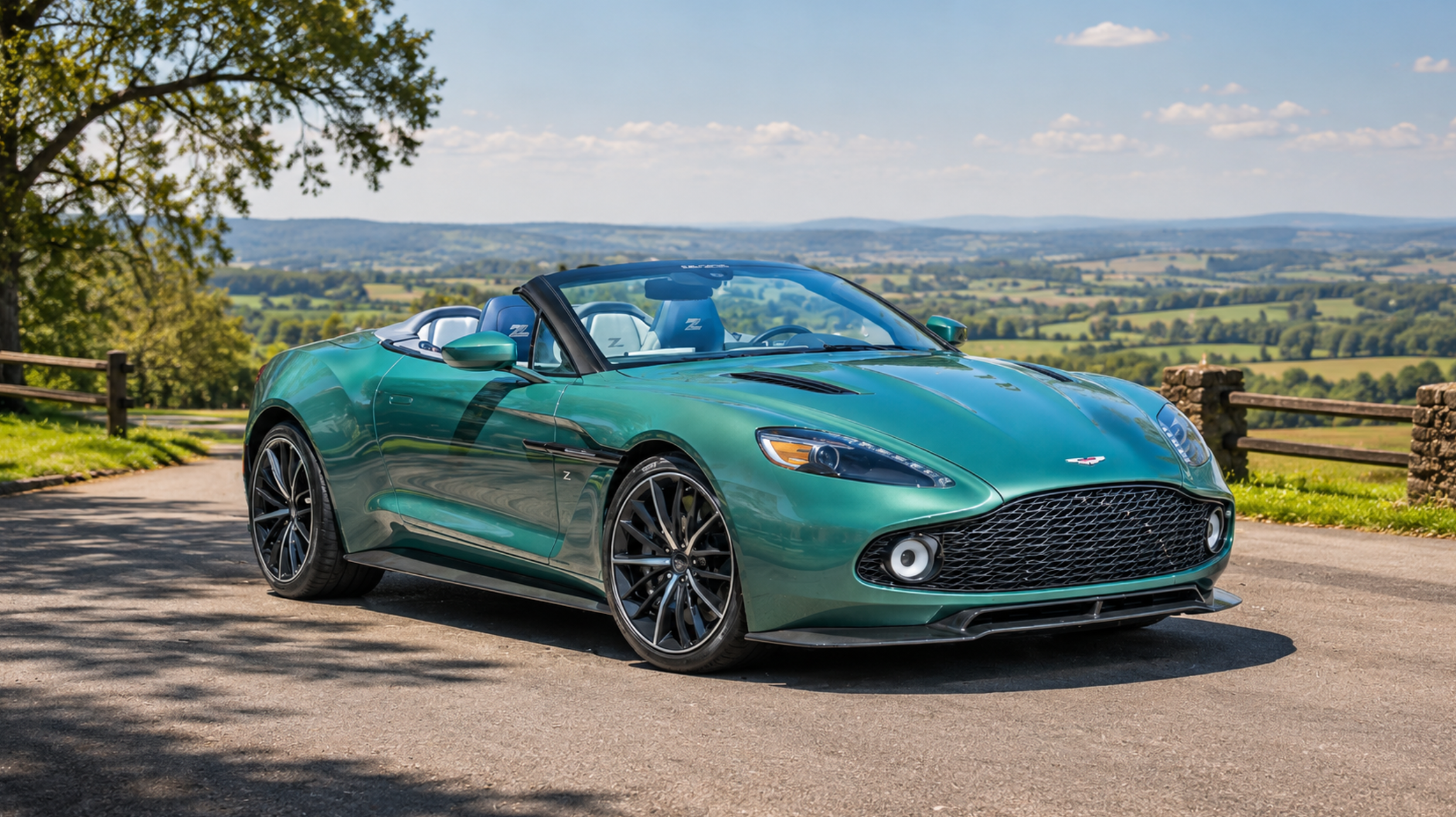
Image © Fuel the Passion. Image used for illustrative purposes.
In Issue 36, we singled out a particularly distinctive 2018 Vanquish Zagato Volante heading to RM Sotheby’s. Number 87 of the 99 produced, it combined Almond Green paintwork with an Atlantic Blue roof and an Aurora Blue and Argento Grey interior.
The answer we deliberately left open has now arrived. The hammer fell at $425,000, precisely at the top of its $375,000 - $425,000 estimate. With the buyer’s premium added, RM Sotheby’s published a final price of $472,500 - approximately £349,000 at the exchange rate used for our comparisons below. Auction estimates normally exclude the buyer’s premium, so the correct comparison is the $425,000 hammer price against the estimate, rather than the larger all-in figure.
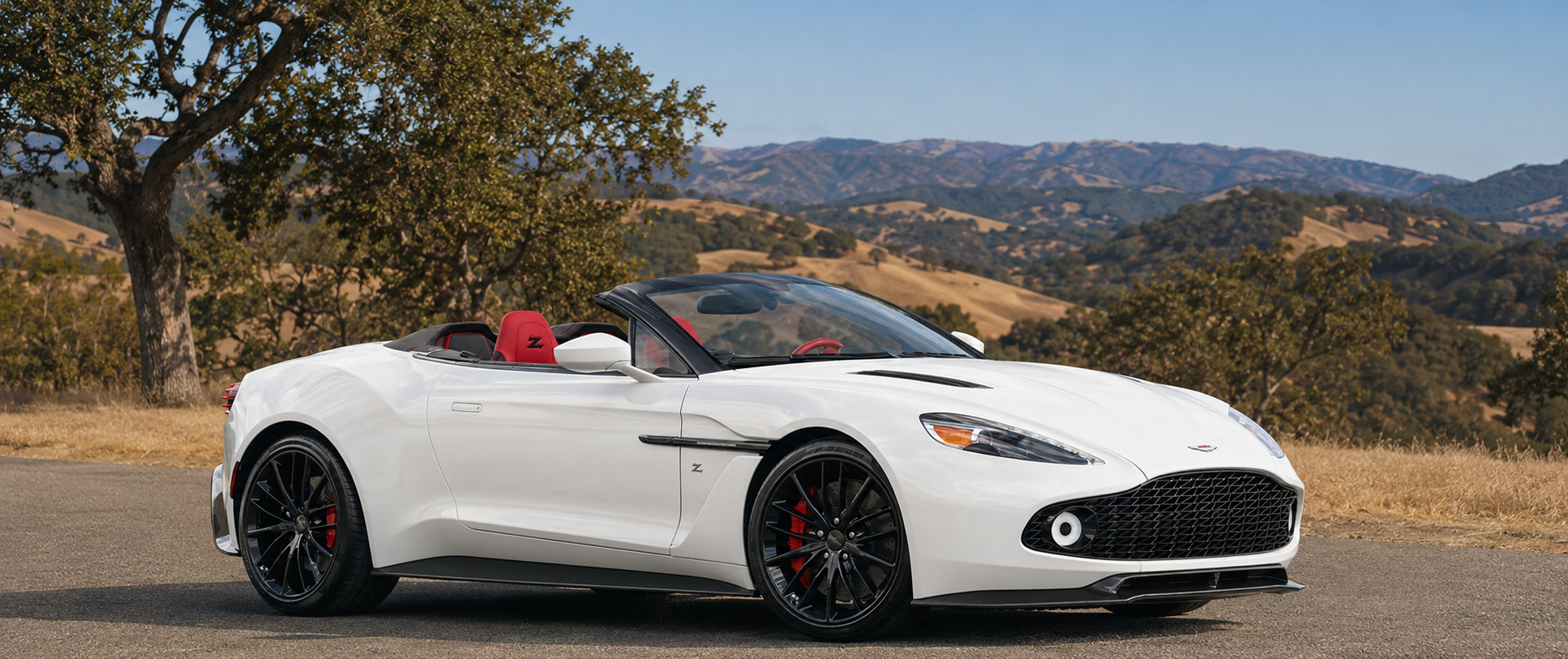
Image © Fuel the Passion. Image used for illustrative purposes.
This wasn’t the only Vanquish Zagato Volante offered during Monterey. Gooding Christie’s sold another example, number 74 of 99, for a published price of $489,000. Despite its much lower recorded mileage of 464 miles, that car’s result was only $16,500 above the RM example once the published prices were compared.
A Vanquish Zagato Coupé offered by Broad Arrow provided an interesting contrast. Estimated at $475,000 - $525,000, it failed to sell and was subsequently advertised at $435,000.
None of this proves that collectors universally prefer the Volante. Colour, mileage, condition, provenance, reserve and the bidders present on the day can all influence a result. It does, however, show that rarity alone doesn’t guarantee a sale and that buyers remain selective, even when one of Aston Martin’s most recognisable modern collaborations with Zagato is involved.
Aston Martins Sold During Monterey
The following are the verified Aston Martin sales we have collated from the principal Monterey auctions. The sterling figures are approximate and use a sale-week exchange rate of $1 to £0.739. They are included to help UK readers place the results into context, rather than to represent the cost of importing any individual car.
Aston Martin at Monterey 2026
Published results from the principal Monterey Car Week auctions.
| Aston Martin | Auction | Published result | Approx. sterling value |
|---|---|---|---|
| 2024 Valkyrie Spider | RM Sotheby’s | $4,735,000 | £3.50 million |
| 2026 Valhalla | Mecum | $1,512,500 | £1.12 million |
| 2020 DB5 Goldfinger Continuation | RM Sotheby’s | $1,072,000 | £792,000 |
| 2020 DBS GT Zagato | RM Sotheby’s | $918,000 | £678,000 |
| 1963 DB4 Series V Convertible | Gooding Christie’s | $819,000 | £605,000 |
| 1967 DB6 Volante | RM Sotheby’s | $621,000 | £459,000 |
| 2018 Vanquish Zagato Volante | Gooding Christie’s | $489,000 | £361,000 |
| 2018 Vanquish Zagato Volante | RM Sotheby’s | $472,500 | £349,000 |
| 1960 DB4 Series I | RM Sotheby’s | $467,000 | £345,000 |
| 2003 DB7 Zagato | RM Sotheby’s | $445,000 | £329,000 |
| 1952 DB2 Drophead Coupé | RM Sotheby’s | $257,600 | £190,000 |
| 1966 DB6 | Mecum | $209,000 | £154,000 |
| 1961 DB4 Series III | Bonhams | $190,400 | £141,000 |
| 1953 DB2 Saloon | Mecum | $121,000 | £89,000 |
| 1981 V8 Volante | Mecum | $104,500 | £77,000 |
Published auction results are not always presented in precisely the same way by every auction house. The converted figures also exclude shipping, import taxes, duties, registration costs and currency charges, so they shouldn’t be treated as equivalent UK purchase prices.
How Do the Results Compare with the UK?
One of the most intriguing comparisons comes from the DB5.
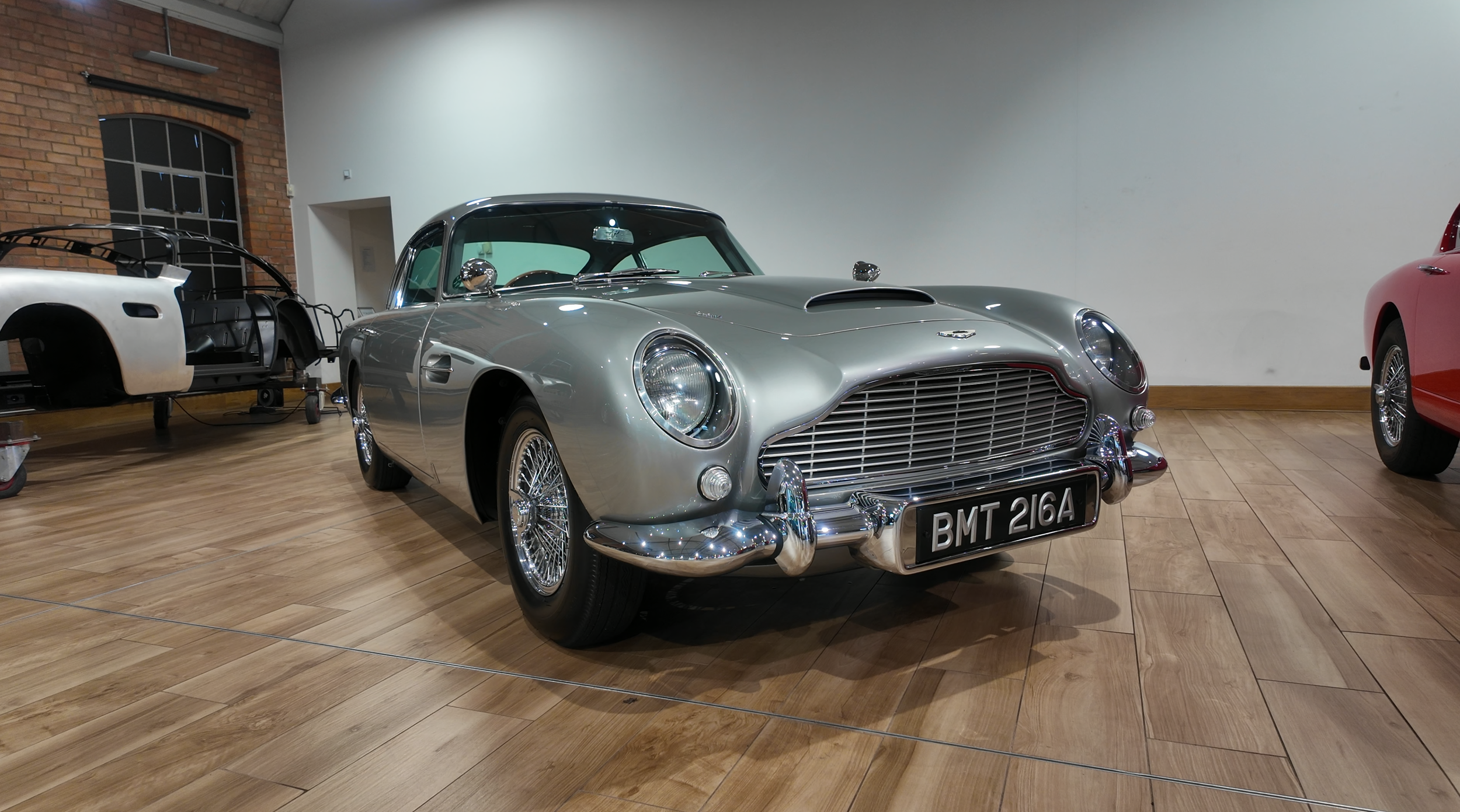
Image © Fuel the Passion. One of the DB5 Goldfinger Continuations, this one photographed at Aston Martin Works, Newport Pagnell, UK, March 2026.
The DB5 Goldfinger Continuation sold in Monterey for the equivalent of approximately £792,000.
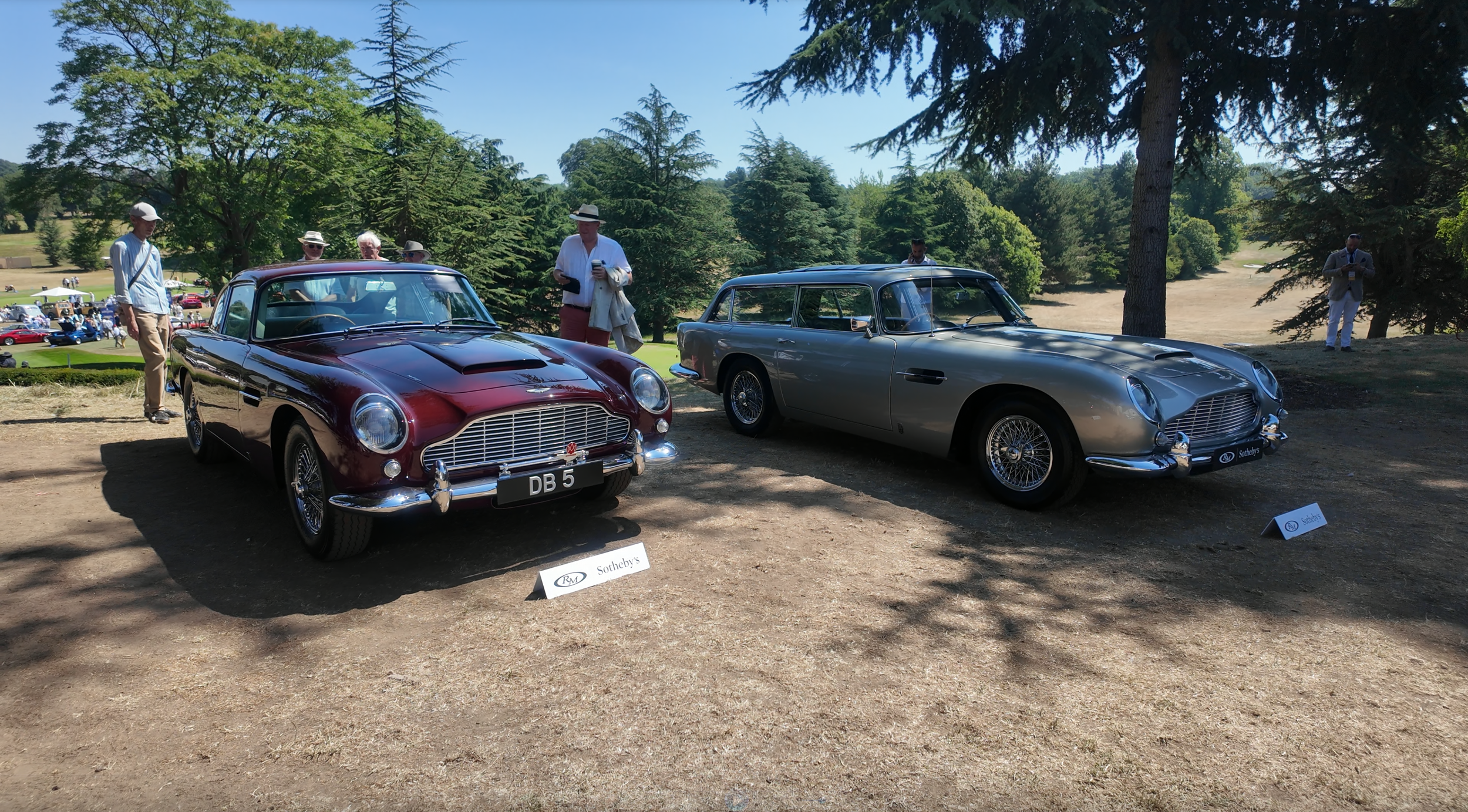
Image © Fuel the Passion. The actual Maroon DB5 sold at Woodcote Park, July 2026.
At RM Sotheby’s Woodcote Park sale in July, an original 1965 Aston Martin DB5 sold for £792,500.
The near-identical numbers disguise two very different propositions. One is a recently constructed, gadget-equipped continuation model that is not road legal in most jurisdictions; the other is a genuine period DB5. It’s nevertheless a fascinating demonstration of how strongly the Bond connection and the craftsmanship behind Aston Martin’s continuation programme can influence demand.
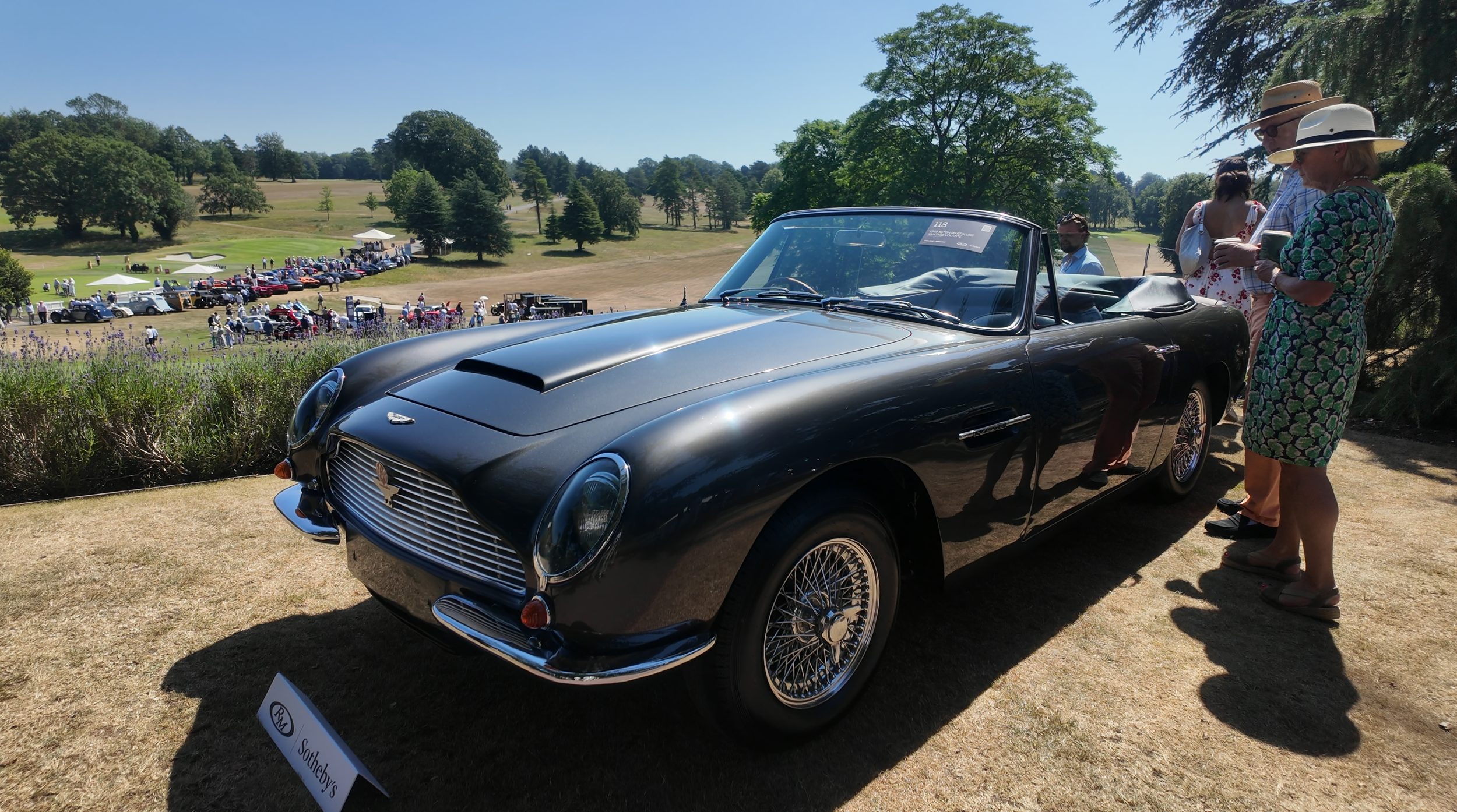
Image © Fuel the Passion. The actual DB6 sold at Woodcote Park, July 2026.
The DB6 results were more closely aligned. Monterey’s 1967 DB6 Volante equated to approximately £459,000, while a rarer 1969 DB6 Vantage Volante sold at Woodcote Park for £432,500. Specification, condition, history and taxation prevent a direct comparison, but the results suggest that the two markets were operating within a broadly similar range.
The DB4 results demonstrate why judging an entire model line from a single auction can be misleading. Monterey produced approximate sterling values ranging from £141,000 for a Series III saloon to £345,000 for a Series I and £605,000 for a Series V Convertible.
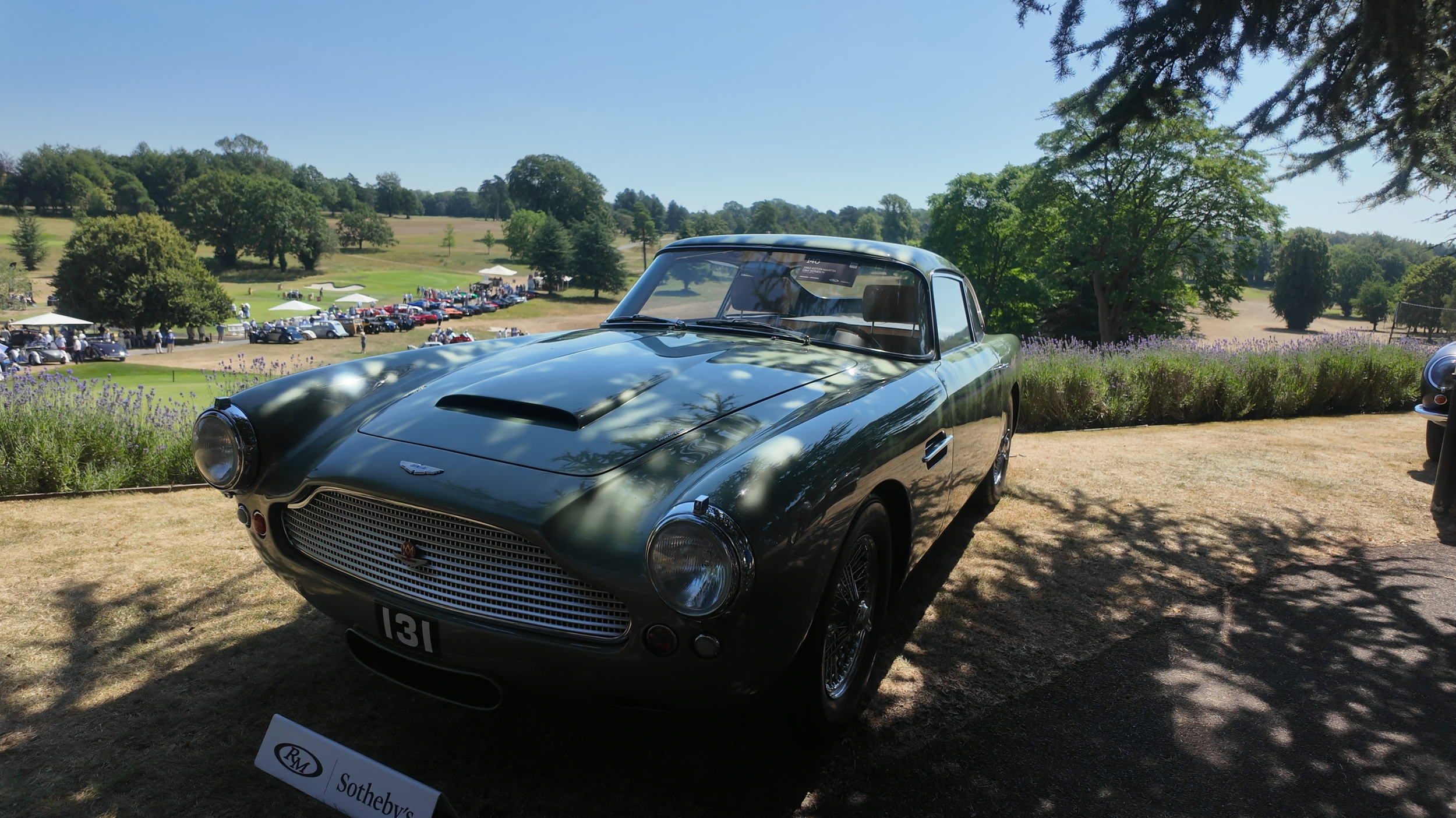
Image © Fuel the Passion. The actual DB4 not sold at Woodcote Park, July 2026.
Meanwhile, a DB4 Series IV estimated at £320,000–£370,000 didn’t sell at Woodcote Park. Body style, restoration quality, originality, mechanical specification and provenance remain decisive. The Aston Martin name establishes the opportunity, but the individual car determines whether bidders pursue it.
Even the Greatest Zagato Was Not Guaranteed a Sale
The most valuable Aston Martin offered during Monterey never reached a completed transaction.
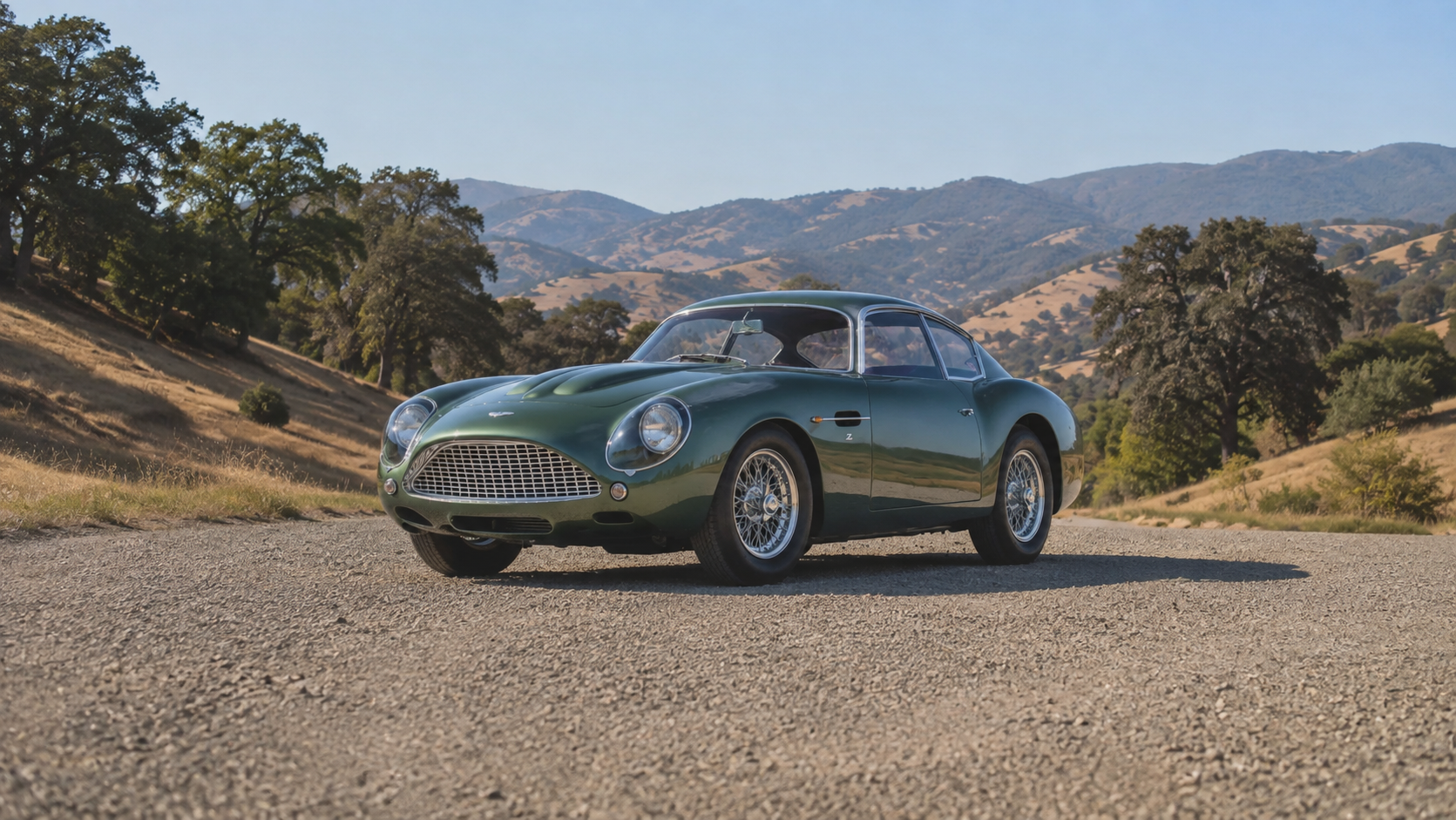
Image © Fuel the Passion. Image used for illustrative purposes.
RM Sotheby’s presented chassis DB4GT/0186/R, the 14th of only 19 original DB4 GT Zagatos. Its history included period Australian competition, its matching-numbers engine and major concours recognition, including a class victory at Pebble Beach in 2019.
Despite an estimate of $12 - $15 million and a reported high bid of $11.75 million, the 1962 DB4 GT Zagato remained unsold and is now listed with its price available upon request. That result provides the clearest warning against declaring that Monterey demonstrated a universally strengthening Aston Martin market. Several exceptional cars sold very well, but collectors were still prepared to stop bidding when the price moved beyond the level they considered appropriate.
The broader picture is therefore one of strong interest accompanied by careful selection. Two Vanquish Zagato Volantes found buyers at closely grouped prices, the newer DBS GT Zagato achieved $918,000 and the DB7 Zagato reached $445,000. Yet the Vanquish Zagato Coupé and the original DB4 GT Zagato both remained available after their auctions.
Monterey didn’t tell us that every Aston Martin is increasing in value. It showed that scarcity, specification, history and presentation can still produce very strong results, but also that even the rarest badge requires the right car, the right reserve and the right buyer to come together.
Leaving Monterey’s sale rooms behind, we return to Britain and the beginning of the David Brown era. This week’s Car of the Week sits at a very different price point from the headline lots above, yet its factory Vantage specification and fascinating history give us a story well worth exploring.
FTP Car of the Week - 1952 Aston Martin DB2 Vantage
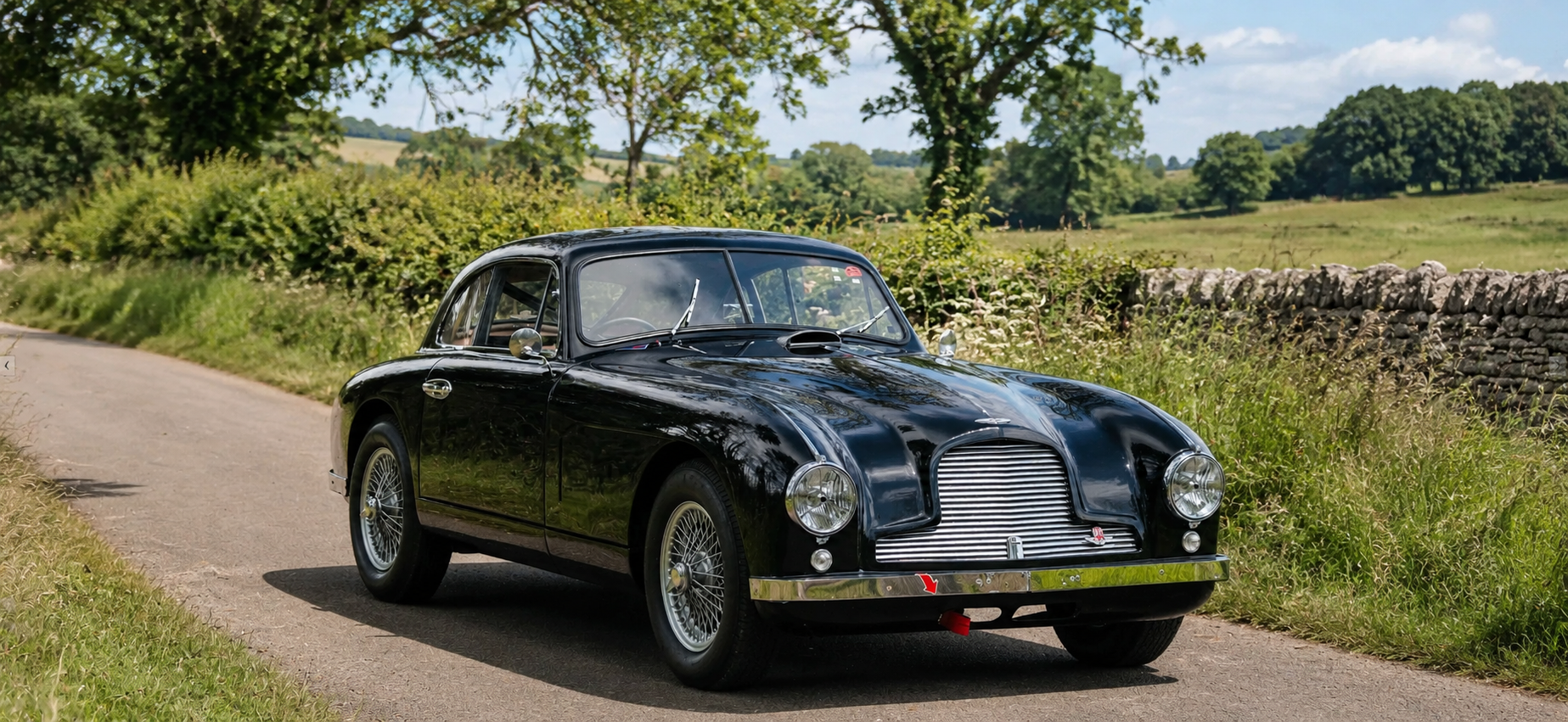
Image © Fuel the Passion. Image used for illustrative purposes.
Our choice this week is a 1952 Aston Martin DB2 Vantage, chassis LML/50/128, offered by Mitchell Curated for £175,000 and also advertised through Car & Classic.
It’s a right-hand-drive, four-speed manual DB2 powered by the Lagonda-derived 2.6-litre twin-cam straight-six. The Car & Classic advert records its current colour as black and displays a mileage of 13,005, although, as we will explain shortly, that figure cannot represent the car’s complete lifetime mileage.
The DB2 occupies an enormously important position within Aston Martin history. Unveiled in 1950, it was the first production model fully developed during the David Brown era and helped establish the combination of performance, refinement and long-distance ability that would define the DB bloodline. Its Frank Feeley-designed fastback bodywork also remains beautifully distinctive. There’s a simplicity to the shape that separates it from the more familiar DB4, DB5 and DB6, yet many of the ingredients of those later cars are already present.
This is also where the Vantage name began.
In 1950, Vantage didn’t identify a separate model. It described an uprated engine specification for the DB2, using larger SU carburettors and a higher compression ratio to increase output from approximately 105bhp to 125bhp. Aston Martin identifies the DB2 as the first car to use the Vantage designation, beginning a lineage that continues more than 75 years later.
Chassis LML/50/128 has a particularly well-documented connection to that story. Completed in April 1952, it left the Feltham factory finished in Almond Green over Beige Connolly leather and was initially registered as JWP 9. Just two months later, it returned to Aston Martin to receive the complete Vantage upgrade.
That timing requires careful wording. This was not apparently built with the Vantage specification before its first delivery, but the upgrade was carried out at the factory almost immediately afterwards. Describing it as a factory Vantage-specification DB2 is therefore justified; describing it as having left Feltham for the first time in Vantage form wouldn’t be. Its early life was certainly not spent sitting quietly in a collection.
Under the ownership of T.H. Leggett, the DB2 achieved third overall on the 1953 Ayrshire Rally, followed by class victories and other strong results in Scottish club competition during 1954. Its most notable period result was an outright victory on the MG Car Club Scottish Rally. Those results give this car considerably more than retrospective historic-racing eligibility. It was used competitively when relatively new, before returning to that world many decades later.
The DB2 travelled to the United States during the early 1980s and returned to Britain in 1993, when it was registered as USK 474. Its accompanying records reportedly include the QE2 loading slip from its Atlantic crossing, early registration documents, tax discs, factory servicing records, period advertisements, magazine coverage, invoices, an original workshop manual and a parts list.
Since 2021, the seller states that more than £125,000 has been spent preparing the car under the supervision of David Morris, formerly Ayrton Senna’s mechanic at Team Lotus. The work has included a complete engine rebuild with a new crankshaft, a fresh limited-slip differential, braking and suspension work and wider preparation for historic competition. The engine was dynamometer-tested at 172bhp in 2024. That figure represents the DB2’s present competition-prepared specification and should not be confused with the 125bhp associated with the original factory Vantage upgrade.
It has subsequently competed in Peter Auto’s Gentleman Trophy and at the 2026 Le Mans Classic. The car also holds a current FIA Historic Technical Passport, valid until the end of 2031. This records its recognised competition specification for international historic motorsport. It’s accompanied by a 2021 identity card issued by FIVA, the International Federation of Historic Vehicles. Mitchell Curated states that these credentials make the DB2 eligible for events including the 1000 Miglia, Tour Auto and Le Mans Classic, although entry into any particular event always remains subject to acceptance by its organisers.
One detail needs to be treated with particular care. While the advert displays 13,005 miles, factory records reportedly show that the car had already covered approximately 44,000 miles by the middle of the 1950s. The current reading must therefore be treated simply as the mileage displayed, rather than a claim of total mileage from new.
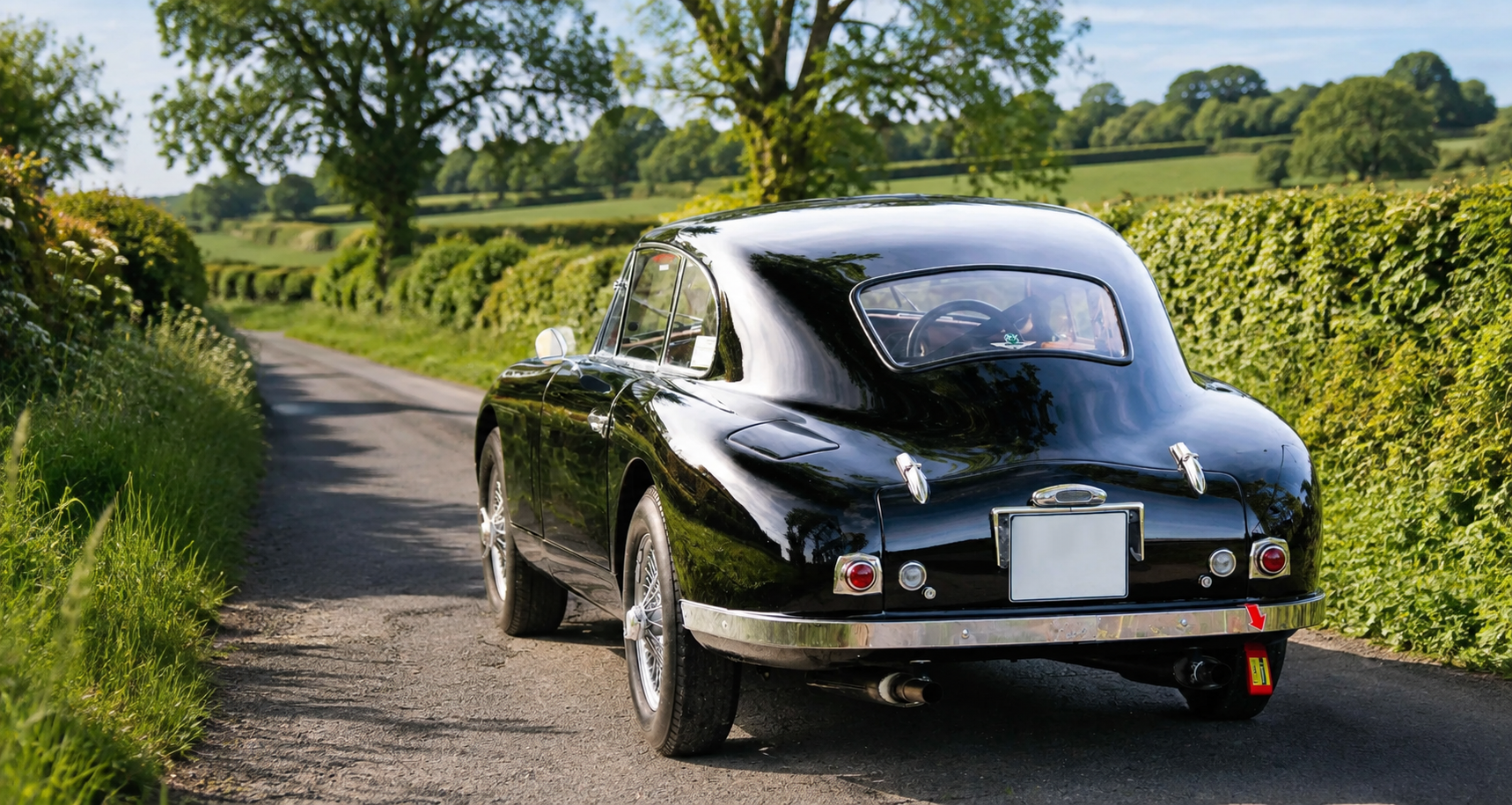
Image © Fuel the Passion. Image used for illustrative purposes.
That doesn’t diminish the appeal of this particular DB2. If anything, its extensive use forms an important part of its story. The £175,000 asking price also provides another reminder of how cautiously classic Aston Martin values must be compared. In Monterey, a 1952 DB2 Drophead Coupé sold for the equivalent of approximately £190,000, while a 1953 DB2 saloon achieved around £89,000. Our Car of the Week sits between those two figures, but the different body styles, specifications, condition, provenance and auction circumstances prevent any direct like-for-like conclusion.
An asking price is not a completed sale either. The reported £125,000 of recent preparation cannot simply be added to the car’s value, but it does indicate the scale of work undertaken and may be particularly relevant to someone intending to continue using it in historic competition. The current black finish gives the DB2 a purposeful appearance, although its original Almond Green over Beige Connolly specification would be very tempting to reinstate one day. That’s personal preference rather than a criticism of the car as it stands.
FTP has already enjoyed seeing an early DB-series Aston Martin used as intended this year. Our Aston Martins Against the Clock film from Aintree featured a DB2/4 competing in the Aston Martin Owners Club Speed Championship, demonstrating how much energy and character these cars retain when they are still driven properly. That’s ultimately why LML/50/128 earns its place as our Car of the Week. It has documented factory history, genuine period competition results, a transatlantic past and substantial modern preparation, but, most importantly, it remains a working Aston Martin rather than simply a preserved object.
From an early David Brown-era Aston with rally victories in its history, we now move to a present-day Vantage carrying very different competition scars, and to the latest Fuel the Passion film from inside Blackthorn Racing.
FTP Update: Inside Blackthorn Racing at Goodwood
In Issue 37, we mentioned that editing was underway on a new Fuel the Passion film from the Goodwood Festival of Speed. That work is now complete, and the finished film went live on Friday evening on the FTP YouTube channel. If you haven’t had time to view it yet, I’ve placed the link below, just click on the thumbnail and we’ll take you straight there;
The invitation arrived from Blackthorn Racing only a few days before Goodwood. I had not originally planned to attend this year, but the opportunity to spend time with the team and get closer to its #56 Écurie Écosse Blackthorn Aston Martin Vantage AMR GT3 Evo was impossible to turn down. It became a genuine privilege.
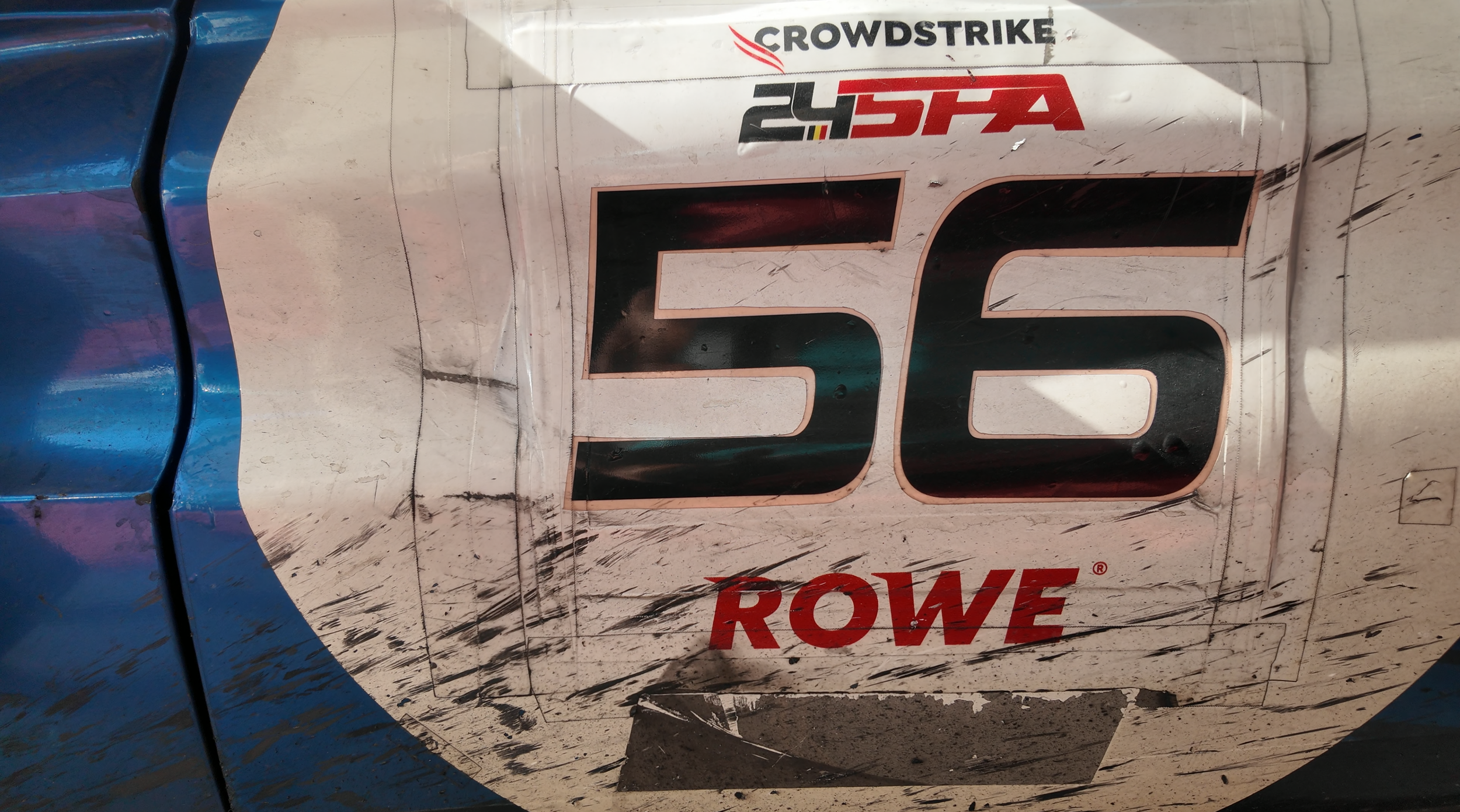
Image © Fuel the Passion. Blackthorn Racing Aston Martin Vantage GT3 at Goodwood FOS 2026.
Rather than experiencing Goodwood solely from the public areas, Blackthorn welcomed me into its day, allowing FTP to remain close to the team as the Vantage was prepared for its runs up the hill. That access opened doors I had never previously passed through at the Festival of Speed and gave the film a very different perspective.
At its centre is the same battle-scarred Aston Martin that had completed the CrowdStrike 24 Hours of Spa less than two weeks earlier. It still carried the dirt, damage and evidence of that race, with no attempt made to disguise what the car had endured. This is the very same car, as the picture on the thumbnail shows, that caught fire during the race. I don’t want to reveal too much here, because discovering the stories behind those scars forms an important part of the film. Claude Bovet explains what happened at Spa, why the team chose to present the car in that condition and the meaning behind its distinctive Écurie Écosse-inspired livery.
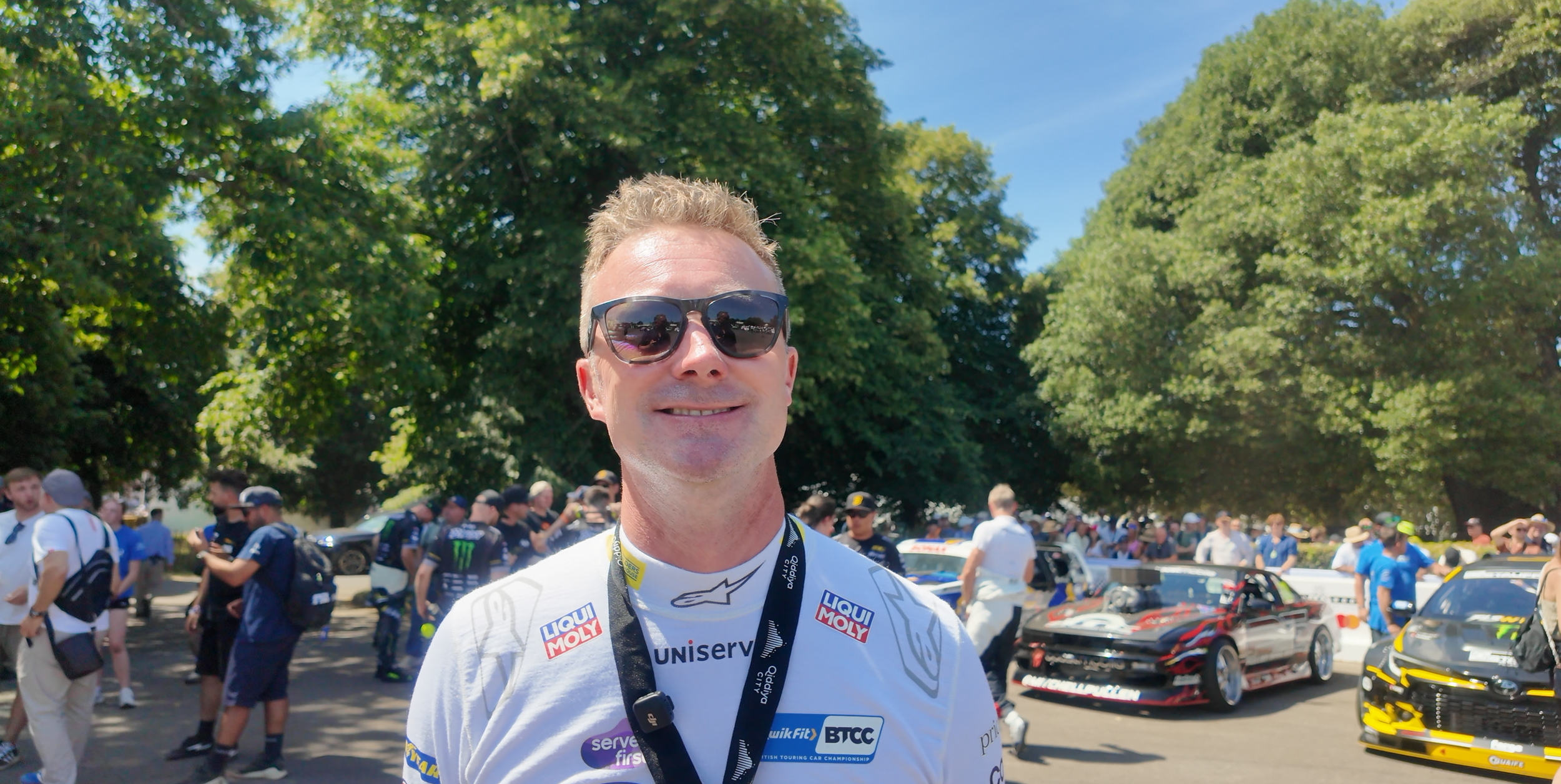
Image © Fuel the Passion. Gordon Shedden, Three-Time BTCC Champion, Driver for Blackthorn Racing whilst at Goodwood FOS 2026.
We also meet Gordon Shedden before he drives the Vantage GT3 up the Goodwood Hill, follow the team into areas normally hidden behind the barriers and explore some of the remarkable Aston Martin machinery gathered around the event.
Most valuable of all was the opportunity to spend time speaking with Claude and Julien Draper, and learning more about Blackthorn Racing’s wider ambitions.
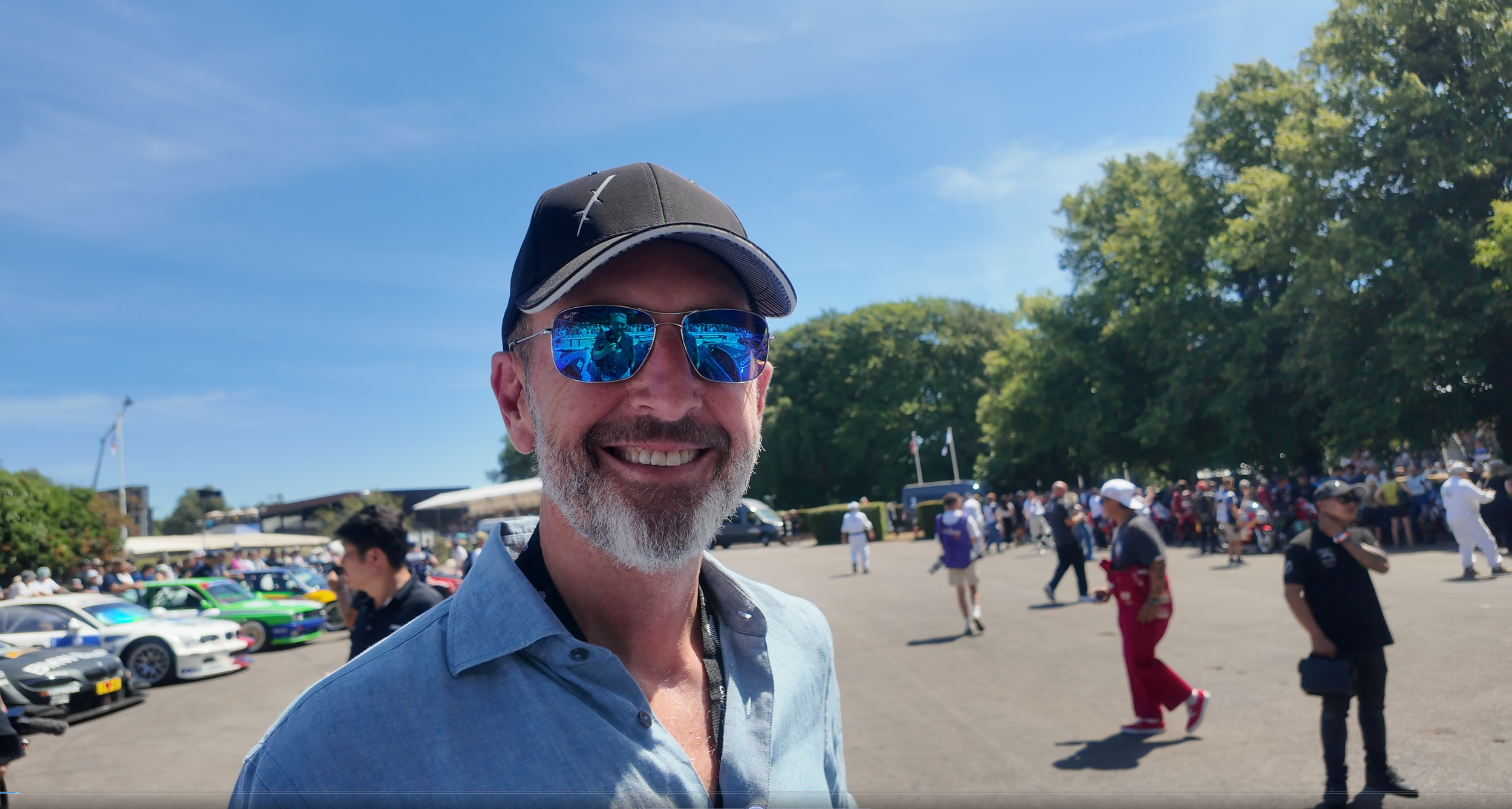
Image © Fuel the Passion. Claude Bovet, Owner & Racing Driver of Blackthorn Racing, Goodwood FOS 2026.
Rather than repeat everything here, I would much rather allow Claude to explain that journey in his own words. What I can say is that the team’s plans are exciting, and I sincerely hope Fuel the Passion will be in a position to follow their progress more closely through the closing months of 2026 and into 2027.
As covered earlier in this Roundup, Blackthorn’s Michelin Le Mans Cup weekend at Spa concluded with the #91 retiring after Tom Canning pulled off at Les Combes with a fire at the front of the Aston Martin. Saturday’s race took place less than 24 hours before this issue was published, making the film’s arrival especially well timed: it captures one chapter of Blackthorn’s story while the team is already busy writing the next. This weekend’s Michelin Le Mans Cup visit to Spa demonstrates how quickly that story continues to move. Silverstone follows in September, when FTP is due to spend further time with Blackthorn during another important race weekend.
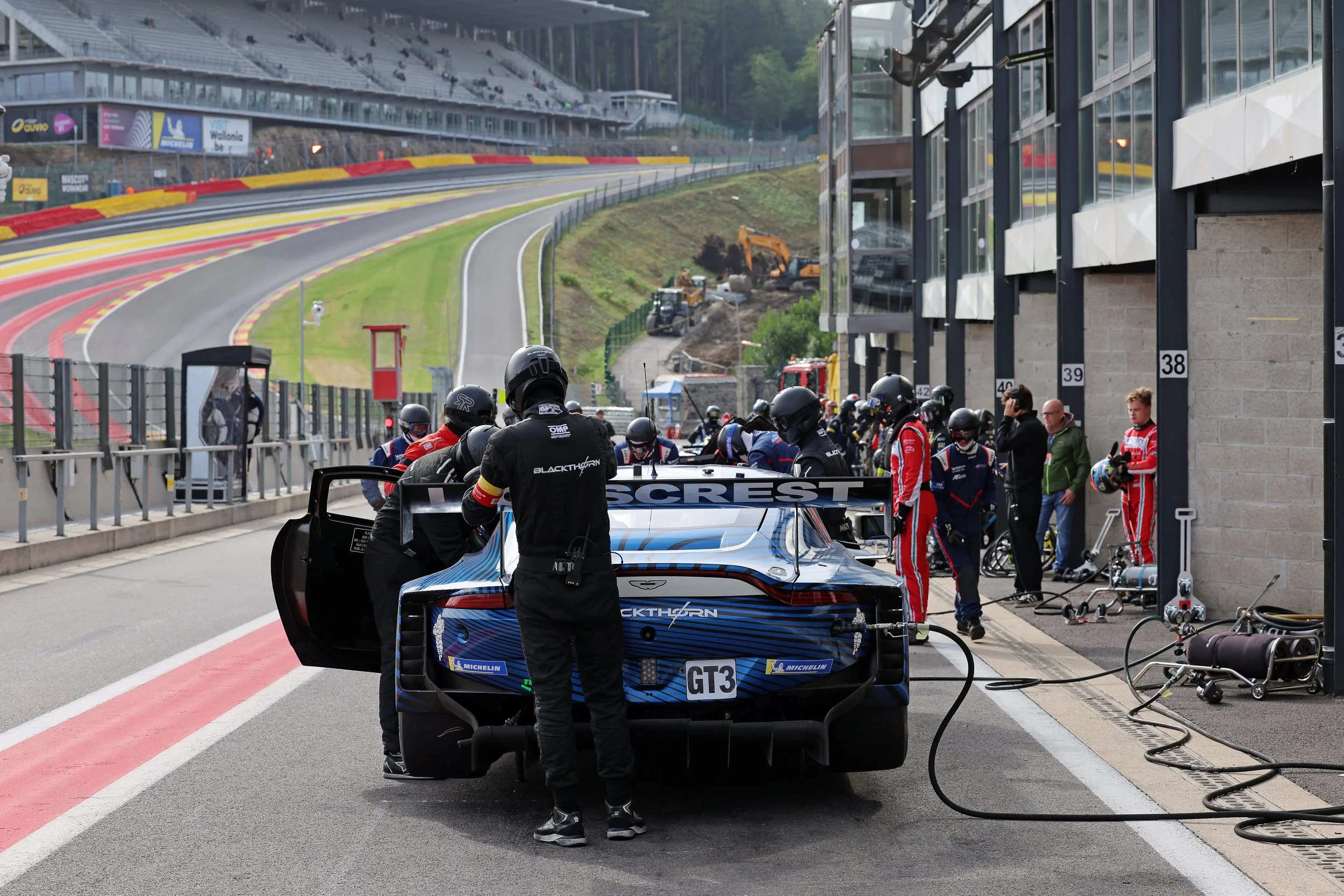
Image © Blackthorn Racing. Used for editorial purposes. The Blackthorn Racing Team at Spa this weekend, 2026.
My sincere thanks go to Claude Bovet, Julien Draper and everyone at Blackthorn Racing for inviting me to Goodwood, trusting FTP with this level of access and making me feel so welcome.
Opportunities like this are never taken for granted.
The full film runs for approximately 42 minutes. If you haven’t yet watched it, I’ll avoid spoiling anything further. Join us and Blackthorn Racing at Goodwood by clicking the thumbnail above, turn up the volume and allow the car, the team and the day to tell the story.
With the film now live and more potentially to come from Blackthorn, it’s time to bring this week’s many Aston Martin stories together in our Final Thoughts.
FTP Final Thoughts
Some Roundups are shaped by one enormous announcement. This one feels rather different. Its stories stretch from a DB2 competing during the early years of the David Brown era to Valkyrie preparing for its next phase, yet they’re connected by something very simple: Aston Martins continuing to be used, developed, raced and enjoyed.
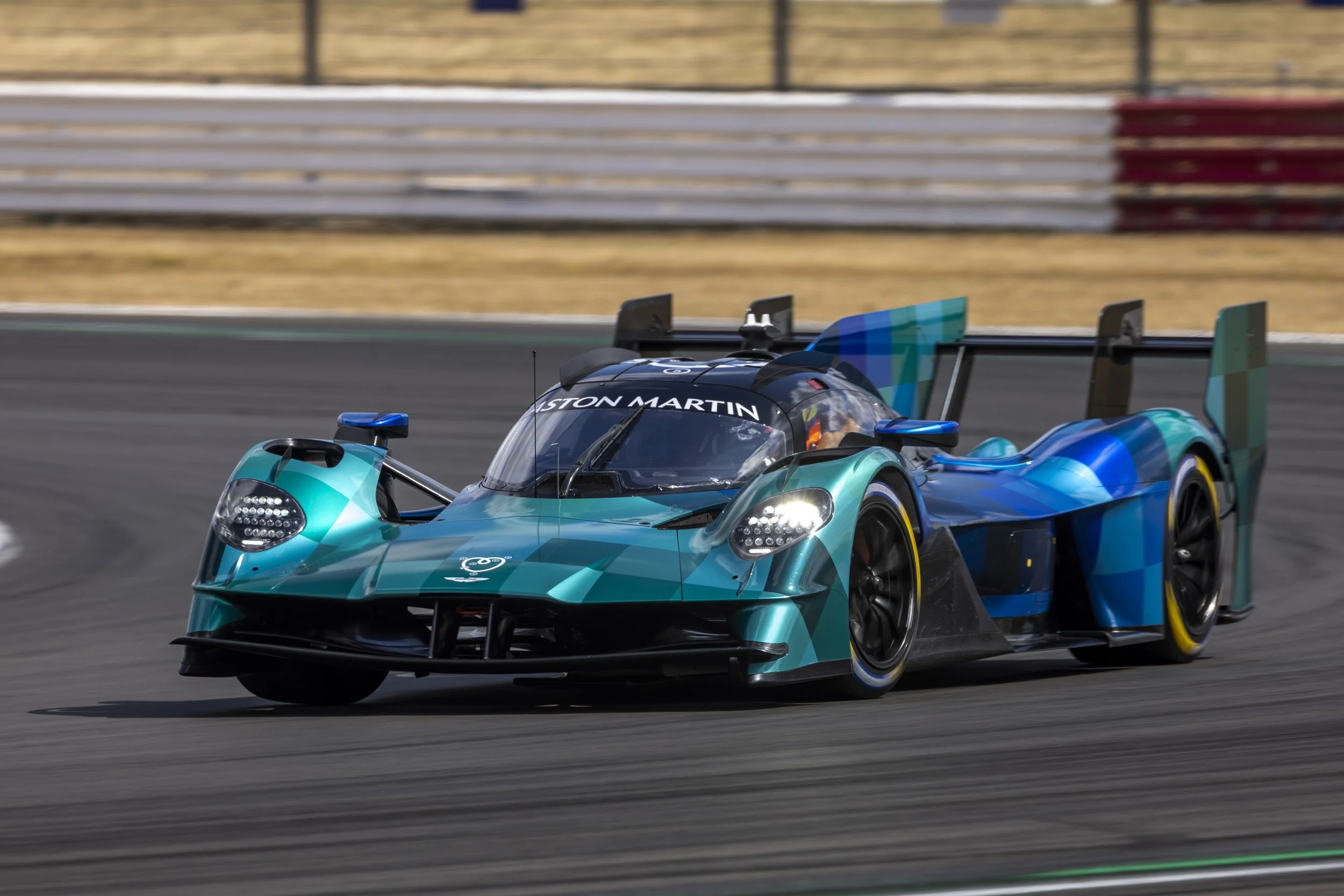
Image © Aston Martin Lagonda. Used for editorial purposes. Valkyrie testing at Silverstone.
The Valkyrie’s Silverstone test carried particular personal excitement. We’ve followed the programme closely here at FTP, without yet seeing the car compete, so the prospect of hearing that extraordinary V12 racing on home soil when the World Endurance Championship returns in 2027 is already firmly in my diary. There’s still a great deal of progress to be made, but anticipation is part of what makes following motorsport so compelling.
Our DB2 Vantage produced a different emotion. Its appeal is not based upon having remained untouched or hidden away. It’s rallied, travelled across the Atlantic, returned to Britain and found its way back into competition. The original Almond Green and Beige specification sounds beautiful, but so does the idea of preserving the story written into the car through more than seven decades of use.
The most personal part of this issue is undoubtedly our Blackthorn Racing film. The invitation to Goodwood arrived unexpectedly, yet it opened the door to an extraordinary day and a level of trust I never take for granted. Seeing the battle-scarred Vantage up close, listening to Claude explain its story and being welcomed behind the scenes represents exactly the kind of storytelling I hoped Fuel the Passion might one day be trusted to produce.
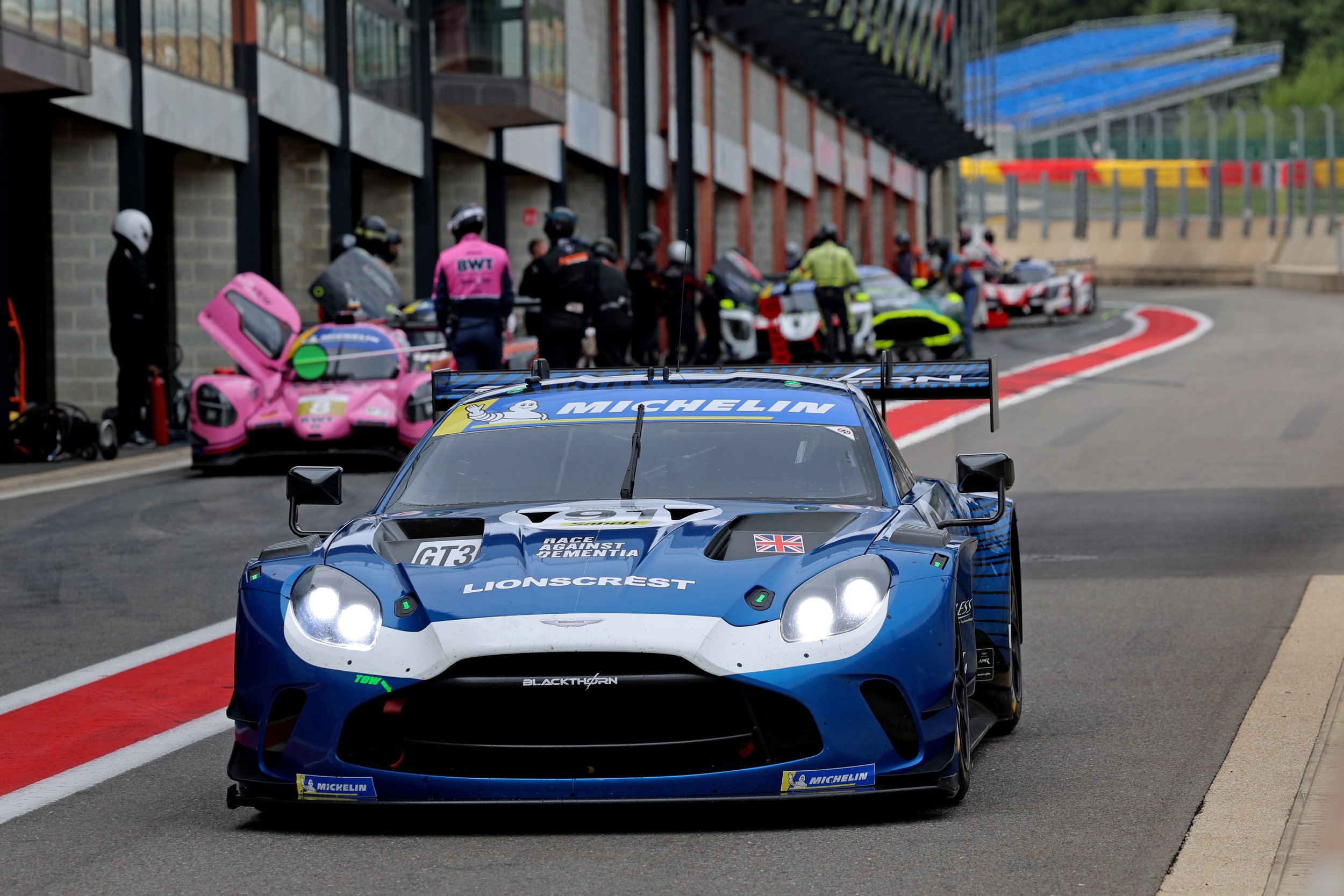
Image © Blackthorn Racing. Used for editorial purposes. Blackthorn Racing Aston Martin Vantage GT3 at Spa.
That story has continued this weekend at Spa-Francorchamps, although not with the ending Blackthorn would’ve wanted. Claude Bovet and Tom Canning’s #91 Écurie Écosse Blackthorn Vantage GT3 qualified seventh in class before an exceptionally disrupted Michelin Le Mans Cup race ended prematurely when Canning pulled off at Les Combes with smoke and fire visible around the front-right corner of the car. The cause has not yet been confirmed. Coming only weeks after the #56 suffered its own very different fire during the Spa 24 Hours, it was an unfortunate reminder of just how demanding this circuit can be.
Not everything this week offers an easy reason for celebration. Blackthorn left Spa without points, Aston Martin’s Formula One recovery remains difficult, Monterey demonstrated that even exceptional cars can fail to sell and the identities of those Nürburgring prototypes remain unconfirmed. Supporting Aston Martin doesn’t require us to turn every development into good news. The passion becomes more meaningful when it’s accompanied by honesty.
Perhaps that’s what we’ll remember most about Issue 38: not one dominant headline, but the sense of many Aston Martin stories continuing to unfold at once. It remains a privilege to follow them, and an even greater one to have you following them with me.
Thank you, as always, for reading. It’s now time to hand the conversation over to you. Please consider getting involved by answering a question below or leaving a comment 🙏.
Have a great week. See you on the next one!
Kind regards,
Dan 💛💚
Join the Conversation 💬
We’d love to hear your thoughts. You’re welcome to answer one or all three of this week’s questions, or simply share your view on anything Aston Martin-related, whether it concerns something you’ve read here, a car that has caught your attention or a subject you believe deserves further discussion. Please leave your comments below 👇
1. If Aston Martin continues using its established platforms to create increasingly distinctive derivatives, which should carry greater weight: preserving an unmistakable family resemblance, or allowing each car to develop its own identity even when that challenges traditional ideas of Aston Martin elegance?
2. Given that the Formula One team and Aston Martin Lagonda are separate businesses, what evidence would convince you that the team’s growing commercial strength is genuinely benefiting the road-car marque: increased sales, greater recognition in markets such as the United States, new customers, technological influence, or something less easily measured?
3. When an historic Aston Martin has accumulated both an important original specification and a long competition life, where should the balance lie between restoration and continued evolution? Would you return this week’s DB2 Vantage to its original Almond Green and Beige specification, or preserve it as the competition-prepared car it’s become?
Let us know your thoughts below 👇
Still Fancy a Little More Aston Martin Reading?
If you’ve reached the end of this week’s Roundup and would still like to explore a little further, there’s plenty more to discover across the Fuel the Passion website.
You can visit the FTP Motorsport Hub, where we continue to build detailed race reports, result tables, classification updates and championship standings across Aston Martin’s international racing programmes.
There’s also the growing FTP Aston Martin Buyers Guide library. We now have complete guides covering the DB9, VH-generation V8 Vantage, DB11, first-generation Vanquish and the VH-era DBS.
Each guide is written to offer honest, enthusiast-focused help for anyone researching, buying, owning or simply learning more about these cars. They cover the model’s history, versions, ownership considerations, servicing, known issues, buying checks and the details that can make the difference between a rewarding purchase and an expensive mistake.
Our next guide will focus on the second-generation Vanquish, and research is already under way. Owners are very welcome to contribute their own experiences and help us make the finished guide as accurate and useful as possible.
You may also like to find out more about our latest FTP Featured Article: Aston Martin Beyond the Debt: What Could the Future Hold?
It looks beyond the immediate headlines surrounding debt, losses and refinancing to examine the wider position of Aston Martin Lagonda. The article considers both the seriousness of the financial pressure and the signs of operational improvement seen during the first half of 2026.
I’ve included the links below, so feel free to make yourself a coffee, settle in and keep exploring. 👍
