
Week Ending 30th August 2026
Settle in — there’s plenty to enjoy this week.
This is one of our fuller editions, covering motorsport, road cars, heritage, market news and plenty from behind the scenes at Fuel the Passion. Read it in one sitting or dip in and out whenever you have time.
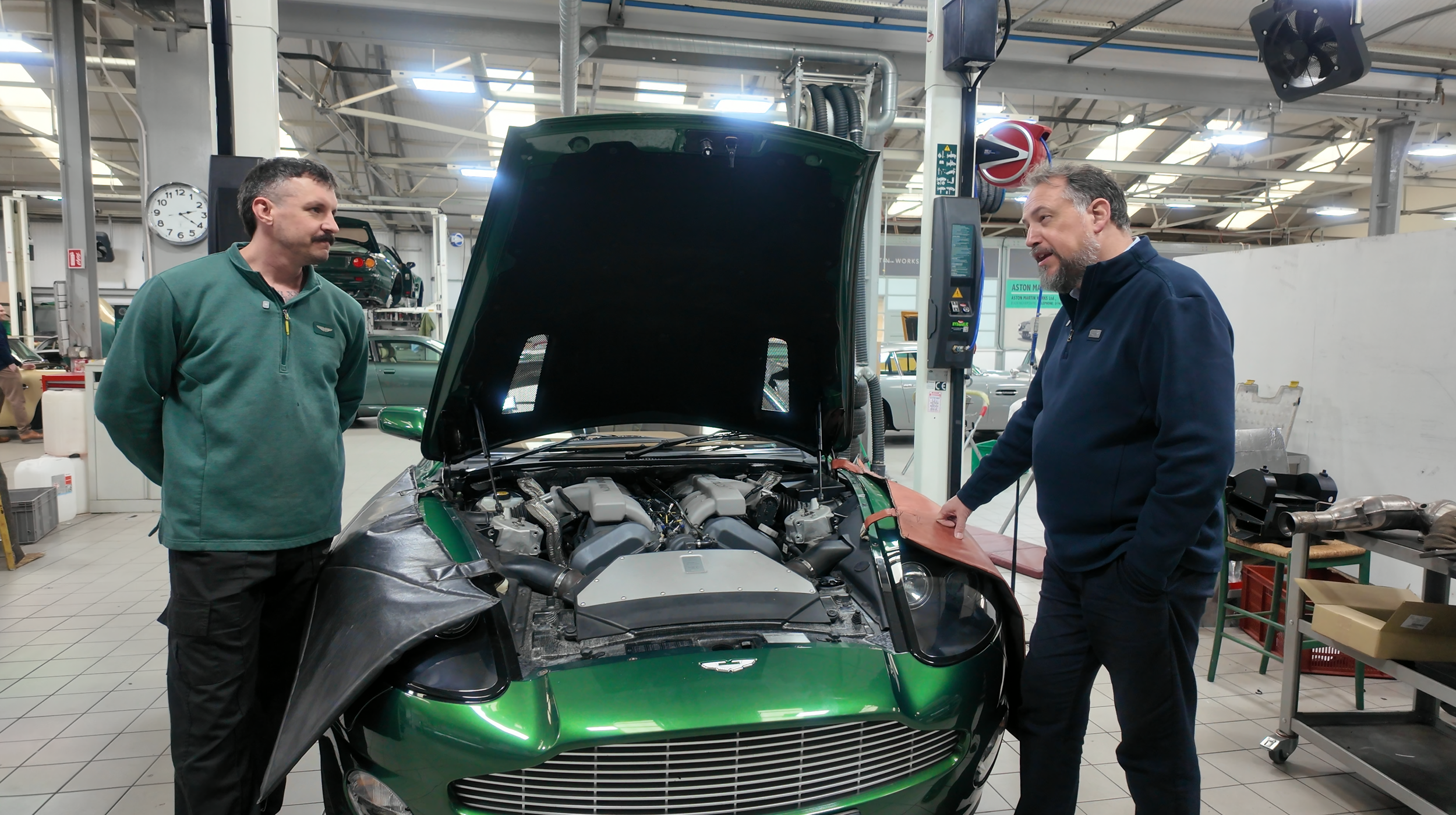
Image © Fuel the Passion. Screenshot from ‘People Behind Vanquish’ FTP YouTube Film, inside Aston Martin Works
Editor’s Introduction - Dan, Fuel the Passion
Hi everyone, and welcome to Issue 39 of the Fuel the Passion Weekly Roundup. There’s been a welcome sense of several longer-running stories beginning to move this week. On the Formula One side, Fernando Alonso finally converted some of the recent development work on the AMR26 into points at Zandvoort, climbing from 18th on the grid to ninth and giving Aston Martin its best Grand Prix result of 2026 so far. It doesn’t suddenly solve every problem, Honda still has work to do and Alonso himself has been very clear about that, but after the encouraging signs we saw in Hungary and then through parts of the Dutch weekend, there’s now something tangible on the results sheet to go with them.
Another story that’s been developing for rather longer reached an important moment for FTP this week too. After waiting for final approval from the Aston Martin Lagonda media team, we’re finally able to release The People Who Built the Aston Martin V12 Vanquish, the third and final film in our three-part series celebrating the 25th anniversary of the Vanquish name.
The first two films were made with the support of the Aston Martin Owners Club and Aston Martin Heritage Trust, with Steve Waddingham talking us around the Trust’s remarkable cutaway Vanquish cars outside the museum in Oxfordshire. Together, they explored both the first- and second-generation Vanquish, looking beneath the skin at how each was engineered and constructed. I’ll link all films towards the end of this roundup below, so the full three-part story can be enjoyed in sequence.
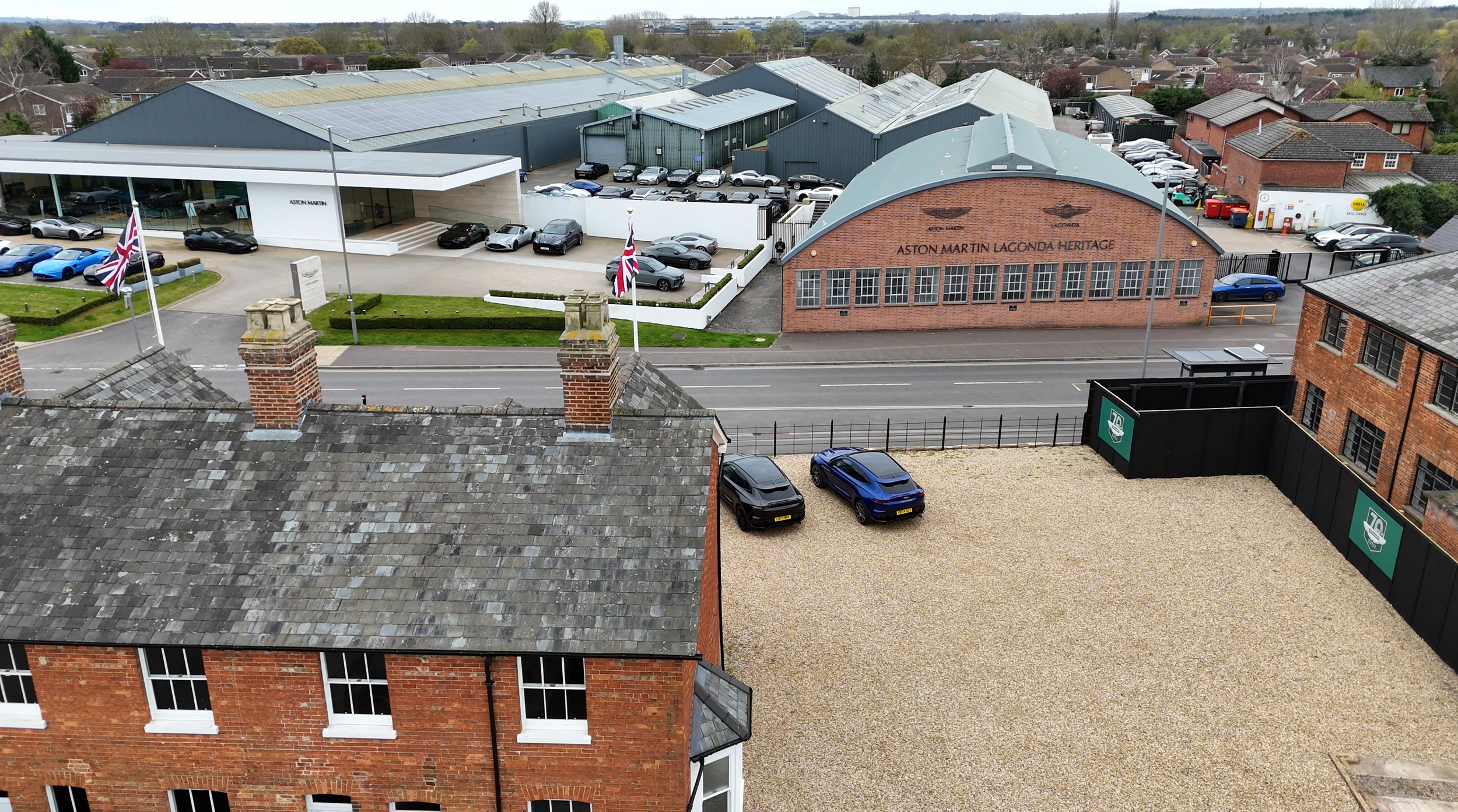
Image © Fuel the Passion. Aston Martin Works, during filming for FTP video.
This final film was made in collaboration with Aston Martin Works, and the access they gave us made it something particularly special.
Newport Pagnell is already an extraordinary place to visit because so much Aston Martin history sits within those buildings, but being allowed to film not only the venue itself, but also the people, the workshops and some of the cars, gave us the opportunity to tell the story from much closer quarters.
I’m particularly pleased that this one can now be shared because it’s less about simply looking at a beautiful Aston Martin and much more about listening to the people who helped create it. Steve Waddingham speaks with colleagues whose careers stretch back through the original Vanquish programme, many of whom he’s known since his own early days with Aston Martin. Their memories take us behind the finished car: into the trim shop, engineering, production, road testing, inspection, preparation and sales, with stories that could only really come from the people who were there.
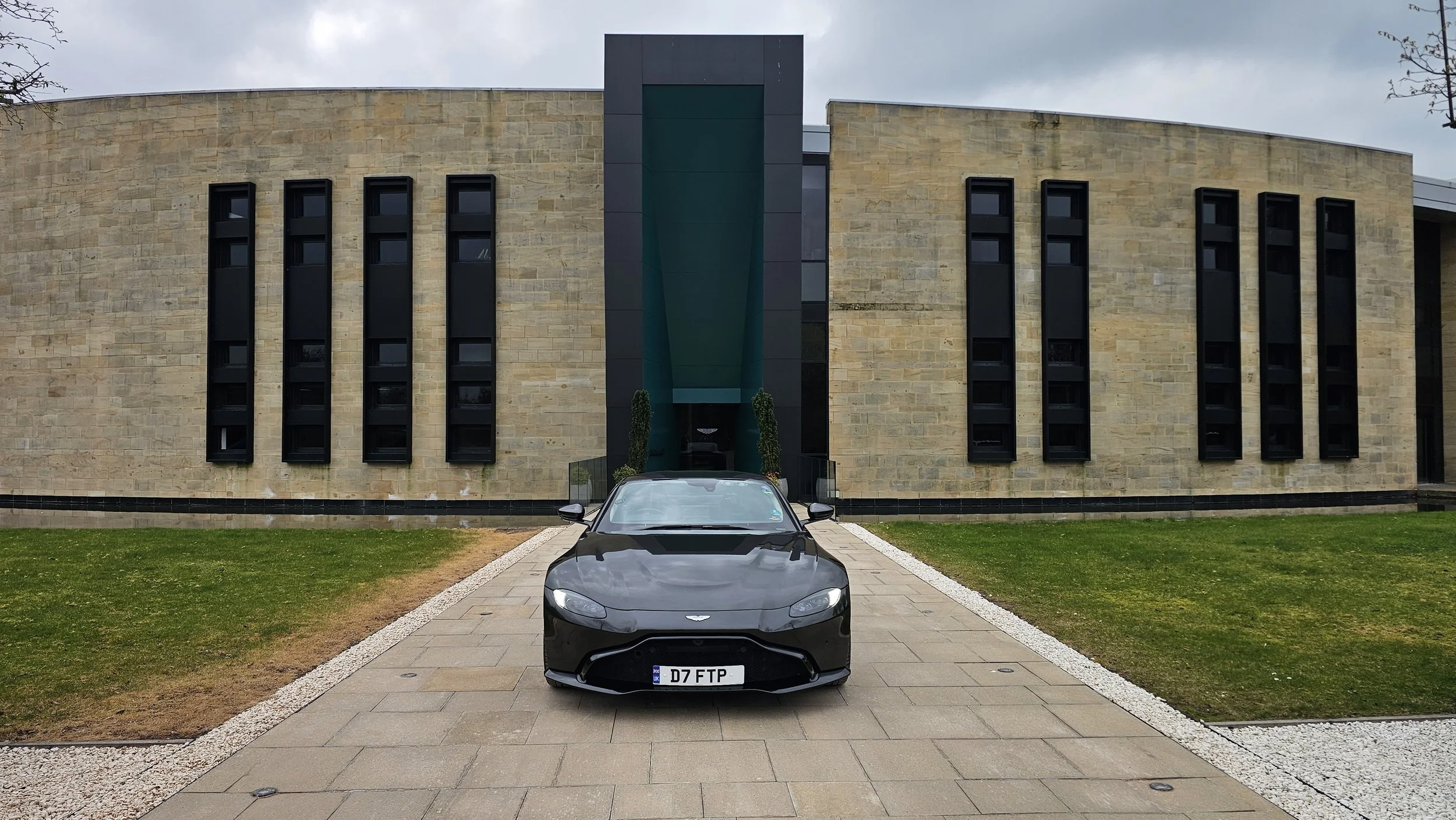
Image © Fuel the Passion
For anyone who would like to see a little more of what that day at Newport Pagnell was like from the FTP side of the camera, there’s also a separate, more behind-the-scenes film on the Fuel the Passion YouTube channel, Taking My Vantage Home, which follows our visit to Aston Martin Works and gives a wider sense of the access, atmosphere and surroundings that made the filming possible.
That feels a particularly fitting way to complete our Vanquish anniversary series. Cars such as the original V12 Vanquish are rightly remembered for their design, performance and place in Aston Martin history, but the further you look behind them, the more you realise how much of that history also belongs to the craftspeople, engineers and characters who actually made them. The film is now live on the Fuel the Passion YouTube channel, and we hope you enjoy hearing those memories as much as I did.
There’s plenty more happening around Aston Martin this week. The increasingly serious-looking Vantage prototype has been back at the Nürburgring, with an open-top version now entering the picture, while the much-discussed RS designation turns out to have a fascinating Aston Martin history of its own. Harry Metcalfe has spent time with the DB12 S and reached a conclusion remarkably close to one we have been developing at FTP, while HWM has been looking at just how much Aston Martin the DB11 now offers on the used market. Away from the cars themselves, one of the financial stories we’ve been following has also taken another procedural step. The wider motoring world has supplied some lighter news too, with the BBC confirming that Top Gear will return, although who will ultimately be handed the keys remains another question entirely.
Meanwhile, this weekend’s racing is still unfolding. Aston Martins are competing at the Nürburgring in GT World Challenge Europe, along with further customer-racing activity elsewhere. We’ll allow those races to finish before drawing conclusions: the championships regularly covered by the FTP Motorsport Hub will receive their usual fuller treatment early next week, while worthwhile results from series outside our regular Hub coverage can still find their way into next Sunday’s Roundup.
First, though, we need to return to last weekend, because after a season in which Formula One progress has often been measured in fractions, Zandvoort finally gave Aston Martin something considerably easier to see.
ZANDVOORT - ALONSO TURNS PROGRESS INTO POINTS
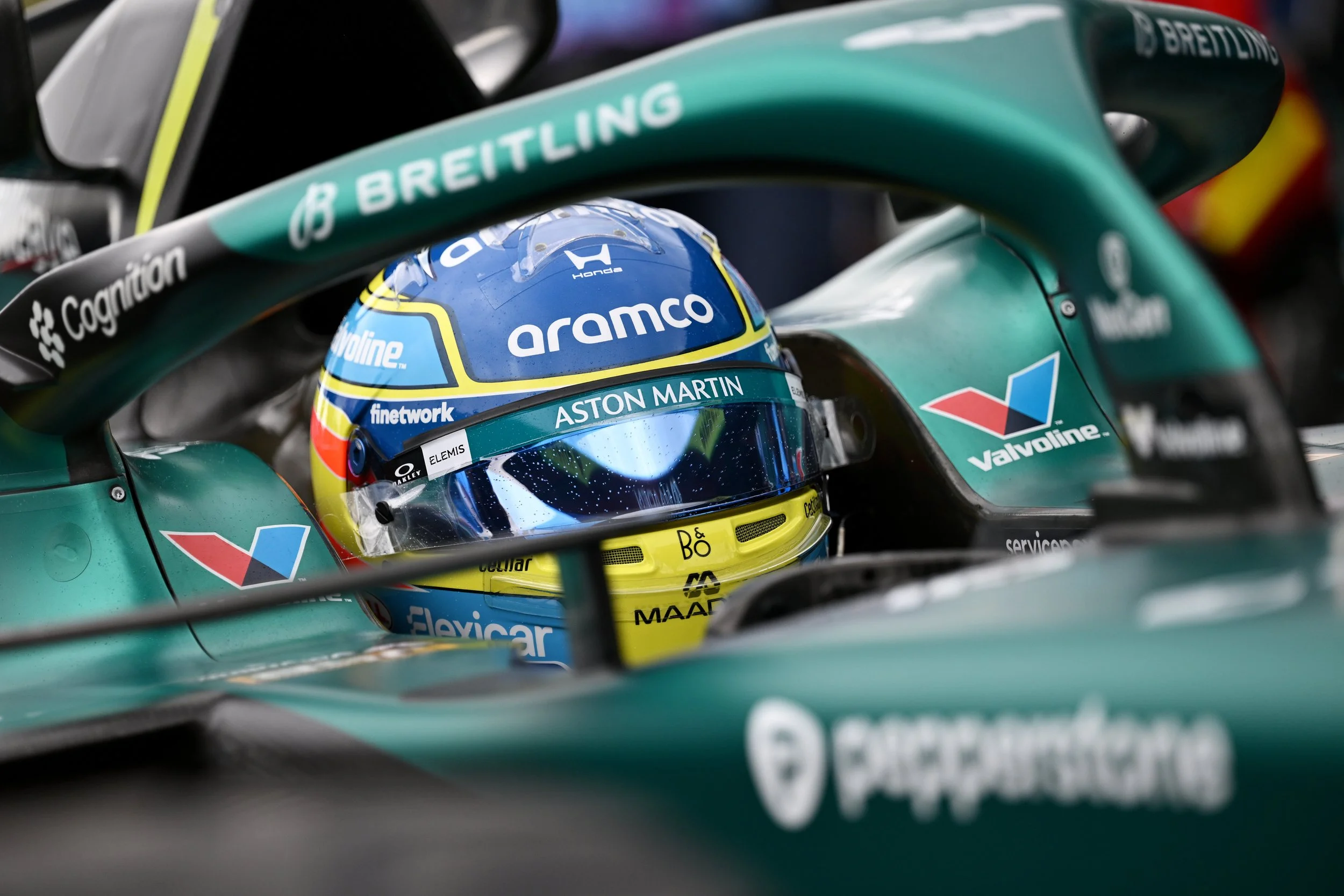
Image © Honda Motor Co. Ltd & Aston Martin Aramco. Used for editorial purposes. Alonso at the Dutch GP 2026
Last Sunday we deliberately stopped short of passing final judgement on Aston Martin’s Zandvoort weekend. Through the Sprint and qualifying there had been encouraging signs from the AMR26 chassis and Honda’s revised power unit, but the results remained difficult. Alonso was eliminated in the first part of Grand Prix qualifying and lined up 18th, one place ahead of Lance Stroll. As we said in Issue 38, the important question was whether the flashes of improved pace could survive a full race distance.
They did, and for the first time in several months Aston Martin had a result substantial enough to show for it. Alonso brought the AMR26 home ninth, gaining nine positions and scoring two World Championship points. It was Aston Martin’s best Grand Prix finish of 2026 and only the team’s second points-scoring result of the season.
The way it was achieved was arguably more encouraging than the finishing position alone.
Aston Martin began Alonso on the soft tyre, but as the race developed the team moved away from its original two-stop thinking. Traffic had been one of the AMR26’s biggest problems, Alonso could carry good speed through the corners but struggled to use it when trapped behind cars with stronger straight-line performance, so Aston Martin increasingly looked for opportunities to give him clean air. After a restart, Alonso remained on track while several rivals stopped. When he eventually made his own stop on lap 34, the strategy effectively became a one-stop race, leaving him with a long final stint on the hard tyre. It worked.
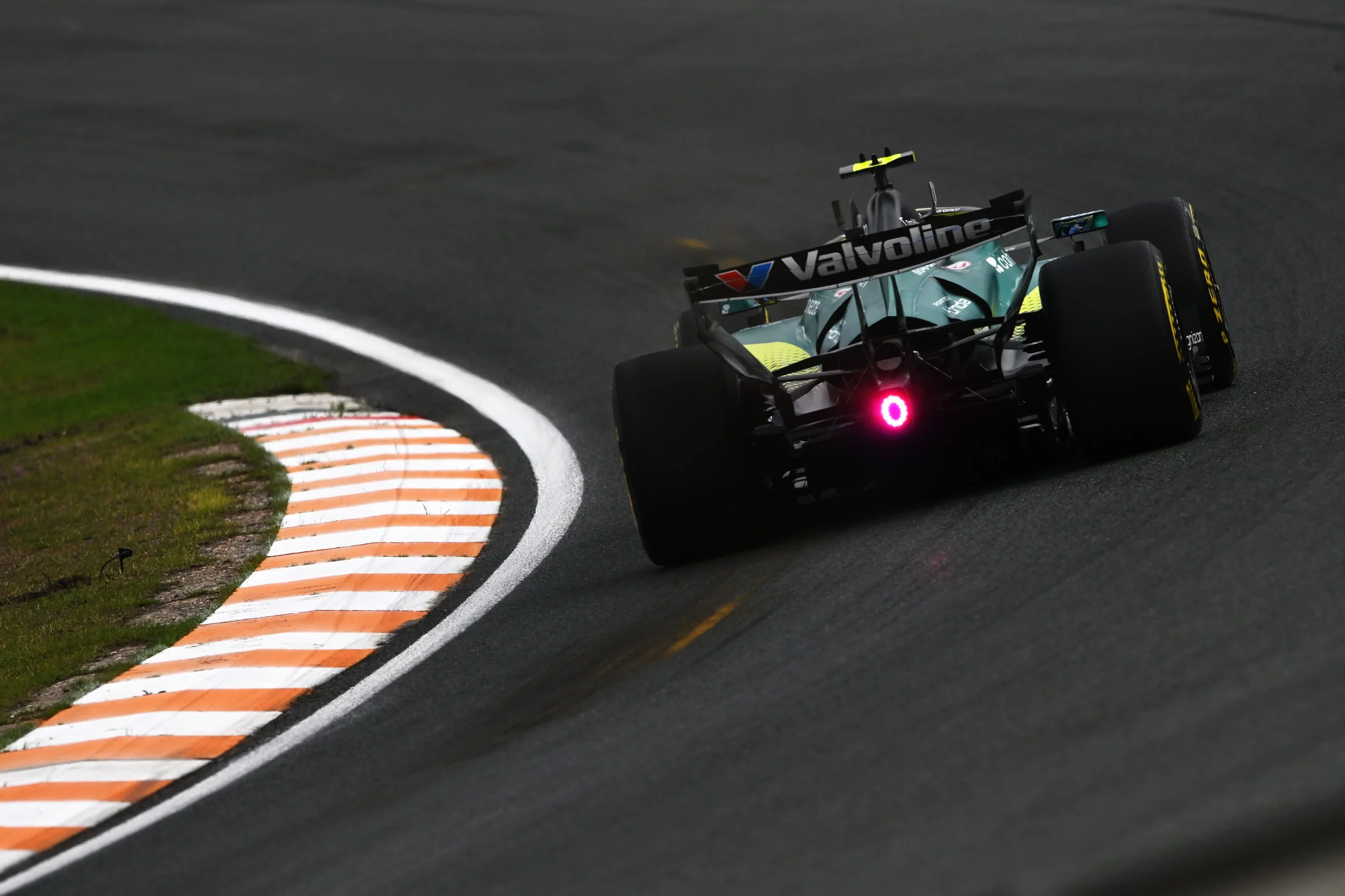
Image © Honda Motor Co. Ltd & Aston Martin Aramco. Used for editorial purposes.
The AMR26 looked particularly comfortable as the tyres aged, allowing Alonso to extend that final stint for 37 laps and remain competitive all the way to the flag. At one stage he ran eighth, behind cars from the leading four teams, before eventually settling into ninth.
Alonso summed up Aston Martin’s afternoon neatly afterwards, saying the team had “nailed all the decisions”. Considering where the car had started, it was difficult to argue.
There was also a noticeable difference between this result and some of Aston Martin’s earlier opportunities to score. At Monaco, circumstances played a significant part in opening the door to points. Alonso felt Zandvoort was more deserved: once the AMR26 escaped traffic and was allowed to work in clean air, there was genuine pace available. That doesn’t mean Aston Martin suddenly possesses the sixth-fastest car in Formula One. The Dutch circuit suited some of the AMR26’s developing strengths, the strategy was unusually effective and several rivals didn’t maximise their own afternoons. Alonso himself has already warned that he doesn’t expect Aston Martin to be competitive at Monza, where straight-line efficiency will become considerably more important.
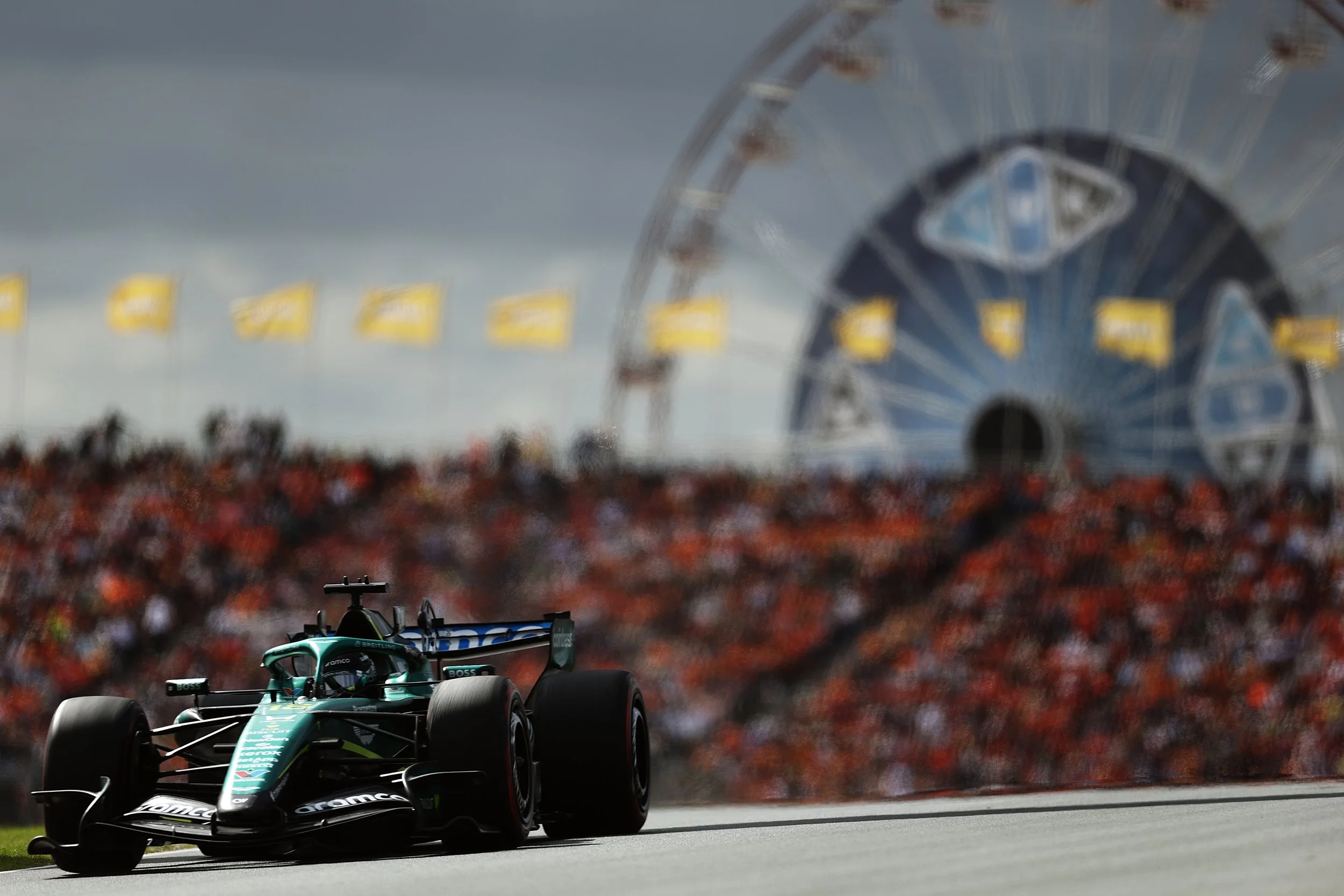
Image © Honda Motor Co. Ltd & Aston Martin Aramco. Used for editorial purposes.
Lance Stroll’s afternoon also served as a reminder that this wasn’t an uncomplicated team breakthrough. Damage sustained during the race progressively affected the handling of his AMR26 and ultimately led to his retirement.
Still, there was a welcome moment after the chequered flag. Adrian Newey came onto the radio to congratulate Alonso on what he described as a disciplined drive and an important boost for everyone back at Silverstone.
Alonso’s reply was equally telling: the car, he said, had been lovely to drive, with more still to come.
For Aston Martin, ninth place therefore represented more than two points. The substantial Hungary aerodynamic package had already suggested that the chassis was beginning to respond; further components arrived at Zandvoort, the team used the summer break to understand the earlier upgrade more thoroughly, and the Dutch Grand Prix provided another indication that those gains are beginning to translate from simulation and setup work into race performance.
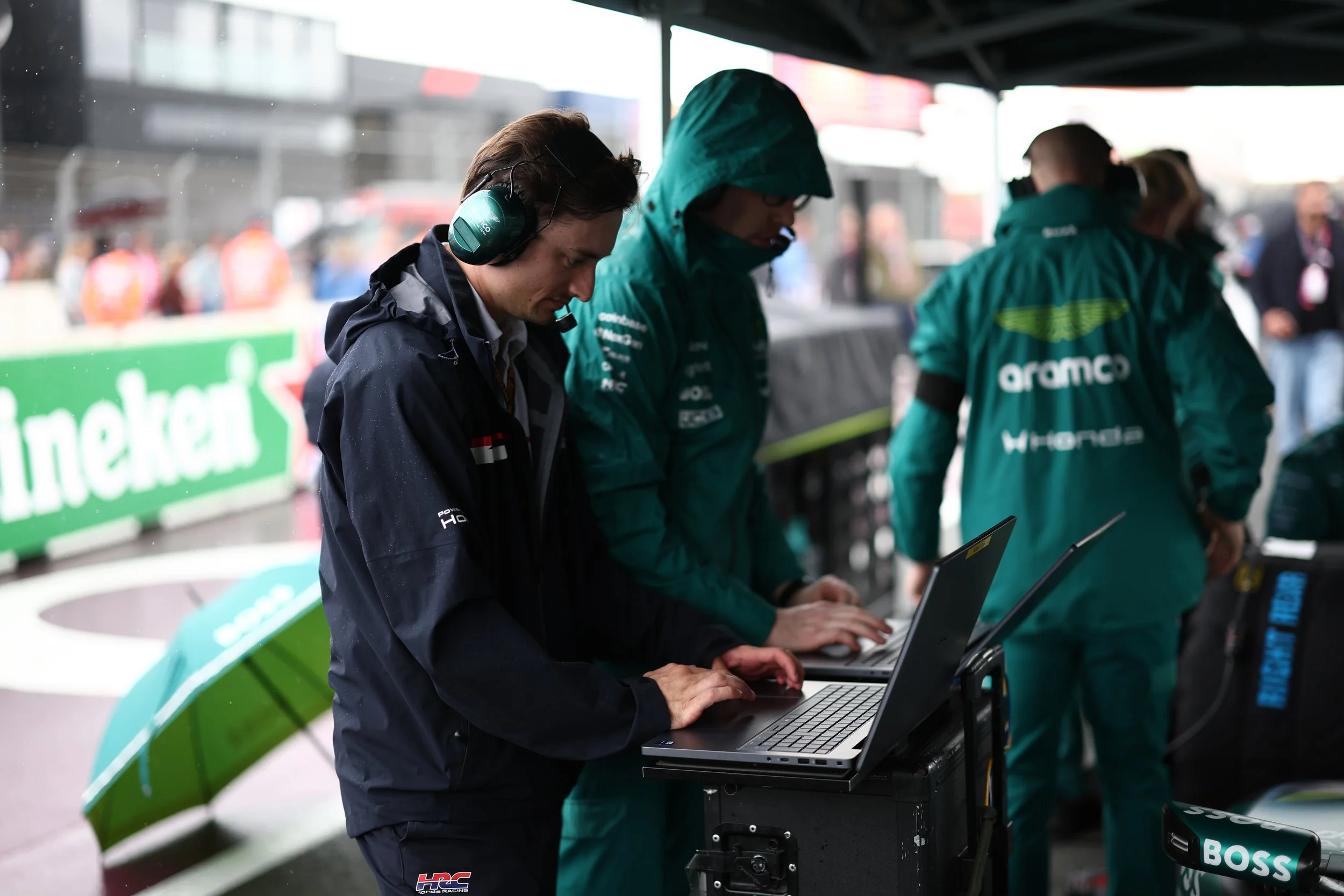
Image © Honda Motor Co. Ltd & Aston Martin Aramco. Used for editorial purposes.
Honda’s revised power unit also completed the weekend without a major reliability problem, but there remains an important qualification. Alonso and Stroll continue to report inconsistent engine braking, downshift behaviour and driveability, while the car is still losing significant time on the straights.
So Zandvoort didn’t provide the answer to every question surrounding the AMR26-Honda. It did, however, change the question slightly. Rather than asking whether Aston Martin’s recent chassis progress is real, there’s now considerably more evidence to suggest that it is. The next challenge is finding out how much of that progress can survive circuits that expose the weaknesses still remaining elsewhere in the package.
With Formula One having finally supplied Aston Martin with something to celebrate, the wider GT programme had a rather more mixed weekend, particularly at Virginia International Raceway, where two fourth places concealed two very different Aston Martin stories.

Affiliate link note: Some links may be affiliate links, which means Fuel the Passion may earn a small commission if you purchase through them, at no extra cost to you. Thank you for your support.
VIR - TWO FOURTH PLACES, TWO VERY DIFFERENT STORIES
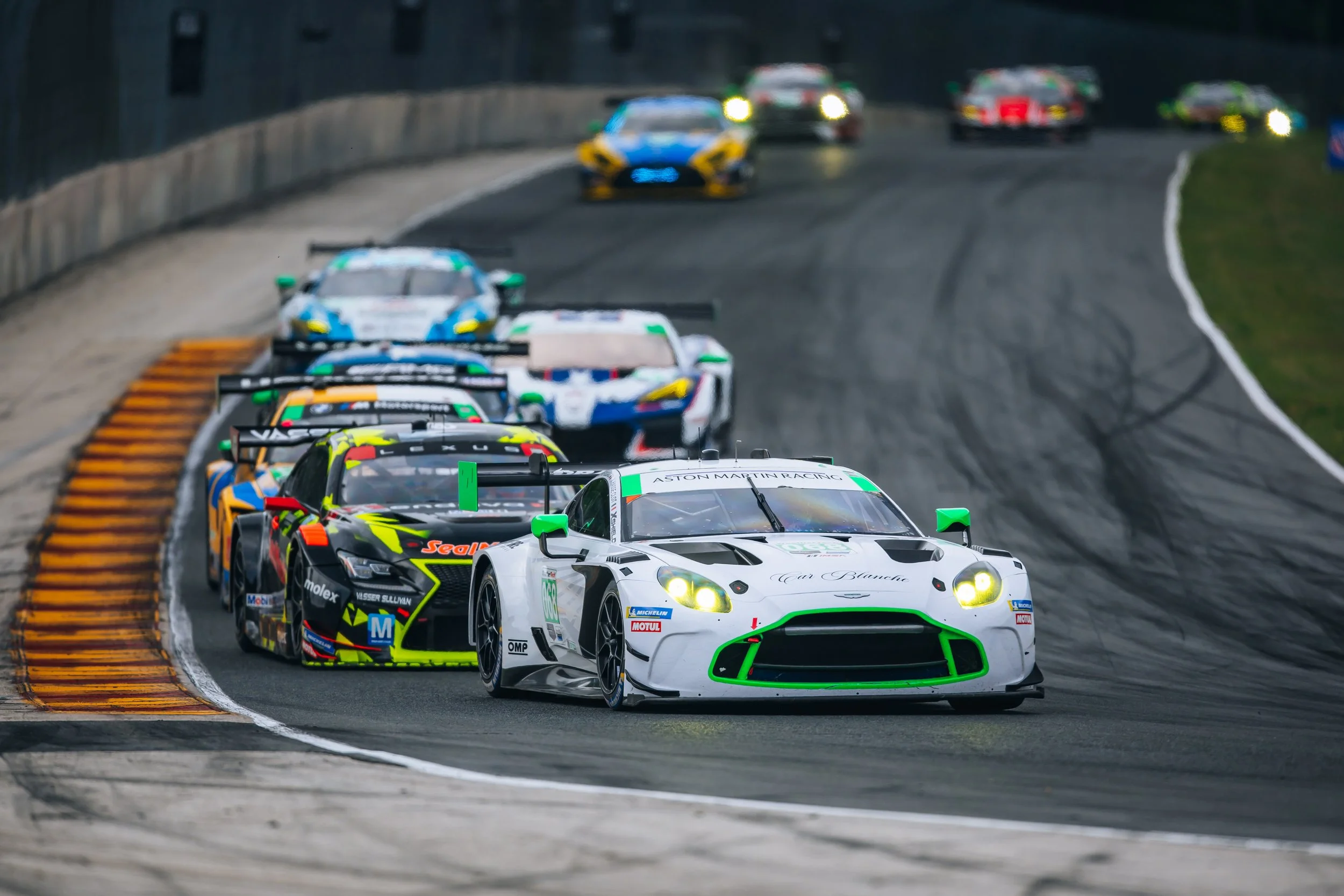
Image © Aston Martin Lagonda. Used for editorial purposes. Car Blanche Aston Martin AMR GT3 Evo.
At Virginia International Raceway, Aston Martin came away from the International Motor Sports Association (IMSA) WeatherTech SportsCar Championship with fourth place in both of the GT classes it contested, although the two results were achieved in very different circumstances.
In Grand Touring Daytona Pro (GTD PRO), the #68 Car Blanche Aston Martin Vantage AMR GT3 Evo of Valentin Hasse-Clot and Marco Sørensen finished fourth after a solid afternoon in the GT-only Michelin GT Challenge.
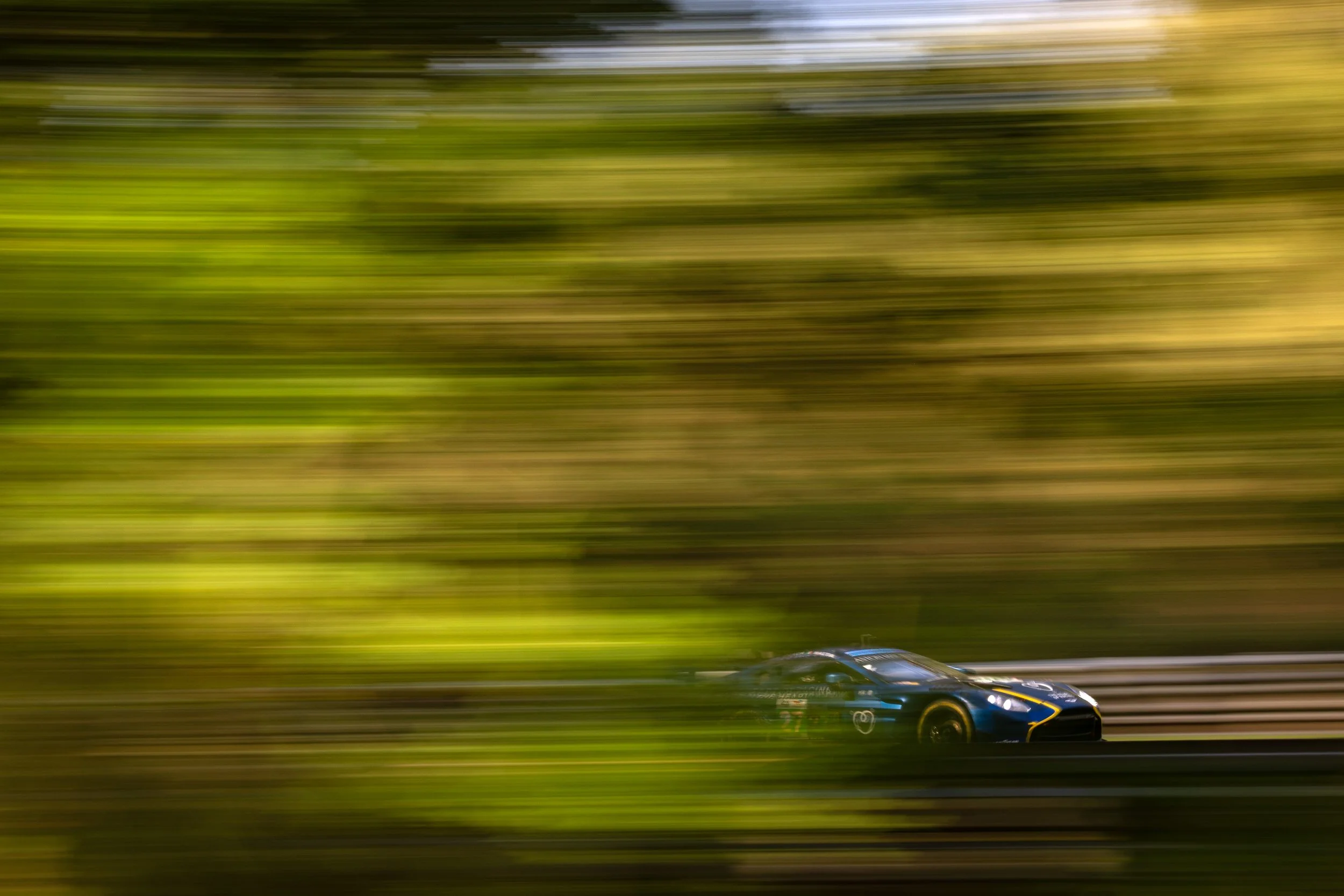
Image © Aston Martin Lagonda. Used for editorial purposes. #27 Vantage at speed
The #27 Heart of Racing Vantage of Dudu Barrichello and Tom Gamble had rather more reason to wonder what might have been. Starting 11th in Grand Touring Daytona (GTD), the Aston Martin worked its way into contention and was leading the class with around 50 minutes remaining. Gamble was defending that lead when contact with Philip Ellis resulted in IMSA judging the Aston Martin responsible for the incident and issuing a drive-through penalty.
The #27 subsequently fell back to fourth in GTD, turning what had looked like a possible victory into a frustrating finish just outside the podium places. For Heart of Racing, it was particularly disappointing given the ground recovered from the back half of the class grid; for Car Blanche, meanwhile, fourth in GTD PRO represented another strong result in what has been an increasingly competitive campaign.
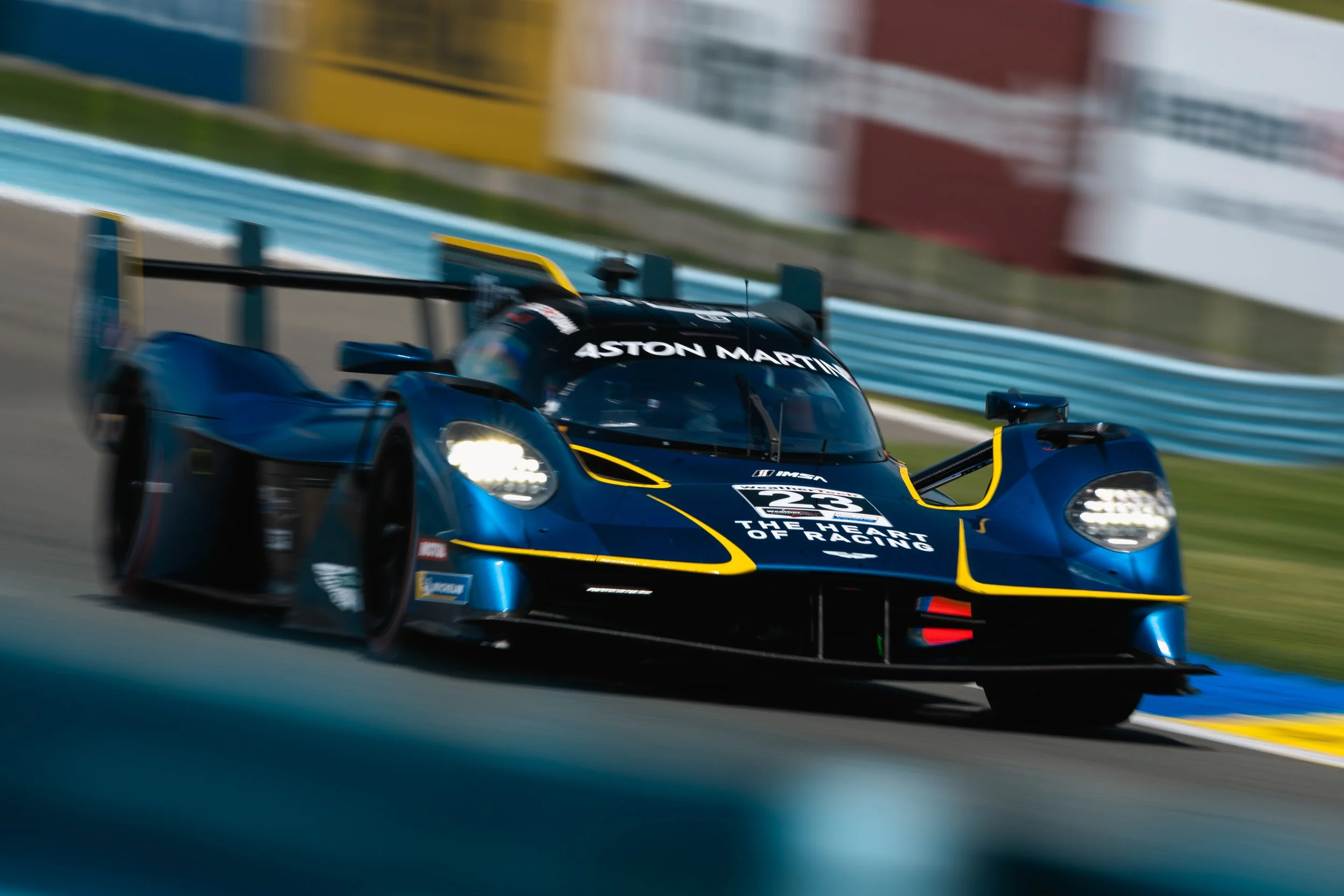
Image © Aston Martin Lagonda. Used for editorial purposes. Heart of Racings Valkyrie.
The Valkyrie was not present at VIR, as the event was restricted to the WeatherTech Championship’s GT categories.
Aston Martin’s Hypercar returns to IMSA action at Indianapolis for the TireRack.com Battle on the Bricks on 20th September.
As usual, the full race story, result snapshot and wider championship picture can be found in the FTP Motorsport Hub. VIR also carried further Aston Martin interest on its support programme, with several Vantage AMR GT4 Evos competing in the Michelin Pilot Challenge, a championship we don’t cover race-by-race in the Motorsport Hub, but one that produced enough Aston Martin interest this weekend to warrant a brief mention here.
MORE ASTON MARTIN GT4s JOIN THE ACTION AT VIR
There was further Aston Martin interest at Virginia International Raceway in the supporting IMSA Michelin Pilot Challenge, where several Vantage AMR GT4 Evos joined the Grand Sport (GS) field.
Highest placed was the #26 Heart of Racing Vantage in eighth in class, while CSM brought a pair of Aston Martins to VIR. The #2 Vantage finished 11th in GS, with the sister #3 taking 20th. The Michelin Pilot Challenge is not one of the championships we cover race-by-race in the FTP Motorsport Hub, so we won’t try to turn every appearance into a full race report. Nevertheless, the growing presence of Aston Martin GT4 machinery in the series makes it worth keeping an eye on, particularly when several cars appear together or produce a notable result.
From the customer-racing activity at VIR, our attention moves back across the Atlantic to a championship we do follow closely, and a considerably more difficult afternoon for Écurie Écosse Blackthorn at Spa-Francorchamps.
BLACKTHORN SHOW PROMISE DESPITE SPA SETBACK
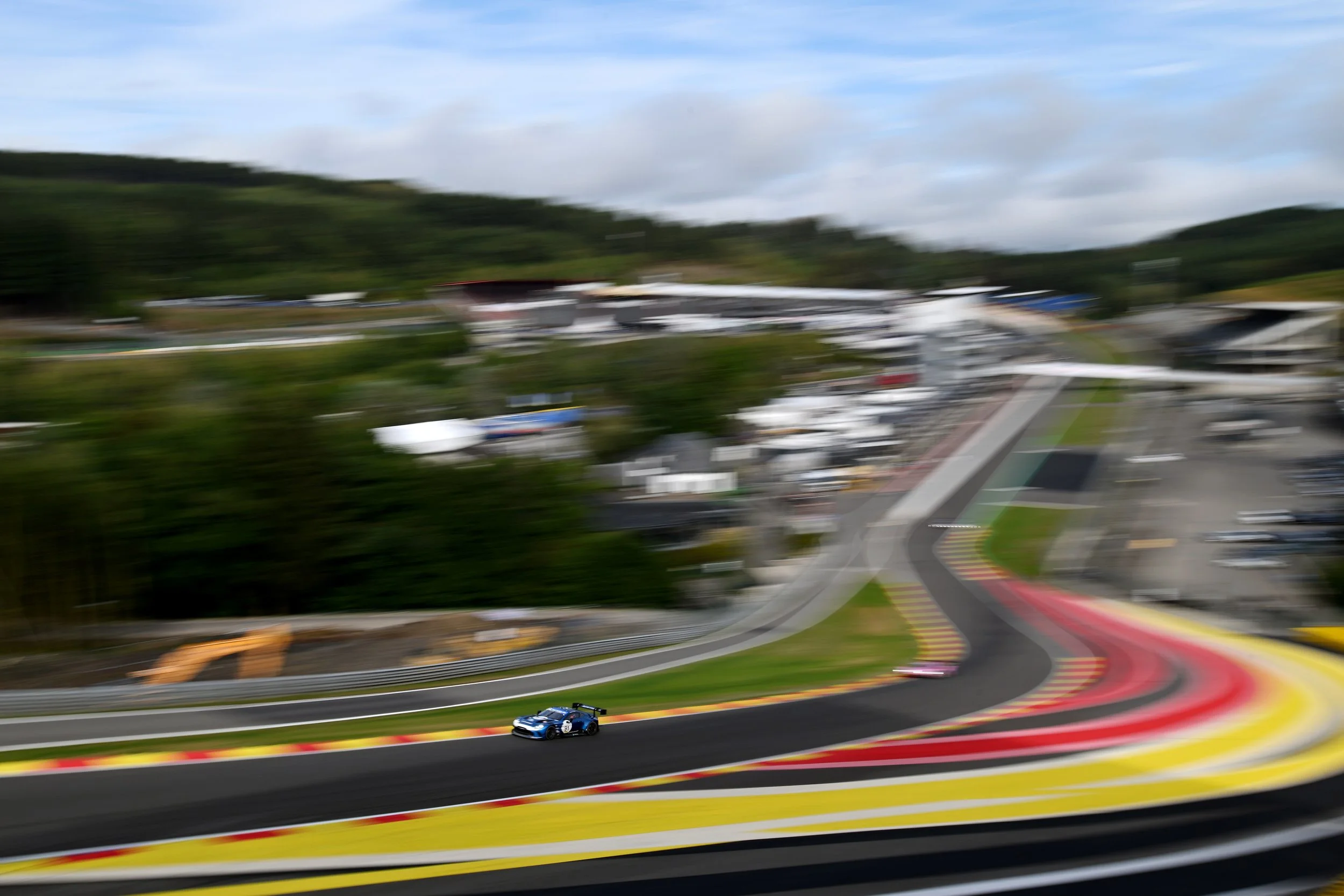
Image © Blackthorn Racing. Used for editorial purposes.
There was frustration for Écurie Écosse Blackthorn at Spa-Francorchamps in the latest round of the Michelin Le Mans Cup, where the #91 Aston Martin Vantage AMR GT3 Evo of Claude Bovet and Tom Canning was ultimately forced to retire before the finish.
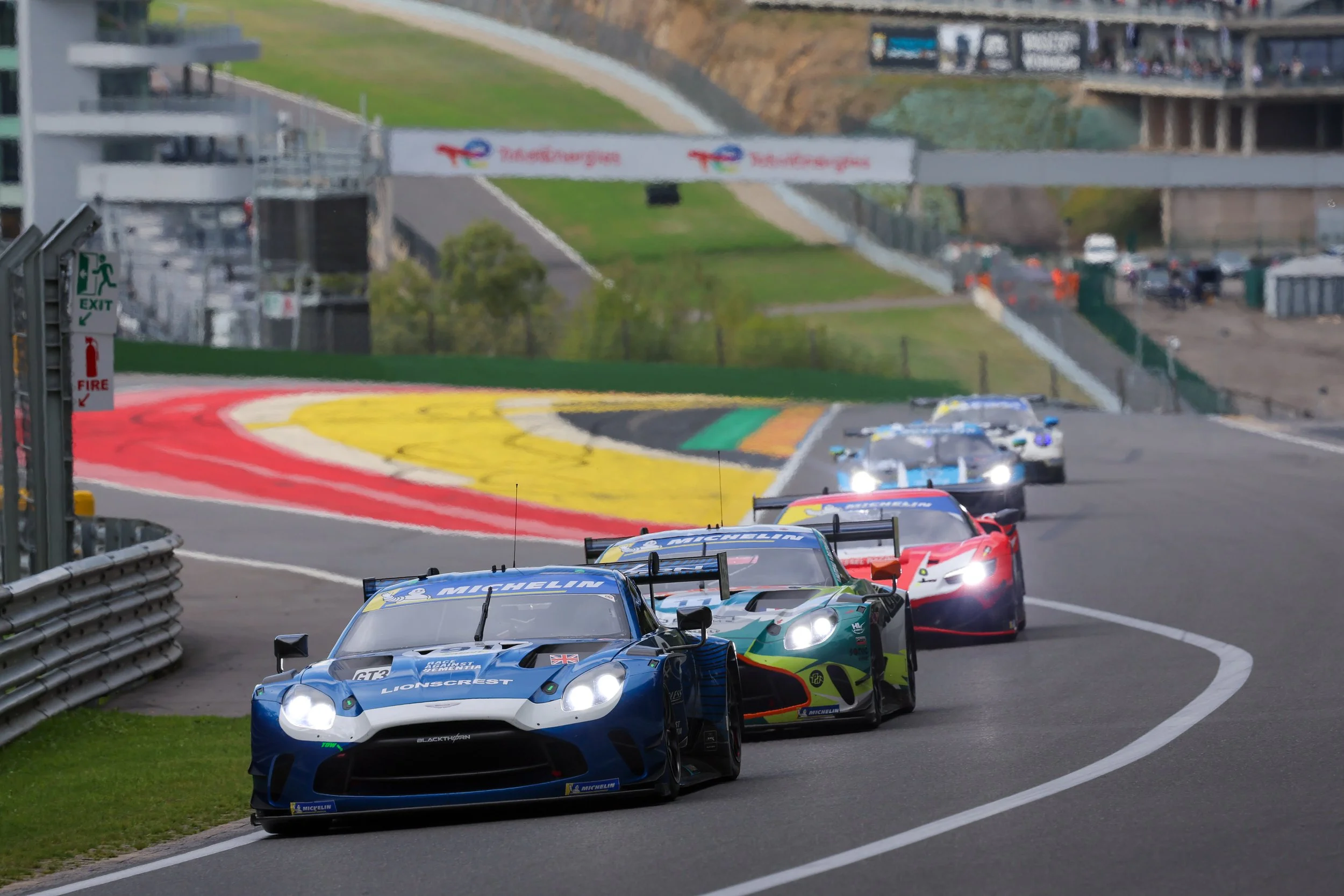
Image © Blackthorn Racing. Used for editorial purposes.
Before that setback, Blackthorn had been running eighth in GT3, keeping themselves firmly in the race and showing encouraging pace in what proved to be another dramatic and disrupted Michelin Le Mans Cup encounter. Unfortunately, with around half an hour remaining, smoke began to appear from the car, bringing the team’s race to an early end.
It was an understandably disappointing outcome for Blackthorn, particularly as the team had worked hard to keep itself in contention through a busy and demanding race. Even so, the fact the car was still battling inside the top ten before the issue struck underlined that there was still something to build on from the weekend, despite the final result not reflecting the full picture.
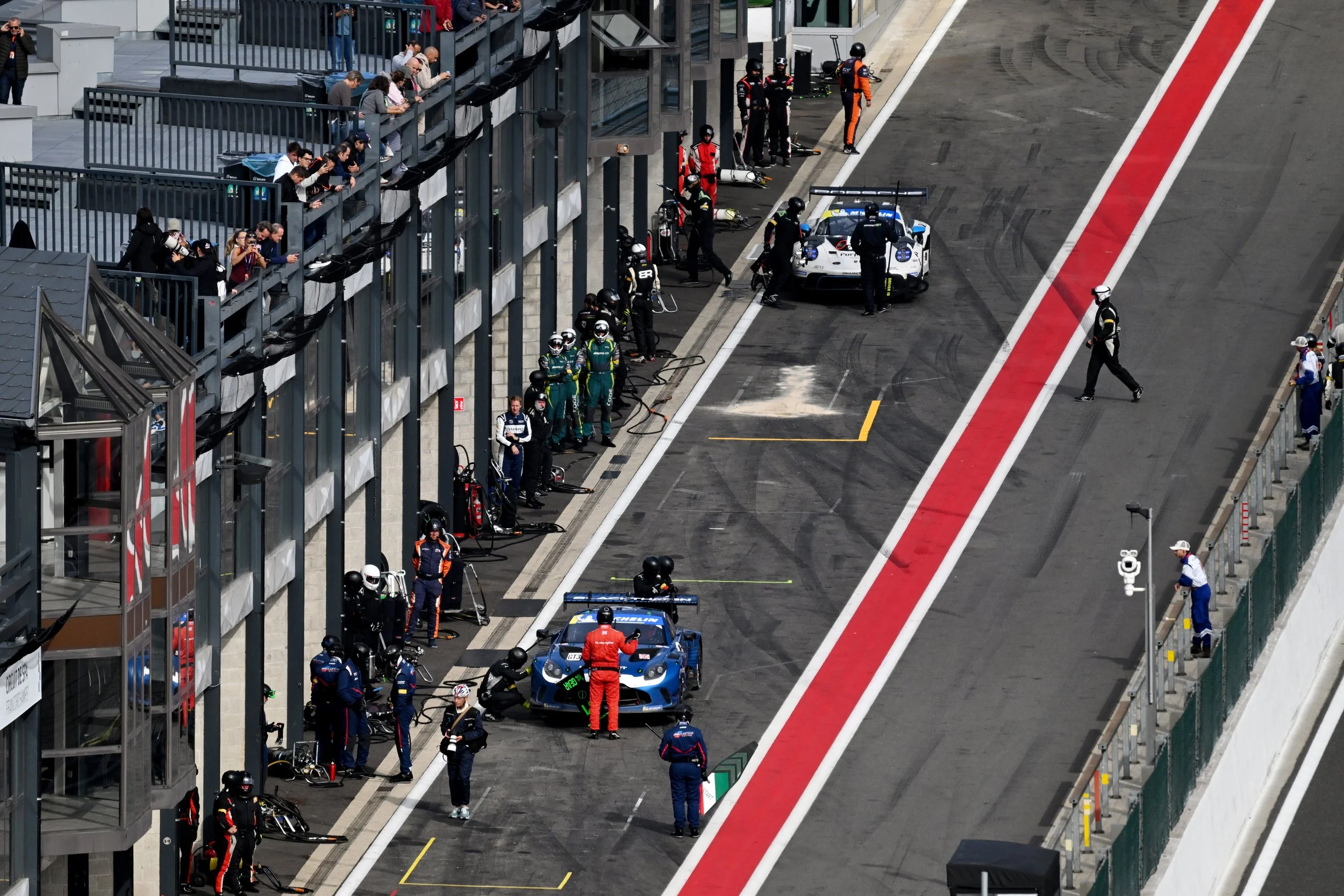
Image © Blackthorn Racing. Used for editorial purposes.
For Blackthorn, the focus will now quickly shift forward to Silverstone on 11th - 12th September, where the Michelin Le Mans Cup returns for the next round of the season. That will be an especially important meeting for the team on home soil, and one we at Fuel the Passion will be following with very close interest.
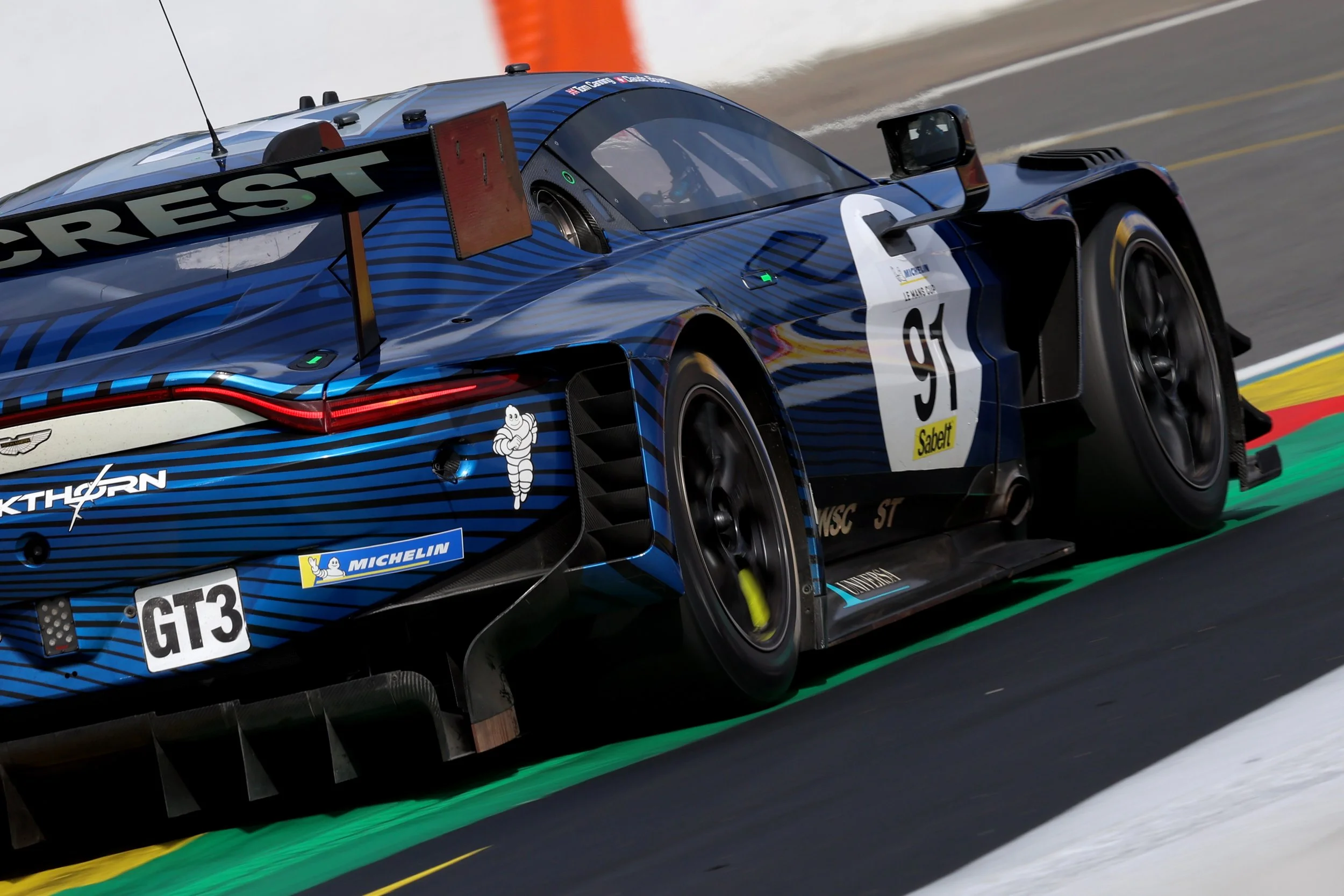
Image © Blackthorn Racing. Used for editorial purposes.
As regular readers will know, FTP is now working increasingly closely with Blackthorn, so Silverstone should offer a valuable opportunity not only to follow the race weekend itself, but also to bring readers and viewers a closer look at the people, preparation and passion behind the programme.
The full Spa race report and championship context can be found in the FTP Motorsport Hub.
THIS WEEKEND - FIVE VANTAGES TAKE ON THE NÜRBURGRING
While last weekend’s racing has given us plenty to digest, another busy Aston Martin motorsport weekend is already under way.
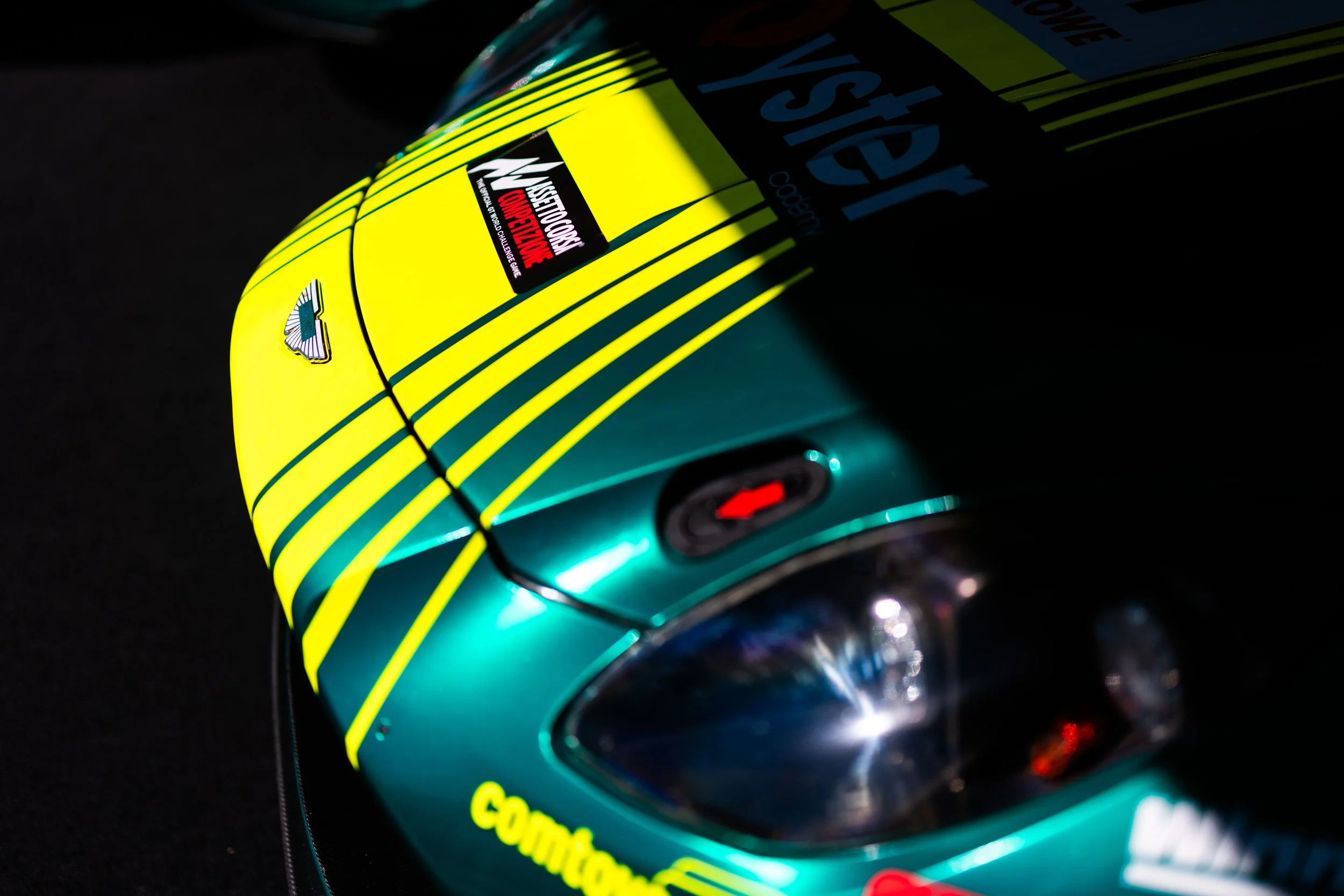
Image © Aston Martin Lagonda. Used for editorial purposes.
The GT World Challenge Europe Endurance Cup has arrived at the Nürburgring, with no fewer than five Aston Martin Vantage AMR GT3 Evos among the field. Comtoyou Racing brings three cars, headed by the #7 Pro entry of Mattia Drudi, Marco Sørensen and Nicki Thiim, while Walkenhorst Motorsport adds another two Vantages.
There’s particular interest around the #7 after its victory at the opening Endurance Cup round at Paul Ricard earlier this season, and the Nürburgring provides another opportunity for one of Aston Martin’s strongest GT3 combinations to put itself into the fight at the front.
Both qualifying and Sunday’s three-hour race take place after this Weekly Roundup has been published, with the race beginning at 15:00 local time. We’ll therefore let the story unfold properly and cover the Aston Martin performances in detail in the FTP Motorsport Hub early next week, before bringing the important results into Issue 40.
There’s Aston Martin customer racing on the other side of the Atlantic as well. At Road America, Robin Liddell and Frank Depew continue Rebel Rock Racing’s developing GT3 programme in the #71 Vantage AMR GT3 Evo in GT World Challenge America, while Billy Johnson and Christian Bach share Racers Edge Motorsports’ #54 Vantage GT4 in Pirelli GT4 America.
Those American championships do not form part of FTP’s regular Motorsport Hub coverage, but that doesn’t mean we ignore them. We’ll keep an eye on the Aston Martin results and, where there’s something notable to report, pick them up briefly in next Sunday’s Roundup.
For now, that brings our wider racing catch-up to a close. There is, however, one aspect of Zandvoort worth returning to before we leave Formula One behind, because Alonso’s ninth place was not the only encouraging sign this week. Honda has also been talking much more openly about the people, experience and development work now being assembled behind Aston Martin’s power-unit programme.
HONDA REBUILDS - EXPERIENCE RETURNS TO SAKURA
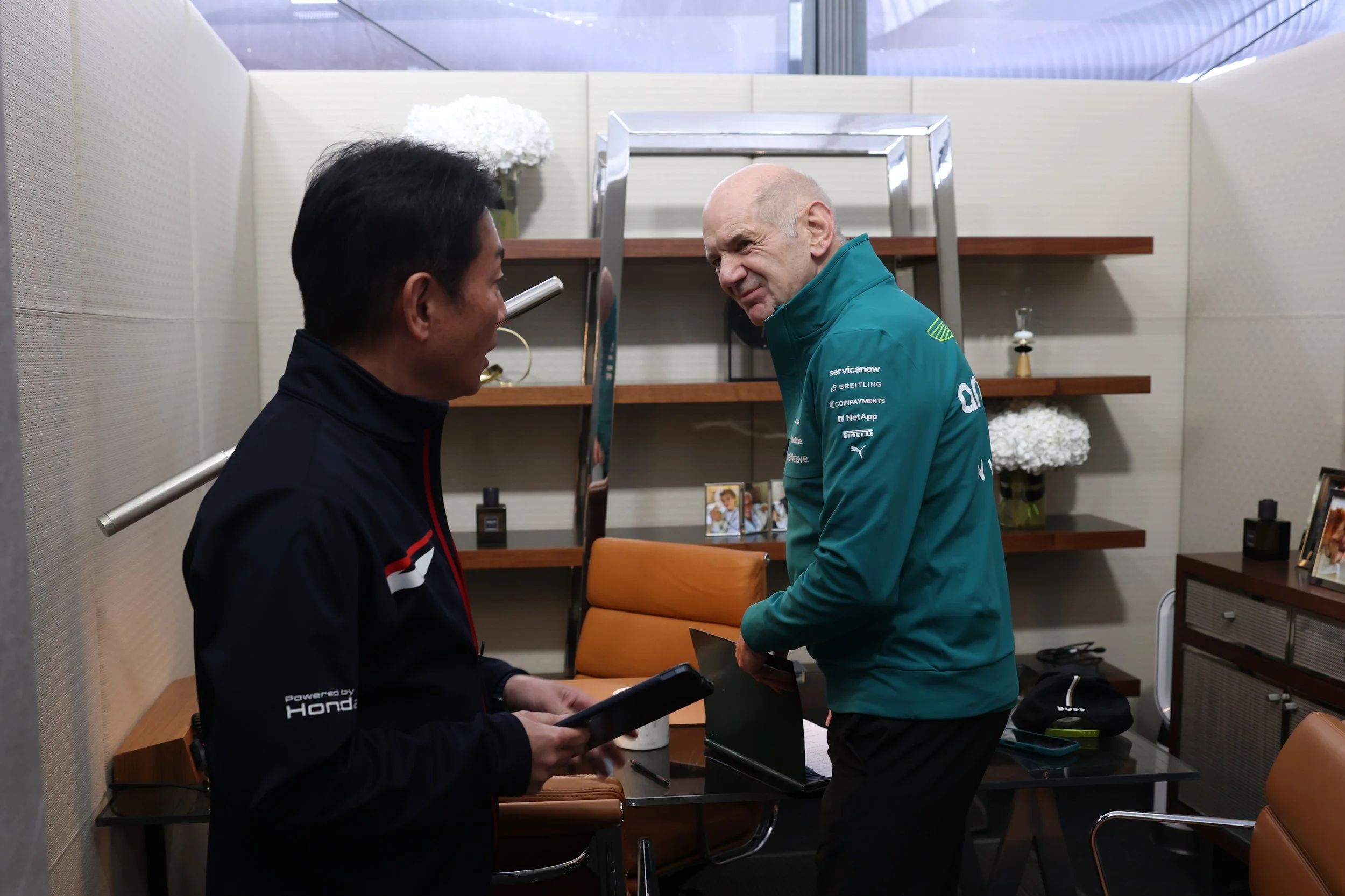
Image © Honda Motor Co. Ltd. Used for editorial purposes. Koji Watanabe & Adrian Newey
Zandvoort may have provided some welcome encouragement on the circuit, but perhaps the more important clues about Honda’s longer-term prospects came from what Koji Watanabe, President of Honda Racing Corporation (HRC), was saying away from it.
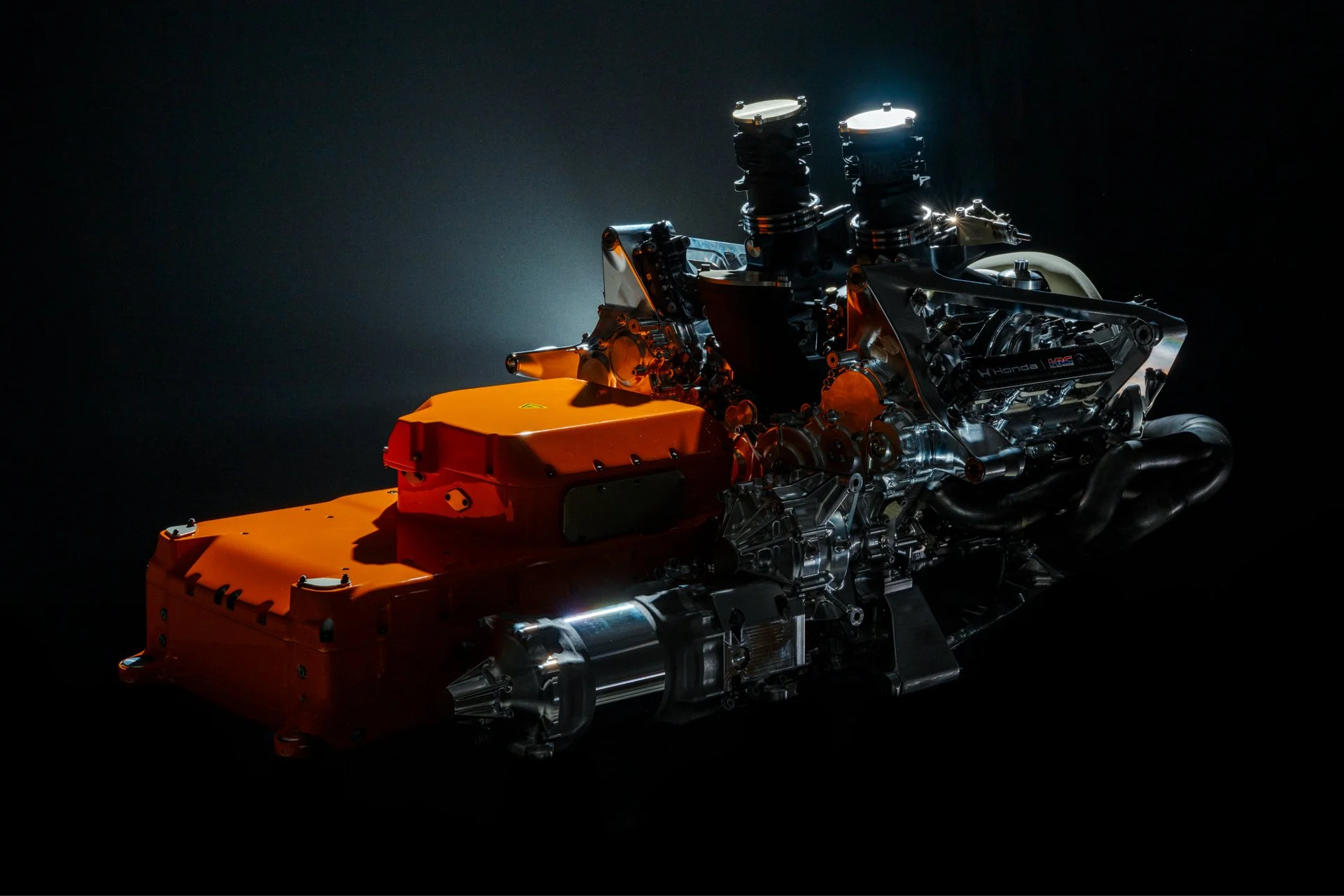
Image © Honda Motor Co. Ltd. Used for editorial purposes.
Honda has never attempted to disguise the difficult start to its new works partnership with Aston Martin. Development of the 2026 power unit began later than ideal, the opening months exposed both performance and driveability shortcomings, and catching manufacturers that began the new regulations from a stronger position was always going to require more than one upgrade.
What is becoming clearer, though, is how Honda has been rebuilding the operation behind the engine as well as improving the engine itself.
Speaking at Zandvoort, Watanabe acknowledged that staffing and experience had previously been an issue within Honda’s Formula One programme. He now believes that particular weakness has been addressed, saying HRC has recruited enough engineers in both quantity and quality to move the project forward. Perhaps more significantly, Honda has also persuaded experienced personnel from its enormously successful Red Bull-era programme to return to Formula One.
Not everybody from that earlier project has come back, Watanabe explained, but “the important people who worked there have returned to the F1 project.”
That is worth noting. Honda’s recent Formula One history contains both extremes: the very difficult McLaren-Honda years and, later, the power units that helped Red Bull and Max Verstappen win championships. Reassembling some of the engineering knowledge from the latter period does not provide an instant route back to the front, but it does strengthen the resources available at Sakura as Honda tries to close the deficit.
Watanabe is equally careful not to present the new Spec 2 power unit introduced at Zandvoort as the finished answer. He describes it as the “first step” in improving the current situation and accepts that Honda is still playing catch-up while its rivals continue developing too. The ultimate objective remains winning, but he offered no artificial deadline for when Honda expects to possess the best power unit on the grid.
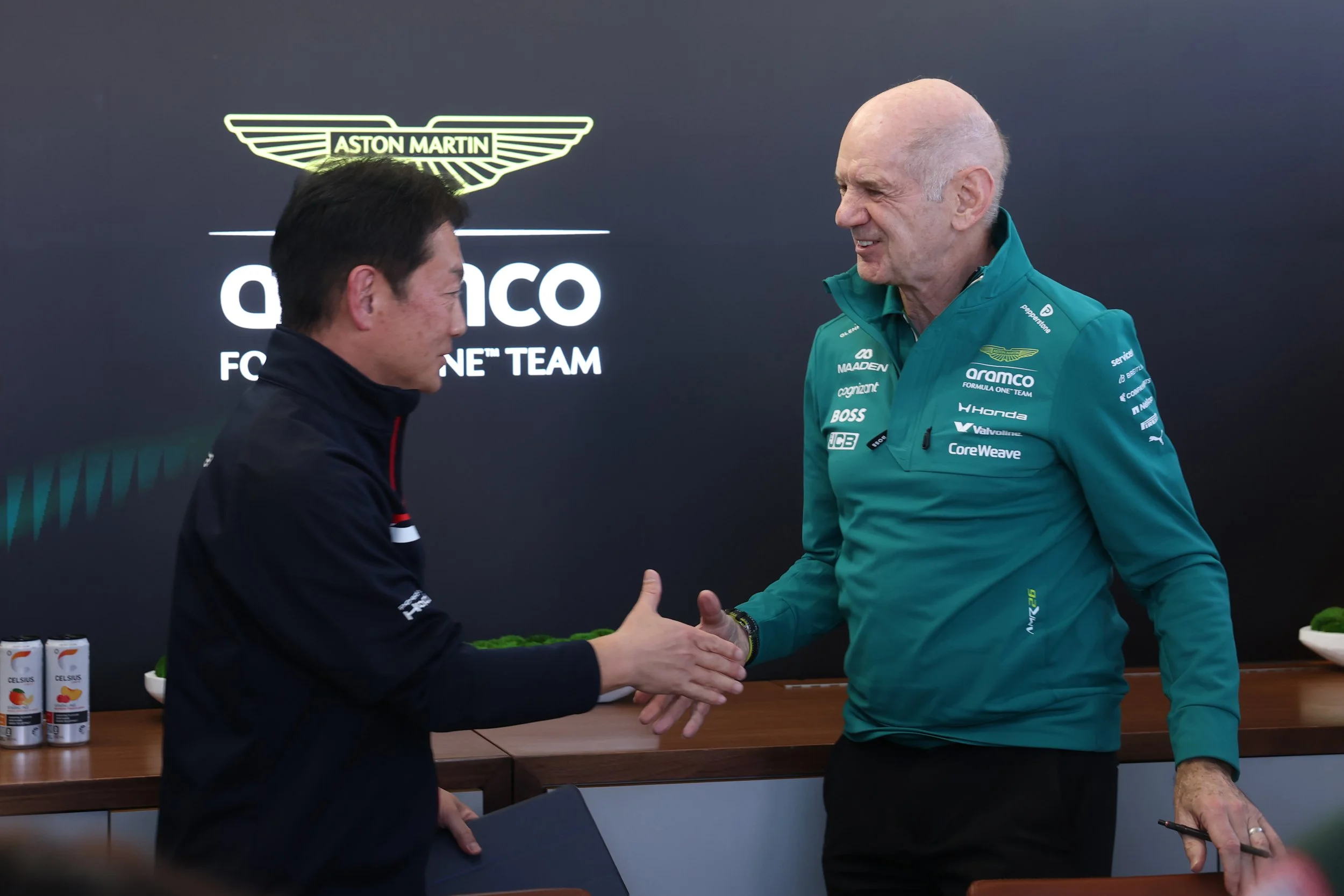
Image © Honda Motor Co. Ltd. Used for editorial purposes. Koji Watanabe & Adrian Newey
There’s another interesting part of the rebuilding process: the relationship with Adrian Newey, Aston Martin’s Managing Technical Partner and Team Principal.
Newey and Honda already know what it feels like to win together from their Red Bull years, but this is a different programme, built around new technical regulations, a new partner and a new generation of sustainable fuel.
Watanabe says the difficult beginning actually forced Honda and Aston Martin into deeper technical conversations, improving communication between Sakura and Silverstone as the problems became better understood.
That increasingly joined-up approach is encouraging, particularly because the chassis and power unit cannot ultimately be treated as two isolated projects. Cooling, packaging, electrical deployment, energy recovery, driveability and the way the engine interacts with the rear of the car all influence what Newey’s technical group can do with the complete package.
There’s considerable ambition attached to 2027. Watanabe expects Aston Martin to be “much, much higher” next season than it is today, while stressing that the immediate task is simply to keep closing the gap step by step.
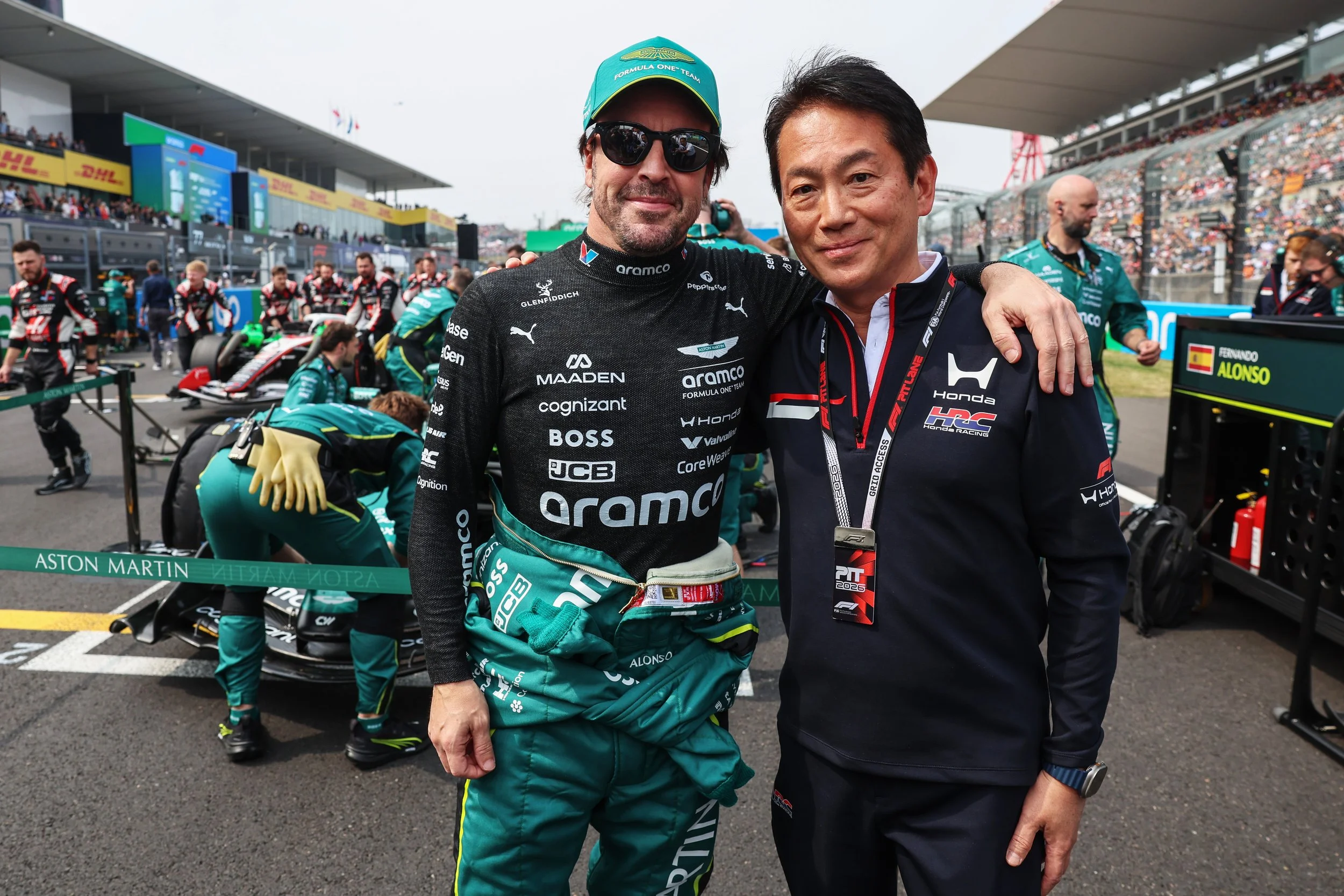
Image © Honda Motor Co. Ltd. Used for editorial purposes. Koji Watanabe & Fernando Alonso
He also left little doubt about how highly Honda values Fernando Alonso. Watanabe described Alonso as extremely important to the project, praising the quality and precision of his feedback and openly saying that he hopes the Spaniard continues with Aston Martin in 2027.
For a manufacturer trying to develop its way out of a difficult position, having a driver capable of identifying exactly what the power unit is doing, and what it’s not doing, clearly carries considerable value.
THE IMPROVEMENT HAS NOT GONE UNNOTICED
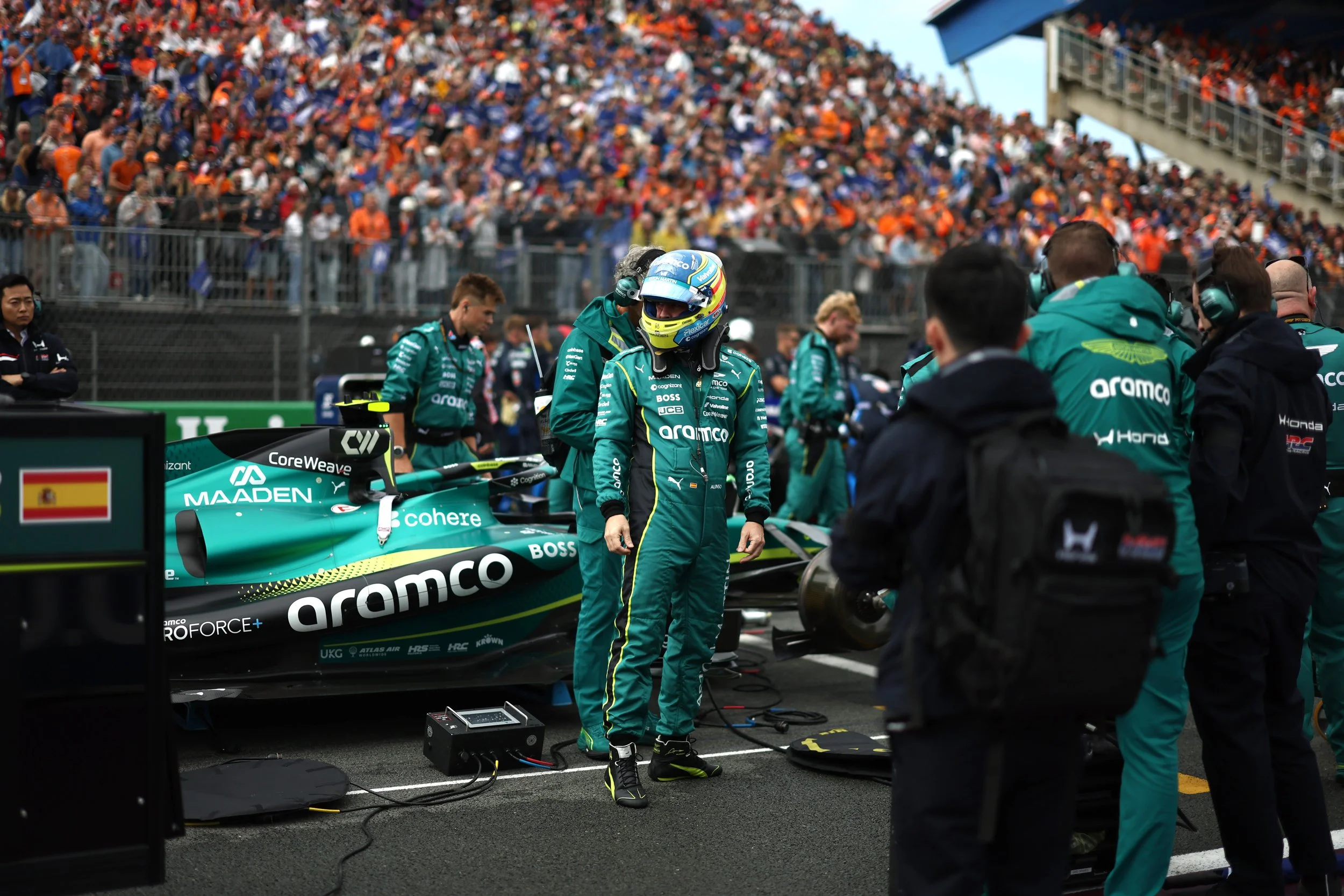
Image © Honda Motor Co. Ltd & Aston Martin Aramco. Used for editorial purposes.
There was an interesting outside perspective after Zandvoort too. Williams driver Carlos Sainz was particularly emphatic when comparing his own team’s race pace with Aston Martin’s. Having endured a difficult Dutch Grand Prix, Sainz said Williams was currently fighting towards the back of the field before adding:
“You saw the Astons in race pace, they’re a different league right now.”
That needs some context. Sainz was comparing Aston Martin specifically with Williams at Zandvoort, not declaring that Alonso and Stroll have suddenly escaped the entire Formula One midfield. Nevertheless, it’s useful independent evidence from another driver that the change we’ve been watching from Aston Martin was noticeable from outside the garage as well.
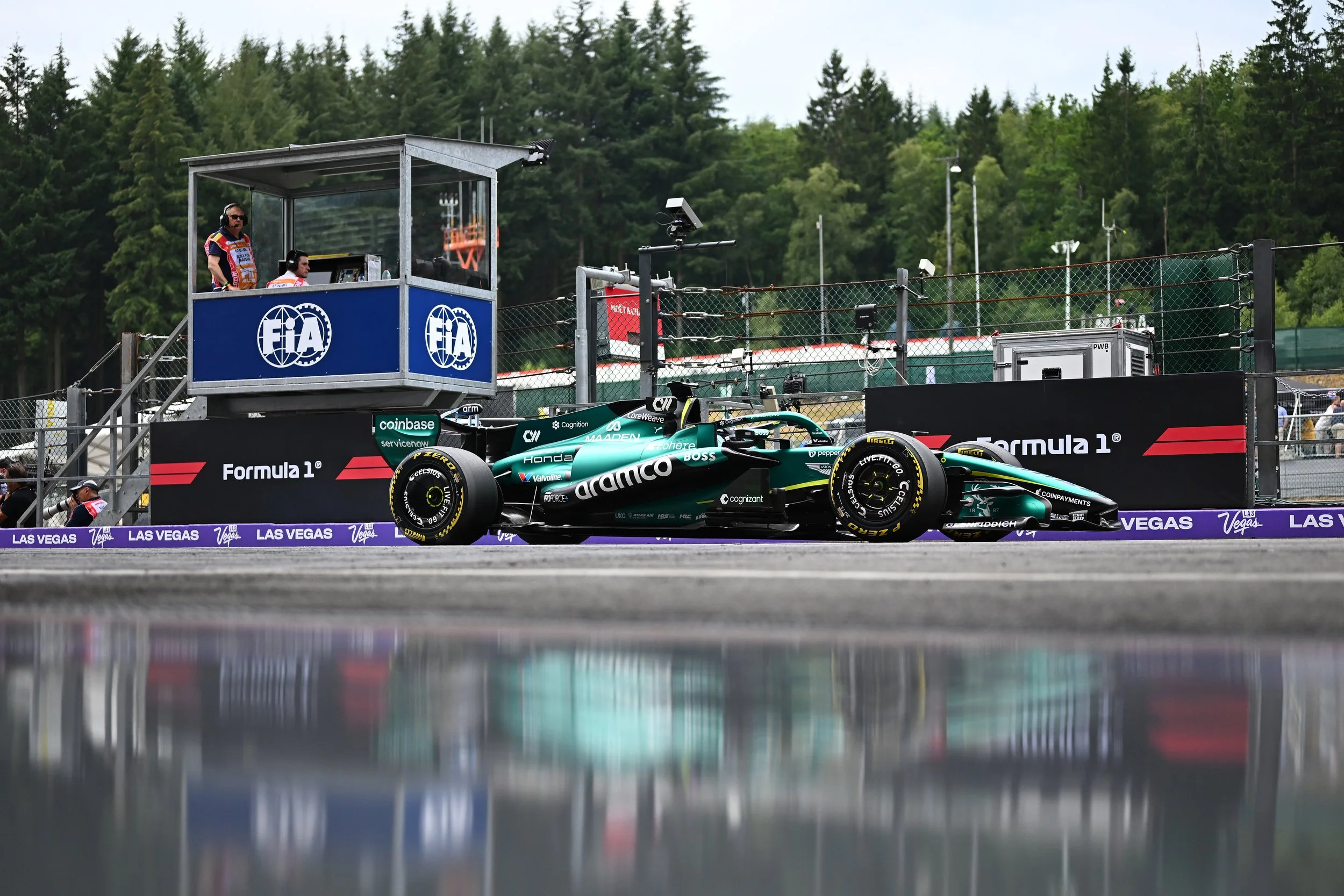
Image © Honda Motor Co. Ltd & Aston Martin Aramco. Used for editorial purposes.
Former Formula One driver Ralf Schumacher has also been unusually supportive of the wider Aston Martin project. Speaking about Lawrence Stroll’s substantial investment in the team, Schumacher acknowledged that not everyone warms to Aston Martin’s owner, but argued that his commitment to Formula One is positive for the championship.
His conclusion was particularly direct:
“Formula 1 needs people like him.”
Schumacher also expects Aston Martin to continue moving forward and believes top-ten finishes should increasingly become achievable. His suggestion that Honda’s problems have already been “largely resolved” looks rather more optimistic than the evidence from Alonso, Stroll and Honda itself; Zandvoort still exposed clear driveability and straight-line weaknesses. But the broader point, that Aston Martin now appears capable of catching some of those ahead, received a fairly immediate illustration from Alonso’s ninth place.
A MERCEDES PLAN B?
Against all of that optimism sits one rather intriguing and, for now, unconfirmed paddock story. Reports originating in Spain this week have suggested that Aston Martin may already be exploring what alternatives could exist from 2028 if Honda fails to make the progress expected during 2027. Mercedes has inevitably appeared at the centre of that speculation.
Mercedes team principal Toto Wolff was seen around Aston Martin’s hospitality at Zandvoort, with reports claiming there have been other contacts between the two organisations during the season. That has been interpreted by some outlets as evidence that Aston Martin could be keeping open the possibility of returning to Mercedes power in the future. A considerable degree of caution is required here.
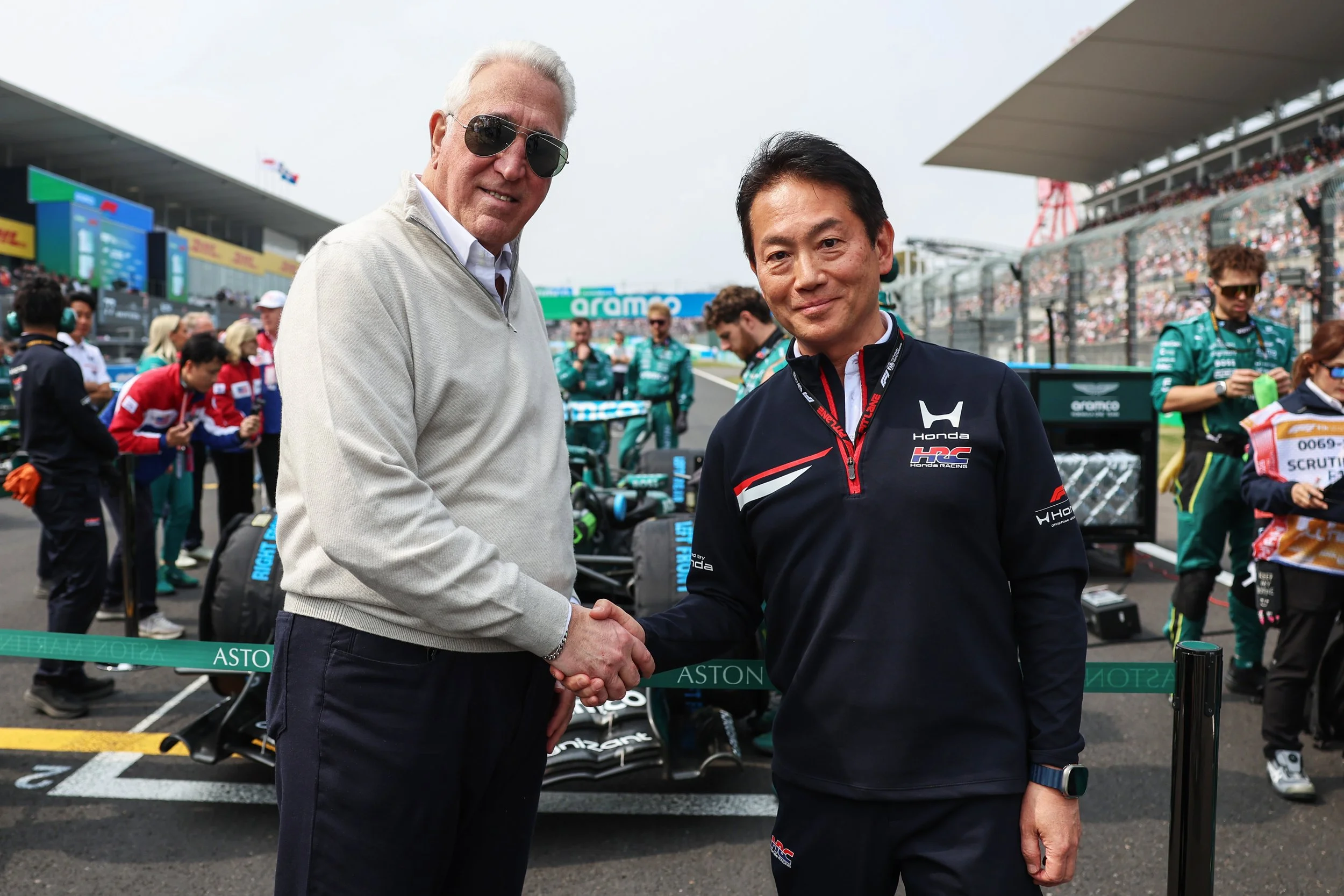
Image © Honda Motor Co. Ltd & Aston Martin Aramco. Used for editorial purposes.
There has been no announcement from Aston Martin, Honda or Mercedes that a change of engine supplier is being negotiated, let alone agreed. A Formula One team principal visiting another team’s hospitality unit is not, by itself, evidence of an engine contract. The current Aston Martin-Honda relationship remains the works partnership around which Lawrence Stroll has built a substantial part of his Formula One strategy.
Indeed, returning to Mercedes would represent a fundamental change of direction. Aston Martin deliberately moved away from being a Mercedes customer because Stroll’s championship ambition was based on having an exclusive power-unit partner able to design an engine around Aston Martin’s requirements, rather than using one primarily developed for another constructor.
There is nevertheless nothing particularly unusual about understanding what alternatives might be available several seasons ahead. Power-unit decisions affect the architecture of a Formula One car long before it reaches the circuit, so contingency planning, if that’s indeed what’s taking place, need not mean Aston Martin has lost faith in Honda.
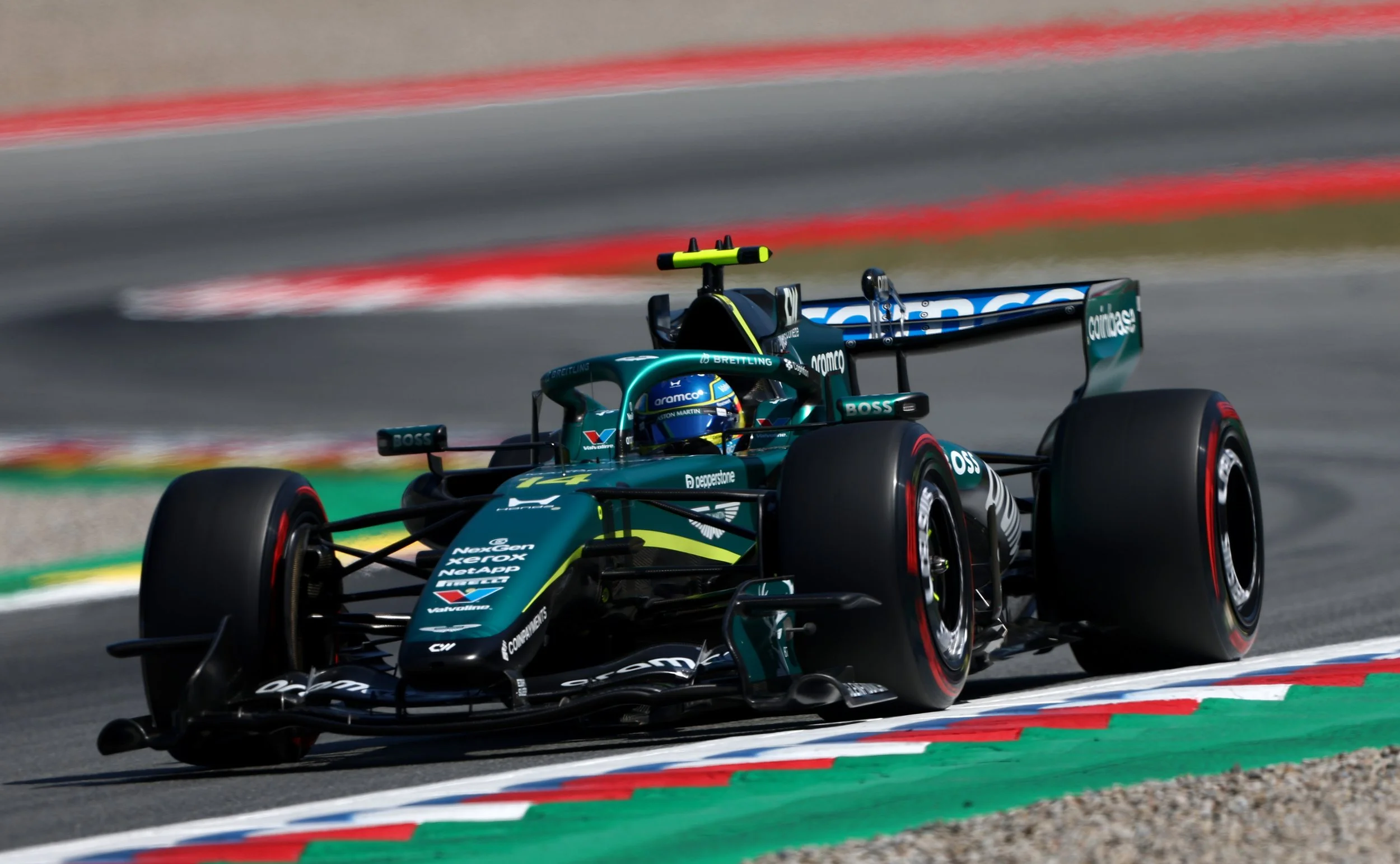
Image © Honda Motor Co. Ltd & Aston Martin Aramco. Used for editorial purposes.
For now, Honda remains Plan A, and Watanabe’s comments this week provide rather stronger evidence about that programme than the paddock speculation surrounding a possible Plan B. The next examination will be an unforgiving one. Alonso has already warned that Monza’s long straights are unlikely to flatter the AMR26, making the Italian Grand Prix an interesting test of precisely the area where Honda still has the most visible work to do.
For the moment, though, we can leave Formula One with something that’s been in relatively short supply during 2026: evidence of progress accompanied by a result.
Elsewhere, another Aston Martin development programme is becoming increasingly difficult to ignore. It has four central exhausts, a substantial rear wing, plenty of camouflage, and two letters being attached to it that Aston Martin enthusiasts have actually seen before.

Affiliate link note: Some links may be affiliate links, which means Fuel the Passion may earn a small commission if you purchase through them, at no extra cost to you. Thank you for your support.
RS - ASTON MARTIN HAS BEEN HERE BEFORE
The increasingly serious-looking Vantage prototype that we began following last week has been busy again at the Nürburgring, and the story is becoming more interesting with every sighting.
What initially appeared to be one particularly aggressive development car now looks increasingly like a wider programme. The Coupé prototype has been seen undertaking high-speed testing (see video above) with a substantially deeper front splitter, dive planes, heavily vented front bodywork, a much more elaborate rear diffuser, four centrally grouped exhaust outlets and, most obviously of all, that enormous fixed rear wing. Car and Driver is among several publications referring to it as a Vantage RS, although Aston Martin has still not confirmed the name.
This week brought another development. A second prototype has now appeared in Roadster form, carrying many of the same visual clues: an extended front splitter, aggressive bumpers, quad exhausts and a large fixed rear wing with prominent endplates. Again, the reporting calls it a Vantage RS Roadster, but that should not be mistaken for an Aston Martin announcement. At this stage we know Aston Martin is testing a substantially more focused open-top Vantage; exactly what it will eventually be called remains unconfirmed.
The technical details are similarly unresolved. The expectation is that Aston Martin will continue with a developed version of the familiar AMG-derived 4.0-litre twin-turbocharged V8, rather than attempt to install the Vanquish’s V12. Various reports have suggested outputs beyond 700bhp and meaningful weight reduction, but neither figure has been confirmed by Gaydon.
What does appear much harder to disguise is the philosophy. Whatever badge eventually appears on the boot, this doesn’t look like another modest step above the Vantage S. The aero treatment, cooling work, exhaust arrangement and repeated Nürburgring development all point towards something considerably more focused.
The letters being attached to it make the story particularly intriguing, because RS is not actually new territory for Aston Martin.
THE FIRST VANTAGE RS
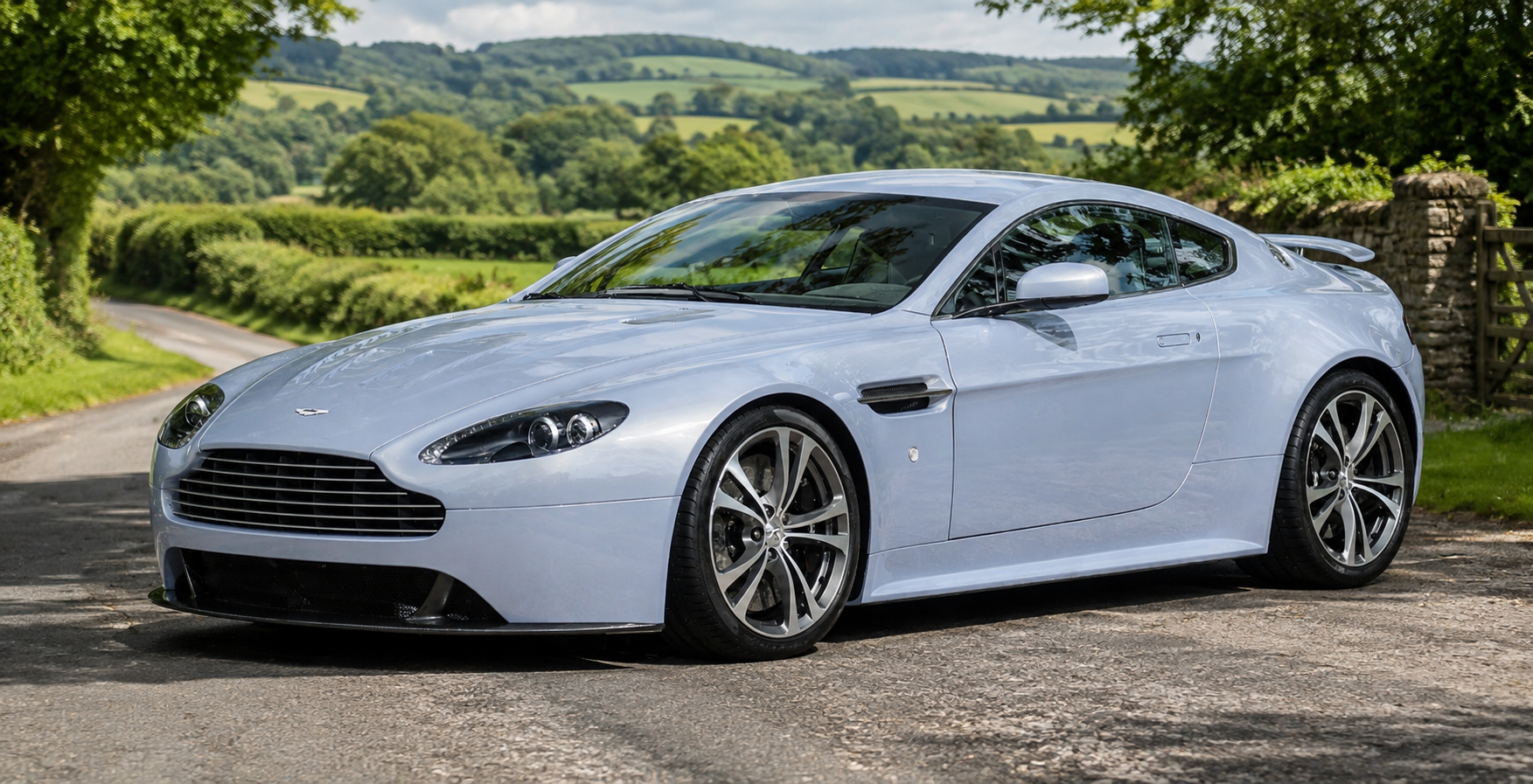
Image © Fuel the Passion. Used for illustrative purposes. The one-off 2007 Aston Martin V12 Vantage RS Performance Concept.
On 11th December 2007, Aston Martin opened its new Design Centre at Gaydon and used the occasion to unveil a remarkable one-off machine: the V12 Vantage RS Performance Concept.
Aston Martin’s own archive confirms that the company initially had no firm production plans for the car. The objective was essentially to demonstrate just how far the flexible VH architecture could be pushed by placing a racing-derived V12 into the compact Vantage platform. Customer reaction was sufficiently strong that Aston Martin announced a production V12 Vantage only a few months later, in February 2008. The concept itself was considerably more extreme than the production car that followed.
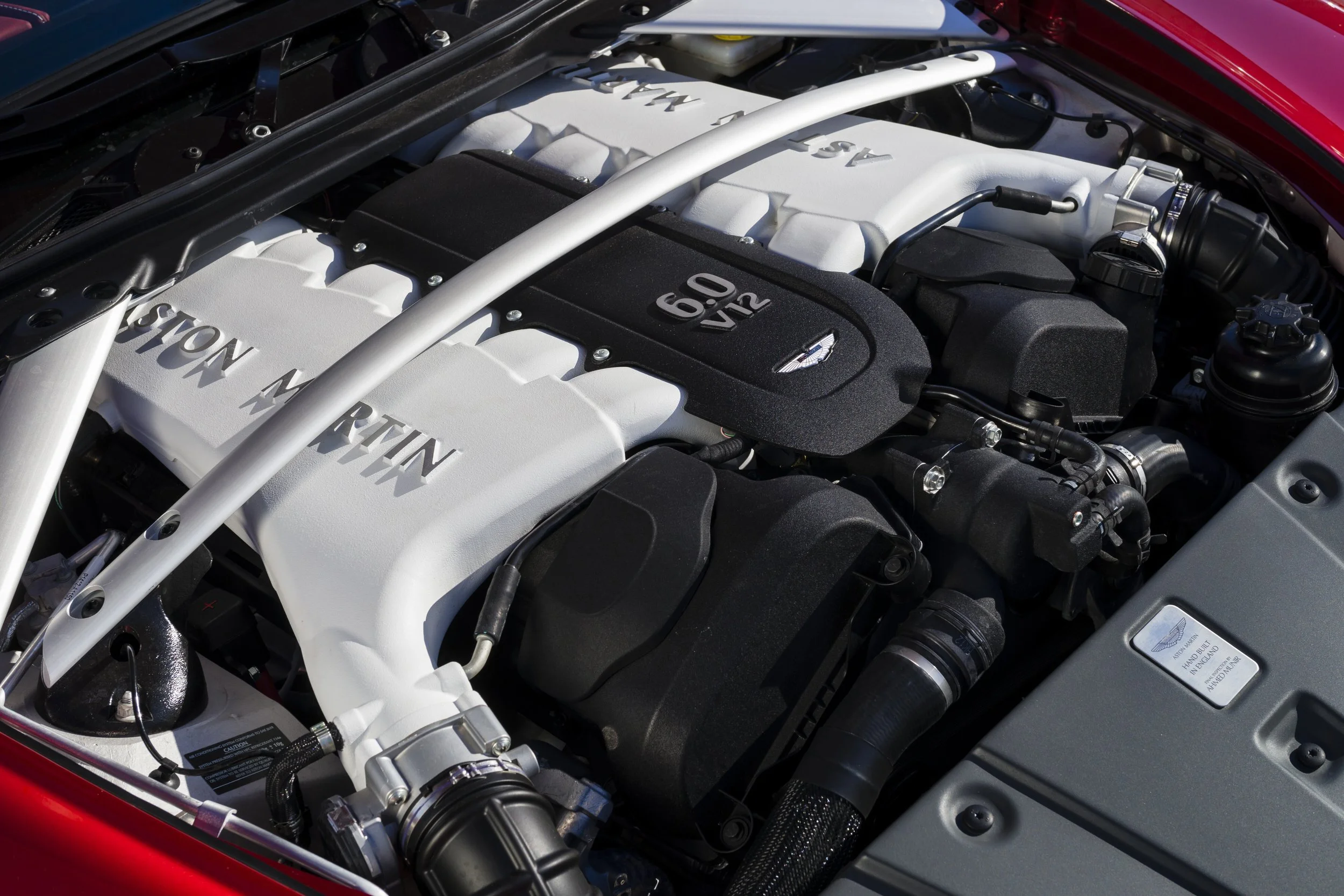
Image © Aston Martin Lagonda. Used for editorial purposes. Vantage V12 S engine.
Under the bonnet sat a V12 developed from the DBRS9 GT3 racing engine. Aston Martin’s own retrospective history describes it as producing around 550bhp, while contemporary and event material has quoted figures closer to 600bhp. Rather than pretend those differing historical figures do not exist, it’s safer simply to say that this was a substantially more highly tuned version of the V12 than Aston Martin was fitting to its regular road cars at the time.
Weight was attacked through carbon fibre and aluminium body panels, lightweight interior components and reduced soundproofing, while the engine drove through a six-speed manual transaxle and limited-slip differential. The whole exercise was about taking the smallest Aston Martin platform and asking how much performance could realistically be extracted from it. Sound familiar?
There’s another lovely detail. Period reporting, including evo at the time, identified Aston Martin’s RS as “Road Sport”. The interpretation was deliberately different from Porsche’s increasingly track-orientated RS philosophy: Aston Martin wanted something extremely focused and fast, but still conceived fundamentally as a road-going sports car.
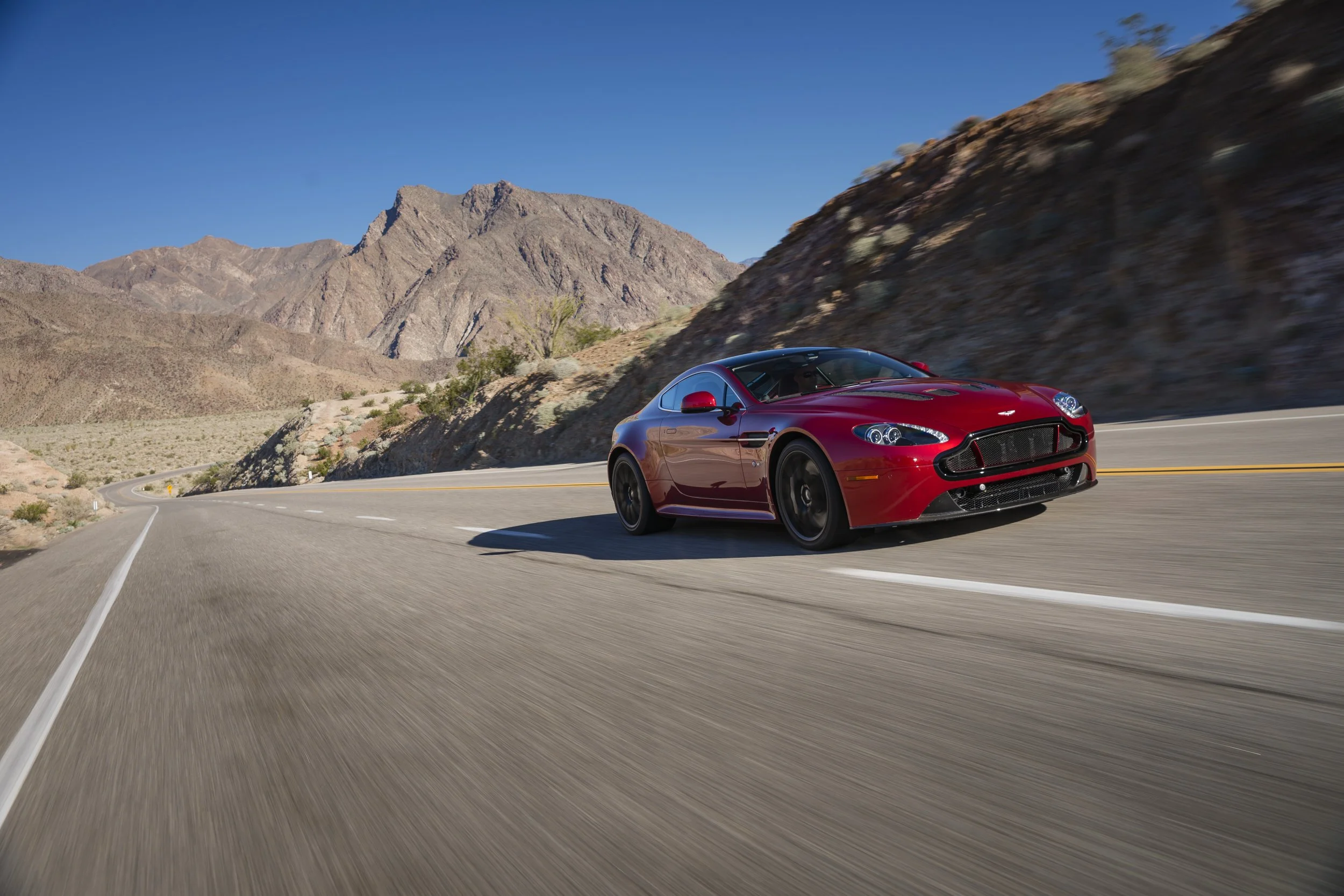
Image © Aston Martin Lagonda. Used for editorial purposes. Aston Martin Vantage V12 S.
That makes the current prototype particularly interesting. We still don’t know whether RS will actually appear on the production car, but if it does, Aston Martin wouldn’t be inventing a new designation. It would be reviving a name last used on a one-off concept almost two decades ago.
There’s an even stronger historical parallel. The 2007 RS wasn’t simply a styling exercise that disappeared into a warehouse. Aston Martin says the response to it directly encouraged the company to create the production V12 Vantage, announced in 2008 and launched publicly at Geneva before entering production. The RS badge disappeared, but the idea behind the car survived.
History doesn’t necessarily repeat itself, but Aston Martin has certainly explored this formula before: take Vantage, make it lighter, faster and more extreme, then see how far the idea can go.
There’s a wonderfully timely postscript too. The original 2007 V12 Vantage RS itself will be at the Concours of Elegance at Hampton Court Palace next weekend, where it joins the 2026 display as the unique car Aston Martin Special Projects created all those years ago. Concours of Elegance describes it as one of the most extreme road-legal Aston Martins of its era, complete with carbon bodywork and that six-speed manual gearbox.
With FTP heading to Hampton Court on Sunday, it should provide a rare opportunity to get properly close to the car that first carried those two letters, just as an entirely new generation of Vantage is prompting people to talk about RS again.
There is, though, one feature of the original RS that makes another conversation taking place at Aston Martin this week particularly timely. It had three pedals and a manual gearbox. Almost twenty years later, Adrian Hallmark has been explaining why bringing that kind of driver involvement back to a modern mainstream Aston Martin is both tempting and considerably more complicated than it might first appear.
COULD THE MANUAL ASTON MARTIN RETURN?
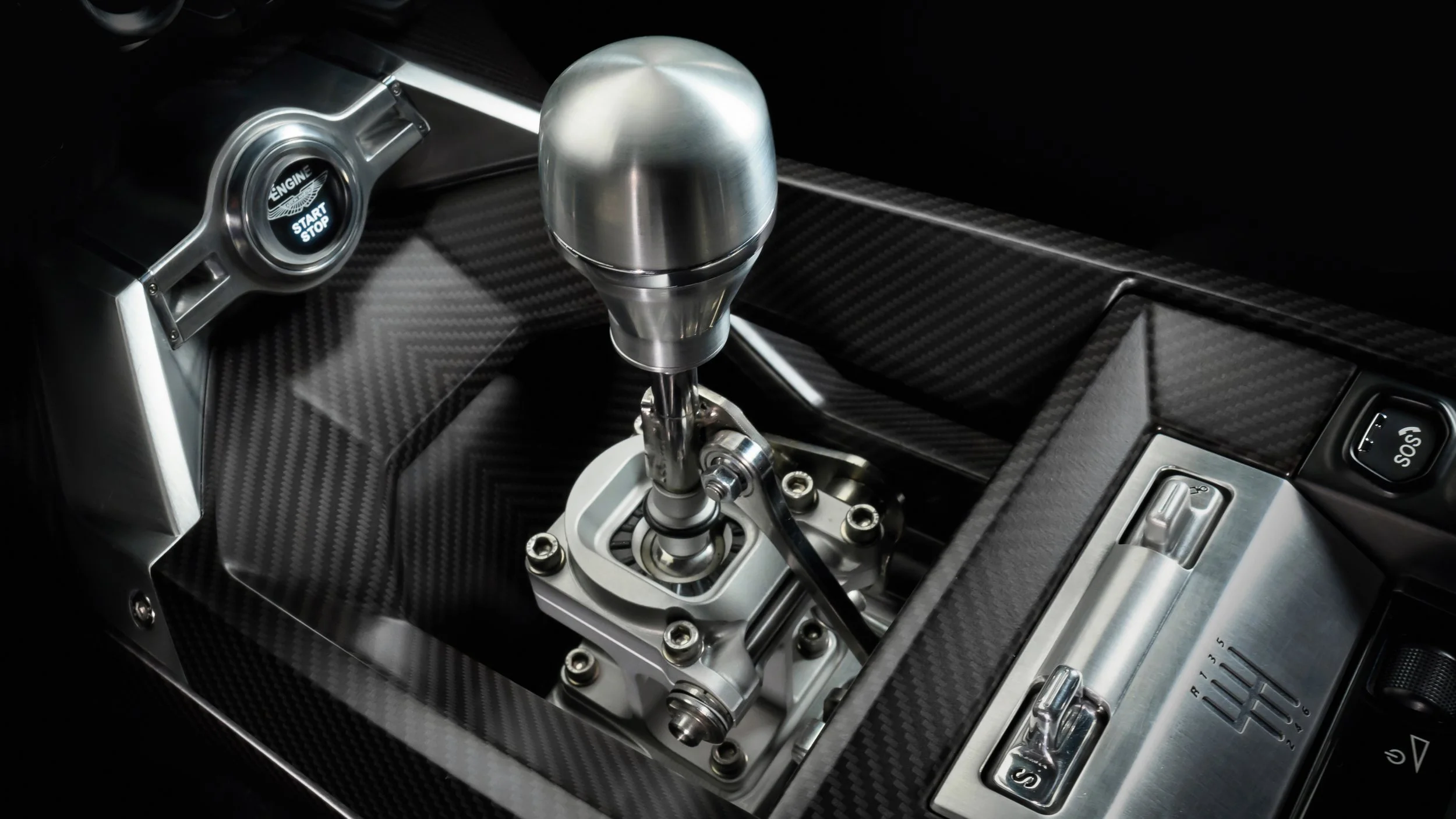
Image © Aston Martin Lagonda. Used for editorial purposes. Aston Martin Valiant Manual Gear Box.
The original V12 Vantage RS gives us a timely reminder that some of Aston Martin’s most memorable driver-focused cars have relied on a very traditional combination: a powerful engine, three pedals and a manual gearbox.
Aston Martin has not entirely abandoned that philosophy. Valour and the even more extreme Valiant both use bespoke six-speed manual transmissions, with Aston Martin itself describing Valiant’s exposed linkage and three-pedal layout as fundamental to the connection between driver and car. The problem is that both are highly specialised, low-volume machines rather than members of Aston Martin’s mainstream range.
So could a manual gearbox return to something produced in greater numbers? Chief Executive Adrian Hallmark has now given a particularly revealing answer, and the difficulty is apparently not finding a gearbox.
Speaking during Monterey Car Week, Hallmark explained that Aston Martin’s previous manual cars were developed around an older electrical architecture. Today’s cars have to accommodate a much broader network of electronics and advanced driver-assistance systems (ADAS), including adaptive cruise control and collision-avoidance functions. A modern manual transmission therefore has to communicate correctly with systems that may need to alter the car’s speed or intervene automatically.
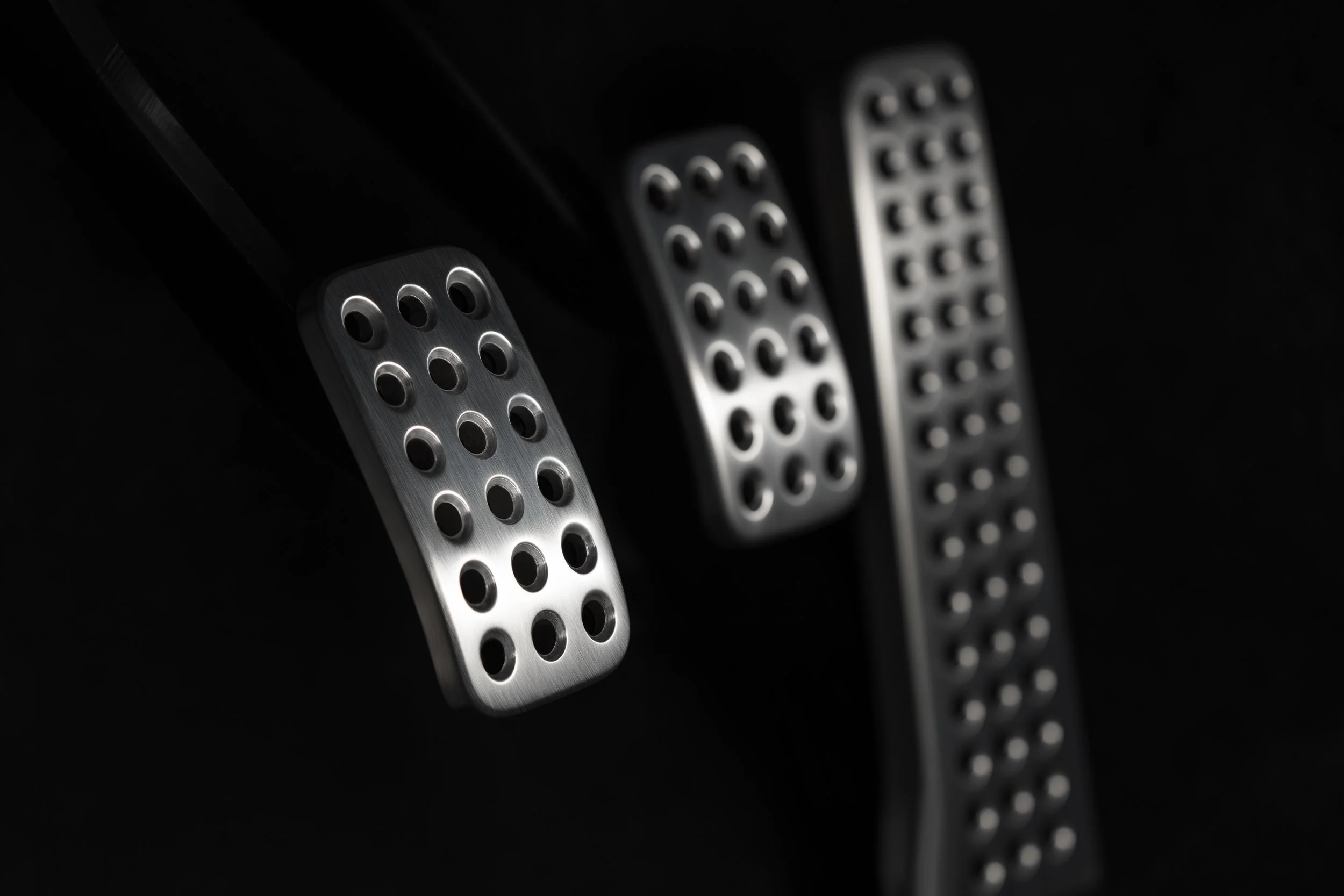
Image © Aston Martin Lagonda. Used for editorial purposes. Aston Martin Valiant pedals.
That creates a slightly counter-intuitive problem. Hallmark says modifying the electronics and safety systems to accommodate a conventional clutch-and-gearlever arrangement could actually cost Aston Martin more than developing the manual gearbox itself. Once those engineering costs are spread across the relatively small number of customers likely to choose one, the commercial case becomes difficult.
It helps explain why fitting a manual gearbox to Valiant doesn’t automatically mean Aston Martin can simply offer the same solution in the next Vantage. Valiant is a 38-car special developed through Q by Aston Martin, with its own bespoke engineering brief and price structure. A series-production Vantage, DB12 or Vanquish has to satisfy a very different combination of legislation, driver-assistance requirements, production volumes and cost.
Interestingly, Hallmark has not ruled out a different approach.
Ferrari recently demonstrated one possible solution with the 12Cilindri Manuale. It presents the driver with a clutch pedal and gated six-position gearlever, but underneath remains an electronically controlled eight-speed dual-clutch transmission rather than a mechanically connected conventional manual. The driver receives much of the interaction and ritual of changing gear manually while the electronics retain the level of integration required by the modern car.
Hallmark therefore described Aston Martin’s dilemma in fairly simple terms: “Do we do a fake manual? Or, don’t go manual?”
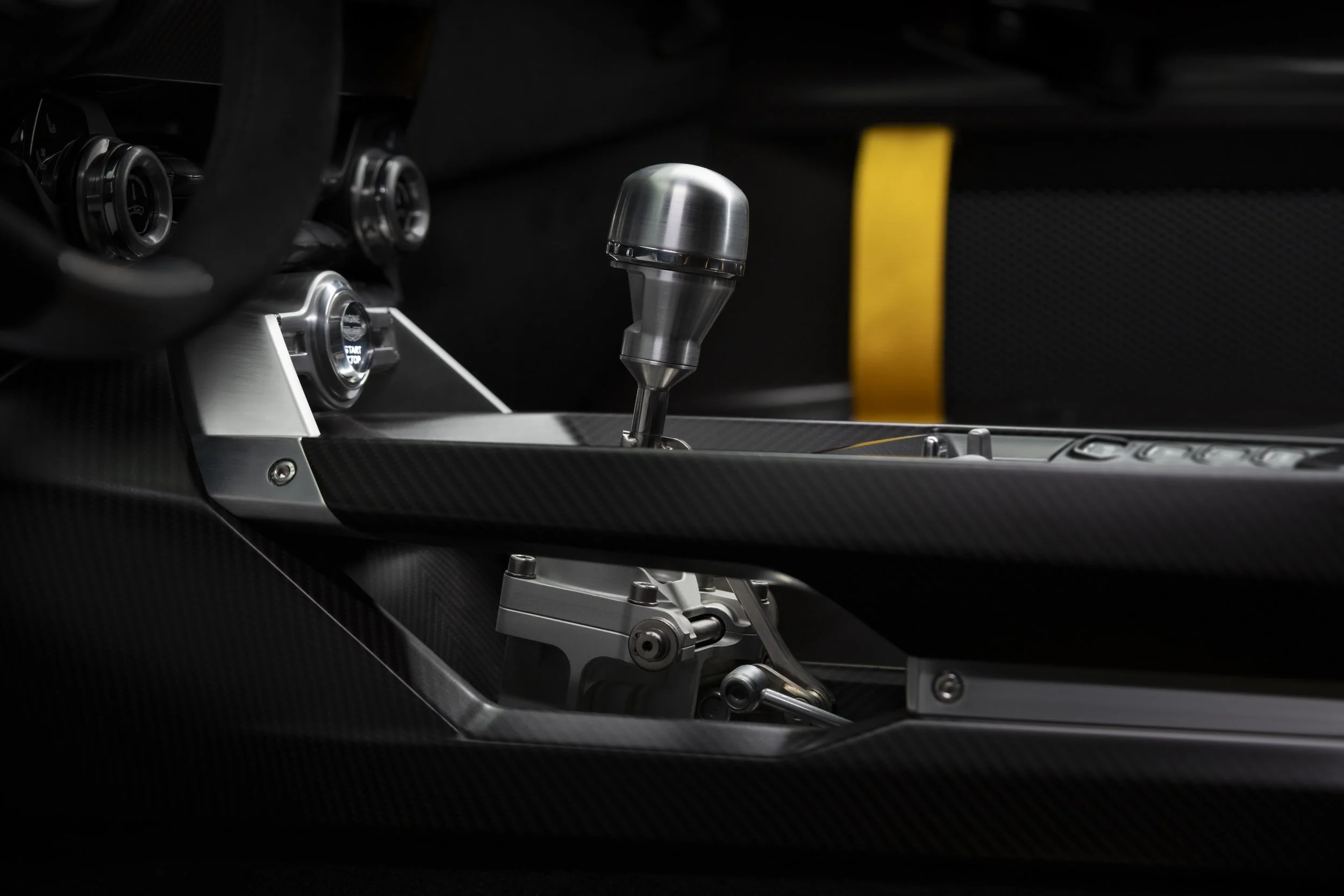
Image © Aston Martin Lagonda. Used for editorial purposes. Aston Martin Valiant Manual.
For purists, the word fake will probably be enough to settle the argument immediately. Yet it raises a more interesting question about what people actually value in a manual Aston Martin. Is it the mechanical connection itself, a clutch physically disengaging the engine while the driver selects the next ratio, or is much of the pleasure found in the additional involvement: choosing the gear, timing the shift, using a clutch pedal and having something more to do than pull a paddle?
Aston Martin already knows there’s enthusiasm for the traditional answer. Valour was deliberately conceived around a V12 and manual gearbox, while Fernando Alonso’s original request for the car that became Valiant was driven by an even more intense desire for driver engagement. Aston Martin went so far as to leave Valiant’s gear linkage exposed inside the cabin, making the mechanism part of the theatre of the car rather than something to conceal.

Image © Aston Martin Lagonda. Used for editorial purposes. Aston Martin Valiant.
What Hallmark has not done is announce a manual Vantage, DB12 or any other production model. Nor has Aston Martin confirmed that it intends to adopt a Ferrari-style simulated manual system. At present, the company appears to be examining whether either proposition makes technical and financial sense.
That distinction becomes particularly relevant with the hardcore Vantage prototypes circulating at the Nürburgring. A manual gearbox would fit beautifully with the apparent philosophy of a lighter, more focused Road Sport Vantage, and evo has already raised the possibility. For now, though, it remains exactly that, a possibility, rather than evidence that the prototype will receive three pedals.
Perhaps the most encouraging part of Hallmark’s comments is simply that the conversation is taking place at all. In an era when outright performance has become relatively easy to quantify, Aston Martin increasingly seems interested in a harder question: how do you make a very fast modern car more involving to drive?
That same search for greater character rather than simply greater numbers brings us rather neatly to the DB12 S, because after spending time with one on familiar roads, Harry Metcalfe has reached a conclusion remarkably close to the one FTP came to when we examined Aston Martin’s developing S strategy earlier this year.

Image © Fuel the Passion
DB12 S - HARRY METCALFE REACHES A FAMILIAR CONCLUSION
If Adrian Hallmark’s comments raise the question of how Aston Martin can make its cars more involving, the DB12 S demonstrates that greater character doesn’t always require an entirely new transmission, engine or model. Sometimes, it comes from getting the details right.
Harry Metcalfe has spent time with the DB12 S for the latest episode of Harry’s Garage, and his verdict is particularly interesting to FTP readers because it arrives at a conclusion remarkably close to the one we reached when we examined Aston Martin’s developing S strategy earlier this year.
His video title is fairly unambiguous: “Aston Martin’s new DB12 S is what the DB12 should have been from launch.”
That sounds harsh on the original car, but Harry’s argument is rather more nuanced. When he drove DB12 previously, he felt Aston Martin’s new-generation Super Tourer had not quite settled on what it wanted to be. It was exceptionally capable, but its sporting intentions sometimes appeared to be fighting against the long-distance GT role implied by the badge.
With DB12 S, he believes Aston Martin has found the answer.
On the same sort of familiar British roads on which he evaluates many of the cars featured on his channel, Harry found a DB12 that now feels considerably better resolved. The suspension is controlled without becoming unnecessarily aggressive, the gearbox responds more cleanly, the carbon-ceramic brakes work convincingly on the road and the relationship between the various driving modes gives the driver greater freedom to configure the car without accepting an overly firm ride simply because a more responsive powertrain setting has been selected.
His simplest description is probably also the most revealing: this is the DB12 sorted.
That immediately took us back to FTP’s Featured Article, The Aston Martin S Question, in which we looked beyond the relatively modest power increases attached to Aston Martin’s new S derivatives and asked what the badge was actually being used to achieve.
Our conclusion on DB12 S was that it made most sense not as a reinvention of DB12, but as a better-resolved version of it. The important changes were not simply another 20PS. They were calibration, composure, response, sound and the sense that the car’s sporting and Grand Touring personalities had been brought into better alignment. Harry has now driven both cars on roads he knows well and reached much the same place from behind the wheel.
There’s no need for a triumphant “we told you so” from FTP. Quite the opposite. It’s useful when an experienced independent reviewer provides another piece of evidence that allows an emerging picture around a car to become clearer. Harry goes further still.
At £211,500 before options, DB12 S sits between the Vantage and Vanquish in Aston Martin’s current coupé range, and he describes it as something of a sweet spot. Indeed, despite the Vantage’s more overt sporting brief, he says he actually prefers DB12 S as an overall road car. That’s quite a compliment when the current Vantage is itself such a capable machine.
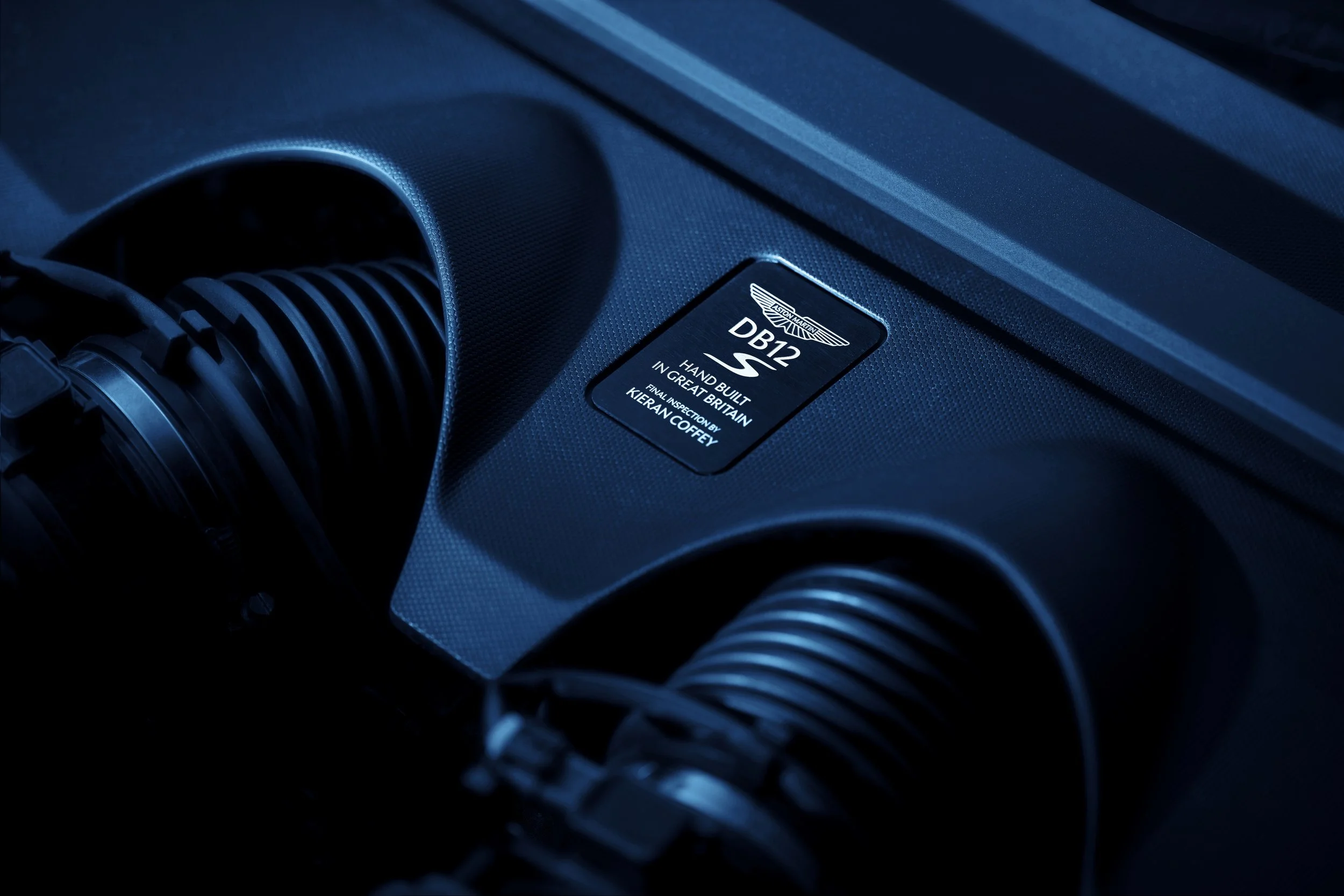
Image © Aston Martin Lagonda. Used for editorial purposes. Aston Martin DB12 S.
Part of the appeal comes from the balance Aston Martin has struck. The familiar 4.0-litre twin-turbocharged V8 now produces 700PS, yet Harry’s enthusiasm is directed less towards the headline output than the way the chassis uses it.
DB12 S remains a car in which covering distance quickly and comfortably still feels fundamental to the experience; the S treatment has sharpened that character without turning the car into something it was never intended to be.
He also put the three current Aston Martin coupés on his own scales. His measurements came out at approximately 1,740kg for Vantage, 1,820kg for DB12 S and 1,940kg for Vanquish. Those are Harry’s own measured figures rather than official Aston Martin homologation numbers, but they help illustrate why the DB12 occupies such an interesting middle ground.
Not everything earns unqualified praise. The steering is accurate and confidence-inspiring rather than overflowing with feedback, while modern noise regulations mean even DB12 S’s titanium exhaust cannot deliver quite the aural theatre some enthusiasts might expect from an Aston Martin costing more than £200,000. Harry also wonders whether the car is almost too polished at times, extraordinarily effective, but perhaps lacking a final sliver of imperfection that might make it still more memorable.
If money were no object, he would still take the V12 Vanquish. In the real world, though, DB12 S emerges as his preferred current Aston Martin coupé.
WHAT DO VIEWERS THINK?
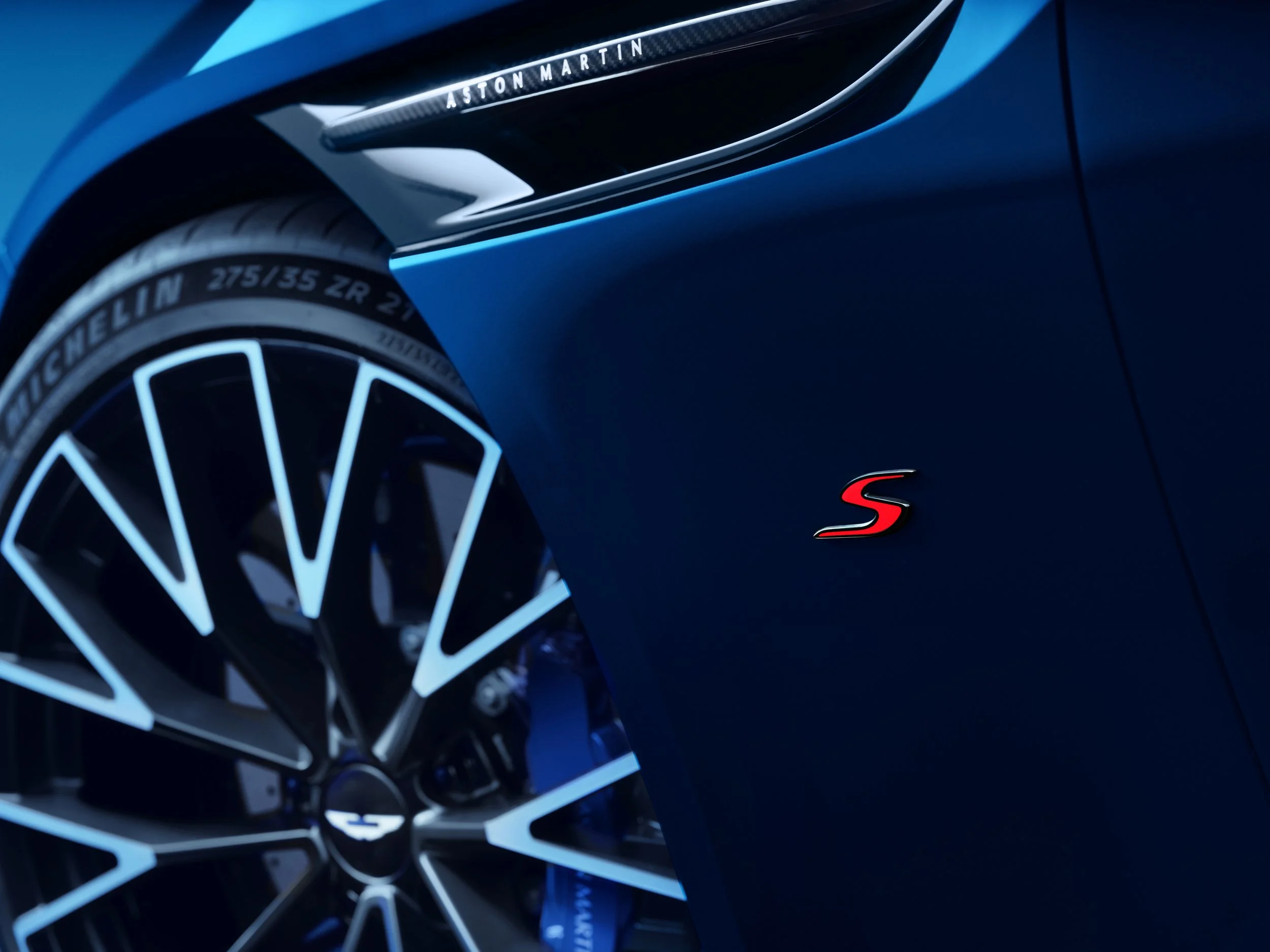
Image © Aston Martin Lagonda. Used for editorial purposes. Aston Martin DB12 S.
The response beneath Harry’s film adds another useful dimension. We looked through the 625 comments available when we gathered the material, and while any YouTube comment section is self-selecting rather than a scientific opinion poll, several themes appeared repeatedly.
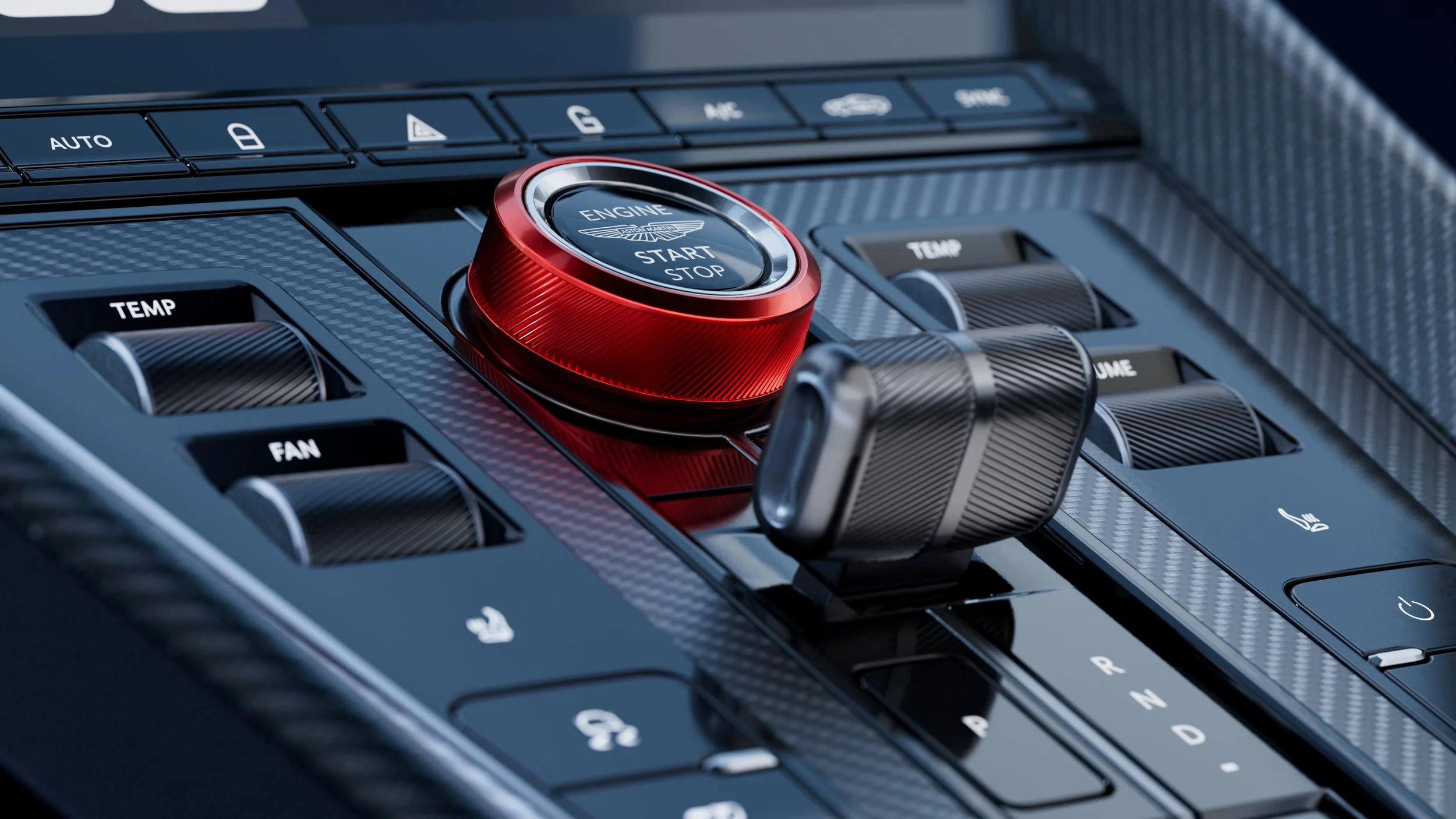
Image © Aston Martin Lagonda. Used for editorial purposes. Aston Martin DB12 S.
The reaction to the DB12 S itself is broadly very positive. Its styling, interior and more mature GT character attract plenty of praise, while Aston Martin’s continued use of physical controls is especially popular.
One wonderfully concise response simply reads: “Buttons!! Hooray.”
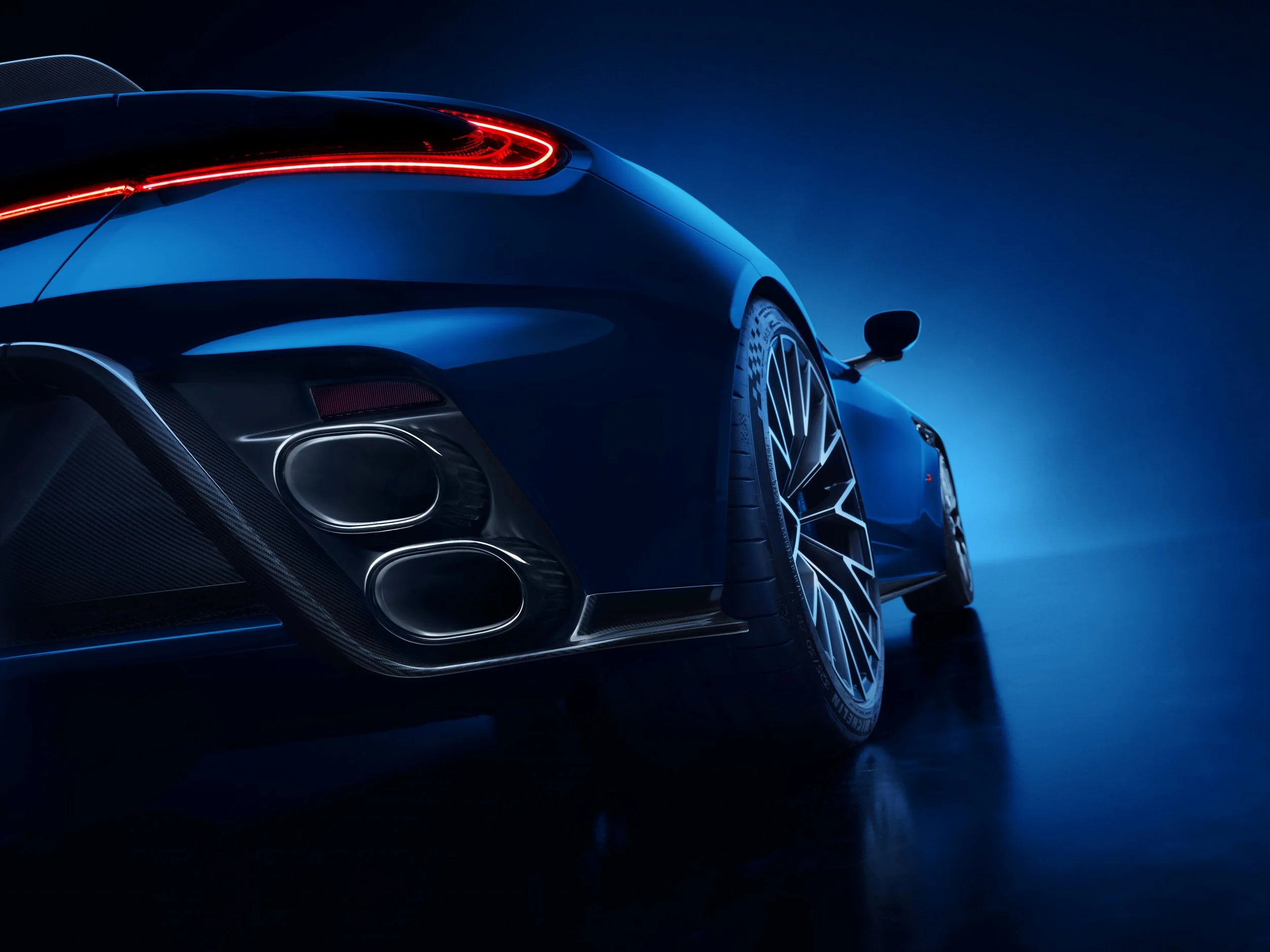
Image © Aston Martin Lagonda. Used for editorial purposes. Aston Martin DB12 S.
There are criticisms too. The wheel designs divide opinion, the vertically stacked exhaust outlets remain something of an acquired taste, and several viewers question the lack of a nose-lift system. Others would like more visual theatre beneath the bonnet. More significant is the continuing debate around the engine.
There are enthusiasts who readily accept how effective the Mercedes-AMG-derived V8 has become in an Aston Martin application, while others still struggle with the idea of spending more than £200,000 on an Aston Martin without a V12, or, at least, an engine developed entirely in-house.
Then there’s the money. Depreciation appears repeatedly in the discussion, as does the temptation to wait several years and buy a DB12 S used. Aston Martin’s wider financial position also appears surprisingly often in comments that are otherwise extremely complimentary about the car.
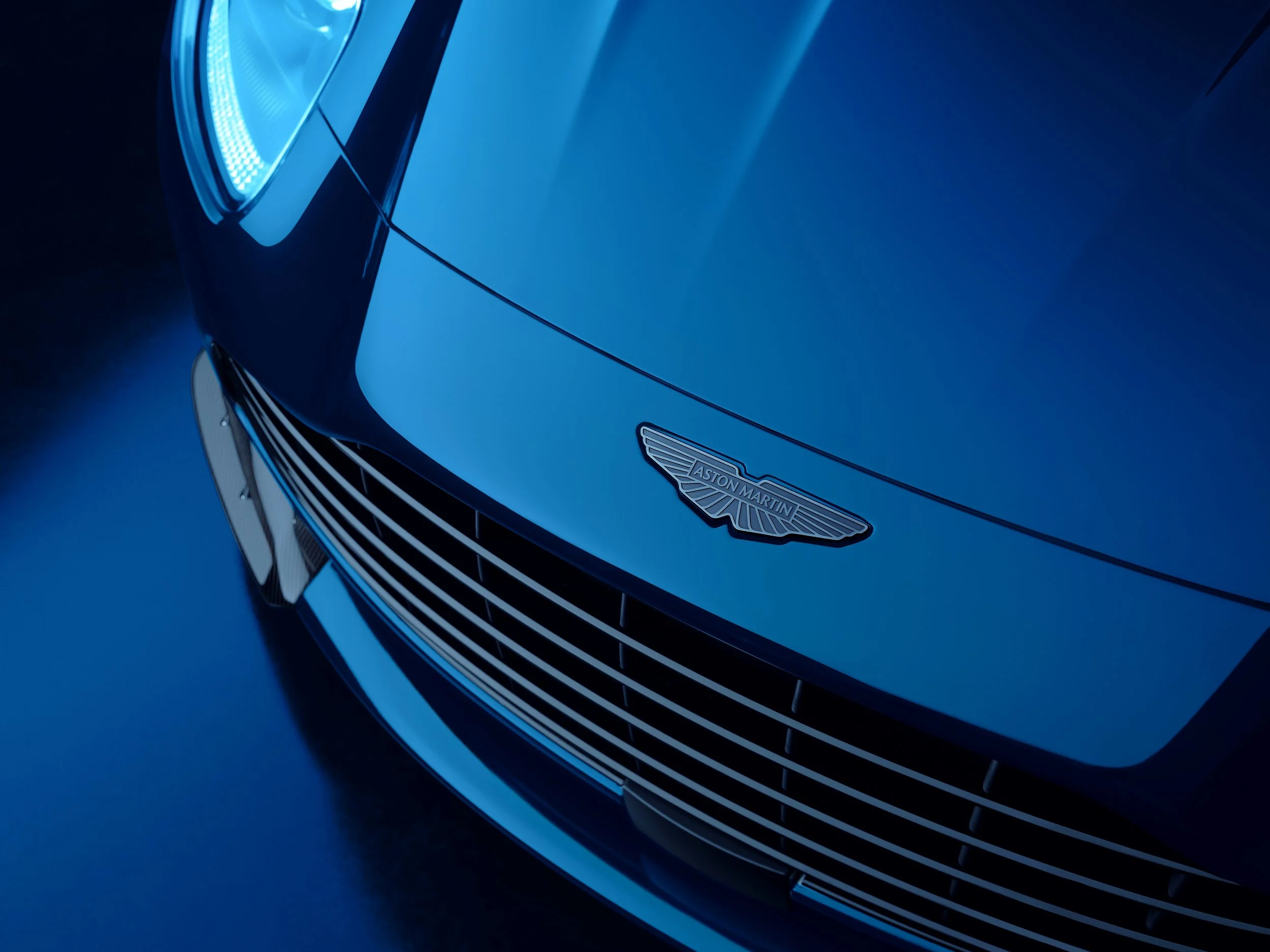
Image © Aston Martin Lagonda. Used for editorial purposes. Aston Martin DB12 S.
One of the most-supported sentiments manages to capture both sides in a few words:
Admiration for a beautiful Aston Martin, accompanied by the hope that the company remains strong enough to keep building cars like it.
That produces an interesting contrast. Confidence in the product appears extremely healthy. Confidence in the economics of buying one new and, among some enthusiasts, confidence in Aston Martin’s wider financial position, is rather less settled.
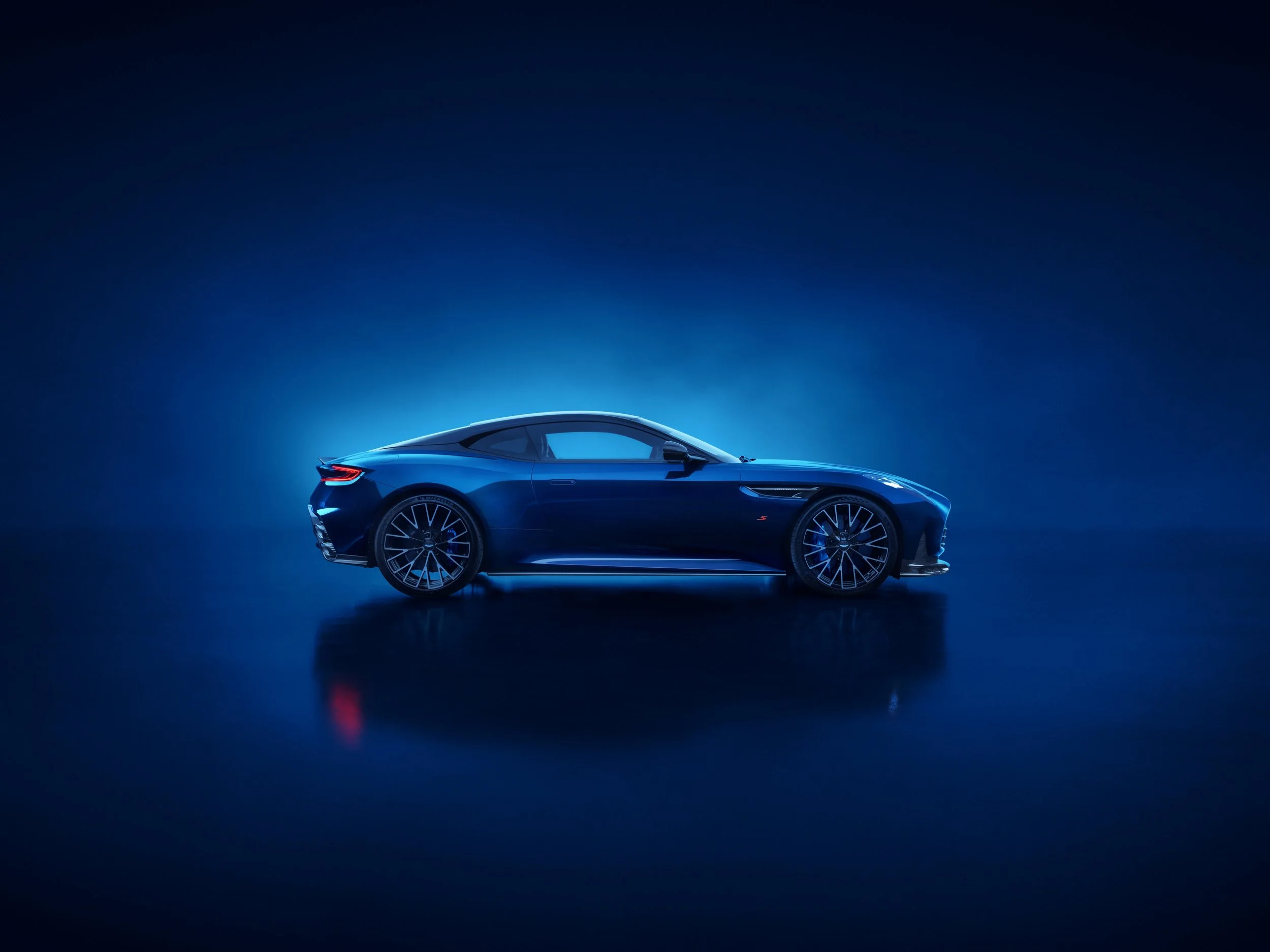
Image © Aston Martin Lagonda. Used for editorial purposes. Aston Martin DB12 S.
For DB12 S itself, however, the evidence is becoming increasingly consistent. Rather than merely adding power and another letter to the boot lid, Aston Martin seems to have taken a very good DB12 and concentrated on resolving the areas that prevented the original from feeling quite as complete as it might. Which perhaps explains why the S badge is beginning to make more sense.
The irony is that while DB12 S demonstrates what Aston Martin can achieve by improving a relatively new car, another model is becoming interesting for almost the opposite reason. DB11 is now old enough for depreciation to have done much of its work, and HWM Aston Martin has been looking at just how much car that now puts within reach.
Time for a cuppa?
You’ve reached the halfway point of this week’s Roundup.
Stretch the legs, top up the mug if you fancy one, and when you’re ready there’s plenty still to come — used Aston Martin value, the latest legal developments, heritage, Market Watch, Car of the Week and more from behind the scenes at FTP.
From Aston Martin’s current S strategy into one of the most interesting used-car opportunities in the modern range.
DB11 VALUE - HWM REACHES A FAMILIAR CONCLUSION
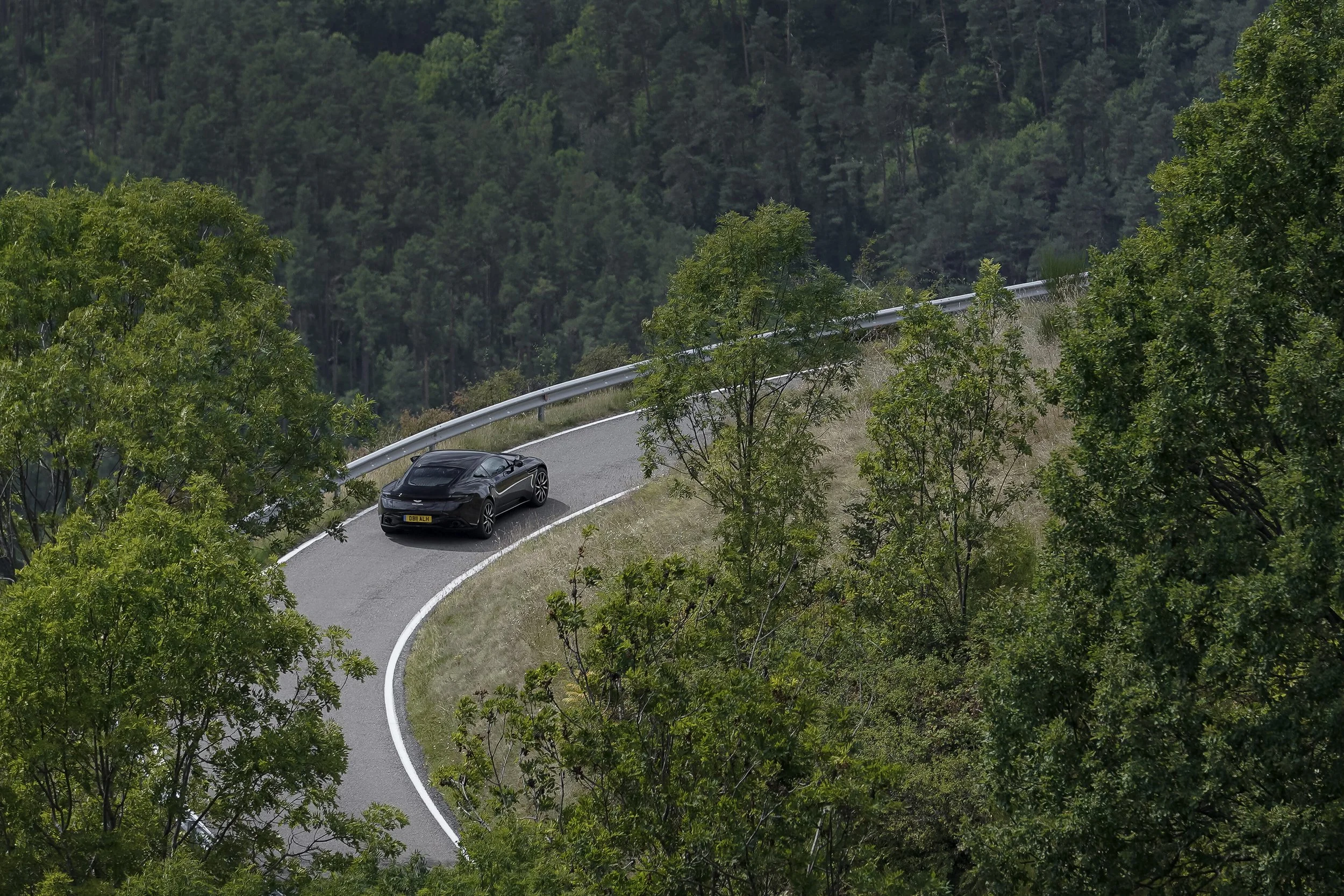
Image © Aston Martin Lagonda. Used for editorial purposes. Aston Martin DB11
If the DB12 S represents Aston Martin refining its current grand tourer, its predecessor is becoming interesting for a very different reason. The DB11 is now a genuinely tempting used Aston Martin. That’s the conclusion reached in a new market update from HWM Aston Martin, and it carries some useful weight. HWM has represented Aston Martin since 1951, making the Walton-on-Thames business the world’s longest-serving Aston Martin dealership.
Its latest video looks across the DB11’s seven-year production life, from the original V12 and later V8 through the Volante, DB11 AMR and updated 2022 model-year cars, before turning to where those different versions now sit on the UK used market.
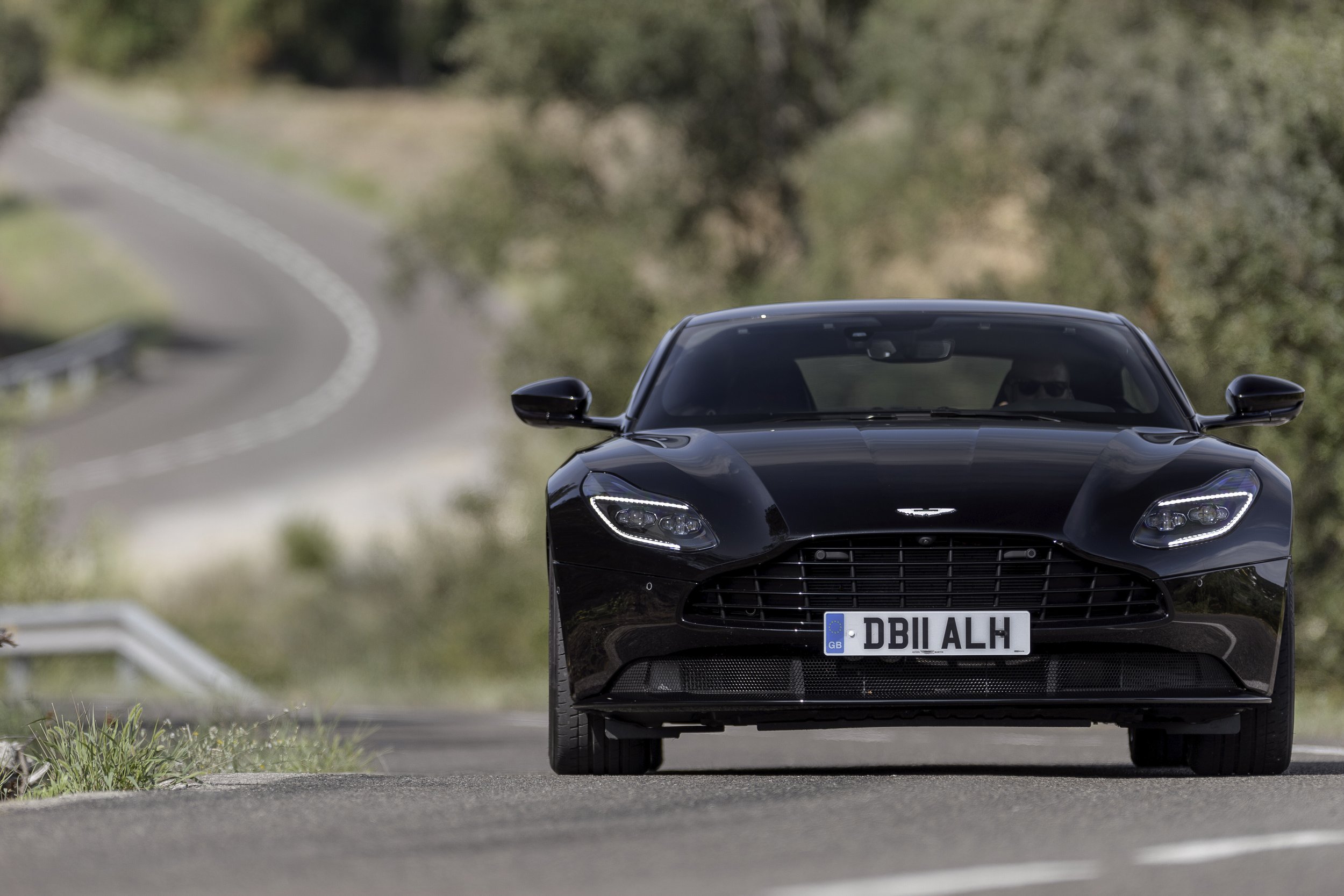
Image © Aston Martin Lagonda. Used for editorial purposes. Aston Martin DB11.
The broad conclusion is striking: once insurance-category cars are put to one side, HWM found that the great majority of DB11s it was seeing sat within a relatively compressed £60,000 to £100,000 bracket. That’s quite a change for cars that, once specification and options were added, HWM recalls commonly costing somewhere around £165,000 to £190,000 when new.
Depreciation is painful for the person who bought at the top of that curve, of course, but viewed from the other end it creates a very different proposition. A car that was Aston Martin’s modern flagship grand tourer less than a decade ago can now overlap in price with considerably more ordinary new performance and luxury cars.
HWM describes the DB11 as a particularly “compelling purchase” at today’s values and makes the point that the range is unusually tightly stacked. Early V12s generally provide the lower entry point, V8s sit above them in places, while AMRs, later cars and the less common Volante occupy different positions according to mileage, age, specification and condition.
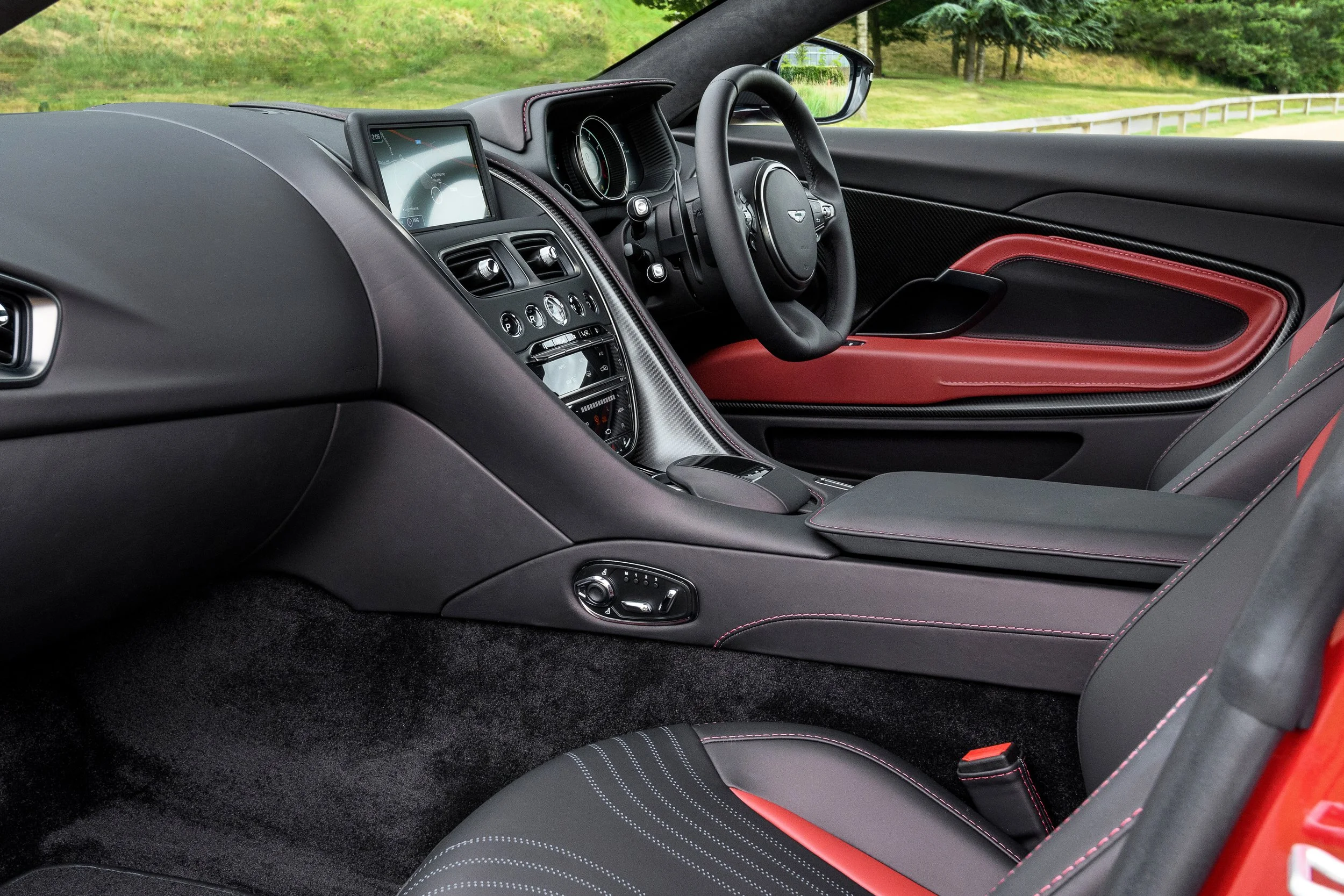
Image © Aston Martin Lagonda. Used for editorial purposes. Aston Martin DB11.
Specification appears to be becoming interesting too. HWM notes that colours which might once have seemed difficult to sell can now work in a car’s favour as buyers increasingly look for something distinctive. One unusually coloured DB11 shown during the video had apparently been reserved within half a day, before the dealership had even completed its photography.
Asked where his own money might go in the middle of the DB11 market, the HWM view settles on two particularly appealing choices: the DB11 AMR, for its rarity and V12 character, or a 2022 model-year V8 with the uprated 535PS engine, which benefits from the later changes Aston Martin made as the DB11 matured.
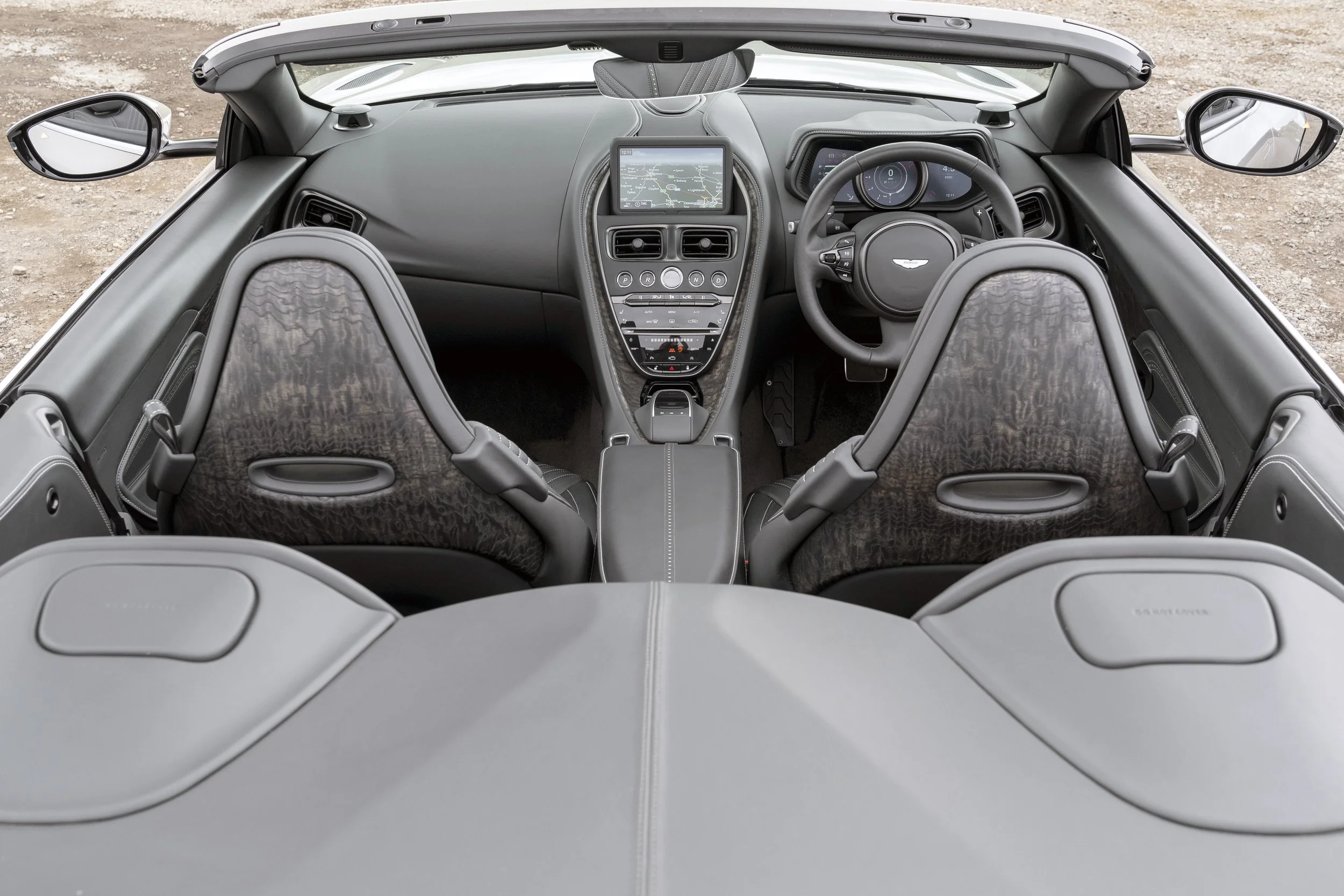
Image © Aston Martin Lagonda. Used for editorial purposes. Aston Martin DB11 Volante
Regular FTP readers may recognise much of that argument.
When we put together the FTP Aston Martin DB11 Buyers Guide earlier this summer, our May market snapshot found early and higher-mileage Coupés beginning in the low £60,000s, V8s extending through the £60,000-£80,000 region, strong later V8s moving towards £90,000 and the later 535PS cars, Volantes and desirable AMRs reaching towards, or occasionally beyond £100,000.
Our conclusion then was: “The DB12 is the better modern car. The DB11 may be the better used Aston Martin opportunity.”
Markets move and every individual Aston Martin needs to stand on its own history, condition and specification. It’s simply reassuring to hear an Aston Martin dealer with more than seven decades of experience independently arrive at such a similar view.
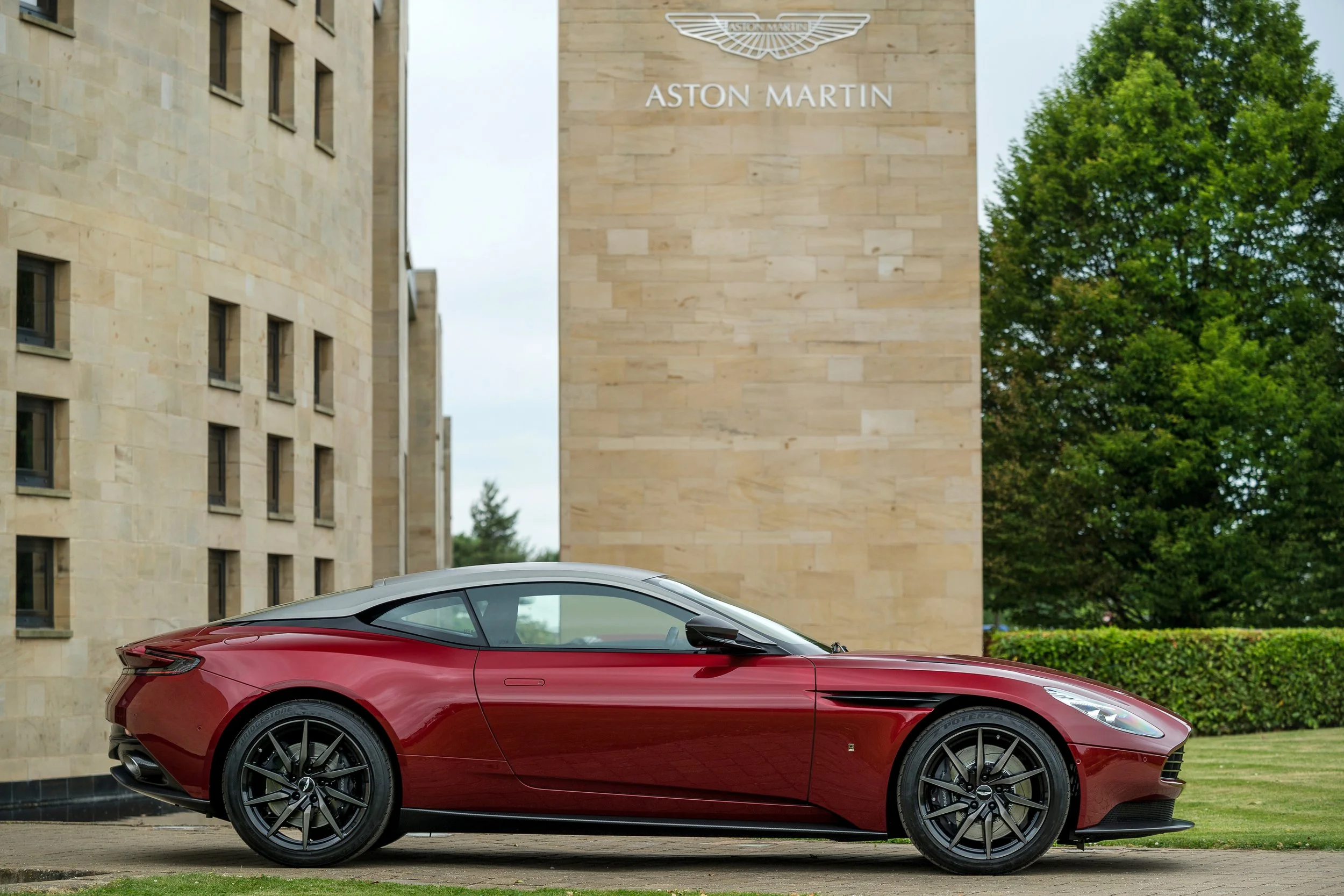
Image © Aston Martin Lagonda. Used for editorial purposes. Aston Martin DB11, Henley-Regatta Q Collection.
The important word is still value, rather than cheap. A £60,000 DB11 remains a complex, high-performance Aston Martin that was engineered and priced as a far more expensive car. Its servicing requirements, tyres, brakes, electronics and potential repair costs have not depreciated at the same rate as the purchase price. Our Buyers Guide therefore remains deliberately cautious about buying purely on the number at the top of an advert: history, inspection, diagnostics and evidence of proper maintenance should carry considerably more weight than finding the cheapest car available.
Get those fundamentals right, though, and it’s becoming increasingly difficult to ignore what the DB11 now offers: V8 or V12 power, Coupé or Volante bodywork, genuine modern Aston Martin usability and a great deal of grand tourer for the money.
The economics of buying an Aston Martin are one thing. The financial structure behind the company building them is quite another, and this week, the creditor dispute we’ve been following took an important new procedural step.
Affiliate link note: Some links may be affiliate links, which means Fuel the Passion may earn a small commission if you purchase through them, at no extra cost to you. Thank you for your support.
ASTON MARTIN CREDITORS TAKE THE NEXT LEGAL STEP
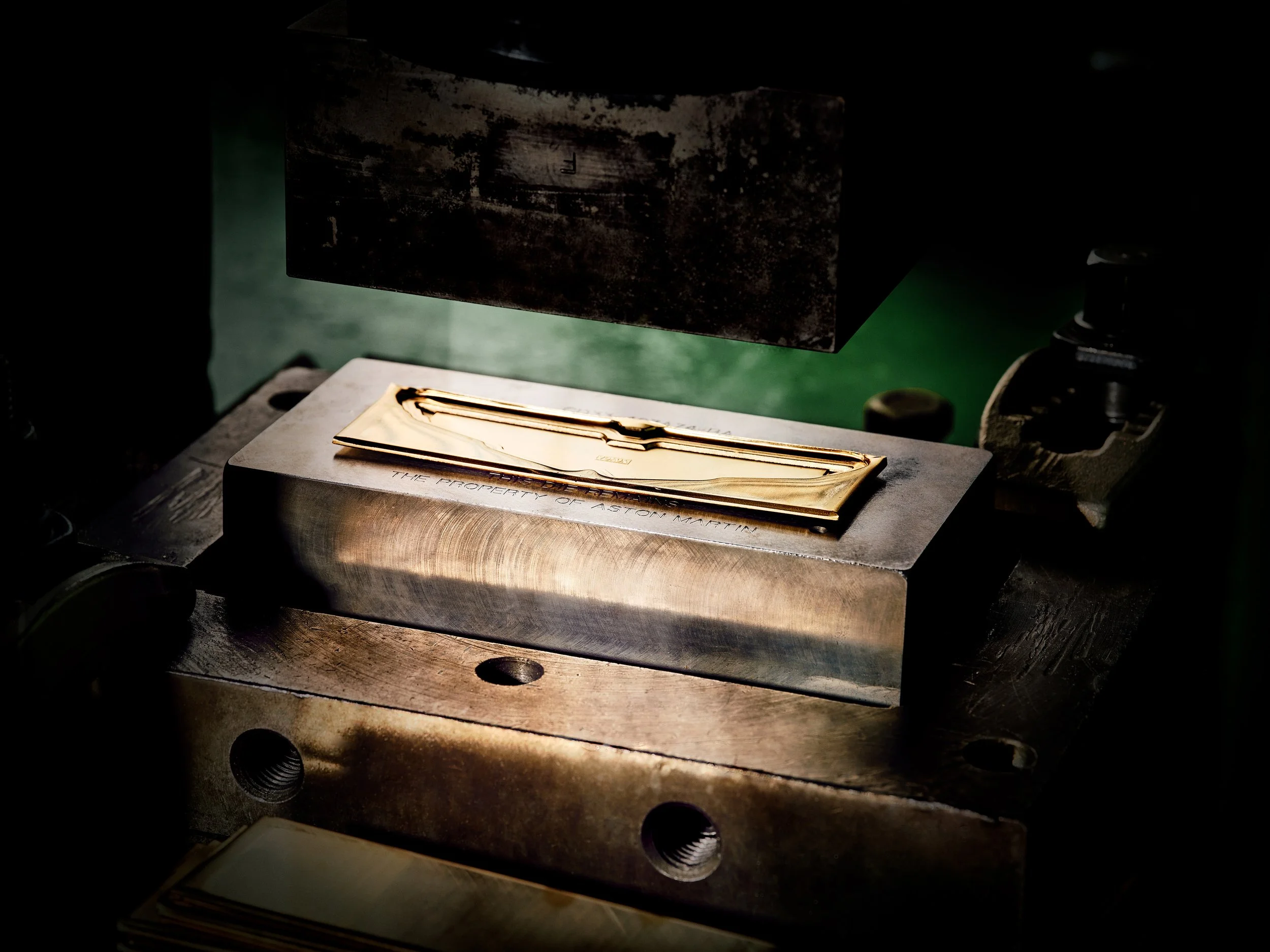
Image © Aston Martin Lagonda. Used for editorial purposes.
Regular readers may remember that in Issue 36 we spent some time untangling the dispute surrounding Aston Martin’s new £550 million financing package.
At that point, creditors representing around £1.3 billion of existing Aston Martin debt had sent the company’s board a letter before action. Their concern centred on the security behind the new borrowing and whether valuable assets had been moved into structures supporting the new lender, potentially weakening the position of existing bondholders. We were careful then to make an important distinction: those were creditor allegations, not findings made by a court.
This week, the story has moved forward.
On 24th August, Arini Credit Master Fund Limited and Tresidor Europe Credit Limited filed an application in the US District Court for the Southern District of New York, seeking documents and testimony from HPS Investment Partners, Authentic Brands Group, Moelis & Company and Lazard. The material is intended for use in legal proceedings the creditors are preparing in England over Aston Martin’s financing transaction. That sounds like the threatened lawsuit has arrived, but there’s an important distinction. This is not yet the substantive English case against Aston Martin.
The New York application is an evidence-gathering exercise. US law provides a mechanism through which parties preparing litigation overseas can ask an American federal court to authorise the collection of documents or testimony from people and organisations within its jurisdiction. In straightforward terms, the creditors are trying to gather information in the United States that they believe could support the case they intend to bring in England.
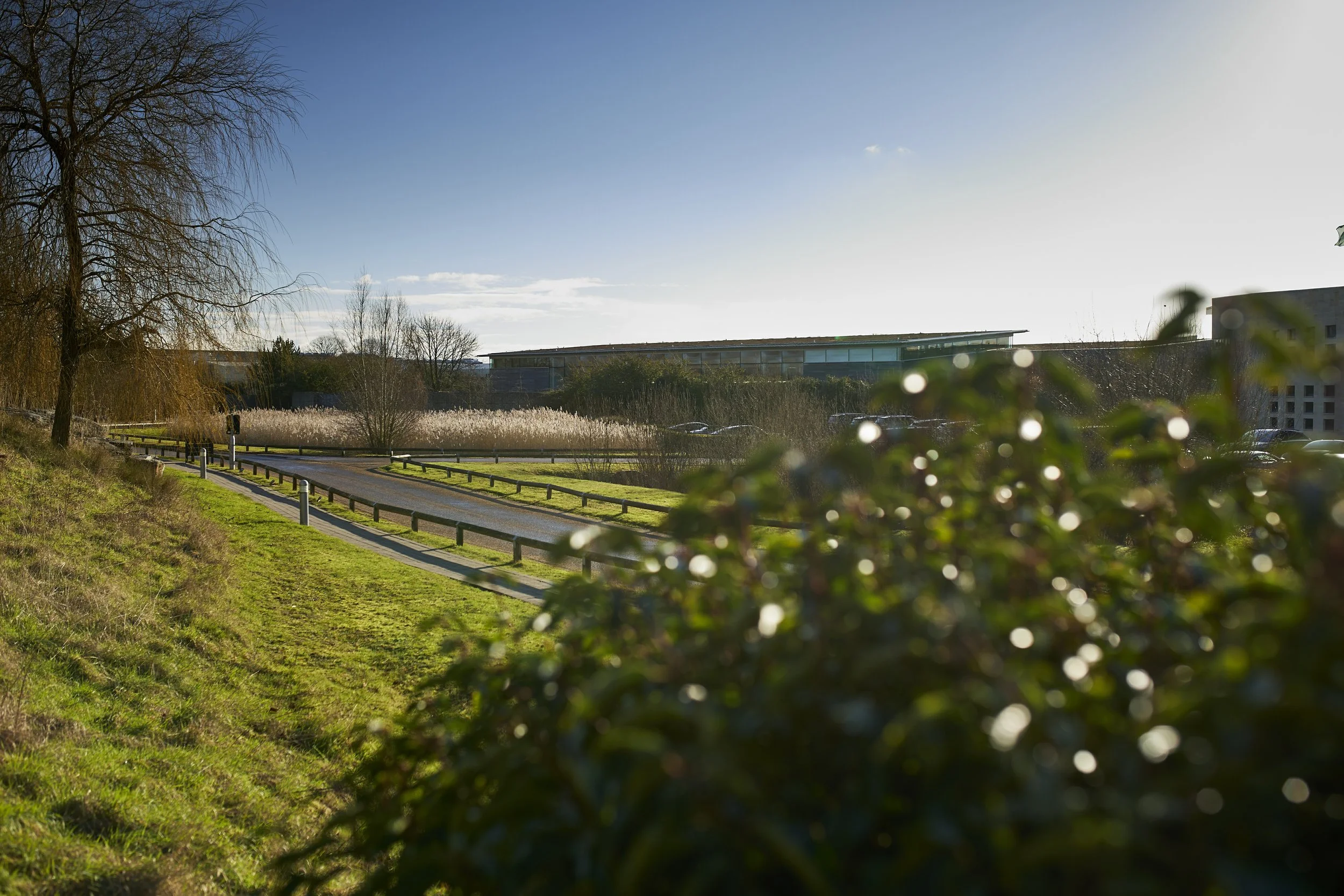
Image © Aston Martin Lagonda. Used for editorial purposes. Aston Martin HQ, Gaydon
The underlying dispute remains the same one we explained in Issue 36. Aston Martin announced the financing in July, comprising a £450 million Senior Secured Term Loan and a further £100 million Delayed Draw Term Loan. The arrangement was led by funds managed by HPS Investment Partners and provides Aston Martin with considerably greater liquidity while it continues its turnaround. The £450 million facility has already been completed.
Existing creditors object to aspects of the structure because they believe assets that previously formed part of the wider protection behind their lending have effectively been repositioned to support the new financing. Their court application goes further, using the phrase “asset-stripping transaction” to describe what they allege has happened. That’s the creditors’ characterisation of the transaction and shouldn’t be confused with an established fact or judicial finding.
The dispute also returns us to something else we examined carefully in Issue 36: Aston Martin’s non-automotive intellectual property.
Reporting from the Financial Times says the additional £100 million facility would become available if Aston Martin transfers a 50.1% interest in certain non-automotive intellectual-property rights to Authentic Brands Group. Subsequent UK trademark records have reportedly shown important Aston Martin branding and naming rights being transferred into a new subsidiary securing the HPS lending. The emphasis remains important: certain non-automotive rights.
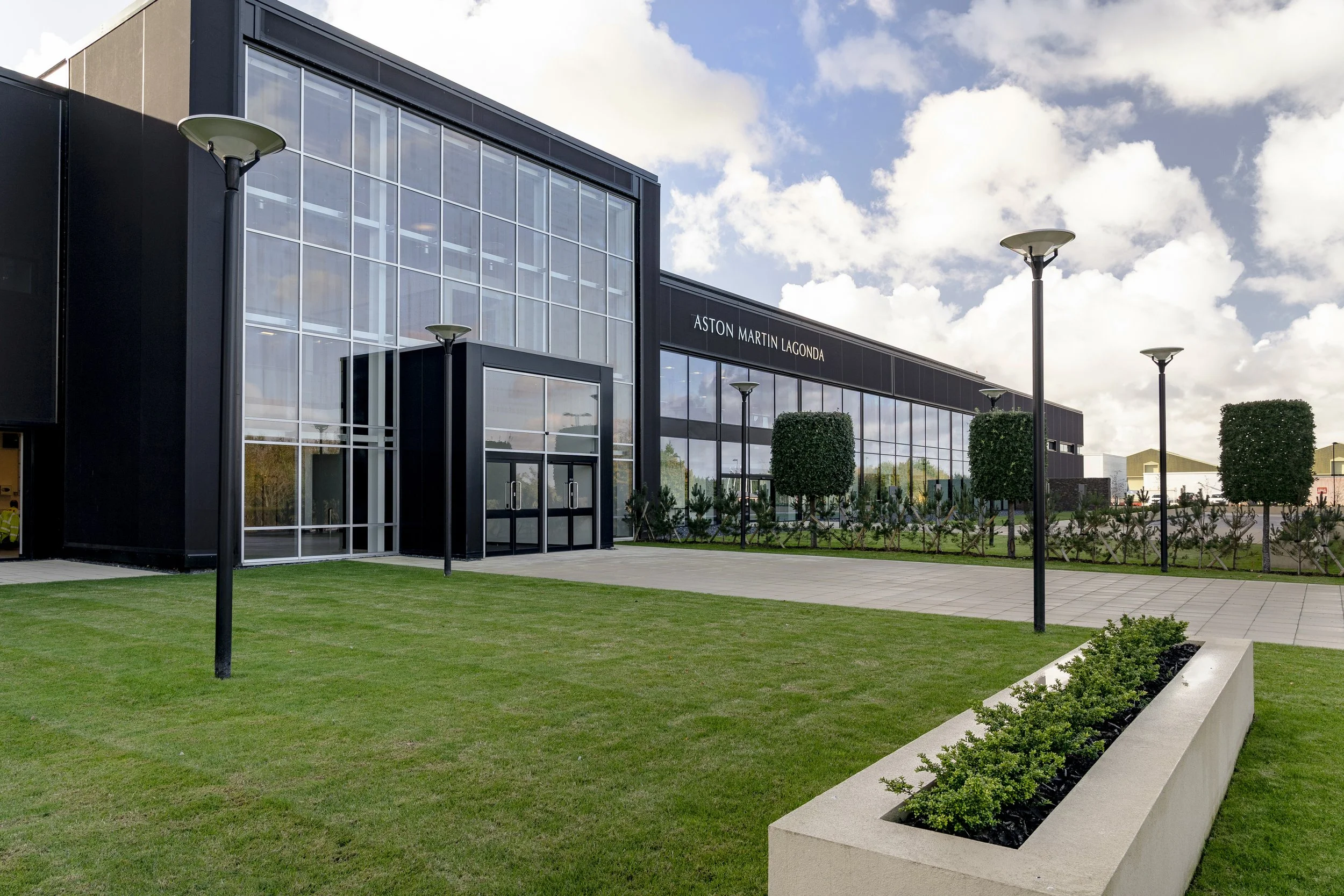
Image © Aston Martin Lagonda. Used for editorial purposes. Aston Martin St. Athan
As we explained previously, this is not reporting that Aston Martin is selling control of its road-car business, factories, engineering programmes or its ability to manufacture Aston Martin cars. The dispute concerns how parts of the commercial value associated with the Aston Martin name and other assets have been organised within the financing structure.
The creditors also want to understand why an alternative financing proposal from existing bondholders was not selected, while reporting has drawn attention to HPS’s wider relationships with Aston Martin and Lawrence Stroll. HPS already holds a minority interest in the Aston Martin Formula One operation and also has an investment in Authentic Brands. Those connections form part of the creditors’ scrutiny, but their existence does not by itself establish that anything improper occurred.
As of this week, therefore, the position is quite specific. Aston Martin has completed the principal £450 million financing. Some existing creditors continue to challenge aspects of its structure. Two creditor entities have now gone to a US federal court seeking evidence for anticipated proceedings in England. No English court has ruled that Aston Martin breached its financing agreements, improperly transferred assets or acted unlawfully, and the New York application does not make any such finding.
That’s a meaningful development from where we left the story in Issue 36, though not yet the legal showdown that some headlines might imply. FTP said then that we would return to the dispute if proceedings were formally advanced or further information emerged about the assets involved. We’ve reached the next stage, so we’ll continue to follow both the New York application and any subsequent English proceedings, without trying to decide a contractual argument that ultimately belongs before the courts.
The creditor dispute is the legal story that’s moved this week. Another Aston Martin case we’ve been following has been much quieter, but it remains unresolved and firmly on our watchlist.
ASTON MARTIN–GEELY LOGO DISPUTE - STILL ON OUR WATCHLIST

Image © Aston Martin Lagonda. Used for editorial purposes.
Another legal story we’ve been following has been considerably quieter. Regular readers may remember Aston Martin’s dispute with Geely over winged logos associated with the London Electric Vehicle Company (LEVC). Aston Martin opposed the registration of the designs, arguing that they conflicted with and could dilute its own famous wings marque.
The UK Intellectual Property Office (UKIPO) dismissed Aston Martin’s opposition earlier this year, after which Aston Martin lodged an appeal with the High Court. We last checked in on the developing case in Issue 23.
Since then, there has been no substantive public ruling that changes the position, so there is little value in retelling the entire dispute this week. We simply wanted to note that it remains on FTP’s watchlist and has not been forgotten.
Should the appeal produce a hearing, judgment or another meaningful development, we’ll return to it properly.
With the legal and corporate stories dealt with, we can turn to something rather more evocative: back to 1924, Brooklands, and a very early Aston Martin that has just found a permanent new home.
A 1924 ASTON MARTIN JOINS THE HERITAGE TRUST
The image below shows a 1924 Bamford & Martin side-valve Aston Martin from the same early period and is used for illustrative purposes. Follow the links below to see chassis 1944 itself, now part of the Heritage Trust collection.
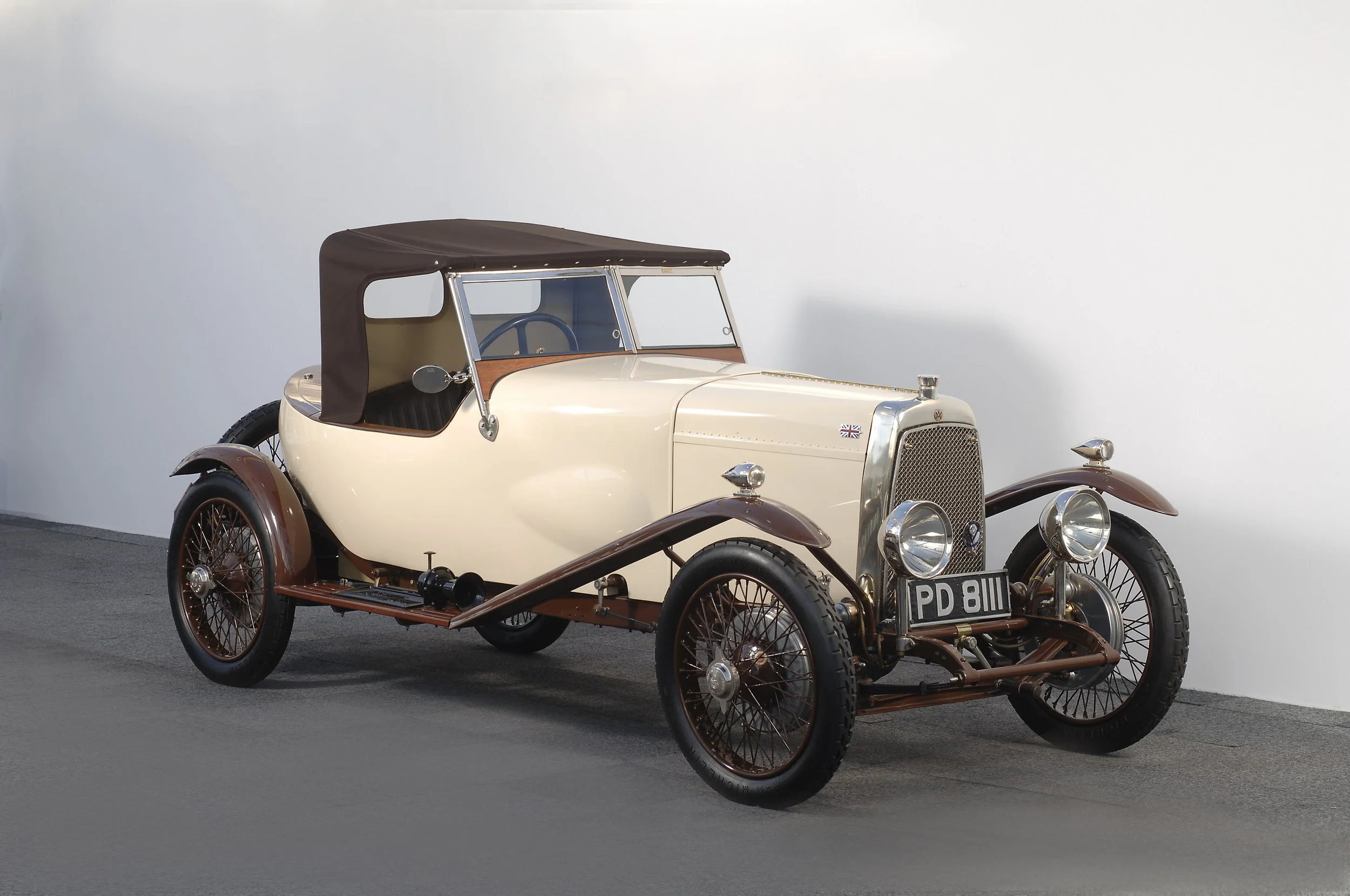
Image © Aston Martin Lagonda. Used for editorial purposes.1924 Bamford & Martin side valve team car
The Aston Martin Heritage Trust (AMHT) has welcomed a fascinating new addition to its collection: a 1924 Aston Martin, chassis 1944, generously bequeathed to the Trust by one of its members. To see images of the actual car, click HERE.
It takes us right back to Aston Martin’s formative Bamford & Martin years. Powered by a 1.5-litre four-cylinder side-valve engine, the car also carries genuine competition history, having raced at Brooklands in 1927 and 1928. AMHT says just 27 of the 61 cars from this early period are known to survive.
There is much more to chassis 1944 than we are going to reveal here, though. Its history, subsequent changes, arrival at the Trust and what may come next are explored in the latest Aston Martin Heritage Trust Podcast, Episode 58 - New Car for the Aston Martin Museum.
Garry Taylor is joined by Clare Hirst and Steve Waddingham for the conversation, and if you enjoy the very earliest chapters of Aston Martin history, it’s well worth making time for. We’ll link the episode here so you can hear the full story directly from the Heritage Trust, just click on the image below and we’ll take you straight there;
Image © Aston Martin Heritage Trust. Used for editorial purposes.
From one end of Aston Martin history to a very different transitional period, our next story brings us forward almost half a century, to the moment when the DBS began giving way to the Aston Martin V8 era.
FROM DBS TO V8 - WBT GARAGE DRIVES THE NEXT CHAPTER
WBT Garage has taken a wonderfully evocative 1973 Aston Martin V8 onto the road this week, giving us a good excuse to revisit one of the most fascinating transitional periods in Aston Martin history. To view the video, click the image below;
The terminology around these early cars can be surprisingly confusing. WBT refers to the featured example at different points as a DBS and a DBS Vantage, while some early post-DBS V8 cars can also carry DBS-related identifiers that blur the distinction further. Aston Martin’s own historical record helps straighten things out.
The DBS V8 arrived in 1969, combining William Towns’ DBS body with Tadek Marek’s 5.3-litre V8. Following Aston Martin’s sale to Company Developments in 1972, the V8-engined car was comprehensively facelifted, most obviously with single headlamps and a revised grille, and became the AMV8. The first of those cars retained Bosch mechanical fuel injection until August 1973. That places a 1973 Bosch-injected example such as the WBT car within the early AMV8 generation, commonly referred to today as Series 2, rather than as a 1973 DBS V8.
There’s another distinction worth making. DBS Vantage was not the V8 model. The Vantage badge applied to the higher-performance version of the earlier 4.0-litre six-cylinder DBS. Aston Martin then offered the short-lived six-cylinder AM Vantage during 1972-73, before the properly high-performance V8 Vantage arrived in 1977.
In simple terms, the family tree around this period runs broadly:
DBS → DBS Vantage / DBS V8 → AM Vantage / AMV8 → V8 Vantage
The WBT car therefore sits right in the middle of that transition. Its specification is appealing in its own right. The 5.3-litre V8 is paired with a ZF five-speed manual gearbox, complete with the distinctive dog-leg shift pattern, while the driving experience appears dominated by exactly the qualities you would hope for from an early 1970s Aston Martin: weighty steering, a substantial and planted feel, a wonderfully characterful V8 and an interior full of leather, wood and period switchgear.
There is one other detail in the video that deserves a little clarification. WBT highlights the rarity of these early AMV8s in left-hand-drive form, and the often-quoted production figure is indeed 32 factory LHD cars from a total Series 2 production run of 289. That figure is supported by period-specialist and auction records.
However, the presenter later explains that the particular car being driven was originally right-hand drive. Unless its factory documentation establishes otherwise, it should therefore be regarded as a later left-hand-drive conversion rather than one of those 32 cars originally built by Aston Martin in LHD form. That doesn’t diminish the appeal of the car itself. If anything, the video works best when it concentrates on what this generation feels like to drive rather than on rarity alone. The brakes on this particular example appear to need some sympathy, but the steering, the V8 torque and the sheer sense of occasion clearly leave an impression.
More than anything, it’s a useful reminder that Aston Martin model history rarely changes with one neat cut-off point. The DBS gradually gave way to the AMV8, while the Vantage name followed its own route from six-cylinder performance derivative to the much more formidable V8 model that arrived in 1977.
William Towns’ influence on Aston Martin did not end with the DBS and V8. A few years later he would create something far more radical in the Lagonda, and one particularly unusual example is now heading to auction after being transformed into a Shooting Brake.
MARKET WATCH - WHEN A LAGONDA BECAME A SHOOTING BRAKE
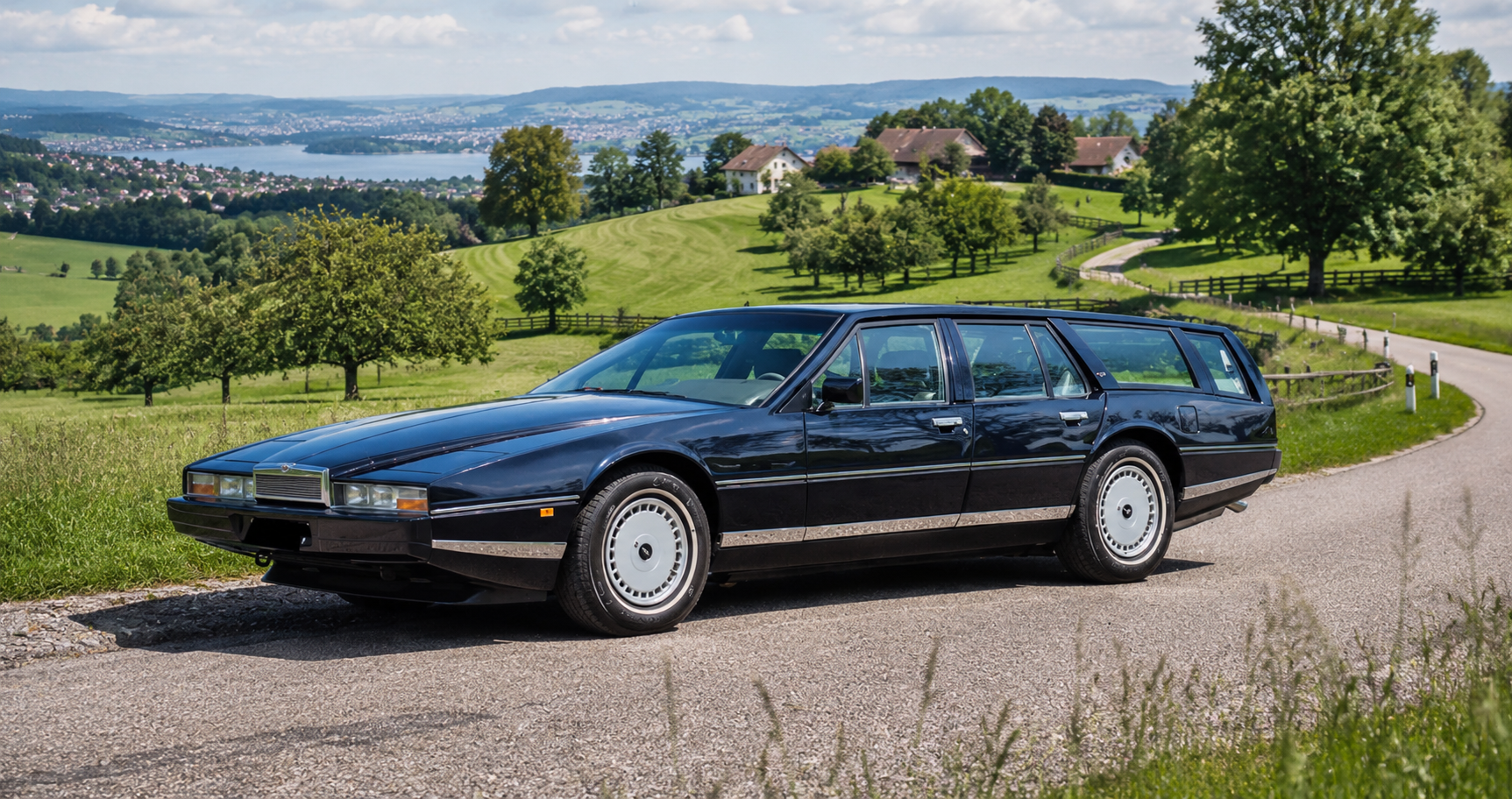
Image © Fuel the Passion. 1987 Series 3 Shooting Brake Lagonda - created for illustrative purposes.
William Towns’ influence on Aston Martin did not end with the DBS and V8. A few years later he would create something far more radical in the Lagonda, a car whose razor-edged shape and ambitious electronics made it one of the most distinctive luxury saloons of its era. As if a normal Lagonda were not unusual enough, one particularly remarkable 1987 Series 3 example is now heading to auction after being transformed into a Shooting Brake.
The car began life as one of just 76 Series 3 Lagondas reportedly produced. Its subsequent owner acquired it in 1996 and commissioned Swiss Aston Martin specialist Roos Engineering to undertake an extensive conversion, completed in 2000. The transformation retained the Lagonda’s unmistakable wedge profile but extended the roof into a completely new rear section, creating considerably more luggage space and a tailgate while preserving the basic dimensions of Towns’ original design.
This was considerably more involved than simply grafting an estate rear onto an existing saloon. Bespoke glass and bodywork were required, the luggage compartment was purpose-built, and the cabin received new Connolly leather, Alcantara, carpeting and trim. Even the rear lighting arrangement was reconsidered so that parking and indicator lights remained visible with the tailgate raised. Contemporary auction information also describes factory-supplied components being used during the project.
The mechanical side was addressed as well. The 5.3-litre V8 was rebuilt, the automatic transmission overhauled and the electrical systems renewed, while bespoke rear dampers were developed to accommodate the altered body and additional weight. Broad Arrow describes the conversion as factory-approved, with Aston Martin-supplied components used during the work. Given the significance of that claim, we’ll retain that attribution rather than present it as a broader Aston Martin factory production programme.
The result is certainly not subtle, although subtlety was never exactly the Lagonda’s speciality.
What makes the car especially interesting from a collector’s perspective is the reported relationship between the conversion and Aston Martin itself. Current auction reporting describes it as the only Series 3 Lagonda officially approved by Aston Martin for conversion into a Shooting Brake, with Roos Engineering using factory-supplied parts during the work.
It will cross the block at Broad Arrow’s Zürich Auction on 7th November 2026, held at The Dolder Grand, and is being offered without reserve with an estimate of CHF250,000-350,000 (approximately £229,000-£320,000 at current exchange rates).
We will therefore add it to the FTP Market Watch list and return to see where the hammer eventually falls. There’s something rather appealing about the whole exercise. The standard Lagonda already represented Aston Martin at perhaps its most daring, expensive, technically ambitious and styled unlike almost anything else on the road. Turning one into a Shooting Brake somehow manages to make an already extraordinary Aston Martin even less conventional.
From one famous piece of British motoring history to another, there was also an announcement this week that reaches beyond Aston Martin itself, but will certainly be of interest to many FTP readers. Top Gear has long given cars such as Aston Martins a prominent place in British motoring culture, and while we don’t yet know what shape the returning programme will take, or which cars it will feature, it seems a fair bet that Gaydon will eventually find its way back onto the screen. Because, perhaps sooner than many of us expected, Top Gear is coming back.
TOP GEAR IS COMING BACK - BUT WHO GETS THE KEYS?
It’s not strictly an Aston Martin story, but it’s difficult to imagine a revived Top Gear going very long without an Aston Martin appearing somewhere in the programme!
The BBC confirmed this week that the long-running motoring show will return, three years after it was placed on indefinite hiatus following Andrew Flintoff’s serious accident during filming at Dunsfold in December 2022. Speaking at the Edinburgh TV Festival, the BBC’s Director of Entertainment Ed Havard was unequivocal on the programme itself: “We can confirm that Top Gear is coming back.” What he wouldn’t confirm was when it will return, what form the new series will take or, perhaps most importantly, who will present it.
That last question has already produced plenty of speculation.
One of the names linked most prominently is Jimmy Carr. When Havard was specifically asked about the comedian, he stopped well short of confirming anything, saying only that Carr “would be a great host” and that the BBC was not yet discussing talent. Former England rugby player Joe Marler and model and motoring enthusiast Jodie Kidd have also appeared among the names being discussed. Carr would provide one particularly amusing Aston Martin connection for FTP readers.
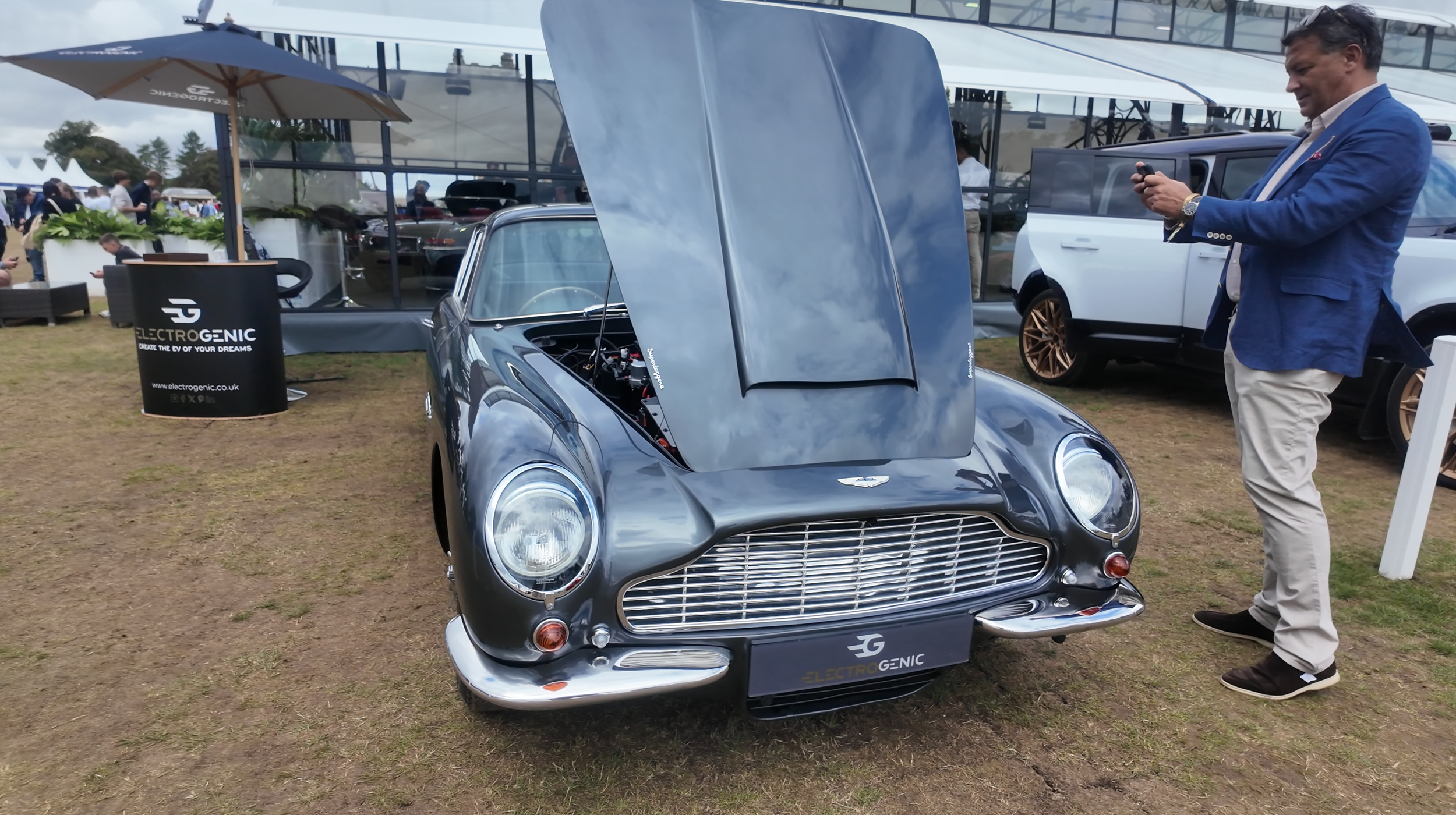
Image © Fuel the Passion. Jimmy Carr’s DB6 with an electric engine fitted.
Last year, Fuel the Passion saw and filmed his 1967 Aston Martin DB6 at Salon Privé, Blenheim Palace, shortly after Oxfordshire specialist Electrogenic revealed its conversion from petrol power to a fully electric drivetrain. The installation was deliberately engineered to be reversible, with Electrogenic saying that no cutting, drilling or welding of the original car was required.
It’s a car we returned to quite recently in Issue 36, when another famous Aston Martin owner unexpectedly brought the whole debate back into focus. Ed Sheeran’s DB5 was revealed to be undergoing a reversible electric conversion at Aston Workshop, with the original engine and associated components retained so that the car can, in principle, be returned to its original specification in the future. That story immediately reminded us of the electric DB6 we had seen and filmed at Salon Privé the previous year, and reopened a question that continues to divide enthusiasts: if the conversion is reversible, does that make removing the original combustion engine from an important classic easier to accept?
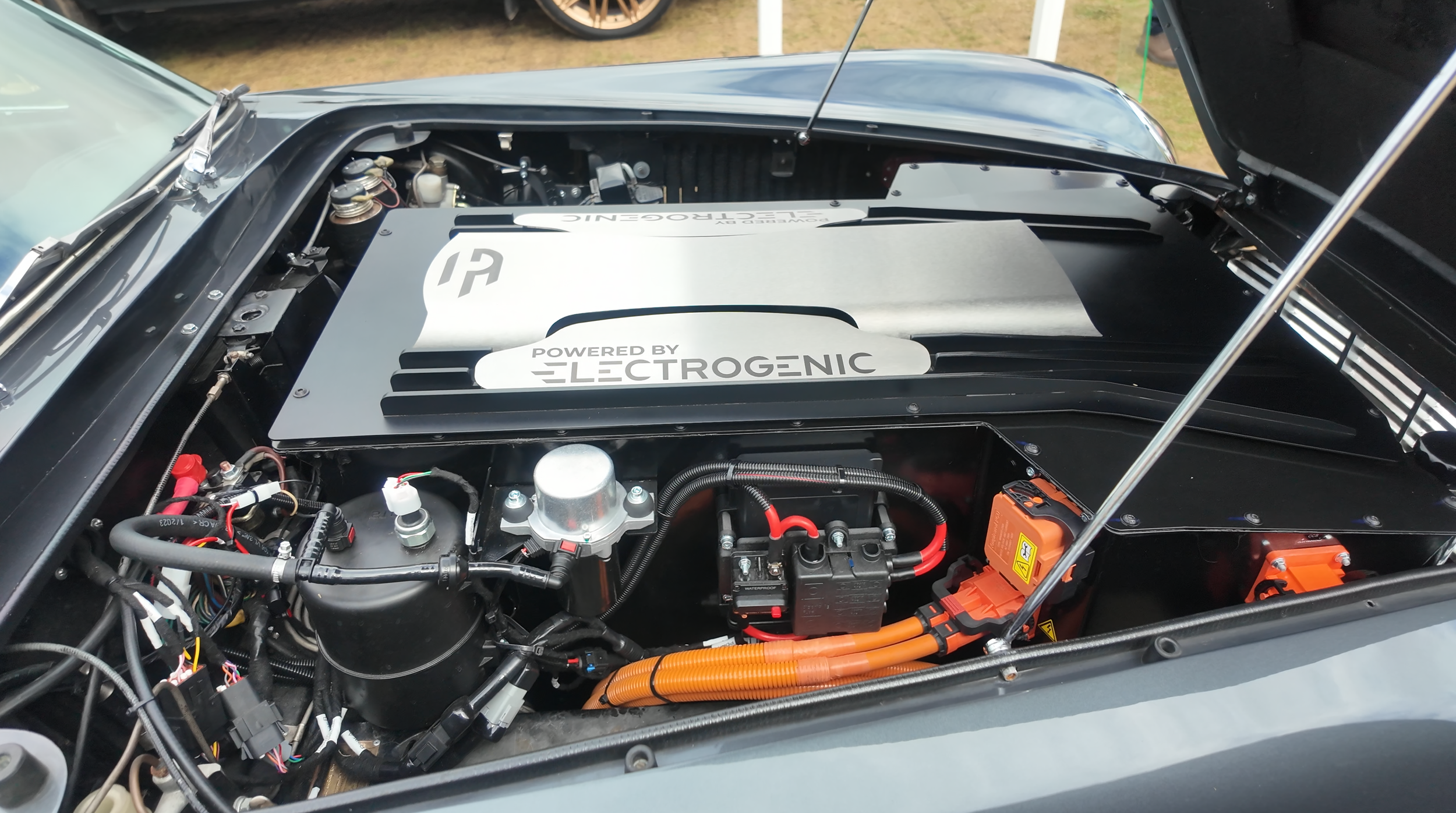
Image © Fuel the Passion. Jimmy Carr’s DB6 with an electric engine fitted.
At the time, our view was deliberately open-minded. A reversible conversion may help keep an old Aston Martin usable and preserve its original drivetrain rather than destroy it, but the engine, gearbox, sound, vibration and mechanical character are also an enormous part of what makes a DB5 or DB6 feel like the car Aston Martin originally created. Carr’s DB6 therefore remains a fascinating example of that debate in physical form, and, understandably, a divisive one.
Should Carr eventually be handed the Top Gear keys, perhaps his first Aston Martin feature is already sitting in his garage.
“Tonight on Top Gear… I explain why my DB6 no longer makes any noise.”
For now, though, anything beyond the programme’s return remains speculation. There’s no confirmed presenter line-up and no announced broadcast date, so we’ll leave the casting rumours where they belong until the BBC tells us more. What’s confirmed is that one of Britain’s most famous motoring programmes is coming back. Given the decades of Aston Martins that have appeared on Top Gear in its various forms, it will be fascinating to see what place the marque occupies when the programme begins this latest chapter.
Whatever shape the new Top Gear eventually takes, there will certainly be no shortage of interesting Aston Martins deserving a place in front of its cameras. That seems an appropriate point to turn to one Aston Martin currently looking for its next custodian, and to this week’s FTP Car of the Week.
FTP CAR OF THE WEEK
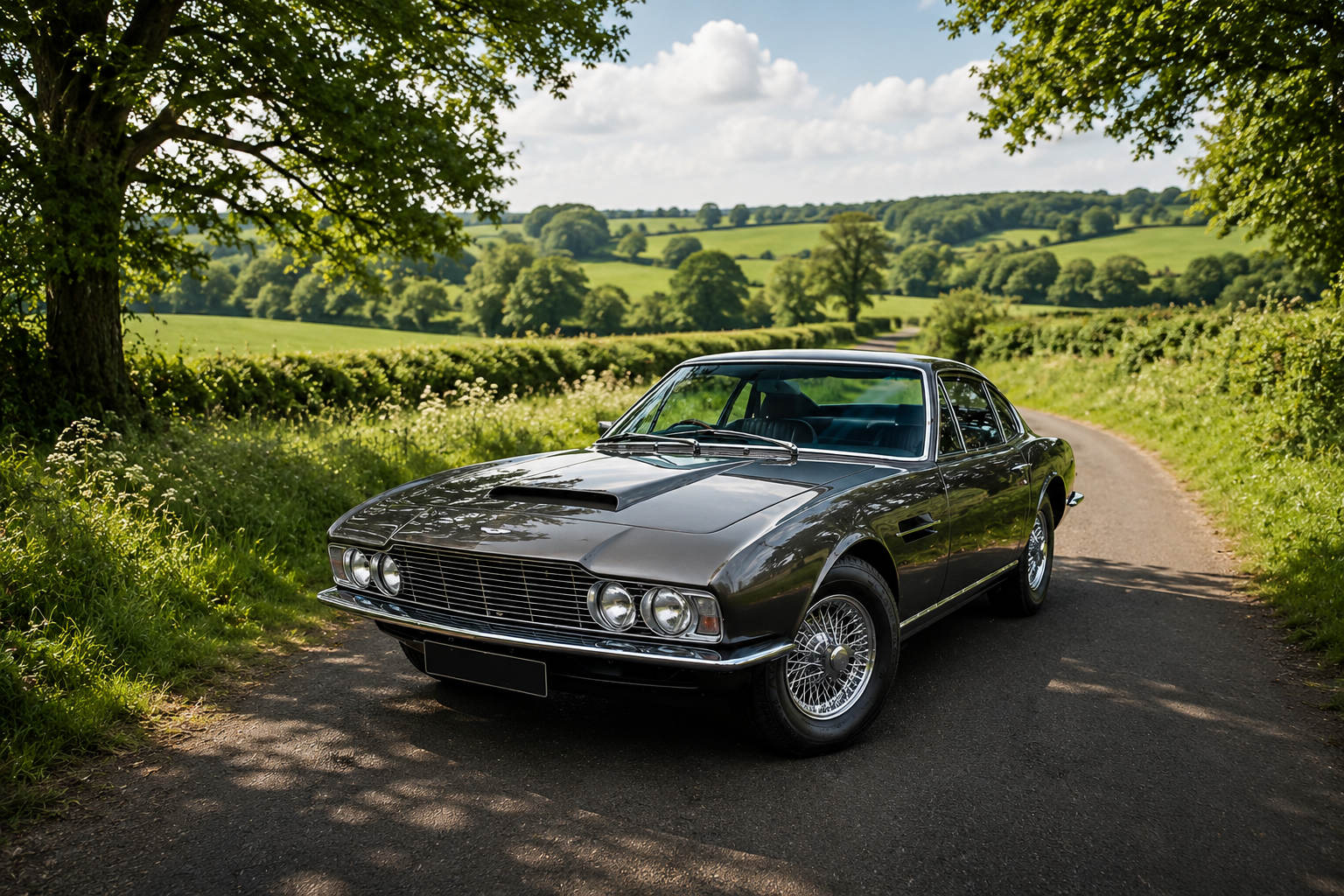
Image © Fuel the Passion. Created for illustrative purposes. 1968 Aston Martin DBS
This week’s choice takes us back to one of the most important turning points in Aston Martin design history, and to a car that sits intriguingly between the DB era that preceded it and the V8 generation that would follow.
Our FTP Car of the Week is a 1968 Aston Martin DBS, currently offered by Aston Workshop for £159,950.
Finished today in Cumberland Grey over Black leather, this right-hand-drive DBS has been through a substantial programme of sympathetic restoration and recommissioning by Aston Workshop. The body was taken back to bare metal, with work carried out to the floors, sills, A- and B-posts and door skins before repainting, while the interior was refreshed with new Wilton wool carpets, headlining and dashboard work. The original wood-rim steering wheel was restored rather than replaced, which is exactly the sort of detail we like to see retained on a car of this age. Mechanically, however, this is not simply a return to factory specification.
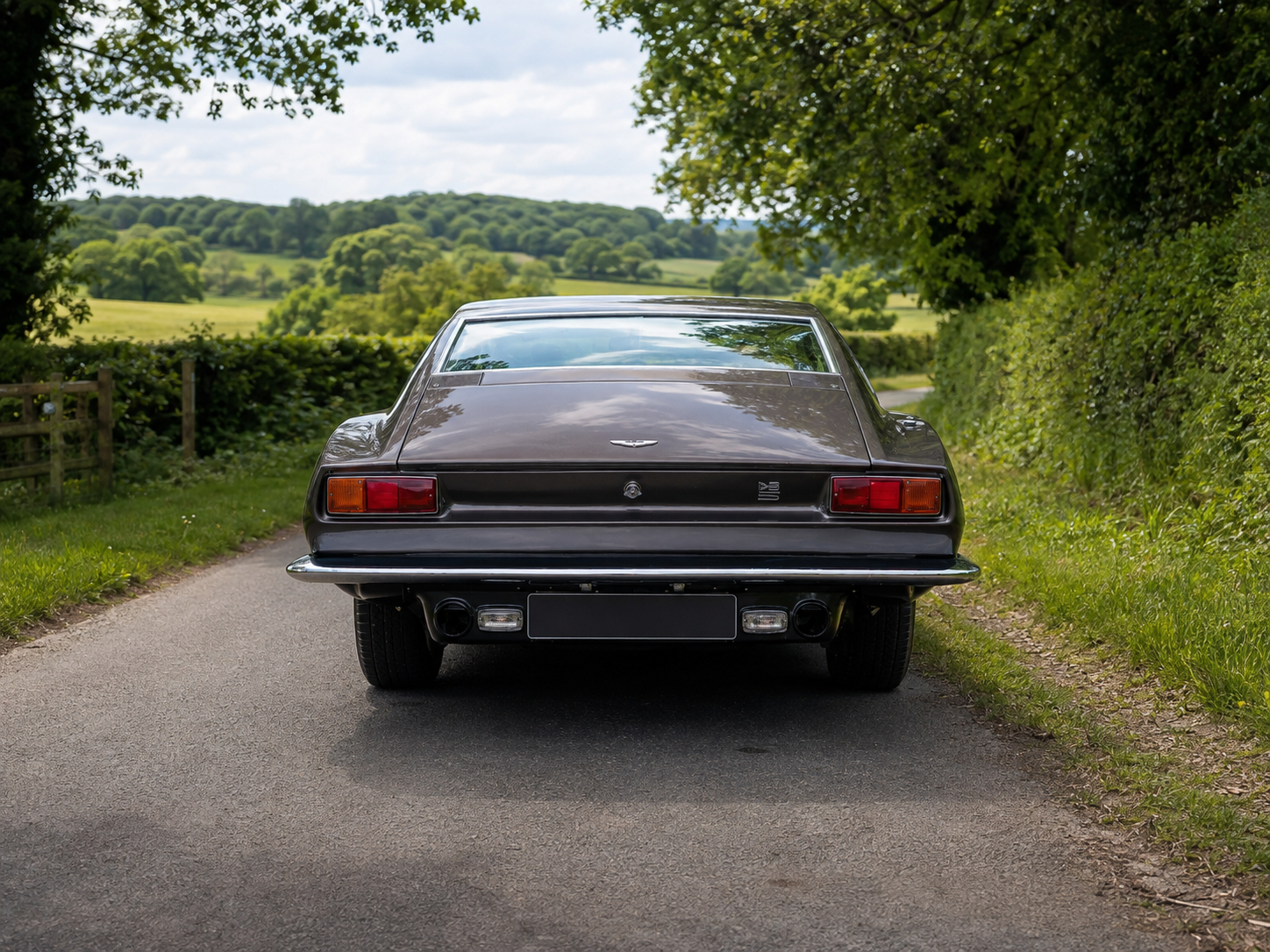
Image © Fuel the Passion. Created for illustrative purposes. 1968 Aston Martin DBS
The car has been upgraded to Vantage specification using an original Vantage engine, while Aston Workshop has also fitted a modern five-speed manual gearbox. Suspension and braking systems have been overhauled, a new wiring loom installed and an aluminium radiator added, creating what should be a considerably more usable interpretation of the original DBS without disguising what the car fundamentally is. That combination is a big part of why it caught our attention.
When the DBS appeared in 1967, it represented a very deliberate break from the elegant Touring-influenced shapes of the DB4, DB5 and DB6. Designed by William Towns, it was wider, lower and considerably more angular, introducing a shape that would ultimately carry Aston Martin well into the V8 era.
There was an irony to its launch, however. The DBS had been conceived with Aston Martin’s forthcoming V8 very much in mind, but that engine was not ready when the car reached production. Early examples therefore used the familiar 4.0-litre twin-cam straight-six, closely related to the engine already found in the DB6. The standard DBS was joined by the more powerful DBS Vantage, which retained that six-cylinder architecture but extracted substantially more performance from it. Only later, in 1969, did the car finally receive the 5.3-litre V8 for which its broader proportions had originally been intended.
That gives us an important distinction worth repeating:
DBS was the six-cylinder car.
DBS Vantage was the higher-performance six-cylinder version.
DBS V8 arrived later with Tadek Marek’s 5.3-litre engine.
That terminology will already be familiar to readers who joined us for the WBT Garage story earlier in this Roundup. There, we looked at the sometimes confusing transition from DBS V8 to the early AMV8 and why the Vantage name can so easily become muddled across this period. Our Car of the Week now gives us the opportunity to look at the other side of that family tree: the six-cylinder DBS in a much more focused Vantage specification.
The Aston Workshop car therefore occupies an appealing place within that history. It remains fundamentally a six-cylinder DBS, but with an original Vantage engine and a modern five-speed gearbox giving it a subtly more driver-focused character. Its history adds another layer.
The car was originally finished in Burnt Almond with White Gold leather and first supplied through H.R. Owen, equipped with power-assisted steering and a Motorola radio. It later spent time in the United States before eventually returning to the UK and coming into Aston Workshop’s care. Then there’s the glovebox.
It carries the signature of George Lazenby, giving the car a charming connection with On Her Majesty’s Secret Service. Lazenby’s James Bond drove a DBS in the 1969 film rather than this particular example, so we’re not suggesting any direct film provenance, but it’s nevertheless a lovely detail on a model so closely associated with that era.
Around 800 six-cylinder DBS examples were built between 1967 and 1972, making them considerably less common than their visual familiarity might suggest. More importantly, they represent an extraordinary moment in Aston Martin history: the last major six-cylinder grand tourer before Tadek Marek’s V8 changed the company’s mechanical identity for the next two decades. At £159,950, this is not being presented as an inexpensive route into classic Aston Martin ownership. What makes it interesting is the specification. This isn’t a concours-perfect time capsule attempting to recreate exactly how it left Newport Pagnell in 1968; it’s a thoughtfully restored DBS that has been sympathetically developed for somebody who intends to drive it.
There will always be a debate around cars like this. Should an important classic remain as close as possible to its original factory specification, or can carefully chosen period-appropriate and usability-focused upgrades make it a better Aston Martin to actually own? For this particular DBS, the original Vantage engine, modern five-speed gearbox and extensive recommissioning create a compelling answer to that question.
1968 Aston Martin DBS - £159,950 - Aston Workshop. A beautifully proportioned reminder of the moment Aston Martin stepped out of the traditional DB era and began looking towards something altogether more modern.
Our Car of the Week has taken us back to Newport Pagnell in the late 1960s, which feels an appropriate place to hand over to this week’s FTP Update. There’s been plenty happening behind the scenes: our long-awaited final Vanquish anniversary film from Aston Martin Works is now live, Blackthorn Racing has officially introduced its new collaboration with Fuel the Passion to its own community, and the cameras are being prepared for two very Aston Martin-heavy days next weekend, Salon Privé at Blenheim Palace on Saturday, followed by the Concours of Elegance at Hampton Court Palace on Sunday.
FTP UPDATE - FILMS, COLLABORATIONS AND A BUSY WEEKEND AHEAD
There’s been plenty happening behind the scenes at Fuel the Passion this week, and perhaps the nicest place to begin is with a film we’ve been waiting some time to share. Our third and final film in the dedicated three-part series celebrating 25 years of the Aston Martin Vanquish is now live. The People Who Built the Aston Martin V12 Vanquish was filmed in collaboration with Aston Martin Works at Newport Pagnell, and after receiving final approval from the Aston Martin Lagonda media team, it’s wonderful to finally be able to put it in front of you.
We spoke about the film in the introduction to this week’s Roundup, so I won’t repeat the whole story here, but I’m particularly pleased that this final chapter concentrates on the people behind the original car. Steve Waddingham’s conversations with colleagues he has known for many years bring out memories of engineering, trimming, production, testing, inspection and life at Newport Pagnell that simply cannot be recreated from a specification sheet or press release.
If you haven’t yet watched it, click on the image below, along with the first two films in the series and our behind-the-scenes Taking My Vantage Home film from Aston Martin Works listed below.
Calling this the final film in our three-part Vanquish series does not, however, mean we’ve finished with the Vanquish. Far from it! I’ve now started editing the footage we filmed earlier this year at the Aston Martin Owners Club Festival at the British Motor Museum, where one of the centrepieces of the gathering was another celebration of 25 years of the Vanquish. Dozens of first- and second-generation Vanquishes came together, alongside a much wider gathering of Aston Martins, and we also spent time speaking with several owners about their cars.
So while The People Who Built the Aston Martin V12 Vanquish completes the dedicated three-film anniversary series, there are still more FTP films on the way featuring plenty of Vanquishes. The British Motor Museum footage is now on the editing desk, and I’m looking forward to bringing that very different side of the 25th-anniversary celebrations to the YouTube channel in the weeks ahead.
GOODWOOD IN 40 SECONDS
Aston Martin has also released a short film looking back at its presence at the 2026 Goodwood Festival of Speed. At only around 40 seconds long, it’s a rapid-fire collection of cars, people and atmosphere set to music rather than a detailed feature, but it does a very good job of capturing just how much was happening across the weekend. Just click on the image below to watch;
It also brought back some particularly good memories for us at FTP. Goodwood was where Blackthorn Racing gave us exceptional access to the team, allowing us to get much closer to the people and machinery than we would normally have been able to. Among the cars we filmed was the #56 Écurie Écosse Blackthorn Aston Martin Vantage AMR GT3 Evo, fresh from completing the 24 Hours of Spa and still carrying the scars of that demanding race.
Our own film goes considerably further behind the scenes, including conversations with the team and a close look at that battle-worn Vantage. So if Aston Martin’s 40-second reminder of Goodwood leaves you wanting a little more, FTP’s Blackthorn Racing Goodwood film is available to watch now on our YouTube channel.
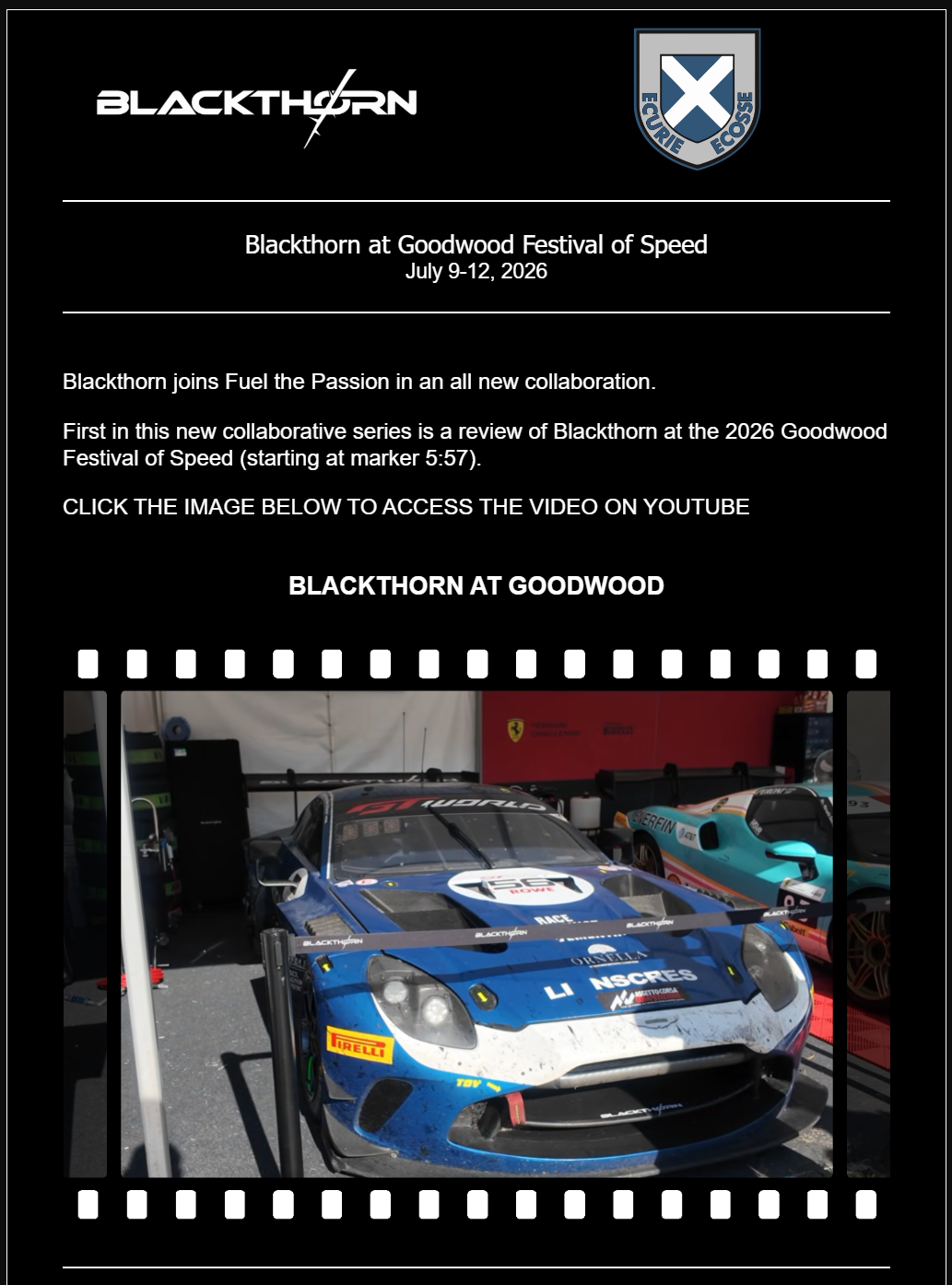
Image © Blackthorn Racing. Used for editorial purposes.
BLACKTHORN MAKES IT OFFICIAL
There’s also been an important development in FTP’s relationship with Blackthorn Racing. Blackthorn has now introduced its work with Fuel the Passion to its own community, announcing in its latest newsletter that “Blackthorn joins Fuel the Passion in an all new collaboration” and directing readers towards our Goodwood Festival of Speed film.
That was particularly pleasing to see because this relationship has developed naturally over recent months, from the access Blackthorn kindly gave us at Goodwood, through conversations with Claude Bovet and Julien Draper, and now towards something considerably more structured.
In fact, on the very day I am putting this Weekly Roundup together, I’ve had another meeting with Blackthorn to talk about what comes next.
I won’t spoil those plans before they’re ready to be shared, but there are some genuinely exciting things being discussed for the future. As that relationship develops, I’ll be taking you along for the journey, both here in the Weekly Roundup and through dedicated films on the Fuel the Passion YouTube channel.
There should be plenty more to come, so stay tuned.
THE ROAD TO SILVERSTONE 2027
Another longer-term journey has begun on the FTP website too.
The countdown to the FIA World Endurance Championship’s return to Silverstone on 23rd-25th April 2027 is now live on the Fuel the Passion homepage.
For me personally, that weekend is already shaping up to be something rather special. I still haven’t seen the Aston Martin Valkyrie racing in person, so the prospect of finally watching it competing in the UK, around Aston Martin Racing’s home circuit, is one I am very much looking forward to.
There’s a long way to go before April, of course, but the countdown is running, quite literally and we’ll follow the road to Silverstone throughout the months ahead.
NEXT WEEK - ADRIAN HALLMARK: TWO YEARS ON
Image © Bentley Motors. Used for editorial purposes. Adrian Hallmark, Ex-CEO of Bentley, current CEO of AML.
There’s another important piece of FTP work arriving next week too. Our next Featured Article takes a much deeper look at Adrian Hallmark’s first two years leading Aston Martin. We’ve followed his strategy closely since he arrived, from product planning and the developing model range to Formula One, electrification, profitability and the much harder financial realities surrounding the company. The article asks a question that has been sitting increasingly prominently behind much of our coverage:
Image © Bentley Motors. Used for editorial purposes.
Can the Bentley playbook really work at Aston Martin - or is Aston Martin simply too different a company, carrying too much financial pressure and too little room for error, for the same formula to succeed?
I’m particularly interested to hear what you think once you’ve read it. There are encouraging signs in some areas, difficult numbers in others, and Hallmark himself has now been in the role long enough for us to begin comparing the ambitions he set out with what has actually changed.
Adrian Hallmark: Two Years On - Can the Bentley Playbook Work at Aston Martin? goes live next Sunday, and I suspect it may prompt quite a few opinions.
NEXT WEEKEND - BLENHEIM AND HAMPTON COURT
Image © Fuel the Passion. Salon Privé, Blenheim Palace, 2025
Before we get anywhere near 2027 though, there’s a much more immediate date in the diary. Next weekend is going to be a particularly Aston Martin-heavy one for FTP.
On Saturday, I’ll be at Salon Privé at Blenheim Palace, followed on Sunday by the Concours of Elegance at Hampton Court Palace. The two events should provide very different collections of cars, but both promise plenty for Aston Martin enthusiasts. Hampton Court in particular has assembled an impressive historical spread for 2026 and will introduce a new Finest Aston Martin award within its main concours.
There are already several cars I am especially looking forward to seeing. Among them is the unique 2007 V12 Vantage RS Performance Concept we discussed earlier in this Roundup, particularly timely when an entirely new hardcore Vantage is being tested at the Nürburgring and those same two letters are once again appearing in speculation.
The extraordinary 1952 DB2 Drophead Coupé by Graber, last year’s Club Trophy winner, is returning too, alongside competition cars, pre-war Aston Martins and modern machinery stretching right through to cars such as the One-77 and Valhalla. The cameras will be coming with me to both Blenheim and Hampton Court, so these won’t simply be days out with the notebook. I’ll be filming at each event, with dedicated films planned for the Fuel the Passion YouTube channel in the weeks that follow.
Between the newly released Vanquish film, the British Motor Museum edit now under way, the developing Blackthorn collaboration, the countdown to Silverstone and two major Aston Martin-filled events next weekend, there’s quite a lot moving behind the scenes at FTP as we head into September. Which feels like a good point to gather together a few thoughts from what’s been another remarkably varied week in the Aston Martin world.
CLOSING THOUGHTS
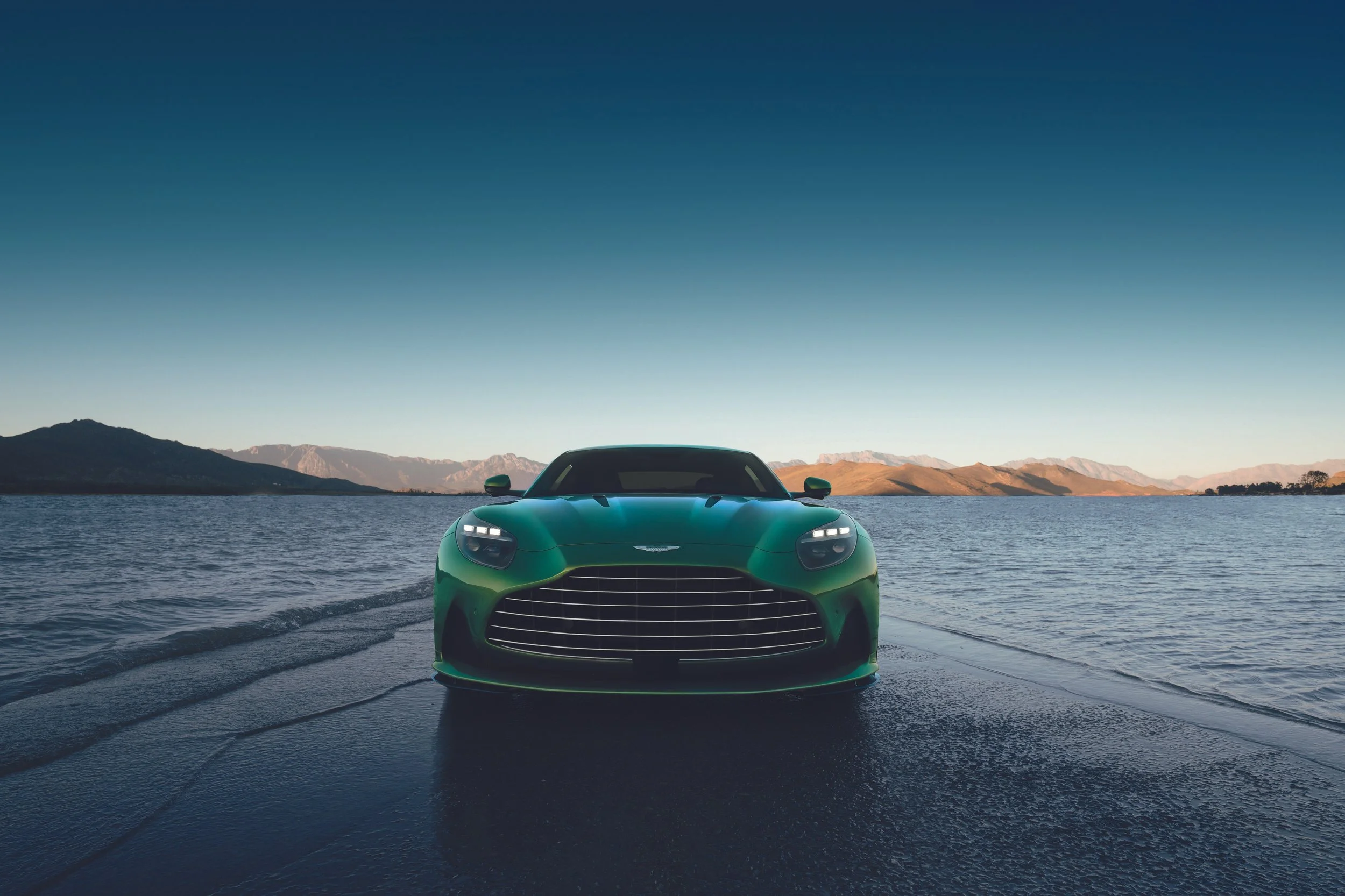
Image © Aston Martin Lagonda. Used for editorial purposes. Aston Martin DB12
There’s something rather satisfying about reaching the end of a Roundup like this one and realising just how many different chapters of Aston Martin history we’ve travelled through together.
From cars created more than a century ago to prototypes being pushed hard around the Nürburgring today, the Aston Martin story rarely seems to stand still for very long. There are moments of genuine progress, occasional frustrations, difficult questions that deserve to be asked and, thankfully, still plenty of cars that make you stop for a second and simply enjoy what you’re looking at.
Perhaps that’s part of what keeps this weekly journey so enjoyable for us. FTP was never intended simply to repeat the news that has appeared elsewhere during the previous seven days. I want us to understand where each story fits, remember what came before it and occasionally spot those lovely connections between past and present, whether that’s two letters on the back of a Vantage, an Aston Martin built more than 100 years ago finding a new home, or people who helped create a Vanquish 25 years ago sitting down and sharing memories that would otherwise be very easy to lose.
On that last point, I really do hope you get the opportunity to watch our latest YouTube film, The People Who Built the Aston Martin V12 Vanquish.
If you do, listen beyond the cars themselves. Listen to the way those men talk about Newport Pagnell, the work they did and the cars they helped create. Several have spent decades working for Aston Martin, and what comes through so clearly is the enormous care, pride and affection they have for the products they make, ultimately, cars created for people like us to enjoy. That human side of Aston Martin is one of the reasons I wanted to make the film in the first place, and I am very grateful to Aston Martin Works and everyone involved for allowing FTP to capture it.
I’ll also make one small appeal.

Image © Aston Martin Lagonda. Used for editorial purposes. Aston Martin DB12
People occasionally ask how they can help Fuel the Passion, and one of the simplest ways costs absolutely nothing. If you watch one of our YouTube films and have a moment afterwards, please leave a comment 🙏. It doesn’t have to be long and it certainly doesn’t have to agree with everything we say. Positive, critical, a personal memory, a question or simply a few words about the car, genuine engagement is enormously valuable to a small independent channel like ours.
YouTube and Google use many different signals when deciding whether content appears interesting enough to show to more people, and viewer interaction is part of that picture. A comment, a like or simply taking the time to join the conversation can give a film that little extra chance of finding another Aston Martin enthusiast who might enjoy it too.
The same applies here on the website. If something in the Roundup prompts a thought, leave a few words below if you have the time. I read them, I enjoy the conversations that develop from them, and they genuinely help FTP grow. Even if your view differs from ours, you’re always welcome here.
So that’s my little appeal this week: watch if you can, comment if you have something to say, and join in when you have the time. It’s genuinely appreciated.💚
There’s plenty waiting for us over the next few weeks: races still unfolding as I finish putting this edition together, another Featured Article almost ready to go, cameras being charged for next weekend and some very special Aston Martins hopefully waiting to be discovered. There are also a few things developing quietly behind the scenes that we are genuinely excited to take you along for, when the time is right.
For now, thank you, as always, for spending part of your weekend here with Fuel the Passion. Whether you read every word over a Sunday morning coffee, dip into the stories that interest you most, watch the films or join the conversation afterwards, I never take that time or support for granted.
Have a great rest of the weekend, and I hope the week ahead treats you well. Drive safely, enjoy whatever you have planned, and we’ll do it all again next Sunday.👍
See you on the next one! 👆
Kind regards,
Dan 💚💛
JOIN THE CONVERSATION 💬
One of the best parts of the Weekly Roundup is hearing what you think afterwards, so please do join in below. You’re very welcome to answer one of this week’s questions, all three, or ignore them completely and leave any other comment you wish, within reason, of course!
There are no “right” answers here. Different experiences and opinions are what make the discussion interesting, and whether you agree with FTP or see things differently, we would genuinely like to hear your view. 👇
1. Is Aston Martin’s progress at Zandvoort enough to make you more optimistic about the AMR26-Honda project, or do you want to see it repeated at very different circuits before drawing any conclusions?
2. If Aston Martin really does revive the RS name for the hardcore Vantage, what would you want “Road Sport” to mean today; more power and aero, substantial weight reduction, a manual gearbox, or something else entirely?
3. Our Car of the Week has been sympathetically upgraded with a Vantage engine and modern five-speed gearbox. With an important classic Aston Martin, would you prioritise complete originality, or are carefully chosen improvements worthwhile if they make the car considerably better to drive and enjoy?
Please leave your thoughts below if you have a moment. A few words, a longer answer, a memory of your own or even a completely different subject from this week’s Roundup are all very welcome. The conversation is yours.👇
Where next? How about…
