
Issue 37 - Fuel the Passion (FTP) Weekly Roundup
Week Ending 16th August 2026

Image © Aston Martin Lagonda. Used for editorial purposes. Aston Martin Valen.
Editor’s Introduction - Dan, Fuel the Passion
For once, the phrase “a very warm welcome” feels rather more literal than usual.
It’s been another extraordinary week of heat across the UK and much of Europe, with exceptionally dry conditions and devastating wildfires providing a much more serious backdrop to the sunshine. Wednesday evening then gave millions of people a reason to turn their attention skywards, as a solar eclipse briefly provided nature’s own rather spectacular way of turning the brightness down.

Image © Fuel the Passion. A hot summer scene, Holme, West Yorkshire, UK, August 2026.
Wherever you’re reading from, whether somewhere equally hot, considerably cooler or much further afield, I hope you, your families and your four-legged companions are keeping safe and well.
So, perhaps with a cold drink rather than the traditional Sunday-morning cuppa this week, a very warm welcome to Issue 37 of the Fuel the Passion Weekly Roundup.
The photograph at the very top of this week’s Roundup wasn’t actually the photograph I expected to be there when I began putting Issue 37 together. Then Friday happened. Aston Martin arrived at The Quail during Monterey Car Week and unveiled Valen, an extraordinary new 850PS, front-engined V12 supercar limited to just 150 examples worldwide. Suddenly, an already substantial Weekly Roundup required rather a lot of late revision.
When Aston Martin reveals a completely new car, particularly one carrying a new name and potentially offering some clues about the future direction of the company, simply adding a few paragraphs at the last minute didn’t feel sufficient. We wanted to give Valen proper attention and understand what Aston Martin has actually created.
That has meant looking considerably further than the headline 850PS figure. We’ve explored how Valen differs from Vanquish, compared it with Valour, Valiant, Valhalla and Valkyrie, examined its weight-saving programme, GT4-derived transmission development, Cyber Tyre technology, extraordinary titanium exhaust, design, interior and the newly formed Special Vehicle Operations department behind it. We’ve also looked at the business thinking surrounding cars such as this, Adrian Hallmark’s own explanation of the strategy, the initial reaction from the motoring media and well over 1,000 enthusiast comments to see what everybody else appears to think.
So, forgive the length of our Valen coverage this week. It’s become something approaching a feature within the Roundup, but it isn’t every day Aston Martin unveils a brand-new car. If we were going to cover it, we wanted to give the story the attention we felt it deserved.
Valen may have taken the headline at the last moment, but it certainly hasn’t erased everything else happening at Monterey.
The three wonderful DB12 S ‘VMF’ cars from Q by Aston Martin take us back 75 years to Aston Martin’s early post-war competition programme, and regular FTP readers may recognise why that story has a particularly nice connection for us through José Romão de Sousa and VMF 37. We’ll also step inside the invitation-only House of Aston Martin, visit Astons On The Avenue and continue following the wider celebration of Aston Martin history taking place across Monterey Car Week.
Away from California, attention is beginning to turn towards Zandvoort.
Image © Honda Motor Co., Ltd. Used for editorial purposes.
One week from today the Dutch Grand Prix will be under way, and after the encouraging progress Aston Martin showed with the revised AMR26 in Hungary, Honda’s latest power-unit development gives us another important piece of the recovery story to follow. The real question remains not simply whether Aston Martin improves, but whether it’s improved faster than the cars it’s trying to catch.
There’s plenty happening elsewhere in motorsport too. Nicki Thiim is back in DTM action at the Nürburgring and remains firmly involved in Aston Martin’s first serious title challenge in the series, while Snetterton hosts an important British GT weekend. We’ve also seen an established IMSA team commit to the Vantage GT4, creating a particularly timely connection with the genuine GT4 racing car we explored at Aston Martin Leeds only a few weeks ago.
The business behind all these cars remains impossible to separate entirely from the products themselves. We return briefly to Aston Martin Lagonda’s difficult financial position and the continuing question of how a company producing such highly regarded cars converts that desirability into dependable profitability and cash generation.
That question leads naturally towards something else developing behind the scenes at FTP, which you may have seen advertised on the front page. Work continues on our next Featured Article, Adrian Hallmark: Two Years On – Can the Bentley Playbook Work at Aston Martin? Valen has arrived at a fascinating moment in that research, particularly given what Hallmark is now saying about limited-production Specials, value-led growth and the importance of continually creating something sufficiently desirable to bring high-value customers back to Aston Martin.
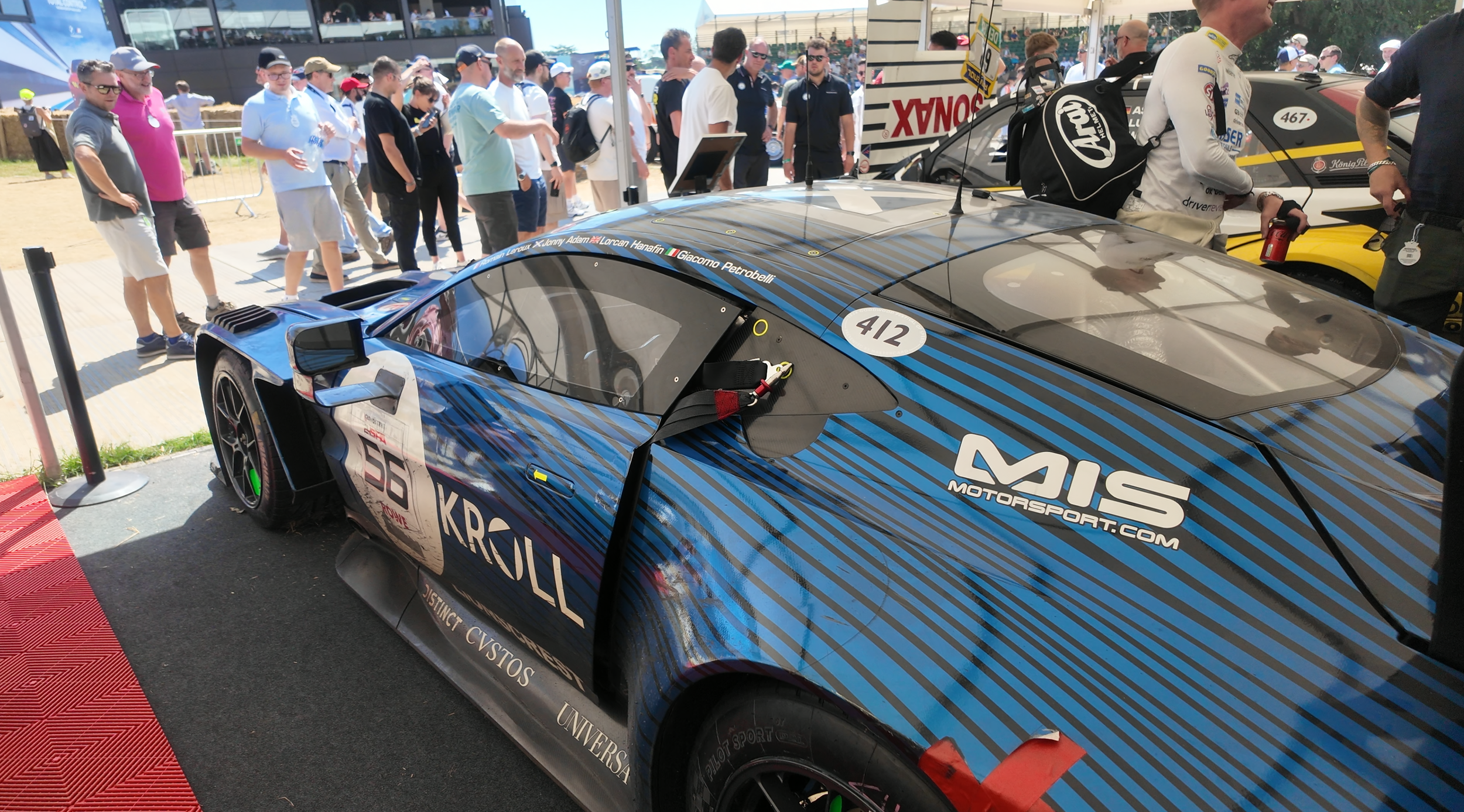
Image © Fuel the Passion. Blackthorn Racing’s Aston Martin Vantage GT3
Closer to home, work continues on the next Fuel the Passion film from the Goodwood Festival of Speed, where Blackthorn Racing very kindly invited FTP behind the scenes. That edit is occupying rather a lot of my screen time at present, although there’s still something rather enjoyable about spending several hours surrounded by footage of an Aston Martin Vantage GT3 carrying the scars of the 24 Hours of Spa.
So Issue 37 has become rather larger than originally intended. We’ve a completely new Aston Martin, extraordinary history at Monterey, Formula One’s next test approaching, championship battles on the racetrack, another significant development for the Vantage GT4 programme, the continuing financial story and plenty happening behind the scenes here at FTP. But there can really only be one place to begin this week.
Meet the Aston Martin Valen.
Aston Martin Valen - 850PS, 150 Cars and a Bold New Direction for Aston Martin
Every so often, a story arrives late in the week that changes the entire shape of the Weekly Roundup. Aston Martin unveiling an extraordinary new V12 special at Monterey Car Week certainly qualifies. Meet the Aston Martin Valen.

Image © Aston Martin Lagonda. Used for editorial purposes. Aston Martin Valen.
Created through Q by Aston Martin with the involvement of the company’s newly formed Special Vehicle Operations department, Valen is an extraordinary new front-engined, rear-wheel-drive V12 supercar that will be limited to just 150 examples worldwide, with first deliveries scheduled for the second quarter of 2027.
Beneath its full carbon-fibre body sits the most powerful version yet of Aston Martin’s 5.2-litre twin-turbocharged V12, producing 850PS and 1,000Nm of torque. Aston Martin quotes 0-60mph in 3.0 seconds and an electronically limited maximum speed of 214mph, with an eight-speed ZF automatic transmission sending everything to the rear wheels.
Those figures alone make Valen worthy of attention, but simply describing it as an 850PS Aston Martin misses much of what makes this car interesting.
Aston Martin has also released a short official film introducing Valen, which I’ve linked below. At just over a minute long, it isn’t a technical walkaround or conventional launch film; instead, it uses a sequence of highly polished, render-like close-ups to tease individual details of the car before finally revealing the complete shape. We see the lighting, bodywork, interior stitching and surface treatments in extreme close-up, accompanied by a fast, modern soundtrack, before the camera pulls back and Valen finally appears in full.
It’s a clever way of introducing the car because the design is revealed almost piece by piece, encouraging you to study the details before deciding what you think of the overall shape. Aston Martin’s accompanying description is also interestingly restrained, calling Valen “the most powerful front engine V12 car in our history” and confirming once again that production will be limited to 150 examples worldwide.
Once you’ve seen the complete car, however, the obvious next question is what sits beneath all of that visual theatre, and whether Valen represents something genuinely different from the Aston Martins already beneath it.
There are questions beneath the headline numbers. How different is Valen from the existing Vanquish? Where does it fit alongside Valour, Valiant and Valhalla? Is it really the world’s most powerful front-engined production car? Why has Aston Martin moved away from the manual gearbox used by its previous two V12 specials? Perhaps most importantly, why does a 150-car Aston Martin costing somewhere around seven figures exist at all, and what does Valen tell us about the direction Adrian Hallmark wants the company to take?
That’s where we need to look a little deeper.
When Did Aston Martin Last Reveal Something This Significant?
Major new Aston Martin models don’t arrive very often. The closest recent comparison is probably Valhalla, whose final production specification was revealed in December 2024 before making its public dynamic debut in Monaco during 2025. Valhalla was a genuinely radical departure for Aston Martin: its first series-production mid-engined supercar, first plug-in hybrid and a car built around an entirely different technological philosophy.
Valen is different.
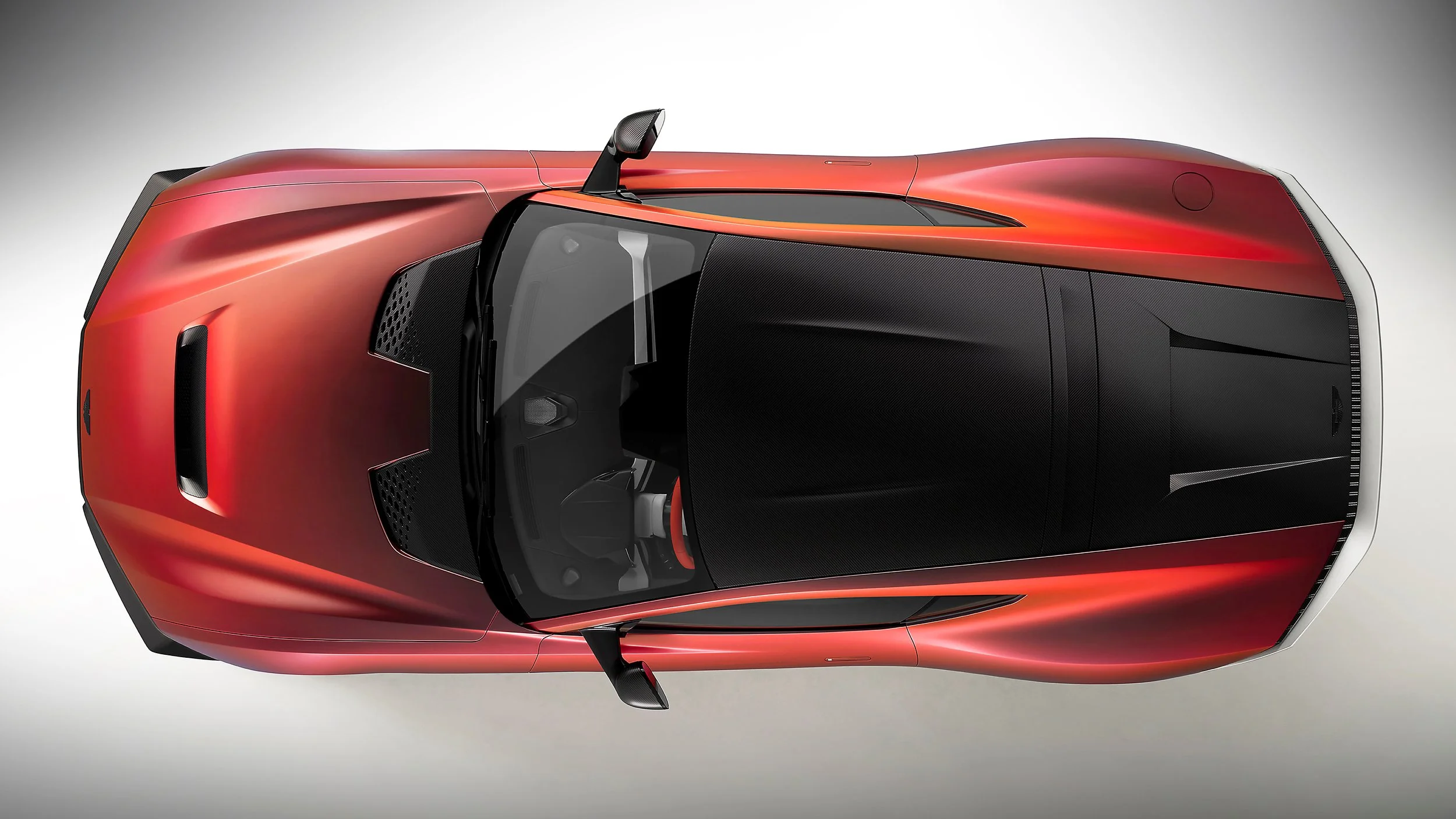
Image © Aston Martin Lagonda. Used for editorial purposes. Aston Martin Valen.
Valen introduces a new Aston Martin name, full carbon-fibre bodywork, a completely different visual identity, extensively revised chassis behaviour and a new interior architecture, but it isn’t built around an entirely clean-sheet platform. Aston Martin’s original launch announcement referred carefully to its existing “core V12 platform”, which is why FTP initially resisted simply describing Valen as a Vanquish derivative.
Adrian Hallmark has since provided rather more clarity. Speaking to evo, Aston Martin’s CEO described the company as now having two important high-performance engineering toolkits: the mid-engined architecture represented by Valhalla and the front-engined 12-cylinder architecture associated with Vanquish. Crucially, Hallmark described Valen as the first limited-production special to be developed from that current front-engined V12 architecture.
That still doesn’t make Valen simply a Vanquish wearing different bodywork.
The architecture provides a starting point, but the carbon-fibre body, weight-saving programme, revised suspension and steering behaviour, different transmission calibration, aerodynamics, exhaust system and electronic systems all take the car considerably further. The distinction is important because one of the most obvious questions surrounding Valen is whether its rarity and reported price are being matched by enough engineering substance beneath the surface.
What emerges is the latest evolution of a very recognisable Aston Martin idea: a huge V12 mounted ahead of the driver, power sent to the rear wheels and an enormous amount of performance wrapped inside something that still retains enough luggage space and refinement to cross countries rather than merely attack circuits.
The execution, however, is rather less traditional.
Only 15PS More Than Vanquish - So What Has Really Changed?
This is probably the first statistic that made me stop and look again. The current Vanquish already produces 835PS and 1,000Nm, with exactly the same quoted 214mph top speed. Valen therefore gains only 15PS, while maximum torque remains unchanged.
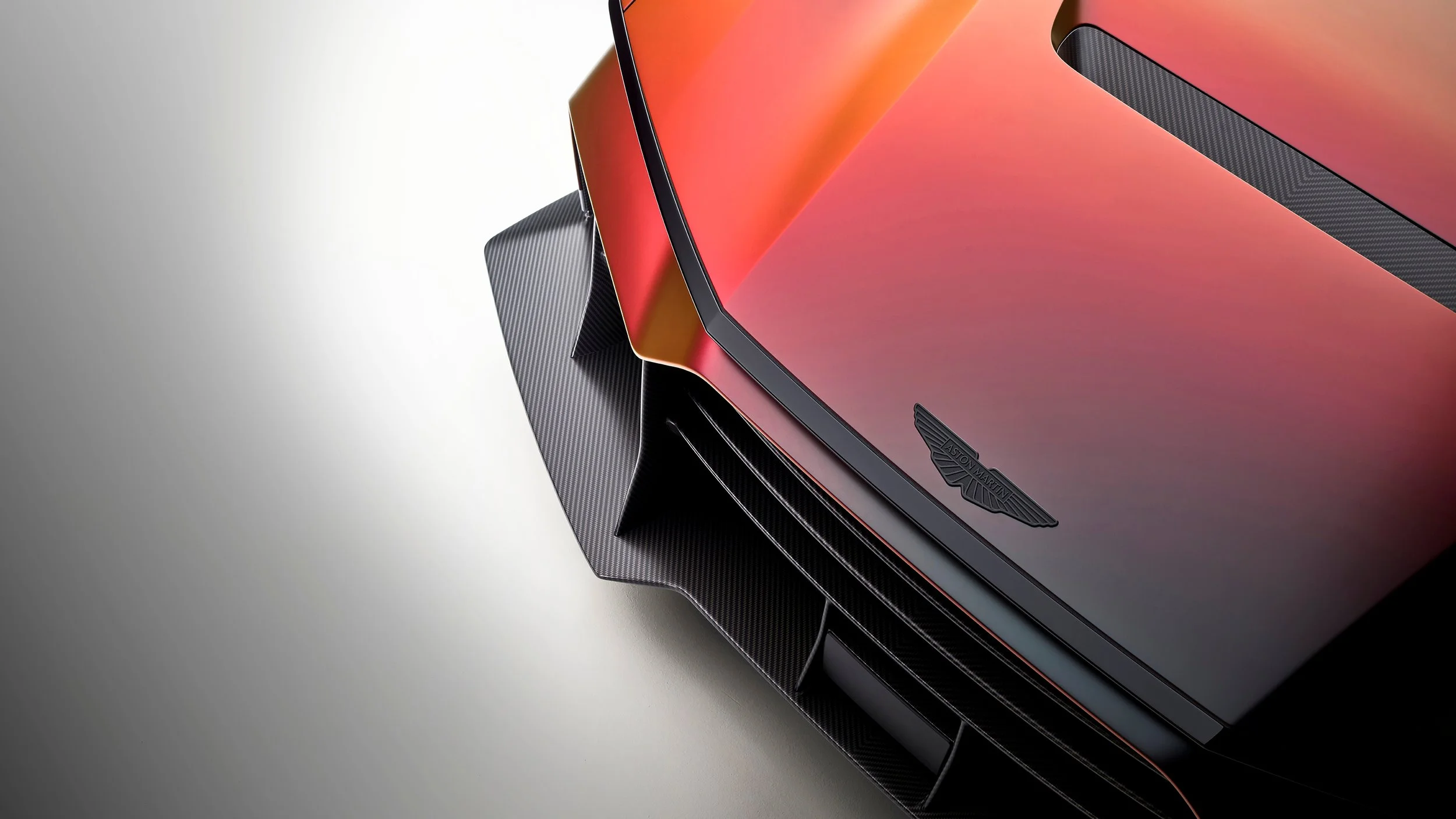
Image © Aston Martin Lagonda. Used for editorial purposes. Aston Martin Valen
Suddenly, 850PS doesn’t seem quite as transformative. Aston Martin says the programme removes up to 110kg compared with its core V12 platform, while substantially revising the suspension, steering, braking, transmission behaviour, throttle calibration, aerodynamics and electronic control systems. Hallmark has also spoken about a different rear-axle ratio and says the combination of lower weight, revised transmission behaviour and the wider chassis changes is intended to create a driving experience completely different from Aston Martin’s existing road cars.
Interestingly, when Bloomberg effectively asked Hallmark the same question, why bother moving from Vanquish’s 835PS to 850PS?, his answer was that the car isn’t all about the engine. The V12 remains its heart, but the point of Valen is what Aston Martin has changed around it. That makes the extra 15PS arguably one of the least important statistics on the car. If Valen succeeds dynamically, its advantage should come from the reduction in mass, faster responses, altered gearing, chassis calibration and the way all of those elements work together, rather than from another dramatic horsepower number.
There’s also a useful warning here against judging these very expensive specials only by their peak output. Hallmark told evo that cars in this price bracket need genuine technical substance behind them; Aston Martin cannot simply attach an enormous price to something because it’s scarce. His argument is that each special needs its own engineering story capable of justifying its position. With Valen, he identifies that story around power, sound, suspension and the overall driving experience.
Whether customers, and eventually independent road testers, agree that Aston Martin has created enough differentiation is a separate question. For now, at least, we have a much clearer idea of what the company believes buyers are paying for.
One Important Number Aston Martin Hasn’t Given Us
Here’s where the launch material becomes slightly frustrating. Aston Martin tells us that Valen can be up to 110kg lighter, but it doesn’t actually tell us what the finished car weighs. For comparison, Aston Martin publishes an EU-certified unladen mass of 1,910kg for Vanquish.
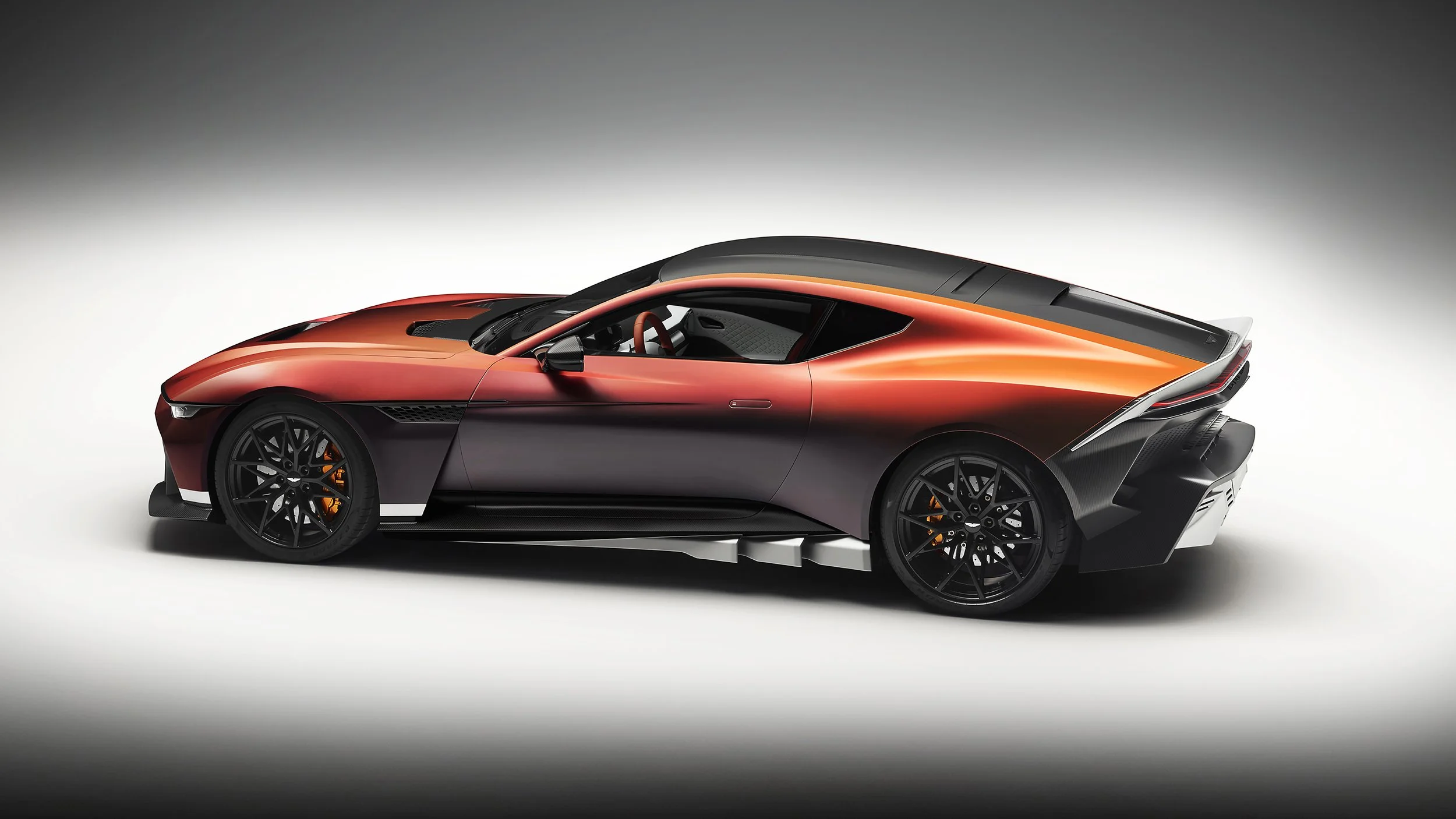
Image © Aston Martin Lagonda. Used for editorial purposes. Aston Martin Valen.
It would therefore be tempting to subtract 110kg and announce that Valen weighs around 1,800kg. Aston Martin says “up to” 110kg, explicitly includes lightweight options within that figure and hasn’t confirmed that the measurement basis is directly comparable with Vanquish’s EU-certified unladen figure. The optional lightweight package alone accounts for 16.9kg, through machined aluminium suspension arms and knuckles together with titanium chassis bolts.
Until Aston Martin publishes Valen’s official mass, an exact weight or power-to-weight ratio would therefore be an assumption. That number is one we’ll be watching for.
Carbon, Magnesium, Titanium - The Weight-Saving Programme
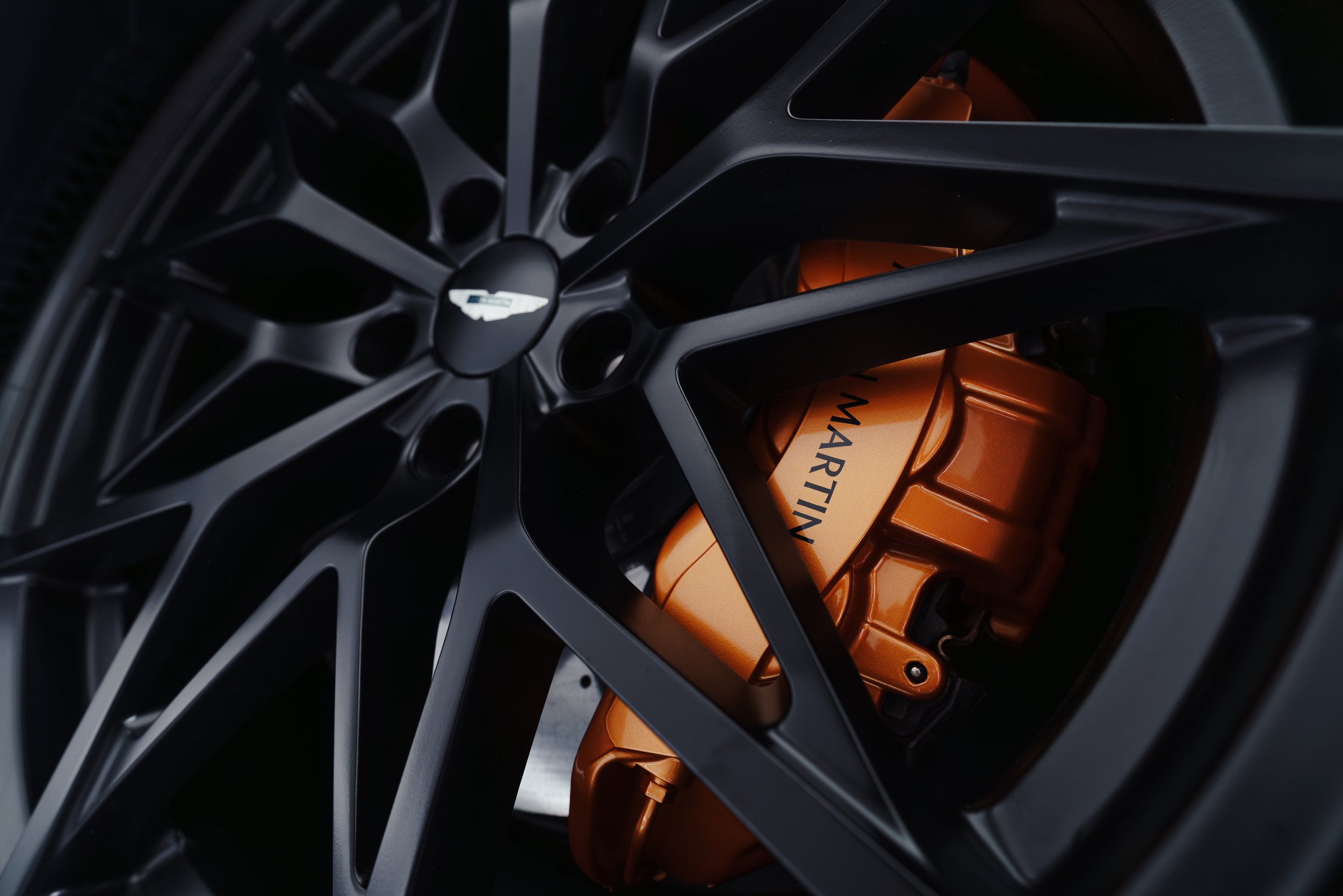
Image © Aston Martin Lagonda. Used for editorial purposes. Aston Martin Valen.
What Aston Martin has explained is where some of the mass has gone. The entire body is carbon fibre, while lightweight magnesium wheels are standard. Carbon fibre, aluminium, titanium and magnesium are used extensively through the car, with the optional lightweight package concentrating on areas of the suspension where reducing mass can influence not only total vehicle weight but also the way the wheels and suspension respond.
Valen also uses a solid-mounted rear subframe, model-specific springs and helper springs, together with Bilstein DTX semi-active dampers. Steering, electronic stability control, damper calibration, camber and braking behaviour have all received specific development to give the car its own character.
Interestingly, Aston Martin repeatedly talks about retaining compliance and long-distance usability rather than simply making everything stiffer. That seems significant. For all its outrageous appearance, Valen is apparently still expected to function as an Aston Martin that owners might genuinely travel in. There are even winter tyres listed in the official specification.
A Genuine Connection with the Vantage GT4
One engineering detail feels particularly relevant to FTP. Valen retains an eight-speed ZF automatic gearbox, but Aston Martin says its new shift strategy incorporates race-proven learning developed through the Vantage GT4 programme, allowing faster and more engaging changes across the driving modes.
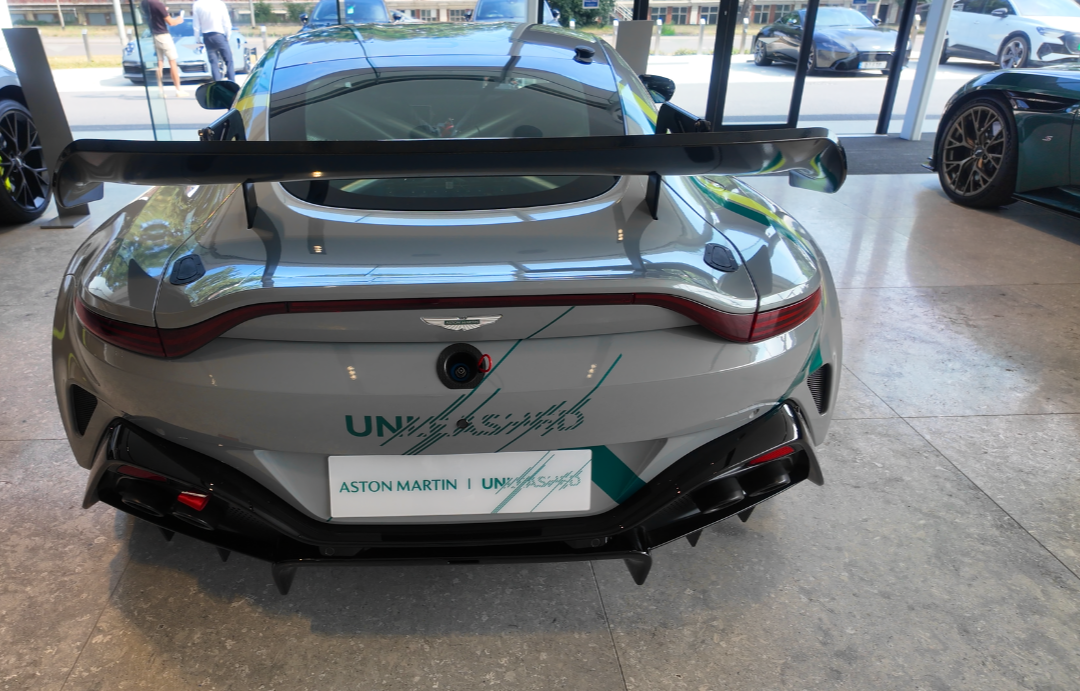
Image © Fuel the Passion. Aston Martin Vantage GT4 Unleashed, JCT600, Aston Martin, Leeds
That connection feels especially timely because later in Issue 37 we’ll be talking about the Vantage GT4 again, including Czabok-Simpson Motorsport’s (CSM) decision to switch its IMSA Michelin Pilot Challenge programme to Aston Martin machinery. We also recently spent time with a genuine Vantage GT4 UNLEASHED car at Aston Martin Leeds. This is therefore something considerably more meaningful than fitting a road car with a racing stripe and describing it as motorsport-inspired.
Knowledge developed through the behaviour of an actual Aston Martin competition car has helped shape the transmission response of one of the company’s most exclusive road-going V12 specials. That’s genuine technology transfer.
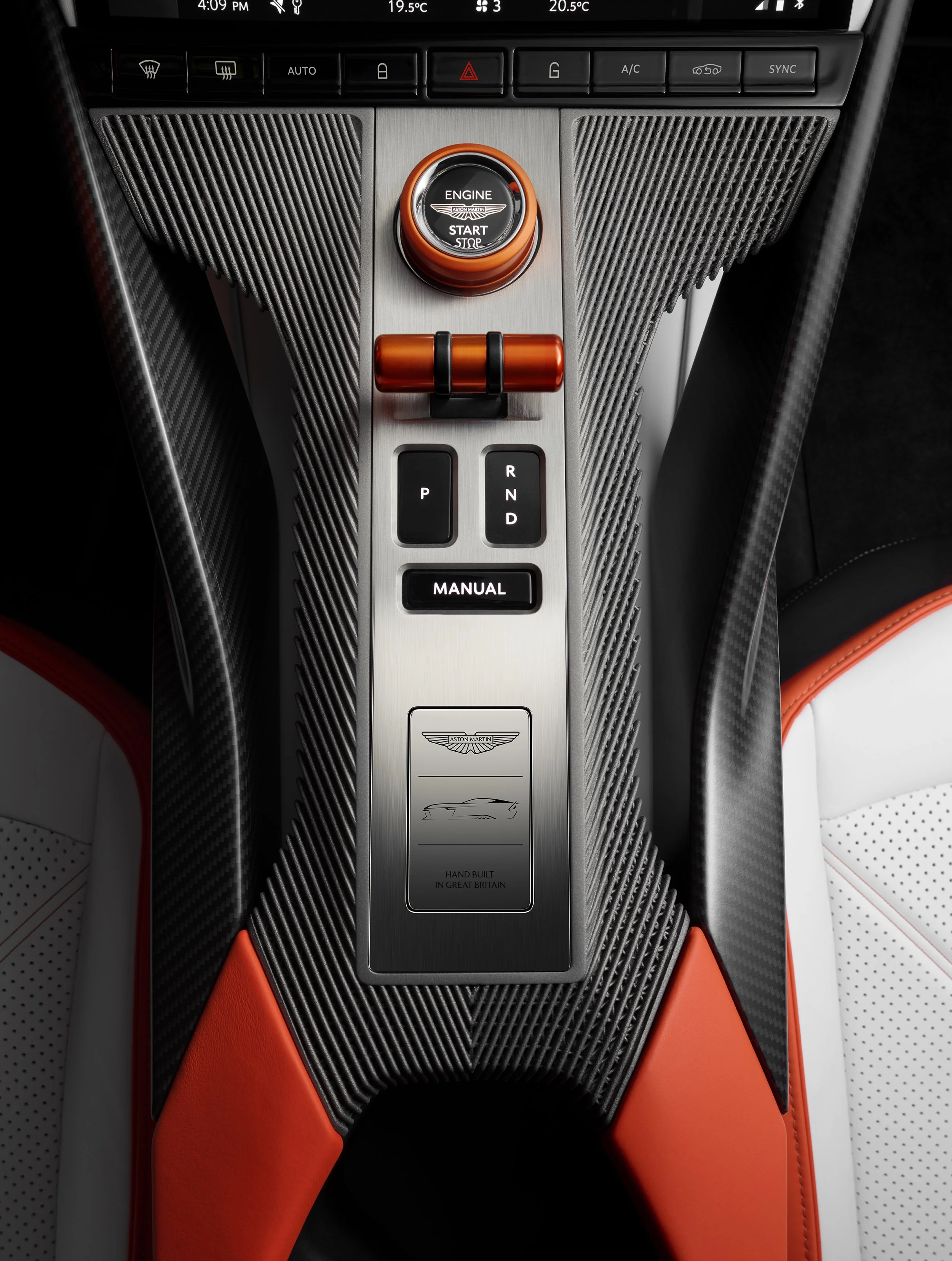
Image © Aston Martin Lagonda. Used for editorial purposes. Aston Martin Valen.
Valen offers Sport, Sport+ and Track driving modes, but even here Aston Martin has taken a slightly more sophisticated approach than simply making the throttle more aggressive every time the driver moves up a setting. Sport and Sport+ shorten the throttle map to provide more response earlier in the pedal travel, while Track deliberately lengthens it again so that the driver has greater precision when approaching the car’s limits.
That small detail probably tells us more about the engineering intent than another tenth shaved from the acceleration time.
The Tyres Are Now Part of the Electronics Too
Valen also introduces Pirelli Cyber Tyre technology, developed with Bosch Engineering. The system allows real-time information from the tyres to communicate with the car’s electronic architecture, enabling systems such as the anti-lock brakes, stability control and traction control to continually adjust their thresholds according to what’s actually happening at the tyre.
That represents quite an interesting philosophical shift when we compare Valen with Aston Martin’s previous V12 specials.
Valour deliberately celebrated a more analogue relationship between car and driver. Valiant went further towards motorsport but retained its manual gearbox and intentionally mechanical character. Valen still talks extensively about driver involvement, yet it uses considerably more sophisticated technology to make its enormous performance exploitable. Neither approach is necessarily better. They’re simply very different interpretations of what an exclusive Aston Martin driver’s car can be.
Six Aston Martins. One Extraordinary Range of Ideas.
Valen becomes easier to understand when it’s placed alongside some of the other extraordinary cars Aston Martin has created over the past decade. Not because they’re direct rivals to one another, but because each represents a very different interpretation of what a modern Aston Martin can be.
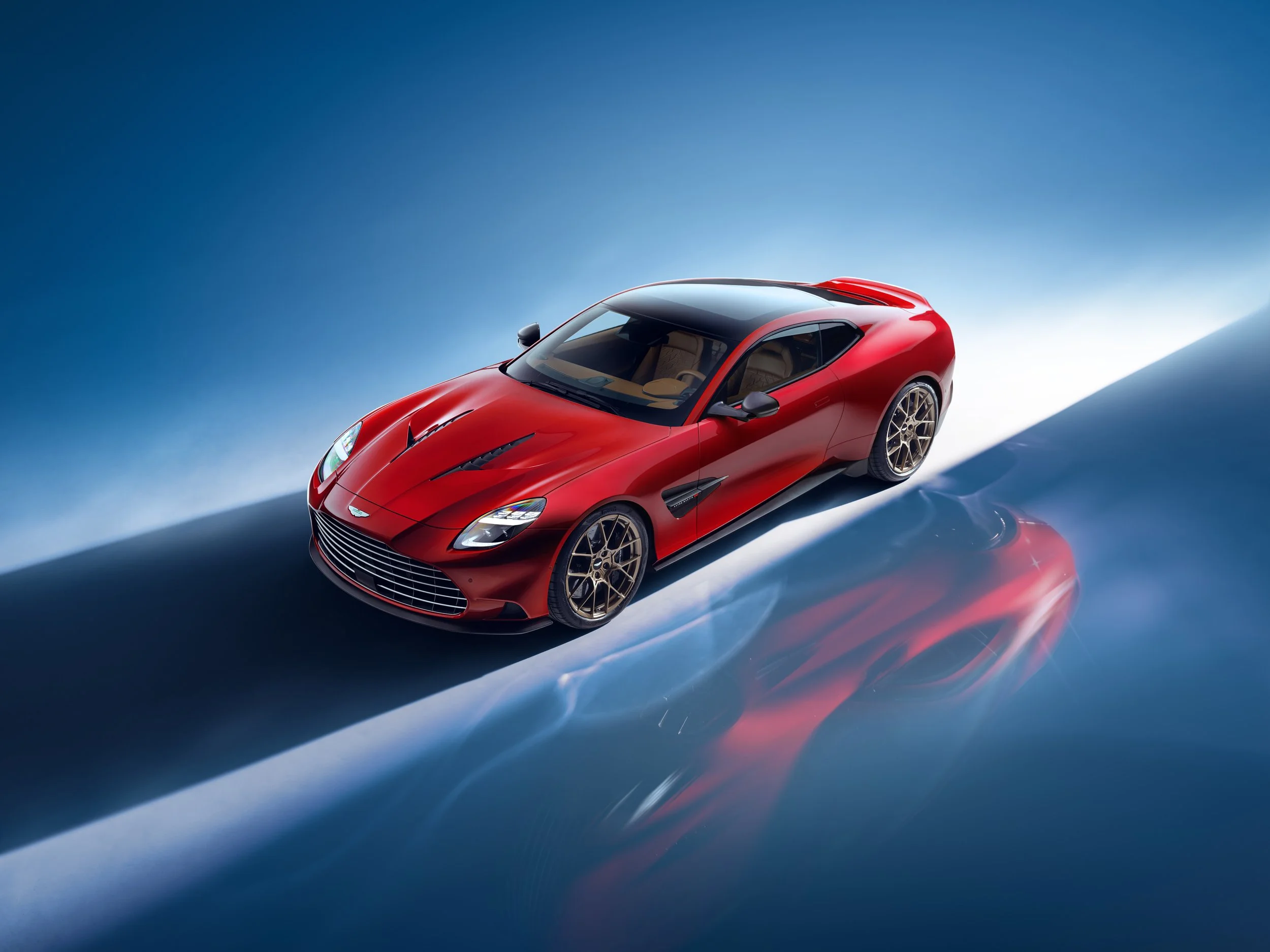
Image © Aston Martin Lagonda. Used for editorial purposes. Aston Martin Vanquish.
Vanquish is perhaps the most important comparison of all. It sits within the same current front-engined V12 engineering family and already produces an immense 835PS and 1,000Nm, with exactly the same quoted 214mph maximum speed as Valen. On paper, Valen therefore gains only 15PS.
That makes the wider engineering changes much more significant. Valen takes the front-engined V12 architecture in a far more specialised direction through its carbon-fibre body, weight-saving programme, revised chassis behaviour, different transmission calibration, aerodynamics and extensive use of lightweight materials. It’s not simply about making Vanquish more powerful; it’s about using an established engineering foundation to create something with a very different character.
Valour and Valiant provide another useful comparison because their philosophy was almost the opposite.
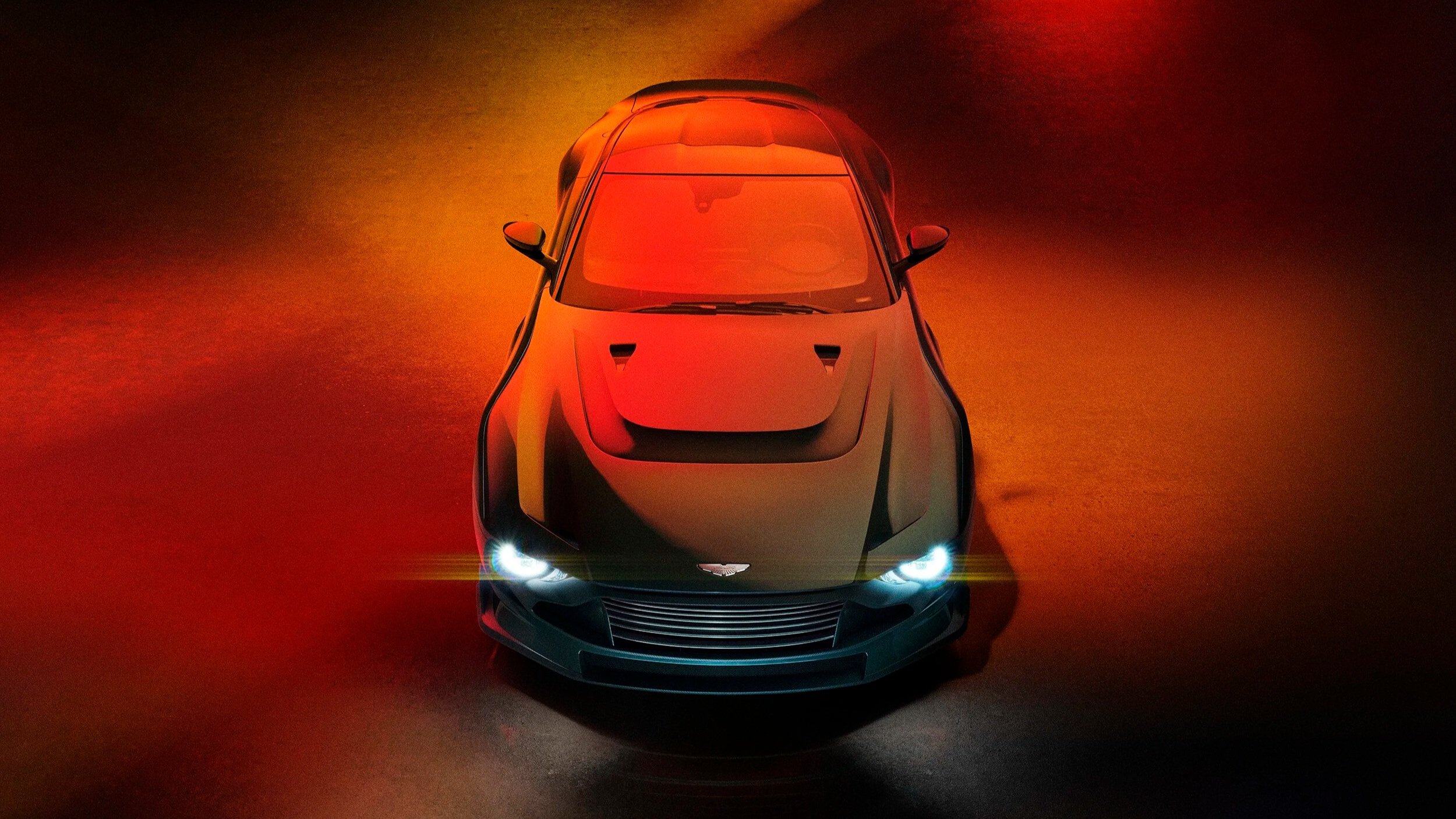
Image © Aston Martin Lagonda. Used for editorial purposes. Aston Martin Valour.
Valour arrived in 2023 as part of Aston Martin’s 110th-anniversary celebrations and deliberately looked backwards for inspiration. Beneath its carbon-fibre body sat a 5.2-litre twin-turbocharged V12 producing 715PS and 753Nm, driving the rear wheels through a bespoke six-speed manual gearbox. Production was limited to 110 cars, but the significance of Valour went beyond rarity or power.
Its whole character was built around a more analogue relationship between driver and machine. The long bonnet, muscular proportions and heavily sculpted bodywork drew on Aston Martin’s great front-engined cars of the past, while the manual transmission put physical involvement back at the centre of the experience. In an era increasingly dominated by dual-clutch gearboxes, hybrid assistance and complex electronics, Valour was Aston Martin deliberately celebrating something more mechanical.
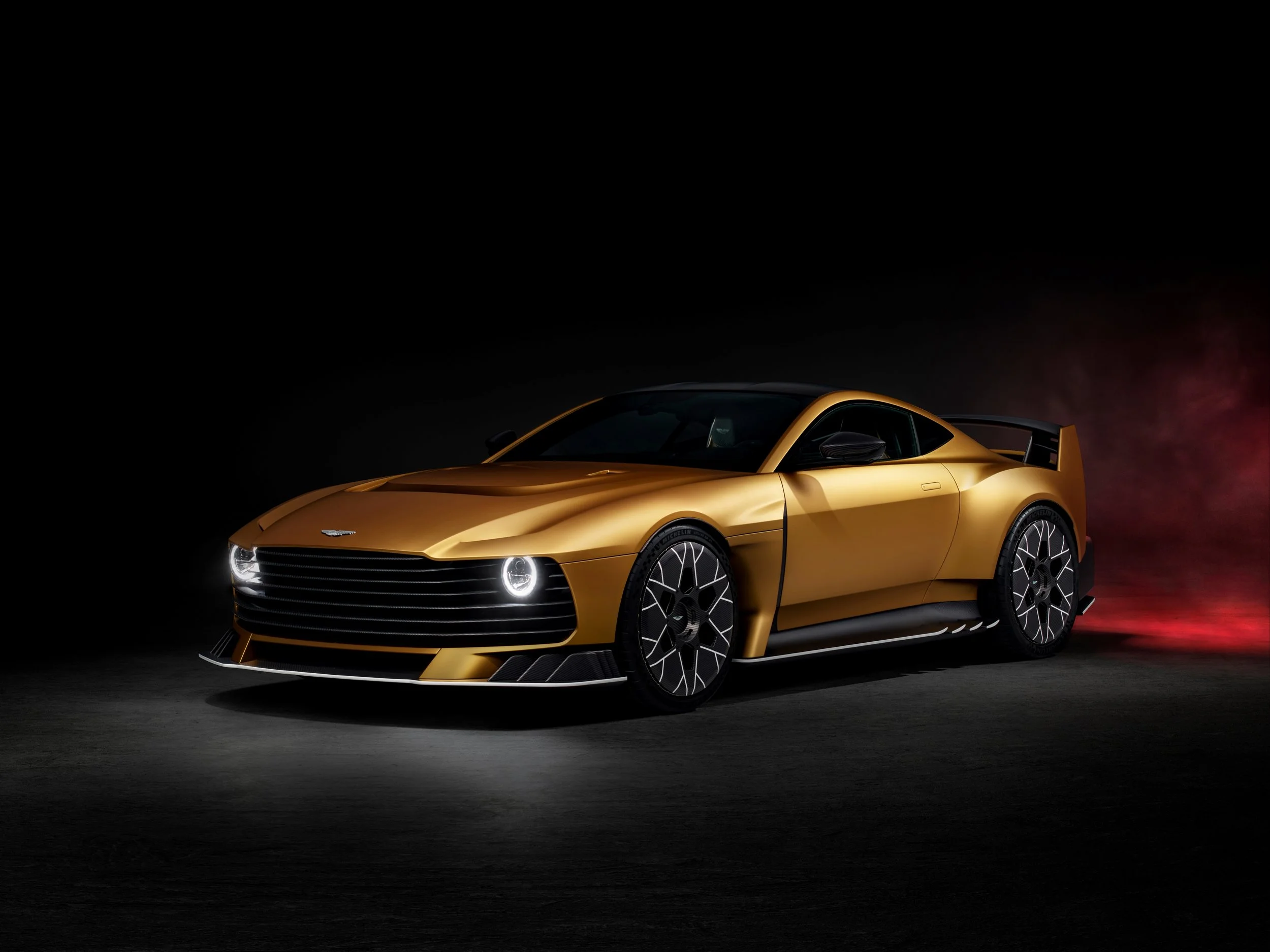
Image © Aston Martin Lagonda. Used for editorial purposes. Aston Martin Valiant.
Valiant followed in 2024, but it wasn’t simply a more powerful Valour. The project began as a personal commission from Fernando Alonso before Aston Martin developed the idea into a production run of just 38 cars. The same 5.2-litre twin-turbocharged V12 remained, now producing 745PS and 753Nm, together with the six-speed manual gearbox that had become such an important part of Valour’s character.
The emphasis, however, shifted much closer towards the circuit. Valiant combined extensive lightweight materials with more aggressive aerodynamics and a considerably more focused chassis set-up, while retaining the front-engined, rear-wheel-drive, manual V12 formula. Where Valour celebrated the idea of an analogue Aston Martin road car, Valiant took that philosophy and sharpened it into something substantially more track-orientated.
Taken together, Valour and Valiant represented a very deliberate direction for Aston Martin’s recent V12 specials: front engine, rear-wheel drive, manual gearbox and a strong connection with the company’s past. One was principally a road car, the other pushed much further towards the circuit, but both celebrated mechanical involvement and deliberately resisted some of the technological trends shaping modern supercars.
Valen breaks that pattern.

Image © Aston Martin Lagonda. Used for editorial purposes. Aston Martin Valen.
Rather than looking backwards for its character, it takes Aston Martin’s limited-production V12 special in a far more contemporary, performance-led direction. Its 5.2-litre twin-turbocharged V12 produces 850PS and 1,000Nm, but instead of the six-speed manual that helped define Valour and Valiant, power is sent through a specially calibrated eight-speed ZF automatic transmission using shift strategies developed through the Vantage GT4 programme.
Full-carbon-fibre bodywork, magnesium wheels, a titanium exhaust and potential weight savings of up to 110kg over Aston Martin’s core V12 platform underline where the priorities have moved. This is not another exercise in recreating an analogue Aston Martin experience; Valen is about extracting more speed, response and dynamic capability from the modern front-engined V12 formula. Production is limited to 150 cars worldwide.
The Halo Above Everything
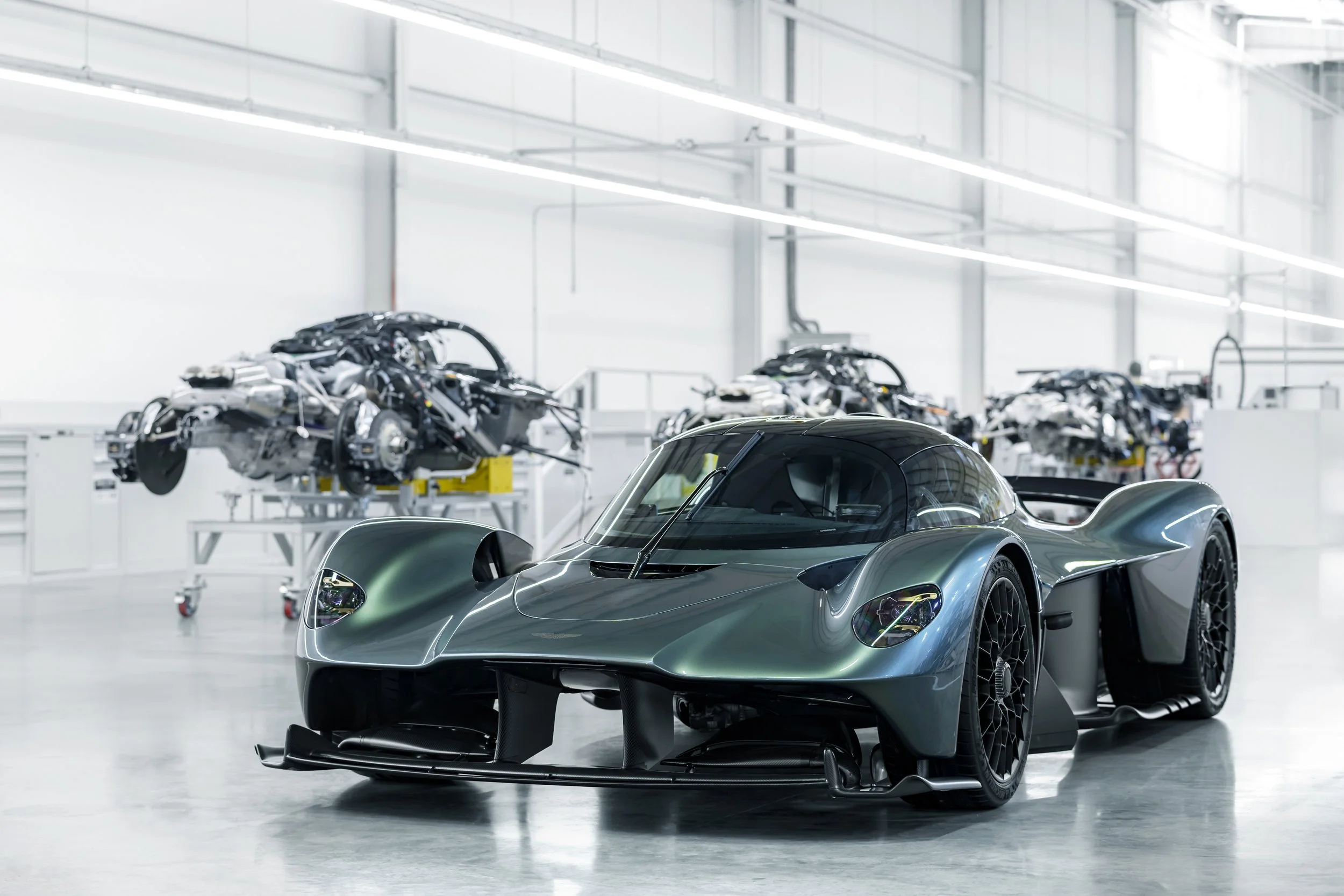
Image © Aston Martin Lagonda. Used for editorial purposes. Aston Martin Valkyrie.
Valkyrie sits above this entire conversation. Conceived long before Adrian Hallmark arrived at Aston Martin, it remains the most extreme expression of what the company is capable of producing: carbon-fibre construction, extraordinary aerodynamics and a Cosworth-developed 6.5-litre naturally aspirated V12 capable of revving beyond 11,000rpm.
Its significance under Hallmark is therefore not that he created it, but that Aston Martin continues to build upon the world Valkyrie established. The name now stretches from the road car to the AMR Pro and Valkyrie LM, while the Valkyrie-based Hypercar has taken Aston Martin back to the very highest level of endurance racing.
Valkyrie demonstrated how far Aston Martin could push the limits. The more interesting question for Hallmark is how much of that engineering ambition can influence cars produced in greater numbers.
Bringing the Halo Closer

Image © Aston Martin Lagonda. Used for editorial purposes. Aston Martin Valhalla.
Valhalla begins to answer that question. Limited to 999 examples, Aston Martin’s first mid-engined plug-in hybrid supercar combines a 4.0-litre twin-turbocharged V8 with three electric motors for a total of 1,079PS, alongside active aerodynamics, torque vectoring and technology influenced by Formula One.
Where Valkyrie is an extraordinary halo project, Valhalla occupies a different position. It takes Aston Martin into electrified, mid-engined territory while being produced on a scale large enough to carry greater commercial significance. That distinction is important when assessing Hallmark’s Aston Martin. The future cannot depend solely upon spectacular ultra-limited cars. The challenge is to use them to strengthen the desirability, technology and profitability of the wider business.
That distinction also helps put Valen’s performance claims into perspective. Valen is not the most powerful Aston Martin full stop. Valhalla produces considerably more combined power, while Valkyrie is rated at 1,155PS. Valen’s record concerns Aston Martin’s front-engined cars and, more specifically, its front-engined V12 formula.
The comparison below makes the differences rather clearer.
Six Aston Martins. Six Very Different Ideas.
Valen compared with Vanquish, Valhalla, Valkyrie, Valour and Valiant using Aston Martin’s published specifications.
| Specification | Valen | Vanquish | Valhalla | Valkyrie | Valour | Valiant |
|---|---|---|---|---|---|---|
| Reveal | 2026 | 2024 | Production specification 2024 | 2017 | 2023 | 2024 |
| Engine | 5.2L twin-turbo V12 | 5.2L twin-turbo V12 | 4.0L twin-turbo V8 + 3 e-motors | 6.5L naturally aspirated V12 + e-motor | 5.2L twin-turbo V12 | 5.2L twin-turbo V12 |
| Maximum power | 850PS | 835PS | 1,079PS | 1,155PS | 715PS | 745PS |
| Maximum torque | 1,000Nm | 1,000Nm | 1,100Nm | 900Nm | 753Nm | 753Nm |
| Transmission | 8-speed ZF automatic | 8-speed ZF automatic | 8-speed dual-clutch | 7-speed sequential | 6-speed manual | 6-speed manual |
| Driven wheels | Rear | Rear | All four | Rear | Rear | Rear |
| Acceleration | 0–60mph: 3.0 sec | 0–62mph: 3.3 sec | 0–62mph: 2.5 sec | 0–60mph: under 2.5 sec | Not published at launch | Not published at launch |
| Maximum speed | 214mph | 214mph | 217mph | Not quoted in AML material used | Not published at launch | Not published at launch |
| Core philosophy | Future-facing front-engined V12 special | V12 Super GT / core flagship | Mid-engined hybrid supercar | F1-inspired road-going hypercar | Analogue V12 road car | Track-focused manual V12 |
| Production | 150 | Under 1,000 per year | 999 | 150 Coupés | 110 | 38 |
Is Valen Really the World’s Most Powerful Front-Engined Production Car?
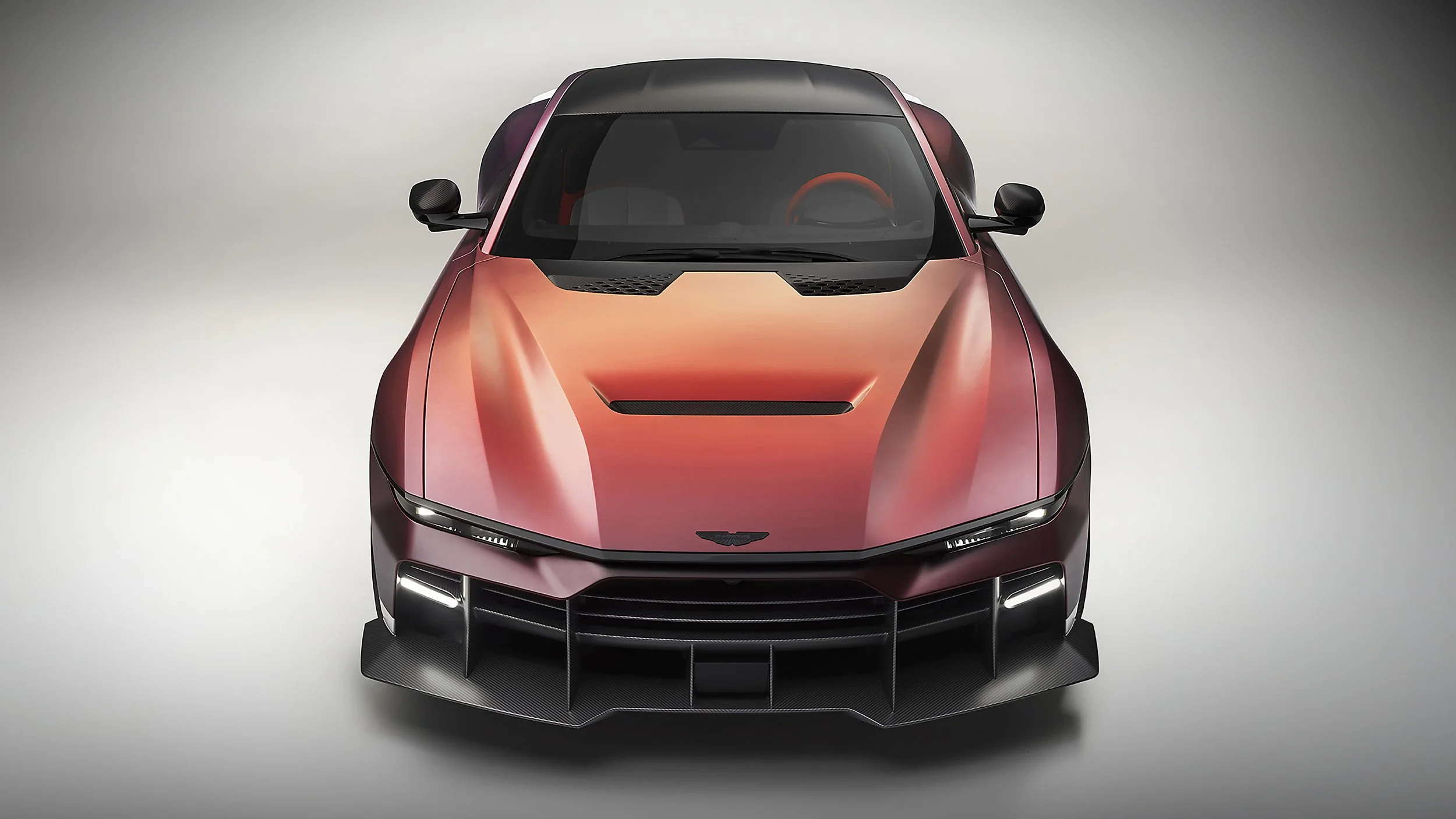
Image © Aston Martin Lagonda. Used for editorial purposes. Aston Martin Valen.
This is probably the most interesting claim in the entire announcement, and it deserves a little examination rather than simply being repeated.
Aston Martin’s own wording actually varies slightly within the release. The headline calls Valen the “most powerful front engined supercar”, the opening bullet calls it the “world’s most powerful front engined production car”, while the body of the announcement describes it as the world’s most powerful front-engined car “from a manufacturer.”
At 850PS, the claim appears very strong when we look at the current manufacturer-built front-engined supercar market.
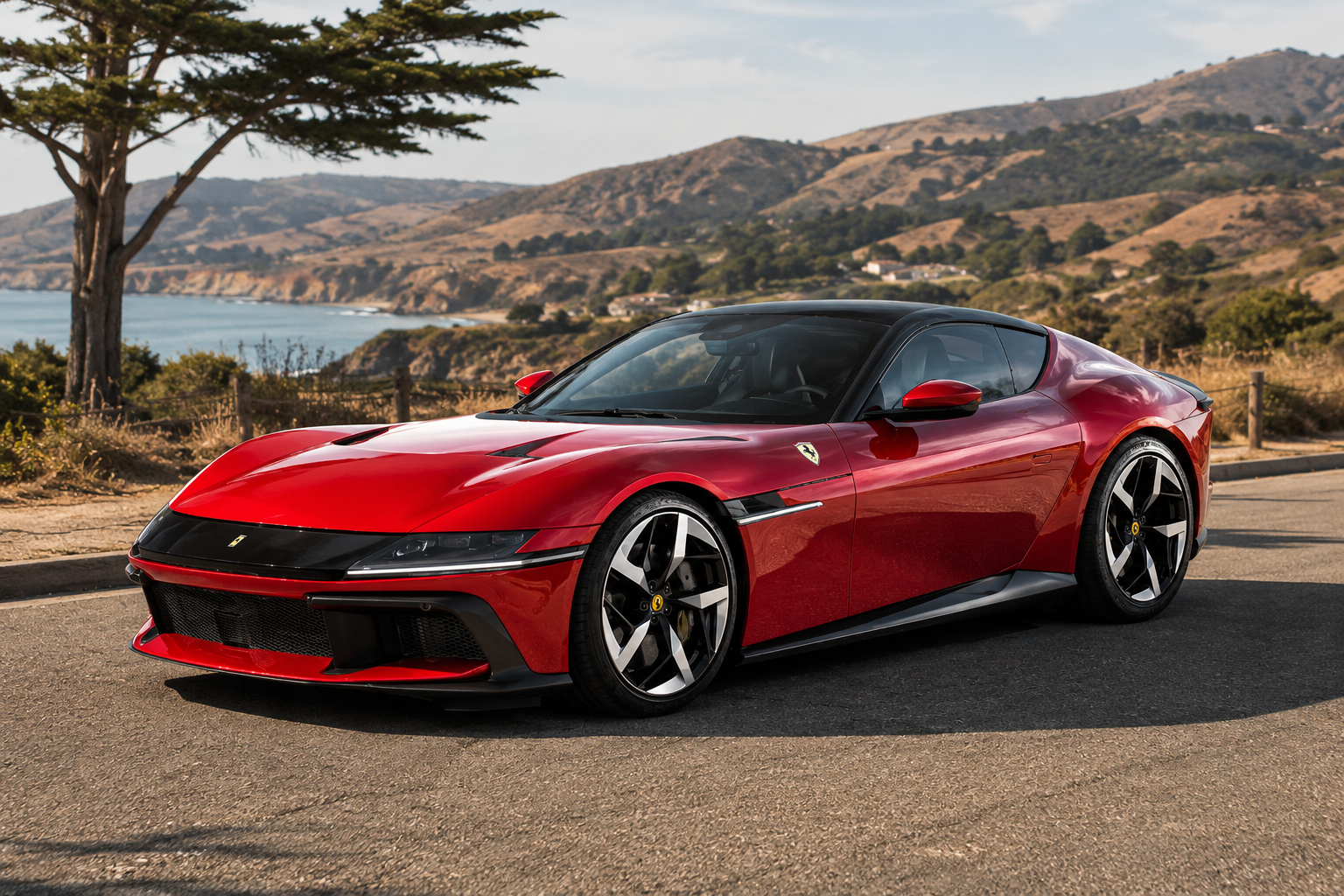
Image © Fuel the Passion. Ferrari 12Cilindri
The most obvious contemporary rival is Ferrari’s 12Cilindri, another front-engined, rear-wheel-drive twelve-cylinder flagship. Ferrari’s very different 6.5-litre naturally aspirated V12 produces 830cv, effectively 830PS and 678Nm, reaching its peak power at a remarkable 9,250rpm and continuing to 9,500rpm.
Valen therefore has a 20PS advantage, together with vastly more torque at 1,000Nm. That doesn’t automatically make the Aston the better or faster car. The two engines achieve their performance in completely different ways. Ferrari has deliberately preserved a naturally aspirated engine that produces its drama through revs, whereas Aston Martin uses twin turbochargers to provide an enormous wave of torque much lower in the rev range.
Perhaps the comparison is best expressed this way: Ferrari celebrates revs; Aston Martin celebrates torque.
Both are keeping the front-engined V12 supercar alive in 2026, which in itself is something worth celebrating.
There is, however, an important qualification to Aston Martin’s broader wording. If “world’s most powerful front-engined production car” were interpreted to mean the most powerful ever built, rather than the most powerful currently in production, the claim wouldn’t stand.
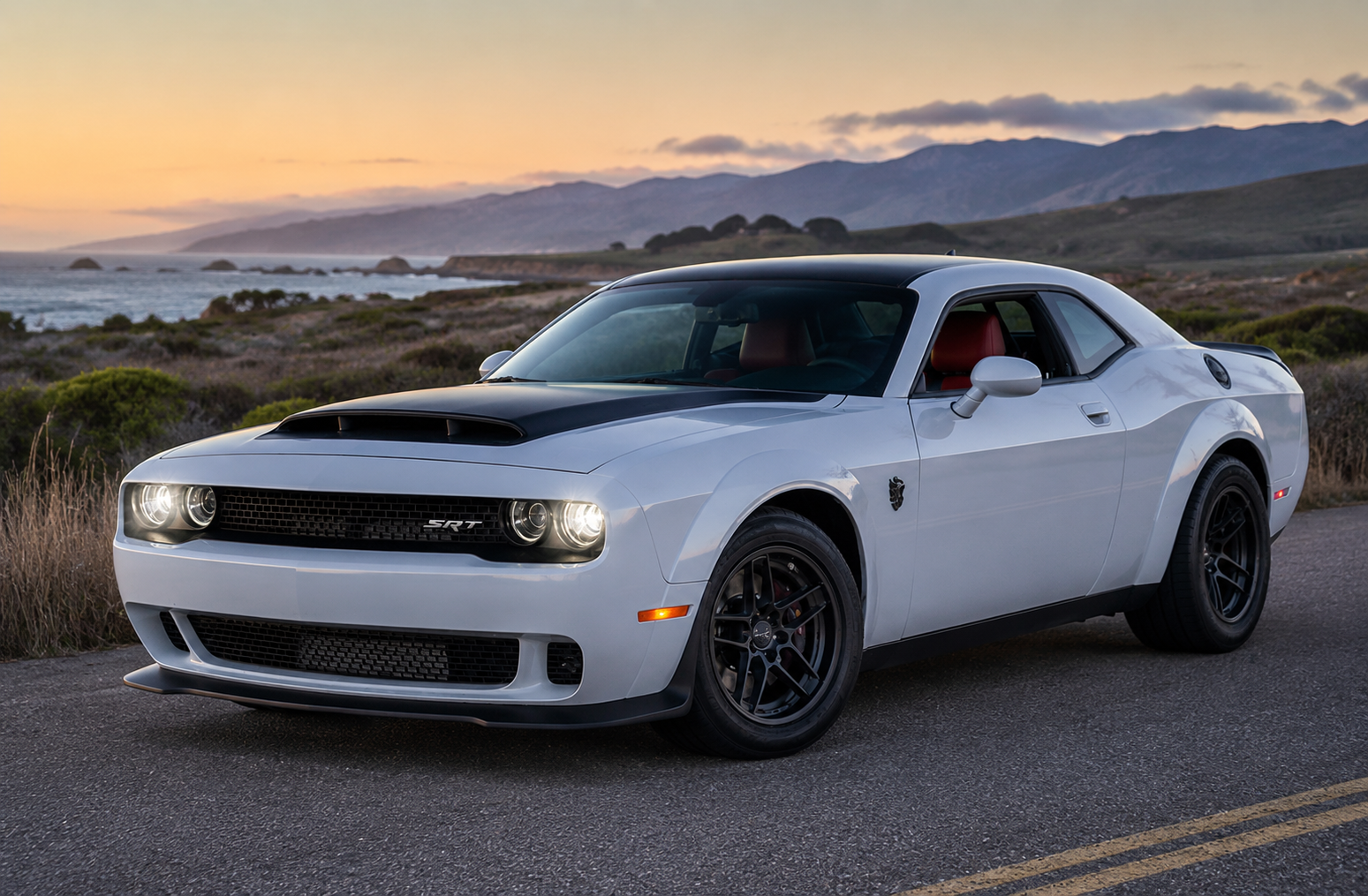
Image © Fuel the Passion. 2023 Dodge Challenger SRT
The 2023 Dodge Challenger SRT Demon 170 was a factory-built front-engined production car rated at 1,025hp when running on E85 fuel. It’s no longer in production and belongs to a completely different category of car, but its existence demonstrates why the word current is important when interpreting Aston Martin’s claim.
For FTP, therefore, the fairest description is:
Valen appears to be the world’s most powerful current front-engined production supercar from a manufacturer.
It’s also unquestionably the most powerful front-engined Aston Martin ever produced. That gives Aston Martin the credit the achievement deserves without suggesting that no more powerful front-engined production car has ever existed.
The Exhaust May Be My Favourite Part
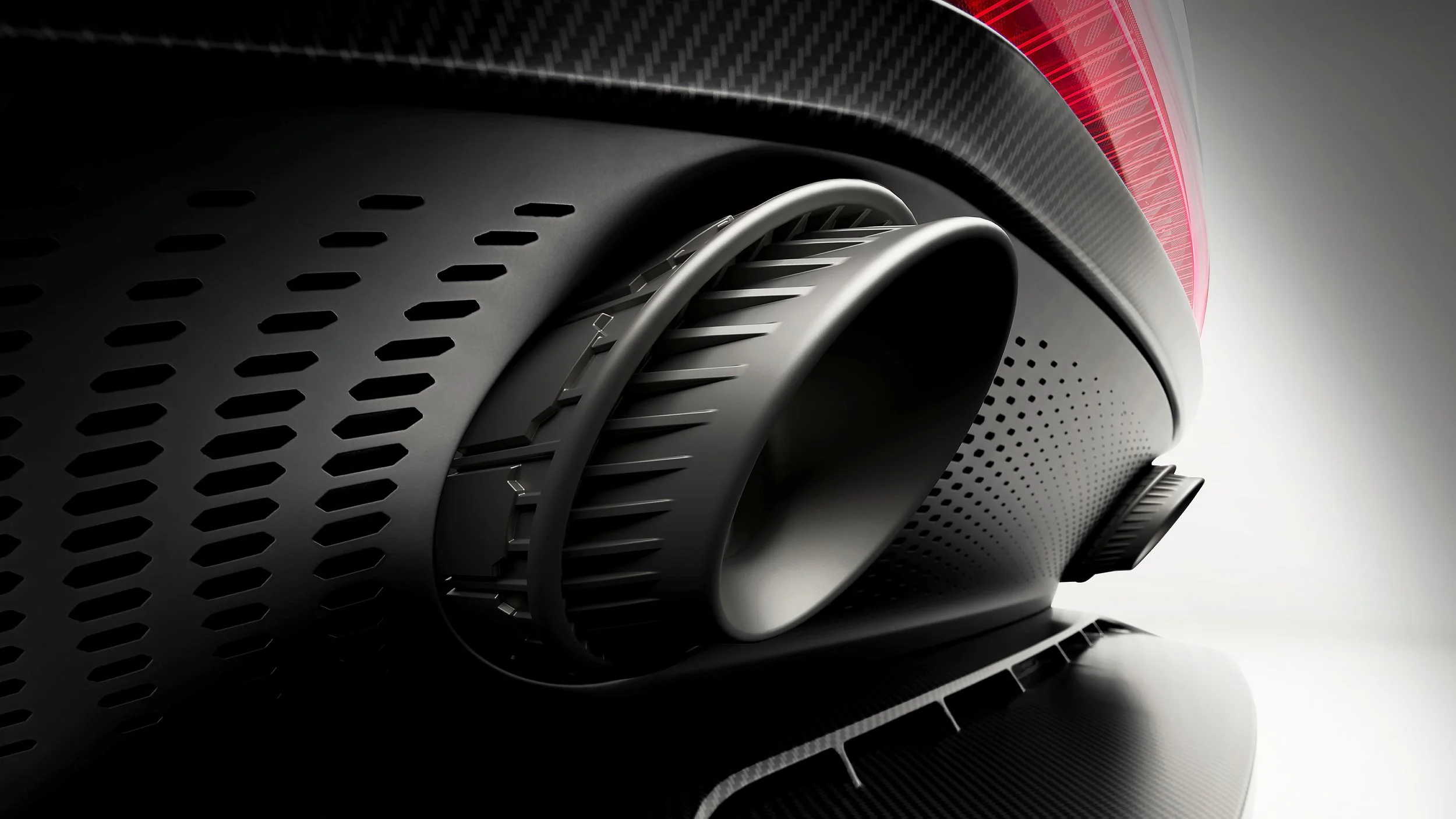
Image © Aston Martin Lagonda. Used for editorial purposes. Aston Martin Valen.
Of all the engineering detail Aston Martin has revealed, the titanium exhaust may be the most wonderfully excessive. Valen uses four 3D-printed titanium tailpipe finishers, arranged as two upper and two lower outlets. The upper pair remain permanently open, while the lower pipes use valves that open according to driving mode and demand.
Aston Martin has deliberately changed the sound character too, reducing some lower frequencies while emphasising higher tones as the V12 climbs through its rev range. The most delightful detail is that the upper exhaust outlets have effectively been tuned like organ pipes, using resonance to intensify the sound at higher engine speeds. In 2026, with noise legislation, particulate filters and increasing electrification steadily changing the soundtrack of performance cars, there is something rather enjoyable about a manufacturer devoting this much engineering effort to making a road-legal V12 sound more dramatic.
It feels gloriously unnecessary. For a 150-car Aston Martin V12 special, that may be exactly the point.
A Design That Certainly Won’t Disappear Into the Background
Then there’s the styling. Marek Reichman describes Valen as a significant departure from what’s gone before, and for once the phrase doesn’t feel like normal launch-day exaggeration.
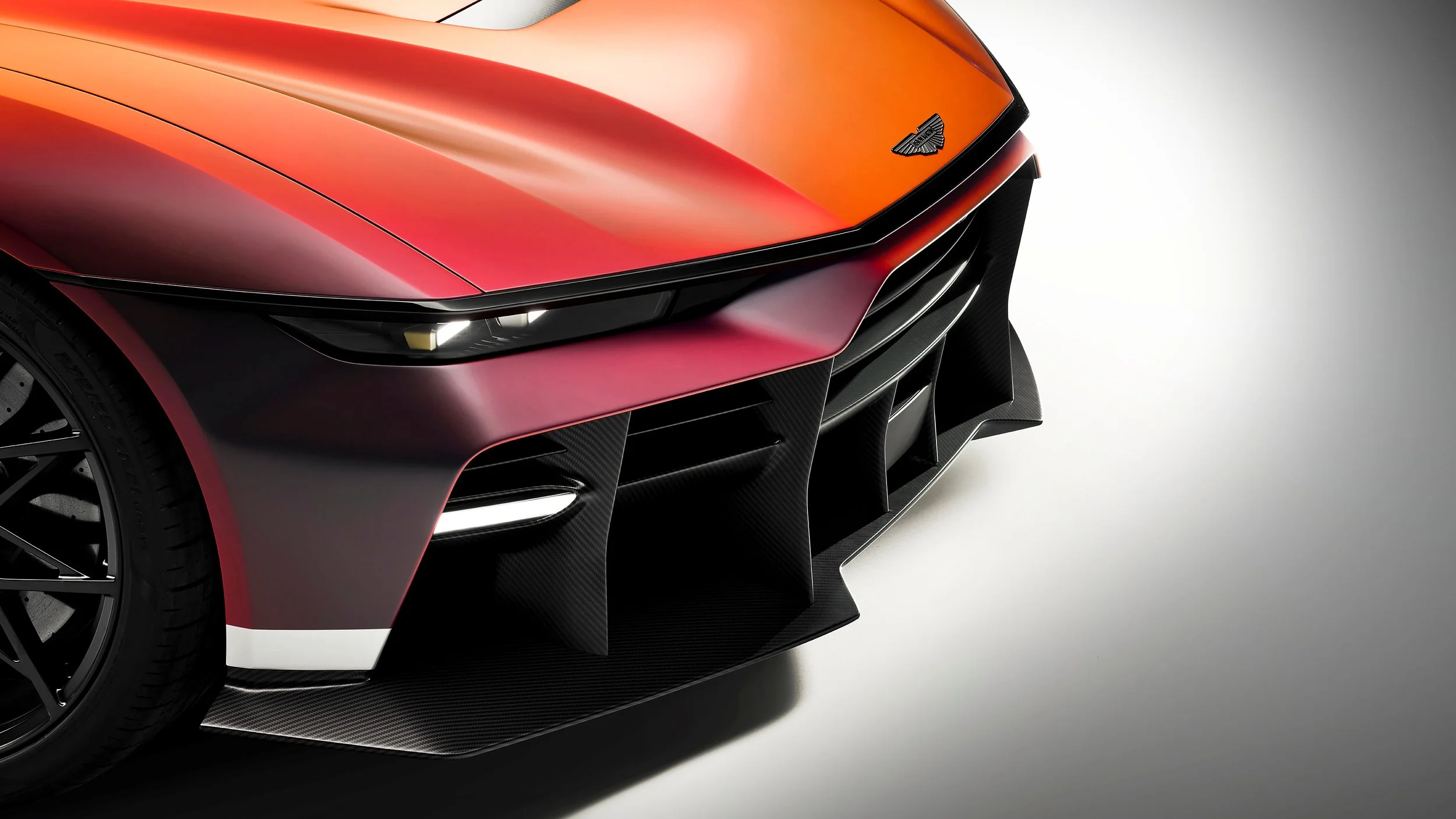
Image © Aston Martin Lagonda. Used for editorial purposes. Aston Martin Valen.
The deeply recessed headlights sit beneath a sharply dropping bonnet, while the familiar Aston Martin grille has evolved into a far more angular opening flanked by an aggressive splitter. The traditional side strake has effectively become part of a large functional wheelarch vent that stretches visually along much of the door before meeting those enormous rear haunches.
There are echoes of Valour and Valiant, particularly in the width, muscular proportions and exaggerated surfaces, but Valen looks far more futuristic than either. Valour deliberately looked back towards the muscular Aston Martins of the 1970s and 1980s. Valiant took that idea and made it more obviously track-focused.
Valen almost feels as though Aston Martin has taken that same front-engined silhouette and pushed it in the opposite direction, towards something that might represent its design language several years from now. Whether everybody likes it, is another matter entirely. I suspect this car will divide opinion, particularly from the rear. That isn’t necessarily a bad thing.
A car this rare and presumably this expensive probably shouldn’t look like somebody has simply added a more aggressive body kit to a Vanquish.
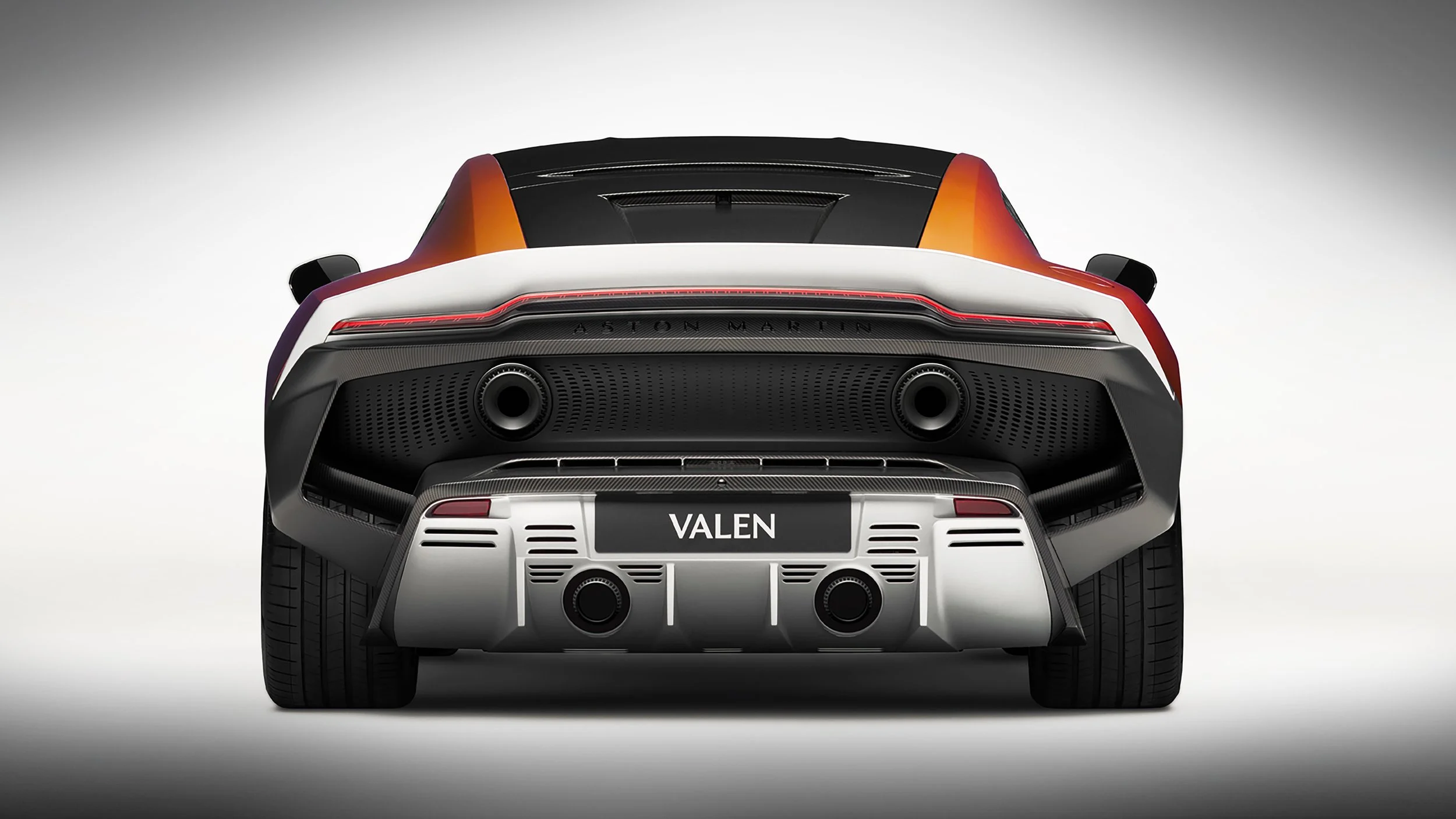
Image © Aston Martin Lagonda. Used for editorial purposes. Aston Martin Valen.
The Rear May Be the Most Radical Part
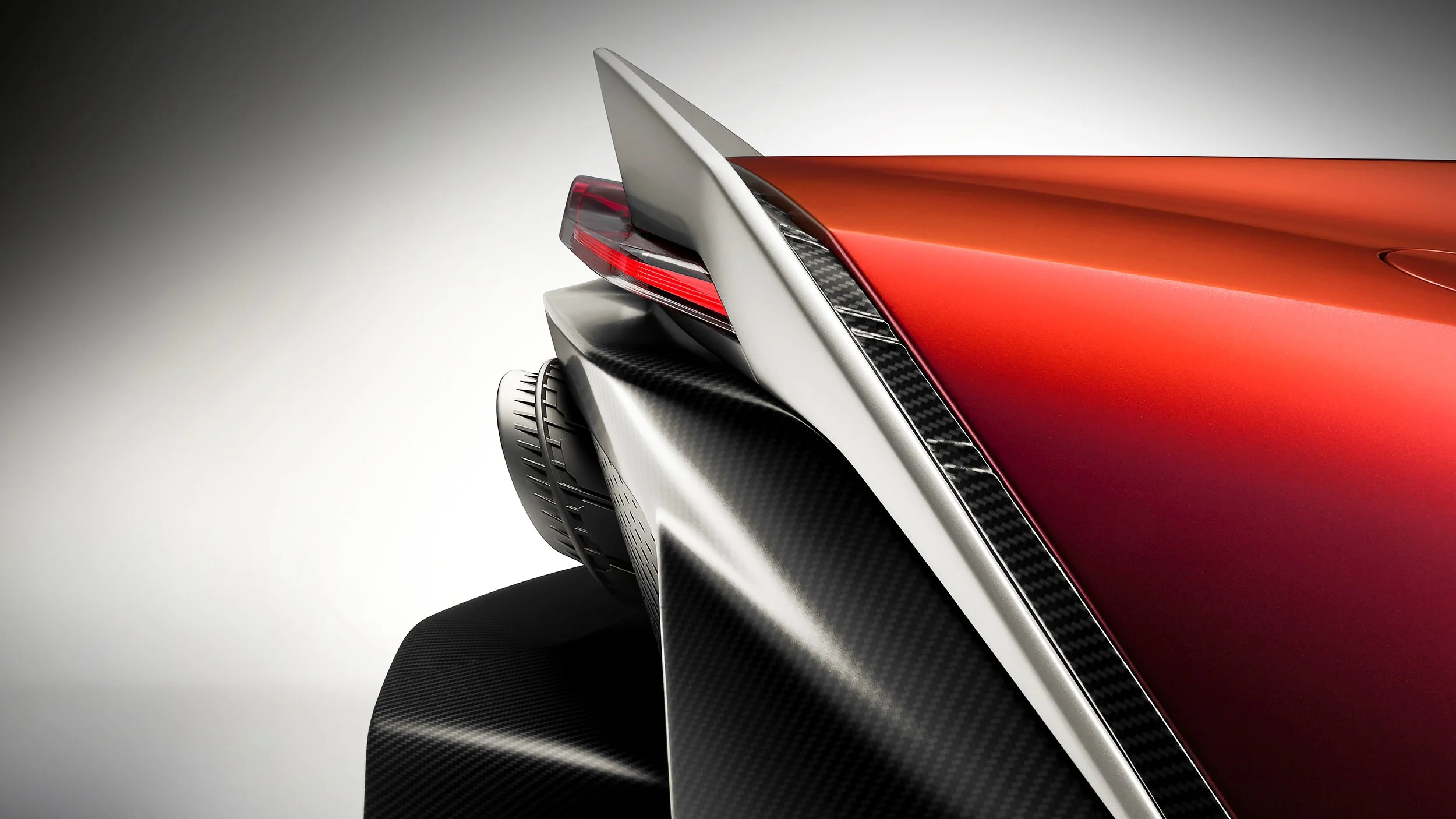
Image © Aston Martin Lagonda. Used for editorial purposes. Aston Martin Valen.
There’s no conventional fixed rear window and separate boot lid. Instead, Aston Martin has created a solid tailgate incorporating an aerodynamic wing, which opens to reveal a 170-litre luggage compartment. Beneath it sits a new full-width light bar, while the dramatically upswept tail acts as a Gurney flap to generate downforce without requiring the enormous fixed rear wing seen on Valiant.
Despite all the aerodynamic theatre, Aston Martin will still sell customers a bespoke luggage set through an optional Touring Pack. Apparently, even an 850PS V12 supercar needs somewhere sensible for the weekend bag. That small detail also reinforces something important about Valen’s purpose. This isn’t intended to be a road-legal racing car that owners tolerate on the journey to a circuit. Aston Martin still expects people to travel in it.
Satin Andromeda Red - A Paint Colour That Changes With the Light
The launch Valen is finished in Satin Andromeda Red, one of Q Ultra’s more spectacular paint finishes and a colour that may already look familiar to some FTP readers.
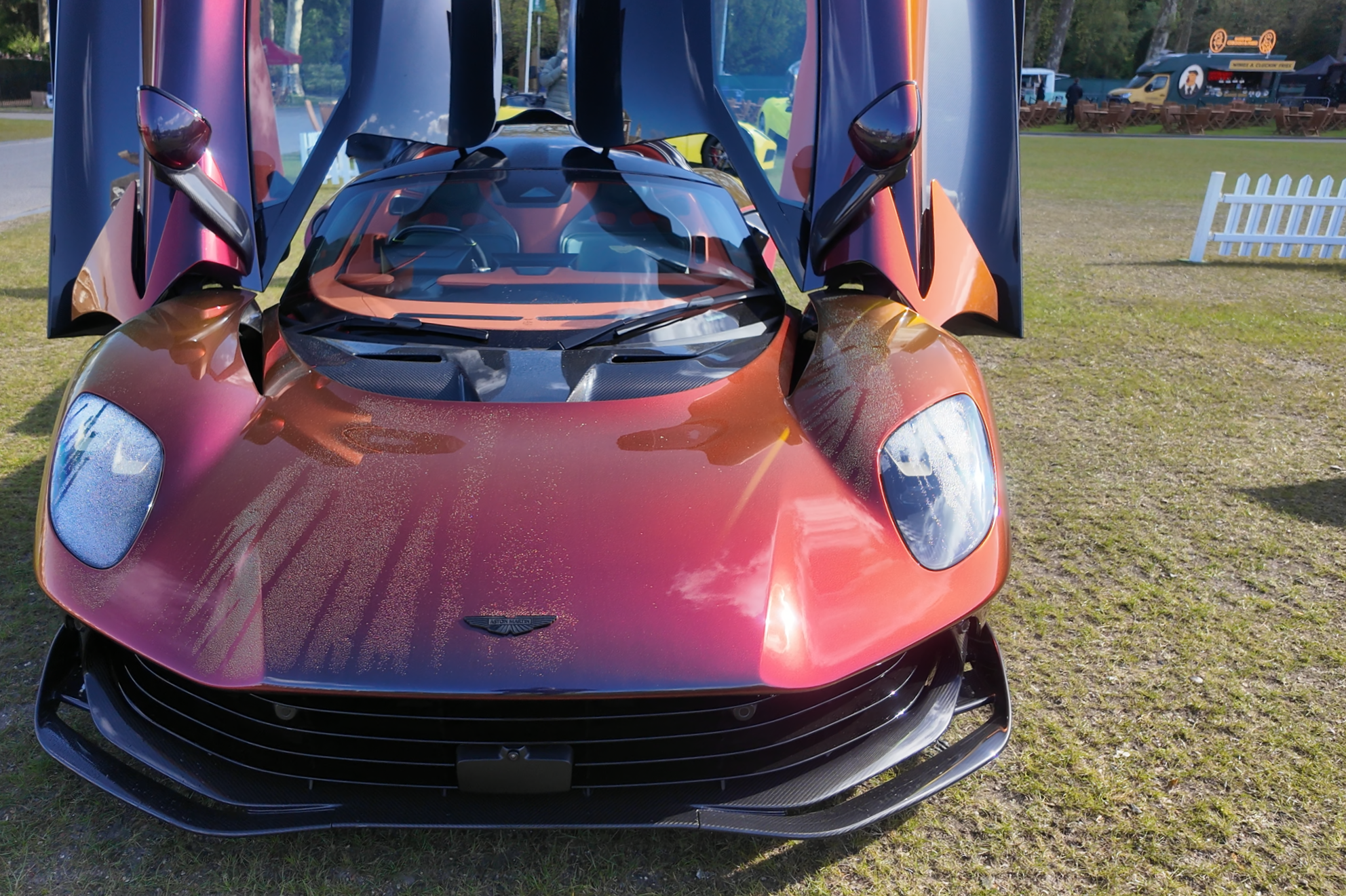
Image © Fuel the Passion. Andromeda Red Valhalla.
This isn’t actually our first encounter with it. We’ve seen Andromeda Red appear on a couple of Aston Martins previously, albeit not the ‘Satin’ variant, and the most recent example we saw in person was this Valhalla displayed at Salon Privé London earlier this year.
It’s far more complex than a straightforward red metallic. Aston Martin says Chromaflair pigments allow the finish to move between deep red, copper and rich golden highlights, with intense blue undertones also appearing depending upon the light.
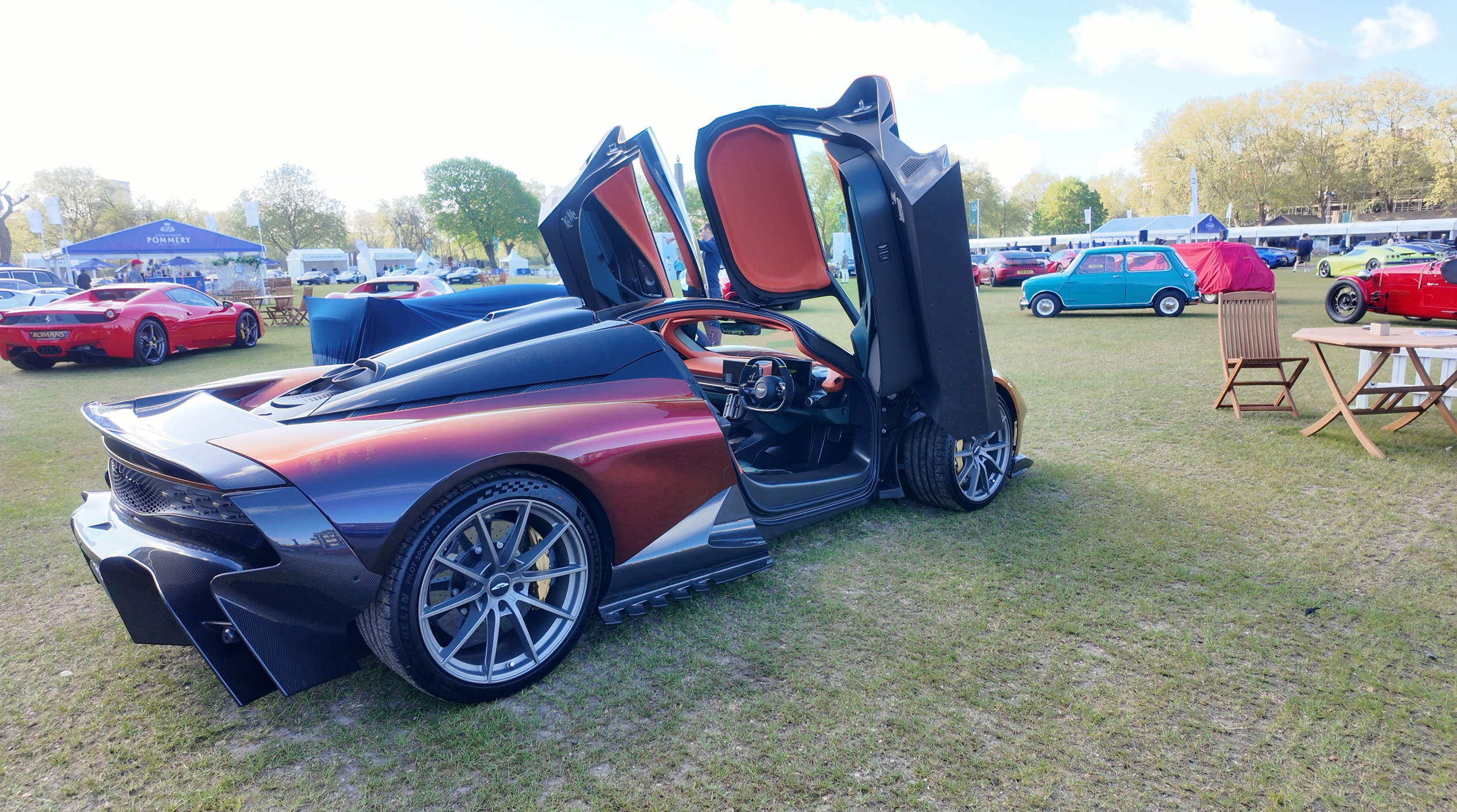
Image © Fuel the Passion. Andromeda Red Valhalla.
Having now seen the colour both in person and across Aston Martin’s Valen launch photography, that description makes rather more sense. On the Valen especially, one angle can make the body appear a deep burgundy-red, while another catches the light and brings out much warmer copper and almost orange tones. Certain photographs could quite easily have you believing you were looking at a different paint colour altogether.
The finish also works particularly well with Valen’s deeply sculpted surfaces. Those changing tones emphasise the sharp creases, enormous rear haunches and complicated airflow channels in a way that a flatter colour probably wouldn’t.
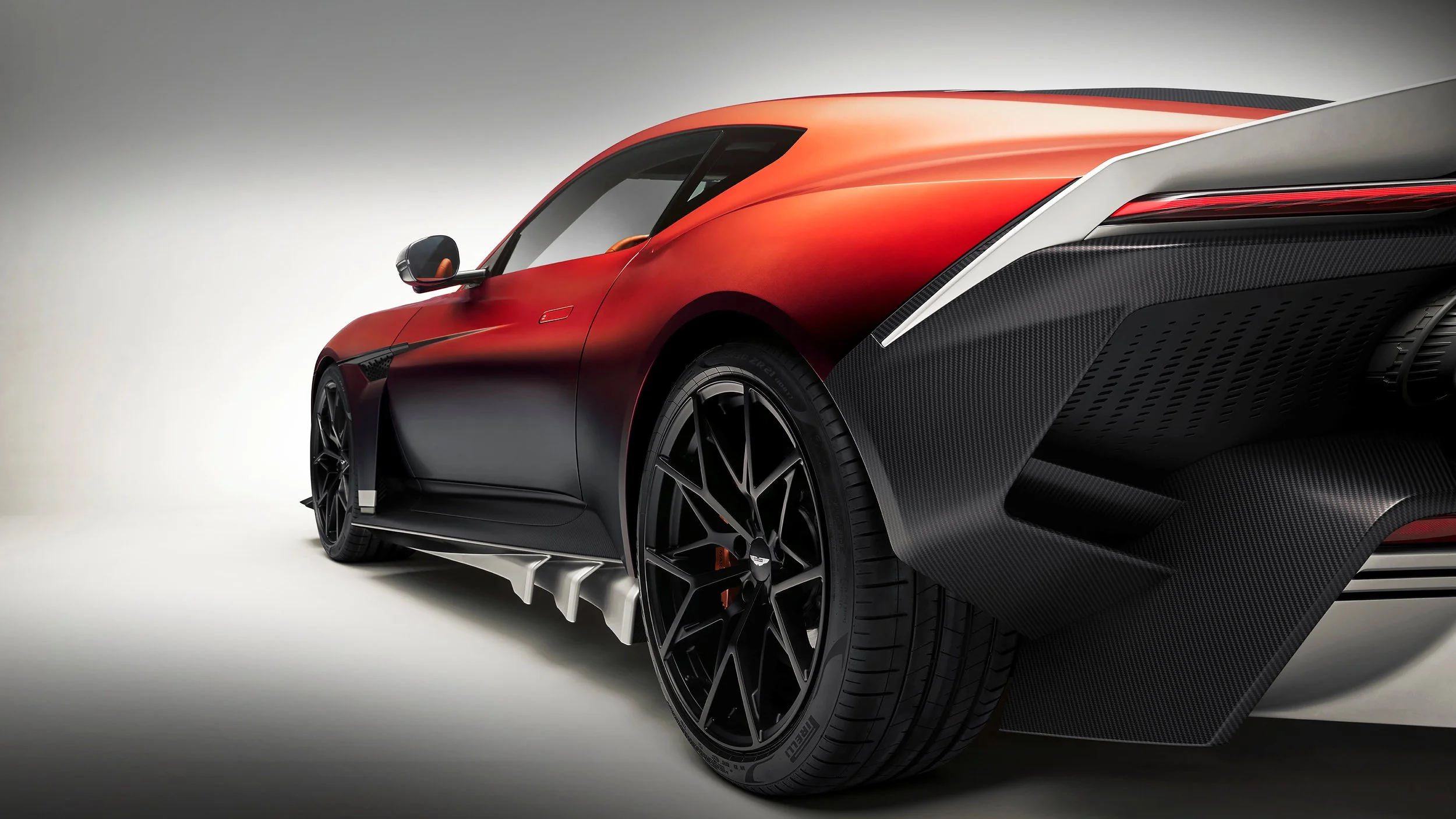
Image © Aston Martin Lagonda. Used for editorial purposes. Aston Martin Valen.
Customers wanting to take things even further can specify a fully exposed carbon-fibre exterior, available in satin or gloss finishes and with various coloured carbon tints. Through Q, customers can even work with Aston Martin to develop an individual bespoke tint of their own.
With only 150 Valens being produced and that level of personalisation available, I suspect finding two cars specified exactly alike may prove surprisingly difficult.
A Completely Different Interior Treatment
The cabin deserves proper attention too, particularly because Aston Martin hasn’t simply transplanted an existing centre console into the new body. The stated theme is visual lightness.
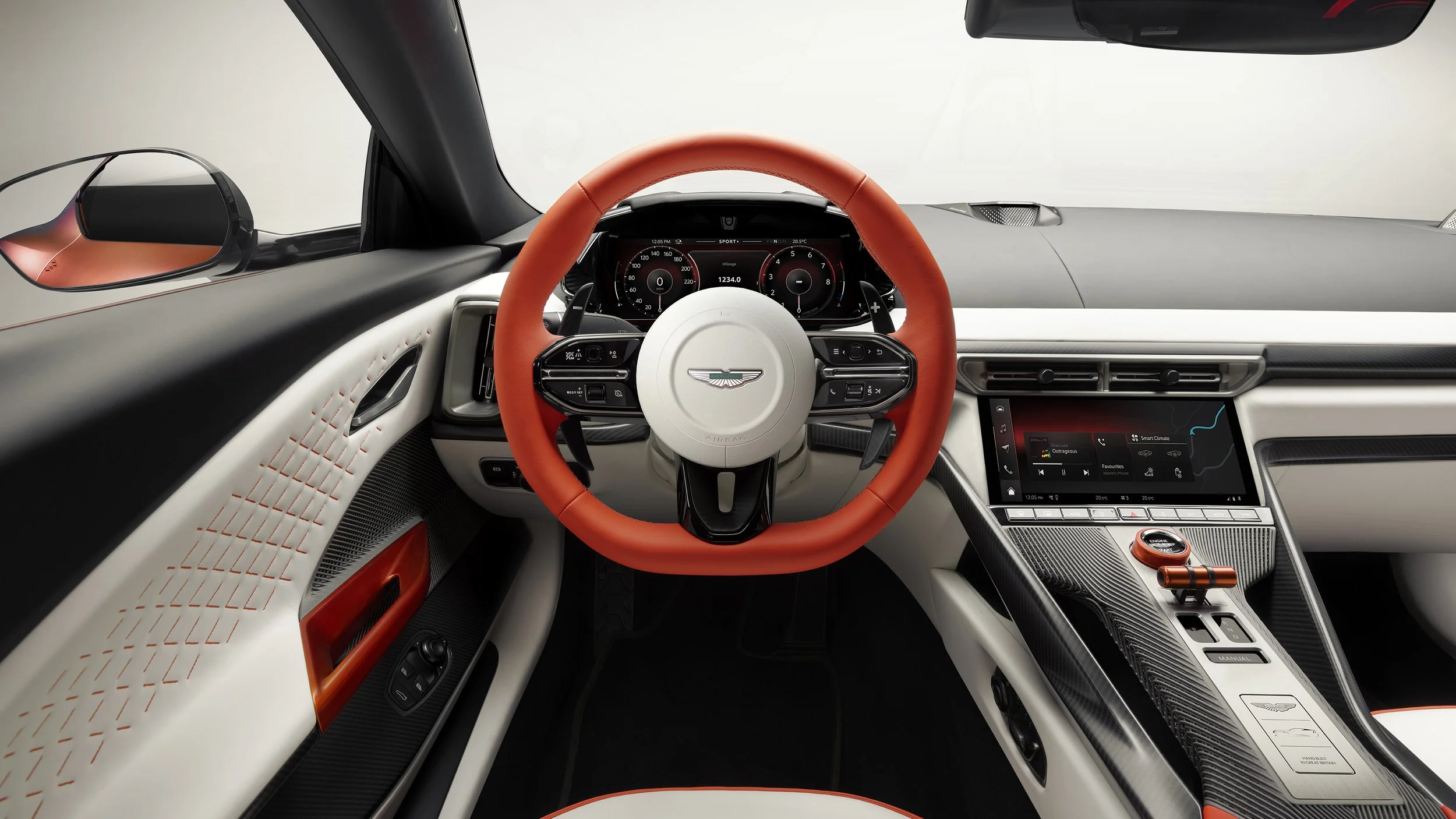
Image © Aston Martin Lagonda. Used for editorial purposes. Aston Martin Valen.
A slimmer centre console uses advanced 3D-printed elements and incorporates the performance-focused switchgear introduced on Valhalla, while the touchscreen has been reclined further and the whole console angled towards the driver.
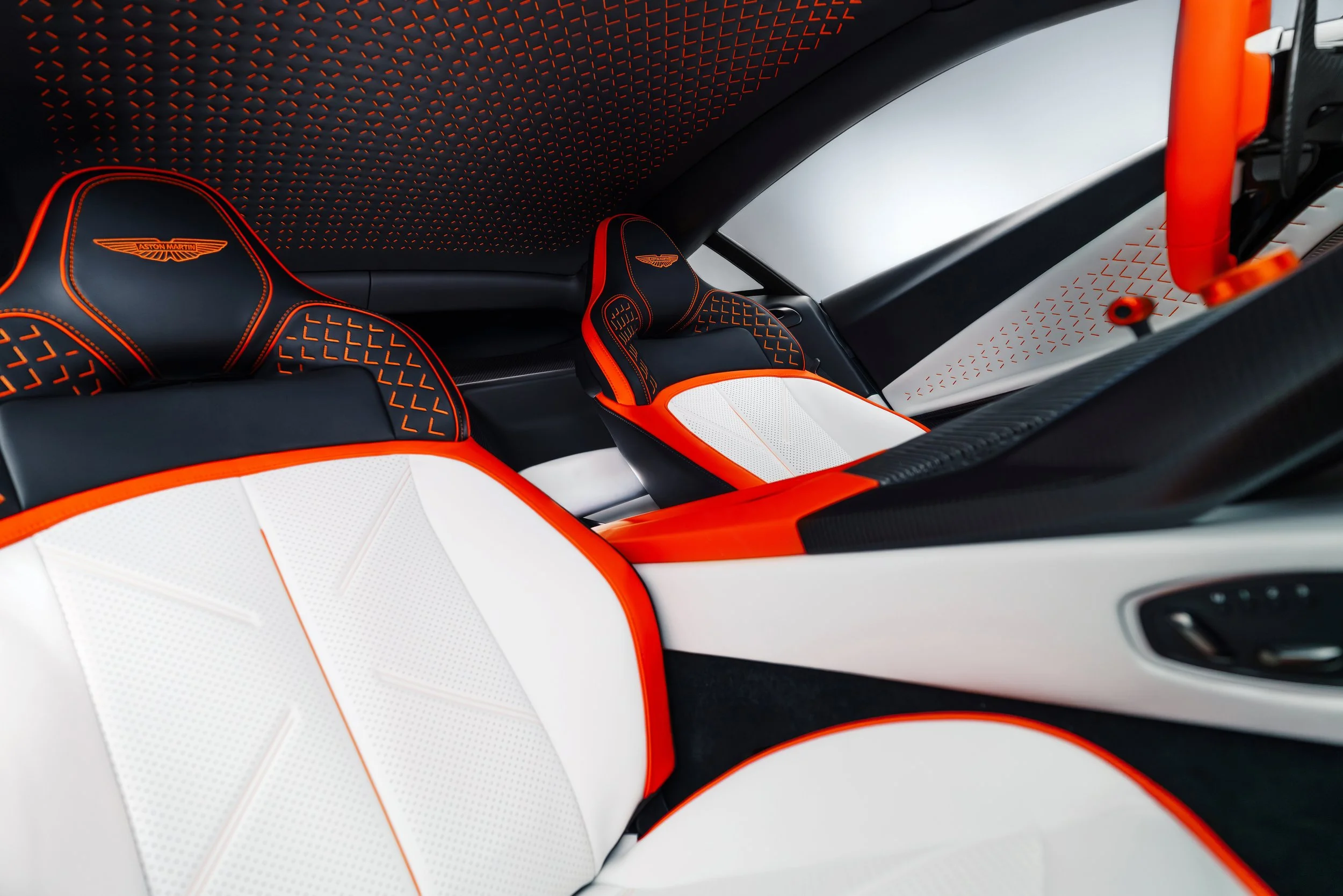
Image © Aston Martin Lagonda. Used for editorial purposes. Aston Martin Valen.
Customers can choose between newly developed Sports Plus seats, intended to balance support with long-distance comfort, or lightweight carbon-fibre performance seats for a more focused environment. Semi-aniline leather, Alcantara, multiple trim splits, new quilting treatments, anodised finishes and a dedicated Driver Focused interior provide the sort of personalisation we would expect from Q.
Once again, the interesting part is the breadth. Valen is trying to be lighter and sharper, but Aston Martin hasn’t stripped away everything that makes one of these cars usable. Comfortable seats remain available, there’s luggage space, winter tyres are offered. The interior still places considerable emphasis on craftsmanship.
Behind the astonishing bodywork sits a surprisingly traditional Aston Martin ambition: build an immensely fast car that you can still use to go somewhere.
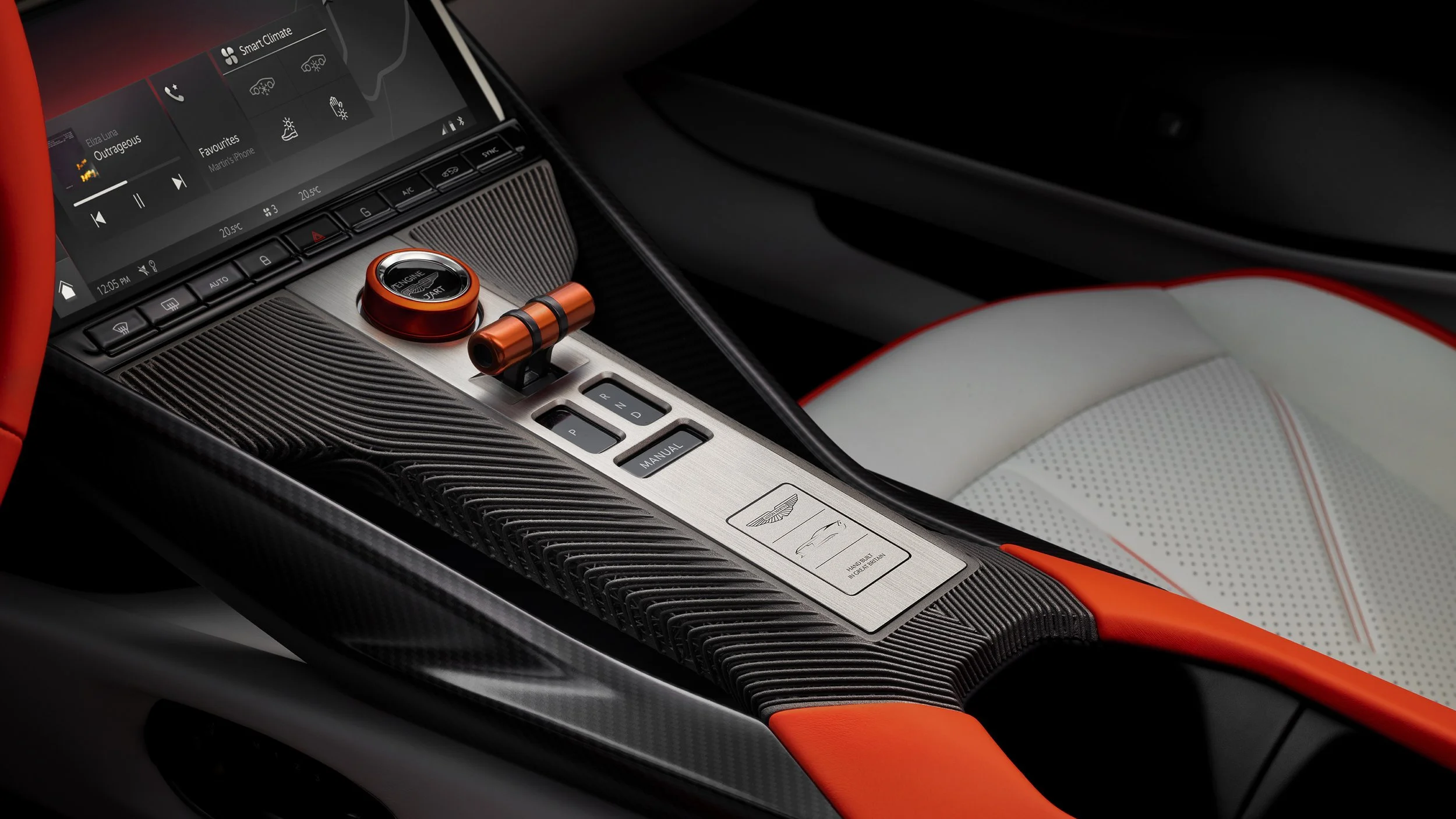
Image © Aston Martin Lagonda. Used for editorial purposes. Aston Martin Valen.
Q by Aston Martin - But What Is This New SVO Department?
There’s another detail buried within the launch announcement that may ultimately prove rather important. Aston Martin says Valen is the latest special created through Q by Aston Martin, but adds that the project has been realised with the expertise of its newly formed Special Vehicle Operations, or SVO, department.
The release doesn’t yet explain the full remit of this new department, so we shouldn’t invent one for it. It does, however, suggest that Aston Martin is creating a more formal engineering structure around the development of highly specialised, low-volume cars. That’s worth watching.
Q has traditionally been the bespoke and personalisation side of Aston Martin, dealing with everything from individual colours and materials to extraordinary commissions and limited editions. The arrival of a dedicated SVO operation may give the company greater capability to take those projects significantly further mechanically and structurally. Valen certainly looks like a demonstration of what that could mean.
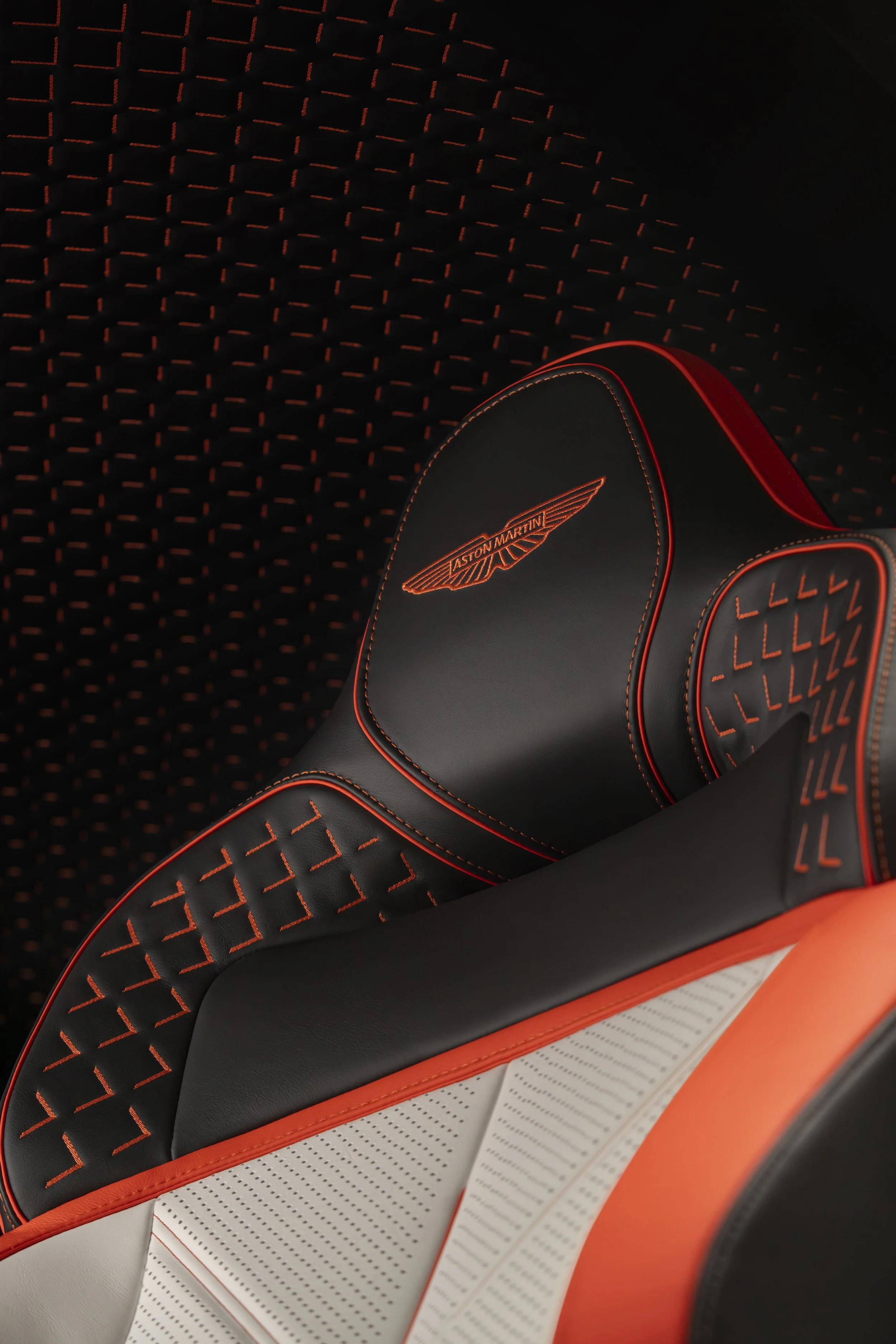
Image © Aston Martin Lagonda. Used for editorial purposes. Aston Martin Valen Interior.
There’s a Business Story Here Too
This is where Valen becomes relevant beyond the engineering, because Adrian Hallmark has now explained rather more clearly why cars such as this are important to Aston Martin.
Speaking to Bloomberg following Valen’s unveiling, Hallmark described these highly exclusive cars as “absolutely essential for our future success.” His reasoning fits directly into the wider change in direction we have been following since he arrived at Aston Martin: a much greater emphasis on value-led growth rather than simply pursuing additional volume.
Perhaps Hallmark’s neatest explanation of the strategy came during his conversation with evo, when he spoke about continually “giving the consumers another reason to look.” The important word there may be another. A customer might buy one of Aston Martin’s exceptionally valuable limited-production cars today, but the relationship doesn’t necessarily end with that purchase. A few years later, Aston Martin needs to create something new, sufficiently different and desirable to make that same customer look again. Valour, Valiant and now Valen begin to demonstrate how that continuing cycle could work.
That helps explain why a 150-car V12 special can have significance far beyond the number of cars actually produced. Aston Martin hasn’t announced an official price for Valen in its launch material, so FTP won’t speculate about what each car contributes financially. We also don’t know its development costs or eventual margins.
What we can see much more clearly, however, is the strategy: use Aston Martin’s established engineering foundations to create genuinely differentiated, highly exclusive cars that customers are prepared to value at an entirely different level. Extensive Q personalisation creates another opportunity to increase that value without Aston Martin needing to chase significantly greater production volumes.
Valen therefore isn’t simply an extravagant 150-car side project. It provides a particularly visible example of the business model Hallmark is now trying to develop: make the core cars more profitable, control overall volume, and supplement them with a carefully managed programme of exceptionally high-value specials.
Given our forthcoming Featured Article examining Adrian Hallmark’s first two years at Aston Martin, Valen may ultimately prove to be one of the clearest product examples yet of where he wants the company to go.
So What Exactly Is Valen?
After working through everything Aston Martin has revealed, Valen makes rather more sense than the headline 850PS figure initially suggests.

Image © Aston Martin Lagonda. Used for editorial purposes. Aston Martin Vanquish 25.
It isn’t simply a more powerful Vanquish, nor is it another Valour or Valiant built around the appeal of a manual gearbox and an intentionally analogue character. Instead, Valen takes Aston Martin’s established front-engined V12 architecture and uses it as the foundation for something considerably more specialised.
The important changes are found throughout the car: lower mass, extensively revised chassis behaviour, GT4-derived transmission learning, sophisticated tyre technology, bespoke aerodynamics, lightweight materials and an exhaust system developed almost as carefully for its character as for its function.
Perhaps the most significant distinction, however, is philosophical. Valen combines one of Aston Martin’s most traditional ingredients, a large V12 mounted ahead of the driver and driving the rear wheels, with some of the most contemporary engineering the company can bring to it.
That makes Valen something of a bridge. It preserves a format deeply associated with Aston Martin while demonstrating how the company believes that formula can continue to evolve rather than simply being celebrated for what it represented in the past. Even the name seems appropriate. Aston Martin says Valen is derived from the Latin valens, associated with strength and power. After examining what sits beneath that extraordinary bodywork, the name feels rather more considered than it first appeared.
What Does the Motoring Press Think So Far?
With Valen only just revealed, nobody outside Aston Martin has yet delivered an independent road-test verdict. What we do have is an unusually large collection of first looks and static walkarounds, and the initial reaction from the motoring media has been broadly positive, although certainly not without reservations.
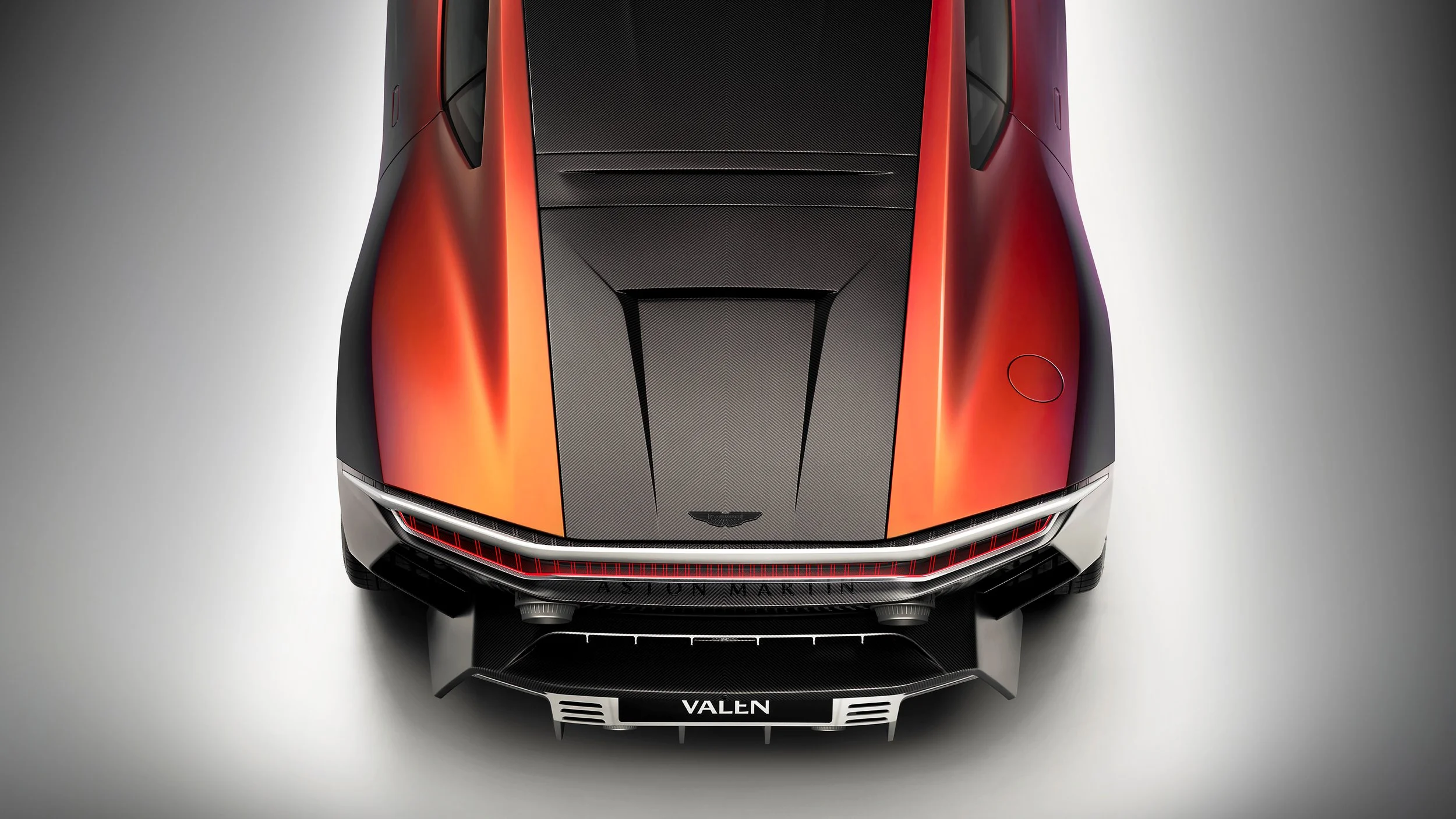
Image © Aston Martin Lagonda. Used for editorial purposes. Aston Martin Valen
Rory Reid at AutoTrader was particularly enthusiastic about the exterior, describing Valen visually as a “smash”. He praised the front, the dramatic side profile and the way Aston Martin has exposed so much of the car’s aerodynamic thinking, particularly around the rear wheels and diffuser. He wasn’t completely convinced by everything, though, questioning elements of the silver treatment around the lower rear and the full-width light bar. It was an interesting reaction because it broadly mirrors our own first impression: the car becomes increasingly radical the further around it you walk.
Henry Catchpole for Hagerty approached the car from a slightly different direction, asking whether Valen might simply be a regular Vanquish dressed in what he memorably described as a “Blade Runner ball gown.” His detailed examination ultimately revealed considerably more substance beneath the bodywork, from the magnesium wheels and Cyber Tyres to the GT4-influenced transmission strategy and extraordinary exhaust. Catchpole also detected perhaps a hint of modern Ford Mustang in the styling and was less persuaded by the orange-and-white treatment of the launch car’s interior. His discussion with Marek Reichman was particularly useful in establishing that Valen is intended principally as an extremely aggressive road car capable of long-distance use, rather than something designed primarily around circuit driving.
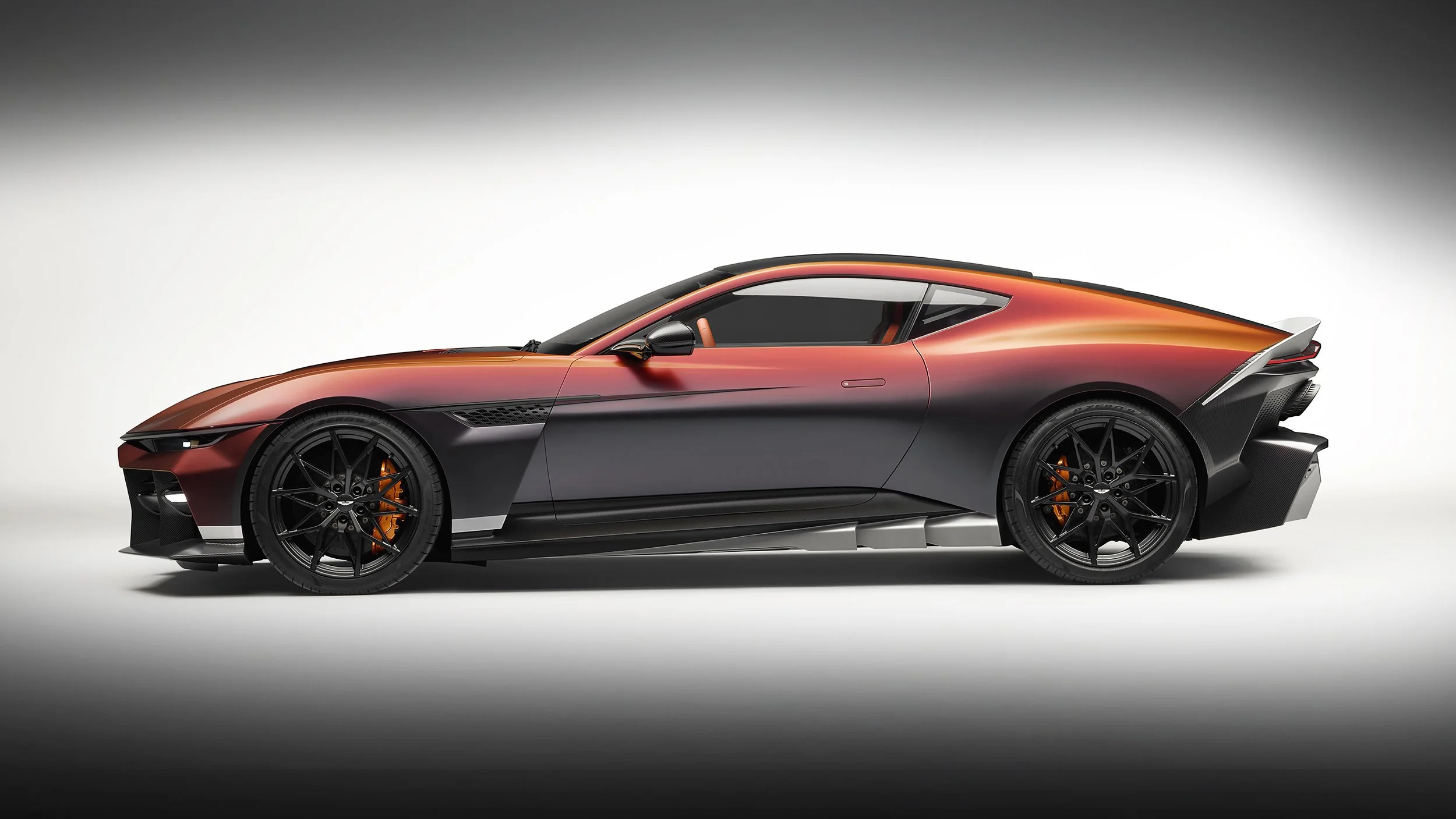
Image © Aston Martin Lagonda. Used for editorial purposes. Aston Martin Valen
Shmee150 also spent considerable time examining the car at launch, taking viewers through its design, powertrain, individual engineering details and interior before offering his first conclusions. Like the other coverage available so far, however, this was an examination of the physical car rather than a drive, an important distinction when so much of Aston Martin’s argument for Valen rests upon how different its chassis, transmission and responses are intended to feel.
Perhaps one of the strongest reactions to the car itself came from James Dennison of CAR, who regarded Valen as one of the year’s most striking new designs. His walkaround drew particular attention to those deeply recessed headlights, the enormous side strakes and vortex-generating sills, magnesium wheels, solid rear deck, diffuser and extraordinary four-outlet exhaust. The newly designed interior and its 3D-printed components also impressed. Yet his assessment raised the same question that keeps returning throughout this story: however different Valen looks, how different will it actually feel from the V12 architecture beneath it when somebody finally drives one? CAR’s launch coverage can describe the engineering changes; answering that question will have to wait.
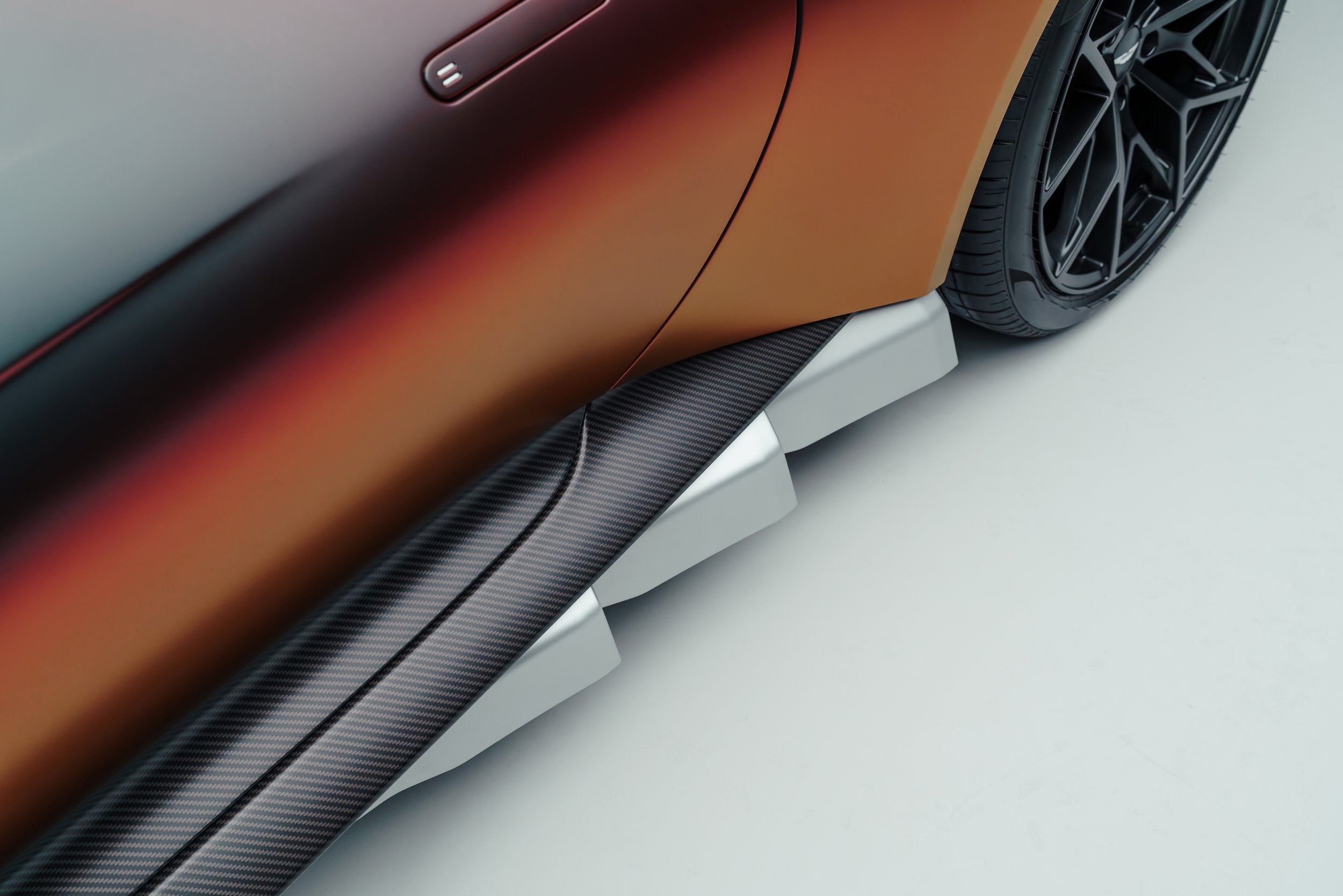
Image © Aston Martin Lagonda. Used for editorial purposes. Aston Martin Valen
Supercar Blondie’s Alex Hirschi was considerably less restrained in her enthusiasm. Seeing Valen at Monterey, she highlighted the aggressive headlights and enormous front splitter, the unusual Andromeda Red paint and the level of Q personalisation available. Even the saw-tooth vortex generators earned approval for both their function and the fact that, in her words, they “look freaking cool.” The interior’s much stronger use of colour also received an enthusiastic response.
Taken together, these first impressions suggest that Aston Martin has achieved at least one of its objectives already:
Valen doesn’t disappear quietly into the existing range.
The styling is provoking discussion, the engineering details are attracting serious attention and there seems to be broad recognition that considerably more has changed than the extra 15PS over Vanquish might initially suggest. There are reservations too, particularly around aspects of the rear styling, the launch car’s interior specification and inevitably the question of whether all this engineering will translate into a genuinely distinctive driving experience.
That last question is the important one. Nobody independent has driven Valen yet. Until that happens, nobody can properly tell us whether the lower mass, revised chassis, altered gearing, GT4-derived transmission behaviour and 1,000Nm being sent exclusively to the rear wheels combine to create the driving experience Aston Martin says they will. For now, therefore, these are first impressions rather than verdicts. Judging by the reaction beyond the professional motoring media, however, plenty of people have already made up their minds about the way it looks.
What Does Everybody Else Think?
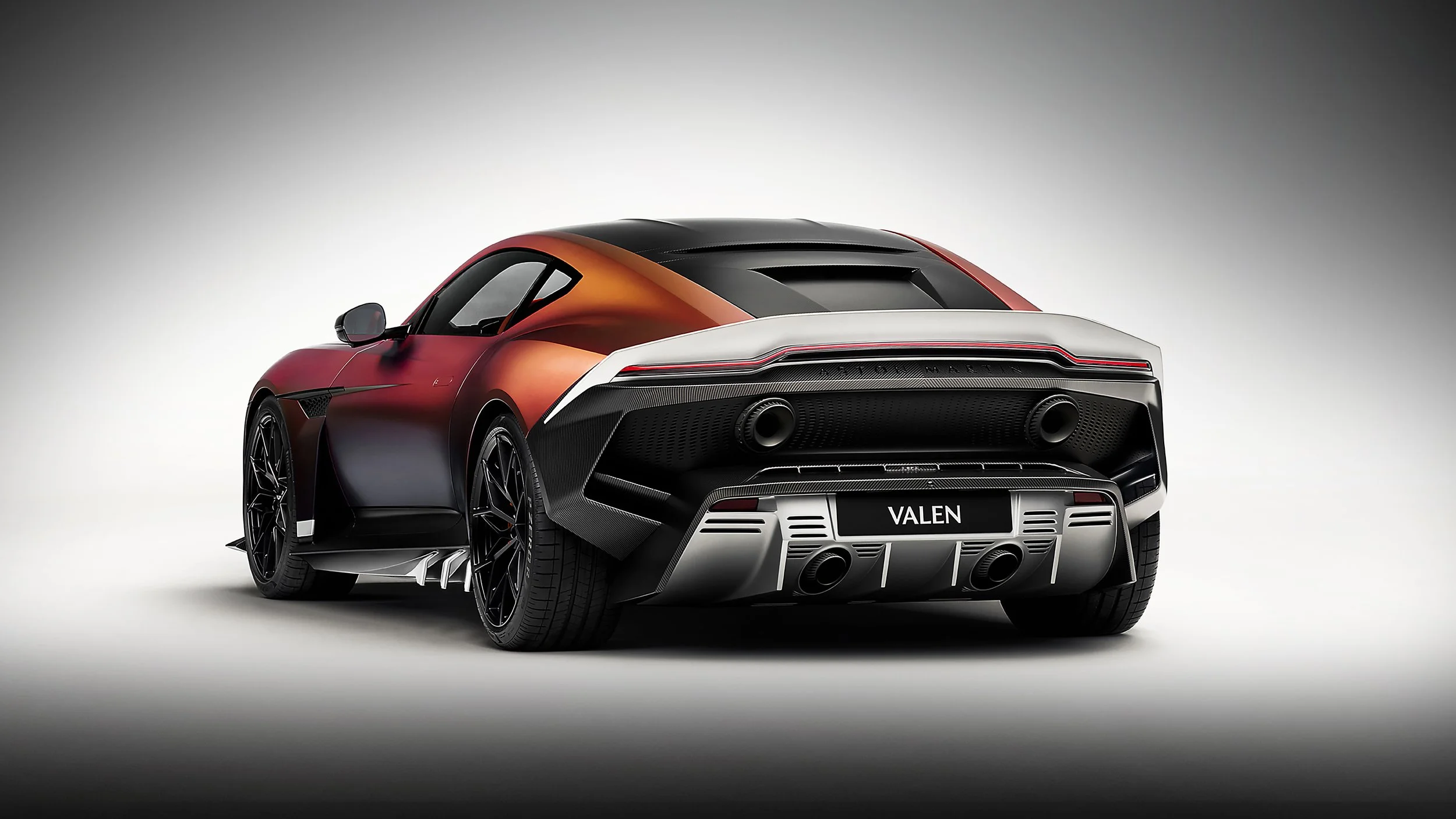
Image © Aston Martin Lagonda. Used for editorial purposes. Aston Martin Valen
If the professional reaction has been broadly positive, the response from enthusiasts is considerably more complicated.
FTP reviewed well over 1,000 visible comments across coverage from Aston Martin, AutoTrader, Hagerty, Shmee150 and Supercar Blondie, together with reaction beneath CAR’s coverage. This isn’t a scientific opinion poll, the audiences overlap, people motivated enough to comment are inevitably self-selecting and YouTube frequently defaults to showing its ‘Top’ comments, but the volume is large enough for some very clear themes to emerge.
The first is impossible to miss: Valen’s styling has divided opinion.
For some, that is precisely the attraction. Words such as aggressive, futuristic and muscular appear repeatedly, with one particularly neat description calling it a “British muscle car.” There’s enthusiasm for an Aston Martin prepared to look this dramatic and for a design that refuses simply to reproduce the more restrained elegance of Vanquish.
For others, that departure is exactly the problem. A substantial number of commenters questioned whether Valen still possesses the elegance traditionally associated with Aston Martin, with references to the marque’s classic proportions and James Bond image appearing repeatedly.
There was also one comparison that appeared more frequently than any other: Ford Mustang.
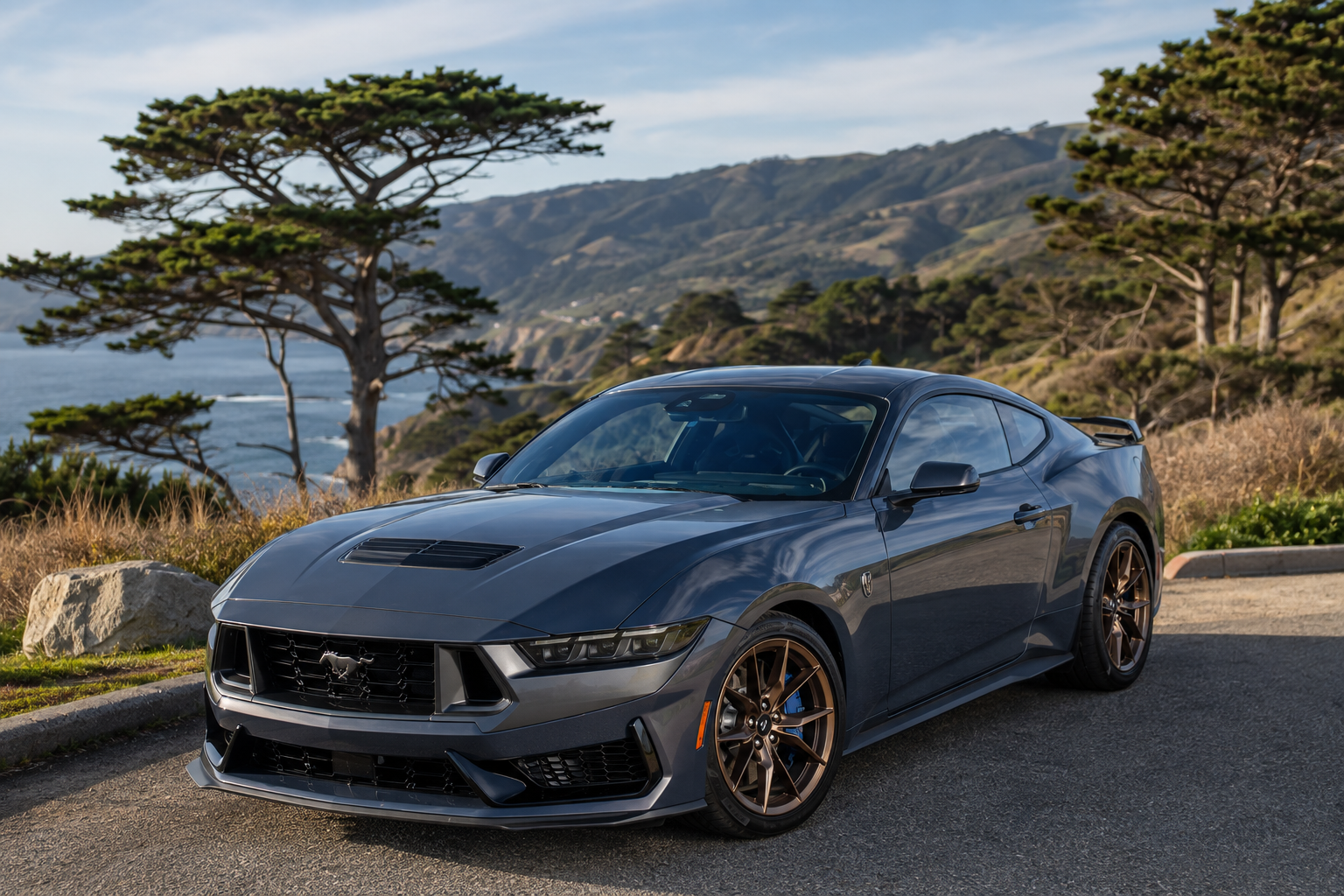
Image © Fuel the Passion. Ford Mustang Dark Horse
Some saw elements of the Mustang Dark Horse or GTD in Valen’s proportions and detailing, particularly around the front and rear of the car.
Comments beneath CAR’s coverage included everything from the straightforward “looks like a Mustang” to “Too Mustangesque.” Whether that resemblance is actually there will depend heavily upon the eye of the beholder, but enough people independently made the comparison for it to become a genuine part of the initial reaction.
The engine, however, attracts much broader enthusiasm.
A non-hybrid, twin-turbocharged V12 producing 850PS and sending 1,000Nm exclusively to the rear wheels still carries enormous appeal. Many commenters simply wanted to hear it properly and, more importantly, see what happens when somebody finally drives it. The extraordinary titanium exhaust and Aston Martin’s decision to continue developing the front-engined V12 formula have clearly struck a chord.
Then comes the more difficult question of value.
The relatively small 15PS increase over Vanquish has inevitably attracted attention alongside reports elsewhere of Valen carrying a seven-figure price. Some commenters questioned whether the engineering changes are substantial enough to justify that level of exclusivity, with one describing it as “not special enough for the price tag.”
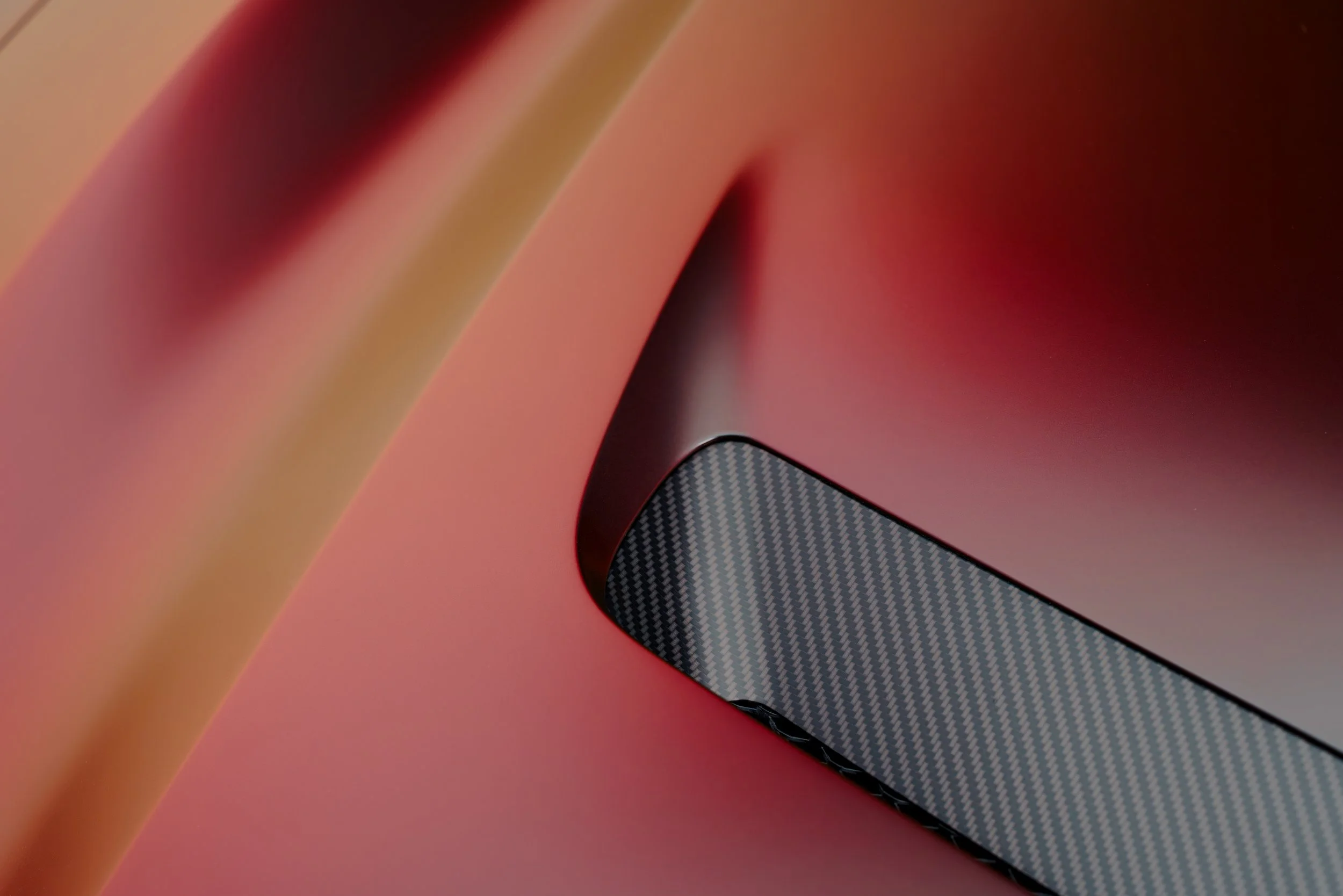
Image © Aston Martin Lagonda. Used for editorial purposes. Aston Martin Valen
That criticism perhaps demonstrates why Aston Martin has spent so much time talking about everything other than the additional horsepower. As we have already seen, the company’s case for Valen rests on weight reduction, chassis development, transmission behaviour, aerodynamics, materials, electronics and the overall driving experience rather than simply moving from 835PS to 850PS.
Another interesting debate surrounds Aston Martin’s description of Valen as being “for the purists.” For some enthusiasts, a highly sophisticated eight-speed automatic, Cyber Tyres and increasingly complex electronic systems sit awkwardly alongside that phrase, particularly after Valour and Valiant placed a six-speed manual gearbox at the centre of their appeal. Others take a broader view: perhaps purity here means retaining the front-engined V12, rear-wheel-drive layout and avoiding hybrid assistance rather than rejecting modern technology altogether.
There’s also an intriguing contradiction running through much of the reaction. Aston Martin talks about Valen as a car designed to be driven, something capable of travelling long distances as well as delivering extreme performance, yet with only 150 examples being produced, many enthusiasts suspect a significant proportion will inevitably become collection pieces.
That tension between driver’s car and collector’s object is hardly unique to Valen, but at this level of rarity it becomes difficult to ignore.
Perhaps the clearest conclusion from all of those comments is not that people love Valen or hate it. It’s that very few appear indifferent to it.
Some see an outrageous, forward-looking Aston Martin that finally pushes the company’s design language somewhere genuinely new. Others see too much aggression, too little traditional elegance or too much resemblance to machinery wearing a different badge. There are questions about value, questions about purity and questions about whether 150 cars this rare will ever be used as their engineers intended.
For a car unveiled only days ago, Valen has certainly started a conversation. Now it’s time for FTP to reach its own conclusion.
The FTP View
Aston Martin Valen is very difficult to ignore. Our first impressions - we love it!
There’s still plenty we don’t know. Aston Martin hasn’t published Valen’s official weight or price, and nobody outside the company has yet driven the finished production car independently. Until that happens, we cannot know whether the extensive chassis work, lower mass, altered gearing and GT4-derived transmission strategy create the genuinely different driving experience Aston Martin promises.

Image © Aston Martin Lagonda. Used for editorial purposes. Aston Martin Valen
What we can judge is the idea behind it. Valen takes one of Aston Martin’s most traditional formulas, a front-engined V12 sending enormous power to the rear wheels, and refuses simply to celebrate the past. Instead, it surrounds that familiar architecture with contemporary materials, sophisticated electronics, advanced tyre technology, extensive weight reduction and some extraordinarily ambitious design.
That makes it very different from Valour and Valiant. Those cars deliberately looked backwards for part of their appeal. Valen looks forward.
The styling will undoubtedly divide opinion. Some will see too much aggression and not enough of the restrained elegance traditionally associated with Aston Martin. Others will love the fact that the company has produced something so dramatic and unapologetic.
Having worked through the launch material, the engineering and the reaction surrounding the car, FTP sits firmly in the latter camp. We love it.
Not because every detail is necessarily perfect, nor because 850PS automatically makes it better than the Aston Martins around it. We love it because it feels ambitious. It gives Aston Martin another distinct story to tell, another extraordinary car for its customers to consider. That may ultimately be one of Valen’s most important roles. Only 150 examples will be built, with first deliveries expected from the second quarter of 2027. Most of us will probably never see one on the road, never mind drive one. But whether you love the design or absolutely don’t, Aston Martin has created something people are talking about.
Until now, Valen has been seen almost exclusively in its dramatic launch colour, Satin Andromeda Red. With the car now available on the Aston Martin configurator, however, we naturally had to explore some of the alternatives. The two images shown here present Valen in Minotaur Green, firmly FTP’s favourite colour choice, and reveal a rather different side to the car.
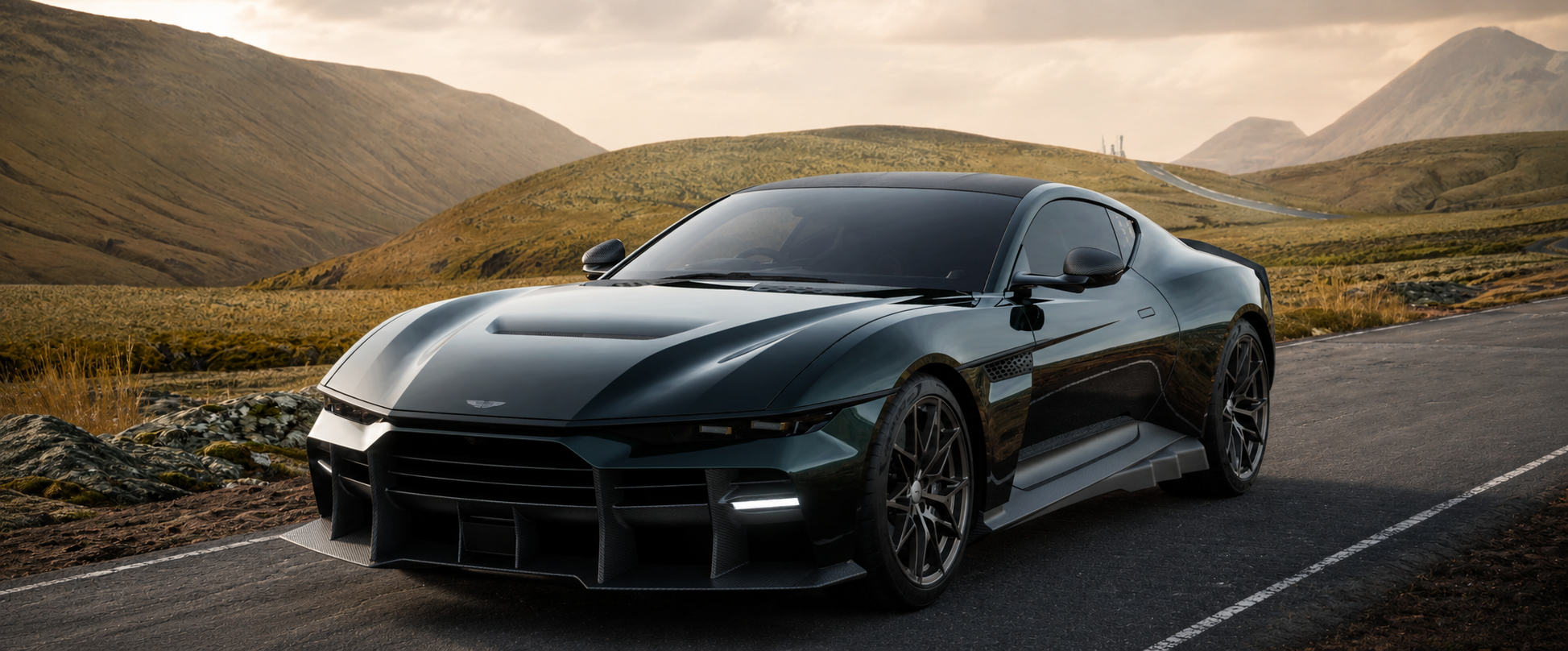
Image © Aston Martin Lagonda. Used for editorial purposes. Aston Martin Valen in Minotaur Green - Aston Martin Configurator
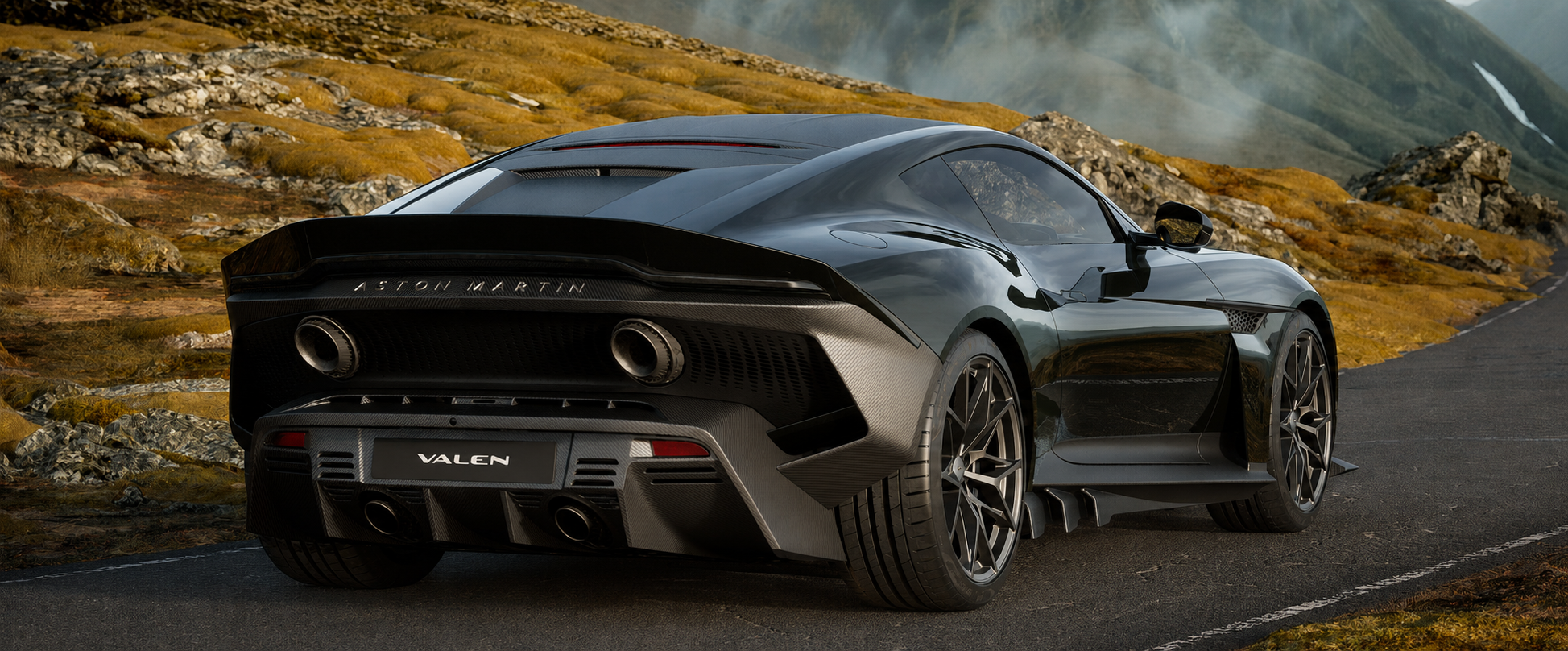
Image © Aston Martin Lagonda. Used for editorial purposes. Aston Martin Valen in Minotaur Green - Aston Martin Configurator
The deep green finish gives Valen’s dramatic surfaces and carbon-fibre detailing a more understated character, without disguising the aggression of its design. We think it suits the car beautifully. If you would like to create your own specification, you can configure the Aston Martin Valen HERE.
Whatever your view of Valen, Aston Martin has certainly given us another reason to look.
Monterey Car Week - Aston Martin Looks Back to Move Forward
If last week’s Roundup demonstrated how effectively Aston Martin can reach back into its own colour archive, Monterey Car Week has taken that idea somewhere considerably more personal.
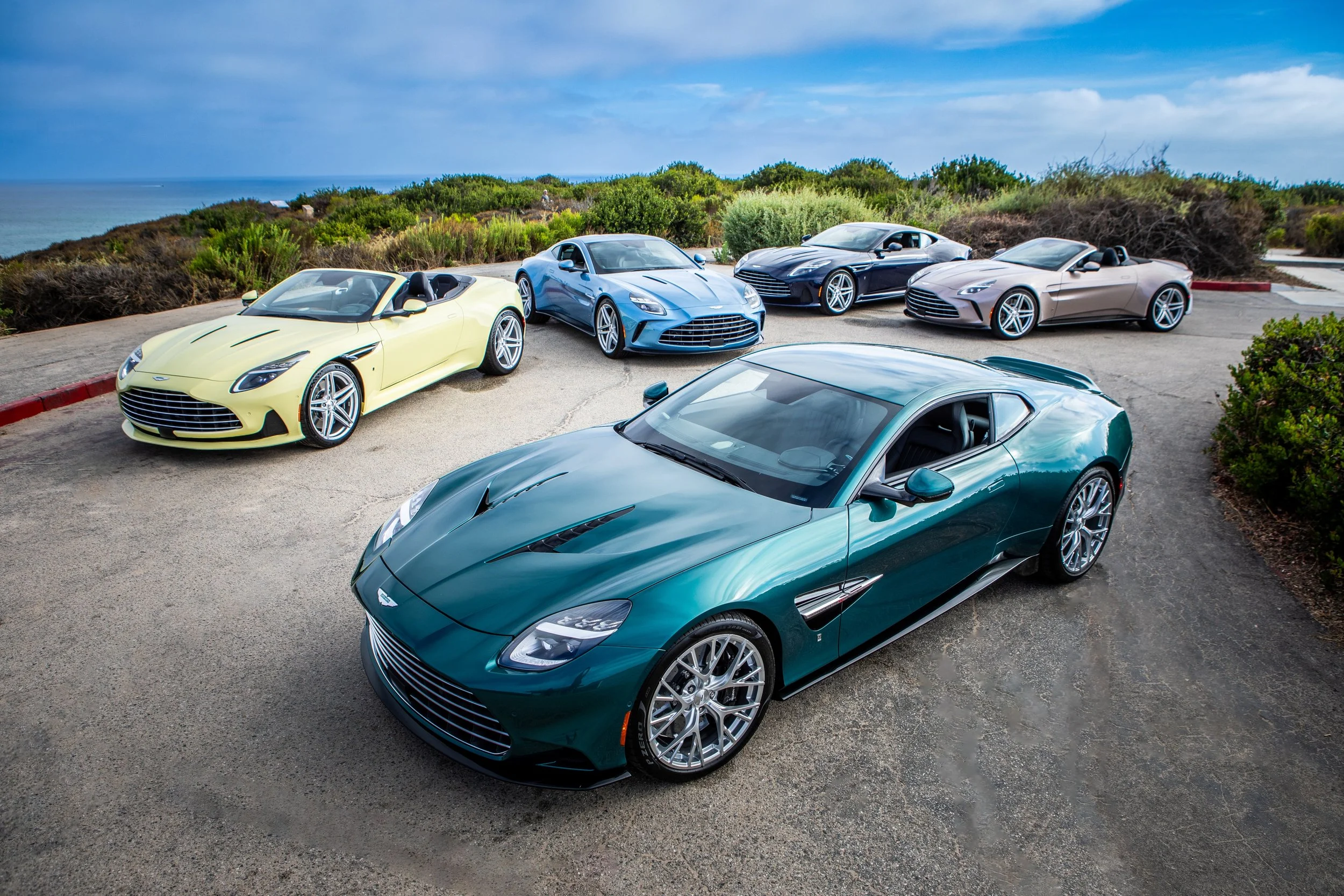
Image © Aston Martin Lagonda. Used for editorial purposes.
In Issue 36, we featured the five Heritage Edition cars created by Q by Aston Martin and Aston Martin Newport Beach, each reviving a colour from the marque’s past. Pale Primrose, Pacific Blue, Tudor Green, Winchester Blue and Mink Silver provided a wonderfully simple reminder that personalisation doesn’t always have to mean inventing something completely new; sometimes Aston Martin’s own history contains more than enough inspiration.

Image © Aston Martin Lagonda. Used for editorial purposes. Aston Martin DB2, VMF65.
Aston Martin and Q by Aston Martin have created three extraordinary DB12 S ‘VMF’ Coupés, each inspired by one of the famous DB2 competition cars carrying the registrations VMF 63, VMF 64 and VMF 65.
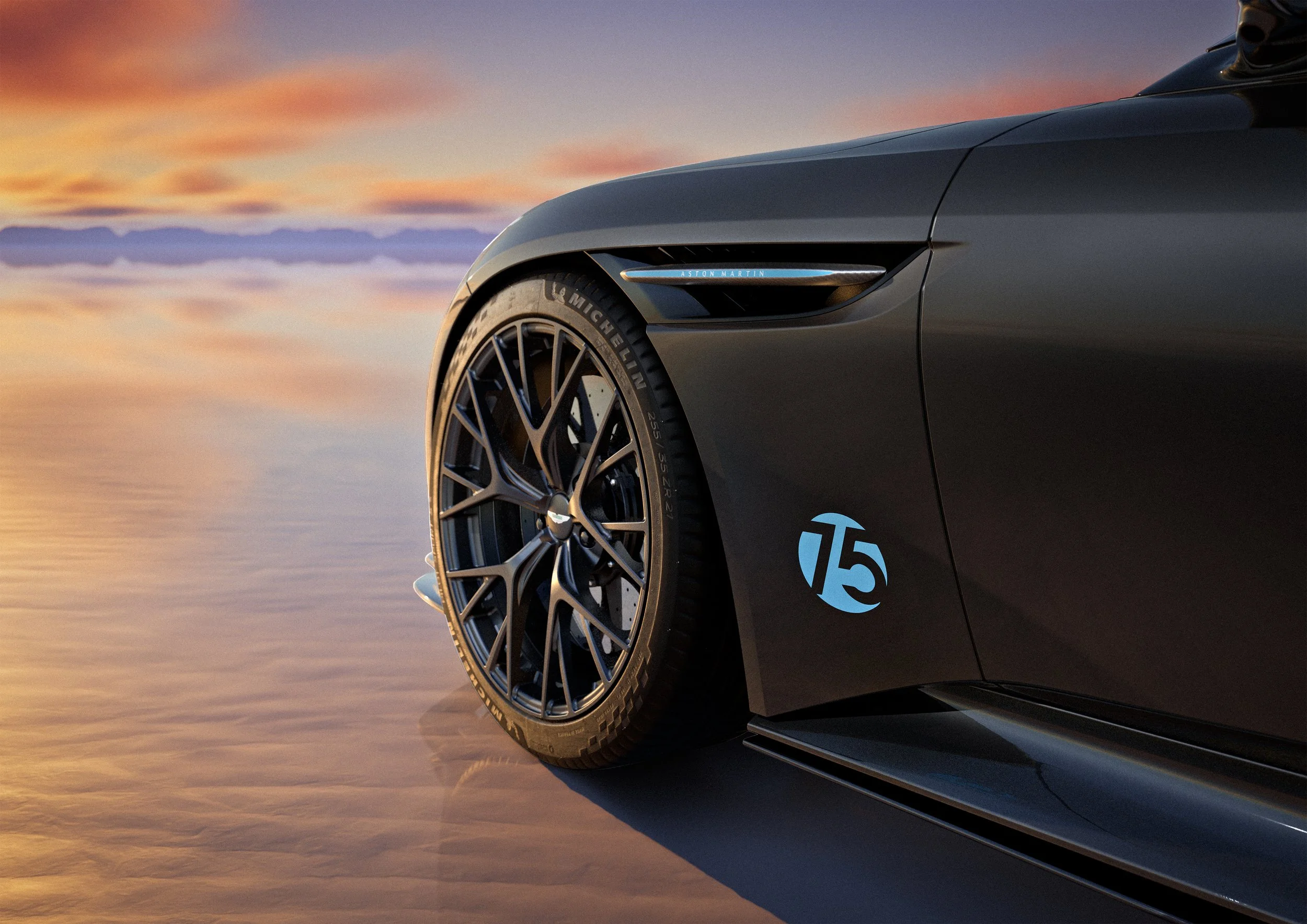
Image © Aston Martin Lagonda. Used for editorial purposes.
The modern cars are principally finished in Carbon Black, but each carries a distinctive colour through its grille and detailing: Rosso Red for VMF 63, Speed Yellow for VMF 64 and Ellwood Blue for VMF 65. Those colours aren’t simply decorative additions dreamed up for Monterey. They reach directly back into Aston Martin’s competition history.
This is where the story becomes particularly special for Fuel the Passion. Earlier this year, during the London New Year’s Day Parade, I had the pleasure of meeting José Romão de Sousa, owner of another remarkable Aston Martin carrying a famous VMF registration: VMF 37. José very kindly agreed to speak with FTP on camera about his beautiful car and the history surrounding it. If you haven’t seen that interview, simply click on the image below and it’ll take you straight there, where you can see the stunning VMF 37 for yourself.
Following our meeting, José generously sent me a collection of photographs and further information relating to the wider VMF story. Among those photographs was the remarkable image shown here;

Image © José Romão de Sousa. Reproduced with permission. The three original VMF Aston Martins.
They show VMF 63, VMF 64 and VMF 65 together at Silverstone, photographed a number of years ago. What a sight.
These weren't simply three attractive early DB2s carrying memorable registration numbers. VMF 63, VMF 64 and VMF 65 were part of Aston Martin's post-war factory competition effort, built in 1950 with the 24 Hours of Le Mans firmly in their sights. At Le Mans that year, VMF 64, driven by George Abecassis and Lance Macklin, finished an impressive fifth overall and won its class, while Reg Parnell and Charles Brackenbury followed immediately behind in VMF 63, sixth overall and second in class. VMF 65 had been intended for Eric Thompson and Jack Fairman, but the car was damaged when Fairman overturned it while being driven to the circuit and was unable to start. Aston Martin therefore still left Le Mans with its two surviving new DB2 team cars fifth and sixth overall, a significant result for the fledgling David Brown-era competition programme.
Their importance didn't end with that one weekend. The DB2 became an increasingly serious international competition car, and our research for a future FTP Featured Article exploring the VMF Aston Martins has already uncovered some wonderful individual histories behind these VMF machines. VMF 64 returned to Le Mans and was part of Aston Martin's first post-war overall podium there in 1951, while the repaired VMF 65 went on to compete extensively and became associated with a remarkable succession of important drivers. Seen in that context, the red, yellow and blue grilles weren't merely attractive period details. They belonged to cars that helped rebuild Aston Martin's competition reputation during the early David Brown years, part of the path that would eventually lead through DB3 and DB3S to the DBR1 and that famous outright Le Mans victory in 1959.
To have these three cars assembled in one place is special enough, but look closely at their grilles: red, yellow and blue. Suddenly the inspiration behind Aston Martin’s new Monterey commissions becomes wonderfully clear.
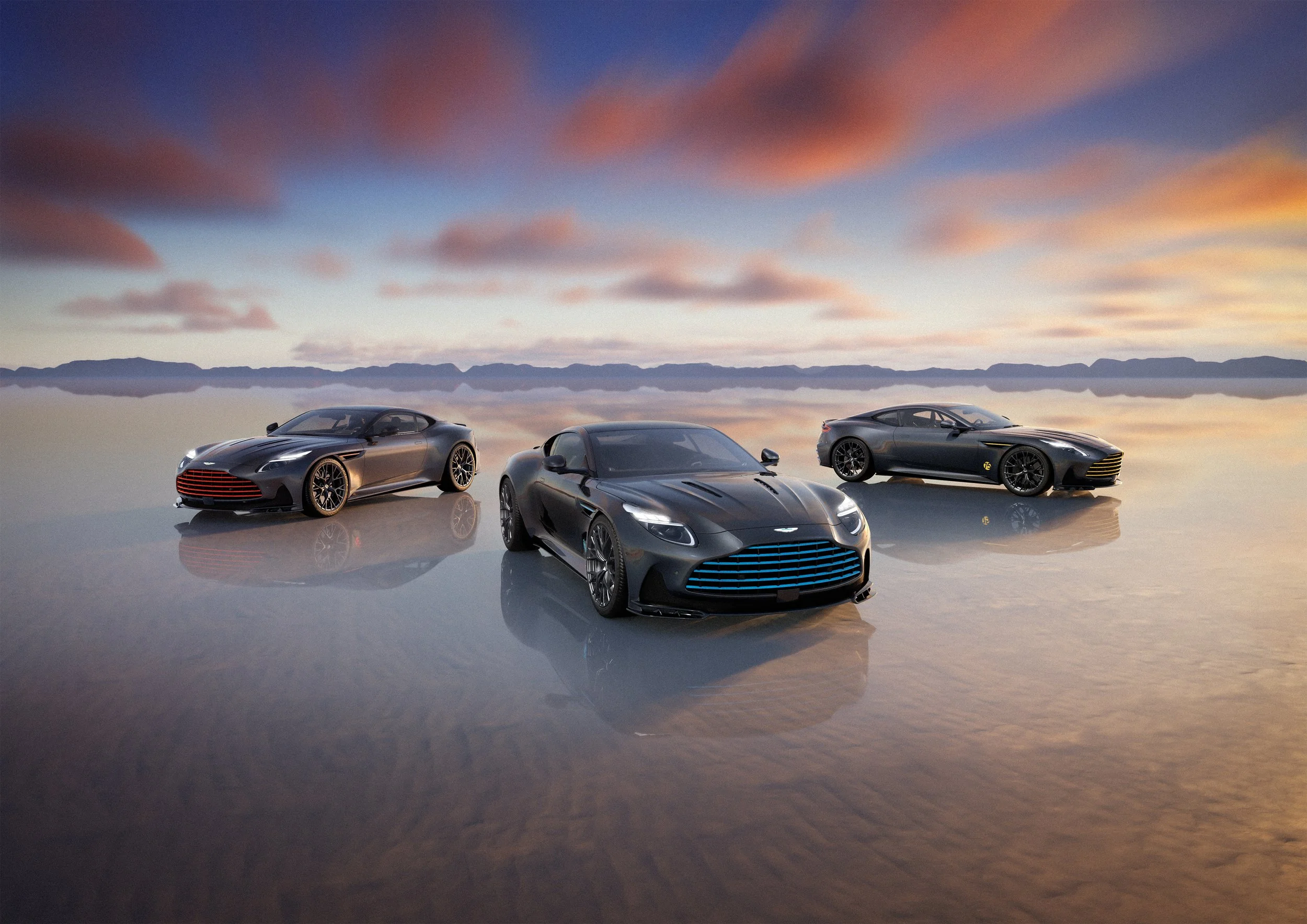
Image © Aston Martin Lagonda. Used for editorial purposes.
The new DB12 S cars aren’t merely wearing three attractive accent colours. Aston Martin has taken one of the most visually recognisable features of these historic competition cars and translated it directly onto a modern Aston Martin, some 75 years later. There’s something wonderfully simple about it.
On the original cars, the contrasting grille colours served a practical purpose, helping distinguish one racing Aston Martin from another. On the modern DB12 S commissions, that same detail has become the principal visual link between generations.

Image © José Romão de Sousa. Reproduced with permission.
José’s own VMF 37, shown here with him, forms another fascinating part of this wider story.
My meeting with José has actually led to something considerably larger behind the scenes at FTP. Research is already under way for a future Fuel the Passion Featured Article exploring the VMF Aston Martins, including the extraordinary history of José’s VMF 37 and the wider stories surrounding these cars.
There’s a great deal still to research properly, so I’m not going to give too much away here, but it’s a subject I’m thoroughly enjoying discovering and one we’ll return to in much greater depth later this year. For now, however, José has very kindly allowed us to reproduce these photographs alongside Aston Martin’s new Monterey cars, and I think they tell the story better than almost anything we could write, that’s heritage being used properly.
Three Modern Tributes
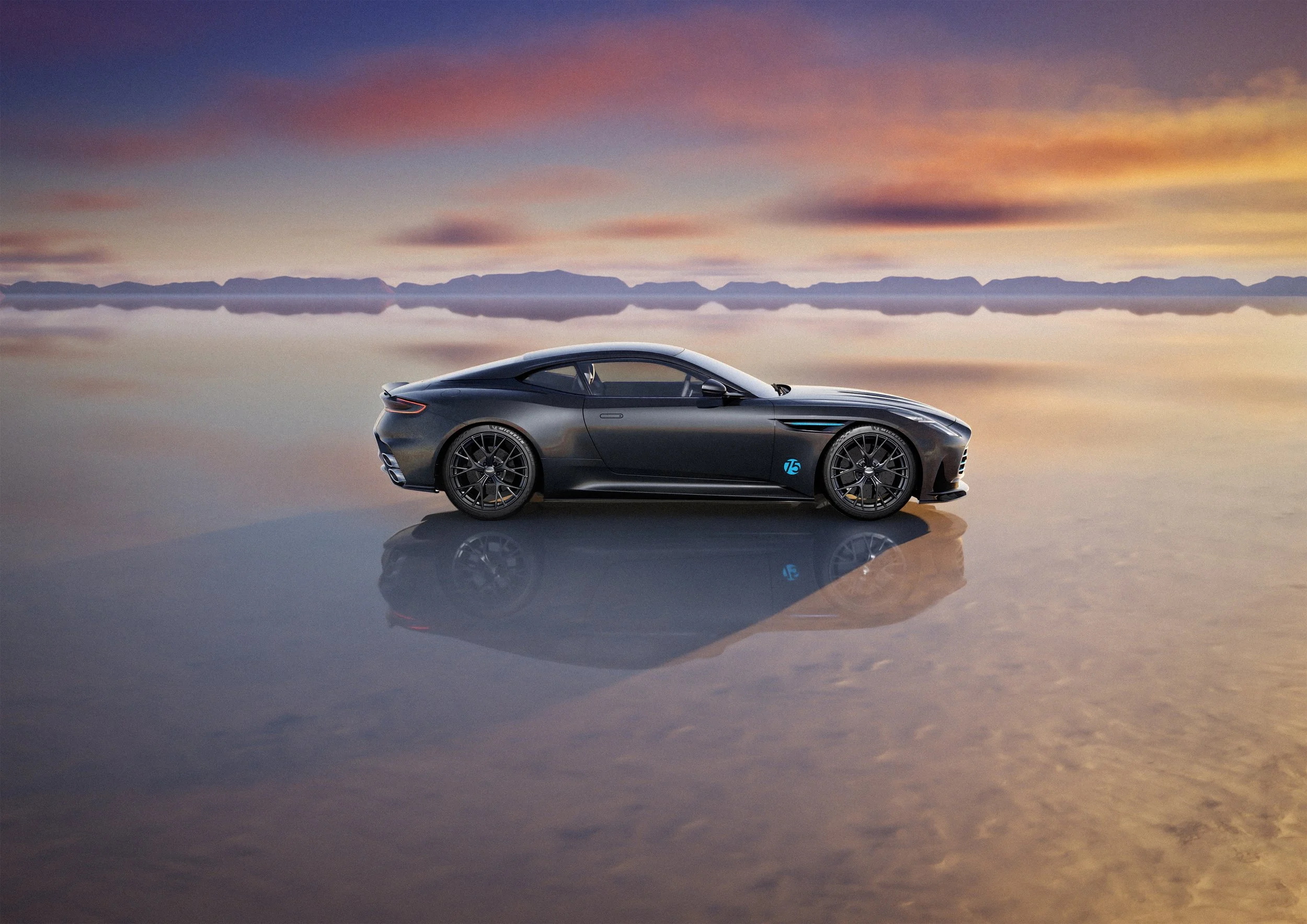
Image © Aston Martin Lagonda. Used for editorial purposes.
Aston Martin says the original DB2s associated with VMF 63, VMF 64 and VMF 65 were built in 1950 for competition, including the 24 Hours of Le Mans, before continuing to race during the early years of the decade. Q by Aston Martin has deliberately avoided turning the modern cars into replicas.
Instead, all three DB12 S Coupés retain a predominantly Carbon Black appearance, allowing their individual accent colours to provide the connection.
VMF 63 receives Rosso Red detailing.
VMF 64 uses Speed Yellow.
VMF 65 carries Ellwood Blue.
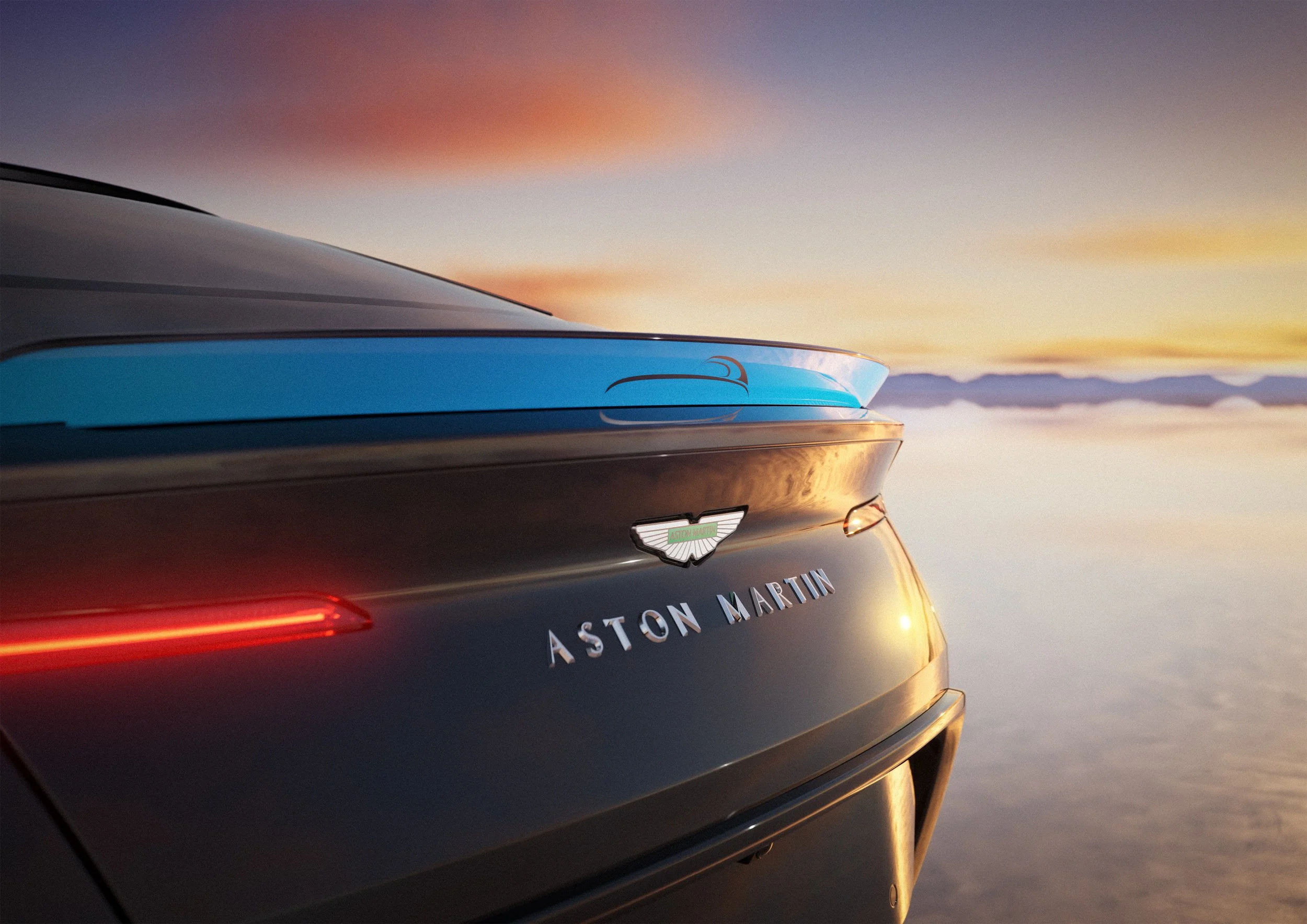
Image © Aston Martin Lagonda. Used for editorial purposes.
Those colours appear across the grille vanes, carbon-fibre side strakes and rear Aeroblade, while ‘75’ roundels and further DB2-inspired details reinforce the anniversary theme. Inside, Q has continued the idea through matching contrast stitching, embroidered Aston Martin wings, DB2 silhouettes in the seatbacks, individual colour detailing around the start control and paddles, and bespoke sill plaques. I rather like the restraint.
There would have been plenty of opportunity to cover these cars in enormous historic logos and anniversary graphics, but the strongest part of the design remains the simplest one: those three coloured grilles. Once you’ve seen José’s photograph of VMF 63, VMF 64 and VMF 65 sitting together at Silverstone, the reason becomes obvious.
Aston Martin hasn’t merely referenced its past. It’s taken a visual identity that once helped distinguish three racing cars on circuit and allowed it to live again on three modern Aston Martins. For FTP, having already begun exploring the story behind these remarkable VMF cars through José and VMF 37, seeing Aston Martin bring that history back into the spotlight at Monterey feels particularly timely.
Astons Take Over Ocean Avenue
The VMF trio also formed part of a much wider Aston Martin presence around the Monterey Peninsula.
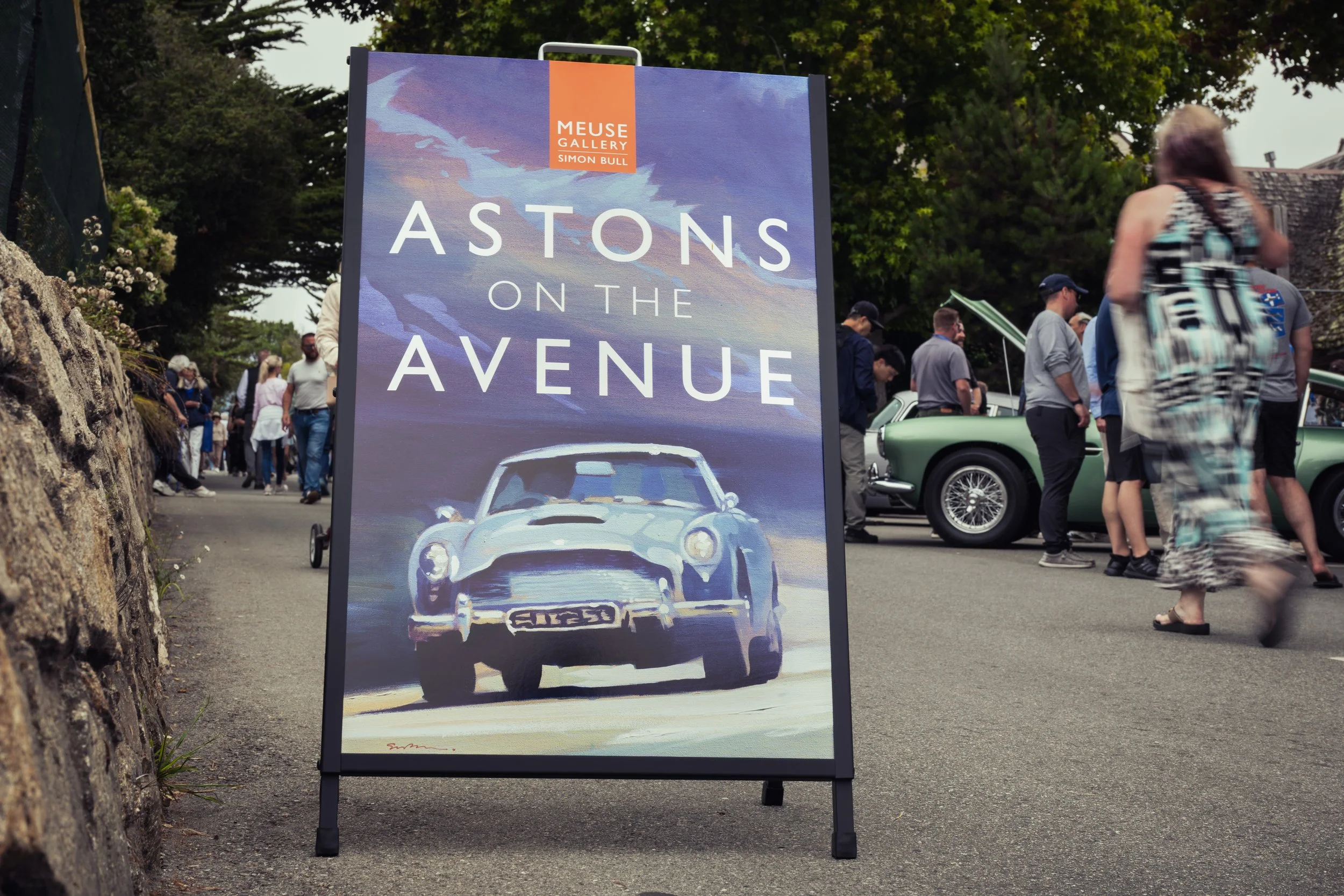
Image © Aston Martin Lagonda. Used for editorial purposes.
Aston Martin’s programme began on Wednesday 12th August with Astons On The Avenue, when Ocean Avenue in Carmel-by-the-Sea was given over to Aston Martins spanning several generations. Aston Martin describes this year’s event as having been “created in conjunction with the Aston Martin Owners Club.”
The AMOC also carried the gathering within its USA West events programme, with more than 50 Aston Martins expected to participate.
Unlike some of the rather more exclusive parts of Monterey Car Week, this one was deliberately accessible. Spectators could attend free of charge, giving people the opportunity to walk amongst Aston Martins on Ocean Avenue without requiring an invitation to a private hospitality event or an expensive concours ticket.
There was a charitable purpose too. Astons On The Avenue supports the Multiple Myeloma Research Foundation, with the event bringing together the cars, the local community and fundraising for research into the disease.
For an Aston Martin enthusiast visiting Monterey, I suspect this is one of the nicest aspects of the week. At one end of the spectrum are some of the world's most valuable cars being judged or sold behind carefully controlled gates; a short distance away, an entire street can be filled with Aston Martins for anybody wandering through Carmel to stop and enjoy.
So What Exactly Is the House of Aston Martin?
Then we come to a rather different part of the Monterey experience. You may have seen references to The House of Aston Martin and wondered whether it’s a showroom, an exhibition or somewhere anybody attending Car Week can simply wander into. The short answer to the last part is no.
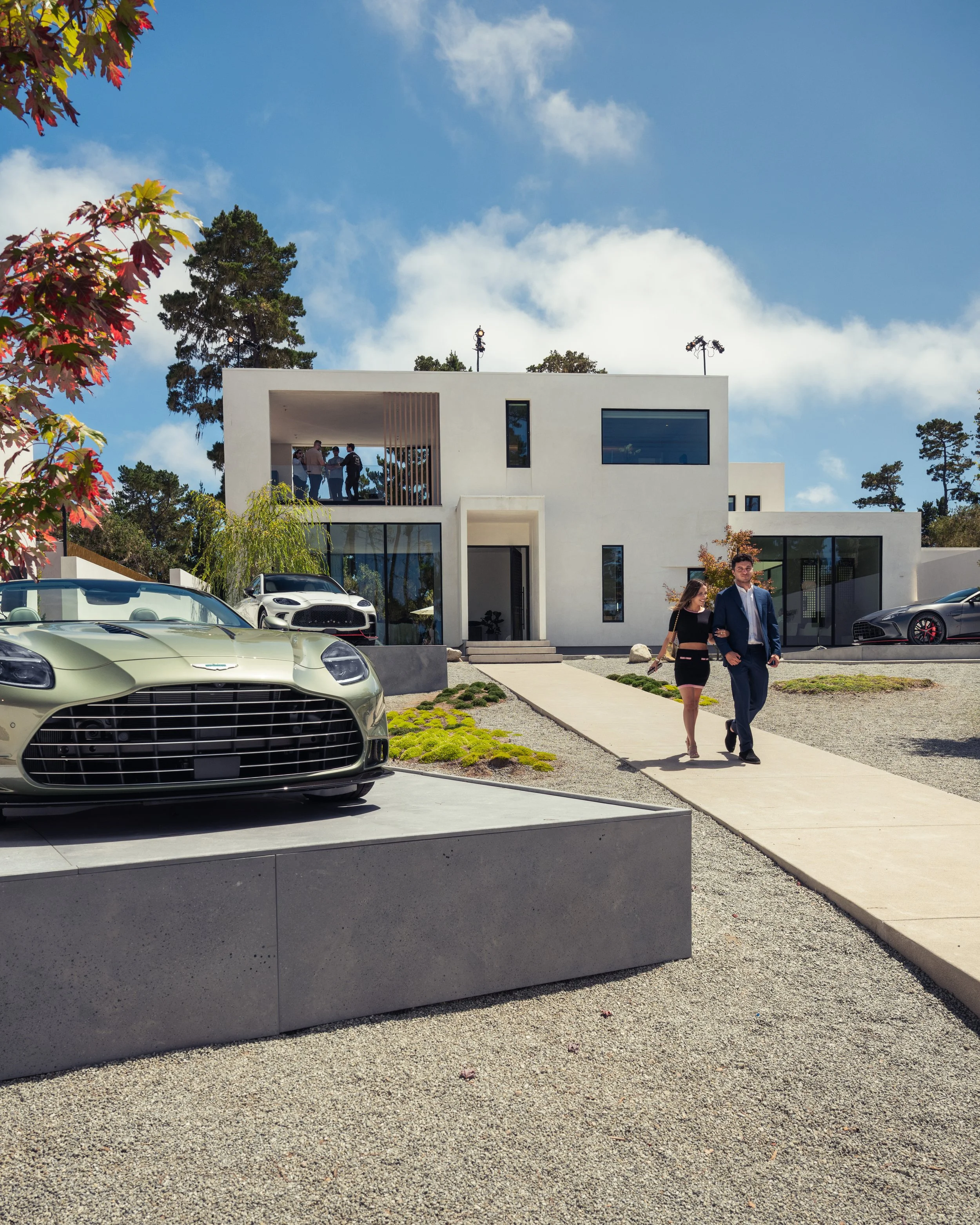
Image © Aston Martin Lagonda. Used for editorial purposes.
Aston Martin describes the House as providing exclusive clubhouse hospitality to invited guests. For 2026 it occupies a private property adjacent to Poppy Hills Golf Course on the Monterey Peninsula. Aston Martin hasn't published the property's street address in its announcement, and there would be little purpose in us attempting to identify it more precisely when access is invitation-only.
What happens inside is rather interesting, though. The House effectively combines several parts of the modern Aston Martin customer experience. Guests can spend time around the latest cars, enjoy hospitality and activities provided with Aston Martin's luxury partners, and rather more significantly for somebody actually planning to buy one, specify their next Aston Martin while they’re there.
Partners supporting this year's programme include Bollinger, Bowers & Wilkins, Breitling, Glenfiddich and Elemis. The cars displayed include Valhalla, DB12 S, Vantage S and DBX S, together with a heritage DB2 providing the historical link to those new VMF commissions.
In other words, it’s part private showroom, part specification studio, part hospitality venue and part Aston Martin showcase, created for customers and invited guests during one of the most concentrated gatherings of wealthy collectors and car enthusiasts anywhere in the world.
From a business perspective, you can understand the attraction. Monterey isn't simply somewhere for Aston Martin to display cars. It places the company in front of exactly the sort of customers who may commission a Q car, add substantially to a normal specification or become interested in one of Aston Martin's limited-production Specials.
A Familiar Vanquish Reaches Monterey
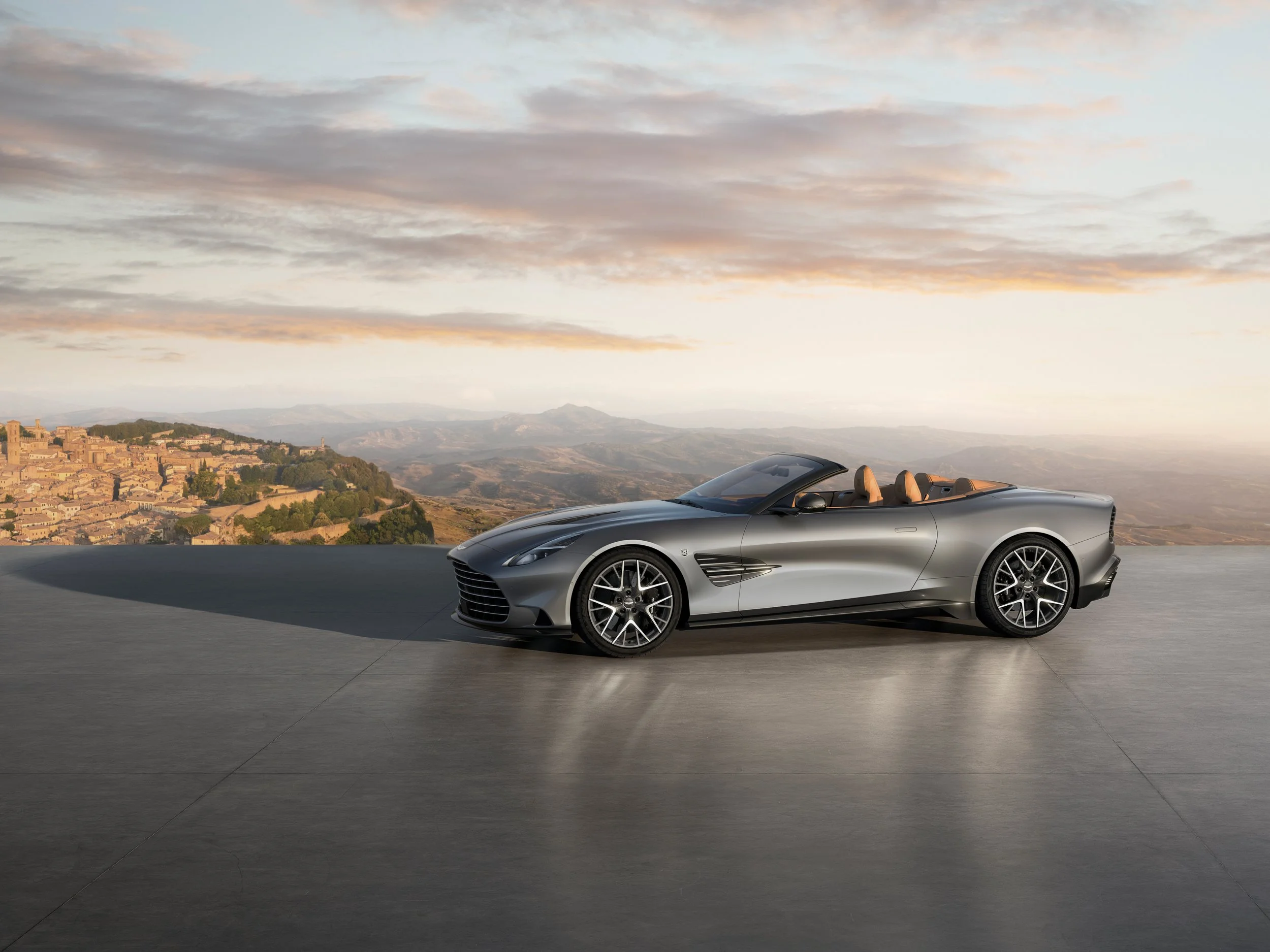
Image © Aston Martin Lagonda. Used for editorial purposes.
There is another car inside the House which regular FTP readers already know rather well. The Vanquish 25 Special Edition is making its show debut during Monterey Car Week.
We first examined it properly in Issue 34, when Aston Martin revealed the car as part of this year's continuing 25th-anniversary celebration of the original V12 Vanquish. Just 50 examples are being produced, 25 Coupés and 25 Volantes, with Q Skye Silver and numerous details deliberately referencing the first-generation Vanquish unveiled in 2001. At the time, we noted that Monterey would provide its first public show appearance. Three weeks later, that’s exactly where it’s arrived.
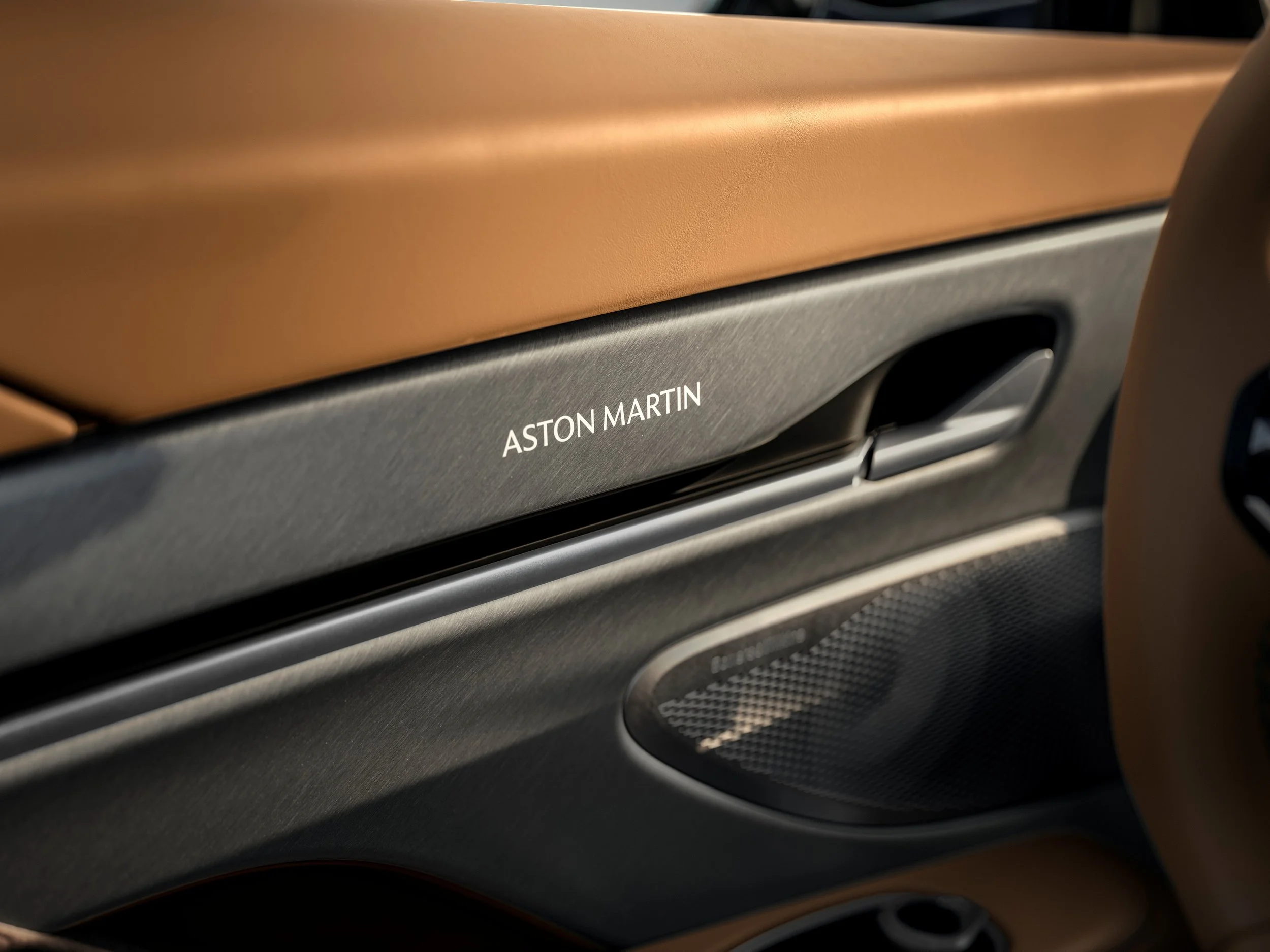
Image © Aston Martin Lagonda. Used for editorial purposes.
Mechanically, it remains the current 835PS, twin-turbocharged V12 Vanquish rather than a higher-performance derivative. Its significance lies elsewhere: Q craftsmanship, extremely limited production and those carefully chosen links between the first-generation car and Aston Martin's present flagship.
That connection feels particularly appropriate at Monterey. The whole week operates on the principle that new cars and old cars don't have to inhabit completely separate worlds. A DB2 can sit alongside the DB12 S it inspired; a modern Vanquish can acknowledge the car that carried the name 25 years earlier; some of the most important Aston Martins ever made will simultaneously be appearing on concours lawns and auction blocks only a few miles away.
It’s also a powerful demonstration of what Aston Martin continues to do remarkably well: create desirable cars, make extraordinary use of its heritage and attract the attention of some of the world’s most valuable automotive customers. The considerably harder challenge is turning all of that desirability into a consistently profitable and financially sustainable business.
That brings us to a rather less glamorous, but equally important, part of the Aston Martin story.
Affiliate link note: Some links may be affiliate links, which means Fuel the Passion may earn a small commission if you purchase through them, at no extra cost to you. Thank you for your support.
Great Cars, Difficult Finances - A Familiar Aston Martin Question
Regular FTP readers certainly won’t need reminding that Aston Martin Lagonda’s financial position has occupied quite a few pages of the Weekly Roundup lately.

Image © Aston Martin Lagonda. Used for editorial purposes. Marek Reichman, Q New York.
In Issue 35, we went through the company’s first-half results in detail. There were genuine signs of operational improvement: higher revenue and gross profit, an improved gross margin, increasing Valhalla deliveries and a substantial reduction in free-cash outflow compared with the first half of 2025.
Yet Aston Martin remained loss-making, carried approximately £1.545 billion of net debt at 30th June and continued to spend a considerable amount of cash servicing that borrowing.
Our Featured Article, Aston Martin Beyond the Debt: What Could the Future Hold?, then took the analysis considerably further. The conclusion was deliberately neither optimistic nor pessimistic: financing costs are making Aston Martin’s job considerably harder, but simply removing the debt wouldn’t magically reveal a perfectly self-sustaining operation underneath. The company still needs stronger margins, disciplined production, continuing customer demand and, ultimately, dependable cash generation.
Last week, in Issue 36, another layer was added when we examined the challenge from some existing creditors to the structure of Aston Martin’s new £550 million financing. We explained why those lenders are concerned about assets supporting the new borrowing, the reported threat of legal action and the distinction between creditor allegations and anything actually established by a court.
The underlying position hasn’t shifted dramatically this week, but a new Autocar opinion piece has brought one familiar contradiction back into focus: Aston Martin is building some very highly regarded cars while still carrying a remarkably difficult financial burden.
The opinion piece published by Autocar’s Nick Gibbs on 12th August posed a question that neatly captures the contradiction we’ve been examining: if Aston Martin is producing some of its best cars, why are the finances still so difficult? Autocar points to the company's £1.5 billion-plus debt burden and the latest £550 million financing while contrasting that with the reputation of the current product range. Importantly, this is an opinion piece, rather than a new company announcement or set of financial results. It’s a fair question, in fact, the contrast has become increasingly difficult to miss.
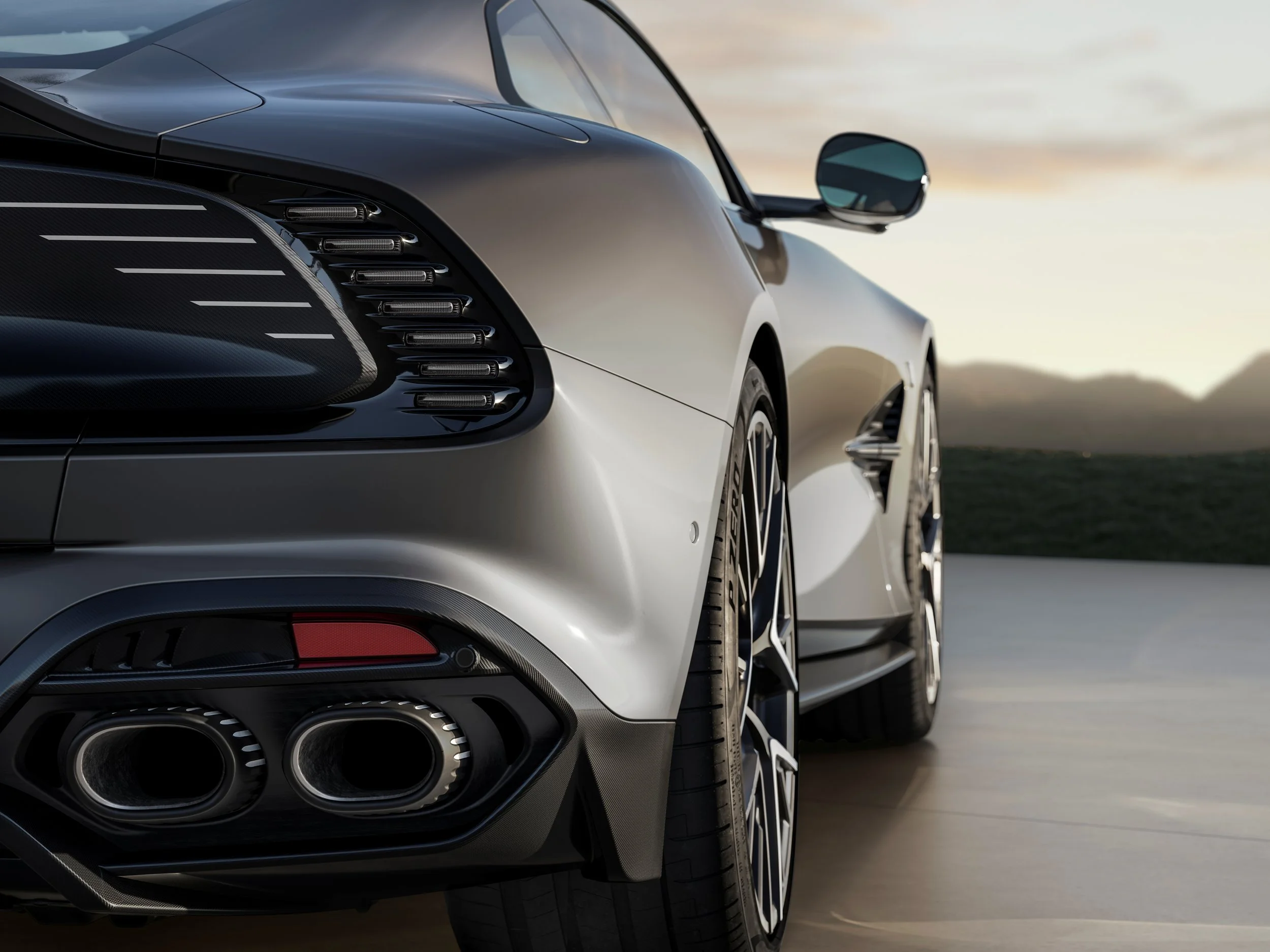
Image © Aston Martin Lagonda. Used for editorial purposes. Aston Martin Vanquish 25.
The current Vanquish has received enormous praise. Valhalla has introduced Aston Martin into a completely different area of the performance-car market. DB12, DBX and Vantage have all undergone substantial development, while derivatives such as the DB12 S, DBX S and Vantage S are adding further breadth to the range.
We’ve already covered the Vantage S extensively in previous Roundups, so there’s little value in repeating another road test here. It’s worth noting, however, that another strongly positive assessment appeared from Top Gear this week, reinforcing the wider point: journalists continue to find plenty to admire in Aston Martin’s current cars.
Yet a highly regarded product and a financially healthy manufacturer aren’t necessarily the same thing.
Car companies require enormous amounts of capital. New vehicles must be designed, engineered, tested and industrialised years before the finished product begins generating revenue. Factories, suppliers, warranties, dealer support, technology and future development all require continuing investment. When a company is already carrying substantial borrowing, a large part of the cash generated by improved operations can also disappear into interest rather than being available to reduce debt or fund the next generation of products. That is the uncomfortable circle Aston Martin is still attempting to break.
Image © Aston Martin Lagonda. Used for editorial purposes.
The new financing undoubtedly provides additional financial room. Aston Martin said the arrangement would have increased its available liquidity at the end of June from approximately £145 million to around £340 million on a pro-forma basis. But, as we explained in Issues 34 and 35, liquidity and profitability aren't the same thing. Borrowed money can provide time; eventually the underlying business still has to generate enough cash to support itself.
Reuters Breakingviews has also returned to the financing story, highlighting why some existing bondholders remain unhappy with the way assets have been used to support the new lending. Those concerns remain exactly that, concerns being raised by creditors. Aston Martin maintains that the new financing is permitted under its agreements, while the reported threat of legal action has not become a court ruling establishing that the company has acted improperly.
For FTP, therefore, the position hasn't fundamentally changed this week. Aston Martin appears to be producing increasingly accomplished cars while simultaneously attempting to repair a financial structure built up through years of losses, investment and repeated fundraising. Strong products are essential to solving that problem, but they aren't sufficient on their own.
The next important evidence won't come from another dramatic headline. It will come from whether the operational improvements we saw in the first half continue: stronger margins, disciplined production, demand for the cars Aston Martin is building and, eventually, sustainable positive cash generation after investment and financing costs have been paid.
That wider question will also form part of something we’re working on here at FTP. As mentioned earlier, our next Featured Article will mark two years of Adrian Hallmark at Aston Martin and examine how the turnaround strategy has developed during his time in charge. We’ll return to that later in the Roundup rather than getting ahead of ourselves here. For now, we’ll leave the balance sheets behind. There’s another Aston Martin recovery programme where progress can be measured rather more immediately. Instead of margins, debt and cash flow, the numbers are seconds and tenths, and one week from today, Zandvoort should give Aston Martin and Honda their next important reading.
One Week to Zandvoort - Can Aston Martin Take the Next Step?
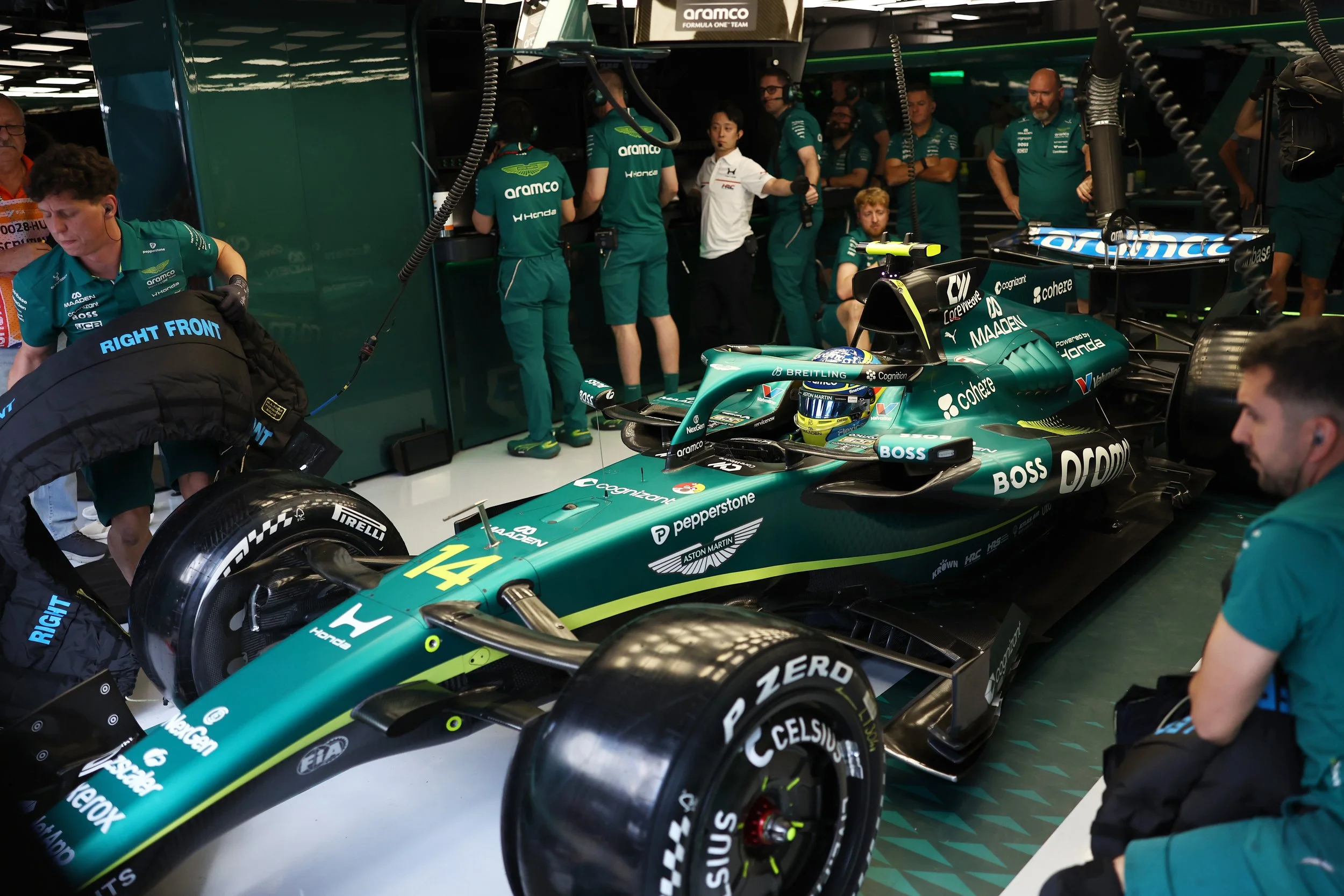
Image © Honda Motor Co. Ltd & Aston Martin Aramco. Used for editorial purposes.
There’s a countdown running on the Fuel the Passion homepage at present, and I’ll admit I’m watching this one with rather more anticipation than I expected a few months ago. The Dutch Grand Prix takes place at Zandvoort from 21st to 23rd August, with the Grand Prix itself falling exactly one week after this Roundup is published. It will also be a Sprint weekend, meaning Aston Martin and Honda get only one conventional practice session on Friday before Sprint Qualifying begins.
That compressed format makes an already important weekend even more interesting. Regular FTP readers will know why as we’ve effectively been building towards Zandvoort across the last three Issues.
In Issue 34, the position was still largely theoretical. Aston Martin had introduced its extensive Hungary chassis package, while Honda’s first significant power-unit development was scheduled to follow after the summer break. We described it then as a two-stage programme: first find out whether Aston Martin could improve the AMR26 itself, then see what happened when Honda added its contribution in the Netherlands.
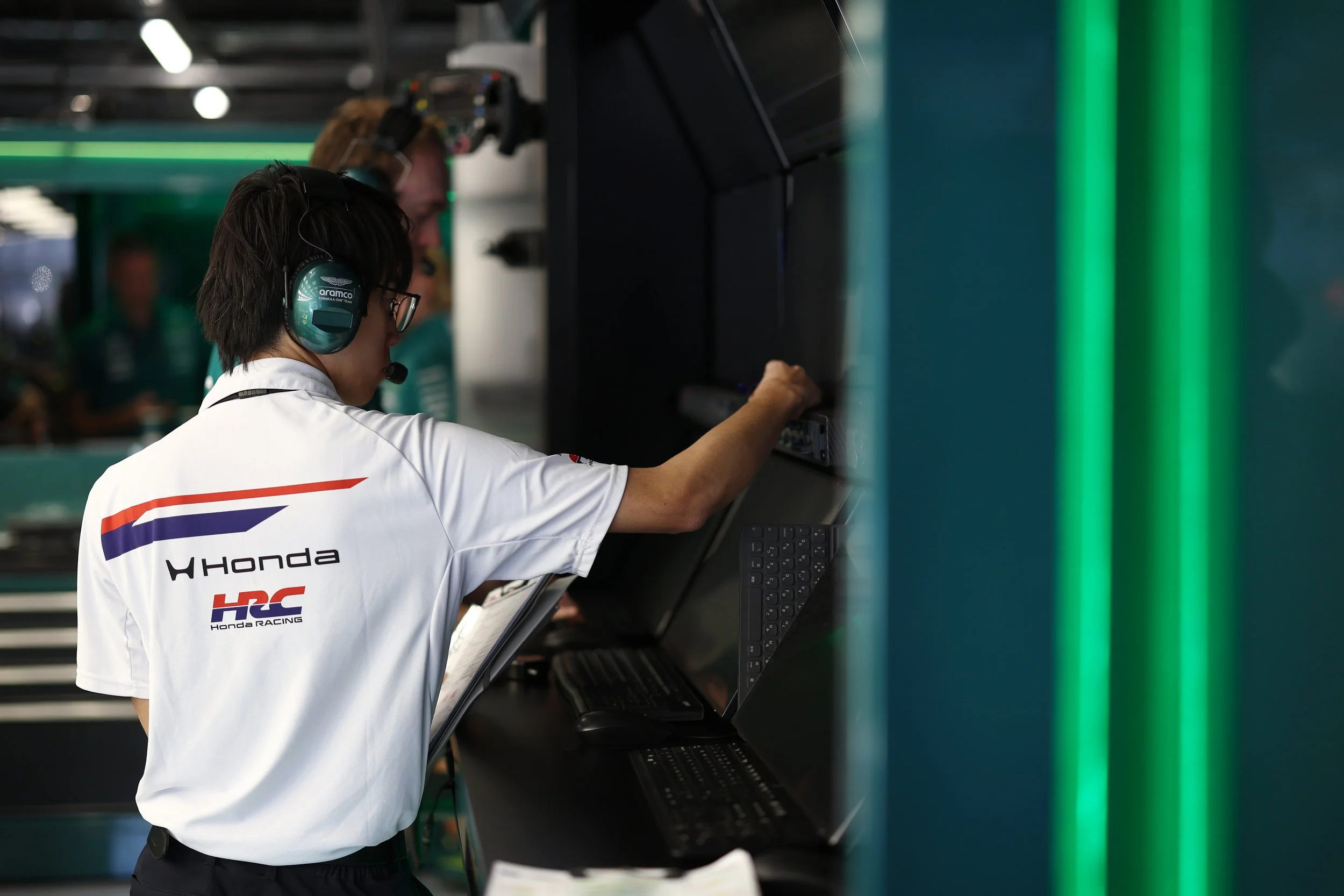
Image © Honda Motor Co. Ltd & Aston Martin Aramco. Used for editorial purposes.
By Issue 35, we had our first answer from the chassis. Hungary didn’t suddenly turn Aston Martin into a front-running Formula One team, but it did provide something that had been largely missing during the opening half of 2026: tangible progress. Fernando Alonso reached Q2 for the first time this season, Lance Stroll recovered from 20th to 13th in the race, Alonso finished immediately behind him, and both cars were finally able to compete amongst elements of the midfield rather than simply watch them disappear up the road. Formula 1’s own analysis subsequently described Aston Martin as being “back racing” after the upgrade, while Mike Krack said the package had achieved its principal objective.
Issue 35 also recorded another important development. After the Hungarian Grand Prix, Aston Martin stayed at the Hungaroring and ran Honda’s new-specification power unit for the first time during a filming day, giving both organisations some real-world information before its planned competitive debut at Zandvoort.
Last week, in Issue 36, we deliberately kept expectations under control. Reports of spectacular horsepower increases were circulating, including figures approaching 50bhp, but Honda itself had not supported those claims. We therefore left the headline numbers alone and concentrated instead on what had actually been confirmed.
This week, Honda has given us considerably more detail about where its attention has been focused.
Honda Goes After Its Biggest Weakness
Honda chief engineer and trackside general manager Shintaro Orihara says the Zandvoort development is focused entirely upon the internal combustion engine, or ICE.
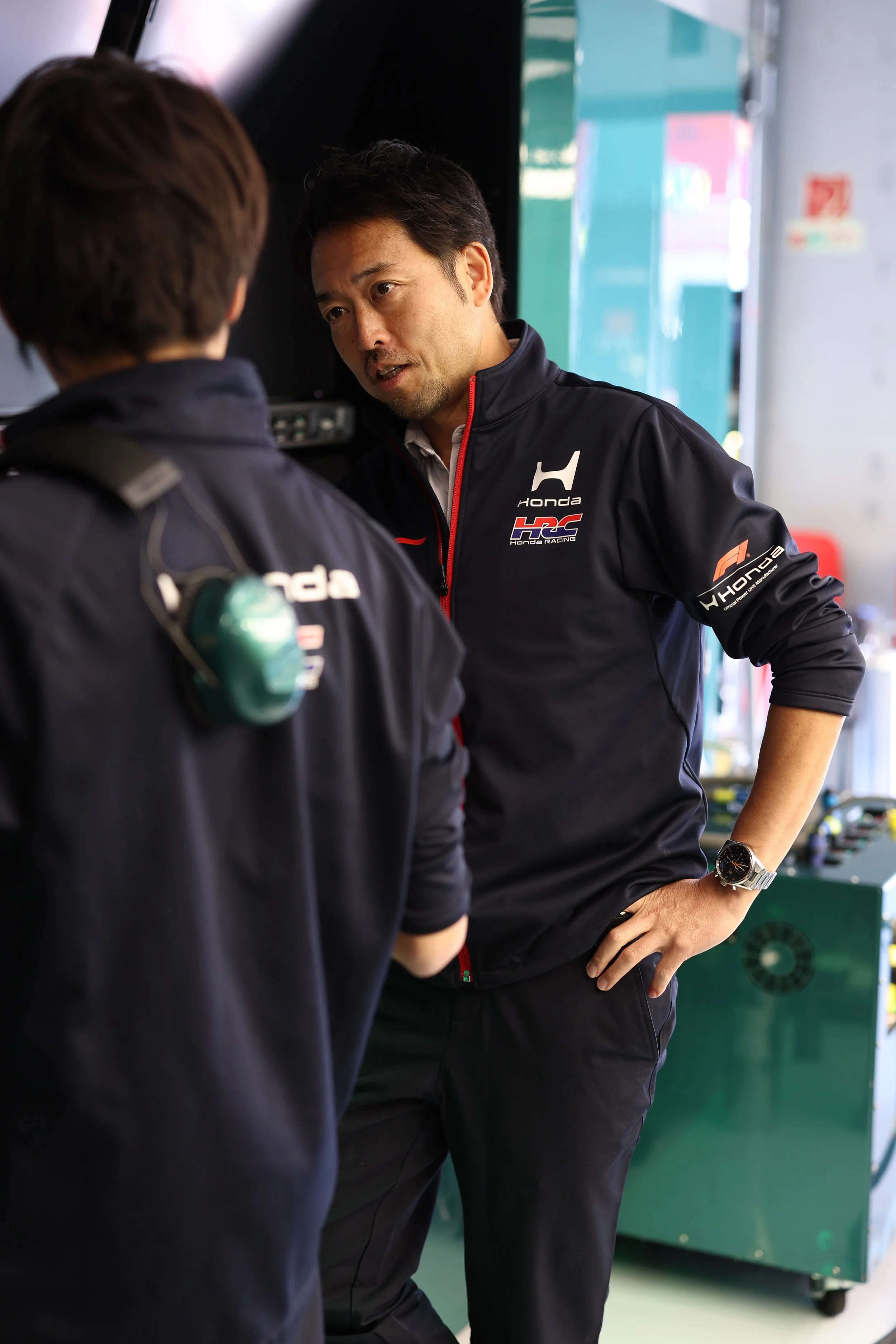
Image © Honda Motor Co. Ltd & Aston Martin Aramco. Used for editorial purposes.
That’s significant because Orihara identifies combustion-engine performance as Honda’s biggest remaining weakness against the other Formula One manufacturers. His explanation is refreshingly straightforward: improving energy management and smaller areas of performance can only achieve so much while the underlying combustion engine remains substantially behind. So Honda has prioritised the largest problem first.
The objective isn’t being described in terms of some spectacular horsepower figure. Orihara instead talks about getting Honda back into what he calls the “racing field” a position where the tiny improvements teams chase from weekend to weekend actually become meaningful rather than being overwhelmed by a much larger underlying deficit. I think that’s a much more useful way for us to judge Zandvoort.
Honda isn’t promising to arrive in the Netherlands with the best power unit in Formula One. Aston Martin isn’t suddenly expecting to challenge for victory because a different engine specification has been fitted.
The immediate target is considerably more realistic: reduce the weakness enough that Aston Martin can properly race the cars around it.
That sounds remarkably similar to the objective Aston Martin set itself in Hungary. The chassis side wanted to get back into the midfield contest. Hungary provided the first evidence that it had done so. Now Honda wants to make its own step towards the same place.
More Power Is Only Part of the Problem
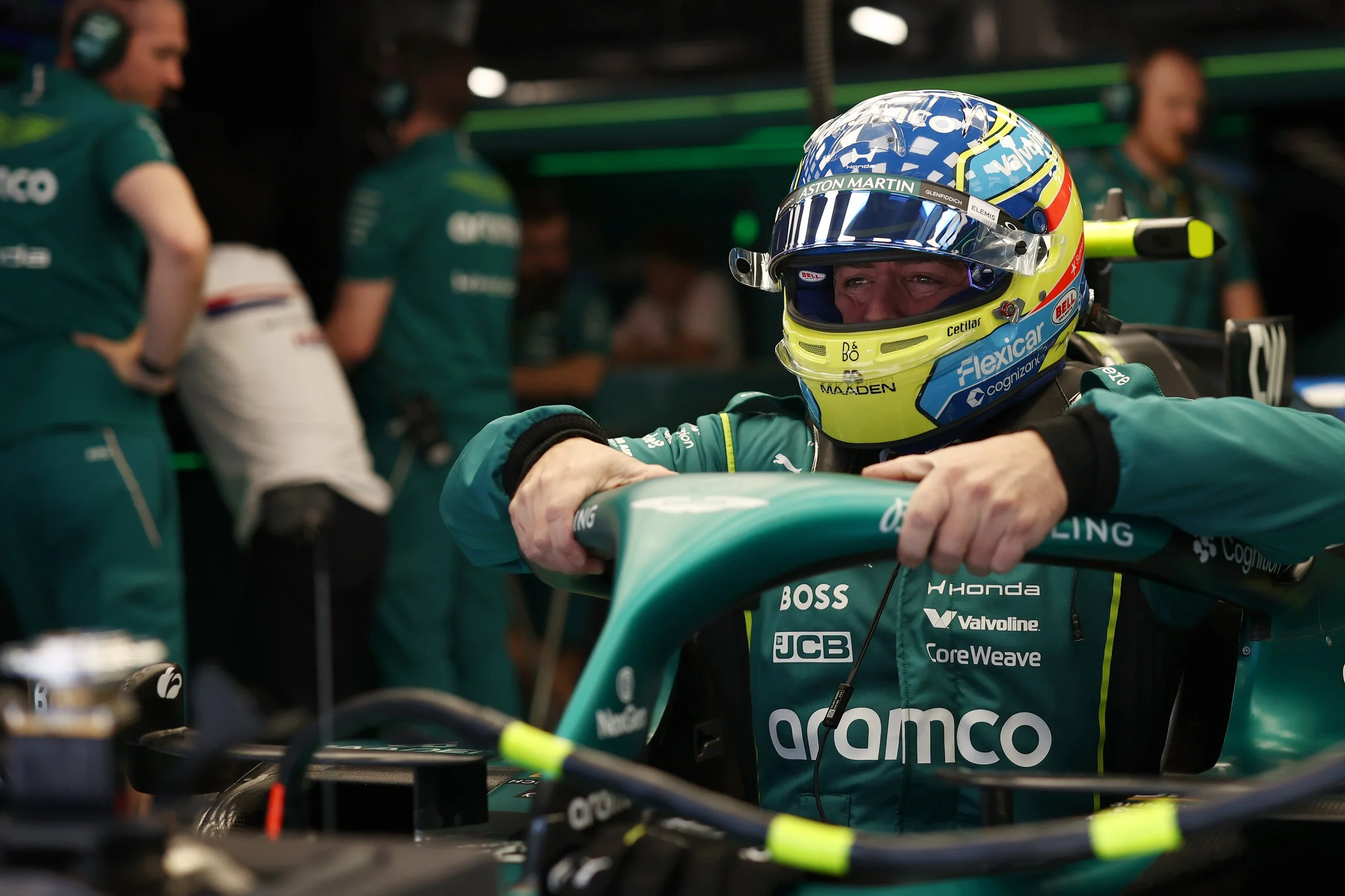
Image © Honda Motor Co. Ltd & Aston Martin Aramco. Used for editorial purposes.
There’s another side to the Honda update which is perhaps less obvious than horsepower. Driveability.
In simple terms, driveability describes how predictably and progressively the power unit responds when the driver asks for power, particularly when accelerating through or away from a corner. A more powerful engine isn’t automatically a better racing engine if its delivery makes the car difficult to balance or the driver cannot confidently use that performance.
Honda made considerable progress with driveability during the first half of the season, but the new combustion specification changes the characteristics of the engine again. Orihara says its behaviour through the cornering phase will therefore change too, requiring Honda to revisit some of that calibration work.
The encouraging part is that Honda isn’t beginning again from zero.
The tools, understanding and methods developed during those difficult opening months can be applied to the new specification. That is also why the Hungaroring filming day was more valuable than simply allowing somebody to photograph the AMR26 circulating after the Grand Prix. Honda and Aston Martin gained their first real data from the new engine before arriving at Zandvoort.
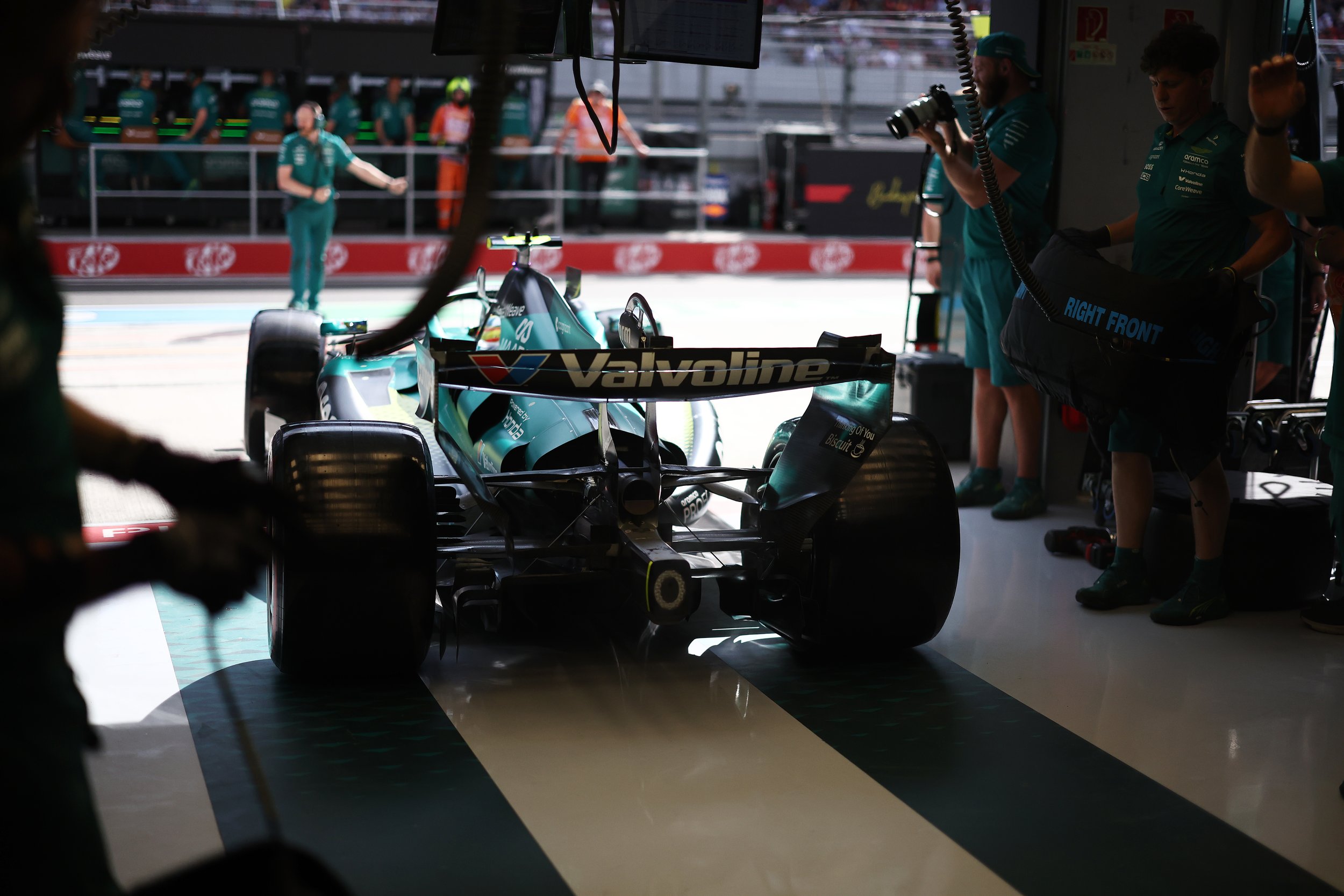
Image © Honda Motor Co. Ltd & Aston Martin Aramco. Used for editorial purposes.
That preparation could prove especially useful because of the Sprint format. With only one practice session before competitive running begins, there’s considerably less time than during a conventional Grand Prix weekend to experiment with engine behaviour, car setup and the interaction between the revised Honda unit and Aston Martin’s developing chassis. Zandvoort hosts F1 Sprint for the first time this year and will also stage the final Dutch Grand Prix before leaving the Formula One calendar.
The Big Question: Has Aston Martin Improved Faster Than Everybody Else?
This, for me, is where the weekend becomes fascinating. We already know Aston Martin improved in Hungary.
The harder question is: How much has Aston Martin improved relative to everybody else?
That distinction is crucial. Formula One teams don’t stand still politely while a rival catches up. Every manufacturer is pursuing its own development programme, learning about these new-generation cars and trying to find performance. So simply seeing a faster AMR26 at Zandvoort won’t tell us enough.
We need to see where it sits against the cars Aston Martin is trying to catch.
Formula 1’s analysis after Hungary made exactly this point. Aston Martin knew roughly what lap-time improvement it expected from the new package, but Mike Krack acknowledged that nobody could predict precisely where that would place the team because the competitive order depends just as much on what everybody else brings.
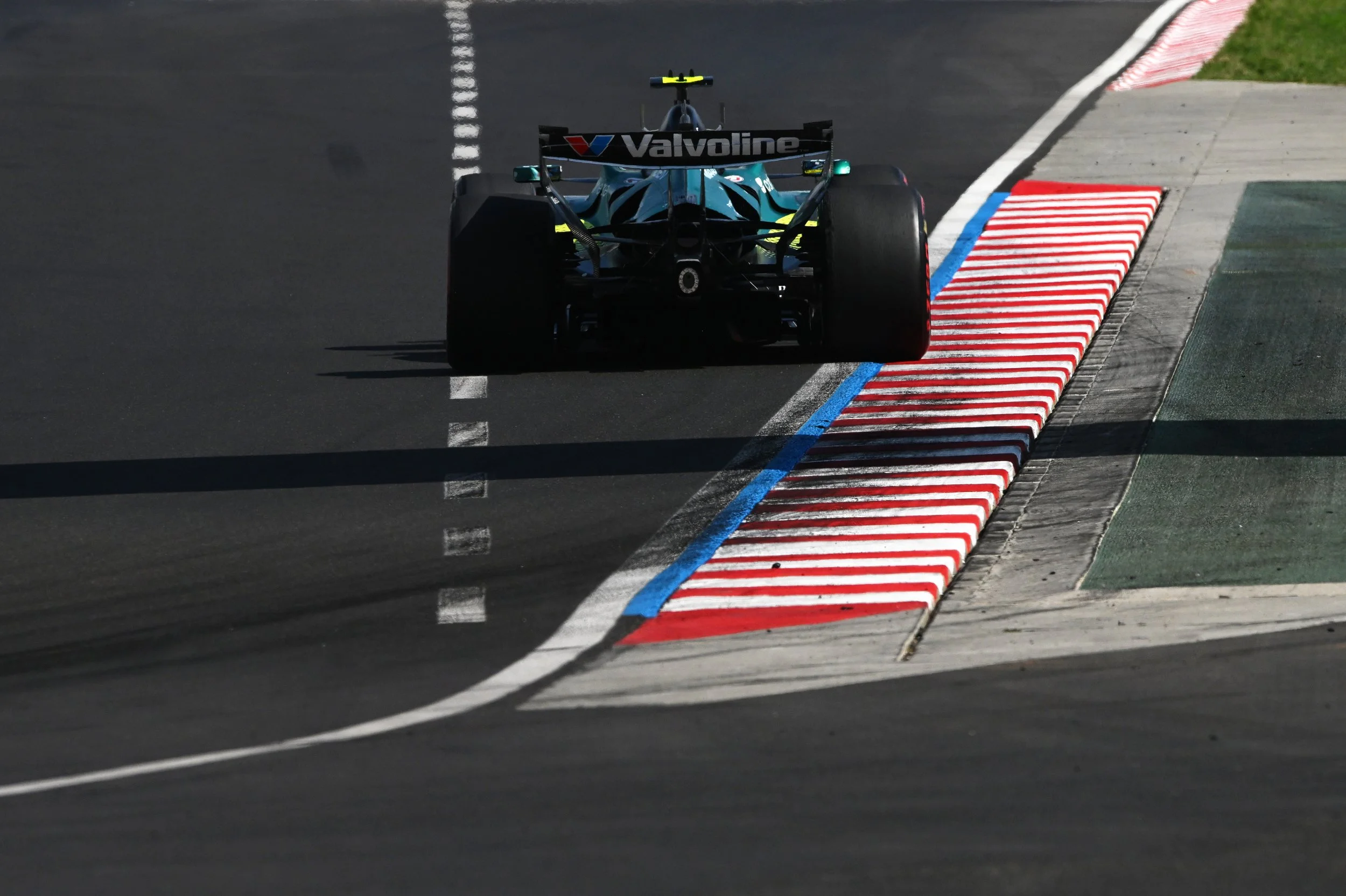
Image © Honda Motor Co. Ltd & Aston Martin Aramco. Used for editorial purposes.
Hungary nevertheless offered encouragement. Aston Martin moved ahead of several cars it had previously struggled to race, providing some evidence that the gains seen in simulation were beginning to translate into genuine progress on track.
Zandvoort now adds several new variables to that picture at once. Honda’s revised power unit will make its competitive debut, Aston Martin may bring further aerodynamic development, the circuit presents a very different challenge from the Hungaroring and the Sprint format will leave considerably less time to understand and optimise the combined package before competitive running begins. Meanwhile, every other team has had several more weeks to analyse its own performance and prepare its next steps.
That makes Zandvoort a much more revealing examination than simply asking whether Fernando Alonso or Lance Stroll can reach Q2 again. If Aston Martin remains firmly involved with the midfield, or moves further into it, after adding Honda’s latest development, Hungary begins to look less like one particularly favourable weekend and more like the start of a genuine recovery. If the relative gap opens again, that will tell us something equally useful about how far there still is to go.
Either way, the stopwatch should give us a much clearer picture.
A Little Perspective Before We Get Too Excited
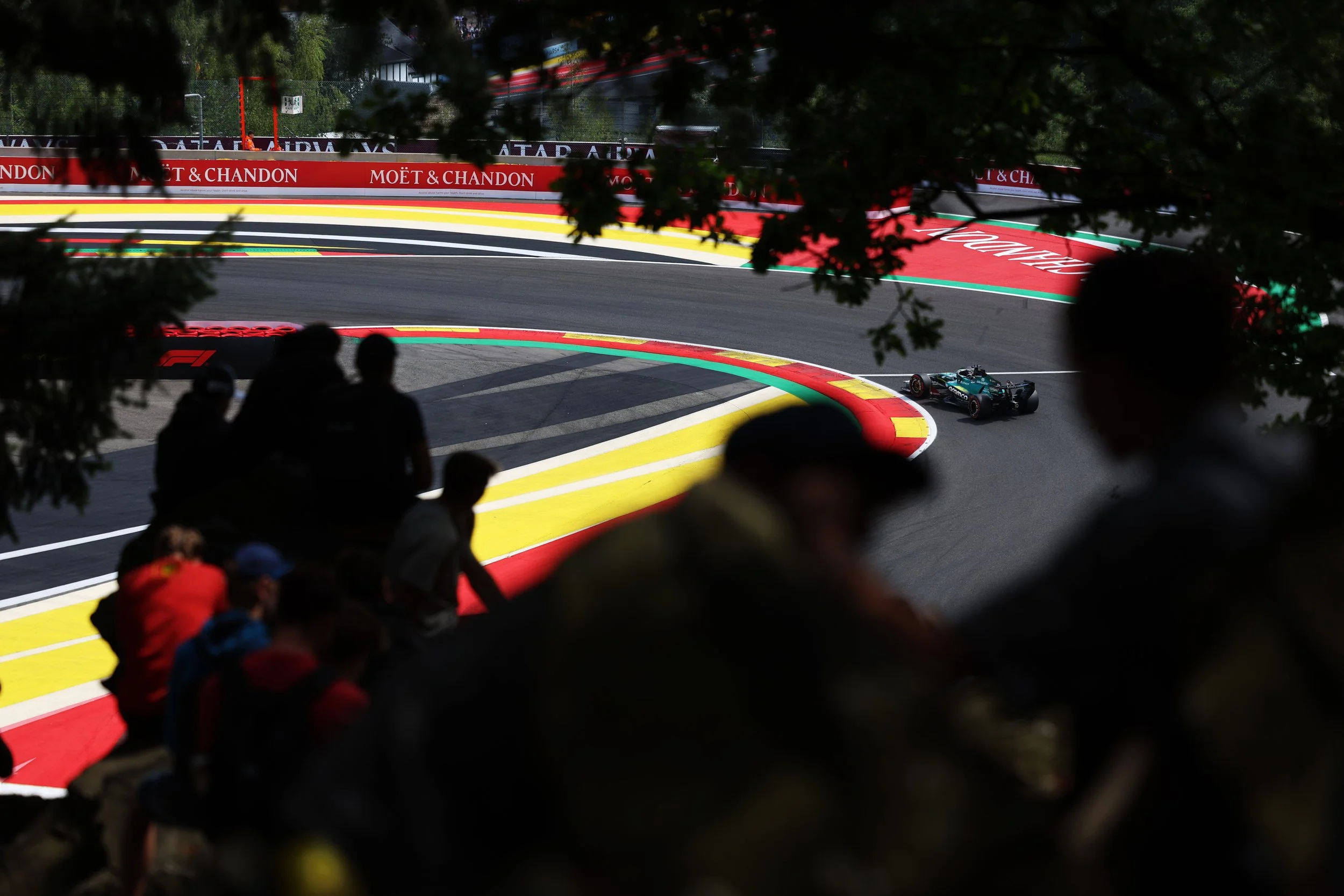
Image © Honda Motor Co. Ltd & Aston Martin Aramco. Used for editorial purposes. Lance Stroll, Belgium Grand Prix 2026.
I certainly hope the improvement is substantial. After the first half of this season, I suspect most Aston Martin supporters would enjoy seeing Alonso and Stroll fighting properly for points rather than treating an appearance in Q2 as a major breakthrough. The same caution we’ve tried to apply throughout this story is still important, though. Hungary was encouraging, but it wasn’t a transformation. Honda’s new specification may provide another step, yet the scale of that improvement can only really be judged once Aston Martin is back on track against the cars it is trying to catch.
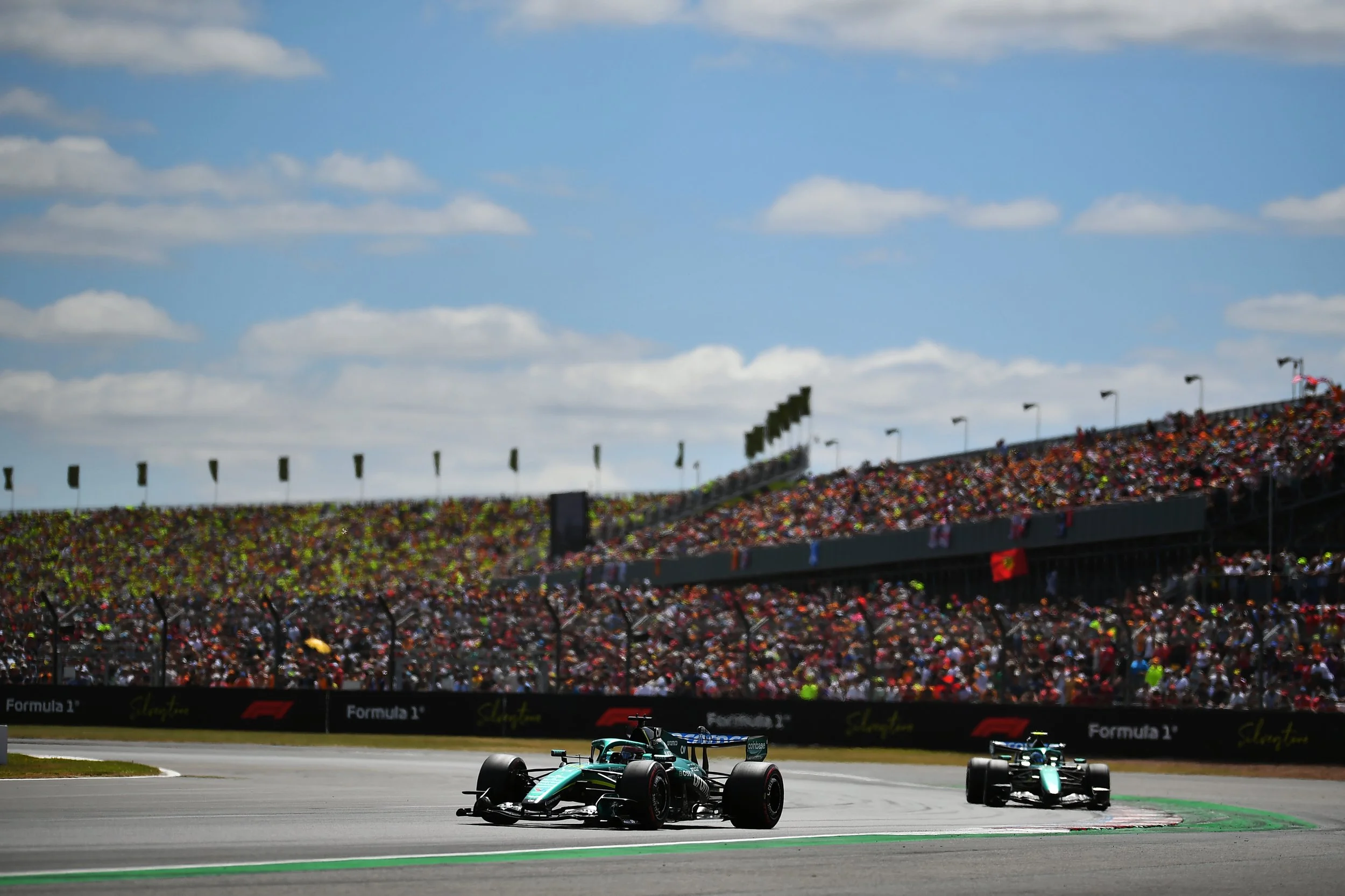
Image © Honda Motor Co. Ltd & Aston Martin Aramco. Used for editorial purposes. The Aston Martins on track at Silverstone 2026.
The very different demands of Monza and Baku will then tell us even more about how broadly the progress translates across different circuit types, something we already highlighted after Hungary. For now, however, there’s considerably more evidence beneath Aston Martin’s optimism than there was only a few races ago.
The revised AMR26 has already shown that it can move closer to the midfield, Honda has completed the first running of its new engine specification and further development remains in the pipeline. At Zandvoort, those strands will come together competitively for the first time.
One week from the publication of this Roundup, we’ll have our first proper indication of what that combination can achieve.
Dutch Grand Prix - Zandvoort
21st - 23rd August 2026
Formula One may attract the largest television audience, but Zandvoort certainly isn’t the only stopwatch worth watching. While Aston Martin and Honda prepare for their next examination in the Netherlands, one of the marque’s most important championship battles of 2026 is already unfolding this weekend at the Nürburgring. After the extraordinary highs of the Norisring and a much more difficult visit to Oschersleben, Nicki Thiim arrives in Germany still firmly involved in the DTM title fight.
Thiim Takes Aston Martin’s DTM Title Fight to the Nürburgring
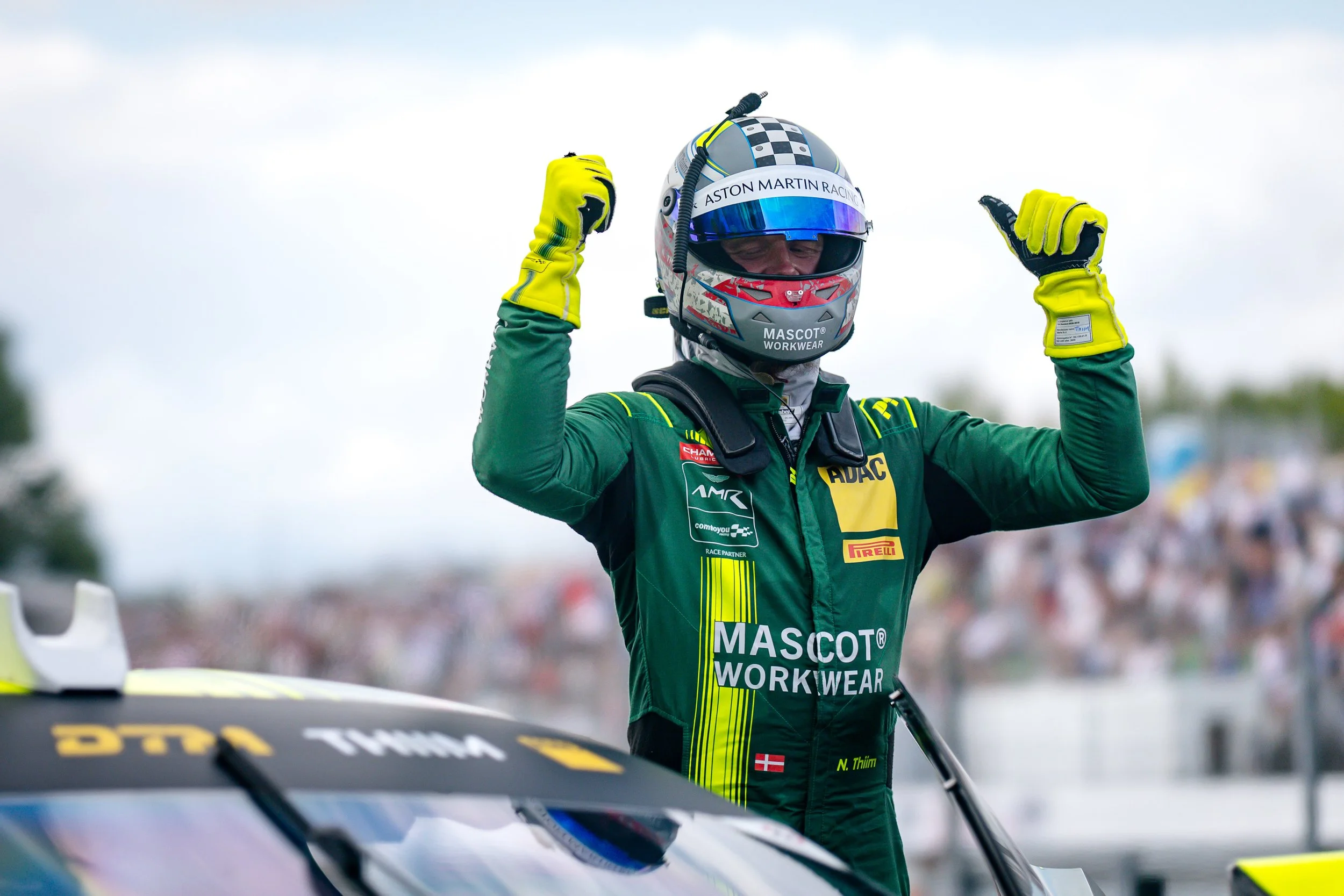
Image © Aston Martin Lagonda. Used for editorial purposes. Thiim soaks up victory.
Regular readers will know how quickly Nicki Thiim’s DTM season has shifted over the past couple of rounds. After the extraordinary Norisring weekend, where two poles became two victories and Aston Martin claimed its first DTM wins, Oschersleben brought a sharp reversal. As we covered in Issue 35, Thiim salvaged 12th and 13th from a difficult weekend, one that included the remarkable tyre-fitting error on Sunday, and lost the championship lead to Maro Engel.
He therefore arrives at the Nürburgring, 14th - 16th August, second in the standings on 124 points, 21 behind Engel, with Lucas Auer only one point behind Thiim and Thomas Preining also firmly involved in the title fight.
With just six races remaining across the Nürburgring, Sachsenring and Hockenheim, this weekend feels increasingly important. Thiim himself is keeping the situation in perspective, saying that although second place clearly puts him among the contenders, the priority is simply to stay near the front and remain in the championship battle as the season reaches its closing stages.
Image © Aston Martin Lagonda. Used for editorial purposes.
The Nürburgring should at least be familiar territory. Thiim has extensive experience there through endurance racing and the Nürburgring 24 Hours, while his long relationship with the Aston Martin Vantage GT3 continues to be one of the strengths of this campaign.
He has spoken about feeling completely at home in the car this year, something that can make a significant difference in a championship where qualifying margins are so small.
There’s also a lovely family connection this weekend, with Kurt Thiim, Nicki’s father and himself a former DTM champion, due to attend his first DTM meeting of the season. With Nicki still firmly involved in the title fight, that adds another personal element to an already important round.
Saturday, however, proved another difficult day for the Aston Martin challenge.
In the opening qualifying session, Thiim could manage only 11th, finishing 0.318 seconds away from Matteo Cairoli’s pole position. Cairoli then converted that advantage into a dominant Race 1 victory for Emil Frey Racing Ferrari, leading Thomas Preining’s Porsche home by almost ten seconds, with Marco Wittmann completing the podium for BMW.
Thiim’s race became considerably more complicated almost immediately. After an excursion through the gravel during the opening lap, the #7 Comtoyou Racing Aston Martin later made contact with Tom Kalender’s Mercedes at the Veedol Chicane. Race control judged Thiim responsible and handed him a penalty lap, leaving him with a difficult recovery from the midfield. He eventually brought the Vantage AMR GT3 Evo home 11th, with team-mate Nicolas Baert immediately behind in 12th.
The championship picture has consequently become rather more difficult. Maro Engel remains the leader on 160 points, but Thomas Preining has moved into second on 143, Lucas Auer sits third on 136 and Thiim has slipped from second to fourth on 130 points. That leaves the Aston Martin driver 30 points from the championship lead, with Sunday’s second qualifying session and race still to come.
It isn’t the Nürburgring response Aston Martin will have hoped for after Oschersleben, particularly following the extraordinary double victory at the Norisring, but the title fight is certainly not over. Sunday now becomes especially important if Thiim is to limit the damage and carry a realistic championship challenge into the final two weekends at the Sachsenring and Hockenheim.
Sunday’s second qualifying session and race take place after this Roundup is published, so the complete Nürburgring report, final results and updated championship standings will follow in the FTP Motorsport Hub.
The Nürburgring isn’t the only place where an Aston Martin enters this weekend with championship points carrying rather more weight than usual. Closer to home, British GT returns at Snetterton, where the championship moves into its second half with two one-hour sprint races and Aston Martin firmly involved in both the GT3 and GT4 battles.

Affiliate link note: Some links may be affiliate links, which means Fuel the Passion may earn a small commission if you purchase through them, at no extra cost to you. Thank you for your support.
British GT Returns - Aston Martin Right in the GT4 Title Fight
Image © Aston Martin Lagonda. Used for editorial purposes. Jessica Hawkins and Beechdean Vantage
The closest Aston Martin challenge belongs to Jessica Hawkins and Will Orton, whose #21 MK Racing Vantage GT4 arrives at Snetterton just 1.5 points behind championship leaders Thomas Holland and Hadley Simpson. That position has been built on consistency. Hawkins and Orton finished second in three consecutive races before another solid result at Spa moved them even closer to the championship-leading Ginetta. With only 11 points covering the top four GT4 crews, there is very little room for anyone to have a poor weekend from here.
There’s another Aston Martin pairing very much involved too. Daniel Lavery and Darren Turner have transformed their season with consecutive victories at Oulton Park and Spa, climbing to fourth in the standings on 68.5 points, only 11 behind the championship lead. It means Aston Martin arrives at Snetterton with two Vantage GT4 crews among the four principal title contenders.
The sprint format should make Sunday particularly interesting. Both races are only 60 minutes long, so there’s less opportunity to recover from a poor start, mistake or badly timed interruption. Success from the previous round also carries a consequence: Lavery and Turner must serve an additional 10 seconds during their Race 1 pit stop after winning at Spa, while Hawkins and Orton face an extra five seconds because of their previous Silver-class result.
Image © Aston Martin Lagonda. Used for editorial purposes.
Aston Martin also retains an outside interest in the GT3 championship through Andrew Howard and Ross Gunn. The Beechdean AMR pairing went to Spa as championship leaders after their strong Oulton Park weekend, but a non-score in Belgium dropped them to sixth, 26 points from the top. That made Snetterton an important opportunity to bring themselves back towards the main championship group.
Saturday’s qualifying produced a very mixed, but ultimately encouraging, result for Beechdean. Andrew Howard qualified the #7 Vantage AMR GT3 Evo ninth for Sunday’s opening race, 1.098 seconds away from Marc Warren’s pole-setting McLaren. The second session was a completely different story. Ross Gunn put the Aston Martin on outright pole for Race 2, setting a 1m45.737s lap to beat Marcus Clutton’s McLaren by 0.159 seconds. It gives Gunn and Beechdean their third GT3 pole from six qualifying opportunities in 2026.
There was plenty to watch in GT4 too. Daniel Lavery and Darren Turner’s #27 Grange Racing by FSR Vantage will start Race 1 fourth in GT4, while championship challengers Jessica Hawkins and Will Orton qualified seventh in the #21 MK Racing Aston Martin. For Race 2, those positions are effectively reversed: Hawkins and Orton start fourth, while Lavery and Turner line up seventh.
That Race 2 grid could prove particularly useful for Hawkins and Orton. Championship leaders Thomas Holland and Hadley Simpson will start only eighth in GT4, giving the Aston Martin pairing an opportunity to put some pressure on the 1.5-point gap separating them at the top of the standings. Race 1 may be rather more complicated for Lavery and Turner because, following their victory at Spa, the #27 Aston Martin must still serve its additional 10 seconds of Compensation Time during the mandatory pit stop.
Two further Vantage GT4s are also competing this weekend. GBR Stratton Motorsport’s John Hartshorne and Jonny Adam qualified 11th for Race 1 and sixth for Race 2, while the Townsend Racing Aston Martin of James Townsend and Joe Wheeler starts eighth and 11th respectively.
Both races take place on Sunday, with Race 1 at 11:35am and Race 2 at 4:00pm BST, after this Roundup has been published. As usual, we’ll follow the Aston Martin runners through the day and bring the full results, championship implications and race story to the FTP Motorsport Hub.
There’s plenty still to play for, but the GT4 position remains particularly encouraging. Two Aston Martin crews begin Sunday within 11 points of the championship lead, while Hawkins and Orton have a particularly useful Race 2 starting position from which to attack it.
The Vantage GT4 isn’t only attracting attention in Britain. While two Aston Martin crews fight for the British GT crown at Snetterton, another team on the other side of the Atlantic has made a rather significant decision about its own future, switching both of its IMSA Michelin Pilot Challenge cars to Aston Martin Vantage GT4 Evos.
CSM Makes the Switch to Aston Martin
Czabok-Simpson Motorsport (CSM) confirmed this week that it will move both of its Grand Sport entries away from the Porsche 718 GT4 RS CS and onto the Aston Martin Vantage AMR GT4 Evo, beginning at Virginia International Raceway next weekend.
The timing is interesting. Rather than waiting for the end of the season, CSM has chosen to make the change with three rounds remaining, giving its engineers and drivers the remainder of 2026 to understand the Aston Martin properly before heading into 2027. Team co-owner Stephen Simpson describes the move as an important part of that preparation, allowing CSM to build meaningful knowledge of the car under Michelin Pilot Challenge conditions.
The established pairing of Gordon Scully and Morgan Burkhard continues in the #2, while the returning #3 will be shared by Ismaeel Ellahi and Ayrton Houk. Ellahi already has some encouraging experience with the Vantage, having taken a GSX victory at Canadian Tire Motorsport Park during CSM’s first weekend running the Aston Martin in IMSA VP Racing SportsCar Challenge competition.
It would be easy to describe the manufacturer change as proof that Aston Martin has produced a better GT4 car than Porsche, but that would be going much further than the evidence allows. Teams change machinery for all sorts of reasons, from engineering direction and manufacturer support to driver preference and longer-term planning.
What we can say is that CSM has chosen the Vantage as the platform around which it wants to develop its two-car programme for 2027, and that represents another useful vote of confidence in Aston Martin’s customer-racing package.
Just How Much Road Car Is There in a Vantage GT4?
Image © Aston Martin Lagonda. Used for editorial purposes.
There’s another reason this story caught my attention. Regular FTP readers may remember that we recently spent some time with an actual Vantage GT4 at Aston Martin Leeds, where the race car formed part of the remarkable GT4 UNLEASHED offering we covered in Issues 34 and 35. We also produced an FTP YouTube video on this car, so if you haven’t seen that video, click HERE and we’ll take you straight there.
One of the most interesting things about the GT4 is how much of the production Vantage remains underneath it.
Aston Martin says the competition car shares around 80 per cent of the road car’s structural and mechanical architecture. Its bonded aluminium chassis comes from the production car, the 4.0-litre twin-turbo V8 and transmission are based upon road-car components, the inboard suspension mounting points remain in the same locations and most of the exterior body panels are standard production pieces.
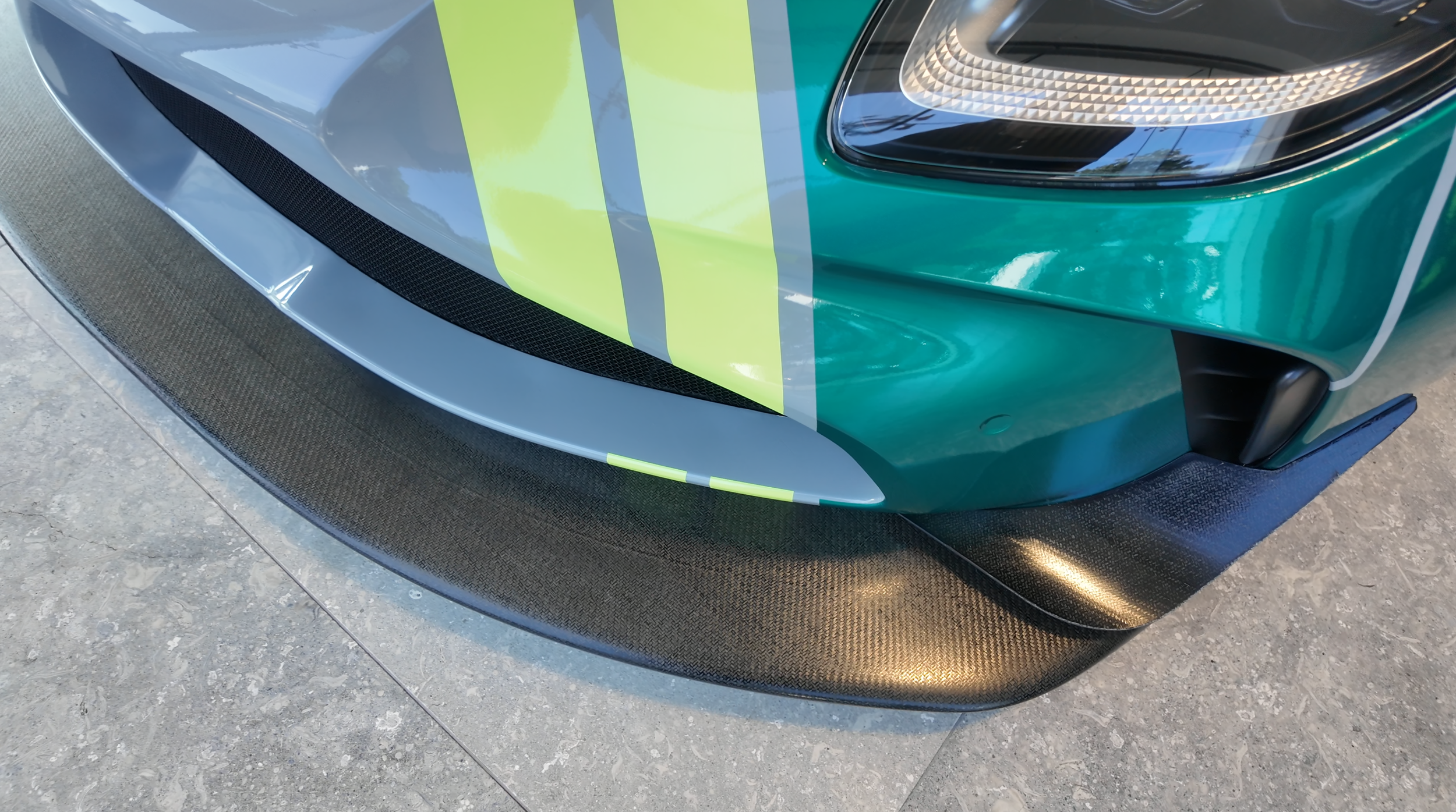
Image © Fuel the Passion. Aston Martin Vantage GT4 UNLEASHED, JCT600, Aston Martin Leeds.
That certainly doesn’t mean a road-going Vantage is somehow “80 per cent racing car”. The GT4 gains a full roll cage, motorsport electronics, bespoke suspension, extensive safety equipment, revised cooling and a competition aerodynamic package, while its engine and transmission software is adapted specifically for racing. The significance is rather more subtle.
Aston Martin began with a production Vantage architecture sufficiently capable to form the basis of a serious international GT4 competition car without having to fundamentally reinvent it. That’s quite a compliment to the engineering beneath the road car, particularly when we consider how positively the latest Vantage has been received away from the circuit too.
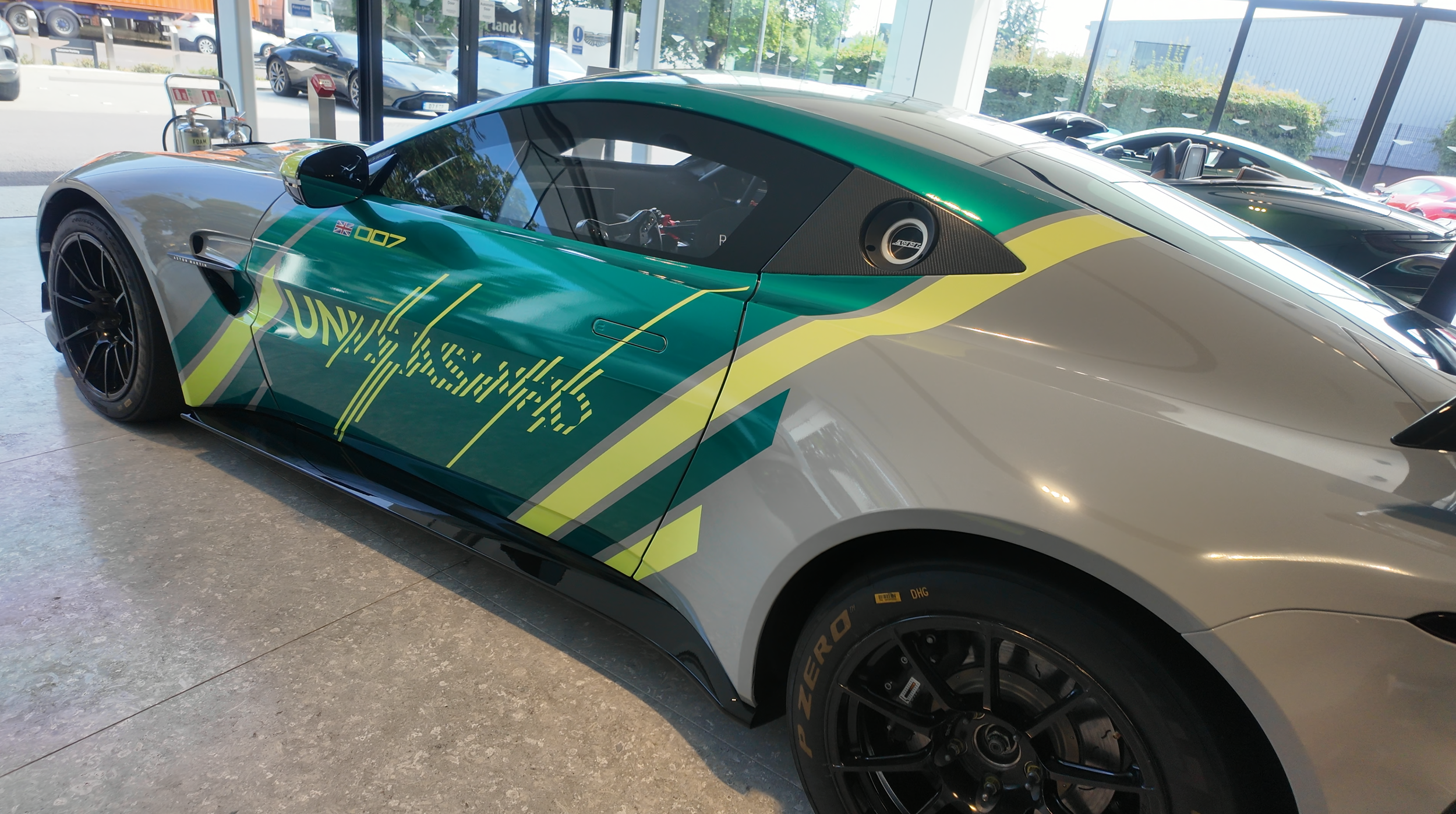
Image © Fuel the Passion. Aston Martin Vantage GT4 UNLEASHED, JCT600, Aston Martin Leeds.
It also places the GT4 UNLEASHED programme we looked at recently into a rather interesting wider context. At one end, Aston Martin can offer a wealthy enthusiast a Vantage GT4 together with factory support and carefully organised circuit experiences; at the other, professional teams such as CSM are choosing essentially the same competition platform to build an international racing programme around.
That breadth is a useful illustration of what Aston Martin’s customer-racing operation can offer when the product itself is competitive. There’s one other entirely subjective observation from FTP, having now seen one of these cars properly up close; We think the Aston looks pretty spectacular in full race trim too.
CSM’s decision adds another Aston Martin to an already busy North American racing picture, and there are a couple of other customer-racing developments worth noting this week before we leave the circuits behind for a while.
Racers Edge Returns with Aston Martin at Road America
Racers Edge Motorsports will return to Pirelli GT4 America at Road America from 28th - 30th August, entering an Aston Martin Vantage GT4 Evo for Billy Johnson and Christian Bach in the Pro-Am class.
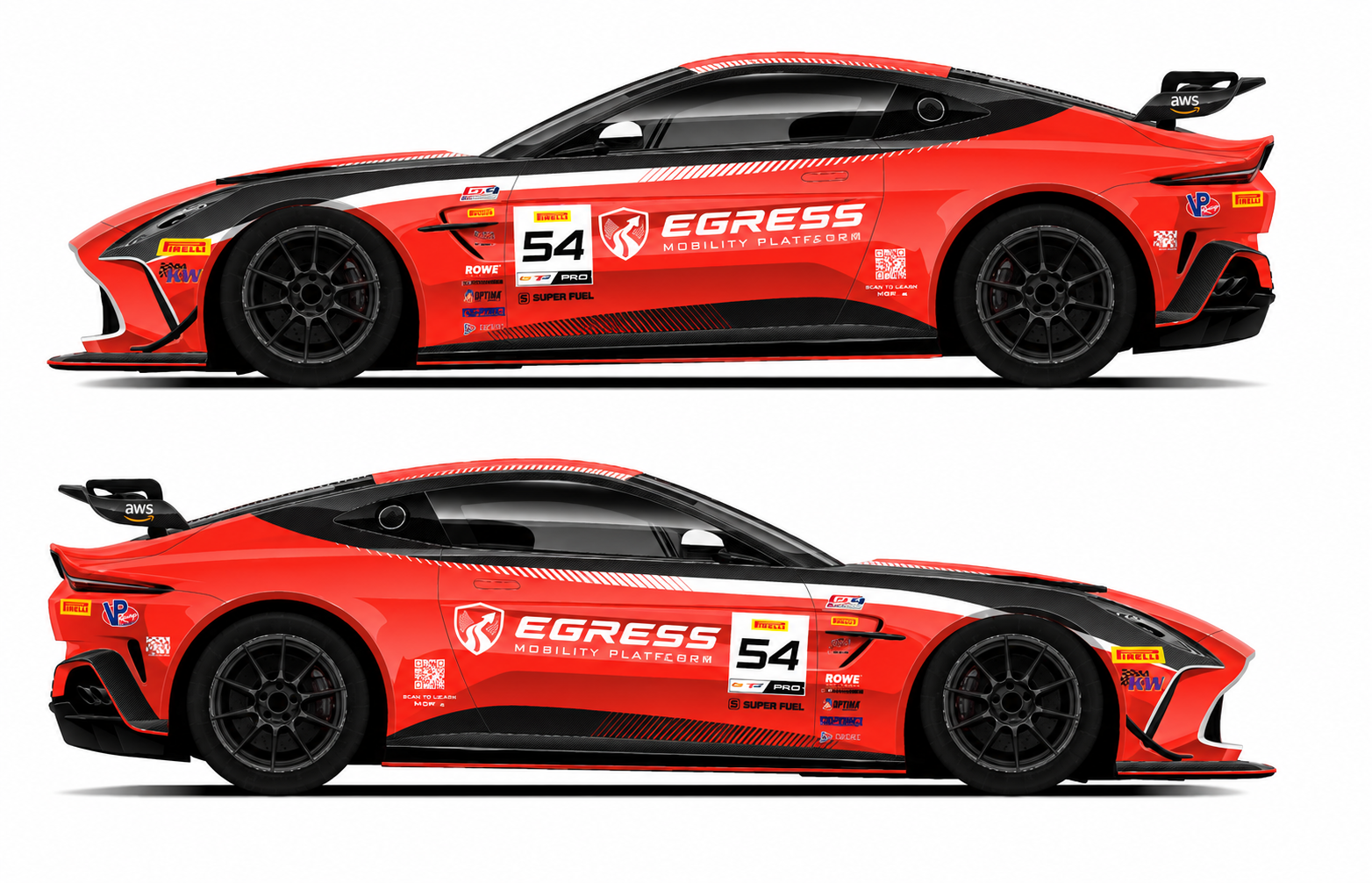
Image © Racers Edge Motorsports. Used for editorial purposes.
Johnson brings considerable North American sports-car experience to the programme, while the weekend will mark Bach’s first race in an Aston Martin Vantage GT4 and his debut in SRO competition. Their appearance also returns Racers Edge to the GT4 America grid with Aston Martin machinery and gives us another Vantage to keep an eye on when the championship reaches Wisconsin later this month.
There’s a little more to the CSM story we’ve just covered too. Ayrton Houk’s programme with the team will extend beyond the three remaining IMSA Michelin Pilot Challenge rounds, with the 23-year-old also confirmed to race a CSM Aston Martin in the Pirelli GT4 America season finale at Indianapolis. His co-driver for that event has yet to be announced.
Taken together, these aren’t headline-grabbing developments, but they continue a useful theme. Aston Martin’s latest Vantage GT4 is finding its way into more North American programmes, while teams are choosing it for both immediate competition and longer-term plans.
With Aston Martin’s current customer-racing story continuing to expand across North America, it’s time to leave the circuits behind and return to Monterey, this time to see how some rather more collectible Aston Martins have been performing under the auction-room lights.
FTP Market Watch - Zagato Takes Centre Stage at Monterey
As we noted in Issue 36, we left ourselves a little piece of unfinished business. Among the cars heading to RM Sotheby’s Monterey sale was a particularly striking 2018 Aston Martin Vanquish Zagato Volante, number 87 of the 99 produced. Rather than speculate about what it might achieve, we said we would come back this week once Monterey had given us an actual result to discuss.
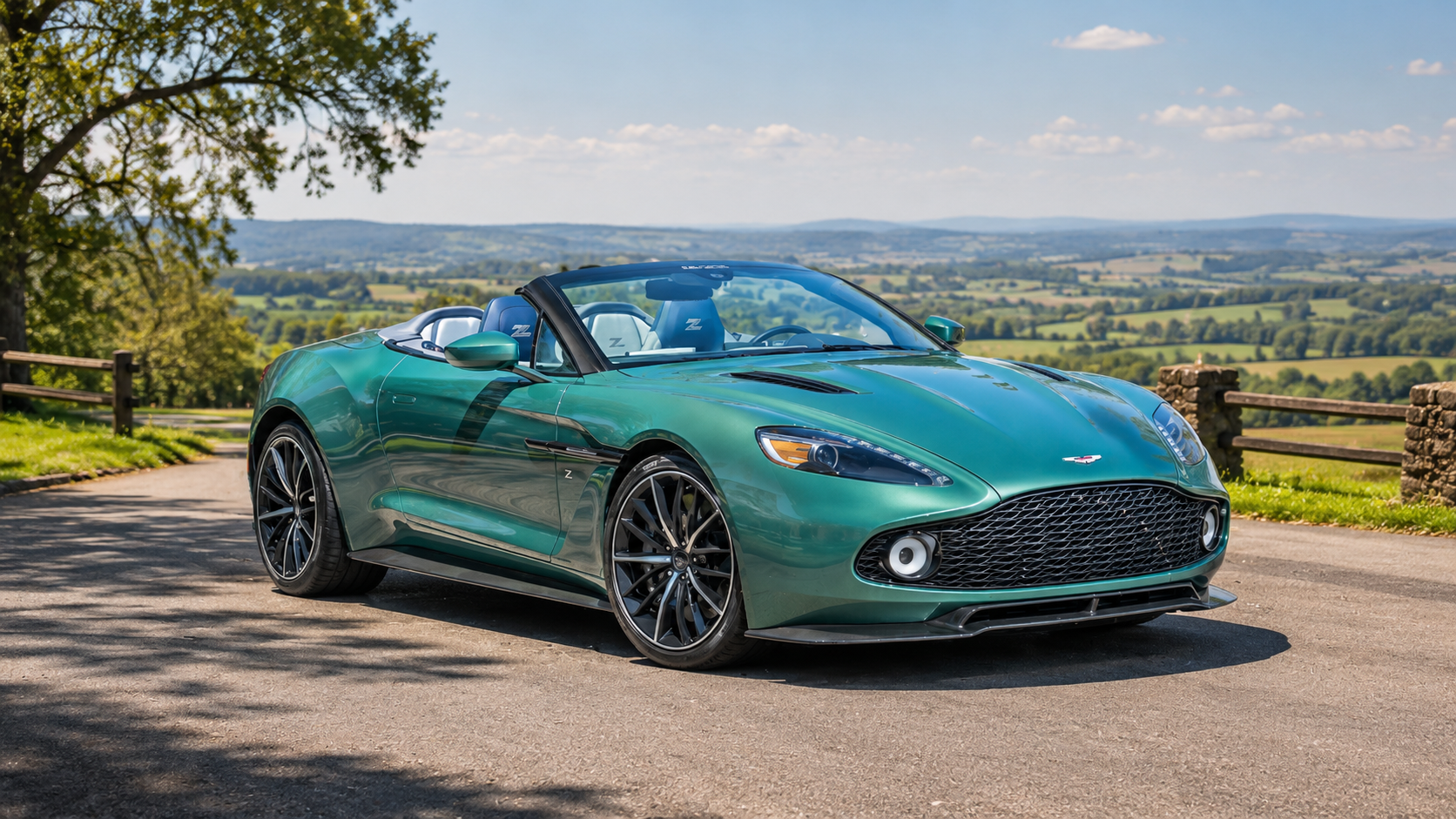
Image © Fuel the Passion. Aston Martin Vanquish Zagato Volante
That result is now in.
Finished in Almond Green, with an Atlantic Blue roof and an Aurora Blue and Argento Grey interior, the 2,046-mile car had been estimated at $375,000-$425,000.
The hammer eventually fell at $425,000, exactly at the top of that estimate. With RM Sotheby’s buyer’s premium added, the recorded total sale price was $472,500.
That distinction is worth making. Auction results are frequently reported including buyer’s premium, while pre-sale estimates normally relate to the hammer price. Simply comparing $472,500 with the $425,000 upper estimate would therefore give a slightly misleading impression of how far the bidding actually travelled.
Nevertheless, achieving the very top of its estimate represents a solid result for one of the 99 Vanquish Zagato Volantes.

Image © Fuel the Passion. Aston Martin Zagato Coupe.
There was then an interesting contrast Broad Arrow’s Quail Auction, where a 2018 Vanquish Zagato Coupé had carried a considerably higher estimate of $475,000-$525,000. Broad Arrow’s post-auction listing now shows the car as “Asking: $435,000” and invites enquiries rather than displaying a completed sale price.
That strongly suggests the Coupé didn’t find a buyer during the auction, although the listing doesn’t explicitly describe the result as a no-sale. Rather than claim more than the evidence tells us, FTP will simply record that the car remains available after the auction at an asking price of $435,000.
One Sale Doesn’t Make a Market
Put those two results alongside one another and they provide an interesting snapshot, but not a definitive hierarchy between Coupé and Volante.
The RM Sotheby’s Volante reached the top of its estimate, while the Broad Arrow Coupé appears to have left the auction without a completed sale despite entering the weekend with the higher valuation. There are far too many variables to conclude from two cars that collectors suddenly prefer one body style over another. Specification, colour, mileage, provenance, condition, reserve levels and simply which bidders happen to be in the room can all influence an individual result.
What the pair does demonstrate is why actual transactions are considerably more useful than asking prices or auction estimates when we try to understand where these very rare Aston Martins currently sit. There’s one much bigger Zagato story still to come at Monterey.
From Hundreds of Thousands to Millions
RM Sotheby’s will offer a 1962 Aston Martin DB4 GT Zagato, chassis DB4GT/0186/R, with an estimate of $12 million–$15 million. It’s the 14th of only 19 original DB4 GT Zagatos built and retains its matching-numbers engine and combines period competition history with major concours recognition, including a class victory and Best of Show finalist position at Pebble Beach in 2019. At the time Issue 37 is being completed here in the UK, however, that car has not yet crossed the block. Monterey is eight hours behind us and Lot 338 is due to be offered later on Saturday during RM Sotheby’s final auction session. Rather than invent a result, guess where the bidding might finish or delay publication, we’ll leave that particular story open.
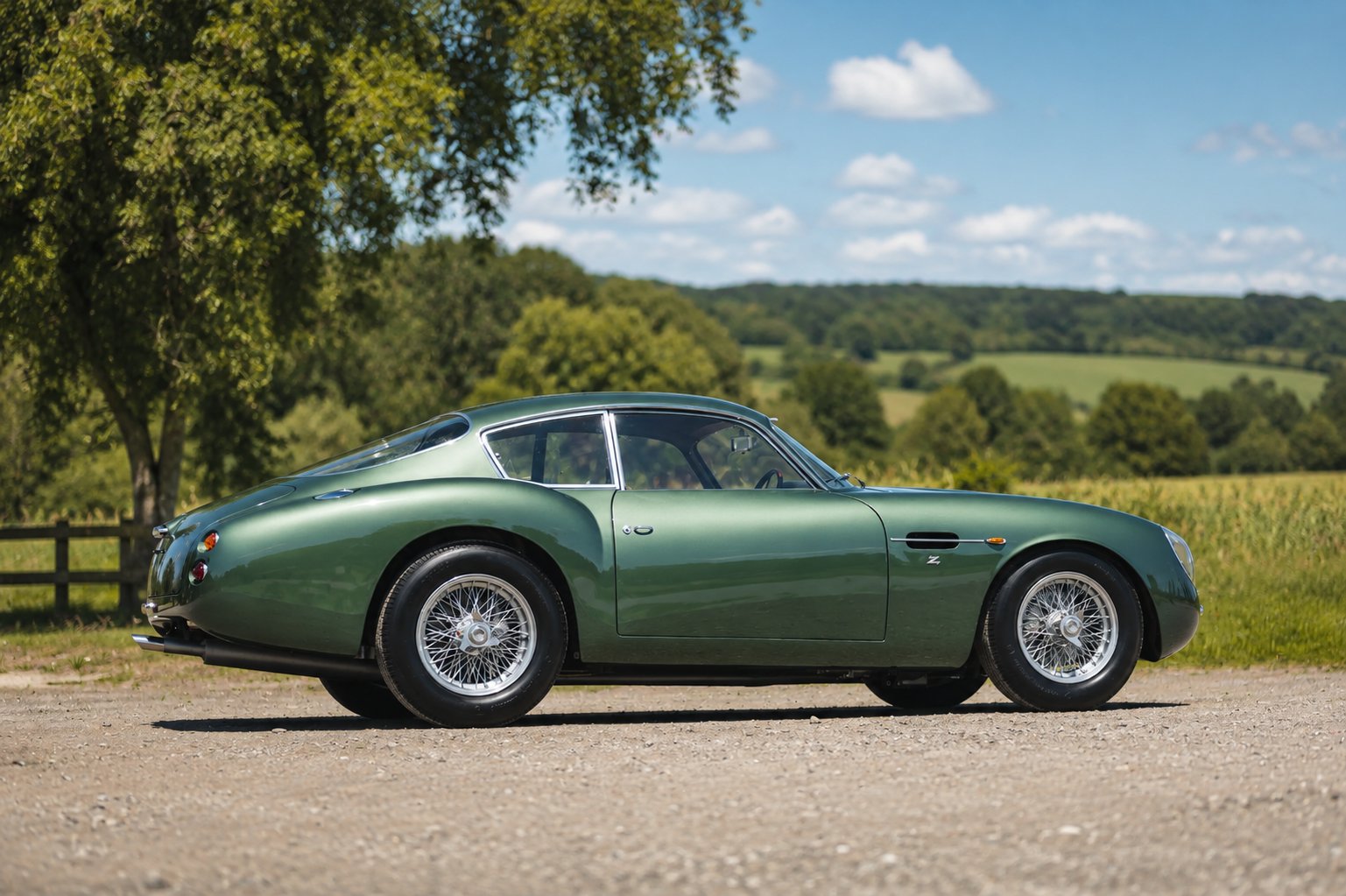
Image © Fuel the Passion. 1962 Aston Martin DB4 GT Zagato.
We’ll return to the DB4 GT Zagato’s eventual result in next week’s FTP Market Watch.
That may actually prove rather useful. The modern Vanquish Zagatos have already given us two very different outcomes at Monterey; next week we can add one of the most significant original Aston Martin Zagatos to the picture and see what the very top end of this remarkable Anglo-Italian partnership is currently worth.
For now, after contemplating Aston Martins valued in the hundreds of thousands, and one potentially worth many millions, perhaps it’s time to return to something rather closer to the real world.
Our FTP Car of the Week is still a very special Aston Martin, but this one is considerably more attainable and, for us here at Fuel the Passion at least, particularly familiar.

Affiliate link note: Some links may be affiliate links, which means Fuel the Passion may earn a small commission if you purchase through them, at no extra cost to you. Thank you for your support.
FTP Car of the Week - 2019 Aston Martin Vantage
This week’s choice comes from Aston Martin Nottingham, where this 2019 Vantage is currently being offered through the Timeless programme at £74,000.
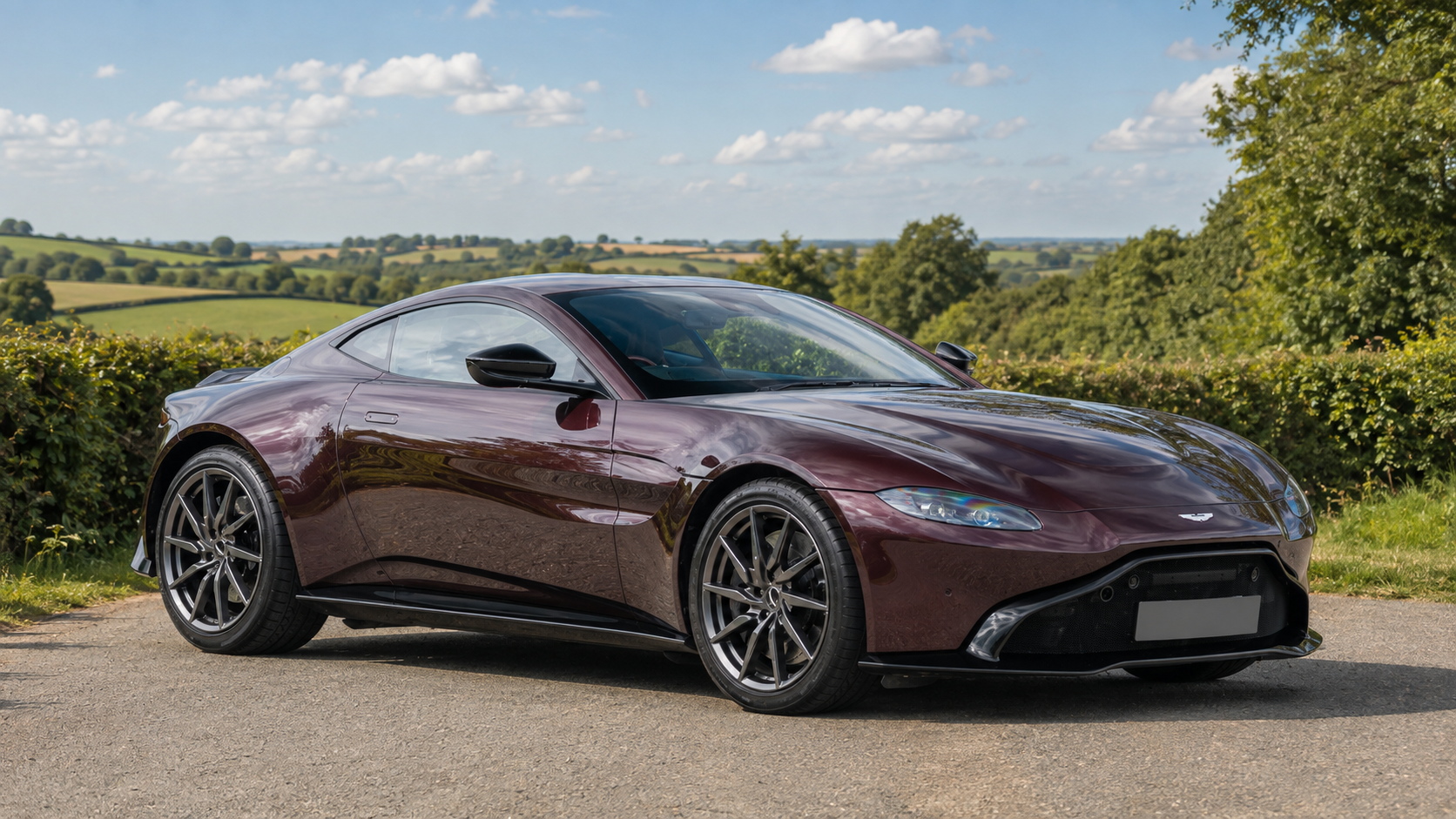
2019 Aston Martin Vantage
Finished in Divine Red with a Pure Black leather interior, it has covered 26,247 miles and, importantly for me, retains the original Hunter grille that defined the appearance of the new-generation Vantage when it arrived.
That grille certainly divided opinion when the car was launched. Aston Martin had made a very deliberate break with the more traditional appearance of the preceding VH-era Vantage, giving its replacement a much lower, wider and more aggressive face.
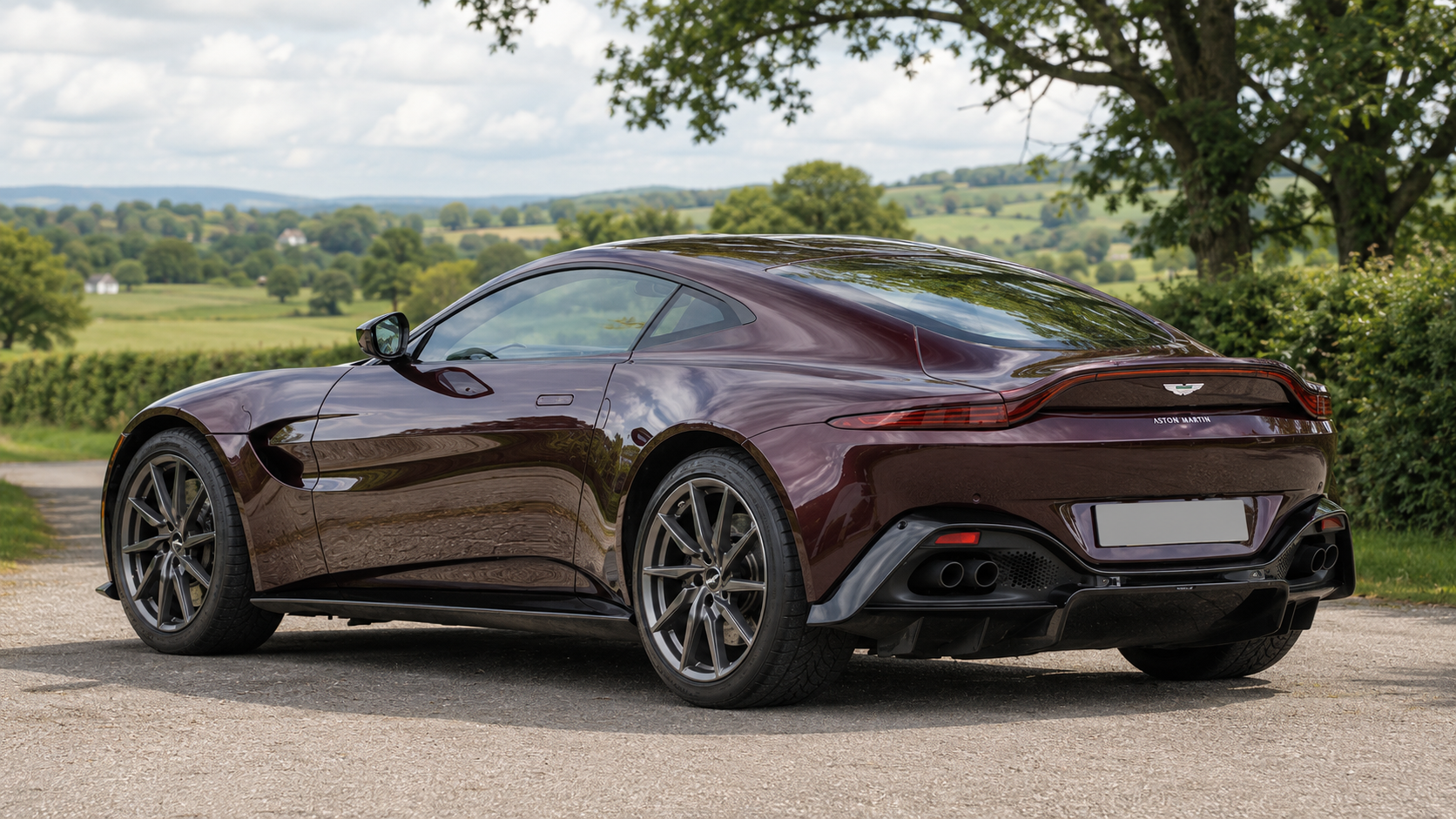
2019 Aston Martin Vantage
Combined with the slim headlights, clamshell bonnet, pronounced rear haunches, full-width rear lighting and substantial diffuser, the result was unlike any production Vantage that had come before it.
We happen to think those early cars have aged beautifully, although perhaps we would say that, because the FTP Vantage sitting in my garage is another 2019 example.
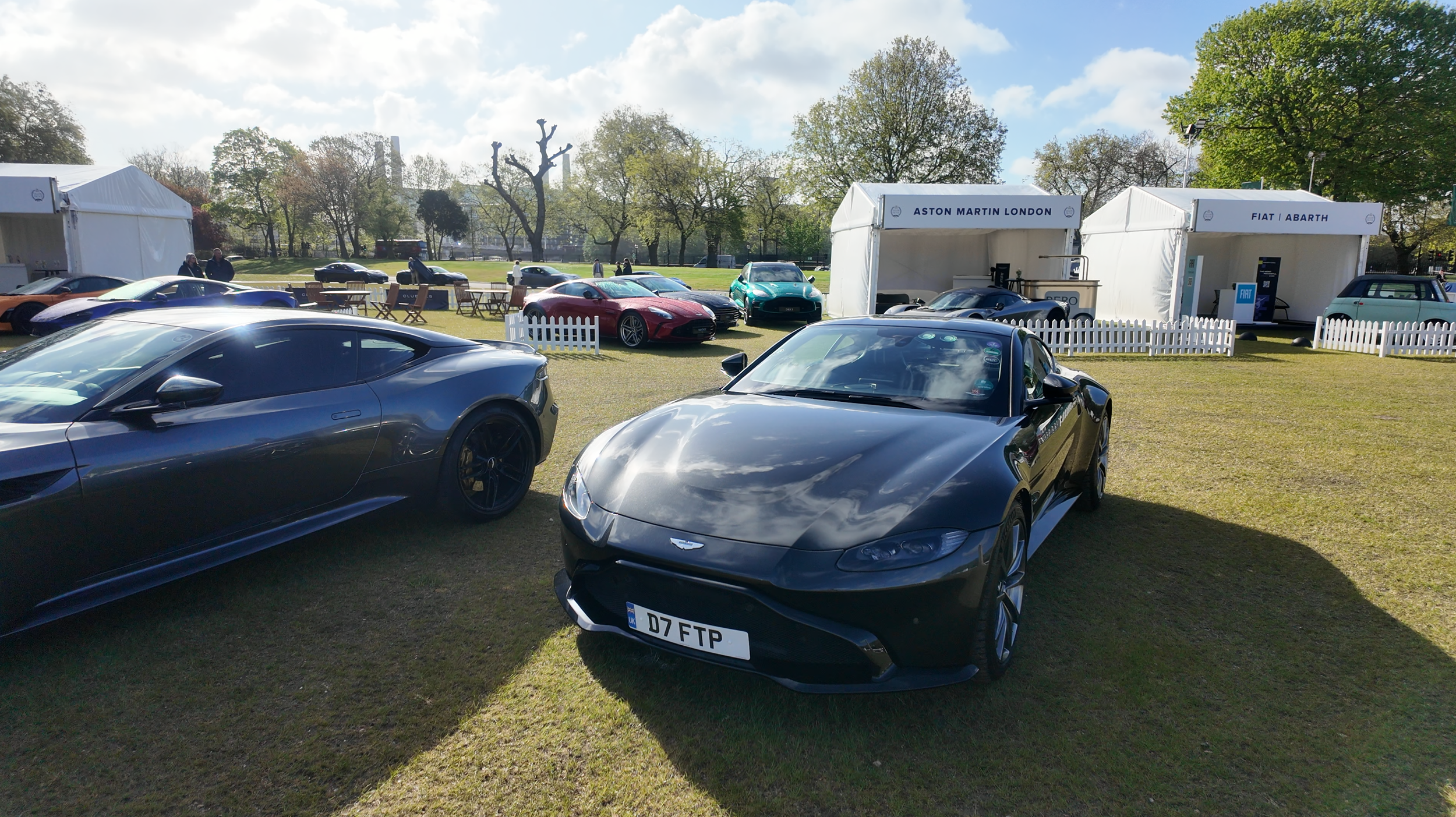
Image © Fuel the Passion. The ‘FTP Vantage’. 2019 Aston Martin Vantage. Part of the display at Salon Prive, London 2026.
This also brings to mind a question we explored earlier this year through a fascinating FTP Guest Featured Article from George Johnson. George owned a 2019 Vantage for six and a half years before eventually trading it for the latest-generation car, and his article; Should You Upgrade to the 2025 Aston Martin Vantage?, provides an unusually useful comparison because it comes from somebody who has genuinely lived with both generations.
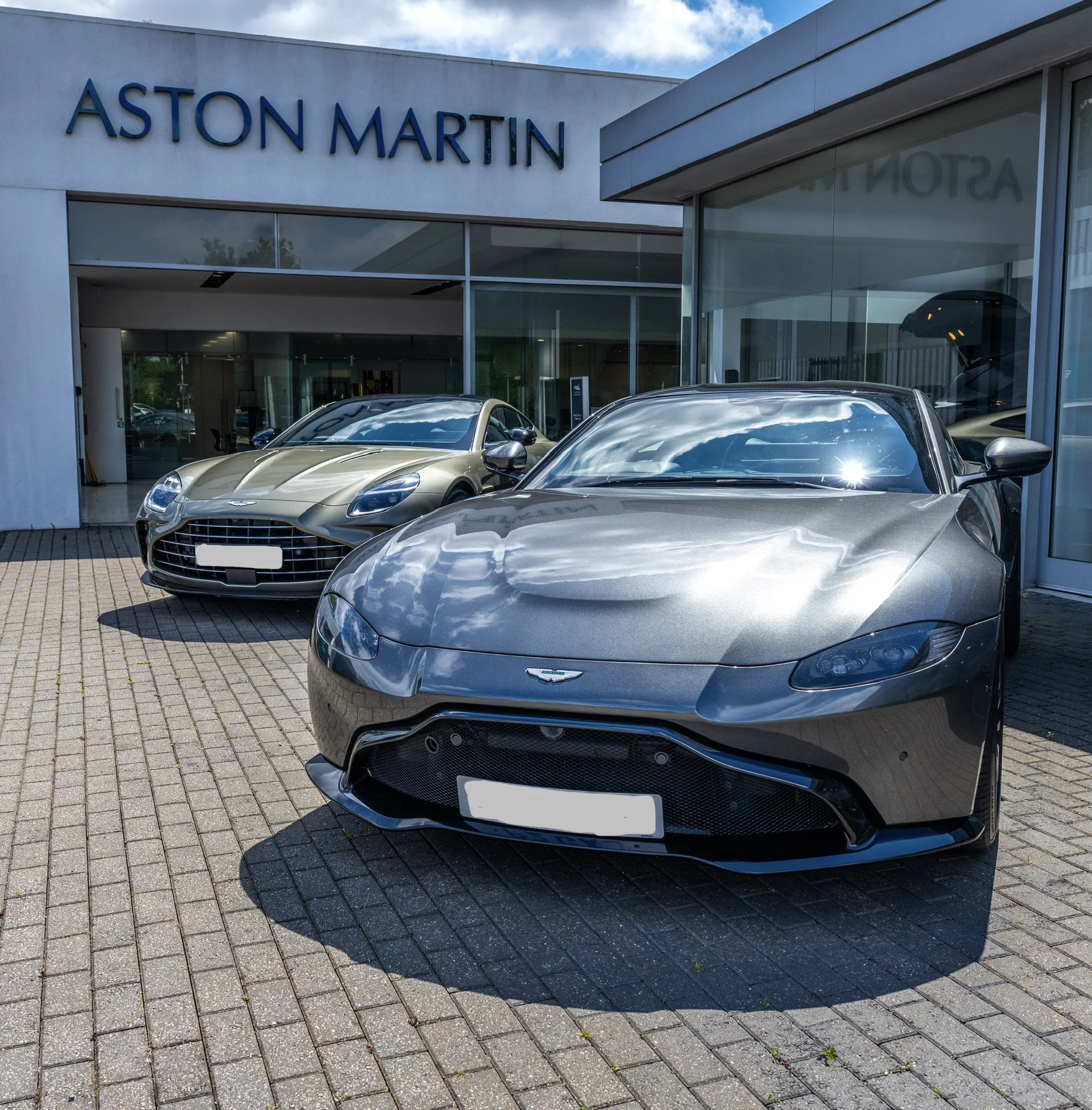
Image © George Johnson 2026. Reproduced with permission.
He found the newer Vantage more planted, refined and better resolved in many areas, yet he was equally candid about what he missed from his 2019 car, including the clamshell bonnet, thinner steering wheel, column-mounted paddles, traditional PRND buttons, simpler controls and the more natural character of the earlier non-OPF car. Perhaps most interestingly, his decision wasn’t obvious even after an extended test drive; there was nothing fundamentally wrong with the Aston he already owned, which raises a question particularly relevant to this week’s Car of the Week: when an earlier Vantage still looks this good and now costs considerably less than the latest model, is newer automatically better, or simply different?
George ultimately decided the improvements justified making the change, but his thoughtful account makes a compelling read for anybody considering either generation. You can read his full guest article HERE.
The Nottingham car has a particularly strong specification too. Its 20-inch 10-spoke directional wheels in Shadow Chrome work beautifully against the Divine Red paint, while the Exterior Black Pack, gloss-black mirror caps, dark chrome interior jewellery and matte-black quad exhaust finish give the car a slightly more purposeful edge without overwhelming the design. Inside, Pure Black leather is joined by an Alcantara headlining, leather sports steering wheel, glass switches and premium audio, while equipment includes blind-spot assistance, keyless entry, the touchpad-based infotainment system and vehicle tracking.
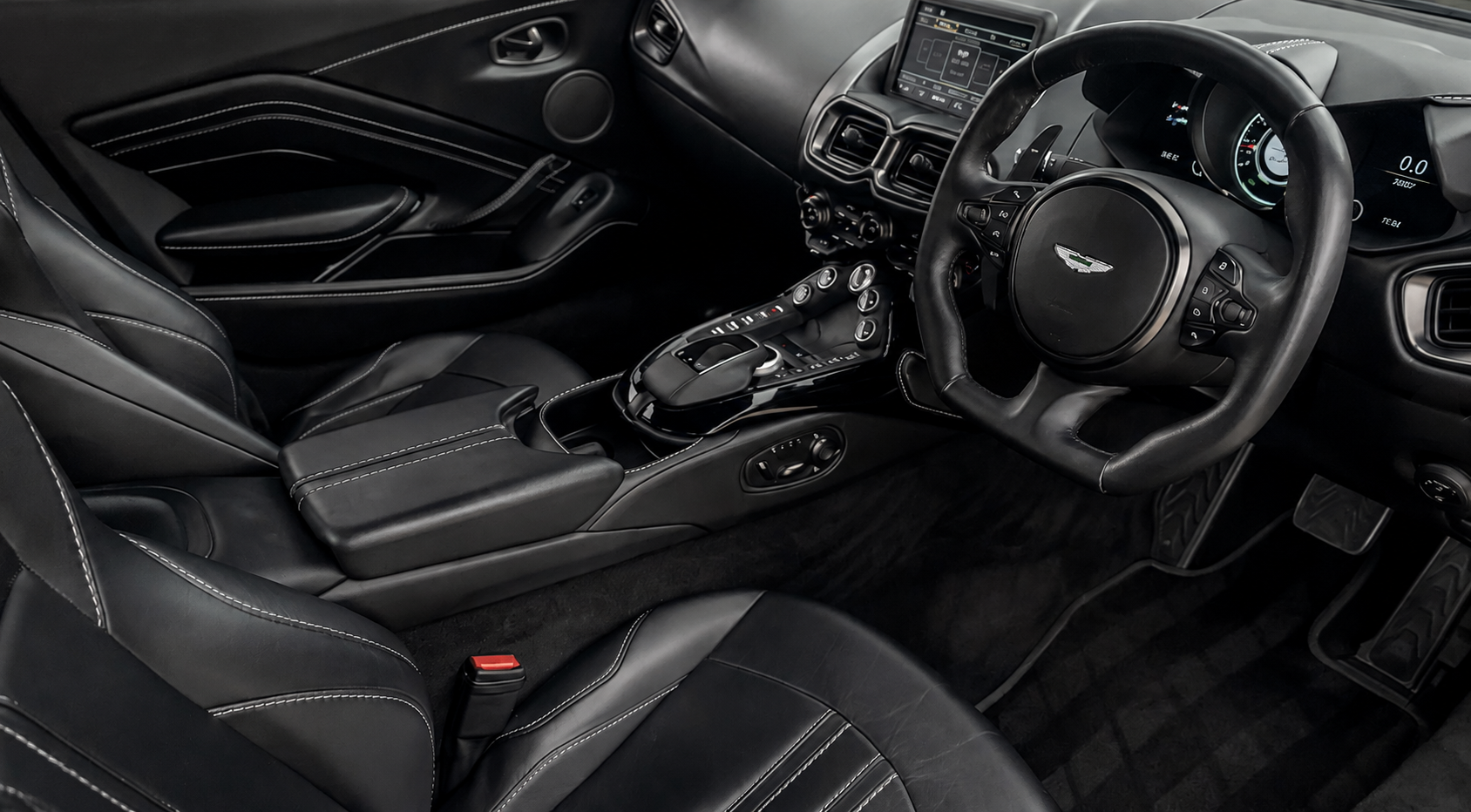
2019 Aston Martin Vantage
There’s also something increasingly appealing about these earlier new-generation Vantages. Their cabins still contain plenty of physical controls, the distinctive triangular transmission buttons remain a focal point of the centre console, and the original exterior design now feels noticeably different from the substantially updated Vantage that followed in 2024.
Where Are Early Vantage Values Today?
The £74,000 asking price provides an interesting snapshot of where these cars now sit. For context, I paid around £84,000 for the FTP Vantage in August 2024, when it had covered approximately 7,400 miles. Two years later, this closely related 2019 example is being offered by an Aston Martin main dealer at £74,000 with considerably higher mileage.
That isn’t a direct valuation comparison. Specification, mileage, condition, ownership history and dealer margin all influence the price of an individual car, so it would be misleading to conclude that an early Vantage has simply “lost £10,000” over that period. What it does show is how much car these early Vantages now represent for somewhere in the region of the mid-£70,000s.
This was Aston Martin’s current-generation sports car only a few years ago, powered by the 4.0-litre twin-turbocharged V8 and wrapped in a shape that still looks thoroughly modern today. At £74,000 through the Timeless programme, with the additional reassurance that comes from buying through the Aston Martin dealer network, this particular example strikes me as a very appealing way into modern Aston Martin ownership.
There may be newer, faster and more sophisticated versions of the Vantage now, but that doesn’t diminish what these original cars offer. In fact, as somebody who has spent rather a lot of time with one, I’d argue that their combination of performance, usability, theatre and increasingly attractive used values is becoming easier to appreciate with every passing year.
That makes this Divine Red 2019 Vantage our FTP Car of the Week.
The appeal of cars such as this week’s Vantage is ultimately what keeps all of us interested in Aston Martin, but behind every new model sits a much bigger story about the company trying to build them successfully. That brings us neatly to something currently taking shape behind the scenes at Fuel the Passion.
Coming Soon to FTP - Adrian Hallmark: Two Years On
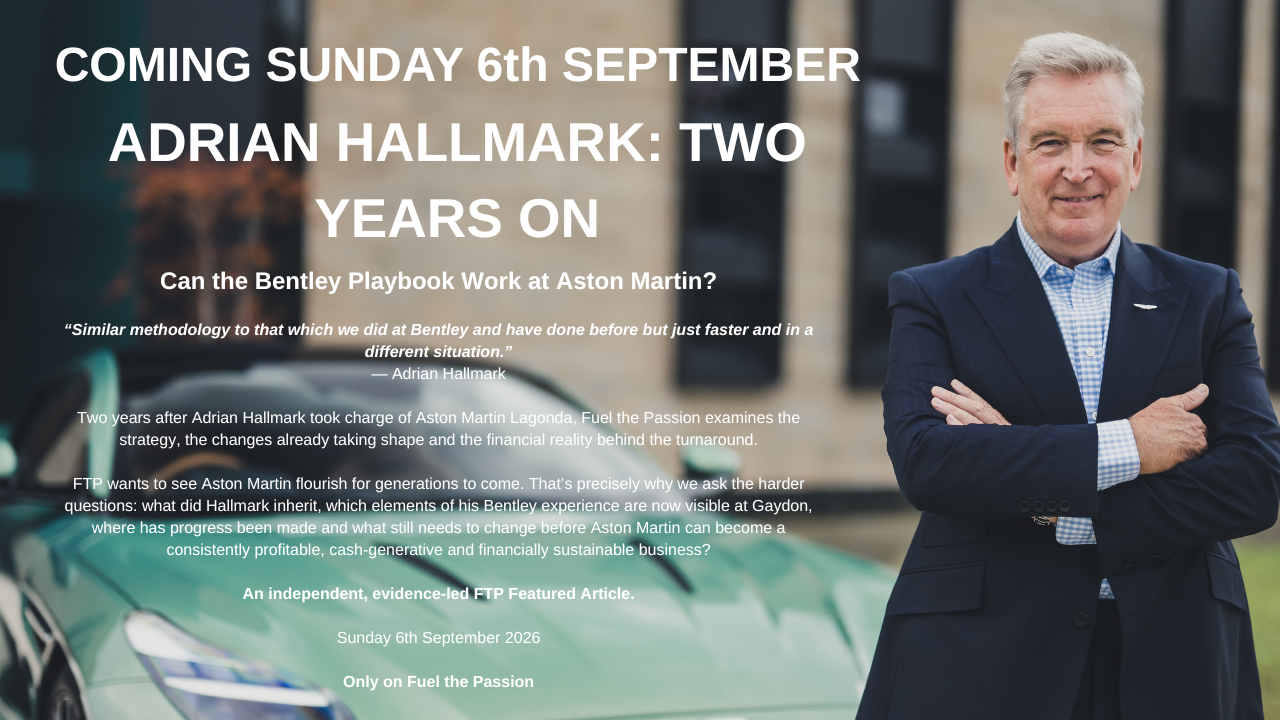
Some of you may already have spotted the advert above on the Fuel the Passion homepage. On Sunday 6th September, our next major FTP Featured Article will mark almost two years of Adrian Hallmark at the helm of Aston Martin Lagonda and ask a question that has become increasingly relevant as his strategy begins to move from words into visible action:
Can the Bentley Playbook Work at Aston Martin?
Hallmark himself provided part of the inspiration for that question when describing his approach to Aston Martin as a “similar methodology to that which we did at Bentley and have done before but just faster and in a different situation.”
That comparison is fascinating, but it needs considerably more examination than simply pointing towards Hallmark’s previous success at Bentley and assuming the same result will follow at Aston Martin.
Recent FTP coverage has already laid much of the groundwork. In Issue 35, we examined Aston Martin’s first-half 2026 results, while our August Featured Article, Aston Martin Beyond the Debt: What Could the Future Hold?, looked more deeply at the financial pressures sitting behind the turnaround.
Now Valen has added another important piece to the story.
During interviews surrounding its launch, Hallmark has spoken much more openly about the role of high-value, limited-production Specials within Aston Martin’s future. His emphasis on value rather than simply pursuing greater volume, together with the idea of continually creating fresh and desirable products capable of bringing existing customers back to the marque, provides a particularly revealing glimpse of the commercial thinking behind cars such as Valour, Valiant and now Valen.
The timing is therefore rather useful. Instead of assessing Hallmark’s first two years only through financial results, management changes and future promises, we can increasingly begin to examine the products and structures through which that strategy is being delivered. Valen, the continuing development of Q by Aston Martin, the emergence of the new Special Vehicle Operations department, Valhalla and the strengthening of Aston Martin’s core model range all give us tangible examples to explore.
The Featured Article will look back at the position Hallmark inherited, what’s changed since his arrival and where his experience at Bentley appears to be influencing Aston Martin’s direction. We’ll examine his move towards value-led growth, product cadence, personalisation and Specials, manufacturing and operational discipline, the role of the dealer network and, crucially, whether the company’s financial position is becoming strong enough to support the strategy. Because that remains the central tension.
Aston Martin can produce extraordinary cars. Valen has just reminded us of that rather emphatically.
The much harder task is turning desirability, exclusivity and strong pricing into sustainable profitability and dependable cash generation. The intention will not be to decide in advance that Hallmark’s strategy is succeeding, nor to assume it cannot work because Aston Martin’s financial challenges remain substantial. We want to follow the evidence, distinguish progress from aspiration and ask what still needs to happen before the company can credibly claim that its latest turnaround is firmly on course.
Two years is long enough for a strategy to begin showing its shape. Whether it’s beginning to show results is the much bigger question.
Adrian Hallmark: Two Years On - Can the Bentley Playbook Work at Aston Martin? will be published on Fuel the Passion on Sunday 6th September 2026.
If you’d like to make sure you don’t miss it, why not subscribe to Fuel the Passion? You’ll be kept up to date with our latest Featured Articles, Weekly Roundups and other new Aston Martin stories as they’re published.
A Few Thoughts Before We Go
If there’s one thing Issue 37 has demonstrated, it’s just how many different versions of Aston Martin can exist at the same time.
At Monterey, the company has been celebrating 75 years of history through the wonderful VMF story while simultaneously unveiling Valen, one of the boldest and most technologically ambitious front-engined Aston Martins it has ever produced. One story looks back to three DB2s competing in the early 1950s; the other points towards what Aston Martin believes an exceptionally exclusive V12 driver’s car can become in 2026.
Yet perhaps they’re not as disconnected as they initially appear.
Aston Martin has always been at its strongest when its history provides confidence rather than constraint. Valour and Valiant deliberately drew inspiration from the past, while Valen takes a very different route, retaining the familiar front-engined V12 formula but surrounding it with modern materials, electronics and engineering. The three VMF DB12 S commissions demonstrate another interpretation entirely: history revisited through contemporary cars rather than simply recreated.
That ability to keep finding new stories within the same marque is part of what makes Aston Martin so fascinating to follow.
The same breadth exists in motorsport. Formula One remains a long-term rebuilding project, with the progress seen in Hungary giving us something tangible to measure as Zandvoort approaches. Elsewhere, Aston Martin is competing for championships through customer racing programmes across GT3 and GT4, while teams continue to choose the latest Vantage as the foundation for their own ambitions.
Image © Aston Martin Lagonda. Used for editorial purposes. Aston Martin Birmingham.
Behind all of this, however, sits the harder business question.
Aston Martin continues to demonstrate that it can create desirable cars, attract extraordinary customers and inspire enormous loyalty. The challenge is turning all of that desirability into a consistently profitable, financially sustainable company. That’s why Adrian Hallmark’s strategy deserves to be judged on considerably more than the arrival of another spectacular new model.
Valen nevertheless gives us an intriguing glimpse of how part of that strategy may work. Hallmark has spoken this week about the importance of continually creating something new and desirable enough to bring existing customers back to Aston Martin. The more we’ve considered that idea, the more revealing it seems. A customer buying one exceptionally valuable Aston Martin today still needs a compelling reason to return when the next opportunity appears. Limited-production Specials, deeper personalisation and genuinely differentiated products potentially create that continuing relationship without requiring Aston Martin simply to chase ever greater production numbers. Whether that model can ultimately deliver the financial results the company needs remains a much bigger question. It’s one we will explore properly in September.
For now, though, perhaps Aston Martin has already achieved the first part of Hallmark’s objective. Valen has certainly succeeded in making people pay attention.
There’s plenty more ahead. Zandvoort is almost upon us, Blackthorn Racing’s next Michelin Le Mans Cup weekend at Spa is approaching, and the motorsport season is entering a stage where championship battles and individual results begin to carry increasing weight. Behind the scenes at FTP, work also continues on our Goodwood Festival of Speed film and the research for our September Adrian Hallmark Featured Article.
As always, thank you for spending part of your Sunday with Fuel the Passion. Whether you arrived for Valen, Monterey, motorsport, Formula One, Aston Martin history or simply your weekly dose of everything happening around the marque, I hope you found something worth staying for.
Have a great week, enjoy your Aston Martin if you’re fortunate enough to have one sitting in the garage or outside and, wherever you are, keep fuelling the passion. 👍
See you on the next one! 👆
Kind regards,
Dan
💬 Join the Conversation
We’d love to hear your thoughts. You’re welcome to answer any or all of this week’s questions, or simply share your own view on anything Aston Martin, whether it’s something you’ve read here, a car that’s caught your attention or a subject you think deserves further discussion.
We would love to hear from you, so leave your comments in the section below. 👇
1. Has Aston Martin got the Valen right?
Valen has certainly given us plenty to talk about. It combines an 850PS front-engined V12 with rear-wheel drive, extensive weight saving, sophisticated electronics, GT4-derived transmission learning and one of the boldest designs we’ve seen from Aston Martin in years. Yet it also moves away from the manual, more analogue philosophy that helped define Valour and Valiant.
What do you think? Do you like the direction Aston Martin has taken with Valen? Does its much more aggressive, contemporary design appeal to you, or has it moved too far away from the elegance traditionally associated with the marque? Would you have preferred a manual gearbox, and do you think cars such as this represent the right way for Aston Martin to keep its most valuable customers coming back to the marque?
2. George carefully weighed up both generations before choosing to trade his 2019 Vantage for the latest model. Which would suit you best?
This week’s Car of the Week is a 2019 Vantage at £74,000, while George’s FTP Guest Featured Article gives us the valuable perspective of somebody who owned one for six and a half years before making a carefully considered move to the latest generation, a decision he remains very happy with.
Having looked at the strengths and differences of both cars, which generation would appeal most to you today? Would you be drawn to the character and value of the earlier Vantage, or would the improvements and refinement of the latest model persuade you to make the same move as George? What would influence your decision most?
3. Are you beginning to believe Aston Martin’s Formula One recovery is genuine?
Hungary finally gave us some tangible progress, and Honda’s revised power unit arrives for Zandvoort. Do you think Aston Martin is genuinely beginning to close the gap, or do you need to see several strong weekends before becoming convinced?
4. How should Aston Martin use its extraordinary heritage?
The VMF-inspired DB12 S trio shows one way of connecting the company’s racing past with its modern cars. Do you enjoy these heritage-led commissions, or would you rather Aston Martin looked forward and allowed the historic cars to tell their own stories?
Still Fancy a Little More Aston Martin Reading?
If you’ve reached the end of this week’s Roundup and would still like to explore a little further, there’s plenty more to discover across the Fuel the Passion website.
You can visit the FTP Motorsport Hub, where we continue to build detailed race reports, result tables, classification updates and championship standings across Aston Martin’s international racing programmes.
There’s also the growing FTP Aston Martin Buyers Guide library. We now have complete guides covering the DB9, VH-generation V8 Vantage, DB11, first-generation Vanquish and the VH-era DBS.
Each guide is written to offer honest, enthusiast-focused help for anyone researching, buying, owning or simply learning more about these cars. They cover the model’s history, versions, ownership considerations, servicing, known issues, buying checks and the details that can make the difference between a rewarding purchase and an expensive mistake.
Our next guide will focus on the second-generation Vanquish, and research is already under way. Owners are very welcome to contribute their own experiences and help us make the finished guide as accurate and useful as possible.
Our latest FTP Featured Article is Aston Martin Beyond the Debt: What Could the Future Hold?
It looks beyond the immediate headlines surrounding debt, losses and refinancing to examine the wider position of Aston Martin Lagonda. The article considers both the seriousness of the financial pressure and the signs of operational improvement seen during the first half of 2026.
I’ve included the links below, so feel free to make yourself a coffee, settle in and keep exploring. 👍
