Issue 44 - Fuel the Passion (FTP) Weekly Roundup
Week Ending 4th October 2026
Your guide to Issue 44
Settle in for this week's journey through the Aston Martin world — from Formula 1, WEC and British GT to the latest road cars, heritage stories and developments at Fuel the Passion.
There's plenty to explore, so make a coffee, take your time and use the Issue 44 Navigator below to jump between stories whenever you wish.
Take your time.
There's plenty worth discovering.
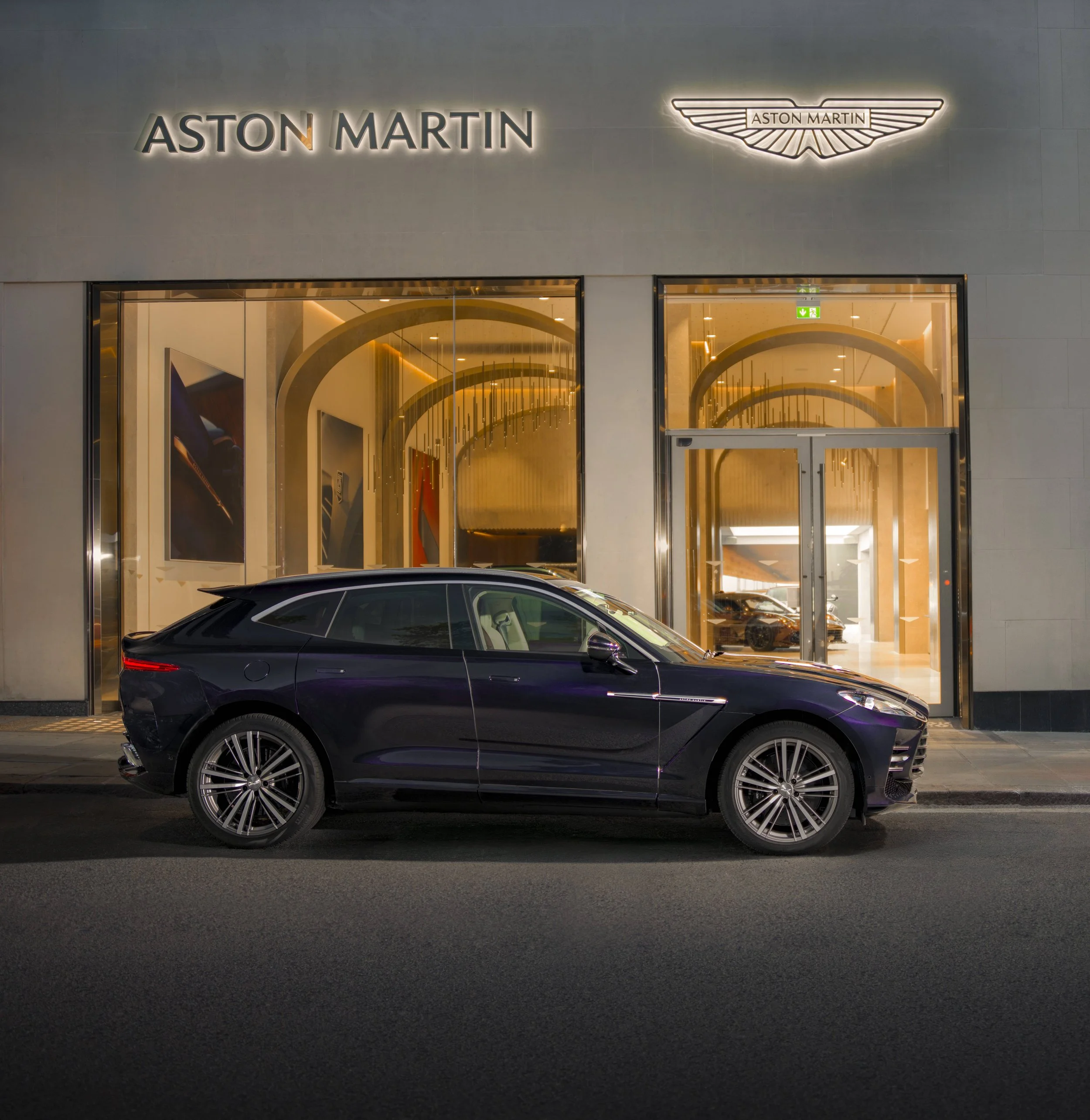
Image © Aston Martin Lagonda. Used for editorial purposes. Aston Martin DBX GT, Aston Martin Q, London.
Editor’s Introduction, Dan - Fuel the Passion
The photograph above feels like an appropriate place to begin this week's Roundup. Aston Martin's new DBX GT, sitting outside the equally new Q London flagship in Berkeley Square, brings together two developments that we explore in much more detail later in Issue 44, accompanied by some rather lovely photographs from inside the new London showroom.
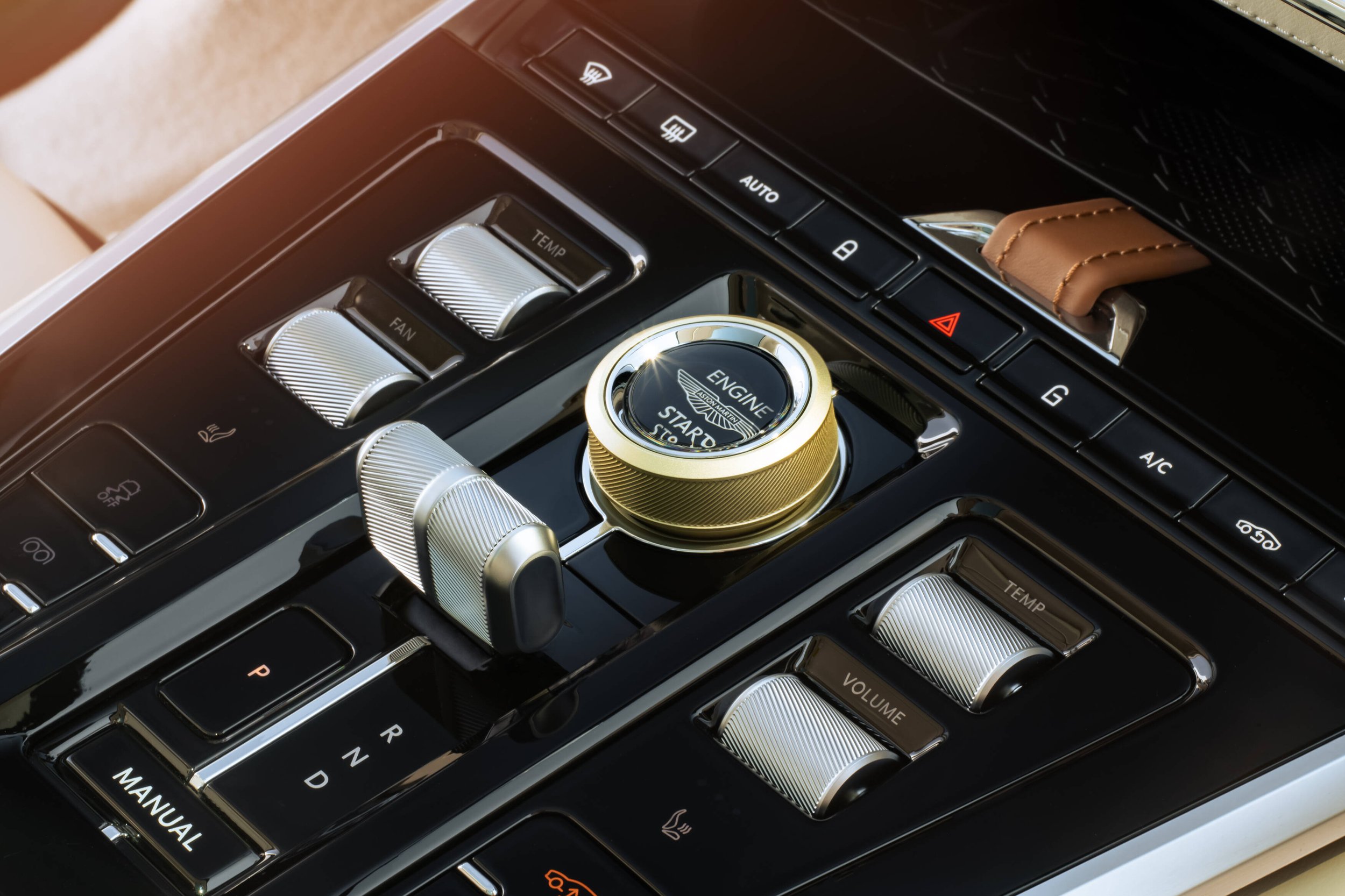
Image © Aston Martin Lagonda. Used for editorial purposes. Aston Martin DBX GT.
In many ways, though, that single image also captures something of where Aston Martin finds itself as we enter October. The company is continuing to broaden and refine its road-car range, placing increasing emphasis on personalisation and the individual customer experience, while Adrian Hallmark's wider strategy gradually becomes easier to see.
At the same time, there are still significant financial challenges to overcome, something we'll return to in our latest five-week look at Aston Martin Lagonda and its share price.
On track, last weekend provided another reminder of just how varied Aston Martin's fortunes can be. Formula One brought a difficult double retirement in Baku, but there was much more encouragement elsewhere. Valkyrie led a World Endurance Championship race outright at Fuji, the Vantage returned to the LMGT3 podium, British GT produced an extraordinary championship conclusion and Blackthorn Racing added another important result to its season.
The future features prominently this week too. Fernando Alonso has made his intentions clear for 2027, we look at where development of the AMR26 now stands, and even the extraordinary logistical exercise behind Formula One's return to Sepang provides an insight into a side of the sport we rarely see. Meanwhile, another busy weekend of Aston Martin motorsport is already under way.
Yet one of the things I increasingly enjoy about putting the Roundup together is the way Aston Martin's present so often leads us back into its past. This week we revisit one of Jeremy Clarkson's most memorable Aston Martin films, spend some time with a particularly special pair of classic cars and look at several anniversaries that make October 2026 an unusually appropriate month to celebrate the marque's history.
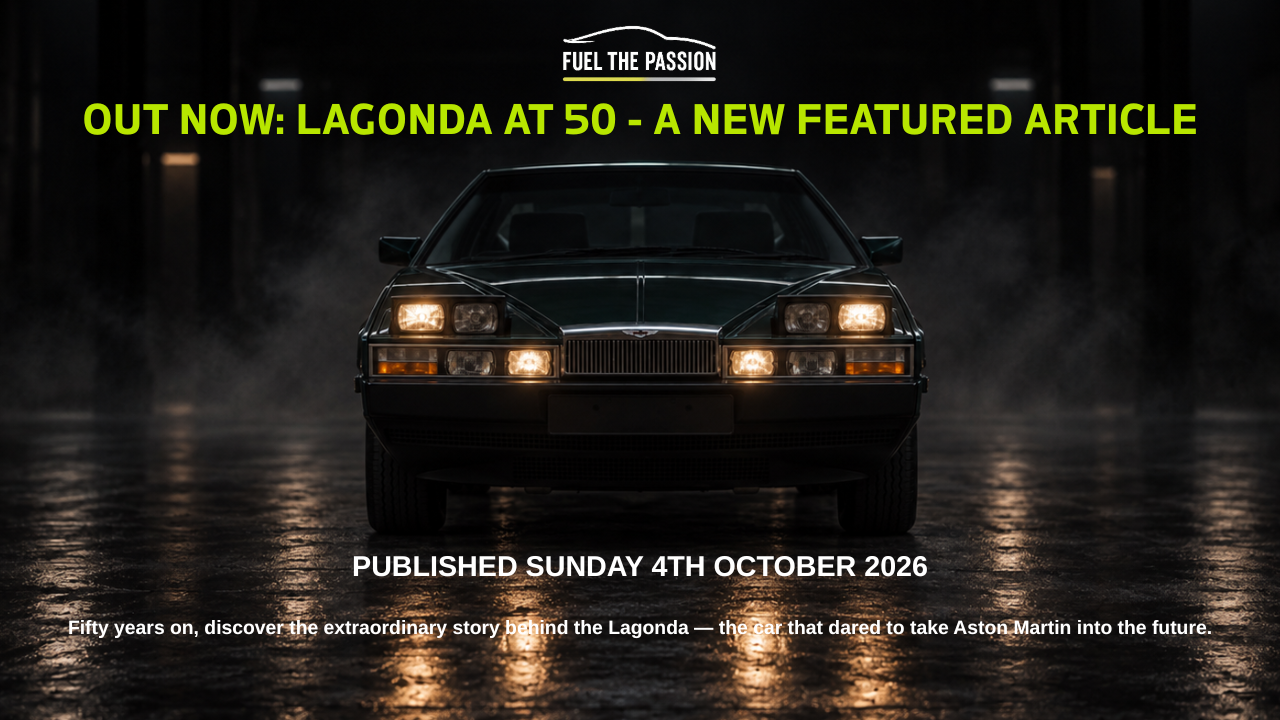
That’s particularly true this Sunday because a new FTP Featured Article goes live alongside Issue 44. Lagonda at 50 has become one of the most enjoyable pieces I've researched for the website. It begins long before William Towns unveiled that extraordinary wedge-shaped car in 1976 and follows the Lagonda name through its own remarkable history, its relationship with Aston Martin and ultimately the question of just how important the car became to the company's survival.
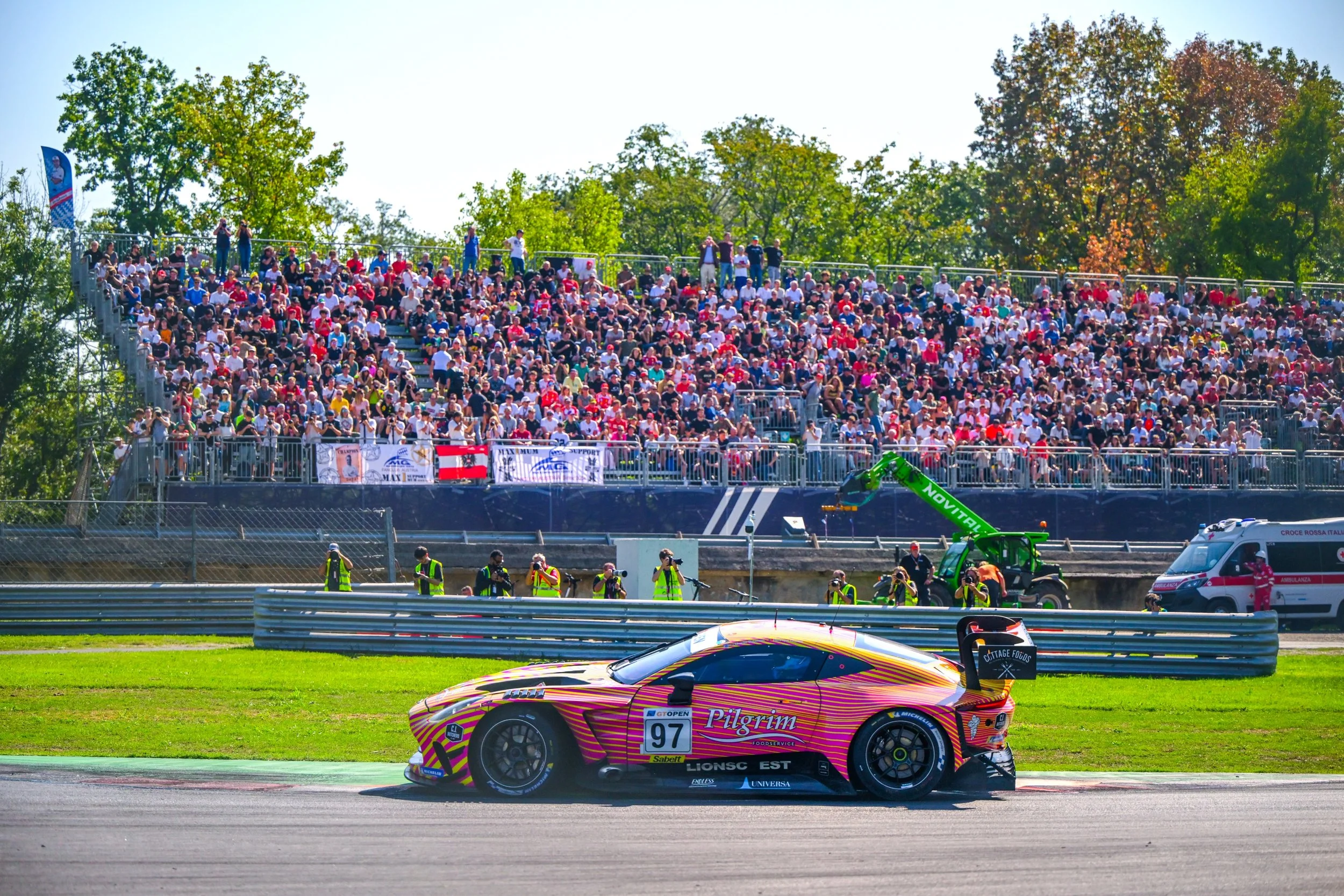
Image © Fotospeedy & Blackthorn Racing. Used for editorial purposes. Blackthorn Vantage leading the way at the International GT Open, Monza, September 2026.
There’s some Fuel the Passion news this week as well. The collaboration with Blackthorn Racing has taken another step forward, with the first FTP-produced film now appearing on Blackthorn's own YouTube channel, and the next production is already taking shape. What began with access, conversations and a camera in a racing garage is gradually developing into something rather exciting.
So, coffee at the ready. From the very modern Aston Martin pictured above to racing cars, road cars, financial realities and fifty years of Lagonda, there's plenty to explore.
Welcome to Issue 44 of the Fuel the Passion Weekly Roundup.
Formula 1: Baku Brings Another Aston Martin Double Retirement
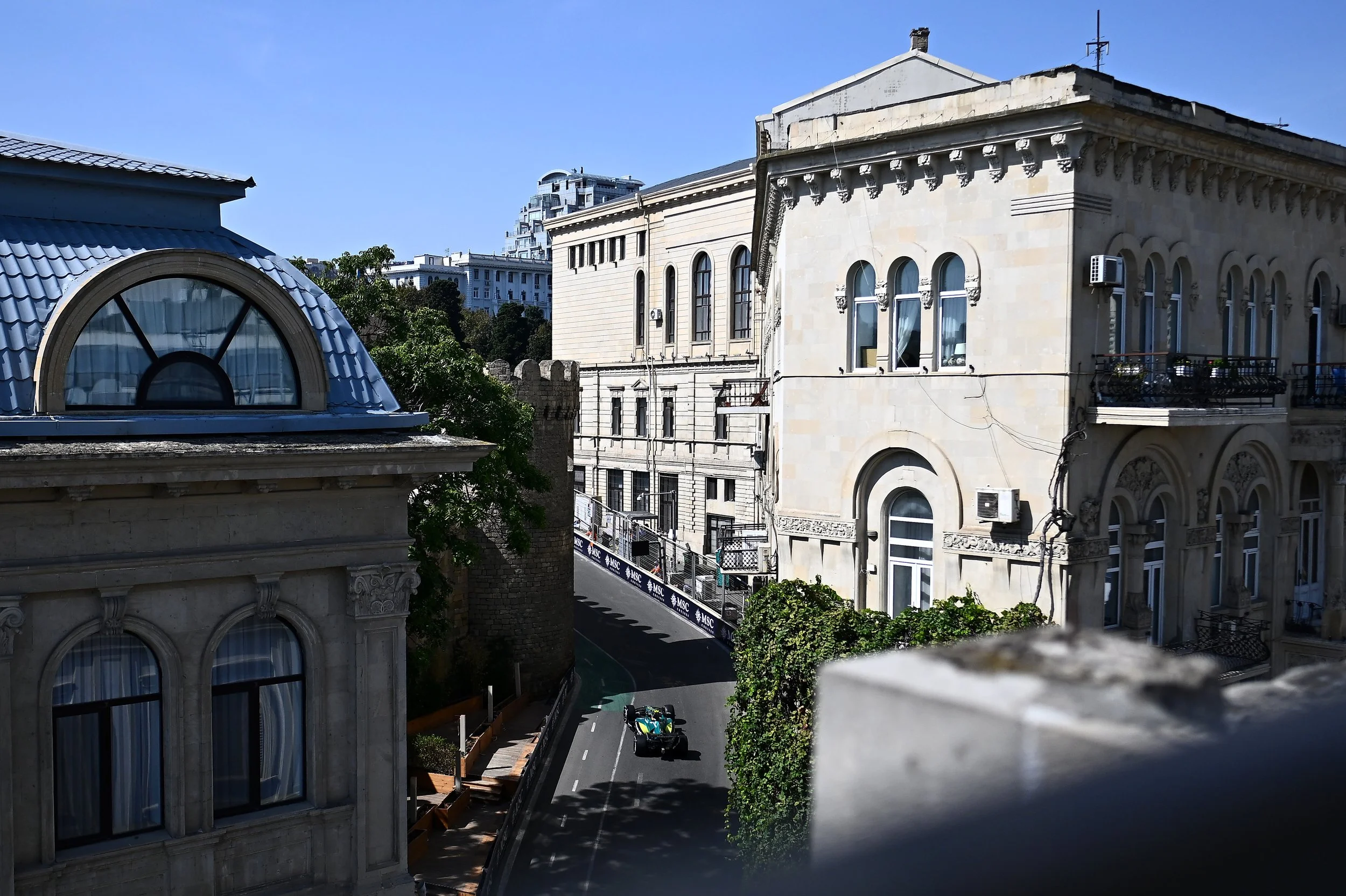
Image © Honda Motor Co. Ltd & Aston Martin Aramco. Used for editorial purposes.
The encouragement Aston Martin found at Zandvoort is beginning to feel increasingly distant. Azerbaijan brought another difficult weekend for the AMR26, with Fernando Alonso and Lance Stroll both retiring before the halfway point of Saturday's Grand Prix.
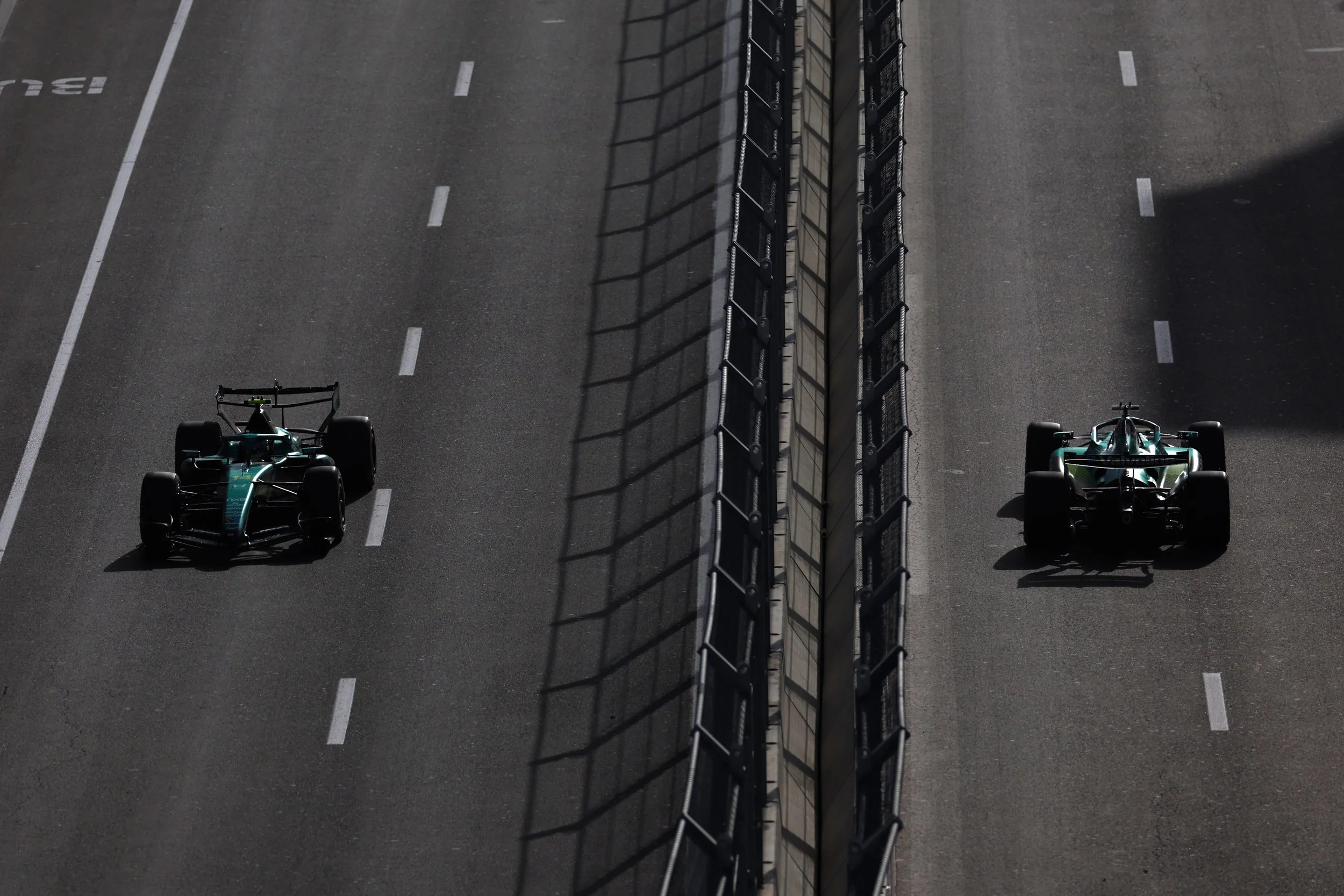
Image © Honda Motor Co. Ltd & Aston Martin Aramco. Used for editorial purposes.
Both drivers were already facing an uphill task after additional Honda power-unit components resulted in grid penalties. Alonso started 21st and Stroll 22nd, on a Baku circuit whose enormous straights were always likely to expose one of the weakest areas of the current Aston Martin package.
Stroll's race lasted only seven completed laps. A water-pressure problem prompted the team to tell him to stop the car, bringing his afternoon to an early conclusion. Alonso continued until lap 20, but a significant loss of speed on the straights eventually resulted in Aston Martin withdrawing his car as well. The team has been investigating the causes of both failures.
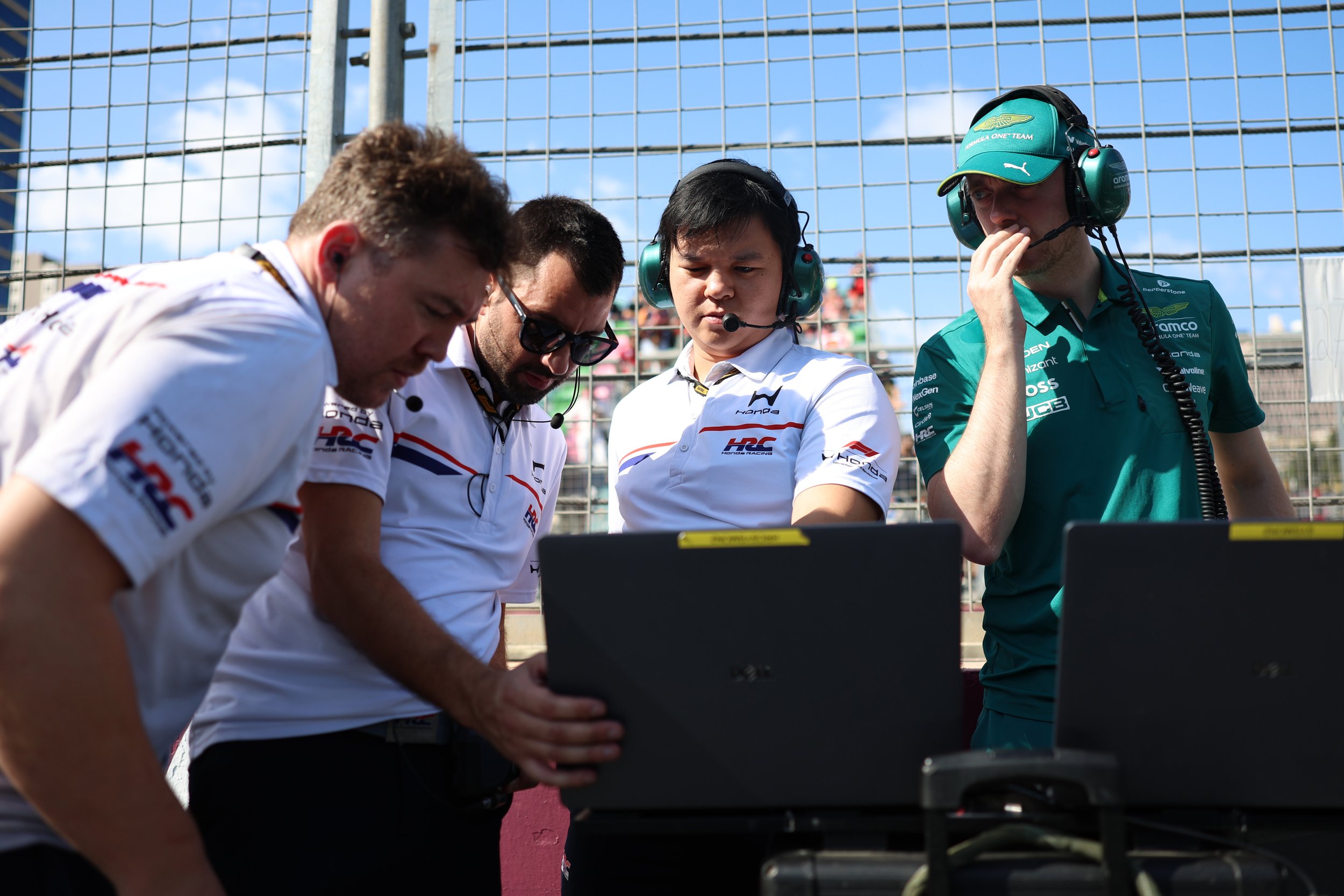
Image © Honda Motor Co. Ltd & Aston Martin Aramco. Used for editorial purposes.
It continues a frustrating sequence since Aston Martin appeared to turn an important corner during the summer. The substantial development package introduced in Hungary offered the first clear evidence that the AMR26 was moving in a better direction, before Alonso converted some of that progress into ninth place at Zandvoort. Since then, however, Monza exposed the car's straight-line limitations, Madrid was compromised by mechanical problems and race damage, and Baku has now delivered another double retirement.
Aston Martin therefore remains 10th in the Teams' Championship with just three points after 15 rounds, all scored by Alonso. With eight Grands Prix remaining, finding additional performance is only part of the challenge. Aston Martin also needs the AMR26 and Honda power unit to deliver the uninterrupted running required to understand whether its continuing development programme is actually closing the gap.
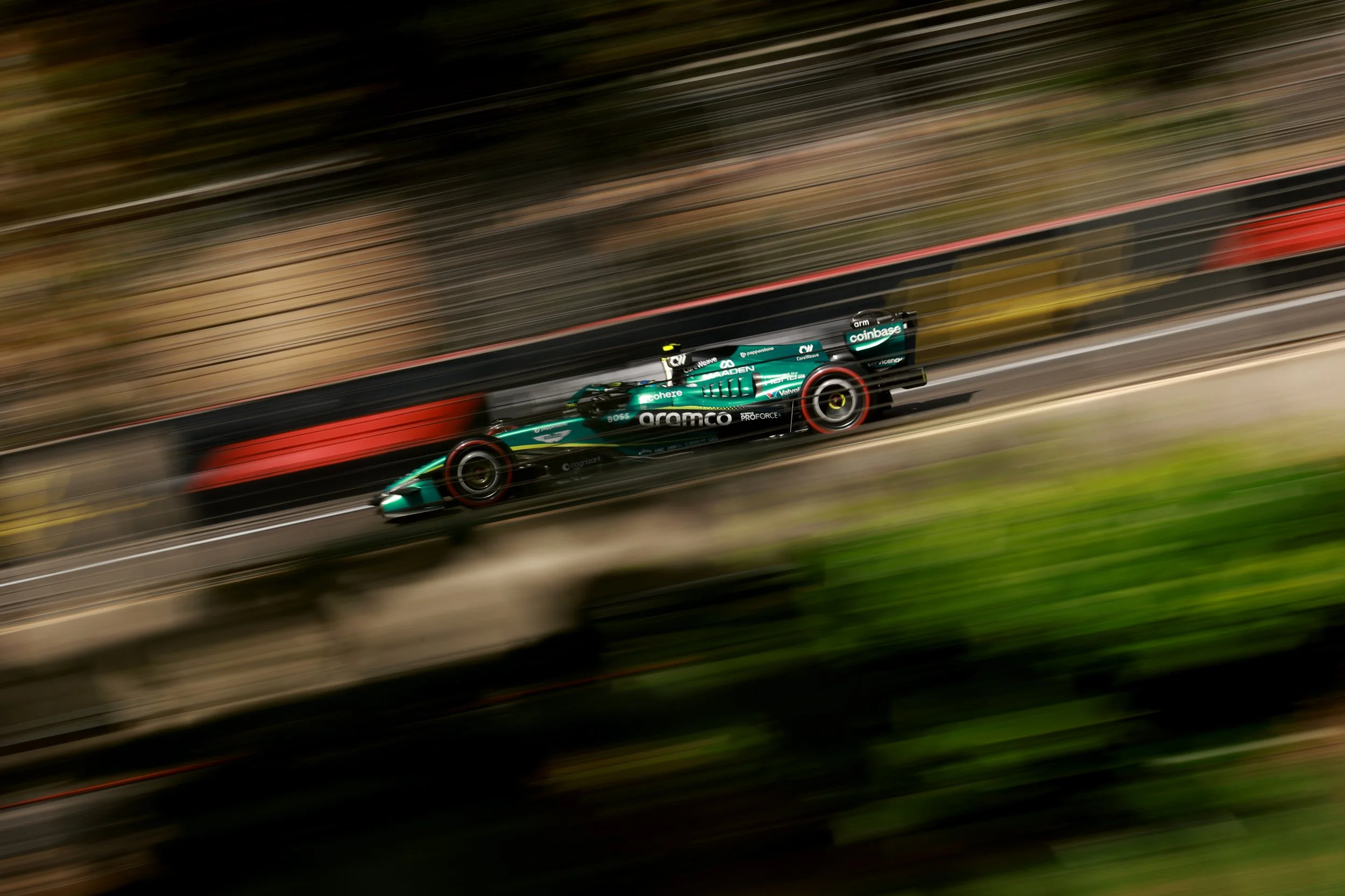
Image © Honda Motor Co. Ltd & Aston Martin Aramco. Used for editorial purposes.
There isn't long to wait for the next test. Formula One returns to Sepang this weekend for the rescheduled Bahrain Grand Prix in Malaysia, where long straights will once again examine Aston Martin's straight-line performance, while the circuit's faster corners should provide a rather different test of the revised chassis. The race starts at 08:00 BST on Sunday — just two hours after Issue 44 goes live.
For the complete Azerbaijan Grand Prix report, result and updated championship standings, visit the Formula 1 section of the FTP Motorsport Hub.
If Baku provided the frustration, however, elsewhere in the Aston Martin racing world there was considerably more reason for optimism.
WEC: Valkyrie Leads at Fuji as Vantage Returns to the Podium
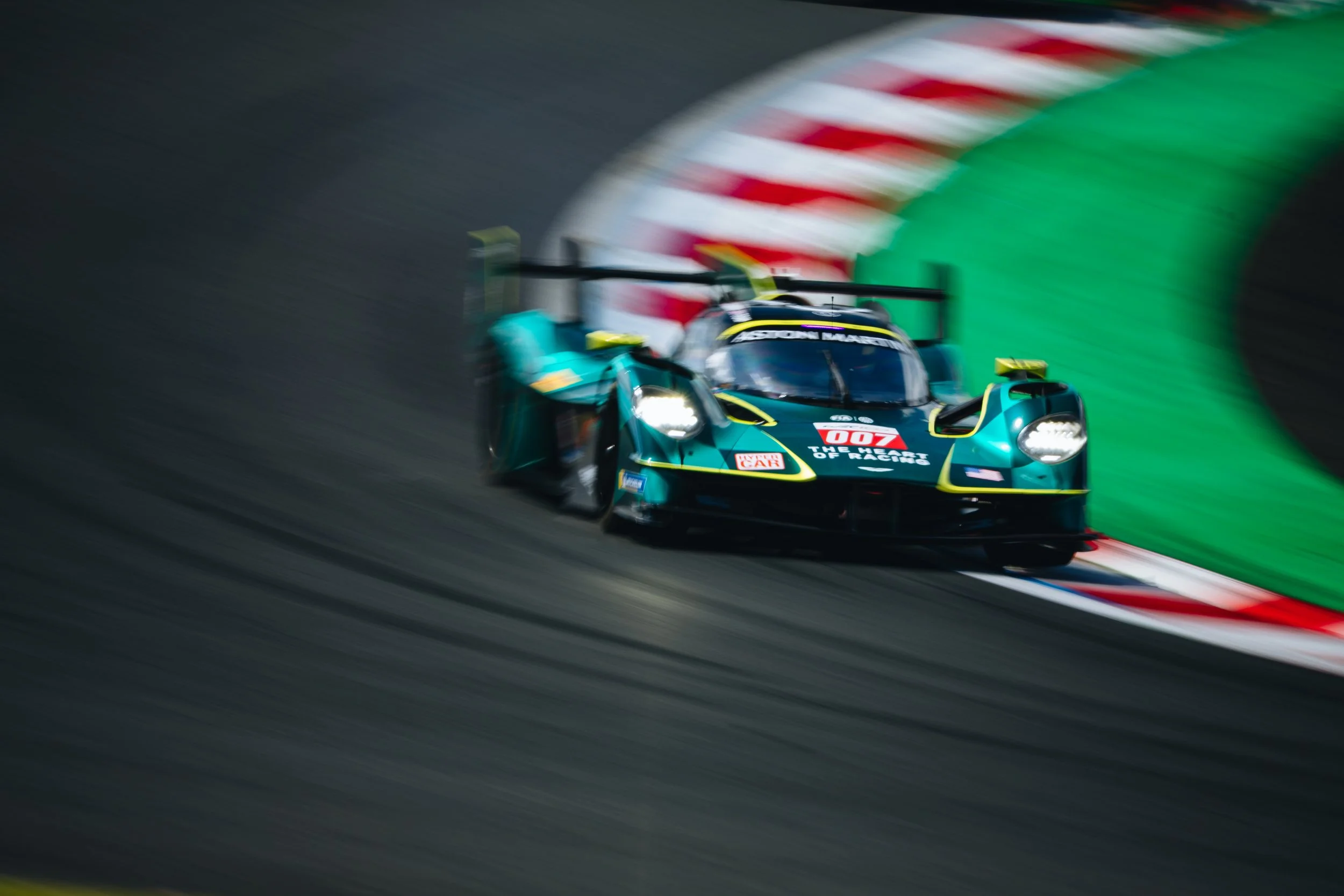
Image © Aston Martin Lagonda. Used for editorial purposes.
Aston Martin may have left Fuji without the result the #007 Valkyrie's performance deserved, but the sixth round of the FIA World Endurance Championship provided perhaps the clearest indication yet of just how far the Hypercar programme has progressed during 2026.
The starting order was instead established from practice times, with the #007 subsequently dropping from what would have been a front-row position to fourth following a two-place grid penalty arising from an incident involving Harry Tincknell and the #27 Heart of Racing Vantage during final practice.
The race itself produced a much more encouraging story. During the fourth hour, Tom Gamble emerged from the pits ahead of the previously dominant Alpines and put the #007 into the outright lead of the 6 Hours of Fuji. For a Valkyrie programme that began the season simply trying to establish itself among WEC's established Hypercar manufacturers, seeing an Aston Martin leading the field represented another significant step.
Unfortunately, the opportunity disappeared almost as quickly as it had arrived. A pit-entry infringement earned the #007 a drive-through penalty, dropping it to seventh and effectively ending its challenge for victory. It eventually finished 14th overall, one lap behind, while the sister #009 Valkyrie completed all 203 laps in ninth and added another two points to Aston Martin's Manufacturers' Championship tally.
If the Hypercar result was one of unrealised potential, Heart of Racing produced another remarkable afternoon in LMGT3. Ian James, Zacharie Robichon and Mattia Drudi brought the #27 Vantage home second in class, only 1.062 seconds behind the winning BMW, following their victory at COTA in the previous round.
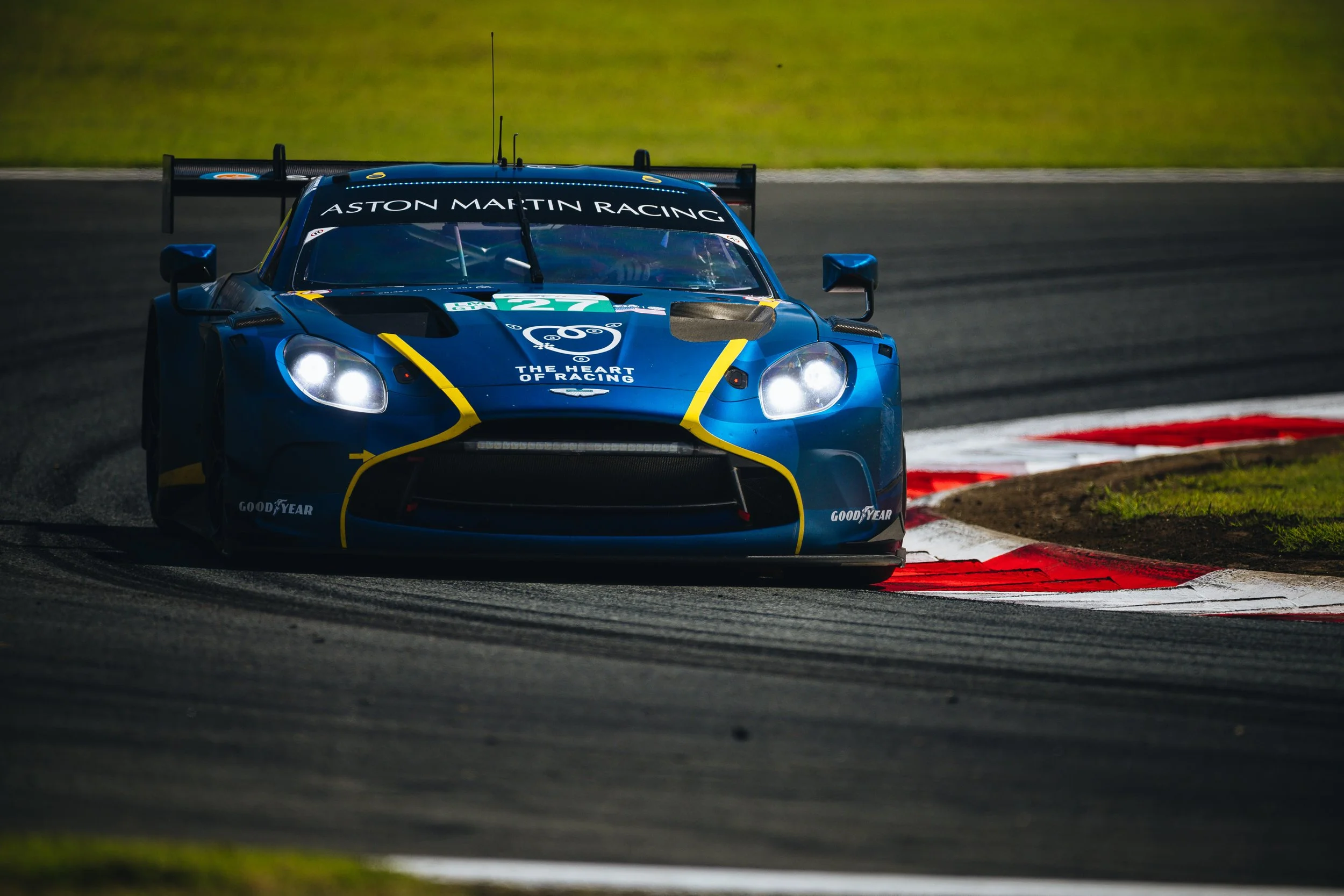
Image © Aston Martin Lagonda. Used for editorial purposes.
Its route to the podium was anything but straightforward. During the closing stages, Drudi's Aston Martin made contact with Finn Gehrsitz's #58 Garage 59 McLaren while the pair were fighting for position. The McLaren hit the barriers heavily, triggering a Safety Car, but Gehrsitz was unhurt. After reviewing the incident and speaking to both drivers, the stewards concluded that neither could be considered predominantly responsible and took no further action.
Drudi also had to contend with a left-rear puncture, but the final strategy call proved crucial. Heart of Racing fitted three fresh tyres at its final fuel stop while several rivals remained on used rubber. When racing resumed for the final 20 minutes, Drudi charged through from eighth to second, falling just over a second short of victory.
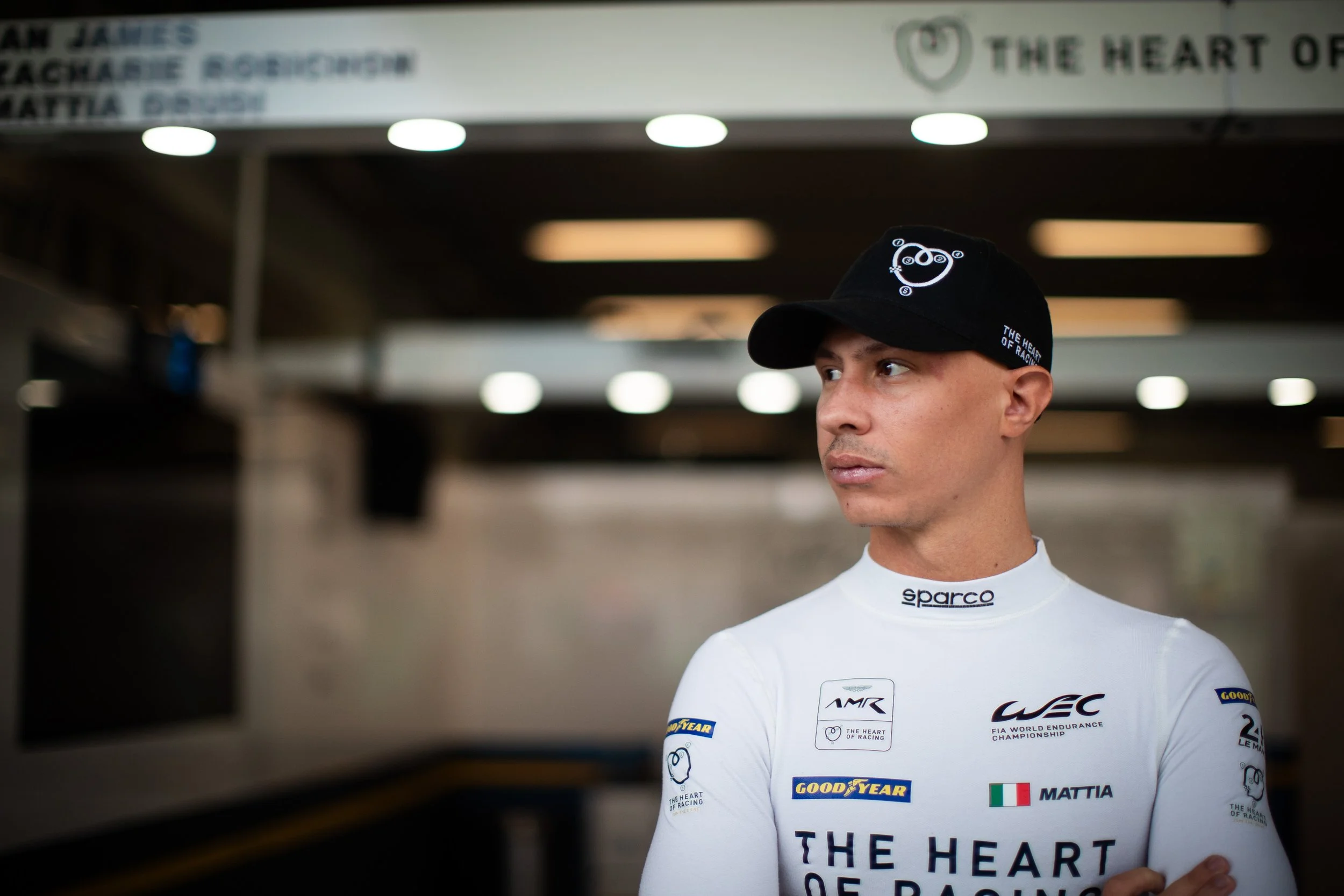
Image © Aston Martin Lagonda. Used for editorial purposes. Mattia Drudi.
The result has transformed the #27's championship position. Heart of Racing now sits second in the LMGT3 Teams' Championship on 62 points, while James, Robichon and Drudi are fourth in the Drivers' Trophy. With two rounds remaining, Aston Martin has a genuine LMGT3 championship challenge to carry into the closing stages of the season.
Fuji therefore leaves two rather different results carrying the same underlying message. Heart of Racing has now followed victory at COTA with another podium, while the Valkyrie has progressed from scoring its first points at Imola, to fourth at Spa and COTA, to actually leading a WEC race at Fuji.
For the complete Fuji race report, Aston Martin results and updated championship standings, visit the FIA World Endurance Championship section of the FTP Motorsport Hub.
British GT: Aston Martin Takes the Honours in a Thrilling Finale

Image © Aston Martin Lagonda. Used for editorial purposes.
If Fuji demonstrated the progress being made by Aston Martin on the world stage, the British GT Championship provided something altogether more tangible at Brands Hatch: two championships, an Aston Martin one-two in the GT4 Teams' standings and a title fight that went all the way to the final corner of the season.
Daniel Lavery and Aston Martin stalwart Darren Turner arrived with the GT4 Pro-Am Championship already secured for Grange Racing with FSR, but the overall GT4 crown remained undecided. On the other side of the Aston Martin battle, Jessica Hawkins and Will Orton were still very much in contention aboard MK Racing's #21 Vantage AMR GT4 Evo.
The race victory itself went to George Gamble and Josh Stanton's Optimum Motorsport McLaren, but behind them the championship fight became increasingly tense. Turner found himself defending second place from Orton during the closing stages, with the two Aston Martin crews effectively fighting each other for the overall title. It eventually came down to the final lap.
Orton launched one last attack as the two Vantages approached the chequered flag, briefly putting wheels onto the grass as he tried to find a way past. Turner held the position and the two Aston Martins crossed the line separated by just 0.250 seconds. Lavery and Turner finished second in GT4, Hawkins and Orton third.
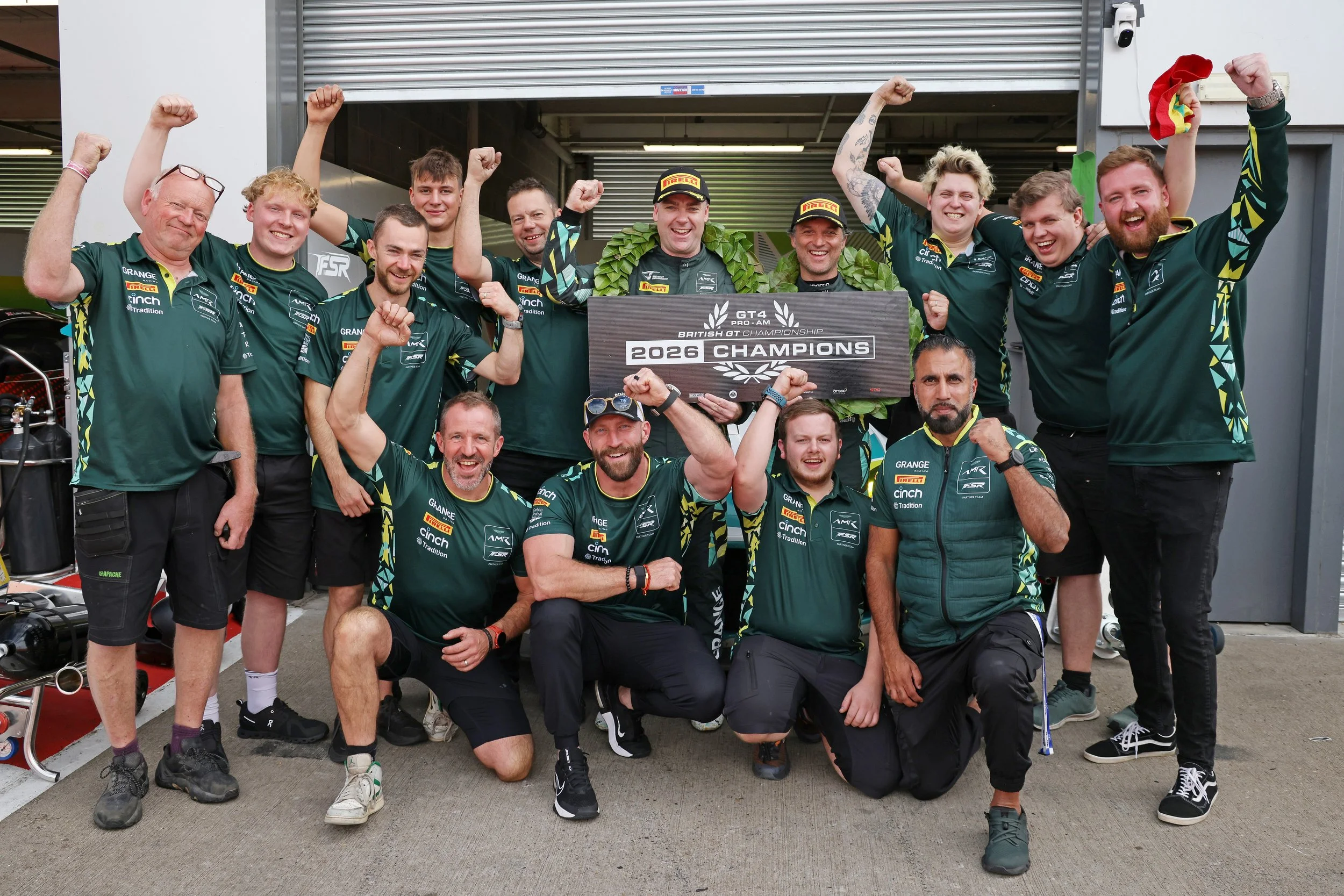
Image © Aston Martin Lagonda. Used for editorial purposes.
Remarkably, both crews therefore completed the season on exactly 143.5 points. Lavery and Turner secured the overall British GT4 Drivers' Championship on countback, adding it to the Pro-Am crown they had already won at Donington. Hawkins and Orton may have missed the overall title by the smallest of margins, but their season was rewarded with the GT4 Silver Cup Championship.
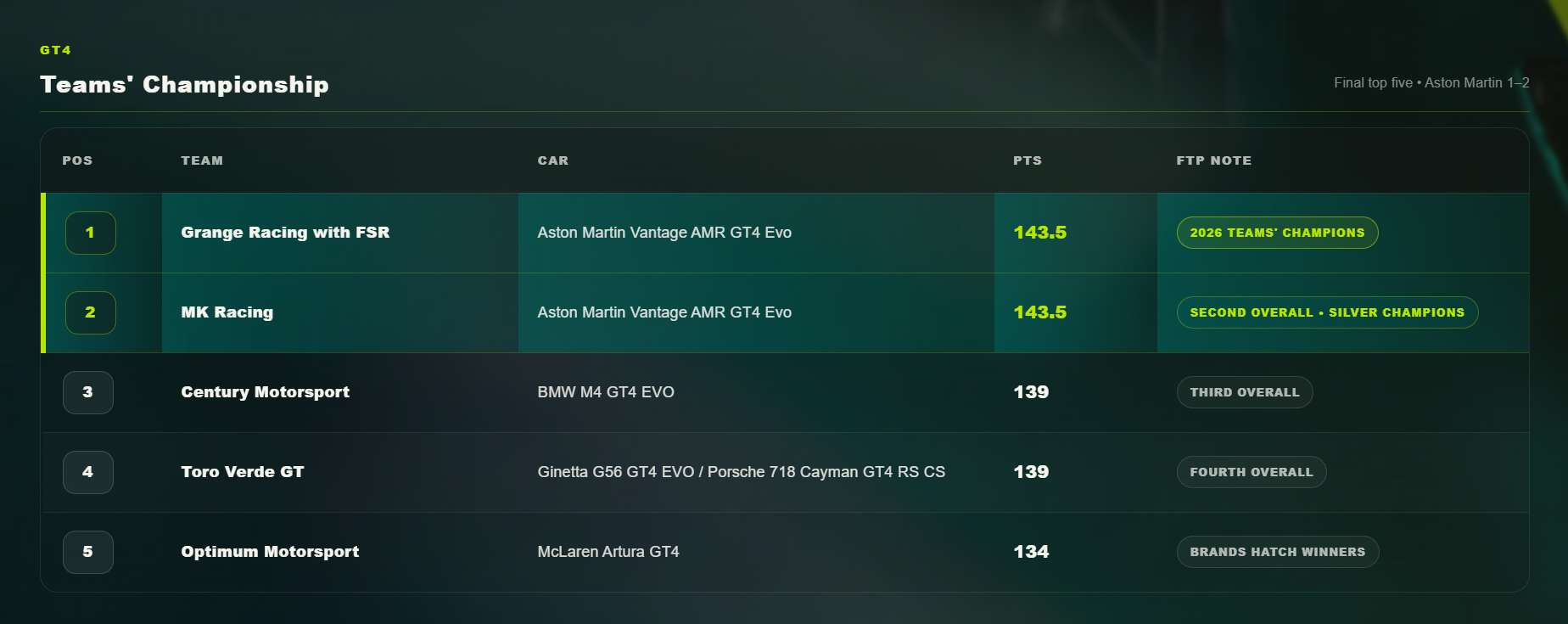
Image © Fuel the Passion
For Aston Martin, the final championship tables make particularly satisfying reading. Grange Racing with FSR and MK Racing finished first and second respectively in the GT4 Teams' Championship, both on 143.5 points, completing an Aston Martin one-two.
It brings together two Aston Martin stories FTP has been following for much of 2026. Back in Issue 26, Hawkins and Orton had already accumulated three second places from the opening three races, while Lavery and Turner took victory at Oulton Park. By Snetterton, the MK Racing pairing had moved into the overall championship lead, while Lavery and Turner's sequence of Pro-Am victories was steadily turning their campaign into an overall title challenge.
There was a final Aston Martin story in GT3 too. Andrew Howard and Ross Gunn brought the #7 Beechdean Motorsport Vantage AMR GT3 Evo home fifth at Brands Hatch, leaving the pairing fifth in the final GT3 Drivers' Championship standings on 110 points. It was also Howard's 157th and final British GT start, bringing a significant chapter of his racing career to a close.
But the defining Aston Martin image from Brands Hatch belongs to GT4: two Vantage AMR GT4 Evos racing one another virtually to the line, their crews ending a season-long championship battle tied on points, with Lavery and Turner crowned overall champions and Hawkins and Orton crowned Silver champions.
If you haven’t seen the race, can I encourage you to watch this 6-minute 23-second film showing the final laps between the two Aston Martin Vantage GT4s. How close were they!?
For a season in which Aston Martin's results across the different levels of motorsport have often told very different stories, British GT ends with something worth celebrating.
For the complete Brands Hatch race report, final classifications and championship standings, visit the British GT section of the FTP Motorsport Hub.
British GT wasn't the only championship providing Aston Martin with something to celebrate last weekend. Over at Monza, another Vantage was busy turning a strong season into a potentially championship-winning one.
International GT Open: Blackthorn Wins at Monza and Takes the Championship Lead
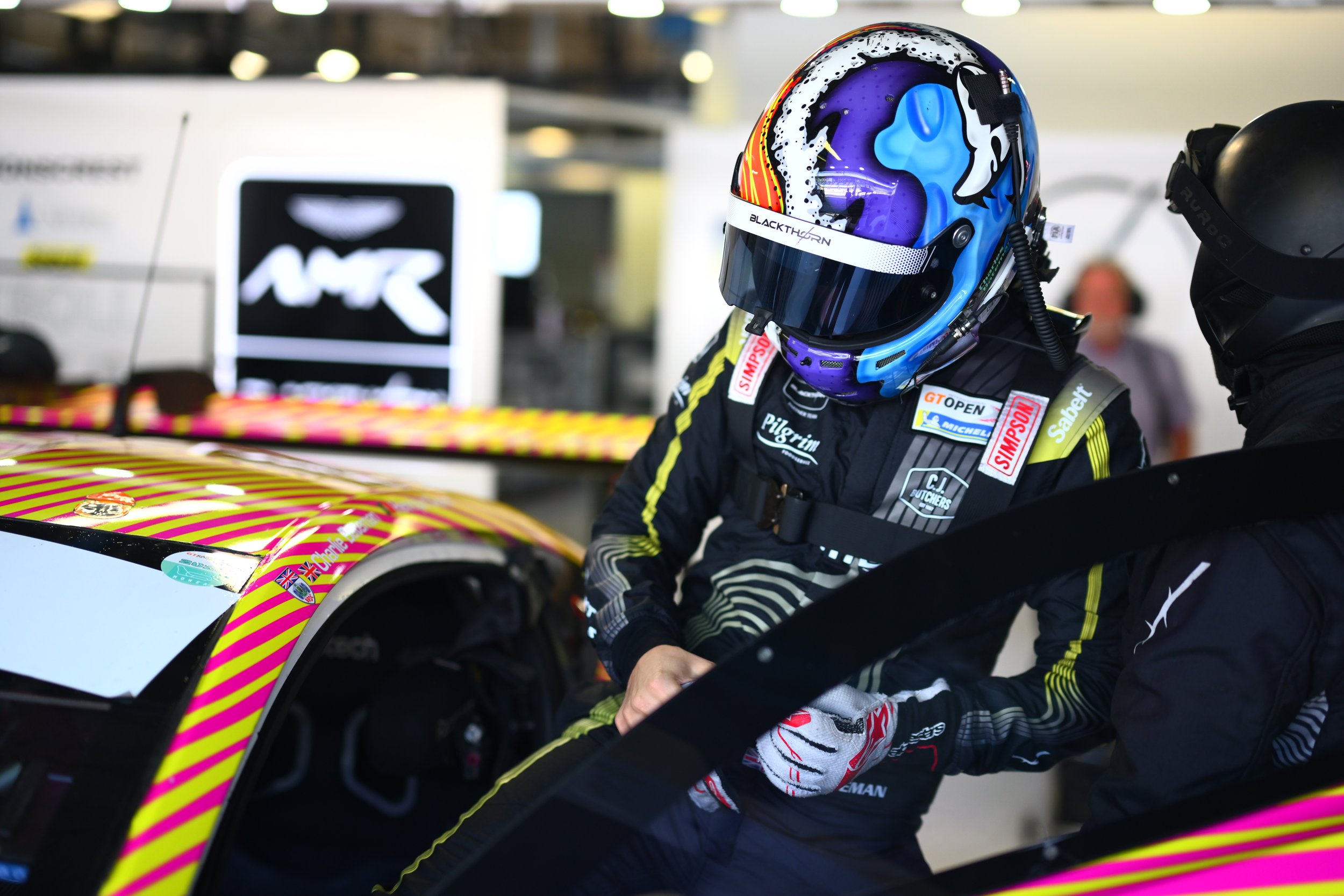
Image © Fotospeedy & Blackthorn Racing. Used for editorial purposes. Charles Bateman entering his Aston Martin Vantage GT3 at Monza 2026.
Blackthorn Racing's remarkable International GT Open campaign took another major step forward at Monza, where Charles Bateman and Henrique Chaves converted Pro-Am pole position into victory in the GT Open 500 and, crucially, moved Bateman into the championship lead with just one round remaining.
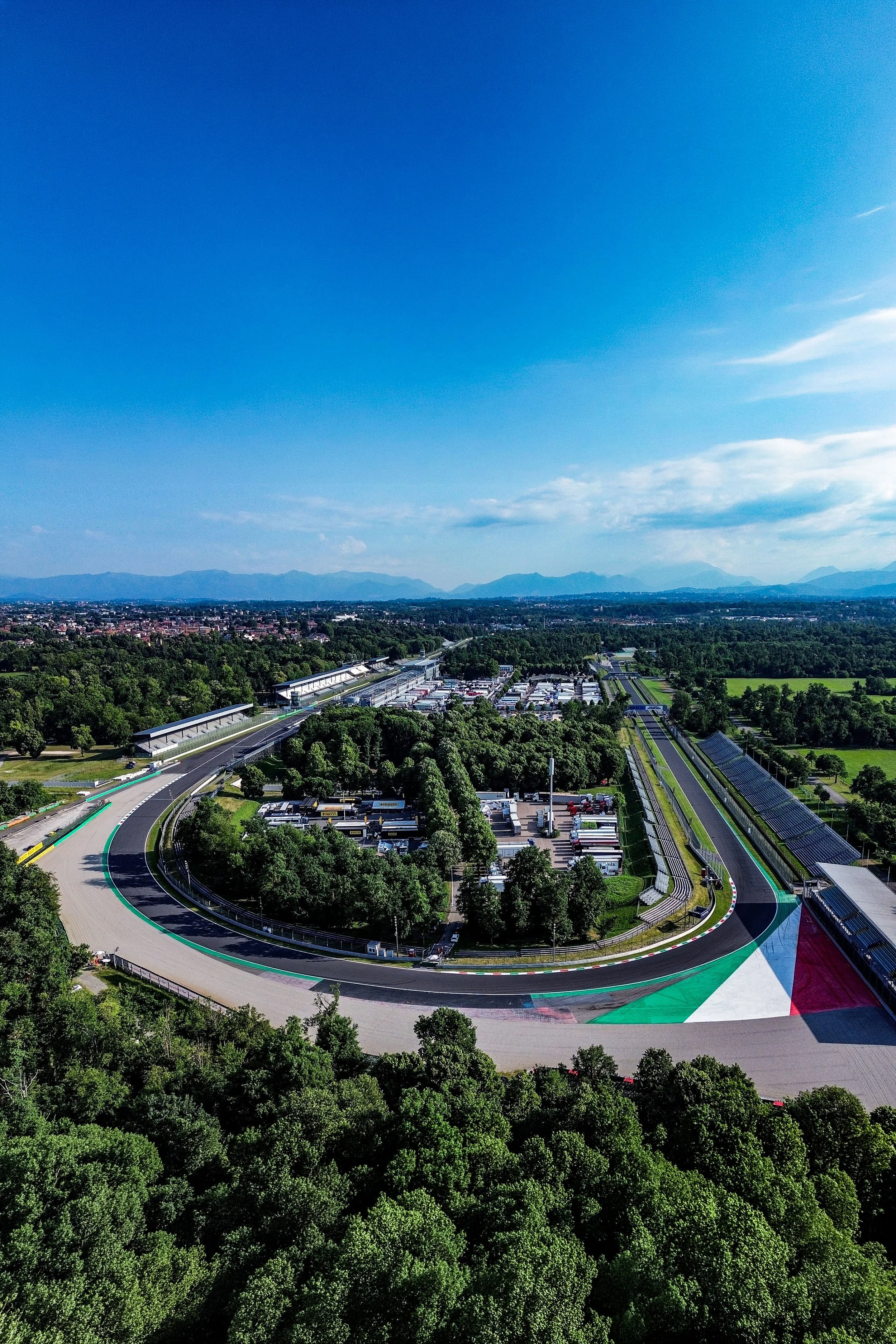
Image © Fotospeedy & Blackthorn Racing. Used for editorial purposes. Monza Circuit.
The significance of the weekend was clear before the race began. Monza's 500-kilometre endurance format carried double championship points, and Bateman arrived in Italy four points behind Pro-Am leader Alexander Fach. Blackthorn therefore needed more than another demonstration of the #97 Aston Martin Vantage GT3 Evo's speed. This was a weekend when performance needed to become a result.
Bateman and Chaves provided the ideal start by securing Pro-Am pole and ninth overall among a 33-car field. Once the race began, however, there was little straightforward about converting that advantage. Three Safety Car periods repeatedly reshaped the contest, while a mid-race excursion temporarily dropped Blackthorn from the class lead and outside the Pro-Am podium positions.
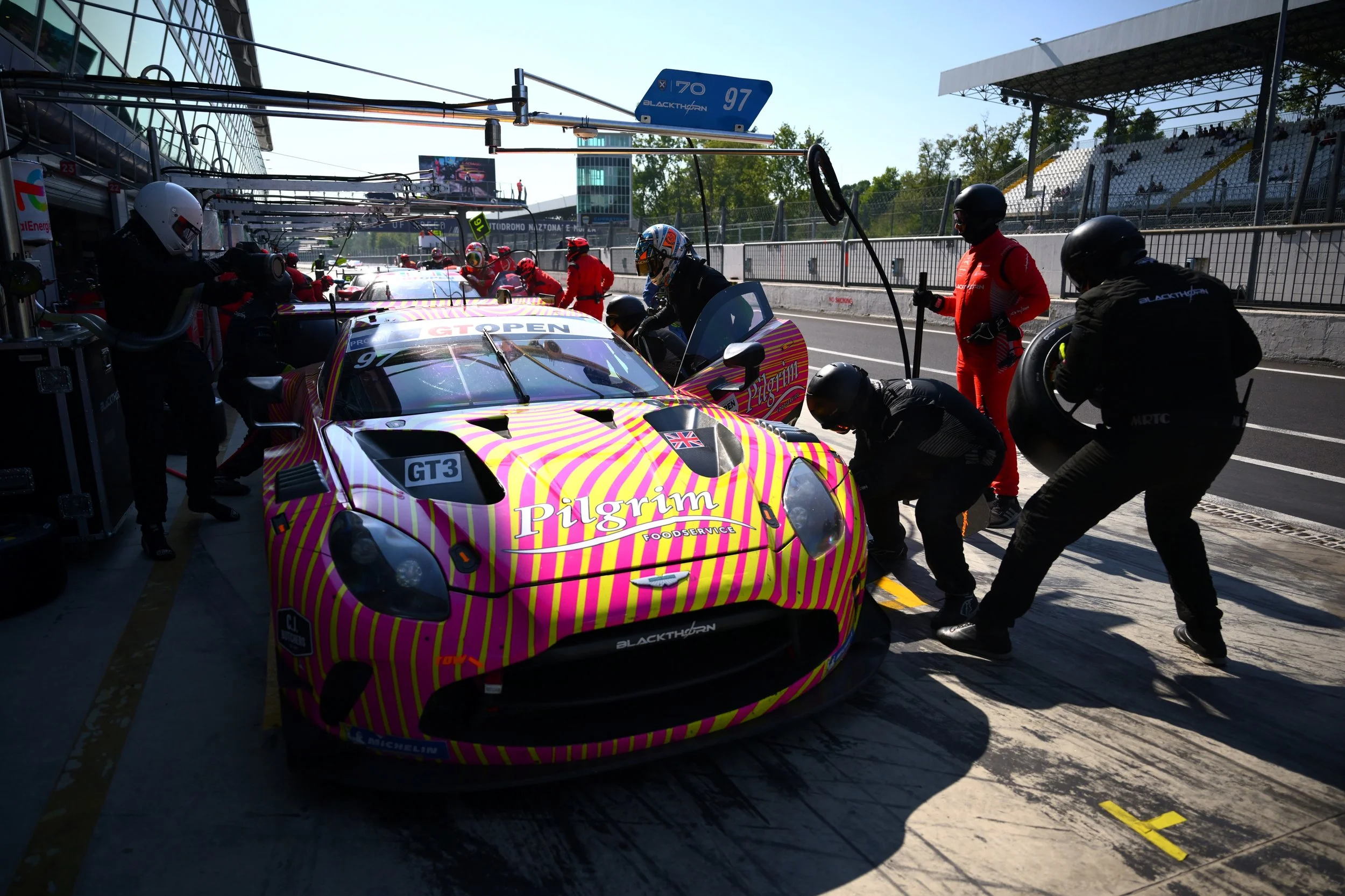
Image © Fotospeedy & Blackthorn Racing. Used for editorial purposes.
Rather than allowing that setback to define the afternoon, Blackthorn recovered. The #97 remained in contention through the final pit-stop cycle before Chaves brought the Aston Martin home eighth overall and first in Pro-Am, completing 87 laps and delivering Bateman's fourth class victory of the season.
That eighth-place overall finish is worth putting into context. Blackthorn is competing as a Pro-Am entry, yet throughout 2026 the Vantage has repeatedly mixed with the championship's fully professional cars. Jonny Adam put it on outright pole at Paul Ricard, qualified third overall at Hockenheim and, at Monza, Bateman and Chaves once again placed the Aston Martin comfortably inside the overall top ten. The class victories are increasingly being accompanied by evidence of genuine outright pace.
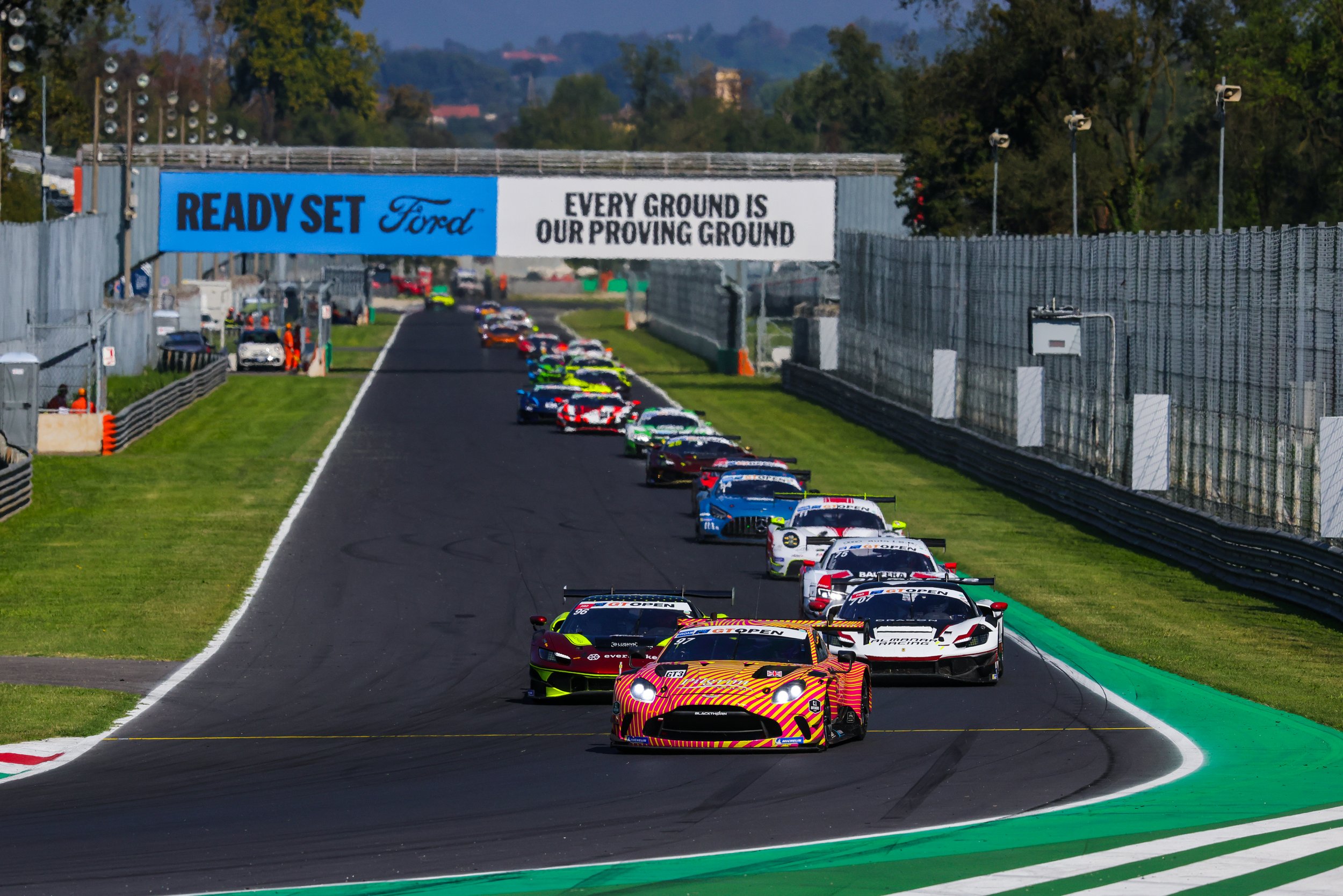
Image © Fotospeedy & Blackthorn Racing. Used for editorial purposes. Blackthorn leading the pack at Monza.
Most importantly, Monza has transformed the championship. Bateman arrived four points behind Fach but leaves with 88 points and an eight-point advantage, Fach now sitting second on 80. What had been a championship chase has therefore become a championship lead, with only the two Barcelona sprint races remaining.
There was further Aston Martin success at Monza too. Piotr Wira and Denis Waszek brought Good Speed Racing's #14 Vantage GT3 Evo home third in the Am class, putting Aston Martin machinery on two class podiums during the weekend.
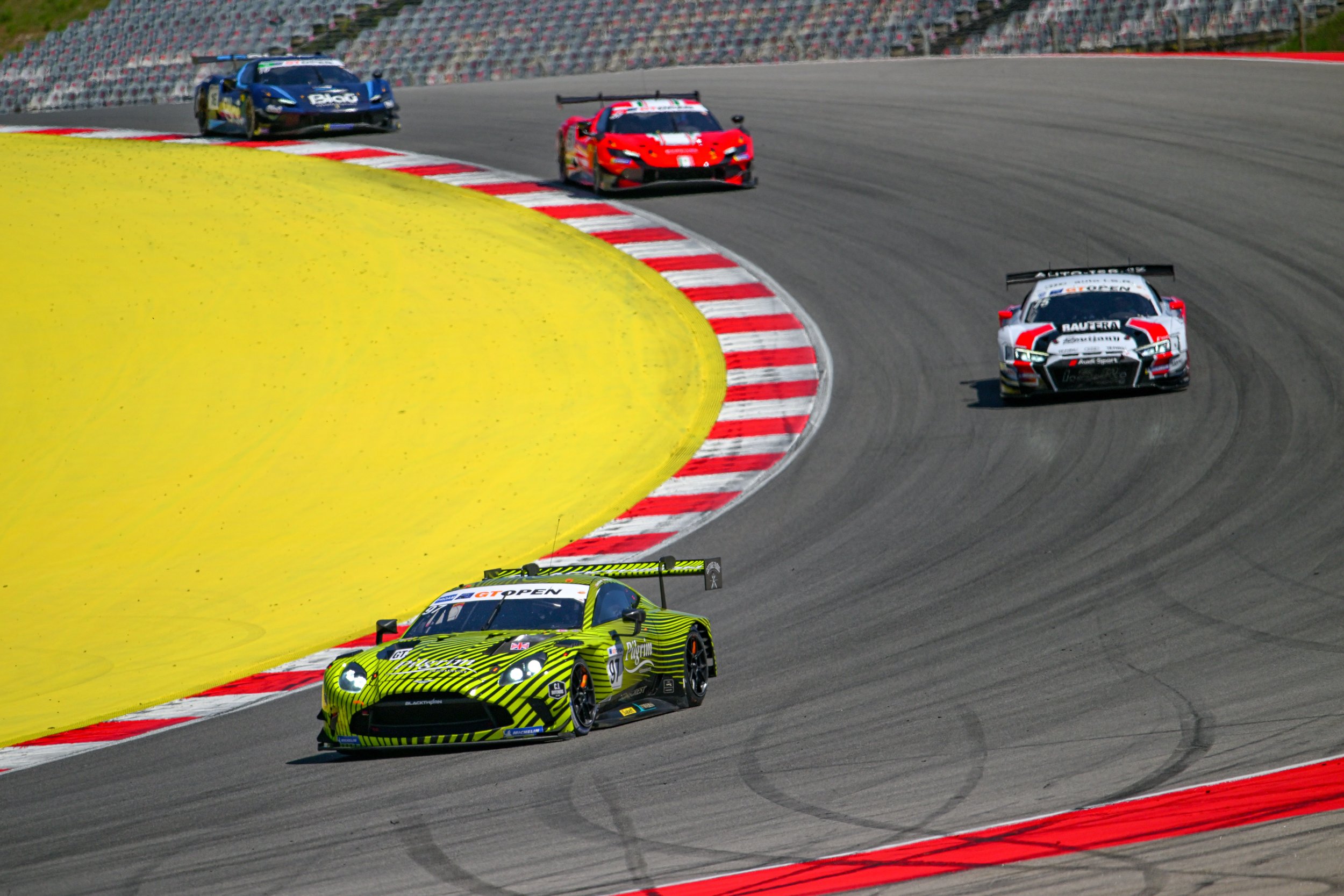
Image © Fotospeedy & Blackthorn Racing. Used for editorial purposes. Blackthorn drives to victory at Portimão earlier in the season.
Blackthorn's season is developing into quite a story. Victory at Portimão was followed by second at the Spa 500, before Paul Ricard produced an extraordinary weekend of outright pole position and two Pro-Am victories. Hockenheim demonstrated the car's speed without delivering the same silverware, but Monza has now produced perhaps the most important result of all.
Four Pro-Am victories, repeated performances among the fastest cars in the field and now the championship lead.
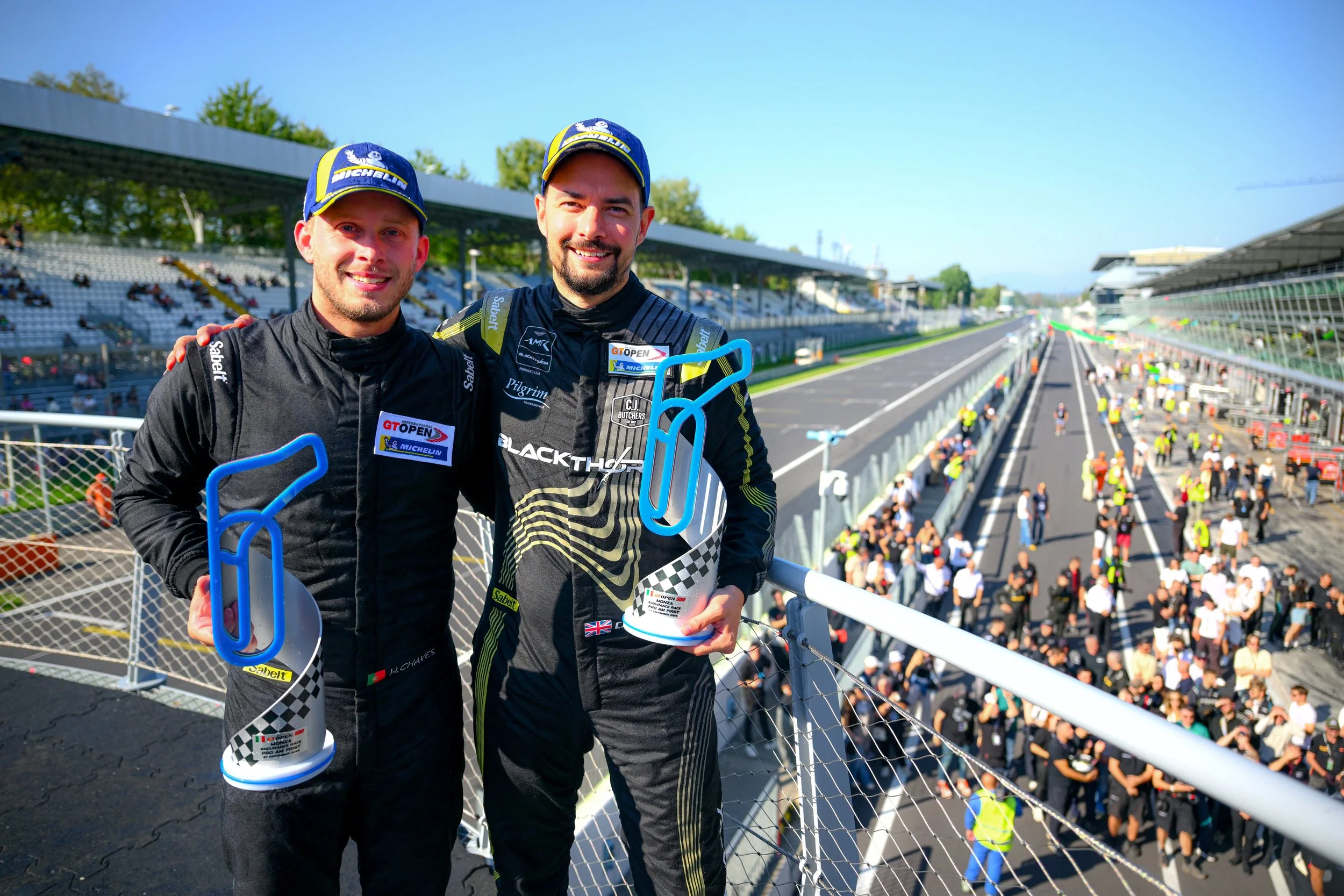
Image © Fotospeedy & Blackthorn Racing. Used for editorial purposes. Charles Bateman and Henrique Chaves celebrating victory at Monza.
Blackthorn heads to Barcelona with the advantage — but the job isn't finished. The International GT Open finale on 23rd – 25th October will decide whether this increasingly impressive campaign can end with Charles Bateman and the #97 Aston Martin Vantage GT3 Evo as Pro-Am champions.
There will be a particularly personal dimension to that finale for Fuel the Passion. Having already spent a race weekend embedded with Blackthorn Racing at Silverstone, FTP will be with the team again in Barcelona, following the final round of the International GT Open up close and seeing first-hand whether this remarkable season can end with a championship. What an extraordinary time to be following the team, and what a privilege it will be to experience the deciding weekend from inside it.
For the full Monza GT Open 500 race report, Aston Martin results and latest championship standings, visit the International GT Open section of the FTP Motorsport Hub.
Affiliate link note: Some links may be affiliate links, which means Fuel the Passion may earn a small commission if you purchase through them, at no extra cost to you. Thank you for your support.
This Weekend in Aston Martin Motorsport: Three Championships, One Very Busy Weekend
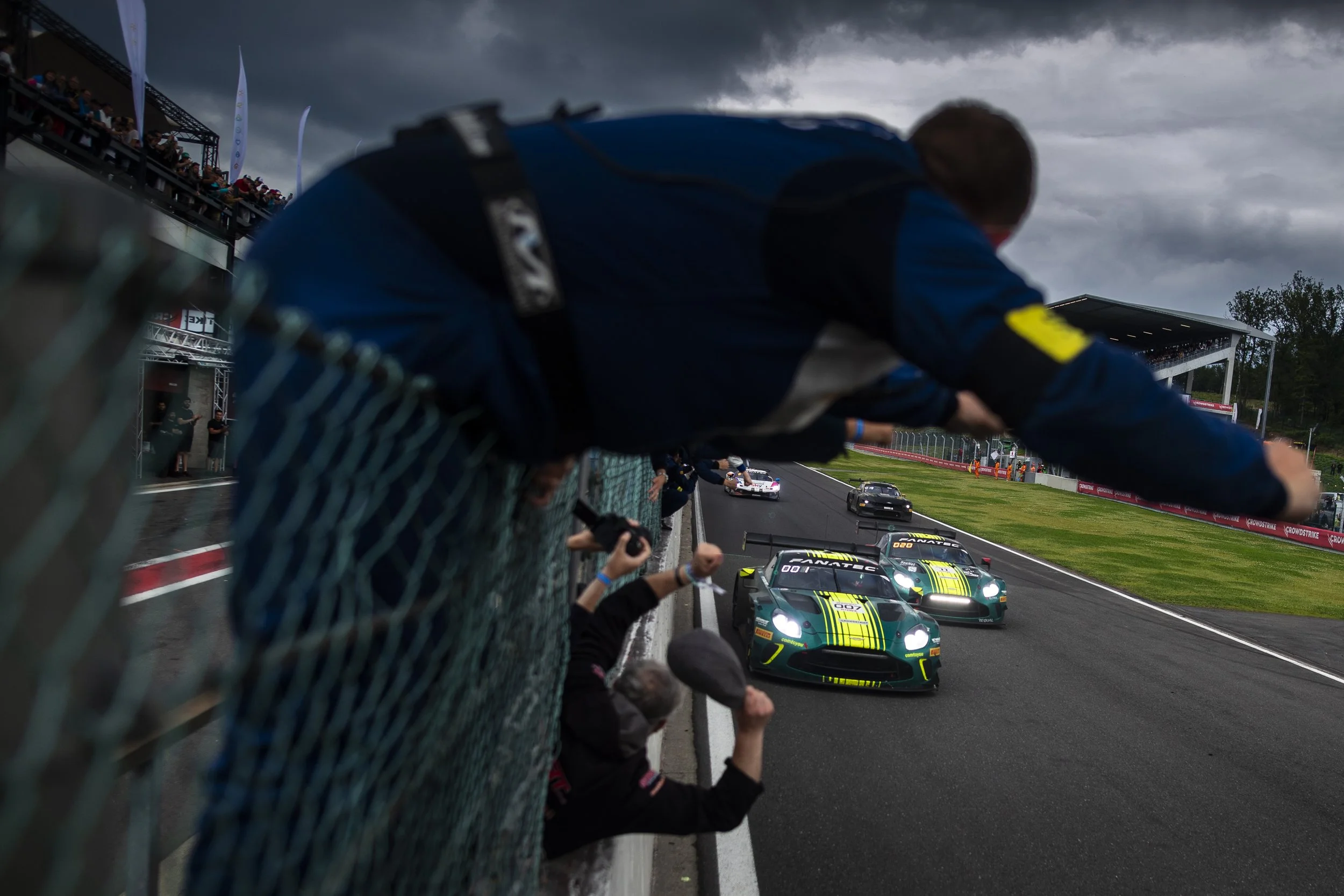
Image © Aston Martin Lagonda. Used for editorial purposes.
There’s little opportunity for Aston Martin motorsport followers to catch their breath. After a weekend that delivered championship success in British GT, another International GT Open victory for Blackthorn Racing and further encouraging performances from both Valkyrie and Vantage in the FIA World Endurance Championship, attention now turns to another packed weekend of racing.
From Barcelona to Road Atlanta and Sepang, Aston Martin machinery will be competing across three very different championships.
GT World Challenge Europe — Barcelona
The GT World Challenge Europe Sprint Cup reaches its conclusion at the Circuit de Barcelona-Catalunya, with two races across Saturday and Sunday and a substantial Aston Martin presence among a 44-car field. The championship itself remains remarkably open, with eight drivers still in contention for the overall Sprint Cup title.
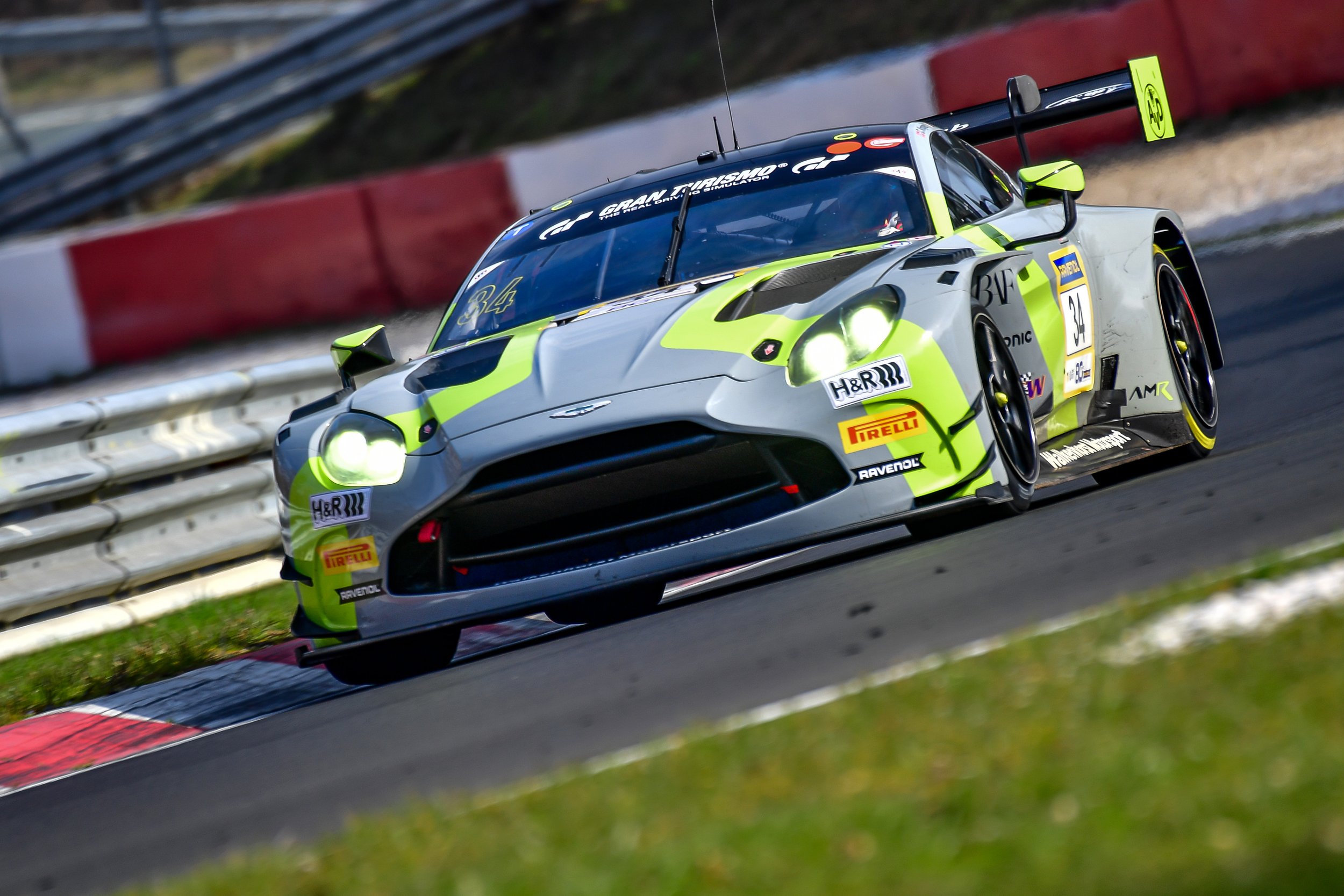
Image © Aston Martin Lagonda. Used for editorial purposes. Walkenhorst Aston Martin Vantage GT3 in action.
Five Vantage AMR GT3 Evos are entered. Comtoyou Racing fields the #7 for Nicki Thiim and Kobe Pauwels in the Pro class, alongside the #11 of Felice Jelmini and Marcelo Tomasoni in Bronze and the #21 of Arthur Dorison and Oliver Söderström in Silver.
Walkenhorst Motorsport adds two further Silver entries with the #34 of Jamie Day and Mateo Villagomez and the #35 of Gaspard Simon and Maxime Robin.
There’s already been plenty of evidence this season that the Vantage can perform at this level. Comtoyou won the opening Endurance Cup race at Paul Ricard, while Aston Martin returned to the top step at the Nürburgring. Barcelona now provides two final opportunities for the Sprint Cup crews to add to Aston Martin's 2026 GT World Challenge campaign.
Race 1 takes place on Saturday afternoon, with Race 2 completing the Sprint Cup season on Sunday.
IMSA — Valkyrie Returns to Road Atlanta for Petit Le Mans
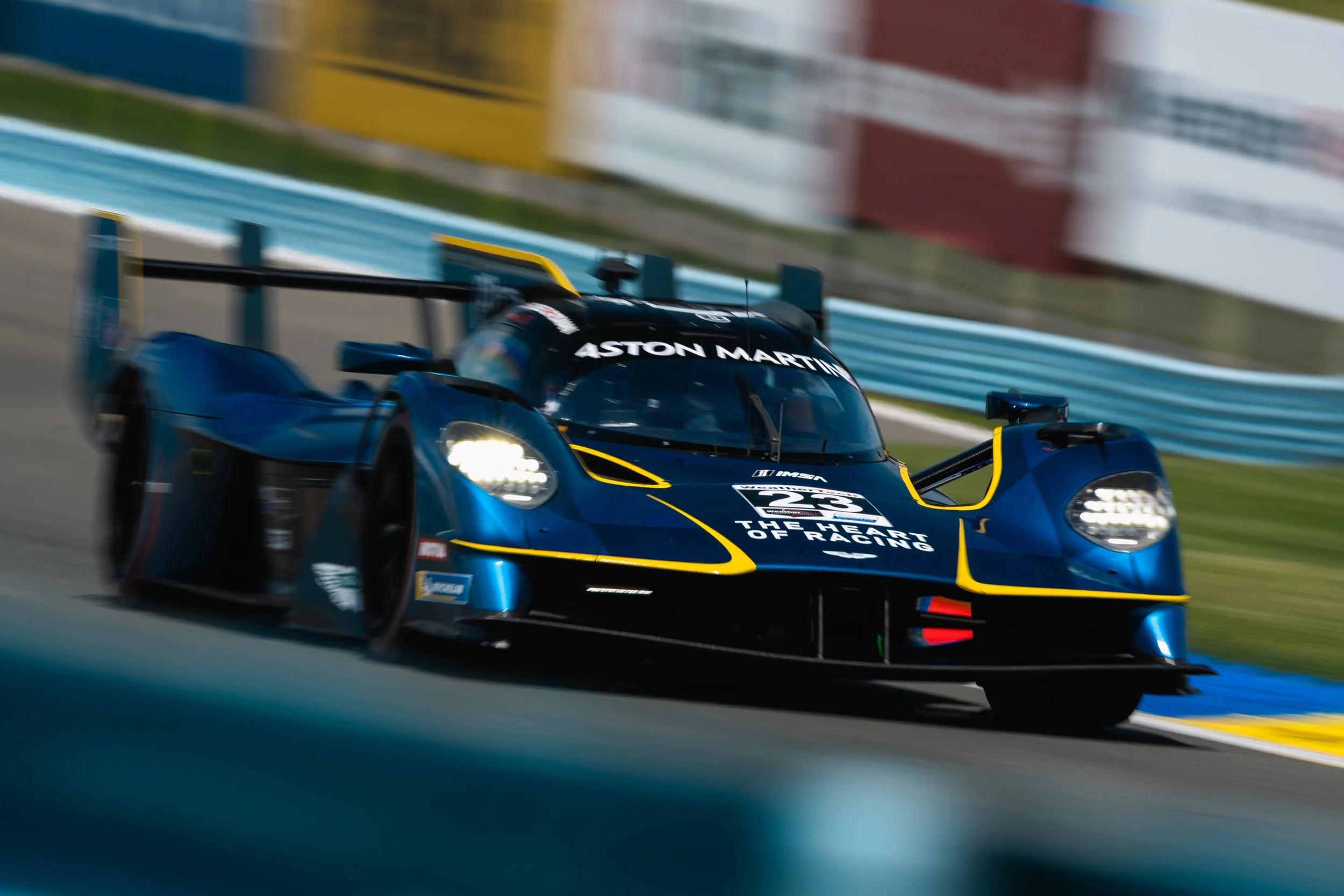
Image © Aston Martin Lagonda. Used for editorial purposes.
Across the Atlantic, one of the biggest endurance races of the year brings the IMSA WeatherTech SportsCar Championship season to a close.
The Motul Petit Le Mans at Michelin Raceway Road Atlanta is a ten-hour contest and another opportunity to measure just how far the Aston Martin Valkyrie programme has progressed.
There is a particularly appealing sense of continuity surrounding this race. Road Atlanta was where Valkyrie achieved its first global racing podium in 2025, finishing second at Petit Le Mans. One year later, it returns as a considerably more developed racing car and following an encouraging run of performances on both sides of the Atlantic.
For FTP readers who have watched that development throughout 2026, this will therefore be much more than another entry on the calendar. The question is whether the increasingly competitive pace we've been seeing can finally be converted into another major result.
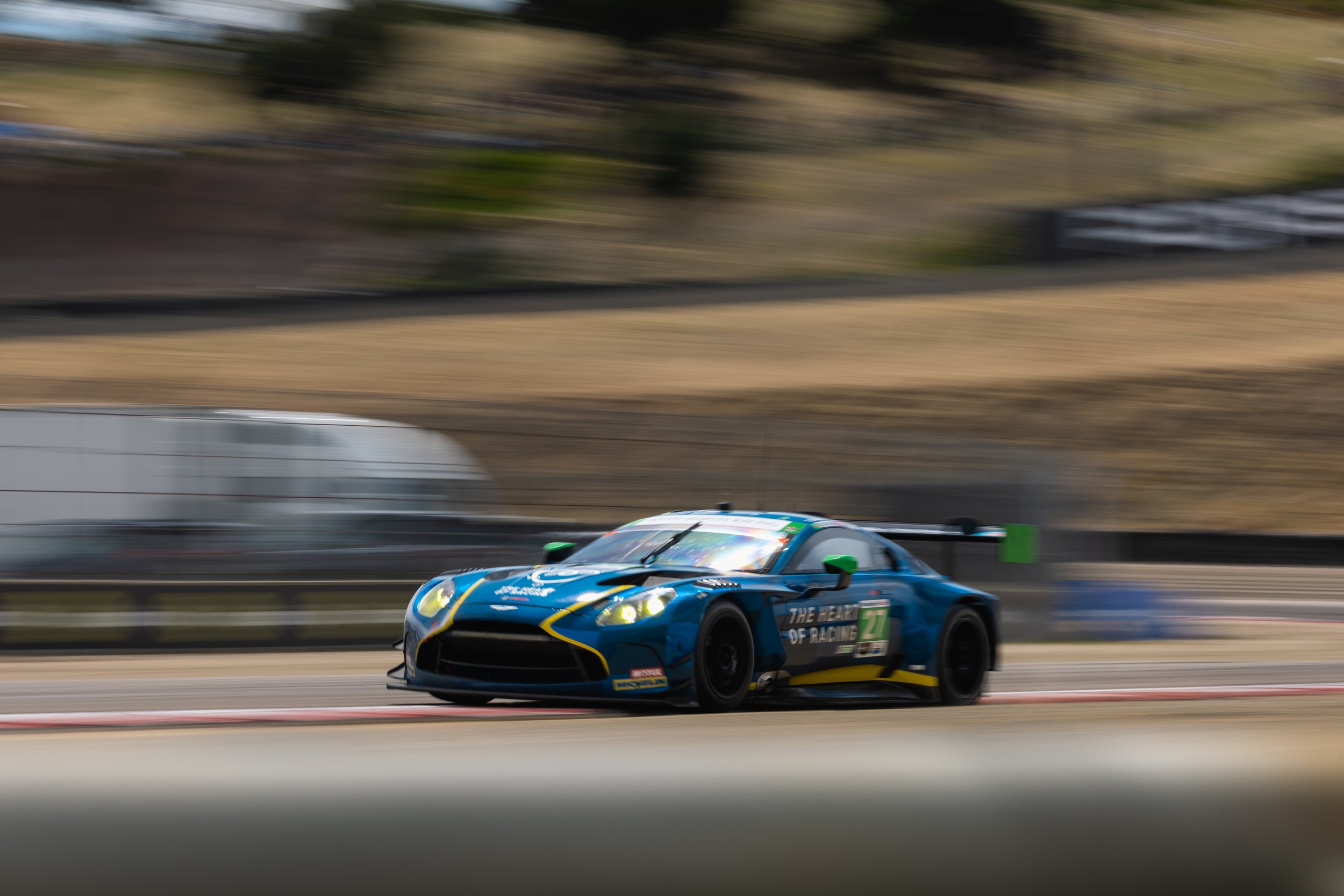
Image © Aston Martin Lagonda. Used for editorial purposes.
Aston Martin's GT3 programme gives us another car to follow too, with Vantage machinery competing in GTD PRO. From the purpose-built Valkyrie at the front of the field to the production-based Vantage GT3, Petit Le Mans provides another opportunity to see two very different sides of Aston Martin's endurance-racing programme on the same circuit.
With ten hours of racing ahead, strategy, traffic, reliability and simply surviving Road Atlanta into darkness will all play their part.
Formula 1 — An Unexpected Return to Sepang
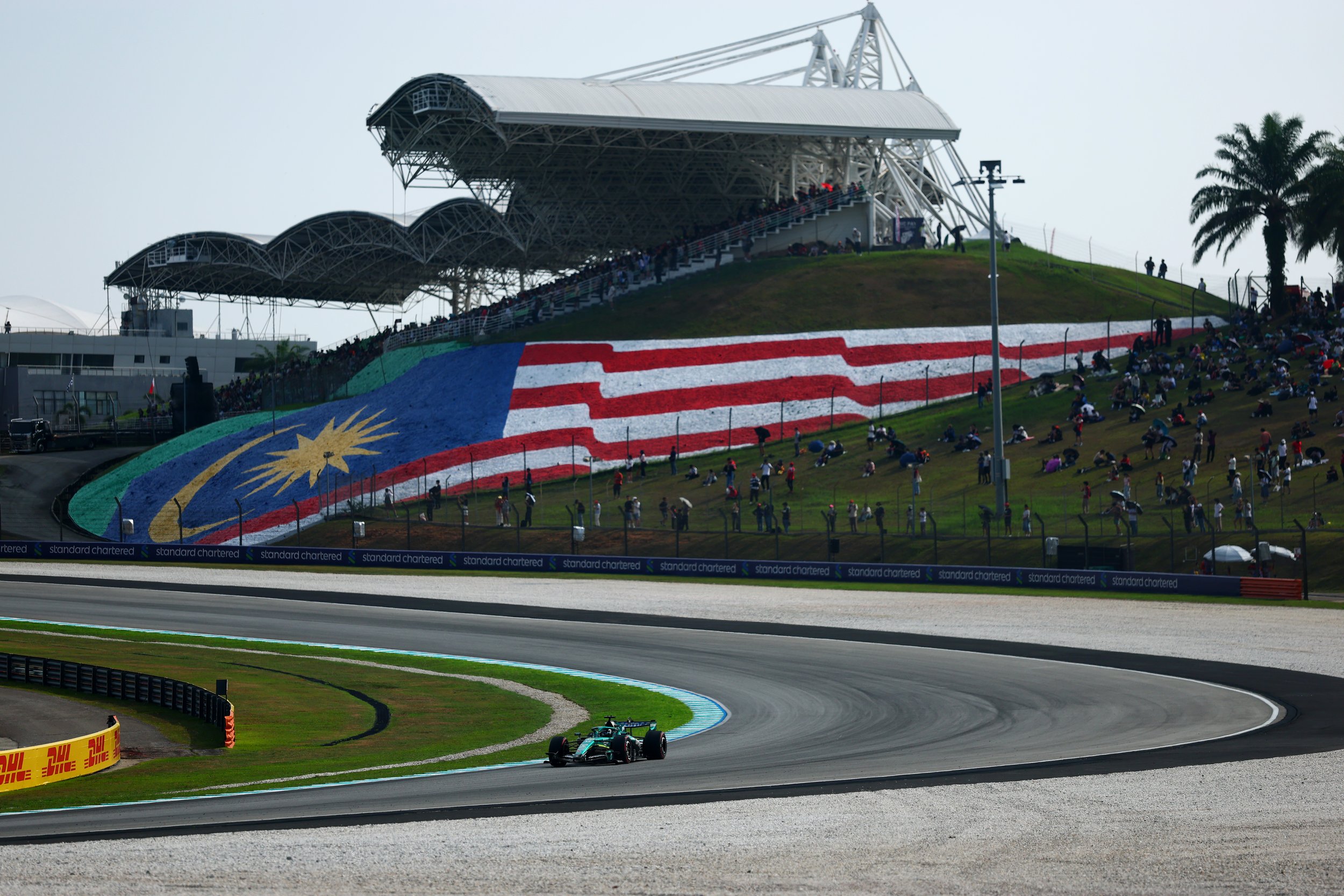
Image © Honda Motor Co. Ltd & Aston Martin Aramco. Used for editorial purposes. Bahrain Grand Prix in Malaysia
Finally, Formula One returns to a circuit many thought had disappeared from the Grand Prix calendar.
The Bahrain Grand Prix in Malaysia takes place at Sepang International Circuit after the original Bahrain event was postponed earlier in the season. Formula One, the FIA and the governments of Bahrain and Malaysia subsequently agreed to relocate the event, allowing the race to be preserved and returning Formula One to Sepang for the first time since 2017. For Aston Martin, the timing is fascinating.
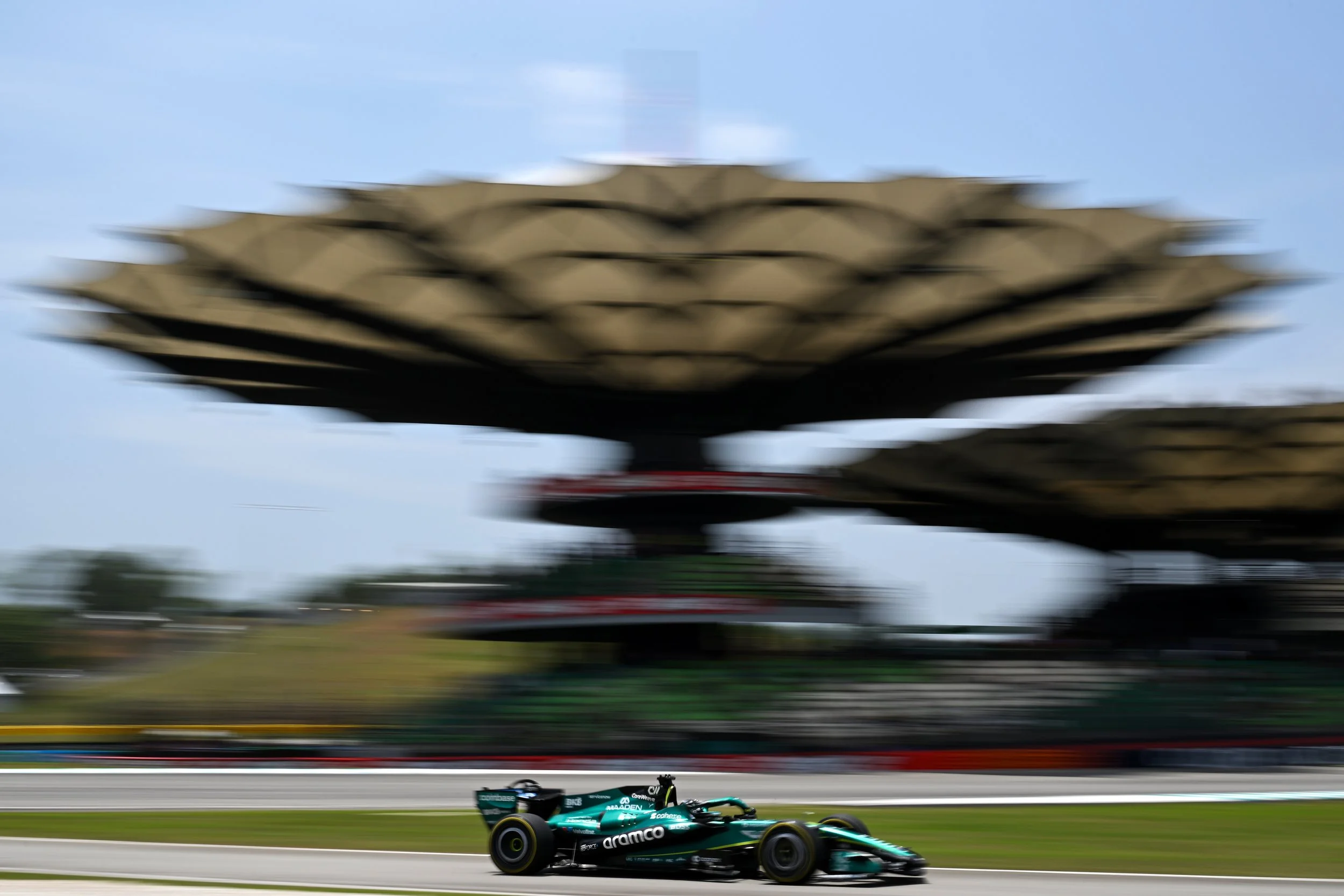
Image © Honda Motor Co. Ltd & Aston Martin Aramco. Used for editorial purposes. Bahrain Grand Prix in Malaysia
Baku again exposed the AMR26's difficulties on long straights, while the faster corners should offer a rather different examination of the chassis. Sepang combines both. Its 5.543-kilometre layout mixes long full-throttle sections, heavy braking zones and quick, flowing corners, while Malaysia's heat, humidity and unpredictable weather can introduce another layer of uncertainty. Sunday's race runs for 56 laps and 310.398 kilometres.
After the double retirement in Azerbaijan, Aston Martin badly needs a clean weekend. It also needs information. Every uninterrupted session gives the team another opportunity to understand the AMR26, the latest developments and the Honda power unit as it tries to establish whether the flashes of improved performance seen earlier in the season can be turned into something more consistent.
There is one final reason this race will be particularly relevant to Issue 44 readers.
The Grand Prix starts at 08:00 BST on Sunday morning — just two hours after this week's FTP Weekly Roundup goes live.
So if you're reading this over an early Sunday coffee, there won't be long to wait.
Another Weekend to Savour
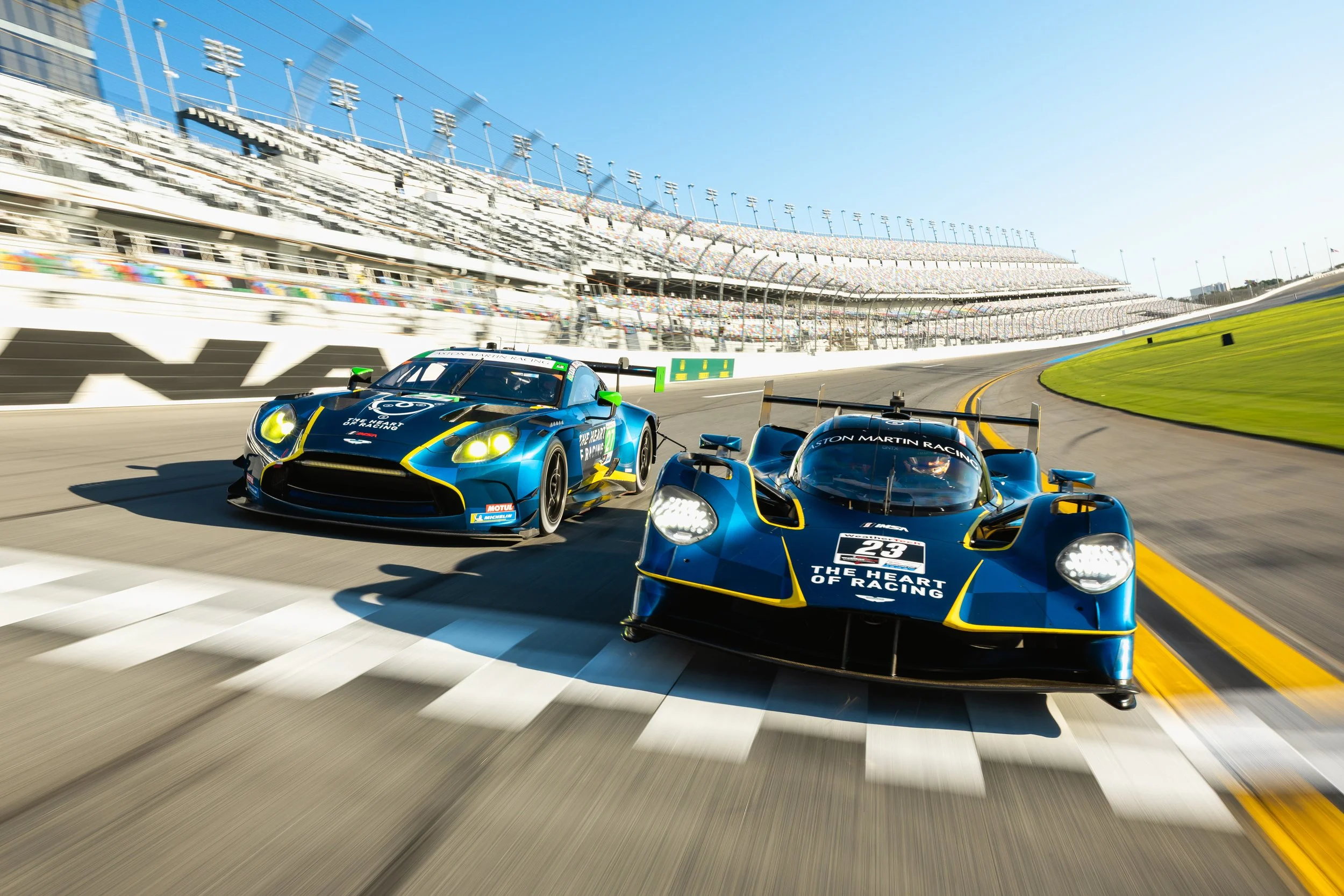
Image © Aston Martin Lagonda. Used for editorial purposes.
Taken together, it makes for another remarkable weekend for Aston Martin followers: five Vantage GT3s in Barcelona, Valkyrie and Vantage tackling Petit Le Mans, and Alonso and Stroll returning Formula One to Sepang.
Some of those stories will already have developed further by the time Issue 44 is published. Rather than trying to chase a busy Saturday of racing here, we'll pick up the latest Aston Martin results in the FTP Motorsport Hub early next week, before bringing the most significant stories back into next week's Roundup.
For now, though, one thing is certain: after everything Aston Martin teams achieved last weekend, there’s plenty more to look forward to. Yet while the immediate focus is on what happens on track this weekend, Aston Martin has also been looking considerably further ahead, and one of the biggest questions surrounding its Formula 1 future has now been answered.
Affiliate link note: Some links may be affiliate links, which means Fuel the Passion may earn a small commission if you purchase through them, at no extra cost to you. Thank you for your support.
Fernando Alonso Chooses Aston Martin Again — “But Not Yet”
For much of 2026, one question has followed Fernando Alonso almost as closely as the difficulties of the AMR26: would he really want to do this all over again?
We now have the answer.
Aston Martin has confirmed that Alonso and Lance Stroll will remain its Formula One race drivers in 2027, extending their long-term contracts and retaining the same partnership for a fifth consecutive season. For Stroll, it will be an 11th season in Formula One; for Alonso, who turns 46 next year, it extends a remarkable career that has already spanned more than two decades.
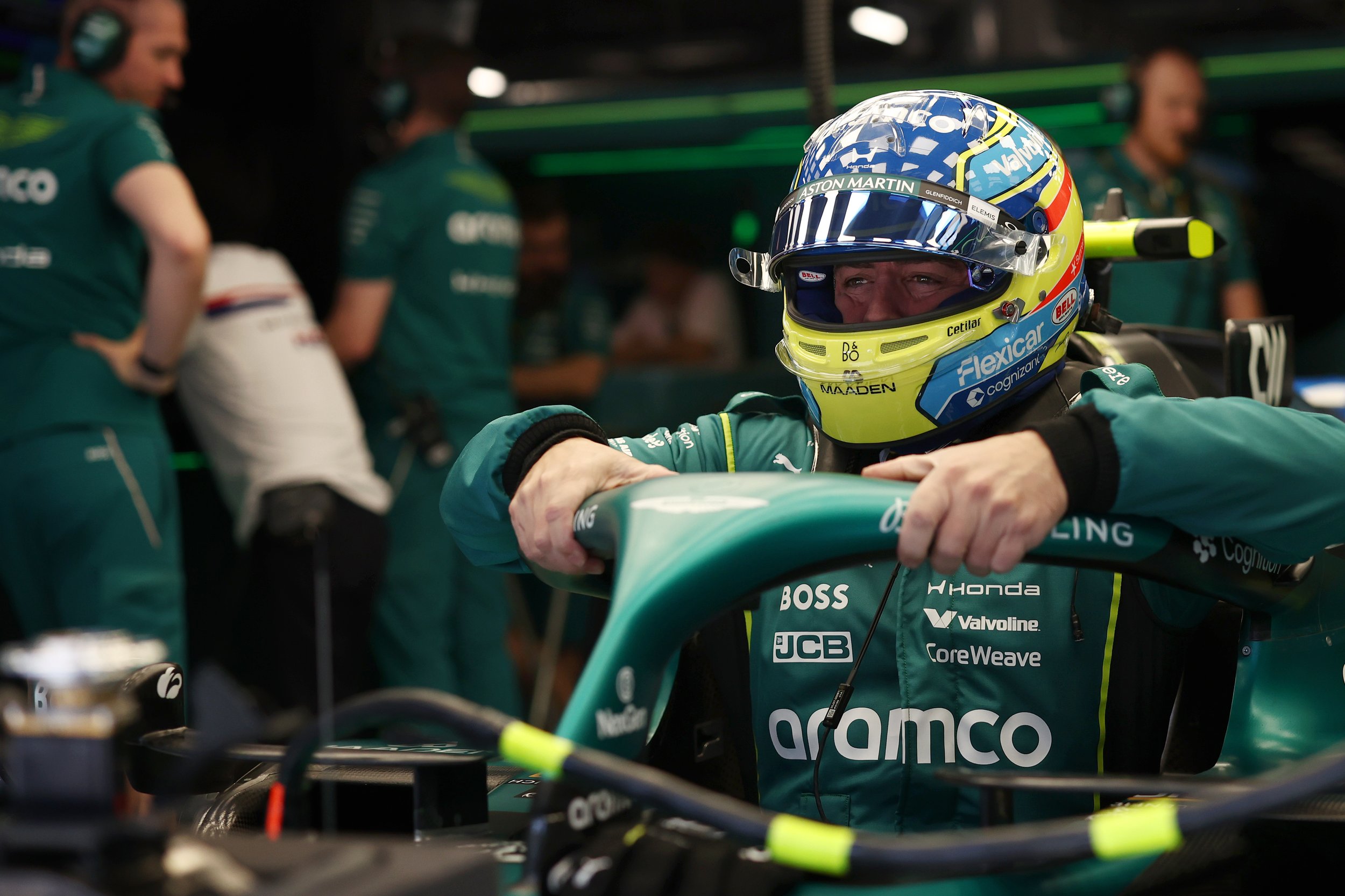
Image © Honda Motor Co. Ltd & Aston Martin Aramco. Used for editorial purposes. Fernando Alonso.
Stroll's continuation was widely expected. Alonso's decision carried considerably more intrigue. This has hardly been the season Aston Martin hoped would persuade its double World Champion to stay. The team sits 10th in the Teams' Championship, while Alonso has scored its three points. The substantial B-specification development introduced in Hungary finally moved the AMR26 towards the midfield and helped Alonso to ninth at Zandvoort, but subsequent weekends have again demonstrated just how much work remains.
“I took my time to make this decision, but racing is my life, my passion,” he said when confirming his new agreement, adding that he still believes he has the speed and determination to compete at Formula One's highest level. Significantly, Alonso described himself as committed to Aston Martin “for the long term”, rather than simply confirming one final season.
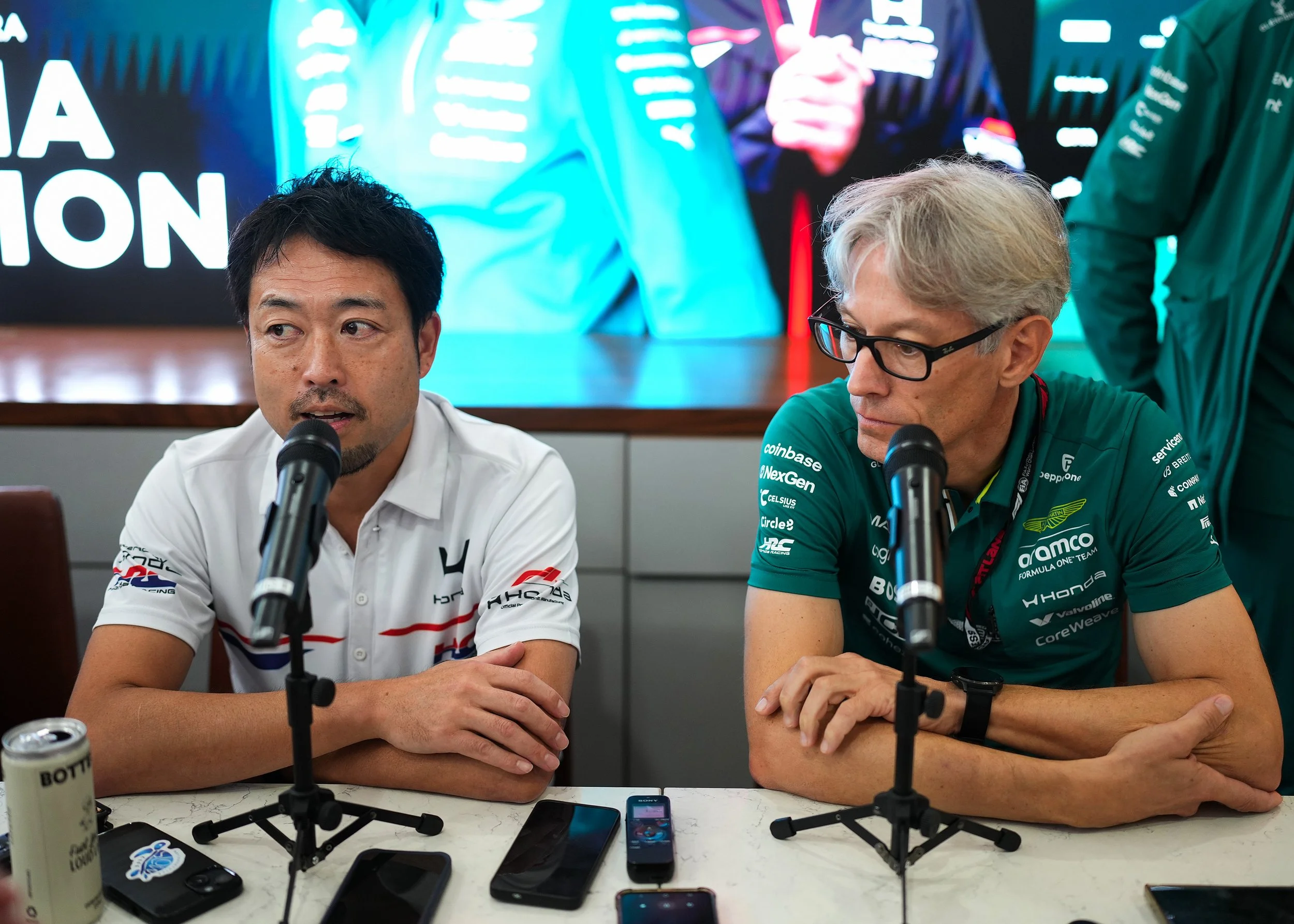
Image © Honda Motor Co. Ltd & Aston Martin Aramco. Used for editorial purposes.
Since Aston Martin confirmed the news, Mike Krack has provided a little more context about what Alonso's decision means inside the team. Speaking at Sepang on Thursday, Aston Martin's Chief Trackside Officer described both drivers' commitment as a “strong signal to everybody”, arguing that remaining with the team through such a difficult season demonstrates their trust in where the project is heading.
Krack also shed more light on why Alonso wasn't prepared to rush his decision. Aston Martin understood that a driver with his experience needed time, particularly given Alonso's reservations about the current regulations.
The direction of Formula One's next rules therefore appears to have formed part of his thinking too, with Alonso responding positively to the proposed balance between V6 combustion power and the electrical element of the power unit. That adds another layer to Alonso's decision. He isn't simply committing to Newey, Honda or Aston Martin's enormous investment at Silverstone; he's also committing to another generation of Formula One.
As you’ve seen above, Aston Martin accompanied the announcement with a short film carrying an even simpler message from Alonso. After reflecting on more than 23 years of travelling the world, more than 400 Grands Prix and a career that has already delivered more than he once dreamed possible, he acknowledged the inevitable:
“I will retire from Formula 1, but not yet.”
That “not yet” perhaps says more than another carefully worded contract announcement could. Alonso has never hidden the importance he places on Aston Martin's wider project. The new Silverstone Technology Campus, Honda works partnership, increasingly developed technical organisation and, crucially, Adrian Newey provide reasons to believe the team's present position need not define its future. Newey himself said during the summer that Alonso's experience and feedback were important to the team, while Formula One's own analysis of the new agreement points to Alonso's faith in the organisation Newey is helping to shape.
There’s an interesting contrast here. Alonso isn't staying because Aston Martin has already delivered what he came for. Quite clearly, it hasn't. Since joining in 2023 he has contested 85 Grands Prix for the team, collecting eight podiums including two second places, but the victory both driver and team have been chasing remains elusive.
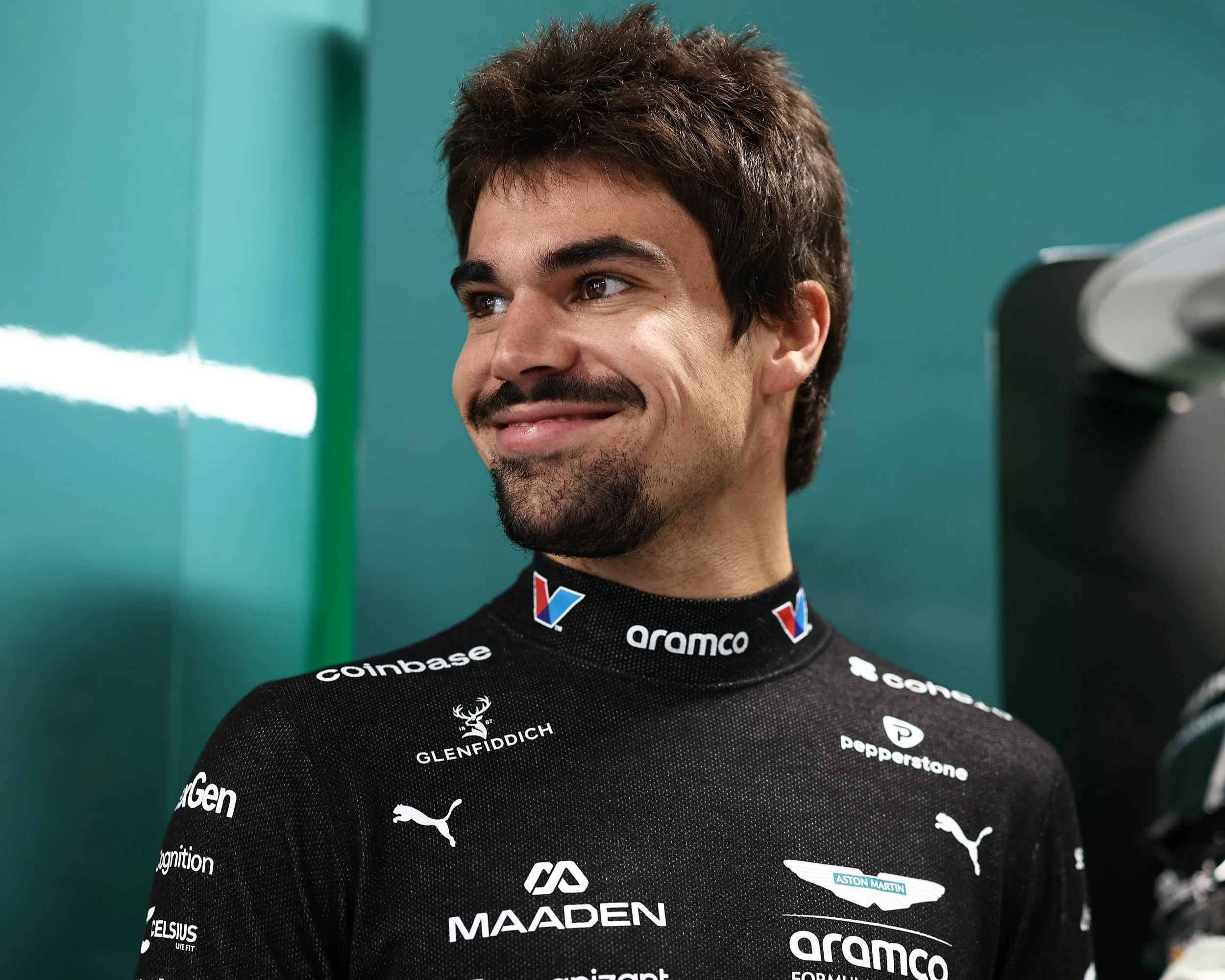
Image © Honda Motor Co. Ltd & Aston Martin Aramco. Used for editorial purposes. Lance Stroll.
Lance Stroll expressed much the same conviction, saying he believes the team now has the people and resources required to become a winning organisation. Lawrence Stroll was equally clear about the objective, while acknowledging that the immediate priority remains improving performance: “We are here to win.”
None of that guarantees what happens next. Aston Martin's position at the bottom of the 2026 Teams' Championship provides a fairly stark reminder of the difference between possessing world-class facilities and people, and converting them into a competitive Formula One car. What the announcement does provide is stability. Alonso and Stroll know the organisation, its engineers and its increasingly complex Honda-powered AMR26. Aston Martin, in turn, enters 2027 without needing to integrate a new race driver while continuing the much larger task of turning its enormous investment at Silverstone into performance.
For Alonso, though, perhaps the story is simpler. After everything 2026 has thrown at him, he still wants to race. He still wants to do it with Aston Martin. And at 45 years old, one of Formula One's longest careers isn't finished just yet.
Christian Horner on Adrian Newey: The Partnership Behind Red Bull’s Success — and How It Unravelled
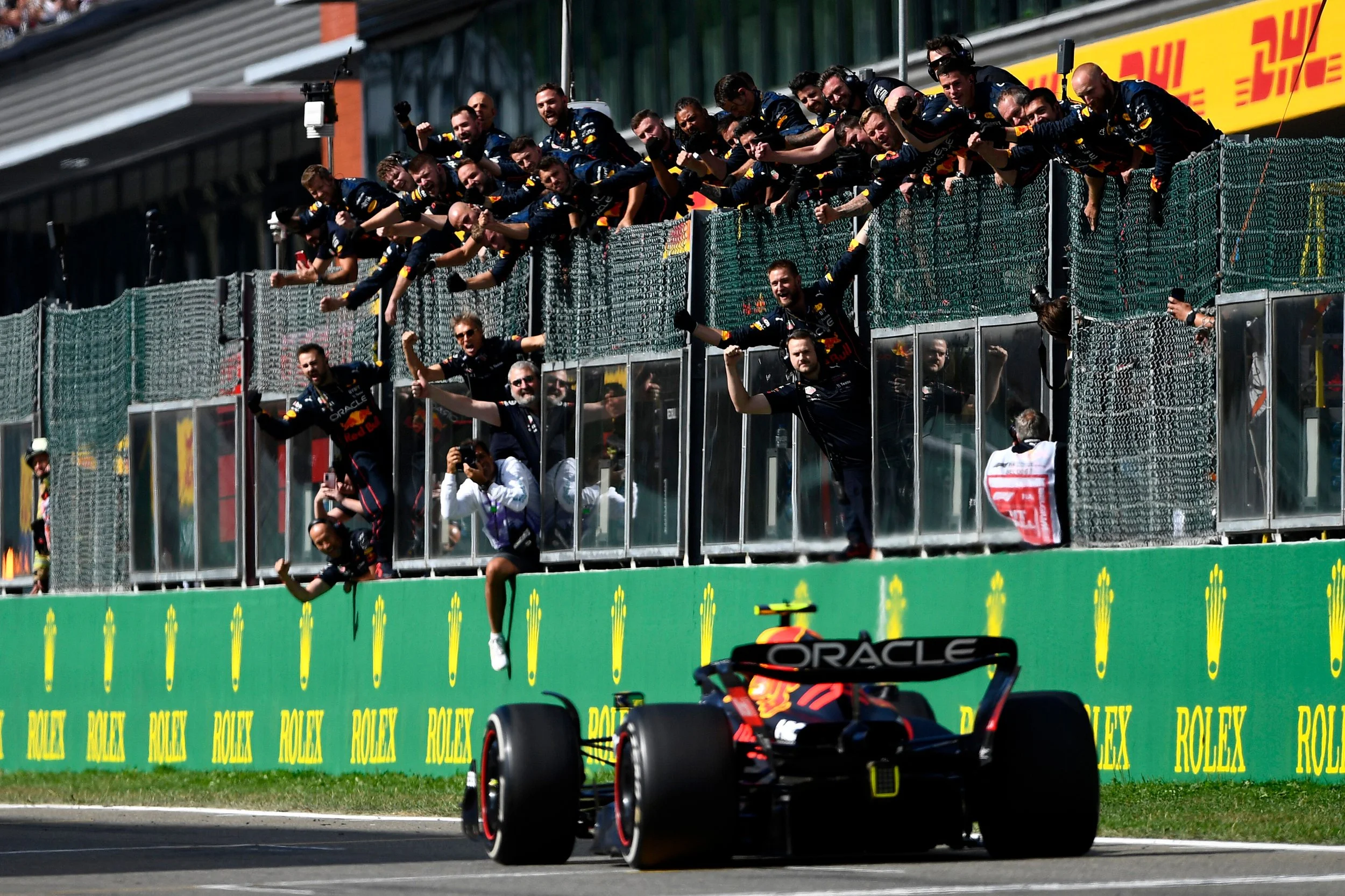
Image © Honda Motor Co. Ltd. Used for editorial purposes. 2022 Belgium Grand Prix.
Adrian Newey may now be one of the most important figures in Aston Martin's Formula One future, but for almost two decades his name was inseparable from another team, and another man.
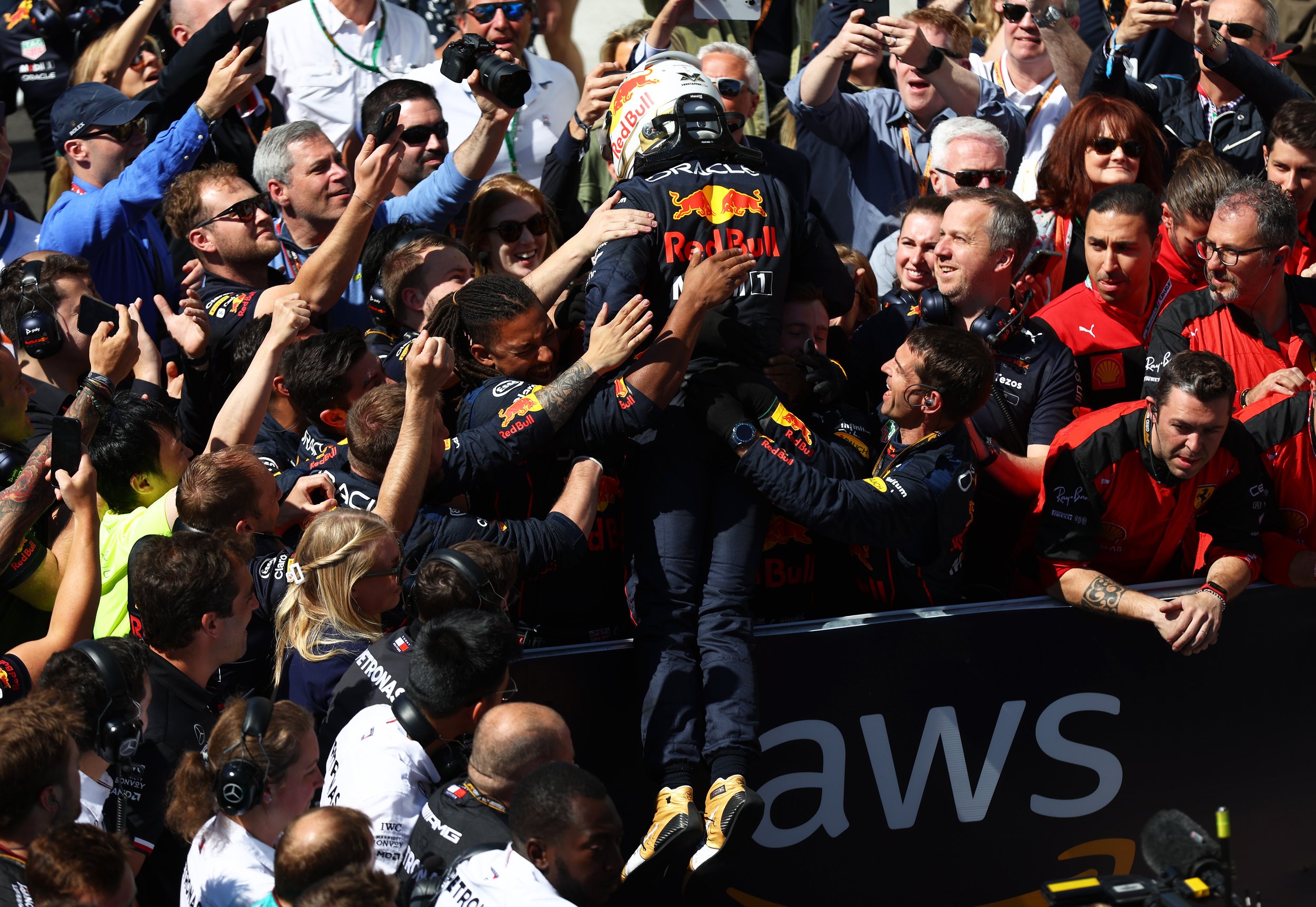
Image © Honda Motor Co. Ltd. Used for editorial purposes. 2022 Canadian Grand Prix.
Christian Horner's forthcoming autobiography, Drive, has begun to reveal his version of the relationship that helped transform Red Bull Racing from an ambitious newcomer into one of Formula One's dominant forces. The book is not published in the UK until 22nd October, but extracts released ahead of publication provide a remarkably candid account of Horner's partnership with Newey and, ultimately, how it broke down.
Their story began with one of Horner's most consequential recruitment decisions. Newey was already an established championship-winning designer when Red Bull pursued him from McLaren in 2005. Horner recalls securing him on a salary of around £6 million, beginning a partnership that would survive changing regulations, difficult seasons and extraordinary periods of success.
He points to 2014. Red Bull's run of four consecutive Drivers' and Constructors' Championships had ended as Formula One entered the V6 turbo-hybrid era, Renault's power unit was struggling against Mercedes and Sebastian Vettel was preparing to leave for Ferrari. Newey was also attracting interest from Maranello. Horner's recollection of that period is striking. He writes that he had believed the loyalty between them worked both ways, but felt Newey wanted to leave when Red Bull first encountered serious adversity. Horner says the episode left him feeling that their partnership was no longer as secure as he had previously believed.
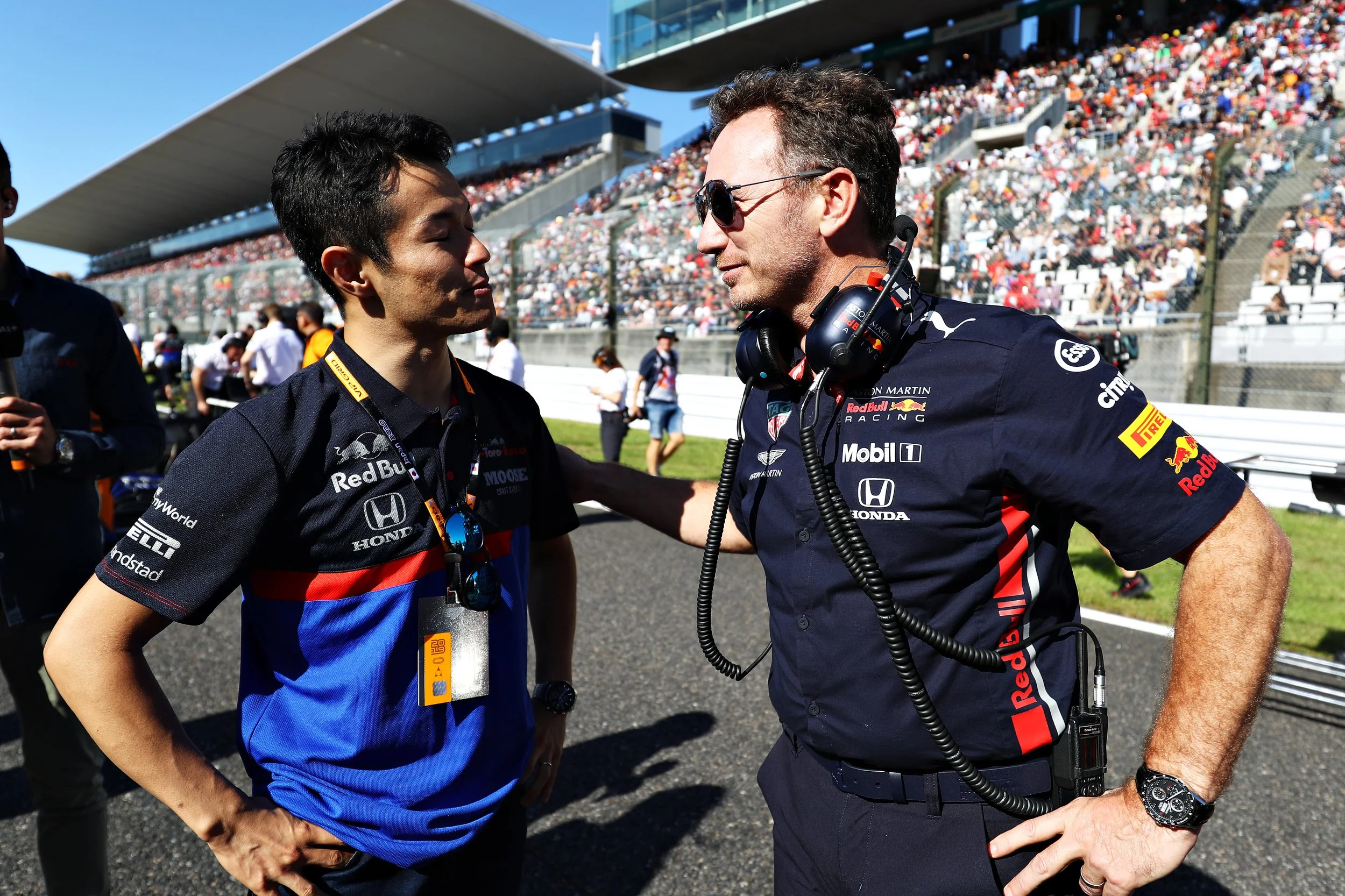
Image © Honda Motor Co. Ltd. Used for editorial purposes. 2019 Japanese Grand Prix.
It’s important to treat those comments for what they are: Horner's account of events, written more than a decade later. They provide his perspective on a relationship involving two enormously influential personalities rather than an independent account of Newey's intentions or motivations.
Despite the tension Horner now describes, Newey remained at Red Bull for another decade. Together, Horner and Newey experienced another extraordinary period of success, including the championship-winning cars of the Max Verstappen era. Their professional relationship therefore proved considerably more durable than Horner's recollections of 2014 might initially suggest. The eventual separation appears to have been considerably more difficult.
Horner writes that Newey communicated his intention to leave through the company's shareholders rather than approaching him directly, with Newey's manager, the late Eddie Jordan, becoming involved in negotiations surrounding his departure. Horner also describes his unhappiness at the way Newey's subsequent move to Aston Martin was announced while he was still technically a Red Bull employee.
There’s a fascinating contrast between that retrospective account and Newey's position today. The designer who Horner says once considered leaving when Red Bull entered a difficult period has joined an Aston Martin team experiencing precisely that: enormous investment and considerable ambition, but results that have so far fallen well short of expectations.
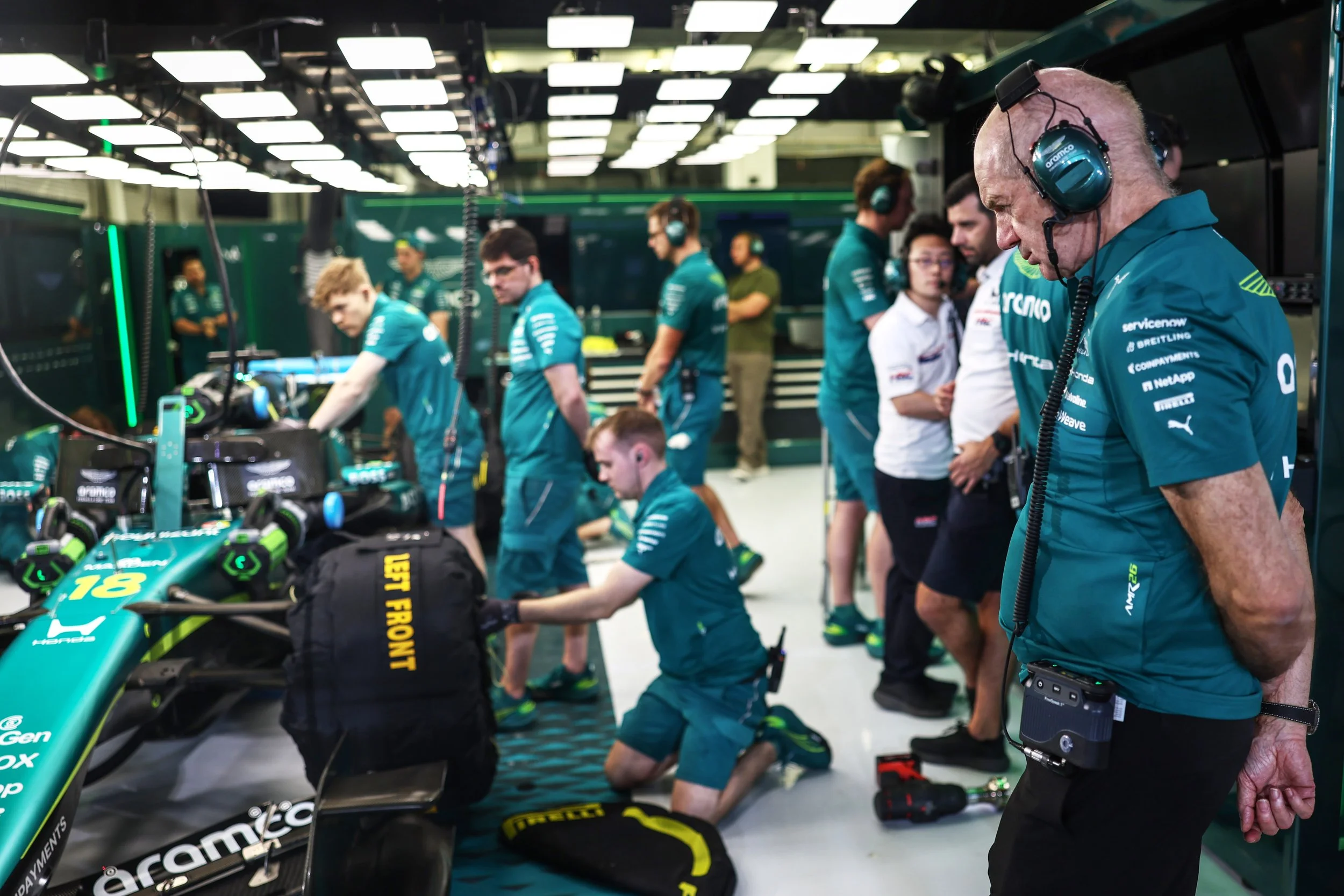
Image © Honda Motor Co. Ltd & Aston Martin Aramco. Used for editorial purposes.
Newey's influence at Silverstone now extends far beyond drawing the next racing car. He has become Aston Martin's Team Principal as well as Managing Technical Partner, placing him near the centre of the organisation Lawrence Stroll is attempting to build. Fernando Alonso's decision to remain for 2027, which we've just covered, also demonstrates that another of Formula One's most experienced figures believes there is still reason to see the project through.
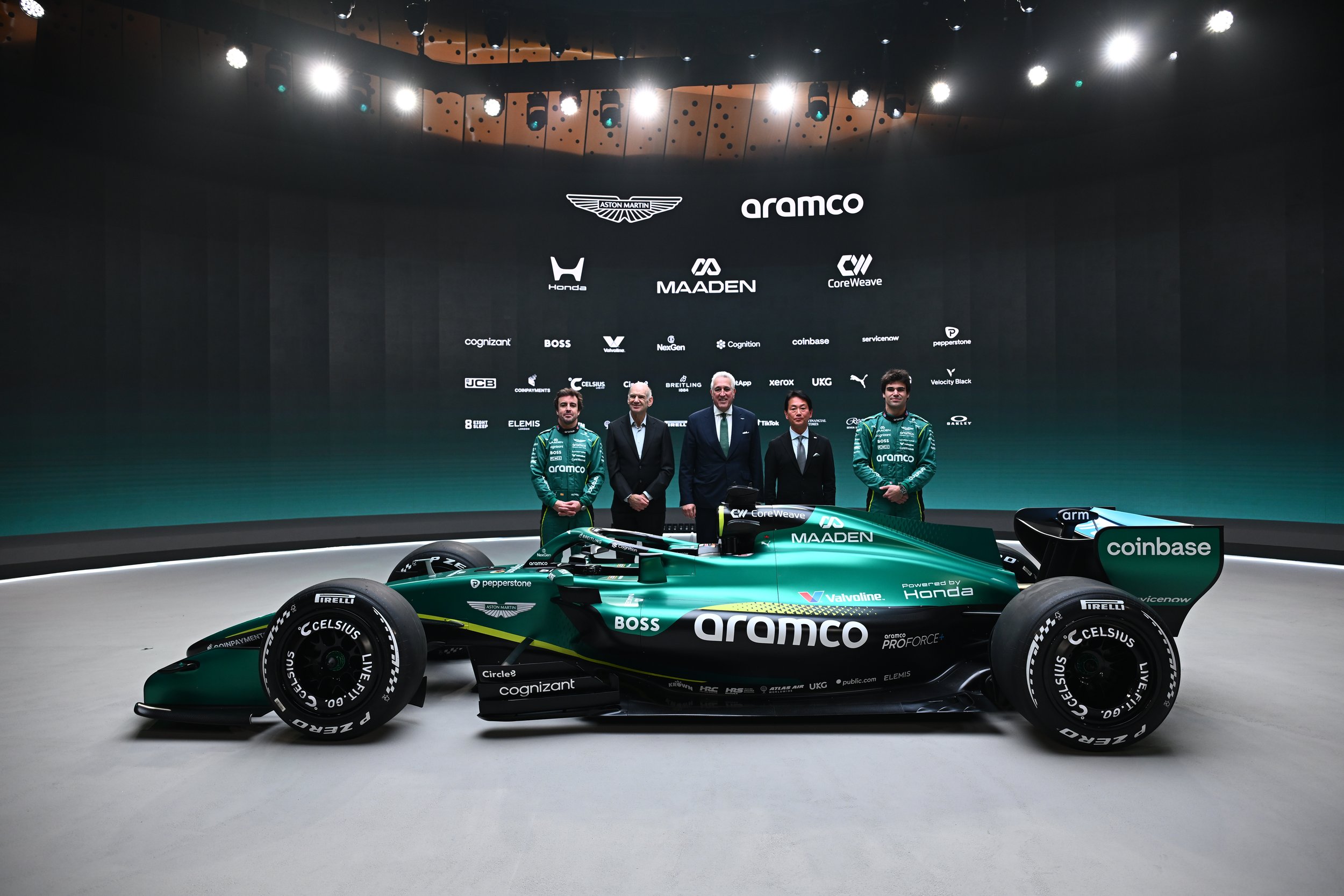
Image © Honda Motor Co. Ltd & Aston Martin Aramco. Used for editorial purposes.
Perhaps that’s why Horner's recollections are particularly relevant to Aston Martin followers. They offer another glimpse into the character and career of the man now being asked to help turn Aston Martin into a winning Formula One organisation.
For almost 20 years, Horner and Newey demonstrated what could happen when strong leadership, technical brilliance, investment and competitive ambition came together. Their partnership eventually ended.
Aston Martin will be hoping that some of the success it produced is only just beginning to be recreated at Silverstone. Newey may now be focused firmly on Aston Martin's future, but there’s still a 2026 season to complete, and the current AMR26 has effectively reached the end of its development road.

AMR26 Development: No More Major Upgrades as Aston Martin Turns Towards 2027
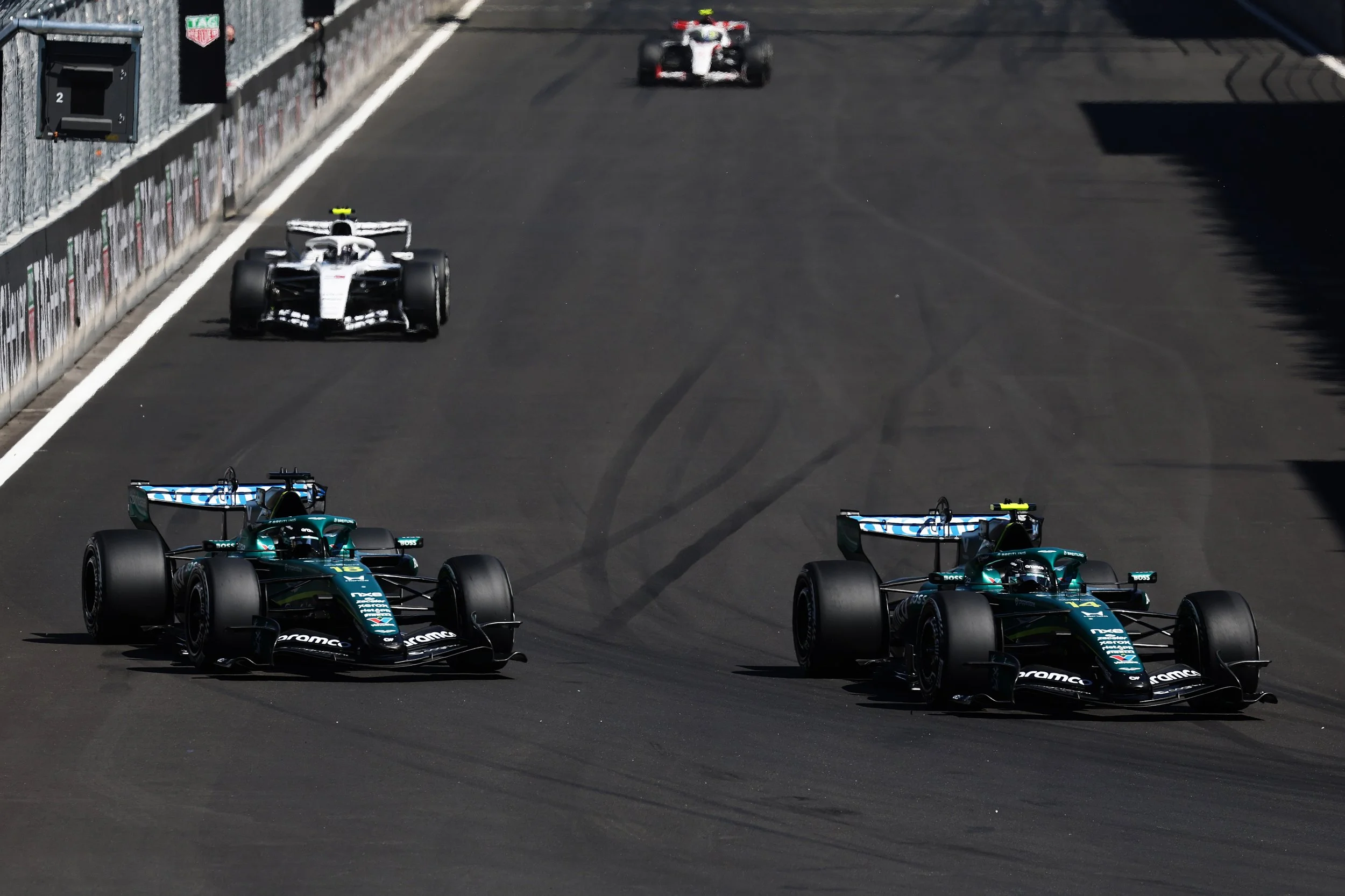
Image © Honda Motor Co. Ltd & Aston Martin Aramco. Used for editorial purposes.
For all the frustration surrounding Aston Martin's 2026 Formula One season, the AMR26 that Fernando Alonso and Lance Stroll are driving today is a very different racing car from the one that began the year. Now, however, its major development appears to have reached the end of the road.
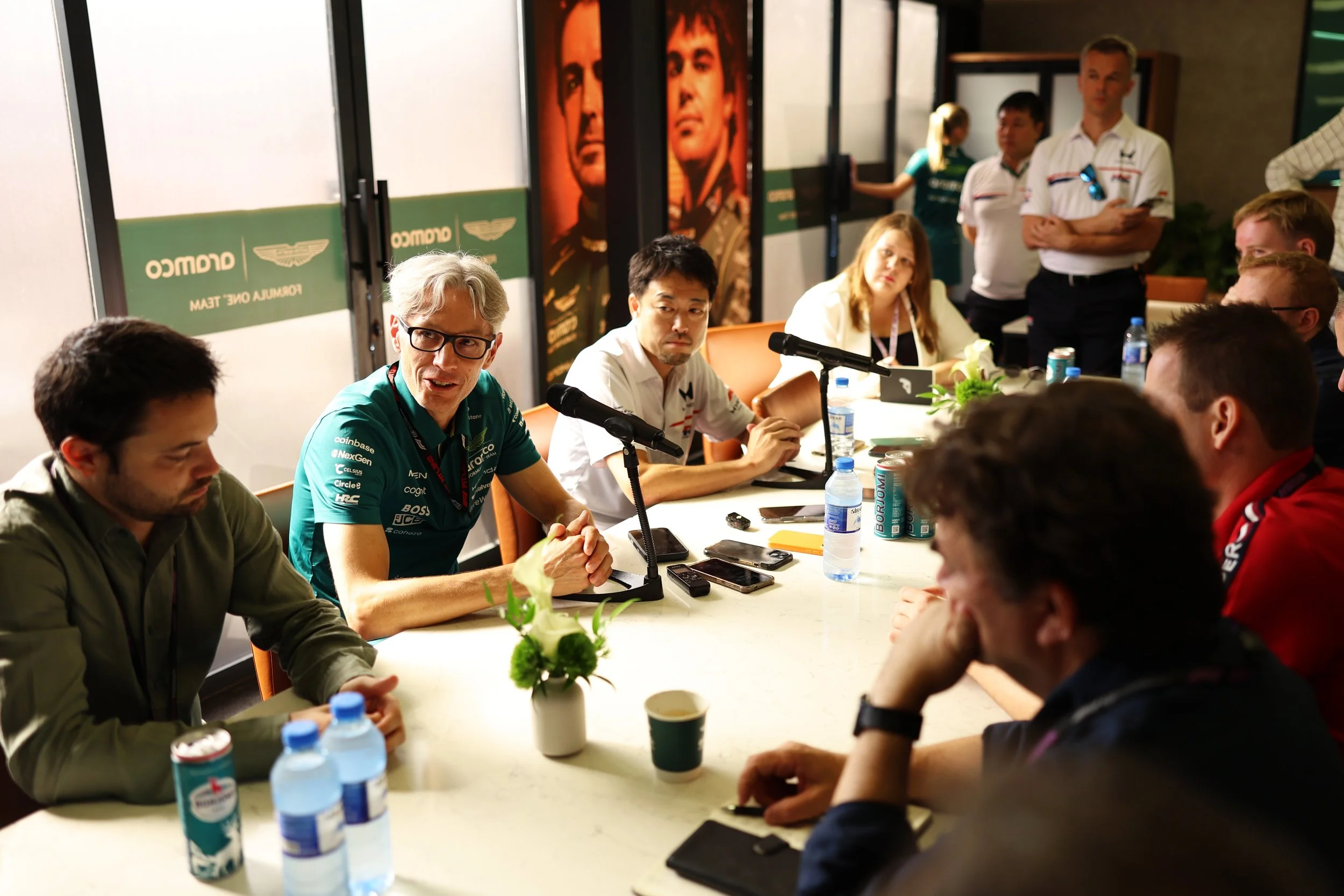
Image © Honda Motor Co. Ltd & Aston Martin Aramco. Used for editorial purposes.
Aston Martin Chief Trackside Officer Mike Krack has confirmed that the team is not planning any further major upgrade packages for the AMR26 during the remaining races of 2026. That doesn't necessarily mean the car will remain completely unchanged, but the substantial aerodynamic developments that transformed it during the summer will not be repeated before the end of the season.
That makes the final eight Grands Prix particularly interesting. Aston Martin is no longer waiting for another transformative package to rescue the season. Instead, the team must extract everything it can from the machinery it already has, while the technical organisation increasingly looks towards 2027.
It’s worth remembering just how substantial the change has already been. After resisting the temptation to introduce smaller upgrades throughout the opening part of the season, Aston Martin arrived at the Hungarian Grand Prix with what was effectively a B-specification AMR26. No fewer than 16 areas of development were declared, encompassing a revised nose and front wing, extensive changes to the floor and diffuser, modified sidepod inlets and alterations elsewhere around the car.
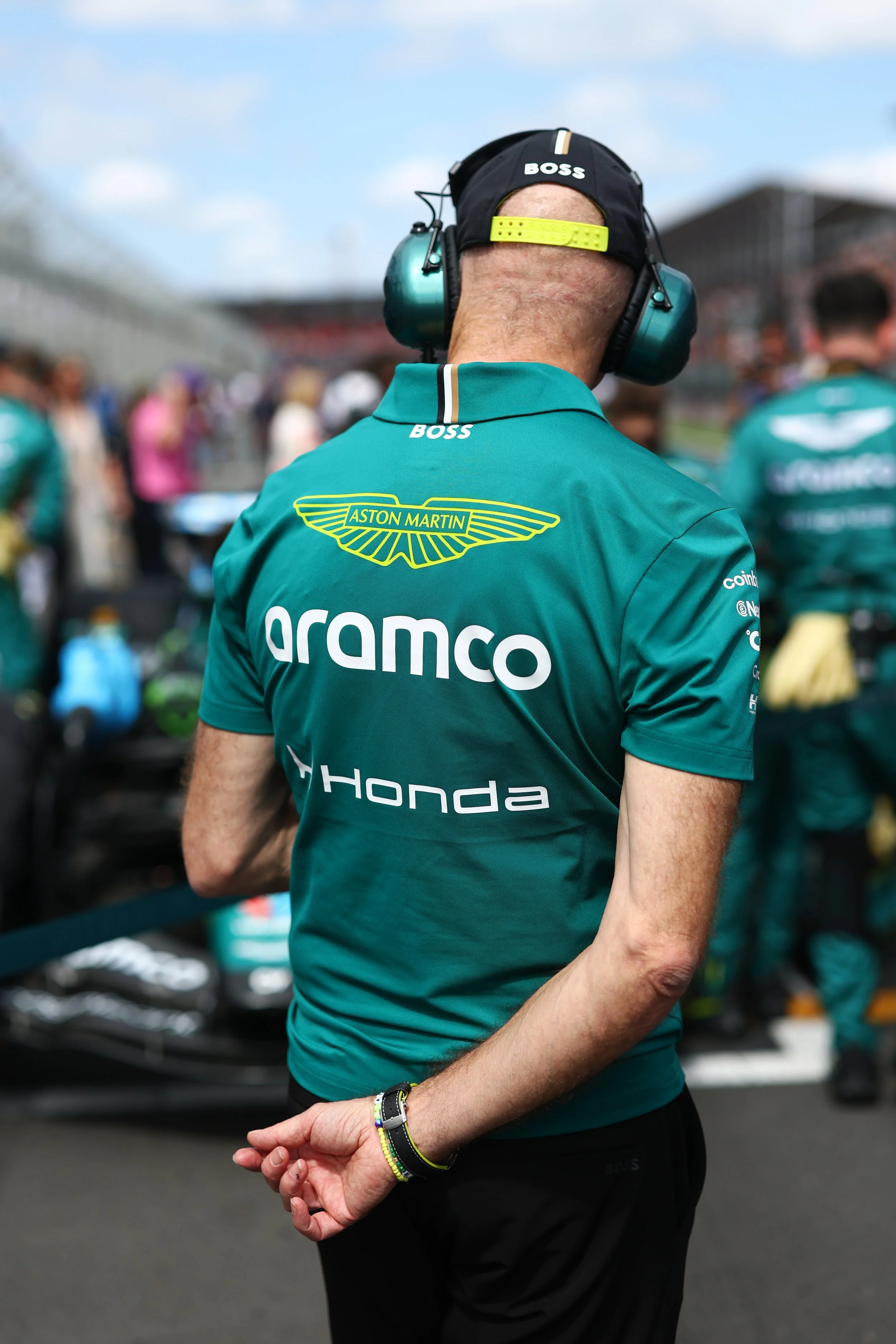
Image © Honda Motor Co. Ltd & Aston Martin Aramco. Used for editorial purposes. Adrian Newey.
The philosophy behind the package was equally significant. The aerodynamic changes were designed in part to provide the diffuser with more robust airflow and allow the car to operate effectively with greater rear ride height, characteristics more closely aligned with Adrian Newey's preferred aerodynamic approach.
At the time, Newey described simply reaching a “point of respectability” as Aston Martin's immediate objective. Hungary provided the first indication that the enormous amount of work behind the scenes had achieved something meaningful.
Having struggled at the back of the field only a week earlier at Spa, Aston Martin suddenly found itself racing among established midfield competitors.
Further development followed after the summer break, including Honda's revised power unit, and Alonso's ninth place at Zandvoort finally converted some of that progress into championship points. The transformation hasn't suddenly made Aston Martin a front-running team, but it has demonstrated that the original AMR26's problems were not beyond improvement.
What subsequent races have also demonstrated is how circuit-dependent that improvement can be.
Baku was particularly revealing. The AMR26's performance on the enormous Azerbaijan straights again exposed one of the weaknesses that remains within the overall package. Sepang presents another useful examination this weekend because it combines long straights with much faster, flowing corners, potentially allowing us to see different strengths and weaknesses from the same car across a single lap. The Malaysian circuit itself returns to Formula One for the first time since 2017.
That knowledge has value beyond 2026. The decision to stop pursuing another major package also reflects the reality of Aston Martin's position. Eight races remain, but the team sits at the back end of the championship and the greater prize is ensuring the lessons from this difficult first season of the Newey-Honda era feed into a substantially stronger second attempt.
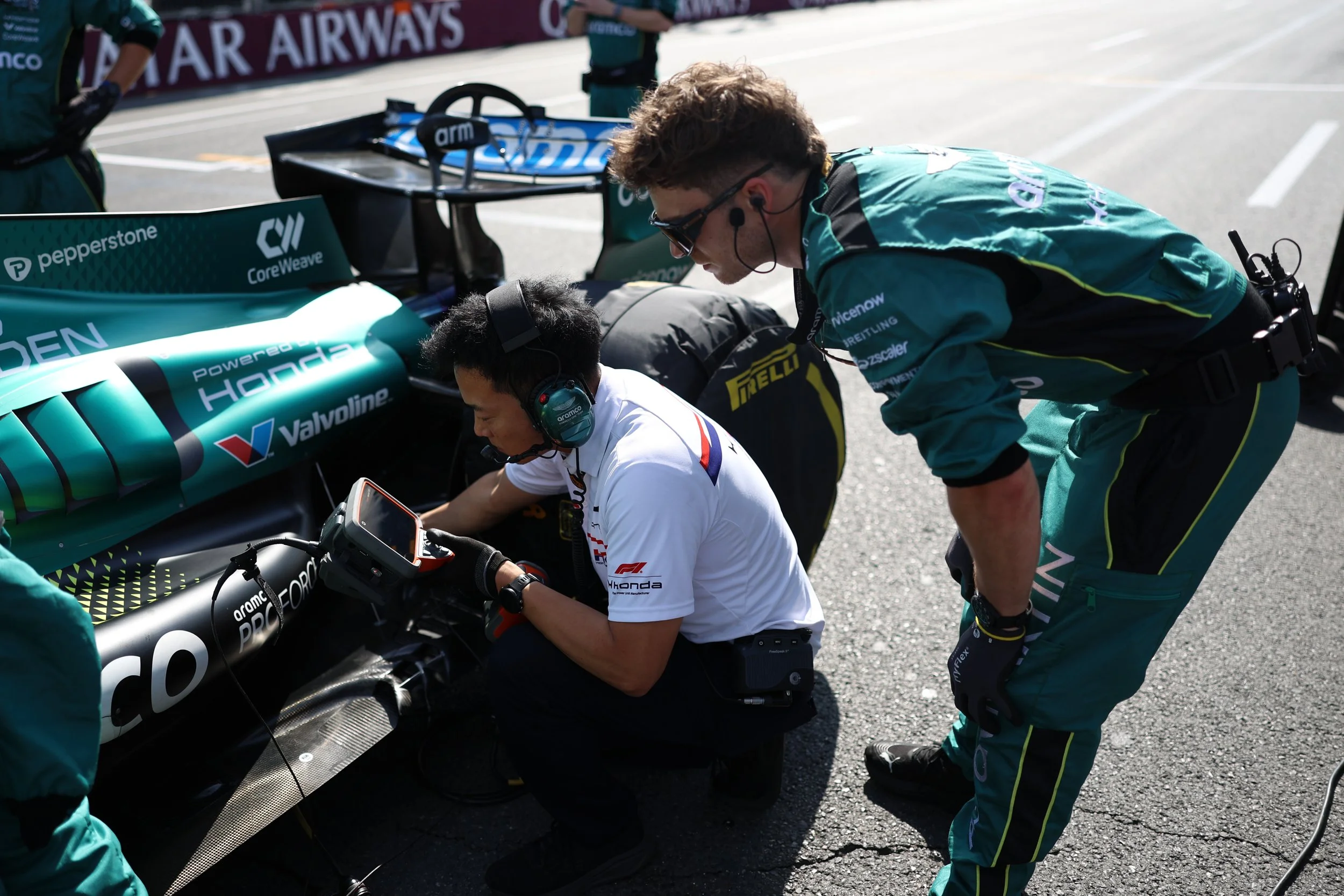
Image © Honda Motor Co. Ltd & Aston Martin Aramco. Used for editorial purposes.
In that respect, the AMR26 has become more than Aston Martin's current racing car. It’s also an extraordinarily expensive development exercise.
The first version showed just how far Aston Martin still had to travel. The summer overhaul demonstrated that its increasingly formidable technical organisation could identify problems and make a significant correction.
The final eight races now have to establish how much Aston Martin has learned from both.
| Round | Grand Prix | Location | Date |
|---|---|---|---|
| 16 | Bahrain Grand Prix IN MALAYSIA | Sepang, Malaysia | 4 Oct |
| 17 | Singapore Grand Prix | Marina Bay, Singapore | 11 Oct |
| 18 | United States Grand Prix | Austin, USA | 25 Oct |
| 19 | Mexico City Grand Prix | Mexico City, Mexico | 1 Nov |
| 20 | São Paulo Grand Prix | Interlagos, Brazil | 8 Nov |
| 21 | Las Vegas Grand Prix | Las Vegas, USA | 21 Nov |
| 22 | Qatar Grand Prix | Lusail, Qatar | 29 Nov |
| 23 | Abu Dhabi Grand Prix | Yas Marina, UAE | 6 Dec |
Shipping to Sepang: The Hidden Race Before the Race
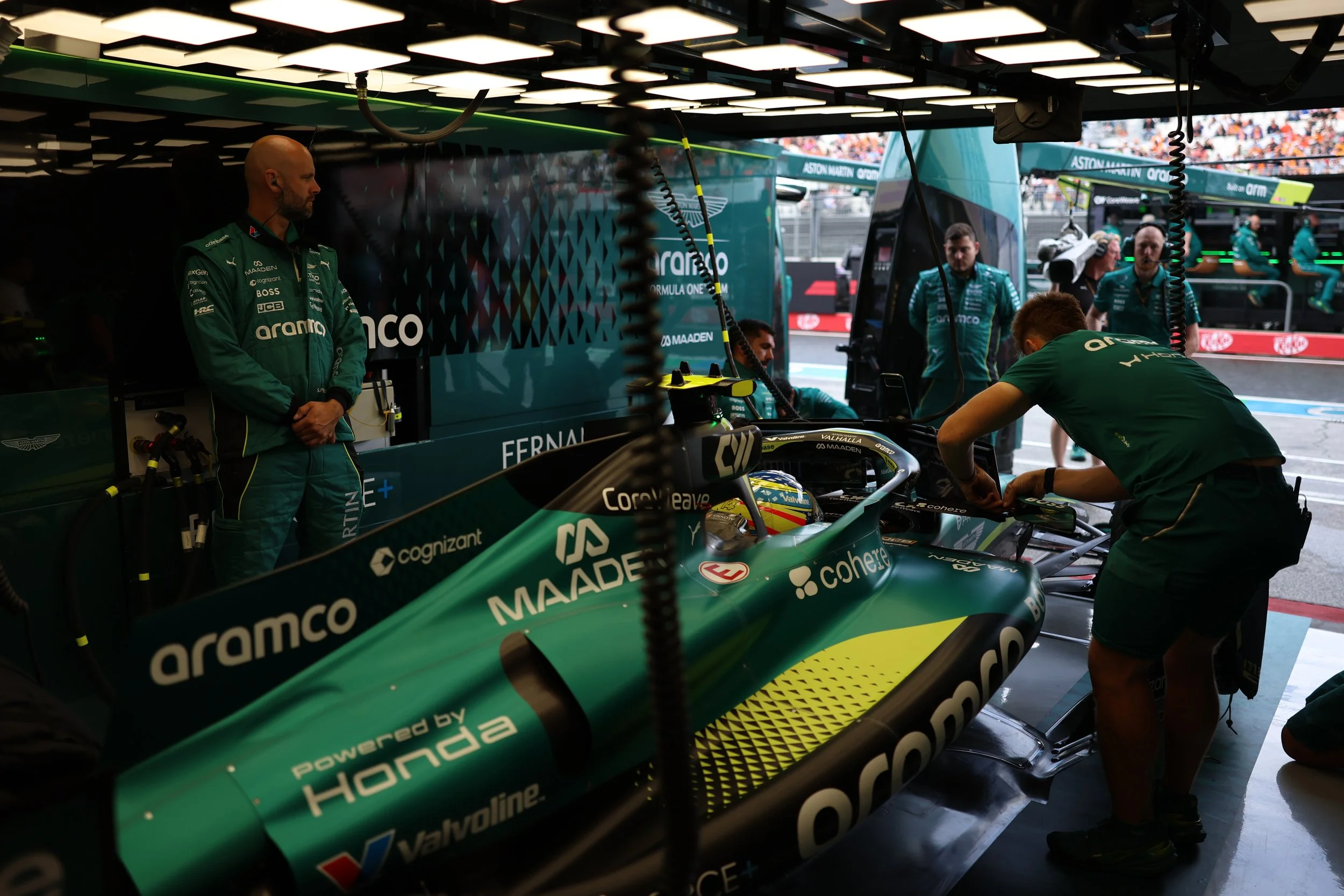
Image © Honda Motor Co. Ltd & Aston Martin Aramco. Used for editorial purposes.
When Fernando Alonso and Lance Stroll roll out of the Aston Martin garage at Sepang this weekend, almost everything surrounding them will look reassuringly familiar. Getting that garage to Malaysia has been anything but.
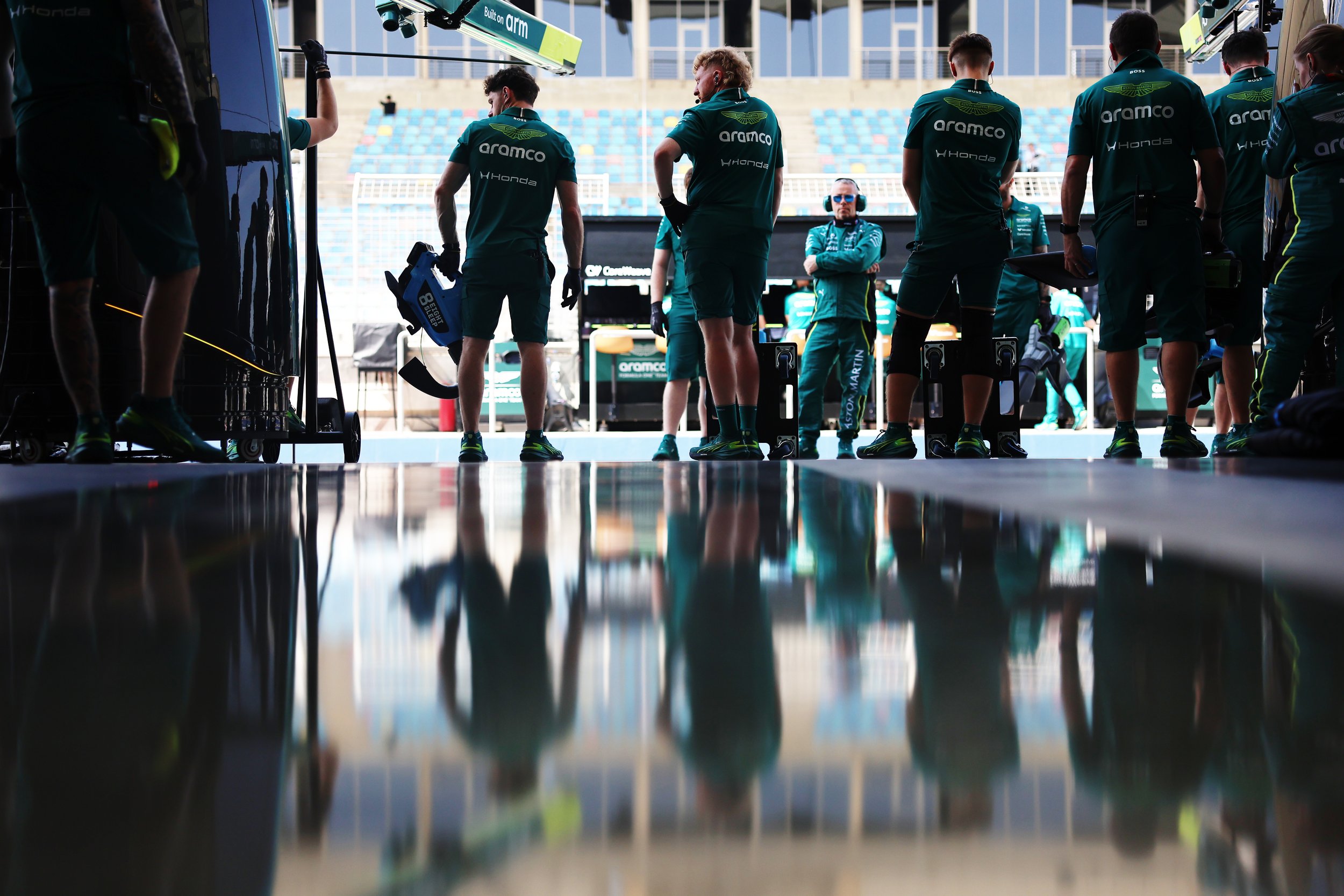
Image © Honda Motor Co. Ltd & Aston Martin Aramco. Used for editorial purposes. Bahrain Testing early 2026.
Aston Martin has revealed the extraordinary logistical operation required to accommodate Formula One's rearranged Bahrain Grand Prix at Sepang, a story involving six travelling sets of equipment, a deserted garage in Bahrain, temperatures approaching 50°C, emergency contingency planning and a race against time to move everything thousands of miles across Asia.
Race Team Freight Coordinator Dale Magorrian describes 2026 simply as the team's “busiest year”. Formula One teams don't transport a single garage and hospitality operation around the world.
Under a conventional schedule, it’s an enormous but carefully choreographed operation. The disruption to the 2026 calendar changed everything. When the original Bahrain Grand Prix was postponed earlier this season, one Aston Martin freight set was already at the Bahrain International Circuit following pre-season testing. The garage and hospitality areas had been completely constructed and, because the race was originally expected to follow only a few months later, Formula One teams were permitted to leave their equipment assembled.
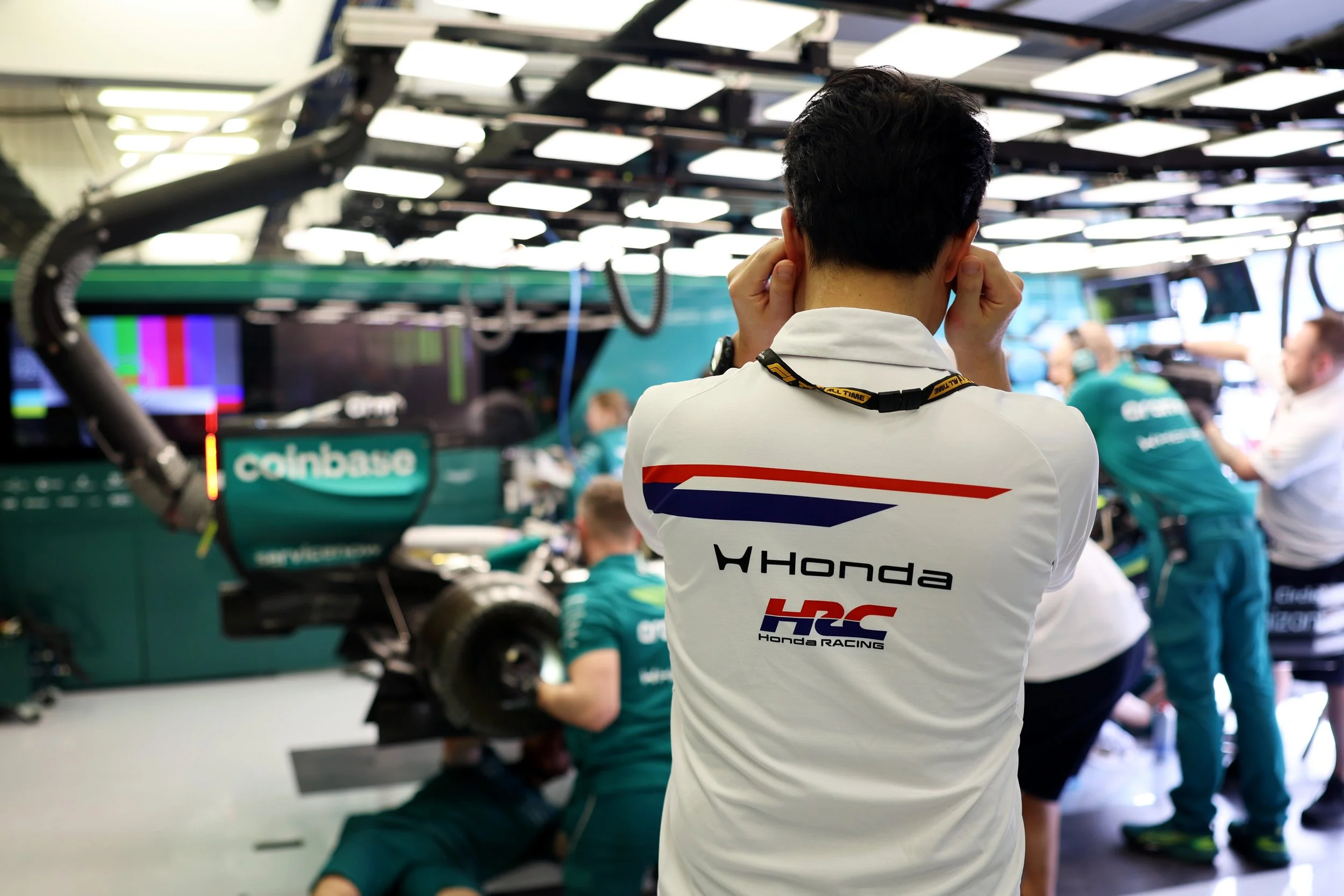
Image © Honda Motor Co. Ltd & Aston Martin Aramco. Used for editorial purposes. Bahrain Testing early 2026.
Aston Martin simply closed the garage's roller doors expecting to return shortly afterwards. It never did. The team describes Bahrain during the intervening months as something of a “ghost circuit”, with equipment sitting unused far longer than intended. Electrical equipment and batteries became particular concerns as the months passed.
When Sepang emerged as the replacement venue, Aston Martin and Formula One freight partner DHL examined several possible solutions. One involved diverting equipment already heading for Singapore to Malaysia and then trucking it between the two circuits. Another considered sending one of Aston Martin's European freight sets instead. Ultimately, the stranded Bahrain equipment offered the best solution, provided Aston Martin could retrieve it safely and get it to Malaysia in time.
You've reached the halfway point. Take five if you fancy it — there's plenty more Aston Martin to come.
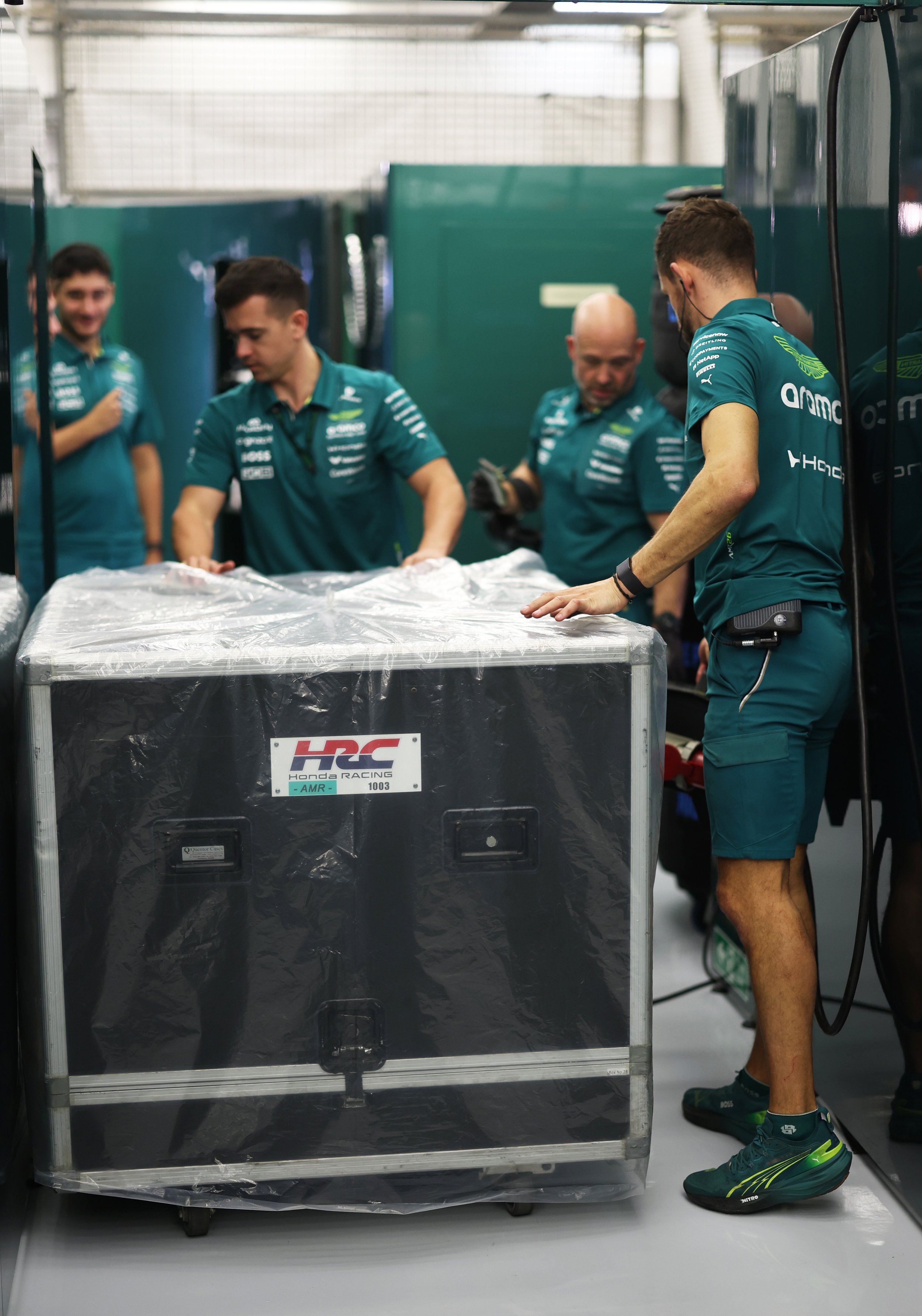
Image © Honda Motor Co. Ltd & Aston Martin Aramco. Used for editorial purposes.
That created another problem. The team's usual personnel couldn't simply travel to Bahrain to dismantle and pack everything. Garage-build contractors therefore undertook the work on Aston Martin's behalf, operating within official travel guidance and coping with extreme conditions. At certain points the temperature was pushing 50°C, forcing a four-hour period each day when work couldn't take place.
There was another complication. The equipment had effectively been frozen in time since pre-season testing. Aston Martin's operation had changed during the intervening months, meaning the team first had to establish exactly what remained inside the garage and what additional equipment would now be required. More than 150 photographs were sent back from Bahrain so the Silverstone team could inventory the contents remotely. Aston Martin then had just 24 hours to determine what was missing, pack the additional equipment in Britain and dispatch another container to meet the original freight in Malaysia.
Getting the Bahrain freight onto a ship produced yet another logistical puzzle. A route through Oman was considered but would have taken too long. Chartering a vessel was also investigated. Eventually another approved port was selected, and the equipment left on 24th August, beginning a two-week journey towards Malaysia.
All of this has had consequences extending far beyond one Grand Prix. Losing one of the team's six freight sets for around six months has forced Aston Martin to reorganise movements elsewhere on the calendar. Equipment used at Madrid is being shipped directly to Brazil rather than returning to Silverstone for servicing, while the Italian Grand Prix set is travelling onwards to Mexico. Both movements introduce additional customs complexities the team would not normally encounter.
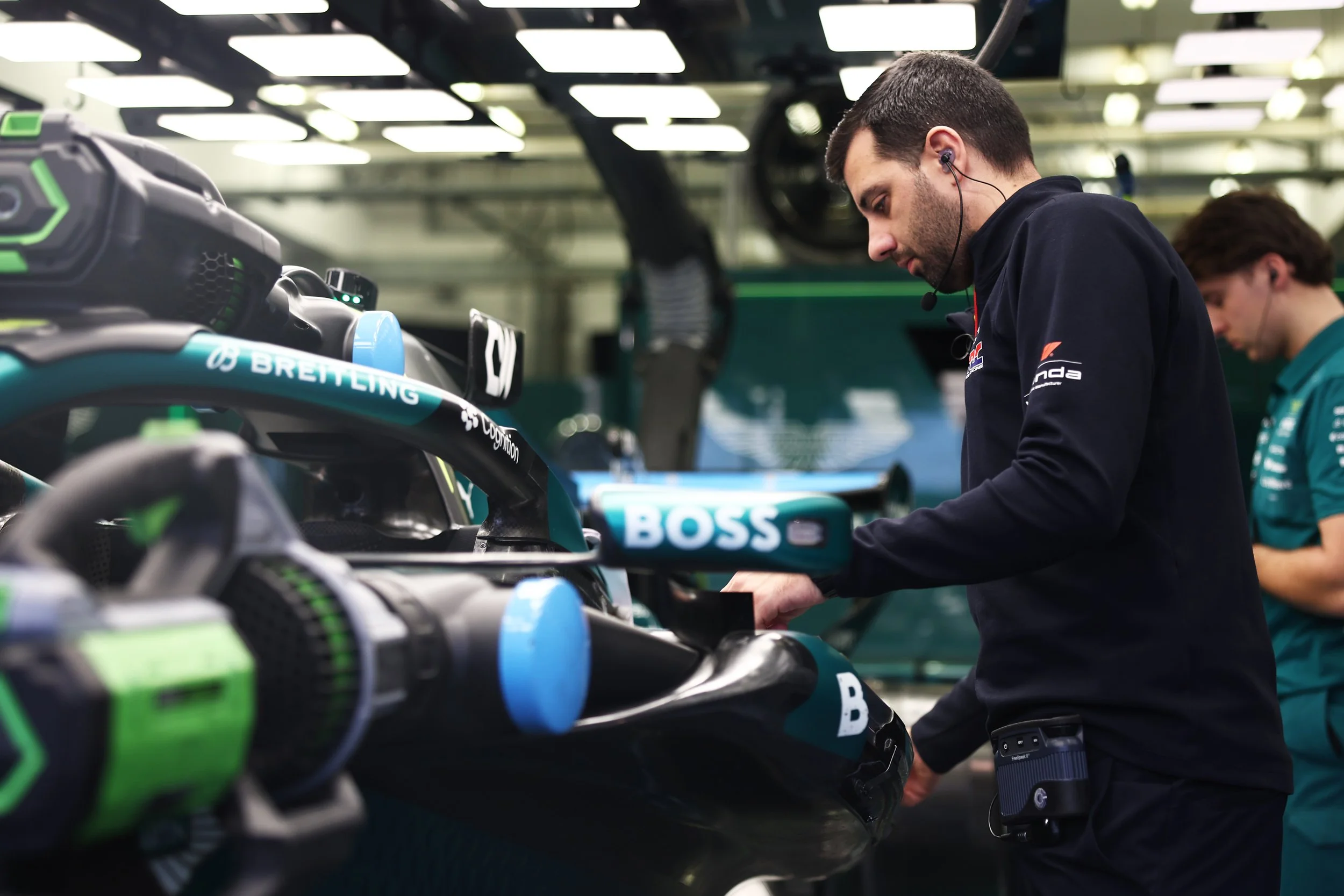
Image © Honda Motor Co. Ltd & Aston Martin Aramco. Used for editorial purposes. Bahrain Testing early 2026.
This weekend we will naturally concentrate on Alonso, Stroll, the AMR26 and whether Aston Martin can produce a stronger result at Sepang. Behind them, however, will be hundreds of pieces of equipment whose journey to Malaysia began months ago, together with a group of people whose performance will never appear on a timing screen.
Aston Martin's race at Sepang starts on Sunday morning. For its logistics team, it started a long time ago. If the Sepang story offers a glimpse of the extraordinary operation required simply to get a modern Formula 1 team to the circuit, Aston Martin's latest accounts reveal something of the financial scale behind it.
Aston Martin F1: The Numbers Behind the Expansion
Aston Martin's Formula One operation continued to grow substantially during 2025, according to the latest accounts filed by AMR GP Limited. Turnover climbed by almost £64 million, gross profit increased strongly and the average workforce approached 1,000 people as the expansion of the Silverstone operation continued.
One important distinction: these are not the accounts of Aston Martin Lagonda, the road-car manufacturer. AMR GP Limited operates the Formula One team as a separate business, so the figures below should not be confused with AML's financial performance, which we'll look at separately later in this Roundup.
| Measure | 2024 | 2025 | Movement |
|---|---|---|---|
| Turnover | £280.7m | £344.2m | +22.6% |
| Gross Profit | £99.6m | £145.1m | +45.7% |
| Pre-Tax Loss | £39.6m | £51.7m | Loss increased |
| Total Comprehensive Loss | £45.8m | £28.5m | Improved £17.3m |
| Average Employees | 845 | 996 | +151 |
The figures underline just how far the organisation has grown, but they also sharpen the sporting question. Aston Martin now has the Silverstone campus, its own wind tunnel, a workforce approaching 1,000 and an increasingly formidable technical structure. Yet it enters the closing stages of 2026 at the bottom of the Constructors' Championship.
The building phase is increasingly behind Aston Martin. The challenge now is turning that investment into performance. Away from the separate business of Aston Martin's Formula 1 team, attention now turns back to the road-car company, where Adrian Hallmark's product strategy is becoming increasingly visible.
DBX GT: Hallmark's Aston Martin Strategy Begins to Take Shape
This is much more than another derivative announcement. Only last month, in FTP's feature examining Adrian Hallmark's first two years at Aston Martin, we looked at his belief that DBX still had considerable untapped potential, and at a wider strategy built around creating more distinctive propositions from Aston Martin's existing model families.
Aston Martin has now given us a remarkably good illustration of what that can mean in practice.
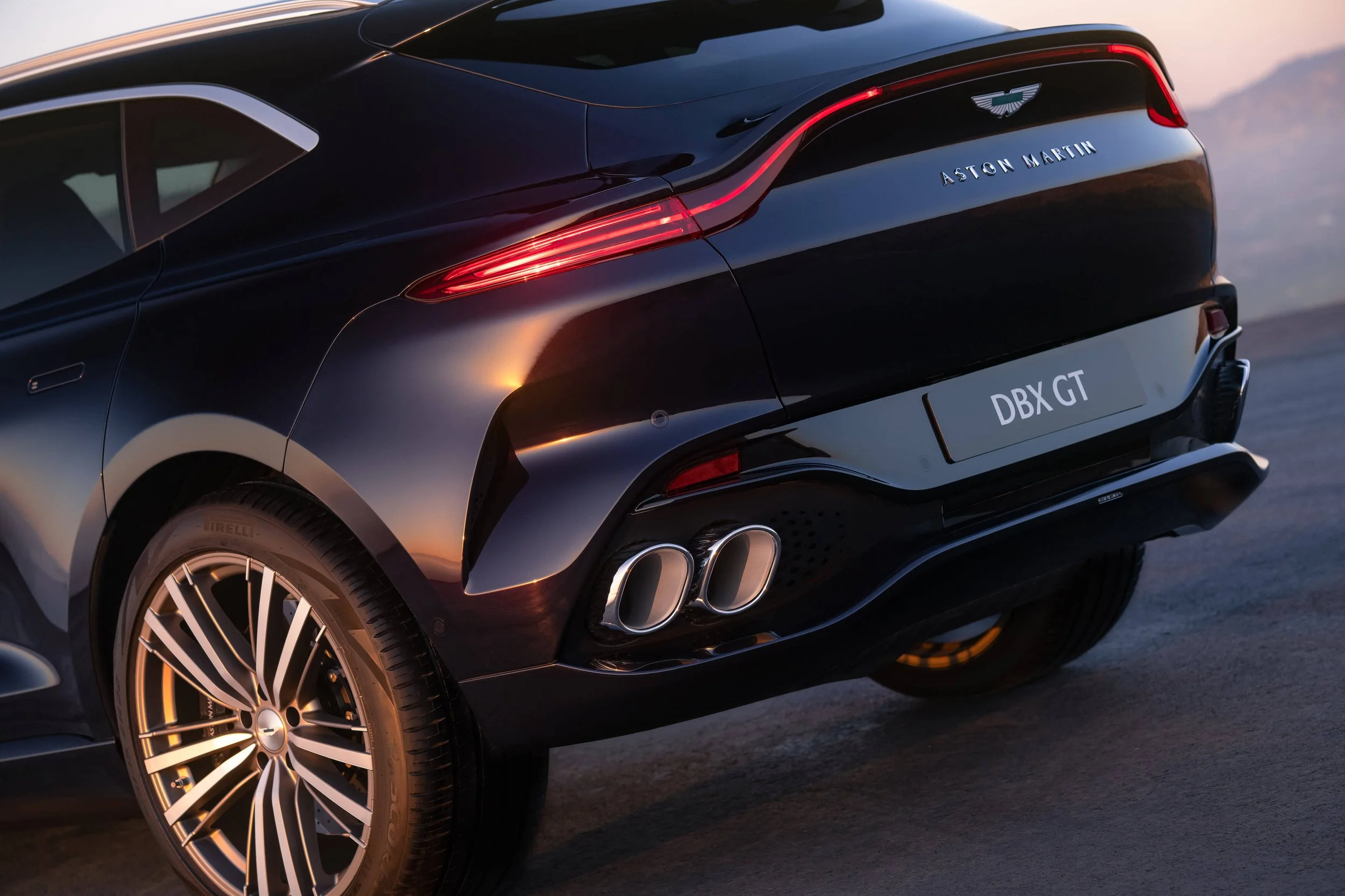
Image © Aston Martin Lagonda. Used for editorial purposes. DBX GT.
The new DBX GT joins the more overtly sporting DBX S, but heads deliberately in the opposite direction. Aston Martin describes the GT as being aimed at customers who prefer “assured elegance over sporting aggression”, combining the performance of the latest DBX with a greater emphasis on refinement, comfort and craftsmanship.
Importantly, that doesn't mean sacrificing performance. The familiar 4.0-litre twin-turbocharged V8 produces 727PS and 900Nm, benefiting from turbocharger technology derived from Valhalla. Aston Martin quotes 0–60mph in 3.1 seconds and a maximum speed of 193mph, while carbon-ceramic brakes and the faster steering ratio introduced with DBX S are retained.
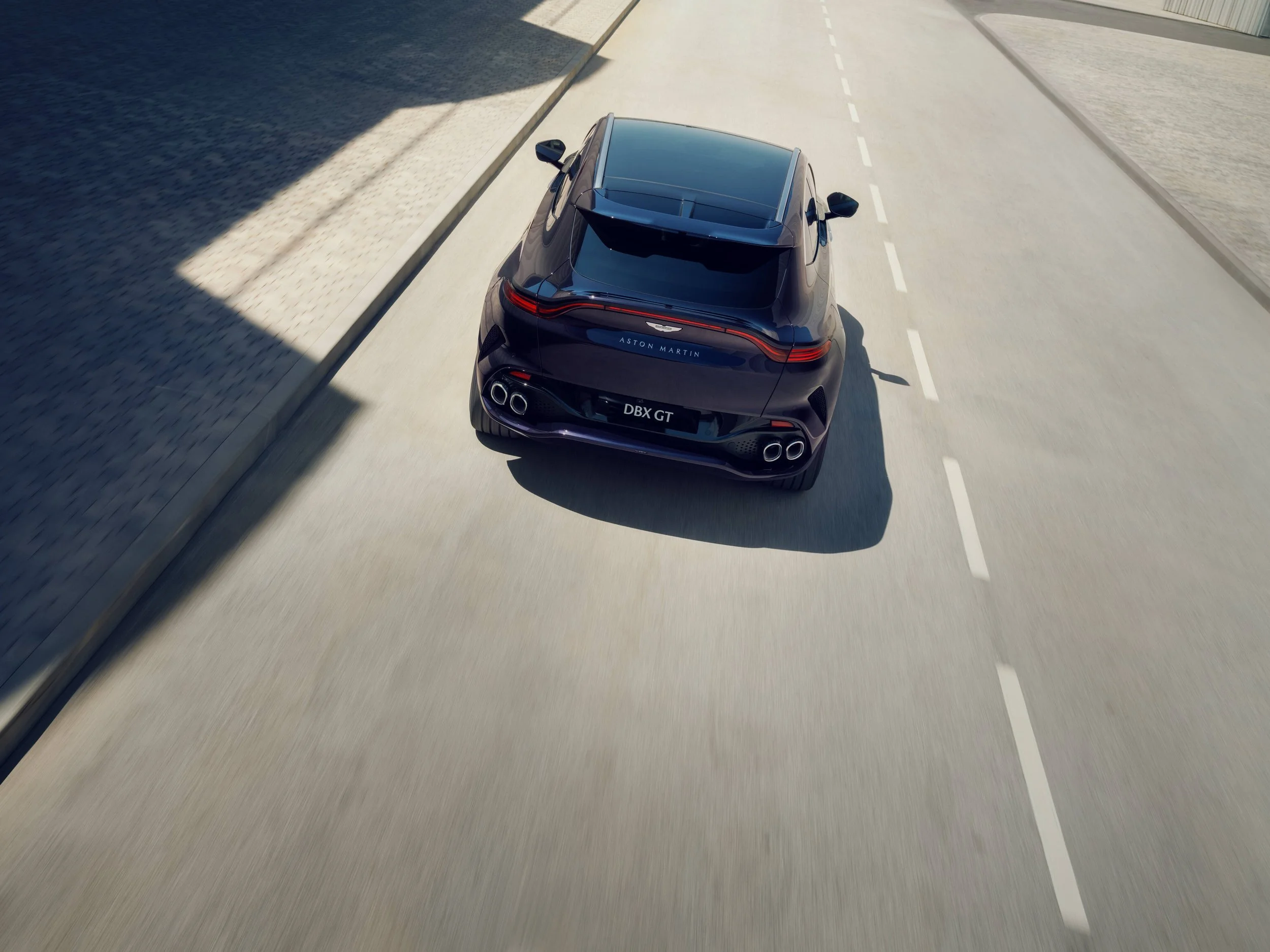
Image © Aston Martin Lagonda. Used for editorial purposes. Aston Martin DBX GT.
Yet those figures almost miss the point. Where the S makes its intentions obvious, the GT has been designed to offer a different character. Its exterior gains a new double-vane grille, beautifully detailed two-piece metal side strakes inspired by watchmaking, greater use of body colour across the lower sections and a choice of 22-inch forged or optional 23-inch wheels. The quad exhaust remains, but Aston Martin has developed a dedicated exhaust calibration intended to suit the GT's more refined personality.
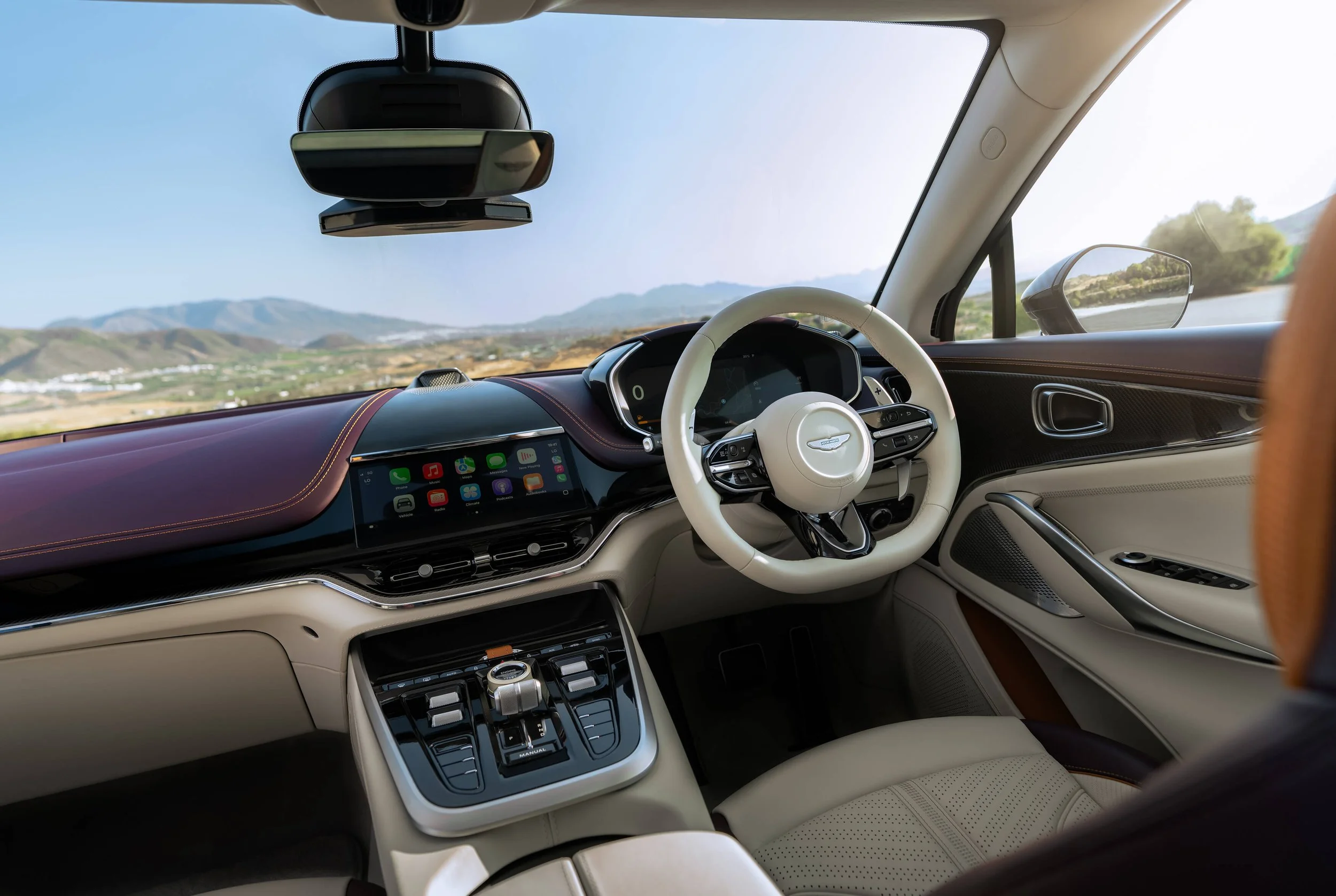
Image © Aston Martin Lagonda. Used for editorial purposes. Aston Martin DBX GT.
Inside, the differences become more significant. Redesigned seats incorporate an additional 10mm of memory foam, while a new individual rear-seat arrangement increases the sense of occasion without sacrificing the DBX's five-seat capability. Anodised metal controls, bespoke GT quilting, perforation and embroidery continue the theme.
Some of the craftsmanship numbers are extraordinary in their own right. Aston Martin says the upholstery of a single front seat can involve 691 metres of thread, 3,297 individual perforations and more than four and a half hours of craftsmanship.
Refinement has received engineering attention too. Aston Martin claims a 13% improvement in Articulation Index, a measure relating to how clearly occupants can hear speech within the cabin. Dampers receive a unique calibration, while throttle response and the nine-speed wet-clutch transmission have also been retuned.
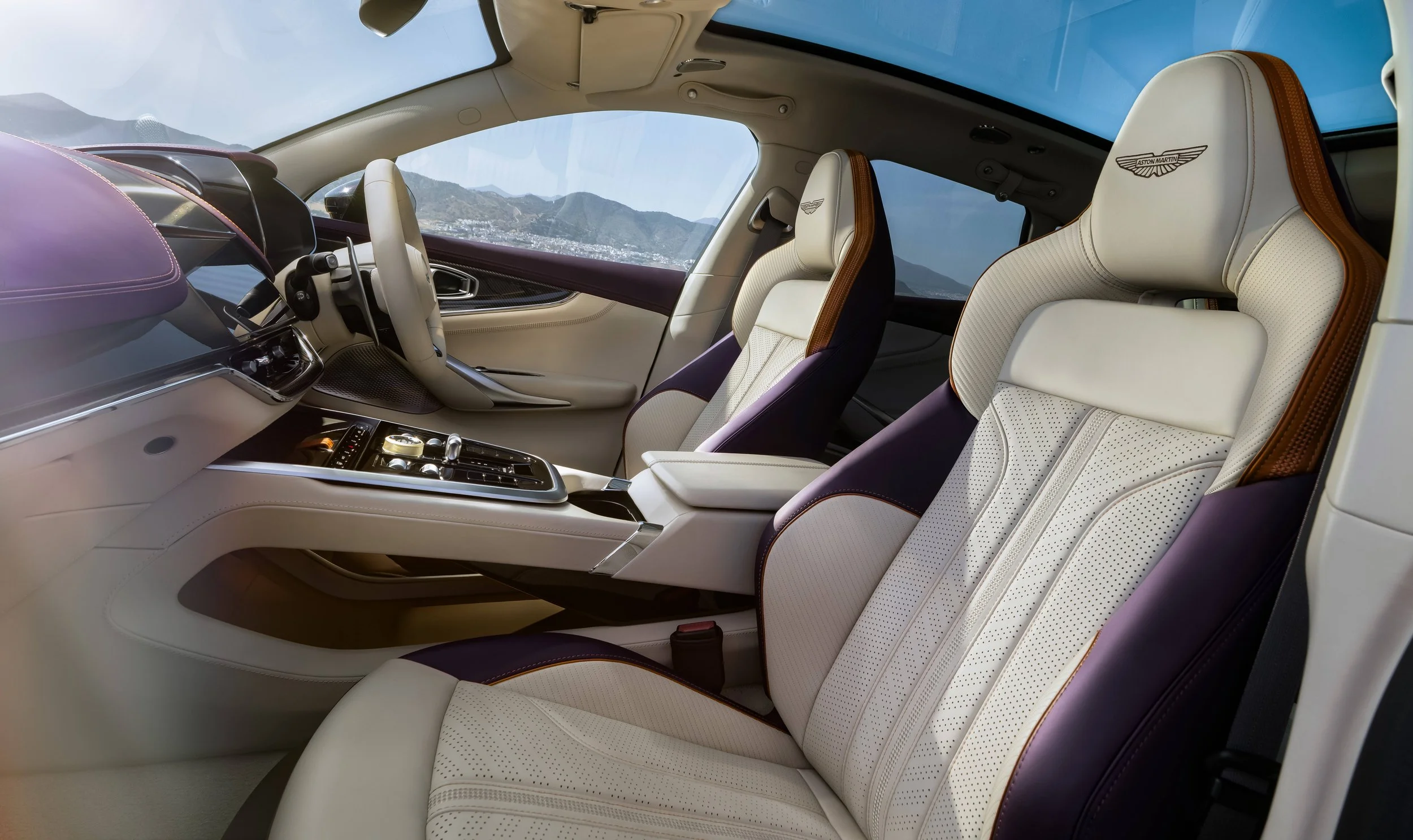
Image © Aston Martin Lagonda. Used for editorial purposes. Aston Martin DBX GT.
There’s even a small but fascinating connection with Valhalla. Development lessons from Aston Martin's mid-engined supercar have informed changes to the DBX GT's transmission mounting, including revised bushings and longitudinal dampers designed to improve refinement.
Taken individually, none of those changes transforms what DBX fundamentally is. Taken together, however, they create something commercially more interesting: two distinctly different interpretations of Aston Martin's SUV sitting alongside one another.
That brings us back to Hallmark. FTP's September feature examined his belief that Aston Martin doesn't necessarily need completely new model lines every time it wants to create another commercial opportunity. Existing architectures can support genuinely differentiated derivatives, provided those derivatives offer customers something meaningful rather than simply another badge and a different set of wheels.
DBX GT may be one of the clearest examples yet of that philosophy becoming visible in the cars themselves.
Deliveries are scheduled to begin during the fourth quarter of 2026. Appropriately, Aston Martin chose somewhere particularly significant for the DBX GT's global debut this week. Its new flagship home in the capital.
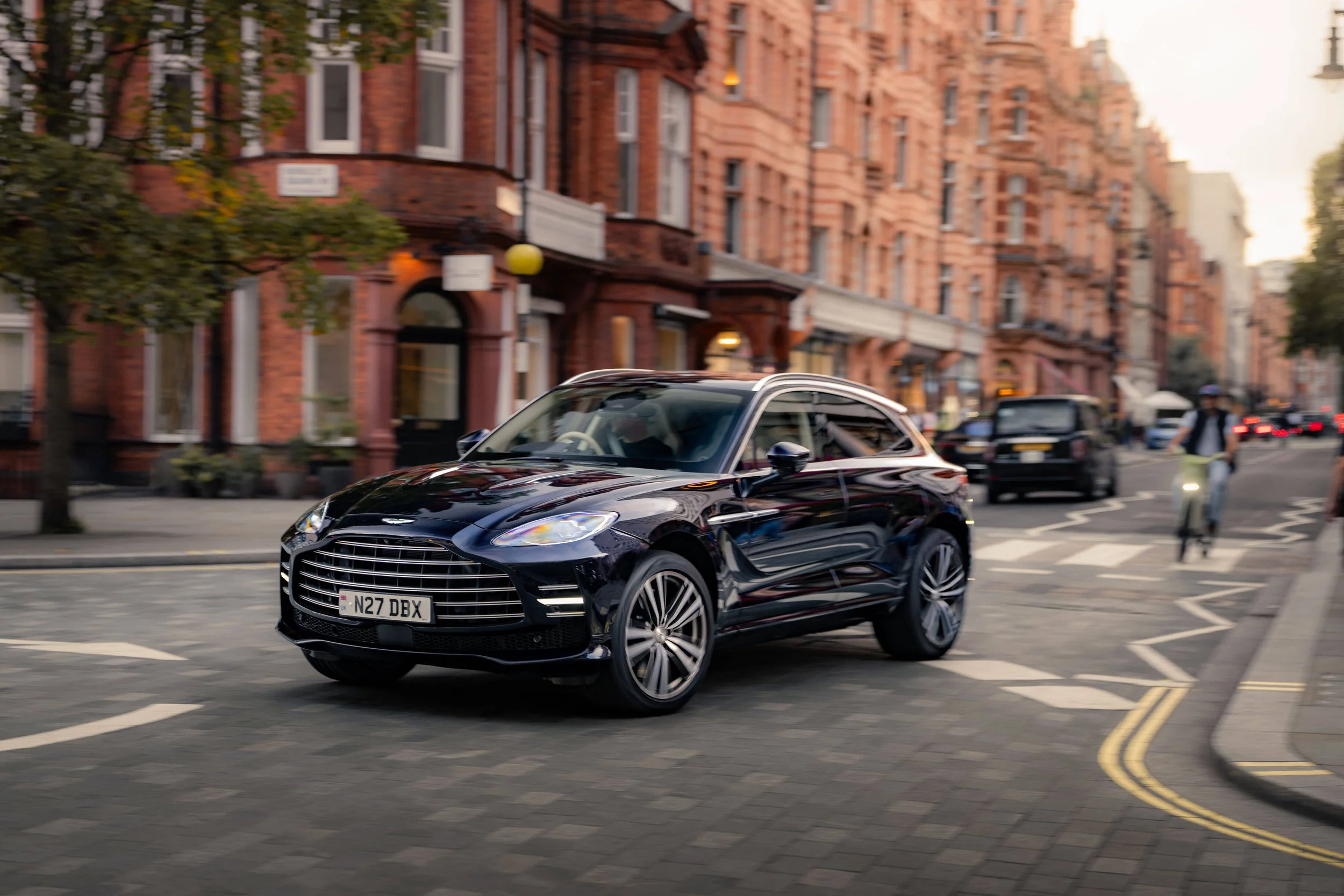
Image © Aston Martin Lagonda. Used for editorial purposes. Aston Martin DBX GT.
From Building Site to Berkeley Square: Q London Opens Its Doors
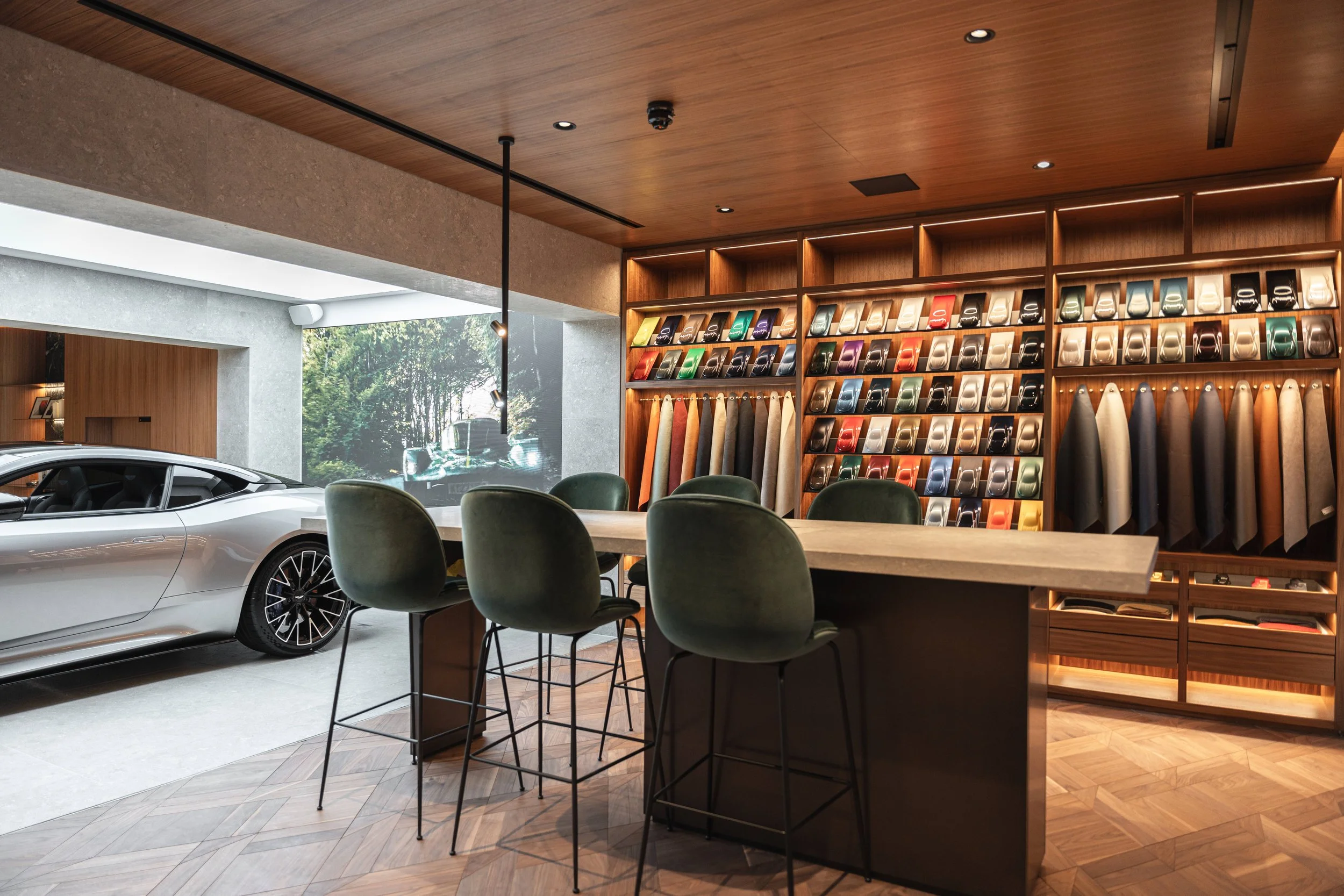
Image © Aston Martin Lagonda. Used for editorial purposes. Aston Martin Q, London.
Fuel the Passion has been following the development of Aston Martin's new London flagship for several months. Back in Issue 25 of the FTP Weekly Roundup, published on 24th May, we reported Aston Martin's plans for a new flagship location in Berkeley Square. The move formed part of a changing approach to the marque's presence in central London, with the new site promising a considerably more immersive luxury specification and customer experience.
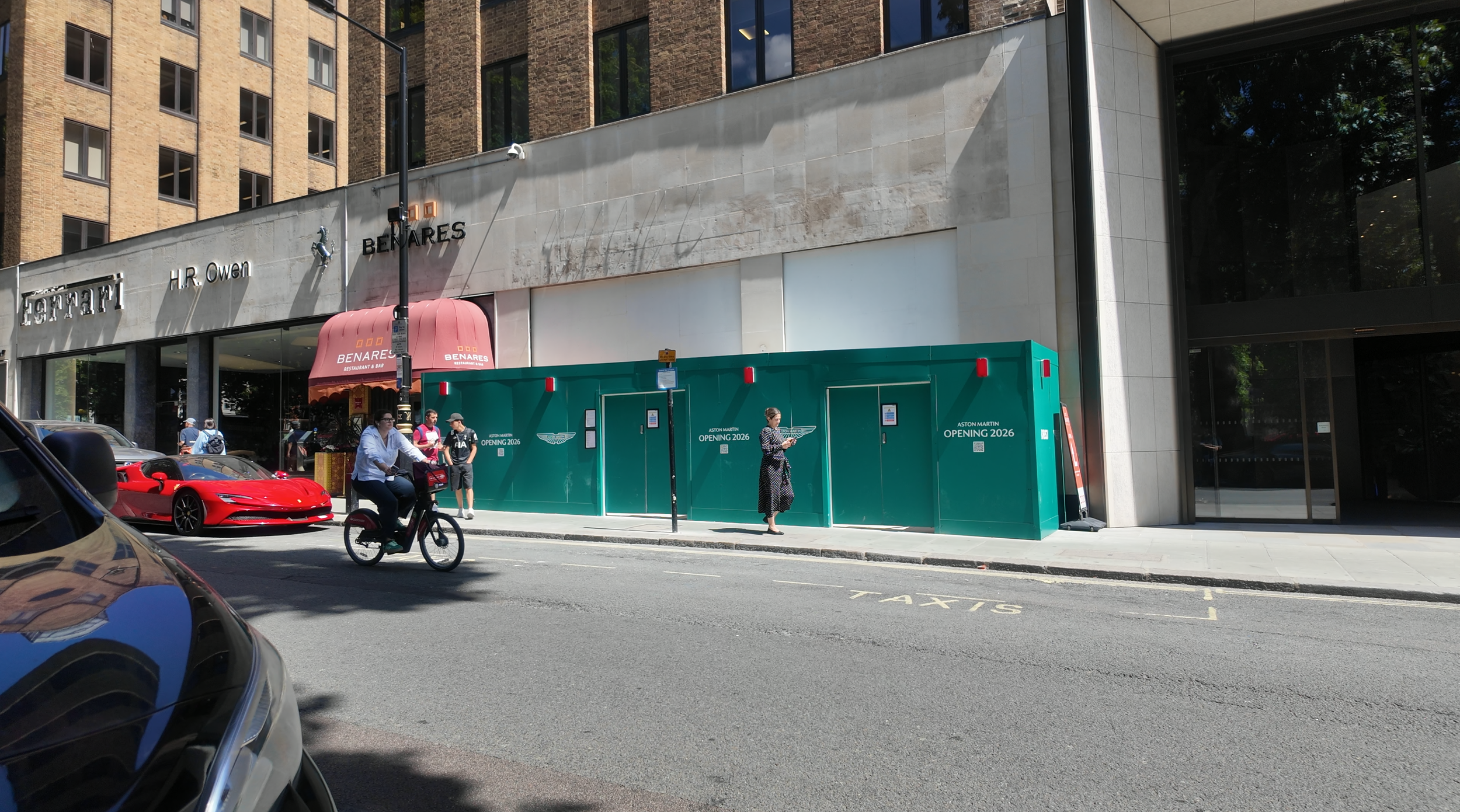
Image © Fuel the Passion. The new Aston Martin Q, London under construction.
Then came Issue 31, published on 5th July.
During an FTP visit to London, I made a point of heading to Berkeley Square to see the future Aston Martin location for myself. At that stage there wasn't much of a showroom to see. The premises were still under construction, hidden behind large green hoardings.
Three months later, we can finally see what was being created behind them.
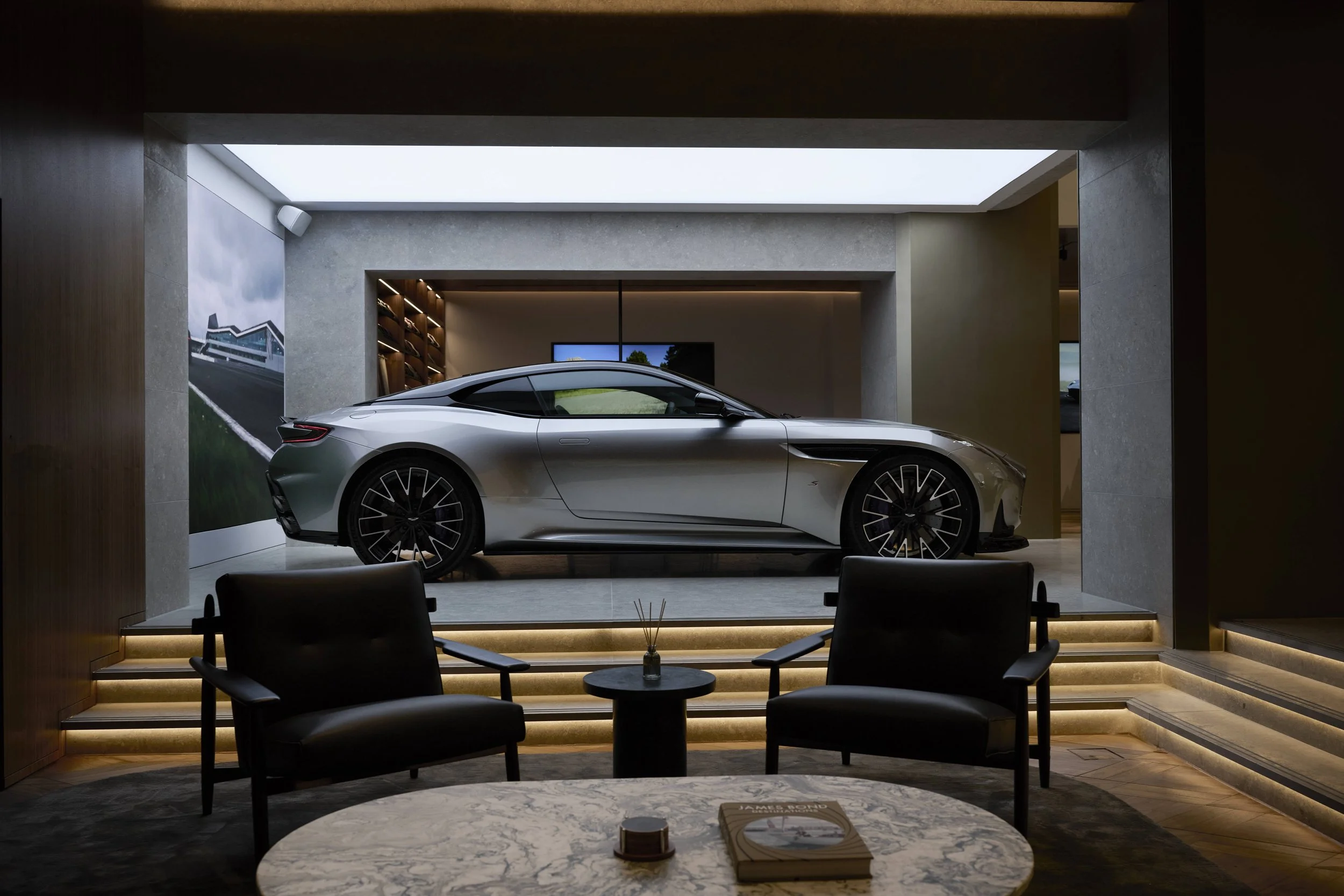
Image © Aston Martin Lagonda. Used for editorial purposes. Aston Martin Q, London.
Aston Martin Q London has officially opened at 14 Berkeley Square in Mayfair, transforming that construction site into a 587m² flagship spread across two floors. Operated by H.R. Owen, it’s been designed to be far more than somewhere to display and sell cars.
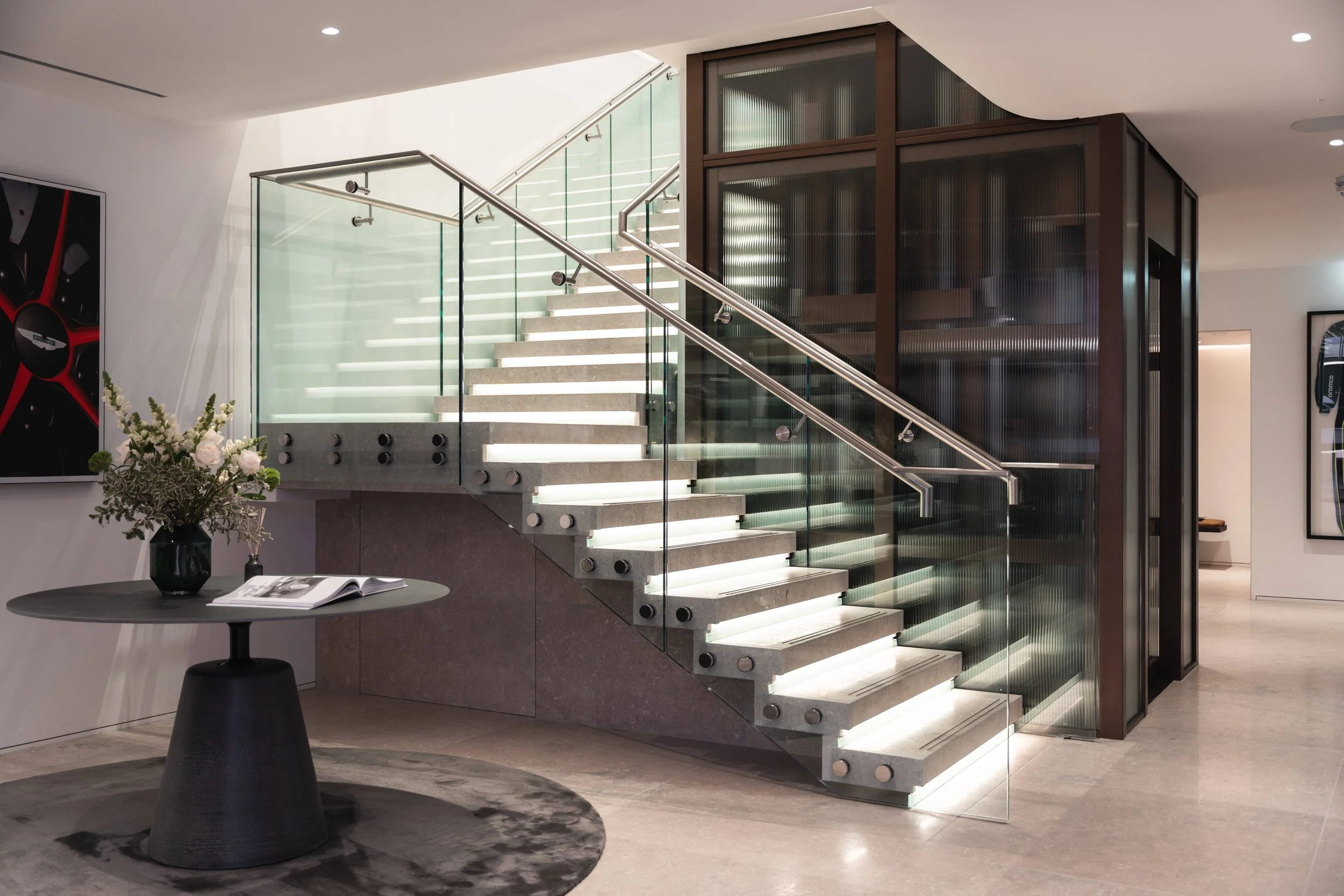
Image © Aston Martin Lagonda. Used for editorial purposes. Aston Martin Q, London.
The ground floor can accommodate up to four Aston Martins alongside informal meeting areas, a customer specification lounge, coffee bar and displays of merchandise and accessories. Bronze-clad arches frame the double-height central area, while an elaborate chandelier of cascading pendulums stretches across the reception space.
Below ground, the experience becomes more private. Customers can arrange individual consultations in a dedicated specification room, reached by a concealed guest lift or glass and limestone staircase, while the lower level can also become an event space.
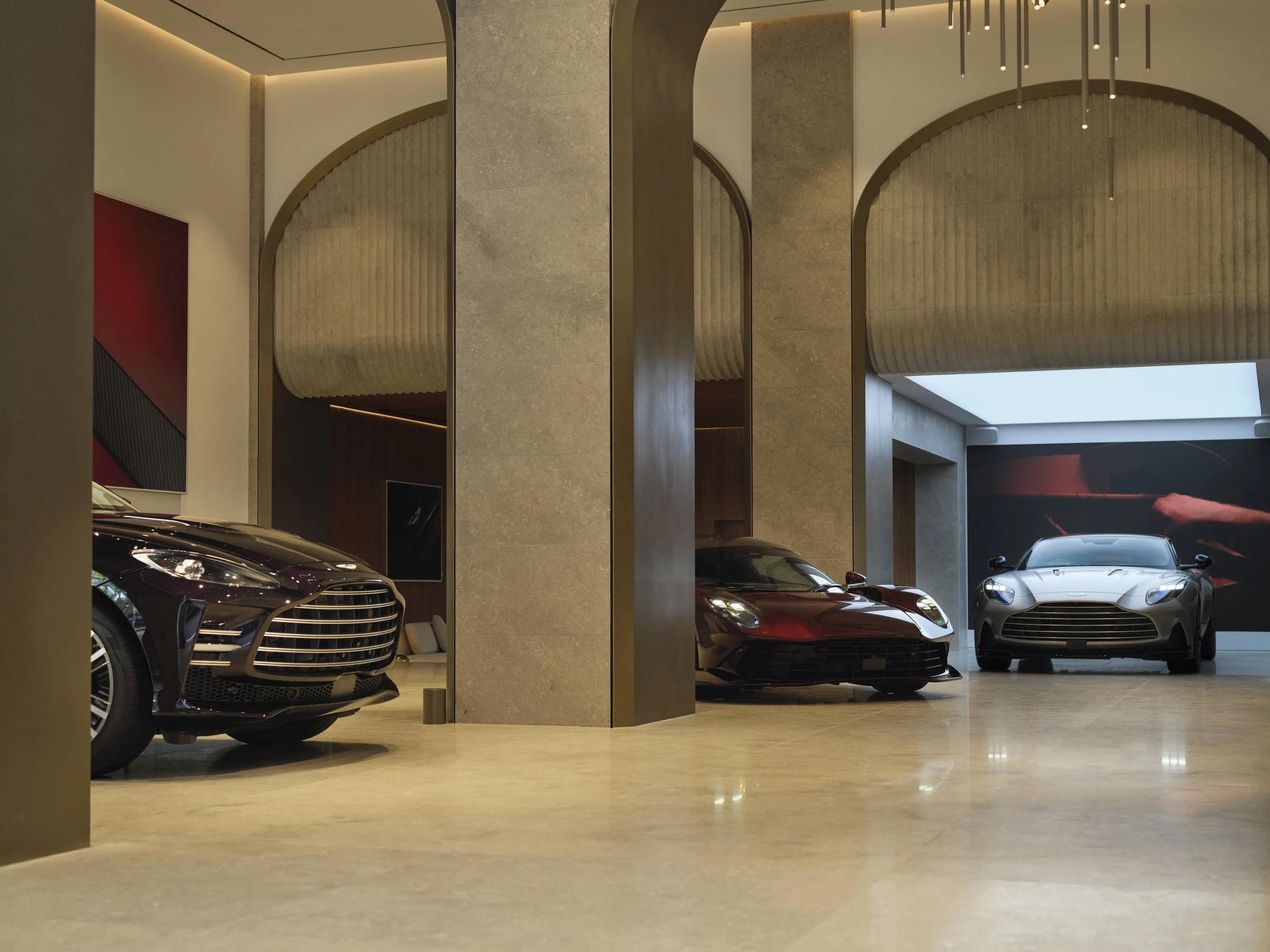
Image © Aston Martin Lagonda. Used for editorial purposes. Aston Martin Q, London.
At the centre of all this is Q by Aston Martin — and this is where the significance of Berkeley Square becomes clearer.
The specification lounge contains more than 500 physical samples, encompassing exterior colours, leathers, stitching, trims and materials. Alongside them is Aston Martin's latest digital visualisation system, built around an enormous screen approximately eight metres wide and three metres high.
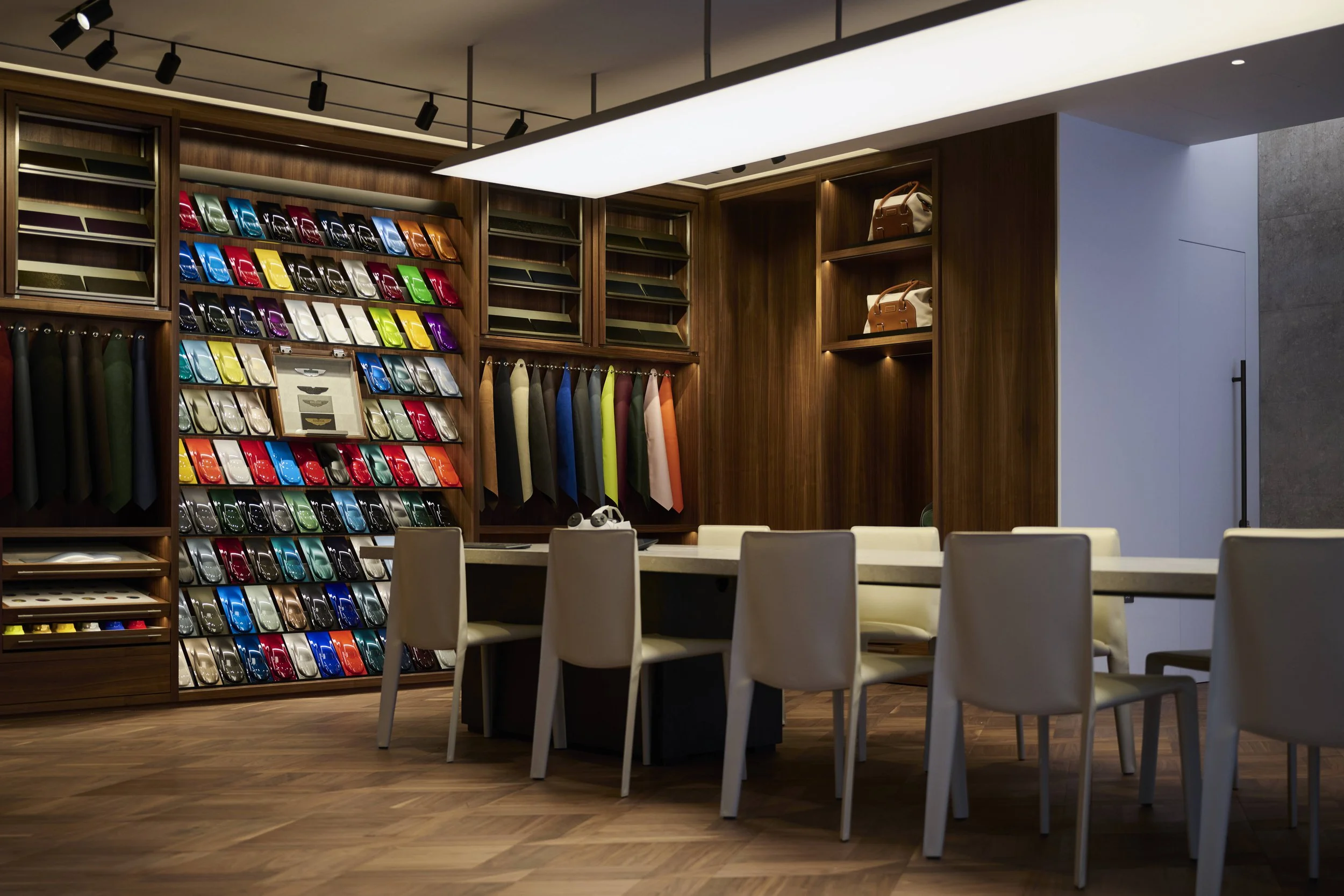
Image © Aston Martin Lagonda. Used for editorial purposes. Aston Martin Q, London.
Design data comes directly from Aston Martin's Design Studio, allowing customers to create near full-size visualisations of different specifications with highly accurate virtual lighting. At one end of the spectrum that might mean choosing a particularly unusual combination of paint, leather and stitching. At the other, Q can extend into deeply personalised special models and completely bespoke commissions.
CEO Adrian Hallmark says Q London will play a “uniquely important role in the world of Aston Martin”, providing both a showcase for the marque and a prominent presence within one of the world's leading luxury shopping destinations.
There's an important connection here with the DBX GT we've just covered. Firstly, see this short film Aston Martin released:
In FTP's September feature examining Hallmark's first two years at Aston Martin, we looked at a strategy that isn't simply dependent upon selling greater numbers of cars. Creating more distinct derivatives, increasing personalisation and encouraging customers to invest more heavily in the specification of each Aston Martin can all create additional value.
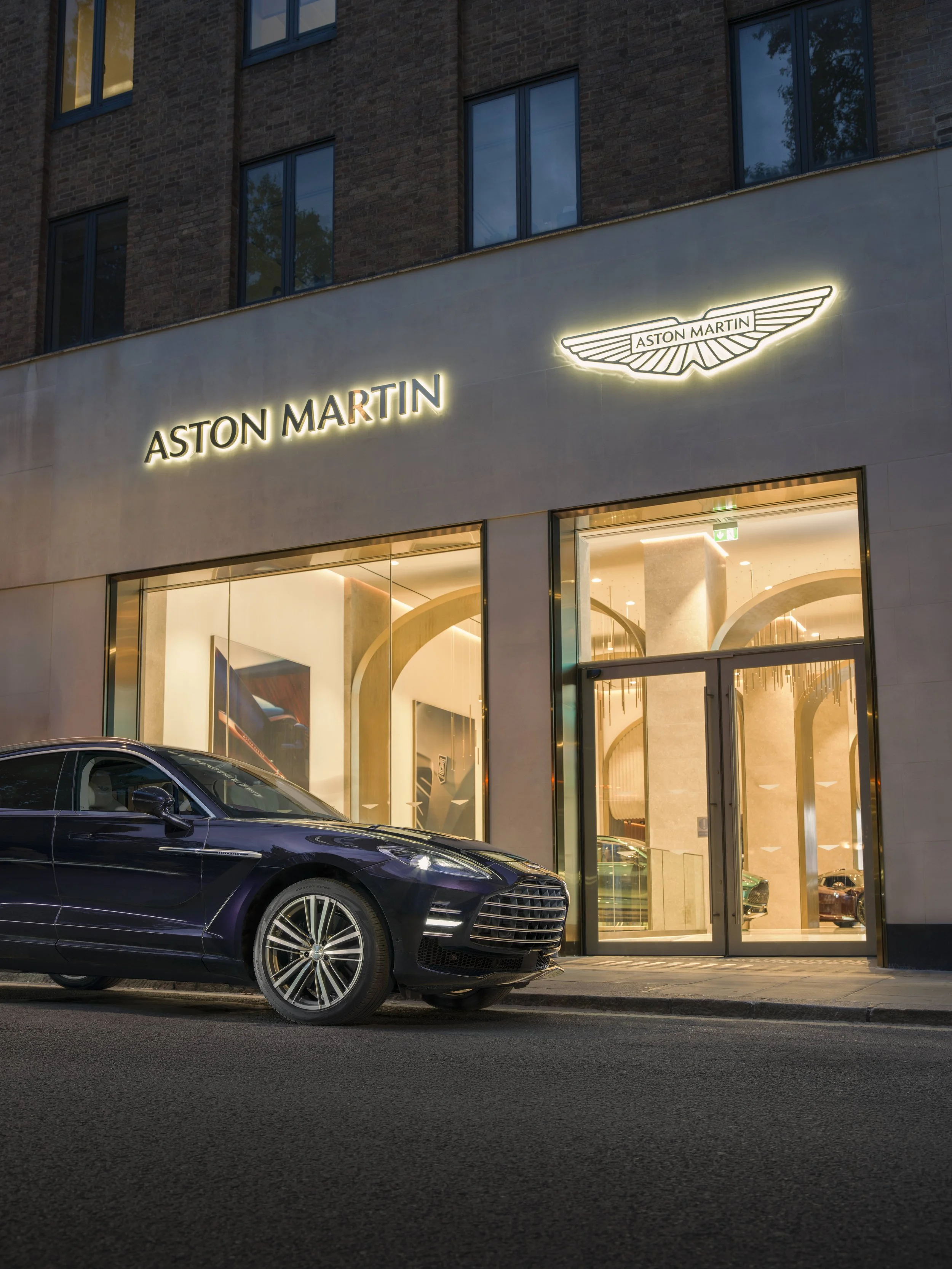
Image © Aston Martin Lagonda. Used for editorial purposes. Aston Martin DBX GT outside Aston Martin Q, London.
DBX GT demonstrates one side of that strategy in the product itself. Q London provides the environment in which customers can take personalisation much further.
It therefore seems particularly appropriate that Aston Martin chose the opening of Berkeley Square for the global debut of DBX GT.
In Issue 31, we showed you the hoardings.
In Issue 44, we can finally show you what was behind them.
Aston Martin Q London officially opened on 1st October, with customer operations commencing Monday 5th October 2026.
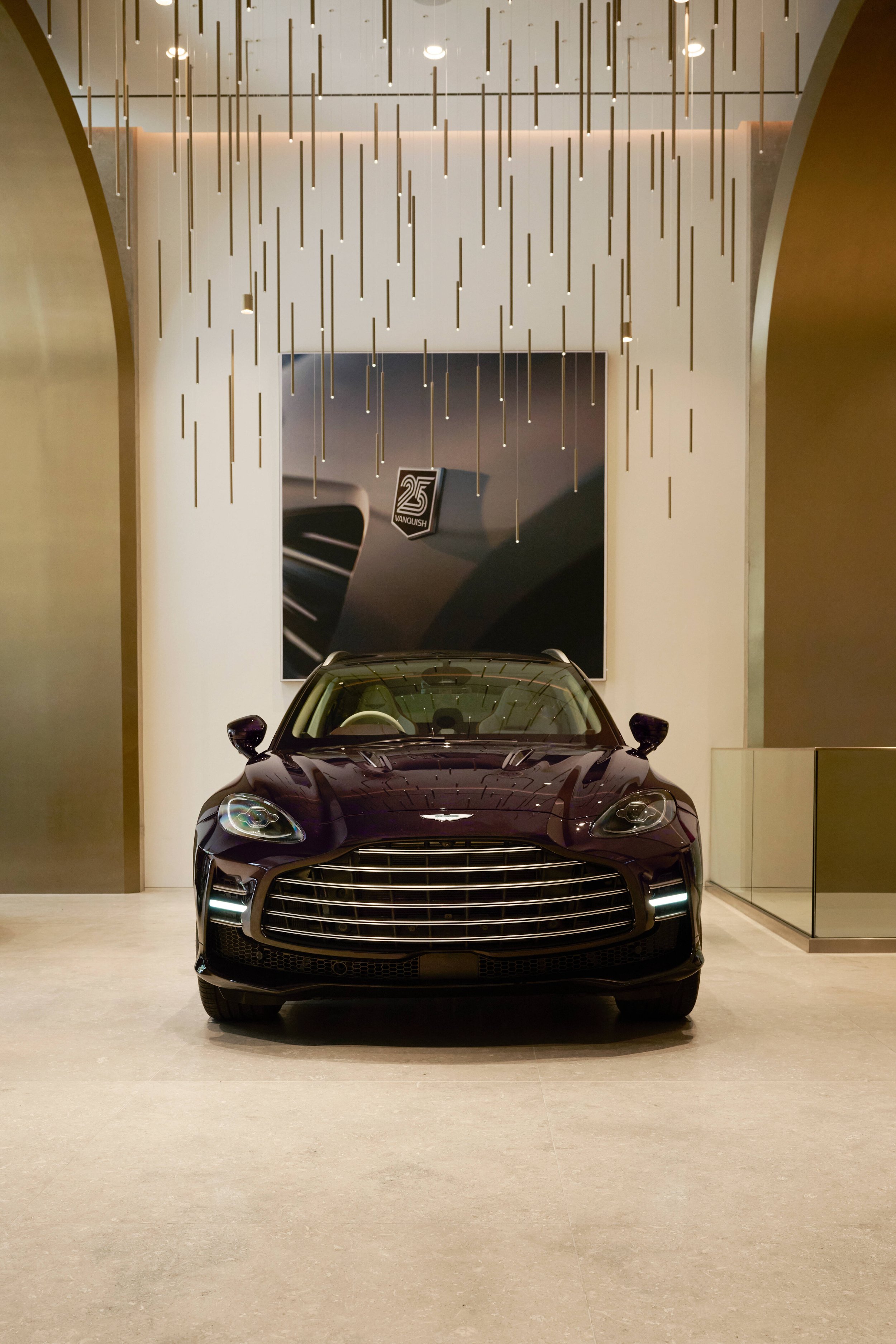
Image © Aston Martin Lagonda. Used for editorial purposes. Aston Martin DBX GT outside Aston Martin Q, London.
Yet however important the showroom experience and the opportunity to create an Aston Martin around its owner may be, ultimately the car itself still has to stir something once the door closes and the road opens ahead. Which brings us rather neatly back to Valhalla.
Valhalla Revisited: Brilliant — But Is Brilliant Enough?
Aston Martin Valhalla has received no shortage of praise since independent road tests began, but a new review from Throttle House offers one of the more thought-provoking assessments we've seen so far. The Canadian-based channel spent time with Aston Martin's 1,064hp hybrid supercar and came away enormously impressed by its ability. Valhalla is brutally fast, confidence-inspiring and apparently remarkably adept at disguising its considerable mass once moving.

Image © Aston Martin Lagonda. Used for editorial purposes. Aston Martin Valhalla.
Throttle House described Aston Martin as having “created a monster”, praising the way its chassis allows the driver to exploit the performance rather than simply endure it. Its road manners impressed too, while the integration of the twin-turbocharged V8, three electric motors and all-wheel-drive system was considered particularly successful.
Yet the central reservation wasn't about performance. It was about character.
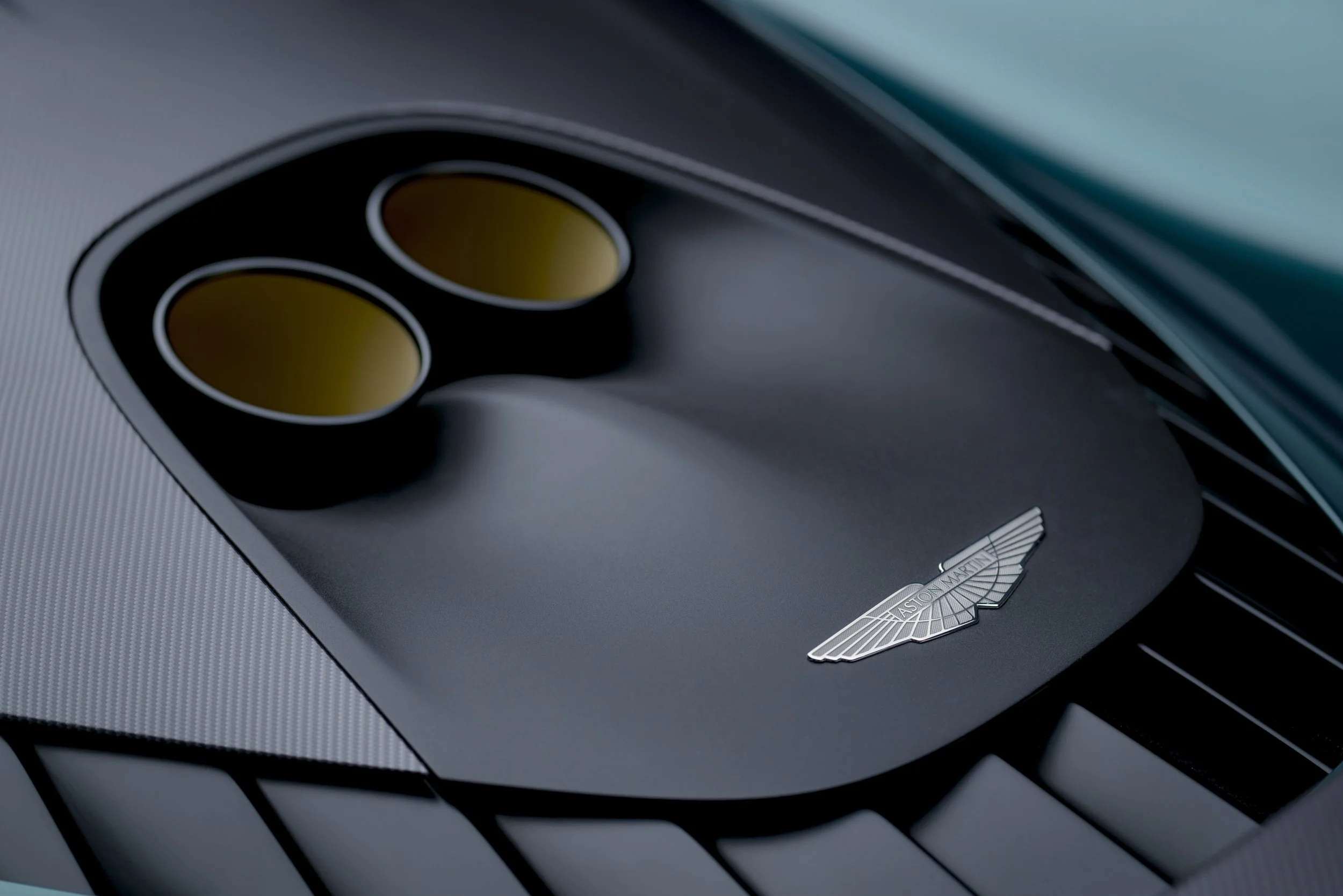
Image © Aston Martin Lagonda. Used for editorial purposes. Aston Martin Valhalla.
For all Valhalla's speed, sophistication and extraordinary competence, Throttle House questioned whether its V8 delivers quite enough theatre for a car occupying this rarefied part of the market. Their observation was neatly summarised in one line:
“Making cars fast isn't as important as making them memorable.”

Image © Aston Martin Lagonda. Used for editorial purposes. Aston Martin Valhalla.
What's particularly interesting for regular FTP readers is that we've been following the independent Valhalla verdict throughout 2026. From the first international launch reviews to road tests and, most recently, Harry Metcalfe spending a full week living with the car, a remarkably consistent picture has started to emerge.
Throttle House now gives us another opportunity to compare those findings.
The progression through those reviews is perhaps more revealing than any single verdict. The early launch tests established the fundamentals: Valhalla is extremely fast, remarkably approachable and much more usable than its specification suggests. Later road tests began to show that those qualities weren't confined to carefully selected launch routes.
His experience reinforced something we've seen repeatedly: Valhalla's achievement isn't simply that it can produce extraordinary performance. It’s that Aston Martin has made all that complexity surprisingly manageable on an ordinary road. Throttle House broadly agrees. Once again we hear praise for the chassis, the integration of the hybrid system, the confidence it gives its driver and the way the car disguises its weight. Different reviewers are therefore arriving at remarkably similar conclusions about what Aston Martin's engineers have got right.
Where Throttle House becomes particularly interesting is in returning to the question that appeared during those earliest reviews: emotion. Their concern isn't that the engine lacks performance. It plainly doesn't. The question is whether its sound and character provide enough theatre for a car at this level.
After six months of following Valhalla reviews, perhaps we're now in a position to say something more meaningful than simply whether the car is “good”. There appears to be a growing consensus that Valhalla is an exceptionally accomplished piece of engineering. Its speed is beyond question. Its chassis has repeatedly impressed. Its hybrid system works. Perhaps most unexpectedly, it can apparently be lived with.
The remaining debate is more subjective. Does Valhalla engage the heart quite as completely as it overwhelms the stopwatch?
Top Gear Revisits an Aston Martin Film That Refuses to Grow Old
Sometimes a motoring film becomes more memorable than the car review it was originally intended to be. This week, Top Gear Classic returned to one of the best-known Aston Martin films of the modern era: Jeremy Clarkson driving the original V12 Vantage in Series 13 of Top Gear. For anyone who watched it when it was first broadcast in 2009, it's difficult to forget, that original version is above; to watch it just click on the image.
The ingredients were relatively simple: a compact Aston Martin, a naturally aspirated 6.0-litre V12, a manual gearbox and Clarkson driving through some spectacular British countryside. Towards the end, however, the tone changed completely. This was no longer really about acceleration figures or lap times. Clarkson began contemplating whether cars such as the V12 Vantage were approaching the end of the road, with environmental pressures, economic realities and an increasingly difficult landscape for high-performance cars leading him to wonder whether machines like this would eventually disappear.
It became an extraordinarily atmospheric piece of television, but what's perhaps more remarkable is how strongly it continues to resonate all these years later. Top Gear subsequently uploaded the sequence to YouTube in 2012, where it has accumulated more than 2.5 million views, while this week's Top Gear Classic re-release has introduced it to another audience.
A striking number of comments focus on the cinematography and atmosphere, describing the sequence less as a conventional car review and more as a piece of filmmaking. Others remember the music, the scenery and particularly that melancholy change of tone as Clarkson contemplated whether cars such as this were approaching the end of their era. There's considerable nostalgia, but it isn't confined to people who watched the original television broadcast. Some commenters describe discovering the film years later and still being affected by it, while others say it influenced their enthusiasm for Aston Martin and, in a few cases, even their subsequent choice of car. Those ownership stories are individual anecdotes rather than something FTP can independently verify, but their presence says something about the connection this particular film appears to have created.
Perhaps most interestingly, the comments have developed into a continuing debate about whether Clarkson's prediction was right. Some viewers look at electrification, smaller engines and the increasing complexity of modern performance cars and conclude that his warning was remarkably prescient. Others point to the extraordinary combustion-engined cars still being produced and argue that the ending never really arrived; the industry simply changed.
That gives Top Gear's decision to revisit the film in 2026 an added resonance. We aren't merely watching an old V12 Vantage again; we're able to compare what enthusiasts feared might disappear in 2009 with the Aston Martins being built today. The naturally aspirated V12 Vantage Clarkson drove has indeed gone and, in that respect, he wasn't entirely wrong about the pressures facing cars of its type. Yet the V12 Aston Martin hasn't disappeared. Far from it.

Image © Aston Martin Lagonda. Used for editorial purposes. Aston Martin Valen.
Only in August, Aston Martin unveiled Valen, a front-engined, rear-wheel-drive supercar powered by a 5.2-litre twin-turbocharged V12 producing 850PS and 1,000Nm. With a 214mph top speed, carbon-fibre body and specially tuned titanium exhaust, just 150 examples are planned, with first deliveries scheduled for the second quarter of 2027. Valen is obviously a very different proposition from the comparatively simple V12 Vantage Clarkson drove, vastly more powerful, considerably more exclusive and occupying a very different part of the Aston Martin range, but its existence feels significant when viewed alongside this resurfaced Top Gear film.

Image © Aston Martin Lagonda. Used for editorial purposes. Aston Martin Valen.
Aston Martin describes Valen as the most powerful front-engined supercar it has ever produced, but perhaps more interesting in the context of this discussion is the emphasis placed on its V12, sound and driver connection: precisely the qualities enthusiasts watching Clarkson's film feared might disappear.
The timing also makes the Top Gear re-release an intriguing companion to the Throttle House Valhalla review we've just discussed, because its observation that “making cars fast isn't as important as making them memorable” raises a question this old V12 Vantage film almost seems designed to answer.
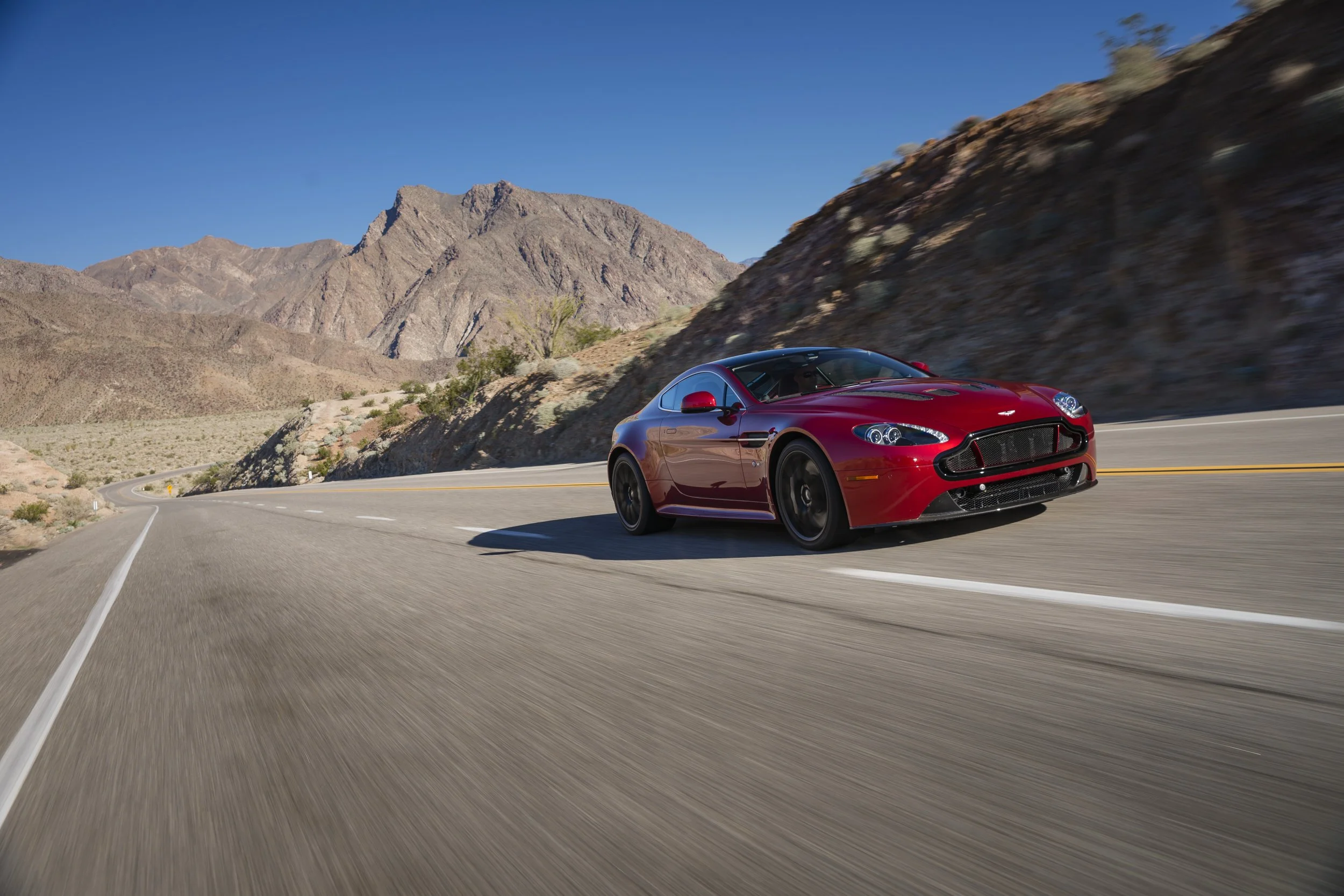
Image © Aston Martin Lagonda. Used for editorial purposes. Aston Martin Vantage V12.
By modern standards, the Vantage's performance figures are no longer extraordinary. Valhalla would comprehensively outperform it and Valen belongs in an entirely different performance league, yet here we are, seventeen years after the original television broadcast, still discussing the V12 Vantage, still remembering the sound, the landscape and the way Clarkson ended the film.
Perhaps that's the distinction. A memorable car isn't necessarily the one that produces the biggest number; sometimes it's the one that creates an experience people continue talking about long after those numbers have ceased to impress.
Not yet, Jezza. Not yet.
From the AMOC & Aston Martin Heritage Trust
From one reminder of Aston Martin's past to the people and organisations helping to preserve, celebrate and enjoy it today, there's plenty happening across the Aston Martin Owners Club and Aston Martin Heritage Trust this month.
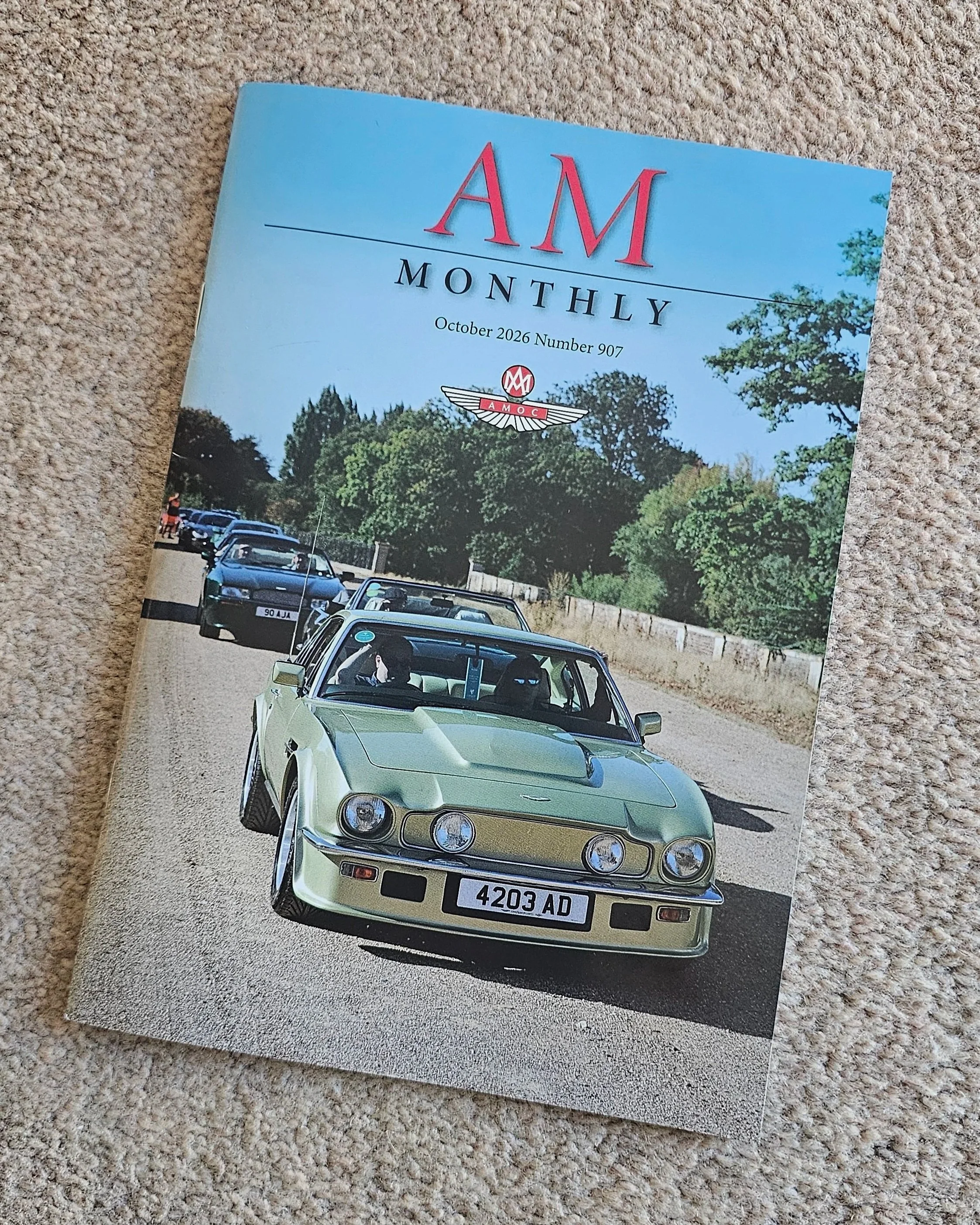
Front Cover of AM Monthly Image © Aston Martin Owners Club. Used for editorial purposes.
There's something particularly enjoyable about the arrival of a new Aston Martin Owners Club magazine, and the October 2026 edition of AM Monthly landed through the FTP letterbox this week. Issue 907 brings together the familiar mixture of Club news, forthcoming events, members' experiences and Aston Martin history, with an introduction to Jason Karr, the new AMOC Chairman, among the updates.
The calendar is certainly showing no signs of slowing down. October includes gatherings in Belgium and the UK, an Aston Martin Owners Meet at Ace Café London, the AMOC Autumn Drive and the Club's Spain Experience from Barcelona to Monaco, while dates already extend well into 2027. As ever, the magazine goes considerably further than simply listing events, bringing together the people, cars and stories that make the Club such an important part of the wider Aston Martin community. If you're an AMOC member and your copy has arrived too, this is one worth putting the kettle on for.
There's news from the Aston Martin Heritage Trust (AMHT) too. Its partnership with the Automobile Café has officially launched, the Trust's heritage podcast continues to develop and another addition has arrived at the museum at a particularly appropriate moment.
A Morning Frost Vanquish Volante is now on display until the end of the year, joining the Trust's first- and second-generation Vanquish cutaway cars as part of its celebration of 25 years of Aston Martin Vanquish. Bringing the generations together offers visitors an unusual opportunity to see how one of Aston Martin's most important modern nameplates has evolved, while the cutaway cars provide a fascinating look beneath the surfaces at the engineering that normally remains hidden.
For anyone considering a visit to the Heritage Trust before the end of 2026, this seems like a particularly good time to go.
With heritage very much in mind, this week's Car of the Week seems an especially appropriate place to go next, although not for the first time, choosing just one car proved impossible!

Car of the Week: Twice the DB6 Volante for a 60th Birthday
Our regular Car of the Week normally focuses on one Aston Martin, but occasionally an anniversary and the classifieds give us an excuse to bend the rules.
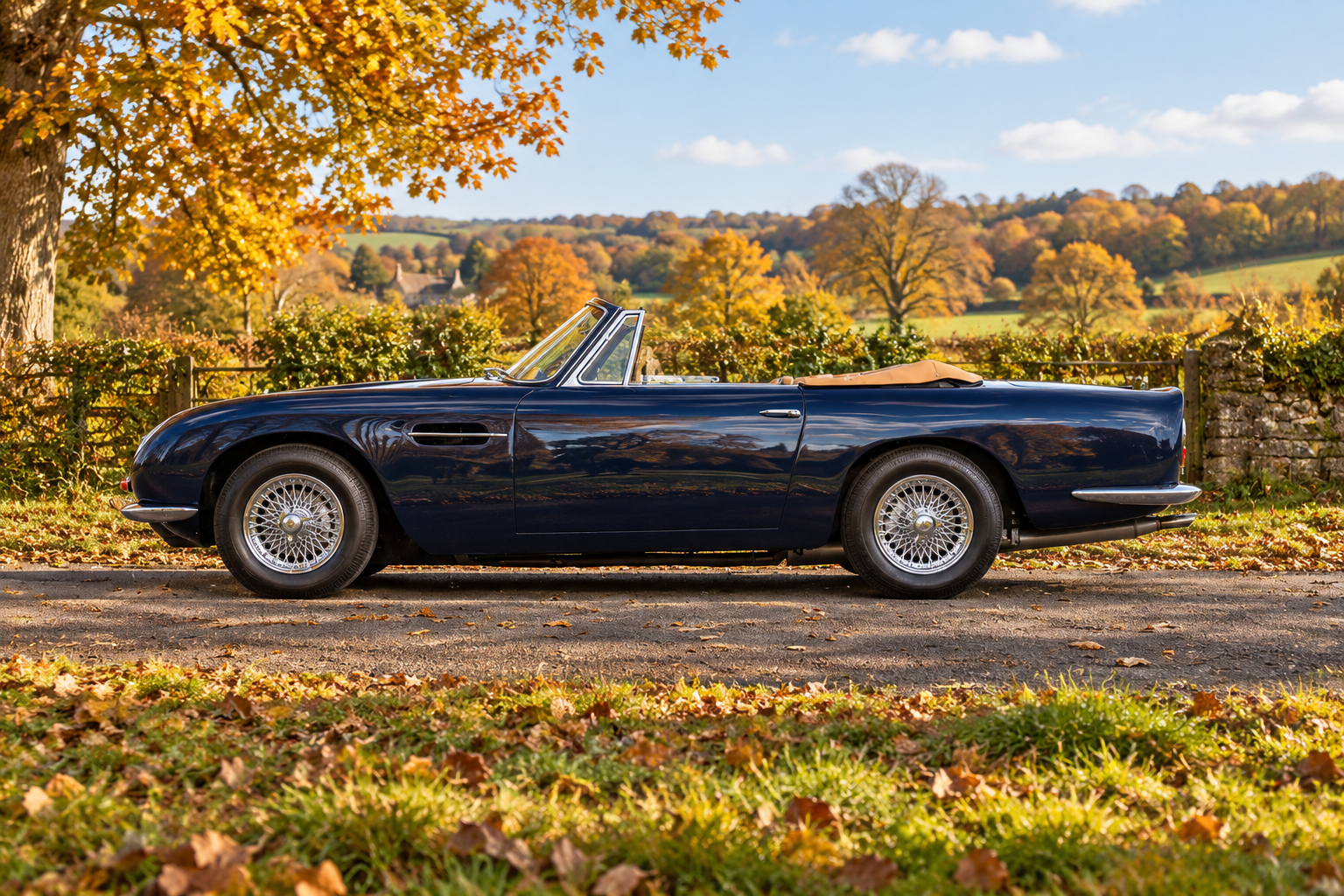
Image © Fuel the Passion. For illustrative purposes.
Sixty years ago, the DB6 Volante was unveiled at the 1966 London Motor Show, replacing the extraordinarily rare Short Chassis Volante. The distinction is worth making: Aston Martin first used the Volante name in 1965 on that 37-car model, but 1966 marked the arrival of the DB6 Volante itself. Only 140 examples would ultimately be produced, making it one of the rarer open Aston Martins of the David Brown era.
Rather conveniently, two very different examples are currently being offered by two of the best-known names in the Aston Martin world.
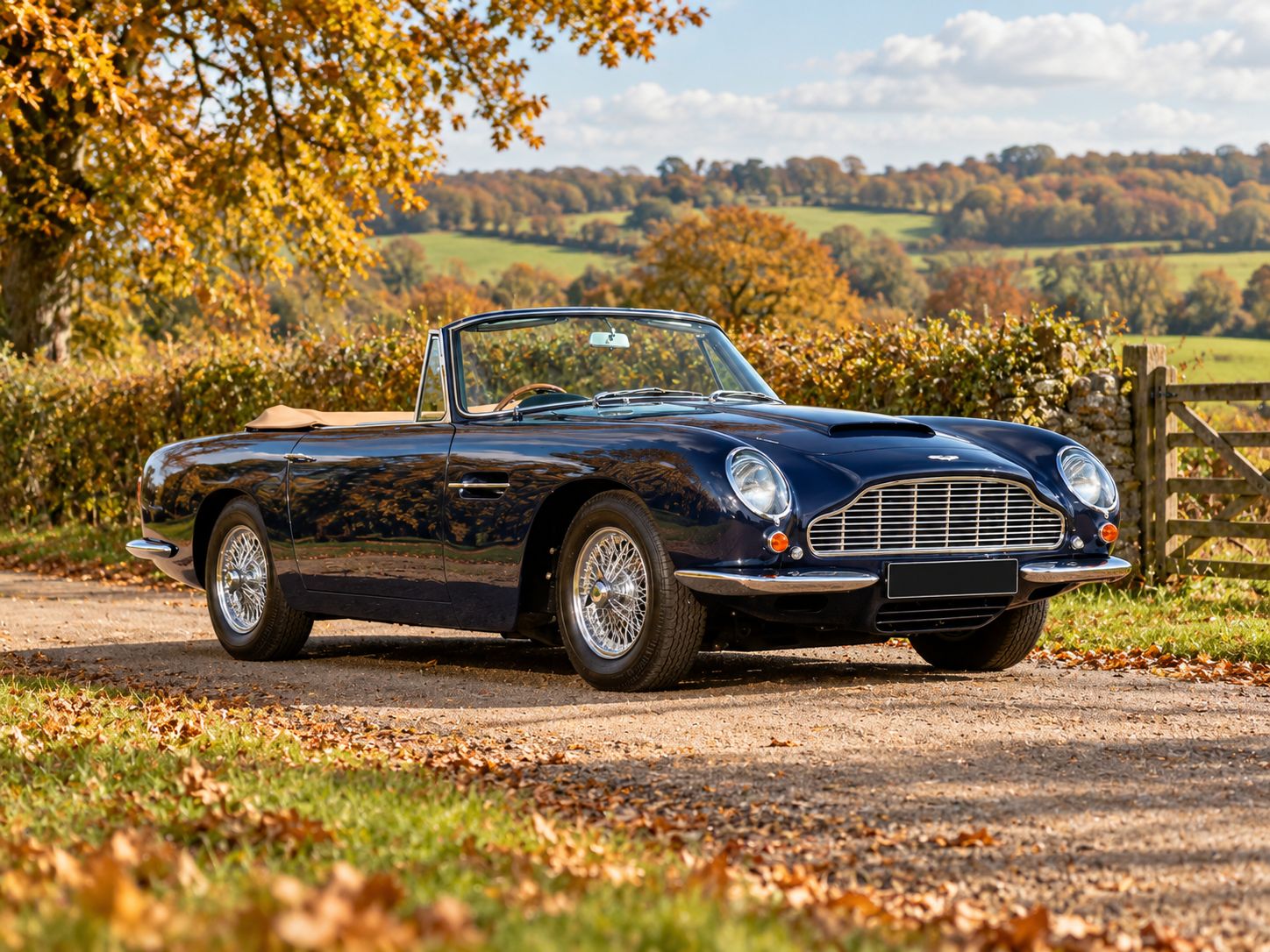
Image © Fuel the Passion. For illustrative purposes.
The first is a 1967 DB6 Volante offered by Nicholas Mee & Co, finished in blue with a natural interior and showing 48,659 miles. Importantly, it retains the specification with which it was built, including automatic transmission, power-assisted steering, power-operated hood and chrome wire wheels. Its asking price is currently £535,000, having previously been advertised at £595,000.
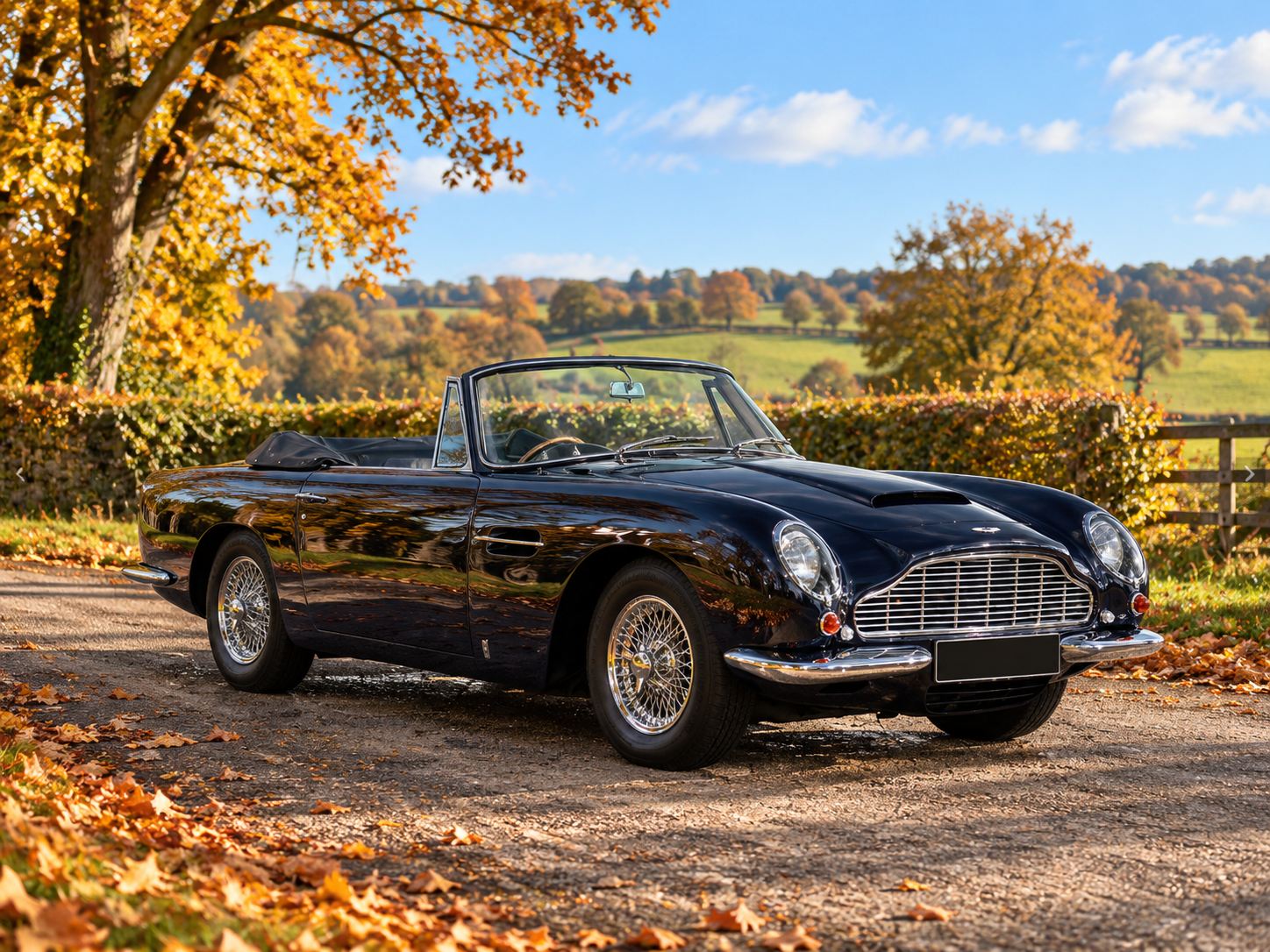
Image © Fuel the Passion. For illustrative purposes.
The second has effectively returned home. Aston Martin Works at Newport Pagnell is offering a DB6 Volante registered in June 1968 for £595,000. Originally finished in Platinum White with black trim and automatic transmission, it was subsequently converted to the correct ZF five-speed manual gearbox. Works records document a substantial mechanical overhaul in 1980 and a later restoration during the 1990s, when the car acquired the Dark Blue paint and Navy trim it wears today. Aston Martin Works says its most recent owner enjoyed the car sparingly for around 20 years before its return to Newport Pagnell.
The £60,000 difference between the two asking prices shouldn't be interpreted as a verdict on their relative values. With cars of this age and rarity, provenance, restoration history, originality, specification and condition all play an enormous part, and these are asking prices rather than recorded sale results. What makes the pairing interesting is how differently two surviving DB6 Volantes can tell their stories: one retaining its automatic touring specification, the other having evolved through decades of ownership and restoration into a five-speed manual.
We've spent quite a bit of time with the DB6 at FTP this year, including the remarkable fuel-injected DB6 Mk2 and the DB6 Vantage Volante that appeared in our earlier coverage. Perhaps that's appropriate. Sixty years after the DB6 Volante arrived, its combination of elegance, four-seat grand touring and open-air motoring still looks remarkably convincing.
This week, then, we're not choosing between them. For the DB6 Volante's 60th birthday, both can be our Cars of the Week.
For anyone tempted to investigate further, the two current listings can be viewed via the highlighted links above (shown underlined).
The calendar brings together significant Aston Martin model launches, milestones and anniversaries in one place, helping enthusiasts look ahead to the stories and cars worth celebrating throughout the year. This week it gave us the perfect reason to do something slightly different with Car of the Week — and choose two.

Those anniversaries give us plenty of reasons to look back, but this first Roundup of October is also our opportunity to look at where Aston Martin stands today, beginning with the latest five-week picture for the road-car business.
Aston Martin Business: The Five-Week Picture

Image © Fuel the Passion
It's time for our monthly look beyond the cars themselves and at the business responsible for building them. When we introduced this regular five-week review, the intention wasn't to treat Aston Martin's share price as a weekly scorecard. Individual trading days can tell us remarkably little about the health of a company, particularly one undergoing as much financial and operational change as Aston Martin Lagonda. Looking across several weeks gives us something more useful: the direction of the market price, the developments sitting behind it and, occasionally, signs that investors are beginning to view the company differently.
This month's picture is unusual because, despite plenty happening around Aston Martin, the shares have spent much of September moving within a relatively narrow range.
Five-Week Market Snapshot
Share-price movement from 1 September to 2 October 2026
Those numbers require some perspective. Aston Martin hasn’t issued another set of financial results during this five-week window; its most recent reported figures remain the half-year results published in July. Those showed considerably stronger operating momentum than a year earlier: first-half wholesale volumes increased 21% to 2,331 cars, revenue rose 38% to £628.6 million and gross profit increased 68% to £212.5 million, lifting gross margin from 27.9% to 33.8%. Free cash outflow also improved, although the company remained cash-consuming and net debt stood at £1.545 billion at 30th June.
Regular readers will recognise the wider financial picture. We first followed Aston Martin's search for additional financing in Issue 33, explained the completed £550 million package in Issue 34, examined the subsequent creditor challenge in Issue 36 and returned to the dispute when it progressed further in Issue 39. More recently, our Adrian Hallmark: Two Years On Featured Article brought those threads together with a much deeper examination of the turnaround itself.
There seems little value in repeating all of that again here. The essential position hasn't fundamentally changed: Aston Martin remains heavily indebted and cash generation remains one of the crucial tests of the turnaround, while the creditor dispute surrounding July's financing continues to provide an additional source of uncertainty. The existence of that dispute should still be distinguished from any eventual legal finding.
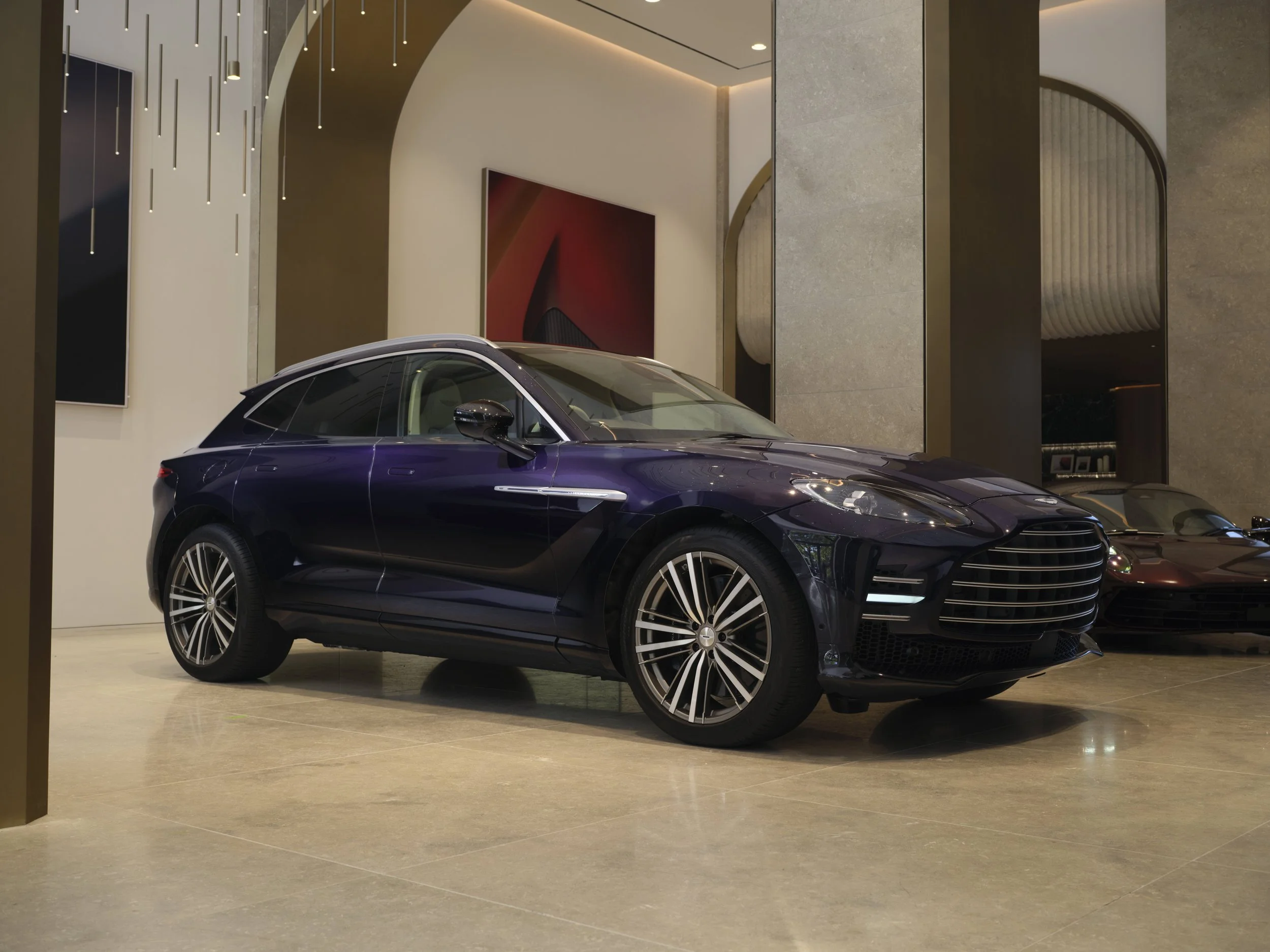
Image © Aston Martin Lagonda. Used for editorial purposes. Aston Martin DBX GT, Q London.
What’s become clearer during the past five weeks is the other side of Hallmark's strategy. Earlier in this Roundup we've seen DBX GT extend the existing DBX family in a deliberately different direction, while Q London places personalisation at the heart of Aston Martin's new Berkeley Square flagship. Both fit a commercial approach we've been following for months: realistic volumes, more meaningful derivatives and greater value from each car sold rather than simply chasing higher production.
That makes the share-price picture interesting. AML has spent much of this review period trading within a relatively narrow range rather than making another dramatic move in either direction. The final figures for our five-week review are shown in the market snapshot above.
The more important question remains unchanged: can the operational improvements and increasingly visible commercial strategy eventually produce the dependable cash generation required to support the business? For now, the answer remains unresolved. Aston Martin is showing signs of becoming a more disciplined operation, but the financial turnaround still has a great deal to prove.
From the bigger picture at Aston Martin, let's bring things a little closer to home, because it's also been an important week here at Fuel the Passion, particularly for our developing collaboration with Blackthorn Racing.
FTP Update: A Race Cut Short — and the Blackthorn Story Continues
Regular readers may remember that in last week's Roundup I explained that we'd already captured a considerable amount of footage with Blackthorn Racing, but that there were still a few licensing and administrative details to resolve before some of those films could begin appearing on the team's own YouTube channel. Well, we've made some progress.
On Friday, the first of those productions went live. It's called A Race Cut Short, runs for just 5 minutes and 51 seconds, and marks something of a milestone in the developing collaboration between Blackthorn Racing and Fuel the Passion: it's the first FTP-produced film to be published on Blackthorn Racing's own YouTube channel. It isn't really about an Aston Martin, either. Instead, it takes us back to Goodwood Revival, where we explored another side of Blackthorn Racing and followed the team's Commercial Director and amateur racing driver, Julien Draper, as he prepared to compete in one of the fastest and most spectacular races of the weekend.
You can watch the film via the image below:
Most FTP readers will know Blackthorn primarily through its modern Aston Martin programme. The team is an official Aston Martin AMR Partner Team, racing Vantage GT3s across several championships, and we've followed its progress closely through the FTP Motorsport Hub this season. But as we touched on last week, there's another side to Blackthorn too: historic motorsport.
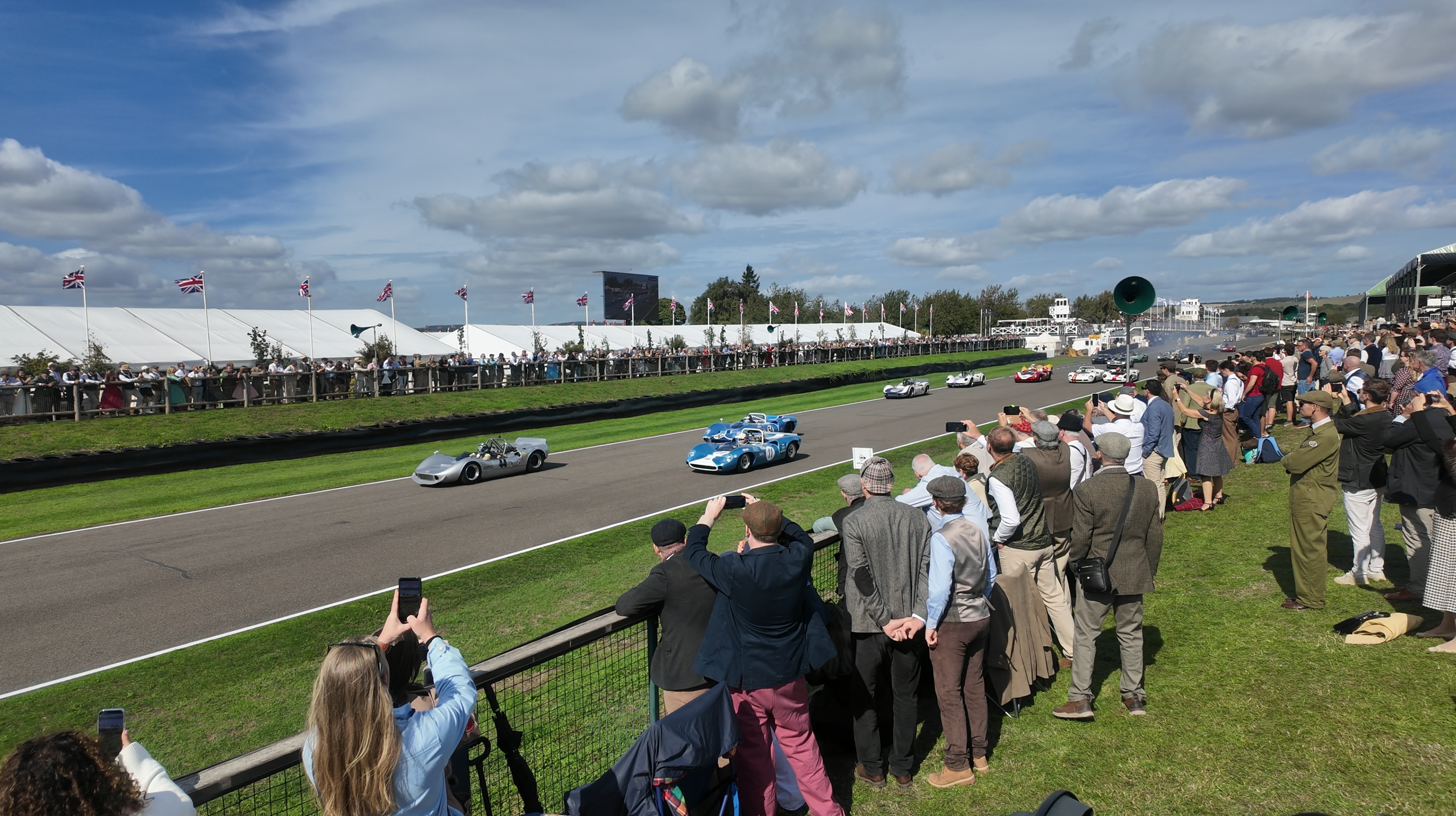
Image © Fuel the Passion. Whitsun Trophy gets underway, Goodwood Revival 2026.
This year's Goodwood Revival gave me the opportunity to explore that side of the team. Revival is particularly special to me because attending with my Dad has become an annual ritual we've happily followed since the event began. This year was slightly different. On race day I temporarily swapped being a spectator for carrying the cameras, because Blackthorn's Commercial Director and amateur racing driver, Julien Draper, was competing in the Whitsun Trophy.
For anyone unfamiliar with it, the Whitsun Trophy is one of Goodwood Revival's great spectacles: a race for sports-racing prototypes from the 1960–66 period, featuring machines such as Ford GT40s, Lola T70s and McLarens. Goodwood calls it the fastest race of the Revival, and standing anywhere near these cars makes it very easy to understand why.
Julien was driving the wonderful 1966 Attila-Chevrolet MkIII, and he'd already achieved something impressive before Sunday's race had even begun. Despite the Attila giving away considerable power to some of its rivals, he qualified sixth, placing the car amongst some formidable machinery. Goodwood has previously recorded the Attila at around 385hp, with Julien explaining that its lower power could actually offer advantages under braking and when getting back onto the throttle against cars producing around 500hp.
A Race Cut Short isn't intended to be a conventional race highlights film. Instead, it introduces you to Julien and follows his experience: the preparations, the anticipation before the race and his thoughts afterwards. You won't see the entire Whitsun Trophy because this film is really about the person inside the car rather than simply what appears on the timing screen.
What I particularly like about making these films is that we're gradually getting to know the people behind Blackthorn rather than simply reporting their results. Julien will feature again, as will other members of the team, and there's already another Blackthorn production on my editing timeline.
Next Stop: Silverstone
Last week I also mentioned the considerable amount of footage we'd captured during the Michelin Le Mans Cup weekend at Silverstone. With the arrangements around the Blackthorn YouTube channel now in place, I've started turning that footage into the next team film. This one will take us much further behind the scenes. Rather than simply watching the Aston Martin Vantage GT3 from the spectator side of the fence, we'll see how Claude Bovet, Blackthorn's founder, owner and amateur driver, works alongside professional driver Tom Canning and the wider team through a race weekend.
That's exactly the kind of motorsport storytelling I'm increasingly interested in producing: not simply what happened, but what it feels like to be there while it's happening. As we advertised last week, there’s a short preview of future films covering Silverstone. If you haven’t seen that yet, click on the image below:
I've genuinely enjoyed the time I've spent with Blackthorn. Claude, Julien, Dan Jeal and the wider team have made me feel enormously welcome, trusted me with access and allowed the cameras into situations that give us an opportunity to tell stories we simply couldn't tell from outside the garage. There are some very exciting projects ahead, too.
Blackthorn's 2026 season certainly isn't finished. We've already followed wins, podiums, difficult weekends and the team's growing international programme, and earlier in this very Roundup we've reported on its latest International GT Open success at Monza. That result means the Pro-Am championship will be decided at Barcelona later this month.
I'm enormously excited about that. After following Blackthorn throughout the season and experiencing Silverstone from inside the team, the opportunity to join them again for a championship-deciding weekend in Barcelona feels like a wonderful next chapter. Whatever happens, we'll be there to capture it.
More Films Are Coming
As I mentioned last week, some of these films are being created specifically for Blackthorn Racing rather than the FTP YouTube channel. We can now move from talking about that plan to actually putting it into practice. A Race Cut Short is the first, and the forthcoming Silverstone team film will follow on the Blackthorn Racing YouTube channel. As the collaboration develops, more of this team-focused material will appear there, so if you've enjoyed following Blackthorn through FTP this year, I'd genuinely encourage you to subscribe to Blackthorn Racing's YouTube channel. The team is beginning to place greater emphasis on YouTube as another way of telling the stories behind Blackthorn Racing, and I'm delighted that FTP can play a part in helping bring some of those stories to life.
That doesn't mean FTP films are disappearing — far from it. I will admit that I'm somewhat behind with the FTP editing queue, but there is plenty waiting to be finished and released. Perhaps that's no bad thing. The race season will eventually quieten down, the nights will get longer and winter will arrive.
At least we'll have plenty to watch.
Motorsport films aren't the only thing keeping FTP busy, either. Alongside this week's Roundup, another project I've been working on for some time is finally ready to go live and this one takes us back half a century.
Also New This Weekend: Lagonda at 50
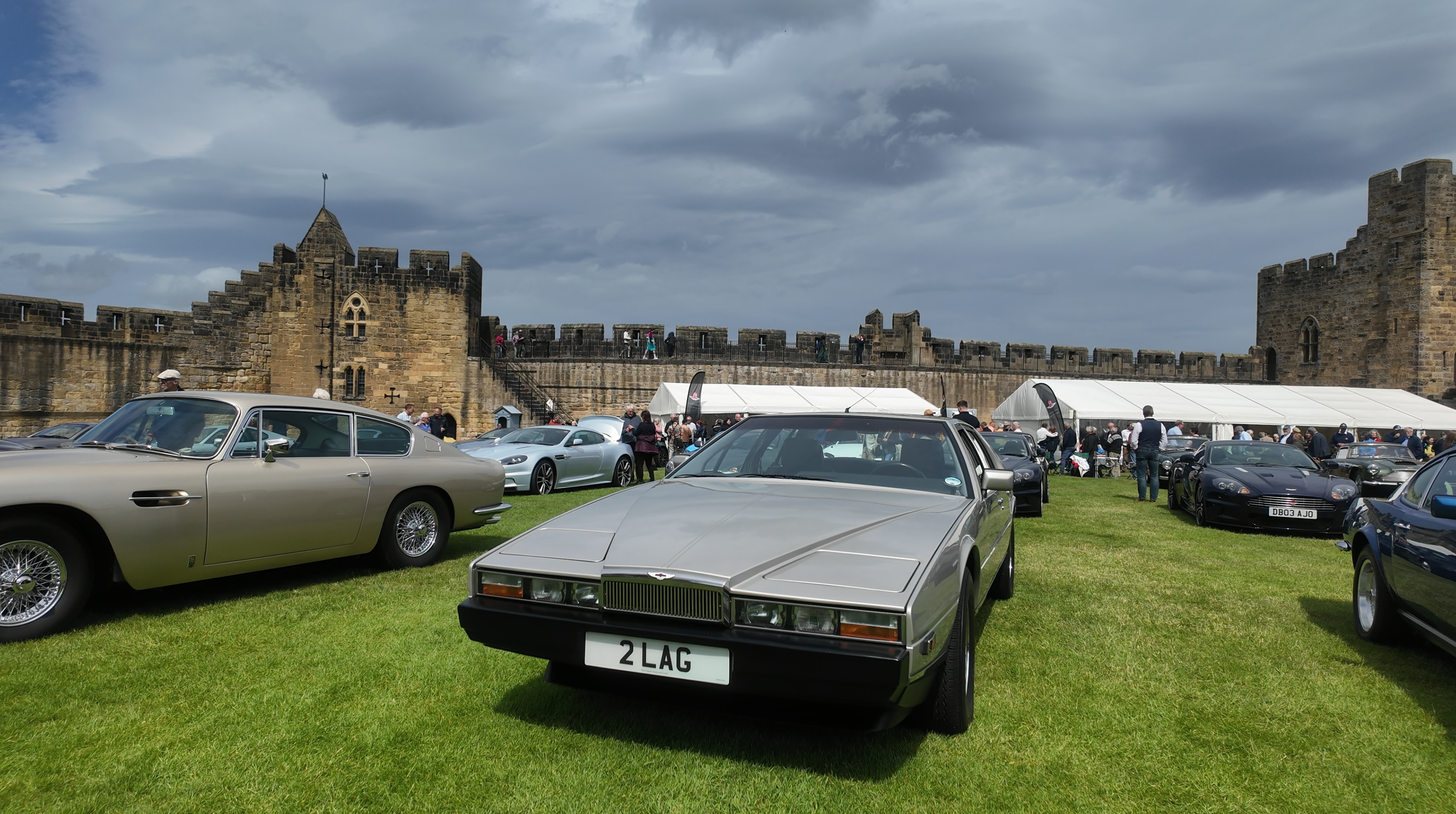
Image © Fuel the Passion. Lagonda Wedge, Alnwick Castle, AMOC Spring Concours 2026.
If you noticed the advert at the beginning of this week's Roundup, there's something else new on FTP this morning. Alongside Issue 44, our latest Featured Article has gone live: Lagonda at 50: The Extraordinary Car, the Historic Marque and the Aston Martin Connection.
The anniversary feels slightly strange to me because the William Towns Lagonda is now almost exactly the same age as I am. It was unveiled in October 1976; I'm 51. I'd like to think we've both grown old gracefully.
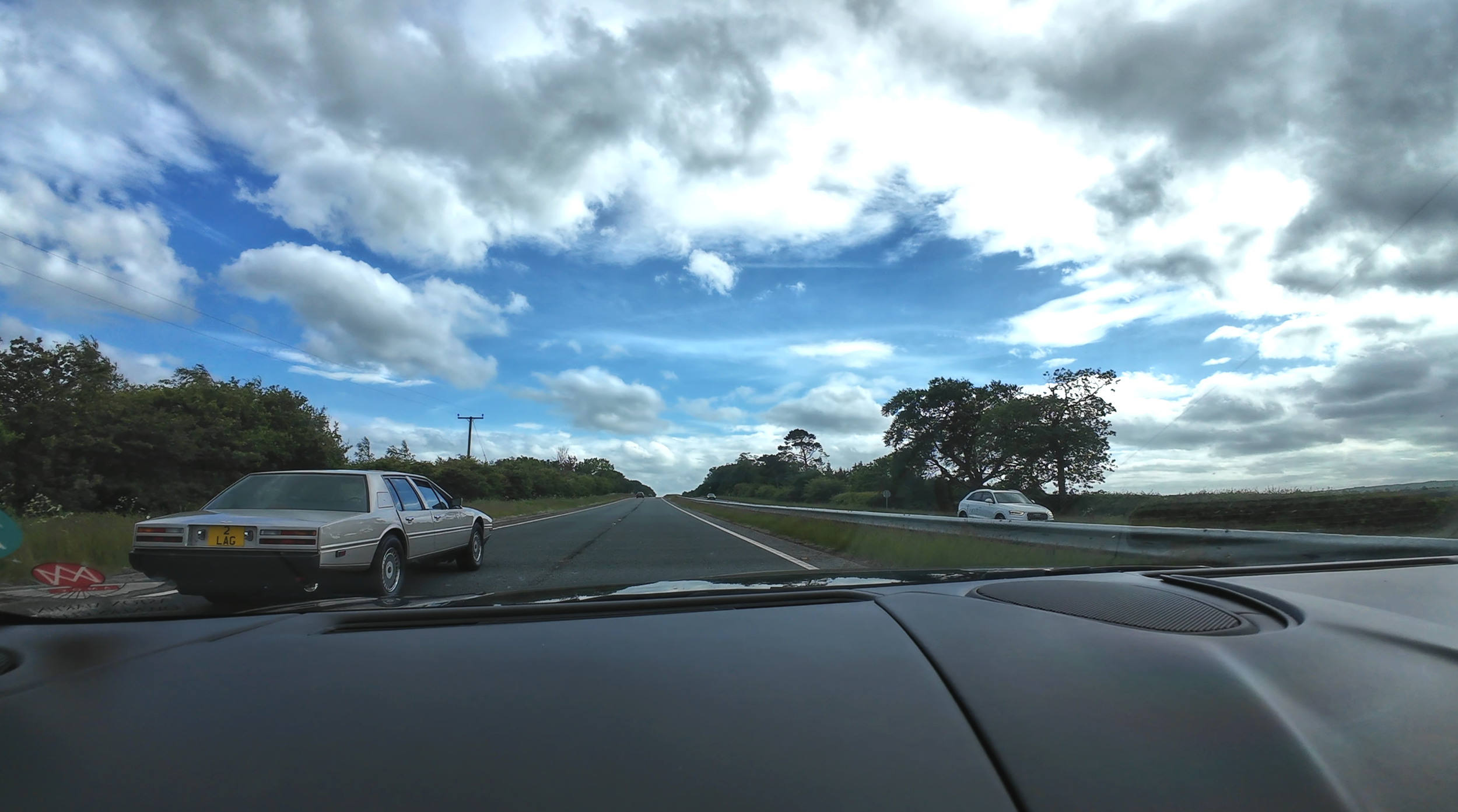
Image © Fuel the Passion. Lagonda Wedge, travelling home from AMOC Spring Concours 2026.
I've only seen two of these extraordinary cars in person during my lifetime, both at AMOC Concours events. On one of those occasions I later passed the Lagonda on the motorway as everyone headed home, and seeing one amongst ordinary modern traffic was perhaps even more memorable than seeing it displayed at the Concours. It simply didn't look like anything else on the road.
That's part of the fascination. Aston Martin built only 645 chassis, and fifty years after William Towns' extraordinary wedge was first revealed, seeing one in the wild still makes you stop for a moment and work out exactly what you're looking at.
Our new feature explores much more than the wedge itself. It goes back to the beginnings of Lagonda, follows the marque through W.O. Bentley and David Brown, examines the extraordinary circumstances in which the 1976 car was created, looks properly at those famous electronics and asks one of the biggest questions surrounding it: did the Lagonda really help save Aston Martin?
At around a 28-30 minute read, it’s the perfect companion to a coffee and a comfortable chair, particularly if, like me, you find the Lagonda one of those Aston Martins you can’t quite stop looking at. Lagonda at 50 is live now.
Closing Reflection
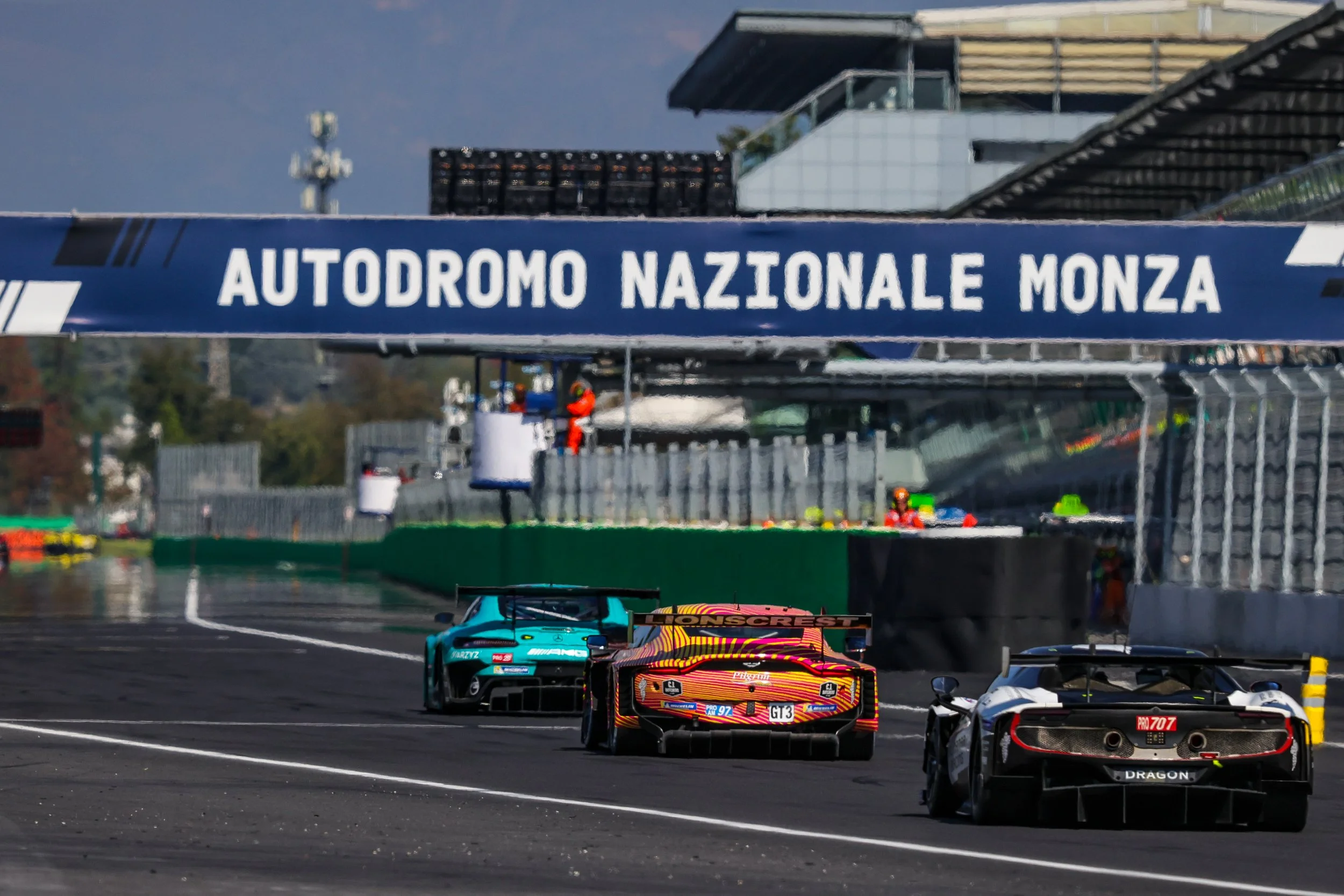
Image © Fotospeedy & Blackthorn Racing. Used for editorial purposes. Blackthorn Racing Vantage GT3 fighting at Monza in the International Open 2026.
One of the things I enjoy most about putting the Weekly Roundup together is that you never quite know what sort of week Aston Martin is going to give you. Some are dominated by racing, others by new cars, history, personalities or the realities of the business behind the badge. Occasionally, as with this one, almost everything seems to arrive at once.
Yet somewhere among all of that, I think there’s a common thread. Aston Martin has always been about considerably more than the latest result, the newest model or the numbers on a balance sheet. It’s the combination of all those things: the racing, the engineering, the beautiful cars, the difficult periods, the remarkable history and, perhaps most importantly, the people who continue to care about what happens next.
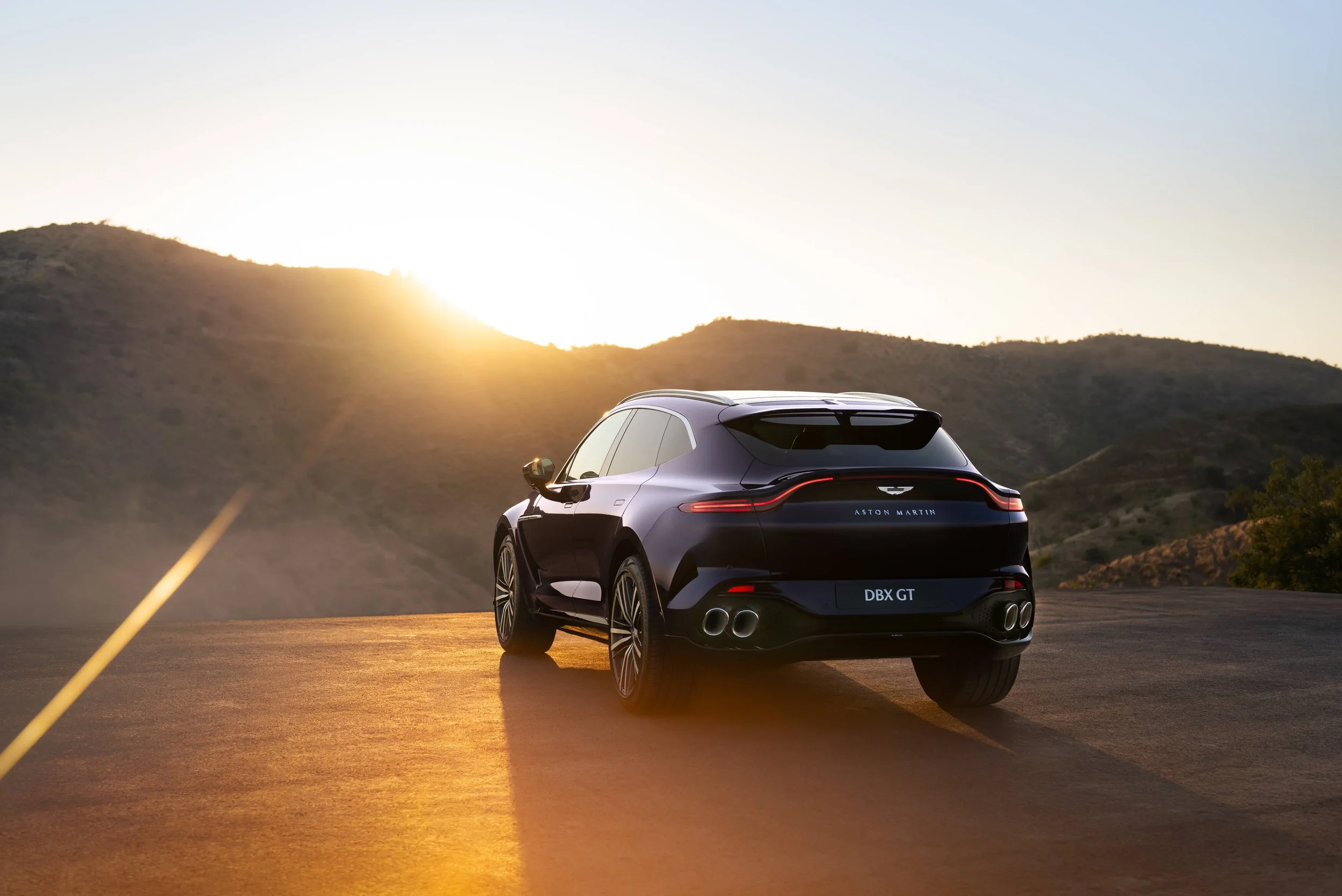
Image © Aston Martin Lagonda. Used for editorial purposes. Aston Martin DBX GT.
I know I’ve reached a similar conclusion at the end of more than one Weekly Roundup, and perhaps there’s a reason for that. We're not simply following a car manufacturer from one week to the next; we're watching another chapter of a much longer story being written, while occasionally turning back a few pages to remind ourselves how we arrived here. After 44 editions, Aston Martin still seems remarkably good at giving us another page to turn.
For now, though, thank you for spending some of your weekend with me and Fuel the Passion. Whether you've been here since the beginning or this is the first Issue you've found, I'm genuinely grateful you're here.
Have a wonderful rest of your weekend, and thank you, as always, for reading.
See you on the next one!
Kind regards,
Dan 💚💛
3 Questions From This Week
We'd genuinely like to hear what you think. Answer any of the questions above, or simply leave a comment about something else that's caught your attention in Issue 44. Whether it's Aston Martin's Formula One future, the extraordinary Lagonda or the cars and experiences that have stayed with you over the years, the conversation is always open.